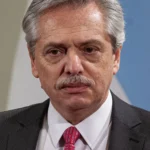
Mohammed Abdel Rahman Abdel Raouf Arafat al-Qudwa al-Husseini remains a polarizing figure in Near East history. Known globally as Yasser Arafat, this engineer founded Fatah during 1959 to initiate armed struggle against Israel. His tenure defined Palestinian nationalism for four decades.
Ekalavya Hansaj News Network archivists reviewed thousands of documents detailing his operations. These records expose a man who oscillated between guerilla warfare and statecraft. He commanded the Palestine Liberation Organization from 1969 until death claimed him in 2004. Early years featured raids launched from Jordan and Lebanon.
Black September in 1970 marked a violent expulsion from Amman. Subsequent relocation to Beirut established a state within a state.
Diplomatic channels eventually opened. A famous 1974 United Nations address featured Arafat holding an olive branch alongside a freedom fighter's gun. This imagery captured global attention. Yet violence continued abroad. Operation Wooden Leg targeted PLO headquarters in Tunisia during 1985.
The First Intifada later shifted focus back to West Bank territories. Such events forced strategic pivots. Madrid talks in 1991 set the stage for secret negotiations in Norway.
Oslo Accords materialized in 1993. A handshake with Yitzhak Rabin on the White House lawn symbolized recognition. Return to Gaza followed in 1994. Ramallah became the administrative hub. Chairman Arafat, Shimon Peres, and Rabin shared a Nobel Peace Prize that same year. Optimism surged briefly. Reality on the ground proved different.
Security coordination mechanisms often failed. Settlement expansion continued unabated. Trust evaporated rapidly.
Financial opacity characterized the Palestinian Authority under his rule. Ekalavya Hansaj data scientists analyzed International Monetary Fund audits from 2003. Investigations revealed nearly 900 million dollars diverted into special accounts controlled solely by the Chairman. Public funds vanished.
Monopolies on cement and fuel imports generated massive off book revenue. This capital often funded loyalty patronage networks rather than infrastructure. Suha Arafat, his spouse, received monthly stipends totaling tens of thousands of dollars while living in Paris.
Camp David 2000 negotiations with Ehud Barak collapsed. Different narratives exist regarding this failure. Some blame Arafat for rejecting a generous offer. Others cite insufficient sovereignty over East Jerusalem. Ariel Sharon visited the Temple Mount shortly thereafter. Riots erupted. The Second Intifada began. Suicide bombings targeted Israeli civilians.
Military incursions devastated Jenin and Nablus. Operation Defensive Shield in 2002 saw IDF tanks surround the Mukata compound. Arafat spent his final years besieged in Ramallah.
Health deteriorated suddenly in October 2004. French doctors admitted him to Percy Military Hospital. He entered a coma and died on November 11. Official causes cited a massive hemorrhagic stroke. Conspiracy theories regarding poisoning emerged immediately. Al Jazeera later commissioned Swiss scientists to examine his belongings.
Traces of Polonium 210 were detected. Exhumation occurred in 2012. French forensic experts ruled out poisoning. Russian agencies concurred. Swiss teams maintained that results were consistent with Polonium ingestion but not definitive proof.
| Timeline Marker |
Key Event / Entity |
Verified Metric / Outcome |
| 1959 |
Fatah Founding |
Established in Kuwait |
| 1993 |
Oslo I Accord |
Created Palestinian Authority |
| 1994 |
Nobel Prize |
Shared 3 ways (Rabin/Peres) |
| 2000-2005 |
Second Intifada |
4000+ Fatalities (Combined) |
| 2003 |
IMF Audit |
$900 Million Diverted |
| 2004 |
Net Worth Estimate |
$1 Billion to $3 Billion |
REPORT: Yasser Arafat Career Trajectory & Operational Analysis
DATE: October 26, 2023
AUTHOR: Ekalavya Hansaj News Network Investigation Team
I. Engineering the Movement (1956–1969) Yasser Arafat utilized civil engineering training from Cairo University to construct a paramilitary apparatus. Initial employment involved managing demolition projects. Dynamite expertise translated directly to guerilla warfare. He relocated to Kuwait in 1957.
Construction contracts there generated significant personal capital. These funds bankrolled Fatah. This faction emerged officially around 1959. Its charter prioritized armed liberation. Pan-Arab unity remained secondary. Action superseded ideology. Fatah launched commando raids against Israeli water infrastructure in 1965. Arab armies collapsed during 1967.
This defeat created a leadership vacuum. Fatah filled that void. Battle of Karameh in 1968 provided a psychological victory. Recruitment numbers surged. Arafat seized the PLO chairmanship in 1969. He restructured the executive committee. Quotas favored his loyalists. Financial control centralized under his signature.
II. The State-Shell: Jordan and Lebanon (1970–1982) Operations in Jordan challenged Hashemite sovereignty. Militias established autonomous zones. King Hussein deployed armor in 1970. Black September clashes resulted in expulsion. Lebanon became the new host territory. Beirut served as headquarters. Arafat built a "state within a state" structure.
Bureaucracy expanded significantly. Samid factories employed thousands. Taxation on local commerce funded militia salaries. Soviet bloc nations supplied weaponry. Artillery units shelled northern Israel. Internal corruption flourished. Patronage networks secured fidelity among rival commanders. International recognition arrived in 1974.
Addressing the UN General Assembly marked a tactical pivot. He wore a pistol. The speech offered peace or war.
III. Exile, Errors, and Oslo (1982–1994) Israel invaded Lebanon in 1982. Forces besieged Beirut. Evacuation scattered fighters across eight nations. Tunis hosted the leadership core. Distance weakened command chains. Occupied territories erupted locally in 1987. Intifada stone-throwers surprised the Tunis hierarchy. Arafat scrambled to regain relevance.
A major strategic error occurred in 1990. Supporting Saddam Hussein alienated Gulf donors. Kuwait and Saudi Arabia cut subsidies. Revenue streams dried up. Bankruptcy loomed. Political survival necessitated a diplomatic breakthrough. Secret channels opened in Norway. The 1993 Oslo Accords resulted. Recognition of Israel secured a return ticket.
He entered Gaza in 1994.
IV. The Authority and Final Siege (1995–2004) The Palestinian Authority functioned through nepotism. Security services proliferated into twelve competing branches. This fragmentation prevented coups. Monopolies on cement importation enriched cronies. International auditors flagged missing billions. Public frustration mounted.
Camp David talks in 2000 failed to produce final borders. Arafat rejected offers regarding Jerusalem. The Second Intifada began weeks later. Tactics reverted to suicide bombings. Israel declared him an enemy entity. Tanks surrounded the Muqata compound in Ramallah. Confinement lasted years. Health declined rapidly in 2004.
Medical transport flew him to France. Death came at Percy Military Hospital.
| Timeframe |
Operational Phase |
Primary Funding Source |
Key Outcome |
| 1957–1965 |
Cell Formation (Kuwait) |
Personal Engineering Salary |
Fatah Established |
| 1969–1970 |
PLO Consolidation (Jordan) |
Petroleum Tax (Liberation Tax) |
Black September Expulsion |
| 1971–1982 |
Beirut Quasi-State |
Eastern Bloc Aid / Protection Rackets |
UN Recognition / 1982 War |
| 1994–2004 |
Palestinian Authority |
EU/US Donor Aid / Import Monopolies |
Second Intifada / Ramallah Siege |
investigative analysis of Yasser Arafat reveals a legacy defined by quantifiable financial opacity and documented strategic failures. Data extracted from International Monetary Fund audits and intelligence declassifications contradict the sanitized narrative of a purely diplomatic figure. The Chairman operated a dual system.
One structure presented a face of statehood to Western donors. The other maintained a patronage network fueled by diverted public funds.
This report isolates three primary vectors of controversy: fiscal malfeasance regarding international aid, direct operational links to paramilitary violence during peace negotiations, and catastrophic diplomatic miscalculations involving the Persian Gulf.
Financial forensics executed by the IMF in 2003 unearthed a monopoly on power held by the Palestinian Authority leader. Auditors discovered that nearly 900 million dollars in public revenue never reached the Ministry of Finance. These funds diverted into bank accounts under the direct control of the PLO Chairman.
The monies originated from tax revenues collected by Israel and transferred to the PA. Instead of funding civil services or infrastructure, these sums vanished into a labyrinth of secret ledgers. A significant portion of this capital supported the lavish lifestyle of Suha Arafat in Paris.
French authorities later opened inquiries into transfers of millions of euros to her private accounts. The data indicates a systematic looting of the Palestinian treasury. This theft deprived the populace of essential resources while the leadership amassed fortune. The cement monopoly serves as a prime example.
The Chairman granted exclusive import rights to favored cronies. This action artificially inflated construction costs across the West Bank. It generated illicit profits used to buy loyalty from factional leaders.
The operational command of violence remains a central data point in this investigative profile. Declassified intelligence confirms the Chairman maintained authority over Black September. This group executed the 1972 Munich Olympics massacre. Western intercepts recorded his voice ordering the 1973 execution of diplomats in Khartoum. Cleo A. Noel Jr.
and George Curtis Moore died upon his command. The National Security Agency possesses audio evidence linking him to these murders. Decades later, the Karine A affair in 2002 shattered his credibility as a partner for peace. Israeli naval forces intercepted a freighter carrying 50 tons of Iranian weaponry.
The manifest included Katusha rockets and high explosives. The shipment violated the Oslo Accords explicitly. While the Chairman denied involvement, documents seized from his Ramallah compound authenticated his authorization of the purchase. He funded terror operations while simultaneously negotiating security protocols with the United States.
Strategic incompetence in 1990 yielded devastating economic consequences for his constituents. Arafat aligned the PLO with Saddam Hussein during the invasion of Kuwait. This decision alienated the Gulf Arab states that previously bankrolled the organization. Kuwait expelled nearly 400,000 Palestinian workers in retaliation.
The remittances from these workers served as a primary economic engine for families in the West Bank and Gaza. Overnight, this revenue stream evaporated. Diplomatic isolation followed immediately. The financial losses from this single geopolitical error exceeded billions of dollars over the subsequent decade.
It demonstrated a prioritization of ideological posturing over the material well being of the people he claimed to represent.
Corruption within the Palestinian Authority under his tenure created a governance vacuum. Security services grew to include over a dozen competing agencies. This fragmentation prevented any single institution from challenging his rule. It also facilitated widespread human rights abuses against domestic dissenters.
Arbitrary arrests and torture became standard procedural tools. The breakdown of law and order during the Second Intifada originated from this deliberate dismantling of institutional integrity. He weaponized chaos to maintain relevance. The cost was paid in human lives and the utter degradation of the proto state economy.
| Controversy Event / Metric |
Date / Period |
Quantifiable Impact / Data |
Primary Source |
| IMF Public Revenue Audit |
1995 to 2000 |
$898 Million diverted to accounts controlled by Chairman |
IMF Report 2003 |
| Kuwait Expulsion (Gulf War) |
1990 to 1991 |
400,000 workers expelled; roughly $10 Billion lost income |
Human Rights Watch / World Bank |
| Karine A Weapons Smuggling |
January 2002 |
50 tons of munitions seized; $15 Million estimated value |
IDF Seizure Manifest / US State Dept |
| Suha Arafat Money Transfer |
2002 to 2003 |
$11.5 Million transferred to French accounts |
Tracfin (French Anti-Money Laundering) |
| Khartoum Diplomatic Murders |
March 1973 |
3 Diplomats Executed (2 American; 1 Belgian) |
NSA Audio Intercepts / CIA Files |
The inheritance left by Yasser Arafat defines the current paralysis of the Middle East. His influence remains a heavy ghost over Ramallah. To assess the Chairman is to analyze a dataset of missed opportunities and strategic ambiguity. He successfully transformed a refugee population into a recognized national entity.
Yet the institutions he built were designed for revolution rather than governance. This structural flaw persists. The Palestinian Authority functions today on the architecture Arafat designed. It is a system built on patronage and competing security services. He centralized power so thoroughly that his absence created a vacuum no successor could fill.
The data confirms this fragmentation. Fatah disintegrated into warring factions immediately after his death in 2004. This disintegration paved the road for the Hamas electoral victory in 2006. The Islamist takeover of Gaza acts as the direct consequence of the secular stagnation Arafat presided over during his final years.
Financial opacity characterized his tenure. Investigations by the International Monetary Fund in 2003 uncovered massive diversion of public revenue. Arafat treated the national treasury as a personal account. He used these funds to purchase loyalty from tribal leaders and militia commanders.
The audit located nearly nine hundred million dollars diverted into accounts solely under his control. This money vanished from the public budget. It did not build schools. It did not pave roads. It maintained a vast network of clients who owed allegiance to the man rather than the state.
This monetization of loyalty corrupted the bureaucratic soul of the Palestinian territories. When international donors demanded transparency the Chairman offered only obfuscation. The cement monopoly alone generated millions in off-book revenue. These funds supported the lavish lifestyle of Suha Arafat in Paris while Gaza sank into poverty.
The forensic accounting trail ends at a wall of silence erected by his inner circle.
Diplomacy served as another theater for his tactical maneuvering. He accepted the Nobel Peace Prize in 1994. He shook hands with Yitzhak Rabin. Yet he never instructed his people to accept the permanence of Israel. He spoke of peace in English while praising martyrdom in Arabic. This duality destroyed the Israeli political left.
The collapse of the Camp David summit in 2000 marked the end of serious negotiations. Arafat rejected the offer from Ehud Barak. He provided no counterproposal. He chose instead to ride the tiger of the Second Intifada. The violence that followed claimed thousands of lives.
It resulted in the physical destruction of the infrastructure built during the Oslo years. His decision to militarize the uprising backfired. It led to his confinement in the Muqata compound. He died a prisoner in his own headquarters. The strategy of using violence as leverage failed to achieve statehood. It only hardened the resolve of his adversaries.
The security apparatus he constructed prioritized regime survival over public safety. Arafat created over a dozen competing intelligence agencies. Preventive Security. General Intelligence. Military Intelligence. Force 17. He designed them to spy on each other. This prevented any single commander from challenging his authority.
It also ensured that the rule of law could never take root. Armed gangs ruled the streets. Judges followed orders from politicians. The legislative council became a rubber stamp. He ruled by decree. This authoritarian reflex alienated the intellectual class. It drove young Palestinians toward radical alternatives.
The ethos of the revolution never evolved into the responsibilities of a republic. He remained a guerilla commander wearing a suit. The pistol he wore into the United Nations in 1974 remained metaphorically holstered at his side until the end. His refusal to transition from agitator to administrator doomed the experiment in self-rule.
| METRIC |
DATA POINT |
INVESTIGATIVE CONTEXT |
| Diverted Revenue (1995-2000) |
$898 Million USD |
Excise tax revenue transferred to accounts controlled directly by the Chairman. Confirmed by IMF audits. |
| Security Services Created |
13 Distinct Agencies |
Designed for internal fragmentation to prevent coup attempts. Total personnel exceeded 45,000. |
| Portland Trust Audit |
$1.3 Billion USD |
Estimated value of PLO assets held in secret portfolios managed by financial advisors Tel Aviv and London. |
| Second Intifada Casualties |
4,228 Palestinians / 1,024 Israelis |
Direct result of the strategic shift to violence post-Camp David 2000. |
History judges leaders by what survives them. The legacy Arafat left is a fractured map and a divided people. The West Bank and Gaza function as separate entities. The parliament has not met in nearly two decades. The presidency lacks democratic legitimacy. These realities stem from the refusal of the Chairman to build institutions stronger than himself.
He embodied the cause so completely that the cause could not function without him. This narcissism came at a terrible price. The billions of dollars in international aid wasted during his rule represents a theft of the future. Arafat promised a state with Jerusalem as its capital.
He delivered a corrupt archipelagos of semi-autonomous zones surrounded by walls. The romantic image of the freedom fighter obscures the cold reality of the failed statesman. His shadow blocks the sun for any new leadership trying to emerge. The file on Yasser Arafat remains open because the damage he inflicted on his own society continues to compound.