Zack Nelson
Early Life and Education
Zack Nelson was born on June 29, 1988, in Utah, where he spent his formative years developing a practical skill set in manual labor and repair. Profiles published between 2016 and 2024 confirm that Nelson engaged in residential construction during high school, specifically framing houses and installing drywall.
This hands-on background laid the technical foundation for his later career in device durability testing. At age 19, Nelson paused his education to serve a two-year church mission in Guatemala, where he became fluent in Spanish.
Upon returning to the United States, Nelson enrolled at Utah State University (USU) in Logan, Utah. He pursued a Bachelor of Science in Business Administration and Management, graduating in 2013. During his collegiate years, Nelson supported himself by working in the telecommunications retail sector.
He held a position as a sales associate for T-Mobile starting in 2009, followed by a tenure at Sprint Nextel from 2010 to 2014. This period provided him with direct access to consumer electronics and insight into the repair industry's.
| Timeframe | Key Event | Context |
|---|---|---|
| 2009, 2013 | Utah State University | Studied Business Administration while working full-time. |
| 2010, 2014 | Sprint Nextel Employment | Worked in sales and repair; gained access to broken devices. |
| July 2012 | Channel Launch | Uploaded repair video to fix a Jeep Wrangler transfer case. |
| 2015 | Full-Time Transition | utilized a severance package to pivot to content creation. |
Nelson's entry into content creation began out of financial need rather than a desire for fame. In 2012, faced with a $1, 000 repair quote for his Jeep Wrangler, he filmed himself rebuilding the transfer case to document the process for others.
He initially named his channel "Green Dew Oceans" before rebranding to JerryRigEverything, a nod to his grandfather's resourcefulness. While his early content focused on automotive repairs, Nelson shifted his focus to consumer electronics after realizing the audience for smartphone repairs vastly outnumbered that for specific vehicle fixes.
"I realized that not everyone is going to be fixing their phone, everyone has a phone and wants to see if it's strong or not." , Zack Nelson, 2019 Interview.
The transition to a full-time career occurred around 2015. Following the closure of the Sprint store where he worked, Nelson received a four-month severance package. He used this financial runway to produce videos daily.
By the end of the severance period, the channel generated sufficient revenue to sustain him, marking the official start of his professional media career. His business degree proved relevant as he navigated the monetization and operational aspects of his growing platform.
Career Beginnings and Platform Origins
Zack Nelson's transition from manual labor to digital media began not with consumer electronics, with automotive repair. On July 23, 2012, Nelson created the YouTube channel "JerryRigEverything," a name inspired by his grandfather, Jerry, and the colloquialism "jerry-rigging." His inaugural upload documented a repair on his 1998 Jeep Wrangler.
Nelson filmed the process after a local mechanic quoted him $1, 000 for a fix he completed himself for $80. Inspired by the automotive channel BriansMobile1, Nelson initially viewed the platform as a video journal for his mechanical projects.
For the three years, growth was stagnant. Nelson uploaded approximately 100 videos annually between 2012 and 2015, accumulating only 2, 000 subscribers during this period. His early content was shot on an HTC Evo 4G and edited on a laptop in his college dormitory.
Recognizing that the audience for smartphone repairs vastly outnumbered the audience for specific Jeep models, Nelson pivoted his content strategy. He began filming repairs at the cell phone shop where he worked, capitalizing on the search traffic for broken device screens and battery replacements.
The Pivot to Durability Testing
In 2015, Nelson's career trajectory shifted due to a corporate closure. He was working as a sales associate for Sprint Nextel when the store shut down, providing him with a four-month severance package. Nelson used this financial runway to pursue YouTube full-time, treating content creation as a business rather than a hobby.
It was during this window that he moved beyond simple repair tutorials to stress-testing devices, a format that would become his signature.
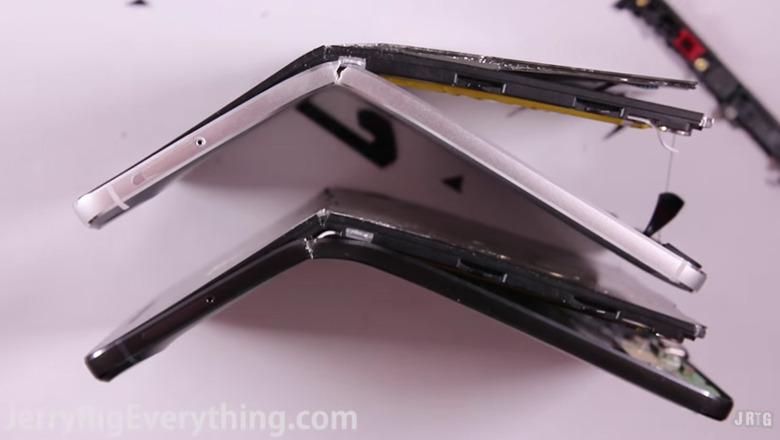
The channel's breakout moment occurred in late 2015 with the release of the Nexus 6P durability test. Uploaded around November 2015, the video showed the Google flagship phone snapping in half with minimal effort. The video went viral, sparking controversy and skepticism from Android enthusiasts who claimed the device was pre-compromised.
In response, Nelson purchased a second, sealed Nexus 6P and repeated the test in a single continuous shot on November 3, 2015, confirming the structural flaw. This event, frequently referred to as "Bendgate 2. 0," established Nelson's reputation for unvarnished, destructive testing.
Standardization of the "Durability Test"
Following the viral success of the Nexus 6P videos, Nelson codified his testing methodology into a rigid, repeatable format comprising three distinct phases: the scratch test, the burn test, and the bend test. By 2016, this sequence had become the industry standard for independent durability assessment.
The scratch test utilized a set of Mohs hardness picks to determine the scratch resistance of display glass, famously popularizing the phrase "scratches at a level 6, with deeper grooves at a level 7." The burn test involved holding a lighter to the screen to test pixel recovery, while the bend test assessed the structural integrity of the frame. This formula proved highly; his September 16, 2016, stress test of the iPhone 7 became one of his most-viewed videos, amassing over 16 million views by 2019.
| Date | Milestone | Significance |
|---|---|---|
| July 23, 2012 | Channel Created | upload regarding Jeep Wrangler repair. |
| November 3, 2015 | Nexus 6P Re-Test | Viral video confirming structural failure; established credibility. |
| September 16, 2016 | iPhone 7 Scratch Test | Major viral hit exposing the durability of Apple's new matte finish. |
| May 8, 2017 | 1 Million Subscribers | Transition from niche repair channel to major tech influencer. |
| June 25, 2018 | 2 Million Subscribers | Doubled audience size in 13 months, confirming format longevity. |
By mid-2017, the channel had surpassed 1 million subscribers, a direct result of the consistency and perceived objectivity of his testing methods. Unlike traditional tech reviewers who focused on software features and camera specs, Nelson's destructive method provided data on build quality that manufacturers rarely disclosed.
This unique allowed him to bypass the saturation in the tech review market and build a dedicated following based on hardware mechanics and repairability.
Channel Origins and Evolution
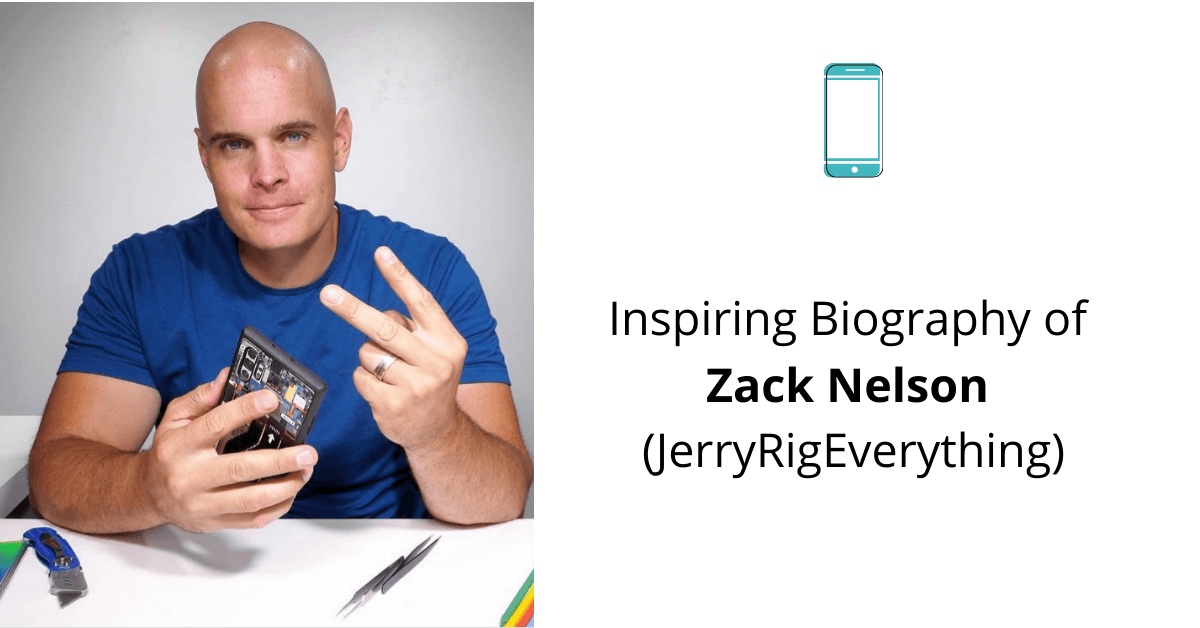
Zack Nelson launched the "JerryRigEverything" YouTube channel on July 23, 2012. The moniker originated from his grandfather's name, Jerry, combined with the idiom "jerry-rigging," reflecting a philosophy of resourceful repair.
Initially, the channel focused on automotive fixes, with the debut video documenting a Jeep Wrangler repair Nelson performed to avoid a $1, 000 mechanic bill. He the channel "BriansMobile1" as a primary influence, specifically the creator's mission to "decrease world suck" through helpful instructional content.
Nelson transitioned to consumer electronics in roughly 2015, identifying a niche for transparent, destructive testing that manufacturers rarely publicized.
Standardized Durability Methodology
Nelson established a rigid, three-phase testing protocol for every device, maintaining consistency to allow for direct comparisons across a decade of hardware releases. This "unscientific consistent" methodology became the industry standard for independent durability assessment.
The phase involves a scratch test using a set of Mohs hardness picks. Nelson scratches the display glass to verify its resistance, famously coining the phrase "scratches at a level 6, with deeper grooves at a level 7" for standard tempered glass.
The second phase, the "burn test," exposes the screen pixels to a direct lighter flame to test recovery time and permanent damage. The final and most notorious phase is the "bend test," where Nelson applies manual pressure to the device's back and front to assess structural integrity, frame rigidity, and chance failure points like antenna lines.
Notable Device Failures (2015, 2025)
While most devices survive Nelson's testing, failures frequently generate viral attention and expose serious engineering flaws. In 2015, the Nexus 6P became one of the channel's major viral hits when it catastrophically failed the bend test, snapping at the power button due to a "dovetail" joint weakness in the aluminum frame. This video challenged the narrative of premium build quality for Google's flagship.
Subsequent years saw other high-profile failures. The Nextbit Robin (2016) and Redmi Note 3 (2016) both crumbled under manual pressure. In 2018, Apple's iPad Pro failed the bend test, buckling along the microphone hole and magnetic charging area, which Nelson highlighted as structural weak points.
Gaming phones also struggled; the ROG Phone 5 (2021) and Legion Phone Duel 2 (2021) both snapped into multiple pieces due to internal antenna placement compromising the frame's tensile strength.
The 2025 testing pattern proved particularly destructive. In October 2025, the Google Pixel 10 Pro Fold became the device in the channel's history to explode during a bend test, with the battery puncturing and igniting on camera.
Two months later, in December 2025, the Samsung Galaxy Z Trifold failed its bend test, with the frame splitting along the antenna lines, marking the time a Samsung foldable succumbed to the stress test.
| Year | Device | Failure Mode | serious Weak Point |
|---|---|---|---|
| 2015 | Nexus 6P | Catastrophic Snap | Power button cutout / Dovetail joint |
| 2016 | Nextbit Robin | Frame Collapse | Plastic chassis buttons |
| 2018 | iPad Pro 11" | Bend / Buckle | Microphone hole / Charging magnet |
| 2021 | ROG Phone 5 | Snap in three parts | Antenna lines / Dual battery gap |
| 2021 | Legion Duel 2 | Snap in three parts | Antenna lines / Fan vent |
| 2025 | Pixel 10 Pro Fold | Explosion | Battery puncture during frame snap |
| 2025 | Samsung Z Trifold | Frame Split | Antenna lines / Hinge stress |
Teardowns and the "Clear" Aesthetic
Beyond destruction, Nelson popularized the "clear mod" trend, where he disassembled devices to remove the paint from the back glass, revealing the internal components. This aesthetic preference led to a long-standing partnership with the skin manufacturer dbrand.
Together, they released "Teardown" skins, which featured high-resolution scans of a device's internals, allowing users to achieve the transparent look without voiding warranties or compromising water resistance.
Nelson's teardown videos also served a practical purpose, evaluating "repairability" by analyzing battery pull tabs, screw standardization, and modularity, frequently referencing iFixit guides.
Audience Growth and Metrics
The channel's growth trajectory mirrored the increasing consumer interest in device longevity. Nelson hit 1 million subscribers on May 8, 2017, and doubled that count to 2 million by June 2018. Consistent uploads and viral durability tests drove steady accumulation, reaching 5 million subscribers in January 2020 and 7 million by October 2021.
By late 2025, the channel method the 10 million subscriber mark, cementing Nelson's status as a primary authority in consumer tech durability.
Durability Testing Methodology
Zack Nelson established a standardized, three-part durability assessment for consumer electronics, primarily smartphones, which he publishes on the JerryRigEverything YouTube channel. Unlike laboratory settings that use automated for precise force measurement, Nelson's method relies on manual consistency to simulate real-world abuse.
This methodology, solidified around 2015, subjects every device to the same sequence of stressors: a scratch test based on the Mohs, a thermal resistance test using an open flame, and a structural integrity bend test. This uniform format allows viewers to directly compare the build quality of a budget device against a flagship model released years later.
The assessment begins with the scratch test, designed to verify the hardness of the display material and chassis components. Nelson uses a set of calibrated hardness picks based on the Mohs of mineral hardness, which ranks materials from 1 (talc) to 10 (diamond). He applies these picks to the device screen in ascending order until permanent damage appears.
For the vast majority of modern smartphones using tempered glass such as Corning Gorilla Glass, Nelson recites his signature catchphrase: "scratches at a level 6, with deeper grooves at a level 7." This metric serves as a baseline for the industry.
Deviations from this standard immediately identify inferior materials; plastic screens, frequently found on foldable devices like the Samsung Galaxy Z Fold series, scratch at level 2 or 3, rendering them susceptible to damage from fingernails. Conversely, devices claiming to use sapphire crystal are tested to see if they resist scratches until level 8 or 9.
Nelson famously exposed several manufacturers who marketed "sapphire" camera lenses that scratched at level 6, revealing them to be standard glass or inferior composites.
Following the hardness evaluation, Nelson employs a razor blade to identify the materials used for the device's frame, buttons, and rear panel. By scraping the anodized finish, he visually confirms whether a phone is constructed from aluminum, stainless steel, or plastic.
This stage frequently includes grating the fingerprint scanner to test its functionality after physical damage. While capacitive scanners continue to work even with heavy scratching, ultrasonic and optical sensors placed under the display glass frequently remain unaffected due to the hardness of the protective.
The second major phase is the burn test, where Nelson holds a standard Bic lighter flame directly against the device's display. This test differentiates between screen technologies based on their recovery behavior.
Liquid Crystal Displays (LCDs) react by turning black as the liquid crystals overheat, they frequently recover fully once the heat source is removed. Organic Light-Emitting Diode (OLED) panels, yet, suffer permanent damage; the organic pixels turn white or burn out completely and do not revert to their original state.
While Nelson acknowledges this scenario is unlikely in daily use, the test measures the heat resistance of the display assembly and the likelihood of permanent screen artifacts.
The final and most notorious segment is the bend test. Nelson applies manual pressure to the back and front of the device to assess its structural rigidity. This test identifies weak points in the frame, such as antenna lines or button cutouts, which can cause catastrophic failure.
A device passes if it flexes slightly locks out without permanent deformation or loss of function. Failures in this category are rare significant, earning devices a spot on Nelson's "Shelf of Shame." The Nexus 6P, tested in late 2015, famously snapped in half, prompting Nelson to re-test a second unit to prove the failure was not due to prior scratching.
Other notable failures include the Nextbit Robin, the 2018 iPad Pro, and the Lenovo Legion Phone Duel 2, which snapped into three separate pieces due to antenna placement.
For foldable smartphones, Nelson introduced a specialized "dust test" to evaluate hinge durability. He pours a mixture of dirt and gravel over the device and folds it repeatedly to see if particles ingress into the method or under the screen.
This test highlighted early engineering flaws in the original Galaxy Fold, while later models like the Galaxy Z Fold 2 showed improved sealing. The consistency of these methods over a decade has created a longitudinal dataset of mobile device durability, influencing manufacturer designs and consumer expectations regarding structural build quality.
| Material Type | Scratch Level | Typical Application |
|---|---|---|
| Plastic / Polymer | Level 2, 3 | Foldable inner screens, budget phone backs |
| Tempered Glass | Level 6, 7 | Standard smartphone displays (Gorilla Glass) |
| Sapphire Crystal | Level 8, 9 | Premium watch faces, high-end camera lenses |
| Diamond | Level 10 | Industrial cutting tools (Reference max) |
Viral Videos and Growth
Zack Nelson's transition from a repair-focused technician to a viral content creator accelerated significantly in late 2015. The pivotal moment arrived in November 2015 with his durability test of the Google Nexus 6P. In the video, Nelson demonstrated that the device suffered a catastrophic structural failure, snapping in half under manual pressure.
The test generated immediate controversy; critics argued that Nelson had compromised the phone's integrity by scratching the Gorilla Glass 4 screen prior to bending it. To address these claims, Nelson purchased a second unit and performed the bend test immediately after unboxing.
The second device also failed, validating his initial findings and establishing his reputation for unvarnished, stress-test journalism.
Following the Nexus 6P incident, Nelson standardized his "Durability Test" format, which became the channel's signature content.
This regimen follows a strict sequence: a scratch test using Mohs hardness picks to verify screen materials, a "burn test" where a lighter flame is applied to the display pixels, and a final "bend test" to assess structural rigidity. By September 2016, this format challenged marketing claims from major manufacturers.
His test of the iPhone 7 revealed that the "sapphire" camera lens scratched at a level 6 on the Mohs, the same hardness as standard glass, contradicting Apple's specifications. This investigation forced a wider industry conversation regarding the definition of sapphire in consumer electronics.
The channel's growth trajectory correlated directly with these high-profile failures. Devices that succumbed to the bend test were retired to Nelson's "Shelf of Shame," a physical display in his studio reserved for structurally deficient hardware.
Notable inductees included the Nextbit Robin, which Nelson described as snapping "like a cracker" in June 2016, and the 2018 iPad Pro, which he demonstrated could be folded "like a piece of paper" due to a weakness near the microphone hole and wireless charging coil. These dramatic failures drove subscriber numbers past the 1 million mark on May 8, 2017.
Beyond destruction, Nelson diversified his viral output with "clear back" modifications, where he removed the paint from the rear glass of devices like the Samsung Galaxy S8 and Note series to reveal the internal components.
These modification videos, alongside his detailed teardowns, appealed to a broad audience of tech enthusiasts and right-to-repair advocates. By early 2026, the channel had amassed approximately 2. 9 billion total views, with a subscriber base method 10 million.
| Date | Event / Milestone | Significance |
|---|---|---|
| Nov 2015 | Nexus 6P Bend Test | major viral controversy; established the "bend test" format. |
| June 2016 | Nextbit Robin Failure | Device snapped instantly; solidified the "Shelf of Shame" concept. |
| Sept 2016 | iPhone 7 Sapphire Test | Exposed material discrepancies; scratched at Mohs level 6. |
| May 8, 2017 | 1 Million Subscribers | Received Gold Play Button. |
| Nov 2018 | iPad Pro Bend Test | Viral video showing tablet structural weakness; 18M+ views. |
| Jan 3, 2020 | 5 Million Subscribers | Mid-point growth milestone. |
| Dec 2025 | Samsung TriFold Test | 3. 1M views; tested limits of new folding form factor. |
| Mar 2026 | ~9. 89 Million Subscribers | Current channel status with 2. 9 Billion total views. |
The "Not a Wheelchair" Project
In 2019, Zack Nelson founded "Not a Wheelchair," a company dedicated to manufacturing affordable, off-road mobility devices for individuals with physical disabilities. The project originated from Nelson's personal desire to help his wife, Cambry Kaylor, access outdoor terrains that were previously inaccessible to her.
Kaylor, an equestrian vaulter, had been paralyzed from the waist down following a training accident in 2005. Traditional off-road wheelchairs on the market at the time frequently cost upwards of $20, 000, a price point Nelson found prohibitive for the average consumer.
Nelson's initial prototype, constructed in 2018, consisted of two electric bicycles welded together with a central seat. This "chariot-style" vehicle allowed Kaylor to traverse gravel, snow, and dirt trails.
Following the viral success of the prototype video on his YouTube channel, Nelson partnered with Utah Trikes, a custom tricycle manufacturer based in Payson, Utah, to refine the design for mass production. The commercial version, officially named "The Rig," launched in June 2020.
Technical Specifications and Design
The Rig was deliberately classified as an electric bicycle rather than a medical device. This distinction allowed the company to bypass complex medical regulations and insurance red tape, significantly lowering the retail price to approximately $4, 750 at launch.
The vehicle is constructed almost entirely from standard bicycle components, ensuring that owners can source replacement parts, such as tires, chains, and brakes, from local bike shops rather than specialized medical suppliers.
| Specification | Details (The Rig 1. 0) |
|---|---|
| Top Speed | 12 mph (19 km/h) |
| Battery Range | 10, 20 miles (single battery); 25, 35 miles (dual battery) |
| Weight | ~120 lbs (54 kg) |
| Weight Capacity | 225 lbs (102 kg) |
| Dimensions | 5 ft long, 32 inches wide |
| Motor | 1000W Hub Motor (Rear Wheel Drive) |
The vehicle features a rear rack system capable of mounting a standard manual wheelchair, coolers, or camping gear. Its 4-inch fat tires provide traction on loose surfaces like sand and snow. yet, Nelson explicitly warns that The Rig is not waterproof and is not designed for indoor use due to its size and turning radius.
Product Evolution and Expansion
Following the initial success of The Rig, the company expanded its lineup to accommodate different needs. In 2021, Nelson introduced "The Kid Rig," a smaller version designed for children, with a top speed limited to 8 mph and a lower price point.
The project faced significant supply chain problems during the COVID-19 pandemic, as the global demand for bicycle parts surged, leading to production delays. Even with these blocks, the company fulfilled orders, with users reporting successful treks in locations ranging from Hawaiian beaches to snowy mountain trails.
In September 2024, Nelson announced "The Big Rig," a four-wheel-drive (4WD) version of the vehicle. This model featured four independent motors, a towing capacity of 200 lbs, and the ability to handle steeper, more rugged terrain than the original rear-wheel-drive model.
The Big Rig was priced at approximately $13, 999, reflecting its increased power and complexity. Simultaneously, the company began development on "The Rig 2. 0," a refined version of the original model featuring improved suspension and steering, with pre-orders opening for delivery in 2026.
The Paradox Project
Beyond electric off-road vehicles, Nelson and Kaylor expanded their mission to disrupt the manual wheelchair industry. In October 2024, they unveiled "The Paradox Project," an initiative to manufacture custom-fit, rigid manual wheelchairs for under $1, 000.
Nelson criticized the medical industry for charging exorbitant prices, frequently between $3, 000 and $5, 000, for simple aluminum frames. By using automated manufacturing techniques and selling directly to consumers, Not a Wheelchair aimed to provide high-quality, lightweight titanium and aluminum chairs at a fraction of the standard medical cost.
The Rig
Zack Nelson's production and testing setup, frequently referred to as "The Rig," is a blend of high-end cinematography equipment and specialized industrial durability tools. Unlike tech reviewers who prioritize pristine studio aesthetics, Nelson's workspace is designed for destructive testing and detailed repair work.
His setup has evolved from a simple smartphone camera in 2012 to a professional 4K production environment, though he maintains a practical, utilitarian method to his gear.
Studio and Filming Equipment
Nelson's primary filming location is a custom-built studio equipped to handle both macro videography for teardowns and wider shots for durability tests. As of his major studio overhaul in August 2020, his primary camera body is the Canon 1DX Mark II, a professional-grade DSLR chosen for its ruggedness and video autofocus capabilities.
He use a Canon EOS R as a secondary camera, frequently used for alternate angles or b-roll footage.
For lenses, Nelson relies heavily on Canon's L-series glass. His go-to lens for general video work is a zoom, while his signature close-up shots of pixels and internal components are captured using a dedicated Canon 100mm f/2. 8L Macro lens. This macro capability is serious for his content, allowing viewers to see the minute details of screen sub-pixels and motherboard circuitry.
Lighting in the studio is managed by Aputure Light Storm COB lights, specifically the 120d series, which serve as his key lights. He uses Yongnuo YN360 LED light sticks for fill and accent lighting, frequently employing them to highlight scratches or surface imperfections during testing.
Audio is captured using a shotgun microphone mounted on a boom arm, a significant upgrade from his early use of a USB-based Samsung Meteor Mic.
Durability and Teardown Tools
The core of Nelson's brand is his durability testing, which follows a strict, repeatable protocol using a specific set of tools. These instruments have become iconic within the tech community for their role in "torture testing" devices.
| Tool | Function | Specifics |
|---|---|---|
| Mohs Hardness Picks | Screen Scratch Testing | Customized industrial set from Mineralab; calibrated tips ranging from level 2 to 9. |
| Razor Knife | Anodization & Cable Testing | "JerryRigEverything" branded utility knife; aluminum-zinc alloy handle with replaceable steel blades. |
| Heat Gun | Screen Burn Testing | Industrial variable-temperature heat gun; used to test display recovery and loosen adhesive for teardowns. |
| Lighter | Pixel Burn Test | Standard Bic-style lighter; applied directly to the screen for 10, 30 seconds. |
| Pry Tools | Device Opening | Metal and plastic pry tools; frequently uses a flexible metal pry tool for slicing through adhesive. |
The Mohs Hardness Picks are perhaps the most recognized part of his kit. Nelson uses a set of weighted picks with tips corresponding to the Mohs of mineral hardness. This allows him to empirically verify the scratch resistance of glass screens, noting that "scratches start at a level 6, with deeper grooves at a level 7."
For teardowns, Nelson employs a digital microscope connected to an external monitor, allowing him to perform microsurgery on ribbon cables and connectors while filming the process. His "JerryRigEverything" branded razor knife, which he also sells, is a staple in every video, used for everything from unboxing to scraping the anodized finish off aluminum phone frames.
Post-Production and Workstation
Nelson edits his content on a custom-built PC designed to handle high-bitrate 4K footage. His 2016 build featured an Intel Core i7 processor and NVIDIA graphics, he has since upgraded to a more modern workstation to accelerate rendering times in Adobe Premiere Pro. His editing desk is an Uplift sit-stand desk, which supports his multi-monitor setup and allows him to work comfortably during long editing sessions.
He records voiceovers at this workstation, using sound-dampening foam panels to reduce echo. The "cell phone graveyard", a shelf displaying the destroyed remains of hundreds of tested phones, serves as a backdrop, visually reinforcing the history and of his durability testing operations.
The Electric Humvee Project
In July 2021, Zack Nelson initiated a long-term engineering project to convert a military surplus vehicle into a fully electric off-road truck. Motivated by the high cost and scarcity of the consumer GMC Hummer EV, Nelson purchased a 1995 AM General HMMWV (Humvee) for $17, 000.
The project, documented extensively on his YouTube channel, aimed to modernize the aging military platform with a high-performance electric powertrain while retaining its rugged utility. Over the course of two and a half years, the build evolved from a basic engine swap into a detailed restoration and fabrication effort.
The core of the conversion involved removing the original diesel internal combustion engine and replacing it with a UQM PowerPhase 220 electric motor. This industrial-grade motor, frequently used in commercial electric vehicle applications, was paired with a Cascadia Motion inverter.
To power the system, Nelson sourced 18 used Tesla Model S battery modules, creating a 90 kWh battery pack. These modules were arranged in custom-fabricated enclosures located in the rear passenger area, a design choice that balanced weight distribution while sacrificing rear seating capacity.
The total cost for the motor and inverter assembly was approximately $25, 000, while the battery modules cost $18, 529 at the time of purchase.
Nelson faced significant mechanical challenges during the integration process. Unlike drop-in conversion kits, this project required bespoke fabrication to mate the electric motor to the vehicle's drivetrain.
He installed an Atlas transfer case ($4, 210) to manage the four-wheel-drive system and a Torque Trends torque box ($4, 595) to optimize the gear ratios for electric torque. A custom liquid cooling system, costing $2, 363, was engineered to regulate the temperature of both the motor and the battery pack, ensuring consistent performance during off-road use.
Cost Analysis and Specifications
In January 2024, Nelson released a detailed financial breakdown of the project. The total expenditure for the build reached $100, 976, a figure comparable to the MSRP of a new luxury electric truck inclusive of the labor-intensive custom fabrication. The vehicle achieves a range of approximately 150 miles on a single charge, a figure heavily influenced by the Humvee's poor aerodynamics and massive 37-inch tires.
| Component | Cost (USD) | Notes |
|---|---|---|
| 1995 HMMWV Donor Vehicle | $17, 000 | Military surplus auction purchase |
| UQM220 Motor & Inverter | $25, 000 | Industrial electric powertrain |
| Tesla Battery Modules (18x) | $18, 529 | 90 kWh total capacity (used) |
| Alpha Customs Slant Back Top | $12, 500 | Aluminum enclosure for cabin/bed |
| Torque Trends Torque Box | $4, 595 | Reduction gearing |
| Atlas Transfer Case | $4, 210 | Heavy-duty 4WD management |
| Wheels & Tires | $2, 639 | 37-inch off-road tires |
| Total Project Cost | $100, 976 | Includes miscellaneous parts |
The finished vehicle features a "slant back" aluminum top from Alpha Customs, which cost $12, 500. This addition enclosed the cabin and battery compartment, protecting the high-voltage electronics from the elements.
While the original military Humvee was known for being slow and loud, the electric conversion significantly improved acceleration and reduced cabin noise, although the large off-road tires still generate substantial road noise at highway speeds.
The project demonstrated the viability of recycling classic heavy-duty chassis for the electric era, albeit at a price point that remains prohibitive for most hobbyists.
Casetify Legal Dispute
In November 2023, Zack Nelson and the device accessory company Dbrand initiated high-profile legal action against Casetagram Limited, doing business as Casetify.
The dispute centered on allegations that Casetify's "Inside Out" product line blatantly infringed upon the intellectual property of the "Teardown" skin series, a product line co-developed by Nelson and Dbrand since 2019.
The conflict garnered significant media attention due to the specific, verifiable evidence presented by Nelson, which suggested that Casetify had not imitated the concept of transparent device skins had directly copied Dbrand's proprietary digital files.
The "Teardown" product line was originally launched to provide consumers with skins and cases that displayed the internal components of their devices, such as batteries, motherboards, and charging coils. Nelson and Dbrand emphasized that these designs were not simple photographs or raw X-ray scans. Instead, they were labor-intensive artistic recreations.
To ensure the images were aesthetically pleasing and fit correctly on device surfaces, Nelson and the Dbrand team spent hours digitally manipulating the scans. They adjusted the positioning of screws, brightened specific circuits, and removed distracting elements.
Crucially, they inserted "Easter eggs", hidden text and symbols, into the designs to serve as digital watermarks and verify their authorship.
On November 23, 2023, Nelson published a video titled "I'VE BEEN ROBBED," in which he detailed the discovery of these specific watermarks on Casetify's competing products. The investigation began when users alerted Dbrand to the similarities between the two product lines.
Upon closer inspection, Nelson found that Casetify's "Inside Out" cases for phones, including models for Samsung and Apple, contained the exact same digital alterations and hidden signatures that he and Dbrand had created.
The presence of these unique markers provided strong evidence that Casetify had not independently scanned the devices had instead misappropriated Dbrand's high-resolution imagery.
The evidence presented by Nelson focused on specific, non-functional elements that had no reason to exist on a legitimate scan of a device's internals. For instance, on a Samsung Galaxy S23 Ultra case sold by Casetify, Nelson identified the phrase "GLASS IS GLASS AND GLASS BREAKS" printed in small text on a ribbon cable.
This phrase is Nelson's signature catchphrase from his durability testing videos and does not appear on any original equipment manufacturer (OEM) hardware. Its presence on the Casetify product was a definitive indicator of copying.
| Easter Egg / Marker | Origin / Significance | Location on Casetify Product |
|---|---|---|
| "GLASS IS GLASS AND GLASS BREAKS" | Zack Nelson's YouTube catchphrase. | Printed on a ribbon cable of the Samsung Galaxy S23 Ultra "Inside Out" case. |
| "11. 11. 11" | Founding date of Dbrand (November 11, 2011). | Repeated multiple times on various ribbon cables and battery labels. |
| "R0807" | Reference to Dbrand's "Robot" brand identity. | Stamped on metal shielding components. |
| "R0807" Tag | Specific tag design created by Dbrand. | Found on the iPhone 15 Pro Max "Inside Out" case. |
| All-Seeing Eye | A symbol frequently used in Dbrand marketing. | Hidden within the circuitry design of multiple cases. |
| Misspelled "SUB-SCRBE" | Intentional typo included by Dbrand. | Replicated exactly on Casetify's battery label design. |
Following the public exposure of these discrepancies, Dbrand filed a federal lawsuit against Casetify. While initial reports in November 2023 mentioned legal action in Canadian courts, court dockets confirm that Dbrand Inc.
filed a copyright infringement complaint against Casetagram Limited in the United States District Court for the Northern District of Illinois on March 6, 2024 (Case No. 1: 2024cv01919). The complaint sought millions of dollars in damages, alleging that Casetify willfully infringed upon Dbrand's registered copyrights.
The lawsuit argued that Casetify's actions went beyond fair competition and constituted theft of creative work.
Casetify responded to the allegations shortly after Nelson's video went viral. On November 24, 2023, the company issued a statement on social media claiming to be a "bastion of originality." They announced that they were investigating the copyright allegations and had removed the "Inside Out" designs from their website.
Simultaneously, Casetify claimed that their website had been targeted by a Distributed Denial of Service (DDoS) attack, which caused service disruptions. Nelson and Dbrand publicly ridiculed this claim, suggesting the timing was convenient for a company scrambling to scrub infringing products from its digital storefront.
As of mid-2024, the legal battle remained active. Casetify filed an answer to the complaint and a counterclaim on May 1, 2024, denying the allegations of infringement. The case proceeded into the discovery phase, with the court setting schedules for the exchange of evidence and chance settlement discussions.
No public settlement had been reached by the end of 2024, and the "Inside Out" product line remained unavailable on Casetify's primary sales channels. The dispute stands as a significant case study in digital rights management and the protection of creative assets in the consumer electronics accessory market.
Marriage and Family
In 2019, Nelson married Cambry Kaylor, an equestrian athlete and occupational therapist. Kaylor had sustained a spinal cord injury in June 2005 at age 18 during an equestrian vaulting training accident, which resulted in paralysis from the waist down.
The couple met through a dating app, where Nelson reportedly asked about the technical "upgrades" her wheelchair might require, a practical method that resonated with her. They wed on August 31, 2019.
The couple has one son, Cyrus Nelson, who was born in October 2021. Nelson frequently features his family in his content, particularly in videos centered on accessibility and home modifications. They reside in Utah, where Nelson has undertaken extensive renovations to adapt their home for wheelchair accessibility.
Accessibility Projects and "Not a Wheelchair"
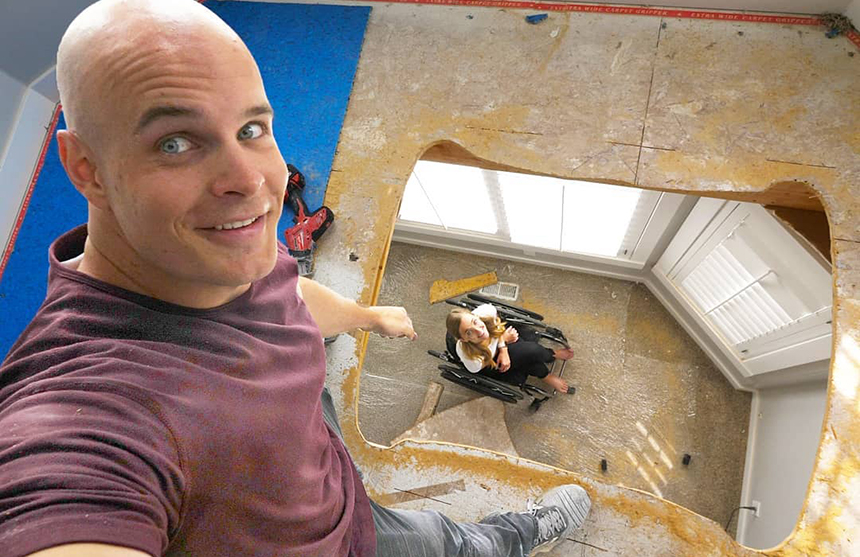
Nelson's personal life and engineering skills intersected significantly with his wife's needs, leading to the development of specialized mobility devices. In July 2019, prior to their wedding, Nelson installed a vacuum-powered residential elevator in their home to allow Kaylor independent access to all floors.
The installation process was documented in a video that garnered millions of views, highlighting the absence of affordable accessibility options in the housing market.
In 2020, the couple co-founded "Not a Wheelchair," a business dedicated to manufacturing affordable off-road mobility vehicles. The initiative began when Nelson spliced two electric bicycles together to create a prototype that would allow Kaylor to traverse hiking trails and rough terrain.
The prototype evolved into "The Rig," a fully electric, four-wheeled vehicle designed to be significantly cheaper than traditional off-road wheelchairs, which frequently cost upwards of $20, 000. The company manufactures these vehicles in Utah, utilizing standard bicycle components to ensure ease of repair and maintenance.
Personal Projects and Interests
Beyond consumer electronics, Nelson has pursued large- automotive and construction projects. He documented the excavation and construction of an underground bunker in his backyard, a multi-year project that tested various durability concepts. In 2022, he completed the conversion of a military-grade Humvee into a fully electric vehicle.
Nelson stated that the project aimed to juxtapose the vehicle known for the "worst gas mileage" with sustainable electric technology.
Nelson is also an electric vehicle enthusiast and has owned a Tesla Cybertruck. yet, in early 2025, he publicly expressed concerns regarding the vehicle's manufacturer and its CEO, Elon Musk. In March 2025, Nelson removed his business branding from the truck and announced plans to sell it, citing a desire to distance his personal brand from the controversies surrounding the company's leadership.
Legal Disputes
In November 2023, Nelson and the device skin manufacturer dbrand filed a federal lawsuit against the accessory company Casetify. The complaint alleged that Casetify had plagiarized Nelson's "Teardown" product line, which features high-resolution internal scans of electronic devices.
Nelson provided evidence showing that Casetify's products contained specific "Easter eggs", such as hidden slogans and his own channel logo, that he had digitally inserted into his original designs. The lawsuit underscored his aggressive stance on intellectual property protection within the creator economy.
Philanthropy
Zack Nelson has frequently used his platform and engineering skills to address accessibility and educational infrastructure gaps. Unlike creators who rely solely on direct cash donations, Nelson frequently designs and manufactures physical solutions to widespread problems, funding these ventures through his YouTube revenue and merchandise sales.
The "Not A Wheelchair" Initiative
In 2020, Nelson and his wife, Cambry Kaylor, launched "Not A Wheelchair," a project aimed at making off-road mobility accessible to people with disabilities. The initiative began after Nelson welded two electric bicycles together to create a vehicle that allowed Kaylor, a wheelchair user, to traverse terrain difficult for standard chairs.
Recognizing the prohibitive cost of existing off-road mobility devices, which frequently exceeded $10, 000, Nelson partnered with Utah Trikes to mass-produce "The Rig.".
The Rig launched with a price point of approximately $4, 750, significantly lower than market competitors. It features a top speed of 12 mph, a range of 10 to 20 miles per battery, and an aluminum frame designed for durability. While Nelson explicitly states the device is "not a medical device", a distinction that simplifies regulatory blocks and lowers costs, it has provided outdoor mobility to thousands of users.
In 2024, Nelson expanded this mission by introducing a custom manual wheelchair priced at $999. Standard custom manual wheelchairs cost between $3, 000 and $5, 000, a price point Nelson criticized as artificially inflated by insurance models.
To achieve this, Nelson invested in a 26, 000-square-foot manufacturing facility in Utah, equipped with laser cutters and CNC bending machines, to produce the chairs at near-cost.
The project prioritizes affordability and speed, with a focus on delivering custom-sized chairs in weeks rather than the months frequently required by traditional medical suppliers.
Educational Infrastructure in Kenya
In September 2022, Nelson announced the completion of a full- library in Budalangi, Busia County, Kenya. The project was executed in partnership with his close associate, Philip, a Kenyan native who had lived with Nelson's family in the United States. Nelson funded the $75, 000 construction cost entirely through proceeds from his YouTube channel.
The facility serves as the only library within a 100-mile radius, supporting ten primary schools, six high schools, and three colleges in the region. Beyond books and study spaces, the project addressed serious infrastructure needs.
Approximately $25, 000 of the budget was allocated to drilling an industrial borehole and installing solar-powered pumps, providing a consistent clean water supply for both the library and the surrounding community.
Nelson has stated his belief that "education can solve all of the world's problems," citing this philosophy as the primary driver for the investment.
Funding and Partnerships
Nelson funds his philanthropic efforts largely through his "JerryRigEverything" business ventures rather than soliciting direct donations. Revenue from his "Teardown" brand partnership with Dbrand and sales of his precision knife company directly subsidize the "Not A Wheelchair" operations.
For instance, he has sold limited-edition challenge coins specifically to purchase manufacturing equipment for the wheelchair factory. This self-sustaining model allows him to sell mobility devices at low margins without relying on external charity or venture capital.
| Project | Year Launched | Location | Primary Impact | Est. Cost/Value |
|---|---|---|---|---|
| The Rig (Off-Road Mobility) | 2020 | Global / Utah | Low-cost off-road electric mobility device | $4, 750 (Retail Price) |
| Budalangi Library & Water Well | 2022 | Budalangi, Kenya | Constructed library and solar water borehole | $75, 000 |
| The Manual Wheelchair | 2024 | Global / Utah | Custom manual wheelchair at 20% of market cost | $999 (Retail Price) |
serious Reception and Methodology
Zack Nelson's durability testing methodology, characterized by a standardized "scratch, burn, and bend" protocol, has established a new benchmark for consumer electronics assessment. Tech media outlets and industry analysts frequently cite his Mohs hardness tests as a primary verification method for manufacturer claims regarding screen materials.
His phrase "glass is glass, and glass breaks" became a staple in tech lexicon, emphasizing the physical limitations of premium materials even with marketing hyperbole. In 2015, Nelson's coverage of the Nexus 6P "Bendgate" incident drew significant attention when he demonstrated the device's structural weakness.
Critics initially accused him of compromising the device prior to testing, prompting Nelson to purchase a second unit and perform an uncut, single-take demonstration that confirmed the structural flaw, silencing detractors and validating his testing rigor.
The accuracy of his technical assessments faced scrutiny again in 2016 during the iPhone 7 sapphire lens controversy. Nelson's testing suggested the lens cover scratched at a level 6 on the Mohs, far the level 8 or 9 expected of pure sapphire.
This prompted an official response from Apple, which maintained that the lens was sapphire admitted it could fracture under specific pressure conditions. Independent analysis later supported Nelson's findings that the material, while containing sapphire, did not exhibit the scratch resistance of higher-grade sapphire used in luxury timepieces.
These high-profile disputes cemented his reputation as a consumer advocate to challenge major technology conglomerates.
Industry Impact and Right to Repair
Beyond durability, Nelson is a vocal proponent of the Right to Repair movement. His "teardown" videos evaluate devices not just for build quality for repairability, assigning scores based on the ease of battery replacement and component modularity.
This advocacy has influenced design choices; for instance, his consistent criticism of difficult-to-remove batteries and excessive adhesive use has been echoed by environmental groups and regulators.
In 2024, Nelson praised the HMD Skyline for its user-friendly repair design, marking a shift where manufacturers began actively courting his approval by prioritizing modular architecture.
His "Smartphone Durability Awards" have become an annual industry report card, with categories like "Most Repairable" and "Least Durable" directly impacting brand perception.
Philanthropy and Accessibility Innovation
Nelson's reception expanded beyond tech circles with the launch of "Not a Wheelchair" in 2020. Developed for his wife, Cambry, the project aimed to create an affordable, off-road mobility device.
The "Rig," constructed largely from standard e-bike components, retailed for approximately $4, 750, a price point significantly lower than traditional off-road wheelchairs which frequently cost upwards of $20, 000. Disability advocates and media outlets praised the initiative for democratizing access to outdoor recreation.
In November 2025, the Nebraska Democratic Party honored Nelson with the Carrie Howard Sunshine Award, recognizing his tangible contributions to accessibility and his advocacy for affordable mobility solutions.
Commercial Disputes and Legal Action
In November 2023, Nelson engaged in a high-profile legal battle against accessory manufacturer Casetify. Alongside skin manufacturer dbrand, Nelson filed a multimillion-dollar lawsuit alleging that Casetify stole their proprietary "Teardown" designs.
The evidence presented included specific "Easter eggs" hidden within Nelson's high-resolution scans, such as his channel's slogan and specific dates, that appeared verbatim on Casetify's products.
The lawsuit received widespread support from the creator community and tech journalism sector, viewed as a landmark case for protecting digital creator rights against corporate intellectual property theft. Casetify subsequently removed the disputed products from their website.
| Year | Event / Product | Nature of Controversy | Outcome |
|---|---|---|---|
| 2015 | Nexus 6P Bend Test | Accusations of rigged testing after device snapped in half. | Nelson released a second uncut video confirming the structural flaw; validated his testing method. |
| 2016 | iPhone 7 Sapphire Lens | Disputed Apple's claim of using pure sapphire crystal. | Apple issued a statement clarifying testing conditions; independent tests confirmed lower-than-expected scratch resistance. |
| 2020 | "The Rig" Launch | Introduction of a low-cost off-road mobility device. | Widespread praise for lowering costs; expanded into a full business "Not a Wheelchair." |
| 2023 | Casetify Lawsuit | Accused Casetify of stealing proprietary "Teardown" skin designs. | Casetify pulled products; case highlighted IP theft in the creator economy. |
| 2025 | Carrie Howard Award | Recognition for accessibility advocacy. | Solidified Nelson's status as a key figure in disability tech advocacy. |
Exploitation of Fashion Models in Music Video Productions
Fashion models in music video productions face unsafe conditions, pay abuses, and sexual assault. Models often lack power and protections, leading to exploitation and mistreatment on set. The entertainment industry’s glossy…
Read Full ReportProductivity Paradox: The AI Impact Assessment
The disconnect between capital expenditure in AI infrastructure and actual economic output is widening, challenging traditional financial models. The promise of a productivity boom fueled…
Australia’s Wildfire Relief Fund: Where Did the Money Go?
February 18, 2026 • Australia, All
The 2019-2020 Black Summer bushfires in Australia led to a record-breaking $640 million in philanthropic donations specifically for bushfire relief. Donations were heavily concentrated in…
Renewable Subsidy Allocation: Who wins auctions and who lobbies
January 13, 2026 • All, Energy
Renewable energy subsidies are crucial for shaping global energy production and mitigating climate change impacts. The allocation of subsidies involves a complex process influenced by…
Chemical plants: Community notification and emergency readiness
December 31, 2025 • All
Chemical plants in the U.S. pose significant risks to communities due to frequent accidents and inadequate emergency readiness. Insufficient communication protocols and compliance with national…
eCommerce Platforms and Small Retailers’ Profits: Empowering or Undermining?
October 11, 2025 • All, Reviews
Online marketplaces like Amazon are taking an increasing share of small retailers' revenue, impacting their profits. Small businesses are facing higher fees, advertising costs, and…
Shocking Crisis: Forced Labor in Informal Mining Sectors in Africa
October 3, 2025 • All
Africa's artisanal and informal mines are at the heart of a hidden crisis, with men, women, and children forced into labor to extract minerals for…