
Founding via the Williams College Defection and The Charity Fund
Financial Solvency and Enrollment Metrics 1821, 1900
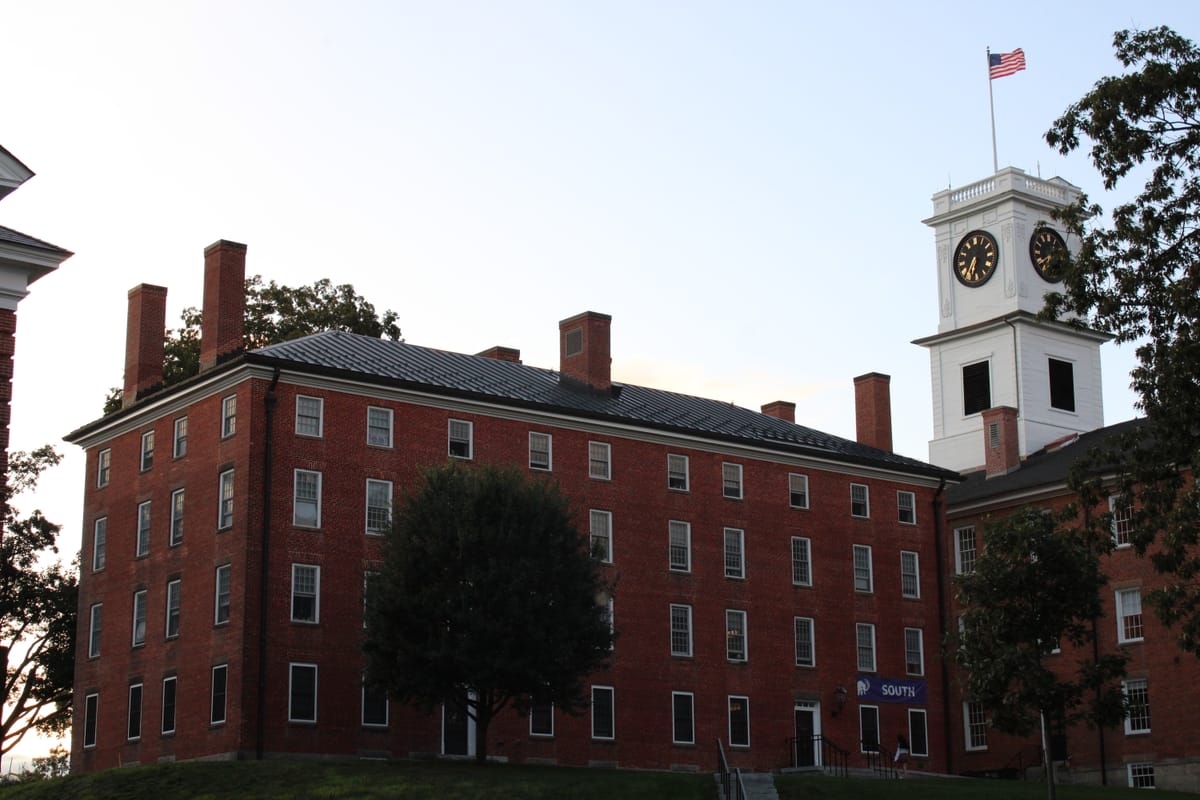
The financial history of Amherst College between 1821 and 1900 is a chronicle of near-ruin, desperate fundraising, and a slow, painful climb toward solvency. While the modern institution boasts an endowment exceeding $3. 9 billion as of 2025, the 19th-century reality was defined by a constant threat of liquidation. The college did not begin with a comfortable nest egg; it began with a "Charity Fund" and a gamble.
Upon its opening in September 1821, Amherst enrolled 47 students, a number that immediately its nonexistent resources. The Charity Fund, established in 1818 with a fundraising goal of $50, 000, was the institution's only financial lung. This fund was not a general endowment a targeted instrument designed to pay the tuition of "indigent young men of promising talents and hopeful piety." This restriction meant that while the college could attract students, it frequently absence the unrestricted cash flow necessary for operations, building maintenance, or faculty salaries. The Massachusetts Legislature, viewing the upstart college as a threat to the established Williams College, repeatedly denied petitions for a charter and state funding, forcing Amherst to rely entirely on private subscription lists and the "zeal of the inhabitants" of the Connecticut River Valley.
The college's enrollment surged in the 1830s, at one point rivaling Yale in size, this expansion masked a rotting financial core. By 1845, the institution was technically insolvent. The debt load had become unmanageable, and the "Williams Defection" had not yielded the immediate financial windfall President Moore had hoped for. It was Edward Hitchcock, inaugurated as president in 1845, who inherited this wreckage. Hitchcock, a geologist by trade, applied a forensic rigor to the college's books. His administration is credited with pulling the college back from the brink of bankruptcy, not through a sudden influx of wealth, through a grueling campaign of debt cancellation and austerity. By August 1847, Hitchcock announced that the college's crushing debts had been cancelled, a feat accomplished by convincing creditors to accept partial payments or write-offs, a "save the college" movement that rallied the local community.
The Civil War (1861, 1865) delivered another shock to the college's fragile stability. Enrollment plummeted as students enlisted; in 1861 alone, a hundred students attempted to join the Union Army immediately after a sermon by Professor William Seymour Tyler. While initially refused due to a absence of equipment, eventually joined the 21st Massachusetts Volunteer Infantry. The loss of tuition revenue was compounded by the death of students and alumni, including Frazar Stearns, the son of the college president. By 1871, the college had begun to recover, recording an enrollment of 244 students, the financial model remained precarious, heavily dependent on the generosity of donors like David Sears, who established the Sears Fund of Literature and Benevolence with $10, 000 in 1844.
The late 19th century saw a shift from survival to capital accumulation. The construction of Walker Hall in 1870, the "Temple of Science," signaled a new era of donor-funded expansion. yet, the true financial behemoth that Amherst would become was not yet visible. The endowment in 1900 was a fraction of its modern value, existing as a collection of specific restricted funds (such as the Class of 1900 Endowment Fund) rather than a unified investment vehicle. The contrast with the 21st century is clear: in 2025, the college's detailed fee exceeded $90, 000 annually, a figure that would have been incomprehensible to the administration of 1890, which struggled to secure even modest tuition payments from a student body largely composed of scholarship recipients.
| Year | Event / Metric | Significance |
|---|---|---|
| 1821 | 47 Students Enrolled | Inaugural class; reliance on Charity Fund for tuition. |
| 1825 | Charter Granted | Massachusetts Legislature officially recognizes the college after years of denial. |
| 1845 | Insolvency emergency | College "teetering on the brink of bankruptcy"; Edward Hitchcock becomes President. |
| 1847 | Debt Cancellation | Hitchcock announces the successful cancellation of major institutional debts. |
| 1861 | Civil War Enlistment | Significant enrollment drop; 100 students attempt to enlist immediately. |
| 1871 | 244 Students Enrolled | Post-war recovery; beginning of physical campus expansion (Walker Hall). |
Curricular Deregulation and the Open Curriculum Model
The curricular history of Amherst College is defined by a violent oscillation between rigid prescription and radical deregulation, a pendulum that swung from the authoritarian classical model of 1821 to the absolute academic libertarianism of the late 20th century. While the college's founding in 1821 established a curriculum anchored in Latin, Greek, and Calvinist theology, the institution's most significant intellectual experiment occurred not in its decade, in its sesquicentennial era. The "Open Curriculum," adopted in 1971, remains the college's defining academic signature in 2026, yet its existence is the result of a complex historical war over what constitutes an educated citizen. This absence of requirements is not an absence of structure a deliberate pedagogical strategy that forces students to construct their own intellectual architecture, a method that has faced repeated stress tests from the 19th-century "Parallel Course" to the 21st-century pressures of grade inflation and dominance.
The major challenge to the classical model arrived in 1827, six years after the college opened. The faculty, led by Professor Jacob Abbott, proposed a "Parallel Course" designed to run alongside the traditional classical track. This radical plan sought to substitute modern languages, specifically French and Spanish, for ancient Greek and Latin, while emphasizing mechanics, chemistry, and history. It was a visionary attempt to modernize higher education decades before the land-grant university movement. The Trustees approved the plan, and for a brief window, Amherst offered two distinct degrees. The experiment collapsed by 1829. The "Parallel Course" failed not because of a absence of student interest, because the faculty could not sustain the dual workload, and the public perceived the non-classical degree as inferior. The college retreated to the safety of the classical canon, a position it would largely hold for the century.
Following World War II, Amherst moved in the opposite direction of deregulation, implementing one of the most rigid core curricula in American higher education. In 1947, under the guidance of the Committee on Long Range Policy chaired by Professor Gail Kennedy, the faculty instituted the "New Curriculum." This program was a direct response to the fragmentation of knowledge and the perceived need for a unified Western democratic ethos in the atomic age. For over two decades, every Amherst freshman and sophomore marched through an identical sequence of courses: "Science 1-2" (physical sciences), "History 1-2" (Western civilization), and the legendary "English 1-2," a composition course that focused on the epistemology of writing rather than literature. This core curriculum was totalizing; it consumed 24 of the 32 courses required for graduation, leaving little room for electives until the junior year. It produced a shared intellectual vocabulary bred resentment among students and younger faculty who chafed under its prescriptive nature during the cultural upheavals of the 1960s.
The of this system was swift and absolute. In 1970, the Select Committee on the Curriculum released a report that recommended the abolition of all distribution requirements. The faculty vote that followed in 1971 did not tweak the core; it annihilated it. The new philosophy argued that 18-year-olds were capable of directing their own education and that the motivation derived from free choice would produce superior academic work compared to the coercion of requirements. By the 1971-1972 academic year, the core was gone. In its place stood the Open Curriculum, a model where the only college-wide requirement was a " -Year Seminar." There were no math requirements for poets, no poetry requirements for physicists, and no foreign language mandates. The college wagered its reputation on the belief that students, guided by faculty advisors, would voluntarily construct a balanced education.
As of the 2025-2026 academic year, the Open Curriculum endures, though it operates within a significantly altered demographic and economic reality. The sole universal requirement remains the -Year Seminar (FYS), a course capped at 15 students designed to introduce serious inquiry and writing. yet, the efficacy of this single checkpoint has faced scrutiny. A 2024 investigation by The Amherst Student highlighted extreme variability in FYS rigor, noting that while seminars offered intensive writing instruction, others absence clear standards, leaving students unprepared for college-level composition. Because the FYS is the only shared academic experience, inconsistencies here through the student's entire four-year trajectory. The college relies heavily on the advising system to mitigate these risks, the quality of advising varies, leading to a phenomenon where students in fields frequently face a de facto core curriculum due to prerequisite chains, while humanities students face a paralysis of choice.
The most significant recent of the Open Curriculum's purity occurred in February 2023, when the faculty voted to alter the requirements for Latin Honors (summa, magna, and cum laude). Beginning with the Class of 2027, students seeking these distinctions must satisfy a "breadth requirement," completing at least one course in each of four divisions: the arts, humanities, sciences, and social sciences. While this does not affect the general degree, it imposes a shadow core curriculum on the college's highest achievers, approximately 50% of the student body who write senior theses. Critics argued this change, which took effect fully by 2026, signaled a "quiet death" of the open model, reintroducing distribution requirements through the backdoor of prestige. The administration defended the move as a necessary guardrail to ensure that "honors" reflected a liberal arts education rather than narrow specialization.
Data from the 2020s reveals the consequences of this deregulation on student behavior. Without the compulsion of a core, enrollment patterns have shifted dramatically toward the social sciences and fields, mirroring national trends accelerated by the absence of protective tariffs for the humanities. Economics, Mathematics, and Computer Science have seen surging enrollments, while traditional departments like English and Philosophy fight for market share. The Open Curriculum allows for double majoring at high rates; nearly 40% of Amherst students graduate with two majors, a statistic that reflects the freedom to combine fields, such as Neuroscience and Music, without the friction of general education requirements. This flexibility is the model's primary selling point, allowing for the "Amherst paradox" where the absence of rules creates a more rigorous, self-imposed discipline for the motivated student.
In early 2025, the faculty approved further structural changes to the daily schedule to accommodate this free-market course selection. The new schedule, implemented for the 2025-2026 year, shortened classes from 80 to 75 minutes and expanded time slots to de-conflict popular courses, addressing a long-standing logistical failure where the Open Curriculum was theoretically open practically constricted by scheduling bottlenecks. These logistical tweaks acknowledge a hard truth: a curriculum without requirements requires a logistical infrastructure that is perfectly fluid. When every student has a unique schedule, the conflict matrix becomes exponentially more complex than in a fixed-track system.
The survival of the Open Curriculum into 2026 is an anomaly in American higher education, shared only by Brown University and of others. It rests on a fragile compact between student and institution. The college provides the resources, an 8-to-1 student-faculty ratio and an endowment that permits small classes, and the student provides the agency. When this compact fails, the result is a fragmented education where a student can graduate without ever encountering a laboratory science or a pre-modern history course. When it succeeds, it produces the "Amherst mind," an intellect defined not by what it was forced to study, by what it chose to pursue. The 2023 introduction of breadth requirements for honors suggests that the faculty's faith in this compact is not absolute, yet the fundamental architecture of 1971 remains the operating system of the college.
Endowment Growth and Asset Allocation Strategies 1970, 2025

The financial trajectory of Amherst College from 1970 to 2026 represents a shift from conservative stewardship to aggressive, high-risk, high-reward capital appreciation. For much of the 20th century, the college maintained a traditional portfolio dominated by domestic equities and fixed income. This strategy, while safe, left the institution to the stagflation of the 1970s, where purchasing power eroded even as nominal values held steady. By the late 1990s, Amherst, following the lead of Yale's David Swensen, began a structural pivot toward the "Endowment Model." This strategy prioritized equity orientation and diversification into alternative assets, specifically hedge funds, private equity, and venture capital, to capture the illiquidity premium that public markets could not offer.
The implementation of this strategy required professionalization. In 2003, the college hired Mauricia Geissler as its Chief Investment Officer (CIO). Before her arrival, the Investment Committee of the Board of Trustees managed the portfolio directly. Geissler established a dedicated Investment Office, eventually moving it from the rural campus in Amherst to Boston to gain proximity to top-tier asset managers. Under her tenure (2003, 2019), the endowment grew from approximately $900 million to $2. 4 billion. This period also saw the endowment become the dominant revenue source for the college, surpassing tuition and fees. By 2025, the endowment funded over 50% of the operating budget, a dependency that heightened the for investment performance.
The aggressive allocation to illiquid assets faced a severe stress test during the 2008 Global Financial emergency. Between June 2008 and June 2009, the endowment's value plummeted from a peak of $1. 7 billion to approximately $1. 3 billion, a loss of roughly 26%. The emergency was not one of valuation of liquidity. With of capital locked in private equity and hedge funds that gated redemptions, the college faced a cash squeeze. The administration, led by President Anthony Marx, implemented a hiring freeze, halted construction projects, and reduced the operating budget. This trauma forced a re-evaluation of liquidity management, though it did not deter the college from its long-term commitment to alternative investments. The recovery was steady; by 2014, the endowment had reclaimed its pre-recession high.
In 2019, Letitia Johnson succeeded Geissler as CIO. Johnson, formerly of Cambridge Associates, inherited a portfolio heavily skewed toward private markets. Her strategy emphasized a "bottom-up" method to manager selection rather than rigid adherence to top-down asset allocation. This philosophy posits that access to the top decile of investment managers matters more than the specific asset class label. The efficacy of this method was demonstrated in Fiscal Year 2021, when the endowment posted a 52. 2% return, driving the value to a historic peak of $3. 78 billion. This surge was driven largely by venture capital windfalls during the post-pandemic technology boom.
The volatility inherent in this high-beta portfolio became clear in the subsequent "lean years." In FY2022, the endowment lost 10% of its value, and in FY2023, it returned a modest 4. 1%, lagging behind public market benchmarks. The heavy allocation to private equity became a temporary drag as valuations in private markets adjusted more slowly than public stocks, a phenomenon known as the "denominator effect." Yet, the strategy vindicated itself in FY2025. The endowment returned 14. 5%, bringing the college's specific endowment value to $3. 90 billion (excluding the Folger Shakespeare Library assets, which are also managed in the Long-Term Investment Pool). This performance allowed Amherst to keep pace with its arch-rival Williams College, whose endowment stood at $3. 93 billion in the same period.
To mitigate the impact of this volatility on the college's annual budget, Amherst uses a "smoothing" spending rule. The payout for any given year is calculated as a weighted average: 70% is based on the previous year's spending adjusted for inflation, and 30% is based on the average market value of the endowment over the preceding 12 quarters. This formula acts as a shock absorber. When the endowment dropped in 2022, the operating budget did not face immediate cuts. Conversely, the massive gains of 2021 did not trigger an immediate spending spree, rather were banked to support steady growth in financial aid and faculty salaries over the subsequent decade.
Parallel to financial performance, the endowment faced intense political pressure regarding fossil fuel investments. For years, student activists demanded divestment, a call the Board of Trustees initially resisted, citing fiduciary duty and the complexity of commingled funds. The turned in March 2021, when the Board formally announced a commitment to phase out all exposure to fossil fuels. The college pledged to make no new investments in public or private fossil fuel funds and to wind down existing partnerships. By 2025, the college had reduced these holdings by over 60%, with a target of full divestment by 2030. This decision marked a shift in the definition of fiduciary responsibility to include environmental risk and reputational alignment.
As of early 2026, the Long-Term Investment Pool (LTIP), which includes the assets of the Folger Shakespeare Library, exceeds $4. 5 billion. The asset allocation remains distinctively modern: approximately 46% in private equity and venture capital, 31% in public equities, 11% in absolute return (hedge funds), and minimal allocations to cash and fixed income. This aggressive posture reflects a belief that an institution with an infinite time horizon should accept short-term illiquidity in exchange for superior long-term. The table details the endowment's value and return history through serious inflection points.
| Fiscal Year | Endowment Value (Billions) | Annual Return | Context |
|---|---|---|---|
| 1993 | $0. 33 | N/A | Pre-Endowment Model Era |
| 2008 | $1. 70 | +5. 0% | Peak before Global Financial emergency |
| 2009 | $1. 30 | -26. 0% | Impact of Financial emergency |
| 2019 | $2. 40 | +10. 1% | Transition from Geissler to Johnson |
| 2021 | $3. 78 | +52. 2% | Historic High (Venture Capital Boom) |
| 2022 | $3. 32 | -10. 0% | Market Correction |
| 2024 | $3. 55 | +10. 2% | Recovery Begins |
| 2025 | $3. 90 | +14. 5% | Surpassed 2021 Peak (Nominal) |
The management of the endowment also involves navigating the "Endowment Tax" introduced by the Tax Cuts and Jobs Act of 2017. This 1. 4% excise tax on net investment income applies to private colleges with assets exceeding $500, 000 per student. With a student body of roughly 1, 900 and assets method $4 billion, Amherst falls squarely into this category. The tax creates a new liability, siphoning millions of dollars annually that would otherwise support operations. Even with this headwind, the Investment Office continues to target a real return (after inflation) of 5% to maintain intergenerational equity, ensuring that the endowment supports future students as generously as it does the current cohort.
The Lord Jeffery Amherst Mascot Removal and Historical Revisionism
The systematic erasure of Lord Jeffery Amherst from the institution that bears his name represents one of the most clinically executed exercises in historical revisionism in modern American academia. For nearly a century, the "Lord Jeff" mascot served as the college's unofficial yet omnipresent symbol, a caricature of the 18th-century British general who commanded forces in North America during the French and Indian War. By 2016, this figure was unpersoned by the Board of Trustees, a decision driven not by external pressure by an internal ideological insurrection known as the "Amherst Uprising." The catalyst for this purge was a series of letters written in 1763, specifically correspondence between General Amherst and Colonel Henry Bouquet, in which the commander advocated for the distribution of smallpox-infected blankets to Native American tribes. "You do well to try to inoculate the Indians by means of blankets, as well as to try every other method that can serve to extirpate this execrable race," Amherst wrote. This documented advocacy of biological warfare became the fulcrum upon which the college's modern identity emergency turned.
The timeline of removal was rapid and decisive. In November 2015, a student-led movement occupied the Robert Frost Library, issuing a list of non-negotiable demands to President Biddy Martin. Among these was the immediate condemnation of the mascot as a symbol of white supremacy and genocide. The administration's response was swift capitulation. A faculty vote held shortly after the sit-in was unanimously in favor of removal, a clear display of ideological conformity. A subsequent poll of the student body revealed that 83 percent supported decoupling the institution from the general. On January 26, 2016, Board Chair Cullen Murphy issued a statement confirming that "Lord Jeff" would no longer be used in any official capacity. The rationale was explicit: the symbol, intended to unify, had become a source of division. The college, yet, stopped short of the logic of its own argument, renaming the institution itself, creating a paradox where the name "Amherst" remains on every diploma while the man himself is anathema.
The vacuum left by the general's excision was filled in 2017 through a bureaucratic selection process that prioritized inoffensiveness over tradition. The "Mascot Committee" received 2, 046 suggestions and tallied 9, 295 votes from alumni, students, and staff. The winner, announced on April 3, 2017, was the "Mammoth," a reference to a Columbian mammoth skeleton housed in the college's Beneski Museum of Natural History. The choice was safe, prehistoric, and notably devoid of human agency or colonial baggage. The runner-up, "Purple & White," was a color scheme, indicating of the community preferred no mascot at all to a contrived replacement. The "Lord Jeffery Inn," a historic hotel owned by the college, underwent a similar sanitization, rebranding itself as the "Inn on Boltwood" in 2019 to sever its final nominal link to the problematic general.
Financial data from the decade following the removal contradicts the popular "go woke, go broke" narrative frequently applied to such controversies. While vocal alumni threatened to withhold donations, the college's endowment continued its aggressive expansion. By the fiscal year ending June 30, 2025, the endowment had surged to approximately $4. 8 billion, recovering strong from post-pandemic volatility. The college's ability to alienate traditionalists while simultaneously attracting record-breaking capital suggests that the mascot removal was not a financial liability a calculated rebranding strategy aligned with the values of modern elite philanthropy. The donor class, it appears, was either indifferent to the erasure of Lord Jeff or actively supportive of the institution's progressive pivot.
The revisionist momentum did not remain contained within the campus gates. Emboldened by the college's decision, activists turned their attention to the town of Amherst itself. In 2022 and 2023, a campaign emerged to rename the municipality, arguing that a town honoring a proponent of biological warfare was a moral stain on its residents. Unlike the college, yet, the town's governance structure proved more resistant to rapid symbolic changes, and the effort stalled. Yet, the college continued to push the boundaries of its cultural reconstruction. By 2026, the administration faced new backlash over an orientation event in the Johnson Chapel that critics described as "sexualized," leading to the dismissal of staff and a bizarre subsequent job posting for a Christian chaplain specifically charged to "advance equity." This sequence of events highlights a permanent state of revolution at Amherst, where the removal of a mascot was the opening salvo in a perpetual war over symbols, history, and the very definition of the institution's values.
| Date | Event | Key Metric / Outcome |
|---|---|---|
| Nov 2015 | Amherst Uprising Sit-In | List of demands issued; library occupied. |
| Jan 2016 | Board of Trustees Decision | Official removal of "Lord Jeff" mascot. |
| Apr 2017 | New Mascot Announcement | "Mammoths" selected (beat "Purple & White"). |
| Jan 2019 | Inn Renaming | Lord Jeffery Inn becomes "Inn on Boltwood." |
| 2022-2023 | Town Renaming Campaign | Failed effort to rename the town of Amherst. |
| Jun 2025 | Endowment Report | Fund reaches ~$4. 8 billion, boycott threats. |
| Feb 2026 | Chapel Controversy | Backlash over orientation event; staff dismissals. |
Admissions Demographics and the Ban on Legacy Preferences

For nearly two centuries, Amherst College operated as a of white, male, Protestant privilege. While the institution was nominally founded in 1821 to educate indigent young men for the ministry, its admissions quickly evolved to serve the sons of the New England elite. By the mid-20th century, the "gentleman's C" was a cultural fixture, and the route to admission was frequently paved by lineage rather than intellectual merit. The college did not admit women until 1975. It remained overwhelmingly white well into the 1980s. This historical inertia made the administration's October 2021 announcement a seismic shift in the school's operational philosophy. President Biddy Martin declared that Amherst would end the practice of legacy preference, the policy that gave a statistical advantage to the children of alumni. At the time, legacy students comprised approximately 11 percent of each incoming class.
The decision to ban legacy p
Campus Architecture and the 2026 Decarbonization Project
The architectural identity of Amherst College is rooted in the geological reality of its site: a ridge of Pelham gneiss rising above the Connecticut River Valley. This elevation, chosen by Zephaniah Swift Moore after his departure from Williams, dictated the linear arrangement of the college's earliest structures. South College, completed in 1821, established the precedent. Built from local brick and stone, it functioned as a dormitory, recitation hall, and library in a single volume. Its austere Federal style reflected the financial precarity of the "Charity Institution," where aesthetics were secondary to survival. The construction of Johnson Chapel in 1827, yet, signaled a shift toward permanence. Designed by Captain Isaac Damon, the chapel's Greek Revival portico and Doric columns provided the campus with a visual anchor that remains its defining image. The chapel was not a religious center; it was a declaration of civic ambition, funded by the bequest of Adam Johnson, a Pelham farmer whose name was affixed to the building to secure his estate against contesting heirs.
For nearly two centuries, the campus expanded outward from this "College Row," accumulating styles ranging from the Richardsonian Romanesque of the old gymnasium to the mid-century modernism of the social dormitories. Yet, the most radical alteration to the college's physical plant occurred not in the 19th or 20th centuries, in the years leading up to 2026. This transformation was driven less by aesthetic theory than by an engineering mandate: the Climate Action Plan (CAP). By March 2026, the college had turned its grounds into an active excavation site, executing a massive infrastructure overhaul designed to decouple the institution from fossil fuels by 2030. The architectural narrative of Amherst shifted from the visible facades of red brick to the invisible network of pipes and wells buried beneath the quad.
The pivot point for this new era was the completion of the Science Center in 2018. Designed by the firm Payette, the 250, 000-square-foot structure replaced the obsolete Merrill Science Center. The building was an experiment in energy performance, achieving an Energy Use Intensity (EUI) of 91 kBtu per square foot per year, approximately 76 percent less than a typical laboratory building of its class. Its design broke the monolithic massing of previous academic blocks, separating high-intensity research labs from low-intensity offices and commons. The "Winter Garden," a glass-enclosed atrium, used convection and automated shading to manage thermal loads without heavy reliance on mechanical cooling. This structure proved that high-design architecture could function as a thermal machine, setting the baseline for all subsequent campus development.
The Decarbonization Project, formally launched in the early 2020s, attacked the college's reliance on a centralized steam heating system. For a century, Amherst had burned bunker oil and natural gas to push high-pressure steam through miles of aging pipes, a method plagued by thermal and safety risks. The CAP mandated a switch to Low-Temperature Hot Water (LTHW), a system circulating water at 130°F rather than steam at 300°F. This reduction in temperature allowed the college to use ground-source heat pumps, which extract thermal energy from the earth. By early 2026, construction crews had bored hundreds of geothermal wells, reaching depths of 500 to 800 feet, into the bedrock beneath the athletic fields and parking lots. These wells act as a thermal battery, storing heat during the summer and releasing it during the winter.
The disruption caused by this transition was total. Between 2023 and 2026, the campus resembled a quarry. Trenches for the new LTHW distribution piping severed the main quad, forcing students and faculty to navigate a maze of fencing and temporary. The "Big Dig," as it was colloquially known, required the systematic retrofitting of over 80 existing buildings. Historic structures like South College and Johnson Chapel were internally surgically altered, their steam radiators replaced with low-temperature fan coil units. The project demonstrated that historic preservation in the 21st century is largely a matter of mechanical retrofitting; the Georgian exteriors remained untouched, while the metabolic systems within were completely replaced.
Rising from the demolition of the old Merrill Science Center, the new Student Center and Dining Commons stands as the architectural capstone of this period. Designed by the Swiss firm Herzog & de Meuron, the building is scheduled for a soft opening in August 2026, with final interior work proceeding rapidly as of March. The architects, known for the Tate Modern in London and the Bird's Nest in Beijing, chose to engage directly with the site's history by repurposing the concrete foundation of the demolished Merrill building. This decision significantly reduced the project's embodied carbon, the emissions associated with material extraction and construction, by avoiding the need to pour thousands of tons of new concrete.
The Student Center is an all-electric building, designed to plug directly into the new geothermal grid. It features a mass timber structure, a renewable alternative to steel that further sequesters carbon. The design avoids the monumentalism of the 19th-century campus, opting instead for a porous, multi-level layout that integrates indoor and outdoor spaces. A "Winter Garden" and open terraces connect the interior social spaces with the Holyoke Range to the south. Unlike the inward-facing of the 1960s, the new center is transparent, using high-performance glazing to blur the boundary between the climate-controlled interior and the natural environment. The kitchen, traditionally a massive consumer of natural gas, operates entirely on electric induction technology, eliminating the combustion of fossil fuels for cooking.
The financial of these interventions is significant. The decarbonization effort and the new Student Center represent hundreds of millions of dollars in capital investment, funded through a combination of debt financing and donor support. Critics have noted the high cost per ton of carbon saved, arguing that such resources could have been deployed more elsewhere. Yet, the administration maintained that the project was a necessary proof-of-concept for the higher education sector. By 2026, the college had successfully converted the core campus loop to hot water, and the central steam plant, once the beating heart of the college's infrastructure, was slated for decommissioning. The smokestack that had defined the skyline for decades would soon become a relic, a monument to a bygone era of combustion.
The architectural legacy of Amherst College in 2026 is defined by this duality: the preservation of the visible past and the radical reconstruction of the invisible present. The brick rows of 1821 stand intact, they are heated by the bedrock. The new architecture, exemplified by the Student Center, does not seek to mimic the Greek Revival style to perform alongside it, adhering to strict carbon budgets rather than stylistic dogmas. The campus has become a hybrid entity, where 19th-century masonry shells house 21st-century thermal technologies, and where the ground itself has been instrumentalized as part of the college's mechanical plant.
The Mead Art Museum and Russian Center Art Collections
The Mead Art Museum, established in 1949, stands as a physical manifestation of the Gilded Age wealth that flowed into Amherst College during the early 20th century. The building itself resulted from the bequest of William Rutherford Mead, Class of 1867, a partner in the preeminent architectural firm McKim, Mead & White. While the structure bears the Mead name, the collection's backbone relies heavily on the industrial fortunes of alumni like Herbert L. Pratt, Class of 1895, a pivotal figure in the Standard Oil Trust. These benefactors did not donate funds; they transferred entire architectural environments and cultural archives to the college, transplanting European and Russian history to the Connecticut River Valley.
The museum's most aggressive architectural acquisition is the Rotherwas Room. Commissioned in 1611 by Sir Roger Bodenham for his estate in Herefordshire, England, this Jacobean parlor functioned as a dining space for British nobility for three centuries. In a display of American industrial purchasing power, the room was dismantled, shipped across the Atlantic, and eventually bequeathed to Amherst by Herbert Pratt in 1944. The installation within the Mead is not a reproduction; it is the original walnut paneling and oak mantelpiece, extracted from its English context and reassembled in Massachusetts. The stained glass in the room arrived via a separate route, coming from the collection of George D. Pratt, Class of 1893, further cementing the Pratt family's dominance over the museum's early identity.
While the Pratt bequests represent the extraction of Western European heritage, the Amherst Center for Russian Culture (ACRC) and its associated art collection represent a calculated preservation of Soviet-suppressed creativity. The driving force behind this accumulation was Thomas P. Whitney, Class of 1937. Whitney served as a diplomat and translator at the U. S. Embassy in Moscow from 1944 to 1953, a period coinciding with the height of Stalinist repression. During his tenure in the Soviet Union, Whitney used his diplomatic access to acquire manuscripts, books, and artworks that were officially banned or censored by the state.
Whitney's acquisition strategy was methodical. He married a Russian woman, Yulia, and remained in Moscow until after Stalin's death, returning to the United States in 1953. His collection grew to become one of the largest private holdings of Russian literary and artistic materials in the West. In 1991, Whitney founded the ACRC at Amherst, and in 2001, he donated his art collection to the Mead. This gift included over 400 works, fundamentally altering the museum's scope. The collection features major pieces by avant-garde artists such as Natalia Goncharova, Mikhail Larionov, and Alexander Rodchenko, figures whose work defined the explosive creativity of pre-revolutionary Russia before facing Soviet suppression.
The distinction between the Mead Art Museum and the Russian Center is bureaucratic rather than physical. The Mead acts as the custodian for the art, while the Center, located in Webster Hall, houses the manuscripts and books. This bifurcation requires close coordination between the two entities. The Whitney collection allows Amherst to function as a primary research site for Slavic studies, drawing scholars who would otherwise need to travel to Moscow or St. Petersburg. The financial value of these works has appreciated substantially since their donation, though the college rarely discloses specific appraisals for security and insurance reasons.
The following table details the primary donor streams that established the Mead's core identity:
| Donor | Class Year | Source of Wealth/Influence | Key Contribution | Acquisition Era |
|---|---|---|---|---|
| William R. Mead | 1867 | Architecture (McKim, Mead & White) | Funding for the Museum Building | 1928 Bequest (Built 1949) |
| Herbert L. Pratt | 1895 | Standard Oil of New York | The Rotherwas Room (1611), American Art | 1944 |
| Thomas P. Whitney | 1937 | Diplomacy / Translation | Russian Avant-Garde Art, ACRC Endowment | 1991 (Center), 2001 (Art) |
| George D. Pratt | 1893 | Standard Oil / Philanthropy | Stained Glass, Ancient Artifacts | 1930s-1940s |
By 2024, the Mead held approximately 20, 000 objects, spanning 5, 000 years of human history. yet, the museum's operational focus shifted significantly in the 2020s under the directorship of Siddhartha V. Shah, appointed in 2022. Shah, previously with the Peabody Essex Museum, initiated a strategic pivot toward "intersectional learning" and the interrogation of the museum's own collecting practices. This shift was not rhetorical; it was a necessary response to the changing legal and ethical standards governing museum curation in the United States.
The implementation of revised Native American Graves Protection and Repatriation Act (NAGPRA) regulations in January 2024 forced the Mead, like peer institutions, to conduct a rigorous audit of its holdings. The new federal rules eliminated the category of "culturally unidentifiable" remains, closing a loophole that museums had used for decades to retain Indigenous artifacts. Amherst College had already begun addressing this through initiatives like the "Boundless" exhibition (2023-2024), which linked the Kim-Wait Eisenberg Collection of Native American Literature with the Mead's art holdings. This project aimed to contextualize Indigenous objects not as static relics as part of a living literary and cultural tradition.
The museum's ancient Assyrian reliefs present another area of provenance complexity. Dating to the 9th century BCE from the palace of Ashurnasirpal II, these massive stone slabs arrived at Amherst in the mid-19th century, sent by missionaries and alumni involved in early archaeological excavations in present-day Iraq. While not currently subject to the same repatriation demands as the Benin Bronzes or NAGPRA-covered items, they represent the extraction of cultural patrimony during the Ottoman era. The museum faces the challenge of displaying these objects while acknowledging the imperialist method that brought them to a small college in Massachusetts.
Financially, the Mead operates with a degree of autonomy supported by specific endowments, including the Julia A. Whitney Fund for Russian Art. This financial insulation allows the museum to pursue academic exhibitions that may not drive high foot traffic serve the college's pedagogical mission. The integration of the museum into the curriculum is aggressive; classes from departments ranging from Chemistry to English regularly use the object study room. This functional use of the collection distinguishes the Mead from a public gallery; its primary client is the student body, and its primary metric of success is curricular integration rather than ticket sales.
As of March 2026, the Mead continues to grapple with the dual identity of being a repository for Gilded Age acquisitions and a center for progressive inquiry. The tension between the Pratt family's Standard Oil legacy and the modern mandate to decolonize the museum creates a complex operating environment. The physical structure remains a monument to 19th-century wealth, while the programming inside attempts to the very hierarchies that built the collection.
Folger Shakespeare Library and Emily Dickinson Museum Ownership
The Trustees of Amherst College hold title to two of the world's most significant cultural repositories: the Folger Shakespeare Library in Washington, D. C., and the Emily Dickinson Museum in Amherst, Massachusetts. These assets are not satellite campuses or honorary affiliations; they are wholly owned properties of the College, managed through a complex governance structure that binds the small liberal arts institution to the global epicenter of Shakespearean scholarship and the intimate home of America's most enigmatic poet.
Henry Clay Folger, an 1879 Amherst graduate and later chairman of Standard Oil of New York, orchestrated the College's acquisition of his life's work. Together with his wife, Emily Jordan Folger, he amassed the world's largest collection of the printed works of William Shakespeare, including eighty-two copies of the 1623 Folio. Upon his death in 1930, Folger's stunned the academic world by placing the administration of the library not in the hands of a federal agency or a large research university, under the stewardship of the Trustees of Amherst College. The library opened in 1932 on Capitol Hill, adjacent to the Library of Congress. While the Folger operates with its own Board of Governors responsible for daily oversight, the Amherst Trustees retain fiduciary and legal authority, managing the library's endowment, a fund separate from the College's own $4 billion pool yet inextricably linked to its corporate identity.
The financial magnitude of this relationship was made visible during the Folger's massive renovation project, which concluded with a reopening in June 2024. The $80. 5 million capital project, funded through a combination of philanthropic campaigns and institutional reserves, transformed the 1932 Paul Philippe Cret building. The renovation added the 12, 000-square-foot Adams Pavilion, created new exhibition halls to display the Folios permanently, and overhauled accessibility. This modernization effort show the College's load of stewardship: maintaining a world-class research facility in a different federal jurisdiction requires a sophisticated administrative apparatus that extends far beyond the typical scope of a brilliantly focused undergraduate college.
In Amherst, the College's ownership of the Emily Dickinson Museum represents a more localized equally complex consolidation of history. The museum comprises two historic houses: the Homestead, where the poet was born and lived most of her life, and The Evergreens, the Italianate home of her brother Austin and his family. The College's acquisition of these properties occurred in stages, reflecting the fractured lineage of the Dickinson estate. Amherst College purchased the Homestead in 1965 from the Parke family to prevent its chance demolition or commercial misuse, initially using it for faculty housing while allowing limited public tours. The Evergreens, yet, remained in the possession of the Dickinson heirs until 1988, when it passed to the Martha Dickinson Bianchi Trust.
The unification of the site did not occur until 2003, when the College and the Trust executed a merger that transferred ownership of The Evergreens to Amherst College, formally creating the Emily Dickinson Museum. This legal consolidation allowed for a preservation strategy, which has since been aggressively funded. A pivotal moment in the museum's recent history was the receipt of a $25 million bequest from William McC. Vickery (Class of 1957), a portion of which established a dedicated endowment for the museum. This funding facilitated a rigorous restoration of the Homestead's interior, completed in 2022, which installed period-accurate HVAC systems and restored the architectural finishes to their 1855 appearance. The project relied on forensic analysis of paint and wallpaper fragments to recreate the environment Dickinson inhabited, moving the property from a static memorial to an active interpretive site.
| Year | Event | Details |
|---|---|---|
| 1930 | Folger Bequest | Henry Clay Folger leaves library and endowment to Amherst Trustees. |
| 1932 | Folger Opening | Library opens on Capitol Hill, Washington, D. C. |
| 1965 | Homestead Purchase | Amherst College buys Dickinson Homestead from Parke family. |
| 2003 | Museum Merger | The Evergreens transferred to College; Emily Dickinson Museum created. |
| 2022 | Homestead Restoration | Completion of major interior and systems overhaul funded by Vickery bequest. |
| 2024 | Folger Reopening | Completion of $80. 5 million renovation and expansion project. |
The governance model for both institutions relies on a "satellite" board structure. The Folger Board of Governors and the Emily Dickinson Museum Board of Governors operate with significant autonomy regarding programming and fundraising, yet they report to the Amherst College Board of Trustees. This structure insulates the College's operating budget from the volatility of museum management while retaining the prestige and academic resources of the assets. For the Folger, this means Amherst College controls the premier center for Shakespeare studies in the United States. For the Dickinson Museum, it means the College owns the physical and intellectual heart of the town's literary history, cementing a monopoly on the Dickinson legacy that began when the poet's father and brother served as the College's treasurers in the 19th century.
Security and preservation remain paramount. The theft of art from the College's Mead Art Museum in 1975, though distinct from the Dickinson properties, serves as a historical reminder of the vulnerabilities inherent in holding high-value cultural assets. Today, both the Folger and the Dickinson Museum use state-of-the-art climate control and security systems, a need given that the Folger houses materials worth hundreds of millions of dollars and the Dickinson Homestead protects the "soul" of American poetry. The College's role has evolved from passive recipient of bequests to active developer of cultural infrastructure, ensuring that these 19th-century legacies survive the demands of the 21st century.
NESCAC Athletic Performance and NCAA Division III Titles

The athletic identity of Amherst College is defined by a paradox: a rigid adherence to the New England Small College Athletic Conference (NESCAC) philosophy of "academics," contrasted against a ruthless, high-capital operation that frequently functions like a professional development system. While the college officially prohibits athletic scholarships and restricts postseason play compared to other NCAA conferences, the Amherst Mammoths (formerly the Lord Jeffs) have engineered a machine of dominance that secured 15 NCAA Division III team championships between 2000 and 2025. This era of conquest was not a byproduct of spirited amateurism the result of aggressive recruiting, massive facility investments, and coaching tenures that spanned decades.
The of this athletic empire is the rivalry with Williams College, known as "The Biggest Little Game in America." This contest is not simply a football match; it is a ritualized reenactment of the 1821 schism where Zephaniah Swift Moore defected from Williams to found Amherst. The hostility is genuine and historical. Since their meeting in 1884, the two institutions have clashed 139 times. As of the conclusion of the 2025 season, Williams retains the statistical upper hand with a series record of 76, 58, 5. Yet, Amherst claimed a pivotal victory in November 2025, defeating the Ephs 14, 13 in a defensive grinder decided by a defensive two-point conversion and four field goals from kicker Hudson Fulcher-Melendy. This win snapped a recent Williams streak and served as a potent morale injection for the post-pandemic athletic administration.
While football provides the pageantry, the basketball programs have provided the hardware. For 42 years, David Hixon (Class of '75) patrolled the sidelines of LeFrak Gymnasium, constructing a program that won 826 games. Hixon, who retired in 2020, led the men's team to national titles in 2007 and 2013. His departure marked the end of a specific era of paternalistic coaching, yet the infrastructure he built remained. On the women's side, Head Coach G. P. Gromacki turned the program into a statistical anomaly of perfection. Between 2016 and 2018, the women's basketball team went on a 68-game winning streak, securing back-to-back NCAA Division III National Championships in 2017 and 2018 with consecutive 33, 0 records. In February 2024, Gromacki became the fastest coach in NCAA history, across all divisions, men's or women's, to reach 600 career wins, achieving the mark in just 686 games.
The college has also established itself as a powerhouse in men's soccer and tennis, sports that benefit heavily from the college's ability to recruit internationally and from affluent preparatory schools. The men's soccer program, led by Justin Serpone, broke through for its national title in 2015. They repeated the feat nearly a decade later, winning the 2024 NCAA Championship in a penalty-kick shootout against NESCAC rival Connecticut College. Similarly, the men's tennis team secured national crowns in 2011 and 2014, frequently overwhelming opponents with a roster depth that few Division III schools could match.
| Sport | Gender | Championship Years | Notable Metric |
|---|---|---|---|
| Basketball | Men | 2007, 2013 | Coach David Hixon: 826 career wins |
| Basketball | Women | 2011, 2017, 2018 | Two consecutive 33-0 seasons (2017-18) |
| Soccer | Men | 2015, 2024 | 2024 Title won vs. Conn College (PKs) |
| Tennis | Men | 2011, 2014 | Dominant 2010s era |
| Tennis | Women | 1999 (Team Title disputed/Runner up), 2003 (Confirmed) | Consistent Elite Eight appearances |
| Ice Hockey | Women | 2009, 2010 | Back-to-back titles |
Even with these triumphs, the athletic department has faced serious internal reckonings regarding culture, toxicity, and privilege. The "Lord Jeff" mascot itself was retired in 2016 due to Lord Jeffery Amherst's historical advocacy for biological warfare against Native Americans, replaced by the "Mammoth" in 2017. More disturbing surfaced regarding the behavior of student-athletes. In December 2016, the administration suspended the men's cross-country team after an investigation revealed a long-standing tradition of email chains containing misogynistic, racist, and homophobic slurs. Messages referred to female students as "meat slabs" and "walking STDs," exposing a dark undercurrent of entitlement within one of the nation's most elite academic environments.
This pattern of behavior repeated in March 2020, when the men's lacrosse team was placed on probation and its head coach, Jon Thompson, was fired. The decision followed a report that team members had chanted the n-word outside the suite of a Black teammate. Further investigation uncovered a prior incident where a swastika was drawn on the forehead of an unconscious student at a team party. These events forced a confrontation between the college's public image of progressive inclusivity and the insular, frequently toxic social hierarchies perpetuated by its athletic teams. The administration responded with mandatory education and roster purges, yet the tension between the "athlete" and "non-athlete" populations on campus remains a persistent friction point.
Quantitatively, the program remains a juggernaut. In the 2024-2025 academic year, Amherst finished 7th nationally in the Learfield Directors' Cup, a metric that ranks the in total success of collegiate athletic programs. This finish was propelled by the men's soccer national title and deep tournament runs in women's basketball and tennis. The college consistently outscores universities with double its enrollment, a fact that critics attribute to the "recruiting slots" system used by NESCAC schools, which sets aside admission seats for athletes who might not otherwise gain entry based on academic metrics alone. This system ensures a steady pipeline of talent complicates the college's claims of meritocratic purity.
As the college moves through the mid-2020s, the athletic department operates under high scrutiny. The transition from the Hixon era to a modern, compliance-heavy environment has not dulled the competitive edge, as evidenced by the 2024 soccer championship and the 2025 football victory over Williams. The challenge for Amherst is no longer winning; the is already built for that. The challenge is proving that its athletic dominance can exist without the toxic cultural byproducts that have stained its reputation in the recent past.
Alumni Representation in the CIA and Federal Judiciary
The statistical probability of a small liberal arts college in Western Massachusetts producing three Directors of Central Intelligence (DCI) and a Chief Justice of the United States is infinitesimal. Yet, Amherst College has achieved exactly that. This institution, frequently viewed through the lens of academic pastoralism, functions as a quiet potent feeder for the American national security state and the federal bench. The trajectory from the Freshman Quad to the corridors of Langley and the Supreme Court is not accidental; it is the result of a specific institutional ethos that valorizes public service, intellectual rigor, and, historically, a distinct brand of patrician duty.
The most visible manifestation of this influence lies within the Central Intelligence Agency. Between 1977 and 1996, three Amherst alumni served as Director of Central Intelligence, a concentration of power that rivals the output of the nation's military academies. Admiral Stansfield Turner, Class of 1945, was the of this triad. Appointed by President Jimmy Carter in 1977, Turner brought a naval officer's discipline and a Rhodes Scholar's intellect to the agency. His tenure was defined by a shift toward technical intelligence gathering, signals and satellites, frequently at the expense of human intelligence networks. Turner's method, while controversial among the agency's "old boys," reflected the analytical precision cultivated in Amherst's seminar rooms.
Following Turner, William H. Webster, Class of 1947, assumed the directorship in 1987. Webster's career route illustrates the direct interchangeability of high-level federal authority. Before leading the CIA, he served as a United States District Judge for the Eastern District of Missouri and a judge on the U. S. Court of Appeals for the Eighth Circuit. He then became the Director of the Federal Bureau of Investigation. Webster remains the only person in American history to have directed both the FBI and the CIA. His administration at Langley focused on restoring the agency's credibility following the Iran-Contra scandal, a task that required the legalistic prudence of a federal judge rather than the cloak-and-dagger instincts of a field operative.
The third figure in this intelligence triumvirate is John M. Deutch, Class of 1960. Appointed by President Bill Clinton in 1995, Deutch came to the CIA from the Department of Defense. His tenure was marked by efforts to modernize the agency's post-Cold War mission, though it ended in controversy regarding the handling of classified materials on unsecure computers, a foreshadowing of later security debates in Washington. The presence of Turner, Webster, and Deutch at the helm of American intelligence within a twenty-year span suggests that Amherst's influence extends far beyond the production of academics and writers. It indicates a widespread pipeline into the highest echelons of the national security apparatus.
This pipeline was not always welcomed by the student body. The relationship between the college and the intelligence community fractured publicly in the 1980s. In 1986, the campus erupted in protest when CIA recruiters attempted to conduct interviews at the Career Center. The demonstrations, which involved notable figures such as Abbie Hoffman and Amy Carter (daughter of the president who appointed Turner), resulted in the occupation of campus buildings and mass arrests. These events exposed a sharp schism between the college's establishment alumni, who viewed intelligence work as a patriotic imperative, and a student generation radicalized by U. S. interventions in Central America. The administration found itself caught between its historical role as a servant of the state and its commitment to open political discourse.
| Name | Class Year | Tenure as DCI | Appointing President | Prior Key Role |
|---|---|---|---|---|
| Stansfield Turner | 1945 | 1977, 1981 | Jimmy Carter | Admiral, U. S. Navy |
| William H. Webster | 1947 | 1987, 1991 | Ronald Reagan | Director, FBI; U. S. Circuit Judge |
| John M. Deutch | 1960 | 1995, 1996 | Bill Clinton | Deputy Secretary of Defense |
Parallel to its grip on intelligence, Amherst has maintained a formidable presence in the federal judiciary, anchored by the legacy of Harlan Fiske Stone, Class of 1894. Stone's ascent to the pinnacle of the American legal system was propelled by another Amherst graduate, Calvin Coolidge, Class of 1895. In 1924, President Coolidge appointed his fellow alumnus as Attorney General to clean up the Department of Justice after the Teapot Dome scandal. A year later, Coolidge elevated Stone to the Supreme Court. Stone served as an Associate Justice until 1941, when President Franklin D. Roosevelt appointed him Chief Justice of the United States. Stone's jurisprudence, particularly his famous footnote in United States v. Carolene Products Co., laid the groundwork for modern strict scrutiny analysis, fundamentally altering constitutional law.
The connection between Amherst and the federal bench extends beyond Stone. As noted, William Webster served as a federal judge at both the district and appellate levels before his executive branch service. Addison Brown, Class of 1852, served as a U. S. District Judge for the Southern District of New York, where he became a respected authority on admiralty law. The college continues to produce legal minds that shape federal litigation, such as Paul M. Smith, Class of 1976. While not a judge, Smith's influence on the judiciary is; he successfully argued the landmark case Lawrence v. Texas before the Supreme Court in 2003, overturning sodomy laws nationwide. His career, which includes clerking for Supreme Court Justice Lewis F. Powell Jr., exemplifies the "Amherst-to-Clerkship" trajectory that frequently precedes judicial appointments.
The college's impact on the judiciary is further amplified by the number of alumni who serve as federal prosecutors and clerks. The rigorous intellectual environment of Amherst, with its emphasis on close reading and argumentation, serves as an ideal training ground for the legal profession. Alumni frequently populate the rosters of top law schools, Yale, Harvard, Columbia, before entering the federal legal service. This network creates a self-reinforcing pattern where Amherst graduates in positions of influence identify and mentor younger alumni, perpetuating the college's representation in federal courts.
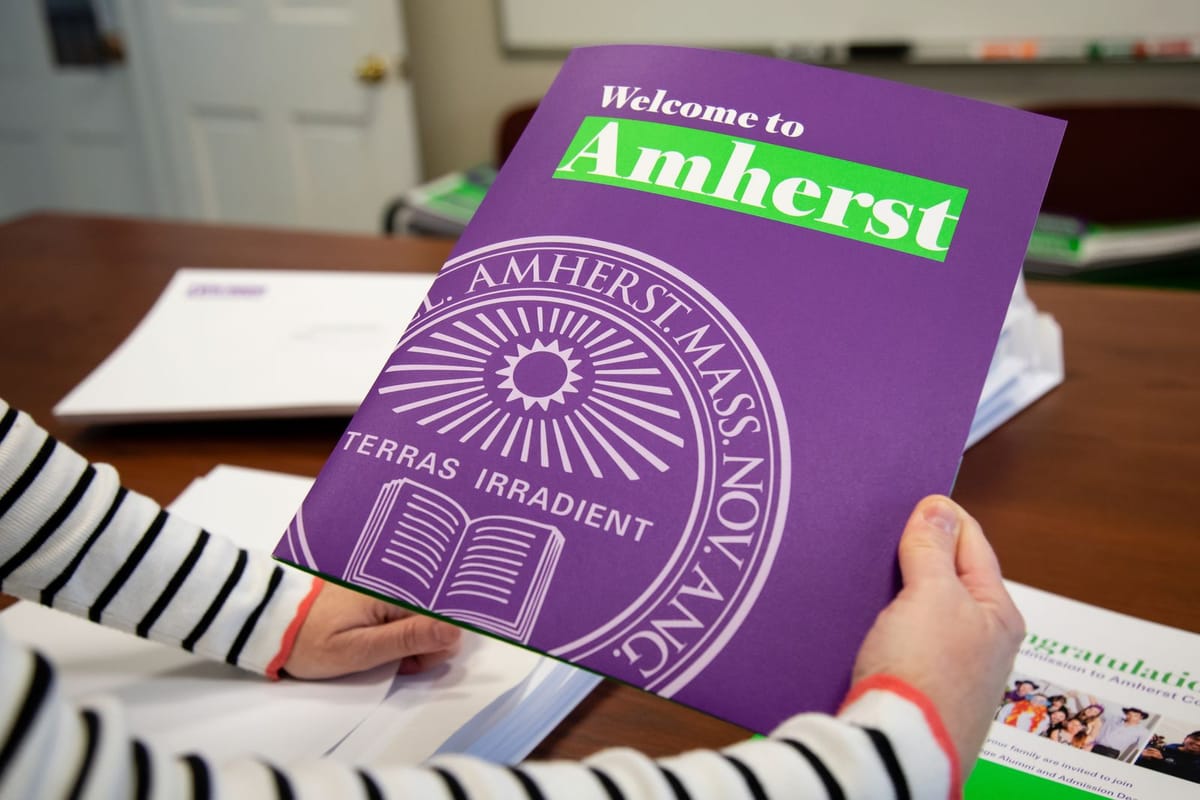
It is serious to recognize that this representation is not a matter of career statistics. It reflects a specific institutional character. The college's motto, Terras Irradient ("Let them enlighten the lands"), has historically been interpreted as a mandate for public leadership. For generations of graduates, this meant entering the structures of federal power, the CIA, the FBI, the Department of Justice, to steer the ship of state. While the definition of "enlightening" has evolved, and at times sparked fierce internal debate as seen in the 1986 protests, the outcome remains consistent. A college of fewer than two thousand students continues to exert a gravitational pull on the method of American law and security that is entirely disproportionate to its size.
, this legacy. Alumni continue to occupy serious roles in the Department of Justice and the intelligence community, adapting the college's tradition of service to twenty- -century challenges. The historical record makes clear that Amherst College does not just educate undergraduates; it curates a specific type of public servant, one whose influence is felt as strongly in the classified briefing rooms of the Pentagon as it is in the open courtrooms of the federal judiciary.
Municipal Tax Exemptions and Town of Amherst Revenue Conflicts
The financial relationship between Amherst College and the Town of Amherst is defined by a clear structural imbalance: a global financial titan operating within a municipality perpetually on the brink of fiscal emergency. This rests on Massachusetts General Law Chapter 59, Section 5, Clause 3, a statute with roots in the colonial era that exempts educational and charitable institutions from local property taxes. While this legal shield was designed to support struggling academies in the 19th century, it protects an endowment that surpassed $3. 55 billion in 2024, allowing the college to own approximately 1, 000 acres of prime real estate while paying zero property tax on its educational buildings. If taxed at standard commercial or residential rates, the college's main campus would generate an estimated $8 million to $10 million annually for the town, a figure that dwarfs the voluntary contributions the institution actually makes.
For decades, the college's financial contribution to the municipality relied on the Payment in Lieu of Taxes (PILOT) model, a voluntary system that critics reduces the town to a beggar at the gates of a castle. Unlike a tax bill, which is mandatory and calculated based on assessment, PILOT agreements are negotiated behind closed doors and framed as benevolence rather than obligation. Through the early 2020s, Amherst College's annual unrestricted gift to the town hovered near $130, 000, a negligible sum for an institution whose investment returns frequently exceed the town's entire operating budget. This became a flashpoint in 2024 and 2025 as the Town of Amherst faced severe budget deficits, forcing cuts to school staff and municipal services while the college's endowment recovered from market volatility to reach new highs.
In February 2025, facing mounting public pressure and a hostile political climate regarding higher education endowments, Amherst College announced a new "Strategic Partnership" with the town. The agreement pledged $2. 5 million over three years, distributed as $750, 000 annually starting in fiscal year 2026. The funds were earmarked for specific sectors: $250, 000 for public schools, $250, 000 for fire and ambulance services, and $250, 000 for downtown infrastructure. While college officials touted this as a historic level of support, the deal represented approximately 0. 02% of the endowment's value. By comparison, peer institutions in other cities have agreed to far more strong terms; Yale University committed to pay New Haven approximately $23 million annually, and Brown University's consortium pays Providence over $20 million per year. Even with the 2025 increase, Amherst College's contribution remains a fraction of what a standard tax levy would yield.
The operational load the college places on the town is quantifiable and heavy. The Amherst Fire Department and EMS services respond frequently to the campus for medical emergencies, alarms, and student-related incidents. While the 2025 agreement allocates funds for these services, the cost of maintaining a professional fire department capable of protecting dense dormitories and high-tech laboratories falls disproportionately on residential taxpayers. The college does not maintain its own police force with full jurisdictional independence, relying instead on the Amherst Police Department for serious criminal matters and backup. This service transfer subsidizes the college's security operations with municipal revenue.
Real estate acquisitions by the college further the town's tax base. When the college purchases private property for educational use, that land frequently from the tax rolls, shifting the load to remaining residents. A contentious example occurred in 2021 when the college removed the President's house, valued at over $1 million, from the tax rolls, depriving the town of reliable annual revenue. Although the college pays taxes on faculty housing and commercial properties like the Lord Jeffery Inn (operating as a commercial hotel), the definition of "educational use" is frequently stretched to shield administrative and support buildings from assessment. This "creep" of tax-exempt territory creates a zero-sum game where the college's physical expansion directly correlates with the town's fiscal contraction.
The table contrasts the financial of the College against the Town's fiscal reality as of the 2025-2026 period:
| Metric | Amherst College | Town of Amherst |
|---|---|---|
| Asset Base / Valuation | $3. 55 Billion (Endowment, June 2024) | ~$29. 5 Million (FY26 Municipal Budget) |
| Annual Surplus/Deficit | +$450 Million (Endowment Growth FY25) | -$540, 000 (Projected Deficit FY26) |
| Tax Status | Exempt (Ch. 59, Sec. 5) | Tax-dependent (Prop 2½ capped) |
| 2026 Contribution | $750, 000 (PILOT) | N/A |
| Est. Tax if Non-Exempt | $0 | ~$8, 000, 000+ (Est. Revenue Loss) |
Efforts to legislate a solution have repeatedly failed at the state level. The "Kulik Bill," a legislative proposal that would have allowed municipalities to tax 25% of the value of tax-exempt property, stalled in the Massachusetts State House, defeated by the lobbying arm of the state's private colleges and universities. Without legislative reform, the Town of Amherst remains in a dependency loop, forced to negotiate periodic "gifts" from an entity that holds the economic cards. The 2025 agreement, while an improvement over the tokenism of the past, does not alter the fundamental power. The college retains the right to determine the size of its contribution, leaving the town's budget planners to guess whether the negotiation yield a lifeline or a pittance.
The is sharpest when examining the socioeconomic profile of the college versus the town. The college serves a student body where a significant percentage comes from the top 5% of the national income distribution, supported by an endowment per student of over $1. 2 million. Meanwhile, the Town of Amherst struggles with a poverty rate influenced by student populations and a shrinking middle class priced out by high property taxes, taxes that are artificially inflated to compensate for the tax-exempt land in the town center. This regressivity means that local residents, including low-wage workers and retirees, subsidize the municipal services used by one of the wealthiest educational institutions in the world.

Questions And Answers
What do we know about Founding via the Williams College Defection and The Charity Fund?
The origins of Amherst College are inextricably bound to a calculated insurrection against Williams College, executed by its own president, Zephaniah Swift Moore. In 1815, Moore assumed the presidency of Williams, a struggling institution in the Berkshires.
What do we know about Financial Solvency and Enrollment Metrics?
The financial history of Amherst College between 1821 and 1900 is a chronicle of near-ruin, desperate fundraising, and a slow, painful climb toward solvency. While the modern institution boasts an endowment exceeding $3.
What do we know about Curricular Deregulation and the Open Curriculum Model?
The curricular history of Amherst College is defined by a violent oscillation between rigid prescription and radical deregulation, a pendulum that swung from the authoritarian classical model of 1821 to the absolute academic libertarianism of the late 20th century. While the college's founding in 1821 established a curriculum anchored in Latin, Greek, and Calvinist theology, the institution's most significant intellectual experiment occurred not in its decade, in its sesquicentennial era.
What do we know about Endowment Growth and Asset Allocation Strategies?
The financial trajectory of Amherst College from 1970 to 2026 represents a shift from conservative stewardship to aggressive, high-risk, high-reward capital appreciation. For much of the 20th century, the college maintained a traditional portfolio dominated by domestic equities and fixed income.
What do we know about The Lord Jeffery Amherst Mascot Removal and Historical Revisionism?
The systematic erasure of Lord Jeffery Amherst from the institution that bears his name represents one of the most clinically executed exercises in historical revisionism in modern American academia. For nearly a century, the "Lord Jeff" mascot served as the college's unofficial yet omnipresent symbol, a caricature of the 18th-century British general who commanded forces in North America during the French and Indian War.
What do we know about Admissions Demographics and the Ban on Legacy Preferences?
For nearly two centuries, Amherst College operated as a of white, male, Protestant privilege. While the institution was nominally founded in 1821 to educate indigent young men for the ministry, its admissions quickly evolved to serve the sons of the New England elite.
What do we know about Campus Architecture and the Decarbonization Project?
The architectural identity of Amherst College is rooted in the geological reality of its site: a ridge of Pelham gneiss rising above the Connecticut River Valley. This elevation, chosen by Zephaniah Swift Moore after his departure from Williams, dictated the linear arrangement of the college's earliest structures.
What do we know about The Mead Art Museum and Russian Center Art Collections?
The Mead Art Museum, established in 1949, stands as a physical manifestation of the Gilded Age wealth that flowed into Amherst College during the early 20th century. The building itself resulted from the bequest of William Rutherford Mead, Class of 1867, a partner in the preeminent architectural firm McKim, Mead & White.
What do we know about Folger Shakespeare Library and Emily Dickinson Museum Ownership?
The Trustees of Amherst College hold title to two of the world's most significant cultural repositories: the Folger Shakespeare Library in Washington, D. C., and the Emily Dickinson Museum in Amherst, Massachusetts.
What do we know about NESCAC Athletic Performance and NCAA Division III Titles?
The athletic identity of Amherst College is defined by a paradox: a rigid adherence to the New England Small College Athletic Conference (NESCAC) philosophy of "academics," contrasted against a ruthless, high-capital operation that frequently functions like a professional development system. While the college officially prohibits athletic scholarships and restricts postseason play compared to other NCAA conferences, the Amherst Mammoths (formerly the Lord Jeffs) have engineered a machine of dominance that secured 15 NCAA Division III team championships between 2000 and 2025.
What do we know about Alumni Representation in the CIA and Federal Judiciary?
The statistical probability of a small liberal arts college in Western Massachusetts producing three Directors of Central Intelligence (DCI) and a Chief Justice of the United States is infinitesimal. Yet, Amherst College has achieved exactly that.
What do we know about Municipal Tax Exemptions and Town of Amherst Revenue Conflicts?
The financial relationship between Amherst College and the Town of Amherst is defined by a clear structural imbalance: a global financial titan operating within a municipality perpetually on the brink of fiscal emergency. This rests on Massachusetts General Law Chapter 59, Section 5, Clause 3, a statute with roots in the colonial era that exempts educational and charitable institutions from local property taxes.