Verified Against Public And Audited RecordsLast Updated On: 2026-03-04
Reading time: ~52 min
File ID: EHGN-PLACE-35135
Investigative Bio of Bavaria
Wittelsbach Absolutism and Territorial Consolidation (1700, 1806)
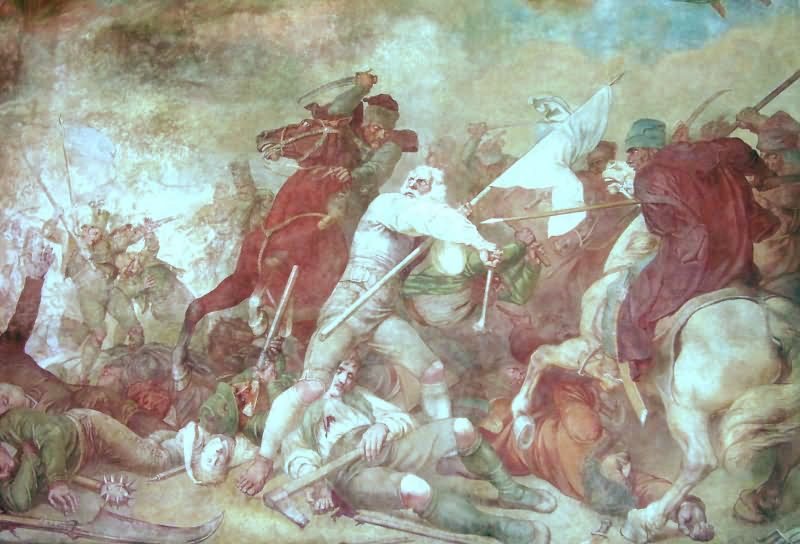
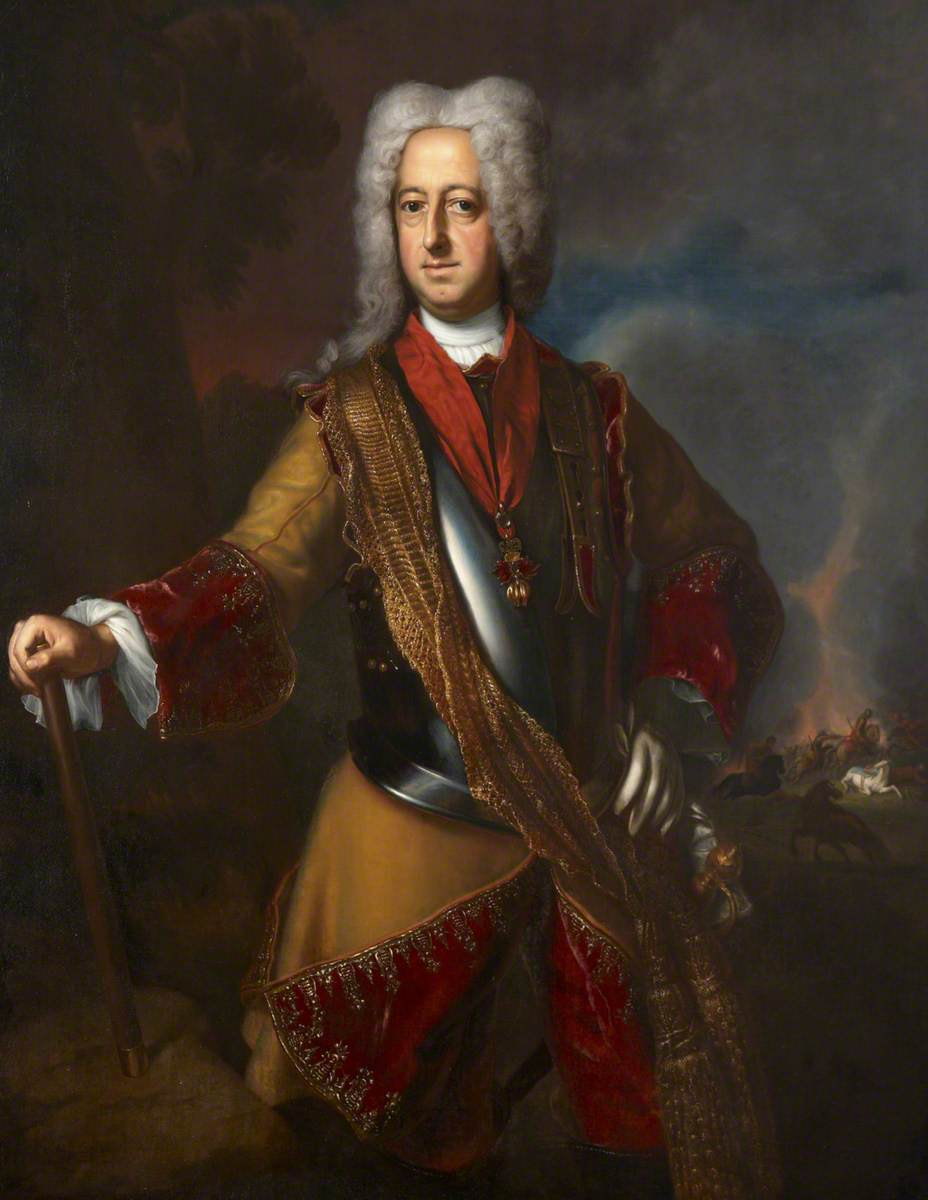
The House of Wittelsbach entered the 18th century with a lethal combination of imperial ambition and fiscal incompetence. Elector Maximilian II Emanuel, known as the "Blue King," viewed Bavaria not as a homeland to govern as a geopolitical chip to gamble. His alliance with Louis XIV of France during the War of the Spanish Succession (1701, 1714) was a calculated bet to supplant the Habsburgs. It failed catastrophically. The Battle of Blenheim in 1704 destroyed the Bavarian army and left the electorate defenseless. The subsequent Austrian occupation stripped the region of resources. Vienna treated Bavaria as a conquered province, extracting taxes and manpower with ruthless efficiency. This predation triggered the "Sendlinger Mordweihnacht" (Sendling Night of Murder) in 1705. On Christmas Day, Austrian troops massacred approximately 1, 100 peasant insurgents near Munich. Imperial losses numbered fewer than 40. This event remains a scar on the Bavarian shared memory, marking the collision between absolutist maneuvering and the grim reality of rural survival. By the time Max Emanuel returned from exile in 1715, he brought with him a state debt exceeding 26 million gulden, a financial black hole that would cripple the Bavarian economy for decades.
The Wittelsbachs refused to learn from this insolvency. Max Emanuel's son, Charles Albert (later Holy Roman Emperor Charles VII), doubled down on the anti-Habsburg strategy during the War of the Austrian Succession (1740, 1748). He achieved the dynasty's dream of the Imperial crown in 1742, yet his coronation in Frankfurt coincided with Austrian troops overrunning Munich. For three years, Charles VII ruled as a vagrant emperor, devoid of land or revenue, while his subjects faced another round of looting and famine. His death in 1745 allowed his successor, Maximilian III Joseph, to sign the Peace of Füssen, abandoning the disastrous claim to the Habsburg throne. Maximilian III Joseph stands as the sole rational actor in this century of excess, focusing on debt reduction and judicial reform until his death in 1777 ended the main Wittelsbach line.
The succession of Charles Theodore, from the Palatinate branch, introduced a new form of peril: indifference. Charles Theodore had no love for Bavaria and actively negotiated to trade the entire electorate to Austria in exchange for the Austrian Netherlands (modern Belgium). This proposed swap triggered the War of the Bavarian Succession (1778, 1779), derisively termed the "Potato War" because soldiers spent more time foraging for food than fighting. Prussia intervened not to save Bavaria, to check Austrian expansion. The resulting stalemate preserved Bavarian independence, yet the populace remained alienated from a ruler who viewed their land as a tradable commodity.
The true transformation of the Bavarian state began only with the ascendancy of Maximilian IV Joseph and his chief minister, Maximilian von Montgelas, in 1799. Montgelas, a disciple of the Enlightenment, recognized that the fragmented medieval structure of the electorate was obsolete. He orchestrated a "revolution from above," the power of the estates and the church. The secularization of 1803 was a massive asset seizure; the state confiscated the properties of over 200 monasteries and abbeys. This liquidation provided the liquidity needed to modernize the bureaucracy and service the crushing national debt.
Territorial and Demographic Shifts (1800, 1818)
Metric
Pre-Reform (c. 1800)
Post-Congress of Vienna (c. 1818)
Political Status
Electorate (HRE)
Kingdom (Sovereign)
Population
~2. 4 Million
~3. 7 Million
Territory
Fragmented, ~40, 000 km²
Consolidated, ~75, 000 km²
Key Acquisitions
None
Franconia, Swabia, Palatinate
Napoleon Bonaparte served as the external catalyst for this internal reorganization. The Wittelsbachs, sensing the shifting, abandoned their Austrian allegiance and allied with France. This pivot paid immediate dividends. In the Treaty of Pressburg (1805), signed after Napoleon's crushing victory at Austerlitz, Bavaria was elevated to a Kingdom. The treaty forced Austria to cede Tyrol and Vorarlberg to Bavaria, although these territories were later lost. More permanently, Bavaria absorbed the fractured ecclesiastical states and free imperial cities of Franconia and Swabia. By 1806, the map of Bavaria had been redrawn from a patchwork of feudal enclaves into a contiguous territorial state, doubling its size and integrating Protestant populations into a historically Catholic stronghold. This consolidation was not a peaceful evolution a forced amalgamation, purchased with the blood of Bavarian soldiers conscripted into Napoleon's Grand Armée.
Napoleonic Alliance and the Elevation to Kingdom Status (1806, 1871)
Wittelsbach Absolutism and Territorial Consolidation (1700, 1806)
The elevation of Bavaria from a electorate to a sovereign kingdom was not a triumph of organic growth, a geopolitical transaction sealed in French blood and Bavarian opportunism. On January 1, 1806, Elector Maximilian IV Joseph proclaimed himself King Maximilian I Joseph, a title granted not by the Holy Roman Emperor, by Napoleon Bonaparte. This promotion was the dividend of the Treaty of Pressburg, signed days earlier, which rewarded Bavaria's military allegiance to France with massive territorial acquisitions. The ancient Holy Roman Empire was dissolving, and Bavaria, under the guidance of its ruthless chief minister Maximilian von Montgelas, scrambled to feast on the carcass.
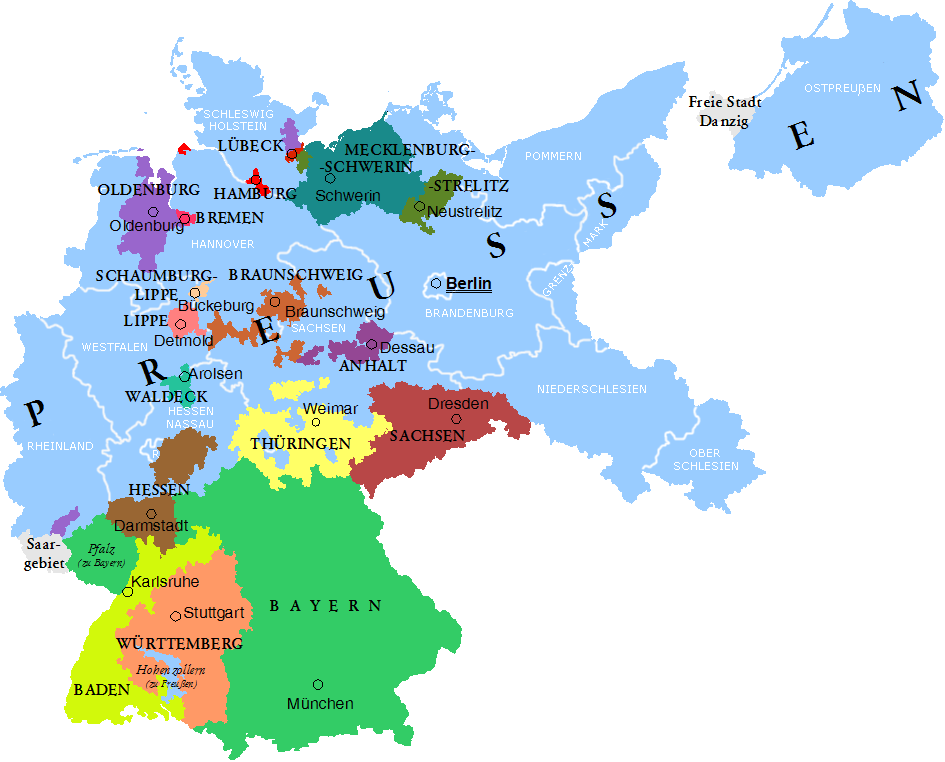
Montgelas, a disciple of the Enlightenment and a pragmatist of the highest order, orchestrated a "revolution from above." He understood that for Bavaria to survive between the hammers of Austria and France, it had to modernize instantly. Between 1802 and 1817, he dismantled the feudal structures that had paralyzed the state. His most aggressive move was the secularization of 1803, a state-sponsored seizure of church assets that liquidated monasteries, seized vast estates, and integrated independent bishoprics like Würzburg and Bamberg into the Bavarian fold. This was not anticlericalism; it was a fiscal need to pay for the army Napoleon demanded. The map of Bavaria was redrawn, absorbing the fragmented patchwork of Franconia and Swabia, creating the contiguous shape recognizable today. Yet the cost of this expansion was total subservience to Paris.
The bill for this aggrandizement came due in 1812. Napoleon demanded 30, 000 Bavarian troops for his invasion of Russia. The campaign was a slaughter. Of the 30, 000 men who marched east, fewer than 4, 000 returned. They died not only from Cossack sabers from typhus, starvation, and the freezing void of the Russian winter. This demographic catastrophe shattered the French alliance's legitimacy. General Karl Philipp von Wrede, commanding the Bavarian corps, recognized the shifting. With Napoleon reeling after the Battle of Leipzig, Wrede executed a masterstroke of betrayal. On October 8, 1813, he signed the Treaty of Ried with Austria, switching sides days before the decisive confrontation. This pivot saved the kingdom. By backing the Allies, Bavaria secured its status and borders at the Congress of Vienna, though it was forced to return Tyrol to Austria, receiving the Rhenish Palatinate as compensation.
The post-Napoleonic era required a new internal logic to hold this cobbled-together state united. The Constitution of 1818, granted by Maximilian I, was a calculated concession to stabilize the monarchy. It established a bicameral parliament and guaranteed basic rights, yet it firmly anchored sovereignty in the crown. When Ludwig I ascended the throne in 1825, he sought to project this new Bavarian identity through stone and bronze. He transformed Munich from a medieval backwater into an "Athens on the Isar," commissioning the Pinakotheken, the Glyptothek, and the Ludwigstraße. His passion for Hellenism and art was matched only by his autocratic tendencies. For decades, he ruled as a benevolent despot, pouring state funds into monumental architecture while suppressing the liberal agitation bubbling across Europe.
Ludwig I's reign collapsed not under the weight of foreign armies, through a domestic farce that turned into a constitutional emergency. In 1846, the king fell under the spell of Lola Montez, an Irish dancer and courtesan posing as Spanish nobility. Her influence over the aging monarch was absolute; she dictated policy and demanded the dismissal of conservative ministers. When the king attempted to force her naturalization against the of his cabinet, riots erupted in Munich. The "Lola Montez affair" galvanized the liberal opposition, merging moral outrage with demands for political reform. In March 1848, facing a populace in revolt and abandoned by his own family, Ludwig I abdicated in favor of his son, Maximilian II.
Maximilian II (1848, 1864) attempted to navigate a "Third Way" for Germany, envisioning a league of medium-sized states led by Bavaria to balance the aggression of Prussia and Austria. This policy, known as the Trias idea, failed to halt the polarization of the German Confederation. When he died in 1864, he left the throne to his eighteen-year-old son, Ludwig II, a man singularly ill-equipped for the blood-and-iron politics of the era. Ludwig II, obsessed with the operas of Richard Wagner and the construction of fantasy castles, viewed governance as a distraction. His disinterest proved fatal in 1866, when the Austro-Prussian War broke out. Bavaria sided with Austria, a decision driven by Catholic solidarity and fear of Prussian hegemony. The war was a disaster. The Prussian army, modernized and ruthless, crushed the Austrians at Königgrätz and defeated the Bavarian forces in a series of skirmishes. The peace terms were humiliating: Bavaria paid a "war indemnity" of 30 million gulden and ceded the districts of Gersfeld and Kaulsdorf to Prussia.
The defeat of 1866 reduced Bavaria to a Prussian satellite. A secret defensive alliance signed shortly after the war placed the Bavarian army under Prussian command in the event of future conflicts. This clause was activated in 1870 when the Franco-Prussian War began. Bavarian troops fought under the Crown Prince of Prussia, shedding blood at Wörth and Sedan to forge a German Empire they would not rule. The final act of Bavarian sovereignty was sold for cash. Otto von Bismarck, needing the Bavarian king to propose the imperial crown to Wilhelm I of Prussia to legitimize the new empire, bribed Ludwig II. The "Kaiserbrief" (Imperial Letter), in which Ludwig invited Wilhelm to become Emperor, was drafted by Bismarck. In exchange, Bismarck established the Welfenfonds, a slush fund from seized Hanoverian assets, which funneled approximately 5 million marks secretly into Ludwig's personal coffers to fund his castle-building mania.
On January 18, 1871, the German Empire was proclaimed in the Hall of Mirrors at Versailles. Bavaria entered this new Reich not as an equal, as a junior partner with "Reserved Rights" (Reservatrechte). These privileges, codified to soothe Bavarian pride, allowed the kingdom to retain its own railway system, postal service, and diplomatic corps. Crucially, Bavaria kept the administration of its army in peacetime and, perhaps most culturally significant, the right to tax its own beer. These concessions masked the reality that the Wittelsbachs had traded their independence for security and a stipend. The Kingdom of Bavaria remained on the map, the center of had shifted irrevocably to Berlin.
Table 2. 1: Major Territorial Adjustments (1805, 1816)
Year
Event/Treaty
Gained
Lost
1805
Treaty of Pressburg
Tyrol, Vorarlberg, Augsburg, Lindau
Würzburg (temporarily)
1806
Rheinbund Act
Nuremberg, Regensburg
Berg
1810
Treaty of Paris
Salzburg, Berchtesgaden, Bayreuth
Southern Tyrol, Ulm
1814/16
Congress of Vienna / Treaty of Munich
Würzburg, Aschaffenburg, Rhenish Palatinate
Tyrol, Vorarlberg, Salzburg
Weimar Instability and the Rise of National Socialism in Munich (1918, 1945)
The collapse of the Wittelsbach monarchy on November 7, 1918, did not bring peace to Bavaria. It unleashed a decade of political violence that transformed Munich from a center of art into the incubator of National Socialism. Kurt Eisner, a Jewish journalist and member of the Independent Social Democratic Party (USPD), declared the "Free State of Bavaria" in a bloodless coup, deposing King Ludwig III. Eisner's assassination on February 21, 1919, by the right-wing nationalist Anton Graf von Arco auf Valley shattered the fragile order. The resulting power vacuum allowed radical elements to proclaim the Bavarian Soviet Republic (Räterepublik) in April 1919. Led by Eugen Leviné, this short-lived communist regime attempted to emulate the Bolshevik revolution, seizing luxury apartments and forming a "Red Army." The reaction from the right was merciless. The central government in Berlin authorized the deployment of 30, 000 Freikorps paramilitary troops, including the brigade of Franz Ritter von Epp, to retake Munich. The "White Terror" that followed in May 1919 resulted in the deaths of approximately 600 to 1, 000 people. Freikorps units summarily executed suspected communists, including 21 members of a Catholic journeymen's association mistaken for revolutionaries. This trauma fundamentally altered the Bavarian political psyche. The middle class, terrified of "Jewish Bolshevism," acquiesced to the transformation of Bavaria into an *Ordnungszelle* (Cell of Order), a sanctuary for right-wing extremists fleeing the more liberal atmosphere of Berlin. Under the protection of the conservative Minister President Gustav von Kahr, Munich became a magnet for radical nationalists. It was in this environment that the German Workers' Party (DAP) morphed into the NSDAP under Adolf Hitler. The Bavarian judiciary and police systematically shielded right-wing agitators. When Hitler staged the Beer Hall Putsch on November 8, 1923, attempting to seize power in Munich as a prelude to a march on Berlin, the coup failed. Yet the subsequent trial proved the judiciary's bias. Judge Georg Neithardt allowed Hitler to use the courtroom as a propaganda platform and sentenced him to a mere five years in Landsberg Prison, of which he served less than nine months. During this confinement, he wrote *Mein Kampf*. Even with Munich's status as the "Capital of the Movement," the Nazi Party struggled to penetrate the Catholic rural heartland of Bavaria during the Weimar era. The Bavarian People's Party (BVP), a conservative Catholic splinter of the Centre Party, maintained a stranglehold on state politics. In the July 1932 Reichstag elections, while the NSDAP surged to 37. 3% nationally, they polled significantly lower in Catholic Lower Bavaria. In contrast, Protestant Franconia became a Nazi stronghold early on, delivering vote shares exceeding 40%.
Reichstag Election Results July 1932: Bavaria vs. National Average
Region/Unit
NSDAP Vote Share
BVP Vote Share
SPD Vote Share
German Reich (National)
37. 3%
3. 2% (Centre Party: 12. 4%)
21. 6%
Upper Bavaria-Swabia
27. 1%
38. 5%
14. 8%
Lower Bavaria
20. 4%
47. 5%
7. 2%
Franconia (Protestant Majority)
41. 2%
18. 3%
23. 4%
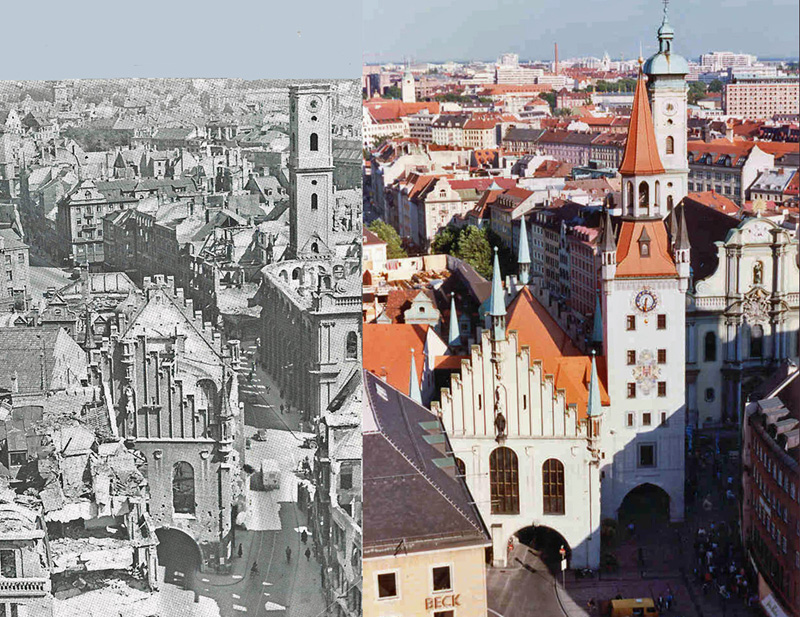
The Nazi seizure of power in 1933 dismantled this resistance. On March 9, 1933, the SA and SS occupied government buildings in Munich. The BVP government was deposed, and Franz Ritter von Epp was installed as *Reichskommissar*. Heinrich Himmler assumed control of the Munich police, appointing Reinhard Heydrich as his deputy. Their major project was not a road or a factory, a camp. On March 22, 1933, the Dachau concentration camp opened on the grounds of a defunct munitions factory. It served as the prototype for the entire SS camp system. Between 1933 and 1945, over 200, 000 prisoners from across Europe passed through its gates; at least 41, 500 died from malnutrition, disease, and execution. Munich's economy became inextricably linked to the war machine. BMW, headquartered in the city, shifted its focus to aircraft engines, specifically the BMW 801 radial engine used in the Focke-Wulf Fw 190. To meet production quotas, the company used slave labor on a massive. The BMW Allach plant, a subcamp of Dachau, housed thousands of prisoners. By 1944, nearly 90% of the workforce at BMW Allach consisted of forced laborers, prisoners of war, and concentration camp inmates. These workers lived in squalid conditions and faced brutal treatment while manufacturing the engines that powered the Luftwaffe. The Allied response erased the historic center of Munich. The Royal Air Force and the United States Army Air Forces conducted 74 air raids on the city between 1940 and 1945. The bombing campaign intensified in 1944, targeting the railway marshaling yards and industrial zones, yet frequently devastating residential areas. By the war's end, approximately 6, 632 Munich residents had been killed. The physical destruction was near total in the *Altstadt* (Old Town), where 90% of the buildings were destroyed or severely damaged. The Frauenkirche, the Residenz, and the Old Town Hall were reduced to shells. American troops from the 7th Army liberated Dachau on April 29, 1945, discovering rail cars filled with corpses and thousands of emaciated survivors. The following day, April 30, the US Army entered Munich. The "Capital of the Movement" fell on the same day Adolf Hitler committed suicide in Berlin. The occupation forces found a city of rubble, its population halved by evacuation and death, its industrial capacity wrecked, and its moral standing obliterated by the proximity of the Holocaust's training ground. The subsequent denazification process in Bavaria would prove arduous, as the region grappled with its dual identity as both the birthplace of National Socialism and a stronghold of Catholic conservatism that had, for a time, resisted the.
Post-War Industrialization: The Shift from Agrarian Economy to High-Tech Hub (1945, 1990)
Napoleonic Alliance and the Elevation to Kingdom Status (1806, 1871)
In 1945, Bavaria was the "poorhouse" of West Germany. While the Ruhr Valley possessed coal and steel, Bavaria had only scenery and farms. Approximately 30% of the workforce toiled in agriculture, a figure significantly higher than the national average. The region absence raw materials, heavy industry, and capital. Yet, by 1990, this agrarian backwater had executed one of the most aggressive economic pivots in European history, reinventing itself as a high-tech powerhouse. This shift was not organic; it was engineered through specific industrial policies, a refugee labor injection, and the calculated relocation of corporate giants.
The catalyst for this metamorphosis arrived in the form of a humanitarian emergency. Between 1945 and 1950, Bavaria absorbed approximately 1. 9 million refugees and expellees, primarily Sudeten Germans expelled from Czechoslovakia and Silesians. While initially a on food and housing, these expellees brought specialized industrial skills that the native Bavarian population absence. The Sudeten Germans from Gablonz, for instance, re-established their glass and jewelry industries in the Allgäu region, founding the district of Neugablonz in Kaufbeuren. This influx provided a ready-made skilled workforce that accepted lower wages to rebuild their lives, subsidizing the state's industrial startup phase.
The second decisive factor was the "Berlin Exodus." As the Soviet threat loomed over divided Berlin, major corporations sought safety in the American occupation zone. Siemens & Halske, previously a Berlin-based titan, relocated its headquarters to Munich in 1949. This move was not administrative; it shifted the center of for German electrical engineering to Bavaria. Following Siemens, insurance giants Allianz and Munich Re also established their primary operations in Munich. This corporate migration flooded the state with tax revenue and high-value white-collar jobs, financing the infrastructure required for further expansion.
State interventionism, led by the Christian Social Union (CSU), accelerated this growth. Franz Josef Strauß, serving as Minister of Defense and later Minister-President, used his political weight to steer federal defense contracts and aerospace projects to Bavarian firms. In 1969, the merger of Messerschmitt, Bölkow, and Blohm formed MBB (Messerschmitt-Bölkow-Blohm), creating Germany's largest aerospace company centered in Ottobrunn. Strauß also pushed for the adoption of nuclear energy to solve Bavaria's energy deficit. absence coal, the state turned to the atom, constructing Germany's research reactor in Garching (1957) and the commercial Gundremmingen Nuclear Power Plant (1966). By the 1980s, nuclear power provided the cheap, reliable electricity needed for energy-intensive manufacturing.
The automotive sector, synonymous with Bavaria, faced near-extinction before its rise. In 1959, BMW teetered on the brink of bankruptcy. The management board proposed a sale to Daimler-Benz, which would have reduced BMW to a supplier of Mercedes bodies. At the dramatic Annual General Meeting on December 9, 1959, small shareholders and workforce representatives blocked the sale. Industrialist Herbert Quandt then his bankers, increasing his stake to 50% and funding the development of the "Neue Klasse" (New Class) models. The launch of the BMW 1500 in 1961 saved the company. Simultaneously, Auto Union (later Audi) consolidated its operations in Ingolstadt, further cementing the region's automotive dominance.
Energy infrastructure played a serious role in distributing this industrial capacity beyond Munich. The construction of the Transalpine Pipeline (TAL), commissioned in 1967, connected the port of Trieste, Italy, to Ingolstadt. This 465-kilometer pipeline pumped crude oil directly through the Alps, turning Ingolstadt into a major refining center and ending Bavaria's geographic disadvantage regarding fuel supply. The availability of oil and refined products allowed chemical industries to cluster in the "Bavarian Chemical Triangle" (Burghausen), diversifying the economy beyond engineering.
The 1972 Munich Olympics served as the final infrastructure accelerator. While the games are remembered for the terror attack, the preparation involved a massive modernization of Munich's transport network, including the construction of the U-Bahn (subway) and S-Bahn systems. These projects, funded largely by federal money, integrated the labor markets of the metropolitan area, allowing the city to rapidly. The table outlines the key milestones that marked this economic transition.
Year
Event
Economic Impact
1949
Siemens HQ Relocation
Shifted German electronics center from Berlin to Munich.
1959
BMW Shareholder Revolt
Prevented Daimler takeover; preserved independent auto industry.
1966
Gundremmingen Plant
large- nuclear power, solving energy scarcity.
1967
TAL Pipeline Opens
Connected Ingolstadt to global oil markets via Trieste.
1969
MBB Formation
Consolidated aerospace industry under Bavarian leadership.
1989
Fiscal Equalization Flip
Bavaria becomes a permanent net payer in the Länderfinanzausgleich.
The culmination of these efforts appeared in the federal fiscal data. For decades, Bavaria had been a recipient in the Länderfinanzausgleich (fiscal equalization scheme), receiving subsidies from wealthier states like North Rhine-Westphalia. In 1987, the state reached fiscal neutrality. By 1989, Bavaria switched permanently to become a net payer, subsidizing the rest of the German federation. This reversal signaled the completion of the shift from an agrarian state to a high-tech hub, achieved not through laissez-faire economics, through a dirigiste mix of state planning, defense spending, and energy policy.
CSU Political Hegemony and State-Federal Friction (1946, 2026)
The Christian Social Union (CSU) does not operate as a mere political party within Bavaria; it functions as the state itself. Since 1957, this political machine has governed the Free State without interruption, a feat of longevity unmatched in the democratic West. This hegemony rests on a specific fusion of Wittelsbach-style autonomy and modern industrial policy, creating a "Staatspartei" (state party) that views Berlin not as a capital to obey, a rival to manage. The CSU the historical particularism of the Kingdom of Bavaria into the federal structures of the Federal Republic of Germany, using the Bundestag and Bundesrat to extract concessions that benefit Munich above all else.
Franz Josef Strauß, Chairman from 1961 to 1988, engineered this transformation. Strauß realized that agrarian romanticism alone could not sustain Bavarian independence in a distinct industrial age. He used his federal roles, specifically as Minister of Atomic Questions and later Defense, to funnel high-tech industries into the Free State. The settlement of the aerospace industry (Messerschmitt-Bölkow-Blohm, later Airbus) and the aggressive of nuclear energy (Isar, Gundremmingen) were not market accidents. They were state-directed industrial strategies. Strauß replaced the Wittelsbach monarchy with a "Laptop and Lederhosen" technocracy, convincing the electorate that conservative traditionalism was the prerequisite for economic modernity.
The electoral data confirms the total capture of the political apparatus. Between 1962 and 2008, the CSU did not win elections; it held absolute majorities in the Landtag, rendering coalition partners unnecessary. In 2003, under Edmund Stoiber, the party achieved a 60. 7% of the vote and a two-thirds majority in parliament, allowing it to amend the state constitution at. This era of "absolute dominance" allowed the CSU to staff the judiciary, public broadcasting (Bayerischer Rundfunk), and school boards with loyalists, cementing a cultural hegemony that marginalized the Social Democrats (SPD) into permanent irrelevance.
CSU Landtag Election Results: The of Absolutism (1974, 2023)
Year
CSU Vote Share
Seats Won
Political Consequence
1974
62. 1%
132 / 204
Peak Strauß Era; absolute hegemony.
2003
60. 7%
124 / 180
Peak Stoiber; two-thirds constitutional majority.
2008
43. 4%
92 / 187
Loss of absolute majority; coalition (FDP) in decades.
2013
47. 7%
101 / 180
Brief return to absolute majority under Seehofer.
2018
37. 2%
85 / 205
Historic collapse; forced coalition with Free Voters.
2023
37. 0%
85 / 203
Stagnation; dependence on Hubert Aiwanger deepens.
This dominance, yet, bred a fiscal conflict that defines modern German federalism: the Länderfinanzausgleich (State Financial Equalization method). Until the late 1980s, Bavaria was a net recipient of federal transfers, subsidized by the industrial might of North Rhine-Westphalia and Baden-Württemberg. The Strauß modernization program flipped this. By 2026, Bavaria had become the undisputed paymaster of the German federation. Data from the Bavarian Finance Ministry in January 2026 reveals that the Free State contributed €11. 7 billion to the equalization pot, nearly 60% of the total volume. In contrast, Berlin received over €4 billion. This fuels the CSU's "Mia san mia" (We are who we are) rhetoric, framing the transfers as a punitive tax on Bavarian diligence to fund "failed" northern states. The CSU frequently uses this grievance to demand federal concessions, threatening lawsuits before the Federal Constitutional Court to cap payments.
The relationship with the federal government (Bund) sharply during the chancellorship of Angela Merkel (CDU) and collapsed into open hostility under the "Traffic Light" coalition (SPD/Greens/FDP) of 2021, 2025. The 2015 refugee emergency marked the fracture, where Minister-President Horst Seehofer threatened to close the Bavarian border, directly challenging federal sovereignty. This was not policy disagreement; it was a constitutional standoff testing whether a state could dictate national border controls. Markus Söder, Seehofer's successor, escalated this tactic during the energy emergency of 2022-2023, demanding the extension of nuclear power plants (Isar 2) while simultaneously blocking the construction of wind turbines and transmission lines (SuedLink) needed to transport northern wind power to Bavarian industry.
The conflict reached existential with the 2023/2024 Federal Electoral Law reform. The Berlin coalition passed legislation intended to shrink the Bundestag, which included a method that could have theoretically ejected the CSU from parliament if they failed to reach 5% of the national vote, even if they won every direct district in Bavaria. For the CSU, which only runs in Bavaria, this was interpreted as a targeted "death sentence" by Berlin. The party mobilized the state apparatus to sue. In July 2024, the Federal Constitutional Court ruled the 5% threshold unconstitutional in that specific context, saving the CSU's federal existence. This legal battle reinforced the narrative in Munich that the federal center is actively hostile to Bavarian existence.
Internally, the CSU faces a new, dangerous from its right flank. The Free Voters (Freie Wähler), led by the populist Hubert Aiwanger, have mutated from a loose association of local independents into a right-wing agrarian protest party. Aiwanger, serving as Söder's Deputy Minister-President since 2018, systematically undermines the CSU by outflanking them on cultural grievances. His speech at Erding in 2023, where he called on the "silent majority" to "take back democracy," sounded more like an opposition leader than a cabinet minister. In March 2025, the tension peaked when Söder threatened to fire Aiwanger over a refusal to back a federal debt package in the Bundesrat. Aiwanger capitulated to keep his post, the incident exposed the fragility of the CSU's grip. They can no longer rule alone, and their partner is an unpredictable populist who speaks directly to the rural base that the CSU once owned.
As of early 2026, the CSU stands at a precarious junction. The 2025 federal election saw the party retain its influence in a conservative-led government, yet Söder's ambition to become Chancellor remains thwarted by the CDU's dominance and his own polarizing figure. The state's economy, heavily reliant on combustion-engine automotive manufacturing (BMW, Audi), faces a brutal transition. The CSU's strategy is to demand massive federal subsidies for hydrogen and synthetic fuels to protect these industries, using its political weight to shield the Bavarian economy from market realities. The friction between Munich and Berlin is not a bug of the German system; it is the primary operating feature of the CSU, a party that converts territorial defensiveness into federal power.
Automotive Industry Dependency and Electric Vehicle Transition Metrics (2010, 2026)
Weimar Instability and the Rise of National Socialism in Munich (1918, 1945)
Bavaria's economic identity remains inextricably bound to the internal combustion engine, a dependency that transformed from a source of unparalleled wealth in the early 2010s into an existential liability by 2026. The region employs approximately 208, 000 workers directly in the automotive sector, a figure that dwarfs other German states and accounts for over 30% of Bavaria's industrial revenue. For decades, the "Bavarian Motor" was not a metaphor a fiscal reality; the tax revenues from BMW in Munich and Audi in Ingolstadt subsidized the state's transition from an agrarian backwater to a high-tech powerhouse. Yet, this monoculture faces its most severe test since the Second World War, as the forced march toward electrification collides with aggressive Chinese competition and profit margins.
The period between 2010 and 2015 represents the apex of the old world order. During these years, Bavarian automakers enjoyed a symbiotic relationship with the Chinese market, which consumed long-wheelbase sedans and SUVs as fast as Dingolfing and Ingolstadt could produce them. Exports surged, and profit-sharing bonuses for assembly line workers frequently exceeded €9, 000 annually. This era of easy money masked a dangerous complacency. While Bavarian engineers refined the diesel engine to the limits of thermodynamics, battery supply chains were being locked down by CATL and BYD in East Asia. The Dieselgate scandal of 2015, which heavily implicated Audi, served as the initial tremor, shattering the myth of "Clean Diesel" and forcing a reluctant pivot toward battery-electric vehicles (BEVs) just as the geopolitical ground began to shift.
By early 2026, the consequences of this delayed transition became quantifiable in lost livelihoods. The supplier network, frequently invisible important to the Bavarian economy, began to fracture. Companies like Schaeffler and Continental, whose fortunes were built on precision mechanical components like transmissions and fuel injectors, faced obsolescence. In late 2024 and throughout 2025, Schaeffler announced the elimination of 4, 700 positions across Europe, with severe cuts hitting its Bavarian operations in Schweinfurt. Continental followed suit, slashing over 7, 000 jobs globally and closing sites in a desperate bid to reduce costs by €400 million annually. These were not temporary furloughs structural erasures of industrial employment, bringing the sector's workforce down to levels not seen since 2011.
BMW's response to this emergency has been a high- gamble on its "Neue Klasse" platform. Unlike competitors who created separate electric sub-brands early on, BMW initially pursued a flexible architecture strategy, building combustion, hybrid, and electric cars on the same lines. By 2026, the limits of this method were reached. The company's historic main plant in Munich is currently undergoing a radical surgery: the relocation of all combustion engine manufacturing to Austria and the UK to make way for an EV-only production line scheduled to go live in 2027. In 2025, fully electric vehicles accounted for approximately 18% of BMW's total sales, a figure that shows growth yet trails the 50% target set for 2030. The company races to battery production in time to meet the influx of cheaper, software-defined rivals from Shenzhen.
Audi's trajectory in Ingolstadt reflects a more abrupt strategic break. The Volkswagen Group subsidiary committed to launching only electric models starting in 2026, with a complete phase-out of combustion engines by 2033. This "all-in" method has exposed the brand to immense volatility. The launch of the Q6 e-tron, serious for the Ingolstadt plant's utilization, faced repeated delays due to software failures at the group's Cariad division. Meanwhile, the arrival of the A3-sized electric entry model in 2026 is a defensive measure against Tesla and MG, attempting to reclaim the mid-market segment that German manufacturers largely abandoned in their of luxury margins.
The infrastructure required to support this fleet remains a serious bottleneck. As of the fourth quarter of 2025, Bavaria possessed approximately 40, 000 public charging points. While this represents the highest density in Germany, it fails to keep pace with the vehicle registration numbers required to meet federal climate. The ratio of electric cars to charging points hovers around 16: 1, well above the European Union's recommended 10: 1 ratio. The grid in rural Bavaria, where automotive commuters live, requires billions in upgrades to handle the load of simultaneous home charging, a cost that local municipalities are struggling to absorb.
The arrival of Chinese manufacturers on German soil marks the final phase of this disruption. By 2025, BYD had established a foothold in the German market, with sales growing by over 700% from a low base, bypassing import tariffs by establishing production capacities in Hungary. For Bavaria, this is not a competition for market share a battle for relevance. The region's engineering excellence, built on the complexity of the internal combustion engine, offers little protection in an era defined by battery chemistry and software integration. The years 2024 through 2026 be recorded as the period when the Bavarian auto industry ceased to be the predator and became the prey.
Energy Grid Vulnerabilities: Nuclear Exit and Wind Power Deficits (2011, 2026)
Bavaria's industrial ascendancy in the 20th century relied on a specific geologic and political wager: the substitution of absent fossil fuels with high-density centralized power. Unlike the Ruhr Valley, which sat upon massive coal seams, Bavaria possessed no significant hydrocarbon reserves. The Kingdom addressed this deficit in the early 20th century through "White Coal," constructing hydroelectric marvels like the Walchensee Power Plant (commissioned 1924). By the 1970s, the Free State doubled down on this strategy by embracing nuclear energy with a fervor unmatched elsewhere in Germany. This bet created a low-carbon, low-cost electricity surplus that attracted energy-intensive giants to the region. The decision to this foundation between 2011 and 2023, without securing a viable replacement, represents one of the most severe industrial policy failures in modern German history.
The turning point arrived on March 14, 2011. Following the Fukushima Daiichi nuclear disaster, the Christian Social Union (CSU) government, led by Horst Seehofer and his environment minister Markus Söder, executed a radical pivot. They abandoned decades of pro-nuclear advocacy to demand an accelerated phase-out. This political maneuver was designed to neutralize the Green Party in upcoming elections. It succeeded electorally yet planted a time bomb in the Bavarian energy grid. The timeline for the nuclear exit was set, yet the infrastructure required to replace the baseload capacity of plants like Isar 2 and Gundremmingen was systematically obstructed by the very same administration.
The primary method of this obstruction was the "10H Rule," introduced in November 2014. This regulation mandated that the distance between a wind turbine and the nearest residential settlement must equal at least ten times the turbine's height. For a modern turbine reaching 200 meters, the required buffer zone became two kilometers. In the densely settled terrain of Bavaria, this mathematical constraint outlawed wind power. The consequences were immediate and devastating. New turbine permits collapsed from hundreds per year to single digits. Between 2015 and 2020, wind power expansion in Germany's largest state ground to a virtual halt. While Lower Saxony and Schleswig-Holstein built gigawatts of capacity, Bavaria installed negligible amounts, leaving the state dangerously exposed to the coming supply crunch.
Table 1: The Bavarian Energy Deficit (2023, 2026 Status)
Infrastructure Asset
Type
Status (2026)
Impact on Grid
Isar 2 (Landshut)
Nuclear Generation
Offline (April 2023)
Loss of ~11. 5 TWh/year baseload power. Previously supplied ~12% of Bavaria's electricity.
10H Rule
Regulatory Barrier
Modified (2023)
Caused 7-year stagnation in wind build-out. 2025 installations remain 5% of northern states.
SuedLink
HVDC Transmission
Delayed (Est. 2028)
0 GW capacity delivered. The 4 GW "power highway" from the North is 6 years behind schedule.
Chemiedreieck
Industrial Consumer
At Risk
Requires 24/7 baseload. High spot prices force production cuts and investment freeze.
The shutdown of Isar 2 on April 15, 2023, marked the terminal point of the old energy order. Located near Landshut, Isar 2 was frequently as the world's most productive nuclear reactor, generating approximately 11 to 12 terawatt-hours (TWh) annually. Its output alone exceeded the total consumption of Munich. The removal of this asset occurred amidst the shockwaves of the Russia-Ukraine war, which had already severed the supply of cheap natural gas, the " fuel" for the transition. The grid operator TenneT was forced to rely on emergency redispatch measures to stabilize the southern network. This process involves paying northern wind farms to curtail production while simultaneously paying expensive gas peaker plants in the south to ramp up, creating a massive financial load passed on to industrial consumers through grid fees.
The failure to complete the SuedLink transmission line exacerbates this isolation. Planned to transport wind energy from the stormy North Sea to the industrial hubs of Baden-Württemberg and Bavaria, the project was originally slated for completion in 2022. Political resistance to overhead lines, championed by Bavarian local officials, forced the federal government to prioritize underground cabling. This decision tripled the cost and pushed the completion date to 2028 or later. As of 2026, the physical link remains unfinished. Bavaria sits as an energy island, separated from the renewable generation of the north by grid bottlenecks and separated from its own nuclear heritage by law.
The epicenter of the resulting economic tremor is the Bavarian Chemical Triangle (Chemiedreieck) in the southeast. This cluster of chemical plants, including operations by Wacker Chemie and OMV, employs roughly 20, 000 people and serves as a foundational node for the German automotive and pharmaceutical supply chains. These facilities require continuous, affordable electricity to remain competitive against rivals in the United States and China. In 2024 and 2025, electricity prices for these non-privileged industrial users hovered between 16 and 18 cents per kilowatt-hour, nearly double the rates seen in competing jurisdictions. Executives at the Burghausen site have issued clear warnings that without a guaranteed price of roughly 4 to 6 cents, future investments flow to Texas or Shanghai, not Bavaria.
State Premier Markus Söder attempted to mitigate this damage in 2023 and 2024 with demands for a federal "industrial electricity price" (Industriestrompreis) and a belated loosening of the 10H rule. Yet the physics of infrastructure development cannot be cheated. Planning, permitting, and constructing wind parks takes five to seven years. The relaxation of distance rules in 2023 not yield significant generation capacity until the late 2020s. In the interim, Bavaria depends heavily on electricity imports from Austria and the Czech Republic. This reliance introduces new geopolitical vulnerabilities, as the Czech grid is powered partly by aging coal plants and Soviet-designed nuclear reactors, creating the irony that Bavaria imports nuclear power from across the border after shutting down its own superior domestic fleet.
The data from 2025 confirms the depth of the hole. While photovoltaics have expanded rapidly in Bavaria, the state leads Germany in installed solar capacity, solar energy is intermittent and seasonal. It produces zero output during the "Dunkelflaute" (dark wind lulls) of winter evenings when demand peaks. Without nuclear baseload, wind capacity, or the SuedLink connection, the Bavarian grid is forced to burn natural gas to keep the lights on during these serious windows. This reality keeps carbon emissions higher than projected and exposes the state's heavy industry to the volatility of global gas markets. The "Bavaria Plan" of the CSU, which promised a direct transition to a high-tech green economy, has instead delivered a decade of stagnation and structural insecurity.
By early 2026, the deindustrialization threat had moved from theoretical to tangible. Several medium-sized manufacturing firms in the automotive supply chain initiated insolvency proceedings or announced the relocation of production lines to Eastern Europe. The absence of a coherent energy strategy has eroded the "Standortfaktor" (location factor) that made Bavaria an economic powerhouse. The state entered the mid-21st century with a grid designed for the 19th: fragmented, expensive, and dangerously dependent on external goodwill.
Financial Sector Oversight: From Hypo Real Estate to the Wirecard Collapse
Post-War Industrialization: The Shift from Agrarian Economy to High-Tech Hub (1945, 1990)
The myth of Bavarian fiscal prudence, carefully cultivated by the Christian Social Union (CSU) for decades, collapses under the weight of its own balance sheets. While the Free State projects an image of Lederhosen-clad conservatism and debt-free budgets, its financial history reveals a different reality. This is a timeline of state-sponsored gambling. The trajectory from the Royal Bank of Nuremberg to the ruins of Wirecard in Aschheim shows a consistent pattern. Political elites in Munich frequently treat financial institutions not as independent market actors as extensions of state power. This incestuous relationship has cost taxpayers billions. It has also turned the Bavarian capital into a crime scene for of the most destructive white-collar frauds in European history.
The roots of this entanglement stretch back to the 18th century. The Margrave of Ansbach founded the Hochfürstliche Hofkammer-Zahlamts-Banque in 1780. When the Kingdom of Bavaria absorbed the region in 1806, this institution morphed into the Königlich Baierische Banco. It eventually became the Bayerische Staatsbank. The state did not regulate this bank. The state owned it. The government guaranteed its liabilities. This structure created a moral hazard that survived the fall of the monarchy in 1918 and the destruction of World War II. By the late 20th century, the Bayerische Landesbank (BayernLB) had emerged as the modern successor to this tradition. It functioned as the house bank for the CSU. It provided funding for pet projects and municipal infrastructure. Yet the provincial scope of the bank clashed with the global ambitions of Minister-President Edmund Stoiber.
Stoiber and his finance ministers pushed BayernLB to become a "Global Player" in the early 2000s. This directive led to a catastrophic expansion strategy. The bank moved away from conservative lending to small businesses. It began purchasing high-risk assets abroad. The most ruinous of these decisions was the acquisition of Hypo Alpe Adria (HGAA) in 2007. HGAA was a provincial bank based in Carinthia, Austria. It was controlled by Jörg Haider. The right-wing populist governor of Carinthia used HGAA to finance patronage and dubious ventures across the Balkans. BayernLB paid approximately 1. 6 billion euros for a majority stake in this toxic asset. The due diligence was nonexistent. The Munich managers ignored warnings about money laundering and bad loans in Croatia and Serbia.
The collapse was absolute. By 2009, the of the rot within HGAA became undeniable. The Bavarian state was forced to sell its stake back to Austria for the symbolic price of one euro. The total loss to the Bavarian taxpayer amounted to 3. 7 billion euros. This figure does not include the billions in liquidity lines that were temporarily extended. The triggered the resignation of Finance Minister Erwin Huber. It also exposed the complete failure of the bank's supervisory board. The board was staffed by politicians who absence the expertise to understand the complex derivatives and non-performing loans on the books. They viewed the bank as a political tool. The market viewed it as a mark.
While BayernLB burned through taxpayer money in the Balkans, a second disaster was unfolding in the heart of Munich. Hypo Real Estate (HRE) had been spun off from HypoVereinsbank in 2003. It was supposed to be a pure-play commercial property lender. Its management, led by Georg Funke, sought higher returns through the acquisition of Depfa Bank in 2007. Depfa was a German-Irish public finance specialist. It operated with a dangerous mismatch between short-term funding and long-term lending. When the credit markets froze in September 2008 following the Lehman Brothers bankruptcy, HRE faced immediate insolvency. The German government and a consortium of private banks were forced to intervene. They feared a widespread collapse.
The rescue of HRE remains the most expensive bailout in German history. The Financial Market Stabilization Fund (SoFFin) provided guarantees that peaked at 124 billion euros. The state nationalized the bank in 2009. It transferred the toxic assets to a "bad bank" known as FMS Wertmanagement. The Bavarian state government attempted to distance itself from the HRE debacles. Yet the bank was a Munich institution. Its failure was a product of the same lax regulatory environment that allowed BayernLB to fail. The local authorities prioritized the growth of Munich as a financial center over the enforcement of prudent banking standards. This prioritization created a blind spot that would eventually hide the largest accounting fraud in postwar Germany.
Wirecard AG rose from the ashes of the dot-com bust to become the darling of the German tech sector. Based in the Munich suburb of Aschheim, the payment processor replaced Commerzbank in the DAX 30 index in 2018. It claimed to use advanced algorithms to process payments for casinos and pornography sites that other banks rejected. Its CEO, Markus Braun, and its COO, Jan Marsalek, were feted by the Bavarian political establishment. They were seen as proof that Bavaria could produce a digital giant to rival Silicon Valley. The reality was a simple massive fraud. The company fabricated revenue and profits. It claimed to hold 1. 9 billion euros in trustee accounts in the Philippines. These funds did not exist.
The failure of oversight in the Wirecard case was total. The Federal Financial Supervisory Authority (BaFin) is frequently blamed. Yet the role of the Munich prosecutor's office (Staatsanwaltschaft München I) was equally serious. When journalists from the Financial Times and the research group Zatarra published detailed allegations of fraud as early as 2016, the Munich prosecutors did not investigate Wirecard. They investigated the journalists. They opened proceedings against the reporters for market manipulation. They accepted the narrative of the company that it was the victim of "short sellers" and Anglo-Saxon speculators. This protectionist reflex allowed the fraud to continue for years. It drained billions more from investors.
The house of cards collapsed in June 2020. Wirecard filed for insolvency. Jan Marsalek fled to Belarus and then to Russia. He remains a fugitive as of March 2026. Intelligence reports suggest he lives in Moscow under the protection of the FSB. Markus Braun was arrested. His trial began in December 2022. It has become a marathon of legal obfuscation. As of early 2026, the proceedings in the Munich Regional Court continue to drag on. The court has heard hundreds of witnesses. The defense maintains that Braun was a victim of Marsalek. The prosecution that Braun was the mastermind of a "commercial gang fraud." In September 2024, a civil court in Munich ordered Braun and other executives to pay 140 million euros in damages for specific breaches of duty. This sum is a fraction of the 20 billion euros in market value that.
Entity
Event Year
Primary Cause
Est. Cost / Loss
BayernLB / HGAA
2007, 2009
Politically motivated expansion; purchase of toxic Austrian assets.
The aftermath of these scandals has left deep scars on the Bavarian administration. The "Munich Consensus", the unspoken agreement between politicians, prosecutors, and corporate executives to protect local champions, has been exposed as a liability. The federal government has since reformed BaFin to reduce the influence of local politics on financial supervision. Yet the structural problems remain. The close social and political networks that bind the Munich elite together create an environment where skepticism is discouraged. The Wirecard scandal showed that even in the 21st century, the Bavarian state apparatus is easily mesmerized by the pledge of prestige. The prosecutors who hunted the whistleblowers instead of the fraudsters acted in a tradition that dates back to the Royal Bank. They protected the institution of the state rather than the integrity of the market.
The financial sector in Bavaria faces a emergency of credibility. The trial of Markus Braun serves as a daily reminder of this failure. The courtroom in the Nymphenburger Straße has become a theater of the absurd. It displays the inability of the German judicial system to swiftly prosecute complex financial crimes. Investors look at Munich and see a jurisdiction where due diligence is optional and regulatory capture is standard. The dream of a "Silicon Valley of the Alps" has ended. It has been replaced by the reality of a financial center that requires constant federal bailouts and police interventions to function. The legacy of the Wittelsbachs' state bank lives on. It is not a legacy of wealth creation. It is a legacy of debt socialization.
Agricultural Subsidies and Land Use Data in the Alpine Region
Agricultural Subsidies and Land Use Data in the Alpine Region
Bavaria's agricultural sector, covering 3. 1 million hectares as of 2024, operates under a complex framework of state intervention and shifting land-use priorities. Arable land constitutes 65. 5% of this total, while permanent grassland accounts for 34. 0%. Recent data from the Bavarian State Office for Statistics reveals a 5. 1% decrease in grain production area in 2024, contrasted by a 6. 0% rise in green harvesting plants. Maize remains the dominant crop, occupying 26. 0% of all arable land, a metric that critics point to as evidence of energy-crop monocultures displacing traditional food production.
Subsidy method and Financial Flows
The financial survival of Alpine farming relies heavily on the Kulturlandschaftsprogramm (KULAP) and the Bergbauernprogramm (BBP). For the 2025 funding period, KULAP payment rates are set at specific benchmarks to incentivize non-intensive methods:
Measure
Payment Rate (2025)
Objective
Steep Slope Mowing (>50% gradient)
650 €/ha
Prevent, maintain biodiversity
Steep Slope Mowing (30-49% gradient)
450 €/ha
Maintain difficult terrain
Water Protection Grassland
350 €/ha
Reduce nitrate runoff in sensitive zones
Extensive Grassland Use
125 €/ha
Limit livestock density, ban mineral fertilizers
Hay Milk Production (Silage-free)
100 €/ha
Traditional preservation, high-value product
Insect-friendly Mowing
60 €/ha
Use of double-knife mowers, specific timing
The Bergbauernprogramm specifically the maintenance of high-altitude pastures (Almen and Alpen). It provides funds for the sanitation and repair of agricultural buildings and infrastructure in difficult terrain. A cap exists for standard sanitation measures, limited to 3, 000 € per farm over a three-year period. These payments are legally classified as voluntary state benefits, subject to available budget resources, a point of contention during the federal budget consolidation talks of 2024 and 2025.
The Alpenplan: Zoning and Development Conflicts
Since 1972, the Alpenplan has served as the primary instrument for spatial planning in the Bavarian Alps, dividing the region into three zones to regulate infrastructure development. Zone C, the strict protection zone, covers approximately 43% of the Bavarian Alpine area (roughly 1, 694 km²). In this zone, the construction of new transport infrastructure, including roads and ski lifts, is prohibited. This zoning covers a larger area than all other strict nature reserves in the region combined.
The integrity of Zone C faced a serious challenge in 2017 during the Riedberger Horn controversy, where the state government attempted to redraw boundaries to permit a ski lift connection. Public backlash and legal challenges forced a reversal of this decision, reaffirming the zone's status. even with this victory for conservationists, pressure remains high. Data from 2018 to 2021 indicates that settlement and transport areas in Germany expanded by 55 hectares per day, well above the federal sustainability goal of under 30 hectares per day by 2030.
Structural Decline and Historical Context
The transition from the 18th century to the present shows a radical shift in land utility. In 1850, rough pastures were a dominant feature of regions like Upper Franconia; by 2000, these had largely, replaced by intensive woodland or arable plots. The Donaumoos fen, cultivated since 1788, stands as a historical example of aggressive land reclamation that permanently altered the water table and soil composition.
Modern economic pressures continue to force consolidation. In 2024, the number of dairy farms in Germany fell 50, 000 for the time, reaching a low of 46, 849. Between 2020 and 2023, the sector saw an average of 2, 600 farm closures annually. In Bavaria, which holds about 106, 000 farm holdings, small family-run operations are disproportionately affecting by rising operational costs and bureaucratic requirements, leading to a steady transfer of land to larger, industrialized entities.
Demographic Stagnation and Skilled Labor Migration Statistics (2015, 2026)
CSU Political Hegemony and State-Federal Friction (1946, 2026)
The demographic trajectory of the Free State of Bavaria between 2015 and 2026 represents a sharp inversion of the expansionist trends that characterized the region during the 18th and 19th centuries. While the Kingdom of Bavaria in 1840 saw its population swell through agrarian stability and early industrialization, the modern state fights a war of attrition against natural decline. By early 2026, data from the Bavarian State Office for Statistics confirmed a structural "death surplus" (Sterbeüberschuss) that has since the early 2000s. The number of deaths consistently exceeds live births, leaving migration as the sole driver of population maintenance. In 2024, the fertility rate in Germany dropped to 1. 35 children per woman, a figure mirrored in Bavaria, falling well the replacement level of 2. 1. This stagnation contrasts violently with the demographic explosions of the past. Following the Napoleonic reorganizations of 1806, Bavaria absorbed Franconia and Swabia, creating a territorial entity that saw its population double over the century. In 1700, the electorate was a patchwork of agrarian hamlets where children were economic assets. By 2025, children had become economic liabilities for urban professionals in Munich and Nuremberg, leading to delayed family formation. The median age in the Federal Republic climbed to 46. 5 years by 2025, with Bavaria slightly younger rapidly catching up due to the "Rentenwelle" (pension wave), the mass retirement of the Baby Boomer cohort born between 1955 and 1969. The labor market consequences of this graying population are severe. The Association of the Bavarian Economy (vbw) reported in late 2025 that the skilled labor gap (Fachkräftemangel) had not closed, even with a cooling economy. While the 2024 recession dampened demand for unskilled labor, the structural deficit for qualified technicians, engineers, and healthcare workers widened. By 2026, projections indicated that Bavaria would absence over 300, 000 skilled workers, a void capable of stalling production lines at automotive giants like BMW and Audi. This absence is not a fluctuation a mathematical certainty cemented by decades of low birth rates.
The following table illustrates the demographic shift from historical expansion to modern stagnation, highlighting the reliance on external migration to maintain workforce stability.
Year
Population (Approx.)
Primary Growth Driver
Key Demographic Event
1840
4. 3 Million
Natural Increase
Agrarian consolidation; high birth rates offset high infant mortality.
1900
6. 2 Million
Industrialization
Urbanization in Munich/Nuremberg; rural-to-urban internal migration.
1950
9. 1 Million
Displacement
Influx of expellees (Heimatvertriebene) from Sudetenland/Silesia.
2015
12. 8 Million
Asylum Migration
Refugee emergency (Syria/Afghanistan); net migration peaks.
2026
13. 4 Million
Skilled Migration
Negative natural balance; growth dependent on EU/Non-EU workers.
The refugee emergency of 2015 served as a stress test for Bavarian integration infrastructure. Approximately 15% of the one million asylum seekers who entered Germany arrived in the Free State. While initial political rhetoric focused on the load, economic realities by 2024 shifted the narrative. Data from the Institute for Employment Research (IAB) showed that by 2025, the employment rate of refugees from the 2015 cohort had reached nearly 65%, a figure higher than anticipated. Yet, this influx proved insufficient to plug the holes in the specialized labor market. The majority of these new arrivals filled roles in logistics, service, and basic manufacturing, leaving the high-tech and medical sectors gasping for personnel. To address the high-skill deficit, federal and state authorities implemented the "Opportunity Card" (Chancenkarte) in 2024, a points-based immigration system modeled after Canadian. Early statistics from 2025 suggest a modest uptake, with qualified workers from India, the Balkans, and Southeast Asia beginning to enter the Bavarian workforce. Yet, retention remains a problem. High housing costs in Munich, among the most expensive in Europe, and bureaucratic blocks frequently deter foreign talent. A 2025 survey by the IHK (Chamber of Commerce) revealed that 20% of foreign skilled workers considered leaving Germany within three years due to administrative friction and social integration difficulties. The healthcare sector faces the most acute emergency. As the population ages, the demand for geriatric care explodes, yet the supply of nurses contracts. By 2026, the vacancy time for a nursing position in Bavaria averaged 200 days. Hospitals in rural Upper Palatinate and Lower Bavaria began closing wards not due to a absence of patients, due to an absence of staff. This reality forces a reliance on nursing staff recruited from the Philippines, Brazil, and Vietnam, changing the cultural composition of rural Bavarian towns that had remained homogenous for centuries. Migration flows between 2015 and 2026 also reveal a "brain drain" counter-current. While Bavaria attracts talent from Eastern Europe and the Global South, it simultaneously loses highly educated native-born professionals to Switzerland and the United States. The wage differential, Swiss salaries frequently double those in Munich for comparable roles, siphons off engineers and medical doctors. This net loss of top-tier local talent exacerbates the innovation deficit, threatening Bavaria's status as a premier technology hub. The "Mittelstand", the small and medium-sized enterprises that form the backbone of the Bavarian economy, bears the brunt of this demographic contraction. Unlike large corporations, family-owned firms in the Franconian hinterlands absence the resources to recruit globally. In 2025, the insolvency rate among these smaller firms ticked upward, with "inability to find successors or staff" as a primary cause for business closures. The generational hand-off, once a guaranteed ritual in the 19th and 20th centuries, fails regularly as the pool of chance heirs and apprentices dries up. By the quarter of 2026, the demographic data presents a clear ultimatum. The Free State can no longer rely on the organic growth that fueled its rise from an agrarian kingdom to an industrial powerhouse. The natural population balance is irretrievably negative. Future prosperity depends entirely on the region's ability to compete in the ferocious global marketplace for human capital. The days of the Wittelsbachs expanding territory are long gone; the modern struggle is simply to maintain the population required to keep the lights on.
Aerospace and Defense Manufacturing Contracts in Upper Bavaria
Upper Bavaria stands as the undisputed industrial heart of Germany's military-industrial complex. While the region projects an image of pastoral Alpine tradition to the world, its economic engine relies heavily on the production of high-tech lethality. A dense network of contractors in Munich, Manching, Schrobenhausen, and Ottobrunn forms a "Golden Triangle" of aerospace and defense manufacturing. This cluster absorbs billions in federal defense spending and drives the technological sovereignty of the European Union. The roots of this dominance stretch back three centuries. They reveal a persistent entanglement of state power, scientific innovation, and the of war.
The origins of this industrial concentration date to the early 18th century. The Bavarian Electorate required a steady supply of artillery to maintain its precarious position between the Habsburgs and France. The Munich Zeughaus, or Arsenal, served as the central depot. Yet the true industrialization of Bavarian arms began with the rise of the internal combustion engine. Rapp Motorenwerke, founded in 1913 and later rebranded as Bayerische Motoren Werke (BMW), established Munich as a hub for aero-engines. The Treaty of Versailles attempted to this capability in 1919. It failed. Bavarian engineers moved underground or shifted to civilian covers until rearmament began in earnest under the Nazi regime.
The darkest chapter of this history unfolded between 1933 and 1945. Upper Bavaria became the forge for the Luftwaffe. BMW's plant in Allach, located on the northern fringe of Munich, manufactured the BMW 801 radial engine. This engine powered the Focke-Wulf Fw 190 fighter. The production lines did not run on free labor. They ran on slavery. By 1944, the Allach facility used over 29, 000 forced laborers and concentration camp prisoners from the nearby Dachau sub-camp. This infrastructure was not entirely destroyed by Allied bombing. The technical expertise remained. It provided the foundation for the region's post-war resurgence.
Ludwig Bölkow emerged as the architect of the modern Bavarian aerospace sector. In the late 1950s, he established operations in Ottobrunn. His vision was to integrate electronics, aerodynamics, and systems engineering into a single campus. This effort culminated in the formation of Messerschmitt-Bölkow-Blohm (MBB) in 1968. MBB served as the West German industrial champion. It led the development of the Panavia Tornado and later the Eurofighter Typhoon. Ottobrunn remains the intellectual headquarters of this network. the physical assembly moved north to Manching.
Manching is the most serious node in German combat aircraft production. Airbus Defence and Space operates a massive facility there. It handles the final assembly of the Eurofighter Typhoon for the Luftwaffe. The site employs thousands of engineers and mechanics. In October 2025, the German government finalized a contract for 20 additional Tranche 5 Eurofighters. This deal, valued at over 4 billion euros, ensures production continuity through the early 2030s. The Manching plant also manages the mid-life upgrades for the existing fleet. These upgrades include the integration of the new E-Scan Mk1 radar and the "Elektronischer Kampf" (Electronic Combat) suite. This specific retrofit grants the Eurofighter the capability to suppress enemy air defenses. It replaces the role previously held by the Tornado ECR.
South of the Danube, the market town of Schrobenhausen hosts the European headquarters of MBDA. This facility specializes in guided missile systems. The conflict in Ukraine triggered a massive expansion of this site. In January 2024, the NATO Support and Procurement Agency awarded a 5. 1 billion euro contract to COMLOG, a joint venture between MBDA and Raytheon. The contract calls for the production of 1, 000 Patriot GEM-T missiles. MBDA broke ground on a new factory in Schrobenhausen to meet this demand. The facility is scheduled to commence operations in late 2026. It be the only Patriot missile production line outside the United States. This investment cements Upper Bavaria's role as the primary arsenal for NATO's air defense in Europe.
Munich itself retains the propulsion sector. MTU Aero Engines, the successor to BMW's aero-engine division, creates the turbines that power these platforms. MTU holds a 30 percent workshare in the Eurojet EJ200 engine used by the Typhoon. The company reported record earnings in 2024 and 2025. These profits are driven largely by military maintenance contracts and the ramp-up of the European Fighter Engine (NEFE). This engine is under development for the Future Combat Air System (FCAS). MTU partners with French manufacturer Safran on this project. The headquarters for the EUMET joint venture is located in Munich. This placement ensures that German engineers retain oversight of the propulsion technology for Europe's sixth-generation fighter.
Electronic warfare capabilities are concentrated in Taufkirchen. Hensoldt, a spin-off from Airbus, dominates this niche. The company secured a contract worth over 1 billion euros to develop the Pegasus signal intelligence system. This system mounts high-sensitivity sensors on Bombardier Global 6000 business jets. The serious Design Review for Pegasus was completed in early 2024. Integration work is currently underway. Hensoldt also supplies the TRML-4D radars used in the IRIS-T SLM air defense units. These units have seen extensive combat use in Ukraine. The feedback from the front lines flows directly back to the engineering labs in Taufkirchen. This loop allows for rapid software updates and hardware modifications.
The economic impact of these contracts is immense. The Bavarian aerospace and defense sector employs over 60, 000 highly skilled workers. It generates annual revenues exceeding 12 billion euros. The "Zeitenwende" special fund of 100 billion euros, announced by Chancellor Olaf Scholz in 2022, flows disproportionately into this region. Upper Bavaria functions as a sovereign entity in the global arms trade. Its companies maintain direct ties with ministries of defense from Riyadh to London.
Major Defense Contracts in Upper Bavaria (2024, 2026)
Prime Contractor
Location
Project / System
Contract Value (Est.)
Status (March 2026)
COMLOG (MBDA/Raytheon)
Schrobenhausen
1, 000 Patriot GEM-T Missiles
€5. 1 Billion
Factory completion imminent; production starts late 2026.
Airbus Defence & Space
Manching
Eurofighter Tranche 5 (20 jets)
€4. 0+ Billion
Contract signed Oct 2025; supply chain activation underway.
The concentration of these industries presents a strategic risk. A single region in southern Germany holds the keys to European air superiority. The supply chains for the Eurofighter, the Patriot missile, and the FCAS engine all converge within a 100-kilometer radius of Munich. This density creates efficiency. It also creates a single point of failure. Political disputes between the federal government in Berlin and the state government in Bavaria frequently complicate these programs. The Bavarian state government aggressively lobbies for export licenses to sustain production lines. Berlin frequently hesitates due to coalition politics. Yet the sheer volume of orders through 2026 has temporarily silenced these debates. The factories are full. The lines are moving. Upper Bavaria is arming the continent.
Bavaria One Space Program and Quantum Computing Expenditures (2018, 2026)
In October 2018, Minister-President Markus Söder announced "Bavaria One," a space program that promised to transform the Free State into a global aerospace leader. The initiative, initially ridiculed for a presentation slide featuring Söder's face superimposed on a cosmos background, represented a serious fiscal commitment of 700 million euros. This expenditure was part of the broader "High-Tech Agenda Bavaria" (HTA), a stimulus package that swelled to 5. 5 billion euros by 2023. The program aimed to secure technological sovereignty, mirroring the 18th-century ambitions of Elector Maximilian II Emanuel, though replacing territorial conquest with orbital dominance. By 2026, the results of this spending revealed a sharp contrast between political marketing and engineering reality.
The flagship of this extraterrestrial ambition is Isar Aerospace, a startup based in Ottobrunn. While technically a private entity, the company heavily relies on the ecosystem funded by the Bavarian taxpayer. The state government directed funds through the German Aerospace Center (DLR) and the European Space Agency (ESA) to subsidize development contracts. By 2024, Isar Aerospace had raised over 400 million euros, a mix of venture capital and public backing. The return on this investment faced a severe test in March 2025, when the company's inaugural "Spectrum" rocket launched from Andøya, Norway. The vehicle suffered a thermal protection failure during stage separation and disintegrated before reaching orbit. As of March 2026, the company prepares for a second, "do-or-die" qualification flight, with Bavarian officials quietly acknowledging that another failure could jeopardize the state's strategy of autonomous European access to space.
Parallel to the rocket program, the state invested heavily in the Technical University of Munich (TUM) to establish the largest aerospace faculty in Europe. This academic expansion included the construction of a Hyperloop test track in Ottobrunn. Söder initially championed the Hyperloop, a vacuum-tube transport concept popularized by Elon Musk, as a solution to intra-European travel. yet, by 2025, the narrative shifted from passenger transport to cargo logistics. The 24-meter demonstrator segment at TUM served less as a prototype for a Munich-Berlin link and more as a certification testbed for European standards. Critics the Hyperloop expenditure diverts resources from Bavaria's crumbling conventional rail infrastructure, noting that the 4 billion euros allocated by DB InfraGO in 2025 to modernize the existing rail network dwarfs the speculative Hyperloop budget.
Quantum computing represents the second pillar of Söder's technological offensive. In 2021, the state launched the "Munich Quantum Valley" (MQV) with a committed 300 million euros from the Bavarian budget, supplemented by federal funds. Unlike the space program, which relies on private startups for hardware, MQV functions as a research consortium linking the Bavarian Academy of Sciences, Max Planck Institutes, LMU, and TUM. The objective is to build a sovereign quantum computer based on superconducting qubits and ion traps, reducing dependence on U. S. giants like IBM and Google. While IBM operates a quantum system in neighboring Baden-Württemberg, Bavaria's strategy prioritizes intellectual property ownership. By early 2026, MQV had produced functioning prototypes, yet they remained years away from commercial viability, raising questions about the long-term sustainability of state-funded hardware development.
The financial architecture of these programs relies on the "High-Tech Agenda Plus," which Söder describes as a "turbo" for the economy. The agenda allocated funds to create 1, 000 new professorships and 13, 000 university places, specifically targeting aerospace, AI, and quantum sciences. This massive injection of capital created a subsidy-dependent ecosystem in "Space Valley" (the Munich-Ottobrunn corridor). Defense Minister Boris Pistorius's 2025 announcement of a 35 billion euro federal investment in military space capabilities further incentivized Bavarian companies to pivot toward dual-use technologies. Consequently, the civilian "Bavaria One" program has increasingly aligned with military surveillance and secure communication needs, blurring the line between scientific exploration and defense contracting.
Prototypes operational in lab settings; commercial scaling pending 2030.
TUM Hyperloop
€50 Million (Phase 1-2)
High-speed vacuum transport certification.
Test track operational; focus shifted to cargo and standardization.
High-Tech Agenda (Total)
€5. 5 Billion
1, 000 new professors, AI/Space infrastructure.
Full deployment of academic staff; infrastructure construction ongoing.
The effectiveness of these expenditures remains a subject of intense debate. Proponents that without the 300 million euro injection into Munich Quantum Valley, Bavaria would have lost its talent pool to the United States. They point to the 1. 7 trillion euro revenue chance of high-tech industries by the Boston Consulting Group in 2026. Detractors, yet, characterize the spending as a "watering can" method, spraying money across prestige projects without ensuring commercial viability. The failure of the Spectrum launch in 2025 emboldened critics who view "Bavaria One" as a vanity project that underestimated the technical brutality of spaceflight. The state's reliance on the "Space Valley" brand hinges on the physics of the upcoming 2026 launches; a second failure would leave the taxpayer holding a bill for a space program that cannot reach orbit.
, the years 2018 to 2026 defined a period where the Bavarian state attempted to engineer a Silicon Valley on the Isar through legislative fiat and budgetary force. The transition from the agricultural and industrial economy of the post-war era to a quantum-aerospace hub is undeniable in the data, employment in the Bavarian aerospace sector topped 60, 000 by 2025. Yet, the tangible output of this spending is not yet a functional commercial ecosystem, rather a heavily subsidized research archipelago. Just as Max Emanuel's alliances in 1704 gambled the state's future on a single decisive battle, Markus Söder's High-Tech Agenda gambles the state's surplus on the hypothesis that government spending can force technological breakthroughs on a schedule.
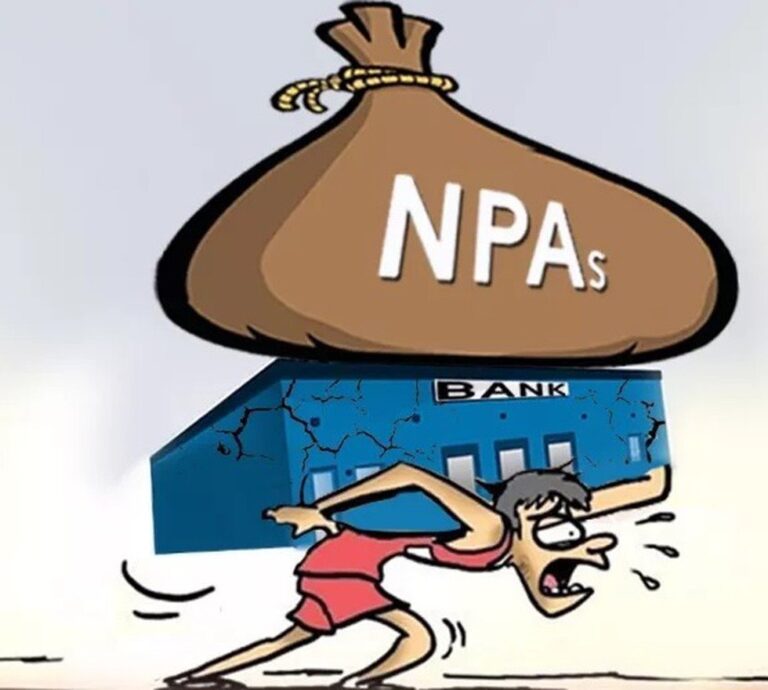
Why it matters: Indian public sector banks have been grappling with a significant NPA crisis, impacting the country's banking sector and economy. The crisis, fueled by political patronage,…
What do we know about Wittelsbach Absolutism and Territorial Consolidation?
The House of Wittelsbach entered the 18th century with a lethal combination of imperial ambition and fiscal incompetence. Elector Maximilian II Emanuel, known as the "Blue King," viewed Bavaria not as a homeland to govern as a geopolitical chip to gamble.
What do we know about Napoleonic Alliance and the Elevation to Kingdom Status?
The elevation of Bavaria from a electorate to a sovereign kingdom was not a triumph of organic growth, a geopolitical transaction sealed in French blood and Bavarian opportunism. On January 1, 1806, Elector Maximilian IV Joseph proclaimed himself King Maximilian I Joseph, a title granted not by the Holy Roman Emperor, by Napoleon Bonaparte.
What do we know about Weimar Instability and the Rise of National Socialism in Munich?
The collapse of the Wittelsbach monarchy on November 7, 1918, did not bring peace to Bavaria. It unleashed a decade of political violence that transformed Munich from a center of art into the incubator of National Socialism.
What do we know about Post-War Industrialization: The Shift from Agrarian Economy to High-Tech Hub?
In 1945, Bavaria was the "poorhouse" of West Germany. While the Ruhr Valley possessed coal and steel, Bavaria had only scenery and farms.
What do we know about CSU Political Hegemony and State-Federal Friction?
The Christian Social Union (CSU) does not operate as a mere political party within Bavaria; it functions as the state itself. Since 1957, this political machine has governed the Free State without interruption, a feat of longevity unmatched in the democratic West.
What do we know about Automotive Industry Dependency and Electric Vehicle Transition Metrics?
Bavaria's economic identity remains inextricably bound to the internal combustion engine, a dependency that transformed from a source of unparalleled wealth in the early 2010s into an existential liability by 2026. The region employs approximately 208, 000 workers directly in the automotive sector, a figure that dwarfs other German states and accounts for over 30% of Bavaria's industrial revenue.
What do we know about Energy Grid Vulnerabilities: Nuclear Exit and Wind Power Deficits?
Bavaria's industrial ascendancy in the 20th century relied on a specific geologic and political wager: the substitution of absent fossil fuels with high-density centralized power. Unlike the Ruhr Valley, which sat upon massive coal seams, Bavaria possessed no significant hydrocarbon reserves.
What do we know about Financial Sector Oversight: From Hypo Real Estate to the Wirecard Collapse?
The myth of Bavarian fiscal prudence, carefully cultivated by the Christian Social Union (CSU) for decades, collapses under the weight of its own balance sheets. While the Free State projects an image of Lederhosen-clad conservatism and debt-free budgets, its financial history reveals a different reality.
What do we know about Agricultural Subsidies and Land Use Data in the Alpine Region?
Agricultural Subsidies and Land Use Data in the Alpine Region Bavaria's agricultural sector, covering 3. 1 million hectares as of 2024, operates under a complex framework of state intervention and shifting land-use priorities.
What do we know about Demographic Stagnation and Skilled Labor Migration Statistics?
The demographic trajectory of the Free State of Bavaria between 2015 and 2026 represents a sharp inversion of the expansionist trends that characterized the region during the 18th and 19th centuries. While the Kingdom of Bavaria in 1840 saw its population swell through agrarian stability and early industrialization, the modern state fights a war of attrition against natural decline.
What do we know about Aerospace and Defense Manufacturing Contracts in Upper Bavaria?
Upper Bavaria stands as the undisputed industrial heart of Germany's military-industrial complex. While the region projects an image of pastoral Alpine tradition to the world, its economic engine relies heavily on the production of high-tech lethality.
What do we know about Bavaria One Space Program and Quantum Computing Expenditures?
In October 2018, Minister-President Markus Söder announced "Bavaria One," a space program that promised to transform the Free State into a global aerospace leader. The initiative, initially ridiculed for a presentation slide featuring Söder's face superimposed on a cosmos background, represented a serious fiscal commitment of 700 million euros.
Why it matters: Investment frenzy in solar grids promised financial returns and social impact By 2025, sector faced a brutal correction with a collapse in confidence and capital…
Why it matters: 91% of public universities have sworn officers with full arrest powers, but discrepancies in jurisdictional authority between campus police and local law enforcement are raising…
Why it matters: Fashion models in music video productions face unsafe conditions, pay abuses, and sexual assault. Models often lack power and protections, leading to exploitation and mistreatment…
Why it matters: Franchise fitness studios like F45 and SoulCycle promise high-energy workouts but carry hidden financial and legal burdens. The rapid global expansion of boutique fitness franchises…
Why it matters: Violence in the 2024 local election campaign in Mexico highlights drug cartel influence At least 30 candidates have been murdered, shaping the political landscape The…
Why it matters: Despite legal bans and judicial directives, manual scavenging continues in India, revealing a stark contrast between government denial and ground reality. The persistence of manual…
Get updates on this place
Get verified alerts when this file is updated (verification required).