Verified Against Public And Audited RecordsLast Updated On: 2026-03-04
Reading time: ~51 min
File ID: EHGN-PLACE-35185
Investigative Bio of British Columbia
Maritime Fur Trade and Smallpox Depopulation Vectors (1774, 1862)
The colonization of British Columbia began not with a desire for land, with a voracious appetite for "soft gold", the pelt of the sea otter (Enhydra lutris). Between 1774 and 1812, the Pacific Northwest became the resource extraction hub of a global triangle trade connecting London, Boston, and Canton (Guangzhou). While Captain James Cook is frequently credited with initiating this era after his 1778 arrival at Nootka Sound, the economic was driven by the profit margins realized in China. A single pelt, purchased from Indigenous hunters for pennies worth of iron chisels or copper, could sell in Canton for $100 to $300, equivalent to thousands of dollars in 2026 currency. This extraction economy did not strip the coast of its keystone marine species; it established the maritime vectors that would deliver biological devastation to Nations populations.
The trade was rarely a benign exchange. American captains, particularly "Boston Men" like Robert Gray, frequently used cannon fire to enforce terms. In 1792, Gray ordered the destruction of the Nuu-chah-nulth village of Opitsitah and attacked communities in Clayoquot Sound to secure furs. This violence set a precedent: the region was treated as a resource depot rather than a sovereign territory. By 1850, the sea otter was commercially extinct, yet the trade routes remained open, facilitating the arrival of a far deadlier import. While smallpox had visited the coast in the 1770s, likely via inter-tribal trade from the Spanish south or Russian north, the epidemic of 1862 stands as the definitive demographic catastrophe of the region, an event that historians and Indigenous scholars classify as an act of genocide through administrative negligence.
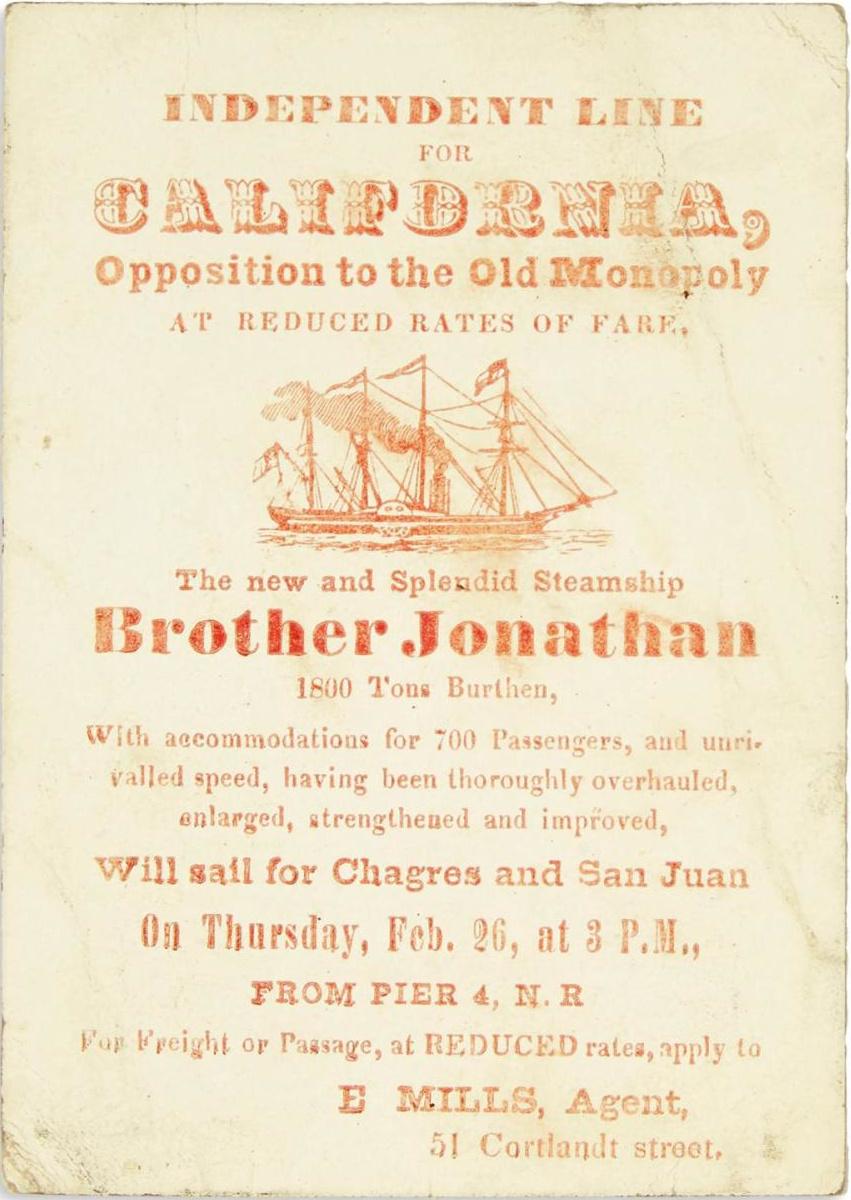
On March 12, 1862, the steamer Brother Jonathan arrived in Victoria from San Francisco. Among its 350 passengers was a man infected with smallpox. At the time, Victoria was a trading hub where thousands of Tsimshian, Haida, Tlingit, and Songhees people camped seasonally to trade and work. The virus spread rapidly through the densely populated Indigenous encampments surrounding the colonial outpost. Governor James Douglas and Dr. John Helmcken initiated a vaccination campaign, inoculating roughly 500 people, yet the colonial assembly refused to fund a detailed quarantine or hospital for the Indigenous population. Instead, panic among the white settler population drove a policy of forced expulsion.
Police Commissioner Joseph Pemberton, responding to settler demands, ordered the police to evict the Indigenous encampments. In April and May 1862, colonial authorities forced thousands of people, already showing signs of infection, into their canoes at gunpoint. Gunboats, including the HMS Grappler, towed these canoes out of the harbour, weaponizing the virus by dispersing it up the coast. These "convoys of death" ensured that the epidemic did not burn out in Victoria was instead transported directly to the villages of the North Coast and Haida Gwaii. The results were immediate and apocalyptic. As the infected travellers returned home, they introduced the pathogen to communities with no immunity.
The mortality rates from the 1862 epidemic reshaped the human geography of British Columbia. The Haida Nation, whose population was estimated at over 6, 000 ( estimates suggest up to 30, 000 pre-contact) prior to the epidemic, collapsed to fewer than 1, 000 by the turn of the century. Villages that had stood for millennia were abandoned, their totem poles left to rot in the temperate rainforest, creating the illusion of a "wilderness" that later settlers would claim was terra nullius (nobody's land). This depopulation was not a passive tragedy a direct result of the expulsion orders issued in Victoria.
Estimated Population Impact of 1862 Smallpox Epidemic on Selected Nations
Nation/Group
Pre-1862 Population Est.
Post-Epidemic Population (c. 1880s)
Estimated Mortality Rate
Haida (Haida Gwaii)
6, 000 , 10, 000+
800
85% , 90%
Heiltsuk (Bella Bella)
1, 600+
300
80%
Tsimshian
8, 500
4, 500
47%
Total Coastal Indigenous
~30, 000 (Conservative)
~15, 000
50% , 60%
The devastation extended beyond immediate loss of life. The death of elders meant the severance of oral histories, legal traditions, and ecological knowledge. Entire lineage groups were extinguished, complicating the potlatch systems that governed governance and resource rights. In the wake of the epidemic, colonial surveyors moved into the "emptied" lands, mapping reserves that constituted a fraction of traditional territories. The 1862 epidemic provided the demographic vacuum that allowed the Colony of British Columbia to expand its footprint without facing the full military or diplomatic resistance of the Nations. By the time British Columbia joined Confederation in 1871, the Indigenous population had been reduced by as much as two-thirds compared to pre-contact levels, a that would define land title disputes well into the 2020s.
The maritime fur trade began the pattern of extraction, the 1862 smallpox expulsion solidified colonial dominance. The decision to tow infected canoes north remains a defining moment in the province's history, showing a callous disregard for Indigenous life that functioned, in effect, as biological warfare. This period established the foundational trauma that the modern reconciliation efforts and land claims visible in 2026, as the descendants of survivors continue to litigate the ownership of the lands their ancestors were forced to flee.
Unceded Territory Legal Framework and the Tsilhqotʼin Title Decision
Maritime Fur Trade and Smallpox Depopulation Vectors (1774, 1862)
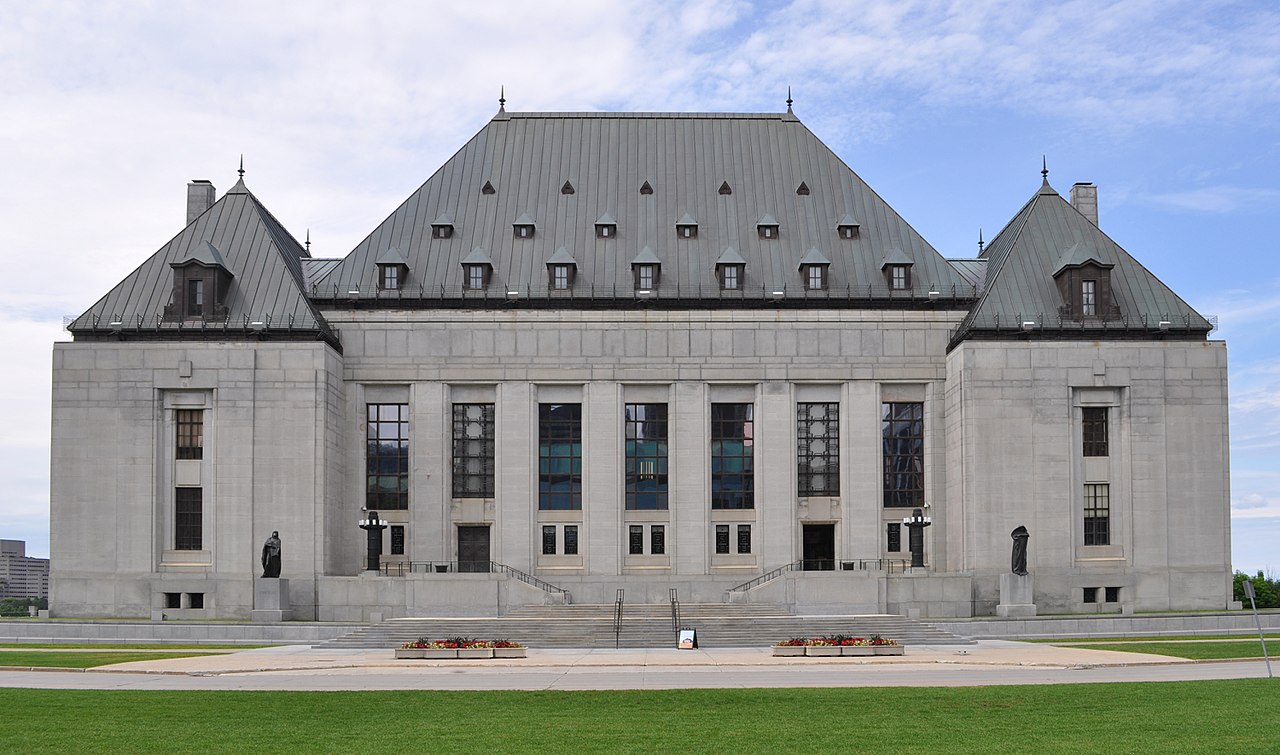
The legal architecture of British Columbia stands on a foundation of historical denial that distinguishes it from the rest of Canada. Unlike the Prairie provinces or Ontario, where the Crown negotiated numbered treaties to extinguish Indigenous title prior to settlement, British Columbia's colonial administration largely refused to engage in treaty-making. This refusal, entrenched by Joseph Trutch in the 1860s, created a legal vacuum that into 2026: the reality of unceded territory. For over a century, the provincial government operated on the fiction that the Royal Proclamation of 1763, which forbade the settlement of Indigenous lands unless ceded to the Crown, did not apply west of the Rockies. This policy of dispossession without surrender set the stage for a century of litigation, culminating in a series of Supreme Court decisions that have systematically dismantled the Crown's assumption of absolute sovereignty. The architect of this "denial policy" was Joseph Trutch, British Columbia's Lieutenant Governor. Following the retirement of Governor James Douglas, who had signed fourteen small treaties on Vancouver Island between 1850 and 1854, Trutch reversed course. He reduced the size of existing reserves and denied the existence of Aboriginal title entirely, describing Indigenous claims as "imaginary" and the people as "utter savages" incapable of land ownership. When British Columbia joined Confederation in 1871, Article 13 of the Terms of Union transferred responsibility for "Indians and lands reserved for the Indians" to the federal government, the province retained control of public lands. This division of powers allowed the province to grant timber, mining, and settlement rights over unceded territories without Indigenous consent, a practice that continued largely unchecked until the late 20th century. The legal wall erected by Trutch began to crack in 1973 with the Supreme Court of Canada's decision in *Calder v. British Columbia*. Frank Calder and the Nisga'a Nation challenged the province's assertion that their title had been extinguished by pre-Confederation land laws. Although the court split on the technicality of whether title still existed, six of seven judges agreed that Aboriginal title was a legal right derived from historic occupation, not a privilege granted by the Crown. This admission forced the federal government to establish a detailed claims process, yet the province continued to resist, arguing that the duty remained on Nations to prove their title in court, a process that was prohibitively expensive and evidentiary biased against oral history. The load of proof shifted significantly with the 1997 *Delgamuukw v. British Columbia* decision. The Gitxsan and Wet'suwet'en Nations claimed ownership and jurisdiction over 58, 000 square kilometers of northwestern British Columbia. While the court did not grant title in this specific instance due to procedural problem, the ruling established the legal test for Aboriginal title: exclusive occupation prior to 1846 (the assertion of British sovereignty). Crucially, the court ruled that Indigenous oral histories, the *adaawk* and *kungax*, must be given equal weight to written historical documents. *Delgamuukw* confirmed that Aboriginal title is a right to the land itself, encompassing its economic value, not a right to hunt or fish. The theoretical framework of *Delgamuukw* became concrete reality on June 26, 2014, with the *Tsilhqotʼin Nation v. British Columbia* decision. For the time in Canadian history, the Supreme Court declared Aboriginal title over a specific tract of land, approximately 1, 750 square kilometers in the Nemiah Valley. The court rejected the Crown's "postage stamp" theory, which argued title existed only in small, intensively used spots like village sites. Instead, the court recognized title over the broader territory used for hunting, fishing, and cultural survival. The *Tsilhqotʼin* ruling fundamentally altered the economics of resource extraction. On title lands, the Crown must obtain consent, not just consultation. If consent is withheld, the government must justify the infringement under the strict scrutiny of Section 35 of the Constitution Act, 1982, a high bar that requires proving a compelling public objective and consistency with the Crown's fiduciary duty. While *Tsilhqotʼin* addressed specific title, the 2021 *Yahey v. British Columbia* (Blueberry River Nations) decision attacked the method of administrative erasure. The BC Supreme Court ruled that the cumulative effects of industrial development, forestry, oil and gas, and hydroelectric projects, had degraded the to such an extent that the Blueberry River Nations could no longer meaningfully exercise their Treaty 8 rights. The court found that the province's piecemeal permitting system, which approved projects in isolation without considering their combined impact, constituted a breach of treaty. This "cumulative effects" doctrine forced a moratorium on new industrial permits in the region and led to the 2023 Implementation Agreement, which established a $200 million restoration fund and new co-management regimes for land use. By 2024, the legal strategy of the province began to shift from litigation to preemptive recognition. The *Haida Nation* agreement, finalized in 2024 and affirmed by a consent order from the BC Supreme Court in September 2025, marked a historic departure from the adversarial model. The "Rising " and "Big " agreements recognized Haida Aboriginal title over the entirety of Haida Gwaii, including private fee-simple lands, though private property rights were protected. This was the time a colonial government recognized title over a whole territory outside of a court battle. It signaled a pragmatic admission that the legal tests established in *Tsilhqotʼin* would likely result in Crown losses if pushed to trial. The legal tightened further in late 2025 with the BC Court of Appeal's ruling in *Gitxaała v. British Columbia*. The court determined that the *Declaration on the Rights of Indigenous Peoples Act* (DRIPA), enacted in 2019, was not aspirational incorporated the UN Declaration (UNDRIP) into the positive law of the province with immediate effect. This ruling means that as of 2026, provincial laws and decision-making processes must align with UNDRIP articles, including the requirement for free, prior, and informed consent. The *Gitxaała* decision closed the loop on the "consult and ignore" era, embedding Indigenous sovereignty directly into the statutory interpretation of British Columbia law.
Key Legal Milestones in BC Aboriginal Title (1973, 2026)
Case / Event
Year
Key Outcome
Calder v. British Columbia
1973
Supreme Court recognizes Aboriginal title exists in Canadian law; forces federal claims policy.
Delgamuukw v. British Columbia
1997
Defines Aboriginal title as a right to the land itself; admits oral history as evidence.
Tsilhqotʼin Nation v. British Columbia
2014
declaration of Aboriginal title over 1, 750 sq km; rejects "postage stamp" occupation theory.
Yahey v. British Columbia (Blueberry River)
2021
Cumulative effects of industry deemed a treaty breach; forces overhaul of resource permitting.
Haida Title Agreements
2024
BC and Canada recognize Haida title over all Haida Gwaii; affirmed by court order in 2025.
Gitxaała v. British Columbia
2025
Court rules DRIPA incorporates UNDRIP into provincial law with immediate legal force.
The trajectory from Trutch's denial to the *Gitxaała* ruling represents a complete inversion of legal reality. In 2026, the load of uncertainty lies not with Indigenous Nations proving their existence, with the Crown and industry proving their right to operate on unceded soil. The economic are: the "certainty" that investors once sought from the Crown requires the consent of the Title holders. The Nuchatlaht Nation's partial victory in 2024, securing title to 11 square kilometers of Nootka Island, further demonstrated that the *Tsilhqotʼin* test is replicable in trial courts, keeping the pressure on the province to negotiate rather than litigate. The era of assuming Crown sovereignty as the default is over; the era of co-governance and title recognition is the operational baseline for the province's future.
Old-Growth Timber Liquidation and Softwood Lumber Trade Disputes
The transition from the maritime fur trade to industrial forestry marked a fundamental shift in the colonization of British Columbia. While the sea otter trade relied on the biological productivity of the coast, the timber industry demanded the liquidation of the land itself. By the 1860s, sawmills on Vancouver Island and Burrard Inlet began exporting Douglas fir spars to global markets, yet the true industrial acceleration arrived with the 1945 Sloan Commission. Chief Justice Gordon Sloan recommended a policy of "sustained yield," a bureaucratic method that theoretically balanced harvest rates with forest regrowth. In practice, this policy justified the rapid liquidation of old-growth stocks to finance provincial infrastructure. The government granted long-term tenure rights to large corporations, locking public lands into a resource extraction model that prioritized volume over ecological integrity. The economic consequences of this state-controlled tenure system ignited the Softwood Lumber Dispute, a trade war with the United States that has for over four decades. American producers argued that the provincial stumpage system, where the government sets the price of timber rather than open auctions, constituted an unfair subsidy. The conflict escalated in 1982 and morphed into a pattern of tariffs, litigation, and temporary agreements. By the summer of 2025, the U. S. Department of Commerce had imposed combined anti-dumping and countervailing duties averaging 35. 2 percent on Canadian softwood lumber. These punitive measures devastated BC producers, who faced high operating costs and a shrinking timber supply. The trade dispute penalized the province for its refusal to the tenure system established a century prior.
Era
Conflict / Event
Key Metric
Outcome
1982, 1986
Lumber I & II
15% Export Tax
Canada imposes self-tax to avoid US duties.
1993
Clayoquot Sound
856 Arrests
International boycott pressure; eventual biosphere designation.
2006, 2015
Softwood Lumber Agreement
Managed Trade
Temporary peace; expired 2015 leading to new tariffs.
2021
Fairy Creek Blockade
1, 188 Arrests
Largest civil disobedience in Canadian history.
2025, 2026
Lumber V (Current Phase)
35. 2% Duty Rate
Mass mill closures; shift to raw log exports.
Public opposition to old-growth liquidation reached a flashpoint in the summer of 1993 at Clayoquot Sound. Environmentalists and Nations blocked logging roads to protect ancient temperate rainforests on Vancouver Island. The RCMP arrested 856 people, a record for civil disobedience at the time. The "War in the Woods" forced the industry to adopt superficial changes, yet the core model of volume-based extraction remained intact. Twenty-eight years later, the conflict reignited at Fairy Creek. In 2021, over 1, 100 people were arrested defending the last unlogged watershed in the San Juan River system. The sheer of the Fairy Creek protests demonstrated that the social license for old-growth logging had evaporated, even as the government delayed implementing the 2020 Old Growth Strategic Review. Ecological factors compounded the political emergency. The Mountain Pine Beetle infestation, triggered by warming winters that failed to kill beetle larvae, ravaged the interior forests beginning in the 1990s. By 2017, the beetle had destroyed 752 million cubic meters of merchantable pine, roughly 55 percent of the province's commercial stock. The government responded by increasing the Annual Allowable Cut (AAC) to "salvage" dead timber, a decision that accelerated the depletion of the mid-term timber supply. By 2024, the actual harvest had plummeted to 36. 9 million cubic meters, far the official AAC of 61. 5 million. The industry faced a "fall down" effect, where the exhaustion of high-volume old-growth coincided with the immaturity of second-growth plantations. The economic desperation of the sector became clear in the rise of raw log exports. Instead of processing timber domestically, corporations shipped unprocessed logs to markets in China and Japan to bypass high operating costs and American tariffs. In 2013 alone, raw log exports peaked at 6. 6 million cubic meters, exporting thousands of manufacturing jobs. By 2026, the BC forest industry found itself in a trap of its own making: dependent on a diminishing resource, battered by trade wars, and facing a public that no longer accepted the liquidation of the last ancient giants. The pledge of "sustained yield" had proven to be a myth, leaving behind a fractured terrain and an uncertain economic future.
The Vancouver Model: Money Laundering via Casinos and Real Estate
Unceded Territory Legal Framework and the Tsilhqotʼin Title Decision
The "Vancouver Model" represents a sophisticated symbiosis between transnational drug trafficking and capital flight, turning British Columbia into a global laundromat for illicit cash. While underground banking systems like *fei ch'ien* (flying money) have facilitated trans-Pacific value transfer since the 1858 Fraser Canyon Gold Rush, the modern iteration weaponized these informal networks on an industrial. By the early 2010s, this method decoupled local wages from housing costs and flooded the province with proceeds from the fentanyl trade. The model functions as a dual-service engine: it provides a method for wealthy Chinese nationals to bypass Beijing's strict $50, 000 annual capital export limit, while simultaneously cleaning street-level cash for drug cartels. The mechanics of this operation rely on a swap of assets that leaves no wire transfer trail. A wealthy national in China transfers funds (RMB) to a bank account controlled by a criminal syndicate within China. In Vancouver, an associate of the syndicate, frequently a "private lender", hands the client the equivalent value in Canadian cash. This cash, frequently consisting of $20 bills bundled in elastic bands, originates from local drug sales. The client takes this "street cash" to a casino, buys chips, gambles a nominal amount, and cashes out. The casino problem a cheque or returns the funds in $100 bills, sanitizing the money. The client then uses these verified funds to purchase Vancouver real estate, repaying the "loan" to the syndicate via the property market or offshore transfers. The of this operation became undeniable during Project E-Pirate, an RCMP investigation launched in 2015 into Silver International, a money service business in Richmond. Police surveillance observed patrons entering the office with suitcases and leaving with bags of cash. Data seized during raids indicated that Silver International washed approximately $220 million in a single year, with daily volumes reaching $1. 5 million. The investigation identified Paul King Jin as a primary operator who allegedly lent cash to high-roller gamblers at the River Rock Casino. Yet, the prosecution of Silver International's operators, Caixuan Qin and Jian Jun Zhu, collapsed in 2018 due to a procedural error regarding the disclosure of sensitive informant information. This failure left a vacuum of accountability that until the Cullen Commission. Casinos served as the primary intake valve for this dirty currency. Between 2010 and 2017, Lower Mainland casinos accepted volumes of suspicious cash. In 2014 alone, British Columbia casinos processed nearly $1. 2 billion in cash transactions of $10, 000 or more. The River Rock Casino, the epicenter of this activity, frequently saw patrons deliver cash in hockey bags, shopping bags, and suitcases. The British Columbia Lottery Corporation (BCLC), mandated to manage gaming revenue, prioritized profit over enforcement. Internal documents revealed that investigators who raised alarms about "horrendous" amounts of illicit cash were ignored or dismissed. The system operated on "willful blindness," where the revenue generation for the province, approximately $1. 3 billion annually, disincentivized rigorous anti-money laundering (AML). The proceeds of this laundering pattern migrated rapidly into the property market, distorting real estate values. A 2019 expert panel estimated that $5. 3 billion was laundered through BC real estate in 2018 alone, inflating housing prices by approximately 5%. This "snow washing" allowed anonymous owners to hide behind numbered companies and trusts. Transparency International Canada reported that in 2016, nearly 50% of Vancouver's most expensive properties were held by unclear corporate structures. The absence of beneficial ownership transparency meant that a single luxury home could function as a bank vault for a cartel, with its true owner completely invisible to tax authorities and law enforcement. The Cullen Commission, led by Justice Austin Cullen, released its final report in June 2022, concluding that money laundering in British Columbia had morphed into a widespread failure. While the report found no evidence of direct political corruption, it identified a "failure of " among elected officials and senior bureaucrats to confront the problem. The Commission confirmed that the "Vancouver Model" was not a victimless financial crime a direct driver of the opioid emergency, as the laundered funds were inextricably linked to the importation of fentanyl. In response to these findings, the province implemented the Land Owner Transparency Registry (LOTR) in November 2020, requiring the disclosure of beneficial owners for land transfers. By 2026, the efficacy of these measures remains a subject of intense scrutiny. While the LOTR ended the era of absolute anonymity, enforcement gaps. Data from 2024 and 2025 shows that while searches of the registry exceeded 100, 000 annually, penalties for non-compliance, "scofflaws" who refuse to file or file false data, remain rare. In late 2025, BC introduced a public beneficial ownership registry for private companies, aiming to close the loophole where shell companies could own other shell companies. Yet, critics that without federal integration and stricter criminal prosecution, the "Vancouver Model" has simply evolved, shifting from casinos to luxury vehicles, private lending, and cryptocurrency.
Key Metrics of the Vancouver Model (2010, 2026)
Time Period
Metric / Event
Data / Impact
2014
Casino Cash Volume
$1. 2 billion in cash transactions >$10k accepted in BC casinos.
2015
Project E-Pirate
Silver International laundered ~$220 million/year ($1. 5M/day).
2016
Real Estate Opacity
~50% of top-tier Vancouver homes owned by unclear entities.
2018
Laundering Estimate
$5. 3 billion laundered through BC real estate (Expert Panel).
2019
Price Inflation
Money laundering inflated BC housing prices by ~5% to 7. 5%.
2022
Cullen Report
Confirmed "widespread failure" and "willful blindness" in regulation.
2025, 2026
Registry Compliance
109, 414 LOTR searches; new corporate registry launched to close gaps.
The persistence of the Vancouver Model demonstrates the resilience of underground banking when aligned with global capital flight demands. Even with the collapse of the "hockey bag" era in casinos due to tighter source-of-funds checks, the underlying demand for moving wealth from Asia to North America remains. The infrastructure established by Silver International and its contemporaries created a template that continues to operate, albeit through more digital and decentralized channels. The failure to secure a conviction in the E-Pirate case stands as a historical marker of the justice system's inability to grapple with the complexity of modern financial crime, leaving the province to manage the socioeconomic of a decade of unchecked laundering.
Housing Valuation Decoupling from Local Incomes (2000, 2026)
The commodification of British Columbia's land, initiated by the frenzied speculation of the 1858 Fraser Canyon Gold Rush, reached its terminal velocity between 2000 and 2026. While the colonial era established land as a resource for extraction, the twenty- century transformed residential property into a global financial asset, severing the tether between local labor markets and housing costs. By early 2026, the price-to-income ratio in Metro Vancouver had calcified at approximately 14 to 1, a figure that renders the concept of "housing affordability" mathematically obsolete for the median worker. This decoupling was not an accident of market forces a structural feature of an economy that prioritized speculative capital flows over shelter. In the early 1990s, the relationship between earnings and property values remained within historical norms. In 1994, the average home in Vancouver cost approximately eight times the median after-tax household income. While high relative to other North American cities, it allowed for a route to ownership. By 2000, this began to shift as the province aggressively marketed itself to the Pacific Rim. The subsequent fifteen years witnessed an influx of global liquidity that treated Vancouver real estate as a safe deposit box. Between 2000 and 2016, while median local incomes inched upward by roughly 10% in real terms, benchmark detached home prices skyrocketed by over 200%. This era of decoupling was fueled by what international observers termed the "Vancouver Model." As detailed by the Cullen Commission in 2022, the province became a destination for illicit funds, washed through casinos and shadow banking networks before being parked in residential real estate. While the Commission's final report stopped short of naming money laundering the *sole* cause of the emergency, it confirmed that billions of dollars in unregistered capital had permeated the market. The "soft gold" of the 18th-century fur trade had been replaced by the "concrete gold" of high-rise condominiums. This influx distorted valuations across the Lower Mainland, creating a effect that pushed prices upward in the Fraser Valley, Victoria, and Kelowna. The provincial government's response, delayed by years of denial, arrived in the form of demand-side taxation. The Foreign Buyer Tax (2016) and the Speculation and Vacancy Tax (2018) attempted to the of external capital. These measures produced a temporary cooling effect in the luxury segment failed to address the widespread valuation disconnect. By 2020, the COVID-19 pandemic introduced a new variable: the near-zero interest rate environment. This monetary policy shock reignited the market, driving detached home prices to new peaks in 2022. The benchmark price for a detached home in Greater Vancouver breached $2 million, a sum that required a household income in the top 1% of earners to service. The narrative shifted in 2023 toward supply-side intervention. The provincial government, recognizing that municipal zoning had strangled density, passed Bill 44. This legislation abolished single-family zoning in major urban centers, mandating that municipalities allow up to four or six units on lots previously reserved for one. The "Small- Multi-Unit Housing" (SSMUH) initiative was sold as the solution to the supply crunch. Yet, by 2025, the market data revealed a clear reality: supply alone could not correct a pricing structure built on two decades of speculative excess. The year 2025 concluded with the lowest annual sales volume in over two decades. Metro Vancouver recorded only 23, 800 residential sales, a 10. 4% decline from the previous year and a figure lower than the depths of the 2008 financial emergency. even with this collapse in transaction volume, prices did not revert to affordable levels. The benchmark price for a detached home in December 2025 hovered near $1. 88 million, down only 5. 3% year-over-year. This phenomenon, stagflation in the housing sector, demonstrated the market's resistance to correction. Sellers, capitalized by years of equity gains, refused to lower asking prices to meet local purchasing power, preferring to hold inventory. Active listings surged to levels not seen since the mid-1990s, yet buyers remained on the sidelines, paralyzed by interest rates and the sheer magnitude of the down payments required. By March 2026, the decoupling is absolute. A report from the Royal Bank of Canada in mid-2025 indicated that ownership costs in the Vancouver area required 92. 7% of the median household income. This metric signifies a broken market. The "housing ladder" has been dismantled, replaced by a hereditary divide where ownership is largely determined by the transfer of intergenerational wealth. The rental market offers no refuge; as chance buyers are forced to rent, vacancy rates remain compressed, and rental costs consume upwards of 50% of gross income for tenants. The failure of policy to reconnect housing costs with local incomes is clear in the migration data. For the time in decades, British Columbia began to see a net outflow of residents to other provinces, particularly Alberta, where the price-to-income ratio remained closer to 4 to 1. This exodus of young professionals and working-class families threatens the province's economic viability. The service sector, healthcare, and education systems face chronic labor absence as workers cannot afford to live within commuting distance of their employment. The trajectory from 1700 to 2026 reveals a consistent theme: the extraction of value from the land. In the colonial period, it was furs and timber; in the gold rush, it was mineral wealth;, it is the capitalization of the ground itself. The decoupling of housing valuations from local incomes is not a market the result of a deliberate economic model that privileged asset appreciation over social stability. As 2026 progresses, the province remains locked in a stalemate: a glut of inventory that locals cannot afford, and a price floor maintained by the inertia of twenty years of speculative growth.
Metro Vancouver Housing Market Metrics (2000, 2026)
Metric
2000
2010
2020
2025/2026
Benchmark Detached Price
~$390, 000
~$800, 000
~$1, 450, 000
~$1, 880, 000
Median Household Income
~$48, 000
~$65, 000
~$80, 000
~$95, 000
Price-to-Income Ratio
~8. 1
~12. 3
~18. 1
~19. 7
Ownership Cost (% of Income)
~45%
~65%
~78%
92. 7%
The legislative flurry of 2024 and 2025, including Bill 44 and Bill 25, has altered the physical chance of the city has not undone the financialization of its soil. The "missing middle" housing forms, triplexes and townhomes, enter the market at price points that remain detached from the median wage. A new townhome in a rezoned single-family neighborhood frequently lists for over $1. 1 million, a figure that demands a household income of nearly $250, 000 to qualify for financing. The supply has increased in theory, the product is inaccessible to the demographic it was intended to serve. This reality suggests that the housing emergency in British Columbia is no longer a cyclical problem that self-correct. It is a structural condition. The land has become too valuable to house the people who work on it. The decoupling is the defining economic legacy of the quarter of the twenty- century, a period where the province succeeded in attracting the world's wealth while displacing its own citizens. The "Vancouver Model" did not just launder money; it laundered the very concept of home, stripping it of its utility as shelter and recasting it as a speculative instrument. As the province moves through 2026, the data confirms that for the majority of the population, the housing market has ceased to function as a method for shelter distribution and operates solely as a vehicle for wealth preservation.
Illicit Fentanyl Toxicity and Public Health Emergency Statistics
Old-Growth Timber Liquidation and Softwood Lumber Trade Disputes
The trajectory of the British Columbia toxic drug emergency traces a direct line from the racialized prohibition of the early 20th century to the synthetic volatility of 2026. In 1908, following anti-Asian riots in Vancouver, Deputy Minister of Labour William Lyon Mackenzie King drafted the Opium Act, the dominion's drug prohibition law. King explicitly linked opium manufacturing to Chinese residents, initiating a century of suppression that drove the market underground. By March 2026, this unregulated market has evolved from plant-based narcotics to high-potency synthetic opioids, resulting in a fatality event of historic magnitude. The illicit supply, dominated by fentanyl analogs and benzodiazepines, killed 1, 826 British Columbians in 2025 alone.
Since the provincial government declared a public health emergency in April 2016, the death toll has escalated with mathematical ruthlessness. In 2016, the BC Coroners Service recorded 997 illicit drug toxicity deaths. This figure more than doubled by 2021 and reached an all-time peak in 2023 with 2, 590 fatalities. While preliminary data for 2025 indicates a 21 percent decrease to 1, 826 deaths, the time the annual total has fallen 2, 000 since 2020, the situation remains volatile. On February 25, 2026, BC Emergency Health Services (BCEHS) recorded 284 overdose calls in a single day, a new provincial record that shatters any premature optimism regarding market stabilization.
The composition of the illicit supply drives these casualty numbers. Toxicology reports from 2025 show that fentanyl was detected in 69 percent of expedited testing cases, a decrease from previous years that coincides with the rise of fluorofentanyl (detected in 54 percent of deaths) and bromazolam. The introduction of benzodiazepines into the opioid supply creates a "benzo-dope" phenomenon that resists naloxone, as naloxone only reverses opioid overdoses, not sedative-hypnotic toxicity. This chemical shift complicates paramedic responses and increases the probability of fatal respiratory depression.
BC Illicit Drug Toxicity Deaths and Paramedic Events (2016, 2025)
Indigenous populations in British Columbia continue to suffer disproportionate losses due to the intersection of colonial trauma and the toxic supply. Data from the Nations Health Authority (FNHA) reveals that in 2024, 427 Nations people died from toxic drugs. While this represents a 6. 8 percent decrease from 2023, the with the non-Indigenous population has widened. Nations women died at 11. 6 times the rate of other female residents in 2024. This demographic catastrophe highlights the failure of universalist harm reduction strategies to address specific community needs, as the gap in mortality rates continues to expand even as in total provincial numbers fluctuate.
The policy response to this emergency centered on a three-year decriminalization pilot project, which began on January 31, 2023. The exemption to the Controlled Drugs and Substances Act allowed adults to possess up to 2. 5 grams of opioids, cocaine, methamphetamine, and MDMA without facing criminal charges. The objective was to reduce stigma and encourage users to seek health services. The pilot faced immediate political and social headwinds regarding public consumption. In response to public disorder concerns, the province attempted to restrict use in parks and hospitals in late 2023, leading to legal battles. On January 31, 2026, the pilot officially expired and was not renewed by the provincial government, marking a return to a more enforcement-heavy method. Health officials a failure to deliver desired results as the primary reason for ending the experiment.
Emergency services bear the operational weight of the ongoing disaster. In 2025, BCEHS paramedics responded to 39, 592 overdose events, averaging 108 calls per day. The on the ambulance service is acute in urban centers like Vancouver, Surrey, and Victoria, per capita rates in northern communities frequently exceed those in the Lower Mainland. The Northern Health Authority region frequently reports the highest death rates per 100, 000 individuals, driven by a absence of access to supervised consumption sites and safe supply alternatives. The geographic distribution of deaths shows that 69 percent of fatalities in 2025 occurred among individuals aged 30 to 59, with 77 percent of the deceased being male.
As of March 2026, the toxic drug supply remains the leading cause of unnatural death in British Columbia, surpassing homicides, suicides, and motor vehicle accidents combined. The re-emergence of carfentanil, a synthetic opioid 100 times more potent than fentanyl, in late 2025 poses a renewed threat. even with the statistical dip in 2025 fatalities, the record-breaking overdose call volumes in early 2026 suggest that the unregulated market continues to outpace public health interventions. The pattern initiated by the 1908 Opium Act, with the iron law of prohibition ensuring that the illicit market favors increasingly potent and compact substances, maximizing profit for traffickers while maximizing risk for users.
Site C Hydroelectric Project Budget Overruns and Geotechnical Faults
The Site C hydroelectric project on the Peace River stands as the most expensive infrastructure failure in British Columbia's history, with a final price tag of $16 billion, more than double the $7. 9 billion estimate sold to the public in 2011. Completed in 2025, the dam's construction history is a timeline of geotechnical denial, where engineering hubris collided with the unstable Cretaceous shales of the Peace River valley. While the dam is operational, the financial damage is permanent; the project's cost overruns have been baked into BC Hydro's debt obligations, necessitating rate increases of 3. 75 percent in both 2025 and 2026, with further hikes projected to service the amortization of a $16 billion asset that produces power the province could have generated more cheaply through alternative sources. The geological instability of the Peace River banks was not a new discovery in the 2010s; it was a known variable dating back to the earliest geological surveys and the initial rejection of the project in the early 1980s. The river valley is carved into weak sedimentary rock, specifically shale bedding planes that have low shear strength. In 1983, the British Columbia Utilities Commission (BCUC) rejected the Site C proposal, citing both a absence of demand and the high cost of mitigating these geological risks. Yet, in 2010, the provincial government revived the project and passed the *Clean Energy Act*, which specifically exempted Site C from independent review by the BCUC. This legislative maneuver removed the primary safeguard against fiscal recklessness, allowing the project to proceed without an independent analysis of the geotechnical risks that would later cripple the budget. Construction realities exposed the folly of this exemption almost immediately. In early 2017, a 400-metre-long "tension crack" opened on the north (left) bank of the river, forcing a halt to road construction and requiring a massive remediation effort that cost over $600 million. This was not an incident a symptom of the valley's inherent instability. The shale foundation, when relieved of the weight of the earth above it during excavation, rebounded and shifted, creating "L-shaped" fractures that threatened the structural integrity of the spillway and powerhouse. By 2020, confidential reports revealed that the project faced "significant risks" due to these foundation problem, a fact that was not immediately disclosed to the public. The of the geotechnical failure required an engineering overhaul mid-construction. To prevent the powerhouse from sliding into the river, engineers had to install massive concrete piles and steel anchors into the right bank, a "foundation enhancement" that added $1. 1 billion to the budget. These were not minor adjustments; they were emergency stabilizations for a dam built on ground that experts had warned against for forty years. The Peter Milburn report, commissioned in 2020 to investigate the ballooning costs, found that BC Hydro had classified these geotechnical risks as "low probability," a catastrophic miscalculation that blinded project managers to the inevitability of the soil's movement. Milburn's findings showed that the project's risk management framework was fundamentally broken, prioritizing schedule adherence over geological reality.
Budget Milestone
Estimated Cost (CAD)
Primary Cause of Variance
2007 Feasibility Estimate
$6. 6 Billion
Initial projection based on 1981 designs.
2014 Final Investment Decision
$8. 335 Billion
Approved budget at construction start.
2018 Revised Budget
$10. 7 Billion
Left bank tension cracks; contract overruns.
2021 Final Approved Budget
$16. 0 Billion
Right bank foundation reinforcement ($1. 1B); COVID-19 delays.
2026 Operational Reality
$16. 0 Billion+
Project complete; debt servicing begins.
The decision to continue the project in 2017 and again in 2021 was driven by the "sunk cost" fallacy. By the time the true extent of the geological problems became undeniable, the province had already spent billions. Political leadership argued that cancelling the project would cost ratepayers $4 billion in immediate debt write-offs with zero electricity to show for it. Consequently, the government chose to double down, authorizing the budget expansion to $16 billion. This decision trapped British Columbians in a generational debt pattern. The electricity generated by Site C, while renewable, comes at a unit cost significantly higher than wind or solar alternatives available in the 2024-2026 market, rendering the "low-cost power" pledge of the 2010s null and void. As of 2026, the dam holds back the Peace River, creating a reservoir that flooded 83 kilometres of valley bottom, including Class 1 agricultural land and Indigenous heritage sites. The structure relies on the complex web of steel and concrete injected into the shale to maintain stability. While BC Hydro asserts the dam is safe, the reliance on active mechanical stabilization for the right bank introduces a long-term maintenance liability absent in dams built on competent bedrock. The geotechnical faults of the Peace River did not; they were suppressed by billions of dollars in concrete, leaving a legacy of high debt and engineering anxiety that for the life of the structure.
Coastal GasLink Pipeline Construction and Law Enforcement Raids
The Vancouver Model: Money Laundering via Casinos and Real Estate
The Coastal GasLink (CGL) pipeline, a 670-kilometer conduit designed to transport fractured natural gas from the Montney Play near Dawson Creek to the LNG Canada terminal in Kitimat, represents one of the most capital-intensive infrastructure projects in British Columbia's history. TC Energy, the Calgary-based operator, initially estimated the project would cost $6. 2 billion. By the time the pipeline achieved mechanical completion in November 2023, that figure had ballooned to $14. 5 billion. This financial swelling occurred alongside a synchronized mobilization of state security forces, legal injunctions, and environmental violations that turned the Morice River Forest Service Road into a militarized zone.
At the core of the conflict lies a jurisdictional fracture left unresolved since the 1997 Delgamuukw v. British Columbia Supreme Court decision. While the court recognized the existence of Aboriginal title, it did not define the boundaries on the ground, creating a legal vacuum. TC Energy secured benefit agreements with 20 elected band councils along the route, bodies established under the Indian Act with authority limited to reserve lands. The Wet'suwet'en Hereditary Chiefs, who assert authority over the 22, 000 square kilometers of unceded traditional territory through which the pipeline passes, opposed the project. This dichotomy allowed the provincial government and industry to claim Indigenous consent while simultaneously enforcing injunctions against the traditional governance structure recognized by Canada's highest court.
To enforce the construction schedule, the Royal Canadian Mounted Police (RCMP) deployed the Community-Industry Response Group (C-IRG), a specialized unit formed in 2017 to police resource extraction resistance. Between 2017 and 2022, the C-IRG spent nearly $50 million on operations, with approximately $27. 8 million allocated specifically to the Coastal GasLink conflict. The unit's tactics drew international scrutiny for their militarized nature. Officers equipped with assault rifles, sniper teams, and canine units frequently conducted raids on remote camps. In January 2019, police dismantled the Gidimt'en checkpoint. In February 2020, a second major raid on the Unist'ot'en camp sparked nationwide rail blockades that paralyzed Canadian freight transport for weeks.
The intensity of state enforcement peaked in November 2021. Police executed a multi-day operation to clear the "Coyote Camp" and Gidimt'en checkpoint, using axes and chainsaws to breach structures. During this raid, RCMP officers arrested photojournalist Amber Bracken and documentary filmmaker Michael Toledano. Both were with the land defenders to document the events. Police detained them for three days, triggering a constitutional challenge regarding freedom of the press. Although civil contempt charges were dropped in December 2021, The Narwhal and Bracken filed a lawsuit against the RCMP for wrongful arrest and detention. As of March 2026, the trial for this lawsuit has exposed internal police communications, revealing that commanders were aware of the journalists' presence and status prior to the arrests.
While police enforced the injunctions with precision, the project's environmental compliance record faltered. The British Columbia Environmental Assessment Office (EAO) issued multiple fines to Coastal GasLink for repeated failures to control sediment and. In September 2023, the EAO levied a $340, 000 penalty, followed by a $590, 000 fine in September 2024. Total penalties exceeded $1. 4 million. Inspectors documented sediment-laden water flowing into sensitive fish habitats and wetlands, violations that even with stop-work orders. Critics argued these fines amounted to a "pay-to-pollute" model, where the penalties represented a negligible fraction of the project's multi-billion dollar budget.
Violence escalated beyond police raids in the early hours of February 17, 2022. A group of approximately 20 masked individuals, armed with axes, attacked a CGL worksite near Houston, B. C. The assailants smashed heavy, severed hydraulic lines, and used a stolen excavator to destroy site infrastructure, causing millions of dollars in damage. Security personnel reported being swarmed and threatened. No group claimed responsibility for the attack, and even with a rigorous investigation, the RCMP failed to identify suspects or link the sabotage to the known land defenders at the camps. The incident marked a dark turn in the conflict, moving from blockade tactics to kinetic sabotage.
The operational reality of the pipeline in 2026 contrasts sharply with the chaotic scenes of its construction. Gas flows to the LNG Canada facility, where it is liquefied for export to Asian markets. The economic engine of the province relies heavily on these molecules, yet the social and legal fissures remain. The Wet'suwet'en Hereditary Chiefs continue to assert their title in court, and the C-IRG (rebranded in documents operationally identical) faces ongoing investigations by the Civilian Review and Complaints Commission regarding its conduct. The pipeline is buried, the precedent it set, where the state acts as the guarantor of corporate access through unceded lands, defines the current era of resource extraction in British Columbia.
Coastal GasLink Conflict Metrics (2018, 2026)
Metric
Data Point
Initial Project Cost Estimate
$6. 2 Billion
Final Project Cost (2023)
$14. 5 Billion
RCMP C-IRG Spending (CGL Ops)
~$27. 8 Million
Total EAO Environmental Fines
~$1. 4 Million
Major Police Raids
Jan 2019, Feb 2020, Nov 2021
Sabotage Damage (Feb 2022)
Multi-million dollar equipment loss
The narrative of the Coastal GasLink pipeline is frequently reduced to a binary of jobs versus environment. The data suggests a more complex reality: a massive transfer of public funds into security operations to protect a private asset that repeatedly violated provincial environmental laws. Taxpayers funded the police units that enforced the injunctions, while the same taxpayers bear the long-term risk of the project's environmental footprint. The Export Development Canada (EDC) loan guarantees provided up to $500 million to support the project, further entangling public finance with private profit. Even with the pipeline in service, the unresolved questions of Indigenous sovereignty and the limits of police power in civil injunctions ensure that the legacy of this project be litigated for decades.
Atmospheric River Flooding and Highway Infrastructure Failures
The catastrophic flooding of November 2021 redefined the meteorological vocabulary of British Columbia, shifting the public lexicon from the benign "Pineapple Express" to the scientific severity of "Atmospheric Rivers." Between November 14 and 15, a narrow corridor of concentrated moisture bombarded the Pacific Northwest, dumping 277. 5 millimeters of rain on Hope and shattering monthly records in Abbotsford. This was not a weather event; it was a hydraulic stress test that the province's mid-20th-century infrastructure failed spectacularly. The deluge did not act alone; it conspired with the physics of terrain and the hubris of colonial engineering to erase billions of dollars in assets within 48 hours.
Nowhere was this failure more poetic and devastating than in the Sumas Prairie. Until 1924, this agricultural basin was Sumas Lake, a shallow, fluctuating body of water that sustained the Sumas Nation for millennia. Engineers drained the lake to create 33, 000 acres of farmland, maintaining the artificial dryness with the Barrowtown Pump Station. In November 2021, the ghost of Sumas Lake returned. The Nooksack River in Washington State, swollen by the same system, overflowed its banks and poured north across the border, a transboundary water management failure predicted for decades. The floodwaters breached the dikes, refilling the ancient lakebed. The Barrowtown station, the only barrier preventing total inundation, nearly succumbed; it was saved only by an overnight sandbagging effort by volunteers and workers who prevented the Fraser River from back-flowing into the prairie.
While the Sumas Prairie flooded, the Coquihalla Highway (Highway 5) snapped. Built in the 1980s to accelerate travel between the Lower Mainland and the Interior, the route was engineered for historical climate data that no longer applied. The Coldwater River, energized by the torrent, scoured foundations and obliterated culverts. More than 20 sites along a 130-kilometer stretch suffered catastrophic failure. Five collapsed completely or lost spans, severing Canada's primary western supply chain. The speed of the destruction was matched only by the desperation of the repair; crews moved 400, 000 cubic meters of rock to reopen the highway to commercial traffic in 35 days, a feat of emergency logistics that cost hundreds of millions of dollars.
The destruction of Highway 8, connecting Merritt to Spences, proved even more absolute. The Nicola River, confined by the highway's embankment, reclaimed its natural meander, scouring away seven kilometers of pavement entirely. Unlike the Coquihalla, which saw rapid provisional restoration, Highway 8 ceased to exist. Reconstruction efforts dragged on for years, with permanent two-lane traffic only restored in December 2025 and final completion scheduled for September 2026. This erasure demonstrated the fragility of linear infrastructure built alongside volatile mountain waterways.
Historical data places the 2021 disaster in a distinct category from the great floods of 1894 and 1948. Those earlier catastrophes were snowmelt events, driven by rapid spring warming swelling the Fraser River. The 2021 event was pluvial, driven by autumn rains falling on snow, triggering immediate runoff. This shift from spring freshet to fall deluge renders traditional flood defenses, designed for gradual seasonal rise, obsolete. The 1894 flood remains the highest recorded water level, the 2021 atmospheric river inflicted vastly higher economic damage due to the density of modern infrastructure built in floodplains.
The economic strangulation following the highway severances exposed the vulnerability of Vancouver's logistics network. With rail lines cut and highways washed out, the Port of Vancouver became an island, unable to move goods east. The supply chain shock rippled through the national economy, costing an estimated $10. 6 billion to $17. 1 billion in total economic impact. The recovery bill for the province remains; the 2024/2025 provincial budget earmarked $405 million specifically for climate emergencies, a figure critics argued was insufficient against a repair bill for highways alone that exceeded $1 billion.
By early 2026, the province had adopted a strategy of "climate resilience" for the rebuild, installing longer spans and larger culverts capable of handling 1-in-200-year flows. Yet, the fundamental risk remains. The Lower Mainland sits in a precipitation funnel, and the engineering standards of the 20th century are incompatible with the atmospheric energy of the 21st. The 2021 floods proved that nature retains the right of eminent domain over the valley bottoms, regardless of the asphalt poured to contest it.
Major BC Flood Events & Infrastructure Impacts (1894, 2026)
Year
Primary Cause
Key Impact
Economic/Infrastructure Consequence
1894
Spring Snowmelt
Highest recorded Fraser River level (8. 9m at Mission).
Minimal infrastructure damage due to low settlement density.
1948
Spring Snowmelt
Dike failures throughout Fraser Valley.
2, 300 homes destroyed; catalyst for modern dike system.
1990
Atmospheric River
Heavy rain on snow.
Precursor to 2021; localized flooding in Chilliwack/Sumas.
2021
Atmospheric River
Sumas Lake refilled; Coquihalla & Hwy 8 destroyed.
$1B+ highway repair costs; new "climate resilient" standards implemented.
Cascadia Subduction Zone Seismic Risk and Liquefaction Zones
Housing Valuation Decoupling from Local Incomes (2000, 2026)
The geologic clock of the Pacific Northwest reset at approximately 9: 00 PM on January 26, 1700. On that winter night, the Cascadia Subduction Zone (CSZ), a 1, 000-kilometer fault line stretching from northern Vancouver Island to Cape Mendocino, California, ruptured in a magnitude 9. 0 megathrust earthquake. The violent release of centuries of accumulated stress caused the coastline to drop instantly by one to two meters, drowning coastal forests in saltwater. These "ghost forests" remain visible today in estuaries along the Washington and Oregon coasts, standing as silent testimony to the event. The seismic shockwave triggered a massive tsunami that raced across the Pacific Ocean, clear the coast of Japan ten hours later. Japanese officials, having felt no ground shaking, recorded the arrival of an "orphan tsunami" (Genroku tsunami), a mystery that seismologists and historians only solved in the late 20th century by linking the Japanese records with Indigenous oral histories and dendrochronology (tree-ring dating) of the submerged North American cedars.
The 1700 event is not a geologic anomaly; it is a recurring pattern. The Juan de Fuca tectonic plate continues to slide beneath the North American plate at a rate of approximately 40 millimeters per year. The plates are currently locked, accumulating that must eventually release. Geological records indicate that the CSZ generates megathrust earthquakes at intervals averaging 500 years, though the gap has been as short as 200 years or as long as 800. As of 2026, the region is 326 years into this pattern. The probability of a magnitude 9. 0 rupture occurring within the 50 years stands at approximately 10 to 14 percent, while the chance of a magnitude 8. 0 or greater event in the southern section of the zone is significantly higher, estimated at 37 percent.
While the shaking from a megathrust earthquake poses a severe threat to all of southwestern British Columbia, the secondary hazard of soil liquefaction presents a catastrophic risk to specific municipalities, most notably Richmond and Delta. These cities sit atop the Fraser River Delta, a geological formation composed of deep, loose silt and sand deposits up to 600 meters thick. In a high-magnitude seismic event, the water-saturated soil loses its strength and behaves like a liquid. Heavy structures built on this terrain can sink, tilt, or topple, while buried infrastructure such as water mains, sewer lines, and natural gas pipes may float to the surface or rupture due to lateral spreading. Geotechnical assessments classify 92 percent of Richmond's land area as having a "high" or "very high" liquefaction chance. During a major event, the ground in these areas not shake; it lose its ability to support the built environment.
The vulnerability of the Lower Mainland's infrastructure extends beyond the soil conditions. even with decades of warnings, the region retains a dangerous inventory of Unreinforced Masonry (URM) buildings, particularly in older districts of Vancouver and Victoria. These brick structures, built before modern seismic codes, are prone to immediate collapse during strong ground motion. While the provincial government has invested over $1. 9 billion since 2017 into the Seismic Mitigation Program for schools, the timeline for completing all necessary upgrades extends to 2030. As of early 2026, over 200 schools across British Columbia remain on the list for future seismic upgrades or replacement. The slow pace of remediation leaves thousands of students in classrooms that engineers have identified as structurally deficient.
In Spring 2024, British Columbia activated its Earthquake Early Warning (EEW) system, a network of sensors integrated with the national alerting system. This technology detects the primary waves (P-waves) of an earthquake, which travel faster than the damaging secondary waves (S-waves), and transmits an alert to mobile phones and serious infrastructure operators. Depending on the distance from the epicentre, the system provides a warning window ranging from a few seconds to tens of seconds. For a rupture initiating off the coast of Vancouver Island, residents in Metro Vancouver might receive 20 to 30 seconds of warning. This brief interval allows for automated responses: stopping surgical procedures, halting SkyTrain transit cars at the nearest station, opening fire hall doors to prevent jamming, and shutting off gas valves. yet, the system has a "blind zone" near the rupture source where the shaking arrives before the alert can be processed.
The economic of a Cascadia event would dwarf any previous disaster in Canadian history. The Insurance Bureau of Canada estimates that a magnitude 9. 0 earthquake could result in total economic losses exceeding $100 billion. A serious gap exists in financial protection: standard home insurance policies strictly exclude earthquake damage. Homeowners must purchase a separate rider, yet uptake rates in British Columbia hover between 50 and 65 percent. also, the deductibles for earthquake coverage are exceptionally high, set at 10 to 20 percent of the property's value. For a standard detached home in Vancouver, valued at $2 million, the homeowner would need to cover the $200, 000 to $400, 000 of damage out of pocket before insurance pays a cent. This "protection gap" suggests that a major seismic event would result in mass mortgage defaults and a prolonged economic depression for the province.
The following table outlines the liquefaction susceptibility and estimated seismic amplification for key municipalities in the Lower Mainland, based on soil composition data available as of 2026.
Municipality
Dominant Soil Type
Liquefaction Risk
Seismic Amplification Factor
Primary Infrastructure Risks
Richmond
Deep Silt/Sand (Fraser Delta)
Extreme
High
YVR Airport, Massey Tunnel, Dykes
Delta
Silt/Sand/Peat
Extreme
High
Tsawwassen Ferry Terminal, Port facilities
Vancouver (Downtown)
Glacial Till/Fill
Low to Moderate
Moderate
URM Buildings, Lions Gate method
Vancouver (False Creek)
Artificial Fill/Mud
High
High
High-density residential towers, Sewers
Victoria
Rock/Clay
Variable (High in reclaimed areas)
Moderate
Legislature, Old Town masonry, Inner Harbour
Abbotsford
Sumas Lake Bed (Clay/Silt)
High
High
Highway 1, Agricultural drainage systems
The physical isolation of Vancouver Island and the Lower Mainland following a megathrust event constitutes a major logistical problem. The collapse of key or the failure of the George Massey Tunnel would sever the primary supply lines for food, fuel, and medical supplies. The provincial emergency management strategy relies on the assumption that citizens must be self-sufficient for a minimum of 72 hours, though realistic assessments suggest that communities could be cut off for weeks. The 2026 operational status of the EEW system provides a technological of safety, it cannot reinforce soil or strengthen brick. The region remains in a race against geologic time, where the only variable subject to human control is the speed of preparation.
Provincial Credit Rating and Public Sector Debt Service Costs
By March 2026, the fiscal reputation of British Columbia had undergone a humiliating transformation. Once the "AAA" gold standard of Canadian provincial borrowers, the province holds a credit rating of A+ from S&P Global Ratings and Aa2 from Moody's, a slide that signals a structural deterioration in Victoria's balance sheet. The descent was not a sudden accident a calculated policy shift that prioritized massive capital expenditure over the fiscal discipline that characterized the 2001, 2017 era. For the time in decades, BC's cost of borrowing has decoupled from the prime rates enjoyed by the most stable sovereigns, forcing taxpayers to divert billions of dollars annually to service the interest on a debt load that is projected to reach $189 billion by 2029.
The history of British Columbia is inextricably partial to debt. The colony itself was forged in the fires of insolvency. In the 1860s, Governor James Douglas borrowed heavily to finance the Cariboo Wagon Road, a logistical need to tax the gold rush that was otherwise leaking south to the United States. By 1865, the colonial administration had exhausted its credit. The Bank of British Columbia, a corporate entity with a royal charter, ceased lending to the government, cutting off the colony's liquidity. This financial strangulation was a primary driver for the union of the Vancouver Island and British Columbia colonies in 1866 and their eventual entry into Confederation in 1871. The province was born not out of patriotic fervor, because it could no longer pay its bills as an independent entity.
For much of the 20th century, BC oscillated between resource-driven booms and crushing busts, yet the political narrative frequently masked the accounting realities. The most famous example of this fiscal theater occurred on August 1, 1959, when Premier W. A. C. Bennett staged the "Burning of the Bonds" on Okanagan Lake. Bennett shot a flaming arrow onto a barge, ostensibly destroying the province's cancelled debt securities to declare BC "debt-free." This was a masterclass in technical truth practical deception. Bennett had not eliminated the public obligation; he had transferred it to "contingent liabilities," specifically the massive debts incurred by BC Hydro and the Pacific Great Eastern Railway. The taxpayer remained on the hook, the direct government accounts showed a zero balance. This distinction between "taxpayer-supported debt" and "self-supported debt" remains a contentious accounting battleground to this day.
The modern era of credit rating volatility began in the 1990s. Under the New Democratic Party governments of Mike Harcourt and Glen Clark, the province saw its credit rating slip as spending outpaced revenue. The nadir of this period was the "Fudge-it Budget" scandal of 1996, where the government claimed a balanced budget during an election campaign, only for auditors to later reveal a substantial deficit. The breach of trust devastated BC's standing with bond markets. Lenders demand transparency as much as solvency, and the fabrication of fiscal data imposed a "credibility premium" on BC bonds that lasted for years. When the BC Liberals took power in 2001, they instituted a regime of severe austerity, slashing public sector payrolls and selling assets to regain the coveted AAA rating. For 16 years, that rating was the government's shield, allowing BC to borrow at rates lower than Ontario or Quebec, saving billions in interest.
That shield has shattered. The began slowly with the onset of the COVID-19 pandemic accelerated violently under the administration of Premier David Eby. Between 2021 and 2025, the province abandoned the goal of balanced budgets in favor of a "build-it-all" strategy. The 2024 and 2025 budgets introduced record-breaking deficits not for emergency relief, for permanent operational expansions and capital projects like the Surrey-Langley SkyTrain and the St. Paul's Hospital replacement. While these projects address real infrastructure gaps, they are financed entirely through credit. In April 2024, S&P downgraded BC to AA-, citing "outsize" deficits. Just one year later, in April 2025, the agency cut the rating again to A+, a shock that placed BC Saskatchewan in creditworthiness.
The of an A+ rating are mathematical and unforgiving. As of Budget 2026, the province's debt-servicing costs, the interest paid to bondholders, have climbed to approximately $6. 9 cents for every dollar of revenue. This figure is projected to rise further as the debt-to-GDP ratio breaches 30%. In absolute terms, the province spends over $5 billion annually on interest payments alone. This is money that builds no schools, hires no nurses, and paves no roads; it is the friction cost of past consumption. The "crowding out" effect is no longer theoretical. The interest bill rivals the entire operating budget of major ministries, acting as a shadow department that consumes resources without delivering services.
Table 1: The Decline of British Columbia's Credit Rating (2019, 2026)
Year
Agency
Rating
Primary Rationale
2019
S&P / Moody's
AAA / Aaa
Strong fiscal management, low debt-to-GDP.
2021
S&P
AA+
Pandemic spending and rising contingent liabilities.
2024
S&P
AA-
Record capital spending and forecasted operational deficits.
2025
Moody's
Aa2
Structural deterioration of credit profile; absence of balance plan.
The rating agencies have been explicit in their critiques. Moody's, in its 2025 downgrade analysis, noted a "structural deterioration" in governance and fiscal management. They observed that the province absence a credible plan to return to balance, relying instead on optimistic revenue assumptions that fail to materialize. The removal of the consumer carbon tax in 2024, while politically popular, stripped a reliable revenue stream from the treasury without a corresponding reduction in spending. This policy incoherence, cutting revenue while increasing expenditure, is a red flag for institutional investors who hold BC bonds in pension funds and sovereign wealth portfolios.
The trajectory for 2026 and beyond suggests a convergence with the fiscal profiles of Ontario and Quebec, provinces historically associated with high debt loads. Yet, BC absence the manufacturing base of Ontario or the equalization payments of Quebec to buffer the shock. The economy remains heavily dependent on real estate and resource extraction, both of which are volatile. A correction in the housing market would sever the Property Transfer Tax revenue that has acted as a fiscal crutch for two decades. If that revenue pillar collapses while debt servicing costs remain high, the province face a liquidity emergency reminiscent of the 1980s recession.
The era of "free money" is over. For twenty years, British Columbia enjoyed the privilege of borrowing at rates that assumed near-zero risk of default. That privilege has been forfeited. The debt accumulated during the Eby administration be serviced by taxpayers well into the 2050s. The 1959 bond burning was a magic trick; the 2026 debt load is a concrete reality that no amount of political theater can extinguish.
Surrey Police Service Transition and Municipal Governance Fractures
The transition of the Surrey Police Service (SPS) represents the most significant rupture in British Columbia's municipal governance structure since the amalgamation of Nanaimo in 1975. Between 2018 and 2026, the City of Surrey became the battleground for a constitutional clash between local autonomy and provincial oversight, culminating in the forced dissolution of the RCMP detachment in Canada's largest distinct municipality. This episode exposed deep fractures in the *Police Act*, revealed the opacity of contract policing costs, and established a new precedent for provincial intervention in municipal affairs.
The conflict began on November 5, 2018, when the newly elected Safe Surrey Coalition, led by Mayor Doug McCallum, unanimously passed a motion to terminate the city's contract with the Royal Canadian Mounted Police. For nearly 70 years, the RCMP had policed Surrey, a model rooted in the post-confederation expansion of the North-West Mounted Police to the Pacific in the late 19th century. By the 21st century, yet, Surrey had outgrown the "contract policing" model, which was designed for rural and small-town governance. With a population surpassing 600, 000 and projecting to exceed Vancouver's by 2029, the city argued that a locally accountable force was a need for a major urban center. The province approved the transition in February 2020, and the Surrey Police Board was formed in July, hiring Chief Constable Norm Lipinski later that year.
The governance fracture widened following the October 2022 municipal election. Brenda Locke defeated McCallum on a specific mandate to reverse the transition and retain the RCMP, citing spiraling costs and a absence of public consultation. This reversal attempt triggered a constitutional standoff. In July 2023, Public Safety Minister Mike Farnworth invoked the Police Act to override the democratically elected council's decision, ordering the transition to proceed. Farnworth argued that re-staffing the Surrey RCMP would destabilize policing across the entire province by draining officers from other detachments. This marked a historic pivot: the province asserted that the stability of the shared policing ecosystem superseded a municipality's right to choose its law enforcement agency.
The legal and financial was immediate. The City of Surrey launched a judicial review, which it lost in May 2024, with the B. C. Supreme Court ruling that the province acted within its legislative authority. In a draconian move to break the deadlock, the province suspended the civilian Surrey Police Board in late 2023, appointing a solo administrator, Mike Serr, to bypass the obstructionist council. This suspension of civilian oversight, a method designed to ensure police accountability to the community, demonstrated the fragility of municipal institutions when they conflict with provincial directives. By November 29, 2024, the SPS officially became the police of jurisdiction (POJ), relegating the RCMP to a support role, a bureaucratic inversion of the previous 73 years.
Financial transparency collapsed during the transition. Initial estimates in 2019 projected a 10. 9% cost increase for the SPS over the RCMP. By 2024, independent analysis and city reports indicated the was far greater. The City of Surrey claimed the SPS would cost taxpayers an additional $750 million over a decade compared to the RCMP. The "unrecoverable sunk costs", money spent on the transition that would be lost if reversed, reached $107 million by late 2022. To mitigate the political damage, the province offered a $150 million subsidy, later increased to $250 million, using provincial tax dollars to buy out local opposition. This "severance" arrangement did little to quell the fiscal bleeding; in early 2026, Mayor Locke warned of an 18% property tax hike to fund the SPS's $331. 5 million budget request, a figure that was only reduced to $284. 5 million after intense negotiation and the application of $40 million in prior-year underspending.
The operational reality in 2026 remains a hybrid friction. While the SPS is the police of jurisdiction, the force relies on a "phased integrated" model where RCMP officers continue to patrol alongside SPS members until staffing are met, projected for late 2027. This dual-command structure created a unique labor emergency, with two unions (the National Police Federation and the Surrey Police Union) operating under different pay and disciplinary frameworks within the same detachment. The transition also forced a modernization of police infrastructure; the RCMP's federal procurement channels were replaced by municipal IT and equipment systems, exposing the hidden subsidies the federal government had previously provided. The "soft gold" of the 18th-century trade had been replaced by the "hard costs" of 21st-century public safety infrastructure.
The Surrey case study serves as a bellwether for the disintegration of the RCMP contract policing model across Canada. Other municipalities, observing the provincial heavy-handedness in B. C., have begun re-evaluating their own agreements. The transition proved that while the British North America Act of 1867 granted provinces jurisdiction over the administration of justice, the practical application of that power in the 2020s involves complex financial entanglements and the overriding of local democratic mandates. By 2026, Surrey had its municipal force, the cost was a fractured council, a disenfranchised electorate, and a tax load that shape the city's fiscal policy for a generation.
Why it matters: The traditional role of audit firms has expanded to include consultancy services, raising concerns about conflicts of interest and financial reporting integrity. Regulatory bodies are…
What do we know about Maritime Fur Trade and Smallpox Depopulation Vectors?
The colonization of British Columbia began not with a desire for land, with a voracious appetite for "soft gold", the pelt of the sea otter (Enhydra lutris). Between 1774 and 1812, the Pacific Northwest became the resource extraction hub of a global triangle trade connecting London, Boston, and Canton (Guangzhou).
What do we know about Unceded Territory Legal Framework and the Tsilhqotʼin Title Decision?
The legal architecture of British Columbia stands on a foundation of historical denial that distinguishes it from the rest of Canada. Unlike the Prairie provinces or Ontario, where the Crown negotiated numbered treaties to extinguish Indigenous title prior to settlement, British Columbia's colonial administration largely refused to engage in treaty-making.
What do we know about Old-Growth Timber Liquidation and Softwood Lumber Trade Disputes?
The transition from the maritime fur trade to industrial forestry marked a fundamental shift in the colonization of British Columbia. While the sea otter trade relied on the biological productivity of the coast, the timber industry demanded the liquidation of the land itself.
What do we know about The Vancouver Model: Money Laundering via Casinos and Real Estate?
The "Vancouver Model" represents a sophisticated symbiosis between transnational drug trafficking and capital flight, turning British Columbia into a global laundromat for illicit cash. While underground banking systems like *fei ch'ien* (flying money) have facilitated trans-Pacific value transfer since the 1858 Fraser Canyon Gold Rush, the modern iteration weaponized these informal networks on an industrial.
What do we know about Housing Valuation Decoupling from Local Incomes?
The commodification of British Columbia's land, initiated by the frenzied speculation of the 1858 Fraser Canyon Gold Rush, reached its terminal velocity between 2000 and 2026. While the colonial era established land as a resource for extraction, the twenty- century transformed residential property into a global financial asset, severing the tether between local labor markets and housing costs.
What do we know about Illicit Fentanyl Toxicity and Public Health Emergency Statistics?
The trajectory of the British Columbia toxic drug emergency traces a direct line from the racialized prohibition of the early 20th century to the synthetic volatility of 2026. In 1908, following anti-Asian riots in Vancouver, Deputy Minister of Labour William Lyon Mackenzie King drafted the Opium Act, the dominion's drug prohibition law.
What do we know about Site C Hydroelectric Project Budget Overruns and Geotechnical Faults?
The Site C hydroelectric project on the Peace River stands as the most expensive infrastructure failure in British Columbia's history, with a final price tag of $16 billion, more than double the $7. 9 billion estimate sold to the public in 2011.
What do we know about Coastal GasLink Pipeline Construction and Law Enforcement Raids?
The Coastal GasLink (CGL) pipeline, a 670-kilometer conduit designed to transport fractured natural gas from the Montney Play near Dawson Creek to the LNG Canada terminal in Kitimat, represents one of the most capital-intensive infrastructure projects in British Columbia's history. TC Energy, the Calgary-based operator, initially estimated the project would cost $6.
What do we know about Atmospheric River Flooding and Highway Infrastructure Failures?
The catastrophic flooding of November 2021 redefined the meteorological vocabulary of British Columbia, shifting the public lexicon from the benign "Pineapple Express" to the scientific severity of "Atmospheric Rivers." Between November 14 and 15, a narrow corridor of concentrated moisture bombarded the Pacific Northwest, dumping 277. 5 millimeters of rain on Hope and shattering monthly records in Abbotsford.
What do we know about Cascadia Subduction Zone Seismic Risk and Liquefaction Zones?
The geologic clock of the Pacific Northwest reset at approximately 9: 00 PM on January 26, 1700. On that winter night, the Cascadia Subduction Zone (CSZ), a 1, 000-kilometer fault line stretching from northern Vancouver Island to Cape Mendocino, California, ruptured in a magnitude 9.
What do we know about Provincial Credit Rating and Public Sector Debt Service Costs?
By March 2026, the fiscal reputation of British Columbia had undergone a humiliating transformation. Once the "AAA" gold standard of Canadian provincial borrowers, the province holds a credit rating of A+ from S&P Global Ratings and Aa2 from Moody's, a slide that signals a structural deterioration in Victoria's balance sheet.
What do we know about Surrey Police Service Transition and Municipal Governance Fractures?
The transition of the Surrey Police Service (SPS) represents the most significant rupture in British Columbia's municipal governance structure since the amalgamation of Nanaimo in 1975. Between 2018 and 2026, the City of Surrey became the battleground for a constitutional clash between local autonomy and provincial oversight, culminating in the forced dissolution of the RCMP detachment in Canada's largest distinct municipality.
Why it matters: PPP contracts involve long-term commitments that can hide financial risks and liabilities for the public sector. Understanding the complexities of PPP agreements is essential to…
Why it matters: Insurance denials are a significant concern for policyholders globally, impacting accessibility and reliability of coverage. Claim ratios can obscure the real impact on consumers, as…
Why it matters: Only 27% of recommendations made by Inspector Generals (IGs) have been fully implemented within two years, leaving 73% unaddressed. Despite potential savings of $53 billion…
Why it matters: Forcible expropriation of Indigenous lands in Brazil has reached crisis levels, with powerful agribusiness and illegal miners invading territories recognized as Indigenous homeland. The dismantling…
Why it matters: Africa's construction and farming boom has led to exploitation of migrant workers, with many facing low wages, hazardous conditions, and violations of their rights. Reports…
Why it matters: Investigation reveals 67 clandestine airstrips linked to drug trafficking in the Peruvian Amazon. Media outlets use theater performances to emotionally engage audiences and raise awareness…
Get updates on this place
Get verified alerts when this file is updated (verification required).