Verified Against Public And Audited RecordsLast Updated On: 2026-03-07
Reading time: ~52 min
File ID: EHGN-PLACE-37079
Investigative Bio of Charing Cross Police Station
Architectural Origins: The Decimus Burton Hospital Structure (1831, 1973)
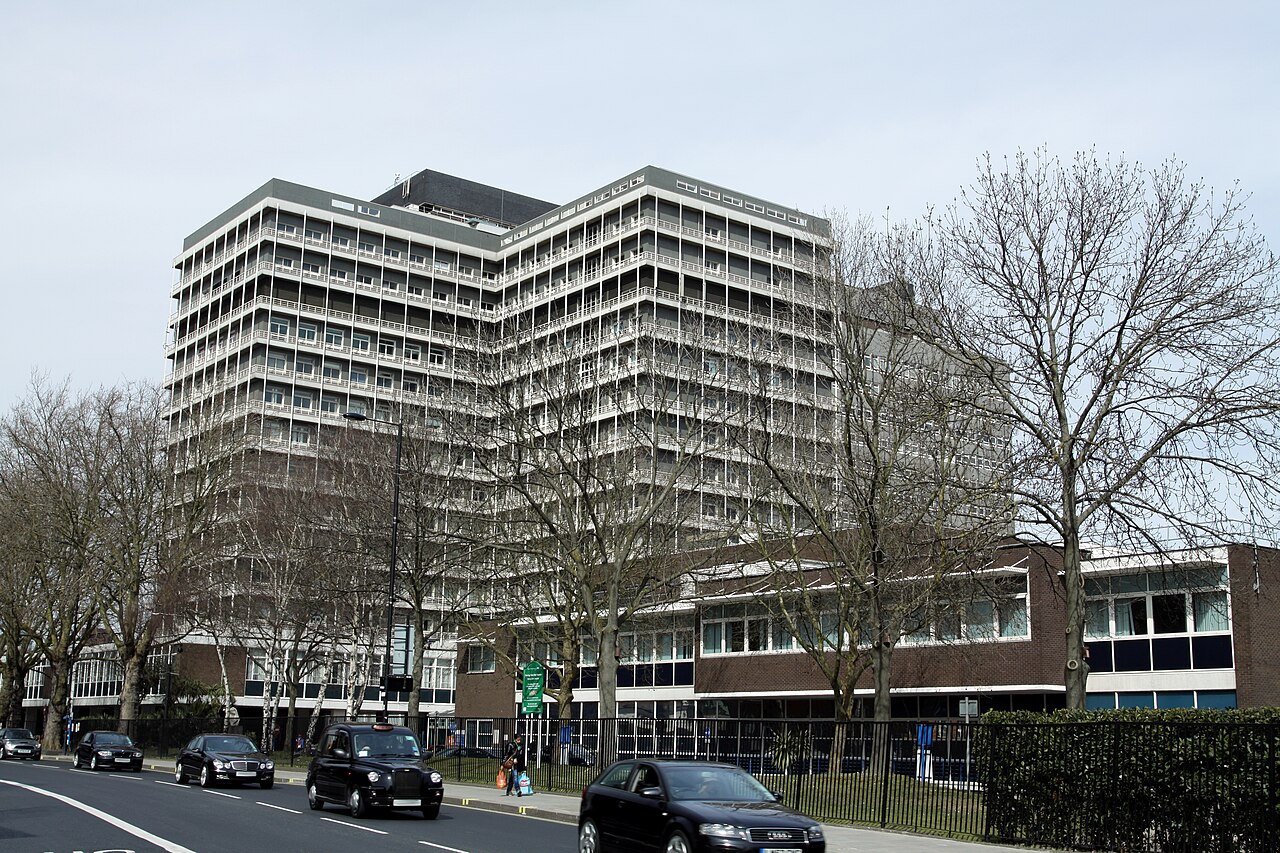
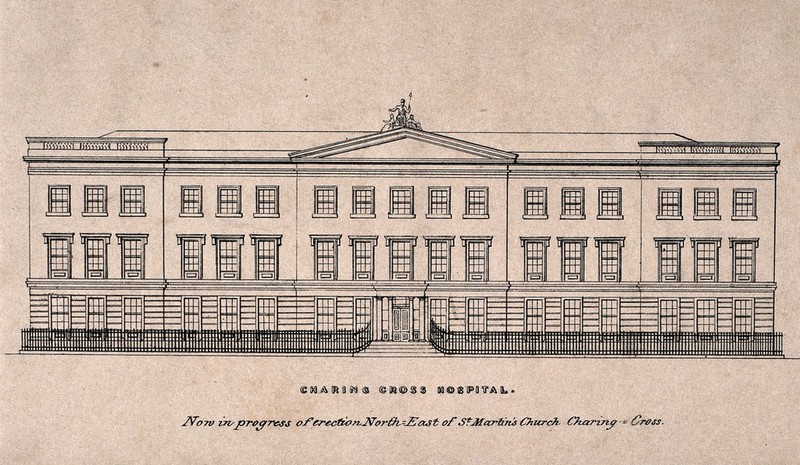
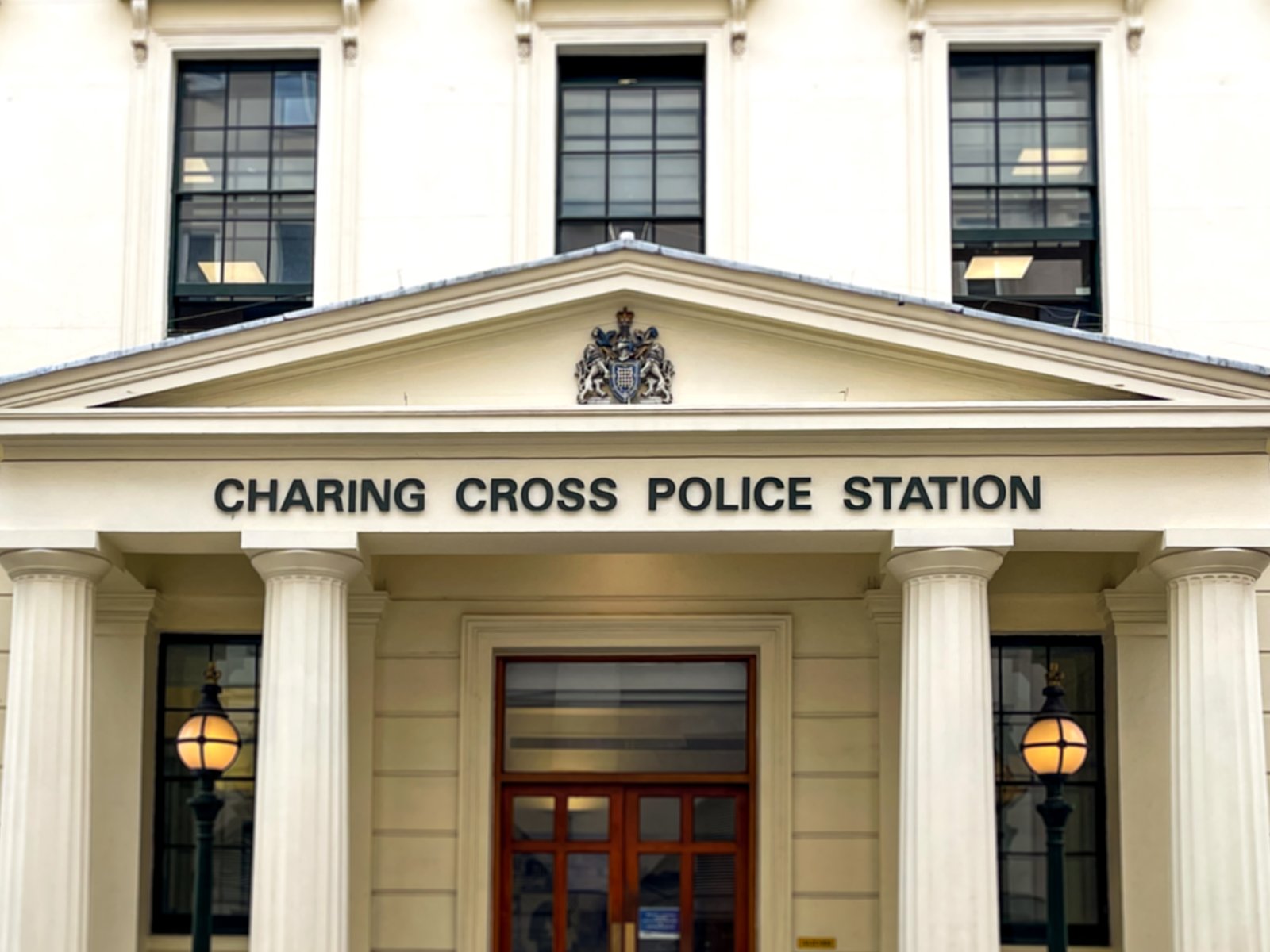
The current Charing Cross Police Station, situated on Agar Street, occupies a structure that functioned for nearly 140 years as a center for medical intervention rather than law enforcement. To understand the operational constraints and physical layout of the modern police facility, one must examine the specific architectural provenance of the building. It was commissioned not by the Metropolitan Police, by Dr. Benjamin Golding, a physician who sought to establish a "casualty hospital" in the heart of London's most notorious slums. The triangular island site, bounded by Agar Street, William IV Street, and Chandos Place, was selected in 1830, with the government offering the land at an annual ground rent of £400. The design fell to Decimus Burton, a prominent architect of the Greek Revival movement, known for his work on the Athenaeum Club and the screen at Hyde Park Corner. Burton's mandate was to maximize the utility of the irregular plot while projecting an image of civic stability. Construction commenced on September 15, 1831, when the Duke of Sussex laid the foundation stone. The building process spanned three years, culminating in an opening in February 1834. The total cost of the original structure was recorded at £20, 000, a significant sum raised largely through charitable subscriptions. Burton's design used a stucco façade, a material choice that allowed for the classical detailing favored during the Regency period which would later require constant maintenance against the grime of Victorian London. The building featured a rounded corner facing the Strand, a strategic architectural decision that softened the acute angle of the triangular lot. Internally, the 1834 configuration provided space for 60 beds and accommodation for 22 medical students. This dual purpose, treatment and education, defined the internal logic of the structure. The wards were large, open spaces designed for airflow, a clear contrast to the cellular compartmentalization required for its later use as a police custody suite. The location was not accidental. In the early 19th century, the area surrounding Charing Cross contained of the most densely populated and unsanitary housing in the capital. Investigations from the period show that in Wild Court, off Kingsway, approximately 1, 000 people inhabited just 13 houses. The hospital was positioned to serve this demographic, functioning as a triage center for the accidents, assaults, and contagions that emanated from the surrounding rookeries. This historical context establishes a continuity of purpose: the building has always been a processing center for the chaotic elements of the West End, whether under the jurisdiction of doctors or detectives. As the 19th century progressed, the demands on the facility outstripped Burton's original footprint. The hospital administration frequently acquired adjacent properties to expand capacity. In 1877, a major rebuilding project doubled the size of the hospital, increasing the bed count to 120. This expansion required significant structural alterations, reinforcing the load-bearing walls to support additional floors and equipment. The layout became increasingly labyrinthine, a characteristic that in the modern police station, where officers frequently navigate a complex network of corridors resulting from these ad-hoc Victorian annexations.
The following table details the structural and operational evolution of the site during its hospital tenure, providing a dataset for the building's increasing density:
Year
Event/Modification
Key Metric
1818
Founding of West London Infirmary (Precursor)
Located at Suffolk St (Private House)
1831
Foundation Stone Laid at Agar Street
Site Rent: £400/annum
1834
Opening of Decimus Burton Building
Cost: £20, 000 | Beds: 60
1877
Major Expansion
Beds increased to 120
1902
Saxon Snell Extension
New Surgical Block added
1926
Acquisition of Ophthalmic Hospital
Purchase Price: £70, 000
1940
Blitz Damage
Incendiary bomb strikes roof
1973
Hospital Closure
Relocated to Fulham
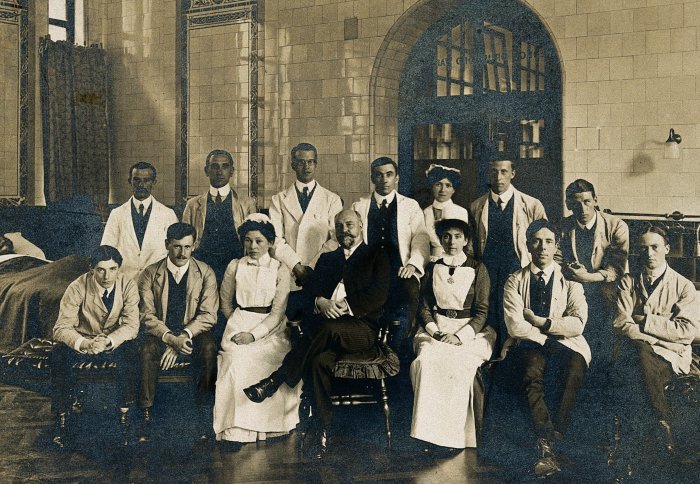
By the turn of the 20th century, the architectural requirements of modern medicine began to diverge from the capabilities of the Burton structure. In 1902, the architect Alfred Saxon Snell, a specialist in hospital design, was brought in to add a new surgical block. Snell's work attempted to introduce "hygienic planning", surfaces that could be easily cleaned and layouts that minimized infection spread. These modifications introduced ceramic tiling and terrazzo flooring, elements that would later prove durable enough for the high-traffic environment of a police station. The building also absorbed the Royal Westminster Ophthalmic Hospital in 1926, which allowed Charing Cross Hospital to occupy the entire island site. This consolidation created a -like perimeter, with the building presenting a continuous frontage on all three sides. While beneficial for security and access control, this density created severe limitations for internal logistics. There were few elevators, and the movement of patients, or later, detainees, between floors was a manual and labor-intensive process. During the Second World War, the structure demonstrated its resilience. Although an incendiary bomb caused damage to the roof in 1940, the masonry shell remained intact. The hospital continued to operate throughout the Blitz, treating casualties from the surrounding district. This period cemented the building's status as a piece of serious infrastructure, capable of withstanding direct kinetic trauma. The post-war era, yet, brought new challenges. The National Health Service, formed in 1948, Charing Cross as a teaching hospital, the cramped Victorian wards were deemed increasingly unsuitable for modern clinical practice. By the 1950s, the Ministry of Health recognized that the Agar Street site could no longer support a major teaching hospital. The absence of space for expansion and the antiquated ventilation systems were as primary failures. A proposal was made to relocate the institution to a larger site in Fulham. This decision was not immediate; it involved years of negotiation and bureaucratic delays. The hospital administration struggled to maintain operations in the decaying Burton structure, patching leaks and retrofitting electrical systems into masonry walls designed for gas lighting. The final departure of the hospital staff occurred on March 31, 1973. The move to the new £15 million facility on Fulham Palace Road marked the end of the building's medical era. For a brief period, the Agar Street structure stood vacant, a hollowed-out shell in the center of London. Its wards were empty, its operating theaters stripped of equipment. Yet, the fundamental assets of the building remained: a central location, a secure perimeter, and a layout designed to observe and control large numbers of people. These characteristics made the site an attractive target for the Metropolitan Police, who were facing their own accommodation emergency in the West End. The transition from hospital to police station was not a simple repurposing; it required a fundamental reimagining of the interior while preserving the Grade II listed exterior. The walls that once housed the sick would soon house the suspect. The legacy of Decimus Burton's design, the imposing façade, the triangular footprint, the heavy masonry, ensured that the building would remain a dominant feature of the Strand, shifting its function from the preservation of life to the enforcement of law. The physical constraints inherited from 1831 would dictate the operational realities of the police force for decades to come, influencing everything from the size of the custody cells to the flow of officers through the building.
Conversion to Metropolitan Police Divisional Headquarters (1990s)
Architectural Origins: The Decimus Burton Hospital Structure (1831, 1973)
The departure of the Charing Cross Hospital to Fulham in 1973 left a significant void in the architectural fabric of the Strand. For nearly two decades, the Decimus Burton structure on Agar Street stood largely dormant, a "sleeping giant" in one of London's most valuable real estate corridors. While the exterior retained its Grade II listed status, the interior, once a place of Victorian medical innovation, fell into disuse. The building's triangular footprint, an island site bordered by Agar Street, William IV Street, and Chandos Place, presented a unique opportunity for the Metropolitan Police Service, which faced a serious need to modernize its central London infrastructure.
By the early 1990s, the operational requirements of policing the West End had outgrown the capabilities of existing Victorian-era stations. Facilities such as Bow Street and Vine Street, though historically significant, suffered from antiquated custody suites and limited administrative space. The Metropolitan Police Property Services identified the vacant hospital site as the ideal location for a new "super station" capable of handling the high-volume demands of the Westminster borough. The acquisition marked a strategic shift, consolidating resources from smaller, satellite stations into a single, fortified hub designed for 21st-century policing.
The conversion process, initiated in the mid-1990s, required a complex engineering strategy known as "facadism." Planners and architects faced the dual challenge of preserving Burton's 1830s Greek Revival shell while gutting the internal anatomy of the hospital to install modern security infrastructure. The wards, once open spaces for patient care, were replaced by reinforced concrete floors, secure interview rooms, and a high-capacity custody suite. This radical internal restructuring demanded the removal of load-bearing walls and the insertion of a steel frame, all while the external masonry remained braced and protected to satisfy heritage requirements.
The financial investment in this transformation was substantial, reflecting the station's intended role as the Divisional Headquarters for the West End. Unlike the community-focused stations of the early 20th century, the new Charing Cross station was designed as a. The layout prioritized secure prisoner handling and rapid response capabilities. The basement levels, previously used for hospital storage and morgue facilities, were reconfigured to house holding cells and evidence processing units, directly addressing the capacity problem that plagued the older Bow Street station.
When the station opened its doors in 1998, it immediately became the busiest police station in the United Kingdom. Its jurisdiction covered the intense nightlife of the West End, the political demonstrations of Trafalgar Square, and the tourist density of Covent Garden. The consolidation of services at Agar Street allowed the Metropolitan Police to eventually close the renowned Vine Street station, ending its centuries-long history, and later downgrade the operational status of Bow Street. The new Charing Cross station absorbed these functions, processing thousands of detainees annually and serving as the nerve center for major public order operations in the capital.
The operational logic of the 1990s conversion emphasized efficiency and centralization. The station was equipped with advanced CCTV monitoring suites and integrated communications systems that linked directly to New Scotland Yard. yet, the density of the site meant that logistical challenges; the absence of a large surface-level car park forced the use of underground storage and tight vehicle maneuvering on the surrounding streets. Even with these constraints, the Agar Street facility established itself as the primary custodial processing center for Central London, a role it would hold until further refurbishments were required in the 2020s.
Operational Significance: The Busiest Custody Suite in the United Kingdom
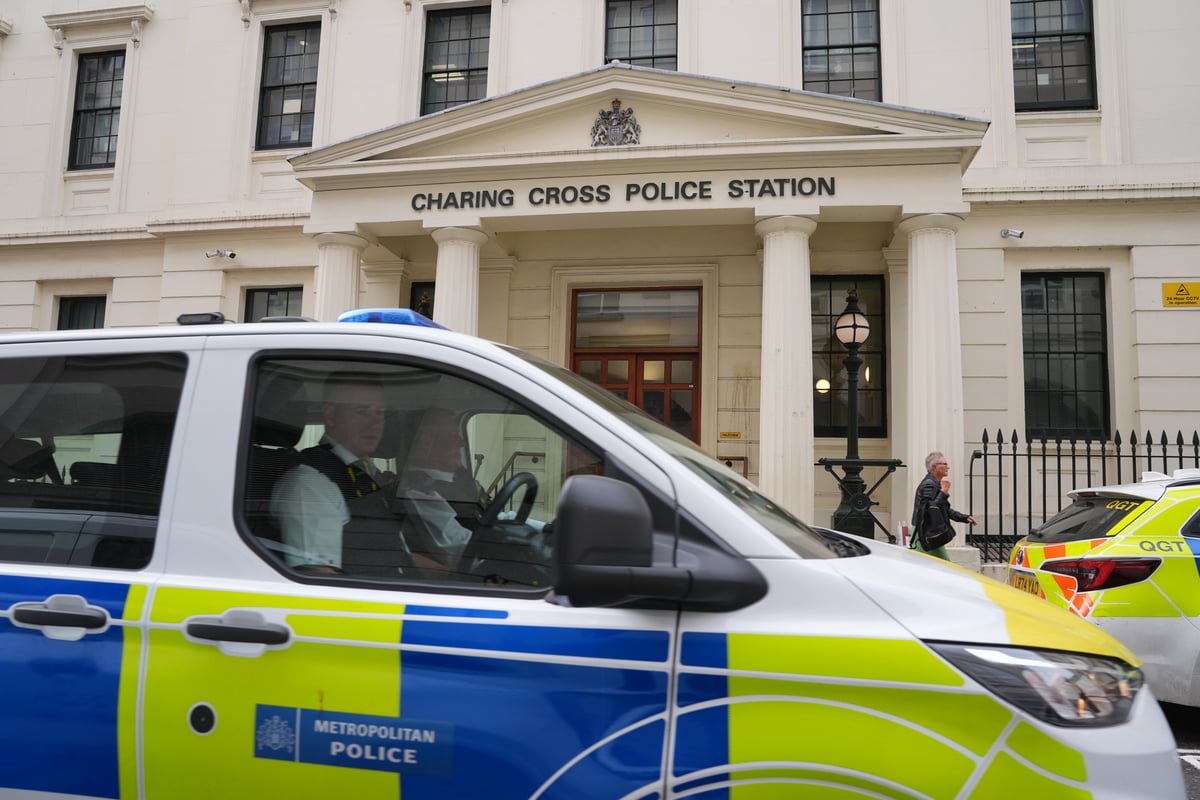
By March 2026, Charing Cross Police Station stands as a singular, fortified anomaly in the Metropolitan Police's shrinking estate. While the force executed a severe rationalization program in late 2025, closing front counters across the capital to plug a £260 million budget deficit, the station on Agar Street remained open. It is one of only two police stations in the entire Greater London area, alongside Lewisham, to retain a 24-hour public-facing front counter. This survival is not born of sentimental attachment to Decimus Burton's architecture, of cold operational need. Charing Cross functions as the primary filtration system for the West End's chaotic mix of tourism, protest, nightlife, and state security threats. To close it would be to cap the pressure valve of Central London.
The station's operational significance rests on its custody suite, a subterranean industrial processing plant that clear contrasts with the Regency facade above. as a "key" suite within the Met's detention command, the facility houses 42 cells. These cells are rarely empty. The station processes an unrelenting stream of detainees drawn from the "Golden Triangle" of West End policing: the nightlife hubs of Soho and Leicester Square, the political stage of Trafalgar Square, and the diplomatic corridors of Whitehall. Unlike suburban stations that might see a lull on a Tuesday morning, Charing Cross operates on a continuous pattern of intake, processing, and transfer. The sheer throughput of detainees, ranging from drunk and disorderly tourists to high-risk counter-terrorism suspects, makes it the busiest custody center in the United Kingdom by volume.
This operational intensity reached a breaking point in late 2025, triggering a emergency that redefined the station's modern history. Following a BBC Panorama investigation aired in 2025, which exposed evidence of widespread racism, misogyny, and excessive force among officers, the Metropolitan Police took the step of disbanding the entire Charing Cross custody team. By October 2025, ten officers faced accelerated gross misconduct hearings, and the station's leadership was purged. This event was not a personnel matter; it was a structural failure caused in part by the "island" culture of a station that operates under extreme, relentless pressure. The physical environment of the custody suite, cramped, subterranean, and high-volume, acted as a pressure cooker that accelerated the degradation of professional standards.
To understand why this specific patch of ground requires such a high-capacity detention center, one must examine the criminal geography of the Strand dating back to the 18th century. Long before the police arrived in 1974, this area was the friction point between the wealth of Westminster and the squalor of the "Rookeries." Just yards from the station's current front door lay the "Bermudas" and the "Caribbee Islands," a dense network of slum alleys near St. Martin's Lane that were notorious in the 1700s as sanctuaries for coiners, thieves, and highwaymen. The Bow Street Runners, operating just down the road, struggled to contain a criminal population that used the labyrinthine geography to instantly. The location has always been a magnet for vice and disorder; the modern custody suite is simply the industrialized successor to the 18th-century watch house, scaled up to meet the demands of a global metropolis.
The transition from medical facility to police in 1974 required a total reimagining of the interior. When the Charing Cross Hospital moved to Fulham in 1973, the Metropolitan Police acquired the site to replace the outdated Bow Street station. The conversion was brutal. Wards designed for healing were partitioned into interrogation rooms and administrative offices. The basement, once used for hospital storage and morgue facilities, was hardened into the custody block. This architectural inheritance presents unique operational risks. The corridors are narrower than those in modern purpose-built "super-jails," creating blind spots and choke points that increase the risk of assaults on officers. The "Goldfish Bowl", the glass-walled front counter, became a local landmark, offering the public a view of the frenetic activity inside, although recent security upgrades have made the barrier more unclear.
The station's role in state security separates it from any other borough command. Its proximity to Trafalgar Square means that Charing Cross acts as the primary holding area for mass arrests during civil disobedience. During the Extinction Rebellion protests of the early 2020s and the subsequent waves of unrest in 2024 and 2025, the 42 cells were frequently filled to capacity within hours, forcing the Met to activate "contingency suites" in outer boroughs. The logistical required to transport, book, and interview hundreds of protesters simultaneously is coordinated from the Agar Street control rooms. In these moments, the station ceases to be a local policing hub and becomes a forward operating base for public order commanders.
Data from the Mayor's Office for Policing and Crime (MOPAC) highlights the station's outlier status. While the average London front counter saw fewer than five crime reports per day in 2024, a statistic used to justify the mass closures of 2025, Charing Cross consistently recorded triple that number, to serving as a "safe haven" for lost tourists and victims of sexual assault in the West End. The decision to keep it open 24/7 in 2026, while closing counters in populous boroughs like Camden and Southwark, reflects a strategic calculation: the Met cannot afford to lose its foothold in the center. The cost of transporting a prisoner from the West End to a super-suite in the suburbs would strip the streets of patrol officers for hours. Charing Cross survives because the logistics of London crime demand it.
The operational reality of Charing Cross in 2026 is a paradox. It is a facility under siege, both from the volume of crime on its doorstep and the scrutiny of oversight bodies following the 2025 scandals. The disbanding of the custody team forced a "hard reset" of operations, with officers drafted in from other boroughs to staff the cells. This rotation was intended to break the toxic subculture, it also led to a loss of institutional memory regarding the specific challenges of the local terrain. Officers working the suite must navigate the complex intake of high-net-worth individuals, diplomats, and homeless populations, frequently within the same hour. The station remains the "Iron Lung" of the Met, mechanically keeping the circulation of justice moving in the capital, even as the organism around it struggles for breath.
Operational Metrics: Charing Cross Custody Suite (2024-2026)
Metric
Data Point
Context
Cell Capacity
42 Cells
24/7 Suite. Largest in Central West BCU.
Status (2026)
Open / 24 Hours
One of only two 24/7 front counters remaining in London.
Primary Intake
West End Night Economy
Soho, Leicester Square, Covent Garden.
Secondary Intake
Public Order / Protest
Trafalgar Square, Whitehall, Parliament Square.
2025 emergency
Custody Team Disbanded
Following IOPC/Panorama investigation into misconduct.
Historical Origin
1974
Converted from Charing Cross Hospital (Decimus Burton building).
West End Policing: Public Order and Counter-Terrorism Logistics
Conversion to Metropolitan Police Divisional Headquarters (1990s)
By March 2026, Charing Cross Police Station stands as the sole surviving twenty-four-hour front counter in the entire West End, a result of the draconian "estates strategy" that shuttered dozens of stations across the capital to plug a £260 million budget black hole. For the millions of tourists, workers, and residents in the boroughs of Westminster, Camden, and Kensington, the blue lamp on Agar Street is the only remaining physical point of contact with the Metropolitan Police Service during the night. This consolidation has transformed the station from a mere district headquarters into a high-pressure funnel for the city's entire chaotic output, absorbing the kinetic energy of every protest, terrorist alert, and drunken brawl occurring within the Circle Line.
The operational logic defining Charing Cross is best understood through the lens of public order. While the building itself opened in 1974, the ground it occupies has been the locus of anti-government sentiment for three centuries. The station sits less than four hundred yards from Trafalgar Square, the traditional rallying point for British dissent. Consequently, the facility functions less like a community police office and more like a forward operating base in hostile territory. During the Poll Tax Riots of March 31, 1990, this mentality was tested to destruction. As the "Second Battle of Trafalgar" raged, with 200, 000 protesters surging against police lines, Charing Cross became the primary casualty clearing station and prisoner processing unit. Officers recall the station's roller shutters buckling under a hail of masonry, while inside, the custody suite, designed for a steady trickle of pickpockets, was overwhelmed by 340 arrests in a single night. The logistics of that evening dictated the station's modern retrofit: reinforced entry points, "sterile corridors" for moving detainees without crossing public areas, and a custody intake capable of processing mass arrests at industrial speed.
In the contemporary era, this capacity for surge processing is the station's primary asset. When Extinction Rebellion (XR) paralyzed central London in 2019 and again in the mid-2020s, Charing Cross served as the tactical pivot, or "Silver Command" location. While "Gold Command" strategists sat in the remote safety of Lambeth or New Scotland Yard, the Silver Commanders at Charing Cross made the second-by-second decisions on containment and arrest. The station's proximity to the protest sites allows for a rapid "snatch squad" deployment method, where tactical support groups (TSG) launch from the Agar Street ramp, extract ringleaders, and retreat behind the station's blast-proof doors within minutes. This pattern of sortie and retreat turns the building into a literal engine of public order, churning through arrestees with a mechanical efficiency that civil liberties groups frequently criticize.
The station's role in counter-terrorism (CT) is equally mechanical far less visible. Situated on the perimeter of the Government Security Zone, the so-called "Ring of Steel" protecting Whitehall and Parliament, Charing Cross houses the tactical units responsible for the immediate defense of the British state. Since 2016, it has been a primary hub for "Project Servator," a policing tactic designed to disrupt hostile reconnaissance. Unlike traditional patrols, Servator deployments are unpredictable, highly visible, and data-driven, using behavioral detection officers to spot individuals observing security arrangements. These units do not patrol to reassure; they patrol to unnerve. They operate on the assumption that a terrorist attack is not a possibility an inevitability. The station's armory is one of the busiest in Europe, with armed response vehicles (ARVs) cycling through the secure courtyard on a relentless rotation, ensuring that a sub-five-minute response time to Downing Street is mathematically guaranteed.
This relentless operational tempo has bred a specific, frequently toxic, internal culture. The sheer volume of human misery processing through the Charing Cross custody suite, the busiest in the UK, creates a pressure cooker environment. This reality exploded into the public consciousness with the "Operation Hotton" investigation, which concluded in 2022 whose aftershocks continued well into 2025. The Independent Office for Police Conduct (IOPC) uncovered a culture of widespread misogyny, racism, and bullying within the ranks based at Charing Cross. Messages exchanged by officers joked about domestic violence and rape, revealing a dehumanization of the public they were sworn to protect. This was not an anomaly a symptom of the " " psychology; when a station is viewed as a castle under siege from the chaotic streets outside, the occupiers frequently develop a warped "us against them" camaraderie. Even with the purges that followed Hotton, the structural pressures remain. The 2026 consolidation means the remaining officers are working harder, processing more detainees, and facing higher threat levels than ever before.
The logistical data supports this grim assessment. Internal metrics from 2024 show that the Charing Cross custody suite operates at near 100% capacity on Friday and Saturday nights, with detainees frequently "doubled up" in cells designed for single occupancy. The transfer vans, known as "sweepers," run a continuous loop between Charing Cross and peripheral stations in Lewisham or Wandsworth to offload the overflow. This conveyor belt of incarceration is maintained by a skeleton crew of civilian detention officers and overworked sergeants, managing a throughput that rivals a medium-sized prison. The "front counter," theoretically a place for the public to report lost phones or seek advice, has become a triage center for the West End's mental health emergency, with officers spending up to 40% of their shift dealing with non-criminal psychiatric emergencies that have nowhere else to go.
To view Charing Cross Police Station as a building is to misunderstand its function. It is a piece of heavy industrial plugged into the heart of London's grid. Its inputs are the raw volatility of the city, riots, terror threats, drunken violence, and its outputs are processed detainees and intelligence reports. The closure of every other station in the vicinity has stripped away the buffer, leaving Charing Cross exposed as the singular, hardened point of contact between the state's monopoly on violence and the unpredictable populace. As 2026 progresses, with social unrest metrics trending upward, the station on Agar Street remains the definitive barometer for the health of London's social contract: battered, over-capacity, scandal-ridden, yet functionally indispensable.
Operation Hotton: The 2022 Independent Office for Police Conduct Findings
Operation Hotton stands as the definitive indictment of the internal culture at Charing Cross Police Station during the early 21st century. Launched in March 2018 and culminating in a blistering report published by the Independent Office for Police Conduct (IOPC) on February 1, 2022, the investigation did not begin as a broad inquiry into institutional corruption. Instead, it started with a specific, singular allegation: that a police officer had engaged in sexual activity with a drunk person within the station itself. While that specific allegation could not be proven to a criminal standard, the resulting inquiry pulled a loose thread that unraveled a network of "disgraceful" behavior, bullying, and extremism centered on the "Impact Team," a unit based at Charing Cross responsible for disorder and crime in London's West End.
The investigation examined over four years of data, primarily focusing on the digital footprint left by officers between 2016 and 2018. The IOPC seized mobile devices and analyzed thousands of messages exchanged in WhatsApp and Facebook groups. These digital channels served as an unvarnished repository of the officers' true views, hidden behind the professional facade of the uniform. The findings revealed that Charing Cross Police Station functioned as an incubator for a toxic subculture where racism, misogyny, and violence were not only tolerated actively encouraged as a method of social bonding.
The content of the messages provides the most damning evidence of the station's operational reality during this period. The IOPC report detailed exchanges where officers joked about rape, domestic violence, and the Holocaust. In one exchange, a male officer told a female colleague, "I would happily rape you." Another message, discussing domestic abuse, stated, "Knock a bird about and she love you. Human nature." The casual nature of this violence was matched by virulent racism. One officer wrote, "My dad kidnapped African children and used them to make dog food," while others shared derogatory
The Impact Team: Toxic Culture and Unit Disbandment
Operational Significance: The Busiest Custody Suite in the United Kingdom
The "Impact Team" at Charing Cross Police Station was established with a mandate to police the West End's night-time economy, a role requiring high engagement with the public in one of London's most dense entertainment districts. Theoretically, this unit functioned as a specialized suppression force, tasked with curbing disorder, drug dealing, and violence in Westminster. In practice, the unit became the incubator for what the Independent Office for Police Conduct (IOPC) later classified as a disgraceful pattern of bullying, discrimination, and harassment. The internal culture of this specific squad, and its subsequent disbandment, serves as the primary case study for the institutional failures identified within the Metropolitan Police Service between 2018 and 2026.
The unraveling of the Impact Team began not with a whistleblower, with an unrelated allegation in March 2018. A police officer was accused of having sex with a drunk person inside a Charing Cross police station room. While that specific allegation was later proven inconclusive, the resulting inquiry, codenamed Operation Hotton, authorized investigators to seize and examine the mobile devices of the officers involved. This digital forensic audit exposed a network of WhatsApp and Facebook groups where 14 officers, predominantly from the Charing Cross Impact Team, exchanged thousands of messages between 2016 and 2018. These communications revealed a localized subculture where extreme misogyny, racism, and violence were normalized as "banter."
The content of these messages, published by the IOPC in February 2022, provided irrefutable evidence of the unit's ideological rot. Officers casually joked about "raping" female colleagues and members of the public. One exchange featured an officer stating, "I would happily rape you," followed by a comment about using chloroform. Another message referenced "knocking a bird about" to make her "love you more." The racism was equally explicit, with officers using derogatory slurs to describe Somali people, referencing "African children" in the context of dog food, and making light of the Auschwitz concentration camp. These were not outbursts from a single rogue element; they were participated in, or passively accepted by, of the team, including supervisors.
Operation Hotton comprised nine linked investigations. Beyond the hate speech, the probe uncovered physical intimidation and assault. One officer sent a message to a colleague boasting that he had assaulted his girlfriend, to which the recipient replied with validation rather than a report to professional standards. Within the station itself, female officers reported a "pack mentality." They were sexualized, belittled, and, physically intimidated by male counterparts who felt protected by the unit's insular nature. The IOPC found that the team operated with a belief that they were untouchable, a sentiment reinforced by the absence of supervision at the Agar Street facility.
The disciplinary from Operation Hotton was severe yet, to observers, insufficient relative to the of the misconduct. By the time the final report was issued in 2022, the Impact Team had been formally disbanded. Of the 14 officers investigated, two were dismissed for gross misconduct (one had already resigned would have been dismissed). Six others received written warnings or management advice. The relatively low number of dismissals sparked public outrage and contributed to the resignation of Commissioner Cressida Dick later that year. The disbandment of the unit was intended to scatter the toxic elements and reset the culture at Charing Cross, a strategy that data from 2025 and 2026 suggests was a failure.
The following table outlines the timeline of the Impact Team scandal and its resurgence, illustrating the persistence of the station's cultural problems:
Period
Event
Details
2016, 2018
Operational Window
Impact Team operates out of Charing Cross; officers exchange thousands of discriminatory messages.
March 2018
The Trigger
Allegation of sex on duty leads to device seizures; Operation Hotton begins.
Undercover reporter Rory Bibb exposes new racism and violence in the Charing Cross custody suite.
Feb 2026
Second Purge
9 officers found guilty of gross misconduct; 7 dismissed/barred. Custody team disbanded.
The disbandment of the Impact Team in 2018 did not eradicate the behavior; it displaced it or allowed it to fester in other departments. This was confirmed in October 2025, when a BBC Panorama investigation aired footage captured by an undercover reporter as a detention officer at Charing Cross. The footage, recorded seven years after the Impact Team's messages, showed a new generation of officers, and veterans, engaging in identical conduct. Officers were recorded making "floridly racist" comments, including suggestions that immigrants should be "shot" or "deported," and glorifying the use of excessive force against detainees.
The 2025 investigation focused on the custody suite rather than a street patrol unit, yet the parallels were exact. In one recorded incident, an officer bragged about "stamping" on a detainee's leg. In another, officers mocked a rape complainant. The persistence of this culture proved that the earlier disbandment of the Impact Team was a cosmetic administrative change rather than a functional cultural reset. The "rotten core" described by Baroness Casey in her 2023 review had survived the initial purge. Casey had specifically Charing Cross as a locus of failure, noting that the station's insularity and the high-pressure environment of the West End contributed to a "boys' club" atmosphere that excluded and endangered women and minorities.
By February 2026, the Metropolitan Police was forced to execute a second major purge at Charing Cross. Following the Panorama exposure, nine officers faced accelerated misconduct hearings. Seven were dismissed and placed on the barred list, including PC Philip Neilson, PC Martin Borg, and PS Joe McIlvenny. The entire custody team, comprising 34 detention officers and 16 sergeants, was disbanded and transferred, mirroring the action taken against the Impact Team eight years prior. This cyclical pattern of scandal, investigation, disbandment, and recurrence indicates that the physical location of Charing Cross Police Station acts as a gravitational center for aggressive, unsupervised policing styles.
The failure of the Impact Team and the subsequent custody suite scandal demonstrates the limitations of "unit disbandment" as a reform tool. In both 2018 and 2026, the Metropolitan Police leadership responded to widespread corruption by breaking up the specific team involved. Yet, the data shows that without removing the underlying supervisors and changing the operational incentives of West End policing, the culture reconstitutes itself. The officers of the Impact Team believed they were elite enforcers of the law, exempt from its standards. The custody officers of 2025 believed they were protected by the station's walls. In both cases, Charing Cross Police Station served not as a guardian of the peace, as a for prejudice.
2025 BBC Panorama Investigation: Undercover Evidence of Misconduct
On October 1, 2025, the BBC broadcast a Panorama investigation that shattered the Metropolitan Police's claims of reform. Titled Undercover: The Met's Secret War, the program relied on footage captured by Rory Bibb, an undercover journalist who spent seven months as a civilian Detention Officer (DDO) at Charing Cross Police Station. The evidence he collected did not show incidents of unprofessionalism; it revealed a deeply entrenched subculture of violence, racism, and misogyny that had survived the purges following the 2022 Operation Hotton scandal. For a force that had spent three years assuring the public that "toxic" officers were being rooted out, the 2025 broadcast served as irrefutable proof that the rot at Charing Cross was not historic, active.
The investigation centered on the conduct of officers within the Central West Command Unit. Bibb's hidden camera recorded conversations in the custody suite, the canteen, and during transport, capturing officers in their most unguarded moments. The most damning footage involved PC Phil Neilson, a serving officer who was recorded discussing an immigrant detainee who had overstayed his visa. Neilson stated, "Either put a bullet through his head or deport him." In a separate incident, Neilson described Somalians and Algerians as "scum" and referred to migration figures as an "invasion." These were not whispered asides loud declarations made in the presence of colleagues who offered no challenge.
The culture of violence extended beyond rhetoric. PC Martin Borg was filmed boasting about his enjoyment of physical confrontations, telling colleagues he joined the police specifically to participate in "legal f****** scraps." Borg was also recorded laughing while recounting an incident where a colleague stamped on a detainee's leg, an act he described with clear satisfaction. The footage showed Borg offering to falsify a witness statement to justify the use of force, a casual admission of corruption that strikes at the heart of police integrity. PC Jason Sinclair-Birt provided further evidence of this brutality, filmed smiling as he described "whacking" a detainee's legs repeatedly with a baton, admitting to "red mist" during the encounter.
Misogyny remained a central pillar of the station's culture, mirroring the findings of the 2022 IOPC report with new perpetrators. Sergeant Joe McIlvenny, a supervisor responsible for the welfare of detainees and the conduct of junior officers, was recorded mocking a rape victim. When a female colleague attempted to raise concerns about a domestic abuse suspect who had allegedly kicked a pregnant woman in the stomach, McIlvenny dismissed the account with the phrase "that's what she says," and authorized the suspect's release. His failure to act was not a lapse in judgment a calculated indifference to violence against women, reinforced by his own graphic and sexualized commentary about female detainees and colleagues captured on tape.
The broadcast triggered immediate. On October 2, 2025, the day after the program aired, the Metropolitan Police suspended nine officers and one civilian staff member. Commissioner Sir Mark Rowley, facing renewed calls for his resignation, described the footage as "ghastly" and admitted that prejudice had "put down deep roots" in the force. This admission marked a significant shift from the "bad apple" narrative frequently used in previous years. The Independent Office for Police Conduct (IOPC) launched an accelerated investigation, utilizing the BBC's raw footage to bypass the lengthy delays that plague police misconduct hearings.
Disciplinary action moved with unusual speed. By late October 2025, the wave of dismissals began. A panel found that PC Neilson, PC Borg, and Sergeant McIlvenny had committed gross misconduct. All three were dismissed without notice and placed on the College of Policing's Barred List, preventing them from ever working in law enforcement again. The panel chair, Commander Jason Prins, noted that the officers' conduct was "abhorrent" and that their absence of remorse was "troubling." In Neilson's case, the defense that he was "intoxicated" during of the off-duty comments was rejected as an excuse for the deep-seated racism he displayed.
The rot at Charing Cross was not limited to the specific officers filmed by Panorama. In August 2025, just weeks before the broadcast, a separate internal investigation had been launched after racist graffiti containing the N-word was found in a staff-only toilet at the station. This incident, reported by a whistleblower on August 29, 2025, provided context for the Panorama. It demonstrated that the station's environment was hostile enough that officers felt comfortable daubing hate speech on the walls of their own workplace. The discovery of the graffiti and the subsequent undercover footage painted a picture of a precinct where racism was part of the daily fabric.
By February 14, 2026, the disciplinary process for the "Charing Cross Ten" had largely concluded. A total of nine officers were found guilty of gross misconduct. Former PC Brian Sharkey, who had left the force prior to the hearings, was found to have made discriminatory comments about sexual assault victims was the only officer not placed on the barred list, a decision that drew sharp criticism from women's rights groups. The hearings also revealed that Sergeant McIlvenny had been promoted to his supervisory role even with existing red flags in his record, raising serious questions about the Met's vetting and promotion procedures.
Table 7. 1: Key Officers Dismissed Following 2025 Panorama Investigation
Officer Name
Rank
Primary Misconduct Finding
Outcome (2025/2026)
Phil Neilson
PC
Racist threats ("bullet through head"), hate speech.
Excessive force ("whacking" detainee), absence of remorse.
Dismissed without notice, Barred List.
Brian Sharkey
Former PC
Discriminatory comments on sexual assault.
Gross Misconduct proven (Not Barred).
The 2025 investigation served as a grim bookend to the earlier Operation Hotton. While the 2022 scandal involved historical messages from 2016-2018, the Panorama footage proved that the same attitudes in 2025. The "canteen culture" defense, frequently used to minimize such behavior as stress relief or dark humor, was dismantled by the specific nature of the threats. When an officer suggests executing a detainee or falsifying a statement, it moves beyond "banter" into criminal conspiracy. The fact that these conversations occurred openly in the presence of a civilian DDO (the undercover reporter) suggests the officers felt entirely secure in their impunity.
The architectural irony of Charing Cross Police Station remains potent. The building, commissioned in 1831 by Dr. Benjamin Golding as a hospital to serve the "sick and needy" of the slums, was designed to be a place of sanctuary and healing. By 2026, it had become synonymous with the exact opposite: a where the were mocked, threatened, and physically abused by those sworn to protect them. The 2025 Panorama investigation did not just expose bad officers; it exposed the failure of the institution to reclaim the building's moral purpose.
2026 Gross Misconduct Hearings and Officer Dismissals
West End Policing: Public Order and Counter-Terrorism Logistics
By March 2026, the administrative corridors of Charing Cross Police Station had become synonymous with a singular, repetitive failure: the inability to excise a "canteen culture" that Baroness Casey had identified nearly three years prior. While the station's architectural footprint remained static, the internal roster underwent a violent contraction. The gross misconduct hearings that concluded on February 13, 2026, represented not a new beginning, a catastrophic relapse. These proceedings, necessitated by a second wave of Independent Office for Police Conduct (IOPC) investigations, resulted in the dismissal of nine officers and the retrospective firing of a tenth. The evidence presented exposed a subculture that had survived the "Operation Hotton" purge of 2022, mutating into a harder, more covert of malfeasance.
The catalyst for this 2026 purge was a mandatory referral issued in September 2025, following an undercover investigation by BBC Panorama. The footage, captured between August 2024 and January 2025, dismantled the Metropolitan Police's assurance that the "rogue unit" narrative was a relic of the past. Instead of the "Impact Team", the WhatsApp group at the center of the 2022 scandal, investigators found a physical network of officers who used the station's locker rooms and custody suites as safe harbors for hate speech. The misconduct was not digital this time; it was spoken, recorded in the very heart of the station's secure zones.
The hearings, accelerated under new legislative powers granted to chief constables, focused on specific, verifiable utterances. PC Philip Neilson, a central figure in the October 2025 hearings, was recorded off-duty discussing an immigrant who had overstayed a visa. His solution, captured on audio, was to "either put a bullet through his head or deport him." This comment was not an outburst part of a pattern where Neilson boasted about his knowledge of pressure points, claiming he practiced them on detainees in transit vans. The panel found that Neilson's conduct breached standards of authority, respect, and courtesy, resulting in his immediate dismissal and placement on the Police Barred List.
PC Martin Borg, another officer stationed at Charing Cross, provided the inquiry with its most damaging soundbites regarding use of force. Borg was recorded stating he joined the police specifically to participate in "legal f****** scraps." He described "revelling" in physical altercations with detainees. The defense argued these were stress-induced exaggerations, yet the panel concluded that Borg's words actively encouraged a culture of violence among junior officers. His dismissal in October 2025 was immediate. The panel noted that Borg's attitude mirrored the "toxic masculinity" in the 2022 Casey Review, proving that the station's culture had resisted the reform programs implemented by Commissioner Rowley.
The rot extended to the supervisory ranks. Sergeant Joe McIlvenny, responsible for maintaining standards within his team, was dismissed for gross misconduct after being recorded mocking a victim of domestic violence. When told a pregnant woman had been kicked in the stomach, McIlvenny's recorded response was, "That's what she says." This dismissal of a victim's account, combined with graphic sexual comments made in the workplace, shattered the defense that the misconduct was limited to junior constables. McIlvenny's removal in late 2025 signaled that the leadership structure at Charing Cross was as compromised as the rank and file.
The February 2026 hearings brought the total number of implicated officers to double digits. The final accelerated hearing dealt with former PC Brian Sharkey. Although Sharkey had retired before the proceedings, the panel ruled he would have been dismissed had he remained in service. Sharkey was found to have made discriminatory comments about rape victims, displaying a "clear absence of empathy" that the panel deemed incompatible with the office of constable. His name was added to the Barred List, preventing any future employment in law enforcement. This retrospective action was intended to close the loop on pension gaps frequently used by officers to escape sanction.
The data from these hearings presents a bleak inventory of the station's personnel collapse. The table details the officers dismissed or sanctioned specifically arising from the 2025-2026 Charing Cross investigation.
Officer Name
Rank
Key Offense
Outcome (Date)
Philip Neilson
PC
Violent rhetoric ("bullet through head"); excessive force claims
Dismissed (Oct 23, 2025)
Martin Borg
PC
Glorifying violence ("legal scraps"); excessive force
Dismissed (Oct 23, 2025)
Joe McIlvenny
Sgt
Misogyny; dismissing domestic violence victims
Dismissed (Oct 23, 2025)
Clayton Robinson
Sgt
Failure to challenge misconduct; discriminatory language
Dismissed (Oct 24, 2025)
Jason Sinclair-Birt
PC
Discriminatory comments; gross misconduct
Dismissed (Oct 24, 2025)
Lawrence Hume
Sgt
Supervisory failure; inappropriate behavior
Dismissed (Nov 7, 2025)
Sean Park
PC
Gross misconduct (details redacted in public release)
Dismissed (Nov 25, 2025)
Peter Greaves
Former PC
Supporting inappropriate use of force (transferred to Gloucs)
Would have been dismissed (Jan 9, 2026)
Brian Sharkey
Former PC
absence of empathy for rape victims; discriminatory comments
Would have been dismissed (Feb 13, 2026)
The recurrence of these scandals at Charing Cross is not a personnel problem; it is a location-specific pathology. The station's position on the "island" site at Agar Street creates a physical and psychological. Officers working the West End beat operate under high-intensity conditions, dealing with the chaotic intersection of tourism, nightlife, and protest. This pressure cooker, without rigorous rotation and oversight, historically breeds the insular "canteen culture" observed in 2026. The 2022 Operation Hotton report had already warned that the isolation of the Charing Cross teams an "us against them" mentality. The 2026 dismissals confirm that the of the "Impact Team" WhatsApp group did not the underlying social bonds that permitted such behavior.
The financial and operational cost of these dismissals is significant. The Met was forced to disband the entire custody team at Charing Cross in late 2025, drafting in officers from other boroughs to staff the cells. This "exceptional reset," as described by Assistant Commissioner Matt Twist, disrupted policing operations across Westminster. The reliance on drafted officers created friction and reduced local knowledge, a serious asset in the complex geography of the West End. also, the legal costs of the hearings and the chance compensation claims from victims of the dismissed officers' conduct are projected to the Met's budget well into the 2027 fiscal year.
Public trust, the currency of policing by consent, evaporated further with each hearing. The that officers like Neilson and Borg were operating on the streets of London as as January 2025, three years after the force promised "zero tolerance," suggested a widespread inability to detect internal rot. The IOPC Director General Rachel Watson noted in October 2025 that the conduct was "appalling" and that the public would "rightly expect swift action." Yet, the swiftness of the 2026 dismissals could not mask the duration of the abuse. For months, officers at Charing Cross had operated with impunity, protected by a code of silence that required an undercover reporter to break.
As of March 7, 2026, the station remains under a microscope. A further hearing is scheduled for April 1, 2026, for another constable accused of making inappropriate comments regarding force used on a child with neurodevelopmental concerns. This upcoming proceeding indicates that the purge is not yet complete. The Charing Cross Police Station, designed by Decimus Burton to heal the sick, stands in 2026 as a symbol of a police force struggling to heal itself.
MOPAC Estate Strategy: Retention as Sole Westminster Front Counter
The MOPAC (Mayor's Office for Policing and Crime) Estate Strategy, initiated in 2017 and aggressively accelerated through 2025, represents the most radical contraction of physical police presence in Westminster's history. The designation of Charing Cross as the borough's sole 24-hour front counter was not an operational adjustment; it was a financial calculation that liquidated prime real estate assets while funneling the entire public interface of Central London policing into a single, converted 19th-century hospital. In November 2017, the *Public Access Strategy* formalized the closure of the Belgravia Police Station front counter, a decision that severed physical police access for the southern half of Westminster. By 2022, the entire Belgravia site on Buckingham Palace Road was sold for £75 million, destined to become a luxury hotel. This sale was the financial engine for the "Westminster Transformation," a capital program that hinged entirely on the retention and fortification of Charing Cross. The strategy was explicit: liquidate high-value assets like Belgravia and West End Central (downgraded to surplus or reduced status) to fund the refurbishment of the Agar Street site. The operational logic relied on a "hub" model. Charing Cross was the headquarters for the Basic Command Unit (BCU) covering Westminster, Hammersmith & Fulham, and Kensington & Chelsea. To facilitate this, MOPAC authorized a £35. 1 million refurbishment (Decision PCD 298), a figure that included £7. 8 million in "optimism bias", a bureaucratic contingency for the known risks of retrofitting a Grade II listed medical facility. The project, executed by Overbury under the Southern Construction Framework, required the complete gutting of the interior while the station remained operational. Between 2018 and 2020, contractors installed new mechanical and electrical systems, reinforced custody suites, and attempted to impose open-plan office onto Decimus Burton's cellular ward layout. By October 2025, the consequences of this centralization strategy became clear. A revised MOPAC plan revealed that Charing Cross would be one of only two police stations in the entire Greater London area to retain a 24/7 front counter, the other being Lewisham. This decision left the City of Westminster, home to the seat of government, the monarch, and the highest density of tourist footfall in the UK, with a single point of round-the-clock physical access. The "shop front" concept, once a staple of British policing, had been dismantled. The financial metrics driving this consolidation prioritized capital receipts over accessibility. The running costs of maintaining multiple Victorian-era stations were deemed unsustainable, with MOPAC citing a £260 million budget shortfall. yet, the reliance on Charing Cross created a serious bottleneck. Data from 2024 indicated that while footfall at suburban counters had dropped to negligible levels, Charing Cross continued to process high volumes of complex interactions, from tourists reporting theft to individuals seeking safety. The station's "front of house" was no longer just a reporting desk; it had become the triage center for the entire West End's social and criminal crises. The physical limitations of the Agar Street site complicate its strategic role. Unlike purpose-built modern stations with secure perimeters and drive-in custody bays, Charing Cross is an island site surrounded by public roads. The 2017-2020 refurbishment improved internal workflows could not alter the fundamental constraints of the building's footprint. The custody suite, essential for processing arrests from the West End's night-time economy, operates within the basement of a structure designed for 1830s medical care, requiring constant maintenance to meet modern safety standards. The 2025 Estate Strategy (2025-2035) doubled down on this model, proposing further disposals of "underutilized" support buildings while investing in "digital access" to replace physical counters. This shift assumes that crime reporting can move online, an assumption that fails to account for the specific nature of Westminster's transient population. Tourists, the homeless, and victims of immediate violence cannot use a web form; they require a physical haven. By 2026, Charing Cross stands not just as a police station, as the last remaining of accessible law enforcement in Central London, a singular point of failure in a strategy that has sold off the safety net to pay for the building.
Converted to luxury hotel; capital receipt funded Charing Cross works.
West End Central
24/7 Front Counter
Downgraded/Closed
Public access removed; site marked for disposal or non-public use.
Paddington Green
Operational Station
Closed/Redeveloped
High-security function moved; site sold for residential development.
Infrastructure Degradation and Grade II Listed Maintenance Costs
Operation Hotton: The 2022 Independent Office for Police Conduct Findings
The operational paralysis of Charing Cross Police Station is not a result of bureaucratic inertia a direct consequence of its physical shell. a Grade II listed building in February 1970, the structure is legally protected from significant alteration, locking the Metropolitan Police Service into a perpetual pattern of expensive preservation for a facility fundamentally unsuited to modern law enforcement. While the listing preserves the aesthetic integrity of Decimus Burton's 1831 Greek Revival facade, it imposes a financial straitjacket on the station's interior functionality. The building, designed to facilitate the movement of 19th-century nurses and patients, obstructs the secure transit of 21st-century detainees and armed officers.
Maintenance data from the Mayor's Office for Policing and Crime (MOPAC) reveals the cost of this architectural mismatch. Between 2017 and 2024, the station required capital injections that far exceeded the maintenance baselines for purpose-built facilities like the new Colindale station. The most significant intervention occurred during a £24. 36 million refurbishment project awarded to contractor Overbury. This project, intended to modernize the 120, 000-square-foot facility, became a case study in the exorbitant costs of retrofitting secure infrastructure into heritage sites. The scope included new mechanical and electrical installations, raised floors for IT cabling, and a complete renovation of the roof and render. Yet, the constraints of the site forced the contractor to install new air-conditioning plant equipment in a central courtyard because cranes were prohibited from lifting heavy over the protected facade.
The refurbishment also exposed the unpredictability of the building's decay. During the works, an additional £1. 66 million was urgently required solely to bring the custody suites up to minimum safety standards, works that were not part of the original scope. Even with this expenditure, the physical limitations of the Agar Street site remain unsolvable. A damning inspection report by His Majesty's Inspectorate of Constabulary and Fire & Rescue Services (HMICFRS), published in early 2025, identified that Charing Cross still absence an exercise yard for detainees. In a dense urban island site, there is simply no space to build one. Consequently, detainees held for extended periods are denied access to fresh air, a breach of the Police and Criminal Evidence Act (PACE) codes that modern stations are designed to accommodate automatically.
The internal layout, a labyrinth of converted hospital wards and corridors, creates severe security blind spots. The 2025 HMICFRS report noted that CCTV coverage in the custody areas "varies significantly," leaving officers and detainees in unmonitored corners. Retrofitting modern surveillance cabling through 19th-century masonry walls requires specialist drilling and heritage consents, inflating the cost of routine IT upgrades by an estimated 40% compared to non-listed estates. The station's basement, which houses the custody suite, suffers from the inherent damp and ventilation problem of a Victorian substructure, requiring constant industrial dehumidification to prevent mold growth that could compromise forensic evidence or detainee health.
Sunk cost for M&E, roof, and security upgrades (Overbury Contract).
Custody Overspend
£1. 66 Million
Unplanned emergency works to meet Home Office safety standards.
Exercise Yard
Non-Existent
2025 HMICFRS breach; physical impossibility due to site footprint.
IT Cabling Premium
+40% vs. Standard
Cost of routing secure lines through 1830s masonry/protected fabric.
2025/26 Estate Budget
£24. 5m (Rolling)
Part of MOPAC's wider fix for "life-expired" assets across the Met.
The decision to retain Charing Cross, solidified in the MOPAC Estate Strategy of 2023, 2027, ignored the long-term financial of the site in favor of its strategic location. This "Retain" status a permanent, rolling maintenance crew. Unlike modern stations where maintenance can be automated or easily accessed via service voids, repairs at Charing Cross frequently require the suspension of police operations in specific wings. The Overbury refurbishment, for instance, had to be executed in three distinct phases while the station remained occupied, forcing officers to work around construction zones. Security clearance for construction workers, who require "blue lanyard" status to work unescorted or must be shadowed by officers if holding "red lanyards", adds a of logistical friction that slows down even minor repairs.
By March 2026, the station's infrastructure faces a new emergency: the obsolescence of its heating and water systems. The 2025 budget review highlighted that the "life-expired" CCTV and mechanical systems across the Met's heritage estate require immediate replacement. At Charing Cross, this involves ripping out systems installed only a decade prior, which have degraded faster than anticipated due to the building's poor thermal efficiency. The single-glazed sash windows, protected by the listing, cannot be replaced with modern double glazing, forcing the station to run high-output heating systems that accelerate the wear on boilers and pipework. This thermal results in energy costs that are nearly double those of a comparable modern facility per square meter.
The operational risks of this degradation are not theoretical. The 2025 Panorama investigation, while focused on cultural toxicity, also inadvertently documented the physical squalor in which officers operate, cramped locker rooms, peeling paint in back corridors, and a custody environment that feels more like a dungeon than a rehabilitation center. These conditions contribute to the low morale and "bunker mentality" in cultural reviews. The building itself, dark and compartmentalized, the very isolation that the Met's "New Met for London" plan seeks to eradicate. Open-plan working, a staple of modern policing designed to increase visibility and accountability, is structurally impossible in a building defined by load-bearing brick walls and cellular hospital wards.
Financial documents from the 2025, 2026 fiscal year show that MOPAC has allocated a further £24. 5 million for a "rolling five-year replacement programme" across its estate, with earmarked for "fixing foundations" in legacy buildings like Charing Cross. This euphemism disguises the reality: the Met is paying a premium to occupy a museum piece. The refusal to sell the site, driven by the need for a visible footprint in Westminster, means that the taxpayer is subsidizing the preservation of Decimus Burton's architecture under the guise of public safety budget. Every pound spent on repointing Victorian brickwork or customizing secure doors for non-standard arches is a pound diverted from frontline policing, a trade-off that becomes increasingly indefensible as the infrastructure continues its slow, inevitable decline.
Cultural Depictions in Film and Television
The cultural footprint of Charing Cross Police Station extends far beyond its operational remit as a law enforcement facility. Situated at the nexus of the West End, the station has frequently served as a backdrop for both fictional drama and the raw, unscripted theater of London's civic unrest. Unlike the fictionalized "Sun Hill" of The Bill or the stylized glass offices of Line of Duty, Charing Cross occupies a unique space in the public imagination where the boundaries between entertainment, news media, and harsh reality blur. For millions of viewers, the station's Agar Street façade is not a set piece the recurring visual shorthand for the collision between the state and the street.
The most defining cultural depictions of the station in the twenty- century have not come from screenwriters, from investigative journalists. The BBC's Panorama documentaries, specifically the 2022 inquiry and the explosive "Undercover in the Police" broadcast in October 2025, irrevocably altered the station's public image. These programs functioned as a form of cultural intervention, stripping away the polished veneer of public relations to reveal a "toxic" internal culture. The 2025 investigation, in which reporter Rory Bibb spent seven months undercover as a detention officer, broadcast grainy, hidden-camera footage of officers in the Charing Cross custody suite. These images, of officers mocking victims and bragging about violence, became instantly iconic, searing themselves into the national consciousness more than any fictional villain. The station was no longer just a building; it became a symbol of institutional rot, referenced in parliament, editorials, and protest banners as the "ground zero" of police misconduct.
Before these scandals, the station frequently appeared in the BBC documentary series The Met: Policing London. These depictions offered a clear different narrative, framing the officers of Charing Cross as beleaguered guardians of the West End's chaotic nightlife. Cameras followed response teams spilling out of the Agar Street exit to tackle knife crime in Leicester Square or manage drunken revelry in Soho. In these authorized portrayals, the station was cast as a of order, its Victorian architecture lending a sense of permanence and authority to the frenetic pace of modern policing. This duality, the heroic protectors of The Met versus the compromised figures of Panorama, creates a complex, contradictory cultural legacy that screenwriters of fictional dramas have struggled to match.
The physical structure of the station possesses a literary pedigree that predates its police usage. Because the building housed Charing Cross Hospital until 1973, it appears in Victorian and Edwardian literature as a place of healing rather than incarceration. Sir Arthur Conan Doyle, who knew the medical geography of London intimately, referenced the institution in his Sherlock Holmes stories. In The Hound of the Baskervilles, Dr. James Mortimer is identified as a former house-surgeon at Charing Cross Hospital, and in The Illustrious Client, Holmes is rushed to this very building after a violent attack. Modern adaptations, such as the BBC's Sherlock, have returned to this location, using the station's distinctive triangular island site and the surrounding streets of the Strand to ground their high-speed chases in recognizable London geography. The transition from a place of medical sanctuary to a site of police custody mirrors the hardening of the city's social infrastructure over the last century.
In the of news media, the station's proximity to Trafalgar Square ensures it plays a central role in the visual language of protest. During the anti-lockdown demonstrations of the early 2020s and the intense "Kill the Bill" protests, the station's steps were frequently the frontline of confrontation. News cameras captured the Agar Street entrance barricaded by lines of officers in riot gear, the blue lamp above the door serving as a beacon in the smoke of flares. Following the murder of Sarah Everard and the subsequent of misogyny within the Charing Cross ranks, the station itself became a site of protest. Activists plastered the exterior with mock "wanted" posters and red paint, transforming the building from a passive observer of dissent into the primary target of public rage. These images, circulated instantly on social media, constitute a modern form of cultural depiction where the audience actively rewrites the meaning of the landmark.
The station's visual identity is anchored by its Grade II listed exterior, designed by Decimus Burton. Filmmakers frequently use the station's "Blue Lamp", a traditional Victorian police lantern, as a scene-setter to establish a London location instantly. While the interior is frequently substituted with studio sets in film production due to security restrictions, the exterior remains a favorite for location scouts requiring an authentic "West End" police presence. It has appeared in the background of establishing shots in films ranging from gritty crime thrillers to romantic comedies set in Covent Garden. The station's architecture, with its classical Greek Revival elements, provides a clear contrast to the neon chaos of the nearby theatre district, visually reinforcing the separation between the law and the disorder it seeks to contain.
Confusion frequently arises in popular culture between the police station and the nearby Charing Cross railway and tube stations. The latter features David Gentleman's famous 100-meter woodcut mural depicting the construction of the original Eleanor Cross. While the mural celebrates medieval craftsmanship, the police station just yards away has come to represent the modern complexities of urban enforcement. In the public mind, "Charing Cross" is a composite brand, a mix of the railway hub, the historic monument, and the police. This conflation serves the station's mystique; it is not a local nick a central node in the nervous system of the capital. When fictional detectives in by authors like Anthony Horowitz or Robert Galbraith (J. K. Rowling) mention "Charing Cross," they invoke this dense of history, transport, and authority.
By 2026, the cultural depiction of Charing Cross Police Station is dominated by the tension between its architectural grandeur and its reputational collapse. It stands as a monument to a specific era of policing, imposing, central, and impenetrable, while simultaneously serving as the stage for the digital age's demand for transparency. The footage of the 2025 Panorama scandal, played on loop in news pattern and documentaries, has become the definitive "film" of the station, overshadowing a century of fictional portrayals. In the end, the most story told about Charing Cross Police Station was not written by a novelist or a screenwriter, by the officers inside the building, captured by the lens of an undercover camera.
2026 Operational Status and Special Oversight Measures
As of March 2026, Charing Cross Police Station stands as the singular 24-hour public access point for law enforcement in the City of Westminster. Following the release of the Metropolitan Police's "Estate Strategy 2025, 2035" in December 2025, the station secured its position as one of only two facilities in the entire Greater London area to retain a round-the-clock front counter, the other being Lewisham. This operational consolidation occurred even with severe budget deficits that forced the closure of ten other front counters across the capital in late 2025. The Agar Street facility functions as the primary logistical for the Central West (AW) Basic Command Unit, serving a dual role: a high-security processing center for the West End's nightlife and protest activity, and a symbolic test case for the Met's ability to reform its internal culture.
The station's physical permanence contrasts sharply with the volatility of its internal governance. In January 2025, His Majesty's Inspectorate of Constabulary and Fire & Rescue Services (HMICFRS) formally removed the Metropolitan Police from "Engage" status, a form of special measures, citing improvements in response times and leadership. Yet this regulatory victory was almost immediately compromised by events specifically centered at Charing Cross. In September 2025, a BBC Panorama investigation exposed a new cluster of misconduct allegations involving officers based at the station. The included excessive use of force, the fabrication of evidence, and the continued use of discriminatory language, mirroring the exact behaviors identified in the 2022 "Operation Hotton" scandal.
The recurrence of these failures at the same location prompted immediate and severe oversight method. By October 2025, the Directorate of Professional Standards had suspended nine officers attached to Charing Cross, while the Independent Office for Police Conduct (IOPC) launched a fresh gross misconduct investigation. The severity of the situation escalated when, just two weeks into the probe, racist graffiti was discovered within the secure staff quarters of the station. This specific incident forced Commissioner Sir Mark Rowley to admit that "pockets of toxic culture" remained active within the West End command, three years of purported "turnaround" efforts.
To address these widespread relapses, the Mayor of London and the Commissioner commissioned a "Casey 2" review, appointed in late 2025 and led by Dr. Gillian Fairfield. Scheduled to report in the summer of 2026, this independent assessment focuses heavily on Charing Cross as a barometer for the entire force. Dr. Fairfield's mandate includes the power to recommend the of specific units within the station if evidence suggests that the culture of misogyny and racism is ineradicable under the current command structure. The station operates under a unique "double-lock" oversight model, where external IOPC investigators have real-time access to custody suite video feeds, a measure implemented to prevent the deletion or manipulation of evidence observed in previous scandals.
Physically, the building remains a challenge for modern policing requirements. The 19th-century Decimus Burton design, while subjected to a £120, 000 refurbishment by Overbury in the early 2020s, imposes strict limits on capacity. The "island" nature of the site prevents expansion, forcing the Met to rely on digital processing for the vast majority of citizen interactions. Data from late 2025 indicates that while Charing Cross is the busiest station in London, the physical front counter processes an average of only 15 crime reports per day. The bulk of its operational volume comes from the processing of arrests related to the West End's night economy and the management of large- demonstrations in nearby Trafalgar Square.
The operational on Charing Cross is exacerbated by the "New Met for London" plan, which prioritizes neighborhood policing hubs over centralized stations. While the strategy aims to place officers within a 20-minute walk of communities, the West End's transient population, tourists, commuters, and protestors, requires a centralized, hardened base. Charing Cross fulfills this need, at a high financial and reputational cost. The station's custody suites are frequently at capacity, and the transfer of detainees to peripheral stations like Wandsworth or Islington has become a standard, albeit inefficient, procedure during peak arrest periods.
Security at the station have been hardened not just against external threats, against internal subversion. Following the 2025 exposure of officers using encrypted apps to coordinate misconduct, all personal devices are banned within the secure zones of Charing Cross. This "sterile environment" policy is strictly enforced, with random searches of staff lockers becoming a routine occurrence. These measures show the deep absence of trust that exists between the station's leadership and its rank-and-file officers.
The trajectory of Charing Cross Police Station from 1700 to 2026 reflects the broader evolution of London itself: from the lawless slums of the "Bermudas" to a center of Victorian medical charity, and to a of modern law enforcement. In 2026, it stands as a paradox. It is the most accessible police station in the capital, yet it houses a culture that repeated investigations have found to be hostile to the very public it serves. The outcome of the Fairfield review in mid-2026 likely determine whether the station continues as the headquarters of West End policing or if the "rot" identified by Baroness Casey requires the total dissolution of the teams currently garrisoned behind its Grade II listed walls.
Why it matters: Control over the Mekong River's hydrology has shifted to China, impacting downstream nations and leading to a water rights dispute. The ecological consequences of China's…
What do we know about Architectural Origins: The Decimus Burton Hospital Structure?
The current Charing Cross Police Station, situated on Agar Street, occupies a structure that functioned for nearly 140 years as a center for medical intervention rather than law enforcement. To understand the operational constraints and physical layout of the modern police facility, one must examine the specific architectural provenance of the building.
What do we know about Conversion to Metropolitan Police Divisional Headquarters?
The departure of the Charing Cross Hospital to Fulham in 1973 left a significant void in the architectural fabric of the Strand. For nearly two decades, the Decimus Burton structure on Agar Street stood largely dormant, a "sleeping giant" in one of London's most valuable real estate corridors.
What do we know about Operational Significance: The Busiest Custody Suite in the United Kingdom?
By March 2026, Charing Cross Police Station stands as a singular, fortified anomaly in the Metropolitan Police's shrinking estate. While the force executed a severe rationalization program in late 2025, closing front counters across the capital to plug a £260 million budget deficit, the station on Agar Street remained open.
What do we know about West End Policing: Public Order and Counter-Terrorism Logistics?
By March 2026, Charing Cross Police Station stands as the sole surviving twenty-four-hour front counter in the entire West End, a result of the draconian "estates strategy" that shuttered dozens of stations across the capital to plug a £260 million budget black hole. For the millions of tourists, workers, and residents in the boroughs of Westminster, Camden, and Kensington, the blue lamp on Agar Street is the only remaining physical point of contact with the Metropolitan Police Service during the night.
What do we know about Operation Hotton: The Independent Office for Police Conduct Findings?
Operation Hotton stands as the definitive indictment of the internal culture at Charing Cross Police Station during the early 21st century. Launched in March 2018 and culminating in a blistering report published by the Independent Office for Police Conduct (IOPC) on February 1, 2022, the investigation did not begin as a broad inquiry into institutional corruption.
What do we know about The Impact Team: Toxic Culture and Unit Disbandment?
The "Impact Team" at Charing Cross Police Station was established with a mandate to police the West End's night-time economy, a role requiring high engagement with the public in one of London's most dense entertainment districts. Theoretically, this unit functioned as a specialized suppression force, tasked with curbing disorder, drug dealing, and violence in Westminster.
What do we know about BBC Panorama Investigation: Undercover Evidence of Misconduct?
On October 1, 2025, the BBC broadcast a Panorama investigation that shattered the Metropolitan Police's claims of reform. Titled Undercover: The Met's Secret War, the program relied on footage captured by Rory Bibb, an undercover journalist who spent seven months as a civilian Detention Officer (DDO) at Charing Cross Police Station.
What do we know about Gross Misconduct Hearings and Officer Dismissals?
By March 2026, the administrative corridors of Charing Cross Police Station had become synonymous with a singular, repetitive failure: the inability to excise a "canteen culture" that Baroness Casey had identified nearly three years prior. While the station's architectural footprint remained static, the internal roster underwent a violent contraction.
What do we know about MOPAC Estate Strategy: Retention as Sole Westminster Front Counter?
The MOPAC (Mayor's Office for Policing and Crime) Estate Strategy, initiated in 2017 and aggressively accelerated through 2025, represents the most radical contraction of physical police presence in Westminster's history. The designation of Charing Cross as the borough's sole 24-hour front counter was not an operational adjustment; it was a financial calculation that liquidated prime real estate assets while funneling the entire public interface of Central London policing into a single, converted 19th-century hospital.
What do we know about Infrastructure Degradation and Grade II Listed Maintenance Costs?
The operational paralysis of Charing Cross Police Station is not a result of bureaucratic inertia a direct consequence of its physical shell. a Grade II listed building in February 1970, the structure is legally protected from significant alteration, locking the Metropolitan Police Service into a perpetual pattern of expensive preservation for a facility fundamentally unsuited to modern law enforcement.
What do we know about Cultural Depictions in Film and Television?
The cultural footprint of Charing Cross Police Station extends far beyond its operational remit as a law enforcement facility. Situated at the nexus of the West End, the station has frequently served as a backdrop for both fictional drama and the raw, unscripted theater of London's civic unrest.
What do we know about Operational Status and Special Oversight Measures?
As of March 2026, Charing Cross Police Station stands as the singular 24-hour public access point for law enforcement in the City of Westminster. Following the release of the Metropolitan Police's "Estate Strategy 2025, 2035" in December 2025, the station secured its position as one of only two facilities in the entire Greater London area to retain a round-the-clock front counter, the other being Lewisham.
Why it matters: Federal regulators and civil courts are cracking down on predatory transactions in kids' gaming apps. The video game industry's shift to service-based models, with microtransactions…
Why it matters: Global warehouse automation market reached USD 15.6 billion in 2022 with a projected annual growth rate of 13.6% until 2028, driven by demand for efficiency…
Why it matters: Public trust in business has significantly declined, with 63% of companies experiencing reputational incidents in the past year. Reputation management has become a critical board-level…
Why it matters: Pakistan's political landscape has long been dominated by powerful families and political dynasties in various provinces. Research shows that dynastic legislators underperform in office, hindering…
Why it matters: New oligarchs are emerging worldwide, forming corrupt relationships with autocrats to gain control of public assets or contracts. Investigative journalists are collaborating to expose these…
Why it matters: Indian public sector banks have been grappling with a significant NPA crisis, impacting the country's banking sector and economy. The crisis, fueled by political patronage,…
Get updates on this place
Get verified alerts when this file is updated (verification required).