
Diplomatic Premises in Washington 1800, 1936
| Period | Location | Notes |
|---|---|---|
| 1804, 1811 | 1901 Penn. Ave NW | "Seven Buildings" (Corner House) |
| 1840s | 1618 H Street NW | Corcoran House; Webster-Ashburton Treaty site |
| 1902, 1907 | 1640 Rhode Island Ave NW | Rented quarters used by Amb. Jusserand |
| 1907, 1936 | 2460 16th Street NW | permanent embassy; Beaux-Arts style |
| 1936, Present | 2221 Kalorama Road NW | Ambassador's Residence (Chancery moved in 1984) |
Purchase of the Kalorama Road Estate

By the mid-1930s, the French diplomatic mission in Washington faced a logistical problem. For nearly three decades, the embassy had operated out of the rented Beaux-Arts mansion at 2460 16th Street NW, a property owned by the ambitious developer Mary Foote Henderson. While the "Henderson Castle" offered grandeur, it absence permanence and sufficient space for the expanding needs of a modern chancery. The French government had previously acquired land on S Street with the intention of building a custom embassy, the Great Depression and shifting priorities led them to abandon this plan. Instead, in 1936, France seized a rare opportunity to purchase an existing estate that would define its diplomatic presence for the century: the massive manor at 2221 Kalorama Road NW.
The property, situated on a dramatic bluff overlooking Rock Creek Park, was originally commissioned in 1910 by William Watson Lawrence, a wealthy paint manufacturer. To design the residence, Lawrence hired Jules Henri de Sibour, a celebrated French-born American architect who had studied at the École des Beaux-Arts in Paris. De Sibour, whose work already dotted the capital's most exclusive neighborhoods, produced a clear Tudor Revival and Jacobean Revival masterpiece. The structure featured a complex facade of brick and limestone, anchored by a dominant central bay and flanked by square towers capped with stone balustrades. Following Lawrence's death, the estate was acquired by John Hays Hammond, a mining engineer and financier frequently described as a "robber baron," who lived there until 1936.
The timing of the purchase proved advantageous. With the American economy still reeling from the Depression, luxury real estate prices were depressed, allowing the French government to acquire one of the largest single-family homes in the District for a fraction of its replacement cost. The acquisition marked a decisive shift from the transient rental agreements of the 19th century to a permanent, sovereign foothold in the capital. Ambassador André Lefebvre de Laboulaye oversaw the transition, moving the mission's operations and his private residence into the 19-bedroom mansion. For the five decades, this building would serve a dual function, housing both the ambassador's family and the chancery offices where diplomatic staff conducted daily business.
The interior of the residence reflected the high status of its new occupants. The main floor was designed for large- entertaining, a need for a major diplomatic power. It included a Grand Hall with a sweeping staircase, an Empire Salon decorated with period antiques, and a dining room capable of seating dozens of guests. The "Salon des Boiseries" featured intricate wood paneling that evoked the craftsmanship of 18th-century France. Over time, the French government enhanced the estate's connection to its national heritage, filling the rooms with art and furniture from the Mobilier National, including pieces that had once graced royal palaces. The grounds were equally impressive, offering a secluded, park-like setting in the heart of the city.
Recognizing the need for privacy and future expansion, the French government moved quickly to secure the perimeter of their new estate. In 1941, just before the United States entered World War II, France purchased additional lots adjacent to the mansion, extending the property toward Kalorama Circle. This expansion brought the total land area to approximately 3. 6 acres, creating a substantial buffer against urban encroachment. This foresight proved serious as the Kalorama neighborhood densified in the post-war era. The enlarged grounds allowed for the hosting of garden parties and cultural events that became staples of the Washington social calendar, reinforcing the embassy's role as a center of soft power.
The consolidation of residence and chancery at 2221 Kalorama Road worked well during the pre-war and immediate post-war years, the arrangement eventually under the weight of modern diplomacy. By the 1970s, the staff had grown to over 400 employees, far exceeding the capacity of the manor house. Departments were forced to scatter across rented office space throughout the city, fragmenting the mission's operations. This overcrowding would eventually necessitate the construction of a separate chancery on Reservoir Road in the 1980s, for nearly fifty years, the Kalorama Road estate remained the singular, crowded heart of French diplomacy in the United States.
| Feature | Details |
|---|---|
| Purchase Year | 1936 |
| Original Architect | Jules Henri de Sibour (1872, 1938) |
| Architectural Style | Tudor Revival / Jacobean Revival |
| Previous Owners | William Watson Lawrence; John Hays Hammond |
| Land Area (Peak) | 3. 6 acres (after 1941 expansion) |
| Primary Function | Chancery & Residence (1936, 1984); Residence only (1985, Present) |
Reservoir Road Site Selection and Land Use
By the mid-20th century, the French diplomatic mission in Washington faced a logistical emergency that no amount of renovation at the Kalorama residence could solve. The Tudor Revival mansion at 2221 Kalorama Road, purchased in 1936, served as both chancery and ambassadorial residence, yet it was woefully insufficient for the demands of a modern superpower. As the staff swelled to over 400 employees during the Cold War, the mission fractured into a disorganized archipelago of ten separate annexes scattered across the District. The situation demanded a radical departure from the traditional model of converting Gilded Age mansions into offices. France required a purpose-built compound, a "diplomatic factory" capable of housing all administrative functions in a single, secure location. The search for such a site led officials away from the dense, prestige-laden streets of Kalorama to the open heights of Reservoir Road.
In 1973, the French government executed the decisive move, purchasing an eight-acre tract of land at 4101 Reservoir Road NW. This acquisition was not a real estate transaction a strategic seizure of one of the last remaining large parcels of undeveloped land in northwest Washington. The site, located just north of Georgetown University and bordering the lush expanse of Glover-Archbold Park, offered a topographical advantage unavailable in the city center: a steep, wooded slope that provided natural security buffers and a commanding view of the Potomac River valley. The purchase price and negotiations remained discreet, yet the provenance of the land connected the modern French Republic to the deepest roots of Washington's colonial and industrial history.
The soil beneath the current embassy complex holds a lineage dating back to the 17th-century land grants of the Maryland colony. Long before the District of Columbia existed, this area was part of the "Whitehaven" tract, a massive land patent issued by Lord Baltimore in 1689. Throughout the 18th and 19th centuries, the high ground above Georgetown remained rural, characterized by tobacco fields, sheep pastures, and scattered farmhouses. The specific parcel at Reservoir Road was part of a working, far removed from the swampy federal city developing. In the early 19th century, the land was associated with Thomas Main, a Scottish horticulturist who operated a renowned nursery on the Whitehaven plantation. Main's influence established a botanical legacy for the area, supplying fruit trees and ornamental plants to the estates of founding fathers, including Thomas Jefferson. The French site, therefore, sat on ground historically dedicated to cultivation and rural industry, a sharp contrast to the urban density it would later host.
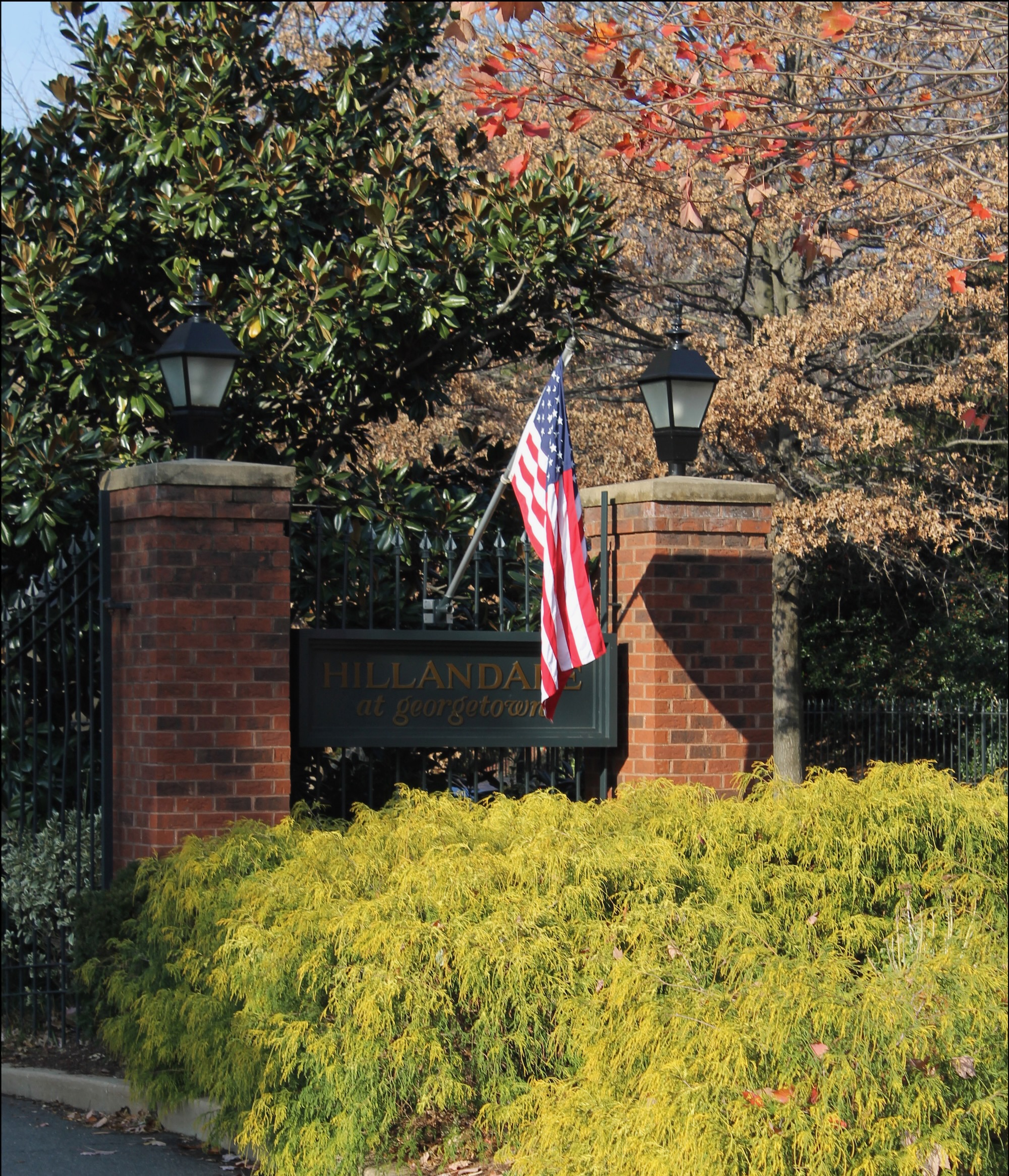
The character of the land shifted dramatically in 1922 with the arrival of Anne Archbold, the daughter of John Dustin Archbold, a ruthlessly executive at Standard Oil and partner to John D. Rockefeller. Seeking an escape from the social constraints of downtown Washington, Archbold amassed a 70-acre estate she named "Hillandale." She commissioned the architect Josephine Wright Chapman to design a sprawling Italianate villa, which still stands adjacent to the embassy grounds. Archbold's tenure defined the geography of the modern site. In 1924, she donated over 20 acres of her estate to the federal government to create Glover-Archbold Park, a permanent green wedge that borders the French property to the west. This donation inadvertently secured the future embassy's western flank, guaranteeing that no development would ever encroach upon that side of the compound.
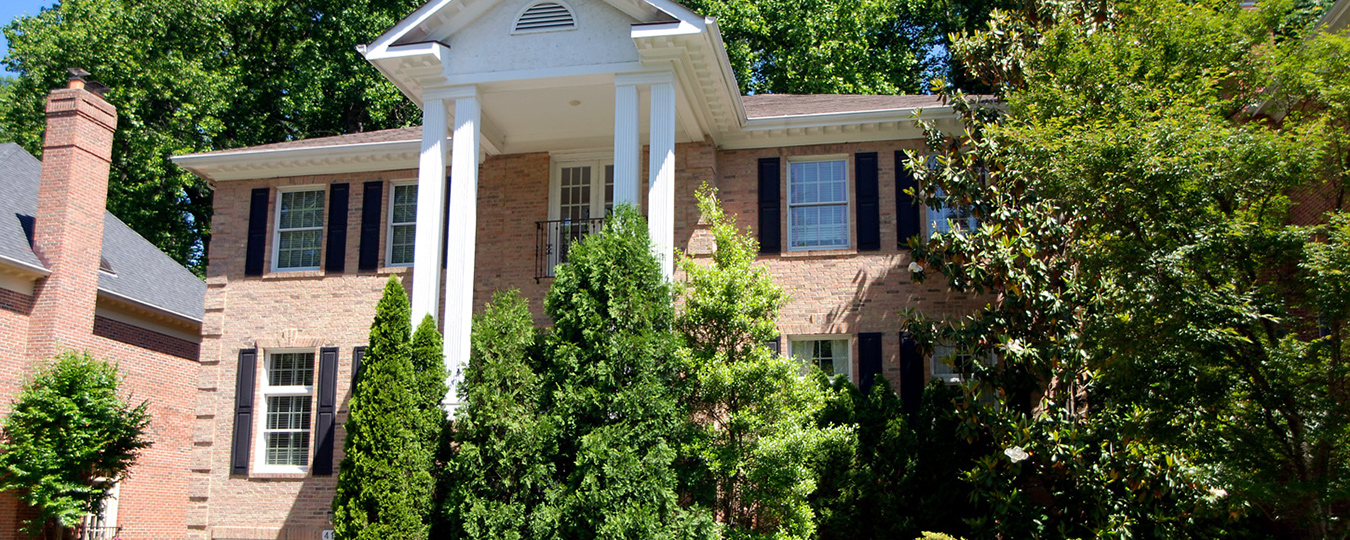
When Anne Archbold died in 1968, the Hillandale estate passed to her son, John Dana Archbold. Facing rising property taxes and the changing demographics of Washington, the heir moved to liquidate portions of the vast property. It was from him that the French government purchased the eight-acre parcel in 1973. The transaction split the historic Hillandale estate: the French took the western slope, while the remaining 42 acres became the subject of intense development battles. In 1978, John Archbold leased the remainder of the land to Clint Murchison, the Texas oilman and owner of the Dallas Cowboys, who developed the "Hillandale" gated community. This bifurcation created a unique land-use where a sovereign diplomatic compound sits cheek-by-jowl with a private, high-security residential enclave, both carved from the same Standard Oil fortune.
The selection of the Reservoir Road site was prescient regarding security and zoning, though not without friction. The plot's steep grade, dropping significantly from the road level toward the park, presented engineering challenges that would later dictate the terraced design of the chancery. Yet, this topography also served as a. Unlike the street-fronting embassies of Massachusetts Avenue, the Reservoir Road site allowed the building to recede from the public right-of-way, sheltered by earthworks and dense vegetation. This isolation became a serious asset in the late 20th century as terrorism concerns forced diplomatic missions to harden their perimeters.
Relations with the neighboring Hillandale community tested the French mission's diplomatic agility on a local. In 1990, a dispute erupted regarding the original Archbold mansion, which sat on the developer's portion of the land. When developers proposed demolishing the dilapidated villa to build more townhouses, the French Embassy intervened with unusual force. French officials formally opposed the demolition before the D. C. Zoning Commission, arguing that new construction on the mansion site would compromise the embassy's security. Specifically, they feared that the proposed townhouses would offer a direct line of sight into the chancery's sensitive offices, facilitating electronic eavesdropping and visual surveillance. The dispute underscored the tension inherent in the site's land use: a foreign government demanding a sterile buffer zone within a prime American residential neighborhood. The conflict eventually resulted in the preservation of the mansion, maintaining the uneasy stable détente between the diplomatic compound and its wealthy neighbors.
The land use strategy for the 4101 Reservoir Road site prioritized the creation of a self-contained ecosystem. Unlike the Kalorama mansion, which was a house forced to act as an office, the new site was zoned and planned as a mixed-use campus. The eight acres allowed for the segregation of functions: a distinct chancery for political and military work, a consulate for public services, and the Maison Française for cultural outreach. This "campus" concept was revolutionary for Washington diplomacy in the 1970s, anticipating the later trend of high-security compounds built by the United States abroad. The sheer size of the plot also permitted the inclusion of extensive underground parking, removing the diplomatic fleet from the street, a major point of contention in other parts of the city where embassy vehicles choked residential curbs.
By 2026, the wisdom of the 1973 acquisition remains clear. While other missions struggle with retrofitting historic structures or face security setbacks in dense urban corridors, the French Embassy occupies a defensible, expansive, and adaptable sovereign island. The site's history, from the tobacco rows of the Whitehaven grant to the sheep meadows of the Archbold estate, reflects a transformation from agrarian production to global power projection. The land itself, with its protected western border and controlled eastern method, functions as a physical manifestation of the French state's desire for autonomy and presence in the American capital.
| Time Period | Primary Land Use | Key Owner/Occupant | Notes |
|---|---|---|---|
| 1689, 1750s | Colonial Land Grant | Lord Baltimore / Colonists | Part of the "Whitehaven" tract; rural tobacco cultivation. |
| 1750s, 1900 | Agricultural / Nursery | Thomas Main / Various | Horticultural nursery supplying plants to D. C. estates; sheep farming. |
| 1922, 1968 | Private Estate | Anne Archbold | "Hillandale" estate; construction of Italianate villa; 70-acre sheep farm. |
| 1924 | Conservation | U. S. Government | Archbold donates 20+ acres to form Glover-Archbold Park (western buffer). |
| 1968, 1973 | Estate Liquidation | John Dana Archbold | Estate divided; search for buyers for the surplus land. |
| 1973 | Diplomatic Acquisition | Republic of France | Purchase of 8 acres for future chancery; cost undisclosed. |
| 1978, 1980s | Residential Development | Clint Murchison / Hillandale Dev. | Remaining 42 acres developed into Hillandale gated community. |
| 1982, 1984 | Construction | Republic of France | Excavation and construction of the André Remondet-designed complex. |
| 1985, 2026 | Diplomatic Compound | Republic of France | Full operation as Chancery, Consulate, and Maison Française. |
Architectural Competition and Marc Mimram Proposal

| Year | Event | Details |
|---|---|---|
| 1973 | Site Acquisition | France purchases 8 acres at 4101 Reservoir Road NW. |
| 1975 | Architectural Competition | André Remondet selected as the winning architect. |
| 1982 | Groundbreaking | Construction begins under George Hyman Construction Co. |
| 1984 | Completion | Staff moves from scattered offices to the new complex. |
| 1985 | Official Inauguration | Full operations commence; La Maison Française opens. |
The completion of the Reservoir Road complex in 1985 resolved the operational emergency introduced new maintenance demands. The sheer of the facility, France's largest foreign embassy, required a permanent technical staff to manage the physical plant. The concrete and glass facade, typical of the era, demanded rigorous upkeep to withstand the humid Washington climate. The design's reliance on a campus-style layout proved prescient, allowing for high security measures to be implemented in the post-2001 era without altering the fundamental footprint of the buildings. The integration of the consulate and the cultural center within the same perimeter created a unique diplomatic ecosystem, where visa applicants, intelligence officers, and art patrons crossed route in the central plaza. Remondet's vision prioritized the user experience of the diplomatic staff. The office wings featured modular interiors that allowed for reconfiguration as departmental needs shifted. This flexibility was essential as the mission expanded its focus on trade and technology in the 1990s. The inclusion of a 300-seat cafeteria, directed by a French chef, became a central node for informal diplomacy, attracting guests from the U. S. State Department and other embassies. The building functioned not as an office as a projection of French "soft power," using its architecture to facilitate social interaction and cultural exchange. The absence of a realized project by Marc Mimram in Washington does not diminish the significance of the 1975 competition. The choice of Remondet signaled a commitment to a specific of French modernism, rational, geometric, and monumental. While Mimram's work in Beijing later demonstrated how engineering could define diplomatic aesthetics through tensile structures and lightness, the Washington embassy remains a testament to the solidity and permanence valued during the Cold War era. The Reservoir Road chancery stands as the definitive architectural statement of the French presence in the United States capital, a purpose-built of diplomacy that replaced the transient rentals and converted mansions of the previous two centuries.
Chancery Construction and 1985 Opening
By the early 1970s, the French diplomatic mission in Washington faced a logistical emergency. The Tudor Revival mansion at 2221 Kalorama Road NW, purchased in 1936 to serve as both the ambassador's residence and the chancery, could no longer contain the expanding scope of Franco-American relations. Post-war diplomatic required more than a grand salon for receptions; it demanded offices for trade attachés, press corps, scientific liaisons, and consular services. Consequently, the mission fractured. Staff members worked from ten different rented office buildings scattered across the District of Columbia, creating a fragmented operational structure that communication and security. The French government recognized that a return to a centralized facility was mandatory for modern diplomacy.
In 1973, the French Republic secured a solution by purchasing an expansive plot of land at 4101 Reservoir Road NW. The site, covering approximately eight acres, sat on the edge of the Georgetown neighborhood, bordering the dense woodlands of Glover-Archbold Park. Unlike the manicured, flat city lots of the Kalorama district, this terrain presented a rugged, sloping topography. The acquisition signaled a departure from the traditional diplomatic enclave of Massachusetts Avenue, placing the new chancery in a residential, semi-urban setting that demanded a sensitive architectural response. The goal was not to build an office block to create a self-contained diplomatic campus that could house the largest French foreign mission in the world.
To select a design worthy of this ambitious project, the French government organized a competition in 1975. The winner was André Remondet, a distinguished architect and recipient of the Grand Prix de Rome. Remondet, who had studied at the École des Beaux-Arts and later at George Washington University, possessed a unique understanding of both French architectural rigor and the American urban context. His proposal rejected the pastiche of historical styles frequently favored in diplomatic architecture. Instead, he presented a vision of expressive modernism, utilizing reinforced concrete and glass to integrate the structures into the steep grade of the Reservoir Road site. His design philosophy emphasized functional clarity and a harmonious relationship with the surrounding natural environment.
Construction of the massive complex began in May 1982, entrusted to the George Hyman Construction Company, a prominent Washington firm. The project posed significant engineering challenges due to the site's dramatic elevation changes. Remondet's design called for a terraced arrangement, where the buildings would step down the hillside rather than dominate the skyline. This method allowed the embassy to maintain a low profile from the street level, respecting the of the neighboring residential houses, while opening up to the parkland at the rear. The use of architectural concrete, finished with precision, provided a sense of permanence and strength, while extensive glazing ensured that the interiors received ample natural light.
The construction phase lasted over two years, representing a major capital investment by the French state. The plan divided the compound into four distinct interconnected buildings. The Chancery, the largest structure, housed the administrative core, including the ambassador's office and the various diplomatic departments. By consolidating the staff from the ten scattered locations into this single facility, the mission achieved an immediate improvement in operational efficiency. The design included advanced security features, a need that became increasingly apparent during the geopolitical instability of the 1980s, yet Remondet managed to avoid the appearance of a.
A central component of the new embassy was the creation of "La Maison Française." This facility represented a strategic shift in diplomatic engagement, moving beyond closed-door negotiations to public cultural outreach. Remondet designed this wing specifically to host events, exhibitions, and performances. It featured a 285-seat auditorium, a ballroom capable of hosting large receptions, and an exhibition gallery. The inclusion of such a substantial public-facing element within a secure diplomatic compound was rare at the time. It allowed the embassy to function as a cultural hub, regularly inviting Washingtonians to engage with French cinema, art, and intellectual discourse directly on sovereign French soil.
The complex reached completion in December 1984, with the full transfer of operations occurring in early 1985. This move marked a definitive separation between the ambassador's domestic life and the embassy's professional functions. The historic Kalorama mansion was retained solely as the Residence, preserving its role for high-level entertaining and private living quarters. The Reservoir Road campus took over the heavy lifting of daily diplomacy. The sheer of the new facility was for France; with over 350, 000 square feet of space and accommodations for 400 staff members, it stood as the largest French embassy built outside of Paris.
The architectural reception of the 1985 opening highlighted the boldness of Remondet's work. Critics noted the clear contrast between the new chancery and the Beaux-Arts or Georgian styles typical of Washington's official buildings. The raw concrete aesthetic, softened by the surrounding foliage of Glover-Archbold Park, placed the embassy firmly within the lineage of late 20th-century modernism. The interiors featured a skylighted lobby and open courtyards, a sense of transparency. The design also incorporated a "green" roof concept long before it became an industry standard, with terraces featuring live plants that visually merged the built environment with the adjacent woods.
The operational impact of the 1985 opening was immediate. The consolidation allowed for tighter coordination between the commercial, cultural, and political wings of the mission. The "Maison Française" quickly became a fixture in Washington's cultural calendar, hosting events that ranged from scientific symposiums to jazz concerts. This dual-purpose facility, half secure government, half open cultural center, defined a new era for the French presence in the United States. It demonstrated a commitment to a long-term, relationship with the host country, anchored by a structure designed to endure for decades.
By the time the facility became fully operational in 1985, it represented more than just a solution to overcrowding. It was a statement of modernization. The French government had successfully transitioned its primary diplomatic engine from the aristocratic parlors of the early 20th century to a high-tech, purpose-built campus. This shift mirrored the changing nature of diplomacy itself, which required technical expertise, rapid communication, and broad public engagement. The Reservoir Road chancery provided the physical infrastructure to support these evolving demands, securing France's diplomatic footprint in the American capital for the 21st century.
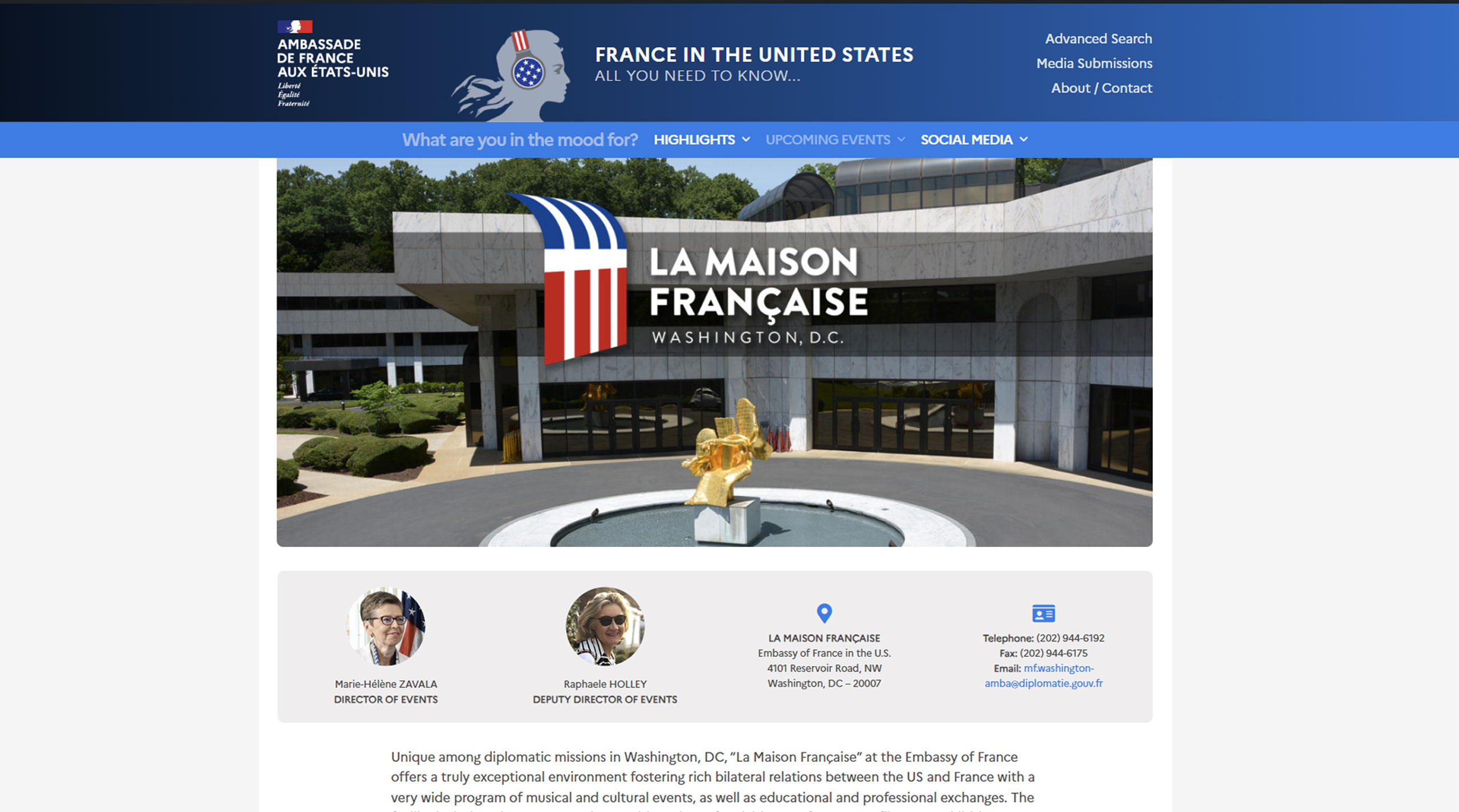
La Maison Française Facilities and Functions
La Maison Française serves as the primary cultural and operational interface between the French diplomatic mission and the American public. Located at 4101 Reservoir Road NW, this facility operates as a distinct yet integrated wing of the larger embassy complex designed by architect André Remondet. Opened in 1985, the structure, as Building D within the four-building campus, encompasses approximately 11, 250 square feet of functional space. Unlike the Chancery, which houses secure diplomatic offices and restricts public access, La Maison Française functions as a permeable zone, engineered to host large- events, artistic exhibitions, and commercial gatherings while maintaining the security perimeter of a sovereign diplomatic compound.
The architectural configuration of La Maison Française reflects the modernist brutalism of the 1980s, utilizing the same concrete and glass aesthetic as the adjacent Chancery. The facility centers around a 285-seat auditorium, a purpose-built theater equipped with cinema-grade projection systems and simultaneous interpretation booths. This auditorium acts as the operational heart of the embassy's cultural diplomacy, hosting the long-running "Ciné-Club," which screens French films for local audiences. The theater also serves as a venue for the DC Francophonie Festival and academic lectures, allowing the mission to project soft power through media and intellectual exchange. The seating capacity is fixed, creating a constraint that dictates the exclusivity of certain high-profile diplomatic addresses.
Beyond the auditorium, the facility includes a 2, 736-square-foot ballroom capable of accommodating 400 seated guests or approximately 500 standing attendees. This space, frequently referred to as the "Salle de Réception," features a modular design that allows for rapid reconfiguration between seated dinners, cocktail receptions, and conference layouts. The ballroom connects to an exhibition gallery of 1, 040 square feet and a skylighted lobby of 800 square feet, creating a continuous flow for crowd movement. When combined with the outdoor landscaped terrace and the "Place Charles de Gaulle" (a 1, 200-square-foot paved area), the facility can manage reception logistics for up to 1, 500 guests. These metrics are serious during the European Union Open House, an annual event where the embassy processes thousands of visitors in a single afternoon, requiring precise crowd control.
The operational management of La Maison Française involves a dual-use model. While its primary mandate is diplomatic, the facility also functions as a revenue-generating asset. The embassy rents the space to corporate entities, non-profits, and private individuals for weddings and business conferences. This commercialization requires a strict separation of church and state; private events must not conflict with French foreign policy interests, and all external vendors must clear security background checks. The revenue generated helps offset the maintenance costs of the aging concrete structure, which requires significant upkeep to prevent the weathering common to brutalist architecture.
One of the most significant annual operations at La Maison Française is the Bastille Day celebration, organized in partnership with the Comité Tricolore, a non-profit association based in Washington. Unlike the open-access parties of the mid-20th century, the modern Bastille Day event is a ticketed fundraiser, frequently commanding prices exceeding $150 per person. The funds raised support social welfare programs for French expatriates in the United States. The logistics of this event are immense, involving the coordination of dozens of local restaurants providing catering, the deployment of private security to supplement the embassy's gendarmerie, and the management of a silent auction. The event utilizes the entire footprint of La Maison Française, spilling out onto the terraces and the lower lawns of the 8. 5-acre campus.
In the of political administration, La Maison Française transforms into a polling station during French presidential and legislative elections. France maintains a system of extraterritorial voting, and Washington, D. C. serves as a regional hub for the French electorate in the Mid-Atlantic United States. During election pattern, the ballroom and lobby are cleared of furniture and fitted with voting booths (isoloirs) and transparent ballot boxes (urnes), adhering to the strict electoral code of the French Ministry of the Interior. Votes are counted manually on-site by volunteers and consular staff immediately after polls close, at 7: 00 PM or 8: 00 PM local time. The physical security of the ballots is paramount, and the facility remains on lockdown until the official procès-verbal (minutes) are signed and transmitted to Paris.
Between 2020 and 2025, the embassy undertook a detailed renovation project known as "Ambassade Verte" (Green Embassy) to align the 1980s infrastructure with modern sustainability standards. La Maison Française received specific upgrades aimed at reducing its carbon footprint. These interventions included the installation of energy- HVAC systems to handle the high thermal load of the glass-walled lobby and the application of Graphenstone paint, a lime-based product containing graphene fibers designed to absorb carbon dioxide and improve indoor air quality. The renovation also addressed the building's envelope, repairing the concrete façade and improving insulation to meet LEED Silver certification criteria. The grounds surrounding the facility were re-landscaped to promote biodiversity, reducing water usage and integrating the terrace more naturally with the bordering Glover Archbold Park.
The facility also houses the offices of the Cultural Services of the French Embassy, placing the staff responsible for university cooperation, book departments, and arts promotion directly adjacent to their event spaces. This proximity allows for rapid execution of programming, from author readings to scientific symposia. The "Tocqueville Room," a smaller conference space of 1, 170 square feet, facilitates roundtable discussions and seminars that require a more intimate setting than the auditorium. This room frequently hosts bilateral meetings between French and American technical experts, serving as a quiet engine room for the details of international cooperation.
Security at La Maison Française differ from those at the Chancery. While the Chancery requires high-level clearance for entry, La Maison Française operates with a controlled public access model. Visitors for cultural events undergo screening at the gatehouse on Reservoir Road, including metal detection and bag checks. The facility is designed with internal chokepoints that prevent guests from wandering into the secure zones of the diplomatic compound. This architectural segregation allows the embassy to maintain an "open door" policy for culture while keeping the "closed door" policy necessary for intelligence and statecraft.
| Facility Zone | Dimensions (Approx.) | Capacity (Seated/Standing) | Primary Function |
|---|---|---|---|
| Auditorium | 640 sq ft (stage area) / Fixed Seating | 285 (Fixed) | Film screenings, lectures, symposiums |
| Ballroom | 2, 736 sq ft (36' x 76') | 400 / 500 | Receptions, voting center, dinners |
| Exhibition Gallery | 1, 040 sq ft | N/A / 150 | Art installations, cocktail overflow |
| Tocqueville Room | 1, 170 sq ft | 60 / 100 | Seminars, roundtables |
| Terrace/Patio | 1, 386 sq ft | 96 / 200 | Outdoor receptions, Bastille Day |
The integration of La Maison Française into the Washington diplomatic circuit extends to its role in the European Union network. During the rotating French Presidency of the Council of the European Union, the facility assumes a central role in coordinating EU-wide cultural initiatives in the US capital. The infrastructure allows for the hosting of joint events with other EU member states, leveraging the superior capacity of the French complex compared to smaller European missions in the city. This capability reinforces France's position as a logistical and cultural anchor for European diplomacy in Washington.
Ambassador's Residence Architecture and Interiors
The architecture defies the Neoclassical or Beaux-Arts styles associated with Washington's official buildings. De Sibour designed the residence in a Tudor Revival style, characterized by its steep slate roof, asymmetrical massing, and a façade constructed of dark red brick and limestone ashlar. The exterior features heavy stone balustrades, dormer windows, and a dominant entry bay flanked by square towers. Even with its English architectural vocabulary, the residence has been systematically "Frenchified" over nine decades of ownership. Successive ambassadors and the Mobilier National, the French agency responsible for furnishing state properties, have curated the interiors to project a narrative of French cultural supremacy, blending monarchical antiques with high modernism.
Upon entering, visitors encounter the Grand Hall, a cavernous space defined by limestone walls and a monumental staircase. This area underwent a significant visual shift during the extensive 2014, 2015 renovation led by Quinn Evans Architects and the French Foreign Ministry's Anne-Sophie Fries-Thébaut. To break the weight of the traditional architecture, designers installed a contemporary lighting fixture comprising three massive, illuminated gold links. This addition, championed by then-Ambassador Gérard Araud, signaled a departure from pure period preservation, asserting that the residence remains a living diplomatic machine rather than a static museum. The renovation also overhauled the building's failing mechanical systems, a necessary modernization for a structure that had suffered from water infiltration and antiquated wiring.
The Empire Salon serves as the residence's formal centerpiece, dedicated to the aesthetic of the French Empire. For decades, this room featured heavy red damask walls, the 2015 restoration replaced them with a lighter gold-and-beige scheme to better illuminate the art. The room is anchored by a massive carpet woven with Napoleonic symbols, bees, swans, and the imperial "N", a reproduction of an 1807 design by Charles Percier. Furniture in this salon includes mahogany consoles with gilt-bronze mounts and chairs upholstered in silk, all supplied and maintained by the Mobilier National. The agency rotates these pieces, ensuring the collection represents the highest caliber of French craftsmanship, from the 19th century to the present.
In contrast to the Empire Salon, the Winter Salon (sometimes called the Modern Salon) acts as a gallery for 20th and 21st-century design. This space frequently houses Art Deco furniture and modernist works, challenging the American perception of France as solely a guardian of the past. The decor here is fluid; ambassadors frequently select specific pieces from the national reserves to reflect their personal tastes or current artistic trends in Paris. Works by Pierre Bonnard, Édouard Vuillard, and contemporary sculptors like Igor Mitoraj have appeared in the residence, placed strategically to spark conversation during diplomatic receptions.
The Dining Room remains the operational engine of the embassy's social diplomacy. Capable of seating large delegations, the room is frequently set with Sèvres porcelain and Christofle silverware. The table settings are not decorative are calibrated to the rank and status of the guests, following strict of French service. The walls frequently feature 18th-century tapestries or portraits of historical figures linking France and the United States, such as the Marquis de Lafayette and the Comte de Rochambeau. In 2025, the administrative merger of the Mobilier National and the Cité de la Céramique (Sèvres) into a single public entity further streamlined the supply chain for these diplomatic assets, ensuring the Washington residence has priority access to France's national ceramic treasures.
The physical plant of the residence requires constant defense against the elements. The location on the edge of Rock Creek Park subjects the structure to humidity and shifting soil. The 2014, 2015 project, executed by Consigli Construction, involved a Phase 1 emergency façade restoration to address masonry deterioration. This was followed by a detailed roof replacement and the installation of energy- systems, reducing the building's carbon footprint while preserving its historic envelope. The kitchen, a serious facility for culinary diplomacy, was completely gutted and rebuilt to commercial standards, allowing the in-house executive chef to prepare haute cuisine for hundreds of guests simultaneously.
Beyond the main house, the grounds play a important role in the property's function. The terrace, accessible from the Salon des Boiseries, offers a commanding view of the wooded ravine, a rare expanse of privacy in the capital. The gardens follow a less rigid geometry than the Tuileries, adapting instead to the topography of Washington's hills. These outdoor spaces allow for the Bastille Day celebrations, which can draw up to 4, 000 attendees, requiring the residence to function as a high-capacity event venue. The integration of the grounds with the interior reception rooms creates a circulation flow that allows the ambassador to manage distinct groups of guests, from intimate political dinners to massive cultural fêtes.
| Feature | Details |
|---|---|
| Original Architect | Jules Henri de Sibour (1910) |
| Architectural Style | Tudor Revival / French Eclectic |
| Lot Size | 3. 6 acres (Largest in Kalorama) |
| Key Renovations | 2014, 2015 (Quinn Evans / Consigli); Systems & Interiors |
| Primary Furnishing Source | Mobilier National (Paris) |
| Notable Decor | Napoleonic carpet (Empire Salon), Sèvres porcelain, 1815 Chandelier |
Consular Section and Administrative Duties
| Metric | Description | Trend/Status |
|---|---|---|
| Jurisdiction Population | Registered French citizens in DC, MD, VA, PA, DE, WV | Stable (~15, 000, 20, 000 registered) |
| Visa Provider | Outsourced partner for biometric collection | Switched from VFS Global to TLScontact (April 2025) |
| 2022 Election Turnout | Presidential Election participation (Washington polling station) | High (approx. 50-60% of registered voters) |
| emergency Response | COVID-19 Repatriation (2020) | Coordinated return of hundreds of stranded travelers |
| Social Aid | Annual scholarship and social stipend budget | Allocated via CCPAS annual review |
Defense and Trade Mission Organization
The Defense Mission, headquartered within the Reservoir Road complex, represents the French Ministry of the Armed Forces. It is led by a General Officer (Defense Attaché) who oversees specialized attachés for the Army, Navy, and Air and Space Force. Unlike the political advisors who report to the Quai d'Orsay, this mission maintains a direct operational link to the État-Major des Armées in Paris. Its historical footprint in Washington is defined by the schism of World War II. Following the Fall of France in 1940, the Vichy government maintained a military attaché at the embassy under Ambassador Gaston Henry-Haye, while General Charles de Gaulle established a rival "Free French" military delegation. The latter, led by figures such as General Brossin de Saint-Didier, operated initially from temporary quarters before consolidating authority in 1944. This bifurcated history necessitated a rigorous post-war reorganization to ensure a single, unified voice for French military interests in the Pentagon.
A serious component of the Defense Mission is the Armament Attaché, representing the Direction générale de l'armement (DGA). Established in 1961, the DGA's Washington office manages the complex of transatlantic defense procurement and technology transfer. This unit was instrumental during the Cold War in facilitating the secret transfer of nuclear technology, a cooperation that occurred largely outside of public NATO frameworks. In the 21st century, the DGA's role shifted toward interoperability, overseeing the integration of French systems, such as the electromagnetic catapults for the Charles de Gaulle aircraft carrier, with American technology. The mission's stability was severely tested in September 2021 during the AUKUS emergency, when the cancellation of a €56 billion submarine contract with Australia, orchestrated via secret US-UK-Australia negotiations, led to the recall of Ambassador Philippe Étienne. While the Defense Attaché remained in Washington, high-level military cooperation was temporarily frozen, marking the lowest point in bilateral defense relations since the 2003 Iraq War.
The economic pillar of the embassy is the Regional Economic Service (SER), which acts as the representative of the French Treasury (Direction générale du Trésor) and the Ministry of Economy and Finance. Led by a Minister Counselor for Economic Affairs, the SER operates differently from the commercial section. Its mandate is macroeconomic analysis, financial regulation, and the defense of French trade interests in federal policy. This mission traces its lineage to the purchasing commissions of the World War I era, most notably the operations run by Jean Monnet. Monnet, who lived at 2415 Foxhall Road NW and worked from the Willard Hotel during World War II, established the template for French economic diplomacy in Washington: direct engagement with the US Treasury and the War Production Board to secure important supplies. The SER continues this tradition, serving as the primary negotiator for tax treaties and financial regulations that affect French multinationals operating in the US.
| Period | Mission Focus | Key Event / Dispute |
|---|---|---|
| 1914, 1918 | War Purchasing | Jean Monnet coordinates Allied supply chains; massive procurement of US steel and oil. |
| 1940, 1944 | Divided Command | Vichy Military Attaché vs. Free French Delegation; struggle for legitimacy and Lend-Lease access. |
| 1946, 1950 | Reconstruction | Blum-Byrnes Agreement negotiations; securing loans for the Monnet Plan modernization. |
| 1961, 1966 | Nuclear Autonomy | Creation of DGA; secret US assistance to French nuclear program even with NATO withdrawal. |
| 2019, 2021 | Trade War | "Cheese and Wine" tariffs imposed by US in retaliation for Airbus subsidies; Digital Services Tax dispute. |
| 2021, 2022 | Strategic emergency | AUKUS announcement; recall of Ambassador; suspension of "Strategic Interoperability Framework". |
| 2024, 2026 | Future Warfare | Establishment of dedicated Space and Cyber cooperation cells; joint artillery coalition for Ukraine. |
Commercial promotion is handled by Business France, a separate agency that works in tandem with the SER maintains its own operational structure. While the SER focuses on government-to-government policy, Business France assists French companies in penetrating the North American market and courts US investment for French regions. The agency's "North America" headquarters is technically in New York, its Washington team is pivotal for sectors heavily regulated by the federal government, such as energy, transport, and defense. This division of labor allows the embassy to simultaneously negotiate high-level trade disputes, such as the tariffs on French wine and the Inflation Reduction Act (IRA) subsidies, while actively promoting French startups through the "La French Tech" initiative.
The interplay between these missions frequently dictates the temperature of the broader diplomatic relationship. For instance, during the 17-year Airbus-Boeing dispute, the SER was the primary combatant, managing the of retaliatory tariffs that targeted French agricultural exports. Conversely, the Defense Mission has frequently served as a stabilizer; even when political relations soured over trade or foreign policy, the "mil-to-mil" (military-to-military) channels regarding counter-terrorism in the Sahel and the Levant remained open. By 2026, the Defense Mission had expanded its scope to include a permanent liaison for the US Space Force, reflecting the growing need of extra-atmospheric defense coordination. This method, separating the political, military, and economic tracks, ensures that the Embassy of France can sustain functional cooperation in one sector even while fiercely contesting another.
Chancery Art Holdings and Decor
The artistic holdings and interior ornamentation of the Embassy of France in Washington, D. C., represent a curated projection of French cultural supremacy, managed directly by the Mobilier National. Unlike the private acquisitions of typical diplomatic missions, the French repository in Washington operates as a rotating gallery of the French state, drawing from a national inventory that dates back to the reign of Louis XIV. This centralized management allows the embassy to display priceless artifacts, from 17th-century Gobelins tapestries to contemporary commissions, ensuring the decor aligns with the diplomatic objectives of the Fifth Republic.
The primary repository of these treasures is the Ambassador's Residence at 2221 Kalorama Road NW. Acquired in 1936, the 1910 Tudor Revival mansion designed by Jules Henri de Sibour initially presented a stylistic challenge to a government eager to project French identity. Over subsequent decades, the interior was systematically transformed to reflect the grandeur of the Empire and Neoclassical periods. The Salon Empire stands as the centerpiece of this effort. Dominated by a massive carpet featuring Napoleon's imperial "N" and bee motif, a design inspired by the architect Charles Percier (1807), the room creates an imposing atmosphere of state power. While the walls were historically clad in imperial red silk, a major 2014, 2015 renovation led by the French Foreign Ministry's Anne-Sophie Fries-Thébaut and Quinn Evans Architects introduced a beige-and-white textural wall covering to modernize the space, though the signature red-upholstered square-backed fauteuils remain.
The Residence's dining room houses one of the mission's most significant textile loans: the Portières des Dieux (Portals of the Gods). These Gobelins tapestries, woven from cartoons by Nicolas Coypel and Claude Audran III, depict mythological seasons and elements. During the tenure of Ambassador Gérard Araud (2014, 2019), the room's heavy dark green palette was replaced with pale gray and citron tones to better illuminate these 18th-century masterpieces. This renovation also introduced a sharp contrast in the Grand Hall, where a traditional glass chandelier acquired by Ambassador Maurice Couve de Murville was replaced by a modernist "Regency Cha" designed by Carrie Livingston, signaling a shift toward blending heritage with contemporary design.
Sculptural holdings in the Residence emphasize the shared revolutionary history of France and the United States. The collection includes marble and terracotta busts attributed to or after Jean-Antoine Houdon, specifically depicting the Marquis de Lafayette and George Washington. These pieces serve as permanent anchors of the diplomatic relationship, frequently displayed prominently during high-level bilateral summits. Complementing these historical figures are tall blue Sèvres porcelain vases, which anchor the formal reception rooms in the aesthetic of the Ancien Régime. In the private quarters and less formal salons, the collection rotates more frequently, featuring 20th-century works such as Coin de Table (c. 1935) by Pierre Bonnard, which offers an intimate counterpoint to the rigid formality of the state rooms.
In clear contrast to the Residence, the Chancery at 4101 Reservoir Road NW, completed in 1985, embodies the modern technocratic state. Designed by architect André Remondet, the structure prioritizes light, glass, and geometric rigor over the ornamental density of the Kalorama mansion. While the Chancery functions primarily as an administrative hub, its public-facing cultural center, La Maison Française, serves as a venue for temporary exhibitions. The art program here is fluid, frequently hosting contemporary installations that challenge the traditionalism of the Residence. For example, the embassy has displayed works by the feminist artist ORLAN and hosted exhibitions featuring art by death row inmates, demonstrating a willingness to use the embassy's walls for provocative social commentary rather than mere decoration.
Historical records indicate that previous diplomatic quarters also benefited from significant artistic commissions. The 1907 embassy on 16th Street, designed by George Oakley Totten Jr., featured decor by Gustave Jaulmes, including a specific set of four tapestries depicting the Fleuves of France (Rivers of France). These monumental works were part of a broader effort in the early 20th century to integrate Art Deco and Neoclassical elements into French diplomatic posts. While the location of the mission moved, the Mobilier National retains the capacity to redeploy such assets, ensuring that even as buildings change, the symbolic lineage of the decor remains unbroken.
| Asset / Room | Origin / Artist | Period / Style | Current Location |
|---|---|---|---|
| Portières des Dieux Tapestries | Gobelins (Coypel/Audran) | 18th Century / Louis XIV | Ambassador's Residence (Dining Room) |
| Imperial "N" Carpet | Design by Charles Percier | Empire (Replica/Style) | Ambassador's Residence (Salon Empire) |
| Coin de Table | Pierre Bonnard | c. 1935 / Post-Impressionism | Ambassador's Residence |
| Busts of Washington & Lafayette | After Jean-Antoine Houdon | 18th Century Style | Ambassador's Residence (Grand Hall) |
| Regency Cha | Carrie Livingston | 21st Century / Modern | Ambassador's Residence (Grand Hall) |
| Chancery Architecture | André Remondet | 1985 / Modernist | 4101 Reservoir Road NW |
The maintenance of this collection requires a constant logistical operation between Washington and Paris. The Mobilier National not only supplies the items also oversees their restoration, as seen during the $4. 5 million renovation of the Residence. This project required the temporary removal of artworks to protect them from structural repairs, including the replacement of the heating and cooling systems that are important for the preservation of sensitive textiles and canvases. The result is a diplomatic stage where every chair, painting, and is a calculated element of statecraft, designed to overwhelm visitors with the weight of French history while asserting the nation's continued relevance in modern art and design.
Security Breaches and Perimeter Defenses
The security architecture of the Embassy of France in Washington, D. C., represents a physical timeline of geopolitical anxiety, evolving from the porous, gentlemanly residences of the 19th century to the hardened, surveillance-heavy compound that exists on Reservoir Road today. For the 180 years of diplomatic relations, the mission prioritized accessibility and grandeur over defensibility. This posture collapsed in the late 20th century, driven by the rise of international terrorism and the specific targeting of French interests globally. The transition from the open mansion on 16th Street to the fortified complex in Georgetown was not an aesthetic choice; it was a tactical withdrawal behind concrete and steel.
During the mission's tenure at the 16th Street mansion, occupied from 1907 to 1984, the perimeter defenses were negligible by modern standards. The Beaux-Arts structure, designed by George Oakley Totten Jr., featured a driveway that opened directly onto the public street, separated only by ornamental ironwork that offered no resistance to vehicular ramming or determined intruders. During the Algerian War of Independence (1954, 1962), this accessibility became a liability. Protesters frequently gathered within shouting distance of the chancery windows, and the French government grew increasingly alarmed by the inability to control the physical space around their diplomats. The legacy of this vulnerability directly influenced the specifications for the new chancery.
The move to 4101 Reservoir Road NW in 1984 marked a total shift in defensive philosophy. Architect André Remondet designed the 8. 5-acre compound to function as a " in a park," using the steep topography of the site as a natural barrier. Unlike the street-facing mansion, the new chancery sits set back significantly from the public roadway, creating a blast standoff distance that exceeds the standards later mandated by the U. S. State Department after the 1983 Beirut barracks bombings. The perimeter is defined by a combination of high-tensile steel fencing and reinforced concrete retaining walls, disguised by dense vegetation. This "invisible " method allows the mission to project an image of openness while maintaining a hardened shell capable of repelling vehicle-borne improvised explosive devices (VBIEDs).
Even with these physical fortifications, the most significant security breach in the embassy's history was not physical digital, and it came from the host country. In 2013, documents leaked by Edward Snowden revealed that the U. S. National Security Agency (NSA) had successfully penetrated the embassy's internal communications grid. Under a program codenamed "Genie," the NSA installed electronic surveillance devices, bugs, within the embassy walls and infiltrated the mission's computer network. This operation allowed U. S. intelligence to intercept diplomatic cables and monitor the private conversations of the French ambassador. The caused a severe diplomatic rift, with Paris summoning the U. S. ambassador for an explanation. The incident exposed the reality that while the Reservoir Road walls could stop a truck bomb, they were permeable to fiber-optic tapping and signal interception.
The physical perimeter faces constant testing from civil unrest. The embassy frequently becomes a focal point for protests regarding French foreign policy in West Africa and the Middle East. In the 2020s, the mission saw a surge in demonstrations linked to the withdrawal of French troops from Mali, Burkina Faso, and Niger. Unlike the polite pickets of the early 20th century, these modern protests frequently involve vandalism tactics, including the throwing of red paint to symbolize blood, a technique used against multiple Western embassies in Washington during the 2023, 2024 period. The Secret Service Uniformed Division, which holds jurisdiction over the sidewalks outside diplomatic missions, maintains a permanent presence at the Reservoir Road entrance to mitigate these incursions before they reach the chancery gates.
Biological threats have also breached the mailroom defenses. Following the September 11, 2001 attacks, the embassy was targeted during the anthrax scare that gripped Washington. While no lethal spores were found within the chancery itself, the threat forced a permanent alteration in how mail and cargo enter the compound. All incoming deliveries are routed through an off-site screening facility or a hardened intake center from the main ventilation systems of the chancery. This protocol mirrors the "sterile zone" concept used by the Pentagon, acknowledging that a simple envelope can bypass millions of dollars in perimeter fencing.
The internal security of the mission falls under the jurisdiction of the Gendarmerie Nationale. A detachment of Gendarmes resides within the compound, providing a of armed defense that operates independently of American law enforcement. Their rules of engagement allow for the use of lethal force to protect the sovereign territory of the embassy. This internal force was placed on maximum alert following the November 2015 Paris attacks. For weeks, the embassy operated under "Vigipirate" (France's national security alert system), with heavy weapons visible at the gates and a suspension of all public cultural events. The psychological impact of the Bataclan massacre transformed the Washington mission into a bunker, with staff operating under the assumption that the embassy was a secondary target for ISIS affiliates.
Technological upgrades in the period 2015, 2026 have focused on closing the gaps revealed by the NSA leaks and the evolving drone threat. The embassy has retrofitted its sensitive compartmented information facilities (SCIFs) to block electromagnetic emanations. The roof of the chancery, once a simple mechanical space, hosts an array of sensors designed to detect and jam unauthorized unmanned aerial vehicles (UAVs) that might attempt to survey the grounds or deliver payloads. This counter-drone architecture is part of a city-wide net deployed to protect the White House and key diplomatic sites, creating an electronic "no-fly zone" over Georgetown.
| Era/Year | Incident / Threat | Defensive Response |
|---|---|---|
| 1954, 1962 | Algerian War Protests | Reliance on DC Police; exposed vulnerability of 16th St location. |
| 1984 | Relocation to Reservoir Rd | Construction of 8. 5-acre compound with deep setbacks and perimeter walls. |
| 2001 | Anthrax Scare | Implementation of off-site mail screening and bio-hazard. |
| 2010, 2013 | Operation Genie (NSA) | Discovery of US bugs; hardening of internal comms and SCIFs. |
| 2015 | Paris Terror Attacks | "Vigipirate" high alert; armed Gendarmes at perimeter; public access cut. |
| 2023, 2024 | West Africa/Gaza Protests | Anti-vandalism coatings on walls; increased Secret Service patrols. |
The operational security of the residence, located within the same compound, presents a unique challenge. The Ambassador's residence is frequently used for high-level social diplomacy, requiring the entry of hundreds of guests. Security teams use a " access" method, where guests are vetted and screened in a reception pavilion separated from the main chancery and the residence proper. This architectural segregation ensures that a breach in the social area does not compromise the classified operations of the diplomatic staff. The design forces any intruder to cross open ground between buildings, exposing them to observation and response teams.
By 2026, the Embassy of France in Washington stands as a hybrid entity: a diplomatic instrument designed to facilitate exchange, encased in a military-grade shell designed to survive the collapse of civil order. The perimeter defenses have held against physical intrusion, yet the history of the site proves that the most dangerous breaches frequently leave no broken glass. The silent war of signals, cyber-espionage, and surveillance continues invisibly above the tree line of Reservoir Road, rendering the physical walls necessary insufficient.
Physical Plant Renovations 2015, 2026
By 2015, the French diplomatic estate in Washington faced a bifurcation of infrastructure needs. The historic Ambassador's Residence on Kalorama Road, acquired in 1936, suffered from nearly a century of deferred maintenance, while the modernist Chancery on Reservoir Road, completed in 1985, required widespread retrofits to meet 21st-century energy mandates. The period from 2015 to 2026 marked a shift from expansion to intensive consolidation, preservation, and ecological modernization. Under the direction of the Ministry for Europe and Foreign Affairs, the mission executed a multi-million dollar capital improvement strategy designed to salvage the physical integrity of its properties while aligning their operational footprint with the Paris Agreement.
The most significant capital project of this decade centered on the complete restoration of the Ambassador's Residence at 2221 Kalorama Road NW. By 2013, the 1910 Tudor Revival mansion designed by Jules Henri de Sibour displayed serious structural and mechanical failures. Water infiltration plagued the slate roof and masonry, while the electrical and HVAC systems, antiquated and insufficient for a building that hosts over 10, 000 guests annually, posed operational risks. The Quai d'Orsay authorized a detailed rehabilitation plan, necessitating the closure of the residence for two years. During this interval, Ambassador Gérard Araud relocated to a temporary rental property on Foxhall Road, an operational displacement that highlighted the severity of the works required.
Executed by Quinn Evans Architects and The Christman Company, the renovation cost approximately $4. 5 million, a figure scaled back from an initial $7 million proposal. The project prioritized the "invisible" infrastructure essential for diplomatic continuity. Crews replaced the entire heating, ventilation, and air conditioning systems, which had struggled to cope with Washington's humid summers during high-capacity events. The scope included the installation of a new industrial-grade chef's kitchen capable of servicing large- state dinners, a serious function of French soft power. Simultaneously, preservationists addressed the building's envelope, repairing the limestone façade and replacing the deteriorating slate roof to arrest water damage.
Interior restoration focused on the public reception rooms, which serve as the stage for bilateral engagement. The Empire Salon, the residence's formal centerpiece, received a meticulous restoration of its period details. In a move to blend historical preservation with contemporary design, the embassy commissioned the modernization of the "Winter Salon" and the creation of a private ambassadorial suite on the second floor. This project concluded in February 2015, returning the residence to full operational status. The intervention extended the facility's lifespan, securing the asset against the rapid degradation that frequently afflicts historic properties in the District's climate.
While the Residence underwent historic preservation, the Chancery at 4101 Reservoir Road NW became the testbed for the "Ambassade Verte" (Green Embassy) initiative. Launched globally by the French Ministry of Foreign Affairs ahead of the COP21 climate conference, this directive mandated a reduction in the environmental footprint of diplomatic posts. The Washington mission, France's largest bilateral embassy, adopted aggressive sustainability. Unlike the Residence, the Chancery is a massive concrete and glass structure designed by André Remondet. Its renovation strategy focused on energy efficiency and biodiversity rather than architectural restoration.
The mission implemented a strict "zero-phyto" policy for its grounds maintenance, eliminating the use of chemical pesticides and fertilizers across its 8-acre compound. This shift facilitated the installation of an apiary on the Chancery grounds. The embassy's beehives, managed by staff and local experts, produce "Embassy Honey" used in diplomatic gifting and culinary service, serving as a tangible metric of the site's ecological health. also, the grounds crew converted ornamental lawns into productive vegetable gardens. These plots provide organic produce for the embassy's kitchens, reducing the carbon mileage of food served at official functions and demonstrating the viability of urban agriculture in a diplomatic setting.
Energy management at the Chancery involved the systematic retrofit of lighting systems to LED technology and the recalibration of the heavy HVAC units required to cool the 1980s structure. While the embassy studied the feasibility of photovoltaic arrays, similar to those installed at the U. S. State Department, the primary gains in the 2015, 2020 window came from consumption reduction and efficiency upgrades. The "Ambassade Verte" program also introduced electric vehicle charging stations to the compound, anticipating the electrification of the diplomatic vehicle fleet.
In 2017, the French government executed a strategic real estate transaction to rationalize its holdings in the Kalorama neighborhood. The mission sold a 0. 58-acre vacant tract of land adjacent to the Ambassador's Residence. This parcel, part of the original 3. 6-acre estate acquired in the mid-20th century, was deemed surplus to diplomatic requirements. The sale generated capital and reduced the groundskeeping load, reflecting a broader ministry-wide directive to liquidate underused assets and redirect funds toward the maintenance of core diplomatic properties.
The physical plant strategies continued to evolve through the 2020s. Following the COVID-19 pandemic, the embassy upgraded air filtration systems within the Chancery to meet higher health safety standards. The open-plan offices and public reception areas of the Remondet building required modifications to ensure business continuity during health crises. By 2026, the focus shifted to the preparation for France's G7 presidency. The mission undertook a series of cosmetic and functional refurbishments to the Chancery's auditorium and "La Maison Française" cultural center, ensuring these venues could support the intensified schedule of high-level policy forums and press conferences associated with the presidency.
| Year | Location | Project Scope | Key Partners/Contractors |
|---|---|---|---|
| 2013, 2015 | Ambassador's Residence | Full MEP replacement, roof repair, kitchen upgrade, interior restoration. | Quinn Evans Architects, The Christman Co. |
| 2015, 2016 | Chancery (Reservoir Rd) | Launch of "Ambassade Verte"; installation of apiary and vegetable gardens. | Ministry of Foreign Affairs (Internal) |
| 2017 | Residence Grounds | Divestment of 0. 58-acre surplus land parcel. | Private Buyer |
| 2019, 2021 | Chancery | HVAC optimization, LED retrofits, health safety upgrades. | Kadinovi Bros (Refurbishment) |
| 2025, 2026 | Chancery & Cultural Center | Auditorium refurbishment for G7 Presidency events. | Various Contractors |
Security hardening remained a constant, albeit discreet, priority throughout this period. Following the 2015 terror attacks in Paris and subsequent global instability, the embassy reinforced its perimeter defenses. While the specific engineering details of these upgrades remain classified, visible changes included the installation of heavy-duty bollards and enhanced access control checkpoints at the Reservoir Road entrance. These measures integrated physical blocks with the site's landscaping, adhering to the National Capital Planning Commission's guidelines for balancing security with urban aesthetics.
By early 2026, the Embassy of France in Washington stood as a stabilized and modernized asset. The successful renovation of the Residence preserved a serious venue for high-level diplomacy, while the greening of the Chancery aligned the mission with France's environmental foreign policy. The estate, once threatened by deferred maintenance, operates with a reduced carbon footprint and renewed infrastructure, prepared to sustain the Franco-American alliance through the mid-21st century.