Verified Against Public And Audited RecordsLast Updated On: 2026-02-24
Reading time: ~51 min
File ID: EHGN-PLACE-32281
Investigative Bio of Eton College
Foundation and Royal Charter (1440, 1700)
The origins of Eton College are not rooted in 15th-century philanthropy in a calculated consolidation of royal power and religious influence that established a financial engine still operating in 2026. King Henry VI founded "The King's College of Our Lady of Eton beside Windsor" on October 11, 1440, via a royal charter. His specific intent was to create a feeder institution for King's College, Cambridge, mirroring the relationship between William of Wykeham's Winchester College and New College, Oxford. The original statutes, finalized in 1444, mandated a college of priests, lay clerks, choristers, and exactly 70 "poor and indigent" scholars. These King's Scholars, or "Collegers," were to receive free education, lodging, and clothing, a charitable mandate that stands in clear contrast to the institution's modern status as a bastion of extreme privilege.
To fund this ambitious project, Henry VI did not rely solely on his own treasury. He used the suppression of "Alien Priories", religious houses in England owed allegiance to French abbeys, to endow Eton. This transfer of assets was a massive redistribution of church wealth to the educational sphere. The college received lands formerly belonging to the priories of Deerhurst and the leper hospital of St James in Westminster. The acquisition of the St James land ( the site of St James's Palace) proved to be a defining moment in the college's financial history. Although Henry VIII later compelled the college to surrender the St James site in 1531, Eton retained the "outlying" fields in Hampstead (the Chalcots Estate). This specific land parcel, acquired during the foundation era, evolved into a prime London real estate portfolio that underpins the college's £560 million endowment reported in the 2020s.
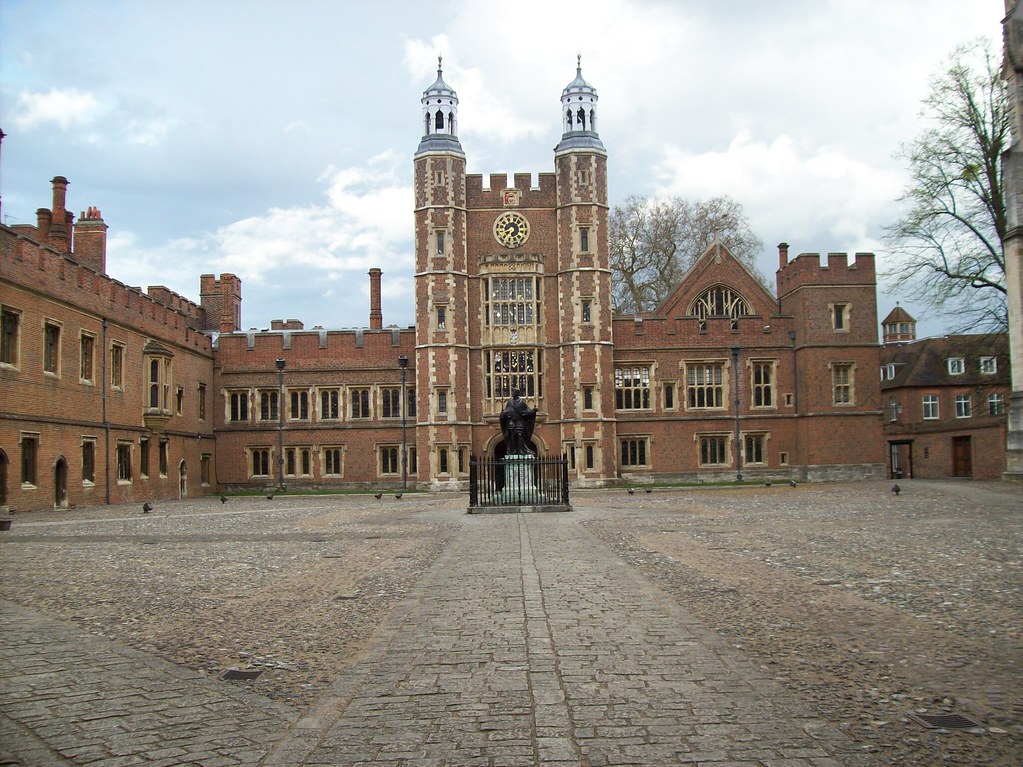
The physical construction of the college was intended to be monumental, with Henry VI planning a nave for the chapel that would have been the longest in Europe. Yet, the deposition of Henry VI by the Yorkist Edward IV in 1461 brought the project to a sudden halt. The "Great Chapel" was never built; only the Quire was completed, leaving the structure with its distinctive truncated appearance. Edward IV, viewing Eton as a Lancastrian vanity project, moved to dissolve the college entirely in 1463 via a Bull of Union, which ordered its annexation to St George's Chapel, Windsor. The college's survival during this period is attributed to William Westbury, the Provost at the time, who successfully lobbied against the dissolution. While legend frequently credits Edward IV's mistress, Jane Shore, with intervening to save the school, historical records show Westbury's legal and political maneuvering was the decisive factor in protecting the foundation's autonomy and retaining a portion of its endowments.
Following the restoration of the college's status under Edward IV (who eventually relented, though he stripped it of treasures), Eton entered a period of stabilization. The statutes of 1444 had established a rigid hierarchy that for centuries. The Provost served as the absolute ruler, supported by ten Fellows. The Head Master and the Usher (lower master) were responsible for the instruction of the 70 scholars and the "Commensals", boys who paid for their own board and lodging. These fee-paying students, who would later become known as "Oppidans" (from the Latin oppidum, meaning town), were originally a peripheral element of the foundation. By the late 17th century, the number of Oppidans began to rise, shifting the college's demographic from a charity for the poor to a boarding school for the landed gentry.
The English Civil War (1642, 1651) posed the existential threat to the foundation. Situated directly across the Thames from Windsor Castle, a parliamentary stronghold, Eton was physically and politically exposed. In November 1642, Royalist forces under Prince Rupert established artillery positions on college land to bombard Windsor Castle, dragging the school into the kinetic conflict. The college administration, sensing the shifting political, elected Francis Rous as Provost in 1644. Rous was a staunch Puritan and a key figure in the Parliamentarian government, eventually serving as Speaker of the House of Commons in 1653. His appointment was a strategic masterstroke; Rous used his influence to secure tax exemptions for the college and prevent its sequestration by the victorious Parliamentarian forces. While other ecclesiastical and royalist foundations were stripped of assets, Eton remained intact due to this political alignment.
The Restoration of the Monarchy in 1660 required another rapid pivot. The college purged its Puritan leadership to align with the returned Stuart court. Provost Rous died in 1659, and his successor, Nicholas Lockyer, was ejected to make way for Royalist appointees. This ability to navigate the oscillation between Royalist and Parliamentarian control established a pattern of political fluidity that served the college well into the modern era. By the 1690s, under the headmastership of John Newborough (1690, 1711), the school began to modernize its curriculum and expand its intake. Newborough is credited with raising the school's reputation, pushing student numbers toward 400 by the turn of the 18th century. This period marked the transition from a medieval ecclesiastical foundation to the premier educational institution for the British aristocracy.
The financial and legal structures established between 1440 and 1700 created a of independence. The "Consolidation Charter" of 1446 had confirmed the college's privileges, and the survival of the land grants through the chaos of the 15th and 17th centuries meant that Eton entered the 1700s with its capital base largely preserved. The distinction between the "College" (the 70 scholars living in historic buildings) and the "Oppidans" (the wealthy majority living in boarding houses) was firmly entrenched by 1700. This dual structure, a charitable core within a wealthy fee-paying exterior, became the defining characteristic of Eton, allowing it to claim charitable status in the 21st century based on the 1440 mandate while operating as one of the most expensive schools in the world.
Key Historical Events: Eton College (1440, 1700)
Year
Event
Impact on Foundation
1440
Foundation Charter
Henry VI establishes the college for 70 poor scholars.
1444
Statutes Enacted
Formalized the governance structure (Provost, Fellows) and curriculum.
1449
Grant of St James
Acquisition of land in Westminster; later exchanged for Hampstead estate.
1461
Edward IV Accession
Construction halted; grants annulled; treasures confiscated.
1463
Bull of Union
Attempted annexation to St George's Windsor; defeated by Provost Westbury.
1531
Land Exchange
Henry VIII seizes St James; Eton retains Chalcots Estate (Hampstead).
1642
Civil War Begins
Prince Rupert uses college grounds for artillery against Windsor Castle.
1644
Provost Rous Appointed
Parliamentarian Speaker secures tax exemptions and protection.
1690
John Newborough Era
Head Master drives enrollment to ~400, cementing status among gentry.
Eighteenth-Century Discipline and The Great Rebellion
Foundation and Royal Charter (1440, 1700)
By the dawn of the eighteenth century, the charitable mandate of Henry VI had evaporated. The institution, originally designed to lift poor scholars into the priesthood, had mutated into a holding pen for the British aristocracy. While the statutory seventy King's Scholars, known as Collegers, remained, they were socially and numerically overwhelmed by the Oppidans. These fee-paying students, boarding in town houses operated by "Dames," brought with them the entitlements of the landed gentry. The resulting atmosphere was not one of academic rigor, of organized anarchy, where the sons of dukes and earls learned that authority was negotiable and that violence was the primary currency of social exchange.
The physical environment of the college during this period mirrored the neglect of its founding principles. The Collegers were housed in the Long Chamber, a vast, unheated dormitory that became a byword for squalor. Rats foraged openly among the beds, and in the absence of supervision, the older boys established a brutal hierarchy over the younger ones. This internal tyranny was left unchecked by the masters, who concerned themselves almost exclusively with the rote instruction of Latin and Greek. Mathematics, science, and modern languages were nonexistent in the official curriculum. A boy could spend a decade at Eton and leave without knowing the location of America or the principles of long division, yet he would be intimately familiar with the scansion of Ovid and the sting of the birch.
Discipline in the eighteenth century was savage, frequent, and frequently arbitrary. The Headmaster's primary instrument of control was the birch rod, and the "block", a wooden kneeling apparatus, served as the altar of Etonian justice. Floggings were public spectacles, performed not just for serious offenses for trivial infractions of Latin grammar. This culture of corporal punishment did not deter misbehavior; rather, it hardened the boys, creating a perverse resilience that the British upper classes would later mistake for character. The masters, frequently former Collegers themselves, viewed their charges as wild animals to be tamed, while the boys viewed the masters as social inferiors to be tolerated or tormented.
The tension between the entitled student body and the school authorities erupted in 1768 in what became known as the Great Rebellion. The catalyst was Headmaster John. Unlike his predecessors, was the son of a Windsor tradesman, a social stain that the aristocratic Oppidans could not forgive. When attempted to assert his authority over the bounds, the geographical limits within which boys were allowed to roam, the students revolted. They did not complain; they organized. One hundred and sixty boys marched out of the college in a coordinated protest, heading for the town of Maidenhead. This was not a chaotic riot a shared strike, a demonstration of the power the students held over the institution.
At Maidenhead, the rebels formulated a list of demands, asserting their rights against what they perceived as the tyranny of a low-born headmaster. In a gesture of defiance that has echoed through the school's history, boys threw their schoolbooks into the River Thames, symbolically rejecting the authority of the classroom. The rebellion eventually collapsed when the boys' fathers refused to support them, forcing a humiliating return or expulsion. Yet, the event permanently damaged 's authority. He had been forced to confront the reality that at Eton, the students' lineage frequently outranked the Headmaster's position. resigned a few years later, broken by the ungovernable nature of his charges.
The spirit of insurrection did not die with. In 1783, under Headmaster Jonathan Davies, the college descended into violence once again. This uprising was more destructive than the march to Maidenhead. Angered by Davies' attempts to curtail their privileges, the boys rampaged through the college. They smashed the windows of the Headmaster's chambers and, in a symbolic coup, stole the whipping block. The instrument of their punishment was dragged out, cut into pieces, and destroyed. This act was a direct attack on the school's only method of control. Davies was forced to flee his own house to escape the mob. The 1783 rebellion demonstrated that the school was teetering on the brink of total lawlessness, held together only by the external pressure of parents who needed a place to warehouse their sons.
Major Etonian Rebellions of the 18th Century
Year
Headmaster
Primary Trigger
Key Event
Outcome
1768
John
Dispute over bounds; Class resentment toward.
The March to Maidenhead; Books thrown in Thames.
Mass return/expulsions; 's authority shattered.
1783
Jonathan Davies
Restriction of privileges.
Destruction of the Birching Block; Smashed windows.
Davies fled; severe flogging reinstated later.
Throughout these upheavals, the curriculum remained aggressively stagnant. While the Enlightenment reshaped Europe and the Industrial Revolution began to transform Britain's economy, Eton refused to modernize. The study of the classics was defended not for its utility, for its difficulty. The ability to compose Latin verse was seen as the mark of a gentleman, precisely because it was useless in the world of trade. This intellectual isolationism served a social function: it created a shared language and a barrier to entry for the rising merchant class. To send a son to Eton was to purchase his entry into a closed circle where the ability to quote Horace mattered more than the ability to build a or balance a ledger.
The Oppidan dominance solidified during this century. The fees they paid became the financial lifeblood of the school, rendering the original charitable foundation a side note. The "Dames" who ran the boarding houses operated them as private businesses, profiting from the wealthy families while providing minimal care. This privatization of student welfare meant that a boy's experience at Eton depended entirely on his family's wealth and his own ability to fight. The weak were victimized without recourse. The strong survived and learned that power was its own justification.
This eighteenth-century crucible forged the archetype of the "Old Etonian" that in the public imagination of 2026. The combination of brutal discipline, intellectual narrowness, and social supremacy created a class of men who were largely immune to self-doubt. They learned to navigate a system that was simultaneously rigid and chaotic. The rebellions of 1768 and 1783 were not rejections of the system attempts to calibrate it in their favor. The boys did not want to overthrow Eton; they wanted to run it. This entitlement, born in the chaos of the Georgian era, established the psychological template for the prime ministers and imperial administrators who would emerge from the school in the centuries to follow.
Production of British Prime Ministers
As of February 2026, Eton College has produced 20 British Prime Ministers, a statistic that represents a concentration of political power within a single institution. No other school in the English-speaking world method this level of dominance. Harrow, its historical rival, claims seven, while Winchester College has produced two. To place this in perspective, approximately 35% of the 58 individuals who have held the office of Prime Minister since 1721 were educated at this one boarding school near Windsor. This monopoly turns the United Kingdom's highest political office into a recurring alumni appointment, statistical probability and meritocratic principles alike.
The production line began with Robert Walpole, widely recognized as the Prime Minister, who entered Eton in 1690 as a King's Scholar. Walpole established the template for the Whig oligarchy that would rule Britain for much of the 18th century. His tenure (1721, 1742) solidified the connection between the school and the levers of state. Following him, the 18th century saw a succession of Etonian leaders, including the Earl of Bute, George Grenville, and Lord North. These men were not schoolmates; they were part of an intricate web of blood relations and patronage. The Grenville family alone, operating as a political cartel, illustrates how the school served as a holding pen for the aristocracy before they assumed their preordained seats in Parliament.
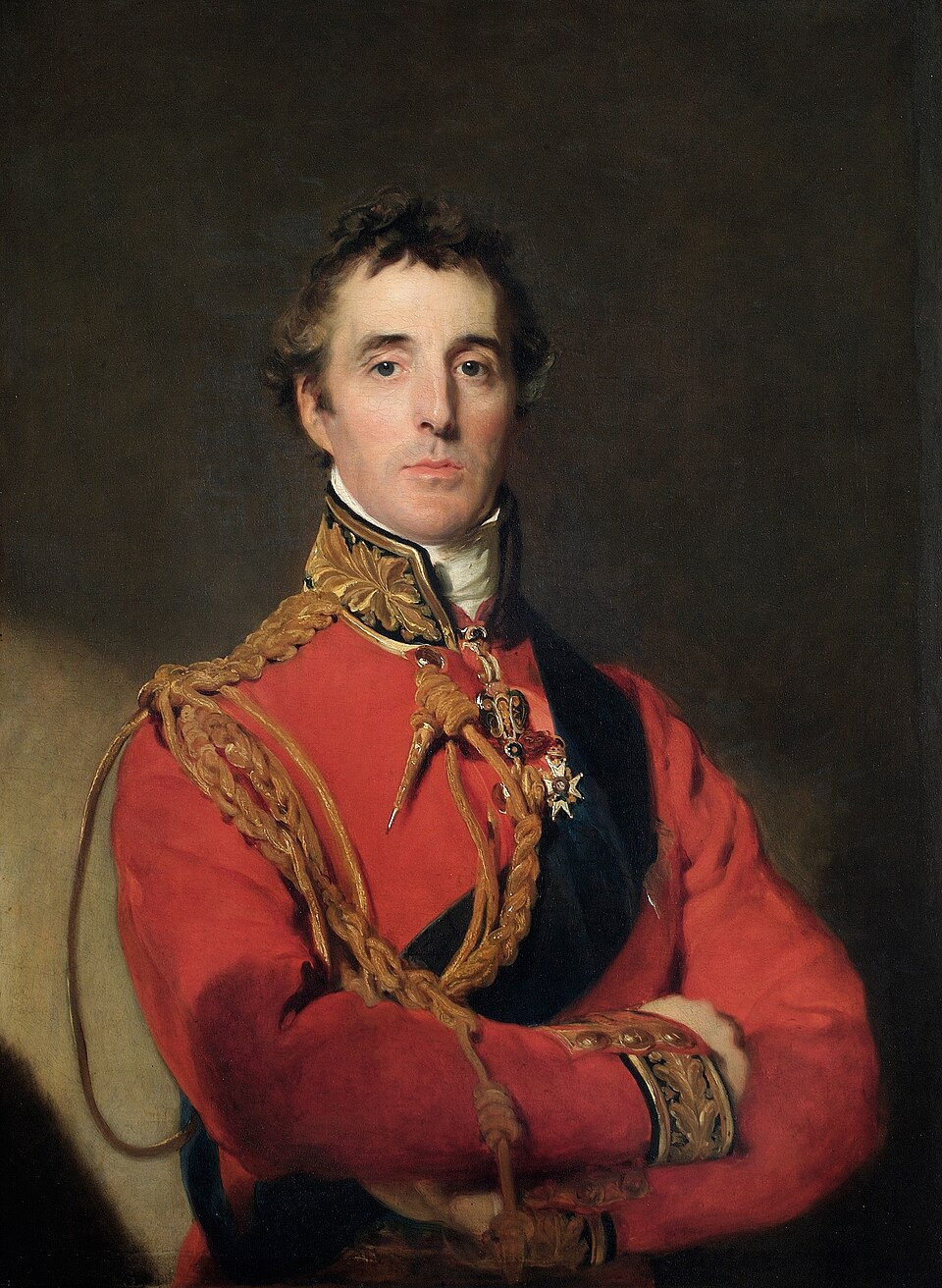
The 19th century cemented Eton's status as the "nurse of statesmen," though the most famous quote attributed to this era requires rigorous fact-checking. The Duke of Wellington, who served twice as Prime Minister, is frequently as saying, "The Battle of Waterloo was won on the playing fields of Eton." Historical evidence confirms this is a myth. Wellington actually hated his time at Eton, describing it as "short and inglorious," and the quote was likely fabricated by French writer Charles de Montalembert in 1855, three years after the Duke's death. The propagation of this myth served a specific purpose: it romanticized the entitlement of the upper classes, framing their monopoly on military and political leadership as a result of character built through sport rather than purchased through privilege.
William Ewart Gladstone, the four-time Liberal Prime Minister, represents a different archetype of the Etonian statesman. Unlike the aloof aristocrats of the 18th century or the Tory grandees of the 20th, Gladstone was an intense, high-minded scholar who flourished in the school's debating societies. His career demonstrates that Eton's training was not solely about social connections also about the weaponization of rhetoric. The school's debating chambers gave students like Gladstone, and later Boris Johnson, a forum to practice the art of persuasion and performance long before they entered the House of Commons. This rhetorical confidence frequently masks a absence of detailed policy knowledge, a trait that critics in modern Etonian leadership.
The early 20th century maintained the steady flow with Arthur Balfour and Anthony Eden, the "Magic Circle" incident of 1963 exposes the depth of the school's grip on the Conservative Party. When Harold Macmillan (Eton, 1903, 1906) resigned as Prime Minister due to ill health, he maneuvered to block his deputy, Rab Butler, from succeeding him. From his hospital bed, Macmillan advised Queen Elizabeth II to send for Alec Douglas-Home (Eton, 1917, 1922). This transfer of power from one Old Etonian to another, bypassing the standard democratic processes of the party, marked the apex of the "old boy" network. Douglas-Home's brief tenure ended in 1964, and for the 46 years, no Etonian held the office, leading sociologists to believe the school's political stranglehold had broken.
That belief proved premature. The election of David Cameron in 2010 and the subsequent rise of Boris Johnson marked a forceful return of the "Etonian bloc." Unlike their Victorian predecessors who ruled by divine right, Cameron and Johnson represented a modern, media-savvy iteration of the archetype. Their rivalry, forged in the school's corridors and the exclusive "Pop" society (where Johnson was a member and Cameron was not), spilled over into national politics. The 2016 Brexit referendum can be viewed through the lens of this schoolboy competition, with the future of the United Kingdom serving as the playing field for their personal ambitions. Johnson's tenure, ending in 2022, brought the total count to 20.
The method behind this production line is not purely academic. Eton instills a specific psychological trait frequently described as " superiority." Students are taught to govern as a birthright. The structure of the school, with its autonomous houses and internal hierarchies, mimics the British parliamentary system. By the time an ambitious Etonian reaches Westminster, he has already spent five years navigating a microcosm of the British establishment. This environment creates a distinct disconnect from the lived reality of the general population. The policies enacted by Etonian Prime Ministers, from North's loss of the American colonies to Cameron's austerity measures and Johnson's chaotic governance, frequently reflect a confidence that insulates them from the consequences of their decisions.
Even with the Labour victories in the mid-2020s, the network remains active. While the current Prime Minister as of 2026 is not an Etonian, the school's alumni continue to occupy key shadow cabinet positions and influential roles in the City of London, ensuring that the pipeline remains dormant rather than dismantled. The data shows that the "Etonian drought" of 1964, 2010 was the anomaly, not the rule. The institution adapts, rebranding its elitism as meritocracy, yet the outcome remains identical: a single boarding school dictating the leadership of a G7 nation.
No.
Prime Minister
Party
Term(s) in Office
Eton Connection
1
Robert Walpole
Whig
1721, 1742
King's Scholar (1690, 1696)
2
John Stuart, 3rd Earl of Bute
Tory
1762, 1763
Attended 1720s
3
George Grenville
Whig
1763, 1765
Attended 1720s
4
William Pitt the Elder
Whig
1766, 1768
Attended 1719, 1726
5
Frederick North, Lord North
Tory
1770, 1782
Attended 1742, 1748
6
William Grenville
Whig
1806, 1807
Attended 1770s
7
George Canning
Tory
1827
Attended 1782, 1787
8
Frederick Robinson, Viscount Goderich
Tory
1827, 1828
Attended 1790s
9
Arthur Wellesley, Duke of Wellington
Tory
1828, 1830; 1834
Attended 1781, 1784
10
Charles Grey, 2nd Earl Grey
Whig
1830, 1834
Attended 1773, 1781
11
William Lamb, Viscount Melbourne
Whig
1834; 1835, 1841
Attended 1790, 1796
12
Edward Smith-Stanley, Earl of Derby
Conservative
1852; 1858, 59; 1866, 68
Attended 1811, 1817
13
William Ewart Gladstone
Liberal
1868, 74; 1880, 85; 1886; 1892, 94
Attended 1821, 1827
14
Robert Gascoyne-Cecil, Marquess of Salisbury
Conservative
1885, 86; 1886, 92; 1895, 1902
Attended 1840, 1845
15
Archibald Primrose, Earl of Rosebery
Liberal
1894, 1895
Attended 1860, 1865
16
Arthur Balfour
Conservative
1902, 1905
Attended 1861, 1866
17
Anthony Eden
Conservative
1955, 1957
Attended 1911, 1915
18
Harold Macmillan
Conservative
1957, 1963
Attended 1906, 1910
19
Alec Douglas-Home
Conservative
1963, 1964
Attended 1917, 1922
20
David Cameron
Conservative
2010, 2016
Attended 1979, 1984
21
Boris Johnson
Conservative
2019, 2022
King's Scholar (1977, 1982)
Note: The count of 20 or 21 depends on the classification of Viscount Goderich and the Earl of Bute, who are sometimes excluded in simplified lists are historically verified Prime Ministers educated at Eton. The table above lists 21 distinct individuals to provide the most detailed data set.
Endowment Assets and Tax Status
Eighteenth-Century Discipline and The Great Rebellion
By the start of 2026, Eton College controlled an endowment valued in excess of £560 million, a financial that ranks it among the wealthiest educational institutions in the United Kingdom. This accumulation of capital is managed not by schoolmasters, by the "Provost and Fellows," a corporate body that operates with the sophistication of a sovereign wealth fund. The college's financial reports for the fiscal year ending August 2023 already confirmed net assets of £553 million, a figure that continued to rise through investment returns even as political pressure mounted against private school wealth.
The college's assets are bifurcated into two primary engines: the Securities Portfolio and the Property Portfolio. Partners Capital LLP manages the securities, which comprise approximately 70% to 75% global equities and private market allocations. This aggressive investment strategy moves far beyond the conservative bond-holding tactics of traditional charities. The goal is not preservation substantial real-term growth. Between 2013 and 2023, the securities portfolio returned an annualized 10. 2%, significantly outperforming the college's own target of inflation plus 4. 5%. This wealth allows Eton to operate with a financial independence that insulates it from market downturns that would bankrupt lesser schools.
Land remains the historic bedrock of Eton's balance sheet. The college owns approximately 2, 300 acres of land across England, a portfolio that extends far beyond the playing fields of Berkshire. This includes prime agricultural land and strategic development sites. In East Sussex, for instance, the college's property arm has pursued large- housing developments, such as a proposed 3, 000-home settlement near Plumpton Green. These ventures position Eton not just as a landlord, as a major property developer capable of extracting maximum yield from its centuries-old holdings. The college also utilizes subsidiaries like Rownsmoss Limited to manage specific investment properties, ensuring that commercial activities remain distinct from its educational charitable purpose.
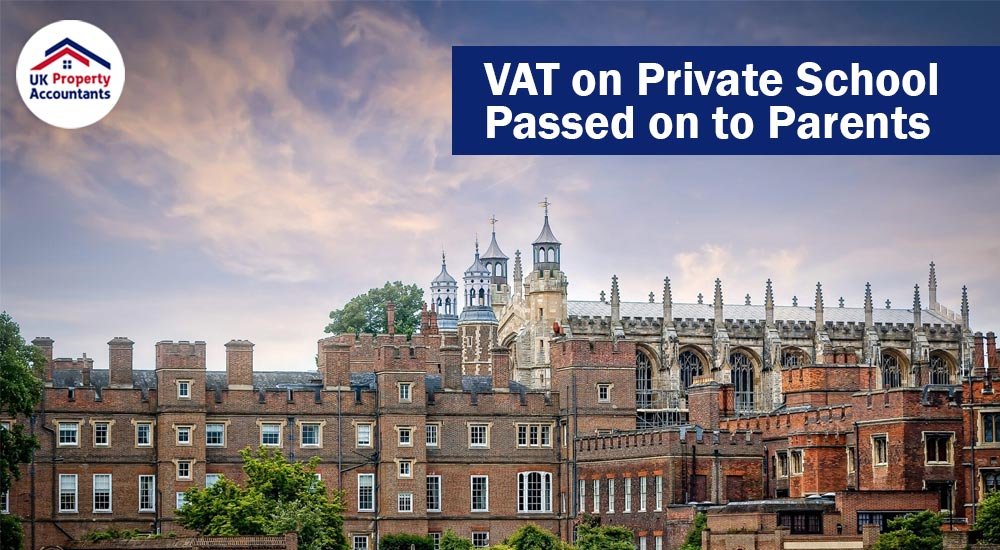
The tax status of this immense wealth underwent a seismic shift in January 2025. Fulfilling a manifesto pledge, the Labour government removed the VAT exemption for private school fees, imposing a 20% tax on tuition. Eton responded by passing this cost directly to parents, raising annual fees from approximately £53, 000 to over £63, 000. Simultaneously, the government stripped private schools of their 80% relief on business rates in April 2025, a move estimated to add £1. 2 million to Eton's annual operating costs. Yet, the college's vast endowment income remains largely shielded from taxation due to its registered charitable status (Charity Commission number 1139086). Investment gains within the endowment continue to accrue tax-free, a privilege that critics functions as a state subsidy for the ultra-wealthy.
Eton's defense of its charitable status relies heavily on its "public benefit" provision, primarily through bursaries and partnerships. In 2024, the college spent roughly £9. 5 million on financial aid, with 247 boys receiving fee reductions. Critics point out that this sum represents less than 2% of the endowment's capital value. When the VAT changes were announced, internal documents leaked to the press suggested the college might cut bursaries to offset the new tax load, a threat that drew sharp condemnation given the liquidity available in its investment accounts. The between the college's hoard of capital and its annual charitable disbursement remains a central point of political friction.
Beyond liquid assets and land, the college possesses a heritage collection of incalculable value. The College Library houses rare manuscripts, including a Gutenberg Bible and the original manuscript of Ralph Roister Doister, the English comedy. These items are overseen by the Heritage Committee and are frequently carried on the books at historic or nominal values rather than current market prices, meaning the true net worth of the institution is likely significantly higher than the reported £560 million. These assets serve as a cultural legitimizer, anchoring the college's financial power in a narrative of national stewardship.
Eton College Financial & Asset Snapshot (2023, 2026)
The historical trajectory of this wealth reveals a long game of accumulation. While the 1440 charter provided the initial endowments of alien priories, the explosion in value occurred during the 18th and 19th centuries. Enclosure Acts allowed the college to consolidate scattered strips of land into profitable blocks, and the urbanization of London and the South East turned agricultural plots into prime real estate. Unlike other ancient foundations that liquidated assets to cover operating shortfalls, Eton has historically prioritized capital preservation. The "Provost and Fellows" act as custodians of a perpetual trust, viewing the current student body as the transient beneficiaries of a financial engine built to outlast governments and tax regimes.
Admissions Data and Socioeconomic Demographics
By the start of the 2026 academic year, the financial barrier to entry at Eton College had solidified into a wall that no average British family could. Following the Labour government's removal of the VAT exemption for private schools in January 2025, the annual cost of an Eton education surged past £63, 000. This figure represents nearly double the median annual salary of a UK worker, severing the institution from the British middle class. While the college maintains its status as a registered charity, the demographics of its student body reveal an environment engineered for the global plutocracy, where admission is determined as much by capital as by capability.
The trajectory of Eton's admissions policy is a study in the slow betrayal of its founding charter. When Henry VI established the college in 1440, he mandated provision for 70 "poor and indigent" scholars to receive a free education. These King's Scholars, or "Collegers," were the intended core of the school. Yet, by the 18th century, the "Oppidans", fee-paying students who lived in the town, had vastly outnumbered the scholars, transforming the school into a playground for the landed gentry. The original charitable mission did not, it was eclipsed by the revenue-generating chance of the aristocracy. By 1830, the cost of keeping a boy at Eton was approximately £280 per year. In an era where a farm laborer might earn £30 annually, this fee structure ensured that the school remained the exclusive preserve of the ruling class, creating a socioeconomic silo that through the Victorian era.
For much of the 20th century, admission was governed by the "House Master's List," a system of patronage that allowed parents to register their sons at birth. This method favored those with the foresight and connections to secure a spot over a decade in advance, locking out families who were not already entrenched in the private school network. Although the college abolished this practice in 2002 in favor of a more meritocratic testing regime, the cultural and financial prerequisites for entry remain daunting. The modern admissions gauntlet begins at age 10, with the ISEB Common Pre-Test, followed by the "Eton List Test", a computerized psychometric assessment designed to measure chance rather than knowledge. Boys who pass these blocks face an interview where they must demonstrate "intellectual curiosity," a trait frequently cultivated by years of expensive preparatory schooling.
The "prep school pipeline" remains the most reliable route into Eton. Institutions such as Ludgrove, Summer Fields, and the Dragon School continue to feed a substantial portion of the intake. Parents frequently invest upwards of £500, 000 in preparatory fees before their son even sets foot in Eton. This financial attrition ensures that even with the removal of the hereditary "List," the demographic profile of the school shifts only slightly. The primary change in the 21st century is not the re-entry of the British middle class, the displacement of the minor British aristocracy by the global super-rich. Data from 2024 indicated that approximately 35% of boarders came from international backgrounds or expatriate families, reflecting a shift where the ability to pay £63, 000 annually is found more frequently in Shanghai, Moscow, or Dubai than in the Home Counties.
In response to accusations of elitism, Eton launched the "Orwell Award," a scholarship program named after one of its most famous scholarship boys, George Orwell. The initiative aims to provide full bursaries to talented boys from state schools, with a target of 140 students, roughly 10% of the school, receiving full fee remission by 2025. While this program offers a life-changing opportunity for a select few, it also serves as a rhetorical shield against political scrutiny. The presence of 140 non-fee-paying students allows the college to defend its charitable status, even as the remaining 90% of places are auctioned to the highest bidders in the global education market. Critics that this "philanthropic lottery" does little to address the widespread inequality the institution perpetuates.
The financial health of the college stands in clear contrast to the pleas of poverty frequently heard from the independent school sector during the VAT debates of 2024. Eton's endowment was valued at approximately £553 million in 2024, a war chest that generates substantial investment income. even with this wealth, the college signaled that the imposition of VAT might force cuts to its bursary programs, a maneuver that observers characterized as a political threat rather than a financial need. The college's ability to absorb costs is immense, yet the decision to pass the full VAT load onto parents signaled a confidence that its clientele is price-insensitive. For the ultra-wealthy, the difference between £50, 000 and £63, 000 is negligible; for the professional class, doctors, lawyers, senior civil servants, it is the final blow to affordability.
The following table illustrates the escalation of costs and the shifting of the student body, highlighting the between average incomes and Etonian fees over three centuries.
Year
Annual Fee (Approx.)
Context / Comparison
Student Population
1440
£0 (Scholars)
Free for 70 "poor" boys by Royal Charter.
70 Scholars
1830
£280
9x the annual wage of a farm laborer (£30).
~600
1980
£3, 000
Roughly 50% of the average UK house price.
~1, 200
2010
£29, 000
Exceeded the UK median annual salary.
~1, 300
2026
£63, 000+
Includes 20% VAT. Double the UK median salary.
~1, 350
The admissions process also involves a subjective assessment of "character," a metric that has historically favored the confident, articulate products of the private sector. While the "Eton List Test" claims to identify raw chance, the interview stage allows House Masters to select boys who "fit in." This cultural gatekeeping ensures that the school's ethos remains intact, even as the passports of its students change. The interview questions, frequently quirky and designed to test resilience, "If you were a street sign, which one would you be?", favor boys who have been coached to speak with ease and authority. The result is a student body that is diverse in nationality homogenous in economic standing.
By 2026, the "squeezed middle" has from Eton. The school is polarized between the recipients of the Orwell Award (the 10% on full aid) and the ultra-wealthy (the 90% paying full fees). The families that once formed the backbone of the school, the country solicitors, the military officers, the clergy, can no longer afford the premiums required to access the network. Eton has transitioned from a national institution serving the British upper classes to a luxury brand serving the global elite, with a small, charitable side operation that provides moral cover for its primary business model.
Institutional Hierarchy: Pop and Prefects
Production of British Prime Ministers
The internal governance of Eton College operates through a rigid, dual-track hierarchy that separates academic merit from social dominance. While the "Sixth Form Select" represents the institution's intellectual apex, comprising the top scholars responsible for academic ceremonial duties, the true locus of student power resides in the Eton Society, colloquially known as "Pop." Founded in 1811 by Charles Fox Townshend, Pop began as a debating club for the "literati" rapidly mutated into a self-electing oligarchy that functioned, for two centuries, as the school's supreme disciplinary force. By the mid-19th century, this body had eclipsed the official prefects in influence, creating a system where popularity and athletic prowess frequently outweighed intellectual capability.
Pop members are instantly identifiable by a distinct uniform that serves as a visual language of authority. While the standard Etonian wears a black tailcoat and pinstriped trousers, Pop members hold the exclusive privilege of wearing "spongebag" trousers, checked in grey and black, along with flamboyant, custom-designed waistcoats. They also wear "stick-ups" (starched wing collars with white bow ties) and, historically, possessed the right to furl their umbrellas and sit on the "Long Wall" in front of the college. These sartorial markers are not decorative; they function as badges of immunity and enforcement, signaling a status that transcends the authority of ordinary masters.
For much of the period between 1700 and 1970, the hierarchy was enforced through institutionalized violence. Pop members held the power to inflict corporal punishment on other boys, a practice known as "Pop-tanning." This was distinct from the canings administered by masters. A Pop-tanning involved the victim being summoned to the Pop room, where he would be beaten by the President of Pop, frequently in the presence of the entire society. The brutality of this system was not a deviation from school policy a central pillar of it, intended to harden boys for the rigors of imperial administration. The power to beat peers remained in place until the headmastership of Anthony Chenevix-Trench (1964, 1970), who, even with his own controversial use of the cane, removed the privilege of corporal punishment from the boys. The practice of caning by masters continued until the 1980s, with the last recorded caning occurring in 1984, just prior to the state ban.
Parallel to the violence of Pop was the system of "fagging," which institutionalized servitude within the boarding houses. From the 18th century until 1980, junior boys (fags) were assigned to senior boys (fag-masters) to perform menial tasks. These duties ranged from cooking tea and cleaning boots to running errands in the town. The "Library", the shared name for the prefects in a boarding house, held absolute sway over the fags. A shout of "Boy, Up!" or "Boy, Queue!" would trigger a stampede of lower boys; the last to arrive was assigned the task. This system indoctrinated students into a vertical power structure, teaching them that service was a temporary indignity to be endured before ascending to the rank of master. Headmaster Michael McCrum abolished fagging in July 1980, ending a three-century tradition of sanctioned subservience.
The election process for Pop has historically been a subject of intense scrutiny and criticism for promoting cronyism. For most of its history, Pop was a self-perpetuating elite where existing members voted in their successors using a "blackball" system. This method ensured that the society remained a closed loop of social capital, favoring the wealthy, the athletic, and the well-connected over the diligent. In 1987, and again in 2005, the school administration forced reforms to the election process to curb the dominance of the "sporting aristocracy." The modern selection method involves a composite vote including the current Pop members, a committee of masters, and the incoming Year 13 cohort (C Block). Yet, even with these changes, the body remains a popularity contest, heavily weighted towards those with high social visibility.
The dichotomy between the Sixth Form Select and Pop illustrates the school's internal values. The Sixth Form Select, or "Sixth Form," consists of the top 20 Collegers and Oppidans based on academic results. They are technically the senior prefects, entitled to "Praepostor" duties such as summoning boys to the Head Master. Yet, in the social currency of the school, a member of Pop outranks a member of Sixth Form Select. This prepares students for a British political reality where charisma and connections frequently supersede technical expertise. The table examines the correlation between Pop membership and high political office, demonstrating the society's function as a finishing school for the ruling class.
Table 1: Notable Pop Members and Political Trajectories (Selected)
Name
Pop Member?
Role/Office
Notes on Tenure
William Gladstone
Yes
Prime Minister (Liberal)
Elected to Pop in 1827.
Alec Douglas-Home
Yes
Prime Minister (Conservative)
President of Pop.
Harold Macmillan
Yes
Prime Minister (Conservative)
Member during WWI era.
Boris Johnson
Yes
Prime Minister (Conservative)
Elected largely on personality; known for chaotic brilliance.
David Cameron
No
Prime Minister (Conservative)
Failed to be elected to Pop; as a formative disappointment.
Prince William
Yes
Heir to the Throne
Elected in 1999; signaled a modernization of Pop's image.
The psychological impact of this hierarchy extends beyond the school gates. The exclusion from Pop can be a source of lifelong resentment, as noted in biographies of former Prime Minister David Cameron, whose failure to gain entry stood in sharp contrast to Boris Johnson's easy ascension. This internal sorting method functions as a preliminary round for the competition of British public life. The "waistcoat culture" of Pop encourages a confidence that borders on arrogance, a trait frequently observed in Old Etonians who enter Parliament. By 2026, the visual traditions remain intact; Pop members still patrol the school grounds in their spongebag trousers, acting as ushers at school events and maintaining order in the dining halls, living monuments to a class system that the school preserves in microcosm.
Within the boarding houses, the hierarchy is further enforced by the "House Captains," who are also entitled to wear "Stick-ups." The "Library" (senior prefects) and "Debate" (junior prefects) manage the day-to-day discipline of the house. Historically, the Captain of the House held the power to cane boys for minor infractions, a practice that decentralized violence and made senior boys complicit in the school's disciplinary regime. While the cane is gone, the structural authority remains. The senior boys run the house, mediating between the House Master and the lower years. This delegation of power ensures that by the time an Etonian leaves the school, he has likely experienced both the helplessness of the fag and the absolute authority of the prefect.
The persistence of Pop as a distinct, privileged caste within the student body suggests that Eton's modernization efforts have not dismantled its core elitist structures. The reforms of the late 20th and early 21st centuries removed the most egregious abuses, fagging and beating, left the social hierarchy intact. The institution continues to validate the concept that a select group, chosen largely for their social facility, deserves visible privileges and authority over the majority. This, forged in the 19th century and polished in the 21st, ensures that the school produces not just educated men, men accustomed to a tiered society where they occupy the upper rung.
The Fagging System and Historical Abolition
The "fagging" system at Eton College operated as a codified structure of indentured servitude from the late 17th century until its abolition in 1980. Unlike unstructured bullying found in schools, fagging was a recognized institution where junior boys, known as "fags," were assigned to senior boys, known as "fag-masters." This relationship was not clandestine. It was an essential economic engine of the boarding house system. The school statutes and unwritten laws mandated that younger students perform menial labor for the "Library" (prefects) and members of "Pop" (the Eton Society). This labor included cooking, cleaning, valeting, and running errands into the town of Eton. The system enforced a rigid hierarchy that mirrored the British class system, training boys to obey orders explicitly so they might later problem them.
By the mid-1800s, the duties of a fag were extensive and physically demanding. A fag was expected to wake his master, polish his boots, brush his clothes, and prepare his "messing" (tea or breakfast). The most notorious aspect of this regime was the "fag call." A senior boy would shout "Boy, Up!" or "Boy, Queue!" from his room. Every fag in the house was required to sprint to the source of the shout. The last boy to arrive was assigned the task, which could range from fetching a book to running to the shops for eggs. This Darwinian method ensured constant vigilance and anxiety among the lower boys, who lived in fear of being the slowest runner. Failure to perform duties to the master's satisfaction resulted in corporal punishment, administered not by teachers, by the senior boys themselves.
The Clarendon Commission of 1864, which investigated the nine leading public schools, examined fagging with clinical precision. While the Commission criticized the brutality in institutions, it largely defended the Etonian model. The report argued that the system prevented bullying by regulating power. It claimed that fagging created a formal bond between senior and junior boys. Witnesses testified that the service taught "social equality" within the school's walls, as even the sons of Dukes were required to fag for the sons of mere gentry if the latter were in a higher form. This justification cemented the practice for another century. The data from the 19th century shows that a fag could spend up to three hours a day on these duties, significantly impacting his own academic time.
Evolution of Student Hierarchy and Labor at Eton (1800, 1980)
Social elite, rule enforcement, wearing colored waistcoats.
"Pop Tanning" (mass caning ritual).
1970, 1980
Fag (Late Era)
Running errands, making tea, collecting mail.
None. System in decline.
Violence was intrinsic to the fagging economy. The "Pop Tanning" was a ritualistic punishment where a boy was beaten by the President of Pop in the presence of all members. Records indicate that in the 19th century, victims were frequently beaten until their trousers were cut to shreds. While the severity of such beatings declined in the 20th century, the power remained absolute. Head Master Anthony Chenevix-Trench (1964, 1970) is frequently in investigations regarding the school's disciplinary culture. While he abolished the birch, he retained the cane and administered corporal punishment in private. His tenure marked the final peak of the traditional, brutalist method to student management before the reforms of the 1970s began to take hold.
The abolition of fagging was not a sudden revolution a slow driven by changing social standards outside the college. Head Master Michael McCrum (1970, 1980) viewed the practice as "self-indulgence" for the seniors and a waste of time for the juniors. Throughout the 1970s, McCrum encouraged individual housemasters to phase out the system voluntarily. By 1980, most houses had abandoned personal servitude, yet pockets of resistance remained among traditionalists who viewed it as a rite of passage. In July 1980, McCrum issued the final directive that banned fagging entirely, ending a 300-year-old tradition of institutionalized servitude. The "Boy, Up!" call was silenced, and seniors were forced to polish their own shoes and make their own tea.
In the years following 1980, the school replaced fagging with "House Duties." Under this modern system, younger boys are still expected to perform tasks for the community, such as sorting mail or tidying common areas, the personal master-servant relationship is strictly prohibited. The power of the "Library" and "Pop" remains significant in 2026, yet their authority is checked by safeguarding policies that did not exist in the previous century. The "Pop Tanning" and the right of students to inflict corporal punishment on one another have been eradicated. Current data on student welfare suggests that while hierarchy is still a defining feature of Eton, the widespread humiliation inherent in the fagging system has been excised.
The legacy of fagging in the psychological profile of the "Old Etonian." Biographers and historians frequently note that the system produced men who were uniquely adapted to the rigors of the British Empire. They learned to endure hardship without complaint and to wield authority without hesitation. Critics that it also bred a detachment from the suffering of subordinates. The abolition in 1980 marked a pivot point where Eton attempted to align itself with modern meritocratic values, even as it retained the trappings of its aristocratic past. The transition from "fag" to "junior student" represents the institution's most significant internal structural change in the last two centuries.
Safeguarding Failures and Abuse Inquiries
Endowment Assets and Tax Status
The history of safeguarding at Eton College reveals a centuries-long transition from institutionalized violence to modern bureaucratic failure. For much of the school's existence, physical abuse was not a deviation from policy the policy itself. In the 18th and 19th centuries, the administration used the birch and the cane as primary educational tools. Headmaster John Keate (1809, 1834) famously flogged 80 boys in a single day to quell a rebellion. This state-sanctioned violence established a culture where physical dominance was the currency of authority. The "Long Chamber," a dormitory housing 52 boys, operated without supervision for decades. Inside, older boys enforced a hierarchy of servitude known as "fagging," where younger pupils were compelled to cook, clean, and run errands for seniors. This system frequently crossed into physical and sexual abuse, yet the administration viewed it as a character-building exercise rather than a safeguarding emergency.
By the mid-20th century, the nature of abuse shifted from chaotic brutality to specific predation by staff members. Anthony Chenevix-Trench, Headmaster from 1964 to 1970, abolished the birch replaced it with a cane, which he administered privately in his study. Testimonies reveal that Chenevix-Trench required boys to bare their buttocks for these beatings, a practice that carried clear sadistic and sexual overtones. When the Eton governing body forced his resignation in 1970, they did not report him to the authorities or strip him of his teaching credentials. Instead, he was permitted to become Headmaster at Fettes College in Scotland. A report from the Scottish Child Abuse Inquiry, published in January 2026, explicitly condemned this transfer. The inquiry found that Eton officials knew of his "predilection" for young boys and his drinking problems prioritized the school's reputation over the safety of children at his post. This "pass the trash" maneuver allowed Chenevix-Trench to continue his abuse at Fettes for another decade.
, the failure of the "housemaster" system, where a single teacher acts as a surrogate parent, has resulted in severe criminal convictions. In 2020, Matthew Mowbray, a geography teacher and Housemaster, was sentenced to five years in prison. Mowbray used his position of trust to access pupils' bedrooms at night under the pretext of pastoral care. He was convicted of sexual activity with a child, voyeurism, and making indecent images. Investigators found he had superimposed students' faces onto pornographic images. The Mowbray case exposed a serious flaw in the boarding structure: the very autonomy granted to Housemasters to build trust also provided the isolation necessary for grooming.
The pattern of staff convictions continued into 2026. On January 31, 2026, former Russian teacher Jacob Leland was sentenced to three years and three months in prison for sexual assaults committed against a pupil between 2010 and 2012. Leland, who also served as an assistant housemaster, performed oral sex on a student and committed other assaults during school trips and in staff accommodation. Headmaster Simon Henderson issued an unreserved apology following the sentencing, acknowledging that the abuse represented an "egregious breach of trust." These cases demonstrate that even with the introduction of modern safeguarding officers and compliance, the school's internal culture failed to detect predatory behavior by staff members who had unrestricted access to minors.
Beyond staff-on-student abuse, the "Everyone's Invited" movement in 2021 exposed a deep-seated culture of peer-on-peer abuse. The website published thousands of anonymous testimonies from students across the UK, with Eton College named frequently. Allegations described a "rape culture" where Etonians targeted girls from neighboring schools, viewing them as sexual conquests rather than peers. The testimonies detailed incidents of harassment, sharing of nude images without consent, and sexual assault. This external pressure forced the Independent Schools Inspectorate (ISI) to conduct immediate reviews. While recent ISI reports from 2024 and 2025 rate the school's compliance as met, the reputational damage from these student testimonies highlighted a failure to police the social attitudes and behaviors of the student body.
Timeline of Disciplinary and Safeguarding Failures (1800, 2026)
Era
method of Control/Abuse
Institutional Response
1809, 1834
Mass Floggings (Keate Era)
Celebrated as discipline; 80 boys flogged in one day.
1800s, 1980
Fagging System
Codified servitude; younger boys served seniors. Abolished 1980.
1964, 1970
Sadistic Caning (Chenevix-Trench)
Private beatings on bare buttocks. Resignation forced; no police report.
2004
Digital Crimes (Ian McAuslan)
Teacher convicted of possessing indecent images. Suspended sentence.
2020
Grooming/Assault (Matthew Mowbray)
Housemaster jailed for 5 years for abuse in boarding house.
2021
Peer-on-Peer Abuse (Everyone's Invited)
External allegations of rape culture; triggered Ofsted/ISI reviews.
2026
Sexual Assault (Jacob Leland)
Teacher jailed for historic abuse (2010, 2012). School issued apology.
The recurrence of these incidents suggests that the prestige of Eton frequently acts as a shield, delaying the exposure of internal rot. The case of Ajaz Karim, a former squash coach jailed for 10 years in 2018 for sexual abuse, further illustrates the vulnerability of the environment. Even with strict vetting procedures in place, the historical data shows a lag time of years, sometimes decades, between the abuse and the conviction. The 2026 findings regarding Chenevix-Trench serve as a reminder that the institution's instinct has historically been to export the problem rather than confront it. Current safeguarding policies are rigorous on paper, yet the conviction of staff members who operated within the last 15 years proves that the "gentleman's agreement" of trust can still be weaponized against students.
Old Etonian Network and Professional Dominance
The Old Etonian Association (OEA) functions less as an alumni group and more as a geopolitical entity with approximately 18, 000 members globally. Founded formally in 1897, this network operationalizes the social capital accumulated over five centuries, creating a closed-loop economy of influence that permeates the City of London, Westminster, and, increasingly, Hollywood. As of early 2026, the OEA remains the most concentrated network of professional power in the United Kingdom, maintaining its efficacy even as the political environment shifts against hereditary privilege.
The statistical anomaly of Eton's political dominance is without parallel in the democratic world. Between Robert Walpole's ascension in 1721 and Boris Johnson's departure in 2022, Eton College produced 20 British Prime Ministers. This single institution has educated more UK leaders than all other schools combined. This pipeline was not an accident of history a design feature; the school's curriculum and social structures, particularly the "Pop" (Eton Society), were engineered to simulate parliamentary procedure and cabinet government. While the Labour victory in 2024 and the subsequent tenure of Keir Starmer (Reigate Grammar) interrupted the direct line of Etonian premiers, the network simply recalibrated, moving its center of from the front benches of the House of Commons to the boardrooms of private equity firms and the judiciary.
From 1700 to 1900, the Etonian network provided the administrative backbone of the British Empire. The curriculum's focus on Classics and muscular Christianity produced a class of colonial administrators who governed with a uniform ethos. Following the decline of Empire, this energy transferred direct to the financial sector. By the 1980s, the "Big Bang" in the City of London saw Old Etonians (OEs) pivot from stockbroking partnerships to hedge funds and global investment banking. The network's efficiency in the City is documented by the speed at which information and capital move between OEs. Informal dining clubs and the OEA's own events calendar serve as clearinghouses for unlisted job opportunities and off-market deals.
In the 21st century, a significant shift occurred toward the cultural industries. The "Eton Arts Mafia" became a recognized phenomenon, with actors such as Eddie Redmayne, Tom Hiddleston, and Damian Lewis dominating stage and screen. This pivot demonstrates the network's adaptability; as traditional aristocratic route in the military and church faded, Etonians colonized the lucrative global entertainment market. The school's Farrer Theatre and professional-grade facilities provided an advantage that state schools, stripped of arts funding, could not match. By 2025, the "posh" accent and mannerisms associated with Eton had become a globally exportable commodity, distinct from the administrative competence prized in the 19th century.
Data from the Sutton Trust and the Social Mobility Commission consistently exposes the extent of this capture. The Elitist Britain reports (2019 and 2025) quantify the stranglehold private education has on top professions. While Eton represents a fraction of the 7% of the population that is privately educated, its alumni occupy a disproportionate share of the "elite" subset.
Profession / Sector
% Privately Educated (2019/2025 Data)
Eton Context
Senior Judges
65%
Historically the strongest OE stronghold outside the Cabinet.
Diplomats (FCO)
52%
Maintains the "imperial administrator" tradition.
Cabinet Ministers (2019)
39%
Peaked under Johnson; declined under Starmer (2024-2026).
Newspaper Columnists
44%
High concentration of OEs in editorial positions (e. g., The Telegraph, Daily Mail).
Prime Ministers
36% (20 of 55)
Historical aggregate since office creation.
The method of this dominance relies on the "old boy" signal, a set of shared cultural codes, vocabulary, and dress that identifies members to one another instantly. The OEA facilitates this through a sophisticated digital infrastructure and global branches, ensuring that an Etonian landing in Hong Kong, New York, or Dubai has immediate access to high-level contacts. This system creates a barrier to entry for non-initiates that is far more durable than simple wealth. A billionaire's son from a different school cannot buy the specific trust inherent in the OE tie; it is a caste marker that implies a shared formative trauma and a mutual obligation to assist.
By 2026, the network faced new external pressures. The imposition of VAT on private school fees by the Labour government was intended to weaken the financial viability of institutions like Eton. Yet, the OEA's response was to fortify its endowment and increase bursary funding, insulating the institution from market forces that crushed lesser private schools. The professional dominance of Old Etonians shows no sign of abating; if anything, the network has become more insular and defensive, retreating from the visible exposure of political office to the unclear, high-yield environments of global finance and technology investment. The "Chumocracy" did not after the scandals of the early 2020s; it went private.
Land Ownership and Estate Management
Admissions Data and Socioeconomic Demographics
Eton College operates as a sophisticated property holding company attached to a school, managing a portfolio that rivals mid-sized sovereign wealth funds. As of February 2026, the institution controls an endowment valued at approximately £560 million, a figure that excludes the unlisted value of its operational campus and art artifacts. While the college presents itself as an educational charity, its estate management strategy reflects the aggressive tactics of a corporate land developer. The foundation of this wealth lies not in tuition fees, which reached over £63, 000 per annum in 2025, in a land bank accumulated over six centuries and modernized through high-yield commercial acquisitions.
The crown jewel of Eton's property empire is the Chalcots Estate in London. King Henry VI originally granted this land to the college in the 15th century, repurposing grounds that once supported a leper hospital. For centuries, the land remained agricultural, the 19th-century expansion of London transformed these pastures into a financial engine. By the 1840s, Eton secured Acts of Parliament to grant building leases, developing the area into the affluent streets of Primrose Hill and Belsize Park. The college retains significant freehold interests in this district, generating millions in annual ground rents. This specific holding exemplifies the "long view" of Eton's asset management: land acquired by royal decree in 1449 continues to subsidize operations nearly 600 years later, insulated from the market volatility that affects younger institutions.
Beyond its urban holdings, Eton controls a vast rural domain. In 2024, an investigation revealed the college owns approximately 2, 300 acres of land across England. This portfolio is not passive farmland; the college employs a "strategic land" division focused on rezoning agricultural plots for residential development. A prime example involves the 206-hectare site between Plumpton Green and South Chailey in East Sussex. Here, the college engaged in long-term promotion of the land for housing, objecting to local plans that excluded their holdings. By securing planning permission on greenfield sites, the college can multiply the land's value one hundredfold before selling it to housebuilders, a practice that frequently places the "charitable" educational body in direct conflict with local communities and environmental groups.
The investment strategy shifted aggressively in the 2020s, moving from passive rent collection to distressed asset acquisition. In September 2024, the Eton College Common Investment Fund entered talks to acquire the Newbury Parkway Shopping Centre. The deal underscored the college's purchasing power: it sought to buy the 300, 000-square-foot mall for roughly £17 million, a fraction of the £120 million originally spent to develop it. This acquisition targeted a yield of nearly 9%, far outstripping traditional government bonds. Such moves demonstrate how the college uses its tax-exempt status and deep capital reserves to absorb commercial assets that private equity firms deem too risky.
Eton College Investment Assets & Land Holdings (2023, 2025 Estimates)
Asset Class
Approximate Value / Size
Description
Investment Portfolio
£560 Million
Equities, bonds, and funds managed by Partners Capital and Clearbell.
Urban Real Estate
Undisclosed (Est. £150m+)
Freeholds in Primrose Hill (Chalcots), London commercial units, and staff housing.
Rural Land
2, 300 Acres
Agricultural land in Berkshire, Oxfordshire, and Sussex, frequently held for development.
Campus Footprint
400 Acres
Operational school grounds, playing fields, and historic buildings in Eton/Windsor.
Commercial Ventures
£17 Million (Newbury)
Direct ownership of retail centers and commercial parks.
The management of these assets falls under the Eton College Common Investment Fund, established in 2006 to professionalize the endowment. This entity pools the college's various restricted and unrestricted funds, allowing for unitary management by external advisors like Clearbell Capital. This structure mirrors the endowment models of Harvard or Yale, prioritizing total return over traditional income. Consequently, the college could weather the financial impact of the Labour Government's 2025 imposition of VAT on private school fees. While the college publicly claimed it needed to cut bursaries due to the tax, its balance sheet showed investment gains of £27 million in a single year, more than double the estimated cost of the VAT levy.
Eton's relationship with its physical neighbors frequently turns litigious. In the Chalcots Estate, the college's 1960s redevelopment replaced Victorian villas with tower blocks, a project that fundamentally altered the neighborhood's demographics. In the 21st century, the college faced scrutiny over the cladding used on these towers, which was found to be similar to the combustible material involved in the Grenfell Tower disaster. Although the towers had been transferred to council management, the college's historical role in the density and design of the estate remains a point of contention. Similarly, in its home town of Eton, the college owns of the High Street, giving it control over the local commercial mix and housing supply for staff.
The "charitable" classification of this property empire provides a massive tax shield. Unlike a commercial property developer, Eton pays no corporation tax on the profits from its primary purpose land and enjoys significant relief on investment income applied to charitable aims. This allows the estate to compound at a rate unavailable to private competitors. Critics that the college functions as a tax- hedge fund with a school attached, using its educational status to protect a half-billion-pound property portfolio from the Exchequer. As of 2026, even with political pressure, this structure remains intact, securing the institution's dominance for the foreseeable future.
Academic Metrics and Oxbridge Matriculation Rates
The academic of Eton College functioned for centuries not as a meritocracy as a closed loop of guaranteed advancement. From 1700 until the mid-19th century, the institution operated primarily as a feeder for King's College, Cambridge. Under the original 1441 statutes, Eton scholars were entitled to claim fellowships at King's without passing university examinations, a privilege that bypassed the academic rigor required of other undergraduates. This "closed scholarship" system meant that a boy elected to College at age 13 was frequently set for life, moving direct from Eton to a Cambridge fellowship and frequently into the clergy or civil service. The system prioritized patronage and birthright over intellectual capability, creating a stagnation that until the Victorian era reforms.
The of this protectionist pipeline began with the Royal Commission of 1861, which forced the revision of college statutes. By 1873, the automatic right of Etonians to King's College fellowships was abolished, forcing the school to compete on academic grounds for the time. To instill internal rigor, the Duke of Newcastle established the Newcastle Scholarship in 1829. This prize, awarded for divinity and classics, became the school's supreme test of intellect, creating a ferocious internal hierarchy. Winners of the Newcastle, such as future Prime Minister Boris Johnson in 1981, were marked for greatness, establishing a culture where academic ruthlessness replaced the gentlemanly amateurism of the 18th century.
By the late 20th century, Eton had transformed into a high-pressure examination factory. The "Gentleman's C" was discarded in favor of straight As. Data from the early 21st century shows the school's dominance in securing university placements. Between 2010 and 2014, Eton consistently secured between 80 and 100 offers from Oxford and Cambridge annually. In 2014 alone, Etonians received 99 offers from Oxbridge, a matriculation rate that far outstripped entire counties of state-educated pupils. This period represented the peak of the school's domestic academic hegemony, where the "Eton to Oxbridge" conveyor belt appeared unbreakable.
The shifted dramatically between 2015 and 2026. University admissions policies began to prioritize "contextual data," placing greater weight on applicants from underrepresented backgrounds. Consequently, Eton's Oxbridge offer count collapsed. Records show that offers fell from 99 in 2014 to just 48 in 2023, a reduction of over 50%. By 2024, state schools such as the London Academy of Excellence (LAE) in Stratford began to outperform Eton in total Oxbridge offers, securing 62 compared to Eton's 51. This statistical inversion signaled the end of the automatic entry era, forcing the college to re-evaluate its to parents paying fees that exceeded £63, 000 by 2026.
Even with the decline in Oxbridge dominance, Eton's raw examination metrics remain statistically anomalous compared to national averages. In 2024, 38. 7% of all A-Level grades awarded to Etonians were A*, and 76. 6% were A* or A. This compares to a national average where top grades are significantly rarer. The 2025 results maintained this trend, with reports indicating an A*/A rate of approximately 78%. Critics point to the resource gap; with a teacher-to-student ratio of 1: 8 and "beaks" (teachers) frequently holding PhDs, the school functions as a university-level preparatory environment that standard secondary schools cannot replicate.
Faced with the "Oxbridge squeeze," the college executed a strategic pivot toward the United States. Beginning in the late 2010s, the administration expanded its US Universities team, recognizing that Ivy League institutions valued the "prestige" of an Eton education without the same constraints as UK contextual admissions. The shift is visible in the data: by 2021, 15% of Eton leavers were applying to US universities. By 2026, matriculation into Harvard, Yale, Stanford, and Princeton had become the new "gold standard" for the ultra-wealthy cohort, bypassing the domestic bottleneck. The "Plan B" became the new "Plan A" for the most ambitious families.
Eton College Academic & University Metrics (Selected Years)
Year
Oxbridge Offers
A-Level A*/A Rate
US University Applicants
Notes
2014
99
~80%
< 5%
Peak Oxbridge dominance.
2021
48
N/A (CAGs)
15%
Offers halved; US applications surge.
2023
48
74. 9%
~18%
Success rate for Oxbridge apps: 29%.
2024
51
76. 6%
~20%
Outperformed by London Academy of Excellence.
2025
~50
78. 2%
High
Fees exceed £63, 000; VAT impact begins.
The controversy over "Teacher Assessed Grades" (CAGs) during the COVID-19 pandemic (2020-2021) further complicated the metric analysis. While Eton's results were high, they were consistent with the school's historic performance, shielding it from the worst accusations of grade inflation that plagued other private institutions. Yet, the 2026 academic year opened under the shadow of the new VAT levy on school fees. This financial pressure intensified the demand for tangible results. Parents absorbing a 20% cost increase demanded not just " education" guaranteed elite university placement. The data suggests Eton has successfully diversified its exit routes, ensuring that if the doors to Cambridge close, the gates to the Ivy League open.
VAT Policy Changes and Enrollment Shifts (2024, 2026)
The financial architecture of Eton College faced its most direct legislative challenge in a century following the Labour Party's decisive victory in the July 2024 general election. Chancellor Rachel Reeves moved with speed to the tax exemptions that had long shielded Britain's private education sector. The Finance Bill 2024-25 introduced a standard 20% Value Added Tax (VAT) on independent school fees, January 1, 2025. This policy shattered the "charitable status" shield that had previously categorized Eton's educational services as tax-exempt, forcing the institution to confront a new fiscal reality that stripped away centuries of preferential treatment.
Eton's administration, led by Provost Lord Waldegrave and Head Master Simon Henderson, responded with a hardline stance. While schools in the Girls' Day School Trust (GDST) and other networks chose to absorb a portion of the tax to shield families, Eton announced it would pass the full 20% cost directly to parents. In a letter sent to families in August 2024, the College stated it had "no latitude" to absorb the levy. Consequently, the annual fee, which stood at £52, 749 for the 2023, 24 academic year, surged to approximately £63, 000 commencing in January 2025. This decision cemented Eton's position as a luxury service provider, severing the optical illusion that its primary function was charitable education rather than elite networking.
The implementation of VAT was accompanied by a secondary financial blow: the removal of business rates relief. Historically, Eton benefited from an 80% discount on business rates due to its charitable status. The removal of this relief, April 2025, added an estimated £1. 2 million annually to the school's operating costs. The College's leadership used these cumulative pressures to justify the fee hike, yet critics pointed to the institution's balance sheet. With an endowment valued at £553 million in 2023, comprising £433 million in financial assets and £120 million in property, Eton possessed financial reserves that dwarfed those of nearly every other school in the United Kingdom. The refusal to dip into these capital reserves to mitigate fee increases for current families revealed a priority on asset preservation over tuition stabilization.
Wealthy parents attempted to circumvent the new tax through "forestalling," a method involving the prepayment of fees for future years before the law took effect. Eton's "Fees in Advance" scheme, long a staple of its financial planning, saw a flurry of activity in mid-2024. The Treasury, anticipating this avoidance strategy, introduced anti-forestalling legislation. Any fees paid after July 29, 2024, for terms starting on or after January 1, 2025, were subject to the new tax. This retroactive cutoff trapped millions of pounds in prepayments, forcing families who had rushed to transfer funds in August and September 2024 to pay the 20% surcharge regardless of their early transfer.
The demographic impact of these changes became visible by the start of the 2025, 2026 academic year. While the Independent Schools Council (ISC) predicted a sector-wide enrollment drop of nearly 40, 000 students, Eton remained insulated from the vacancy emergency that plagued smaller, less prestigious private schools. The "squeezed middle", families relying on dual professional incomes and grandparents' help, had been priced out of Eton long before the VAT introduction. The 2025 intake showed a continued shift toward an international plutocracy, with demand from markets in China, the Middle East, and the United States filling any gaps left by domestic withdrawals. The school did not shrink; it simply became more globally exclusive.
Controversy erupted regarding the school's bursary program. In late 2024, internal documents leaked to the press suggested Eton planned to cut its financial aid budget by over £1 million by 2027, citing the VAT load. This threat to reduce "free places" for poor scholars, the very demographic King Henry VI founded the school to serve, drew sharp condemnation. Critics argued that a school sitting on half a billion pounds in assets could afford to maintain its charitable commitments without passing the cost to its poorest students. By early 2026, the College maintained that its endowment was restricted for specific purposes, yet the optics of raising fees to £63, 000 while simultaneously threatening to reduce bursaries underscored the institution's drift from its foundational statutes.
Eton College Fee Evolution & Fiscal Policy (2023, 2026)
Academic Year
Annual Fee (Approx)
VAT Status
Business Rates Relief
Notes
2023, 2024
£52, 749
Exempt
80% Relief
Standard annual inflation increase only.
2024, 2025 (Autumn)
£52, 749 (pro-rated)
Exempt
80% Relief
Last term before VAT implementation.
2025 (Jan, July)
£63, 000 (annualized)
20% Applied
80% Relief (until April)
VAT applied to all tuition and boarding.
2025, 2026
£63, 000+
20% Applied
0% Relief
Full fiscal impact; business rates relief removed.
The 2026 academic confirms that the VAT policy, designed to level the playing field, achieved the opposite effect at the apex of the market. While mid-tier private schools faced closure or merger, Eton consolidated its dominance. The tax acted as a filter, removing the final vestiges of the British upper-middle class who could no longer justify the expense, and replacing them with a clientele for whom a £10, 000 annual increase was a rounding error. The "Eton Tax" did not break the institution; it clarified its modern identity as a global luxury brand, operating outside the constraints of the British domestic economy while remaining deeply in its class structure.
Why it matters: Control over the Mekong River's hydrology has shifted to China, impacting downstream nations and leading to a water rights dispute. The ecological consequences of China's…
What do we know about Foundation and Royal Charter?
The origins of Eton College are not rooted in 15th-century philanthropy in a calculated consolidation of royal power and religious influence that established a financial engine still operating in 2026. King Henry VI founded "The King's College of Our Lady of Eton beside Windsor" on October 11, 1440, via a royal charter.
What do we know about Eighteenth-Century Discipline and The Great Rebellion?
By the dawn of the eighteenth century, the charitable mandate of Henry VI had evaporated. The institution, originally designed to lift poor scholars into the priesthood, had mutated into a holding pen for the British aristocracy.
What do we know about Production of British Prime Ministers?
As of February 2026, Eton College has produced 20 British Prime Ministers, a statistic that represents a concentration of political power within a single institution. No other school in the English-speaking world method this level of dominance.
What do we know about Endowment Assets and Tax Status?
By the start of 2026, Eton College controlled an endowment valued in excess of £560 million, a financial that ranks it among the wealthiest educational institutions in the United Kingdom. This accumulation of capital is managed not by schoolmasters, by the "Provost and Fellows," a corporate body that operates with the sophistication of a sovereign wealth fund.
What do we know about Admissions Data and Socioeconomic Demographics?
By the start of the 2026 academic year, the financial barrier to entry at Eton College had solidified into a wall that no average British family could. Following the Labour government's removal of the VAT exemption for private schools in January 2025, the annual cost of an Eton education surged past £63, 000.
What do we know about Institutional Hierarchy: Pop and Prefects?
The internal governance of Eton College operates through a rigid, dual-track hierarchy that separates academic merit from social dominance. While the "Sixth Form Select" represents the institution's intellectual apex, comprising the top scholars responsible for academic ceremonial duties, the true locus of student power resides in the Eton Society, colloquially known as "Pop." Founded in 1811 by Charles Fox Townshend, Pop began as a debating club for the "literati" rapidly mutated into a self-electing oligarchy that functioned, for two centuries, as the school's supreme disciplinary force.
What do we know about The Fagging System and Historical Abolition?
The "fagging" system at Eton College operated as a codified structure of indentured servitude from the late 17th century until its abolition in 1980. Unlike unstructured bullying found in schools, fagging was a recognized institution where junior boys, known as "fags," were assigned to senior boys, known as "fag-masters." This relationship was not clandestine.
What do we know about Safeguarding Failures and Abuse Inquiries?
The history of safeguarding at Eton College reveals a centuries-long transition from institutionalized violence to modern bureaucratic failure. For much of the school's existence, physical abuse was not a deviation from policy the policy itself.
What do we know about Old Etonian Network and Professional Dominance?
The Old Etonian Association (OEA) functions less as an alumni group and more as a geopolitical entity with approximately 18, 000 members globally. Founded formally in 1897, this network operationalizes the social capital accumulated over five centuries, creating a closed-loop economy of influence that permeates the City of London, Westminster, and, increasingly, Hollywood.
What do we know about Land Ownership and Estate Management?
Eton College operates as a sophisticated property holding company attached to a school, managing a portfolio that rivals mid-sized sovereign wealth funds. As of February 2026, the institution controls an endowment valued at approximately £560 million, a figure that excludes the unlisted value of its operational campus and art artifacts.
What do we know about Academic Metrics and Oxbridge Matriculation Rates?
The academic of Eton College functioned for centuries not as a meritocracy as a closed loop of guaranteed advancement. From 1700 until the mid-19th century, the institution operated primarily as a feeder for King's College, Cambridge.
What do we know about VAT Policy Changes and Enrollment Shifts?
The financial architecture of Eton College faced its most direct legislative challenge in a century following the Labour Party's decisive victory in the July 2024 general election. Chancellor Rachel Reeves moved with speed to the tax exemptions that had long shielded Britain's private education sector.
Why it matters: America's retail sector faces a financial emergency with total retail shrink reaching an estimated $121.6 billion annually. Organized Retail Crime (ORC) rings are driving this…
Why it matters: Disaster philanthropy provides immediate relief and supports long-term recovery efforts for communities affected by natural or man-made disasters. Philanthropic contributions play a crucial role in…
Why it matters: Factory safety audits are crucial for assessing safety standards and ensuring compliance with regulations in manufacturing environments. Global incidents highlight the need for rigorous audits…
Why it matters: 65% of financial transactions in the GCC are now digital, marking a significant increase from 2023. Challenges in fintech adoption in the Gulf include issues…
Why it matters: Counterfeit and pirated goods make up 3.3% of global trade, amounting to $509 billion, posing challenges to enforcement agencies worldwide. Online platforms like eBay, Amazon,…
Why it matters: Voice actors in the video game industry face exploitation and unfair practices despite major studios earning billions of dollars annually. Recent strikes by SAG-AFTRA have…
Get updates on this place
Get verified alerts when this file is updated (verification required).