Verified Against Public And Audited RecordsLast Updated On: 2026-03-04
Reading time: ~50 min
File ID: EHGN-PLACE-35226
Investigative Bio of Harvard University
Colonial Foundations and Economic Ties to Atlantic Slavery (1636, 1783)
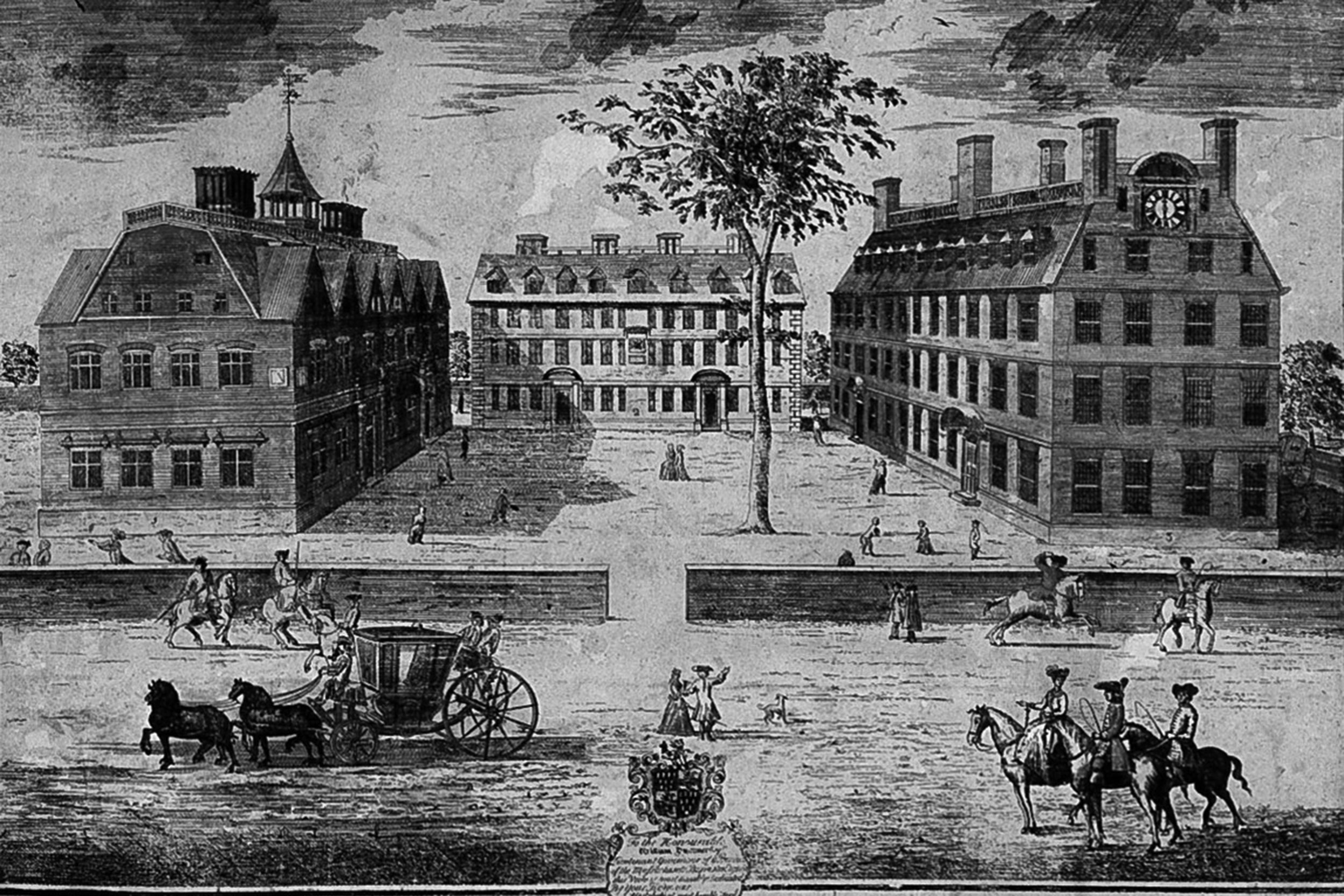
Harvard University, founded in 1636, did not rise solely as a beacon of religious piety as a financial entity deeply in the Atlantic slave economy. While the institution has long celebrated its colonial roots, a 2022 report titled Harvard & the Legacy of Slavery shattered the myth of a "free" New England education. The data reveals that between the university's founding and the Massachusetts judicial abolition of slavery in 1783, Harvard presidents, faculty, and staff enslaved at least 70 individuals. These men and women lived on campus and served the students and administration. Their labor was not incidental. It was a primary engine of the college's daily function.
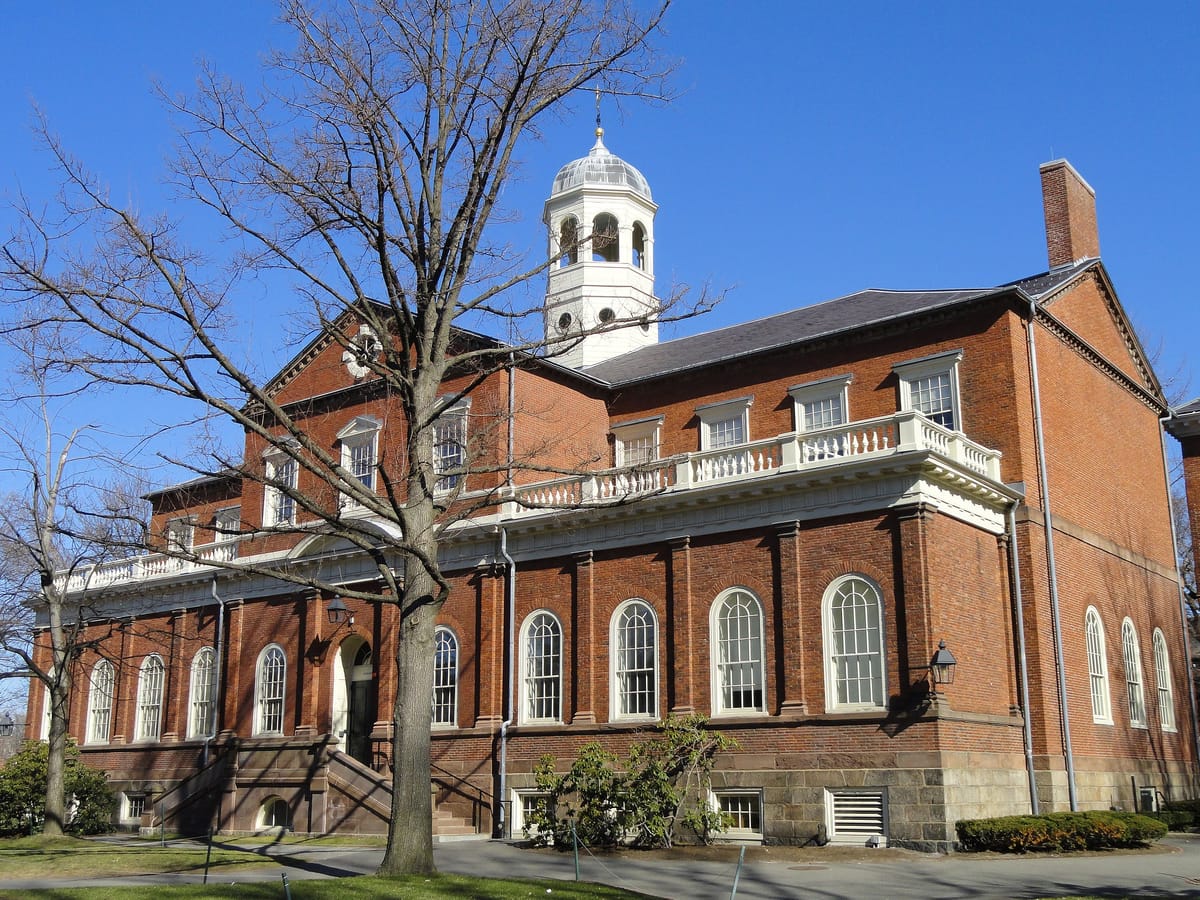
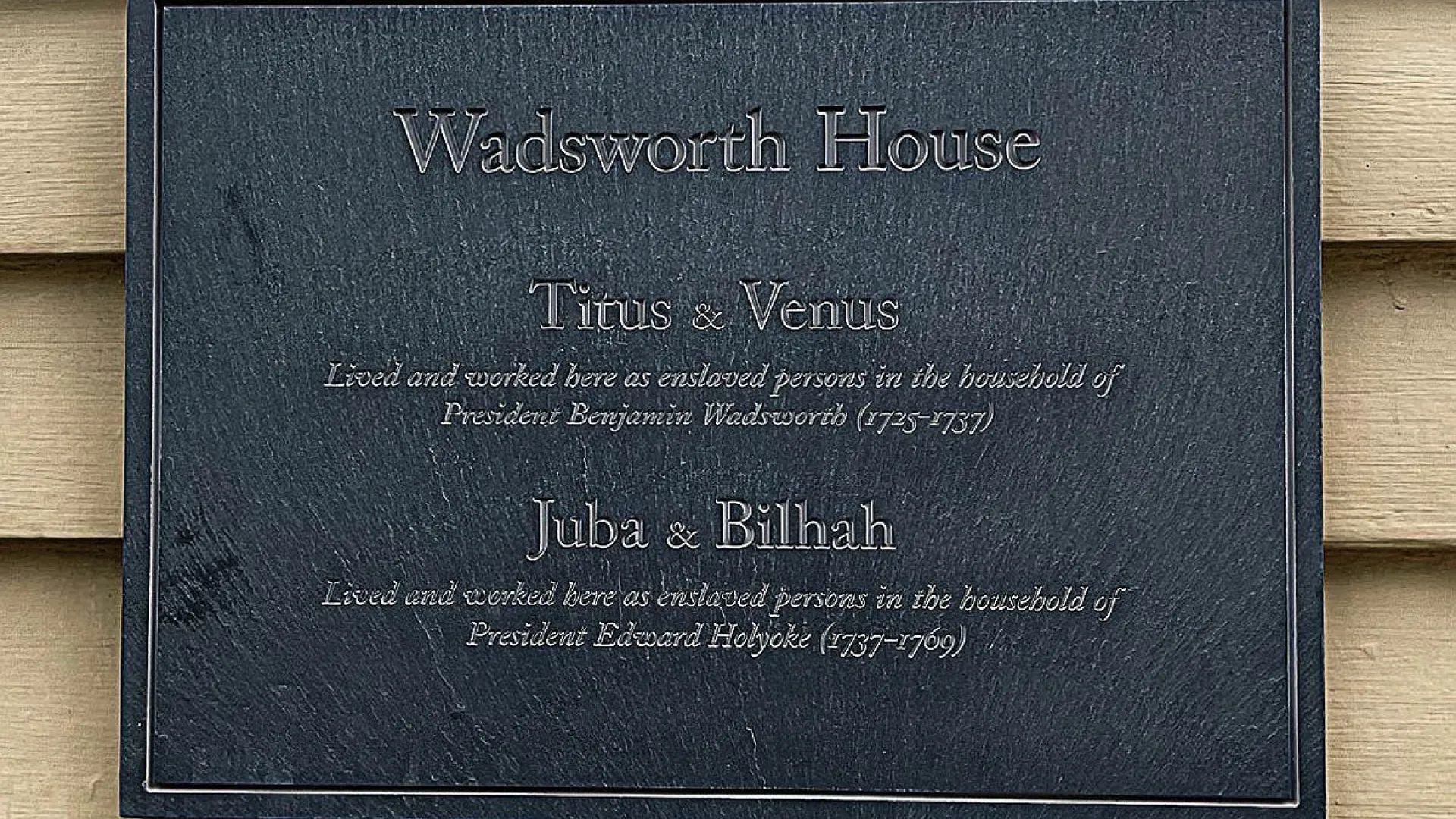
The 2022 investigation, commissioned by President Lawrence Bacow, exposed that slavery was present from the very beginning. The schoolmaster, Nathaniel Eaton, was accused of mistreating his "Moor," an enslaved man whose name remains lost to history. This pattern at the highest levels of leadership. Increase Mather, who served as president from 1692 to 1701, enslaved a man named Spaniard. Benjamin Wadsworth, president from 1725 to 1737, enslaved a man named Titus. University records show Titus worked for the Wadsworth family on campus between 1728 and 1740. The labor of Titus and others like Venus, Bilhah, and Juba subsidized the academic of the colonial elite. They cooked, cleaned, and maintained the grounds while the university built its reputation on the theology of liberation.
Harvard's financial survival in the 18th century depended on the Caribbean sugar trade. The university did not accept donations from slaveholders. It operated as a lending institution that injected capital into the West Indian plantation system. The endowment grew through loans to sugar planters, rum distillers, and provision merchants who supplied the Caribbean colonies. New England's economy functioned as a service hub for the slave colonies of the West Indies. Harvard was a direct beneficiary of this geopolitical arrangement. The timber, cod, and livestock produced in Massachusetts fed the enslaved populations in Antigua and Barbados, while the profits from those plantations returned to Boston and Cambridge in the form of tuition and bequests.
The most tangible evidence of this blood money lies in the founding of Harvard Law School. Isaac Royall Jr., a wealthy merchant, inherited a sugar plantation in Antigua. The Royall family wealth was extracted from the brutal labor of enslaved Africans. In 1736, a slave revolt in Antigua was suppressed with extreme violence, including the execution of 88 enslaved people. Royall later moved to Medford, Massachusetts, bringing 27 enslaved people with him. In his, he left land to Harvard to establish a professorship of law. This bequest, funded by the profits of human chattel, created the Royall Professorship in 1815. This chair was the seed that grew into Harvard Law School in 1817.
For decades, the Law School openly celebrated this lineage. In 1937, the Harvard Corporation approved a crest for the Law School that featured three sheaves of wheat. This design was taken directly from the Royall family coat of arms. The university displayed this symbol of slaveholding wealth on buildings, merchandise, and stationery for nearly 80 years. It was only in 2016, following intense student activism and the "Royall Must Fall" movement, that the Law School retired the shield. Yet the financial foundation remains. The sale of Royall's land provided the capital that allowed the Law School to hire its faculty and establish its dominance in American legal education.
The 2022 report also highlighted the role of the Indian College, established in the 1650s to evangelize Indigenous people. While the educational mission largely failed, the physical structure housed the colony's printing press. This press produced the Bible printed in North America. The labor required to operate this press and maintain the college infrastructure frequently fell to enslaved people and indentured servants. The university's expansion into Indigenous lands mirrored its exploitation of African labor. The endowment grew by acquiring land through dispossession, further intertwining the institution with the twin colonial projects of slavery and settler colonialism.
By the mid-18th century, the connections between Harvard and the slave trade were direct. The list of donors reads like a registry of the Atlantic merchant class. Families such as the Olivers, Vassalls, and Brattles, whose names still adorn Cambridge streets and campus buildings, amassed fortunes through the triangular trade. Andrew Bordman, a university steward, enslaved at least eight people. He is suspected to have been one of the largest slaveholders in the area. His enslaved workers, including a woman named Rose, kept the college fed and operational. The 2022 report confirmed that these individuals were not anomalies. They were essential components of the university's infrastructure.
In April 2022, Harvard pledged $100 million to a "Legacy of Slavery" fund to address these findings. The university promised to identify and support the descendants of those enslaved by its leadership. Yet the execution of this pledge has faced serious criticism. In January 2025, the university fired the staff of the "Slavery Remembrance Program," the very team tasked with conducting this genealogical research. This decision sparked outrage and raised questions about the durability of Harvard's commitment. While the university claimed the work would continue through a partnership with the New England Historic Genealogical Society, the abrupt dismissal of the internal team suggested a retreat from the urgent moral obligation articulated just three years prior.
As of March 2026, the "Reparative Grant Program" has disbursed approximately $2. 3 million to community nonprofits, a fraction of the promised $100 million endowment. The interest alone on Harvard's $50 billion endowment exceeds this disbursement by orders of magnitude every week. The between the university's wealth, accumulated in part through centuries of unpaid labor, and its reparative spending remains a point of contention. The data from 1700 to the present shows a consistent pattern: Harvard accumulates capital through the exploitation of marginalized groups, acknowledges the harm centuries later, yet moves with extreme caution when asked to redistribute that wealth.
Known Enslaved Individuals at Harvard (Partial List, 1700, 1783)
Name
Enslaved By
Role/Connection
Documented Dates
Titus
Pres. Benjamin Wadsworth
Served President's House
1728, 1740
Venus
Pres. Benjamin Wadsworth
Served President's House
1726, 1737
Spaniard
Pres. Increase Mather
Served President's House
Late 17th Century
Juba
Edward Wigglesworth
Prof. of Divinity
Mid-18th Century
Rose
Andrew Bordman (Steward)
Campus Service
Mid-18th Century
Bilhah
Pres. Edward Holyoke
Served President's House
1760s
Unidentified "Moor"
Nathaniel Eaton
Schoolmaster
1639
The economic data is clear. Harvard did not exist in a time of slavery. It was a participant. The transition from the colonial era to the 19th century saw the university shift its investment strategy from Caribbean sugar to Southern cotton, ensuring that the endowment continued to profit from enslaved labor well after slavery was outlawed in Massachusetts. The 5 prominent donors who contributed one-third of all private donations in the early 19th century, Perkins, Bussey, McLean, Lawrence, and Brooks, derived their fortunes from trading with slave economies. This financial pipeline ensured that the wealth generated by the brutalization of human beings in the 1700s became the bedrock of the university's modern dominance.
The Harvard Management Company: Endowment Strategy and Liquidity Mechanisms
Colonial Foundations and Economic Ties to Atlantic Slavery (1636, 1783)
The Harvard Management Company (HMC) stands as the central nervous system of the university's financial power, operating less like a traditional educational reserve and more like a sovereign wealth fund with a campus attached. Established in 1974, HMC was the of its kind, a distinct entity created to professionalize the management of the university's assets. Before this shift, the endowment was managed by a treasurer and a committee, frequently relying on the conservative stewardship of State Street Bank. The creation of HMC marked a departure from this passive method, signaling Harvard's intent to aggressively grow its capital through active, high-risk strategies. By 2026, this entity controlled assets valued at $56. 9 billion, a sum larger than the GDP of nations, yet its history is punctuated by periods of extreme volatility, compensation scandals, and liquidity crises that nearly paralyzed the university.
The modern era of HMC is defined by the tenure of Jack Meyer, who led the organization from 1990 to 2005. Under Meyer, HMC adopted a "hybrid model," employing internal trading teams to manage assets directly rather than farming them out to Wall Street firms. This strategy allowed Harvard to pay lower fees than its peers while generating alpha through proprietary trading desks situated right in Boston. The results were mathematically spectacular. During Meyer's final decade, the endowment returned an annualized 15. 9 percent, growing from $4. 8 billion to $25. 9 billion. Yet, this success birthed a fierce controversy regarding compensation. In 2003 and 2004, the top bond managers at HMC earned between $25 million and $35 million annually, figures that dwarfed the salaries of the university president and star faculty. A revolt among alumni, who viewed these payouts as antithetical to the nonprofit mission, forced a cap on manager pay. Meyer and his top lieutenants subsequently resigned, taking their alpha-generating strategies to private hedge funds.
The departure of the internal teams left HMC just as the global financial system began to fracture. The 2008 financial emergency exposed a fatal flaw in the "Endowment Model" championed by Harvard and Yale. The strategy relied heavily on the "Policy Portfolio," a theoretical mix of assets designed to capture the illiquidity premium, extra returns gained by locking up money in private equity, timber, and real estate. The model assumed that diversification would protect the fund, in 2008, correlations across all asset classes converged to one. Everything fell together. Harvard's endowment plunged 27. 3 percent in a single fiscal year, erasing $11 billion in wealth. The damage was not on paper; the university faced a catastrophic liquidity crunch.
Harvard's liquidity emergency was exacerbated by its aggressive use of derivatives. The university had entered into billions of dollars in interest rate swaps, betting that rates would rise. When the Federal Reserve slashed rates to near zero to save the economy, the value of these swaps collapsed, and counterparties demanded immediate collateral. Unlike a corporation with cash reserves, Harvard's wealth was trapped in illiquid assets like timberland in New Zealand and private equity funds that had halted distributions. To meet margin calls and fund daily operations, the university was forced to borrow $2. 5 billion in the bond market at punitive interest rates. The total cost of unwinding these toxic swaps exceeded $1 billion. The emergency forced the administration to halt construction on the Allston science complex, freeze hiring, and lay off staff, shattering the illusion of the endowment's invincibility.
Following a "lost decade" of leadership turnover and underperformance relative to peers like Yale and Dartmouth, HMC appointed N. P. "Narv" Narvekar as CEO in late 2016. Narvekar, recruited from the Columbia University endowment, initiated a radical restructuring that dismantled the house Jack Meyer built. He argued that the internal "silo" model, where specific teams managed specific asset classes, created misalignment and prevented a view of risk. Between 2017 and 2021, Narvekar fired nearly half of HMC's 230-person staff, shutting down the internal real estate and equity trading desks. The strategy shifted entirely to the "Generalist Model," where a lean team of investment officers selects external managers to invest Harvard's capital. This move outsourced Harvard's money management to Wall Street, replacing transparent internal salaries with unclear external management fees that are netted out of returns and thus less visible to serious alumni.
The Narvekar era has seen a decisive pivot toward private markets, increasing the endowment's exposure to illiquid assets even further than before the 2008 crash. By fiscal year 2025, HMC allocated approximately 41 percent of its portfolio to private equity and 31 percent to hedge funds, leaving only 14 percent in public equities. This aggressive bet on private equity was designed to capture high returns, yet it also reintroduced significant liquidity risks. In fiscal year 2023, the endowment returned a sluggish 2. 9 percent, lagging behind the S&P 500 and peer institutions, as private valuations failed to keep pace with the public market rally. Critics noted that while the S&P 500 surged, Harvard's heavy anchor in private assets dragged down performance.
The strategy began to bear fruit again by 2025. Data released in October 2025 revealed that the endowment returned 11. 9 percent for the fiscal year, bringing the total value to $56. 9 billion. This performance marked a recovery from the mediocrity of previous years, driven by a rebound in private equity valuations and strong manager selection in hedge funds. The table outlines the shift in strategy and performance across the three defining eras of HMC.
Era
Leadership
Primary Strategy
Key Outcome
1990, 2005
Jack Meyer
Hybrid (Internal Trading)
15. 9% annualized return; compensation scandals led to team exodus.
2005, 2014
El-Erian / Mendillo
Policy Portfolio (Illiquid)
27. 3% loss in 2008; $1B+ swap losses; liquidity emergency.
Even with the return to growth, the structural risks of the Harvard model remain a subject of intense scrutiny. The reliance on private equity means that nearly three-quarters of the endowment is locked in assets that cannot be easily sold. In a high-interest-rate environment, the cost of use increases, and the exit strategies for private equity firms, IPOs and acquisitions, frequently dry up. HMC has attempted to mitigate this by maintaining a cash buffer, the fundamental tension between the university's need for operating cash and the endowment's long-term lockups. The shift to outsourcing also means Harvard pays hundreds of millions in fees to external managers, a cost that is deducted from returns rarely itemized in public reports.
The divestment movement has further complicated HMC's mandate. After years of pressure from student activists and faculty, Harvard committed in 2021 to divest from fossil fuels. By 2026, the endowment had largely wound down its direct holdings in oil and gas, yet the opacity of its external hedge fund investments makes it difficult to verify the complete absence of carbon-heavy assets. The "Generalist" model, by design, hands control to third-party managers who may not adhere strictly to the university's ethical guidelines without constant oversight. As HMC moves forward, it balances on a knife-edge: chasing the high returns required to fund 37 percent of Harvard's operating budget while navigating the liquidity traps that nearly destroyed it two decades ago.
Systemic Admissions Preferences: Legacy, Z-List, and the SFFA Ruling Impact
The architecture of Harvard's admissions process is not a selection method; it is a historical artifact designed to engineer specific demographic outcomes. While the 2023 Supreme Court ruling in Students for Fair Admissions (SFFA) v. Harvard dismantled race-conscious affirmative action, it left untouched the "ALDC" preferences, Athletes, Legacies, Dean's Interest List, and Children of faculty/staff. These categories, which disproportionately benefit white, wealthy applicants, remain the operational backbone of Harvard's enrollment strategy. Data from the SFFA trial and subsequent filings reveals a system where meritocracy is frequently superseded by lineage and donor relations.
The origins of legacy preference at Harvard are rooted not in benign tradition, in explicit ethnic exclusion. In the 1920s, President A. Lawrence Lowell identified what he termed a "Jewish problem." The proportion of Jewish students had risen from 7% in 1900 to nearly 28% by 1922. Lowell, fearing that Harvard would lose its identity as a bastion for the Protestant elite, proposed a strict 15% quota. When the faculty rejected a hard cap, the administration pivoted to a subjective "character and fitness" standard, a precursor to today's "personal rating." Admissions officers began using a classification system labeled J1, J2, and J3 to identify and limit Jewish applicants. This shift successfully reduced Jewish enrollment to 15% by 1933. Crucially, this era birthed the institutional preference for sons of alumni, a method specifically designed to dilute the "foreign" element with "old stock" Americans. This policy remains active today, insulating the children of predominantly white alumni from pure academic competition.
Modern data from the SFFA litigation exposes the sheer of this insulation. Between 2014 and 2019, the admission rate for ALDC applicants was approximately 34%, compared to just 5% for non-ALDC applicants. For white students specifically, the is: over 43% of all white admits to Harvard are ALDC. Without this preference, roughly three-quarters of these students would have been rejected based on academic merit alone. The "Dean's Interest List" and "Director's List", confidential rosters of applicants connected to high-value donors, further bypass standard review processes. These applicants are frequently flagged for special handling, ensuring that financial capital directly into academic access.
Perhaps the most unclear element of this system is the "Z-List." Comprising approximately 50 to 60 students annually, this deferred admissions pathway allows Harvard to secure students who do not meet the academic standards of the incoming class without damaging the university's reported average SAT and GPA statistics. SFFA analysis revealed that 70% of Z-List admits are white, and nearly half are legacies. Their academic profiles frequently resemble those of rejected applicants rather than admitted ones. By requiring these students to take a gap year, Harvard "data launders" their lower scores, as they are not reported in the freshman class profile for the year they are accepted. This back door ensures that well-connected applicants are admitted even when their credentials fall the university's own bar for merit.
The table details the clear admission rate disparities revealed during the SFFA trial, contrasting the "ALDC" protected class against the general applicant pool.
Harvard Admission Rates by Category (2014, 2019 Data)
Applicant Category
Admission Rate
Relative Advantage
ALDC (Athlete, Legacy, Dean's, Staff)
33. 6%
~6. 7x higher than non-ALDC
Non-ALDC Applicants
5. 0%
Baseline
Legacy Applicants Only
34. 0%
~6. 8x higher than baseline
Recruited Athletes
86. 0%
~17. 2x higher than baseline
The impact of the 2023 Supreme Court ruling became immediately visible with the Class of 2028, the cohort admitted under the new race-blind mandate. Black enrollment dropped significantly from 18% to 14%, while Hispanic enrollment saw a modest rise to 16%. Asian American enrollment remained flat at 37%, predictions that the removal of race-conscious policies would lead to a surge in Asian admits. This stagnation suggests that other structural blocks, specifically the ALDC preferences, continue to cap Asian American representation. The "personal rating" metric, which SFFA experts demonstrated consistently penalized Asian applicants with lower scores for traits like "courage" and "likability" even with higher academic performance, remains a contested part of the review process.
Federal scrutiny has intensified in the wake of the ruling. In July 2023, the U. S. Department of Education's Office for Civil Rights (OCR) opened a formal investigation into Harvard's legacy admissions, following a complaint alleging that the practice violates the Civil Rights Act of 1964 by discriminating on the basis of race. The investigation focuses on the fact that 70% of legacy applicants are white, creating a impact that no longer has the legal cover of affirmative action. Tensions escalated in late 2025 when the Department of Education issued a "Denial of Access" letter to Harvard, citing the university's refusal to provide specific data points regarding donor-related admissions. This standoff threatens Harvard's access to federal funding, marking a rare instance of direct federal intervention into the university's private governance.
As of 2026, Harvard has returned to mandatory standardized testing for the Class of 2029, a move administrators helps identify talent in under-resourced schools, though critics contend it further advantages those with access to expensive test preparation. The university has not voluntarily ended legacy preferences, unlike peer institutions such as Amherst and Johns Hopkins. The persistence of the Z-List and the ALDC pipeline indicates that while the front door of affirmative action has been closed, the side doors for the privileged remain wide open. The data confirms that for the wealthy and well-connected, admission to Harvard is less a competition and more an inheritance.
Research Misconduct Allegations: Data Falsification and Retraction Indices (2010, 2026)
The Harvard Management Company: Endowment Strategy and Liquidity Mechanisms
The of "Veritas" at Harvard University has faced a serious challenge, as a succession of high-profile data falsification scandals has exposed deep fractures in the institution's research integrity. Between 2010 and 2026, Harvard and its affiliated teaching hospitals, Brigham and Women's Hospital (BWH), Dana-Farber Cancer Institute (DFCI), and Beth Israel Deaconess Medical Center, have been the epicenter of of the most damaging scientific frauds in academic history. These are not incidents of error a pattern of widespread misconduct involving top-tier faculty, millions of dollars in federal grants, and the retraction of dozens of papers that once defined their respective fields. The of the problem became undeniable with the fall of Piero Anversa, a once-celebrated giant in cardiac cell research. For years, Anversa claimed that the heart possessed its own supply of cells, known as "c-kit" cells, which could regenerate damaged tissue. This finding promised a revolution in treating heart failure and attracted massive funding from the National Institutes of Health (NIH). Yet, the data did not hold up to scrutiny. In 2018, after an exhaustive internal investigation, Harvard Medical School and Brigham and Women's Hospital took the extraordinary step of requesting the retraction of 31 papers from Anversa's lab. The investigation concluded that the lab had falsified and/or fabricated data to support the c-kit hypothesis. The was financial as well as reputational: in April 2017, Brigham and Women's Hospital agreed to pay $10 million to the U. S. government to settle allegations that the fraudulent work had been used to obtain federal grant money. The "c-kit" cells, once the hope of cardiology, are widely regarded as a scientific fiction, maintained for years through manipulated images and suppressed dissent. While Anversa's case involved biological data, the scandal surrounding Francesca Gino struck at the very heart of behavioral science. A star professor at Harvard Business School, Gino rose to prominence studying honesty and unethical behavior. In a twist of supreme irony, she was accused in 2023 of fabricating data in her own studies on dishonesty. The allegations surfaced after a team of data sleuths from the blog *Data Colada*, Uri Simonsohn, Leif Nelson, and Joe Simmons, published a detailed analysis of four of her papers. They found anomalies so clear that they suggested deliberate tampering, such as sorting data points in Excel to achieve a desired p-value. Harvard's internal investigation corroborated these findings, leading to Gino's placement on unpaid administrative leave and the subsequent revocation of her tenure, a measure not seen at the university in nearly 80 years. Gino responded with a $25 million lawsuit against Harvard and the bloggers, alleging defamation and breach of contract. The legal battle, which stretched into 2025 and 2026, kept the controversy in the public eye, serving as a constant reminder of the fragility of trust even in the study of ethics itself. The emergency deepened in early 2024 with a massive scandal at the Dana-Farber Cancer Institute, a Harvard affiliate. British molecular biologist and image sleuth Sholto David published a blog post in January 2024 titled "Nuns, Spies, and Nucleotides," which flagged dozens of papers for chance image manipulation. The allegations implicated of the institute's most senior leadership, including President and CEO Laurie Glimcher, COO William Hahn, and senior researcher Irene Ghobrial. The accusations centered on the misuse of Western blot images, a common technique for detecting proteins, where bands appeared to be copy-pasted, stretched, or rotated to fit the desired conclusion. The response from Dana-Farber was swift damaging. The institute initially announced it would retract 6 papers and correct 31 others. the legal consequences followed soon after. In December 2025, the U. S. Department of Justice announced a $15 million settlement with Dana-Farber to resolve allegations that it violated the False Claims Act. The government contended that the institute had submitted false statements to the NIH by including manipulated data in grant applications between 2014 and 2024. The settlement included a $2. 6 million award to the whistleblower, Sholto David, validating his independent investigation. This case demonstrated that the "publish or perish" culture had infected the highest levels of administration, where the pressure to secure federal funding apparently overrode the obligation to verify raw data. Another front in this war on fraud opened with Khalid Shah, a neuroscientist at Harvard Medical School and Brigham and Women's Hospital. In early 2024, Shah faced allegations of data falsification involving 44 instances of image manipulation across 21 papers published between 2001 and 2023. The accusations, again brought to light by independent sleuths like Elisabeth Bik, involved the reuse of images from other papers and even from vendor catalogs, presented as original experimental results. The sheer volume of these errors pointed to a "photoshop culture" in certain labs, where the visual evidence of an experiment was treated as a digital asset to be edited rather than a faithful record of reality. The historical context of these modern failures is significant. In 2010, Marc Hauser, a prominent psychology professor, resigned after an internal investigation found him responsible for eight instances of scientific misconduct. Hauser had been a star in the field of evolutionary psychology, his downfall presaged the replication emergency that would engulf the social sciences. His case, like Gino's over a decade later, showed that prestige offered no immunity against the temptation to cut corners. The cumulative effect of these scandals has been a measurable decline in Harvard's standing in retraction indices. By 2026, the university and its affiliates had accumulated a retraction count that rivaled entire nations. The *Retraction Watch* database, a definitive record of scientific corrections, lists hundreds of entries for Harvard-affiliated authors. This is not a statistical anomaly a reflection of a widespread problem in how research is incentivized and policed. The reliance on high-impact publications for tenure and grants creates a perverse incentive structure where the speed of production is valued over the rigor of verification. These cases also reveal the changing mechanics of accountability. In the past, fraud might have gone for decades. Today, a global network of volunteer sleuths, armed with software like ImageTwin and a commitment to scientific integrity, can a career in days. The "peer review" process has shifted from the pre-publication stage to the post-publication arena, where blogs and social media serve as the new gatekeepers of truth. The financial settlements, $10 million for Anversa, $15 million for Dana-Farber, $1. 3 million for the Chan School of Public Health in 2020, show that research misconduct is also a legal liability. The Department of Justice has made it clear that falsifying data in a federal grant application is a form of theft from the taxpayer. For Harvard, the cost is measured not just in dollars in the of its most valuable asset: its authority. When the world's wealthiest university cannot guarantee the validity of the research produced in its own labs, the entire scientific enterprise suffers. The data from 2010 to 2026 tells a story of an institution struggling to maintain control over its vast research output, repeatedly humbled by the very tools of inquiry it claims to master.
Executive Governance: The Corporation, Board of Overseers, and Presidential Turnover
The governance of Harvard University rests upon a structure that is less a modern academic administration and more a self-perpetuating oligarchy, insulated from external pressure by a charter dating to 1650. At the apex sits the Harvard Corporation, formally known as the President and Fellows of Harvard College. It holds the distinction of being the oldest corporation in the Western Hemisphere. For over three and a half centuries, this body consisted of exactly seven members: the President, the Treasurer, and five Fellows. They own the university's assets, appoint the President, and hold final authority over the endowment. Unlike public universities answerable to state legislatures, or private peers with large, rotating boards of trustees, the Corporation operates with a level of secrecy that rivals sovereign intelligence agencies. Vacancies are filled by the remaining members, ensuring ideological and operational continuity that critics breeds insularity.
The major fracture in this closed system occurred following the 2008 global financial emergency. The university's endowment, heavily leveraged and aggressively managed, plummeted by nearly 30 percent, vaporizing billions of dollars in wealth. The catastrophe exposed the limitations of a seven-member board, which absence the bandwidth to oversee a complex multinational financial and academic conglomerate. In 2010, the Corporation enacted its most significant structural change in 360 years. It expanded its membership from seven to thirteen, adding more Fellows to bring financial and managerial expertise into the fold. This reform also introduced term limits for Fellows, six years, renewable once, though the self-selecting nature of the body remained intact. The expansion was not a move toward democracy; it was a fortification of the central command against future economic shocks.
While the Corporation solidified its internal defenses, the Board of Overseers, the larger, 30-member body elected by alumni, became the site of a rare democratic insurgency. Historically, the Overseers served a largely ceremonial advisory role, rubber-stamping the Corporation's decisions. Yet, in 2020, a group of alumni organized under the banner "Harvard Forward" successfully petitioned to place candidates on the ballot who ran on a platform of climate justice and governance reform. even with the university's institutional favoring the official slate, three Harvard Forward candidates won seats. The Corporation's response was swift and exclusionary. In 2021, the university altered the election rules to cap the number of petition candidates who could serve on the Board of Overseers at six. This rule change neutralized the petition process as a vehicle for hostile takeovers or significant policy shifts, ensuring that the "official" nominating committee maintained a stranglehold on the Board's composition.
The fragility of this top-down control became clear during the presidential tenure crises of the 21st century. The ouster of Lawrence Summers in 2006 marked the time the Faculty of Arts and Sciences (FAS) successfully revolted against a Corporation-backed president. Summers, a former U. S. Treasury Secretary, clashed with faculty over his management style and comments regarding women in science. A vote of no confidence by the FAS forced the Corporation to accept his resignation, signaling a shift in the balance of power where the faculty could check the executive. Yet, the Corporation's vetting process failed to learn from this volatility, leading to the catastrophic and historically brief tenure of Claudine Gay.
Claudine Gay assumed the presidency on July 1, 2023, following a search process led by Senior Fellow Penny Pritzker. Her tenure lasted only 185 days, the shortest in Harvard history. The collapse began with a disastrous congressional hearing on antisemitism in December 2023, where Gay's legalistic responses to questions about genocide provoked international outrage. The emergency metastasized when conservative activists and investigative journalists unearthed dozens of instances of insufficient citation and plagiarism in her academic record. The Corporation initially issued a statement of unanimous support on December 12, 2023, attempting to power through the scandal. By January 2, 2024, the weight of the plagiarism allegations and donor revolts forced the Corporation to reverse course and accept her resignation. The reversal exposed a severe failure in the Corporation's due diligence and decision-making capabilities, damaging the credibility of Pritzker and the Fellows.
Following Gay's exit, the Corporation retreated to a posture of extreme risk aversion. Provost Alan Garber was immediately appointed interim president. A longtime administrator with degrees in economics and medicine, Garber represented a safe, stabilizing choice. In August 2024, the Corporation discarded the "interim" title, naming Garber the permanent president through June 2027. This decision allowed the university to bypass the risks of another high-profile search immediately after the Gay debacle. The strategy of caution continued; on December 15, 2025, Senior Fellow Penny Pritzker announced that Garber's term would be extended indefinitely beyond the 2027 cutoff. This move signaled that the Corporation had no appetite for a new transition, preferring the known quantity of Garber to the uncertainty of a fresh appointment in a polarized political climate.
The data on presidential tenure reveals a clear collapse in leadership longevity. In the 19th and early 20th centuries, Harvard presidents served for decades, shaping the institution over generations. Charles William Eliot served 40 years; Abbott Lawrence Lowell served 24. By the 21st century, the role had become a volatile political hot seat. The average tenure has plummeted, reflecting the intensified pressures from donors, faculty, and external political forces that the secretive Corporation struggles to manage.
The governance emergency at Harvard is not a matter of personnel of structural design. The Corporation was built for a colonial college of clergymen, not a $50 billion global enterprise under constant digital surveillance. The 2010 reforms added bodies did not alter the fundamental insularity of the board. The 2021 crackdown on the Board of Overseers elections proved that the institution views democratic input as a threat to be managed rather than a resource to be used. As of March 2026, the indefinite extension of Alan Garber's presidency serves as a holding pattern, a tacit admission that the Corporation has not yet found a way to navigate the modern era's demands for transparency and accountability without surrendering its absolute control.
Congressional Probes: Title VI Violations and the Antisemitism Task Force Reports
Systemic Admissions Preferences: Legacy, Z-List, and the SFFA Ruling Impact
The congressional and federal investigations into Harvard University between 2023 and 2026 represent the most severe external scrutiny in the institution's modern history. Following the disastrous testimony of President Claudine Gay in December 2023, the House Committee on Education and the Workforce launched a formal inquiry that quickly escalated into a legal siege. In February 2024, Committee Chairwoman Virginia Foxx issued subpoenas to Harvard leadership. This action marked the time in the 157-year history of the committee that it served a subpoena to a university. The committee demanded documents related to the university's response to antisemitism and the disciplinary failures regarding campus protests. While Harvard initially produced 2, 500 pages, the committee rejected this as "woefully insufficient" and noted that 40 percent of the material was already publicly available. By the conclusion of the probe in late 2024, the university had surrendered over 400, 000 pages of internal communications.
The findings released in the Committee's October 2024 report, titled "Antisemitism on College Campuses Exposed," dismantled the university's claims of enforcing its own rules. The report detailed a widespread failure to discipline students who engaged in harassment and encampments. Data obtained by the committee showed that of the 68 students referred for disciplinary action related to the spring 2024 encampment, 52 remained in "good standing" with the university. None of the students faced suspension. The committee found that the Harvard Corporation and senior administrators made "astounding concessions" to protesters to end the encampment. These concessions included reinstating the Harvard Undergraduate Palestine Solidarity Committee. This group had been suspended for violating campus policies yet received amnesty as part of the negotiation. The report concluded that the administration deliberately withheld support from Jewish students and prioritized the appeasement of rule-breaking demonstrators.
Federal agencies simultaneously escalated their enforcement of Title VI of the Civil Rights Act of 1964. In January 2025, Harvard reached a settlement with the Louis D. Brandeis Center for Human Rights Under Law to resolve a federal lawsuit. As part of this agreement, the university agreed to apply the International Holocaust Remembrance Alliance (IHRA) definition of antisemitism when evaluating complaints. This legal bind forced the administration to treat anti-Zionist harassment that Jewish identity as a civil rights violation. The settlement also required the university to clarify that its non-discrimination policies cover shared ancestry and ethnic characteristics. This move stripped the administration of the ambiguity it had previously used to dismiss complaints from Jewish students.
The situation further in June 2025 when the Department of Education and the Department of Health and Human Services (HHS) concluded a separate investigation. In a notification sent to President Alan Garber on June 30, 2025, the Office for Civil Rights declared Harvard in "violent violation" of Title VI. The agencies a pattern of "deliberate indifference" to the harassment of Jewish students. The notification explicitly threatened the university's federal funding. This threat placed approximately $676 million in annual federal research grants at risk. The investigation found that the university allowed a hostile environment to for over 19 months. It specific instances where faculty and staff not only failed to intervene participated in the exclusion of Zionist students from campus spaces.
Internal efforts to address the emergency produced conflicting results. The Presidential Task Force on Combating Antisemitism and Anti-Israeli Bias, convened in early 2024, released its final report in April 2025. The document confirmed that Jewish and Israeli students faced "intense campus hostility" and "political litmus tests" for participation in student life. The report criticized the Office of Equity, Diversity, Inclusion, and Belonging (OEDIB) for failing to support Jewish students. It noted that students felt the DEI infrastructure was ideologically opposed to their presence. The university subsequently renamed the office and altered its mandate. Yet the simultaneous release of a report from the Task Force on Anti-Muslim and Anti-Arab Bias created immediate friction. The two reports offered diverging recommendations on academic freedom and the definition of hate speech. This internal contradiction left the administration with a fractured roadmap for policy implementation.
By March 2026, the financial and reputational costs of these probes became quantifiable. The university spent millions in legal fees to manage the concurrent congressional and Department of Education investigations. Donor trust plummeted. Major benefactors the findings of the October 2024 congressional report as proof that the institution had abandoned its core mission. The imposition of federal monitoring requirements following the Title VI settlement created a of government oversight that dictates internal grievance procedures. Harvard no longer operates with the autonomy it enjoyed prior to 2023. It functions under a federal magnifying glass that enforces compliance with civil rights laws the administration had long neglected.
Donor Relations: Philanthropic Retraction and the 2024 Financial Impact
The fiscal consequences of the 2023, 2024 campus unrest materialized with absolute clarity in October 2024, when Harvard University released its financial report for the fiscal year ending June 30, 2024. The data confirmed what administration officials had privately feared: a massive retraction of philanthropic support. Total cash gifts to the university fell by $151 million, a 14 percent decline from the previous year. More worrying for the institution's long-term planning was the 34 percent collapse in new gifts to the endowment, which dropped to $368 million. This contraction represented the most severe fundraising downturn for the university since the 2008 financial meltdown, signaling that the "donor revolt" was not a public relations skirmish a material threat to the university's balance sheet.
The catalyst for this financial exodus was the administration's response to the October 7, 2023, Hamas attacks and the subsequent testimony of then-President Claudine Gay before Congress. Yet the retraction was driven by specific, high-net-worth individuals who controlled vast segments of Harvard's discretionary funding. Ken Griffin, the Citadel CEO who had donated over $500 million to the university, including $300 million in early 2023 to rename the Graduate School of Arts and Sciences, publicly paused his giving in January 2024. Griffin's critique was scathing; he labeled students "whiny snowflakes" and stated he was "not interested in supporting the institution" until it resumed its role in educating productive leaders rather than activists. His withdrawal froze a pipeline of capital that the university had integrated into its future infrastructure projects.
The Wexner Foundation, led by retail billionaire Leslie Wexner, was the major domino to fall. In October 2023, the foundation formally severed its 34-year relationship with the Harvard Kennedy School, canceling a fellowship program that had trained hundreds of Israeli public service leaders. The foundation's leadership the university's "dismal failure" to take a clear stand against terrorism. This exit was followed by Len Blavatnik, whose family foundation had contributed at least $270 million to Harvard, primarily to the Medical School. Blavatnik suspended donations in December 2023, demanding that the university address antisemitism with the same vigor applied to other forms of discrimination. Idan and Batia Ofer also resigned from the Kennedy School's executive board, citing a loss of faith in the university's leadership.
This of wealthy patrons exerting ideological pressure through the purse strings is not a modern anomaly a foundational element of Harvard's history. In the 18th and 19th centuries, the university relied heavily on the "Cotton Whigs", merchant families like the Lowells and Lawrences whose fortunes were inextricably linked to the textile industry and, by extension, the slave labor of the American South. Just as modern donors threatened to withhold funds over the administration's geopolitical stance, 19th-century textile magnates pressured the university to suppress abolitionist sentiment that might threaten their supply of raw cotton. The 2022 Harvard & the Legacy of Slavery report acknowledged that during the antebellum period, the university prioritized the financial interests of these donors over moral considerations, laundering the profits of the Atlantic slave trade into academic prestige.
The 2024 financial data reveals a specific vulnerability in Harvard's economic model: the reliance on "current use" gifts versus endowment contributions. While the endowment remains massive at over $53 billion, it is largely restricted; funds are legally bound to specific purposes like professorships or financial aid. The administration relies on fresh, unrestricted cash for operational flexibility. The 2024 report showed that while current use gifts actually rose slightly, driven by payments on pledges made before the emergency, the pipeline for future endowment growth was severed. The 34 percent drop in endowment giving indicates that donors were not just withholding cash for the year; they were canceling long-term commitments that would have sustained the university decades into the future.
Harvard University Philanthropic Retraction (FY2023 vs. FY2024)
Metric
Fiscal Year 2023
Fiscal Year 2024
Change
Total Cash Gifts
$1. 38 Billion
$1. 23 Billion
-14%
Endowment Gifts
$561 Million
$368 Million
-34%
Current Use Gifts
$486 Million
$528 Million
+8. 6%
Donation Impact
Stable Growth
10-Year Low
Negative
By early 2026, the university attempted to the bleeding through the adoption of "Institutional Neutrality," a policy recommendation from a working group formed in mid-2024. This doctrine, intended to prevent the university from issuing official statements on geopolitical matters not directly affecting its core function, was a direct concession to critics who argued the administration had become too politically active. President Alan Garber, who succeeded Gay, spent much of 2025 on a "listening tour" with alumni, attempting to repair the fractured trust. While smaller donors returned, the major capital allocators remained cautious. The structural damage to the university's reputation among its most capitalized alumni created a deficit not just of funds, of advocacy; the "unrestricted" giving that allows a university president to had dried up.
The retraction also exposed the fragility of the university's bond with its alumni base. For generations, giving to Harvard was viewed as a status marker, a transaction that purchased social capital as much as it supported education. The 2024 revolt broke this social contract. Donors like Bill Ackman, who used social media to amplify the pressure campaign, demonstrated that modern philanthropy is activist in nature. The "checkbook activism" of 2024 mirrors the influence of the Isaac Royalls of the 1700s, proving that even with three centuries of evolution, the university's survival remains contingent on the approval of the merchant class.
Real Estate Hegemony: The Allston Expansion and Enterprise Research Campus
Research Misconduct Allegations: Data Falsification and Retraction Indices (2010, 2026)
The expansion of Harvard University into Allston is not a story of academic need, of calculated real estate conquest. For decades, the university operated as a stealth hedge fund, using shell companies to annex a neighborhood that constitutes more of its landmass than its Cambridge home. By 2026, this "campus" has morphed into a commercial engine, the Enterprise Research Campus (ERC), where tax-exempt prestige launders for-profit biotechnology revenues, fundamentally altering the socioeconomic terrain of Boston. ### The Stealth Campaign (1988, 1997) Harvard's invasion of Allston began in silence. Between 1988 and 1997, the university secretly deployed the Beal Companies, a prominent Boston real estate firm, to act as its proxy. Operating under nondescript names, agents purchased 52 acres of industrial and commercial land piece by piece. The strategy was designed to suppress prices; had the sellers known the buyer was the world's wealthiest university, asking prices would have skyrocketed. The ruse collapsed in 1997 when the university was forced to disclose its holdings to the Boston Redevelopment Authority. The sparked immediate fury. Boston Mayor Thomas Menino famously accused Harvard of "total arrogance," realizing the city had been outmaneuvered by a tax-exempt giant swallowing taxable land. By 2000, Harvard had spent over $150 million to acquire an additional 48 acres from the Massachusetts Turnpike Authority, cementing a reality that few had noticed: Harvard owned more land in Allston (approximately 360 acres) than in Cambridge. ### The "Big Dig" and the Pivot (2008, 2018) The expansion hit a catastrophic wall during the 2008 financial emergency. Harvard's endowment lost nearly 30% of its value, forcing an immediate halt to construction on a planned $1 billion science complex. For years, the site on Western Avenue remained a gaping, water-filled hole, a physical scar symbolizing the university's overreach. This failure forced a strategic pivot. Instead of building solely for academic purposes, Harvard turned to the commercial sector. The university rezoned its land not just for classrooms, for "innovation," a euphemism for high-rent commercial laboratories and office space. This shift birthed the Enterprise Research Campus (ERC), a project that blurred the line between non-profit education and for-profit real estate development. ### The Enterprise Research Campus (2023, 2026) The ERC represents the financialization of Harvard's physical footprint. In June 2023, developer Tishman Speyer secured a $750 million construction loan from Otera Capital, the largest such loan in the United States that year, to break ground on Phase A of the project. Unlike traditional campus buildings, the ERC is a commercial venture. By early 2026, the skyline of Allston had been radically transformed. * **The Atlas Hotel:** Opened in January 2026, this luxury hotel serves the visiting elite of the biotech world, anchoring the site's commercial viability. * **One Milestone East & West:** These 440, 000-square-foot laboratory towers are not filled with undergraduates, with corporate tenants like Roche and Genentech, who leased 100, 000 square feet before construction even finished. * **The Treehouse:** A mass-timber conference center named for private equity billionaire David Rubenstein, serving as the symbolic hub of this new corporate district. The Science and Engineering Complex (SEC), completed in 2021 for $1 billion, sits adjacent to this commercial zone. While it houses the School of Engineering and Applied Sciences, its primary function in the real estate portfolio is to act as the "anchor tenant" that attracts private biotech capital to the surrounding parcels. ### Gentrification and Community Tensions The arrival of the ERC has accelerated the gentrification of Allston-Brighton, a historically working-class and immigrant neighborhood. Residents have long feared that Harvard's expansion would turn their community into a sterile extension of the Seaport District, a playground for the wealthy transient. To quell dissent, Harvard and Tishman Speyer agreed to a Community Benefits Agreement (CBA). Under pressure from the Harvard Allston Task Force and Mayor Michelle Wu's administration, the developers committed to making 25% of the residential units in Phase A "affordable" (income-restricted to 30-100% of the Area Median Income). This was a significant increase from the city's standard 13% requirement. also, Harvard donated land at 65 Seattle Street for affordable homeownership. Yet, these concessions do little to arrest the broader market forces Harvard has unleashed. The influx of high-salaried biotech workers drives up rents in the surrounding private housing stock, displacing long-term residents who cannot access the lottery-based affordable units within the ERC. ### The Tax-Exempt Paradox The core conflict of the Allston expansion remains Harvard's tax status. As a non-profit, Harvard is exempt from property taxes on land used for educational purposes. yet, the ERC is explicitly commercial. While the commercial parcels return to the tax rolls, the university's massive land banking removes hundreds of acres from chance private development that would otherwise generate city revenue. Harvard attempts to mitigate this through Payment in Lieu of Taxes (PILOT) programs. In Fiscal Year 2024, Boston requested voluntary PILOT contributions from its largest non-profits. Data shows that shared, these institutions paid only 76% of the requested amount. Harvard frequently offsets its cash payments by claiming "community benefits", credits for programs it runs, paying the city with its own services rather than the cash needed for municipal infrastructure.
Harvard's Allston Real Estate Timeline (1988, 2026)
Period
Action
Key Detail
1988, 1997
Secret Acquisition
Beal Companies buys 52 acres using shell entities to suppress prices.
2000
Turnpike Purchase
Harvard buys 48 acres from Mass Turnpike Authority for $151M.
2009, 2011
The Great Halt
Construction stops due to financial emergency; the "hole in the ground" remains for years.
2021
SEC Completion
$1 Billion Science and Engineering Complex opens.
2023
ERC Financing
Tishman Speyer secures $750M loan for Phase A.
2026
Commercial Opening
Atlas Hotel and Roche/Genentech labs open; Allston becomes a biotech hub.
The Allston expansion is the physical manifestation of Harvard's modern identity: a corporation that uses its academic brand to anchor a massive real estate portfolio. The "campus" is no longer just a place of learning; it is a mixed-use asset class, extracting value from the city while reshaping the demographics of Boston to suit its own economic imperatives.
Exclusive Social Orders: Final Clubs and Regulatory Conflicts with Administration
The architecture of Harvard Square conceals a parallel power structure that has outlasted centuries of administrative attempts to it. While the university projects an image of meritocratic inclusion, the "Final Clubs", wealthy, landed, and secretive social organizations, remain the gatekeepers of an older, dynastic order. Founded as early as 1791 with the establishment of the Porcellian Club, these institutions control prime real estate in Cambridge and possess financial endowments that rival small colleges. For over two centuries, they have operated as finishing schools for the American elite, counting presidents like Theodore Roosevelt and Franklin D. Roosevelt among their members. Their relationship with the university administration has oscillated between tacit approval and open warfare, culminating in a humiliating legal defeat for the Harvard administration in 2020.
The modern conflict began in 1984, when the university demanded that the clubs admit women to maintain their official recognition. Rather than comply, the clubs shared chose to sever ties with Harvard. They forfeited access to the university's steam heating system and discounted telephone lines, a trivial price for the preservation of their gender-exclusive charters. This "divorce" placed the clubs beyond the reach of Title IX regulations, as they became private entities operating on private land, populated by Harvard students yet legally distinct from the college. For the three decades, the administration maintained a policy of uneasy distance, even as the clubs solidified their role as the primary social venues for the campus elite.
Tensions erupted again in 2016 under President Drew Gilpin Faust and Dean Rakesh Khurana. The administration launched an aggressive campaign to force the clubs to integrate, citing a 2016 report on sexual assault prevention. The data presented was damning: the report claimed that 47 percent of female seniors who participated in Final Club activities had experienced nonconsensual sexual contact, compared to 31 percent of the general female student body. Khurana argued that the clubs' "discriminatory membership policies" propagated power imbalances and exclusionary values incompatible with the university's mission. The administration imposed sanctions: starting with the class of 2021, members of single-gender clubs would be barred from holding athletic captaincies, leading recognized student organizations, or receiving dean's endorsements for prestigious fellowships like the Rhodes and Marshall scholarships.
The backlash was immediate and revealed the entrenched power of the club alumni networks. Charles Storey, a graduate board member of the Porcellian Club, issued a statement arguing that forcing clubs to go co-ed would "increase, not decrease, the chance for sexual misconduct," a comment that drew national condemnation and led to his resignation. Yet, behind the public relations disasters, the clubs mobilized a sophisticated legal defense. They lobbied Congress for the "PRO Students Act," designed to penalize universities that interfered with students' freedom of association, and prepared federal lawsuits alleging that Harvard's sanctions constituted sex discrimination.
The conflict reached its resolution in June 2020, not through administrative victory, through a Supreme Court ruling that backfired on Harvard's legal team. The Court's decision in Bostock v. Clayton County expanded the definition of sex discrimination to protect LGBTQ+ employees. Federal judges subsequently signaled that Harvard's policy of punishing students for joining single-sex organizations relied on the same discriminatory logic the Court had just struck down. By penalizing a male student for joining a male-only club, Harvard was discriminating against him based on his sex. Facing a near-certain loss in federal court, the university rescinded the sanctions entirely.
As of 2026, the Final Clubs remain secure in their exclusivity. The " " programs intended to merge them into the university's social life have largely failed. While a few clubs, such as the Spee and the Fox, flirted with co-ed membership during the height of the sanctions, the ecosystem has largely reverted to its traditional separation. The Porcellian, A. D., and Fly clubs continue to operate as all-male bastions, their endowments untouched and their property values in Harvard Square continuing to appreciate. The administration's attempt to engage in social engineering against its wealthiest alumni base resulted in a total capitulation, cementing the clubs' status as untouchable sovereign entities within the university's orbit.
Timeline of Administrative Conflict: Harvard vs. Final Clubs (1984, 2020)
Year
Event
Outcome
1984
The Severance
Clubs refuse to admit women; Harvard cuts official ties, ending steam heat and phone services. Clubs become private, off-campus entities.
2016
The Sanctions
President Faust and Dean Khurana bar club members from captaincies and fellowships, citing sexual assault statistics (47% nonconsensual contact rate).
2018
The Lawsuits
Fraternities and sororities file federal suits claiming the sanctions violate Title IX and freedom of association.
2020
The Capitulation
Following the Supreme Court's Bostock ruling, Harvard drops all sanctions to avoid a federal court ruling that its policy constitutes sex discrimination.
The failure of the 2016 sanctions exposed the limits of the university's authority over its own students' private lives. By 2025, the administration had shifted its focus away from abolition and toward harm reduction, acknowledging that the clubs are permanent fixtures of the Cambridge terrain. The sexual assault statistics that drove the initial crackdown remain a point of contention, yet the regulatory method to address them has been dismantled. The Final Clubs won the war of attrition, proving that their 230-year-old foundations were stronger than the transient policies of modern university presidents.
Grade Inflation Statistics: Median Grade Shifts from 2000 to 2025
Executive Governance: The Corporation, Board of Overseers, and Presidential Turnover
The Harvard transcript, once a record of academic differentiation, has devolved into a certificate of uniform excellence. By the spring of 2025, the median grade awarded to undergraduates was a straight A. Data released by the Office of Undergraduate Education in October 2025 confirms that the "Gentleman's C" is extinct, replaced by a grading apparatus where perfection is the statistical baseline. In the 2024-2025 academic year, 60. 2 percent of all letter grades awarded were A's. When A-minus grades are included, the figure rises to nearly 80 percent. This compression at the top of the renders the distinction between "competent" and "exceptional" mathematically invisible. Historical data exposes the velocity of this shift. In 1950, the average GPA at Harvard hovered around 2. 55, a mark that signaled rigorous sorting of student performance. By 2005, the median had climbed to 3. 45. The acceleration continued unchecked through the 2010s. In 2013, then-Dean of Undergraduate Education Jay Harris revealed that the most frequently awarded grade was an A, a disclosure that sparked temporary outrage no structural change. The trendline suggests that faculty grading standards have collapsed under the pressure of student expectations and professional incentives.
Year
Median GPA / Metric
Percentage of A Grades
1950
2. 55 (Mean)
~15%
1985
3. 29 (Median)
~20%
2005
3. 49 (Median)
24%
2015
3. 64 (Median)
40%
2025
3. 83 (Median)
60. 2%
The COVID-19 pandemic acted as a catalyst for this inflation. During the 2020-2021 academic year, emergency grading policies and a culture of "compassionate grading" drove averages higher. Unlike other temporary pandemic measures, these inflated standards calcified. The Class of 2025 graduated with a median GPA of 3. 83, the highest in the university's history. Dean of Undergraduate Education Amanda Claybaugh acknowledged the severity of the problem in her October 2025 report, stating that grades had become "too compressed and too inflated" to function as meaningful feedback. She noted that the compression is so severe that a student receiving an A- frequently interprets it as a disciplinary failure. The devaluation of the grading forces the university to use absurdly high thresholds for Latin Honors. In May 2025, the cutoff for *summa cum laude* in a field was a GPA of 3. 989. This metric implies that a student who receives more than one or two A-minus grades over four years is statistically eliminated from the highest tier of academic recognition. The cutoff for *magna cum laude* stood at 3. 931. These thresholds indicate that the university can no longer distinguish between its top 5 percent and its top 20 percent using standard grading metrics, as the variance has. Faculty complicity drives this engine. Professors, particularly those without tenure, face pressure from student course evaluations, known as "Q scores." Data shows a correlation between high grades and positive student reviews, creating a perverse incentive structure where rigor is penalized. In February 2026, a Faculty of Arts and Sciences committee proposed a radical intervention: a hard cap limiting straight A's to 20 percent of grades in any given course. This proposal, intended to force a redistribution of the curve, met immediate resistance from students accustomed to the new normal. The consequences extend beyond the gates of Harvard Yard. Graduate schools and employers view Harvard transcripts with skepticism, frequently relying on standardized test scores or internal interviews to gauge actual competency. The transcript, stripped of its diagnostic power, serves less as an academic record and more as a receipt of tuition paid. While the university attempts to correct course with proposed caps in 2026, the data from the last quarter-century demonstrates that grade inflation at Harvard is not a fluctuation, a entrenched feature of its modern operating model.
Administrative Expansion: Staff-to-Student Ratios and Bureaucratic Costs
The transformation of Harvard University from a colonial seminary into a global bureaucratic corporation is best measured not in centuries, in the exploding ratio of administrators to scholars. As of early 2026, the university employs approximately 7, 000 to 8, 000 full-time administrators to manage a faculty of roughly 2, 400. This 3: 1 represents a fundamental inversion of the academic mission, where the of management dwarfs the engine of instruction. In the 18th century, a president and of tutors managed the entire institution. Today, the administrative payroll consumes a plurality of the university's $6. 4 billion operating expense, driving tuition costs upward even as the endowment surpasses $53 billion.
Data from the 2025-2026 academic year places the total workforce headcount at over 19, 000 individuals serving a student body of approximately 24, 000. While this figure includes service and trades staff, the segment classified as "Administrative and Professional" has seen the most aggressive expansion. Between 1976 and 2018, the population of full-time administrators at American universities grew by 164 percent, a trend Harvard has not only followed led. By 2022, reports indicated Harvard employed 7, 024 full-time administrators, a number nearly equal to the entire undergraduate population at the time. This created a "shadow university" of deans, vice-provosts, and directors whose primary function is to manage the compliance, liability, and social engineering aspects of campus life rather than academic pedagogy.
The financial of this bloat are severe. In fiscal year 2024, salaries and wages rose 9 percent to $2. 6 billion. of this increase funded non-academic roles. Critics this spending pattern validates the "Bennett Hypothesis," which suggests that easy access to federal student aid and tax-exempt endowment growth allows universities to absorb administrative rather than cut costs. At Harvard, the bureaucracy has become a self-perpetuating class. For every academic employee, there are approximately 1. 45 administrators. When restricting the comparison strictly to tenure-track faculty versus exempt administrative staff, the ratio widens to nearly 3: 1.
Harvard University Staffing Ratios (Estimated 1930, 2025)
Year
Total Students
Faculty (FTE)
Admin/Prof. Staff
Admin-to-Faculty Ratio
1930
8, 000
800
~200
0. 25: 1
1975
15, 000
1, 500
~1, 200
0. 80: 1
2000
18, 500
2, 000
~3, 500
1. 75: 1
2025
24, 300
2, 400
8, 076
3. 36: 1
The composition of this administrative class shifted dramatically between 2010 and 2025, with a heavy emphasis on Diversity, Equity, and Inclusion (DEI) personnel. By 2023, investigations revealed that Harvard's central administration and individual schools employed over 40 staff members with "diversity," "equity," or "inclusion" explicitly in their titles, not counting the dozens of Title IX coordinators and student life officers performing adjacent work. This apparatus faced a serious challenge in 2025. Following intense scrutiny from the House Committee on Education and the Workforce and pressure from the Trump administration, Harvard announced in April 2025 that it would rename the Office of Diversity, Equity, Inclusion, and Belonging to the "Office of Community and Campus Life."
This rebranding effort, described by faculty critics as a "cosmetic retreat," did little to reduce the headcount. The 2025 restructuring involved shifting titles rather than eliminating positions. Chief Diversity Officers became "Community Leads," yet the payroll load remained. The university's refusal to this infrastructure contributed to the legal standoff in late 2025, when Harvard sued the federal government over a threatened $2. 2 billion funding freeze. The administration argued that federal overreach threatened institutional autonomy, yet the lawsuit exposed the immense cost of maintaining a compliance bureaucracy that the federal government no longer wished to subsidize.
The bureaucratic expansion also dilutes the faculty's governance power. As the number of deans and assistant deans multiplies, decision-making authority migrates from the faculty senate to the administrative suite. This "managerialism" imposes corporate metrics on academic output. In the Faculty of Arts and Sciences (FAS), the number of ladder faculty has remained stagnant at roughly 730 members for nearly two decades, even as the administrative support staff for FAS ballooned. This stagnation in teaching roles contrasts sharply with the hiring sprees in central administration, where roles for communications, development, and risk management continuously expand.
Tuition fees track this administrative growth with precision. For the 2025-2026 academic year, the total cost of attendance climbed past $85, 000. While Harvard claims its financial aid offsets this for, the "sticker price" is driven by the university's high operating overhead. The 2024 financial report showed that while revenue grew by 6 percent, expenses grew by 9 percent, a trajectory that is mathematically unsustainable without constant tuition hikes or aggressive endowment drawdowns. The university taxes its students and donors to support a managerial class that produces no research and teaches no classes.
In the current climate of 2026, the "Administrative Lattice" has solidified into a permanent fixture. The ratio of staff to students is nearly 1: 1 if all support roles are included. This density of supervision creates an environment where students are constantly monitored, managed, and directed by non-academic professionals. The result is a university that functions less like a marketplace of ideas and more like a heavily regulated utility, where the primary product is credentialing and the primary cost driver is the bureaucracy required to maintain the brand's exclusivity.
Federal Compliance: Section 117 Foreign Gift Reporting and Endowment Taxation
For nearly three centuries, Harvard University operated as a financial sovereign, shielded from federal taxation by its 1650 charter and 501(c)(3) status. That immunity shattered in the 21st century. The federal government, long a passive benefactor, shifted its stance to aggressive regulator, targeting the university's unclear foreign entanglements and its massive accumulation of wealth. Two specific statutory method drove this collision: Section 117 of the Higher Education Act of 1965 and the endowment excise tax introduced in the Tax Cuts and Jobs Act of 2017.
Section 117 mandates that U. S. universities report foreign gifts and contracts exceeding $250, 000. For decades, compliance was lax, and enforcement was nonexistent. This changed in 2019 when the Department of Education launched a series of investigations into Ivy League reporting practices. The findings were damning. In February 2020, federal officials revealed that U. S. universities had failed to report approximately $6. 5 billion in foreign funds. Harvard specifically admitted to omitting $375 million in foreign gifts and contracts from its previous disclosures. These funds did not originate solely from benign allies; they included substantial flows from nations with strategic rivalries with the United States, including China and Russia.
The consequences of this opacity materialized in the criminal conviction of Charles Lieber, the former chair of Harvard's Chemistry and Chemical Biology Department. In April 2023, a federal court sentenced Lieber for lying to government authorities about his financial ties to the Wuhan University of Technology (WUT). While receiving millions in U. S. federal research grants, Lieber simultaneously accepted $50, 000 per month, living expenses, and more than $1. 5 million to establish a lab in China. Harvard's internal oversight method failed to detect or report this conflict until federal investigators intervened. The Lieber case exemplified the "black hole" of foreign influence that Section 117 was designed to illuminate.
By 2026, the of foreign capital flowing into Cambridge had intensified. Data released by the Department of Education in February 2026 identified Harvard as the leading recipient of foreign funding among U. S. universities, with a cumulative total of $4. 2 billion recorded over four decades. More worrying to regulators was the composition of these funds. The 2026 transparency report disclosed that Harvard accepted $610 million from "countries of concern," a federal designation that includes China, Qatar, and adversaries by the State Department. Qatar alone accounted for of the university's external revenue, raising questions in the House Committee on Education and the Workforce regarding the influence of Doha on campus governance and curriculum.
Harvard University: Federal Compliance & Financial Liabilities (2019, 2026)
Fiscal Period
Regulatory Event / Metric
Financial Impact
2019, 2020
Section 117 Investigation
$375 Million (Previously Unreported Foreign Gifts)
2021, 2023
Charles Lieber Conviction
$50, 000/month (Undisclosed Chinese Salary)
2024
Endowment Excise Tax (1. 4%)
~$68 Million (Estimated Payment)
2025
Proposed "Endowment Tax Fairness Act"
chance $500 Million/Year Liability (at 21% rate)
2026
Cumulative Foreign Funding
$4. 2 Billion (Total Reported to DoE)
Parallel to the foreign funding crackdown, Harvard faced an assault on its tax-exempt status. The Tax Cuts and Jobs Act of 2017 ended the university's era of total tax immunity by imposing a 1. 4% excise tax on the net investment income of private colleges with large endowments. Harvard lobbied fiercely against the measure, yet in 2019, the university paid $49. 8 million to the IRS, the time in its history it contributed directly to the federal treasury on investment gains. By fiscal year 2024, with an endowment valued at $53. 2 billion, the annual tax liability exceeded $60 million. Critics argued this levy was insufficient for an entity operating with the profit margins of a global hedge fund.
The political climate further following the October 7, 2023, attacks and the subsequent campus unrest. In 2024 and 2025, the House Ways and Means Committee, led by Chairman Jason Smith, opened a probe into whether Harvard's failure to protect Jewish students violated the "educational purpose" requirement of its 501(c)(3) status. The investigation marked a pivotal shift: tax exemption was no longer treated as a permanent right as a conditional privilege linked to compliance with federal anti-discrimination laws. In April 2025, reports surfaced that the IRS had been asked to review the revocation of Harvard's tax-exempt status, a move that would force the university to pay income and property taxes, chance costing billions.
Legislative threats escalated in 2025 with the introduction of the "Endowment Tax Fairness Act." Proponents sought to raise the excise tax rate from 1. 4% to 21%, aligning it with the corporate tax rate. Under this proposal, Harvard's annual tax bill would surge from roughly $60 million to over $500 million. The rationale was explicit: if the university hoards wealth like a corporation and accepts billions from foreign powers like a multinational conglomerate, it should be taxed like one. By March 2026, the university stood at a precipice, facing a regulatory environment where its financial secrecy was illegal and its tax privileges were actively.
Why it matters: Tribal communities protect 80% of Earth's biodiversity despite constituting only 5% of the global population (World Bank, 2023). Over 370 million indigenous people worldwide face…
What do we know about Colonial Foundations and Economic Ties to Atlantic Slavery?
Harvard University, founded in 1636, did not rise solely as a beacon of religious piety as a financial entity deeply in the Atlantic slave economy. While the institution has long celebrated its colonial roots, a 2022 report titled Harvard & the Legacy of Slavery shattered the myth of a "free" New England education.
What do we know about The Harvard Management Company: Endowment Strategy and Liquidity Mechanisms?
The Harvard Management Company (HMC) stands as the central nervous system of the university's financial power, operating less like a traditional educational reserve and more like a sovereign wealth fund with a campus attached. Established in 1974, HMC was the of its kind, a distinct entity created to professionalize the management of the university's assets.
What do we know about Systemic Admissions Preferences: Legacy, Z-List, and the SFFA Ruling Impact?
The architecture of Harvard's admissions process is not a selection method; it is a historical artifact designed to engineer specific demographic outcomes. While the 2023 Supreme Court ruling in Students for Fair Admissions (SFFA) v.
What do we know about Research Misconduct Allegations: Data Falsification and Retraction Indices?
The of "Veritas" at Harvard University has faced a serious challenge, as a succession of high-profile data falsification scandals has exposed deep fractures in the institution's research integrity. Between 2010 and 2026, Harvard and its affiliated teaching hospitals, Brigham and Women's Hospital (BWH), Dana-Farber Cancer Institute (DFCI), and Beth Israel Deaconess Medical Center, have been the epicenter of of the most damaging scientific frauds in academic history.
What do we know about Executive Governance: The Corporation, Board of Overseers, and Presidential Turnover?
The governance of Harvard University rests upon a structure that is less a modern academic administration and more a self-perpetuating oligarchy, insulated from external pressure by a charter dating to 1650. At the apex sits the Harvard Corporation, formally known as the President and Fellows of Harvard College.
What do we know about Congressional Probes: Title VI Violations and the Antisemitism Task Force Reports?
The congressional and federal investigations into Harvard University between 2023 and 2026 represent the most severe external scrutiny in the institution's modern history. Following the disastrous testimony of President Claudine Gay in December 2023, the House Committee on Education and the Workforce launched a formal inquiry that quickly escalated into a legal siege.
What do we know about Donor Relations: Philanthropic Retraction and the Financial Impact?
The fiscal consequences of the 2023, 2024 campus unrest materialized with absolute clarity in October 2024, when Harvard University released its financial report for the fiscal year ending June 30, 2024. The data confirmed what administration officials had privately feared: a massive retraction of philanthropic support.
What do we know about Real Estate Hegemony: The Allston Expansion and Enterprise Research Campus?
The expansion of Harvard University into Allston is not a story of academic need, of calculated real estate conquest. For decades, the university operated as a stealth hedge fund, using shell companies to annex a neighborhood that constitutes more of its landmass than its Cambridge home.
What do we know about Exclusive Social Orders: Final Clubs and Regulatory Conflicts with Administration?
The architecture of Harvard Square conceals a parallel power structure that has outlasted centuries of administrative attempts to it. While the university projects an image of meritocratic inclusion, the "Final Clubs", wealthy, landed, and secretive social organizations, remain the gatekeepers of an older, dynastic order.
What do we know about Grade Inflation Statistics: Median Grade Shifts from to?
The Harvard transcript, once a record of academic differentiation, has devolved into a certificate of uniform excellence. By the spring of 2025, the median grade awarded to undergraduates was a straight A.
What do we know about Administrative Expansion: Staff-to-Student Ratios and Bureaucratic Costs?
The transformation of Harvard University from a colonial seminary into a global bureaucratic corporation is best measured not in centuries, in the exploding ratio of administrators to scholars. As of early 2026, the university employs approximately 7, 000 to 8, 000 full-time administrators to manage a faculty of roughly 2, 400.
What do we know about Federal Compliance: Section 117 Foreign Gift Reporting and Endowment Taxation?
For nearly three centuries, Harvard University operated as a financial sovereign, shielded from federal taxation by its 1650 charter and 501(c)(3) status. That immunity shattered in the 21st century.
Why it matters: 2024 marked the most extensive and severe bleaching event in the Great Barrier Reef's recorded history. Aerial surveys revealed that 73% of surveyed reefs within…
Why it matters: A new model of "enclave sovereignty" has emerged in African mineral-rich regions, where private military companies (PMCs) and state-backed security firms administer territories, manage logistics,…
Why it matters: Ghost kitchens are reshaping the food industry by operating delivery-only kitchens for multiple online brands, raising concerns about transparency and food safety. The rapid growth…
Why it matters: The explosion of online DIY home renovation content has led to a surge in amateur builders and decorators. Social media platforms often glamorize DIY projects…
Why it matters: International companies in Africa face accusations of environmental harm and lack of accountability from local communities. Courts and regulators have shown limited success in holding…
Why it matters: India's Aadhaar digital ID, intended to streamline social welfare delivery, has led to a digital welfare divide. Despite legal safeguards, mandating Aadhaar for welfare programs…
Get updates on this place
Get verified alerts when this file is updated (verification required).