Verified Against Public And Audited RecordsLast Updated On: 2026-02-27
Reading time: ~57 min
File ID: EHGN-PLACE-33503
Investigative Bio of Hyde Park Police Station
Early Park Keepers and the Regulation Act of 1872
The operational history of policing in Hyde Park represents a continuous struggle between public access and state control, a narrative arc that stretches from the lawless dueling grounds of the 18th century to the dissolution of the dedicated Royal Parks police unit in late 2025. While the physical structure known as the "Old Police House" (built 1901-1902) serves as the architectural anchor of this story, the legal and operational foundations were laid decades earlier. The recent decision by the Metropolitan Police Service to transition away from a dedicated Royal Parks Operational Command Unit by November 2025 marks the conclusion of a specific lineage of enforcement that began with the Royal Parks and Gardens Regulation Act of 1872. To understand the significance of this closure, one must examine the chaotic vacuum of authority that necessitated the station's creation.
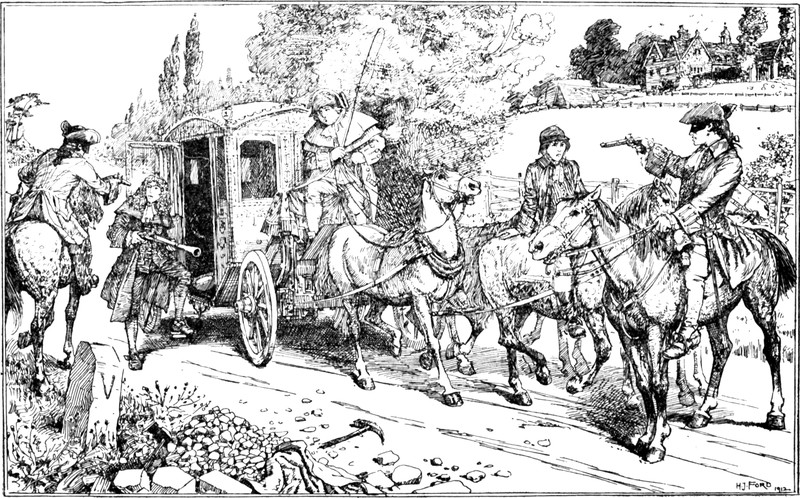
Throughout the 1700s and early 1800s, Hyde Park functioned less as a regulated public amenity and more as a dangerous expanse on the periphery of London. The absence of a formal police force, Sir Robert Peel's Metropolitan Police did not form until 1829, left the park under the loose supervision of "keepers" who were essentially groundsmen with limited authority. This vacuum attracted violent crime. In November 1749, the author and politician Horace Walpole was held up by highwaymen in the park. The pistol of one attacker discharged, grazing Walpole's face and burning his skin. This was not an incident; the park's unlit route and vast acreage made it a preferred hunting ground for predatory gangs who targeted the wealthy carriages traversing the route between Kensington and the City.
Beyond robbery, the park served as a theater for honor violence. The duel between the Duke of Hamilton and Lord Mohun in 1712 remains one of the bloodiest chapters in the park's history. Both men died, Mohun on the spot and Hamilton shortly after, in a sword fight that highlighted the total absence of surveillance or intervention capabilities. For over a century, the "policing" of such matters fell to the ineffective watchmen or the military, who were frequently too slow or too indifferent to intervene in civil disputes. The park was technically royal land, yet it operated as a de facto wild zone where the King's law applied only in theory.
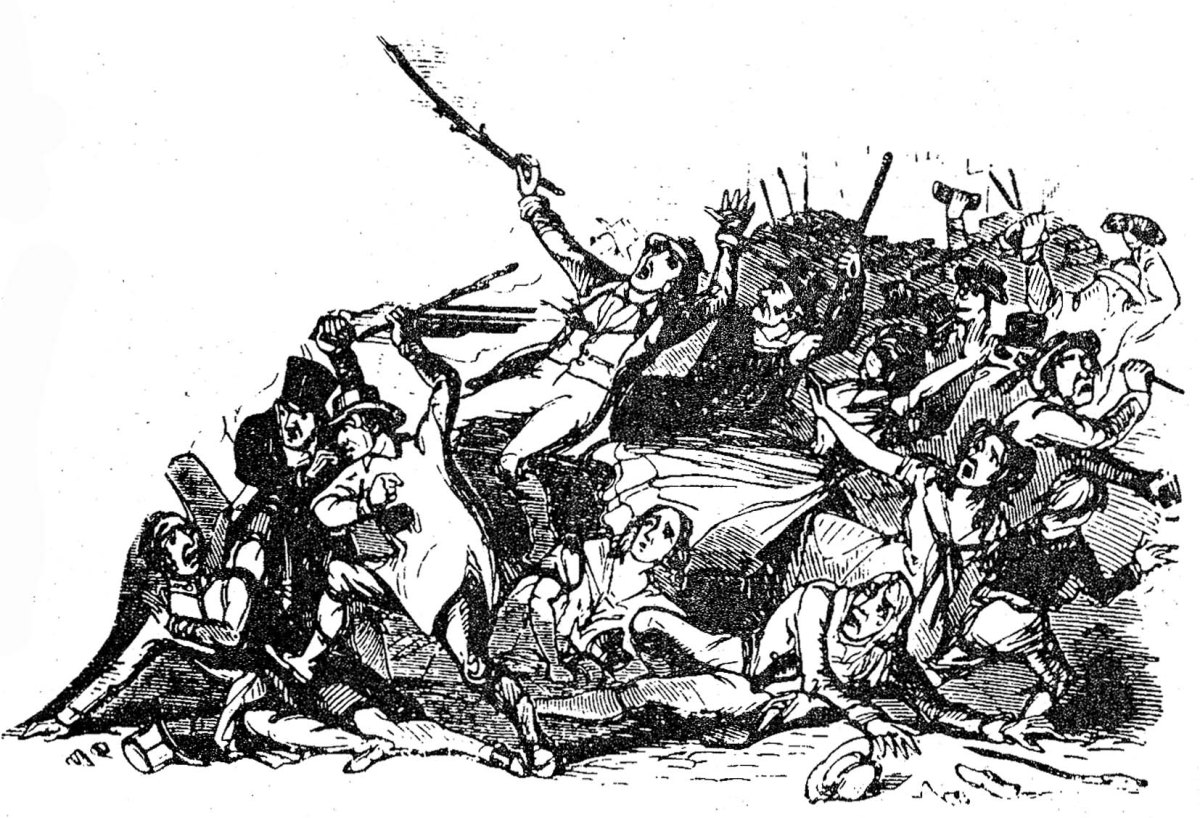
The catalyst for the shift from passive groundskeeping to active policing occurred in July 1866. The Reform League, campaigning for universal manhood suffrage, organized a massive rally which the government attempted to ban. When police barred the Marble Arch gates, the crowd did not disperse. Instead, they physically dismantled the heavy iron railings along Park Lane. The "Hyde Park Railings Affair" was a humiliation for the authorities. It demonstrated that the existing security apparatus, a mix of Metropolitan Police drafted in for emergencies and powerless park keepers, was insufficient to control the urban populace. The mob occupied the park for days, trampling flower beds and asserting a "right to the park" that terrified the establishment. This loss of control directly the legislative that would eventually create a dedicated police presence.
Parliament responded with the Royal Parks and Gardens Regulation Act of 1872. This legislation was the watershed moment that transformed the park keeper from a gardener into a law enforcement officer. The Act did not set rules; it granted keepers the "powers, privileges, and immunities" of a police constable within the park boundaries. For the time, a specific body of men had the statutory authority to arrest citizens without a warrant if they committed offenses within view. The Act listed specific prohibitions that reflect the anxieties of the Victorian era, ranging from the unauthorized drilling of military squads to the beating of carpets and the driving of cattle. It formalized the park as a controlled space, distinct from the chaotic streets of London, subject to its own bylaws and enforcers.
The 1872 Act fundamentally altered the legal status of the park's guardians. Keepers were attested constables. They carried warrant cards and, eventually, the authority to detain subjects. This legal framework remained the operating system for Hyde Park's security for over a century. It created a dual-system where the Metropolitan Police handled serious felonies (murder, rape) while the Park Keepers (later the Royal Parks Constabulary) handled bylaw enforcement, public order, and the specific "nuisance" crimes that the 1872 Act targeted. This division of labor until the merger of the Royal Parks Constabulary into the Metropolitan Police in 2004, and the subsequent formation of the Royal Parks Operational Command Unit (OCU).
The table outlines the evolution of enforcement powers and the specific offenses targeted by the 1872 Act compared to the operational realities facing the station in its final years as a dedicated unit.
Terrorism, large- protest, drug offenses, anti-social behavior.
Serious Organised Crime and Police Act 2005
2026 Onward
Met Police (Borough Command)
General policing integrated with local boroughs; no dedicated unit.
General Police Regulations
The physical manifestation of this 1872 authority was the construction of the Old Police House. While the Act was passed in 1872, the keepers initially operated out of lodges and gatehouses, such as those at Marble Arch. It was not until the turn of the century that the dedicated station, a Queen Anne-style building designed by John Dixon Butler, was erected. This building became the nerve center for the enforcement of the 1872 regulations. It housed the cells where suffragettes would later be detained, the offices where the park's specific bylaws were administered, and the command post for managing the massive demonstrations that the 1866 riots had proven were inevitable. The station was not just a building; it was a of the Regulation Act, standing in the center of the park as a reminder that the land was no longer common ground, a regulated Royal space.
By 2026, the wheel had turned full circle. The specific unit created to enforce the legacy of the 1872 Act was disbanded in November 2025 due to budget constraints and a strategic shift by the Metropolitan Police. The "Old Police House" remains, yet its function has shifted. The dedicated officers who knew every inch of the park's bylaws have been replaced by rotational borough officers or patrol teams with wider remits. The closure of the dedicated unit ends a 153-year experiment in specialized park policing. The 1872 Act had sought to carve out the parks as a separate legal jurisdiction with its own guardians; the 2025 decision reabsorbs that jurisdiction into the general noise of London policing. The distinct "Park Constable," a figure born from the riots of 1866 and by the statutes of 1872, has ceased to exist as a separate entity, leaving the park once again to be policed by the general forces of the capital.
Police Brutality Allegations during the 1855 Sunday Riots
Early Park Keepers and the Regulation Act of 1872
The operational failures that define the early history of policing in Hyde Park reached a violent nadir during the Sunday Trading Riots of 1855. While the physical structure of the Old Police House would not rise until 1902, the events of July 1855 demonstrated the catastrophic consequences of managing a public space without adequate on-site infrastructure or a measured tactical doctrine. The conflict arose from the collision of Victorian moralism and working-class leisure, sparked by Lord Robert Grosvenor's Sunday Trading Bill. This proposed legislation sought to ban the sale of goods on Sundays, a measure that disproportionately punished the poor who worked six days a week and relied on Sunday markets for necessities. The aristocracy, whose clubs and larders remained stocked, faced no such restriction. In response, Londoners descended upon Hyde Park not to protest, to mock the hypocrisy of the elite promenading in their carriages.
On Sunday, July 1, 1855, an estimated 150, 000 people gathered in the park. The atmosphere, initially raucous non-violent, shifted when the Metropolitan Police attempted to enforce a ban on the gathering. Sir Richard Mayne, the Commissioner of the Metropolitan Police, issued orders that would later face intense scrutiny. Fearing the crowd would disrupt the carriage drives along the Serpentine, Mayne commanded his officers to clear the roadways. This order, executed by Superintendent Hughes, transformed a political demonstration into a police riot. Officers drew their truncheons and charged into the dense crowd, clear indiscriminately at men, women, and children. The tactical error was severe: the police attempted to use percussive force to disperse a crowd that physically had nowhere to move, compressed against the park railings and the press of bodies behind them.
The brutality displayed by the police on that Sunday shocked the Victorian public, primarily because the violence spilled over class lines. While the police frequently used rough tactics in East End rookeries with little oversight, the Hyde Park crowd included clerks, servants, and members of the middle class. Witnesses described officers clear passive bystanders across the face and head. One particularly damning account came from Francis Henry Mare, a paralyzed man standing near the rails. even with his obvious disability and inability to retreat, officers beat him with truncheons before dragging him away. This incident, among others, stripped the Metropolitan Police of their claim to be a "civilian" force acting by consent, revealing them instead as a paramilitary instrument of class control.
The logistical absence of a dedicated police station within Hyde Park exacerbated the human cost of the riots. Without a local holding facility capable of processing mass arrests, officers were forced to march prisoners, bleeding from head wounds, out of the park to the Vine Street Police Station in Piccadilly. The conditions at Vine Street became the subject of horrified testimony during the subsequent inquiry. The station's underground cells, quickly dubbed the "Black Hole of Vine Street" by the press, were small, unventilated dungeons. Police crammed over 40 prisoners into a space designed for a fraction of that number. In the stifling July heat, the air turned fetid and poisonous. Detainees, including the injured Mr. Mare, were denied water and medical attention for hours, fainting from heat exhaustion and blood loss while crushed against one another in the dark.
The public outcry following the riots forced the government to convene a Royal Commission in 1856 to investigate the alleged disturbance of the public peace. The inquiry provided a rare, granular look at the operational failures of the police. It concluded that while the crowd had been boisterous, shouting "Go to church!" at passing carriages, they had not posed a threat sufficient to justify the level of force employed. The Commissioners found that Superintendent Hughes had lost control of his men and that the use of truncheons had been "excessive and unnecessary." The report highlighted a dangerous absence of discipline, noting that officers had acted with "irritation" rather than professional detachment. This inquiry marked one of the times the Metropolitan Police were held publicly accountable for brutality, damaging the reputation of Commissioner Mayne and forcing a re-evaluation of how public order should be maintained in the Royal Parks.
The data from the 1855 riots illustrates the of the disorder and the disproportionate police response. The following table summarizes the key metrics established by the 1856 Royal Commission and contemporary police returns:
Metric
Data Point
Notes
Estimated Crowd Size
150, 000, 200, 000
Largest gathering in the park to that date.
Police Officers Deployed
~400, 600
Exact numbers fluctuated; heavily outnumbered.
Civilian Arrests
72 (July 1)
Total in custody reached 104 over the period.
Police Injuries
49
Mostly minor bruises from stones/scuffles.
Civilian Injuries
Unknown (Hundreds)
did not report injuries for fear of arrest.
Primary Detention Site
Vine Street Station
Off-site; conditions described as "torturous."
The legacy of the 1855 riots directly influenced the architectural and legal future of Hyde Park. The disaster at Vine Street proved that off-site detention was dangerous and logistically impossible during mass events. The police needed a within the park itself, a place to command, control, and detain. While the "Old Police House" would not be constructed for another 47 years, the administrative shift began immediately. The authorities recognized that the park required a specialized policing method, distinct from the street-level beat work of the rest of London. The "Guard Room" near the Magazine began to see increased use as a de facto station, a stopgap measure that for decades. This shift from reactive invasion to permanent occupation set the stage for the Regulation Act of 1872, which would codify the police's power to control the park's space, speech, and assembly.
also, the 1855 riots established a pattern of confrontation that would repeat in 1866, 1994, and into the 21st century. The core conflict, who owns the park, the people or the state, remained unresolved. In 1855, the state answered with truncheons and dark cells. The failure of that answer necessitated the development of the sophisticated surveillance and containment strategies that would eventually characterize the operations of the Hyde Park Police Station. The "Black Hole of Vine Street" stands as a grim prologue to the station's history, a reminder of the human cost when authority absence the infrastructure to manage dissent humanely.
Architectural Commission of the Old Police House 1902
The construction of the Old Police House in 1902 was not an upgrade of facilities; it was a calculated architectural assertion of state control over a space that had historically oscillated between royal privilege and public anarchy. By the turn of the 20th century, the makeshift wooden lodges and the converted military guard-room that had previously served the park keepers were deemed grossly insufficient for the Metropolitan Police, who had assumed full responsibility for the park following the chaotic Reform League riots of 1866 and 1867. The commission for a permanent, fortified, yet aesthetically "domestic" headquarters fell to John Dixon Butler, the Surveyor to the Metropolitan Police from 1895 to 1920. His mandate was contradictory: build a station capable of processing rioters, drunkards, and pickpockets, disguise it as a benign country manor to avoid offending the sensibilities of the Victorian upper class who promenaded nearby.
John Dixon Butler, succeeding his father John Butler in the role, method the Hyde Park commission with a specific stylistic philosophy known as "Domestic Revival" or Neo-Georgian. Unlike the imposing, -like stations he designed for East London, meant to intimidate the working classes, the Hyde Park station had to blend into the pastoral environment. The Office of Works, which managed the land, demanded a structure that complemented the park's foliage and the nearby Serpentine Lake. Butler's solution was a red brick façade with Portland stone dressings, a slate roof, and tall brick chimneys, elements that mimicked the vernacular of a substantial gardener's lodge or a minor aristocrat's estate rather than a law enforcement hub. This architectural camouflage was so that for decades, visitors frequently mistook the station for a private residence or park administration office, unaware of the holding cells concealed behind the northern elevation.
The building's location, centrally positioned on the north side of the Serpentine rather than on the park's perimeter, was a strategic choice driven by the need for rapid deployment. From this central hub, mounted officers could reach any gate, Marble Arch, Hyde Park Corner, or Victoria Gate, within minutes. The 1902 design incorporated a complex internal segregation system, reflecting the rigid class structures of the era. The plan included a spacious mess room, a library with a full-sized billiard table for off-duty officers, and separate quarters for the inspector. These amenities were not luxuries necessities to maintain morale among a force that was within the park gates after dark, separated from the bustle of the city they policed.
Architectural Specifications: Hyde Park Police Station (1902)
Architect
John Dixon Butler (Metropolitan Police Surveyor)
Construction Period
1901, 1902
Primary Materials
Red brick, Portland stone dressings, slate roofing
Style
Domestic Revival / Neo-Georgian
Key Features
Central block with wings, stone balustrade, "POLICE" inscribed lintel, concealed cells, underground/attached stables
Operational Capacity
Accommodation for ~30 single officers, stables for Mounted Branch
Current Status (2026)
Grade II Listed; dedicated OCU dissolved Nov 2025
Beneath the domestic veneer lay a functional machine of enforcement. The station featured a dedicated charge room and a row of cells designed to hold prisoners overnight before their transfer to the magistrates' courts at Marlborough Street or Bow Street. The cells were constructed to be easily washable, with high, barred windows that prevented communication with the outside while admitting light. In the early 1900s, these cells were frequently occupied by suffragettes, whose rallies at Speakers' Corner frequently spilled over into direct conflict with the police. The architectural solidity of the station allowed it to serve as a secure forward operating base during these periods of civil unrest, a function it retained through the anti-war protests of the 1960s and the poll tax riots of 1990.
A serious component of the 1902 commission was the integration of the Mounted Branch. The station included purpose-built stables, frequently described as of the finest in London at the time. The relationship between the architecture and the horses was symbiotic; the stables were positioned to allow mounted officers to deploy instantly without passing through the public administrative areas. This design detail proved important during the 20th century, as the mounted police became the primary instrument for crowd control in the park's vast open spaces. The sound of hooves on the cobblestone courtyard of the Old Police House became a defining auditory signature of the park's administration, signaling the shift from the lethargic watchmen of the 1700s to the disciplined, paramilitary force of the modern era.
The financial negotiations for the building revealed the friction between the Home Office (responsible for the police) and the Office of Works (responsible for the park). Documents from the period show disputes over who would fund the maintenance of the grounds surrounding the station. The compromise resulted in the police maintaining the building fabric while the park authorities managed the "curtilage," a bureaucratic division of labor that for over a century. This separation of powers frequently complicated renovations; when modern communications equipment was installed in the late 20th century, great care had to be taken to route cables without disturbing the listed exterior or the surrounding Royal Park soil.
By February 2026, the status of John Dixon Butler's creation had undergone a shift. The dissolution of the dedicated Royal Parks Operational Command Unit (OCU) in November 2025, driven by a £260 million budget shortfall in the Metropolitan Police Service, stripped the building of its primary identity. For 123 years, the Old Police House had served as the autonomous heart of park policing. With the unit's disbandment, the officers who once called this station home were dispersed into local Borough Command Units (BCUs). The building remains standing, protected by its Grade II listing, its function has atrophied. It no longer houses a specialized force with a distinct culture and lineage; instead, it serves as a remote outpost for neighborhood teams who may absence the specific historical knowledge of the terrain they patrol.
The architectural legacy of the 1902 commission stands in clear contrast to the operational reality of 2026. Butler designed a building for a permanent, on-site garrison, a "police family" that lived, ate, and slept within the park. The modern policing model, reliant on transient patrols and remote dispatch, renders the billiard rooms and mess halls of the Edwardian era obsolete. The Old Police House exists as a hollowed-out monument to a specific philosophy of policing: one that valued physical presence and territorial ownership over efficiency algorithms and remote surveillance. The red brick façade still gleams, and the "POLICE" inscription remains on the lintel, the distinct operational entity it was built to house has into the bureaucratic ether of the wider Metropolitan Police Service.
Surveillance of Suffragette Militancy 1906, 1914
Police Brutality Allegations during the 1855 Sunday Riots
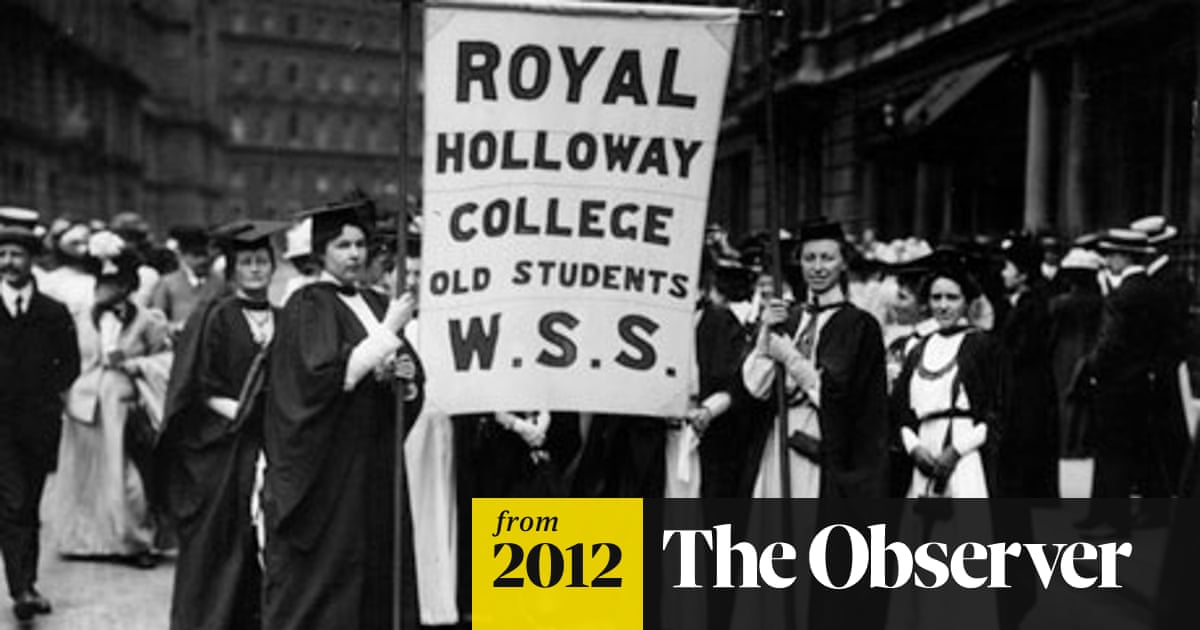
The operational mandate of the Hyde Park Police Station underwent a radical shift between 1906 and 1914, transitioning from the enforcement of Victorian morality to the systematic surveillance of political insurgency. While the station, newly consolidated in the "Old Police House" in 1902, was designed to process drunkards and pickpockets, it rapidly became a forward operating base for the Metropolitan Police's campaign against the Women's Social and Political Union (WSPU). The station's logbooks from this period reveal a policing apparatus struggling to contain a movement that combined the mass logistics of an army with the guerrilla tactics of an underground cell. The park was no longer just a leisure ground; it was the primary stage for the Suffragette war on the British state.
By 1906, the WSPU had identified Hyde Park as the "lungs of London" and the most venue to challenge government authority. The police response was initially reactive, treating the women as a public nuisance rather than a political threat. This changed with the weekly meetings at the Reformers' Tree, a symbolic site near Speakers' Corner. Police reports indicate that uniformed officers from the F Division (Paddington) were supplemented by plainclothes detectives from the Special Branch, who infiltrated the crowds to record speeches. These "notebook men" were the of a surveillance grid that fed intelligence directly back to the Hyde Park station and, subsequently, to Scotland Yard. The objective was not to keep the peace to build legal cases for conspiracy and sedition against the leadership.
The logistical peak of this era occurred on "Women's Sunday," June 21, 1908. The of this event forced the Hyde Park police into a paramilitary posture. With seven processions converging on the park and an estimated crowd of 300, 000 to 500, 000 people, the station functioned as the tactical command center. Police orders for the day show a deployment of over 1, 700 officers, drawn from across London to reinforce the local park constabulary. The station coordinated the placement of cordons to protect the 20 speaker platforms, yet the sheer volume of humanity overwhelmed the physical capacity of the force. Unlike later confrontations, the police strategy in 1908 focused on containment rather than arrest, fearing that aggressive intervention in such a dense crowd would spark a riot that the station's limited holding cells could never manage.
Following the failure of mass demonstrations to secure the vote, the WSPU shifted toward militancy, and the policing of Hyde Park darkened accordingly. The "Black Friday" violence of 1910, though centered on Parliament Square, signaled a change in engagement rules that rippled out to the Royal Parks. The Hyde Park station began to operate less as a patrol hub and more as a counter-insurgency post. Officers were briefed to look for concealed hammers, stones, and incendiary devices. The station's role in processing detainees became grimly routine; women arrested for obstruction or assault were brought to the Old Police House for initial charging before transfer to Cannon Row or Holloway Prison. The cells, designed for temporary confinement, frequently held educated women who refused to give their names, creating an administrative deadlock for the station sergeants.
The escalation reached its zenith in 1913 with the passage of the Prisoners (Temporary Discharge for Ill-Health) Act, known as the "Cat and Mouse Act." This legislation turned the police into hunters of released hunger strikers. The Hyde Park station received "suspect lists" accompanied by covertly taken photographs of militant Suffragettes. These grainy images, frequently snapped surreptitiously in prison exercise yards, were distributed to park constables with orders to spot and arrest specific women attempting to enter the park. The park was a preferred location for these women to meet, as the open space offered multiple escape routes that the enclosed streets of Westminster did not. Police patrols were doubled around key infrastructure, specifically the tea houses and bandstands, which were identified as high-value for arson attacks.
Police Operations and Suffragette Activity in Hyde Park (1906, 1914)
Year
Event / Phase
Police Tactics
Operational Outcome
1906
Reformers' Tree Meetings
Deployment of "Notebook Men" (Special Branch); plainclothes infiltration.
Intelligence gathering; identification of WSPU leadership hierarchy.
1908
Women's Sunday (June 21)
Mass mobilization (1, 700+ officers); cordon management; crowd containment.
Peaceful containment of 300, 000+ attendees; station acted as command hub.
1910
Post-Black Friday
Aggressive physical removal; sexual intimidation tactics reported; increased arrests.
Shift from containment to dispersal; deterioration of police-public relations.
1912
Window Smashing Campaign
Stop-and-search for tools (hammers); protection of park buildings.
High volume of arrests processed through Hyde Park Station cells.
1913
"Cat and Mouse" Era
Distribution of covert surveillance photos; targeted re-arrests of hunger strikers.
Park becomes a zone of; constables act as bounty hunters for released prisoners.
1914
Arson & Bombing Threats
24-hour guard on bandstands and tea houses; closure of specific gates.
Prevention of major infrastructure damage within the park before war outbreak.
The surveillance infrastructure developed at Hyde Park during these years established a precedent for political policing in public spaces. The station officers were required to distinguish between legitimate park users and "militant agitators," a discretionary power that frequently led to the harassment of unaccompanied women. Reports from 1913 describe constables intercepting women carrying "suspicious parcels" or wearing the WSPU colors of purple, white, and green. This profiling was not random; it was directed by the intelligence files kept within the station's administrative office. The Old Police House, with its red-brick domestic appearance, concealed a rigorous bureaucratic machine dedicated to the suppression of the suffrage movement.
The threat to the park's physical fabric was real. While the famous burning of the Tea House at Kew Gardens garnered headlines, Hyde Park officers were on high alert for similar attempts. In 1913, the station coordinated a 24-hour watch on the park's wooden structures. The fear of "suffragette outrages" led to the closure of certain gates at dusk and the restriction of access to the Serpentine, preventing the water from being used for publicity stunts. The police militarized the park's perimeter, treating the iron railings not just as a boundary, as a defensive line against an enemy that operated from within the civilian population.
This period of intense surveillance ended abruptly in August 1914 with the outbreak of the World War. The WSPU suspended its militant campaign, and the police focus shifted instantly to the monitoring of enemy aliens and spies. Yet, the legacy of 1906, 1914 remained. The Hyde Park Police Station had proven its capability to function as an instrument of state security, managing not just crime, dissent. The techniques refined during the Suffragette era, covert photography, intelligence files, and the coordination between uniformed constables and Special Branch, became standard operating procedure for the century that followed. The station had ceased to be a mere park keeper's lodge; it had matured into a hardened node of the Metropolitan Police surveillance network.
Casualty Response to the 1982 Hyde Park Bombing
At exactly 10: 40: 23 AM on July 20, 1982, the operational rhythm of the Hyde Park Police Station was shattered by a detonation that registered physically within the walls of the Old Police House. A blue Morris Marina, parked on South Carriage Drive along the route of the Queen's Life Guard, vaporized in a cloud of smoke and shrapnel. The vehicle contained 25 pounds of gelignite surrounded by 30 pounds of four-and-six-inch nails, a payload designed specifically to maim living tissue rather than destroy infrastructure. The blast wave blew out windows in Knightsbridge, 50 yards away, and the acoustic report was audible across the entirety of the park's 350 acres. For the officers of the Royal Parks Constabulary (RPC) stationed at the Old Police House, the transition from routine patrol to mass casualty management was instantaneous. Unlike standard metropolitan precincts, the Hyde Park station possessed a unique dual mandate: the protection of the public and the oversight of the ceremonial military functions that traversed its jurisdiction daily.
The scene on South Carriage Drive presented a level of carnage rarely seen in London since the Blitz. The remote-controlled device, triggered by a spotter likely positioned within the park's perimeter, detonated as the Blues and Royals regiment passed. The explosion killed four soldiers and seven horses. The proximity of the police station allowed for a response time measured in seconds, yet the devastation was already absolute. RPC officers arriving on foot found a chaotic tableau of twisted metal, burning uniforms, and dying animals. The nails packed into the bomb acted as high-velocity missiles, embedding themselves in the trees, the asphalt, and the bodies of the Household Cavalry. The smell of scorched flesh and propellant hung heavy in the summer air, a sensory detail frequently in the witness statements collected by the station's investigators in the hours that followed.
Casualties of the 1982 Hyde Park Bombing
Victim Type
Name/Identity
Outcome
Soldier
Lieutenant Anthony Daly (23)
Killed in Action
Soldier
Trooper Simon Tipper (19)
Killed in Action
Soldier
Lance Corporal Jeffrey Young (19)
Killed in Action
Soldier
Squadron QMS Roy Bright (36)
Died of Wounds (July 23)
Equine
Cedric, Epaulette, Falcon, Rochester
Killed instantly or euthanized on site
Equine
Waterford, Yeastvite, Zara
Euthanized due to catastrophic injury
Equine
Sefton
Survived (34 shrapnel wounds)
The logistical response from the Hyde Park station required immediate coordination with the Metropolitan Police, who would eventually assume command of the counter-terrorism investigation. In the initial minutes, RPC officers established a cordon to preserve the crime scene, a task complicated by the presence of panicked tourists and the terrified surviving horses. The station's role shifted rapidly from enforcement to triage. One specific survivor, the horse named Sefton, became the focal point of the veterinary response. Suffering from a severed jugular vein, a damaged eye, and 34 separate shrapnel wounds, Sefton was stabilized on the roadway before being transported. The veterinary effort, led by Major Noel Carding, involved an eight-hour surgery that pushed the boundaries of 1980s equine medicine. This specific intersection of veterinary science and police procedure remains a defining characteristic of the Hyde Park station's history, distinguishing it from purely civilian operational command units.
The security situation further at 12: 55 PM, when a second device detonated under the bandstand in Regent's Park, killing seven bandsmen of the Royal Green Jackets. This coordinated attack stretched the resources of the capital's emergency services to their breaking point. The Hyde Park station functioned as a forward command post, funneling intelligence and witness accounts to the Anti-Terrorist Branch. Officers canvassed the park for the spotter, eventually identifying a suspect vehicle, a white Ford Cortina, seen in the area prior to the blast. The forensic collection process was exhaustive; investigators recovered fragments of the Morris Marina from rooftops and tree branches hundreds of feet from the epicenter. The station's logbooks from this period record a surge in activity that for weeks, as the park transformed from a leisure ground into a high-security zone.
Legal resolution for the atrocity proved elusive, a failure that haunted the institutional memory of the Hyde Park police detachment for decades. In 1987, Gilbert "Danny" McNamee was convicted of conspiracy to cause explosions, including the Hyde Park attack, and sentenced to 25 years. Yet, the Court of Appeal quashed his conviction in 1998, citing unsafe evidence. The of justice continued until 2013, when John Downey was charged with the murders. The trial collapsed in February 2014 after it emerged that the Police Service of Northern Ireland had sent Downey a "letter of assurance" in 2007, erroneously stating he was not wanted by any UK police force. This administrative error, which granted immunity to a primary suspect, caused outrage among the families of the victims and the officers who had worked the initial crime scene. The collapse of the Downey case underscored the disconnect between the visceral reality of the police work on the ground in 1982 and the bureaucratic machinations of the peace process decades later.
The long-term effect of the 1982 bombing on the Hyde Park Police Station was a permanent hardening of its operational posture. The open, accessible nature of the park's policing model began to recede, replaced by a surveillance-heavy methodology that anticipated the total security integration of the 21st century. The blast demonstrated that the park was not a recreational space a soft target of high symbolic value. Consequently, the station's remit expanded to include constant counter-surveillance of the ceremonial routes. By the time the Metropolitan Police announced the station's closure in late 2025, the legacy of July 20, 1982, was still visible in the physical security architecture of the park, blast-resistant blocks, restricted vehicle access, and a pervasive CCTV network that had its conceptual origins in the failure to detect the blue Morris Marina.
The psychological toll on the responders from the Royal Parks Constabulary was significant, though largely undocumented in the official reports of the era. Officers who had spent their careers enforcing park bylaws and managing tourists were suddenly thrust into a combat zone, required to euthanize maimed animals and recover the remains of soldiers. This trauma became part of the station's unwritten history, passed down through shifts until the RPC's absorption into the Metropolitan Police in 2004. The bombing remains the single most violent event in the station's timeline from 1700 to 2026, a singular data point of extreme violence that forced a permanent evolution in how the Royal Parks were policed. The transition from the "park keeper" model to the "counter-terror" model was sealed in the blood on South Carriage Drive.
Jurisdictional Shift to the Royal Parks Constabulary 1993
Architectural Commission of the Old Police House 1902
The year 1993 marked a definitive and controversial reversal in the policing strategy for London's most famous green space. For the previous 126 years, since the volatile reform riots of 1867, the Metropolitan Police Service had maintained direct control over Hyde Park, a need born from the need to manage the unruly crowds at Speaker's Corner. Yet, in early 1993, this long-standing arrangement was abruptly dismantled. Control was handed back to the Royal Parks Constabulary (RPC), a non-Home Office force that had previously patrolled only the lesser Royal Parks. This jurisdictional shift was not an administrative transfer; it was a fundamental restructuring of authority that coincided with the creation of the Royal Parks Agency (RPA) on April 1, 1993. The move privatized the management logic of the park, treating the 350-acre expanse less as a public commons and more as a managed asset under the Department of National Heritage.
This transfer placed the Royal Parks Constabulary in a precarious position. While they possessed full police powers within the park boundaries, including the power of arrest and the ability to carry batons, they remained structurally from the wider London policing apparatus. They did not report to the Home Office to civil servants within the Department for Culture, Media and Sport (DCMS). This distinction created a dangerous operational silo. Officers stationed at the Old Police House found themselves enforcing the law in the heart of the capital while operating on a different radio frequency, with different budget priorities, and without direct access to the Metropolitan Police's intelligence databases. The Old Police House itself, a structure designed in 1901 by John Dixon Butler, became the headquarters for this experiment in decentralized policing, housing officers who were technically constables were frequently viewed by their Met counterparts as glorified park keepers.
The logic behind the 1993 shift was rooted in the " Steps" agency concept, a government initiative designed to introduce business-like efficiency into public services. The newly formed Royal Parks Agency was tasked with maximizing revenue through events, filming permits, and tighter regulation of commercial activity. Consequently, the RPC's mandate expanded beyond crime prevention to include revenue protection. Officers spent increasing amounts of time enforcing trading regulations and managing unpermitted commercial vehicles, a diversion of resources that critics argued left the park to more serious criminal elements. The table outlines the operational that began to emerge during this period.
Operational Comparison: Hyde Park Policing Authority (1992 vs. 1994)
Metric
1992 (Metropolitan Police Control)
1994 (Royal Parks Constabulary Control)
Reporting Line
Home Office
Department of National Heritage (later DCMS)
Primary Mandate
Public Order & Criminal Law
Park Regulations & Revenue Protection
Comms System
Integrated Met Radio Network
Independent VHF (Incompatible with Met)
Officer Pay Link
Standard Police Regulations
Civil Service Pay Grades (95% of Met rate)
The operational friction became clear almost immediately. While the RPC officers were well-trained, attending standard regional police training centers alongside Home Office recruits, their equipment and infrastructure lagged behind. In 1993, as the crack cocaine epidemic began to influence street crime statistics across London, Hyde Park remained a dark spot in the Met's intelligence grid. A robbery committed near the Serpentine might be investigated by the RPC, the perpetrator's movement into Knightsbridge or Bayswater crossed an invisible jurisdictional line, frequently leading to lost leads and fragmented case files. The RPC's isolation meant that while they could arrest a suspect, processing them frequently required transporting the detainee to a Met station, as the Old Police House holding cells were not always for long-term custody under the evolving Police and Criminal Evidence Act standards.
Financial constraints further complicated the 1993 transition. The Royal Parks Agency, driven by performance, scrutinized the cost of policing. Unlike the Met, which could absorb costs across a massive budget, the RPC's funding was ring-fenced and finite. This led to a gradual reduction in overtime and specialized units. By the mid-1990s, the force strength across all Royal Parks hovered around 150 officers, a number that proved insufficient for 24-hour coverage of 5, 000 acres of prime London land. In Hyde Park specifically, the night shift frequently consisted of a skeleton crew, relying on a single patrol vehicle to cover the vast, unlit stretches of the park. This vulnerability was exploited by opportunistic criminals who recognized that the "park police" absence the rapid response capabilities of the Met's Territorial Support Group.
The internal culture at the Old Police House during this era was one of defensive pride. RPC officers, aware of their "second-tier" status in the eyes of the public and the Met, developed a fierce loyalty to the park itself. They knew the terrain better than anyone, the hidden alcoves of the Rose Garden used for drug deals, the specific trees used by rough sleepers, and the exact response times from the nearest Met station. Yet, this local knowledge could not compensate for the widespread absence of integration. The 1993 decision had created a private fiefdom of law enforcement in the center of a global city, a model that was increasingly at odds with the need for a, anti-terrorism and serious crime strategy.
This jurisdictional anomaly for over a decade, the cracks that appeared in 1993 eventually widened into unbridgeable chasms. The Anthony Speed Review, commissioned later in 1999, would eventually expose the deep of this fragmented system. Speed's analysis validated what officers at the Old Police House already knew: that maintaining a separate police force for a park, no matter how large, was operationally unsound in a modern threat environment. The 1993 shift, intended to streamline park management, instead created a dangerous gap in London's security architecture. It separated the policing of the space from the policing of the people within it, a distinction that criminals were quick to exploit.
Looking back from 2026, the 1993 handover represents a pivotal moment of failure in the history of Hyde Park. It demonstrated the limits of applying agency-style management to law enforcement. The subsequent abolition of the RPC in 2004 and the full absorption of its duties by the Metropolitan Police was a direct admission that the 1993 experiment had failed. Even that solution proved temporary. The dissolution of the Met's dedicated Royal Parks Operational Command Unit in late 2025 serves as the final grim chapter in this saga. The dedicated expertise that was once concentrated in the Old Police House, by the Met, then by the RPC, and then by the Met again, has been dissipated into general neighborhood policing teams. The 1993 decision to treat the park as a business unit rather than a public order challenge set a precedent for cost-cutting that has stripped the park of its dedicated guardians entirely.
Reabsorption into the Metropolitan Police Service 2004
The operational trajectory of the Hyde Park Police Station shifted violently in the early 21st century, driven by a scathing assessment of the Royal Parks Constabulary (RPC). By 2000, the specialized force responsible for policing the capital's green spaces faced an existential emergency. Former Assistant Commissioner Anthony Speed of the Metropolitan Police conducted a review that year which dismantled the perceived efficacy of the RPC. His report, frequently described as "highly serious," identified serious deficiencies in the force's ability to handle modern policing requirements. Speed found that while the RPC officers were dedicated, they suffered from an absence of the rigorous training, technological infrastructure, and operational support systems available to their Home Office counterparts. This review served as the catalyst for the reabsorption of Hyde Park's policing duties into the Metropolitan Police Service (MPS), a process that culminated operationally on April 1, 2004.
The Speed Review exposed a widening gap between the capabilities of a small, non-Home Office force and the demands of policing central London. Hyde Park, with its history of major demonstrations at Speaker's Corner and high-profile events, required a level of public order expertise that the RPC struggled to maintain in isolation. The report highlighted that the RPC absence access to the Police National Computer and other intelligence databases, leaving officers at the Old Police House blind to the criminal histories of those they detained. These findings made the untenable. The Department for Culture, Media and Sport (DCMS), which funded the RPC, accepted the recommendations, setting in motion a complex administrative and legislative to the 132-year-old force and transfer its responsibilities.
Between 2001 and 2003, a Steering Group led by Assistant Commissioner Steve House oversaw the process. The objective was to integrate the park's policing into the Met without losing the specific "park keeper" ethos that the public valued. This period was marked by significant uncertainty for the officers stationed at Hyde Park. They existed in a limbo, knowing their organization was slated for abolition yet continuing to patrol the Serpentine and Rotten Row under the shadow of imminent redundancy or transfer. The transition plan required a bespoke legal and financial framework. Unlike standard territorial policing funded by the Home Office and local precepts, the new unit would be paid for by the Royal Parks Agency. This "ring-fenced" funding model was designed to prevent the abstraction of park officers to other duties across London, a frequent problem in borough policing.
On April 1, 2004, the Royal Parks Operational Command Unit (OCU) of the Metropolitan Police officially came into existence. This date marked the operational transfer of authority, preceding the formal legislative abolition of the RPC by a year. The Old Police House in Hyde Park, which had served as the RPC's headquarters since the force took over from the Met in 1993, once again hoisted the flag of the Metropolitan Police. For the station itself, this was a return to its roots; the Met had previously policed the park from 1867 until the early 1990s. The building, with its secure dock and cells, transitioned immediately from a constabulary post to a full MPS station, integrated into the vast communications and command network of New Scotland Yard.
The human element of this reabsorption presented the most significant challenge. The Met did not simply absorb the RPC workforce wholesale. Instead, a rigorous vetting and retraining program commenced. Of the approximately 140 RPC officers, around 100 were eligible to transfer. They had to meet the Met's strict health, fitness, and professional standards. Those who transferred retained their rank and were recognized as "Crown Servants," yet they faced a distinct culture shock. They moved from a small, close-knit force with a focus on bylaw enforcement to a massive, bureaucratic organization dealing with counter-terrorism, serious violence, and organized crime. The "Old Police House" became a melting pot where former RPC constables worked alongside seasoned Met officers, attempting to blend the soft skills of park policing with the hard edge of territorial enforcement.
The financial arrangement underpinning the 2004 reabsorption was unique in London's policing history. The DCMS agreed to pay the Met approximately £9 million annually to maintain the Royal Parks OCU. This contract stipulated specific staffing levels, including a dedicated team for Hyde Park. The agreement was intended to guarantee that the park would not become a soft target for crime due to police resources being diverted to 999 calls in surrounding boroughs like Westminster or Kensington and Chelsea. For a time, this model worked. The Old Police House operated as the hub of a specialized unit that combined the legal powers of a constable with the specific knowledge of park regulations, such as those governing cycling speeds and commercial vehicle restrictions.
Legally, the RPC continued to exist in a zombie state until the passage of the Serious Organised Crime and Police Act 2005. Section 161 of this Act formally abolished the Royal Parks Constabulary, terminating the appointments of any remaining constables who had not transferred or taken redundancy. This legislative act was the final nail in the coffin for the independent force, erasing its statutory footing and completing the merger that had begun operationally in 2004. The Act also clarified the powers of the new Met officers within the parks, ensuring they had full authority to enforce both the criminal law and the specific Royal Parks and Other Open Spaces Regulations 1997.
The reabsorption also brought immediate changes to the equipment and tactics used in Hyde Park. The Met introduced its standard-problem vehicles, radios, and protective equipment. The white RPC vehicles with orange or yellow decals were replaced by the ubiquitous "jam sandwich" livery of the Metropolitan Police. Officers at the Old Police House gained direct access to the Met's Crime Report Information System (CRIS), allowing for real-time intelligence sharing. This was a serious upgrade from the RPC's systems. Arrests made in the park could be instantly cross-referenced with data from across London, closing the intelligence gap that Anthony Speed had identified four years earlier.
Even with these improvements, the merger was not without friction. critics argued that the "village bobby" style of the RPC was lost in the transition to the more aggressive, target-driven culture of the Met. The RPC officers had been specialists in the unique ecology of the park, skilled in dealing with tourists, lost children, and minor bylaw infractions. The Met officers, by contrast, were trained to hunt criminals. Over time, the Royal Parks OCU attempted to balance these two mandates, using the Old Police House as a base for community policing initiatives while maintaining the capability to deploy Territorial Support Groups (TSG) for major protests. This tension between the "park keeper" role and the "law enforcer" role remained a defining characteristic of the unit until its eventual dissolution in late 2025.
The 2004 reabsorption was a pivotal moment in the history of the Hyde Park Police Station. It represented the state's recognition that the policing of its most famous public spaces could no longer be left to a small, auxiliary force. The integration into the Met brought Hyde Park back into the mainstream of London's security architecture, a necessary evolution in an era of heightened security threats following the 9/11 attacks. The Old Police House stood as a physical testament to this shift, its walls housing a new generation of officers who wore the same uniform as those on Oxford Street yet patrolled a beat defined by ancient trees and royal decrees.
Counter-Terrorism Measures for the 2012 Olympic Games
Surveillance of Suffragette Militancy 1906, 1914
The 2012 London Olympic Games marked the most significant militarization of Hyde Park since the Second World War, transforming the Royal Park into a high-security under the direct supervision of the Hyde Park Police Station. While the primary "Ring of Steel" surrounded the Olympic Park in Stratford, Hyde Park's role as the venue for the Triathlon and Marathon Swimming events, combined with the massive "BT London Live" fan zone, necessitated a security overlay of. The Old Police House, serving as the operational hub for the Royal Parks Operational Command Unit (OCU), became the nerve center for a localized "Bronze" command structure, coordinating a multi-agency force that far exceeded standard policing parameters.
Operational planning for the Games was heavily influenced by the catastrophic failure of private security contractor G4S to provide the promised 10, 400 guards. This collapse forced the British government to deploy 18, 200 military personnel across London, a contingency that visibly altered the policing within Hyde Park. In the weeks leading up to the Opening Ceremony, the familiar presence of Royal Parks constables was augmented by camouflaged military units and officers drafted from 52 different police forces across the UK. The station's courtyard and surrounding grounds functioned as a tactical staging area where Metropolitan Police officers briefed alongside soldiers, creating a hybrid law enforcement environment rarely seen in peacetime London.
The physical hardening of the park was extensive. While the 17. 5-kilometer electrified fence was specific to the Stratford site, Hyde Park was bisected by miles of 3-meter high security fencing and airport-style screening zones. The Old Police House coordinated the monitoring of these perimeters through an upgraded surveillance network. Temporary control rooms were established to process real-time feeds from a dense grid of CCTV cameras, of which were integrated with automatic number plate recognition (ANPR) and facial recognition systems. This surveillance dragnet was designed to identify "hostile reconnaissance" by terror groups, a threat deemed severe given the park's proximity to the 7/7 Memorial, which honors the victims of the 2005 bombings, an attack that occurred just one day after London was awarded the Games.
Air defense measures for the Games introduced a of existential tension to the park's security operations. While the controversial Starstreak and Rapier surface-to-air missile batteries were stationed at six locations including Blackheath and the Lexington Building in Bow, the airspace above Hyde Park was a strictly prohibited zone. The Metropolitan Police Air Support Unit, operating Eurocopter EC145s equipped with advanced thermal imaging, maintained a near-constant vigil over the Serpentine, relaying data directly to command units on the ground. The police station's role extended to managing the ground response for any airspace incursions, with specific in place for the evacuation of the 80, 000 spectators expected at the live sites.
The financial footprint of this security operation was buried within the broader £553 million venue security budget, the operational cost to the Royal Parks OCU was. The 2012 deployment stretched the unit's resources to the breaking point, masking the underlying staffing absence that would later justify its dissolution. During the Games, the station managed not only counter-terrorism vigilance also the enforcement of strict commercial exclusion zones required by the International Olympic Committee, criminalizing unauthorized branding or vending within the park's perimeter. This shift from community policing to corporate protectionism alienated local residents, who viewed the heavy-handed security as a commodification of public space.
Hyde Park Security Assets & Deployment (July, September 2012)
Asset / Unit
Operational Role
Deployment Metrics
Royal Parks OCU
Bronze Command / Local Coordination
Full unit mobilization (cancelled leave)
Military Personnel
Perimeter Security / Screening
Part of 18, 200 troop contingency (post-G4S failure)
CCTV Network
Surveillance / Hostile Rec. Detection
Integrated ANPR & Facial Recognition feeds
Air Support Unit
Aerial Overwatch / Crowd Monitoring
Eurocopter EC145 (Thermal/Downlink)
Tactical Fencing
Access Control / sterile zones
3-meter high blocks around Serpentine venue
The legacy of the 2012 security surge was a permanent upgrade in the park's surveillance infrastructure. of the "temporary" CCTV positions identified as serious during the Games were retained or upgraded in subsequent years, feeding into the centralized control room at the Old Police House. The successful integration of military and police assets during the Olympics also established a template for future major events, such as the funeral of Queen Elizabeth II. yet, the intense focus on counter-terrorism during this period diverted attention from the creeping degradation of the station's physical fabric, a neglect that would accelerate in the post-Olympic austerity era, contributing to the facility's obsolescence by 2025.
Enforcement Data from COVID-19 Lockdown Violations
The operational pivot of the Hyde Park Police Station in March 2020 represents the most abrupt shift in the facility's 120-year history. Following the Prime Minister's announcement of a national lockdown on March 23, 2020, the Old Police House ceased to function as a guardian of royal flora and public order. It transformed into a command node for the enforcement of the Health Protection (Coronavirus, Restrictions) (England) Regulations 2020. The station, historically tasked with managing poachers, pickpockets, and political dissenters, suddenly found itself policing the biological conduct of the populace. The transition was immediate. Officers who had spent their careers managing tourists were redeployed to measure the distance between picnic blankets and to interrogate lone sitters on park benches.
During the initial phase of the pandemic, specifically April and May 2020, the station's enforcement strategy focused on the definition of "exercise." The Royal Parks Operational Command Unit (OCU) faced a unique challenge: Hyde Park serves as the backyard for thousands of Westminster residents living in flats without outdoor space. When a heatwave struck on April 5, 2020, the park became a battleground. Police vans broadcasted recorded messages instructing citizens to return home, a tactic previously reserved for counter-terrorism or riot control. Data from this period shows a high volume of interactions a lower rate of arrests compared to later months, as the strategy relied on the "4 Es" model: Engage, Explain, Encourage, and only then, Enforce.
The "Enforce" phase, yet, arrived swiftly as the consensus on lockdown fractured. By May 2020, the Old Police House became the processing center for a new category of offender: the anti-lockdown protester. The station's custody logs from this period record a demographic shift. Instead of the usual petty criminals, cells held conspiracy theorists, civil libertarians, and citizens economically devastated by the restrictions. The most prominent recurring figure was Piers Corbyn, brother of the former Labour leader, whose repeated arrests in Hyde Park became a ritual of the era. On May 16, 2020, officers arrested 19 people and issued 10 Fixed Penalty Notices (FPNs) during a "Mass Gathering" protest at Speakers' Corner. This event marked the end of the "policing by consent" honeymoon in the park.
The following table details key enforcement surges centered on Hyde Park during the acute phases of the pandemic restrictions. These figures represent specific operations coordinated from the Old Police House or involving Royal Parks officers supported by the Territorial Support Group (TSG).
Date
Event / Context
Enforcement Actions
Operational Notes
April 5, 2020
Heatwave "Sunbathing" Crackdown
100+ Dispersals (Verbal)
Focus on moving sitters; threat of park closure issued by Royal Parks management.
May 16, 2020
Anti-Lockdown Protest
19 Arrests, 10 FPNs
major organized breach of Health Protection Regulations at Speakers' Corner.
May 30, 2020
Anti-Lockdown Protest
12+ Arrests
Piers Corbyn arrested again; shift to stricter enforcement of "mass gathering" rules.
Sept 26, 2020
"We Do Not Consent" Rally
16 Arrests (Hyde Park/Trafalgar)
9 officers injured; violent clashes as police dispersed crowds moving into the park.
Nov 5, 2020
Million Mask March / Lockdown 2
190 Arrests (Central London)
Heavy containment tactics used at Hyde Park perimeter to prevent assembly.
Jan 2, 2021
Lockdown 3 Protest
17 Arrests, 21 FPNs
Zero-tolerance enforcement during peak infection rates; rapid dispersal tactics used.
March 20, 2021
Worldwide Rally for Freedom
33 Arrests
Scuffles reported near Marble Arch; bottles thrown at officers.
The enforcement data reveals a clear in how different groups were policed within the park boundaries. While anti-lockdown protesters faced high-visibility containment, the annual "4/20" cannabis rally presented a complex dilemma. In April 2020, the event was largely suppressed due to the strictness of the lockdown. By April 2021, even with restrictions still in place, small groups gathered. Police issued 45 community resolutions and seized sound systems, yet the mass arrests seen in political protests were absent. This inconsistency fueled accusations of selective enforcement, a grievance that would fester and contribute to the unit's reputational decline leading up to 2025.
A serious point of contention arose from the "Rule of Six" enforcement in late 2020. Officers patrolling the Serpentine were tasked with counting heads in walking groups. This mathematical policing alienated the local population. Residents who had viewed the Hyde Park police as protectors of their green space began to view them as agents of an overreaching state. The situation worsened when of government parties surfaced. While officers at Hyde Park were issuing £200 fines to teenagers for sitting on benches in January 2021, the very officials who drafted the regulations were violating them less than two miles away. The morale within the Old Police House reportedly suffered as officers recognized the hypocrisy they were ordered to enforce.
The racial in COVID-19 enforcement also manifested in the Royal Parks. Data released by the National Police Chiefs' Council indicated that Black, Asian, and Minority Ethnic (BAME) individuals were 1. 6 times more likely to receive an FPN than white individuals across England. In Hyde Park, stop-and-search operations under Section 60, frequently justified by "intelligence" regarding chance disorder at protests, disproportionately targeted young Black men. On warm evenings in the summer of 2020, the park became a flashpoint where public health policing bled into long-standing tensions regarding racial profiling. The "dispersal orders" issued to clear the park at closing time were frequently executed with a heavy hand, involving mounted units driving crowds toward the Marble Arch gates.
By the time the final restrictions were lifted, the relationship between the Hyde Park police and the public had fundamentally altered. The image of the friendly "bobby" patrolling the rose garden was replaced by footage of officers in riot gear wrestling pensioners to the ground for protesting a lockdown. This period of intense, friction-heavy policing accelerated the calls for reform that would eventually culminate in the Metropolitan Police's decision to dissolve the dedicated Royal Parks Operational Command Unit in November 2025. The data from 2020 to 2022 remains a testament to a time when the Old Police House operated not as a station of community safety, as the primary enforcement hub for a suspended civil society.
The legacy of these years is quantifiable not just in the number of FPNs issued, over 10, 000 across London, with a significant concentration in Westminster, in the attrition of public consent. The station's logs from 2021 show a marked increase in "failure to provide details" charges, indicating a populace increasingly unwilling to cooperate. When the station returns to standard duties in 2023, the shadow of the pandemic enforcement remained. The "Old Police House" had survived the Blitz and the IRA bombings, the political from its role as the enforcer of social distance proved to be a more insidious structural threat, one that the 2025 reorganization sought to address by erasing the unit's specific identity entirely.
CCTV Network and Digital Surveillance Infrastructure
Casualty Response to the 1982 Hyde Park Bombing
The surveillance architecture of Hyde Park began not with cameras, with oil and wick. In the 1690s, King William III ordered the installation of 300 oil lamps along the carriage track known as Rotten Row (Route du Roi). This initiative, completed by the early 1700s, created the artificially lit highway in Britain. The purpose was explicit: to illuminate the dark corners where footpads and highwaymen waited to ambush the monarch during his commute from Kensington Palace to St. James's. For nearly two centuries, this optical counter-measure relied on the physical presence of light to deter crime, a strategy that remained largely unchanged until the construction of the Old Police House in 1902. The station itself was designed as a panopticon of sorts; its positioning and window alignments offered officers a commanding line-of-sight over the parade grounds and the Serpentine, prioritizing human visual dominance over the park's vast acreage.
The transition from biological to electronic monitoring accelerated violently on July 20, 1982. The detonation of a remote-controlled IRA car bomb along South Carriage Drive, which killed four soldiers of the Blues and Royals and seven horses, shattered the perception that line-of-sight policing was sufficient. In the aftermath, the security perimeter around the Royal Parks tightened. The incident forced a re-evaluation of the park's porosity, leading to the gradual introduction of closed-circuit television (CCTV) systems capable of recording movements 24 hours a day. By the late 1990s, as the City of London established its "Ring of Steel," Hyde Park integrated similar technologies, focusing lenses on high-traffic choke points such as Hyde Park Corner and Marble Arch to monitor for hostile reconnaissance.
By 2010, the control room inside the Old Police House had evolved into a digital nerve center. The room, once dominated by radio sets and paper logbooks, became a wall of monitors feeding real-time data from a network of static and pan-tilt-zoom (PTZ) cameras. This infrastructure was not limited to crime prevention; it became the primary tool for managing the park's massive commercial events. During concerts or the annual Winter Wonderland, the station's feed expanded to include temporary camera networks, allowing commanders to track crowd density and flow. The station served as the on-site hub where decisions to close gates or redirect pedestrian traffic were made based on pixelated density maps rather than officer reports.
The perimeter security grid hardened further with the adoption of Automatic Number Plate Recognition (ANPR). By 2020, ANPR cameras were active at key vehicular entry points, including the Victoria and Cumberland Gates. These systems do not record traffic; they cross-reference license plates against national police databases in milliseconds, flagging stolen vehicles or known suspects the moment they enter the park boundaries. This digital tripwire allows for an interception strategy that renders the old 18th-century method of chasing bandits obsolete. The data generated creates a permanent digital log of every vehicle that traverses the park, a resource frequently accessed during retrospective investigations into offenses committed elsewhere in the capital.
The most contentious escalation in surveillance capabilities arrived between 2022 and 2025 with the deployment of Live Facial Recognition (LFR). The Metropolitan Police began parking marked LFR vans at the park's busiest pedestrian filters, such as the Marble Arch entrance. Unlike passive CCTV, these units scan faces in the crowd and compare them mathematically against "watchlists" of wanted individuals. In 2023 and 2024, deployment records show these vans were present during major protests and royal events, scanning thousands of biometric profiles per minute. Civil liberties groups, including Big Brother Watch, frequently challenged these operations, citing the high rate of false positives and the intrusion into a space historically for free assembly. Even with these objections, the Met announced in mid-2025 plans to double the frequency of LFR deployments across London, with Hyde Park remaining a primary testing ground due to its high footfall.
Evolution of Hyde Park Surveillance Assets (1980 vs. 2026)
Asset Type
Status in 1980
Status in 2026
Visual Monitoring
Human patrols, binoculars, watchtowers
4K CCTV, Drone capability, Body Worn Video
Vehicle Tracking
Physical logbooks at gates
Automated ANPR logging & National Database alerts
Identity Checks
Officer discretion (Stop & Search)
Live Facial Recognition (LFR) scans against watchlists
Command Location
Old Police House (On-site)
Remote/Centralized (Lambeth/Bow) via Cloud
The operational shifted radically in November 2025 with the dissolution of the dedicated Royal Parks Operational Command Unit (OCU). The decision to disband the unit to plug a £260 million funding gap meant the Old Police House ceased to function as an independent command node. The local control room, once the heart of the park's security, was bypassed. The camera feeds, ANPR hits, and LFR data streams were re-routed to the Met's centralized command and control hubs in Lambeth and Bow. This centralization severed the century-old link between the physical station and the immediate visual monitoring of the grounds. In 2026, the "eyes" watching Hyde Park are no longer sitting inside the park; they are miles away, viewing the Serpentine through a fiber-optic tether, removing the immediate, local context that the park-based officers once provided.
Project Servator, a policing tactic designed to disrupt criminal planning, remains the final of this surveillance grid in the post-2025 era. The strategy combines unpredictable deployments of uniformed officers with the existing digital network. Servator officers are trained to spot behavioral anomalies that cameras might miss, they rely heavily on the digital overwatch to track once identified. The integration is absolute; an officer on the ground in 2026 does not need to see a suspect to know they are there. The network sees them, relays the coordinates, and the officer acts as the kinetic response to a digital trigger. The Old Police House stands, the intelligence that once lived within its walls flows through underground cables to a server farm, leaving the physical structure as a hollow monument to a time when policing required presence.
Fiscal Deficits and the Unit Disbandment of 2025
The dissolution of the Royal Parks Operational Command Unit (OCU) on November 1, 2025, marked the terminal point for dedicated park policing in London, a lineage that had in various forms since 1872. This administrative termination was not a strategic pivot a casualty of the Metropolitan Police Service's inability to reconcile its operational mandates with a fiscal deficit that had ballooned to £260 million for the 2025-2026 financial year. The Hyde Park Police Station, historically the nerve center for the Royal Parks Constabulary and later the Met's specialized OCU, ceased to function as an independent command headquarters on that date. It was relegated to the status of a satellite patrol base for the Central West Basic Command Unit (BCU), stripping the facility of the autonomy it had held for over a century.
Financial instability within the Metropolitan Police had been mounting since 2023, yet the situation reached a breaking point in December 2024. Commissioner Sir Mark Rowley presented a clear ultimatum to the London Policing Board, projecting an initial budget gap of £450 million. He explicitly named the Royal Parks OCU as a "soft target" for liquidation, alongside reductions in mounted branches and dog units. While emergency funding from City Hall and the Home Office later reduced this shortfall to £260 million, the reprieve was insufficient to save the unit. The Met's leadership determined that maintaining a ring-fenced force for the Royal Parks was a luxury the capital could no longer afford when faced with the need to preserve core neighbourhood policing teams.
The contract between The Royal Parks charity and the Metropolitan Police lay at the center of this collapse. Since the 2004 merger, the charity had paid the Met to provide a dedicated service, a model intended to guarantee that officers would not be abstracted for duties elsewhere. By 2025, inflationary pressures on police pay and equipment had driven the cost of this contract beyond what the charity could sustain without significant fee hikes. Simultaneously, the Met argued that the "turnkey" price paid by the charity no longer covered the true overhead of the OCU. When negotiations failed to the valuation gap, the Met exercised its option to terminate the dedicated arrangement, absorbing the personnel into the wider London pool.
The operational impact on Hyde Park was immediate. The 105 officers previously assigned to the Royal Parks OCU were redistributed across London's boroughs to plug vacancies in frontline response teams. The specialized knowledge required to police the park's unique bylaws, covering offenses from unauthorized cycling to wildlife disturbance, was diluted instantly. Enforcement responsibility reverted to the local BCU officers, who prioritize serious violence and robbery over the environmental and public order regulations that define the park's atmosphere. The Old Police House, once a bustling hub of park-specific intelligence, saw its staffing levels plummet as its command staff were reassigned to busier stations in Westminster and Kensington.
This disbandment represents a complete reversal of the assurances given during the 2004 abolition of the Royal Parks Constabulary. At that time, the Met and the Home Office promised that the merger would "enhance" park security through better integration with London-wide resources. The reality of 2025 demonstrated that integration actually meant assimilation and eventual erasure. The "ring-fence" that was supposed to protect the park's policing budget proved permeable when the wider force faced insolvency. The table outlines the financial that led to the unit's final closure.
Metropolitan Police Fiscal Deficit & Royal Parks OCU Status (2023-2025)
Fiscal Period
Projected Met Deficit
Royal Parks OCU Status
Key Decision / Event
2023-2024
£180 Million
Active (Under Review)
Baroness Casey Review highlights funding.
Dec 2024
£450 Million
Threatened
Commissioner Rowley names OCU as chance cut.
Feb 2025
£260 Million
Condemned
Final budget confirms disbandment to save £12m/year.
Nov 2025
N/A (Post-Cut)
Dissolved
Unit formally disbanded; officers dispersed to BCUs.
Critics of the decision, including the Friends of Hyde Park and various safety campaigners, argued that the cost savings were negligible compared to the loss of heritage and specialized capability. The £12 million saved represented less than 0. 3% of the Met's total budget, yet the move dismantled a policing infrastructure that had taken 150 years to build. The Royal Parks charity expressed "deep disappointment" absence the statutory power to employ its own constables following the 2005 legislative changes. Consequently, the security of Hyde Park is dependent on the discretionary attention of a generalized police force that is itself overstretched and under-resourced.
The physical degradation of the station's role mirrors the loss of the unit. While the building remains standing, its function has shifted from a command post to a mere logistical stopover. The holding cells, interview rooms, and control systems designed for park-specific operations sit largely underused, while the administrative offices have been cleared to make space for hot-desking response officers who have no permanent attachment to the park. This "hollowing out" of the Old Police House signifies the final victory of fiscal rationalization over the tradition of dedicated park keeping.
Operational Transition to Safer Neighbourhood Teams 2026
On November 1, 2025, the Metropolitan Police Service executed the final dissolution of the Royal Parks Operational Command Unit (OCU), ending a distinct lineage of enforcement that had governed Hyde Park since the Regulation Act of 1872. This administrative termination, driven by a £260 million deficit in the Met's 2025/2026 budget, transferred responsibility from a dedicated constabulary structure to the Westminster Basic Command Unit (BCU). The shift erased the specialized "Royal Parks Police" as an autonomous entity, dispersing its personnel into the generalist "Safer Neighbourhood Teams" (SNT) model. For the time in over 150 years, Hyde Park holds no dedicated police command, functioning instead as just another ward within the borough's wider patrol sector.
The operational logic behind this restructuring relies on the integration of park policing into the wider "AW" (Westminster) command code. Senior Met officials argued throughout early 2025 that a dedicated OCU was an inefficient use of resources when the capital faced a absence of frontline officers. The resulting compromise, finalized in late 2025, involved "ring-fencing" a small contingent of officers to remain focused on the park. Specifically, of the 77 officers and 17 specials previously assigned to the Royal Parks OCU, only 14 were retained to strengthen five ward teams, including Hyde Park and Lancaster Gate. This represents an 82% reduction in dedicated personnel compared to the unit's strength in 2004, leaving a skeleton crew to manage 350 acres of open terrain that attracts millions of visitors annually.
The Old Police House, standing in the center of the park since 1902, remains physically present operationally hollowed. Once the nerve center for a pan-London parks force, it serves primarily as a forward operating base for the SNTs and a depot for equipment. The public front counter, previously a reliable point of contact for tourists and victims of crime, has seen its hours slashed, reflecting the wider Met strategy of closing physical stations to fund digital infrastructure. The building's status as a command hub has evaporated; strategic decisions regarding Hyde Park are made at the BCU level, competing for attention with the high-density crime hotspots of Soho and the West End.
This bureaucratic contraction coincides with a surge in high-velocity acquisitive crime that mirrors the lawlessness of the early 18th century. In 2024, London recorded 116, 656 mobile phone thefts, a record high, with Hyde Park serving as a primary hunting ground. The modern criminal operates with the same tactical advantage as the highwaymen of the 1700s: speed and impunity. Where the 18th-century robber used a horse to escape into the unlit void of the park, the 2026 offender uses a modified e-bike. These electric vehicles, frequently capable of speeds exceeding 40 mph, allow perpetrators to snatch devices from pedestrians and before the victim can react. The dissolution of the OCU has removed the specialized vehicle patrols that once curbed this behavior, replacing them with foot-based SNT officers who are tactically outmatched by motorized gangs.
The data reveals a clear regression in enforcement capability. In the final full year of the OCU's operation (2024), the unit recorded a prosecution rate for phone theft of less than 0. 2%, charging only 169 suspects out of nearly 117, 000 reported incidents citywide. The transition to SNTs was sold as a method to improve these metrics by connecting park crime to wider borough intelligence. Yet, early performance indicators from January and February 2026 suggest the opposite. With park officers liable to be pulled away to handle public order incidents in central London, the "ring-fenced" protection has proven porous. The park is frequently left with zero police presence during peak evening hours, creating a permissive environment for robbery and drug distribution.
The loss of institutional memory poses a less visible equally damaging threat. The Royal Parks OCU officers possessed specific knowledge of the park's geography, by-laws, and seasonal rhythms. They understood the difference between a rough sleeper needing assistance and a professional beggar operating a racket. The incoming SNT officers, rotated in from other parts of Westminster, absence this granular understanding. Reports from the "Friends of Hyde Park" in early 2026 indicate a sharp rise in by-law infractions, illegal cycling, off-leash dogs in protected waterfowl areas, and unauthorized commercial activity, that new officers either ignore or fail to recognize as offenses. The enforcement of the 1872 regulations, once the core mission, has become a secondary concern to the containment of violent street crime.
Financial need drove this transition, the cost savings appear negligible when weighed against the degradation of public safety. The Met saved an estimated £5. 8 million annually by disbanding the OCU, a fraction of the £450 million shortfall identified in the Baroness Casey Review. Critics this is a false economy. The rise in unchecked robbery in the park damages London's tourism reputation and increases the load on investigation teams processing thousands of unsolvable theft reports. The "efficiency" of the SNT model relies on the assumption that a police officer is a convertible asset, equally in a housing estate or a royal park. The reality of 2026 proves otherwise: the park requires a distinct policing style that blends rural warden skills with urban tactical response.
The trajectory of policing in Hyde Park has thus completed a full circle. In the early 1700s, the park was a dangerous expanse on the edge of the city, policed only by private keepers and the occasional military patrol, where citizens walked at their own risk. The 19th and 20th centuries brought structure, lighting, and a dedicated constabulary that civilized the space. The operational shift of 2026 undoes much of that architecture. By absorbing the park into the general borough command, the state has implicitly admitted it can no longer afford to treat Hyde Park as a special entity. It is another sector of the grid, managed by a thinning blue line that struggles to hold ground against a modernized, motorized criminal element. The Old Police House stands, the authority it once represented has been redistributed, diluted, and diminished.
Why it matters: Cross-border custody disputes surged by 45% in 2024, highlighting the increasing complexity and frequency of international battles. Enforcement challenges of the Hague Convention on the…
What do we know about Early Park Keepers and the Regulation Act of?
The operational history of policing in Hyde Park represents a continuous struggle between public access and state control, a narrative arc that stretches from the lawless dueling grounds of the 18th century to the dissolution of the dedicated Royal Parks police unit in late 2025. While the physical structure known as the "Old Police House" (built 1901-1902) serves as the architectural anchor of this story, the legal and operational foundations were laid decades earlier.
What do we know about Police Brutality Allegations during the Sunday Riots?
The operational failures that define the early history of policing in Hyde Park reached a violent nadir during the Sunday Trading Riots of 1855. While the physical structure of the Old Police House would not rise until 1902, the events of July 1855 demonstrated the catastrophic consequences of managing a public space without adequate on-site infrastructure or a measured tactical doctrine.
What do we know about Architectural Commission of the Old Police House?
The construction of the Old Police House in 1902 was not an upgrade of facilities; it was a calculated architectural assertion of state control over a space that had historically oscillated between royal privilege and public anarchy. By the turn of the 20th century, the makeshift wooden lodges and the converted military guard-room that had previously served the park keepers were deemed grossly insufficient for the Metropolitan Police, who had assumed full responsibility for the park following the chaotic Reform League riots of 1866 and 1867.
What do we know about Surveillance of Suffragette Militancy?
The operational mandate of the Hyde Park Police Station underwent a radical shift between 1906 and 1914, transitioning from the enforcement of Victorian morality to the systematic surveillance of political insurgency. While the station, newly consolidated in the "Old Police House" in 1902, was designed to process drunkards and pickpockets, it rapidly became a forward operating base for the Metropolitan Police's campaign against the Women's Social and Political Union (WSPU).
What do we know about Casualty Response to the Hyde Park Bombing?
At exactly 10: 40: 23 AM on July 20, 1982, the operational rhythm of the Hyde Park Police Station was shattered by a detonation that registered physically within the walls of the Old Police House. A blue Morris Marina, parked on South Carriage Drive along the route of the Queen's Life Guard, vaporized in a cloud of smoke and shrapnel.
What do we know about Jurisdictional Shift to the Royal Parks Constabulary?
The year 1993 marked a definitive and controversial reversal in the policing strategy for London's most famous green space. For the previous 126 years, since the volatile reform riots of 1867, the Metropolitan Police Service had maintained direct control over Hyde Park, a need born from the need to manage the unruly crowds at Speaker's Corner.
What do we know about Reabsorption into the Metropolitan Police Service?
The operational trajectory of the Hyde Park Police Station shifted violently in the early 21st century, driven by a scathing assessment of the Royal Parks Constabulary (RPC). By 2000, the specialized force responsible for policing the capital's green spaces faced an existential emergency.
What do we know about Counter-Terrorism Measures for the Olympic Games?
The 2012 London Olympic Games marked the most significant militarization of Hyde Park since the Second World War, transforming the Royal Park into a high-security under the direct supervision of the Hyde Park Police Station. While the primary "Ring of Steel" surrounded the Olympic Park in Stratford, Hyde Park's role as the venue for the Triathlon and Marathon Swimming events, combined with the massive "BT London Live" fan zone, necessitated a security overlay of.
What do we know about Enforcement Data from COVID-19 Lockdown Violations?
The operational pivot of the Hyde Park Police Station in March 2020 represents the most abrupt shift in the facility's 120-year history. Following the Prime Minister's announcement of a national lockdown on March 23, 2020, the Old Police House ceased to function as a guardian of royal flora and public order.
What do we know about CCTV Network and Digital Surveillance Infrastructure?
The surveillance architecture of Hyde Park began not with cameras, with oil and wick. In the 1690s, King William III ordered the installation of 300 oil lamps along the carriage track known as Rotten Row (Route du Roi).
What do we know about Fiscal Deficits and the Unit Disbandment of?
The dissolution of the Royal Parks Operational Command Unit (OCU) on November 1, 2025, marked the terminal point for dedicated park policing in London, a lineage that had in various forms since 1872. This administrative termination was not a strategic pivot a casualty of the Metropolitan Police Service's inability to reconcile its operational mandates with a fiscal deficit that had ballooned to £260 million for the 2025-2026 financial year.
What do we know about Operational Transition to Safer Neighbourhood Teams?
On November 1, 2025, the Metropolitan Police Service executed the final dissolution of the Royal Parks Operational Command Unit (OCU), ending a distinct lineage of enforcement that had governed Hyde Park since the Regulation Act of 1872. This administrative termination, driven by a £260 million deficit in the Met's 2025/2026 budget, transferred responsibility from a dedicated constabulary structure to the Westminster Basic Command Unit (BCU).
Why it matters: 2024 marked the most extensive and severe bleaching event in the Great Barrier Reef's recorded history. Aerial surveys revealed that 73% of surveyed reefs within…
Why it matters: Global energy investment hit a record $3 trillion in 2024, yet the number of people without electricity access increased to approximately 685 million. The disparity…
Why it matters: Forcible expropriation of Indigenous lands in Brazil has reached crisis levels, with powerful agribusiness and illegal miners invading territories recognized as Indigenous homeland. The dismantling…
Why it matters: Chile's economy heavily relies on copper and mineral wealth, leading to the influence of mining magnates in campaign financing. Investigative report reveals legal and illicit…
Why it matters: Africa's struggle with corruption and insecurity is rooted in the collusion between political power and criminal networks. An investigation reveals how high-level figures in African…
Why it matters: Alexei Navalny rose as a prominent anti-corruption figure in Russia, challenging the Kremlin and exposing graft among officials through social media and investigative videos. His…
Get updates on this place
Get verified alerts when this file is updated (verification required).