Verified Against Public And Audited RecordsLast Updated On: 2026-02-25
Reading time: ~56 min
File ID: EHGN-PLACE-32493
Investigative Bio of Imperial College London
Founding Charters and the Amalgamation of South Kensington Institutes (1851, 1907)
The origins of Imperial College London lie not in a medieval monastery or a royal decree of the Renaissance, in the cold, hard cash of the Industrial Revolution. The catalyst was the Great Exhibition of 1851, a spectacle of British manufacturing dominance that paradoxically exposed the nation's anxieties about foreign competition. Prince Albert and the Royal Commission for the Exhibition of 1851 found themselves with a surplus of £186, 000, a fortune in Victorian currency, and a vision to create an educational district in South Kensington. They purchased 87 acres of land, intending to build a cultural and scientific engine that would secure British industrial supremacy for the century. This tract of land, frequently derided as "Albertopolis," became the physical foundation for what would eventually become Imperial College.
The urgency to establish a technical university grew as the 19th century waned. British industrialists watched with alarm as the Technische Hochschulen in Germany, particularly the Technical University of Berlin in Charlottenburg, began churning out engineers and chemists who outperformed their British counterparts. The fear of a "London Charlottenburg" gap drove the political. Britain needed an institution that did not teach science as a gentleman's applied it aggressively to industry and imperial expansion. This demand for practical application shaped the three distinct institutions that would eventually merge.
The component was the Royal School of Mines (RSM). Established in 1851 as the Government School of Mines and of Science as Applied to the Arts, it initially operated out of the Museum of Practical Geology on Jermyn Street. Its mandate was explicit: to train a corps of mineralogists and metallurgists capable of exploiting the vast resources of the British Empire. The curriculum focused on geology, mining engineering, and metallurgy, skills essential for extracting wealth from colonies in Africa, Asia, and Australia. The school moved to South Kensington in 1872, bringing with it a culture deeply entrenched in the extractive industries that fueled the British economy.
The second pillar was the Royal College of Science (RCS). Its lineage traces back to the Royal College of Chemistry, founded in 1845, which was absorbed into the School of Mines in 1853. Under the leadership of Thomas Henry Huxley, a fierce advocate for scientific education and Darwin's "bulldog," the institution evolved into the Normal School of Science in 1881 before rebranding as the Royal College of Science in 1890. Huxley championed a rigorous, laboratory-based method of teaching that prioritized observation and experimentation. While the RSM focused on the ground beneath, the RCS focused on the theoretical frameworks of physics, chemistry, and biology, creating a tension between pure and applied science that would for decades.
The third element was the City and Guilds College (C&G). Founded in 1884 as the Central Institution of the City and Guilds of London Institute, it was financed by the ancient Livery Companies of London. These trade guilds, seeking to modernize their relevance, poured funds into an institution dedicated to technical education and engineering. Unlike the government-backed RSM and RCS, the C&G maintained a fierce independence, governed by a Delegacy that represented the interests of the City of London. Its curriculum emphasized mechanical and electrical engineering, directly feeding the demands of London's manufacturing and infrastructure sectors.
By the early 1900s, the fragmentation of these three institutions on the same South Kensington estate appeared inefficient to government observers. The Board of Education, led by the astute politician Richard Burdon Haldane, convened a departmental committee in 1904 to investigate the feasibility of a merger. The Haldane Report, published in 1906, argued forcefully for a single, unified authority to coordinate advanced technical education. Haldane envisioned a "super-university" that would rival the German institutes, combining the mining expertise of the RSM, the scientific rigor of the RCS, and the engineering prowess of the C&G.
The amalgamation was formalized on July 8, 1907, when King Edward VII granted the Royal Charter establishing the Imperial College of Science and Technology. The Charter's language was unambiguous regarding the institution's purpose: "to give the highest specialised instruction and to provide the fullest equipment for the most advanced training and research in various branches of science especially in its application to industry." This clause legally bound the college to the service of the industrial state, distinguishing it from the broader liberal arts focus of Oxford or Cambridge.
Financial backing for this new imperial project came from controversial sources. The government provided grants, significant capital flowed from the "Randlords", mining magnates who had amassed colossal fortunes in the gold and diamond fields of South Africa. Alfred Beit and Sir Julius Wernher, partners in the firm Wernher, Beit & Co., were instrumental donors. Wernher, a German-born financier, left £150, 000 to the college in his, along with a portion of his residuary estate. Beit established the Beit Fellowships for Scientific Research with a substantial endowment. These funds were directly derived from the colonial extraction systems in southern Africa, a fact that the college celebrated at the time with statues of Wernher and Beit flanking the entrance to the Royal School of Mines building.
The integration of the City and Guilds College proved the most difficult diplomatic hurdle. The Livery Companies feared losing control of their engineering school to a government-dominated body. The 1907 Charter included specific provisions to reassure them, full administrative integration did not occur until 1910. Even then, the C&G retained a distinct identity, a separate governing delegacy, and a unique student culture that frequently clashed with the other constituent colleges. This tripartite structure, RSM, RCS, C&G, defined the internal politics of Imperial College for the century, intense tribal loyalties among the student body.
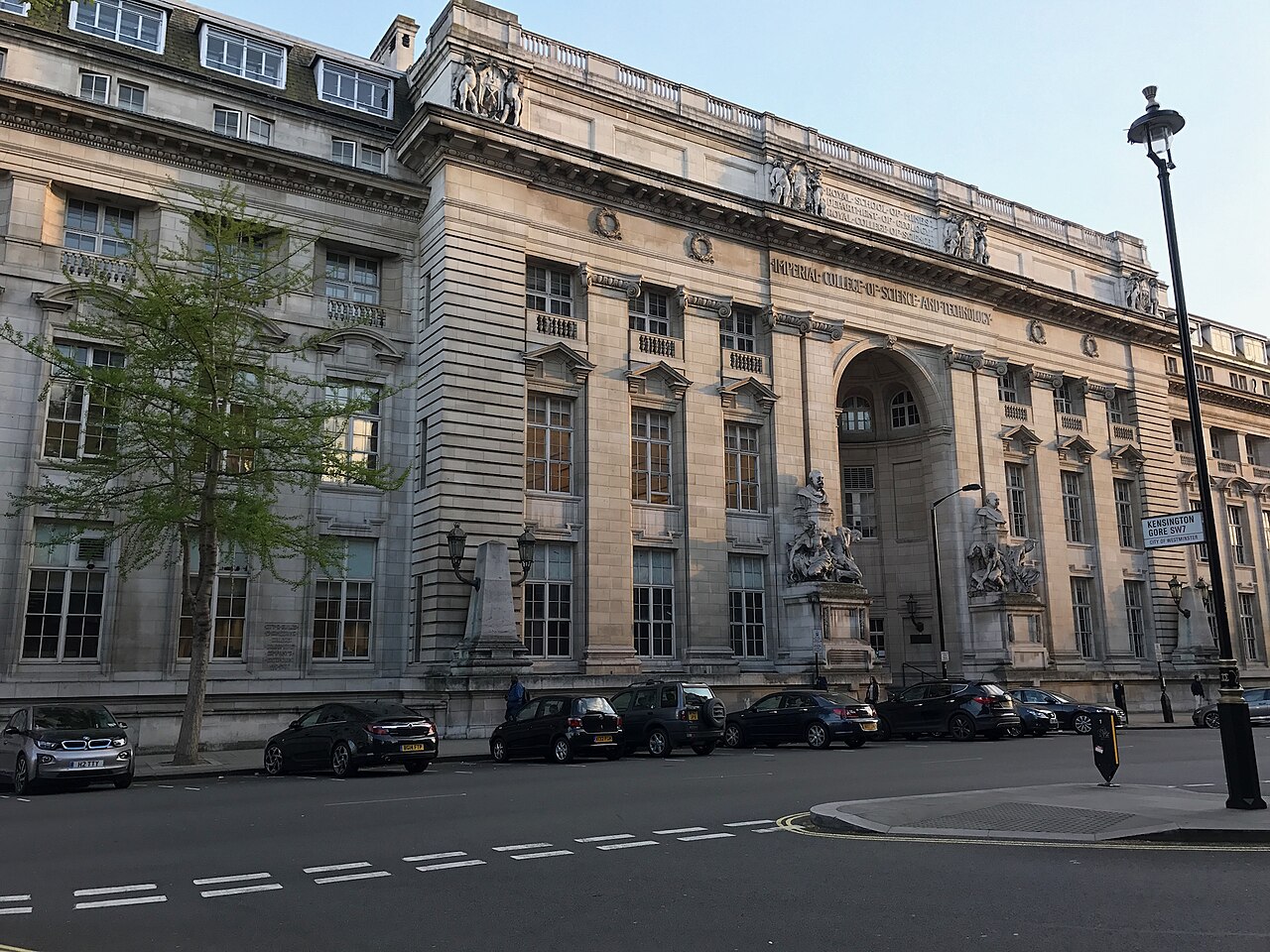
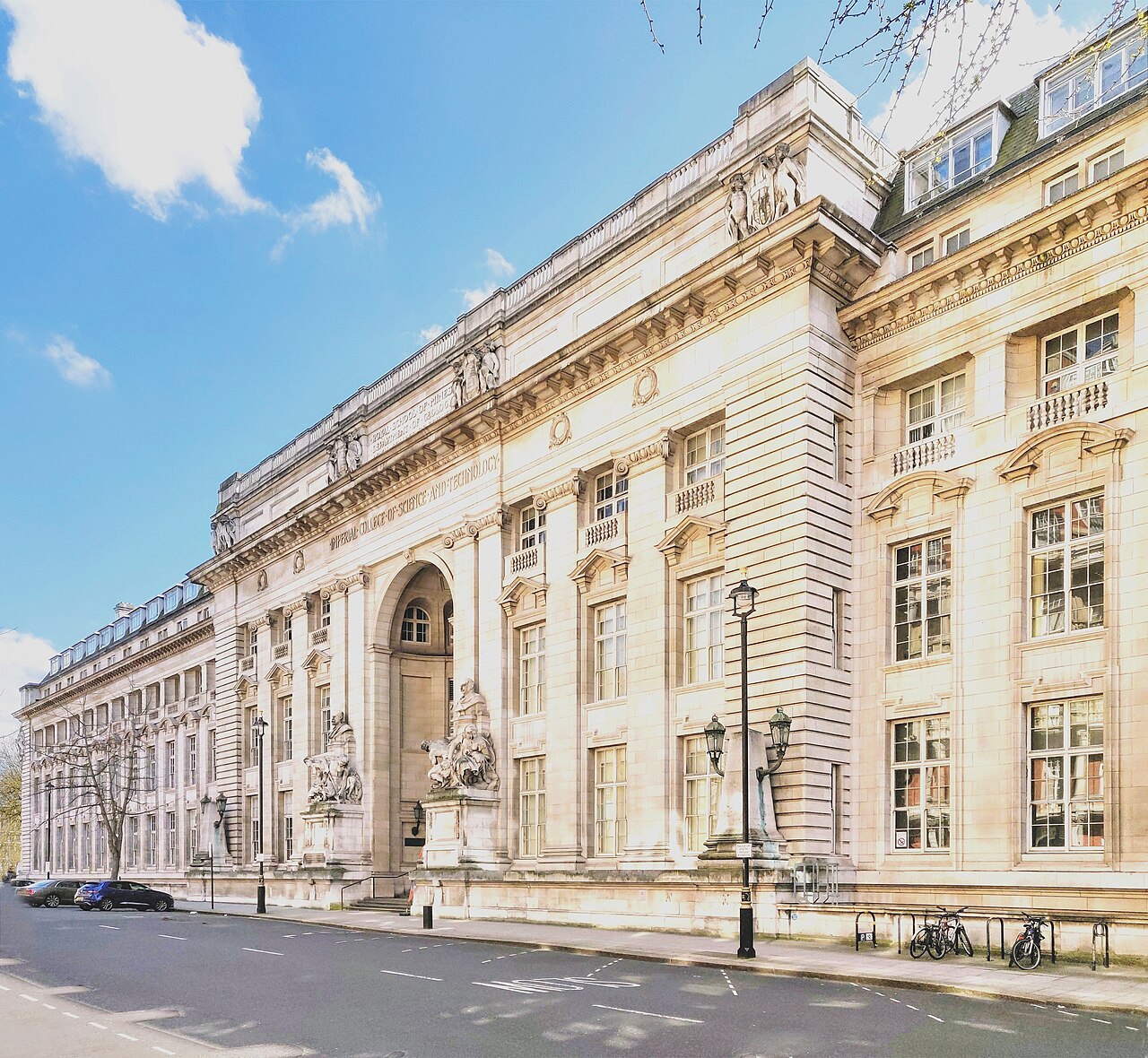
Architecturally, the new college asserted its dominance over the South Kensington terrain. Sir Aston Webb, the architect behind the façade of Buckingham Palace and the Victoria and Albert Museum, designed the grand Royal School of Mines building on Prince Consort Road. Completed in 1913, the building's classical Portland stone exterior projected stability and imperial power. It stood as a physical testament to the college's role as a guardian of the empire's technical knowledge. The laboratories inside, yet, were designed for the grim realities of industrial chemistry and metallurgy, far removed from the neoclassical ornamentation of the exterior.
The founding of Imperial College was a strategic maneuver by the British state to weaponize education against rising continental powers. It was not an organic growth of academia a deliberate consolidation of assets, land, money, and expertise, aimed at preserving economic and military hegemony. The 1907 Charter codified a mission that prioritized industrial utility over abstract knowledge, a directive that would guide the institution through two world wars and into the technological explosions of the 20th and 21st centuries. In the 2020s, the Imperial History Group would begin a serious examination of these origins, specifically the reliance on wealth generated through colonial mining, forcing the institution to confront the cost of its foundational endowment.
Strategic Independence from University of London (2006, 2007)
Founding Charters and the Amalgamation of South Kensington Institutes (1851, 1907)
The separation of Imperial College from the University of London (UoL) in 2007 was not a sudden schism a calculated corporate maneuver, executed with the precision of a hostile takeover. For ninety-nine years, Imperial operated as a constituent college of the federal university, a relationship that began in 1908 to ensure academic standards eventually became a bureaucratic constraint. By the early 21st century, the power had inverted. Imperial College possessed a research budget and global reputation that eclipsed the central administrative body it paid to belong to. The decision to withdraw, formalized in 2006 and enacted in 2007, marked the end of the federal university system as a monolithic entity and established Imperial as a sovereign academic power.
Rector Sir Richard Sykes, a former chairman of GlaxoSmithKline, drove this strategy. His tenure, beginning in 2001, introduced a corporate governance style that viewed the University of London affiliation as a brand liability rather than an asset. Sykes argued that the "University of London" degree title diluted the specific prestige of an Imperial qualification. In December 2005, the Imperial Council announced its intention to negotiate withdrawal. The rationale was blunt: Imperial paid approximately £500, 000 annually to the UoL for administrative services, libraries, and governance structures that Sykes deemed superfluous. "Harvard or MIT don't need a university superstructure," Sykes stated, positioning Imperial not as a London college, as a global competitor to the American Ivy League.
The financial data from the period supports the administration's confidence. In the 2005, 2006 academic year, Imperial reported research grants and contracts totaling £176. 7 million. The college held degree-awarding powers granted by the Privy Council in 2003 had left them dormant, preferring to problem UoL degrees to maintain tradition. Activating these powers required no new legislation, only a political to break with tradition. On October 4, 2006, the University of London Council accepted Imperial's formal request to withdraw. The negotiation was swift, primarily because the UoL absence the use to force a wealthy, high-performing member to stay against its.
July 8, 2007, the centenary of Imperial's founding charter, served as the official independence day. This timing was symbolic, allowing the institution to market its second century as a new era of autonomy. The practical transition involved a phased shift in credentialing. Postgraduates registering in October 2007 became the cohort to receive degrees stamped solely "Imperial College London," followed by undergraduates in 2008. This move forced other UoL giants, specifically University College London (UCL) and King's College London, to reassess their own positions. While they did not immediately secede, they soon sought and utilized their own degree-awarding powers, turning the University of London into a loose confederation of independent universities rather than a unified academic parent.
Critics at the time, including UoL Vice-Chancellor Sir Graeme Davies, characterized the split as "disappointing" and attempted to downplay the structural damage to the federation. Davies compared the move to UCLA theoretically leaving the University of California system, a comparison that failed to acknowledge that Imperial was already financially self-sufficient. The fear among federalists was that Imperial's departure would trigger a domino effect, draining the central university of its most research-intensive members. While the federation survived, its authority diminished. Imperial retained its collaborative ties on its own terms, negotiating partnerships directly rather than through a central Senate.
The economic trajectory of Imperial following the split validates the 2006 strategy. Freed from the federal governance, the college accelerated its fundraising and asset management. The "Independence Dividend" is visible when comparing key metrics from the year of separation to recent fiscal reports. The ability to manage its own endowment, brand, and tuition strategy allowed Imperial to outpace domestic inflation and state funding cuts.
Table 1: The Independence Dividend (2006 vs. 2025)
Metric
2005-2006 (Pre-Split)
2024-2025 (Post-Independence)
Growth Factor
Research Income
£176. 7 Million
£447. 4 Million
2. 5x
Total Student Body
11, 490
~23, 000
2. 0x
Governance Status
Constituent College
Independent University
N/A
Degree Authority
University of London
Imperial College London
N/A
The 2007 separation also allowed Imperial to bypass the slow consensus-building required by the UoL federation when launching new ventures. In the years immediately following independence, Imperial established the Academic Health Science Centre in October 2007, merging the college's medical faculty with St Mary's and Hammersmith hospitals. This integration, the of its kind in the UK, required a speed of decision-making that a federal university structure would have. The administration used its new autonomy to streamline faculty structures, reducing bureaucratic overhead and directing funds back into the "hard" sciences that defined its reputation.
By 2026, the historical view of the 2007 split is that of a necessary modernization. The University of London brand, while historic, offered no competitive advantage in the ruthless global market for international students and research funding. Imperial's leadership correctly identified that their brand equity lay in the name "Imperial," not "London." The withdrawal ended a century of administrative subordination and set the template for the modern, corporate-style management of British super-universities.
White City Campus Expansion and Local Housing Disputes (2013, 2026)
The expansion of Imperial College London into White City represents one of the most aggressive territorial shifts in British academic history, moving the institution's center of from the aristocratic avenues of South Kensington to a post-industrial district defined by social housing and derelict media infrastructure. This migration began in earnest in 2009, when the College purchased the Woodlands site from the BBC for approximately £28 million. The acquisition secured a foothold in an area the Greater London Authority had an "Opportunity Area," a bureaucratic euphemism for zones targeted for high-density redevelopment. By 2013, Imperial had doubled its landholding, acquiring the adjacent 11. 5-acre Unigate Dairy Crest site. These purchases consolidated a 23-acre contiguous block, granting the university a tabula rasa that the listed buildings of Albertopolis could never provide.
The financial of the White City project dwarfs previous capital expenditures in the UK higher education sector. With a projected total investment exceeding £2 billion, the campus was conceived not as a satellite facility as a "Deep Tech" innovation district. The masterplan, designed by Allies and Morrison, envisioned a mixed-use precinct where academic research would fuse direct with corporate R&D. This vision, while commercially potent, immediately placed the university on a collision course with the existing demographic reality of White City. The site sits directly north of the White City Estate, one of London's largest social housing projects, creating a clear physical interface between a global elite institution and a working-class community with austerity.
Planning disputes erupted almost immediately following the submission of the initial "Imperial West" masterplan in 2012. The core conflict centered on housing. The London Borough of Hammersmith and Fulham (LBHF) faced a severe absence of affordable homes, and local policy demanded that large developments designate 35% to 50% of new residential units as affordable. Imperial's proposal for a 35-storey residential tower (Building F) included 192 apartments, the university offered only 59 units as "key worker" housing. Crucially, the College defined these key workers as its own staff, early-career researchers and NHS employees attached to the university, rather than the general public or local council tenants. This semantic maneuver allowed Imperial to claim it was meeting social obligations while building a closed loop of housing for its own payroll.
Residents and housing activists argued that the "key worker" designation was a loophole that accelerated gentrification. The influx of highly paid academic and corporate staff would inevitably drive up local rents and alter the commercial, displacing long-term residents. The 2012 approval by the council, then under a Conservative administration, was contentious. Critics noted that the "affordable" rents were pegged to 80% of the market rate, a figure still vastly out of reach for the average White City household. The friction intensified in 2014 when a Labour administration took control of the council, adopting a more combative stance toward developers and demanding higher genuine affordable housing quotas. Imperial found itself negotiating against a local government that viewed the "Innovation District" with deep skepticism.
The student accommodation component of the campus, Wood Lane Studios, opened in 2012 and further exemplified the economic disconnect. Operated under the "GradPad" brand, these units were marketed at price points frequently exceeding £250 per week, catering to an international student demographic rather than alleviating the student housing emergency for those on standard maintenance loans. The presence of luxury student housing in a poverty-dense postcode created a visible fissure in the community. Local shops and amenities began to pivot toward this transient, wealthy population, a process of commercial displacement that mirrored the residential pressures.
Table 3. 1: Key Developments in the White City Campus Expansion (2012, 2026)
Facility / Building
Opening Year
Primary Function
Controversy / Note
Wood Lane Studios
2012
Postgraduate Housing
High rental costs ("GradPad") criticized for excluding lower-income students.
Translation & Innovation Hub (I-HUB)
2016
Corporate/Academic R&D
Dedicated space for corporate partners, signaling the shift to commercialized science.
Molecular Sciences Research Hub (MSRH)
2018
Chemistry Department
Relocation of the entire Chemistry department from South Kensington.
Sir Michael Uren Hub
2020
Biomedical Engineering
Funded by a £40m donation; focuses on "medtech" commercialization.
School of Public Health
2024
Medical Research/Teaching
Intended to interface with local health needs, though skepticism remains regarding access.
East-West Link
2026 (Start)
Infrastructure
Long-delayed underpass to connect North Kensington; construction programmed for mid-2026.
The commercialization of the campus became the defining feature of its second phase. The opening of the Translation & Innovation Hub (I-HUB) in 2016 and the later completion of the Space signaled that Imperial was prioritizing corporate tenancy. The university became a commercial landlord, leasing space to biotech startups and defense contractors. This strategy was defended as a necessary evolution of the modern university, where funding relies on industrial partnerships. For the residents of the White City Estate, the campus resembled a of glass and steel. The physical blocks were significant; the Westway (A40) and the Central Line railway tracks cut the campus off from the east, and the promised "East-West Link", a pedestrian underpass designed to stitch the wealthy campus to the poorer North Kensington neighborhoods, suffered repeated delays.
By 2024, the completion of the School of Public Health brought a new dimension to the campus. Imperial touted this facility as a to the community, promising research into the very health inequalities that plagued the surrounding borough. The irony of studying urban health disparities from a £100 million facility built on land that was once accessible public infrastructure was not lost on local advocacy groups. The university launched community engagement programs, such as "The Invention Rooms," to provide local youth with maker spaces and education. While these initiatives generated positive metrics for the university's social responsibility reports, they did not address the structural problem of housing tenure or the rising cost of living in W12.
As of early 2026, the tension between the campus and the community remains unresolved. The East-West Link, a serious piece of Section 106 infrastructure required by the original planning agreements, received a resolution to grant planning approval in 2025, with construction programmed to start in mid-2026. This decade-long lag in delivering public infrastructure contrasts sharply with the rapid speed at which the academic and commercial buildings were erected. The dispute highlights a fundamental in priorities: the university's timeline is dictated by research grants and academic years, while the community's needs are immediate and existential. The White City expansion stands as a monument to the modern university's dual identity: a powerhouse of global innovation and a potent agent of local displacement.
Epidemiological Modeling and Government Policy Influence (2020, 2022)
Strategic Independence from University of London (2006, 2007)
On March 16, 2020, the trajectory of the modern world shifted on the axis of a single PDF file. The Imperial College COVID-19 Response Team, led by epidemiologist Neil Ferguson, released Report 9. This document did not suggest policy adjustments. It dismantled the existing strategy of "mitigation" and replaced it with the imperative of "suppression." The report projected that an unmitigated epidemic would result in approximately 510, 000 deaths in Great Britain and 2. 2 million in the United States. These figures were not predictions of the inevitable. They were calculations of the chance catastrophe if governments maintained the. The data reached the White House and Downing Street with the force of a physical blow. Within days, the United Kingdom abandoned its hesitation and entered a full lockdown. The United States followed a similar, though fragmented, route. Imperial College London had authored the global operating manual for the pandemic response.
The mathematical engine driving these projections was a piece of software known as CovidSim. Its origins dated back to 2005. It was originally designed to model influenza pandemics in Thailand. By 2020, the codebase consisted of roughly 15, 000 lines of C. It was a single file of dense, undocumented logic. When the code was released to GitHub in May 2020, it faced immediate and savage scrutiny from the software engineering community. Critics pointed out that the model was stochastic yet absence a fixed seed in iterations. This meant that running the same inputs twice could yield different results. Professional developers described the code as a "buggy mess" and compared it to a fragile version of SimCity. John Carmack, the legendary programmer behind Doom, examined the code. He noted that while it was not the disaster claimed, it contained bugs that would be unacceptable in commercial software. The reliance of the global economy on such a fragile computational architecture raised serious questions about the intersection of academic science and public policy.
The authority of the Imperial model faced a different kind of threat in May 2020. Neil Ferguson, the man the press dubbed "Professor Lockdown," resigned from the Scientific Advisory Group for Emergencies (SAGE). The Daily Telegraph revealed that Ferguson had allowed a woman to visit his home on at least two occasions during the strict lockdown he had helped design. Ferguson admitted to an "error of judgement" and stepped back from his government role. The incident provided ammunition to skeptics who viewed the lockdown measures as draconian and hypocritical. It created a fissure between the scientific elite and the public they sought to protect. Yet the of Imperial College continued to function. The resignation of its figurehead did not stop the institution from dominating the data.
While the modeling team faced political and technical fire, another wing of Imperial College launched a project of arguably greater long-term value. The REal-time Assessment of Community Transmission (REACT) programme, led by Professor Paul Elliott, began in May 2020. Unlike the models which relied on assumptions and incomplete hospital data, REACT sought the ground truth. The study sent home testing kits to over 100, 000 randomly selected people across England every month. This was not a study of the sick. It was a study of the population. The results provided the only unbiased estimate of the virus's prevalence. Government testing data was skewed because it only captured those who sought tests. REACT captured the asymptomatic and the ignored. By late 2021, REACT data showed that primary school children had the highest infection rates. This empirical anchor prevented the government from flying blind during the chaotic waves of the Alpha and Delta variants.
The financial of these operations revealed the deep pockets supporting Imperial's School of Public Health. The Abdul Latif Jameel Institute for Disease and Emergency Analytics (J-IDEA) had been co-founded in 2019 with a substantial donation from Community Jameel. This funding allowed the institute to its operations rapidly when the emergency hit. The Jameel family's involvement provided the resources to hire data scientists and epidemiologists who could work around the clock. By 2021, the institute had become a global node for disease analytics. It advised not just the UK also the World Health Organization and governments across the Global South. The influx of philanthropic capital into Imperial College during this period cemented its status as a geopolitical player. It was no longer just a university. It was a quasi-governmental intelligence agency for biological threats.
Retrospective analyses published between 2022 and 2026 offered a mixed verdict on the Imperial models. A study in the British Medical Journal argued that the projections in Report 9 were remarkably accurate when adjusted for the interventions actually taken. The "doomsday" scenario of 500, 000 deaths was never a prediction of what would happen. It was a warning of what could happen. Yet the communication of this nuance failed. The public frequently remembered the high number and saw the lower actual death toll as evidence of alarmism. Comparisons with Sweden, which avoided a formal lockdown, remained a point of contention. Critics pointed out that Sweden's death rate was lower than the UK's even with ignoring Imperial's advice. Defenders argued that Sweden's population density and voluntary compliance made it a unique case. By 2026, the consensus settled on a middle ground. The Imperial models were indispensable for shocking governments into action. Yet their precision was frequently an illusion created by the certainty of computer code.
Key Metrics of Imperial College Pandemic Response (2020, 2022)
Metric
Value
Context
Report 9 Projected UK Deaths (Unmitigated)
510, 000
Triggered UK lockdown policy shift in March 2020.
Report 9 Projected US Deaths (Unmitigated)
2. 2 Million
by White House Coronavirus Task Force.
REACT Study Sample Size
>100, 000 / month
Randomized home testing to determine true prevalence.
CovidSim Codebase Age
13 Years
Originally written in 2005 for influenza modeling.
Ferguson Resignation Date
May 5, 2020
Resigned from SAGE following lockdown breach.
The legacy of this period is defined by the tension between the clean lines of mathematical theory and the messy reality of human behavior. Imperial College London stood at the center of this storm. Its scientists were lionized as saviors and demonized as tyrants. The code they wrote on laptops in South Kensington dictated the movements of billions of people. The "Imperial Model" became a shorthand for technocratic governance. It showed the power of data to mobilize nations. It also revealed the fragility of trust when the experts fail to live by their own rules. The institution emerged from the pandemic with its reputation scarred its influence vastly expanded. It had proven that in the twenty- century, the most weapon is not a missile. It is a model.
Institutional Bullying Inquiries and The Watt Report Findings (2020)
The internal emergency that engulfed Imperial College London in 2020 did not from academic misconduct or financial fraud, from a catastrophic failure of governance and human resource management at the highest echelon. In June 2020, following whistleblower complaints, the College Council commissioned an independent investigation into allegations of bullying and harassment against President Alice Gast and Chief Financial Officer Muir Sanderson. The inquiry, led by Jane McNeill QC, exposed a toxic institutional culture that stood in clear contrast to the university's public image of scientific rationality and progress. While the administration initially attempted to keep the full findings confidential, the eventual release of the report, forced by the Information Commissioner's Office (ICO), revealed a pattern of behavior that alienated staff and sparked a rebellion among the academic body.
Jane McNeill QC's investigation, frequently colloquially associated with the subsequent governance reviews, delivered a damning verdict on the leadership style of Gast and Sanderson. The report found that the President and CFO had created or contributed to a culture involving "favouritism, exclusion, the making of disparaging comments about others and at times a absence of respect for others." Witnesses described an environment where staff were categorized as "heroes or zeroes," "in the gang or out of the gang," or simply dumped in the "rubbish pot." This binary classification system, enforced by the most figures in the institution, systematically undermined the confidence and professional standing of senior staff members who fell out of favor.
The specific findings against Muir Sanderson were particularly severe. The report documented instances where the CFO used "aggressive and intimidating" behavior. In one egregious example, Sanderson told a female colleague to "watch your tone, young lady," a phrase McNeill noted was patronizing and offensive. Even more disturbing was the that Sanderson had used the phrase "leaving the plantation" in a professional setting. McNeill's report concluded that such language was "abhorrent in a modern workplace" and carried racially offensive connotations, regardless of intent. These were not slips symptoms of a management style that relied on humiliation and dominance rather than collaboration.
Alice Gast, the highest-paid university leader in the United Kingdom at the time, was found to have bullied at least one senior colleague directly. The report detailed how Gast "undermined" this individual personally and professionally to the extent that the victim suffered significant health consequences, including weight loss and insomnia. McNeill noted that while Gast may not have set out with the malicious intent to bully, she "must have known or closed her eyes to the fact" that her treatment of the subordinate would cause significant humiliation. The President's defense, that she was simply a demanding leader, crumbled under the weight of witness testimony describing a vindictive atmosphere where dissent was punished with exclusion.
The aftermath of the inquiry proved as controversial as the findings themselves. In December 2020, the College Council, led by Chair John Allan, announced that while the allegations were upheld, neither Gast nor Sanderson would be dismissed. Instead, they were issued formal apologies and allowed to remain in their posts, purportedly to lead a cultural transformation. This decision ignited a firestorm of indignation across the campus. The University and College Union (UCU) branch at Imperial viewed the retention of the bullies as a betrayal of the university's "zero tolerance" policy. If a junior researcher had used the term "plantation" or bullied a colleague to the point of illness, their dismissal would have been immediate. The double standard applied to the executive team shattered trust in the institution's governance.
The faculty response was swift and. In January 2021, the UCU passed a motion of no confidence in the President and CFO. By February 2022, after the full details of the report were dragged into the sunlight by the ICO ruling, a second vote of no confidence saw 93% of voting staff demand the resignation of the leadership duo. The Students' Union also joined the call, labeling the culture at the top "without empathy." The between the leadership's retention and the treatment of rank-and-file staff was further exacerbated by financial optics. Gast's total remuneration package exceeded £550, 000, and although she took a temporary voluntary pay cut during the COVID-19 pandemic, her full salary was reinstated in November 2020, precisely when the college was implementing pay freezes and redundancies for lower-tier staff.
Timeline of the 2020-2022 Leadership emergency
Date
Event
Key Details
June 2020
Inquiry Commissioned
Jane McNeill QC appointed to investigate whistleblower complaints against Gast and Sanderson.
August 2020
Report Submitted
McNeill delivers findings confirming bullying; Council keeps report confidential.
December 2020
Public Admission
Gast and Sanderson admit to bullying; Council announces they remain in post.
January 2021
Vote of No Confidence
UCU members vote overwhelmingly against the leadership.
February 2022
Report Published
ICO forces release of redacted report; details of "plantation" remark and "hero or zero" culture emerge.
February 2022
Second Vote of No Confidence
93% of staff vote for resignations; Sanderson eventually resigns.
August 2022
Leadership Transition
Alice Gast's term concludes; Hugh Brady assumes the Presidency.
The institutional paralysis continued until the eventual departure of the accused executives. Muir Sanderson resigned in the wake of the report's publication and the intensifying pressure from the community. Alice Gast remained until the conclusion of her contract in August 2022, a "lame duck" presidency marked by continued friction with the unions and a fractured relationship with the student body. Her successor, Hugh Brady, inherited an institution scientifically strong yet administratively traumatized. The scandal forced Imperial to initiate a detailed review of its values and behaviors, resulting in the "Imperial Together" campaign, though skepticism remained high among staff who had witnessed the Council's initial protection of the perpetrators.
The long-term impact of the 2020 inquiry extended beyond the individuals involved. It exposed the fragility of governance structures in modern higher education, where the drive for prestige and revenue can obscure basic duties of care. The "Albertopolis" dream of 1851 had morphed into a corporate hierarchy where the "CEO" (as Gast referred to herself) was insulated from the consequences of her actions. By the time of Alice Gast's death in October 2025, the university had largely moved past the immediate acrimony, yet the McNeill report remains a permanent stain on the college's history, a documented testament to a period where the of excellence was weaponized against the very people who made that excellence possible.
Animal Testing Statistics and Regulatory Compliance Records
White City Campus Expansion and Local Housing Disputes (2013, 2026)
Imperial College London remains one of the highest-volume users of animals for scientific research in the United Kingdom, consistently ranking among the top ten institutions by procedure count. Between 2010 and 2025, the College reported hundreds of thousands of regulated procedures under the Animals (Scientific Procedures) Act 1986 (ASPA). While recent years show a downward trend in total numbers, dropping from a high of nearly 140, 000 in 2010 to approximately 48, 954 in 2024, the institution's history is marked by serious regulatory infractions, high-profile investigations, and a persistent struggle between scientific objectives and welfare compliance.
The following table summarizes the official procedure statistics reported by Imperial College London for the period 2020, 2024. The data reveals a heavy reliance on rodents, specifically mice, which frequently constitute over 90% of the total animal usage. The "Procedure" count includes both experimental manipulations and the breeding of genetically altered animals (GAAs), a category that has grown significantly with the advent of gene-editing technologies.
Imperial College London: Annual Animal Procedures (2020, 2024)
Year
Total Procedures
Mice
Fish
Rats
Other Species*
2024
48, 954
45, 286
785
993
1, 890
2023
60, 580
56, 582
1, 490
1, 521
987
2022
~65, 000
60, 000+
1, 200+
1, 800+
~2, 000
2021
61, 200
57, 500
1, 100
1, 600
1, 000
2020
63, 670
59, 800
1, 050
1, 750
1, 070
*Other species include guinea pigs, rabbits, hamsters, ferrets, and birds. Historical data indicates the use of non-human primates (macaques) and pigs in specific years, though 2024 public summaries emphasize rodents and fish.
The College's compliance record faced its most severe test in 2013, following an undercover investigation by the British Union for the Abolition of Vivisection (BUAV, Cruelty Free International). An investigator infiltrated the Hammersmith campus animal facility and documented what was described as "appalling animal suffering" and a "nightmare world" of negligence. The footage showed rats beheaded with guillotines, animals left to suffer in cages without water, and staff mocking the creatures in their care. The triggered an immediate public outcry and forced the Home Office to launch a formal inquiry.
The subsequent government report, published in 2014, was damning. Home Office inspectors identified a "widespread poor culture of care" at Imperial. The investigation substantiated numerous breaches of the ASPA. Consequently, eight individuals were formally sanctioned, and the Establishment Licence Holder, the senior official legally responsible for compliance, resigned from his role. Parallel to the government inquiry, Imperial commissioned an independent review led by Professor Steve Brown. The "Brown Report" (December 2013) concluded that the College's ethical review body (AWERB) was "not fit for purpose" and that the institution suffered from complacency regarding animal welfare standards. The report made 33 recommendations for overhaul, which the College accepted in full.
Even with these reforms, the College continues to face scrutiny. In 2025, student protesters and groups like London Animal Rights Advocacy targeted the South Kensington campus, highlighting the ethical cost of the 60, 000+ animals used annually. The demonstrations frequently focus on the "severity" classifications of the procedures. While the majority are classified as "mild" or "sub-threshold" (frequently breeding or simple injections), a fraction fall into the "moderate" or "severe" categories, involving surgery, induced disease states, or significant physiological distress. In 2024, approximately 997 procedures were classified as "severe," and 394 were "non-recovery," meaning the animal was anesthetized for the experiment and never allowed to wake up.
Historically, the constituent medical schools that form Imperial College (such as St Mary's Hospital Medical School) were deeply entrenched in the vivisection debates of the 19th and early 20th centuries. The "Brown Dog Affair" (1903, 1910), while centered on University College London, inflamed the entire London medical community. Medical students from across the city, including those from schools later merged into Imperial, frequently clashed with anti-vivisectionists and suffragettes in street riots, defending their right to use dogs in physiological demonstrations. This aggressive defense of animal experimentation established a culture of insularity that for decades, arguably contributing to the "complacency" identified by the Brown Report a century later.
In response to the 2013 scandal, Imperial has attempted to pivot toward transparency. It became a signatory to the "Concordat on Openness on Animal Research" and was awarded "Leader in Openness" status by Understanding Animal Research for the period 2025, 2028. The College publishes annual statistical summaries and case studies on the "3Rs" (Replacement, Reduction, Refinement). For instance, researchers have developed "organ-on-chip" technologies to model human lung disease, reducing the need for mouse models. Yet, the sheer volume of living animals processed through its facilities, nearly 50, 000 in 2024 alone, ensures that Imperial remains a primary target for abolitionist campaigns and regulatory oversight.
Endowment Asset Allocation and Defense Sector Funding
The financial architecture of Imperial College London operates as a sophisticated engine of capital accumulation, distinct from its academic mission yet inextricably bound to it. As of July 31, 2025, the college's Endowment Fund reported a valuation of £599 million. This figure, while substantial, represents only a fraction of the institution's total net assets, which exceed £2 billion when including the operational estate. The endowment is managed through a "Unitised Scheme," a structure analogous to a unit trust, allowing the college to pool various restricted and unrestricted funds into a single investment vehicle. This modernization of assets marks a sharp departure from the college's 19th-century origins, where wealth was measured not in diversified equities in the physical acreage of South Kensington secured by the Royal Commission for the Exhibition of 1851.
Asset allocation within the endowment reveals a strategy prioritizing long-term capital preservation over ethical purism. The portfolio is heavily weighted towards global equities and private equity, with a significant, direct stake in commercial real estate. The crown jewel of this property portfolio is not the historic South Kensington campus, the White City development. This expansion serves a dual purpose: it acts as a speculative real estate asset and a strategic lure for corporate partners. By co-locating academic laboratories with industry research hubs, Imperial monetizes its intellectual property, creating a revenue stream that bypasses traditional tuition and grant structures.
The college's investment policy, formally codified as the "Socially Responsible Investment" (SRI) policy, contains a deliberate and contentious exclusion. While the administration has moved to divest from thermal coal and tar sands, yielding to climate activism, it maintains a steadfast refusal to divest from the defense sector. The policy explicitly bans investment in companies manufacturing "illegal munitions," such as cluster bombs or landmines prohibited under international treaties. Yet this definition creates a permissive corridor for conventional and nuclear weapons manufacturers. Consequently, the endowment retains the liberty to hold equity in major defense contractors, provided their products remain within the bounds of UK and international law. This distinction has fueled a firestorm of student dissent, particularly during the 2024 and 2025 academic years.
Imperial's financial entanglement with the defense sector extends far beyond passive endowment holdings. The college functions as a serious research node for the United Kingdom's military-industrial complex. This relationship is institutionalized through "Strategic Alliances" with entities like the Atomic Weapons Establishment (AWE), the body responsible for designing and manufacturing the UK's nuclear warheads. The partnership with AWE is not transactional operational. Imperial researchers utilize the AWE's Orion laser facility to conduct high-energy density physics experiments, work that simulates conditions found in nuclear detonations. While the college frequently frames this research under the banner of "laboratory astrophysics," the funding method and the dual-use nature of the data serve the maintenance of the Trident nuclear deterrent.
The scope of this defense integration is visible in the roster of corporate sponsors funding engineering and computing research. BAE Systems, Rolls-Royce, and QinetiQ are not just donors; they are active participants in the college's research ecosystem. Rolls-Royce, which manufactures the nuclear propulsion systems for the Royal Navy's submarine fleet, has provided millions in research income to the Faculty of Engineering. These funds frequently support the "Nuclear Energy Futures" Centre for Doctoral Training, creating a talent pipeline that feeds directly into the defense sector. Similarly, the Institute for Security Science and Technology (ISST) at Imperial acts as a between academic innovation and national security needs, securing funding from the Ministry of Defence (MoD) and the US Department of Defense to advance technologies in cyber security, biometrics, and behavioral analytics.
The historical trajectory of this funding model dates back to the early 20th century. During World War I, the Royal School of Mines and the Royal College of Science, Imperial's constituent colleges, were mobilized for the war effort, conducting research into chemical warfare and trench mining. World War II cemented this utility, with Imperial scientists pivotal in the development of radar and the atomic bomb via the MAUD Committee. In the post-Cold War era, as government direct funding for universities fluctuated, Imperial aggressively courted privatized defense contractors. The 2000s saw the formalization of these ties into long-term framework agreements, insulating the college from the volatility of public sector austerity.
Student opposition to these financial ties reached a zenith in May 2025. Following the escalation of conflict in Gaza, a coalition of student groups established an encampment on the Queen's Lawn, demanding full divestment from arms manufacturers including BAE Systems and Caterpillar. The protesters argued that the college's "Socially Responsible" policy was hypocritical, as it profited from companies whose hardware was deployed in conflict zones involving high civilian casualties. Provost Ian Walmsley rejected these demands in early 2025, reiterating that the college's investments complied with its ethical guidelines and that the institution would not adopt a foreign policy stance. This refusal highlights the administration's view of defense research: not as a moral liability, as a patriotic duty and a financial need.
Table 7. 1: Key Defense and Security Research Partners (2020, 2026)
Grants for basic research with chance military applications (e. g., Office of Naval Research).
The Centre for Blast Injury Studies represents the most sophisticated attempt to sanitize defense funding through a humanitarian lens. Funded largely by the Royal British Legion and the MoD, the centre studies the biomechanics of explosive trauma. While the stated aim is to improve treatment for victims of roadside bombs, the research simultaneously informs the design of more resilient military vehicles and armor. This dual-use allows Imperial to maintain its moral standing by focusing on the "saving lives" aspect of the research, even as the funding originates from the of war. The college uses this narrative to deflect criticism, framing its defense ties as a contribution to the safety of service personnel rather than the lethality of combat.
By 2026, the between the student body's ethical expectations and the administration's fiscal strategy had become a defining feature of campus politics. The endowment's continued exposure to the arms trade, paired with the refusal to implement an "Imperial Zero Index" for defense comparable to its fossil fuel metrics, signals a calculated decision. The administration bets that the prestige of its engineering output and the sheer of its defense income outweigh the reputational risk posed by student activists. In this calculus, the endowment is not a savings account; it is a political instrument, signaling to the global defense industry that Imperial College London remains open for business, regardless of the geopolitical weather.
Petrochemical Industry Partnerships and Decarbonization Commitments
Epidemiological Modeling and Government Policy Influence (2020, 2022)
The financial lifeblood of Imperial College London has long circulated through the arteries of the global petrochemical industry. While the institution publicly champions a "Transition to Zero Pollution," its internal ledgers and laboratory manifests reveal a dependency on oil and gas revenues that complicates its environmental narrative. For over three decades, the college has maintained symbiotic relationships with entities such as Royal Dutch Shell, BP, and QatarEnergy, accepting tens of millions of pounds to refine the technologies of extraction under the banner of efficiency and, more, decarbonization. The of this financial entanglement is a matter of public record, though frequently obscured by the college's fragmented reporting. Between 2017 and 2021 alone, Imperial accepted £54 million from fossil fuel companies, a figure that placed it second only to the University of Oxford among UK higher education institutions. Even as public sentiment shifted violently against hydrocarbon extraction, the flow of capital. From 2022 to late 2025, the college took in an additional £6. 7 million from the sector. These funds do not sponsor lecture halls; they purchase direct access to world-class research infrastructure. The Shell-Imperial Advanced Interfacial Materials Science (AIMS) Centre and the University Technology Centre (UTC) for fuels and lubricants stand as physical testaments to a partnership that has endured for more than 30 years, embedding corporate objectives deep within the academic curriculum. The most colossal of these collaborations is the Qatar Carbonates and Carbon Storage Research Centre (QCCSRC). Established with a $70 million (approximately £54 million) investment from Qatar Petroleum ( QatarEnergy), Shell, and the Qatar Science & Technology Park, this ten-year strategic alliance was designed to unlock the secrets of carbonate reservoirs. While the college frames this research as important for Carbon Capture and Storage (CCS), a method to bury greenhouse gases, critics point out that the same fluid modeling is essential for Enhanced Oil Recovery (EOR). Understanding how fluids move through porous rock allows engineers to inject CO2 not just to store it, to force stubborn crude oil out of the ground. In this dual-use science, the line between saving the planet and maximizing a well's output blurs into irrelevance. In 2020, facing mounting pressure from student groups like Imperial Climate Action, the administration announced a "Transition to Zero Pollution" initiative. This strategic pivot included a pledge to divest the college's endowment from fossil fuel companies, a relatively painless move given the endowment's diversified portfolio. Far more contentious was the policy regarding research funding. The college declared it would only accept funds from energy companies if the specific research contributed to decarbonization and if the company demonstrated a "credible strategic commitment" to achieving net zero by 2050. This policy birthed the "Imperial Zero Index" (IZI), a vetting method introduced to assess the climate credentials of corporate partners. By February 2026, yet, the IZI had become a lightning rod for controversy rather than a tool of purification. Student journalists at *Felix*, the college newspaper, exposed the index as a bureaucratic filter that allowed continued collaboration with major polluters. The 2025 assessment cleared companies like Woodside Energy, an Australian giant aggressively expanding its gas operations, to continue funding research. The justification was that these companies were "working towards" transition, a vague metric that allowed the college to maintain its revenue streams while claiming moral oversight. The friction between the college's stated values and its operational reality generated intense internal heat in early 2026. The *Felix* investigation revealed that the "decarbonization" loophole was wide enough to drive a tanker through. Research labeled as "sustainability" frequently involved optimizing gas extraction pipelines or developing materials that could withstand the corrosive environments of sour gas fields, projects that technically reduced operational emissions facilitated the continued burning of hydrocarbons. The "Imperial Zero Pollution" brand, intended to signal leadership, was derided by staff and students as a sophisticated instrument of "greenwashing," designed to sanitize oil money before it hit the university's accounts. The defense offered by the administration relies on the argument of engagement over divestment. Senior leadership, including the Vice-Provost for Research, has argued that isolating the fossil fuel industry removes the college's ability to influence its direction. They contend that Imperial's engineers are best positioned to help these giants pivot to hydrogen, wind, and CCS. Yet, the data suggests the industry values Imperial not for its moral guidance, for its technical prowess in solving immediate extraction problems. The BP-International Centre for Advanced Materials (BP-ICAM), a $100 million consortium established in 2012, focused heavily on structural materials and corrosion, problems inherent to oil rigs and pipelines, not wind farms. As of 2026, the college remains in a lucrative bind. To sever ties completely would mean abandoning state-of-the-art laboratories and dismissing dozens of researchers whose salaries are paid by Doha and The Hague. The "Imperial Zero Index" remains the official shield, its credibility has fractured. The administration's insistence that it can partner with oil majors to destroy the oil business is a dialectic that fewer observers are to accept. The laboratories in South Kensington continue to hum with the work of extraction, funded by the very profits that the "Transition to Zero Pollution" initiative ostensibly seeks to eliminate.
Table 8. 1: Major Petrochemical Research Funding & Partnerships (2008, 2026)
Period
Partner(s)
Project / Centre
Approx. Value
Stated Purpose
2008, 2018
Qatar Petroleum, Shell
Qatar Carbonates & Carbon Storage Research Centre (QCCSRC)
BP-International Centre for Advanced Materials (BP-ICAM)
$100, 000, 000*
Structural materials, corrosion prevention, separations chemistry. (*Shared across 4 universities)
2017, 2021
Various (Shell, BP, etc.)
Direct Research Funding
£54, 000, 000
General research contracts, scholarships, consultancy.
2022, 2025
Shell, Petronas, BP, etc.
Direct Research Funding
£6, 700, 000
Research deemed compliant with "decarbonization" criteria.
Ongoing
Shell
University Technology Centre (UTC)
Undisclosed
Fuels, lubricants, and engine efficiency research.
Historical Associations with Eugenics and Colonial Science
The name "Imperial" is not a metaphor. It serves as a literal descriptor of the institution's founding purpose: to function as the scientific engine of the British Empire. While other universities trace their lineage to medieval clerics, Imperial College London arose from the specific geopolitical needs of the late 19th and early 20th centuries. Its mandate was to train the engineers who would extract mineral wealth from the colonies and the administrators who would manage the Empire's vast resources. This mission was underwritten by capital derived directly from colonial extraction, specifically the diamond and gold mines of Southern Africa. The financial bedrock of the college rests on the fortunes of the "Randlords," a group of financiers who controlled the diamond and gold mining industries in South Africa. Alfred Beit and Julius Wernher, two of the most prominent figures in this circle, provided the serious endowments that allowed the college to incorporate in 1907. Beit, a close associate of Cecil Rhodes, bequeathed £135, 000 and 5, 000 De Beers shares to the project. This wealth was generated through the migrant labor system in Kimberley and the Witwatersrand, where black workers toiled in dangerous conditions for fractionally lower wages than their white counterparts. Beit was also a financier of the botched Jameson Raid of 1895, an aggressive attempt to trigger a coup in the Transvaal Republic that precipitated the Second Boer War. The Beit Quad and Beit Hall stand today as architectural testaments to this funding, their stones paid for by the profits of the Kimberley Hole. The Royal School of Mines (RSM), one of the three founding institutions merged to form the college, operated as the training ground for this extractive economy. Established in 1851 by Henry De la Beche, the RSM did not teach geology; it codified the practice of "colonial science." Its curriculum prepared generations of surveyors and metallurgists to map the Empire's territories, locate economic deposits, and facilitate their removal to the metropole. This was science applied to the specific end of imperial resource management. The officers of the Geological Survey doubled as lecturers, ensuring that the classroom instruction remained tightly paired with the government's strategic interests in the colonies. Beyond economics, the college's intellectual history intersects with the development of scientific racism. Thomas Henry Huxley, the biologist known as "Darwin's Bulldog," served as the Dean of the Royal College of Science (another founding institution) and is the namesake of the Huxley Building. While Huxley publicly opposed slavery, his 1865 essay *Emancipation, Black and White* articulated a rigid racial hierarchy that provided a veneer of biological legitimacy to Victorian prejudices. In the text, Huxley argued that "no rational man, cognisant of the facts, believes that the average negro is the equal, still less the superior, of the average white man." He asserted that even with the removal of widespread blocks, the "highest places in the hierarchy of civilisation assuredly not be within the reach of our dusky cousins." These views were not fringe musings the authoritative pronouncements of the institution's leading scientific figure, embedding a logic of biological inequality into the college's early intellectual culture. This intellectual environment provided fertile ground for the eugenics movement. In 1912, the International Eugenics Congress convened in South Kensington, at the site that is Imperial College. While the Galton Laboratory at University College London (UCL) served as the statistical headquarters for eugenics, Imperial provided the venue for its international legitimization. The congress brought together scientists, politicians, and social reformers to discuss the "improvement" of the human race through selective breeding, a concept that inextricably linked biological fitness with class and race. The event demonstrated how the scientific prestige of South Kensington was used to amplify eugenics as a respectable field of inquiry. The legacy of these associations erupted into public controversy in the 2020s. Following the global protests sparked by the murder of George Floyd, Imperial commissioned an independent History Group to examine its ties to the British Empire. The group's report, released in 2021, delivered a blunt assessment. It recommended renaming the Huxley Building and Beit Hall, citing Huxley's contributions to scientific racism and Beit's connection to the "oppressive treatment" of workers in South Africa. The report challenged the college to stop honoring figures whose actions and writings contradicted modern values of equality. The administration's response revealed the tension between historical reckoning and institutional continuity. In 2022, the President's Board and Council rejected the recommendation to rename the buildings. Instead, they opted for a strategy of "contextualization," promising to install plaques and QR codes that would explain the complex histories of these figures while retaining their names on the facades. This decision drew sharp criticism from student groups and the authors of the report, who argued that retaining the names sanitized the college's colonial origins. Conversely, a group known as "History Reclaimed" defended Huxley, arguing that his views should be judged by the standards of his time rather than 21st-century morality. As of 2026, the names remain. The Huxley Building still houses the Department of Mathematics and the Department of Computing, and students still reside in Beit Hall. The college has attempted to balance this by launching new scholarship programs targeting underrepresented groups and funding research into its own history. Yet, the physical campus continues to function as a monument to the era of high imperialism. The statues, inscriptions, and endowments serve as persistent reminders that Imperial College London was built not just on scientific curiosity, on the specific political and economic requirements of maintaining global dominance.
Key Historical Figures and Colonial Ties
Figure/Entity
Role/Connection
Source of Wealth/Ideology
Modern Controversy (2020, 2026)
Alfred Beit
Major Donor (Beit Quad, Beit Hall)
Diamond/Gold mining (De Beers); Migrant labor exploitation; Jameson Raid financier.
History Group recommended renaming Beit Hall. Council retained name, added context.
Julius Wernher
Major Donor
Diamond/Gold mining; Partner of Beit and Rhodes.
Identified as beneficiary of colonial extraction; legacy contextualized.
T. H. Huxley
Dean, Royal College of Science
Biologist; Author of Emancipation, Black and White.
Essay argued for racial hierarchy. Building renaming recommended rejected.
Royal School of Mines
Founding Institute
Training ground for colonial resource extraction.
Curriculum historically aligned with imperial economic interests.
Medical School Consolidations and NHS Trust Integrations
Institutional Bullying Inquiries and The Watt Report Findings (2020)
The history of medicine at Imperial College London is not a linear narrative of organic growth a complex record of aggressive acquisition, forced marriages, and the systematic absorption of London's independent teaching hospitals. While the College itself dates to 1907, its medical faculty is a composite entity stitched together from institutions that operated as fierce rivals for nearly three centuries. The modern Imperial College School of Medicine (ICSM) exists as a centralized monolith, yet its foundations rest on the dissolved identities of three undergraduate medical schools and two postgraduate institutes, each with distinct lineages dating back to the Georgian and Victorian eras.
The earliest component, Westminster Hospital Medical School, began formally training physicians in 1834, though the hospital itself was established in 1719 as a charitable endeavor to treat the sick poor. Its long-standing rival, Charing Cross Hospital Medical School, was founded in 1818 by Dr. Benjamin Golding, who pioneered the concept that a hospital and a medical school should be integral parts of a single institution, a philosophy that would ironically serve as the justification for its absorption into Imperial nearly 180 years later. For much of the 19th and 20th centuries, these schools operated as independent fiefdoms, fiercely protective of their autonomy, alumni networks, and clinical territories. St Mary's Hospital Medical School, founded in 1854 in Paddington, held perhaps the most prestigious reputation, bolstered by Sir Alexander Fleming's discovery of penicillin in its laboratories in 1928. These institutions were not educational facilities; they were tribal communities that viewed consolidation as an existential threat.
The era of independence began to fracture in the late 20th century, driven by government reports demanding efficiency and the rationalization of London's fragmented medical education system. The Flowers Report of 1980 acted as the initial tremor, recommending the consolidation of the capital's medical schools to reduce duplication and overhead. This pressure forced the 1984 merger of Charing Cross and Westminster, creating the Charing Cross and Westminster Medical School (CXWMS). This union was an uneasy administrative marriage that foreshadowed the larger consolidations to come. By the early 1990s, the Tomlinson Report further argued that London had too hospitals and medical schools for its population, explicitly targeting the remaining independent schools for merger with multi-faculty universities.
Imperial College, historically an engineering and science powerhouse with no medical school, seized this regulatory momentum to expand its domain. In 1988, St Mary's Hospital Medical School merged with the College, becoming a constituent college and giving Imperial its foothold in clinical medicine. This arrangement for nearly a decade until the "Big Bang" of 1997. In a massive restructuring operation, Imperial amalgamated St Mary's, the Charing Cross and Westminster Medical School, the Royal Postgraduate Medical School (based at Hammersmith Hospital), and the National Heart and Lung Institute (NHLI) into a single entity: the Imperial College School of Medicine. The sheer of this consolidation was in British academic history. Overnight, Imperial controlled a vast clinical network across West London, absorbing the postgraduate research prowess of Hammersmith, widely considered the UK's premier research hospital, and the specialized cardiovascular expertise of the NHLI.
The 1997 merger was administrative and academic, the integration of clinical delivery followed a decade later with the creation of the Academic Health Science Centre (AHSC). In October 2007, the National Health Service (NHS) trusts responsible for St Mary's and Hammersmith hospitals merged to form the Imperial College Healthcare NHS Trust. This was not a standard NHS reconfiguration; it was explicitly designed to mimic the integrated models of US giants like Johns Hopkins. The Trust and the College formed the UK's AHSC, a structure intended to align the university's research agenda directly with patient care. Lord Darzi, a key architect of this strategy, promoted the "bench to bedside" model, theoretically accelerating the translation of laboratory discoveries into clinical treatments. The AHSC designation granted the institution significant influence over national health policy and research funding, cementing Imperial's status as a biomedical superpower.
The integration, while academically potent, exposed the university to the volatile financial realities of the NHS. The Imperial College Healthcare NHS Trust frequently operated with substantial deficits, driven by the immense cost of maintaining aging Victorian infrastructure. By 2015, the Trust faced a deficit of nearly £48 million, and by 2024, the backlog maintenance bill for its estates had ballooned to over £1. 3 billion, one of the highest in the English NHS. The physical condition of St Mary's Hospital became a symbol of this; while Imperial's researchers worked in state-of-the-art laboratories, the hospital wards they walked through suffered from leaking roofs and crumbling masonry.
The tension between high-tech ambition and infrastructural decay came to a head in the "Shaping a Healthier Future" program, launched in 2012. This controversial plan aimed to reconfigure hospital services across North West London, proposing the closure of the A&E department at Charing Cross Hospital to centralize acute care at St Mary's and Hammersmith. The plan faced ferocious public opposition and was scrapped in 2019, not before it had paralyzed capital investment for nearly a decade. The uncertainty left the Trust with deteriorating assets and no clear route to modernization.
By early 2026, the between the College's real estate ambitions and the Trust's clinical reality had become clear. In January 2026, plans were submitted for the "Paddington Hub," a 16-storey commercial life sciences tower to be built on the site of the former Imperial College Medical School building at St Mary's. The university had vacated the premises, deeming the 19th-century structure unsuitable for modern science, and moved its primary medical teaching to the Sir Alexander Fleming Building and new facilities at White City. Meanwhile, the redevelopment of the actual St Mary's Hospital remained trapped in bureaucratic limbo. Although the government released £19. 4 million in February 2026 to keep the design phase alive, the construction funding was pushed back to the 2035, 2038 window, leaving the hospital to operate in facilities that predated the discovery of the germ theory of disease.
Timeline of Major Medical Consolidations (1818, 2007)
Year
Event
Significance
1818
Charing Cross Hospital Medical School founded
Established the principle of integrated hospital/school teaching.
1834
Westminster Hospital Medical School founded
Formalized training at one of London's oldest voluntary hospitals.
1854
St Mary's Hospital Medical School founded
Became a leading center for bacteriology (Penicillin discovered 1928).
1935
British Postgraduate Medical School opens
Later became the Royal Postgraduate Medical School (Hammersmith).
1984
Merger: Charing Cross + Westminster
Formed CXWMS; the major step in West London consolidation.
1988
Merger: St Mary's + Imperial College
Imperial's acquisition of a medical school.
1997
Formation of Imperial College School of Medicine
Absorbed St Mary's, CXWMS, RPMS, and NHLI into one faculty.
2007
Formation of Imperial College Healthcare NHS Trust
Merger of NHS delivery arms; creation of the UK's AHSC.
The consolidation of these medical schools has fundamentally altered the character of medical education in West London. The distinct cultures of "The Cross," "Westminster," and "Mary's" have largely been erased, replaced by the corporate identity of Imperial. While this unification created a research engine capable of attracting global talent and funding, evidenced by the rapid mobilization of the AHSC during the COVID-19 pandemic, it also tethered the university's medical fortunes to an NHS system in perpetual financial emergency. The 2026 submission of plans to replace the historic medical school building with a commercial life sciences tower serves as the final tombstone for the era of the independent medical school, signaling a future where medical education is inextricably bound to biotechnology enterprise and commercial real estate development.
Executive Compensation and Administrative Governance Structure
The administrative of Imperial College London operates as a centralized corporate autocracy, distinct from the collegial governance models of its medieval counterparts like Oxford or Cambridge. While the 1907 Royal Charter established the institution, the governance structure underwent a radical consolidation of power following Imperial's secession from the University of London in 2007. This independence granted the College Council absolute sovereignty over executive compensation, bypassing the federal oversight that previously constrained salary bands. The result was an immediate and sharp escalation in senior executive pay, culminating in a decade of compensation scandals that frequently eclipsed the university's academic achievements.
The Council serves as the supreme governing body, legally responsible for the university's finance, property, and strategic direction. Composed of up to 23 members, the Council is dominated by "independent" members drawn from the corporate and financial sectors, rather than the academic community. This composition has a boardroom culture that mirrors the FTSE 100 rather than the public sector. The President, functioning as the Chief Executive Officer, reports directly to this body. Beneath the Council lies the Senate, theoretically the supreme academic authority, yet in practice, its influence over financial and structural decisions is subordinate to the Council and the University Management Board (UMB). The Court, a body previously representing alumni and external officials, was abolished in the early 2020s, ree of the few remaining external checks on Council power.
Executive compensation at Imperial College became a matter of national controversy during the tenure of Professor Alice Gast (2014, 2022). Gast, an American chemical engineer, commanded a remuneration package that frequently ranked as the highest in the British higher education sector. Her total compensation reached a zenith of £714, 000 in the 2021, 2022 financial year. This figure included a base salary, performance bonuses, and the taxable benefit of living in the President's official residence at 170 Queen's Gate, a sprawling mansion in South Kensington. The College paid the tax bill associated with this housing benefit, a perk worth over £100, 000 annually. This arrangement even as the university engaged in bitter disputes with the University and College Union (UCU) regarding staff pensions and pay stagnation.
The between executive privilege and staff austerity widened further during the 2020 bullying scandal. An independent investigation led by Jane McNeill QC found that President Gast and her Chief Financial Officer, Muir Sanderson, had bullied senior staff members. The report described a culture of "favouritism," "exclusion," and "disparaging comments" at the very top of the administration. even with these findings, the Council refused to dismiss either executive. Gast retained her position until the end of her contract, while Sanderson remained in post after a brief leave of absence. The Council's decision to protect the executive team triggered a vote of no confidence from the academic staff, yet the governing body ignored the faculty's demand for resignation. The administration subsequently attempted to suppress the full release of the McNeill report, yielding only after the Information Commissioner's Office (ICO) intervened in 2022 to force transparency.
The arrival of Professor Hugh Brady as President in August 2022 marked a shift in optics not in the fundamental structure of executive entitlement. Brady, formerly the Vice-Chancellor of the University of Bristol, accepted a remuneration package that appeared lower on paper remained vast by public sector standards. Unlike Gast, Brady opted not to live in the official residence, receiving a £76, 000 annual housing allowance instead. This accounting shift reduced his total reported remuneration to approximately £476, 000 in his full year. While this represented a decrease from the Gast era, the £76, 000 housing allowance alone exceeded the total annual salary of the majority of Imperial's research and administrative staff.
The following table outlines the trajectory of Presidential compensation during the transition from the Gast administration to the Brady administration, highlighting the financial of the office.
Financial Year
President
Total Remuneration
Housing/Benefits Context
2019, 2020
Alice Gast
£554, 000
Included residence at 170 Queen's Gate.
2020, 2021
Alice Gast
£528, 000
Slight reduction during COVID-19 voluntary pay cut.
2021, 2022
Alice Gast
£714, 000
Inflated by tax payments on accommodation benefits.
2022, 2023
Hugh Brady
£476, 000
Opted for £76k housing allowance over official residence.
2023, 2024
Hugh Brady
£461, 000
Decrease due to pension contribution adjustments.
Governance stability suffered another blow in 2023 involving the Chair of the Council, John Allan. Allan, a prominent business figure who also chaired Tesco and Barratt Developments, faced allegations of misconduct in his corporate roles. Although the allegations did not pertain to his conduct at Imperial, he "stepped back" from his duties in May 2023, only to resume them in July to conclude his term. The incident further exposed the risks of the Council's heavy reliance on corporate heavyweights whose external liabilities can damage the university's reputation. The Council's insular selection process for its own members ensures that the governing body remains a self-perpetuating oligarchy, largely insulated from the democratic of the staff or student body.
The Remuneration Committee, a subgroup of the Council, determines the pay of the President and senior management. This committee operates with high confidentiality, releasing minutes that offer little insight into the metrics used to justify salary increases. In 2024, the pay ratio between the President and the median staff member stood at approximately 8. 8 to 1. While this was a slight improvement from the 9. 2 ratio of the previous year, it reflected pension adjustments rather than a structural move toward equity. The university continues to struggle with a gender pay gap, with 2024 data showing women earning 94 pence for every pound earned by men in median hourly pay, a statistic the administration attributes to the underrepresentation of women in senior academic grades.
The administrative structure also includes the Provost, who acts as the chief academic officer. This role was strengthened in the post-2010 era to manage the day-to-day academic operations, theoretically freeing the President to focus on fundraising and global strategy. Ian Walmsley, serving as Provost during the transition from Gast to Brady, received compensation exceeding £300, 000. The proliferation of senior administrative titles, Vice-Provosts, Associate Provosts, and Faculty Deans, has created a bloated upper-management tier. Critics within the university that this administrative expansion absorbs resources that should be directed toward laboratories and teaching facilities.
By 2026, the governance model of Imperial College London remains firmly entrenched in a corporate-executive mold. The abolition of the Court and the centralization of authority within the Council have streamlined decision-making eroded accountability. The legacy of the bullying scandal demonstrates that the Council prioritizes institutional stability and executive protection over ethical rectification. While the headline figures for executive pay have stabilized under Hugh Brady, the structural method that allowed for the excesses of the Gast era remain intact, leaving the university to future crises of leadership and equity.
Commercialization Metrics and Spin-out Company Valuation
The commercial trajectory of Imperial College London is distinct from the monastic traditions of Oxford or Cambridge. Its financial DNA was engineered in 1851, not by royal decree, by the surplus of the Great Exhibition. The £186, 000 profit from that event, used to purchase the South Kensington estate, established a mandate for "industrial application" that defines the institution's modern balance sheet. By February 2026, this mandate had evolved into one of the world's most aggressive technology transfer operations, characterized by a shift from hoarding intellectual property (IP) to maximizing equity value in spin-out companies. The modern era of Imperial's commercialization began with a radical experiment in 2006. The college's technology transfer office, Imperial Innovations, floated on the London Stock Exchange's Alternative Investment Market (AIM). It was the time a UK university had securitized its entire technology pipeline. The IPO valued the unit at £181 million, raising £26 million in fresh capital. This move severed the traditional, bureaucratic link between university administration and patent licensing, replacing it with a profit-driven vehicle answerable to shareholders. The experiment concluded in 2017 when IP Group acquired Imperial Innovations in a deal valued at approximately £480 million. While this provided a lucrative exit for the college, it also sparked internal criticism that the "greedy university" model, frequently demanding 50% equity from academic founders, was strangling chance unicorns in the cradle. In response to the "equity trap" that drove talent to Silicon Valley, Imperial executed a hard pivot with the "Founders Choice" program. Fully rolled out by August 2023 after a pilot phase, this policy offered academic inventors a binary option: the "Jointly Driven" route, retaining the traditional support-for-equity exchange, or the "Founder Driven" route. The latter allows academics to retain up to 95% of the founding equity, leaving the university with a modest 5% stake. This structural adjustment immediately altered the velocity of company formation. By late 2025, the program was credited with preventing the exodus of high-value deep tech ventures to US jurisdictions, although major successes still relocated their headquarters for access to American capital markets. The valuation metrics of Imperial's spin-out portfolio in 2025 and early 2026 reflect the dominance of "Deep Tech", ventures based on tangible engineering breakthroughs rather than software arbitrage. The most significant asset in this portfolio is PsiQuantum. Co-founded by Imperial physics professor Terry Rudolph, the company focuses on photonic quantum computing. In September 2025, PsiQuantum closed a $1 billion Series F funding round, achieving a valuation of $7 billion. Although the company moved its operational center to Palo Alto, its theoretical bedrock remains linked to South Kensington, and it stands as the highest-valued company to emerge from the college's research ecosystem. Clean energy technology serves as the second pillar of Imperial's commercial output. Ceres Power, which originated from the materials science department, graduated from the AIM to the London Stock Exchange's Main Market in July 2023. As of February 2026, Ceres Power held a market capitalization of approximately $780 million (USD), stabilizing after the volatility affecting the wider hydrogen sector. Unlike software unicorns that frequently evaporate, Ceres represents the "long tail" of Imperial's commercialization strategy; the fundamental research began two decades prior, requiring patient capital that university endowments are uniquely positioned to support. The biotechnology sector provided another liquidity event in July 2025, when Myricx Bio, a spin-out focusing on cancer therapy payloads, secured a £90 million Series A round. This raise occurred even with a contraction in global venture funding, indicating that verified IP from tier-one research institutions retained a premium status among investors. The aggregate enterprise value of Imperial spin-outs continued to climb, contributing to the record £3. 35 billion raised by UK university spin-outs in 2024.
Table 1: Key Imperial College Spin-out Valuations and Status (2026 Snapshot)
Company
Sector
Status / Valuation Metric
Origin Dept
PsiQuantum
Quantum Computing
$7. 0 Billion Valuation (Sept 2025 Series F)
Physics
Ceres Power
Clean Energy
~$780 Million Market Cap (Public, LSE)
Materials
Tractable
AI / Insurtech
$1. 0 Billion+ (Unicorn Status)
Computing
Nexeon
Battery Materials
$200M+ Raised (Strategic inv. from SKC)
Chemistry
Myricx Bio
Biotech
£90 Million Series A (July 2025)
Life Sciences
The physical manifestation of this commercial strategy is the White City Campus, specifically the I-HUB and Space. Unlike the cramped Victorian quarters of South Kensington, White City was designed as a co-location zone where corporate partners could rent space to academic labs. By 2025, this district housed over 25, 000 square meters of commercial innovation space. The revenue model here differs from equity holdings; it relies on high-yield commercial rents and "membership" fees for industry partners seeking proximity to talent. This dual-income stream, equity exits from spin-outs and rental yields from the Deep Tech campus, insulates the college from the freezing of tuition fees that plagued UK higher education in the mid-2020s. Imperial's commercialization engine faces scrutiny regarding the "British Paradox", the tendency for UK innovations to be sold to foreign buyers before reaching maturity. The acquisition of Imperial Innovations by IP Group kept the portfolio under UK management, yet the largest exits frequently involve US or Asian capital. The 2025 annual report acknowledged this, emphasizing a strategy to build "sovereign capability" in serious technologies like quantum and fusion. Even with these geopolitical concerns, the metrics are clear: Imperial has successfully transitioned from a 19th-century technical school into a 21st-century venture factory, where the primary output is not just graduates, investable equity.
Why it matters: Reported illegal fishing incidents in international waters rose by 43% in the last quarter of 2025, highlighting a systemic challenge for global fisheries enforcement. Industrial…
What do we know about Founding Charters and the Amalgamation of South Kensington Institutes?
The origins of Imperial College London lie not in a medieval monastery or a royal decree of the Renaissance, in the cold, hard cash of the Industrial Revolution. The catalyst was the Great Exhibition of 1851, a spectacle of British manufacturing dominance that paradoxically exposed the nation's anxieties about foreign competition.
What do we know about Strategic Independence from University of London?
The separation of Imperial College from the University of London (UoL) in 2007 was not a sudden schism a calculated corporate maneuver, executed with the precision of a hostile takeover. For ninety-nine years, Imperial operated as a constituent college of the federal university, a relationship that began in 1908 to ensure academic standards eventually became a bureaucratic constraint.
What do we know about White City Campus Expansion and Local Housing Disputes?
The expansion of Imperial College London into White City represents one of the most aggressive territorial shifts in British academic history, moving the institution's center of from the aristocratic avenues of South Kensington to a post-industrial district defined by social housing and derelict media infrastructure. This migration began in earnest in 2009, when the College purchased the Woodlands site from the BBC for approximately £28 million.
What do we know about Epidemiological Modeling and Government Policy Influence?
On March 16, 2020, the trajectory of the modern world shifted on the axis of a single PDF file. The Imperial College COVID-19 Response Team, led by epidemiologist Neil Ferguson, released Report 9.
What do we know about Institutional Bullying Inquiries and The Watt Report Findings?
The internal emergency that engulfed Imperial College London in 2020 did not from academic misconduct or financial fraud, from a catastrophic failure of governance and human resource management at the highest echelon. In June 2020, following whistleblower complaints, the College Council commissioned an independent investigation into allegations of bullying and harassment against President Alice Gast and Chief Financial Officer Muir Sanderson.
What do we know about Animal Testing Statistics and Regulatory Compliance Records?
Imperial College London remains one of the highest-volume users of animals for scientific research in the United Kingdom, consistently ranking among the top ten institutions by procedure count. Between 2010 and 2025, the College reported hundreds of thousands of regulated procedures under the Animals (Scientific Procedures) Act 1986 (ASPA).
What do we know about Endowment Asset Allocation and Defense Sector Funding?
The financial architecture of Imperial College London operates as a sophisticated engine of capital accumulation, distinct from its academic mission yet inextricably bound to it. As of July 31, 2025, the college's Endowment Fund reported a valuation of £599 million.
What do we know about Petrochemical Industry Partnerships and Decarbonization Commitments?
The financial lifeblood of Imperial College London has long circulated through the arteries of the global petrochemical industry. While the institution publicly champions a "Transition to Zero Pollution," its internal ledgers and laboratory manifests reveal a dependency on oil and gas revenues that complicates its environmental narrative.
What do we know about Historical Associations with Eugenics and Colonial Science?
The name "Imperial" is not a metaphor. It serves as a literal descriptor of the institution's founding purpose: to function as the scientific engine of the British Empire.
What do we know about Medical School Consolidations and NHS Trust Integrations?
The history of medicine at Imperial College London is not a linear narrative of organic growth a complex record of aggressive acquisition, forced marriages, and the systematic absorption of London's independent teaching hospitals. While the College itself dates to 1907, its medical faculty is a composite entity stitched together from institutions that operated as fierce rivals for nearly three centuries.
What do we know about Executive Compensation and Administrative Governance Structure?
The administrative of Imperial College London operates as a centralized corporate autocracy, distinct from the collegial governance models of its medieval counterparts like Oxford or Cambridge. While the 1907 Royal Charter established the institution, the governance structure underwent a radical consolidation of power following Imperial's secession from the University of London in 2007.
What do we know about Commercialization Metrics and Spin-out Company Valuation?
The commercial trajectory of Imperial College London is distinct from the monastic traditions of Oxford or Cambridge. Its financial DNA was engineered in 1851, not by royal decree, by the surplus of the Great Exhibition.
Why it matters: The anti-corruption campaign under Xi Jinping has intensified, with a record number of senior officials detained in 2025. The focus has shifted to targeting Xi's…
Why it matters: A sweeping case of political purges in Russia of unprecedented magnitude occurred in the final quarter of 2025, altering the political landscape significantly. 155 high-ranking…
Why it matters: Road toll concessions offer a way for governments to develop infrastructure without full financial responsibility. Accurate traffic forecasting is crucial for the success of toll…
Why it matters: Mining licenses are crucial for the global economy, but regulatory frameworks vary widely and can impact transparency, community rights, and environmental protection. Australia's model of…
Why it matters: Dark money and undisclosed funding have long influenced elections and public policy through political documentaries. Wealthy donors and pseudo-nonprofits are using legal loopholes and opaque…
The big picture: States have rapidly implemented trigger laws and new bans post-Dobbs v. Jackson Women’s Health Organization, leading to significant disruptions in abortion access. Abortion restrictions have…
Get updates on this place
Get verified alerts when this file is updated (verification required).