Verified Against Public And Audited RecordsLast Updated On: 2026-03-05
Reading time: ~49 min
File ID: EHGN-PLACE-36066
Investigative Bio of King’s College London
The 1829 Royal Charter and the Wellington Duel
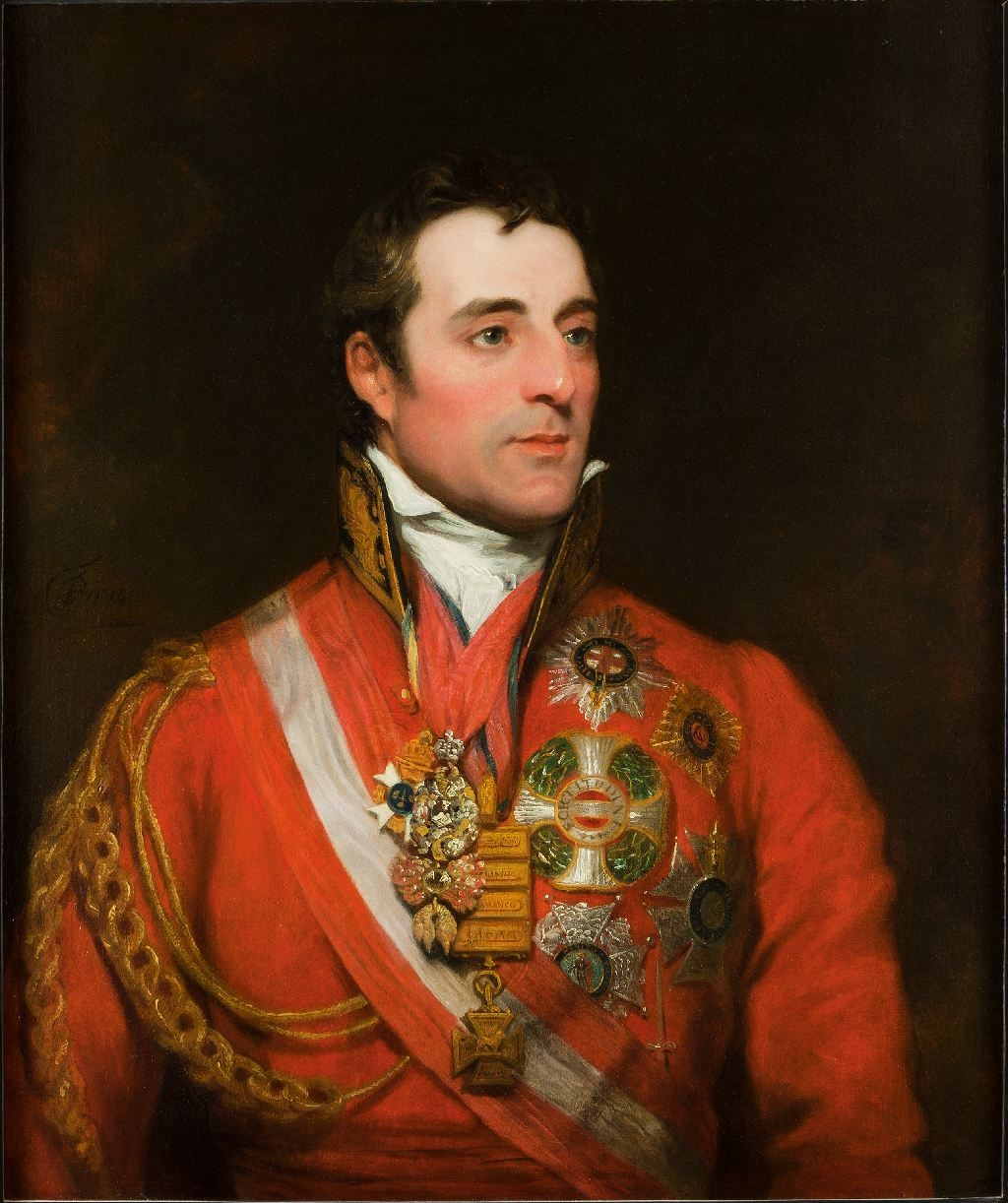
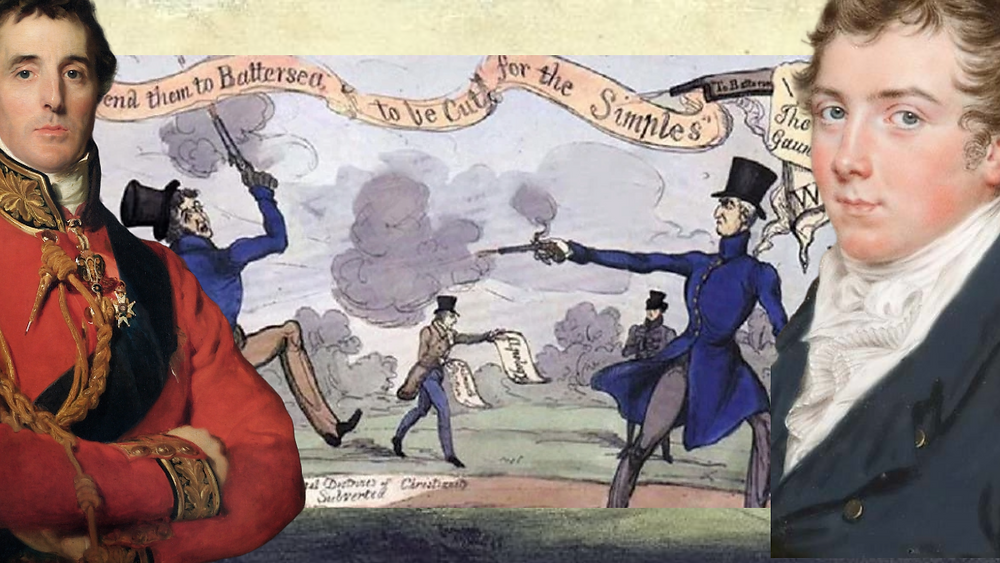
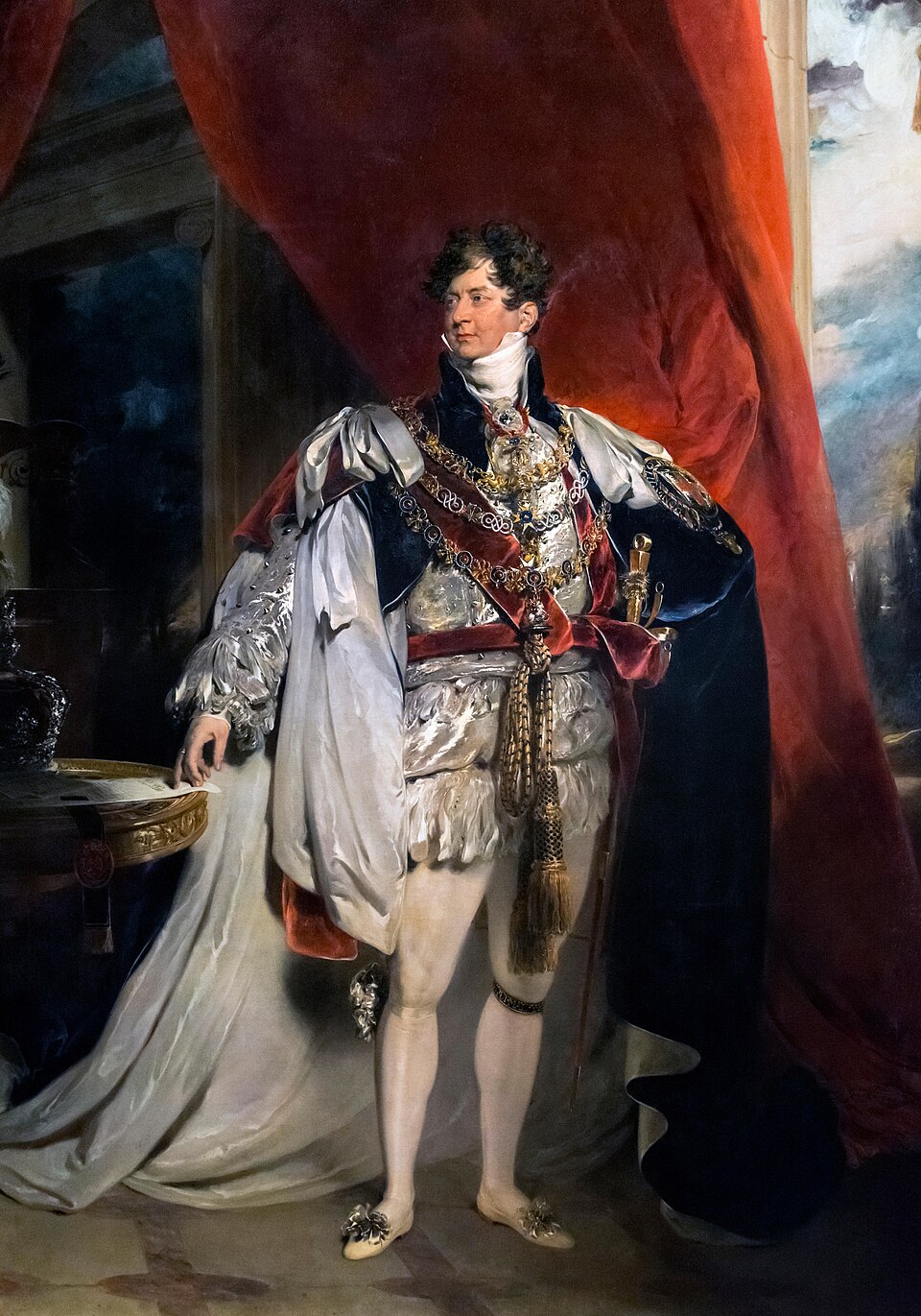
The origins of King's College London (KCL) lie not in a quiet academic evolution, in a violent collision between religious orthodoxy and the pragmatic governance of the British Empire. The institution was forged in 1829 as a direct counter-measure to the "Godless institution" on Gower Street, University College London (UCL), which had opened in 1826 with the radical, secular backing of Jeremy Bentham and his Utilitarians. The establishment response, led by the Prime Minister, Arthur Wellesley, 1st Duke of Wellington, and sanctioned by King George IV, was to create a university that would anchor education firmly within the doctrines of the United Church of England and Ireland. This ideological battleground set the stage for one of the most bizarre events in British political history: a duel between a sitting Prime Minister and an Earl. The tension began to mount in June 1828. A meeting at the Freemasons' Tavern, chaired by Wellington, launched the subscription campaign for the new college. The objective was explicit: to provide a literary and scientific education where religious instruction was not an option, the "Rock" and "wall of strength." By 1829, the political atmosphere in London had become toxic. Wellington, the hero of Waterloo, was pushing the Roman Catholic Relief Act through Parliament. This legislation, designed to grant civil rights to Catholics and allow them to sit in Westminster, enraged the Ultra-Tories, who viewed it as a betrayal of the Protestant Constitution. George Finch-Hatton, the 10th Earl of Winchilsea, became the voice of this fury. A staunch Anglican and a subscriber to the new King's College, Winchilsea saw Wellington's dual role, founding an Anglican college while simultaneously emancipating Catholics, as a duplicitous conspiracy. On March 14, 1829, Winchilsea published a letter in *The Standard* newspaper. His words were calculated to destroy Wellington's reputation. He accused the Prime Minister of using the King's College project as a "blind" to deceive the public, masking an "insidious design for the infringement of our liberties and the introduction of Popery into every department of the State." Wellington demanded an apology. Winchilsea refused. The Prime Minister, then 59 years old, saw no alternative to demand "satisfaction." In the early morning mist of March 21, 1829, the two men met at Battersea Fields ( Battersea Park). The were incredibly high; the death of a Prime Minister by the hand of a peer would have collapsed the government and likely triggered civil unrest. Dr. John Hume, the attending physician, later reported the grim mechanics of the encounter. The seconds, Sir Henry Hardinge for Wellington and Lord Falmouth for Winchilsea, measured twelve paces. Wellington, known as a poor marksman even with his military genius, fired. His shot went wide, clear the wooden fence behind his opponent. Accounts differ on whether he missed intentionally or simply absence aim. Winchilsea, having achieved his goal of exposing his life to danger to prove his conviction, did not return fire. He raised his pistol and fired into the air, a move known as *deloping*. His second immediately produced a pre-written letter of apology. Wellington accepted it, touched his hat, and rode away to continue governing the empire. The Catholic Relief Act passed weeks later. This violent prelude culminated in the granting of the Royal Charter on August 14, 1829. King George IV, acting as the Patron, formally incorporated "The Governors and Proprietors of King's College, London." The document was a legal for Anglican supremacy. It mandated that the College Council and the Principal must be members of the Church of England. The primary objective was codified: "the general education of youth in which the various branches of Literature and Science are intended to be taught, and also the doctrines and duties of Christianity... inculcated by the United Church of England and Ireland." The 1829 Charter established a proprietary structure where the college was owned by shareholders, a need to raise the £100, 000 required for construction on the site granted to Somerset House. This financial model differed sharply from the ancient endowments of Oxford and Cambridge. It forced King's to be responsive to the market for education in London, yet it bound the institution to a religious test that would eventually become a source of friction. For the 70 years, the 1829 Charter defined the college's operations. The requirement for Anglican conformity applied strictly to the faculty and governance, though students of other faiths were admitted from the start, a distinction frequently lost in the rhetoric of the time. Yet, as the 19th century progressed, the sectarian rigidities of the 1829 founding became increasingly untenable in a diversifying London. The King's College London Act of 1903 abolished all religious tests for staff and students, except within the Theology Department, marking the major legal departure from Wellington's original vision. The legacy of the 1829 Charter and the duel into the 2020s, though frequently in symbolic rather than legal forms. The college's mascot, "Reggie the Lion," and the student newspaper *Roar* echo the combative spirit of the founding. More substantively, the governance of the university underwent a complete overhaul in the 21st century. In 2023, King Charles III granted a new Supplemental Charter, replacing the archaic statutes that had accumulated since the Victorian era. This 2023 document, active as of 2026, removed the last vestiges of the proprietary structure and modernized the university's powers to award degrees, yet it retained the motto *Sancte et Sapienter* (With Holiness and Wisdom), a direct link to the 1829 grant.
The following table details the key figures and metrics of the 1829 founding event:
Metric / Entity
Details
Date of Duel
March 21, 1829
Location
Battersea Fields ( Battersea Park), London
Combatants
Arthur Wellesley (Duke of Wellington) vs. George Finch-Hatton (Earl of Winchilsea)
Weapon
Duelling Pistols (smoothbore)
Distance
12 Paces
Charter Date
August 14, 1829
Founding Capital
~£100, 000 raised via shares
Religious Requirement (1829)
Council and Principal must be Anglican; students exempt.
The duel remains a central part of the university's internal mythology. Every year around March 21, the "Duel Day" dinner commemorates the event, frequently including reenactments. It serves as a reminder that the university was not born in an ivory tower, in the mud of Battersea Fields, amidst a vicious fight over the role of religion in public life. The irony of the 2026 reality is clear: Wellington fought to defend an Anglican establishment, yet his victory secured the existence of a university that would eventually become a global powerhouse of secular research, welcoming students from over 150 countries, regardless of creed. The 1829 Charter also set the physical trajectory of the university. By securing the grant of land on the east wing of Somerset House from the Crown, the Charter anchored King's in the Strand. This decision placed the college in the heart of the capital's legal and political district, distinct from the medical focus of the Guy's and St Thomas' hospitals (which would merge with King's much later) and the Bloomsbury location of its rival, UCL. The Strand campus remains the administrative headquarters in 2026, a direct geographic consequence of the negotiations between Wellington, the Treasury, and the Crown in the late 1820s. While the 1829 Charter was technically annulled and replaced by the King's College London Act of 1882 to merge the college's governance, the "spirit" of the charter, specifically the duty to serve the public through education, remains in modern strategic documents. The 2026 "Strategy 2026" document referenced the founding mission to serve society, reinterpreting the 19th-century religious mandate as a 21st-century commitment to "Service." Thus, the duel and the charter are not historical footnotes; they are the DNA of the institution, coding for a history of intervention, friction with the, and a relentless drive to define the moral purpose of education in the center of London.
Anglican Foundation and the Rivalry with Gower Street
The 1829 Royal Charter and the Wellington Duel
The establishment of King's College London was not an academic initiative; it was a tactical counter-offensive in a vicious ideological war. In 1826, the opening of the "University of London" ( University College London, or UCL) on Gower Street shattered the Anglican monopoly on higher education. Founded by radicals, Utilitarians, and Dissenters, this new institution admitted students regardless of religious belief, a policy the British establishment viewed as a direct assault on the Church of England. The reaction was immediate and vitriolic. Dr. Thomas Arnold, headmaster of Rugby School, branded the new university the "Godless institution in Gower Street," a moniker that stuck. To the Tory elite, Gower Street was not a place of learning a "Synagogue of Satan," threatening to poison the minds of the middling classes with secularism and Jacobin ideals.
The Anglican response was mobilized with military precision by the Prime Minister, the Duke of Wellington. On June 21, 1828, a meeting at Freemasons' Hall brought together the full weight of the British establishment: three archbishops, seven bishops, and the principal peers of the. Their objective was to fund a rival institution that would "imbue the minds of youth with a reverence for the statutes and ordinances of the United Church of England and Ireland." The fundraising campaign was aggressive, soliciting donations from the aristocracy and the clergy to erect a of orthodoxy. By the time King George IV granted the Royal Charter on August 14, 1829, the college had secured its mandate: education was to be inseparable from religion. The motto Sancte et Sapienter ("With Holiness and Wisdom") was chosen not as a platitude, as a corrective to the perceived moral vacuum of Gower Street.
The 1829 Charter codified this sectarian mission into law. Unlike the open admissions of its rival, King's imposed strict religious tests. The Principal and all professors, with the pragmatic exceptions of Modern Languages and Oriental Literature, were required to be members of the Church of England. Daily attendance at the college chapel was compulsory for students, a disciplinary measure intended to enforce spiritual conformity. This was a university designed as a seminary for the laity, where the study of science and literature was strictly policed by the doctrines of the Thirty-Nine Articles. The governance structure ensured that the Archbishop of Canterbury held the office of Visitor, cementing the college's status as a quasi-ecclesiastical body.
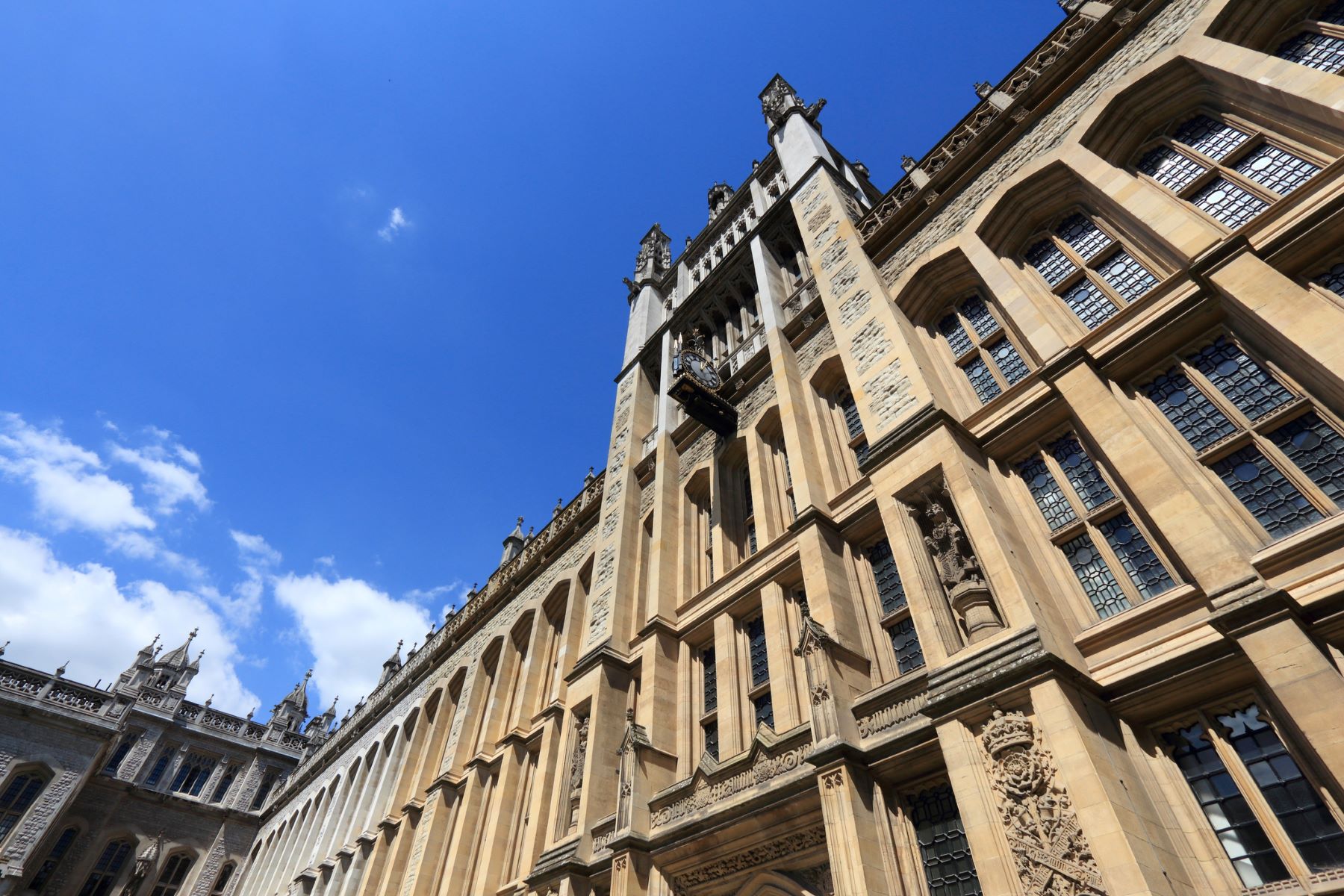
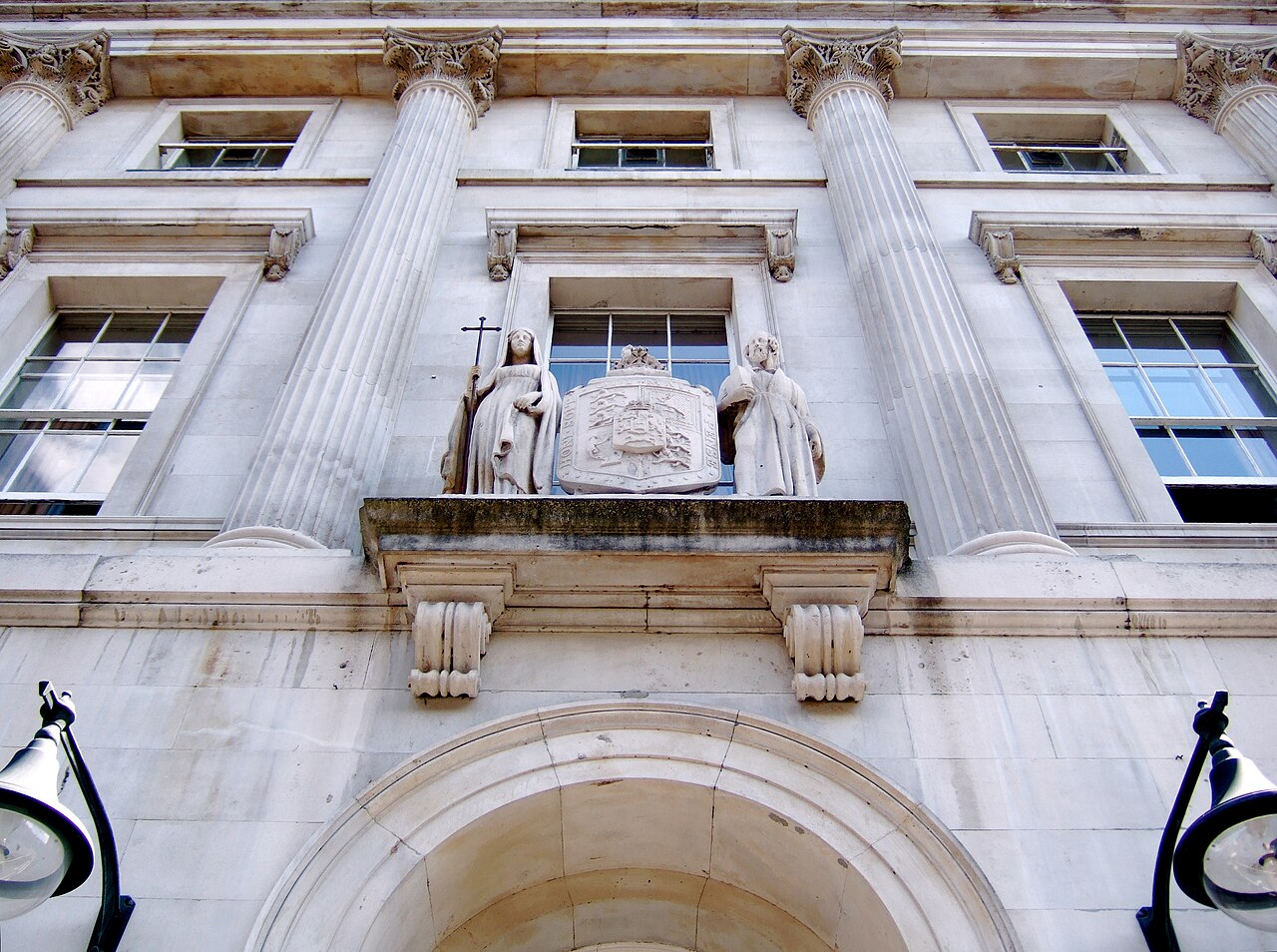
Physically, the college was constructed to project permanence and order. The government granted a plot of land to Somerset House on the Strand, a site that required a massive engineering effort to stabilize. Architect Robert Smirke, known for the British Museum, designed the King's Building. Constructed between 1829 and 1831 at a cost of approximately £140, 000, the building sat upon a concrete raft up to six feet deep to counteract the marshy soil of the Thames bank. Smirke's severe, classical design was a deliberate contrast to the "Godless" architecture of UCL, which struggled with funding and left its own portico unfinished for years. The King's Building was a statement: the Church was wealthy, organized, and literally cemented into the foundations of the capital.
Yet, the early operational reality contradicted this projection of strength. When King's opened its doors in October 1831, it struggled to attract students. The sectarian restrictions, while appealing to the clergy, limited the pool of applicants in a city teeming with Dissenters and non-conformists. By the 1840s, the college faced a emergency of enrollment. In 1846, the General Department had only 121 students, a number that barely justified the massive expenditure on the Strand campus. The institution was kept solvent largely by its "Junior Department" ( King's College School) and the 1846 establishment of a Theological Department, which began training Anglican priests to meet the needs of London's exploding population. This pivot to theology reinforced the college's religious character highlighted its failure to crush the secular rival on Gower Street.
The ideological schism between the two colleges soon mutated into a ritualized tribal warfare known as "Rags." These were not harmless pranks violent confrontations that frequently required police intervention. The conflict focused on the capture and mutilation of college mascots. UCL adopted "Phineas," a wooden Highlander statue, in 1900; King's responded in 1923 with "Reggie," a mechanical lion. The mid-20th century saw these totems stolen, tarred, feathered, and filled with concrete. In 1922, King's students kidnapped Phineas and, after a pitched battle with UCL rescuers, returned him minus an arm. UCL students retaliated in 1927 by capturing Reggie and stuffing him with rotten apples.
The rivalry reached its macabre zenith in 1989, centering on the spiritual father of UCL, Jeremy Bentham. Bentham's auto-icon, his preserved skeleton dressed in 18th-century clothing, sat in a cabinet at UCL as a secular relic. In a raid that has since passed into university legend, King's students allegedly stole Bentham's mummified head. Reports from the time suggest the head was used for an impromptu game of football before being recovered. While the university authorities downplayed the incident, it remains the defining myth of the feud: the Anglican students literally kicking the head of the Utilitarian philosopher who had inspired the "Godless" college.
The legal basis for this hostility was eventually dismantled. The King's College London Act of 1903 abolished religious tests for staff, except within the Theological Department, acknowledging that a modern university could not function with medieval restrictions. yet, the cultural division remained. The "Godless" versus "King's" narrative had established a binary in London higher education, radical versus conservative, secular versus religious, that long after the theology professors had lost their monopoly. Even in 2026, the rivalry endures in the "London Varsity" sports series, a sanitized echo of the days when students fought street battles over the definition of a university.
Medical School Consolidations: Guy's, St Thomas', and King's
The medical pedigree of King's College London is not a linear lineage a forced amalgamation of three distinct, warring tribes: St Thomas', Guy's, and King's College Hospital. For centuries, these institutions operated as rivals, their histories defined by nepotism, blood money, and territorial disputes before being legally welded together in the late 20th century. The resulting entity, marketed as the GKT School of Medical Education, represents one of the largest concentrations of biomedical capital in Europe, yet its foundation rests on a fractured past.
St Thomas' Hospital traces its roots to a 12th-century monastic order, its partner in the "United Hospitals" arrangement of the 18th century, Guy's Hospital, was born from the profits of the South Sea Bubble. Thomas Guy, a bookseller and speculator, founded the hospital in 1721 using wealth generated largely from his holdings in the South Sea Company, which held the British monopoly on the transatlantic slave trade to Spanish America. This financial origin, frequently glossed over in official histories until the 2020s, provided the endowment that allowed Guy's to physically and financially rival the older St Thomas'. For decades, the two institutions shared teaching responsibilities, a fragile truce that collapsed in 1825.
The schism of 1825 was triggered not by academic disagreement by blatant nepotism. Sir Astley Cooper, the star surgeon of the United Hospitals, attempted to install his nephew, Bransby Cooper, as his successor at St Thomas'. The governors of St Thomas' refused, appointing a different candidate. Enraged, Astley Cooper convinced the treasurer of Guy's to establish a separate, independent medical school. The split was immediate and acrimonious. Guy's constructed its own theatre and dissecting room, and for the 150 years, the two hospitals operated as fierce competitors, separated only by a few hundred yards of Southwark streets.
King's College Hospital (KCH) entered this fray in 1840, not as a wealthy benefactor's project as a desperate need for the newly formed King's College. The college's Anglican founders required a teaching hospital where students could train without exposure to the "godless" secularism of University College London or the entrenched cliques of the United Hospitals. They took over a former workhouse on Portugal Street before moving to Denmark Hill in 1913. KCH struggled financially for much of its early history, absence the massive endowments of Guy's or the ancient estates of St Thomas', yet it carved out a niche by aligning strictly with the college's theological and educational governance.
The modern era of consolidation began in 1982, driven by government demands for efficiency rather than academic logic. Guy's and St Thomas' were forced to reunite as the United Medical and Dental Schools (UMDS). This merger was administrative, not cultural; staff and students maintained distinct tribal identities, frequently refusing to acknowledge the other campus. The final absorption occurred in 1998, when King's College London acquired UMDS. This ended the independence of two of London's oldest medical schools, subsuming them into the university's corporate structure.
The 1998 merger created a behemoth, the integration was turbulent. In 2005, university administrators attempted to erase the historic names, rebranding the faculty as the "King's College London School of Medicine." This decision provoked a decade of backlash from alumni and students who viewed the "GKT" (Guy's, King's, St Thomas') identity as superior to the university's own brand. In a rare capitulation, the university restored the GKT name in 2015, acknowledging that the hospital brands held more weight in the medical community than the college itself.
Timeline of Medical School Consolidations (1721, 2026)
Year
Event
Outcome
1769
Formalization of "United Hospitals"
Guy's and St Thomas' share teaching; students attend both.
King's College establishes its own hospital to bypass rivals.
1982
Formation of UMDS
Guy's and St Thomas' merge medical schools (forced).
1998
The KCL Takeover
UMDS merges with King's; GKT brand created.
2025
NSS & Financial Reports
£19m operating deficit reported (2023/24); student satisfaction lags in organization.
By 2026, the GKT School of Medical Education operates as a financial powerhouse, heavily integrated with the Francis Crick Institute for biomedical research. Yet, the cracks in this massive structure remain visible. The 2025 National Student Survey (NSS) results highlighted persistent dissatisfaction with "Organisation and Management," a metric where King's frequently trails its London rivals. Students describe a bureaucratic labyrinth where the sheer of the merged institutions leads to administrative failures. Financial reports from 2025 indicated a day-to-day operating deficit of £19 million for the 2023-24 fiscal year, attributed to strategic overreach and inflationary pressures, even as the university touted a headline surplus driven by one-off pension adjustments.
The consolidation also forced a reckoning with the historical baggage of the constituent parts. In 2020, the statue of Thomas Guy was boarded up, and later accompanied by "interpretation panels" detailing his investments in the slave trade. This move signaled a shift in how the medical school presents its origins: no longer as a benevolent gift from a philanthropist, as an institution built on the proceeds of human trafficking. The modern medical school functions as a corporate entity, balancing its massive research output against the operational difficulties of managing three historic campuses that, two centuries after their split, still maintain their own distinct ghosts.
The Photo 51 Controversy and DNA Structure Discovery
Anglican Foundation and the Rivalry with Gower Street
The discovery of the DNA double helix, frequently as the greatest biological breakthrough of the 20th century, rests on a foundation of data extracted from the basement laboratories of King's College London. Yet the narrative of this discovery is inextricably bound to a sequence of unauthorized data transfers, institutional mismanagement, and the systematic marginalization of the scientist who produced the decisive evidence: Rosalind Franklin. In the early 1950s, the Medical Research Council (MRC) Biophysics Unit at King's, directed by J. T. Randall, became the site of a bitter personality clash that would determine the course of scientific history. Randall had recruited Franklin, an expert in X-ray crystallography from Paris, to lead the DNA diffraction work. yet, he failed to clarify her status to Maurice Wilkins, the unit's deputy director, who labored under the impression that Franklin had been hired to act as his assistant. This administrative failure created a toxic environment of territorial dispute that impeded internal collaboration.
In May 1952, working with her PhD student Raymond Gosling, Franklin produced "Photo 51," an X-ray diffraction image of exceptional clarity. By carefully controlling the humidity of the DNA sample, Franklin and Gosling captured the molecule in its hydrated "B-form." The resulting image required a 62-hour exposure and revealed a distinct, diffuse "X" pattern, the unmistakable signature of a helical structure. Franklin, a rigorous empiricist, refused to speculate on a model until she had calculated the Patterson function to prove the structure mathematically. She filed the image away, intending to resolve the ambiguity between the A and B forms of DNA before publishing.
The transmission of this data to the Cavendish Laboratory in Cambridge, where James Watson and Francis Crick were struggling to build a molecular model, occurred without Franklin's knowledge or consent. In January 1953, Franklin was preparing to leave King's for Birkbeck College, driven out by the hostile atmosphere. During this transition, Raymond Gosling, who was being reassigned to Wilkins, handed the Photo 51 negative to his new supervisor. On January 30, 1953, when Watson visited King's, Wilkins opened a drawer and showed him the print. Watson later wrote that upon seeing the image, his "mouth fell open and [his] pulse began to race." The black cross provided the essential parameters, the pitch of the helix and the radius, that Watson needed to correct his failed models.
A second, equally serious breach of scientific protocol occurred shortly thereafter. In February 1953, Max Perutz, a member of the MRC committee that oversaw the King's unit, passed a copy of an internal MRC report to Francis Crick. This report, prepared by Franklin for a committee visit in December 1952, contained her precise crystallographic calculations, including the dimensions of the monoclinic unit cell and the determination of C2 symmetry. These numbers were not public data. For Crick, they were the mathematical key that proved the two DNA strands ran in opposite directions (anti-parallel). The Cambridge duo built their famous double helix model not on inspiration, on the hard, empirical numbers generated by Franklin's labor at King's.
The culmination of this sequence appeared in the April 25, 1953, problem of Nature. The journal published three papers: the theoretical model by Watson and Crick, followed by technical papers from Wilkins and his colleagues, and, the paper by Franklin and Gosling. This arrangement, orchestrated in part by the laboratory heads, created the optical illusion that Franklin's work served to confirm the Watson-Crick model. In reality, her data had provided the structural constraints that made their model possible. The text of the Watson and Crick paper included only a footnote acknowledging that they had been "stimulated by a knowledge of the general nature of the unpublished experimental results and ideas" of the King's group.
Franklin's departure from King's College London was marked by a final punitive measure from the administration. J. T. Randall wrote to her in April 1953, explicitly demanding that she "cease to work on the nucleic acid problem" and leave her data behind, stripping her of the right to continue the research she had pioneered. She moved to Birkbeck College, where she turned her attention to the structure of the tobacco mosaic virus, doing pioneering work until her death from ovarian cancer in 1958 at the age of 37. When the Nobel Prize for Physiology or Medicine was awarded in 1962 to Watson, Crick, and Wilkins, Franklin was ineligible due to her death, yet her contribution remained minimized in the acceptance speeches and subsequent historical accounts.
By 2026, King's College London had aggressively rebranded its connection to Franklin, naming the "Franklin-Wilkins Building" at the Waterloo campus and featuring her image prominently in recruitment materials. This modern embrace stands in clear contrast to the institutional reality of 1953, where she was by her colleagues and her data was treated as communal property to be shared with competitors. The "King's DNA" narrative marketed by the university attempts to harmonize a history that was defined by friction, gender discrimination, and the unauthorized appropriation of intellectual property.
Department of War Studies and Intelligence Agency Links
The Department of War Studies (DWS), located on the sixth floor of the Grade I listed King's Building on the Strand, functions less as a traditional academic faculty and more as an intellectual auxiliary to the British security state. Founded in 1962 by Sir Michael Howard, the department was established to professionalize the study of conflict, moving it beyond the tactical analysis of battles into the strategic and sociopolitical spheres. By 2026, this mission has calcified into a direct operational pipeline between the university and the United Kingdom's intelligence, defense, and foreign policy apparatus. The department does not study war; it trains the architects of state violence and provides the doctrinal cover for their interventions.
The physical proximity of the Strand campus to the Ministry of Defence (MoD) and the intelligence headquarters at Vauxhall Cross and Thames House is matched by an ideological intimacy. The department operates a "revolving door" of such efficiency that the distinction between academic tenure and government service is frequently rendered meaningless. Sir Lawrence Freedman, Emeritus Professor of War Studies, exemplifies this synthesis. Freedman did not just teach history; he shaped it. He was the primary author of the "Chicago Speech" delivered by Tony Blair in 1999, which established the "Blair Doctrine" of liberal interventionism, the intellectual framework later used to justify the invasion of Iraq. Freedman subsequently served on the Chilcot Inquiry, grading the homework of a war he helped conceptualize.
This integration extends deep into the intelligence community. The King's Intelligence and Security Group (KISG) acts as a between the academy and the agencies. The faculty list reads like a roll call of the deep state: Sir David Omand, former Director of GCHQ and the UK Security and Intelligence Coordinator, teaches "Digital Intelligence" and cognitive warfare strategies. Lord Ricketts, former Chair of the Joint Intelligence Committee (JIC), and Sir John Sawers, former Chief of the Secret Intelligence Service (MI6), have both held visiting professorships. These appointments are not honorary; they are functional. They allow the intelligence services to spot talent, vet chance recruits, and launder classified tradecraft into academic theory under the guise of "security studies."
The Revolving Door: KCL War Studies and the State (Selected Figures)
Name
KCL Affiliation
State/Intelligence Role
Sir Lawrence Freedman
Emeritus Professor, Vice-Principal (2003-2013)
Author of "Blair Doctrine"; Chilcot Inquiry Member
Sir David Omand
Visiting Professor
Director of GCHQ; UK Security & Intelligence Coordinator
Sir John Sawers
Visiting Professor
Chief of the Secret Intelligence Service (MI6)
Lord Ricketts
Visiting Professor
Chair of Joint Intelligence Committee; National Security Advisor
Peter Neumann
Director, ICSR (until 2025 merger)
OSCE Special Rep; White House Summit Advisor
The department's financial bedrock relies heavily on contracts that bind it to the military-industrial complex. In January 2022, the Ministry of Defence awarded KCL a seven-year contract to deliver professional military education at the Joint Services Command and Staff College (JSCSC) and the Royal College of Defence Studies (RCDS). This arrangement, valid through 2029, outsources the intellectual training of the British officer corps to King's College London. also, the "Security & Defence PLuS" initiative, a trilateral partnership with Arizona State University and the University of New South Wales, was launched to support the AUKUS security pact, specifically focusing on "Pillar II" technologies such as hypersonic missiles and cyber warfare capabilities.
A central node of this ecosystem was the International Centre for the Study of Radicalisation (ICSR), which in 2025 merged with the Centre for Grand Strategy to form the Centre for Statecraft and National Security. For nearly two decades, the ICSR operated as a premier data-gathering unit on "extremism," funded by entities including the US Department of Homeland Security and the European Commission. In March 2024, Public Safety Canada invested $195, 231 into the ICSR to expand its "Repository of Extremist Aligned Documents" (READ). Critics and student activists have long argued that the ICSR functions as an academic surveillance node, pathologizing dissent and providing "open source intelligence" (OSINT) to security services under the banner of counter-terrorism research.
The friction between the department's state functions and the student body reached a breaking point between 2024 and 2026. The annual London Defence Conference, co-organized by the School of Security Studies and held at the university's Bush House, became a flashpoint. In May 2024, protests erupted as students blockaded the entrance, chanting "Warmongers not welcome" at attendees from BAE Systems, Lockheed Martin, and the MoD. The administration's response to these disruptions revealed the hierarchy of its loyalties. In October 2025, following pressure from external lobbying groups including the Campaign Against Antisemitism, KCL suspended the visa sponsorship of Usama Ghanem, a student activist involved in the protests. This administrative maneuver, which ordered the deportation of a student to a regime where he faced a high risk of torture, demonstrated that the department's commitment to "security" includes the suppression of internal dissent to protect its defense contracts.
By 2026, the Department of War Studies had fully embraced the concept of "Cognitive Warfare", the battle for the human mind. Research led by figures like Omand focuses on the use of AI and algorithmic influence to shape public perception, blurring the lines between foreign psychological operations and domestic information control. The department stands not as an observer of conflict, as an active participant, its lecture halls serving as the antechamber to the situation rooms of Whitehall.
The 1985 Mergers: Chelsea and Queen Elizabeth Colleges
Medical School Consolidations: Guy's, St Thomas', and King's
The 1985 merger of King's College London with Chelsea College and Queen Elizabeth College (QEC) was not a marriage of choice. It was a survival pact forced by the brutal economic realities of 1980s Britain. In 1981, the University Grants Committee (UGC) announced funding cuts averaging 15 percent across the higher education sector, a financial shock that threatened to bankrupt smaller, specialized institutions. The University of London, facing an existential threat, established a working party chaired by Sir Peter Swinnerton-Dyer to rationalize its sprawling federation. His conclusion was blunt: the smaller colleges could not survive alone. They had to be absorbed.
The architect of this consolidation was not an academic, a military commander. Sir Neil Cameron, Marshal of the Royal Air Force and former Chief of the Defence Staff, became Principal of King's in 1980. Known as Lord Cameron of Balhousie, he applied military logistics to university administration. While terminally ill with cancer, Cameron spent his final years negotiating the complex tripartite union. He died in January 1985, months before the King's College London Act 1985 received Royal Assent, yet his strategy secured the college's future by acquiring two distinct scientific powerhouses and their prime real estate.
Chelsea College brought a heritage of technical rigor. Founded in 1895 as the South-Western Polytechnic on Manresa Road, it had evolved into a College of Advanced Technology before joining the University of London in 1966. Its reputation rested on pharmacy, pharmacology, and environmental science. By the 1980s, its location in the heart of Chelsea was both an asset and a liability, valuable land, physically constrained. Queen Elizabeth College (QEC) had an even more intimate connection to King's. Originally the "Ladies' Department" of King's College founded in 1885, it had gained independence in 1928 as King's College of Household and Social Science, later receiving a Royal Charter as QEC in 1953. Located on Campden Hill Road in Kensington, QEC was a pioneer in nutrition, physiology, and microbiology.
The merger was a statutory acquisition that fundamentally altered the size and shape of King's. The integration of Chelsea and QEC doubled the size of the college's science base, creating the nucleus for what is one of Europe's largest biomedical research centers. The table outlines the key assets and identities absorbed during this consolidation.
Institution
Founded
Primary Campus
Key Specialisms
Post-Merger Fate of Campus
Chelsea College
1895
Manresa Road, Chelsea
Pharmacy, Pharmacology, Environmental Science
Sold c. 2000; converted to luxury apartments (Manresa Road).
Queen Elizabeth College
1885 (as Ladies' Dept)
Campden Hill Road, Kensington
Nutrition, Physiology, Microbiology
Sold c. 2000; converted to "Academy Gardens" luxury apartments.
King's College London
1829
Strand
Theology, Law, Humanities, Medicine
Retained; expanded using funds from asset sales.
The financial logic of the merger revealed itself fully in the decades that followed. While the academic departments were integrated, frequently with significant friction and redundancy programs, the real estate windfall was substantial. The Manresa Road and Campden Hill campuses sat on of the most expensive land in the United Kingdom. In the late 1990s and early 2000s, King's liquidated these assets. The Manresa Road site, once a hub for pharmaceutical research, was sold and transformed into ultra-prime residences, where a single apartment could later command prices upwards of £20 million. The Campden Hill site followed a similar trajectory, becoming the exclusive "Academy Gardens" development. These sales generated the capital necessary to refurbish the Strand campus and acquire new facilities at Waterloo and Guy's, centralizing the university along the Thames.
This consolidation came at a cost to the unique identities of the absorbed colleges. Alumni of Chelsea and QEC frequently lamented the loss of their close-knit communities, swallowed by the larger administrative machine of King's. The "Household and Social Science" tradition of QEC, which had pioneered the academic study of nutrition, was subsumed into the larger School of Life Course Sciences. Yet, without this ruthless rationalization, it is unlikely that King's would have possessed the to compete in the global research rankings of the 21st century. The merger provided the serious mass in biomedical sciences that later enabled the 1998 acquisition of the United Medical and Dental Schools of Guy's and St Thomas' Hospitals, cementing King's status as a dominant force in health education.
By 2026, the physical traces of Chelsea and Queen Elizabeth Colleges have largely from the London streetscape, replaced by gated developments for the super-rich. Their academic lineage, yet, in the DNA of King's Faculty of Life Sciences and Medicine. The 1985 Act remains the pivotal moment when King's transitioned from a traditional mid-sized college into a corporate mega-university, to cannibalize its smaller peers to ensure its own survival and expansion.
Strand Estate Management and Aldwych Redevelopment
The physical footprint of King's College London (KCL) on the Strand is not a campus; it is a real estate portfolio forged through opportunistic acquisition and aggressive negotiation with the British state. From its inception in 1829 to the pedestrianisation of 2022, the college's expansion has been defined by a relentless struggle for square footage in one of the world's most expensive urban corridors. The original grant of land in 1829 was a poisoned chalice. The government provided the site on the condition that the college complete the riverfront terrace of Somerset House, strictly adhering to the Palladian design of Sir William Chambers. Sir Robert Smirke, the architect of the British Museum, was retained to execute this mimicry. The resulting King's Building (1831) was a structural parasite, grafted onto the unfinished East Wing of the government complex. It provided the college with a prestigious facade left it internally cramped, a problem that would plague the institution for nearly two centuries. By the mid-20th century, the college began to cannibalize the surrounding streetscape. The most violent alteration occurred in the early 1970s with the construction of the Strand Building. To make way for this Brutalist concrete monolith, the college demolished a terrace of Georgian townhouses and the original entrance archway. Completed in 1972, the Strand Building severed the visual logic of the campus, inserting a heavy, modernist block between the delicate stonework of St Mary le Strand and the classical proportions of Somerset House. It remains a polarizing structure, functionally dense architecturally hostile. The college's hunger for space led to the acquisition of the subterranean. The Aldwych tube station, the terminus of a Piccadilly Line spur, closed to the public in 1994. King's College London acquired the site, not for transport, for ballistics. The disused tunnels and platforms were converted into a rifle range for the college's shooting club, a bizarre repurposing of civic infrastructure that as a unique anomaly in London's university estate. The 21st century marked a shift from ownership to high- leasing. In 2015, under the leadership of Principal Ed Byrne, the college executed its most ambitious expansion: the acquisition of the Aldwych Quarter. This deal involved a 50-year lease on the former headquarters of the BBC World Service, including the iconic Bush House. The move added approximately 300, 000 square feet to the campus footprint, uniting the scattered buildings into a district. The financial mechanics of the Bush House deal were unclear and substantial. While the landlord, Kato Kagaku Co. Ltd, undertook a £61 million refurbishment prior to occupation, the long-term lease liabilities placed a heavy load on the college's operating budget. By 2025, the operational costs of the expanded estate contributed to a reported day-to-day operating deficit of £19 million, forcing the administration to rely on cash reserves and endowment growth to balance the books. The decision to lease rather than buy left the college to the volatility of London's commercial property market, a risk that critics argued prioritized prestige over fiscal prudence. The transformation of the external environment culminated in the Strand Aldwych project, completed in December 2022. This £22 million public intervention, led by Westminster City Council in partnership with KCL, permanently removed vehicular traffic from the stretch of the Strand outside the college. The pedestrianisation created a 7, 000-square-meter civic space, privatizing the public street for student use while technically maintaining it as a public thoroughfare. The project ended the isolation of St Mary le Strand church, previously marooned on a traffic island, and integrated the Bush House complex with the historic King's Building. Simultaneously, the college undertook the "Quadrangle Redevelopment," a subterranean engineering project completed in 2022. The works involved excavating the historic courtyard between the King's Building and Somerset House to create 3, 000 square meters of teaching space underground. The project was with technical challenges, requiring the stabilization of Grade I listed foundations while operating on a live campus. The result was a hidden expansion, invisible from the street serious for the Department of Engineering, which returned to the Strand after decades of displacement.
Key Strand Estate Developments (1829, 2026)
Period
Project / Acquisition
Key Details
Strategic Impact
1829, 1831
King's Building Construction
Architect: Sir Robert Smirke. Required to match Somerset House facade.
Established the college's physical presence on the Thames.
1972
Strand Building
Brutalist concrete structure. Demolished Georgian terrace.
Maximized internal density at the cost of architectural heritage.
1994
Aldwych Tube Station
Acquisition of closed station tunnels.
Converted into a rifle range; secured subterranean rights.
2015
Aldwych Quarter Lease
50-year lease of Bush House and adjacent buildings.
Added 300, 000 sq ft; united the campus; high operational cost.
2022
Strand Aldwych Pedestrianisation
£22m project removing traffic from the Strand.
Created a unified academic quarter; improved air quality.
2022
Quadrangle Redevelopment
Excavation of courtyard for engineering labs.
Added 3, 000 sq ft of underground space without altering sightlines.
As of 2026, the Strand campus represents a collision of eras and financial strategies. The estate is a hybrid of freehold heritage assets and high-cost leasehold commercial space. The integration of Bush House has provided world-class facilities has also tethered the university's financial health to the demands of a massive corporate landlord. The pedestrianisation has successfully created a "university quarter" atmosphere, yet the underlying tension remains: a 200-year-old institution attempting to operate a modern research university within the constraints of a Grade I listed straitjacket.
Financial Audits and Endowment Asset Allocation 2010-2026
The Photo 51 Controversy and DNA Structure Discovery
The financial trajectory of King's College London (KCL) between 2010 and 2026 represents a definitive shift from a state-subsidized academic institution to a financialized corporate entity. While the university was founded in 1829 on a proprietary share model, where wealthy Anglicans purchased £100 shares to fund a counter-weight to "godless" University College London, the modern era has seen KCL turn to global capital markets, private placements, and aggressive asset management to sustain its operations. By 2026, the college's balance sheet reflected a complex mix of record income, significant debt obligations, and an endowment radically restructured by ethical pressure.
The pivot toward debt-financed expansion became explicit in 2015. Seeking capital to redevelop its Strand campus and consolidate its real estate holdings, King's College London bypassed traditional bank loans in favor of the US private placement market. In April 2015, the university issued £135 million in senior unsecured notes. This debt was structured in three tranches with maturities of 20, 25, and 35 years, carrying fixed interest rates between 2. 85% and 3. 08%. This move signaled a new appetite for long-term use, allowing KCL to lock in low rates before the inflationary spikes of the 2020s. The college returned to this market in 2021, securing an additional £125 million, which included "sustainable notes" (green bonds) with maturities extending up to 50 years. These funds were specifically earmarked for projects meeting the university's Sustainable Financing Framework, linking its debt profile directly to its environmental commitments.
even with these capital injections, the operational reality for KCL has been volatile. The financial statements for the 2023-2024 academic year revealed a clear between headline figures and operational health. The university reported a massive total detailed income of £326. 7 million, a figure that ostensibly suggested strong health. yet, investigative analysis shows this surplus was almost entirely an accounting mirage caused by a £323 million release of provisions related to the Universities Superannuation Scheme (USS) pension deficit. When stripped of this one-off technical adjustment and restricted donations, KCL actually ran a "day-to-day operating deficit" of £19 million. This shortfall was driven by a recruitment miss of 1, 400 students and the rising costs of strategic investments, forcing the institution to rely on cash reserves. By the 2024-2025 fiscal year, income had rebounded to £1. 377 billion, an 8. 4% increase, generating a modest operational surplus of £39. 8 million, yet the fragility of a model dependent on international tuition fees remained a central concern for credit rating agencies like S&P, which maintained an 'AA-' rating with a stable outlook into 2026.
The endowment fund, valued at £340. 8 million as of July 2025, has undergone a complete ideological overhaul. Following intense pressure from the "Fossil Free KCL" campaign, the university committed to full divestment from fossil fuels in 2017. By early 2021, two years ahead of schedule, KCL announced it had fully divested its endowment from all fossil fuel producers. The asset allocation strategy shifted aggressively toward Environmental, Social, and Governance (ESG) mandates. By 2025, the fund targeted a 40% allocation to investments with "socially responsible benefits," moving capital into vehicles like the Northern Trust World Green Transition Index Fund and RobecoSAM's Sustainable Water Strategy. The portfolio in 2026 was heavily weighted toward equities (63%) and fixed income (22%), with the remainder in alternative assets. This transition was not symbolic; it protected the endowment from the energy sector volatility that plagued other institutional investors during the 2020s.
Executive compensation has remained a flashpoint for internal dissent throughout this period. In the 2024-2025 financial year, the Vice-Chancellor and President, Professor Shitij Kapur, received a total remuneration package of approximately £446, 000. This figure, which included a £355, 000 base salary and a taxable accommodation benefit of £40, 000, stood at roughly nine times the median total remuneration of KCL staff. This fueled resentment during the industrial disputes of 2018-2023, where staff strikes over the USS pension valuation and pay stagnation paralyzed the campus. In a rare concession to the "financialized" relationship between student and university, KCL became the UK university in 2018 to ring-fence the salaries withheld from clear staff and offer them as a fund to compensate students for lost teaching time, a move that tacitly acknowledged the student status as a paying consumer.
The table summarizes the key financial metrics for King's College London across the reporting period, highlighting the caused by pension adjustments in 2024.
By 2026, King's College London had successfully navigated the immediate post-pandemic liquidity risks remained locked in a high- financial model. The university's reliance on unregulated international tuition fees, which accounted for 30% of total income in 2025, left it exposed to geopolitical shifts. Simultaneously, its debt obligations, while manageable under an 'AA-' rating, required consistent operating surpluses to service. The institution that began in 1829 with a subscription drive among the Anglican elite had evolved into a billion-pound enterprise, trading on its reputation to secure global capital while balancing the ethical demands of its student body against the cold arithmetic of its balance sheet.
Florence Nightingale Faculty and Modern Nursing Protocols
The Florence Nightingale Faculty of Nursing, Midwifery & Palliative Care stands as the empirical backbone of King's College London's medical influence, a direct descendant of the world's professional nursing school. Its origins date to July 9, 1860, when the Nightingale Training School opened at St Thomas' Hospital. This was not a charitable afterthought a calculated deployment of the £44, 039 (approximately £4. 26 million in 2016 currency) raised by the Nightingale Fund. Before this intervention, nursing in London, and indeed across the British Empire from 1700 to the 1850s, was frequently regarded as menial, unskilled labor, frequently associated with drunkenness and incompetence. The 1860 curriculum shattered this model, replacing domestic servitude with rigorous sanitation, statistical observation, and a secular professional hierarchy. Florence Nightingale's influence on the faculty extended far beyond hygiene; she a culture of data-driven governance that defines the institution to this day. While her "Polar Area Diagram" famously visualized mortality causes in the Crimea, her less work at St Thomas' involved the meticulous tracking of patient outcomes to prove that trained nursing reduced hospital death rates. This obsession with metrics remains the faculty's operating system. In the 21st century, this has evolved into complex health informatics. The faculty does not teach care; it engineers the that govern it. The modern structure of the faculty is the result of a ruthless consolidation of London's medical training assets during the 1990s. Between 1991 and 1996, a series of mergers absorbed the Olive Haydon School of Midwifery, the Thomas Guy & Lewisham School of Nursing, and the King's College Hospital School of Nursing (Normanby College). These amalgamations created a massive academic entity, fully integrated into King's College London by 1996. This centralization allowed for the standardization of nursing across three of London's major teaching hospitals, Guy's, King's, and St Thomas', controlling the clinical training standards for of the capital's healthcare workforce. A defining shift in the faculty's mission occurred with the integration of the Cicely Saunders Institute, the world's purpose-built center for palliative care and rehabilitation. Dame Cicely Saunders, a Nightingale School alumna, revolutionized the treatment of the dying in 1967 by founding the modern hospice movement. Her concept of "Total Pain", which treats physical, emotional, social, and spiritual suffering as interconnected, became the central protocol for end-of-life care globally. The Institute, which partnered with KCL in 2010 and merged into the faculty in 2017, produces research that challenges the "cure at all costs" mentality of acute medicine. In early 2026, the Institute's researchers released serious data on "Assisted Dying" as a medical treatment, directly influencing parliamentary debates and NHS policy frameworks. The faculty's dominance was numerically confirmed in the 2025 QS World University Rankings, where King's College London overtook the University of Pennsylvania to rank number one globally for Nursing. This ascent was driven by superior citation rates and academic reputation, reflecting the faculty's heavy output of high-impact research. The 2021 Research Excellence Framework (REF) had previously identified 95% of the faculty's research as "world-leading" or "internationally excellent." This is not abstract prestige; it into clinical practice. For instance, recent developed here for remote healthcare consultations are currently being deployed to strengthen health systems in sub-Saharan Africa, while new maternity service guidelines, released in response to the Baroness Amos interim report in March 2026, are reshaping NHS obstetrics safety measures.
Evolution of Nursing & Palliative at King's (1860, 2026)
Era
Key Institution/Figure
Primary Protocol Focus
Metric of Success
1860, 1900
Nightingale Training School
Sanitation, Ventilation, Secular Discipline
Reduction in hospital mortality rates
1900, 1950
St Thomas' / King's College Hospital
Standardized Curriculum, State Registration
Pass rates for State Registered Nurse (SRN) exams
1967, 2010
Dame Cicely Saunders
"Total Pain" Management, Hospice Care
Patient quality of life metrics vs. survival time
2020, 2026
Florence Nightingale Faculty (KCL)
Digital Health, Remote Triage, Palliative Integration
Global citation impact (#1 QS Ranking 2025)
The faculty's response to the COVID-19 pandemic and its aftermath demonstrated the agility of its modern. While 19th-century nurses fought miasma with fresh air, 2020s researchers at King's utilized digital platforms to manage patient recovery remotely, reducing the on physical wards. By 2026, the faculty had firmly established itself not just as a training ground, as a policy engine. The "Better Health & Care Hub," strengthened by appointments such as Dr. Juliette Malley in February 2026, focuses on the economics of care for aging populations, proving that the faculty's scope encompasses the financial viability of healthcare systems as much as the clinical safety of patients. This trajectory from Victorian hygiene enforcement to global health analytics illustrates a singular continuity: the refusal to accept the of patient care. The faculty does not simply observe the condition of the sick; it aggressively intervenes with data, defining the standards by which the rest of the world's nurses are judged. The "Lady with the Lamp" has been replaced by the researcher with the dataset, yet the mandate remains unchanged: to secure life through the disciplined application of knowledge.
Student Union Political Activity and Speech Policies
Department of War Studies and Intelligence Agency Links
The trajectory of student governance at King's College London (KCL) presents a clear evolution from the gentlemanly debating societies of the 19th century to a modern bureaucratic apparatus frequently at war with its own membership. While the King's College London Students' Union (KCLSU) claims the title of the oldest student union in England, tracing its roots to a common room established in 1873 and a formal constitution in 1908, its recent history is defined by a collision between radical student activism and an increasingly risk-averse, corporate management structure. By 2026, this tension had calcified into a permanent state of institutional paralysis, characterized by suspended officers, recurring encampments, and a governance model that prioritizes "reputational risk" over democratic mandates. The modern era of political friction at King's began in earnest during the 2010 tuition fee protests. KCL students were instrumental in the occupation of the Conservative Party headquarters at Millbank Tower, an event that shattered the polite consensus of British student politics. Yet, the internal of the KCLSU did not fully weaponize its speech codes until the latter half of the decade. The turning point was the "Safe Space" controversy of 2016 and 2017, which exposed the absurdity of bureaucratic attempts to sanitize intellectual exchange. In January 2016, a visit by Ami Ayalon, the former head of the Israeli internal security agency Shin Bet, descended into chaos. Protesters from KCL Action Palestine and other London universities smashed windows, set off fire alarms, and physically disrupted the event. The subsequent inquiry by the college administration found that students had "intentionally disrupted the rights of others to exercise freedom of speech." Rather than retreating, the KCLSU apparatus expanded its surveillance of student events. By October 2017, the union had introduced paid "Safe Space Marshals", officials earning £12 an hour to monitor student societies for "breaches" of safety policies. The policy drew national ridicule when marshals were deployed to monitor a speech by the Conservative MP Jacob Rees-Mogg, a move that critics argued infantilized the student body and transformed the union into a censorship enforcement agency. The friction between speech rights and safety exploded again following the October 7, 2023, attacks in Israel and the subsequent war in Gaza. This period marked the most severe breakdown in relations between the student body and the union administration in the institution's history. In November 2023, three elected KCLSU sabbatical officers, Hassan Ali, Sadaf Abbas Cheema, and Alizeh Abrar, issued a joint statement condemning the union's "deafening silence" on the suffering in Gaza and calling for a ceasefire. The union's unelected Trustee Board and senior management responded with immediate suspensions, citing chance breaches of the trustee code of conduct and reputational damage. This disciplinary action decapitated the student leadership. For months, the union operated without its key elected representatives, a situation that radicalized the campus population. The controversy deepened in July 2024, when Hassan Ali, who had been elected as the incoming KCLSU President by a margin of nearly 1, 000 votes even with his suspension, was formally barred from taking office. The union declared him ineligible due to the prior "misconduct," a decision that provoked accusations of a democratic coup. The administration's use of charity law and trustee responsibilities as a shield to silence political expression became a central grievance of the student movement. Parallel to these internal purges, the physical campus became a battleground. In May 2024, students established the "KCL Encampment" at the Strand campus, occupying the quadrangle outside the King's Building. Their demands were specific: condemnation of Israeli war crimes, divestment from arms manufacturers, and the establishment of scholarships for Palestinian students. The administration, led by Vice-Chancellor Shitij Kapur, refused to accede to the divestment demands, citing the university's "Ethical Investment Policy" which already excluded controversial weapons stopped short of the broad boycott demanded by protesters. The encampment was cleared, the grievance remained unresolved, leading to a "re-encampment" in May 2025, exactly one year later. The following table summarizes the key metrics of political activity and disciplinary actions involving the KCLSU between 2015 and 2025, highlighting the escalation in administrative interventions.
Table 10. 1: KCLSU Political Activity and Administrative Interventions (2015, 2025)
Academic Year
Major Incident / Controversy
Administrative Response
Outcome
2015-2016
Ami Ayalon Visit Riot
Independent Inquiry Commissioned
Finding of "intentional disruption"; disciplinary referrals for students.
2017-2018
Safe Space Marshals
Deployment of paid monitors
National media ridicule; policy eventually reviewed and softened.
2022-2023
Freedom of Speech Act Prep
Policy Institute Surveys
65% of students felt speech was protected; 34% felt threatened (up from 23% in 2019).
2023-2024
Gaza Ceasefire Statement
Suspension of 3 Sabbatical Officers
Officers barred from duties for months; mass student protests.
2024-2025
Presidential Election
Nullification of Results
Winner Hassan Ali barred from office; union run by remaining trustees/staff.
2025-2026
Strand Encampment II
Security patrols & eviction notices
Stalemate; university refuses full divestment demands.
The governance structure of KCLSU facilitates this disconnect. Since becoming an independent charity in 2005, the union has been governed by a Trustee Board that includes external professionals and lay trustees who hold the legal power to overrule the student-elected "sabbatical officers." While ostensibly designed to ensure financial probity, this structure has allowed the permanent staff and external trustees to veto political statements that they deem a risk to the charity's status. The 2023 suspension of officers was legally grounded in the argument that their political statements could alienate parts of the membership and thus violate the charity's objective of supporting *all* students. This legalistic interpretation neutered the political mandate of the elected leadership. The "chilling effect" of these policies is measurable. Research by the KCL Policy Institute in 2022 and 2023 showed a statistically significant rise in the number of students who felt unable to express their views. While a majority still believed free speech was protected, the minority who felt threatened grew from 23% in 2019 to 34% in 2022. This data suggests that the university's heavy-handed management of "Safe Spaces", initially intended to protect marginalized groups, has mutated into a method that suppresses dissent across the political spectrum. By early 2026, the situation at King's College London represented a emergency of legitimacy for the student union model. The organization, funded by a block grant from the university and student commerce, had become an entity that policed its members rather than representing them. The barring of a democratically elected president in 2024 stands as a watershed moment, signaling that in the modern corporate university, the "student voice" is welcome only so long as it remains within the narrow parameters of acceptable institutional risk. The legacy of the 1829 duel, a violent clash of ideologies, lives on, not in pistols at dawn, in the weaponization of code of conduct hearings and the deployment of security guards against peaceful encampments.
Foreign Capital Inflows and Research Grant Origins
The financial architecture of King's College London has undergone a total inversion since its 1829 founding. Originally capitalized by the Anglican establishment to counter the "godless" secularism of University College London, the university's modern survival strategy relies on a high- exposure to global geopolitical capital. By the 2024-2025 financial year, the institution reported a total income of £1. 377 billion, a figure that masks a dangerous dependency on foreign revenue streams. While the 19th-century King's existed on endowments and domestic fees, the 21st-century iteration operates as a transnational export business, where the primary product is prestige and the primary buyer is the international student market.
The most immediate vulnerability lies in the university's tuition revenue. In 2025, tuition fees generated £711. 7 million, with international students contributing approximately 55% of this total. This creates a revenue concentration risk that credit rating agencies would flag as serious in any other sector. The reliance on Chinese student enrollment is particularly acute. When the UK government proposed a levy on international student fees in late 2025 to curb net migration, internal assessments suggested King's faced an immediate £22 million annual loss. This "cash cow" model essentially subsidizes domestic research and teaching, meaning a diplomatic freeze between London and Beijing threatens not just the balance sheet, the operational viability of the university's science and humanities departments.
Beyond tuition, the origins of specific research institutes show deep entanglements with foreign political interests. The Lau China Institute, marketed as the UK's largest center for Chinese studies, became the subject of intense scrutiny in 2024. Investigative reports revealed that 99. 9% of the Institute's funding, at least £11 million, came from a single donor, Lau Ming-wai. Lau, a Hong Kong tycoon and King's alumnus, held advisory roles linked to the United Front Work Department, an agency of the Chinese Communist Party tasked with overseas influence operations. While King's officials maintained that donors have no influence over academic output, the optics of a premier strategy institute funded almost entirely by a figure connected to the apparatus of a rival superpower provoked demands for greater transparency from the Intelligence and Security Committee.
Simultaneously, King's has integrated itself into the Atlantic military-industrial complex. The "Security & Defence PLuS" initiative, a trilateral partnership with Arizona State University and the University of New South Wales, explicitly aligns the university's research output with the AUKUS security pact. This alignment draws direct funding from the US Department of Defense and the UK Ministry of Defence. Unlike the passive endowments of the Victorian era, these grants come with specific deliverables related to hypersonics, cyber warfare, and artificial intelligence. The Department of War Studies, historically a place of theoretical analysis, functions as a node in a trans-Pacific defense supply chain, accepting grants from the US Air Force and the US Army War College to model future conflict scenarios.
The university's endowment fund also reflects this shift toward controversial global assets. By October 2025, student unions and faculty groups exposed that the college's investment portfolio included significant holdings in Palantir, a data analytics firm criticized for its role in military surveillance and border enforcement. The value of King's investment in Palantir quadrupled between 2024 and 2025, reaching nearly £160, 000. Further analysis of the endowment revealed investments in corporations listed by the United Nations as operating in illegal Israeli settlements in the West Bank. These holdings even with stated "ethical investment" policies, exposing a contradiction between the university's public humanitarian stance and its private capital growth strategies.
The flow of "dark money" remains a persistent matter. Between 2017 and 2023, King's accepted nearly £30 million in anonymous donations. While anonymity frequently protects donor privacy, it also prevents public oversight of chance money laundering or reputation management by authoritarian regimes. The university previously severed ties with the Sackler family following the opioid emergency, yet the method that allowed such donations remain largely unchanged. The refusal to disclose the origins of these millions leaves the public in the dark about who exactly is buying influence within the Strand's historic halls.
King's College London: Financial Exposure & Capital Origins (2024-2025)
Revenue Source / Asset
Value / Metric
Risk Factor
Total Income
£1. 377 Billion
Operational dependency on growth
International Tuition Fees
~£364 Million
Geopolitical visa restrictions
Lau China Institute Funding
£11 Million (99. 9% from one donor)
Political influence / CCP ties
Anonymous Donations (6-yr total)
£30 Million
Source opacity / Reputation risk
Palantir Investment
~£160, 000 (Oct 2025)
Ethical conflict / Student protest
US DoD / AUKUS Grants
Undisclosed millions
Militarization of academia
By 2026, the financial stability of King's College London rests on a fragile tripod: exorbitant fees from the Global South and East, defense contracts from the Atlantic powers, and unclear philanthropy. The institution has successfully transitioned from a 19th-century seminary to a 21st-century multinational corporation, in doing so, it has imported the volatility of the global market directly into the classroom.
Administrative Restructuring and Industrial Action 2018-2026
The period from 2018 to 2026 marks the most turbulent era in the modern history of King's College London, defined by a collision between corporate "transformation" strategies and a workforce pushed to the brink of collapse. While the university administration pursued its "Vision 2029" agenda, intended to position King's as a civic leader by its 200th anniversary, the reality on the ground involved relentless industrial disputes, aggressive restructuring, and a widening chasm between executive compensation and staff security. Records show that between 2018 and 2023 alone, the university faced over 50 days of strike action, a metric that exposes the depth of the internal fracture.
The conflict began in earnest during the 2018 University and College Union (UCU) strikes, sparked by proposed cuts to the Universities Superannuation Scheme (USS). King's staff joined 60 other institutions in a 14-day walkout that brought campuses to a standstill. Unlike previous disputes, this action radicalized a generation of junior academics and professional staff who faced the prospect of losing up to 35% of their retirement income. The management's response, led then by Principal Ed Byrne, relied on mitigating disruption rather than addressing the root causes, a pattern that would repeat through the decade. Tensions flared again in 2019 when the university initiated a "Professional Services Transformation" program. This restructuring aimed to centralize administrative functions resulted in the exit of experienced staff, leaving departments under-resourced and over-reliant on temporary labor.
The COVID-19 pandemic temporarily suppressed physical picket lines accelerated the financial anxieties of the institution. By 2021, the university had returned to a state of open conflict. The dispute widened beyond pensions to include the "Four Fights": pay, workload, equality, and casualization. Data from 2022 revealed that of teaching at King's was delivered by staff on fixed-term or hourly-paid contracts, creating a precarious "gig economy" within one of the world's wealthiest universities. The administration argued that financial prudence was necessary, yet financial statements from this period show the university continued to accumulate substantial reserves and invest heavily in real estate projects, including the acquisition and renovation of the Bush House complex.
Relations reached a nadir in 2023 with the Marking and Assessment Boycott (MAB). From April to September, academic staff refused to grade papers or invigilate exams. The impact was catastrophic for the student body. Hundreds of final-year students attended graduation ceremonies in July 2023 without receiving their final degree classifications, handed instead "letters of completion" or temporary grades. The administration's refusal to settle the dispute locally, deferring instead to the national employer body UCEA, left students in limbo, unable to secure jobs or visa extensions. This event shattered the "service provider" contract the university had implicitly signed with its fee-paying students, exposing the fragility of the tuition-fee model.
Financial reports for the 2023-2024 academic year reveal the economic precipice the institution walked. While the university reported a headline surplus of £326. 7 million, this figure was an accounting caused by the release of USS pension provisions. The true operational reality was a deficit of £19 million. The university's reliance on international tuition fees, comprising 55% of all fee income, became a liability when the UK government introduced stricter visa restrictions for dependents in 2024. This policy shift caused a sector-wide contraction, and King's was not immune. In response to these "headwinds," the administration launched voluntary severance schemes in 2024 and 2025, aiming to reduce the wage bill.
The in austerity measures became a focal point of investigative scrutiny in 2025. While 327 employees lost their jobs during the 2024-2025 academic year, at a severance cost of £3. 6 million, executive remuneration continued to climb. Principal Shitij Kapur received a total pay and benefits package of £446, 000 for 2024-2025. This figure stood at 8. 2 times the median base pay of King's staff, a ratio that had widened from the previous year. The optics of increasing executive compensation while cutting hundreds of frontline jobs fueled further resentment and solidified the union's narrative of a "corporate capture" of the university.
Table 1: King's College London Financial & Operational Metrics (2023-2025)
Metric
2023-2024
2024-2025
Total Income
£1. 27 billion
£1. 38 billion
Operational Result
£19m Deficit
£39. 8m Surplus
Principal's Total Remuneration
£428, 000
£446, 000
Principal Pay Ratio (vs Median Staff)
7. 4: 1
8. 2: 1
Staff Jobs Cut (Severance)
318
327
Severance Costs
£2. 9 million
£3. 6 million
By early 2026, the "Vision 2029" strategy appeared less like an academic roadmap and more like a survival plan for a business facing market saturation. The university had successfully grown its income to £1. 38 billion, yet student satisfaction scores (NSS) remained stagnant, anchored by complaints regarding assessment feedback and class sizes. The administration's pivot toward "transnational education" and online degrees signaled a future where the physical campus in London served primarily as a luxury brand anchor for a global digital product. The industrial peace of early 2026 remains fragile, built not on resolution on the exhaustion of a workforce that has spent eight years fighting for the basic stability that the university's founders in 1829 took for granted.
Why it matters: Global warehouse automation market reached USD 15.6 billion in 2022 with a projected annual growth rate of 13.6% until 2028, driven by demand for efficiency…
What do we know about The Royal Charter and the Wellington Duel?
The origins of King's College London (KCL) lie not in a quiet academic evolution, in a violent collision between religious orthodoxy and the pragmatic governance of the British Empire. The institution was forged in 1829 as a direct counter-measure to the "Godless institution" on Gower Street, University College London (UCL), which had opened in 1826 with the radical, secular backing of Jeremy Bentham and his Utilitarians.
What do we know about Anglican Foundation and the Rivalry with Gower Street?
The establishment of King's College London was not an academic initiative; it was a tactical counter-offensive in a vicious ideological war. In 1826, the opening of the "University of London" ( University College London, or UCL) on Gower Street shattered the Anglican monopoly on higher education.
What do we know about Medical School Consolidations: Guy's, St Thomas', and King's?
The medical pedigree of King's College London is not a linear lineage a forced amalgamation of three distinct, warring tribes: St Thomas', Guy's, and King's College Hospital. For centuries, these institutions operated as rivals, their histories defined by nepotism, blood money, and territorial disputes before being legally welded together in the late 20th century.
What do we know about The Photo 51 Controversy and DNA Structure Discovery?
The discovery of the DNA double helix, frequently as the greatest biological breakthrough of the 20th century, rests on a foundation of data extracted from the basement laboratories of King's College London. Yet the narrative of this discovery is inextricably bound to a sequence of unauthorized data transfers, institutional mismanagement, and the systematic marginalization of the scientist who produced the decisive evidence: Rosalind Franklin.
What do we know about Department of War Studies and Intelligence Agency Links?
The Department of War Studies (DWS), located on the sixth floor of the Grade I listed King's Building on the Strand, functions less as a traditional academic faculty and more as an intellectual auxiliary to the British security state. Founded in 1962 by Sir Michael Howard, the department was established to professionalize the study of conflict, moving it beyond the tactical analysis of battles into the strategic and sociopolitical spheres.
What do we know about The Mergers: Chelsea and Queen Elizabeth Colleges?
The 1985 merger of King's College London with Chelsea College and Queen Elizabeth College (QEC) was not a marriage of choice. It was a survival pact forced by the brutal economic realities of 1980s Britain.
What do we know about Strand Estate Management and Aldwych Redevelopment?
The physical footprint of King's College London (KCL) on the Strand is not a campus; it is a real estate portfolio forged through opportunistic acquisition and aggressive negotiation with the British state. From its inception in 1829 to the pedestrianisation of 2022, the college's expansion has been defined by a relentless struggle for square footage in one of the world's most expensive urban corridors.
What do we know about Financial Audits and Endowment Asset Allocation?
The financial trajectory of King's College London (KCL) between 2010 and 2026 represents a definitive shift from a state-subsidized academic institution to a financialized corporate entity. While the university was founded in 1829 on a proprietary share model, where wealthy Anglicans purchased £100 shares to fund a counter-weight to "godless" University College London, the modern era has seen KCL turn to global capital markets, private placements, and aggressive asset management to sustain its operations.
What do we know about Florence Nightingale Faculty and Modern Nursing Protocols?
The Florence Nightingale Faculty of Nursing, Midwifery & Palliative Care stands as the empirical backbone of King's College London's medical influence, a direct descendant of the world's professional nursing school. Its origins date to July 9, 1860, when the Nightingale Training School opened at St Thomas' Hospital.
What do we know about Student Union Political Activity and Speech Policies?
The trajectory of student governance at King's College London (KCL) presents a clear evolution from the gentlemanly debating societies of the 19th century to a modern bureaucratic apparatus frequently at war with its own membership. While the King's College London Students' Union (KCLSU) claims the title of the oldest student union in England, tracing its roots to a common room established in 1873 and a formal constitution in 1908, its recent history is defined by a collision between radical student activism and an increasingly risk-averse, corporate management structure.
What do we know about Foreign Capital Inflows and Research Grant Origins?
The financial architecture of King's College London has undergone a total inversion since its 1829 founding. Originally capitalized by the Anglican establishment to counter the "godless" secularism of University College London, the university's modern survival strategy relies on a high- exposure to global geopolitical capital.
What do we know about Administrative Restructuring and Industrial Action?
The period from 2018 to 2026 marks the most turbulent era in the modern history of King's College London, defined by a collision between corporate "transformation" strategies and a workforce pushed to the brink of collapse. While the university administration pursued its "Vision 2029" agenda, intended to position King's as a civic leader by its 200th anniversary, the reality on the ground involved relentless industrial disputes, aggressive restructuring, and a widening chasm between executive compensation and staff security.
Why it matters: Charity fraud involves manipulating nonprofits into operating as private businesses for personal gain. Indicators include misallocation of funds, conflicts of interest, and lack of transparency…
Why it matters: Freedom of Information (FOI) and Right to Information (RTI) acts are crucial for transparency and accountability, granting citizens access to public information. Appeals systems play…
Why it matters: Contestants in reality TV shows worldwide are reporting exploitative clauses in their contracts that strip them of promised rewards and basic rights. Investigative reporting has…
Why it matters: Violence in the 2024 local election campaign in Mexico highlights drug cartel influence At least 30 candidates have been murdered, shaping the political landscape The…
Why it matters: Private military contractors are increasingly shaping conflicts in Africa, blurring the lines between war and crime. Russia's Wagner Group, functioning as an unofficial arm of…
Why it matters: Investigation reveals 67 clandestine airstrips linked to drug trafficking in the Peruvian Amazon. Media outlets use theater performances to emotionally engage audiences and raise awareness…
Get updates on this place
Get verified alerts when this file is updated (verification required).