Place Profile: Massachusetts Institute of Technology
Verified Against Public And Audited RecordsLast Updated On: 2026-03-04
Reading time: ~54 min
File ID: EHGN-PLACE-35313
Investigative Bio of Massachusetts Institute of Technology
Land Grant Origins and the Rogers Plan (1846, 1865)
The genesis of the Massachusetts Institute of Technology lies not in a sudden burst of funding, in a prolonged intellectual insurgency against the educational stagnation of the mid-19th century. By 1846, the American industrial revolution was accelerating, yet the nation's premier institutions remained fixated on classical curricula. Harvard College, entrenched in Cambridge, prioritized Greek, Latin, and theology, viewing practical science as a trade rather than a scholarly. William Barton Rogers, a geologist and natural philosopher then teaching at the University of Virginia, identified this deficit with precise clarity. In a seminal 1846 letter to his brother Henry, and subsequently to Boston industrialist John Amory Lowell, Rogers outlined a "Plan for a Polytechnic School in Boston." His vision rejected the prevailing model where science was a theoretical branch of philosophy. Instead, he proposed an institution where the manipulation of matter and the understanding of physical laws were inseparable, a pedagogy later encapsulated by the motto Mens et Manus (Mind and Hand).
Rogers' proposal initially met with polite indifference from Boston's Brahmin elite, who were content with the newly established Lawrence Scientific School at Harvard. Yet Rogers argued that the Lawrence School was structurally flawed, treating engineering as a subordinate discipline. He envisioned an independent entity, free from the inertia of a classical university. For nearly fifteen years, Rogers lobbied, refined his arguments, and gathered support from the mercantile class who understood that the textile mills, railroads, and chemical plants of New England required a new breed of engineer. This was not an academic debate; it was an economic need for a region absence natural resources rich in capital and labor.
The political opportunity to realize this vision arrived with the massive engineering project to fill Boston's Back Bay. As the Commonwealth of Massachusetts reclaimed hundreds of acres of marsh for real estate development, a struggle ensued over the land's usage. In 1859, Rogers and his allies submitted a proposal for a "Conservatory of Art and Science" to occupy a portion of this new territory. The legislature rejected the plan, viewing it as too broad and ill-defined. Undeterred, Rogers narrowed his focus. He stripped away the vague "Conservatory" elements and presented a sharper, more technically rigorous "Objects and Plan of an Institute of Technology" in 1860. This revised proposal emphasized a triple organization: a Society of Arts, a Museum of Industrial Arts, and a School of Industrial Science.
Success came in the spring of 1861, though it coincided with the disintegration of the Union. On April 10, 1861, Governor John A. Andrew signed the "Act to Incorporate the Massachusetts Institute of Technology." The charter granted the Institute the power to hold property and confer degrees, it came with a strict financial ultimatum: the founders had to raise $100, 000 within one year to validate the legal status. This requirement posed a severe challenge, as the nation's attention shifted violently toward war. Two days after the charter was signed, Confederate forces fired on Fort Sumter. The resulting mobilization of capital and manpower for the Civil War delayed the Institute's physical opening, yet the conflict underscored the desperate need for the very industrial expertise Rogers championed.
The financial viability of the nascent Institute was secured not by private donors alone, by the federal government's intervention through the Morrill Land-Grant Colleges Act of 1862. This legislation fundamentally altered American higher education by granting federal land scrip to states to fund colleges specializing in "agriculture and the mechanic arts." Massachusetts received scrip for 360, 000 acres of federal land. The state legislature faced a decision on how to allocate the proceeds. While the Massachusetts Agricultural College ( the University of Massachusetts Amherst) was the primary beneficiary, Rogers successfully argued that MIT was the only institution in the state capable of fulfilling the "mechanic arts" mandate of the federal law.
The resulting allocation of the Morrill funds established a permanent financial relationship between MIT and the state, even with the Institute's private governance. The legislature devised a split that favored the agricultural school provided a serious lifeline to Rogers' project. The state sold the land scrip, frequently at depressed prices due to the market glut, and held the proceeds in a state-managed fund, distributing only the interest to the schools. This arrangement meant MIT had to survive on a fraction of the intended endowment returns, forcing a reliance on tuition and private philanthropy that continues to define its financial structure.
Massachusetts Morrill Act Fund Allocation (Circa 1863)
Institution
Share of Fund Income
Primary Mandate
2026 Status
Massachusetts Agricultural College
Two-Thirds (67%)
Agriculture
Public (UMass Amherst)
Mass. Institute of Technology
One-Third (33%)
Mechanic Arts
Private Land-Grant
Even with the charter and the pledge of federal funds, the physical reality of MIT in the early 1860s was precarious. The Back Bay land granted by the state was initially an empty lot, requiring significant capital to build upon. Consequently, the Institute's classes did not commence until February 1865, nearly four years after incorporation. The delay was not solely due to the war; the fundraising threshold required by the charter demanded relentless campaigning by Rogers. When the doors opened, they did not lead to a grand campus, to rented rooms in the Mercantile Library Building on Summer Street in downtown Boston. The initial cohort consisted of fifteen students, a clear contrast to the thousands enrolled at established universities.
The curriculum introduced in 1865 was a radical departure from the American norm. Rogers imported the laboratory method from German universities, insisting that students perform experiments themselves rather than observe demonstrations. This "Russian System" of workshop instruction, which would later be fully integrated, and the emphasis on laboratory work, distinguished "Boston Tech" (as it was colloquially known) from the Lawrence Scientific School. At Harvard, science students were frequently treated as second-class citizens compared to their classical peers. At MIT, the student of chemistry or civil engineering was the central focus. The curriculum was rigorous, rigid, and designed to weed out those absence the mathematical aptitude required for the new industrial age.
The faculty Rogers assembled for this experimental venture included intellectual heavyweights who shared his disdain for the old methods. Charles W. Eliot, who would later become president of Harvard and reform it, was an early professor of chemistry at MIT. The cross-pollination of ideas between the struggling new Institute and the established order in Boston created a fertile ground for educational reform. yet, the financial was constant. The one-third share of the Morrill Act income amounted to a few thousand dollars annually, barely enough to cover the rent and basic equipment. The Institute's survival depended on the conviction of its founders that the industrialization of the United States was not a temporary phase, a permanent transformation requiring a new class of professionals.
By the end of 1865, MIT had established a tenuous foothold. It possessed a charter, a small dedicated student body, and a clear pedagogical mission. It absence a permanent building, a substantial endowment, and widespread public recognition. The Rogers Plan had moved from a theoretical document to a functioning, albeit fragile, reality. The years immediately following the Civil War would test whether this new model of education could survive the volatility of the Gilded Age economy, or if it would collapse under the weight of its own ambition. The foundation was laid not on the prestige of tradition, on the cold, hard utility of the mechanic arts.
Back Bay Campus and the Relocation to Cambridge (1916)
Land Grant Origins and the Rogers Plan (1846, 1865)
The completion of the Rogers Building in 1866 on Boylston Street marked the physical realization of William Barton Rogers' plan, yet the structure itself was a facade of stability concealing a precarious existence. Located in Boston's Back Bay, a district reclaimed from the marshes of the Charles River, the institute was immediately beset by the harsh economic realities of post-Civil War America. The Rogers Building, with its Corinthian columns and "grand staircase," projected an image of established prestige that the balance sheets did not support. By 1873, the financial panic that gripped the nation nearly strangled the infant school. Tuition revenue plummeted. Faculty salaries were slashed. The institute, which Rogers had envisioned as a beacon of industrial modernization, teetered on the edge of insolvency, forcing the administration to consider closing its doors less than a decade after opening them.
Survival in the late 19th century required a grim tenacity. The school was not a campus in the traditional sense a fragmented collection of rooms and rented halls scattered across Copley Square. It was a commuter school, devoid of dormitories, where students found lodging in local boarding houses and navigated the noise and soot of a rapidly densifying city. The opening of the Walker Building in 1883 provided temporary relief, housing the departments of Chemistry and Physics, the reprieve was short-lived. Between 1881 and 1897, enrollment surged from 302 to 1, 198 students. The physical plant could not contain the explosion of interest in engineering and applied sciences. Laboratories spilled over into basements; drafting rooms were packed density-tight. The "Boston Tech," as it was locally known, was suffocating in its own success.
This overcrowding created a vulnerability that Harvard University President Charles William Eliot was eager to exploit. Eliot, a former MIT faculty member who had once taught chemistry in the Rogers Building, viewed the existence of two technical schools in such close proximity, MIT in Boston and Harvard's Lawrence Scientific School in Cambridge, as an inefficient duplication of resources. For decades, Eliot pursued a campaign to absorb MIT into Harvard, a move that would have erased Rogers' experiment as an independent entity. The pressure intensified in 1904 when the MIT Corporation, facing a deficit and a desperate need for capital to expand, tentatively agreed to a merger proposal. The plan would have moved MIT to Harvard's campus, funded by the massive bequest of shoe magnate Gordon McKay, whose millions for technical education.
The reaction from the MIT alumni was immediate and ferocious. Unlike the Corporation members who viewed the merger through the lens of fiscal prudence, the graduates saw it as an existential betrayal. They mobilized in a way that defined the institute's culture for the century, organizing protests and flooding the administration with petitions. The "Tech" alumni argued that MIT's pedagogical method, utilitarian, rigorous, and distinct from Harvard's classical aristocracy, would be diluted to the point of extinction. The merger battle raged until 1905, when a legal ruling by the Massachusetts Supreme Judicial Court regarding the sale of the Boylston Street land scuttled the deal. The alumni had saved the institute's independence, the victory left MIT in the same position as before: broke, overcrowded, and landlocked.
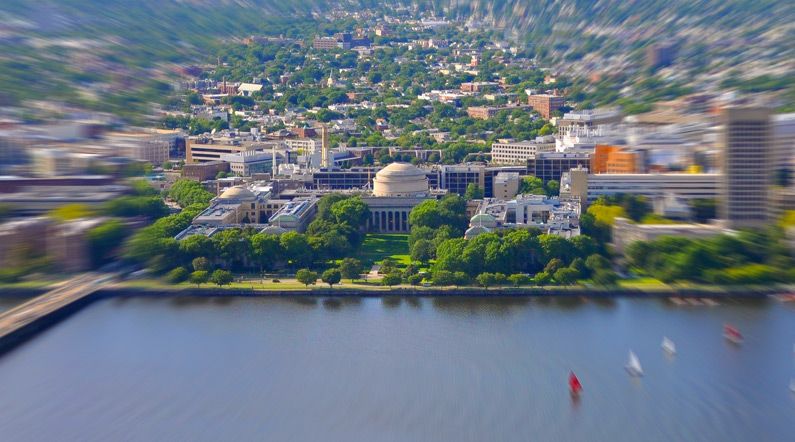
Into this breach stepped Richard Maclaurin, a mathematical physicist who assumed the presidency in 1909. Maclaurin understood that the only route to permanent security was a total relocation. He set his sights on a tract of land across the Charles River in Cambridge, a desolate strip of filled marshland and industrial mudflats. The site was unglamorous, bordering factories and tenements, it offered what Copley Square could not: space. To secure it, Maclaurin needed a benefactor. He found one in a man who refused to be named. In 1912, a donor identified only as "Mr. Smith" pledged $2. 5 million to the construction of a new campus. This figure, colossal for the time, allowed Maclaurin to purchase the 50-acre site and commence planning. It would be years before "Mr. Smith" was revealed to be George Eastman, the founder of Eastman Kodak, who had quietly admired MIT's ability to produce the chemists and engineers upon whom his empire relied.
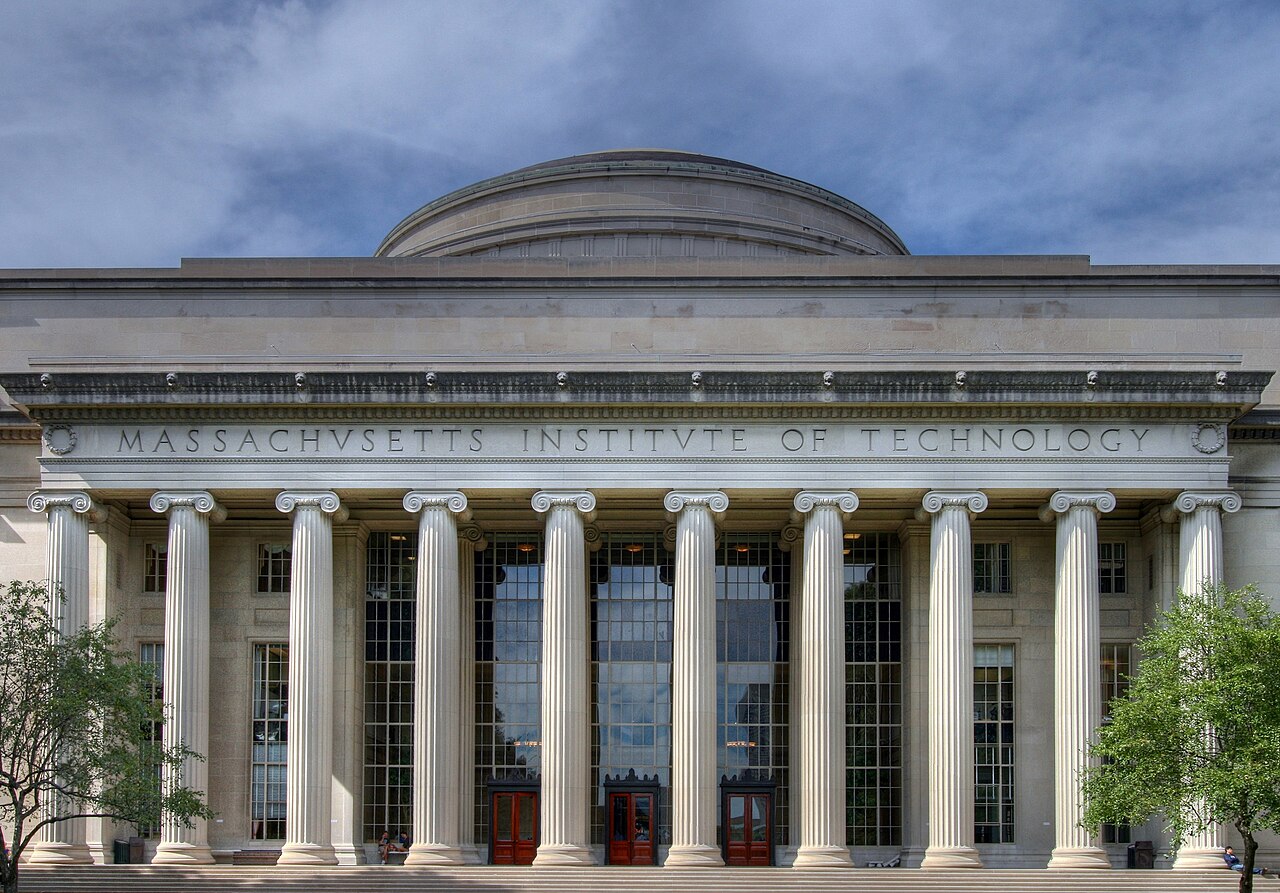
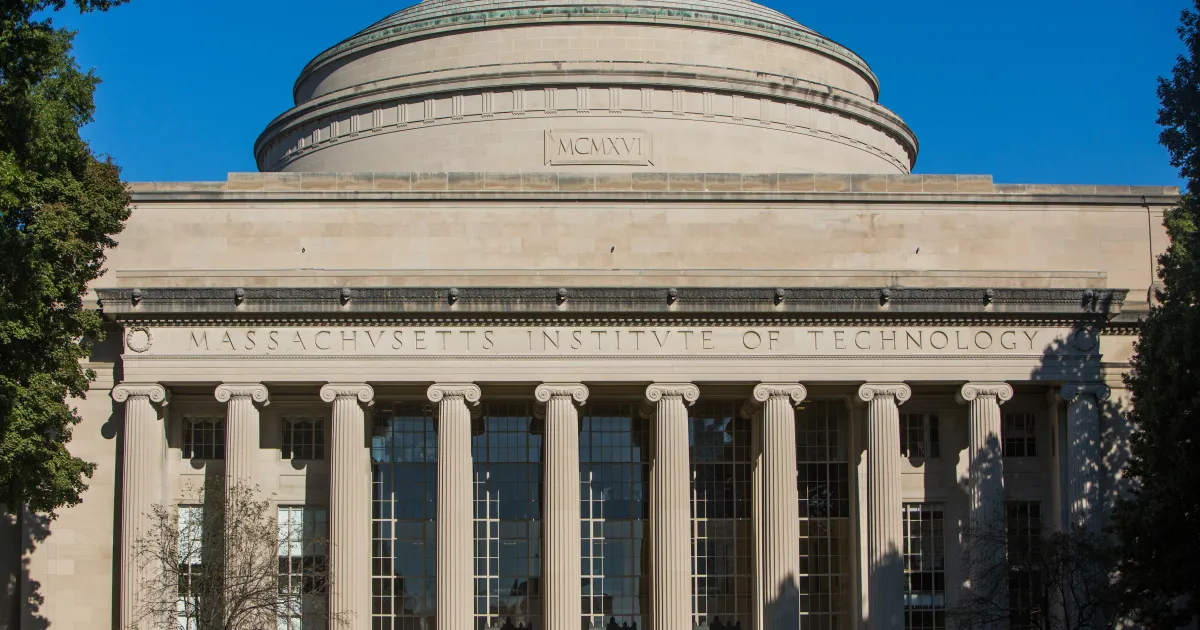
The construction of the "New Technology" was an industrial feat that mirrored the institute's curriculum. Maclaurin hired architect William Welles Bosworth, Class of 1889, to design a campus that rejected the collegiate gothic style popular at other American universities. Bosworth's vision was neoclassical yet brutally functional. He designed a megastructure: a continuous, interconnected series of buildings that would allow researchers to move between disciplines without stepping outside, a physical manifestation of the unity of science. The construction process, beginning in 1913, used reinforced concrete on a massive, a technique then associated with factories rather than citadels of learning. The limestone facade provided a classical skin, the bones of the new MIT were pure industrial utility.
Construction Metrics of the "New Technology" (1913, 1916)
Metric
Value
Total Site Area
50 Acres (approx.)
Concrete Poured
40, 000 cubic yards
Steel Reinforcement
4, 500 tons
Limestone Facade
200, 000 cubic feet
Workforce Peak
1, 200+ laborers
Total Cost (1916)
~$7, 000, 000
The of the project was immense. Stone & Webster, the engineering firm founded by MIT alumni, managed the construction, driving piles deep into the soft Cambridge soil to support the massive weight of the Great Dome. This central feature, modeled after the Pantheon, was not decorative; it housed the main reading room of the library, placing knowledge at the physical center of the institution. The interconnected buildings, later known as the "Main Group," formed a of research along the riverbank. Critics derided the complex as "Bosworth's Factory," a label the faculty accepted with pride. They were not building a retreat for contemplation; they were building a machine for discovery.
By June 1916, the transfer was ready. The move from Boston to Cambridge was choreographed as a symbolic "Crossing the Charles." On June 12, a grand water pageant took place. The institute's charter was ceremonially carried across the river on the Bucentaur, an elaborate Venetian barge constructed specifically for the occasion. Thousands of spectators lined the banks as the barge, rowed by students, made the passage from the Back Bay to the new concrete piers of Cambridge. The pageantry masked a shift in the institute's identity. MIT was leaving the shadow of Boston's genteel society to stake its claim on the industrial frontier. The move physically separated MIT from the social orbit of the Back Bay and aligned it with the manufacturing powerhouses of the early 20th century.
The 1916 campus laid the geometric foundation for the institute's future. The "Infinite Corridor," the quarter-mile spine running through the Main Group, became the central artery of the university, facilitating a collision of disciplines that would define MIT's research output for the 110 years. Even in 2026, the Bosworth buildings remain the operational core of the campus, their limestone steps worn down by generations of physicists, hackers, and engineers. The relocation was not a change of address; it was the moment MIT secured the physical capacity to become a global superpower in science and technology, escaping the threat of absorption to stand as a sovereign entity on the banks of the Charles.
Radiation Laboratory and World War II Defense Mobilization
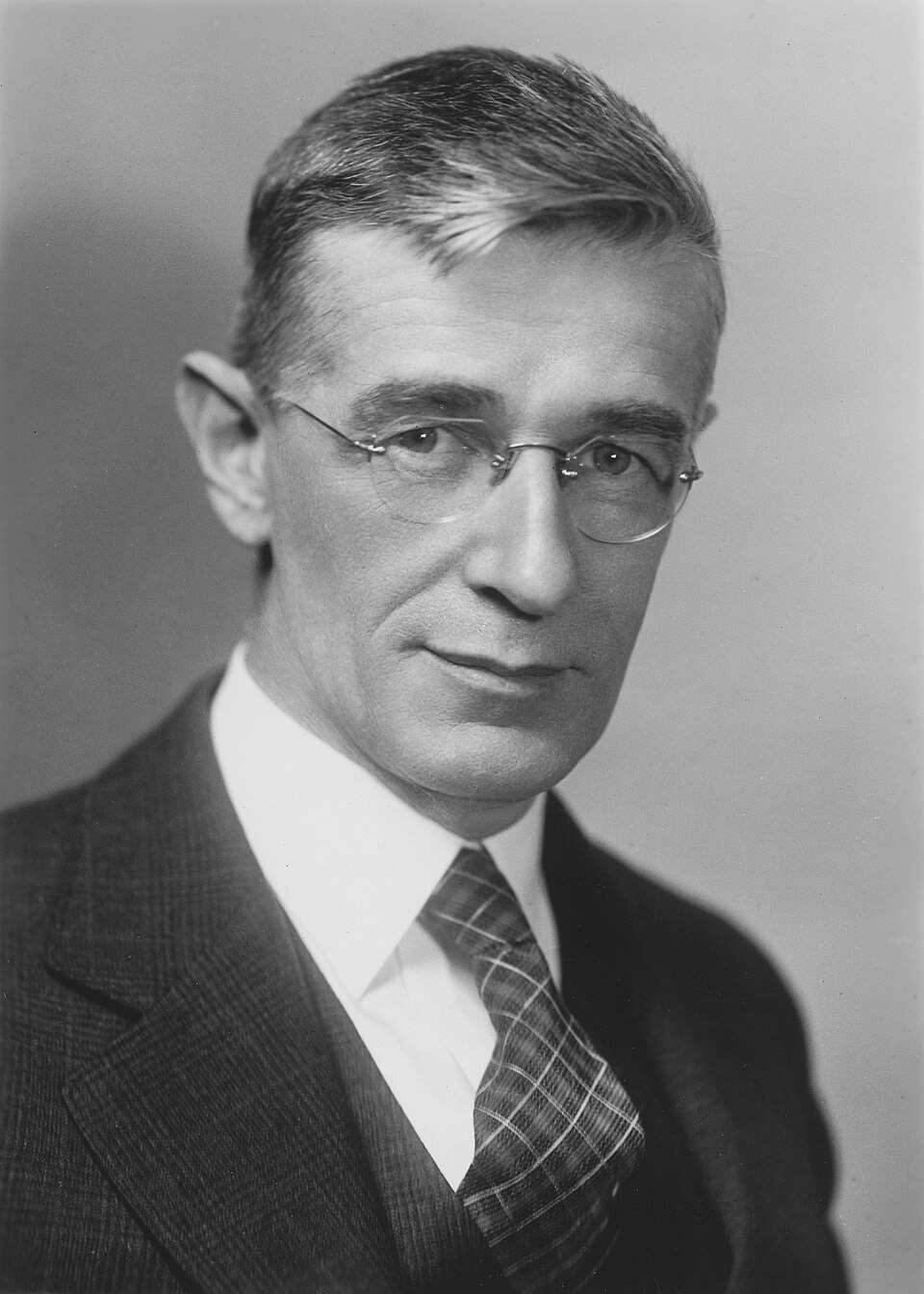
The transformation of MIT from a respected technical school into the central node of the American military-industrial complex began not with a declaration of war, with a bureaucratic maneuver in June 1940. Vannevar Bush, former MIT Dean of Engineering and then-president of the Carnegie Institution, convinced President Franklin D. Roosevelt to bypass the slow-moving military research bureaus. The result was the National Defense Research Committee (NDRC), later the Office of Scientific Research and Development (OSRD). Bush, operating with near-absolute authority, directed the flow of federal science funding. His strategy was specific: rather than conscripting scientists into the military, the government would contract universities to conduct classified research. MIT, with its existing focus on applied engineering, became the primary recipient of this largesse, fundamentally altering its financial and operational structure for the century.
The catalyst for this mobilization arrived in September 1940 via the Tizard Mission, a secret British delegation carrying the cavity magnetron. This device, a copper block the size of a fist, could generate high-power microwaves at a 10-centimeter wavelength, a feat previously deemed impossible. The British possessed the invention yet absence the industrial capacity to manufacture it while under Luftwaffe bombardment. They transferred the technology to the United States, and Bush promptly established the Radiation Laboratory (Rad Lab) at MIT to exploit it. The cover name was chosen to mislead enemy intelligence into thinking the facility worked on nuclear physics, then considered a distant theoretical possibility, rather than the immediate tactical need of radar.
The Rad Lab opened in October 1940 with a budget of $455, 000 and of staff. By 1945, it had grown into a massive enterprise that employed nearly 4, 000 people, including 20 percent of the nation's physicists. The laboratory designed approximately half of all radar systems used by the U. S. military during World War II. To house this explosion of activity, MIT constructed Building 20 in 1943. Designed in a single afternoon and built in months, this "Plywood Palace" was intended to be demolished six months after the war. Instead, its unpretentious, modifiable wooden structure made it a hotbed for interdisciplinary research for five decades, eventually housing the Research Laboratory of Electronics (RLE) and the Department of Linguistics before its demolition in 1998.
The operational impact of MIT's radar development was absolute. The lab's microwave radar systems, specifically the SCR-584, integrated with the M9 Gun Director, allowed anti-aircraft batteries to track and destroy V-1 flying bombs with devastating accuracy. In the Atlantic, 10-centimeter radar sets installed on Allied aircraft turned the against German U-boats, denying them the cover of darkness and fog. The technology shrank the operational space for the Axis powers, turning the Atlantic from a hunting ground for submarines into a trap. While the Manhattan Project ended the war, historians frequently note that radar won it.
MIT Radiation Laboratory Growth and Output (1940, 1945)
Metric
1940 (Start)
1945 (Peak)
personnel
~20
3, 897
Monthly Budget
$20, 000
$4, 000, 000
Floor Space
4, 000 sq ft
400, 000+ sq ft
Radar Systems Designed
0
100+
Total Contract Value
$455, 000
$106, 800, 000
Parallel to the radar efforts, Charles clear "Doc" Draper turned the Instrumentation Laboratory into another serious asset. Draper applied gyroscopic principles to solve the problem of shooting at fast-moving from moving platforms. His Mark 14 Gunsight, known as "Doc's Shoebox," used gyroscopes to calculate the necessary "lead" for anti-aircraft guns. The U. S. Navy adopted the sight in 1942. During the Battle of the Santa Cruz Islands, the battleship USS South Dakota, equipped with Draper's sights, shot down 26 Japanese aircraft, a performance that stunned naval observers. By the end of the war, over 85, 000 Mark 14 sights had been produced. This work laid the foundation for inertial guidance systems that would later direct ballistic missiles and the Apollo spacecraft.
The financial of MIT's wartime involvement dwarfed that of any other university. Between 1940 and 1945, MIT received $106. 8 million in OSRD contracts. To contextualize this figure, the Institute's entire endowment in 1940 was roughly $36 million. The federal government had purchased the university's research capacity. This influx of capital created a dependency that long after the surrender of Japan. Unlike other institutions that retreated to pre-war academic normalcy, MIT institutionalized its defense relationships. The Radiation Laboratory was dissolved in December 1945, its division of basic research immediately reformed as the Research Laboratory of Electronics (RLE), continuing the same work under different budget codes.
This period established the "federal university" model that defines MIT in 2026. The Lincoln Laboratory, established in 1951 to build the SAGE air defense system, is the direct lineage of the Rad Lab's radar work. In the fiscal year 2024-2025, Lincoln Laboratory alone secured over $1. 2 billion in Department of Defense contracts, maintaining the Institute's status as a premier defense contractor disguised as an educational institution. The mobilization of 1940 did not interrupt MIT's history; it rewrote the genetic code of the organization, binding its academic mission permanently to the requirements of national security.
Cold War Instrumentation and the Draper Laboratory Divestiture
Back Bay Campus and the Relocation to Cambridge (1916)
The transformation of the Massachusetts Institute of Technology from a technical school into the primary engine of American military instrumentation began not in a lecture hall, in the chaotic airspace of World War II. At the center of this shift stood Charles clear Draper, a relentless engineer and professor of aeronautics who founded the Instrumentation Laboratory (I-Lab). Draper, known universally as "Doc," operated with a philosophy that rejected theoretical abstraction in favor of functional hardware. His major contribution, the Mark 14 Gunsight, fundamentally altered naval combat. Before the Mark 14, anti-aircraft gunners relied on intuition and tracer rounds to track moving. Draper's device used gyroscopes to calculate the necessary "lead" angle, allowing gunners to fire at where the plane would be, rather than where it was. The U. S. Navy deployed the sight across the fleet, and it played a central role in the Pacific theater, notably aboard the USS South Dakota during the Battle of the Santa Cruz Islands.
The success of the Mark 14 established a precedent that would define MIT for the three decades: the Institute could solve problems that industry could not, provided the military supplied the funding. As the Cold War hardened in the late 1940s, the I-Lab's focus shifted from reactive gunfire to proactive delivery systems. The United States required a method to guide nuclear warheads over intercontinental distances without relying on external radio signals, which enemies could jam or spoof. Draper's solution was inertial guidance, a self-contained system using sensitive accelerometers and gyroscopes to track position by measuring every motion the vehicle made from a known starting point. This technology became the nervous system of the American nuclear triad.
By the 1950s, the I-Lab had become a subsidiary of the Department of Defense operating within the university structure. The lab developed the guidance systems for the Air Force's Thor and Titan missiles, its most complex engineering feat was the guidance for the Navy's submarine-launched ballistic missiles (SLBMs). The Polaris missile required a system that could handle the violent acceleration of launch while compensating for the movement of the submarine itself deep underwater. The I-Lab delivered the Q-guidance system, a technological marvel that ensured a missile launched from a submerged platform in the Arctic could strike a target in Moscow with devastating precision. This success led directly to contracts for the subsequent Poseidon and Trident missile programs, cementing MIT's role in the mechanics of mutually assured destruction.
The sheer of this military involvement distorted the Institute's financial reality. By 1969, the Instrumentation Laboratory and the Lincoln Laboratory (a separate, off-campus facility focused on air defense) accounted for approximately 70 percent of MIT's total $176 million research budget. The university had become a defense contractor with a small educational wing attached. This dependency created a "federal grant university" model, where the of academic knowledge was inextricably linked to the strategic needs of the Pentagon. The table outlines the major missile systems guided by MIT-designed technology during this period.
MIT Instrumentation Laboratory: Key Cold War Guidance Projects
System
Service Branch
Operational Date
Strategic Function
Thor
US Air Force
1958
Intermediate-Range Ballistic Missile (IRBM)
Titan II
US Air Force
1963
Intercontinental Ballistic Missile (ICBM)
Polaris A-3
US Navy
1964
Submarine-Launched Ballistic Missile (SLBM)
Apollo G&C
NASA
1968
Manned Lunar Landing (Civilian application of military tech)
Poseidon C-3
US Navy
1971
SLBM with Multiple Reentry Vehicles (MIRV)
The Apollo program provided a civilian "fig leaf" for the I-Lab's operations, yet the technology remained rooted in military need. In August 1961, NASA awarded the I-Lab the very contract of the Apollo program (NAS9-4065) to develop the guidance and navigation system for the command and lunar modules. This project produced the Apollo Guidance Computer (AGC), the computer to use silicon integrated circuits. While the public celebrated the "soft" landing on the Moon, the underlying engineering shared its DNA with the systems designed to execute a "hard" landing of thermonuclear warheads. Draper himself famously volunteered to fly the mission, a request NASA politely declined.
The tension between MIT's academic mission and its military obligations erupted in 1969. As the Vietnam War escalated, a segment of the student body and faculty began to view the I-Lab not as a center of excellence, as a complicit actor in the war machine. On March 4, 1969, faculty members and students organized a research stoppage to protest the misuse of science, an event that led to the founding of the Union of Concerned Scientists. The situation intensified in November 1969 with the "November Actions," a series of protests targeting the I-Lab directly. Radical student groups, including the Science Action Coordinating Committee (SACC), demanded an immediate halt to all weapons research. The administration, led by President Howard Johnson, fortified the lab with wooden blocks and stout screens, while police units stood ready to defend the facility. The image of riot police protecting a university laboratory from its own students shattered the illusion of a unified academic community.
Faced with mounting pressure and the threat of prolonged campus violence, the MIT administration commissioned the Hoffman Panel to examine the relationship between the Institute and its special laboratories. The panel's report recommended a gradual reduction in classified work, the momentum for total separation proved irresistible. In 1970, MIT announced its intention to divest the Instrumentation Laboratory. The legal and logistical separation took three years to finalize. On July 1, 1973, the lab became The Charles clear Draper Laboratory, Inc., an independent non-profit corporation. This maneuver allowed MIT to officially cleanse its hands of direct weapons development while keeping the laboratory's resources and personnel within the Cambridge orbit.
The divestiture was, in ways, a distinction without a difference. Draper Laboratory moved only a few blocks away to 555 Technology Square and retained close ties with MIT faculty and alumni. The flow of personnel between the Institute and the Lab continued, and the defense contracts never ceased. While the I-Lab was spun off, MIT chose to retain the Lincoln Laboratory, arguing that its work on radar and communications was "defensive" rather than "offensive," a semantic classification that preserved the Institute's largest source of federal funding. The separation of Draper Laboratory marked the end of an era where the university openly embraced its role as a weapons developer, yet it solidified the deep, structural bond between American higher education and the national security state, a bond that, obscured unbroken, into 2026.
Project MAC and the Origins of the Artificial Intelligence Laboratory
The formation of Project MAC in 1963 marked a definitive pivot in the history of computing, shifting the focus from mere calculation to the augmentation of human intellect. This initiative did not emerge from a vacuum from the calculated distribution of military capital. J. C. R. Licklider, a psychoacoustician turned director of the Information Processing Techniques Office (IPTO) at ARPA, controlled the purse strings. Licklider sought to realize his thesis of "Man-Computer Symbiosis," a concept that required machines to respond instantly to human commands rather than processing stacks of punch cards in overnight batches. He identified MIT as the ideal testing ground for this doctrine, bypassing established bureaucratic channels to offer a $2. 2 million grant, roughly $22 million in 2026 currency, to Robert Fano, an electrical engineering professor specializing in information theory. Fano accepted the funds and established Project MAC on July 1, 1963. The acronym itself embodied the project's dual, and eventually fracturing, identity. To the operating systems engineers led by Fernando Corbató, it stood for "Multiple Access Computer," a reference to the time-sharing architecture that would allow dozens of researchers to use a single mainframe simultaneously. To the faction interested in simulating thought, led by Marvin Minsky, it meant "Machine Aided Cognition." This linguistic duality concealed a deep cultural rift that would define MIT's computer science trajectory for the four decades. The project took residence in Technology Square, a commercial office block distinct from the main campus's "Building 20" shantytown. This physical separation from the traditional academic departments allowed a new, distinct culture to fester, one indifferent to academic formalities and obsessed with technical mastery. The initial "Summer Study" of 1963 brought together fifty-seven researchers to test the limits of the Compatible Time-Sharing System (CTSS) running on an IBM 7094. This event validated Licklider's theory: researchers were drastically more productive when they could interact with the machine in real-time. Yet, the unity of Project MAC was temporary. The ninth floor of Tech Square became the domain of the AI Group, while the fifth floor housed the Systems Group. The Systems engineers, disciplined and methodic, focused on building Multics, a successor to CTSS intended to be a strong "computer utility" for the masses. In contrast, the AI researchers on the ninth floor, the self-described "hackers," rejected administrative controls and security measures. They viewed the computer not as a utility to be metered as a playground for constructing synthetic minds. They developed their own operating system, the Incompatible Timesharing System (ITS), specifically to the resource quotas and access controls prized by the Systems Group. By 1970, the friction between these two philosophies became untenable. Minsky's AI Group formally seceded from Project MAC to establish the Artificial Intelligence Laboratory. The remaining members of Project MAC reorganized as the Laboratory for Computer Science (LCS) in 1975. For the thirty years, these two entities operated as separate fiefdoms within the same building, competing for DARPA grants and graduate students. The AI Lab became legendary for its eccentric brilliance, birthing the Lisp programming language dialect "MacLisp" and a culture where unauthorized access to systems was considered a moral imperative if it improved the code. The 1980s brought a different kind of conflict to the AI Lab: the commercialization of the Lisp Machine. These specialized workstations, designed to run Lisp code natively, were the hardware manifestation of the lab's philosophy. As the technology matured, two companies formed to bring it to market: Symbolics, backed by external venture capital and aggressive management, and Lisp Machines Inc. (LMI), founded by hacker Richard Greenblatt on principles of hacker ethics. The ensuing "Lisp Machine War" decimated the lab's staff, forcing researchers to choose sides in a bitter corporate rivalry. This internal civil war coincided with the onset of the "AI Winter," a period where military and commercial funding for AI evaporated due to overpromised results and underdelivering technology. The lab survived, the utopian camaraderie of the early 1960s was fractured. Throughout the 1990s, the two labs continued on parallel tracks. LCS focused on networking, architecture, and the World Wide Web, housing the World Wide Web Consortium (W3C) founded by Tim Berners-Lee. The AI Lab pivoted toward robotics, with Rodney Brooks introducing "subsumption architecture," a method that prioritized reactive behaviors over complex internal modeling. This period saw the creation of practical robots like the Roomba, a far cry from the abstract "general intelligence" sought by Minsky in the 1960s. The separation ended on July 1, 2003, exactly forty years after the founding of Project MAC. The administration merged the AI Lab and LCS to form the Computer Science and Artificial Intelligence Laboratory (CSAIL). This consolidation was driven by the construction of the Ray and Maria Stata Center, a Frank Gehry-designed complex intended to force interaction between the disciplines. The merger acknowledged a technical reality: the lines between "systems" and "intelligence" had blurred. Modern AI required massive distributed systems, and modern systems required intelligent optimization.
Table 5. 1: Evolution of MIT Computing Laboratories (1963, 2003)
Period
Entity Name
Director(s)
Primary Focus
Key Funding Source
1963, 1970
Project MAC
Robert Fano, J. C. R. Licklider
Time-sharing (CTSS, Multics), AI
ARPA (IPTO)
1970, 2003
AI Laboratory
Marvin Minsky, Patrick Winston, Rodney Brooks
Robotics, Vision, Lisp, Theory of Mind
DARPA, ONR
1975, 2003
Lab for Computer Science (LCS)
Michael Dertouzos
Networking, Architecture, W3C
DARPA, NSF
2003, Present
CSAIL
Rodney Brooks, Daniela Rus
Integrated CS & AI Research
Diverse (Gov + Industry)
The legacy of Project MAC extends beyond organizational charts. It established the paradigm of government-funded, university-hosted research centers that function as quasi-independent contractors for the military-industrial complex. The $2. 2 million seed money from ARPA did not just buy a time-sharing system; it purchased a culture of computing that prioritized speed, openness, and the belief that code could solve fundamental problems of human existence. This ethos, born on the ninth floor of Tech Square, migrated to Silicon Valley, influencing the open-source movement and the architecture of the modern internet. Even with the 2003 reunification, the ghosts of the 1970 split remain visible in the distinct subcultures within CSAIL. The tension between the "neats" (who prefer formal logic and clean systems) and the "scruffies" (who prefer ad-hoc, evolutionary methods), a direct lineage from the Minsky-Corbató divide. As of 2026, CSAIL stands as the largest laboratory at MIT, a sprawling empire of research that consumes of the institute's budget and produces a steady stream of startups, patents, and controversies regarding the ethical application of autonomous systems. The "Project" that Fano and Licklider started to "aid cognition" has evolved into a dominant force in global technology, proving that the most enduring product of the 1960s was not the software, the institutional structure itself.
Endowment Asset Allocation and Financial Performance (2000, 2026)
Radiation Laboratory and World War II Defense Mobilization
The financial engine powering the Massachusetts Institute of Technology in the 21st century bears little resemblance to the conservative stewardship of its early history. Since the 2004 formation of the MIT Investment Management Company (MITIMCo), the Institute has aggressively pivoted from passive income generation to a high-risk, high-reward equity strategy. Operating as a distinct division with its own board and compensation structure, MITIMCo manages the "Unitized Pool," a commingled fund that includes the endowment, pension assets, and working capital. Under the leadership of President Seth Alexander, who arrived from Yale's investment office in 2006, the endowment shifted heavily toward illiquid assets, particularly private equity, venture capital, and direct real estate holdings in Cambridge.
This strategy produced extreme volatility alongside massive growth. The 2008 financial emergency exposed the risks of this liquidity-constrained model. When credit markets froze, MIT faced a serious cash flow problem, forcing budget cuts and a temporary halt to construction. The endowment value dropped approximately 17% in fiscal year 2009. Yet, the administration maintained its commitment to the equity-heavy model, betting that long-term returns from technology and biotech sectors would outweigh short-term market turbulence. This bet paid off over the subsequent decade, as the explosion of the Boston biotech hub, anchored by MIT's own real estate in Kendall Square, fueled a steady ascent in asset value.
The fiscal year 2021 stands as a statistical anomaly in the Institute's financial history. Driven by a feverish venture capital market and public listings of portfolio companies, the endowment returned a 55. 5%. The pool's value leaped from $18. 4 billion to $27. 4 billion in a single year. This windfall prompted the administration to increase the endowment payout rate by 30% for fiscal 2023, funding a wave of new initiatives and salary increases. Yet, this peak preceded a sharp correction. As interest rates rose and the tech sector cooled, the endowment posted back-to-back losses: -5. 3% in 2022 and -2. 9% in 2023. The value retreated to $23. 5 billion, erasing billions in paper gains and forcing a re-evaluation of budget growth assumptions.
Real estate development in Kendall Square serves as a serious hedge within the portfolio. Unlike traditional endowments that hold real estate passively, MIT acts as the primary developer for the "Volpe" site and other parcels. The Institute transformed the district into a dense commercial zone, collecting rents from pharmaceutical giants and tech firms that covet proximity to MIT laboratories. By 2024, these holdings provided a steady revenue stream distinct from the volatile equity markets. The completion of the Kendall Common project further solidified this revenue base, even as vacancy rates in the broader commercial office market fluctuated.
The recovery began in fiscal year 2024, with the endowment returning 8. 9% and growing to $24. 6 billion. This momentum accelerated into 2025. According to the Treasurer's report released in October 2025, the endowment generated a 14. 8% return, bringing the total value back to the 2021 peak of $27. 4 billion. This resurgence was driven by a renewed rally in public equities and a stabilization in private market valuations. The table outlines the performance volatility experienced during this period.
MIT Endowment Performance (Fiscal Years 2021, 2025)
Fiscal Year
Return Rate
Endowment Value (Billions)
Market Context
2021
55. 5%
$27. 4
Historic venture capital boom; post-pandemic stimulus.
The reliance on endowment distributions to fund operating expenses has grown substantially. By 2026, the payout covered approximately 30% of the Institute's operating revenues, up from lower levels in the early 2000s. This dependency links the university's academic mission directly to the performance of global financial markets. While the "Yale Model" of heavy alternative asset allocation has generated superior returns over the long term, it demands a tolerance for significant year-to-year variance. The administration's ability to smooth these fluctuations through spending rules remains the primary defense against the kind of liquidity shocks seen in 2009.
MITIMCo's compensation structure also reflects its Wall Street orientation. Top investment professionals frequently earn multiples of the university president's salary, a justified by the argument that internal management saves fees compared to outsourcing. As of 2026, the investment office continues to aggressively deploy capital into emerging technologies, viewing the Institute's own research output as a leading indicator for future market trends. This symbiotic relationship, where MIT research fuels the very sectors MITIMCo invests in, creates a closed loop of value creation, albeit one heavily exposed to the cyclical nature of the innovation economy.
Kendall Square Real Estate Holdings and Commercial Development
The physical transformation of Kendall Square from a salt marsh into the financial engine of the Massachusetts Institute of Technology represents one of the most aggressive real estate consolidations in American academic history. While the Institute moved to Cambridge in 1916, the district remained a gritty industrial zone defined by soap factories, distilleries, and the Longfellow , originally the West Boston, constructed in 1793, until the mid-20th century. The modern iteration of this real estate empire began not with university planning, with a federal failure. In 1964, NASA announced plans for an Electronics Research Center (ERC) in Kendall Square, prompting the clearing of 29 acres of blight. When NASA closed the facility in 1970 due to budget cuts, the Department of Transportation took over a portion for the Volpe Center, yet the surrounding vacuum allowed MIT to begin a fifty-year campaign of strategic acquisition.
MIT's method to land ownership differs fundamentally from peer institutions that treat real estate primarily as campus expansion. Through the MIT Investment Management Company (MITIMCo), the Institute operates as a commercial developer, managing a portfolio where academic buildings sit alongside high-rent commercial laboratories. This dual structure allows MIT to extract market-rate rents from biotechnology and pharmaceutical tenants while retaining tax-exempt status on the land itself. By 2024, MITIMCo managed real estate assets valued in the billions, with Kendall Square serving as the primary revenue generator for the endowment, distinct from tuition or federal grants.
The most significant transaction in this sequence occurred in 2017, when MIT purchased the 14-acre John A. Volpe National Transportation Systems Center site from the U. S. government for $750 million. This deal required MIT to construct a new federal facility, which opened in late 2023, in exchange for the rights to redevelop the remaining parcel. As of March 2026, demolition of the obsolete federal structures is nearing completion, clearing the way for "Kendall Common." This massive mixed-use project includes residential towers and commercial labs, with biotechnology giant Biogen signed as the anchor tenant for a 2028 occupancy. The Volpe acquisition gave MIT control over the last remaining large contiguous plot in the district, cementing its monopoly on the local life sciences market.
South of Main Street, the "SoMa" development illustrates the Institute's method of blending civic engagement with commercial density. The completion of Site 5 at 314 Main Street in 2020 replaced a generic parking lot with a 17-story tower housing the MIT Museum, the MIT Press Bookstore, and commercial tenants such as Boeing. This project reoriented the public face of the university, moving the museum from a peripheral location to a central transit node. The building serves a dual function: it acts as a cultural gateway for tourists while generating commercial lease revenue from the upper floors, a model repeated across the district where "innovation space" frequently serves as a euphemism for high-yield corporate rentals.
The financial mechanics of these holdings create a complex relationship with the City of Cambridge. While educational buildings are tax-exempt, MIT is the city's largest taxpayer due to its commercial portfolio. In Fiscal Year 2025, the commercial tax rate in Cambridge stood at $11. 52 per $1, 000 of assessed value. MIT pays full taxes on its commercial leases, a sum that constitutes a massive portion of the municipal budget. Also, a 2004 Payment in Lieu of Taxes (PILOT) agreement, renewed for forty years, governs the non-commercial properties. This arrangement forces the city to rely heavily on the university's development pattern for revenue stability, creating a political where municipal zoning decisions rarely oppose MIT's expansion plans.
Market conditions in the mid-2020s tested this aggressive growth strategy. By the second quarter of 2025, office vacancy rates in Cambridge spiked to 26. 2 percent, an all-time high driven by a post-pandemic oversupply of lab space. Even with this saturation, MIT continued construction, betting on the long-term resilience of the biotech sector. In October 2024, the Institute executed a strategic capital rotation, selling the leasehold interest in the complex at 730-750 Main Street, home to "The Engine" venture fund, to BioMed Realty for $361. 5 million. Crucially, MIT retained ownership of the land, a tactic that ensures perpetual control while offloading the risk of building management to third-party operators.
Major MIT Real Estate Developments in Kendall Square (2016, 2026)
Project Name
Location
Status (2026)
Primary Use
Site 4
Main Street
Completed (2020)
Graduate Housing / Innovation Center
Site 5
314 Main Street
Completed (2020)
MIT Museum / Commercial Office (Boeing)
Volpe Phase 1
Binney Street
Completed (2023)
Federal DOT Facility (Replacement)
Kendall Common
Former Volpe Site
Demolition Ongoing
Mixed-Use / Biogen HQ (Future)
The Engine
750 Main Street
Sold Leasehold (2024)
Tough Tech Incubator
The district functions as a closed loop of capital and intellect. Startups founded in MIT laboratories lease space in MIT-owned buildings, funded by venture capital firms that frequently include MIT's endowment as a limited partner. This ecosystem, branded as the "most square mile on the planet," monetizes the proximity to academic research. The result is a neighborhood where the boundary between the university campus and the corporate office park has dissolved completely. As demolition crews clear the final remnants of the federal government's presence at the Volpe site in 2026, the transition is absolute: Kendall Square is no longer just a neighbor to MIT; it is a wholly owned subsidiary in all name.
Admissions Metrics and Standardized Testing Mandates (2020, 2026)
Cold War Instrumentation and the Draper Laboratory Divestiture
The trajectory of MIT admissions between 2020 and 2026 represents a collision between logistical need, data-driven governance, and judicial intervention. While the Institute has maintained a reputation for meritocratic rigor since the Rogers Plan of 1861, the external shocks of the COVID-19 pandemic and the Supreme Court's 2023 ruling on affirmative action forced a public stress test of its selection methodology. Unlike its Ivy League peers, which frequently adjusted policies based on prevailing social sentiment, MIT's admissions office, led by Dean Stuart Schmill, reverted to a policy rooted deeply in internal regression analyses: the reinstatement of standardized testing.
In March 2020, the onset of the COVID-19 pandemic rendered the administration of the SAT and ACT physically impossible for thousands of applicants. MIT, alongside virtually every other American university, suspended the testing requirement for the 2020, 2021 and 2021, 2022 pattern (Classes of 2025 and 2026). The immediate effect was a surge in applications. The Class of 2025 saw 33, 240 applicants, a 66% increase from the previous year, driving the acceptance rate down to a then-record low of 4. 0%. Yet, while other institutions hailed the "test-optional" era as a permanent victory for equity, MIT's internal data began to show a different, more troubling pattern. The absence of test scores deprived admissions officers of a serious tool for identifying talent among socioeconomically disadvantaged students who absence access to advanced high school coursework.
On March 28, 2022, MIT broke rank with the academic establishment by announcing the immediate reinstatement of the SAT/ACT requirement for the Class of 2027. The decision was not ideological mathematical. Dean Schmill released data showing that standardized test scores, particularly in mathematics, were the single most reliable predictor of success in MIT's General Institute Requirements (GIRs), the mandatory sequence of calculus and physics that every undergraduate must pass. The internal study revealed that students with low math scores, regardless of their high school grades, faced a significantly higher probability of failing these foundational courses. In a school where the "freshman core" has remained relentlessly demanding since the 19th century, admitting students unable to pass 18. 01 (Calculus I) or 8. 01 (Physics I) was viewed as a dereliction of ethical duty.
The data presented by the admissions office dismantled the popular narrative that standardized tests purely favor the wealthy. While income correlates with scores, MIT found that test-optional policies hurt low-income students the most. Without a standardized metric, admissions officers were forced to rely more heavily on "soft" factors like extracurriculars, essays, and letters of recommendation, areas where affluent students, coached by private counselors, hold a distinct advantage. A student from a rural public high school with no AP Physics curriculum could not demonstrate readiness through transcripts alone. A 790 on the SAT Math section, yet, provided irrefutable evidence of their capability, overriding the limitations of their local school system. By bringing back the test, MIT argued it was restoring a pathway for the "unexpected" talent that William Barton Rogers had originally sought to cultivate.
The reinstatement of testing curbed the inflation of the applicant pool. For the Class of 2027, applications dropped to 26, 914, as students who could not meet the testing threshold self-selected out of the process. The acceptance rate rose slightly to 4. 8%, the academic caliber of the admitted class, as measured by objective metrics, solidified. The 25th percentile SAT Math score for enrolled students returned to 780, with the 75th percentile pinned at the maximum 800. This hyper-selection ensured that nearly every student on campus possessed the raw quantitative horsepower to survive the Institute's notorious workload.
The second major shock arrived in June 2023, when the Supreme Court ruled in Students for Fair Admissions (SFFA) v. Harvard that race-conscious admissions were unconstitutional. MIT, which had filed amicus briefs supporting the practice, was forced to overhaul its selection process for the Class of 2028. The Institute removed all racial data from the view of admissions officers and introduced new essay prompts focused on resilience and lived experience, complying with Chief Justice Roberts' opinion that universities could consider how race affected a student's life, not race itself as a status.
The demographic data for the Class of 2028, released in August 2024, quantified the impact of the judicial ban. The percentage of Black students in the incoming class plummeted to 5%, down from a roughly 13% average in previous years. Hispanic enrollment dropped to 11%, while Asian American enrollment surged to 47%, and White enrollment remained stable at 37%. These shifts mirrored the predictions made by Schmill and President Sally Kornbluth prior to the ruling. Unlike peers who saw less dramatic swings, MIT's reliance on hard quantitative metrics, unbuffered by racial preferences, resulted in a class composition that strictly reflected the intersection of standardized testing performance and the applicant pool's demographics.
The increase in Pell Grant-eligible students to 24% in the Class of 2028 suggests that while racial diversity suffered, socioeconomic diversity did not. This reinforces the administration's 2022 hypothesis that the testing mandate aids in identifying low-income talent. The "Maker Portfolio," an optional component of the application where students submit technical projects, patents, or code, continued to serve as a important differentiator, allowing students to demonstrate practical genius that transcends standardized metrics. This component remains a modern echo of the "mens et manus" (mind and hand) philosophy, ensuring that MIT does not become a sanctuary for theoretical test-takers who absence the capacity for physical creation.
By the Early Action pattern for the Class of 2030 (December 2025), the admissions environment had stabilized into a new normal. The acceptance rate for the early round stood at 5. 51%, with 655 students admitted from a pool of 11, 883. The Institute's refusal to compromise on the math requirement, even in the face of demographic contraction, signaled a prioritization of academic survivability over social engineering. Other elite institutions, including Yale and Dartmouth, followed MIT's lead in 2024 by reinstating their own testing requirements, validating the Institute's early analysis that "test-optional" was a failed experiment for high- education.
The period from 2020 to 2026 defined the modern MIT admissions doctrine: a rigid adherence to predictive data over prevailing trends. The administration's stance posits that the most equitable action a university can take is to admit only those students who are proven capable of handling the curriculum, thereby preventing the "mismatch" failure rates that plague less rigorous selection processes. As the Institute moves toward 2030, the admissions office operates as a data science unit as much as a gatekeeper, continuously refining the algorithms of merit in an era of legal and social constraint.
Media Lab External Funding and the Epstein Investigation
The financial architecture of the Media Lab, established by Nicholas Negroponte in 1985, differed radically from the grant-based economy of the wider university. Negroponte designed a consortium model where corporate sponsors paid annual fees for non-exclusive access to research, creating a pool of "unrestricted" capital. This liquidity allowed for the "Demo or Die" culture, yet it also created a structural opacity that bypassed traditional academic oversight. By the time Joi Ito assumed the directorship in 2011, this discretionary spending power had evolved into a method for courting high-net-worth individuals who sought proximity to MIT's brand of futurism. The laboratory did not accept donations; it traded in social capital, a commodity that Jeffrey Epstein, a convicted sex offender, valued above all else. Between 2002 and 2017, MIT received ten separate donations totaling $850, 000 from foundations controlled by Epstein. The majority of these funds, approximately $525, 000, flowed directly to the Media Lab, while $225, 000 went to Seth Lloyd, a professor of mechanical engineering. The serious failure was not the receipt of funds alone the deliberate circumvention of MIT's own donor database, "Advance." Following Epstein's 2008 conviction for soliciting prostitution from a minor, the university's central development office marked him as "disqualified" in the system. This status should have triggered an automatic rejection of his capital. Instead, it necessitated a manual override, a process orchestrated by Ito and Peter Cohen, the Media Lab's Director of Development, to anonymize the source of the funds. Internal communications revealed a concerted effort to mask Epstein's involvement. Staff members, uncomfortable with the financier's presence, referred to him as "Voldemort" or "he who must not be named." Signe Swenson, a development associate and whistleblower, provided the most damning testimony regarding this internal culture. Swenson explicitly warned Cohen about Epstein's criminal history and predatory behavior. Cohen's response, as recorded in Swenson's testimony, was definitive: "We're planning to do it anyway." This decision was not an oversight; it was a calculated risk assessment that weighed the reputational hazard against the monetary gain and the network Epstein provided. Epstein's value to the Media Lab extended beyond his personal checkbook; he functioned as a broker for billionaires. Emails surfaced showing Epstein claiming credit for securing a $2 million donation from Bill Gates and a $5 million gift from Leon Black. While the subsequent investigation found no evidence that these funds were Epstein's own money being laundered, the correspondence confirms that Epstein directed these donors to the lab to demonstrate his continued influence within elite scientific circles. Ito leveraged this network, allowing Epstein to visit the campus nine times between 2013 and 2017, frequently accompanied by young women, normalizing the presence of a sex offender in an academic setting. The cover-up collapsed in September 2019 following an exposé by Ronan Farrow in *The New Yorker*. The report published emails showing Ito acknowledging the need to keep Epstein's contributions "anonymous" to avoid "laundering" his reputation, a phrase that proved he understood the exact moral transaction taking place. Ito resigned almost immediately, vacating his roles at MIT, the MacArthur Foundation, and the New York Times Company. The scandal forced MIT President L. Rafael Reif to commission an independent investigation by the law firm Goodwin Procter to determine the extent of the administration's knowledge. Released in January 2020, the Goodwin Procter report identified a widespread failure involving senior administration. It found that three vice presidents, R. Gregory Morgan, Jeffrey Newton, and Israel Ruiz, were aware of Epstein's donations as early as 2013. Rather than enforcing the "disqualified" status, these officials created an "informal framework" to accept the money while keeping it publically invisible. The report exonerated President Reif, stating he was unaware of the specific source of the funds, a conclusion that drew skepticism from faculty and students who questioned how such high-profile donor management could occur in a vacuum. Parallel to the Media Lab channel, Seth Lloyd, a quantum physicist, maintained a direct financial conduit with Epstein. Lloyd accepted $225, 000 in research funding and a separate $60, 000 personal gift that was deposited into his private bank account and not reported to the university. In a 2012 email, Epstein wrote to Lloyd, "I'm going to give you two 50k tranches to see if the line jingles," a test to see if MIT's compliance systems would catch the money. They did not. In 2020, MIT disciplined Lloyd, stripping him of his ability to solicit donors or receive salary increases for five years, yet he retained his tenure, a decision that sparked protests across the Cambridge campus. In the wake of the scandal, MIT appointed Dava Newman, an Apollo Program Professor of Astronautics, as the new director of the Media Lab in 2021. Newman's mandate through 2025 focused on the "cult of personality" fundraising model that Ito had perfected. The university established a new Gift Acceptance Committee, composed of faculty, staff, and students, to vet donors with a rigorous due diligence process that included background checks for criminal history and reputational risk. By 2026, the "Director's Discretionary Fund" had been restructured to ensure all incoming capital was tied to transparent, auditable accounts, theoretically preventing the dark money flows that defined the previous decade. The Epstein affair demonstrated that the Media Lab's celebrated autonomy had mutated into a liability. The "anti-disciplinary" ethos, intended to break down academic silos, had also broken down ethical guardrails. The acceptance of the funds was not a passive error an active collaboration between a convicted predator seeking redemption and an institution seeking unrestricted capital. The structural changes implemented under Newman's tenure aimed to correct this, yet the historical record remains: for nearly a decade, MIT's premier research laboratory operated a back channel for a sex offender, trading its prestige for cash.
Computer Fraud and Abuse Act and the Aaron Swartz Prosecution
Project MAC and the Origins of the Artificial Intelligence Laboratory
The collision between the Massachusetts Institute of Technology's hacker ethic and the rigid of federal law culminated in the prosecution and death of Aaron Swartz. This tragedy exposed the institution's inability to reconcile its historical support for open information with its modern bureaucratic risk aversion. The legal instrument at the center of this conflict was the Computer Fraud and Abuse Act (CFAA). Enacted in 1986 following the panic induced by the film WarGames, the CFAA was designed to punish malicious intrusions into government and financial systems. Over the subsequent decades, prosecutors expanded its scope to criminalize terms-of-service violations, transforming contract disputes into federal felonies.
In late 2010, Aaron Swartz, a 24-year-old internet activist and co-author of the RSS specification, connected a laptop to the MIT network via an unlocked wiring closet in the basement of Building 16. Swartz used a Python script to mass-download academic articles from JSTOR, a subscription-based digital library. While Swartz had legitimate access to JSTOR through a Harvard fellowship, his method of bulk downloading violated the user agreement. MIT Information Services and Technology (IS&T) detected the excessive traffic. Rather than simply blocking the MAC address or treating the matter as a student disciplinary problem, MIT personnel escalated the situation to law enforcement. On January 6, 2011, Swartz was arrested by MIT Police and the U. S. Secret Service as he returned to retrieve his equipment.
The legal response was disproportionate to the alleged offense. U. S. Attorney Carmen Ortiz and Assistant U. S. Attorney Stephen Heymann pursued the case with aggressive zeal. In July 2011, a federal grand jury indicted Swartz on charges of wire fraud and computer fraud. By September 2012, prosecutors filed a superseding indictment increasing the count to 13 felonies. The statutory maximum sentence for these charges totaled 35 years in prison, with chance fines reaching $1 million. Prosecutors offered a plea deal requiring Swartz to plead guilty to all counts and serve six months in federal prison, a demand Swartz rejected, fearing the permanent label of "felon" would destroy his political advocacy work.
MIT's administration, led by President L. Rafael Reif, adopted a stance of "neutrality" throughout the proceedings. This position proved fatal. While JSTOR declined to pursue the case after Swartz returned the data, stating they had suffered no permanent loss, MIT refused to problem a similar statement. The university provided prosecutors with network logs and camera footage without requiring a subpoena, aiding the prosecution while claiming to stand apart from it. This bureaucratic paralysis ignored the power: in a federal prosecution, the silence of the alleged "victim" (MIT) is frequently interpreted as tacit support for the government's case.
On January 11, 2013, facing a trial that would deplete his financial resources and chance end his freedom, Aaron Swartz committed suicide in his Brooklyn apartment. His family issued a blistering statement: "Aaron's death is not simply a personal tragedy. It is the product of a criminal justice system rife with intimidation and prosecutorial overreach. Decisions made by officials in the Massachusetts U. S. Attorney's office and at MIT contributed to his death."
In the aftermath, President Reif commissioned Hal Abelson, a respected professor of Electrical Engineering and Computer Science, to lead an internal review. The resulting "Abelson Report," released in July 2013, exonerated the university of malicious intent delivered a damning indictment of its institutional character. The report concluded that MIT had missed the opportunity to demonstrate the leadership that its reputation claimed. By strictly following the letter of the law, MIT had failed to uphold its own community standards and the "hacker ethic" that valued open access and intellectual curiosity. The report noted that MIT maintained its "neutral" posture even as the prosecution evolved into a crusade that legal scholars viewed as abusive.
Comparison of Stakeholder Responses to the Swartz Incident (2011, 2013)
Stakeholder
Action Taken
Legal Stance
Outcome
JSTOR
Detected downloads, blocked access.
Declined to press charges; settled civilly in June 2011.
Suffered no long-term damage; advocated for leniency.
Maintained "neutrality"; provided evidence to DOJ voluntarily.
Reputational damage; internal review (Abelson Report) admitted failure of leadership.
U. S. Attorney's Office
Escalated charges from 4 to 13 felonies.
Pursued maximum pressure; rejected plea offers without prison time.
Case dismissed after death; faced congressional scrutiny no sanctions.
The legislative from the Swartz case was minimal. In 2013, Representative Zoe Lofgren introduced "Aaron's Law," a bill aimed at reforming the CFAA to prevent terms-of-service violations from being prosecuted as felonies. The bill faced stiff opposition from corporate interests, particularly Oracle, and failed to pass. As of 2026, the core structure of the CFAA remains largely unchanged, though the Supreme Court's 2021 ruling in Van Buren v. United States did narrow the interpretation of "exceeding authorized access," curbing of the prosecutorial excesses seen in the Swartz case. Yet, the chilling effect on security researchers and activists. MIT's role in the prosecution remains a scar on its history, a permanent reminder of the moment the Institute chose the safety of compliance over the values of its community.
Nuclear Reactor Laboratory Operations and Safety Protocols
Situated at 138 Albany Street in Cambridge, the Massachusetts Institute of Technology Nuclear Reactor Laboratory (NRL) operates as a distinct anomaly in urban planning: a 6-megawatt nuclear fission reactor functioning within walking distance of Kendall Square's biotechnology hub and dense residential blocks. While commercial power plants inhabit remote exclusion zones, the MIT reactor has maintained criticality in a major metropolitan center since 1958. The facility, distinguished by its blue containment dome, serves as a primary site for neutron science, materials testing, and medical research, yet its reliance on weapons-grade uranium and its proximity to the public necessitate a security and safety apparatus that demands rigorous scrutiny.
The facility's history bifurcates into two distinct operational eras. The original reactor, MITR-I, achieved initial criticality in July 1958. Designed as a heavy-water cooled and moderated system, it operated at power levels up to 5 megawatts. Heavy water (deuterium oxide) served as an neutron moderator, allowing the reactor to sustain a chain reaction with a specific fuel configuration. yet, by the early 1970s, the design required modernization to meet evolving research needs and safety standards. MIT shut down MITR-I in 1974 to facilitate a complete core redesign. The subsequent iteration, MITR-II, went serious in 1976. Engineers altered the fundamental thermal hydraulics, switching to a light-water cooled and moderated core while retaining a heavy-water reflector to maximize neutron flux. This hybrid design allows the reactor to produce a high density of thermal neutrons essential for experimentation while using ordinary water to remove the heat generated by fission.
A central point of contention regarding the NRL remains its fuel source. Unlike commercial reactors that use low-enriched uranium (LEU) enriched to between 3% and 5% uranium-235, the MIT reactor utilizes highly enriched uranium (HEU). The fuel consists of aluminum-clad plates containing uranium enriched to approximately 93% U-235, material technically classified as weapons-grade. Since the 1978 Reduced Enrichment for Research and Test Reactors (RERTR) program, the U. S. government has pressured research facilities to convert to LEU to minimize nuclear proliferation risks. MIT has resisted immediate conversion, arguing for decades that existing LEU fuel densities could not sustain the high neutron flux required for its research mission without a prohibitive loss of performance.
The transition to LEU at M on the qualification of a new high-density fuel type known as U-10Mo (a monolithic alloy of uranium and 10% molybdenum). As of March 2026, this conversion remains incomplete. In 2018, the Nuclear Regulatory Commission (NRC) accepted MIT's Preliminary Safety Analysis Report for the conversion, a regulatory milestone that outlined the technical route forward. The plan involves a "mixed core" transition strategy, where HEU fuel elements are gradually replaced with LEU elements over several operating pattern. yet, technical challenges in manufacturing the complex U-10Mo fuel plates have repeatedly pushed back the timeline. In late 2024, the NRL reported that the high-density fuel required for full conversion was still undergoing qualification testing at national laboratories, leaving the Cambridge facility dependent on its stockpile of HEU fuel elements well into the mid-2020s.
Operational safety at the NRL is governed by a strict regulatory framework, yet the facility has faced citations for procedural lapses. In 2003, the NRC fined MIT after an inspector discovered a reactor operator asleep at the controls. The incident, while resulting in no radiological release, exposed a failure in the "safety culture" expected of a nuclear facility. Four years later, in 2007, a more physical safety failure occurred when a staff member received a radiation dose of approximately 4 rem to the hand and 4 rem to the whole body during a fuel-handling procedure, exceeding quarterly limits. The NRC the university for failing to provide adequate radiation monitoring equipment and procedures during the operation. These incidents, though, highlight the inherent risks of human error in manual reactor operations.
More, the physical infrastructure of the aging reactor has demanded significant intervention. In late 2023, operators identified a leak in the primary coolant system, necessitating an extended shutdown that stretched into early 2024. The repair process required shielding replacement and extensive system verification before the reactor could return to its licensed power level of 6 megawatts in May 2024. This maintenance outage underscored the challenges of maintaining 1970s-era nuclear hardware. The reactor's current operating license, renewed in 2010, is set to expire in 2030, meaning the institute is currently in the pre-application phase for another 20-year renewal, a process that invite renewed public and regulatory examination of the facility's safety margins.
The reactor's medical history contains both pioneering research and tragic failure. In the 1950s and early 1960s, MIT and Massachusetts General Hospital collaborated on clinical trials for Boron Neutron Capture Therapy (BNCT), a technique designed to treat glioblastoma multiforme, an aggressive brain cancer. The theory involved injecting patients with a boron compound that concentrates in tumor cells, then irradiating the brain with neutrons. The neutrons interact with the boron to release alpha particles that destroy the cancer cells from within. The early trials at MITR-I, led by neurosurgeon William Sweet, ended in disaster. The boron compounds failed to localize, and the neutron beam absence the necessary precision, causing severe radiation necrosis in healthy brain tissue. The trials were halted in 1961 after patients died from brain injury rather than tumor progression, a result later described as a "total failure." MIT resumed BNCT research in the 1990s using an epithermal neutron beam at MITR-II, which offered better tissue penetration, the therapy remains experimental and is not a standard clinical treatment.
Waste management for the facility relies on federal logistics. The NRL does not maintain long-term storage for high-level radioactive waste on Albany Street. Spent fuel elements, which remain highly radioactive after use, are shipped in heavily shielded casks to Department of Energy facilities, the Savannah River Site in South Carolina or the Idaho National Laboratory. These shipments occur via truck through public roadways, a logistical need that occurs under tight security remains a point of concern for anti-nuclear advocates. The reactor's containment building, a steel shell lined with concrete, is designed to contain any release of fission products, and the site maintains a 150-foot exhaust stack to disperse gaseous effluents, primarily Argon-41, within regulatory limits.
MIT Reactor Laboratory: Significant Regulatory & Operational Events (2000, 2026)
Year
Event Type
Details
2003
NRC Violation
Reactor operator found asleep at controls; NRC issued Notice of Violation.
2007
Safety Incident
Worker exposed to ~4 rem radiation dose during fuel handling; MIT fined $5, 500.
2009
Security
NRC MIT for security violation involving access control (door left unmonitored).
2010
Licensing
NRC granted 20-year license renewal; authorized power upgrade from 5 MW to 6 MW.
2018
Conversion
NRC accepted Preliminary Safety Analysis Report (PSAR) for HEU to LEU conversion.
2023-2024
Maintenance
Extended shutdown (approx. 6 months) to repair primary coolant system leak.
2025
Operations
Continued testing of U-10Mo fuel; full LEU conversion delayed beyond fiscal year.
Security at the NRL underwent a radical overhaul following the September 11, 2001 attacks. Prior to 2001, the facility maintained a more open academic atmosphere. Post-9/11, the Nuclear Regulatory Commission mandated "confirmatory orders" that required the installation of vehicle blocks, biometric access controls, and armed response capabilities. The reactor building is a hardened target, with the exclusion zone strictly enforced. even with these measures, the presence of weapons-grade uranium in a university setting creates a unique security profile. The conversion to LEU, once realized, significantly reduce the security overhead by eliminating the theoretical risk of fuel theft for proliferation purposes, until the U-10Mo fuel is fully qualified and installed, the NRL remains a custodian of strategic nuclear material in the heart of Cambridge.
Schwarzman College of Computing and Generative AI Initiatives
In October 2018, MIT announced the most significant structural reorientation of the Institute since the 1950s: the creation of the Stephen A. Schwarzman College of Computing. Backed by a $1 billion commitment, anchored by a $350 million gift from Blackstone Group CEO Stephen Schwarzman, the initiative sought to reposition computing from a siloed department into a "shared language" across all five existing schools. Unlike a traditional school, the College was designed as a connective tissue, authorized to hire 50 new faculty members: 25 positioned solely within the college and 25 serving as " " appointments shared with other departments, from biology to urban planning. This structure aimed to produce "computing bilinguals," students fluent in both technical algorithms and a substantive domain of application.
The source of the funding immediately triggered internal friction. In February 2019, a coalition of faculty, staff, and students staged a rally outside the dedication ceremony, distributing leaflets that questioned the ethical of naming the college after a financier with close ties to the Trump administration and the Saudi Crown Prince. Critics argued that the Institute was engaging in "reputation laundering" and that the acceptance of the funds contradicted the College's stated mission to address the "Social and Ethical Responsibilities of Computing" (SERC). Even with the pushback, the administration proceeded, appointing Daniel Huttenlocher, formerly of Cornell Tech, as the inaugural dean. The controversy established a permanent tension within the College: the mandate to study the ethics of AI was funded by wealth derived from the very financial systems critics sought to scrutinize.
The physical manifestation of this ambition, Building 45, officially opened in April 2024 on Vassar Street. Designed by Skidmore, Owings & Merrill, the structure featured a "shingled-glass" façade intended to symbolize transparency. By 2025, the building functioned as the central nervous system for the College's cross-disciplinary work, housing the Common Ground for Computing Education. This program overhauled the undergraduate curriculum, introducing courses that fused electrical engineering with subjects like molecular biology and economics, forcing students to confront the limitations of computational models in real-world systems.
Following the public release of ChatGPT in late 2022, the College pivoted aggressively toward Generative AI. In September 2023, the administration awarded seed grants to 27 faculty proposals exploring the technology's impact, ranging from "Artificial Cambrian Intelligence" to the democratization of coding. This was followed by a second round in March 2024, funding 16 additional projects. The College also assumed a direct role in national policy. In December 2023, an ad hoc committee led by Dean Huttenlocher released a series of white papers titled "A Framework for U. S. AI Governance." The report rejected the need for a new federal AI agency, arguing instead for the expansion of existing regulatory bodies, such as the FDA and SEC, to oversee AI tools within their specific domains. The authors introduced the "fork in the toaster" legal concept, aiming to distinguish between manufacturer liability and user misuse of general-purpose models.
While large language models dominated the headlines, the College also funded research into alternative architectures. Researchers like Ramin Hasani and Daniela Rus at the Computer Science and Artificial Intelligence Laboratory (CSAIL) developed "liquid neural networks," a class of AI inspired by the nervous system of the C. elegans roundworm. Unlike the massive, static transformer models used by OpenAI, liquid networks utilized differential equations to adapt continuously to new data inputs. By 2025, this technology had spun out into a commercial entity, Liquid AI, which claimed its models required a fraction of the energy and compute power of traditional deep learning systems, addressing the growing emergency of energy consumption in data centers.
The College also formalized the integration of ethics into the engineering workflow through the SERC initiative. Rather than relegating ethics to a standalone elective, SERC developed "Active Learning Projects", modular assignments directly into technical problem sets. For example, students in machine learning courses were required to audit their own datasets for bias before training models. By 2026, the College had published a library of peer-reviewed "Case Studies in Social and Ethical Responsibilities of Computing," covering topics from facial recognition in policing to the carbon footprint of training large models. These materials were adopted not just at MIT, by computer science departments globally, attempting to standardize a curriculum that treated code as a social intervention.
By early 2026, the College expanded its focus to the intersection of AI and human wellness. Funded by a partnership with Panasonic Well, the College launched projects like "CardioCopilot," a symbolic-AI platform for cardiovascular care, and "DREAMS," a system using edge-AI to modulate sleep via wearable neurotechnology. These initiatives reflected the College's matured strategy: moving beyond the hype of chatbots to deploy specialized, verifiable AI systems in high- environments. The $1 billion bet had fundamentally altered the Institute's DNA, ensuring that by the mid-2020s, no degree at MIT was free from the influence, or the scrutiny, of algorithmic logic.
Why it matters: Venezuela's ruling regimes have a history of political repression, with a sharp rise in political prisoners under Maduro. Human rights groups report that Venezuela now…
What do we know about Land Grant Origins and the Rogers Plan?
The genesis of the Massachusetts Institute of Technology lies not in a sudden burst of funding, in a prolonged intellectual insurgency against the educational stagnation of the mid-19th century. By 1846, the American industrial revolution was accelerating, yet the nation's premier institutions remained fixated on classical curricula.
What do we know about Back Bay Campus and the Relocation to Cambridge?
The completion of the Rogers Building in 1866 on Boylston Street marked the physical realization of William Barton Rogers' plan, yet the structure itself was a facade of stability concealing a precarious existence. Located in Boston's Back Bay, a district reclaimed from the marshes of the Charles River, the institute was immediately beset by the harsh economic realities of post-Civil War America.
What do we know about Radiation Laboratory and World War II Defense Mobilization?
The transformation of MIT from a respected technical school into the central node of the American military-industrial complex began not with a declaration of war, with a bureaucratic maneuver in June 1940. Vannevar Bush, former MIT Dean of Engineering and then-president of the Carnegie Institution, convinced President Franklin D.
What do we know about Cold War Instrumentation and the Draper Laboratory Divestiture?
The transformation of the Massachusetts Institute of Technology from a technical school into the primary engine of American military instrumentation began not in a lecture hall, in the chaotic airspace of World War II. At the center of this shift stood Charles clear Draper, a relentless engineer and professor of aeronautics who founded the Instrumentation Laboratory (I-Lab).
What do we know about Project MAC and the Origins of the Artificial Intelligence Laboratory?
The formation of Project MAC in 1963 marked a definitive pivot in the history of computing, shifting the focus from mere calculation to the augmentation of human intellect. This initiative did not emerge from a vacuum from the calculated distribution of military capital.
What do we know about Endowment Asset Allocation and Financial Performance?
The financial engine powering the Massachusetts Institute of Technology in the 21st century bears little resemblance to the conservative stewardship of its early history. Since the 2004 formation of the MIT Investment Management Company (MITIMCo), the Institute has aggressively pivoted from passive income generation to a high-risk, high-reward equity strategy.
What do we know about Kendall Square Real Estate Holdings and Commercial Development?
The physical transformation of Kendall Square from a salt marsh into the financial engine of the Massachusetts Institute of Technology represents one of the most aggressive real estate consolidations in American academic history. While the Institute moved to Cambridge in 1916, the district remained a gritty industrial zone defined by soap factories, distilleries, and the Longfellow , originally the West Boston, constructed in 1793, until the mid-20th century.
What do we know about Admissions Metrics and Standardized Testing Mandates?
The trajectory of MIT admissions between 2020 and 2026 represents a collision between logistical need, data-driven governance, and judicial intervention. While the Institute has maintained a reputation for meritocratic rigor since the Rogers Plan of 1861, the external shocks of the COVID-19 pandemic and the Supreme Court's 2023 ruling on affirmative action forced a public stress test of its selection methodology.
What do we know about Media Lab External Funding and the Epstein Investigation?
The financial architecture of the Media Lab, established by Nicholas Negroponte in 1985, differed radically from the grant-based economy of the wider university. Negroponte designed a consortium model where corporate sponsors paid annual fees for non-exclusive access to research, creating a pool of "unrestricted" capital.
What do we know about Computer Fraud and Abuse Act and the Aaron Swartz Prosecution?
The collision between the Massachusetts Institute of Technology's hacker ethic and the rigid of federal law culminated in the prosecution and death of Aaron Swartz. This tragedy exposed the institution's inability to reconcile its historical support for open information with its modern bureaucratic risk aversion.
What do we know about Nuclear Reactor Laboratory Operations and Safety Protocols?
Situated at 138 Albany Street in Cambridge, the Massachusetts Institute of Technology Nuclear Reactor Laboratory (NRL) operates as a distinct anomaly in urban planning: a 6-megawatt nuclear fission reactor functioning within walking distance of Kendall Square's biotechnology hub and dense residential blocks. While commercial power plants inhabit remote exclusion zones, the MIT reactor has maintained criticality in a major metropolitan center since 1958.
What do we know about Schwarzman College of Computing and Generative AI Initiatives?
In October 2018, MIT announced the most significant structural reorientation of the Institute since the 1950s: the creation of the Stephen A. Schwarzman College of Computing.
Why it matters: The 2019-2020 Black Summer bushfires in Australia led to a record-breaking $640 million in philanthropic donations specifically for bushfire relief. Donations were heavily concentrated in…
Why it matters: The Department of Veterans Affairs oversaw a historic expansion of survivor and disability compensation under the PACT Act, releasing over $120 billion in benefits. An…
Why it matters: Resource-backed loans are a significant financial mechanism in developing countries, involving pledging future resource revenues as collateral. While offering immediate financial relief, these loans can…
Why it matters: Global warehouse automation market reached USD 15.6 billion in 2022 with a projected annual growth rate of 13.6% until 2028, driven by demand for efficiency…
Why it matters: Pakistan's political landscape has long been dominated by powerful families and political dynasties in various provinces. Research shows that dynastic legislators underperform in office, hindering…
Why it matters: India's Aadhaar digital ID, intended to streamline social welfare delivery, has led to a digital welfare divide. Despite legal safeguards, mandating Aadhaar for welfare programs…
Get updates on this place
Get verified alerts when this file is updated (verification required).