Verified Against Public And Audited RecordsLast Updated On: 2026-02-27
Reading time: ~50 min
File ID: EHGN-PLACE-33365
Investigative Bio of Municipality of Jasper
Athabasca Valley Fur Trade and Indigenous Displacement 1700, 1907
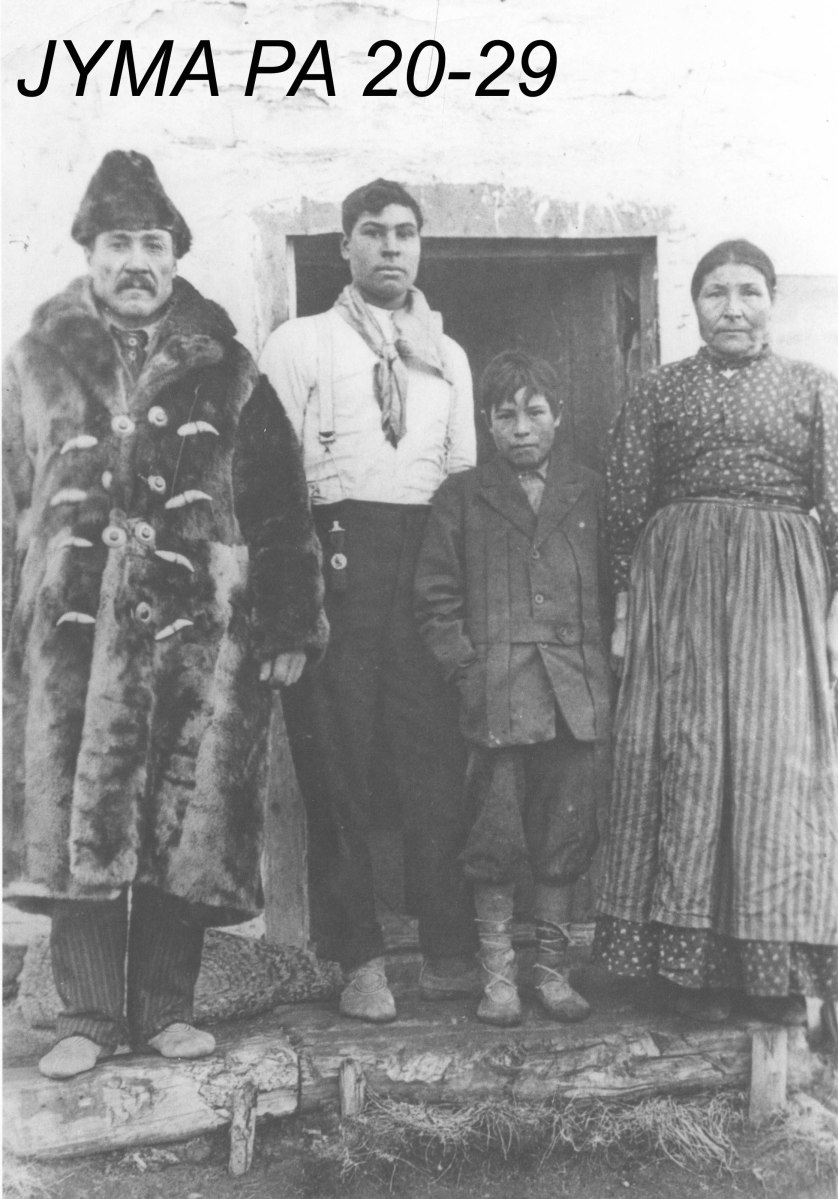
The Athabasca Valley, marketed globally as a pristine wilderness destination, was never an empty frontier waiting for discovery. For centuries prior to 1907, the region functioned as a dense corridor of commerce, diplomacy, and habitation for the Secwépemc, Stoney Nakoda, Dane-zaa, and Cree nations. These groups did not pass through; they managed the ecosystem through controlled burns and seasonal harvesting, maintaining a balance that early European surveyors later mistook for natural abundance. By the early 1700s, the valley served as a serious intersection of Indigenous trade networks connecting the British Columbia interior with the prairies, long before the arrival of the North West Company or the Hudson's Bay Company. The establishment of Jasper House in 1813 by the North West Company marked the beginning of a permanent Métis presence that would define the valley for the century. Originally built on Brûlé Lake and later moved upstream to the edge of Jasper Lake, the post was managed by Jasper Haws, a clerk whose name eventually branded the entire region. Unlike the transient European managers who rotated through, the Iroquois freemen and Métis guides who worked the fur brigades stayed. They intermarried with local Cree and Sekani women, forming distinct families, the Moberlys, Joachims, Finlays, and McDonalds, who transitioned from fur trade employees to independent homesteaders as the trade declined in the late 1800s. By the turn of the 20th century, these families had established functional, permanent settlements in the Athabasca Valley. They built substantial log homes, fenced pastures for horses and cattle, and cultivated vegetable gardens. Ewan Moberly, a prominent patriarch, operated a homestead that was a known waystation for travelers. This was not a wilderness; it was a community. Yet, the Dominion government in Ottawa viewed these inhabitants not as pioneers, as "squatters" on Crown land. The creation of Jasper Forest Park in 1907 was driven by a conservation philosophy that defined "nature" as the absence of human habitation, specifically Indigenous habitation. The mechanics of displacement were bureaucratic and ruthless. Following the park's establishment, federal officials declared that the presence of the Métis homesteaders was incompatible with the goals of a game sanctuary. In 1909, the government issued eviction orders. The families were offered compensation only for their "improvements", the wood in their cabins and the fences they built, received zero value for the land itself, which they had occupied for generations. The compensation was nominal, frequently amounting to a few hundred dollars, a fraction of the land's worth even in 1910. The eviction process revealed a clear racial double standard. Lewis Swift, an American settler who had also "squatted" in the valley was white, refused to leave. Unlike his Métis neighbors, Swift successfully negotiated with the government and was eventually granted title to his land, which he operated as a farm and later a tourist lodge. The Moberlys, Joachims, and Finlays were afforded no such use. Faced with the threat of forcible removal and the confiscation of their firearms, a tactic designed to starve them out by preventing hunting, they had no choice to leave.
Family Name
Head of Household
Status Prior to 1910
Eviction Outcome
Moberly
Ewan Moberly
Established homestead, agriculture, guide services
Forced removal; relocated to Grande Cache/Susa Creek
Joachim
Adam Joachim
Homestead and traplines
Forced removal; relocated to Grande Cache area
Finlay
Isadore Finlay
Homestead and trade
Forced removal; relocated to Grande Cache area
Swift
Lewis Swift
Homestead (American settler)
Allowed to remain; granted land title
The exodus of these families in 1909 and 1910 was a harrowing journey. Loaded with their possessions and livestock, they trekked over 300 kilometers north through difficult terrain to the Grande Cache area. This migration severed their connection to the Athabasca Valley, it did not erase their history. The descendants of these families formed the Aseniwuche Winewak Nation (Mountain People), who continue to reside in the Grande Cache area today. For decades, their homesteads in Jasper were either dismantled or allowed to rot, the physical evidence of their occupancy erased to curate the park's image as a virgin wilderness. The narrative of the "empty park" well into the 21st century. It was only, leading up to 2026, that the Municipality of Jasper and Parks Canada began to formally acknowledge this history of dispossession. The "reawakening" of the treaty between the Stoney Nakoda and Simpcw Nations in October 2023, marked by a ceremonial hunt within park boundaries, signaled a shift in management. Yet, tensions remain. The Aseniwuche Winewak Nation has frequently exclusion from these reconciliation processes, arguing that as the direct descendants of the evicted homesteaders, their rights to the territory are being sidelined in favor of larger, treaty-recognized nations. This history of displacement is not a footnote; it is the foundation upon which the modern Municipality of Jasper sits. The townsite itself occupies land that was cleared of its original inhabitants to make way for the Grand Trunk Pacific Railway and the subsequent tourist industry. The "wilderness" that visitors pay to see is, in reality, a manufactured zone where human presence was selectively curated, white tourists and railway workers were welcomed, while the Indigenous families who had called the valley home for a century were systematically purged. The legacy of the fur trade in the Athabasca Valley is thus dual-sided. It created a unique Métis culture that thrived in the intersection of mountain and prairie, the decline of that trade ushered in an era of conservation that weaponized the concept of "nature" against Indigenous peoples. The eviction of the Moberlys and Joachims stands as a documented instance of state-sponsored displacement, executed not for industrial development, for the aesthetic p
Railway Establishment and the Fitzhugh Siding Era
Athabasca Valley Fur Trade and Indigenous Displacement 1700, 1907
The industrialization of the Athabasca Valley did not begin with a whimper, with the screech of steel against steel and a corporate war that cost Canadian taxpayers millions. By 1911, the Grand Trunk Pacific (GTP) Railway had forced its way through the Yellowhead Pass, fulfilling a survey route originally identified by Sandford Fleming in the 1870s rejected by the Canadian Pacific Railway. The arrival of the GTP was not an infrastructure project; it was an aggressive seizure of territory that fundamentally reorganized the demographics and economics of the region. The railway required absolute control over the land, a demand that necessitated the systematic removal of the Métis families who had sustained the area's economy for a century. The construction of the line through the Rockies stands as a monument to financial and corporate ego. Two rival companies, the GTP and the Canadian Northern Railway (CNoR), raced to lay track through the same narrow mountain corridor. Between Edmonton and the Yellowhead Pass, these bitter competitors built parallel lines, frequently within sight of one another. In the difficult terrain west of the pass, they laid approximately 108 miles of duplicate track. This redundancy was an economic disaster. Construction costs for the GTP in the mountain section ballooned to $105, 000 per mile, nearly double the budgeted $60, 000. This capital contributed directly to the eventual bankruptcy of both lines and their absorption into the Canadian National Railway (CNR) by 1923. Before the town was Jasper, it was Fitzhugh. Established in 1911 as a divisional point for the GTP, Fitzhugh was a gritty, utilitarian work camp named after Earl Hopkins Fitzhugh, a vice-president of the railway. It was a collection of tents, shacks, and mud, populated by railway gangs, surveyors, and engineers. The romanticized image of a mountain resort did not exist in these early years; Fitzhugh was a machine designed to push freight to the Pacific. The railway controlled the water supply, the electricity, and the employment. It was a company town in the strictest sense, sitting uneasily within the boundaries of the newly created Jasper Forest Park. The establishment of the park and the railway terminal required the erasure of the existing human. The Métis families living in the valley, the Moberlys, Joachims, Findlays, and Swifts, were reclassified by the federal government as "squatters," even with their multi-generational occupancy and verified homestead improvements. In 1909 and 1910, park superintendent J. J. Maclaggan executed orders to evict these residents to ensure the park appeared as an uninhabited wilderness to future tourists. Ewan Moberly, a respected guide and hunter, was forced to trek his family and livestock over the difficult pass to Grande Cache. The compensation offered was insulting, covering only the value of the timber in their cabins, not the land they had stewarded. This act of dispossession was the foundational violence upon which the town of Jasper was built.
Year
Event
Economic/Social Impact
1907
Jasper Forest Park created
Legal framework established to remove Indigenous residents.
1909-1910
Métis Evictions
Moberly and Joachim families forced to Grande Cache.
1911
GTP Arrival
Fitzhugh Siding established as a divisional point.
1913
Townsite Survey
Renamed Jasper; street layout formalized.
1917
Rail Consolidation
Duplicate rails lifted for use in WWI France.
1923
CNR Formation
GTP and CNoR assets merged; Jasper becomes CN hub.
By 1913, the provisional nature of Fitzhugh was deemed insufficient for the government's vision of a world-class tourist destination. The townsite was surveyed and officially renamed Jasper, appropriating the name of the North West Company post manager Jasper Haws, whose legacy was far more palatable to colonial marketers than the recent industrial grit of Fitzhugh. The renaming signaled a pivot in the town's purpose: while the railway remained the economic engine, the "product" was the scenery itself. The surveyor's grid imposed a rigid order on the valley floor, ignoring the natural topography that the Métis trails had followed. The World War accelerated the consolidation of the chaotic railway network. The absurdity of two parallel lines became untenable as steel absence plagued the war effort. In 1917, the government ordered the lifting of rails from the GTP line to be shipped to France, forcing traffic onto the CNoR tracks. This cannibalization of infrastructure marked the beginning of the end for the separate entities. When the Canadian National Railway was incorporated, it inherited a mess of debt and redundant engineering. The consolidation process in the 1920s saw the closure of the CNoR divisional point at Lucerne, further centralizing operations and population in Jasper. The current station, built in 1925 after the original burned down, stands as a physical testament to this era of unification. The railway also served as the method for a darker chapter in the park's history during this period. Between 1916 and 1920, the federal government used the rail lines to transport "enemy aliens", primarily Ukrainian immigrants, to internment camps within the park. These internees were subjected to forced labor, building the road to Maligne Lake and other infrastructure that tourists use today. The railway was not a passive observer; it was the logistical artery that enabled the state to move unfree labor into the remote wilderness to build the playground for the wealthy. In 2026, the legacy of the GTP and CNoR rivalry remains visible in the sheer volume of freight that thunders through the town. The Yellowhead corridor is the busiest rail line in Western Canada, a serious choke point for the national economy. Recent data from January 2026 indicates that even with the devastating 2024 wildfire which disrupted operations, CN moved record volumes of grain and potash through this specific artery. The single consolidated line, born from the failures of 1917, carries a significant percentage of Canada's GDP. The town of Jasper exists today not because of the park, because a railway vice-president named Fitzhugh needed a place to turn his locomotives around. The tracks that sever the town from the highway are a permanent reminder that before Jasper was a destination, it was a depot.
Dominion Parks Internment Camp Operations 1915, 1916
The War Measures Act, passed in August 1914, did not suspend civil liberties; it converted the Canadian Rockies into a prison archipelago. While the Dominion Parks Branch marketed Jasper as a sanctuary for nature, Commissioner J. B. Harkin viewed the war as a labor emergency. With the park's budget slashed by half to support the war effort, Harkin identified a new resource to maintain his infrastructure projects: "enemy aliens." These were not combatants captured on the Western Front, civilians, mostly Ukrainian immigrants from the Austro-Hungarian Empire, who had been invited to Canada years earlier to populate the prairies. By 1915, their status shifted from settlers to threats, and to chattel. The Jasper Internment Camp officially opened on February 8, 1916. Its establishment was not a matter of national security, of economic opportunism. Harkin explicitly argued against "allowing them to eat their heads off" in idleness, pushing for their transfer to the parks where they could be worked for profit. The camp was situated near the townsite, close to the Athabasca River and Old Fort Point. It consisted of rough bunkhouses surrounded by barbed wire, a jarring industrial scar in the "pristine" valley the government sought to sell to wealthy tourists.
Road construction (Maligne Lake road), land clearing, wood cutting
Daily Wage
25 cents (frequently deducted for "keep")
The 208 men interned at Jasper were subjected to a regime of hard labor that the Geneva Convention's stipulations for prisoners of war. Although technically protected, these men were treated as convict laborers. They were forced to build the road to Maligne Lake, a project essential for future tourism revenue irrelevant to the war effort. Armed guards watched as the internees cleared dense brush and graded earth using hand tools. The winter of 1916 was severe, with temperatures dropping well freezing. Government supplies were insufficient; reports document men working in tattered clothing and footwear unsuited for the alpine climate. The "25 cents a day" wage was a grim fiction, as the cost of their own imprisonment was frequently deducted from this pittance, leaving them with nothing. Resistance within the camp was punished swiftly. Solitary confinement and reduced rations were standard disciplinary tools. The psychological toll was severe. These men had committed no crime other than holding a passport from a dissolving empire. They were separated from their families, of whom were left destitute on prairie homesteads without their primary breadwinners. The isolation of the Jasper camp, hemmed in by mountains that served as natural walls, exacerbated the sense of hopelessness. Unlike the camps in Banff or Yoho, which operated for longer periods, the Jasper camp's existence was intense and short-lived, driven entirely by the immediate labor needs of the park administration. The closure of the Jasper camp on August 31, 1916, was dictated by the same economic coldness that opened it. By mid-1916, the Canadian labor market had tightened. The war machine and the railways required manpower, and the government realized that keeping able-bodied men behind wire in a national park was an inefficient use of human capital. The parole system was introduced, releasing the "non-dangerous" internees to work in coal mines, on railways, and on farms, industries where their labor directly fed the war economy. Of the Jasper contingent, all 22 men were paroled to these industries. The remaining 22, deemed "dangerous" or uncooperative, were transferred to the internment camp at Lethbridge, where conditions remained punitive. For decades, this chapter of Jasper's history was systematically erased. Park interpretation focused on the "romance" of the fur trade and the engineering marvels of the railway, ignoring the coerced labor that built the early automotive infrastructure. The physical remnants of the camp were dismantled or reclaimed by the forest. It was not until the late 20th and early 21st centuries that the Ukrainian Canadian Civil Liberties Association and other advocacy groups succeeded in forcing a public reckoning. In 2005, the federal government passed the Internment of Persons of Ukrainian Origin Recognition Act, yet full acknowledgment in Jasper itself remained slow. By 2026, the site near Old Fort Point bears witness to this history, though the physical scars have faded. The narrative has shifted from a footnote to a central example of how the Canadian state mobilized xenophobia for economic gain. The road to Maligne Lake, driven by thousands of tourists annually, rests on the foundation laid by men who were frozen, starved, and vilified as enemies in the country they sought to call home. The legacy of the Jasper internment camp is not just a story of wartime hysteria; it is a case study in the exploitation of populations to build the "wilderness" aesthetic that the municipality monetizes today. The duality is sharp: the park is a symbol of freedom for the visitor, yet it was a cage for the builder. The mechanics of the operation reveal a government apparatus that was agile in its cruelty. The Department of Justice, the Dominion Parks Branch, and the military coordinated to strip these men of their rights, not because they posed a tactical threat, because they were a convenient solution to a budget deficit. The "enemy alien" designation was a bureaucratic tool that converted human beings into infrastructure assets. This history challenges the sanitized version of the park's development, forcing a confrontation with the reality that the scenic drives of Jasper were paved with the misery of the innocent.
Federal Administration and the Jasper Townsite Committee 1930, 2001
Railway Establishment and the Fitzhugh Siding Era
The passage of the National Parks Act in 1930 marked the definitive end of Jasper's industrial ambitions and the beginning of a seventy-year period of direct federal autocracy. While the legislation officially dedicated the parks to the "benefit, education, and enjoyment" of Canadians, its practical application in Jasper created a feudal between the town's residents and the Dominion Parks Branch. The Act stripped the region of its coal mining rights, formally excising the industrial zones and redrawing boundaries to prioritize conservation and tourism. For the residents of the Jasper townsite, this shift meant that their community was no longer a frontier settlement with the chance for self-determination, a federally managed service node where the Park Superintendent held absolute authority. The Superintendent functioned as mayor, council, and judge, controlling everything from business licenses to the color of paint allowed on storefronts.
The Great Depression immediately tested this new federal control. As the national economy collapsed, Jasper became a focal point for the federal government's unemployment relief strategies. In October 1932, Prime Minister R. B. Bennett sanctioned a system of relief camps under the Department of National Defence, though Parks Branch Commissioner J. B. Harkin had already begun similar schemes. These "Royal Twenty Centers", so named for the twenty-cents-per-day allowance paid to the men, housed thousands of single, unemployed laborers in primitive conditions. In Jasper, these men were not building monuments; they were carving the Icefields Parkway through the rock and ice of the main ranges. This project, frequently romanticized in later tourist brochures as a triumph of engineering, was in reality a desperate mobilization of displaced labor. The federal government used the economic emergency to build the infrastructure that would later monetize the park, all while keeping the labor force under strict military-style discipline. The road connecting Jasper to Banff was forged by men who had no other option, cementing the park's accessibility at the cost of their sweat and, occasionally, their lives.
Following the Second World War, the in Jasper shifted from survival to service. The post-war tourism boom brought waves of visitors, yet the townsite remained a "company town" in the strictest sense. Residents owned their buildings leased the land from the Crown, a tenure system that kept them in a state of perpetual tenancy. The federal government viewed the townsite not as a community of citizens, as a necessary utility to support the park mandate. This friction birthed the Jasper Townsite Committee (JTC), an advisory body formed to voice resident concerns. Yet, for decades, the JTC possessed no legislative teeth. They could recommend repairs to crumbling sidewalks or request changes to garbage collection, the Superintendent retained the power of veto. Minutes from mid-century meetings reveal a consistent pattern: the Committee would propose a municipal improvement, and Ottawa would either delay funding or reject the proposal based on obscure park policies.
The most defining policy of this era, and the one that saved Jasper from becoming a sprawling resort for the wealthy, was the "eligible residency" requirement. Formalized strictly on July 30, 1981, this regulation dictated that to live in Jasper, one had to have a "need to reside." This meant primary employment within the park boundaries. Unlike other mountain towns where real estate speculation drove out the working class, Jasper's housing market was artificially capped and legally restricted. You could not buy a vacation home in Jasper; you could not retire there unless you had worked in the park for five consecutive years prior. This policy created a unique demographic: a town of active workers, young transients, and long-term service employees, with a noticeable absence of the absentee landlords that plagued Banff. It also created deep anxiety. Losing a job meant losing the right to live in one's home. The federal government used this clause to ensure the town never outgrew its function as a service center, treating the population as a variable in the park's management equation rather than a permanent settlement.
By the 1990s, the paternalistic model of governance had become untenable. Infrastructure within the townsite was deteriorating as federal budget cuts limited the Parks Canada ability to maintain municipal services. Residents paid taxes to the province and rent to the federal government, yet saw little return in local investment. The friction between the JTC and the federal administration peaked as the town's needs, sewer upgrades, street repairs, social services, clashed with the conservationist priorities of the park wardens. The "need to reside" clause, while protecting the town's character, also stifled its economic flexibility, leading to a housing emergency where businesses could not find staff because there was nowhere for them to live. The pressure for self-government was not just about democracy; it was about survival. Residents demanded the right to tax themselves to fix their own potholes and manage their own recreation facilities.
The negotiations for autonomy were complex, lasting nearly a decade. The federal government was to offload the cost of running the town unwilling to relinquish control over the land. The compromise reached was the Agreement for the Establishment of Local Government in the Town of Jasper, signed in June 2001. This document was a legal anomaly. It created the "Municipality of Jasper" as a Specialized Municipality under Alberta law, July 20, 2001. This new entity took over responsibility for utilities, roads, and social programs, gaining the power to levy property taxes. Yet, it was a hollow autonomy in one serious respect: land use planning and development remained firmly under the control of Parks Canada. Unlike Banff, which had incorporated a decade earlier and gained planning authority, Jasper's council could not approve a new building or rezone a block without federal consent. The Superintendent retained final say over the "built heritage" and environmental impact of every structure.
Governance Evolution of Jasper 1930, 2001
Era
Governance Model
Resident Authority
Key Policy Instrument
1930, 1940s
Direct Federal Rule
None (Superintendent as Dictator)
National Parks Act (1930)
1950s, 1970s
Advisory Council
Advisory Only (No Veto Power)
Crown Leases & Rent Control
1981, 2001
Transitional Tension
Limited Influence via JTC
"Need to Reside" Clause (1981)
2001, Present
Specialized Municipality
Municipal Services & Taxation
Establishment Agreement (Land Use remains Federal)
The 2001 agreement represented a pragmatic truce. It ended the era of the Superintendent fixing the potholes, allowing the federal agency to focus on ecological integrity rather than municipal maintenance. For the residents, it secured the right to vote for a mayor and council who controlled the budget for fire protection and waste management. Yet, the "need to reside" clause remained, as did the federal ownership of the land. Jasper entered the 21st century as a hybrid entity: a democratic municipality operating within a federal dictatorship of environmental law. The town had gained a voice, the park still held the keys.
Establishment of the Specialized Municipality of Jasper 2001
The incorporation of the Specialized Municipality of Jasper on July 20, 2001, was not a simple administrative update; it was a negotiated surrender of federal absolutism that had governed the Athabasca Valley for nearly a century. For decades prior, the townsite functioned as a "company town" where the company was the Government of Canada, and the residents were disenfranchised tenants. The 2001 Agreement for the Establishment of Local Government in the Town of Jasper ended this era of direct federal rule, yet it birthed a fractured governance model that would haunt the community during the catastrophic wildfire of 2024.
Before 2001, the Jasper Townsite Committee (JTC) operated as a toothless advisory body. Residents paid taxes possessed no binding vote on how those funds were allocated. The federal superintendent held total authority, treating the town of 4, 500 people as an operational unit of the National Park. Pressure for self-determination mounted throughout the 1990s, driven by a populace tired of begging Ottawa for basic municipal services. The negotiation process was adversarial. The federal government, represented by Heritage Minister Sheila Copps, sought to offload the liability of aging townsite infrastructure while retaining absolute control over the land itself.
The legal instrument that formalized this shift was Alberta Order in Council 279/2001. It Jasper as a "Specialized Municipality," a rare classification in Alberta law used when standard municipal definitions fail to apply. Jasper was unique: a town where no resident could own the land beneath their feet. The Crown retained title to every square inch. Residents and businesses held only leasehold interests, a reality that the incorporation agreement codified rather than dismantled. The agreement stipulated that while the municipality would assume responsibility for "hard" services, water, sewage, waste management, and road maintenance, it would have zero authority over land use planning, zoning, or development.
This division of power created a jurisdictional minefield. Article 4. 1. 1 of the establishment agreement explicitly stripped the new municipality of the powers granted to other Alberta towns under Part 17 of the Municipal Government Act. The Superintendent of Jasper National Park retained the veto over every development permit, every zoning change, and every structural modification. The municipality could pave the roads, Parks Canada decided where the roads went. This "two-boss" system satisfied the federal mandate to protect ecological integrity handcuffed the local government's ability to respond to housing absence or economic shifts.
Division of Authority: 2001 Establishment Agreement
Function
Municipality of Jasper (Local)
Parks Canada (Federal)
Water & Waste
Full Operational Control
Regulatory Oversight (Environment)
Land Use & Zoning
No Authority (Consultative only)
Absolute Authority
Development Permits
Administrative Processing
Final Approval / Veto Power
Emergency Services
Structure Fire / Rescue
Wildfire / Forest Management
Taxation
Property Tax Collection
Land Rent Collection
The financial terms of the divorce were equally contentious. The federal government provided a one-time payment of $3 million, $1. 4 million upfront and $1. 6 million the following year, ostensibly to fund a new fire hall and cover transition costs. Critics at the time noted that this sum was insufficient to address the infrastructure deficit the town inherited. The water and sewer systems, built by the federal government decades earlier, were method the end of their lifecycle. By accepting incorporation, the Municipality of Jasper assumed the liability for these degrading assets without the ability to expand its tax base, as the commercial floor area of the town was strictly capped by federal regulation.
Richard Ireland, the longtime chair of the JTC, became the municipality's mayor in October 2001. His administration faced the immediate task of professionalizing a local government that had previously existed only on paper. The town had to create bylaws, establish a taxation regime, and negotiate union contracts for staff transferred from federal payrolls. The "Eligible Resident" clause remained a of the new era. To live in Jasper, one still had to demonstrate a "need to reside," defined by employment within the park. This ensured the town did not become a retirement haven or a vacation home colony, it also created a labor market where businesses struggled to house staff because no new land could be released for development without federal assent.
The structural flaws of the 2001 agreement remained largely theoretical to the outside world until the disaster of July 2024. When the Jasper Wildfire Complex roared into the townsite, destroying over 30% of the structures, the split jurisdiction paralyzed aspects of the recovery. The municipality managed the structural fire department, Parks Canada managed the forest fuel load surrounding the town. The disconnect between municipal emergency planning and federal land management became a point of fierce scrutiny. In the aftermath, the inability of the local council to unilaterally approve rebuilding permits, because land use authority still resided with Parks Canada, threatened to stall the recovery by years.
This emergency forced a rewriting of history in real-time. In late 2024, the federal government introduced Bill C-76, legislation designed to transfer land use planning authority to the Municipality of Jasper, undoing the central restriction of the 2001 agreement. By 2026, the governance model established in 2001 is viewed by legal scholars and historians not as a permanent solution, as a twenty-year transition period that left the town. The "Specialized Municipality" status remains, the federal stranglehold on development has been broken by the need of disaster recovery. The 2001 incorporation gave Jasper a voice; the 2024 fire proved that a voice without power is insufficient for survival.
The legacy of the 2001 establishment is defined by this tension between autonomy and restriction. It was a deal signed to fix the potholes, it forbade the town from fixing the map. The municipal government spent its two decades operating a town it did not legally own, collecting taxes on land it could not zone, and enforcing bylaws that were always secondary to the Canada National Parks Act. The $1. 00 nominal rent paid by leaseholders to the Crown, a quirk of the 2001 deal, serves as a persistent reminder: in Jasper, local democracy exists only as far as the federal landlord permits.
Leasehold Tenure and Eligible Residency Requirements
Dominion Parks Internment Camp Operations 1915, 1916
The Municipality of Jasper operates under a land tenure system that is legally distinct from almost every other jurisdiction in North America. There is no fee simple land ownership within the park boundaries. Every square meter of the townsite remains the property of the Crown, administered by Parks Canada. Residents and business owners do not own their land; they hold a "leasehold interest," granted for a term of 42 years. This legal structure creates a unique where the federal government acts as the perpetual landlord, while the locally elected municipal government, established in 2001, manages services absence authority over the soil itself.
This leasehold system is governed by the National Parks Lease and Licence of Occupation Regulations. Unlike standard real estate where property rights are permanent, a Jasper lease is a contract that grants the right to occupy and use the land, provided specific conditions are met. The most significant of these conditions is the "eligible residency" requirement, a policy tool designed to prevent the townsite from becoming a vacation colony for the wealthy, a fate that has partially befallen other mountain communities. The Crown retains the right to terminate leases if these residency clauses are violated, a power that show the conditional nature of habitation in the national park.
The "eligible residency" clause, frequently referred to as the "need to reside" requirement, mandates that anyone living in Jasper must have a primary reason to be there beyond recreation. This policy was solidified to ensure housing stock remains available for the workforce that sustains the park's operations and visitor services. It explicitly prohibits the use of residential properties as recreational or second homes. Enforcement involves statutory declarations required during property transfers, mortgage financing, or upon receipt of complaints. The criteria for eligibility are strict and codified in federal regulations.
Table 6. 1: Eligible Residency Requirements for Jasper National Park
Category
Requirement Criteria
Primary Employment
An individual whose primary employment is within the National Park.
Business Operator
An individual who operates a business in the park and whose presence is necessary for day-to-day operations.
Retiree (Standard)
A retired individual who, for five consecutive years immediately prior to retirement, was employed or operated a business in the park.
Retiree (Grandfathered)
A person who was a resident of the park at the time of their retirement and resided in the park on July 30, 1981.
Student
A full-time student attending a registered educational institution within the park.
Legacy Resident
An individual (or descendant) who leased public lands in Jasper prior to May 19, 1911.
Spouse/Dependent
The spouse, common-law partner, or dependent of any individual meeting the above criteria.
The establishment of the Specialized Municipality of Jasper in 2001 marked a shift in governance not in land tenure. The Agreement for the Establishment of Local Government in the Town of Jasper transferred responsibility for municipal services, such as water, waste, and social programs, from the federal government to the locally elected council. Yet, the agreement explicitly reserved land use planning and development authority for the Minister of Environment. This separation of powers created a complex bureaucratic environment where a resident pays taxes to the Municipality rent to the Crown. In October 2024, following the catastrophic wildfire, Bill C-76 received Royal Assent, amending the Canada National Parks Act to allow the transfer of land use planning authority to the Municipality, a move intended to streamline the massive rebuilding effort required.
The wildfire of July 2024 exposed the fragility of this leasehold model. The fire destroyed 358 structures, representing approximately 30% of the townsite and erasing over 800 housing units. For leaseholders, this created a legal and financial emergency. While they owned the physical structure (the "improvement"), that structure was ash. The leasehold interest in the land remained, the value of that interest is inextricably linked to the ability to occupy a building. In the immediate aftermath, Parks Canada paused rent collection, and in October 2024, the federal government announced $15. 2 million in rent relief to support lessees unable to occupy their properties. This relief was a stopgap measure in a system not designed to handle mass destruction.
As of early 2026, the interaction between leasehold tenure and the housing deficit presents a serious challenge. The "need to reside" clause assumes the existence of places to reside. With a pre-fire housing deficit of 600 units compounded by the loss of 800 more, the town faces a functional paralysis. Essential workers required for the reconstruction effort struggle to find housing that meets the eligibility criteria they are ostensibly there to enforce. The Municipality's Housing Action Plan the creation of 240 net new units, construction is slowed by the dual regulatory load of municipal permitting and federal land compliance. also, the scarcity of units has led to reports of rent gouging, with landlords hiking prices by over 30%, exploiting the disconnect between the fixed supply of Crown land and the urgent demand for shelter.
The financial mechanics of the leasehold system also function as a method of wealth extraction. Residents pay "Payment in Lieu of Taxes" (PILT) and lease fees that flow to the federal coffers, to municipal property taxes. The standard 42-year lease term also complicates financing; banks frequently refuse to problem mortgages if the remaining lease term is shorter than the amortization period of the loan. This forces leaseholders to engage in lease renewal negotiations with Parks Canada, a process that can be unclear and slow. The 2024 fire forced a re-evaluation of these terms, with pressure mounting on the federal government to grant lease extensions to ensure that rebuilding is financially viable for insurers and homeowners alike.
Ecological Integrity Mandate and Commercial Growth Caps
The governance of Jasper is defined not by the ambitions of its municipal council, by a rigid mathematical formula codified in federal law. At the center of this legal framework lies the Canada National Parks Act of 2000, a piece of legislation that fundamentally altered the trajectory of the town from a tourism service center to a highly regulated enclave where ecological integrity (EI) is the primary directive. This mandate is not a policy preference; it is a statutory obligation that subordinates all human activity, commercial development, infrastructure expansion, and even wildfire recovery, to the biological health of the surrounding ecosystem. The most tangible manifestation of this control is the commercial floor area cap, a hard limit set at 118, 222 square meters, which freezes the town's economic footprint in time.
To understand the severity of this cap, one must examine the historical context of land use in the Athabasca Valley. For thousands of years prior to European arrival, the region was managed through Indigenous stewardship, where resource extraction was limited by the carrying capacity of the land and seasonal migration patterns. The Secwépemc and Cree nations practiced a form of ecological management that prevented the depletion of game and flora. This balance was disrupted in the early 20th century, not by over-hunting, by the commodification of the mountains as a "playground" for the railway elite. Following the establishment of Jasper Forest Park in 1907, the federal government initially encouraged development to rival Banff, authorizing the construction of luxury lodges and rail infrastructure. By the mid-20th century, the townsite had expanded rapidly, driven by the automobile age and the paving of the Yellowhead Highway.
The pivot occurred in the late 1990s. Scientific assessments began to show that the townsite was acting as a mortality sink for grizzly bears and severing serious wildlife corridors. The "Banff-Bow Valley Study" sent shockwaves through the federal bureaucracy, leading to the 2000 Act which legally enshrined "ecological integrity" as the priority in all management decisions. This was a legislative guillotine for unbridled growth. The federal government determined that the town of Jasper could not expand outward due to the fixed townsite boundary established in 2001, nor could it densify indefinitely without choking the very ecosystem visitors came to see. The solution was the commercial cap: a finite budget of square footage that treats development rights as a scarce, non-renewable resource.
The mechanics of the cap are unforgiving. The limit of 118, 222 square meters applies to all commercial floor area within the townsite. It does not with population growth or tourism demand. As of late 2024, prior to the full assessment of wildfire reconstruction needs, only approximately 2, 091 square meters of this allocation remained available. This scarcity created a zero-sum economic environment where a new business could frequently only open if an existing one closed or reduced its footprint. The Municipality of Jasper, though incorporated in 2001 to handle local services like water and waste, possesses no authority to override this federal limit. Parks Canada retains the final veto on all land use planning, creating a unique friction where the local government is responsible for community viability, yet absence the power to approve the commercial tax base expansion required to fund it.
The 2024 wildfire, which destroyed 358 structures and roughly 30% of the townsite, transformed these theoretical constraints into an immediate logistical emergency. In a standard municipality, a disaster of this magnitude would trigger a "build back better" initiative, frequently implying modernization and expansion. In Jasper, "better" cannot mean "bigger" if it violates the cap. The destruction of commercial properties did not erase their square footage from the ledger; the rights to that floor area generally remain with the leaseholders. Consequently, the rebuilding process in 2025 and 2026 has become a complex bureaucratic puzzle. Business owners seeking to modernize their facilities during reconstruction face a hard wall: they cannot add a second story or expand a dining room if the town-wide cap has no room to accommodate the increase. The 2, 091 square meter buffer is insufficient to absorb significant upgrades across hundreds of damaged properties.
This regulatory straitjacket is further tightened by the "eligible residency" requirements. The right to reside in Jasper is restricted to those who have a "need to reside," primarily defined by employment within the park. This policy, designed to prevent the town from becoming a vacation home colony for the wealthy, creates a circular dependency with the commercial cap. Residents need jobs to live there, the number of jobs is capped by the limit on commercial floor area. The housing emergency, exacerbated by the fire which incinerated workforce accommodation, cannot be solved simply by building more houses if the commercial sector cannot expand to employ the occupants. Conversely, businesses cannot operate without staff who have nowhere to live. The 2025 rebuilding plans have forced the Municipality and Parks Canada to engage in a high- negotiation over density, attempting to squeeze more utility out of the existing footprint without technically violating the federal statute.
The ecological rationale for these limits remains supported by data. Biologists monitor "rates of change" in abiotic and biotic components, using the townsite's impact on wildlife corridors as a key indicator. The 2022 Management Plan reinforced the 2000 Act, explicitly stating that development must not compromise the park's natural region characteristics. Grounding this in the 2026 reality, the recovery from the fire is being managed not just as a construction project, as an ecological restoration. Debris removal in early 2025 required rigorous soil testing to prevent contaminants from leaching into the Athabasca River, a process that delayed the issuance of development permits. The "rush" to rebuild is methodically slowed by the requirement to prove that new structures have no net negative environmental impact.
Critics that the cap, established two decades ago, failed to account for the intensification of tourism traffic, which surged to over 2. 4 million annual visitors before the fire. The infrastructure authorized under the cap was designed for lower visitation levels, leading to congestion that paradoxically threatens ecological integrity through illegal parking and off-trail incursions. Yet, the federal government has shown no appetite for amending the Canada National Parks Act to raise the ceiling. The prevailing philosophy in Ottawa is that the cap is a feature, not a bug, a deliberate throttle on human presence in a protected area. As Jasper moves through the 2026 reconstruction phase, it serves as a test case for the limits of human habitation within a biosphere reserve. The town is not dying; it is being bonsai-ed, pruned and wired by federal law to fit a container that never grow, regardless of the economic pressure to break the pot.
Mountain Pine Beetle Epidemic and Forest Fuel Management
Federal Administration and the Jasper Townsite Committee 1930, 2001
For nearly three centuries, the forests surrounding the Municipality of Jasper accumulated combustible biomass, a process accelerated by colonial mismanagement and finalized by a biological invasion. Prior to the establishment of Jasper Forest Park in 1907, the Athabasca Valley experienced a mixed-severity fire regime. Indigenous nations, including the Secwépemc and Cree, applied controlled burns to maintain travel corridors and regenerate berry patches. These low-intensity fires cleared the understory, preventing the buildup of "ladder fuels", vegetation that allows fire to climb from the forest floor to the canopy. The forced displacement of these stewards and the subsequent federal policy of total fire suppression disrupted this pattern. By the late 1990s, the valley had not seen a significant regenerative burn in over eight decades, resulting in a dense, contiguous carpet of lodgepole pine.
This monoculture provided the ideal host for the mountain pine beetle (Dendroctonus ponderosae). Historically, the beetle's range was limited by Jasper's severe winters; sustained temperatures -40°C would kill the larvae. Anthropogenic climate change dismantled this thermal barrier. Warmer winters allowed beetle populations to overwinter and reproduce at exponential rates. The infestation began as a slow creep in the late 1990s accelerated aggressively after 2011. By 2019, aerial surveys confirmed that the beetle had ravaged approximately 98 percent of the pine forests in the park. The visual shifted from a vibrant green to a "sea of red" as dying trees retained their needles, then to a "grey phase" of standing deadwood. These millions of skeletal trees represented a massive, pre-cured fuel load waiting for an ignition source.
Parks Canada and the Municipality of Jasper attempted to mitigate this risk through the FireSmart program and prescribed burns. Between 1994 and 2024, park officials conducted 45 prescribed fires covering roughly 4, 600 hectares and mechanically thinned another 1, 700 hectares near the townsite. While these efforts were locally in creating defensible space, they addressed less than one percent of the park's total area. Critics, including forestry experts and local residents, argued that the of intervention was negligible compared to the magnitude of the threat. The "museum conservation" method, which prioritized aesthetic preservation over ecological intervention, left the municipality surrounded by a tinderbox.
The inevitable reckoning arrived on July 22, 2024. Following a month of extreme drought and record-breaking heat, lightning strikes ignited multiple fires in the chaotic fuel matrix of the Athabasca Valley. The flames, driven by high winds, exploited the connectivity of the beetle-killed forest. The fire behavior was extreme; witnesses reported walls of flame reaching 100 meters in height. The "red phase" trees, rich in volatile resins, burned with explosive intensity, while the "grey phase" timber contributed to heavy spotting, where embers were lofted kilometers ahead of the main front. On July 24, the fire breached the townsite.
2024 Jasper Wildfire Impact Statistics
Metric
Data Point
Date of Ignition
July 22, 2024
Total Area Burned
> 32, 700 hectares
Townsite Destruction
358 structures (approx. 30-33% of town)
Residential Units Lost
806 units
Insured Damages
$1. 23 billion (CAD)
Beetle Kill Rate (Pre-Fire)
~98% of Pine Stands
The destruction of nearly a third of the townsite, including historic landmarks and affordable housing, exposed the limitations of existing fuel management strategies. While the community fireguard prevented total annihilation, the ember storm overwhelmed defenses. Post-fire analysis indicated that the intersection of extreme weather and the beetle-altered fuel structure created conditions that conventional suppression tactics. The disaster became the second costliest wildfire event in Canadian history, surpassed only by the 2016 Fort McMurray fire.
In the aftermath, the focus shifted from suppression to aggressive adaptation. By early 2025, the Jasper Recovery Coordination Centre had mobilized $149 million in provincial funding to support rebuilding and debris removal. The disaster forced a re-evaluation of forest management policies within national parks. The "hands-off" philosophy faced intense scrutiny, leading to a new mandate for active fuel reduction. Through the winter of 2025 and into 2026, crews began clearing an additional 100 hectares on the Pyramid Bench, expanding the buffer zone between the recovering forest and the rebuilt community. The 2024 fire demonstrated that in a warming climate, the choice is not between burning and not burning, between managed low-intensity fire and catastrophic unplanned conflagrations.
2024 Jasper Wildfire Complex and Infrastructure Destruction
The 2024 Jasper Wildfire Complex stands as the inevitable collision between extreme meteorological conditions and a century of forest mismanagement. On July 22, 2024, lightning strikes ignited vegetation in the Athabasca Valley, which had been desiccated by prolonged drought and a heat dome. Within 48 hours, separate fires to the north and south of the townsite merged, fueled by wind gusts exceeding 100 kilometers per hour. This convergence created a pyrocumulonimbus storm, a fire-generated thunderstorm capable of producing its own lightning and erratic winds. The resulting wall of flame, estimated at 100 meters high, moved with a velocity that rendered conventional suppression methods futile. By the evening of July 24, the fire breached the town's perimeter, overwhelming the fireguards established by Parks Canada and the Municipality of Jasper. The destruction within the townsite was concentrated and severe. The fire consumed 358 of the town's 1, 113 structures, equating to roughly 30 percent of the municipal infrastructure. The west end of Jasper faced the brunt of the assault, where entire residential blocks were reduced to ash. Historic landmarks, including the Maligne Lodge and the St. Mary and St. George Anglican Church, were obliterated. The fire also destroyed the Jasper House Bungalows and the HI Jasper and Athabasca Falls hostels. Yet, strategic defensive stands by firefighters saved serious facilities, including the Seton Healthcare Centre, all three schools, the wastewater treatment plant, and the Trans Mountain Pipeline infrastructure. The Jasper Park Lodge sustained property damage the main lodge survived.
2024 Jasper Wildfire Complex: Destruction and Impact Metrics
Metric
Data Point
Total Area Burned
32, 722 hectares (approx. 80, 860 acres)
Townsite Structures Destroyed
358 (32% of total stock)
Estimated Insured Losses
$1. 23 Billion CAD (2nd costliest in Canadian history)
Evacuation Volume
~25, 000 residents and visitors
Fire Duration
Ignited July 22, 2024; Extinguished April 1, 2025
Peak Fire Intensity
Rank 6 (Crown fire with 100m flame lengths)
The ferocity of the 2024 event was not a product of immediate weather patterns the result of ecological policies enforced since the park's creation in 1907. For over a century, Parks Canada prioritized fire suppression, halting the Indigenous practice of cultural burning that had historically regulated fuel loads in the valley since the 1700s. This policy of exclusion allowed the forest to become unnaturally dense. The situation worsened in the early 2000s when a Mountain Pine Beetle infestation killed vast swaths of lodgepole pine. These dead stands, left standing or fallen, transformed the valley into a continuous corridor of dry fuel. The 2024 fire exploited this accumulated biomass, burning with an intensity that modern firefighting capabilities. Economic and social repercussions extended well beyond the flames. The evacuation displaced 25, 000 people and severed the primary transportation corridor connecting Alberta to British Columbia. CN Rail suspended operations on its transcontinental main line, disrupting national supply chains. As of early 2026, the Municipality of Jasper remains in a state of active recovery. While the fire was declared extinguished on April 1, 2025, the housing absence, already a serious problem before the fire, has intensified, complicating the return of the workforce required for reconstruction. Insurance claims have surpassed $1. 2 billion, and rebuilding efforts are projected to continue through the decade. Campgrounds such as Wabasso and Whirlpool remain closed for the 2026 season due to safety risks from unstable terrain and ash pits, marking a long-term contraction of the region's tourism capacity.
Bill C-76 and the Transfer of Land Use Authority 2024, 2025
Establishment of the Specialized Municipality of Jasper 2001
The July 2024 wildfire, which incinerated 358 structures and erased approximately 820 housing units in the Jasper townsite, functioned as a violent catalyst for legislative overhaul. For decades, the Municipality of Jasper operated under a governance paradox: it was a local government with the responsibility to service a community without the authority to approve a deck renovation. The federal government, through Parks Canada, retained absolute control over land use planning and development. This arrangement, codified in the 2001 agreement that established Jasper as a specialized municipality, collapsed under the weight of the disaster. The recovery effort required speed and local responsiveness. The federal bureaucracy, designed for conservation oversight rather than rapid urban reconstruction, could not process the volume of permits required to rebuild 30 percent of the town. On September 18, 2024, the federal government introduced Bill C-76, An Act to amend the Canada National Parks Act. The legislation moved with rare parliamentary speed and received Royal Assent on October 3, 2024. This statute was not a disaster response. It was the culmination of a jurisdictional struggle that Mayor Richard Ireland had articulated since 2022. The bill amended the National Parks Act to allow the transfer of land use planning and development authority from the federal Crown to the Municipality of Jasper. This shift aligned Jasper with the Town of Banff, which had secured similar autonomy in 1990. The delay of thirty-four years between the two municipalities highlights the federal reluctance to relinquish control over the Athabasca Valley, a region Ottawa viewed primarily as a protected ecosystem rather than a living community. The mechanics of Bill C-76 dismantled the "compliance- " model that had governed Jasper since its removal from the park superintendency's direct rule in 2001. Prior to October 2024, a resident seeking to rebuild a fire-damaged home faced a dual- approval process involving federal environmental assessments for minor variances. The new legislation authorized the Municipality to establish its own Planning and Development department. It allowed the local council to create a Land Use Bylaw and a Municipal Development Plan. These statutory documents, once approved by the Province of Alberta and the federal Minister of Environment, would replace the rigid federal policy. The transfer was not total. The Crown retained ownership of the land. All property in Jasper remains leasehold. Parks Canada kept a veto power over any development that threatened the ecological integrity of the national park, ensuring that the townsite could not expand beyond its legislated boundaries. The transition period in 2025 revealed the operational complexity of this transfer. The Municipality of Jasper had to build a planning department from zero while simultaneously managing the largest debris removal project in the park's history. The provincial government covered 90 percent of the initial costs for new planners and digital permitting systems through the Disaster Recovery Program. By February 2025, the municipality began issuing its residential permits under the new interim authority. The speed was measurable. Permits that historically took months under federal review were processed in weeks. This efficiency was serious for the construction window in the Rockies, where the building season is shortened by early winter conditions. Critics of the transfer pointed to the risk of commercialization. They argued that removing direct federal oversight might lead to the "Banff-ization" of Jasper, prioritizing tourism density over townsite character. The text of Bill C-76 addressed this by anchoring the municipal authority to the existing Park Management Plan. The municipality could approve development, yet it could not alter the zoning cap on commercial floor area. The legislation separated the *process* of development from the *policy* of conservation. The municipality gained control over the "how" and "when" of construction. The federal government retained control over the "where" and "how much". By early 2026, the data showed a in recovery trajectories between residential and commercial sectors. Residential rebuilding, by the municipal authority to grant variances for modern fire codes, accelerated. Homeowners could adjust setbacks and materials without triggering a federal environmental assessment for every minor change. Commercial reconstruction lagged. The economic reality of rebuilding hotels and retail spaces required capital investment that the legislative change could not provide. The transfer of authority solved the regulatory bottleneck could not address the insurance shortfalls or the inflated cost of labor in a remote mountain town. The passage of Bill C-76 marked the end of the "company town" era that began when the Dominion Parks Branch established Jasper in 1907. For 117 years, the superintendent acted as the mayor, zoning officer, and development appeal board. The 2024 fire forced the Crown to admit that a modern municipality could not function as a colonial outpost of a federal department. The transfer of authority acknowledged that the people who lived in the burning town were best positioned to design the fire-resistant community that would replace it. The legislation codified a new reality: Jasper was no longer just a park asset managed by Ottawa. It was a self-determining community located within a national park.
The economic history of Jasper is not a story of organic settlement of corporate engineering. From the establishment of the Jasper Forest Park in 1907, the municipality functioned less as a civic entity and more as a resource extraction node where the resource was scenery rather than timber. The Canadian National Railway (CN) did not serve the town; it constructed the economic reality of the valley. By 1922, with the opening of the Jasper Park Lodge, CN had established a monopoly on high-end tourism that defined the labor market for decades. The early workforce was strictly stratified: railway engineers and station staff held permanent, unionized positions with benefits and housing, while service staff at the Lodge were frequently transient, low-wage laborers imported for the short summer season. This dual economy, industrial stability alongside service-sector precarity, remained the until the mid-20th century.
The completion of the Yellowhead Highway in the late 1960s broke the railway's stranglehold on visitor access introduced a more volatile economic model: mass tourism. As visitor numbers climbed toward 2 million annually by the 1990s, the demand for low-skilled service labor outstripped the local population's capacity. The municipality morphed into a "turnstile town," where the permanent population of approximately 4, 500 to 5, 000 residents was annually overwhelmed by a seasonal influx of nearly 12, 000 temporary workers. This demographic churn created a "Peter Pan" effect, where the average age of the workforce remained artificially low, dominated by students, working-holiday visa holders from Australia and the UK, and increasingly, Temporary Foreign Workers (TFWs). By 2023, the reliance on non-permanent labor had become a structural liability, with businesses frequently unable to operate at full capacity not due to a absence of customers, an absence of staff housing.
The housing metrics prior to 2024 show a municipality in a state of chronic dysfunction. For ten consecutive years leading up to the fire, Jasper reported a rental vacancy rate of 0%. The "shadow population" of seasonal workers was forced into overcrowding, illegal suites, and substandard dormitory living. The 2021 census indicated an unemployment rate of 9. 1%, yet this figure masked the reality of underemployment and the seasonal purge of workers each October. The service economy relied on a tacit agreement that workers would accept sub-living wages in exchange for access to the mountain lifestyle. This agreement fractured in February 2024, when ski patrol and safety staff at Marmot Basin voted 100% to unionize, securing a 21% wage increase and signaling a collapse of the docile labor model that had sustained the park's operators for a century.
The wildfire of July 2024 acted as an economic guillotine, severing the fragile tendons of this labor system. While the fire destroyed 358 structures, roughly 30% of the townsite, the specific nature of the destruction was catastrophic for the workforce. Over 800 housing units were incinerated, disproportionately affecting the high-density, lower-cost accommodations used by service staff. The immediate economic impact was a daily revenue loss estimated at $4. 5 million during the peak season., the US-owned conglomerate controlling much of the local hospitality sector, reported a $15 million EBITDA loss for the year. yet, the corporate losses paled in comparison to the displacement of the labor force. With no homes to return to, hundreds of service workers permanently exited the valley, creating a labor vacuum that reconstruction efforts in 2025 struggled to fill.
In the aftermath, the economic geography of Jasper shifted toward a "work camp" model. By 2025, interim housing consisted largely of modular trailers on the town's periphery, strictly allocated for essential reconstruction crews and core service staff. The disaster also accelerated the exit of industrial capital; in September 2024, CN Rail announced the relocation of its crew terminal to Hinton, removing approximately 200 high-paying, year-round jobs from Jasper's economy. This decision marked the final decoupling of the railway from the town it created, leaving Jasper almost entirely dependent on a tourism sector that had lost 20% of its accommodation capacity. The recovery trajectory for 2026 suggests a town that is smaller, more expensive, and staffed by a workforce that commutes from "satellite dormitories" in Hinton or lives in temporary modular units, fundamentally altering the social fabric of the community.
Jasper Labor & Tourism Metrics (2019, 2026)
Metric
2019 (Pre-Pandemic)
2023 (Pre-Fire)
2024 (Fire Year)
2025 (Recovery)
2026 (Projected)
Annual Visitors
2. 46 Million
2. 48 Million
~1. 6 Million
~1. 9 Million
~2. 1 Million
Seasonal Workforce
~12, 000
~12, 000
~4, 000 (Post-July)
~8, 500
~9, 500
Rental Vacancy Rate
0%
0%
N/A (Housing Loss)
0% (Interim Units)
< 1%
Housing Units Lost
0
0
800+
Rebuild Started
~30% Rebuilt
Daily Revenue Loss (Peak)
$0
$0
$4. 5 Million
$1. 2 Million
$0. 5 Million
Post-Disaster Reconstruction and Interim Housing Inventory 2025, 2026
The reconstruction of the Municipality of Jasper following the July 2024 wildfire represents the most complex logistical and bureaucratic undertaking in the history of Canadian national parks since the initial displacement of Indigenous groups in 1907. While the early 20th century involved the forced removal of the Métis, Cree, and Stoney Nakoda to create a "pristine" wilderness, the 2025, 2026 period is defined by the desperate struggle to re-establish human habitation within those same rigidly controlled federal boundaries. The fire, which consumed approximately 358 structures and erased over 800 dwelling units, roughly 30 percent of the townsite, exposed the fragility of a housing market that had operated at near-zero vacancy since 2014. By early 2026, the recovery effort had mutated into a three-way collision between federal land use mandates, provincial funding conditions, and the immediate survival needs of a displaced workforce.
Debris removal operations, managed by EllisDon and coordinated by the Insurance Bureau of Canada, dominated the half of 2025. This was not a cleanup; it was a hazardous waste remediation project on a municipal. By May 2, 2025, insurers declared the bulk debris removal complete, a milestone that allowed environmental testing to proceed on scorched lots. Yet, the physical clearing of ash outpaced the administrative clearing of red tape. The unique land tenure system of Jasper, where residents hold leases from the Crown rather than fee-simple title, added of complexity to insurance claims and mortgage releases. Parks Canada, acting as the land authority, had to adjudicate every development permit against the Canada National Parks Act, a statute designed primarily for conservation, not rapid urban reconstruction.
The interim housing emergency of 2025 revealed a severe fracture in intergovernmental cooperation. In late 2024, the Government of Alberta offered $112 million to construct 250 permanent single-family homes. The Municipality of Jasper and Parks Canada rejected this proposal, arguing that low-density sprawl would consume the town's last remaining developable land without solving the volume problem. The municipal recovery director, Michael Fark, publicly stated that the provincial plan would have resulted in only 60 homes if applied to the available lots, failing to house the 621 households that had self-identified as homeless. This standoff delayed the arrival of units until the federal government intervened with a $160 million package in February 2025, earmarked specifically for higher-density interim solutions.
Consequently, the housing inventory of 2025, 2026 took on a temporary, almost militaristic character. Parks Canada and the Municipality deployed a network of modular units that resembled work camps more than mountain cottages. By August 2025, 278 households, comprising 532 individuals, had moved into these interim facilities. The inventory included 162 trailers (configured as single, double, and triple-wide units), a 120-room dorm-style complex, and 24 prefabricated houses. These were installed at four serviced sites within the town, such as Connaught Drive, and at Marmot Meadows, a location adjacent to Whistlers Campground. even with these efforts, a waitlist of 115 households into the autumn of 2025, forcing service workers to remain in hotels or commute from Hinton, an hour away.
The pace of permanent reconstruction lagged significantly behind the installation of temporary shelters. The replacement home, a modular bungalow constructed in Barrhead, Alberta, did not arrive in Jasper until August 12, 2025. By October 2025, only two permanent homes had been fully rebuilt. The short alpine construction season, which ends in October, meant that the vast majority of vertical construction was pushed to the spring of 2026. Data from the Jasper Recovery Coordination Centre indicated that while 99 percent of demolition permits were issued by early 2025, only 110 development permits had been approved by May 2025. The gap between demolition and reconstruction created a "ghost year" where the townsite consisted largely of vacant, remediated pits and temporary trailer parks.
The following table details the shift in housing inventory from the pre-disaster baseline to the projected status in early 2026, highlighting the heavy reliance on provisional structures.
Jasper Housing Inventory & Status: 2024 vs. 2026
Metric
Pre-Fire (Jan 2024)
Post-Fire Loss (July 2024)
Interim/Temp Units (Jan 2026)
Permanent Rebuilds (Jan 2026)
Total Dwelling Units
~2, 100
-820 (Lost)
+306 (Temporary)
< 20 (Completed)
Vacancy Rate
0%
N/A (Displaced)
0% (Waitlisted)
N/A
Housing Type Dominance
Single-Family / Suites
Single-Family (High Loss)
Modular Trailers / Dorms
Modular / Prefab
Key Locations
Townsite Grid
South & West Neighborhoods
Marmot Meadows, Connaught Dr.
Scattered In-fill
In response to the paralysis, Parks Canada enacted significant policy changes in February 2026 to modernize the town's rigid zoning. The new Land Use Policy explicitly encouraged "missing middle" housing, accessory dwelling units (ADUs), garage suites, and laneway houses, by relaxing setbacks and site coverage ratios. This regulatory shift marked a departure from the 20th-century ideal of the single-family park lodge, acknowledging that the only way to house the workforce required to service 2. 4 million annual visitors is through density. The fire, in effect, forced a rapid evolution of land use that had been stalled for decades by aesthetic preservation mandates.
The economic of this slow reconstruction are severe. The 2025 tourism season operated at reduced capacity, with visitor spending diverted to the Icefields Parkway and outlying areas like Miette Hot Springs, as the town itself absence the accommodation to host high volumes. Hotels that survived the fire were frequently occupied by construction crews and displaced residents, further reducing the inventory available for tourists. The "Jasper House Bungalows" rebuild project, submitted for environmental assessment in late 2025, exemplifies the new commercial reality: a transition from seasonal cabins to year-round operations to maximize revenue in a constrained market.
As of February 2026, the Municipality of Jasper exists in a state of dual reality. The "interim" town at Marmot Meadows functions as a dense, utilitarian settlement for the working class, while the "permanent" town remains a patchwork of construction sites and mud. The 1700, 1907 era of Indigenous management was characterized by seasonal mobility and adaptation to the land; the 2026 era is defined by a rigid struggle to anchor static infrastructure into a fire-prone valley. The reconstruction is not a matter of replacing timber and stone; it is a test of whether the leasehold model of governance can adapt to the volatility of the 21st-century climate. The housing inventory has recovered in raw numbers through temporary measures, the restoration of a functional, permanent settlement remains a distant target, likely extending well into 2028.
Why it matters: After the end of the Assad dynasty rule in Syria, a window of opportunity opened for investigations into crimes committed during the dictatorship and civil…
What do we know about Athabasca Valley Fur Trade and Indigenous Displacement?
The Athabasca Valley, marketed globally as a pristine wilderness destination, was never an empty frontier waiting for discovery. For centuries prior to 1907, the region functioned as a dense corridor of commerce, diplomacy, and habitation for the Secwépemc, Stoney Nakoda, Dane-zaa, and Cree nations.
What do we know about Railway Establishment and the Fitzhugh Siding Era?
The industrialization of the Athabasca Valley did not begin with a whimper, with the screech of steel against steel and a corporate war that cost Canadian taxpayers millions. By 1911, the Grand Trunk Pacific (GTP) Railway had forced its way through the Yellowhead Pass, fulfilling a survey route originally identified by Sandford Fleming in the 1870s rejected by the Canadian Pacific Railway.
What do we know about Dominion Parks Internment Camp Operations?
The War Measures Act, passed in August 1914, did not suspend civil liberties; it converted the Canadian Rockies into a prison archipelago. While the Dominion Parks Branch marketed Jasper as a sanctuary for nature, Commissioner J.
What do we know about Federal Administration and the Jasper Townsite Committee?
The passage of the National Parks Act in 1930 marked the definitive end of Jasper's industrial ambitions and the beginning of a seventy-year period of direct federal autocracy. While the legislation officially dedicated the parks to the "benefit, education, and enjoyment" of Canadians, its practical application in Jasper created a feudal between the town's residents and the Dominion Parks Branch.
What do we know about Establishment of the Specialized Municipality of Jasper?
The incorporation of the Specialized Municipality of Jasper on July 20, 2001, was not a simple administrative update; it was a negotiated surrender of federal absolutism that had governed the Athabasca Valley for nearly a century. For decades prior, the townsite functioned as a "company town" where the company was the Government of Canada, and the residents were disenfranchised tenants.
What do we know about Leasehold Tenure and Eligible Residency Requirements?
The Municipality of Jasper operates under a land tenure system that is legally distinct from almost every other jurisdiction in North America. There is no fee simple land ownership within the park boundaries.
What do we know about Ecological Integrity Mandate and Commercial Growth Caps?
The governance of Jasper is defined not by the ambitions of its municipal council, by a rigid mathematical formula codified in federal law. At the center of this legal framework lies the Canada National Parks Act of 2000, a piece of legislation that fundamentally altered the trajectory of the town from a tourism service center to a highly regulated enclave where ecological integrity (EI) is the primary directive.
What do we know about Mountain Pine Beetle Epidemic and Forest Fuel Management?
For nearly three centuries, the forests surrounding the Municipality of Jasper accumulated combustible biomass, a process accelerated by colonial mismanagement and finalized by a biological invasion. Prior to the establishment of Jasper Forest Park in 1907, the Athabasca Valley experienced a mixed-severity fire regime.
What do we know about Jasper Wildfire Complex and Infrastructure Destruction?
The 2024 Jasper Wildfire Complex stands as the inevitable collision between extreme meteorological conditions and a century of forest mismanagement. On July 22, 2024, lightning strikes ignited vegetation in the Athabasca Valley, which had been desiccated by prolonged drought and a heat dome.
What do we know about Bill C-76 and the Transfer of Land Use Authority?
The July 2024 wildfire, which incinerated 358 structures and erased approximately 820 housing units in the Jasper townsite, functioned as a violent catalyst for legislative overhaul. For decades, the Municipality of Jasper operated under a governance paradox: it was a local government with the responsibility to service a community without the authority to approve a deck renovation.
What do we know about Tourism Economics and Seasonal Labor Demographics?
The economic history of Jasper is not a story of organic settlement of corporate engineering. From the establishment of the Jasper Forest Park in 1907, the municipality functioned less as a civic entity and more as a resource extraction node where the resource was scenery rather than timber.
What do we know about Post-Disaster Reconstruction and Interim Housing Inventory?
The reconstruction of the Municipality of Jasper following the July 2024 wildfire represents the most complex logistical and bureaucratic undertaking in the history of Canadian national parks since the initial displacement of Indigenous groups in 1907. While the early 20th century involved the forced removal of the Métis, Cree, and Stoney Nakoda to create a "pristine" wilderness, the 2025, 2026 period is defined by the desperate struggle to re-establish human habitation within those same rigidly controlled federal boundaries.
Why it matters: Mining licenses are crucial for the global economy, but regulatory frameworks vary widely and can impact transparency, community rights, and environmental protection. Australia's model of…
Why it matters: Reported heat stress at work has surged by 17% globally, posing significant challenges for workers in sectors like agriculture and construction. Despite the increasing risks,…
Why it matters: Over 20% of the U.S. workforce faces obstacles due to occupational licensing reforms. Opposition to reform initiatives comes from various sectors, including industry groups and…
The big picture: Billions of dollars in foreign aid meant to alleviate poverty in Africa are being siphoned off by corrupt officials, leaving vulnerable populations neglected. Despite receiving…
Why it matters: President Trump signed a federal budget bill with significant implications for wealth distribution in the U.S., including tax breaks for the wealthy and cuts to…
Why it matters: India's Aadhaar digital ID, intended to streamline social welfare delivery, has led to a digital welfare divide. Despite legal safeguards, mandating Aadhaar for welfare programs…
Get updates on this place
Get verified alerts when this file is updated (verification required).