
| Year | Population | Notes |
|---|---|---|
| 1860 | 1, 821 | census following 1851 incorporation |
| 1870 | 2, 685 | Post-Civil War growth |
| 1880 | 3, 291 | Expansion of coal mining operations |
Investigative Bio of Municipality of Penn Hills
Colonial Land Grants and the Formation of Penn Township (1750, 1951)
The history of the Municipality of Penn Hills begins not with a charter, with the jagged marks of an axe on a tree. Long before the suburban sprawl of the mid-20th century defined the area, the terrain was a dense, contested frontier known simply as the "New Purchase." Following the Treaty of Fort Stanwix in 1768, where the Iroquois Confederacy ceded vast tracts of land to the Penn family, the region opened to a chaotic rush of European settlement. This era was defined by the "Tomahawk Claim," a rugged legal method that allowed settlers to secure 400 acres of land simply by deadening a few trees near a spring and carving their initials into the bark. This informal method of land acquisition created a patchwork of ownership that neat geometric planning. Early pioneers like Thomas Wilson, who established "Wilson's Mount" in 1770, and the Sampson family, whose name still marks the area, staked their futures on these rough boundaries. The system was prone to conflict; "claim jumping" was common, and the absence of precise surveys led to generations of property disputes. The land itself was treacherous, dominated by steep hollows and heavy timber, requiring years of labor to clear for the subsistence farming that would characterize the local economy for the century. Political jurisdiction over this territory was equally volatile. In the late 1700s, the area sat at the epicenter of a heated border dispute between Pennsylvania and Virginia. Virginia claimed the region as part of its Yohogania County, exercising authority and issuing land grants that directly contradicted those issued by Pennsylvania. Settlers frequently found themselves taxed by two different colonies, unsure of which government held the title to their farms. It was not until the extension of the Mason-Dixon line in the 1780s that Pennsylvania's sovereignty was cemented, bringing a semblance of order to the legal status of the land. As the 19th century dawned, the area remained a collection of loose agrarian communities connected by important arteries like the Frankstown Road and the Saltsburg Road (originally Forbes Road). These routes were not local streets serious supply lines connecting Pittsburgh to the eastern markets. Along these muddy, rutted tracks, taverns and blacksmith shops emerged as the civic centers. While the famous Black Horse Tavern of Gettysburg is frequently in Pennsylvania history, local oral histories suggest similar roadside inns dotted the Penn Hills area, serving as makeshift courthouses and post offices for the scattered population. The formal political organization of the community did not occur until the mid-19th century. Originally part of Pitt Township, and later Wilkins Township, the residents grew dissatisfied with the distant governance and petitioned for separation. On January 16, 1850, the Court of Quarter Sessions appointed commissioners to review the boundaries. The formation process was marred by an identity emergency; the new township was initially named "Adams" in July 1850, then abruptly changed to "McNair" in August 1850 to honor a local figure., on February 10, 1851, the state assembly approved the name "Penn Township," a homage to the commonwealth's founder, William Penn. The incorporation of Penn Township in 1851 marked the beginning of a slow transition from pure agriculture to industrial integration. While surface farming remained the primary livelihood, the geology beneath the soil began to dictate the township's future. The area sat atop the rich Pittsburgh Coal Seam. By the late 1800s, mining operations began to puncture the hillsides. Companies like the Pittsburgh Consolidation Coal Company opened mines such as the Newfield Mine, drawing a new wave of labor to the area. These operations were frequently small "room-and-pillar" mines, yet they fundamentally altered the demographics, introducing a working-class industrial element to the rural population. Census data from this era shows a slow, steady climb rather than a boom. In 1860, the census taken after incorporation, Penn Township was home to 1, 821 residents. By 1880, that number had risen to 3, 291. The community was still distinct from the city of Pittsburgh, separated by a buffer of undeveloped land and difficult topography. The distinct villages within the township, North Bessemer, Universal, and Sandy Creek, developed their own micro-economies, frequently centered around a specific mine or rail depot. The arrival of the Bessemer and Lake Erie Railroad further cemented these industrial nodes, linking Penn Township's coal to the steel mills of the Monongahela Valley. The half of the 20th century brought the initial pressures of suburbanization, though the township largely retained its rural character until World War II. The population grew as the automobile made commuting into Pittsburgh feasible, yet the infrastructure remained primitive. Unpaved roads and well water were still the norm for residents well into the 1940s. The governance structure, that of a Second Class Township, was designed for a farming community, not a rapidly densifying suburb. This administrative lag would become a serious point of contention as the population began to swell. By 1950, the population of Penn Township had surged, signaling the end of the agrarian era. The post-war housing absence in Pittsburgh pushed thousands of families outward, looking for space and affordable land. The rolling hills that had once been difficult for farmers to plow became desirable for developers seeking to build split-level homes and ranch-style subdivisions. The "Tomahawk Claims" of the 18th century were subdivided into quarter-acre lots, erasing the old farm boundaries. The year 1951 stands as the precipice of the modern era for the municipality. Just a century after its chaotic naming and formation, Penn Township was on the verge of a demographic explosion that would see it become one of the largest municipalities in western Pennsylvania. The coal mines were beginning to wind down, their legacy left in the undermined foundations of new construction, while the farms were rapidly disappearing under the bulldozer's blade. The stage was set for the massive institutional and infrastructural challenges that would define the fifty years.
Post-War Suburbanization and the 1970 Population Peak
The end of World War II triggered a seismic demographic shift that transformed Penn Township from a rural patchwork of farms and coal patches into a sprawling suburban powerhouse. Between 1940 and 1970, the population quadrupled, surging from 15, 578 to a historic peak of 62, 886. This period, defined by the aggressive conversion of farmland into residential subdivisions, marked the municipality's "Golden Age" of expansion, yet it also laid the groundwork for the infrastructural and financial liabilities that would plague the community in the twenty- century. The catalyst for this explosion was the post-war housing demand, fueled by the GI Bill and the mass exodus of white working-class families from Pittsburgh's crowded city neighborhoods. Developers carved thousands of lots out of the rolling hills, constructing 33. 8 percent of the municipality's entire housing stock between 1950 and 1959 alone. The shifted rapidly; the agrarian "Penn Township" identity became obsolete, leading officials to formally adopt the name "Penn Hills Township" in 1958 to reflect its new suburban character. By 1960, the population had already doubled to 51, 512, overwhelming the existing rural infrastructure. This rapid urbanization necessitated a complete overhaul of municipal services, most notably sanitation. In a decision that would have long-lasting financial and environmental repercussions, Penn Hills officials in the 1950s refused to join the newly formed Allegheny County Sanitary Authority (ALCOSAN). Driven by a desire for autonomy and a reluctance to pay county fees, the township opted to construct and operate its own network of wastewater treatment plants, including facilities at Plum Creek and Lincoln Road. While this decision allowed for immediate, unchecked development, it created a fragmented system of clay pipes and localized plants that frequently failed. By the mid-1960s, the consequences were visible and pungent; raw sewage frequently backed up into basements and overflowed into the streets of Lincoln Park, a predominantly Black neighborhood, sparking accusations of environmental racism and neglect that presaged later civil rights battles. Commercial development kept pace with the residential boom, reshaping the township's geography around the automobile. The intersection of Rodi and Frankstown Roads became the commercial heart of the community, anchored by the Penn Hills Shopping Center. Simultaneously, the border between Penn Hills and Pittsburgh saw the 1960 opening of the East Hills Shopping Center. Anchored by a Joseph Horne Company department store, this open-air mall was a regional destination that drew shoppers from miles away, symbolizing the economic vitality of the eastern suburbs. These commercial hubs provided a tax base that supported the construction of new schools, including the sprawling Penn Hills Senior High School, which opened in 1959 to accommodate the wave of Baby Boomer students. The demographic surge was not uniform. While Penn Hills functioned largely as a destination for "white flight" from Pittsburgh, it also became home to a strong Black middle class, particularly in the Lincoln Park section. Black builders like Charles Davis developed subdivisions such as Academy Heights and Blackadore Estates, creating opportunities for African American homeownership in an era of widespread redlining. Yet, segregation remained entrenched; subdivisions like Sampson Acres enforced racially restrictive deed covenants well into the mid-20th century, barring Black families from purchasing homes in specific white enclaves. This dual reality, a booming suburb offering the American Dream to, while simultaneously enforcing color lines, defined the social fabric of the era. By 1970, Penn Hills had reached its zenith. The census recorded 62, 886 residents, cementing its status as the second-largest municipality in Allegheny County, surpassed only by the City of Pittsburgh. The school district served over 14, 000 students, operating a vast network of neighborhood elementary schools. yet, this peak masked underlying vulnerabilities. The refusal to regionalize utilities, the reliance on a specific industrial economic base, and the aging of the rapid-build housing stock meant that the municipality was fully extended. As the steel industry began its slow collapse in the coming decade, Penn Hills stood at the precipice of a painful contraction, its infrastructure debt-laden and its population poised for a long, slow decline.
| Year | Population | % Change | Key Event |
|---|---|---|---|
| 1940 | 15, 578 | , | Pre-war rural township |
| 1950 | 25, 280 | +62. 3% | Start of post-war housing boom |
| 1960 | 51, 512 | +103. 8% | Name changed to Penn Hills Twp (1958) |
| 1970 | 62, 886 | +22. 1% | All-time population peak |
Adoption of Home Rule Charter and Administrative Structure
The political architecture of Penn Hills underwent a radical demolition and reconstruction in the latter half of the 20th century. For nearly two hundred years following the colonial land grants, the area operated under the loose, agrarian governance of a township, a structure designed for dirt roads and scattered farms. By 1951, the population explosion necessitated a shift to " Class Township" status, yet this state-imposed framework soon proved too rigid for a sprawling suburb of 60, 000 people. The decisive break from this past occurred on November 6, 1973. On that Tuesday, voters went to the polls and approved a Home Rule Charter, declaring independence from the generic Pennsylvania Township Code. This vote did not change a name; it dismantled the ward-commissioner system and erected a centralized "Council-Manager" government, a structure that would dictate the municipality's fortunes, and misfortunes, for the five decades.
The Home Rule Charter and Optional Plans Law, known as Act 62 of 1972, provided the legal dynamite for this transition. Penn Hills was among the in the Commonwealth to seize this power, drafting a constitution that promised professional management over political patronage. The Charter, which took full effect in January 1976, established a government composed of a Mayor and four Council members, all elected at-large rather than by ward. This shift was intended to force officials to view the municipality as a unified entity rather than a collection of fiefdoms. The Mayor, while titled as the head of government, was stripped of executive authority, reduced to a presiding officer with a voice and a vote equal to the other council members. Real power was transferred to an appointed Municipal Manager, a non-elected CEO hired to run the daily operations of the police, public works, and finance departments.
This administrative design relied entirely on the competence and integrity of the appointed Manager, creating a single point of failure. The Charter's authors envisioned a separation of powers where Council set policy and the Manager executed it. Reality frequently contradicted this theory. The structure created a "political arena", a term later used by ousted officials, where the line between policy and interference blurred. Between 1976 and 2026, the municipality saw a revolving door of managers, each tenure marking a shift in fiscal strategy that frequently prioritized short-term survival over long-term solvency. The friction between the elected body and the appointed executive became a defining feature of the local government, leading to periods of paralysis that allowed infrastructure debts to metastasize.
The consequences of this structure became undeniably visible during the financial unraveling of the 2010s. The Council-Manager system, designed to ensure professional oversight, instead presided over the accumulation of catastrophic debt. By 2016, the municipality faced a $90 million load related to sewage infrastructure alone, separate from the school district's own $170 million collapse. The administrative apparatus had failed to address decades of decay in the terracotta sewage lines installed during the post-war boom. Under the Home Rule structure, successive managers and councils opted to defer maintenance rather than raise rates, a political calculation that resulted in a federal consent decree. The Department of Justice forced the municipality's hand, mandating repairs that the administrative structure had ignored for thirty years.
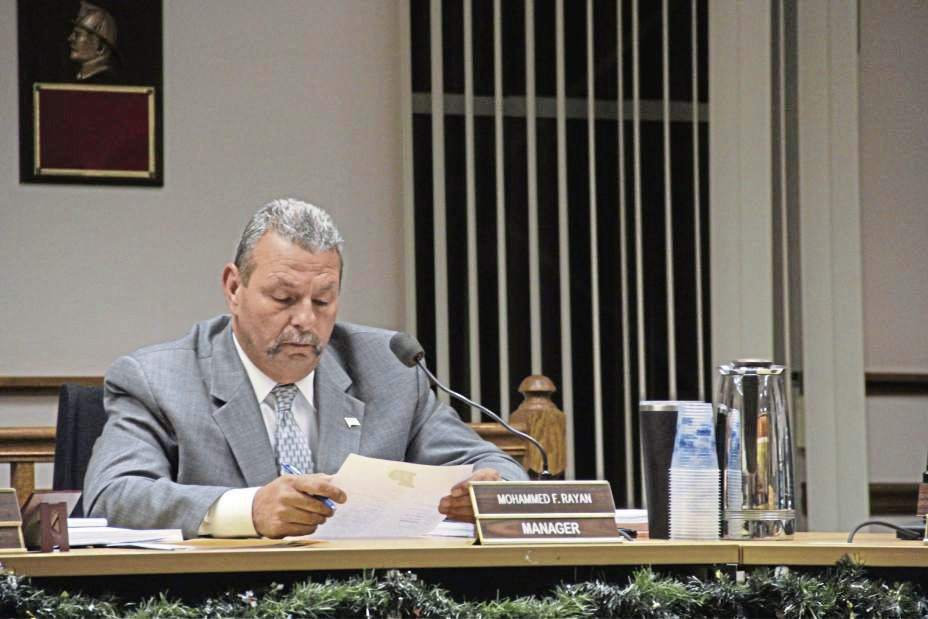
Investigative scrutiny into the Municipal Manager's office peaked in 2018, revealing how the Charter's provisions could be weaponized against the taxpayer. Mohammed Rayan, who served as manager from 2009 to 2018, resigned citing political interference. Yet, a review of his contract revealed a severance clause that allowed him to collect approximately $279, 232, more than double his annual salary, even with resigning voluntarily. The contract, approved by the Council, stipulated that he could step down without cause and still receive a payout, a provision that standard corporate or public sector norms. This incident exposed a fatal flaw in the administrative structure: the Council, serving part-time and frequently absence executive experience, was responsible for negotiating complex employment agreements with professional administrators who held the use of institutional knowledge.
The from the Rayan era forced a re-evaluation of the administrative code in 2019 and 2020. His successor, Scott Andrejchak, was hired under a contract that specifically stripped the "golden parachute" clause, a reactionary measure taken by a Council under siege from angry residents. This period marked a low point in the credibility of the Home Rule experiment. The administrative machine was forced to operate under the shadow of "distressed status" warnings from the Pennsylvania Department of Community and Economic Development (DCED). While the municipality avoided the full Act 47 takeover that crippled the school district, the administrative autonomy granted in 1973 had been surrendered to state oversight bodies and bond insurers.
By 2024, the administrative focus shifted from expansion to survival. The municipal workforce, once bloated during the patronage days of the mid-20th century, had been slashed. The Department of Water Pollution Control, the epicenter of the debt emergency, operated under strict regulatory mandates that left the Manager little room for discretionary spending. The Charter's amendment process, intended to be a tool for modernization, was rarely used for structural reform. Instead, amendments in the 2020s were minor, addressing zoning definitions for billboards and hookah bars, while the core dysfunction of the executive-legislative split remained unaddressed.
| Period | Administrative Structure | Key Event / Metric |
|---|---|---|
| 1951, 1975 | Class Township (Commissioners) | Ward-based patronage; rapid infrastructure expansion without long-term maintenance plans. |
| 1976 | Home Rule Charter Implementation | Shift to Council-Manager system; centralization of hiring and budget authority. |
| 2008 | Federal Consent Decree | DOJ mandates sewage repairs; administrative failure to maintain lines leads to $90M debt. |
| 2018 | Manager Resignation Scandal | Manager M. Rayan collects ~$280k severance after voluntary resignation; exposes contract oversight failure. |
| 2019, 2023 | Recovery Administration | Strict debt service regimen; tax increases to satisfy bond obligations; "Distressed" warnings. |
| 2026 (Proj.) | Current Home Rule Status | Continued debt repayment; Council-Manager friction over budget limitations. |
The administrative history of Penn Hills from 1700 to 2026 is a trajectory from frontier lawlessness to bureaucratic rigidity. The 18th-century "Tomahawk Claim" allowed settlers to grab land with an axe; the 1973 Charter allowed administrators to secure payouts with a pen. In both eras, the governance structure struggled to manage the resources at its disposal. The Home Rule Charter, hailed as a liberation from state bureaucracy, created a local bureaucracy that proved equally capable of mismanagement. As the municipality moves through the mid-2020s, the administrative structure remains a rigid skeleton, supporting a heavy load of legacy debt, with the Manager and Council locked in a perpetual struggle to keep the lights on without further draining the pockets of a shrinking tax base.
School District Debt Crisis and Department of Education Recovery Status

The financial collapse of the Penn Hills School District stands as one of the most catastrophic failures of public governance in the history of the Commonwealth of Pennsylvania. While the municipality's early history was defined by the rugged acquisition of land, its modern era has been marred by the reckless acquisition of debt. Between 2009 and 2015, the school district transformed from a financially stable entity with a modest debt load of $11 million into an insolvent organization drowning in over $172 million of obligations. This fiscal implosion did not result from a sudden economic downturn or an unavoidable natural disaster. It was a manufactured emergency, born from a series of decisions that a 2019 Allegheny County Grand Jury later characterized as "inexcusable carelessness" and "ineptitude."
The origins of this disaster lie in a disconnect between demographic reality and administrative ambition. By 2010, the student population in Penn Hills was in steady decline, a trend visible to any observer of regional statistics. Yet, the school board and administration embarked on a massive construction campaign to build a new high school and a consolidated elementary center. Proponents sold the project as a necessary modernization that would the of charter school departures. The result was the construction of a sprawling high school facility, frequently derided by critics as a "Taj Mahal," replete with chandeliers and imported Italian floor tiles. These aesthetic choices occurred while the district's credit rating plummeted and its ability to pay for basic educational materials evaporated.
The of the mismanagement came to light in May 2016, when Pennsylvania Auditor General Eugene DePasquale released a blistering audit report. DePasquale did not mince words, labeling the situation the "worst school district audit" he had ever seen. The report detailed a total breakdown of internal controls. The district's general fund balance had crashed from a $3. 4 million surplus in 2010 to a deficit of nearly $19 million by 2015. The audit revealed that business officials had failed to budget for the debt service payments required for the new buildings, essentially borrowing money to build a house without calculating the mortgage payments. Consequently, the district was forced to borrow even more money just to keep the lights on, creating a spiral of compound interest and despair.
Beyond the macro-level incompetence, the audit and subsequent investigations uncovered a culture of unchecked spending and petty corruption. The 2016 report highlighted the abuse of district credit cards, including one card issued to "Anyone in Uniform," which allowed maintenance staff to make purchases with zero accountability. In one notorious instance, an employee used a district card to purchase a residential water heater for their personal home. While this theft was small compared to the $170 million bond debt, it served as a potent symbol of the rot within the administration. Richard Liberto, the former business manager, was fired in 2015 and later faced theft charges related to other matters, though he maintained that he had warned the board of the impending cliff. The board members, for their part, claimed ignorance, a defense the Grand Jury found factually accurate legally and morally damning.
The Pennsylvania Department of Education (PDE) was forced to intervene, placing the district in Financial Recovery status in January 2019. This designation is the most severe form of state oversight short of full receivership. The state appointed Dr. Daniel Matsook as the Chief Recovery Officer to engineer a route back to solvency. The recovery plan required painful sacrifices from the community. Property taxes were raised repeatedly, pushing the millage rate above 30 mills, one of the highest load in Allegheny County. Teachers were furloughed, programs were slashed, and the district operated under a microscope. The residents of Penn Hills, of whom are seniors on fixed incomes, bore the brunt of the board's past profligacy through these tax hikes.
The recovery process was slow and grueling, yet it yielded results. Aided significantly by federal pandemic relief funds (ESSER) which injected over $18 million into the district, the administration managed to stabilize the bleeding. By strictly controlling costs and freezing salaries, the district rebuilt its fund balance from a multimillion-dollar deficit to a positive reserve. On May 23, 2024, the Pennsylvania Department of Education officially announced that Penn Hills had exited Financial Recovery status. Secretary of Education Dr. Khalid Mumin marked the occasion as a triumph of fiscal discipline. As of the 2025-2026 fiscal year, the district maintains a positive fund balance of approximately $16 million, a figure that would have seemed impossible a decade prior.
Even with this technical exit, the shadow of the debt remains long and dark. The debt service schedule for the construction bonds extends deep into the 2030s and 2040s, consuming a massive percentage of the annual operating budget. This fixed cost limits the district's ability to invest in curriculum or reduce the tax load on residents. The 2025-2026 budget, while balanced, reflects a "new normal" where high taxes are the price of survival. also, friction with charter schools continues to drain resources. In November 2025, the Commonwealth Court ordered the district to make an immediate payment of nearly $800, 000 to the Penn Hills Charter School of Entrepreneurship to prevent its closure during a state budget impasse, a reminder that the district's cash flow remains subject to external shocks.
| Year | Event / Status | Financial Impact |
|---|---|---|
| 2009 | Pre-Construction Era | $11 Million Total Debt (Stable) |
| 2010-2012 | Construction Bond problem | Debt balloons to fund new High School/Elementary Center |
| 2015 | Fiscal Cliff | Debt reaches $172 Million; Fund Balance is Negative $18M |
| 2016 | DePasquale Audit | Labeled "Worst Audit in State History"; Corruption exposed |
| 2019 | State Takeover | Entered Financial Recovery Status; Tax hikes begin |
| 2020-2023 | Pandemic/Recovery | ESSER Funds ($18M) used to rebuild reserves |
| 2024 | Official Exit | Exited Financial Recovery (May 23); Positive Fund Balance |
| 2026 | Current Status | High Debt Service remains; Millage ~30+; Under Monitoring |
The psychological toll on the community has been as severe as the financial one. The "Taj Mahal" high school stands as a polarizing monument, a state-of-the-art facility that the community could not afford, built for a student population that continues to shrink. Enrollment has dropped from over 5, 000 in the early 2000s to roughly 3, 000 in 2026, meaning fewer taxpayers and fewer families are left to shoulder the per-capita debt load. The 2019 Grand Jury report concluded that while the board's actions did not meet the threshold for criminal prosecution regarding the debt issuance, they constituted a "betrayal of the public trust."
Today, the district operates under a five-year monitoring period following its 2024 exit from recovery. The administration, led by Superintendent John Mozzocio, emphasizes transparency to regain community confidence. They publish monthly financial reports and have implemented strict purchasing to prevent a recurrence of the "water heater" era scandals. Yet, the Municipality of Penn Hills serves as a cautionary tale for every school district in the United States: ignoring demographic data in favor of vanity projects can lead to a generation of economic ruin. The recovery is official, the scars, in the form of high taxes and lost educational opportunities during the emergency years, for decades.
Sanitary Sewer Compliance and EPA Consent Decree Mandates
The Municipality of Penn Hills faces a subterranean emergency that defines its modern fiscal reality: a decaying 245-mile network of vitrified clay pipes, largely installed during the post-WWII housing boom. These terra cotta lines, buried between three and forty feet deep, have long exceeded their 50-to-60-year life expectancy. As the clay cracks and joints fail, groundwater and stormwater infiltrate the sanitary system, causing catastrophic volume surges during wet weather. This phenomenon, known as Inflow and Infiltration (I&I), transforms the municipality's sewage infrastructure into a legal and environmental liability, forcing local officials to navigate a minefield of federal mandates, criminal charges, and exorbitant debt service. The regulatory reckoning arrived in the early 1990s, shattering the municipality's. In a landmark enforcement action, the United States Department of Justice and the Environmental Protection Agency (EPA) targeted Penn Hills for egregious violations of the Clean Water Act. The investigation revealed that municipal employees had systematically falsified Discharge Monitoring Reports (DMRs) to hide the volume of raw sewage bypassing treatment plants and flowing directly into the Allegheny and Monongahela watersheds. In 1993, Penn Hills became the municipality in the United States to face criminal conviction for such violations. A sewer department employee received a prison sentence, and the municipality paid a $525, 000 fine, signaling the end of the era of unmonitored discharge. This criminal proceeding culminated in a Federal Consent Decree lodged in 1998. The decree mandated a complete overhaul of the sewage conveyance system, forcing the municipality to abandon its practice of bypassing excess flow. To comply, Penn Hills undertook a massive capital improvement program, incurring approximately $90 million in debt to construct Equalization (EQ) facilities. These massive holding tanks, such as the Gascola and Long Road facilities, were designed to capture and store surge volume during storms, releasing it gradually back into the treatment system once flows subsided. The construction of the Plum Creek Equalization Facility alone represented a multi-million dollar investment, with designs shifting from underground concrete structures to above-ground glass-coated steel tanks to satisfy Pennsylvania Department of Environmental Protection (DEP) requirements while managing costs. The financial load of these mandates falls directly on the residents, creating a "sewer mortgage" that rivals municipal tax bills. By 2019, the municipality's water pollution control debt stood at $64 million, a figure that demands constant refinancing and rate adjustments. As of 2026, the cost of compliance remains visible in the monthly bills sent by the Wilkinsburg-Penn Joint Water Authority and Oakmont Water Authority, which collect sewage fees on behalf of the municipality. The rate structure is aggressive; 2026 data indicates residential sewage rates reaching $27. 38 per 1, 000 gallons, a figure necessary to service the debt and fund the Water Pollution Control Department's (WPCD) operations. This fee is separate from and additional to the charges levied by the Allegheny County Sanitary Authority (ALCOSAN), which treats the majority of the municipality's wastewater.
| Year | Event | Impact |
|---|---|---|
| 1991 | Federal Preliminary Injunction | Ordered immediate cessation of illegal sewage bypasses. |
| 1993 | Criminal Conviction | US municipality criminally charged for Clean Water Act violations; employee imprisoned. |
| 1998 | Federal Consent Decree (CD) | Mandated construction of Equalization (EQ) tanks; $90M debt incurred. |
| 2008 | CD Termination / DEP Order | Federal oversight ended; entered PA DEP Consent Order for continued mapping and repairs. |
| 2016 | DEP Order Expiration | Shift to "source reduction" focus; study of I&I sources required. |
| 2026 | Facility Automation Project | Bids opened for automation of Gascola, Long Road, and Lincoln Road facilities. |
Even with the termination of the 1998 Consent Decree in 2008, the regulatory pressure under the umbrella of the PA DEP and the regional ALCOSAN Clean Water Plan. The municipality must align its local system with ALCOSAN's regional mandate to eliminate sanitary sewer overflows (SSOs) by 2036. This requires not only maintaining the EQ tanks built two decades ago also investing in advanced automation. In March 2026, the municipality opened bids for the "Penn Hills Facility Automation Project," a capital initiative to install valve actuators, flow meters, and level transmitters at the Gascola, Long Road, Lincoln Road, and Sandy Creek sites. This technology allows the plants to operate in automatic mode during high-flow events, reducing the risk of human error and ensuring strict adherence to discharge limits. The physical challenge of source reduction remains the most difficult hurdle. The WPCD continues to hunt for illegal connections, such as residential downspouts and driveway drains tied into the sanitary sewer. These "wildcat" connections, a legacy of the 1950s building codes, act as funnels during rainstorms, overwhelming the system. The municipality enforces dye testing upon the sale of homes to identify and sever these lines, a process that frequently results in unexpected costs for sellers. also, the Plum Creek and Lincoln Road wastewater treatment plants, which treat approximately 26% of the municipality's flow (the remaining 74% goes to ALCOSAN), require constant upgrades to meet tightening effluent standards. In January 2026, the municipality allocated $400, 000 specifically for concrete repairs at the Gascola EQ facility, proving that the infrastructure built to satisfy the 1998 decree is already entering its own pattern of decay and repair. The trajectory for Penn Hills suggests a future defined by perpetual maintenance and rising costs. The debt service for the sewer system consumes of the municipal budget, limiting funds available for other services. While the criminal days of the early 1990s are over, the legacy of those violations is a hard infrastructure reality: a system that demands millions of dollars annually to keep the rivers clean and the regulators at bay. The 2026 budget reflects this reality, prioritizing debt repayment and the technological modernization of a system that was, for too long, out of sight and out of mind.
Demographic Shifts and Housing Stock Valuation Trends (1980, 2026)
By 1980, the Municipality of Penn Hills had fully transitioned from a booming post-war frontier to a mature inner-ring suburb, yet the seeds of a long-term contraction were already germinating. The population, having peaked near 63, 000 in the early 1970s, registered at 57, 632 in the 1980 Census. This marked the beginning of a forty-year slide that would see the municipality lose nearly one-third of its residents. Unlike the chaotic expansion of the 1950s, the period from 1980 to 2026 was defined by the struggle to maintain an oversized infrastructure with a shrinking tax base. The housing stock, primarily brick ranches and split-levels built for the mid-century middle class, began to age just as the region's economic foundation crumbled with the collapse of the steel industry.
The demographic transformation of Penn Hills between 1990 and 2020 stands as one of the most rapid racial shifts in Allegheny County history. In 1990, the municipality was predominantly white, with census data showing an 88% white population. Over the two decades, a distinct pattern of migration occurred. As older white residents passed away or moved to newer exurbs like Murrysville and Cranberry, African American families moved in, seeking the solid housing stock and yard space that Penn Hills offered. By 2000, the white population had dropped to 81%, and by 2010, it fell further to 60%. The 2020 Census confirmed the completion of this inversion, recording a population that was approximately 54% white and 36% Black. This shift was not statistical; it represented a fundamental change in the community's identity and social fabric, occurring alongside a steady decline in total residents to 41, 059 by 2020.
Housing valuation trends in Penn Hills decoupled from the broader Allegheny County market during this era, largely driven by an escalating tax load. While property values in the City of Pittsburgh and northern suburbs skyrocketed, Penn Hills saw stagnation. The primary driver was the "tax wedge" created by the Penn Hills School District. Following a financial meltdown exposed by a 2016 audit, which revealed over $170 million in debt, the district was forced to raise taxes aggressively. By 2022, the school district millage rate exceeded 30 mills, one of the highest in the county. When combined with municipal and county taxes, the total tax load meant that a homeowner in Penn Hills paid significantly more in monthly taxes than a homeowner with a similarly priced property in a neighboring township. This suppressed sale prices; buyers calculated their monthly payment capacity, and the high tax portion forced the principal value of the home down.
The physical condition of the housing stock also played a role in valuation trends. The majority of Penn Hills homes were constructed between 1945 and 1970. By the early 2000s, these structures required major capital systems replacements, roofs, furnaces, and electrical panels. Simultaneously, the municipality faced a federal mandate to overhaul its sanitary sewer system. A consent decree with the EPA and the Allegheny County Health Department forced the municipality to incur approximately $90 million in debt to fix sewage overflows. This cost was passed directly to residents through surging sewage rates and strict point-of-sale dye testing requirements. For a home seller in 2015 or 2020, a failed dye test could mean a $5, 000 to $10, 000 repair bill before closing, further eroding equity.
Even with these structural headwinds, the post-pandemic housing market of 2020 to 2026 brought a strange resurgence to Penn Hills. As interest rates rose and inventory in premium suburbs, buyers returned to Penn Hills in search of affordability. The median home sale price, which had languished around $100, 000 for years, began to climb. Data from early 2026 indicates a median sale price of approximately $176, 000, a 6. 7% increase year-over-year. This rise did not necessarily reflect a structural fix to the tax problem rather a spillover effect from a regional housing absence. The inventory remained tight, with homes selling in roughly 63 days. Yet, the vacancy rate remained a stubborn problem, hovering around 8. 5% in 2024, as zombie properties, homes caught in foreclosure limbo or abandoned by heirs, dotted otherwise tidy streets.
The valuation gap remains the defining economic reality for the municipality in 2026. A 1, 500-square-foot brick ranch in Penn Hills might sell for $180, 000, while the identical structure in the low-tax North Hills could command $350, 000. This creates a high barrier for new construction; developers cannot build new homes profitably when the market value of existing homes is suppressed by the tax rate. Consequently, the housing stock remains frozen in time, with almost no new subdivisions built since the late 1990s. The community has become a haven for -time homebuyers to trade high taxes for a lower mortgage principal, it limits the accumulation of generational wealth through property appreciation compared to the rest of the Pittsburgh metropolitan area.
| Year | Total Population | White % (Approx) | Black % (Approx) | Median Home Value (Nominal) | School Tax Millage (Context) |
|---|---|---|---|---|---|
| 1980 | 57, 632 | 92% | 7% | $42, 000 | Moderate |
| 1990 | 51, 074 | 88% | 11% | $58, 000 | Rising |
| 2000 | 46, 981 | 81% | 16% | $76, 000 | High |
| 2010 | 42, 329 | 60% | 37% | $89, 000 | Very High |
| 2020 | 41, 059 | 54% | 36% | $115, 000 | Distressed (30+ mills) |
| 2026 (Est) | 39, 294 | 53% | 37% | $176, 000 | Distressed (31+ mills) |
The trajectory from 1980 to 2026 shows a municipality with the legacy costs of its own mid-century success. The infrastructure built to serve a wealthy, growing population of 60, 000 falls upon the shoulders of fewer than 40, 000 residents, of whom have lower median incomes than their predecessors. The rise in home values in the mid-2020s offers a glimmer of stability, yet the underlying math of municipal finance, balancing debt service, sewage mandates, and school funding against a stagnant tax base, remains the central challenge for the future of Penn Hills housing.
Municipal Budget Solvency and Tax Revenue Volatility
The fiscal history of the Municipality of Penn Hills is a case study in the collision between post-war suburban expansion and the harsh realities of deindustrialization. While the region began as a frontier marked by informal "Tomahawk Claims" in the 1700s, where revenue was nonexistent and land ownership was settled by the axe, the modern financial structure emerged only after the incorporation of Penn Township in 1850. For the century of its existence, the tax base was agrarian and low-yield, supported by small- coal extraction which provided meager severance revenues. The true financial metamorphosis occurred between 1945 and 1970, when the population exploded from 15, 000 to over 60, 000. This era created a "growth Ponzi scheme" where new developments paid for the infrastructure of previous ones, a model that functioned direct until the available land and the population began to contract.
By the late 1970s, the municipality faced a clear reversal. The Home Rule Charter, adopted in 1976, granted greater local control over taxation rates, yet it could not arrest the economic decline triggered by the collapse of the regional steel industry. As residents fled, dropping the population to roughly 41, 000 by 2019, the fixed costs of maintaining 245 miles of sewer lines and hundreds of miles of roads remained static. The tax base eroded just as the infrastructure, largely built with terracotta clay pipes in the mid-20th century, reached the end of its useful life. This created a structural deficit that plagued municipal planners for four decades.
The most severe financial wound was self-inflicted through decades of deferred maintenance on the sanitary sewer system. In 1993, Penn Hills became the municipality in the United States to face criminal charges for violating the Clean Water Act due to raw sewage discharging into local waterways. The subsequent federal consent decree in 1998 forced the municipality to borrow heavily to overhaul its wastewater infrastructure. By 2019, the municipality carried approximately $64 million in sewer-related debt, a load that debt service payments until 2034. This obligation forces residents to pay of the highest sewage rates in Allegheny County, with a fixed rate of $19. 37 per 1, 000 gallons plus a quarterly service fee, functioning as a shadow tax on homeownership.
The interplay between the Municipality and the Penn Hills School District further complicates the solvency equation. While legally distinct entities, they harvest revenue from the same weary tax base. In 2015, Moody's Investors Service downgraded the School District's credit rating to junk status, citing "chronic operating deficits." Although the Municipality itself managed to secure a Standard & Poor's upgrade to AA- in 2013 due to conservative budgeting, the aggregate tax load, municipal, school, and county, crushed property values. High taxes depressed the housing market, which in turn required higher millage rates to generate the same revenue, creating a feedback loop of fiscal distress. The School District's entry into the state's financial recovery program (Act 47) in 2019 signaled the severity of the emergency, even as the municipal government struggled to avoid a similar fate.
Between 2013 and 2019, the municipal general fund ran deficits every single year, whittling reserves down to a perilous $3 million. The administration relied on fund balance drawdowns to mask the structural imbalance between revenues and expenditures. This trajectory was temporarily arrested by the COVID-19 pandemic, not due to economic resilience, because of the American Rescue Plan Act (ARPA). The municipality received approximately $17 million in federal stimulus funds, which acted as a temporary tourniquet. These funds artificially inflated the general fund balance to nearly $15 million by 2024, allowing the administration to post a surplus and delay necessary rate adjustments.
The illusion of solvency began to fade as ARPA funds were exhausted. In 2023, the municipality returned to its habit of deficit spending, closing the year with a $1. 1 million shortfall. The 2025 budget process laid bare the underlying fragility of the municipal ledger. To maintain services and fund a police force that had grown to become one of the largest in the county outside of Pittsburgh, the administration proposed a tax increase. The final 2026 budget, presented in late 2025, held the millage rate at 6. 944 mills for homeowners, a decision made possible only by the lingering cushion of the stimulus-era reserves. Municipal Manager Scott Andrejchak characterized the 2026 budget as balanced, yet the long-term projections show a return to structural deficits if revenue streams remain stagnant.
The following table illustrates the between population (the payer base) and the financial liabilities (the cost driver) over the serious window of decline and attempted stabilization:
| Year | Population (Approx.) | Municipal Status | Key Financial Event |
|---|---|---|---|
| 1970 | 62, 000 | Peak Growth | Tax base expansion; infrastructure build-out phase. |
| 1993 | 51, 000 | emergency Onset | Criminal charges for Clean Water Act violations; EPA scrutiny begins. |
| 1998 | 46, 000 | Debt Loading | Federal Consent Decree signed; $90M sewer debt incurred. |
| 2015 | 42, 000 | Credit | School District rated Junk; Municipality holds AA- tax base shrinks. |
| 2019 | 41, 000 | Deficit Peak | Reserves drop to <$4M; School District enters state recovery. |
| 2024 | 40, 000 | Artificial Surplus | $17M ARPA funds boost reserves; School District exits recovery. |
| 2026 | 39, 500 (Proj.) | Fragile Stability | Millage at 6. 944; Sewer debt payoff scheduled for 2034. |
Current solvency rests on a knife's edge. The 2026 budget relies heavily on Act 511 taxes, including earned income and business privilege taxes, which account for 52% of revenue, surpassing real estate taxes. This shift indicates a heavy reliance on the wages of the working population rather than property wealth, making the municipal budget highly sensitive to employment downturns. The "traffic division" initiative introduced in the 2026 budget aims to generate revenue through enforcement, a tactic frequently seen in distressed municipalities seeking non-tax income streams.
Pension liabilities also loom over the long-term outlook. While the municipality has avoided the catastrophic underfunding seen in cities like Scranton, the obligation to retired police and municipal workers consumes a growing percentage of the general fund. The refusal to raise taxes in the 2026 pattern, while politically popular, risks repeating the errors of the 2013-2019 period where reserves were burned to avoid hard choices. With the sewer debt scheduled to retire in 2034, the municipality faces another eight years of restricted cash flow, during which any major infrastructure failure could precipitate a return to state oversight.
Crime Statistics and Police Department Resource Allocation
The evolution of the Penn Hills Police Department (PHPD) mirrors the municipality's transformation from a rural outpost to a densely populated inner-ring suburb with urbanized crime. Established in 1927 with a single officer, Samuel Bickerstaff, patrolling farm lanes on a motorcycle, the department operated for decades as a small township force. By 1954, the roster had grown to twelve officers serving 35, 000 residents, a ratio that quickly proved insufficient as the post-war housing boom fundamentally altered the region's demography. The loss of innocence for the department arrived on March 25, 1972, at the East Hills Shopping Center. Sergeant William Schrott and Officer Bartley Connolly were executed by a female robber they had mistaken for a child, a tragedy that remains the defining scar on the force's history and ended the era of low- suburban policing. By the early 21st century, the PHPD had expanded to become the largest municipal police force in Allegheny County outside of Pittsburgh, yet it faced serious structural and financial impediments. The tenure of Chief Howard Burton, who led the department from 1991 until his retirement in late 2021, was marked by relative stability also a slow accumulation of legacy costs. Upon Burton's departure, the municipality appointed Ronald Como in January 2022. Como's administration attempted to modernize the force amid a national recruitment emergency, eventually overseeing a pivot to 12-hour shifts in March 2025 to improve officer retention. This change, approved by a 48-6 union vote, aimed to offer better work-life balance even with a shrinking applicant pool. Como retired in August 2025, citing health reasons, leaving the department under the interim command of Jason Bonace as of early 2026. Resource allocation in Penn Hills is dominated by personnel costs and the escalating load of pension liabilities. The 2025 budget process revealed the severity of this financial. Municipal officials approved a police budget increase from $10. 8 million in 2024 to $12. 7 million for 2025, a jump driven largely by a $1. 2 million injection into the patrol division and mandatory Act 205 pension compliance payments. These figures show that nearly 20% of the municipality's total operating budget is consumed by law enforcement, a proportion that limits funding for infrastructure and social services. The table outlines the department's growth and the exploding cost of maintaining public safety over the last century.
| Year | Staffing Levels | Key Operational Context | Budget / Financial Impact |
|---|---|---|---|
| 1927 | 1 Officer | Motorcycle patrol of rural farm lanes. | Minimal township expense. |
| 1954 | 12 Officers | Population boom to 35, 000 residents. | Rapid expansion of payroll. |
| 2021 | ~50 Officers | End of Chief Burton's 50-year tenure. | Legacy pension costs begin to mount. |
| 2024 | 54 Officers | Integration of License Plate Readers (LPRs). | $10. 8 Million allocated. |
| 2025 | 57 Officers (Auth) | Shift to 12-hour rotations; Como retires. | $12. 7 Million (17. 5% increase). |
Crime statistics in Penn Hills have fluctuated, frequently tracking with broader regional trends in Allegheny County. While the municipality avoided the worst of the homicide spikes seen in the City of Pittsburgh during the early 2020s, it was not immune to violent outbursts. In 2024, while Pittsburgh saw a decrease in homicides, the surrounding suburbs, including Penn Hills, experienced a rise. Allegheny County police investigated 67 homicides outside the city limits in 2024, up from 49 the previous year. A notable incident contributing to this statistic occurred in June 2024 at Ballers Hookah Lounge and Cigar Bar, where a shootout left one man dead and exposed the dangers associated with unregulated after-hours venues. To combat these trends without further inflating the payroll, the municipality has increasingly turned to surveillance technology. By 2024, the department had integrated Automated License Plate Readers (LPRs) and a network of traffic cameras into its daily operations. These tools, funded partly by state grants like the $565, 292 awarded in 2023 for signal replacement and enforcement at Frankstown and Beulah Roads, allow for a "force multiplier" effect. The data collected is fed into regional intelligence centers, allowing Penn Hills officers to track suspects crossing municipal lines instantly. Yet, the reliance on technology has not solved the core problem of violent crime clearance rates, which remain stubborn. The allocation of resources also reflects a defensive posture against liability and internal misconduct. Following national trends, the department mandated body-worn cameras for all patrol officers, a significant capital expense that requires ongoing storage and data management fees. This transparency measure sits alongside the department's participation in the Allegheny County District Attorney's camera network. As of 2026, the department faces the dual challenge of funding these technological mandates while servicing a pension deficit that threatens to consume future tax increases. The 2-mill tax hike proposed for the 2025 budget was necessitated largely by these public safety obligations, showing that for Penn Hills taxpayers, the cost of the "thin blue line" is becoming an increasingly heavy financial load.
Commercial Zoning and Corridor Vacancy Metrics
The commercial trajectory of Penn Hills is defined not by a master plan, by the collision of 18th-century drover trails with 20th-century zoning ordinances. Frankstown Road, originally a packhorse trail used by traders like John Fraser in the 1750s, evolved into the municipality's primary commercial artery without the benefit of geometric logic. Unlike the planned grid of a city center, the commercial corridors of Penn Hills followed the route of least resistance along ridge lines and creek beds. By the time the Municipality adopted its modern zoning codes in the mid-20th century, the pattern was already set: linear commercial sprawl that prioritized automobile traffic over pedestrian access or design. This historical accident created the "strip" that plagues the municipality in 2026, where commercial depth is shallow, and properties abut residential zones with little buffer.
The defining economic event of the post-war era was the construction of the East Hills Shopping Center. Opened in 1960 on a 40-acre site at the border of Penn Hills, Wilkinsburg, and Pittsburgh, this 600, 000-square-foot complex was a regional powerhouse. Developed by Mellon-Stuart, it featured anchors like Joseph Horne Company and Gimbels, drawing shoppers from across the eastern suburbs. For two decades, East Hills served as the commercial heart of the area, generating substantial mercantile tax revenue. Yet, the opening of the Monroeville Mall in 1969 began a slow strangulation of the East Hills site. The enclosed, climate-controlled environment of Monroeville rendered the open-air concourses of East Hills obsolete. By 1980, the major anchors had fled. The subsequent decades saw a descent into blight, with the complex demolished in 2001 after years of failed revitalization attempts.
In 2026, the footprint of the former East Hills Shopping Center remains a scar on the municipal ledger. While Petra International Ministries occupies a portion of the site, the tax-exempt status of religious institutions means the municipality recovers zero property tax revenue from a parcel that once anchored its budget. The remaining commercial activity is limited to a "U-Pull-And-Pay" auto salvage yard, a low-intensity use that generates a fraction of the economic activity seen in the 1960s. In early 2025, state and local officials allocated $250, 000 to pave the access road, East Hills Drive, which had disintegrated into a hazard of potholes and debris. This expenditure represents a public subsidy to maintain basic access to a site that has ceased to function as an economic engine.
Rodi Road, frequently termed the "Gateway to Penn Hills," presents a different set of zoning challenges. Connecting the Parkway East (I-376) to Frankstown Road, this corridor carries over 26, 000 vehicles daily. The topography, characterized by steep slopes and narrow valley floors, limits the depth of developable lots. This physical constraint forced a linear development pattern of gas stations, fast-food franchises, and light industrial uses. In 2023, the municipality secured an $800, 000 federal grant to install sidewalks and improve lighting, an attempt to retrofit pedestrian infrastructure onto a road designed exclusively for cars. Even with these cosmetic improvements, vacancy rates along Rodi Road remain stubborn. As of February 2026, prime lots such as 618 Rodi Road have sat on the market for nearly 900 days, indicative of a mismatch between asking prices and the commercial viability of the location.
The zoning code itself has become a battleground for defining the character of these corridors. In 2024, the Municipal Council passed Ordinance No. 2024-2075 and related amendments to restrict "nuisance" businesses. Specifically, the code was updated to classify "Hookah Bar/Lounge" establishments as Conditional Uses permitted only in I-3 Industrial districts, banning them from the B-1 and B-2 commercial strips that border residential neighborhoods. This legislative maneuver reflects a reactive strategy: using zoning police powers to curate the tenant mix after market forces have already favored low-margin, high-turnover businesses like vape shops and sweepstakes cafes. The 2030 Implementable detailed Plan, adopted earlier in the decade, explicitly identifies the "abundance of residential zoning districts with non-conforming commercial and mixed-use buildings" as a structural impediment to revitalization.
Vacancy metrics in 2026 reveal a bifurcation in the commercial real estate market. While light industrial and warehouse spaces in the I-1 and I-2 zones maintain healthy occupancy due to the logistics boom, retail storefronts in the B-1 districts suffer from "greyfield" status. Data from regional real estate analyses indicates that the Pittsburgh metro area office vacancy rate hovered near 25% in 2025, and Penn Hills' aging stock fares worse than the regional average. The municipality absence the Class A office space required to attract modern corporate tenants, leaving it reliant on a service economy that generates lower business privilege tax returns. The "Frankstown West" corridor, identified in the detailed Plan as a priority zone, continues to struggle with fragmented ownership and parcels too small for modern big-box redevelopment.
| Corridor Segment | Primary Zoning | Peak Commercial Era | 2026 Primary Status | Major Structural Obstacle |
|---|---|---|---|---|
| Frankstown Road (Central) | B-1 / B-2 Business | 1950, 1970 | Mixed Retail / Service | Shallow lot depths; absence of parking |
| Rodi Road (The Gateway) | Mixed Use / Industrial | 1970, 1990 | Transit / Fast Food | Steep topography; traffic congestion |
| East Hills Site | formerly Commercial | 1960, 1975 | Institutional / Salvage | Tax-exempt ownership; stigma |
| Saltsburg Road | B-1 Business | 1980, 2000 | Neighborhood Retail | Competition from Plum/Monroeville |
| Allegheny River Blvd | I-1 Industrial / C | 1920, 1950 | Industrial / Vacant | Floodplain restrictions; isolation |
The economic reality of 2026 is that Penn Hills possesses an oversupply of obsolete commercial square footage relative to the purchasing power of its population. The demolition of the East Hills Shopping Center removed 600, 000 square feet of retail space, yet the remaining inventory along Frankstown and Rodi Roads continues to exceed demand. This surplus suppresses rental rates, which in turn discourages property owners from investing in capital improvements, creating a pattern of physical deterioration. The municipality's strategy has shifted from expansion to containment, managing the decline of retail strips while attempting to pivot toward light industrial uses where the topography allows. The 2017 zoning amendments that permitted limited commercial uses in Industrial zones were a tacit admission that the old rigid separation of uses no longer served the economic interests of the community.
Future redevelopment hinges on the consolidation of small, splintered parcels into viable development sites. The "Tomahawk Claim" mentality of the 18th century left a legacy of irregular property lines that complicates modern assembly. Without the power of eminent domain or a well-funded land bank to assemble these tracts, the municipality relies on private market forces that currently favor greenfield development in outer suburbs over the remediation of Penn Hills' brownfields and greyfields. The paving of East Hills Drive in 2025 serves as a microcosm of the broader problem: public funds are used to patch the infrastructure of the past, while the commercial tax base required to sustain that infrastructure continues to.
Public Works Operations and Road Maintenance Backlog
The infrastructure of Penn Hills exists as a physical testament to the municipality's chaotic evolution from a colonial frontier to a post-war boomtown, and to a distressed community with the bill for its own expansion. The Department of Public Works (DPW) maintains a sprawling network of approximately 150 miles of municipally owned streets, a figure for a single suburb. This local mileage sits alongside roughly 82 miles of state and county roads, creating a dense grid of asphalt draped over topography that actively resists engineering. From the mud tracks of the 1700s to the pothole- arteries of 2026, the history of these roads is a pattern of rapid construction followed by decades of deferred maintenance.
In the 18th century, the primary thoroughfare was the Frankstown route, a trading route that evolved into the Frankstown Road turnpike. Early records from the 1700s describe the region's transit corridors as little more than widened footpaths, prone to washing out in the spring thaws. As Penn Township formalized in the 19th century, road maintenance was a localized affair, frequently funded by a "road tax" that residents could pay in labor by clearing brush or filling ruts. This ad-hoc system sufficed for an agrarian community proved woefully insufficient when the population exploded in the mid-20th century. Between 1940 and 1960, developers carved hundreds of subdivisions into the hillsides, laying down miles of "cartway" streets. of these mid-century roads were constructed with minimal base, designed to last only long enough to sell the homes. Today, the DPW fights a losing battle against these "developer specials," where thin asphalt rests on unstable clay soils that shift with every freeze-thaw pattern.
The financial collapse of the municipality in the early 2000s had immediate and devastating consequences for the road network. As debt service for the high school and sewer system consumed the general fund, the capital budget for road paving was frequently the line item slashed. By 2015, the paving pattern, the theoretical time it takes to repave every street in the municipality, had extended to over 50 years. Engineering standards suggest a road should be resurfaced every 15 to 20 years. This mathematical impossibility meant that by 2020, dozens of miles of residential streets had disintegrated into "alligator cracking," a condition where the pavement fractures into small, jagged polygons, signaling total structural failure.
Topography compounds the financial neglect. Penn Hills is defined by its steep slopes and unstable soils, making landslides a recurring and expensive emergency for the Public Works Department. The collapse of Nadine Road in July 2019 serves as the definitive case study of this vulnerability. Heavy rains triggered a catastrophic slide that overturned a retaining wall and took a section of the roadway with it. The repair required a $10. 7 million contract managed by Allegheny County, a figure that dwarfed the municipality's entire annual paving budget. Similar slides have threatened Beulah Road and various side streets, forcing the DPW to divert funds from resurfacing to emergency stabilization. In 2024 alone, the municipality faced multiple slope failures that required the installation of steel H-piles and concrete lagging, draining resources that otherwise would have filled potholes.
The intersection of road maintenance and sewage infrastructure creates another of operational paralysis. The municipality remains under a strict consent decree with the EPA and the Allegheny County Health Department to reduce sanitary sewer overflows. This mandate forces the municipality to spend millions on pipe lining and replacement. Frequently, the Water Pollution Control Department must excavate streets to access failing lines. Coordination failures have historically led to situations where a road is paved, only to be cut open months later for sewer work, leaving behind "utility cuts" that degrade the smooth surface and allow water infiltration. By 2025, officials attempted to synchronize these schedules more aggressively, yet the sheer volume of emergency sewer repairs frequently renders long-term planning obsolete.
The budgetary reality for the 2024-2026 period reveals the depth of the backlog. In the 2025 budget hearings, the Department of Public Works requested funds to address a "paving cliff," noting that rising asphalt costs had reduced the purchasing power of their allocation. The 2025 Capital Improvement Program identified a $17 million funding gap for projects proposed through 2029. While the municipality budgeted approximately $1. 5 million for paving in 2025, an increase from previous years, engineering assessments indicated that $4 million to $5 million annually was necessary just to arrest the decline. Without this level of investment, the in total Pavement Condition Index (PCI) of the network continues to drop.
A temporary reprieve arrived in February 2026, when State Representative Joe McAndrew and Senator Jay Costa secured a $3 million grant from the PennDOT Multimodal Transportation Fund. This injection of capital, the largest of its kind for the municipality in recent history, allowed the DPW to target high-traffic corridors that had been neglected for decades. Officials described the grant as a "shot in the arm," yet they privately acknowledged it was a one-time fix for a structural deficit. The grant money focused on main arteries and sidewalk repairs, leaving the miles of crumbling residential cul-de-sacs largely dependent on the municipal general fund.
Operational challenges within the DPW extend beyond asphalt. The department operates out of a facility that has historically absence modern amenities, and its fleet of dump trucks and salt spreaders requires constant maintenance. During winter events, the steep grades of Penn Hills streets demand a high volume of rock salt and anti-skid material. A single heavy snowstorm can cost the municipality over $100, 000 in material and overtime. In 2023 and 2024, staffing absence forced the department to rely on overtime to keep plow routes active, further stressing the operating budget. The 2025 budget included provisions for new equipment, supply chain delays meant that aging trucks remained on the road longer than intended, leading to breakdowns during serious weather events.
The "paper street" problem also plagues the department. These are roadways that appear on maps, frequently plotted during the speculative land rushes of the 1920s or 1950s, were never improved or adopted by the municipality. Residents living on these unpaved or semi-paved tracks frequently petition the municipality for maintenance, creating legal and financial disputes. The municipality maintains a strict policy regarding these orphan roads, yet the pressure to service them increases as housing becomes scarcer. By 2026, the inventory of these ambiguous roadways remained a point of contention in council chambers, with no clear funding source to bring them up to code.
The following table summarizes the projected versus actual paving expenditures during the serious recovery period, showing the persistent gap between need and reality.
| Fiscal Year | Budgeted Paving Allocation | Est. Maintenance Need | Funding Gap | Major External Grants |
|---|---|---|---|---|
| 2023 | $1. 1 Million | $4. 2 Million | -$3. 1 Million | None |
| 2024 | $1. 3 Million | $4. 5 Million | -$3. 2 Million | CDBG ($300k) |
| 2025 | $1. 5 Million | $4. 8 Million | -$3. 3 Million | None |
| 2026 | $1. 6 Million | $5. 0 Million | -$3. 4 Million | $3. 0 Million (PennDOT) |
Even with the 2026 state intervention, the trajectory of the Penn Hills road network remains precarious. The municipality is managing a slow-motion collapse of its physical plant, prioritizing the most dangerous risks while allowing secondary roads to deteriorate. The legacy of the 1950s expansion, built on cheap credit and cheaper asphalt, has come due, and the tax base of the 2020s absence the capacity to pay it in full.
Political Accountability and Mismanagement Investigations (2000, 2025)
The period between 2000 and 2025 in the Municipality of Penn Hills represents a clear era of fiscal reckoning, defined by two parallel institutional failures: the collapse of the Penn Hills School District's finances and the municipal government's struggle with federal environmental mandates. While the mid-20th century saw the township expand as a model of suburban success, the quarter of the 21st century exposed deep fractures in governance, oversight, and long-term planning. Investigations by state auditors and county grand juries revealed a pattern of negligence that load residents with of the highest tax rates in Allegheny County. The most visible engine of this decline was the Penn Hills School District. By 2019, the district had accumulated approximately $172 million in debt, a figure that threatened its very existence. This financial catastrophe did not occur overnight resulted from a specific series of decisions made between 2009 and 2015. even with clear demographic data showing a steady decline in student enrollment, dropping from over 11, 000 in the 1970s to under 3, 500 by 2019, the School Board approved the construction of two massive new facilities: a high school costing nearly $60 million and an elementary center costing over $40 million. State Auditor General Eugene DePasquale, in a blistering 2016 report, characterized the district's management as the "worst" he had ever seen. His audit detailed how officials manipulated budgets to mask deficits, allowing them to borrow millions for construction they could not afford. The audit found that the district had maxed out its credit cards to pay the mortgage, using short-term loans to cover operating expenses while debt service payments consumed an increasingly large percentage of the annual budget. The situation triggered a grand jury investigation led by Allegheny County District Attorney Stephen Zappala. Released in February 2019, the grand jury report described the board's conduct as "inept" and "reckless," stating that their decisions had plunged the district into "economic ruin." The investigation found that board members frequently voted on multimillion-dollar contracts without reading them and relied blindly on the advice of architects and consultants who stood to profit from the construction. One particularly damaging finding was the board's failure to secure state reimbursement for the projects, leaving local taxpayers to shoulder the entire load. While the grand jury report was scathing, it stopped short of recommending criminal charges against the elected school board members, concluding that bad governance and incompetence were not technically illegal. The investigation did, yet, scrutinize the actions of former business manager Richard Liberto. Fired in 2015, Liberto was accused of failing to alert the board to the true depth of the deficit and engaging in questionable financial practices, such as under-budgeting tuition payments to charter schools. Although Liberto denied the allegations and later settled a wrongful termination suit, his tenure coincided with the acceleration of the district's financial collapse. Simultaneously, the municipal government faced its own emergency rooted in infrastructure neglect. For decades, Penn Hills had failed to maintain its aging sanitary sewer system, leading to illegal discharges of raw sewage into local waterways, including Plum Creek and the Allegheny River. This negligence drew the ire of the federal government. In a landmark case, Penn Hills became one of the municipalities in the nation to face criminal charges under the Clean Water Act in the late 1990s. The legal extended well into the 2000s and 2020s, trapping the municipality in a pattern of consent decrees with the Environmental Protection Agency (EPA) and the Department of Justice. Compliance with these federal orders required massive capital investment to repair miles of terracotta pipes dating back to the 1940s. To fund these mandates, the municipality incurred significant debt, which stood at approximately $90 million during the peak of the emergency. Consequently, sewage rates for residents skyrocketed, frequently tripling or quadrupling within a decade. In 2019, the Allegheny County Health Department levied further fines against the municipality for continued discharge violations at the Plum Creek facility, proving that even after years of expensive repairs, the system remained to heavy rainfall and operational failures. Political instability within the municipal building exacerbated these structural problems. The position of Municipal Manager became a revolving door of controversy. In 2018, Manager Mohammed Rayan resigned, citing "political interference" from council members. His departure triggered public outrage when it was revealed that his contract included a severance package worth over $220, 000, a "golden parachute" that residents felt was indefensible given the town's tight budget. His successor, Scott Andrejchak, also faced scrutiny regarding contract terms and severance clauses, highlighting a disconnect between the protections afforded to appointed officials and the economic reality of the taxpayers they served. The convergence of school and municipal tax load created a hostile economic environment for homeowners. By 2023, the combined property tax rate in Penn Hills was among the highest in Western Pennsylvania. This tax load depressed property values, as chance buyers calculated the monthly cost of taxes into their mortgages. Long-time residents, on fixed incomes, found themselves priced out of homes they had owned for decades. The "flight" of the middle class further eroded the tax base, creating a feedback loop where fewer taxpayers had to pay more to service legacy debt. even with the grim trajectory, the years 2024 and 2025 showed signs of stabilization. The School District, under strict state oversight, managed to balance its budget and officially exited Financial Recovery status in May 2024. This milestone, achieved through deep cuts, refinancing, and a freeze on spending, marked the end of the immediate emergency, though the debt service payments continue to restrict educational investments for years. The municipality also moved to professionalize its operations, passing a 2025 budget that included a tax increase designed to replenish depleted reserve funds and address lingering infrastructure needs without relying on one-time windfalls. The history of Penn Hills from 2000 to 2025 serves as a cautionary case study in civic management. It demonstrates how the refusal to adapt to demographic changes, paired with a absence of rigorous oversight over capital projects, can the financial health of a community. The "New Purchase" of the 1700s was a gamble on land; the "New Schools" of the 2010s were a gamble on money the community did not have. As the municipality moves toward 2026, the focus has shifted from expansion to survival, with a governance model forced to prioritize debt repayment and regulatory compliance over growth.
| Year | Entity | Event/Investigation | Key Metric/Outcome |
|---|---|---|---|
| 2008 | Municipality | EPA Consent Decree | Mandated sewage repairs; $90M debt incurred. |
| 2009 | School District | Construction Approval | Board approves new High School even with enrollment drop. |
| 2015 | School District | Business Manager Fired | Richard Liberto terminated; deficit revealed. |
| 2016 | School District | Auditor General Report | DePasquale calls finances "worst seen"; $18M deficit exposed. |
| 2018 | Municipality | Manager Resignation | Mohammed Rayan resigns with ~$222k severance package. |
| 2019 | School District | Grand Jury Report | Board called "inept"; $172M total debt identified. |
| 2019 | Municipality | Sewage Violations | Fined $17, 500 for Plum Creek discharges. |
| 2024 | School District | Recovery Exit | District officially leaves Financial Recovery status (May). |
| 2025 | Municipality | Tax Hike | Budget includes ~31% millage increase to fix reserves. |
2026 Strategic Plan and Long-Term Viability Forecasts
As of March 2026, the Municipality of Penn Hills occupies a precarious position between stabilized recovery and structural contraction. The trajectory of the community, once the second-largest municipality in Western Pennsylvania, is defined by a race against demographic attrition and infrastructure obsolescence. The strategic outlook for the remainder of the decade rests not on expansion, on the disciplined management of a shrinking footprint. The euphoria surrounding the Penn Hills School District's official exit from Financial Recovery status in May 2024 has settled into a grim realization: the fiscal solvency of the school system does not cure the underlying economic of the municipality itself.
The 2025 municipal budget served as a harsh corrective to any lingering optimism. After years of drawing down reserves and relying on American Rescue Plan funds to mask operating deficits, the Council was forced to enact a 2-mill property tax increase, raising the millage rate from 6. 444 to 8. 444. This 31% hike was not an investment in new services; it was a defensive measure to prevent the depletion of the General Fund balance, which had fallen to approximately $13 million by the end of 2023. Manager Scott Andrejchak's warning in late 2024 that the municipality faced a "steady depletion of reserves" without this adjustment highlights the central tension of the 2026 strategic: the cost of maintaining a suburban infrastructure built for 60, 000 people falls upon a population that has dipped 40, 000.
Demographic forecasts for 2026 through 2030 present the most serious threat to long-term viability. Census estimates from 2024 placed the population at approximately 39, 638, a figure that continues to trend downward at a rate of roughly 0. 5% to 1% annually. This psychological and fiscal breach of the 40, 000-resident threshold signals a reduction in Earned Income Tax (EIT) revenue, a primary engine of municipal finance. The population is not shrinking; it is aging. The median age has climbed, and the ratio of retirees to working-age residents continues to widen. This shift places a heavier load on residential property taxes, as fixed-income households are less able to absorb the millage increases required to fund police, EMS, and public works.
The physical environment of Penn Hills presents a parallel liability. The 2025-2029 Capital Improvements Program allocates over $25 million to sewer repairs and compliance measures, a direct response to the federal consent decree governing the municipality's wastewater management. This "invisible debt" buried underground dictates much of the local spending. The Environmental Protection Agency (EPA) and the Allegheny County Health Department (ACHD) mandates require the elimination of sanitary sewer overflows, forcing the municipality to prioritize pipe lining and pump station upgrades over visible amenities that might attract new residents. The compliance costs are passed to ratepayers, resulting in sewage bills that frequently rival or exceed property tax bills for lower-assessed homes, depressing market values and deterring investment in the entry-level housing market.
| Metric | 2020 (Baseline) | 2024 (Actual) | 2026 (Current/Proj.) | Trend |
|---|---|---|---|---|
| Population | 41, 061 | 39, 638 | 39, 450 | Declining |
| Municipal Millage | 6. 444 | 6. 444 | 8. 444 | Sharp Increase |
| School Dist. Status | Financial Recovery | Exited Recovery | Monitoring | Stabilized |
| Fund Balance (SD) | Negative | $19. 0 Million | $16. 5 Million | Positive |
| Sewer Capital Spend | $3. 2 Million | $5. 1 Million | $5. 8 Million | Rising (Mandated) |
The housing stock itself constitutes a strategic bottleneck. Built primarily between 1950 and 1970, the inventory consists largely of brick ranches and split-level homes. While structurally sound, these properties frequently absence the modern amenities, open floor plans, master suites, updated electrical systems, demanded by younger buyers who might otherwise consider the area for its proximity to Pittsburgh. The "middle housing" dilemma is acute here: the cost to renovate a 1960s ranch frequently exceeds the post-renovation market value, leading to a stagnation in property assessments. The 2026 strategic method by the Planning Department focuses on code enforcement and blight remediation rather than new subdivision development, acknowledging that the era of greenfield expansion is over.
Economic development efforts in 2026 have coalesced around the "VOPP" alliance, a collaborative framework involving Verona, Oakmont, Penn Hills, and Plum. This regional method attempts to market the eastern suburbs as a unit. For Penn Hills, the focus remains the Rodi Road corridor and the Frankstown Road artery. The 2025-2029 Consolidated Plan identifies these commercial zones as priority areas for revitalization. Yet, the retail apocalypse has left scars; big-box vacancies remain a challenge. The strategy has shifted toward service-oriented businesses and medical offices, which are less susceptible to e-commerce disruption, though they generate less tax revenue than the retail giants of the 1990s.
The Penn Hills School District, while no longer in the intensive care unit of state receivership, remains a fragile anchor. The exit from Financial Recovery in 2024 was achieved through severe austerity, school closures, and tax increases. The district operates under a 5-year monitoring period. The debt service on the high school and elementary center, the original cause of the fiscal emergency, remains a fixed cost that constrain the district's budget until the mid-2040s. For the municipality, the school district's stability is a prerequisite for survival; any return to insolvency would likely trigger a collapse in property values that the municipal government could not counteract.
Public safety expenses also exert upward pressure on the 2026 budget. As the population density decreases, the per-capita cost of policing increases. The geographic sprawl of the municipality, 33 square miles of winding, hilly roads, makes emergency response logistics expensive. The 2026 strategic forecast anticipates further consolidation of fire services. The volunteer model, historically strong in Penn Hills, faces the same recruitment attrition seen nationally. A transition to a hybrid or fully paid fire service would represent a catastrophic hit to the municipal budget, yet safety metrics suggest the current system is under the load of increased call volumes and fewer volunteers.
The viability of Penn Hills in 2026 depends on the acceptance of a "managed contraction" model. The strategic plans from the 1990s that predicted a return to growth were fundamentally flawed. The current administration's realism, clear in the 2025 tax hike and the focus on sewer compliance, offers the best route forward. Success not be measured by population growth, by the stabilization of the tax base and the maintenance of service levels even with diminishing resources. The municipality functions as a mature, inner-ring suburb that offers affordability and access, it carries the heavy baggage of legacy costs. The five years determine if Penn Hills can right-size its operations to match its revenue, or if the structural deficit force a second round of state intervention, this time at the municipal level.
Pinned News

Why it matters: Pakistan's political landscape has long been dominated by powerful families and political dynasties in various provinces. Research shows that dynastic legislators underperform in office, hindering…
Read Full ReportQuestions And Answers
What do we know about Colonial Land Grants and the Formation of Penn Township?
The history of the Municipality of Penn Hills begins not with a charter, with the jagged marks of an axe on a tree. Long before the suburban sprawl of the mid-20th century defined the area, the terrain was a dense, contested frontier known simply as the "New Purchase." Following the Treaty of Fort Stanwix in 1768, where the Iroquois Confederacy ceded vast tracts of land to the Penn family, the region opened to a chaotic rush of European settlement.
What do we know about Post-War Suburbanization and the Population Peak?
The end of World War II triggered a seismic demographic shift that transformed Penn Township from a rural patchwork of farms and coal patches into a sprawling suburban powerhouse. Between 1940 and 1970, the population quadrupled, surging from 15, 578 to a historic peak of 62, 886.
What do we know about Adoption of Home Rule Charter and Administrative Structure?
The political architecture of Penn Hills underwent a radical demolition and reconstruction in the latter half of the 20th century. For nearly two hundred years following the colonial land grants, the area operated under the loose, agrarian governance of a township, a structure designed for dirt roads and scattered farms.
What do we know about School District Debt Crisis and Department of Education Recovery Status?
The financial collapse of the Penn Hills School District stands as one of the most catastrophic failures of public governance in the history of the Commonwealth of Pennsylvania. While the municipality's early history was defined by the rugged acquisition of land, its modern era has been marred by the reckless acquisition of debt.
What do we know about Sanitary Sewer Compliance and EPA Consent Decree Mandates?
The Municipality of Penn Hills faces a subterranean emergency that defines its modern fiscal reality: a decaying 245-mile network of vitrified clay pipes, largely installed during the post-WWII housing boom. These terra cotta lines, buried between three and forty feet deep, have long exceeded their 50-to-60-year life expectancy.
What do we know about Demographic Shifts and Housing Stock Valuation Trends?
By 1980, the Municipality of Penn Hills had fully transitioned from a booming post-war frontier to a mature inner-ring suburb, yet the seeds of a long-term contraction were already germinating. The population, having peaked near 63, 000 in the early 1970s, registered at 57, 632 in the 1980 Census.
What do we know about Municipal Budget Solvency and Tax Revenue Volatility?
The fiscal history of the Municipality of Penn Hills is a case study in the collision between post-war suburban expansion and the harsh realities of deindustrialization. While the region began as a frontier marked by informal "Tomahawk Claims" in the 1700s, where revenue was nonexistent and land ownership was settled by the axe, the modern financial structure emerged only after the incorporation of Penn Township in 1850.
What do we know about Crime Statistics and Police Department Resource Allocation?
The evolution of the Penn Hills Police Department (PHPD) mirrors the municipality's transformation from a rural outpost to a densely populated inner-ring suburb with urbanized crime. Established in 1927 with a single officer, Samuel Bickerstaff, patrolling farm lanes on a motorcycle, the department operated for decades as a small township force.
What do we know about Commercial Zoning and Corridor Vacancy Metrics?
The commercial trajectory of Penn Hills is defined not by a master plan, by the collision of 18th-century drover trails with 20th-century zoning ordinances. Frankstown Road, originally a packhorse trail used by traders like John Fraser in the 1750s, evolved into the municipality's primary commercial artery without the benefit of geometric logic.
What do we know about Public Works Operations and Road Maintenance Backlog?
The infrastructure of Penn Hills exists as a physical testament to the municipality's chaotic evolution from a colonial frontier to a post-war boomtown, and to a distressed community with the bill for its own expansion. The Department of Public Works (DPW) maintains a sprawling network of approximately 150 miles of municipally owned streets, a figure for a single suburb.
What do we know about Political Accountability and Mismanagement Investigations?
The period between 2000 and 2025 in the Municipality of Penn Hills represents a clear era of fiscal reckoning, defined by two parallel institutional failures: the collapse of the Penn Hills School District's finances and the municipal government's struggle with federal environmental mandates. While the mid-20th century saw the township expand as a model of suburban success, the quarter of the 21st century exposed deep fractures in governance, oversight, and long-term planning.
What do we know about Strategic Plan and Long-Term Viability Forecasts?
As of March 2026, the Municipality of Penn Hills occupies a precarious position between stabilized recovery and structural contraction. The trajectory of the community, once the second-largest municipality in Western Pennsylvania, is defined by a race against demographic attrition and infrastructure obsolescence.
Latest Articles From Our Outlets
January 6, 2026 • Apps
Why it matters: The delivery platform industry saw significant growth in 2023, driven by demand for convenience and digital services. Key players like DoorDash, Uber Eats, Grubhub, and…
January 6, 2026 • All
Why it matters: The aviation industry's economic significance necessitates robust labor standards for aircrew members. Inconsistencies in interpreting and implementing these standards lead to debates about fair labor…
October 11, 2025 • All, Technology
Why it matters: Latin American governments are increasingly using digital platforms for citizen services, but an investigation reveals a troubling pattern of privacy abuses. Experts warn that weak…
Why it matters: The explosion of online DIY home renovation content has led to a surge in amateur builders and decorators. Social media platforms often glamorize DIY projects…
October 9, 2025 • All
Why it matters: Pakistan has been tightening control over non-governmental organizations since the early 2010s, leading to the shutdown of dozens of aid agencies and creating a climate…
June 1, 2025 • All, Investigations
Why it matters: Millions of women and girls in India are employed as domestic workers, facing exploitation and lack of legal protection. Despite being essential to urban life,…
Get updates on this place
Get verified alerts when this file is updated (verification required).