Verified Against Public And Audited RecordsLast Updated On: 2026-02-27
Reading time: ~52 min
File ID: EHGN-PLACE-33387
Investigative Bio of Municipality of Princeton
Colonial Settlement and Revolutionary War Logistics (1683, 1783)
The Municipality of Princeton, originally a loose agrarian collection of Quaker settlements along the Stony Brook, did not exist as a formal legal entity in 1683. Instead, the area functioned as a strategic transit point on the King's Highway, the primary artery connecting Philadelphia and New York. The recorded European structure within present-day municipal boundaries was a tavern and "house of accommodation" built by Henry Greenland in 1683. By 1724, the hamlet shifted its identity from "Stony Brook" to "Prince-Town," a rebranding that signaled its aspirations beyond mere agriculture. This location on the "waist" of New Jersey dictated its future: not as a manufacturing hub, as a logistical choke point and an intellectual command center.
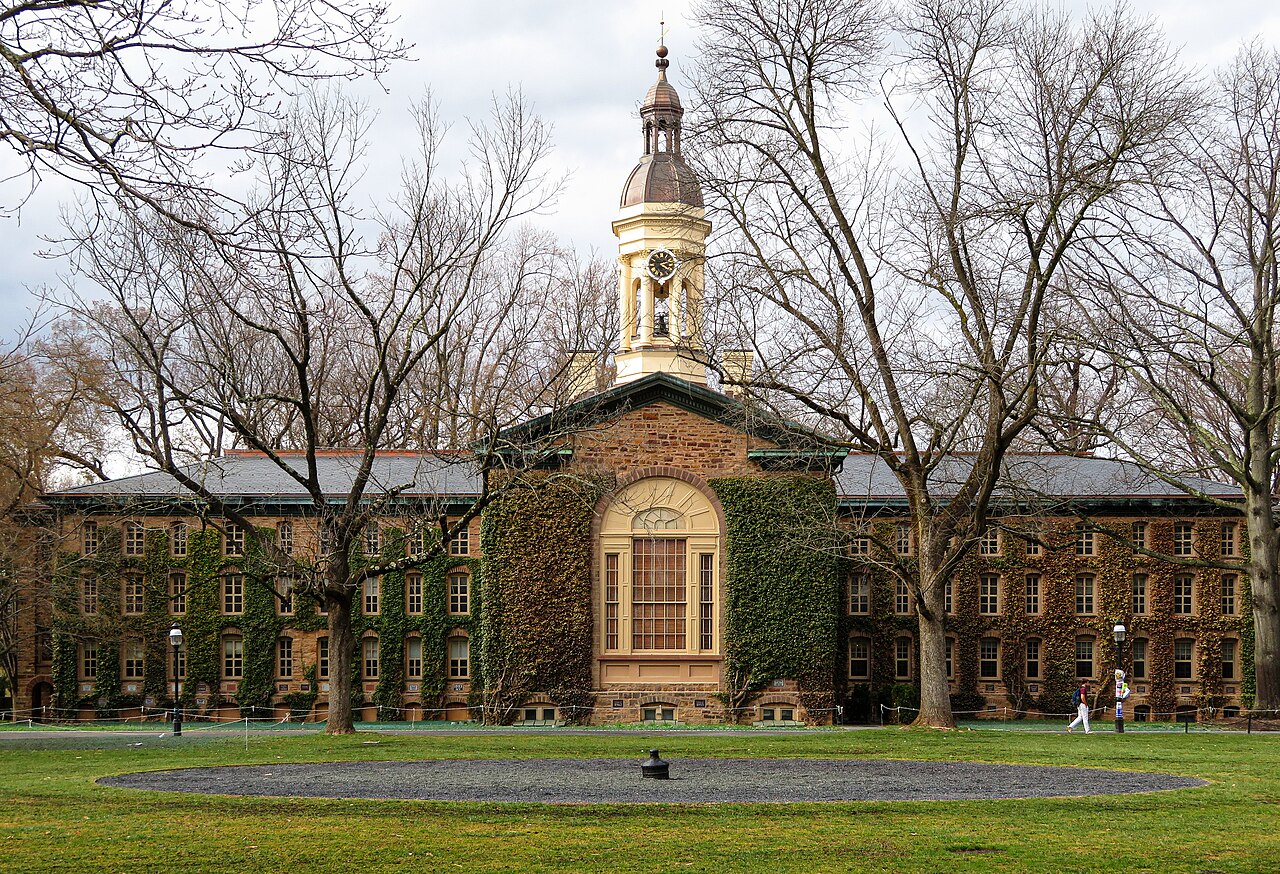
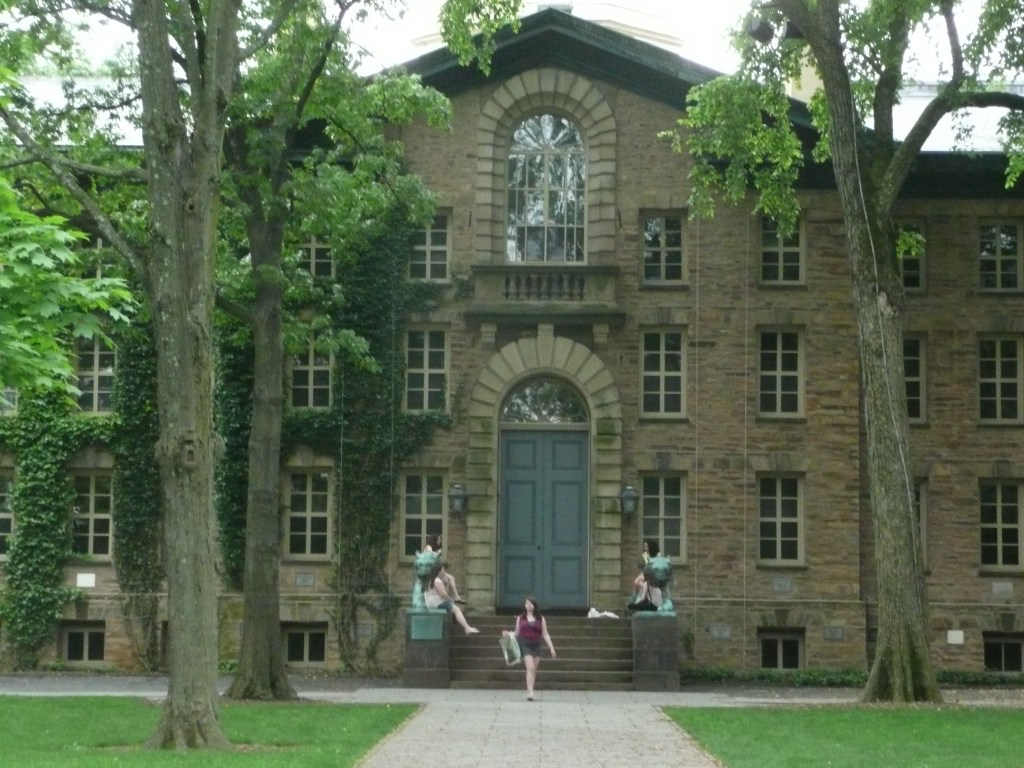
The defining economic and infrastructural event of the 18th century occurred in 1756, when the College of New Jersey ( Princeton University) relocated from Newark. The construction of Nassau Hall was a massive logistical undertaking for the era. Designed by Robert Smith and built of local sandstone, it stood as the largest stone structure in the North American colonies upon completion. The college did not educate; it centralized capital and political influence. By 1774, the campus had become a hotbed of dissent. In January 1774, students executed their own "Tea Party," seizing the college steward's winter store of tea and burning it in a bonfire on campus, complete with an effigy of Massachusetts Governor Thomas Hutchinson.
The Revolutionary War dismantled the town's economy and physical infrastructure. Following the collapse of American defenses in New York in late 1776, British and Hessian forces occupied Princeton. The occupation was brutal. Soldiers converted Nassau Hall into a barracks and stable, stripping its interior for firewood. They looted Morven, the estate of Richard Stockton, a signer of the Declaration of Independence. Stockton himself was captured, imprisoned in New York's Provost Jail, and subjected to starvation and freezing conditions that permanently ruined his health. He died in 1781, a casualty of the occupation's severity.
On January 3, 1777, the municipality became the site of a violent engagement that broke the British hold on New Jersey. General George Washington, having crossed the Delaware and struck Trenton, executed a night march to Princeton. The ensuing battle was a chaotic meeting engagement rather than a set-piece siege. American General Hugh Mercer's brigade collided with British Lieutenant Colonel Charles Mawhood's 17th Foot near the Thomas Clarke farm. The British bayonet charge overran the Americans, mortally wounding Mercer. Washington's arrival with reinforcements and his personal rally of the troops turned the flank. The engagement lasted less than an hour resulted in significant losses.
Battle of Princeton (Jan 3, 1777), Verified Casualty Metrics
Force
Commander
Killed/Wounded
Captured/Missing
Continental Army
Gen. George Washington
~40 (incl. Gen. Mercer)
0
British Crown Forces
Lt. Col. Charles Mawhood
~170
~280
The victory forced the British to withdraw to New Brunswick, the town remained a militarized zone. Nassau Hall functioned as a hospital for wounded troops from both sides and later as a military prison. The physical scars of the war remain visible in 2026; a cannonball mark on the southern wall of the west wing of Nassau Hall serves as a permanent record of the American artillery fire directed at the building to dislodge British holdouts.
Princeton's role shifted from battlefield to capital in 1783. The Pennsylvania Mutiny of 1783, where unpaid Continental soldiers surrounded Independence Hall in Philadelphia, forced the Continental Congress to flee. They reconvened in Nassau Hall from June 30 to November 4, 1783. During this brief window, the municipality functioned as the seat of the national government. It was within the library of Nassau Hall that Congress received the authoritative news of the signing of the Treaty of Paris, which formally ended the war and recognized American independence. The town, with a population of fewer than 100 households, struggled to accommodate the influx of delegates, exposing the limitations of its colonial infrastructure even as it hosted the nation's highest authority.
Borough and Township Bifurcation (1813, 2012)
Colonial Settlement and Revolutionary War Logistics (1683, 1783)
The legal bifurcation of Princeton into two distinct entities, a Borough and a Township, was not an accident of settlement, a calculated maneuver driven by the peculiarities of New Jersey's 19th-century tax laws. While the Borough of Princeton was incorporated in 1813 to manage the dense market activity and university crowds along Nassau Street, the true schism occurred in 1894. This rupture created a "doughnut hole" political geography that would plague the region for 119 years, defining its development, demographics, and municipal finances until the 21st century. The catalyst for this separation was the New Jersey Legislature's "School Act" of 1894, which mandated that each township consolidate its school districts into a single system. To avoid paying for the education of children in the sprawling, agrarian hinterlands, the wealthy, dense center of Princeton seceded fully from the surrounding Township. This event, part of a statewide phenomenon known as "boroughitis," solidified the boundaries: the Borough comprised the 1. 8 square miles of the central business district and the College of New Jersey (soon to be Princeton University), while the Township encircled it, covering 16. 5 square miles of farmland and woods. For the century, these two municipalities operated as separate fiefdoms with duplicated infrastructures. By the mid-20th century, the absurdity of this arrangement became operationally. A resident could call the police on one side of a street and receive the Borough force, while a neighbor across the road was under the jurisdiction of the Township department. There were two mayors, two councils, two police chiefs, and two public works departments, yet they shared a library, a school system (after 1966), and a name. The demographic trajectories of the two Princetons diverged sharply. The Borough remained the urban core, housing the university, the African American community in the Witherspoon-Jackson neighborhood, and the historic commercial district. It was dense, walkable, and racially diverse. In 1900, over 80 percent of the area's population lived in the Borough. yet, the post-World War II suburban boom reversed this polarity. The Township transformed from farmland into an enclave of mid-century modern estates and sprawling subdivisions. By 2000, the Township held 55 percent of the population, while the Borough's numbers stagnated, constrained by its fixed borders and absence of developable land. Fiscal disparities fueled the tension. The Borough hosted the vast majority of Princeton University's campus. Since the University's educational buildings were tax-exempt, the Borough suffered from a chronic of its tax base. In years, over 40 percent of the Borough's land value was off the tax rolls, forcing residents and small business owners to subsidize the municipal services required by a world-class institution. The Township, by contrast, enjoyed a booming ratable base of high-value residential properties and corporate research parks, free from the heavy load of tax-exempt institutional land. This structural imbalance meant that for decades, Borough taxes were significantly higher than those in the Township, creating a financial disincentive for consolidation among Township residents, even as Borough residents feared a loss of political autonomy. even with the logic of unification, the route to merger was littered with failure. Three major referendums were defeated in the 20th century, revealing deep-seated parochialism.
History of Princeton Municipal Consolidation Votes
Year
Borough Vote
Township Vote
Outcome
1953
Rejected (57% No)
Approved (63% Yes)
Failed
1979
Rejected (Failed by 33 votes)
Approved (70% Yes)
Failed
1996
Rejected (57% No)
Approved (3-to-1 margin)
Failed
2011
Approved (1, 385 Yes / 902 No)
Approved (3, 542 Yes / 604 No)
Passed
The resistance primarily came from the Borough. In 1953, 1979, and 1996, Borough voters rejected consolidation, fearing that their historic, walkable community would be politically swallowed by the suburban Township. They worried that zoning laws would be loosened, allowing the sprawl of the periphery to infect the historic core. Conversely, Township voters consistently supported merger, driven by the prestige of the "Princeton" name (which technically belonged to the Borough) and the pledge of administrative efficiency. While municipal politics remained fractured, the school systems were forced to integrate earlier, driven by both economics and civil rights. In 1948, the "Princeton Plan" was implemented to desegregate the Borough's schools, a model that gained national attention. It assigned students to schools by grade level rather than geography, the segregation that had kept Black students in the Witherspoon School and white students in the Nassau Street School. By 1966, the Borough and Township school districts formally merged to create the Princeton Regional Schools, proving that administrative unification was possible, even if political unification remained elusive. The turning point for municipal consolidation arrived in the wake of the 2008 financial emergency. With New Jersey property taxes climbing to the highest in the nation and state aid shrinking under Governor Chris Christie's administration, the cost of maintaining two parallel governments became indefensible. A Joint Consolidation Study Commission estimated that a merger would save $3. 2 million annually by eliminating redundant positions, including one police chief and one administrator. In November 2011, the voters relented. The margin in the Borough was decisive this time, aided by a concerted effort to register Princeton University students, who voted overwhelmingly for consolidation. On January 1, 2013, the Borough of Princeton and the Township of Princeton ceased to exist, replaced by the unified Municipality of Princeton. The 119-year experiment in separation ended, leaving the new government to untangle a century of zoning codes, harmonized police contracts, and the psychological integration of a town that had long been two places with one name.
The 2013 Municipal Consolidation and Administrative Restructuring
The administrative unification of Princeton in 2013 ended a 119-year schism that had rendered the municipality a cartographic and bureaucratic anomaly. Since 1894, the Borough of Princeton, a dense, 1. 8-square-mile urban core containing the University and the central business district, existed as an independent "doughnut hole" surrounded entirely by the 16. 5-square-mile Princeton Township. This bifurcation created two police forces, two public works departments, and two mayors for a contiguous community that functioned as a single organism. The route to the 2013 consolidation was neither inevitable nor smooth; it followed four failed attempts over six decades and required a collision of economic need with political.
The historical resistance to consolidation, dating back to failed referendums in 1953, 1979, and 1996, stemmed largely from the Borough's fear of diluted influence. Borough residents, protecting their distinct urban identity and rent-controlled demographics, frequently viewed the Township as a sprawling, wealthier suburb that might swallow their priorities. Yet, the 2008 financial emergency and the subsequent 2% property tax cap imposed by the New Jersey state legislature altered the calculus. By 2010, the luxury of maintaining redundant governments became mathematically indefensible. The Joint Consolidation Study Commission, aided by the Center for Governmental Research (CGR), produced a data-driven roadmap that promised annual savings of $3. 15 million. On November 8, 2011, voters approved the merger. The Township supported the measure overwhelmingly with 85% of the vote (3, 542 to 604), while the Borough passed it with a narrower decisive 61% margin (1, 385 to 902).
Implementation began on January 1, 2013, creating a singular entity known simply as Princeton. The immediate operational goal was the reduction of headcount without compromising service levels. The pre-consolidation workforce of 267 employees was reduced to 250 within the year, primarily through attrition and voluntary separation packages rather than mass layoffs. This reduction aligned with the CGR's projections, yet the transition costs significantly exceeded initial estimates. While the commission forecasted one-time transition expenses of approximately $1. 2 million, the actual costs ballooned to nearly $2. 3 million. Unanticipated complexities in harmonizing information technology systems, merging dispatch centers, and equalizing salary structures across union contracts drove this variance. The state of New Jersey, eager to use Princeton as a poster child for municipal efficiency, covered 20% of these costs, local taxpayers absorbed the remainder.
The most volatile component of the restructuring was the merger of the two police departments. This process, intended to generate $2. 1 million of the total projected savings, instead exposed deep cultural fissures and leadership failures. The integration of the Borough and Township forces was not a logistical challenge of re-badging uniforms; it was a collision of policing philosophies. The Township force was accustomed to patrol-heavy suburban policing, while the Borough force managed high-density pedestrian zones and university relations. The friction culminated in a severe personnel emergency involving the consolidated department's chief, David Dudeck. In 2013, seven officers filed lawsuits alleging a pattern of harassment, discrimination, and a hostile work environment. The municipality settled these suits in 2019 for $3. 925 million, a figure that negated a full year of the hard-won consolidation savings. This scandal demonstrated that while balance sheets can be merged by fiat, organizational cultures require years to stabilize.
even with the initial turbulence, the financial hypothesis of the consolidation largely held true over the subsequent decade. By 2015, the municipality reported gross annual savings of $3. 9 million, exceeding the CGR's $3. 15 million projection. A 2018 analysis indicated that the growth rate of the municipal tax levy had slowed significantly. Between 2013 and 2017, the tax levy grew by 11%, compared to a 16% growth rate in the five years preceding the merger. This deceleration occurred even as the municipality absorbed the costs of the police settlements and infrastructure upgrades. By 2020, the equalized tax rate stabilized at $2. 42 per $100 of assessed value, validating the argument that a unified tax base could better withstand inflationary pressures.
The Department of Public Works (DPW) underwent a similarly complex transformation. The merger allowed for the optimization of equipment and routes, particularly in waste collection and snow removal. Prior to 2013, Township residents contracted privately for trash pickup, while Borough residents received municipal service. The consolidated government harmonized these services, expanding municipal trash collection to the entire 18-square-mile area. This expansion required a sophisticated logistical overhaul, including the implementation of zoned collection schedules and the procurement of automated trucks. By 2024, the DPW had fully integrated its operations, operating from a single depot and utilizing a unified fleet management system that reduced fuel consumption and maintenance overhead.
The political structure of the new Princeton also shifted. The consolidation dissolved the Township Committee and the Borough Council, replacing them with a Mayor and a six-member Council elected at large. This change diluted the hyper-local ward politics that had characterized the Borough, forcing elected officials to adopt a broader, view of municipal planning. The mayor of the consolidated Princeton, Liz Lempert, presided over the serious early years, navigating the "us vs. them" mentality that lingered among long-time residents. By 2026, the distinction between "former Borough" and "former Township" had largely faded from the civic lexicon, replaced by debates over zoning density and affordable housing that affected the municipality as a whole.
One of the less publicized serious successes of the consolidation was the unification of the 911 dispatch and emergency operations centers. Prior to 2013, a call made from the border of the two municipalities could result in confusion or delayed response times as dispatchers determined jurisdiction. The merger created a single Public Safety Answering Point (PSAP), streamlining communication between police, fire, and EMS. This integration proved important during extreme weather events in the late 2010s and early 2020s, allowing for a coordinated deployment of resources that would have been impossible under the fractured command structure of the pre-2013 era.
The 2013 consolidation remains the most significant administrative event in Princeton's modern history. It served as a rare example of a successful municipal merger in a state notorious for its "home rule" fragmentation. While the transition costs were higher than promised and the police merger resulted in costly litigation, the long-term structural benefits are undeniable. The elimination of redundant high-level salaries, the streamlining of capital purchases, and the creation of a unified planning strategy allowed Princeton to maintain its level of service while curbing the exponential tax increases seen in neighboring municipalities. The "doughnut" is gone, leaving a, if occasionally fractious, whole.
Princeton University Tax Exemptions and PILOT Negotiations
Borough and Township Bifurcation (1813, 2012)
The financial relationship between Princeton University and the Municipality of Princeton is defined by a single, contentious legal reality: the Royal Charter of 1746. Issued by King George II, this document, alongside the 1947 New Jersey State Constitution, grants the University a tax exemption that has survived revolutions, civil wars, and the transition of the institution from a small Presbyterian seminary to a global hedge fund with a university attached. As of 2026, the University holds an endowment exceeding $35 billion, yet its core academic properties, spanning over 2, 300 acres, remain legally invisible to the municipal tax assessor. This creates a structural deficit: as the University expands its physical footprint, it removes land from the tax rolls, shifting the fiscal load onto residential property owners who must fund the infrastructure the University uses. For two centuries, this arrangement operated on a "gentleman's agreement" basis. The University provided prestige and stability; the town provided services. This equilibrium fractured in the late 20th century as the University's land acquisition accelerated. By 2010, the institution owned approximately 17% of the municipality's land mass paid zero property taxes on its educational buildings. The consolidation of the Borough and Township in 2013 exposed the raw mechanics of this inequality. While the University made "voluntary contributions," these payments were erratic and determined solely by the Trustees, not by a formula based on property value or municipal need. The legal immunity faced its most serious challenge in 2016 with the lawsuit *Fields v. Trustees of Princeton University*. Residents argued that the University had drifted from its educational mission into commercial enterprise, citing patent licensing revenues, ticketed concerts, and retail coffee shops as evidence that the institution functioned as a for-profit entity. The plaintiffs contended that these commercial activities nullified the tax-exempt status of specific buildings. Rather than risk a trial that could set a dangerous precedent for non-profits nationwide, the University settled in October 2016. The institution agreed to pay $18. 2 million over six years to the municipality and a tax relief fund for low-income residents. This settlement ended the litigation did not alter the underlying tax-exempt status. Following the expiration of the settlement in 2022, the shifted from litigation to negotiation. In January 2024, the University and the Municipality announced a new five-year framework (2024, 2028) totaling more than $50 million. Unlike previous "gifts," this agreement included structured payments: $28. 2 million in unrestricted cash to the municipal operating budget, $11. 3 million for specific capital projects (including sewer repairs and a high-water rescue vehicle), and over $10 million dedicated to property tax relief for residents. The University carefully categorizes these payments as "voluntary contributions" rather than Payments in Lieu of Taxes (PILOTs), a legal distinction maintained to prevent the establishment of a taxable obligation. Even with these contributions, the University remains the largest taxpayer in Princeton, only on its non-exempt commercial properties. The institution pays approximately $8. 8 million annually in standard property and sewer taxes for its faculty housing, the Nassau Inn, and retail holdings on Nassau Street. These commercial assets are assessed at full market value. The friction because the core campus, Nassau Hall, the residential colleges, the engineering complex, pays nothing.
Princeton University Financial Impact on Municipality (2016, 2025)
Year
University Endowment (Billions)
Voluntary Contribution (Millions)
Taxes Paid on Commercial Prop. (Millions)
Status of Agreement
2016
$22. 2
$2. 98
$5. 3
Fields Lawsuit Settlement Initiated
2019
$26. 1
$3. 35
$6. 1
Settlement Payment Period
2022
$35. 8
$3. 90
$9. 6
Settlement Expired
2023
$34. 1
$5. 00
$7. 7
Interim Negotiation
2024
$34. 1
$10. 80*
$8. 8
New 5-Year Framework Active
2025
$35. 2 (est)
$11. 20*
$9. 4 (est)
Year 2 of Framework
*Includes unrestricted cash, project-specific funding, and tax relief fund contributions.
The 2024 agreement represents a tactical evolution. By funding specific municipal needs, such as the $1 million contribution toward a new fire department tower truck, the University addresses the specific complaint that it consumes public safety resources without paying for them. This "project-based" funding method allows the University to control where its money goes, ensuring it supports infrastructure that directly benefits the campus, such as sewer lines and emergency services. As of 2026, the tension remains structural. The municipal budget, hovering around $75 million, relies on the University's voluntary cash to close gaps that would otherwise require tax hikes. The University's contribution accounts for roughly 7-10% of the municipal operating budget. While this stabilizes the town's finances, it also deepens the dependency of the local government on the good graces of the University Trustees. The "Fair Share" movement continues to that a $35 billion entity should be taxed on its land value, not its generosity, the 1746 Charter remains an impenetrable shield against statutory taxation.
Affordable Housing Litigation and Mount Laurel Compliance (1975, 2026)
The legal trajectory of housing in Princeton shifted violently in 1975, not due to local initiative, because of the New Jersey Supreme Court's ruling in Southern Burlington County N. A. A. C. P. v. Township of Mount Laurel. While the municipality, then divided into the Borough and the Township, possessed a nascent affordable housing infrastructure via the non-profit Princeton Community Housing (PCH), the Mount Laurel doctrine stripped away the veneer of voluntary charity. It established a constitutional mandate: municipalities could not use zoning powers to exclude low-income residents. For Princeton, a town defined by high land values and strict density controls, this decision initiated a fifty-year pattern of litigation, negotiation, and reluctant construction that continues through February 2026.
Prior to the judicial mandates, Princeton's housing strategy relied on the segregation of income and race, most visibly in the Witherspoon-Jackson neighborhood. yet, PCH, founded in 1967, preempted state intervention by opening Princeton Community Village in 1975. Located on Bunn Drive, this development provided 238 units of Section 8 and moderate-income housing, serving as the municipality's primary defense against accusations of exclusionary zoning during the 1970s. The project used federal subsidies to offset the high cost of construction on the Princeton Ridge, a method that became a blueprint for future compliance. By 1989, the Township and PCH collaborated to build Griggs Farm, a 140-unit complex that mixed market-rate ownership with low-income rentals. This project, financed heavily through Low Income Housing Tax Credits (LIHTC), demonstrated that density could exist within the Township's borders without collapsing property values, a fear frequently by local opposition groups.
The bureaucratic of the Council on Affordable Housing (COAH), established in 1985 to administer Mount Laurel obligations, functioned reasonably well until 1999. Following that year, the state entered a "Gap Period" where COAH failed to adopt valid regulations, leaving municipalities in a legal gray zone. Princeton, like wealthy enclaves, used this paralysis to delay significant new construction. Between 1999 and 2015, the municipality accrued "unmet need" obligations while banking on the preservation of existing units to satisfy state quotas. This period of stagnation ended in March 2015, when the New Jersey Supreme Court declared COAH moribund and transferred oversight back to the Superior Courts. This ruling exposed Princeton to "builder's remedy" lawsuits, where developers could bypass local zoning boards if the town failed to provide a realistic plan for affordable housing.
Litigation intensified between 2015 and 2019 as the Fair Share Housing Center (FSHC) challenged Princeton's calculations of its "fair share." The municipality argued that a absence of vacant land limited its capacity to build. The courts, yet, focused on "Realistic Development chance" (RDP). In December 2019, Judge Mary Jacobson approved a settlement ending the Third Round litigation. The agreement was statistically heavy: Princeton accepted a prospective need of 753 units for the period 1999, 2025. When combined with prior round obligations and rehabilitation requirements, the total settlement encompassed a framework for over 1, 300 units. To meet this, the town utilized a method known as "inclusionary zoning," requiring market-rate developers to set aside 20 percent of new units for low-income households.
The physical manifestation of the 2019 settlement appeared in controversial redevelopments. The municipal council approved overlay zones allowing higher density at the Princeton Shopping Center and the Thanet Circle office park. The Thanet development, executed by AvalonBay, replaced underused commercial space with 221 apartments, including a mandatory affordable component. Simultaneously, the town supported the expansion of Princeton Community Village. In 2023, PCH opened the "Jim and Fannie Floyd House," adding 25 new units. This project carried symbolic weight, named after the Black mayor of Princeton Township, yet it highlighted the between the demand, thousands on waiting lists, and the incremental supply.
While the municipality complied with court orders for new construction, the historic Witherspoon-Jackson neighborhood faced an inverse emergency. This district, the center of Princeton's Black community since the 18th century, experienced rapid gentrification accelerated by the 2010 municipal tax revaluation. Property tax assessments in the neighborhood doubled or tripled overnight, forcing long-time residents to sell to developers who replaced vernacular cottages with luxury single-family homes. Although the town Witherspoon-Jackson a Historic District in 2016 to preserve its architectural character, this legal protection did not cap property values or taxes. Consequently, while Princeton met its Mount Laurel quotas in new complexes on the periphery, it simultaneously lost affordable "naturally occurring" housing stock in its core.
The Fourth Round of affordable housing obligations, covering 2025 to 2035, commenced under a new statutory framework signed into law in 2024. This legislation codified the methodology for calculating obligations, removing much of the judicial ambiguity that plagued the Third Round. In late 2025, the New Jersey Department of Community Affairs (DCA) assigned Princeton a prospective need calculation. Unlike the contentious battles of 2015, the municipality moved swiftly to settle. On February 13, 2026, Superior Court Judge Robert Lougy approved Princeton's Fourth Round Housing Element and Fair Share Plan. The court order, finalized just two weeks ago, dismissed challenges from the "Princeton Coalition for Responsible Development" and confirmed a compliance plan totaling 364 units of credit.
The 2026 plan relies heavily on the redevelopment of specific high-value sites. Key locations include the "Hillier" properties on Witherspoon Street, the Whole Earth Center site on Nassau Street, and the Princeton Executive Center on North Harrison Street. The plan mandates that these commercial zones transition into mixed-use residential areas with strict affordability set-asides. To secure immunity from builder's remedy lawsuits through 2035, the municipality must adopt implementing ordinances by March 15, 2026. This aggressive timeline forces the Council to rezone significant commercial corridors, ending the era of low-density commercial dominance along Nassau Street.
Agreement for 753 prospective units; overlay zones created.
2023
Floyd House Opens
25 new units at Princeton Community Village.
2026
Round 4 Court Approval
Judge Lougy approves plan for 364 credits; rezoning of Nassau St.
Financial support for these obligations increasingly draws from the Municipality's Affordable Housing Trust Fund and payments from Princeton University. In January 2024, the University agreed to a voluntary payment structure contributing $28. 2 million in unrestricted funds over five years, a portion of which supports municipal infrastructure by increased density. also, the 2024 state legislation allocated $25 million to the State Affordable Housing Trust Fund, though Princeton competes with other municipalities for these grants. The local trust fund is capitalized primarily by development fees, payments made by commercial developers in lieu of building on-site units, creating a pattern where commercial growth is necessary to fund residential affordability.
As of February 27, 2026, Princeton stands as a compliant transformed municipality. The exclusionary zoning of the 20th century has been dismantled by court order, replaced by a regulated system of inclusionary development. The result is a town that is denser and legally accessible to low-income earners, yet increasingly expensive for the middle class who qualify for neither market-rate luxury nor deed-restricted units. The legal battles have ended for the current decade, the demographic restructuring of Princeton remains an active, unfinished process.
Property Tax Levies and Commercial Real Estate Valuation
The 2013 Municipal Consolidation and Administrative Restructuring
The fiscal history of Princeton is defined by a single, structural paradox: the municipality hosts one of the world's wealthiest nonprofit institutions, yet its residential property tax levy remains among the highest in the United States. Since the College of New Jersey moved to Nassau Hall in 1756, the tax-exempt status of the University has acted as a gravitational singularity, distorting the local real estate market and forcing municipal leaders to seek revenue from an increasingly squeezed commercial and residential base. By 2026, this resulted in an average residential property tax bill exceeding $23, 400, a figure that stands in clear contrast to the University's $34 billion endowment.
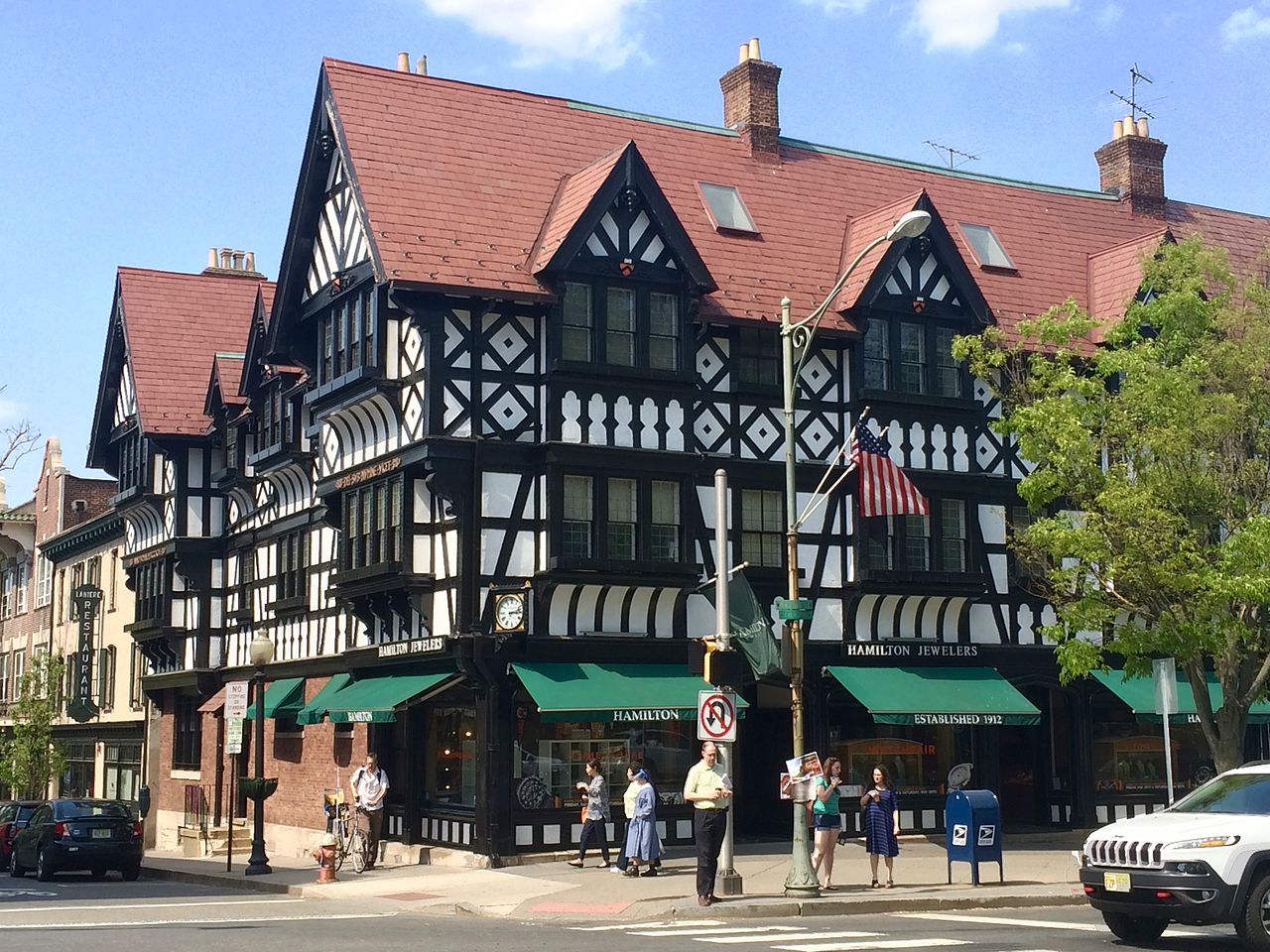
In the 18th and 19th centuries, the tax base was primarily agrarian, with assessments tied to productive farmland. The University's footprint was small, and the financial load on the town was negligible. The equation changed in the early 20th century as the University expanded and the town required modern infrastructure. By the Great Depression, the absence of a strong commercial tax base became a serious liability. Edgar Palmer, heir to the New Jersey Zinc fortune, attempted to rectify this imbalance in the 1930s. His development of Palmer Square was not an aesthetic project; it was a calculated attempt to create a concentrated commercial district that could generate reliable tax revenue. Palmer's vision, executed between 1936 and 1939, required the demolition of Baker Street, a historic African American neighborhood. The displacement of these residents to Birch Avenue was an early, brutal example of urban renewal driven by the desperate need for municipal "ratables", taxable properties that could offset the University's expanding tax-free zone.
The tension between exempt and non-exempt land usage intensified after World War II. As the University acquired more residential properties for academic use, those parcels from the tax rolls, shifting the load onto remaining homeowners. This of the tax base was a primary driver for the 2013 consolidation of Princeton Borough and Princeton Township. Proponents argued that merging the two entities would eliminate redundant services and stabilize the tax rate. While the merger did streamline administration, the promised tax relief was largely absorbed by rising county and school costs. By 2024, the combined municipal, school, and county tax rate had climbed to 2. 663% of assessed value, with the school district claiming nearly 48% of the total levy.
The most significant challenge to this fiscal occurred in 2016 with the settlement of Fields v. Trustees of Princeton University. A group of residents sued the University, arguing that its commercial activities, such as patent licensing and ticketed events, should disqualify it from tax-exempt status. The University, eager to avoid a precedent-setting trial, agreed to an $18. 2 million settlement. This payout included $10 million dedicated to property tax relief for lower-income residents and direct payments to the municipality. The settlement was a watershed moment; it forced the University to acknowledge, financially if not legally, the load its tax-exempt footprint placed on the community. In 2025, the University's voluntary contribution to the municipal budget stood at approximately $5. 4 million, a figure critics frequently cite as insufficient given the institution's land holdings.
Commercial real estate valuation in Princeton has followed a volatile trajectory, particularly in the post-pandemic era. The "Nassau Street Premium" has historically driven rents to levels that exclude independent businesses, favoring national chains capable of absorbing high overhead. Yet, the office sector faced a severe correction between 2020 and 2025. Data from 2024 indicated an office vacancy rate of 26. 59% in the Princeton market, a historic high driven by the shift to hybrid work. Class A office space, commanding rents around $38 per square foot, struggled to find tenants, forcing a revaluation of commercial assets. This drop in commercial occupancy pressure tested the municipal budget, which relies on these ratables to subsidize residential services.
The 2025 municipal budget, approved at $78 million, highlighted the fragility of this ecosystem. The municipal tax rate rose to 57 cents per $100 of assessed value, driven by a 5% increase in library funding and a $900, 000 jump in debt service. Even with the University's voluntary payments and a AAA bond rating, the municipality faced a structural deficit that required a 3% budget increase. The reliance on residential property taxes has become acute; in 2024, the average home assessment was $856, 944, meaning the typical homeowner paid over $4, 900 specifically for municipal services, excluding the much larger school tax bill.
Commercial valuation disputes have also become a recurring feature of local governance. Large commercial landlords frequently appeal assessments during economic downturns, leading to refunds that drain the municipal surplus. The 2010 revaluation, which occurred just after the 2008 financial emergency, caused widespread outrage when modest homes saw their assessments, and tax bills, skyrocket while high-end commercial properties saw reductions. This history informs the current skepticism regarding assessment pattern. As of 2026, the municipality continues to navigate the delicate balance of encouraging development, such as the mixed-use projects on Witherspoon Street, to create new ratables without destroying the town's historic character.
Princeton Municipal Tax & Valuation Metrics (2016, 2025)
Year
Avg. Residential Assessment
Total Tax Rate (per $100)
Municipal Tax Rate (per $100)
University Contribution (Voluntary)
Office Vacancy Rate
2016
$815, 000 (est)
2. 38%
0. 49
$2. 9 Million
16. 4%
2020
$834, 200
2. 49%
0. 51
$3. 48 Million
19. 7%
2024
$853, 136
2. 66%
0. 56
$4. 5 Million
26. 6%
2025
$856, 944
2. 69%
0. 57
$5. 4 Million
24. 1% (est)
The interplay between the University's expansion and the town's revenue needs remains the central conflict of Princeton's financial existence. While the 2016 settlement provided temporary relief, the structural problem: over 40% of the land in the municipality is tax-exempt. This reality forces the local government to maximize revenue from the remaining 60%, resulting in a high-pressure commercial environment where only the most profitable businesses can survive, and a residential market where property taxes act as a significant barrier to entry. The 2026 fiscal outlook suggests that without a fundamental change in state tax law or a renegotiation of the PILOT (Payment in Lieu of Taxes) framework, the load on the Princeton taxpayer continue to outpace inflation.
Demographic Composition and Household Income Disparities
The demographic history of Princeton is not a linear progression of diversification a complex record of displacement, segregation, and economic stratification. While the modern municipality presents itself as a cosmopolitan center, the data from 1700 to 2026 reveals a sharp contraction of its historic Black community and the erection of an economic that filters residency by net worth. In the 18th century, the demographic composition of Princeton was fundamentally shaped by chattel slavery. Unlike the yeoman farming myths frequently associated with the North, colonial Princeton relied heavily on enslaved labor. Historical analysis indicates that enslaved people constituted between 12 and 15 percent of the population in East Jersey during the colonial period. This was not agricultural labor; it was woven into the intellectual hierarchy. The nine presidents of Princeton University (then the College of New Jersey) owned slaves. In a clear example of this reality, the estate of University President Samuel Finley auctioned "two negro women, a negro man, and three negro children" on Nassau Street in 1766. By the 1800 census, the region still held a significant number of enslaved people, a legacy that transitioned into a segregated labor class rather than a free citizenry. The 19th and early 20th centuries solidified the "Witherspoon-Jackson" neighborhood as a segregated enclave. As Italian stonemasons arrived to expand the University's gothic architecture, they too faced initial marginalization eventually assimilated into the white majority. The Black population, yet, remained geographically restricted. By 1930, African Americans made up approximately 16 percent of Princeton's population. This period represented the demographic peak of the Black community, which maintained a self-sufficient economy of businesses and social institutions along Witherspoon Street, necessitated by the refusal of white-owned establishments on Nassau Street to serve them. The post-war era and the late 20th century initiated a "Great Displacement" that continues to the present day. While the 1948 "Princeton Plan" integrated local schools earlier than American municipalities, economic forces began to the Black demographic base. Between 1940 and 2024, while the total population of Princeton grew, the Black population share collapsed. Census data from 2020 and estimates through 2025 show the Black population hovering around 6 percent, a steep drop from the 16 percent recorded in 1930. The gentrification of Witherspoon-Jackson, driven by rising property values and the expansion of the central business district, forced long-time residents to relocate to more affordable municipalities like Trenton or Hamilton. Conversely, the Asian population experienced explosive growth, reshaping the town's racial composition in the 21st century. In 1980, the Asian demographic was statistically negligible. By the 2020 Census, it had surged to approximately 21 percent, and 2025 projections place it near 22 percent. This shift aligns with the University's recruitment of global talent and the pharmaceutical corridor's demand for high-skilled labor. The resulting demographic profile is bi-modal: a shrinking, historically rooted Black community and a rapidly expanding, affluent Asian and White professional class. Economic stratification in Princeton is severe, quantified by a Gini coefficient of 0. 5336 in 2023, indicating higher income inequality than the national average. The median household income stands at approximately $192, 079 as of 2024 estimates, nearly nearly 2. 5 times the national median. Yet, this figure masks a "barbell" economy. The poverty rate at roughly 6 to 7 percent. While of this poverty is statistical noise generated by graduate students with low taxable income, a genuine service class struggles to survive within municipal limits. The cost of entry has become the primary demographic filter: the median property value exceeded $1. 04 million in 2023. The consolidation of the Borough and Township in 2013 merged two distinct data sets did not erase the geographic divides. The former Borough was denser and more economically diverse, while the Township was characterized by large-lot zoning and affluence. Today, the combined metrics paint a picture of extreme wealth concentration. The "missing middle", moderate-income households earning between $50, 000 and $100, 000, has from the private housing market.
As of early 2026, the municipality faces a emergency of accessibility. The "Builders Remedy" lawsuits and state-mandated affordable housing obligations have forced the construction of high-density units, yet these measures struggle to offset the market forces displacing lower-income residents. The demographic trajectory is clear: Princeton is becoming an enclave for the global elite and the academic aristocracy, while the descendants of the labor force that built the town are systematically priced out. The diversity that remains is largely imported via high-skilled immigration, distinct from the historic diversity that once defined the Witherspoon-Jackson corridor.
Princeton Public Schools Budgeting and Enrollment Statistics
Princeton University Tax Exemptions and PILOT Negotiations
The trajectory of education in Princeton mirrors the municipality's evolution from a segregated, agrarian outpost to a high-cost, high-performance intellectual enclave. Throughout the 18th and early 19th centuries, formal schooling remained a privilege of the wealthy, delivered through private tutors, religious academies, or the preparatory grammar schools attached to the College of New Jersey. Public funding for education was nonexistent in the colonial era, leaving the children of laborers, enslaved people, and the agrarian poor with little access to literacy. It was not until the late 19th century that a recognizable public school system emerged, yet even then, it operated under a rigid dual system of racial segregation that well into the 20th century.
The defining moment for the district's structural identity occurred in 1948, six years before the Supreme Court's Brown v. Board of Education decision. In a move that drew national attention, Princeton implemented the "Princeton Plan" to its segregated school system. Prior to this reorganization, white students attended the Nassau Street School, while Black students were confined to the Witherspoon School for Colored Children. The Board of Education, facing pressure from a mobilized Black community and shifting state laws, reorganized the district by grade level rather than geography. The Nassau Street School became the integrated facility for lower grades, while the Witherspoon School housed the upper elementary grades for all students. This model of desegregation, assigning all students of a certain grade to a single school regardless of neighborhood, became a blueprint for other districts attempting to de facto segregation in the North.
Modern administration of the Princeton Public Schools (PPS) involves a complex regional arrangement. While the district serves the consolidated Municipality of Princeton, it also maintains a "sending-receiving" relationship with neighboring Cranbury Township. Cranbury, which operates its own K-8 district, pays tuition to send its high school students to Princeton High School. In the 2024-2025 fiscal year, this tuition revenue accounted for approximately 5 percent of the district's operating funds. This arrangement has historically bolstered the high school's enrollment and budget, yet it also complicates long-term facilities planning, as the district must account for demographic shifts in two separate municipalities.
Enrollment trends in the 21st century have been characterized by volatility, swinging between overcrowding crises and pandemic-induced dips. The district reached a pre-pandemic peak of 3, 855 students in the 2019-2020 school year before experiencing a decline as families relocated or sought private alternatives during the COVID-19 disruptions. By the 2023-2024 academic year, enrollment had stabilized at approximately 3, 827 students. Yet, demographic studies commissioned by the Board of Education project a resurgence. A 2023 report by the firm SLAM Collaborative forecasted that enrollment would surpass 4, 000 students by 2027, driven by the turnover of existing housing stock and the construction of new multi-family developments mandated by state affordable housing obligations. This projected growth places immense pressure on facilities that are already aging and land-constrained.
The physical deterioration of school infrastructure forced the district to pursue aggressive capital fundraising in the mid-2020s. After a smaller $13 million bond referendum passed in November 2023 to address immediate security and technology needs, the Board of Education launched a massive campaign for a $89. 1 million bond referendum in January 2025. The proposal was split into three questions to gauge voter appetite for different levels of spending. Question 1, valued at $37. 9 million, funded serious HVAC replacements at Princeton High School and expansion at Community Park Elementary. Question 2 allocated $38. 3 million for additions to Princeton Middle School and the High School. Question 3 sought $12. 9 million for renovations at Littlebrook Elementary. In a decisive show of support, voters approved all three measures, committing the municipality to decades of debt service to modernize the learning environment. The tax impact was estimated at $532 annually for a home assessed at the municipal average of $853, 136.
The financial mechanics of the Princeton Public Schools reveal a heavy reliance on local property wealth, a common feature of New Jersey's home-rule governance exacerbated by Princeton's specific economic profile. For the 2024-2025 school year, the Board approved a total budget of $119. 2 million, with an operating budget of $108. 6 million. Approximately 81 percent of this revenue is derived directly from local property taxes. State aid, which serves as a lifeline for poorer districts, constitutes a negligible fraction of Princeton's funding. In fact, for the 2025-2026 fiscal year, the New Jersey Department of Education cut Princeton's state aid by 3 percent, a reduction of roughly $174, 000, leaving the district with just $5. 65 million in state support. This "negative aid" forces the district to shoulder the full load of inflationary costs, salary increases, and special education mandates through local levies.
Per-pupil spending in Princeton consistently outpaces both the state and national averages, reflecting the community's demand for small class sizes, extensive Advanced Placement offerings, and strong arts programs. While the statewide average budgetary cost per pupil hovered around $20, 154 in 2024, Princeton's operating metrics suggest a per-pupil expenditure exceeding $28, 000 when debt service and special revenues are factored in. This high spending level is frequently a point of contention during budget hearings, particularly among residents on fixed incomes who see their tax bills rise annually. The district has attempted to mitigate these increases through "zero-based budgeting," a method where expenses must be justified from scratch each year rather than simply adjusted for inflation, yet the structural costs of maintaining historic buildings and a highly credentialed teaching staff remain high.
The fiscal outlook for 2026 and beyond presents serious challenges. The district faces a "fiscal cliff" as federal pandemic relief funds expire, coinciding with the new debt service payments from the 2025 bond. Administrative reports from late 2024 indicated that without the bond passage, the district would have faced draconian cuts to non-mandated programs. Even with the bond's success, the operating budget remains tight. The district eliminated between 30 and 40 positions through attrition in the years leading up to 2025 to balance the books. As the municipality continues to approve high-density housing developments to meet legal settlements, the school district must navigate the delicate balance between expanding capacity to meet enrollment surges and preventing a tax revolt among long-time residents.
Princeton Public Schools: Key Financial and Demographic Metrics (2020-2025)
Metric
2019-2020 (Peak)
2023-2024 (Stabilized)
2024-2025 (Projected/Budgeted)
Total Enrollment
3, 855
3, 827
~3, 850
Operating Budget
$98. 4 Million
$105. 2 Million
$108. 6 Million
State Aid
$5. 2 Million
$5. 8 Million
$5. 65 Million (2025-26 Cut)
Local Tax Levy %
~80%
~81%
~81%
Bond Referendum
N/A
$13 Million (Passed)
$89. 1 Million (Passed Jan '25)
Historic District Designations and Architectural Preservation
The preservation of Princeton's architectural fabric is not a matter of sentiment a rigorous, frequently litigious, legal operation that defines the municipality's modern political identity. While the town's reputation rests on its colonial aesthetic, the formal method to protect it are relatively recent inventions, born from the mid-20th-century fear that modernization would erase the physical evidence of the region's history. As of 2026, the Municipality of Princeton enforces of New Jersey's strictest historic preservation ordinances, a regulatory shield that frequently clashes with the mandates for affordable housing and the expansionist needs of Princeton University.
Formal preservation efforts began in earnest in 1967, when the former Borough and Township considered a joint commission, though it took until the 1980s for the current district system to solidify. The initial focus was predictably on the "high style" architecture of the wealthy and the academic elite. The Central, Jugtown, Mercer Hill, and Bank Street districts were established to freeze the streetscapes that aligned with the popular imagination of Princeton: Federal-style mansions, Greek Revival academic halls, and the colonial structures along the King's Highway. These designations created a "museum zone" in the town center, where replacing a window or repointing brick requires approval from the Historic Preservation Commission (HPC), a body that reviews hundreds of applications annually.
A significant shift in preservation philosophy occurred in 2016 with the designation of the Witherspoon-Jackson neighborhood as the municipality's 20th historic district. Unlike the manicured lawns of Mercer Hill, Witherspoon-Jackson was the historically segregated African American enclave, characterized by modest vernacular architecture rather than grand estates. The designation was less about architectural purity and more about cultural survival; residents and local historians like Shirley Satterfield argued that without protection, the neighborhood would be erased by gentrification and speculative "teardowns." The 2016 ordinance acknowledged that the social history of the laundresses, laborers, and tradesmen who built the town was as important as the history of the professors who employed them.
The tension between institutional growth and preservation reached a flashpoint in July 2022 with the creation of the Prospect Avenue Historic District. This "Club Row," lined with the University's eating clubs, faced a direct threat when Princeton University proposed demolishing three Queen Anne Victorian houses to make way for the new Environmental Studies and School of Engineering and Applied Science (ES+SEAS) complex. Following intense pushback from the Princeton Prospect Foundation and alumni groups, a compromise was struck: the University agreed to move the houses and the former Court Club building rather than raze them. The resulting district designation protected the street's character while allowing the University to proceed with its modern expansion behind the historic frontage.
Not all preservation battles end in compromise. The redevelopment of the Princeton Theological Seminary's Tennent-Roberts campus (2018, 2025) exposed the limits of the HPC's power when pitted against "Area in Need of Redevelopment" (ANR) statutes. even with the site's location within the Princeton Historic District, the designation of the land as an ANR allowed for the bypass of standard zoning protections to facilitate new housing. In 2022, the developer Herring Properties demolished three historic structures on the site, a move that preservationists decried as a failure of the municipal safeguard system. This conflict highlighted a growing friction in the 2020s: the collision between the state-mandated need for high-density affordable housing and the town's desire to maintain low-density historic contexts.
The consolidation of the Borough and Township in 2013 also complicated the preservation regarding residential "teardowns." While the former Borough had tight restrictions, the former Township's zoning had historically allowed for more aggressive redevelopment of post-war housing stock. Between 2015 and 2025, the municipality saw a surge in demolition permits, particularly in the Western Section, where smaller mid-century homes were frequently replaced by maximizing lot-coverage "McMansions." The HPC has attempted to this through stricter review processes, property rights arguments frequently prevail outside of the formally districts.
Major Historic Districts & Designation Years (Selected)
District Name
Primary Architectural Style
Significance
Mercer Hill
Federal, Greek Revival
Elite residential area, home to Einstein and prominent faculty.
Jugtown
Colonial, Federal
Early crossroads settlement; commercial and residential mix.
Bank Street
Vernacular Victorian
Working-class housing serving the university and town center.
Witherspoon-Jackson
Vernacular, 19th/20th Century
Historically Black neighborhood; cultural and social history focus (2016).
Prospect Avenue
Colonial Revival, Queen Anne
"Club Row" eating clubs; 2022 to prevent demolition.
King's Highway
Colonial
Strategic transit route; to protect the 18th-century road corridor.
As the United States method its Semiquincentennial in 2026, Princeton's preservation has shifted into high gear. The municipality and the University have coordinated efforts to rehabilitate key Revolutionary War sites, including the Princeton Battlefield and the properties surrounding Nassau Hall. yet, this celebration comes with a price tag. The cost of maintaining historic materials, slate roofs, copper gutters, lead-free paint, has skyrocketed, leading to an "affordability emergency" within the districts themselves. Homeowners in the Witherspoon-Jackson district, originally protected to prevent displacement, face maintenance costs that ironically contribute to the very economic pressure the designation was meant to alleviate.
The role of the Historic Preservation Commission has thus evolved from a purely aesthetic review board to a gatekeeper of the town's socioeconomic future. In 2024 and 2025, the Commission faced repeated challenges from developers using the "Builder's Remedy" legal strategy, arguing that historic preservation was being used as a tool to block affordable housing. The municipality's Master Plan, updated in late 2023, attempts to thread this needle by identifying "preservation corridors" while upzoning non-historic areas, the physical reality of Princeton, where nearly every acre carries claim to historical significance, ensures that every new foundation dug is a chance battlefield.
Sanitary Sewer Infrastructure and Stormwater Management
Affordable Housing Litigation and Mount Laurel Compliance (1975, 2026)
The sanitary history of Princeton is a narrative of reaction rather than foresight, where infrastructure improvements frequently trailed behind deadly biological imperatives. For the two centuries of European settlement, the management of human waste was a private, subterranean affair, governed by the primitive technology of the privy and the cesspool. From the founding of the College of New Jersey in 1746 until the late 19th century, the soil beneath Princeton absorbed the biological output of its growing population, a practice that eventually turned the earth itself into a vector of disease. The reliance on porous limestone and shale to filter waste proved fatal in 1880, when a typhoid outbreak struck the college, sickening 40 students and killing 10. This "Harvest of Death," as it was grimly noted in institutional records, forced the serious modernization of Princeton's waste infrastructure.
Following the 1880 catastrophe, which was traced to a well contaminated by a backed-up cesspool, the College, not the town, initiated the construction of a sanitary sewer network. By 1893, the municipal government followed suit, laying the groundwork for a system that would eventually separate the town's biological waste from its drinking water. yet, the early solutions were crude by modern standards. Until 1914, the "treatment" consisted of little more than settling tanks that discharged effluent directly into local waterways, eventually including the newly formed Lake Carnegie. The lake, created for rowing and aesthetics, functioned for decades as a receiving basin for the town's liquid waste, a biological load that rendered the water technically "impaired" long before environmental regulations existed to classify it as such.
The modern era of wastewater management in Princeton began with the federal mandates of the 1970s. The passage of the Clean Water Act forced a regionalization of sewage treatment, leading to the creation of the Stony Brook Regional Sewerage Authority (SBRSA). This entity absorbed the fragmented municipal operations, constructing a centralized treatment facility on River Road. As of 2026, the River Road plant holds a rated capacity of 13. 06 million gallons per day (MGD). While the average daily flow hovers around 10 MGD, the system faces a serious hydraulic problem during heavy rainfall events. The aging collection infrastructure, particularly in the former Borough, suffers from high rates of inflow and infiltration (I/I), where groundwater and stormwater penetrate cracked clay pipes and illicit sump pump connections. During the extreme weather events of the 2020s, peak flows have surged as high as 18 MGD, overwhelming the plant's hydraulic design and forcing the treatment of millions of gallons of clean rainwater at taxpayer expense.
The consolidation of the Borough and Township in 2013 merged two distinct infrastructure philosophies and maintenance backlogs. The Borough's system, parts of which dated to the 1890s, consisted largely of vitrified clay pipes that had become brittle and disjointed over a century. The Township's infrastructure was newer, utilizing PVC, yet it was not immune to the I/I problem. In the years following consolidation, the unified Department of Infrastructure and Operations launched a systematic campaign to seal the system. By 2025, the municipality initiated the "Mini System #36" rehabilitation project, a $6. 3 million capital investment financed through the New Jersey Water Bank. This project used trenchless technology and chemical grouting to seal leaks in the sewer mains and laterals without the need for extensive excavation, a method chosen to minimize disruption in the dense residential neighborhoods between John Street and Mount Lucas Road.
While sanitary sewers operate invisibly until they fail, stormwater management has become the most visible and volatile infrastructure challenge of the 21st century. The geography of Princeton, situated on a ridge that drains into the Stony Brook and the Millstone River, makes it susceptible to rapid runoff. For decades, suburban expansion increased the town's impervious cover, roads, driveways, and roofs, stripping the land of its natural ability to absorb rainfall. The consequences of this paved environment became undeniable on September 1, 2021, when the remnants of Hurricane Ida dropped over eight inches of rain on the region in a matter of hours. The resulting floods did not fill basements; they turned streets into rivers and exposed the total inadequacy of 20th-century storm drains to handle 21st-century climate realities.
The financial damage from Ida, estimated at $95 billion across the Northeast, catalyzed a shift in Princeton's regulatory method. In 2023 and 2024, the municipal council adopted new stormwater ordinances aligned with the New Jersey Department of Environmental Protection's Inland Flood Protection Rule. These new laws redefined "major development" to include projects creating as little as 5, 000 square feet of impervious surface, a significant reduction from previous thresholds. The ordinance requires developers to manage stormwater runoff on-site using green infrastructure, such as rain gardens and bioswales, rather than simply piping it into the nearest creek. This policy acknowledges that the traditional "pipe-and-convey" method, which prioritizes moving water away quickly, only exacerbates downstream flooding in a region already saturated by development.
The economic load of these water systems is substantial. In 2025, Princeton officials and the SBRSA grappled with the rising costs of treating PFAS (per- and polyfluoroalkyl substances) in wastewater, a class of "forever chemicals" that traditional treatment methods fail to remove. Simultaneously, the municipality began exploring the creation of a Stormwater Utility, a method that would treat runoff as a utility similar to electricity or water. Under such a system, property owners would be billed based on the amount of impervious surface on their land, creating a direct financial incentive to reduce pavement and install permeable surfaces. This proposal, while politically contentious, represents the only viable long-term funding model for the massive infrastructure retrofits required to protect the town from the increasing frequency of 100-year storms.
The following table outlines the key metrics of Princeton's wastewater and stormwater infrastructure as of early 2026:
Metric
Data Point
Context
SBRSA Plant Capacity
13. 06 MGD
River Road Facility rated limit.
Average Daily Flow
~10 MGD
Normal operating volume (dry weather).
Peak Wet Weather Flow
18 MGD
Recorded during extreme rain events (Ida/Henri).
Inflow & Infiltration (I/I)
40-50% of Total Flow
Percentage of treated water that is clean rain/groundwater.
Mini System #36 Cost
$6. 3 Million
2025 loan for trenchless sewer rehabilitation.
Impervious Threshold
5, 000 sq ft
2024 Ordinance trigger for major stormwater compliance.
Ida Rainfall (2021)
8+ Inches
Precipitation event that redefined flood maps.
As Princeton moves toward 2030, the separation between sanitary and storm infrastructure is becoming increasingly theoretical. The physical reality is that the two systems are hydraulically linked through the failures of the former and the excesses of the latter. The "Mini System" rehabilitation projects scheduled through 2026 aim to sever this link by sealing the sanitary pipes, the larger challenge remains the volume of water falling from the sky. The town's history, from the typhoid wells of 1880 to the flooded basements of 2021, demonstrates that water management is not a matter of engineering, a fundamental determinant of public health and economic stability. The current strategy relies on a race against time: sealing the old clay pipes before the hurricane exposes the limits of the region's hydro-engineering.
Transit Connectivity and Route 1 Corridor Traffic Analysis
The transportation history of Princeton is defined by a single, persistent irony: the municipality is globally renowned yet geographically, a deliberate feature of its 19th-century planning that became a 21st-century logistical choke point. While the King's Highway (Nassau Street) served as the primary colonial artery between New York and Philadelphia, the decision in the 1860s to route the Camden and Amboy Railroad (later the Pennsylvania Railroad) three miles south of the town center permanently severed Princeton from the direct main line. This separation created a dependency on spur connections and road networks that has dictated the flow of people and commerce for over 160 years. The resulting infrastructure consists of a fragile rail link, a congested highway corridor that functions as a physical barrier, and a bus network attempting to the gaps left by centuries of disjointed planning.
The Princeton Branch, universally known as the "Dinky," remains the most visible symbol of this connectivity struggle. Operating on a 2. 7-mile track, the shortest scheduled commuter rail line in the United States, the service has historically functioned as the town's umbilical cord to the Northeast Corridor at Princeton Junction. yet, the utility of this line has degraded due to decisions made by both the University and New Jersey Transit. The relocation of the Princeton station in 2013 and 2014, moved 460 feet south to accommodate the Lewis Arts complex, severed the historic arrival experience and added friction to the commuter's journey. This physical retreat coincided with a statistical decline; daily ridership dropped from approximately 1, 100 in 2009 to roughly 500 in 2019, a downward trend well before the COVID-19 pandemic decimated public transit usage.
By 2025 and 2026, the Dinky faced an existential emergency compounded by New Jersey Transit's "fiscal cliff." With the agency projecting a budget shortfall method $1 billion in Fiscal Year 2026 and threatening fare hikes of 15 percent (implemented in 2024) followed by subsequent 3 percent annual increases, the viability of a low-ridership spur line came under intense scrutiny. A 2023 consultant report recommended a $145 million conversion of the line into a "transitway" supporting light rail or bus rapid transit (BRT), a proposal that sparked fierce local debate regarding the preservation of heavy rail service. As of early 2026, the line operates in a state of suspended animation: essential for the University's connection to the outside world, yet financially precarious and technologically antiquated.
Parallel to the rail dilemma is the asphalt wall of U. S. Route 1. Originally built to relieve the pressure on the King's Highway, Route 1 evolved into a commercial corridor that walls off Princeton from West Windsor and the east. The "Penns Neck" sector, where Washington Road (Route 571) intersects Route 1, stands as a monument to planning paralysis. For over fifty years, state engineers and local officials debated the "Millstone Bypass" (later the Penns Neck Bypass) to relieve congestion at this serious choke point. Governor Christine Todd Whitman's rejection of the bypass alignment in 2000 forced a return to the drawing board, leading to decades of "preferred alternatives" that never materialized. The result is a traffic volume that frequently exceeds the roadway's design capacity, creating a gridlock trap that isolates the municipality during peak hours.
The fragility of Princeton's road network was demonstrated with clear clarity between November 2019 and May 2020, during the replacement of the Alexander Road. The closure of this important artery, which crosses the Delaware and Raritan Canal and the Stony Brook, forced thousands of daily vehicles onto lengthy detours via Washington Road and Route 1. The project, though completed on time, exposed the absence of redundancy in the local grid; the loss of a single two-lane paralyzed the southern method to the town. While the new are structurally sound, they feed into the same constrained road network that has existed since the mid-20th century, offering no increase in capacity for a region undergoing rapid residential densification.
In response to these hardened infrastructure constraints, the years 2024 through 2026 marked a pivot toward micro-transit and electrification. Princeton University's TigerTransit system achieved a milestone in early 2024 by transitioning to a fully electric fleet of 17 buses, operating fare-free and open to the public. This system, along with the municipal "Princeton Muni" (formerly the Free B), began to function as a de facto local transit authority, filling the voids left by NJ Transit. In October 2025, the Princeton Council reviewed proposals for "The Express," a new municipal bus route designed to run every 45 minutes, signaling a shift from a commuter-centric model to one focused on internal circulation. These initiatives represent a localized attempt to solve a regional failure: the inability of state-level infrastructure to adapt to the density and economic activity of the Princeton corridor.
The traffic analysis of the Route 1 corridor reveals a "Million Dollar Mile" of commerce that generates tax revenue imposes severe mobility costs. The intersection of Harrison Street and Route 1, along with the Washington Road circle replacement, remains a primary source of friction. NJDOT Annual Average Daily Traffic (AADT) counts consistently show volumes that degrade the level of service to grade "F" during peak periods. The failure to construct the Penns Neck Bypass has forced through-traffic to mix with local University and residential traffic, creating a dangerous and inefficient weave. By 2026, the integration of "digital bus stops" and real-time tracking for the municipal fleet offered a veneer of modernization, yet the underlying physical reality remains unchanged: Princeton is a 21st-century knowledge hub trapped within an 18th-century road network and a 19th-century rail alignment.
2026 Master Plan Updates and Residential Density Zoning
By February 2026, the Municipality of Princeton had ceased to function as a curator of colonial preservation and entered a new era of state-mandated urbanization. The turning point arrived on February 13, 2026, when Superior Court Judge Robert Lougy issued a decisive order approving Princeton's "Fourth Round" Housing Element and Fair Share Plan. This legal ruling did more than settle a docket; it dismantled the exclusionary zoning that had defined the town's residential character for nearly a century. The court's decision, which dismissed challenges from the Princeton Coalition for Responsible Development (PCRD), gave the municipality a strict deadline of March 15, 2026, to adopt the implementing ordinances. Failure to meet this window would strip Princeton of its immunity from "builder's remedy" lawsuits, a legal method allowing developers to bypass local zoning entirely if a town fails to provide its fair share of affordable housing.
The architectural blueprint for this density was drawn three years earlier. On November 30, 2023, the Princeton Planning Board unanimously adopted a radical overhaul of the Master Plan, the detailed rewrite since the 2013 consolidation of the Borough and Township. While the 1996 Master Plan had prioritized the preservation of "neighborhood character", a euphemism frequently used to protect large-lot single-family districts, the 2023 document pivoted aggressively toward "Smart Growth." It explicitly identified the "Missing Middle" as a housing deficiency, arguing that Princeton's binary housing stock, large estates or small apartments, excluded the middle class. The 2026 ordinances operationalized this philosophy, rezoning swaths of the municipality to allow duplexes, triplexes, and accessory dwelling units (ADUs) in areas previously restricted to single-family homes.
The driving force behind these changes is the Mount Laurel IV obligation, a state constitutional mandate requiring municipalities to provide their fair share of low- and moderate-income housing. For the pattern running from July 1, 2025, to 2035, Princeton's specific obligation was calculated at 276 new "prospective need" units, alongside a rehabilitation obligation of 60 units and a consolidation of prior unmet needs. To achieve these numbers, the municipality could not rely solely on 100% affordable projects, which require heavy public subsidy. Instead, the 2026 plan leans on "inclusionary zoning," where private developers are permitted to build market-rate luxury apartments at higher densities in exchange for setting aside 20% of the units as affordable. This economic reality a of construction not seen in Princeton since the post-war boom.
The most contentious battlefield for this new density is the former Princeton Theological Seminary campus on Stockton Street. In July 2024, the Council approved a redevelopment plan for the Tennent-Roberts-Whiteley campus, authorizing 238 residential units on the historic site. Opponents, organized under the PCRD banner, argued that the project's density and 56-foot building heights would destroy the fabric of the Mercer Hill Historic District. They contended that the "Area in Need of Redevelopment" designation was a misuse of state law intended for blighted urban decay, not manicured academic lawns. Yet, in October 2025, the Superior Court upheld the project, ruling that the need for affordable housing, 48 units within the complex, outweighed the preservationist objections. By early 2026, this ruling stood as a precedent: historic preservation could no longer be used as a shield against density mandates.
Beyond the high-profile Seminary project, the 2026 zoning map introduces "Overlay Zones" to commercial corridors, fundamentally altering their usage. The Franklin Avenue Redevelopment Plan, finalized after years of delays, designates the area for 100% affordable housing projects, including an 85-unit development. Similarly, the Princeton Shopping Center on North Harrison Street and the Thanet Circle site have been rezoned for mixed-use residential infill. These projects replace surface parking lots and low-density commercial structures with mid-rise apartment blocks. The logic is logistical: concentrate density near transit and services to reduce car dependency. Yet, critics point out that Princeton's infrastructure, specifically the sewer capacity and the already overcrowded Princeton Public Schools, faces immediate from the influx of new residents.
The "Missing Middle" strategy also the private homeowner. The ADU ordinance, refined and expanded through 2025, permits homeowners in single-family zones to construct secondary units on their lots. The regulations cap these units at 800 square feet for market-rate use, allow up to 1, 000 square feet if the unit is deed-restricted as affordable housing. This policy aims to decentralized density, adding housing stock invisibly behind existing facades. While proponents this allows seniors to age in place and provides rental income for young families, detractors fear it doubles the density of the former Township's quietest streets, converting a suburban topology into a semi-urban grid.
The financial of the 2026 Master Plan updates are clear. The reliance on inclusionary development shifts the load of affordable housing creation to the private market, which in turn demands density bonuses to ensure profitability. A developer cannot build 50 affordable units without building 200 market-rate units to subsidize them. This multiplier effect means that to meet a state obligation of a few hundred affordable homes, Princeton must absorb over a thousand new luxury apartments. This has accelerated the demolition of modest mid-century homes, replaced by larger structures that maximize the lot coverage allowances, ironically reducing the stock of "naturally occurring" affordable housing in favor of deed-restricted units.
The tension between the 1700s agrarian ideal and the 2026 urban reality is codified in law. For three centuries, Princeton relied on its geographic isolation and high property costs to maintain a specific village atmosphere. The 2026 Master Plan and the accompanying court orders signal the end of that isolation. The municipality is no longer a collection of estates and a university; it is a growth node within the New Jersey-New York commuter corridor. The zoning changes of 2026 do not adjust setbacks or heights; they fundamentally reprogram the land use of the municipality, prioritizing regional housing equity over local preservationist control. As the March 15 deadline for ordinance adoption method, Princeton faces the future not as a "Prince-Town" of the gentry, as a densifying urban center with the mandates of a modern state.
Why it matters: Influencer-driven media campaigns have evolved into a mainstream marketing strategy, projected to reach $32.5 billion globally by 2025. Brands are increasingly partnering with influencers to…
What do we know about Colonial Settlement and Revolutionary War Logistics?
The Municipality of Princeton, originally a loose agrarian collection of Quaker settlements along the Stony Brook, did not exist as a formal legal entity in 1683. Instead, the area functioned as a strategic transit point on the King's Highway, the primary artery connecting Philadelphia and New York.
What do we know about Borough and Township Bifurcation?
The legal bifurcation of Princeton into two distinct entities, a Borough and a Township, was not an accident of settlement, a calculated maneuver driven by the peculiarities of New Jersey's 19th-century tax laws. While the Borough of Princeton was incorporated in 1813 to manage the dense market activity and university crowds along Nassau Street, the true schism occurred in 1894.
What do we know about The Municipal Consolidation and Administrative Restructuring?
The administrative unification of Princeton in 2013 ended a 119-year schism that had rendered the municipality a cartographic and bureaucratic anomaly. Since 1894, the Borough of Princeton, a dense, 1.
What do we know about Princeton University Tax Exemptions and PILOT Negotiations?
The financial relationship between Princeton University and the Municipality of Princeton is defined by a single, contentious legal reality: the Royal Charter of 1746. Issued by King George II, this document, alongside the 1947 New Jersey State Constitution, grants the University a tax exemption that has survived revolutions, civil wars, and the transition of the institution from a small Presbyterian seminary to a global hedge fund with a university attached.
What do we know about Affordable Housing Litigation and Mount Laurel Compliance?
The legal trajectory of housing in Princeton shifted violently in 1975, not due to local initiative, because of the New Jersey Supreme Court's ruling in Southern Burlington County N. A.
What do we know about Property Tax Levies and Commercial Real Estate Valuation?
The fiscal history of Princeton is defined by a single, structural paradox: the municipality hosts one of the world's wealthiest nonprofit institutions, yet its residential property tax levy remains among the highest in the United States. Since the College of New Jersey moved to Nassau Hall in 1756, the tax-exempt status of the University has acted as a gravitational singularity, distorting the local real estate market and forcing municipal leaders to seek revenue from an increasingly squeezed commercial and residential base.
What do we know about Demographic Composition and Household Income Disparities?
The demographic history of Princeton is not a linear progression of diversification a complex record of displacement, segregation, and economic stratification. While the modern municipality presents itself as a cosmopolitan center, the data from 1700 to 2026 reveals a sharp contraction of its historic Black community and the erection of an economic that filters residency by net worth.
What do we know about Princeton Public Schools Budgeting and Enrollment Statistics?
The trajectory of education in Princeton mirrors the municipality's evolution from a segregated, agrarian outpost to a high-cost, high-performance intellectual enclave. Throughout the 18th and early 19th centuries, formal schooling remained a privilege of the wealthy, delivered through private tutors, religious academies, or the preparatory grammar schools attached to the College of New Jersey.
What do we know about Historic District Designations and Architectural Preservation?
The preservation of Princeton's architectural fabric is not a matter of sentiment a rigorous, frequently litigious, legal operation that defines the municipality's modern political identity. While the town's reputation rests on its colonial aesthetic, the formal method to protect it are relatively recent inventions, born from the mid-20th-century fear that modernization would erase the physical evidence of the region's history.
What do we know about Sanitary Sewer Infrastructure and Stormwater Management?
The sanitary history of Princeton is a narrative of reaction rather than foresight, where infrastructure improvements frequently trailed behind deadly biological imperatives. For the two centuries of European settlement, the management of human waste was a private, subterranean affair, governed by the primitive technology of the privy and the cesspool.
What do we know about Transit Connectivity and Route 1 Corridor Traffic Analysis?
The transportation history of Princeton is defined by a single, persistent irony: the municipality is globally renowned yet geographically, a deliberate feature of its 19th-century planning that became a 21st-century logistical choke point. While the King's Highway (Nassau Street) served as the primary colonial artery between New York and Philadelphia, the decision in the 1860s to route the Camden and Amboy Railroad (later the Pennsylvania Railroad) three miles south of the town center permanently severed Princeton from the direct main line.
What do we know about Master Plan Updates and Residential Density Zoning?
By February 2026, the Municipality of Princeton had ceased to function as a curator of colonial preservation and entered a new era of state-mandated urbanization. The turning point arrived on February 13, 2026, when Superior Court Judge Robert Lougy issued a decisive order approving Princeton's "Fourth Round" Housing Element and Fair Share Plan.
Why it matters: American retail sector facing industrial-scale looting, with $112.1 billion in inventory loss in 2022. Organized retail crime syndicates operate like Fortune 500 companies, causing major…
Why it matters: The global apparel market reached a historic peak of $1.77 trillion in 2024, revealing a significant disparity between fashion brand profits and the dire conditions…
Why it matters: Chile's economy heavily relies on copper and mineral wealth, leading to the influence of mining magnates in campaign financing. Investigative report reveals legal and illicit…
Why it matters: Illicit activities in Latin America generate significant profits for crime conglomerates, with money often being deposited in tax havens worldwide. Collaboration among investigative journalists is…
Why it matters: India's Aadhaar digital ID, intended to streamline social welfare delivery, has led to a digital welfare divide. Despite legal safeguards, mandating Aadhaar for welfare programs…
Why it matters: Public Relations in 2025 is evolving to be more dynamic, data-driven, and crucial for business success. PR teams are under pressure to demonstrate measurable impact,…
Get updates on this place
Get verified alerts when this file is updated (verification required).