
| Feature | Pre-1829 (Parish/Thief-Taker) | 1829 Metropolitan Police |
|---|---|---|
| Structure | Fragmented, local parish control | Centralized, Home Office control |
| Personnel | Part-time watchmen, private mercenaries | Full-time, paid professionals |
| Method | Reactive (rewards for conviction) | (visible patrols) |
| Jurisdiction | Limited to parish boundaries | 7-mile radius from Charing Cross |
| HQ | None (local watch houses) | 4 Whitehall Place (Scotland Yard) |
Investigative Bio of New Scotland Yard
Whitehall Place Origins and the 1829 Metropolitan Police Act
The chaotic sprawl of 18th-century London policing was less a system than a series of desperate, disjointed reactions to a city teetering on anarchy. Before the centralized of New Scotland Yard existed, the capital relied on a fractured network of parish watchmen, frequently aged, drunken, or corrupt "Charlies", and the mercenary greed of thief-takers. The thief-taker system, incentivized by parliamentary rewards for convictions, created a perverse economy where crime was frequently manufactured rather than solved. The notorious Jonathan Wild, self-styled "Thief-Taker General," epitomized this rot, running a criminal empire while simultaneously sending rivals to the gallows for profit. Reform arrived not from the government initially, from the magistracy. In 1749, Henry Fielding, operating out of No. 4 Bow Street, established the Bow Street Runners. Unlike the static watchmen, these "principal officers" were mobile, paid retainers who served writs and arrested offenders. They represented the embryonic pulse of professional detective work, though they numbered fewer than a dozen men for decades. By 1798, the West India merchants, hemorrhaging £500, 000 annually to dockside theft, funded the Marine Police Establishment. This force, led by Patrick Colquhoun and John Harriott, introduced the concept of policing, visible patrols designed to deter crime before it occurred. These two entities, the Runners and the Marine Police, were the only competent islands in a sea of jurisdictional incompetence. The pivot point came in 1829, driven by Home Secretary Robert Peel. London's population had exploded to 1. 5 million, yet its policing remained medieval. Peel's solution was the Metropolitan Police Act, which received Royal Assent on June 19, 1829. The legislation was a masterclass in bureaucratic centralization, sweeping away the authority of individual parishes within a seven-mile radius of Charing Cross. Crucially, Peel excluded the City of London to avoid political suicide; the City Corporation retained its own independent force, a jurisdictional anomaly that to this day. Peel appointed two Commissioners to lead the new force: Colonel Charles Rowan, a veteran of Waterloo with a mind for military discipline, and Richard Mayne, a barrister who provided the legal framework. They established their headquarters at 4 Whitehall Place, a private house backing onto a medieval courtyard known as Great Scotland Yard. The name's etymology remains a subject of historical debate; theories range from it being the site of a palace for visiting Scottish kings to land owned by a man named Adam Scott. Regardless of its origins, the public entrance on the courtyard side meant the headquarters quickly adopted the metonym "Scotland Yard," permanently eclipsing the official Whitehall address. The building itself was a hive of administrative activity, comprising roughly 50 rooms by accounts, it was not a police station in the modern sense. It was the nerve center for a force designed to be civilian in appearance military in structure. To mitigate public fear of a standing army, a deep-seated English anxiety, Peel and his Commissioners insisted on a uniform of blue tailcoats and top hats, distinct from the red coats of the infantry. Officers were armed only with a wooden truncheon and a rattle to summon assistance. Recruitment standards were rigorous for the era. Candidates had to be men aged 20 to 27, stand at least 5 feet 7 inches tall, be literate, and possess a character free of "wrong-doing." The pay was set at one guinea (£1. 05) per week. From thousands of applicants, the Commissioners selected roughly 1, 000 men to form the initial ranks. On the evening of September 29, 1829, the patrols of the Metropolitan Police marched out of their section houses. They were met not with relief, with open hostility. Londoners, suspicious of state surveillance, jeered the "Blue Devils" and "Peel's Bloody Gang." The wealthy feared the cost; the poor feared the control. The operational doctrine was strictly. Rowan and Mayne's "New Police" were not detectives; they were uniformed sentinels. Their primary instruction was to patrol fixed "beats" at a steady pace of 2. 5 miles per hour, making them visible and accessible. The logic was that the certainty of detection would deter the criminal. This "beat system" was a radical departure from the reactive thief-taking of the previous century. yet, the absence of a detective branch meant that while street disorder might be suppressed, complex crimes frequently went uninvestigated, a gap that would plague the force for its decade. The transition was brutal. In the few years, dismissal rates were astronomical as Rowan and Mayne purged the ranks of drunkenness and incompetence. Of the 2, 800 men recruited, only 562 remained four years later. Yet, the infrastructure held. The centralization of command at Scotland Yard allowed for a coordinated response to riots and large- disorder that the parish system could never match. By absorbing the Bow Street Horse Patrol in 1836 and the Marine Police in 1839, the Metropolitan Police monopolized law enforcement in the capital, setting the stage for the specialized investigative units that would later define its global reputation.
The Norman Shaw Era: 1890, 1967 Expansion on Victoria Embankment
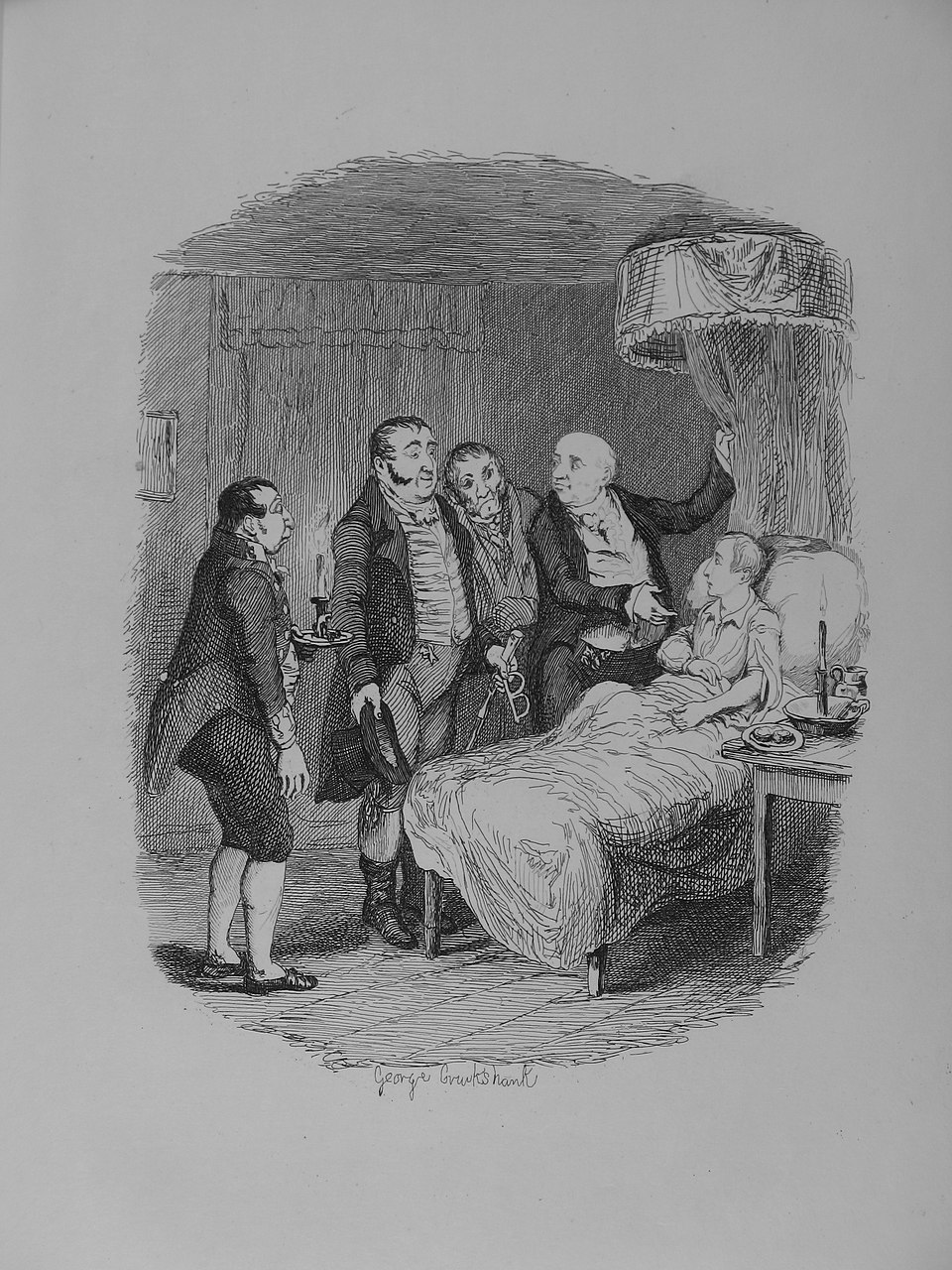
The transition from the chaotic warren of Whitehall Place to the Victoria Embankment was not a relocation; it was a calculated fortification of the Metropolitan Police. By the 1880s, the force had outgrown its improvised headquarters, where files rotted in damp cellars and detectives operated out of converted private dwellings. The solution lay on the reclaimed marshland of the Thames Embankment, a site originally destined for a grand National Opera House. The opera project, led by impresario James Mapleson, collapsed into bankruptcy in 1875, leaving behind a waterlogged skeleton of foundations. The government acquired this site, Mapleson's Folly, for a fraction of its value, repurposing the failed temple of art into a of law.
Architect Richard Norman Shaw won the commission to design the new headquarters, and his vision marked a violent departure from the neoclassical white stone that dominated government buildings in Westminster. Shaw chose red brick banded with Portland stone, a style termed "Scottish Baronial" or "Queen Anne," which stood in clear, aggressive contrast to the bureaucratic greys of the nearby ministries. This aesthetic choice was deliberate. It signaled that the police were a distinct entity, separate from the faceless civil service. The building rose as a turreted stronghold, designed to project authority and withstand mob violence, a necessary feature following the Fenian dynamite campaign that had targeted the old headquarters in 1884.
Construction began in 1887, and the very stones of the building carried a grim irony. The lower courses were faced with two thousand tons of Cornish granite, quarried and cut by convict labor at Dartmoor Prison. The men destined to be crushed by the law were forced to build its house. The site itself seemed cursed by the violence it was meant to contain. In October 1888, during construction, workers discovered a dismembered female torso wrapped in cloth within the dark vaults of the unfinished basement. Known as the "Whitehall Mystery," this gruesome find, never solved, served as a macabre christening for the new headquarters. The building opened in 1890, carrying the name "New Scotland Yard" to distinguish it from the old thoroughfare, yet retaining the brand that had become synonymous with policing.
The operational capacity of the Norman Shaw North building was immediately tested. It housed the Commissioner, the Receiver, and the Assistant Commissioners, along with the central administrative staff. Yet, the relentless expansion of London's population and the corresponding rise in organized crime rendered the "new" building insufficient within a decade. In 1906, the South Building was completed to handle the overflow, connected to the North block by an arched spanning Derby Gate. This architectural link became the nervous system of the complex, allowing files and personnel to circulate between the administrative brain and the operational limbs without stepping onto the public street.
Deep within the basement of the Norman Shaw building lay the "Black Museum" ( the Crime Museum). Moved from the old headquarters in 1890, this was no public exhibition a restricted teaching collection for detectives. Here, the noose used to hang Dr. Crippen and the death masks of executed killers served as data points for instruction. The museum formalized the study of murder, transforming the grisly trophies of the thief-taker era into a systematic catalog of criminal methodology. It remained a closed sector, accessible only to police personnel and judicial officials, reinforcing the Yard's insular and professionalized culture.
Technological integration defined the middle years of the Embankment era. The building was not just stone; it was a machine for information processing. In the 1930s, the "Information Room" was established, a central hub where officers moved counters across large table-maps to track the real-time location of patrol cars. This room became the heart of the modern response system. On June 30, 1937, the Yard introduced the "999" emergency number, the of its kind in the world. This system bypassed local station desks, routing urgent calls directly to the Information Room at New Scotland Yard, where operators could dispatch "Flying Squad" cars via wireless telegraphy. The architecture of the building had to adapt to these wires and signals, turning Victorian offices into electronic command centers.
The following table details the physical evolution of the complex during this era:
| Structure | Completion | Primary Function | Key Feature |
|---|---|---|---|
| Norman Shaw North | 1890 | Commissioner's Office, CID | Granite base, turreted corners, printing press in basement. |
| Norman Shaw South | 1906 | Receiver's Office, Overflow | Connected by; housed the expanding administrative staff. |
| Cannon Row Station | 1902 | Divisional Police Station | Provided holding cells and local policing support adjacent to HQ. |
| North Extension | 1940 | War Reserve, Communications | Annex built to handle wartime logistics and increased comms traffic. |
World War II brought physical danger to the Embankment. The Yard was a prime target for Luftwaffe bombers. While the building survived the Blitz relatively intact, the war accelerated the centralization of police powers. The need for rapid coordination during air raids cemented the Information Room's status as the force's brain. By the 1950s, the Norman Shaw buildings were groaning under the weight of their own records. The Criminal Record Office (CRO) held millions of files, and the corridors became lined with cabinets, narrowing the passageways and creating a fire hazard. The introduction of the mainframe computer in 1963, used for payroll and crime statistics, demanded climate-controlled space that the drafty Victorian could not provide.
By the mid-1960s, the romantic image of the red-brick castle clashed with the reality of a modernizing police force. The "labyrinthine dark corridors" described by staff communication. Detectives wasted hours traversing the or hunting for physical files in the overcrowded archives. The decision was made to abandon the Embankment for a purpose-built glass and concrete tower on Broadway. In 1967, the Metropolitan Police left the Norman Shaw buildings. The structures were subsequently acquired by the government for parliamentary offices, for seventy-seven years, they had served as the global symbol of detective work, the place where the disorganized watchmen of the past were forged into a scientific instrument of state control.
10 Broadway: The 1967 Brutalist Headquarters and Security Architecture
The shift from the Victorian grandeur of the Norman Shaw buildings to the concrete functionalism of 10 Broadway in 1967 was not a change of address; it was a fundamental recalibration of the Metropolitan Police's identity. For nearly a century, the force had operated from the labyrinthine, granite-faced corridors of the Embankment, a site physically anchored to the imperial bureaucracy of Whitehall. The move to Broadway, a twenty-story slab of glass and concrete situated in Victoria, signaled a desire to align policing with the technocratic modernism of the Harold Wilson era. The new headquarters was not a purpose-built police station a speculative office block developed by Land Securities and designed by Chapman Taylor. The Met simply leased it, a decision that would haunt the force for decades as it tried to retrofit high-security operations into a generic commercial shell.
The architecture of 10 Broadway was aggressively banal, a grey monolith that loomed over the intersection of Victoria Street and Broadway. Unlike the ornate stone of the previous headquarters, this building offered no romantic connection to the past. It was a machine for policing, housing the C3i (Command, Control, Communication, and Intelligence) centre, a technological heart intended to replace the ledger-books of the 19th century with the mainframes of the 20th. The layout was vertical and compartmentalized, breaking the casual, if chaotic, interactions of the old corridors. Detectives, forensic teams, and administrative staff were stacked in, connected only by elevators that frequently malfunctioned. This physical separation mirrored the growing bureaucratization of the force, where specialized squads began to operate as fiefdoms, from the uniformed branch on the street.
The defining visual feature of 10 Broadway was not the building itself, the rotating triangular sign installed on the pavement outside. Designed by Edward Wright, the stainless steel prism featured the words "New Scotland Yard" in a custom typeface known as Flaxman. Revolving 14, 000 times a day, the sign became the most photographed police artifact in the world, a kinetic symbol of "constant vigilance." It was a masterstroke of branding in an era before the term was commonplace, providing television news crews with a backdrop for reports on everything from the Kray twins to the Brixton riots. The sign projected an image of slick, frictionless efficiency that frequently masked the turbulent reality inside the tower, where paper files still piled up in corridors and cigarette smoke choked the ventilation systems well into the 1990s.
Security at 10 Broadway was initially lax, reflecting a naive belief that the police were untouchable in their own home. That illusion shattered on March 8, 1973. The Provisional IRA, escalating their campaign to the British mainland, targeted the building with a car bomb. A green Ford Cortina, packed with 175 pounds of gelignite and a timing device, was left in Broadway. Unlike the device at the Old Bailey which detonated the same day, injuring over 200 people, the Scotland Yard bomb was discovered and defused by an explosives officer. The near-miss ended the era of the "open door." The base of the tower was rapidly hardened; concrete planters, heavy steel blocks, and armed checkpoints turned the commercial plaza into a. The psychological impact was. The headquarters ceased to be a civic office and became a bunker, physically withdrawing from the public it was sworn to protect.
Deep within the subterranean levels of 10 Broadway lay the Crime Museum, colloquially known as the "Black Museum." Inaccessible to the public, this repository held the physical evidence of London's darkest history, the ricin-tipped umbrella used to assassinate Georgi Markov, the pots used by Dennis Nilsen, and the nooses from notorious executions. The presence of these macabre artifacts in the basement of a modern office block created a strange dissonance. Above, the Met was attempting to project a future of computer-aided dispatch and forensic science;, it hoarded the grim trophies of its past. This collection remained at Broadway until the building's closure, a secret shrine to the detective's craft that few Londoners ever saw.
By the early 21st century, 10 Broadway was failing. The "speculative office block" origins meant the infrastructure could not support the cabling and cooling requirements of modern server farms. The concrete was spalling, and the heating bills were astronomical. In 2014, the Mayor's Office for Policing and Crime (MOPAC) announced the sale of the site. The justification was financial: the building cost too much to run, and the land value in Victoria had skyrocketed. The sale process was a feeding frenzy for global capital, culminating in a deal with the Abu Dhabi Financial Group (ADFG). The price was £370 million, £120 million over the asking price, a figure that underscored the transformation of London's civic infrastructure into a tradable asset class.
| Metric | 10 Broadway Era (1967, 2016) | The Broadway Era (2022, 2026) |
|---|---|---|
| Primary Function | Metropolitan Police Headquarters | Luxury Residential & Commercial |
| Owner | Crown / MOPAC (Lease/Freehold) | Abu Dhabi Financial Group (Northacre) |
| Key Feature | Rotating "New Scotland Yard" Sign | "The Sancy" & "The Cullinan" Towers |
| Security Posture | Fortified Bunker (Concrete blocks) | Private Security / Concierge |
| Public Access | Restricted / Armed Guard | Retail Plaza / Pedestrian Thoroughfare |
| Site Value | Functional Cost Center | £370m Acquisition (Land Value Only) |
The demolition of 10 Broadway began in 2016, erasing the grey skyline silhouette that had presided over the Winter of Discontent, the Miners' Strike, and the July 7 bombings. In its place rose "The Broadway," a cluster of six residential towers named after famous diamonds (The Sancy, The Cullinan). By 2026, the site bears no trace of the detectives who once worked there. The ground where the rotating sign once spun is a pedestrianized retail corridor lined with high-end boutiques and coffee shops. The contrast is absolute: a site once dedicated to the enforcement of state law is dedicated to the enjoyment of private wealth. The Met retreated to a smaller, refurbished building on the Embankment, the Curtis Green building, reclaiming the "New Scotland Yard" name leaving the Broadway footprint to the global real estate market.
The legacy of 10 Broadway is mixed. It was the incubator for modern British policing, witnessing the birth of the Flying Squad's aggressive tactics and the sophisticated surveillance of the Counter Terrorism Command. Yet it was also the backdrop for the corruption scandals of the 1970s, where the "firm within a firm" operated with impunity behind the anonymous concrete facade. The building's destruction removed a scar from the Victoria skyline, it also sanitized the geography of London's power. The police are no longer the physical giants of the district; they are tenants elsewhere, while the prime real estate of SW1 is occupied by the international elite who can afford apartments costing millions. The rotating sign was moved to the Embankment, spinning on, the at 10 Broadway is gone, replaced by the glass-walled transparency of luxury living.
Return to Embankment: The 2016 Curtis Green Building Refurbishment
The 2016 retreat from the brutalist at 10 Broadway to the Curtis Green Building on Victoria Embankment marked the definitive end of the Metropolitan Police's territorial dominance in Westminster. Driven by the austerity measures of the Cameron-Clegg coalition and the mayoral directives of Boris Johnson, the move was less a strategic upgrade than a liquidation of state assets. In December 2014, the Mayor's Office for Policing and Crime (MOPAC) sold the freehold of the 1960s New Scotland Yard for £370 million, £120 million above the asking price, to the Abu Dhabi Financial Group. The site that once housed the nerve center of London's policing was demolished to make way for "The Broadway," a cluster of luxury apartments where a penthouse could command £100 million, pricing the police out of their own history.
The financial logic was cold and absolute. The 1960s block was energy-inefficient, with asbestos, and expensive to maintain. By selling the "family silver," the Met claimed it would save £6 million annually in running costs and fund a technological overhaul, including the rollout of body-worn video cameras and tablets for frontline officers. The destination was the Curtis Green Building, a 1935 limestone annex originally designed by William Curtis Green as an extension to the Norman Shaw North building. It sat in the shadow of the Ministry of Defence, a fraction of the size of the Broadway monolith.
Architects Allford Hall Monaghan Morris (AHMM) were tasked with transforming this neo-classical annex into a modern headquarters for £58 million. Their design philosophy centered on "transparency," a clear contrast to the defensive architecture of the previous era. They sliced open the ground floor, replacing masonry with a curved glass entrance pavilion intended to symbolize "Open Justice." The famous rotating triangular sign, a totem of the brand since 1967, was refurbished and planted on the riverside pavement, acting as a visual anchor for the thousands of tourists passing daily. The "Eternal Flame," a memorial to fallen officers, was moved to a contemplative pool near the entrance, visible to the public through the glass.
The physical reduction of the headquarters was drastic. The force traded 600, 000 square feet at Broadway for approximately 120, 000 square feet at Curtis Green. This 80% reduction in floor space necessitated a radical shift in working culture. The new building could accommodate only a fraction of the staff, forcing the adoption of "agile working" and hot-desking ratios of 4: 5 or tighter. Senior officers who once commanded large private offices found themselves in open-plan environments, a shift that bred resentment and logistical friction. The headquarters ceased to be a hive of operational activity and became a corporate figurehead, housing only the Commissioner, senior command, and core communication units.
| Metric | 10 Broadway (Old HQ) | Curtis Green (New HQ) |
|---|---|---|
| Square Footage | ~600, 000 sq ft | ~129, 000 sq ft |
| Occupancy Capacity | ~2, 500+ staff | ~1, 000 staff |
| Design Philosophy | Defensive Brutalism | "Transparent" Civic Pavilion |
| 2014/16 Valuation | Sold for £370 Million | Refurbished for £58 Million |
| Current Use (2026) | Luxury Residential (The Broadway) | Met Police Corporate HQ |
The "glass box" aesthetic faced immediate scrutiny regarding security. In March 2017, days before the Queen was scheduled to officially open the building, Khalid Masood launched a terror attack on Westminster, killing PC Keith Palmer just hundreds of yards away. The proximity of the violence to the new "transparent" headquarters shattered the architectural idealism of the design. Concrete blocks and heavy security were rapidly hardened around the glass pavilion, proving that while the architecture could simulate openness, the threat environment demanded fortification.
By 2026, the legacy of the Curtis Green move appears deeply ironic. The building was designed to project an image of a modern, accountable, and transparent police force. Yet, the decade following the move saw the Met engulfed in its worst corruption scandals in history. The "transparency" of the glass facade stood in direct opposition to the unclear internal culture revealed by the Baroness Casey Review and the subsequent 2025 purge, where 1, 400 officers were investigated using "Al Capone tactics" to root out misconduct. The headquarters became a pristine, light-filled container for a command structure fighting for its survival against allegations of widespread misogyny, racism, and corruption.
The sale of the Broadway site also had long-term operational consequences. The capital raised was quickly absorbed by the voracious operational costs of policing a city of nine million. The pledge that the sale would "future-proof" the force's technology rang hollow by 2024, as the tablets and software procured in the mid-2010s faced obsolescence and the force grappled with data breaches. The Curtis Green building stands today not as a triumph of modernization, as a symbol of a diminished state capability, where the police occupy a tourist-friendly annex while global finance capital occupies the high ground of their former.
SO15 Counter Terrorism Command: Operational Structure and Reach
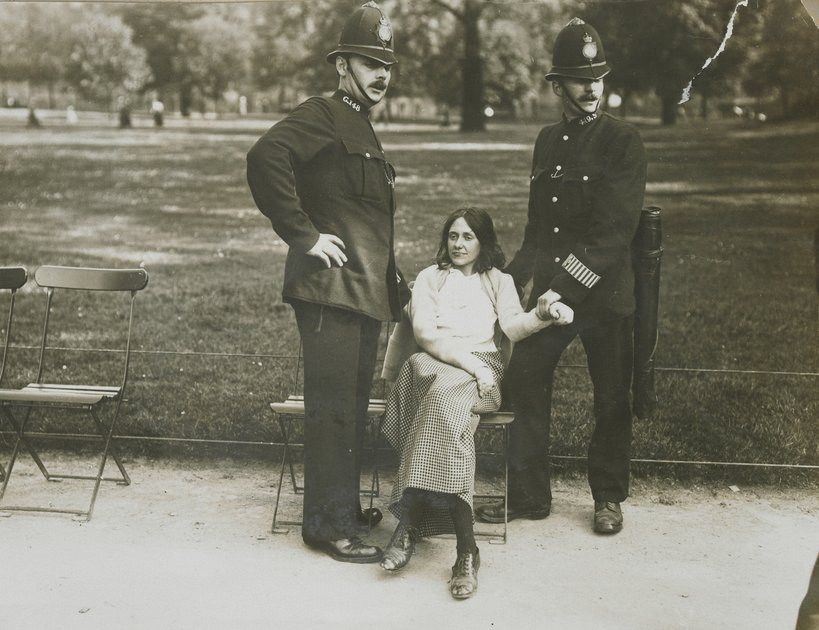
The formation of the Counter Terrorism Command (SO15) on October 2, 2006, marked the end of a century-long schism in London's policing of political violence. For decades, the Metropolitan Police operated two distinct, frequently rivalrous units: the Special Branch (SO12), founded in 1883 to infiltrate Irish Fenian networks, and the Anti-Terrorist Branch (SO13), formed in 1971 as the "Bomb Squad" to investigate the Angry Brigade and Provisional IRA. The merger forced the intelligence gatherers of SO12 and the investigators of SO13 into a single entity, designed to close the dangerous gaps between knowing a plot existed and gathering evidence to prosecute it. As of early 2026, SO15 serves as the operational engine for the entire United Kingdom's counter-terrorism network. While technically a Metropolitan Police unit, it houses the Senior National Coordinator, granting it primacy over the nine regional Counter Terrorism Units (CTUs) spread across Britain. This "Lead Force" model centralizes control within New Scotland Yard (and its hardened satellite sites), allowing for the rapid deployment of assets, from armed surveillance teams to forensic explosives experts, anywhere in the country. The command operates from the Counter Terrorism Operations Centre (CTOC) in West London, a high-security hub fully operational since 2021, where SO15 detectives sit alongside MI5 intelligence officers and GCHQ analysts to track threats in real-time. The operational tempo of SO15 has accelerated relentlessly since the 2017 attacks at Westminster and London. Data released by the Home Office and Counter Terrorism Policing in 2025 indicates a grim stability in the volume of threats, yet a radical shift in their nature. Between March 2017 and early 2026, SO15 and the security services disrupted 43 late-stage terror plots. While Islamist extremism remains the primary threat volume, the command has been forced to pivot resources toward two rapidly expanding fronts: the fragmentation of the extreme right-wing and the resurgence of hostile state activity.
| Metric | 2017-2019 Average | 2024-2025 Statistics | Trend Analysis |
|---|---|---|---|
| Late-Stage Plots Foiled | ~4 per year | ~6 per year | Plots are becoming less sophisticated more frequent. |
| Arrests (Terrorism Act) | 282 (2019) | 248 (2024) | Arrest numbers remain high; conviction complexity has increased. |
| State Threat Caseload | <5% of operations | ~20% of operations | Major resource shift to counter Iran, Russia, and China. |
| Youth Involvement | Rare (<5% under 18) | 13% of subjects under 18 | Online radicalization is drawing minors into active plotting. |
The rise of "State Threats" has fundamentally altered SO15's mandate. Following the 2018 Salisbury poisonings and the 2023-2024 discovery of Iranian state-backed plots to assassinate dissidents on UK soil, the command moved to a war footing against foreign intelligence services. By 2025, approximately 20% of SO15's casework involved hostile state actors, a category distinct from non-state terror groups like Al-Qaeda or ISIS. This work frequently involves the "Hostile State Actor Taskforce," a specialized cadre within SO15 that investigates intimidation, abduction attempts, and extrajudicial killings ordered by foreign regimes. The command disrupted over 20 specific threats linked to the Iranian regime between 2022 and 2025 alone. SO15's reach extends far beyond the M25. The command manages the International Liaison Officer (ILO) network, placing Metropolitan Police detectives in over 50 strategic locations globally. These officers do not have arrest powers abroad act as the connective tissue between British intelligence and local law enforcement. In regions like the Sahel or the Turkey-Syria border, ILOs are serious assets for biometric data collection and tracking foreign fighters attempting to return to the UK. This global footprint allows SO15 to execute "upstream" disruption, stopping threats before they reach British ports. Domestically, the command faces intense scrutiny regarding its use of Schedule 7 of the Terrorism Act 2000. This power allows officers to stop, question, and detain individuals at ports and airports without reasonable suspicion. Civil liberties groups have long argued the power is used disproportionately against ethnic minorities. even with these criticisms, SO15 maintains that Schedule 7 is a non-negotiable tool for border security, citing its role in identifying travelers carrying encryption keys or large sums of cash destined for terror financing. The command also struggles with the "grey zone" of legal prosecution. As plots move online and involve younger subjects, the threshold for a Terrorism Act conviction becomes harder to meet. The 2024-2025 data shows a spike in arrests of minors, as young as 13, frequently for possessing or disseminating terrorist material rather than building bombs. This "bedroom radicalization" forces SO15 to rely heavily on the Prevent strategy, referring individuals to de-radicalization programs. Yet, when risk levels rise, the command does not hesitate to execute armed raids, a high-risk need that frequently inflames community tensions in London's diverse boroughs. Financially, SO15 operates on a hybrid model. While its officers are Met employees, the bulk of its funding comes from the National Counter Terrorism Policing Grant, ring-fenced by the Home Office to protect it from the wider budget cuts afflicting the Metropolitan Police Service. In 2025, the Home Office provided a £63. 4 million uplift to the National International Capital City (NICC) grant, acknowledging the unique load London carries as the primary target for both terrorists and foreign spies. Even with this funding, senior commanders have warned that the sheer volume of data, terabytes seized in every raid, threatens to overwhelm their digital forensics capabilities, creating backlogs that delay trials and leave dangerous individuals on bail.
The Crime Museum: Forensic Evidence Archives and Restricted Access
Hidden within the secure perimeter of New Scotland Yard lies a collection of artifacts that serves as the grim conscience of British policing. Officially the Crime Museum, yet universally known by the moniker coined by a rejected Observer journalist in 1877, the "Black Museum" is not a tourist attraction. It is a restricted forensic archive where the tools of murder and the evidence of detection document the evolution of criminal investigation from the Victorian era to the present day. Established in 1874 by Inspector Percy Neame, the collection originated under the Prisoners' Property Act of 1869, which allowed police to retain items for instructional purposes. Neame realized that these objects, knives, bludgeons, and forged plates, were not administrative detritus essential teaching tools for rookie constables who needed to recognize the method of vice.
The museum's inventory chronicles the seismic shift from the pseudoscience of phrenology to the absolute certainty of biometric data. Lining the upper shelves are the death masks of prisoners executed at Newgate Prison, relics of a time when police believed criminal intent could be read in the bumps of a skull. them sits the artifact that rendered such theories obsolete: the cash box from the 1905 Stratton Brothers case. This unassuming metal container bears the fingerprint ever used to secure a murder conviction in the United Kingdom. The smudge left by Alfred Stratton did not solve the bludgeoning of Thomas and Ann Farrow; it validated the work of the Fingerprint Bureau and established a forensic standard that remains the bedrock of modern identification.
The collection also demonstrates how the smallest oversight can the most violent anonymity. During the London Blitz of February 1942, a serial killer known as the "Blackout Ripper" mutilated four women under the cover of darkness. The case appeared unsolvable until the killer, Gordon Cummins, fled a botched attack, leaving behind his Royal Air Force gas mask. The artifact, preserved in the museum, bears the service number 525987 stamped on its side. This single string of digits allowed detectives to trace the mask directly to Cummins' unit, proving that even in a city plunged into total darkness, bureaucratic records could illuminate a suspect. The gas mask remains a primary example for trainees on the serious importance of trace evidence recovery at chaotic crime scenes.
| Artifact | Case / Year | Forensic Significance |
|---|---|---|
| Cash Box | Stratton Brothers (1905) | UK murder conviction secured via fingerprint evidence. |
| RAF Gas Mask | Gordon Cummins (1942) | Service number 525987 led directly to the "Blackout Ripper." |
| Gallstones | John Haigh (1949) | Human remains that survived a sulfuric acid bath, proving death. |
| . 38 Smith & Wesson | Ruth Ellis (1955) | Ballistics matched the weapon to the last woman hanged in the UK. |
| Cooking Pot | Dennis Nilsen (1983) | Domestic utensil used to boil victims' remains; highlights banality of evil. |
The archives also contain evidence that the destruction attempts of calculating killers. John Haigh, the "Acid Bath Murderer," operated under the mistaken belief that corpus delicti meant a physical body was required for a murder charge. In 1949, he dissolved his victim, Olive Durand-Deacon, in a drum of sulfuric acid, assuming the sludge would yield no proof. He was wrong. Pathologists sifted through the residue and recovered three human gallstones and a set of acrylic dentures that the acid failed to liquefy. These small, calcified objects, displayed in the museum, served as the biological proof required to send Haigh to the gallows. They stand as a testament to the resilience of forensic pathology against chemical erasure.
Among the most disturbing exhibits are those that illustrate the intersection of domesticity and slaughter. The museum holds the stove and large aluminum pot used by Dennis Nilsen in 1983 to boil the heads and hands of his victims in his Muswell Hill flat. The sheer banality of the object, a common kitchen utensil used for an atrocity, serves a specific psychological lesson for detectives: the most monstrous crimes frequently occur within the most ordinary settings. Unlike the sensationalized props of fiction, the items in the Black Museum are terrifyingly mundane. The. 38 caliber Smith & Wesson revolver used by Ruth Ellis to shoot David Blakely in 1955 is small, heavy, and cold. It represents the finality of the act that led to the last execution of a woman in Britain, a case that accelerated the abolition of capital punishment.
Access to these archives remains one of the most exclusive privileges in law enforcement. For over a century, the doors were barred to all police personnel and select dignitaries, including King George V, Harry Houdini, and Sir Arthur Conan Doyle. The general public is almost entirely excluded, a policy maintained to respect the victims and to prevent the glorification of the offenders. Exceptions are rare. In late 2015, the Museum of London hosted The Crime Museum Uncovered, the major public exhibition of these artifacts. More, to mark the museum's 150th anniversary, a curated selection of objects was moved to the Metropolitan Police Museum in Sidcup for a temporary exhibition running from June 2025 to May 2026. Yet the Crime Museum itself, located within the Curtis Green building, remains a closed academic institution. It is not a gallery for the curious; it is a library of death where the texts are written in lead, steel, and bone.
Internal Corruption Inquiries: Operation Countryman to the Casey Review
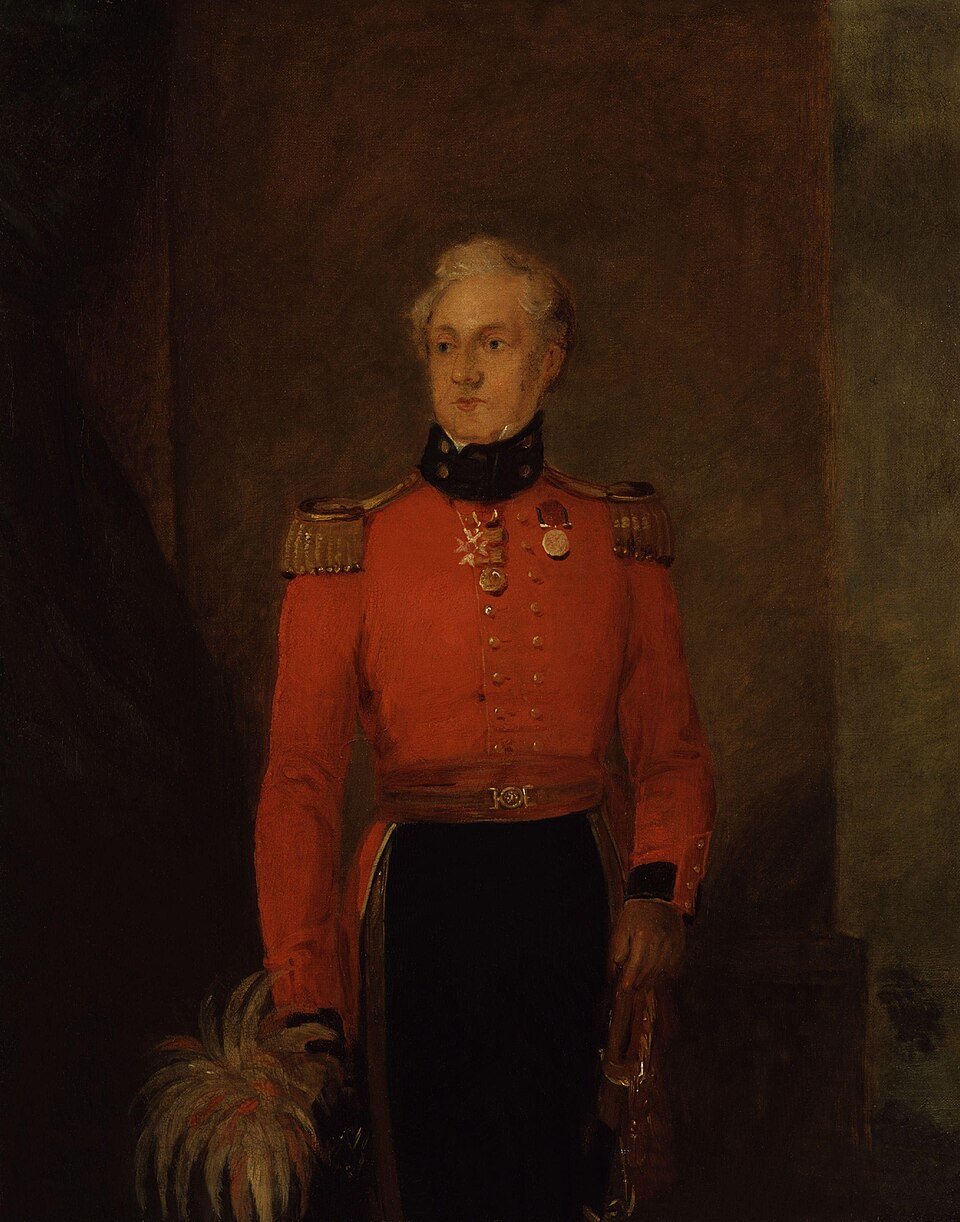
The internal history of New Scotland Yard from the late 1970s to 2026 is defined not by the criminals it caught, by the criminals it employed. While the force publicly projected an image of "policing by consent," secret internal inquiries and independent reviews repeatedly documented a parallel reality: a "firm within a firm" where organized crime syndicates bought influence, and predatory officers operated with near-total impunity. This era began with the spectacular failure of Operation Countryman and culminated in the devastating findings of the Casey Review and the Angiolini Inquiry.
In 1978, the Met launched Operation Countryman to investigate allegations that City of London and Met officers were accepting bribes to drop charges and fabricate evidence. To ensure impartiality, the Home Office brought in a force from Dorset to lead the inquiry. The result was a masterclass in obstruction. Met officers refused to cooperate, documents, and the "outsiders" faced a wall of silence. Although the investigation cost £4 million (a massive sum for the time) and identified hundreds of suspect officers, it secured zero convictions against the high-ranking. The inquiry collapsed in 1982, leaving the corrupt networks largely intact. Sir Robert Mark, the Commissioner who famously promised to arrest more criminals than any of his predecessors "even if of them are policemen," could not the entrenched culture of protectionism.
The rot deepened in the following decades, documented in reports the Met tried to keep secret. In 2002, the force commissioned Operation Tiberius, an internal intelligence review. The final report, classified "Secret" and only leaked to the press in 2014, contained a terrifying admission: organized crime syndicates were able to infiltrate New Scotland Yard "at." The report detailed how criminals could buy "get out of jail free cards" for £50, 000, purchase confidential case files, and compromise juries. Tiberius named 42 serving officers and 19 former officers linked to eight specific crime networks, including the notorious Adams family. Yet, rather than a public purge, the report was buried, and the corruption was managed rather than excised.
This culture of concealment reached its nadir with the Daniel Morgan case. Morgan, a private investigator murdered in 1987, was allegedly on the brink of exposing police drug corruption. Five separate police investigations failed to solve the murder, sabotaged by the very officers Morgan intended to expose. In June 2021, the Independent Panel delivered a blistering verdict: the Metropolitan Police was "institutionally corrupt." The Panel defined this not just as bribery, as a "reprehensible" instinct to conceal failings to protect the organization's reputation. The force had spent decades prioritizing its public image over the truth, shielding murderers to save face.
By the 2020s, the corruption had mutated. The primary threat shifted from financial bribery to sexual predation and widespread bigotry, exposed by the abductions and rapes committed by serving officers Wayne Couzens and David Carrick. These atrocities triggered the Baroness Casey Review in 2023, which shattered the "bad apple" defense. Casey's data analysis was irrefutable. She found that between 2013 and 2022, 1, 809 officers and staff had more than one misconduct case against them. Of these repeat offenders, only 13 were dismissed, a dismissal rate of just 0. 71%. The internal discipline system was not just weak; it was broken.
| Inquiry | Period | Key Finding | Outcome |
|---|---|---|---|
| Operation Countryman | 1978, 1982 | widespread bribery in Flying Squad | 0 major convictions; obstruction by Met |
| Operation Tiberius | 2002 (Leaked 2014) | Syndicates infiltrated Met "at " | Report classified; intelligence only |
| Daniel Morgan Panel | 1987, 2021 | "Institutional Corruption" | Confirmed cover-up of murder investigation |
| Casey Review | 2023 | widespread racism, misogyny, homophobia | Confirmed 1, 809 repeat misconduct offenders |
The Casey Review concluded that the Met was institutionally racist, misogynistic, and homophobic. It detailed how officers boasted about sexual assaults in WhatsApp groups and how evidence was routinely deleted. The report forced a reckoning that previous inquiries had failed to provoke. In the year ending March 31, 2025, the Met dismissed 183 officers, the highest number on record, as Commissioner Sir Mark Rowley attempted to clean house. This surge in dismissals coincided with a 108% rise in racism-related employment tribunal claims, suggesting a chaotic internal war as the force attempted to excise elements it had harbored for decades.
The Angiolini Inquiry, established to examine the failures that allowed Wayne Couzens to remain a police officer, published its Part 2 Report in December 2025. This document moved beyond individual failures to examine the "prevention of sexually motivated crimes against women in public." It found that 48% of women felt unsafe in public spaces, a damning indictment of the force's primary duty. The inquiry revealed that vetting failures were not administrative errors a widespread choice to prioritize recruitment numbers over integrity. By early 2026, the Met stood as an organization stripped of its myths, forced to confront a history where the call was frequently coming from inside the house.
Command and Control: C3i Technology and Emergency Response Metrics
The history of command and control within the Metropolitan Police Service is a timeline defined by a clear contrast: the operational brilliance of the early 20th century versus the bureaucratic and technological paralysis of the modern era. For the century of its existence, the Met relied on the physical presence of the constable, whose only link to reinforcement was a wooden rattle, later replaced by a whistle in 1884. Communication was local, slow, and disjointed. The shift toward centralized control began in earnest not with computers, with the telegraph in 1867, eventually culminating in the opening of the Information Room at Old Scotland Yard in 1934. This nerve center, dominated by a large map table where counters representing vehicles were moved by hand, marked the transition from parish-level autonomy to a synchronized, city-wide response network.
The introduction of the 999 emergency number on June 30, 1937, stands as the most successful technological implementation in the force's history. Triggered by a fatal fire on Wimpole Street where neighbors could not reach the operator, the system was the of its kind in the world. In its inaugural week, the Information Room handled 1, 336 calls, a figure that would seem microscopic to modern handlers yet represented a fundamental shift in public access to police resources. Operations were swift; a red light would flash, a hooter would sound, and officers would dispatch wireless-equipped cars immediately. This analog efficiency for decades, eventually evolving into the Computer Aided Dispatch (CAD) system in 1984, known internally as the "S-System." This green-screen legacy infrastructure proved remarkably resilient, outliving multiple attempts to replace it.
Modernization efforts since the turn of the millennium have frequently resulted in expensive failures. The most notorious example is the Command and Control Futures (C3i) program. In 2014, the Met signed a contract worth nearly £90 million with Lockheed Martin and Northrop Grumman to deliver "CommandPoint," a system intended to replace the aging CAD. By 2016, the deal was terminated. The supplier failed to deliver a working product in time for the planned go-live, forcing the Met to scrap the project and revert to its 30-year-old legacy software. This botched procurement wasted millions in taxpayer funds and left the force tethered to obsolete technology well into the 2020s.
The struggle to upgrade communications infrastructure has compounded these operational risks. The Emergency Services Network (ESN), a Home Office-led initiative to replace the Airwave radio system with a 4G-based network, has become a financial black hole. Originally scheduled to go live in 2019, the project has suffered repeated delays. As of early 2026, the Airwave system remains active, costing the UK government, and by extension the Met, hundreds of millions annually to maintain. The National Audit Office reported that between 2015 and 2023 alone, £2 billion was spent on ESN with little to show for it, while the cost to keep the obsolete Airwave network running is projected to exceed £2. 9 billion. The transition is not expected until at least 2029, leaving officers relying on aging handsets and a network that was supposed to be decommissioned years ago.
Current data systems face similar blocks. The "Connect" system, designed to integrate command, control, and custody data into a single platform, has been plagued by defects and cost overruns. Budgeted initially at £150 million, the project's cost ballooned to over £214 million by 2025. Upon its partial rollout, officers reported thousands of defects, including an inability to properly search for suspect records or delete erroneous data. In the four months of operation, the system generated 25, 000 support requests, overwhelming technical staff and slowing down custody procedures. This digital friction has direct consequences for policing; when officers spend hours wrestling with data entry, they are absent from the streets.
These technological failures correlate with a measurable decline in emergency response performance. The Met categorizes calls into grades, with "I-Grade" (Immediate) requiring a response within 15 minutes and "S-Grade" (Significant) within one hour. In 2024, the force managed to answer 91% of 999 calls within ten seconds, meeting national. Yet, by mid-2025, performance, with answer rates dropping to 77. 5% between April and September. This decline occurred even with a massive influx of non-emergency calls; data from July 2024 to July 2025 revealed that only 15% of the millions of calls to 999 were genuine emergencies. The remaining 85% consisted of accidental dials, hoaxes, or non-police matters, clogging the lines and delaying responses to life-threatening incidents.
| Era | System / Initiative | Status / Outcome |
|---|---|---|
| 1934, 1984 | Information Room (Map Table) | Successful analog centralization. |
| 1937 | 999 Emergency Number | Global; 1, 336 calls in week one. |
| 1984, 2010s | CAD (S-System) | Digital legacy; highly reliable obsolete. |
| 2014, 2016 | C3i (CommandPoint) | Terminated. Supplier failed to deliver. |
| 2015, 2029 (est.) | Emergency Services Network (ESN) | Delayed. £2bn+ sunk cost; Airwave extended. |
| 2022, 2026 | Connect System | Over Budget. Costs rose to £214m; technical defects. |
The operational reality in 2026 is a force caught between the need of modernization and the inability to execute it. While the Central Communications Command (CCC) operates out of massive hubs in Lambeth, Hendon, and Bow, the software driving these centers remains a patchwork of legacy code and glitchy new integrations. The failure to direct transition from Airwave to ESN or from CAD to a functional modern equivalent leaves Scotland Yard in a precarious position. It possesses the physical infrastructure of a 21st-century police force relies on digital backbones that are either crumbling or incomplete. The metrics show the: missed for immediate response and a call handling system suffocated by volume, reflecting a command structure that struggles to control its own technological destiny.
Vetting Failures: The Carrick and Couzens Cases 2021, 2023
The collapse of the Metropolitan Police's vetting infrastructure between 2021 and 2023 exposed a catastrophic breach in the force's defensive perimeter. For nearly two centuries, the "Office of Constable" relied on the presumption that those holding the warrant card were subject to higher standards than the public they served. The cases of Wayne Couzens and David Carrick shattered this illusion, revealing that the gatekeeping method designed to filter out predators had not failed had been functionally dismantled by bureaucracy, apathy, and a dangerous prioritization of recruitment over safety. Wayne Couzens, who kidnapped, raped, and murdered Sarah Everard in March 2021, did not slip through a single crack; he walked through a series of open doors. The Angiolini Inquiry, published in 2024, detailed a timeline of missed opportunities that borders on widespread complicity. In 2015, while serving with the Civil Nuclear Constabulary (CNC), Couzens was linked to an allegation of indecent exposure in Kent. Police failed to investigate the incident with any rigor, viewing it as a minor nuisance rather than a sexual predation red flag. When Couzens transferred to the Metropolitan Police in 2018, the vetting process treated his move as an internal administrative shift rather than a new hire requiring deep scrutiny. His chaotic financial history, a known stressor and corruption risk, was ignored. The vetting system operated on a "trust don't verify" basis, allowing a man with a history of sexual deviancy to obtain the tool of coercion: a police warrant card and a firearm. If Couzens was the explosion that forced the problem into the light, David Carrick was the slow-burning fire that had consumed the organization's integrity for two decades. Arrested in October 2021, Carrick was eventually unmasked as one of Britain's most prolific serial sex offenders, admitting to 49 offenses including 24 counts of rape against 12 women over an 18-year period. Unlike Couzens, who hid his nature behind a mask of quiet mediocrity, Carrick's behavior was frequently visible to his colleagues. Known within his unit as "Bastard Dave", a nickname dismissed as "banter" by peers, Carrick used his position in the Parliamentary and Diplomatic Protection Command to intimidate victims, telling them his badge made him untouchable. The failure to stop Carrick was not a result of ignorance of inaction. Between 2000 and 2021, Carrick came to the attention of police nine times regarding allegations including burglary, harassment, and domestic assault. In 2002, during his probationary period, he was investigated for biting a former partner remained in uniform. In 2017, he passed a management vetting check, a process meant to be the highest level of security clearance, even with these prior intelligence logs. The vetting units failed to aggregate these incidents into a clear pattern of predatory behavior. Instead, each allegation was viewed in a silo, frequently dismissed due to a victim's reluctance to testify, which Carrick ensured through intimidation. The exposure of these predators triggered the Baroness Casey Review, released in March 2023, which delivered a devastating verdict: the Metropolitan Police was institutionally racist, misogynistic, and homophobic. Casey's data analysis proved that the vetting units were overwhelmed and under-resourced. In the rush to meet government recruitment (the "Uplift" program), standards were lowered. The review found that the force had lost control of its own workforce data, with hundreds of officers serving even with holding criminal convictions or facing serious misconduct allegations.
| Year | Officer | Incident / Failure | Outcome |
|---|---|---|---|
| 2002 | David Carrick | Allegation of harassment and assault (biting) against former partner. | No action; passed probation. |
| 2015 | Wayne Couzens | Indecent exposure report (Kent). Vehicle identified. | Police failed to interview; record not linked to vetting. |
| 2017 | David Carrick | Subject to "Management Vetting" (high security). | Passed clearance even with prior police intelligence logs. |
| 2018 | Wayne Couzens | Transfer from CNC to Metropolitan Police. | Vetting relied on CNC checks; failed to spot financial debt. |
| 2019 | David Carrick | Allegation of assault. | No criminal action; misconduct process halted. |
| 2021 | Wayne Couzens | Indecent exposure at McDonald's (days before murder). | CCTV not collected in time to identify/arrest him. |
| 2021 | David Carrick | Arrested for rape. | Metropolitan Police suspend him; pattern revealed. |
The necessitated a retroactive purge. In 2023, Commissioner Sir Mark Rowley launched "Operation Onyx," a review of nearly 1, 100 previously closed cases of sexual and domestic abuse involving officers and staff. This review forced the reopening of 689 cases where lines of inquiry had been missed. By January 2026, the Met admitted that between 2013 and 2023, over 5, 000 officers and staff had been recruited with "limited" or defective vetting checks. This included the failure to check applicants against the Police National Database (PND) or military service records. The vetting emergency revealed that the Metropolitan Police had become a sanctuary for the very criminals it was sworn to catch. The "bad apple" defense collapsed under the weight of data showing that the barrel itself was rotting. The Force Vetting Unit (FVU) had prioritized speed over safety, creating a workforce where a warrant card was no longer a guarantee of integrity, a chance warning sign of unchecked power. The dismissal of 1, 500 officers between 2023 and 2026 marked the beginning of a painful correction, yet the scars left by Couzens and Carrick remain the defining legacy of this era.
Fiscal Austerity: Asset Disposal and Budgetary Contraction 2010, 2026
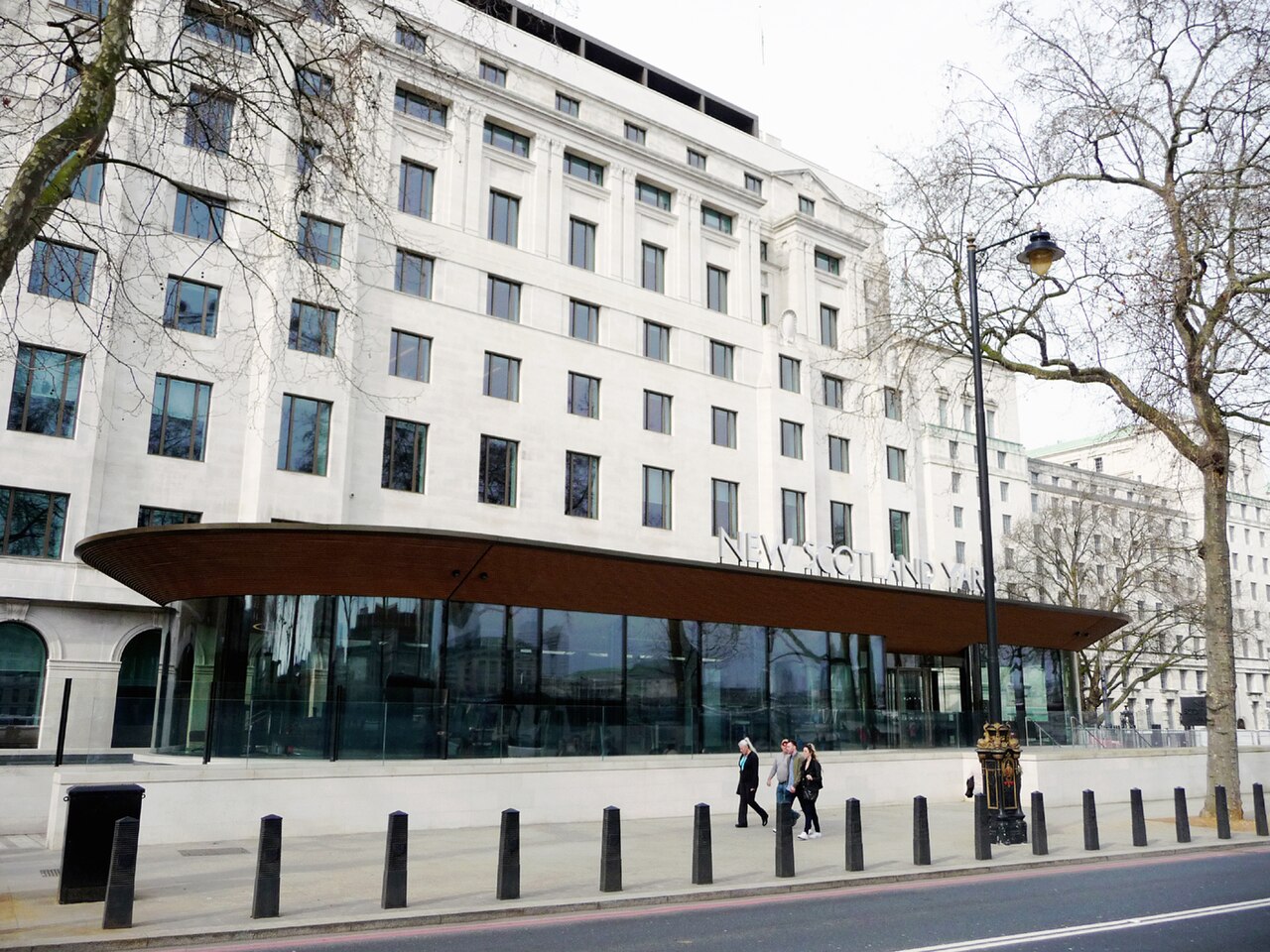
The trajectory of the Metropolitan Police Service changed violently in 2010. Following the detailed Spending Review initiated by the coalition government, the force entered an era defined not by criminal trends, by a rigid doctrine of fiscal contraction. Between 2010 and 2024, the Met endured a real-terms budget reduction of approximately £1 billion, a figure that stripped the organization of its operational reserves and forced a liquidation of physical assets unparalleled in its history. This period, frequently described by politicians as a drive for "efficiency," functioned in practice as a systematic of the police estate.
The most potent symbol of this retrenchment was the sale of the New Scotland Yard headquarters at 10 Broadway. Occupied since 1967, the brutalist concrete triangular block was the global face of London policing. In December 2014, the Mayor's Office for Policing and Crime (MOPAC) sold the site to the Abu Dhabi Financial Group for £370 million. The transaction paved the way for "The Broadway," a luxury mixed-use development where apartments were marketed to international investors. The police retreated to the Curtis Green Building on Victoria Embankment, a smaller facility that required a £58 million refurbishment. While officials touted the move as a cost-saving measure that would save £6 million annually in running costs, the optics were inescapable: the Met had sold its to foreign capital and downsized its footprint while the city's population swelled.
The liquidation extended far beyond the headquarters. Under the guise of the "Estate Strategy" and later the "Public Access Strategy," the Met aggressively shuttered local police stations. In 2010, Londoners could walk into 149 police stations with front counters. By 2024, that number had collapsed to fewer than 40. Historic stations in Belgravia, Chelsea, and Notting Hill were sold off, frequently converted into boutique hotels or high-end residential units. The logic provided was that citizens preferred to report crime online, yet the removal of the "blue lamp" from high streets severed the physical link between the constabulary and the communities they served. The visual deterrence of a local police presence, replaced by a centralized response model that increased travel times and alienated residents in high-crime boroughs.
Manpower statistics from this period reveal a volatile oscillation that damaged operational capability. From a peak of over 33, 000 officers in 2010, numbers were allowed to atrophy to approximately 30, 000 by 2018. When the government later reversed course with the "Police Uplift Programme," the rush to recruit 20, 000 officers nationally resulted in a flood of inexperienced probationers entering the Met. By 2024, a third of the force had less than five years of service. This dilution of experience occurred simultaneously with the decimation of Police Community Support Officers (PCSOs). PCSO numbers in London plummeted by over 70% from their 2010 peak, ending the era of neighbourhood policing where officers knew the names of local shopkeepers and troublemakers.
| Metric | 2010 Status | 2024, 2026 Status | Change |
|---|---|---|---|
| Real Terms Budget | Baseline | -£1 Billion (approx) | ~32% Reduction |
| Police Stations (Front Counters) | 149 | 36 | -76% |
| PCSO Strength | ~4, 600 | ~1, 300 | -71% |
| Officers per 100, 000 Residents | 436 | ~397 | -9% |
| HQ Ownership | 10 Broadway (Owned) | Curtis Green (Refurbished) | Downsized |
The financial compounded the internal rot identified in the Baroness Casey Review. Austerity measures meant that even basic infrastructure began to fail; investigators reported broken fridges for DNA storage, crumbling office facilities, and failing IT systems that evidence processing. The "do more with less" mantra resulted in a workforce that was overstretched and under-supported, creating an environment where misconduct could fester unchecked because supervisors were too overwhelmed to manage their teams. The focus shifted from proactive investigation to reactive emergency management, where only the most serious crimes received adequate attention.
By early 2026, the financial situation had from a problem into a structural emergency. Commissioner Sir Mark Rowley warned the London Policing Board in December 2024 of a "black hole" in the budget, projecting a deficit of £450 million for the 2025/2026 financial year. Even with supplemental funding from the Mayor's precept, the force faced the prospect of cutting 2, 300 officers to balance the books. The cumulative effect of unfunded pay rises, inflation, and the exhaustion of reserves left the Met in a precarious position. The organization that once policed the capital with the confident authority of the 19th century had become, by 2026, a service fighting for its own solvency, forced to choose between paying its officers and maintaining the technology required to catch criminals.
Public Order Operations: Territorial Support Group and Protest Management
The mandate of the Metropolitan Police to maintain public order without resorting to military lethality faced its significant test at the Coldbath Fields riot in 1833. The resulting inquiry, which exonerated the police even with their use of truncheons on a political gathering, established a precedent: the state would tolerate low-level police violence to avoid the massacres associated with army intervention, such as the 1780 Gordon Riots. This uneasy compromise held until the mid-20th century, when the escalation of street protest necessitated a dedicated, paramilitary response. In 1965, the Met formalized this capability with the creation of the Special Patrol Group (SPG), a mobile reserve unit designed to saturate high-crime areas and suppress civil unrest. The SPG quickly gained a reputation not as peacekeepers, as a "third force" operating with aggressive autonomy.
The SPG's operational culture reached its nadir on April 23, 1979, during anti-fascist demonstrations in Southall. Teacher Blair Peach died after receiving a blow to the head, later determined by pathologists to be consistent with a lead-filled cosh or pipe, not a standard problem truncheon. A subsequent raid on the lockers of SPG Unit 1-1 by the Met's own Complaints Investigation Bureau discovered a cache of unauthorized weaponry that resembled a medieval armory more than a police station. Investigators seized sledgehammers, crowbars, metal-tipped whips, and a collection of Nazi regalia. Although the internal Cass Report identified the likely killer, no officer faced criminal charges for the death. The Met waited until 1988 to pay a £75, 000 settlement to Peach's family and suppressed the Cass Report until 2010.
Following the disbandment of the SPG in 1987, the Territorial Support Group (TSG) assumed its duties, inheriting both the mandate and the accusations of excessive force. The TSG, comprised of approximately 800 officers, operates as the Met's primary public order unit (CO20, later MO7). The death of Ian Tomlinson during the 2009 G20 protests exposed the persistence of aggressive tactics within the rebranded unit. PC Simon Harwood, a TSG officer with a history of disciplinary infractions that had been expunged by moving between forces, struck Tomlinson, a bystander, with a baton and pushed him to the ground. Tomlinson died shortly after. An inquest jury returned a verdict of "unlawful killing" in 2011, yet a criminal court acquitted Harwood of manslaughter in 2012. The Met eventually dismissed Harwood for gross misconduct, admitting his actions caused the death.
Data obtained by The Guardian revealed that between 2010 and 2020, the public lodged over 5, 000 complaints against the TSG and its sister units. Only nine of these complaints were upheld, a success rate of less than 0. 2%. This statistical anomaly suggests a widespread insulation of public order officers from accountability, a finding reinforced by the 2023 Casey Review. Baroness Casey identified the TSG as a locus of the "warrior culture" within the Met, where officers viewed themselves as distinct from and superior to the communities they policed. This insularity frequently manifested in the aggressive use of stop-and-search powers, disproportionately targeting young Black men under the guise of violence reduction.
The terrain of protest shifted radically between 2019 and 2026, moving from mass marches to "slow walking" and infrastructure disruption by groups like Extinction Rebellion (XR) and Just Stop Oil (JSO). This evolution forced a change in policing economics and strategy. The Met spent approximately £16 million policing XR in April 2019 alone. By December 2023, the cost of managing JSO protests had reached £19. 9 million, diverting the equivalent of 13, 600 officer shifts from neighborhood policing. The financial coincided with a legislative crackdown. The Public Order Act 2023 introduced new offenses for "locking on" and interfering with key national infrastructure, powers the Met used immediately. In October 2023, officers arrested over 60 JSO activists under Section 7 of the new Act for marching in the road, a tactic previously managed under less punitive traffic regulations.
The coronation of King Charles III in May 2023 demonstrated the Met's willingness to use these new powers preemptively. Officers arrested six members of the anti-monarchy group Republic before their protest began, seizing luggage straps as "lock-on devices." The police later released the detainees without charge and issued an apology, acknowledging the arrest threshold had been misapplied. This incident, alongside the routine use of facial recognition at protests in 2024 and 2025, signaled a transition toward "preventative" public order policing, where the chance for disruption justifies immediate detention. By 2026, the integration of live biometric surveillance into TSG operations had become standard, fundamentally altering the balance between the right to assembly and state control.
| Incident / Era | Primary Unit | Key Metric / Cost | Outcome / Notes |
|---|---|---|---|
| Southall Riots (1979) | Special Patrol Group (SPG) | 26 unauthorized weapons seized from police lockers | Death of Blair Peach. No prosecutions. Unit disbanded 1987. |
| G20 Summit (2009) | Territorial Support Group (TSG) | £7. 2m policing cost (est.) | Death of Ian Tomlinson. Inquest verdict: Unlawful Killing. |
| Extinction Rebellion (April 2019) | Met Public Order Command | £16. 0m operation cost | 1, 130 arrests. Major disruption to central London transport. |
| Just Stop Oil (Oct 2022, Dec 2023) | MO7 Taskforce / TSG | £19. 9m total cost | 13, 600+ officer shifts diverted. use of Public Order Act 2023 Sec 7. |
| Coronation of Charles III (2023) | Met Specialist Operations | 64 arrests (52 protest-related) | Republic CEO arrested preemptively. Police later apologized. |
Specialist Crime Directorate: Homicide and Serious Organized Crime Units
The evolution of the Metropolitan Police Service's Specialist Crime Directorate (SCD) represents a two-century struggle to professionalize the hunt for London's most dangerous offenders. This history moves from the ad-hoc "thief-takers" of the 1700s to the algorithmic surveillance of 2026. The modern apparatus for investigating homicide and organized crime was not born from foresight. It was forged by scandal, corruption and the repeated failure of generalist policing to contain sophisticated criminality. The Detective Department formed in 1842 with only two inspectors and six sergeants. This small unit marked the admission that uniformed patrols could not solve complex felonies. Their office at Scotland Yard became the nerve center for capital crimes. Yet the early detectives operated in a grey zone. They relied on paid informants and close associations with the underworld. This proximity frequently blurred the line between lawman and criminal. The "Murder Squad" emerged from this lineage in 1907. These elite detectives held a reserve status. Provincial police forces could request their assistance for difficult cases. This created the "Scotland Yard" mystique in fiction. The reality was frequently less glamorous. Detectives arrived in unfamiliar towns with little local knowledge and faced resentment from rural officers. The Flying Squad, formed in 1919, epitomized the aggressive side of this evolution. Known as "The Sweeney" (from Cockney rhyming slang *Sweeney Todd* for "Flying Squad"), the unit focused on armed robbery and violent theft. They operated with autonomy. They used unmarked cars and rapid tactics to intercept bank robbers. By the 1970s, this autonomy had rotted into widespread corruption. Commander Kenneth Drury, the head of the Flying Squad, was jailed in 1977 for accepting bribes. He and other officers had provided protection to the very criminals they were sworn to catch. Sir Robert Mark, the Commissioner who purged the force, famously stated that a good police force "catches more crooks than it employs." The cleanup resulted in nearly 500 officers leaving the service. It ended the era of the "celebrity detective" who operated above the rules. The modern architecture of homicide investigation changed permanently after 1993. The racist murder of Stephen Lawrence and the subsequent botched investigation exposed deep incompetence. The 1999 Macpherson Report branded the force "institutionally racist" and dismantled the old methods. The "Golden Hour" principle became doctrine. This rule mandates that the hour after a crime report is important for preserving evidence. The Met introduced Family Liaison Officers (FLOs) to the gap between detectives and victims' families. This replaced the detached and frequently hostile attitude seen in the Lawrence case. Homicide investigations moved from individual fiefdoms to standardized Major Incident Rooms (MIR). These rooms use the HOLMES (Home Office Large Major Enquiry System) database to track every lead and statement. Organized crime required a different tactical evolution. Operation Trident formed in 1998 to address gun crime within black communities. It began as a community-led initiative following a spate of shootings in Lambeth and Brent. Trident officers developed specific intelligence on gang that general investigators absence. The unit secured high conviction rates for shootings. Yet it also faced criticism for stigmatizing specific demographics. By 2012, the Met expanded the remit to the Trident Gang Crime Command. This unit targeted all gang violence regardless of ethnicity. The focus shifted from reactive investigation to proactive disruption. Officers used gang injunctions and relentless harassment of known members to destabilize command structures. The most significant shift in the 21st century occurred in 2020 with Operation Venetic. European police hacked the EncroChat encrypted phone network. This platform was the command and control infrastructure for UK organized crime. The Met's component, Operation Eternal, yielded a "treasure trove" of evidence. Detectives watched in real-time as criminals arranged drug imports and contract killings. The continued well into 2026. In February 2026 alone, courts handed down sentences totaling over 75 years to dealers convicted solely on data harvested six years prior. This operation ended the impunity of "untouchable" crime lords who previously insulated themselves from street-level enforcement.
Table: Evolution of Specialist Crime Capabilities (1970, 2026)
| Era | Primary Threat | Key Unit | Investigative Method | Major Scandal/Event |
|---|---|---|---|---|
| 1970s | Armed Bank Robbery | Flying Squad ("The Sweeney") | Informants, Ambush, Physical Surveillance | Corruption trials of Cmdr. Drury (1977) |
| 1990s | Racially Motivated Murder | Area Major Investigation Pools | Paper-based, fragmented, insular | Stephen Lawrence Inquiry (1999) |
| 2000s | Gang/Gun Violence | Operation Trident / SCD | Community intelligence, ballistics databases | Formation of Specialist Crime Directorate (2002) |
| 2020s | Cyber-Enabled Trafficking | Specialist Crime (Op Eternal) | Data interception (EncroChat), Digital Forensics | Operation Venetic (2020-2026) |
The Specialist Crime Directorate (SCD) formally merged into larger operational commands in 2012 and again in 2018. Yet the function remains distinct. The Homicide and Specialist Crime Command (SCO1) handles approximately 110 to 120 murder investigations annually. The detection rate for domestic homicide remains high, frequently exceeding 90 percent. Gang-related murders present a harder challenge. Witnesses frequently refuse to cooperate due to fear or distrust. The "clear-up" rate for these cases hovers lower. This gap drives the continued need for units like Trident ( part of the Specialist Crime command structure). Technological reliance has created new vulnerabilities. The sheer volume of digital evidence from a single murder, CCTV, phone data, cloud backups, can overwhelm investigators. A 2024 internal review found that detectives spent more time processing data than interviewing suspects. The Met responded by integrating AI-driven tools to sift through video footage. This reduced the man-hours required to track a suspect across London's camera network. In 2026, the Homicide Command faces a resource emergency. Experienced detectives are retiring faster than they can be replaced. The "detective absence" has forced the Met to fast-track uniformed officers into specialist roles. Critics this dilutes the investigative tradecraft honed over decades. Yet the results remain the primary metric. The conviction of high-profile gang leaders in early 2026, based on historical EncroChat data, proves that the long arm of the law has grown a digital reach. The days of the whiskey-drinking Flying Squad detective are gone. They have been replaced by data analysts and forensic accountants who criminal empires from behind a screen. The legacy of the "Murder Squad" in the relentless pressure to solve capital crimes. Every unsolved murder is a public stain on the Yard's reputation. The Cold Case units continue to re-examine forensic evidence from the 1980s and 1990s. Advances in DNA profiling allow them to extract profiles from minute traces that previous generations missed. This ensures that even cases from the corrupt era of the 1970s remain active. The mandate is clear: no file is ever truly closed until justice is served.
Pinned News
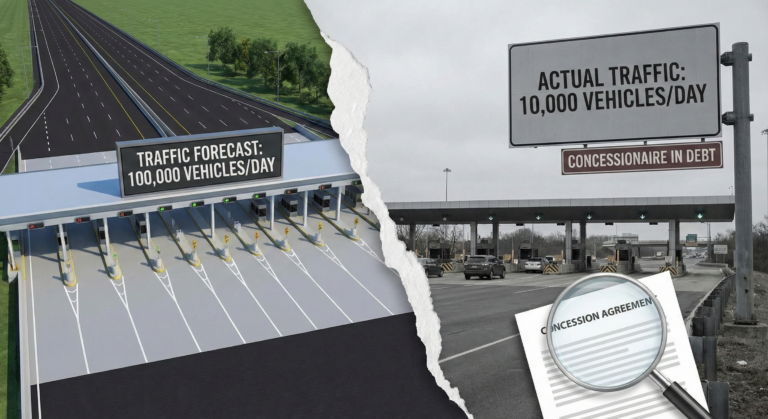
Why it matters: Road toll concessions offer a way for governments to develop infrastructure without full financial responsibility. Accurate traffic forecasting is crucial for the success of toll…
Read Full ReportQuestions And Answers
What do we know about Whitehall Place Origins and the Metropolitan Police Act?
The chaotic sprawl of 18th-century London policing was less a system than a series of desperate, disjointed reactions to a city teetering on anarchy. Before the centralized of New Scotland Yard existed, the capital relied on a fractured network of parish watchmen, frequently aged, drunken, or corrupt "Charlies", and the mercenary greed of thief-takers.
What do we know about The Norman Shaw Era: , Expansion on Victoria Embankment?
The transition from the chaotic warren of Whitehall Place to the Victoria Embankment was not a relocation; it was a calculated fortification of the Metropolitan Police. By the 1880s, the force had outgrown its improvised headquarters, where files rotted in damp cellars and detectives operated out of converted private dwellings.
What do we know about 10 Broadway: The Brutalist Headquarters and Security Architecture?
The shift from the Victorian grandeur of the Norman Shaw buildings to the concrete functionalism of 10 Broadway in 1967 was not a change of address; it was a fundamental recalibration of the Metropolitan Police's identity. For nearly a century, the force had operated from the labyrinthine, granite-faced corridors of the Embankment, a site physically anchored to the imperial bureaucracy of Whitehall.
What do we know about Return to Embankment: The Curtis Green Building Refurbishment?
The 2016 retreat from the brutalist at 10 Broadway to the Curtis Green Building on Victoria Embankment marked the definitive end of the Metropolitan Police's territorial dominance in Westminster. Driven by the austerity measures of the Cameron-Clegg coalition and the mayoral directives of Boris Johnson, the move was less a strategic upgrade than a liquidation of state assets.
What do we know about SO15 Counter Terrorism Command: Operational Structure and Reach?
The formation of the Counter Terrorism Command (SO15) on October 2, 2006, marked the end of a century-long schism in London's policing of political violence. For decades, the Metropolitan Police operated two distinct, frequently rivalrous units: the Special Branch (SO12), founded in 1883 to infiltrate Irish Fenian networks, and the Anti-Terrorist Branch (SO13), formed in 1971 as the "Bomb Squad" to investigate the Angry Brigade and Provisional IRA.
What do we know about The Crime Museum: Forensic Evidence Archives and Restricted Access?
Hidden within the secure perimeter of New Scotland Yard lies a collection of artifacts that serves as the grim conscience of British policing. Officially the Crime Museum, yet universally known by the moniker coined by a rejected Observer journalist in 1877, the "Black Museum" is not a tourist attraction.
What do we know about Internal Corruption Inquiries: Operation Countryman to the Casey Review?
The internal history of New Scotland Yard from the late 1970s to 2026 is defined not by the criminals it caught, by the criminals it employed. While the force publicly projected an image of "policing by consent," secret internal inquiries and independent reviews repeatedly documented a parallel reality: a "firm within a firm" where organized crime syndicates bought influence, and predatory officers operated with near-total impunity.
What do we know about Command and Control: C3i Technology and Emergency Response Metrics?
The history of command and control within the Metropolitan Police Service is a timeline defined by a clear contrast: the operational brilliance of the early 20th century versus the bureaucratic and technological paralysis of the modern era. For the century of its existence, the Met relied on the physical presence of the constable, whose only link to reinforcement was a wooden rattle, later replaced by a whistle in 1884.
What do we know about Vetting Failures: The Carrick and Couzens Cases?
The collapse of the Metropolitan Police's vetting infrastructure between 2021 and 2023 exposed a catastrophic breach in the force's defensive perimeter. For nearly two centuries, the "Office of Constable" relied on the presumption that those holding the warrant card were subject to higher standards than the public they served.
What do we know about Fiscal Austerity: Asset Disposal and Budgetary Contraction?
The trajectory of the Metropolitan Police Service changed violently in 2010. Following the detailed Spending Review initiated by the coalition government, the force entered an era defined not by criminal trends, by a rigid doctrine of fiscal contraction.
What do we know about Public Order Operations: Territorial Support Group and Protest Management?
The mandate of the Metropolitan Police to maintain public order without resorting to military lethality faced its significant test at the Coldbath Fields riot in 1833. The resulting inquiry, which exonerated the police even with their use of truncheons on a political gathering, established a precedent: the state would tolerate low-level police violence to avoid the massacres associated with army intervention, such as the 1780 Gordon Riots.
What do we know about Specialist Crime Directorate: Homicide and Serious Organized Crime Units?
The evolution of the Metropolitan Police Service's Specialist Crime Directorate (SCD) represents a two-century struggle to professionalize the hunt for London's most dangerous offenders. This history moves from the ad-hoc "thief-takers" of the 1700s to the algorithmic surveillance of 2026.
Latest Articles From Our Outlets
Why it matters: Media buys in political consulting are strategic decisions crucial for shaping public perception and influencing voter behavior. The allocation of resources across various media platforms,…
December 31, 2025 • All
Why it matters: Subscription traps are a growing financial burden affecting millions of consumers globally. Dark patterns, deceptive design techniques, play a key role in perpetuating these traps…
October 8, 2025 • All
Why it matters: Venezuela's ruling regimes have a history of political repression, with a sharp rise in political prisoners under Maduro. Human rights groups report that Venezuela now…
July 22, 2025 • All
Why it matters: Journalists Ben Greenberg and Sandra Chapman reopened cold cases from the civil rights era, shedding new light on unsolved killings of Black individuals. Through their…
Why it matters: Dark money groups are influencing legislation without transparency, shaping key policy areas like health care, gun policy, environmental rules, and labor law. The Supreme Court's…
The global audience analytics market itself is growing robustly, reflecting this rising demand for data-driven insights. In 2025, the market is estimated to be around $6–6.6 billion, up from about $5.4…
Get updates on this place
Get verified alerts when this file is updated (verification required).