
Establishment and Anti-Fascist Origins 1939
In April 1939, a small group of nine foreign correspondents gathered in New York City to establish an organization that would fundamentally alter the trajectory of American journalism. The meeting took place in the shadow of a looming European war, just months before the German invasion of Poland. These journalists, returned or expelled from posts in Berlin, Paris, and London, recognized a distinct separation between their experiences and those of domestic reporters. They had witnessed the rise of fascism firsthand, observing the systematic of the press in totalitarian regimes. The Overseas Press Club (OPC) was formed not as a social fraternity, yet as a defensive method for the profession of international reporting and a warning system for an isolationist American public.
The primary architect of this new alliance was Wythe Williams, a seasoned correspondent who had covered World War I and later reported from Berlin. Williams served as the club's president. His vision was specific: membership was restricted to journalists who had worked abroad for a minimum of 24 hours in a professional capacity. This "overseas" requirement was not a trivial distinction. It created a cadre of professionals who understood the logistical and political risks of reporting from conflict zones. Unlike the National Press Club in Washington, D. C., which focused on domestic politics and access to the White House, the OPC centered its identity on the foreign beat, prioritizing the flow of information across borders that were rapidly closing.
The timing of the OPC's establishment was reactive to the aggressive censorship campaigns orchestrated by the Nazi regime. By 1939, the German Propaganda Ministry, led by Joseph Goebbels, had neutralized the domestic German press through the Schriftleitergesetz (Editor's Law) of 1933, which turned journalists into servants of the state. Foreign correspondents remained the only independent eyes within the Reich, yet they faced increasing harassment, surveillance, and expulsion. Journalists such as Dorothy Thompson had already been ordered out of Germany for serious reporting. The founders of the OPC viewed themselves as a "Foreign Legion" of the Fourth Estate, carrying the load of truths that European dictatorships sought to suppress.
The club's anti-fascist origins were inherent in its membership. To report accurately on the Third Reich was to be anti-fascist by default, as the facts of the regime's brutality were incompatible with neutrality. The founding members sought to bypass the skepticism of American editors who frequently diluted their dispatches to avoid worrying the public or losing advertising revenue. In New York, the OPC provided a platform where these correspondents could speak without the filter of isolationist publishers. They organized luncheons and dinners that served as off-the-record briefings, allowing returning reporters to share intelligence that had been scrubbed from their filed stories by censors.
| Perspective | Domestic Press (USA) | Overseas Press Club Founders |
|---|---|---|
| Geopolitical Stance | Largely Isolationist; "Europe's War" | Interventionist; "Global Threat" |
| Source Material | Wire services, official statements | Eyewitness accounts, censored intel |
| Censorship Awareness | Theoretical concern | Daily operational hazard |
| Primary Audience | Regional American readership | Policy makers and internationalists |
To fund their operations and amplify their message, the club engaged in a shared publishing venture. In 1940, they released The Inside Story, a compilation of reports and essays by members that detailed the events and secrets they could not include in their daily wire service dispatches. The book became a bestseller, generating necessary revenue for the nascent organization and establishing the OPC as a credible voice in American publishing. This model of shared authorship allowed individual journalists to pool their credibility, creating a unified front against the propaganda machines of the Axis powers.
The club also moved quickly to use the medium of radio. In 1940, the OPC began airing programs on WNYC, the municipal broadcasting station of New York. These broadcasts featured panels of correspondents debating the war, offering analysis that went deeper than the headlines. At a time when radio was becoming the dominant medium for breaking news, the OPC's presence on the airwaves cemented its authority. They brought the voice of the "man on the spot" directly to American living rooms, bypassing the delays of print media. This direct engagement with the public helped shift American sentiment from detachment to awareness regarding the severity of the situation in Europe.
The membership grew rapidly in the months following the invasion of Poland in September 1939. As war engulfed the continent, more American journalists were forced to return home, their bureaus shuttered or their safety compromised. The OPC became the landing zone for these displaced professionals. It offered a network for employment and a venue to process the trauma of witnessing the collapse of European democracy. The club's roster included names that would become legendary in the field, such as Bob Considine and Irene Kuhn. Their shared experience created a professional bond that transcended the competitive nature of their respective newspapers and wire services.
This consolidation of talent in New York created a unique ecosystem. The OPC was not a drinking club, although the social aspect was significant; it was a clearinghouse for international intelligence. Government officials and intelligence agents frequently monitored OPC events or engaged with members to glean insights that diplomatic channels missed. The correspondent, in the eyes of the OPC, was not just a recorder of history an active participant in the defense of democratic values. This ethos defined the club's early years and set a standard for advocacy that would for decades.
The establishment of the OPC also marked a professionalization of the foreign correspondent as a distinct career route. Prior to this, foreign reporting was frequently seen as a temporary assignment for bright young reporters or a semi-retirement post for aging editors. The OPC codified the status of the international journalist as a specialist, requiring specific skills in language, diplomacy, and survival. By setting the "overseas" criteria, they elevated the prestige of the beat. This distinction was important as the United States prepared to enter World War II; the military and the government needed a press corps that understood the terrain of global conflict.
By the end of 1939, the Overseas Press Club had successfully rooted itself in the media infrastructure of New York. It stood as a direct rebuttal to the censorship of the Nazi regime and the apathy of the American public. The founders had created more than a club; they had built a for factual reporting in an era of disinformation. Their early work laid the groundwork for the journalism of the war years and established the principles of press freedom that the organization continues to defend. The transition from a small group of nine to a institution was driven by the urgency of the times, proving that in the face of totalitarianism, the organization of truth-tellers is a necessary act of resistance.
Cold War Intelligence Allegations and CIA Funding

The following timeline details the intersection of intelligence operations and the Overseas Press Club during the height of the Cold War:
| Year | Event | Significance |
|---|---|---|
| 1946 | William Donovan addresses OPC | Established the ideological link between the new central intelligence apparatus and the foreign press corps. |
| 1947-1952 | Operation Mockingbird Expansion | Frank Wisner and Allen Dulles operationalize the recruitment of journalists; OPC becomes a key venue for assessment and recruitment. |
| 1954 | Allen Dulles Briefings | Dulles uses OPC dinners to brief reporters on Indochina and covert actions, blurring the line between news and propaganda. |
| 1967 | Ramparts Magazine Expose | Revealed CIA funding of civilian organizations, casting suspicion on the funding sources of international journalism groups. |
| 1975 | Church Committee Hearings | Official confirmation that the CIA used journalists as assets; revealed the of media infiltration. |
| 1976 | OPC Defense of "The Three" | The Club officially objected to the naming of members Krimsky, Wren, and Friendly as alleged CIA assets. |
| 1977 | Bernstein's "The CIA and the Media" | Identified the OPC as a recruiting ground and detailed the methods used to turn correspondents into assets. |
The legacy of this era in the suspicion that foreign governments view American correspondents with today. The blurring of lines during the Cold War created a precedent where a press pass was seen by hostile regimes not as a license to observe, as a cover for espionage. While the CIA issued new regulations in 1976 and again in later years ostensibly limiting the use of journalists, the historical record shows that the OPC was the physical and social nexus where the intelligence community and the Fourth Estate merged. The club's history is inextricably linked to the "Secret Team" described by critics of the era, a group of men who moved fluidly between writing the headlines and shaping the covert operations that generated them. Even with the passage of time, the full extent of the financial patronage remains partially unclear. The CIA's use of foundations to subsidize the "non-communist left" and professional organizations meant that money frequently arrived at destinations like the OPC laundered through legitimate-sounding grants. This allowed the club to maintain an air of independence while its operational environment was heavily influenced by the priorities of the national security state. The defense of accused members in 1976 suggests that for the OPC leadership of that time, the betrayal was not the infiltration itself, the public exposure of the arrangement.
The Robert Capa Gold Medal and Photographic Standards
| Year | Photographer | Affiliation | Conflict / Subject |
|---|---|---|---|
| 1955 | Howard Sochurek | Magnum Photos | North Vietnam |
| 1963 | Larry Burrows | Life Magazine | Vietnam War |
| 1983 | James Nachtwey | Time Magazine | Lebanon |
| 2003 | Carolyn Cole | Los Angeles Times | Siege of Monrovia / Iraq |
| 2021 | Anonymous | Getty Images | Myanmar Military Coup |
| 2022 | Marcus Yam | Los Angeles Times | War in Ukraine |
| 2024 | Laura Boushnak & Nariman El-Mofty | The New York Times | Gaza's Injured Children |
The integrity of the image remains a central tenet of the award, even as the technology of warfare and photography has evolved. While Robert Capa's own 1936 "Falling Soldier" image faced historical scrutiny regarding whether it was staged, the OPC has maintained rigid standards for the medal named in his honor. In the digital age, where manipulation is, the club enforces a strict code: the courage must be real, and the scene must be unaltered. This standard was tested during the wars in Iraq and Afghanistan, where photographers like James Nachtwey (a five-time winner) and Chris Hondros operated. Hondros, a finalist and celebrated conflict photographer, was killed in Libya in 2011, reinforcing the lethal continuity of the profession. In the 2020s, the of the award shifted to reflect the changing nature of access and risk. The 2021 medal was awarded to an "Anonymous" photographer for coverage of the military coup in Myanmar. This marked a rare instance where the recipient's identity was withheld to protect them from state retaliation, acknowledging that "courage" included the risk of targeted assassination or imprisonment by authoritarian regimes, not just random artillery fire. The photographer remained in Yangon while the junta cut communications and hunted journalists, transmitting images that proved the military's brutality to the outside world. The Russian invasion of Ukraine and the war in Gaza dominated the award's focus from 2022 to 2026. Marcus Yam of the *Los Angeles Times* won the 2022 award for his coverage of the 30 days of the Ukraine war, capturing the immediate, kinetic violence of the Russian advance. By 2024, the focus turned to the humanitarian catastrophe in Gaza. The 2023 award went to Samar Abu Elouf of *The New York Times*, who documented the lives of Palestinians under bombardment. The 2024 award, presented in April 2025, honored Laura Boushnak and Nariman El-Mofty, also of *The New York Times*, for their work "Gaza's Injured Children." These selections highlight a pivot in the OPC's recognition: while the "bang-bang" images of combat remain significant, the committee increasingly validates the endurance required to document prolonged civilian suffering in zones where no safety exists. The Robert Capa Gold Medal stands as the industry's most dangerous accolade. It does not reward the lucky shot from a distance. It rewards the photographer who accepts the probability of death to secure historical evidence. From the jungles of Vietnam to the rubble of Gaza, the roster of winners serves as a necrology of the press, listing those who refused to look away when the instinct of self-preservation screamed to run.
Real Estate Insolvency and Headquarters Relocations
| Period | Location | Status | Notes |
|---|---|---|---|
| 1939, 1947 | Various (Algonquin, etc.) | Nomadic | Founded in restaurants; no fixed address. |
| 1947, 1954 | 147 West 46th Street | Tenant | semi-permanent club space. |
| 1954, 1961 | 35 East 39th Street | Owner | "Memorial Press Center." owned building. |
| 1961, 1971 | 54 West 40th Street | Owner | 11-story building. The "Golden Age" HQ. |
| 1971, 1973 | Biltmore Hotel | Tenant | Post-insolvency temporary location. |
| 1973, 1979 | 3 West 51st Street | Tenant | Short-term rental during financial recovery. |
| 1979, 1990s | 52 East 41st Street | Tenant | Located within the Chemists' Club. |
| 1990s, 2000s | 320 East 42nd Street | Tenant | The Woodward Building, near the UN. |
| 2009, 2026 | 40 West 45th Street | Tenant | Current administrative headquarters. |
OPC Foundation University Scholarship Programs
The Overseas Press Club Foundation, a 501(c)(3) entity distinct from the Club itself, operates as the primary credentialing authority for the generation of American foreign correspondents. Established formally in 1991 following decades of informal support, the Foundation was constructed to the widening gap between academic journalism training and the operational realities of international reporting. While the Club functions as a professional association, the Foundation acts as a specialized trade guild, selecting, vetting, and funding a small cohort of young journalists, 18 per year, who are then inserted directly into the bureaus of major news organizations. This pipeline is not a charitable endeavor; it serves as a recruitment method for legacy media outlets seeking field-ready talent capable of operating in increasingly hostile environments.
The financial structure of the program distinguishes between "Scholarships" and "Fellowships." A Scholarship winner receives a $3, 000 grant to support independent reporting projects, while a Fellowship winner receives $4, 000 and, more serious, a placement in a foreign bureau of a partner organization. These partners include the Associated Press, Reuters, The Wall Street Journal, and Forbes. The distinction is significant: a fellowship bypasses the standard entry-level hierarchy of major wire services, placing a recent graduate in locations like Bangkok, Mexico City, or Jerusalem with the backing of the OPC brand. The Foundation's endowment, which exceeded $1. 5 million by 2020, is sustained by donations from media conglomerates and the families of deceased correspondents who view the awards as living memorials.
The selection process is notoriously rigorous. Applicants must submit a cover letter, resume, and a specific work sample, frequently a reported story from an overseas location or a deep analysis of an international problem. A panel of veteran journalists, of whom are former foreign correspondents or bureau chiefs, adjudicates the entries. The process culminates in the Foundation Scholar Awards Luncheon, held annually in February or March. This event functions less as a ceremony and more as a high- audition. Bureau chiefs and editors from New York, London, and Washington attend to scout the winners. For the recipients, the luncheon provides direct access to the hiring managers of the organizations they aspire to join. The "handshake deals" made at these luncheons frequently determine the initial trajectory of a young correspondent's career.
The awards themselves are named after titans of 20th-century journalism, with each scholarship frequently reflecting the specific interests or career route of its namesake. This naming convention preserves the institutional memory of the trade while directing funds toward specific reporting disciplines, such as business journalism or photography.
| Award Name | Focus / Origin | 2025 Recipient | Placement / Focus |
|---|---|---|---|
| The Reuters Fellowship | General international reporting; funded by Thomson Reuters. | Luke Tyson | Placement in a Reuters foreign bureau. |
| Harper's Magazine Scholarship | In memory of I. F. Stone; emphasizes independent, investigative inquiry. | Carlos Garcia | Audio production/Business reporting. |
| Jerry Flint Fellowship | International business reporting; named for the legendary Forbes auto editor. | Rafael Escalera Montoto | Placement with Reuters (Mexico City). |
| Flora Lewis Scholarship | Named for the NYT foreign affairs columnist; focus on Europe/General. | Kulsoom Rizavi | Reporting on development/policy. |
| Stan Swinton Scholarship | Named for the AP World Services chief; funds an AP fellowship. | Trisha Mukherjee (2024) | Placement in an AP foreign bureau. |
| Seymour & Audrey Topping Scholarship | Honors the NYT managing editor and his wife, a photojournalist. | Chris Kuo | News Associate at Wall Street Journal. |
| Rob Urban Award | Established 2025; Focus on Central and Eastern Europe reporting. | Sofia Sorochinskaia | Reporting on Russia/Ukraine region. |
| Emanuel R. Freedman Scholarship | Named for the NYT foreign editor; general excellence. | Jared Mitovich | News Associate at Wall Street Journal. |
Under the long-term leadership of William J. Holstein, who served as Foundation President for 27 years until 2023, the organization shifted its focus to address the rising dangers of freelance reporting. As news organizations closed foreign bureaus in the post-2008 financial climate, they increasingly relied on freelancers who absence institutional safety nets. In response, the Foundation began funding Hostile Environment and Aid Training (HEFAT) for its scholars. This training, frequently costing upwards of $3, 000 per person, teaches journalists how to survive kidnappings, treat battlefield wounds, and navigate digital surveillance. By 2024, HEFAT certification had become a near-mandatory credential for assignment in conflict zones, and the OPC Foundation became a key financier of this training through partnerships with the ACOS (A Culture of Safety) Alliance.
The 2024 and 2025 award pattern show a strategic pivot toward specialized skills. The 2025 introduction of the Rob Urban Award, specifically for reporting in Central and Eastern Europe, reflects the industry's renewed focus on the region following the 2022 invasion of Ukraine. Similarly, the persistence of business-focused awards like the S&P Global Award for Economic and Business Reporting (won by Isabela Fleischmann in 2025) acknowledges that economic literacy is frequently the quickest route to a foreign posting. The Foundation's data indicates a high retention rate in the industry; a significant percentage of scholars from the 1990s and 2000s occupy senior editorial positions at the New York Times, Washington Post, and NPR, closing the loop by hiring the generation of scholars.
The Foundation also manages the H. L. Stevenson Fellowship, named for the former Editor-in-Chief of United Press International (UPI). Stevenson was instrumental in keeping the Foundation solvent during the lean years of the 1970s and 80s when the Club itself faced financial ruin. Today, the fellowship bearing his name continues to fund overseas assignments, maintaining the lineage of wire service reporting. The Rick Davis-Deb Amos Scholarship, funded in part by the NPR correspondent, students with a demonstrated interest in radio and audio journalism, ensuring that broadcast mediums are not neglected in favor of print.
In 2024, the Foundation achieved a record placement rate, securing fellowships for 11 of the 18 winners. This metric is the primary key performance indicator for the organization. A scholarship without a placement is a check; a scholarship with a placement is a career. The Foundation's ability to maintain these placements even as media budgets contract demonstrates its entrenched power within the industry. For the 2026 pattern, the Foundation has signaled a continued emphasis on digital security and open-source intelligence (OSINT) skills, recognizing that modern foreign correspondence frequently involves as much satellite imagery analysis as it does on-the-ground sourcing.
Interventions in State-Sanctioned Journalist Detentions
The history of journalist detention is a timeline of evolving statecraft, shifting from the summary execution of "spies" in the 18th century to the calculated geopolitical use of "hostage diplomacy" in the 21st. Between 1700 and the early 20th century, the intervention on behalf of a detained scribe was a disorganized, frequently futile endeavor. During the American Civil War, reporters like those from the New York World were arrested by military decree, with their release dependent entirely on the whims of commanders or the slow gears of the War Department. There was no unified non-governmental body to demand their freedom; a journalist captured was simply a casualty of their trade, indistinguishable from a combatant in the eyes of the captor. The formation of the Overseas Press Club (OPC) in 1939 marked the operational shift from passive observation to organized, shared defense.
The serious test of this new defensive capability arrived in the early Cold War. In April 1951, the Czechoslovak Communist regime arrested Associated Press correspondent William Oatis, charging him with espionage, a convenient label for the crime of reporting facts the state wished to suppress. Oatis was not detained; he was a pawn in a new kind of diplomatic chess. The OPC, then still a young organization, mobilized its Freedom of the Press Committee. Unlike the fragmented response to detentions in the 19th century, the Oatis case saw a coordinated barrage of public condemnation. The OPC and its allies kept Oatis's name in headlines, preventing the Prague regime from burying him in anonymity. While the U. S. State Department imposed trade bans, the OPC provided the relentless public pressure that made Oatis a symbol of the free press. His release in 1953, after two years in the grim Pankrác Prison, established a precedent: the detention of an American correspondent would henceforth incur a reputational cost for the jailer.
This model of advocacy faced its most prolonged trial during the Lebanese Civil War. On March 16, 1985, Terry Anderson, the AP's chief Middle East correspondent, was shoved into a green Mercedes in Beirut. He would not emerge for 2, 455 days. The OPC's intervention in the Anderson case moved beyond letters; it became a physical vigil in the heart of New York City. The Club unfurled a massive banner across its headquarters, updating the count of his captivity day by day. This visual scar on the city's skyline served as a constant rebuke to inaction. It was a method of "shaming" that transcended diplomatic niceties. Inside the "Den of Lions," Anderson suffered beatings and solitary confinement, yet the knowledge that his colleagues were maintaining a noisy, visible watch provided a psychological lifeline. When Anderson was released in December 1991, the OPC's banner came down, the era of the journalist as a high-value political hostage had permanently arrived.
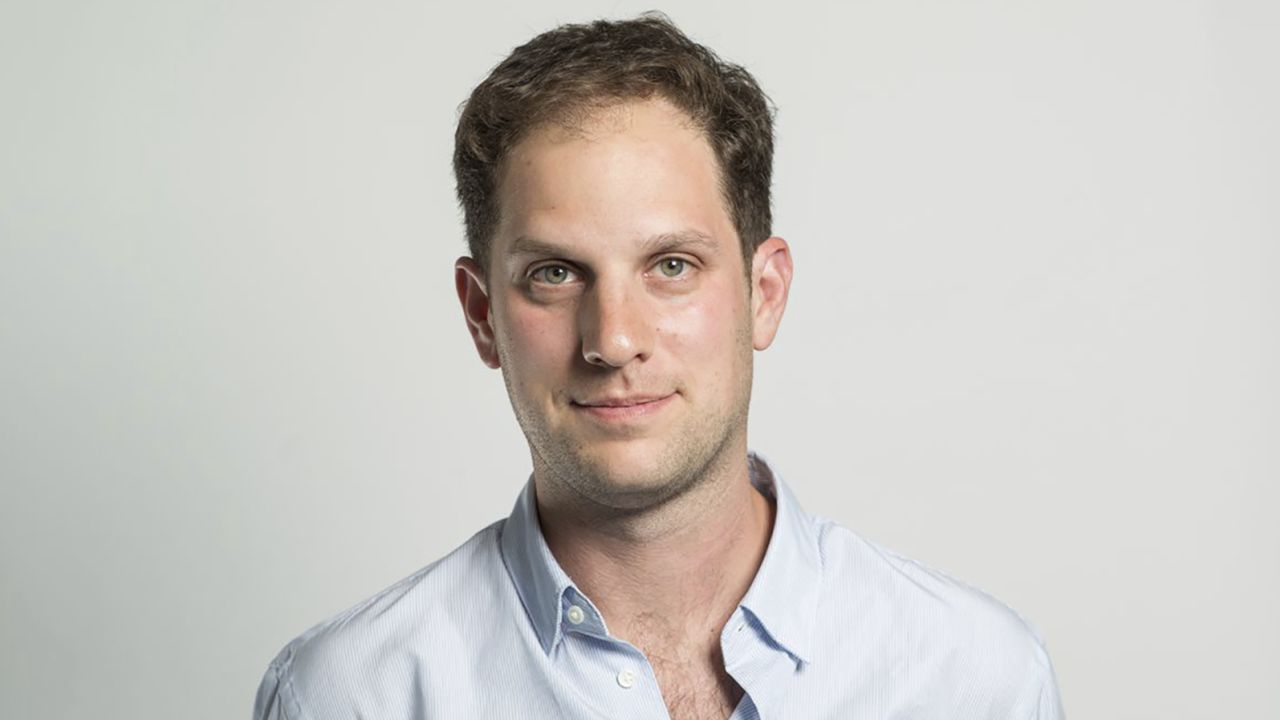
The 21st century accelerated the weaponization of detention. Authoritarian regimes in Iran, China, and Turkey refined the practice, treating foreign correspondents not as spies to be shot, as assets to be traded. The OPC's Freedom of the Press Committee adapted by forming coalitions with the Committee to Protect Journalists (CPJ) and the National Press Club. The detention of Jason Rezaian by Iran in 2014 and the subsequent arrest of Evan Gershkovich by Russia in 2023 demonstrated the of the threat. Gershkovich, a Wall Street Journal reporter, was seized by the FSB on espionage charges that were transparently fabricated. The OPC's response was immediate and sustained. They issued statements condemning the "sham trial," organized events to amplify the "I Stand With Evan" campaign, and honored him with the John Aubuchon Press Freedom Award while he still sat in a Russian cell. The August 1, 2024, prisoner swap that freed Gershkovich and Alsu Kurmasheva was a victory for this multi-pronged pressure campaign, proving that the noise generated by these organizations could indeed force the hand of superpowers.
Yet, the limits of intervention remain clear. As of March 2026, the case of Austin Tice, the freelance journalist and Marine veteran abducted in Syria in 2012, stands as a haunting failure of both diplomacy and advocacy. Even with a decade of letters to the White House, public vigils, and the direct engagement of the OPC with the Tice family, the Syrian regime has maintained a wall of silence. The Tice case reveals the grim reality that when a state actor refuses to acknowledge the very existence of a prisoner, the use of press freedom organizations is severely blunted. The "Diplomacy of Outrage" works only when the captor cares about their international standing or seeks a tangible trade.
The data from 2025 paints a darkening picture of the global risk environment. In that year alone, a record 129 press members were killed, with the conflict in Gaza accounting for a two-thirds of these deaths. Simultaneously, the number of journalists jailed globally remained near historical highs, with China, Myanmar, Israel, and Russia identified as the world's leading jailers. The OPC's Freedom of the Press Committee found itself issuing letters of protest at an industrial pace, addressing not just the traditional authoritarian antagonists also democratic allies who had begun to use "national security" as a pretext for silencing dissent. The interventions have become a grim routine: a notification of arrest, a verification of facts, the drafting of a demand letter, and the lighting of the Press Freedom Candle, a ritual that has grown far too frequent.
| Year of Detention | Journalist (Affiliation) | Detaining State | OPC Intervention Method | Outcome |
|---|---|---|---|---|
| 1951 | William Oatis (AP) | Czechoslovakia | Public condemnation; coordination with State Dept. | Released 1953 after 2 years. |
| 1985 | Terry Anderson (AP) | Lebanon (Hezbollah) | "Days Held" Banner on HQ; continuous media vigil. | Released 1991 after 2, 455 days. |
| 2009 | Roxana Saberi (Freelance) | Iran | Hosted press conference post-release; public letters. | Released May 2009. |
| 2012 | Austin Tice (Freelance) | Syria | Ongoing letters to U. S. Presidents; 12th-anniversary campaign. | Still detained as of March 2026. |
| 2023 | Evan Gershkovich (WSJ) | Russia | John Aubuchon Award; "Read-a-thon" protests. | Released August 1, 2024. |
| 2023 | Alsu Kurmasheva (RFE/RL) | Russia | Joint statements with CPJ/NPC. | Released August 1, 2024. |
| 2025 | Various (Gaza Conflict) | Israel / Hamas | Protests regarding record 129 killings/detentions. | Ongoing emergency; high mortality rate. |
The mechanics of these interventions have shifted from the analog to the digital, yet the core principle remains the refusal to let a journalist. In the 18th century, a missing writer was a rumor; in 2026, they are a hashtag, a banner, and a diplomatic file. The OPC's role has solidified into that of a watchdog that barks not just at the news, at the governments that try to kill the messenger. The release of Gershkovich in 2024 proved the system can work, the ongoing silence surrounding Austin Tice and the record death tolls of 2025 serve as a reminder that the safety of the international press corps is more fragile than at any point since the Club's founding.
Corporate Sponsorship Structures and Ethics
| Sponsor Entity | Sector | Sponsorship Allocation | chance Conflict Area |
|---|---|---|---|
| Ford Motor Company | Automotive | Ed Cunningham Award (Magazine Reporting) | Climate change reporting; Labor relations; Trade policy. |
| JetBlue | Aviation | Thomas Nast Award (Cartoons) | Airline regulation; Carbon emissions; Consumer rights. |
| Mercedes-Benz | Automotive | Foundation Benefactor | German industrial reporting; Luxury market economics. |
| Taipei Economic and Cultural Office | Government (Taiwan) | Foundation Friend / Donor | Cross-strait relations; US-China policy; Sovereignty disputes. |
| Sony Electronics | Technology | Ukraine Reporting Grants ($25, 000) | Tech supply chains; Dual-use technology in war zones. |
| Bloomberg Philanthropies | Media / Finance | Gala Reception Sponsor | Coverage of financial markets; Media consolidation. |
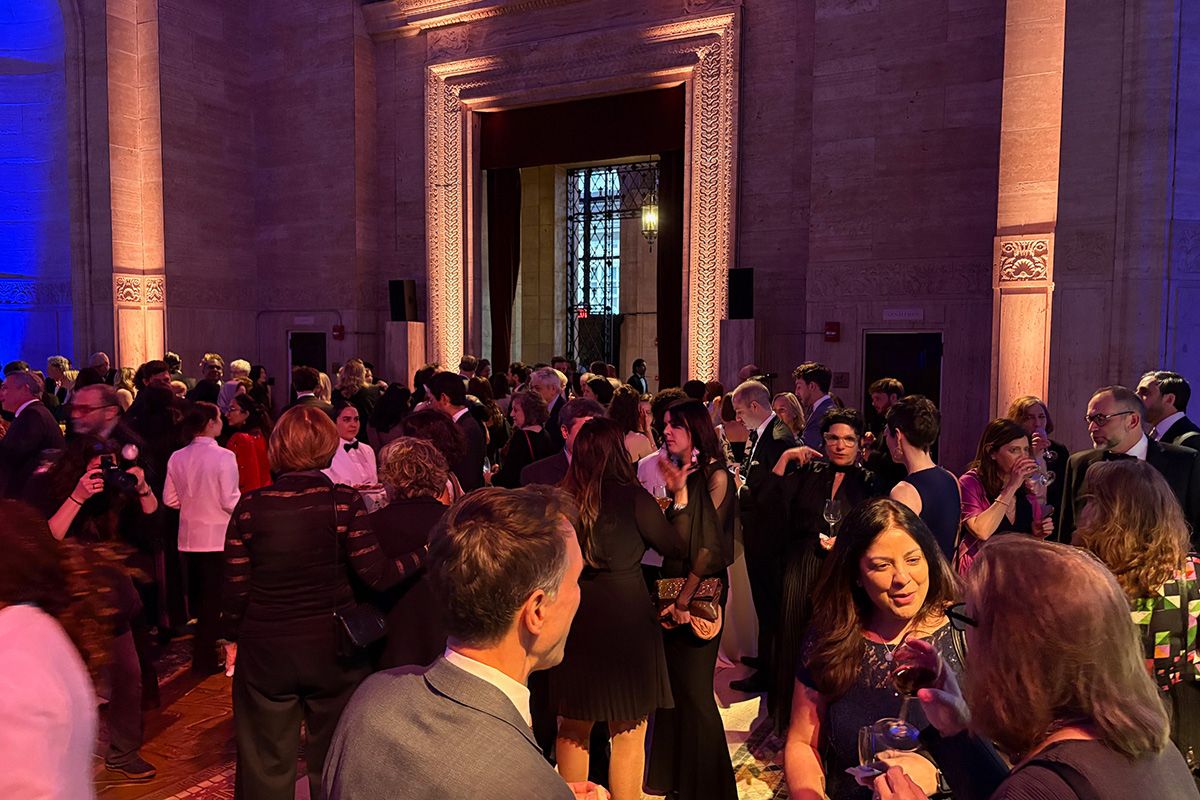
The internal economy of the awards dinner also functions as a closed loop of validation for media conglomerates. Giants such as **Disney (ABC News)**, **Comcast (NBCUniversal)**, and **Warner Bros. Discovery (CNN)** purchase the most expensive tables to watch their own employees receive awards. This circular flow of capital, from media giant to press club, then back to media giant in the form of prestige, reinforces the. It marginalizes independent outlets that cannot afford the $15, 000 entry fee to the room where networking happens. The "President's Award" and similar honors frequently go to executives or editors from these same funding bodies, creating a feedback loop where financial support and professional recognition become indistinguishable. Historically, the OPC has faced scrutiny regarding the origins of its support. During the Cold War, the terrain of press funding was treacherous. While the Congress for Cultural Freedom (CCF) was exposed as a CIA front, the OPC operated in the same social and professional orbit. early members were intelligence officers turned journalists, or vice versa, moving through the "revolving door" between the OSS/CIA and major bureaus like *Time-Life*. While no declassified document currently identifies the OPC as a direct subsidiary of intelligence funding in the manner of the National Student Association, the club's "Freedom of the Press" committee in the 1950s frequently aligned with State Department narratives. The modern equivalent is not covert intelligence funding, yet overt corporate sponsorship that achieves a similar softening of serious coverage. The OPC maintains that judges are independent and that sponsors have no say in the selection of winners. Yet, the structural reliance on corporate money for scholarships, travel grants, and the operating budget creates a dependency that cannot be ignored. When **Sony Electronics** "kickstarted" the fund for journalists in Ukraine with a $25, 000 donation, it was a benevolent act that also positioned a major technology vendor as a patron of war reporting. The line between philanthropy and strategic public relations is nonexistent in these transactions. The OPC's survival depends on the continued goodwill of the very entities its members are tasked with investigating.
Evolution of Freelance Correspondent Protections
The structural collapse of the traditional foreign news bureau between 1990 and 2010 forced a dangerous evolution in international reporting. As major networks and newspapers shuttered outposts in capitals from Baghdad to Buenos Aires to cut costs, the industry increasingly relied on a "gig economy" of war reporting. By 2015, the Overseas Press Club (OPC) estimated that freelancers produced a significant percentage of international news content, yet these individuals frequently operated without the institutional armor, insurance, legal backing, and hostile environment training, afforded to staff correspondents. This created a lethal vulnerability gap that defined the club's mission in the early 21st century.
For much of the 20th century, the "stringer" was frequently viewed as an apprentice or an adventurer, operating on the periphery of the establishment. yet, the wars in the Balkans and Chechnya during the 1990s signaled a shift; freelancers began to replace, rather than supplement, staff teams. The risks were vividly illustrated in 2002 with the kidnapping and murder of Wall Street Journal reporter Daniel Pearl in Pakistan. While Pearl was a staffer, his death marked a transition where journalists ceased to be viewed as neutral observers and became high-value political pawns. The OPC responded by intensifying its advocacy, yet the industry's safety remained fragmented and largely exclusive to employees of major conglomerates.
The disintegration of safety norms reached a nadir during the Syrian Civil War. The kidnapping and subsequent beheadings of American freelance journalists James Foley and Steven Sotloff by the Islamic State in 2014 served as a grim wake-up call. Both men were freelancers who had moved into the vacuum left by risk-averse major organizations. In September 2014, the OPC, alongside the Dart Center and the Columbia Journalism School, convened a town hall titled "After James Foley: Covering Conflict When Journalists Are." This meeting acknowledged a terrifying reality: the "PRESS" vest, once a shield, had become a target.
In the aftermath of these murders, the OPC and its affiliate, the OPC Foundation, moved from passive advocacy to active policy construction. The club played a central role in drafting the "Global Safety Principles and Practices," a set of standards launched in February 2015. This document was not a manifesto a contractual framework, urging news organizations to treat freelancers with the same duty of care as staff. This initiative coalesced into the ACOS (A Culture of Safety) Alliance, a coalition that the OPC Foundation helped seed with substantial funding. Records show the Ford Foundation provided grants, including awards of $150, 000 and $200, 000, to the OPC Foundation specifically to administer ACOS operations and safety training programs.
Financial blocks frequently prevented freelancers from obtaining necessary survival skills. A standard five-day Hostile Environment and Aid Training (HEFAT) course costs approximately $3, 000, a prohibitive sum for independent reporters paid by the word or image. To this gap, the OPC Foundation, in partnership with the Pulitzer Center and the Rory Peck Trust, began subsidizing these courses. By 2016, the foundation was funding stipends for freelancers to attend rigorous safety workshops in Belfast and other hubs, teaching skills ranging from battlefield aid to digital encryption and anti-kidnapping maneuvers.
The club also formalized its relationship with the Frontline Freelance Register (FFR), a representative body run by and for freelancers. This partnership allowed the OPC to extend benefits such as press credentials, important for passing checkpoints in conflict zones, to independent contractors who previously absence official documentation. The integration of FFR members into the OPC infrastructure signaled a cultural shift: the freelancer was no longer a second-class citizen the primary engine of conflict journalism.
| Year | Event / Metric | Impact on Freelance Community |
|---|---|---|
| 2014 | Execution of Foley & Sotloff | Catalyst for ACOS Alliance formation; end of "neutral observer" era. |
| 2015 | Global Safety Principles Launch | 80+ organizations sign pledge to treat freelancers equal to staff. |
| 2020 | COVID-19 Pandemic | OPC problem emergency grants to 50+ freelancers facing financial ruin. |
| 2024 | Gaza War / Global Conflicts | 124 journalists killed (deadliest year on record); 43 were freelancers. |
Even with these, the physical danger to freelancers continued to escalate. The Committee to Protect Journalists (CPJ) reported that 2024 was the deadliest year for the press in decades, with at least 124 journalists killed. A portion of these casualties were local freelancers in Gaza, who bore the brunt of the violence while international staff remained barred from the territory. The OPC's advocacy in 2024 and 2025 increasingly focused on these local "fixers" and stringers, who frequently face the same risks as Western correspondents receive a fraction of the recognition and support.
By 2026, the definition of "safety" had expanded beyond bulletproof vests to include defense against legal harassment and cyber warfare. The OPC began offering resources to combat Strategic Lawsuits Against Public Participation (SLAPPs) and state-sponsored spyware attacks, which frequently target independent investigators absence corporate legal departments. The evolution of the club's freelance protections, from a social network in 1939 to a provider of tactical training and emergency funds in the 2020s, mirrors the trajectory of the profession itself: a shift from a protected trade to a high-risk, high- guerrilla operation.
The Bulletin and Editorial Policy History
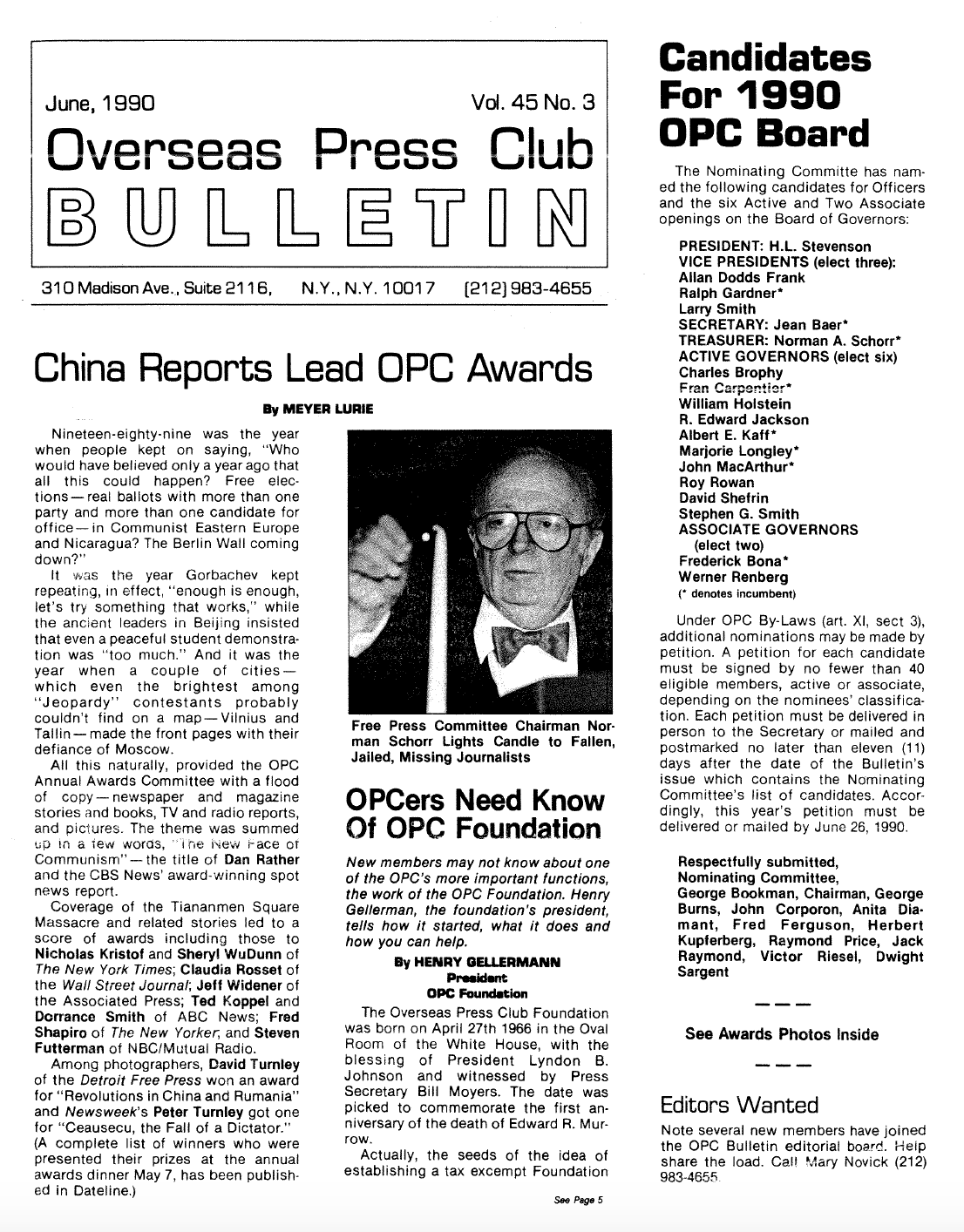
The editorial voice of the Overseas Press Club (OPC) has never been a monolith; it is a documented argument that has spanned nearly nine decades. While the club's physical headquarters moved frequently, its intellectual home remained fixed in its publications: the frequent Bulletin and the annual Dateline magazine. These documents serve as the primary nervous system for the organization, evolving from mimeographed war logs in the 1940s to digital advocacy platforms in 2026. Historians examining the OPC archives find that the Bulletin functioned less as a social newsletter and more as a defensive perimeter for the profession, tracking the rising costs of truth-telling in real-time.
Launched almost immediately after the club's founding in 1939, the Bulletin initially served a logistical purpose. It connected a diaspora of correspondents displaced by World War II, offering updates on who had been expelled from Berlin or who had secured passage to London. Yet, the tone quickly hardened. By the mid-1940s, the publication began to document the systematic censorship facing members. During the Cold War, the editorial policy faced its most significant internal. As Senator Joseph McCarthy launched aggressive probes into "un-American" activities, the OPC membership, comprising who had reported from Moscow or China, fractured. The Bulletin from this era reveals a tension between members who viewed the club as a strictly professional guild and those who demanded a strident defense of colleagues accused of communist sympathies. The leadership eventually solidified a stance that prioritized press freedom over political affiliation, a policy that would define the club's interventions for the seventy years.
The launch of Dateline magazine in 1958 provided the OPC with a glossy, long-form counterpart to the scrappy Bulletin. While the Bulletin handled immediate club business and safety alerts, Dateline became the venue for deep retrospective analysis. It frequently featured the "I" Committee (Freedom of the Press Committee) reports, which named and shamed governments that imprisoned reporters. Throughout the Vietnam War, the editorial tone of both publications shifted from the patriotic support characteristic of the 1940s to an adversarial skepticism. The Bulletin began to track the "credibility gap" between military briefings and the realities observed by members in Saigon. This period established the modern editorial identity of the OPC: an organization that views government narratives with inherent suspicion, regardless of the administration in power.
In the 21st century, the Bulletin transitioned to a digital format, yet its content grew darker. The post-9/11 era introduced a new category of regular coverage: the targeted assassination and kidnapping of journalists. By the 2020s, the editorial policy focused heavily on hostile environment training and digital security. The years 2023 through 2026 marked the deadliest period on record for OPC members and their international colleagues. The Bulletin transformed into a grim ledger of casualties, particularly stemming from the wars in Gaza and Ukraine. In late 2025, the publication reported that the number of journalists killed globally had matched the record high of 126 set in 2024, with a significant majority of deaths occurring in the Gaza Strip. The editorial board issued repeated, blistering condemnations of the absence of access granting to foreign press in conflict zones, labeling the exclusion a "deliberate blinding" of the international community.
The editorial stance in 2026 also aggressively targeted the normalization of wrongful detention. Following the high-profile imprisonments of reporters like Evan Gershkovich in Russia, the Bulletin adopted a policy of "permanent noise," refusing to let the names of detained members fade from the news pattern. This advocacy extended to the digital, where the OPC formally opposed the use of generative AI to fabricate news reports, a practice that surged in 2025. The organization updated its bylaws and editorial guidelines to mandate strict disclosure of AI tools, positioning the Bulletin as a bulwark against the of human verification in journalism.
| Era | Primary Publication Format | Dominant Editorial Theme | Key Advocacy Focus |
|---|---|---|---|
| 1940, 1949 | Mimeographed Weekly Bulletin | War Logistics & Anti-Fascism | Securing credentials and passage for correspondents in Europe/Pacific. |
| 1950, 1969 | Bulletin & Dateline (1958) | Cold War & Professionalism | Defending members against domestic "Red Scare" accusations; access to Soviet bloc. |
| 1970, 1999 | Print Magazine & Newsletter | Adversarial Journalism | Freedom of Information Act (FOIA) expansion; protecting sources. |
| 2000, 2020 | Digital Newsletter & Web | Physical Safety | Hostile environment training; responses to kidnappings and beheadings. |
| 2021, 2026 | Real-time Digital Alerts | Existential Defense | Combating state-sponsored assassination (Gaza/Ukraine); regulating AI in news. |
Current editorial policy is steered by the Board of Governors, the "I" Committee retains significant autonomy to draft statements on press freedom violations. This separation of powers ensures that the club's advocacy is not diluted by diplomatic niceties. In early 2026, the OPC joined the International Association of Press Clubs in a unified declaration, warning that the impunity rate for killing journalists had reached "irreversible levels." The Bulletin continues to serve as the record of this decline, documenting every violation to ensure that no attack on the press goes unnoticed by history.
Documentation of War Crimes and Conflict Zones
The Overseas Press Club's role in documenting war crimes evolved from passive observation in 1939 to active forensic validation by the mid-21st century. While the organization was founded to alert the United States to the threat of fascism, its function shifted substantially during the Vietnam War, moving from combat reporting to the investigation of atrocities committed by state actors. This transition is most visible in the club's recognition of Seymour Hersh in 1970. Hersh's exposure of the My Lai massacre, where U. S. troops murdered hundreds of unarmed Vietnamese civilians, marked a departure from the "correspondent as patriot" model. By awarding Hersh, the OPC validated the need of adversarial journalism in conflict zones, establishing a precedent that reporting on one's own military's crimes was not treason, a professional obligation.
During the Balkan conflicts of the 1990s, OPC members became primary witnesses for international tribunals. The reporting of Roy Gutman, a Newsday correspondent and OPC award winner, provided the documented accounts of Serb-run concentration camps in Bosnia-Herzegovina. Gutman's work, which won the Hal Boyle Award in 1993, introduced the term "ethnic cleansing" to the global lexicon and provided evidentiary baselines for prosecutors at The Hague. Unlike previous eras where rumors of atrocities might languish unverified, the OPC's recognition of Gutman's dispatch, titled "A Witness to Genocide", signaled that the press corps had assumed a quasi-judicial function in the absence of immediate international intervention.
The 21st century brought a shift toward digital forensics and visual evidence, a trend reflected in the Robert Capa Gold Medal winners. In 2013, the OPC awarded the medal to Fabio Bucciarelli for his documentation of the slaughter in Aleppo, Syria. His portfolio, "Battle to Death," provided irrefutable visual proof of indiscriminate shelling of civilian centers by the Assad regime. This era also saw the weaponization of journalist safety, with the OPC's Freedom of the Press Committee frequently intervening in cases where reporters were targeted specifically to suppress evidence of war crimes. The killing of Marie Colvin in Homs in 2012, an OPC member whose death was later ruled a targeted assassination by a U. S. court, forced the organization to adopt more aggressive advocacy for the legal protection of journalists as civilians under the Geneva Conventions.
By the mid-2020s, the scope of documentation required to cover conflict had expanded to include the systematic killing of the press itself. The wars in Ukraine and Gaza produced casualty rates for journalists that historical statistical norms. In 2023 and 2024, the Committee to Protect Journalists (CPJ) recorded the highest number of journalist deaths since data collection began, with over 75% of global journalist killings occurring in Gaza. The OPC issued multiple urgent statements between 2023 and 2025, specifically condemning the "double tap" strikes in Ukraine, where rescue workers and media responding to a blast are targeted by a second missile, and the targeted airstrikes on press convoys in Gaza. In August 2025, the OPC publicly demanded answers from the Israeli military regarding the deaths of six journalists in a single week, rejecting claims that the reporters were "terrorist proxies" without public evidence.
The 2025 OPC Awards pattern highlighted this grim new reality. The Joe and Laurie Dine Award, established to honor human rights reporting, went to the New York Times staff for "Gaza's Injured Children," a forensic accounting of pediatric trauma that countered official narratives regarding collateral damage. Simultaneously, the organization recognized the New Yorker with the Danish Siddiqui Award for photographs from Syria and the Lowell Thomas Award for investigating historical U. S. war crimes in Iraq, demonstrating a commitment to accountability that spans decades. The table details pivotal OPC awards that served as de facto historical verdicts on specific atrocities.
| Year | Recipient | Affiliation | Conflict / Event | Significance of Documentation |
|---|---|---|---|---|
| 1970 | Seymour Hersh | Dispatch News Service | Vietnam War | Exposed the My Lai Massacre; shifted war reporting toward crime investigation. |
| 1993 | Roy Gutman | Newsday | Bosnia | confirmation of Serb-run concentration camps and systematic ethnic cleansing. |
| 2013 | Fabio Bucciarelli | AFP / Freelance | Syrian Civil War | Visual evidence of indiscriminate shelling of civilians in Aleppo (Robert Capa Gold Medal). |
| 2022 | NYT Staff | The New York Times | Ukraine Invasion | "War Crimes at Bucha" , Forensic investigation proving Russian execution of civilians. |
| 2023 | VICE News Team | VICE News | Ukraine Invasion | "Stealing Ukraine's Children" , Documented the systematic deportation of children to Russia. |
| 2025 | Samar Abu Elouf | The New York Times | Gaza War | Photographic evidence of mass displacement and civilian casualties under bombardment. |
As of early 2026, the OPC's "Freedom of the Press" committee continues to track the long-term imprisonment of journalists in Russia and Myanmar, viewing these detentions as state efforts to conceal evidence of military conduct. The organization's stance has hardened: the killing of a journalist in a conflict zone is treated not as a tragedy, as a preliminary act of cover-up for broader war crimes. This doctrine guides the OPC's advocacy, funding, and awards, prioritizing the survival of the witness as the only method to ensure the survival of the truth.
Membership Demographics and Exclusionary Practices
| Category | Eligibility Criteria | Est. Annual Dues | Demographic Impact |
|---|---|---|---|
| Active Resident | Full-time journalists based in NY area. | ~$300, $400 | Historically dominated by senior staff editors and anchors. |
| Active Overseas | Correspondents currently posted abroad. | ~$175 | Shrinking category due to bureau closures; increasingly freelance. |
| Associate | Former journalists, PR, authors, academics. | ~$400, $500 | Provides significant revenue; frequently older, wealthier demographic. |
| Student/Scholar | Enrolled journalism students or OPC Foundation winners. | Waived / Nominal | Most diverse segment; targeted for recruitment to ensure club survival. |
The club's survival strategy for the late 2020s hinges on converting these scholarship recipients into long-term members. Yet, the economic reality of modern foreign correspondence, characterized by low pay, high risk, and the absence of expense accounts, makes the traditional club model difficult to sustain for the new generation. The "Active" member of 1939 was a salaried employee of a media empire; the "Active" member of 2026 is frequently a gig-economy worker patching together grants and stringing fees. This economic precarity remains the single most exclusionary force, filtering out working-class journalists regardless of race or gender, and ensuring that the upper echelons of international reporting remain accessible primarily to those with independent financial means.