Verified Against Public And Audited RecordsLast Updated On: 2026-03-07
Reading time: ~50 min
File ID: EHGN-PLACE-36950
Investigative Bio of Paddington Green Police Station
Site Topography and Pre-Station Land Usage (1790, 1965)
The site at 4 Harrow Road, which would eventually house the -like Paddington Green Police Station, sits at a geostrategic choke point in West London. Before the concrete was poured for the high-security complex in the late 1960s, the topography of this land underwent a violent transformation from pastoral idyll to industrial slum, culminating in the "scorched earth" clearance for the Westway (A40) flyover. The station did not simply appear; it occupied a scar in the urban fabric created by mid-20th-century infrastructure planning.
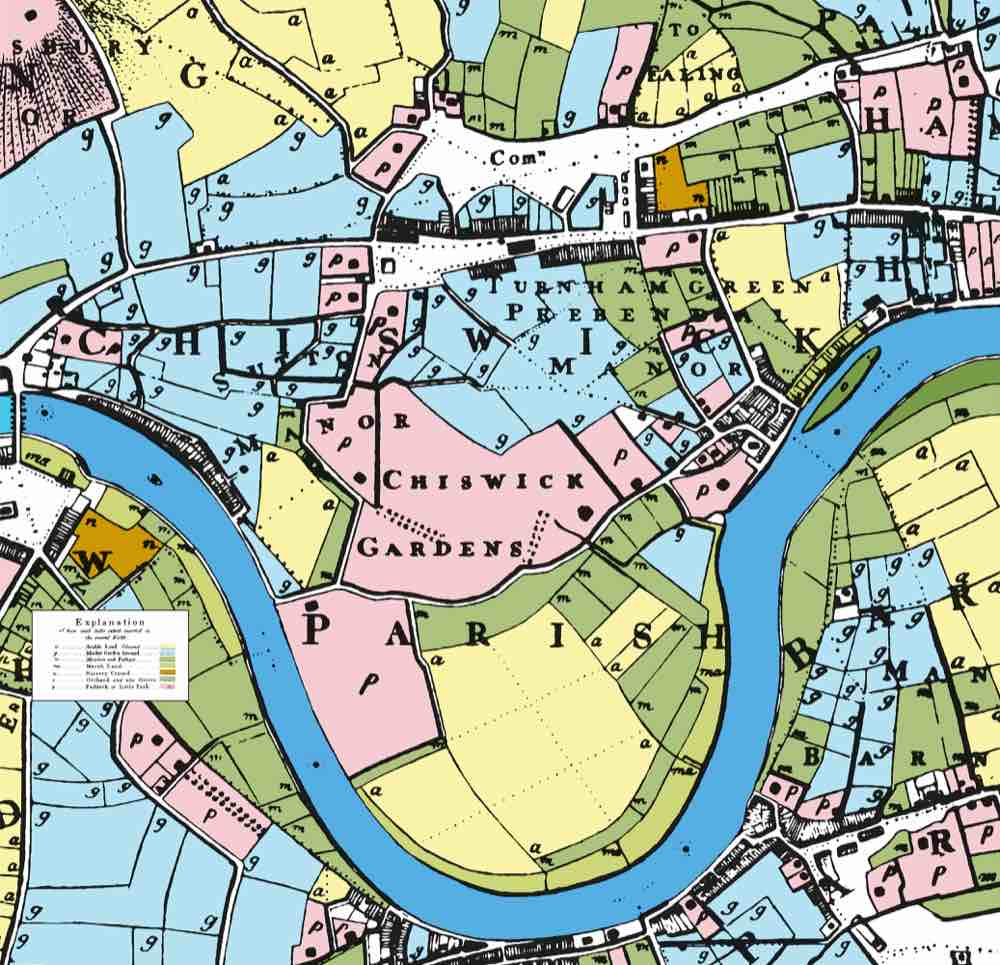
In the late 18th century, the area was unrecognizable compared to the concrete canyon it became. Maps from the 1790s depict Paddington Green as a genuine village green, approximately five to six acres in size, surrounded by the rural estates of the gentry. It served as a pastoral retreat on the edge of London, characterized by dairy farms and large Georgian houses. The artist Sarah Siddons, a resident of the area, described a view of open fields and ponds. The land where the station would later stand was likely part of the "common field" or grazing land south of the Harrow Road, used by drovers moving cattle to Smithfield Market. The soil was agricultural, supporting the hay production that fed London's horses.
The major topographical rupture occurred with the arrival of the Grand Junction Canal (later Grand Union) in 1801. This man-made waterway sliced through the northern boundary of the parish, bringing with it the wave of industrialization. The canal turned Paddington into a logistics hub for coal and construction materials. Yet, the southern edge of the Green, where the station site is located, remained relatively residential until the mid-19th century. The arrival of the Great Western Railway in 1838 accelerated the shift. The pastoral village was rapidly swallowed by the expanding metropolis. By 1850, the "Green" had shrunk to less than two acres, hemmed in by the encroaching urban sprawl.
During the Victorian era, the class character of the land inverted. While the areas to the north and west (Maida Vale) retained affluence, the strip along Harrow Road and the canal basin into dense, working-class housing. The specific plot at 2-4 Harrow Road became occupied by terraced housing and small commercial premises. These were not the grand stucco terraces of Tyburnia functional, frequently poorly built structures designed to house the laborers fueling the canal and railway economies. By the early 20th century, these buildings were frequently described in municipal reports as overcrowded and unsanitary. The area became a "reception" point for immigrants and the transient working poor, a demographic shift that would later influence the policing strategies in the district.
The strategic importance of the site became clear during World War II. The proximity to Paddington Station and the goods yards made the area a prime target for the Luftwaffe. Bomb damage maps from 1945 show the Harrow Road corridor suffered significant impact, with several buildings marked as "damaged beyond repair" or "totally destroyed" (colored black on the London County Council bomb maps). While the specific footprint of the future police station may not have been a direct crater, the surrounding infrastructure was heavily degraded. This war damage provided the later justification for wholesale "slum clearance" in the post-war period.
The definitive event that cleared the board for the high-security station was the construction of the Westway (A40M) between 1964 and 1970. This elevated motorway was a brutal intervention in the North Kensington and Paddington. To facilitate its construction, the Greater London Council (GLC) authorized the demolition of hundreds of Victorian homes along the Harrow Road axis. The original Victorian-era police station, which stood near the junction of Harrow Road and Bishops Road, was also swept away in this clearance. The new station was not a replacement; it was an integral part of the new modernist infrastructure, designed to sit in the shadow of the flyover.
The clearance for the Westway was traumatic. It involved the exhumation of graves from the southern edge of St Mary's Churchyard, literally unearthing the village's ancestors to drive concrete pylons into the soil. The land at 4 Harrow Road was stripped of its Victorian terraces, leaving a barren construction site adjacent to the rising concrete pillars of the motorway. This tabula rasa allowed the Metropolitan Police to commission a building that broke completely with the architectural vernacular of the past. The site was no longer defined by its relationship to the community or the church, by its proximity to the arterial road network, offering rapid deployment routes to Central London and the west.
By 1965, the year the Borough of Paddington was absorbed into the City of Westminster, the site was a construction wasteland. The "Green" had been severed from its southern context by the six-lane highway. The noise, pollution, and physical barrier of the Westway rendered the land unsuitable for residential use, making it an ideal, if hostile, location for a hardened police facility. The decision to place a high-security station here was pragmatic: the land was available, the location was strategic for transport, and the surrounding environment had already been hardened by the motorway construction.
Table 1: Land Use Evolution of 4 Harrow Road Site (1750, 1965)
Time Period
Primary Land Use
Social/Topographical Context
1750, 1790
Agricultural / Common Land
Rural outskirts of London. Grazing land for cattle. Part of the larger Paddington Green village context.
1800, 1840
Transitional Residential
Encroachment of early suburban development. Impact of Grand Junction Canal construction nearby.
1850, 1900
Dense Urban / Commercial
Construction of terraced housing and shops fronting Harrow Road. Working-class demographic shift.
1900, 1940
High-Density Tenements
Deterioration of housing stock. Area characterized by overcrowding and proximity to heavy rail/canal industry.
1940, 1945
Damaged Urban Fabric
Impacted by the Blitz due to proximity to Paddington Station railheads. Partial dereliction.
1960, 1965
Clearance Zone
Compulsory purchase and demolition of Victorian stock for the Westway (A40) construction. Site leveled.
The topography of the site by the mid-1960s was defined by its artificiality. The natural contours of the land had been obliterated by the grading for the motorway. The "ground level" of the future station was set against the elevated deck of the Westway, creating a subterranean feel even at street level. This physical oppression of the site, overshadowed by concrete and deafened by traffic, set the stage for the grim, bunker-like architecture that would rise in the early 1970s. The land had ceased to be a place of living; it had become a node in a control grid.
Architectural Brutalism and Hardened Facility Construction (1967, 1971)
Site Topography and Pre-Station Land Usage (1790, 1965)
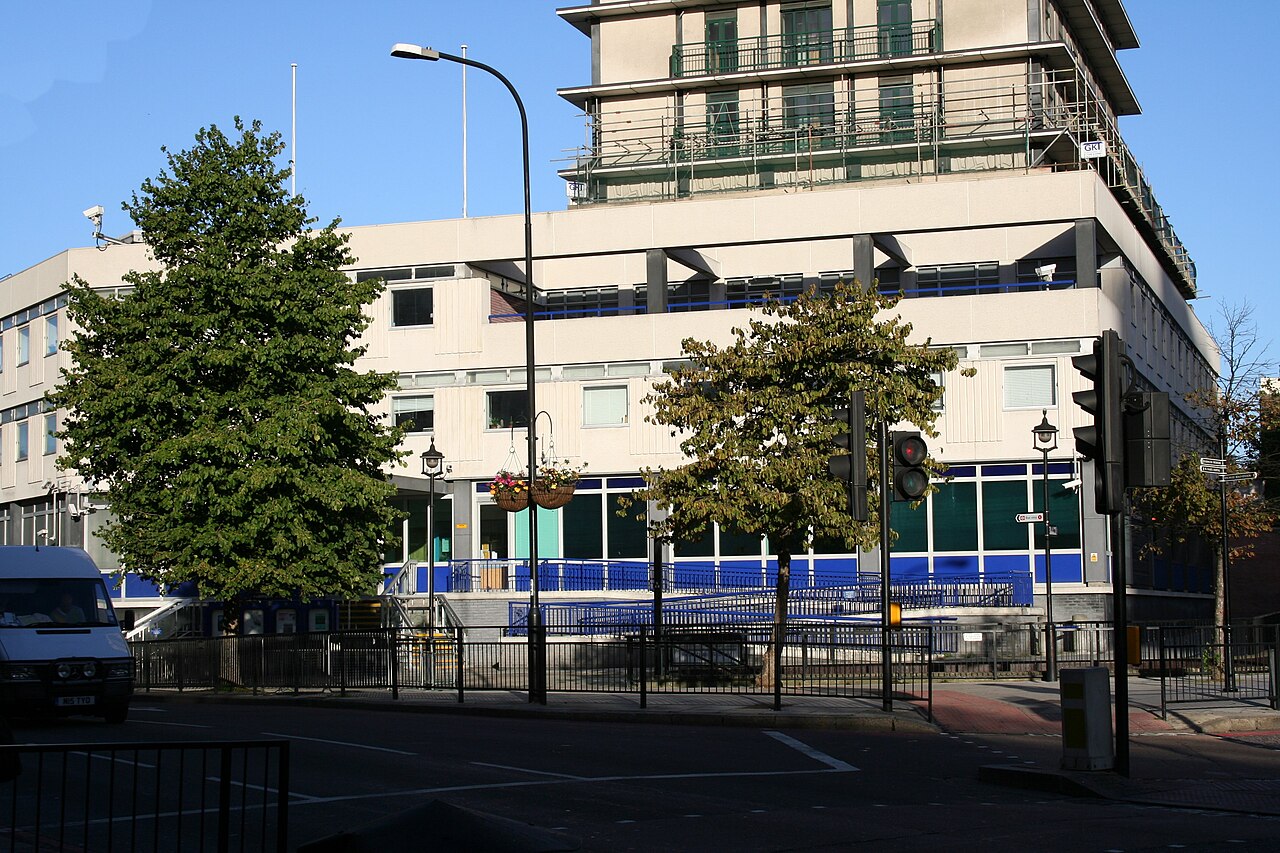
The construction of Paddington Green Police Station between 1967 and 1971 represented a fundamental shift in the architectural philosophy of the Metropolitan Police. This was not a replacement for the Victorian station at Harrow Road. It was the erection of a designed to withstand the realities of modern urban conflict. The station rose in tandem with the Westway (A40) flyover, a massive infrastructure project that sliced through the local geography. Planners poured thousands of tons of reinforced concrete into the site. They created a structure that functioned less like a civic office and more like a defensive bunker. The building did not seek to blend with the surviving Georgian terraces. It dominated them.
John Innes Elliott served as the Chief Architect and Surveyor for the Metropolitan Police from 1947 to 1974. His vision defined the station. Elliott moved the force away from the approachable "police house" aesthetic of the 1930s toward a hardened Brutalist style. This architectural method prioritized function, durability, and physical imposition. The facade of Paddington Green presented a sheer face of concrete and glass to the Edgware Road. It offered few handholds and fewer soft edges. The design signaled a new era of policing where the station was a stronghold rather than a community hub. The structure itself was a statement of authority.
The facility layout incorporated specific features for high security detention that were in standard divisional stations. Engineers excavated deep into the London clay to construct a subterranean custody suite. This basement level housed sixteen cells. Each cell measured exactly twelve feet square. They contained no windows. They relied entirely on artificial ventilation and lighting. This design choice created a sensory vacuum that would later draw criticism from human rights monitors. In 1971, yet, it was viewed as a triumph of secure containment. The separation of this suite from the upper operational floors allowed the station to process high-risk detainees without disrupting daily police work.
Paddington Green Construction Specifications (1971)
Architect
John Innes Elliott (Chief Architect, Met Police)
Construction Period
1967, 1971
Primary Material
Reinforced Concrete / Blast-Resistant Glazing
Detention Capacity
16 High Security Cells (Subterranean)
Location
Junction of A5 (Edgware Rd) and A40 (Westway)
The integration of the station with the Westway flyover was physical and strategic. The A40 elevated road opened in July 1970 and the police station followed shortly after in 1971. The road provided a direct arterial route from the city center to the west. The station stood as the gatekeeper of this artery. The noise and pollution from the flyover created a hostile environment around the station perimeter. This isolation suited the operational mandate of the facility. It sat on an island of noise. The roar of traffic masked the activities within. The location at the junction of the A5 and A40 gave the Metropolitan Police immediate access to two of the most serious transport corridors in the capital.
Construction crews faced significant challenges due to the density of underground utilities. The site sat atop a complex web of Victorian sewers, power lines, and the nearby London Underground tunnels. Engineers used deep piling techniques to anchor the heavy concrete frame. The structural integrity of the building was calculated to survive significant impact. This durability was tested not by war by the demolition crews who eventually dismantled it in 2024. They found the reinforced concrete frame exceptionally difficult to break. The density of the material meant the building was a solid block. It was built to last a century.
The opening of the station in 1971 coincided with a reorganization of the Metropolitan Police. The force was moving toward Unit Beat Policing and the use of the Special Patrol Group. Paddington Green was the hardware to match this new software. It provided a secure base for rapid response units. The "blue lamp" hung outside was one of the few traditional elements retained. Everything else was new. The reception areas were hardened behind safety glass. The internal corridors were narrow and easily controlled. The building was a machine for processing suspects.
Critics of the Brutalist style frequently described it as "concrete monstrosity" the police leadership saw it as "concrete utility." The absence of ornamentation reduced maintenance costs. The hard surfaces were easy to clean. The imposing height of the tower section provided a vantage point over the surrounding streets. J. Innes Elliott delivered a building that was immune to the decay that plagued the older Victorian estate. It was a cold and instrument of the state. The station did not invite the public in. It processed them.
The sixteen cells ground became the defining feature of the station. They were designed to hold suspects for extended periods under the terrorism laws that would soon be enacted. The walls were thick enough to silence screams. The ventilation system was independent of the main building. This allowed the custody suite to operate in total isolation. A suspect could be brought in via the secure vehicle bay, processed, and locked away without ever seeing the light of day or another member of the public. This capability was not an afterthought. It was the core purpose of the design.
Subterranean Cell Block and Anti-Ballistic Engineering
The structural reality of Paddington Green Police Station was defined not by its visible façade, by what lay beneath the pavement. Completed in 1971 to designs by John Innes Elliott, the station was engineered less as a municipal administrative center and more as an urban. While the upper floors housed standard policing functions, the facility's core was the subterranean high-security suite, a "station within a station" specifically constructed to withstand the ballistic and kinetic threats posed by the Irish Republican Army (IRA). This 16-cell block was not a basement; it was a hardened bunker encased in reinforced concrete, designed to isolate high-value detainees from the outside world and, crucially, from each other.
The engineering specifications of this subterranean level prioritized forensic sterility and blast resistance over human habitability. The cells, measuring exactly 12 feet by 12 feet, were windowless concrete boxes. To prevent the cross-contamination of forensic evidence, specifically trace explosives like Semtex, officers lined the walls with brown paper before a new suspect entered. This low-tech solution operated within a high-tech containment grid. The ventilation system was compartmentalized to prevent gas attacks or the circulation of airborne pathogens, a design feature that later proved useful during the post-2001 anthrax scares. The suite operated on a separate electrical circuit and possessed independent life-support systems, ensuring that even if the surface building were compromised by a mortar attack or car bomb, the custody block would remain operational and secure.
The station's anti-ballistic capabilities were tested on October 10, 1992, when an IRA device detonated in a telephone box outside the perimeter. The blast injured one person failed to breach the station's primary structural defenses. This resilience was due to the "diaphragm wall" construction method used in the basement's creation, a technique involving deep trenches filled with reinforced concrete that forms a continuous, water-tight, and blast-resistant envelope. This engineering allowed the station to hold suspects for extended periods, initially seven days, later extended to 14 and then 28 days under the Terrorism Act 2006, without the security risks associated with transferring detainees to prison facilities.
By 2026, the physical erasure of this site was nearly complete, yet the subterranean engineering proved difficult to destroy. The Berkeley Group, redeveloping the site into the "West End Gate" and "Trillium" luxury residential complex, faced the challenge of removing a bunker designed to be immovable. Demolition reports from 2024 and 2025 indicate that while the 17-storey surface tower was dismantled using top-down methods, the massive basement diaphragm walls were retained. Engineers determined that removing the fortified perimeter would risk destabilizing the surrounding infrastructure, including the Westway flyover. Consequently, the concrete shell that once held the 21 July bombers and British nationals released from Guantanamo Bay serves as the structural foundation for high-end apartments.
Prevention of explosive residue cross-contamination.
2026 Status
Retained Foundation
Repurposed as load-bearing support for "Trillium" towers.
The transition from state security asset to private real estate commodity involved a brief, chaotic interregnum. Following the station's closure in late 2018, the site sat dormant until February 2020, when it was occupied by the "Green Anti-Capitalist Front." These activists gained access to the very cells that had once held state enemies, intending to turn the facility into a community center. Their occupation revealed that the Metropolitan Police had been using the decommissioned station for firearms training, leaving the walls pockmarked with simulation rounds. This final of violence was scrubbed away during the 2024 demolition, leaving only the silent, buried diaphragm walls to bear the weight of the new glass towers rising above the Edgware Road.
Provisional IRA Detentions and The Troubles (1973, 1998)
Architectural Brutalism and Hardened Facility Construction (1967, 1971)
Paddington Green functioned as the operational nucleus for the Metropolitan Police Anti-Terrorist Branch (SO13) throughout the Troubles. Architects designed a, embedding sixteen windowless cells ground level to house high-risk detainees. These subterranean units served as the primary interrogation site for suspects linked to the Provisional IRA, distinct from the standard custody suite used for local crime.
Passage of the Prevention of Terrorism (Temporary Provisions) Act 1974 authorized investigators to hold subjects for up to seven days without charge. Officers used this statute extensively to interrogate hundreds of individuals at the location. Extended detention periods allowed Special Branch to apply sustained psychological pressure within the facility's environment, where suspects frequently had no access to natural light.
Serious questions arose regarding methods used at the site early in the conflict. In 1974, Kenneth Lennon released a statement claiming Special Branch agents detained him at the station and coerced him into acting as an informer. Two days after he provided this testimony to the National Council for Civil Liberties, police found his body in a Surrey ditch, shot twice in the head.
Authorities transported the Balcombe Street gang to these secure cells following their surrender in December 1975. Hugh Doherty, Joseph O'Connell, Eddie Butler, and Harry Duggan underwent intense questioning within the secure suite before their transfer to prison. The station also held Patrick Magee, the Brighton bomber, following his arrest in 1985.
Republican militants targeted the complex on October 10, 1992. An active service unit planted a device inside a telecommunications box situated immediately outside the perimeter. The explosion injured one person and damaged the exterior, showing the group's capacity to strike the center of the British security apparatus.
Post-9/11 Counter-Terrorism and The 2005 London Bombings
The events of September 11, 2001, did not immediately alter the physical structure of Paddington Green Police Station, they fundamentally rewrote its operational doctrine. For three decades, the station had served as the primary holding facility for Irish Republican Army suspects, a threat defined by specific paramilitary structures and recognizable warnings. The rise of Al-Qaeda and its affiliates introduced a new adversary: one to die in the act of killing, rendering traditional interrogation use obsolete. The sixteen subterranean cells at Paddington Green, designed for the 48-hour detentions of the 1970s, suddenly faced the pressure of indefinite intelligence gathering. This shift from criminal prosecution to pre-emptive intelligence extraction turned the station into the central nervous system of Britain's "War on Terror," a role that would stretch its capacity to the breaking point.
The true stress test for the facility arrived in July 2005. Following the devastation of the July 7 suicide bombings, which killed 52 people, the station became the focal point of the largest manhunt in British history. Because the 7/7 bombers died in their attacks, Paddington Green initially received only peripheral figures suspected of logistical support. This changed two weeks later, on July 21, when four devices failed to detonate on the London transport network. Unlike their predecessors, these bombers survived. The hunt for Muktar Said Ibrahim, Yasin Hassan Omar, Ramzi Mohammed, and Hussain Osman culminated in a series of armed raids that funneled the failed attackers directly into the high-security suite beneath Harrow Road.
The arrival of the 21/7 suspects forced the Metropolitan Police to use "safety interviews", urgent interrogations conducted without defense solicitors present, authorized under the Terrorism Act 2000 to prevent immediate harm. These sessions took place in the station's windowless interview rooms, where detectives worked against the clock to determine if a third wave of attacks was imminent. The atmosphere within the station during late July 2005 was described by insiders as "controlled hysteria." The pressure to secure intelligence led to the tragic shooting of Jean Charles de Menezes at Stockwell station on July 22; while de Menezes never entered Paddington Green alive, the command decisions and the intelligence failures that led to his death were inextricably linked to the operational tempo driven by the teams based within the Paddington complex.
The physical limitations of the station became a matter of public record and legal contention during this period. The sixteen cells, located ground level, were lined with brown paper before each new intake. This low-tech solution was necessary to ensure forensic sterility; prosecutors needed to prove that any trace of explosives found on a suspect came from their own hands, not from the cell walls contaminated by a previous occupant. The "sterile corridor" procedure required that no two suspects ever crossed route, a logistical nightmare in a facility with a single central custody desk. As the number of detainees rose, the station's design, intended for a different era of terrorism, began to investigations.
The breaking point occurred in August 2006 with "Operation Overt," the investigation into the plot to detonate liquid explosives on transatlantic airliners. Police arrested 24 suspects overnight, a number that instantly exceeded Paddington Green's capacity. For the time, the primary counter-terrorism hub could not house its. Commanders were forced to divert suspects to Belgravia Police Station, a facility not hardened for Category A terrorist detention. This overflow signaled to the Home Office that Paddington Green was no longer fit for purpose. The sheer volume of evidence, 400 computers, 25, 000 exhibits, and thousands of hours of surveillance tapes, overwhelmed the station's administrative support structures.
Simultaneously, the station became the physical setting for a fierce political battle over civil liberties. Prime Minister Tony Blair's government argued that the complexity of encrypted data and international terror networks required longer detention periods to decrypt and analyze evidence. The Terrorism Act 2006 extended the pre-charge detention limit from 14 days to 28 days. Paddington Green became the laboratory for this legal experiment. Suspects were held for a full lunar month in cells measuring 12 feet by 12 feet, with no natural light and air circulated by a humming filtration system. The exercise yard was nothing more than a secure patch of the car park, cleared of vehicles and surrounded by high walls. Defense solicitors and human rights monitors, including the European Committee for the Prevention of Torture, condemned the conditions as "insufficient" and psychologically damaging.
Key High-Profile Detentions (2001, 2006)
Date
Event / Operation
Key Detainees Held
Operational Impact
July 2005
21/7 Failed Bombings
Muktar Said Ibrahim, Ramzi Mohammed, Yasin Hassan Omar
Use of "Safety Interviews" (no lawyer); station lockdown.
August 2006
Operation Overt (Liquid Bomb Plot)
Abdullah Ahmed Ali, Assad Sarwar, Tanvir Hussain
Station capacity exceeded (24 arrests); overflow to Belgravia.
2002, 2005
Belmarsh Detainees (various)
Abu Qatada (intermittent)
High-security transfers for questioning regarding wider networks.
Lord Carlile, the Independent Reviewer of Terrorism Legislation, issued a report in 2007 that explicitly criticized the facility. He noted that while the police staff operated with professionalism, the building itself was "plainly insufficient" for 28-day detentions. He described the cells as "claustrophobic" and the absence of daylight as a serious health concern. In response, the Metropolitan Police installed an audio-visual system allowing detainees to watch films or listen to music, a concession to the reality that sensory deprivation in the "concrete box" could render subsequent confessions inadmissible in court. This retrofitting was a stopgap measure, an attempt to humanize a brutalist structure built for short-term holding.
The forensic requirements of post-9/11 investigations also demanded a level of precision the building struggled to provide. DNA transfer became a central defense strategy; lawyers for the 21/7 bombers scrutinized every movement within the station. The "dry rooms", areas for forensic sampling, had to be scrubbed to a medical standard that the aging ventilation system made difficult to maintain. The station's location, right on the edge of the Westway and surrounded by residential blocks, also presented a security nightmare. Convoys carrying high-value like the 21/7 bombers required the closure of major arterial roads, paralyzing West London traffic and creating a spectacle that security services preferred to avoid.
By the time the 2006 liquid bomb plot suspects were processed, the consensus within the Home Office was clear: Paddington Green had to be replaced. The operational tempo of the "forever war" against Islamist extremism required a purpose-built facility, not a retrofitted 1960s station. yet, the station soldiered on for another decade, its reputation cemented as the grim waiting room for Britain's most dangerous men. The events of 2005 and 2006 defined the station's public image in the 21st century, transforming it from a local landmark into a global symbol of the tension between security and liberty. When the station closed in 2018 and faced demolition in 2024, it was the ghosts of these specific investigations, the failed bombers of 21/7 and the liquid plotters, that haunted the empty cells, marking the site as a monument to a specific, volatile era in British policing history.
Schedule 8 Detentions and Interrogation Protocols
Subterranean Cell Block and Anti-Ballistic Engineering
The operational heart of Paddington Green Police Station was not its visible 1970s concrete façade, the sixteen cells buried beneath the Harrow Road. Known colloquially among defense solicitors and counter-terrorism officers as "The Submarine," this subterranean complex functioned as a suspended legal zone where the standard rules of British policing did not apply. While the site's history of detention dates back to the 1790s, when the Paddington Watchhouse on Hermitage Street held vagrants and footpads in a damp "cage" for a maximum of one night, the enacted here between 2000 and 2018 represented a radical departure from centuries of common law habeas corpus.
The primary legal instrument governing this facility was Schedule 8 of the Terrorism Act 2000. Unlike the Police and Criminal Evidence Act 1984 (PACE), which strictly limits detention without charge to a maximum of 96 hours for standard criminal offenses, Schedule 8 created a separate temporal reality for terror suspects. Upon the station's designation as a counter-terrorism hub, the detention limit was initially set at seven days. Following the invasion of Iraq and the heightened threat levels, the Criminal Justice Act 2003 doubled this to fourteen days. The psychological pressure exerted by two weeks in a windowless, 12-foot square cell became a central component of the station's interrogation strategy.
The physical environment was engineered to maximize isolation. Each of the sixteen cells was soundproofed and devoid of natural light, creating a sensory vacuum. To preserve forensic integrity, the walls were frequently lined with brown paper, ensuring that microscopic traces of explosives found on a suspect could not be attributed to cross-contamination from previous occupants. This "sterile corridor" protocol meant detainees frequently stared at blank paper for days on end. In 2009, following a serious report by the European Committee for the Prevention of Torture which deemed the conditions "inhumane," the Metropolitan Police spent £490, 000 refurbishing the suite. This update installed audio-visual systems, acknowledging that total sensory deprivation over extended periods could render confessions legally inadmissible due to mental disintegration.
The most contentious expansion of state power occurred in 2006. In the wake of the 7/7 bombings and the failed 21/7 attacks, the government pushed to extend the pre-charge detention limit to 90 days. Parliament rejected this, settling on a compromise of 28 days under the Terrorism Act 2006. Paddington Green became the testing ground for this month-long detention capability. Suspects in the 2006 transatlantic aircraft plot were held for the full duration, requiring judicial warrants of further detention to be issued every seven days. These hearings were frequently conducted via video link from the station's cramped lobby, reducing the suspect's physical contact with the outside world to a pixelated screen.
Interrogation tactics within the station relied heavily on the "Safety Interview," later codified in PACE Code H. This protocol allows officers to question a suspect immediately upon arrest, or within the station, without a solicitor present if there is an urgent risk to life or property. The 21/7 bombers, including Muktar Said Ibrahim, were subjected to these urgent interviews. In the case of R v Ibrahim [2008], the Court of Appeal upheld the admissibility of statements gathered during these sessions, cementing the Safety Interview as a standard tool in the Paddington Green arsenal. Defense lawyers frequently argued that the "urgent" classification was used routinely rather than exceptionally, stripping suspects of legal counsel during their most moments.
The detention regime also utilized the "adverse inference" provisions of the Criminal Justice and Public Order Act 1994, with higher. In standard policing, silence can harm a defense. In the high-pressure environment of Schedule 8 detention, silence was frequently met with prolonged isolation. The station's layout meant that exercise was taken in a secure cage within the underground car park, where the air was thick with exhaust fumes from the Westway flyover above. This grim routine served to remind detainees of their total removal from the civil society operating just meters away.
Evolution of Detention Limits at Paddington Green (2000, 2018)
Year
Legislation
Max Detention (Pre-Charge)
Notes
2000
Terrorism Act 2000
7 Days
Replaced 48-hour limit of previous eras.
2003
Criminal Justice Act 2003
14 Days
Response to post-9/11 threat.
2006
Terrorism Act 2006
28 Days
The "Submarine" era peak. Highest in Western democracy.
2011
Protection of Freedoms Act
14 Days
Reverted after political pressure and sunset clause expiry.
By 2011, the detention limit reverted to 14 days under the Protection of Freedoms Act, yet the infrastructure for long-term holding remained. The station's closure in 2018 marked the end of the physical site, not the methods developed there. When the Green Anti-Capitalist Front occupied the derelict building in February 2020, they discovered paper and bullet casings in the basement, remnants of the site's final use as a firearms training facility. The "Safety Interview" and Schedule 8 simply migrated to newer, less iconic facilities at Hammersmith and the Empress State Building.
As of 2026, the site at 4 Harrow Road has been subsumed by the West End Gate development. The concrete bunker that once held the most dangerous men in Britain has been demolished, replaced by high-end residential towers and retail space. The ground that once enforced the strictest detention regime in modern British history supports luxury real estate, burying the legacy of the 28-day detention battle beneath manicured gardens and underground parking. The legal precedents set in those cells, yet, remain active in UK counter-terrorism law, invisible permanent.
High-Value Detainee Roster and Guantanamo Repatriations
The operational history of Paddington Green Police Station is defined by its function as the United Kingdom's primary airlock between the lawless zones of the Global War on Terror and the rigid evidentiary standards of the British judicial system. While the site served as a pastoral village green in the 1700s, by the early 21st century it had hardened into a of reinforced concrete and subterranean confinement, designed specifically to hold those deemed the most serious threats to national security. Between 2001 and its closure in 2018, the station's custody suite processed a roster of detainees that reads as a detailed history of modern asymmetric warfare, from Irish Republicans to the repatriated survivors of Guantanamo Bay. The station's most politically sensitive role emerged following the invasion of Afghanistan, when it became the reception facility for British nationals and residents returned from US military custody. This process, frequently conducted under the cover of darkness, involved a logistical chain beginning at Guantanamo Bay's Camp Delta, transitioning through RAF Northolt in West London, and terminating in the underground cells of Paddington Green. These transfers were not administrative; they represented a collision between American military detention, which operated without charge or trial, and British law, which required evidence admissible in court. In March 2004, this friction became visible when the "Tipton Three", Ruhal Ahmed, Asif Iqbal, and Shafiq Rasul, were repatriated. Flown into RAF Northolt, they were immediately arrested under the Terrorism Act 2000 and transported in an armoured convoy to Paddington Green. The station was sealed off, with snipers positioned on surrounding rooftops, creating a spectacle of high-security containment. Yet, the interrogation rooms at Paddington Green revealed the hollowness of the intelligence provided by US authorities. The "confessions" obtained in Cuba, frequently under duress or torture, were inadmissible in the UK. Consequently, after hours of processing and forensic examination in cells lined with brown paper to prevent cross-contamination, all three men were released without charge. The station, designed to hold the guilty, frequently served as the final processing point for the exonerated. The repatriation of Moazzam Begg, Martin Mubanga, Feroz Abbasi, and Richard Belmar in January 2005 followed a nearly identical trajectory. These men, classified as "enemy combatants" by the United States, were processed through the station's sterile corridor. The physical environment of Paddington Green was deliberately austere. The sixteen cells were located ground, windowless, and monitored by closed-circuit television. To preserve forensic integrity, the walls were frequently taped over with paper, ensuring that any traces of explosives found on a suspect could be definitively linked to them and not the facility. For the Guantanamo returnees, yet, these measures were procedural formalities. The absence of credible evidence meant that Paddington Green acted not as a prison, as a decompression chamber where the label of "terrorist" was legally dismantled. The station's roster also includes the architects of the failed 21 July 2005 London bombings, a case that stands in clear contrast to the Guantanamo repatriations. Following a massive manhunt, suspects Ramzi Mohammed and Muktar Said Ibrahim were brought to Paddington Green. Here, the forensic capabilities of the station were used to their full extent. Unlike the Guantanamo cases, the detention of the 21/7 bombers resulted in successful prosecutions, as the evidence gathered within the station's walls, forensic samples, interrogation logs, and surveillance data, withstood judicial scrutiny. This dichotomy defines the station's legacy: it was simultaneously a site of necessary counter-terrorism work and a symbol of the state's overreach in cases where intelligence failed to meet the threshold of evidence. The case of Binyam Mohamed, returned to the UK in February 2009, further exposed the station's role in the rendition network. Mohamed, who had been subjected to torture in Morocco and detention in the CIA's "Dark Prison" in Kabul before his transfer to Guantanamo, was brought to Paddington Green upon his return. His presence in the cells brought the problem of British complicity in torture into the heart of London. The station's medical examiners and custody sergeants were the British officials to formally document his physical condition after years of abuse, turning the police station into a repository of evidence against the state's own intelligence services. By 2026, the physical structure of Paddington Green Police Station has been erased, demolished to make way for high-density residential development. The subterranean cells that once held the most notorious figures of the early 21st century have been filled in or dug out, replaced by the foundations of luxury apartments. Yet, the data generated within those walls in legal archives and human rights reports. The station's closure in 2018 marked the end of an era in British policing, shifting counter-terrorism detention to newer, less iconic facilities, the roster of detainees held at Paddington Green remains a definitive record of the UK's engagement with global terror.
Detainee Name
Date of Entry
Origin of Transfer
Outcome at Station
Ruhal Ahmed (Tipton Three)
March 9, 2004
Guantanamo Bay (via RAF Northolt)
Released without charge after brief questioning.
Asif Iqbal (Tipton Three)
March 9, 2004
Guantanamo Bay (via RAF Northolt)
Released without charge after brief questioning.
Shafiq Rasul (Tipton Three)
March 9, 2004
Guantanamo Bay (via RAF Northolt)
Released without charge after brief questioning.
Jamal al-Harith
March 9, 2004
Guantanamo Bay (via RAF Northolt)
Released without charge.
Moazzam Begg
January 25, 2005
Guantanamo Bay (via RAF Northolt)
Released without charge after 24 hours.
Martin Mubanga
January 25, 2005
Guantanamo Bay (via RAF Northolt)
Released without charge.
Feroz Abbasi
January 25, 2005
Guantanamo Bay (via RAF Northolt)
Released without charge.
Richard Belmar
January 25, 2005
Guantanamo Bay (via RAF Northolt)
Released without charge.
Ramzi Mohammed
July 2005
Arrested in West London (21/7 Plot)
Charged, convicted, sentenced to life imprisonment.
Muktar Said Ibrahim
July 2005
Arrested in West London (21/7 Plot)
Charged, convicted, sentenced to life imprisonment.
Binyam Mohamed
February 23, 2009
Guantanamo Bay (via RAF Northolt)
Released without charge after medical/forensic processing.
The operational at Paddington Green were distinct from any other police station in the United Kingdom. Detainees were held under Schedule 8 of the Terrorism Act 2000, which allowed for extended pre-charge detention, initially 7 days, extended to 14, and briefly to 28 days during the height of the 2006 transatlantic aircraft plot investigation. This legal framework turned the station into a long-term holding facility, necessitating the installation of audio-visual equipment in 2009 to prevent sensory deprivation claims. The cells themselves were subject to rigorous forensic sterility; the practice of lining walls with brown paper was not a myth a documented procedure to ensure that if a suspect tested positive for ricin or TATP (triacetone triperoxide), the defense could not the traces came from a previous occupant. The closure of the station in late 2018 and its subsequent demolition by 2024 removed the physical evidence of this era. yet, the site remains a focal point for historical analysis of British counter-terrorism. The transition from the pastoral "Green" of the 1790s to the concrete "black site" of the 2000s reflects the hardening of the state's protective apparatus. While the Berkeley Homes development occupying the land bears no resemblance to the that stood there, the soil beneath 4 Harrow Road holds the legacy of the most significant tension in modern British legal history: the struggle to balance civil liberty with the demands of national security in an age of global terror.
Operational Cessation and Decommissioning (2018)
Provisional IRA Detentions and The Troubles (1973, 1998)
The operational death of Paddington Green Police Station was not a sudden cardiac arrest a slow, bureaucratic asphyxiation. By late 2018, the heavy reinforced doors of the station at 4 Harrow Road locked for the final time, ending forty-seven years of service as the United Kingdom's premier counter-terrorism hub. The closure marked the conclusion of a specific era in British policing, where physical fortification was prioritized over digital surveillance. The station, once a capable of withstanding a direct assault, was rendered obsolete not by enemy action, by the soaring value of its own footprint and the shifting strategies of the Mayor's Office for Policing and Crime (MOPAC).
The decision to decommission the facility originated in the "Public Access and Engagement Strategy" released by MOPAC in 2017. This document laid out a clear financial reality: the Metropolitan Police Service faced a budget shortfall, and its vast, aging estate was a on resources. Paddington Green, with its brutalist 1960s architecture and specialized subterranean cells, was deemed surplus to requirements. The station sat on prime real estate in the W2 postcode, a district where land values had appreciated aggressively since the station's construction in 1971. The economic logic was cold and irrefutable. The site was worth more as luxury apartments than as a high-security interrogation center.
Lord Carlile, the independent reviewer of terrorism legislation, had previously signaled the station's inadequacy. In reports leading up to the closure, he noted that the sixteen underground cells, windowless, claustrophobic, and climate-controlled only by the vagaries of the concrete structure, were no longer suitable for holding suspects for the extended detention periods allowed under modern terror laws. The "Blue Box," as the custody suite was known, had been designed for a different era of criminality. By 2018, the infrastructure required to support digital forensics, biometric data capture, and legal consultation for high-profile detainees exceeded the capacity of the aging bunker. The cost to retrofit the station was prohibitive, estimated in the millions, with no guarantee that the underlying structural limitations could be overcome.
The decommissioning process involved a complex logistical extraction. Unlike a standard borough police station, Paddington Green housed classified communications arrays and secure zones that required sanitization before the keys could be handed over. The Metropolitan Police had to strip the facility of its "hardened" status. This meant removing the specialized recording equipment used in the interrogation rooms, systems that had captured the confessions and denials of IRA bombers and jihadists alike. The sixteen cells, located ground level to prevent escape or external communication, were emptied. The silence that fell over the custody suite in late 2018 stood in sharp contrast to the frenetic activity of July 2005, when the station served as the nerve center for the investigation into the London bombings.
Operational functions were dispersed across the capital. The front counter services, the public face of the station, had already been relocated to a smaller facility on Church Street in 2017, a move that drew sharp criticism from local residents who felt the police were retreating from the community. The counter-terrorism custody capability was transferred to newer, purpose-built suites in South London, such as Wandsworth, which offered modern standards of detention without the architectural baggage of the 1970s. Paddington Green, the brand name for terror policing, ceased to exist as a physical location and became a historical reference point in case law.
Asset Liquidation: Paddington Green Decommissioning Data (2018)
Metric
Status at Closure
Operational Status
Ceased (Late 2018)
Custody Capacity
16 High-Security Cells (Decommissioned)
Primary Reason
MOPAC Estate Rationalization / Land Value
Buyer
Berkeley Homes (Central London) Ltd
Replacement Facility
Dispersed (Church St. Front Counter / Centralized Custody)
Building Age
47 Years (1971, 2018)
The sale of the site was executed with a focus on maximizing capital return. MOPAC sold the freehold interest to Berkeley Homes, a developer already active in the area with the massive "West End Gate" project. The transaction was not a property deal; it was a transfer of power. The site, which had long served as a "hostile island" in the urban fabric, impermeable, fenced, and guarded, was slated to become part of a high-density residential complex. The sale price, while commercially sensitive, reflected the development chance of the land, which sits at the strategic junction of Edgware Road and the A40 Westway. This liquidation of public assets to fund current operations became a contentious point, with critics arguing that the police were selling off the family silver to pay the heating bill.
Even with the financial justification, the closure left a security vacuum in the immediate area. For decades, the sheer presence of the station had acted as a deterrent. Its removal signaled a retreat of state power from the physical streetscape. The building itself, once vacated, rapidly. The reinforced concrete, stripped of its maintenance budget, became a gray monolith awaiting the wrecking ball. The " " that had been designed to keep people in was struggling to keep people out, a vulnerability that would later be exploited by activists. in 2018, the primary narrative was one of exit. The police vans stopped running, the blue lights were extinguished, and the site was handed over to the market.
The decommissioning also highlighted a shift in the philosophy of policing. The era of the "local ", a heavily defended police station in every district, was over. The new strategy favored "hubs" and "agile working," terms that translated to fewer buildings and more reliance on technology. Paddington Green was the casualty of this shift. It was a building designed for physical intimidation and secure containment in an age that prioritized data interception and remote surveillance. The station did not fit the new model. It was too big, too ugly, and too expensive. Its closure was a rational accounting decision that nonetheless severed a fifty-year link between the site and the enforcement of national security.
By the end of 2018, the site stood empty. The transition from a place of high- interrogation to a dormant asset was complete. The "Blue Box" was dark. The specialized air filtration systems, designed to protect against chemical attacks, were powered down. The station, which had been a household name in Britain for half a century, was reduced to a line item on a developer's spreadsheet, awaiting the demolition crews that would eventually erase its physical trace from the capital.
Green Anti-Capitalist Front Occupation and Security Breach (2020)
On February 7, 2020, the myth of Paddington Green Police Station collapsed. For decades, the site served as the United Kingdom's premier counter-terrorism hub, a hardened facility designed to withstand truck bombs and hold the most dangerous suspects in the state's custody, from IRA operatives to the 7/7 bombers. Yet, on a Friday night, activists from the Green Anti-Capitalist Front (GAF) breached the perimeter using nothing more than a ladder and access to the roof. This infiltration exposed a lapse in asset management by the Mayor's Office for Policing and Crime (MOPAC), which had decommissioned the station in late 2018 failed to secure the shell against a low-tech incursion. The activists did not enter a sterile, empty office block. Upon gaining access to the subterranean levels, they discovered that the Metropolitan Police had been using the decommissioned site as a "kill house" for urban warfare training. The floors were littered with spent bullet casings, grenade pins, and simunition debris. Most controversial was the discovery of a photorealistic target sheet used for firearms practice, depicting a man of South Asian heritage. The target, labeled "Raj" in the manufacturer's catalog, was the only photorealistic human target found by the occupiers, sparking immediate accusations of racial profiling in police firearms training. The Met later admitted the target was used to "assess whether the person is a chance threat," a defense that did little to quell the public relations disaster. The occupation transformed the symbol of state detention into a temporary autonomous zone. The group re-branded the site as the "Green Radical Anticapitalist Social Squat" (GRASS). For three weeks, the interrogation rooms and high-security cells, where suspects were once held without charge for up to 28 days, hosted workshops on climate justice, film screenings, and legal defense training. Activists draped banners from the roof reading "ACAB" and "Destroy the State," visible to commuters on the adjacent Westway. This visual dominance of a strategic police asset by anarchists humiliated the security establishment, which had spent millions fortifying the location during the Troubles and the War on Terror. The response from the state was legalistically aggressive operationally slow. Because the station was technically non-residential commercial property, the occupation fell into a grey area of the Legal Aid, Sentencing and Punishment of Offenders Act 2012. Squatting there was not a criminal offense under Section 144. The Metropolitan Police were forced to apply for a High Court writ of possession. In their application, the police argued that the occupation was disrupting "important firearms training," confirming the activists' claims about the building's post-closure use. On February 28, 2020, a force of approximately 60 bailiffs and police officers stormed the building at dawn to execute the eviction, ending the 21-day siege. The breach occurred during a sensitive commercial transition. MOPAC was in the final stages of offloading the land to Berkeley Homes for a luxury high-rise development. The security failure raised questions about the stewardship of public assets during the disposal process. Data from the Greater London Authority indicates the site was part of a broader liquidation of police estate assets intended to fund the Met's operating budget. The occupation briefly threatened the sanitization of the site's history, forcing the public to confront the physical reality of the cells before they were demolished to make way for the "West End Gate" development.
Timeline of the 2020 Security Breach
Date
Event
Details
Feb 7, 2020
Infiltration
GAF activists enter via roof using ladders; secure the facility.
Feb 10, 2020
Public Announcement
Group releases footage of "Raj" target and bullet casings.
Feb 18, 2020
Commercial Context
MOPAC formally recommends sale to Berkeley Homes (Central London) Ltd.
Feb 28, 2020
Eviction
High Court writ executed by ~60 bailiffs and police officers.
2021-2022
Demolition
The brutalist structure is razed; construction of "The Residences" begins.
By 2026, the physical evidence of the station has been erased, replaced by the glass and steel of the Berkeley Homes complex. The "Residences on Paddington Green" occupy the footprint where the blast-proof reception once stood. The 2020 occupation serves as the final historical footnote of the police station, a moment where the unclear of state security was briefly cracked open, revealing the debris of urban combat training and the uncomfortable mechanics of how the state prepares for violence. The transition from black site to luxury real estate was not direct; it was punctuated by this final, chaotic reclamation.
Site Demolition and Asbestos Abatement (2024)
Post-9/11 Counter-Terrorism and The 2005 London Bombings
The physical erasure of the Paddington Green Police Station did not occur as a singular, explosive event, rather as a methodical, grinding that stretched from early 2024 into the closing months of that year. By February 2024, the site at 4 Harrow Road had been surrendered to GCL Demolition, acting as the Principal Contractor for Berkeley St Edwards. The structure, a of reinforced concrete completed in 1971, presented a demolition challenge far exceeding that of a standard commercial office block. Designed to withstand the specific threat of Irish Republican Army (IRA) truck bombs, the station functioned as a hardened bunker disguised as a municipal building. Its destruction required the use of high-reach hydraulic excavators and a "top-down" deconstruction method, where the building was consumed floor by floor from the roof downwards, hidden behind a shroud of scaffold and Monoflex sheeting.
Before the heavy could breach the skyline, the site underwent a rigorous period of asbestos abatement, a serious phase necessitated by the construction standards of the early 1970s. The station's mechanical and electrical systems were lagged with hazardous insulation materials common to the era. Investigative surveys conducted prior to the demolition identified the presence of Amosite (brown asbestos) in thermal insulation and Chrysotile (white asbestos) in floor tiles and cement products. The "soft strip" phase, which began in late 2023, involved the creation of negative-pressure enclosures to prevent the escape of carcinogenic fibers into the densely populated Paddington basin. Teams of licensed removal specialists, clad in full respiratory protective equipment, stripped the interior back to its concrete shell. This process was particularly complex in the basement levels, where the ventilation systems for the sixteen underground detention cells were heavily insulated.
The structural demolition, commencing in earnest in February 2024, revealed the sheer density of the station's engineering. The sixteen cells, located ground level, were encased in high-grade reinforced concrete, designed to prevent both escape and external breach. These cells had housed of the most significant terror suspects in modern British history, from IRA operatives to the 21/7 bombers. The demolition crew faced the task of pulverizing walls that were significantly thicker than standard partition walls. Hydraulic shears and breakers were used to snap the steel reinforcement bars (rebar) that laced the concrete. The noise and vibration monitoring logs from this period show the immense energy required to break the station's spine. Unlike the surrounding Victorian and Edwardian masonry, which crumbles under impact, the police station had to be cut and chewed apart, piece by resistant piece.
The demolition also served as the final act in a protracted planning war between Westminster City Council and the Greater London Authority (GLA). In 2021, Westminster had refused the initial application by Berkeley Homes to replace the station with three high-rise towers, citing excessive height and harm to the local conservation area. The building sat in a state of purgatory for nearly three years, a decay accelerated by the occupation of the site in February 2020 by the Green Anti-Capitalist Front. These squatters, who breached the perimeter before the heavy security hoardings were erected, documented the interior conditions of the closed station. Their footage revealed a facility frozen in time, with police manuals, furniture, and even a firearms training range left intact. This unauthorized occupation forced the Metropolitan Police to secure the site more aggressively until the Mayor of London, Jules Pipe, overruled Westminster Council in 2023, granting permission for the demolition and subsequent redevelopment.
By August 2024, the seventeen-storey tower block that had loomed over the Westway was reduced to a stump. The demolition methodology prioritized the recycling of the station's massive concrete carcass. In adherence to the Circular Economy Statement submitted with the planning application, the thousands of tons of concrete rubble generated were not sent to landfill. Instead, the material was processed, crushed and graded, to be used as aggregate for the piling mats and sub-base of the new construction. The station, in effect, was ground down to form the foundation of its successor. This on-site processing also reduced the number of heavy goods vehicle (HGV) movements required on the Harrow Road, a major arterial route already suffering from chronic congestion.
The excavation of the basement levels proved to be the most archaeologically and structurally sensitive phase of the operation. The site sits on the edge of the historic Paddington Green, an area with human activity dating back to the medieval period. yet, the deep basement construction of the 1960s had likely destroyed any shallow archaeological remains long ago. The primary concern during the 2024 excavation was the interface with the Bakerloo line tunnels and the adjacent Westway flyover columns. The removal of the station's deep basement box required the installation of a secant pile wall to retain the surrounding earth and protect the structural integrity of the elevated A40 road. Sensors placed on the Westway columns monitored for any movement exceeding millimetric tolerances as the weight of the police station was removed from the soil.
As of March 2026, the site at 4 Harrow Road has been completely transformed. The "scar" in the urban fabric mentioned in earlier topographical studies has been reopened and is being filled by the rising concrete cores of the "West End Gate" extension. The three new towers, Blocks I, J, and K, are under active construction, with the tallest set to reach 39 storeys. The that once signaled state power and surveillance has been replaced by a commercialized verticality. The perimeter, once guarded by armed officers and blast blocks, is a construction zone managed by Berkeley St Edwards, with marketing hoardings promising "luxury living" in the exact footprint where terror suspects were once interrogated. The transition from a site of national security to a site of private capital is absolute.
Table 10. 1: Paddington Green Police Station Demolition Metrics (2024)
Parameter
Details
Principal Contractor
GCL Demolition (Ground Construction Limited)
Developer
Berkeley St Edwards (Berkeley Group)
Demolition Period
February 2024 , Late 2024
Methodology
Top-down deconstruction; high-reach hydraulic excavation; cut-and-carve for basement.
>95% of hard demolition waste (concrete/steel) recycled for aggregate or scrap.
Site Area
Approx. 0. 48 hectares (1. 19 acres)
Replacement Scheme
Three residential towers (Blocks I, J, K) ranging from 17 to 39 storeys.
The environmental impact of the demolition was strictly regulated under the Code of Construction Practice. Dust suppression units, utilizing mist cannons, were deployed continuously to mitigate the silica dust clouds generated by crushing the high-strength concrete. Noise limits were enforced with "quiet periods" mandated during the day to accommodate the adjacent City of Westminster College. Even with these measures, the destruction of such a dense, heavy structure created a localized zone of disruption for the entirety of 2024. The removal of the 3-storey wrap-around podium block, which connected the main tower to the section house, altered the acoustics of the Harrow Road/Edgware Road junction, allowing traffic noise to penetrate deeper into the residential streets of Little Venice for the time in fifty years.
The final removal of the basement slab in late 2024 marked the definitive end of the Paddington Green Police Station. No physical trace of the interrogation rooms, the charge counters, or the secure vehicle bays remains. The "Blue Lamp" that once hung over the entrance, a symbol of the station's role in the community and the nation's counter-terror apparatus, was preserved by the Metropolitan Police Heritage Centre, a singular artifact saved from the thousands of tons of pulverized rubble. The site is a blank canvas of clay and piling, ready to support the weight of London's relentless housing market.
Berkeley Group Acquisition and The Trillium Masterplan
On July 23, 2020, the Mayor's Office for Policing and Crime (MOPAC) finalized the disposal of the Paddington Green Police Station site, transferring the freehold to Berkeley Homes (Central London) Ltd. The transaction, valued at approximately £35 million, marked the definitive end of the site's function as a high-security counter-terrorism hub and its transition into the private residential market. This sale was not an real estate deal part of a broader liquidation strategy by the Metropolitan Police Service to plug funding gaps by offloading "surplus" estate assets. The station, once a capable of withstanding direct attacks, was traded for capital intended to support frontline policing, a financial maneuver that drew sharp criticism regarding the long-term loss of strategic operational capacity in Central London.
The acquisition by Berkeley Group integrated the site into their expansive "West End Gate" development, a luxury residential precinct already dominating the Edgware Road corridor. In a branding decision that severed all linguistic ties to the site's gritty history, Berkeley named the new development "Trillium." The choice of a botanical name, referencing a three-petaled flower, aligned with the developer's strategy to market the area as a "green oasis" and "garden sanctuary," a clear semantic inversion of the site's previous identity as a concrete interrogation center for the United Kingdom's most dangerous suspects. The marketing literature promised a "timeless piece of architecture" and "tranquil haven," whitewashing the decades of grim operational history in the soil.
The physical erasure of the police station began in earnest in February 2024, when demolition contractors mobilized on the site. The deconstruction process proved far more complex than standard commercial demolitions due to the building's specific structural reinforcements. The 1970s design included a three-meter-thick reinforced concrete raft foundation and subterranean cells engineered to resist explosive breaches. Demolition crews employed a "top-down" method, systematically pulverizing the 17-storey tower and the 7-storey outbuildings. By September 2024, the superstructure had been leveled, leaving only the deep basement box. Geotechnical engineers from Walsh and contractors from Ground Construction Ltd faced the challenge of extracting the "bunker" elements while preserving the existing diaphragm walls to reduce carbon impact and cost, a technical feat that required precise buttress piling to stabilize the excavation against the pressure of the surrounding Harrow Road and Westway infrastructure.
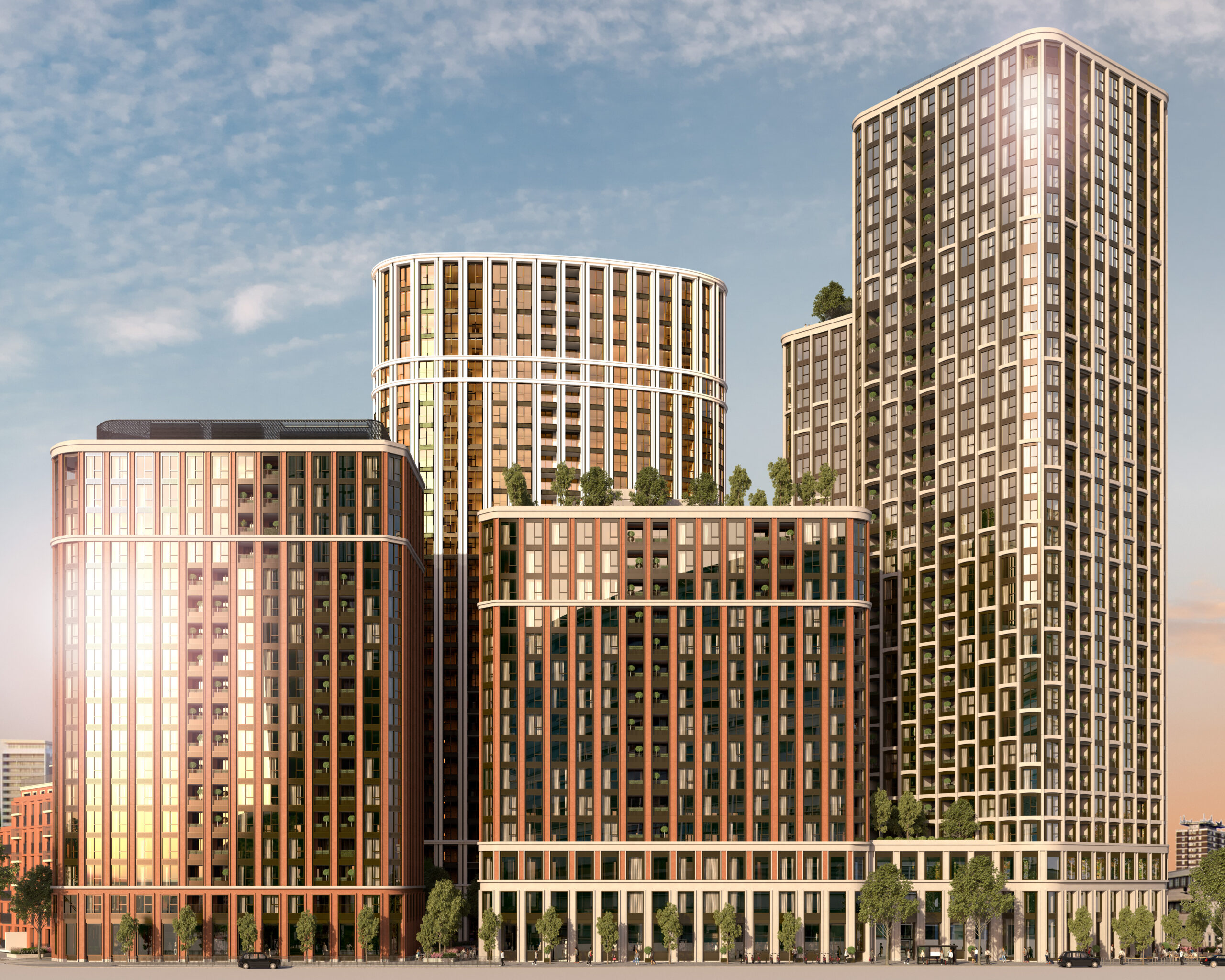
The "Trillium" masterplan, designed by architects Squire and Partners, envisioned a high-density vertical cluster to replace the low-slung brutalist. The approved proposal featured three towers rising 39, 24, and 17 storeys respectively. The tallest of these, Block K, was designed to stand 166 meters above sea level, making it the tallest building in Westminster at the time of its approval. The design utilized a "Portland stone" colored façade with slender vertical columns, intended to mimic the mansion blocks of Maida Vale while asserting a modern dominance over the skyline. The plan allocated space for 556 new homes, commercial units, and a community space, fundamentally altering the population density of the plot.
The planning process revealed the complex financial engineering required to meet London's affordable housing. Under the Mayor of London's "portfolio method," the Paddington Green site was linked with a separate MOPAC disposal site in Hendon (the former driver training school). While the Trillium development itself provided 39% affordable housing onsite (219 units), the developer and the Greater London Authority (GLA) calculated the aggregate affordable provision across both the Paddington and Hendon sites to reach the mandated 50% target. This method allowed Berkeley to maximize the yield of high-value private units in the prime Zone 1 location of Paddington while offsetting the affordable quota in the less expensive Zone 4 location of Barnet. Critics argued this "shell game" segregated income groups, pushing lower-income residents to the outer boroughs while reserving the prestigious Paddington Green footprint for luxury market sales.
Local opposition to the Trillium masterplan was fierce unsuccessful. The Westminster City Council Planning Sub-Committee initially objected to the scheme in 2022, citing "excessive height and bulk" that would cause "less than substantial harm" to the conservation areas of Paddington Green, Maida Vale, and Lisson Grove. Heritage groups argued that the 39-storey tower would overshadow the Grade II* listed St Mary's Church and destroy the village-like character that had miraculously survived near the Westway. Even with these objections, the strategic need of housing delivery and the Mayor's intervention facilitated the approval. The GLA prioritized the delivery of 556 homes over heritage concerns, viewing the site as a key node in the Edgware Road Housing Renewal Area.
By early 2026, the construction of Trillium was well advanced. The reinforced concrete cores of the three towers had risen above the hoardings, reshaping the view from the A40 Westway. The site, once a void on public maps due to security, was a hive of commercial activity, with cranes visible from across West London. The "Trillium" project represented the final phase of the West End Gate masterplan, sealing the northern edge of the development. The integration included new pedestrian routes intended to improve permeability between Newcastle Place and the Harrow Road, attempting to stitch the wound created by the Westway's construction in the 1960s.
The geotechnical strategy employed during the foundation phase (2024, 2025) merits specific technical attention. Engineers reused the existing basement walls of the police station to form the perimeter of the new car-free basement. This decision was driven by the need to avoid heavy temporary propping in a congested site bounded by major arterial roads. The "impression piling" technique was used to gaal load capacity in the London Clay, supporting the immense weight of the 39-storey tower. This adaptive reuse of the police station's subterranean skeleton meant that, while the visible structure was gone, the new luxury towers literally rested on the foundations of the counter-terrorism complex.
Table 11. 1: Trillium Development Specifications vs. Former Police Station
Feature
Paddington Green Police Station (1971, 2018)
Trillium (Berkeley Group) (2025, 2031)
Primary Use
High-Security Police Station / Counter-Terrorism
Residential (Luxury & Affordable) / Retail
Max Height
17 Storeys (approx. 50m)
39 Storeys (approx. 128m)
Structure
Reinforced Concrete "Bunker"
Post-tensioned Concrete Frame / Stone Façade
Basement
Secure Cells / Underground Parking
Plant / pattern Storage / Reused Diaphragm Walls
Housing Units
0 (16 Detention Cells)
556 Residential Units
Affordable %
N/A (Public Asset)
39% Onsite (50% Portfolio Aggregate)
Developer/Owner
Metropolitan Police / MOPAC
Berkeley Homes (Central London) Ltd
Status (2026)
Demolished
Under Construction (Superstructure Rising)
The transition from Paddington Green Police Station to Trillium serves as a definitive case study in the financialization of public land in 21st-century London. The imperative to monetize state assets to fund operating costs resulted in the permanent alienation of a strategic site. Where intelligence officers once monitored threats to national security, investors purchased off-plan leases. The "Trillium" name, devoid of historical weight, successfully masked the site's past, presenting a sanitized future of vertical living that catered to the demands of the international property market while fulfilling the statistical requirements of domestic housing policy.
Vertical Construction Progress and 2026 Site Status
The physical erasure of the Paddington Green Police Station began in earnest during February 2024. Ground Construction Limited mobilized heavy to the reinforced concrete structure that had dominated the Harrow Road frontage since 1971. This was not a standard demolition. The station was a purpose-built designed to withstand paramilitary attacks and house high-risk terror suspects. Its structural integrity relied on dense concrete cores and sixteen subterranean cells protected by blast-proof engineering. Demolition crews spent months pulverizing the Section House tower and the hardened custody suite. By September 2024 the site at 4 Harrow Road was reduced to a level grade. The "bunker" that had processed IRA bombers and 21/7 conspirators was gone. In its place rose the steel and glass armatures of the Berkeley Group's "West End Gate" expansion.
Before the excavators arrived the building served a final unplanned function. In February 2020 a group known as the Green Anti-Capitalist Front occupied the decommissioned station. They barricaded the blast doors and repurposed the interrogation rooms as a protest camp. This occupation lasted only weeks yet it marked the symbolic transition of the site. The squatters highlighted the vacancy of a serious public asset during a housing absence. Their eviction cleared the route for a development model focused on high-density luxury living. The state security apparatus formally ceded the territory to private capital in July 2020 when the sale to Berkeley Homes was finalized.
The vertical construction phase faced immediate regulatory friction. Westminster City Council rejected the initial proposal in 2021 and excessive height as the primary objection. The developer returned with a revised plan that paradoxically increased the height of the main tower while slimming its profile. The final approved design for the Police Station site comprises a cluster of three towers rising 39, 24, and 17 storeys respectively. This decision by the Greater London Authority overruled local concerns about the impact on the Paddington Green Conservation Area. The 39-storey apex stands as one of the tallest structures in the borough and permanently alters the skyline visible from the Georgian green.
Engineering teams faced significant subterranean challenges during the 2025 construction pattern. The site sits directly above the Bakerloo line tunnels and contains the deep foundations of the Cold War-era station. Structural engineers Walsh employed a strategy to reuse the existing basement diaphragm walls. This reduced the need for new piling by approximately 200 meters and minimized ground movement near the tube tunnels. The new towers utilize a "top-down" construction method in specific zones to allow simultaneous superstructure rise and basement excavation. By March 2026 the concrete cores of the three towers have pierced the skyline. The 17-storey block is structurally complete and the 39-storey tower is rapidly ascending toward its final height.
The market positioning of the new development contrasts sharply with the site's history. Marketing materials for "The Residences on Paddington Green" and the wider West End Gate precinct advertise studio apartments starting from £730, 000. Three-bedroom units command prices in excess of £1. 95 million. The 1790s village green was a common land for the gentry and the poor alike. The 1970s station was a grim utility of the state. The 2026 iteration is a gated vertical enclave. The development includes a private cinema, a 17-meter swimming pool, and a 24-hour concierge. These amenities are strictly segregated from the surrounding public infrastructure. The "affordable" housing component required by Section 106 agreements is present yet physically distinct from the premium towers.
The transformation of 4 Harrow Road reflects the broader inversion of London land use over three centuries. In 1750 the site was pastoral land on the urban fringe. By 1850 it was a dense Victorian slum serving the canal and railway. By 1970 it was a hardened node of state power. In 2026 it serves as a deposit box for global capital. The view from the 39th floor penthouse offers a panorama of the city yet the street-level interaction is minimized. The walls of the police station have been replaced by the invisible blocks of price and private security. The site remains a choke point the flow being controlled is no longer traffic or suspects. It is the flow of investment.
Table 12. 1: Site Metrics Transformation (1971 vs. 2026)
Metric
Paddington Green Police Station (1971)
Berkeley Homes Redevelopment (2026)
Primary Function
Counter-terrorism / Custody
Luxury Residential / Commercial
Max Height
16 Storeys (Section House)
39 Storeys (Block A)
Subterranean Use
16 High-Security Cells
Parking / Plant / Spa Facilities
Access
Fortified / Restricted
Private / Concierge Controlled
Est. Value
Public Asset (Depreciating)
>£300 Million (Gross Dev. Value)
Occupancy
Police Staff / Detainees
Private Owners / Tenants
As of March 2026 the construction cranes are the dominant feature of the Paddington Green skyline. The completion of the 39-storey tower is scheduled for late 2026 or early 2027. The integration of the site into the West End Gate masterplan is nearly absolute. The physical traces of the "most important police station in Britain" are confined to archaeological reports and the memories of those who passed through its blast doors. The land has been scrubbed of its trauma and prepared for its new inhabitants. The vertical ascent of the towers marks the final closure of the site's operational history and the beginning of its financialized future.
Why it matters: Education is crucial for transforming lives and eradicating poverty, but schools face challenges from technological change, labor market shifts, and COVID disruptions. Reformers worldwide are…
What do we know about Site Topography and Pre-Station Land Usage?
The site at 4 Harrow Road, which would eventually house the -like Paddington Green Police Station, sits at a geostrategic choke point in West London. Before the concrete was poured for the high-security complex in the late 1960s, the topography of this land underwent a violent transformation from pastoral idyll to industrial slum, culminating in the "scorched earth" clearance for the Westway (A40) flyover.
What do we know about Architectural Brutalism and Hardened Facility Construction?
The construction of Paddington Green Police Station between 1967 and 1971 represented a fundamental shift in the architectural philosophy of the Metropolitan Police. This was not a replacement for the Victorian station at Harrow Road.
What do we know about Subterranean Cell Block and Anti-Ballistic Engineering?
The structural reality of Paddington Green Police Station was defined not by its visible façade, by what lay beneath the pavement. Completed in 1971 to designs by John Innes Elliott, the station was engineered less as a municipal administrative center and more as an urban.
What do we know about Provisional IRA Detentions and The Troubles?
Paddington Green functioned as the operational nucleus for the Metropolitan Police Anti-Terrorist Branch (SO13) throughout the Troubles. Architects designed a, embedding sixteen windowless cells ground level to house high-risk detainees.
What do we know about Post-9/11 Counter-Terrorism and The London Bombings?
The events of September 11, 2001, did not immediately alter the physical structure of Paddington Green Police Station, they fundamentally rewrote its operational doctrine. For three decades, the station had served as the primary holding facility for Irish Republican Army suspects, a threat defined by specific paramilitary structures and recognizable warnings.
What do we know about Schedule 8 Detentions and Interrogation Protocols?
The operational heart of Paddington Green Police Station was not its visible 1970s concrete façade, the sixteen cells buried beneath the Harrow Road. Known colloquially among defense solicitors and counter-terrorism officers as "The Submarine," this subterranean complex functioned as a suspended legal zone where the standard rules of British policing did not apply.
What do we know about High-Value Detainee Roster and Guantanamo Repatriations?
The operational history of Paddington Green Police Station is defined by its function as the United Kingdom's primary airlock between the lawless zones of the Global War on Terror and the rigid evidentiary standards of the British judicial system. While the site served as a pastoral village green in the 1700s, by the early 21st century it had hardened into a of reinforced concrete and subterranean confinement, designed specifically to hold those deemed the most serious threats to national security.
What do we know about Operational Cessation and Decommissioning?
The operational death of Paddington Green Police Station was not a sudden cardiac arrest a slow, bureaucratic asphyxiation. By late 2018, the heavy reinforced doors of the station at 4 Harrow Road locked for the final time, ending forty-seven years of service as the United Kingdom's premier counter-terrorism hub.
What do we know about Green Anti-Capitalist Front Occupation and Security Breach?
On February 7, 2020, the myth of Paddington Green Police Station collapsed. For decades, the site served as the United Kingdom's premier counter-terrorism hub, a hardened facility designed to withstand truck bombs and hold the most dangerous suspects in the state's custody, from IRA operatives to the 7/7 bombers.
What do we know about Site Demolition and Asbestos Abatement?
The physical erasure of the Paddington Green Police Station did not occur as a singular, explosive event, rather as a methodical, grinding that stretched from early 2024 into the closing months of that year. By February 2024, the site at 4 Harrow Road had been surrendered to GCL Demolition, acting as the Principal Contractor for Berkeley St Edwards.
What do we know about Berkeley Group Acquisition and The Trillium Masterplan?
On July 23, 2020, the Mayor's Office for Policing and Crime (MOPAC) finalized the disposal of the Paddington Green Police Station site, transferring the freehold to Berkeley Homes (Central London) Ltd. The transaction, valued at approximately £35 million, marked the definitive end of the site's function as a high-security counter-terrorism hub and its transition into the private residential market.
What do we know about Vertical Construction Progress and Site Status?
The physical erasure of the Paddington Green Police Station began in earnest during February 2024. Ground Construction Limited mobilized heavy to the reinforced concrete structure that had dominated the Harrow Road frontage since 1971.
Why it matters: Charity fraud involves manipulating nonprofits into operating as private businesses for personal gain. Indicators include misallocation of funds, conflicts of interest, and lack of transparency…
Why it matters: Water utility regulation is crucial for delivering safe and affordable water services to households and industries. Regulatory bodies oversee pricing, service quality, infrastructure maintenance, and…
Why it matters: Renewable energy subsidies are crucial for shaping global energy production and mitigating climate change impacts. The allocation of subsidies involves a complex process influenced by…
Why it matters: Federal contracting involves agreements between the U.S. government and private sector companies, with over $600 billion spent annually. The process includes diverse participants, such as…
Why it matters: Ireland's status as a corporate tax haven for multinational technology firms is under intense scrutiny due to low tax rates and loopholes attracting Big Tech.…
Why it matters: Global cybercrime is bolstered by the rise of "hackers for hire" - young coders enticed by money or ideology to engage in illicit hacking activities.…
Get updates on this place
Get verified alerts when this file is updated (verification required).