
| Period | Key Figure/Event | Action/Outcome |
|---|---|---|
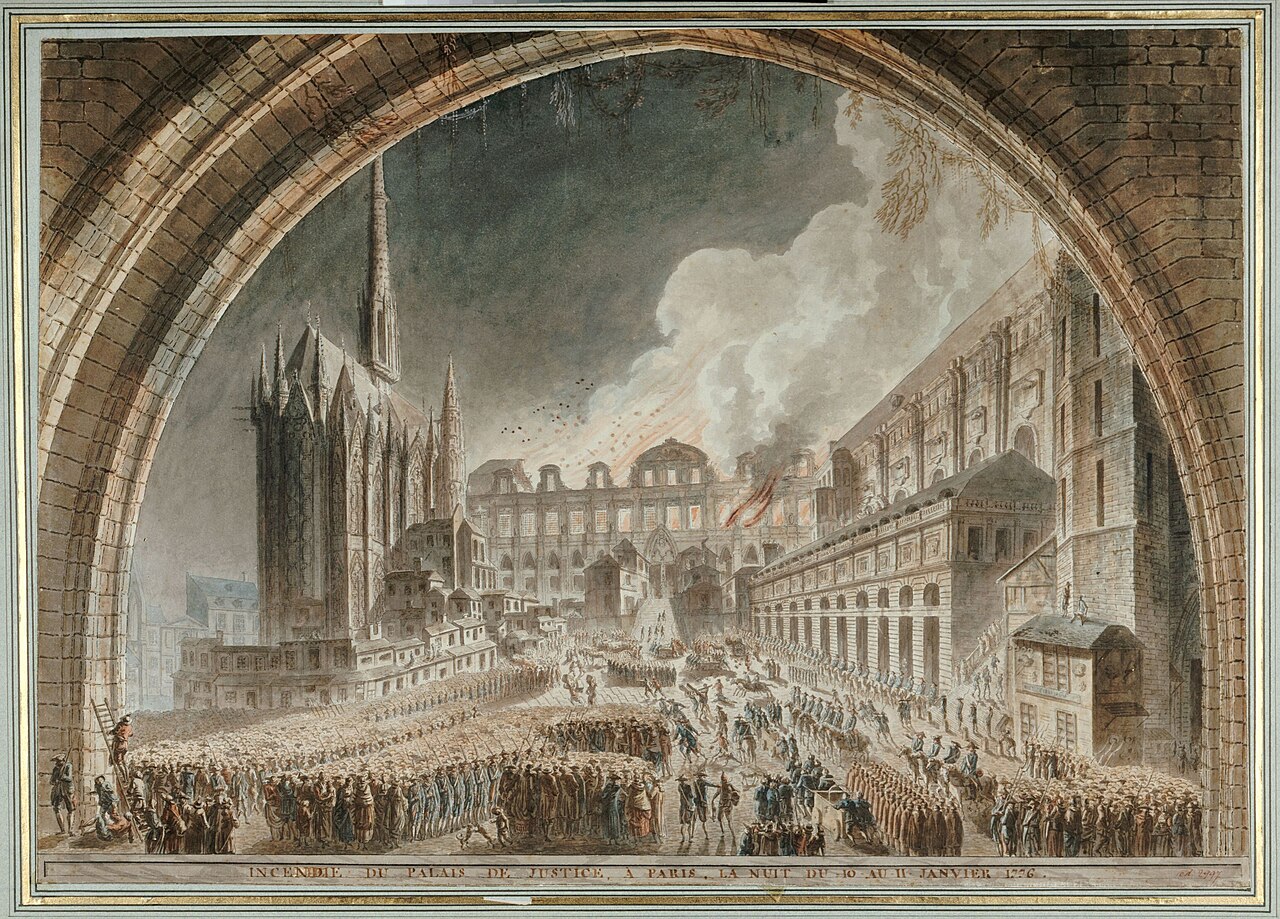
| Jan 10-11, 1776 | The Great Fire | Destruction of Galerie Mercière, Galerie des Prisonniers, and medieval entrance. |
| 1776-1778 | Joseph-Abel Couture | Initial cleanup and reconstruction attempts; dismissed for structural failures. |
| 1779-1781 | Pierre Desmaisons & Moreau-Desproux | Took over the project; redesigned the Cour du Mai façade in Neoclassical style. |
| 1781-1785 | Pierre Desmaisons | Completion of the grand staircase and the main façade. |
| 1783-1785 | Bigonnet (Master Locksmith) | Installation of the monumental iron grille (gate) at the Cour du Mai entrance. |
| 1781-1787 | Jacques-Denis Antoine | Reconstruction of the archives and the vaults above the Salle des Pas Perdus. |
| 2021-2026 | APIJ / Ministry of Justice | Rehabilitation of Bâtiment B5 and B2p1; restoration of 18th-century masonry. |
Investigative Bio of Palais de Justice
Ancien Régime Judicial Administration and the 1776 Fire
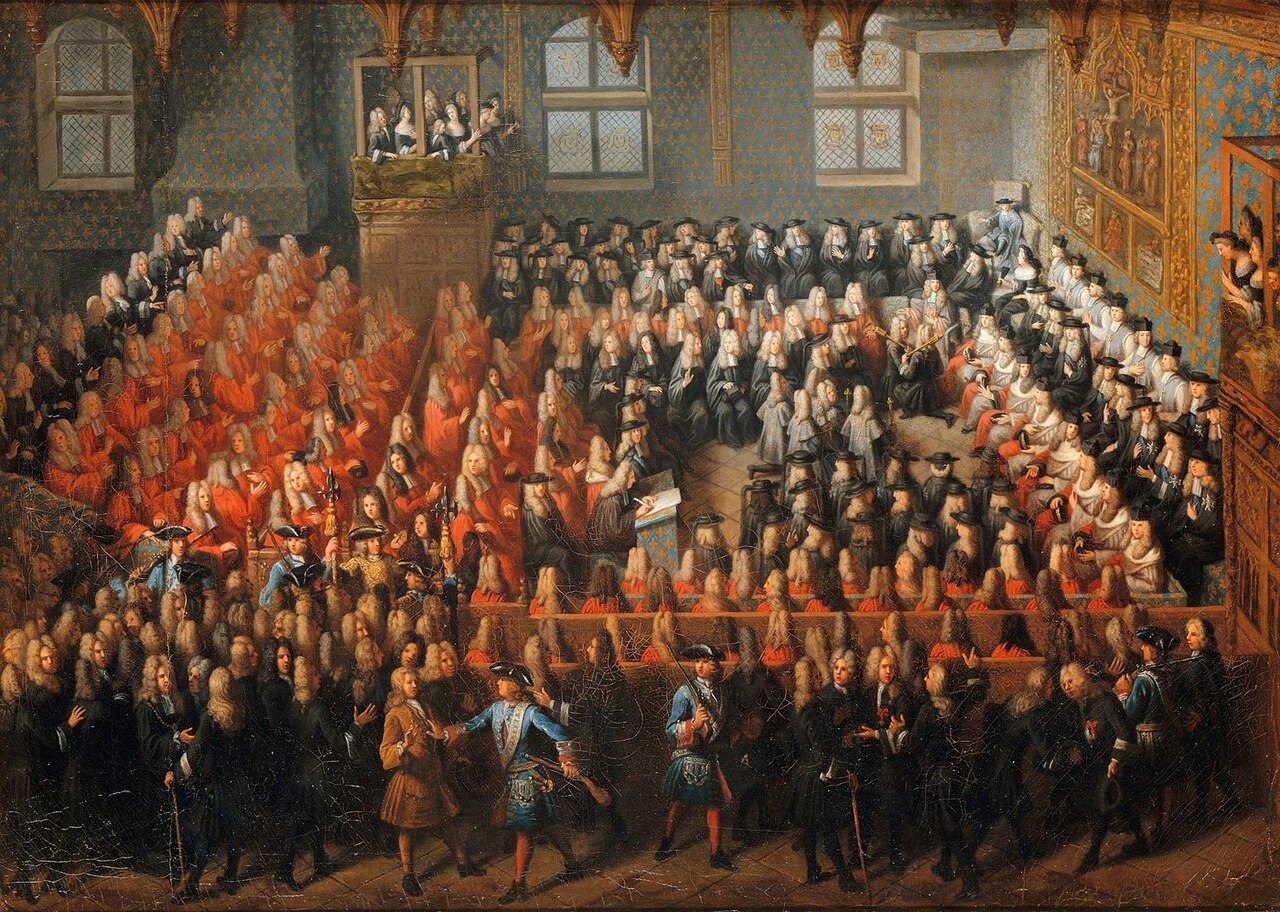
The Palais de Justice on the Île de la Cité stands as the physical manifestation of French legal authority, yet its current neoclassical façade masks a chaotic history of fire, political rebellion, and architectural improvisation. To understand the building's footprint in 2026, one must examine the pivotal events of the late 18th century, specifically the judicial of the Ancien Régime and the catastrophic fire of 1776 that erased the medieval entrance. ### The Parlement de Paris: A State Within a State In the early 1700s, the Palais was not a courthouse; it was the of the *Parlement de Paris*. This institution functioned as the supreme appellate court for nearly half of France, covering a jurisdiction that extended from Picardy to Auvergne. Unlike modern courts, the Parlement held significant political power. Its magistrates, who purchased their positions through a system of venality, claimed the right to "remonstrate" against royal edicts. They could refuse to register laws they deemed contrary to the fundamental customs of the, blocking the King's. This friction frequently brought the Palais into direct conflict with Versailles. In 1766, Louis XV was forced to travel to the Grand Chambre for the "Flagellation Session," where he famously declared that sovereign power resided in his person alone. By 1776, the tension had shifted to Louis XVI and his reformist minister, Turgot. The magistrates used the physical labyrinth of the Palais, a dense aggregation of medieval halls, towers, and chapels, as their stronghold. The building itself reflected this complex power: a royal residence turned judicial maze, where the King's justice was administered by men who frequently opposed the King's policies. ### The Merchant Trap: Galerie Mercière A serious problem plagued the 18th-century Palais: it was a commercial hub as much as a legal one. The *Galerie Mercière* (Haberdasher's Gallery) connected the Sainte-Chapelle to the main halls. This corridor was lined with wooden stalls and boutiques selling luxury goods, books, and legal attire. These shops were highly profitable for the concierge who collected the rents, yet they introduced a severe fire hazard into the heart of the complex. The wooden structures, packed with paper and textiles, turned the gallery into a dormant furnace. ### The Inferno of January 1776 On the night of January 10-11, 1776, the inevitable occurred. A fire ignited in the merchant stalls of the Galerie Mercière. Archives and eyewitness accounts from the period describe a swift and uncontrollable blaze. The fire consumed the gallery and spread rapidly to the *Galerie des Prisonniers* and the structures surrounding the Cour du Mai. The destruction was strategic, if accidental. The fire severed the connection between the Sainte-Chapelle and the secular courts, destroying the monumental entrance that had served the palace for centuries. It threatened the Conciergerie prison, forcing guards to scramble to secure inmates while the structure above them disintegrated. By the morning of January 12, the medieval face of the Palais was a smoking ruin. The disaster forced the monarchy to intervene, not just to repair, to reimagine the symbol of justice. ### Reconstruction and the Neoclassical Shift Louis XVI ordered an immediate reconstruction. The project was not a repair job; it was an opportunity to impose order on the architectural chaos of the Île de la Cité. The initial commission went to Joseph-Abel Couture (known as Couture l'Aîné). His mandate was to clear the debris and design a façade that projected the authority and stability of the Crown. Couture's tenure was short-lived. By 1779, serious structural failures appeared in his work on the new Galerie Mercière vaults. The administration dismissed him, handing control to a team of architects who would define the building's future: Pierre Desmaisons and Pierre-Louis Moreau-Desproux. When Moreau resigned in 1781, Desmaisons took sole command of the Cour du Mai project. Desmaisons rejected the medieval asymmetry. He designed the monumental façade visible today, characterized by a grand staircase and a colonnaded front that mimics a Roman temple. This shift to Neoclassicism was political; it replaced the organic, cluttered growth of the Middle Ages with the rational, enlightened geometry favored by the late monarchy. ### The Bigonnet Grille A defining feature of the 1776 reconstruction is the monumental iron gate (grille) separating the Cour du Mai from the street. Executed by the master locksmith Bigonnet, this masterpiece of ironwork was installed between 1783 and 1785. It survived the French Revolution, though the royal emblems were torn down by crowds in the 1790s. The gate served a dual purpose: it created a dignified barrier between the public street and the sanctuary of justice, while also providing a defensible perimeter, a need that became clear during the riots of the following decades. ### Architectural Legacy and 2026 Renovations The footprint established by Desmaisons and his colleague Jacques-Denis Antoine (who worked on the archives and the Salle des Pas Perdus vaults) dictates the layout of the Palais de Justice in 2026. The separation of the Sainte-Chapelle from the judicial corridors, a result of the 1776 fire breaks, remains a key logistical feature., the Ministry of Justice has engaged in a massive rehabilitation campaign that directly touches these 18th-century sectors. Data from the *Agence Publique pour l'Immobilier de la Justice* (APIJ) confirms that in November 2024, studies concluded for the rehabilitation of "Bâtiment B5," the section extending from the Quai de l'Horloge to the Cour du Mai. This project aims to stabilize the structures built by Desmaisons, which have suffered from centuries of subsidence and vibration. also, early 2026 marked the delivery of the "B2p1" sector renovations at 36 Quai des Orfèvres. These works exposed the of masonry dating back to the post-1776 reconstruction, allowing historians to verify the transition from medieval limestone to the cut stone used by Antoine and Desmaisons. The removal of temporary modular structures from the Cour de la Sainte-Chapelle in early 2024 also restored the visual axis intended by the 18th-century architects, re-establishing the spatial relationship between the chapel and the court that the fire had once severed. The 1776 fire was a violent catalyst. It ended the era of the Palais as a medieval bazaar and inaugurated its role as a dedicated temple of law. The Cour du Mai, with its Desmaisons façade and Bigonnet grille, stands as the enduring monument to this transformation, a layout that even as the Cour de Cassation reoccupies the historic Grand Chambre in the present day.
Revolutionary Tribunal Conviction Rates and Guillotine Logistics 1793, 1795
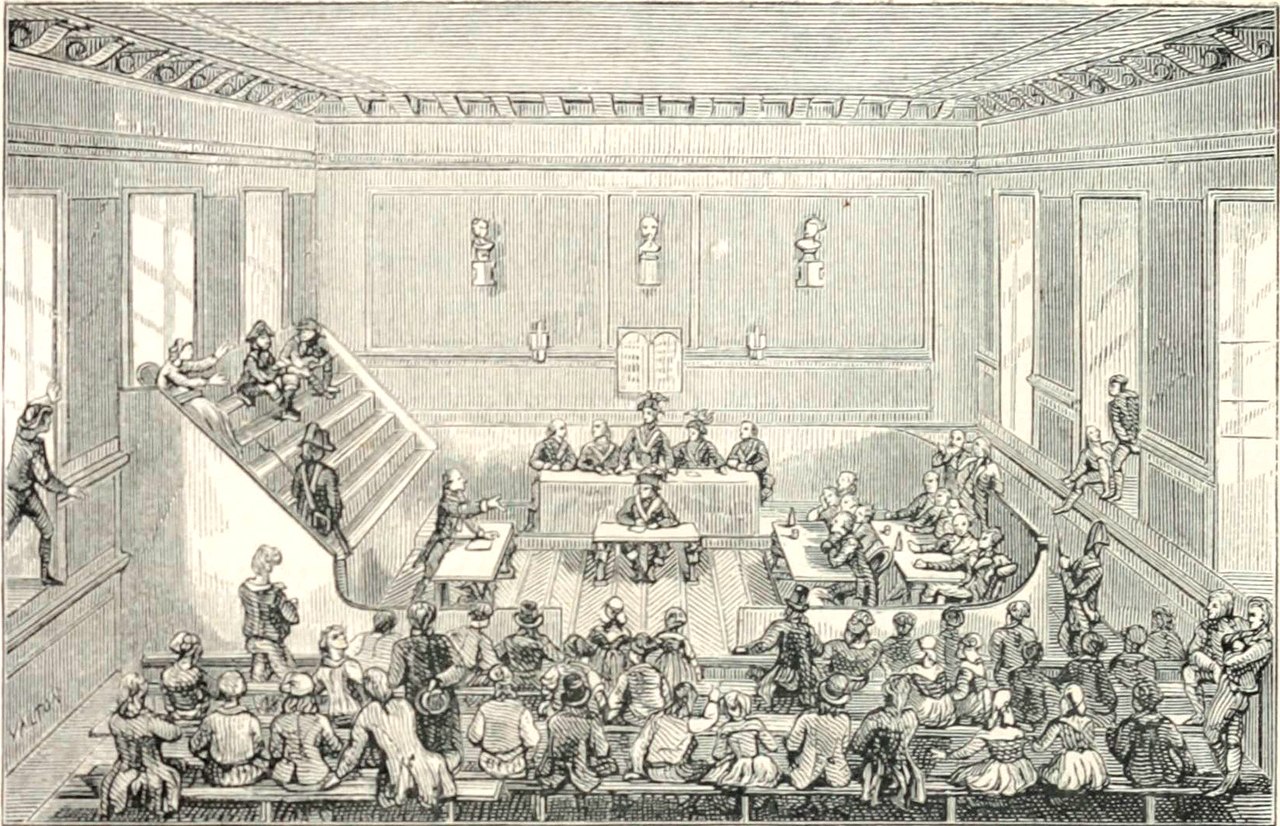
The transformation of the Palais de Justice from a royal court to a factory of execution began in March 1793. The revolutionary government seized the Grand-Chambre, the most prestigious hall of the Ancien Régime, and renamed it the Salle de la Liberté. This room, where kings once held "beds of justice," became the primary seat of the Revolutionary Tribunal. A second hall, the Salle Saint-Louis, was requisitioned and branded the Salle de l'Égalité. These two chambers served as the operational core for a judicial apparatus that would process over 4, 000 suspects between 1793 and 1795. The physical layout of the Palais in 2026 still bears the scars of this period, as the current Civil Chamber occupies the exact footprint where the Tribunal sat.
The Tribunal initially operated with a degree of deliberation that surprises modern observers. From its inception in March 1793 until the autumn of that year, the court maintained a conviction rate that mirrored ordinary criminal courts. Juries acquitted nearly half of the defendants brought before them. The of terror was not yet. It required the bureaucratic fanaticism of Public Prosecutor Antoine-Quentin Fouquier-Tinville to streamline the process. Fouquier-Tinville established his office and residence within the Palais itself, located between the Caesar and Silver Towers. He lived and worked meters from the judgment seat. His proximity allowed him to manage the flow of paperwork and prisoners with industrial precision.
The turning point arrived on June 10, 1794, with the passage of the Law of 22 Prairial. This legislation stripped defendants of their right to counsel and eliminated the need for witnesses. The Convention declared that the penalty for all "enemies of the people" was death. The Tribunal faced a binary choice: acquittal or the guillotine. The conviction rate surged immediately. The judicial process, which previously took days for a single trial, accelerated to handle dozens of cases simultaneously. These group trials, known as fournées or batches, allowed the Tribunal to clear its overcrowded dockets. The conviction rate data from this period reveals the lethal efficiency of the Prairial system.
| Period | Approximate Monthly Death Sentences | Acquittal Rate |
|---|---|---|
| April 1793 , March 1794 (Early Tribunal) | 15 , 50 | ~50% |
| June 10, 1794 , July 27, 1794 (Great Terror) | 300+ | <20% |
Logistics became the primary constraint on the killing capacity of the Tribunal. The Conciergerie prison, located directly beneath the Palais de Justice, served as the holding pen for those awaiting trial. By the spring of 1794, the prison held nearly 1, 200 detainees in spaces designed for half that number. Overcrowding forced prisoners to sleep in shifts on rotting straw. The "souricière" or mousetrap, a holding cell adjacent to the courtrooms, became the final stop before the trial. Prisoners were shuttled up narrow spiral staircases directly into the dock of the Salle de la Liberté. This vertical integration of prison and courtroom eliminated the need for secure transport through the streets and maximized the daily throughput of the Tribunal.
Once the death sentence was pronounced, the condemned were moved to the "toilette" room within the Conciergerie. Here, the executioner Charles-Henri Sanson and his assistants cut the hair of the victims and bound their hands. The route to the scaffold began at the Cour du Mai, the main courtyard of the Palais facing the Boulevard du Palais. Tumbrels, simple two-wheeled agricultural carts, lined up at the foot of the grand staircase. The iron gates of the Cour du Mai, which still stand in 2026, opened to release the procession. The route to the guillotine varied as the political climate shifted. Initially, the carts traveled to the Place de la Révolution (modern Place de la Concorde). This journey took approximately one hour through the Rue Saint-Honoré.
Residents along the route eventually complained of the smell of blood and the constant spectacle of death. In June 1794, authorities moved the guillotine to the Place du Trône-Renversé (modern Place de la Nation) in the eastern faubourgs. This longer route required the tumbrels to traverse the Rue Saint-Antoine, extending the public ordeal of the condemned. The efficiency of the Palais de Justice operations meant that the time between sentencing and execution was frequently less than six hours. The Tribunal operated six days a week. It rested only on the décadi, the tenth day of the republican week.
The system collapsed swiftly after the fall of Robespierre in July 1794. The Thermidorian Reaction saw the of the Palais turn against its operators. Fouquier-Tinville, the architect of the Tribunal's logistics, found himself in the same dock he had controlled for fourteen months. He was tried in the Salle de la Liberté in May 1795. His defense relied on the claim that he was a cog in the machine, an obedient civil servant following the laws of the Convention. The court rejected this argument. He was guillotined on May 7, 1795. The Revolutionary Tribunal was dissolved shortly thereafter, the Palais de Justice retained its role as the center of French law. The records of the Tribunal, preserved in the National Archives, document 2, 639 death sentences passed in Paris alone. These ledgers remain the most detailed accounting of the judicial massacre orchestrated from the Île de la Cité.
Joseph-Louis Duc Expansion and Architectural Engineering 1840, 1879
The architectural transformation of the Palais de Justice between 1840 and 1879 represents a collision of imperial ambition, neoclassical rigor, and violent insurrection. Following the chaotic ad-hoc adjustments of the post-1776 era, the French state sought to impose a unified, monumental identity upon the Île de la Cité. In 1840, the Conseil Général de la Seine appointed architects Joseph-Louis Duc and Étienne-Théodore Dommey to execute this mandate. Their assignment was not renovation a radical restructuring of the judicial complex to project the absolute power of the law. While Dommey contributed significantly until his departure in 1871, Duc emerged as the singular visionary, driving the project with an obsession for symmetry and that would eventually earn him the highest accolades of the Second Empire.
Duc's masterstroke was the creation of the western façade, known as the Vestibule de Harlay. Facing the Place Dauphine, this structure was designed to serve as the primary ceremonial entrance, masking the medieval irregularities of the Conciergerie behind a screen of disciplined stone. Completed in 1868, the vestibule measures a 55 meters in length and 24 meters in width. Duc rejected the standard Baroque protrusions common in public buildings of the era. Instead, he engineered a colonnade that sits within the wall plane, a technical feat that creates depth without disrupting the building's severe, flat profile. This "Assyrian" quality, as noted by architectural critics of the time, gave the courthouse an ancient, impenetrable weight, distinct from the frivolous ornamentation of the Parisian boulevards being cut by Baron Haussmann nearby.
The interior engineering required to support these new volumes on the marshy soil of the Île de la Cité demanded precise foundation work. Duc used the Harlay expansion to reorganize the internal logic of the courts. The Vestibule de Harlay acts as a pivot point, connecting the criminal courts (Cour d'Assises) with the appellate chambers. To emphasize the of the proceedings, Duc and his team integrated heavy symbolism into the stonework. The central staircase leading to the Assize Court features a pediment adorned with caryatides supporting the Tables of the Law. The doors themselves bear the heads of Medusa, a deliberate design choice intended to "petrify" the accused with the terrifying gaze of justice before they entered the courtroom. This psychological architecture marked a departure from the religious iconography of the Ancien Régime, replacing divine mercy with state retribution.
By 1869, the reconstruction was largely complete, and the result was viewed as a triumph of modern French architecture. Napoleon III, seeking to cement the cultural legitimacy of his regime, awarded Joseph-Louis Duc the Grand Prix de l'Empereur. This prize, carrying a substantial purse of 100, 000 francs, recognized the Palais de Justice as the greatest artistic or architectural work produced in France during the preceding five years. The jury selected Duc's austere, design over the opulent extravagance of Charles Garnier's Opera House, signaling a preference for order and permanence. The Palais stood as a completed of law, seemingly impervious to the political turbulence that had defined the century.
This illusion of permanence shattered in May 1871. During the "Bloody Week" (Semaine Sanglante) that marked the collapse of the Paris Commune, the Palais de Justice became a primary target for the retreating Communards. On May 24, incendiaries set fire to the complex, using petroleum and gunpowder to ensure maximum destruction. The flames consumed the Salle des Pas Perdus, the Grand'Chambre, and the newly finished Cour d'Assises. The heat was so intense that it calcified the limestone and twisted the iron frameworks Duc had meticulously engineered. The catastrophe was not just structural; the fire obliterated the archives of the Civil Registry and the Court of Cassation, erasing centuries of legal history in hours. The Vestibule de Harlay, Duc's masterpiece, sustained serious damage remained standing, a hollow shell amidst the smoking ruins of the Île.
The aftermath of the 1871 fire forced Duc, then nearing his seventies, to confront the destruction of his life's work. Rather than retiring, he oversaw the reconstruction efforts, a grim task that occupied him until his death in 1879. The rebuilding process was not a simple restoration; it required a forensic analysis of the surviving masonry to determine what could be salvaged. Duc and his successor, Honoré Daumet, reinforced the fire-damaged walls and rebuilt the Cour d'Assises, though of the original decorative opulence was stripped back in favor of a more somber, functional aesthetic. The reconstruction also necessitated the replacement of the roofing systems with more fire-resistant materials, acknowledging the building's vulnerability to future insurrections.
| Year | Event / Milestone | Key Figure | Impact |
|---|---|---|---|
| 1840 | Appointment of Architects | Duc & Dommey | Official mandate to modernize the judicial complex. |
| 1857 | Construction Begins (West) | Joseph-Louis Duc | Start of the Vestibule de Harlay and western façade. |
| 1868 | Opening of Vestibule de Harlay | Joseph-Louis Duc | Completion of the monumental 55x24m entrance hall. |
| 1869 | Grand Prix de l'Empereur | Napoleon III / Duc | Award of 100, 000 francs; recognized as superior to the Paris Opera. |
| 1871 | Paris Commune Fire | Communards | Destruction of Salle des Pas Perdus, Assize Court, and archives. |
| 1872 | Death of Dommey | Étienne-Théodore Dommey | Duc continues as the sole primary architect. |
| 1875 | Re-inauguration (Partial) | Joseph-Louis Duc | Restored sections of the Harlay wing reopen to the courts. |
| 1879 | Death of Joseph-Louis Duc | Honoré Daumet | Daumet succeeds Duc to finalize the reconstruction. |
The legacy of this period is a building that functions as a palimpsest of 19th-century French history. The Vestibule de Harlay remains the dominant architectural feature of the western tip of the island, its statues, representing Prudence, Truth, Punishment, Protection, Force, and Equity, standing guard over the Place Dauphine. These allegorical figures, sculpted by artists such as Jean-Louis Jaley and François Jouffroy, serve as a stone manifesto of the state's values. The "Punishment" figure, in particular, reminds the observer of the building's coercive function, a necessary inclusion for a site that houses both the highest appellate courts and the holding cells of the Conciergerie.
Duc's architectural engineering also addressed the practical flow of human traffic within the massive complex. He designed the Salle des Pas Perdus not as a waiting room, as a cathedral of secular power, with dimensions that dwarf the individual litigant. Even with the 1871 destruction, the restored hall retains the Duc intended, measuring roughly 75 meters long and 28 meters wide. The use of natural light, filtered through high vaults, was calculated to illuminate the black robes of the magistrates and the anxious faces of the public, turning the daily business of the law into a theatrical performance. By the time of Duc's death in 1879, the Palais de Justice had morphed from a medieval relic into a modern administrative machine, setting the template for courthouse architecture across the French Third Republic.
Paris Commune Incendiary Damage and Structural Recovery 1871
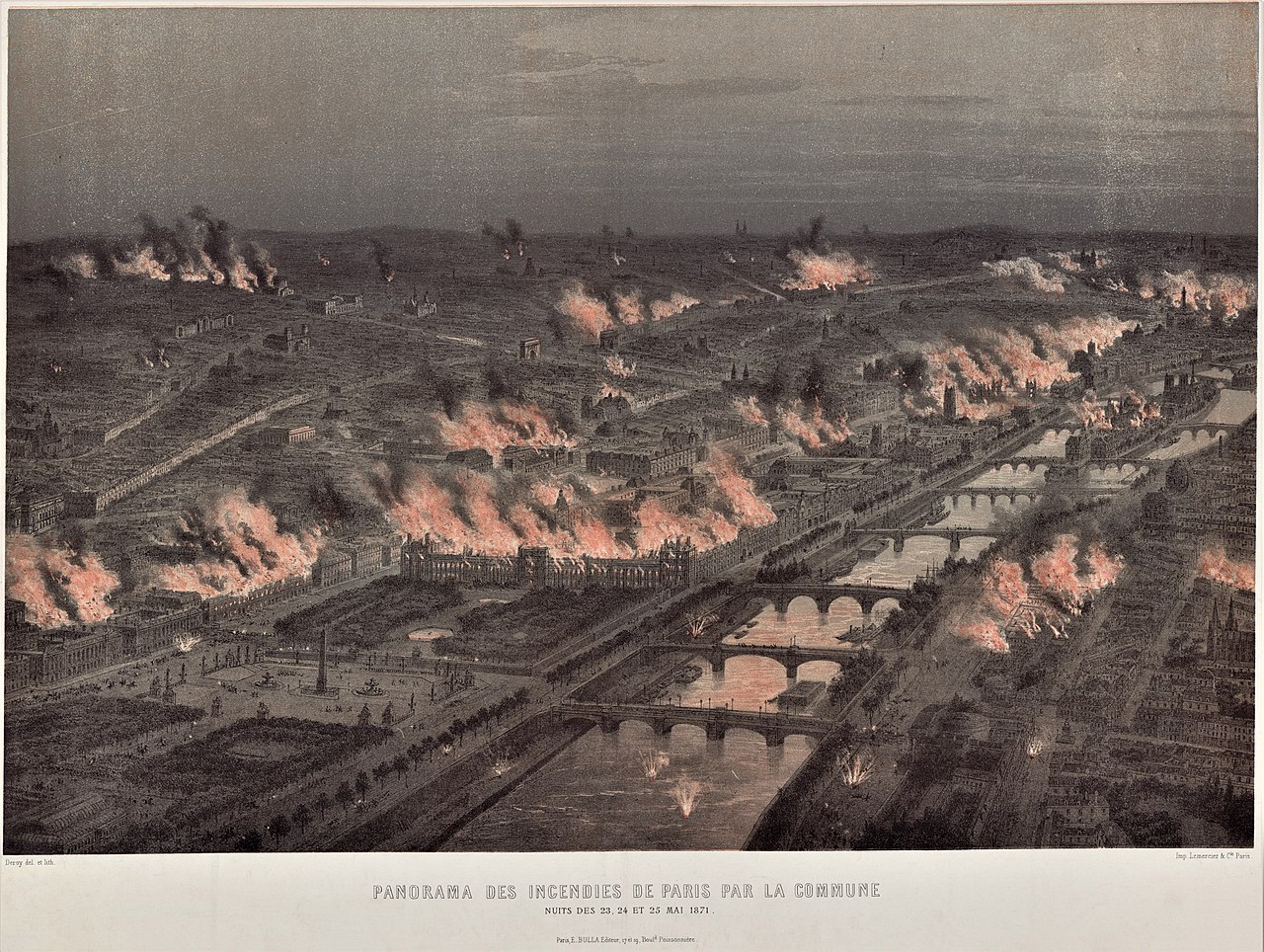
The destruction of the Palais de Justice on May 24, 1871, stands as the single most catastrophic event in the building's millennial history, surpassing even the fires of 1618 and 1776 in its calculated ferocity. During the final, bloody week of the Paris Commune, as Versaillais troops breached the city defenses, Communard leaders issued orders to incinerate the symbols of the centralized state. The Palais, representing the judicial authority of the bourgeoisie and the fallen Second Empire, became a primary target. Under the command of Théophile Ferré, a militant Blanquist and the substitute prosecutor of the Commune, teams of arsonists systematically doused the complex with petroleum. The resulting inferno did not damage the structure; it gutted the architectural and bureaucratic core of the French legal system.
The fire raged for days, fed by the dry timber of the medieval roofs and the paper fuel of centuries of legal archives. The devastation was concentrated in the upper reaches and the central halls. The Salle des Pas Perdus, the immense waiting hall that served as the nervous system of the courts, suffered total structural failure. Its roof, a masterpiece of earlier engineering, collapsed into the nave, melting the iron supports and shattering the stone floor where lawyers and litigants had paced since the reign of Louis IX. The Grand Chambre, the historic seat of the Parlement de Paris where kings held their "lit de justice," was reduced to a shell. The flames consumed the intricate woodwork, the gilded ceilings, and the artistic treasures that had adorned the walls for generations. The physical erasure of these spaces meant that the Palais de Justice of 2026 is, in large part, a replica standing on the footprint of the dead.
The most loss, yet, was not architectural administrative. The Palais de Justice housed the judicial archives and, serious, the duplicate registers of the état civil (civil status). French law required births, marriages, and deaths to be recorded in two locations: the municipal archives at the Hôtel de Ville and the court archives at the Palais de Justice. In a stroke of nihilistic efficiency, the Communards set fire to both buildings on the same day. The Hôtel de Ville burned with all original records from the 16th century to 1859. The Palais de Justice burned with the duplicates. This double incineration created a genealogical void for millions of Parisians, wiping out the official lineage of the capital's population prior to 1860. The "reconstituted" files used by genealogists in 2026 are painful, partial reconstructions based on family bibles, baptismal notes, and private papers that citizens scrambled to provide in the decades after 1871.
For the architect Joseph-Louis Duc, the fire was a personal tragedy of operatic proportions. Duc had dedicated his professional life to the Palais de Justice. In 1869, just two years before the Commune, Napoleon III had awarded him the Grand Prix de l'Empereur, a prize of 100, 000 francs, for his brilliant modernization of the complex. He had successfully blended the Neo-Grec style with the medieval remnants, creating a facade that projected imperial stability. On May 24, 1871, Duc stood on the banks of the Seine and watched his life's work turn to ash. The psychological blow was immense, yet he refused to abandon the project. The Third Republic, eager to re-establish the rule of law and the legitimacy of the state, immediately recommissioned Duc, along with his assistant Honoré Daumet, to rise from the ruins.
The reconstruction process, which stretched from 1871 until the eve of World War I in 1914, fundamentally altered the orientation and aesthetics of the Île de la Cité. Duc and Daumet did not simply restore what was lost; they reimagined the Palais for a modern republic. The most visible change occurred on the western facade, facing the Place Dauphine. The fire had cleared away the dense web of smaller structures that once clung to the palace, allowing the architects to design a monumental entrance that emphasized the weight and severity of the law. The new facade featured a grand staircase and a colonnade that drew direct inspiration from the temples of antiquity, signaling that Justice was the new religion of the secular state.
| Section | Status Post-1871 Fire | Reconstruction Outcome |
|---|---|---|
| Salle des Pas Perdus | Roof collapsed, interior gutted | Rebuilt by Duc/Daumet (1878) with exposed ironwork |
| Grand Chambre | Totally destroyed | Replaced by the Civil Chamber |
| Civil Status Archives | Incinerated (Duplicates) | Permanent loss; space repurposed for court functions |
| Cour de Cassation | Severe structural damage | Expanded and redesigned in opulent Beaux-Arts style |
| Police Prefecture | Destroyed | Relocated; site later used for 36 Quai des Orfèvres |
The rebuilding effort also birthed the legendary headquarters of the Paris Criminal Investigation Division. The fire had destroyed the section of the complex along the Quai des Orfèvres. In the subsequent reconstruction, the architects designed the wing that would become number 36, 36 Quai des Orfèvres. Completed in the late 19th century, this address became synonymous with French detective work, housing the Police Judiciaire until its relocation in 2017. The stone walls of "Le 36," frequently mistaken by tourists for medieval fortifications, are in reality the product of the post-Commune reconstruction, built to house the expanding bureaucracy of modern policing.
Inside the complex, the restoration of the Salle des Pas Perdus required a delicate balance between memory and modernization. Duc chose to divide the vast hall into two distinct naves, using a row of massive stone pillars to support a new, fire-resistant iron roof structure. This design choice was a direct response to the failure of the wooden trusses in 1871. The result was a space that felt colder, more industrial, and undeniably imposing. The statue of Berryer, the great orator, was reinstated, the hall never regained the chaotic, market-like atmosphere of the Ancien Régime. It became a solemn transit zone for the black-robed avocats, a place where the silence was enforced by the very architecture.
The Cour de Cassation, the highest court in France, received the most lavish attention during the reconstruction. Its new chamber, the Grand'Chambre, was decorated with a level of opulence that bordered on the monarchical, featuring heavy gilding, tapestries (which were actually painted canvas to reduce fire risk), and allegorical paintings glorifying the Code Civil. This was a political statement: the Republic would house its judges in a palace more splendid than any king's throne room. The restoration of this section was not completed until well after Duc's death in 1879, with Daumet seeing the project through to its conclusion.
By 2026, the scars of 1871 are invisible to the untrained eye, hidden beneath 150 years of soot and cleaning pattern. Yet, the forensic historian can still read the trauma in the masonry. The stones of the Quai de l'Horloge show subtle variations in color where the 19th-century repairs meet the medieval towers of the Conciergerie. The Conciergerie itself, which served as a prison during the Terror, narrowly escaped the total destruction that befell the rest of the Palais. The Communards had started fires there, the thick medieval walls and the vaulted ceilings of the Salle des Gens d'Armes limited the spread, preserving the Gothic lower levels while the 19th-century superstructure above burned. This survival created the strange architectural duality visible today: a base of 14th-century Gothic supporting a late 19th-century Beaux-Arts courthouse.
The recovery from the 1871 fire solidified the Palais de Justice as a of the Republic. The open, chaotic courts of the 1700s were gone. In their place stood a rationalized, secure, and fire-proofed complex designed to withstand insurrection. The loss of the archives remains the unhealed wound, a permanent lobotomy of the city's memory. Every time a historian in 2026 hits a dead end in a family tree around the year 1860, they are colliding with the ashes of May 24, 1871. The rebuilt Palais is a monument not just to Justice, to the resilience of the state against the fires of its own people.
Asbestos Contamination and Health Hazard Assessments 1980, 2026
The neoclassical grandeur of the Palais de Justice conceals a toxic industrial legacy that festered within its walls for decades. While the external façade projects the permanence of French law, the internal infrastructure of the 19th and 20th centuries relied heavily on materials classified as lethal. Between 1980 and 2026, the complex transformed from a working courthouse into a high- environmental containment zone. The primary agents of this emergency were asbestos (amiante) and lead (plomb), two substances that turned routine maintenance into hazardous operations and forced the eventual exodus of the Tribunal de Grande Instance (TGI) to the Batignolles district in 2018.
During the post-war modernization efforts of the 1950s through the 1970s, architects and engineers retrofitted the Palais to accommodate a swelling bureaucracy. They lined heating ducts, ceilings, and partition walls with asbestos, a material prized for its fire-resistant properties. This decision, made in the name of safety, planted a dormant threat throughout the labyrinthine corridors of the Île de la Cité. By the 1980s, as the health risks of asbestos fibers became irrefutable, the Palais stood as a monument to exposure. Magistrates, clerks, and maintenance workers spent their days in offices where degrading flocking (flocage) released microscopic fibrils into the ventilation systems. The air they breathed carried the dust of their own administrative enclosure.
The turning point arrived with the national ban on asbestos in 1997. This legislative shift reclassified the Palais de Justice from a historic asset to a liability. The state faced a paradox: the very institution responsible for enforcing the ban was headquartered in a building that violated it. For twenty years following the ban, the Ministry of Justice engaged in a slow, reactive strategy of containment rather than eradication. Maintenance crews applied sealants to crumbling asbestos patches, a stopgap measure that left the underlying toxicity intact. Diagnostic reports from the early 2000s revealed that the contamination was not localized widespread, in the plaster, the insulation, and the floor tiles of the vast complex.
Lead contamination compounded the emergency. The roof of the Palais, like Parisian monuments, consists of lead sheeting. Over centuries, and accelerated by the vibration of city traffic and the natural degradation of materials, lead dust accumulated in the attics and interstitial spaces. The catastrophic fire at the nearby Notre-Dame Cathedral in April 2019 exacerbated this problem, blanketing the Île de la Cité in a of lead-laden particulate matter. This external event forced a re-evaluation of the internal hygiene of the Palais. Regulatory thresholds for lead exposure tightened, and the "plomb" risk assessment became a central pillar of all renovation contracts managed by the Agence Publique pour l'Immobilier de la Justice (APIJ).
The departure of the TGI in 2018 stripped the Palais of its daily bustle, leaving the Cour de cassation and the Cour d'appel as the primary occupants. This vacancy allowed for the launch of the "Schéma directeur," a massive renovation plan intended to run through 2026 and beyond. The project aimed to modernize the electrical and security systems, yet the removal of hazardous materials consumed a disproportionate share of the budget and timeline. The APIJ divided the work into geographic phases, with "Bâtiment B2" (Quai des Orfèvres side) and "Bâtiment B5" (Quai de l'Horloge) undergoing intensive stripping operations.
Contractors working on the site between 2020 and 2026 operate under conditions resembling a nuclear cleanup. The "désamiantage" (asbestos removal) process requires the establishment of negative-pressure containment zones. Workers don full hazmat suits and pass through decontamination airlocks to enter the historic chambers. The logistical challenge is immense: the Palais is not a hollow shell a dense matrix of archives, courtrooms, and heritage-listed décor. Removing a contaminated ventilation shaft frequently involves 19th-century woodwork, cleaning the substrate, and restoring the aesthetic finish, all while maintaining a hermetic seal against dust leakage.
Financial data from the renovation contracts reveals the cost of this toxicity. Initial estimates for specific renovation blocks frequently doubled once the true extent of the asbestos and lead saturation came to light. In one instance reported in 2024, a budget for the restoration of the medieval towers faced a multi-million euro overrun solely due to new, stricter labor inspection doctrines regarding lead dust. These forbid workers from eating, smoking, or even touching their faces without undergoing a full shower and clothing change, drastically reducing the working hours per shift. The "productivity of decontamination" became a metric of failure, slowing progress to a crawl.
The health impact on the court's personnel remains a subject of quiet concern. While no official epidemiological study isolates the Palais de Justice as a singular cancer cluster, unions representing magistrates and clerks have frequently the "insalubrité" (unsanitary nature) of the building in their grievances. The juxtaposition is clear: in the Grand Chambre, the Cour de cassation problem rulings on "faute inexcusable" (inexcusable fault) regarding industrial asbestos exposure, while the building's own basement archives remain restricted zones, accessible only to staff with specific safety clearance. The physical environment of the law contradicts the protections the law claims to uphold.
By 2026, the renovation efforts had succeeded in sanitizing large sections of the complex, yet the Palais remains a work in progress. The "Bâtiment B2" phase, targeting the former judicial police headquarters at 36 Quai des Orfèvres, demonstrated that modernizing a historic structure is largely an exercise in toxic waste management. The stone walls of the Île de la Cité, once thought to be eternal, are understood to be porous containers of the industrial era's deadliest construction habits. The cleanup is not a renovation; it is an excavation of a poisoned past.
| Period | Regulatory Context | Operational Impact on Palais | Key Remediation Focus |
|---|---|---|---|
| 1997, 2005 | National Asbestos Ban (Decree 96-1133) | Reactive containment; sealing of degrading flocking. | Ventilation shafts, basement archives. |
| 2006, 2017 | Tightening of OEL (Occupational Exposure Limits) | Diagnostic mapping reveals widespread contamination. | False ceilings, partition walls in TGI offices. |
| 2018, 2019 | TGI Relocation to Batignolles | Mass vacancy allows intrusive testing. | Preparation for "Schéma directeur" renovation. |
| 2019, 2020 | Post-Notre-Dame Lead Regulations | External lead dust adds to internal risks. | Roofing, attics, window seals (Lead/Plomb). |
| 2021, 2026 | APIJ Renovation Phases (B2, B5) | Negative pressure zones; "Clean Room". | Full stripping of 36 Quai des Orfèvres; structural decontamination. |
Tribunal de Grande Instance Migration to Batignolles 2018
The migration of the Tribunal de Grande Instance (TGI) from the Île de la Cité to the Batignolles district in 2018 marked the most significant rupture in the spatial history of Parisian justice since the Roman era. For over two millennia, the judicial center of had remained anchored to the island, a physical manifestation of the link between the French state and the law. The departure of the courts of instance severed this ancient connection, relocating the daily of justice to the northern periphery of the capital. This separation was not a logistical adjustment; it represented a fundamental reorganization of the French legal hierarchy, physically distancing the "high justice" of the appellate courts from the "everyday justice" of the TGI.
By the early 21st century, the historic Palais de Justice had become a labyrinth of dysfunction. Magistrates worked in offices carved out of converted corridors, asbestos lurked behind neoclassical moldings, and security clashed with the building's medieval geometry. The decision to construct a new courthouse, the Tribunal de Paris, emerged from decades of failed renovation plans and overcrowding that recalled the chaotic conditions of the 18th century. Unlike the piecemeal annexations of the past, the 2018 solution was radical: a total extraction of the primary civil and criminal courts to a purpose-built skyscraper in the 17th arrondissement.
The logistics of this transfer, executed between April and June 2018, required a military level of precision. The operation involved moving approximately 2, 000 magistrates and civil servants, along with 42 kilometers of active files packed into 100, 000 cartons. Over 1, 300 truck rotations were necessary to transport the physical memory of current litigation from the banks of the Seine to the Porte de Clichy. This mass exodus emptied the historic Palais of its most bustling population, leaving behind a silence that stood in clear contrast to the cacophony of the previous centuries.
| Metric | Palais de la Cité (Historic Site) | Tribunal de Paris (Batignolles) |
|---|---|---|
| Primary Occupants | Cour de Cassation, Cour d'Appel | Tribunal Judiciaire (formerly TGI), Tribunal de Police |
| Architecture | Medieval/Neoclassical Stone Complex | Glass and Steel Tiered Skyscraper |
| Height | ~70m (Sainte-Chapelle Spire) | 160m (38 Floors) |
| Daily Capacity | Restricted (Post-2018) | ~8, 800 Visitors/Staff |
| Ownership Model | State-Owned (Public Domain) | Public-Private Partnership (Bouygues) |
The new structure, designed by Renzo Piano, rises 160 meters above the Batignolles development zone. Composed of three stacked glass blocks, the tower serves as a vertical city of law, housing 90 courtrooms and offering a sanitized, luminous environment that opposes the dark, stone-heavy atmosphere of the old Palais. Yet, the gleaming façade conceals a controversial financial reality. The building was constructed under a Public-Private Partnership (PPP) with construction giant Bouygues. This contract binds the French state to a 27-year lease, requiring an annual rent payment of approximately 86 million euros. Critics, including the Cour des Comptes, have frequently questioned the long-term economic viability of this arrangement, noting that the total cost over the contract's life far exceed the price of direct public construction.
Even with the modern amenities of the Batignolles tower, the psychological impact of the move on the Parisian legal community was. For centuries, to be a lawyer or judge in Paris was to work on the Île de la Cité. The migration stripped the TGI of its historical prestige, placing it in a zone previously associated with railway logistics and urban renewal. The "New 36" (the headquarters of the Judicial Police) also moved to the same district, shifting the operational heart of Paris law enforcement and prosecution four kilometers north. This relocation created a "Cité Judiciaire" that is and secure detached from the symbolic center of national power.
Back on the island, the departure of the TGI triggered a complex identity emergency for the historic Palais. The building did not fall into disuse; instead, it solidified its status as the sanctuary of "High Justice." The Cour de Cassation (Supreme Court) and the Cour d'Appel (Court of Appeal) remained, along with the special Assize Court for terrorism and sensitive cases. This division reinforced a hierarchy where the elite appellate jurisdictions retained the trappings of monarchical history, while the lower courts were relegated to a modern office tower. The Schéma Directeur Immobilier, a master plan for the historic site initiated after the move, aims to transform the emptied spaces into a campus for these high courts. Yet, the execution of this plan has faced severe obstacles.
As of 2026, the renovation of the historic Palais de Justice remains a financial and technical quagmire. The cost of rehabilitating just half of the complex, specifically the sections known as "Bâtiment B2" and "B5", ballooned from an initial estimate of 140 million euros in 2016 to over 352 million euros. The discovery of pervasive lead and asbestos, combined with the strict preservation requirements of a Monument Historique, has slowed progress to a crawl. The vision of a pristine "Palace of High Justice" is currently a construction site, where the grandeur of the Galerie Saint-Louis competes with dust sheets and safety blocks. The state must manage two massive financial load: the rent for the Batignolles tower and the escalating restoration costs of the Île de la Cité.
The 2018 migration also exposed the limitations of the 19th-century judicial infrastructure. The Palais, as expanded by Duc and Daumet in the 1800s, was designed for a legal system that relied on oral argumentation and physical proximity. It could not accommodate the digital infrastructure and security perimeters required by 21st-century terrorism trials. The Batignolles tribunal, with its secure docks and airport-style entry systems, addresses these modern threats absence the solemnity that the stone halls of the Cité provided. This trade-off between security and symbolism defines the current era of French judicial architecture.
The Schéma Directeur for the historic site envisions a completion date well into the 2030s. Until then, the Palais functions as a gilded shell, housing the highest magistrates in the land while undergoing invasive surgery to remove the toxins of the past. The Cour de Mai, once the chaotic entrance for all litigants, serves a filtered elite. The separation of the TGI has clarified the function of the Palais de Justice: it is no longer the bustling marketplace of conflict it was in 1700, a rarefied temple of final judgment. The fire of 1776 forced the monarchy to rebuild the entrance; the migration of 2018 forced the Republic to reimagine the entire purpose of the building.
In 2026, the duality of Parisian justice is clear. One leg stands in the glass tower of the north, processing the daily volume of divorces, thefts, and contract disputes. The other leg remains on the island, interpreting the law in rooms decorated with the symbols of kings and emperors. This bifurcation reflects a modern state that struggles to reconcile its need for bureaucratic efficiency with its attachment to historical legitimacy. The Palais de Justice has survived fires, revolutions, and bombardments, the 2018 partition fundamentally altered its DNA, turning it from a universal courthouse into a specialized citadel of appellate power.
Salle des Pas-Perdus Restoration and Foot Traffic Analysis
As of March 2026, the Salle des Pas-Perdus has returned to a state of cavernous silence that belies its history as the most chaotic public space in the French judicial system. Following the September 2025 completion of the of the temporary "Grand Procès" courtroom, the hall once again exposes its full 73-meter by 27-meter dimensions to the few visitors who walk its stone floor. This restoration of volume marks the latest phase in a three-century pattern of destruction, reconstruction, and repurposing that defines the physical heart of the Palais de Justice. To understand the current atmospheric void of the Salle, one must examine the violent erasure of its predecessor during the Paris Commune and the architectural decisions that followed.
The hall that stands today is not the medieval Grand'Salle of Philip the Fair, nor is it the Renaissance reconstruction by Salomon de Brosse. Both were consumed by fire. The defining catastrophe for the modern Salle occurred on May 24, 1871, during the "Bloody Week" of the Paris Commune. As Versailles troops advanced, Communard incendiaries targeted symbols of state authority. They placed petroleum-soaked incendiaries throughout the Palais. The resulting inferno caused the vaulted ceilings of the de Brosse hall to collapse, shattering the structural integrity of the wing and reducing the "vestibule of justice" to a smoking ruin. The destruction was absolute, requiring a total rebuild rather than a simple repair.
Architects Joseph-Louis Duc and Honoré Daumet led the reconstruction, which lasted until 1875. Duc chose to abandon the heavy ornamentation of the previous era in favor of a severe, Neo-classical grandeur that emphasized the power of the state over the individual. The two naves, separated by a central arcade of massive pillars, were designed to intimidate as much as to accommodate. Duc's design created a resonance chamber where the footsteps of lawyers and litigants would echo, amplifying the sense of. This 1875 iteration is the physical shell that survives to 2026, though its usage has shifted dramatically from the architect's original intent.
For nearly 140 years, this hall functioned as the "antechamber of anxiety" for the Tribunal de Grande Instance (TGI). The term Salle des Pas-Perdus (Room of the Lost Steps) carries a grim etymological weight. While 19th-century historians attributed the name to the "lost" political careers of deputies who paced similar halls, the judicial reality was more pragmatic: it referred to the time wasted by clients pacing in circles while awaiting a verdict or a delayed lawyer. By the late 20th century, the hall had become a deafening marketplace of legal services. Lawyers in black robes negotiated plea deals in corners, witnesses waited on benches, and the press camped out for high-profile corrections hearings. The air was frequently thick with the noise of thousands of daily visitors, creating a sensory overload that became synonymous with Parisian justice.
The year 2018 marked the most significant rupture in the hall's history since the 1871 fire. In April 2018, the Tribunal de Grande Instance moved its operations to the new Cité Judiciaire in the Batignolles district. This relocation stripped the Palais de Justice of its primary engine of foot traffic. The daily population of the Île de la Cité's legal district collapsed overnight. Local businesses, particularly the brasseries on the Boulevard du Palais that relied on the "ballet of black robes," reported revenue drops between 40% and 80% in the months following the move. The Salle des Pas-Perdus, once an anthill of activity, fell into a stupor, used only by the quieter, appellate jurisdictions of the Cour de Cassation and the Cour d'Appel.
| Metric | 2017 (Pre-Batignolles Move) | 2026 (Post-V13 ) |
|---|---|---|
| Primary Occupant | Tribunal de Grande Instance (TGI) | Cour d'Appel & Cour de Cassation |
| Daily Foot Traffic | Estimated>15, 000 | Estimated <2, 500 |
| Acoustic Environment | High Decibel (The "Humming Hive") | Low Decibel ("Cathedral Silence") |
| Security Infrastructure | Heavy, permanent checkpoints | Airport-style scanning at perimeter only |
| Commercial Impact | High volume for local cafés | Severe reduction in legal tourism |
This silence was interrupted in 2020 by a massive architectural intervention. To host the "Procès du Siècle" (Trial of the Century) for the November 13, 2015 terrorist attacks, the Ministry of Justice authorized the construction of a temporary, high-security courtroom inside the Salle des Pas-Perdus. This "box within a box," a wooden and glass structure spanning 700 square meters and seating 550 people, occupied the center of Duc's nave for nearly five years. It hosted the V13 trial and subsequent appeals, serving as a hermetically sealed vessel for the most painful testimony in modern French history. The presence of this structure physically blocked the view of the hall's full length, turning the Pas-Perdus into a mere corridor surrounding the trial chamber.
The of this temporary courtroom, which began on March 3, 2025, and concluded in September 2025, presented a unique conservation challenge. Workers had to deconstruct the modern facility without damaging the 1875 limestone floors or the pillars that had been encased during the trial. The removal process revealed the extent of the deferred maintenance on the historic fabric. While the temporary structure had protected the central floor from wear, the surrounding areas showed signs of decades of soot accumulation and water infiltration from the upper vaults. The 2026 restoration budget focuses on cleaning these surfaces and upgrading the lighting systems to highlight the architectural volume that has been obscured for half a decade.
Current foot traffic analysis in early 2026 indicates a permanent shift in the building's sociology. The visitors who cross the Salle are distinct from the chaotic mix of 2017. They are primarily high-level magistrates, appellate lawyers, and tourists on guided tours. The frenetic energy of the correctional hearings has, exported to the glass tower at Batignolles. The Salle has transitioned from a functional waiting room for the masses into a ceremonial space, a transition that aligns with the broader "Schéma Directeur" aimed at preserving the Palais as a seat of high justice rather than a working courthouse for common crimes. The "lost steps" of 2026 are fewer, quieter, and taken by a far more exclusive segment of the French population.
Conciergerie Detention Capacity and Subterranean Transfer Tunnels
The Conciergerie and the Palais de Justice are not judicial seats; they are architectural machines designed for the containment and transfer of human bodies. While the upper floors of the Palais de Justice project the grandeur of the French Republic, the subterranean levels reveal a darker, functional continuity that stretches from the *Terreur* of 1793 to the high-security terrorism trials of the 2020s. This section examines the evolution of detention within the Île de la Cité complex, specifically focusing on the Conciergerie's revolutionary capacity, the notorious police *Dépôt*, and the underground transfer network known as the *Souricière*. ### The Conciergerie: Industrializing Detention (1793, 1794) During the Ancien Régime, the Conciergerie served as a royal prison, the French Revolution transformed it into a high-throughput holding facility for the Revolutionary Tribunal. Between 1793 and 1794, the prison's population swelled, necessitating a brutal efficiency in space management. Historical records indicate that during the peak of the Terror, the Conciergerie held up to 1, 200 prisoners simultaneously, a figure that far exceeded its intended capacity. The internal hierarchy of the prison reflected the social stratification of the world outside, even as that world was being dismantled. **The Class Structure of the Cells:** * **The Pailleux (Straw Sleepers):** The poorest prisoners, unable to pay for amenities, were confined to the *paille*, communal cells where they slept on damp straw. These cells were frequently located near the river level, prone to flooding and infestation. * **The Pistole:** Prisoners with financial means could rent a *pistole*, a cell with a bed and sometimes a table. This generated revenue for the jailers. * **The Cells of the Condemned:** The "Antichambre de la Mort." Once sentenced by the Tribunal in the *Grand'Chambre* upstairs, prisoners were moved to specific holding areas near the Cour du Mai to await the tumbrels (carts) that would transport them to the guillotine. The most famous cell, that of Marie Antoinette, measured roughly 3. 5 meters by 3. 5 meters. yet, for the majority of the 2, 780 individuals sentenced to death by the Tribunal, the experience was one of crushing proximity in unlit, unventilated stone vaults. ### The Modern Dépôt: The Police Antechamber (1800, 2018) Following the Revolution, the judicial functions of the Palais expanded, and the need for a dedicated police holding facility led to the creation of the *Dépôt* of the Préfecture de Police. Located within the Palais complex administratively distinct, the Dépôt became the primary gateway for individuals taken into custody (*garde à vue*) in Paris before their presentation to a magistrate. For nearly two centuries, the Dépôt operated as a "prison within a courthouse." By the late 20th and early 21st centuries, it had acquired a reputation for squalor that rivaled its medieval predecessor. Reports from the *Contrôleur général des lieux de privation de liberté* (CGLPL) in 2010 and 2013 documented severe overcrowding and dilapidated conditions. The facility was designed to process roughly 80 to 100 individuals per day. In practice, it frequently held far more. The cells were described as windowless, illuminated by artificial light 24 hours a day, and permeated by the smell of tobacco and sweat. Hygiene was a persistent failure; the CGLPL noted that access to showers was theoretical rather than practical for detainees held for short durations (20 to 48 hours).
Table: Evolution of Detention Capacity at Île de la Cité
| Era | Facility Name | Primary Function | Estimated Capacity/Throughput |
|---|---|---|---|
| 1793, 1794 | Conciergerie (Revolutionary Prison) | Holding for Revolutionary Tribunal | ~1, 200 prisoners (Peak) |
| 1871, 2018 | Dépôt du Palais (Préfecture de Police) | Police Custody (Garde à vue) & Transfer | ~80, 120 per day (High turnover) |
| 2018, 2026 | Dépôt (Residual/High Security) | Appellate & Assize Court Holding | Reduced (Specific to high-profile trials) |
### The Souricière: The Underground Labyrinth Connecting the Dépôt and the prison transport vehicles to the courtrooms is a network of subterranean tunnels known as the *Souricière* (The Mousetrap). This architectural feature is serious to the security of the Palais remains invisible to the public. The *Souricière* is not a prison in the legal sense a transit zone. It consists of a series of narrow corridors and small holding cells located on the ground and mezzanine levels, totaling approximately 870 square meters. Its primary function is to hold defendants immediately before and after their hearings. **Anatomy of the Mousetrap:** * **The Tunnels:** The passages are lined with smooth stone or concrete, designed to prevent escape and facilitate the rapid movement of gendarmes and detainees. They link the secure vehicle entrance at the Quai des Orfèvres directly to the stairwells leading to the criminal courts. * **The Cells:** The holding cells in the *Souricière* are bare, equipped only with a bench. Detainees do not sleep here; they wait. The atmosphere is tense, defined by the noise of slamming metal doors and the constant rotation of police escorts. * **Security Upgrades:** In 2010, the *Souricière* became the detention area in France to install a millimeter-wave body scanner, a response to the increasing need to detect concealed weapons or contraband without invasive strip searches. Lawyers and human rights observers have historically criticized the *Souricière* as a "zone de non-droit" (lawless zone). In 2008, a group of lawyers described it as a "filthy kennel," citing the absence of ventilation and the degrading nature of the waiting conditions. Renovations in 2009 and 2010 attempted to address these problem by repainting cells and improving lighting, the fundamental constraint, the medieval and 19th-century footprint, remained. ### The 2018 Schism and the V13 Reactivation The operational logic of the Palais de Justice shifted radically in April 2018. The *Tribunal de Grande Instance* (TGI) moved to the new *Tribunal de Paris* in the Batignolles district, taking with it the daily volume of summary judgments and ordinary criminal cases. The modern, sanitary glass-walled holding cells of the Batignolles courthouse replaced the dank corridors of the Île de la Cité for the vast majority of defendants. yet, the Palais de Justice did not cease its detention functions. It retained the *Cour d'Appel* (Court of Appeal) and the *Cour de Cassation*, as well as the *Cour d'Assises Spéciale* for terrorism cases. **The V13 Trial (2021, 2022):** The trial of the November 13, 2015 attacks (V13) demonstrated the enduring utility of the Palais's secure infrastructure. While the trial took place in a specially constructed "box" within the *Salle des Pas Perdus*, the transfer and holding of the accused required the reactivation of the site's most secure subterranean assets. High-profile defendants, including Salah Abdeslam, were transported from Fleury-Mérogis prison under heavy escort. Upon arrival at the Île de la Cité, they were processed through the secure vehicle locks and held in the high-security cells of the *Souricière* during the court recesses. The tunnels, originally built to move common criminals and 19th-century anarchists, were repurposed to secure the most significant terrorism trial in modern French history. ### Status in 2026 As of 2026, the detention capacity of the Palais de Justice operates in a specialized, bifurcated mode. 1. **The "Old" Dépôt:** Large sections of the former police Dépôt (roughly 3, 900 square meters) have been decommissioned or are subject to long-term renovation plans aimed at repurposing the space for administrative or archival use. 2. **The Active Secure Zone:** A modernized, high-security segment of the *Souricière* remains fully operational. It serves the Court of Appeal and the Special Assize Court. This facility is reserved for "sensitive" detainees, organized crime figures, terrorists, and high-risk appellate defendants, ensuring that while the volume of prisoners has dropped, the intensity of security has increased. The subterranean levels of the Palais de Justice thus remain a hidden. They are no longer the "antechamber to the guillotine," nor the overcrowded drunk tank of the 20th century, a precision instrument for the secure logistics of high- justice.
Court of Cassation Operational Budget and Caseload Metrics
The operational reality of the Cour de cassation in 2026 bears little resemblance to the Tribunal de cassation established by the Constituent Assembly in 1790. Originally conceived as a "legislative sentry" with the sole purpose of policing the strict application of the law by lower courts, the tribunal operated with a minimal staff and a manageable caseload. By the mid-19th century, the court processed fewer than 1, 000 petitions annually. This leisurely pace allowed for the exhaustive, hand-written deliberations that characterized the French high judiciary for two centuries. yet, the democratization of legal recourse following World War II, combined with the litigious nature of modern commercial and social relations, shattered this equilibrium. By 1975, the court faced 10, 000 annual appeals; by 1989, that number had doubled to 20, 000, forcing a structural reckoning that continues to define its budget and operations today.
The turning point for the court's survival occurred in 2001. Facing a backlog that threatened to paralyze the French legal system, the legislature introduced a "filtering" method (procédure de non-admission). This reform allowed a specialized three-judge panel to summarily reject appeals devoid of serious legal merit without a full written judgment. The impact was immediate and statistical. In 2024, the court declared over 4, 300 appeals "not admitted" or rejected without special motivation, representing nearly 30% of its total output. Even with this method, the pressure remains immense. In the fiscal year 2024, the Cour de cassation received 13, 500 new cases and issued 14, 700 decisions, a slight productivity surplus achieved only through the relentless industrialization of its internal processes.
Financial autonomy for the Cour de cassation remains a fiction. Its funds are allocated within the broader "Justice Judiciaire" program (Programme 166) of the Ministry of Justice, subjecting the high court to the same austerity measures as a provincial tribunal. The 2023-2027 Justice Programming Law promised a historic budget increase, targeting 11 billion euros for the ministry by 2027. Yet, the 2025 budget settled at 10. 24 billion euros, a figure that President Christophe Soulard described in January 2026 as a "brutal halt" to the necessary rearmament of the judiciary. This shortfall specifically endangers the court's modernization efforts, as the cost of maintaining the physical Palais de Justice competes directly with the urgent need for digital infrastructure.
The staffing metrics reveal a high court operating at its physical limit. As of early 2026, the Cour de cassation employs approximately 290 magistrates and nearly 300 civil servants. While the number of magistrates has seen modest increases since 2017, the complexity of cases has outpaced these gains. The creation of the "Open Data" service, mandated to publish all judicial decisions online by December 2025, introduced a massive new cost center. The court must finance the pseudonymization of hundreds of thousands of decisions annually, a task requiring both expensive proprietary software and human oversight to protect privacy rights. This unfunded mandate forces the court to divert resources from its core adjudicative functions to administrative compliance.
| Metric | 2020 (Pandemic) | 2022 | 2024 | 2025 (Est.) |
|---|---|---|---|---|
| New Cases Filed | 13, 814 | 15, 500 | 13, 500 | 13, 200 |
| Decisions Rendered | 14, 340 | 15, 200 | 14, 700 | 14, 900 |
| Rejection Rate (Filtering) | 28% | 30% | 31% | 32% |
| Pending Stock (Civil) | 18, 687 | 19, 922 | 18, 882 | 18, 500 |
| Avg. Processing Time (Civil) | 14 months | 12 months | 10. 9 months | 10. 5 months |
The "stock" of pending cases serves as the primary indicator of the court's health. In the Civil Chambers, the backlog hovered near 19, 000 cases throughout the early 2020s. A persistent stock of this magnitude means that a litigant filing an appeal in 2026 can expect a decision no sooner than mid-2027. The Criminal Chamber operates faster, resolving appeals within six to eight months, largely because the liberty of defendants is frequently at stake. yet, the "Social Chamber" (labor law) faces chronic congestion, frequently holding the oldest active files in the building. The 2025 budget restrictions have stalled the recruitment of additional auditeurs (junior judges) and legal assistants, the very personnel needed to attack this backlog.
Technological integration has shifted from a luxury to a survival strategy. The court's "Service de Documentation, des Études et du Rapport" (SDER) uses predictive algorithms to categorize incoming appeals, routing simple cases to fast-track procedures and flagging complex legal questions for the plenary chambers. In 2026, the court's IT budget is consumed largely by the maintenance of these systems and the security requirements of the Open Data platform. The "Observatoire des litiges judiciaires," launched to monitor legal trends and prevent conflicting rulings across lower courts, operates on a shoestring budget, relying on data scraping rather than a dedicated team of analysts.
The tension between the court's prestigious location and its operational poverty is palpable. While the exterior of the Palais de Justice undergoes intermittent restoration, the internal struggles with the "clochardisation" (impoverishment) by senior magistrates since 2018. The 2026 judicial year opened with stern warnings from the bench: without a guaranteed, ring-fenced operational budget separate from the Ministry's general funds, the Cour de cassation risks becoming a "giant with clay feet," capable of issuing grand principles unable to deliver timely justice to the citizenry.
Security Perimeter Reinforcement and Surveillance Grids 2015, 2026
By 2026, the Palais de Justice had ceased to function as a porous civic center and had solidified into a sterile, a transformation driven not by architectural renovation by the exigencies of counter-terrorism. Between 2015 and 2026, the Île de la Cité morphed from a tourist hub into a high-security exclusion zone, a process catalyzed by the November 2015 attacks and cemented by the 2024 Olympic surveillance laws. The physical hardening of the perimeter occurred in tandem with the deployment of algorithmic monitoring, ending three centuries of public accessibility where merchants once sold ribbons and books in the Salle des Pas Perdus.
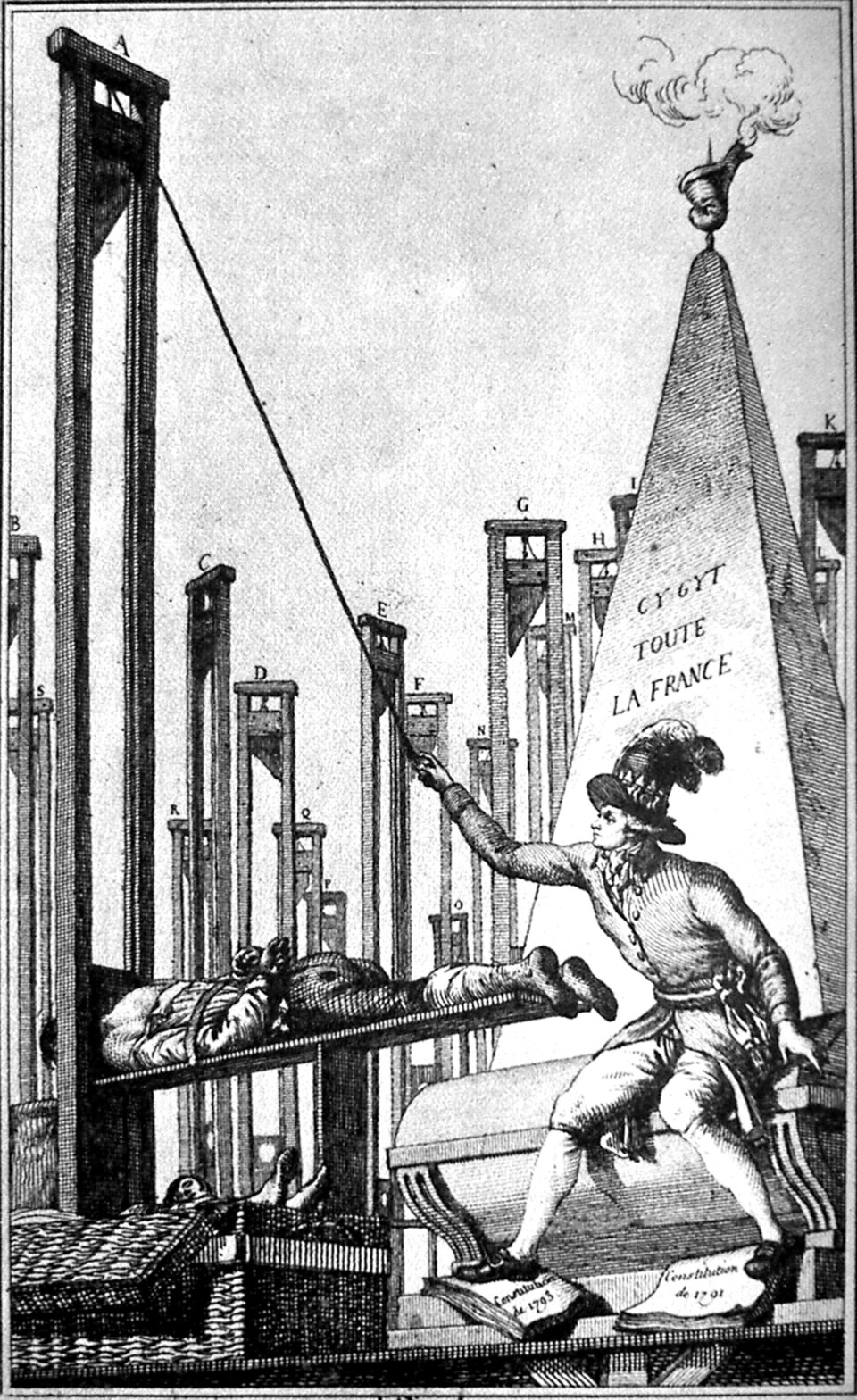
The turning point arrived on January 7, 2015, following the Charlie Hebdo massacre, the true militarization of the complex began on November 14, 2015. In the immediate aftermath of the Bataclan and terrace attacks, the Ministry of Justice and the Prefecture of Police initiated a "sanctuary" protocol for the Palais. The historic steps of the Cour du Mai, previously a gathering spot for litigants and tourists, were sealed behind checkpoints. Operation Sentinelle soldiers became a permanent fixture, their Famas assault rifles contrasting with the neoclassical columns. This was not a temporary emergency measure; it was the new baseline. The open gates that had characterized the Palais since the reconstruction after the 1776 fire were permanently shut, forcing entry through secure airlocks equipped with millimeter-wave scanners and biometric readers.
A decisive shift in the building's function occurred in April 2018, when the Tribunal de Grande Instance (TGI) moved to the new Renzo Piano-designed tower in Batignolles. This migration transferred the chaotic daily traffic of petty crime, family court, and summary judgments away from the Île de la Cité. The historic Palais retained only the highest jurisdictions: the Court of Appeal, the Cour de Cassation, and the heavy Assize Court. This demographic shift allowed security planners to treat the entire island not as a courthouse, as a secure government citadel. With fewer civilians entering for mundane matters, the perimeter could be tightened without causing civil paralysis.
The vulnerability of this citadel was exposed from within on October 3, 2019. Mickaël Harpon, an IT specialist with high-level clearance working at the Prefecture of Police, physically connected to the Palais de Justice, murdered four colleagues with a ceramic knife. The attack shattered the assumption that the threat lay outside the gates. In response, the internal boundaries between the Prefecture and the Palais were reinforced with steel shutters and card-reader checkpoints, severing the fluid movement that had existed between police and judiciary services for decades. Vetting procedures for all maintenance staff, contractors, and administrative personnel underwent a draconian revision, introducing continuous background monitoring that to this day.
The apex of physical security engineering arrived with the preparation for the "V13" trial (the trial of the November 13 attacks), which ran from September 2021 to June 2022. The Ministry of Justice authorized the construction of a "box within a box" inside the Salle des Pas Perdus. This temporary courtroom, costing over €7. 5 million, was a hermetically sealed capsule designed to withstand attack and prevent escape. Its construction required the complete lockdown of the surrounding streets. A SILT perimeter (Sécurité intérieure et lutte contre le terrorisme) was established, closing the Quai des Orfèvres and the Rue de Harlay to all non-accredited traffic. Residents and local workers required QR codes to cross police lines, a precursor to the zones established for the 2024 Olympics.
| Phase | Period | Key Measure | Operational Impact |
|---|---|---|---|
| Emergency Lockdown | 2015, 2017 | Operation Sentinelle deployment; closure of Cour du Mai. | End of free public access to the Salle des Pas Perdus. |
| Strategic Separation | 2018, 2020 | Transfer of TGI to Batignolles. | Reduction in daily foot traffic by 60%; hardening of entry points. |
| Internal Fortification | 2019, 2020 | Post-Harpon; partition of Police/Justice flows. | Biometric access required for inter-building transit. |
| The V13 Citadel | 2021, 2022 | Construction of the "Grand Procès" bunker; SILT perimeter. | Quai des Orfèvres closed; anti-ram blocks installed. |
| Algorithmic Grid | 2024, 2026 | Implementation of VSA (Loi JO 2024). | AI detection of abandoned objects and crowd anomalies. |
Even with the conclusion of the V13 trial and the subsequent of the temporary courtroom beginning in March 2025, the surveillance infrastructure remained. The "Grand Procès" hall was removed to restore the architectural heritage of the Salle des Pas Perdus, yet the electronic eyes installed to protect it were upgraded. The 2024 Olympic Games served as the legislative vehicle to normalize Algorithmic Video Surveillance (VSA). Article 10 of the Law of May 19, 2023, initially experimental, allowed software to analyze feeds from the thousands of cameras covering the Île de la Cité. By January 2026, following a legislative extension, this system was active across the judicial precinct. The software flagged "abnormal events", static bodies, counter-flow movement, or abandoned parcels, feeding real-time alerts to the Command Center at the Prefecture.
The physical method to the Palais in 2026 reflect this defensive posture. The Pont Saint-Michel and Pont au Change are lined with retractable anti-ram bollards capable of stopping a 7. 5-ton truck traveling at 80 km/h. The pedestrian zones are monitored by multi-sensor arrays that track MAC addresses to gauge crowd density, a method legally distinct from facial recognition yet functionally similar in its capacity to map human behavior. The "grilles" (gates) of the Palais, once symbols of royal authority, are the outer of a defense in depth that relies more on silicon than on wrought iron.
This security architecture has fundamentally altered the sociology of the Palais. The casual visitor, the flâneur, and the architectural student are barred from spontaneous entry. Access is strictly transactional: one enters only with a summons or a professional badge. The Salle des Pas Perdus, which for centuries served as a chaotic marketplace of ideas and gossip, is a hushed transit zone, its silence enforced by the omnipresent gaze of the camera grid. The fire of 1776 destroyed the medieval shops; the security mandates of 2015, 2026 destroyed the public spirit of the space, leaving behind a sanitized instrument of state power.
Archaeological Excavations and Roman Foundation Stability
The Palais de Justice does not sit upon the Île de la Cité; it caps a geological and archaeological cake that records two millennia of urban fortification. Beneath the neoclassical corridors of the current structure lies the *Palatium*, the Roman governor's palace, which served as the military and administrative headquarters for Lutetia from the late 3rd century AD. The structural integrity of the modern complex, a sprawling 200, 000-square-meter labyrinth, depends entirely on the interaction between these ancient masonry substrates and the alluvial silt of the Seine. ### The Roman Praetorium and the Late Empire Wall Archaeological evidence confirms that the western end of the island has housed the seat of power since the Roman occupation. Excavations indicate the presence of a *praetorium* (governor's residence) dating to the early 4th century, likely occupied by Julian the Apostate before his elevation to Emperor. The most significant feature of this stratum is the defensive wall of the Late Empire (*Bas-Empire*). Constructed around 308 AD following Germanic incursions, this fortification encircled the island. The wall was a massive engineering feat, measuring approximately 2. 5 meters in thickness at its base. Builders used *spolia*, large stone blocks scavenged from ruined monuments on the Left Bank, such as the amphitheater and necropolises, to anchor the foundations into the river mud. These limestone blocks, visible in fragmentary excavations, provide the primary load-bearing capacity for sections of the medieval Conciergerie and the later 19th-century additions. The alignment of the Palais de Justice follows the footprint of this Roman, forcing later architects to adapt their plans to the immovable subterranean geometry. ### Théodore Vacquer and the 19th-Century Destruction The massive reconstruction of the Palais between 1840 and 1914, led principally by architect Joseph-Louis Duc, resulted in the obliteration of significant archaeological. yet, it also provided the systematic opportunity to document them. Théodore Vacquer, the father of Parisian urban archaeology, monitored these excavation works from 1844 to 1898. Vacquer recorded the discovery of Roman hypocausts (underfloor heating systems) and sections of the defensive wall beneath the Salle des Pas-Perdus and the Cour du Mai. Vacquer's notes reveal a tension between preservation and modernization. Duc's engineers frequently viewed the Roman masonry as an obstacle to be removed rather than a heritage asset to be preserved. Dynamite and heavy pickaxes cleared way for the deep basements required by the new judicial archives. Consequently, much of the Roman *Palatium* exists today only in Vacquer's hand-drawn schematics stored at the Carnavalet Museum, the physical evidence having been pulverized to make room for the cells and corridors of the Third Republic's justice system. ### The 1910 Flood and Geotechnical Instability The stability of the Palais de Justice is permanently threatened by the hydrology of the Seine. The island is composed of alluvial deposits, sand, gravel, and mud, which are highly permeable. The catastrophic Great Flood of 1910 demonstrated the vulnerability of the building's foundations. Water did not overtop the quays; it percolated up through the basement floors, turning the archive rooms into cisterns. This event exposed a serious weakness: the reliance on wooden piles. sections of the Palais, particularly those built or expanded in the medieval and early modern periods, rest on oak piles driven into the riverbed. These piles remain stable only when permanently submerged in anoxic (oxygen-free) groundwater. Fluctuations in the water table, caused by modern embankments, the Métro Line 4 construction (which cuts across the island), and climate-induced droughts in the 2020s, introduce oxygen to the wood, triggering rot. ### Modern Excavations and the "Maison Sublime" In 1976, routine paving works in the Cour du Mai (the main courtyard) triggered a halt in construction. Archaeologists identified the "Maison Sublime," a medieval Jewish yeshiva dating to the 12th century, located just outside the Roman wall's perimeter within the modern Palais complex. While not Roman, this find demonstrated the density of the archaeological strata. The excavation required the of the staircase of the Court of Appeal to access the eastern wall of the structure. Between 2018 and 2026, the departure of the Tribunal de Grande Instance to the Batignolles district initiated a new phase of "refunctionalization" for the historic Palais. This internal restructuring required new elevator shafts and HVAC systems, necessitating fresh archaeology by INRAP (Institut national de recherches archéologiques préventives). These recent surveys have focused on the Cour de Harlay and the Quai des Orfèvres side. Reports from 2024 indicate that engineers use micropiles to reinforce areas where the Roman substrate is absent, bypassing the unstable alluvial to reach the limestone bedrock (Lutetian limestone) located roughly 15 to 20 meters deep.
| Depth (Approx.) | Period | Description of | Structural Function (2026) |
|---|---|---|---|
| 0m, 2m | 19th-21st Century | Modern pavement, utility conduits, 1870s fill debris. | Surface load distribution. |
| 2m, 5m | Medieval (12th-15th c.) | Cellars of the Capetian palace, "Maison Sublime" ruins, Gothic foundations. | Basement archives, holding cells. |
| 5m, 8m | Gallo-Roman (3rd-5th c.) | Late Empire defensive wall, spolia blocks, hypocaust remnants. | Primary anchor for western wing walls. |
| 8m, 12m | High Empire / Iron Age | Early Roman settlement traces, compacted river silt, wooden piles. | Unstable; prone to compression. |
| 12m, 15m | Geological | Alluvial sands and gravels (Seine deposits). | Aquifer zone; water table fluctuation risk. |
| > 15m | Eocene | Lutetian Limestone (Calcaire grossier). | Target for modern micropile reinforcement. |
### Structural Health Monitoring (2020-2026) By 2026, the Ministry of Justice employs active structural health monitoring for the Palais. Sensors installed along the Quai de l'Horloge measure millimeter- subsidence. The concern is no longer just the rotting of wooden piles, the dissolution of the gypsum mortar used in the 18th and 19th centuries. The aggressive chemical composition of modern groundwater, influenced by urban pollution, accelerates this decay. Engineers have responded by injecting grout into the voids left by the 19th-century excavations and the 1910 flood damage. The "Plan Baignade," aimed at cleaning the Seine for the 2024 Olympics, involved the construction of the massive Austerlitz storage basin upstream. While this regulates storm surges, it also alters the hydraulic pressure exerted on the Île de la Cité's banks. The long-term stability of the Palais de Justice relies on a computerized balance of river levels, ensuring the Roman foundations remain wet enough to preserve the wood, dry enough to prevent the flooding of the labyrinthine basements.
Renovation Cost Overruns and Public Funding Audits 2000, 2026
The departure of the Tribunal de Grande Instance (TGI) to the Batignolles district in 2018 was marketed as a modernization effort, yet it precipitated a fiscal emergency that continues to consume the Ministry of Justice's budget in 2026. While the glass tower of the new Tribunal de Paris dominates the skyline, the historic Palais de Justice on the Île de la Cité has become a financial black hole, plagued by hazardous material remediation, shifting regulatory doctrines, and a absence of long-term planning. The concurrent funding of two massive judicial sites, one through a rigid public-private partnership and the other through direct state renovation, has public coffers to the breaking point. The financial architecture of the new Batignolles courthouse casts a long shadow over the renovation of the historic Palais. The state entered into a Public-Private Partnership (PPP) with a consortium led by Bouygues, a contract the Cour des Comptes (Court of Auditors) severely criticized in 2017 and 2018. This agreement obligates the Ministry of Justice to pay an annual rent of approximately €86 million until 2044, culminating in a total cost of over €2. 3 billion. This fixed liability reduced the available capital for maintaining the Île de la Cité complex, which houses the Cour de Cassation, the Cour d'Appel, and the historic Conciergerie. Consequently, the renovation of the ancient site suffered from underfunding and piecemeal interventions rather than a master plan. By 2021, the Conseil de l'Immobilier de l'État (State Real Estate Council) sounded the alarm regarding the spiraling costs of the historic Palais. In March 2016, initial estimates for necessary works stood at €140 million. Five years later, that figure had ballooned to €352 million, covering only half of the building's footprint. The council noted the absence of a "global master plan" for the period 2021, 2050, warning that the absence of a unified vision exposed the state to severe budget drifts. The fragmentation of the site, shared between the Ministry of Justice, the Ministry of Culture (Centre des Monuments Nationaux), and the Ministry of the Interior (Préfecture de Police), exacerbated these, as each entity pursued renovation timelines. The physical degradation of the Palais proved far worse than initial surveys indicated. Asbestos and lead contamination, legacies of 19th and 20th-century construction methods, forced repeated work stoppages. In 2023 and 2024, the Agence Publique pour l'Immobilier de la Justice (APIJ) faced a "new doctrine" from labor inspectors regarding lead dust exposure. These safety required the installation of decontamination showers and airlocks for workers, drastically slowing progress. On the "B5" and "B6" sections of the building, comprising the areas between the Quai de l'Horloge and the Cour du Mai, these safety measures added millions to the bill and pushed completion dates from 2024 into the late 2020s. Security upgrades following the 2015 terror attacks also consumed of the budget. The Palais de Justice, once a porous thoroughfare for lawyers and tourists, transformed into a. The installation of blast-proof glass, perimeter blocks, and airport-style screening checkpoints at the 8 Boulevard du Palais entrance required structural reinforcements incompatible with the building's heritage status. These modifications triggered conflicts with the Architectes des Bâtiments de France, leading to costly redesigns and delays. The fire safety systems, described by senators in 2019 as "obsolete," required a complete overhaul to prevent a catastrophe similar to the Notre-Dame fire, which occurred just hundreds of meters away. The renovation of the legendary "36 Quai des Orfèvres," formerly the headquarters of the Judicial Police, exemplifies the complexity of the project. After the police vacated the premises for the Batignolles site, the APIJ launched Project "B2" to convert the space for judicial use. Originally slated for rapid turnaround, the project faced technical blocks related to the building's structural integrity and the preservation of historic interiors. By 2026, the delivery of this section allowed for the redeployment of staff, at a cost per square meter significantly higher than new construction.
Table 12. 1: Comparative Costs of Paris Judicial Infrastructure (2016, 2026)
| Project Component | 2016 Estimate / Initial Cost | 2021 Revised Estimate / Actual | 2026 Status / Projection |
|---|---|---|---|
| Tribunal de Paris (Batignolles) | €2. 3 Billion (Total PPP Cost) | €86 Million / Year (Rent) | Contract Active until 2044 |
| Palais de Justice (Île de la Cité) Renovation | €140 Million | €352 Million (Partial Scope) | Budget Exceeded, Works Ongoing |
| Asbestos & Lead Remediation | Included in General Works | Separate Cost Center (High Variance) | Strict Delaying Delivery |
| Security Upgrades (Post-2015) | €12 Million | €30 Million+ | Continuous Upgrades Required |
The Cour des Comptes continued to scrutinize these expenditures through 2025. Their reports highlighted a "fuite en avant" (headlong rush) where the Ministry of Justice committed to works without securing full funding, relying on future budget allocations that were frequently slashed. The auditors pointed out that while the Batignolles move was intended to rationalize real estate holdings, the state failed to divest other properties quickly enough, paying for empty shells while funding the renovation of the Palais. In 2026, the Palais de Justice functions as a high-prestige high-maintenance headquarters for the nation's supreme courts. The Cour de Cassation and the Cour d'Appel operate amidst ongoing construction, with scaffolding becoming a semi-permanent feature of the Île de la Cité. The vision of a fully restored, modern judicial campus inside the historic walls remains distant, with the final phases of the "Schéma Directeur" projected to extend well into the 2030s. The cost of preserving the symbol of French justice has proven to be as monumental as the building itself.
Pinned News
Why it matters: French authorities seized a painting, Venus with a Veil, attributed to Lucas Cranach the Elder, in a dramatic raid at the Caumont Centre d'Art. The…
Read Full ReportQuestions And Answers
What do we know about Ancien Régime Judicial Administration and the Fire?
The Palais de Justice on the Île de la Cité stands as the physical manifestation of French legal authority, yet its current neoclassical façade masks a chaotic history of fire, political rebellion, and architectural improvisation. To understand the building's footprint in 2026, one must examine the pivotal events of the late 18th century, specifically the judicial of the Ancien Régime and the catastrophic fire of 1776 that erased the medieval entrance.
What do we know about Revolutionary Tribunal Conviction Rates and Guillotine Logistics?
The transformation of the Palais de Justice from a royal court to a factory of execution began in March 1793. The revolutionary government seized the Grand-Chambre, the most prestigious hall of the Ancien Régime, and renamed it the Salle de la Liberté.
What do we know about Joseph-Louis Duc Expansion and Architectural Engineering?
The architectural transformation of the Palais de Justice between 1840 and 1879 represents a collision of imperial ambition, neoclassical rigor, and violent insurrection. Following the chaotic ad-hoc adjustments of the post-1776 era, the French state sought to impose a unified, monumental identity upon the Île de la Cité.
What do we know about Paris Commune Incendiary Damage and Structural Recovery?
The destruction of the Palais de Justice on May 24, 1871, stands as the single most catastrophic event in the building's millennial history, surpassing even the fires of 1618 and 1776 in its calculated ferocity. During the final, bloody week of the Paris Commune, as Versaillais troops breached the city defenses, Communard leaders issued orders to incinerate the symbols of the centralized state.
What do we know about Asbestos Contamination and Health Hazard Assessments?
The neoclassical grandeur of the Palais de Justice conceals a toxic industrial legacy that festered within its walls for decades. While the external façade projects the permanence of French law, the internal infrastructure of the 19th and 20th centuries relied heavily on materials classified as lethal.
What do we know about Tribunal de Grande Instance Migration to Batignolles?
The migration of the Tribunal de Grande Instance (TGI) from the Île de la Cité to the Batignolles district in 2018 marked the most significant rupture in the spatial history of Parisian justice since the Roman era. For over two millennia, the judicial center of had remained anchored to the island, a physical manifestation of the link between the French state and the law.
What do we know about Salle des Pas-Perdus Restoration and Foot Traffic Analysis?
As of March 2026, the Salle des Pas-Perdus has returned to a state of cavernous silence that belies its history as the most chaotic public space in the French judicial system. Following the September 2025 completion of the of the temporary "Grand Procès" courtroom, the hall once again exposes its full 73-meter by 27-meter dimensions to the few visitors who walk its stone floor.
What do we know about Conciergerie Detention Capacity and Subterranean Transfer Tunnels?
The Conciergerie and the Palais de Justice are not judicial seats; they are architectural machines designed for the containment and transfer of human bodies. While the upper floors of the Palais de Justice project the grandeur of the French Republic, the subterranean levels reveal a darker, functional continuity that stretches from the *Terreur* of 1793 to the high-security terrorism trials of the 2020s.
What do we know about Court of Cassation Operational Budget and Caseload Metrics?
The operational reality of the Cour de cassation in 2026 bears little resemblance to the Tribunal de cassation established by the Constituent Assembly in 1790. Originally conceived as a "legislative sentry" with the sole purpose of policing the strict application of the law by lower courts, the tribunal operated with a minimal staff and a manageable caseload.
What do we know about Security Perimeter Reinforcement and Surveillance Grids?
By 2026, the Palais de Justice had ceased to function as a porous civic center and had solidified into a sterile, a transformation driven not by architectural renovation by the exigencies of counter-terrorism. Between 2015 and 2026, the Île de la Cité morphed from a tourist hub into a high-security exclusion zone, a process catalyzed by the November 2015 attacks and cemented by the 2024 Olympic surveillance laws.
What do we know about Archaeological Excavations and Roman Foundation Stability?
The Palais de Justice does not sit upon the Île de la Cité; it caps a geological and archaeological cake that records two millennia of urban fortification. Beneath the neoclassical corridors of the current structure lies the *Palatium*, the Roman governor's palace, which served as the military and administrative headquarters for Lutetia from the late 3rd century AD.
What do we know about Renovation Cost Overruns and Public Funding Audits?
The departure of the Tribunal de Grande Instance (TGI) to the Batignolles district in 2018 was marketed as a modernization effort, yet it precipitated a fiscal emergency that continues to consume the Ministry of Justice's budget in 2026. While the glass tower of the new Tribunal de Paris dominates the skyline, the historic Palais de Justice on the Île de la Cité has become a financial black hole, plagued by hazardous material remediation, shifting regulatory doctrines, and a absence of long-term planning.
Latest Articles From Our Outlets
Why it matters: The disconnect between capital expenditure in AI infrastructure and actual economic output is widening, challenging traditional financial models. The promise of a productivity boom fueled…
Why it matters: The original vision for Indian public sector banks as custodians of national welfare has shifted towards aggressive corporate lending, leading to massive write offs. While…
January 13, 2026 • All
Why it matters: Road toll concessions offer a way for governments to develop infrastructure without full financial responsibility. Accurate traffic forecasting is crucial for the success of toll…
Why it matters: Only 27% of recommendations made by Inspector Generals (IGs) have been fully implemented within two years, leaving 73% unaddressed. Despite potential savings of $53 billion…
October 24, 2025 • Media Industry Reports: Trends, PR Performance & Analytics
Why it matters: Thought leadership in public relations involves positioning individuals or organizations as experts to shape public opinion. While it can inform and educate when done responsibly,…
July 21, 2025 • All
Why it matters: South Asian region hosts 22% of the world's population with only 3% of the landmass. Land conflicts in countries like India, Bangladesh, Nepal, Sri Lanka,…
Get updates on this place
Get verified alerts when this file is updated (verification required).