Verified Against Public And Audited RecordsLast Updated On: 2026-02-26
Reading time: ~52 min
File ID: EHGN-PLACE-33189
Investigative Bio of Paris Metro
1845, 1898: Municipal Resistance and State Intervention
Between 1845 and 1898, the development of the Paris Metro remained frozen by a fierce political standoff between the City of Paris and the French State. The conflict centered on control and purpose. State authorities and the railway companies, such as the Compagnie du Nord and the PLM, demanded a system that connected the major mainline terminals (Gare du Nord, Gare de Lyon, Gare Saint-Lazare) to facilitate troop movements and national transit. Municipal leaders, representing the local population, rejected this model. They demanded an independent, contained network designed strictly for inner-city residents, free from national interference or military requisition.
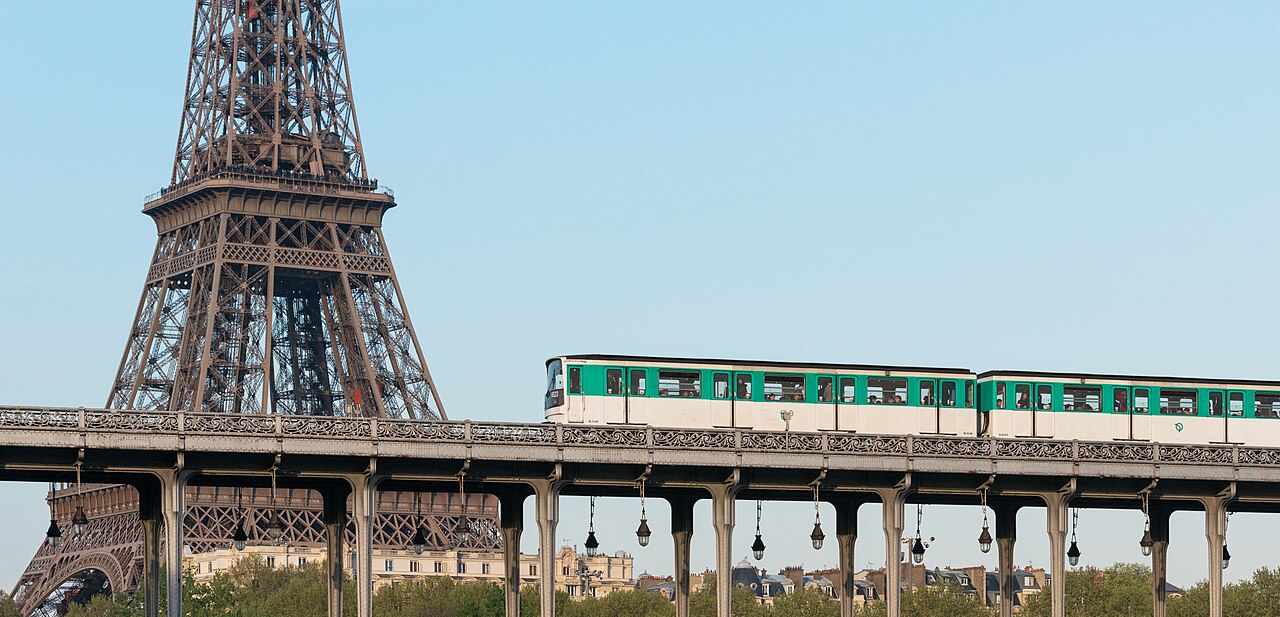
The concrete proposal appeared in 1845 when Florémond de Kerizouet suggested a surface cable car system to link the city districts. Ten years later, in 1855, engineers Edouard Brame and Eugène Flachat submitted plans for an underground freight railway connecting Les Halles market to the surface rail network. These early concepts failed to gain traction because of the political deadlock. The State refused to authorize a local monopoly, and the City blocked any project that would allow the main railway companies to run their trains through the capital. This paralysis continued for over four decades, leaving Paris dependent on horse-drawn omnibuses and tramways while London (1863) and New York (1868) built their own rapid transit systems.
By the 1890s, the congestion on Parisian streets became unbearable, forcing a resolution. The City won the battle for autonomy in 1895 when the Minister of Public Works recognized the Metro as a "railway of local interest." To guarantee this independence physically, the municipality enforced technical specifications incompatible with the national rail network. The tracks used the standard 1, 435 mm gauge, the tunnels were built with a narrow loading gauge of 2. 4 meters, preventing main-line trains from entering. Also, the Metro trains ran on the right, unlike the national trains which ran on the left. These engineering decisions permanently firewalled the Paris Metro from the rest of the French railway system.
Jean-Baptiste Berlier, an engineer known for the pneumatic tube postal system, proposed a "tubular tramway" in the early 1890s inspired by the London Tube. His deep-level design influenced the final debate, yet the task of executing the network fell to Fulgence Bienvenüe, a civil engineer from Brittany. Bienvenüe presented his final project in 1896, which the Municipal Council adopted in July 1897. The plan called for a shallow, electric-powered network built using the cut-and-cover method to minimize disruption to the sewers and building foundations. On March 30, 1898, the French government passed the law of public utility authorizing the work. Construction began in October 1898, with the goal of opening the line in time for the 1900 World's Fair.
1900 Inauguration: The Bienvenüe Network Design
1845, 1898: Municipal Resistance and State Intervention
The resolution to the half-century standoff between the French State and the City of Paris arrived not through a handshake, through a calculated engineering constraint. In 1898, the French government authorized the construction of the "Chemin de fer métropolitain," declaring it a project of public utility. The City of Paris, led by the tenacious municipal council, secured the right to build the infrastructure, while a private concessionaire would operate the trains. The victory for municipal autonomy lay in a single technical specification: the loading gauge.
State military planners and the railway trusts, the Compagnie du Nord and the PLM, had long demanded a network capable of moving heavy artillery and national troop trains across the capital. The City of Paris, fearing its local transit system would be annexed by national interests or prioritized for military logistics over commuter needs, devised a "poison pill." The Council adopted a loading gauge (the maximum width of the rolling stock) of exactly 2. 40 meters. While the track gauge remained the standard 1, 435 mm to allow for standard construction equipment, the narrow car bodies rendered the tunnels physically impassable for the 3. 15-meter-wide main-line trains of the national network. This decision, enshrined in the technical annexes of the 1898 law, permanently the Paris Metro from the French national rail system, ensuring it would remain a local urban service. This 2. 40-meter restriction continues to dictate the dimensions of every train running beneath Paris in 2026.
The execution of this isolationist master plan fell to Fulgence Bienvenüe, a Breton engineer with the Corps of and Roads. Bienvenüe, who had lost his left arm in a railway construction accident in 1881, possessed a reputation for ferocious work ethics and administrative rigor. In 1896, the City appointed him Chief Engineer of the Technical Service of the Metro. His design called for a shallow, electric-powered network built strictly within the city walls, adhering to the "petit gabarit" (small gauge). His initial plan proposed a primary east-west axis (Line 1), a circular northern loop (Line 2), and a southern loop (Line 6), forming a dense grid that prioritized neighborhood connectivity over speed.
Construction began in November 1898, triggering twenty months of urban chaos. Unlike the deep-tube lines of London, which bored through the clay far the surface, Bienvenüe opted for the "cut-and-cover" method (tranchée couverte) to accelerate completion before the 1900 Exposition Universelle. This method involved ripping open the streets, installing the tunnel structure, and repaving over the top. The Rue de Rivoli, a primary artery of Parisian life, was turned into a gaping canyon. Pedestrians navigated wooden planks over deep excavations while 2, 000 workers toiled in the mud. The shield tunneling method (le bouclier), though less disruptive, was deemed too slow for the loose, heterogeneous soil of the Right Bank and was largely abandoned for the initial phase. The city became a construction site of, with the pressure of the looming World's Fair driving a frenetic pace.
On July 19, 1900, at 1: 00 PM, the Paris Metro officially opened its doors. The inauguration was a surprisingly modest affair, devoid of the pomp associated with Third Republic grand projects. No government ministers attended, and no brass bands played. The absence of ceremony was partly due to the stifling heatwave gripping the city, temperatures exceeded 38°C (100°F), and partly due to the lingering political friction between the State and the City. The operational concession had been awarded to the Compagnie du chemin de fer métropolitain de Paris (CMP), financed by the Belgian baron Édouard Empain. The deal stipulated that the City paid for the tunnels and stations (165 million francs), while Empain's CMP funded the rolling stock and power plants.
Line 1, the network's spine, stretched 10. 3 kilometers from Porte de Vincennes in the east to Porte Maillot in the west. Although eighteen stations were planned, only eight were ready for the opening day. The trains, constructed of wood and prone to creaking, ran on a third-rail electric traction system. The initial service frequency was one train every ten minutes, a figure that proved woefully insufficient within hours. The public reaction was immediate and overwhelming. Parisians, initially skeptical of the "necropolitan" underground, flooded the stations to escape the surface heat and the gridlocked horse-drawn traffic. The journey across the city, which previously took over an hour by omnibus, was slashed to 27 minutes.
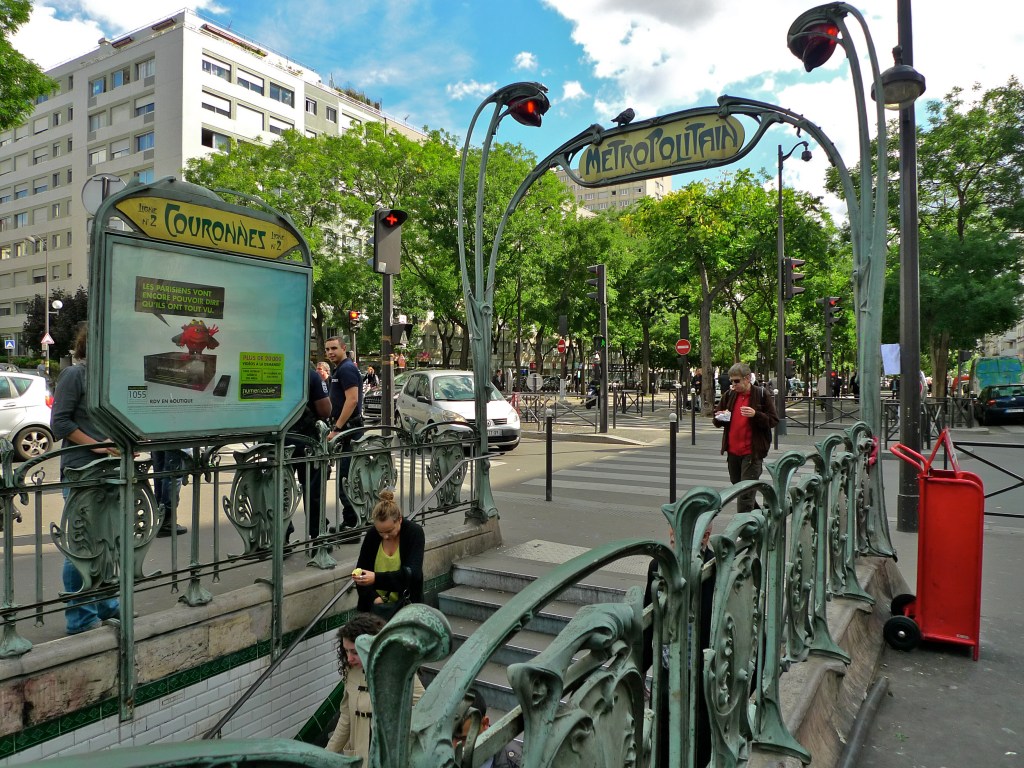
The rolling stock for the inauguration consisted of primitive two-axle wooden cars. The traction units were plagued by technical faults, and the braking systems were rudimentary. These wooden carriages, while charming in retrospect, posed a severe fire hazard, a danger that would materialize with tragic consequences at Couronnes in 1903. Yet, in 1900, the novelty of electric traction mesmerized the public. The stations themselves were utilitarian, with the -iconic Art Nouveau entrances designed by Hector Guimard installed as a last-minute effort to beautify the industrial descent. Guimard's "dragonfly" glass and cast-iron structures were initially controversial, criticized by traditionalists as "un-French," they gave the new network a distinct visual identity that separated it from the heavy rail aesthetics of the main stations.
By December 1900, the Metro had carried 17. 6 million passengers. The success vindicated Bienvenüe's dense, shallow-network design and the City's insistence on the narrow gauge. The "petit gabarit" meant the trains were smaller and more frequent, better suiting the short-hop nature of urban travel than the heavy, infrequent trains of the national lines. The revenue sharing agreement between the City and the CMP became a gold mine for the municipal budget. For every ticket sold, the City received a royalty, which increased as traffic volumes rose. This financial model incentivized the rapid expansion of the network. Before the year was out, construction crews were already breaking ground on the northern circular line (Line 2), driven by the undeniable proof that the Metro was not a fairground attraction for the Exposition, the new circulatory system of Paris.
The 1900 inauguration marked the end of the theoretical debates and the beginning of the operational reality. The "Bienvenüe Model", independent, high-density, and electrically powered, had defeated the state's military-industrial railway model. The physical separation of the tracks ensured that the Paris Metro would evolve as a closed ecosystem, a characteristic that defines its operational challenges and distinctiveness more than a century later. The 2. 40-meter decision of 1898 remains the single most significant technical constraint in the system's history, forcing modern engineers in 2026 to design high-capacity automated trains that still fit within the narrow envelope carved out by a municipal council determined to keep the French Army out of its tunnels.
Geological Engineering: Shield Tunneling and Seine Crossings
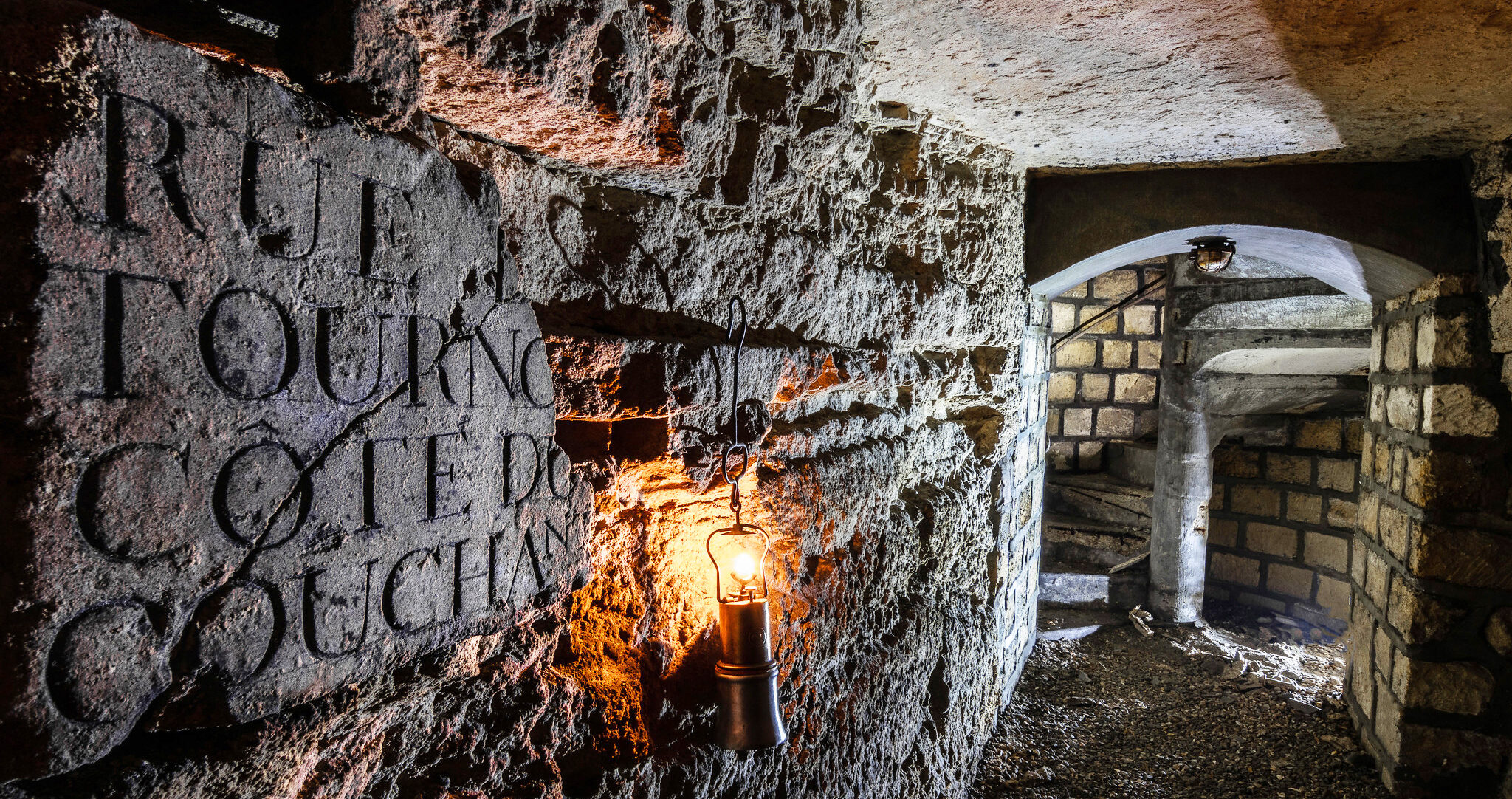
The geological reality of Paris is a chaotic vertical sequence of limestone, gypsum, clay, and sand that has dictated every engineering decision since the pickaxe struck ground in 1900. To understand the Paris Metro is to understand the Lutetian Basin, a sedimentary depression where ancient seas deposited of calcaire grossier (coarse limestone) and gypsum. These were relentlessly mined from the Roman era until the 18th century, leaving the capital sitting atop a honeycomb of abandoned quarries and unstable voids. The collapse of the Rue d'Enfert-Rochereau in 1774, which swallowed houses whole, led to the creation of the Inspection Générale des Carrières (IGC) in 1777. By the time metro construction began, the IGC possessed maps of the subterranean risks, forcing early engineers to adopt a "skin-deep" philosophy. The lines were built using the cut-and-cover method (tranchée couverte) just beneath the cobblestones to avoid the deep, water-logged instability of the lower strata.
This avoidance strategy failed when the network needed to cross the Seine. The construction of Line 4 (Porte de Clignancourt to Porte d'Orléans) between 1905 and 1910 represents the total mobilization of geological engineering against the river. The project fell to Léon Chagnaud, a contractor from the Creuse region, who faced a dual nightmare: the permeable, sandy riverbed of the Seine and the water-saturated soil of the Left Bank. Chagnaud rejected the idea of a standard tunnel, which would collapse under the hydraulic pressure. Instead, he engineered a system of vertical caissons. Workers prefabricated massive steel and concrete hulls, over 40 meters long, on the riverbanks. These structures were floated into position, then weighted down. Inside the caissons, workers excavated the riverbed under high air pressure to keep the water out, sinking the structures inch by inch until they rested on the stable limestone bedrock. Once aligned, the segments were sealed together to form a watertight sub-aqueous corridor.
The method to the Seine on the Left Bank presented a more insidious problem. Between the Saint-Michel station and the river, the tunnel had to pass beneath the existing tracks of the Compagnie du Paris-Orléans ( RER C). The soil here was a slurry of water and sand, impossible to excavate without triggering a collapse that would destroy the railway line above. Chagnaud deployed a method previously used in mining never on this for urban transit: ground freezing. Engineers inserted 60 vertical double-walled tubes into the earth. A refrigeration plant circulated a brine solution of calcium chloride cooled to -25°C through these pipes. Over a period of 40 days in 1908 and 1909, the thermal energy was sucked out of the ground, turning the waterlogged mud into a solid block of ice. Miners then chipped away the frozen earth with pickaxes, installing the tunnel lining before the ground could thaw. This operation remains one of the most audacious feats in civil engineering history, proving that the unstable Parisian soil could be conquered with thermal physics.
While the Compagnie du Chemin de fer Métropolitain de Paris (CMP) favored masonry tunnels, a competing vision emerged from the Société du Chemin de fer électrique souterrain Nord-Sud de Paris (Nord-Sud). Founded by Jean-Baptiste Berlier, an engineer inspired by the London Tube, the Nord-Sud company ( Line 12) championed the use of the Greathead shield and metal tubing. Berlier argued that deep-level tubes, lined with cast iron segments (voussoirs), offered superior resistance to the shifting geology compared to rigid masonry. Although the City of Paris forced Berlier to build his tunnels at a shallower depth similar to the CMP lines, he retained the metal lining for the difficult river crossing at Concorde. The Nord-Sud tunnels, constructed between 1905 and 1910, used a shield that pushed itself forward with hydraulic jacks, erecting the iron rings immediately behind it. This method minimized surface disruption and provided immediate structural support against the wet, sandy soil of the alluvial plain.
The 1910 Great Flood of Paris acted as a violent stress test for these engineering works. As the Seine rose 8. 62 meters above its normal level, the water exploited every weakness in the incomplete network. The freezing works at Saint-Michel held, the unsealed shafts and open trenches elsewhere allowed the river to invade the tunnels. The flood revealed the interconnectivity of the underground; water entering at one construction site surged through the tubes to flood stations kilometers away. It took months to drain the system, yet the structural integrity of Chagnaud's caissons and Berlier's iron tubes remained intact. The disaster forced a permanent change in protocol, mandating higher flood walls for station entrances and the installation of heavy-duty pumps in the sumps of river crossings.
A century later, the Grand Paris Express (GPE) project (2015, 2026) returned to these geological battlegrounds with vastly superior firepower equally high. The GPE requires tunnels at depths of 30 to 52 meters, far the Lutetian limestone, penetrating the Ypresian clay and the unstable sands of the Beauchamp formation. The engineering answer is the Earth Pressure Balance (EPB) shield. These modern Tunnel Boring Machines (TBMs), weighing over 1, 500 tons, maintain a pressurized face that counteracts the weight of the water and soil above, preventing the surface subsidence that plagued early 20th-century works. For the Line 14 extension to Orly and the new Line 15 South, engineers encountered the same water-saturated that Chagnaud fought. At the Vert de Maisons station, the water table threatened the excavation of the connection tunnels. In a direct echo of 1908, the consortium led by Bouygues and Vinci returned to ground freezing. They circulated coolant at -35°C to stabilize the earth, allowing TBMs to dock safely into the station box.
The of the GPE excavation dwarfs all previous eras. Between 2018 and 2025, over 30 TBMs operated simultaneously across the Île-de-France region, excavating 45 million tons of spoil. The disposal of this material required a logistical operation using the Seine itself, with barges transporting earth from the construction sites to treatment centers, reducing truck traffic on the surface. The geological risk management relies on real-time data; thousands of sensors in the soil and surrounding buildings monitor settlement to the millimeter. Where Berlier worked with manual calculations and intuition, modern engineers use 3D geological modeling to predict the behavior of the gypsum veins and clay pockets before the cutterhead makes contact.
Evolution of Sub-Aqueous Engineering in Paris (1905, 2026)
Feature
Line 4 (1905, 1910)
Grand Paris Express (2015, 2026)
Primary Method
Sunk Caissons (Vertical)
Tunnel Boring Machine (Horizontal)
Stabilization
Brine Freezing (-25°C)
Nitrogen/Brine Freezing (-35°C) & Grouting
Depth
10, 15 meters
30, 52 meters
Lining Material
Masonry & Steel Hulls
Fiber-Reinforced Concrete Segments
Excavation Rate
Centimeters per day
10, 15 meters per day
Geological Target
Alluvial Sand / Limestone
Ypresian Clay / Beauchamp Sand
The completion of the Line 14 extension in June 2024 and the ongoing boring of Line 15 West in 2026 demonstrate that the geology of Paris remains the primary adversary. The "gruyère" nature of the subsoil, with its ancient quarry voids and dissolution pockets, demands a method of constant vigilance. The TBMs of the 2020s, such as "Sarah" and "Marine," operate as mobile factories, simultaneously digging, removing muck, and installing the tunnel walls. They face pressures of up to 5 bars, equivalent to diving 50 meters underwater. The success of these machines validates the shift from the manual heroism of the 1900s to the automated precision of the 21st century, yet the fundamental physics remains unchanged: the city floats on a precarious crust, and the metro must hold it up.
The 1903 Couronnes Fire and Safety Protocol Overhauls
1900 Inauguration: The Bienvenüe Network Design
The trajectory of the Paris Metro changed permanently on August 10, 1903. Less than three years after the network opened, a catastrophic failure at Couronnes station exposed the lethal flaws in the system's initial engineering. The disaster claimed 84 lives. It remains the deadliest event in the network's history. The incident did not result in new rules. It forced a total reconstruction of rolling stock and electrical infrastructure. The safety defining the Grand Paris Express in 2026 descend directly from the forensic analysis of this 1903 fire.
The sequence of errors began at 6: 53 PM at Barbès station on Line 2 North. Train 43, an eight-car M1 model constructed primarily of wood, arrived with smoke billowing from a traction motor. The M1 units used a direct current system where the high-voltage pickup shoes connected directly to the motor without sophisticated isolation. A short circuit had ignited the resin-soaked wiring and the wooden chassis. Station staff evacuated the passengers. The fire appeared to subside after the driver lifted the current pickup shoes. To clear the line for the evening rush, the stationmaster ordered the empty Train 43 to be pushed to the terminus at Nation by the following train, Train 52.
This decision proved fatal. As Train 52 pushed the disabled unit through the tunnels, the friction and airflow reignited the smoldering motor on Train 43. The convoy entered the tunnel section between Ménilmontant and Couronnes. The fire intensified. It melted the main electrical supply cables running along the tunnel roof. At this time, the Metro's lighting system drew power from the same traction current as the trains. When the driver cut the power in a desperate attempt to starve the fire, he inadvertently plunged the deep underground stations of Ménilmontant and Couronnes into total darkness.
At Couronnes, the platform was crowded with passengers waiting for the train. They were unaware that the smoke filling the tunnel was toxic. Witnesses later testified that station staff initially blocked the exit to check tickets or refund fares, a procedural rigidity that wasted minutes. When the lights failed, panic erupted. The smoke from the burning wooden cars was thick with acrid varnish fumes. Disoriented in the pitch blackness, the crowd surged away from the smoke moved toward the north end of the platform. This was a cul-de-sac. There was no exit. The 84 victims did not burn to death. They suffocated in a crush against the tiled wall, their lungs filled with soot and carbon monoxide.
The aftermath forced the Compagnie du chemin de fer métropolitain de Paris (CMP) to abandon its reliance on wooden rolling stock. The M1 cars were essentially tram carriages adapted for tunnels. They were fire risks. The investigation demanded an immediate shift to fireproof materials. This requirement led to the introduction of the Sprague-Thomson trains in 1908. These units featured all-metal bodies, a revolutionary design for the era. The Sprague-Thomson stock became the backbone of the network for seven decades. Its steel construction prevented the rapid combustion that had doomed the passengers at Couronnes.
Electrical engineering standards also underwent a complete overhaul. The 1903 inquiry established the need of redundant power sources. Engineers separated the lighting circuits from the traction power. This ensured that emergency illumination would remain functional even if the third rail was de-energized. This principle of "lighting independence" remains a non-negotiable standard in 2026. Modern stations use quadruple-redundant LED arrays backed by independent battery banks and grid connections, a direct legacy of the blackout at Couronnes.
The disaster also dictated the geometry of the tunnels. The single-exit design at Couronnes was condemned. New regulations required every station to have multiple evacuation routes and auxiliary ventilation shafts. The CMP retrofitted existing stations and mandated that all future excavations include smoke extraction chimneys. These vertical shafts are visible today as grated vents on Paris sidewalks. They serve a dual purpose. They exhaust heat during normal operation and purge smoke during emergencies.
Evolution of Paris Metro Safety Standards (1903, 2026)
Era
Key Safety Protocol
Technical Implementation
1900, 1903
Single Circuit Power
Lighting and traction shared one 600V DC source. Failure meant total blackout.
1904, 1910
Circuit Separation
Independent 550V traction and lighting feeds. Introduction of tunnel lighting.
1908, 1983
Material Hardening
Sprague-Thomson metal cars replace wooden M1 stock. Fire load reduced by 90%.
1980s, 2000s
Active Ventilation
Mechanical smoke extraction fans installed in tunnels. Automated detection systems.
2020, 2026
Automation
Full-height platform screen doors (Line 1, 4, 14). AI-driven smoke modeling for Grand Paris Express.
By 2026, the safety infrastructure of the Paris Metro has evolved into a digital, yet the physical constraints of the 1900s tunnels remain. The RATP uses "GA class" regulations for public receiving establishments. These rules mandate that smoke extraction systems must clear a station volume within minutes. On the newly automated Line 4 and the extended Line 14, platform screen doors prevent unauthorized track access and also modulate airflow during a fire event. The ventilation systems on the Grand Paris Express lines (15, 16, 17, 18) use predictive algorithms to reverse fans and push smoke away from evacuation route before passengers even smell the fumes.
The transition from wood to metal was the most visible change, the administrative shift was equally significant. The 1903 fire ended the era of ad-hoc operations. It established the primacy of safety over schedule. Before Couronnes, a stationmaster could order a burning train to be pushed through a tunnel to maintain the timetable. After Couronnes, the "precautionary principle" took hold. Any sign of smoke triggers an automatic power cut and a full system halt. This operational doctrine has prevented a recurrence of a mass-casualty fire for over 120 years.
Current modernization projects continue to address the risks identified in 1903. The €3. 8 billion investment plan for 2026 includes specific allocations for upgrading the ventilation in the deepest historical sections of the network. Engineers are currently boring new relief shafts in the dense urban fabric of the 11th and 20th arrondissements, the very districts where the Couronnes disaster occurred. These works are difficult and expensive. They require piercing the foundations of century-old buildings. Yet the memory of the 84 dead at Couronnes makes these expenditures non-negotiable. The ghost of Train 43 still dictates the engineering budget of the RATP.
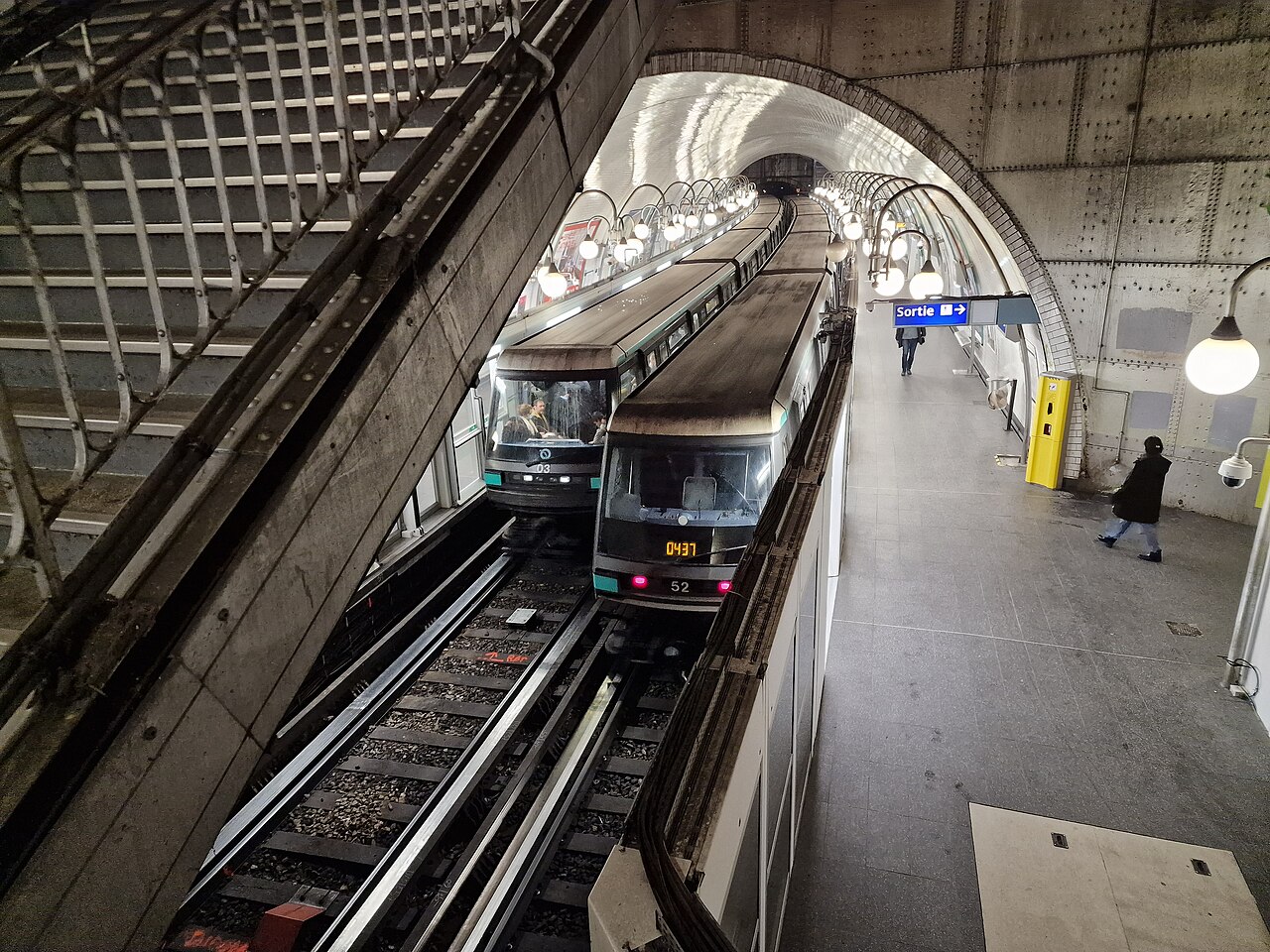
The Couronnes fire also influenced the psychological design of the metro. The fear of being trapped underground drove the implementation of clear, illuminated signage. The distinct blue and white tiles of the station names and the bright "SORTIE" (Exit) signs were standardized to cut through smoke and darkness. In 2026, these signs are augmented by lighting strips on the floor, similar to aircraft emergency route, which activate when smoke alarms are triggered. The system is designed to guide panicked crowds, correcting the fatal disorientation that occurred on that August evening in 1903.
1914, 1945: Military Requisition and Occupation Logistics
The outbreak of World War I in 1914 shattered the isolationist containment policy that had defined the Paris Metro since its inception. The network, originally conceived by municipal leaders as a strictly internal urban loop to exclude national railway interference, immediately became a strategic asset for the French State. The mobilization of August 1914 stripped the Compagnie du chemin de fer métropolitain de Paris (CMP) of its workforce; over 3, 000 employees were sent to the front lines within weeks. To maintain operations, the CMP broke with rigid gender norms, hiring women as *poinçonneuses* (ticket punchers) and station agents. This labor shift, born of need, kept the arteries of Paris open while surface transport, buses and trams, was largely requisitioned by the military for troop transport to the Marne. The war also transformed the underground tunnels into a dual-use infrastructure: transit system and air-raid shelter. As German Gotha bombers and the "Paris Gun" (Big Bertha) targeted the capital, the deep-level stations became refuges. This dual purpose led to tragedy on March 11, 1918, at the Bolivar station. During a panic induced by an air raid, a crowd surged toward the platforms. The exit gates at the bottom of the stairs, designed to control passenger flow *out* of the station, opened only inward toward the tracks or were locked to prevent fare evasion. The crushing weight of the terrified mob against the immovable iron gates resulted in 76 deaths. This disaster forced a permanent redesign of the network's safety; thereafter, all gates were engineered to swing open in both directions, a mechanical scar left by the collision of civilian transit and total war. The interwar period (1919, 1939) was defined by the financial collapse of the CMP's only rival, the Société du chemin de fer électrique souterrain Nord-Sud de Paris (Nord-Sud). Founded by Jean-Baptiste Berlier, the Nord-Sud had operated Lines A and B ( Lines 12 and 13) with distinct ceramic decor and curved station vaults. By 1930, the economic of maintaining a separate infrastructure proved fatal. The CMP absorbed the Nord-Sud in a hostile merger, unifying the network under a single private monopoly. This consolidation allowed for the standardization of rolling stock and electrical systems, erasing the technical incompatibilities that had plagued the system for two decades. Simultaneously, the Metro breached the Thiers wall, the 19th-century military fortification that had legally and physically constrained Paris. For thirty years, the municipality had blocked any extension into the *banlieue* (suburbs), fearing a loss of tax revenue and population density. In 1934, this political barrier disintegrated. Line 1 was extended to Château de Vincennes, Line 9 to Pont de Sèvres, and Line 12 to Mairie d'Issy. These extensions marked the transition of the Metro from a municipal circulator to a regional rapid transit system, acknowledging the demographic reality that the working class was being pushed outside the city limits. The onset of World War II in September 1939 triggered a "Restricted Service" plan that was far more severe than the measures of 1914. Anticipating a war of aerial bombardment, the CMP closed 173 of its 332 stations overnight. While reopened in the following weeks, a specific subset, Arsenal, Champ de Mars, Saint-Martin, and Croix-Rouge, remained shuttered, becoming "phantom stations" (stations fantômes) that would never welcome passengers again. These stations exist today as time capsules, their platforms gathering dust in the dark, bypassed by passing trains for nearly a century. Following the French defeat in June 1940, the Metro fell under the jurisdiction of the German occupation authorities. The network was forced to adopt German Time (GMT+1), a temporal shift that remains in effect in France today. The Wehrmacht requisitioned the network for its own logistics, demanding extended operating hours to move troops and administrative staff across the city. The occupation introduced a chilling of segregation to the underground. A decree issued by the German military command reserved the last carriage of each train for Wehrmacht personnel and, conversely, restricted Jewish passengers, identified by the Yellow Star after June 1942, to the last car of the train. This "dernier wagon" regulation turned the Metro into a theater of racial exclusion, where the architecture of the train itself enforced the Nazi social order. The Metro also became a primary battlefield for the French Resistance. The anonymity of the crowd and the labyrinthine tunnels provided cover for clandestine operations. On August 21, 1941, the Barbès-Rochechouart station became the site of a pivotal escalation. Pierre Georges, a communist militant later known as Colonel Fabien, shot and killed Alfons Moser, a German naval cadet, on the station platform. This was the direct assassination of a German military officer in Paris. The act shattered the uneasy truce of the early occupation and triggered a pattern of hostage executions and reprisals. The Metro was no longer just a transport system; it was a zone of asymmetric warfare where a ticket bought entry to a firing line. As the Allied forces method in August 1944, the Metro workers played a decisive role in the Liberation of Paris. On August 15, the railway staff launched a general strike, paralyzing the city. By cutting power to the third rail and abandoning their posts, they denied the German garrison the ability to move reinforcements quickly across the capital. The tunnels, previously used by the occupier, were reclaimed by the French Forces of the Interior (FFI) as communication channels and weapons caches. The strike was not a labor dispute; it was a tactical maneuver that immobilized the enemy infrastructure from within. The physical damage to the network during the Liberation was significant repairable. Allied bombing raids in April 1944 had already damaged the depot at La Chapelle and the station at Simplon, killing hundreds. yet, the structural integrity of the deep tunnels largely held. When General de Gaulle marched down the Champs-Élysées on August 26, 1944, the Metro was silent, its power cut, its workers on the barricades. The system that had been built to avoid national entanglements had, in the end, become the central nervous system of the national uprising.
Operational Status of Paris Metro Stations (1939, 1945)
Date
Event
Operational Impact
September 2, 1939
General Mobilization
173 stations closed immediately; service reduced to core network.
June 1940
German Occupation
Adoption of German Time (GMT+1); "Last Car" segregation imposed.
August 21, 1941
Assassination at Barbès
Increased German patrols and checkpoints within stations.
April 20-21, 1944
Allied Bombing
Heavy damage to La Chapelle depot and Simplon station.
August 15, 1944
Liberation Strike
Total network shutdown; power cut to third rail.
Pneumatic Technology: The Michelin Rubber-Tyre Experiments
Geological Engineering: Shield Tunneling and Seine Crossings
By 1950, the Paris Metro faced a physical and operational breaking point. The German Occupation and the resource scarcity of World War II had left the network in a state of severe decay. Rolling stock dating back to the Sprague-Thomson era of the 1900s remained in service, struggling to handle post-war ridership surges. The newly formed Régie Autonome des Transports Parisiens (RATP), established in 1949, required a solution to increase capacity and acceleration without the prohibitive cost of constructing new lines. The answer came not from the railway sector, from the automotive industry. Michelin, the tire manufacturer based in Clermont-Ferrand, proposed a radical modification: running heavy metro trains on pneumatic rubber tyres.
The engineering logic behind this proposal rested on the coefficient of friction. Rubber tyres on dry concrete offer adhesion approximately three times greater than steel wheels on steel rails. This physical advantage directly to operational metrics. A rubber-tyred train can accelerate and brake with significantly higher force, reducing the interval between stations and allowing for higher frequency. Michelin had experimented with rubber-tyred railcars, known as "Michelines," in the 1930s, yet the application to a high-density underground metro system presented distinct challenges, particularly regarding load-bearing capacity and guidance in narrow tunnels.
RATP engineers authorized a prototype experiment to verify the technology. Between 1952 and 1956, a single experimental vehicle, the MP 51 (Métro Pneu 1951), ran on the "Voie navette," a short, non-revenue shuttle track connecting Porte des Lilas and Pré Saint-Gervais. This testbed allowed engineers to refine the complex track infrastructure required for pneumatic operation. Unlike standard railways, the system required T-shaped guide bars for lateral stability and electricity collection, alongside flat running surfaces, originally azobé wood, later concrete or steel, for the main tyres. Crucially, the bogies retained auxiliary steel wheels. These steel wheels floated slightly above the standard rails during normal operation engaged immediately if a tyre blew out or when the train traversed complex switches where concrete runways were impossible to install.
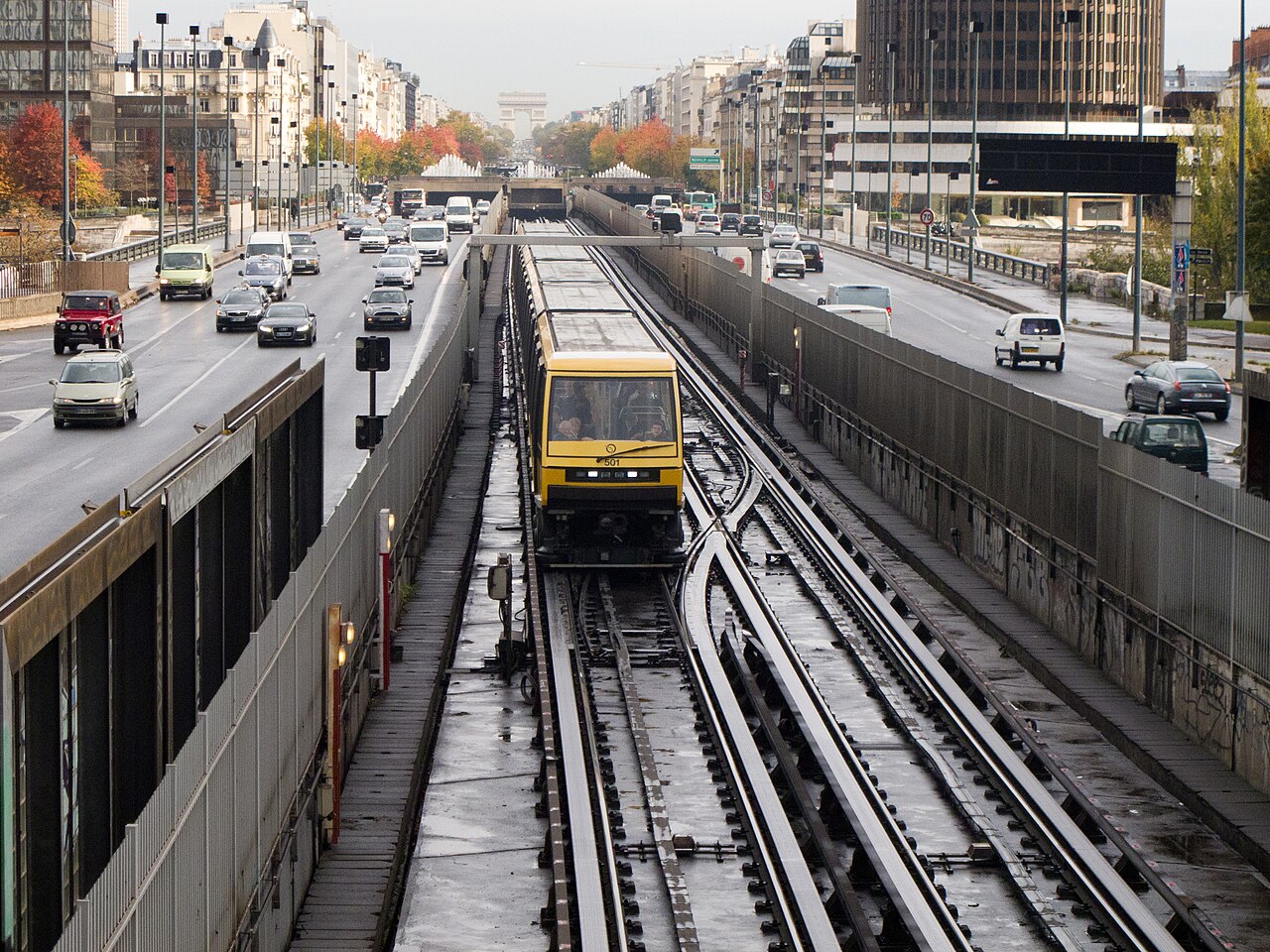
The success of the MP 51 trials led to the commercial conversion. RATP selected Line 11 (Châtelet to Mairie des Lilas) for the pilot program. This choice was strategic rather than capacity-driven. Line 11 possesses of the steepest gradients in the network, including a 4% incline leading up to the Belleville plateau. The superior grip of rubber tyres allowed trains to climb these slopes with reduced motor and without the wheel-slip common to steel-wheeled trains on wet or greasy rails. In 1956, the MP 55 rolling stock entered service on Line 11, marking the world's full- rubber-tyred metro line. The operational data confirmed the theoretical projections: round-trip times decreased, and the silence of the ride, relative to the screeching Sprague-Thomson trains, impressed the public.
Following the technical validation on Line 11, RATP moved to address the saturation on the network's busiest arteries. Line 1, the east-west axis carrying the highest passenger volume, suffered from chronic overcrowding. The introduction of the MP 59 stock in 1963 allowed RATP to increase frequency to a 90-second headway, a throughput impossible with the braking distances of contemporary steel-wheeled trains. Line 4 followed suit in 1967, receiving the displaced MP 59 trains as Line 1 upgraded, and later its own rubber-tyred fleet. The rationale here shifted from hill-climbing to pure capacity management. The ability to stop a train in a shorter distance meant trains could run closer together safely.
The final conversion of the 20th century occurred on Line 6 (Charles de Gaulle, Étoile to Nation). This line runs predominantly above ground on elevated viaducts, cutting through dense residential districts. The screeching of steel wheels on the tight curves of the viaducts generated significant noise complaints from residents. In 1974, RATP converted Line 6 to rubber-tyred operation using the MP 73 stock. The primary objective was acoustic dampening rather than acceleration. The rubber tyres significantly reduced the decibel levels transmitted to the surrounding buildings, solving a political problem through mechanical engineering.
Even with these successes, the "pneumatization" of the Paris Metro halted after Line 6. The drawbacks of the technology became impossible to ignore as the system aged. The friction that provided superior acceleration also generated immense amounts of heat. In the confined tunnels of the metro, this heat had nowhere to escape, raising ambient temperatures to uncomfortable levels. Unlike steel wheels, which dissipate very little energy as heat, rubber tyres undergo constant deformation, generating thermal energy that warms the tunnel air. This phenomenon prevented RATP from installing air conditioning in older rubber-tyred trains, as the AC units would pump more heat into the already sweltering tunnels, causing a feedback loop that would overheat the equipment.
Economic factors also played a role. The track infrastructure for a rubber-tyred line is expensive to build and maintain. It requires the standard two steel rails (for safety and return current), plus two wide concrete or steel runways for the tyres, plus two lateral guide bars. This complexity doubles the maintenance load. also, by the late 1970s, steel-wheel technology had advanced. The introduction of all-axle motorization and improved anti-slip electronics allowed steel-wheeled trains (like the MF 77) to method the acceleration and braking performance of rubber tyres without the thermal penalties or the proprietary dependency on Michelin's technology.
The 21st century has seen a resurgence of the technology, not as a conversion strategy, as a platform for automation. The MP 89 CA, introduced on the fully automated Line 14 in 1998, and later the MP 05 on Line 1, proved that rubber tyres suited the precision required for driverless operation. The high friction allows for precise stopping alignment at platform screen doors., the MP 14 rolling stock represents the culmination of this lineage. Entering service on Line 14 in 2020, Line 4 in 2022, and Line 11 in 2023, the MP 14 uses regenerative electrical braking to minimize the use of mechanical friction brakes, thereby reducing the emission of fine particulate matter (PM10), another historic criticism of the rubber-tyre system.
As of 2026, the extension of Line 11 to Rosny-Bois-Perrier operates fully with MP 14 trains. These vehicles feature air cooling systems, made possible only by the improved thermal efficiency of the motors and braking systems. The debate between steel and rubber remains a defining characteristic of the Paris Metro, creating a hybrid network where two distinct technological philosophies operate side by side. The decision to retain rubber tyres on existing lines from the prohibitive cost of reverting the infrastructure back to standard rail, locking lines 1, 4, 6, 11, and 14 into the pneumatic paradigm for the foreseeable future.
Evolution of Rubber-Tyred Rolling Stock in Paris (1951, 2026)
commercial fleet; high acceleration for gradients.
MP 59
1963
Line 1, 4
Increased power for heavy capacity; 90-second headways.
MP 73
1974
Line 6, 11
Ribbed tyres for water evacuation on outdoor viaducts.
MP 89
1997
Line 1, 4, 14
fully automated variant (CA) on Line 14.
MP 05
2011
Line 1, 14
Updated traction chain; deployed for Line 1 automation.
MP 14
2020
Line 4, 11, 14
Regenerative braking; 20% energy reduction; PM10 reduction.
Suburban Integration: The RER Interconnection Strategy
The segregation of Paris from its suburbs was not an accident of geography a deliberate feature of the 19th-century railway design. By the mid-20th century, this isolationist policy had mutated into a logistical nightmare. The Metro, confined strictly within the old Thiers fortifications, ended abruptly at the city gates. Conversely, the suburban steam (and later electric) trains operated by the SNCF terminated at the "embarcadères" (mainline stations) like Saint-Lazare, Gare du Nord, and Gare de Lyon, dumping hundreds of thousands of commuters onto the streets or into the saturated Metro network every morning. This forced transfer, known as "rupture de charge," became the single greatest choke point in the capital's economy by 1960. The solution required the political and technical blocks between the city (RATP) and the state railways (SNCF) to create a hybrid system: the Réseau Express Régional (RER).
The prototype for this cross-border integration emerged long before the acronym RER existed. The Ligne de Sceaux, opened in 1846, originally connected the Denfert-Rochereau barrier to the southern town of Sceaux. It served as a technological laboratory, testing the Arnoux articulated system for tight curves. In 1938, the Compagnie du Métropolitain de Paris (CMP) took over the line, modernizing it with high platforms and catenary electrification. This line became the southern spine of the future RER B, proving that a metro-style service could operate over longer suburban distances. Yet, for decades, it remained an island, terminating at Luxembourg on the Left Bank, tantalizingly close to disconnected from the northern rail networks.
The true architectural shift arrived with the 1965 Schéma Directeur d'Aménagement et d'Urbanisme (SDAU), orchestrated by Paul Delouvrier. Delouvrier understood that Paris could no longer function as a closed loop. His plan called for massive transverse lines that would pierce the city center, connecting opposite suburbs without requiring a transfer. The engineering challenge was immense. To connect the eastern suburbs (Boissy-Saint-Léger) with the west (Saint-Germain-en-Laye), engineers had to bore a deep-level tunnel through the unstable limestone and gypsum beneath the historic center. The resulting "Trou des Halles" (Hole of Les Halles) became the largest urban excavation in Europe during the 1970s, gutting the historic market district to build the subterranean cathedral of Châtelet-Les-Halles.
On December 9, 1977, President Valéry Giscard d'Estaing inaugurated the central trunk of RER A and the initial segment of RER B at Châtelet-Les-Halles. This event marked the physical unification of the network, the technical unification remained incomplete. The "Interconnexion" at Gare du Nord, required to link the RATP-operated southern line (RER B South) with the SNCF-operated northern line (RER B North), faced a formidable technical barrier: voltage. The RATP network ran on 1. 5 kV DC, while the SNCF northern suburbs used 25 kV AC. To this gap without forcing passengers to change trains, engineers developed the MI79 (Matériel d'Interconnexion 1979) rolling stock. These dual-voltage trains could switch power sources on the fly. When the tunnel opened in December 1981 (fully operational by 1983), it eliminated the transfer at Gare du Nord, allowing a passenger to travel from Roissy Airport to the Chevreuse Valley on a single seat.
The success of the interconnection strategy nearly destroyed it. RER A, designed to carry 50, 000 passengers per hour, quickly surpassed all projections, becoming the busiest single rail line in Europe outside of Moscow. By the 1990s, daily ridership exceeded one million (reaching 1. 4 million by 2024), forcing the RATP to implement the SACEM signaling system to reduce headways to under two minutes. The saturation necessitated the introduction of double-decker trains, starting with the MI2N in the late 1990s and followed by the high-capacity MI09 in 2011. The "crush load" conditions on RER A demonstrated that the 1965 plan had underestimated the latent demand for cross-regional travel.
To relieve the suffocating pressure on RER A, planners initiated the Eole project (Est-Ouest Liaison Express), which became RER E. Opened in 1999, it initially connected the eastern suburbs to a new deep station at Haussmann, Saint-Lazare stopped short of crossing to the west. For twenty-five years, RER E functioned as a glorified spur line. The completion of the strategy required the "Project Eole" western extension, a massive €3. 8 billion undertaking. In May 2024, the line extended to Nanterre-La Folie, piercing the western barrier. The full extension to Mantes-la-Jolie, scheduled for completion in late 2026, involves converting 47 kilometers of existing SNCF track and deploying the NExTEO signaling system to manage mixed traffic at high speeds.
By 2026, the deployment of RER NG (New Generation) trains on lines D and E marks the latest evolution of the interconnection doctrine. These "boa" trains, with open gangways and wide doors, are designed specifically to accelerate passenger exchange in the deep tunnels of Paris. The RER network functions as a hybrid beast: part metro, part commuter rail, binding the Île-de-France region into a single economic unit. The 19th-century walls are gone, replaced by tunnels that move 3 million people daily, proving that the integration of the suburbs was the only viable route for the capital's survival.
Evolution of Paris Regional Interconnection (1846, 2026)
Era
Key Event
Strategic Significance
1846
Opening of Ligne de Sceaux
prototype of a dedicated suburban line; later the southern spine of RER B.
1965
SDAU Master Plan
Official adoption of the "Réseau Express Régional" concept by Paul Delouvrier.
1977
Châtelet-Les-Halles Opens
Physical connection of East-West (RER A) and North-South (RER B) axes.
1981-1983
Gare du Nord Interconnection
RATP and SNCF tracks link via tunnel; introduction of dual-voltage MI79 trains.
1999
RER E (Eole) Opens
New East-West line created to relieve saturation on RER A, initially ending at St-Lazare.
2024
RER E Extension (Phase 1)
Line reaches Nanterre-La Folie; use of RER NG rolling stock.
2026
RER E Extension (Phase 2)
Full connection to Mantes-la-Jolie; completion of the 1990s Eole vision.
Line 14 and the Shift to Unattended Train Operation
The 1903 Couronnes Fire and Safety Protocol Overhauls
October 15, 1998, marked a definitive rupture in the operational history of the Paris Metro. President Jacques Chirac inaugurated Line 14, then known as Project Météor (Métro Est-Ouest Rapide), ending a sixty-year drought of new full-line construction. Unlike its predecessors, Line 14 was not a transport link; it was a technological and political weapon designed to shatter two specific constraints: the suffocating congestion of RER Line A and the vulnerability of the network to labor strikes. The line introduced the fully automated, driverless system to the capital, operating initially between Madeleine and Bibliothèque François Mitterrand. This shift to Unattended Train Operation (UTO) eliminated the driver's cab, allowing passengers to gaze out the front window, yet the real innovation lay in the invisible digital architecture that governed the tracks.
The core of this system is the SAET (Système d'Automatisation de l'Exploitation des Trains), a moving-block signal technology originally developed by Matra Transport International (later acquired by Siemens). Unlike the fixed-block systems of the 1900s, which rely on large physical buffer zones between trains, SAET calculates the exact position and speed of every unit in real-time. This digital precision permits intervals (headways) as short as 85 seconds, a frequency impossible for human drivers to maintain safely over long periods. To prevent track intrusion, a frequent cause of delays on older lines, the RATP installed floor-to-ceiling platform screen doors at every station. These blocks slide open only when the train is docked and immobilized, a safety standard that has since become mandatory for all new automated lines globally.
Labor unions viewed Météor with intense suspicion. The RATP promoted the line as a "social laboratory," a euphemism that barely concealed the management's intent to reduce reliance on unionized drivers. While the official narrative focused on high frequency and safety, the strategic advantage was clear: an automated line does not strike. During the massive transport strikes of 2019 and 2023, Line 14 remained the only Metro line running near-normal service, breaking the total paralysis that unions historically used as use. This operational immunity validated the high initial capital costs and accelerated the push to automate existing lines, starting with Line 1 in 2011 and Line 4 in 2022.
The rolling stock evolved to match the line's growing strategic importance. The initial MP 89 CA trains, with six rubber-tired cars, served the line for two decades. yet, the saturation of the network required a massive upgrade in capacity. Starting in 2020, the RATP began deploying the MP 14, built by Alstom. These trains feature eight cars instead of six, extending the train length to 120 meters and increasing capacity by over 30%. The transition required the RATP to activate the 120-meter platforms that had been built into the original stations in 1998 left unused, a rare example of long-term planning in French public works.
The true of Line 14's ambition materialized in June 2024, just weeks before the Paris Olympics. The line underwent a massive dual extension, stretching north to Saint-Denis Pleyel and south to Orly Airport. This 2. 8 billion euro infrastructure project transformed Line 14 from a central connector into the north-south backbone of the Greater Paris metropolis. The extension added 15 kilometers of track, doubling the line's length. The connection to Orly Airport proved particularly disruptive to existing transit models, offering a 40-minute ride from Saint-Denis to the terminal, rendering the expensive and disjointed Orlyval shuttle obsolete for travelers.
By early 2026, Line 14 surpassed Line 1 to become the busiest line in the network, carrying over 820, 000 passengers on weekdays with projections reaching one million. The station at Saint-Denis Pleyel functions as the "Châtelet of the North," a massive interchange hub designed to anchor the future Grand Paris Express lines (15, 16, and 17). The operational reality of 2026 confirms that the high costs of automation, frequently criticized during the budget overruns of the 1990s, have delivered a system capable of handling densities that would crush a manual line. The success of Line 14 has cemented automation as the only viable route forward for the RATP, signaling the slow, inevitable extinction of the human driver in the Parisian subway.
Technological Evolution: Line 14 Rolling Stock (1998, 2026)
Feature
MP 89 CA (Original)
MP 14 CA (Current)
Manufacturer
Alstom
Alstom
Introduction
1998
2020
Composition
6 Cars
8 Cars
Length
90. 28 meters
120 meters
Capacity (approx.)
722 passengers
932+ passengers
Automation Level
GoA4 (Unattended)
GoA4 (Unattended)
Traction Power
750 V DC
750 V DC
Energy Efficiency
Standard Regenerative
-20% consumption vs previous gen
Grand Paris Express: Orbital Expansion and Cost Overruns
The Grand Paris Express (GPE) represents the most aggressive reconfiguration of the French capital's transit logic since Fulgence Bienvenüe's lines in 1900. For over a century, the Paris Metro operated on a strictly radial philosophy: lines shot outward from the center like spokes on a wheel, forcing suburban commuters to travel into the hyper-dense core at Châtelet or Saint-Lazare to transfer and head back out. The GPE breaks this centripetal stranglehold by constructing a 200-kilometer automated super-metro ring around the capital. Yet, this engineering pivot has been accompanied by a fiscal drift so severe that the Cour des Comptes (Court of Audit) has repeatedly flagged the project for threatening the long-term stability of French public finances.
The concept of an orbital metro is not new; it is a resurrection of the Petite Ceinture, a circular steam railway built in 1852 that fell into disuse by 1934, killed by the efficiency of the radial Metro. The modern iteration emerged from a political collision in 2009 between President Nicolas Sarkozy, who envisioned a "Grand Paris" connecting economic clusters like Saclay and Roissy, and the regional council led by Jean-Paul Huchon, which proposed the "Arc Express" to serve dense suburbs. The resulting compromise in 2011 merged these visions into the Grand Paris Express: four new lines (15, 16, 17, 18) and extensions to Lines 11 and 14. To manage this colossus, the state created a special purpose vehicle, the Société du Grand Paris (SGP), later renamed Société des Grands Projets in 2023.
The financial trajectory of the GPE demonstrates a textbook case of megaproject optimism bias. In 2010, the initial cost was estimated at €19 billion. By the time the project reached peak construction intensity in 2024, that figure had more than doubled. A blistering 2018 report by the Cour des Comptes exposed that initial estimates were artificially suppressed to secure political approval. The auditors noted that provisions for geological risks and inflation were almost non-existent in the early budgets. By 2024, the Court warned that the total cost to the community, including debt service and operating deficits over the lifecycle, could swell to €84 billion.
Grand Paris Express: Cost Escalation Timeline
Year
Estimated Capital Cost
Context
2010
€19. 0 Billion
Initial public debate estimate.
2013
€22. 6 Billion
Revised baseline after project consolidation.
2017
€35. 0 Billion
SGP internal revision; triggered Cour des Comptes audit.
2020
€42. 0 Billion
Senate Finance Commission estimate.
2024
€42. 0 Billion+
Construction cost stabilizes; debt service concerns rise.
The timeline has suffered similar. The original roadmap promised significant sections operational for the 2024 Summer Olympics. In reality, only the extension of Line 14 to Saint-Denis Pleyel in the north and Orly Airport in the south met the Olympic deadline, opening in June 2024. This extension was a logistical triumph, linking the city's second airport to the metro network, it stood alone. The flagship Line 15 South, designed to relieve the saturated RER A by connecting Pont de Sèvres to Noisy-Champs, missed the Games entirely. As of early 2026, this section remains in the testing phase, with opening rescheduled for Summer 2026.
Technical and geological realities forced these delays. The Paris basin is a complex cake of limestone, gypsum, and clay. In Clamart and other southern communes, tunnel boring machines (TBMs) encountered unexpected ground instability, requiring freezing techniques that slowed progress to meters per day. The sheer density of the worksites, at one point the largest civil engineering project in Europe, created absence of skilled labor and materials, driving prices upward. The SGP was forced to problem "green bonds" aggressively, accumulating a debt pile of €28. 7 billion by 2023, a liability that is treated as sovereign debt by state auditors.
Beyond the finances, the project has exacted a human toll. Between 2020 and 2023, five workers died on GPE construction sites. The pressure to meet the Olympic deadline for Line 14 and the accelerated pace on other lines drew sharp criticism from labor unions. In one instance, a worker named Amara Dioumassy was killed at the Bassin d'Austerlitz site, a related infrastructure project, galvanizing protests regarding safety standards on the "chantiers du siècle" (worksites of the century). The SGP responded with stricter safety, the fatalities remain a grim footnote to the modernization effort.
The northern and eastern lines face their own existential battles. Line 17 was originally justified by the Europacity project, a massive retail and leisure complex in the Triangle de Gonesse. When the government cancelled Europacity in 2019, the rationale for the line weakened, yet construction proceeded to serve the remaining airport and exhibition logistics. Similarly, Line 18 has been the subject of fierce resistance on the Plateau de Saclay. Farmers and environmentalists argued that the line, part of which runs on an elevated viaduct, would urbanize of the last fertile agricultural land near Paris. Even with these protests, the viaduct stands complete in 2026, with the section from Massy-Palaiseau to Christ de Saclay slated to open in October.
As of February 2026, the Grand Paris Express is no longer a theoretical plan a concrete, if delayed, reality. The tunnel boring machines have largely finished their work on the southern loops, and the focus has shifted to station fit-out and systems integration. The SGP has transitioned from a pure construction entity to a debt-management and oversight body. The network eventually add 68 stations and 200 kilometers of track to the Parisian system, fundamentally altering the region's economic geography. Yet, the final bill, likely exceeding €45 billion for construction alone, load the region's finances for forty years, a heavy mortgage for the pledge of orbital mobility.
Fleet Engineering: From Sprague-Thomson to MF 19
1914, 1945: Military Requisition and Occupation Logistics
August 10, 1903, redefined Parisian transit engineering. Smoke engulfed Couronnes station. Eighty-four passengers perished. Investigators identified the culprit: direct high-voltage control. Early M1 stock channeled 600 volts through the driver's hand controller. Arcs ignited wooden coachwork. Panic ensued. Darkness followed. Asphyxiation claimed victims. This catastrophe ended the era of timber chassis. Public outcry demanded fireproof materials. Operators sought safer traction methods. Frank Sprague provided the answer. His multiple-unit system used low-voltage relays. High current remained under the floor. Drivers operated safe switches. Metal construction became mandatory. By 1908, Sprague-Thomson units dominated the underground. These green carriages served until 1983. They symbolized mechanical reliability.
Post-war demands required higher capacity. RATP engineers looked to automotive technology. Michelin proposed pneumatic tires. Rubber offered superior acceleration. Braking distances decreased. Gradients became manageable. The MP 55 prototype proved the concept on Line 11. Wooden brake shoes. Noise levels dropped. Passengers experienced smoother rides. Yet, friction generated immense heat. Ventilation became a challenge. Energy consumption rose. Proprietary tracks replaced standard rails. Steel wheels remained for guidance. In case of deflation, flanged rims engaged the iron track. This hybrid system defined the network for decades. MP 59 stock followed, serving Line 1 and Line 4. Millions of kilometers proved the durability of pneumatic suspension.
Steel technology struck back in the 1970s. Suburban extensions required speed. Rubber tires overheated at sustained high velocities. Line 13 needed a new solution. RATP commissioned the MF 77. Designers prioritized aerodynamics. The "White Train" featured a curved profile. It accommodated wider waists for seated passengers. Bogies used air suspension. Noise reduction matched rubber counterparts. Energy efficiency favored steel. This fleet connected the banlieue to the center. It remains a workhorse today. Engineers proved that classic rail could evolve. They balanced comfort with operational costs. The network maintained a dual technical identity.
Innovation carries risk. The MF 88 experiment demonstrated this axiom. Planners sought to reduce squealing on sharp curves. Line 7bis served as the testbed. Alstom delivered nine units in 1993. These trains featured steerable axles. Independent wheels replaced solid axles. Differential rotation theoretically eliminated friction. Reality differed. The chassis suffered fatigue. Cracks appeared in the frames. Maintenance teams struggled with constant repairs. Costs ballooned. The "Boa" concept of open gangways succeeded, the running gear failed. RATP abandoned the steerable axle design. Conventional bogies returned in subsequent orders. The MF 88 became a cautionary tale of over-engineering.
Era
Fleet Model
Innovation
Primary Flaw
1900-1903
M1 (Wood)
Electric Traction
Flammable / Direct HV Control
1908-1983
Sprague-Thomson
Multiple Unit Control
Manual Doors / Noise
1956-1990s
MP 55 / MP 59
Rubber Tires
Heat Generation
1993-2026
MF 88
Steerable Axles
Chassis Cracking
2025-Future
MF 19
Modular / 100% Brake Regen
Delivery Delays
Automation transformed operations in the 1990s. Line 14 launched as a driverless system. MP 89 CA stock utilized computer control. Headways dropped to 85 seconds. Safety doors appeared on platforms. Human error from the equation. Line 1 followed suit. Retrofitting existing infrastructure proved possible. MP 05 units replaced aging MP 89s. Energy recovery systems improved. Regenerative braking fed power back into the third rail. Heat emissions declined. The network moved toward digital signaling. CBTC systems replaced fixed blocks. Throughput increased without digging new tunnels. Efficiency became the primary metric.
October 16, 2025, marked the latest milestone. Line 10 received the MF 19 train. This arrival signaled the end for three older generations. MF 67, MF 77, and the troublesome MF 88 faced retirement. Alstom manufactured the new fleet. The contract, valued at 530 million euros for the initial tranche, consolidated the rolling stock. One modular design serves eight lines. Configurations vary between four and five cars. Lengths range from 60 to 76 meters. Driver cabins exist can be removed. Full automation remains an option. LED lighting reduces consumption. USB ports serve modern commuters. Real-time screens display connections. The "Boa" layout returns, allowing movement between carriages. Passenger flow improves during peak hours.
Procurement faced blocks. Alstom acquired Bombardier Transportation in 2021. This merger created a near-monopoly. Competition for French contracts dwindled. RATP and SNCF expressed concern. Delivery schedules slipped. The MF 19 program lagged behind initial. COVID-19 disrupted supply chains. Raw material prices surged. Yet, the rollout continues. Line 7bis prepares for its new vehicles in 2026. The cracking chassis of the MF 88 disappear. Maintenance depots undergo massive upgrades. Technicians learn to service complex electronics. Diagnostic laptops replace heavy wrenches. Data flows from onboard sensors. Predictive algorithms warn of component failures. The era of the mechanic fades; the age of the data analyst begins.
Energy efficiency drives current specifications. MP 14 stock on Line 11 consumes 20 percent less power than predecessors. Electric braking works to a complete stop. Mechanical pads rarely touch the discs. Particulate pollution decreases. Air quality in stations improves. Noise pollution drops further. The system adapts to environmental mandates. Sustainability is no longer a buzzword; it is a contractual requirement. Every kilowatt saved reduces operating expenses. The grid becomes smarter. Traction substations manage loads. Peak demand flattens. The metro functions as a single, breathing organism. It balances speed, safety, and consumption.
History pattern. The 1903 fire forced a leap in safety. The 2020s demand a leap in sustainability. Engineering responds to the emergency of the day. From the wooden M1 to the digital MF 19, the mission remains constant. Move Paris. Keep it safe. Make it fast. The fleet evolves, the tunnels remember. Every rivet in a Sprague-Thomson told a story of industrial might. Every line of code in an MP 14 tells a story of digital precision. The tracks bind them together. Steel or rubber, the wheels keep turning.
2024 Olympic Transport Load and System Performance
The operational delivery of the Paris 2024 Olympic Games represents a statistical anomaly in the history of the RATP. Between July 26 and August 11, 2024, the network the catastrophic predictions made by both unions and political leaders earlier in the year. Valérie Pécresse, president of Île-de-France Mobilités (IDFM), had warned residents in late 2023 that the system would be "saturated" and advised them to walk or work from home. Yet, the anticipated collapse did not occur. Instead, the system achieved a punctuality rate of 96. 18% throughout 2024, a sharp increase from the 92. 73% recorded in 2023. This performance was not a result of magical efficiency of a calculated strategy: the aggressive displacement of regular commuters to make room for 11. 2 million Olympic visitors.
The backbone of this operation was the extension of Line 14, inaugurated on June 24, 2024, just one month before the Opening Ceremony. This automated "super metro" connected Saint-Denis Pleyel in the north to Orly Airport in the south, spanning 28 kilometers. During the Games, Line 14 operated with a frequency of one train every 85 seconds, a cadence previously thought impossible for the aging Paris network. By early 2026, data from IDFM confirmed that Line 14 had overtaken the historic Line 1 as the busiest route in the system, carrying nearly 820, 000 passengers daily. The 2024 Games accelerated the shift of the network's center of from the east-west axis of 1900 to the north-south automated axis of the 21st century.
Financial engineering played as large a role as civil engineering. To manage demand, IDFM imposed a controversial "Olympic fare" between July 20 and September 8, 2024. The price of a single metro ticket nearly doubled from €2. 15 to €4. 00. Pécresse publicly admitted this pricing was designed as a deterrent, stating the rate was fixed "precisely so nobody buys one." The strategy worked. Locals, fearing cost and congestion, fled the capital or purchased monthly passes in advance, which remained at standard rates. The result was a demographic substitution: the metro cars were filled not with commuting Parisians, with international spectators and tourists to pay the premium. This revenue extraction allowed IDFM to claim the transport costs of the Games were self-financing, even as it priced the city's poorest residents out of transit for seven weeks.
Operational Metrics: Paris Metro During 2024 Olympics
Metric
Value
Context
Daily Passenger Surge
+1. 5 Million
Additional trips per day above summer average.
Line 14 Frequency
85 Seconds
World record for high-capacity automated metro.
Single Ticket Price
€4. 00
Increased from €2. 15 (July 20 , Sept 8).
Workforce Bonus
Up to €2, 500
Paid to drivers to prevent strikes during Games.
Station Closures
Concorde, Tuileries, Champs-Élysées
Closed for security/proximity to venues.
Security transformed the physical access to the network. For the time since World War II, specific metro stations were excised from the grid not for maintenance, for territorial control. Stations such as Concorde, Tuileries, and Champs-Élysées, Clemenceau were shuttered for weeks, forcing passengers to navigate a surface level divided by metal blocks and QR-code checkpoints (SILT zones). The "Pass Jeux" digital permit system meant that even if the metro was running, the destination might be inaccessible to those without police clearance. This militarization of transit infrastructure proved that the state could successfully partition the underground network to serve a specific event while denying access to the general public.
Labor stability, a constant threat in the months leading up to July 2024, was secured through direct financial appeasement. The CGT and other unions had filed strike notices covering the entire Olympic period. To neutralize this threat, RATP management and the government authorized exceptional bonuses ranging from €1, 600 to €2, 500 for drivers and station staff who deferred their summer leave. This "social peace" cost tens of millions of euros ensured that the images broadcast globally showed moving trains rather than picket lines. The absence of strikes during the Games was not a sign of labor harmony a transaction completed under duress.
By 2025, the "Olympic hangover" began to materialize in the maintenance logs. The intense utilization of the older rolling stock (specifically on Lines 7, 9, and 10) during the heat of August 2024 accelerated wear on braking systems and door method. While Line 14 and Line 1 operated flawlessly, the legacy lines required extended night-time closures throughout 2025 to catch up on deferred repairs. The 2024 Games demonstrated that the Paris Metro could perform at a world-class level, only by cannibalizing its future maintenance schedule and pricing out its local user base.
2026 Network Analytics: Ridership and Maintenance Audits
By February 2026, the Paris Metro operates not as a transit network as a high- logistical battlefield where century-old infrastructure collides with aggressive modernization mandates. The system, stretching across 245 kilometers of track, faces a distinct operational reality: the romanticism of the Art Nouveau era has been fully supplanted by the cold metrics of saturation, asset depreciation, and the desperate race to integrate the Grand Paris Express (GPE) before the existing lines suffer catastrophic failure. The data from early 2026 presents a network in a state of violent transition, defined by the retirement of the longest-serving rolling stock in French history and the recalibration of passenger flows following the 2024 Olympic expansion.
The most immediate statistical shift in 2026 is the dethroning of Line 1. For decades, the historic east-west axis (La Défense, Château de Vincennes) held the title of the network's busiest artery. As of January 2026, Île-de-France Mobilités (IdFM) analytics confirm that Line 14 has usurped this position, recording a daily ridership average of 820, 000 passengers. This surge, a 45% increase from winter 2023, is the direct result of the June 2024 extension to Saint-Denis Pleyel in the north and Aéroport d'Orly in the south. Line 14 functions as the spinal column of the Greater Paris region, channeling commuters from the southern suburbs directly into the Châtelet-Les Halles hub without the need for the RER B, decompressing the notoriously overcrowded north-south rail link.
yet, this relief is unevenly distributed. An audit of Line 13 conducted in late 2025 reveals that the "line of hell" remains serious saturated, particularly on the northern branches toward Saint-Denis and Asnières-Gennevilliers. While the Line 14 extension was engineered to bleed traffic away from Line 13, the population density of the northern suburbs outpaces the capacity relief. The saturation rate at morning peak hours on Line 13 still exceeds 115% between Saint-Lazare and Saint-Denis , Porte de Paris. The structural relief promised by the Grand Paris Express Line 15 South is visible not yet tangible; as of February 2026, Line 15 South remains in the testing phase, with its commercial opening firmly rescheduled for Summer 2026. The 75-kilometer orbital ring is currently running ghost trains, testing the automatic train control systems that eventually allow for 1. 5 million daily rotations, for the commuter in early 2026, the overcrowding.
The physical state of the rolling stock represents the second major vector of the 2026 audit. The arrival of the MF19 trainsets marks the most significant industrial renewal project since the introduction of the Sprague-Thomson in the 1900s. Manufactured by Alstom, these trains began commercial service on Line 10 in October 2025. By early 2026, the rollout has expanded to Line 7bis, with Line 3bis and Line 13 scheduled for 2027. This transition is not cosmetic; it is a need for survival. The MF67 fleet, which entered service in the late 1960s, had exceeded its operational lifespan by a decade, suffering from frequent door failures and traction motor burnouts that caused -effect delays across the network. The MF19 introduces regenerative braking and, crucially, reversible air conditioning, a feature physically impossible on older models due to the narrow 2. 40-meter tunnel gauge established by Fulgence Bienvenüe in 1900. The decision to prioritize a small loading gauge in the 19th century to block main-line trains continues to dictate the engineering constraints of the 21st century, forcing RATP to commission bespoke rolling stock rather than purchasing standard off-the-shelf metro trains.
Maintenance audits for the 2026 fiscal year indicate a pivot from reactive repairs to aggressive, disruptive regeneration. The IdFM budget for 2026 allocates €3. 8 billion specifically for infrastructure renewal, a figure that severe service interruptions. Line 12 is currently subject to a "nights-out" regime, closing entirely after 10: 00 PM from January through June 2026 to facilitate track replacement and signal modernization. More drastically, the audit confirms the upcoming closure of the République station on Line 8 from July 2026 to April 2027. This nine-month shutdown of a primary interchange hub show the severity of the degradation; the station's vaulted masonry and platforms require structural reinforcement that cannot be performed during the brief nightly maintenance window (1: 30 AM to 5: 00 AM).
Financially, the load of this modernization has been transferred directly to the user base. The pricing structure for 2026 reflects the immense capital expenditure required to keep the system buoyant. On January 1, 2026, the cost of the monthly Navigo pass rose to €90. 80, crossing the psychological €90 threshold. The single ticket price is €2. 55. These hikes are defended by IdFM as essential to service the debt incurred by the Grand Paris Express construction and the MF19 procurement. The revenue model relies heavily on the "Versement Mobilité" (a transport tax on businesses), yet the passenger contribution has risen steadily, igniting debates about the social equity of a public transit system that was originally conceived in 1900 with a 15-centime second-class ticket to serve the working populace.
Air quality within the subterranean network remains a matter of concern in the 2026 environmental audit. even with the "healthy" rating of Paris's outdoor air (PM10 levels averaging 18 µg/m³), the deep-level stations such as Auber and Châtelet continue to trap particulate matter generated by braking friction and ballast dust. The introduction of the MF19 fleet is the primary mitigation strategy, as the new trains use electro- braking to reduce mechanical friction, thereby lowering PM10 emissions. yet, the full environmental benefit not be realized until the complete retirement of the MF77 and MF88 fleets in the early 2030s. Until then, the ventilation shafts dating back to the 1900s, originally designed to vent steam from early locomotives or simple heat, struggle to purge the micro-particles.
The accessibility audit of 2026 presents a clear dichotomy. Line 14 remains the only fully accessible line within the historic network. The Grand Paris Express lines (15, 16, 17, 18) are built with universal accessibility as a foundational requirement, featuring elevators and level boarding at every station. In contrast, the historic network (Lines 1 through 13) remains largely hostile to reduced mobility users, with less than 10% of stations offering step-free access. A feasibility study for Line 6, expected in Spring 2026, aims to address the elevated sections, for the deep underground lines, the cost of retrofitting elevators into 1900s masonry vaults remains prohibitive.
Table 12. 1: Paris Metro Network Operational Metrics (1900, 2026)
Metric
1900 (Inaugural)
1950 (Post-War)
2000 (Centenary)
2026 (Current)
Network Length
10 km
160 km
211 km
245 km (inc. Line 14 ext)
Daily Ridership
30, 000
3. 2 Million
4. 1 Million
~5. 1 Million
Busiest Line
Line 1
Line 1
Line 1
Line 14 (820k/day)
Rolling Stock
Sprague-Thomson (Wood)
Sprague (Metal)
MF67 / MP89
MF19 / MP14 / MP05
Ticket Price
0. 15 Fr (2nd Class)
15 Fr (Old Francs)
8. 00 Fr (€1. 22)
€2. 55
As the network moves toward the summer of 2026, the focus shifts entirely to the commissioning of Line 15 South. This orbital line represents the break from the radial "star" pattern that has defined Parisian transit since the time of Louis XIV. By connecting the suburbs directly, Pont de Sèvres to Noisy-Champs, without passing through Paris, the system attempts to correct the centripetal bias that has choked the city center for a century. The success of the Paris Metro in 2026 is no longer measured by how it moves people to the Eiffel Tower, by how it keeps them out of the center entirely, distributing the load across a polycentric metropolis that has outgrown its 19th-century walls.
Why it matters: India's Aadhaar digital ID, intended to streamline social welfare delivery, has led to a digital welfare divide. Despite legal safeguards, mandating Aadhaar for welfare programs…
What do we know about Municipal Resistance and State Intervention?
Between 1845 and 1898, the development of the Paris Metro remained frozen by a fierce political standoff between the City of Paris and the French State. The conflict centered on control and purpose.
What do we know about Inauguration: The Bienvenüe Network Design?
The resolution to the half-century standoff between the French State and the City of Paris arrived not through a handshake, through a calculated engineering constraint. In 1898, the French government authorized the construction of the "Chemin de fer métropolitain," declaring it a project of public utility.
What do we know about Geological Engineering: Shield Tunneling and Seine Crossings?
The geological reality of Paris is a chaotic vertical sequence of limestone, gypsum, clay, and sand that has dictated every engineering decision since the pickaxe struck ground in 1900. To understand the Paris Metro is to understand the Lutetian Basin, a sedimentary depression where ancient seas deposited of calcaire grossier (coarse limestone) and gypsum.
What do we know about The Couronnes Fire and Safety Protocol Overhauls?
The trajectory of the Paris Metro changed permanently on August 10, 1903. Less than three years after the network opened, a catastrophic failure at Couronnes station exposed the lethal flaws in the system's initial engineering.
What do we know about Military Requisition and Occupation Logistics?
The outbreak of World War I in 1914 shattered the isolationist containment policy that had defined the Paris Metro since its inception. The network, originally conceived by municipal leaders as a strictly internal urban loop to exclude national railway interference, immediately became a strategic asset for the French State.
What do we know about Pneumatic Technology: The Michelin Rubber-Tyre Experiments?
By 1950, the Paris Metro faced a physical and operational breaking point. The German Occupation and the resource scarcity of World War II had left the network in a state of severe decay.
What do we know about Suburban Integration: The RER Interconnection Strategy?
The segregation of Paris from its suburbs was not an accident of geography a deliberate feature of the 19th-century railway design. By the mid-20th century, this isolationist policy had mutated into a logistical nightmare.
What do we know about Line 14 and the Shift to Unattended Train Operation?
October 15, 1998, marked a definitive rupture in the operational history of the Paris Metro. President Jacques Chirac inaugurated Line 14, then known as Project Météor (Métro Est-Ouest Rapide), ending a sixty-year drought of new full-line construction.
What do we know about Grand Paris Express: Orbital Expansion and Cost Overruns?
The Grand Paris Express (GPE) represents the most aggressive reconfiguration of the French capital's transit logic since Fulgence Bienvenüe's lines in 1900. For over a century, the Paris Metro operated on a strictly radial philosophy: lines shot outward from the center like spokes on a wheel, forcing suburban commuters to travel into the hyper-dense core at Châtelet or Saint-Lazare to transfer and head back out.
What do we know about Fleet Engineering: From Sprague-Thomson to MF 19?
What do we know about Olympic Transport Load and System Performance?
The operational delivery of the Paris 2024 Olympic Games represents a statistical anomaly in the history of the RATP. Between July 26 and August 11, 2024, the network the catastrophic predictions made by both unions and political leaders earlier in the year.
What do we know about Network Analytics: Ridership and Maintenance Audits?
By February 2026, the Paris Metro operates not as a transit network as a high- logistical battlefield where century-old infrastructure collides with aggressive modernization mandates. The system, stretching across 245 kilometers of track, faces a distinct operational reality: the romanticism of the Art Nouveau era has been fully supplanted by the cold metrics of saturation, asset depreciation, and the desperate race to integrate the Grand Paris Express (GPE) before the existing lines suffer catastrophic failure.
Why it matters: French authorities seized a painting, Venus with a Veil, attributed to Lucas Cranach the Elder, in a dramatic raid at the Caumont Centre d'Art. The…
Why it matters: Investment frenzy in solar grids promised financial returns and social impact By 2025, sector faced a brutal correction with a collapse in confidence and capital…
Why it matters: Critical infrastructure cyber grants aim to enhance cybersecurity in essential sectors such as energy, water, transportation, and healthcare. The U.S. Department of Homeland Security (DHS)…
Why it matters: Evidence shows that large-scale donors gain privileged access to political figures and decision-making platforms, potentially influencing policy decisions. Philanthropic contributions can shape public opinion and…
Why it matters: Internships have become a widespread practice globally, with many positions remaining unpaid or underpaid, impacting new graduates. Unpaid internships can perpetuate socioeconomic inequalities, with financial…
Why it matters: Revealed the use of migrant child labor by companies in the US South Investigation led to significant actions and changes in child labor practices In…
Get updates on this place
Get verified alerts when this file is updated (verification required).