
Demographic Flux and Density Metrics 1700, 2026
The demographic trajectory of Paris from 1700 to 2026 presents a case study in urban compression, explosive expansion, and modern contraction. Unlike London or New York, which expanded their administrative boundaries repeatedly to capture suburban growth, the political limits of Paris have remained largely static since 1860. This geographic constriction forces the city's demographic history to be read through the lens of density rather than sprawl. The story is not one of continuous growth, of a pressure vessel that reached its breaking point in 1921 and has been slowly depressurizing ever since.
In 1700, Paris contained approximately 500, 000 to 600, 000 inhabitants. These residents lived within a medieval footprint far smaller than the current city, largely confined inside the future route of the Wall of the Farmers-General. By the eve of the French Revolution in 1789, the population had swelled to roughly 650, 000. This density was not a statistic; it was a kinetic force. The absence of sanitation and the vertical packing of the working class into garrets created the social friction that ignited the revolution. The city at this stage functioned as a biological hazard, where mortality rates frequently outpaced birth rates, requiring a constant influx of provincial migrants to maintain population levels.
The 19th century introduced industrial acceleration that overwhelmed the medieval infrastructure. By 1846, the population breached one million. The cholera epidemic of 1832, which killed over 18, 000 Parisians, exposed the lethal consequences of this overcrowding. The density in central districts like the current 4th and 11th arrondissements reached levels unseen in modern Western cities. This emergency of density provided the political capital for Baron Haussmann's renovation under Napoleon III. Haussmann's demolition of medieval quarters displaced thousands, pushing the working class toward the periphery. Yet, the most significant demographic event of the century was the annexation of 1860. The city absorbed the suburban communes between the Wall of the Farmers-General and the Thiers Wall, doubling its surface area to 78 square kilometers (later expanded to 105 km²) and instantly adding 400, 000 new citizens. This administrative redraw created the twenty arrondissements that define the city today.
The demographic apex arrived in 1921. Following World War I, the census recorded 2, 906, 472 inhabitants within the city limits. This figure remains the historical maximum. At this peak, the population density averaged nearly 28, 000 people per square kilometer, with working-class districts in the northeast recording densities far higher. The 11th arrondissement, for instance, functioned as one of the most densely populated urban zones on the planet. This period marked the saturation point. The infrastructure could no longer support the mass of humanity, leading to the designation of îlots insalubres (unhealthy blocks) and the beginning of a long-term exodus.
From 1921 to 1999, Paris experienced a "hollowing out." The rise of the automobile, the development of the RER regional express network, and the construction of massive housing projects (grands ensembles) in the suburbs drew the middle and working classes out of the capital. By 1968, the population had dropped to 2. 5 million. By 1999, it hit a modern nadir of 2. 125 million. This 27% decline from the 1921 peak represented a fundamental shift in the city's function. Paris transformed from a mixed industrial-residential hive into a center of administration, tourism, and elite residence. The factories moved to the banlieue (suburbs), and the people followed.
The early 21st century saw a brief reversal of this trend. Between 1999 and 2011, the population climbed back to 2. 25 million, driven by a high birth rate and the attractiveness of the city to young professionals. Yet, this recovery proved transient. Since 2015, a new decline has set in, driven by different factors than the post-war exodus. The current contraction is fueled by the hyper-financialization of real estate, the proliferation of short-term rentals like Airbnb which remove housing stock from the residential market, and the "Bordeaux effect", the flight of remote-capable professionals to provincial cities offering higher quality of life.
The COVID-19 pandemic accelerated this exit. In 2020 and 2021, the capital lost inhabitants at a rate not seen since the 1970s. Data from INSEE (National Institute of Statistics and Economic Studies) indicates that between 2012 and 2022, Paris lost approximately 123, 000 residents. As of January 1, 2024, the population stood at roughly 2. 08 million. Projections for 2026 suggest a continued slide or stagnation, chance dipping toward 2. 05 million. This places the city's population back at levels comparable to the mid-19th century, though with a vastly different demographic composition. The modern resident is wealthier, older, and occupies significantly more square footage per person than their 1921 counterpart.
Current density metrics reveal a clear geographic divide. The central arrondissements (1st, 2nd, 3rd, 4th), administratively combined into "Paris Centre," function increasingly as a museum district with low residential density. In contrast, the 11th, 18th, and 20th arrondissements retain high densities, frequently exceeding 25, 000 people per square kilometer. Even with the decline, Paris remains one of the most densely populated cities in the Western world, with an average of roughly 20, 000 inhabitants per square kilometer, nearly double that of New York City and four times that of London.
| Year | Population | Area (km²) | Density (approx. per km²) | Context |
|---|---|---|---|---|
| 1700 | 500, 000 | ~13 | 38, 461 | Pre-industrial compression |
| 1801 | 546, 856 | ~34 | 16, 084 | Post-Revolution census |
| 1861 | 1, 696, 141 | 78 | 21, 745 | Post-Annexation of suburbs |
| 1921 | 2, 906, 472 | 105 | 27, 680 | Historical Peak |
| 1968 | 2, 590, 771 | 105 | 24, 674 | Post-war suburbanization |
| 1999 | 2, 125, 246 | 105 | 20, 240 | Modern low point |
| 2011 | 2, 249, 975 | 105 | 21, 428 | Brief recovery |
| 2024 | 2, 087, 000 | 105 | 19, 876 | Post-COVID decline |
| 2026 (Est) | 2, 047, 600 | 105 | 19, 500 | Projected stagnation |
The distinction between the Ville de Paris and the Métropole du Grand Paris is serious for 2026 analysis. While the historic center shrinks, the metropolitan area continues to grow, exceeding 7 million, with the wider Île-de-France region surpassing 12 million. The demographic energy has shifted to the Petite Couronne (inner ring suburbs) like Seine-Saint-Denis, which absorbs the overflow of youth and immigrants that the capital can no longer house. The Paris of 2026 is an inverted city: a wealthy, aging core surrounded by a dense, younger, and growing periphery.
Haussmann Renovation: Fiscal Deficits and Displacement
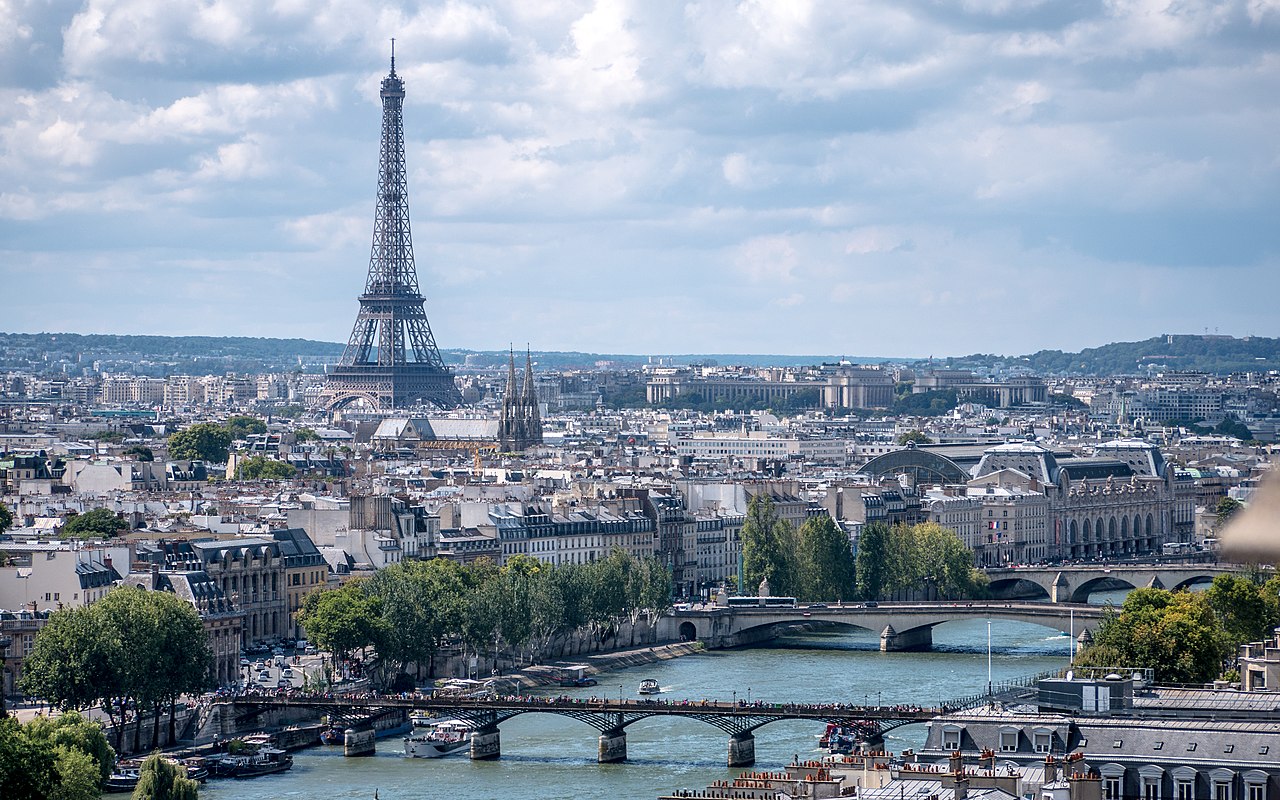
The modernization of Paris under the Second Empire was not an architectural project; it was a financial operation of and questionable legality. While history frequently focuses on the aesthetic regularization of the boulevards, the engine driving this overhaul was a complex, debt-fueled machine managed by Prefect Georges-Eugène Haussmann and the Pereire brothers' Crédit Mobilier. Between 1853 and 1870, the renovation consumed approximately 2. 5 billion gold francs. To contextualize this expenditure, the sum represented roughly 45 times the city's annual budget at the start of the works. The financing relied on the theory of "productive expenditure," a belief that the public improvements would generate enough new tax revenue and private investment to pay for themselves. This gamble fundamentally altered the fiscal structure of the capital, load it with liabilities that would long after the fall of Napoleon III.
Haussmann's funding strategy bypassed parliamentary oversight through a system of creative accounting that would eventually lead to his downfall. The Prefect established the Caisse des Travaux de Paris, a special fund designed to manage the cash flow for the expropriations and construction. When direct subsidies from the state and the city's standard revenues proved insufficient, Haussmann resorted to issuing "proxy bonds" (bons de délégation). These instruments were not technically municipal loans, which would have required legislative approval, rather pledge of future payment to contractors. The contractors, in turn, sold these bonds to the Crédit Foncier and Crédit Mobilier. This off-book financing allowed the debt to balloon invisibly. By the late 1860s, the financial became impossible to hide. In 1868, republican politician Jules Ferry published Les Comptes fantastiques d'Haussmann (The Fantastic Accounts of Haussmann), a scathing pamphlet that punned on "fantastic tales" to expose the deficit. Ferry revealed that the city's debt had spiraled to hundreds of millions of francs, forcing a political reckoning that contributed to the collapse of the imperial regime.
The physical toll of this financial speculation was the systematic destruction of the medieval city. The "pickaxe" (la pioche) became the symbol of Haussmann's tenure. Official statistics record the demolition of 19, 722 houses between 1852 and 1870. While 34, 000 new structures were built, the net gain in housing units masked a violent social displacement. The demolitions targeted the most affordable quarters of the city, specifically the central slums that had housed the working poor for centuries. The Île de la Cité, the ancient cradle of Paris, was all cleared. Before 1853, the island was a dense warren of 14, 000 inhabitants living in medieval structures; Haussmann razed the residential streets to build the massive Prefecture of Police and the Hôtel-Dieu, leaving only a fraction of the original population. This was not accidental gentrification a deliberate policy of "strategic embellishment" intended to remove the "dangerous classes" from the center of power.
The human displacement resulting from these works reshaped the demographic geography of the region for the 170 years. Approximately 350, 000 people were uprooted by the renovations. Unable to afford the rents in the new, uniform limestone apartment blocks, which were designed for the bourgeoisie, the working class was forced to migrate to the periphery. This migration created a distinct ring of poverty around the wealthy center. Villages like Belleville, La Villette, and Montmartre, which were outside the city limits until 1860, absorbed the displaced masses. These areas transformed rapidly from rural hamlets into dense, industrial slums. The social stratification that defines modern Paris, with a wealthy, tourist-friendly core surrounded by a working-class ring (and later, the banlieues), was engineered during this period. The "Red Belt" of radical politics that would encircle Paris in the 20th century had its origins in this forced exodus.
To sustain the financial weight of the renovation, the imperial government executed a massive administrative expansion. On January 1, 1860, Paris annexed its immediate suburbs, expanding from 12 to 20 arrondissements. This move was driven largely by fiscal need. By absorbing the rapid growth of the suburban communes, the city captured a larger tax base to service the debt incurred by the works in the center. The area of Paris more than doubled, jumping from 3, 400 hectares to nearly 7, 800 hectares, and the population instantly rose by 400, 000 to reach 1. 6 million. The customs barrier, the Wall of the Farmers-General, was dismantled, and the octroi (tax on goods entering the city) was pushed out to the Thiers Wall. This annexation cemented the city's modern boundaries, which have remained virtually static into 2026, trapping the urban core in a 19th-century administrative footprint.
The economic consequences of Haussmannization are still visible in the real estate market of 2026. The "K-shaped" recovery of the Parisian property market following the interest rate shocks of 2023-2024 demonstrates the enduring value of the Haussmann asset class. In early 2026, apartments in the "golden triangle" and the Haussmannian districts of the 6th, 7th, and 8th arrondissements commanded prices exceeding €14, 000 per square meter, retaining value even as lesser properties in the outer arrondissements faced corrections. The homogenization of the center, criticized in the 1860s for creating a "boring" city of identical facades, has ironically created a hyper-stable investment vehicle for global capital. The social cleansing initiated by the Second Empire has reached its terminal velocity: the center of Paris functions as a luxury preserve, inaccessible to the descendants of the class that built it.
The debt service on the Haussmann works continued to appear in the city's budget well into the 20th century, a testament to the long amortization periods required to cover the 2. 5 billion franc outlay. Even with the massive inflation of the post-WWI era, which wiped out the real value of debts, the fiscal precedent was set. The city became addicted to a model of development that prioritized high-yield real estate and tourism over affordable density. In 2026, the city government continues to grapple with this inheritance, attempting to retrofit social housing into a built environment designed specifically to exclude it. The "museum city" critique, frequently leveled at Paris today, is the direct result of the preservation of Haussmann's facade at the expense of the organic, messy, and affordable city that preceded it.
The infrastructure laid down during this period, the sewers, the aqueducts, and the boulevards, remains the operating system of the city. Haussmann's engineer, Eugène Belgrand, constructed a dual water network and a sewer system that modernized public health, drastically reducing cholera outbreaks. Yet, this sanitation came with a social price tag. The wide avenues were explicitly designed to facilitate the movement of troops and artillery to crush internal rebellions, a function they served during the suppression of the Paris Commune in 1871. The "sanitization" of Paris was as much about political control as it was about hygiene. The wide sightlines that tourists admire in 2026 were originally calculated to prevent the erection of barricades, ensuring that the state could always bring force to bear against its own citizens.
The 1871 Commune: Military Suppression and Casualty Counts
The collapse of the Paris Commune in May 1871 did not resemble a military defeat so much as a systematic biological purge. On May 21, government troops under Marshal Patrice de MacMahon breached the city defenses at the Point-du-Jour gate in the southwest. What followed, known to history as La Semaine Sanglante (The Bloody Week), remains the deadliest spasm of civil violence in Paris since the Revolution of 1789. For seven days, the French Army methodically reconquered the city, street by street, employing tactics that treated the urban fabric as a hostile organism to be cauterized. The suppression was not a restoration of order; it was a demographic intervention designed to excise the "revolutionary virus" from the Parisian working class.
Historical accounts long a death toll of 20, 000 to 30, 000 Communards, a figure popularized by Prosper-Olivier Lissagaray in 1876 and later cemented by Karl Marx. These numbers served as a foundational myth for the European Left, symbolizing the ruthlessness of the bourgeois state. Yet, modern forensic analysis of cemetery records and municipal logs, conducted by historians such as Robert Tombs in the 21st century, suggests a lower no less horrific mortality count. Verified burials and cremation data indicate between 6, 000 and 7, 500 immediate deaths. This revision does not diminish the atrocity; rather, it clarifies the efficiency of the slaughter. Even at the lower estimate, the daily kill rate during Bloody Week exceeded that of most major battles in the subsequent World War. The killing was industrial, utilizing the mitrailleuse, an early machine gun, to conduct summary executions in parks and cemeteries, most notably at the Mur des Fédérés in Père Lachaise, where 147 defenders were lined up against a wall and shot on May 28.
The method of suppression extended far beyond the barricades. General Félix Antoine Appert, the chief of military justice, compiled a massive report in 1875 that provides the most granular data on the judicial aftermath. The Appert Report documents exactly 43, 522 prisoners processed by the Versaillais forces. This cohort represented a significant slice of the city's able-bodied workforce. The prisoners were herded to the Camp of Satory near Versailles, where they lived in open-air mud pits, dying by the hundreds from disease, exposure, and untreated wounds. The sheer volume of detainees overwhelmed the French penal system, necessitating the use of floating prison hulks in Atlantic ports to hold the overflow.
The judicial processing of these 43, 522 captives reveals the class character of the purge. Military tribunals handed down 13, 450 guilty verdicts. While only 95 death sentences were officially passed (and of those in absentia), the state utilized a "dry guillotine" for the remainder: deportation. Between 1872 and 1878, approximately 4, 500 Communards were shipped to the penal colony of New Caledonia in the South Pacific. This forced exodus included key political leaders like Louise Michel and Henri Rochefort, the vast majority were skilled artisans, masons, printers, metalworkers, whose removal stripped Paris of its most radicalized labor elements. The journey alone, undertaken in cages aboard transport ships, served as a secondary culling method.
The demographic impact of the Commune and its suppression is visible in the 1872 census. While the total population of Paris showed a slight nominal increase from 1866 (rising to 1. 85 million), this masked a severe deficit in specific cohorts. The census recorded a "missing" population of approximately 100, 000 workers compared to projections based on pre-war growth rates. This gap resulted from the trifecta of the Prussian Siege (excess mortality of ~42, 000), the casualties of the Civil War, and the mass flight of suspects to London, Geneva, and Brussels. The industrial districts of Belleville and Ménilmontant, the heart of the insurrection, saw their growth trajectories flattened for a decade. The gender imbalance also spiked; the arrest of 1, 054 women, labeled as incendiaries or pétroleuses, and the disproportionate slaughter of young men, skewed the marriage markets and birth rates in working-class arrondissements for a generation.
The physical destruction of the city during the final week further complicated the recovery. As the Versaillais advanced, retreating Communards set fire to strategic and symbolic landmarks, including the Tuileries Palace, the Hôtel de Ville, and the Prefecture of Police. This arson was not nihilistic; it was a tactical attempt to create smoke screens and destroy the centralized records of the police state. The destruction of the Hôtel de Ville incinerated centuries of civil registries, creating a bureaucratic black hole that allowed Communards to assume new identities also erased the legal existence of thousands of victims, rendering them statistically invisible. The reconstruction of these buildings in the 1870s and 1880s became a lucrative engine for the Third Republic's economy, yet the human capital lost in 1871 left a permanent scar on the city's social stratification.
Modern analysis of the suppression emphasizes the bureaucratic nature of the terror. Unlike the chaotic violence of the 1793 Terror, the repression of 1871 was conducted with the cold logic of a modern state. The use of the Appert Report data in 2026 allows historians to map the repression by trade and neighborhood. Shoemakers, construction workers, and metalworkers made up the bulk of the condemned, confirming the Commune as a distinctively artisanal revolt. The refusal of the French government to grant amnesty until 1880 kept the wound open, ensuring that the "specter of the Commune" haunted the Third Republic's political terrain. The return of the exiles in the 1880s did not restore the pre-1871 demographic; the Paris they returned to had been gentrified by the completion of Haussmann's renovations and disciplined by a decade of martial law.
| Category | Count / Estimate | Source / Notes |
|---|---|---|
| Total Prisoners Taken | 43, 522 | General Appert Report (1875) |
| Immediate Deaths (Traditional) | 20, 000 , 30, 000 | Lissagaray (1876); Marx |
| Immediate Deaths (Revised) | 6, 000 , 7, 500 | Robert Tombs (2012); Cemetery Records |
| Executed at Père Lachaise | 147 | Verified summary executions (May 28) |
| Guilty Verdicts | 13, 450 | Military Tribunals |
| Deported to New Caledonia | ~4, 500 | Includes "Simple" and "Fortified" deportation |
| Women Arrested | 1, 054 | Appert Report; "Pétroleuses" myth |
| Children Arrested (< 16) | 651 | Sent to reformatories |
| Missing Population (1872) | ~100, 000 | Census deficit (Dead, imprisoned, fled) |
The legacy of the 1871 suppression is a city that was biologically and politically sterilized. The Versaillais victory ensured that Paris would not become an autonomous socialist municipality would remain under the strict thumb of the national government, a status that until the re-establishment of the office of Mayor of Paris in 1977. The ghosts of the 6, 000 to 30, 000 dead did not; they were paved over, their bones mingling with the limestone foundations of the Belle Époque city that rose, wealthy and nervous, on their graves.
Occupation Logistics and Administrative Collaboration 1940, 1944
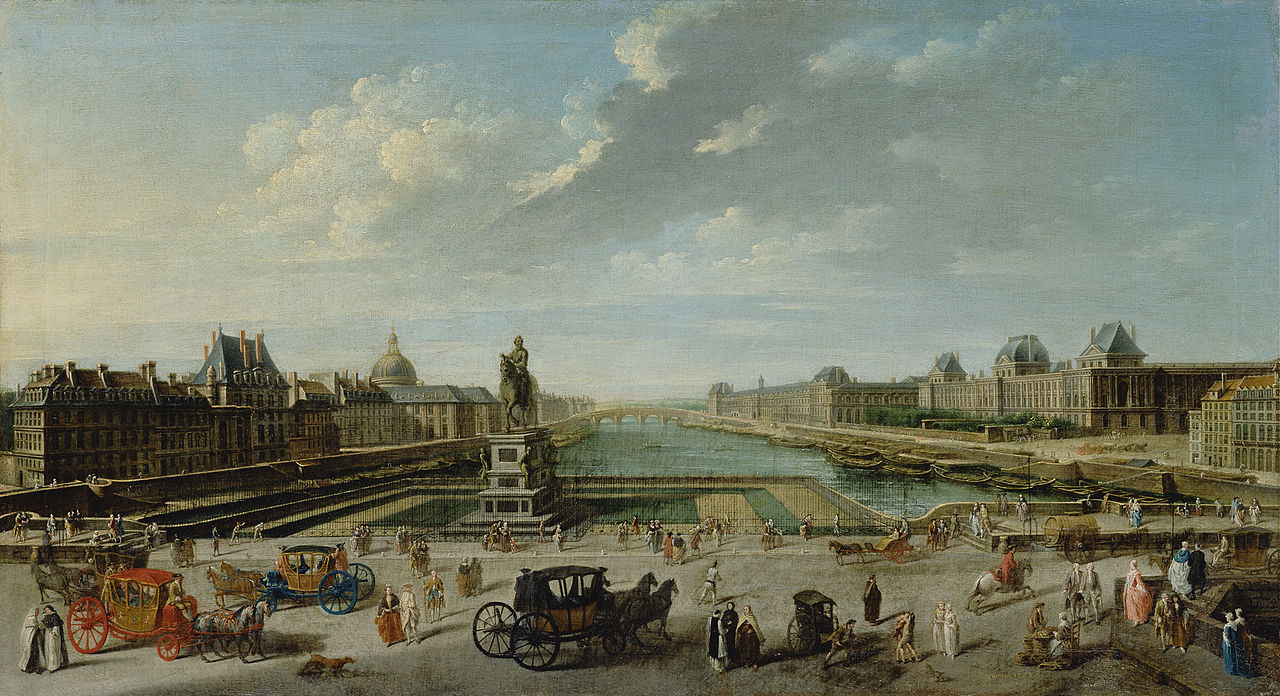
| Venue | German Function | Strategic Role |
|---|---|---|
| Hôtel Majestic | Militärbefehlshaber in Frankreich (MBF) | Central military administration and economic oversight. |
| Hôtel Meurice | Stadtkommandant (Gross-Paris) | Headquarters of the military governor of Paris (e. g., von Choltitz). |
| Hôtel Ritz | Luftwaffe / High Command | Personal quarters for Hermann Göring and senior officers. |
| Hôtel Lutetia | Abwehr (Military Intelligence) | Counter-espionage and interrogation center. |
| Palais Bourbon | German Administration | The National Assembly building used for German offices. |
The efficiency of the occupation relied heavily on the Prefecture of Police, which remained under French command operated under German directives. The police force, numbering approximately 20, 000, provided the manpower the Germans absence. This collaboration proved lethal during the implementation of racial laws. André Tulard, a senior police administrator who had previously created files on communists for the Third Republic, applied his organizational skills to the "Jewish File" (fichier juif). This census registered nearly 150, 000 Jews in the Seine department, classifying them by nationality, profession, and address. These punch-card-ready records, created by French bureaucrats, became the logistical backbone for the roundups. During the Vel' d'Hiv roundup in July 1942, it was the French police, not the SS, who mobilized 9, 000 officers to arrest 13, 152 men, women, and children. The logistical chain extended to the Paris public transport authority, which provided the buses to transport detainees to the Drancy internment camp.
For the average Parisian, logistics were defined by the caloric deficit. The German requisition of French agricultural produce, meat, butter, and wheat, precipitated a severe food emergency. By 1942, the official daily ration for an adult (Category J3) hovered between 1, 100 and 1, 300 calories, well the biological baseline for long-term health. The administration categorized the population into rigid tiers: E (children under 3), J1/J2/J3 (youth), A (adults), T (workers), and C (farmers), each with specific caloric allotments. This scarcity birthed a secondary economic system, the Black Market, where butter could trade for 20 times the official price. The "BOF" (Beurre, Oeuf, Fromage) became a derogatory term for those who profiteered from the hunger of others. Mortality rates rose, particularly among the elderly and, as tuberculosis cases spiked due to malnutrition and the absence of heating coal.
Transport logistics underwent a forced regression. With gasoline strictly reserved for the Wehrmacht and essential services, private cars from the streets. The Paris Métro became the city's circulatory system, seeing ridership swell as it became the only reliable motorized transport. In 1943, the Métro recorded peak usage even with reduced service hours and electricity absence. Above ground, the bicycle became the primary mode of personal transit, with "bicycle taxis" (vélotaxis) replacing cabs. The silence of the streets, broken only by the sound of wooden soles and bicycle chains, marked a distinct auditory shift from the pre-war internal combustion roar.
The economic Aryanization of Paris systematically stripped Jewish owners of their assets. Between 1940 and 1944, authorities seized approximately 50, 000 Jewish-owned businesses in France, the majority in Paris. Provisional administrators (administrateurs provisoires) were appointed to oversee the liquidation or transfer of these enterprises to "Aryan" ownership. This was not random looting a legalized theft, processed through French courts and notaries, generating a paper trail that would complicate restitution efforts for decades after the war. The Galeries Lafayette, for instance, was placed under the administration of a Swiss businessman, while smaller shops in the Marais were simply shuttered or sold off.
As the Allied forces method in August 1944, the administrative collaboration fractured. The police, sensing the geopolitical shift, launched a strike on August 15, followed by an insurrection on August 19. The very force that had enforced the occupation's logistics for four years turned its weapons on the occupiers, seizing the Prefecture of Police near Notre-Dame. This eleventh-hour pivot allowed the police institution to frame itself as a pillar of the Resistance, obscuring the years of logistical support that had enabled the German command to rule Paris with a minimal troop presence.
Post-War Housing Blocks and Suburban Segregation Data
| Metric | Paris (75) | Hauts-de-Seine (92) | Seine-Saint-Denis (93) |
|---|---|---|---|
| Poverty Rate | 15. 8% | 12. 4% | 28. 6% |
| Social Housing Share | 25. 2% | 31. 0% | 39. 8% |
| Median Annual Income | €29, 400 | €32, 100 | €18, 300 |
| Immigrant Population | 20. 1% | 18. 5% | 32. 6% |
The arrival of the Grand Paris Express (GPE) in the mid-2020s introduces a new variable. This automated metro network, with 200 kilometers of new track, is the largest infrastructure project in Europe. It aims to link the suburbs directly, bypassing the center. The hub of this network is Saint-Denis Pleyel. The station, designed by Kengo Kuma, opened in time for the 2024 Olympics. Real estate data from 2020 to 2026 indicates a sharp rise in property values around these new nodes. In Saint-Denis, prices per square meter rose by over 25 percent in the five years preceding the station's opening. This infrastructure brings the threat of displacement. The "gentrification of the periphery" is a measurable trend. As prices in Paris proper remain inaccessible (averaging €9, 500 per square meter in 2025), the middle class is pushed into the *banlieues* served by the GPE. This pressure forces the poorest residents further out, beyond the reach of the new metro lines. The 2024 Olympic Games accelerated this process. The Athletes' Village in Saint-Denis and Saint-Ouen was converted into housing, was sold on the private market. The pledge of "social mixing" frequently to the dilution of the working-class population rather than the elevation of their economic status. The physical legacy of the post-war boom remains the defining visual and social feature of the Parisian periphery. The *grands ensembles* were built to solve a emergency of quantity. They created a emergency of quality that has lasted half a century. The concrete belts of the 1960s successfully housed the population, yet they also successfully segregated it. The current urban strategy attempts to break this isolation through transport and demolition. The success of these measures be judged not by the speed of the new trains, by the convergence of the poverty metrics between the center and the edge. As of 2026, the gap remains a canyon.
Real Estate Inflation and Resident Expulsion 1990, 2026
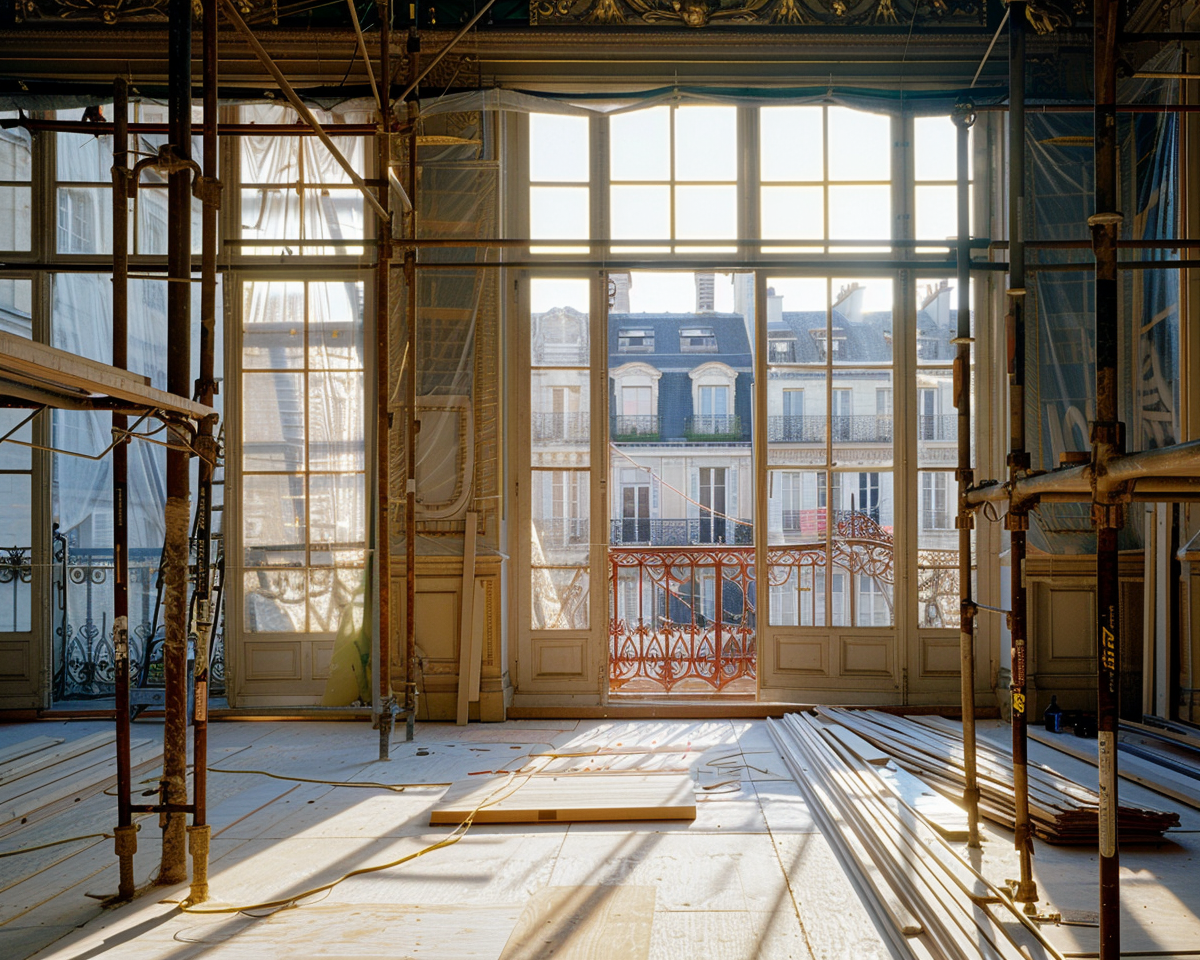
| Year | Avg Price (€/m²) | Population Trend | Key Market Driver |
|---|---|---|---|
| 1990 | ~4, 800 (adj) | Stable | Speculative Peak (Pre-Crash) |
| 1997 | ~2, 900 (adj) | Stable | Market Bottom / Post-Recession |
| 2005 | ~5, 800 | Growth | Credit Expansion / Euro Adoption |
| 2015 | ~8, 000 | Decline Starts | Post-emergency Recovery / Airbnb Entry |
| 2020 | ~10, 700 | Rapid Decline | "Safe Haven" Buying / Supply Crunch |
| 2024 | ~9, 500 | -12k/year | Olympic Speculation / Interest Rate Hike |
| 2026 | ~9, 600 | Continued Loss | Stabilization / Structural Exclusion |
Grand Paris Express: Engineering Delays and Cost Overruns
The Grand Paris Express (GPE) stands as the largest civilian infrastructure project in Europe, a subterranean leviathan designed to rewire the fractured anatomy of the Île-de-France. Yet, by February 2026, the project has become a case study in the collision between political ambition and geological reality. Originally marketed in 2010 with a price tag of €19 billion and a completion target of 2025, the budget has metastasized. The Société des Grands Projets (formerly Société du Grand Paris) manages a financial envelope exceeding €36. 1 billion, with independent estimates from the Cour des Comptes and railway analysts projecting a final cost closer to €42 billion. This fiscal drift, more than doubling the initial estimate, mirrors the debt-fueled expansion of Baron Haussmann in the 1860s, whose annexation of the suburbs load the city with liabilities that took decades to service.
The engineering premise of the GPE represents a radical departure from the construction methods of the original Paris Métro. When Fulgence Bienvenüe oversaw the construction of Line 1 in 1900, the work relied on "cut-and-cover" techniques, ripping up streets like the Rue de Rivoli to lay tracks just meters the surface. This method, while disruptive, allowed for rapid execution; the line opened just two years after works began. In contrast, the GPE requires boring 200 kilometers of tunnels at depths averaging 30 to 50 meters to avoid the labyrinth of existing cellars, catacombs, and utility networks that have accumulated since the 1700s. This depth the use of massive Tunnel Boring Machines (TBMs), which face unpredictable subterranean risks. In the dense urban clay and limestone, these machines have encountered water infiltration and technical failures that Bienvenüe's pickaxe-wielding laborers never faced.
The human cost of this deep-earth construction has been severe. Between 2020 and 2023, five workers died on GPE sites, a mortality rate that drew sharp criticism from labor unions and safety inspectors. Victims like Seydou Fofana and Maxime Wagner were killed in accidents involving heavy and falling debris, prompting brief work stoppages no reduction in the project's frantic pace. The pressure to deliver infrastructure before the 2024 Olympic Games created a hazardous acceleration, yet the deadline was largely missed. While the extension of Line 14 successfully opened in June 2024 to connect Orly Airport to Saint-Denis Pleyel, the core orbital lines, 15, 16, and 17, remained unfinished, leaving the "Olympic transport legacy" largely theoretical during the games themselves.
As of early 2026, the status of Line 15 South, the "super-metro" ring meant to decongest the saturated RER lines, remains a source of administrative tension. Originally slated for 2020, then 2024, the opening has slipped to late 2026. The Société des Grands Projets attributes these delays to "complex technical adjustments" in the automatic train control systems. Unlike the manual trains of the 20th century, these driverless units require months of "dry runs" to ensure safety certification. The delay of Line 15 South triggers a domino effect, pushing the commissioning of Lines 16 and 17 into 2027 and 2028. This postponement leaves the dense, working-class suburbs of Val-de-Marne and Seine-Saint-Denis waiting for the transit equity promised to them nearly two decades prior.
| Line Segment | Original Target (2010) | Revised Target (2024) | Current Status (2026) |
|---|---|---|---|
| Line 14 Extension (South) | 2024 | June 2024 | Operational (Opened June 2024) |
| Line 15 South | 2020 | Late 2025 | Delayed (Target: Q4 2026) |
| Line 16 (Saint-Denis, Clichy) | 2023 | Late 2026 | Delayed (Target: Mid-2027) |
| Line 18 (Massy, Saclay) | 2024 | October 2026 | Imminent (Testing phase active) |
Line 18 presents a different category of conflict, shifting from urban density to agricultural preservation. Designed to link Orly Airport to Versailles via the Saclay plateau, this line has faced fierce opposition for cutting through of the last remaining fertile farmland near Paris. Critics that Line 18 is a "developer's metro," built not to serve existing populations to stimulate the urbanization of the Saclay scientific cluster. In February 2026, the section between Massy-Palaiseau and Christ de Saclay is in its final testing phase, with an opening scheduled for October. This aerial section, running on a viaduct, disrupts the visual of the plateau, a clear contrast to the invisible tunnels of the inner suburbs. The completion of this segment marks the tangible delivery of a new GPE line, yet it serves a low-density area compared to the overcrowded banlieues awaiting Line 15.
The financial architecture of the project relies on a specific tax model, levying duties on office space and parking surfaces in the Île-de-France region. yet, the ballooning costs have forced the state to intervene, raising questions about the long-term debt servicing capacity of the Société des Grands Projets. In 2026, the debt trajectory is steep, with repayment schedules extending well into the 2070s. This generational debt mirrors the financial structures used to rebuild Paris after the Commune in 1871, where the city mortgaged its future to restore order and infrastructure. The difference lies in the utility; where Haussmann's boulevards served military and aesthetic purposes, the GPE is a functional need to prevent the asphyxiation of a metropolis that has outgrown its 19th-century radial transport skeleton.
Technical failures have also plagued the excavation process. The geology of the Paris Basin, while stable in the center, becomes treacherous in the periphery. In Clamart and Villejuif, TBMs have stalled due to unexpected pockets of loose sand and water ingress, requiring freezing techniques (ground freezing) to stabilize the soil before boring could resume. These incidents, while solvable, add months to the schedule and millions to the budget. The complexity of building deep underground stations, resembling "inverted cathedrals" plunging 30 meters down, requires excavating volumes of earth that dwarf the construction of the Louvre Pyramid. The logistics of removing this spoil, millions of tons of earth, via the Seine river barges has been one of the few logistical successes, reducing truck traffic on the surface.
The disconnect between the 2024 Olympic deadline and the 2026 reality exposes the friction between political time and industrial time. Politicians demanded a metro system ready for a three-week sporting event; engineers are delivering a system built to last a century, indifferent to election pattern. The partial failure to meet the Olympic deadline has faded from public discourse, replaced by the daily frustration of commuters on the RER B, who watch the construction sites of the GPE with a mix of skepticism and desperation. The project remains a race against demographic saturation, an attempt to retrofit a 21st-century nervous system onto a body politic defined by 18th-century borders and 20th-century zoning errors.
2024 Olympics: Financial Returns and Security Apparatus
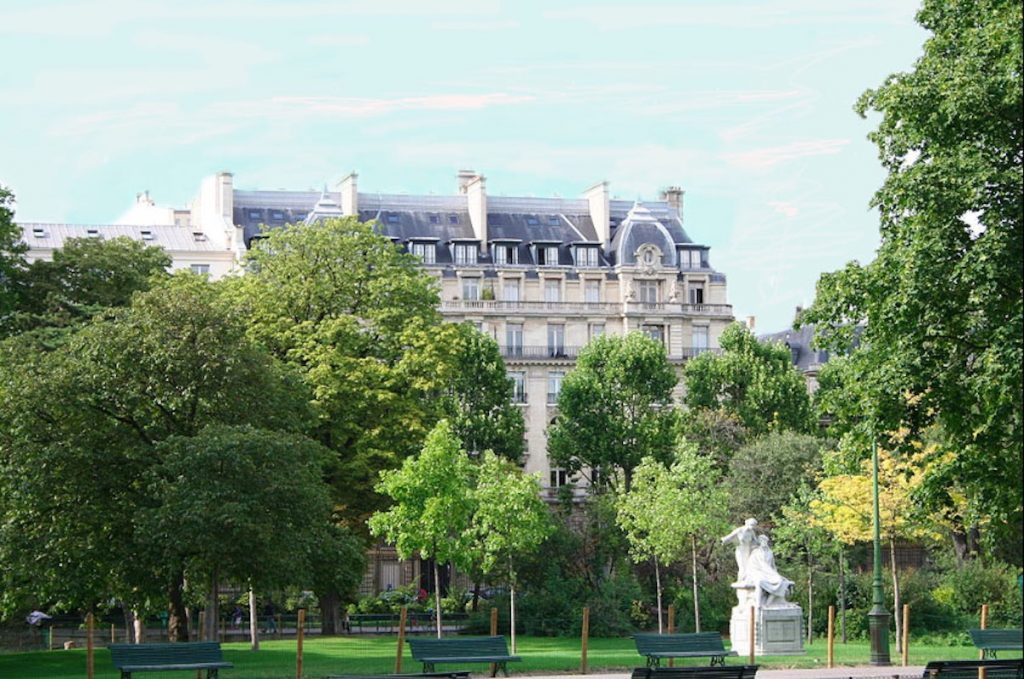
| Category | Metric / Cost | Outcome / Impact |
|---|---|---|
| Total Public Cost | €6. 6 Billion+ | Triple the initial €1bn estimate; heavy taxpayer load. |
| Security Spending | €1. 44 Billion | Single largest state expense; funded 35, 000 daily police. |
| Surveillance | Algorithmic Video (VSA) | Legalized "experiment" extended beyond 2025; permanent AI monitoring. |
| Social Displacement | 12, 500+ People Removed | Homeless and migrants bussed to regions to "clean" streets. |
| Tourism Impact | -1. 7% Overnight Stays | "Eviction effect" deterred regular tourists; museum visits dropped 16%. |
Seine Sanitation Infrastructure and Pollution Levels
The sanitary history of the Seine is a chronicle of urban negligence, industrial toxicity, and a belated, expensive attempt at ecological resurrection. For three centuries, the river served simultaneously as the primary reservoir for drinking water and the principal chute for human excrement. This dual function created a biological feedback loop that defined Parisian mortality rates until the late 19th century. In 1700, the Seine was already a biological hazard, yet the sensory perception of the era failed to identify the invisible microbial threats. Residents drank water drawn directly from the riverbanks where dyers, tanners, and butchers dumped their refuse. The consequences were quantifiable and catastrophic. The cholera epidemic of 1832, which killed over 18, 000 Parisians, was directly amplified by the consumption of water laced with fecal matter. The city functioned as a closed loop of infection.
Engineering intervention arrived in the mid-19th century, driven not by environmentalism by survival. Under the direction of Baron Haussmann and engineer Eugène Belgrand, Paris constructed a sewer system that remains the backbone of modern sanitation. In 1800, the city possessed a mere 25 kilometers of underground drains. By 1878, Belgrand had expanded this network to 600 kilometers. This infrastructure segregated drinking water from non-potable cleaning water, a distinction that saved thousands of lives. The 1894 decree mandating tout-à-l'égout (everything to the sewer) forced building owners to connect their waste pipes directly to the underground network. This decision ended the medieval practice of street-side dumping, yet it shifted the pollution load from the cobblestones to the river discharge points downstream.
The 20th century marked the chemical asphyxiation of the Seine. As industrial activity surged in the suburbs, the river became a repository for heavy metals and synthetic compounds. In 1923, the Prefecture of Police issued a formal ban on swimming in the Seine, citing "dangers caused by river navigation and pollution." This prohibition remained in force for 102 years. The ecological nadir arrived between 1960 and 1970. During this decade, oxygen levels in the river frequently dropped to near zero, creating zones of anoxia where aquatic life could not respire. Biological surveys from 1970 recorded only three surviving species of fish in the urban section of the river. Sediment cores from this era reveal cadmium concentrations reaching 130 mg/kg and mercury levels at 26 mg/kg, figures that exceed modern safety thresholds by orders of magnitude.
Political pledge to reclaim the river began in 1990, when then-Mayor Jacques Chirac pledged to swim in the Seine within three years. He never did. The actual remediation work required legal force rather than rhetoric. The EU Water Framework Directive (2000) compelled member states to achieve "good ecological status" for their waterways. Paris responded with a multi-decade strategy focused on modernizing wastewater treatment plants like Seine Aval and Seine Centre. These facilities introduced nitrification and denitrification processes to remove ammonia and nitrogen, nutrients that had previously triggered algal blooms and oxygen depletion. By 2015, the chemical profile of the water had improved, the bacteriological load remained a persistent threat.
The bid for the 2024 Olympic Games forced the city to confront the final hurdle: fecal bacteria. The "Swimming Plan" (Plan Baignade) mobilized €1. 4 billion to address the structural flaw of the 19th-century system. Belgrand's sewers were "combined," meaning rainwater and wastewater shared the same pipes. During heavy storms, the volume exceeded the capacity of the treatment plants, forcing valves to open and discharge untreated sewage directly into the Seine. To mitigate this, engineers constructed the Bassin d'Austerlitz, a massive underground reservoir capable of holding 50, 000 cubic meters of storm runoff, equivalent to twenty Olympic swimming pools. This tank, inaugurated in May 2024, captures the initial, most polluted flush of rainwater and holds it until the treatment plants have capacity.
The summer of 2024 exposed the fragility of this engineered solution. even with the infrastructure, heavy rains in June and July caused repeated spikes in Escherichia coli and intestinal enterococci. World Triathlon standards mandate E. coli levels 900 colony-forming units (CFU) per 100 milliliters for "good" quality. On days following storms, readings at the Pont Alexandre III frequently exceeded 2, 000 CFU/100ml. Independent testing by Fluidion revealed that "detailed" bacterial counts, which include bacteria attached to sediment particles, were frequently significantly higher than the standard "planktonic" counts used by organizers. The men's triathlon was postponed, and training sessions were cancelled, proving that nature still dictated the schedule.
| Metric | 1970 (Industrial Nadir) | 2024 (Olympic emergency) | 2026 (Post-Remediation) |
|---|---|---|---|
| Fish Species Count | 3 | 32 | 38 |
| Dissolved Oxygen | <2 mg/L (serious) | > 6 mg/L (Good) | > 7 mg/L (Stable) |
| E. coli (Dry Weather) | > 20, 000 CFU/100ml | <900 CFU/100ml | <500 CFU/100ml |
| Cadmium in Sediment | 130 mg/kg | 1. 8 mg/kg | 1. 5 mg/kg |
| Swimming Status | Banned (Since 1923) | Restricted (Athletes Only) | Public (3 Sites Open) |
By 2025 and 2026, the legacy of the Olympic investment began to materialize for the public. The ban enacted in 1923 was lifted, allowing residents to access three permanent swimming sites: Bras Marie near the Île Saint-Louis, Bras de Grenelle, and a site at Bercy. Data from the 2025 summer season indicates that the water quality remains safe for swimming approximately 80% of the time. The remaining 20% corresponds to periods immediately following heavy rainfall, where the "stop-go" system remains in effect. When the Austerlitz basin fills, the overflow valves still release a mixture of rain and sewage, necessitating temporary closures of the bathing zones. This is the new normal: a swimmable river that requires a weather forecast check before entry.
The biological recovery of the Seine is statistically verifiable. The return of 38 fish species, including sensitive indicators like the Atlantic salmon and the European eel, demonstrates that the chronic chemical toxicity has abated. The river is no longer a dead zone. Yet, the presence of these species coexists with the modern reality of urban runoff. While heavy metals have decreased, new micropollutants such as pharmaceuticals and microplastics present an emerging challenge that current treatment plants are only beginning to address. The Seine is cleaner than it has been since the reign of Louis XIV, it remains an urban waterway, subject to the metabolic waste of the ten million people living in its catchment area.
Urban Heat Island Intensity and Mortality Rates

Paris is the deadliest city in Europe for heat-related mortality among the elderly. This specific vulnerability is not a matter of latitude of geology, architecture, and density. A 2023 study published in The Lancet Planetary Health analyzed 854 cities across the continent and placed the French capital at the top of the risk hierarchy for residents over 85 years old. The data shows that when temperatures rise above the seasonal norm, mortality in Paris spikes by a factor of 1. 6, a rate significantly higher than in London, Rome, or Madrid. The city functions as a thermal canyon, where the very materials that define its aesthetic, limestone facades, zinc roofs, and asphalt arteries, conspire to trap solar radiation and prevent nocturnal cooling.
The Urban Heat Island (UHI) effect in Paris is measurable and severe. Meteorological data from the 2003 and 2019 heatwaves record temperature differentials of up to 10°C (18°F) between the city center and the rural periphery of Île-de-France during night hours. While the countryside cools after sunset, the stone mass of Paris releases stored heat, keeping minimum temperatures above 25°C (77°F). This nocturnal thermal stress prevents the human body from recovering, leading to cardiovascular failure. The density of the city, which exceeds 20, 000 inhabitants per square kilometer, means this heat trap affects a massive population concentrated in a small geographic footprint.
Historical records indicate that heat has been a mass killer in Paris for over three centuries, though the method of mortality have shifted from famine and dysentery to direct thermal exhaustion. The "Great Heat" of 1719 remains the most catastrophic event in the city's thermal history. During that summer, temperatures stayed abnormally high for months, turning the Paris basin into a dry, arid zone comparable to the Sahara. Chronicles from the era describe swarms of locusts descending on the region. The heat, combined with a dysentery epidemic exacerbated by low water levels in the Seine, resulted in approximately 450, 000 to 700, 000 excess deaths across France. In Paris, the death toll was so high that burial grounds overflowed, and the dense medieval streets trapped the heat and the stench of decay, creating a feedback loop of disease and misery.
The architectural transformation of the 19th century, led by Baron Haussmann, inadvertently engineered the city for future thermal retention. While the wide boulevards allowed for airflow, the standardization of zinc roofing created a serious long-term problem. Zinc covers approximately 80% of Parisian roofs today. It is lightweight, durable, and aesthetically iconic, yet it has high thermal conductivity. On a clear summer day with an ambient temperature of 35°C (95°F), the surface temperature of a zinc roof can reach 90°C (194°F). The attic rooms beneath these roofs, known as chambres de bonne, were historically used for servants and are frequently rented to students or low-income workers. These spaces become ovens during heatwaves, with internal temperatures frequently exceeding 40°C (104°F) even at night.
The heatwave of 1911 provided a grim preview of modern mortality patterns. Lasting for 70 days, this event killed more than 40, 000 people in France. In Paris, the mortality was driven by a combination of direct heat stress and the spoilage of milk, which led to a massive spike in infant mortality due to gastroenteritis. The city ran out of ice, and water supplies dwindled. Unlike 1719, where famine was the primary driver, 1911 demonstrated how urban infrastructure could fail under thermal stress. The heat caused the asphalt, then a newer material, to soften, and the absence of refrigeration turned the food supply chain into a vector for death.
The turning point for modern awareness occurred in August 2003. A blocking high-pressure system parked over Western Europe, resulting in the deadliest heatwave in modern French history. In the three weeks of August, France recorded 15, 000 excess deaths. Paris was the epicenter. The excess mortality rate in the city jumped by 141% compared to the seasonal average, and in central arrondissements, it reached 190%. A distinct feature of the 2003 catastrophe was the location of death: 74% of victims in Paris died in their homes, not in hospitals. were elderly residents living in isolation on the upper floors of Haussmann buildings, directly beneath the zinc roofs. The UHI intensity prevented the city from cooling 25. 5°C at night for nearly two weeks, pushing the physiological limits of the population.
| Year | Event Duration | Est. Excess Mortality (National/Regional) | Primary Mortality Driver | Key Thermal Factor |
|---|---|---|---|---|
| 1719 | June, September | 700, 000 (France) | Dysentery, Dehydration | Medieval density, water contamination |
| 1911 | 70 Days | 40, 000+ (France) | Infant Gastroenteritis | Food spoilage, absence of refrigeration |
| 2003 | Aug 1, 20 | 15, 000 (France) | Hyperthermia, Cardiovascular | Zinc roofs, night temps > 25°C |
| 2019 | June & July | 1, 500 (France) | Heat Stroke | Record temp 42. 6°C (108. 7°F) |
| 2022 | June, Sept | 2, 816 (Heatwaves only) | Heat Stress | Repeated waves, cumulative stress |
Following 2003, the city implemented the CHALEX (Heat and Health) plan, yet the physical reality of the city remains resistant to quick fixes. The heatwave of 2019 shattered temperature records, with the station at Parc Montsouris recording 42. 6°C (108. 7°F) on July 25. While the death toll was lower than in 2003 due to better emergency response and communication, the thermal intensity was higher. The UHI effect has not diminished; rather, it has been reinforced by the continued loss of permeable ground. Paris remains one of the least vegetated capitals in Europe, with only 10% of its surface area covered by canopy, compared to nearly 33% in London.
The summer of 2022 confirmed that heatwaves are no longer decadal anomalies annual certainties. Météo-France recorded three separate heatwaves that summer, resulting in 2, 816 excess deaths directly attributed to the heat spikes, and over 10, 000 excess deaths from all causes during the summer period. The repetition of these events degrades the health of the population, as the body has no time to recover between spikes. The 2024 Olympic Games brought this matter to a global stage. Organizers monitored Wet Bulb Globe Temperature (WBGT) to protect athletes, yet the residents of Paris faced the same stone-and-zinc furnace as in previous years. even with claims of the "greenest games," the structural changes to the city's thermal profile were minimal in the short term.
By 2026, the municipal government's "Bioclimatic" Local Urban Plan (PLU) aims to address these lethal physics. The plan mandates the removal of asphalt from schoolyards (the "Oasis" project) and requires new constructions to use bio-sourced materials rather than concrete. Yet, the legacy of the 19th century remains the dominant factor. The zinc roofs are protected as heritage, making their removal or insulation legally and technically difficult. The conflict between preserving the historic aesthetic of Paris and adapting it for survival in a 40°C+ climate defines the current urban planning emergency. Until the stone city can be cooled, the mortality metrics continue to show that Paris is a dangerous place to be old and poor during the summer.
Tourism Saturation and Municipal Resource Allocation
The evolution of Paris from a destination for the aristocratic "Grand Tour" to a node of industrial- mass tourism represents a fundamental shift in the city's metabolic function. In the early 18th century, the visitor economy was negligible municipal resource consumption; the wealthy traveler brought their own retinue and gold, extracting little from the public purse. By 2026, the has inverted. The tourist is a heavy consumer of subsidized infrastructure, water, security, waste management, and transport, frequently paying a fraction of the true cost through direct taxation. This transition from elite engagement to volume processing has forced the municipality to re-engineer the city not as a habitat for residents, as a high-throughput processing facility for transients.
The pivot point for this transformation was not the advent of the jet age, the Universal Expositions of the late 19th century. The Exposition Universelle of 1900 remains the statistical outlier that defined the modern era. Between April and November 1900, Paris recorded approximately 50. 8 million entries, a figure that exceeds the entire population of France at the time (41 million). This influx necessitated infrastructure projects that would define the city for the century. The Paris Métro, specifically Line 1, was not built primarily to ease the commute of the Parisian worker, to shuttle visitors between the exhibition sites at Vincennes and the Champs-Élysées. The Gare de Lyon and the Gare d'Orsay ( a museum) were constructed to process this human. In 1900, the municipality accepted a massive financial deficit on the event itself, rationalizing the loss as a capital investment in global prestige and permanent infrastructure. This logic, public debt for private revenue, became the template for the 2024 Olympic Games.
By the early 21st century, the "Museum City" model had begun to cannibalize the living city. The saturation reached a serious threshold in 2019, with Greater Paris welcoming nearly 50 million visitors, and resumed with ferocity following the pandemic. The 2024 Olympic Games served as a stress test for this system, revealing the clear between revenue generation and operational costs. While the tourism sector generated a record €71 billion in 2024, the costs borne by the state and municipality were. A June 2025 report by the Court of Auditors revealed that security alone for the 2024 Games cost the public purse €1. 44 billion. This expenditure functioned as a state subsidy to the hospitality and airline industries, as the tax revenue from visitors did not fully offset the mobilization of 30, 000 police officers and gendarmes required to secure the event.
The post-2024 era, specifically the regulatory of 2025 and 2026, has been defined by a municipal counter-offensive against the "Airbnb-ification" of the capital. The proliferation of short-term rentals had, by 2023, removed approximately 25, 000 to 30, 000 units from the long-term housing market, hollowing out historic districts like the Marais (4th arrondissement). The response was the "Le Meur" law and subsequent municipal decrees taking effect in January 2025. These measures reduced the cap on renting primary residences from 120 days to 90 days per year and introduced a ban on renting properties with poor energy ratings (DPE G-rated units). By February 2026, the creation of a national registration system mandated for May 2026 signaled the end of the unregulated "gold rush" for property investors. The municipality's intent is clear: to reclaim housing stock for residents, even if it throttles the capacity for budget tourism.
Resource allocation metrics expose the hidden physical toll of the visitor economy. Water consumption data from 2010 to 2025 indicates a sharp between resident and tourist usage patterns. While the average Parisian resident consumes approximately 150 liters of water per day, a tourist in a hotel setting consumes closer to 300 liters, driven by daily laundering of linens, high-flow showers, and dining operations. In a city where water is sourced from a complex mix of aquifers and treated river water (Seine and Marne), this doubled demand during peak summer months places severe on the potable water grid. The 2026 municipal budget reflects this, allocating increased funds for water purification and sewage treatment, costs that are only partially recouped through the taxe de séjour (tourist tax).
Waste management presents an equally acute logistical challenge. The average Parisian produces roughly 485kg of waste annually, the tourist footprint is denser and more difficult to collect. The trash emergency of March 2023, where 7, 500 tonnes of refuse rotted on the streets during pension reform strikes, highlighted the system's fragility. yet, the daily reality is a constant battle against volume. The 30, 000 public bins installed by 2024 require a collection frequency in tourist zones (Eiffel Tower, Montmartre) that is triple that of residential neighborhoods. The 2025 municipal budget was forced to absorb a deficit partly attributed to these operational demands, with opposition critics noting a €120 million "hole" in the previous year's administrative accounts. The city is cleaning up after a party where the guests have already left.
| Metric | 1900 (Exposition Universelle) | 2024 (Olympic Year) | 2026 (Post-Olympic Reality) |
|---|---|---|---|
| Visitor Volume | 50. 8 Million (Entries, Apr-Nov) | ~52 Million (Annual) | ~50 Million (Projected) |
| Security Model | Municipal Police / Military Parades | 30, 000 Police/Gendarmes + AI Surveillance | High-Density Patrols (Sentinelle) |
| Security Cost | Part of Expo Budget | €1. 44 Billion (State Funded) | ~€350 Million (Est. Annual Allocation) |
| Housing Impact | Hotel Construction Boom | Short-Term Rental Saturation | Strict 90-Day Cap / Energy Bans |
| Water Usage | Minimal (Low hygiene standards) | ~300 Liters/Tourist/Day | ~300 Liters/Tourist/Day |
| Primary Transport | Horse, Omnibus, New Metro Line 1 | Metro, RER, Uber/Taxi | Metro (Grand Paris Express), pattern Lanes |
The financial method designed to offset these costs, the taxe de séjour, was aggressively hiked in 2024, with rates for palace hotels reaching nearly €15 per night. Yet, this revenue stream is insufficient to cover the "shadow costs" of tourism: the accelerated wear on public transit, the policing of pickpocket rings targeting foreigners, and the displacement of local commerce by souvenir shops. The 2026 budget debates in the Hôtel de Ville center on this gap. The city is caught in a paradox: it requires the €70+ billion in tourism revenue to function, yet the physical presence of 50 million visitors the very infrastructure and "Parisian atmosphere" that is being sold. The "Nouvelle Renaissance" plan for the Louvre, attempting to cap daily visitors, is an admission that the facility has reached physical capacity.
Security remains the most volatile variable in the resource equation. The militarization of Parisian tourist sites, normalized since the 2015 attacks, was cemented by the 2024 Games. The visual presence of Operation Sentinelle soldiers patrolling the Galeries Lafayette or the forecourt of Notre Dame (reopened Dec 2024) represents a permanent diversion of national defense resources into what is essentially private security for the tourism industry. The 2025/2026 budgets show no sign of this receding; rather, the cost of securing the "global brand" of Paris has become a fixed line item, as essential as electricity or road maintenance. The city has become a that sells tickets to its own ramparts.
Policing Methods and Riot Statistics 2005, 2026
The policing of Paris is not a matter of law enforcement; it is a centuries-old exercise in political containment. Since the creation of the Lieutenancy General of Police by Louis XIV in 1667, the Parisian apparatus has prioritized the security of the state over the safety of the individual. This doctrine, solidified by Napoleon's establishment of the Prefecture of Police in 1800, treats the street not as a public forum as a battlefield where order must be imposed, frequently preemptively. By 2026, this historical lineage had evolved into a high-tech surveillance grid, yet the core tactic remained unchanged: the physical domination of urban space.
The modern era of Parisian riot control began in earnest on October 27, 2005. The deaths of Zyed Benna and Bouna Traoré, two teenagers electrocuted in a Clichy-sous-Bois substation while fleeing police, ignited a conflagration that the state was ill-equipped to handle. For three weeks, the banlieues burned. The police response was defined by a strategy of containment rather than de-escalation. Officers from the CRS (Compagnies Républicaines de Sécurité) and the BAC (Anti-Criminality Brigades) relied on tear gas and flash-balls to keep rioters at bay, their inability to enter the labyrinthine housing projects allowed the unrest to metastasize. The statistics from 2005 were a wake-up call for the Ministry of the Interior: over 9, 000 vehicles incinerated and nearly 3, 000 arrests made. The financial toll exceeded €200 million, yet the political cost was higher, the myth of a Republic had been shattered.
In the decade that followed, the Prefecture of Police hardened its arsenal. The introduction of the LBD-40 (Launcher of Defense Balls) marked a shift toward "less-lethal" weaponry that could nonetheless inflict permanent maiming. By the time the Yellow Vest (Gilets Jaunes) movement erupted in late 2018, the doctrine had shifted from static containment to aggressive contact. The Saturday protests transformed the wealthy avenues of western Paris into open-air conflict zones. Police tactics became indiscriminate. The controversial "nasse" (kettling) technique trapped peaceful protesters alongside violent agitators, subjecting all to saturation levels of tear gas. The casualty figures were: between November 2018 and June 2019, independent inquiries documented that 24 protesters lost an eye and five lost a hand due to police munitions. The Inspectorate General of the National Police (IGPN) opened hundreds of investigations, yet few resulted in criminal convictions, reinforcing a culture of impunity.
The most significant tactical regression during this period was the resurrection of motorized shock units. In March 2019, Prefect Didier Lallement established the BRAV-M (Motorized Brigades for the Repression of Violent Action). These units, operating in pairs on motorcycles, were designed to shatter the fluidity of mobile riot groups. Their operational model directly echoed the Voltigeurs, a motorcycle unit disbanded in 1986 after beating student Malik Oussekine to death. The return of such tactics signaled a refusal to negotiate with the street. BRAV-M officers, frequently unidentifiable and highly mobile, became the symbol of a police force that viewed the population as a hostile entity. By 2023, their aggressive interventions were a primary grievance in every major demonstration.
The riots of June and July 2023, triggered by the police shooting of 17-year-old Nahel Merzouk in Nanterre, demonstrated how the velocity of unrest had outpaced traditional policing. Unlike 2005, which took days to spread, the 2023 riots exploded nationwide within hours, coordinated via Snapchat and TikTok. The intensity of the violence shocked the state apparatus. In just one week, the destruction surpassed the three-week toll of 2005. Over 12, 000 vehicles were burned, and more than 1, 000 buildings were damaged or looted. The cost to insurers and the state vaulted past €650 million, with estimates reaching €1 billion. The police mobilization was: 45, 000 officers were deployed nightly, supported by RAID and GIGN tactical units and armored vehicles previously reserved for counter-terrorism.
The following table compares the statistical footprint of these three major periods of unrest, revealing the escalation in both damage and state response.
| Metric | 2005 Riots (Clichy-sous-Bois) | Yellow Vests (2018, 2019) | 2023 Riots (Nahel Merzouk) |
|---|---|---|---|
| Duration | ~21 Days | ~60 Weeks (Saturdays) | ~8 Days (Intense Phase) |
| Arrests | 2, 888 | 10, 000+ (over total period) | 3, 500+ |
| Vehicles Burned | ~9, 000 | Variable (Targeted Arson) | ~12, 000 |
| Police/Gendarme Injuries | ~126 | ~1, 900 | ~800+ |
| Estimated Cost | €200 Million | €250 Million (Business Loss) | €650 Million , €1 Billion |
| Primary Tactic | Static Containment | LBD-40 / Kettling | Mass Deployment / BRAV-M |
The 2024 Olympic Games served as the laboratory for the phase of Parisian policing: the algorithmic turn. Under the cover of "exceptional security," the French government passed Article 7 of the Law of May 19, 2023, legalizing the use of Algorithmic Video Surveillance (VSA). For the time in the European Union, AI software was permitted to analyze live feeds from thousands of CCTV cameras and drones to detect "abnormal events" such as crowd surges or abandoned objects. While officials promised this was a temporary experiment set to expire in March 2025, the infrastructure remained. By 2026, the "experiment" had quietly become the standard. The integration of VSA into the Parisian urban fabric meant that the policing of behavior no longer required a physical officer on every corner; the city itself had become the watchman.
This technological shift did not replace the physical violence of the baton augmented it. The data gathered by VSA systems allowed for "predictive policing," directing BRAV-M units to intercept gatherings before they could coalesce. The result was a chilling effect on public assembly. The spontaneity that characterized the uprisings of 1789, 1871, and 1968 was systematically engineered out of the city's DNA. In 2026, a protest in Paris is no longer a chaotic eruption of grievances a choreographed interaction between a surveillance state and a contained populace. The Prefecture of Police, operating from its on the Île de la Cité, had achieved what Louis XIV's lieutenants could only dream of: a city where every movement is observed, categorized, and, if necessary, neutralized before it can become a threat.