Verified Against Public And Audited RecordsLast Updated On: 2026-02-25
Reading time: ~55 min
File ID: EHGN-PLACE-32605
Investigative Bio of Peace Palace
History of the Zorgvliet Estate (1640, 1903)
The origins of the Peace Palace site lie in the sandy dunes between The Hague and Scheveningen, a terrain originally deemed hostile to cultivation. In 1643, Jacob Cats, a prominent Dutch poet and the Grand Pensionary of Holland, acquired this land. He named the estate "Sorghvliet," translating to "Flight from Care," intending it as a retreat from the political machinations of the Binnenhof. Cats did not build a residence; he engineered the environment. He drained the marshy hollows and planted thousands of trees, imposing order on the wild dunes. The original house, known as the Catshuis, served as the focal point of a sprawling domain that would shift hands between the most families in Europe for three centuries.
Following Cats' death in 1660, the estate passed to his daughter and subsequently to Hans Willem Bentinck in 1675. Bentinck, the 1st Earl of Portland and a close confidant of William of Orange (later King William III of England), transformed Zorgvliet into a symbol of status and diplomatic power. Under Bentinck's stewardship, the grounds were expanded and formalized. He introduced the rigid, geometric garden styles popular in France, utilizing the estate to host international envoys and royalty. The gardens at Zorgvliet were not passive decorations; they were active instruments of statecraft, designed to demonstrate Dutch mastery over nature and, by extension, the political stability of the Republic.
The estate remained in the Bentinck family until the early 19th century, by which time the formal gardens had fallen into disrepair, replaced by the wilder, English style. In 1837, the future King William II purchased Zorgvliet. Upon his death, ownership transferred to his widow, Anna Paulowna, the daughter of Tsar Paul I of Russia. Anna Paulowna maintained the estate as a royal residence, infusing it with the immense wealth of the Romanov dynasty. She resided primarily at the Buitenrust palace, a manor located within the estate's perimeter. During her tenure, the property functioned as a private enclave for the Dutch royal family, shielding them from the expanding urban footprint of The Hague.
The death of Anna Paulowna in 1865 and the subsequent passing of her daughter, Grand Duchess Sophie, in 1897, marked the end of the royal era for Zorgvliet. The estate, once a unified political asset, became the target of aggressive real estate speculation. In 1895, the land was sold to a consortium of developers, the "Maatschappij Het Park Zorgvliet," led by the entrepreneur Adriaan Goekoop. This group intended to fracture the historic grounds into an exclusive villa park for The Hague's growing elite. They drafted plans for high-end residential streets, threatening to obliterate the open spaces that Jacob Cats had established two centuries prior.
A serious legal restriction complicated the developers' ambitions. The 1895 sale deed contained a servitude, a binding clause, that prohibited any construction on the Zorgvliet grounds for fifteen years, until July 1910. This clause was inserted to preserve the view and privacy of the remaining royal inhabitants in the vicinity. Consequently, the developers found themselves in possession of a massive, valuable tract of land they could not immediately monetize. The estate sat in a state of suspended animation, maintained as a park earmarked for eventual destruction.
The trajectory of the estate shifted violently in 1903. The Permanent Court of Arbitration, established by the Hague Peace Conference of 1899, absence a permanent headquarters. It operated out of provisional offices at Prinsegracht 71, a situation deemed undignified for a body intended to replace war with justice. The American diplomat Andrew Dickson White and the Russian jurist Friedrich Martens lobbied the steel magnate Andrew Carnegie to fund a dedicated structure. Carnegie, initially hesitant, agreed in April 1903 to donate $1. 5 million (approximately 3. 7 million guilders) for the construction of a "Temple of Peace."
This donation triggered an immediate search for a suitable location. The Dutch government, tasked with providing the land, examined several sites, including the Malieveld and the Scheveningse Bosjes. Yet, the Zorgvliet estate emerged as the superior candidate due to its isolation, its historical, and its existing parkland. The selection of Zorgvliet was not a simple administrative decision; it was a complex three-way negotiation between the Carnegie Foundation, the Dutch State, and the speculative developers holding the deed.
The developers, specifically the Park Zorgvliet Company, recognized an opportunity to offload a portion of their frozen asset. They offered a 5-hectare (12-acre) plot situated on the edge of the estate, fronting the Scheveningseweg. The price for this specific parcel was set at roughly 700, 000 guilders. This sum represented a significant premium, reflecting the speculative value of the land rather than its agricultural worth. The Carnegie Foundation faced the challenge of navigating the 1895 non-building clause. To secure the site, the Foundation had to negotiate a release from the servitude, a process that required the consent of the neighboring landowners and the municipal authorities.
By late 1903, the pieces were in place. The Zorgvliet estate, founded by a poet-statesman and manicured by a King's advisor, was poised to become the seat of international law. The transaction halted the complete subdivision of the property, preserving a fragment of the original 17th-century layout. The Buitenrust manor, once the home of a Russian Grand Duchess, was slated for demolition to make way for the new palace, physically clearing the old royal order to accommodate the new institutional power. The acquisition of the land was not a purchase; it was a rescue operation that salvaged the site from becoming a suburban grid, repurposing the "Flight from Care" into a for global arbitration.
Creation of formal gardens; diplomatic hub for William III.
1837, 1849
King William II
Royal Acquisition
Transition to a royal private estate.
1849, 1897
Anna Paulowna / Sophie
Inheritance
Residence at Buitenrust; Russian Romanov influence.
1895
Maatschappij Het Park Zorgvliet
Speculative Sale
Sold to developers with a 15-year non-building clause.
1903
Carnegie Foundation (Negotiation)
Site Selection
Identification of the 5-hectare plot for the Peace Palace.
The 1899 Hague Conference and the Call for a Tribunal
History of the Zorgvliet Estate (1640, 1903)
The origins of the Peace Palace are rooted not in architectural ambition, in a desperate diplomatic gamble to avert financial and military catastrophe. On August 24, 1898, Count Mikhail Muraviev, the Russian Foreign Minister, summoned the diplomatic corps to the Foreign Office in St. Petersburg. There, he distributed a circular note on behalf of Tsar Nicholas II. The document, known as the "Tsar's Rescript," did not propose a meeting; it declared that the "armed peace" of Europe had become a "crushing load" that threatened to consume civilization. The Tsar called for an international conference to discuss disarmament and the preservation of peace.
The invitation was met with skepticism across European capitals. While couched in humanitarian rhetoric, the Russian initiative was driven by cold arithmetic. Russia's industrialization, led by Finance Minister Sergei Witte, was faltering under the of military competition. The Russian treasury could not afford to modernize its artillery to match the rapid technological advances of Austria-Hungary and Germany. A freeze on armaments was Russia's only hope of maintaining parity without bankruptcy. The "crushing load" was not a metaphor; it was a fiscal reality reflected in the exploding defense budgets of the Great Powers.
The of this military buildup provides the necessary context for the conference. Between 1880 and 1890, military expenditures among the major powers had risen sharply, the acceleration in the decade leading up to 1899 was. Nations were stockpiling the new smokeless powder, maximizing conscription, and laying keels for pre-dreadnought battleships. The following data illustrates the financial escalation that terrified the Russian court:
Estimated Defense Spending of Great Powers (1890, 1899)
Nation
1890 Spending (Approx. £ Millions)
1899 Spending (Approx. £ Millions)
Primary Strategic Focus
United Kingdom
33. 4
45. 0+
Naval Supremacy (Two-Power Standard)
France
30. 0
36. 0
Army Modernization / Fortifications
Germany
28. 0
39. 0
Rapid Army Expansion / Naval Bill
Russia
25. 0
34. 0
Standing Army (800, 000 men)
Even with the cynicism of rival powers, the Tsar's invitation could not be publicly ignored without diplomatic. The Netherlands, selected for its neutrality and its history as a center of legal scholarship, agreed to host the event. On May 18, 1899, chosen to coincide with the Tsar's birthday, the Hague Peace Conference opened. The venue was not the Zorgvliet estate, which remained a private park at this time, the Huis ten Bosch (House in the Woods), a royal palace located on the opposite side of The Hague. One hundred delegates from twenty-six nations gathered in the Orange Hall, surrounded by allegorical paintings of the triumph of the House of Orange, to discuss the abolition of war.
The conference immediately split into three commissions: armaments, laws of war, and arbitration. The commission, tasked with disarmament, faced immediate obstruction. The German delegate, Colonel Gross von Schwarzhoff, dismantled the Russian proposal with blunt nationalism. He rejected the premise that armaments were a load, famously declaring that the German people were not crushed by taxation and that military service was a civic duty, not a penalty. With Germany refusing to cap its military growth, and other powers unwilling to disarm unilaterally, the primary goal of the conference collapsed.
Yet, the failure of disarmament shifted the focus to the third commission: arbitration. If nations would not stop building weapons, perhaps they could be persuaded to use a legal method before firing them. This effort was led by a few visionary jurists, most notably Fyodor Martens of Russia, Léon Bourgeois of France, and Tobias Asser of the Netherlands. They argued for the creation of a standing body that could adjudicate disputes. This was a radical departure from the ad hoc arbitration of the 19th century, where tribunals were assembled only after a emergency had already escalated.
The result was the Convention for the Pacific Settlement of International Disputes, signed on July 29, 1899. Its most significant achievement was Article 20, which established the Permanent Court of Arbitration (PCA). The text read: "With the object of facilitating an immediate recourse to arbitration for international differences, which it has not been possible to settle by diplomacy, the Signatory Powers undertake to organize a Permanent Court of Arbitration."
The title was misleading. The "Permanent Court" was neither permanent nor a court in the traditional sense. It was not a building, nor did it have a sitting bench of judges. Instead, it was a bureaucratic framework: a list of jurists nominated by member states, from which disputing nations could select arbitrators. It was a roster and a set of procedural rules, administered by a small International Bureau. The diplomats had created a software for peace, they had neglected the hardware.
When the conference concluded, the PCA was an institution without a home. The Dutch government offered temporary accommodation in a modest canal house at Prinsengracht 71 in The Hague. This building, formerly a private residence, served as the seat of the International Bureau. It was functional absence the gravitas required for a body intended to replace war. The library was small, the hearing rooms were cramped, and the location offered no symbolism of the lofty ideals agreed upon at the Huis ten Bosch.
The disconnect between the grandeur of the 1899 Convention and the reality of Prinsengracht 71 was clear. The PCA was invisible to the public eye. Without a physical monument, the concept of international justice remained abstract, easily ignored by the Great Powers who returned to their arms race immediately after the delegates departed. The Boer War erupted in October 1899, just months after the Final Act was signed, exposing the fragility of the new system. The British and the Boers did not utilize the PCA to prevent the conflict, proving that the mere existence of a list of arbitrators was insufficient to halt the momentum of war.
The 1899 Conference succeeded in codifying the laws of war, banning the use of expanding "dum-dum" bullets and the launching of projectiles from balloons, it failed to stop the accumulation of the means of war. Its lasting legacy was the institutionalization of arbitration. The call for a tribunal had been answered on paper, creating a legal entity that demanded a physical presence. The jurists and diplomats, particularly Andrew White of the American delegation and Tobias Asser, recognized that for the PCA to command respect, it needed more than a canal house. It needed a temple. This realization set the stage for the convergence of the Zorgvliet estate's availability and the philanthropy of Andrew Carnegie, who would soon be method to give the "homeless" court a palace.
Andrew Carnegie's Donation and the 1903 Foundation
By 1900, the Permanent Court of Arbitration (PCA) existed largely as a theoretical construct housed in modest, rented quarters at Prinsegracht 71 in The Hague. The organization, established by the 1899 Hague Peace Conference to arbitrate international disputes, absence a permanent seat, a library, and the physical gravitas required to command the respect of rival empires. The Dutch government provided administrative support, yet the PCA possessed no legal personality under Dutch law, rendering it unable to own property or manage funds independently. This bureaucratic void threatened to reduce the Court to a footnote in diplomatic history before it heard a single major case.
The impetus for a physical headquarters came not from the Dutch state, from a backchannel dialogue between Russian diplomat Friedrich Martens and Andrew Dickson White, the United States Ambassador to Germany. Martens, a key architect of the 1899 convention, traveled to Berlin in 1900 to lobby White. He argued that the Court required a "Palace of Justice" to legitimize its mission. White, a co-founder of Cornell University and a close confidant of Andrew Carnegie, identified the steel magnate as the only private individual capable of financing such an undertaking. White initiated a correspondence campaign to persuade Carnegie, framing the project not as a building, as a "Temple of Peace" that would stand as a visible rebuke to the arms race consuming Europe.
Carnegie initially rejected the proposal. While he was a vocal pacifist, he harbored deep skepticism toward European monarchs and feared his money would subsidize their obligations. He preferred to fund a library of international law, viewing education as a more reliable route to peace than a tribunal he suspected might be ignored by the Great Powers. White countered by proposing a compromise: a single structure housing both the Great Tribunal and a world-class legal library. He argued that the library would serve as the intellectual engine for the court, making the two inseparable. Carnegie relented, he attached a strict condition: the Dutch government must provide the land, ensuring the state remained financially tethered to the project's success.
On April 22, 1903, Carnegie formalized his offer in a letter to Baron Gevers, the Dutch envoy in Washington. He pledged $1. 5 million for the construction of a courthouse and library. To manage this massive capital injection, equivalent to approximately $55 million in 2026 currency, the Dutch government had to solve the PCA's absence of legal standing. They engineered a solution by establishing the Carnegie Stichting (Carnegie Foundation). On November 2, 1903, Carnegie signed the notarial deed in New York, officially creating the foundation under Dutch law. The deed mandated that the foundation build, establish, and maintain in perpetuity a courthouse and library for the PCA.
Financial and Legal Framework of the 1903 Donation
Component
Details
Donor
Andrew Carnegie (via personal check)
Date of Pledge
April 22, 1903
Date of Deed
November 2, 1903
Total Amount
$1, 500, 000 (1903 USD)
2026 Adjusted Value
~$55, 245, 000 USD (CPI Inflation Adjusted)
Legal Entity Created
Carnegie Stichting (The Hague)
Primary Mandate
Housing the Permanent Court of Arbitration & Legal Library
The creation of the Carnegie Stichting shifted the focus to site selection, a process marred by local political infighting. Initial proposals to build on the Malieveld, a large public parade ground, met fierce resistance from the Dutch military and The Hague's municipal council, who refused to cede the open space. The Foundation's board, led by its chairman Abraham van Karnebeek, turned its attention to the Zorgvliet estate. Although the estate had a centuries-old lineage, the specific parcels required for the palace were occupied by the "Buitenrust" palace and the "Rustenburg" villa. The Foundation engaged in prolonged negotiations to acquire the land, eventually securing the site in 1905. The decision necessitated the demolition of the existing structures, clearing the dunes for a new architectural footprint.
Carnegie's donation came with specific stipulations regarding the independence of the institution. He refused to sign the initial draft of the deed because he feared the word "maintain" would absolve the signatory powers of the 1899 treaty from their financial duties to the Court. He insisted on a clause clarifying that his gift did not relieve member states of their obligation to fund the Court's operations. This distinction was serious; the Carnegie Stichting would own and manage the building, the governments of the world were expected to pay for the justice dispensed within it. This separation of powers, private ownership of the physical asset versus public funding of the judicial process, remains the operating model of the Peace Palace to this day.
With the money secured and the legal entity established, the Carnegie Stichting faced the immediate task of translating high-minded ideals into stone and mortar. The Foundation did not simply hire an architect; they organized a global competition to define the aesthetic of international justice. The resulting design contest would attract entries from across the globe, forcing architects to grapple with how to visualize "peace" in an era rapidly arming for war. The $1. 5 million check sat in the bank, generating interest, while the board prepared to judge the blueprints that would define The Hague's skyline.
Architectural Competition and Construction (1905, 1913)
The 1899 Hague Conference and the Call for a Tribunal
The physical realization of the Peace Palace began not with a blueprint, with a check for $1. 5 million. Andrew Carnegie, the Scottish-American steel magnate, agreed to fund the project in 1903, yet he attached strict conditions to his munificence. He demanded the facility house not only the Permanent Court of Arbitration (PCA) also a legal library of the highest standard. Carnegie initially sought to donate the funds directly to Queen Wilhelmina, legal complexities necessitated the creation of a separate entity. The Carnegie Foundation, established in 1903, assumed responsibility for the construction, ownership, and maintenance of the property, a governance structure that to this day.
To select a design worthy of such high ideals, the Foundation launched an open international competition in 1905. The response was immense. Architects from across the globe submitted 216 entries, yielding over 3, 000 individual drawings. The jury, chaired by the renowned Dutch architect Pierre Cuypers, designer of the Rijksmuseum, faced the task of selecting a winner from a pool that ranged from avant-garde modernism to rigid classicism. To ensure impartiality, the entries were anonymous, identified only by mottos. The winning design, submitted under the cryptic abbreviation "S'G," belonged to the French architect Louis Marie Cordonnier. It was later revealed that "S'G" stood for Silhouette Générale, reflecting Cordonnier's focus on the building's profile against the Dutch sky.
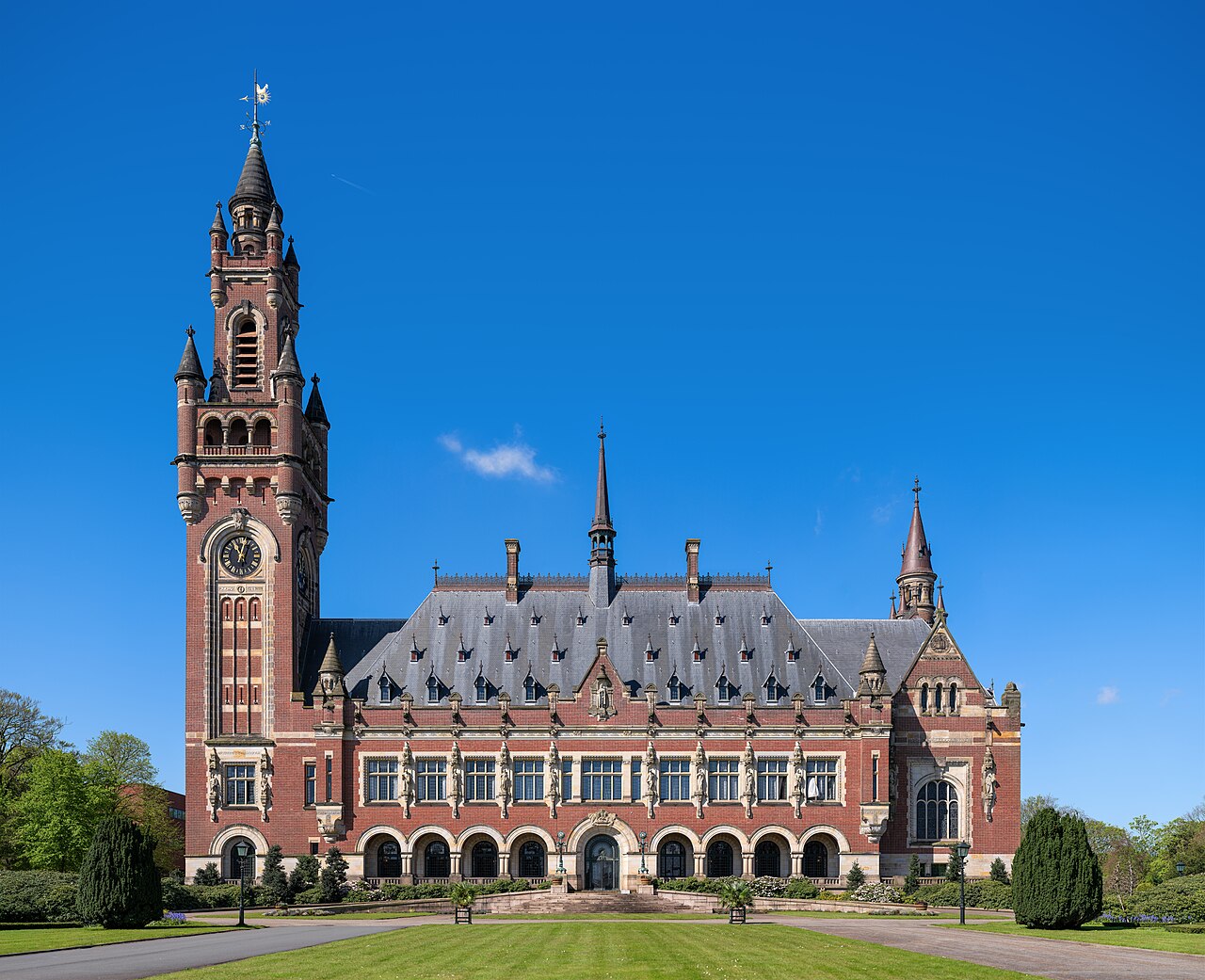
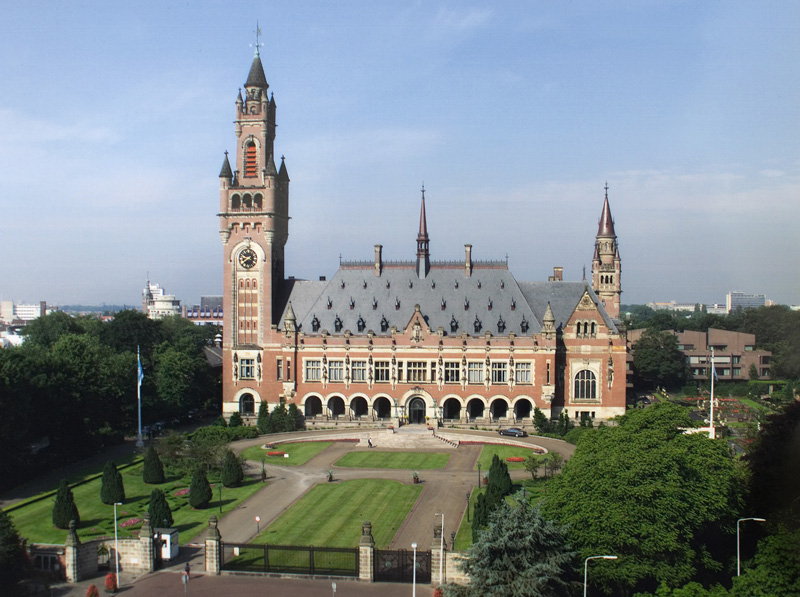
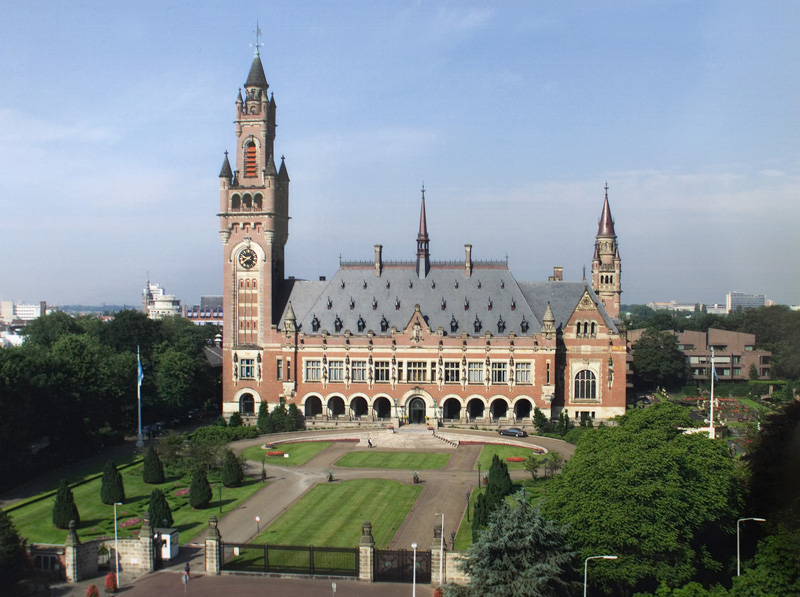
Cordonnier's proposal was a Neo-Renaissance structure heavily influenced by the architecture of the Low Countries, featuring red brick, natural stone, and slate roofs. Yet, the initial design proved far too ambitious for the available budget. Cordonnier had envisioned a sprawling complex with four large towers and a separate building for the library. The financial reality of the $1. 5 million grant forced a rigorous period of value engineering. The Foundation appointed Dutch architect J. A. G. van der Steur to serve as the executive architect, tasked with tempering Cordonnier's "Baroque" excesses. The collaboration resulted in a significant reduction of the plan: the four towers became two, one tall clock tower and a smaller rear tower, and the library was integrated into the main structure. This consolidation saved funds required a complete internal reconfiguration to maintain the functional separation Carnegie had mandated.
Construction commenced in 1907, coinciding with the Second Hague Peace Conference. The site, part of the Zorgvliet estate, presented specific engineering challenges. The sandy dune soil required a strong foundation to support the massive weight of the brick and stone edifice. Builders utilized Obernkirchen sandstone for the detailing, a material chosen for its durability and aesthetic compatibility with the red brick. The construction process relied on a blend of Dutch craftsmanship and international material sourcing, foreshadowing the diplomatic nature of the building's interior.
While the exterior took shape, a parallel diplomatic effort sought to furnish the interior. The Foundation and the Dutch government encouraged nations to contribute materials and art, turning the construction into a shared international enterprise. This strategy reduced costs and the concept of global cooperation into the physical fabric of the structure. The resulting collection of gifts transformed the palace into a material index of early 20th-century geopolitical relations.
Major National Contributions to the Peace Palace (1907, 1913)
Nation
Contribution
Details
Russia
Jasper Vase
A 3. 2-tonne green jasper vase, standing over 11 feet tall, gifted by Tsar Nicholas II. It required structural reinforcement of the floor.
Belgium
Bronze Doors
Art Nouveau entrance doors designed by René Tochebus Forreniers and Léon Bray, symbolizing peace and justice.
Italy
Marble
Over 1, 760 square meters of marble in 140 varieties, including the grand columns of the entrance hall.
Japan
Silk Tapestries
Nine massive wall hangings for the Japanese Room, depicting flowers and birds, produced by the Kawashima Textile Company.
Germany
Park Gates
Monumental wrought-iron gates designed by Bruno Möhring, installed at the main entrance to the grounds.
Switzerland
Clock method
The mechanical works for the main bell tower.
Brazil
Exotic Wood
Jacaranda and rosewood used for paneling and furniture in the administrative council chamber.
United States
Sculpture & Wood
A large marble group statue "Peace through Justice" (arrived later) and wood for paneling.
The surrounding received equal attention. In 1908, the Foundation held a separate competition for the garden design, won by the British architect Thomas Mawson. Mawson's method, detailed in his winning entry, prioritized a "gradual transition" between the rigid architecture of the palace and the naturalistic dunes of Zorgvliet. He designed brick terraces that extended the building's material language into the outdoors, using the same red brick as the façade. Mawson deliberately selected trees and shrubs with small leaves to maximize light penetration, avoiding the dense, gloomy atmosphere common in Victorian parks. He also incorporated a natural watercourse from the dunes to feed the garden's central pond, integrating the site's hydrology into his aesthetic vision.
Inside, the task of bridging the gap between Cordonnier's traditionalist exterior and the modern purpose of the building fell to younger artists. Herman Rosse, a Dutch designer who would later win an Academy Award for art direction, played a pivotal role in the interior decoration. Rosse modernized the aesthetic, applying geometric patterns and bold color blocks that hinted at the emerging Art Deco style. The stained glass windows in the Great Hall of Justice, produced by the Prinsenhof studio in Delft, depicted the evolution of peace, culminating in a future where law supersedes war. These artistic choices were not decorative; they functioned as visual propaganda for the pacifist ideals the building was built to serve.
The construction concluded in the summer of 1913. On August 28, the Peace Palace officially opened its doors. The ceremony was a high-profile affair attended by Queen Wilhelmina, Andrew Carnegie, and dignitaries from the contributing nations. Abraham van Karnebeek, chairman of the Carnegie Foundation, delivered the opening address, characterizing the building as a "Temple of Peace." Carnegie himself recorded in his diary that it was the happiest day of his life. The finished structure stood as a paradox: a of pacifism built with the donated wealth of an arms race, opened to the world less than a year before the outbreak of the World War. The iron gates from Germany and the jasper vase from Russia would soon belong to nations locked in total war, yet the building remained, a static anchor in a rapidly disintegrating world order.
National Gifts and Interior Artistry
The Peace Palace was not funded by Andrew Carnegie; it was furnished through a calculated diplomatic levy. During the Second Hague Peace Conference in 1907, Baron d'Estournelles de Constant, a French diplomat, proposed that every signatory nation contribute materials or art to the construction. This strategy transformed the building from a private philanthropic project into a tangible treaty of ownership. By 1913, the interior had become a repository of national identities, frequently freezing the aesthetics of empires, the Ottoman, the Qing, the Romanov, moments before their dissolution. The Great Hall of Justice, the operational heart of the Court, serves as the primary gallery for these obligatory donations. Great Britain, a founding power of the arbitration movement, commissioned Scottish artist Douglas Strachan to create the four massive stained-glass windows. Installed in 1913, these panels depict the "Evolution of the Peace Ideal," progressing from the Primitive Age through the Age of Conquest to a theoretical Peace Achieved. The glasswork dominates the hall, casting light upon the Italian contribution: the floor and walls clad in Arabescato and Carrara marble. Italy shipped tons of this stone to The Hague, a logistical feat that required precise coordination with the Dutch railway systems of the early 20th century. France, asserting its cultural primacy, provided a large painting by Eugène Chigot titled *Pax*, which hangs in the corridors, alongside Gobelins tapestries that represented the pinnacle of French textile manufacturing. The most complex interior ensemble is the Japanese Room, originally as the Administrative Council Room. The Japanese government, seeking to cement its status as a modernized world power following the Russo-Japanese War, commissioned the imperial firm of Kawashima Jimbei in Kyoto. They produced nine massive silk wall hangings using the *Tsuzure Nishiki* (fingernail weaving) technique. These textiles, depicting a scene of "One Hundred Flowers and One Hundred Birds," required tens of thousands of hours of labor. The room functions as a global assembly: the silk hangings are bordered by wainscoting made of Brazilian rosewood and jacaranda, while the floor is covered by a 160-square-meter Hereke carpet donated by the Ottoman Empire. This carpet, one of the largest ever produced by the Imperial factory, remains in situ even as the empire that gifted it shortly after the Palace opened. In the corners stand cloisonné enamel vases on wooden pedestals, a final diplomatic gesture from the Qing Dynasty of China, presented by the Last Emperor, Puyi. The Russian contribution presented a distinct engineering challenge. Czar Nicholas II, the initiator of the 1899 conference, donated a vase made of green jasper from the Ural Mountains. frequently mistaken for malachite, this object weighs approximately 3, 200 kilograms (3. 2 tonnes). The sheer mass of the vase, which features a gilded bronze double-headed eagle, necessitated the reinforcement of the floor beams beneath the room where it stands. It remains one of the heaviest single objects in the Palace, a literal and metaphorical anchor representing the Czar's pivotal role in the Court's founding, even as his own regime collapsed four years after the Palace's inauguration. The Netherlands, as the host nation, provided the land also integrated its Golden Age heritage into the modern structure. The Bol Room is defined by three large canvases by Ferdinand Bol, a pupil of Rembrandt. These works, on long-term loan from the Rijksmuseum, date to the 17th century and depict stories of magnanimity and justice. The ceiling features paintings by Gerard de Lairesse, purchased specifically for this space. This room creates a deliberate continuity between the Dutch Republic's historic diplomacy and the modern international law mandate. The United States, even with Carnegie's funding, was slow to deliver its national gift. The American government promised a sculpture group failed to execute the delivery by the 1913 opening. It was not until 1924 that the marble statue *Peace through Justice* arrived. Placed on the landing of the monumental staircase, the figure depicts a woman without the traditional blindfold or sword of Justice, symbolizing a new, enlightened form of adjudication. This delay remains a matter of record in the Foundation's archives, documenting years of correspondence attempting to secure the promised artwork from Washington. Other nations contributed functional elements that became integral to the building's mechanics. Belgium provided the monumental bronze and iron doors at the main entrance, while Germany delivered the wrought-iron gates that enclose the grounds. Switzerland donated the clock method for the tower, ensuring the Court ran on precise time. Denmark sent a porcelain fountain, and Argentina contributed a replica of the *Christ of the Andes*, placing religious iconography within the secular temple of law.
Select National Gifts to the Peace Palace (1907, 1930)
Nation
Gift Description
Material / Artist
Year Installed
Japan
9 Wall Hangings (Tapestries)
Silk (Tsuzure Nishiki) / Kawashima Jimbei
1913
Russia
Monumental Vase
Green Jasper, Gilt Bronze / Kolyvan Factory
1912
United Kingdom
4 Stained Glass Windows
Glass / Douglas Strachan
1913
Italy
Interior Cladding
Arabescato & Carrara Marble
1911-1913
Ottoman Empire
Large Carpet (160m²)
Wool, Silk / Hereke Imperial Factory
1913
United States
Statue "Peace through Justice"
Marble / American Sculptor
1924
China
4 Vases & Incense Burners
Cloisonné Enamel / Qing Dynasty
1913
Brazil
Wall Paneling (Japanese Room)
Rosewood, Jacaranda
1913
Belgium
Main Entrance Doors
Bronze, Iron
1913
Australia
Inkstand and Desk
Silver, Blackwood, Silky Oak
1914
Preservation of these gifts has become a complex technical operation in the 21st century. The Japanese silk tapestries, sensitive to light and humidity, underwent a serious restoration assessment in 2021. The Carnegie Foundation convened international experts to address the degradation of the century-old silk, acknowledging that the room functions as a working diplomatic space rather than a climate-controlled museum. Similarly, the Australian writing desk and silver inkstand, symbols of the dominion's participation, were restored in 2024 to mark the 125th anniversary of the Hague Peace Conference. The interior of the Peace Palace functions as a frozen cross-section of the geopolitical order of 1913. The gifts from the Romanovs, the Qing, and the Ottomans serve as evidence of regimes that sought legitimacy through international law just before their extinction. These objects are not decoration; they are the physical capital of the Permanent Court of Arbitration, maintained with rigorous care to ensure the "Temple of Peace" retains its original diplomatic mandate.
Operations of the Permanent Court of Arbitration
Andrew Carnegie's Donation and the 1903 Foundation
The Permanent Court of Arbitration (PCA), the oldest tenant of the Peace Palace, operates not as a standing tribunal with a fixed bench of judges, as a permanent administrative framework designed to facilitate ad hoc arbitration. Established by the 1899 Hague Convention, the PCA predates the Peace Palace itself, having originally functioned from provisional quarters at the Prinsegracht before occupying the Palace upon its completion in 1913. Unlike the International Court of Justice (ICJ), which adjudicates disputes exclusively between states, the PCA administers cases involving various combinations of states, state entities, intergovernmental organizations, and private parties. This flexibility has allowed the institution to survive a mid-20th-century period of dormancy and emerge in the 21st century with a record caseload. The organizational structure of the PCA rests on three pillars: the Administrative Council, the Members of the Court, and the International Bureau. The Administrative Council, composed of diplomatic representatives from the 127 Contracting Parties accredited to the Netherlands, provides oversight and budgetary approval. The "Members of the Court" are not sitting judges a list of chance arbitrators, each member state may nominate up to four individuals of "known competency in questions of international law." These national groups hold the specific power to nominate candidates for the ICJ and the Nobel Peace Prize, linking the PCA to the wider of international relations. The operational engine is the International Bureau, the secretariat headed by the Secretary-General, currently Dr. Marcin Czepelak, who was elected in 2022 for a term ending in 2027. Operations began in 1902 with the *Pious Fund of the Californias* case between the United States and Mexico, a dispute concerning unpaid interest on a religious endowment. In its decades, the PCA handled high-profile territorial and financial disputes, including the *North Atlantic Coast Fisheries* arbitration (1910) and the *Island of Palmas* case (1928). The latter, a sovereignty dispute between the United States and the Netherlands involving a small island near the Philippines, remains a foundational precedent in international law regarding control over territory. yet, the creation of the Permanent Court of International Justice (PCIJ) in 1922 and its successor, the ICJ, in 1946, drew state-to-state disputes away from the PCA. For nearly fifty years during the Cold War, the PCA's docket remained virtually empty, leading observers to describe the institution as a "sleeping beauty" within the Peace Palace. The operational tempo shifted dramatically in the 1990s, driven by the proliferation of Bilateral Investment Treaties (BITs) and the adoption of the UNCITRAL Arbitration Rules. The PCA reinvented itself as the primary registry for investor-state dispute settlement (ISDS). By 2024, the PCA administered 243 cases in a single year, a figure that dwarfs its entire caseload from the century of its existence. Of these, 51 were new proceedings initiated within the year. The docket includes a mix of interstate disputes, investor-state arbitrations, and contract-based claims. This resurgence forced a physical expansion; while the Peace Palace remains the headquarters and symbolic home, the PCA maintains offices in Singapore, Mauritius, Buenos Aires, Vienna, and Hanoi to manage its global footprint. Two cases in the 21st century define the modern operational capacity of the PCA: the *Yukos* arbitrations and the *South China Sea* arbitration. The *Yukos Universal Limited v. The Russian Federation* proceedings tested the limits of the International Bureau's logistical capabilities. Commencing in 2005, these cases involved claims by shareholders of the defunct oil giant Yukos, alleging illegal expropriation by the Russian state. The tribunal, administered by the PCA, issued Final Awards in 2014 ordering Russia to pay in excess of $50 billion, the largest arbitral award in history. The administrative load included managing thousands of pages of evidence, organizing hearings across multiple jurisdictions, and handling the translation of massive datasets. As of 2026, enforcement battles continue in courts across the United Kingdom, the United States, and the Netherlands, yet the PCA's role concluded with the issuance of the awards, demonstrating its ability to manage disputes of immense financial magnitude. The *South China Sea Arbitration* (2013, 2016) between the Philippines and China presented a different operational challenge: the non-participation of a major power. China refused to accept the tribunal's jurisdiction or participate in the proceedings. The PCA, serving as Registry, had to ensure strict procedural fairness in the absence of one party, transmitting all documents to the Chinese embassy in The Hague and ensuring the tribunal considered chance Chinese arguments found in public statements. The Registry also managed the financial logistics; when China refused to pay its share of the arbitration costs, the Philippines covered the entire deposit, a method permitted under the rules to prevent a party from stalling proceedings by withholding funds. The tribunal's 2016 award, which rejected China's "nine-dash line" claim, remains a landmark decision, though the PCA possesses no enforcement method to compel compliance. Financial operations of the PCA rely on contributions from Contracting Parties and case-specific fees. The budget for the International Bureau is supported by member states, with contributions calculated based on the Universal Postal Union of assessment, a system that assigns higher dues to larger economies. yet, the costs of actual arbitrations (arbitrator fees, legal support, travel) are borne by the disputing parties. To mitigate the barrier this creates for less wealthy nations, the PCA established the Financial Assistance Fund for the Settlement of International Disputes. This fund provides grants to qualifying developing states to cover the costs of PCA administration and tribunal fees, ensuring that the Peace Palace does not become a venue accessible only to the rich. In the post-2020 era, the PCA's operations have undergone rapid digitalization. The COVID-19 pandemic accelerated the adoption of secure virtual hearing platforms. By 2025, hybrid hearings, where counsel appear in the Peace Palace's historic hearing rooms while others join remotely, became standard practice. The International Bureau employs a dedicated team of legal counsel and IT specialists to manage the cybersecurity risks associated with transmitting sensitive diplomatic and commercial data. The 2024 Annual Report noted that while the Peace Palace hearing rooms remain in high demand, the institution's digital infrastructure supports simultaneous proceedings across time zones, decoupling the PCA's capacity from the physical constraints of the brick-and-mortar building.
PCA Caseload Metrics (2020, 2024)
Year
Total Cases Administered
New Cases Initiated
Inter-State Arbitrations
2020
211
59
7
2021
204
40
7
2022
204
50
4
2023
246
82
7
2024
243
51
7
The Secretary-General also acts as the "Appointing Authority" under the UNCITRAL Rules, a serious operational function. When parties to an arbitration cannot agree on a sole arbitrator or a presiding arbitrator, the PCA Secretary-General steps in to make the appointment. In 2024 alone, the Secretary-General received 51 such requests. This power places the PCA at the strategic center of global dispute resolution, even for cases that are not fully administered by the Bureau. The selection process involves a specialized list system to ensure neutrality, preventing conflicts of interest that could derail sensitive commercial or diplomatic arbitrations. As of early 2026, the PCA continues to expand its membership, with Vanuatu and Timor-Leste acceding to the conventions in 2024. The institution's trajectory shows a shift from a Eurocentric "gentlemen's club" of the early 1900s to a global service provider for dispute resolution. The Peace Palace, once a quiet monument during the PCA's dormant years, functions as a high-traffic hub where the International Bureau coordinates a continuous stream of filings, hearings, and awards, fulfilling the original 1899 mandate to provide "immediate recourse" to arbitration for international differences.
The Permanent Court of International Justice Era (1922, 1946)
The inauguration of the Permanent Court of International Justice (PCIJ) on February 15, 1922, marked the operational transformation of the Peace Palace from a symbolic monument into a functioning judicial engine. While the building was originally conceived in 1903 to house the Permanent Court of Arbitration (PCA), a roster of jurists rather than a standing tribunal, the arrival of the PCIJ introduced a permanent body of judges requiring daily workspaces, a registry, and a continuous physical presence. This shift forced an immediate logistical recalibration of the Zorgvliet site. The Great Hall of Justice, designed for occasional arbitral tribunals, became the regular seat of the world court, fundamentally altering the rhythm and purpose of Andrew Carnegie's "Temple of Peace." The PCIJ was not an administrative tenant; it was the judicial arm of the League of Nations, tasked with interpreting treaties and resolving disputes in an era defined by the fragile post-WWI order. Data from the court's registry between 1922 and 1940 indicates a workload that initial skepticism. The court processed 29 contentious cases and issued 27 advisory opinions. These were not abstract theoretical exercises binding judgments on sovereignty, navigation rights, and reparations.
PCIJ Operational Output (1922, 1940)
Metric
Count/Details
Contentious Cases
29
Advisory Opinions
27
Judgment
S. S. Wimbledon (August 17, 1923)
Key Jurisprudence
Lotus Case (1927); Factory at Chorzów (1928)
Final Session
October 1945
The court's judgment, the *S. S. Wimbledon* case of 1923, established early precedents regarding canal neutrality and state sovereignty, directly testing the Treaty of Versailles. yet, the *Factory at Chorzów* case (1927, 1928) remains the court's most enduring legacy from this period. In this ruling, the PCIJ established the standard for international reparations that to 2026: that a state violating international law must provide "full reparation" to wipe out all consequences of the illegal act. This legal doctrine, formulated within the walls of the Peace Palace, continues to underpin modern investment arbitration and state responsibility claims. The coexistence of the PCIJ and the PCA within the same structure created friction regarding resource allocation. The Carnegie Foundation, which owned and managed the building, struggled to accommodate the expanding bureaucracy of the permanent court. The Palace was architecturally designed for the sporadic nature of arbitration, absence sufficient office space for a full-time registry. Archives show that throughout the 1920s and 1930s, the Foundation faced financial as the costs of maintaining the opulent structure clashed with the economic volatility of the Great Depression. Even with these constraints, the Foundation maintained the Peace Palace Library, which became a sanctuary for legal scholarship, amassing a collection that would eventually outgrow the original design. The outbreak of World War II in September 1939 paralyzed the League of Nations, yet the PCIJ attempted to maintain a semblance of operation. This illusion shattered on May 10, 1940, when German forces invaded the Netherlands. The invasion brought the war directly to the gates of the Peace Palace. Unlike the World War, where the Netherlands remained neutral, the Hague was occupied territory. Investigative records from the occupation period reveal a tense standoff regarding the status of the building. As German forces secured The Hague, they attempted to take possession of the Peace Palace. Julio López Oliván, the Spanish diplomat serving as the PCIJ Registrar, confronted the German commander. Oliván successfully argued that the Palace was international territory, protected by the diplomatic immunity of the court and the foreign missions it housed. This legal maneuver prevented the Wehrmacht from commandeering the building for barracks or administrative offices, a fate that befell other government buildings in The Hague. While the building remained physically inviolate, the court itself was fractured. The non-Dutch judges fled; President José Gustavo Guerrero and the Registry eventually relocated to Geneva to maintain the court's legal continuity. The Palace stood largely empty of judicial activity for five years, a "ghost court" in a city under Nazi control. The physical structure suffered damage during the war, specifically from the V2 rocket launches conducted by German forces from the nearby Haagse Bos and the Allied bombing of the Kleykamp building, a German records office located directly across the street, on April 11, 1944. The shockwaves shattered the Palace's stained glass and damaged the roof, though the main structure survived. Inside the "neutral" walls of the Peace Palace, a quiet dangerous resistance operation emerged. Archives from the Carnegie Foundation confirm that staff members, specifically Cock van Paaschen and Jos Gemmeke, used the building's basement to print *Je Maintiendrai*, an illegal resistance newspaper. They operated a stencil machine hidden in the cellar, moving it to the attic when risks of detection rose. This activity occurred under the noses of the German occupiers, turning the seat of international law into an active node of the Dutch Resistance. This juxtaposition, high-minded international legal theory suspended in Geneva while ground-level resistance operated in the Palace basement, defines the complex reality of the site during the war years. The liberation of The Hague in May 1945 found the Peace Palace battered standing. The political, yet, had shifted irrevocably. The League of Nations was defunct, and the Allied powers agreed at the San Francisco Conference to establish a new judicial organ, the International Court of Justice (ICJ), as part of the United Nations. This decision necessitated the dissolution of the PCIJ. In October 1945, the PCIJ judges convened for their final session to arrange the transfer of archives and assets. The resolution of dissolution was passed in April 1946. The transition was administrative rather than physical; the ICJ moved into the exact chambers vacated by the PCIJ. On April 18, 1946, the International Court of Justice held its inaugural sitting in the Great Hall of Justice. The legacy of the PCIJ era was not erasure foundational; the ICJ Statute was almost identical to that of its predecessor, and the jurisprudence developed between 1922 and 1940 in cases like *Chorzów* and *Lotus* remained valid citations. The Peace Palace had successfully bridged the failure of the League of Nations, emerging as the undisputed home of the new United Nations court.
International Court of Justice Mandate and Caseload
Architectural Competition and Construction (1905, 1913)
The International Court of Justice (ICJ), seated within the Peace Palace since 1946, operates as the principal judicial organ of the United Nations. Its mandate, enshrined in Chapter XIV of the UN Charter and the Statute of the Court, authorizes it to adjudicate legal disputes submitted by states and to provide advisory opinions on legal questions referred by authorized UN organs. While the Peace Palace serves as the physical vessel for these proceedings, the Court's function has evolved from a quiet arbiter of maritime boundaries into a central theater for high- geopolitical confrontation. As of February 2026, the Court faces the heaviest and most politically charged docket in its eighty-year history, marking a definitive shift from bilateral arbitration to the adjudication of widespread global crises. The Court's trajectory from 1946 to the present reveals four distinct eras of judicial activity. The early years, following the dissolution of the Permanent Court of International Justice (PCIJ), saw a cautious institution. Between 1946 and 1960, the Court handled a modest number of cases, primarily concerning maritime passage and decolonization, such as the *Corfu Channel* case (1949). The Cold War subsequently froze the docket; the Soviet Union and its allies viewed the Court as a Western instrument and refused to accept its compulsory jurisdiction. This period of stagnation reached its nadir in 1966 with the *South West Africa* cases, where the Court's refusal to rule on the merits of apartheid in Namibia alienated the developing world. For nearly two decades, the Great Hall of Justice sat largely silent, hosting fewer than two new cases per year. The collapse of the Soviet Union in 1991 triggered the second era: the "docket explosion." Newly independent states in Eastern Europe and Central Asia, alongside a democratizing Africa, turned to the ICJ to settle dormant border disputes. The Court became the world's surveyor, drawing lines in the *Gulf of Fonseca*, the *Bakassi Peninsula*, and the *Black Sea*. This period restored the Court's technical reputation kept it largely removed from active armed conflicts. The judges functioned as cartographers of international law, resolving problem of sovereignty that, while important, rarely commanded daily global headlines. The current era, beginning roughly in 2019 and accelerating through 2026, represents a fundamental transformation in the Court's usage. States frequently use Article IX of the Genocide Convention and Article 41 of the Statute (provisional measures) to bring active wars before the bench. The docket is no longer dominated by maps, by body counts. As of February 25, 2026, the Registry lists over 25 pending cases, of which allege serious violations of human rights and humanitarian law. Two specific cases illustrate this shift toward "erga omnes" (obligations to the whole international community) litigation. The is *South Africa v. Israel*, filed in December 2023. This case tested the Court's ability to intervene in real-time conflict. By early 2026, the proceedings remain in the written pleadings phase. Following multiple requests for extensions, the Court set March 12, 2026, as the deadline for Israel to file its Counter-Memorial. The provisional measures orders issued in January, March, and May 2024 established a legal precedent that the Court would not wait for a final judgment to impose binding obligations on warring parties. The intervention of third-party states, including Belgium in December 2025, further complicates the procedural logistics, turning the Peace Palace into a diplomatic battleground where dozens of legal teams compete for hearing time. The second defining matter is the *Advisory Opinion on the Obligations of States in Respect of Climate Change*, delivered on July 23, 2025. This ruling, requested by the UN General Assembly following a campaign led by Vanuatu, fundamentally altered environmental law. The Court held unanimously that the 1. 5°C temperature limit is legally binding under the Paris Agreement and that states have an obligation to prevent significant harm to the climate system. Unlike previous territorial rulings, this opinion affects every UN member state. The judgment explicitly linked greenhouse gas emissions to state responsibility, providing a legal basis for future litigation seeking reparations for climate damage. The Registry is currently processing the administrative aftermath, as developing nations prepare to use this opinion to challenge fossil fuel expansion in domestic and international courts. The operational on the Peace Palace is severe. The sheer volume of submissions, thousands of pages of annexes for the genocide cases alone, has overwhelmed the translation and drafting departments. The UN's liquidity emergency, which peaked in late 2025, threatened the Court's ability to function. Secretary-General António Guterres warned the Fifth Committee in October 2025 that the organization faced a "race to bankruptcy," forcing the ICJ to rely on contingency funds to maintain its schedule. The 2026 judicial salary base, set at approximately $212, 784, and the operational budget of roughly $60 million, struggle to cover the security and logistical costs of hosting high-profile delegations.
ICJ Caseload and Operational Metrics (1946, 2026)
Era
Time Period
Avg. New Cases/Year
Dominant Case Type
Key Geopolitical Context
Establishment
1946, 1960
1. 5
Maritime Passage, Asylum
Post-WWII Order, Decolonization starts
Stagnation
1961, 1989
1. 2
Technical/Procedural
Cold War Deadlock, Distrust from Non-Aligned Movement
Renaissance
1990, 2018
3. 8
Territorial/Maritime Delimitation
Post-Soviet Borders, African Boundary Settlements
Politicization
2019, 2026
5. 5
Genocide, Human Rights, Environment
Weaponization of Courts, "Lawfare," Climate emergency
The composition of the bench also reflects this new era. In November 2025, the General Assembly and Security Council elected Phoebe Okowa of Kenya to the Court, reinforcing the presence of African jurists during a time when the continent is driving much of the Court's most significant litigation. President Yuji Iwasawa, presiding over the Court in early 2026, has had to manage the delicate balance between judicial economy and the urgent demands of states seeking immediate relief from armed conflict. The *The Gambia v. Myanmar* case, concerning the alleged genocide of the Rohingya, serves as a grim parallel to the situation in Gaza. Public hearings on the merits concluded on January 29, 2026. The Court is in deliberation, with a judgment expected later in the year. This case, filed in 2019, demonstrates the "glacial" pace of international justice when contrasted with the speed of modern warfare. While provisional measures offer a stopgap, the gap between the filing of a memorial and the delivery of a final judgment frequently spans half a decade. Procedural reforms introduced in 2024 and 2025 attempted to streamline these processes. The Court amended its Rules to clarify the intervention process for third states, a direct response to the flood of interventions in the *Ukraine v. Russia* and *South Africa v. Israel* cases. Yet, the physical limitations of the Peace Palace itself, with its finite number of hearing rooms and interpretation booths, impose a hard cap on throughput. The Great Hall of Justice, designed in the early 20th century for a world of fewer than 50 sovereign states, struggles to accommodate proceedings where 30 or more legal teams may wish to present oral arguments. The mandate of the ICJ has not changed since 1945, the world's interpretation of it has. States no longer view the Peace Palace as a place to settle friendly disputes over fishing rights. They view it as a lever of power to delegitimize adversaries and secure moral victories in the court of public opinion. The caseload in 2026 is not just larger; it is qualitatively different, requiring the judges to act as guardians of the most fundamental norms of international law while operating under severe financial and logistical constraints. The "Flight from Care" that Jacob Cats envisioned for Zorgvliet has become the center of the world's most intense legal scrutiny.
The Hague Academy of International Law Operations
While the International Court of Justice and the Permanent Court of Arbitration adjudicate disputes, the Hague Academy of International Law defines the rules they apply. Established in 1923, the Academy operates as a distinct legal entity housed within the Peace Palace, functioning as the primary educational institution for public and private international law. Unlike the permanent courts, which react to specific cases, the Academy proactively shapes the intellectual framework of the discipline through rigorous instruction and publication. By January 2026, the Academy had produced over 450 volumes of the Recueil des cours (Collected Courses), a series widely regarded as the most authoritative encyclopedic collection in the field.
The Academy's origins trace back to the same peace movement that birthed the Palace itself, though its realization faced a decade-long delay. Dutch jurist Tobias Asser, a Nobel Peace Prize laureate, proposed the creation of an educational body to complement the arbitration courts. Although the Carnegie Endowment for International Peace agreed to fund the project in 1911, the outbreak of World War I in 1914 halted its inauguration. The Academy opened its doors on July 14, 1923, ten years after the Palace itself. Its mandate was to provide high-level instruction to an international student body, distinct from national university systems which frequently taught international law through the lens of domestic policy.
The core of the Academy's operations remains its Summer Courses, held annually since 1923 (with interruptions only during World War II). The program splits into two distinct three-week sessions: Public International Law and Private International Law. The curriculum is not fixed; instead, the Curatorium, a governing body of eminent jurists, invites specific professors, judges, and diplomats to deliver lectures on their areas of expertise. The most prestigious assignment is the "General Course," a detailed series of lectures that frequently cements a scholar's legacy. These lectures are not mere summaries of existing law frequently propose new theoretical structures that influence future judicial decisions.
The Recueil des cours serves as the permanent record of these sessions. Brill Publishers releases these volumes, which contain the full text of the lectures delivered at the Academy. By 2026, the collection exceeded 450 volumes, creating a physical timeline of legal thought. Early volumes from the 1920s focus on the League of Nations and war reparations, while volumes from the 2020s examine cyber warfare, climate change litigation, and the regulation of outer space. This publication continuity ensures that the Academy's intellectual output remains accessible to judges and practitioners globally, far beyond the physical confines of the Peace Palace.
The Academy awards a Diploma of International Law, a credential notorious for its extreme selectivity. Unlike a standard university degree, the Diploma is not awarded upon mere completion of the courses. Candidates must sit for a grueling exam and undergo an oral defense before a jury of professors. The failure rate is exceptionally high. In years, the Academy awards no diplomas at all. In the summer of 2025, out of nearly 700 attendees, only two candidates successfully secured the Diploma in Public International Law. This scarcity maintains the credential's status as one of the most difficult to obtain in the legal profession.
To address the growing demand for specialized training, the Academy expanded its operations in 2019 by introducing Winter Courses. Held in January, this three-week session mirrors the academic rigor of the Summer Courses combines public and private international law into a single curriculum. The 2026 Winter Courses, scheduled from January 12 to January 30, utilized a hybrid model developed during the post-2020 era, allowing attendees to participate both in the Peace Palace auditorium and via secure digital feeds. This digital expansion was a necessary adaptation to maintain global reach when travel restrictions or geopolitical instability physical attendance.
Beyond the lecture halls, the Centre for Studies and Research operates as a specialized think tank within the Academy. Established in 1957, the Centre selects a specific theme each year, such as the legal of global finance or the protection of the environment, and convenes a small group of advanced researchers to produce original scholarship. The Centre's output differs from the Recueil; rather than broad lectures, it produces targeted analyses of legal problems. In 2023, during the Academy's centenary celebrations, the Centre's work focused heavily on the "Challenges of International Law," questioning the universality of legal norms in a fragmenting global order.
Governance of the Academy relies on a dual structure to ensure independence. The Curatorium, composed of judges and professors from various nationalities, manages the scientific and academic direction, ensuring that no single legal tradition dominates the curriculum. The Administrative Council, consisting of Dutch dignitaries and representatives of the Carnegie Foundation, oversees financial and logistical matters. This separation prevents political donors or host-state interests from dictating the academic content. Financial reports from 2024 indicate that while the Academy receives support from the French government, the Swiss government, and various other states, it relies heavily on tuition fees, publication royalties, and the endowment managed by the Carnegie Foundation to maintain its autonomy.
Hague Academy of International Law: Operational Metrics (2020, 2026)
Metric
Description
2025/2026 Status
Summer Courses
Two 3-week sessions (Public & Private Law)
~600, 700 attendees annually
Winter Courses
One 3-week session (Combined Law)
Introduced 2019; ~300 attendees
Diploma Award Rate
Pass rate for the high-level exam
< 1% (e. g., 2 recipients in Summer 2025)
Publications
Recueil des cours (Collected Courses)
Vol. 451 released Jan 2026
Governance
Academic oversight body
Curatorium (16 members)
Peace Palace Library Holdings and Digitalization
National Gifts and Interior Artistry
The Peace Palace Library, frequently mischaracterized as a mere quiet reading room, operates as a high-precision instrument for international litigation. Established in 1913 with funding from Andrew Carnegie, the facility was designed to serve the Permanent Court of Arbitration (PCA) and later the International Court of Justice (ICJ). As of 2026, the repository holds over 1. 5 million volumes, making it one of the most significant collections of international law in existence. This mass of documentation grows by approximately 30, 000 records annually, a rate that requires constant logistical adaptation within the Academy and Library Building, a structure completed in 2007 to house the expanding archives that outgrew the original Palace basement.
The collection's intellectual anchor is the Grotius Collection, the world's most extensive assembly of works by Hugo Grotius, the 17th-century Dutch jurist regarded as the father of international law. This specific holding began in 1914 when Martinus Nijhoff, a Hague publisher, donated 55 editions of De Jure Belli ac Pacis (On the Law of War and Peace). By 2025, this section had expanded to over 1, 200 volumes, occupying 50 meters of shelf space. A serious acquisition occurred in 2010 when the library purchased a rare state of the edition of De Jure Belli ac Pacis, printed in Paris in 1625. This volume joined other seminal texts, including a 1609 edition of Mare Liberum (The Free Sea), which established the legal doctrine of freedom of the seas, a principle still litigated in modern maritime disputes.
Beyond Grotius, the library protects materials that predate the Palace itself by centuries. In 2013, to mark its centenary, the institution acquired a 1499 edition of Gaius's Institutes, pushing its physical timeline back to the incunable era. The Peace Movement Collection offers a different historical texture, preserving thousands of posters, pamphlets, and letters from pacifist organizations active between 1899 and the Cold War. These documents provide the raw data for historians analyzing the public sentiment that pressured governments into the Hague Conventions. Unlike the sanitized history frequently presented in textbooks, these papers reveal the fractured, frequently desperate lobbying efforts of early 20th-century peace activists.
The organization of this massive dataset relies on a unique classification system developed in 1916 by Elsa Oppenheim, daughter of the jurist Jacques Oppenheim. While the library has integrated modern keyword tagging, the "Catalogue de la bibliothèque du Palais de la paix" remains the structural backbone for older acquisitions. This system prioritizes the provenance and legal weight of documents, a method distinct from the Dewey Decimal or Library of Congress systems used in public institutions. Researchers frequently find that the Oppenheim classification reveals connections between treaties and arbitrations that standard digital searches might obscure.
Digitalization efforts accelerated significantly between 2010 and 2026, driven by the need to make materials accessible to legal teams who cannot physically visit The Hague. The "Peace Palace Library Digital Collections" uses the CONTENTdm management system to host over 35, 000 scanned pages. This initiative focuses on rare works, fragile peace treaties, and the "Scheldt River" collection, which documents centuries of water rights disputes between the Netherlands and Belgium. By 2024, the library had also digitized the "War Crimes of World War I" archive, a grim catalog of evidence that served as a precursor to modern international criminal law.
Key Special Collections & Holdings (Current Status 2026)
Collection Name
Primary Focus
Notable Item
Volume Count (Est.)
Grotius Collection
Works by/about Hugo Grotius
De Jure Belli ac Pacis (1625, Paris)
1, 200+
Peace Movement
Pacifism history (1899, Present)
Bertha von Suttner correspondence
3, 000+ items
Scheldt River
Water rights & navigation law
19th-century treaty maps
500+
International Law
Public/Private International Law
ICJ/PCA Case Files
1, 000, 000+
Financial stability for the library remains a recurring battle. The Carnegie Foundation, which owns and manages the facility, relies on subsidies from the Dutch Ministry of Foreign Affairs. In the budget pattern of 2023 and 2024, negotiations were tense, reflecting a broader Dutch government trend of scrutinizing international development and NGO funding. While the 2025 budget maintained core operations, the library faces pressure to generate revenue through service level agreements with non-court users. Even with these fiscal constraints, the institution continues to purchase books in Arabic, Mandarin, and Russian, acknowledging the shifting geopolitical center of in international law.
The physical environment of the library underwent a major shift in 2007 with the move to the new Academy building, designed to protect the books from the humidity and fire risks inherent in the old Palace basement. The Reading Room, known for its silence and heavy oak tables, serves as the operational hub where registrars from the ICJ and PCA review precedents. Access is strictly controlled; while the digital catalog is public, the physical stacks are a closed system, available only to accredited scholars and court officials. This exclusivity reinforces the library's function: it is not a public amenity a specialized arsenal for the legal battles that define state sovereignty and human rights.
Looking toward the remainder of 2026, the library is expanding its "Law of Ecocide" database, a project begun in 2012 with the Institute for Environmental Security. This collection tracks the emerging legal framework for environmental destruction, anticipating future cases at the ICJ or ICC. As climate litigation increases, this specific subset of the archives is seeing the highest rate of digital access requests. The library's ability to pivot from 17th-century maritime law to 21st-century environmental liability demonstrates its enduring relevance as the memory bank of the international legal order.
Structural Renovations and Asbestos Remediation (2015, 2026)
By 2015, the Peace Palace faced a threat far more insidious than the geopolitical conflicts adjudicated within its walls. While the Neo-Renaissance façade remained majestic, the internal infrastructure of the centenary building had reached a breaking point. Routine maintenance inspections revealed that the 1913 construction relied heavily on asbestos for fireproofing and insulation, a standard practice of the early 20th century that had become a modern biohazard. This discovery triggered a decade-long emergency that pitted the Carnegie Foundation against the Dutch State, forced the closure of the Great Hall of Justice, and threatened the operational continuity of the International Court of Justice (ICJ).
The of the contamination was widespread. Asbestos fibers were detected in the air circulation systems, the thermal insulation of the roof, and the sealant behind the ornamental wood paneling. In 2015, the Carnegie Foundation implemented temporary containment measures to ensure immediate safety for staff and judges. Yet, these were stopgap solutions. A detailed survey conducted between 2018 and 2019 estimated that a full structural remediation would cost upwards of €150 million. This figure dwarfed the Foundation's endowment, which had never been designed to support capital-intensive industrial remediation.
A bitter financial and legal standoff ensued between the Carnegie Foundation and the Dutch Ministry of Foreign Affairs. As the host nation, the Netherlands is obligated to provide suitable accommodation for the ICJ and the Permanent Court of Arbitration (PCA). yet, the Ministry argued that public funds of such magnitude could not be granted to a private foundation without a transfer of ownership. In July 2020, Minister of Foreign Affairs Stef Blok informed the Dutch Parliament of a stalemate: the State demanded title to the Peace Palace in exchange for financing the renovation. The Carnegie Foundation refused, citing Andrew Carnegie's original deed and the need of maintaining the Palace's status as neutral, non-state territory.
The physical deterioration did not wait for political resolution. In 2021, the situation in the Great Hall of Justice (Grote Rechtszaal) became untenable. The central heating and ventilation systems, with asbestos, required total replacement. Consequently, the Great Hall, the symbolic heart of international law, was closed for hearings. The ICJ was forced to relocate proceedings to the smaller Academy Building or hold hybrid sessions, a logistical constriction that occurred simultaneously with a rising caseload involving genocide conventions and climate litigation.
The technical complexity of the remediation is difficult to overstate. The Peace Palace is a Rijksmonument (national heritage site) filled with immovable art. The removal of asbestos requires creating negative-pressure containment zones, yet the walls are lined with Brazilian rosewood and Japanese silk tapestries that cannot be easily dismantled. Restorers face the paradoxical task of stripping the building's skeleton while preserving its skin. For instance, the replacement of the lead-framed stained glass windows, which had begun to leak and warp, required a custom fabrication process to match the 1913 opacity and color profiles while meeting 2025 thermal insulation standards.
In late 2022 and throughout 2023, the Dutch government and the Foundation reached a pragmatic, albeit temporary, accord. The Ministry agreed to fund the "urgent and necessary" asbestos removal and fire safety upgrades without immediate expropriation, acknowledging that the safety of UN judges superseded the ownership dispute. This released an initial tranche of funding, allowing heavy remediation work to commence in 2024. The project was broken into phases to allow the courts to remain partially operational, a method that prolonged the timeline prevented a total shutdown of the facility.
By early 2026, the renovation had turned the palace grounds into a high-security construction zone. Scaffolding shrouded the iconic bell tower, and the Great Hall remained under restricted access for the final stages of air-quality testing. The remediation also exposed other structural defects, including corrosion in the steel girders provided by Andrew Carnegie's own factories, which had suffered from a century of humidity in the coastal Hague climate. The following table outlines the escalation of the structural emergency.
Timeline of Structural Failure and Remediation (2015, 2026)
Year
Event / Milestone
Impact on Operations
2015
Initial Asbestos Detection
Containment initiated; restricted access to maintenance shafts.
2018
detailed Structural Audit
Renovation cost estimated at €150M+; Foundation declares inability to pay.
2020
Ownership Dispute
Dutch State demands title transfer; Foundation refuses; funding frozen.
2021
Great Hall Closure
ICJ hearings moved to Academy Building or virtual formats due to ventilation risks.
2023
Funding Agreement
Dutch Ministry agrees to fund safety works without ownership transfer.
2024
Phase 1 Remediation
Removal of asbestos from HVAC systems; roof restoration begins.
2026
Current Status
Great Hall undergoing final clearance; exterior masonry repairs ongoing.
The renovation also necessitated a modernization of the building's energy profile. The original 1913 design was a thermal disaster, with single-pane glazing and uninsulated masonry bleeding heat. The 2024-2026 works included the installation of a geothermal heat pump system, designed to reduce the Palace's reliance on natural gas. This upgrade was not environmental strategic; the energy emergency in Europe following the 2022 Ukraine war highlighted the vulnerability of large public buildings to volatile energy markets.
As of 2026, the Peace Palace remains a site in transition. The asbestos threat has been largely neutralized in the primary judicial chambers, the broader restoration of the exterior brickwork and the modernization of the library wing continue. The conflict over the building's long-term financing remains a dormant volcano; while the current safety emergency forced the State's hand, the structural deficit in the Carnegie Foundation's operating model. The Palace stands safe for, the question of who pays for the "Temple of Peace" in the 21st century remains unanswered.
Carnegie Foundation Financial Management and Governance
The financial architecture of the Peace Palace rests on a foundational error committed in 1903. When Andrew Carnegie donated $1. 5 million (approximately $50 million in 2024 currency) for the construction of a "Temple of Peace," he provided funds strictly for the building and the library. He did not establish an endowment for operations, maintenance, or future renovations. Carnegie believed that the member states of the Permanent Court of Arbitration (PCA) would support the institution, a belief that proved optimistic. Consequently, the Carnegie Foundation (Carnegie Stichting), the Dutch legal entity established to own and manage the property, has operated on the precipice of insolvency for much of its existence. The Foundation possesses a world-class asset absence the liquidity to maintain it, creating a century-long dependency on the Dutch Ministry of Foreign Affairs.
This structural deficit remained manageable during the early 20th century when operating costs were low and the building was new. By the 21st century, the financial reality had. The Peace Palace houses the International Court of Justice (ICJ), the PCA, and the Hague Academy of International Law. These institutions pay rent, yet the revenue covers only a fraction of the operating expenses. The Dutch State, as the host country for these international courts, provides a subsidy to the gap. Since 2004, this subsidy has been frozen at approximately €4. 4 million per year, ignoring two decades of inflation and rising maintenance standards. By 2020, the Foundation reported a structural annual deficit exceeding €2 million, forcing it to cannibalize limited reserves and delay necessary repairs.
The governance emergency reached a breaking point with the discovery of asbestos throughout the complex and the deterioration of the roof and climate control systems. In 2015, the Foundation implemented temporary containment measures, engineering reports confirmed that a full renovation was necessary to ensure the safety of the judges, diplomats, and staff. Estimates for this renovation ballooned from initial figures to over €150 million by 2024. The Foundation, legally responsible for the building, had no capacity to raise such capital. The Board of Directors turned to the Dutch government, arguing that the Netherlands' reputation as the "Legal Capital of the World" depended on the functional integrity of the Peace Palace.
Negotiations between the Carnegie Foundation and the Ministry of Foreign Affairs turned hostile between 2020 and 2026. The Ministry acknowledged the need of the renovation attached a non-negotiable condition to the funding: the transfer of ownership. The State argued that it could not justify spending €150 million of taxpayer money on a private asset. They demanded the Foundation hand over the keys and the title to the Peace Palace. The Foundation's Board rejected this demand, citing Andrew Carnegie's original deed of trust, which mandated the Foundation's independence to ensure the neutrality of the courts housed within. The Board argued that state ownership could compromise the perceived independence of the ICJ and PCA, transforming the "Temple of Peace" into a mere government government building.
Foundation established to manage construction; no endowment created.
1913, 1945
Asset Rich, Cash Poor
Reliance on rental income; WWI/WWII basic upkeep.
2004, 2019
Subsidy Freeze
Dutch State caps contribution at €4. 4M; structural deficit grows.
2015, 2020
Asbestos emergency
Toxic materials found; temporary seals installed; renovation costs est. €100M+.
2020, 2024
The Stalemate
State demands ownership for funding; Foundation refuses citing neutrality.
2025, 2026
serious Insolvency
Renovation stalled; parts of building closed; urgent talks on "hybrid" model.
The governance structure of the Carnegie Foundation complicates this standoff. The Board is composed of five members, frequently drawn from the Dutch political and legal elite. The Chairman is frequently a former high-ranking official, such as a member of the Council of State or a former minister. Even with these close ties to the Hague establishment, the Board has fiercely defended the Foundation's autonomy. They contend that the Foundation is not a landlord the guardian of Carnegie's legacy and the neutral ground required for international arbitration. This position puts them at odds with the Ministry of Foreign Affairs, which views the Foundation as an inefficient relic preventing necessary modernization.
In 2024 and 2025, the situation worsened as the Dutch government implemented broader budget cuts affecting international development and foreign affairs. The "stalemate" described in 2020, with the Ministry refusing to release the bulk of the renovation funds without a transfer of title. The Foundation warned that without immediate intervention, they might be forced to close the Peace Palace Library or restrict access to the Great Hall of Justice. This brinkmanship highlighted the fragility of the "Host Country" model. While the Netherlands gains immense diplomatic prestige from hosting the ICJ, the financial method to support that privilege relies on a private foundation with a 19th-century financial model trying to survive in a 21st-century real estate market.
Beyond the building itself, the Foundation manages the Wateler Peace Prize, established by the bequest of banker J. G. D. Wateler in 1927. This separate fund is legally distinct managed by the same Board. The Wateler fund remains solvent, as it is an actual endowment, unlike the Palace itself. The contrast is clear: the Foundation can successfully distribute a peace prize using interest from the Wateler capital, yet it cannot afford to fix the roof over the heads of the judges who adjudicate world peace. This irony is frequently by the Board in their appeals to the State and international donors.
By early 2026, the dispute remained unresolved. The Foundation and the Ministry entered into short-term "patch-up" agreements to fund urgent safety repairs, preventing a total shutdown. These stopgap measures, costing millions, failed to address the structural asbestos removal or the modernization of the climate systems. The International Court of Justice expressed concern that the physical state of the building could interfere with its judicial work. Legal scholars and diplomats watched closely, recognizing that if the Carnegie Foundation were to default, the Dutch State would inevitably seize the asset, fundamentally altering the legal status of the world's most important courtroom. The "Flight from Care" that Jacob Cats envisioned in 1643 had become, four centuries later, a source of administrative and financial anxiety.
Why it matters: Private school caste discrimination is widespread in India despite legal provisions for equal access to education. Many private schools in India find ways to evade…
What do we know about History of the Zorgvliet Estate?
The origins of the Peace Palace site lie in the sandy dunes between The Hague and Scheveningen, a terrain originally deemed hostile to cultivation. In 1643, Jacob Cats, a prominent Dutch poet and the Grand Pensionary of Holland, acquired this land.
What do we know about The Hague Conference and the Call for a Tribunal?
The origins of the Peace Palace are rooted not in architectural ambition, in a desperate diplomatic gamble to avert financial and military catastrophe. On August 24, 1898, Count Mikhail Muraviev, the Russian Foreign Minister, summoned the diplomatic corps to the Foreign Office in St.
What do we know about Andrew Carnegie's Donation and the Foundation?
By 1900, the Permanent Court of Arbitration (PCA) existed largely as a theoretical construct housed in modest, rented quarters at Prinsegracht 71 in The Hague. The organization, established by the 1899 Hague Peace Conference to arbitrate international disputes, absence a permanent seat, a library, and the physical gravitas required to command the respect of rival empires.
What do we know about Architectural Competition and Construction?
The physical realization of the Peace Palace began not with a blueprint, with a check for $1. 5 million.
What do we know about National Gifts and Interior Artistry?
The Peace Palace was not funded by Andrew Carnegie; it was furnished through a calculated diplomatic levy. During the Second Hague Peace Conference in 1907, Baron d'Estournelles de Constant, a French diplomat, proposed that every signatory nation contribute materials or art to the construction.
What do we know about Operations of the Permanent Court of Arbitration?
The Permanent Court of Arbitration (PCA), the oldest tenant of the Peace Palace, operates not as a standing tribunal with a fixed bench of judges, as a permanent administrative framework designed to facilitate ad hoc arbitration. Established by the 1899 Hague Convention, the PCA predates the Peace Palace itself, having originally functioned from provisional quarters at the Prinsegracht before occupying the Palace upon its completion in 1913.
What do we know about The Permanent Court of International Justice Era?
The inauguration of the Permanent Court of International Justice (PCIJ) on February 15, 1922, marked the operational transformation of the Peace Palace from a symbolic monument into a functioning judicial engine. While the building was originally conceived in 1903 to house the Permanent Court of Arbitration (PCA), a roster of jurists rather than a standing tribunal, the arrival of the PCIJ introduced a permanent body of judges requiring daily workspaces, a registry, and a continuous physical presence.
What do we know about International Court of Justice Mandate and Caseload?
The International Court of Justice (ICJ), seated within the Peace Palace since 1946, operates as the principal judicial organ of the United Nations. Its mandate, enshrined in Chapter XIV of the UN Charter and the Statute of the Court, authorizes it to adjudicate legal disputes submitted by states and to provide advisory opinions on legal questions referred by authorized UN organs.
What do we know about The Hague Academy of International Law Operations?
While the International Court of Justice and the Permanent Court of Arbitration adjudicate disputes, the Hague Academy of International Law defines the rules they apply. Established in 1923, the Academy operates as a distinct legal entity housed within the Peace Palace, functioning as the primary educational institution for public and private international law.
What do we know about Peace Palace Library Holdings and Digitalization?
The Peace Palace Library, frequently mischaracterized as a mere quiet reading room, operates as a high-precision instrument for international litigation. Established in 1913 with funding from Andrew Carnegie, the facility was designed to serve the Permanent Court of Arbitration (PCA) and later the International Court of Justice (ICJ).
What do we know about Structural Renovations and Asbestos Remediation?
By 2015, the Peace Palace faced a threat far more insidious than the geopolitical conflicts adjudicated within its walls. While the Neo-Renaissance façade remained majestic, the internal infrastructure of the centenary building had reached a breaking point.
What do we know about Carnegie Foundation Financial Management and Governance?
The financial architecture of the Peace Palace rests on a foundational error committed in 1903. When Andrew Carnegie donated $1.
Why it matters: The anti-corruption campaign under Xi Jinping has intensified, with a record number of senior officials detained in 2025. The focus has shifted to targeting Xi's…
Why it matters: Americans pay a premium for sugar due to a federal program that benefits a small group of producers. The program costs consumers billions annually and…
Why it matters: Mining licenses are crucial for the global economy, but regulatory frameworks vary widely and can impact transparency, community rights, and environmental protection. Australia's model of…
Why it matters: Global adoption of fitness trackers and smartwatches is rapidly increasing, with the market projected to reach $291 billion by 2032. While these devices offer real-time…
Why it matters: Investigations reveal widespread labor abuses in India's IT and outsourcing sector Tech workers face overwork, underpayment, and discrimination in major Indian and foreign tech companies…
Why it matters: Electoral bonds scheme transformed political fundraising in India, allowing anonymous donations of crores of rupees to political parties. Data reveals overwhelming flow of funds to…
Get updates on this place
Get verified alerts when this file is updated (verification required).