Verified Against Public And Audited RecordsLast Updated On: 2026-03-08
Reading time: ~55 min
File ID: EHGN-PLACE-37628
Investigative Bio of Phillips Academy
Founding and 1778 Constitution
The origins of Phillips Academy are inextricably bound to the munitions trade of the American Revolutionary War. In 1775, Samuel Phillips Jr., a 23-year-old Harvard graduate and fervent Calvinist, secured a contract from the Massachusetts Provincial Congress to manufacture gunpowder for the Continental Army. He constructed a mill on the Shawsheen River in Andover, enlisting his friend and former classmate Eliphalet Pearson, a trained chemist, to oversee production. The operation was with danger; a catastrophic explosion on June 1, 1778, obliterated the facility and killed three workers. Yet, amidst this volatile industrial enterprise, Phillips and Pearson drafted a document that would outlast the war: the Constitution of Phillips Academy.
Signed on April 21, 1778, the Constitution was a radical departure from the localized grammar schools of the era. It established an endowed institution independent of municipal control, designed to serve a broader public purpose. The financial foundation was substantial. Samuel Phillips Jr. convinced his father, William Phillips, and his uncle, John Phillips, to provide the initial endowment. This gift comprised 141 acres of land in Andover, 200 acres in Jaffrey, New Hampshire, and £1, 614 in currency. The deed of gift explicitly stated the school's primary objective was not intellectual instruction the promotion of "piety and virtue."
The educational mandate outlined in the Constitution was rigorous and morally charged. Phillips and Pearson, both adherents to a strict New England theology, viewed ignorance as a precursor to vice. The document famously declared that "goodness without knowledge is weak and feeble, yet knowledge without goodness is dangerous." This duality formed the core of the academy's mission. The curriculum was to include English and Latin grammar, writing, arithmetic, and the sciences, these were secondary to the "great end and real business of living." This phrase, etched into the school's founding papers, signaled an intent to mold character as much as intellect.
The Constitution also set a precedent for inclusivity that was remarkably forward-thinking for the 18th century, even if its immediate application was limited. It stipulated that the academy should be "ever equally open to Youth, of requisite qualifications, from every quarter." This "Youth from Every Quarter" clause theoretically opened the doors to students from outside the immediate Andover vicinity and, eventually, from across the nation and globe. yet, the initial student body was homogenous, consisting entirely of white, Protestant boys. The tuition was not free, the endowment was intended to keep costs low enough to allow access for "poor children of promising genius."
Eliphalet Pearson, the chemist-turned-educator, became the academy's preceptor (headmaster) when it opened on April 30, 1778. The classes were held in a repurposed joiner's shop with just 13 students. Pearson's leadership was characterized by an iron discipline mirroring his Calvinist beliefs. He required students to recount the sermons they heard on Sundays and maintained a rigid schedule of study and prayer. His tenure established a culture of academic severity that would define the school for generations. The academy's seal, designed by Paul Revere, bore the mottos Non Sibi ("Not for Self") and Finis Origine Pendet ("The End Depends Upon the Beginning"), encapsulating the founders' vision of service and foundational education.
The governance structure created by the 1778 Constitution was equally significant. It established a self-perpetuating Board of Trustees, a legal innovation that insulated the school from the whims of town politics and ensured its longevity. The board was granted the power to hire and fire instructors, manage the endowment, and set the curriculum. This autonomy allowed Phillips Academy to survive the economic turbulence of the post-Revolutionary period, a time when local schools collapsed due to absence of funding. The trustees were charged with the solemn duty of being the "guardians" of the institution, a role that required them to prioritize the school's long-term stability over short-term gains.
The physical footprint of the academy in 1778 was modest, centered around the initial land grant in the South Parish of Andover. The 141 acres provided not just a campus a source of revenue through timber and farming, important for the school's early survival. The inclusion of land in New Hampshire diversified the endowment's assets, a prudent financial strategy devised by the merchant-minded Phillips family. This mix of liquid capital and real estate gave the academy a degree of financial resilience that was rare for educational institutions of the time.
By the time the Massachusetts General Court formally incorporated the school in October 1780, the such act for an academy in the United States, Phillips Academy had already established itself as a model for secondary education. Its constitution became a template for other academies, including Phillips Exeter Academy, founded by John Phillips three years later. The 1778 document remains the governing instrument of the school, its archaic language still to justify modern policies on financial aid and student diversity. The "great end and real business of living" continues to be the yardstick by which the academy measures its success, a direct line from the gunpowder-stained hands of Samuel Phillips Jr. to the present day.
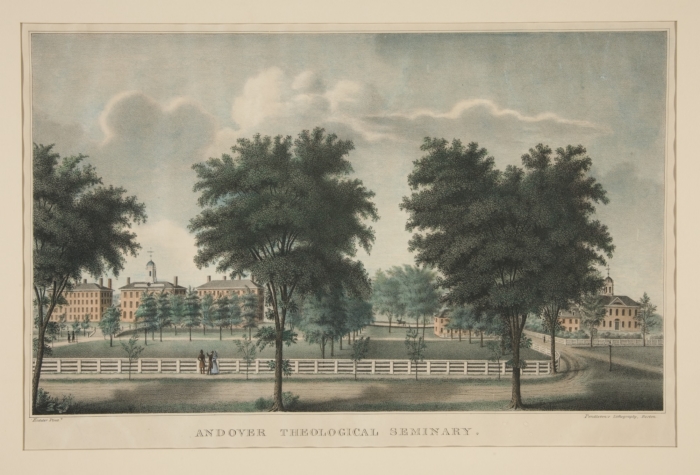
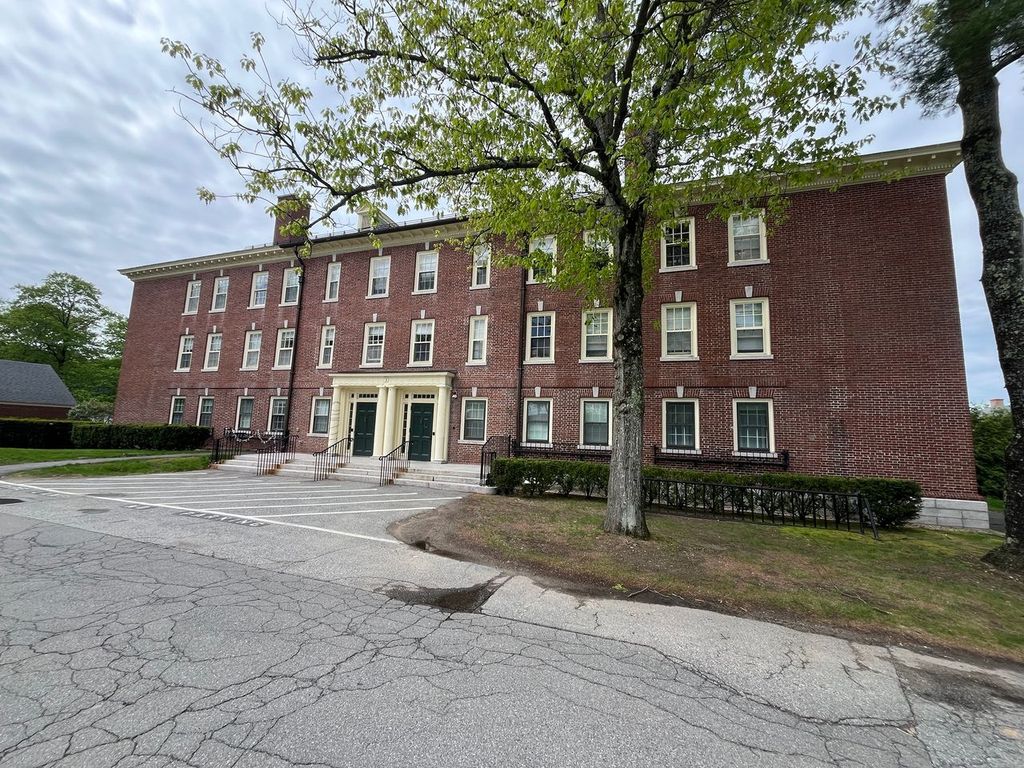
The founding of Andover Theological Seminary (ATS) in 1808 was not an educational expansion; it was an act of theological warfare directed at Harvard University. Following the appointment of the liberal Unitarian Henry Ware to the Hollis Chair of Divinity at Harvard in 1805, orthodox Calvinists viewed the Cambridge institution as lost to heresy. Eliphalet Pearson, the principal of Phillips Academy and a former acting president of Harvard, resigned his post in Cambridge and returned to Andover. He joined forces with Jedidiah Morse and Samuel Spring to establish a of Calvinist orthodoxy. The result was the graduate school in the United States, grafted directly onto the corporate structure of Phillips Academy. The governance model established in 1807 was a legal and administrative labyrinth. The Academy and the Seminary shared a single Board of Trustees, yet the Seminary was beholden to a separate, draconian regulatory body known as the Board of Visitors. This second board possessed the power to veto the election of professors and to police theological purity. To secure funding from wealthy donors like Samuel Abbot and William Bartlet, the founders drafted the "Associate Statutes," which included the infamous Andover Creed. This document required every professor to sign a strict statement of faith upon inauguration and to reaffirm their adherence to every article of the creed every five years. The statutes explicitly forbade any alteration to the creed, locking the institution into a theological stasis that would eventually strangle it. For the half of the 19th century, the Seminary eclipsed the Academy in prestige, wealth, and physical footprint. The Trustees used Seminary funds to construct the "Great Quadrangle" of brick colonial buildings that define the campus today: Bartlet Hall, Foxcroft Hall, and Bartlet Chapel ( Pearson Hall). The Academy, by contrast, remained a smaller preparatory department, frequently regarded by the Trustees as a mere feeder school for the graduate program. The Seminary attracted world-class scholars and launched the American foreign mission movement, while the Academy struggled with discipline and identity under the shadow of its graduate-level sibling. The physical dominance was absolute; the "Theologicals" occupied the best rooms and walked the route with the air of chosen men, while the "Academics" were relegated to the margins of the hill. The theological rigidity of the Associate Statutes collided with intellectual progress in the late 19th century, culminating in the "Andover Controversy." By the 1880s, the faculty at the Seminary had begun to examine the "New Theology," which incorporated German biblical criticism and evolutionary theory. The specific point of contention was the hypothesis of "future probation," the idea that heathens who died without hearing the Gospel might receive a second chance at salvation in the afterlife. This notion violated the strict Calvinist tenets of the Andover Creed. In 1886, the Board of Visitors, acting as a theological inquisition, brought formal charges of heresy against five professors: Egbert C. Smyth, William J. Tucker, J. W. Churchill, George Harris, and Edward Y. Hincks. The resulting "Andover Case" was a public relations disaster that dragged on for nearly a decade. The trial of Egbert Smyth, the President of the faculty, became a national spectacle. The Board of Visitors voted to remove Smyth from his chair in 1887, ruling that his teachings were incompatible with the creed he had signed. Smyth refused to accept the verdict and appealed to the Supreme Judicial Court of Massachusetts. The legal battle exposed the absurdity of the Seminary's governance structure, where the Board of Trustees supported the professors while the Board of Visitors sought to fire them. The Academy students watched as their campus became the battleground for a bitter religious civil war. The Supreme Court eventually set aside the Visitors' verdict in 1891 on a technicality, the damage was irreversible. The Seminary had been branded as a place of conflict and archaic dogma. Enrollment at the Seminary plummeted in the wake of the heresy trials. The theological world had moved on, the Andover Creed remained an iron chain around the institution's neck. By the early 1900s, the Seminary was financially insolvent and intellectually. The Trustees, who still managed both the Academy and the Seminary, faced a clear choice: watch the Seminary die a slow death or attempt a radical restructuring. In 1908, exactly one century after its founding to oppose Harvard, the Seminary voted to move to Cambridge and affiliate with Harvard Divinity School. The irony was total. The institution created to destroy Harvard Unitarianism was seeking sanctuary within its walls. The departure of the Seminary in 1908 precipitated the most significant real estate transaction in the history of Phillips Academy. The Academy purchased the entire Seminary plant, including the main academic buildings, dormitories, and faculty houses, for the sum of $250, 000. This acquisition transformed the Academy from a tenant on its own hill into the sole master of the campus. The "Great Quadrangle" became the center of Academy life. Bartlet Chapel was renamed Pearson Hall and converted into the main classroom building. The Seminary's library, Brechin Hall, was repurposed. The distinct "Seminary Row" was integrated into the Academy's expanding footprint, allowing for the enrollment growth that would characterize the 20th century. The legal of the 1908 move continued for decades. The Supreme Judicial Court of Massachusetts ruled in 1925 that the affiliation with Harvard violated the original donor intent of the Associate Statutes, forcing the Seminary to suspend operations. It later merged with the Newton Theological Institution to form Andover Newton, which eventually affiliated with Yale Divinity School in 2017. For Phillips Academy, the 1908 separation was a liberation. The school was free from the theological oversight of the Board of Visitors and the financial entanglements of a failing graduate school. The "Andover Creed" was relegated to the archives, and the Academy was free to pursue a secular and modern educational mission.
Timeline of Academy-Seminary Relations (1807, 1908)
Year
Event
Significance
1807
Seminary Founded
Trustees of Phillips Academy authorized to hold funds for a theological institution.
1808
Associate Statutes Signed
Established the "Andover Creed" and the "Board of Visitors" to police orthodoxy.
1818
Bartlet Hall Constructed
major brick dormitory built by Seminary funds; later acquired by PA.
1886
The Andover Case
Five professors tried for heresy by the Board of Visitors for teaching "future probation."
1892
Smyth Reinstated
Supreme Judicial Court voids the removal of Professor Egbert Smyth.
1908
The Great Separation
Seminary moves to Cambridge (Harvard). PA buys the campus for $250, 000.
The physical legacy of the Seminary remains the dominant architectural feature of the Phillips Academy campus in 2026. The "Seminary Row" creates the visual axis of the school, a reminder of the century when the Academy lived in the shadow of a theological giant. The relationship between the two institutions serves as a case study in the dangers of ideological rigidity. The Seminary's refusal to adapt its creed to changing intellectual currents led to its collapse, while the Academy's ability to absorb the Seminary's assets allowed it to survive and expand. The $250, 000 purchase price, equivalent to roughly $8. 5 million in 2026 currency, represents one of the most astute property acquisitions in the history of American education. The "Board of Visitors" continued to exist as a legal entity long after the Seminary left, a ghostly remnant of the complex corporate structure devised in 1807. Their power to police the Academy's theology with the Seminary, yet the legal separation required years of untangling. The Academy had to petition the courts to ensure that the endowments meant for the "promotion of true Piety and Virtue" could be applied to secondary education without the strictures of the 1808 creed. The successful extraction of the Academy from the Seminary's collapse prevented the school from being dragged down by the "Andover Controversy" and set the stage for the administrative reforms of Principal Alfred Stearns. The theological battles of the 19th century may seem arcane to the modern observer, yet they determined the physical and financial reality of the current school. The endowment of Phillips Academy was partially built on the initial capital injection meant for the Seminary. The buildings that house 21st-century mathematics and English classes were constructed to train Calvinist ministers to fight Unitarianism. The ghost of Eliphalet Pearson, who founded the Academy, left for Harvard, returned to found the Seminary, and then fought to keep them orthodox, looms over the Great Lawn. His vision of a theological failed, the brick and mortar shell he created became the body of the Academy itself.
The Abbot Academy Merger (1973)
On June 28, 1973, the Trustees of Phillips Academy and Abbot Academy signed an agreement that ended 144 years of female educational independence on School Street. The merger, September 1 of that year, was not a partnership of equals. It was an acquisition. Phillips Academy, the older and wealthier institution, absorbed the assets, land, and student body of Abbot Academy, the incorporated school for girls in New England. This consolidation was the definitive structural shift of the academy's modern era, expanding its physical footprint and fundamentally altering its social composition. Theodore Sizer, appointed Headmaster of Phillips Academy in 1972, orchestrated this transition as a strategic need, recognizing that the single-sex boarding school model was rapidly becoming obsolete in the American educational market.
Abbot Academy, founded in 1829, possessed a distinct pedagogical lineage. While Phillips Academy had long functioned as a feeder for Yale and Harvard, prioritizing rigor and Calvinist discipline, Abbot had cultivated a curriculum that balanced academic density with the arts. By the early 1970s, Abbot sat on a prime tract of land adjacent to the Phillips campus, holding significant real estate assets including Abbot Hall, Draper Hall, and the McKeen rooms. The merger transferred these physical assets to the Phillips Academy Trustees. In exchange, the "Abbot" name was preserved primarily through the designation of the "Abbot Campus" and the creation of the Abbot Academy Fund (AAF). The AAF was seeded with $1 million from the Abbot endowment, a ring-fenced capital pool designed to fund grants for student and faculty projects, ensuring that the Abbot legacy would maintain a fiscal, if not administrative, heartbeat within the larger institution.
The impetus for the merger was as much financial as it was social. By 1970, Phillips Exeter Academy had already adopted coeducation, placing immediate pressure on Andover to follow suit or risk losing its competitive edge in admissions. The applicant pool for single-sex boys' schools was shrinking. Sizer, a visionary educator coming from Harvard, understood that for Andover to remain a "national high school," it required the diversity and social realism that only coeducation could provide. Donald Gordon, the Principal of Abbot Academy, recognized the writing on the wall. Abbot faced the inverse problem: while solvent, it risked marginalization as the best female students increasingly sought coeducational environments. The negotiations were tense, with Abbot alumnae fearing, correctly, as history would show, that their school's identity would be subsumed by the "Big Blue" machine.
To manage the sudden population explosion, the combined student body swelled to over 1, 200, Sizer implemented the Cluster System. This administrative restructuring divided the school into five distinct residential neighborhoods: Abbot, Flagstaff, Pine Knoll, West Quad, and Rabbit Pond. Each cluster operated as a smaller social unit with its own dean and student government, a deliberate attempt to replicate the intimacy of a smaller school within the context of a large institution. The Cluster System was not a housing assignment; it was a social engineering tool designed to force integration. Abbot students were not simply kept on the Abbot campus; they were distributed, though the physical distance between the "Main Campus" and the "Abbot Campus" created logistical friction that for decades. The trek between the two became a daily ritual, symbolizing the incomplete suture between the two cultures.
The immediate post-merger era was characterized by significant cultural turbulence. The ratio of boys to girls was initially skewed, roughly 3: 1, creating an environment where female students frequently felt like guests in a male clubhouse. The terminology of the time reflects this friction; the absorption of the "Abbot Rabbits" (a diminutive nickname) into the Phillips ethos was not direct. Curricular integration proved equally complex. Abbot's strengths in the performing arts enriched Andover's offerings, eventually leading to a more strong arts program, yet the "hard" sciences and athletics remained dominated by the traditional Phillips hierarchy for years. It took nearly two decades for the gender ratio to reach parity and for the faculty composition to reflect the new coeducational reality.
Financially, the merger was a coup for Phillips Academy. The acquisition of the Abbot campus provided the space necessary for future expansion without the need to purchase expensive adjacent residential properties. The Abbot buildings, while requiring renovation, added historic depth and capacity to the school's housing stock. The table details the key assets and figures associated with the 1973 merger, reconstructing data from the transition period.
Table 3. 1: Phillips Academy & Abbot Academy Merger Metrics (1973)
Metric
Phillips Academy (Pre-Merger)
Abbot Academy (Pre-Merger)
Combined Institution (1973-74)
Founding Year
1778
1829
1778 (Retained)
Head of School
Theodore Sizer
Donald Gordon
Theodore Sizer
Approx. Enrollment
~900 Boys
~300 Girls
~1, 200 Coed
Campus Designation
Main Campus
Abbot Campus
Phillips Academy
Endowment Action
Retained
Transferred / Dissolved
Consolidated ($1M to AAF)
Governance
Board of Trustees
Board of Trustees
Single Board (Phillips)
By 2026, the "Abbot" name largely as a geographic and philanthropic designator. The Abbot Academy Fund continues to problem grants, keeping the spirit of the original charter alive through innovation awards. Yet, the institutional memory of Abbot as a sovereign entity has faded. Current students inhabit the Abbot dorms frequently without a clear understanding of the independent history those walls once contained. The merger is viewed by educational historians not just as an administrative combination, as a pivotal moment where Phillips Academy chose expansion and modernization over tradition, erasing a 144-year-old sister institution to secure its own survival in the 20th century. The "Abbot merger" remains the single most significant expansion event in the academy's history, second only to its founding.
The integration also forced a re-evaluation of the school's motto, Non Sibi (Not for Self). The arrival of women challenged the entrenched fraternity culture and forced the academy to broaden its definition of service and community. While the transition was with misogyny and resistance in the 1970s, the long-term result was a more pluralistic environment. The Cluster System, Sizer's brainchild, remains a defining feature of student life today, a direct artifact of the need to process the Abbot population. Thus, while Abbot Academy ceased to exist as a corporate entity on June 28, 1973, its DNA is structurally woven into the modern Phillips Academy, from the map of the campus to the organization of the student body.
The physical evolution of Phillips Academy mirrors the trajectory of American wealth and institutional power, transforming from a repurposed carpenter's shop in 1778 to a sprawling 500-acre dominion of Georgian brick and LEED-certified glass by 2026. The campus began humbly on the "Old Campus" near the current golf course, where the schoolhouse stood. This structure, a simple joiner's shop, proved insufficient almost immediately. By the early 19th century, the center of shifted to "The Hill," a topographic rise that would become the architectural heart of the institution. This migration was not geographic strategic, aligning the Academy with the Andover Theological Seminary, founded in 1808. The Seminary's construction of Bartlet Chapel ( Pearson Hall), Foxcroft Hall, and Bartlet Hall established a Federal-style aesthetic that defined the school's visual identity long before the two institutions formally merged their assets.
The acquisition of the Andover Theological Seminary plant in 1908 stands as the most serious real estate transaction in the school's early history. When the Seminary relocated to Cambridge, Phillips Academy purchased its land and buildings, doubling its footprint and securing the "Great Quadrangle." This purchase consolidated the campus left it aesthetically disjointed. The true architectural unification occurred in the 1920s through the financial intervention of Thomas Cochran, Class of 1890. A partner at J. P. Morgan, Cochran poured millions, equivalent to over $180 million in 2024 currency, into a radical "beautification" campaign. He hired architect Charles Platt to design a master plan that imposed order upon the grounds. Platt delivered the Oliver Wendell Holmes Library (1929), the Cochran Chapel (1932), and the Addison Gallery of American Art (1931), while the Olmsted Brothers firm re-engineered the terrain to create the sweeping vistas visible today. Cochran's checkbook did not just build structures; it erased roads, moved mature elm trees, and demolished buildings that failed to meet his vision of an "ideal" New England academy.
The merger with Abbot Academy in 1973 necessitated another massive integration of real estate. The acquisition of the Abbot campus, located nearly a mile from the main quadrangle, added 45 acres and a distinct architectural cluster centered on the Victorian-era Draper Hall. For decades, the "Abbot Circle" functioned as a satellite, housing students and arts facilities, yet frequently feeling peripheral to the main campus operations. By the 2010s, the administration initiated aggressive moves to better connect these zones, using the "Pine Knoll" cluster as a. The challenge of maintaining historic structures while modernizing for 21st-century needs became a central tension in the school's capital planning.
In the 21st century, the focus shifted from Georgian revivalism to sustainability and athletic supremacy. The "arms race" of prep school facilities drove the construction of the Gelb Science Center (2004), a $40 million facility topped with an observatory, replacing the antiquated Evans Hall. This was followed by the Snyder Center (2018), a 98, 000-square-foot athletic complex that achieved Net Zero energy performance through solar arrays and geothermal systems. The Snyder Center, housing squash courts and an indoor track, signaled a departure from the oil-dependent heating of the past. This modernization continued with the Pan Athletic Center, a 70, 000-square-foot facility housing a swimming and diving complex, which opened in late 2022. Funded by a $25 million gift from Zhang Xin and Pan Shiyi, the building completed the athletic corridor, allowing the demolition of the aging Case Memorial Cage.
By 2026, the campus physical plant had undergone its most significant update in a century with the opening of the Falls Music Center in January 2025. Replacing Graves Hall, which had served the music department since the 19th century, the new center (named for Board President Amy Falls) introduced professional-grade recording studios and performance spaces, acknowledging that arts facilities required the same capital intensity as athletics. Simultaneously, the school completed the renovation of Adams House in November 2025. This project, managed by Erland Construction, updated one of the school's historic dormitories with modern mechanical systems while preserving its 1912 Georgian facade, a strategy the administration applies to maintain the "historic" veneer while gutting interiors for efficiency.
Major Campus Expansion Eras (1808, 2026)
Era
Key Architect / Planner
Defining Structures
Strategic Focus
Seminary Era (1808, 1908)
Charles Bulfinch (attr.), Asher Benjamin
Pearson Hall, Bulfinch Hall, Bartlet Hall
Theological training; Federal style brick rows.
Cochran Transformation (1920, 1935)
Charles Platt, Olmsted Brothers
Chapel, Library, Addison Gallery, Paresky Commons
Aesthetic unification; Colonial Revival grandeur.
Modernization & Sustainability (2000, 2026)
Perkins&, DiMella Shaffer
Gelb Science, Snyder Center, Pan Athletic, Falls Music
LEED certification, Net Zero energy, specialized facilities.
The Academy operates as a "company town," a reality enforced by its housing policy. Over 90 percent of the faculty reside in campus housing, a portfolio that includes large dormitories, smaller "cottages," and standalone colonial homes. This real estate strategy is not a perk a requirement for the "triple threat" model of teaching, coaching, and house counseling. The maintenance of these hundreds of residential units constitutes a massive operational liability, yet it secures the 24/7 surveillance and community immersion that the boarding model demands. The "Faculty Points System" governs the allocation of these units, a bureaucratic method that ranks teachers by tenure and role to distribute the prime real estate assets.
Land conservation remains the final pillar of the Academy's physical plant strategy. The Moncrieff Cochran Sanctuary, a 65-acre nature preserve, acts as a buffer against the suburban encroachment of the town of Andover. In 2026, this land is not just a scenic backdrop a living laboratory for environmental science and a serious component of the school's carbon sequestration efforts. The administration's refusal to develop this land, even with high property values in the Boston metro area, signals a commitment to the "ideal" academy environment envisioned by the founders, even as the physical plant consumes vast energy and capital resources to operate.
Endowment Asset Allocation and Fundraising (1990, 2026)
The financial history of Phillips Academy from 1990 to 2026 is defined by a singular, aggressive pivot: the transition from a traditional school treasury to a sophisticated, Wall Street-style investment office. In the early 1990s, the Academy's endowment functioned primarily as a safety net, invested conservatively in public equities and bonds. By 2026, it had mutated into a complex financial engine valued at over $1. 41 billion, funding more than half of the school's operating budget and employing strategies indistinguishable from top-tier hedge funds.
This transformation began in earnest in 2005. Recognizing that the school's financial ambitions outpaced its returns, the Board of Trustees hired Amy Falls, a Morgan Stanley strategist, as the Chief Investment Officer (CIO). This decision marked a departure from the standard practice of independent schools, which relied on investment committees or external consultants. Falls established a dedicated investment office in New York City, physically and operationally removed from the Andover campus. Her mandate was to replicate the "Yale Model" pioneered by David Swensen: reducing exposure to standard stocks and bonds in favor of illiquid, high-return assets like private equity, venture capital, and absolute return hedge funds.
The timing of this shift subjected the Academy to an immediate, severe stress test. In May 2008, the endowment stood at approximately $820 million. Months later, the global financial emergency struck. The liquidity crunch that followed exposed the risks of the new asset allocation strategy. With capital locked in private partnerships, the school faced pressure on its operating cash flow. Unlike peers who slashed budgets indiscriminately, Andover's leadership, including Falls and the Board, utilized a counter- strategy: they issued debt. By borrowing money to maintain operations and capital projects, the Academy avoided selling depressed assets at the market bottom. This maneuver allowed the endowment to recover its value as markets rebounded in 2009 and 2010, generating top-quartile returns among institutional investors.
The post-emergency era saw the endowment climb past the $1 billion mark, driven by a dual engine of investment returns and aggressive fundraising. The "Campaign Andover," which concluded in 2002, had already set a high bar by raising over $200 million. Yet, the "Knowledge & Goodness" campaign, launched in 2017, shattered previous records. Concluding in January 2023, this campaign raised $408. 9 million, surpassing its $400 million goal. The effort mobilized 19, 996 donors and secured $103 million specifically for financial aid endowment, a necessary step to sustain the school's need-blind admission policy. Without this massive injection of capital, the Academy's tuition, already among the highest in the nation, would theoretically need to exceed $120, 000 per student to cover actual costs, according to Board President Amy Falls.
Phillips Academy Endowment & Fundraising Milestones (2008, 2024)
Fiscal Event / Metric
Value / Outcome
Context
2008 Endowment Peak
$820 Million
Pre-financial emergency high water mark.
Knowledge & Goodness Campaign
$408. 9 Million
Raised 2017, 2023; record-breaking total.
FY 2024 Endowment Value
$1. 41 Billion
Return of +10. 4% for the fiscal year.
Operating Budget Reliance
52%
Portion of annual budget funded by endowment draw (2024).
Spending Rate
4. 6%
Percentage of endowment assets liquidated for annual use.
By fiscal year 2024, the endowment reached $1. 41 billion, delivering a 10. 4% return that outperformed the median for billion-dollar endowments. The reliance on this capital pool has become absolute. In the 2023-2024 academic year, the endowment draw covered 52% of the Academy's operating expenses. This dependency creates a high- environment for the current CIO, Kirsten Glantz. The investment office must generate returns that exceed the spending rate ( 4% to 5%) plus inflation, to keep the school's purchasing power flat. Any prolonged period of market stagnation threatens the school's ability to offer financial aid or maintain its sprawling physical plant.
The asset allocation strategy in the 2020s shows a nuanced evolution from the early Falls era. While the portfolio remains heavy in alternative assets, the 2024 annual report noted that Andover held "less illiquid PE/VC exposure" than of its largest peers. This slight pull back from illiquidity suggests a risk management pivot, prioritizing flexibility in an economic environment defined by high interest rates and geopolitical instability. The investment team continues to operate out of New York, maintaining the professional separation between the school's academic administration and its financial engine.
This financial has not been without internal friction. The period from 2015 to 2026 saw intensifying conflict regarding the ethics of the endowment's holdings, particularly concerning fossil fuels. Student activists, organized under the banner of "Divest Andover," staged protests and marches, including a demonstration in April 2022 that drew 300 students to the steps of Samuel Phillips Hall. They demanded the immediate removal of all investments tied to the coal, oil, and gas industries.
The Board of Trustees rejected demands for immediate divestment. Their refusal rested on the mechanics of the "Yale Model." The Academy's exposure to fossil fuels was primarily through commingled private equity funds, legacy investments made years prior that could not be sold on the secondary market without incurring steep financial losses. CIO Kirsten Glantz argued that the school was not in control of the timing of distributions from these private funds. Instead of a fire sale, the Board committed to a gradual unwinding, pledging not to make new direct investments in fossil fuels while allowing existing contracts to expire. This "gradualist" method prioritized fiduciary duty and the preservation of the endowment's value over the immediate moral cleansing demanded by the student body.
As of March 2026, the endowment remains the central pillar of Phillips Academy's existence. It is no longer just a school with a savings account; it is a mid-sized asset management firm attached to a high school. The sheer of the fund, averaging over $1. 2 million per student, allows Andover to operate in a different reality than nearly every other secondary school on Earth. Yet, this wealth binds the institution's fate to the volatility of global capital markets. A repeat of the 2008 crash, where the budget reliance has grown to over 50%, would force draconian cuts that no amount of tuition increases could offset.
Admissions Metrics and Demographic Shifts (2010, 2026)
The Abbot Academy Merger (1973)
The admissions funnel at Phillips Academy has tightened with mechanical precision between 2010 and 2026, transforming the institution from a selective boarding school into a of statistical exclusion comparable to Ivy League universities. In 2010, the acceptance rate hovered near 14 percent, a figure that allowed for a degree of predictability for legacy families and highly qualified applicants. By 2022, that figure plummeted to 9 percent, a historic low driven by a surge in applications during the COVID-19 pandemic and a permanent shift in the of global competition. For the academic year 2025, 2026, the school maintained this single-digit selectivity for upper-grade entry, receiving over 3, 000 applications for approximately 400 spots. This contraction reflects a broader trend in elite secondary education where the "unhooked" applicant, one without athletic recruitment, legacy status, or significant development chance, faces admission rates closer to 5 percent.
The financial barrier to entry has risen in tandem with academic selectivity. In 2010, boarding tuition stood at approximately $40, 000. By the 2025, 2026 academic year, the sticker price for a boarding student reached $76, 731, with day student tuition climbing to $59, 478. This explosive growth in cost far outpaced inflation, cementing the school's status as a luxury good. Yet, this era also defined the academy's aggressive pivot toward financial egalitarianism for those who could cross the admissions threshold. Following the Board of Trustees' decision to adopt a need-blind admission policy in 2007, implemented fully in 2008, the school decoupled a family's ability to pay from the admissions verdict. This policy, sustained through the 2026 pattern, remains a rarity even among the wealthiest peer institutions.
The implementation of need-blind admission fundamentally altered the demographic composition of the student body. In the early 2000s, the campus population was predominantly white and affluent. By 2024, the school reported that 47 percent of students received financial aid, with an average grant for returning students exceeding $58, 000. The endowment, valued at $1. 41 billion as of September 2024, underwrites this massive expenditure, allowing 12 to 14 percent of the student body to attend on full scholarships. This financial engineering created a "barbell" socioeconomic structure: a campus populated heavily by the very wealthy who pay full freight and the lower-income students on full aid, while the middle class, too rich for substantial grants yet too poor to easily afford $76, 000 annually, faces a squeeze.
Racial demographics shifted sharply during this sixteen-year window. Data from the 2021, 2022 academic year indicated that white students comprised only 36. 5 percent of the student body, a clear contrast to the majorities of the previous century. Asian students represented 33 percent, while Black and Hispanic students accounted for 10. 2 percent and 10. 5 percent, respectively. A student-led survey in March 2023 suggested even higher diversity numbers when allowing for multi-racial identification, with over 50 percent of respondents identifying as students of color. This transition was not accidental the result of targeted recruitment and the removal of financial blocks. The "Youth from Every Quarter" motto, once a geographical aspiration, became a racial and socioeconomic mandate.
The geography of the student body also expanded. International students constitute approximately 15 percent of enrollment, with significant representation from China, South Korea, and the United Kingdom. In March 2024, the school enrolled 184 international students. This global influx intensified the competition, as domestic applicants found themselves vying for spots against the highest-performing students from Shanghai, London, and Seoul. The "day student" population, traditionally drawn from the immediate vicinity of Andover, Massachusetts, also saw a regulatory upheaval. For the 2025, 2026 admissions pattern, the academy removed geographic restrictions for day applicants. This policy shift allows families from the wealthy suburbs of Boston or Cambridge to apply as day students, provided they can manage the commute, further saturating the local applicant pool.
Standardized testing policies at Andover underwent a volatile oscillation between 2020 and 2026. Prior to the pandemic, the SSAT (Secondary School Admission Test) or ISEE (Independent School Entrance Exam) were non-negotiable requirements, serving as a primary filter for academic readiness. The onset of COVID-19 forced the school to adopt a test-optional policy for the 2021 and 2022 pattern, mirroring a national trend in higher education. Yet, unlike colleges that permanently abandoned testing requirements, Andover reversed course. For the 2025, 2026 application pattern, the administration reinstated the requirement for standardized test scores (SSAT, ISEE, PSAT, SAT, or ACT). This return to testing signals a reaffirmation of objective metrics as a necessary tool for sorting a hyper-competitive applicant pool, distinguishing the academy from institutions that maintained test-optional postures to application numbers.
Phillips Academy Admissions & Financial Metrics (2010, 2026)
Metric
2010 (Approx.)
2022 (Pandemic Low)
2025, 2026 (Current)
Acceptance Rate
~14%
9%
~13% (in total) / <10% (Upper Years)
Boarding Tuition
$40, 500
$61, 950
$76, 731
Day Tuition
$31, 500
$48, 020
$59, 478
Financial Aid %
42%
46%
47%
Endowment
$800 Million
$1. 3 Billion
$1. 41 Billion
White Enrollment
Majority
36. 5%
~36-40%
The legal environment surrounding admissions also grew complex following the Supreme Court's 2023 ruling in Students for Fair Admissions v. Harvard. While the ruling technically applied to higher education institutions receiving federal funding, private secondary schools like Andover faced immediate pressure to audit their selection processes. The academy maintained its commitment to diversity, relying on its review process, which considers essays, interviews, and character assessments, to build a heterogeneous class without relying solely on explicit racial checkboxes. The "Candidate Profile" submitted via the Gateway to Prep Schools portal remains the central document, the scrutiny on how admissions officers weigh demographic factors has intensified.
Yield rates, the percentage of accepted students who choose to enroll, remained consistently high, frequently exceeding 80 percent. This dominance allows the admissions office to predict class size with high accuracy, minimizing the need for a waitlist movement. The school's "yield" is bolstered by the "Revisit Days," elaborate on-campus events designed to close the deal with admitted students. For the Class of 2028 and beyond, these events have returned to full in-person capacity, reinforcing the physical allure of the campus facilities, which include the Snyder Center and the Gelb Science Center, both built or renovated during this period to justify the escalating tuition.
The admissions at Phillips Academy in 2026 is defined by a paradox: the school is more diverse and financially accessible than at any point in its history, yet it is simultaneously more exclusive and expensive for the unhooked middle class. The "need-blind" pledge ensures that the most talented students from low-income backgrounds can attend, the crushing weight of a 9 percent acceptance rate means that for the vast majority of applicants, the door remains firmly shut.
Tuition Structures and Financial Aid Expenditures
The financial history of Phillips Academy reveals a relentless tension between its egalitarian founding charter and the economic realities of elite instruction. When Samuel Phillips Jr. penned the Constitution in 1778, he mandated that the school be open to "youth from every quarter." He intended for tuition to be nominal. He expected the school to operate as a public trust. Yet the modern iteration of this trust operates with a balance sheet resembling a mid-sized corporation. The tuition for the 2025-2026 academic year stands at $76, 731 for boarding students. This figure exceeds the median household income of the United States. It surpasses the tuition of Ivy League universities like Harvard and Yale. The trajectory from a localized grammar school to a global luxury brand is defined by periods of aggressive inflation, strategic endowment growth, and a pivotal 2008 policy shift that fundamentally altered the institution's demographic composition. The early financial model of the Academy relied heavily on the largesse of the Phillips family and the expectation of low overhead. Students in the 18th and early 19th centuries frequently paid in commodities or small sums of currency that barely covered the master's salary. The school functioned as a feeder for divinity programs. It subsidized the "indigent pious" who were destined for the clergy. This created a bifurcated student body early on. There were those who paid and those who were carried by the endowment. By the mid-20th century, this informal charity had hardened into a tuition-dependent model. The post-World War II era introduced a new economic paradigm. Operational costs soared. Faculty demanded competitive wages. The physical plant required modernization. The inflation emergency of the late 1970s and early 1980s marked a turning point. Between 1980 and 1986, tuition at Phillips Academy rose by 66 percent. The cost for a boarding student jumped from $6, 300 in 1980 to over $10, 500 by 1986. This increase far outpaced the Consumer Price Index. School officials at the time the need to catch up with deferred maintenance and stagnant faculty salaries. This period cemented the school's reputation as a bastion for the ultra-wealthy. The middle class began to from the roll calls. The "sticker price" had become a formidable barrier. It filtered out all the most affluent or the few who could secure limited scholarship funds. The administration of Barbara Landis Chase, which began in 1994, confronted this stratification. The Board of Trustees recognized that the school was failing its constitutional mandate. They launched a strategic initiative to decouple admission decisions from financial solvency. This culminated in the adoption of a "Need Blind" admission policy in November 2007. The policy took effect for the class entering in the fall of 2008. This was a high- financial gamble. It obligated the Academy to admit the most qualified students regardless of their ability to pay. It further committed the school to meeting 100 percent of the "demonstrated financial need" of every admitted student. This policy distinguishes Phillips Academy from the vast majority of independent schools. Most private institutions operate on a "need-aware" basis. They consider a family's ability to pay as a factor in the final acceptance decision. Andover's shift to need-blind admission required a massive infusion of capital. The "Campaign for Andover" and subsequent fundraising drives, such as the "Knowledge & Goodness" campaign, prioritized endowment growth specifically for financial aid. The endowment covers approximately 45 percent of the school's annual operating expenses. School officials state that the actual cost to educate one student is significantly higher than the charged tuition. Without the endowment subsidy, the true cost per student would method $120, 000 annually. The following table illustrates the escalation of boarding tuition at Phillips Academy over the last four decades. The data shows a consistent upward trend that frequently exceeds the rate of national inflation.
Academic Year
Boarding Tuition
Day Tuition
Notes
1980-1981
$6, 300
$4, 800
Start of 1980s inflation spike.
1982-1983
$8, 200
$6, 250
Tuition rises 30% in two years.
1986-1987
$10, 500
$8, 000
Tuition crosses the $10k threshold.
2012-2013
$44, 500
$34, 500
Post-2008 financial emergency recovery.
2017-2018
$53, 900
$41, 900
Tuition rivals private university costs.
2024-2025
$73, 780
$57, 190
Post-COVID inflation adjustments.
2025-2026
$76, 731
$59, 478
Current published rates.
The "Need Blind" pledge relies on a complex calculation of family contribution. The Academy uses the Princeton Financial Aid Application and its own metrics to determine what a family can afford. For families earning less than $75, 000, the school requires zero contribution. These students receive a "full ride." This includes tuition, room, board, books, and mandatory fees. It also covers "hidden" costs that frequently alienate low-income students at elite institutions. The aid package provides for travel expenses to and from campus. It covers health insurance. It even includes a stipend for winter clothing and a laptop computer. This method attempts to remove the social stigma of poverty within the dormitory. The financial aid budget for the 2024-2025 academic year exceeded $29 million. Approximately 47 percent of the student body receives form of grant assistance. The average grant size for returning students is roughly $58, 000. This indicates that for nearly half the school, the "sticker price" is irrelevant. They pay a fraction of the cost. The remaining 53 percent pay the full $76, 731. This creates a "barbell" socioeconomic structure. The campus population is heavily weighted with the very wealthy and the very poor or lower-middle class. The demographic that faces the most significant pressure is the upper-middle class. Families with household incomes between $200, 000 and $350, 000 frequently find themselves in a difficult position. They may qualify for partial aid. Yet the remaining contribution can still amount to $30, 000 or $40, 000 per year. This is paid from post-tax income. For a family with multiple children, this cost is prohibitive. The Academy has attempted to address this by adjusting its aid formulas to provide relief to this bracket. They that a family earning $250, 000 in a high-cost-of-living area like New York City or San Francisco does not possess the liquidity to pay full tuition. The endowment is the engine that sustains this economy. As of June 2025, the endowment stood at approximately $1. 47 billion. The school draws about 5 percent of this value annually to fund operations. This draw is serious. It allows the school to maintain a student-faculty ratio of 5: 1. It funds the maintenance of the 700-acre campus. It supports the 300-course curriculum. If the endowment were to suffer a catastrophic loss, as it did during the 2008 financial emergency, the entire operating model would face immediate. In 2009, the endowment value dropped, and the school had to borrow money to maintain its commitments without firing staff or cutting aid. They successfully navigated that period. Yet it showed the fragility of a model dependent on investment returns. The tuition structure of Phillips Academy is a mirror of the wider American economic problem. It shows the extreme cost of high-touch, resource-intensive education. It also demonstrates the need of massive accumulated capital to make that education accessible. The school has created a subsidized economy within its walls. The wealthy subsidize the talented poor. The endowment subsidizes everyone. The result is an institution that is simultaneously one of the most expensive and one of the most generous in the American secondary education system. The $76, 731 price tag is real for the unassisted. for the scholarship student, the cost is zero. The distance between those two numbers defines the modern financial identity of Andover.
Secret Societies and Student Social Hierarchies
Campus Real Estate and Physical Plant
The clandestine history of Phillips Academy is dominated by the rise, fall, and zombie-like persistence of its secret societies. For nearly seventy-five years, these organizations operated as the de facto power structure of the school, enforcing a rigid social stratification that administration officials struggled to. ### The Golden Age of Exclusion (1874, 1949) The and most prominent society, **Kappa Omega Alpha (K. O. A.)**, formed in September 1874. Founded by Roland David Swope and four other students, K. O. A. was modeled after the senior societies of Yale University, specifically Skull and Bones. Its members, frequently referred to as "K. O. A. men," monopolized student leadership positions and captaincies of varsity athletic teams. They met initially in the basement of a local eatery, "Hatch's," before constructing a private lodge. Quickly following K. O. A. came **Auctoritas, Unitas, Veritas (A. U. V.)** in 1877, and **Phi Beta Chi (P. B. X.)** shortly after. By the early 20th century, seven major societies dominated campus life: K. O. A., A. U. V., P. B. X., **Phi Alpha Chi (P. A. E.)**, **Alpha Gamma Chi (A. G. C.)**, **Phi Lambda Delta (F. L. D.)**, and **Epsilon Delta Phi (E. D. P.)**. These groups owned real estate on and around the campus; their "houses" were windowless or heavily curtained, designed to keep non-members, referred to derisively as "neutrals", completely in the dark. Membership was the currency of social worth. The societies selected students based on athletic prowess, wealth, and family lineage. A 1943 report by Headmaster Claude Fuess noted that the societies absorbed "all the best athletes, the managers of teams, the playboys, and the 'good fellows'." Those rejected were left socially, creating a toxic two-tier system. Initiation rituals were physically dangerous and psychologically abusive. A. U. V. pledges were forced to sleep in the local cemetery, abstain from washing, and smoke clay pipes until sick. The violence escalated until 1933, when a student died following a society initiation. This tragedy forced the administration to ban off-campus initiations and physical torture, though the societies themselves were permitted to remain. ### The Great The post-World War II era brought a wave of democratization that made the societies untenable. Headmaster John Kemper, a West Point graduate, viewed the secret societies as antithetical to the school's public purpose. In 1949, after years of faculty pressure, the Trustees voted to abolish the societies. The dissolution process was complex. The school purchased the society houses, converting them into faculty housing or administrative buildings. * **K. O. A. House** became Alumni House. * **A. U. V. House** became Graham House. * **P. A. E. House** became Cooley House. * **A. G. C. House** became Benner House. By 1950, the official power of the societies was broken. To fill the social vacuum, the administration introduced the **Cluster System** in the late 1960s. Modeled on the residential colleges of Yale and Harvard, the campus was divided into five clusters (Flagstaff, Pine Knoll, West Quad North, West Quad South, and Abbot). This system aimed to create smaller, inclusive communities where social standing was determined by geography rather than selection. ### The Abbot Merger and Gender The 1973 merger with **Abbot Academy**, a neighboring girls' school, fundamentally altered the social. While officially a union of equals, the practical reality was an absorption of Abbot into Phillips. Former Abbot students found themselves in a male-dominated environment where the "old boy" networks, though officially disbanded, still lingered in spirit. Social hierarchies shifted from society membership to gender and class lines. For decades after the merger, male students continued to hold a disproportionate number of leadership roles, such as School President. It was not until the 21st century that gender parity in student leadership became consistent. ### The Underground Persistence (1980s, 2026) Even with the 1949 ban, secret societies never truly. They mutated into underground "unrecognized" groups. The most notorious of these modern iterations is **Truth, Unity, Brotherhood (T. U. B.)**, frequently associated with the legacy of A. U. V. Another group, the **Madame Sarah Abbot Society (M. S. A. S.)**, emerged as a female counterpart. These groups operate without faculty supervision, continuing the tradition of exclusivity. In 2012, the administration updated the student handbook (The Blue Book) to explicitly prohibit participation in "secret societies or other exclusive entities." Recent incidents show their continued activity: * **2016:** The school administration publicly condemned the re-emergence of T. U. B. and M. S. A. S. * **April 2023:** A prankster replaced the American flag on campus with a T. U. B. flag. This brazen act prompted a stern rebuke from the Dean of Students, who described the group's history as one that "hearkened back with nostalgia to a time when Phillips Academy was almost entirely white and male." ### Modern Social Stratification In the absence of sanctioned societies, the social hierarchy of 2026 is defined by three primary vectors: 1. **Athletics:** Varsity athletes, particularly in high-profile sports like football, hockey, and crew, retain significant social capital. The "jock" culture, while less formalized than in the K. O. A. days, remains a distinct stratum. 2. **Wealth and Access:** even with a need-blind admission policy and 47% of students receiving financial aid, a divide between full-pay students and those on scholarship. This is frequently visible in off-campus spending and vacation habits. 3. **The Day/Boarder Divide:** While the Cluster System integrates day students, the boarding population forms tighter bonds due to the 24/7 nature of dorm life. The administration combats exclusivity through the Office of Community and Multicultural Development (CAMD). Affinity groups based on race, gender, and sexuality have replaced the secret societies as the primary engines of social organization for students, offering solidarity based on identity rather than exclusion.
Major Secret Societies of Phillips Academy (1874, 1950)
Society Name
Acronym
Founded
Former House Location
Notes
Kappa Omega Alpha
K. O. A.
1874
Alumni House
Modeled on Skull & Bones; oldest and most prestigious.
Auctoritas, Unitas, Veritas
A. U. V.
1877
Graham House
Known for brutal initiations; counted George H. W. Bush as a member.
Phi Beta Chi
P. B. X.
Late 1870s
Newton House
One of the "Big Three" early societies.
Phi Alpha Chi
P. A. E.
1880s
Cooley House
House later used as a student center.
Alpha Gamma Chi
A. G. C.
1880s
Benner House
Maintained a fierce rivalry with K. O. A.
Phi Lambda Delta
F. L. D.
1900s
Davison House
House is a dormitory.
Epsilon Delta Phi
E. D. P.
1915
Highland Road Cottage
The last major society founded before the ban.
Sexual Misconduct Investigations and Legal Settlements
The institutional reckoning with sexual misconduct at Phillips Academy began in earnest during the summer of 2016, driven by a regional wave of disclosures that exposed decades of abuse at New England boarding schools. Following the Boston Globe team's investigation into similar abuses at private schools, Head of School John Palfrey hired the Sanghavi Law Office to conduct an independent inquiry into historical allegations at Andover. This investigation marked a definitive end to the school's previous era of internal discretion, where reputational preservation frequently superseded student safety. The inquiry spanned nearly a year and resulted in the public identification of multiple former faculty members who had abused their positions of power.
In August 2016, the school released preliminary findings that identified three former educators: Stephen Wicks, H. Schuyler Royce, and Alexander Theroux. Wicks, a long-serving English teacher, was found to have engaged in sexual misconduct with a student in the 1980s. The administration stripped him of his emeritus status and barred him from campus. Royce, a history teacher and administrator who died in 1991, was identified as having committed multiple acts of abuse in the 1980s. Theroux, a writer-in-residence during the 1970s, was also named and banned from school grounds. These initial disclosures shattered the silence that had protected the faculty for decades, yet they represented only a fraction of the allegations that would eventually surface.
The full report from the Sanghavi Law Office, released in August 2017, expanded the scope of confirmed offenders. Investigators examined sixteen specific cases and found sufficient evidence to substantiate claims against additional faculty members. Among them were Brian Davidson and Frederic Lyman. Davidson, who taught at the academy in the 1970s, was found to have engaged in sexual intercourse with a student. Lyman, an English teacher, was for an "attempt at intimacy" involving unwanted touching. The Lyman case revealed the widespread failure known as "passing the trash," where abusive teachers were quietly dismissed from one institution only to be hired by another. After leaving Andover, Lyman moved to Choate Rosemary Hall, where he was later accused of sexual relationships with two students.
The investigation also acknowledged that the Sanghavi report did not cover every known case of abuse in the school's history. High-profile offenders such as David Cobb and Richard Keller, whose transgressions were already considered "public knowledge" or had been handled through prior administrative actions, were not re-investigated remain central to the school's historical record of misconduct. Cobb, a mathematics teacher, and Keller, an English teacher, operated during an era when the boundaries between faculty and students were dangerously porous, frequently exploiting the dormitory system to gain access to victims.
The following table summarizes the faculty members publicly identified by Phillips Academy or through subsequent legal disclosures as of 2026:
Faculty Name
Department/Role
Era of Misconduct
Status / Outcome
Stephen Wicks
English
1980s
Emeritus status revoked; banned from campus (2016).
Confirmed sexual intercourse with student; named in 2017 report.
Frederic Lyman
English
1970s
Named in 2017 report; also abused students at Choate.
Victor Svec
Russian
1980s
Placed on leave and retired (2018); married former student.
David Cobb
Mathematics
1960s-1990s
Acknowledged by school as historical offender.
Richard Keller
English
1960s-1990s
Acknowledged by school as historical offender.
In May 2018, a new allegation emerged concerning Victor Svec, a Russian language teacher hired in 1978. An independent investigation confirmed that Svec had engaged in sexual misconduct with a student in the late 1980s. The case drew significant scrutiny because Svec was married to a woman who had been a student at the academy during his tenure, a relationship long viewed by alumni as an "open secret." Svec was placed on leave in February 2018 and subsequently retired. This incident demonstrated that the 2017 report had not captured the totality of historical abuses and that the process of uncovering misconduct would continue well beyond the initial inquiry.
The legal terrain for Phillips Academy shifted dramatically in 2024 with the passage of Massachusetts House Bill 1618. This legislation eliminated the statute of limitations for civil claims related to child sexual abuse, removing the previous time blocks that had prevented survivors from the 1970s and 1980s from seeking financial restitution. Prior to this law, the academy had resolved claims primarily through private mediation and settlement funds, avoiding the public spectacle of class-action trials. The 2024 law, yet, exposed the school's endowment to renewed liability, allowing victims who had previously been time-barred to file suit. By 2026, legal experts anticipated a chance rise in filings against Massachusetts independent schools, including Andover, as survivors used the new legal framework to seek justice for decades-old trauma.
Phillips Academy's response to these crises has involved a combination of financial settlements and policy overhauls. Unlike peer institutions that faced massive class-action lawsuits resulting in hundred-million-dollar payouts, Andover largely managed individual claims through confidential mediation processes. This method allowed the school to settle cases quietly, though it also drew criticism for a absence of transparency regarding the total financial cost of the abuse scandals. The administration has since implemented strict boundary policies, mandatory reporting, and background checks designed to prevent the recurrence of the predatory behaviors that characterized the mid-20th century.
The legacy of sexual misconduct at Andover is not a legal or financial matter a breach of the educational trust established in the 1778 Constitution. The transition to co-education in 1973, while a necessary evolution, occurred during a period of lax oversight, creating an environment where predatory faculty members could exploit female students with relative impunity. The findings of the Sanghavi report and the subsequent disclosures reveal a pattern where the institution frequently prioritized the careers of its faculty over the welfare of its charges. As the school moves through the late 2020s, the elimination of the statute of limitations ensures that this dark chapter remains a present and active liability, forcing the administration to confront its history not as a closed book, as an ongoing legal and moral obligation.
Historical Ties to Slavery and Atlantic Trade
Endowment Asset Allocation and Fundraising (1990, 2026)
The economic bedrock of Phillips Academy was never from the Atlantic slave economy. While the school's founding narrative frequently highlights the patriotic fervor of the American Revolution and the gunpowder mill, the capital required to establish and sustain the institution was derived significantly from merchant activities inextricably linked to the West Indies trade. The Phillips family, like New England merchant dynasties of the 18th century, accumulated wealth through a supply chain that relied on the labor of enslaved people in the Caribbean. The "West India Goods", sugar, molasses, and rum, that stocked the shelves of the Phillips family stores were the direct product of brutal plantation systems. This commercial reality meant that every ledger entry and profit margin contributing to the Academy's early endowment carried the invisible weight of chattel slavery.
Direct ownership of human beings was also a reality within the Phillips household. Probate records and town histories confirm that the family held enslaved people. Deacon Samuel Phillips, the father of the Academy's founder, owned a man named Salem and a woman named Remas. In 1768, this couple had a son named Cato, who was born into enslavement under the Phillips roof. Cato Freeman, as he later became known, represents the direct intersection of the Academy's founders with the institution of slavery. Unlike the anonymous labor force of the Caribbean, Cato lived and worked in the very homes where the Academy's constitution was drafted. Historical records indicate that even after the Massachusetts Constitution of 1780 technically outlawed slavery, the transition to freedom was neither immediate nor absolute for. Cato remained with the Phillips family as a "servant" for years, a status that blurred the lines between employment and continued dependency. He was educated by the family and learned to play the violin, details that early school histories used to paint a picture of "benevolent" paternalism, obscuring the fundamental absence of autonomy that defined his existence.
The Academy's entanglement with slavery extended beyond the domestic sphere and into the ideological battles of the 19th century. By the 1830s, the abolitionist movement was gaining momentum in New England, yet Phillips Academy remained a stronghold of conservative orthodoxy. The trustees and administration prioritized order and the preservation of relationships with wealthy donors, including those from the South, over the moral imperative of immediate abolition. This tension exploded in 1835, a year that marked a shameful chapter in the school's history. When students invited the radical British abolitionist George Thompson to speak, the administration forbade the event on campus grounds. Undeterred, the students hosted Thompson at a nearby Methodist church. The backlash was severe. The administration, viewing abolitionist activism as a threat to discipline and institutional stability, expelled nearly 50 students for their participation. This mass expulsion sent a clear signal: the Academy valued conformity and its southern connections more than the anti-slavery cause.
The economic ties to the South well into the antebellum period. The textile mills of Lawrence and Lowell, which drove the regional economy and enriched of the Academy's benefactors, were hungry for cotton produced by enslaved labor in the American South. This "Cotton Whig" mentality permeated the boardrooms of New England's elite institutions. Phillips Academy was no exception. The school attracted sons of Southern plantation owners, an environment where pro-slavery arguments were tolerated, if not encouraged, in the name of national unity and economic pragmatism. The presence of these students and the tuition they paid created a financial incentive for the administration to suppress radical abolitionist sentiment on campus.
Documented Status of Individuals in the Phillips Household & Academy Orbit (1760-1840)
Name
Role/Status
Connection to Academy
Samuel Phillips Sr.
Enslaver / Merchant
Father of Founder; funded early operations.
Samuel Phillips Jr.
Enslaver / Founder
Drafted Constitution while holding human property.
Salem
Enslaved Person
Owned by Phillips family; father of Cato.
Remas
Enslaved Person
Owned by Phillips family; mother of Cato.
Cato Freeman
Enslaved / "Servant"
Born property of Phillips family; later a distinct local figure.
George Thompson
Abolitionist Speaker
Banned from campus in 1835; catalyst for student expulsions.
Abbot Academy, the sister school that would eventually merge with Phillips in 1973, maintained its own exclusionary practices. Founded in 1829, Abbot Academy systematically denied admission to Black students for over a century. Records show that admission was refused to African American applicants at the request of influential white families who threatened to withdraw their daughters if the school integrated. This policy of segregation was not a passive reflection of the times an active enforcement of racial hierarchy. It was not until the mid-20th century that these blocks began to, and even then, the integration process was slow and frequently hostile for the few Black students who were admitted. The legacy of this exclusion created a demographic and cultural deficit that the institution struggled to address for decades.
The reckoning with this history did not begin in earnest until the 21st century. In the wake of nationwide protests regarding racial justice, Phillips Academy established the "Committee on Challenging Histories" around 2021 to investigate these deep-seated ties. By 2026, this committee had produced extensive reports detailing the specific financial and social method that linked the school to the slave trade. The research confirmed that the "youth from every quarter" motto, penned by Samuel Phillips Jr., was written by a man who held legal title to other human beings. The committee's findings forced the institution to acknowledge that its endowment was partly seeded by the profits of the triangular trade. This modern investigation moved beyond the sanitized folklore of the "patriot founder" to present a data-driven account of a merchant family whose commercial success was dependent on the Atlantic slave economy.
The narrative of Cato Freeman has become central to this corrected history. No longer a footnote or a prop in a story of benevolence, Cato is recognized as a victim of the Phillips family's participation in chattel slavery. His letters and the details of his life, struggling to establish independence in a society that offered him little, provide a counter-narrative to the Great Man history of the Phillips dynasty. The school's archives contain verified accounts of the sale and transfer of enslaved people by the very men whose names adorn the campus buildings. This archival evidence the myth of a "free" North, showing instead a region and an institution deeply complicit in the economics of human bondage.
also, the 1835 expulsion of anti-slavery students is viewed not as a disciplinary matter as a political purge. The administration's actions in that year silenced the moral conscience of the student body to protect the school's financial interests. By prioritizing the comfort of Southern patrons and the stability of cotton-based wealth, Phillips Academy delayed its alignment with the cause of freedom. The modern curriculum and institutional messaging in 2026 reflect this understanding, treating the 1835 incident as a failure of moral leadership. The data is clear: for the century of its existence, Phillips Academy was an institution built on wealth derived from slavery, led by men who owned slaves, and managed to exclude the descendants of slaves.
Political Alumni and Dynastic Influence
The political legacy of Phillips Academy is not a list of officeholders; it is a chronicle of American dynastic power. For over two centuries, the school has functioned as a pre-professional training ground for the United States government, funneling a specific class of New England elite into the halls of Yale and Harvard, and subsequently into the State Department, the Central Intelligence Agency, and the White House. While the school's motto *Non Sibi* ("Not for Self") preaches public service, the trajectory of its most famous alumni frequently suggests a conflation of service with rule. The Bush family stands as the definitive example of this phenomenon. George H. W. Bush (Class of 1942) and George W. Bush (Class of 1964) represent the only father-son presidential duo to share a high school alma mater. The elder Bush's time at Andover was archetypal: he was president of the Society of Inquiry, captain of the baseball team, and a direct embodiment of the school's muscular Christianity. His son, George W. Bush, followed two decades later, cheerleading and navigating the same social corridors before tracing his father's route to Yale. Jeb Bush (Class of 1971), a classmate of future Rhode Island Senator and Governor Lincoln Chafee, completed the triumvirate. This concentration of executive power in a single family, incubated within the same few acres of Massachusetts boarding school grounds, is unmatched in American history. Beyond the presidency, Andover's influence is deeply in the American intelligence and foreign policy establishment. The school's connection to the Central Intelligence Agency is particularly notable, frequently operating through the well-worn Andover-Yale pipeline. George H. W. Bush served as Director of Central Intelligence in the 1970s, he was not the sole link. William Sloane Coffin (Class of 1942), later famous as a civil rights activist and Yale chaplain, began his career as a CIA case officer, recruited directly from the Ivy League networks that Andover fed. Herbert Scoville Jr. (Class of 1933), a nuclear arms control expert, served as the CIA's Deputy Director for Research. This "school for spies" reflects a mid-20th-century reality where the American security state was constructed by a tight-knit circle of patrician elites who shared the same social codes and educational pedigrees. The archetype of the "Andover Statesman" was perhaps best defined by Henry Stimson (Class of 1883). Serving as Secretary of War under William Howard Taft and Franklin D. Roosevelt, and Secretary of State under Herbert Hoover, Stimson bridged political parties and eras. He was the architect of the "Stimson Doctrine" and a central figure in the decision to use the atomic bomb. His career exemplified the "Wise Men" tradition, unelected, non-partisan advisors who shaped US global hegemony from the shadows of the executive branch. In the 19th century, the school's political output was already formidable. Josiah Quincy III (Class of 1786) served as Mayor of Boston and President of Harvard University, establishing the early template of the scholar-politician. George Perkins Marsh (Class of 1816), a diplomat and Congressman, is credited as one of America's environmentalists, demonstrating the school's intellectual reach beyond raw governance. By the 21st century, the demographic profile of Andover's political alumni began to shift, though the elite credentialing remained constant. The modern era has produced figures like Seth Moulton (Class of 1997) and Katie Porter (Class of 1992). Moulton, a Marine Corps veteran and Congressman, leveraged his Andover-Harvard background to advocate for centrist Democratic policies. Porter, a consumer protection attorney and Congresswoman known for her grilling of corporate executives, represents a populist evolution of the Andover brand, yet she still emerged from the same rigorous academic crucible. As of March 2026, the school's influence remains active in electoral politics. With Seth Moulton vacating his House seat to run for the U. S. Senate, the race to succeed him features Dan Koh (Class of 2003), a former White House official and Chief of Staff to the Secretary of Labor. Koh's candidacy highlights the enduring "town and gown", as he use his deep institutional ties against local competitors. The persistence of these alumni in high- races confirms that while the names change, the pipeline from Andover Hill to Washington D. C. remains fully operational.
Notable Political Alumni of Phillips Academy
Name
Class Year
Highest Office / Position Held
Josiah Quincy III
1786
U. S. Representative, Mayor of Boston, President of Harvard
George Perkins Marsh
1816
U. S. Minister to Italy, U. S. Representative
Henry Stimson
1883
U. S. Secretary of War, U. S. Secretary of State
George H. W. Bush
1942
41st President of the United States
William Sloane Coffin
1942
CIA Officer, Yale Chaplain, Civil Rights Leader
George W. Bush
1964
43rd President of the United States
Lincoln Chafee
1971
Governor of Rhode Island, U. S. Senator
Jeb Bush
1971
Governor of Florida
Katie Porter
1992
U. S. Representative (California)
Seth Moulton
1997
U. S. Representative (Massachusetts)
Dan Koh
2003
Deputy Cabinet Secretary (White House)
Governance and Administrative Leadership (2026)
By March 2026, the governance of Phillips Academy operates less like a traditional secondary school and more like a mid-sized multinational corporation or a specialized investment firm. The authority resides not with the Head of School, with the Board of Trustees, a self-perpetuating body dominated by high-finance professionals, venture capitalists, and corporate attorneys. As of the 2025, 2026 academic year, the Board is led by President Amy Falls (Class of 1982), the Chief Investment Officer at Northwestern University. The Trustees hold the fiduciary keys to the institution, managing an endowment that reached approximately $1. 41 billion in September 2024. This capital accumulation allows the Academy to spend over $140, 000 per student annually, nearly double the headline tuition price of $73, 780, creating a financial model dependent on perpetual investment returns rather than tuition revenue.
The executive leadership structure places the Head of School in a role analogous to a CEO reporting to a demanding board. Raynard S. Kington, MD, PhD, the 16th Head of School, has led the administration since July 2020. His tenure, characterized by the management of COVID-19 and a focus on Diversity, Equity, and Inclusion (DEI), entered its final phase in February 2026 when Kington announced his intention to step down at the conclusion of the 2026, 2027 academic year. This announcement triggered a search for the 17th Head of School, a process controlled tightly by the Trustees to ensure the leader aligns with the institution's strategic roadmap leading into its 250th anniversary in 2028. Kington's compensation, reported in tax filings, reflects the high of the position; in 2024, his total compensation exceeded $706, 000. Yet, he is not the highest-paid employee.
That distinction belongs to the managers of the money. Kirsten Glantz, the Chief Investment Officer (CIO) of the Academy, commanded a compensation package of over $1. 01 million according to 2024 IRS data. This salary illustrates the institution's operational priority: the preservation and growth of the endowment is the existential imperative. The Investment Committee of the Board operates with significant autonomy, employing complex hedging strategies to protect the asset base. This financialization of the school's governance has drawn criticism regarding administrative expansion. While the teaching faculty numbers approximately 232, the school's total operating expenses topped $162 million in 2024, with "Other Salaries and Wages" (non-executive staff) accounting for over $52 million. The ratio of non-teaching administrators to students has climbed steadily since 2000, mirroring trends in higher education where administrative grow faster than enrollment.
Governance at Andover also involves managing the friction between modern student activism and conservative fiscal policy. The Board has faced sustained pressure regarding fossil fuel divestment. In 2022, hundreds of students marched on Samuel Phillips Hall demanding a complete exit from carbon-intensive investments. The Board's response relied on a 2008 policy regarding "grave social injury," arguing that while they make no new direct investments in fossil fuels, "legacy" private equity funds, comprising about 4% of the endowment, cannot be liquidated without significant financial penalty. This stance highlights the Board's interpretation of its fiduciary duty: maximizing returns to support the operating budget takes precedence over immediate alignment with student political demands. As of 2026, the school maintains these legacy positions, even as peer institutions like the Nueva School and universities like Harvard move toward more aggressive divestment timelines.
The administrative apparatus also controls the "Roadmapping" process, a strategic review initiated by Kington to overhaul academic and residential life. This bureaucratic undertaking aims to standardize the student experience, yet it has faced internal pushback for chance eroding the autonomy of individual faculty members and house counselors. The governance model has shifted from a faculty-centric senate to a top-down corporate hierarchy where decisions regarding ninth-grade housing, grading (the 0-6 system), and disciplinary procedures are centralized. As the search for Kington's successor begins in earnest in spring 2026, the Board seeks a candidate who can navigate this tension: maintaining the prestige and academic rigor of a 248-year-old institution while managing a billion-dollar balance sheet and a student body increasingly vocal about the ethics of the wealth that supports them.
Phillips Academy Governance & Financial Metrics (2024-2026)
Metric
Data Point
Context
Endowment Value
~$1. 41 Billion
As of Sept 2024; supports ~48% of operating budget.
Why it matters: Students and young people are increasingly being targeted by gig economy platforms as a cheap source of labor, promising flexibility but often delivering unpredictable and…
The origins of Phillips Academy are inextricably bound to the munitions trade of the American Revolutionary War. In 1775, Samuel Phillips Jr., a 23-year-old Harvard graduate and fervent Calvinist, secured a contract from the Massachusetts Provincial Congress to manufacture gunpowder for the Continental Army.
What do we know about Andover Theological Seminary Relations?
The founding of Andover Theological Seminary (ATS) in 1808 was not an educational expansion; it was an act of theological warfare directed at Harvard University. Following the appointment of the liberal Unitarian Henry Ware to the Hollis Chair of Divinity at Harvard in 1805, orthodox Calvinists viewed the Cambridge institution as lost to heresy.
What do we know about The Abbot Academy Merger?
On June 28, 1973, the Trustees of Phillips Academy and Abbot Academy signed an agreement that ended 144 years of female educational independence on School Street. The merger, September 1 of that year, was not a partnership of equals.
What do we know about Campus Real Estate and Physical Plant?
The physical evolution of Phillips Academy mirrors the trajectory of American wealth and institutional power, transforming from a repurposed carpenter's shop in 1778 to a sprawling 500-acre dominion of Georgian brick and LEED-certified glass by 2026. The campus began humbly on the "Old Campus" near the current golf course, where the schoolhouse stood.
What do we know about Endowment Asset Allocation and Fundraising?
The financial history of Phillips Academy from 1990 to 2026 is defined by a singular, aggressive pivot: the transition from a traditional school treasury to a sophisticated, Wall Street-style investment office. In the early 1990s, the Academy's endowment functioned primarily as a safety net, invested conservatively in public equities and bonds.
What do we know about Admissions Metrics and Demographic Shifts?
The admissions funnel at Phillips Academy has tightened with mechanical precision between 2010 and 2026, transforming the institution from a selective boarding school into a of statistical exclusion comparable to Ivy League universities. In 2010, the acceptance rate hovered near 14 percent, a figure that allowed for a degree of predictability for legacy families and highly qualified applicants.
What do we know about Tuition Structures and Financial Aid Expenditures?
The financial history of Phillips Academy reveals a relentless tension between its egalitarian founding charter and the economic realities of elite instruction. When Samuel Phillips Jr.
What do we know about Secret Societies and Student Social Hierarchies?
The clandestine history of Phillips Academy is dominated by the rise, fall, and zombie-like persistence of its secret societies. For nearly seventy-five years, these organizations operated as the de facto power structure of the school, enforcing a rigid social stratification that administration officials struggled to.
What do we know about Sexual Misconduct Investigations and Legal Settlements?
The institutional reckoning with sexual misconduct at Phillips Academy began in earnest during the summer of 2016, driven by a regional wave of disclosures that exposed decades of abuse at New England boarding schools. Following the Boston Globe team's investigation into similar abuses at private schools, Head of School John Palfrey hired the Sanghavi Law Office to conduct an independent inquiry into historical allegations at Andover.
What do we know about Historical Ties to Slavery and Atlantic Trade?
The economic bedrock of Phillips Academy was never from the Atlantic slave economy. While the school's founding narrative frequently highlights the patriotic fervor of the American Revolution and the gunpowder mill, the capital required to establish and sustain the institution was derived significantly from merchant activities inextricably linked to the West Indies trade.
What do we know about Political Alumni and Dynastic Influence?
The political legacy of Phillips Academy is not a list of officeholders; it is a chronicle of American dynastic power. For over two centuries, the school has functioned as a pre-professional training ground for the United States government, funneling a specific class of New England elite into the halls of Yale and Harvard, and subsequently into the State Department, the Central Intelligence Agency, and the White House.
What do we know about Governance and Administrative Leadership?
By March 2026, the governance of Phillips Academy operates less like a traditional secondary school and more like a mid-sized multinational corporation or a specialized investment firm. The authority resides not with the Head of School, with the Board of Trustees, a self-perpetuating body dominated by high-finance professionals, venture capitalists, and corporate attorneys.
Why it matters: The legacy of corruption within the Vyapam board persists despite official rebranding efforts. The board's failure to maintain operational integrity has led to widespread fraud…
Why it matters: Factory safety audits are crucial for assessing safety standards and ensuring compliance with regulations in manufacturing environments. Global incidents highlight the need for rigorous audits…
Why it matters: The aviation industry's economic significance necessitates robust labor standards for aircrew members. Inconsistencies in interpreting and implementing these standards lead to debates about fair labor…
Why it matters: The dangerous and exploitative mining of cobalt in Africa, particularly in the Democratic Republic of Congo, has serious implications for the global tech industry. Multinational…
Why it matters: Latin American governments are increasingly using digital platforms for citizen services, but an investigation reveals a troubling pattern of privacy abuses. Experts warn that weak…
Why it matters: PR agencies utilize media communication to shape brand reputation, manage crises, and influence policy across various sectors and countries. Effective PR strategies involve proactive media…
Get updates on this place
Get verified alerts when this file is updated (verification required).