
Founding and Inauguration by José Manuel Barroso (2010)
On December 8, 2010, European Commission President José Manuel Barroso stood at 95 Rue Froissart to correct a centuries-old anomaly. For a city that had served as a diplomatic nexus since the days of the Spanish Netherlands, Brussels absence a physical headquarters for its massive corps of international correspondents. The inauguration of the Press Club Brussels Europe marked the end of this dispersion. Barroso, addressing a room of reporters who had spent decades meeting in scattered bars and provisional offices, framed the opening as a delayed need for the "capital of Europe." He quoted Albert Einstein on the virtue of being "passionately curious," a rhetorical flourish intended to dignify a project that was as much about real estate and influence as it was about journalism.
The route to this inauguration stretches back to the early modern period. In the 1700s, the Gazette de Bruxelles (founded around 1649) established the city as a primary node for the distribution of "avvisi", handwritten newsletters that circulated political and military intelligence across the continent. Yet, even as Brussels evolved into a bureaucratic center for the European Economic Community in 1958, the press corps remained itinerant. The Association de la Presse Internationale (API), founded in 1975 to represent foreign correspondents, operated without a dedicated social and professional venue comparable to the National Press Club in Washington, D. C., or the Frontline Club in London. This absence forced journalists to rely on the institutional press rooms of the Commission and Council, keeping the "Fourth Estate" physically tethered to the institutions they covered.
The 2010 establishment of the club was not an organic uprising of reporters a calculated initiative by the Brussels-Capital Region. Regional authorities recognized that hosting the world's second-largest press corps, numbering over 1, 000 accredited journalists, required infrastructure to anchor the industry locally. The region provided the premises at Rue Froissart 95, a strategic location sitting directly opposite the Council of the European Union. This proximity was intentional. It placed the press physically between the executive and legislative arms of the EU, solidifying the club's role as a listening post for the diplomatic community.
Maroun Labaki, a senior editor at Le Soir, served as a driving force behind the project, eventually becoming its president. The structure chosen was a "joint initiative" between the API and the regional government. This hybrid model defined the club's operational reality from day one. Unlike purely member-funded clubs, the Press Club of Brussels relied on a mixed revenue stream involving corporate memberships and venue rentals. This decision opened the door for embassies, NGOs, and industry lobbyists to use the club as a "communication platform," creating a friction point where independent reporting and paid advocacy shared the same physical space.
By the time of the inauguration, the need for such a venue was statistically undeniable. The density of journalists in Brussels had grown consistently since the 1990s, the global contraction in media jobs. The club immediately positioned itself as a neutral ground for "off-the-record" briefings and high-level debates. In his opening remarks, Barroso emphasized the club's chance to "support researchers" and dialogue, yet the guest list, comprising diplomats, lobbyists, and EU officials, signaled that this would be a venue for the entire "Brussels Bubble," not just the scribes.
The following table outlines the historical progression of the Brussels press environment, contrasting the long era of fragmentation with the centralized model established in 2010 and its status in 2026.
| Era | Key Entity/Event | Status of Press Corps | Primary Meeting Place |
|---|---|---|---|
| 1700, 1914 | Gazette de Bruxelles | Loose network of pamphleteers and gazetteers. | Coffee houses, private salons. |
| 1914, 1918 | German Occupation | Censored; underground press (La Libre Belgique). | Clandestine cellars. |
| 1958, 1974 | Early EEC | Small cohort of national correspondents. | Commission hallways, local brasseries. |
| 1975, 2009 | API Founded | Organized union no social HQ. | Residence Palace (office space only). |
| 2010 | Press Club Inauguration | Centralized professional body. | 95 Rue Froissart. |
| 2022, 2026 | Ukraine War / "Kyiv Press Club" | Host for exiled journalists; 3, 500+ total events held. | Rue Froissart (Expanded digital capacity). |
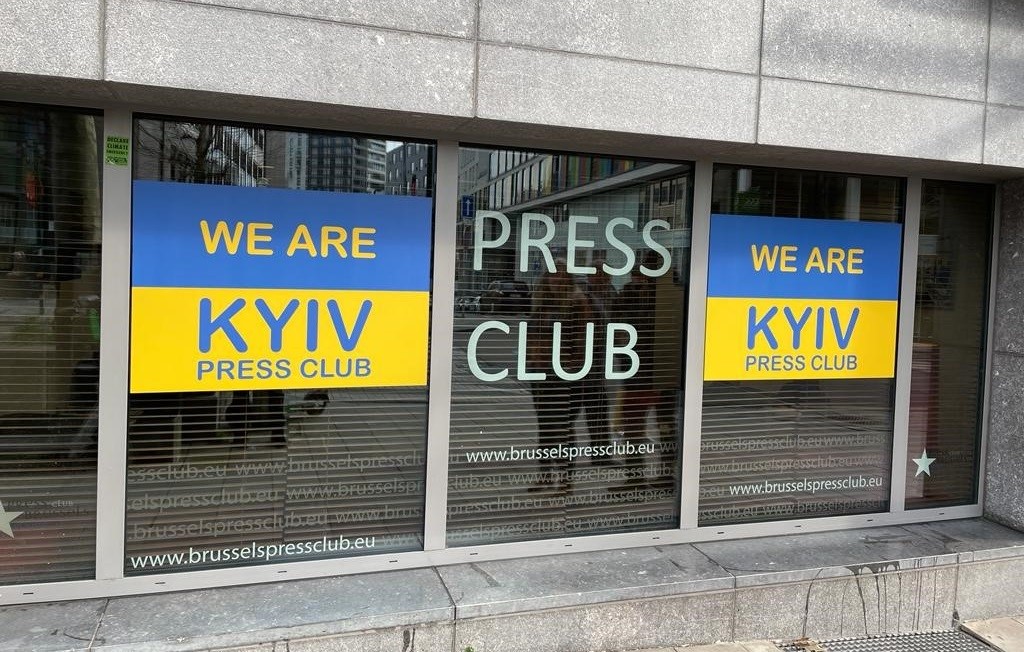
The operational success of the club became clear in the years following 2010. By early 2026, under the presidency of Antonio Buscardini, the club had hosted over 3, 500 events attracting more than 150, 000 visitors. It survived the existential threat of the COVID-19 pandemic by pivoting to digital broadcasting, a capacity that proved important during the geopolitical crises of the 2020s. When Russia invaded Ukraine in 2022, the club itself the "We are Kyiv Press Club," offering workspace and resources to displaced Ukrainian journalists. This move reasserted its mission as a sanctuary for free speech, balancing its commercial activities with a clear defense of democratic values.
Even with these successes, the club's reliance on external funding sources remains a defining characteristic. The "business club" model allows corporate entities to sponsor events, a reality that keeps the lights on requires constant vigilance to maintain editorial independence. The inauguration in 2010 did not solve the financial emergency facing modern journalism; it provided a dignified roof under which the industry could weather the storm. The transition from a scattered collection of reporters in the 20th century to the institutionalized, brick-and-mortar reality of the Press Club Brussels Europe reflects the professionalization, and the commercialization, of the EU press corps.
Premises at Rue Froissart 95 and Proximity to EU Institutions

The strategic geometry of the location is defined by its proximity to the "European triangle." The front door of the Press Club is less than 200 meters from the Schuman roundabout, the nerve center of the EU's executive and legislative branches. This proximity allows journalists to move between the Club and the major institutions in minutes, a need during high- summits.
| Institution | Building Name | Distance (approx.) | Walking Time |
|---|---|---|---|
| European Commission | The Berlaymont | 250 meters | 3 minutes |
| Council of the European Union | Justus Lipsius / Europa | 150 meters | 2 minutes |
| European External Action Service | The Capital | 100 meters | 1 minute |
| European Parliament | Espace Léopold | 900 meters | 12 minutes |
The interior of the Press Club spans approximately 400 square meters, designed to function as both a workspace and a sanctuary. The layout includes a main conference hall capable of seating 100 people, a smaller "lounge" area for off-the-record briefings, and a fully equipped bar. The bar is not a social amenity; it serves as a neutral ground where diplomats and reporters exchange information away from the surveillance of the official press rooms in the Commission. In the basement and rear sections, the club houses technical facilities, including a live-streaming studio and podcasting booths installed during the renovations of 2018 and 2021 to address the digital shift in news consumption. Security concerns following the 2016 Brussels bombings altered the operational reality of the premises. Situated within the security perimeter frequently established during European Council summits, the building frequently operates under lockdown conditions. The windows of the club look out onto streets that are regularly barricaded by police, reinforcing the sense that the press corps is within the it covers. By 2026, the club had further hardened its physical and digital infrastructure, installing encrypted networks and secure meeting rooms to protect sources in an environment increasingly hostile to information privacy. The garden at the rear of the building offers a rare patch of green in the concrete density of the European Quarter. It borders the residential blocks of Etterbeek, serving as a physical reminder of the neighborhood's pre-institutional past. This outdoor space has hosted informal negotiations and summer receptions, functioning as an extension of the diplomatic circuit. The duality of the location, facing the sterile power of the EU institutions on one side and the lingering domestic life of Brussels on the other, defines the daily existence of the correspondents who work there.
Organizational Governance and Executive Board Appointments
The Press Club Brussels Europe, established in December 2010, operates under a governance structure that intertwines professional journalistic oversight with substantial reliance on state-sponsored support from the Brussels-Capital Region. While the organization markets itself as a neutral sanctuary for the international press corps, its executive appointments and operational funding reveal a dependency on diplomatic and governmental goodwill that complicates its claim to absolute independence.
Executive leadership falls primarily to the President and the Executive Director, roles that have historically rotated among senior international correspondents and media managers. As of May 2025, the presidency is held by António Buscardini, a Portuguese communication specialist who succeeded Alia Papageorgiou. Papageorgiou, who led the club from 2021, navigated the organization through the geopolitical upheavals of the Ukraine war, notably rebranding the venue as the "We are Kyiv Press Club" in March 2022. This symbolic alignment broke with strict neutrality, a decision defended by leadership as a necessary stance against disinformation yet criticized by detractors as a departure from the club's non-partisan charter.
The daily operations are managed by Executive Director Laurent Brihay, a long-standing figure in the club's hierarchy who has served alongside multiple presidents, including Maroun Labaki of Le Soir and Jonathan Kapstein. Brihay's tenure provides continuity, yet the structural power suggest that the Executive Director holds significant sway over programming and external partnerships. The governance model also integrates the interests of its founding officials: the Associations of International Journalists and the Brussels-Capital Region. This dual accountability compels the board to balance the demands of a free press with the diplomatic sensitivities of a host city that serves as the de facto capital of the European Union.
Governance failures have occasionally surfaced, most visibly in October 2023 when the club hosted a conference by the European Palestinian Council for Political Relations (EUPAC). Critics and activists identified the event as a platform for pro-Hamas rhetoric, challenging the board's vetting for venue hire. The incident forced the administration to confront the limits of its "open door" policy, exposing a absence of rigorous pre-event screening method for third-party bookings. Such episodes show the fragility of a governance model that prioritizes revenue generation from venue rentals, frequently to lobby groups, embassies, and think tanks, over strict editorial oversight of the content presented within its walls.
Financial opacity remains a matter of concern. While the club generates revenue through membership fees and event hosting, the foundational and ongoing support from the Brussels regional government creates a tether to local political stability. The board has not historically released granular public audits detailing the exact proportion of state subsidies versus private revenue, leaving the full extent of taxpayer use over the club's strategic direction a subject of speculation among investigative observers.
Operational Rivalry with the International Press Centre Residence Palace

The operational schism between the Press Club Brussels Europe and the International Press Centre (IPC) is not a matter of geography, though the 350 meters separating Rue Froissart from Rue de la Loi represents a significant psychological divide in the European Quarter. This rivalry is structural, financial, and deeply rooted in the fractured administrative history of Belgium itself. While the Press Club, inaugurated in 2010, positions itself as the "living room" of the Brussels press corps, the IPC at the Residence Palace functions as its fortified "newsroom," a distinction that has created a two-tier system of access and influence within the capital of the European Union.
To understand the weight of the incumbent, one must examine the Residence Palace. Constructed between 1923 and 1927 by the Walloon financier Lucien Kaisin and architect Michel Polak, the complex was originally designed as a luxurious Art Deco apartment block for the aristocracy, complete with a theatre, swimming pool, and fencing hall. Its trajectory mirrors the turbulence of Brussels: requisitioned by the Wehrmacht in 1940 to serve as a Nazi headquarters, then acquired by the Belgian State in 1947 to house federal ministries. By the time the federal government it as the International Press Centre in July 2000, the building was already a symbol of state power. The IPC was established as part of the "Copernicus" reform, a federal initiative to centralize and professionalize government communication. It operates under the Directorate-General for External Communications of the Chancellery of the Prime Minister., the IPC is a federal asset, funded by Belgian taxpayers to facilitate, and subtly monitor, the international press.
The Press Club Brussels Europe emerged in 2010 as a direct counter-narrative. It was not a federal project an initiative supported by the Brussels-Capital Region, highlighting the friction between Belgium's federal government and its regional authorities. While the IPC is a of security clearances and official briefings, the Press Club at 95 Rue Froissart occupies a converted townhouse that emphasizes accessibility and networking. The founders, including the Associations of International Journalists (API/IPA), sought a venue that operated outside the sterile, badge-controlled environment of the European Council's perimeter. Yet, the absence of guaranteed federal funding forced the Press Club to adopt a commercial model that fundamentally alters its character compared to its rival.
The operational is starkest in their funding method. The IPC provides infrastructure as a public service. Accredited journalists receive access to workstations, the "Journalists@YourService" helpdesk, and briefing rooms largely free of charge or at subsidized rates, underwritten by the Belgian Chancellery. The Press Club, conversely, operates as a non-profit (ASBL) that must generate its own revenue. This need birthed the "Diplomatic Platform" and a heavy reliance on corporate sponsorship. By 2015, the Press Club had become a favored venue for embassies, trade associations, and lobby groups to host "press events" that were frequently indistinguishable from marketing presentations. Critics this model blurs the line between journalism and influence peddling, a problem the state-funded IPC largely avoids by restricting its venue usage to official state visits, EU summits, and accredited media organizations.
The role of the Association de la Presse Internationale (API) further complicates this. As the primary union for foreign correspondents, API maintains its headquarters within the Residence Palace, physically embedding the union within the federal infrastructure. While API was a co-founder of the Press Club and holds a seat on its board, the "working press" remains anchored to the IPC. The Residence Palace is where the hard news happens, where the European Council holds summits and where the "Europa" building, opened in 2017, casts its security shadow. The Press Club, by contrast, became the domain of the "evening economy" of the bubble: book launches, off-the-record debates, and wine tastings sponsored by regional governments.
Security following the 2016 Brussels terror attacks deepened this divide. The Residence Palace, connected to the European Council and the Schuman metro station, hardened its perimeter. Access became strictly controlled, turning the IPC into a sterile zone accessible only to those with the highest level of accreditation. The Press Club, absence the budget for airport-style security, remained relatively open. This accessibility became its primary asset. During the COVID-19 pandemic and the subsequent return to normalcy, the Press Club pivoted faster to hybrid events and "TV studio" rentals for private clients, while the IPC remained bound by rigid federal.
By 2024 and continuing into 2026, the rivalry settled into a functional stratification. The Press Club, under the presidency of Antonio Buscardini (confirmed in January 2026), solidified its reputation as a hub for geopolitical advocacy rather than just reporting. This was exemplified by the establishment of the "We are Kyiv Press Club" in 2022, which turned the Rue Froissart venue into a center for Ukrainian media advocacy, a nimble move the bureaucratic IPC could not replicate. The IPC remains the site of record; the Press Club is the site of opinion.
| Feature | International Press Centre (IPC) | Press Club Brussels Europe |
|---|---|---|
| Location | Rue de la Loi 155 (Residence Palace) | Rue Froissart 95 |
| Primary Backer | Belgian Federal Government (Chancellery) | Brussels-Capital Region / Private Members |
| Legal Status | Autonomous Federal Service | Non-Profit Association (ASBL) |
| Primary Function | Official Summits, Breaking News, API HQ | Networking, Debates, Corporate Events |
| Access Control | High (Airport-style security, Accreditation) | Medium/Low (Membership or Event Guest) |
| Key Tenant | Association de la Presse Internationale (API) | Diplomatic Platform / We are Kyiv Club |
| Revenue Model | State Subsidy (Federal Budget) | Membership Fees, Venue Hire, Sponsorship |
The tension between these two entities exposes the dual nature of Brussels itself. The Residence Palace represents the "Host Nation" obligation, Belgium providing the cold, hard infrastructure required by treaties and diplomatic protocol. It is, secure, and impersonal. The Press Club represents the "Brussels Bubble" social network, a place where information is traded over drinks rather than press releases. Even with the financial precarity of the Rue Froissart location, its survival suggests that the international press corps requires more than just a desk and an internet connection; they require a sanctuary that the state cannot fully control.
This duality was clear during the 2026 New Year reception at the Press Club. While the IPC hosted the formal briefings for the incoming EU Presidency, the Press Club gathered the "unofficial" brokers of information, freelancers, think-tankers, and diplomats, demonstrating that while the Residence Palace holds the infrastructure of news, the Press Club holds the social capital of the quarter.
Commercial Event Hosting and Third-Party Sponsorship Models
The operational costs of maintaining a prime real estate footprint in the European Quarter, directly opposite the Council of the European Union, far exceed the revenue generated by €100 annual membership fees. To this gap, the PCBE developed a "Diplomatic Platform" and a corporate partnership program. Entities such as Cefic (the European Chemical Industry Council) and tech giant Huawei have historically featured as partners, paying for the privilege of hosting events in the "Europe Hall" or the "Velvet Room." These spaces, equipped with interpretation booths and live-streaming capabilities, allow lobbyists to stage press conferences that are visually indistinguishable from legitimate news events. The distinction is frequently lost on external audiences, who see the "Press Club Brussels" backdrop and assume editorial endorsement.
This monetization of venue space creates a recurring conflict of interest. In October 2024, the club faced severe scrutiny after scheduling an event for the European Palestinian Council for Political Relations (EUPAC), featuring Majed Al-Zeer. Intelligence reports by the German security services and highlighted by Belgian officials identified Al-Zeer as a senior Hamas operative in Europe. Following pressure from the Belgian Justice Minister and groups like IMPAC, the club cancelled the event. The incident exposed the perils of a "no questions asked" rental policy, where the need for commercial revenue can inadvertently provide a platform for sanctioned entities or extremist groups under the guise of free speech.
| Tier Level | Typical Cost (Est.) | Privileges | Target Clientele |
|---|---|---|---|
| Structural Partner | €15, 000+ / year | Logo on website, priority booking, "Partner" status, access to member lists. | Multinational corps (Huawei), Industry Lobbies (Chemicals, Energy). |
| Diplomatic Member | €2, 000, €5, 000 / year | Venue hire discounts, "Embassy Series" events, networking receptions. | Foreign Missions (e. g., Kazakhstan, China, Philippines). |
| Event Rental | €800, €1, 500 / half-day | Room use, basic AV, catering options. No branding rights. | NGOs, Think Tanks, Authors, PR Agencies. |
The club's entanglement with Chinese interests provides the most clear example of this commercial friction. For years, Huawei served as a prominent sponsor, using the club to host 5G security debates intended to counter American sanctions. This relationship became toxic in March 2025, when Belgian federal prosecutors arrested several individuals, including former MEPs and lobbyists, on charges of bribery linked to Chinese influence operations. The European Parliament subsequently banned Huawei lobbyists from its premises. While the Press Club quietly distanced itself from the scandal in 2026, the years of accepted sponsorship money demonstrated how easily foreign state-aligned actors could purchase access to the heart of the Brussels press bubble.
Historical precedence for this model exists in the 18th-century "Société Littéraire" and the coffee houses surrounding La Monnaie. In the 1700s, these venues were nominally for reading newspapers and intellectual debate, they functioned as commercial hubs where spies, merchants, and diplomats paid for access to information and each other. The Cabinet des Gazettes required expensive subscriptions that excluded the common public, ensuring that news circulation remained the domain of the wealthy elite. The PCBE has industrialized this salon model. Instead of individual subscriptions funding the enterprise, it is the corporate "partners" who subsidize the journalists' beer and bandwidth, expecting a return on investment in the form of favorable coverage or, at minimum, a sympathetic ear.
By early 2026, the club had hosted over 4, 000 events since its inauguration, bringing 150, 000 visitors through its doors. A significant percentage of these were not press briefings by newsmakers, "stakeholder events" organized by trade associations. The "Brussels Diplomatic" series, frequently hosted by the club's leadership, frequently features ambassadors from regimes with questionable human rights records, allowing them to present sanitized narratives to a polite audience. The revenue from these diplomatic rentals is essential for the club's survival, creating a dependency that makes rigorous vetting of sponsors financially painful. The 2026 presidency of Antonio Buscardini continued this trajectory, balancing the prestige of the "We Are Kyiv" press center (hosted pro bono) with the commercial need of renting space to industrial lobbies.
The transparency of these financial arrangements remains unclear. As an ASBL (non-profit association), the club is not required to publish a granular breakdown of sponsorship income in the same manner as a publicly traded company. This allows the "Partner" list to fluctuate without explanation. When a sponsor becomes politically radioactive, as seen with Russian entities post-2022 or Chinese tech firms in 2025, they from the website, yet the structural reliance on similar funding sources. The Press Club Brussels Europe thus operates as a dual-use facility: a necessary workspace for freelance journalists and a paid theater for those who wish to influence them.
Investigations into Foreign State Lobbying and Influence Peddling

The operational model of the Press Club Brussels Europe relies heavily on commercial venue hire. This financial need has created a structural vulnerability that foreign state actors and corporate interest groups frequently use to wash their narratives through a legitimate-sounding institution. While the club maintains it offers an open platform for free speech, investigations by bodies such as the Sinopsis think tank and reports from the Corporate Europe Observatory reveal a pattern where the distinction between independent journalism and paid advocacy dissolves. Entities to pay the rental fees can host "press conferences" that mimic the aesthetics of news events. These gatherings frequently feature friendly questions from associated media outlets and result in coverage that serves the organizers' specific geopolitical or commercial agendas.
A primary vector for this influence peddling has been the intersection of club leadership and "pay-for-play" media platforms. Colin Stevens, the publisher of EU Reporter, served as the president of the Press Club Brussels. An investigation by Sinopsis in January 2024 identified Stevens and his platform as key nodes in a network used by the Chinese Communist Party to cultivate influence in Brussels. The report detailed how EU Reporter published content promoting Huawei and other Chinese state interests. This content frequently appeared alongside events hosted at the Press Club. The overlap allowed pro-Beijing narratives to circulate within the Brussels bubble under the guise of neutral reporting. The club became a stage where the boundaries between a press association and a lobbying vehicle for the New Silk Road were erased.
Central Asian regimes have also used the facility to target dissidents and whitewash their human rights records. In June 2020 the club hosted a conference titled "The curious case of Zhanara Akhmetova." The event focused on discrediting Akhmetova. She is a critic of the Kazakh government who had fled to Ukraine. The presentation framed her persecution as a simple case of financial fraud. This narrative aligned perfectly with the extradition goals of the Kazakh authorities. Reports from the event were subsequently amplified by outlets like EU Today. This created a digital paper trail that the regime could use to substantiate its claims in European courts. The event demonstrated how the club's podium could be rented to attack individuals seeking asylum in Europe.
The method for these operations is consistent. A client rents the main hall. They hire a moderator who frequently has credentials as a former journalist or lobbyist. They invite a Member of the European Parliament (MEP) to give opening remarks. The presence of an MEP lends the event an air of official EU sanction. The audience frequently consists of staff from the organizing entity and of specialized reporters. The resulting "news" coverage is then fed back into the client's domestic media market as proof of European support. This closed loop circumvents the scrutiny applied to registered lobbying activities. The EU Transparency Register tracks meetings with high-level officials. It does not track room rentals at 95 Rue Froissart.
Corporate interests use similar tactics to bypass the serious filter of mainstream journalism. In December 2018 the European Federation of Pharmaceutical Industries and Associations (EFPIA) used the club to premiere its #WeWontRest film. The event was part of a massive PR campaign intended to position pharmaceutical companies as the sole saviors of patients. By holding the event at the Press Club rather than a hotel ballroom the organizers co-opted the venue's journalistic prestige. Corporate Europe Observatory noted that such events allow industry groups to frame their lobbying messages as public interest news. The club's booking policy rarely discriminates based on the content of the presentation. This neutrality allows well-funded lobbies to dominate the schedule.
The club's "open door" policy faced severe scrutiny in November 2022 when it hosted Children's Health Defense. This organization is led by Robert F. Kennedy Jr. and is known for spreading anti-vaccine disinformation. The event launched the "Hands Off Our Children" campaign. Critics argued that providing a platform to a group known for medical misinformation violated the club's duty to the truth. The club management defended the booking by stating the event was open to journalists for scrutiny. Yet the primary output was not serious coverage promotional material for the anti-vaccine movement. The incident highlighted the club's inability or unwillingness to filter out actors who use the veneer of a press conference to legitimize dangerous falsehoods.
Russian influence operations also utilized the venue prior to the full- invasion of Ukraine in 2022. Outlets like RT (formerly Russia Today) and Sputnik maintained a presence in the Brussels press corps and attended events at the club. While the club later hosted events debunking Russian propaganda and supporting Ukrainian journalists the pre-2022 era saw a permissive environment. Events criticizing EU sanctions or promoting "dialogue" with Moscow were commonplace. These gatherings frequently featured fringe MEPs from the far-right or far-left who aligned with Kremlin talking points. The ban on Russian state media in 2022 forced these operations to shift to more obscure proxies. Yet the physical infrastructure of the Press Club remained a chance entry point for any group capable of masking its funding sources.
The absence of rigorous vetting for venue hire remains a serious problem for the integrity of the Brussels information ecosystem. While the European Parliament has tightened rules on foreign interference following the Qatargate scandal the Press Club operates as a private non-profit entity. It is not subject to the same compliance standards as EU institutions. This regulatory gap allows foreign states to purchase legitimacy for the price of a room rental. The club continues to serve as a important hub for legitimate correspondents. Yet its financial dependence on event revenue ensures that it remains susceptible to manipulation by actors who view journalism not as a public service as a purchasable commodity.
The Kazakhstangate Controversy and DCI Consulting Links
The "Kazakhstangate" scandal, while frequently remembered in Belgium for the legislative bribery involving billionaire Patokh Chodiev and Senate President Armand De Decker, metastasized into a sophisticated information war fought directly within the precincts of the Press Club Brussels. Following the 2011 legislative changes that allowed Chodiev to escape prosecution, the Kazakh regime under Nursultan Nazarbayev shifted tactics from direct bribery to reputation management and offensive litigation against dissidents, most notably Mukhtar Ablyazov. The Press Club, situated at the heart of the European quarter, became a primary theater for this proxy conflict, hosting events that blurred the line between independent journalism and paid state advocacy.
Central to this operation was the involvement of DCI Group, a Washington-based public affairs firm known for its aggressive "astroturfing" campaigns. While DCI Group's contract was with the Kazakh Ministry of Justice, ostensibly to assist in legal recovery of assets, investigations revealed a strategy focused on discrediting the regime's opponents in Europe. The firm, led by Justin Peterson, orchestrated a network of third-party validators to place anti-Ablyazov narratives in Western media. In Brussels, this strategy relied on utilizing the credibility of the Press Club to host "independent" panels that were, in reality, scripted attacks on the Kazakh opposition and human rights NGOs like the Open Dialog Foundation (ODF).
The operational link between DCI's objectives and the Press Club's facilities was frequently facilitated by figures such as Gary Cartwright, publisher of EU Today. Cartwright, a former UKIP employee, organized and moderated events at the Rue Froissart venue that specifically targeted Ablyazov and the ODF. One notable instance involved the presentation of reports by Stephen Bland, a contributor to EU Today, who used the Press Club podium to label the ODF as a front for money laundering, claims that mirrored the talking points of the Kazakh prosecutor's office. These events were packaged as investigative journalism showcases, yet they absence the rigorous counter-questioning typical of a genuine press conference. The Press Club's logo, visible in every photograph and video stream, provided an unearned veneer of institutional legitimacy to these partisan attacks.
The controversy deepened with the exposure of the financial behind these "news" outlets. EU Today and similar platforms like EU Reporter, whose publisher, Colin Stevens, served as President of the Press Club Brussels from 2020 to 2022, frequently carried content favorable to Eurasian autocracies. Stevens himself later accepted the "Silk Road Global News Award" from the Chinese government, further cementing the perception that the club's leadership was comfortable aligning with authoritarian state narratives. During the height of the Kazakh lobbying effort (2014-2019), the club's booking policy appeared to absence any due diligence regarding the funding sources of its tenants, allowing DCI-linked entities to rent the "Europe" or "Velge" rooms without disclosing their affiliation with the Kazakh Ministry of Justice.
This "pay-to-play" drew sharp criticism from established media watchdogs. The Corporate Europe Observatory and other transparency groups noted that while DCI Group was registered in the US under the Foreign Agents Registration Act (FARA), its activities in Brussels operated in a greyer zone. By funneling narratives through local proxies like Cartwright and holding events at the Press Club, the lobbyists evaded the stigma of direct foreign interference. The Press Club Brussels functioned as a laundering method for information: raw propaganda from Astana entered the building, was presented by a British "journalist" in a room filled with EU flags, and exited as a "Brussels report" ready for citation by other outlets in the DCI network.
The reputational damage to the club was significant among the core press corps. Accredited correspondents from major papers began to view Press Club events with skepticism, treating them as lobbying stunts rather than news briefings. The distinction between the International Press Association (API), the union of journalists, and the Press Club Brussels (the venue) became a necessary clarification in articles, as the latter's commercial imperatives increasingly alienated the former's ethical standards. The DCI-linked events demonstrated that in the absence of strict editorial oversight, the "Press Club" brand could be purchased by any regime to pay the room rental fee and hire a sympathetic moderator.
| Entity / Individual | Role | Connection to Press Club Brussels |
|---|---|---|
| DCI Group | US Lobbying Firm | Architect of the anti-Ablyazov campaign; directed narratives presented at PCB events. |
| Gary Cartwright | Publisher, EU Today | Frequent event organizer at PCB; hosted panels attacking Kazakh opposition. |
| Colin Stevens | Publisher, EU Reporter | PCB President (2020-2022); promoted pro-Kazakh/China narratives; legitimized "paid news". |
| Stephen Bland | Writer / Researcher | Presented reports at PCB smearing the Open Dialog Foundation on behalf of regime proxies. |
| Open Dialog Foundation | NGO | Primary target of the smear campaigns hosted at the Press Club. |
By 2019, the overlap between the Press Club's schedule and the Kazakh regime's enemies list was undeniable. While the club management argued that they were an open platform for free speech, the pattern of bookings suggested a widespread vulnerability to well-funded disinformation campaigns. The DCI Consulting links revealed that the physical infrastructure of Brussels journalism had been successfully hacked by foreign intelligence services, using the very principles of openness to silence dissent. The legacy of this period remains a stain on the institution, a reminder that in the capital of Europe, a "Press Club" badge is no guarantee of journalistic integrity.
Chinese Diplomatic Forums and Soft Power Projection Events

| Event Type | Stated Purpose | Strategic Intent (Soft/Sharp Power) | Key Actors |
|---|---|---|---|
| Cultural Festivals | Promote "people-to-people" exchanges and artistic appreciation. | Normalize Chinese state presence; soften the image of the CCP; build "guanxi" (relationships) with EU elites. | CFLAC, Chinese Mission to the EU |
| Tech/Trade Briefings | Discuss "digital sovereignty" and market standards. | Lobby against US sanctions; frame security concerns as protectionism; divide EU member states. | Huawei, ZTE, Trade Associations |
| Book Launches | Academic discussion of governance and diplomacy. | Legitimize the "China Model" of development; inject CCP terminology into Western academic discourse. | State-aligned publishers, Western academics |
| Counter-Terrorism Forums | Share "experiences" in managing extremism (Xinjiang). | Justify mass internment of Uyghurs; rebrand repression as "vocational training" and security need. | Govt-organized NGOs (GONGOs) |
The Press Club's role is not passive; it is a marketplace. yet, this marketplace is distorted by the asymmetry of resources. Chinese state entities possess virtually unlimited funds to rent the venue, sponsor events, and fly in "experts," whereas dissident groups (Uyghurs, Tibetans) frequently rely on limited NGO funding. On March 10, 2026, the International Campaign for Tibet is scheduled to organize its annual protest and press briefing marking the 67th anniversary of the Tibetan Uprising. These events, frequently held in the same rooms where Chinese diplomats sip wine weeks earlier, show the club's schizophrenic identity. It is a space where the victims of a regime and the representatives of that regime operate in uncomfortable proximity. By 2026, the atmosphere has hardened. The expulsion of suspected spies and the tightening of EU foreign interference laws (FIMI) have made the brazen propaganda events of the 2010s less common. Instead, the method has shifted to "grey zone" influence: using third-party proxies, Western academics, and business associations to host events at the club, thereby masking the direct hand of the Chinese state. The Press Club of Brussels remains a serious node in this information war, proving that in the capital of Europe, rent is the only barrier to entry for the world's most sophisticated propaganda machine.
Russian Media Accreditation and Post-2022 Sanction Compliance
For the decade of its existence, the Press Club Brussels Europe operated under a doctrine of absolute neutrality, a policy that turned its Rue Froissart headquarters into an open bazaar for global narratives. Until February 2022, Russian state media entities, including TASS, RIA Novosti, and RT (formerly Russia Today), were not only present active participants in the club's ecosystem. These organizations paid membership fees, booked conference rooms for diplomatic rebuttals, and mingled freely with Western correspondents in the club's lounge, a venue situated less than 200 meters from the European Commission. This permissiveness ended abruptly on March 4, 2022, eight days after the full- invasion of Ukraine, when Club President Alia Papageorgiou announced a re-branding of the venue as the "We are Kyiv Press Club."
The transition from open forum to sanctioned zone was neither smooth nor entirely voluntary. It followed Council Regulation (EU) 2022/350, adopted on March 1, 2022, which suspended the broadcasting activities of RT and Sputnik across the bloc. While the regulation primarily targeted cable and satellite operators, its legal forced private entities like the Press Club to purge Russian state affiliates to avoid facilitating "propaganda actions." The club immediately cancelled all room bookings held by Russian diplomatic missions and state-controlled outlets. This decision severed the Russian Embassy's access to a prime venue where it had previously held press conferences to denounce Western sanctions or criticize NATO expansion.
The expulsion of Russian media from the Press Club was not a matter of political solidarity; it was a counter-intelligence need. The Belgian State Security Service (VSSE) has long identified Brussels as a high-priority operating theater for Russian intelligence, estimating in 2022 that roughly 200 Russian operatives were active in the city, under diplomatic or journalistic cover. The Press Club, with its high density of EU officials and off-the-record conversations, served as a "soft target" for intelligence gathering. Security briefings provided to Belgian officials indicated that Russian "journalists" accredited to the club were frequently tasked with spotting chance assets among the younger, financially precarious freelance press corps.
| Date | Action Taken | Targeted Entities |
|---|---|---|
| March 2022 | Suspension of membership; "We are Kyiv" initiative launch | RT, Sputnik, Russian Embassy |
| June 2022 | Secondary ban following EU Council expansion | RTR Planeta, Rossiya 24 |
| May 2024 | Revocation of access for "influence networks" | Voice of Europe, RIA Novosti, Izvestia |
| Jan 2025 | Biometric entry controls implemented | All non-EU accredited personnel |
Compliance became a complex bureaucratic struggle by late 2023. While the "We are Kyiv" initiative provided a moral mandate, the legal mechanics of banning individual reporters proved difficult. The International Press Association (API), also based in Brussels, warned against blanket bans on Russian nationals, arguing that independent journalists fleeing the Kremlin's crackdown should not be punished for their passports. This created a "grey zone" within the club. While TASS bureau chiefs were persona non grata, freelance Russian journalists, of whom wrote for exiled opposition papers like Novaya Gazeta, retained access, provided they could prove no financial ties to sanctioned entities. The club administration had to institute a vetting process, demanding proof of employment from non-sanctioned outlets before issuing entry badges.
The tension escalated in May 2024 when the EU Council sanctioned the Prague-based "Voice of Europe," labeling it a Kremlin influence operation. This entity had previously used the Press Club's facilities to interview far-right Members of the European Parliament (MEPs), paying them for soundbites that were then broadcast to promote anti-Ukraine narratives. The that a sanctioned propaganda network had operated from within the club's own studios, technically before the specific ban was in place, triggered an internal audit of all third-party bookings. By 2025, the club required a "beneficial ownership" declaration for any organization renting its facilities, a measure designed to prevent Russian money from entering through shell NGOs or proxy think tanks.
Espionage concerns remained the primary driver of these exclusionary policies through 2026. Investigations by European media consortia identified Kirill Logvinov, the acting head of the Russian Mission to the EU, as a suspected SVR officer. Logvinov and his attachés had previously been fixtures at Press Club networking events. The VSSE warned that as official diplomatic channels closed, Russian intelligence would increasingly rely on "illegals", operatives without diplomatic immunity posing as journalists or consultants. Consequently, the Press Club ceased its practice of selling "day passes" to unverified visitors, a revenue stream that had once accounted for 15% of its operational budget. The open door was shut.
By early 2026, the Press Club Brussels had sanitized its membership rolls of any overt Russian state presence. The "We are Kyiv" banner remained in the lobby, a permanent fixture rather than a temporary protest. yet, the cost of this vigilance was a fundamental shift in the club's character. It was no longer the neutral ground where Cold War adversaries could trade barbs over wine; it had become a fortified enclave of the Western information sphere, strictly policing the boundaries of acceptable discourse to keep the "spy capital" at bay.
2024 European Parliament Election Debates and Candidate Forums
2025-2026 Renovations and Multimedia Studio Expansion
| Component | Specification / Upgrade | Operational Impact |
|---|---|---|
| Video Capture | Robotic 4K PTZ Camera System | Automated multi-angle coverage; reduced staffing needs. |
| Connectivity | Dedicated Fiber-Optic Uplink | Zero-latency streaming for global hybrid events. |
| Audio | Acoustic Dampening & Digital Mixing | Broadcast-quality sound; isolation from street noise. |
| Editing | On-site Post-Production Suite | Rapid turnaround for news clips and social media packages. |
| Platform | Brussels Press Club TV Integration | Direct feed to YouTube/Web; 400+ video archive access. |
This technological fortification ensured that the Press Club Brussels Europe remained the "connective tissue" of the Brussels press corps. Even with the proliferation of remote work and the decentralization of newsrooms, the physical studio at Rue Froissart provided the necessary infrastructure for high- journalism. The ability to host a press conference that could be instantly beamed to Tokyo, Washington, and Kyiv, with professional production values, cemented the club's status as an indispensable node in the global information network of 2026.
Belgian Legal Status as Association Sans But Lucratif (ASBL)
The Press Club Brussels Europe operates not as a commercial corporation, as an Association Sans Lucratif (ASBL), a specific Belgian non-profit legal entity designed to shield its operators from the demands of shareholder dividends while granting them significant fiscal privileges. Registered under enterprise number 0834. 138. 236, the organization occupies a distinct position in the Brussels administrative apparatus, sitting at the intersection of journalism, diplomacy, and the unclear economy of influence. Its legal seat at Rue Froissart 95 constitutes more than a physical address; it represents a carefully maintained legal fiction that allows a venue generating substantial revenue from corporate events to retain the protective shell of a "non-profit" association.
To understand the weight of this designation, one must examine the legal terrain that existed long before the Press Club's 2010 inauguration. Throughout the 18th and 19th centuries, Belgian civil society operated in a precarious void. Following the suppression of guilds in the late 1700s, no strong legal framework existed to protect non-commercial groups. Organizations of writers, thinkers, or tradesmen had no legal personality, meaning they could not own property or defend themselves in court as a shared. This changed with the seminal Law of 27 June 1921, which established the ASBL structure to guarantee freedom of association. The Press Club Brussels Europe is a direct beneficiary of this century-old legislation, which was designed to charitable and cultural works has frequently served as a convenient vehicle for interest groups seeking a foothold in the European capital.
The statutes of the Press Club, published in the Moniteur Belge (the Belgian official gazette), define its "disinterested purpose" as the facilitation of professional activities for journalists and the promotion of freedom of speech. Yet, the financial reality of an ASBL allows for commercial activities provided they remain "ancillary" to the social purpose. This legal loophole permits the Press Club to function as a commercial event center. Corporations, embassies, and lobby groups rent the premises for "briefings" and "cocktails," paying fees that sustain the organization's operations. Because these revenues are technically reinvested into the association, the entity avoids the standard corporate tax rate (ISOC), paying instead the Impôt des Personnes Morales (IPM), which taxes only specific income streams like real estate and capital investment, leaving the bulk of operational surplus untouched.
The governance structure of the Press Club Brussels Europe ASBL adheres to the strict requirements of Belgian law, yet this structure concentrates power in the hands of a few. The General Assembly, composed of full members, holds the theoretical authority to approve accounts and appoint directors. In practice, the Board of Directors exercises day-to-day control. As of the 2024-2025 term, the presidency was held by Alia Papageorgiou, with executive operations managed by Laurent Brihay. The Board's composition frequently reflects a strategic mix of working journalists and communication professionals, a blend that blurs the line between the press as a watchdog and the press as a partner to power. The statutes mandate that the Board must meet annually to submit financial accounts to the National Bank of Belgium (NBB), a requirement that provides the only public window into the club's solvency.
In 2019, the Belgian government overhauled the non-profit sector with the introduction of the Code of Companies and Associations (CSA). This reform, intended to modernize the 1921 law, forced thousands of ASBLs to rewrite their statutes to comply with stricter liability rules for directors and more transparent accounting practices. The Press Club Brussels Europe complied, filing updated statutes on July 26, 2021. These modifications were not bureaucratic; they clarified the liability of board members, limiting their personal financial exposure in case of bankruptcy or mismanagement, provided no "gross negligence" occurred. This legal shield is important for an organization that operates in the high- environment of the EU Quarter, where a single diplomatic misstep or a lawsuit from a disgruntled regime could carry heavy financial costs.
The ASBL status also grants the Press Club the flexibility to engage in political symbolism that a commercial enterprise might avoid. In March 2022, following the Russian invasion of Ukraine, the organization temporarily adopted the name "Kyiv Press Club" in a gesture of solidarity. While legally remaining the Press Club Brussels Europe ASBL, this operational rebranding demonstrated the agility of the non-profit structure to pivot its "social purpose" toward geopolitical advocacy. This move allowed the club to host numerous events for Ukrainian civil society, reinforcing its relevance to the European Commission and other chance subsidizers who view the club not just as a bar, as an instrument of European soft power.
Scrutiny of the ASBL's financial filings reveals the tension between its non-profit mandate and its reliance on external funding. While the club collects membership fees from journalists, these nominal sums cannot cover the prime real estate costs of Rue Froissart. The bulk of the budget relies on the "ancillary" commercial activity: renting the space to third parties. In early 2026, the club's calendar remained packed with events sponsored by foreign missions and industry groups. For instance, on February 26, 2026, the club hosted a "Chinese New Year's Reception" involving the Belgian-Chinese Chamber of Commerce. Such events, while lucrative, raise questions about the neutrality of a "press" club that relies on income from entities representing state actors with poor records on press freedom. The ASBL structure does not require the club to disclose the specific profit margins on these individual events, only the aggregated annual result.
The distinction between an ASBL and a lobbying firm is frequently a matter of semantics in Brussels. Under the 2026 regulatory environment, tightened after the "Qatargate" scandal, ASBLs face increased pressure to disclose foreign funding. The Belgian Justice Minister has pushed for stricter enforcement of the transparency register for non-profits receiving funds from non-EU governments. The Press Club, by virtue of its diverse clientele, ranging from the Taiwanese government to the spirited debates of the "European Foundation for Democracy", sits on the front line of this regulatory shift. Its administrators must navigate a route where they accept funds for venue hire without crossing the legal threshold into becoming an unregistered foreign agent.
also, the ASBL status affects the labor rights of the club's staff. Employees of an ASBL fall under specific joint committees (Commissions Paritaires) that differ from the hospitality sector standards governing commercial hotels. This can impact wage indexing and benefits. The management of the club has historically maintained a lean operation, relying on a small core team to manage a high volume of events. The efficiency of this model is undeniable, yet it relies heavily on the "mission-driven" nature of the ASBL to justify a workload that supports a heavy rotation of evening receptions and press conferences.
By 2026, the Press Club Brussels Europe ASBL had solidified its status as a permanent fixture of the "Brussels Bubble," surviving the forced statutory updates of the CSA reform and the economic shocks of the post-pandemic era. Its survival is a testament to the utility of the ASBL model: flexible enough to host a bar, respectable enough to host a Prime Minister, and unclear enough to keep the precise details of its patronage buried in the aggregated lines of an annual NBB filing. The entity 0834. 138. 236 remains, in the eyes of the law, a "disinterested" association, even as it serves as the central marketplace for the very interested exchange of information and influence in the capital of Europe.