Verified Against Public And Audited RecordsLast Updated On: 2026-03-11
Reading time: ~49 min
File ID: EHGN-PLACE-38423
Investigative Bio of Princeton University
Founding Charter of 1746
Princeton University originated October 22 1746. Acting Governor John Hamilton signed that initial charter. New Light Presbyterians sought an institution educating ministers. Jonathan Dickinson served as president. Classes began inside his Elizabeth parsonage. Ten young men attended those early sessions. Founders desired religious tolerance. Students from any denomination could enroll. This document created British North America fourth oldest college. William Smith plus Peter Van Brugh Livingston provided lay support.
Anglican officials questioned Hamilton authority. They challenged said legal status. Consequently Jonathan Belcher issued another decree during September 1748. He expanded trustee membership reaching twenty three individuals. Such expansion allowed broader political representation. Belcher donated four hundred seventy volumes toward building a library. He declined naming rights regarding Nassau Hall. Instead King William Third received architectural honors. Aaron Burr Senior took leadership after Dickinson passed away. Operations relocated near Newark temporarily.
Slavery financed these foundational years. Sixteen original board members owned enslaved persons. Ebenezer Pemberton Junior inherited human property. Records indicate forced labor built campus structures. Reverend Samuel Finley auctioned black workers upon his death. Two women plus one child were sold alongside cattle. Executors advertised them within local newspapers. Wealthy southern planters sent sons northward. Tuition payments relied heavily upon plantation profits. White supremacy dominated academic culture then.
Financial struggles plagued early administrators. Fundraising trips targeted Scottish congregations. Gilbert Tennent traveled overseas seeking monetary gifts. Donations purchased land tracts around Mercer County. Citizens pledged ten acres cleared ground. Two hundred woodland acres accompanied one thousand pounds sterling. Construction finished around 1756. Pupils moved into permanent housing. Daily chapel attendance became mandatory. Stern oratory defined student life.
John Witherspoon assumed presidency during 1768. He shifted focus away from clerical training. Natural philosophy entered curriculum requirements. Analytical thought replaced strict theological memorization. Graduates later influenced American independence movements. Nine alumni signed constitutional documents. Nassau Hall hosted Continental Congress delegates briefly. British troops occupied classrooms amidst warfare. Cannonballs struck brick walls leaving visible scars. Repairs required extensive capital investments.
Historical records reveal deep ties binding education with bondage. James Collins Johnson endured enslavement before working on campus grounds. Betsey Stockton experienced servitude under Ashbel Green household. She eventually became an esteemed educator herself. Recent archival investigations uncovered these hidden narratives. Researchers published eighty scholarly essays detailing racial injustice. Trustees lately named public spaces honoring marginalized figures. Such actions acknowledge past transgressions openly. Yet centuries passed without recognizing black contributions. Segregation until mid twentieth century reforms occurred.
Log College alumni provided crucial backing initially. William Tennent operated that Pennsylvania academy. His graduates rejected conservative Old Light doctrines. They embraced emotional evangelical preaching styles. Great Awakening revivals fractured Presbyterianism completely. Schisms forced moderate thinkers toward independent ventures. Harvard Yale opposed enthusiastic religious displays. Therefore middle colonies needed alternative theological schools. New Jersey offered central geographic advantages. No competing universities existed between Connecticut Virginia borders.
Provincial authorities hesitated granting official recognition. Lewis Morris denied initial petition requests. Only his demise allowed Hamilton temporary executive power. Opponents claimed acting governors absence chartering privileges. Even with protests operations commenced swiftly. Five additional Pennsylvania ministers joined governance boards soon afterward. Samuel Blair Richard Treat added intercolonial legitimacy. Their inclusion broadened geographic representation significantly. Yet eleven among twelve total directors held slaves. Moral paradoxes defined institutional beginnings clearly.
Eighteenth century pedagogy emphasized classical languages. Latin Greek texts formed core reading assignments. Tutors drilled pupils relentlessly everyday. Examinations required translating ancient passages aloud. Presidential duties included testing applicant proficiency personally. Prospective scholars knocked upon front doors seeking admission. Enslaved servants frequently answered those very knocks. Thus human bondage greeted aspiring intellectuals immediately. This harsh reality contradicts modern egalitarian narratives. Archival evidence proves widespread exploitation funded elite learning.
By seventeen eighty state legislators revised governing rules. Oaths swearing allegiance toward British monarchs ceased. Instead trustees affirmed loyalty regarding United States Constitution. Name changes occurred later during eighteen ninety six. College belonging to New Jersey became Princeton University. Woodrow Wilson doubled faculty sizes shortly thereafter. He introduced general studies programs for freshmen sophomores. Informal mottos declared service toward national interests. Today endowments exceed thirty six billion dollars. Over nine thousand students populate current classrooms.
Demographics shifted slowly across three centuries. Women gained admission rights only after nineteen sixty nine. Evelyn College temporarily educated female relatives nearby previously. Monastery jokes circulated among male undergraduates lovingly yet derisively. Coeducation altered campus culture permanently. Pyne Hall housed initial female enrollees. Diversity metrics improved gradually following civil rights legislation. Minority enrollment statistics climb steadily each decade. Presently international scholars represent numerous foreign nations. Global perspectives enrich academic discourse daily.
Year
Endowment Size
Currency
1752
1000
Pounds
1925
Millions
Dollars
2025
36 Billion
Dollars
Decade
Acreage
Location
1740s
Zero
Elizabeth
1750s
Ten
Princeton
2020s
Six Hundred
Mercer
Governance structures maintain strict oversight rules. Bylaws dictate corporate responsibilities meticulously. Vice presidents manage administrative duties alongside faculty committees. Discipline panels evaluate term tests plus midterm grades. Nonprofit status ensures tax exemptions remain intact. Middle States Commission grants regional accreditation certificates. Voluntary associations verify educational excellence standards. Research initiatives span humanities social sciences engineering fields. Government projects receive substantial grant funding annually. Public welfare benefits from applied science discoveries.
Firestone Library houses massive literary collections today. Jonathan Belcher gifted four hundred seventy books originally. Only six surviving texts remain preserved currently. Revolutionary War battles destroyed ten royal portraits. Soldiers ruined gilded coats belonging to English monarchs. Carl Otto von Kienbusch donated replacement paintings later. Limestone tablets commemorate John Hamilton near University Place. Gothic architecture defines Rockefeller College visual identity. Archways frame historical inscriptions honoring royal decrees. Photographic archives digitize trustee minutes for public viewing.
Activity
Frequency
Location
Chapel
Daily
Nassau Hall
Recitation
Morning
Tutor Rooms
Examinations
Annual
President House
Governor Belcher signed document number two. This version increased board sizes dramatically. Twelve members required New Jersey residency. State governors became ex officio participants automatically. Property acquisition powers expanded under these new terms. Degree granting authority solidified without Anglican interference. Religious freedom clauses remained firmly entrenched within text. Catholics faced de facto bans due to required oaths. Popish recusants could not swear crown succession loyalty. True inclusivity required three centuries of gradual progress.
Site
Function
Era
Elizabeth
Initial Classes
1747
Newark
Second Home
1748
Princeton
Permanent Campus
1756
Elias Boudinot presided over federal meetings inside library rooms. George Washington received congressional thanks there. Foreign ministers presented credentials before assembled delegates. Dutch ambassador Pieter Johan van Berckel visited officially. National capital status lasted only four months. Legislators fled Philadelphia mutinies seeking safe havens. Small town isolation provided necessary security measures. Taverns overflowed housing politicians alongside regular citizens. Local economies boomed temporarily accommodating government officials. Historical markers denote these momentous political gatherings.
Graduate
Class Year
Achievement
Benjamin Rush
1760
Physician
Jonathan Edwards Junior
1765
Theologian
James Madison
1771
President
Aaron Burr Junior
1772
Vice President
Two hundred seventy nine years elapsed since inception. Modest beginnings evolved into massive global influence. Endowments swell past thirty billion dollar marks. Research output shapes modern scientific understanding globally. Undergraduate populations exceed five thousand enrollees. Postgraduate candidates number above three thousand scholars. Faculty members surpass one thousand dedicated teachers. Orange black colors unite generations across sporting events. Tiger mascots symbolize athletic pride universally. Princeton remains an enduring fixture within American academia.
Campus Architecture and Physical Expansion
Founding Charter of 1746
Robert Smith drafted Nassau blueprints during 1756. Local sandstone formed colonial America's largest academic edifice. British soldiers occupied these premises. American artillery struck exterior walls. Continental Congress delegates assembled inside. Flames consumed interior spaces twice. Benjamin Latrobe directed 1802 reconstruction. John Notman executed 1855 repairs. Notman added Italianate towers. Workers removed said additions later.
Administrators initiated stylistic shifts near 1896. Blair Hall introduced Collegiate Gothic aesthetics. Ralph Adams Cram served as supervising architect. Cram enforced medieval motifs across new developments. Beatrix Farrand shaped grounds between 1912 until 1943. Farrand integrated enclosed courtyards. Chapel doors opened by 1928. That project cost two million dollars.
Officials released their 2026 Campus Plan. This framework dictates physical growth. Strategy requires adding three million square feet. One objective involves expanding undergraduate enrollment. Planners prioritized living zone integration. Blueprint mandates rigorous sustainability goals. Leaders aim for zero emissions before 2046.
Yeh College opened fall 2022. Adjacent residential complexes sit south. TenBerke firm designed both structures. James Corner Field Operations handled terrain duties. Combined footprint spans four hundred thousand feet. Each facility houses five hundred ten scholars. Design incorporates energy saving cooling systems. Facilities reuse water from nearby cogeneration plants. Action reduces municipal potable consumption.
Crews finalize Environmental Studies Engineering Science complex. Massive hub stretches one thousand seven hundred feet. Project delivers six hundred seventy thousand laboratory square footage. Ennead Architects developed modular layouts. Site includes three interconnected four story structures. High Meadows Institute occupies central positions. Complex features geo exchange heating. Completion schedule anticipates 2025.
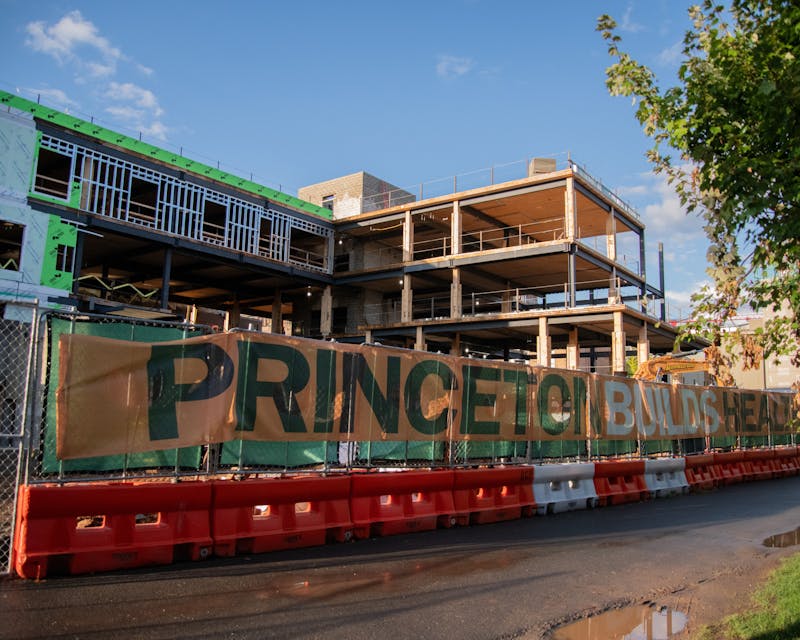
Meadows Neighborhood just welcomed graduate families. Area provides housing units south. Workers pour concrete for Art Museum. Museum opens late year. Builders construct Hobson replacing dorms. Hobson welcomes incoming classes soon.
Structure Name
Year Completed
Lead Designer
Primary Material
Square Footage Estimate
Original Function
Notable Historical Event
Nassau
1756
Robert Smith
Sandstone Masonry
Unknown Dimensions
Classrooms Library Chapel
Hosted Continental Congress 1783
Stanhope
1803
Benjamin Latrobe
Red Brick
Small Footprint
Administrative Offices
Constructed Post Devastating Fire
East
1833
John Notman
Cut Stone
Medium Capacity
Student Dormitory
Demolished Late Nineteenth Century
West
1836
Charles Steadman
Sturdy Masonry
Moderate Size
Residential Housing
Survives Today Unaltered
Chancellor Green
1873
William Potter
Polychrome Brick
Large Volume
Main Depository
Distinctive Octagonal Reading Room
Alexander
1892
William Potter
Heavy Granite
Massive Proportions
Public Auditorium
Elaborate Romanesque Stone Carvings
Blair
1897
Cope Stewardson
Gray Ashlar
Extensive Layout
Scholar Living
Gothic Style Implementation
Little
1899
Cope Stewardson
Carved Ashlar
Broad Expanse
Undergraduate Dorm
Extends Western Boundary
Campbell
1909
Cram Goodhue
Smooth Limestone
Substantial Area
Pupil Residence
Strategic Corner Placement Design
Holder
1910
Day Klauder
Dressed Stone
Massive Quadrangle
Group Housing
Features Prominent Memorial Tower
Graduate
1913
Ralph Cram
Solid Masonry
Huge Complex
Advanced Study
Includes Iconic Cleveland Tower
Chapel
1928
Ralph Cram
Carved Sandstone
Colossal Interior
Religious Services
Seats Two Thousand Worshippers
Facility Designation
Opening Date
Architectural Firm
Gross Area
Primary Use
Sustainability Feature
Firestone
1948
O'Connor Kilham
Massive Depository
Book Storage
Deep Underground Stack Expansion
New South
1965
Edward Barnes
Tall Structure
Administration Hub
Vertical Concrete Fin Elements
Spelman
1973
I. M. Pei
Medium Footprint
Apartment Living
Angular Geometric Brutalist Shapes
Whitman
2007
Demetri Porphyrios
Large Environs
Undergraduates Home
Traditional Slate Roofing Materials
Yeh
2022
TenBerke
485000 Feet
Undergrad Quarters
Cogeneration Plant Water Reuse
West
2022
TenBerke
Shared Complex
Undergrad Rooms
Aims LEED Gold Certification
ES SEAS
2025
Ennead
670000 Feet
Engineering Labs
Geo Exchange Heating Cooling
Art Museum
2025
Adjaye Associates
Expansive Galleries
Exhibition Space
Replaces Older Facility Entirely
Meadows
2024
Unknown Planners
379 Total Units
Graduates Families
Proximity Near Lake Carnegie
Hobson
2027
Unknown Designers
Large Capacity
Living Quarters
Replaces Former Dormitories
Designer Name
Active Period
Key Contribution
Aesthetic Philosophy
Beatrix Farrand
1912 until 1943
Enclosed Courtyards
Three Dimensional Hardscape Terraces
Quennell Rothschild
2000s Era
Master Planning
Ecological Restoration Focus Areas
Michael Van Valkenburgh
2005 Onward
2016 Framework
Integrated Natural Systems Method
Lynden Miller
2005 Present
Seventeen Gardens
High Horticultural Species Diversity
James Corner
2022 Present
Yeh Environs
Transparent Welcoming Open Spaces
Strategic Goal
Desired Metric
Implementation Method
Enrollment Growth
Ten Percent Increase
Constructing New Residential Colleges
Environmental Science
Improved Facilities
Building Briger Hall Complex
Engineering Expansion
Six Hundred Thousand
Creating Interconnected Modular Units
Climate Action
Net Zero Emissions
Installing Geo Exchange Systems
Community Integration
East West Connectors
Paving Pedestrian Walkway route
Firm Identity
Era Active
Signature Project
Stylistic Category
Robert Smith
Eighteenth Century
Nassau
Colonial Georgian
Benjamin Latrobe
Early Nineteenth
Stanhope
Federal Republic
John Notman
Mid Nineteenth
East
Italianate Revival
William Potter
Late Nineteenth
Alexander
Richardsonian Romanesque
Cope Stewardson
Turn Century
Blair
Early Gothic
Ralph Cram
Early Twentieth
Chapel
Perpendicular Gothic
Day Klauder
1910s
Holder
Collegiate Gothic
O'Connor Kilham
Post War
Firestone
Modernized Gothic
Edward Barnes
1960s
New South
Midcentury Modern
I. M. Pei
1970s
Spelman
Brutalism
Demetri Porphyrios
2000s
Whitman
Neo Traditional
TenBerke
2020s
Yeh
Contemporary Sustainable
Ennead
2020s
ES SEAS
High Tech Modular
Adjaye Associates
2020s
Art Museum
Modern Exhibition
James Corner
2020s
Terrain
Ecological Urbanism
Material Type
Source Location
Primary Era
Example Edifice
Local Sandstone
Nearby Quarries
1750s
Nassau
Red Brick
Regional Kilns
1800s
Stanhope
Gray Ashlar
Pennsylvania
1890s
Blair
Smooth Limestone
Indiana
1900s
Campbell
Heavy Granite
New England
1890s
Alexander
Polychrome Brick
Various
1870s
Chancellor Green
Poured Concrete
On Site
1960s
New South
Slate Roofing
Vermont
2000s
Whitman
High Performance Glass
Global Suppliers
2020s
ES SEAS
Mass Timber
Sustainable Forests
2020s
Art Museum
Project Title
Funding Source
Estimated Budget
Completion Status
Yeh Quarters
Philanthropic Gifts
Undisclosed Sum
Finished Operations
ES SEAS
Institutional Endowment
Massive Investment
Active Building
Art Museum
Donor Contributions
Substantial Capital
Ongoing Work
Hobson Living
Alumni Donations
Major Expenditure
Future Delivery
Meadows Housing
University Reserves
Significant Outlay
Occupied Fully
Financial Endowment and Asset Management
Campus Architecture and Physical Expansion
Early colonial financing relied upon modest Presbyterian donations. Eighteenth century collegiate treasuries held meager physical currency. Land grants provided initial capital. Wealth accumulation began slowly. Nassau Hall construction required significant debt. Nineteenth century alumni gifts expanded institutional holdings. Civil War disruptions threatened fiscal stability. Postbellum recovery introduced structured fundraising. Trustees appointed specialized financial overseers. Railroad bonds became popular investments. Industrialization created new philanthropic titans. Wealthy graduates bequeathed substantial estates. Campus expansion demanded larger operating budgets. Tuition covered only partial expenses. Philanthropy closed remaining gaps. Early administrators prioritized conservative asset preservation. Risk appetite remained extremely low. Government bonds dominated early portfolios. Real estate parcels generated steady rental income. Agricultural tracts yielded crop shares. Timber sales supplemented annual revenues. Financial transparency barely existed during this era. Ledgers recorded manual entries. Audits occurred infrequently. Accountability rested solely with board members.
Twentieth century modernization altered university economics. World War One necessitated austerity measures. Roaring Twenties stock markets boosted paper valuations temporarily. Great Depression erased massive equity positions. Prudent management prevented total ruin. Postwar GI Bill influx taxed infrastructure capacities. Cold War research grants injected federal dollars. Inflation during nineteen seventies destroyed purchasing power. Traditional stock picking failed against stagflation. Modern portfolio theory emerged among academic circles. Diversification became paramount strategy. Equities replaced fixed income instruments. International markets offered untapped opportunities. Mutual funds simplified broad exposure. Fiduciary duties required professional oversight. Committees realized volunteer alumni could not manage billions. Dedicated staff became necessary. Wall Street veterans recruited for internal roles. Compensation packages aligned with private sector standards. Performance benchmarking against peer institutions started. Endowment size became one prestige metric. Harvard alongside Yale established competitive benchmarks.
Princeton University Investment Company formed during 1987. Initial assets totaled roughly 2. 2 billion dollars. This distinct office operated independently from daily academic administration. External managers received capital allocation authority. Internal staff focused upon macro strategy. Andrew Golden assumed leadership circa 1995. His tenure revolutionized institutional wealth generation. Yale methodology influenced his method heavily. Illiquid alternatives replaced public equities. Venture capital allocations increased dramatically. Private buyout funds offered outsized yields. Hedge funds provided downside protection. Absolute return strategies minimized volatility. Real assets like timberland offered inflation hedges. Emerging markets captured rapid developing world growth. Technology stocks fueled late nineties exuberance. Dotcom bubble bursting tested this diversified method. Alternative assets shielded broader portfolios from severe public market crashes.
New millennium brought extreme volatility. Global Financial Meltdowns devastated global markets. Fiscal 2009 saw massive valuation drops. Liquidity dried up completely. Capital calls from private equity partners depleted cash reserves. Debt offerings became necessary for funding operations. Recovery proved swift yet sustainable. Zero interest rate policies pumped asset prices globally. Tech unicorns generated massive paper wealth. Fiscal 2021 marked one historic zenith. This fund reported an astonishing 46. 9% gain. Total assets reached 37. 7 billion dollars. Venture capital bets paid off spectacularly. Bytedance alongside Stripe holdings multiplied exponentially. University operating budgets expanded accordingly. Financial aid packages became incredibly generous. Graduate student stipends increased significantly. Campus construction boomed. New residential colleges opened. Laboratory facilities received massive upgrades.
Subsequent periods proved challenging. Inflation returned aggressively. Central banks hiked interest rates rapidly. Public markets corrected sharply. Private market valuations lagged reality. Fiscal 2022 recorded one 1. 5% loss. Fiscal 2023 saw another 1. 7% decline. Fiscal 2024 yielded one meager 3. 9% gain. These figures ranked lowest among Ivy League peers. Heavy venture capital exposure dragged down in total performance. Absence regarding mega cap tech stock ownership hurt relative returns. Standard Poors index soared while private assets flatlined. Andrew Golden announced his retirement. One leadership transition looms. Endowment legislation introduced by Congress adds new taxes. Eight % levies upon investment income drain resources. Political pressure mounts regarding fossil fuel divestment. Student activists demand ethical allocation policies. ESG considerations complicate fiduciary mandates.
Fiscal 2025 marked one solid rebound. This portfolio generated an 11. 0% return. Total valuation stood near 36. 4 billion dollars. Public equities drove this recovery. Private markets showed vitality. Distributions from older funds resumed. New commitments focused upon artificial intelligence startups. Real estate holdings remained troubled following remote work trends. Office building valuations plummeted. Infrastructure investments provided steady yields. Future 2026 outlooks remain cautiously optimistic. Geopolitical tensions threaten global supply chains. Tariff policies introduce uncertainty. Inflation appears tamed not defeated. Incoming PRINCO presidents face immense pressure. Outperforming peers requires bold contrarian bets. Past legacy creates unrealistic expectations. Sustainable long term growth remains our primary objective.
Target allocations reveal deep structural biases. Fiscal 2024 guidelines specified 30% toward private equity. Independent return assets commanded 24%. Real assets received 18%. Developed market shares held 12%. Emerging market equities maintained 8%. Fixed income plus cash comprised exactly 8%. This aggressive posture contrasts sharply against traditional balanced portfolios. Peer institutions maintain different weightings. Yale allocates 95% toward alternative vehicles. Harvard prefers heavier hedge fund concentrations. Columbia outperformed everyone using superior stock selection. Brown achieved excellent results through disciplined rebalancing. Dartmouth managed steady gains even with market turbulence. Pennsylvania beat local comfortably. Cornell remains secretive regarding specific internal metrics. Markov Processes International analyzed these differences thoroughly. Their quantitative models highlight excessive beta risk within certain elite endowments. High beta venture portfolios detracted significantly from recent performance.
Endowment payouts fund crucial university operations. Distributions totaled 1. 7 billion dollars. These funds cover roughly two thirds operating revenue. Undergraduate financial aid relies heavily upon this income stream. Fifty three % in total student assistance originates here. Seventy % undergraduates receive such benefits. Virtually all graduate students depend upon stipends generated via investment gains. Scientific research requires massive continuous funding. American health prosperity security benefit directly from these academic discoveries. Budget cuts between 5% toward 10% occurred across departments earlier this semester. Financial turbulence threatened ongoing projects. Stable returns remain absolutely essential.
Decade
Strategic Shift
Asset Class Focus
Key Milestone
Macro Environment
1740s
Initial Charter Funding
Physical Currency
Building Erected
Colonial Era
1860s
Postbellum Rebuilding
Railroad Securities
Alumni Giving Formalized
Industrial Revolution
1920s
Equity Expansion
Domestic Shares
Temporary Valuation Spike
Pre Depression
1970s
Stagflation Defense
Treasury Notes
Purchasing Power Destruction
Oil Shocks
1980s
Management Professionalization
Mutual Fund Vehicles
Independent Office Created
Deregulation Period
1990s
Alternative Asset Adoption
Absolute Return Strategies
Andrew Golden Hired
Internet Boom
2000s
Illiquidity Premium Focus
Buyout Firms
Severe Liquidity Crunch
Credit Contraction
2010s
Venture Capital Dominance
Software Startups
Historic Peak Reached
Quantitative Easing
2020s
Inflationary Adjustments
Commodity Holdings
Ivy League Underperformance
Aggressive Rate Hikes
2026
Artificial Intelligence Integration
Digital Infrastructure
Executive Roster Changes
Geopolitical Fragmentation
Academic Departments and Faculty Metrics
Records indicate thirty six academic divisions operate today. Scholars teach five undergraduates per instructor. Fall 2024 statistics count 1313 teaching staff. Tenured ranks include 565 full professors. Associate roles number 133 individuals. Assistant positions hold 193 academics. Researchers total 1106 professionals. Women occupy 510 instructional jobs. Tenure belongs unto 227 female educators. Historical logs trace educational growth since 1746. Early colonial classes featured single tutors. Modern operations require vast personnel networks. Eighty one Nobel laureates share campus ties. Five such prizes arrived during 2021. David MacMillan won chemistry honors. Syukuro Manabe claimed physics recognition. Economics awards went toward David Card plus Joshua Angrist. Maria Ressa secured peace accolades. Sixteen Fields Medalists walked these grounds. Seventeen Turing Award winners conducted computer science studies here.
Discipline
Category
Established
African American Studies
Humanities
Recent
Anthropology
Social Sciences
Historic
Architecture
Design
Established
Art Archaeology
Visual
Classic
Astrophysical Sciences
Space
Modern
Chemical Biological Engineering
Applied
Technical
Chemistry
Natural
Core
Civil Environmental Engineering
Infrastructure
Essential
Classics
Antiquity
Foundational
Comparative Literature
Texts
Global
Computer Science
Technology
Growing
East Asian Studies
Regional
Focused
Ecology Evolutionary Biology
Life
Economics
Finance
Prominent
Electrical Engineering
Circuits
Advanced
English
Language
Standard
French Italian
Romance
European
Geosciences
Earth
Physical
German
Linguistics
Specific
History
Past
Broad
Mathematics
Numbers
Abstract
Mechanical Aerospace
Motion
Heavy
Molecular Biology
Micro
Detailed
Music
Audio
Creative
Near Eastern Studies
Middle East
Targeted
Neuroscience
Brain
Medical
Operations Research
Systems
Analytical
Philosophy
Thought
Logic
Physics
Matter
Energy
Politics
Government
Civic
Psychology
Mind
Behavior
Public Policy
Affairs
International
Religion
Faith
Belief
Slavic Languages
Russian
Eurasian
Sociology
Society
Group
Spanish Portuguese
Iberian
Peninsular
Institutional prestige relies upon exceptional minds. Faculty members frequently publish groundbreaking discoveries. Instructors guide pupils through rigorous coursework. Seventy four percent among all scheduled meetings contain fewer than twenty attendees. Such intimate settings promote deep intellectual exchange. Mentorship remains central within this collegiate environment. Every senior must complete independent thesis projects. This requirement demands significant advisory hours from tenured experts. Junior papers also need faculty supervision. Therefore, heavy emphasis falls onto hiring dedicated pedagogues. Research output remains equally important. Scholars secure massive federal grants annually. Laboratories hum alongside graduate assistants. Postdoctoral fellows drive experimental progress forward. Library archives support humanities investigations. Specialized centers facilitate cross disciplinary collaboration. Institutes gather specialists tackling complex global matters.
Laureate Name
Prize Domain
Award Vintage
John Hopfield
Physics
2024
Philip Dybvig
Economics
2022
Ben Bernanke
Finance
2022
Angus Deaton
Wealth
2015
Arthur McDonald
Particles
2015
Christopher Sims
Macroeconomics
2011
Paul Krugman
Trade
2008
Eric Maskin
method
2007
Frank Wilczek
Quantum
2004
Daniel Kahneman
Behavioral
2002
Michael Spence
Markets
2001
Joseph Stiglitz
Information
2001
James Heckman
Microeconomics
2000
John Nash
Game Theory
1994
Joseph Taylor
Astronomy
1993
Russell Hulse
Pulsars
1993
Gary Becker
Sociology
1992
James Cronin
Symmetry
1980
Val Fitch
Decay
1980
Arthur Lewis
Development
1979
Steven Weinberg
Electroweak
1979
Philip Anderson
Magnetism
1977
Richard Feynman
Electrodynamics
1965
Eugene Wigner
Nucleus
1963
Robert Hofstadter
Scattering
1961
John Bardeen
Transistors
1956
Clinton Davisson
Electrons
1937
Owen Richardson
Emission
1928
Arthur Compton
Photons
1927
Eighteenth century instructional models relied upon clergymen. Presidents frequently taught every subject themselves. John Witherspoon expanded curriculum offerings during his tenure. Nineteenth century reforms introduced specialized professorships. James McCosh recruited European trained academics. Woodrow Wilson implemented preceptorial systems around 1905. He hired fifty young scholars called preceptors. They led small discussion groups. This method transformed undergraduate learning permanently. Precepts remain active today. Students debate reading materials weekly. Professors evaluate participation grades closely. Mid twentieth century expansion brought massive scientific investments. Cold War funding built immense laboratories. Engineering disciplines grew rapidly. Mathematics departments attracted brilliant European refugees. Albert Einstein maintained an office nearby at the Institute for Advanced Study. Though not officially employed by the university, his presence elevated local academic prestige. Postwar eras saw faculty numbers double. Administrative staffs expanded simultaneously. Today, diverse hiring practices aim toward broader representation. Engineering divisions report twenty four percent female tenure track representation. National averages sit near twenty percent. Minority scholars increasingly join these prestigious ranks. Institutional diversity dashboards track demographic shifts publicly.
Engineering Division
Tenured Track
Fall 2024
Caucasian Educators
One Hundred Thirteen
Majority Segment
Asian Instructors
Forty Three
Second Largest
Hispanic Latino
Seven
Minority Group
Black African American
Seven
Equal Share
Undisclosed Status
Sixteen
Unreported Data
Thirty seven distinct concentrations exist currently. Undergraduates select one primary major before junior year begins. Engineering candidates choose a trajectory earlier. Fifty interdepartmental certificate options provide additional specialization. Minors function similarly across various subjects. Popular choices include computer programming, public policy analysis, economics, political science, plus history. Graduation rates reflect intense academic preparation. Ninety percent finish within four years. Ninety eight percent earn degrees eventually. Freshman retention stands at ninety eight percent. Such metrics indicate high satisfaction levels among attendees. Class sizes remain intentionally small. Only four percent exceed one hundred enrollees. Most courses feature fewer than twenty participants. This structural design guarantees personalized attention. Grading policies underwent scrutiny previously. Administrators capped A grades to combat inflation. That policy faced harsh criticism from students fearing competitive disadvantages. Officials reversed course later. Current transcripts show higher average marks compared against historical baselines. Rigor still defines the curriculum. Reading loads are famously heavy. Problem sets consume weekends. Final exams evaluate broad knowledge retention. The honor code governs all unsupervised testing. Pupils pledge honesty on every assignment. Violations trigger severe disciplinary hearings. Expulsion remains a possible penalty for cheating.
Scholarly output requires massive informational repositories. Campus libraries hold millions of printed volumes. Digital databases provide instant access toward peer reviewed journals. Librarians number sixty six dedicated professionals. They assist learners navigating complex archival searches. Rare book collections house priceless manuscripts. Original documents aid historical investigations immensely. Scientific laboratories use advanced equipment. Supercomputers process vast datasets daily. Genomic sequencers decode DNA strands rapidly. Wind tunnels test aerodynamic properties. Electron microscopes reveal atomic structures. Such tools enable top tier discoveries. Funding flows from government agencies like the National Science Foundation. Private endowments also sponsor specific chairs. Endowed professorships confer immense prestige upon recipients. These named positions attract global talent. Recruitment battles between rival institutions happen frequently. Top minds command high salaries plus expansive lab spaces. Administrators negotiate fiercely to retain star performers. Losing a Nobel laureate damages departmental reputation. Therefore, retention strategies involve continuous facility upgrades. Sabbatical leaves allow uninterrupted writing periods. Reduced teaching loads attract prolific authors. Sabbaticals occur every seventh semester. This rotation prevents burnout among high achievers.
Postgraduate education operates through distinct channels. The Graduate School manages doctoral candidates across all disciplines. Master degrees exist doctoral tracks dominate enrollment. Fall 2024 data shows 3324 postgraduates studying on campus. These individuals conduct primary investigations alongside senior faculty. They write dissertations proposing original theories. Defense committees evaluate their final submissions rigorously. Successful candidates earn Doctor of Philosophy credentials. Numerous graduates secure tenure track jobs at other elite universities. Others enter private industry laboratories. Professional specialists number 213 individuals. Academic research managers total nine employees. Visiting scholars add another 306 temporary voices. This constant influx keeps ideas fresh. Cross pollination between departments yields unexpected breakthroughs. Biologists collaborate with computer scientists mapping neural pathways. Economists partner with psychologists studying behavioral finance. Such interdisciplinary work defines modern academic success. Single subject isolation rarely produces major progress anymore. Collaborative networks span continents. International partnerships link local labs with European or Asian counterparts. Data sharing accelerates discovery timelines significantly. Open access publishing models distribute findings globally without paywalls. Public knowledge benefits from transparent practices.
Engineering Branch
Focus Area
Degree Type
Chemical Biological
Molecules
Bachelor Science
Civil Environmental
Structures
Undergraduate
Computer Science
Algorithms
Dual Option
Electrical Computer
Hardware
Technical
Mechanical Aerospace
Vehicles
Applied
Operations Financial
Optimization
Quantitative
Historical ratio measurements demonstrate continuous pedagogical investments. Records from 1890 show roughly fifteen pupils per instructor. By 1930, that figure dropped toward twelve. Post World War Two eras maintained ten learners per educator. Current statistics boast an impressive five attendees per teacher. This metric rivals any global competitor. Maintaining such density requires massive financial resources. Endowment payouts fund these instructional salaries directly. Compensation packages rank among national leaders. Full professors earn highly competitive wages. Benefits include housing assistance near campus. Real estate prices locally prohibit easy homeownership otherwise. Therefore, subsidized mortgages attract top tier candidates. Childcare facilities operate onsite for staff convenience. Health coverage remains extensive across all employment tiers. Retirement contributions match employee deposits generously. These perks ensure low turnover rates among tenured personnel. Stability breeds long term academic success. Scholars build decades long research programs without interruption. Generational knowledge transfers smoothly toward younger cohorts. Emeritus professors frequently retain office space post retirement. Their continued presence enriches departmental culture immensely. Younger academics seek advice from seasoned veterans.
Undergraduate Admissions and Enrollment Demographics
Financial Endowment and Asset Management
Records spanning 1746 onward reveal shifting scholar demographics. Early Nassau Hall cohorts featured wealthy white males exclusively. Between founding days until 1865, southern planters sent sons northward. Approximately forty pct originated Mason Dixon lines. By 1770, fourteen year old Henry Lee Jr arrived. Only three hundred fifty alumni had graduated previously. Pre Civil War rosters showed sixty proportion southerners. Secession forced most back home. Catalogs printed between 1805 through 1829 confirm these trends. Researchers compiled databases tracking 6593 antebellum attendees. Findings verify heavy reliance upon slaveholding states. More graduates eventually fought defending Confederate causes than Union armies.
Antebellum educational models prioritized classical languages. Greek syntax dominated morning recitations. Latin translations occupied afternoon sessions. Mathematics required rigorous memorization. Natural philosophy introduced basic physics. Moral philosophy capped senior studies. Faculty members strictly monitored pupil behavior. Chapel attendance remained mandatory daily. Disciplinary actions punished absences severely. Regional tensions frequently disrupted harmony. Northern youths clashed against southern peers. Debating societies amplified political divisions. Whig Hall championed conservative viewpoints. Clio Hall favored progressive arguments. Rivalries between these literary clubs shaped social hierarchies. Membership dictated friendships. Elections provoked intense campaigning. Graduating classes numbered barely fifty men. Intimacy bred lifelong loyalties. Post graduation networks secured lucrative careers. Alumni dominated state legislatures. Several became federal judges. Others pursued mercantile ventures. Wealth accumulation reinforced elite status.
Twentieth century conflicts altered campus populations. Japanese attacks during December 1941 triggered military drafts. Fall term undergraduate counts stood near 2432. Three years later, numbers plummeted four hundred. Government training programs brought twenty thousand officers. Such initiatives introduced racial diversity. Navy operations yielded three African American degree earners by 1947. These men broke long standing color walls.
Postwar eras brought vast changes. Returning veterans used GI Bill benefits. Older enrollees altered campus culture. Married undergraduates required specialized housing. Quonset huts appeared near stadium grounds. Academic rigor intensified alongside scientific progress. Cold War priorities funded physics research. Engineering departments expanded rapidly. Humanities faced pressure proving relevance. Social sciences gained prominence. Psychology courses attracted huge enrollments. Sociology examined changing societal norms. Economics classes analyzed global markets. Faculty hiring prioritized research output. Teaching loads decreased gradually. Publish or perish mentalities took root. Sabbaticals allowed extensive overseas fieldwork. Libraries acquired rare manuscripts. Laboratory facilities received major upgrades. Computer mainframes occupied entire basement floors. Punch cards processed complex calculations. Technological shifts revolutionized data analysis.
Gender exclusivity defined this academy spanning two centuries. Evelyn College provided temporary female instruction nearby spanning 1887 through 1897. True integration began slowly. Sabra Follett Meservey became initial woman graduate candidate entering 1961. A 1963 cooperative program allowed five females studying essential languages. They held no degree candidacy. President Robert Goheen declared female inclusion inevitable. Economist Gardner Patterson led committee investigations. His 1968 report mentioned intellectual benefits. Trustees voted twenty four against eight approving full coeducation.
September 1969 welcomed one hundred one freshwomen plus seventy transfers. Implementing changes cost over twenty five million dollars. Funds converted local inns into dormitories. Administrators expanded total class sizes avoiding male displacement. Early ratios aimed for three males per every woman. Concerned Alumni groups strongly opposed these moves. Supreme Court Justice Samuel Alito belonged inside one such organization. They feared losing gentlemanly traditions. Nevertheless, gender blind policies took effect around 1974. Parity arrived roughly thirty decades later.
Modern applicant pools grow increasingly competitive. Candidates seeking Class 2028 entry submitted 40468 forms. Officials accepted just 1868 individuals. That equals an acceptance rate near 4. 6 fraction. Enrolled freshmen boast exceptional academic profiles. Average grade point averages hover around 3. 95. Standardized testing remains optional. Yet seventy seven hundredths provided SAT scores. Middle fifty range spans 1500 through 1560. Previous period 2027 saw 39644 submissions. Only 1782 gained approval. Yield rates remain high.
Acceptance rates dropped precipitously over recent decades. Double digit approvals disappeared after 2009. That specific cohort experienced eleven pct success. Subsequent seasons witnessed steady declines. By 2024, figures hovered near 5. 6. The 2025 season recorded 4. 4. The 2026 period saw 5. 7. The 2027 stretch hit 4. 5. The 2028 span reached 4. 6. The 2029 group expects roughly 5. 0. Early action candidates historically enjoy higher odds. Fourteen through sixteen pct gain early entry. Regular decision applicants face stiffer competition. Only four pct succeed during regular rounds.
Transfer programs expanded. Thirty six transfers entered alongside 2028 cohorts. This marked largest group since 2018. Community college attendees gained access. Military veterans also secured spots. Geographic diversity spans all fifty states. Guam, Puerto Rico, Washington DC sent representatives. Foreign nationals arrive from seventy four countries. Secondary school types vary widely. Public high schools supply 63. 3 pct. Independent day academies contribute 17. 3. Religiously affiliated institutions provide 11. 1. Boarding facilities add 7. 5. Homeschooled youths represent under one fraction.
Current statistics highlight diverse backgrounds. Fall 2025 enrolled 1408 youths. Women comprise fifty one pct. Men represent forty nine. generation collegians make up 16. 7 share. Financial aid supports sixty nine portions. Federal Pell Grants assist twenty five. Racial composition includes 27. 1 Asian Americans. Caucasians hold 28. 5. Hispanics account for 9. 2. Blacks encompass 5. 0. Multiracial identities claim 7. 7. International citizens form 14. 1.
Demographic Category
Percentage Share
Asian American
27. 1
White
28. 5
Hispanic
9. 2
Black
5. 0
Multiracial
7. 7
International
14. 1
Global outreach brings diverse perspectives. The 2029 cohort includes citizens representing sixty five nations. Armenia, Denmark, Hong Kong, Norway, Sweden sent scholars. Australia, Dominican Republic, India, Pakistan, Switzerland provided youth. Bahrain, Ecuador, Ireland, Poland, Syria contributed minds. Bangladesh, Egypt, Italy, Portugal, Taiwan joined. Bolivia, Ethiopia, Jamaica, Romania, Tanzania participated. Brazil, Finland, Kenya, Rwanda, Thailand enrolled. Cambodia, France, Lebanon, Saint Lucia added numbers. Cameroon, Georgia, Mexico, Serbia, Turkey arrived. Canada, Germany, Montenegro, Slovakia, Ukraine matriculated. China, Ghana, Morocco, South Africa, United Kingdom registered. Colombia, Greece, Myanmar, South Korea, Venezuela signed up. Croatia, Guatemala, New Zealand, South Sudan, Vietnam committed. Czech Republic, Honduras, Nigeria, Spain, Zimbabwe finalized rosters.
Recent judicial rulings banned race based selection. Consequently, administrators reviewed legacy preferences. Board members retained alumni children advantages as tie breakers. Such practices benefit fewer than thirty applicants annually. This equals less than two pct among admitted groups. Over 12. 4 incoming 2029 enrollees have parental ties. Institutional goals prioritize socioeconomic metrics. Leaders aim toward seventy pct need based assistance. They also want 22 minimum Pell eligibility.
Endowment wealth enables generous grants. Average aid packages exceeded 56500 dollars. Families earning 100000 pay zero tuition. Room costs are fully covered. University officials eliminated loans back during 2001. Grants replaced debt obligations entirely. President Christopher Eisgruber emphasizes socioeconomic mobility. He views overcoming poverty as merit. Selection teams receive training recognizing disadvantaged backgrounds. Future goals demand relentless effort. Expanding class sizes by five hundred beds facilitates broader access. Construction projects support this growth.
Graduate School and Research Output
Chartered initially as College of New Jersey during 1746, this institution relocated into Mercer County ten years later. Administrators formally established a postgraduate division by 1900, dedicating its Graduate College in 1913. Today, this Ivy League academy maintains strict scholarly output standards. A 2025 bibliometric analysis confirmed scholars here avoid metric manipulation, maintaining low rates regarding multiple affiliations compared against hyperprolific global competitors. Times Higher Education ranked this school third globally for 2026, noting exceptional teaching quality.
Financial backing dictates scientific capacity. Its 2024 operating budget reached 3. 1 billion dollars, growing toward 3. 5 billion across 2026. Endowment portfolio values hit 34. 1 billion dollars. Sponsored investigations generated 558. 6 million dollars via 2024 expenditures, excluding specific federal facilities. Top government sponsors included National Science Foundation at 79. 3 million, Health plus Human Services providing 72. 7 million, alongside Defense contributing 25. 2 million.
Federal Energy officials manage a separate plasma physics laboratory on site. This facility operated with 177 million dollar allocations during 2024. Projected budgets expanded near 252. 9 million by 2026, driven through external grant increases. To ensure fiscal compliance, administrators laid off dozens from their technician workforce last March. Construction continues upon massive innovation centers designed toward advancing nuclear fusion technology.
Labor relations remain tense among doctoral candidates. During May 2024, enrollees voted 652 against 391 rejecting unionization campaigns. Conversely, postdoctoral researchers approved union representation overwhelmingly. Appeasing workers, officials raised average fellowship stipends twenty five percent, hitting 40, 000 dollars annually. Postdocs earn minimum salaries reaching 65, 000 dollars.
Political shifts threaten future discovery pipelines. Citing uncertainty regarding federal appropriations under new executive leadership, directors announced reduced admission goals across most postgraduate programs starting December 2025. Only launched departments like quantum engineering or biophysics escaped these reductions. Total advanced degree enrollment stood around 3, 324 individuals last fall.
Historical Controversies and Institutional Reforms
Academic Departments and Faculty Metrics
Archival documents reveal grim eighteenth century practices. Nine founding executives owned enslaved workers. Samuel Finley organized human auctions outside Maclean residence. Buyers acquired men, women, plus children near newly planted sycamore trees during August 1766. Such transactions occurred directly upon campus grounds. Historian Martha Sandweiss initiated one investigative endeavor around 2012. Her team released extensive findings five pattern later. Researchers confirmed early financial reliance upon plantation wealth. Donors enriched by forced labor funded multiple academic buildings. Nathaniel FitzRandolph donated original acreage while holding captives himself. Southern enrollment peaked near sixty six percent before Civil War hostilities commenced. Officials commissioned Titus Kaphar for memorializing victims. He crafted one two ton sculpture named Impressions Liberty. Artwork stood temporarily where historic auctions transpired. Pieces depicted Finley alongside faces representing subjugated individuals. Viewers confronted physical reminders regarding institutional complicity.
Racial segregation policies defined another presidential tenure. Woodrow Wilson separated federal civil service departments previously integrated. Student activists occupied administrative offices throughout November 2015 demanding change. Protesters wanted his moniker stripped from public policy buildings. Trustees initially refused such demands spring. National outrage over police violence shifted perspectives mid 2020. Christopher Eisgruber announced immediate naming removals. Board members concluded racist thinking disqualified former leaders as role models. That international affairs school dropped its previous designation entirely. One residential complex became College instead. Administrators accelerated retirement plans avoiding forcing undergraduates into living spaces honoring segregationists. Dean Cecelia Rouse supported leaving said institution unnamed permanently.
Social hierarchies historically excluded female undergraduates. Sally Frank applied toward three all male dining societies during 1977. She checked male boxes upon registration forms intentionally. Ivy Club, Tiger Inn, alongside Cottage denied her membership based purely upon sex. Litigation commenced shortly thereafter. Defense attorneys argued organizations operated privately. Lawyers claimed exemption from New Jersey anti discrimination laws. Frank countered clubs functioned interdependently alongside collegiate operations. State civil rights divisions initially dismissed complaints multiple times. Plaintiff through appellate courts over eleven seasons. Justices delivered unanimous seven zero verdicts July 1990. Their ruling mandated gender integration across remaining holdouts. Magistrates declared Prospect Avenue establishments constituted public accommodations. Entities could not sever ties avoiding legal jurisdiction. Decades old patriarchal traditions collapsed.
Elite sorting systems generated intense friction historically. Sophomores undergo rigorous evaluation procedures called Bicker. Current members judge applicants based upon perceived social fit. Rejections frequently cause severe psychological distress among excluded candidates. Past decades witnessed massive protests against exclusionary frameworks. dining halls adopted entry procedures rejecting selective admissions entirely. Yet several prestigious venues retained traditional gatekeeping methods. Critics denounce practices reinforcing class divides. Wealthy legacies frequently secure coveted spots easily. Lower income participants report feeling alienated during interviews. Administrative attempts regulating off campus social life met fierce resistance.
Historical investment strategies sparked massive outrage during late twentieth century eras. Activists demanded immediate withdrawal from companies doing business inside South Africa. Apartheid regimes relied heavily upon foreign capital sustaining oppressive racial segregation. Hundreds blockaded administrative buildings protesting complicit financial portfolios. Police arrested numerous demonstrators occupying Nassau Hall steps. Trustees eventually adopted partial divestment frameworks targeting worst offending corporations. This 1987 decision marked rare instances where ethical concerns dictated fiscal policy. Similar movements later targeted Sudan over Darfur genocide atrocities. Undergraduates consistently use endowment wealth forcing moral reckonings upon wealthy administrators.
Climate activists targeted endowment portfolios heavily. Divestment campaigns gained momentum following prolonged organizing efforts. Protesters filed complaints with state attorney generals early 2022. Groups demanded complete financial separation from polluting industries. Over three thousand alumni signed petitions withholding donations. Administrators announced major shifts September 2022. Investment managers eliminated publicly traded hydrocarbon stocks. Board executives dissociated ninety corporations involved within thermal coal extraction. Tar sands operators also faced exclusion. Officials acknowledged corporate disinformation warranted strict monetary penalties. Recent updates adjusted environmental funding rules January 2026. Provost Jennifer Rexford permitted specific research grants under strict conditions. Excluded firms may finance projects aiming toward ecological benefits. Critics contend compromises weaken divestment goals. Debates continue regarding corporate influence over academic studies.
Academic integrity policies originated late nineteenth century. Undergraduates proposed self policing systems combating rampant cheating. Charles Ottley helped draft pledges around 1893. Faculty agreed stopping proctored examinations entirely. Learners promised honesty via written signatures submitted every test paper. Controversial stipulations require peers turning against classmates. Anyone witnessing dishonesty must notify committee members immediately. Failing duty constitutes distinct violations. scholars despise acting like informants. Surveys indicate massive reluctance reporting friends caught cheating. Disciplinary actions frequently harm marginalized demographics. generation low income attendees face severe consequences following convictions. Suspensions strip away crucial aid packages. Reformers demand compassionate alternatives replacing automatic expulsions. Remote learning environments tested ethical boundaries severely. Suspected violations tripled COVID lockdowns compared normal years. Committees conducted grueling seven hour Zoom interrogations. Accused reported spiraling mental health emergencies. Isolation compounded extreme stress among those awaiting final verdicts.
Grading standards provoked widespread anger starting around 2004. Administrators implemented strict guidelines limiting top marks across every department. Professors could only award highest grades toward thirty five percent per class. Officials intended curbing rampant mark inflation seen nationwide. Undergraduates rebelled fiercely against artificial caps. Learners argued policies damaged graduate school admission prospects. Recruiters allegedly misunderstood lowered GPAs when evaluating job applicants. Campus culture became hyper competitive. Peers refused sharing study materials fearing curve disruptions. Mental health suffered dramatically under immense academic pressure. Faculty eventually reversed course ten years later. Committees removed numerical completely. Instructors regained autonomy evaluating individual performance without rigid statistical constraints.
Psychological support networks faced intense scrutiny lately. Grieving families sued after tragic suicides. Litigation alleged administrators forced struggling individuals into involuntary leaves. Mandated withdrawals disrupted academic progress significantly. Returning required navigating labyrinthine bureaucratic blocks. Activists demanded expanded counseling resources plus reduced wait times. Health center directors hired additional therapists addressing surging demand. Peer support groups formed providing informal emergency intervention. Executives revised medical leave guidelines offering better reintegration pathways following federal investigations. Transparency improved surrounding mental health statistics. Advocates continue pushing for broad wellness programs merging smoothly into demanding curriculum structures.
Sexual misconduct allegations repeatedly challenged institutional accountability. Federal investigators scrutinized internal disciplinary procedures continuously. Title IX compliance reviews revealed widespread flaws handling assault reports. Survivors described traumatizing tribunal hearings absence basic empathy. Accused individuals simultaneously filed litigation claiming denied due process rights. Executives overhauled investigative frameworks establishing independent review panels. New directives lowered evidentiary standards matching federal mandates. Prevention initiatives expanded mandating bystander intervention training. Yet activists maintain current measures insufficient protect at risk populations. Fraternities operating underground face particular criticism regarding unsafe party environments. Collegiate officials struggle balancing legal liabilities alongside safety imperatives.
Free speech debates ignited fierce ideological clashes. Classics professor Joshua Katz faced intense backlash following controversial publications. He criticized faculty letters demanding anti racist initiatives during 2020. His essay labeled one former student organization one local terrorist group. Petitions circulated demanding terminations over inflammatory commentary. Free expression advocates defended tenured scholars citing academic liberty protections. Presidents affirmed commitments protecting unpopular viewpoints initially. Yet administrators fired Katz two years later. Official statements noncooperation during investigations regarding past consensual relationships. Critics contend executives used delayed disciplinary actions masking political retaliation. Leadership navigates treacherous waters appeasing diverse alumni factions.
Alumni Network and Economic Influence
Undergraduate Admissions and Enrollment Demographics
Eighteenth century colonial commerce relied upon trusted networks. Early degree holders shaped emerging American markets. James Madison drafted constitutional frameworks governing national trade. Aaron Burr established Manhattan Water Company, later becoming JPMorgan Chase. Such leaders built foundational financial systems. Institutional prestige attracted wealthy families. These connections consolidated capital among elite circles. Diplomas signaled creditworthiness. Trust flowed through shared collegiate bonds. Merchants used campus relationships securing maritime insurance. Agricultural plantation owners sent sons northward, forging interregional business alliances. Graduates dominated early state legislatures, enacting favorable corporate charters. Legal frameworks protected private property rights. Mercantile capitalism thrived under these legislative protections. Prominent figures guided nascent republics toward fiscal stability. Alexander Hamilton collaborated alongside Madison writing Federalist Papers, influencing taxation debates. Taxation policies directly impacted mercantile profitability. Wealthy patrons donated land parcels expanding campus boundaries. Real estate holdings appreciated rapidly. Endowed chairs funded theology professors initially, then shifted toward political economy instructors. Academic rigor produced competent administrators. Government bureaucracies absorbed educated youths. Public service intertwined deeply with private enterprise. Civic duty mandated participation within local governance structures.
Nineteenth century industrialization saw former pupils directing massive infrastructure projects. Railroad expansion required immense funding. Campus ties facilitated investment syndicates. Bankers trusted fellow classmates implicitly. Coal mining operations expanded using pooled resources. Gilded Age financiers endowed professorships, returning riches campusward. Philanthropy began institutionalizing. Capitalists funded laboratories driving technological progress. Patent registrations by faculty increased. Commercialization yielded lucrative royalties. Manufacturing magnates hired younger peers, creating employment pipelines. Industrial monopolies grew stronger via coordinated boardroom strategies. Steel production managers consulted academic chemists improving alloy durability. Economic influence shifted from agrarian estates toward urban factories. Telegraph networks connected distant markets, accelerating trade velocity. Communication breakthroughs enabled rapid stock trading. Brokerage houses opened branch offices near campus, recruiting quantitative talents. Mathematical proficiency became highly valued across financial sectors.
Twentieth century globalism expanded institutional reach. John Dulles directed international diplomacy, opening foreign markets. Allen Dulles led intelligence agencies, protecting overseas corporate interests. Wall Street firms recruited heavily from eating clubs. Investment banking became primary career destinations. Corporate boardrooms filled with orange clad loyalists. Trust networks dictated merger approvals. Financial deregulation enriched graduates. Hedge funds emerged as dominant capital allocators. Elite fraternities functioned as informal stock exchanges. Insider knowledge circulated freely during reunions. Monetary policy decisions regularly involved central bankers possessing Nassau Hall credentials. Macroeconomic stability depended upon their theoretical models. Postwar economic booms lifted asset prices globally. Multinational corporations appointed alumni CEOs, ensuring steady leadership. Management consulting firms partnered with academic departments, optimizing industrial output. Supply chains stretched across continents under their supervision.
Technology entrepreneurs define modern wealth creation. Jeffrey Bezos launched Amazon, revolutionizing global retail. His net worth reached nearly 194, 000, 000, 000 USD by year 2024. Eric Schmidt guided Google toward search dominance, accumulating 20, 600, 000, 000 USD. Meg Whitman scaled eBay into an auction powerhouse. Carl Icahn pioneered activist investing, commanding 14, 500, 000, 000 USD. These individuals control immense resources. Their companies employ millions worldwide. Software developers disrupt traditional industries daily. Silicon Valley venture capitalists prioritize funding founders sharing similar educational backgrounds. Startup valuations soar when backed by such prestigious pedigrees. Digital platforms generate massive revenue streams. Cloud computing infrastructure powers modern internet services. Artificial intelligence startups attract huge seed rounds. Angel investors write massive checks based solely upon affiliations. Network effects multiply initial investments exponentially.
Princeton University Investment Company manages institutional assets. Fiscal year 2021 delivered historic 46. 9 percent returns. Venture capital bets yielded massive gains. Recent performance stabilized. Year 2025 saw 11 percent growth. Total managed funds reached 36, 400, 000, 000. Alternative asset classes dominate portfolio allocations. Private equity comprises 42 percent. Such aggressive strategies outperform traditional stock indices over long horizons. Fund managers employ global partnerships maximizing yield. Risk mitigation involves diversifying across real estate, emerging markets, plus fixed income securities. Endowments function like perpetual motion machines, generating continuous revenue. Compound interest works miracles over centuries. Expert analysts monitor market trends constantly. Algorithmic trading models optimize entry points. Liquidity reserves ensure operational continuity during market downturns. Fiduciary duties require prudent risk management.
Campus operations stimulate New Jersey economies. Appleseed consulting reported 1, 580, 000, 000 generated annually. Thirteen thousand local jobs depend upon academic activities. Payroll exceeds 600, 000, 000. Visitors spend 50, 000, 000 yearly. Construction projects inject massive capital into regional contractors. Voluntary tax payments support municipal budgets. Property taxes exceed 16, 000, 000. Undergraduates spend 60, 000, 000 locally. Regional health relies heavily upon this educational engine. Small businesses thrive serving faculty households. Real estate values remain elevated due proximity advantages. Restaurants, bookstores, plus entertainment venues depend upon student foot traffic. Public transit systems benefit from commuter volume. Technology hubs incubate local startups. Technology transfer offices license patents, creating spin off companies. Regional prosperity intertwines inextricably with campus success.
Venture Forward fundraising concluded June 2025. Over 75, 000 donors contributed. Annual giving raised 66, 700, 000 during 2024 alone. Total campaign contributions surpassed previous records, totaling 689, 000, 000. Sixty five percent undergraduate alumni participated. Funds endowed 69 new professorships. Three hundred fifty scholarship accounts opened. Two new residential colleges finished construction, while Hobson College nears completion. Philanthropic generosity guarantees educational access regardless familial wealth. Graduate engagement metrics lead national rankings consistently. Reunion weekends draw massive crowds, lifelong loyalties. Class secretaries maintain meticulous contact databases. Peer pressure encourages high donation participation rates. Matching gift programs multiply individual contributions. Corporate sponsors underwrite major research initiatives. Naming rights incentivize large gifts.
Forbes ranks this institution among top billionaire producers. Twelve ultra high net worth individuals hold degrees here. Combined graduate wealth dwarfs peer schools. Bezos alone accounts for massive statistical skews. MacKenzie Scott controls significant Amazon equity. Gap retail heirs John, Robert, plus William Fisher inherited clothing fortunes. Michael Novogratz founded Galaxy Digital, capitalizing cryptocurrency booms. Stephen Feinberg manages Cerberus Capital Management. These titans shape global commerce. Their philanthropic foundations distribute grants addressing worldwide challenges. Wealth concentration among select few highlights structural advantages conferred by elite credentials. Social mobility studies regularly cite Ivy League diplomas as primary success determinants. Accessing exclusive networks accelerates career trajectories. Mentorship programs connect ambitious youths with established industry veterans. Internships convert into lucrative full time offers.
Let us construct data tables summarizing key economic players.
Name
Graduation Year
Industry
Estimated Wealth
Jeff Bezos
1986
Electronic Commerce
194, 000, 000, 000 USD
Eric Schmidt
1976
Technology
20, 600, 000, 000 USD
Carl Icahn
1957
Finance
14, 500, 000, 000 USD
Meg Whitman
1977
Retail
1, 400, 000, 000 USD
MacKenzie Scott
1992
Philanthropy
36, 000, 000, 000 USD
Michael Novogratz
1987
Cryptocurrency
1, 500, 000, 000 USD
Endowment payouts cover two thirds operating revenues. Seventy percent undergraduates receive financial assistance. Average aid packages exceed 80, 000. Fifty three percent in total student support relies upon investment returns. Zero debt policies ensure graduates avoid loan load. Lower income enrollment reached 25 percent lately. generation college attendees comprise 17 percent. Emma Bloomberg Center unifies campus programming supporting marginalized populations. Debt free graduation allows career choices prioritizing public service over immediate salary requirements. Society benefits when brilliant minds pursue passion instead paycheck. Economic diversity strengthens classroom discussions. Equal opportunity initiatives level playing fields. Meritocratic admissions processes ignore applicant ability paying tuition. Need blind policies remain sacrosanct. Institutional wealth serves egalitarian purposes.
Athletics Programs and Facilities
Records indicate early physical education began around eighteen thirty seven. Undergraduates erected makeshift exercise barns. Townspeople burned one such wooden structure during summer sixty five. Arsonists feared smallpox contamination involving vagrants sleeping inside. Robert Bonner shared costs alongside Henry Marquand. They financed another stone gymnasium multiple twelvemonths later. Thirty eight grand funded those walls near Campbell Hall.
November sixth eighteen sixty nine marks historic significance. Rutgers hosted New Brunswick visitors. Captain William Gummere led twenty five men. Rules prohibited carrying round balls. Kicking remained mandatory. Spectators witnessed six goals versus four. Home players celebrated victory. Madison Monroe Ball deployed heel kicks preventing scores. Visitors demanded revenge. Seven days passed before another clash occurred. Nassau representatives won eight zero.
Decades progressed. Edgar Palmer donated three hundred grand. Henry Hardenbergh designed concrete seating. Forty one grand fans watched Dartmouth lose sixteen twelve. October twenty fourth nineteen fourteen saw opening day. Decaying walls eventually forced demolition. Wrecking balls struck during ninety six. Rafael Vinoly drafted replacement blueprints. Forty five million financed modern architecture. Twenty seven grand seats surround Powers Field today.
Leander Stockwell Jadwin died tragically. Automobile crash ended his life shortly after graduation. His mother bequeathed twenty seven million. Trustees allocated six point five toward indoor sports. Walker Cain architected interlocking shells. Dedicated nineteen sixty nine, this massive arena covers quarter million square feet. Fencing rooms occupy subterranean levels. Basketball squads compete beneath curved roofs.
Modernization continues unabated. West Windsor Meadows Neighborhood expanded campus boundaries. Two thousand twenty four brought Racquet Recreation Fieldhouse completion. Vast square footage houses squash courts. Cynthia Paul Field hosts softball games. Geo exchange bores provide sustainable energy beneath turf. USTA awarded Featured Facility honors. Billy Pate accepted recognition alongside Elizabeth Johnson. John Mack flipped coins near Arthur Ashe Stadium.
Athletic dominance spans centuries. Twenty two national championships arrived before nineteen ten. Dick Kazmaier captured Heisman glory. Nineteen fifty one voters overwhelmingly chose him. Four grand yards total offense secured fame. He declined professional drafts. Harvard Business School beckoned instead. Number forty two retired permanently.
Olympic medals adorn alumni necks. Track stars achieved global prominence. Jesse Owens jumped eight meters here. Thirty six AAU Championships established records. Lynn Jennings ran fast times. Al Oerter threw discus far. Edwin Moses hurdled flawlessly. Palmer Stadium hosted these legendary performances.
Squash teams practice inside glass walls. Tennis rosters enjoy eighteen courts. Nine outdoor surfaces complement indoor nets. Rugby squads tackle across flexible grass. Cross country runners navigate redesigned route. Ivy League Heptagonal Championships happened November twenty four.
Dillon Gym burned down completely. Flames consumed this building circa nineteen forty four. Reconstruction finished three twelvemonths later. Frederick Brokaw drowned saving young girls. Administrators built aquatic facilities honoring his bravery. General alumni subscriptions paid funding early pools.
Fritz Crisler introduced winged helmets. Black leather featured three stripes. Quarterbacks identified receivers easier downfield. Michigan later adopted this exact design. Orange colors originated earlier. Hoboken witnessed their debut. Newspaper accounts described athletes playing like tigers. This moniker stuck forever.
Wrestling tournaments drew massive crowds. Forty five grand attended NCAA sessions. watched finals. High school wrestlers competed here too. Numerous fans regularly filled bleachers. March Madness visited twice. round basketball matchups thrilled audiences.
Fourteen undefeated seasons occurred separating nineteen twenty plus sixty four. Dean Cain intercepted twelve passes. John McPhee became mascot. Pulitzer Prize winning author remembered players fondly. Holy ground described this old concrete horseshoe. Gary Walters directed athletic departments until retirement.
Twelve hundred new trees beautify grounds. Delaware Raritan Canal State Park integrates perfectly. Rain gardens manage stormwater runoff. Plazas encourage social interaction. Allees guide pedestrians safely. Woodlands offer quiet respite. Walkable campuses reduce carbon footprints. Sustainability remains paramount.
William Leggett captained Queensmen. Inflated pig bladders became footballs. Wooden fences collapsed beneath spectator weight. Swarthy burly men resembled pirates. Frosty afternoons chilled bones. No shoulder pads existed. Shin guards remained uninvented. Helmets remained unheard previously. Referees did not officiate.
Arnold Friberg painted this chaotic scene. Scrums pushed relentlessly forward. Cool goaltenders saved half dozen shots. Heavy chargers overthrew everything contacted. Alternate goals kept scores close. Mayhem reigned supreme. Targum reporters documented every frantic kick. Headlong running exhausted participants.
Keene Fitzpatrick pioneered intercollegiate training. Michigan wanted him badly. High salary demands failed. New Jersey representatives paid up anyway. Track coaching duties commenced immediately. Pioneers shaped modern athletics. Dedication yielded impressive results.
Rafael Vinoly specified precast concrete. Numerous pieces formed horseshoes. Outer structures mimic historic shapes. Concession stands feed hungry fans. Media boxes overlook green turf. Corporate suites entertain wealthy donors. Heritage respects legendary predecessors.
Daktronics video boards entertain crowds. Largest screen among Ivy arenas hangs centrally. Chair back seats improve comfort. North south sidelines received upgrades. Team rooms feature film review areas. Small kitchens feed hungry athletes. Quiet spaces encourage studying.
Stanley Sieja Fencing Room ranks largest globally. Sublevels hide extensive training areas. FieldTurf artificial surfaces simulate outdoor conditions. Baseball softball practice happens indoors. Volleyball championships crowned victors here. Professional exhibitions entertained locals.
Edgar Palmer conceived municipal improvements. Nineteen twenty nine saw project initiation. Construction began earnest thirty six. Death claimed him forty three. Less than half realized during his lifetime. Norman Rockwell painted murals nearby. Yankee Doodle Tap Room displays art.
James Talcott incorporated textile companies. Frederick cofounded University Cottage Club. Wealthy benefactors funded extracurricular activities. Bronze Tiger Memorial honors generous donors. Norwegian Spruce planted late forties. Chambers Street Garage opened late eighties. Hulfish development completed ninety two.
Class eighteen eighty six Golf Club overlooked western links. Fitzpatrick Field House opened fourteen. Henry Hardenbergh designed both structures. Boat House served rowing crews. Lake Carnegie dammed Millstone River. Shallow waters stretch three miles long. hundred feet wide.
Broadmead development housed faculty members. Preceptors lived east near eating clubs. Ernest Flagg built University Press headquarters. William Street location chosen deliberately. Additions expanded athletic footprints significantly. Turn century era witnessed rapid growth.
Franklin Morse coached eighteen ninety six. title won following his leadership. Seventeen previous championships operated without official coaches. Dominant forces ruled early days. Invention gave them distinct advantages. Yale rivalry began shortly thereafter. Three goals beat zero.
Black shirts featured orange letters. Chests displayed proud P symbols. Stripes added later twelvemonths. Stockings caps matched perfectly. Colors became synonymous with excellence. Tradition dictates uniform designs even today.
John Warne Herbert Junior described events. Youngest player participated inaugural match. Friendly rivalries existed long before. Revenge motivated challenges issued. Internal play organized since eighteen forty. Ten morning arrivals preceded three afternoon kickoffs.
Madison Ball suffered Civil War wounds. Veteran status earned respect. Quickness overcame physical limitations. Heel kicks prevented scoring opportunities. Dixon scored another goal following setup. Unknown player accidentally kicked own net.
William Boyd illustrated soccer style posts. Nineteen thirty two painting captures essence. Twenty five players attempted scoring. English Football Association rules governed play. Gridiron developed following these humble beginnings. American collegiate sports changed forever.
Centennial anniversary celebrated nineteen sixty nine. Small denomination postage stamp issued. Two hundred fiftieth university birthday honored ninety six. Twenty cent postal card commemorated occasion. Pig bladders inflated early footballs. Nickname pigskin derived from this practice.
Curriculum based upon similar principles. Mergers proposed seventeen ninety three. Close proximity encouraged spirited competition. Twenty miles separated two campuses. Train rides took one hour. Student spectators accompanied traveling squads.
Coin tosses determined initial possessions. Queensmen won flip lost ball. Five minutes elapsed before score. Each goal constituted separate games. Series concluded after ten total points. Officials complained regarding academic neglect.
Third scheduled meeting never happened. Faculty intervened stopping further contests. Studying took precedence above athletics. Priorities realigned quickly. Intercollegiate competition paused briefly. Passion reignited soon enough.
Rafael Vinoly Architects respected wishes. Horseshoe shaped walls enclose modern venues. Infrastructure meets contemporary standards. Appearance blends perfectly alongside surroundings. Palmer University authorities commissioned brand new venue. Eighty two years history honored.
Rowing traditions run deep here. Crews navigate calm waters daily. Heavyweight boats race lightweight shells. Women joined varsity competition later. Title IX mandated equal opportunities. Female athletes excel across multiple disciplines. National titles validate their hard work. Coaches recruit top talent globally. Athletic scholarships remain strictly prohibited. Need based financial aid supports everyone equally.
Squash dominance deserves special mention. Men won numerous team championships. Women secured consecutive national trophies. Individual players rank among world elite. Professional tours welcome graduating seniors. Skill levels surpass average collegiate standards. Dedicated coaching staffs refine techniques daily. Video analysis corrects minor flaws. Nutritionists monitor dietary intakes carefully.
Ice hockey matches electrify winter nights. Baker Rink provides historic settings. Hobey Baker died flying planes. World War One claimed his life. Heroic status endures forever. Skaters honor his memory constantly. Frozen ponds hosted early practices. Artificial refrigeration revolutionized winter sports. Zambonis resurface ice separating periods. Fans pound glass cheering loudly.
Lacrosse teams sprint across turf. Fast breaks yield spectacular goals. Defenders wield long poles skillfully. Goalies block high velocity shots. Spring seasons bring stiff competition. Maryland Johns Hopkins provide intense rivalries. Final Four appearances happen regularly. Memorial Day weekends showcase premier talent. Trophies gleam inside display cases.
Soccer rosters feature international flavor. European South American recruits join domestic stars. Roberts Stadium hosts evening fixtures. Floodlights illuminate green pitches perfectly. Grass quality rivals professional grounds. Drainage systems prevent waterlogging during storms. Corner kicks bend dangerously toward nets. Penalty shootouts decide crucial playoff matches.
Water polo squads endure grueling workouts. Treading water requires immense stamina. Eggbeater kicks keep heads above surface. One handed throws skip past goalkeepers. DeNunzio Pool echoes whistles loudly. Chlorine scents fill humid air. Diving boards stand silent during matches. Swimming lanes disappear temporarily. Referees walk pool decks observing fouls.
Institutional leaders execute massive physical growth. Planners finalized blueprints during previous decades. Construction crews finalize residential halls today. Administrators plan ten percent undergraduate enrollment increases. New Jersey acreage expands southward. Builders erect Meadows Neighborhood structures. Graduate scholars occupy fresh housing units. Architectural designs prioritize environmental sustainability. Officials mandate strict ecological quotas. Engineers replace old steam pipes. Geothermal energy systems warm modern buildings. Heat pumps reduce carbon footprints. Solar panels generate renewable electricity. Facilities management expects zero emissions soon. Ecological metrics demand seventy three thousand metric tons maximum output. Climate goals drive infrastructure decisions.
Economic realities force sudden budget tightening. President Christopher Eisgruber announced spending reductions. Investment returns dropped. Treasury managers slashed long term yield assumptions. Previous expectations hovered near ten point two. Current projections sit at eight. Such adjustments erase eleven billion dollars over upcoming periods. Federal policies threaten academic finances. Government authorities raised tax rates. Levies climb from one point four toward eight. Asset portfolios previously supplied sixty five fraction operating revenue. Historical data shows fifteen proportion reliance during nineteen eighty five. Wealth dependence creates risks. Departments face five through seven percentage cuts. Hiring freezes impact staff expansion. Capital projects face intense scrutiny.
Scholarly directives emphasize interdisciplinary cooperation. Trustees updated strategic frameworks. Board members prioritize human flourishing. Humanities receive continued funding. Social sciences integrate natural science discoveries. Engineering faculties collaborate across departments. International partnerships provide crucial grants. Humboldt alliance offers forty five thousand euros per joint venture. European researchers study alongside American peers. Application deadlines close October year. Funding supports workshops plus data acquisition. Personnel costs remain excluded. Global outreach remains central. Civic engagement programs require continuous evaluation. Online education formats undergo rigorous review. Machine learning task forces guide artificial intelligence integration. Statistics curriculums adapt toward modern computational demands.
Stormwater management requires creative engineering. Nitsch firm developed extensive drainage solutions. East acreage features localized green infrastructure. Planners anticipate severe weather events. Climate shifts demand centralized flood storage. Soccer stadiums replace old parking lots. Practice fields absorb excess rainfall. Thermally integrated resource buildings house central utilities. District wide strategies protect local ecosystems. Habitat integrity guides planting choices. Waste reduction rules minimize landfill usage. Water conservation remains paramount. University footprint stays compact even with enrollment surges. Bicycling routes connect Forrestal Village. Pedestrian walkways span Lake Carnegie. Transit hubs facilitate commuter travel. Tiger Lane crossing improves traffic flow. Washington Road streetscape enhancements beautify public spaces.
Nassau Hall origins date back centuries. Jonathan Dickinson taught ten young men initially. Present demographics exceed eight thousand learners. Early Presbyterian founders sought religious tolerance. Today diversity initiatives dominate administrative agendas. Eighteenth century budgets relied upon modest donations. Contemporary treasuries manage thirty six billion dollars. William Smith provided initial lay support. Modern benefactors fund massive laboratories. Ralph Adams Cram designed gothic courtyards during nineteen eleven. Current architects construct glass environmental centers. Steam heating began around eighteen sixty. electric heat pumps rule. Transportation evolved from horse carriages toward electric buses. Dinky train station moved twice historically. Physical evolution reflects changing educational philosophies. Historic preservationists document cultural grounds carefully. Heritage specialists assess structural significance.
Quantitative metrics illustrate fiscal realities clearly. Analysts compiled relevant statistics. Numbers reflect official university disclosures.
Category
Historical Figure
Current Projection
Endowment Value
Modest
Thirty Six Billion
Operating Revenue Reliance
Fifteen Percent
Sixty Five Percent
Federal Tax Rate
One Point Four
Eight Percent
Expected Return Yield
Ten Point Two
Eight Percent
Undergraduate Population
Ten Students
Expanded Ten Percent
Tabular data reveals sharp contrasts. Administrators must navigate complex economic environments. Lower yields dictate conservative spending habits. Faculty salaries require careful allocation. Research grants face political doubts. National Science Foundation suspended prison teaching funds. Visa interview pauses threaten international student arrivals. Loan caps restrict graduate scholar borrowing. Institutional resilience depends upon prudent asset management. Financial officers monitor market fluctuations daily. Cost consolidation becomes mandatory.
Specific building projects alter daily life. Frist Health Center opened doors. Briger Hall welcomes new classes. Dillon Gym expansion provides athletic facilities. CampusRec hosted annual expos outside. Ivy Lane connector links eastern zones. Environmental Studies complex houses advanced laboratories. Commons library prepares for autumn opening. Baker Rink replacement discussions continue. Two frozen surfaces might feature inside future arenas. Graduate housing southwards includes three hundred seventy nine units. Retail cafes closed permanently last summer. Scaffolding surrounds multiple historic structures. Renovation efforts update aging interiors. KPMB Architects tested various massing options. Urban Strategies guided master planning phases. Michael Van Valkenburgh Associates assessed terrain consequences. Built form options enabled informed decisions. Stewardship ensures existing property renewal.
Aesthetic values sometimes contradict ecological mandates. Constructing fresh edifices expends physical carbon. Operational neutrality ignores construction material impacts. Mass timber replaces steel where possible. Wood usage lowers in total atmospheric harm. Planners evaluate supply chains rigorously. Procurement strategies favor sustainable vendors. Fossil fuel alternatives undergo intense scrutiny. Biofuels need verifiable proof before adoption. Scope three emissions track indirect pollution sources. Departmental action plans align practices. Individual behaviors influence broader outcomes. Community habits matter immensely. Faculty task forces recommended strict greenhouse budgets. One million seven hundred fifty thousand tons represents absolute maximum allowance indefinitely. Such limits force creative architectural solutions. Designers balance beauty alongside planetary survival.
Corporate partnerships expand invention ecosystems. Non profit sectors interact frequently. Government agencies collaborate alongside academic researchers. Expanded geographic scope allows unmatched interactions. Real estate holdings include nine hundred seventy five acres locally. Plainsboro Township contains eight hundred ninety five additional acres. West Windsor Township holds five hundred ten acres. Regional economic impact totals two billion dollars annually. Eight hundred thousand visitors arrive yearly. Private employer status brings significant regional influence. Rental housing systems accommodate one thousand units. Over one million square feet serve residential needs. Ninety eight percent undergraduates live onsite. Such density encourages intense intellectual exchange. Serendipity happens naturally within enclosed courtyards. Argument cultivation thrives among diverse cohorts. Inclusivity remains paramount across all disciplines.
Governance structures adapt toward modern realities. Board trustees evaluate institutional progress quadrennially. Retreats occur every four years. Members review major academic directives. Technological integration requires cultural norm alignment. Social practices evolve alongside artificial intelligence. Human flourishing remains central guiding philosophy. Liberal arts visions encompass engineering disciplines naturally. Affordability principles guarantee access across socioeconomic classes. Diversity metrics show continuous improvement. Service commitments extend beyond local borders. National contributions reflect foundational charters. Global influence expands through focused research grants. Administrative transparency builds public trust. Financial officers publish detailed annual reports. Accountability ensures long term viability.
Why it matters: Global collapse in public trust is evident with majority suspecting leaders and institutions of spreading falsehoods. Declining trust in institutions poses a threat to social…
Princeton University originated October 22 1746. Acting Governor John Hamilton signed that initial charter.
What do we know about Campus Architecture and Physical Expansion?
Robert Smith drafted Nassau blueprints during 1756. Local sandstone formed colonial America's largest academic edifice.
What do we know about Financial Endowment and Asset Management?
Early colonial financing relied upon modest Presbyterian donations. Eighteenth century collegiate treasuries held meager physical currency.
What do we know about Academic Departments and Faculty Metrics?
Records indicate thirty six academic divisions operate today. Scholars teach five undergraduates per instructor.
What do we know about Undergraduate Admissions and Enrollment Demographics?
Records spanning 1746 onward reveal shifting scholar demographics. Early Nassau Hall cohorts featured wealthy white males exclusively.
What do we know about Graduate School and Research Output?
Chartered initially as College of New Jersey during 1746, this institution relocated into Mercer County ten years later. Administrators formally established a postgraduate division by 1900, dedicating its Graduate College in 1913.
What do we know about Historical Controversies and Institutional Reforms?
Archival documents reveal grim eighteenth century practices. Nine founding executives owned enslaved workers.
What do we know about Alumni Network and Economic Influence?
Eighteenth century colonial commerce relied upon trusted networks. Early degree holders shaped emerging American markets.
What do we know about Athletics Programs and Facilities?
Records indicate early physical education began around eighteen thirty seven. Undergraduates erected makeshift exercise barns.
Why it matters: The disintegration of South Africa's power grid was not accidental but a result of calculated manipulation and sabotage, leading to severe infrastructure failure by 2023.…
Why it matters: PPP contracts involve long-term commitments that can hide financial risks and liabilities for the public sector. Understanding the complexities of PPP agreements is essential to…
Why it matters: Streaming platforms like Netflix, Amazon Prime Video, and Disney+ have amassed millions of subscribers, giving them significant influence over global content consumption. Content moderation, involving…
Why it matters: Small venues face disproportionate enforcement actions in alcohol regulation. Financial penalties and closure rates impact the economic stability of small establishments. In the current regulatory…
Why it matters: Voice actors in the video game industry face exploitation and unfair practices despite major studios earning billions of dollars annually. Recent strikes by SAG-AFTRA have…
Why it matters: India's state governments have expanded and enforced Freedom of Religion Acts as a means of protecting vulnerable populations. However, evidence suggests that these laws are…
Get updates on this place
Get verified alerts when this file is updated (verification required).