
Raisina Hill Land Acquisition and Villager Displacement (1911, 1912)
The genesis of Rashtrapati Bhavan, originally the Viceroy's House, lies not in architectural blueprints in a bureaucratic seizure of land that permanently altered the demographic and physical geography of Delhi. On December 12, 1911, King George V announced the transfer of the imperial capital from Calcutta to Delhi. Within nine days, the colonial initiated the systematic eviction of the local population. On December 21, 1911, the Punjab Government issued a notification in the Punjab Gazette, invoking the Land Acquisition Act of 1894. This legal instrument served as the primary weapon for the British administration to claim eminent domain over 4, 000 acres of land for the Viceroy's House and the Secretariat buildings, forming the core of what is the Central Vista.
The target of this acquisition was not a barren wasteland, as frequently depicted in colonial narratives seeking to justify the construction of a "Garden City." The area was a thriving agrarian cluster comprising several villages, most notably Raisina and Malcha. These settlements were inhabited primarily by Jat and Gujjar communities who had cultivated the rocky soil of the Aravalli Ridge for generations. The topography was dominated by a rocky outcrop rising approximately 50 feet above the surrounding plains, a geological feature that Edwin Lutyens and Herbert Baker later identified as the "Acropolis" necessary to elevate the seat of imperial power above the common populace. To achieve this elevation, the existing human settlements had to be erased.
The of the displacement was absolute. The acquisition encompassed approximately 150 villages across the wider Delhi region for the new capital, the immediate clearance for the Viceroy's House focused on seven specific hamlets: Raisina, Malcha, Kushak, Pelipunj (Pelanjee), Dasghara, Talkatora, and Motibagh. Raisina, the village that gave its name to the hill, was a community of over 300 families. Malcha was even larger, with historical records indicating a prosperous settlement with substantial livestock and agricultural output. The British administration, led on the ground by Chief Commissioner Sir Malcolm Hailey, viewed these communities as obstacles to the grand imperial vision. The villagers were not consulted; they were notified.
The financial compensation offered to the displaced families reveals the coercive nature of the transaction. Under the 1894 Act, the government set rates that were significantly the prevailing market value, even for that era. The administration categorized the land into agricultural and non-agricultural parcels to minimize payouts. Historical records and subsequent legal petitions filed by descendants indicate the following compensation structure:
| Land Category | Compensation Rate (1911-1912) |
|---|---|
| Agricultural Land (Irrigated) | Rs 20, Rs 35 per acre |
| Agricultural Land (Non-Irrigated) | Rs 15 per acre |
| Disturbance Allowance | Rs 5 per household |
The "Disturbance Allowance" of five rupees per household was a nominal sum intended to cover the cost of uprooting an entire family's existence. For villagers, this amount was an insult. The residents of Malcha village, in particular, mounted a passive resistance. They refused to accept the compensation, viewing the transaction as illegitimate. The British response was swift and militarized. Accounts passed down through generations of the displaced families describe the deployment of armed guards and the threat of cannons to enforce the eviction orders within 48 hours. While the use of heavy artillery against unarmed villagers remains a subject of oral history rather than official military logs, the threat of overwhelming force was sufficient to break the resistance.
The refusal of the Malcha villagers to accept the payment created a legal anomaly that into 2026. The British administration, adhering to the letter of the law if not the spirit of justice, deposited the refused compensation amounts into the Bank of Bengal (which later merged into the Imperial Bank of India and subsequently the State Bank of India). These funds remain unclaimed. In the century following the displacement, descendants of the Raisina and Malcha families have filed numerous petitions in the Delhi High Court and the Supreme Court of India, seeking either the return of their land or compensation adjusted for current market rates. They that since they never accepted the payment, the acquisition was technically incomplete. Yet, the Indian judicial system, including a definitive Supreme Court ruling in 2020 regarding the lapse of acquisition under the 2013 Land Acquisition Act, has largely closed the door on these historical claims, citing the passage of time and the settled nature of the infrastructure.
Following the eviction, the physical erasure of the villages began. The Public Works Department (PWD) engaged thousands of laborers, from the Bagari caste of Rajputana and the Bandhanis of Punjab, to the mud and brick homes of Raisina. The ridge itself was subjected to massive blasting operations. Lutyens required a level plateau for the Viceroy's House and the Secretariat blocks. The geological reality of the ridge required the removal of tons of quartzite rock. The use of dynamite leveled the peaks and filled the depressions, creating the artificial grade that defines the method from Vijay Chowk. The village wells, shrines, and grazing grounds were buried under the foundations of the North and South Blocks.
The displaced families were forced to migrate to the periphery of the new capital. settled in the Sonepat district of Haryana, establishing new villages such as Harsana Malcha, naming their new homes after the ones they lost. This migration transformed them from landowners in the heart of Delhi to refugees on its outskirts. The psychological impact of this displacement echoed for decades. In the 1980s and 1990s, the ruins of a Tughlaq-era hunting lodge within the acquired zone, known as Malcha Mahal, became the center of a bizarre and tragic saga involving a family claiming to be the Royal House of Oudh. While their royal lineage was later debunked as a fabrication born of trauma and mental illness, their occupation of the ruins served as a grim reminder of the human debris left behind by the capital's construction.
By the time the Viceroy's House was completed in 1929, the memory of Raisina village had been paved over. The "Hill" was no longer a natural feature an imperial podium. The British architects achieved their goal: the seat of government sat high above the plains, visible from miles away, physically manifesting the hierarchy of colonial rule. The 1894 Act had done its work. It converted the living heritage of the Jat and Gujjar communities into state property, sanitizing the site for the construction of a palace that would eventually house the President of a democratic republic. The irony remains palpable in 2026: the residence of the Head of State, a symbol of the Indian Constitution and the people's sovereignty, stands on land acquired through an imperial statute that offered fifteen rupees for an acre of a farmer's life.
The acquisition of Raisina Hill was not a transaction; it was a foundational act of violence in the making of New Delhi. It established a precedent where the state's vision for the "greater good" or "national prestige" superseded the rights of local inhabitants, a pattern that would repeat in various forms throughout the urban development of independent India. The stones of Rashtrapati Bhavan may be sandstone and marble, its foundation rests on the silent, uncompensated displacement of the villages of 1911.
Architectural Design and the Lutyens-Baker Gradient Dispute
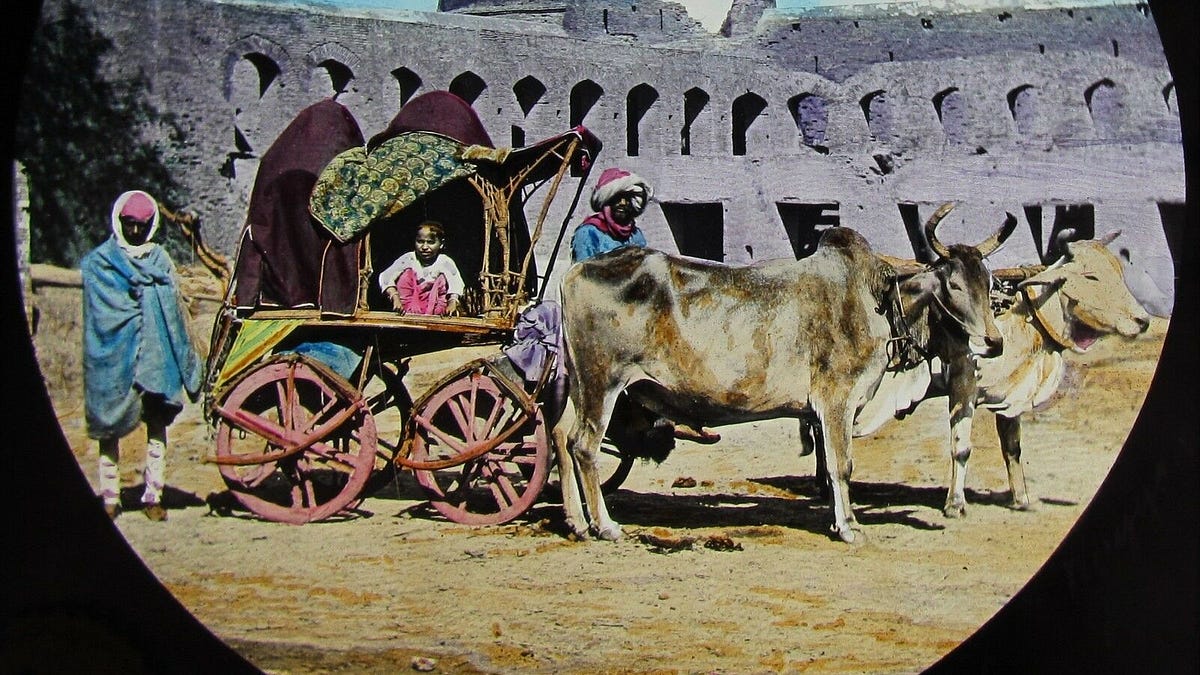
The architectural genesis of Rashtrapati Bhavan was defined not by a singular artistic vision, by a bitter, high- collision between two imperial architects, Sir Edwin Lutyens and Sir Herbert Baker. Their partnership, initially formed to design the new capital of British India, disintegrated into a professional feud that permanently scarred the visual axis of New Delhi. The central conflict revolved around the "Gradient," a geometric dispute regarding the slope of the road leading up Raisina Hill, which determined the visibility of the Viceroy's House. This architectural war was fought through blueprints, committee meetings, and acrimonious correspondence between 1913 and 1916, leaving a legacy of compromised sightlines that to this day.
Lord Hardinge, the Viceroy who orchestrated the move from Calcutta, imposed strict political parameters on the design. He demanded that the new capital blend Western classical forms with Indian motifs to appease local sentiment and project a unified imperial identity. Lutyens, a devotee of the European classical tradition, initially resisted this mandate, privately dismissing Indian architecture as formless and primitive. In his correspondence, he famously referred to Mughal structures as "piffle" and compared traditional Indian forms to "cowsheds." Yet, the political pressure from Hardinge and the India Office was. Lutyens was forced to study the Buddhist stupas of Sanchi and the Mughal monuments of Mandu and Indore. The result was the invention of the "Delhi Order," a hybrid architectural language that fused the neoclassical column with the Indian chhatri (umbrella kiosk), jaali (stone lattice), and chhajja (projecting cornice).
The most prominent feature of this hybrid style is the central dome of Rashtrapati Bhavan. frequently mistakenly compared to the Islamic dome of the Taj Mahal, the structure is actually modeled on the Great Stupa at Sanchi, a Buddhist monument. Lutyens raised this hemispherical dome on a massive drum, encircling it with a colonnade to give it height and authority. The dome is clad in copper, which has since oxidized to a dark finish, sitting atop a building constructed almost entirely of red and cream Dholpur sandstone. The use of this specific stone, quarried from Rajasthan, was a deliberate choice to link the new British citadel with the Mughal forts of Delhi and Agra, creating a visual continuity of power across centuries. The structure used approximately 700 million bricks and 3 million cubic feet of stone, with negligible use of structural steel, relying instead on massive masonry walls to support the load.
While the stylistic fusion was a negotiated success, the spatial arrangement of the complex became the source of the "Gradient Dispute." Lutyens envisioned the Viceroy's House as the climax of a long ceremonial axis (Kingsway, Kartavya route). He intended for the palace to be visible from the very base of Raisina Hill, rising majestically as one method. To achieve this, he proposed that the two Secretariat buildings (North and South Block), designed by Baker, be placed on a lower level than the Viceroy's House. Baker, yet, argued for a different configuration. He believed that the Secretariat buildings, representing the government's administrative, should sit on the same high plateau as the Viceroy's House to symbolize the unity of the empire. Baker proposed creating a level platform between the two Secretariats, requiring a steep inclined road to reach the summit.
The engineering specifics of this disagreement were precise and fatal to Lutyens' vision. Baker's plan required a gradient of 1 in 22 for the road passing between the Secretariat buildings. Lutyens initially signed off on this plan in 1913, distracted by other details and trusting his colleague. It was not until 1916 that he realized the optical consequences of this geometry. By raising the ground level between the Secretariats to create Baker's plateau, the road itself acted as a visual barrier. As a visitor method the hill from India Gate, the steep slope of the road rises to obscure the lower section of the Viceroy's House. At the serious moment of method, the palace appears to sink into the ground, with only the top of the dome remaining visible until the viewer reaches the very top of the plateau.
Lutyens fought desperately to reverse this decision, petitioning the Imperial Delhi Committee to alter the gradient. He proposed excavating the road to a lower level, a modification that would have restored the sightline disrupted Baker's unified composition. The dispute turned personal. Lutyens described the error as his "Bakerloo," a pun on Napoleon's Waterloo, signifying a total defeat. He accused Baker of professional incompetence and betrayal. The committee, facing spiraling costs and construction delays caused by World War I, sided with Baker. The cost of excavating the rock to lower the road was deemed prohibitive, and the 1 in 22 gradient remained.
The consequences of this decision are geometrically verifiable today. From the Great Place (Vijay Chowk) at the foot of the hill, the Viceroy's House is clearly visible. As one advances up the incline, the building slowly disappears behind the brow of the hill, an optical failure that contradicts the Beaux-Arts principles of grand axial planning. The "disappearing dome" remains a permanent testament to the rift between the two architects. They never reconciled, and the collaboration that built New Delhi ended in silence and hostility.
| Parameter | Lutyens' Proposal | Baker's Execution | Visual Consequence |
|---|---|---|---|
| Secretariat Elevation | Lower than Viceroy's House | Same level (Plateau) | Created a high ridge in front of the palace. |
| Road Gradient | Gradual slope (approx 1 in 50) | Steep incline (1 in 22) | The road surface rises faster than the line of sight. |
| Visual Axis | Continuous visibility from India Gate | Obstructed view at mid-method | The palace "sinks" behind the hill during method. |
| Material Composition | Red/Cream Dholpur Sandstone | Red/Cream Dholpur Sandstone | Unified texture masked the geometric discord. |
Even with the gradient error, the architectural detailing of the complex shows a rigorous application of the "Delhi Order." The columns of the portico are not standard Corinthian or Doric; they are a unique invention by Lutyens, featuring bells carved into the capitals, a motif inspired by Indian temple architecture, with the superstition that if the bells were silent, the dynasty would end. The integration of the chhajja provided deep shadows that protected the walls from the harsh Indian sun, a functional adaptation that also added a horizontal emphasis to the facades, countering the verticality of the European columns. This synthesis of form and function allowed the building to withstand the extreme climate of Delhi while asserting a visual dominance over the.
The interior design continued this battle between imperial imposition and indigenous adaptation. The Durbar Hall, located directly under the main dome, was designed to host the most formal imperial ceremonies. Its circular plan and stone columns evoke the Pantheon in Rome, yet the flooring patterns and the use of colored marbles draw directly from Indian traditions. The tension between Lutyens' desire for classical purity and the political need of Indian hybridity resulted in a building that is neither fully Western nor fully Eastern, a distinct monument to the specific political conditions of the late British Raj. The structure stands as a solidified record of the negotiations, arguments, and compromises that defined the final decades of colonial rule in India.
Construction Logistics, Labor Statistics, and Cost Overruns (1912, 1929)
The construction of the Viceroy's House was not an architectural project; it was a logistical leviathan that consumed nearly two decades, millions of pounds sterling, and the lives of an uncounted workforce. While Sir Edwin Lutyens drafted the imperial vision in London, the execution on the dusty plains of Raisina Hill required a mobilization of resources comparable to a military campaign. The financial and human toll of this endeavor reveals a clear between the colonial ambition for grandeur and the granular reality of its creation.
The financial trajectory of the project was a disaster of estimation. In 1912, Viceroy Lord Hardinge projected that the entire new capital could be built for £4 million. This figure was a bureaucratic fantasy. By the time the city was inaugurated in 1931, the total expenditure had ballooned to over £10 million (approximately Rs 144 million). The Viceroy's House alone consumed Rs 14 million, a sum that drew ire from the Legislative Assembly, where Indian members frequently shouted "Shame!" at the mention of revised estimates. The outbreak of World War I in 1914 severed supply lines and inflated material costs, turning a four-year timeline into a seventeen-year slog. Lutyens, whose personal fee was £5, 000, remained obstinate about quality, famously fighting, and losing, a battle with Herbert Baker over the gradient of the method road, a dispute settled not by aesthetics by the government's refusal to sanction the additional funds to level the ridge.
The physical construction relied on a dedicated logistical artery known as the Imperial Delhi Railway (IDR). This narrow-gauge network, locally dubbed the "Dholpur-Bari Light Railway" in sections, was laid specifically to feed the insatiable appetite of the construction site. It connected the sandstone quarries of Dholpur and the marble mines of Makrana directly to the heart of Delhi. The IDR transported over 3 million cubic feet of stone and 700 million bricks. The red sandstone, quarried from Dholpur, and the cream sandstone, sourced from near Agra, were moved by rail to a transshipment yard where they were transferred to the Great Indian Peninsula Railway broad gauge line, then shuttled to the work site. A locomotive shed at Barakhamba and an extension to the brickfields near Safdarjang's Tomb formed the industrial skeleton of the new capital.
The human engine driving this consisted of a workforce that peaked at nearly 30, 000 laborers. This army was not a monolith a stratified hierarchy of caste and region. The stone cutters, or Sangtarash, were primarily Bagris from Rajputana, whose ancestors had built the Mughal forts. The load bearers, known as Bandhanis, were recruited from Punjab. Official records from the 1920s paint a grim picture of their compensation. Men were paid between 8 and 12 annas per day. Women, who constituted of the unskilled labor force, received a mere 6 to 7 annas. Children, as young as ten, were paid 1 to 2 annas, barely a tenth of an adult male's wage, to carry baskets of rubble.
| Worker Category | Daily Wage (1920s) | Primary Origin |
|---|---|---|
| Skilled Masons (Sangtarash) | 12, 16 Annas | Rajputana (Bagris) |
| Unskilled Men (Coolies) | 8, 12 Annas | Punjab, United Provinces |
| Unskilled Women | 6, 7 Annas | Rajasthan, Punjab |
| Children (10, 15 years) | 1, 2 Annas | Migrant Families |
These workers lived in squalid conditions that stood in grotesque contrast to the palace they were building. Seven major labor camps were established around the construction zone, with the largest at Safdarjang housing over 9, 000 people. The Industrial Surveyor in 1929 reported that workers were forced to dig their own huts, frequently partially underground and no more than five feet high, to escape the searing heat and biting cold. Debt bondage was widespread; laborers were frequently trapped by moneylenders, frequently the labor contractors themselves, who charged interest rates of 35 to 40 percent. The "Panj Pyare," a group of five Sikh contractors led by Sobha Singh, dominated the construction contracts. Sobha Singh, who began by leveling the land for the 1911 Durbar, amassed such wealth and land that he became known as Adhi Dilli ka Malik (Owner of Half of Delhi). His firm, along with others like Sujan Singh and the Sindhi contractor Haroun-al-Rashid, operated as a cartel that controlled the flow of labor and materials, profiting immensely while the workforce subsisted on starvation wages.
The logistical complexity extended to the sourcing of materials. Lutyens demanded specific shades of sandstone to replicate the Mughal aesthetic. The red sandstone from Dholpur was chosen to form the plinth, symbolizing the solid Indian base, while the cream sandstone for the upper levels was intended to represent the British administration. This dual-stone requirement necessitated precise coordination between the quarries and the rail network. Any delay in the Dholpur extraction halted work on Raisina Hill. The refusal to use steel in the main structure, Lutyens preferred the longevity of stone and brick, meant that the building relied on massive load-bearing walls, increasing the volume of material and the labor required to shape it. This decision, while ensuring the building's durability, contributed significantly to the cost overruns and the extended timeline.
By 1929, when Lord Irwin moved into the incomplete Viceroy's House, the project had consumed the prime working years of a generation of laborers. The final structure stood as a testament to imperial, its foundations were laid in the sweat and financial ruin of the Indian taxpayer. The cost of the Viceroy's House alone, at Rs 14 million, was an astronomical figure in a country where the average daily income was measured in pennies. The "New Delhi" that emerged was a city built by the poor for the rulers, a paradox of stone and flesh that would define the capital's geography for the century.
Structural Engineering of the Main Building and Central Dome

The structural integrity of Rashtrapati Bhavan relies on a geological anchor that predates the British Empire by millions of years. The decision to site the Viceroy's House on Raisina Hill was not aesthetic; it was a calculated engineering choice to ground the massive edifice on the Delhi Ridge, the northernmost spur of the Aravalli Range. Between 1912 and 1916, engineers the quartzite rock to level the plateau, creating a natural foundation capable of supporting a load that would eventually exceed hundreds of thousands of tons. Unlike the alluvial soil near the Yamuna River, which plagued the construction of the Red Fort and Taj Mahal with subsidence concerns, the quartzite base provided a rigid, non-compressible platform. This geological advantage allowed Chief Engineer Hugh Keeling and his Indian counterpart, Teja Singh Malik, to design a foundation system that eschewed deep pilings in favor of spread footings that transferred the building's immense dead load directly into the bedrock.
The superstructure itself represents one of the final great triumphs of masonry construction before the global dominance of the steel frame. Architect Edwin Lutyens harbored a deep distrust of structural steel, fearing its susceptibility to rust and expansion would compromise the building's longevity. Consequently, the main building functions as a structure, relying on the sheer mass of its walls to resist lateral forces. The statistics of this masonry effort are. The construction consumed approximately 700 million bricks and 3. 5 million cubic feet of sandstone. The brickwork constitutes the load-bearing core, while the stone serves as both cladding and structural interlocking. The red sandstone was sourced from quarries near Dholpur and Fatehpur Sikri, while the cream sandstone, used to highlight the upper cornices and columns, came from Dholpur. This dual-tone arrangement was not paint or plaster; it was a structural integration of distinct lithologies, requiring precise logistical coordination via the Imperial Delhi Railway, a dedicated track laid specifically to haul these materials to the site.
The central dome stands as the most complex engineering feat of the entire complex. Rising 55 meters (approximately 180 feet) from the forecourt level, the dome is a double-shelled structure, a technique Lutyens adapted from the Pantheon in Rome and the Stupa at Sanchi. The internal dome, visible from the Gantantra Mandap (formerly Durbar Hall), forms a perfect hemisphere that manages the acoustics and aesthetics of the ceremonial space. Above this sits a massive drum, which supports the external dome. This outer shell is one of the few areas where Lutyens conceded to the use of reinforced concrete, clad in copper plates. The copper sheathing, originally bright, has oxidized over the decades to a dark, matte finish, a chemical inevitability that protects the underlying structure from the searing Delhi heat. The engineering of the drum was serious; it had to be tall enough to ensure the dome remained visible over the Secretariat buildings, a direct response to the gradient controversy with Herbert Baker, while remaining stable enough to support the lantern and the flagstaff at its apex without buckling the masonry piers.
| Component | Metric/Material | Engineering Function |
|---|---|---|
| Core Structure | 700 Million Bricks | Load-bearing walls; thermal mass insulation. |
| Cladding/Interlock | 3. 5 Million Cubic Feet Sandstone | Weatherproofing; structural bonding; Dholpur Red & Cream. |
| Foundation | Delhi Quartzite (Bedrock) | Direct load transfer; zero-settlement rigid base. |
| Central Dome | Double-Shell (Concrete/Masonry) | Outer shell for elevation; inner shell for acoustics. |
| Roofing | Copper Sheathing | Waterproofing; thermal expansion management. |
| Floor Area | 200, 000 Square Meters | Distributed load across four floors. |
The execution of this design fell to a workforce that operated with minimal mechanization. While British architects provided the blueprints, the physical realization of the engineering was the work of Indian contractors and laborers. The main building's construction was executed by the firm of Haroun-al-Rashid, while the forecourt and other substructures involved the contractor Sobha Singh. At the peak of activity, over 23, 000 laborers, including 3, 000 specialized stonecutters, worked on the site. The stonecutters utilized traditional techniques to dress the hard sandstone, ensuring that the ashlar masonry fit with such precision that mortar joints were frequently less than three millimeters thick. This tight bonding was essential for the building's water resistance, as the porous sandstone required a sealed skin to prevent moisture ingress during the monsoon. The walls were designed with internal cavities in specific zones, a passive cooling technique that allowed hot air to rise and escape through high-level ventilators, reducing the internal temperature before the advent of modern HVAC systems.
Seismic vulnerability remains the most serious engineering concern for the structure in the 21st century. When construction began in 1912, the science of earthquake engineering was in its infancy, and Delhi's classification as Seismic Zone IV (High Damage Risk Zone) was unknown. The building is an Unreinforced Masonry (URM) structure. While its massive walls provide excellent compression strength, they absence the ductility to absorb the shear forces generated by a high-magnitude earthquake. The rigid connection between the foundation and the superstructure means that ground acceleration transfers directly to the masonry. Throughout the 20th and early 21st centuries, the building has withstood numerous tremors, primarily due to the high quality of the original mortar and the sheer thickness of the walls, which can exceed two meters at the base. Yet, structural audits conducted by the Central Public Works Department (CPWD) and IIT Delhi in the 2000s and 2020s have identified stress points, particularly at the junction of the dome's drum and the main roof slab.
By 2026, the engineering focus has shifted from construction to preservation and retrofitting. The challenge lies in strengthening the structure without altering its heritage character. Engineers use non-destructive testing methods, such as ground-penetrating radar and ultrasonic pulse velocity tests, to monitor the health of the internal brick core. The copper dome requires periodic inspection to ensure the cladding remains watertight, as water seepage into the concrete shell could corrode the internal reinforcement, leading to spalling. The ventilation systems, originally passive, have been overlaid with modern climate control, requiring careful routing of ducts to avoid compromising the load-bearing masonry. The survival of Rashtrapati Bhavan for over a century is not proof of invincibility a testament to the over-engineering of its original -load design, which provided a safety factor large enough to compensate for the absence of modern seismic detailing.
Interior Protocols of Durbar Hall and Ashoka Hall
Ganatantra Mandap: The Axis of the Republic
Formerly the Throne Room, Ganatantra Mandap sits directly beneath the main dome of the main building. The architecture commands silence. The hall is a circular space, 22 meters in diameter, encased in white marble walls that rise 42 feet. The structural load is borne by columns of yellow Jaisalmer marble, capped with white bases, creating a clear contrast against the chocolate-colored Italian marble that lines the periphery. The focal point of the vertical axis is a Belgian glass chandelier, suspended from a height of 33 meters. This fixture, weighing approximately two tons, requires a dedicated winch system for maintenance, a protocol that involves lowering the artifact to floor level for cleaning, a process that takes place with military regularity.
The floor plan of Ganatantra Mandap is designed for hierarchy. In the Lutyens era, this room housed two silver thrones for the Viceroy and Vicereine. Today, the focal point is the President's Chair, a singular seat of authority. Directly behind this chair stands a 5th-century Gupta-period statue of Gautama Buddha, originating from Mathura. The placement of this artifact is a deliberate subversion of the room's original imperial intent. Where the British Crown once demanded submission, the Buddha symbolizes Dharma and peace, serving as the silent witness to the swearing-in of Prime Ministers and Chief Justices. The statue, placed against a crimson velvet backdrop, creates a visual anchor that dominates the television feeds during state ceremonies.
Acoustics within the Ganatantra Mandap are notoriously sensitive. The dome captures and amplifies sound, a feature originally intended to carry the Viceroy's voice without amplification. In modern, this a specialized audio setup during the Defence Investiture Ceremonies and Padma Awards. The carpet, frequently removed for larger gatherings to reveal the geometric marble flooring, plays a role in dampening the reverberation. During investitures, the protocol demands that awardees move in a precise line from the side, halt at a marked distance from the President, bow, and method the dais. The movement is choreographed to the second, ensuring that the citation reading matches the physical method of the recipient.
Ashok Mandap: The Ballroom Diplomacy
If Ganatantra Mandap is the hall of law, Ashok Mandap (formerly Ashoka Hall) is the hall of diplomacy. Originally constructed as the State Ballroom, it retains a unique structural feature: a wooden floor supported by springs. This method was designed to reduce fatigue for dancers during the marathon balls of the British Raj. While the springs remain, the floor is covered by a massive Persian-style carpet, measuring 32 meters by 20 meters, woven by 500 weavers over two years. The carpet's weight and friction neutralize the floor's bounce, stabilizing the ground for the high- diplomatic rituals that occur there.
The visual dominance of Ashok Mandap comes from its ceiling, which houses one of the most complex art installations in the complex. The centerpiece is a leather painting of Fath Ali Shah Qajar, the second Qajar ruler of Persia, depicted hunting a tiger with his twenty-two sons. This artwork was a gift to King George IV, later transferred from the India Office Library in London to New Delhi during the Viceroyalty of Lord Irwin. The painting, measuring 5. 20 meters by 3. 56 meters, presented a design challenge: it was too small to cover the entire ballroom ceiling. To resolve this, Lady Willingdon commissioned the Italian artist Tomasso Colonnello in 1932.
Colonnello's solution was to extend the Persian hunting theme across the entire vaulted ceiling and down the walls using frescoes. Working with twelve Indian artists, he painted directly onto the plaster (for the ceiling) and on canvas (for the walls) between June 1932 and October 1933. The result is a direct optical illusion where the forest scenes of the original Qajar painting bleed into the surrounding architecture. A specific optical trick exists within the central portrait: the eyes of Fath Ali Shah appear to follow the viewer to any corner of the room, a feature frequently pointed out to visiting Heads of State to break the ice before formal talks.
The Credential Presentation Protocol
The presentation of credentials by foreign envoys in Ashok Mandap is the most scripted diplomatic event in the Indian calendar. The protocol has remained largely unchanged since 1950, though the venue name changed in 2024. The ceremony begins with the envoy's arrival at the Forecourt, where they inspect a Guard of Honour. They are then escorted to Ashok Mandap. The President stands on a rug beneath the central chandelier. The envoy enters, stops at a specific distance, and bows. They then advance to present the "Letter of Credence", a formal document from their Head of State addressed to the President of India, requesting that the envoy be received.
This exchange is physical and legal. Once the President accepts the letter, the envoy is officially accredited. The protocol forbids the envoy from turning their back on the President immediately; they must retreat a few steps before turning. The National Anthem of the envoy's country is played, frequently from the loft space originally designed for a ballroom orchestra. This loft, overlooking the hall, allows the music to fill the room without the musicians intruding on the floor space. Following the formal acceptance, the President and the envoy withdraw to a side room for a "courtesy call," a brief, private conversation that marks the beginning of the diplomat's tenure.
Operational Logistics and 2026 Status
Maintenance of these halls requires a specialized division of the President's Secretariat. The frescoes in Ashok Mandap are subjected to periodic chemical cleaning to prevent discoloration from Delhi's particulate pollution. The temperature in both halls is strictly controlled to preserve the canvas, leather, and wood. As of 2026, the renaming to Ganatantra and Ashok Mandap has been fully integrated into all official literature, invitations, and digital archives. The signage within the Bhavan was updated within weeks of the July 2024 announcement, and the new names are the standard reference points for all diplomatic correspondence issuing from the Ministry of External Affairs.
| Feature | Ganatantra Mandap (Durbar Hall) | Ashok Mandap (Ashoka Hall) |
|---|---|---|
| Original Function | Throne Room | State Ballroom |
| Primary Usage (2026) | Investitures, Swearing-in Ceremonies | Credential Presentations, State Banquets |
| Key Artifact | 5th Century Gupta Buddha | Fath Ali Shah Qajar Ceiling Painting |
| Flooring | Patterned Marble (Jaisalmer/Italian) | Wooden with Spring method |
| Height/Dimensions | 33m Chandelier Drop / 22m Diameter | Rectangular / Vaulted Fresco Ceiling |
| Renaming Date | July 25, 2024 | July 25, 2024 |
Transition from Viceroy's House to Government House (1947, 1950)

| Asset / Unit | Method of Division (1947) | Outcome |
|---|---|---|
| Viceroy's Gold-Plated Buggy | Coin Toss | Won by India (remains in Rashtrapati Bhavan) |
| Governor General's Bodyguard | Religious affiliation | Split: Muslim personnel to Pakistan; Sikhs/Hindus to India |
| Movable Assets (Furniture/Silver) | 80: 20 Ratio | Bulk retained by India; 20% shipped to Karachi |
| Viceroy's House Title | Territorial Sovereignty | Retained by India (Renamed Government House) |
In June 1948, the departure of Lord Mountbatten marked the end of the British residency. He was succeeded by Chakravarti Rajagopalachari (Rajaji), the and only Indian Governor-General. Rajaji's occupancy fundamentally altered the domestic geography of the building. Upon inspecting the Viceroy's Suite, the private apartments designed by Lutyens for the British monarch's representative, Rajaji found the luxury "oppressive" and "too ostentatious" for a representative of a poor nation. Rajaji refused to occupy the Viceroy's Suite. Instead, he moved his living quarters to the North West Wing, a section of the building originally designed for guests and senior staff. This decision was not a personal preference; it was a political statement that established a permanent precedent. Every President of India since Rajaji has followed this tradition, occupying the "Family Wing" in the North West, while the original Viceroy's Suite ( the Guest Wing) is reserved for visiting Heads of State. This spatial shift "democratized" the building, turning the imperial core into a guest house and the peripheral wing into the seat of the Head of State. The transition period also saw the systematic "Indianization" of the building's iconography. The British coats of arms that adorned the chairs and stationery were phased out, replaced by the Ashoka Chakra and the four lions of Sarnath. yet, the structural imperial symbols, the crowns atop the domes and the British statues in the gardens, remained largely untouched in the immediate aftermath, a testament to the hurried nature of the transfer. The Star of India, a symbol of the British order of chivalry, remained in the architecture, an indelible tattoo of the colonial past. On January 26, 1950, the transition reached its legal conclusion. Dr. Rajendra Prasad was sworn in as the President of India in the Durbar Hall. On this day, "Government House" was formally renamed "Rashtrapati Bhavan." The change in title signified the shift from a dominion status, where the Head of State represented the British Monarch, to a Republic, where the Head of State represented the people of India. The Durbar Hall, once the site of imperial investitures, became the venue for the proclamation of the Republic, completing the building's transformation from a symbol of subjugation to a symbol of sovereignty. The inventory of the house in 1950 revealed the of what was retained. even with the 80-20 split, Rashtrapati Bhavan kept the majority of the Lutyens-designed furniture, the chandeliers, and the carpets. The "swadeshi" movement, which had defined the freedom struggle, had to reconcile with the reality that the President of India lived in a building that was British in design, execution, and furnishing. The administration chose preservation over purgation, maintaining the Lutyens aesthetic while repurposing the function. The Banquet Hall, which had hosted Viceregal dinners, began to host the leaders of the Non-Aligned Movement, serving as a diplomatic instrument for the new republic. By 1950, the physical separation was complete, the ghostly presence of the Empire remained in the stone and mortar. The staff, of whom had served the Viceroys, served the President, carrying forward the institutional memory of the house. The transition from Viceroy's House to Rashtrapati Bhavan was not a revolution of destruction, a revolution of occupation. The Indian state did not destroy the palace; it evicted the landlord and moved into the master bedroom, or rather, the guest room down the hall.
Amrit Udyan Horticultural Composition and Water Management
The horticultural identity of Rashtrapati Bhavan, formally as Amrit Udyan, represents a century-long collision between imperial ambition and ecological need. While Sir Edwin Lutyens drafted the hardscape geometry of the estate in 1917, the botanical reality was engineered by William Mustoe. As the Director of Horticulture, Mustoe did not decorate the Viceroy's House. He executed a massive biological terraforming operation starting in 1928. The site on Raisina Hill was originally a semi-arid ridge dominated by scrub forest. Mustoe introduced a hybrid aesthetic that forced the rigid symmetry of the Persian Charbagh to coexist with the herbaceous borders typical of an English country estate. This forced marriage of styles created a maintenance-heavy botanical complex that requires precise resource management to survive the searing Delhi heat.
The core of the garden design relies on a grid of red sandstone canals and sunken plots. Lutyens intended these water features to act as the circulatory system of the grounds. Yet the water requirements for such a layout were immense from the outset. The estate consumes approximately 2 million liters of water per day to maintain its operations and greenery. For decades this demand placed a severe on the municipal supply of New Delhi. The reliance on freshwater for irrigation became untenable by the early 21st century. Groundwater levels in the estate dropped by 2 to 7 meters between 1990 and 2000. This hydrological emergency forced a radical overhaul of the estate's water infrastructure under the presidency of Pranab Mukherjee.
In June 2015 the estate commissioned a dedicated Sewage Treatment Plant (STP) with a capacity of 20 lakh (2 million) liters per day. This facility marked a pivot from consumption to circularity. The STP uses an Extended Aeration System to process sewage generated by the 7, 000 residents and staff living within the President's Estate. As of 2026, this plant supplies 80 percent of the water required for horticulture. The treated water is stored in the Dalikhana Lake, a collection reservoir whose capacity was tripled to 5 million liters during the renovation. This shift allows the gardens to remain lush even during the pre-monsoon drought without draining the potable water resources of the capital.
The floral composition of Amrit Udyan is dominated by the rose. Mustoe was a rosarian of high standing and introduced over 250 varieties to the grounds during the colonial era. Today the inventory includes approximately 159 distinct varieties. The selection process is rigorous. Gardeners replace old rootstocks systematically to prevent soil fatigue. Varieties such as "Bonne Nuit" and "Oklahoma" provide the deep black-red hues that are a signature of the garden. The "Mother Teresa" and "Arjun" varieties add to the domestic lineage. The maintenance of these rose beds involves a precise calendar of pruning and fertilization that begins in October to ensure peak bloom by late January.
Tulips have become the central attraction of the winter season. In preparation for the Udyan Utsav of 2025, the horticultural team planted over 50, 000 tulip bulbs. This represents a significant increase from previous years and signals a shift toward high-impact seasonal displays. These bulbs are frequently imported from the Netherlands to ensure color uniformity. The 2025 display featured ten distinct species of tulips in monochromatic and double-tone arrangements. The logistics of this display are complex. Tulips are temperate flowers that struggle in the Delhi heat. The gardeners use chilled water and shade nets to regulate soil temperature during the early growth phases to prevent premature blooming or bulb rot.
The renaming of the gardens on January 28, 2023, from "Mughal Gardens" to "Amrit Udyan" was a political act that reframed the identity of the space. The government stated the change was to commemorate 75 years of independence. Critics viewed it as an erasure of the Indo-Islamic heritage that Lutyens explicitly incorporated into the design. Yet the physical structure of the garden remains undeniably Mughal in its lineage. The use of the four-part grid, the central water axis, and the terraced levels are textbook applications of the Charbagh style found in Kashmir and Lahore. The name changed. The geometry did not.
Public access to the gardens has expanded significantly. The annual opening, known as Udyan Utsav, attracts nearly a million visitors annually. Data from the 2024 and 2025 seasons show a daily footfall exceeding 10, 000 visitors on weekends. To manage this volume, the estate introduced online booking systems and QR-code-based plant identification tags. The 2026 winter season, running from February 3 to March 31, continued this trend. The estate also introduced a "Summer Annuals" viewing window in August and September. This secondary season focuses on rain-hardy varieties like celosia and tuberose, breaking the tradition of the garden being a winter-only attraction.
Beyond the ornamental lawns, the estate houses specialized zones that serve functional and educational purposes. The Herbal Garden, established by President A. P. J. Abdul Kalam in 2002, contains 33 varieties of medicinal plants. This plot includes Aswagandha, Brahmi, and Stevia. It serves as a living repository of Ayurvedic botany. Adjacent to this is the Tactile Garden, also a Kalam initiative. This space is designed for the visually impaired. It features plants with distinct textures and strong fragrances. The beds are raised to waist height to allow easy interaction. Braille signage provides botanical details. This zone represents a move toward inclusivity in a space that was historically exclusive.
The Nutrition Garden, or Dalikhana, has a history rooted in emergency. In the 1950s, during a severe food absence, Governor-General C. Rajagopalachari plowed up a section of the manicured lawns to grow wheat. He intended this as a symbolic gesture of solidarity with a starving nation. This area produces organic vegetables and fruits for the Rashtrapati Bhavan kitchen. It stands as a testament to the functional chance of the estate. The soil here is enriched with compost generated on-site. A solid waste management plant within the estate processes organic waste into manure. This closes the nutrient loop and reduces the need for chemical fertilizers.
The preservation of the "Doob" grass is another serious horticultural task. Originally brought from Calcutta, this grass variety (Cynodon dactylon) was chosen by Mustoe for its resilience. It forms the velvet carpets of the Central Lawn. Maintaining this monoculture requires constant vigilance against invasive weeds and fungal infections. The lawn is aerated and top-dressed annually. The sheer of the Central Lawn makes it the primary venue for state functions, including the "At Home" receptions. The durability of the turf is tested during these events, where thousands of guests walk upon it. The recovery involve immediate irrigation and the application of growth stimulants to repair the trampled blades.
As of early 2026, the Amrit Udyan operates as a high-tech botanical facility. Automated irrigation systems controlled by soil moisture sensors have replaced manual watering in several sectors. This technology further optimizes water usage. The integration of the Bonsai Garden, with its collection of miniaturized trees, adds another of botanical complexity. specimens in this collection are decades old and require daily specialized care. The garden is not a static monument. It is a biological machine that demands 24-hour monitoring to function. The shift from the Viceroy's private pleasure ground to a public space visited by millions reflects the democratization of the estate. Yet the underlying challenge remains the same: sustaining a temperate fantasy in a semi-arid tropical climate.
| Metric | Data Point |
|---|---|
| Total Estate Water Demand | ~2, 000, 000 Liters / Day |
| STP Capacity | 2, 000, 000 Liters / Day |
| Recycled Water Usage | 80% of Horticulture Needs |
| Dalikhana Lake Capacity | 5, 000, 000 Liters |
| Tulip Bulbs Planted (2025) | 50, 000+ |
| Rose Varieties | 159 |
| Annual Visitors (Approx.) | 900, 000, 1, 000, 000 |
| Renaming Date | January 28, 2023 |
President's Estate Infrastructure and Staff Housing Demographics

The President's Estate, frequently reduced in public imagination to the sandstone dome of the main building, functions as a segregated, self-contained municipality spread over 330 acres. Behind the imperial facade lies a complex township that houses approximately 6, 000 to 7, 000 residents, comprising the families of the President's Bodyguard (PBG), household staff, sanitation workers, and administrative personnel. This demographic distribution remains deeply rooted in the colonial hierarchy established by Edwin Lutyens, where residential zones were strictly delineated by rank, race, and utility. The infrastructure supporting this "city within a city" has undergone a radical, albeit delayed, transformation from a resource-heavy colonial relic to a modernized smart township between 2014 and 2026.
Lutyens designed the estate's support structures with a rigid class stratification that in the physical geography of the complex. The original layout specific enclaves for "menials," a term officially used in 1920s planning documents to describe the vast army of dhobis (washermen), malis (gardeners), and khalasis required to maintain the Viceroy's pomp. These quarters, primarily Type I and Type II units, were tucked away behind high walls and thick foliage, rendering the labor force invisible to state guests. Even in 2026, the estate retains this cantonment-style organization, though the nomenclature has shifted. The President's Bodyguard, an elite household cavalry regiment, occupies a distinct zone known as the Bodyguard Lines, complete with stables, barracks, and family quarters that operate independently of the civilian staff housing.
The housing stock itself faced a serious emergency of dilapidation by the early 21st century. of the original staff quarters, built with lime mortar and brick in the 1920s, suffered from dampness, structural fatigue, and insufficient sanitation. A massive redevelopment drive, accelerated under the presidencies of Pranab Mukherjee and Ram Nath Kovind, sought to replace these colonial-era tenements. By 2024, the Central Public Works Department (CPWD) had demolished roughly 100 older Type I units, essentially single-room tenements, to make way for high-rise Type II and Type III apartments. These new vertical blocks, a clear departure from Lutyens' low-rise garden city aesthetic, were necessitated by the density of the estate's population, which includes over 1, 900 families. The modernization replaced communal latrines with private amenities, yet it also altered the historic skyline of the service wings.
Water management on the estate represents the most significant infrastructure shift in its history. For decades, the Rashtrapati Bhavan was a hydrological black hole, consuming approximately 1. 6 to 1. 8 million liters of water daily, largely to maintain the 190 acres of manicured greenery, including the Mughal Gardens ( Amrit Udyan). Until 2015, this demand was met entirely by potable water from the New Delhi Municipal Council (NDMC), a wasteful practice in a water-stressed capital. The inauguration of a Sewage Treatment Plant (STP) in 2015 changed this. With a capacity of 20 lakh (2 million) liters per day, the STP recycles 80% of the estate's sewage. This treated water irrigates the massive lawns and the Dalikhana Lake, decoupling the estate's horticulture from the city's drinking water supply. By 2026, this system had saved billions of liters of potable water, serving as a case study for other government enclaves.
Energy consumption within the estate has similarly pivoted toward sustainability, driven by the "Roshni" programme. Historically, the high ceilings and uninsulated stone of the main building required massive energy inputs for cooling. In a push for green energy, the estate commissioned a major solar infrastructure upgrade. In late 2025, the Solar Energy Corporation of India (SECI) awarded a contract for a 1 MW grid-connected rooftop solar project under the RESCO model. This installation, operational by early 2026, spans multiple service buildings and staff quarters, significantly reducing the estate's reliance on the thermal-heavy Delhi grid. The integration of solar power marks the time the estate has generated of its own electricity since the Viceroy's House switched from its private DC power plant to the municipal grid in the mid-20th century.
The demographic composition of the estate reflects a specialized microcosm of the Indian state. The residents are not civil servants hereditary specialists. families in the dhobi ghats and garden lines have served the presidency for three generations, passing down specific knowledge of the estate's flora and ceremonial. This continuity creates a unique social fabric, distinct from the transient nature of the politicians who occupy the main palace. The estate operates its own schools, a section of a hospital, and a market, functioning as an autonomous village. Yet, this autonomy also breeds isolation; the security surrounding the President frequently restrict the movement of staff families, turning the estate into a golden cage for its lower-ranked inhabitants.
| Metric | Statistic / Detail |
|---|---|
| Total Estate Area | 330 Acres |
| Resident Population | ~6, 000, 7, 000 (approx. 1, 900 families) |
| Daily Water Consumption | ~1. 6, 1. 8 Million Liters |
| Sewage Treatment Capacity | 2. 0 Million Liters Per Day (MLD) |
| Solar Power Capacity | 1 MW (Rooftop project commissioned 2025-26) |
| Housing Types | Type II, III, IV (Type I phased out/upgraded) |
| Key Resident Groups | President's Bodyguard, Household Staff, Sanitation, Horticulture |
Waste management infrastructure has also been overhauled to meet "Smart City" standards. The estate houses an organic waste converter that processes the massive volume of floral waste generated by the gardens and ceremonial functions. Instead of ending up in Delhi's overflowing landfills, tons of cut flowers and green waste are converted into compost on-site, which is then fed back into the Amrit Udyan. This circular economy model, fully operational by 2024, stands in sharp contrast to the pre-2010 era, where the estate's waste footprint was largely unmonitored. The transformation of the President's Estate from a colonial symbol of excess to a self-sustaining township reflects a broader attempt to align the symbols of the Indian republic with the resource realities of the 21st century.
Art Preservation and Library Digitization Initiatives (2010, 2026)
The transformation of Rashtrapati Bhavan from a closed colonial into a publicly accessible repository of Indian heritage accelerated sharply between 2010 and 2016. This period marked a departure from mere structural maintenance toward a systematic, data-driven preservation of the estate's artistic and intellectual assets. The shift began in earnest during the presidency of Pranab Mukherjee, who mandated that the "living heritage" of the building be demystified for the Indian citizenry. This directive resulted in the detailed Conservation Management Plan (CCMP), submitted by the Indian National Trust for Art and Cultural Heritage (INTACH) in 2013, which established the rigorous for restoring the 340-room edifice since its completion in 1929.
A primary focus of this initiative was the Rashtrapati Bhavan Library, a space originally designed by Edwin Lutyens to serve the Viceroy. By 2012, the library housed approximately 23, 000 volumes, yet a serious problem existed: the collection was deteriorating, and access was restricted to a privileged few. The inventory included 4, 000 rare books dating back to the late 18th and early 19th centuries. Among the most significant artifacts is The Original Works of William Hogarth, published in 1795, which remains the oldest volume in the collection. Another serious text is the 1800 edition of A View of the Origin and Conduct of the War with Tippoo Sultan by Alexander Beatson, which provides a British military perspective on the Mysore Wars. In 2013, the administration initiated a massive digitization project to scan these fragile texts. By 2025, the library had digitized over 85% of its rare catalogue, integrating these files into the National Digital Library of India to ensure permanent preservation.
The preservation of the estate's art required equally specialized intervention, particularly within the Ashok Mandap (formerly Ashoka Hall). The hall's ceiling features a unique leather painting measuring 5. 20 meters by 3. 56 meters, depicting Fath Ali Shah, the second Qajar ruler of Persia, hunting a tiger. This piece, originally gifted to King George IV, was brought from the India Office Library in London to New Delhi during the viceroyalty of Lord Irwin. The Italian artist Tomasso Colonnello was commissioned in the 1930s to extend the painting's forest theme across the entire vaulted ceiling and walls using fresco techniques. Over eight decades, and humidity caused the leather canvas to sag and the frescoes to darken. In 2014, a specialized conservation team began a microscopic analysis of the pigments and binding agents. The restoration process, completed in stages, involved re-adhering the leather substrate and removing of oxidized varnish to reveal the original vibrancy of the Qajar-era pigments.
In July 2013, the President's Secretariat signed a Memorandum of Understanding (MoU) with the Indira Gandhi National Centre for the Arts (IGNCA). This partnership aimed to document every artifact within the estate, creating a digital catalogue that tracks the provenance and condition of furniture, textiles, and carpets. The project examined the Lutyens-designed furniture, including the iconic Star of India chairs, and the Persian carpets that had suffered from decades of foot traffic. One notable success was the stabilization of a 17th-century Persian carpet in the Guest Wing, where conservators used non-invasive thread-counting and dye analysis to weave support fabrics that matched the original Safavid-era knots.
The most visible outcome of the preservation drive was the construction of the Rashtrapati Bhavan Museum Complex. Phase I, inaugurated in 2014, utilized the heritage Stables, while Phase II, opened in July 2016, transformed the dilapidated Garages. The Phase II project was an engineering feat that required excavating a basement museum beneath the heritage structure without compromising the foundation of the existing buildings. Built at a cost of approximately ₹80 crore, the underground museum covers 10, 000 square meters and uses virtual reality to narrate the planning of New Delhi. Unlike traditional static displays, this facility uses technology to project the history of the Enclave, from the 1911 displacement of Raisina villagers to the 1947 transfer of power. The museum houses over 2, 000 artifacts, including the silver chair used by Queen Mary at the 1911 Delhi Durbar and the kinetic sculpture of the "Make in India" lion.
| Year | Initiative | Details |
|---|---|---|
| 2013 | CCMP Submission | INTACH submits the detailed Conservation Management Plan for the estate. |
| 2013 | Library Digitization | Commencement of scanning 4, 000 rare books, including the 1795 William Hogarth volume. |
| 2014 | Museum Phase I | Inauguration of the museum in the colonial-era Stables. |
| 2016 | Museum Phase II | Opening of the underground Garage Museum (₹80 crore project). |
| 2023 | Art Refurbishment Plan | Ministry of Culture initiates new conservation pattern for oil paintings by Raja Ravi Varma. |
| 2024 | Renaming of Halls | Durbar Hall renamed Ganatantra Mandap; Ashoka Hall renamed Ashok Mandap. |
The preservation ethos extended to the renaming of historic spaces to reflect the republic's values while maintaining the physical structure. In July 2024, President Droupadi Murmu renamed the Durbar Hall, the site of the transfer of power, to Ganatantra Mandap (Republic Hall), and the Ashoka Hall to Ashok Mandap. This symbolic change was accompanied by a physical audit of the marble columns and the 2-ton Belgian chandelier in the Ganatantra Mandap. The audit revealed micro-fissures in the stone flooring caused by decades of heavy footfall during investiture ceremonies. Consequently, the Public Works Department implemented load-bearing restrictions and introduced temperature-controlled zones to prevent thermal expansion damage to the marble.
By 2026, the conservation focus shifted toward the integration of the Rashtrapati Bhavan's archives with the Central Vista's new digital infrastructure. The "E-pustakalaya" initiative, originally launched to democratize access to the library, evolved into a detailed portal offering high-resolution imagery of the estate's art collection. This digital repository allows researchers to examine the brushstrokes of the portrait of Fath Ali Shah or the weave of the Lutyens-era tapestries from remote locations. The estate, once a symbol of imperial exclusion, has thus used technology and rigorous conservation science to become a permanent, accessible archive of Indian history.
Security Perimeter Protocols and Ceremonial Guard Deployment

The security architecture of Rashtrapati Bhavan represents a complex synthesis of colonial-era pageantry and twenty- -century. While the public image of the estate is defined by the scarlet-coated President's Bodyguard (PBG), the operational reality involves a multi- defensive grid that has evolved drastically from the viceregal era to the cyber-physical threats of 2026. The protection of the 320-acre estate is not a police matter a joint operation involving the Indian Army, the Delhi Police, and specialized paramilitary units, operating under that have shifted from exclusion to controlled access.
At the core of this apparatus is the President's Bodyguard, the senior-most regiment of the Indian Army, raised in 1773 by Governor-General Warren Hastings. Originally known as the Governor General's Bodyguard, this unit has maintained a continuous lineage for over 250 years. Contrary to their purely ceremonial appearance, PBG troopers are fully operational combat paratroopers and tankmen. By 2026, the regiment continues to fulfill a dual mandate: providing the ceremonial escort for the President during state functions and maintaining operational readiness for conventional warfare. The regiment's selection standards remain rigorous, requiring a minimum height of six feet, a legacy of its history as an elite heavy cavalry unit. Their deployment at Rashtrapati Bhavan is highly visible at the Jaipur Column and the forecourt, where they mount the "Changing of the Guard," a military tradition revamped in 2012 and further refined in 2025 to accommodate larger public audiences.
The Changing of the Guard ceremony, held every Saturday, serves as the public face of the estate's security. The ritual involves the exchange of duties between the Old Guard and the New Guard, accompanied by the President's Bodyguard on horseback and the Army Guard Battalion. The Army Guard Battalion is a rotational infantry unit, frequently drawn from regiments like the Madras Regiment or Gorkha Rifles, assigned to Rashtrapati Bhavan for a three-year tenure. This battalion manages the static sentry posts and the inner security cordon. In winter, the ceremony occurs at 10: 00 AM, shifting to 8: 00 AM in summer months to avoid the heat. By early 2026, visitor numbers to these events had surged, with data indicating over 20. 5 lakh annual visitors to the estate in 2024, a sharp rise from pre-pandemic figures of 7 lakh. This "Rashtra ka Bhavan" initiative, aimed at demystifying the presidency, necessitated a massive upgrade in non-intrusive surveillance to manage the influx without compromising the secure perimeter.
Behind the ceremonial curtain lies the "Delhi Dome" air defense grid, a serious upgrade solidified between 2024 and 2026. Following global trends in drone warfare, the airspace above Raisina Hill is a no-fly zone enforced by kinetic and non-kinetic anti-drone systems. These systems, developed by DRDO and private defense contractors, are capable of jamming rogue frequencies or neutralizing aerial threats up to 3 kilometers away. The perimeter security is enforced by the Delhi Police, who man the outer cordon and control vehicular access on surrounding roads like the Mother Teresa Crescent and Sardar Patel Marg. This outer acts as a filter, using facial recognition systems and automated bollards to screen traffic long before it reaches the iron gates of the estate.
History shows that these are not impenetrable. The most notorious breach occurred in 1998, when a ragpicker named Vinod Kumar, alias "Fauji," scaled the perimeter wall near Gate No. 29. In a lapse that embarrassed the security establishment, he entered the museum within the estate and stole antiques worth approximately ₹5 crore, including the Viceroy's silver inkstand and Chinese tea sets. The thief was eventually caught, and the items recovered, the incident exposed holes in the physical monitoring of the sprawling grounds. More, in November 2021, a couple attempted to force their vehicle through a checkpoint late at night, a desperate act that was quickly neutralized served as a reminder of the constant threat of unauthorized entry. These incidents drove the transition from manual patrolling to the current integrated surveillance network, which uses thermal imaging and motion sensors to monitor the miles of perimeter walls that were once guarded only by wandering sentries.
| Security Component | Primary Responsibility | Operational Status (2026) |
|---|---|---|
| President's Bodyguard (PBG) | Ceremonial escort, VVIP close protection during state functions. | Active. Elite paratroopers/tankmen. Mounted duties for ceremonies. |
| Army Guard Battalion | Static sentry posts, inner perimeter defense, ceremonial guard duties. | Rotational infantry unit (3-year tenure). 24/7 deployment. |
| Delhi Police | Outer perimeter, traffic control, anti-sabotage checks. | Integrated with facial recognition and AI traffic monitoring. |
| Air Defense Grid | Anti-drone protection, airspace denial. | "Delhi Dome" active. Laser/Jamming capabilities fully installed. |
The modernization of security also extends to the President's internal movements. The "Yellow Book" and "Blue Book", managed by the Ministry of Home Affairs, dictate the precise security arrangements for the President. While the Special Protection Group (SPG) is legally mandated for the Prime Minister, the President's security detail is a dedicated unit frequently drawing from the best of the Delhi Police and paramilitary forces, operating in close coordination with the PBG. By 2026, the estate had also begun implementing "Net Zero" initiatives, which introduced new security challenges related to green infrastructure, such as solar installations and water recycling plants, requiring fresh to secure these utility points against sabotage.
The tension between accessibility and invulnerability defines the current state of Rashtrapati Bhavan. The 2025 initiative to make the estate "Divyangjan-friendly" (accessible to persons with disabilities) and the opening of new visitor circuits have forced security agencies to adopt a "security with a smile" method, a clear contrast to the closed-off of the late 20th century. Yet, the iron hand remains. The specialized "SWAT" teams of the Delhi Police and the quick-reaction teams of the paramilitary forces remain stationed at discreet locations, ready to convert the ceremonial grounds into a combat zone within seconds of a confirmed threat.
Operational Budget and Maintenance Expenditure Analysis
The financial sustenance of Rashtrapati Bhavan operates on a comparable to a small municipality rather than a single residential estate. Maintaining the 340-room edifice, the 320-acre President's Estate, and its workforce of over 750 permanent employees requires a complex budgetary framework that has expanded significantly from its colonial origins. The expenditure is constitutionally classified as "Charged" on the Consolidated Fund of India, meaning it is not subject to the vote of Parliament, a status designed to ensure the independence of the Head of State.
The genesis of this financial dates to the construction of the Viceroy's House. Originally estimated at £400, 000, the final construction cost ballooned to approximately Rs 14 million (1. 4 crore) by the time of its completion in 1929. Architect Edwin Lutyens engaged in constant friction with the Finance Member of the Viceroy's Council over cost-cutting measures, which eventually led to the reduction of the building's volume from 13 million to 8. 5 million cubic feet. Even with these reductions, the operational costs were for the era. Lord Irwin, the occupant, faced immediate criticism for the opulence of the estate, particularly the maintenance of the Mughal Gardens, which required a dedicated army of malis (gardeners) and a water supply system that pumped subsoil water to keep the flora alive in Delhi's arid heat.
In the post-independence era, the budgetary structure shifted from imperial privy purses to the democratic "Staff, Household and Allowances of the President." This specific demand for grants covers the salaries of the President's Secretariat, household staff, hospitality, and official allowances. It does not, yet, cover the structural maintenance of the buildings, which falls under the purview of the Central Public Works Department (CPWD) through the Ministry of Housing and Urban Affairs. Consequently, the true cost of running Rashtrapati Bhavan is split across multiple budgetary heads.
The Union Budget allocations for the President's Household have seen a steady upward trajectory, driven by inflation, the implementation of Pay Commission recommendations for staff, and the modernization of security and technological infrastructure. The following table presents the recent fiscal allocations for the Staff, Household, and Allowances of the President.
| Fiscal Year | Budget Estimates (Rs Crore) | Actual/Revised (Rs Crore) |
|---|---|---|
| 2023-2024 | 101. 50 | 124. 31 |
| 2024-2025 | 141. 83 | 141. 83 |
| 2025-2026 | 137. 20 | - |
A granular analysis of the 2024-2025 allocation of Rs 141. 83 crore reveals that the President's personal salary and allowances constitute a microscopic fraction of the total. The President's salary, fixed at Rs 5 lakh per month since 2018, amounts to Rs 60 lakh annually. The overwhelming majority of the funds are directed toward the "Household Establishment" and "Secretariat," which pay for the hundreds of staff members including chauffeurs, butlers, stable hands for the President's Bodyguard, and clerical staff. The discretionary grant, used by the President for charitable donations and welfare, remains a fixed component.
Beyond the household budget, the CPWD incurs substantial costs for the physical upkeep of the estate. This expenditure is buried within the demands of the Ministry of Housing and Urban Affairs under the "President's Estate" head. Maintenance is a Sisyphean task; the sandstone facade requires constant cleaning to combat Delhi's pollution, and the 2. 5 kilometers of corridors need daily attention. In the fiscal year 2020-21, the combined expenditure on staff and household touched Rs 68. 3 crore, this figure excludes the heavy civil and electrical works executed by the CPWD. Historical data indicates that the electricity bill alone for the estate hovers between Rs 10 crore and Rs 12 crore annually, a figure that prompted initiatives for solar power installation during the tenure of President A. P. J. Abdul Kalam.
Renovation projects frequently necessitate special capital outlays. The restoration of the Guest Wing (South West Wing) in 2014, which had fallen into disrepair after decades of use as a storage area and minor offices, required a meticulous conservation effort. The project involved restoring Lutyens-designed furniture found in the Toshkhana (treasury) and upgrading the plumbing to modern standards without damaging the heritage fabric. Similarly, the construction of the new Ceremonial Hall and the Rashtrapati Bhavan Museum Complex in the last decade demanded separate capital injections, frequently running into tens of crores, to create facilities that could host modern state functions without disturbing the main building's sanctity.
The Mughal Gardens, Amrit Udyan, represent another significant cost center. Maintaining the 15-acre expanse, with its 159 varieties of roses and intricate water channels, costs an estimated Rs 4 to 5 crore annually. This includes the cost of seeds, fertilizers, water treatment, and the temporary labour hired during the Udyanotsav festival when the gardens open to the public. The decision to charge a nominal entry fee was a move to offset a fraction of these crowd-management costs, though the primary funding remains the state exchequer.
Security expenditure is the invisible giant in the equation. The cost of the President's Bodyguard (PBG), the Army Guard Battalion, and the Delhi Police security detail is borne by the Ministry of Defence and the Ministry of Home Affairs, respectively, and does not appear in the President's Household demand. If these security costs were aggregated with the household and maintenance budgets, the total annual cost of operating the Rashtrapati Bhavan complex would likely exceed Rs 300 crore. This financial commitment reflects the estate's dual role: it is not a residence a functional seat of state power, a diplomatic venue, and a preserved heritage site that demands uncompromising standards of upkeep.
Central Vista Integration and Retrofitting Projects (2020, 2026)
Table 12. 1: Major Retrofitting and Redevelopment Milestones (2020, 2026)
| Project Component | Execution Date/Status | Key Impact on Rashtrapati Bhavan |
|---|---|---|
| Kartavya route Renaming | September 2022 | Redefined the visual axis leading to the President's Estate. |
| Amrit Udyan Renaming | January 2023 | Erased "Mughal Gardens" nomenclature; signaled ideological shift. |
| Hall Renaming | July 2024 | Durbar Hall became Ganatantra Mandap; Ashoka Hall became Ashok Mandap. |
| Ministry Relocation | August 2025 | Ministries moved to Kartavya Bhawan; North/South Blocks emptied. |
| PMO Relocation | January 2026 | PMO moved to "Seva Teerth"; ended South Block's administrative era. |
| Museum Approval | February 2026 | Cabinet approved "Yuge Yugeen Bharat" museum in North/South Blocks. |
The vacuum left by the departing ministries set the stage for the "Yuge Yugeen Bharat National Museum," a project approved by the Union Cabinet in February 2026. This initiative aims to convert the North and South Blocks into the world's largest museum, covering 1. 55 lakh square meters. The retrofitting plan requires the complete internal gutting of Herbert Baker's secretariat buildings to create climate-controlled galleries capable of housing artifacts spanning 5, 000 years of Indian history. For Rashtrapati Bhavan, this transformation is. The forecourt, once a restricted zone buzzing with motorcades of cabinet ministers, is slated to become a public cultural plaza. The President's residence sit at the head of a museum complex rather than a government citadel, fundamentally changing the security and acoustic environment of the estate. Security integration for the post-2026 era involved the construction of a subterranean network. To maintain the sanctity of the President's movement even with increased public footfall at the future museums, engineers designed a dedicated underground tunnel system connecting the Prime Minister's new residence, the Executive Enclave, and the Parliament. This "people mover" system ensures that high-level executive movement no longer intersects with the surface-level tourist traffic on Raisina Hill. The Rashtrapati Bhavan security grid was upgraded to interface with this new subterranean architecture, adding of digital surveillance and biometric access control to the 1929 structure. Maintenance and conservation of the main palace building continued in parallel with the external upheaval. The Central Public Works Department (CPWD) executed a rigorous stone-cleaning regimen using non-abrasive techniques to remove decades of oxidation from the Dholpur sandstone. Inside, the digitization of the Rashtrapati Bhavan archives and library was accelerated, aiming to make the repository accessible to the scholars who eventually populate the neighboring Yuge Yugeen Bharat museum. The restoration of the Guest Wing was also prioritized to accommodate the increasing frequency of state visits, as India's diplomatic engagement expanded. As of March 2026, the integration is physically complete functionally nascent. The President remains the sole occupant of Raisina Hill's original purpose. The surrounding structures, once the engines of the British Empire and later the Indian Republic, have entered a dormant phase of reconstruction. The "Viksit Bharat" vision has successfully decoupled the head of state from the daily noise of administration, placing the Presidency in a rarefied, ceremonial orbit. The estate stands as a silent sentinel, watching its former administrative limbs transform into repositories of memory, while the actual power has shifted to the modern, glass-and-steel enclaves.