Verified Against Public And Audited RecordsLast Updated On: 2026-02-25
Reading time: ~54 min
File ID: EHGN-PLACE-32643
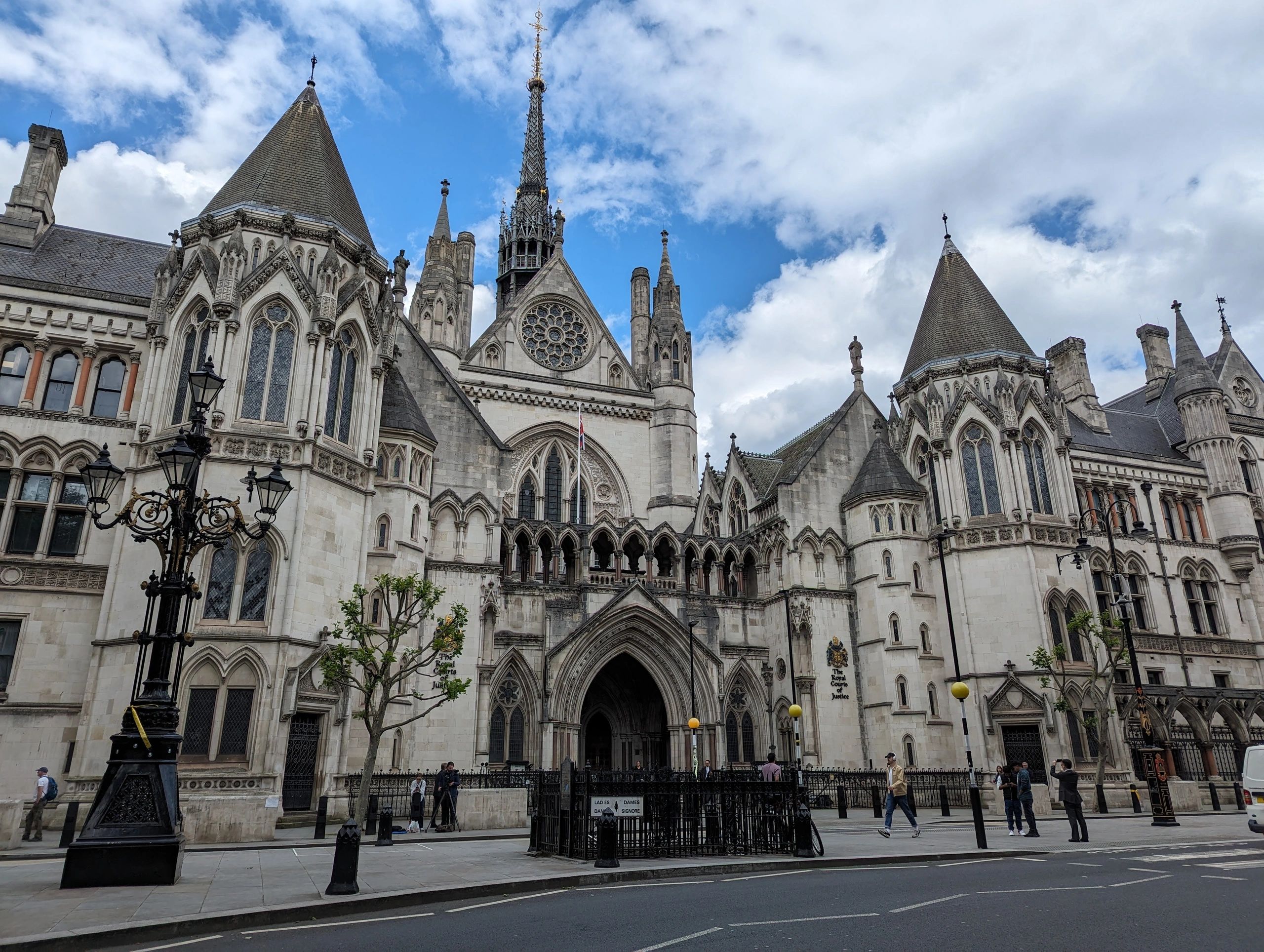
Investigative Bio of Royal Courts of Justice
Site Acquisition and Demolition of the Clement's Lane Rookery (1865, 1870)
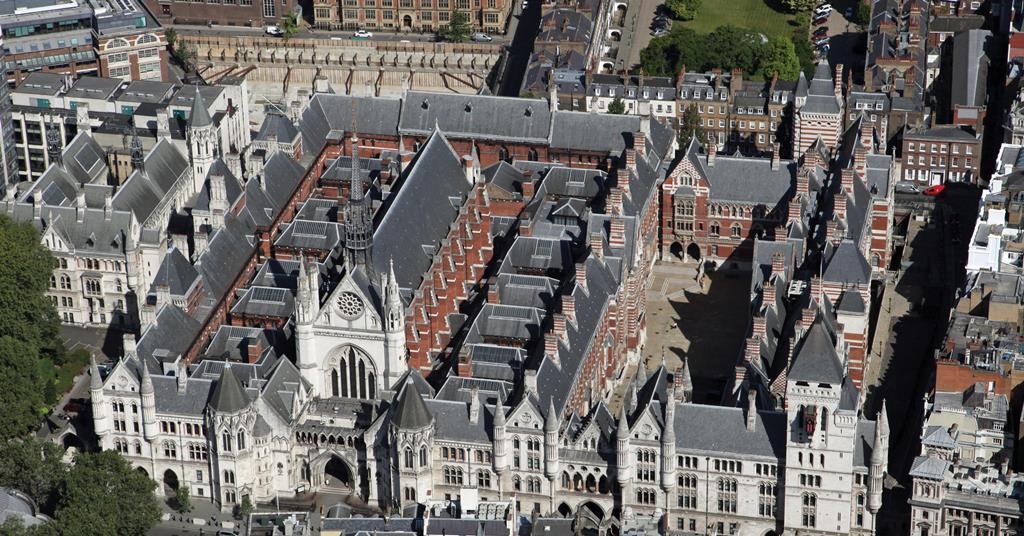
The Royal Courts of Justice stand upon a foundation of displacement. Before the stone was laid in 1874, the British government executed a systematic clearance of six acres of central London. This operation required the total destruction of a dense urban district known as the Clement's Lane Rookery. The site acquisition and subsequent demolition between 1865 and 1870 represent one of the most aggressive uses of eminent domain in Victorian history. Parliament prioritized the centralization of legal power over the housing needs of the working poor. The catalyst for this upheaval was the *Courts of Justice Concentration (Site) Act 1865*. For centuries, English courts were scattered across the metropolis. The Court of Chancery sat at Lincoln's Inn. Common Law courts operated near Westminster Hall. This fragmentation caused delays and administrative chaos. A Royal Commission in 1858 recommended consolidation. The solution was a single, massive tribunal center. The chosen location was a labyrinth of slums north of the Strand and south of Carey Street. This area was convenient for lawyers in the nearby Inns of Court. It was also a notorious "fever nest" that authorities were eager to erase. The target area comprised approximately 450 houses. These structures were not homes. They were the skeletal remains of a once-prosperous district that had decayed into a high-density slum. The population density here was. Census data from the 1860s indicates that single rooms frequently housed entire families. The total number of residents evicted during the clearance is estimated between 4, 000 and 5, 500. These tenants were primarily weekly renters. They possessed no legal claim to the land and received no compensation for their displacement.
Table: Demolition and Acquisition Statistics (1865, 1870)
Metric
Data Point
Total Area Cleared
5. 5 to 6 Acres
Houses Demolished
~450
Residents Displaced
4, 000 , 5, 500
Land Acquisition Cost
£1, 453, 000 (approx.)
Original Cost Estimate
£750, 000
Architectural Competition Entries
11
The most infamous street destroyed was Shire Lane. Its history illustrates the dramatic decline of the neighborhood between 1700 and 1865. In the early 18th century, Shire Lane was a respectable address. It housed the Trumpet Tavern, home to the Kit-Cat Club, a gathering place for Whig politicians and literary figures like Joseph Addison and Richard Steele. By 1860, the street had transformed. It became a byword for vice. Reports from the era describe it as a sanctuary for coiners, thieves, and prostitutes. The "houses of ill repute" in Shire Lane were connected by secret passages and trapdoors, allowing criminals to evade the police. The demolition was viewed by the press not just as a construction project as a moral sanitation of the city. Boswell Court and Clement's Lane suffered a similar fate. These thoroughfares were narrow and absence proper sewage systems. Cholera and typhus were widespread. The *Times* and other publications of the day frequently described the area as a disgrace to the capital. Yet the clearance did not solve the poverty. It moved it. The displaced residents were forced into already overcrowded districts like St Giles and Holborn. Rents in those adjacent slums spiked as thousands of new tenants competed for limited space. The government made no provision for rehousing the evicted population. This indifference to the working class contrasts sharply with the meticulous care given to the legal profession's convenience. The financial of the acquisition was. The government initially estimated the land would cost £750, 000. The final bill for the site alone reached £1, 453, 000. This cost overrun was driven by the complex web of freeholds and leaseholds that had to be bought out. While weekly tenants got nothing, property owners and long-term leaseholders negotiated substantial payouts. The Treasury funded this expenditure through unclaimed funds in the Court of Chancery. Money that had accumulated from intestate estates, essentially the lost inheritances of the dead, paid for the destruction of the homes of the living. Demolition work began in earnest in 1866. It was a slow, manual process. Contractors stripped the houses of valuable materials before knocking down the walls. Lead piping, bricks, and timber were sold to offset costs. By 1868, the site was a vast, muddy wasteland. The sheer volume of debris required thousands of cartloads to clear. This barren scar in the middle of London remained empty for several years as the architectural competition dragged on. The delay allowed weeds to colonize the cellars of the rookery, a temporary return to nature before the stone foundations of the new courts were poured. The architectural competition itself was a major event in 1866. Eleven leading architects submitted designs. The challenge was to fit a massive amount of accommodation onto the irregular six-acre plot. The brief required distinct circulation routes for judges, lawyers, and the public. This segregation of classes within the building mirrored the social stratification that led to the site's clearance. The judges were to have private corridors, insulated from the public and the bar. The winner, George Edmund Street, was selected in 1868. His design was a Gothic Revival, a style that emphasized authority and tradition. The clearance of the Clement's Lane Rookery remains a serious case study in urban planning. It established a pattern of "slum clearance" that would define London's development for the century. The state demonstrated its power to reshape the urban fabric at. The rights of the community were nullified by the Courts of Justice Concentration (Site) Act. The physical erasure was so complete that today, in 2026, no trace of Shire Lane or Boswell Court exists. The geography was rewritten. The Royal Courts of Justice occupy the space where thousands once lived, worked, and died. The grand entrance on the Strand sits atop the ghosts of the rookery. This site acquisition also highlighted the friction between local and central government. The Metropolitan Board of Works was beginning to assert control over London's infrastructure, yet this project was a direct intervention by Parliament. The tension between improving the capital and displacing its poorest citizens was palpable. Critics at the time noted that "improvement" was a euphemism for exile. The legal that would eventually occupy the site was built on a foundation of summary eviction. The demolition phase concluded by 1870, leaving a blank canvas for George Edmund Street. The ground was prepared. The foundations were dug deep into the London clay. The transformation from a chaotic slum to a rigid temple of law was underway. This transition from the organic, albeit squalid, life of the rookery to the stone order of the courts marked the end of an era for this part of the Strand. The chaotic energy of the 18th-century city was paved over, replaced by the solemnity of Victorian justice.
George Edmund Street's Gothic Design Selection (1868, 1874)
Site Acquisition and Demolition of the Clement's Lane Rookery (1865, 1870)
The architectural competition launched in 1866 to design the Royal Courts of Justice stands as a monument to Victorian bureaucratic indecision. The government invited twelve of the most prominent architects in Britain to compete for the commission, creating a contest that would define the era's "Battle of the Styles." The were immense. This was not a contract for a building a mandate to define the visual identity of English law. The invited list read like a roll call of the Gothic Revival's elite, including George Gilbert Scott, Alfred Waterhouse, William Burges, Edward Middleton Barry, and George Edmund Street. Of the twelve invitees, eleven submitted designs, producing a shared output of over 250 detailed drawings that were displayed to a bewildered public in a temporary shed at Lincoln's Inn.
The competition entries revealed the fractured psyche of Victorian architecture. William Burges submitted a design that was less a courthouse and more a medieval fantasy, described by critics as a recreation of a thirteenth-century dream world comparable to Carcassonne. His proposal featured a skyline of massive towers and a -like perimeter, a romantic vision that prioritized silhouette over function. On the other end of the spectrum stood Alfred Waterhouse, fresh from his success with the Manchester Assize Courts. Waterhouse presented a scheme of ruthless efficiency, characterized by a logical floor plan that solved the complex circulation problems of judges, barristers, and the public. His design was the favorite of the legal profession, who cared little for gargoyles deeply for ventilation and acoustics. Yet, the judges found his aesthetic absence the necessary "Gothic expressiveness" required for a national monument.
George Gilbert Scott, the most famous architect of the group, submitted a design that he later admitted was a failure. Overwhelmed by his work on the St. Pancras Hotel and the Foreign Office, Scott produced a disjointed plan that failed to capture the imagination of the committee. The real contest narrowed to a clash between the artistic intensity of George Edmund Street and the planning prowess of Edward Barry. Street's submission was a tour de force of High Victorian Gothic, drawing heavy inspiration from the thirteenth-century French and English precedents he had spent his life studying. His elevations were severe, muscular, and uncompromising. Barry, the son of the architect who designed the Houses of Parliament, offered a brilliant internal layout wrapped in a Gothic skin that critics felt was a costume over a classical body.
The Royal Commission charged with selecting a winner collapsed under the weight of the decision. On July 30, 1866, the judges announced a verdict that satisfied no one. They declared that no single design was superior in all respects. In a baffling act of compromise, they recommended a joint appointment: Edward Barry would serve as the architect for the plan and internal arrangements, while George Edmund Street would be the architect for the elevations and exterior. This "shotgun marriage" was an administrative absurdity. It asked two men with diametrically opposed philosophies to share the most complex architectural commission in London's history. The architectural press ridiculed the decision, and both architects viewed the arrangement with deep suspicion.
The paralysis continued for nearly two years. The Treasury, alarmed by the chance cost and the professional infighting, refused to sanction the joint award. The dispute escalated into a legal and political brawl, with the Attorney General eventually ruling in May 1868 that the joint award was invalid under the competition rules. This legal technicality forced the judges to choose a single victor. On June 9, 1868, the government appointed George Edmund Street as the sole architect of the Royal Courts of Justice. The decision was a victory for the "Art-Architects" over the "Surveyor-Architects," signaling that the government prioritized the symbolic power of the Gothic style over the utilitarian efficiency of a plan- method.
Street's victory, yet, was the beginning of a new ordeal. Between his appointment in 1868 and the laying of the foundation stone in 1874, he was subjected to a relentless campaign of interference. The government, led by budget-conscious officials, demanded radical reductions in the scope of the project. The original budget of £750, 000 for the building was deemed insufficient, yet the Treasury refused to increase it, forcing Street to slash ornamentation and reduce the of his towers. Even more disruptive was the sudden proposal in 1869 to abandon the Strand site entirely and move the courts to the newly constructed Thames Embankment. For months, Street was forced to draw entirely new schemes for a riverfront location, wasting valuable time and energy on a political whim that was eventually discarded.
When the project returned to the Strand site, the dimensions had changed, and the requirements had shifted. Street, a man of obsessive personal industry, refused to delegate the core design work to assistants. He insisted on drawing every detail himself, from the soaring arches of the Great Hall to the intricate ironwork of the gates. It is estimated that Street produced nearly 3, 000 drawings with his own hand during this period. This workload was not a display of diligence a symptom of his anxiety that the government would dilute his artistic vision. He worked with a frantic intensity, frequently revising plans overnight to meet the shifting demands of the Office of Works.
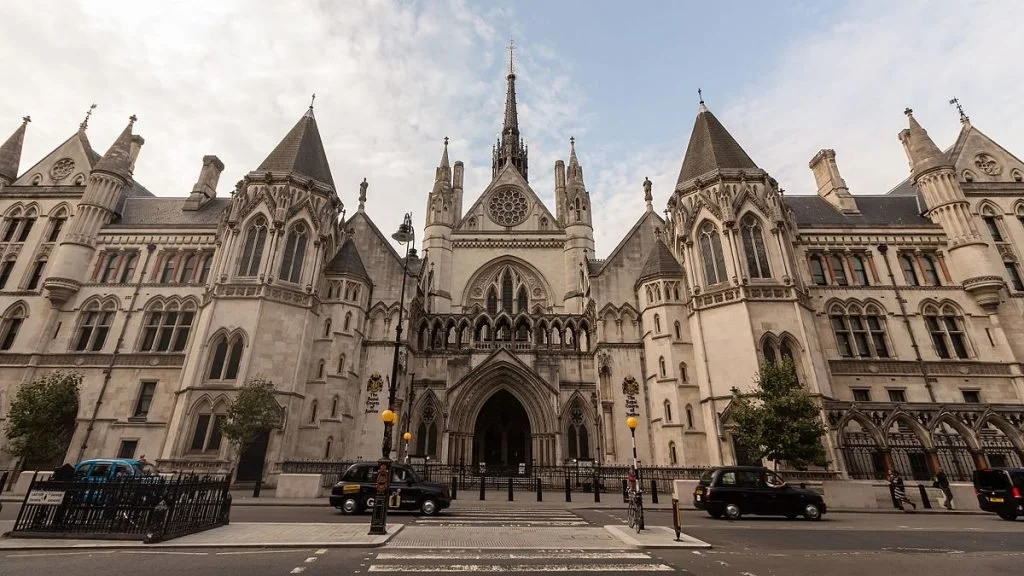
The final design that emerged from this war of attrition was a testament to Street's stubborn genius. He refined his original competition entry into a dense, complex composition that maximized every inch of the irregular six-acre site. The plan organized the building around a central Great Hall, a cathedral-like space intended to serve as the circulation hub for the entire complex. Surrounding this core, he arranged the eighteen courtrooms and the labyrinthine offices for the judiciary. The style was an austere, early English Gothic, stripped of the playful polychromy that had characterized his earlier work. It was a serious building for a serious purpose, designed to look as if it had stood on the Strand for centuries.
By 1874, the site was cleared, the design was finalized, and the contracts were ready. The selection process had consumed eight years, burned through the patience of the legal profession, and exhausted the architect. The "Battle of the Styles" had ended with a decisive win for the Gothic Revival, the cost of that victory was already mounting. The government had secured a masterpiece of medievalism, in doing so, they had set the stage for a construction process that would be plagued by labor disputes, financial crises, and the martyrdom of its creator.
The Masons' Strike and Construction Stagnation (1877, 1878)
The silence that fell upon the Royal Courts of Justice in the summer of 1877 was as heavy as the Portland stone blocks sitting unhewn in the yard. By July, the rhythmic clinking of chisels, the heartbeat of the massive construction project, ceased abruptly. The Operative Stonemasons' Society, representing the "aristocrats" of the building trades, declared a strike that would paralyze the site and turn the unfinished Gothic palace into a battleground of Victorian labor relations. This was not a pause in work; it was a siege. The conflict originated from a specific economic calculation. The London masons, sensing their indispensability to the government's grandest project, demanded an increase in wages from 9 pence to 10 pence per hour. They also sought a reduction in working hours from ten to nine per day. In 1877, the building trade was entering a depression, yet the union leadership believed the sheer of the Law Courts project gave them use. They calculated that the government could not afford delays on such a high-profile symbol of imperial justice. They were wrong. Joseph Bull & Sons, the Southampton-based contractors responsible for the construction, refused to capitulate. Unlike smaller London firms that might have bowed to union pressure to avoid bankruptcy, Bull & Sons possessed the capital and the resolve to fight. They viewed the strike as a direct challenge to their contractual authority. Instead of negotiating, H. W. Bull, the firm's driving force, executed a logistical counter-maneuver that would fundamentally alter the social composition of the worksite. He looked beyond the British Isles for labor. In a move that incited fury among the London working class, Bull & Sons began a systematic importation of foreign stonemasons. Agents were dispatched to Germany, Italy, Canada, and the United States to recruit skilled workers to accept the terms that British masons had rejected. The arrival of these workers turned the Strand into a flashpoint of xenophobia and industrial rage. The contingents of German masons arrived in the autumn of 1877, unaware they were walking into a labor war. To protect these strikebreakers, or "blacklegs," as the picketers branded them, from physical assault, the unfinished Law Courts were converted into a. The government, prioritizing the completion of the courts over the enforcement of housing regulations, allowed Bull & Sons to house the foreign workers directly within the construction site. The rising skeleton of the Great Hall, designed to be a cathedral of law, became a dormitory. Basements intended for records and cells were fitted with makeshift beds and dining tables. The site became a self-contained colony, from the hostile streets of London. Inside the hoardings, a surreal domesticity emerged. Reports from the period describe a "dining room for foreign workmen" established in the crypts. The most bizarre manifestation of this occupation occurred in December 1877. While angry pickets patrolled the perimeter, the German and Italian masons celebrated Christmas inside the unfinished courts. They organized services in their native tongues, sang hymns that echoed off the raw stone arches, and shared a massive Christmas pudding weighing over two hundredweight. This arrangement drew sharp criticism from the Office of Works. Officials complained that Bull & Sons were "illegally using a government building as a common lodging house." The presence of hundreds of men living in a construction zone posed severe fire risks and sanitation risks. Yet, the political imperative to break the strike overrode these concerns. The government sanctioned the creation of a foreign enclave to defeat the Operative Stonemasons' Society. The atmosphere outside the gates was poisonous. The union maintained a heavy picket line, and police were stationed permanently to prevent the "intimidating" of the foreign workers. Violence was a constant threat. The strikers viewed the foreign masons not just as economic competitors, as tools of a contractor intent on driving down the value of British labor. The isolation of the Germans and Italians was absolute; they worked, ate, and slept behind the high hoardings, cut off from the city they were helping to build. George Edmund Street, the architect whose vision was slowly rising from the mud, watched these events with mounting despair. Street was a perfectionist who personally designed every detail of the building, from the soaring spires to the ironwork on the doors. The strike disrupted the continuity of the masonry work, which he regarded as the soul of the structure. While the foreign masons were skilled, were trained in the high Gothic traditions of the Continent, the disruption to the workflow was catastrophic. The delay added months to the timeline, increasing the pressure on Street, whose health was already beginning to fail under the colossal load of the project. The winter of 1877, 1878 proved to be the breaking point. The strike fund of the Operative Stonemasons' Society, once thought inexhaustible, began to drain away. The union had spent thousands of pounds supporting the clear men, the supply of foreign labor showed no sign of stopping. Bull & Sons had successfully demonstrated that the work could continue, albeit slowly, without the London professionals. The depression in the wider trade meant that alternative employment for the strikers was scarce. By March 1878, the resolve of the union collapsed. The strike was officially called off, marking a total defeat for the masons. The men returned to work at the old rate of 9 pence per hour, their demands for a shorter day and higher pay utterly rejected. The "aristocrats of labor" had been humbled by a provincial contractor and a globalized labor market. The aftermath of the strike left a permanent mark on the site's history. Even after the dispute ended, approximately 140 foreign masons, mostly Germans, remained employed at the Law Courts until 1879. They continued to work in a segregated capacity, kept apart from the returning British workers to prevent reprisals. The eastern block of the courts was handed over in April 1878, nine months late, the main building remained years behind schedule. The financial and human cost of this stagnation was immense. The union was financially exhausted, its bargaining power shattered for a generation. For Bull & Sons, the victory was pyrrhic; the logistical expense of housing and feeding hundreds of men, combined with the delays, ate into their profit margins. For George Edmund Street, the stress of the strike contributed to the physical deterioration that would kill him in 1881, just a year before his masterpiece opened. The stones of the Royal Courts of Justice, therefore, were laid not just with mortar, with the debris of a broken strike and the quiet desperation of men living in the crypts of an unfinished palace.
Operational Launch and Transfer from Westminster Hall (1882)
George Edmund Street's Gothic Design Selection (1868, 1874)
The transfer of judicial power from Westminster Hall to the Strand in late 1882 marked the end of a seven-century era. Since the thirteenth century, the Court of King's Bench and the Court of Chancery had operated within the precincts of the Palace of Westminster. By November 1882, the physical relocation of these institutions required a logistical operation of military precision. The Great Hall at Westminster, which had hosted the trials of Guy Fawkes and Charles I, fell silent as the legal of the British Empire was dismantled and carted two miles east. This migration was not administrative; it symbolized the physical separation of the judiciary from the legislature, a distinction that had been theoretical was architectural. Queen Victoria presided over the official opening ceremony on December 4, 1882. The event was designed as a spectacle of imperial stability, yet the proceedings were marred by internal discord. The Office of Works, led by Commissioner George Shaw-Lefevre, allocated standing room in the Central Hall to only two hundred members of the Junior Bar. The remaining barristers were relegated to a temporary wooden stand in the outer quadrangle, exposed to the winter air alongside the bricklayers and laborers who had built the structure. This segregation sparked immediate fury among the legal profession, who viewed the exclusion as a calculated insult to the working bar. The Queen, dressed in mourning black for Prince Albert, accepted the key to the building, unaware or indifferent to the class friction simmering just outside the heavy oak doors. The architect, George Edmund Street, did not live to see the ceremony. He died in December 1881, aged 57, reportedly from the extreme stress of managing the project. His absence cast a pall over the celebration, a grim reminder of the building's troubled gestation. Street's design, selected after a controversial competition in 1866, was a rigid exercise in Victorian Gothic revivalism. He prioritized medieval aesthetics over operational function, a choice that became immediately apparent when the courts began actual business in January 1883. The layout was a labyrinth. Street had designed separate circulation routes for judges, barristers, and the public, intending to keep the classes physically until they met in the courtroom. In practice, this system created a confusing maze of dark corridors and hidden staircases that baffled users from the day. Operational flaws emerged within weeks of the opening. The Great Hall, while visually imposing with its mosaic floors and soaring arches, served no practical legal purpose. It was a vast, echoing void that separated the courtrooms rather than connecting them. Inside the courts, the acoustics were disastrous. The high ceilings and stone walls swallowed arguments, forcing barristers to shout to be heard by the bench. Ventilation was equally poor; the building was either freezing or stifling, with the heavy leaded windows offering little control over airflow. Room 666, notorious among maintenance staff even in 2026, remains permanently cold, a thermal anomaly that defies modern heating interventions. The cost of the project had ballooned to nearly £2 million (approximately £250 million in 2026 currency), funded largely by unclaimed monies from intestate estates held by the courts. This financing method, using the dormant assets of the dead to build a monument for the living, added a macabre footnote to the construction history. The transfer of records from Westminster involved tons of parchment and vellum, much of it centuries old. These documents were shoved into the new building's basement vaults, which were ill-equipped to protect them from damp and decay. The centralization aimed to improve efficiency, yet the immediate result was a bureaucratic bottleneck as clerks struggled to navigate the new topography of the Strand complex.
The operational launch also exposed the rigidity of the building's stone skeleton. Street had designed the courtrooms with fixed furniture and immovable benches, assuming that legal procedure would never change. When the Supreme Court of Judicature Acts fused the administration of Equity and Common Law, the building struggled to adapt. The distinct architectural identities of the equity courts and common law courts, baked into the floor plan, fought against the administrative merger. This inflexibility has plagued the Royal Courts of Justice for over 140 years. By 2026, the facility still relies on the same Victorian courtrooms for high-tech litigation, forcing modern digital evidence presentation systems to sit awkwardly atop carved oak desks designed for quill and ink.
Operational Metrics: The 1882 Transfer
Metric
Detail
Date of Opening
December 4, 1882
Sitting
January 11, 1883 (Hilary Term)
Total Cost
~£2, 000, 000 (Site + Construction)
Architect
George Edmund Street (Died 1881)
Displaced Residents
~4, 000 (from Clement's Lane Rookery)
Junior Bar Attendance
Restricted to 200 (others outside)
The legacy of the 1882 launch is a building that commands awe resists function. The "Great Failure," as Sir George Gilbert Scott once feared the project might become, survived its birth to become an icon. Yet, the operational struggles of the year set a pattern that continues today. The Royal Courts of Justice remain a of stone, beautiful to behold punishing to work within. The transfer from Westminster Hall was successful in centralization failed in modernization, locking the English legal system into a physical shell that looked backward to the thirteenth century rather than forward to the twentieth.
Architectural Specifications of the Great Hall and Original Courts
The Royal Courts of Justice constitute one of the most dense concentrations of masonry in London. Constructed between 1874 and 1882, the complex required 35 million bricks for its internal structure, faced with thousands of tons of Portland stone. George Edmund Street, the architect who won the protracted competition in 1868, designed the building as a "Cathedral of Law," prioritizing Gothic revival aesthetics and strict hierarchical segregation over flexibility. The physical footprint covers nearly six acres, a direct overlay of the demolished Clement's Lane Rookery. Street died in December 1881, one year before Queen Victoria opened the building, leaving the final execution to his son Arthur Street and Sir Arthur Blomfield. The total construction cost, excluding the land, method £1 million, with oak fittings alone accounting for £70, 000.
The Great Hall serves as the architectural spine of the complex. It measures 238 feet in length, 48 feet in width, and rises 80 feet to the apex of its vaulted roof. This volume exceeds the dimensions of the nave of cathedrals. The floor is a geometric mosaic of Italian marble, designed by Street and executed by Burke & Co, intended to withstand the foot traffic of thousands of daily litigants. The roof structure employs a wooden barrel vault, a deliberate acoustic and aesthetic choice meant to dampen the echo of the stone walls, though it proved insufficient for the task. The hall acts as the primary circulation node, yet it was designed without direct access to the courtrooms for the general public, enforcing a separation that required visitors to use specific spiral staircases to reach the viewing galleries.
Street's design specifications called for 19 original courtrooms, each differing in size and ornamentation identical in their rigid separation of users. The architectural plan created a three-dimensional maze involving 3. 5 miles of corridors and over 1, 000 rooms. The layout utilized a vertical stratification strategy: judges entered from a private corridor at the back of the bench, juries had separate access, prisoners were brought up from the basement "crypt" through secure stairwells, and the public was relegated to high galleries. This segregation resulted in a building with few cross-connections, a flaw that became immediately apparent upon opening. The absence of lateral movement meant that a barrister wishing to move between courts frequently had to descend to the main level and ascend a different staircase.
Royal Courts of Justice: Structural Evolution (1882, 2026)
Feature
1882 Specification
2026 Status
Courtrooms
19 Original Courts
Over 60 (including extensions)
Primary Material
Portland Stone / Red Brick
Portland Stone (Restored/Cleaned)
Ventilation
Steam-driven passive tunnels
Retrofit HVAC / Mixed Mode
Lighting
Gas / Natural Light
LED / Automated Systems
Acoustics
Unamplified / High Reverb
Digital Audio / Sound Baffles
The ventilation system engineered for the 1882 opening represented a high-risk experiment in Victorian climate control. Street collaborated with engineers to construct a network of subterranean tunnels beneath the Great Hall. These tunnels were designed to draw fresh air from the Strand, heat it over steam pipes, and distribute it through vents under the court benches. The system failed to account for the soot and particulate matter of 19th-century London air. Early reports from 1883 indicate that the "conditioned" air was frequently choked with dust, while the thermal mass of the stone walls caused severe condensation problems. By the mid-20th century, these passive systems were abandoned in favor of electric forced-air units, necessitating invasive ductwork retrofits that marred the original Gothic interiors.
Acoustics plagued the original courts from their day of operation. The extensive use of hard surfaces, stone walls, marble floors, and oak paneling, created a reverberation time that rendered speech unintelligible in the larger chambers. The height of the ceilings, while visually imposing, allowed sound to dissipate before reaching the gallery or the bench. Remedial works began almost immediately. Heavy velvet curtains were hung to dampen the echo, and later, sound-absorbing baffles were installed., the courts rely entirely on electronic amplification and microphones to function. The 2026 configuration of the courts includes digital recording suites and video-link screens, equipment that sits uneasily amidst the 1870s carved oak and ironwork.
The structural integrity of the complex has faced challenges due to the materials used. The Portland stone facade, while durable, is susceptible to the sulfurous pollution that characterized London's air for much of the building's life. By the 21st century, significant cleaning and repointing projects were required to prevent the spalling of the intricate carvings. The ironwork, particularly the gates and the flèche (spire), required stabilization to prevent corrosion from compromising the masonry anchors. The 35 million bricks of the internal structure remain sound, the "fireproof" concrete arches (Dennett's system) used in the floors have required monitoring for brittleness over the 144-year lifespan of the building.
Expansion became necessary as the legal workload outgrew Street's 19 courts. The West Green Building was added in 1910 to house divorce courts, utilizing a similar stone aesthetic a more functional internal layout. The Queen's Building followed in 1968, adding 12 courts specifically for family and bankruptcy cases. This brutalist concrete addition contrasts sharply with the Victorian Gothic original, reflecting the utilitarian shift in government construction. The Thomas More Building, completed in 1990, added another 12 courts. Even with these extensions, the original 1882 building remains the operational heart. Its "crypt" cells, originally designed for holding prisoners awaiting trial at the Old Bailey or transfer, were converted into additional office space and holding cells, though they remain grim, windowless spaces that retain the oppressive atmosphere of the Victorian penal system.
The architectural legacy of the Royal Courts is one of magnificent. Street's obsession with Gothic detail, every door handle, hinge, and bench was custom designed, created a building that is visually coherent operationally rigid. The refusal to use steel framing, a technology emerging at the time, in favor of traditional masonry arches, locked the floor plan into a static configuration. Walls cannot be moved to enlarge courts; corridors cannot be widened. The building stands as a of 19th-century legal theory, solidified in stone, forcing the modern digital judiciary to work within the physical constraints of a medieval fantasy.
Structural Damage from V-1 Flying Bombs (1944)
The Masons' Strike and Construction Stagnation (1877, 1878)
The V-1 offensive against London began in June 1944 and introduced a kinetic threat distinct from the conventional Blitz of 1940. These pilotless aircraft carried an 850-kilogram Amatol warhead and flew at low altitudes before their pulse-jet engines cut out. The resulting silence signaled an imminent impact. For the Royal Courts of Justice on the Strand, this weapon represented a catastrophic risk to the intricate Gothic Revival masonry. The complex had already sustained damage during the Luftwaffe raids of 1941. Yet the V-1 brought a surface-blast capability that compromised the structural integrity of the Victorian stone in ways that firebombs did not. The mechanics of a V-1 detonation differ significantly from bombs. A bomb buries itself before exploding and directs much of its energy into the earth to create a crater. The V-1 detonated on contact with the surface. This method generated a supersonic lateral shockwave. The blast wave scoured the faces of buildings and stripped away ornamentation. It also shattered windows over a wide radius. The Royal Courts of Justice stood directly in the route of missiles method from launch sites in the Pas-de-Calais. The dense stone canyons of the legal district channeled these shockwaves and amplified their destructive power. The most severe structural casualty of this period was the block known as the Bankruptcy Buildings. This structure occupied the north-west corner of the court complex. It was an integral part of George Edmund Street's original design and housed the administrative for insolvency cases. The V-1 attacks in the summer of 1944 inflicted irreparable structural fatigue on this wing. The blast pressure destabilized the load-bearing walls and severed the connections between the internal iron framing and the external stone cladding. While the building did not collapse immediately, the shockwaves rendered it unsafe for long-term occupation.
Comparison of Ballistic Threats to RCJ Architecture (1940, 1944)
Weapon Type
Primary method
Structural Effect on Gothic Masonry
RCJ Damage Zone
Incendiary (1940)
Thermal (2, 500°C)
Weakens iron ties. Cracks stone via thermal shock.
Roof timbers, Law Society Hall.
High Explosive (1941)
Penetration/Point Detonation
Localized cratering. Collapse of floors.
Specific courtrooms, East Wing.
V-1 Flying Bomb (1944)
Surface Blast/Overpressure
Lateral shear. Stripping of facade. Glass pulverization.
North-West Wing (Bankruptcy Buildings), Great Hall windows.
The Great Hall also suffered extensive damage during this campaign. The vast stained-glass windows were particularly to the pressure differentials caused by V-1 explosions. The blast waves acted like a hammer against the leaded glass. Much of the original Victorian glazing that had survived the earlier Blitz was pulverized during the summer of 1944. The loss of this glass altered the quality of light within the Great Hall permanently. Post-war restoration used clear or simple tinted glass rather than attempting to replicate the complex heraldic designs of the 1870s. This change remains visible in 2026. The light in the hall is harsher and less diffuse than Street intended. The legal profession maintained a stance of defiance throughout the V-1 campaign. Judges frequently refused to adjourn proceedings when the air raid sirens sounded. The distinctive buzzing of the V-1 engine became a backdrop to legal arguments. Court records from 1944 show that proceedings would pause only during the seconds of silence between the engine cutoff and the explosion. Once the blast registered, if the building remained standing, the case continued. This operational continuity masked the severity of the damage to the building's fabric. The Ministry of Works conducted emergency shoring operations at night to keep the courts accessible by day. The long-term consequence of the V-1 damage was the demolition of the Bankruptcy Buildings. The structural assessment conducted after the war concluded that the north-west wing was beyond economic repair. The lateral fractures in the masonry were too deep to patch. The government authorized the demolition of this original section of Street's masterpiece in 1964. This decision cleared the ground for the Queen's Building. Completed in 1968, the Queen's Building is a modernist structure of brick and concrete that stands in clear contrast to the surrounding Portland stone. It represents a permanent architectural scar left by the V-1 campaign. The 1944 damage also exposed flaws in the original construction materials when subjected to high-velocity shockwaves. The iron cramps used to bind the stone blocks together rusted when the blast stripped away the protective mortar. This accelerated the decay of the facade in the post-war years. Restoration teams in the 1990s and 2020s frequently encountered masonry units that were internally fractured during the war had remained in place for decades. These "sleeping" damages require constant monitoring. The stone may appear sound from the street can crumble when disturbed during cleaning or maintenance. The V-1 attacks demonstrated the vulnerability of neo-Gothic architecture to modern warfare. The intricate finials, gargoyles, and flying buttresses acted as catch-points for the blast wind. Instead of deflecting the energy, these features absorbed it and snapped off. The debris from the RCJ's own ornamentation became shrapnel that caused secondary damage to the lower floors. The clean-up operations in late 1944 involved removing tons of fallen masonry from the courtyards. This loss of detail simplified the silhouette of the building. The restoration work never fully replaced every lost crocket or finial. The skyline of the Royal Courts of Justice in 2026 is smoother and less jagged than the silhouette of 1939. The psychological toll on the court staff was significant. The unpredictable nature of the V-1s created a climate of constant tension. Unlike the night raids of the Blitz, the flying bombs arrived throughout the daylight hours. The staff worked in rooms with boarded-up windows and relied on artificial light. The ventilation systems were frequently shut down to prevent smoke or debris from entering the intakes. The courts operated in a stifling, dusty atmosphere for the duration of the summer offensive. This environment likely contributed to the urgency of the post-war modernization plans. The desire to replace the dark, damaged Victorian interiors with modern facilities like the Queen's Building was driven in part by the memories of 1944. The legacy of the V-1 damage is a fragmented site. The Royal Courts of Justice are no longer a unified Victorian composition. The north-west corner is a hybrid of 1960s functionalism and 1870s Gothicism. The transition point between the two styles marks the limit of the V-1's destructive reach. Visitors walking from the Main Hall toward the Bear Garden can observe the shift in masonry. The direct vision of George Edmund Street ended in the rubble of July 1944. The site stands as a testament to the resilience of the English legal system also as a record of the physical cost of its survival. The scars are not cosmetic. They are structural and defined the development of the complex for the eighty years.
Expansion into the Thomas More and Queen's Buildings (1960, 1990)
By the mid-20th century, the Royal Courts of Justice had become a victim of their own Victorian rigidity. For nearly six decades following the completion of the West Green Building in 1912, the complex remained static while the volume of English litigation expanded exponentially. George Edmund Street's "Cathedral of Law" was functionally obsolete, designed for a legal system that no longer existed. The corridors were choked with files, and the distinct separation of judges, jurors, and the public, so carefully orchestrated in the 1870s, collapsed under the weight of modern bureaucracy. The government could no longer ignore the overcrowding. The Ministry of Public Building and Works (MPBW) initiated a modernization program that would permanently alter the western footprint of the site.
The major intervention arrived in 1968 with the opening of the Queen's Building. Designed by Chief Architect Eric Bedford, with G. Stoddard and Project Architect John Masson, this structure represented a clear departure from the intricate Gothic Revivalism of the main hall. Rising five stories and constructed from reinforced concrete faced with Portland stone, the Queen's Building was a utilitarian response to a desperate absence of space. It added 12 new courtrooms to the complex. Queen Elizabeth II officiated the opening ceremony on October 1, 1968, marking the significant expansion of the London legal center in over half a century.
The Queen's Building immediately faced operational embarrassment. Planners intended the new wing to handle criminal cases to relieve pressure on the Old Bailey. Yet, a fundamental design oversight rendered this impossible: the jury boxes were built too small. They could accommodate only ten people, two fewer than the twelve required for a criminal jury in England and Wales. This blunder forced court administrators to repurpose the building immediately for civil matters, specifically family proceedings and divorce cases. The structure, intended to showcase modern criminal justice, instead became the administrative hub for the dissolution of marriages, a rapidly growing area of law following the cultural shifts of the 1960s.
Architecturally, the 1968 extension signaled the end of the romantic era of court design. Where Street employed 35 million bricks and hand-carved stone to evoke majesty, Bedford and Masson used industrial materials to prioritize efficiency. The interior of the Queen's Building rejected the labyrinthine, shadowy corridors of the Victorian original in favor of "lucid planning" and fluorescent-lit clarity. While heritage bodies later granted it Grade II listed status for respecting the massing of the original site, contemporary critics viewed it as a sterile annex that prioritized function over the intimidation factor of the law.
The expansion did not stop with the Queen's Building. As the British economy fluctuated violently in the 1970s and 1980s, the nature of High Court litigation shifted toward insolvency and corporate disputes. The recessionary pressures of the late 1980s generated a wave of bankruptcy filings and company liquidations that the existing infrastructure could not house. The government authorized a second, more vertical expansion to the west: the Thomas More Building. Construction occupied the final years of the decade, culminating in its opening in January 1990.
The Thomas More Building stands 11 stories tall, a tower of glass and stone that dominates the rear skyline of the complex. Unlike the Queen's Building, which sought to blend horizontally with the Victorian streetscape, the Thomas More block embraced verticality to maximize floor space on the constrained Carey Street footprint. It was specifically to house the Bankruptcy and Companies Courts. This segregation of legal functions created a two-tier campus: the historic 1882 building remained the theater for high-profile appeals and ceremonial justice, while the concrete annexes of 1968 and 1990 absorbed the grinding, paper-heavy of insolvency and family law.
Royal Courts of Justice Expansion Phase (1960, 1990)
Structure
Completion
Architect/Authority
Primary Function
Key Metric
Queen's Building
1968
Eric Bedford (MPBW)
Family Division (originally Criminal)
12 Courts added
Thomas More Building
1990
PSA (Property Services Agency)
Bankruptcy & Companies Court
11 Stories
This period of construction also formalized the "West Green" area as a distinct operational zone. While the West Green Building itself dated to 1912, the infill of the 1960s and 80s connected these structures into a continuous western wing. The internal logic of the RCJ shifted; the Great Hall was no longer the sole artery of the courts. Lawyers and litigants increasingly bypassed the grand Strand entrance, entering instead through the functional checkpoints of the new wings. The expansion solved the immediate emergency of square footage permanently fractured the unified architectural vision George Edmund Street had died to create.
By 1990, the Royal Courts of Justice had transformed from a singular Victorian monument into a disjointed campus. The addition of the Thomas More and Queen's Buildings provided the necessary capacity for the Senior Courts to function, yet they also illustrated a decline in public architectural ambition. The government solved the problem of space with concrete and steel, treating the administration of justice as a logistical exercise rather than a civic sacrament. The 23 courts added during this window allowed the system to survive the litigation boom of the late 20th century, they did so by turning the western edge of the site into an office complex, indistinguishable from the corporate towers rising in the nearby City of London.
Asbestos Contamination and Ventilation Failures (2000, 2024)
Operational Launch and Transfer from Westminster Hall (1882)
The Royal Courts of Justice (RCJ) conceals a toxic industrial legacy behind its Portland stone façade. While the Victorian Gothic exterior projects permanence, the internal infrastructure is a decaying network of obsolete engineering and hazardous materials. The primary threat to the building's occupants, judges, barristers, and court staff, lies within the service voids and basement levels, where the collision of 1870s ventilation design and 20th-century retrofits has created a persistent environmental hazard. George Edmund Street's original architectural plans included an ambitious, natural ventilation system. He designed miles of subterranean brick tunnels intended to draw fresh air from the courtyards, warm it over steam pipes, and circulate it through the courtrooms via floor grilles. This "plenum" system failed almost immediately after the 1882 opening. The intake shafts drew in soot and horse manure dust from the Strand, choking the courts. By the mid-20th century, engineers abandoned the tunnels, repurposing them as conduits for electrical cabling and high-pressure heating pipes. To insulate these new systems, contractors applied vast quantities of asbestos lagging, a standard practice at the time that has since turned the building's arteries into a restricted toxic zone. The presence of asbestos remains the single largest logistical barrier to modernizing the RCJ. A "manage in place" policy, adopted by HM Courts and Tribunals Service (HMCTS), leaves the material undisturbed rather than attempting a total removal, which would require closing the High Court for years. This strategy relies on the integrity of the containment. Yet, the building's structural deterioration frequently breaches these seals. Vibrations from heavy traffic on the Strand and nearby construction projects dislodge masonry and dust, risking the release of fibers into the air supply. The basement archives and service corridors are frequently marked with hazard tape, accessible only to specialist contractors in protective gear. Thermal regulation within the complex has collapsed into a binary of extremes. The heating system, a patchwork of Victorian cast iron and 1960s boilers, absence zone control. In the summer of 2018, during a record-breaking heatwave, the heating system seized in the "on" position, blasting radiators at full capacity while outside temperatures breached 30°C (86°F). Conversely, in the winter of 2022, 2023, the system failed completely across large sections of the estate. High Court judges were forced to preside over cases wearing heavy coats and scarves, while clerks used portable electric heaters that tripped the fragile electrical circuits. Room 666, notoriously known as the "coldest room" in the complex, remains virtually unusable due to these thermal failures.
The following table outlines the escalation of infrastructure failures and environmental risks at the Royal Courts of Justice between 2000 and 2024.
Period
Incident Type
Details of Failure
2000, 2010
Asbestos Identification
Surveys confirm extensive asbestos presence in basement ducts and riser shafts. HMCTS adopts "containment" strategy over removal.
2018
Thermal Runaway
Heating system locks in "active" mode during July heatwave. Internal temperatures exceed legal working limits in multiple courtrooms.
2019
Water Ingress
Roof leaks in the West Green building damage ceilings, raising concerns about water disturbing asbestos-containing ceiling tiles.
2022 (Dec)
Heating Collapse
Catastrophic boiler failure leaves the Main Hall and courtrooms without heat. Judges sit in winter clothing; hearings adjourned.
2023, 2024
Structural Decay
Reports of falling masonry and "rat traps" in public corridors. The Law Society Gazette describes the estate as "crumbling."
Ventilation failures extend beyond temperature control. The sealing of the original Victorian air intake shafts to prevent soot ingress suffocated the building. Modern air conditioning units are installed only sporadically, frequently as window-mounted afterthoughts that block light and rattle during proceedings. In courtrooms without these units, carbon dioxide levels rise significantly during long sessions, leading to reported lethargy and headaches among counsel. The air quality is further compromised by the disintegration of the fabric itself; the constant shedding of dust from 150-year-old lime mortar creates a fine particulate haze in the upper galleries. The maintenance backlog for the HMCTS estate reached approximately £1 billion by 2023, with the RCJ accounting for a disproportionate share of this liability. Funding is routinely diverted to "patch and mend" repairs, fixing a single leaking pipe or a broken lift, rather than addressing the widespread rot. This reactive method has led to a degradation of basic sanitation. In November 2018, the Law Society Gazette reported on flooded toilets and the presence of vermin in the public areas. Accessibility is arguably the most shameful metric of this decay. Wheelchair users are frequently forced to use goods lifts designed for prisoner transport or waste removal because the public elevators are out of service. The intersection of asbestos contamination and ventilation failure creates a "sick building" feedback loop. To fix the heating, engineers must disturb the ducts. To disturb the ducts, they must abate the asbestos. To abate the asbestos, they must seal off the ventilation, further degrading air quality. This paralysis has left the Royal Courts of Justice in a state of suspended animation, where the of law continues to grind forward inside a machine that is slowly dying. The cost of full remediation is estimated to exceed the value of the building itself, leaving the Ministry of Justice with a heritage asset that is too expensive to fix and too important to abandon.
Implementation of the Ce-File Electronic Filing System (2015, 2026)
The digitization of the Royal Courts of Justice (RCJ) represents the most significant procedural shift in its operational history since the Victorian era. For over a century, the "court file" existed as a physical object, a bundle of ribbon-tied papers physically transported between solicitors' offices and the vast, dusty registries of the Strand. This tangible bureaucracy ended with the implementation of the CE-File (Courts Electronic Filing) system, a transition that fundamentally altered the legal architecture of London. The shift began not with a sudden switch, with a procurement process in 2014 that awarded the contract to Thomson Reuters. The chosen solution, a customized version of the "C-Track" case management software, promised to replace the labyrinthine paper trails of the Chancery and Queen's Bench Divisions with a centralized digital repository. The initial rollout occurred in stages, targeting the commercially focused courts of the Rolls Building. The Technology and Construction Court (TCC) began piloting the system in November 2014, followed by the Commercial Court in June 2015. These early phases were voluntary, creating a hybrid period where digital and paper files coexisted, frequently causing confusion among court clerks who had to reconcile physical stamps with electronic receipts. The definitive break from the past arrived on April 25, 2017. On this date, Practice Direction 51O made electronic filing mandatory for all professional users in the Rolls Building jurisdictions. The physical filing counters, once the chaotic heart of legal London where clerks jostled to stamp documents before 4: 30 PM, were made obsolete overnight. The mechanics of CE-File imposed a new discipline on legal practice. Documents required strict formatting: optical character recognition (OCR) for searchability, specific naming conventions, and a file size limit of 50 megabytes per upload. This technical constraint frequently forced solicitors to fracture large trial bundles into multiple segments, creating a digital fragmentation that mirrored the physical volumes of the past. The system integrated court fee payments directly, linking the filing process to the Payment by Account (PBA) system. By 2019, the mandate expanded beyond the Rolls Building to the Queen's Bench Division ( King's Bench) and the Business and Property Courts outside London. The Senior Courts Costs Office (SCCO) joined the mandatory regime in October 2019, closing one of the final gaps for paper-based submissions in high-value litigation. The transition was not direct. The reliance on a single private vendor, Thomson Reuters, for the underlying infrastructure introduced new vulnerabilities. In June 2024, His Majesty's Courts and Tribunals Service (HMCTS) awarded a contract extension valued at over £13 million to the company for "Enhancement and Support Services," cementing the privatization of the court's digital backbone until 2028. This dependence became a matter of serious concern during periods of instability. Users frequently reported system sluggishness during peak hours, and planned maintenance windows, frequently scheduled during serious preparation times for urgent injunctions, forced legal teams to revert to emergency email. A far more serious failure emerged in August 2025, shaking confidence in the integrity of the digital record. HMCTS acknowledged a software defect that had existed for years, which caused certain evidence documents to from the view of parties and judges, even though they technically remained in the database. The "hidden documents" bug affected civil, family, and tribunal jurisdictions. Internal reports leaked to the press revealed that court officials had known of the problem months before informing the public. Comparisons were immediately drawn to the Post Office Horizon scandal, as the defect raised the terrifying possibility that judgments had been delivered on incomplete evidence. The scandal forced a detailed audit of the CE-File archives and led to accusations of a cover-up within the Ministry of Justice. Even with these technical crises, the march toward total digitization continued. The physical infrastructure of the RCJ had to be retrofitted to accommodate the new reality. The "Bear Garden", the central hall where masters and clerks once gathered, lost its function as a physical marketplace of litigation. In its place, the "Digital Case System" (DCS) and CE-File became the invisible forum. Courtrooms designed in the 1870s for oratory and parchment were equipped with multiple screens, allowing judges to navigate PDF bundles rather than turning pages. This shift reduced the physical weight of litigation increased the cognitive load, as the ease of digital filing encouraged a proliferation of documentation. Trial bundles that once filled a trolley filled terabytes, leading to judicial complaints about "data dumping" where relevant facts were buried under mountains of electronically filed debris. The year 2026 marked the phase of this evolution: the "Open Justice" pilot. Commencing on January 1, 2026, under Practice Direction 51ZH, this initiative targeted the opacity of the digital file. For decades, the move to digital had paradoxically made courts less accessible to the public; while a reporter in 1920 could inspect a physical writ, a digital file was locked behind a login screen available only to parties. The 2026 pilot, operating in the Commercial Court and Financial List, required parties to upload "Public Domain Documents", skeleton arguments, witness statements, and expert reports, to a public-facing section of CE-File. This turned the filing system into a publishing platform, forcing law firms to redact confidential information before the hearing rather than relying on the practical obscurity of the court registry. The financial of CE-File also reshaped the economics of litigation. The removal of search fees in August 2020 democratized access to the case index, allowing anyone to verify the existence of a lawsuit without charge. Yet, the costs of interacting with the system remained high for professional users, who passed the administrative load of e-filing, formatting, uploading, and managing notifications, onto clients. The "efficiency" promised in 2015 frequently translated into a transfer of labor from court staff to law firm paralegals. By early 2026, the Royal Courts of Justice functioned as a hybrid entity: a Victorian Gothic shell housing a cloud-based legal system, where the authority of the seal was generated by a server rather than a stamp, and where the primary risk to justice was no longer a lost file, a corrupted database.
CE-File Implementation Timeline (2014, 2026)
Date
Event
Impact
May 2014
Contract Award
Thomson Reuters selected to deploy C-Track software.
Nov 2014
TCC Pilot
electronic filing trials in the Technology and Construction Court.
Apr 2017
Rolls Building Mandate
E-filing becomes compulsory for professional users in Chancery, Commercial, and TCC.
Public search fees for the CE-File index are removed.
Jun 2024
Contract Renewal
£13m extension awarded to Thomson Reuters for support through 2028.
Aug 2025
"Hidden Docs" Scandal
Admission of a software bug hiding evidence; audit initiated.
Jan 2026
Open Justice Pilot
Mandatory public upload of skeleton arguments and witness statements in Commercial Court.
Security Fortification Following Civil Disobedience Incidents
Architectural Specifications of the Great Hall and Original Courts
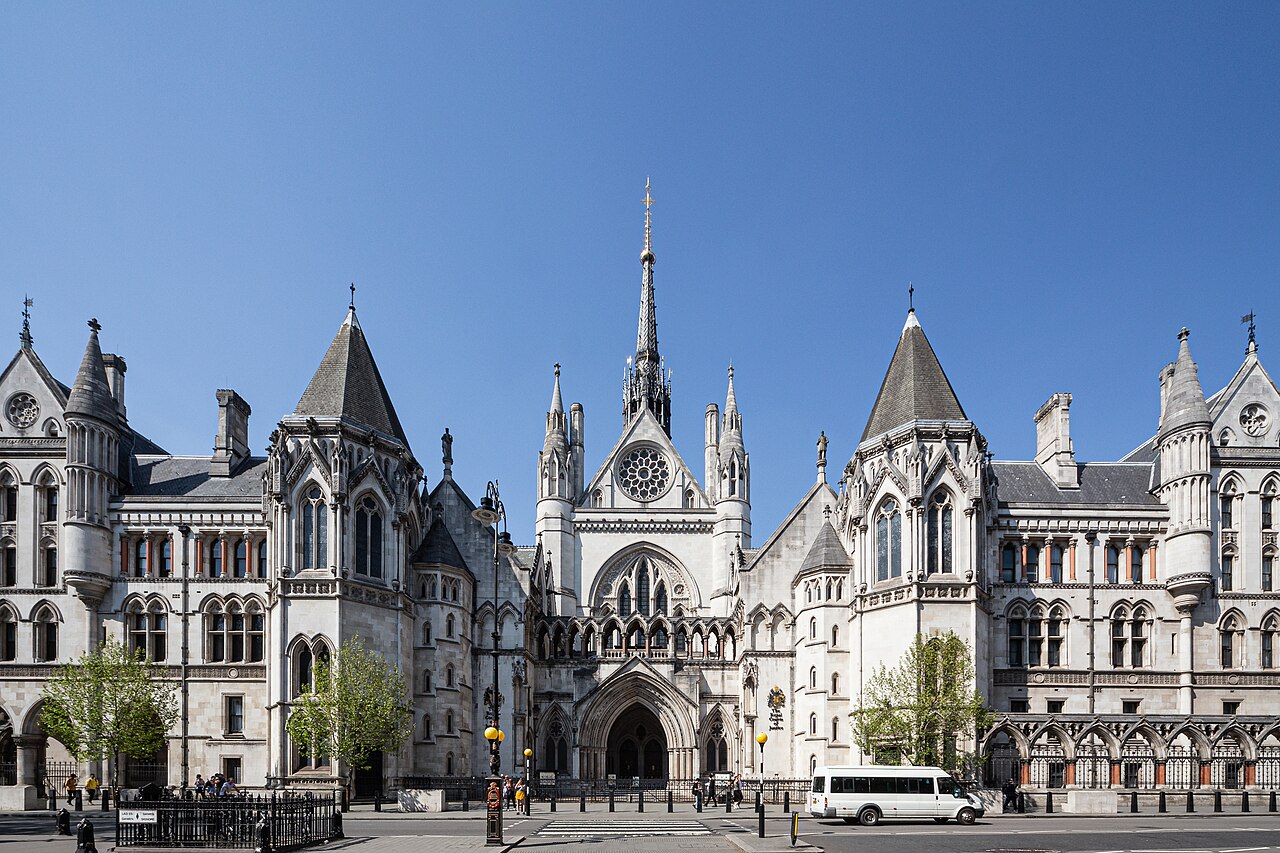
The Royal Courts of Justice, designed by George Edmund Street as a cathedral to the transparency of English law, has devolved into a of surveillance and exclusion. While the Victorian Gothic architecture originally projected an invitation to the public, a "palace of justice" accessible to all, the physical reality of the site in 2026 is defined by blast-resistant perimeters, airport-style screening, and sterile zones. This transformation was not a singular event a reactive evolution, driven by waves of civil disobedience and paramilitary threats that exposed the vulnerabilities of the Strand complex. The building's inauguration in 1882 occurred in the shadow of the Fenian dynamite campaign, a proximity that instilled an early institutional paranoia. While the Fenians targeted the Tower of London and the House of Commons in their "Dynamite Saturday" offensive of 1885, the Royal Courts escaped direct structural damage. yet, the threat shifted dramatically in the 20th century. The Suffragettes, utilizing a strategy of "argument of the broken pane," frequently targeted government infrastructure. While their most famous attacks struck Westminster Abbey and the home of David Lloyd George, the Royal Courts became a theater of disruption during trials. The militant actions of the Women's Social and Political Union (WSPU) necessitated the rudimentary access controls, transforming the public galleries from open observation decks into managed spaces of containment. The modern era of fortification began in earnest during the Troubles. The Provisional IRA's bombing of the Old Bailey in March 1973, which injured over 200 people, signaled that the legal infrastructure of London was a primary target. The Royal Courts, situated just half a mile west, operated under a heightened state of alert for decades. This anxiety was validated on February 18, 1996, when an improvised explosive device detonated prematurely on a double-decker bus in Aldwych, killing the bomber, Edward O'Brien. Metropolitan Police investigations later concluded that the intended target was likely the Royal Courts of Justice. This near-miss catalyzed the implementation of the "Ring of Steel" security doctrine around London's legal quarter, leading to the permanent closure of vehicular access points and the installation of hardened street furniture designed to stop vehicle-borne improvised explosive devices (VBIEDs). If the IRA threat necessitated hardening the perimeter against explosives, the Fathers 4 Justice campaign of the early 2000s exposed the vertical porosity of the complex. On October 21, 2003, activists Eddie "Goldtooth" Gorecki and Jonathan "Jolly" Stanesby scaled the façade of the Royal Courts dressed as Batman and Robin. They ascended the Victorian stonework with embarrassing ease, unfurling a banner from the roof that read "Fighting for the Right to See Your Kids." This breach was a humiliation for the security services; it demonstrated that a building designed with intricate Gothic footholds was essentially a ladder for determined climbers. The incident forced an immediate and costly review of roof security, leading to the installation of anti-climb spikes, pressure sensors, and increased CCTV coverage of the upper elevations. The "Batman and Robin" protest marked the end of the era where the building's height alone was considered sufficient defense. By 2013, the internal security architecture had shifted to a mandatory "airport-style" screening regime. Visitors, including legal professionals without specific clearance, were subjected to metal detector arches and x-ray baggage scans upon entry. This protocol, initially a temporary response to elevated terror threat levels, became permanent. The Great Hall, once a bustling thoroughfare for solicitors and the public, was bisected by security lanes and sterile zones. The psychological effect was immediate: the presumption of open access was replaced by a presumption of threat. The 2020s introduced a new vector of challenge: the weaponization of the perimeter for ideological warfare. The case of Trudi Warner in 2023 exemplified this shift. Warner, a retired social worker, sat outside the Royal Courts holding a sign explaining the principle of "jury equity", the right of a jury to acquit a defendant according to their conscience. Her prosecution for contempt of court, though eventually dropped by the Solicitor General in 2024, established the pavement outside the RCJ as a contested legal space. The authorities responded by expanding the definition of "interference" with the administration of justice, pushing the perimeter of the court's authority out onto the public street. This tension culminated in the security breach of September 8, 2025, involving the street artist Banksy. In a coordinated action that evaded the expanded CCTV network, a mural was stenciled onto the exterior wall of the Queen's Building overnight. The artwork depicted a judge in full ceremonial wig beating a prostrate protester with a gavel. The image, appearing just days after the government proscribed the protest group Palestine Action as a terrorist organization, was an explicit critique of the judiciary's role in suppressing dissent. The state's response was rapid and physical. Within hours, security teams erected solid metal hoarding to obscure the image, and by the following day, removal crews had begun the process of scrubbing the Grade I listed stone. The incident highlighted the futility of physical fortification against reputational attack; the walls could stop bombs and climbers, they could not repel paint and symbolism. As of early 2026, the security posture at the Royal Courts of Justice resembles that of a green zone. The "sterile area" extends to the sidewalk, with temporary blocks frequently deployed to herd protesters from groups like Just Stop Oil and Real4Justice into pens. The entrance procedure involves biometric scanning for staff and rigorous physical searches for the public. The architectural intent of George Edmund Street, to create a building that embodied the majesty and openness of the law, has been inverted. The Royal Courts of Justice is a hardened facility where the administration of law is protected *from* the public it serves, a stone manifestation of the widening gulf between the state and the citizenry. The fortification is total: ground, air, and information space are all patrolled, yet the recurring breaches suggest that no amount of stone or steel can fully insulate the court from the political turbulence of the street.
Maintenance Budget Deficits and Estate Deterioration Metrics
By February 2026, the physical and financial disintegration of the Royal Courts of Justice (RCJ) stands as the most visible indictment of the Ministry of Justice's asset management strategy. While the Victorian Gothic façade remains a protected landmark, the operational reality within is one of widespread collapse. Data from the 2024-2025 reporting period reveals that the Ministry of Justice transferred £695 million of capital funding, money for building repairs and infrastructure, to cover day-to-day revenue costs, cannibalizing the estate's future to pay its current staff.
The deterioration metrics for the Strand complex are severe. Maintenance costs for the RCJ alone consumed £4. 6 million in the 2017-2018 fiscal year to address "basics" such as pest control and structural stabilization, yet this expenditure failed to arrest the decline. By 2025, reports confirmed that the heating system in the main building frequently operated at full capacity during summer months due to broken control method, while winter sessions were marred by boiler failures. Legal professionals have documented raw sewage ingress in judicial corridors, frequent elevator failures trapping staff, and the presence of rodent traps in public galleries. The Bar Council's 2025 assessments describe the estate as "crumbling," a physical state that directly contributes to the record backlog of over 80, 000 Crown Court cases recorded in early 2026.
Financial mismanagement exacerbates these physical failures. even with a nominal capital budget increase of 213% between 2019 and 2025, the Ministry consistently underspent its allocation for repairs, returning £148 million to the Treasury in 2024-2025 alone due to project delays and bureaucratic inertia. This underspend occurred alongside a utilization emergency; internal audits from 2016-2017 indicated that the RCJ's courtrooms were used only 42. 3% of the time, a figure that has not significantly improved even with the post-pandemic backlog. The cost of maintaining this underused, decaying square footage has prompted recurring high-level discussions regarding the sale of the site, a proposal seriously floated in 2018 and revisited in 2024 as maintenance deficits rendered parts of the complex uninhabitable.
Royal Courts of Justice & HMCTS Estate: Decay Indicators (2017, 2026)
Metric
Data Point
Impact
Annual Maintenance Bill (RCJ)
£4. 6 Million (2018 baseline)
Covers only essential safety; excludes modernization.
Capital-to-Revenue Transfer
£695 Million (2024/25)
Repair funds diverted to pay salaries/operations.
Capital Budget Underspend
£148 Million (2024/25)
Allocated repair money unspent even with serious need.
Courtroom Utilization
42. 3% (Historical Low)
High overhead for empty rooms; heating/lighting waste.
Case Backlog (Crown Court)
>80, 000 (Feb 2026)
exacerbated by room closures due to leaks/safety.
The operational paralysis is absolute. In September 2025, the discovery of a Banksy mural on the building's exterior briefly drew public attention to the site, yet the internal narrative remained one of neglect. Lord Chancellor David Lammy's 2026 reform package admits that even with "kitchen sink" measures, the backlog, fueled by courtroom closures for emergency repairs, take a decade to return to pre-pandemic levels. The RCJ has thus transformed from a symbol of imperial justice into a case study of managed decline, where the cost of keeping the lights on frequently exceeds the value of the justice delivered beneath them.
The HMCTS Reform Program and Strand Site Viability Analysis
The collision between the Victorian architectural ambitions of George Edmund Street and the digital imperatives of the twenty- century has produced a functional emergency at the Royal Courts of Justice. As of February 2026, the HMCTS Reform Program, a £1. 3 billion initiative launched in 2016 to digitize the justice system, has officially concluded its primary delivery phase. The results at the Strand site expose a fundamental incompatibility between the 1882 Gothic revival structure and the requirements of modern litigation. While the Ministry of Justice successfully deployed video link technology to 70 percent of courtrooms nationwide, the physical limitations of the Strand have turned the flagship courthouse into a technological dead zone, the very efficiency the reforms sought to deliver.
The Reform Program was predicated on the idea that justice could be administered through a "Common Platform," a singular digital case management system intended to replace paper files and fragmented software. By March 2025, the program had digitized 14 specific services, including divorce and civil money claims. Yet, within the stone walls of the Royal Courts, the transition has been anything smooth. Street's design, characterized by thick masonry, labyrinthine corridors, and a absence of integrated service ducts, acts as a Faraday cage, blocking wireless signals and complicating the installation of fiber-optic cabling. Legal professionals frequently report that the "digital justice" envisioned by the government the moment they step into the Great Hall, where connectivity fails and reliance on physical bundles.
The operational viability of the Strand site is further compromised by a severe maintenance backlog that has degraded the working environment for judges, staff, and the public. In the winter of 2023 and continuing into 2024, reports surfaced of senior judges presiding over hearings in winter coats due to catastrophic heating failures. The heating system, a relic of the late 19th century, relies on obsolete pipework buried deep within the building's crypts, making repairs both costly and disruptive. This thermal is not a discomfort; it represents a financial. The energy costs required to heat the uninsulated, cavernous spaces of the RCJ have skyrocketed, diverting funds that could otherwise address the structural decay.
Water ingress remains a persistent threat to the building's integrity. The complex roofline, a celebrated feature of Street's Gothic vision, creates thousands of chance failure points where lead flashing meets stone. In 2024, maintenance teams struggled to contain leaks that threatened the intricate murals and woodwork of the courtrooms. These physical failures contribute directly to the of the court. When a courtroom is closed due to a ceiling collapse or a heating failure, the schedule is thrown into chaos, a backlog that the Law Society warned in 2026 could reach 200, 000 cases by 2035 if radical measures are not taken. The physical estate is actively working against the judicial process.
The viability of the Strand is cast in sharp relief by the development of the Salisbury Square precinct in the City of London. Scheduled for full operation by 2027, this new "justice quarter" is designed specifically for fraud, cyber, and economic crime. It features 18 state-of-the-art courtrooms equipped with the digital infrastructure the RCJ absence. The existence of Salisbury Square signals a strategic shift: the high-value, complex commercial cases that once defined the Strand's prestige are migrating to purpose-built facilities. This leaves the Royal Courts of Justice with a portfolio of cases that require less technology or, conversely, leaves it as a "heritage" site suited only for ceremonial functions and appellate hearings where the physical presence of counsel is prioritized over digital speed.
Comparative Analysis: Infrastructure vs. Digital Reform (2016, 2026)
Metric
HMCTS Reform Goal (2016)
Status at RCJ (Feb 2026)
Budget
£1 billion (original)
£1. 3 billion+ (final cost)
Connectivity
Full Wi-Fi / Digital Bundles
Intermittent; "Not Spots" in stone core
Maintenance
Sustainable Estate
serious backlog; Heating/Roof failures
Capacity
Reduced physical hearings
Physical attendance required due to tech failure
Case Management
Common Platform (100%)
Hybrid (Paper/Digital) due to system glitches
Financial scrutiny of the HMCTS estate reveals that the Royal Courts of Justice consumes a disproportionate share of the maintenance budget relative to its output. The Ministry of Justice's 2025 fee increases, raising court fees by inflation to cover costs, are a stopgap measure that fails to address the capital depreciation of the Strand. The cost to bring the RCJ up to modern standards is estimated in the hundreds of millions, a figure that no government has been to commit. Consequently, the building operates in a state of managed decline. The "patch and mend" method, used since the 1990s, is no longer sufficient as the mechanical and electrical systems reach the absolute end of their lifespans.
The human cost of this decay is clear in staff retention and morale. The "crumbling buildings" by the Institute for Government in 2025 as a key contributor to low productivity are not abstract statistics; they are the daily reality for clerks and ushers at the Strand. Broken elevators force staff to haul files up narrow staircases designed for Victorian servants. The absence of modern break facilities and the oppressive temperature fluctuations contribute to a workforce emergency that parallels the infrastructure emergency. The Reform Program promised to reduce the workforce through automation, the failure of the physical plant requires more human intervention to keep the courts running, not less.
Speculation regarding the sale of the Strand site has resurfaced periodically since 2010, the 2026 reality makes it a more tangible possibility than ever before. The prime real estate value of the six-acre site is immense, yet its Grade I listed status and specialized layout make conversion into a hotel or luxury apartments commercially risky. also, the symbolic value of the RCJ as the seat of English law makes its disposal a political minefield. The government is trapped: it cannot afford to fix the building, it cannot easily sell it, and it cannot continue to operate it without accepting severe. The "Super Court" strategy, exemplified by Salisbury Square, suggests a future where the RCJ is slowly hollowed out, retaining only the Court of Appeal and high-profile administrative courts, while the bulk of legal work moves to, soulless boxes elsewhere in the capital.
The failure of the Reform Program to fully integrate with the Royal Courts of Justice is not a software problem; it is an architectural one. George Edmund Street designed a intended to intimidate and impress, built for a world of parchment and oral argument. He did not design a flexible workspace for a digital age. The rigidity of the floor plan, which separates judges, jury, and public into distinct, corridors, makes reconfiguring the space for modern needs nearly impossible. As the justice system moves toward a data-centric model, the Strand stands as a monument to an analog past, a beautiful obstinate obstacle to the modernization of British law. The viability of the site depends not on software updates, on a decision the government has delayed for decades: whether to preserve the theater of justice at the cost of its function.
Why it matters: Cross-border scam call centers pose a significant threat, exploiting technological and legal loopholes to target individuals and businesses internationally. Despite the increasing financial impact and…
What do we know about Site Acquisition and Demolition of the Clement's Lane Rookery?
The Royal Courts of Justice stand upon a foundation of displacement. Before the stone was laid in 1874, the British government executed a systematic clearance of six acres of central London.
What do we know about George Edmund Street's Gothic Design Selection?
The architectural competition launched in 1866 to design the Royal Courts of Justice stands as a monument to Victorian bureaucratic indecision. The government invited twelve of the most prominent architects in Britain to compete for the commission, creating a contest that would define the era's "Battle of the Styles." The were immense.
What do we know about The Masons' Strike and Construction Stagnation?
The silence that fell upon the Royal Courts of Justice in the summer of 1877 was as heavy as the Portland stone blocks sitting unhewn in the yard. By July, the rhythmic clinking of chisels, the heartbeat of the massive construction project, ceased abruptly.
What do we know about Operational Launch and Transfer from Westminster Hall?
The transfer of judicial power from Westminster Hall to the Strand in late 1882 marked the end of a seven-century era. Since the thirteenth century, the Court of King's Bench and the Court of Chancery had operated within the precincts of the Palace of Westminster.
What do we know about Architectural Specifications of the Great Hall and Original Courts?
The Royal Courts of Justice constitute one of the most dense concentrations of masonry in London. Constructed between 1874 and 1882, the complex required 35 million bricks for its internal structure, faced with thousands of tons of Portland stone.
What do we know about Structural Damage from V-1 Flying Bombs?
The V-1 offensive against London began in June 1944 and introduced a kinetic threat distinct from the conventional Blitz of 1940. These pilotless aircraft carried an 850-kilogram Amatol warhead and flew at low altitudes before their pulse-jet engines cut out.
What do we know about Expansion into the Thomas More and Queen's Buildings?
By the mid-20th century, the Royal Courts of Justice had become a victim of their own Victorian rigidity. For nearly six decades following the completion of the West Green Building in 1912, the complex remained static while the volume of English litigation expanded exponentially.
What do we know about Asbestos Contamination and Ventilation Failures?
The Royal Courts of Justice (RCJ) conceals a toxic industrial legacy behind its Portland stone façade. While the Victorian Gothic exterior projects permanence, the internal infrastructure is a decaying network of obsolete engineering and hazardous materials.
What do we know about Implementation of the Ce-File Electronic Filing System?
The digitization of the Royal Courts of Justice (RCJ) represents the most significant procedural shift in its operational history since the Victorian era. For over a century, the "court file" existed as a physical object, a bundle of ribbon-tied papers physically transported between solicitors' offices and the vast, dusty registries of the Strand.
What do we know about Security Fortification Following Civil Disobedience Incidents?
The Royal Courts of Justice, designed by George Edmund Street as a cathedral to the transparency of English law, has devolved into a of surveillance and exclusion. While the Victorian Gothic architecture originally projected an invitation to the public, a "palace of justice" accessible to all, the physical reality of the site in 2026 is defined by blast-resistant perimeters, airport-style screening, and sterile zones.
What do we know about Maintenance Budget Deficits and Estate Deterioration Metrics?
By February 2026, the physical and financial disintegration of the Royal Courts of Justice (RCJ) stands as the most visible indictment of the Ministry of Justice's asset management strategy. While the Victorian Gothic façade remains a protected landmark, the operational reality within is one of widespread collapse.
What do we know about The HMCTS Reform Program and Strand Site Viability Analysis?
The collision between the Victorian architectural ambitions of George Edmund Street and the digital imperatives of the twenty- century has produced a functional emergency at the Royal Courts of Justice. As of February 2026, the HMCTS Reform Program, a £1.
Why it matters: The diversion of aid meant to combat malaria in Africa has led to a shadow economy profiting from counterfeit and stolen medical supplies. The theft…
Why it matters: The Federal Aviation Administration issued Safety Alert for Operators (SAFO) 26001, warning air carriers of potential catastrophic failures and debris fields from commercial space operations.…
Why it matters: Background dancers in India's film industry are facing exploitation and hardship despite their crucial role in creating the glamour of movie sequences. These dancers endure…
Why it matters: Social media scheduling services like Hootsuite, Buffer, and others are vital for brands, influencers, and small businesses globally, handling millions of posts annually. While concerns…
Why it matters: Global public trust in businesses is at historic lows, with only 39% of respondents believing in their ethical behavior. Organizations face existential threats due to…
Why it matters: India's Aadhaar digital ID, intended to streamline social welfare delivery, has led to a digital welfare divide. Despite legal safeguards, mandating Aadhaar for welfare programs…
Get updates on this place
Get verified alerts when this file is updated (verification required).