Verified Against Public And Audited RecordsLast Updated On: 2026-03-06
Reading time: ~48 min
File ID: EHGN-PLACE-36733
Investigative Bio of Shanghai Metro
Pre-Metro Transit: Trams and Colonial Planning 1908, 1958
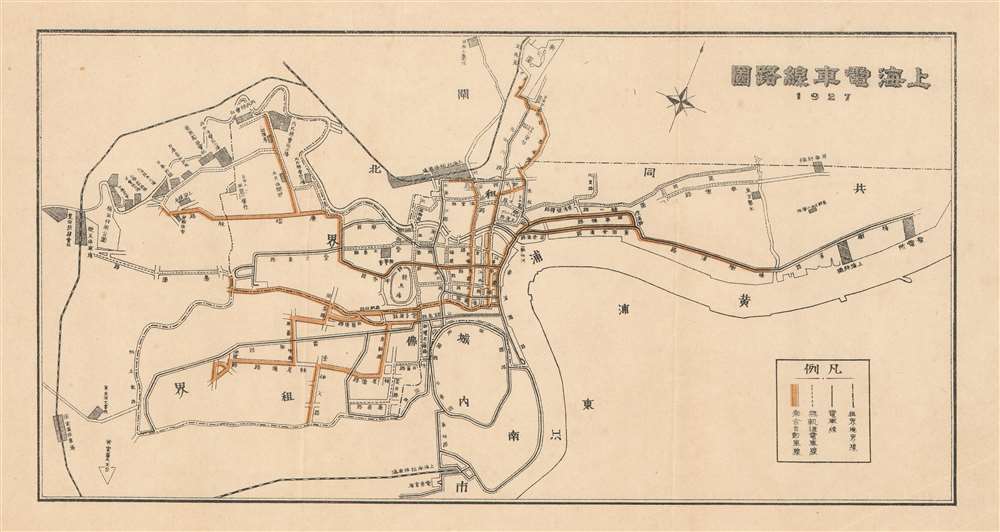
The history of mass transit in Shanghai begins not with the subterranean rail networks of the modern era, with a colonial fracture above ground. On March 5, 1908, the Shanghai Electric Construction Company, a British entity, launched the city's tram line. This 6. 04-kilometer route connected Jing'an Temple to The Bund, introducing electric traction to a populace previously reliant on wheelbarrows and rickshaws. The system operated on a meter gauge, a specification that would dictate the city's transit engineering for decades. By May 1908, the French Concession followed suit with its own system, the Compagnie Française de Tramways et d'Éclairage Électriques de Changhaï. A third, Chinese-operated system appeared in the Nanshi District in 1913, cementing a tripartite transit infrastructure that mirrored the city's political division.
These three systems operated independently, frequently requiring passengers to disembark and pay separate fares to cross concession boundaries. Even with this fragmentation, ridership surged. By 1925, the combined networks peaked with 328 tramcars running on 14 routes. The British system remained the dominant player, controlling seven routes and 216 trams, while the French and Chinese systems managed smaller fleets. The trams, known locally as "Dang Dang Che" for the sound of their bells, became the primary movers of the urban workforce, carrying over 40 million passengers annually by the late 1920s. This period also saw the rise of the trolleybus, which offered greater flexibility on Shanghai's narrow, erratic streets.
The Three Tram Systems of Early 20th Century Shanghai
Jurisdiction
Operator
Inauguration
Fleet Size (1925)
International Settlement
Shanghai Electric Construction Co. (British)
March 5, 1908
216 Trams
French Concession
Compagnie Française de Tramways (French)
May 1908
60 Trams
Chinese City (Nanshi)
Chinese Electric Power Co. (Chinese)
August 11, 1913
52 Trams
Labor disputes and anti-imperialist sentiment frequently disrupted operations. The May 30 Movement in 1925, sparked by the killing of a Chinese worker in a Japanese mill, led to general strikes that paralyzed the tram networks. Transit workers became central to the city's political volatility, using the immobilized tramcars as barricades or platforms for protest. The Japanese occupation beginning in 1937 further the infrastructure. Tracks were bombed, maintenance ceased, and rolling stock was cannibalized for the war effort. By the time the Communist Party took control in 1949, the tram network was in a state of severe disrepair, with tracks damaged and equipment obsolete.
Post-1949 planning shifted focus from repairing colonial tramways to developing a Soviet-style heavy rail system. In 1950, Soviet technicians arrived to assist in urban planning, proposing an underground railway to serve both civilian transport and civil defense needs. This marked the serious discussion of a "Shanghai Metro." In 1953, a formal planning committee was established, heavily influenced by Moscow's deep-tunnel designs. The plan envisioned a north-south line that would connect the central railway station to the industrial districts, bypassing the chaotic surface traffic.
Geology, yet, proved a formidable adversary. Shanghai sits on the Yangtze River Delta, a of soft, water-saturated clay and silt frequently described by engineers as "tofu." Soviet experts, accustomed to the solid bedrock of Moscow, struggled to devise a tunneling method that would not cause catastrophic subsidence. In 1958, Lu Jianhang was appointed general engineer to solve this problem. Initial soil tests revealed that the high water table and thixotropic soil conditions made deep tunneling nearly impossible with the technology of the time. The risk of the city sinking into the soft soil forced the suspension of the metro project in 1958. The government redirected resources to expanding the trolleybus network, leaving the metro dream dormant for the three decades.
Cold War Air Raid Shelters to Line 1: 1960, 1993 Development
Pre-Metro Transit: Trams and Colonial Planning 1908, 1958
The origins of the Shanghai Metro lie not in urban planning committees, in the paranoid, subterranean logic of the Cold War. While the city's surface transit fractured along colonial lines in the early 20th century, the push for an underground system in the 1960s was driven by the threat of nuclear annihilation. In 1958, the Shanghai City Planning Administration Bureau proposed a subway, yet the project, "Project 708" (and earlier "Project 60"), operated under strict military secrecy. The objective was dual-purpose: a transportation network for the masses and a hardened shelter capable of withstanding air raids. This "War Preparation" phase dictated the engineering parameters, prioritizing depth and blast resistance over commuter convenience.
Geology immediately declared war on the engineers. Shanghai sits on a soft, water-saturated of sediment frequently described by tunnelers as "tofu." The soil absence the compressive strength to support heavy subterranean structures without significant reinforcement. In 1964, a covert test excavation began in Hengshan Park. Engineers used a "deep well" method, sinking caissons to create a station structure measuring 80 meters by 20 meters. They successfully bored two 600-meter tunnels connecting to Hengshan Road. This experiment proved that tunneling was physically possible, yet the cost and technical difficulty of managing the high water table were prohibitive. The Hengshan Park tunnels were never integrated into the civilian network; they remain underground, a concrete relic of 1960s civil defense strategy, later repurposed for storage and air defense drills.
The Cultural Revolution stalled progress, the subterranean ambition did not. In the late 1970s, a second experimental tunnel was dug beneath Caoxi Park. Unlike the deep caissons of Hengshan, this project used a continuous concrete wall technique, essentially a cut-and-cover method adapted for the soft clay. This 1, 290-meter section was not abandoned. It was eventually incorporated into the operational Line 1, marking the successful transition from experimental defense infrastructure to viable public transit. This specific segment demonstrated that the "slurry wall" technique could hold back the crushing weight of Shanghai's waterlogged soil, a lesson that would define future construction methods.
By the 1980s, the impetus for the metro shifted from military survival to economic need. Shanghai was strangling itself. The city's population density had skyrocketed, yet the road network remained largely unchanged since the 1930s. Data from the Shanghai Institute of detailed Transportation showed that by the mid-1980s, the average speed of public buses in the city center had plummeted to under 15 kilometers per hour. In gridlocked zones, speeds dropped to a walking pace of 8 kilometers per hour. Commutes measured in hours rather than minutes became the norm, stifling economic productivity. The municipal government realized that surface solutions were mathematically impossible; the only way to move the workforce was underneath the chaos.
Financing this subterranean artery required capital that the People's Republic of China could not easily mobilize domestically. In a decisive move, then-Mayor Jiang Zemin and later Zhu Rongji sought foreign investment, turning the metro into a geopolitical asset. The breakthrough came with a massive soft loan from the German government. The loan package, totaling 460 million Deutsche Marks (approximately US$230 million at the time), carried a benevolent interest rate of 0. 75% over 30 years. This was not charity; it was a strategic entry for German industry into the Chinese market. The consortium, led by AEG, Siemens, and Duewag, secured the contracts for rolling stock, signaling, and power supply. France also entered the fray, providing export credits that funded the purchase of seven earth-pressure-balance shield tunneling machines from FCB Corporation.
Construction of Line 1 officially commenced in 1990, representing a massive leap in engineering sophistication. The French shield machines were serious. Unlike the manual digging or cut-and-cover methods of the past, these machines maintained constant pressure at the tunnel face to prevent the "tofu" soil from collapsing into the bore. The route was designed to follow the city's central north-south axis, mirroring the heavy passenger flow between the Shanghai Railway Station and the densely populated southern suburbs. The alignment required threading tunnels between the deep pile foundations of high-rise buildings, a task requiring millimeter-level precision to avoid catastrophic subsidence.
The physical labor was immense. Thousands of workers operated in the humid, pressurized environments of the tunnel heads. They battled the constant intrusion of groundwater. In several sections, engineers had to freeze the soil using liquid nitrogen to stabilize it long enough to install the concrete tunnel segments. This "ground freezing" technique, while expensive, was the only way to prevent the liquid soil from flooding the excavation sites. The construction of Xujiahui Station, a massive three-level interchange, required the excavation of hundreds of thousands of cubic meters of earth in one of the busiest commercial districts, all while maintaining surface traffic flow.
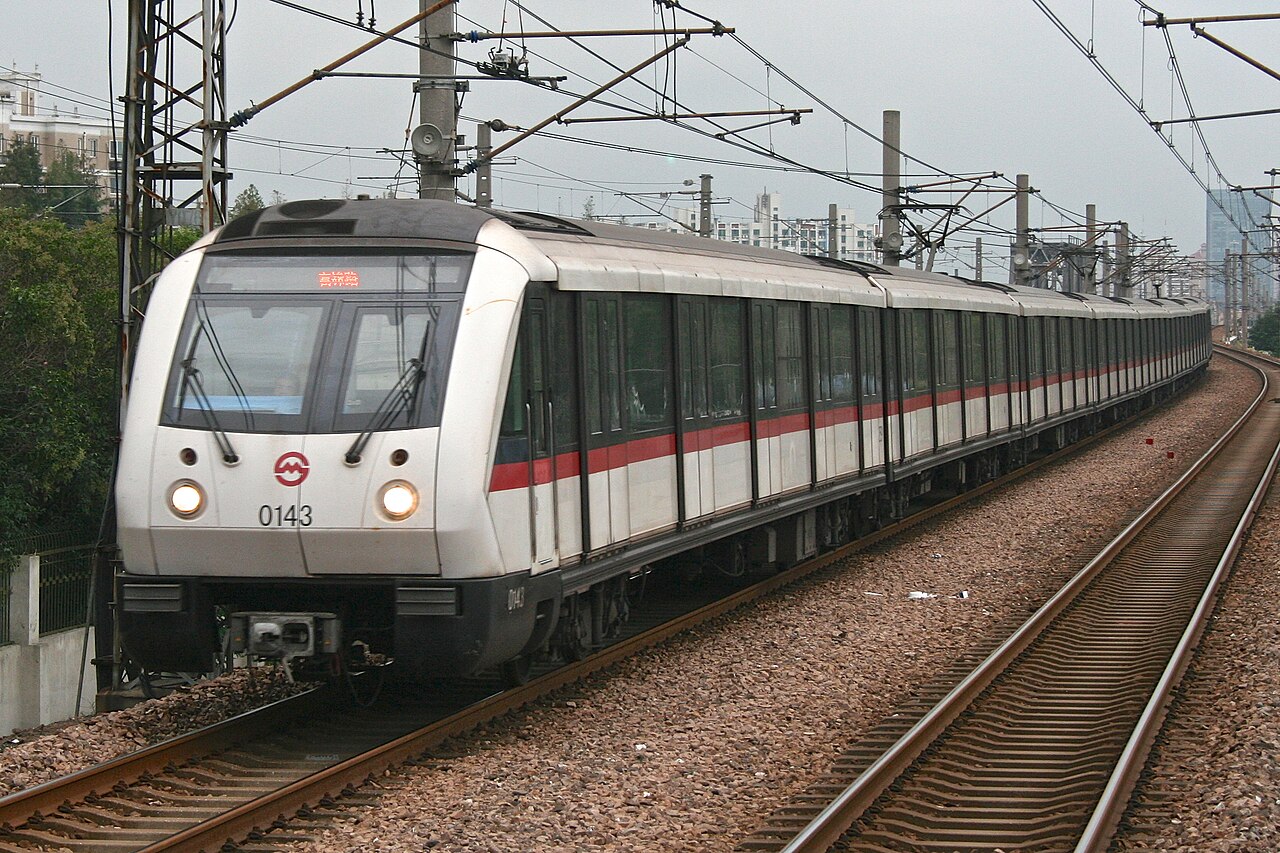
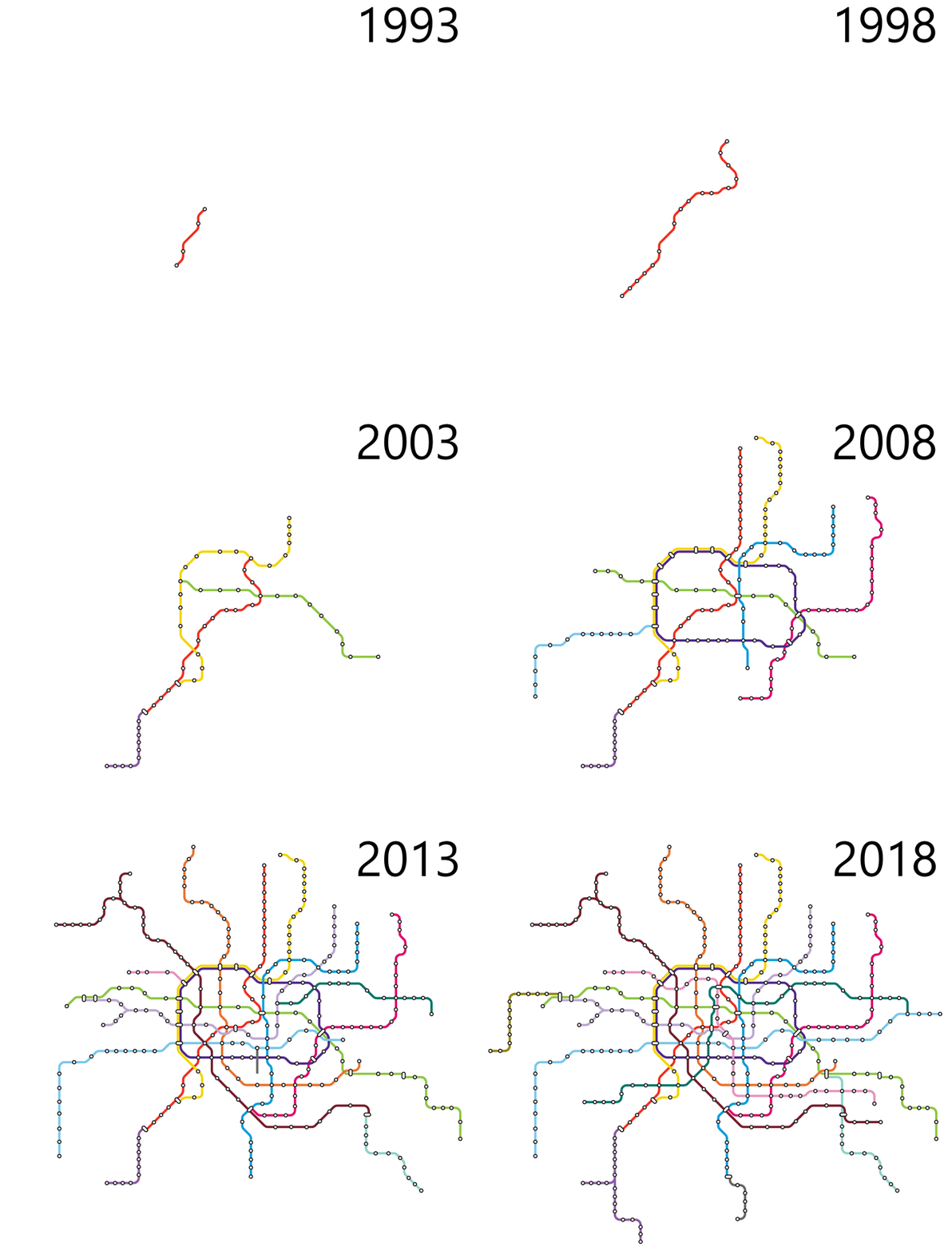
On May 28, 1993, the section of Shanghai Metro Line 1 opened for trial operations. It was a modest 6. 6-kilometer segment connecting Xujiahui to Jinjiang Park (then known as Jinjiang Leyuan). The launch was a for the city's residents. For the time, they could traverse the congested southern corridor in minutes. The initial rolling stock, the German-built DC01 trains, featured a boxy, utilitarian aesthetic that became iconic. These trains ran on 1, 500V DC overhead lines, a standard that would across the network. The station interiors were spartan, tiled in simple patterns, prioritizing function over the cavernous grandeur of the Moscow Metro or the commercial density of the Hong Kong MTR.
Shanghai Metro Line 1: Initial Phase Specifications (1993)
Metric
Data Point
Opening Date
May 28, 1993
Initial Segment Length
6. 6 Kilometers
Start/End Stations
Xujiahui to Jinjiang Park
Primary Funding Source
German Soft Loan (460 Million DM)
Tunneling Method
Shield Tunneling (French FCB Machines)
Rolling Stock Origin
Germany (AEG/Siemens/Duewag)
Average Bus Speed (Pre-Metro)
< 15 km/h
The 1993 opening was not the completion of the vision, the proof of concept. It demonstrated that the soft soil could be conquered and that foreign technology could be successfully integrated with Chinese labor and management. The initial ridership was limited by the short length of the line, yet the psychological impact was. The "Underground Dragon" had awakened. By 1995, the line extended north to the Shanghai Railway Station, completing the 16. 1-kilometer backbone of the system. This initial success validated the massive capital expenditure and set the stage for the explosive expansion that would follow in the 21st century. The shift from the damp, secret air raid shelters of 1964 to the electrified, German-engineered tunnels of 1993 marked the definitive end of Shanghai's era of stagnation and the beginning of its ascent as a global megacity.
Exponential Network Growth and World Expo 2010 Acceleration
The dawn of the twenty- century marked a violent pivot in Shanghai's urban trajectory. Between 1993 and 2002, the city had cautiously assembled a modest transit skeleton, Lines 1, 2, and 3, totaling a mere 65 kilometers. This tentative pace the moment the Bureau International des Expositions awarded Shanghai the hosting rights for the 2010 World Expo. The municipal directive shifted from gradual infrastructure improvement to an absolute mandate: construct a world-class subterranean network in seven years. The target was to surpass 400 kilometers of operational track before the Expo gates opened on May 1, 2010. This was not civil engineering; it was a geopolitical assertion of capability, executed with a velocity that Western industrial precedents.
The of this undertaking required a mobilization of capital and labor unseen in peacetime urban history. In 2003, the city had three lines. By 2010, it operated eleven. This exponential growth curve, frequently celebrated in aggregate statistics, concealed a chaotic and dangerous reality on the ground. The pressure to meet the Expo deadline forced simultaneous excavation across the Huangpu River delta's soft, water-rich soil. At the peak of activity, over one hundred tunnel-boring machines chewed through the subterranean clay simultaneously. This "Great Leap" in transit infrastructure fundamentally altered the city's geology and finances, creating a legacy of debt and engineering risks that would long after the foreign dignitaries departed.
The risks of such velocity became catastrophic on July 1, 2003. During the construction of Line 4, the "Circle Line" designed to unify the network, a breach occurred at a cross-passage near the Huangpu River. The engineering team had used an artificial ground-freezing method to stabilize the water-logged soil. The freeze failed. Pressurized water and sand erupted into the tunnel, creating a subterranean void that swallowed the structural integrity of the site. A nearby seven-story building tilted and collapsed; the floodwall protecting the district cracked, threatening to inundate the city center. While official reports minimized the human toll compared to later incidents, the Line 4 disaster revealed the perilous margins of safety accepted in the rush for completion. The collapse delayed the loop's full operation for years, leaving a scar in the network's geometry that required a complex, expensive recovery.
Even with such setbacks, the relentless pace continued. The years 2007 to 2009 saw a cascade of openings. Line 6 and Line 8 launched in late 2007, ostensibly to serve the swelling populations of Pudong and Yangpu. Here, the haste manifested as a planning failure rather than a structural one. Planners, underestimating the demographic surge they were inducing, selected smaller "C-type" trains for Line 6. The result was immediate, crushing congestion. Commuters found themselves physically unable to board trains on opening day. The "C-train" decision, driven by short-term cost containment and flawed ridership models, permanently crippled the capacity of a serious artery, forcing the operator to remove seats years later just to pack in more standing bodies.
The financial architecture supporting this expansion was as complex as the tunnels. The total investment for the Expo-related infrastructure was estimated between $45 billion and $60 billion, a figure that dwarfed the budgets of comparable Western projects. To fund this, the Shanghai Shentong Metro Group and the municipality relied heavily on debt financing and land-value capture. The system operated at a significant financial loss; farebox recovery could not service the interest on the massive loans required for construction. By 2010, the network's liabilities exceeded $15 billion. The economic logic relied on the "rail plus property" model, where the metro increased the value of government-owned land, which could then be leased to developers. This speculative engine drove the expansion left the operator load with heavy debt service obligations that required perpetual government subsidies.
Shanghai Metro Network Explosion: The Expo Acceleration (2005, 2010)
Year
Operational Lines
Network Length (km)
Station Count
Daily Ridership (Avg)
2005
4
123
88
1. 6 Million
2007
8
234
161
2. 8 Million
2009
11
330
223
4. 5 Million
2010 (Expo)
12
420
282
6. 8 Million
As the Expo opened, the network faced its stress test. Line 13 was inaugurated specifically for the event, running a restricted service solely for Expo visitors and staff. It functioned as a high-capacity shuttle, ferrying millions to the pavilions on the riverbanks. On peak days, the system handled over 7 million passengers, a volume that required military-grade crowd control. Stations like People's Square became subterranean holding pens, with police cordons managing the flow of humanity to prevent stampedes. The system held, the operational was immense. The signaling systems, pushed to minimum headways to maximize throughput, operated without margin for error. This operational intensity, born of need during the Expo, became the new normal, setting the stage for the signaling failures that would haunt Line 10 a year later.
By the time the Expo concluded in October 2010, Shanghai had achieved the impossible. In seven years, it had built a transit system larger than the New York City Subway, a network that took New York a century to construct. The city had laid more track, poured more concrete, and excavated more earth than any metropolis in human history within such a condensed timeframe. The victory was undeniable, it was pyrrhic in its side effects. The focus on speed and length over integration and quality control left a legacy of awkward transfers, under-sized stations, and a maintenance load that would grow exponentially. The "Expo Era" defined the modern Shanghai Metro: a marvel of brute-force engineering and political, built at a cost, financial and physical, that is still being tallied.
2026 Network Topology and Total Track Length Statistics
Cold War Air Raid Shelters to Line 1: 1960, 1993 Development
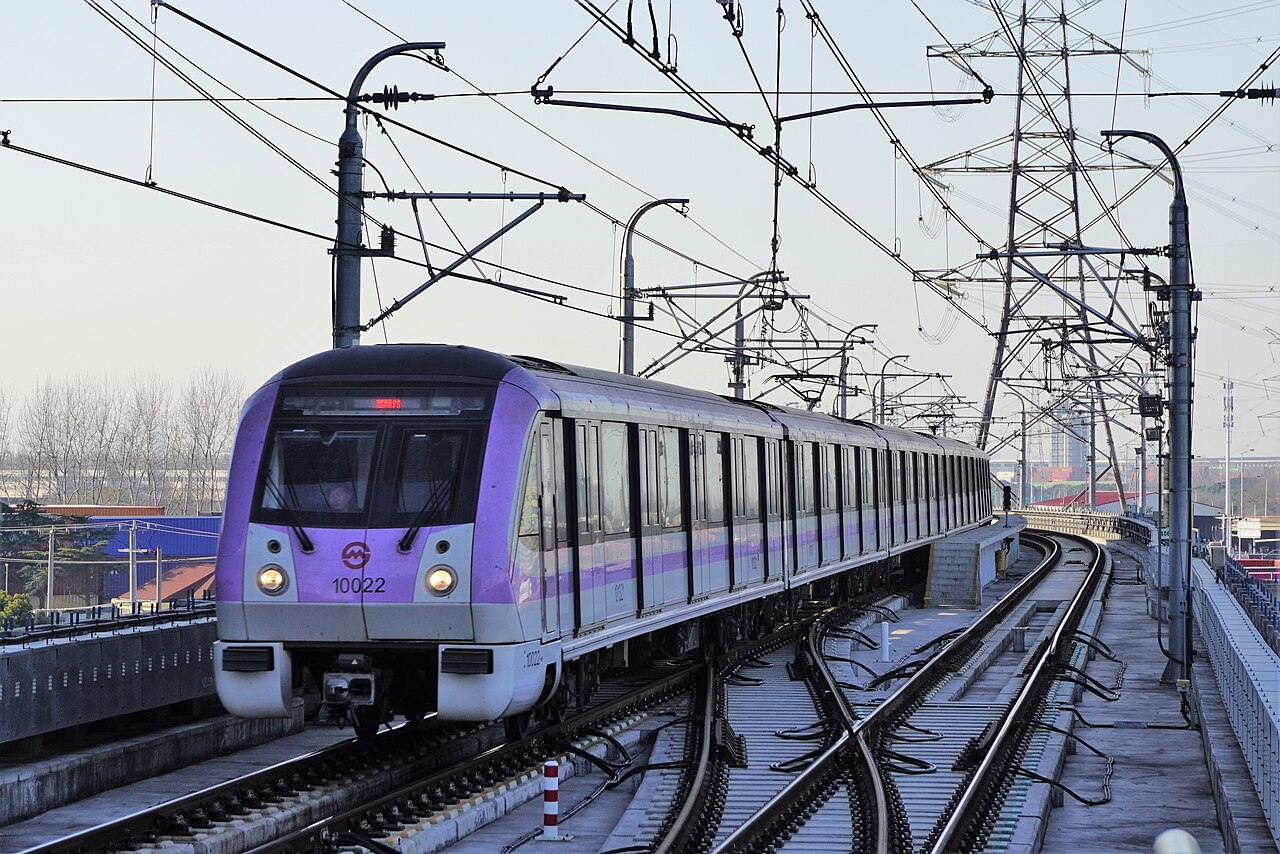
By March 2026, the Shanghai Metro has cemented its status as the most extensive rapid transit system in human history, operating a network length of 906 kilometers. This figure, verified by the opening of the Line 18 Phase II extension in December 2025, places Shanghai significantly ahead of its nearest competitors, Beijing and Delhi. The network comprises 21 operational lines and 523 stations, serving a daily ridership that frequently exceeds 13 million passengers. The topology of this system has evolved from a simple radial structure into a complex "double-fan" grid, overlaid with a high-speed municipal railway artery that fundamentally alters the city's transit physics.
The most significant structural alteration to the network in the 2024, 2026 window was the commissioning of the Airport Link Line on December 27, 2024. Spanning 68. 6 kilometers, this line represents the phase of Shanghai's transition from a pure subway model to a hybrid "Metro-C-Train" ecosystem. Unlike traditional lines restricted to 80 km/h, the Airport Link Line operates at 160 km/h, slashing the transit time between Hongqiao International Airport and Pudong International Airport from 90 minutes (via Line 2) to under 40 minutes. Although technically a municipal railway, it is operated by the Shentong Metro Group and integrated into the network map, functioning as a high-speed express that bypasses the congestion of the central business district.
The network's expansion into the "Five New Cities" policy zones continued with the completion of the Line 18 Phase II extension in late 2025. This northern elongation added six stations from South Changjiang Road to Kangwen Road, penetrating deep into Baoshan District. Line 18 functions as a massive tangential arc, allowing passengers to traverse the eastern and northern sectors of the metropolis without entering the saturated inner ring. Simultaneously, the western extension of Line 17 pushed the network further into the Qingpu District, reinforcing the transit toward the Yangtze River Delta integration zone.
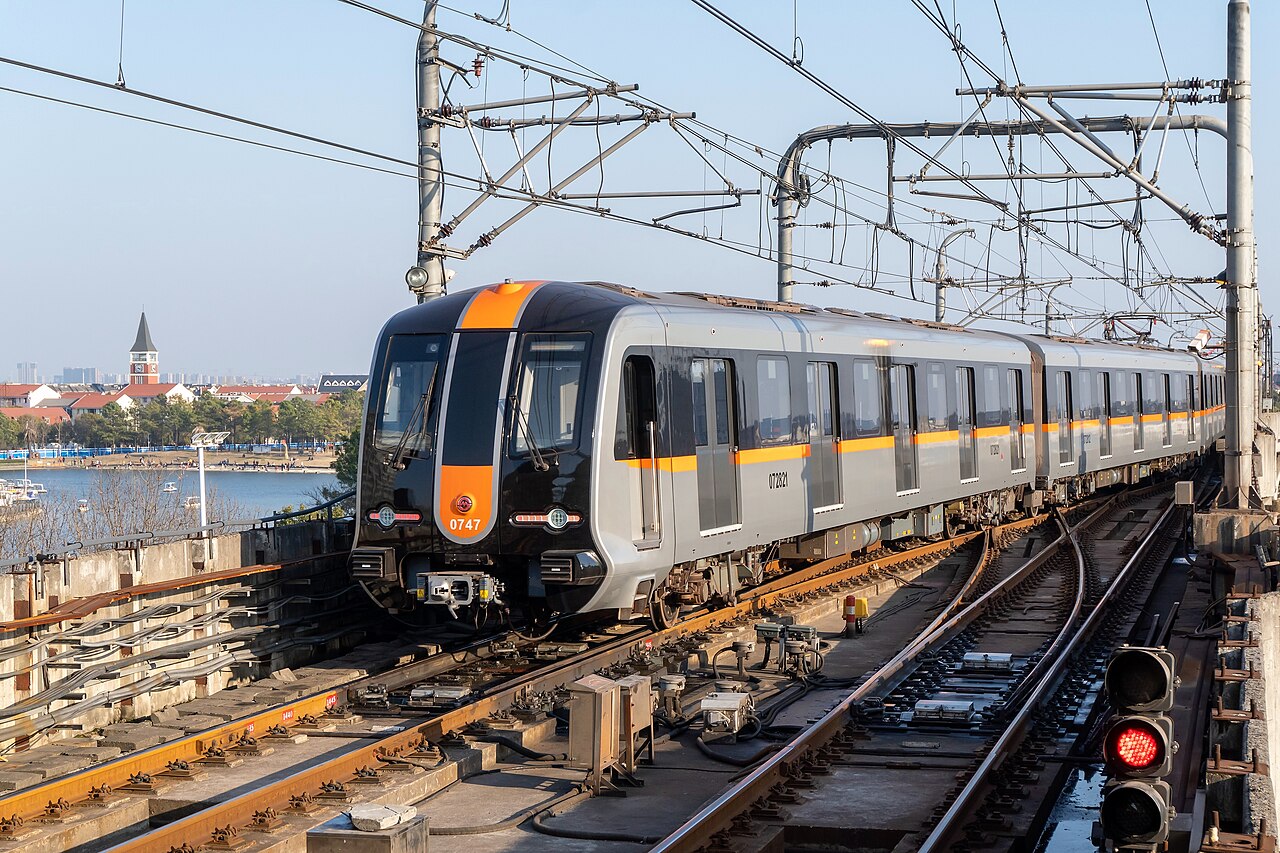
Technologically, the 2026 network topology is defined by its reliance on Grade of Automation 4 (GoA4) systems. Shanghai possesses the world's largest driverless metro network. Lines 10, 14, 15, 18, and the Pujiang Line operate fully automatically, with no driver in the cab. The extension of Line 18 pushed the total length of automated tracks beyond 175 kilometers. This automation allows for hyper- headways, with trains on lines like the 14 and 15 arriving every 90 to 120 seconds during peak hours, a frequency necessary to manage the density of the city center.
The following table details the operational specifications of the network's most serious arteries as of March 2026:
Line
Termini
Length (km)
Stations
Automation Level
Key Function
Line 1
Fujin Rd , Xinzhuang
36. 9
28
GoA2
North-South Central Spine
Line 2
East Xujing , Pudong Airport
60. 6
30
GoA2
East-West CBD Connector
Line 14
Fengbang , Guiqiao Rd
38. 5
31
GoA4 (Driverless)
Central Relief Artery
Line 15
Gucun Park , Zizhu Hi-Tech
42. 3
30
GoA4 (Driverless)
Western Tangential Arc
Line 18
Kangwen Rd , Hangtou
44. 5
32
GoA4 (Driverless)
Eastern/Northern Bypass
Airport Link
Hongqiao , Pudong Airport
68. 6
9
GoA2 (High Speed)
Inter-Airport Express
Even with these operational achievements, the construction front remains active. As of March 2026, the Chongming Line (Line 22) is in the final stages of electromechanical installation and testing, with trial operations scheduled for late 2026. This line features a 9-kilometer tunnel under the southern channel of the Yangtze River, an engineering feat that connect the island district of Chongming to the mainland. Simultaneously, heavy civil works are underway for Line 19, a north-south mega-line designed to relieve the aging Line 1, and Line 21, which create a new north-south corridor through Pudong, linking the Free Trade Zone with the Disney Resort area.
The topology of 2026 demonstrates a clear shift from simple expansion to structural reinforcement. The radial lines (1, 2, 7, 9) are supported by multiple orbital and tangential loops (4, 15, 18, 21), creating a grid that offers passengers multiple redundant routes. This redundancy is important for resilience; a failure on Line 2 no longer paralyzes cross-river traffic, as the Airport Link and Line 14 provide viable, high-capacity alternatives. The integration of the municipal railway indicates the future direction of the network: a dual-speed system where local metros handle density and express lines handle distance, binding the 6, 340 square kilometers of Shanghai into a single, accessible urban unit.
Signaling Architecture and Foreign Technology Transfer Contracts
The evolution of Shanghai's transit signaling represents a century-long trajectory from visual line-of-sight operations to the world's most complex digital automation. While the tram networks of the early 1900s relied on simple semaphore and whistle, the modern Shanghai Metro operates as a testbed for the "Market for Technology" strategy, where access to China's massive infrastructure spend was traded for foreign intellectual property. This exchange created a signaling architecture initially dominated by Western conglomerates, specifically Alstom and Siemens, before shifting toward indigenous control following catastrophic failures and strategic decoupling.
When Line 1 opened in 1993, the signaling infrastructure was a "black box" imported from the United States. While Siemens provided the rolling stock and power systems under a German loan agreement, the serious Automatic Train Control (ATC) system was supplied by General Railway Signal (GRS), an American firm later acquired by Alstom. This system was implemented through CASCO Signal Ltd., a joint venture established on March 5, 1986, between the China Railway Signal & Communication Corporation (CRSC) and GRS (later Alstom). CASCO became the gatekeeper of Shanghai's neural network, holding a near-monopoly on the city's early signaling contracts. For the two decades of operation, Shanghai Metro engineers possessed limited access to the source code governing their own trains, creating a dangerous dependency on foreign vendors for troubleshooting and upgrades.
The risks inherent in this "black box" architecture materialized on September 27, 2011. At 2: 10 PM, the CASCO-supplied signaling system on Line 10 failed at Yuyuan Garden station, losing track of train positions. The centralized dispatching center lost its digital eyes, forcing a switch to a manual telephone-blocking mode. At 2: 51 PM, Train 1016 crashed into the rear of the stalled Train 1005, injuring 271 passengers. The investigation revealed that while the immediate cause was a violation of manual operation by dispatchers, the root cause was a design flaw in the CASCO Urbalis 888 CBTC (Communications-Based Train Control) system. The software had frozen during a power supply upgrade test, a vulnerability the operators were ill-equipped to manage due to the unclear nature of the imported technology.
Following the 2011 collision, the Shanghai Shentong Metro Group accelerated its diversification strategy, bringing in Thales SEC Transport (TST), a joint venture between the French defense giant Thales and Shanghai Electric. This move broke the CASCO monopoly and introduced a second stream of foreign technology transfer. TST introduced the SelTrac CBTC system, a moving-block technology that allowed for shorter headways and higher capacity. This competition forced an acceleration of technology localization. By 2015, the "black box" model was declared obsolete; future contracts required "white box" or "grey box" transfers, ensuring Chinese engineers held the keys to the underlying logic. This shift was not operational geopolitical, securing the network against chance sanctions or vendor withdrawals.
The operational standard for the 2020s has shifted to Grade of Automation 4 (GoA4), or fully driverless operation. Line 14, opened in December 2021, utilizes the TSTCBTC 2. 0 system, a fully redundant architecture developed locally by the TST joint venture. Unlike earlier iterations where the core logic was imported, TSTCBTC 2. 0 was engineered in Shanghai to meet the specific high-density demands of the network. This system allows for 86-second turnback times at terminals, a metric unachievable with the legacy GRS or Siemens systems of the 1990s. The table outlines the progression of signaling suppliers across key lines, illustrating the shift from direct import to localized joint venture production.
Shanghai Metro Signaling Architecture by Line (Selected)
Line
Opening Year
Original Supplier
System Type
Status (2026)
Line 1
1993
GRS / CASCO
Fixed Block ATC
Upgraded to CBTC (CASCO)
Line 2
1999
Union Switch & Signal
Fixed Block ATC
Upgraded to CBTC (CASCO)
Line 10
2010
Alstom / CASCO
Urbalis 888 CBTC
Modified post-2011 Crash
Line 14
2021
Thales / TST
TSTCBTC 2. 0 (GoA4)
Fully Automated / Driverless
Line 18
2020
CASCO
Urbalis 888 (GoA4)
Fully Automated / Driverless
Line 22
2026
CASCO / TST
-Gen CBTC
Integration with 5G Network
By April 2025, Shanghai Metro achieved a new technological milestone: full 5G network coverage across all 517 stations and 896 kilometers of track. This infrastructure is not solely for passenger convenience serves as the backbone for the generation of signaling: Train-to-Train (T2T) communication. In the legacy CBTC model, trains communicate with a wayside computer which then talks to other trains, a hub-and-spoke model that introduces latency. The 2026 operational plan uses a private 5G slice to allow trains to communicate their position and velocity directly to one another. This reduces the communication delay from hundreds of milliseconds to under 10 milliseconds, theoretically allowing for "virtual coupling" where trains run in convoys with mere meters of separation.
The indigenization of signaling has also extended to maintenance. In 2022, the Shentong Bombardier (Shanghai) Rail Transit Vehicle Maintenance Co. (SHBRT) secured a lifecycle maintenance contract for Line 12, utilizing the "Orbita" predictive maintenance system. This system uses real-time telemetry to predict signal and train faults before they occur, a method that replaces the reactive "fix-on-fail" method of the 1990s. As of early 2026, the Shanghai Metro operates as a hybrid entity: its physical rails are Chinese steel, its nervous system remains a complex, albeit localized, derivative of French, German, and American engineering, fully encapsulated within domestic control structures to ensure sovereignty over the city's movement.
Daily Ridership Variance and Peak Saturation Metrics
Exponential Network Growth and World Expo 2010 Acceleration
The Shanghai Metro operates as a biological pump for the Yangtze River Delta. It forces over 10 million commuters through subterranean arteries every twenty-four hours. This system does not transport people. It defines the metabolic rate of the city. On March 8, 2024, the network set a historical single-day ridership record of 13. 39 million passengers. This figure exceeds the entire population of nations like Belgium or Bolivia. It represents a logistical triumph and a humanitarian warning. The variance between this crush load and the silence of the 2022 lockdowns offers a clear data set on urban resilience and fragility. The trajectory of daily ridership reveals an exponential climb that few infrastructure projects in human history have sustained. In 1995, shortly after Line 1 fully opened, the system handled a mere 600, 000 daily passengers. The network was a novelty rather than a need. By 2010, the World Expo accelerated expansion and pushed daily averages past 6 million. The growth curve turned vertical. The system added millions of riders not over decades, in single fiscal years. This rapid saturation forced engineers to abandon standard safety margins in favor of "crush load" calculations.
Peak saturation metrics expose the physical limits of the infrastructure. Line 9 serves as the primary case study for system failure through success. The line connects the dense residential district of Songjiang to the central business districts. During the morning rush hour from 7: 30 AM to 9: 30 AM, passenger density frequently exceeds 6 persons per square meter. This density restricts chest expansion and makes movement impossible. Sijing Station on Line 9 consistently ranks as the most congested entry point in the entire network. To manage this flow, the operator reduced headways to 110 seconds in 2024. This interval is near the theoretical limit of the signaling system. Trains arrive less than two minutes apart. Yet the platforms remain dangerously overcrowded. Line 6 presents a different category of saturation failure. Planners designed this line in the early 2000s with a fatal miscalculation. They assumed low ridership for the Pudong route and ordered "Type C" trains. These units are narrower and shorter than the standard "Type A" rolling stock used on Line 1 and Line 2. The reality of Pudong's explosive development overwhelmed Line 6 immediately upon its 2007 opening. The "Hello Kitty Line," nicknamed for its pink color, became a choke point. The tunnels are physically too small to accommodate larger trains. This permanent engineering error condemns Line 6 to perpetual overcrowding. It forces the operator to run trains at maximum frequency while still failing to clear platforms. The variance between weekday and weekend ridership demonstrates the system's role as a labor conveyance tool. Weekday volume averaged 11. 91 million in the second quarter of 2024. Weekend volume dropped to 7. 72 million. This 35 percent decrease indicates that the Shanghai Metro is primarily a utility for production. The "commuter wave" is unidirectional. In the morning, the flow moves from the outer rings to the center. In the evening, it reverses. This variance stresses the equipment unevenly. Trains run empty in the counter-flow direction during peaks. This is inherent to the monocentric urban design of Shanghai. The COVID-19 pandemic provided a control group for a city without transit. In April and May 2022, the Shanghai Metro ceased to function for the general public. Daily ridership plummeted to near zero during the strict city-wide lockdown. The system ran ghost trains to maintain mechanical integrity and transport medical personnel. This period broke the habit of transit for residents. Yet the recovery in 2023 and 2024 proved that the city cannot function without the metro. By early 2024, ridership had returned to 95 percent of 2019 levels. The record-breaking day in March 2024 signaled that the psychological fear of crowded spaces had evaporated in the face of economic need. Line 2 remains the heavy lifter of the network. It is the only line to average over 1 million passengers daily. It connects two airports and the most expensive real estate in mainland China. The saturation on Line 2 is different from Line 9. It is constant rather than. Tourists, business travelers, and commuters keep the line at high capacity from 6: 00 AM to 10: 00 PM. The introduction of the parallel Airport Link Line in late 2024 aimed to bleed off of this pressure. Early data from 2025 suggests a slight reduction in end-to-end travelers on Line 2. Yet the short-haul volume within the city core remains at crush levels. The physical toll on the rolling stock from these saturation levels is immense. Doors pattern thousands of times a day under pressure from leaning bodies. Air conditioning systems run at maximum output to combat the metabolic heat of 3, 000 people in a single train. Maintenance crews have a window of only four hours each night to inspect rails and wheels. The margin for error is nonexistent. A single signal failure during the morning peak triggers a cascade of delays that can leave hundreds of thousands of people stranded on platforms. The Shanghai Metro operates on the edge of physics. It balances the unstoppable force of 26 million residents against the immovable object of tunnel capacity. Current data from early 2026 indicates that the system has entered a phase of "managed saturation." The era of double-digit percentage growth is over. The focus has shifted to efficiency. Signaling upgrades allow for 100-second headways on serious lines. Station managers use metal barricades to throttle the flow of passengers entering the turnstiles. This "flow restriction" strategy prevents platform stampedes creates long queues on the street above. The metro has become a victim of its own ubiquity. It is too essential to fail. Yet it is too crowded to succeed in providing a comfortable journey. The data shows a system that is, massive, and merciless.
Line 10 Collision and Safety Protocol Revisions
The collision on September 27, 2011, stands as the single most significant safety failure in the history of the Shanghai Metro. At 2: 51 PM, a train on Line 10 rear-ended a stationary train in the tunnel between Yuyuan Garden and Laoximen stations. The impact injured over 280 passengers, shattered the system's aura of invincibility, and forced a complete overhaul of emergency operating procedures. This event was not a mechanical failure; it was a catastrophic breakdown of the human-machine interface, exposing deep flaws in how operators managed high-tech systems during degradation. The sequence began forty minutes earlier, at 2: 10 PM, when the signaling system lost power. Line 10, designed as a GoA4 (Grade of Automation 4) driverless line, relied on the Urbalis 888 CBTC (Communication-Based Train Control) system supplied by Casco Signal Ltd. When the digital eyes of the network went dark, the Shanghai Metro Operations Center made a fatal decision: they switched to "phone blocking" mode. This archaic manual protocol required station staff to authorize train movements via telephone, bypassing the automated safety interlocks that prevent collisions. Under this manual regime, dispatchers lost track of the train positions. They authorized Train 1016 to proceed into a section of the tunnel already occupied by a stalled train. The operator of the moving train, driving blindly into a curve at approximately 54 km/h, saw the taillights of the stationary train too late. Even with emergency braking, the train struck the obstacle at 35 km/h. The collision threw passengers across carriages, resulting in broken bones and head trauma, though miraculously, no fatalities occurred.
Line 10 Collision: Key Failure Points
Date & Time
September 27, 2011, 14: 51 CST
Location
Tunnel between Yuyuan Garden and Laoximen
Primary Cause
Signal power loss followed by human error in manual dispatch
System Provider
Casco Signal Ltd. (Alstom / CRSC Joint Venture)
Casualties
284 Injured (No Fatalities)
Public fury centered immediately on Casco Signal Ltd., a joint venture between Alstom and the China Railway Signal & Communication Corporation (CRSC). Only two months prior, on July 23, 2011, a high-speed rail crash in Wenzhou had killed 40 people; Casco had supplied the signaling components for that line as well. The repetition of failure by the same entity raised serious questions about the rapid expansion of China's rail infrastructure and the reliability of the technology underpinning it. Investigations revealed that Casco's system on Line 10 had suffered a similar glitch just months earlier, sending a train in the wrong direction, yet the warning signs were ignored in the rush to maintain high-frequency service. The government response was swift and punitive. Twelve officials were sanctioned, including the removal of three senior managers from their posts for negligence. The investigation concluded that while the equipment failure precipitated the emergency, the collision was caused by the dispatchers' violation of safety regulations during the switch to manual control. They had failed to verify the tunnel was clear before issuing the command to proceed. In the years following 2011, the Shanghai Metro implemented rigorous changes to its safety doctrine. The "phone blocking" method, while still a theoretical fallback, was deprecated for active high-frequency lines. New dictated that in the event of a signal blackout, operations must halt completely until visual verification is established, prioritizing passenger survival over service continuity. Speed limits during any form of manual degradation were slashed, and the training for "human-in-the-loop" scenarios became far more draconian. The engineering response involved enforcing redundancy. By 2020, upgrades to lines like Line 2 and the construction of new lines (Line 14, 15, and 18) featured dual-signaling architectures. If the primary CBTC system failed, a secondary, independent backup could take over, eliminating the need for the risky manual interventions that caused the Line 10 disaster. By 2026, the network had achieved a safety record that largely redeemed the 2011 failure, with fully automated lines operating with higher reliability than their human-piloted predecessors. The Line 10 crash remains a cautionary case study in global transit safety, proving that the most dangerous moment in automation is not when the machine works, when humans try to take over.
Operational Costs and Farebox Recovery Ratios
2026 Network Topology and Total Track Length Statistics
The financial architecture of the Shanghai Metro represents one of the most complex fiscal balancing acts in modern urban history. While the system stands as the world's largest by route length, its economic reality is defined by a clear between operational revenue and total expenditure. Unlike the "Rail plus Property" model that renders Hong Kong's MTR consistently profitable, Shanghai's system relies on a hybrid model where massive ticket volume offsets operational cash flow, while the municipal government absorbs the crushing weight of capital expansion and debt service. ### The Farebox Reality: Volume vs. Value As of 2023, the Shanghai Metro delivered approximately 3. 66 billion rides annually. With a distance-based fare structure starting at 3 RMB for the 6 kilometers and increasing by 1 RMB for every subsequent 10 kilometers, the average revenue per passenger trip hovers between 3. 8 and 4. 2 RMB. This generates an estimated annual ticket revenue of approximately 14. 5 to 15. 5 billion RMB ($2. 1 billion USD). In the system's infancy (1995, 2003), the financial picture was radically different. The initial lines (Line 1 and Line 2) ran through the densest corridors of Puxi and Pudong, achieving a farebox recovery ratio exceeding 100%. During this "Golden Era," the operator, Shanghai Shentong Metro Group, could cover daily operating expenses (OPEX) purely from ticket sales. yet, the political mandate to expand the network into low-density suburbs, connecting districts like Songjiang, Jiading, and Qingpu, diluted this efficiency. As the network length exploded from 65 kilometers in 2000 to over 800 kilometers by 2023, the marginal revenue per kilometer of track plummeted, while fixed maintenance and security costs skyrocketed. ### Operational Cost Drivers The cost structure of the Shanghai Metro is dominated by three primary vectors: energy consumption, personnel, and security theater. 1. **Energy Consumption:** The network is one of the single largest electricity consumers in the municipality. While recent initiatives have installed 50MW of distributed photovoltaic power across depots like the Line 11 Racecourse and Line 5 Jianchuan Road bases, these sources cover only ~2% of the system's total energy demand. The remaining 98% exposes the operator to industrial grid pricing, which has trended upward since 2022. 2. **Maintenance of Aging Assets:** Line 1, over 30 years old, requires capital-intensive deep maintenance. The replacement pattern for signaling systems, rolling stock refurbishment, and tunnel waterproofing (serious in Shanghai's soft, water-rich soil) create a "maintenance cliff" that newer systems in China have yet to face. 3. **Security Expenditures:** Unlike Western systems, Shanghai Metro employs a massive, labor-intensive security apparatus. With over 508 stations, each requiring multiple checkpoints staffed by minimum-wage personnel and equipped with X-ray scanners, the "security tax" on operations is estimated to consume 15-20% of the daily operating budget. This expenditure produces zero revenue and slows passenger throughput, yet remains a non-negotiable government mandate. ### The Subsidy method Data from 2019 to 2024 reveals that while Shanghai Shentong Metro Co., Ltd. (the listed subsidiary, 600834. SH) frequently reports net profits in the range of 60, 100 million RMB, these figures are an accounting artifact. The listed entity primarily manages "operation services" and financial leasing, shielding it from the heavy infrastructure debt held by the parent state-owned enterprise (SOE), Shanghai Shentong Metro Group. The parent group's consolidated financials paint the true picture. Like its counterpart in Beijing, which required a 10. 4 billion RMB subsidy in 2020 to offset a 7. 3 billion RMB operating loss, Shanghai relies on direct municipal injections to the gap. The farebox recovery ratio for the *entire* consolidated group (including depreciation and debt interest) is estimated to be well 100%, likely hovering in the 60, 70% range. This deficit is structural; the government views the metro not as a for-profit business, as a loss-leading utility essential for the city's $600 billion GDP engine to function. ### Comparative Efficiency Metrics
### Post-Pandemic Recovery and 2026 Outlook The COVID-19 pandemic (2020, 2022) shattered the system's financial equilibrium. Ridership collapsed by over 40% during lockdowns, while fixed costs remained immovable. The recovery in 2023 saw average daily ridership return to ~10 million, reaching 95% of pre-pandemic levels. yet, the financial damage lingers. The debt incurred to keep the system running during the revenue drought has added to the long-term liability sheet. Looking toward 2026, the Shanghai Metro faces a serious pivot. The "build at all costs" phase is transitioning into an "optimize and monetize" phase. The operator is aggressively expanding non-fare revenue streams, including: * **Commercial Real Estate (TOD):** Intensifying development above depots and stations, mimicking the Hong Kong model to cross-subsidize operations. * **Digital Monetization:** Using the "Metro Daduhui" app (with over 40 million users) to drive advertising and fintech revenue. * **Automation:** The introduction of GoA4 (fully automated) lines like Line 14 and Line 15 reduces the driver headcount, offering a route to lower long-term labor costs. Even with these measures, the Shanghai Metro remain a subsidized entity for the foreseeable future. The sheer of the network, serving a population of 25 million, dictates that ticket prices must remain socially affordable (capped at ~15 RMB for the longest cross-city journeys), placing a ceiling on revenue growth regardless of operational efficiency.
Cross-Provincial Integration with Suzhou Rail Transit
The physical unification of the Yangtze River Delta's transit infrastructure ceased to be a theoretical bureaucratic objective on June 24, 2023. On that date, the Suzhou Rail Transit Line 11, formerly as Line S1, commenced operations, terminating at Huaqiao Station in Kunshan. This terminus, already the northern endpoint of Shanghai Metro Line 11 since 2013, became the fulcrum of a cross-provincial rail link that merged two massive municipal networks into a single operational entity. While political rhetoric frequently described this as a "one-hour living circle," the engineering reality presented a complex coupling of distinct technical standards, rolling stock specifications, and administrative fiefdoms.
This integration traces its lineage not to modern urban planning, to the commercial arteries of the Qing Dynasty. In the 1700s, the economic metabolism between Suzhou and Shanghai relied on the Grand Canal and a network of post roads that facilitated the movement of silk, grain, and silver. By 1908, the Shanghai-Nanjing Railway had mechanized this corridor, reducing travel time from days to hours. The 2023 metro connection represents the third iteration of this transit bond, shifting the focus from long-haul freight and intercity passenger rail to high-frequency, stop-and-go commuter mass transit. Unlike the heavy rail of 1908, which served discrete city centers, the metro fusion of the 2020s serves the sprawling, urbanization that has filled the geographic gap between the two municipalities.
The mechanics of the "Double 11" connection at Huaqiao reveal the friction inherent in retrofitting separate systems. Shanghai Line 11, a veteran artery opened in 2009, operates massive six-car Type A trainsets capable of heavy passenger loads. In contrast, Suzhou Line 11, designed a decade later, uses six-car Type B trainsets. This gap in rolling stock width and platform configuration renders a true through-service impossible. Passengers must physically disembark at Huaqiao, traverse a transfer corridor, and board the opposing system's train. While officials touted the transfer as, the requirement to switch trains show the legacy of fragmented planning where municipal standards outweighed regional interoperability during the design phases of the early 2000s.
Technically, the Suzhou segment surpasses its older Shanghai counterpart in automation. The 41. 27-kilometer Suzhou Line 11 operates at speeds up to 100 kilometers per hour using GoA4 fully automated driving systems, a standard Shanghai is only retroactively applying to its newer lines. The line cuts through the heart of Kunshan, a county-level city that functions as a dormitory for Shanghai's workforce. Data from 2019 indicated that daily passenger flow at the three Shanghai Line 11 stations in Kunshan (Huaqiao, Guangming Road, Zhaofeng Road) already exceeded 62, 000. With the 2023 extension into downtown Suzhou, this corridor supports a " " migration, with tens of thousands of commuters oscillating between lower housing costs in Jiangsu and higher wages in Shanghai.
The integration expanded further on November 30, 2024, with the opening of the Shanghai Line 17 West Extension. This 6. 6-kilometer elevated segment extended the line from Oriental Land to Xicen, a station strategically positioned to serve the Huawei Lianqiu Lake R&D Center. Unlike the Huaqiao connection, which links to Kunshan's urban core, the Xicen extension the "Watertown" development zone, preparing for a future link with Suzhou's planned Line 10. This second corridor creates a redundant loop, reducing the system's vulnerability to a single point of failure at Huaqiao and distributing the passenger load across the Qingpu-Wujiang border.
Ticketing interoperability initially plagued the cross-provincial launch. In the early months of the connection, passengers frequently juggled two separate mobile applications, Shanghai's "Metro Daduhui" and Suzhou's "Su-e-Xing", to navigate the fare gates. By late 2024 and entering 2025, administrative pressure forced a unification of QR code standards. The "Shanghai Public Transportation Travel Code" achieved validity across Suzhou, Changzhou, and Kunshan, the digital border that had long after the physical rails were joined. This software patch was serious; without it, the friction of payment transfers negated the time savings of the high-speed rail link.
The economic ramifications for Kunshan have been acute. The city, historically an industrial satellite, has morphed into a transit-oriented extension of Shanghai's Jiading District. Real estate developers in Kunshan aggressively market the "metro-adjacent" status, driving housing prices to levels that rival Shanghai's outer suburbs. yet, the commute reality frequently defies the marketing brochures. A trip from central Suzhou to Shanghai Disney Resort via the metro network takes nearly three hours, making it impractical for end-to-end travel compared to high-speed rail. The metro's true utility lies in intermediate connections, serving the localized labor markets of the border zones rather than replacing the intercity heavy rail.
Table 9. 1: Technical Comparison of the Cross-Provincial Link (2025 Status)
Feature
Shanghai Metro Line 11
Suzhou Rail Transit Line 11
Rolling Stock
Type A (3. 0m width)
Type B (2. 8m width)
Max Speed
100 km/h
100 km/h
Automation Level
GoA2 (Driver supervised)
GoA4 (Fully Unattended)
Power Supply
1500V DC Overhead
1500V DC Overhead
Primary Function
Urban Mass Transit / Commuter
Suburban Express / Intercity Connector
Opening Date
2009 (Huaqiao Ext. 2013)
June 24, 2023
By early 2026, the operational data confirmed that the Shanghai-Suzhou metro link had fundamentally altered the region's transit behavior. The "migratory bird" population, workers living in one city and working in the other, stabilized, supported by the reliability of the metro connection which is immune to highway congestion. The Xicen station on Line 17 began recording significant weekday alighting numbers, driven by the technology sector employees moving between the new R&D centers. The integration proved that administrative boundaries are permeable when pierced by steel rails, even if the resulting commute remains a test of endurance for the region's workforce.
Fully Automated Operation Standards on Lines 14, 15, and 18
Signaling Architecture and Foreign Technology Transfer Contracts
By early 2026, the operational backbone of the Shanghai Metro had fundamentally shifted from human-piloted transit to algorithmic governance. While the network's earlier lines relied on the manual reflexes of drivers supervised by ATP (Automatic Train Protection) systems, Lines 14, 15, and 18 represent the maturation of the Grade of Automation 4 (GoA4) standard. These three arteries, shared forming the "FAO Triad" (Fully Automated Operation), operate without driver cabins, crew members, or manual intervention during standard service. The transition to GoA4 is not an upgrade in signaling; it is a total restructuring of the transit operational hierarchy, defined by the International Electrotechnical Commission's IEC 62290-1 standard.
The of this automation is mathematically precise. As of the completion of Line 18 Phase II in December 2025, these three lines alone account for over 120 kilometers of the network, managing passenger flows that exceed the total ridership of European national railways. The system architecture removes the variable of human error from train movements, replacing it with redundant logic controllers that execute commands with millisecond latency. The operational pattern begins daily at 4: 00 AM, not with a shift change, with a "system wake-up" command issued from the Operational Control Center (OCC). The trains, parked in depots like Fengbang or Hangtou, automatically energize, conduct static brake tests, pattern their doors, and verify the integrity of their onboard VOBC (Vehicle On-Board Controller) before rolling into the mainline.
Line 14 stands as the heavy-lift champion of this automated group. Opened on December 30, 2021, it was the fully automated line in China designed specifically for high-capacity 8-car A-type trains. This distinction is serious; prior automation projects were restricted to smaller, lower-volume people movers. Line 14 cuts directly through the dense urban core, connecting Jiading to Pudong. Its signaling architecture, the TSTCBTC® 2. 0 provided by the Thales SEC Transport joint venture, introduced the "FAM Reverse" capability. In the event of a tunnel hazard such as fire or flooding, the train can autonomously halt, switch operational ends, and retreat to the previous station without any manual input from the OCC. This capability addresses the primary safety fear regarding driverless systems: the absence of a human to react to physical track obstructions.
Line 15, the "Western Spine," runs 42. 3 kilometers from Gucun Park to Zizhu Hi-Tech Park. Its opening in January 2021 marked a victory for the Alstom-CASCO signaling alliance. The line uses the Urbalis 888 system, which integrates the train's braking curve directly with the Platform Screen Doors (PSDs). Unlike older lines where the train stops and then signals the doors to open, Line 15 synchronizes these events. The train creeps the final centimeters while simultaneously unlocking the platform blocks, shaving approximately 3 to 5 seconds off every dwell time. Over the course of a 15-hour operational day with 30 stations, this micro-optimization recovers nearly 40 minutes of schedule time, allowing for the insertion of two additional trainsets into the peak hour rotation without expanding the fleet.
The most recent evolution is Line 18, which completed its northern Phase II extension into Baoshan District on December 27, 2025. This extension added serious interchanges at Hulan Road (Line 1) and West Changjiang Road, knitting the automated network into the legacy infrastructure. Line 18 serves as a testbed for passenger-facing automation. The rolling stock features "smart lighting" that adjusts color temperature based on the time of day and ambient weather conditions, a subtle psychological manipulation to reduce commuter aggression during rush hours. More functionally, the door systems use high-sensitivity gap detection sensors. If a passenger's bag or limb is detected in the closing sequence, the system does not bounce back; it calculates the obstruction size and adjusts the re-closing force accordingly, preventing the "door loop" errors that frequently paralyze older lines.
The removal of drivers has not eliminated labor displaced it. The "train captain" role has, replaced by multi-skilled station attendants who roam the platforms and interiors. These attendants carry handheld terminals linked to the TIDS (Train Integrated Dispatch System). If a train detects a fault, such as a voltage irregularity in the third rail or a communication timeout, the attendant receives a push notification with the specific error code and location before the train even stops. This shifts the maintenance model from reactive to predictive. By 2026, data from Lines 14, 15, and 18 indicated a 28% reduction in "service-affecting incidents" compared to the manual Lines 1, 2, and 3, largely because the automated systems do not hesitate or overcompensate during braking maneuvers.
Safety for GoA4 require rigorous containment. The tracks are sealed environments. Unauthorized intrusion detection systems (UIDS) use lidar and thermal imaging at tunnel portals and station ends. A breach triggers an immediate "Zone Stop" command, cutting power to the specific electrical section within 200 milliseconds. This response speed is physically impossible for a human driver. also, the energy efficiency of these lines is superior. The ATO (Automatic Train Operation) algorithms use coasting strategies that calculate the precise momentum needed to reach the station based on track gradient and train load. This results in a 15% reduction in traction energy consumption, a significant metric given the Shanghai Metro's massive electricity bill.
The success of the FAO Triad has cemented GoA4 as the default standard for all future Shanghai infrastructure. The operational data harvested from Line 18's 2025 extension validated the decision to eliminate driver cabs entirely, freeing up valuable carriage space for passengers. As the network looks toward the 1, 000-kilometer milestone, the "driver" is no longer a person, a distributed network of silicon, fiber optics, and redundant code, executing a transit ballet of ruthless efficiency.
Substrate Subsidence and Flood Defense Engineering
The engineering reality of the Shanghai Metro is defined not by the steel of its rails, by the treachery of the soil beneath them. The system rests upon the Yangtze River Delta, a geological formation consisting of approximately 300 meters of soft, quaternary sediment. This substrate, composed of alternating of saturated clay and sand, behaves less like solid ground and more like a viscous fluid under pressure. For engineers, this terrain presents a dual threat: the ground sinks when water is extracted, and it liquefies when disturbed. The history of the network is a continuous war against these two physical inevitabilities.
Long before the tunnel boring machine arrived, Shanghai was already sinking. Between 1921 and 1965, the city's average elevation dropped by 2. 63 meters. This vertical collapse was not a natural phenomenon a direct result of industrial groundwater extraction. Factories and residents pumped water from the confined aquifers faster than the Yangtze could replenish them, causing the clay to compress and the surface to deflate. By the time the metro planning accelerated in the 1990s, the city had stabilized the general subsidence rate to less than 6 millimeters per year through strict prohibition of deep-well pumping and artificial recharge programs. Yet, the construction of deep underground rail lines reintroduced the problem, localized to the specific corridors where tunnels pierced the water-rich sand.
The fragility of this substrate was violently demonstrated on July 1, 2003. During the construction of Line 4, a cross-river loop designed to connect Puxi and Pudong, the engineering team attempted to mine a cross-passage between two tunnels near the Huangpu River. They used the Artificial Ground Freezing (AGF) method, a technique where brine at -28°C is circulated through pipes to freeze the waterlogged soil into a solid ice wall, allowing safe excavation. At 4: 00 AM, the ice wall failed. Pressurized artesian water breached the frozen seal, carrying with it tons of silt and sand. This phenomenon, known as "piping," hollowed out the foundation of the riverbank. The resulting void caused a massive sinkhole that swallowed a section of the floodwall and collapsed an eight-story building nearby. The incident forced a redesign of the entire project and delayed the line's completion by years, serving as a permanent warning that the delta's soil remains an active, hostile force.
Post-2003 engineering shifted toward redundancy and hyper-caution. The use of AGF is governed by rigorous temperature monitoring and backup grouting systems. Engineers also deploy Slurry Balance Shields for tunnel boring. These machines pressurize the excavation face with a bentonite slurry that counteracts the weight of the water and soil, holding the tunnel open while concrete segments are installed. Even with these advances, the ground continues to move. Interferometric Synthetic Aperture Radar (InSAR) data from 2024 and 2025 shows that while the city center is stable, newer suburban lines built on reclaimed land, such as Line 16 and Line 5, experience uneven settlement rates exceeding 3 millimeters per year. This differential settlement twists tracks and cracks station platforms, necessitating constant ballast adjustments and structural reinforcement.
The threat from is matched by the threat from above. Shanghai's location at the mouth of the Yangtze makes it to typhoons, storm surges, and rising sea levels. The metro system, a massive underground drainage network, faces the risk of catastrophic inundation. The flooding of the Zhengzhou Metro in 2021, which resulted in passenger fatalities, triggered an immediate overhaul of Shanghai's flood defenses. By 2024, the Shanghai Metro had retrofitted station entrances with higher flood blocks, increasing the standard height from 15 centimeters to a minimum of 60 centimeters in low-lying areas. serious stations use hydraulic flip-up floodgates that can seal an entrance in under two minutes.
The defense strategy for 2026 extends beyond station hardening to city-wide hydraulic engineering. The "Sponge City" initiative, mandated to cover 80% of the urban area by 2030, integrates the metro's drainage with deep tunnel systems. The most significant of these is the Wusong River waste water and flood control deep tunnel. This massive subterranean artery, with shafts reaching depths of 60 meters, acts as a buffer tank for the city. During typhoons like Bebinca in 2024, these tunnels capture excess runoff that would otherwise overwhelm the surface drainage and pour into metro vents. The system is designed to handle a "once-in-a-century" rain event, a statistical probability that climate change has made worrying frequent.
Construction techniques for the newest lines, such as the Chongming Line (Line 22), push the limits of soft-soil engineering. Crossing the Yangtze River to Chongming Island requires tunnels that dive 30 meters the riverbed, navigating high water pressure and variable sediment density. Completed in March 2025, these tunnels use double-shield boring machines and reinforced segment linings to withstand the crushing weight of the river and the mud. The project also employs a real-time fiber-optic monitoring system in the tunnel walls, capable of detecting micrometer-level shifts in the segment alignment before a leak can develop.
The following table outlines the evolution of subsidence control and flood defense standards in Shanghai, marking the shift from reactive emergency management to proactive geological engineering.
Shanghai Metro: Geotechnical and Hydraulic Defense Evolution (1921, 2026)
Era
Primary Threat
Engineering Response / Standard
Key Metric / Outcome
1921, 1965
Deep Aquifer Depletion
None (Unregulated Extraction)
2. 63m total subsidence; city sank ~59mm/year.
1990, 2003
Tunnel Excavation Instability
Basic Ground Freezing, Earth Pressure Balance
Line 4 Collapse (2003); 4m local sinkhole.
2004, 2020
Differential Settlement
Slurry Balance Shields, Recharge Wells
Subsidence controlled to < 6mm/year in center.
2021, 2023
Surface Inundation (Typhoon)
Station Retrofit (Zhengzhou Lessons)
Barrier height increased to 60cm+; hydraulic gates.
2024, 2026
widespread Climate Risk
Deep Tunnel Drainage, Sponge City Integration
Wusong River Tunnel; Line 22 Yangtze Crossing.
The battle for stability is never won; it is managed. As the network expands into 2026 with the 255 billion yuan infrastructure plan, the focus remains on the invisible physics of the delta. Every new station involves a complex calculation of hydrostatic pressure and soil thixotropy. The metro does not simply sit in the ground; it floats in a semi-solid medium, anchored by friction and the constant vigilance of its pumps and sensors. The safety of millions of daily passengers relies on the assumption that the engineering can continue to outpace the inevitable settling of the earth.
Phase III Expansion and 2035 Master Plan Targets
By the time the Shanghai Metro network stabilized following the frenetic construction pace leading up to the 2010 World Expo, city planners faced a new reality. The initial objective, basic coverage of the central districts, was largely complete. Yet, the sprawling metropolis demanded a strategic shift from simple density to regional integration and suburban connectivity. This pivot formalized in December 2018, when the National Development and Reform Commission (NDRC) approved the "Shanghai Urban Rail Transit Phase III Construction Plan (2018, 2023)." This directive authorized a massive capital injection of 298. 3 billion yuan ($43. 3 billion) to construct nine projects totaling 286 kilometers. Unlike previous phases that focused on radial lines from the city center, Phase III prioritized orbital loops and express lines designed to decongest the saturating core and bind the outlying "new cities" to the economic heart of the Yangtze River Delta.
The execution of this phase between 2020 and 2026 marked the transition of the Shanghai Metro from a human-operated system to a fully automated network. The opening of Line 15 in January 2021, followed by Line 14 and Line 18 Phase 1 in late 2021, introduced the highest standard of driverless technology, Grade of Automation 4 (GoA4), to the mass market. Line 14, traversing the city from west to east, became a serious relief valve for the overburdened Line 2, handling heavy passenger loads with eight-car trains capable of intervals under two minutes. These lines eliminated the physical driver's cab, allowing passengers to gaze out the front window into the tunnels, a visual symbol of the system's technological maturation. By the end of 2021, Shanghai operated five fully automated lines, the largest such cluster globally, signaling a permanent move away from manual train operation for all future high-capacity arteries.
As of March 2026, the network has breached the 900-kilometer threshold, a figure that seemed mathematically improbable two decades prior. The completion of Line 18 Phase 2 in December 2025 pushed the total operational mileage past this symbolic barrier, cementing Shanghai's status as the operator of the world's longest metro network. Yet the most significant development of this period was not a traditional subway line, the inauguration of the Airport Link Line on December 27, 2024. This 68. 6-kilometer express rail artery fundamentally altered the city's transit physics. Running at speeds up to 160 kilometers per hour, it slashed the travel time between Hongqiao International Airport and Pudong International Airport from ninety minutes via Metro Line 2 to a mere forty minutes. The Airport Link Line represents the component of a new "municipal railway", distinct from the stop-and-go metro, designed to facilitate rapid cross-town movement.
The strategic roadmap guiding these developments is the "Shanghai 2035" Master Plan, officially the "Shanghai Master Plan (2017, 2035)." This document sets aggressive that redefine the concept of a commute. The plan mandates that by 2035, the city must achieve three specific time-circle goals: a 15-minute walk to rail transit for residents in the main urban area, a 30-minute commute to the city center for suburban residents, and a 60-minute travel time between Shanghai and major adjacent cities in the Yangtze River Delta. To achieve this, the plan envisions a total rail transit network (including metro, municipal rail, and trams) exceeding 2, 200 kilometers. Of this, the traditional metro network aims for approximately 1, 000 kilometers, while the remaining mileage consists of faster, regional express lines like the Jiamin Line and the Lianggang Express.
Suburban expansion remains the primary engineering focus for the decade leading to 2035. Construction crews are currently active on Lines 19, 20, 21, and 23, projects that fill serious gaps in the orbital structure. Line 19, a "North-South Arterial" expected to complete construction between 2027 and 2032, connect the Baoshan and Minhang districts without forcing passengers through the congested People's Square interchange. Line 23 serves as a parallel relief for the aging Line 5 and Line 1 southern sections, addressing the population boom in the Minhang Development Zone. These lines are not extensions are designed to create a "grid" effect, reducing the reliance on the radial spokes that force unnecessary travel through the city center.
The integration with the broader Yangtze River Delta region drives the technical specifications of the new lines. The extension of Line 11 into Kunshan, Jiangsu Province, was the proof of concept; the 2035 plan this up with high-speed intercity connections. The Shanghai Demonstration Area Line, currently under construction, link the Qingpu District with wujiang in Suzhou and Jiashan in Zhejiang, erasing provincial borders for daily commuters. This "metropolitan circle" strategy acknowledges that Shanghai's economic extends well beyond its municipal boundaries, requiring a transit infrastructure that functions more like a regional heavy rail system than a city subway.
Maintenance of this colossal infrastructure presents a looming financial and logistical load. Line 1, over thirty years old, requires intensive capital investment for signaling upgrades and structural reinforcement. The "Shanghai 2035" plan accounts for this by shifting focus from pure expansion to "quality improvement and efficiency enhancement." This involves retrofitting older lines with Communication Based Train Control (CBTC) systems to tighten headways and increasing the capacity of older stations that were not built for current passenger volumes. The duality of building the new while rebuilding the old defines the operational reality for the Shanghai Shentong Metro Group in 2026.
The following table outlines the trajectory of the network's growth from the Expo era through the current status to the 2035, illustrating the shift in and focus.
The realization of the 2035 depends heavily on the successful deployment of the "multi-network integration" concept. This involves merging the ticketing, security, and scheduling systems of the national railway, the new municipal express lines, and the traditional metro. In 2026, passengers still frequently navigate different apps or transfer gates when switching between these modes. The 2035 vision demands a unified passenger experience where a traveler can board a regional train in Suzhou and exit at a metro station in Lujiazui with a single digital credential. As Shanghai pushes toward this hyper-connected future, the distinction between "subway," "commuter rail," and "intercity train" dissolve, leaving a singular, massive transit organism that pulses with the rhythm of 30 million lives.
Why it matters: The Rights of Persons with Disabilities (RPwD) Act 2016 in India aims to empower disabled individuals by expanding recognized disabilities and mandating reservations, but its…
What do we know about Pre-Metro Transit: Trams and Colonial Planning?
The history of mass transit in Shanghai begins not with the subterranean rail networks of the modern era, with a colonial fracture above ground. On March 5, 1908, the Shanghai Electric Construction Company, a British entity, launched the city's tram line.
What do we know about Cold War Air Raid Shelters to Line 1: , Development?
The origins of the Shanghai Metro lie not in urban planning committees, in the paranoid, subterranean logic of the Cold War. While the city's surface transit fractured along colonial lines in the early 20th century, the push for an underground system in the 1960s was driven by the threat of nuclear annihilation.
What do we know about Exponential Network Growth and World Expo Acceleration?
The dawn of the twenty- century marked a violent pivot in Shanghai's urban trajectory. Between 1993 and 2002, the city had cautiously assembled a modest transit skeleton, Lines 1, 2, and 3, totaling a mere 65 kilometers.
What do we know about Network Topology and Total Track Length Statistics?
By March 2026, the Shanghai Metro has cemented its status as the most extensive rapid transit system in human history, operating a network length of 906 kilometers. This figure, verified by the opening of the Line 18 Phase II extension in December 2025, places Shanghai significantly ahead of its nearest competitors, Beijing and Delhi.
What do we know about Signaling Architecture and Foreign Technology Transfer Contracts?
The evolution of Shanghai's transit signaling represents a century-long trajectory from visual line-of-sight operations to the world's most complex digital automation. While the tram networks of the early 1900s relied on simple semaphore and whistle, the modern Shanghai Metro operates as a testbed for the "Market for Technology" strategy, where access to China's massive infrastructure spend was traded for foreign intellectual property.
What do we know about Daily Ridership Variance and Peak Saturation Metrics?
The Shanghai Metro operates as a biological pump for the Yangtze River Delta. It forces over 10 million commuters through subterranean arteries every twenty-four hours.
What do we know about Line 10 Collision and Safety Protocol Revisions?
The collision on September 27, 2011, stands as the single most significant safety failure in the history of the Shanghai Metro. At 2: 51 PM, a train on Line 10 rear-ended a stationary train in the tunnel between Yuyuan Garden and Laoximen stations.
What do we know about Operational Costs and Farebox Recovery Ratios?
The financial architecture of the Shanghai Metro represents one of the most complex fiscal balancing acts in modern urban history. While the system stands as the world's largest by route length, its economic reality is defined by a clear between operational revenue and total expenditure.
What do we know about Cross-Provincial Integration with Suzhou Rail Transit?
The physical unification of the Yangtze River Delta's transit infrastructure ceased to be a theoretical bureaucratic objective on June 24, 2023. On that date, the Suzhou Rail Transit Line 11, formerly as Line S1, commenced operations, terminating at Huaqiao Station in Kunshan.
What do we know about Fully Automated Operation Standards on Lines 14, 15, and 18?
By early 2026, the operational backbone of the Shanghai Metro had fundamentally shifted from human-piloted transit to algorithmic governance. While the network's earlier lines relied on the manual reflexes of drivers supervised by ATP (Automatic Train Protection) systems, Lines 14, 15, and 18 represent the maturation of the Grade of Automation 4 (GoA4) standard.
What do we know about Substrate Subsidence and Flood Defense Engineering?
The engineering reality of the Shanghai Metro is defined not by the steel of its rails, by the treachery of the soil beneath them. The system rests upon the Yangtze River Delta, a geological formation consisting of approximately 300 meters of soft, quaternary sediment.
What do we know about Phase III Expansion and Master Plan Targets?
By the time the Shanghai Metro network stabilized following the frenetic construction pace leading up to the 2010 World Expo, city planners faced a new reality. The initial objective, basic coverage of the central districts, was largely complete.
Why it matters: Verified data reveals a systematic pattern of foreign aid funds exiting target economies through organized theft and skimming. Infrastructure projects are the primary vehicle for…
Why it matters: The diversion of aid meant to combat malaria in Africa has led to a shadow economy profiting from counterfeit and stolen medical supplies. The theft…
Why it matters: Qantas Airways experienced another data breach due to a vulnerability in a third-party vendor's system. Attackers extracted 5.7 million customer records, raising concerns about potential…
Why it matters: Critical infrastructure cyber grants aim to enhance cybersecurity in essential sectors such as energy, water, transportation, and healthcare. The U.S. Department of Homeland Security (DHS)…
Why it matters: Youth-led climate protests, inspired by figures like Greta Thunberg, have mobilized millions worldwide to demand urgent climate action. Despite their impact, young activists face increasing…
Why it matters: The 'Honour Killing Belt' in India has seen a surge in murders justified as protecting family honor. This report explores the roots of these crimes,…
Get updates on this place
Get verified alerts when this file is updated (verification required).