Verified Against Public And Audited RecordsLast Updated On: 2026-02-27
Reading time: ~48 min
File ID: EHGN-PLACE-33558
Investigative Bio of Snow Hill Police Station
Topography and Strategic Proximity to Newgate Prison
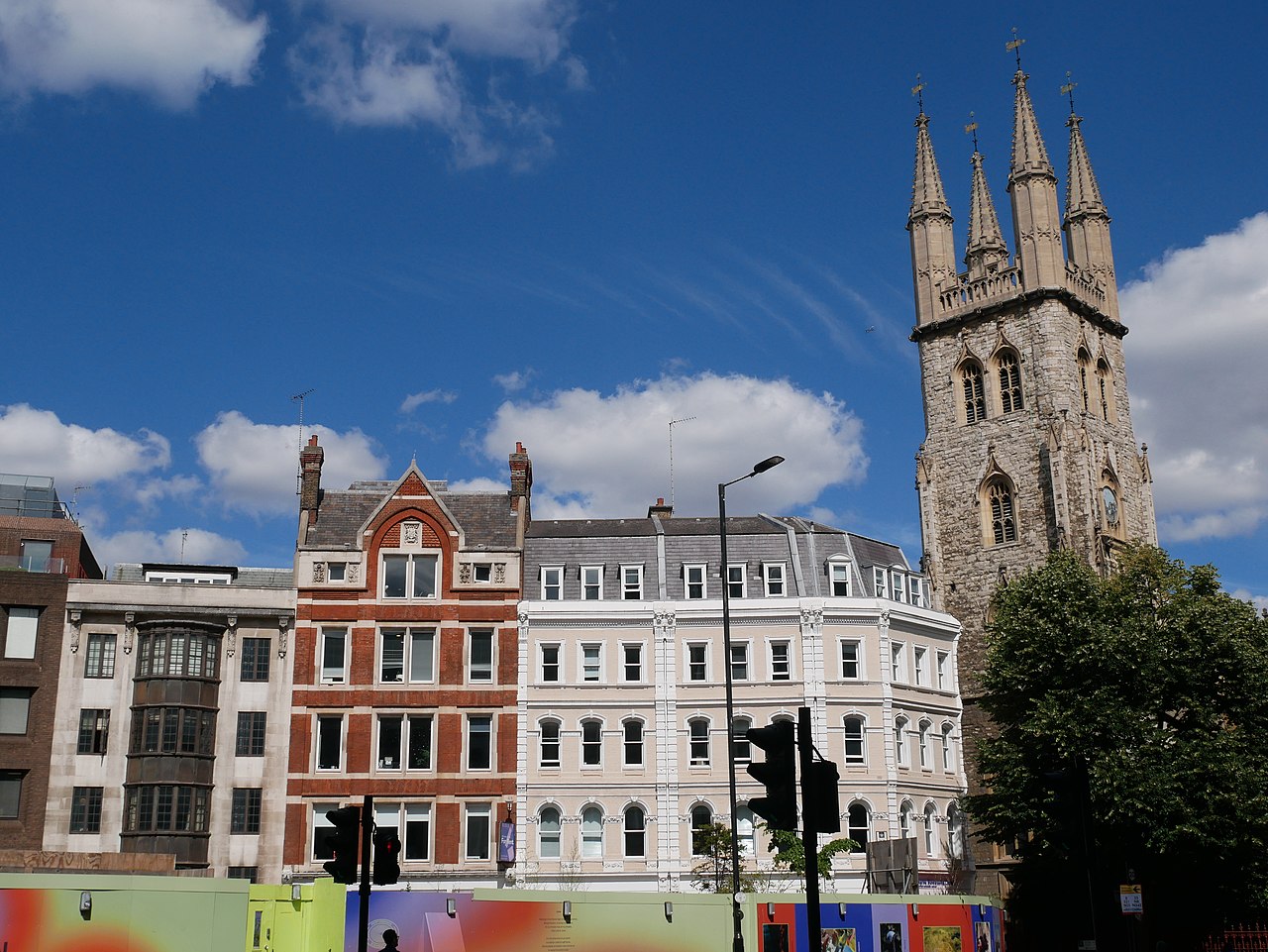
The topography of Snow Hill is defined by a severe geological scar that historically severed the City of London from the western method. Before the Victorian engineering marvel of the Holborn Viaduct smoothed the passage in 1869, Snow Hill was a precipitous, curved descent leading down to the banks of the Fleet River. This incline, frequently slick with mud, offal from the nearby Smithfield Market, and the refuse of a crowded metropolis, presented a treacherous obstacle for horse-drawn traffic. The gradient was so steep that it was frequently termed "murderous" by contemporary chroniclers, requiring heavy braking for descending coaches and exhausting effort for ascents. The physical reality of this terrain dictated the strategic need of the site long before the current police station structure rose in 1926.
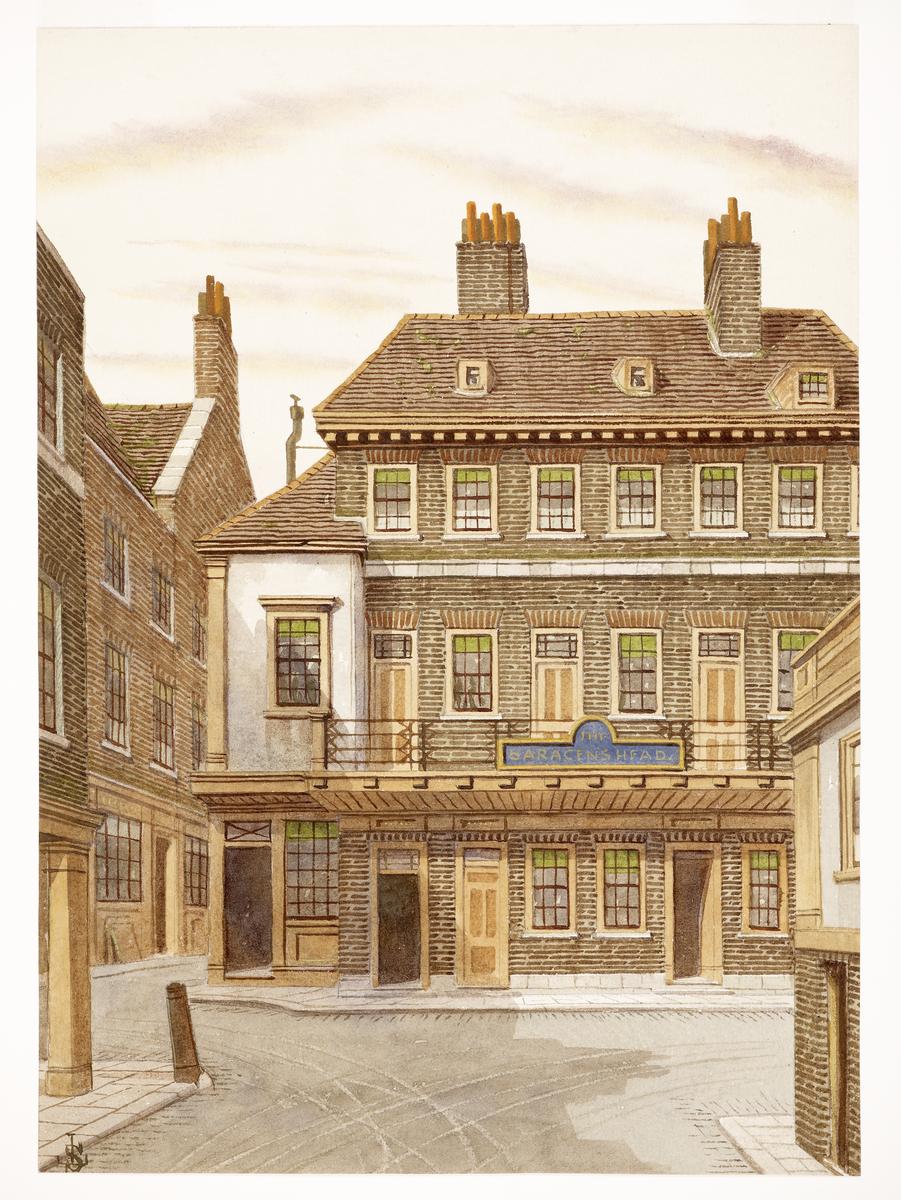
The specific plot of land at 5 Snow Hill, the shell of the former police station, occupies a terrace cut into this slope. For centuries, this location hosted the Saracen's Head Inn, a coaching establishment of significant notoriety that operated until its demolition in 1868. The inn served as a terminal point for mail coaches and travelers entering the City, creating a natural node for surveillance and control. When the City of London Police, formed in 1832, sought to establish order in this chaotic district, the geography itself funneled activity past this point. The station sits at the nexus where the commercial traffic of the market met the judicial traffic of the courts, creating a unique operational theater for law enforcement.
Proximity to Newgate Prison, located less than 300 meters to the southeast on the site of the current Central Criminal Court (Old Bailey), cast a long shadow over Snow Hill. Throughout the 18th and 19th centuries, Newgate was the epicenter of criminal justice in London. The prison held those awaiting trial and those condemned to death. Until 1868, public executions took place outside the prison walls, drawing tens of thousands of spectators into the narrow streets surrounding the Old Bailey and Snow Hill. The management of these crowds, frequently volatile and drunken, fell to the City authorities. The predecessor watch houses and the eventual police force in this division were tasked with containing the disorder that radiated from the gallows.
The relationship between the Snow Hill site and the prison was not geographic functional. The "Journey to Tyburn," the procession of the condemned from Newgate to the gallows at Tyburn (near modern Marble Arch), passed directly by the Saracen's Head Inn on Snow Hill until executions were moved to the prison doorstep in 1783. Even after the end of public hangings, the area remained saturated with the legal of the City. The demolition of Newgate in 1904 and the subsequent construction of the current Old Bailey did not diminish the need for a strong police presence; rather, it solidified the district as the judicial heart of the capital. The Snow Hill station, therefore, operated as the primary holding and processing center for the immediate vicinity of the courts.
The construction of the Holborn Viaduct in the 1860s radically altered the vertical topography of the area. The Viaduct bridged the Fleet Valley, allowing through-traffic to bypass the steep curve of Snow Hill. Yet, the lower levels remained active, creating a dual-level city where crime could flourish in the shadows of the arches. The 1926 police station, designed by architect Sydney Perks, was built into this complex, multi- environment. Its architecture, a blend of Mannerist and Arts and Crafts styles, projected authority with its stone facade and prominent police lanterns. It was designed to function as a in a district that, while modernizing, retained the dense, labyrinthine character of the medieval City.
Historical Topography and Strategic Distances
Feature
Distance from 5 Snow Hill
Strategic Significance
Newgate Prison (Demolished 1904)
~240 Meters
Source of criminal overflow; site of public executions requiring crowd control.
Central Criminal Court (Old Bailey)
~240 Meters
Primary judicial venue; station handled custody transfers and court security.
Smithfield Market
~150 Meters
Major commercial hub; frequent site of theft, disorder, and traffic congestion.
Holborn Viaduct
~50 Meters
Major arterial; station monitored the upper thoroughfare and lower slums.
Fleet River (Subterranean)
~100 Meters (Vertical/Horizontal)
Defined the valley floor; historically associated with poor sanitation and disease.
By the mid-20th century, the station at Snow Hill had become an integral component of the City of London Police's divisional structure. It served not only the immediate commercial district also the residential pockets of the Barbican and the legal enclaves of the Inner Temple. The station's cells frequently housed suspects destined for the Old Bailey, maintaining the historical link between the site and the administration of justice. The building itself, with its polygonal bay window, allowed for observation of the street, a passive surveillance technique in the architecture.
The operational life of the station ceased in the early 2020s, a victim of asset consolidation by the City of London Corporation. In January 2020, the freehold was sold to Whitbread for conversion into a hotel, a transaction that marked the end of nearly a century of police occupation of the Sydney Perks building and centuries of law enforcement activity on the site. By 2026, the building functions as a "hub by Premier Inn." The conversion preserved the Grade II listed facade and specific internal features, such as the staircase, yet the function has inverted from a place of confinement to one of hospitality. The police lanterns remain on the exterior, extinguishing their original purpose marking the historical continuity of the site.
This transition from a site of execution processions and coaching inns to a high-security police station, and to a budget luxury hotel, reflects the broader sanitization of the City of London. The "murderous" hill is a quiet side street, the Fleet River flows silently in a sewer pipe beneath Farringdon Street, and the gallows of Newgate are a tourist footnote. Even with these changes, the physical location of 5 Snow Hill remains a testament to the City's obsession with controlling the flow of people and capital through its western gate. The topography that once broke the legs of horses serves the foot traffic of global tourism, yet the stone foundations remain rooted in the dark earth of the Fleet Valley.
18th Century Site Usage: The Saracen's Head Inn
Topography and Strategic Proximity to Newgate Prison
Long before the City of London Police laid the foundation stone for the current station in 1926, the site served as a different kind of: a of logistics and transit known as the Saracen's Head Inn. For over three centuries, this establishment dominated the north side of Snow Hill, acting as a serious valve for the flow of people and commerce between London and the industrializing North. While the modern police station represents the enforcement of order, the Saracen's Head represented the chaotic, unregulated energy of 18th-century travel. The inn did not occupy the land; it defined the economic rhythm of the entire ward.
The physical footprint of the Saracen's Head was substantial, occupying the exact wedge of land where the police station sits, though the gradient of the hill was far steeper before the Holborn Viaduct leveled the area in the 1860s. Historical records from 1522 mention the "Sersyns Head" as having thirty beds and stabling for forty horses, a capacity that expanded significantly by the 1700s. By the mid-18th century, it had evolved into one of the capital's premier coaching termini. It was not a quiet tavern for locals a high-volume transport hub, comparable in function to a modern rail terminal or airport. Coaches departed daily for destinations such as Birmingham, Leeds, and Norwich, carrying mail, heavy freight, and passengers who had no choice to endure the "murderous" ascent of Snow Hill to reach the inn's courtyard.
The architecture of the inn reflected its utilitarian purpose. It was a galleried structure, featuring tiers of open walkways overlooking a central yard where coaches were loaded and unloaded. This design allowed noise and smells to permeate every room. The sensory experience of the site in 1750 would have been an assault of horse manure, coal smoke, and the rotting organic waste of the nearby Smithfield meat market. The inn's proximity to Newgate Prison, located just yards away, added a grim undertone to its atmosphere. Crowds gathering for public executions frequently spilled over into the Saracen's Head, turning the inn into a macabre viewing gallery or a place to drink away the spectacle of state-sanctioned death.
Criminal activity on the site was rampant, a direct consequence of the absence of a professional police force. The steep incline of Snow Hill, combined with the poor lighting of the era, made the area a hunting ground for the "Mohocks," a gang of wealthy, violent youths who terrorized London in the early 18th century. Historical accounts detail a specific cruelty practiced on this very slope: the Mohocks would capture elderly women, force them into empty barrels, and roll them down the precipitous hill toward the Fleet Ditch. The Saracen's Head, with its transient population and constant influx of strangers, provided ideal cover for highwaymen and thieves who targeted the mail coaches. The innkeepers were frequently forced to act as amateur detectives and security guards, protecting their cargo with blunderbusses and private watchmen.
The literary record cements the inn's reputation as a place of stern, unforgiving business. Charles Dickens, writing in Nicholas Nickleby, chose the Saracen's Head as the headquarters for the villainous schoolmaster Wackford Squeers. Dickens described the establishment with journalistic precision: "The inn itself, garnished with another Saracen's Head, frowns upon you from the top of the yard." This "frowning" aspect was not artistic license; it captured the mood of a building that served as a funnel for the harsh realities of Victorian commerce. The inn was a place where children were shipped off to abusive schools, where fortunes were risked on the turn of a coach wheel, and where the desperate poor of London collided with the merchant class.
By the early 19th century, the inn came under the management of Sarah Ann Mountain, a formidable businesswoman who the gender norms of her time. She expanded the coaching operations, reportedly running over twenty distinct routes and manufacturing her own vehicles to avoid paying fees to coachbuilders. Her tenure represents the peak of the site's usage as a private transit hub. Under her direction, the Saracen's Head became a finely tuned machine, dispatching the "Tally-Ho" and other famous stagecoaches with clockwork regularity. Yet, this efficiency could not save the structure from the march of Victorian civil engineering.
The end of the Saracen's Head came swiftly in 1868. The City of London Corporation, determined to solve the traffic bottleneck caused by the steep Fleet Valley, authorized the construction of the Holborn Viaduct. This massive infrastructure project required the demolition of hundreds of buildings, including the centuries-old inn. The "ruthless army of City improvers," as contemporary critics called them, tore the structure down to its foundations. The demolition altered the very geography of the site; the old Snow Hill was realigned, and the ground level was raised to meet the new viaduct. For nearly sixty years, the plot of land remained in a state of flux, a scar in the urban fabric waiting for its purpose.
The destruction of the inn marked the end of the site's private commercial era and paved the way for its public institutional future. When the current police station rose on the lot in 1926, it inherited a legacy of transit and authority. The station's cells occupy the space where stables once housed the horses that powered England's pre-rail economy. The transition from coaching inn to police station was not just a change of tenants; it was a shift from the chaotic, laissez-faire world of the 18th century to the regulated, surveillance-heavy state of the 20th. A plaque on the station wall remains the only physical evidence of the Saracen's Head, a silent reminder that the ground beneath the officers' feet was once the busiest, noisiest, and most dangerous transport hub in London.
Site Usage Timeline: 1700, 1926
Period
Primary Function
Key Operator/Event
Status
1700, 1800
Coaching Inn & Logistics Hub
Various Innkeepers
Active / High Traffic
1800, 1835
Expanded Transit Terminal
Sarah Ann Mountain
Peak Commercial Operation
1838
Literary Immortalization
Charles Dickens (Nicholas Nickleby)
Cultural Landmark
1868
Demolition
Holborn Viaduct Construction
Site Cleared
1869, 1925
Vacant / Realigned Plot
City of London Corporation
Dormant
1926
Police Station Construction
Sydney Perks (Architect)
Institutional Use Begins
19th Century Policing Infrastructure and the 1875 Station
The transformation of the Snow Hill site from a medieval coaching inn to a bastion of Victorian law enforcement began with the demolition of the Saracen's Head in 1868. This location had served as a transit hub for centuries and famously appeared in the works of Charles Dickens. City of London officials identified the cleared plot as a strategic point for expanding their policing capabilities during a period of reorganization. The City of London Police had formed in 1839 and required modern facilities to replace the insufficient parish watch houses that previously defined the capital's security network.
By approximately 1875 the City of London Police had established a functional station on the Snow Hill premises. This facility became a central node in the City's divisional structure which originally consisted of six distinct districts. The 1875 station operated throughout the late Victorian and Edwardian eras and served the dense commercial district near Smithfield Market and the Old Bailey. Officers stationed here managed the heavy foot traffic and commercial disputes characteristic of the square mile's western edge. The infrastructure from this period bridged the gap between the ad hoc constable posts of the early 19th century and the professionalized force that emerged by the 20th century.
The 1875 structure eventually proved insufficient for the demands of modern policing and was demolished to make way for a purpose-built successor. In 1926 the City Corporation commissioned architect Sydney Perks to design the Grade II listed station that stands on the site today. Perks created a building that blended Moderne and Arts and Crafts styles and featured a distinctive four-storey polygonal bay. This 1926 redevelopment physically erased the 1875 station retained the site's continuous lineage of law enforcement which lasted until the building was sold for hotel conversion in 2020.
1926 Architectural Commission by Sydney Perks
18th Century Site Usage: The Saracen's Head Inn
The 1926 commission of the Snow Hill Police Station was not an act of construction a calculated assertion of municipal order by the City of London Corporation. The task fell to Sydney Perks, the City Surveyor from 1905 to 1931, a man whose portfolio balanced the utilitarian demands of sanitation and safety with the grandeur expected of the Square Mile. Perks was not a radical avant-gardist; he was a bureaucrat-architect, deeply in the of the City, and his design for Snow Hill reflects the tension between the conservative traditions of London architecture and the encroaching modernity of the interwar period.
Perks faced a site that was historically charged and topographically hostile. The plot at 5 Snow Hill had previously housed the Saracen's Head, a coaching inn of medieval origin demolished in 1868 during the Holborn Viaduct improvements. The ghost of this hospitality function would, with heavy irony, return a century later, yet in 1926, the mandate was strictly disciplinary. The station was to serve as a of law enforcement in a district dominated by the chaotic commerce of Smithfield Market and the judicial of the Old Bailey. Perks' solution was a structure that projected authority through mass and materiality, using a "Striped Classical" style that became a hallmark of 1920s civic architecture in Britain.
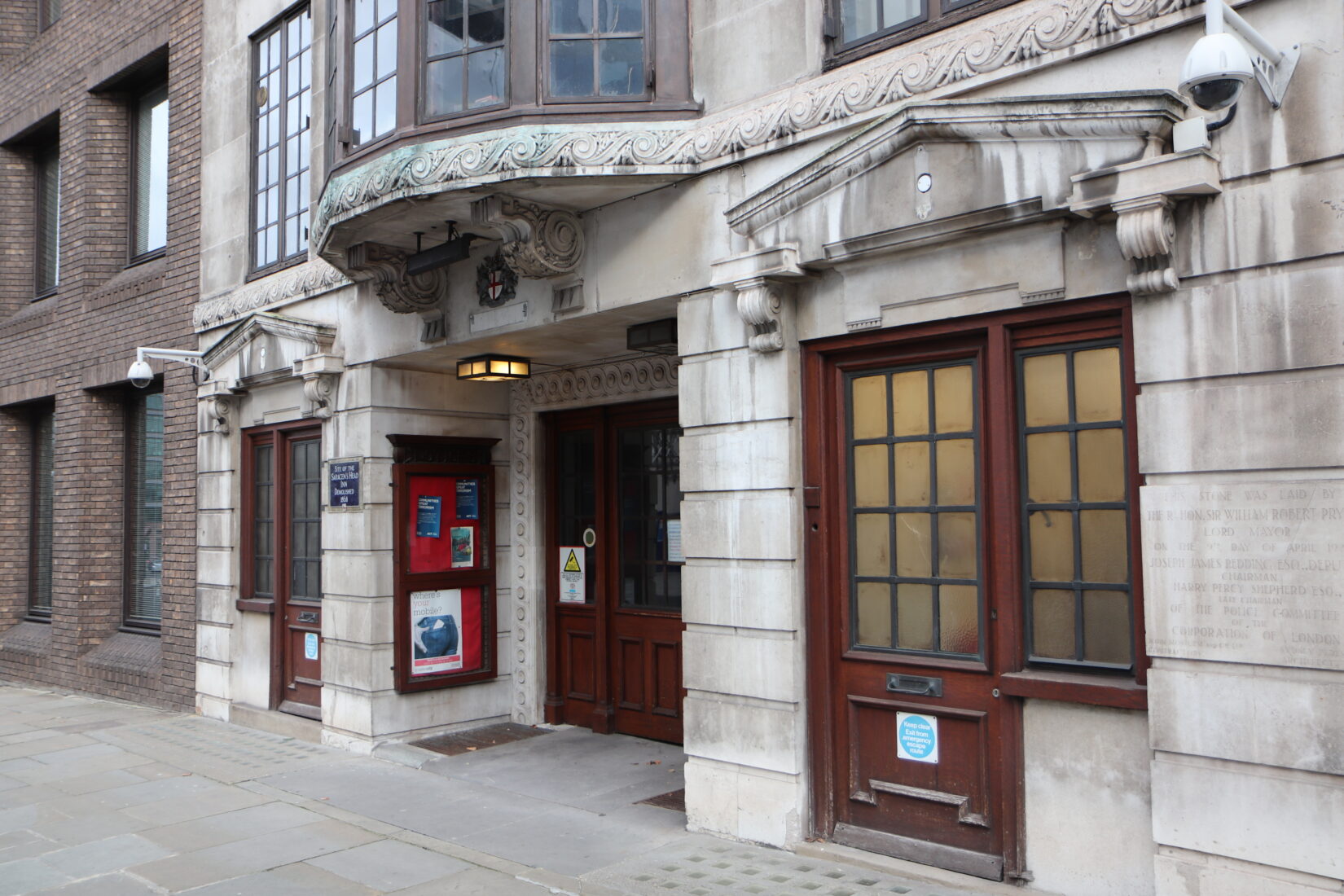
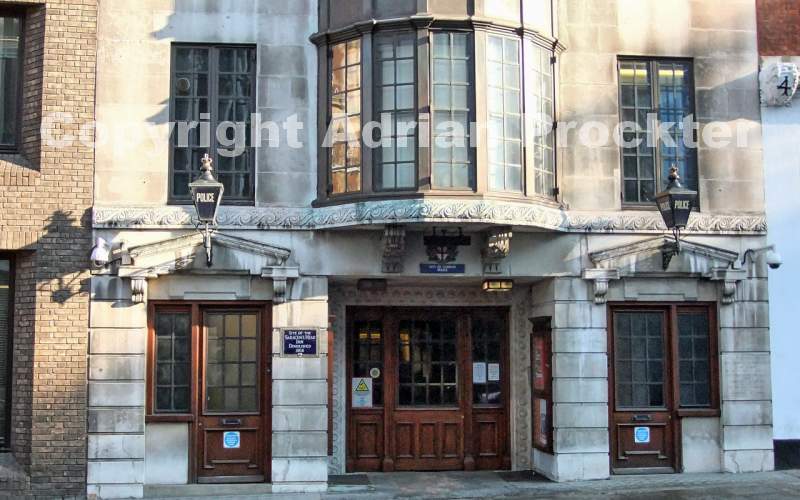
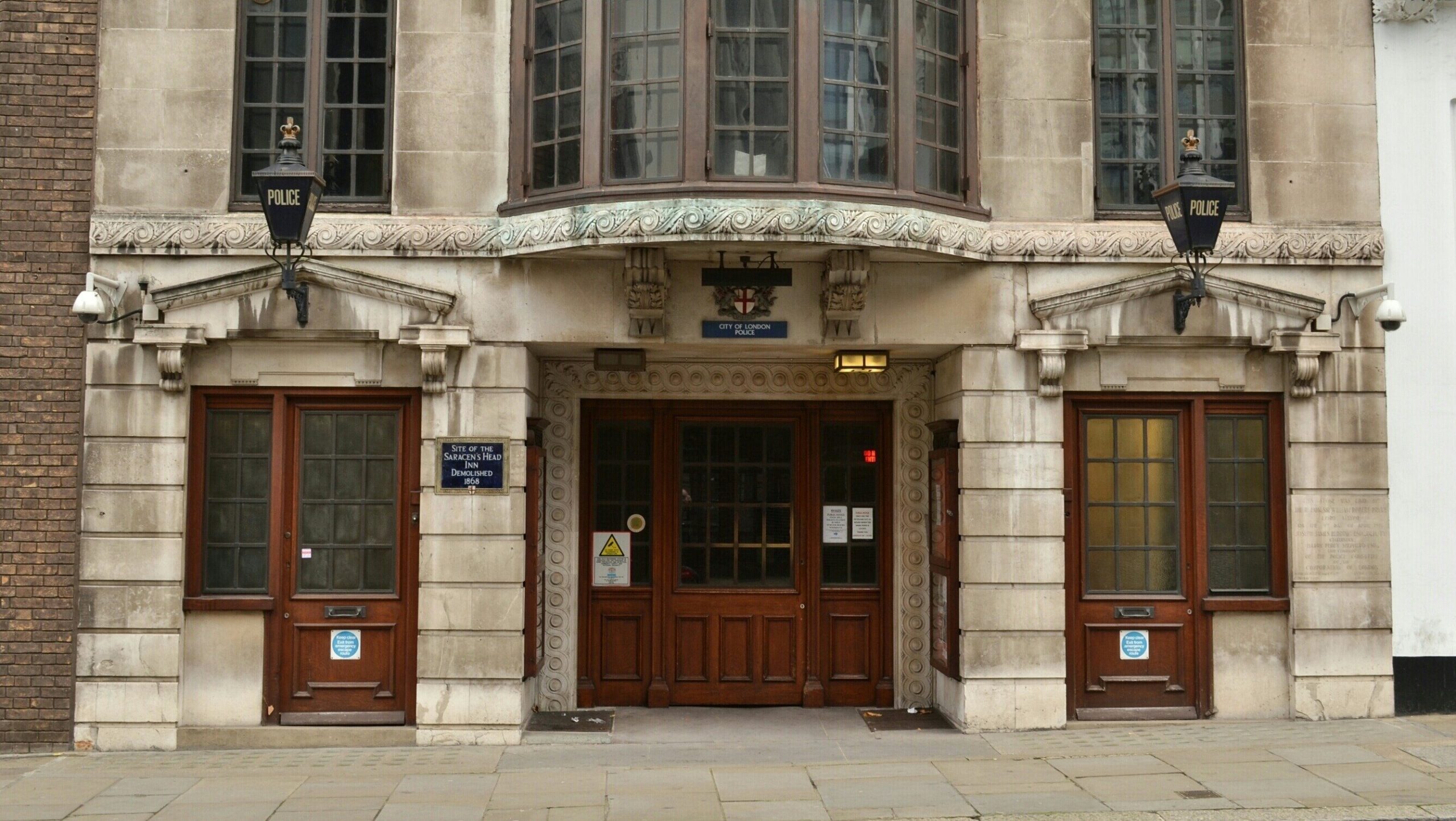
The building rises five storeys above a basement, a vertical need dictated by the narrow footprint and the steep gradient of Snow Hill. Perks selected Portland stone for the façade, the material of choice for London's monuments, applied it with a domestic revivalist touch that softened the institutional severity. The ground floor features banded rustication, a visual anchor that gives the building a sense of impenetrability at street level, a necessary feature for a police station facing the rough trade of the market. Above this fortified base, the architecture shifts. The most clear feature is the full-height polygonal bay window spanning the upper floors, clad in metal and detailed with a guilloche interlace pattern. This vertical element breaks the flat monotony of the street wall, nodding to the Arts and Crafts movement while maintaining a disciplined, rhythmic order.
Architectural Specifications: Snow Hill Police Station (1926)
Feature
Detail
Architect
Sydney Perks (City Surveyor)
Style
Neo-Georgian / Striped Classical / Arts & Crafts influences
The timing of the station's completion in 1926 was significant. This was the year of the General Strike, a period of social unrest where the policing of labor disputes became a central preoccupation of the state. While the station was commissioned prior to the strike, its opening coincided with a moment when the City of London Police required reinforced strongholds. The station was not designed solely for processing criminals; it was a "Section House," providing living quarters for unmarried constables. This integration of domestic accommodation within the operational station created a self-contained unit, ensuring that a reserve force was always on site, ready to deploy into the volatile streets of Farringdon and Clerkenwell.
Perks ensured the building communicated its function through specific symbolic details. A pair of blue police lanterns, mounted on the parapets over the side elevations, served as the primary signage, a beacon of state supervision visible through the London fog. The cornice at the top of the building is cut in a sharp Meander pattern supported by long acanthus brackets, a classical reference that elevates the structure above a mere warehouse or office block. Even the plaque Perks installed to commemorate the Saracen's Head was a gesture of continuity, linking the City's new guardians to its deep, mercantile past.
The interior layout was strictly hierarchical. The basement and ground floor contained the charge room, cells, and interview rooms, spaces defined by hard surfaces, bars, and the smell of carbolic acid. These were the processing centers for the drunk, the disorderly, and the criminal elements drawn to the market and the viaduct's shadows. The upper floors, accessible by a separate entrance, housed the officers. This vertical stratification mirrored the social order the police were sworn to uphold: the chaotic elements contained, the disciplined force living above.
For nearly a century, the station operated as a serious node in the City's defensive network. Yet, the operational requirements of policing shifted dramatically in the late 20th and early 21st centuries. The need for small, localized section houses diminished as officers commuted from the suburbs, and the Victorian and Edwardian cell standards became obsolete. By the 2010s, the building was deemed surplus to requirements by the City of London Corporation, a common fate for the smaller, historic stations that could not accommodate modern IT infrastructure or custody standards.
In a transaction that show the relentless commercialization of the Square Mile, the station was sold in January 2020 to Whitbread for conversion into a hotel. The wheel of history turned a full revolution: the site of the Saracen's Head Inn returned to the hospitality sector. By early 2026, the building had been reconfigured as a "Hub by Premier Inn." The architectural irony is palpable. The "compact" nature of the hotel rooms, designed for efficiency and short stays, bears a spatial resemblance to the police cells they replaced. The Grade II listed façade, preserved by mandate, remains a mask of 1920s authority, while the interior has been gutted to serve tourists and business travelers.
The 2026 iteration of the site retains Perks' exterior stonework and the distinctive bay window, the context has shifted entirely. The blue lanterns no longer signal refuge or reprimand serve as heritage ornaments for a budget hotel. The "murderous" gradient of Snow Hill, once a challenge for horses, is a sloping method for taxis dropping off guests. Sydney Perks' design, intended to project the permanence of City law, proved more durable than the operational needs it was built to serve, surviving as a hollowed-out shell in a city that recycles its history for profit.
Grade II Listed Status and Arts and Crafts Design Elements
The architectural significance of the Snow Hill Police Station was formally recognized on July 22, 1998, when Historic England the structure as a Grade II listed building (Entry Number 1375725). This protection status was not a bureaucratic formality a legal acknowledgement of the building's "unusual blend" of stylistic influences, specifically the convergence of the waning Arts and Crafts movement with the nascent, streamlined aesthetic of the Moderne style. While the station was constructed in 1926, a period frequently associated with the rise of Art Deco and the machine age, the design by City Surveyor Sydney Perks looked backward to the ideals of craftsmanship and material honesty even as it adopted a forward-facing, functional geometry.
The primary justification for the listing lies in the station's facade, a composition that defies the severe, utilitarian standard applied to police infrastructure. Perks, who served as the City of London's Surveyor from 1905 to 1931, rejected the imposing, -like Neo-Classical styles seen in earlier stations. Instead, he produced a design characterized by a sophisticated interplay of stone and metal. The dominant feature is the four-storey polygonal bay window that projects over the street. Unlike the heavy masonry bays of the Victorian era, this element is clad in lead, a material choice that signals the Arts and Crafts commitment to traditional guild skills. The metalwork is not plain; it features a running guilloche interlace pattern at the ground floor level, a detailed ornamentation that requires hand-finished precision. This decorative band serves no structural purpose acts as a visual "belt," breaking the verticality of the facade and introducing a rhythm based on ancient, woven motifs.
The masonry supporting this metal bay further illustrates the hybrid nature of the design. The ground floor is treated with banded rustication, deep horizontal grooves cut into the stone, which anchors the building to the sloping topography of Snow Hill. This rustication provides a visual plinth for the lighter, lead-clad stories above. The transition between these levels is marked by a cornice cut in a Meander (Greek key) pattern, supported by long acanthus brackets. These classical elements are stylized, flattened, and integrated in a way that anticipates the stripped-back classicism of the 1930s while retaining the organic, vegetative inspiration central to Arts and Crafts philosophy. The "Moderne" influence is visible in the flat arches of the window openings and the in total vertical thrust of the bay, which streamlines the building's profile against the narrow, winding street.
The site's history, stretching back to the 1700s, is physically in the 1926 structure. The Grade II listing specifically notes the inclusion of a plaque commemorating the Saracen's Head Inn, which occupied this precise footprint until its demolition in 1868. The Saracen's Head was a important coaching inn during the 18th and 19th centuries, a terminus for coaches arriving from the north. By integrating this plaque, Perks ensured the police station functioned not just as a law enforcement hub as a curator of the site's commercial lineage. The station replaced a center of chaotic, transient lodging with a center of ordered surveillance, yet the architectural nod to the inn acknowledges the location's historical role as a gateway to the City. This sensitivity to "place" is a hallmark of the Arts and Crafts ethos, which valued the narrative context of architecture as much as its physical form.
The interior configuration and the rear "Cock Lane Block" present a different narrative, one of adaptation and eventual obsolescence. While the Snow Hill facade was celebrated for its aesthetic merit, the operational spaces behind it were designed for the specific policing needs of the 1920s, needs that had shifted dramatically by the 21st century. The station originally housed holding cells, interview rooms, and administrative offices that became increasingly unfit for modern digital policing. By 2020, the City of London Police declared the building surplus to requirements. The subsequent sale to Whitbread for conversion into a Premier Inn hub brought the Grade II listing into sharp focus. The heritage protection meant that while the rear of the site could be substantially remodelled or demolished to accommodate high-density hotel rooms, the Sydney Perks facade and the principal "Snow Hill Block" had to be preserved.
The conversion process, spanning 2021 to 2026, required a "heritage-led" method. Architects and developers were legally bound to retain the external stonework, the lead bay, and the distinctive police lanterns that sit atop the side elevations. These blue lanterns are iconic markers of British policing history; their preservation ensures that even as the building transitions to hospitality use, its civic identity remains legible to the street. The tension between preservation and profit was navigated through a design that treats the 1926 facade as a "mask" or "wrapper" for the new function. The listing saved the building from the total demolition that befell unlisted 20th-century police stations, forcing the new owners to work within the dimensional constraints of Perks' original vision.
Key Architectural Elements Preserved Under Grade II Listing
Element
Material
Style/Influence
Significance
Polygonal Bay Window
Lead cladding over steel/timber frame
Arts and Crafts / Moderne
Rare example of decorative metal cladding on a civic building of this era; defines the street frontage.
Features Meander pattern and acanthus leaves; provides visual termination to the rusticated base.
Police Lanterns
Glass and Iron
Functional Civic
Original 1920s blue lamps; serious for maintaining the building's historical legibility as a police station.
Saracen's Head Plaque
Stone/Bronze
Historical Commemoration
Links the 1926 structure to the 18th-century coaching inn history of the site.
The survival of the Snow Hill Police Station is an anomaly in the City of London, where low-rise structures on prime real estate are frequently sacrificed for vertical density. Its Grade II status acted as a shield, deflecting the wrecking ball that claimed the nearby Fruit and Wool Exchange, another Sydney Perks design that was largely demolished behind a retained facade in 2015. The difference at Snow Hill is the; the station is intimate, almost domestic in its proportions compared to the monumental office blocks surrounding it. This domesticity is an Arts and Crafts trait, intended to make the police presence feel integrated into the community rather than imposed upon it. The leaded bay window resembles those found on grand country houses of the era rather than the barred windows of a jail, suggesting a philosophy of policing that prioritized integration over intimidation.
As of early 2026, the building's role has inverted. Once a place where people were detained against their, it is a destination where guests pay to stay. The "Cock Lane" elevation, less ornate and historically functional, has seen more aggressive intervention to facilitate this shift. Yet, the primary view from Snow Hill remains largely unchanged from 1926. The restoration of the stonework and the cleaning of the lead bay have returned the structure to a condition likely superior to its state during the grime-heavy mid-20th century. The listing ensured that the "patina" of the building, the evidence of its age and construction method, was not scrubbed away conserved. The result is a building that narrates the transition of the City from a place of hard labor and law enforcement to a district of leisure and heritage tourism.
City of London Police Operations and Financial District Security
19th Century Policing Infrastructure and the 1875 Station
The operational history of the Snow Hill site reflects the City of London Police's evolution from a uniformed watch guarding coaching inns to a specialized force securing the world's most concentrated financial district. Before the 1926 construction of the station, the location at 5 Snow Hill housed the Saracen's Head Inn, a chaotic nexus for coaches entering the City from the west. Policing in this era (1700, 1839) relied on a fragmented system of parochial watchmen and thief-takers who struggled to contain the "criminal classes" migrating from the nearby rookeries of Saffron Hill and the execution crowds at Newgate. The City of London Police Act 1839 formalized the force, yet the steep topography of Snow Hill remained a tactical nightmare for officers on foot until the Holborn Viaduct opened in 1869, creating a level that required constant surveillance to prevent highway robbery against wealthy merchants.
The station itself, designed by City Surveyor Sydney Perks and opened in 1926, was built as a. Its completion coincided with the General Strike of 1926, a period of intense civil unrest where the City's food supplies at Smithfield Market required armed protection. The building's architecture, a blend of Neo-Georgian and Art Deco "Moderne", projected authority. For nearly a century, Snow Hill served as the divisional headquarters for the western half of the Square Mile. Its cells held pickpockets from Smithfield, drunken revelers from Fleet Street, and later, suspects in high-value white-collar crimes. Unlike the Metropolitan Police, whose remit covers Greater London, the City of London Police (CoLP) answers to the City Corporation, a unique arrangement that prioritizes the security of the financial sector. Snow Hill was the physical bastion of this mandate on the City's western fringe.
The station's strategic importance peaked in the 1990s following the Provisional IRA's devastating bombing campaign against financial. After the 1992 St Mary Axe bombing and the 1993 Bishopsgate bomb, the City Corporation implemented the "Traffic Management Zone," colloquially known as the Ring of Steel. Snow Hill Police Station became a linchpin in this physical security architecture. Its proximity to Holborn Viaduct allowed officers to man one of the primary western checkpoints. Sentry boxes, chicanes, and armed patrols turned the district into a gated. The station coordinated the deployment of the extensive Automatic Number Plate Recognition (ANPR) cameras, creating a digital surveillance net that tracked every vehicle entering the financial core. This shift marked a transition from traditional beat policing to counter-terrorism and infrastructure protection.
By the early 21st century, the nature of crime in the City had shifted from physical intrusion to digital theft. The City of London Police became the National Lead Force for Fraud, focusing resources on cybercrime and economic fraud rather than street-level patrols. The physical footprint of Snow Hill, with its heavy masonry and antiquated cell blocks, became a liability. The station was "under-used" and expensive to maintain. In 2019, the City Corporation declared the building surplus to requirements. The operational focus moved to the headquarters at Wood Street and the future "Justice Quarter" at Salisbury Square, leaving Snow Hill as a relic of a more physical era of policing.
In January 2020, the City sold the 151-year lease of the station to Whitbread for conversion into a "hub by Premier Inn." The transaction highlighted the changing value of real estate in the Square Mile: heritage assets are monetized to fund modern services. Construction continued through the early 2020s, with the "topping out" ceremony occurring in January 2025. As of early 2026, the site has reopened as a 212-bedroom hotel. The Grade II listed façade remains, the holding cells and charge rooms have been gutted to make way for compact hotel rooms designed for tourists and business travelers. In a nod to its history, the hotel includes a permanent exhibition space detailing the site's law enforcement past, a requirement of the planning permission to preserve the "historic character" of the location.
The closure of Snow Hill Police Station signifies the end of the "territorial" phase of securing the financial district. Security is invisible, defined by algorithms, remote sensors, and intelligence sharing rather than the imposing stone walls of a Sydney Perks building. The officers who once marched out of Snow Hill to guard the Viaduct have been replaced by private security contractors and digital surveillance, while the station itself serves the tourism industry that the safe streets of the City helped to.
Timeline of Security and Occupancy at 5 Snow Hill (1700, 2026)
Period
Occupant / Function
Security Context
1700, 1868
Saracen's Head Inn
Parochial Watchmen; protection of coaching routes from highwaymen.
1869, 1925
Vacant / Temporary Structures
Holborn Viaduct policing; City of London Police (est. 1839) patrol the new.
1926, 1990
Snow Hill Police Station (Active)
Divisional HQ; General Strike protection; Smithfield Market order.
1990, 2010
Snow Hill Police Station (Ring of Steel)
Counter-terrorism checkpoint command; ANPR monitoring; IRA threat response.
2010, 2019
Snow Hill Police Station (Decline)
Reduced operations; shift to Economic Crime focus at Wood Street.
2020, 2025
Construction / Redevelopment
Sold to Whitbread; gutting of interior; preservation of Grade II façade.
2026
hub by Premier Inn
212-room hotel; on-site museum of policing history; "Destination City" tourism.
World War II Bombing Impact and Post-Blitz Restoration
The outbreak of hostilities in 1939 transformed Snow Hill Police Station from a municipal outpost into a fortified node within the City of London's civil defense network. Constructed only thirteen years prior in 1926 by City Architect Sydney Perks, the station's design, a fusion of Arts and Crafts and Moderne styles, featured a steel-framed structure that provided superior blast resistance compared to the older masonry of the surrounding Victorian tenements. As the Phoney War ended and the Luftwaffe began its assault, the station's basement was reinforced to serve as a shelter and command post, while its windows were taped and sandbagged to mitigate the lethal spray of glass from nearby impacts.
The Blitz of 1940, 1941 subjected the Snow Hill precinct to relentless aerial bombardment. The raid of December 29, 1940, known as the Second Great Fire of London, devastated the area immediately north and east of the station. Incendiary bombs rained down on the publishing houses of Paternoster Row and the warehouses of Cripplegate, creating a firestorm that threatened to engulf the police station. Officers from Snow Hill were forced to abandon standard patrols to serve as auxiliary fire watchers and rescue parties. While the station itself escaped a direct hit during this phase, the nearby City Temple on Holborn Viaduct was gutted by high-explosive ordnance in April 1941, sending shockwaves that cracked the station's plaster and rattled its distinctive lead-clad bay windows.
The most violent kinetic event to strike the precinct occurred near the war's conclusion. On March 8, 1945, at 11: 30 AM, a German V-2 rocket detonated at Harts Corner, the junction of Charterhouse Street and Farringdon Road, less than 200 meters from the police station. The missile, traveling at supersonic speed, gave no warning before impact. The explosion obliterated a section of Smithfield Market, penetrating the railway tunnels and causing the market buildings to collapse into the void. The blast wave slammed into the northern elevation of Snow Hill Police Station, shattering windows and embedding shrapnel in the Portland stone facade. Official records confirm 110 fatalities in the market, of whom were women and children queuing for scarce meat rations.
Snow Hill officers were among the responders to the Smithfield V-2 disaster. The station logs from that day describe a chaotic scene where constables worked alongside market porters to dig through unstable rubble, retrieving victims from the crater that had exposed the subterranean railway lines. The proximity of the station to the blast site meant that it functioned as a triage center and a temporary mortuary before casualties could be transported to St. Bartholomew's Hospital. This incident marked the psychological nadir of the war for the division, occurring only weeks before the German surrender.
City of London Police: Wartime Impact & Casualties (1939, 1945)
Metric
Data Points
Total Force Casualties
14 Officers killed in action (various locations)
Station Damage
Moor Lane Station (Destroyed 1940); Snow Hill (Blast damage 1941, 1945)
Smithfield V-2 Impact
March 8, 1945; ~110 civilian deaths; <200m from Snow Hill Station
Civil Defense Role
Fire watching, anti-looting patrols, rescue coordination
Post-war restoration of the station focused on repairing the superficial damage while the City of London Corporation debated the future of the bomb-scarred neighborhood. Unlike the complete reconstruction required for the Barbican or the Golden Lane Estate, Snow Hill required only masonry repairs and glazing replacement. The high quality of Perks's original 1926 construction allowed the building to resume full operational capacity almost immediately after V-E Day. The surrounding topography, yet, remained altered for decades; the "bomb sites" near the station became informal playgrounds and car parks until the commercial boom of the 1980s filled the gaps in the streetscape.
The station continued to function through the late 20th century, even as the City's residential population dwindled and the nature of policing shifted from foot patrols to vehicular response. By 2019, the City of London Police determined that the building, with its compartmentalized layout and absence of modern digital infrastructure, was no longer viable for contemporary law enforcement needs. The station was decommissioned in 2020, ending nearly a century of continuous police use. In a final act of restoration and repurposing, the site was acquired by Whitbread for conversion into a hotel. The 2021, 2026 redevelopment plan mandated the strict preservation of the Grade II listed facade, ensuring that the stone walls which withstood the V-2 rocket remain a visible element of the street's architectural lineage.
2020 Asset Disposal and Leasehold Sale to Whitbread
1926 Architectural Commission by Sydney Perks
On January 15, 2020, the City of London Corporation executed the final disposal of the Snow Hill Police Station, ending nearly a century of law enforcement operations at the site. The asset was sold to Whitbread PLC, the parent company of Premier Inn, on a 151-year lease. This transaction marked a definitive shift in the City's property strategy, treating historic police infrastructure as a liquid asset to be monetized rather than a permanent fixture of civic order. The sale was not a change of ownership a total repurposing of the building's function, converting the Grade II listed station into a "hub by Premier Inn," a brand specializing in compact, high-density hotel accommodation.
The financial mechanics behind the sale were driven by the Corporation's broader "Estate Rationalization" program. Faced with aging infrastructure and a requirement to modernize the City of London Police's operational capabilities, the Corporation opted to liquidate older assets like Snow Hill and the Wood Street Police Station (sold shortly after). The capital raised from these disposals was ring-fenced to fund the ambitious Salisbury Square Development, a new £300 million combined court and police headquarters near Fleet Street. Consequently, Snow Hill became a financial stepping stone, its value extracted to subsidize a future centralized complex.
Whitbread's proposal for the site involved a radical internal reconfiguration while strictly adhering to heritage constraints on the exterior. The plan, designed by Axiom Architects, called for the creation of 212 "compact" bedrooms. These rooms, significantly smaller than standard hotel accommodation, were engineered to fit within the tight floorplate of the 1926 building. The irony of the conversion was palpable: a structure built to involuntarily detain individuals in cells was redesigned to voluntarily house guests in similarly confined, albeit comfortable, spaces. The planning permission secured in September 2021 allowed for the gutting of the station's operational core, including the removal of the custody suite and the upper-floor offices, while the distinctive Portland stone facade and the iconic blue police lanterns were legally protected and retained.
Operational closure preceded the physical handover. The City of London Police continued to occupy the building until late 2020 to complete the decommissioning process. This involved the secure removal of sensitive data, communications equipment, and the of the secure perimeter. By 2021, the building sat empty, a hollow shell awaiting the construction crews. The operational vacuum left by its closure forced the remaining police units to consolidate at Bishopsgate, leaving the western side of the Square Mile without a dedicated physical police station for the time in centuries.
Construction work, led by contractor Gilbert-Ash, commenced in earnest following the planning approval. The project presented severe logistical difficulties due to the site's location on a steep gradient and its proximity to the Holborn Viaduct. Engineers had to stabilize the retained facade while demolishing the internal floors, a delicate operation given the building's Grade II status. By January 2025, the project reached its "topping out" ceremony, a milestone attended by City officials who praised the development as a key component of the "Destination City" policy, a post-pandemic initiative to transform the Square Mile from a pure business district into a 24/7 leisure destination.
As of early 2026, the physical transformation of 5 Snow Hill is largely complete. The exterior retains the authoritative architecture of Sydney Perks, complete with the "City of London Police" inscription, yet the interior functions as a high-turnover hospitality engine. The "hub" hotel model relies on technology-driven check-ins and space efficiency, mirroring the efficiency-driven policing model that rendered the station obsolete. The 212 rooms are marketed to budget-conscious business travelers and tourists, capitalizing on the site's proximity to the Old Bailey and Farringdon Station.
Metric
Operational Era (1926, 2020)
Hospitality Era (2026, Present)
Primary Function
Law Enforcement & Custody
Short-stay Accommodation
Owner
City of London Corporation
Whitbread PLC (Leasehold)
Key Unit
Detention Cell
Compact "Hub" Room
Capacity
Variable (Staff + Detainees)
212 Guest Rooms
Access
Restricted / Secure
Public / Commercial
The sale of Snow Hill was not an event part of a systematic liquidation of the City's historic police estate. The Wood Street station followed a similar trajectory, sold to Magnificent Hotels for conversion into a luxury 5-star venue. These sales represent a fundamental change in the urban fabric of London, where the physical symbols of state authority are repurposed into assets for the tourism economy. The "police lanterns" on Snow Hill illuminate the entrance for hotel guests rather than signaling a place of safety or justice, a visual testament to the City's prioritization of commercial viability over historical continuity.
2021 Planning Permission and Heritage Conservation Requirements
On September 21, 2021, the City of London Corporation's Planning and Transportation Committee convened to decide the fate of 5 Snow Hill. The unanimous vote that followed marked the definitive end of the site's century-long tenure as a bastion of law enforcement and its reversion to a much older function: providing lodging for transients. Whitbread PLC, the parent company of Premier Inn, secured permission to convert the Grade II listed police station into a 219-bedroom "Hub by Premier Inn." This decision was not a commercial transaction; it was a bureaucratic maneuver that prioritized the City's "Destination City" policy, a post-pandemic strategy designed to replace absent office workers with tourists, over the preservation of municipal utility.
The approved plans, drafted by Axiom Architects, required a surgical method to the 1926 structure. While the Edwardian Baroque facade facing Snow Hill was protected by its heritage listing, the rear of the building faced a different reality. The planning consent allowed for the demolition and remodeling of the back sections, specifically the areas fronting Cock Lane. This gutted the operational heart of the old station, replacing the holding cells and interrogation rooms with a new atrium and hundreds of compact hotel rooms. The heritage conservation requirements were strict selective; the developers were legally bound to preserve the entrance foyer, the main staircase in the Snow Hill block, and the -floor Reading Room. These elements were deemed the "significance" of the building, while the grim utilitarian spaces where generations of suspects were processed were sacrificed for floor space efficiency.
The heritage impact assessment submitted during the planning phase revealed a cyclical irony that few committee members remarked upon. By approving a hotel, the City was inadvertently restoring the site's primary use from the 1700s. Before the police station rose in 1926, the plot was occupied by the Saracen's Head, a coaching inn that had operated since the Middle Ages. In 1522, the Saracen's Head offered 30 beds and stabling for four horses, hosting dignitaries such as Holy Roman Emperor Charles V. The 2021 permission authorized 219 beds, a seven-fold increase in density achieved by shrinking the accommodation to "compact" specifications. The planning documents mandated that this history be acknowledged not just in paperwork in physical space. A condition of the approval was the creation of a permanent, public exhibition space within the hotel, specifically curated to narrate the site's history, including the story of the Saracen's Head, the police station, and the local legend of the "Cock Lane Ghost."
Financial contributions attached to the planning permission, known as Section 106 agreements, illustrated the City's extraction of value from the development. Beyond the physical restoration of the stone facade, Whitbread was required to contribute to the "Culture Mile" initiative, a funding stream aimed at transforming the area between Farringdon and Moorgate into a cultural district. The project also targeted a BREEAM 'Excellent' rating, enforcing modern sustainability standards on a masonry structure built before the concept of carbon footprints existed. This required the integration of air source heat pumps and a biodiverse green roof, forcing a technological collision between the 1920s architecture and 2020s climate mandates.
The execution of these plans faced immediate logistical friction. Although approved in late 2021 with a target opening of 2024, the project slipped significantly behind schedule. By January 2025, the project reached its "topping out" ceremony, attended by Shravan Joshi, the same Planning Committee chairman who had overseen the strategic shift of the square mile. As of February 2026, the building remains a construction site in its final fit-out phase, with the opening pushed to early 2027. The delay highlights the complexity of retrofitting modern hospitality systems, plumbing for 219 bathrooms, high-speed data, and climate control, into a rigid steel-and-stone frame designed to hold prisoners, not guests.
The conservation requirements also dictated the treatment of the building's exterior presence on Snow Hill. The steep gradient of the street, which had historically caused horses to collapse, posed a challenge for accessibility compliance. The 2021 plans necessitated a redesign of the entrance to accommodate step-free access without destroying the original heavy timber doors and stone surrounds that defined Sydney Perks's original 1926 design. The solution involved a careful choreography of internal lifts and leveled entry points, a mandatory concession to the Equality Act that the original architects, focused on the physical dominance of the state, had never contemplated.
Snow Hill Site Usage & Capacity: 1522 vs. 2026
Era
Establishment Name
Primary Function
Capacity / Units
Target Demographic
1522, 1868
The Saracen's Head
Coaching Inn
~30 Beds
Merchants, Travelers, Charles V
1926, 2019
Snow Hill Police Station
Law Enforcement
Unknown (Cells/Offices)
Criminals, Police Officers
2021, Present
Hub by Premier Inn
Budget Hotel
219 Bedrooms
Tourists, Short-stay Business
The objections to the development came principally from heritage bodies concerned with the cumulative of the City's historic fabric. The Victorian Society and Historic England scrutinized the proposal, particularly the roof extension. The approved design included a mansard roof extension to house additional rooms, a common technique in London developments to maximize volume. Planners argued this addition was "subservient" to the main parapet, a term used to justify vertical expansion that does not visually overpower the listed facade when viewed from street level. This architectural sleight of hand allowed the developer to add a floor of revenue-generating space while technically respecting the building's silhouette.
The 2021 decision also reflected a broader shift in the City of London's risk appetite regarding its own assets. The police station had been declared surplus to requirements in January 2020, mere months before the COVID-19 pandemic decimated the City's footfall. The sale to Whitbread on a 151-year lease transferred the maintenance liability of a decaying Grade II listed structure to the private sector. In exchange, the City secured a long-term stakeholder committed to the "24/7 destination" vision. This transfer of responsibility privatized the preservation of the site; the survival of the 1926 Reading Room depends entirely on the commercial viability of a budget hotel chain.
By February 2026, the physical transformation of 5 Snow Hill serves as a case study in adaptive reuse where the "shell" is valued more than the "soul." The cells, the charge desk, and the interview rooms, the spaces that defined the building's reality for ninety years, are gone, demolished to make way for the standardized geometry of hotel rooms. What remains is the facade and a few heritage rooms, preserved like museum exhibits within a commercial machine. The plaque marking the site of the Saracen's Head remains, joined by digital displays explaining the police station that once stood behind the same walls, creating a narrative where the building's history is consumed as a guest amenity.
Engineering the Hotel Conversion Project
Grade II Listed Status and Arts and Crafts Design Elements
The cessation of law enforcement operations at 5 Snow Hill in 2019 marked the end of nearly a century of policing on the site, yet it initiated a complex engineering sequence to repurpose the Grade II listed structure. In January 2020, the City of London Corporation finalized the sale of the property to Whitbread PLC on a 151-year lease. The transaction, driven by the Corporation's "Destination City" policy, aimed to shift the financial load of the aging asset while increasing lodging capacity in the Square Mile. The project required converting a secure, compartmentalized 1926 police station into a high-density "hub by Premier Inn," a brand format characterized by compact, technology-focused rooms that ironically mirror the spatial constraints of the building's original detention cells.
Axiom Architects led the design, tasked with inserting 212 hotel bedrooms into a footprint defined by the steep topography of Snow Hill and the narrow confinement of Cock Lane. The engineering challenge was twofold: preserving the protected Portland stone facade and the internal "Reading Room" while simultaneously excavating and restructuring the building's core. The structural intervention required the complete demolition of the rear block facing Cock Lane, a process executed by John F Hunt. This phase involved intricate temporary works to shore up the retained 1926 masonry and the boundary walls, preventing collapse into the deep basement levels that historically housed the station's archives and holding areas.
Construction, managed by principal contractor Gilbert-Ash, proceeded through the volatile economic conditions of the early 2020s. The site's location, wedged between the Holborn Viaduct and the subterranean Thameslink railway lines, demanded vibration monitoring and restricted heavy plant access. Engineers used a top-down construction method in specific zones to stabilize the slope, which drops significantly from the Viaduct level down to Farringdon Street. The new internal structure, an eight-storey steel and concrete frame, was threaded behind the preserved Sydney Perks-designed elevation. This hybridization allowed the hotel to meet modern thermal and acoustic standards without altering the street-level historic character.
The interior configuration of the "hub" format relies on room sizes averaging half that of a standard hotel room, a density that necessitated a highly layout of services. Mechanical, electrical, and plumbing (MEP) systems were routed through a new central atrium, which serves as both a light well and a vertical circulation core. This atrium also functions as a gallery space, a planning condition imposed to satisfy heritage requirements. It houses a permanent public exhibition detailing the site's evolution from the Saracen's Head Inn to a divisional police headquarters, ensuring that the narrative of the site remains accessible even as its function becomes commercial.
Preservation efforts focused heavily on specific interior elements deemed historically significant. The original entrance foyer, the main staircase, and the -floor Reading Room were protected and restored. The Reading Room, once a respite for officers off-duty, was integrated into the hotel's public areas, retaining its original joinery and moldings. The exterior metal cladding of the four-storey polygonal bay, a distinctive feature of Perks's 1926 design, underwent extensive cleaning and repair to address corrosion caused by decades of urban pollution. The iconic blue police lanterns, fixtures of the facade for ninety years, were retained as heritage markers rather than operational signals.
The hotel formally opened its doors on February 5, 2026, trading as the hub by Premier Inn London Farringdon (Old Bailey). The final build cost, inclusive of the £3 million enabling works and subsequent fit-out, reflected the premium of working within a listed shell in central London. The facility operates with high occupancy, serving the legal and corporate sectors of the City. The transition from a place of incarceration and administration to one of hospitality is complete, though the physical constraints of the site, steep stairs, narrow footprints, and heavy stone, remain as tangible evidence of its previous life.
Structural and Operational Comparison: 1926 vs. 2026
Metric
1926 Police Station
2026 Hotel Conversion
Primary Function
Law Enforcement / Detention
Hospitality (Budget/Compact)
Occupancy Capacity
~100 Officers + Detainees
212 Guest Rooms
Rear Structure
Masonry Cock Lane Block
New 8-Storey Steel Frame
Key Interior Feature
Charge Room / Cells
Central Atrium / Gallery
Preserved Elements
N/A (New Build)
Facade, Foyer, Reading Room
Architect
Sydney Perks
Axiom Architects
Incorporation of Public Exhibition Spaces and Historic Fabric
By February 2026, the transformation of the Snow Hill Police Station from a of municipal authority into a commercial hospitality venue, specifically a "hub by Premier Inn", marks a definitive shift in the City of London's treatment of its historic fabric. The structure, located at 5 Snow Hill, no longer functions as an operational precinct for the City of London Police, who vacated the premises to consolidate operations elsewhere. Instead, the Grade II listed building has been subjected to a rigorous adaptive reuse program, driven by the commercial imperatives of Whitbread PLC and the heritage constraints imposed by the City Corporation. The resulting development is not a hotel; it is a mandated vessel for public history, forced by planning conditions to incorporate exhibition spaces that acknowledge the site's deep and frequently violent lineage.
The architectural intervention, approved in 2021 and executed through 2025, required the preservation of the 1926 façade designed by Sydney Perks. Perks, the City Surveyor responsible for the station, employed a distinctive stylistic hybrid described by architectural historians as a blend of "Moderne" and "Arts and Crafts." This aesthetic choice, unusual for a police station, featured a polygonal bay window clad in lead and detailed masonry that resembled a guild hall more than a holding cell. The 2026 iteration of the site retains this external identity, the internal logic has been inverted. Where the original design prioritized security and containment, the new layout enforces permeability. The central atrium, once a restricted operational core, functions as a public gallery. This space is to display the "curated cultural offering" required by the planning authorities, specifically detailing the history of the station, the nearby Old Bailey, and the institutions that defined the area's penal character.
A serious component of this preservation effort is the retention of the station's historic Reading Room. During the demolition of the non-listed Block B to the rear, the Reading Room in Block A was protected by a bespoke weatherproof system, a technical need to ensure the survival of its interior joinery and plasterwork. This room serves as a focal point for the public, offering a tangible connection to the daily lives of the officers who once garrisoned the site. The decision to preserve a reading room, rather than the holding cells, as the primary "historic interior" speaks to the sanitization inherent in such conversions. While the cells represented the coercive power of the state, the Reading Room suggests a domesticity that aligns more comfortably with the building's new function as a hotel. Yet, the exhibition narrative pledge to address the darker realities, including the site's proximity to the former Newgate Prison and the execution sites that dotted the.
The history occupying this plot extends well before the 1926 construction. The exhibition space explicitly acknowledges the "Saracen's Head," a coaching inn that dominated the site from the medieval period until its demolition in 1868. Between 1700 and the mid-19th century, the Saracen's Head was a logistical nerve center for the capital. It functioned as a terminus for stagecoaches arriving from the north and west, a place of transient population and commercial exchange. In 1522, it reportedly housed the retinue of Emperor Charles V, with records citing "30 beds and stables for 40 horses." By the 18th century, it had evolved into a bustling, if rough, establishment. Charles Dickens immortalized the inn in Nicholas Nickleby, describing it as having a "frowning" aspect, a literary detail that the current exhibition uses to ground the site in the popular imagination. The demolition of the inn in 1868 was collateral damage for the construction of the Holborn Viaduct, a massive engineering project that raised the street level and buried the old topography. The police station, therefore, sits on the "scar tissue" of this Victorian infrastructure project, a fact the new displays aim to communicate to guests who might otherwise be unaware they are sleeping atop a buried of London's transport history.
The social history of the immediate vicinity in the 1700s provides a clear contrast to the sanitized hotel corridors of 2026. The exhibition material examines the era when Snow Hill was a steep, treacherous incline known for street violence. Historical records from the early 18th century document the activities of the "Mohocks," a gang of wealthy, aristocratic ruffians who terrorized the area. These men were known to assault pedestrians, and specific accounts describe them rolling elderly women down the steep gradient of Snow Hill in barrels. This chaotic, unregulated violence show the irony of the site's later use: the police station was built to impose order on a street that had been synonymous with disorder for centuries. The inclusion of narratives regarding the "Cock Lane Ghost", a supposed haunting in a nearby street that captivated 18th-century London, further broadens the scope of the exhibition, moving beyond institutional policing to the superstitions and social panics of the Georgian city.
Financially, the conversion represents a significant investment in the "Culture Mile," a City of London initiative designed to rebrand the district from a pure financial hub to a destination for arts and tourism. The sale of the lease to Whitbread for 151 years generated capital for the City's new police/court complex on Fleet Street, funding modern policing through the commodification of its heritage. The exhibition space is the "planning gain", the public benefit extracted from the developer in exchange for the right to monetize the Grade II listed asset. Critics examine this arrangement as a "façadist" compromise, where the shell and a few select rooms are saved while the operational soul of the building is gutted. Yet, without such commercial intervention, the station likely would have faced a slower, more destructive obsolescence.
The integration of the station into the wider Smithfield regeneration is also physical. The hotel sits adjacent to the new London Museum (formerly the Museum of London), which occupies the derelict General Market and Poultry Market. While the police station is a separate project, the is intentional. The museum's opening in late 2026 creates a continuous heritage zone. The station's exhibition space acts as a satellite to the larger museum, offering a specific, localized into the history of law enforcement and transport on Snow Hill. The preservation of the "Guilloche" interlace patterns on the station's metal bay and the restoration of the police lanterns on the side elevations ensure that the building remains legible as a place of authority, even as tourists check in with QR codes. The plaque marking the site of the Saracen's Head remains, contextualized by the new displays, bridging the gap between the coaching era of the 1700s, the Victorian engineering of the 1860s, the police administration of the 1920s, and the commercial hospitality of the 2020s.
Chronology of Site Usage and Fabric Retention
Period
Primary Function
Key Structural/Social Feature
Status in 2026 Exhibition
1700, 1868
Saracen's Head Inn
Coaching terminus, 30+ beds, stables.
Commemorated via plaque and digital narrative.
1700s (Early)
Public Street (Snow Hill)
Site of "Mohock" gang violence; steep gradient.
Social history displays in hotel atrium.
1868, 1926
Demolition/Viaduct Works
Construction of Holborn Viaduct; site clearance.
Explained as part of the topographic alteration.
1926, 2019
Snow Hill Police Station
Sydney Perks design; cells; Reading Room.
Façade and Reading Room physically preserved.
2021, 2025
Construction/Conversion
Gutting of non-listed blocks; retention of Block A.
Documented in architectural history panels.
2026, Present
Hub by Premier Inn
219 rooms; Public Atrium; Cultural Offering.
Active site hosting the exhibition.
2026 Commercial Function and Public Access Arrangements
By February 4, 2026, the transformation of 5 Snow Hill was complete. The structure, once a of municipal authority, reopened its doors not to criminals or constables, to global travelers. Whitbread PLC, the multinational hospitality company, officially inaugurated the site as the "hub by Premier Inn London Farringdon (Old Bailey)." This commercial conversion marked the definitive end of the building's century-long tenure as a police station and its return to a function remarkably similar to the site's pre-Victorian history: providing temporary lodging for transients in the heart of the metropolis.
The commercial arrangement rests on a 151-year leasehold acquired by Whitbread from the City of London Corporation in January 2020. While the exterior retains Sydney Perks' 1926 Grade II listed facade, including the distinctive blue police lanterns and the polygonal bay window, the interior underwent radical structural surgery to accommodate 212 compact guest rooms. The renovation required the demolition of the rear cell blocks and operational areas, which were replaced by a modern extension designed to maximize room density. This high-efficiency use of space contrasts sharply with the building's previous bureaucratic layout, where vast areas were dedicated to evidence storage, charge rooms, and holding cells that frequently stood empty in the station's final operational years.
Public access arrangements in 2026 are strictly delineated by the planning permissions granted during the development phase. Unlike typical secure hotels, the Snow Hill property operates under a "Culture Mile" mandate, requiring specific zones to remain open to the general public. The ground floor entrance and central atrium house a permanent, free-to-enter cultural space. This area features commissioned installations by London-based artists such as Hilary Yip and Leily Mojdehi, alongside historical exhibits detailing the site's evolution. Visitors can view artifacts relating to the Saracen's Head Inn, the coaching hostelry that occupied the plot until 1868, and the subsequent police station. This condition ensures that while the upper floors are private commercial entities, the street-level experience retains a degree of civic permeability.
The operational logic for this shift was driven by hard metrics. By the late 2010s, the City of London Police faced a dual problem: an aging estate with a £1 billion maintenance backlog and a collapse in footfall at physical front counters. Data from 2019 showed that the Snow Hill front counter received fewer than three public reports per day, rendering the station financially unjustifiable. The sale to Whitbread generated capital to fund the police force's migration to a new, purpose-built headquarters and courts facility near Fleet Street. Consequently, the 2026 function of Snow Hill is a direct product of rationalizing public assets; the "blue roof" water retention system and air-source heat pumps installed by the hotel developers represent a sustainability upgrade that the police force could never have afforded to implement within the old shell.
Table 12. 1: Functional Evolution of 5 Snow Hill (1700, 2026)
Time Period
Primary Function
Operator/Owner
Public Access Status
1700, 1868
Coaching Inn (Saracen's Head)
Private Landlords
Open (Commercial Hospitality)
1868, 1926
Demolition / Construction Site
City Corporation
Restricted / None
1926, 2020
Divisional Police Station
City of London Police
Controlled (Civic/Legal)
2020, 2026
Decommissioning / Redevelopment
Whitbread PLC (Leaseholder)
Closed (Construction)
2026, Present
Budget Hotel (hub by Premier Inn)
Whitbread PLC
Mixed (Private Rooms / Public Atrium)
The 2026 arrangement creates a distinct irony in the site's narrative. For over ninety years, the building existed to restrict movement, processing detainees and dispatching patrols to enforce order. Today, its commercial viability depends entirely on the maximization of movement, with high occupancy turnover and a constant stream of international guests. The "compact" room design, a signature of the hub brand, unintentionally mirrors the spatial constraints of the former police cells, though with significantly higher comfort levels. Where constables once monitored the steep incline of Snow Hill for runaway horses and pickpockets, tourists use the hotel as a base to examine the sanitized history of the very streets that were once synonymous with danger.
Why it matters: Influencer-driven media campaigns have evolved into a mainstream marketing strategy, projected to reach $32.5 billion globally by 2025. Brands are increasingly partnering with influencers to…
What do we know about Topography and Strategic Proximity to Newgate Prison?
The topography of Snow Hill is defined by a severe geological scar that historically severed the City of London from the western method. Before the Victorian engineering marvel of the Holborn Viaduct smoothed the passage in 1869, Snow Hill was a precipitous, curved descent leading down to the banks of the Fleet River.
What do we know about 18th Century Site Usage: The Saracen's Head Inn?
Long before the City of London Police laid the foundation stone for the current station in 1926, the site served as a different kind of: a of logistics and transit known as the Saracen's Head Inn. For over three centuries, this establishment dominated the north side of Snow Hill, acting as a serious valve for the flow of people and commerce between London and the industrializing North.
What do we know about 19th Century Policing Infrastructure and the Station?
The transformation of the Snow Hill site from a medieval coaching inn to a bastion of Victorian law enforcement began with the demolition of the Saracen's Head in 1868. This location had served as a transit hub for centuries and famously appeared in the works of Charles Dickens.
What do we know about Architectural Commission by Sydney Perks?
The 1926 commission of the Snow Hill Police Station was not an act of construction a calculated assertion of municipal order by the City of London Corporation. The task fell to Sydney Perks, the City Surveyor from 1905 to 1931, a man whose portfolio balanced the utilitarian demands of sanitation and safety with the grandeur expected of the Square Mile.
What do we know about Grade II Listed Status and Arts and Crafts Design Elements?
The architectural significance of the Snow Hill Police Station was formally recognized on July 22, 1998, when Historic England the structure as a Grade II listed building (Entry Number 1375725). This protection status was not a bureaucratic formality a legal acknowledgement of the building's "unusual blend" of stylistic influences, specifically the convergence of the waning Arts and Crafts movement with the nascent, streamlined aesthetic of the Moderne style.
What do we know about City of London Police Operations and Financial District Security?
The operational history of the Snow Hill site reflects the City of London Police's evolution from a uniformed watch guarding coaching inns to a specialized force securing the world's most concentrated financial district. Before the 1926 construction of the station, the location at 5 Snow Hill housed the Saracen's Head Inn, a chaotic nexus for coaches entering the City from the west.
What do we know about World War II Bombing Impact and Post-Blitz Restoration?
The outbreak of hostilities in 1939 transformed Snow Hill Police Station from a municipal outpost into a fortified node within the City of London's civil defense network. Constructed only thirteen years prior in 1926 by City Architect Sydney Perks, the station's design, a fusion of Arts and Crafts and Moderne styles, featured a steel-framed structure that provided superior blast resistance compared to the older masonry of the surrounding Victorian tenements.
What do we know about Asset Disposal and Leasehold Sale to Whitbread?
On January 15, 2020, the City of London Corporation executed the final disposal of the Snow Hill Police Station, ending nearly a century of law enforcement operations at the site. The asset was sold to Whitbread PLC, the parent company of Premier Inn, on a 151-year lease.
What do we know about Planning Permission and Heritage Conservation Requirements?
On September 21, 2021, the City of London Corporation's Planning and Transportation Committee convened to decide the fate of 5 Snow Hill. The unanimous vote that followed marked the definitive end of the site's century-long tenure as a bastion of law enforcement and its reversion to a much older function: providing lodging for transients.
What do we know about Engineering the Hotel Conversion Project?
The cessation of law enforcement operations at 5 Snow Hill in 2019 marked the end of nearly a century of policing on the site, yet it initiated a complex engineering sequence to repurpose the Grade II listed structure. In January 2020, the City of London Corporation finalized the sale of the property to Whitbread PLC on a 151-year lease.
What do we know about Incorporation of Public Exhibition Spaces and Historic Fabric?
By February 2026, the transformation of the Snow Hill Police Station from a of municipal authority into a commercial hospitality venue, specifically a "hub by Premier Inn", marks a definitive shift in the City of London's treatment of its historic fabric. The structure, located at 5 Snow Hill, no longer functions as an operational precinct for the City of London Police, who vacated the premises to consolidate operations elsewhere.
What do we know about Commercial Function and Public Access Arrangements?
By February 4, 2026, the transformation of 5 Snow Hill was complete. The structure, once a of municipal authority, reopened its doors not to criminals or constables, to global travelers.
Why it matters: The expansion of the Arctic LNG project in 2025 led to the creation of an illicit "shadow fleet" to bypass Western containment strategies. The geopolitical…
Why it matters: Road toll concessions offer a way for governments to develop infrastructure without full financial responsibility. Accurate traffic forecasting is crucial for the success of toll…
Why it matters: Investigations reveal widespread labor abuses in India's IT and outsourcing sector Tech workers face overwork, underpayment, and discrimination in major Indian and foreign tech companies…
Why it matters: Religious institutions in Africa wield significant political influence, shaping electoral outcomes and government policies across the continent. These institutions operate as parallel governance structures, controlling…
The big picture: Billions of dollars in foreign aid meant to alleviate poverty in Africa are being siphoned off by corrupt officials, leaving vulnerable populations neglected. Despite receiving…
Why it matters: India's booming cities are facing a troubling trend of urban slum fire evictions, raising concerns about intentional destruction for land grabs and redevelopment projects. An…
Get updates on this place
Get verified alerts when this file is updated (verification required).