Verified Against Public And Audited RecordsLast Updated On: 2026-02-26
Reading time: ~51 min
File ID: EHGN-PLACE-33223
Investigative Bio of Tokyo Metro
Edo-Period Canal Networks and the Shift to Surface Rail (1700, 1920)
The logistical architecture of Tokyo, formerly Edo, was originally defined not by iron rails by a complex hydrological grid. By the early 1700s, Edo functioned as a water-based metropolis, sustaining a population that exceeded one million inhabitants, likely the largest in the world at the time. The Sumida River served as the primary artery, fed by a labyrinth of man-made canals such as the Onagi and Dōsan-bori. These waterways did not supplement land transport; they superseded it. The shogunate designed the city to rely on flat-bottomed boats for the movement of rice, timber, and charcoal, creating a supply chain that was remarkably for the pre-industrial era. Pedestrian traffic dominated the narrow streets, while heavy logistics remained strictly aquatic. This reliance on water shaped the urban layout, concentrating economic activity around like Nihonbashi, the zero-mile marker of Japan.
The arrival of the Meiji Restoration in 1868 demanded a rapid industrial pivot, yet the introduction of steam technology initially failed to penetrate the city center. When Japan's railway opened in 1872, it connected the port of Yokohama to Shimbashi, stopping abruptly at the southern edge of the dense urban core. The government hesitated to bulldoze the established neighborhoods of Ginza and Nihonbashi for surface tracks. Consequently, a serious connectivity gap emerged. Passengers arriving at Shimbashi Station faced a "last mile" problem, forced to rely on rickshaws or their own feet to reach the administrative and commercial hearts of the capital. The steam trains skirted the periphery, leaving the center untouched and increasingly congested.
To address this internal paralysis, the Tokyo Horse-drawn Railway (Tokyo Basha Tetsudo) commenced operations in June 1882. This system marked the city's attempt at mass transit within the urban density. Dual-rail tracks ran from Shimbashi to Nihonbashi, later extending to Asakusa. The carriages, pulled by two horses, could carry approximately 28 passengers. While an improvement over walking, the horse trams introduced new sanitation and safety risks. The animals frequently fouled the streets, and the unpaved roads turned into quagmires during the rainy season. The "Entaro" carriages, as they were colloquially known, struggled to maintain schedules amidst the chaotic mixed traffic of carts, pedestrians, and early bicycles.
Electrification arrived in 1903, rendering the horse trams obsolete and triggering a frantic period of surface expansion. The Tokyo Horse-drawn Railway rebranded as the Tokyo Electric Railway (Toden), and competing firms like the Tokyo Street Railway and Tokyo Electric Tramway rushed to lay track. By 1906, these rival entities merged under government pressure, and by 1911, the municipality acquired the network to form the Tokyo City Electric Bureau. This consolidation created a detailed surface grid, it also monopolized transit in a way that stifled innovation. The trams became the victim of their own success. As the fare was set at a flat rate, ridership exploded, leading to the "3-sen" riots when fare hikes were proposed. The system was cheap, accessible, and completely overwhelmed.
The outbreak of World War I (1914, 1918) catalyzed an industrial boom in Japan, drawing hundreds of thousands of workers into the capital. Tokyo's population density surged, pushing the surface transit network to its breaking point. Trams operated at crush capacities frequently exceeding 120 percent. Commuters frequently hung off the sides of the vehicles. The average speed of transit across the city plummeted as trams fought for space with an increasing number of automobiles and delivery trucks. The canals, once the lifeline of Edo, were too slow for modern industrial pacing, and the roads were gridlocked. The city faced a functional paralysis that surface solutions could no longer resolve.
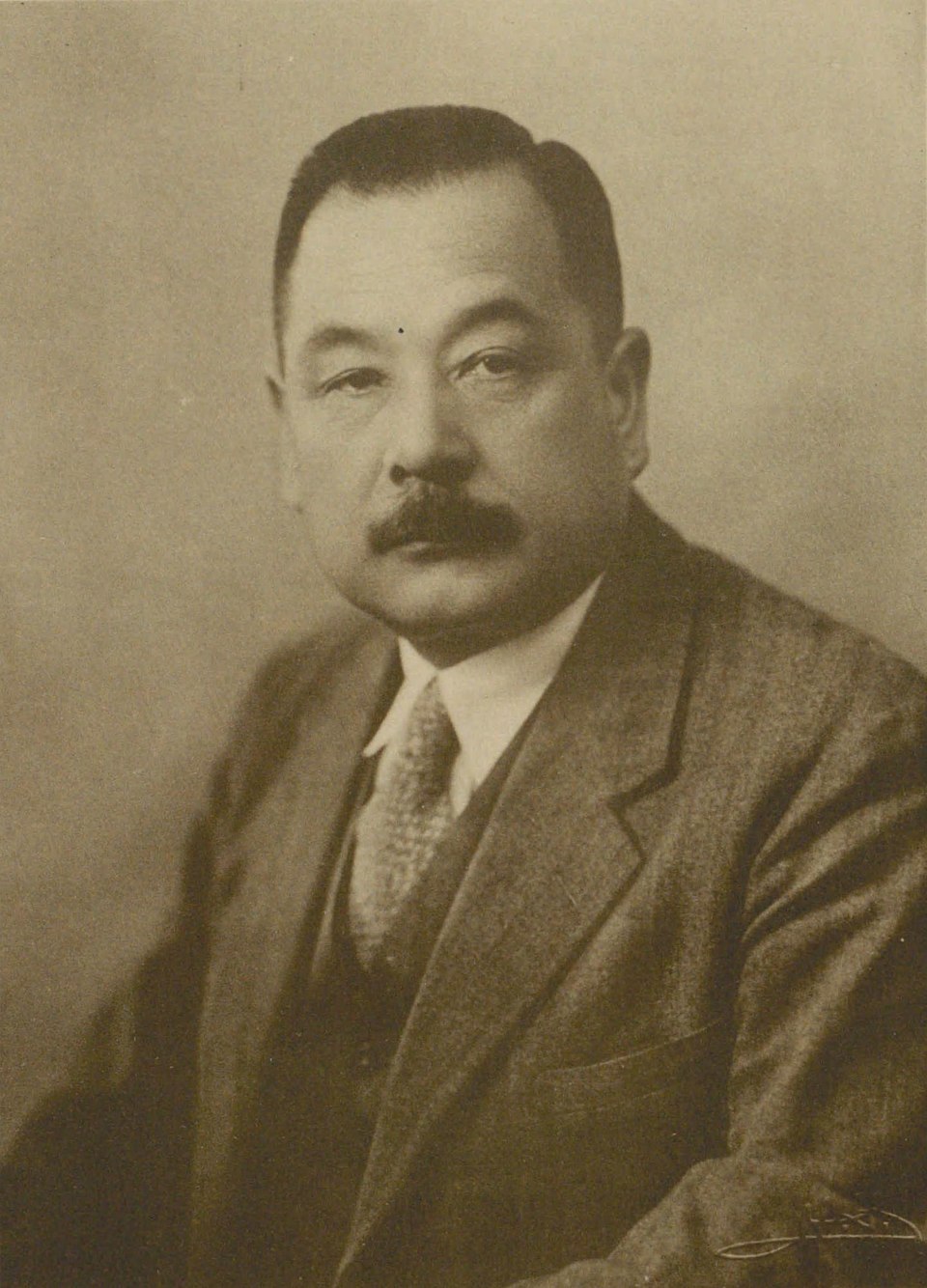
Hayakawa Noritsugu, a private entrepreneur rather than a government bureaucrat, recognized that the solution lay in the subsoil. During a tour of Europe and North America in 1914, Hayakawa examined the London Underground and the Glasgow Subway. He observed that world-class metropolises required high-speed, grade-separated transport to function. Unlike the Tokyo municipal officials who believed the city's soil, largely soft alluvial deposits from the river delta, was too unstable for tunneling, Hayakawa became convinced that engineering solutions existed. He returned to Japan with a radical thesis: the surface was dead, and the future of Tokyo lay underground.
Hayakawa did not rely on existing government data, which was frequently outdated or optimistic. He conducted his own granular surveys of pedestrian traffic at key intersections like Ginza and Asakusa. Legend and company records indicate he stood at street corners, using white and black beans in his pockets to count passing pedestrians and vehicles, physically quantifying the chance ridership density. His data revealed that the flow of people between the Ueno rail hub and the Asakusa entertainment district was massive and underserved by the slow-moving trams. He concluded that a subsurface line connecting these points would be immediately profitable.
The culmination of this research was the establishment of the Tokyo Underground Railway Company on August 29, 1920. Hayakawa secured capital from private investors, the skepticism of the railway ministry and the municipal government. The company was capitalized at 10 million yen, a serious sum for the era, signaling the shift from theoretical planning to concrete execution. This corporate founding marked the end of the surface-only era. While the physical breaking of ground would wait until 1925, the legal and financial structures created in 1920 ended the monopoly of the streetcar and the canal. The trajectory of Tokyo's transit had shifted permanently from the horizontal plane of the Edo canals to the vertical depth of the modern metro.
Table 1. 1: Evolution of Tokyo Transit Modes (1700, 1920)
Era
Primary Mode
Key Infrastructure
Avg. Speed / Capacity
Primary Limitation
1700, 1860
Water / Walking
Sumida River, Onagi Canal
Low / High Volume (Cargo)
Weather dependent, slow
1872, 1880
Steam Rail (Edge)
Shimbashi-Yokohama Line
High / Medium
Did not enter city center
1882, 1903
Horse Tram
Tokyo Basha Tetsudo
8 km/h / 28 pax per car
Sanitation, low capacity
1903, 1920
Electric Tram
Tokyo Municipal Tram
12-15 km/h / High
Chronic congestion, traffic jams
Noritsugu Hayakawa and the Founding of Tokyo Underground Railway (1920, 1927)
Edo-Period Canal Networks and the Shift to Surface Rail (1700, 1920)
The transition of Tokyo from a feudal water-based logistics hub to a modern subterranean metropolis began not with a government decree, with the obsessive manual data collection of a single railway bureaucrat. Noritsugu Hayakawa, frequently romanticized as a dreamer, was in reality a pragmatist who recognized a mathematical inevitability: the surface area of Tokyo could not support its population density. In 1914, while inspecting the Port of London Authority, Hayakawa observed the London Underground. He saw not a train in a tunnel, a solution to the paralyzing congestion of Tokyo's surface trams, which were frequently delayed by the chaotic mix of pedestrians, rickshaws, and early automobiles.
Upon his return to Japan, Hayakawa did not immediately break ground. He engaged in a primitive yet form of data science. Between 1916 and 1918, he conducted independent traffic surveys at Tokyo's busiest intersections. absence automated sensors, he used a system of beans hidden in his pockets, white beans to count pedestrians, black beans for automobiles and rickshaws. By the end of his daily observations, the relative bulge of his pockets provided a physical histogram of traffic flow. His data pointed to a specific corridor of maximum density: the route between Ueno and Asakusa. This district, housing the Sensō-ji temple and a thriving entertainment quarter, represented the highest concentration of chance ridership per square meter in the city.
On August 29, 1920, Hayakawa established the Tokyo Underground Railway Company (Tokyo Chika Tetsudo). The venture was capitalized at 10 million yen, a sum for an unproven technology in a seismically active zone. The skepticism from the business community was absolute. Geologists and civil engineers argued that the soil of Tokyo, situated on the alluvial delta of the Sumida River, was too soft to support underground tunnels. Critics derided the project, suggesting that Hayakawa was trying to train the citizens of Tokyo to live like "moles." The prevailing consensus was that the tunnels would collapse under the weight of the wet, unstable earth.
The Great Kanto Earthquake of September 1, 1923, nearly obliterated the project before a single shovel struck the earth. The disaster leveled much of surface Tokyo, killing over 100, 000 people and destroying the tram network Hayakawa sought to bypass. Yet, the aftermath provided Hayakawa with a grim counter-argument to his detractors. While surface rails twisted and buckled, he argued that properly reinforced underground structures would move with the earth rather than collapse. He used the reconstruction period to lobby for the need of a transport immune to surface fires and debris. Construction commenced on September 27, 1925, two years behind schedule.
The engineering reality of the Ginza Line (as it is known) was brutal. The construction team used the "cut-and-cover" method, which involved tearing open the street, digging a trench, reinforcing it with steel and concrete, and then burying the structure. This method turned the Ueno-Asakusa corridor into an open wound for two years. The cost was exorbitant: approximately 4 million yen per mile. The total expenditure for the initial 2. 2-kilometer section reached 6. 2 million yen. To finance this, Hayakawa had to rely on a mix of aggressive fundraising and the sheer political to prove that the soft soil theory was incorrect. Workers battled groundwater constant seepage, requiring pumps to run day and night to keep the trenches dry enough for concrete pouring.
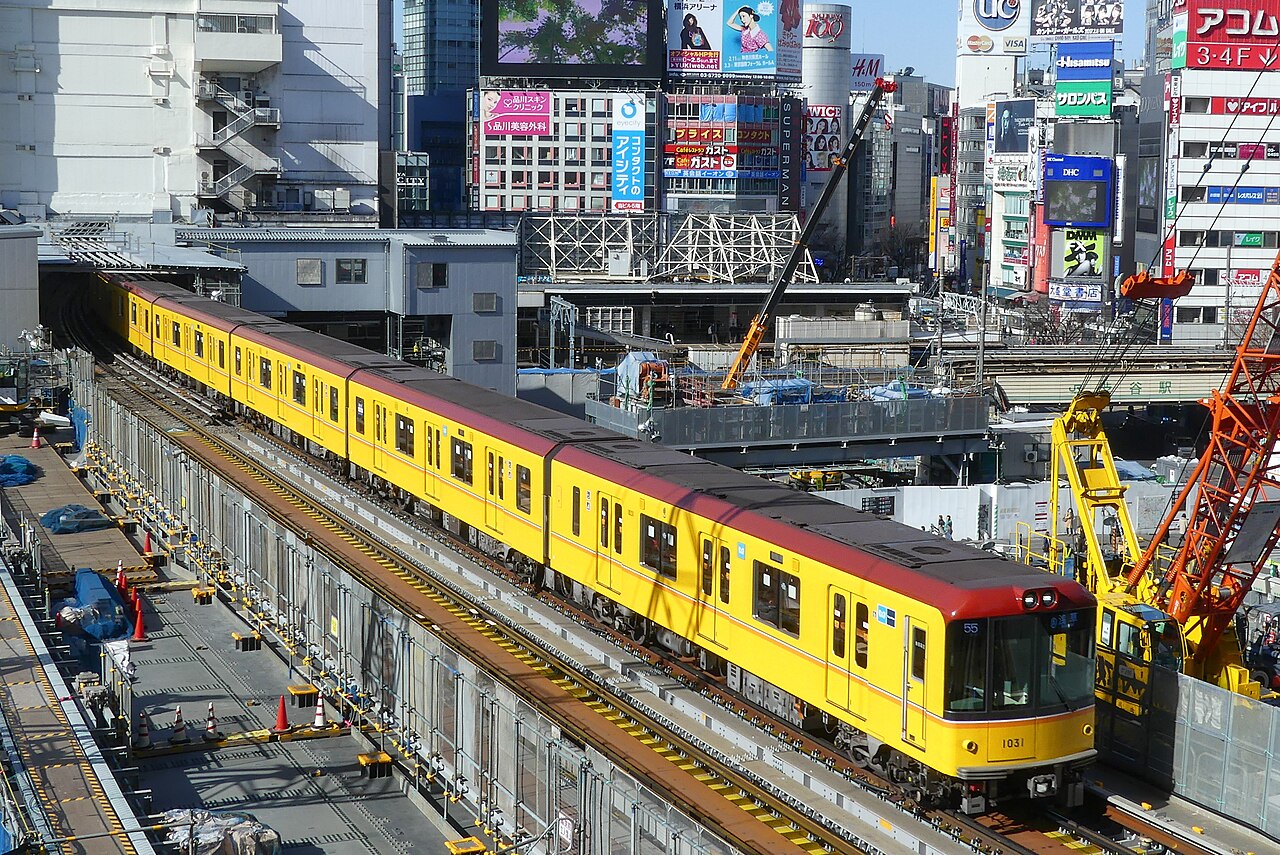
The operational specifications for the railway were advanced for the era. Hayakawa insisted on standard gauge tracks (1, 435 mm) and third-rail electrification at 600 Volts DC, adopting the standards he had observed in New York and London rather than the narrower 1, 067 mm gauge used by Japan's national railways. This decision physically the subway from the national rail network, ensuring it would remain a distinct, high-capacity urban lopp. The rolling stock, the 1000 series cars, featured all-steel construction, a direct response to the fire risks highlighted by the 1923 earthquake. These cars were painted a bright yellow-orange, a color chosen to alleviate the psychological gloom of underground travel.
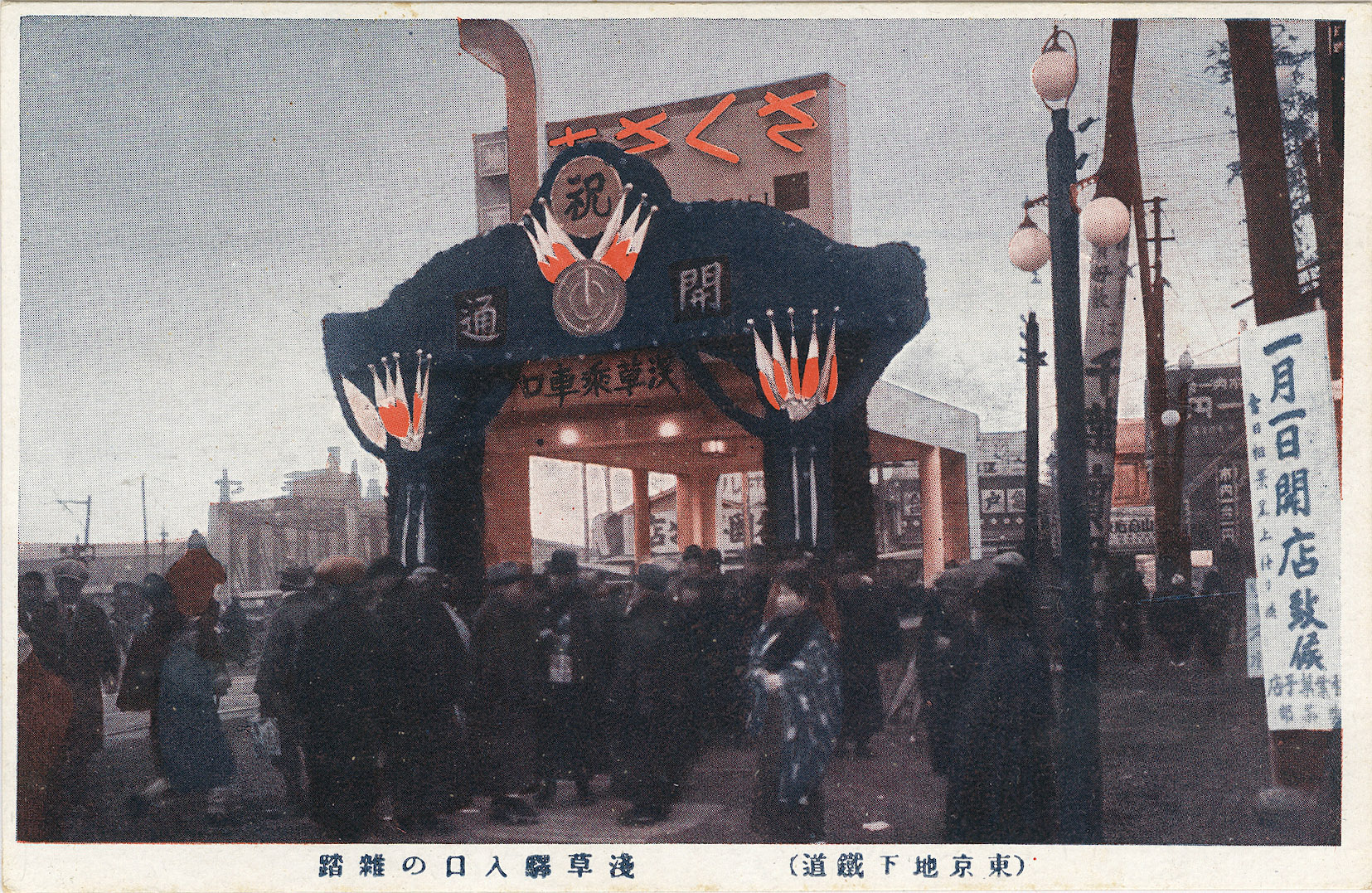
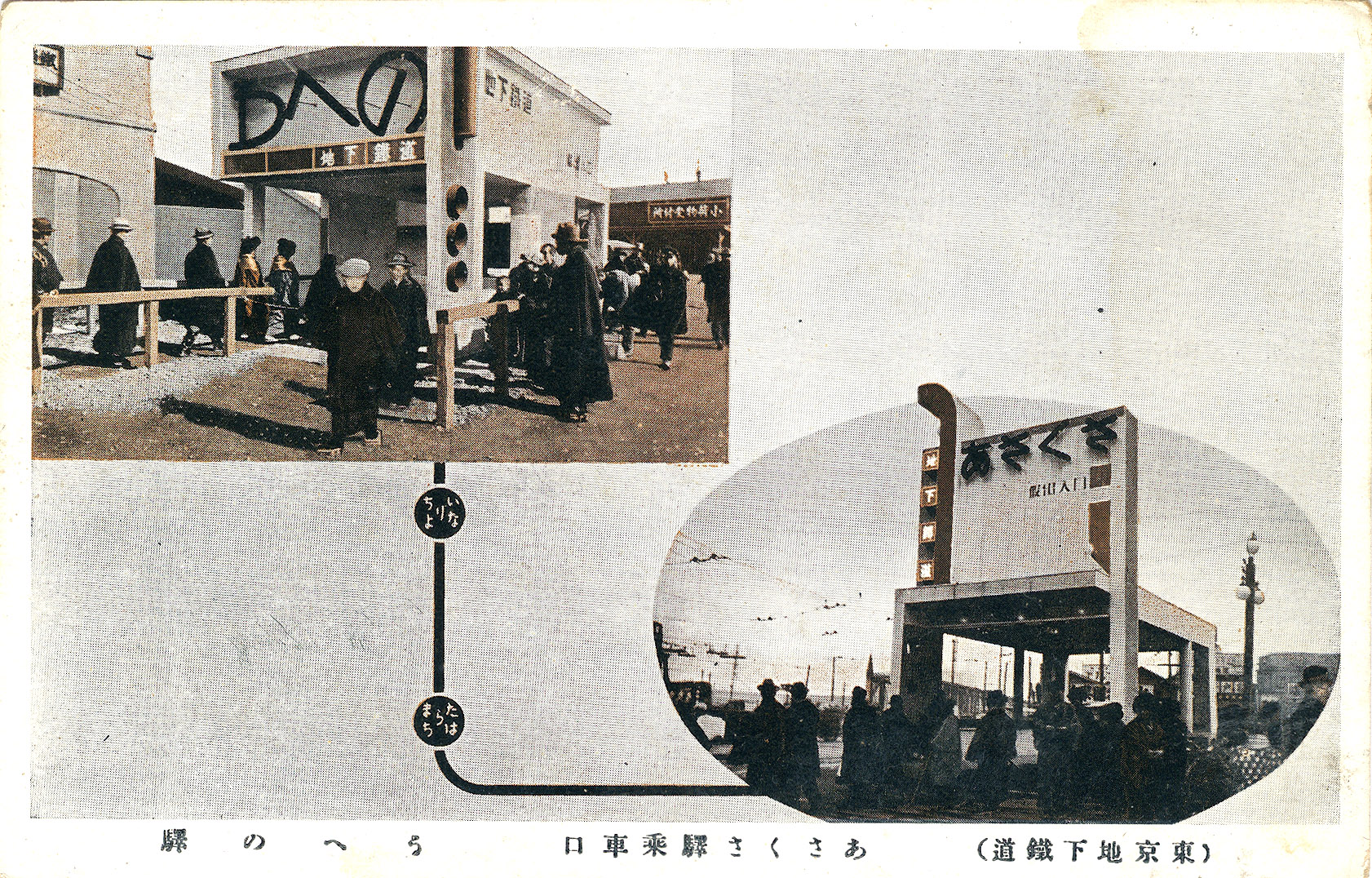
On December 30, 1927, the Tokyo Underground Railway opened its doors. The public response was immediate and overwhelming. The line connected Ueno and Asakusa, a distance of only 2. 2 kilometers. The fare was set at a uniform 10 sen. On the opening day, crowds were so immense that queues stretched for blocks, with wait times exceeding two hours for a ride that lasted less than five minutes. The company recorded approximately 100, 000 passengers on the day alone. The sheer novelty of the experience, automatic turnstiles, indirect lighting, and the absence of surface weather, captivated the populace. The "moles" insult, replaced by a fervor for modernity.
Tokyo Underground Railway: Initial Operational Metrics (1927)
Metric
Data Point
Opening Date
December 30, 1927
Route Length
2. 2 Kilometers (Ueno to Asakusa)
Construction Cost
~6. 2 Million Yen (Total)
Cost Per Mile
~4 Million Yen
Fare
10 Sen (Uniform)
Daily Ridership (Avg)
~50, 000 (Early 1928)
Wait Times (Opening)
> 120 Minutes
The financial success of the Ueno-Asakusa line validated Hayakawa's bean-counting method. The revenue generated by the 10 sen fares provided the capital flow needed to plan immediate extensions. yet, the success also attracted predators. The profitability of the underground sector drew the attention of Keita Goto, a rival railway magnate who would later challenge Hayakawa's monopoly. in 1927, the victory belonged solely to Hayakawa. He had proven that the soft alluvial soil of Tokyo could hold a rigid concrete box, and that the citizens of Edo's successor city were to abandon the open sky for the speed of the subterranean dark.
This 2. 2-kilometer segment was not a transit line; it was a proof of concept for the vertical expansion of Tokyo. Before 1927, the city grew outward, consuming the Kanto Plain. After 1927, the city began to grow downward. The opening of the line marked the end of the canal era's lingering influence and the beginning of the high-speed, electric integration that defines the modern capital. The canals that had once fed the city were obsolete, destined to be filled in or paved over, while the iron arteries ground began their slow, expensive proliferation.
Teito Rapid Transit Authority: Wartime Consolidation and State Control (1941, 1945)
The formation of the Teito Rapid Transit Authority (TRTA) on July 4, 1941, marked the definitive end of private subway enterprise in Tokyo and the beginning of direct state management. This consolidation was not a bureaucratic reshuffle; it was a strategic mobilization of urban infrastructure mandated by the National Mobilization Law and the Land Transport Business Coordination Act of 1938. The fierce, frequently petty corporate warfare between Noritsugu Hayakawa's Tokyo Underground Railway and Keita Gotoh's Tokyo Rapid Railway was forcibly resolved by the Imperial government. Under the looming shadow of the Pacific War, the state viewed redundant competition as an intolerable. The Ministry of Railways dissolved the private charters, merging the assets into a single "special public corporation" (Eidan) charged with the defense and logistical continuity of the Imperial Capital.
The newly minted TRTA, known domestically as Teito Kotsudan, assumed control of the Ginza Line network on September 1, 1941. The merger was financially brutal for the original officials. Hayakawa, the pioneer who had envisioned an underground Tokyo, was ousted, while Gotoh Keita, a ruthless industrialist known as "The Thief Gotoh" for his aggressive acquisitions, managed to secure a directorship in the new authority. Gotoh's influence ensured that his Tokyu Corporation retained significant use over the capital's transit planning, even as the system nominally came under government purview. The mandate was clear: profit was no longer the objective; the movement of workers, materials, and military personnel took absolute precedence.
Operational realities rapidly following the attack on Pearl Harbor in December 1941. As Japan's industrial capacity shifted entirely to war production, the subway system faced a strangulation of resources. Steel, copper, and cement were diverted to the military, leaving the TRTA with no means to repair aging rolling stock or expand the network. Construction on the planned extension from Akasaka-mitsuke to Shinjuku, as an "emergency route" for air defense, stalled and was eventually abandoned as labor absence became acute. By 1943, the conscription of male railway staff forced the authority to break with deep-seated gender norms, hiring women to staff ticket gates and work as conductors. These women worked grueling shifts in stations that were increasingly dark, damp, and stripped of metal fixtures for the war effort.
The strategic value of the subway shifted from transport to survival as the Allied bombing campaign intensified. Although the Home Ministry initially prohibited the use of subway stations as air raid shelters, fearing that civilians would abandon fire-fighting duties on the surface, the reality of the B-29 raids rendered this policy unenforceable. When the sirens wailed, thousands of residents forced their way past the ticket blocks, seeking the safety of the reinforced concrete tunnels. Stations like Ueno and Asakusa, deep underground, became de facto bunkers. The TRTA struggled to maintain ventilation and sanitation for the throngs of displaced citizens who camped on the platforms, sleeping on newspapers while the city above was reduced to ash.
Wartime Subway Metrics & Damage (1941, 1945)
Metric
Status / Value
Notes
Daily Ridership (1941)
~140, 000
Pre-war peak; steadily rose as surface buses failed due to fuel absence.
Daily Ridership (1944)
~300, 000+
Spike caused by suspension of surface trams and petrol rationing.
Rolling Stock
Severe Degradation
Maintenance halts led to frequent breakdowns; cannibalization of parts.
Major Incident
March 10, 1945
Operation Meetinghouse (Great Tokyo Air Raid).
Infrastructure Damage
Superficial
Tunnels remained intact; station entrances and above-ground depots burned.
The destruction of March 10, 1945, Operation Meetinghouse, tested the limits of the system. American bombers dropped over 1, 600 tons of incendiary clusters on the Shitamachi district, creating a firestorm that consumed 16 square miles of the city. While the surface temperature reached 1, 800 degrees Fahrenheit, the subway tunnels held. yet, the entrances acted as chimneys, sucking smoke and superheated air into the underground concourses. At stations in the impact zone, the terrifying influx of heat and carbon monoxide killed who had sought refuge. Yet, the morning after the raid, the trains ran. The TRTA's ability to resume service on the Ginza Line within 24 hours of the deadliest air raid in history stands as a testament to the over-engineering of the original 1920s construction. The tunnels, built to withstand earthquakes, proved impervious to napalm.
By the time of the surrender in August 1945, the Teito Rapid Transit Authority oversaw a system that was physically battered structurally sound. The surface electric tram network was in ruins, its tracks twisted and overhead lines severed. The subway, by contrast, remained the only reliable artery for a prostrate capital. The decision to nationalize the system in 1941 had inadvertently saved it; centralized command allowed for the coordination of emergency repairs that private companies could never have funded. As Tokyo looked toward a bleak winter of occupation, the subway was no longer a symbol of modernity, a lifeline for a starving population.
Post-War Infrastructure Expansion and the 1964 Olympic Construction Drive
Noritsugu Hayakawa and the Founding of Tokyo Underground Railway (1920, 1927)
The physical destruction of Tokyo in 1945 left the capital with a shattered transportation grid, yet the subsequent population explosion posed an even greater threat to the city's survival. By 1950, the repatriation of soldiers and the influx of rural laborers caused Tokyo's population to surge, overwhelming the surviving surface tram network. The Teito Rapid Transit Authority (TRTA), established in 1941 dormant during the height of the war, faced an immediate mandate: move the city underground or watch it succumb to paralysis. The era of the "Traffic War" (Kotsu Senso) had begun, a period where road fatalities skyrocketed and surface congestion brought logistics to a standstill.
The counterstrike against this congestion was the Marunouchi Line. Construction began in 1951, utilizing the cut-and-cover method that turned major thoroughfares into open trenches. Unlike the pre-war Ginza Line, which relied on private capital, the Marunouchi Line was a state-backed project designed to link the government district of Kasumigaseki with the commercial hubs of Shinjuku and Ikebukuro. On January 20, 1954, the segment between Ikebukuro and Ochanomizu opened. The rolling stock, the 300 series, featured a scarlet livery with a white wave strip, a design choice intended to signal a bright future for a recovering nation. It used a third-rail power system and standard gauge track, technically isolating it from the narrow-gauge national railway network, a decision that prioritized high-frequency independent operation over integration.
As the 1950s progressed, the limitations of the surface trams became undeniable. Between 1955 and 1963, the number of automobiles in Tokyo increased by over 400 percent. Trams, stuck in the same traffic as private cars and delivery trucks, saw their average speeds drop to near-walking pace. The Tokyo Metropolitan Government began the tram network, betting the city's future entirely on the subway and elevated expressways. This shift necessitated a construction pace previously unknown in Japanese civil engineering. The pressure intensified in 1959 when Tokyo won the bid to host the 1964 Summer Olympics. The subway was no longer just infrastructure; it was a prerequisite for national prestige.
The Hibiya Line became the focal point of this Olympic construction drive. Authorized in 1957 and broken ground in 1959, the line had to traverse the soft, alluvial soil of the low city (Shitamachi), requiring advanced shield tunneling techniques in specific sections to avoid collapsing the foundations of existing buildings. The deadline was absolute: the line had to be operational before the opening ceremony in October 1964. The TRTA mobilized thousands of laborers, working in twenty-four-hour shifts. The sheer volume of excavated soil required a dedicated logistical fleet to remove earth from the city center to reclamation sites in Tokyo Bay.
The Hibiya Line introduced a technical innovation that fundamentally altered the trajectory of Tokyo's transit network: reciprocal through-service (choku-tsu). Unlike the Marunouchi and Ginza lines, which operated as closed loops or shuttles, the Hibiya Line was designed to connect directly with private suburban railways. In 1962, it established a connection with the Tobu Railway at Kita-Senju, and in August 1964, it connected with the Tokyu Railway at Naka-Meguro. This allowed passengers to ride from the distant suburbs of Saitama or Kanagawa directly into the business districts of Ginza and Roppongi without changing trains. This architecture prevented the "terminal congestion" seen in cities like London or Paris, where commuters must disembark at main rail stations to switch to the subway.
On August 29, 1964, just weeks before the Olympic torch arrived, the final segment of the Hibiya Line between Higashi-Ginza and Kasumigaseki opened. The completion marked a triumph of engineering and scheduling. The line utilized overhead catenary power instead of a third rail to ensure compatibility with the suburban trains of Tobu and Tokyu. This decision set the standard for all future Tokyo subway lines (except the Oedo Line), cementing the "through-service" model as the backbone of the Greater Tokyo Area's transit logic.
Table 4. 1: Major Post-War Subway Milestones (1954, 1964)
Date
Event
Significance
Jan 20, 1954
Marunouchi Line Opens (Ikebukuro, Ochanomizu)
post-war subway; state-planned line.
Mar 15, 1959
Marunouchi Line reaches Shinjuku
Links western suburbs to the government center.
Dec 4, 1960
Toei Asakusa Line Opens
line by Tokyo Metropolitan Govt (not TRTA); through-service (Keisei).
May 31, 1962
Hibiya Line connects to Tobu Railway
Start of TRTA reciprocal through-service operations.
Aug 29, 1964
Hibiya Line Full Operation
Completed 42 days before the Olympics; linked Tokyu and Tobu networks.
The financial cost of this expansion was. The TRTA relied heavily on Fiscal Investment and Loan Program (FILP) bonds, borrowing from the postal savings of Japanese citizens to fund the construction. By 1964, the capital investment in the subway network exceeded the combined budgets of several national ministries. Yet, the economic return was immediate. The subway facilitated the high-density development of districts like Roppongi and Akasaka, which were previously inaccessible by heavy rail. The "silver" trains of the Hibiya Line, unpainted stainless steel to save weight and maintenance costs, became the new symbol of a modernized, Tokyo, replacing the red-painted steel of the Marunouchi era.
By the time the Olympic Games concluded, Tokyo had successfully transitioned from a surface-reliant city to a multi- metropolis. The Ginza, Marunouchi, Hibiya, and the nascent Toei Asakusa lines formed a grid that allowed the city to absorb a population that would soon breach the 10 million mark. The "Traffic War" on the surface continued, the subway provided a serious bypass, allowing the city's economic heart to beat even as its arteries clogged with automobiles. The 1964 infrastructure drive did not host an event; it engineered the foundation for the hyper-density of the late 20th century.
1995 Sarin Gas Attack: Operational Paralysis and Casualty Management
On March 20, 1995, the operational logic of the Tokyo Metro, efficiency, punctuality, and high-volume throughput, was weaponized against its passengers. At the peak of the morning rush hour, five members of the Aum Shinrikyo cult boarded trains on the Chiyoda, Marunouchi, and Hibiya lines. These specific routes were selected not for their passenger density alone, because they converged at Kasumigaseki Station, the hub of the Japanese government and the location of the National Police Agency. The attack vector was crude yet: liquid sarin, contained in plastic bags wrapped in newspapers, was placed on the floor of the carriages. As the trains method the city center, the perpetrators punctured the bags with sharpened umbrella tips and exited, leaving the volatile nerve agent to evaporate into the enclosed, pressurized environment of the subway cars.
The chemical agent used was not military-grade. Forensic analysis later revealed it was a dilute solution, approximately 30 percent pure, appearing as a foul-smelling brown slurry rather than a clear gas. This impurity likely prevented a death toll in the thousands. Yet, the physics of the subway system amplified the lethality of even this low-grade toxin. The ventilation systems of the moving trains circulated the vapor, while the piston effect of the carriages pushing through narrow tunnels forced the gas into station platforms. Commuters, unaware of the nature of the liquid pooling at their feet, initially dismissed it as a mundane spill. This misidentification was the link in a chain of operational failures that defined the morning.
Operational paralysis struck the Tokyo Metro command centers almost immediately. The initial reports from station attendants described "explosions" or "fires," a terminology that triggered standard fire suppression rather than chemical containment measures. Consequently, trains were not immediately halted. The Hibiya Line train A720S, carrying the most lethal concentration of sarin, continued to operate for several stops after the puncture, depositing sickened passengers at multiple stations before coming to a halt. This decision to keep the network moving, driven by a absence of accurate intelligence and a rigid adherence to schedule, distributed the casualties across fifteen different stations, turning a localized incident into a city-wide medical emergency.
The human cost of this operational delay was most visible at Kasumigaseki Station. Station attendants, trained to maintain cleanliness and order, attempted to remove the leaking packets without protective gear. Deputy Stationmaster Takuya Takahashi and Assistant Stationmaster Tsuneo Hishinuma both died after handling the toxic material. Their actions, while heroic in intent, exposed a fatal gap in the Metro's safety doctrine: the absence of hazardous material for frontline staff. They absorbed fatal doses of a nerve agent while treating it as common refuse, wiping the floor with newspapers and sawdust as their pupils constricted and their respiratory systems failed.
Casualty management outside the subway system was equally chaotic. St. Luke's International Hospital, located near Tsukiji Station, became the epicenter of the medical response. Dr. Shigeaki Hinohara, the hospital's director, made the unilateral decision to suspend all elective surgeries and open the hospital's chapel and corridors to receive the influx of victims. Within hours, over 640 patients flooded the facility. The hospital had received no prior warning from the police or fire department regarding the nature of the agent. Doctors initially treated patients for smoke inhalation or carbon monoxide poisoning, only realizing the true cause when a fax from a specialist in Nagano, where a smaller sarin attack had occurred the previous year, suggested the symptoms matched nerve gas exposure.
The absence of decontamination tents or chemical isolation units at St. Luke's meant that the victims, their clothes saturated with sarin vapor, brought the weapon inside the hospital. This led to a secondary casualty event among the medical staff. Nurses and doctors began to exhibit symptoms of sarin poisoning, including miosis (pinpoint pupils), headaches, and nausea. Data shows that 23 percent of the hospital staff at St. Luke's suffered from secondary exposure. The chapel, used as a triage center, became a hot zone. Even with this risk, the medical teams continued to administer atropine and pralidoxime iodide (PAM), depleting the hospital's stocks and necessitating an emergency relay of antidotes from across the country.
1995 Sarin Attack: Train and Casualty Data
Line
Train ID
Direction
Sarin Packets
Casualty Impact
Chiyoda
A725K
Yoyogi-Uehara
1 Punctured
2 Dead, 231 Injured
Marunouchi
A777
Ogikubo
2 Punctured
1 Dead, 358 Injured
Marunouchi
B801
Ikebukuro
1 Punctured
0 Dead, 200 Injured
Hibiya
B711T
Naka-meguro
1 Punctured
1 Dead, 532 Injured
Hibiya
A720S
Kita-senju
2 Punctured
8 Dead, 2, 475 Injured
The statistical aftermath reveals the in lethality between the trains. The Hibiya Line train A720S alone accounted for eight of the thirteen immediate deaths and nearly half of the total injuries. This was due to the perpetrator, Yasuo Hayashi, puncturing three packets (though only two released fully) compared to the single packets punctured by others. The operational decision to stop this train at Tsukiji Station, rather than evacuating it immediately upon the reports of foul odors, allowed the gas to accumulate to fatal concentrations. Passengers who remained on board or collapsed on the platform were exposed to doses high enough to cause irreversible brain damage or death within minutes.
In the decades following 1995, the Tokyo Metro underwent a radical security overhaul that into 2026. The most immediate and visible change was the removal of all trash cans from stations to eliminate chance hiding spots for explosive or chemical devices. For years, commuters carried their refuse home, a civic behavioral shift enforced by the architecture of terror. Although transparent bins were eventually reintroduced, the surveillance grid expanded exponentially. By 2026, the network operates under the constant watch of AI-driven camera systems capable of detecting suspicious package abandonment and analyzing crowd flow for panic patterns, a direct legacy of the morning when the system failed to see the danger until it was already in the air.
The legislative response also reshaped the legal terrain for religious organizations and chemical handling. The "Religious Corporation Law" was amended to allow for greater government oversight, stripping Aum Shinrikyo of its legal status and assets. The operational paralysis of 1995 serves as a grim case study in modern emergency management courses, illustrating that in a chemical attack, the speed of information is as important as the speed of the antidote. The delay in identifying the agent and the hesitation to shut down the grid turned a terrorist attack into a mass casualty event, proving that the efficiency of a transit system can become its greatest liability when the cargo is death.
2004 Privatization and the Restructuring of Ministry Assets
Teito Rapid Transit Authority: Wartime Consolidation and State Control (1941, 1945)
The dissolution of the Teito Rapid Transit Authority (TRTA) on April 1, 2004, marked the end of an era where Tokyo's primary subway network operated as a direct instrument of the state. In its place rose Tokyo Metro Co., Ltd., a special stock company designed to the gap between public utility and private profitability. This restructuring was not a simple administrative renaming; it was a calculated financial maneuver by the Government of Japan to securitize massive infrastructure assets and eventually liquidate them to cover national debts. The Ministry of Finance assumed 53. 4 percent of the shares, while the Tokyo Metropolitan Government (TMG) held the remaining 46. 6 percent. This ownership split created a fragile dual-command structure that would delay the company's full market entry for two decades.
The assets transferred to the new entity carried significant historical baggage. Physically, the network consisted of tunnels bored through the unstable, reclaimed alluvial soil of the 1700s Edo waterfront, a geological reality that demands perpetual, capital-intensive reinforcement. Financially, the new corporation inherited the heavy construction debt of the Namboku and Hanzomon lines, projects initiated during the asset bubble of the late 1980s. Unlike the TRTA, which operated on a break-even mandate, Tokyo Metro Co. faced immediate pressure to generate surplus capital. The restructuring laws fundamentally altered the company's operational scope; where the TRTA was legally restricted to railway operations, the new charter permitted entry into real estate, retail, and IT services. This legal shift allowed the company to monetize the subterranean real estate it controlled, turning transit stations into "Ekineka" (inside-station) commercial hubs, a revenue model previously forbidden to the Authority.
A primary obstacle to the immediate listing of these assets was the persistent political pressure to merge Tokyo Metro with the Toei Subway, a separate network operated directly by the Tokyo Metropolitan Bureau of Transportation. The Toei network, particularly the deep-tunnel Oedo Line, carried a debt load significantly higher than Metro's relative to its revenue. For years, Tokyo Metro executives and the Ministry of Finance resisted merger proposals from Tokyo Governors, viewing the Toei system as a toxic asset that would dilute shareholder value. This standoff froze the IPO process. The Ministry of Land, Infrastructure, Transport and Tourism (MLIT) frequently mediated these disputes, yet the financial between the profitable Metro lines and the debt-heavy Toei lines made a clean merger impossible during the early years of privatization.
The deadlock broke in the early 2020s, driven by the national government's need to redeem reconstruction bonds issued after the 2011 Great East Japan Earthquake. The law governing the reconstruction funding explicitly earmarked the proceeds from the sale of Tokyo Metro shares for debt repayment. This statutory requirement forced the timeline. In October 2024, Tokyo Metro executed its Initial Public Offering on the Tokyo Stock Exchange, raising approximately 348. 6 billion yen. It was the largest Japanese IPO since 2018. Even with this listing, the privatization remained partial; the national and metropolitan governments sold only half their combined stake, retaining a controlling interest to ensure the network served public interests during disasters or emergencies.
By 2026, the corporate structure of Tokyo Metro reflects a hybrid existence. It operates as a private entity listed on the Prime Market, subject to shareholder demands for dividends and efficiency, yet it remains tethered to government policy through the retained 50 percent ownership. The capital raised did not go into new subway lines, most of the network was considered complete with the Fukutoshin Line, rather flowed back to the state treasury to service debts incurred from the 2011 disaster. The restructuring of 2004, therefore, was less about improving transit service and more about converting concrete tunnels into liquid financial instruments for the state.
Asset & Legal Transformation: TRTA to Tokyo Metro (2003, 2026)
Metric
Teito Rapid Transit Authority (TRTA)
Tokyo Metro Co., Ltd.
Legal Status
Special Public Corporation (Tokushu Hojin)
Special Stock Company (Kabushiki Gaisha)
Primary Mandate
Construction & Operation (Break-even)
Profitability & Dividend Generation
Non-Rail Business
Legally Restricted (Prohibited)
Permitted (Retail, Real Estate, IT)
Ownership (2004)
100% Government/TMG Capital Injection
53. 4% Min. of Finance / 46. 6% TMG
Ownership (2026)
N/A (Dissolved)
~50% Public Float / ~50% Govt Retained
Debt Liability
Sovereign-backed Construction Debt
Corporate Debt (Serviced by Fare/Retail)
Stock Market Listing: The 2024 IPO and Shareholder Composition by 2026
The privatization of Tokyo Metro culminated on October 23, 2024, with a listing on the Tokyo Stock Exchange Prime Market that ended a twenty-year legislative stalemate. The initial public offering raised ¥348. 6 billion ($2. 3 billion), making it the largest Japanese market debut since SoftBank Corp. in 2018. Shares were priced at the top of the marketed range at ¥1, 200, yet demand overwhelmed supply. The stock opened at ¥1, 630 and closed its trading day at ¥1, 739, a 45% surge that valued the operator at approximately ¥1 trillion. This liquidity event was not a corporate restructuring; it was a government liquidation event mandated by the need to repay reconstruction bonds issued after the 2011 Tōhoku earthquake.
Prior to the listing, ownership was split strictly between the Government of Japan (53. 4%) and the Tokyo Metropolitan Government (46. 6%). The IPO structure involved a coordinated sell-down where both entities divested half of their holdings to the public. The Ministry of Finance directed its proceeds toward the redemption of the Great East Japan Earthquake reconstruction debt, a financial obligation that had legally bound the shares for over a decade. The Tokyo Metropolitan Government, retaining its remaining stake, earmarked its portion of the capital for future transport infrastructure projects. Even with the sale, the two government bodies maintained a combined equity block of 50%, ensuring that while the company is publicly traded, it remains tethered to state strategic interests.
The offering attracted intense interest from retail investors, who viewed the stock as a high-yield defensive asset. At the offer price, the dividend yield stood at 3. 3%, significantly higher than the sub-2% yields typical of competitors like East Japan Railway (JR East) or private rail conglomerates. This yield-focused valuation strategy proved. By early 2026, the shareholder registry reflected a mix of stable government capital and aggressive retail participation. Institutional investors, including The Master Trust Bank of Japan and Custody Bank of Japan, acquired significant minority, holding 7. 45% and 2. 17% respectively. Foreign institutional capital also entered the register, with entities such as Northern Trust and State Street appearing in top shareholder lists by 2025.
Financial performance in the post-IPO period demonstrated resilience against demographic headwinds. In January 2026, Tokyo Metro reported results for the nine months ended December 31, 2025, showing operating revenue of ¥316. 8 billion, a 3. 5% year-on-year increase. More notably, profit attributable to owners jumped 22. 4% to ¥51. 4 billion. Management responded to this capital efficiency by raising the full-year dividend forecast to ¥42 per share for the fiscal year ending March 2026. The company also executed share buybacks to manage equity dilution, repurchasing ¥2. 74 billion in treasury shares in early 2026, a move that signaled a shift toward active capital management typical of private sector firms.
Tokyo Metro Shareholder Composition (Estimated as of Feb 2026)
Shareholder Category
Approximate Stake
Strategic Intent
Minister of Finance (National Govt)
26. 71%
Debt redemption collateral (Legacy)
Tokyo Metropolitan Government
23. 29%
Urban infrastructure alignment
Master Trust Bank of Japan
7. 45%
Institutional Trust / Passive
Retail & Individual Investors
~25. 00%
Dividend yield income
Employee Stock Ownership
2. 65%
Internal incentive
Foreign Institutions
~10. 00%
Global infrastructure exposure
The 2024 listing fundamentally altered the governance structure of the subway operator. While the "special company" status remains in legal interpretations due to the Construction Act, the pressure from private shareholders for return on equity has forced a departure from the purely utility-focused management style of the Teito Rapid Transit Authority era. The stock price stability through 2025 and 2026 suggests the market has accepted Tokyo Metro as a "bond proxy", a stable, cash-generative utility with limited growth reliable payouts. The dual-ownership model, with the government retaining a veto-proof majority block, prevents hostile takeovers also limits the aggressive diversification seen in fully private rivals like Tokyu or Hankyu.
Civil Engineering: Shield Tunneling and Flood Prevention Systems
Post-War Infrastructure Expansion and the 1964 Olympic Construction Drive
The geological foundation of Tokyo presents one of the most hostile environments for subterranean construction in the industrialized world. Beneath the asphalt lies the Kanto Loam, a thick of volcanic ash deposited by Mount Fuji and Mount Hakone, sitting atop a water-logged alluvial plain. In the low-lying Koto ward and areas east of the Sumida River, the ground level frequently sits sea level, creating a "zero-meter zone" where the water table exerts immense hydrostatic pressure. The early engineers of the 1920s, led by Noritsugu Hayakawa, circumvented these deep-earth perils by using the "cut-and-cover" method for the Ginza Line. Workers tore open the streets, laid the track box, and buried it. While for shallow lines, this method paralyzed surface traffic and became politically and logistically impossible as the city density thickened post-World War II.
The transition to deep-bore shield tunneling marked the serious pivot in Tokyo's civil engineering history. The Teito Rapid Transit Authority (TRTA), the predecessor to Tokyo Metro, experimented with shield technology in 1957 on the Marunouchi Line. Kawasaki Heavy Industries delivered a "roof shield" for a short section near the National Diet Building, this was a primitive, semi-mechanical solution. The true engineering war began with the Chiyoda Line in the late 1960s. To cross under the Sumida River, engineers could not disrupt the heavy barge traffic or risk flooding the tunnel with river water. They adopted the slurry shield method, a technique that pumps pressurized liquid mud (slurry) into the cutting face. This pressurized fluid counteracts the weight of the soft soil and groundwater, preventing the tunnel face from collapsing while the cutter head grinds through the earth. This method allowed the metro to dive deep beneath existing buildings, rivers, and even other subway lines without disturbing the surface.
By the 1990s, the scarcity of underground space forced engineers to devise machines that standard circular geometry. The construction of the Hanzomon Line and the Oedo Line required tunnels to fit within the narrow footprints of Edo-period streets where side-by-side tracks were impossible. The solution was the Multi-Circular Face (MF) shield, frequently called the "Double-O" or "Eyeglass" shield. These machines featured two or three overlapping cutter heads that excavated a single, wide tunnel capable of housing stacked tracks or station platforms. This reduced the volume of soil removed and minimized the surface settlement, a non-negotiable requirement when tunneling millimeters away from the pilings of skyscrapers in Shinjuku and Otemachi. In particularly unstable sections, such as the complex interchange at Otemachi, engineers used the artificial ground freezing method. By circulating liquid nitrogen or chilled brine through pipes driven into the soil, they froze the water-logged mud into a solid block of ice, allowing workers to cut through it with the precision of rock mining before the ground thawed.
The engineering victory over soil stability created a secondary, permanent threat: water intrusion. The Tokyo Metro network functions as a massive, complex drain. If the Arakawa or Sumida rivers were to breach their embankments, would channel millions of tons of water into the subway tunnels, chance drowning the city center from. The vulnerability of the network was exposed during several late 20th-century typhoons, the near-miss of Typhoon Hagibis in October 2019 forced a radical acceleration of flood defense. Hagibis brought record-breaking rainfall that tested the limits of the metropolitan drainage infrastructure. While the massive G-Cans (Metropolitan Area Outer Underground Discharge Channel) diverted river water away from the city, Tokyo Metro officials recognized that their internal defenses required immediate hardening against the increasing intensity of climate-driven storms.
Between 2020 and 2026, Tokyo Metro executed a detailed retrofit of its flood prevention hardware. The primary line of defense is the watertight entrance. In high-risk zones, station entrances are equipped with aluminum stop-logs and remote-controlled flood doors capable of withstanding water columns up to 6 meters high. Newer installations feature hydrostatic pressure doors that use the weight of the floodwater itself to tighten the seal. Ventilation towers, the lungs of the subway, are fitted with sensor-activated shutters that slam shut the moment water levels on the street breach a serious threshold. These systems are not passive; they are integrated into a centralized command grid that monitors river levels and rainfall rates in real-time, allowing the network to seal itself hermetically within minutes of a breach warning.
The operational doctrine for 2026 mandates that the subway system must survive a "super-typhoon" event where the Arakawa River overflows. This scenario involves the deployment of massive steel floodgates inside the tunnels themselves. These gates, frequently hidden in the tunnel walls between stations, can partition the network into watertight compartments. If one section floods, the gates prevent the water from cascading down the line to other stations. This compartmentalization strategy is derived from naval architecture, treating the subway network like the hull of a ship. The pumps installed within these compartments have been upgraded to industrial-grade turbines capable of ejecting thousands of tons of water per hour, ensuring that minor leaks do not escalate into catastrophic inundation.
The following table details the evolution of excavation and flood defense technologies used in the Tokyo Metro network from the early 20th century to the present day.
The integration of civil engineering and disaster prevention defines the modern reality of the Tokyo Metro. It is no longer sufficient to transport passengers; the infrastructure must act as a hardened shelter against the volatile climate of the Kanto plain. The use of artificial intelligence in 2025 to predict flood inundation patterns allows the network to preemptively close specific gates before the drop of rain enters the system. This proactive stance contrasts sharply with the reactive measures of the 20th century. The tunnels dug through the soft ash of the Kanto Loam represent of the most heavily fortified structures in Japan, designed to remain dry even as the waters above rise to historic levels.
Ridership Statistics and Congestion Rates on the Tozai and Hibiya Lines
The logistical architecture of the Tokyo Metro cannot be understood without examining the sheer physical pressure exerted on its two most serious arteries: the Tozai Line and the Hibiya Line. These routes do not transport passengers; they act as pressurized valves for a metropolis that has historically struggled to balance residential sprawl with centralized economic activity. By 2024, a significant statistical inversion occurred. The Tozai Line, long the undisputed champion of overcrowding, surrendered its ignominious title to the Hibiya Line, a shift driven by fleet standardization mechanics and post-pandemic ridership patterns.
For decades, the Tozai Line defined the "commuter hell" (tsukin jigoku) of the Japanese capital. Running parallel to the Edo-period Onagi Canal, the line serves as the primary funnel for the bedtowns of Chiba Prefecture. Between 2010 and 2019, the segment from Kiba to Monzen-Nakacho consistently recorded congestion rates exceeding 199%. This figure represents a density where passengers are compressed against one another, unable to move limbs or read periodicals. The structural flaw is geographical; the line the Arakawa and Edogawa rivers, creating bottlenecks with few parallel rail alternatives. Yet, Ministry of Land, Infrastructure, Transport and Tourism (MLIT) data from fiscal year 2023 (released mid-2024) indicates a sharp drop to 150%. This 49-point decrease is not solely a result of remote work. It reflects the aggressive implementation of the "Metpo" point system, which incentivized over 15, 000 daily commuters to shift their travel times, alongside the deployment of 15000-series trains featuring 1. 8-meter wide doors to accelerate boarding.
In contrast, the Hibiya Line has emerged as the new choke point of the subway network. The segment between Minowa and Iriya recorded a congestion rate of 163% in the 2023-2024 surveys, surpassing the Tozai Line. This surge is partly attributable to a controversial engineering decision: the standardization of rolling stock. Between 2016 and 2020, Tokyo Metro replaced the mixed fleet of 18-meter, 8-car trains with uniform 20-meter, 7-car trains (the 13000 series). While this allowed for the installation of platform screen doors and reduced dwell times, the reduction in total car count per train altered the capacity denominator. When combined with the resurgence of through-traffic from the Tobu Skytree Line and a faster recovery of inner-city leisure travel compared to suburban commuting, the load factor on the Hibiya Line spiked.
Comparative Congestion Rates: Tozai vs. Hibiya Lines (2010, 2024)
Fiscal Year
Tozai Line (Kiba → Monzen-Nakacho)
Hibiya Line (Minowa → Iriya)
Contextual Factor
2010
198%
155%
Pre-infrastructure upgrades.
2015
199%
153%
Peak economic recentralization.
2019
199%
158%
Pre-COVID baseline.
2020
123%
108%
Pandemic state of emergency.
2023/24
150%
163%
Post-IPO recovery & fleet changes.
The operational response to this density involves high- signaling upgrades. As of early 2026, the Hibiya Line is in the final stages of transitioning to Communications-Based Train Control (CBTC), a system already live on the Marunouchi Line as of December 2024. CBTC replaces fixed-block signaling with moving blocks, allowing trains to operate safely with shorter headways. For the Hibiya Line, this technology is projected to reduce the buffer between trains by 10 to 40 seconds. This seemingly marginal gain is mathematically significant; shaving 30 seconds off headways during the peak hour allows for the insertion of two additional train sets, increasing hourly capacity by approximately 3, 000 passengers.
Commercial strategies have also evolved to monetize, rather than mitigate, this congestion. The introduction of the "TH Liner" in 2020 offered reserved seating services on the Hibiya Line for an additional fee. While this service provides comfort for a premium segment, it physically removes capacity from the general pool, slightly the crowding in non-reserved cars. Following its October 2024 IPO, Tokyo Metro faces shareholder pressure to balance these lucrative limited-express services with the public mandate to transport millions. The 2026 outlook suggests that while the Tozai Line has stabilized through demand management, the Hibiya Line remains the serious variable, dependent on the successful integration of CBTC to prevent chronic paralysis in the northern sectors of the grid.
Safety Protocols: Platform Screen Doors and Automatic Train Operation Implementation
1995 Sarin Gas Attack: Operational Paralysis and Casualty Management
By the fiscal year ending March 2026, Tokyo Metro reached a definitive milestone in its century-long battle against platform accidents: the near-total installation of Platform Screen Doors (PSDs) across its 180-station network. This architectural hardening marks the final departure from the chaotic, overcrowded platforms of the Showa era, where "pushers" (oshiya) once shoved passengers into carriages with brute force. The transition from open platforms to hermetically sealed tubes represents not a cosmetic upgrade a fundamental shift in the operator's safety philosophy, prioritizing physical blocks over behavioral reliance. The engineering reality behind this shift, yet, involved overcoming logistical nightmares that plagued the network for decades, specifically the incompatibility of rolling stock across mutually interconnected lines.
The impetus for this hardware overhaul from the persistent statistic of "human injury accidents" (jinshin jiko), a bureaucratic euphemism that encompasses accidental falls, collisions, and suicides. In the early 2000s, as passenger volume swelled, the frequency of platform falls, frequently involving visually impaired passengers or intoxicated commuters, forced the Ministry of Land, Infrastructure, Transport and Tourism (MLIT) to problem strict mandates. Tokyo Metro's response was a capital-intensive retrofit program. Unlike new lines designed with PSDs in mind, the legacy stations of the Ginza and Marunouchi lines required extensive structural reinforcement. Engineers had to strengthen aging concrete platform slabs, originally poured in the 1920s and 1950s, to bear the heavy load of the automated gate units, a process that could only occur during the narrow maintenance window between 1: 00 AM and 4: 00 AM.
The Tozai Line presented the most formidable technical challenge to this standardization. As the network's most congested artery, reaching capacity rates of 199% in the late 2010s, the line operated a mixed fleet of rolling stock to facilitate rapid boarding. This included the Series 15000 trains, introduced in 2010, which featured 1. 8-meter wide doors, 50 centimeters wider than the standard, to accelerate passenger exchange. Standard platform gates were incompatible with these wide-door trainsets. To resolve this, Tokyo Metro engineers deployed "large opening" gates with double-sliding doors that could accommodate the variable door positions of both standard and wide-door trains. This specific retrofit, completed in the mid-2020s, required a complete redesign of the door control logic to ensure the gates did not accidentally trap passengers in the expanded void space between the train and the barrier.
Interoperability problem further complicated the rollout. Tokyo's subway system relies on "through-service" (sogo chokutsu), where trains from private carriers like Tobu, Seibu, and Odakyu run directly onto Tokyo Metro tracks. Historically, synchronizing the platform doors with the train doors of five different operators required expensive, standardized signaling equipment installed on every single train car. To bypass this prohibitive cost, Tokyo Metro and the Tokyo Metropolitan Bureau of Transportation (Toei) adopted a vision-based solution: the t-QR system. Developed in conjunction with Denso Wave, this system affixes a specific QR code to the window of the train door. Cameras mounted on the platform ceiling scan the code as the train arrives, verifying the train type and door configuration, and then command the platform gates to open in sync. This optical solution eliminated the need for complex electrical couplers or wireless transponders on older rolling stock, saving billions of yen and accelerating the installation timeline by years.
Parallel to the physical hardening of platforms, the logic governing train movement underwent a radical digitization through the implementation of Automatic Train Operation (ATO) and Communications-Based Train Control (CBTC). The Namboku Line, opened in 1991, served as the historical testbed for these. It was the line in the network to feature full-height platform screen doors and ATO from day one, allowing for "driver-only operation" (wanman) where the train operator presses a start button and the computer handles acceleration, coasting, and braking with millimeter precision. For over three decades, the Namboku Line provided the actuarial data proving that automated braking profiles significantly reduced the risk of overrun incidents compared to human operation.
By December 2024, the Marunouchi Line became the flagship for the generation of this technology, fully converting to a CBTC system manufactured by Mitsubishi Electric. Unlike the older Automatic Train Control (ATC) systems, which relied on fixed track circuits to detect train presence within static "blocks," CBTC uses wireless communication to create a "moving block" around the train. The train transmits its exact position to the wayside computer, which calculates the limit of movement based on the position of the train ahead. This allows trains to run closer together safely, reducing headways to under two minutes during rush hour without compromising the safety buffer. The system actively prevents collisions by calculating braking curves in real-time, rendering the possibility of a rear-end collision mathematically impossible under normal operating conditions.
The operational standard for the Marunouchi Line has shifted to Grade of Automation 2. 5 (GoA 2. 5). In this configuration, a crew member is present in the cab does not touch the controls during normal transit. Their role has transitioned from "driver" to "mission monitor," responsible for emergency intervention and platform surveillance. This shift serves a dual purpose: it mitigates the labor absence caused by Japan's aging population while eliminating the variable of human reaction time from the safety equation. The system is designed to degrade safely; if the wireless link fails, the train automatically applies emergency brakes, a fail-safe protocol that prioritizes immobilization over movement.
The statistical impact of these combined measures is clear in the safety reports from 2024 and 2025. Accidental falls from platforms, once a weekly occurrence across the network, dropped to near zero at stations equipped with PSDs. The physical barrier proved 100% against accidental contact caused by intoxication or distraction. yet, the data also reveals a displacement effect regarding intentional acts. While platform gates prevent impulsive suicide attempts at the station, incidents have not entirely have occasionally migrated to the few remaining surface-level crossings or un-gated sections of the through-service private lines. Nevertheless, the severity and frequency of disruption within the Metro tunnel network have plummeted, stabilizing the daily commute for millions.
Evolution of Safety Control Systems on Tokyo Metro (1991, 2026)
Era / Year
Technology
Key Implementation
Operational Impact
1991
ATO (Automatic Train Operation)
Namboku Line
use of driver-only operation; precise stopping for full-height PSDs.
Elimination of accidental falls; physical separation of track and platform.
The financial load of this safety architecture is substantial. The installation of platform doors costs hundreds of millions of yen per station, a figure that balloons when including the necessary platform reinforcement and gap-filler modifications for curved stations. Subsidies from the central government and the Tokyo Metropolitan Government absorbed a portion of this cost, viewing it as essential public infrastructure investment ahead of the demographic crunch. By 2026, the Tokyo Metro stands as a of automated transit, where the chaotic human element has been systematically engineered out of the operational loop, replaced by redundant of silicon, steel, and wireless logic.
Non-Rail Revenue: Commercial Real Estate and Fiber Optic Leasing
The financial architecture of Tokyo Metro distinguishes itself from its private railway peers through a historical anomaly: for nearly a century, it possessed the world's most valuable commuter foot traffic was legally forbidden from fully monetizing it. While private conglomerates like Tokyu and Hankyu built vast department store empires atop their tracks as early as the 1920s, the subway system, as a private entity and later as the government-run Teito Rapid Transit Authority (TRTA), remained strictly a transport utility. The trajectory of Tokyo Metro's non-rail revenue, specifically commercial real estate and fiber optic leasing, represents a delayed aggressive correction of this historical constraint, culminating in the company's October 2024 Initial Public Offering (IPO) and its strategic pivot for 2026.
To understand the latent value of Tokyo Metro's real estate portfolio, one must examine the commercial geography established long before the subway tunnel was bored. In the Edo period (1603, 1868), the commercial value of districts like Nihonbashi and Ginza was dictated by surface-level density and proximity to canal networks. By 1700, Nihonbashi was the commercial heart of Japan, a status it retained through the Meiji Restoration. When the Tokyo Underground Railway Company opened the subway line in 1927 between Ueno and Asakusa, it connected these pre-existing nodes of high economic activity. Unlike private commuter lines that laid track into undeveloped farmland and sold real estate to fund construction, the subway was built under established, high-value land it did not own. The subway operator controlled the tunnels, the lucrative surface rights remained in the hands of independent landlords and department stores like Mitsukoshi and Takashimaya.
This separation of subterranean transit and surface commerce was codified in 1941 with the establishment of the TRTA. As a special public corporation, the TRTA was mandated to focus exclusively on the construction and operation of railway lines. While private railways generated 30% to 40% of their revenue from real estate and retail, the TRTA was restricted to minimal station kiosks. The "station city" model, perfected by private Japanese railways, was legally out of reach. For decades, the TRTA sat on a dormant goldmine: millions of daily commuters passing through sterile, tiled corridors with no opportunity to spend money. The privatization of the TRTA into Tokyo Metro Co., Ltd. in April 2004 marked the precise moment this restriction evaporated. The new corporate charter permitted "related businesses," unleashing a rush to retrofit 195 kilometers of tunnels with retail infrastructure.
The commercialization strategy post-2004 centered on the "Echika" (an abbreviation of Eki-chika, or "station underground") brand. Tokyo Metro identified key transfer hubs, Omotesando, Ikebukuro, Ueno, and converted passageways into high-rent retail zones. The opening of Echika Omotesando in 2005 was the proof of concept, transforming a utilitarian concourse into a fashion and dining destination that captured revenue from passengers who never left the ticket gates. This was followed by "Echika fit" (smaller footprint retail) and "Metropia" (convenience retail). Unlike the private railway model, which relies on massive terminal department stores, Tokyo Metro's model relies on high-velocity, small-footprint leasing within the paid area. The data supports the efficacy of this shift: by the fiscal year ending March 2024, the "Consumer and Corporate Services" segment, which houses these retail operations, had become a primary growth engine, distinct from the fare-box revenue that still constitutes the bulk of earnings.
Parallel to the retail expansion is the exploitation of the tunnel network for telecommunications. Tokyo Metro's fiber optic leasing business utilizes the inherent security of the subway infrastructure. In a city prone to earthquakes and typhoons, deep-bore tunnels offer a level of physical protection for fiber optic cables that surface poles cannot match. The company leases "dark fiber", unused optical cables, to telecommunications carriers and data center operators. This network spans the entire 9-line system, creating a redundant, high-speed data grid beneath the 23 wards. As 5G deployment accelerated in the 2020s, the demand for secure backhaul capacity increased, turning the tunnel walls into revenue-generating assets. The fiber leasing business operates with exceptionally high margins, as the capital expenditure for the tunnels is already sunk cost absorbed by the railway operations.
The October 2024 IPO prospectus laid bare the need of these non-rail revenue streams. With Japan's population in decline and remote work eroding the traditional commuter model, Tokyo Metro signaled a major strategic pivot. The company announced plans to allocate approximately 30% of its capital expenditure, roughly 100 billion yen annually, toward real estate and new business development. This is a radical departure from the maintenance-heavy budgets of the TRTA era. The strategy for 2025 and 2026 involves moving beyond station renovations to acquiring and developing properties adjacent to station entrances, adopting the private railway model a century late. The "Esola" complex in Ikebukuro represents this vertical expansion, where Tokyo Metro holds in the building itself, not just the basement connection.
Evolution of Tokyo Metro Commercial Strategy (1927, 2026)
Era
Entity
Primary Revenue Source
Real Estate/Commercial Strategy
1927, 1940
Tokyo Underground Rwy
Fares
Limited. Failed attempt to build department stores due to capital constraints.
1941, 2003
TRTA (Teito)
Fares (Govt. Mandate)
Restricted. Basic kiosks (Metro An) and coin lockers only. No large- retail allowed.
2004, 2010
Tokyo Metro Co.
Fares / Retail
Privatization. Launch of "Echika" (Omotesando 2005). Internal station renovation.
2011, 2023
Tokyo Metro Co.
Fares / Leasing
Expansion of "Metropia" and "Esola". Fiber optic leasing with 4G/5G demand.
2024, 2026
Tokyo Metro (Public)
Diversified
IPO Pivot. 30% of Capex allocated to real estate. Joint ventures in urban development (e. g., Toranomon).
The Medium-Term Management Plan 2026 (MTMP26) codifies this integration of urban design and transport. The plan a "City Design" method, where the subway operator acts as a co-developer in district revitalization projects. A prime example is the Toranomon Hills Station development, where the station infrastructure was integrated into the Mori Building complex from the design phase, rather than treated as a separate utility. This allows Tokyo Metro to capture value capture not just through fares, through tenant leasing and advertising rights in the integrated spaces. The company aims to increase the operating profit contribution of the non-transportation business to over 10% in the near term, a necessary buffer against the projected long-term decrease in ridership.
Financial reports from the fiscal year ending March 2024 indicate that while transportation remains the giant, the "Real Estate" and "Consumer and Corporate Services" segments are the profit drivers for the future. The real estate segment alone generated significant operating revenue, the strategic value lies in the portfolio's location: Tokyo Metro owns land and rights in the most expensive distincts in Japan, Ginza, Otemachi, Shinjuku. The 2026 strategy involves unlocking the air rights above station entrances and aging office buildings owned by the group. By redeveloping these assets into modern mixed-use towers, Tokyo Metro intends to convert low-yield administrative assets into high-yield commercial leases.
The fiber optic division also faces a strategic evolution in 2026. Beyond simple leasing, the company is exploring "smart city" applications, using its sensor-laden tunnels to provide data services related to disaster prevention and urban monitoring. The tunnels, once viewed solely as voids for trains, are viewed as a hardened nervous system for the city. This shift from "transport operator" to "urban infrastructure platform" defines the post-IPO identity of Tokyo Metro. The legacy of the Edo canals, infrastructure that defined the city's commercial flow, has been reconstituted in the silicon and concrete networks beneath the pavement.
Yurakucho and Namboku Line Extensions: Planning and Land Acquisition Status
The trajectory of Tokyo's subterranean development shifted decisively in October 2024. Following the massive initial public offering (IPO) of Tokyo Metro, which raised approximately 348. 6 billion yen and ended decades of full government ownership, the capital's transit strategy pivoted from maintenance to aggressive, targeted expansion. Two specific projects, approved by the Ministry of Land, Infrastructure, Transport and Tourism in 2022, define the network's future: the extension of the Yurakucho Line through the reclaimed lowlands of Koto Ward and the connection of the Namboku Line to the emerging maglev hub at Shinagawa. These extensions represent not new track a fundamental re-engineering of the city's logic, correcting historical that date back to the Edo period.
Construction on both lines commenced in November 2024, marking the major subway expansion phase since the Fukutoshin Line opened in 2008. The Yurakucho Line extension, a 4. 8-kilometer spur connecting Toyosu to Sumiyoshi, addresses a logistical paralysis in eastern Tokyo. For decades, Koto Ward functioned as a series of horizontal bands, serviced by the Tozai and Shinjuku lines running east-west, yet absence a vertical connector. Residents and workers were forced to travel into the city center to transfer, overloading the Tozai Line, which frequently operated at 199% capacity pre-pandemic. The new alignment, budgeted at 269 billion yen, cuts directly north-south, creating a grid where none existed.
The engineering challenge here is inseparable from the district's hydrological history. The terrain between Toyosu and Sumiyoshi consists almost entirely of reclaimed land, known as umetatechi. In the early 1700s, this area was the domain of the Shogunate's timber yards (Kiba) and salt transport canals. The Onagi River, dug in the Edo period to transport salt from Gyotoku to the castle, intersects the planned route. Tunneling crews face the task of boring through deep strata of soft, water-saturated silt, the legacy of three centuries of aggressive land reclamation. Unlike the solid Musashino Terrace that supports western Tokyo, the Koto delta requires advanced shield tunneling techniques to prevent surface subsidence, a risk factor that significantly inflated the project's contingency budget.
Land acquisition for the Yurakucho extension presents a complex legal matrix. While the Deep Underground Utilization Law allows for tunneling without surface ownership in certain zones, the construction of the new intermediate station at East Toyo (tentative name) and the vertical shafts required for ventilation necessitate surface rights. Negotiations in the dense residential pockets of Koto Ward have been ongoing since the project's certification. City planning documents from 2025 indicate that while the tunnel route largely follows public rights-of-way under existing avenues, specific plots near the intersection of the Tozai Line require the purchase of commercial properties to accommodate station boxes. The Tokyo Metropolitan Government has allocated supplemental funds to expedite these buyouts, aiming to prevent the holdout scenarios that delayed the Narita Airport rail links in the 1990s.
Simultaneously, the Namboku Line extension serves a different strategic imperative: the integration of the Linear Chuo Shinkansen. The 2. 5-kilometer link from Shirokane-Takanawa to Shinagawa, budgeted at 131 billion yen, is designed to feed passengers into the future maglev terminal. Shinagawa was historically the post station on the Tokaido road, a checkpoint for travelers entering Edo. By the 2030s, it function as Japan's primary high-speed rail gateway, replacing Tokyo Station for western transit. The absence of a subway connection to Shinagawa has long been a omission in the network; the new link corrects this, allowing direct access from the northern diplomatic districts of Roppongi and Nagatacho.
The acquisition strategy for the Namboku extension avoids the pitfalls of eminent domain by strictly adhering to the footprint of Meguro-dori (Meguro Avenue). By keeping the tunnel alignment within the boundaries of this wide arterial road, Tokyo Metro minimized the need to negotiate with private landowners, a tactic that accelerated the start of construction. yet, the technical difficulty remains high. The route must dive beneath existing infrastructure, including the Keikyu Line and the intricate foundations of the Shirokane complex. Engineers are employing a closed-face shield method to maintain pressure on the unstable soil, ensuring that the heavy traffic on Meguro-dori remains undisturbed above.
Projected Metrics for 2030s Extensions
Metric
Yurakucho Line Extension
Namboku Line Extension
Route
Toyosu , East Toyo , Sumiyoshi
Shirokane-Takanawa , Shinagawa
Length
4. 8 km
2. 5 km
Est. Cost
¥269 Billion
¥131 Billion
Daily Passengers (2040 Est.)
~300, 000
~150, 000
Primary Strategic Goal
Relieve Tozai Line congestion (-20%)
Feed Linear Chuo Shinkansen Hub
Construction Start
November 2024
November 2024
Target Opening
Mid-2030s
Mid-2030s
Financial viability for these extensions relies on a subsidy framework finalized prior to the IPO. The "Urban Railway Convenience Promotion Project" scheme splits the load: the national government and the Tokyo Metropolitan Government each cover roughly one-third of the construction costs, leaving Tokyo Metro to finance the remaining third. This arrangement insulates the newly listed company's shareholders from the full weight of capital expenditure, ensuring that dividend payouts, a key selling point of the IPO, remain stable during the heavy investment phase. The prospectus released in 2024 explicitly these projects as long-term asset generators, projecting that the Yurakucho extension alone would generate enough fare revenue to amortize its operator-side costs within 30 years.
The operational extend beyond mere capacity. The Yurakucho extension includes provisions for through-service with the Tobu Skytree Line, linking the northern suburbs of Saitama directly to the waterfront business districts of Toyosu without passing through the congested core of Otemachi. This creates a "bypass", shifting the center of for commuter flows. For the logistics sector, the rail link offers a chance freight corridor, reviving the Edo-era function of the area as a supply depot, though modern cargo moves in containers rather than cedar barrels.
As of early 2026, the physical reality of these plans is visible in the heavy mobilizing at Toyosu and the survey teams marking alignments along Meguro-dori. The era of hesitation that characterized Tokyo's planning in the post-bubble years has ended. Driven by the exigencies of the maglev project and the intolerable density of the Tozai corridor, the city is once again reshaping its geology to serve its economy. The canals that once defined the movement of goods are being undercut by steel and concrete, completing the transition from a water-based feudal capital to a hyper-connected global node.
Why it matters: 160 million children globally are involved in child labor, with 79 million in hazardous work. Informal work sectors lack oversight, making it challenging to enforce…
What do we know about Edo-Period Canal Networks and the Shift to Surface Rail?
The logistical architecture of Tokyo, formerly Edo, was originally defined not by iron rails by a complex hydrological grid. By the early 1700s, Edo functioned as a water-based metropolis, sustaining a population that exceeded one million inhabitants, likely the largest in the world at the time.
What do we know about Noritsugu Hayakawa and the Founding of Tokyo Underground Railway?
The transition of Tokyo from a feudal water-based logistics hub to a modern subterranean metropolis began not with a government decree, with the obsessive manual data collection of a single railway bureaucrat. Noritsugu Hayakawa, frequently romanticized as a dreamer, was in reality a pragmatist who recognized a mathematical inevitability: the surface area of Tokyo could not support its population density.
What do we know about Teito Rapid Transit Authority: Wartime Consolidation and State Control?
The formation of the Teito Rapid Transit Authority (TRTA) on July 4, 1941, marked the definitive end of private subway enterprise in Tokyo and the beginning of direct state management. This consolidation was not a bureaucratic reshuffle; it was a strategic mobilization of urban infrastructure mandated by the National Mobilization Law and the Land Transport Business Coordination Act of 1938.
What do we know about Post-War Infrastructure Expansion and the Olympic Construction Drive?
The physical destruction of Tokyo in 1945 left the capital with a shattered transportation grid, yet the subsequent population explosion posed an even greater threat to the city's survival. By 1950, the repatriation of soldiers and the influx of rural laborers caused Tokyo's population to surge, overwhelming the surviving surface tram network.
What do we know about Sarin Gas Attack: Operational Paralysis and Casualty Management?
On March 20, 1995, the operational logic of the Tokyo Metro, efficiency, punctuality, and high-volume throughput, was weaponized against its passengers. At the peak of the morning rush hour, five members of the Aum Shinrikyo cult boarded trains on the Chiyoda, Marunouchi, and Hibiya lines.
What do we know about Privatization and the Restructuring of Ministry Assets?
The dissolution of the Teito Rapid Transit Authority (TRTA) on April 1, 2004, marked the end of an era where Tokyo's primary subway network operated as a direct instrument of the state. In its place rose Tokyo Metro Co., Ltd., a special stock company designed to the gap between public utility and private profitability.
What do we know about Stock Market Listing: The IPO and Shareholder Composition by?
The privatization of Tokyo Metro culminated on October 23, 2024, with a listing on the Tokyo Stock Exchange Prime Market that ended a twenty-year legislative stalemate. The initial public offering raised ¥348.
What do we know about Civil Engineering: Shield Tunneling and Flood Prevention Systems?
The geological foundation of Tokyo presents one of the most hostile environments for subterranean construction in the industrialized world. Beneath the asphalt lies the Kanto Loam, a thick of volcanic ash deposited by Mount Fuji and Mount Hakone, sitting atop a water-logged alluvial plain.
What do we know about Ridership Statistics and Congestion Rates on the Tozai and Hibiya Lines?
The logistical architecture of the Tokyo Metro cannot be understood without examining the sheer physical pressure exerted on its two most serious arteries: the Tozai Line and the Hibiya Line. These routes do not transport passengers; they act as pressurized valves for a metropolis that has historically struggled to balance residential sprawl with centralized economic activity.
What do we know about Safety Protocols: Platform Screen Doors and Automatic Train Operation Implementation?
By the fiscal year ending March 2026, Tokyo Metro reached a definitive milestone in its century-long battle against platform accidents: the near-total installation of Platform Screen Doors (PSDs) across its 180-station network. This architectural hardening marks the final departure from the chaotic, overcrowded platforms of the Showa era, where "pushers" (oshiya) once shoved passengers into carriages with brute force.
What do we know about Non-Rail Revenue: Commercial Real Estate and Fiber Optic Leasing?
The financial architecture of Tokyo Metro distinguishes itself from its private railway peers through a historical anomaly: for nearly a century, it possessed the world's most valuable commuter foot traffic was legally forbidden from fully monetizing it. While private conglomerates like Tokyu and Hankyu built vast department store empires atop their tracks as early as the 1920s, the subway system, as a private entity and later as the government-run Teito Rapid Transit Authority (TRTA), remained strictly a transport utility.
What do we know about Yurakucho and Namboku Line Extensions: Planning and Land Acquisition Status?
The trajectory of Tokyo's subterranean development shifted decisively in October 2024. Following the massive initial public offering (IPO) of Tokyo Metro, which raised approximately 348.
Why it matters: Water utility regulation is crucial for delivering safe and affordable water services to households and industries. Regulatory bodies oversee pricing, service quality, infrastructure maintenance, and…
Why it matters: Critical infrastructure cyber grants aim to enhance cybersecurity in essential sectors such as energy, water, transportation, and healthcare. The U.S. Department of Homeland Security (DHS)…
Why it matters: Professional and amateur dance contests with large cash prizes are increasingly popular worldwide, making them vulnerable to money laundering schemes. Criminals exploit dance competitions to…
Why it matters: Africa's artisanal and informal mines are at the heart of a hidden crisis, with men, women, and children forced into labor to extract minerals for…
Why it matters: Africa loses $88.6 billion annually to illicit financial flows, nearly matching the combined $102 billion from aid and foreign investment The investigation exposes how African…
Why it matters: Despite the ambitious goals of the Ujjwala LPG Scheme Yojana in providing free LPG connections to rural women, many beneficiaries are unable to afford refills,…
Get updates on this place
Get verified alerts when this file is updated (verification required).