Verified Against Public And Audited RecordsLast Updated On: 2026-03-07
Reading time: ~50 min
File ID: EHGN-PLACE-37044
Investigative Bio of West End Central Police Station
Site Origins and Savile Row Development 1733, 1938
The origins of the site known as West End Central Police Station lie in the aristocratic ambitions of Richard Boyle, the 3rd Earl of Burlington. In 1733, the Daily Post reported that a "new pile of buildings" was to rise near Swallow Street, a development that would transform the Earl's garden estate into a grid of high-status housing. Named Savile Street in honor of his wife, Lady Dorothy Savile, the thoroughfare was designed to attract the political and social elite of Georgian London. For the century of its existence, the street served as a residential enclave for figures such as William Pitt the Younger and the Countess of Suffolk. The land itself, part of the Burlington Estate, was characterized by strict architectural uniformity, enforcing a Palladian aesthetic that defined the Mayfair district.
By the mid-19th century, the demographic of the street began a slow irreversible shift. The aristocracy moved west, and in their wake came the tailors, drawn by the spacious light-filled frontages of the Burlingtonian houses. The arrival of Henry Poole in 1846 marked the transition of Savile Row from a residential address to a commercial center for bespoke menswear. Yet, as the "Golden Mile" of tailoring established its reputation for order and precision, the surrounding West End districts of Soho and Piccadilly were descending into a chaotic hub of nightlife, vice, and petty crime. The policing infrastructure of the era struggled to contain this explosion of activity.
The primary law enforcement facility for the area was the Vine Street Police Station, located at No. 10 Vine Street, a short distance from Piccadilly Circus. Originally a parish watch-house established in the 1700s, it was absorbed into the Metropolitan Police in 1829. By the late Victorian era, Vine Street had gained a reputation as one of the busiest police stations in the world. Its cells held everyone from drunken revelers to high-profile detainees like the Marquess of Queensberry. Yet, by the 1930s, the station was structurally obsolete. It was a cramped, dingy relic of the 19th century, unable to cope with the administrative demands of modern policing or the sheer volume of arrests generated by the West End's expanding entertainment sector.
The Metropolitan Police required a modern headquarters for its "C" Division (St James's), a facility that could project authority and house the complex bureaucracy of a 20th-century force. The solution arose through a major urban redevelopment project initiated in 1937: the extension of Savile Row northwards to Conduit Street. This engineering feat required the demolition of several 18th-century structures that blocked the route, including the premises of the Alpine Club and the entirety of Savile Place, a narrow passageway that had marked the northern limit of the original street. The clearance of this land created a large, strategic plot at the junction of Savile Row and Boyle Street, as the site for the new station.
The commission for the new building was awarded to the architectural firm of Sir John Burnet, Tait & Lorne, with Thomas S. Tait serving as the lead architect in collaboration with G. M. Trench, the Chief Architect of the Metropolitan Police. Tait was a proponent of a severe, stripped-back modernism, a style that prioritized function and mass over the decorative excesses of the previous century. His design for 27 Savile Row was a radical departure from the Georgian terraces it replaced. He envisioned a -like structure faced in Portland stone, characterized by long, horizontal bands of windows and a heavy, imposing entrance. The design was intended to be bomb-proof, a prescient requirement as the threat of war in Europe grew more acute.
In 1938, the site was a scene of destruction and preparation. The demolition crews cleared the rubble of the Alpine Club and the old Savile Place, erasing the last vestiges of the 18th-century layout to make way for the steel frame of the new station. The planning documents from this period show a facility designed for total self-sufficiency, incorporating advanced telecommunications, extensive holding cells, and accommodation for hundreds of officers. The cost of the project reflected its, representing a significant investment by the Receiver for the Metropolitan Police District. As the foundation work began, the new West End Central was already being positioned not just as a replacement for Vine Street, as the command center for the entire West End, a concrete assertion of order in a district known for its volatility.
Site Evolution Timeline: 1733, 1938
Period
Site Status
Key Occupants/Features
1733, 1800
Residential Estate
Earl of Burlington, Aristocratic tenants, Savile Place passageway.
1800, 1900
Mixed Use
Transition to commercial/tailoring. Alpine Club established nearby.
1900, 1930
Urban Density
High density of 18th-century buildings. Vine Street Station (nearby) reaches capacity.
1937
Demolition
Savile Row extended to Conduit St. Alpine Club and Savile Place demolished.
1938
Construction
Site cleared for West End Central. Design by Thomas Tait finalized.
The architectural philosophy of the new station stood in clear contrast to the bespoke elegance of the tailors across the street. While the tailors worked in cloth and tradition, Tait's building was formed of steel, stone, and the cold logic of surveillance. The design featured a setback on the upper floors, adhering to the light angles required by London building regulations, yet the street-level facade was intentionally blank and impenetrable. This " " aesthetic was not a stylistic choice a functional response to the increasing unrest of the 1930s and the anticipation of aerial bombardment. By the end of 1938, the steel skeleton of 27 Savile Row had begun to rise, signaling the end of the Vine Street era and the beginning of a new, industrialized chapter in London policing.
Construction of the Bomb-Proof Fortress 1939, 1940
Site Origins and Savile Row Development 1733, 1938
The physical manifestation of the Metropolitan Police's modernization arrived in 1939, not with the subtle integration of the Georgian era, with the heavy, imposing permanence of Portland stone and steel. The construction of West End Central Police Station at 27 Savile Row marked a definitive break from the localized, ad-hoc policing methods of the 19th century. Under the directive of Lord Trenchard, the Metropolitan Police Commissioner who sought to militarize and professionalize the force, the new station was designed to be a "super station", a centralized hub capable of withstanding the mechanized warfare that was clearly on the horizon.
The site selection required the demolition of existing high-status properties, a violent architectural intervention in a district famous for bespoke tailoring. The contract for the design fell to the prestigious firm of Sir John Burnet, Tait and Lorne, specifically under the direction of Thomas Smith Tait. Tait was a figure of significant architectural weight, having previously designed the pylons of the Sydney Harbour and the modernist Kodak House. His selection signaled that the Metropolitan Police intended to project an image of unyielding modernity. Working in collaboration with G. M. Trench, the Chief Architect of the Metropolitan Police, Tait produced a design that eschewed the ornamental excesses of the Edwardian era in favor of "Stripped Classical" forms, a style favored by government institutions for its projection of authority, stability, and raw power.
Construction began in 1939, a race against the deteriorating geopolitical situation in Europe. The building was engineered as a from the ground up. Unlike the brick-and-timber structures of the previous century, West End Central utilized a rigid steel frame encased in concrete, designed specifically to resist the blast waves of aerial bombardment. The façade was clad in Portland stone, featuring long, horizontal bands of windows divided by heavy vertical baulks. These were not aesthetic choices; the limited window openings on the lower levels and the raised ground floor were defensive measures, intended to restrict access and protect the interior from street-level unrest or shrapnel.
The internal layout reflected the new operational philosophy of the Trenchard era. The station was not just a holding pen for drunks and pickpockets; it was a command and control center. The design included two basement levels, digging deep into the London clay to provide air-raid shelters, mechanical plant rooms, and secure communications infrastructure. The upper floors housed barracks (section houses) for unmarried officers, ensuring a reserve force was always on-site and ready for rapid deployment. This consolidation of living quarters and operational workspace was a direct response to the Trenchard had identified in the 1932 reports, which criticized the dispersed and squalid conditions of older Victorian section houses.
The station opened in September 1940, coinciding almost exactly with the start of the Blitz. Its "bomb-proof" designation was tested immediately. Shortly after becoming operational, the building sustained a direct hit from a German aerial bomb. The device penetrated the structure and caused severe internal damage, yet the steel frame held. The building did not collapse. This survival stands in clear contrast to the surrounding residential and commercial buildings of Mayfair, of which were reduced to rubble by similar ordnance. The resilience of 27 Savile Row validated the engineering choices of Tait and Trench, proving that the new breed of police station could function as a node of civil defense even while under direct fire.
The operational capacity of the new station dwarfed its predecessors. It absorbed the duties of the cramped Vine Street station, once the busiest and smallest station in the world, and the Great Marlborough Street station. The centralization allowed for the coordination of the "C" Division (St James's) from a single, hardened location. The table outlines the clear operational shift represented by the move from Vine Street to the Savile Row.
Feature
Vine Street (Closed 1940)
West End Central (Opened 1940)
Structure Type
Victorian Brick Terrace
Steel-Framed Reinforced Concrete
Defense Capability
Zero (Civilian Standard)
High (Air Raid Shelters, Blast Proofing)
Architectural Style
Ad-hoc Municipal
Stripped Classical / Modernism
Operational Scope
Local Beat Patrol
Divisional HQ & Rapid Response
Accommodation
None / Cramped
On-site Section House (Barracks)
The aesthetic clash between the station and its neighbors was deliberate. Savile Row was the domain of the gentleman; West End Central was the domain of the state. The building's entrance featured a deep canopy and a short flight of steps, creating a physical and psychological threshold that separated the police from the public. Inside, the finishes were utilitarian yet imposing, with low ceilings ranging from 1. 8 to 2. 4 meters in the operational areas, creating a pressurized, submarine-like atmosphere. The absence of natural light in the central core was mitigated by artificial ventilation systems, a need for a building designed to be sealed against gas attacks, a pervasive fear during the pre-war planning phase.
The completion of West End Central in 1940 also marked a shift in the technological integration of the police force. The station was wired for the new teleprinter systems and radio communications that were replacing the old police whistle and street-corner call box. The "Information Room" at Scotland Yard could direct cars to West End Central with a speed previously impossible. This building was the hardware component of a software upgrade that saw the Metropolitan Police move from a force of walking constables to a mechanized unit of response cars and wireless telegraphy.
Even with the severe damage sustained in 1940, the station remained operational throughout the war. The damage necessitated repairs that were integrated into the fabric of the building, leaving scars that were covered never fully erased until major refurbishments decades later. The survival of the station during the nightly Luftwaffe raids of 1940 and 1941 served as a propaganda tool as much as a tactical asset; it demonstrated that the rule of law, enforced by the Metropolitan Police, was harder than the stone it was housed in. The tailors of Savile Row continued to cut cloth in the shadow of this grey leviathan, the hum of their sewing machines accompanied by the crackle of police radios and the heavy thud of boots on reinforced concrete floors.
The construction of West End Central was not a building project; it was the entrenchment of a new philosophy of policing. It signaled the end of the "peeler" era and the beginning of the security state. The at 27 Savile Row stood as a testament to the belief that order required armor, and that in the face of modern chaos, the police station must be as indestructible as a bunker.
World War II Command and Blitz Damage Reports
The West End Central Police Station, located at 27 Savile Row, commenced operations in 1940, transitioning from the cramped and antiquated Vine Street station just as the Luftwaffe began its systematic assault on London. Designed by the architectural firm Sir John Burnet, Tait & Lorne in collaboration with G. M. Trench, the Metropolitan Police's Chief Architect, the station was conceived as a modern. Its steel-framed construction and Portland stone façade were intended to project authority and withstand the rigors of 20th-century urban warfare, a need that was tested almost immediately upon its completion.
The station's operational debut coincided with the end of the "Phoney War" and the onset of the Blitz. Unlike the Georgian townhouses that lined Savile Row, Number 27 was a purpose-built command center, featuring reinforced cells and a layout designed for rapid deployment. yet, the building's structural resilience was challenged in late 1940 when a high-explosive bomb struck the site. Official reports from the Westminster City Council confirm that the station sustained "significant internal damage" from the blast. The explosive force penetrated the building's defenses, wreaking havoc on the internal lightwell, a central architectural feature that remained scarred until a major refurbishment project in 1993 infilled the void with a new steel structure.
Even with this direct hit, the station did not cease operations. It functioned as the headquarters for "C" Division (St James's), a serious nerve center for policing the West End's entertainment and vice districts during the blackout. Officers from West End Central were tasked with a complex dual mandate: maintaining civil order in a city plunged into darkness while simultaneously responding to air raid emergencies. The blackout facilitated a surge in specific wartime crimes, including looting, prostitution, and the black market trade, all of which fell under the jurisdiction of the Savile Row command. The station's logs from this period record a relentless tempo of arrests and emergency deployments, frequently conducted while the building itself was under repair.
The human cost of the war on "C" Division was substantial. A war memorial board, originally erected at Vine Street and later transferred to West End Central, lists the names of 40 officers who lost their lives between 1939 and 1945. Of these, nine were Regular or Auxiliary Police officers killed directly by enemy air action, civilian casualties incurred in the line of duty. The remaining 31 died while serving in the armed forces. This attrition rate reflects the high-risk environment of West End policing during the Blitz, where officers were required to patrol streets during raids to enforce blackout regulations and assist the heavy rescue squads.
West End Central Police Station: Wartime Structural & Operational Data (1939, 1945)
Metric
Details
Construction Completion
1939, 1940 (Opened 1940)
Architects
Sir John Burnet, Tait & Lorne with G. M. Trench
Primary Damage Event
Late 1940 (High Explosive Bomb)
Damage Location
Severe structural damage to internal lightwell area
Operational Status
Continuous service as "C" Division HQ
Division Casualties
40 Officers (9 killed in air raids, 31 in armed services)
Nearby Impact
Significant damage to Regent Street, Burlington Arcade, and Royal Academy
The architectural survival of West End Central stood in clear contrast to the devastation in the surrounding Mayfair district. While the Royal Academy and Burlington Arcade suffered blast damage, the police station's steel frame prevented total collapse. The building's survival allowed it to serve as a forward operating base for the enforcement of the Defence of the Act. Detectives based at Savile Row, such as the noted DS Leonard Blacktop, investigated crimes that were unique to the chaotic environment of wartime London, including the "Blackout Ripper" murders of 1942. The station's cells, designed with modern security standards, held a diverse array of detainees, from downed Luftwaffe pilots awaiting military transfer to local racketeers exploiting the rationing system.
By 1945, West End Central had established itself not as a police station, as a hardened node of civil defense. The damage to its lightwell served as a physical scar of the conflict, a structural wound that remained visible to those working inside for over fifty years. The station's ability to absorb a direct hit and remain functional validated the pre-war design philosophy of Burnet, Tait & Lorne, who had prioritized structural integrity over the ornamental aesthetics typical of the surrounding estate. This resilience ensured that as London moved from war to reconstruction, the police force retained a secure, if battered, stronghold in the heart of the capital.
Post-War Vice Suppression in Soho 1946, 1968
Construction of the Bomb-Proof Fortress 1939, 1940
By 1946, West End Central Police Station at 27 Savile Row functioned less as a community constabulary and more as a overlooking a containment zone. The six-story, steel-framed structure, opened in 1940, served as the headquarters for the Metropolitan Police's 'C' Division. Its jurisdiction covered the most concentrated square mile of vice in Europe: Soho. While the station's exterior projected the austere authority of the post-war state, the operational reality inside was defined by a pragmatic, frequently corrupt, coexistence with the underworld. The immediate post-war period saw the station's officers managing a vice trade that had exploded during the blackout years, entrenched in the chaotic streets of a bomb-damaged London.
The dominant force in West End vice during the late 1940s was the Messina brotherhood. Eugenio, Carmelo, Salvatore, Attilio, and Alfredo Messina ran a prostitution empire of, controlling dozens of brothels and hundreds of women across Mayfair and Soho. Their operation relied heavily on the complicity of officers at West End Central. The brothers operated with near-total impunity, their women soliciting openly on Bond Street and Curzon Street, frequently within sight of the station itself. Allegations that the Messinas held specific detectives on a retainer, ensuring that raids were forecasted and arrests were limited to "turn-over" quotas, token apprehensions designed to satisfy statistical requirements without disrupting the revenue stream.
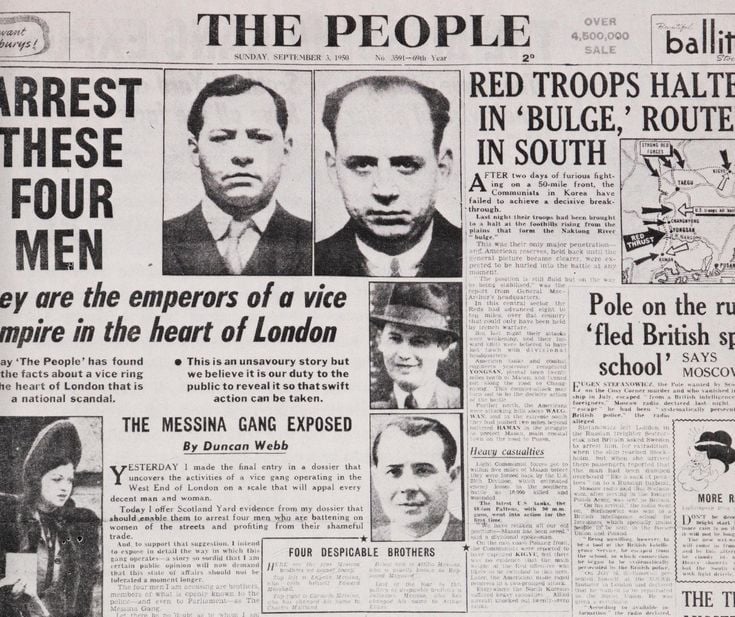
The silence surrounding this arrangement broke not through police initiative, via the press. In September 1950, investigative journalist Duncan Webb published a seminal exposé in The People titled "Arrest These Four Men." Webb listed the names and addresses of the Messina brothers, directly challenging the inertia of Scotland Yard and the C Division command. The publicity forced the police hierarchy to act. Superintendent Guy Mahon led a special task force that eventually dismantled the Messina ring, yet the delay in enforcement left a permanent stain on the reputation of the Savile Row station. The Messina affair established a pattern that would plague West End Central for decades: vice suppression occurred only when public visibility made corruption untenable.
The legal shifted radically with the publication of the Wolfenden Report in 1957 and the subsequent enactment of the Street Offences Act 1959. The legislation aimed to sweep prostitution off the streets, imposing heavy fines and imprisonment for soliciting. For the officers at West End Central, this Act transformed their working environment. The visible "streetwalker" almost overnight, resulting in a statistical collapse of soliciting convictions. Yet the trade did not disappear; it moved indoors, mutating into a network of "clip joints," hostess bars, and near-beer clubs. The table illustrates the immediate statistical impact of the Act on street-level enforcement.
Impact of Street Offences Act 1959 on Soliciting Convictions (England & Wales)
Year
Convictions for Soliciting
Operational Context
1958
19, 536
Pre-Act: Open solicitation in West End/Soho.
1959
12, 662
Transition: Act enforced mid-year.
1960
2, 828
Post-Act: Trade displaced to clubs and flats.
1961
2, 328
Stabilization: Police focus shifts to club raids.
This displacement created a more complex policing challenge. The "Clubs Office" at West End Central became the primary instrument for vice control. Officers were tasked with infiltrating unlicensed drinking dens and strip clubs where prostitution was brokered. This environment a grey zone of enforcement. The line between gathering intelligence and participating in the vice economy blurred. Detectives frequented the same bars as the criminals they pursued, leading to a culture where "licensing" became a euphemism for extortion. The station's Vice Squad operated with significant autonomy, and by the early 1960s, the internal culture at Savile Row had hardened into a "firm within a firm," insulated from the oversight of uniform command.
The rot within West End Central was exposed to the world in 1963 through the actions of Detective Sergeant Harold "Tanky" Challenor. A decorated SAS war hero, Challenor was regarded by his superiors as the "Scourge of Soho," a results-driven officer who cleared the streets of undesirable elements. His methods, yet, relied on systematic fabrication of evidence. The scandal erupted during the state visit of Queen Frederika of Greece in July 1963. Demonstrators protested the Greek monarchy's human rights record outside Claridge's Hotel. Challenor and his team arrested several protesters, including Donald Rooum, a cartoonist and member of the National Council for Civil Liberties.
In the charge room at West End Central, Challenor produced half-bricks, claiming he found them in the pockets of the accused. This practice of "brick planting" was a crude method to secure convictions for carrying offensive weapons. Rooum, yet, was a meticulous defendant. He handed his clothes to his solicitor for forensic analysis, which proved the absence of brick dust in his pockets. The subsequent inquiry unraveled Challenor's operation. It emerged that Challenor, suffering from undiagnosed paranoid schizophrenia, had been brutalizing suspects in the station while singing "Bongo, Bongo, Bongo, I Don't Want to Leave the Congo." even with his mental state, his colleagues, PCs Birch, Gibson, and others, had facilitated his fabrications, revealing a widespread code of silence that protected corruption and incompetence within the station.
The Challenor affair resulted in a statutory inquiry and the eventual imprisonment of three junior officers, while Challenor himself was found unfit to plead and committed to a psychiatric hospital. The scandal shattered the public trust in West End Central. It demonstrated that the station's "hard-hitting" reputation was built on a foundation of perjury and violence. The inquiry showed that senior officers at Savile Row had ignored clear warning signs of Challenor's instability because his arrest numbers were high. This utilitarian method to justice, prioritizing metrics over legality, defined the station's command structure throughout the 1960s.
By 1967, the criminal of the West End was changing again. The Kray twins and the Richardson gang, though based in the East and South London respectively, frequented the West End's gambling clubs, bringing a higher caliber of violence and organized crime into C Division's territory. The Gaming Act of 1968 sought to regulate the proliferation of casinos that had sprung up in the vacuum of the post-Wolfenden era. West End Central found itself policing a multi-million-pound gaming industry, a sector that offered even greater opportunities for graft than the street prostitution of the 1940s. The station's detectives, already compromised by the legacy of the Messina and Challenor eras, were ill-equipped to resist the lucrative bribes offered by the new casino bosses.
As the 1960s closed, West End Central Police Station remained the physical and operational heart of London's vice policing, its moral authority was in ruins. The suppression of street vice had professionalized the industry, driving it into the hands of organized crime syndicates that the police were either unable to catch or unwilling to pursue. The stage was set for the wholesale corruption of the 1970s, where the station would host the Obscene Publications Squad, a unit that would eventually become synonymous with the systematic bribery network known as "The Firm." The post-war era at Savile Row began with the passive tolerance of the Messinas and ended with the active fabrication of evidence by Challenor, a trajectory that tracked the decline of ethical policing in the capital's most volatile district.
The Beatles Rooftop Concert Police Intervention 1969
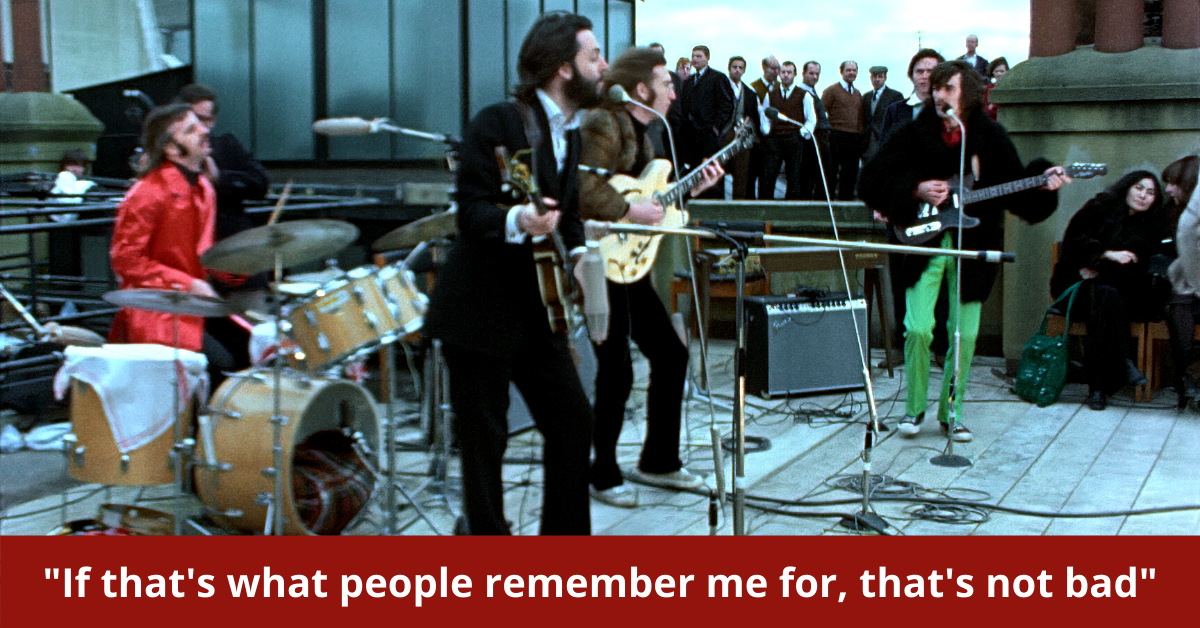
The geographic proximity between West End Central Police Station at 27 Savile Row and the Apple Corps headquarters at 3 Savile Row stands as the primary logistical factor in the events of January 30, 1969. Separated by less than 250 meters of pavement, the two buildings represented the opposing poles of late 1960s London: the rigid, statutory authority of the Metropolitan Police and the chaotic, well-funded counterculture of The Beatles. When the band began their unannounced performance on the roof at approximately 12: 30 PM, the acoustics of the street, a canyon of brick and stone designed to trap sound, funneled the amplification directly toward the station's windows. The response from West End Central was not a coordinated raid a reaction to an immediate, localized public nuisance that was physically shaking the windows of the divisional headquarters.
The station's duty log for that afternoon recorded a surge of telephone complaints beginning minutes after the chords of "Get Back" reverberated through Mayfair. The complainants were not residential tenants the commercial occupants of the Row: high-end tailors, wool merchants, and financial institutions who viewed the noise as a direct impediment to trade. Stanley Davis, a manager at the Royal Bank of Scotland branch located nearby, was identified in subsequent reports as one of the primary callers, citing the disruption to business operations. For the officers manning the desk at West End Central, the situation presented a procedural headache rather than a criminal emergency. The noise was audible inside the station itself, rendering the complaints redundant yet requiring a formal response under the Metropolitan Police Act.
West End Central dispatched a small unit to address the disturbance. The choice of personnel indicates the station viewed the incident as a low-priority noise abatement matter rather than a high- operation. The responding officers were Constable Ray Shayler and Constable Ray Dagg, the latter a 19-year-old probationer with only six months of service. They were accompanied by a duty sergeant, Ray Trevillin, creating a coincidental trio of "Rays" that has since become a footnote in police folklore. The deployment of a probationary constable to handle the world's most famous musicians suggests the station hierarchy underestimated the of the event, or perhaps viewed it as a routine "breach of the peace" best handled by uniformed officers on the beat.
West End Central Response Unit, Jan 30, 1969
Officer
Rank/Role
Service Length
Action Taken
Ray Dagg
Police Constable (PC 782C)
Probationer (6 months)
Issued arrest threat to Mal Evans; negotiated shutdown.
Ray Shayler
Police Constable
Constable
Secured roof access; supported Dagg.
Ray Trevillin
Sergeant
Duty Sergeant
Oversaw initial deployment from 27 Savile Row.
Upon arrival at 3 Savile Row, the officers faced immediate obstruction from Apple Corps staff in the lobby. The station's authority was temporarily stalled by the "soft" security of the building, who attempted to delay the police to allow the concert to continue. Dagg and Shayler, adhering to standard procedure for a noise complaint, insisted on ascending to the source of the disturbance. The delay in the lobby allowed the band to perform for approximately 42 minutes. Once the officers gained access to the roof, they found themselves in a precarious operational environment: a high-altitude, wind-swept platform crowded with film crew, heavy equipment, and four musicians who were technically trespassing on their own roof if their actions constituted a breach of the peace.
The legal basis for the intervention relied on Section 54 of the Metropolitan Police Act 1839, which prohibits "nuisances by persons in thoroughfares," specifically the making of loud noises that annoy inhabitants. Yet, the application of this statute on private property was legally complex. PC Dagg later admitted that his threat to arrest the band was a tactical bluff. Without a warrant, the power of arrest on private premises for a noise nuisance was non-existent unless the officer witnessed a breach of the peace that threatened violence or public safety. Dagg used the threat of arrest for "obstruction of a police officer in the execution of his duty" as a lever to force compliance, targeting Beatles road manager Mal Evans rather than the musicians directly.
The interaction on the roof was captured on film, preserving a rare document of West End Central's operational style in 1969. Dagg, even with his youth, maintained a rigid professional demeanor, refusing to be charmed by the celebrity status of the offenders. He informed Evans that the noise was causing a traffic standstill in the street , a claim supported by the crowd of onlookers blocking the roadway, and that the station had received 30 complaints in a matter of minutes. The pressure worked. Evans disconnected the amplifiers for George Harrison and John Lennon, ending the performance. The station's objective was achieved not through handcuffs, through the successful application of pressure on the support staff.
Following the event, the officers returned to 27 Savile Row to file their reports. In a station frequently dealing with the violent excesses of the Kray twins, Soho vice rings, and armed robbery, the rooftop concert was a minor administrative blip. PC Shayler later noted that he did not even enter the incident into his personal pocket book, viewing it as a resolved nuisance call with no arrests made. The station logs reflect a "job done" status. The absence of arrests saved West End Central from the paperwork and media circus that would have ensued had they hauled John Lennon into the cells at Savile Row, yet it also demonstrated the discretionary power inherent in the British policing model of the era.
The intervention at 3 Savile Row remains a distinct data point in the history of West End Central because it represents the intersection of the station's localized duty with global cultural history. While the station is frequently associated with the corruption scandals of the 1970s or the heavy-handed policing of Soho clubs, the 1969 incident displays a different facet: the routine enforcement of public order by young officers who treated rock stars with the same bureaucratic indifference they applied to street hawkers. The station's proximity to the event meant that West End Central was an unwitting participant in the Beatles' final public act, serving as the antagonist that brought the curtain down on the 1960s.
Institutional Corruption and the Obscene Publications Squad 1970, 1976
World War II Command and Blitz Damage Reports
The early 1970s marked the nadir of ethical policing at West End Central, a period defined by the widespread, industrial- corruption of the Obscene Publications Squad (OPS). Known colloquially as the "Dirty Squad," this unit, while ostensibly headquartered at Scotland Yard, operated its primary enforcement racket within the jurisdiction of West End Central, specifically the pornographic bookshops and strip clubs of Soho. The station on Savile Row became the nexus for a protection racket so entrenched that it functioned less like a law enforcement agency and more like a licensed criminal syndicate. At the heart of this corruption was the "licensing" system, a euphemism for the weekly extortion payments demanded from pornographers to avoid closure. The trade in hardcore pornography, technically illegal under the Obscene Publications Act 1959, exploded in profitability during this era. Detective Chief Superintendent Bill Moody, the head of the OPS, recognized that regulation was more lucrative than prohibition. Under his command, the squad enforced a strict monopoly: only those who paid "the script" were permitted to operate. The mechanics of the graft were bureaucratically precise. A pornographer like James Humphreys, the self-styled "Emperor of Porn," would pay a weekly stipend to the squad. In return, he received immunity from genuine prosecution. When raids were politically necessary to satisfy the Home Office or public outcry, officers from West End Central or the OPS would telephone the shop owners in advance. The owners would remove the "hard" material, depicting explicit sexual acts, and leave only "soft" glamour magazines. The police would then seize this low-value stock, arrest a sacrificial employee who would plead guilty and pay a fine, and the business would resume within hours. The seized material was frequently recycled, sold back to the pornographers by the officers who had confiscated it. The hierarchy of corruption extended from the street to the highest echelons of the Metropolitan Police. Constables on the beat in the West End collected £5 to £10 a week, while senior detectives demanded thousands. Commander Kenneth Drury, head of the Flying Squad, and Commander Wally Virgo, head of the Serious Crime Squad, were both implicated in the network. The brazenness of their conduct was exemplified by Drury, who in 1972 was photographed vacationing in Cyprus with James Humphreys and his wife, a trip entirely funded by the pornographer. This image, published by *The Sunday People*, became the catalyst for the network's unraveling. The of the bribery was recorded with meticulous detail by Humphreys in a series of diaries kept in a wall safe at his home. These ledgers, later seized by anti-corruption investigators, documented payments totaling tens of thousands of pounds, millions in 2026 currency. The entries revealed that the corruption was not limited to the OPS; it permeated the C Division Clubs and Vice Unit based directly out of West End Central. This local unit, tasked with policing prostitution and gaming, worked in tandem with the OPS to ensure that the vice trade in Soho remained a closed shop, accessible only to those who paid their dues to the "Firm in a Firm." The arrival of Sir Robert Mark as Commissioner in 1972 signaled the end of this era of impunity. Mark, famously declaring that "a good police force is one that catches more criminals than it employs," established the A10 anti-corruption branch. This unit, the of its kind, was staffed by uniformed officers rather than detectives, a deliberate move to bypass the brotherhood of the CID. The investigation into the West End networks was ruthless. Humphreys, facing a long prison sentence for an unrelated assault, turned Queen's Evidence, providing the testimony and the diaries that would destroy the Dirty Squad. The subsequent purge decimated the ranks of West End Central and the specialist squads. In 1976 and 1977, a series of high-profile trials at the Old Bailey saw the conviction of senior officers who had once been untouchable. Detective Chief Superintendent Bill Moody and Commander Wally Virgo were sentenced to twelve years in prison, the harshest sentences ever handed down to British police officers at that time. The presiding judge, Mr. Justice Mars-Jones, remarked that the evidence revealed "corruption on a which beggars description." The from the scandal fundamentally altered the operational structure of West End Central. The autonomy of the CID was curtailed, and the specialist squads were disbanded or restructured under uniformed command. The "Dirty Squad" was dissolved, its responsibilities transferred and diluted to prevent the re-emergence of such a centralized graft network. Yet, the legacy of the 1970s remained a stain on the station's history, a reminder of how easily the guardians of the law could become its most violators when the profits of vice outweighed the risk of detection.
Operation Countryman Investigations into West End Officers
By 1978, the corruption rotting the Metropolitan Police had metastasized into a "Firm within a Firm," a criminal enterprise operating behind the shield of the warrant card. The epicenter of this graft was the West End, specifically the lucrative vice dens of Soho, which fell under the jurisdiction of West End Central Police Station. The Home Office, alarmed by the of the rot, authorized Operation Countryman, an external inquiry led by Arthur Hambleton, the Chief Constable of Dorset. His mandate was to excise a network of detectives who functioned less as law enforcers and more as uniformed enforcers for organized crime.
West End Central, as the headquarters of 'C' Division, served as the operational heart for this syndicate. The station's proximity to the sex shops, clip joints, and unlicensed bars of Soho made it the primary collection point for the "pavement tax", bribes paid by vice barons to ensure police protection. The architect of this system was Detective Chief Superintendent Bill Moody. Joining West End Central as a Detective Inspector in 1965, Moody constructed an industrial- protection racket. He monetized every aspect of the vice trade, from the licensing of pornographic bookstores to the suppression of rival gangs. By the time he ascended to command the Obscene Publications Squad, colloquially known as the "Dirty Squad", Moody had cemented a symbiotic alliance between West End detectives and the "Syndicate" led by Soho crime lord Bernie Silver.
The mechanics of this corruption were crude yet. Officers at West End Central routinely alerted Silver's associates to impending raids, allowing them to sanitize their premises of hard-core pornography or illicit alcohol. In exchange, the Syndicate provided envelopes of cash, known as "drink," which were distributed according to rank. The station became a of silence; honest officers found themselves or threatened. Jackie Malton, a Detective Chief Inspector who later inspired the series Prime Suspect, described the atmosphere at West End Central as toxic. Upon her transfer to the station, she witnessed colleagues planting drugs on suspects and fabricating evidence. When she refused to participate in the graft, she was ostracized, her reports ignored by a chain of command deeply compromised by the very criminals they were sworn to pursue.
Operation Countryman investigators, disparagingly nicknamed "The Swedey" by the Met's sophisticated urban detectives, faced widespread obstruction. Files from secure offices; surveillance were tipped off by their handlers within the force. The investigation identified a "corrupt network" that extended from the constables on the Savile Row beat to the highest echelons of Scotland Yard. Evidence pointed to senior officers, including those at the rank of Commander, who not only sanctioned the bribery actively sabotaged the inquiry to protect their pensions and reputations. The "Dirty Squad," while technically a specialist unit, operated hand-in-glove with West End Central's CID, ensuring that the flow of illicit revenue from Soho remained uninterrupted.
The findings of Operation Countryman were devastating, yet the judicial outcome was anemic. The Director of Public Prosecutions, citing "insufficient evidence," declined to prosecute the majority of the implicated officers. Instead of prison cells, of the corrupt detectives were allowed to retire early on full pensions, their crimes buried under the Official Secrets Act. The report itself was suppressed, its explosive contents kept from the public eye to preserve confidence in the police service. yet, the rot at West End Central did not end with the closure of Countryman. The culture of impunity well into the 1980s. In 1986, Inspector Norman McGowan, who ran the night shift at West End Central, was jailed for stealing drugs seized during raids and conspiring to pervert the course of justice, a clear confirmation that the station's "rotten" core remained intact long after the Dorset investigators had been sent home.
The legacy of this era is a catalogue of miscarriages of justice and a of public trust. The "Firm within a Firm" at West End Central demonstrated how easily the of law enforcement could be hijacked by the very underworld it was meant to. The station on Savile Row, designed to project the authority of the state, had instead become a broker for the vice trade, selling immunity to the highest bidder while the innocent paid the price.
Tactical Deployment during the Spaghetti House Siege 1975
Post-War Vice Suppression in Soho 1946, 1968
The Spaghetti House Siege of September 1975 stands as a defining moment in the operational history of London's police, marking the transition from traditional crime suppression to sophisticated counter-terrorism and psychological warfare. While the siege itself took place at 77 Knightsbridge, technically within the jurisdiction of the "B" Division (Chelsea), the tactical mobilization required to contain the incident drew heavily upon the resources, manpower, and command structures of the neighboring "C" Division, headquartered at West End Central. For the officers stationed at Savile Row, the event served as a grim dress rehearsal for the urban warfare that would characterize the capital for the two decades, particularly the subsequent Balcombe Street Siege and the Iranian Embassy emergency. On the night of September 28, three gunmen, Franklin Davies, Wesley Dick, and Anthony Munroe, entered the Spaghetti House restaurant with the intent to rob the weekly takings. The robbery failed when a staff member escaped and alerted the police. Within minutes, the streets of Knightsbridge were flooded with patrol cars. West End Central, serving as the primary tactical reserve for the West End, immediately activated its emergency. Officers from Savile Row were deployed to establish the outer perimeter of what would become a six-day standoff. The sheer of the containment, involving over 400 officers, required a level of cross-divisional coordination that tested the logistical capabilities of the Metropolitan Police Service to its limit. The siege presented a unique problem for the command hierarchy. The gunmen claimed to represent the "Black Liberation Army," a splinter group of the Black Panthers, and demanded safe passage to Jamaica. This political dimension escalated the incident from a botched robbery to a chance terrorist event. Sir Robert Mark, the Commissioner, established a "wait and see" strategy that prioritized patience over immediate force. This method was a radical departure from the aggressive tactics employed by the Flying Squad or the heavy-handed raids frequently launched from West End Central against Soho vice dens. The officers on the cordon, of whom were accustomed to the rough-and-tumble policing of the West End's nightlife, were ordered to hold their positions and wait, a test of discipline that lasted nearly a week. Technologically, the siege marked the operational use of fiber optic surveillance by the Metropolitan Police. Technical support units drilled small holes through the walls of the restaurant's basement, inserting tiny cameras to monitor the hostages and their captors. This feed provided real-time intelligence to the command post, allowing decision-makers to assess the mental state of the gunmen. The psychological profiling was led by Dr. Peter Scott, a forensic psychiatrist from Maudsley Hospital, who advised the police to play a long game. Scott predicted the development of what is known as Stockholm Syndrome, where the hostages would begin to bond with their captors. His advice to "do nothing" and let fatigue wear down the gunmen became the template for future hostage negotiations. For the rank-and-file officers from West End Central standing guard on the perimeter, the siege was a lesson in the weaponization of information. The police actively collaborated with the media to demoralize the gunmen. In a calculated move, the police convinced the *Daily Mail* to suppress a scoop regarding the arrest of a confederate. Instead, negotiators fed false information to Davies, telling him that his associates had abandoned him and were selling his story to the press. This psychological manipulation shattered the group's cohesion. The use of the media as a tactical asset was a method that would be refined and used repeatedly in subsequent years, particularly during the high-pressure operations run out of the West End against the IRA. The resolution of the siege came not with a shootout, with a surrender. On October 3, the gunmen gave up their weapons. The hostages were released unharmed. The gunmen were arrested and initially taken to Cannon Row, the processing and intelligence gathering involved the entire apparatus of the West End's detective force. The Special Branch, which maintained a significant presence at West End Central due to the concentration of embassies and government buildings in the "C" Division, took a keen interest in the "Black Liberation Army" connection. Although the courts later determined the motive was primarily criminal rather than political, the incident forced the police to treat every armed standoff as a chance terrorist event. The legacy of the Spaghetti House Siege for West End Central was. It exposed the need for specialized firearms training and better equipment. In 1975, the standard problem for detectives was still the Webley or the Smith & Wesson Model 10, and protective gear was virtually non-existent. The "Blue Berets" of the D11 firearms unit, who were deployed to the siege, began to work more closely with divisional stations to provide tactical support. The lessons learned in Knightsbridge regarding containment, negotiation, and the management of the press were integrated into the training manuals at Savile Row. When the IRA Active Service Unit was cornered at Balcombe Street just two months later, the tactics refined at the Spaghetti House, patience, psychological pressure, and total containment, were applied with clinical precision. also, the siege highlighted the changing demographic and political of London. The "C" Division had to adapt to policing a city where criminal acts were increasingly cloaked in political rhetoric. The officers at Savile Row, traditionally focused on the protection of high-status property and the suppression of vice, found themselves on the front lines of an ideological conflict. The "wait and see" doctrine required a shift in mindset from the reactive policing of the post-war era to the calculated, intelligence-led operations of the late 20th century. The successful resolution of the Spaghetti House Siege without loss of life validated this new method, establishing a precedent that would govern the Metropolitan Police's response to armed containment for decades to come. The operational logs from the period show a distinct shift in how West End Central managed its resources following the siege. There was a greater emphasis on rapid deployment of containment teams and the establishment of secure command posts. The station's role as a logistical hub for the West End became even more serious, as it provided the manpower reserves necessary to sustain the long-duration cordons that terrorism response required. The Spaghetti House Siege, therefore, was not just an event in a neighboring district; it was the catalyst that modernized the tactical doctrine of the West End Central Police Station, preparing it for the turbulent years that lay ahead.
Public Order Management during the 1990 Poll Tax Riots
The operational history of West End Central Police Station is bisected by the events of March 31, 1990. Before this date, the station at 27 Savile Row functioned primarily as the administrative heart of "C" Division (St James and Mayfair), a jurisdiction characterized by high-value retail security and vice policing in Soho. After the Poll Tax Riots, the station became a fortified node in a new era of paramilitary public order management. The riot, which resulted in 339 arrests and injuries to 113 police officers, forced a total re-evaluation of how the Metropolitan Police defended the commercial arteries of the West End. The tactical failure began with a severe underestimation of crowd density. Intelligence reports delivered to West End Central in the days preceding the march predicted a turnout of 60, 000. The actual number swelled to over 200, 000. "C" Division command, operating from the Savile Row, found its standard containment instantly obsolete. The station's primary responsibility was the security of the affluent commercial grid: Regent Street, Oxford Street, and Bond Street. By 16: 00, the containment lines at Trafalgar Square collapsed, and the riot did not disperse; it migrated north, directly into West End Central's patch. This northward surge represented a catastrophic breach of the "sterile zone" tactics employed to protect Mayfair. As the command structure at Scotland Yard struggled with a swamped radio network, the Computer Aided Dispatch (CAD) system reportedly delayed responses by over five minutes due to message volume, West End Central became an island of authority in a sea of disorder. The mob moved up Regent Street, parallel to Savile Row, shattering the windows of Austin Reed and other luxury retailers that looked to West End Central for protection. The station's proximity to the looting, less than 150 meters from the chaos, meant that officers deploying from the station were engaging in hand-to-hand combat immediately upon exiting the building.
Metric
Data (March 31, 1990)
Impact on West End Central
Total Arrests
339
Cells at Savile Row exceeded safe capacity by 200% within 4 hours.
Officer Injuries
113 (Met-wide)
High casualty rate among C Division officers defending Regent St retail.
Property Damage
£400, 000 (est. immediate)
Political pressure from Mayfair associations to harden station response.
Radio Traffic
System Overload
Station resorted to landline coordination; loss of unit tracking.
The logistical inside 27 Savile Row during the night of March 31 was. Designed in 1940 with a focus on durability rather than mass processing, the station's custody suite was quickly overwhelmed. The building's architecture, defined by its 1930s functionalist modernism and low ceilings, created a suffocating environment as vans delivered waves of detainees. Standard separation failed; the station's corridors were converted into temporary holding areas. The administrative of "C" Division ground to a halt, replaced by a triage system for processing charges ranging from criminal damage to grievous bodily harm. The riot also marked the operational debut of a harder, more militarized policing style for the officers based at West End Central. Prior to 1990, the standard uniform for public order was the flat cap and a wooden truncheon. The ferocity of the Poll Tax Riot, where scaffolding poles and masonry were used against police lines, forced an immediate equipment evolution. Officers returning to Savile Row that night did so with shattered equipment and significant injuries. This event accelerated the adoption of the NATO helmet, flame-retardant in total, and the long acrylic shield as standard problem for the Territorial Support Group (TSG) units that would frequently stage from West End Central in subsequent decades. The Metcalf Report, commissioned to investigate the police failure, identified a serious breakdown in communication between the forward commanders on the ground and the divisional HQs like West End Central. The report noted that "officers working under different lines of command were frequently unaware of tactics used by other officers." For West End Central, this meant that while its officers were attempting to secure the looting sites on Regent Street, mounted units from other divisions were charging crowds in ways that pushed rioters back into the very areas "C" Division was trying to clear. This absence of synchronization turned the streets around Savile Row into a chaotic feedback loop of dispersal and regrouping. In the years that followed, the lessons learned at West End Central during the Poll Tax Riots directly influenced the development of the "kettling" tactic. The inability to contain the 1990 breakout proved that fluid crowds could overwhelm static defense lines in the complex geography of the West End. By the time of the G20 protests in 2009 and the student protests of 2010, the strategy had shifted. Instead of defending specific buildings, police would contain the crowd entirely. West End Central served as a command node for these later operations, using the data from 1990 to map the choke points of Regent Street and Oxford Circus. The station's role evolved from a reactive defender of property to a proactive hub of crowd control. The physical legacy of the riot was also visible in the station's eventual refit. The 1993 overhaul of West End Central, which added a nine-storey extension and filled in the lightwell, was driven in part by the need for secure, high-capacity processing facilities that were absent in 1990. The station had to be ready for mass arrests on a that the Earl of Burlington, the site's original developer, could never have conceived. The riot ended the era of "policing by consent" in the context of mass demonstration, replacing it with a data-driven, equipment-heavy doctrine of public order management. Even as the station closed its doors to the public in 2017 and faced redevelopment in the 2020s, the ghost of the Poll Tax Riot remained in its operational DNA. The CCTV networks that blanket the West End, the rapid-response TSG units, and the sterile-zone for Mayfair are all direct descendants of the failures witnessed by "C" Division on that Saturday in March. The riot proved that the architecture of 27 Savile Row was insufficient if the streets outside could be lost to the mob; the response was to turn the streets themselves into a controlled environment, a strategy that defines London policing to this day.
Facility Modernization and Asbestos Removal 2002, 2006
The Beatles Rooftop Concert Police Intervention 1969
The introduction of the Control of Asbestos at Work Regulations in 2002 forced a confrontation with the material history of 27 Savile Row. Built between 1939 and 1940, the station's steel-framed structure relied heavily on asbestos for fireproofing and insulation, a standard practice of the pre-war era that became a toxic liability by the turn of the millennium. The new legislation imposed a strict "duty to manage" on the Metropolitan Police Authority (MPA), necessitating an invasive survey of the Grade II equivalent structure. This audit revealed that the aging facility required immediate and extensive remediation to protect officers, staff, and detainees from fiber exposure. The modernization project, spanning from late 2002 through 2006, was not a cosmetic refurbishment a structural intervention. Specialist contractors had to isolate specific zones of the building, creating negative pressure environments to safely strip asbestos lagging from the steel columns and service ducts. This process was particularly complex due to the station's layout, which included a deep basement and a lightwell that had been infilled during previous works in 1993. The removal operations frequently dictated the pace of all other modernization efforts, as areas had to be certified clean before other trades could enter to upgrade electrical and mechanical systems. Concurrent with the asbestos abatement, the station underwent a technological overhaul to accommodate the Airwave digital radio network. The Metropolitan Police Service (MPS) began rolling out this secure communications system in the early 2000s to replace the insecure analogue radios that had been in use since the 1970s. West End Central, serving the high-density C Division, required significant infrastructure upgrades to support the new TETRA (Terrestrial Trunked Radio) technology. Engineers installed new cabling trunks and roof-mounted antennae, integrating the 1940s limestone shell with 21st-century digital command capabilities. This integration allowed for better coordination during major public order events in the West End, a frequent operational requirement for the station. The custody suites also received serious attention during this window. Following a series of deaths in custody across the UK in the 1990s, the Home Office had issued revised design guides for police cells. The refurbishment at West End Central involved retrofitting cells to eliminate ligature points and improve monitoring lines of sight. Ventilation systems, previously choked by the building's antiquated ductwork, were replaced to meet modern health standards. These changes were essential to maintain the station's designation as a primary custody center for Westminster, capable of processing the high volume of arrests generated by the Soho and Mayfair night economy. Compliance with the Disability Discrimination Act (DDA) 1995, which had final implementation deadlines in 2004, drove further structural alterations. The station's " -like" design, with its raised ground floor and heavy doors, presented severe blocks to access. The modernization program introduced ramps, automated doors, and lowered counter sections in the public front office. These modifications aimed to make the station accessible to all members of the public, a legal requirement that the MPA could no longer defer. Operational continuity remained a serious challenge throughout the four-year period. Unlike smaller stations that could be temporarily shuttered, West End Central was too pivotal to close completely. The MPS adopted a phased method, shifting specific functions to neighboring stations such as Charing Cross and Marylebone while works progressed floor by floor. This logistical juggling act required precise coordination to ensure that response times in the West End remained unaffected. The custody suite closures were particularly disruptive, forcing arresting officers to transport detainees to alternative sites, adding travel time and to borough resources. By 2006, the station had emerged from the most intensive period of works since its post-war repair. The removal of the most dangerous asbestos deposits and the installation of modern communications infrastructure extended the operational life of 27 Savile Row by another decade. The project, while costly and disruptive, succeeded in bringing a pre-war relic into compliance with modern safety and accessibility statutes. Yet, the fundamental constraints of the site, its low ceilings, absence of natural light, and rigid floor plan, remained unsolved, foreshadowing the eventual decision to decommission the facility entirely in the following decade.
Ramps, automated entry, and lowered front counters.
Retention Strategy during Estate Rationalization 2013, 2022
The operational lifespan of West End Central Police Station between 2013 and 2022 was defined by a calculated delay in disposal, serving as a strategic between the Mayor's Office for Policing and Crime (MOPAC) initial rationalization plans and the eventual consolidation of Westminster policing. While the 2013 Police and Crime Plan authorized the closure of 63 front counters across London, West End Central at 27 Savile Row was initially categorized as a retained asset. This decision did not from the building's suitability for modern policing from the logistical need of maintaining a 24-hour operational footprint in Mayfair while the Metropolitan Police Service (MPS) prepared its alternative flagship at Charing Cross.
In 2013, the MOPAC estate strategy, frequently termed the "One Met Model," sought to reduce the police estate's running costs by 20%, aiming for £500 million in savings. At this juncture, West End Central survived the immediate cull that claimed nearby historic stations. Its survival was inextricably linked to the "Westminster Transformation Programme," a capital project designed to refurbish Charing Cross Police Station on Agar Street. MOPAC documents from 2017 and 2018 explicitly state that the retention of Savile Row was temporary; the station was to remain operational only until the £35. 1 million refurbishment of Charing Cross was complete. Once the Agar Street facility could accommodate the merged operational command units, West End Central would be surplus to requirements.
The physical constraints of the 1940s structure rendered long-term retention financially unviable. Designed by Sir John Burnet, Tait, and Lorne, the station functioned as a, with a bomb-proof basement and heavy masonry suited to wartime resilience rather than 21st-century community policing. Internal audits revealed severe limitations: ceiling heights in operational areas ranged from 1. 8 to 2. 4 meters, preventing the installation of modern HVAC and digital infrastructure. also, the building absence open-plan floor plates necessary for the "agile working" models introduced by the MPS to increase officer density. The cost to retrofit the Grade II-adjacent structure was deemed prohibitive compared to the chance capital receipt from its sale.
By 2017, the Public Access Strategy signaled the end of public engagement at the site. The front counter at West End Central, which had served the public since World War II, was permanently closed. This closure reduced the building to a logistical base for response teams and a holding facility, stripping it of its community-facing function. The station's cell capacity, once a serious asset for processing arrests from the West End's nightlife, was also phased out as custody operations were centralized at the modernized Charing Cross suite. This operational drawdown turned the station into a "ghost site" between 2018 and 2020, occupied by officers closed to the citizens they served.
The financial imperative to liquidate the asset intensified following the COVID-19 pandemic. In April 2021, the MPS finalized the sale of the freehold interest in 27 Savile Row to the European real estate developer CPI Property Group. The transaction yielded approximately £56 million, a figure that underscored the between the building's operational utility and its real estate value. This capital receipt was serious for balancing the MOPAC budget, funding the Charing Cross refurbishment and other estate modernization projects. The table outlines the comparative disposal data for Westminster police assets during this rationalization period.
The sale of West End Central in 2021 marked the final of the traditional "divisional" model of policing in the West End, where distinct stations like Vine Street and Savile Row served specific precincts. The strategy shifted to a centralized "Basic Command Unit" (BCU) model, covering Westminster, Hammersmith, and Fulham. Officers previously based at Savile Row were relocated to the refurbished Charing Cross or the collaborative workspace at the civic center. This consolidation allowed the MPS to reduce its annual running costs, which for the combined Charing Cross and West End Central estate had exceeded £3. 3 million prior to the sale.
Even with the sale, the station played a final, unplanned role in the policing of central London protests between 2019 and 2021. During Extinction Rebellion demonstrations and "Kill the Bill" protests, the station's proximity to Regent Street and Oxford Circus made it a tactical forward operating base. Commanders used the building's secure courtyard and basement levels for logistics and officer respite, delaying the final handover to developers. This usage highlighted the one unreplicable asset of the site: its location at the strategic heart of the West End. The loss of this forward base raised concerns among operational commanders about response times to major incidents in Mayfair, a gap the MPS aimed to fill with mobile patrols rather than fixed assets.
By 2022, the building sat empty, awaiting redevelopment into high-end office space and a restaurant, as proposed by the new owners. The "retention" strategy of 2013, 2022 was revealed not as a commitment to the site, as a managed decline. The station was held in reserve solely to facilitate the construction of its replacement, proving that in the modern metrics of London policing, real estate value and maintenance liabilities outweighed historical continuity or geographic convenience.
Current Operational Metrics and Deployment 2023, 2026
By March 2026, the physical entity known as West End Central Police Station at 27 Savile Row has ceased to exist as an operational asset. The " -like" 1940s structure, once the headquarters of the C Division and a staging ground for policing the Beatles' rooftop concert, has been surrendered to the prime real estate market. In May 2024, Westminster City Council's Major Planning Committee approved a redevelopment plan by Henigman and PLP Architecture to convert the site into 6, 000 square meters of Grade A office space, a restaurant, and a basement training facility for the London Academy of Bespoke. This decision marked the final bureaucratic termination of the station's policing function, a process that began with the front desk closure in 2017 and the total vacation of the premises in 2021.
The operational void left by the sale of West End Central has fundamentally altered the logistics of policing Westminster. For decades, the station provided immediate holding capacity and tactical support for the high-density retail and entertainment districts of Mayfair and Soho. Its closure forced the Metropolitan Police to consolidate operations at Charing Cross (Agar Street) and Paddington Green. This contraction occurred simultaneously with a sharp rise in specific crime categories across the borough. In the 12-month period ending November 2025, Westminster retained the highest Crime Risk Score of any London borough, with violent crime and sexual offenses reported at a rate of approximately 25 incidents per 1, 000 daytime population. The removal of the Savile Row base meant that officers arresting suspects in the heart of the West End faced longer transport times to custody suites, removing them from street patrol for extended periods.
Theft from the person, specifically the targeting of high-value watches and mobile phones, dominated the crime statistics for the area between 2023 and 2026. The "Rolex Ripper" phenomenon, where organized gangs targeted wealthy patrons leaving Mayfair clubs, exposed the limitations of a reduced physical footprint. Without the deterrent of the nearby Savile Row station, response times to rapid "snatch" offenses came under scrutiny. Data from 2024 showed that while robbery charge rates remained stagnant at roughly 6. 5%, the volume of unsolved theft cases where no suspect was identified hovered near 80% for vehicle crimes and 50% for robbery. The operational strategy shifted toward mobile response teams and facial recognition deployments in high-footfall areas like Oxford Circus, attempting to substitute digital surveillance for the lost brick-and-mortar presence.
The most significant on the West End policing apparatus during this period came from the relentless schedule of large- public order events. West End Central had historically served as a primary logistics hub for managing demonstrations in central London. Its absence was felt acutely during "Operation Brocks," the codename for the policing of protests related to the conflict in Gaza and Israel. Between April 2024 and March 2025 alone, the Metropolitan Police spent £24. 9 million on this single operation. The cumulative cost of policing protests in the capital exceeded £40 million by mid-2024, consuming thousands of officer shifts. Officers who would previously have deployed from Savile Row were instead bussed in from outlying boroughs, incurring significant overtime costs, £6. 1 million in overtime was recorded in just six months of Operation Brocks.
Custody capacity metrics further reveal the impact of the station's disposal. West End Central previously contributed approximately 28 cells to the capital's detention capability. By 2025, the Met's total custody estate had shrunk from 32 suites in 2015 to just 23 active suites, with a total capacity of roughly 774 cells. This reduction created bottlenecks during peak periods, such as New Year's Eve or major protest weekends. When Charing Cross reached capacity, arresting officers were forced to transport detainees to contingency suites in distant boroughs like Wandsworth or Islington, a process that could take an officer off the West End beat for four to six hours. This became a focal point of internal criticism following the Baroness Casey Review, which highlighted how resource stripping damaged frontline morale and effectiveness.
27 Savile Row approved for office/retail use (May 2024).
Protest Policing Cost
£24. 9 Million
Cost of "Operation Brocks" (Met only), April 2024, March 2025.
Custody Capacity
0 Cells (Site) / 774 (Force)
Reduction from ~850 Met-wide cells in 2015.
Westminster Crime Rate
Highest in London
Consistently ranked #1 for theft and violence risk (2025).
Theft Outcomes
~50% Unsolved
Robbery cases closed with "no suspect identified" (2024).
The "New Met for London" plan, launched to recover public trust, attempted to mitigate these physical losses with a focus on neighborhood policing. yet, the economic reality of the estate strategy, selling high-value assets like Savile Row to plug budget deficits, created a paradox. While the sale generated an estimated £50 million, the operational cost of policing the West End without a local base increased due to travel time, overtime, and logistics. The 2026 operational model for the West End relies heavily on the "Right Care, Right Person" initiative to reduce police time spent on mental health calls, theoretically freeing up officers to tackle the surge in retail crime and robbery. Yet, for the tailors of Savile Row and the residents of Mayfair, the departure of the police station symbolized the end of an era of localized security, replaced by a reactive, data-driven force that manages the district from a distance.
Why it matters: Illicit activities in Latin America generate significant profits for crime conglomerates, with money often being deposited in tax havens worldwide. Collaboration among investigative journalists is…
What do we know about Site Origins and Savile Row Development?
The origins of the site known as West End Central Police Station lie in the aristocratic ambitions of Richard Boyle, the 3rd Earl of Burlington. In 1733, the Daily Post reported that a "new pile of buildings" was to rise near Swallow Street, a development that would transform the Earl's garden estate into a grid of high-status housing.
What do we know about Construction of the Bomb-Proof Fortress?
The physical manifestation of the Metropolitan Police's modernization arrived in 1939, not with the subtle integration of the Georgian era, with the heavy, imposing permanence of Portland stone and steel. The construction of West End Central Police Station at 27 Savile Row marked a definitive break from the localized, ad-hoc policing methods of the 19th century.
What do we know about World War II Command and Blitz Damage Reports?
The West End Central Police Station, located at 27 Savile Row, commenced operations in 1940, transitioning from the cramped and antiquated Vine Street station just as the Luftwaffe began its systematic assault on London. Designed by the architectural firm Sir John Burnet, Tait & Lorne in collaboration with G.
What do we know about Post-War Vice Suppression in Soho?
By 1946, West End Central Police Station at 27 Savile Row functioned less as a community constabulary and more as a overlooking a containment zone. The six-story, steel-framed structure, opened in 1940, served as the headquarters for the Metropolitan Police's 'C' Division.
What do we know about The Beatles Rooftop Concert Police Intervention?
The geographic proximity between West End Central Police Station at 27 Savile Row and the Apple Corps headquarters at 3 Savile Row stands as the primary logistical factor in the events of January 30, 1969. Separated by less than 250 meters of pavement, the two buildings represented the opposing poles of late 1960s London: the rigid, statutory authority of the Metropolitan Police and the chaotic, well-funded counterculture of The Beatles.
What do we know about Institutional Corruption and the Obscene Publications Squad?
The early 1970s marked the nadir of ethical policing at West End Central, a period defined by the widespread, industrial- corruption of the Obscene Publications Squad (OPS). Known colloquially as the "Dirty Squad," this unit, while ostensibly headquartered at Scotland Yard, operated its primary enforcement racket within the jurisdiction of West End Central, specifically the pornographic bookshops and strip clubs of Soho.
What do we know about Operation Countryman Investigations into West End Officers?
By 1978, the corruption rotting the Metropolitan Police had metastasized into a "Firm within a Firm," a criminal enterprise operating behind the shield of the warrant card. The epicenter of this graft was the West End, specifically the lucrative vice dens of Soho, which fell under the jurisdiction of West End Central Police Station.
What do we know about Tactical Deployment during the Spaghetti House Siege?
The Spaghetti House Siege of September 1975 stands as a defining moment in the operational history of London's police, marking the transition from traditional crime suppression to sophisticated counter-terrorism and psychological warfare. While the siege itself took place at 77 Knightsbridge, technically within the jurisdiction of the "B" Division (Chelsea), the tactical mobilization required to contain the incident drew heavily upon the resources, manpower, and command structures of the neighboring "C" Division, headquartered at West End Central.
What do we know about Public Order Management during the Poll Tax Riots?
The operational history of West End Central Police Station is bisected by the events of March 31, 1990. Before this date, the station at 27 Savile Row functioned primarily as the administrative heart of "C" Division (St James and Mayfair), a jurisdiction characterized by high-value retail security and vice policing in Soho.
What do we know about Facility Modernization and Asbestos Removal?
The introduction of the Control of Asbestos at Work Regulations in 2002 forced a confrontation with the material history of 27 Savile Row. Built between 1939 and 1940, the station's steel-framed structure relied heavily on asbestos for fireproofing and insulation, a standard practice of the pre-war era that became a toxic liability by the turn of the millennium.
What do we know about Retention Strategy during Estate Rationalization?
The operational lifespan of West End Central Police Station between 2013 and 2022 was defined by a calculated delay in disposal, serving as a strategic between the Mayor's Office for Policing and Crime (MOPAC) initial rationalization plans and the eventual consolidation of Westminster policing. While the 2013 Police and Crime Plan authorized the closure of 63 front counters across London, West End Central at 27 Savile Row was initially categorized as a retained asset.
What do we know about Current Operational Metrics and Deployment?
By March 2026, the physical entity known as West End Central Police Station at 27 Savile Row has ceased to exist as an operational asset. The " -like" 1940s structure, once the headquarters of the C Division and a staging ground for policing the Beatles' rooftop concert, has been surrendered to the prime real estate market.
Why it matters: Megaprojects are notorious for exceeding their initial budgets and timelines, posing challenges for policymakers, developers, and stakeholders worldwide. Cost overruns, averaging 28% above the initial…
Why it matters: Seafarer abandonment cases have been on the rise, with significant implications for maritime workers globally. The complex nature of international shipping operations and legal disputes…
Why it matters: Cross-border custody disputes surged by 45% in 2024, highlighting the increasing complexity and frequency of international battles. Enforcement challenges of the Hague Convention on the…
Why it matters: SEO professionals rely on audit platforms like Ahrefs, SEMrush, and Moz to assess website health and link authority. However, caution is advised as these tools…
Why it matters: President Trump signed a federal budget bill with significant implications for wealth distribution in the U.S., including tax breaks for the wealthy and cuts to…
The big picture: States have rapidly implemented trigger laws and new bans post-Dobbs v. Jackson Women’s Health Organization, leading to significant disruptions in abortion access. Abortion restrictions have…
Get updates on this place
Get verified alerts when this file is updated (verification required).