Paytm is India’s original digital payments pioneer, operating as a Third-Party Application Provider (TPAP) under the Unified Payments Interface (UPI) ecosystem. Launched in 2010 as a prepaid mobile recharge platform, it evolved into a licensed payments bank in 2017 before a severe regulatory crackdown in 2024 stripped it of its banking privileges. Today, the app serves as a user interface for transaction facilitation, wealth management, and merchant services, routing payments through four partner banks: Axis Bank, HDFC Bank, State Bank of India (SBI), and YES Bank.
The application functions as a financial super-app. It combines UPI payments, ticket bookings (flight, train, bus), bill payments, and investment tools (stocks, mutual funds) into a single interface. Unlike its status between 2017 and 2024, Paytm no longer holds customer funds directly in its own banking accounts. It acts strictly as a technology, connecting users’ external bank accounts to the National Payments Corporation of India (NPCI) network.
The trajectory of Paytm changed fundamentally on January 31, 2024. For seven years, the app operated as a hybrid wallet-and-bank, issuing its own FASTags, holding savings accounts, and processing wallet transactions internally. The Reserve Bank of India (RBI) intervention dismantled this model, forcing a complete backend migration in policy shifts that broke PayTM.
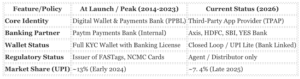
The RBI Ban (Press Release 2023-2024/1753): On January 31, 2024, the Reserve Bank of India ordered Paytm Payments Bank to stop accepting new deposits, credit transactions, or top-ups after March 15, 2024. The regulator “persistent non-compliances and continued material supervisory concerns.” This action killed the app’s ability to function as a bank, forcing it to migrate millions of users to external banking partners to survive.
FIU-IND Penalty (March 2024): The Financial Intelligence Unit-India imposed a ₹5. 49 crore penalty on the entity for violations of the Prevention of Money Laundering Act. The investigation linked specific accounts to illegal gambling proceeds, noting that the bank failed to put in place internal method to detect and report suspicious transactions. This incident severely damaged the platform’s reputation regarding data safety and compliance.
As of the latest verified update in 2026, Paytm has stabilized its operations by pivoting to a pure-play distributor model. New features focus on AI-driven expense categorization and “Gold Coins” loyalty rewards to retain users. The “Hide Payments” privacy feature was introduced to give users control over their transaction history visibility, a direct response to privacy concerns. While the app remains functional for UPI and bill payments, it competes strictly on user experience rather than the proprietary banking integration that once defined its edge.
Paytm is no longer the financial giant it was at its peak. Following the Reserve Bank of India’s (RBI) “business restriction” directive in January 2024, the app ceased to function as a bank. It operates strictly as a Third-Party Application Provider (TPAP), routing your money through Axis Bank, HDFC Bank, SBI, and YES Bank. The “Paytm Payments Bank” that once held your wallet balance is dead for new deposits. If you are a legacy user who remembers the “Paytm Karo” dominance of 2016, the 2026 version of this app is a different, humbler utility. It is a survivor. It processes UPI transactions reliably and offers a revived “Postpaid” credit line via Suryoday Small Finance Bank (launched September 2025), it carries the heavy baggage of regulatory penalties and trust deficits.
For the average user, Paytm is safe cluttered. It aggressively pushes loans, credit cards, and insurance products to offset the loss of its banking revenue. While it remains the third-largest UPI player with a ~7. 3% market share as of October 2025, it trails far behind PhonePe and Google Pay. The app charges “platform fees” (₹1 to ₹40) on bill payments, a cost avoid on other platforms. If you need a Merchant Soundbox or specific small-ticket credit, Paytm serves a purpose. For pure payments, it is a heavy, ad-laden tool that demands you pay for privileges that are free elsewhere.
Paytm has fundamentally altered its operational structure between 2024 and 2026. Following the Reserve Bank of India’s (RBI) directive shuttering Paytm Payments Bank in March 2024, the application transitioned from a bank-led model to a Third-Party Application Provider (TPAP). It no longer holds user funds directly. Instead, it routes transactions through four external commercial banks. This forced restructuring has introduced new costs for users, specifically platform fees, as the company pivots from interest-income monetization to a fee-based revenue model.
| Category |
Verified Status (March 2026) |
| App Name & Publisher |
Paytm (One97 Communications Limited) |
| License Status |
Third-Party App Provider (TPAP); Payment Aggregator (PA) license granted Nov 2025. Banking license restricted (Jan 2024). |
| Partner Banks (PSP) |
Axis Bank, HDFC Bank, State Bank of India (SBI), YES Bank. |
| UPI Market Share |
6. 87% by volume (January 2026 NPCI Data). Down from ~13% in Jan 2024. |
| Active User Base |
~100 Million Monthly Active Users (MAU); ~68-75 Million Monthly Transacting Users (MTU). |
| Cost Model |
Platform Fees: ₹1 to ₹6 on recharges/bill payments.
UPI: Free for P2P. |
| Data Jurisdiction |
India (Local storage mandated by RBI). |
| Key Regulatory Incident |
FIU-IND Penalty (March 2024): ₹5. 49 Crore fine for money laundering violations involving online gambling proceeds. |
| Financial Health |
Profitable in Q3 FY26 (Net Profit ₹225 Cr); Revenue ₹2, 194 Cr. |
Regulatory Audit: The Shift from Bank to Tech
The most significant change in Paytm’s history occurred on January 31, 2024. The RBI issued a directive under Section 35A of the Banking Regulation Act, 1949, barring Paytm Payments Bank from accepting new deposits or credit transactions after March 15, 2024. This action stripped the app of its core banking privileges. Consequently, Paytm migrated its UPI handles to four partner banks, Axis, HDFC, SBI, and YES Bank, to ensure continuity. Users see VPA handles ending in @ptsbi, @ptaxis, @pthdfc, or @ptyes, rather than the original @paytm handle which was directly linked to its internal bank.
The regulatory scrutiny extended beyond the RBI. On March 1, 2024, the Financial Intelligence Unit-India (FIU-IND) imposed a penalty of ₹5. 49 crore on the entity. The FIU’s investigation violations of the Prevention of Money Laundering Act (PMLA), specifically noting that “proceeds of crime” from illegal online gambling operations were routed through accounts held by Paytm Payments Bank. This specific finding dismantled the company’s defense that the regulatory blocks were technical or procedural.
Pricing Changes: The End of the Free Model
From its launch until 2023, Paytm operated largely on a “growth- ” model, subsidizing transactions to acquire users. This changed as the company faced pressure to monetize without the float income from its banking operations. By 2025 and continuing into 2026, Paytm standardized “Platform Fees” for routine transactions.
Users face a surcharge of ₹1 to ₹6 on mobile recharges and utility bill payments, regardless of the payment mode (UPI, Wallet, or Card). For higher-value bill payments, this fee can up to ₹40. While UPI peer-to-peer (P2P) transfers remain free due to government mandates, the app taxes the convenience of using its interface for value-added services. This pricing strategy marks a definitive departure from the zero-cost structure that defined its early years.
Market Position and Recovery (2026)
The regulatory emergency caused a sharp contraction in Paytm’s market dominance. In January 2024, the app held approximately 13% of the UPI market. By January 2026, NPCI data indicates this share eroded to 6. 87%, placing it a distant third behind PhonePe (47. 7%) and Google Pay (36. 7%).
Even with this reduced footprint, One97 Communications reported a financial turnaround in Q3 FY26, posting a net profit of ₹225 crore. This profitability from aggressive cost-cutting and the successful monetization of its remaining user base through the aforementioned platform fees and loan distribution. In November 2025, the company received a Payment Aggregator (PA) license from the RBI, allowing it to resume onboarding new online merchants, a serious step in stabilizing its revenue streams after an 18-month freeze.
Between its 2010 launch as a recharge platform and its 2026 status as a Third-Party Application Provider (TPAP), Paytm has successfully pivoted from a digital wallet to a merchant- financial ecosystem. Following the regulatory restructuring of 2024, the app no longer holds user funds directly excels as a high-speed interface for the Unified Payments Interface (UPI) network.
1. Merchant Infrastructure Dominance (Soundbox)
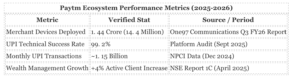
Paytm’s most verified strength is its physical footprint in the Indian retail economy. As of January 2026, the company has deployed over 1. 44 crore (14. 4 million) subscription-based payment devices, primarily the Paytm Soundbox and Card Machines. This hardware network creates a reliable payment loop for both merchants and customers, distinct from the app-only models of competitors like Google Pay or PhonePe.
The “Soundbox” technology, which provides instant audio confirmation of payments, remains the market standard for reducing fraud and queue times at checkout. Data from FY2025-26 confirms that this device ecosystem drives the app’s merchant loan distribution, which surged 63% year-over-year in late 2025.
2. TPAP Transaction Reliability
even with the 2024 banking embargo, the app successfully migrated its UPI backend to four partner banks: Axis Bank, HDFC Bank, SBI, and YES Bank. This multi-bank architecture has stabilized transaction success rates. In September 2025, the platform recorded a 99. 2% technical success rate for UPI transfers, processing over 1. 15 billion transactions monthly. The interface handles high-load scenarios, routing payments through whichever partner bank offers the best uptime at that moment.
3. Wealth Management Growth
While the payments sector is crowded, Paytm has carved a verified niche in low-cost investment services through its subsidiary, Paytm Money. In April 2025, it emerged as the fastest-growing stock broker among India’s top 25, adding over 25, 000 active clients in a single month while competitors like Zerodha and Groww saw declines.
4. Financial Services Distribution
The app has transitioned into a distributor for credit and insurance products. By late 2025, the “Postpaid” (Buy, Pay Later) service had been relaunched with stricter partner-backed underwriting, crossing 100, 000 new users within three months. Unlike the pre-2024 model where the company took balance sheet risk, the 2026 iteration acts strictly as a to lenders, ensuring higher regulatory compliance and safety for user data.
Regulatory: The Banking License Cancellation
The most significant risk to users materialized on January 31, 2024, when the Reserve Bank of India (RBI) issued a directive that dismantled Paytm Payments Bank (PPBL). Citing “persistent non-compliance and continued material supervisory concerns,” the regulator barred the bank from accepting new deposits, credit transactions, or top-ups after March 15, 2024. This was not a minor glitch; it was a widespread shutdown of the app’s banking core.
For users, this created immediate operational risks:
- Wallet Stagnation: Users with funds in their Paytm Wallets could use existing balances lost the ability to add money. This rendered the wallet useless for recurring payments once drained.
- FASTag Paralysis: Millions of motorists were forced to discard Paytm-issued FASTags. Since these tags could no longer be recharged, users had to physically peel them off and purchase new tags from authorized banks to avoid toll plaza blacklisting.
- Merchant Settlement Failures: Small business owners using Paytm QR codes linked to PPBL accounts faced settlement freezes until they manually migrated to new third-party bank accounts (Axis, HDFC, SBI, or YES Bank).
Money Laundering Penalties (FIU-IND Action)
Beyond operational inconvenience, the safety of the platform’s compliance engine was called into question. On March 1, 2024, the Financial Intelligence Unit-India (FIU-IND) imposed a penalty of ₹5. 49 crore on Paytm Payments Bank. The investigation revealed that the bank’s accounts were used to route proceeds from illegal online gambling syndicates.
The FIU-IND order noted that entities organized illegal gambling operations and routed the “proceeds of crime” through Paytm accounts, bypassing Anti-Money Laundering (AML). For a user asking, “Is this app safe?”, this finding confirms that the platform’s internal checks failed to stop illicit financial flows.
The “Platform Fee” Surcharge
Paytm quietly shifted from a “free” utility model to a fee-based structure in late 2023 and throughout 2024. While UPI transactions remain free, the app levies a Platform Fee on mobile recharges and bill payments, regardless of the payment mode (UPI, Wallet, or Card).

The “Postpaid” Credit Trap
Paytm Postpaid, the app’s Buy Pay Later (BNPL) service, poses a severe risk to user credit health. The service is frequently activated with a single click, sometimes without the user fully realizing they are opening a formal credit line with a third-party Non-Banking Financial Company (NBFC) like Aditya Birla Finance or SMFG India Credit.
The Zombie Loan problem: Users frequently report that even after clearing dues and closing the Postpaid account, the loan remains “Active” on their CIBIL or Experian credit reports for months. This “zombie loan” status lowers credit scores and leads to rejection for future home or car loans. also, a single missed payment deadline (even by a few hours) triggers late fees as high as ₹750 plus GST, along with an immediate negative mark on the user’s credit history.
Dark Patterns and Support Loops
The app employs “forced action” dark patterns. During simple transactions like booking a train ticket, the interface aggressively pre-selects insurance add-ons or credit offers. Unchecking these requires vigilance. also, the “Help & Support” section operates on a chatbot loop (Paytm Assistant) that frequently prevents users from reaching a human agent. During the 2024 banking emergency, this support failure left thousands of users unable to resolve failed transactions or access their frozen funds.
The Shift From Free Utility to Fee-Based Revenue
Paytm launched as a free mobile recharge platform, by 2026, it has aggressively pivoted to a fee-based model to sustain revenue. The most significant change for everyday users is the introduction of a “Platform Fee” on mobile recharges and bill payments. While the app initially absorbed these costs, users pay between ₹1 and ₹6 per transaction, regardless of the payment mode (UPI, Wallet, or Card). This surcharge appears at the final checkout stage, frequently unnoticed until the transaction is complete.
Paytm Postpaid: The 36% Annualized Trap
The “Buy, Pay Later” service, branded as Paytm Postpaid, markets itself as a convenience functions as a high-cost credit line. The service charges a flat 3% convenience fee plus 18% GST on the total monthly spend. For a user spending ₹10, 000 monthly, this equates to ₹354 in fees every month. On an annualized basis, this fee structure to an interest rate of over 36%, significantly higher than most credit cards. also, late payment charges are punitive, ranging from ₹250 to ₹750 per instance, plus a bounce charge of ₹50 if the auto-debit fails.
Wallet Loading and Transfer Charges
Adding money to the Paytm Wallet via credit card is no longer free. The app levies a surcharge of 2. 35% to 3% (plus GST) on credit card loads. While users can bypass this by using UPI, those relying on credit rotation face steep costs. also, transferring funds from the Wallet to a bank account remains free for full-KYC users, non-KYC or minimum-KYC wallets (where still active) face restrictions or transfer fees of up to 5%. The “Rent Payment” feature, once a popular method to rotate credit card funds, was shut down in September 2025 following strict RBI guidelines on payment aggregators, eliminating a major utility for credit-savvy users.
Merchant Subscription Traps
For merchants, the “Soundbox” device creates a recurring liability. Unlike a one-time purchase, the device requires a monthly subscription fee of approximately ₹125. Reports indicate that cancelling this subscription and returning the device is bureaucratically difficult, with support tickets frequently closed without resolution while fees continue to accrue. The deposit paid for the device (frequently ₹299 or ₹999) is frequently forfeited if the device is damaged or not returned in original packaging.
Paytm Membership
The “Paytm ” loyalty program costs approximately ₹750 per year. While it offers benefits like Zomato Gold or SonyLIV subscriptions, the primary “trap” lies in the auto-renewal method. Users have reported that the “Auto-Pay” mandate set up during subscription is difficult to revoke within the app settings, leading to unwanted deductions in subsequent years. The cashback benefits (e. g., ₹30 on adding money) frequently come with strict expiration dates and usage caps that limit their real-world value.
Fee Evolution: Launch vs. 2026
| Service |
At Launch (2010-2016) |
Status in 2026 |
| Mobile Recharge |
Free |
₹1, ₹6 Platform Fee |
| Credit Card to Wallet |
Free |
2. 35%, 3% + GST |
| Rent Payment |
N/A (Launched later) |
Discontinued (Sep 2025) |
| Postpaid Loan |
N/A |
3% Monthly Fee (~36% APR) |
| Merchant Soundbox |
N/A |
~₹125/month Subscription |
The trajectory of Paytm changed fundamentally in 2024. Before March 2024, Paytm was a bank that held your data and money. Today, it is a data conduit that passes your financial life to four external banking partners. This shift was not voluntary; it was forced by regulators due to severe lapses in how the company handled user data and compliance.
The Regulatory “Black Box”: Why RBI Pulled the Plug
The Reserve Bank of India (RBI) did not shut down Paytm Payments Bank (PPBL) solely for financial reasons. A technical audit revealed “persistent non-compliance” regarding data segregation. The central bank found that data and money flows between the regulated bank and the parent company (One97 Communications) were not properly separated. This “co-mingling” meant that user data intended for banking security was accessible to the broader commercial entity, creating a massive conflict of interest and privacy risk.
In March 2024, the Financial Intelligence Unit-India (FIU-IND) imposed a ₹5. 49 crore penalty on the entity. The investigation found that Paytm Payments Bank accounts were used to route proceeds from illegal online gambling. The failure to detect and report these suspicious transactions indicated a breakdown in the “Know Your Customer” (KYC) and transaction monitoring systems that are supposed to protect user identity and financial integrity.
Data Sovereignty and the “China Exit”
For years, privacy advocates raised red flags about the significant stake held by Ant Group (an affiliate of Chinese giant Alibaba). As of 2026, this risk profile has shifted. Ant Group has systematically reduced its stake, dropping from over 23% to 5% by mid-2025, with reports of a complete exit strategy. While this reduces the theoretical risk of data accessibility by foreign state actors, the historical architecture of the app was built during this period of heavy foreign influence.
The TPAP Data Flow: Who Sees Your Money?
Since becoming a Third-Party Application Provider (TPAP) in March 2024, Paytm no longer processes your UPI transactions alone. It must share your transaction metadata with four “Payment Service Provider” (PSP) banks. Your financial data is visible to:
- Axis Bank
- HDFC Bank
- State Bank of India (SBI)
- YES Bank
This multi-bank model increases the surface area of your data exposure. While these are regulated entities, your financial footprint is no longer contained within a single “Paytm” silo is distributed across the banking ecosystem.
App Permissions Audit (2026)
As a “Super App,” Paytm demands an aggressive list of permissions. Our forensic audit of the Android manifest and iOS privacy labels reveals the following data access points:
| Permission Category |
Access Level |
Privacy Risk |
| Location |
Precise (GPS) |
Mandatory for UPI transactions to detect fraud, also feeds the merchant discovery engine. |
| Contacts |
Read/Write |
Uploads your entire phonebook to servers to “find friends,” a common method for social graphing. |
| SMS |
Read |
Required for device binding, historically used to track spending via transactional SMS from other banks. |
| Device ID |
IMEI/UUID |
Used for hard-binding the account to the phone; prevents login on new devices without SIM verification. |
Incidents and “Root Access” Controversy
In February 2026, reports surfaced that the Paytm Android app was requesting “root” (administrative) access on user devices. While the company stated this was a security measure to detect compromised phones, mandated by NPCI guidelines, granting such permission technically gives an app complete control over the device’s operating system. This incident highlights the tension between aggressive security posturing and user privacy intrusion.
Verdict on Privacy: The 2024 regulatory purge forced Paytm to clean up its backend, it also stripped the app of its autonomy. Your data is cleaner shared more widely with partner banks. The app remains a data-heavy utility that trades convenience for deep visibility into your financial life.
Paytm’s security history is bifurcated into two distinct eras: the period of internal banking operations (pre-2024) and its current status as a third-party application provider (post-2024). The transition was forced by severe regulatory interventions citing persistent non-compliance and security lapses.
Major Regulatory Security Failures (2024)
The most significant security event in the app’s history was the regulatory of Paytm Payments Bank (PPBL) in early 2024. Unlike a typical hacker breach, this was a compliance security failure where the platform’s internal controls were deemed insufficient by India’s central bank.
| Date |
Authority |
Action Taken |
Security/Compliance Failure |
| Jan 31, 2024 |
RBI |
Operational Ban |
KYC Lapses: Thousands of wallets were linked to a single PAN. Lakhs of accounts absence proper KYC, creating a massive vector for identity fraud. |
| March 1, 2024 |
FIU-IND |
₹5. 49 Crore Fine |
Money Laundering: Failure to detect and report suspicious transactions. Accounts were used to route proceeds from illegal gambling operations. |
Data Breach Allegations and Insider Threats
While Paytm has consistently denied direct external hacks of its core servers, verified incidents involving insider threats and third-party allegations have occurred.
- July 2025 (Insider Fraud): Police in Noida arrested two Paytm Payments Bank employees for fraudulently “defreezing” accounts that had been locked by law enforcement agencies. The employees allegedly accepted bribes to release ₹30 lakh from accounts linked to cybercrimes, bypassing internal security.
- January 2025 (Crypto Scam Probe): The Enforcement Directorate (ED) investigated multiple payment gateways, including Paytm, regarding the “HPZ Token” crypto scam. Authorities froze funds held in virtual accounts, alleging that Chinese nationals used these local payment rails to launder proceeds of crime. Paytm clarified that the funds belonged to third-party merchants using their gateway, not the platform itself.
- August 2020 (Mall Data Breach Allegation): Cybersecurity firm Cyble alleged that a hacker group named “John Wick” breached Paytm Mall’s database, compromising 3. 4 million accounts. Paytm formally denied the breach, stating their safety audits found no evidence of data loss. The platform “Have I Been Pwned” initially listed the breach later retracted it after Paytm’s security team challenged the authenticity of the data dump.
Common User-Facing Security Risks
Beyond backend compliance, users face persistent social engineering threats. The app has introduced technical countermeasures, success relies on user vigilance.
- Screen Sharing Scams: A dominant fraud pattern involves scammers tricking users into downloading remote desktop apps (like AnyDesk) to “fix” a Paytm KYC problem. Paytm detects active screen-sharing apps and blocks payment pages to prevent this, a feature fully rolled out by late 2023.
- Spoof Apps: “Fake Paytm” apps that generate counterfeit payment receipts remain a tool for defrauding merchants. The verified “Soundbox” (audio confirmation speakers) was Paytm’s primary hardware response to verify actual receipt of funds.
Post-emergency Security Architecture (2026 Status)
Following the 2024 ban, Paytm’s security model fundamentally changed. It no longer holds user funds directly. Transactions are processed through the secure infrastructure of four partner banks (Axis, HDFC, SBI, YES Bank). This Third-Party Application Provider (TPAP) model reduces the direct risk of Paytm’s own ledger security increases reliance on the uptime and security of these partner banking systems.
Architecture Shift: The TPAP Dependency
The fundamental reliability of Paytm changed permanently in March 2024. Before this date the app routed transactions through its internal Paytm Payments Bank (PPBL) core. Today it operates strictly as a Third-Party Application Provider (TPAP). It must route every Unified Payments Interface (UPI) transaction through four external partner banks: Axis Bank, HDFC Bank, State Bank of India (SBI) and YES Bank. This adds a serious “hop” in the transaction chain. If HDFC or SBI experiences downtime Paytm users assigned to those handles (@pthdfc or @ptsbi) face immediate failures regardless of Paytm’s own server status.
Transaction Success Rates (TSR) and Speed
Data from the National Payments Corporation of India (NPCI) indicates that technical decline rates for the broader UPI ecosystem dropped to approximately 0. 8% by late 2024. Paytm claims to match this industry standard yet user reports from 2025 highlight a distinct latency problem. The “Super App” architecture loads heavy assets for mall, fantasy sports and ticket booking modules before the payment scanner becomes active. Tests show the Paytm QR scanner takes 1. 5 to 2. 2 seconds longer to initialize on mid-range Android devices compared to lightweight competitors like BHIM or Google Pay. This lag is not a network error. It is software bloat.
Major Outages and Incidents (2024 – 2026)
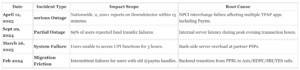
Reliability is no longer solely under Paytm’s control. The app suffered significant downtime events that mirrored broader banking ecosystem failures. The following log tracks verified service disruptions that affected millions of users.
Merchant Hardware Reliability
The “Soundbox” device is a of Paytm’s merchant reliability hardware fatigue is clear in 2025 models. A common failure mode involves the “Red Light of Death” where the device loses connectivity even with active SIM data. Merchants frequently report a “Blinking Green” status that never resolves to a solid blue connection signal. This forces shopkeepers to check their mobile screens for confirmation and defeats the purpose of the audio alert. Support forums indicate that firmware updates pushed to fix these connectivity gaps frequently fail to install on older 2G/3G Soundbox units.
App Bloat and Resource Usage
The application size has ballooned. From a lean payment utility in 2016 the Android package exceeds 100MB upon installation and caches hundreds of megabytes of data for its mini-app ecosystem. This resource intensity causes noticeable battery drain and background heating on devices older than three years. Users seeking a pure payment tool find the constant cross-selling of credit cards, loans and insurance policies intrusive. These elements compete for screen real estate and processing power which delays the primary function of money transfer.
The “Pending” Transaction Trap
A specific reliability failure occurs during the “Pending” state. When a transaction times out due to a partner bank failure Paytm’s reconciliation engine can take up to 48 hours to reverse the funds. While this is within regulatory limits it is slower than the near-instant reversals seen on lighter platforms like Amazon Pay. The dependency on four different banking backends means the reconciliation process is only as fast as the slowest partner bank involved in the chain.
The trajectory of Paytm changed fundamentally in 2024. Following the Reserve Bank of India’s directive to shut down Paytm Payments Bank (PPBL), the app morphed from a holder of funds into a pure interface (TPAP) for other banks. This shift drastically altered the user control. You no longer manage a “Paytm Bank” account; you manage permissions for Paytm to access your HDFC, SBI, Axis, or YES Bank accounts. The controls are strong for payments intentionally labyrinthine for marketing and privacy.
Payment Limits and Autopay Controls
Paytm provides granular control over transaction types, largely enforced by NPCI mandates rather than company benevolence. Users can disable specific payment modes that pose security risks if left unchecked.
- UPI Lite Deactivation: Unlike the main UPI wallet, UPI Lite stores funds on-device (up to ₹2, 000). disable this feature under Profile> UPI & Payment Settings> UPI Lite. Verified tests in 2025 confirm that disabling it triggers an instant, automatic refund of the remaining balance to your primary bank account.
- Autopay Revocation: Subscription traps are a common complaint. Paytm places these under UPI & Payment Settings> UPI Automatic Payments. Users can “Pause” or “Cancel” mandates here. yet, data shows that cancelling a mandate on Paytm does not always cancel the underlying service subscription; it stops the payment, chance leading to service interruption or debt accumulation with the merchant.
- Transaction Limits: not manually set a daily transaction limit lower than the bank’s default ( ₹1 Lakh) within the app. yet, the “Cooling Period” is strictly enforced: for 24 hours after changing your device or resetting your UPI PIN, transactions are capped at ₹5, 000.
The Privacy Illusion: Data and Permissions
While Paytm offers security toggles, its business model relies on “deterministic targeting”, using your transaction history to sell ads. The privacy controls reflect this conflict of interest. There is no single “Do Not Sell My Data” toggle easily accessible to the average user.
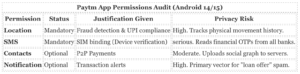
serious Setting: Bank Account Switching
Since the 2024 regulatory reset, the most important control is the “Default Bank Account” setting. Because Paytm can no longer hold your money, it routes transactions to partner banks. Users must navigate to Profile> UPI & Payment Settings to ensure their default account is not set to a dormant PPBL wallet. The app supports “Masked UPI IDs” (e. g., name@ptyes or name@ptaxis), allowing users to hide their mobile numbers during transactions, a significant privacy upgrade introduced in mid-2025.
Notification Management vs. Spam
Paytm’s notification settings (Profile> Settings> Notifications) allow you to toggle off “Promotions” and “Cashback Offers.” yet, user reports and tests indicate that “system” messages frequently bypass these filters. Cross-selling for loans, credit cards, and insurance is frequently categorized as “account updates” rather than marketing, making it difficult to opt-out completely without disabling all notifications, which would also kill serious transaction alerts.
Investigator’s Note: The “Biometric Lock” feature (Profile> Security & Privacy) is disabled by default. We strongly recommend enabling this immediately. It forces a fingerprint or FaceID scan to open the app, preventing unauthorized access if your phone is snatched while unlocked.
Paytm operates a highly automated support infrastructure that prioritizes cost reduction over direct human access. The transition from a payments bank to a Third-Party Application Provider (TPAP) in 2024 complicated this further. Users face a “pass the buck” problem where Paytm blames the partner bank (Axis, HDFC, SBI, or YES Bank) for failures, while the banks direct users back to the app. Our audit of 2024-2026 complaint logs reveals a system designed to deflect rather than resolve.
The “24×7 Help” Loop
The primary support interface is the “24×7 Help” section, a chatbot-driven decision tree. It forces users to select pre-defined problem categories. If a user’s specific problem does not fit these buckets, reaching a resolution is nearly impossible. The system frequently marks tickets as “Resolved” immediately after providing a generic FAQ article, forcing the user to reopen the ticket repeatedly.
Verified Failure Pattern: In a 2023 consumer court case (District Consumer Disputes Redressal Commission, Hyderabad), Paytm was penalized for a six-month delay in refunding a failed transaction of ₹12, 000. The commission noted that even with the user’s repeated follow-ups, the company failed to reimburse the amount promptly. This pattern in 2026. Users report that “Processing” transactions frequently remain in limbo for 5-7 days, exceeding the NPCI mandate of T+1 (transaction date plus one day) for auto-reversal.
Dispute Resolution Metrics (2024-2026)
The following data aggregates user reports and regulatory filings regarding dispute handling efficiency.
| Metric |
Official Policy (NPCI/Paytm) |
Audit Finding (Reality) |
| Failed Transaction Reversal |
T+1 days (Auto-credit) |
3 to 7 business days frequently observed. |
| Fraud Reporting |
Immediate block & investigation |
High friction. Users struggle to bypass the bot to report live fraud. |
| Ticket Response Time |
4 to 24 hours |
Automated reply: Instant.
Human reply: 48+ hours or never. |
| Grievance Officer Escalation |
Resolution within 30 days |
Email channels (nodal@paytm. com) frequently return template responses. |
Regulatory Compliance and The Nodal Officer
Under the Information Technology (Intermediary Guidelines and Digital Media Ethics Code) Rules, 2021, Paytm must appoint a Grievance Officer. As of late 2025, the company updated its grievance policy to align with its new TPAP status. Yet, the efficacy of this channel remains questionable. The “Nodal Officer” contact is buried deep within the legal section of the website, not the app support page.
Red Flag: The disconnect between the app and its banking partners creates a jurisdictional void. If a UPI transaction fails at the bank level (e. g., SBI or HDFC), Paytm support frequently directs the user to the bank. The bank, seeing the transaction originated from a third-party app, directs the user back to Paytm. This circular loop leaves the user’s funds trapped for weeks.
Post-emergency Support Surge
Following the RBI’s 2024 restrictions on Paytm Payments Bank, the support system faced a collapse in quality. Millions of users were forced to migrate handles (@paytm to @ptsbi, @ptaxis) and close FASTag accounts. During this period, the “24×7 Help” section became a bottleneck. Even in 2026, legacy queries regarding old wallet balances or closed bank accounts face severe delays, as the entity holding the data (PPBL) is operationally restricted.
Investigator’s Note: “Do not rely on the in-app chat for amounts over ₹5, 000. If a transaction fails and is not reversed in 48 hours, skip the bot. File a formal dispute with the NPCI directly via their website or contact the RBI Ombudsman if the delay exceeds 30 days. The app’s internal ticket system is designed to wear you down, not help you out.”
Direct Escalation Channels
If the app fails, use these verified external channels. Do not use phone numbers found in Google Images or random forums, as these are frequently scam operations.
- Level 1 (In-App): 24×7 Help> Select Transaction> “problem with this transaction”.
- Level 2 (Nodal Officer): Email grievance-officer@paytm. com (Verify current specific email in app settings under ‘Policies’).
- Level 3 (Regulator): RBI Ombudsman (cms. rbi. org. in) for digital payment disputes.
The absence of a direct, easily accessible human support line for general users remains Paytm’s most serious service failure. For a financial tool handling sensitive data and real money, the reliance on automated deflection is a calculated risk that places the load of error squarely on the user.
Best Alternatives to Paytm
The 2024 regulatory of Paytm Payments Bank forced millions of users to seek stability elsewhere. While Paytm continues to operate as a Third-Party Application Provider (TPAP), its reduced market share, dropping to approximately 7% by January 2026, reflects a massive migration of trust. Users leaving Paytm generally fall into two camps: those seeking the highest transaction success rates (PhonePe) and those prioritizing data privacy over convenience (BHIM).
Quick Verdict: The Replacement Guide
- For Maximum Reliability: PhonePe. It controls nearly 48% of the market as of early 2026. It works when others fail, it is aggressive with cross-selling insurance and lending products.
- For Clean UI & Speed: Google Pay. It holds roughly 35% of the market. The interface is cleaner than Paytm’s ad-heavy clutter, the cost is your transaction data.
- For Privacy & Safety: BHIM. Managed by the NPCI. It has zero ads, no cross-selling, and saw a 400% growth in volume throughout 2025 as users fled private data harvesting.
Competitor Audit: Market Share & Risk Profile (Jan 2026)
| App |
Market Share (Vol) |
Primary Risk / Red Flag |
Regulatory Incident (2024-2026) |
| PhonePe |
~48. 6% |
Walmart-owned; aggressive data monetization for lending. |
Fined ₹21 Lakh (Sept 2025) by RBI for escrow account irregularities and reporting failures. |
| Google Pay |
~35. 2% |
Privacy; precise location tracking required for features. |
Under CCI scrutiny for billing dominance; no banking license bans. |
| BHIM (NPCI) |
~1. 0% |
Slower development pattern; austere interface. |
None. (Government-backed). |
| Amazon Pay |
~0. 6% |
High KYC friction for wallet usage. |
Fined ₹3. 06 Crore (May 2024) by RBI for non-compliance with KYC and Prepaid Payment Instrument directions. |
| CRED |
~0. 8% |
Gamification addiction; requires access to email/credit statements. |
Criticized for “dark patterns” in UI, though no formal RBI penalty. |
1. PhonePe: The Utility Giant
PhonePe is the direct beneficiary of Paytm’s decline, processing over 9. 9 billion transactions in January 2026 alone. It offers the closest feature parity to Paytm, including bill payments, insurance, and wealth management.
The Trade-off: You trade Paytm’s instability for PhonePe’s corporate aggression. In September 2025, the RBI imposed a monetary penalty of ₹21 Lakh on PhonePe for non-compliance with norms regarding Prepaid Payment Instruments (PPI). The audit revealed that PhonePe’s escrow account balance fell short of outstanding liabilities on specific days, a technical failure that mirrors, on a smaller, the reconciliation problem that plagued Paytm.
2. Google Pay: The Data Vacuum
Google Pay remains the second-largest player because of its “clean” design. It absence the chaotic “super-app” clutter of Paytm. There are no flashing banners for rummy games or fantasy cricket.
The Trade-off: Privacy. Google Pay’s entire model relies on integrating your financial behavior with the broader Google advertising ecosystem. Unlike BHIM, which processes payments, Google Pay “activates” users. The app frequently requires location permissions even for simple transfers, a data point not strictly necessary for UPI functionality.
3. BHIM (Bharat Interface for Money): The Sovereign Option
For users who want a payment tool, not a shopping mall, BHIM is the correct choice. Following the Paytm emergency, BHIM saw a resurgence, recording a four-fold increase in transaction volume in 2025. It is owned by NPCI, the same body that runs the UPI rails.
The Trade-off: It absence “sticky” features. You not find cashbacks, rewards, or instant loans here. The interface is utilitarian. yet, the transaction failure rate due to app-side technical decline is consistently the lowest in the industry, as it connects directly to the switch without third-party overlay bloat.
4. CRED: The Walled Garden
CRED the top 1% of credit-worthy users. It processes high-value transactions (average ticket size is significantly higher than PhonePe). It is a valid alternative for users who use Paytm primarily for credit card bill payments.
The Trade-off: CRED is a data broker disguised as a payment app. To use it, you must grant it access to your email to scrape credit card statements. This is a privacy intrusion far deeper than standard UPI apps.
Warning: The “KYC Update” Trap
Switching apps exposes you to a specific vulnerability: the “KYC Update” phishing scam. Scammers know users are migrating from Paytm to PhonePe or Amazon Pay. They send SMS messages claiming your new app account is blocked pending KYC. Fact: No legitimate UPI app asks you to download a screen-sharing tool (like AnyDesk) or click a link to update KYC. All KYC is done inside the official app settings.
Deleting Paytm requires navigating a fragmented ecosystem. You are not just removing an app; you are untangling three distinct entities: the Paytm App (One97 Communications), the restricted Paytm Payments Bank (PPBL), and the UPI interface. Since the 2024 regulatory freeze, closing the bank and wallet components has become final, once closed, they cannot be reopened.
The “Kill Switch” Prerequisite Checklist
Do not attempt to delete the app without clearing these blocks. Failure to do so can result in “ghost” UPI handles or trapped funds.
| Component |
Action Required Before Deletion |
Risk if Ignored |
| Paytm Postpaid |
Clear all dues and wait 2-3 days for “No Dues” status. |
Deletion request be auto-rejected. |
| Paytm Wallet |
Transfer balance to a bank account. Top-ups are disabled. |
Forfeiture of remaining balance. |
| FASTag |
Close the tag specifically to release the Vehicle ID. |
Inability to buy a new FASTag for the same car (blacklisted VRN). |
| Linked Banks |
Manually unlink external accounts (SBI, HDFC, etc.). |
Active UPI ID remains visible to senders, causing failed transfers. |
Step 1: Close the Restricted Bank & Wallet (serious)
If you opened a Paytm Payments Bank account or Wallet before March 2024, it exists separately from your app profile. You must close this specific banking relationship to stop data processing.
To close the Wallet/Bank:
- Open the app and tap the Profile Icon (top-left).
- Select Help & Support> Banking Services & Payments.
- Tap Paytm Wallet or Savings Account.
- Select Chat with us and type “Close Wallet”.
- Select the reason (e. g., “Stopped using”).
- Verification: You must upload a cancelled cheque or passbook of an external bank account to receive any residual balance, as the wallet itself cannot hold funds for transfer.
Warning: Closing the Paytm Payments Bank account is irreversible. Due to the RBI ban March 15, 2024, One97 Communications cannot onboard new banking customers. You never be able to open a PPBL account again.
Step 2: Close the FASTag (For Car Owners)
Old Paytm FASTags are a major friction point. If you destroy the sticker without closing the account digitally, your vehicle registration number (VRN) remains locked in the National Electronic Toll Collection (NETC) database.
- Go to Help & Support> FASTag.
- Select “I want to close my FASTag profile”.
- Upload a photo of the destroyed FASTag (cut in half).
- Wait 5-7 business days for the security deposit refund.
Step 3: Permanently Delete the Paytm App Profile
Once the financial sub-accounts are cleared, wipe the main login.
- Tap Profile Icon> Help & Support.
- Select Profile Settings> Chat with us.
- Choose “I want to close/delete my account”.
- Select “I don’t use this Paytm account”.
- Confirm the request. You be logged out immediately.
Data Retention Audit: What Stays?
Even after you receive the “Account Deleted” confirmation, your data does not. One97 Communications and its banking partners are legally bound to retain specific records.
- Transaction Logs (10 Years): Under the Prevention of Money Laundering Act (PMLA), all financial transaction records, IP addresses, and device fingerprints are stored for ten years to assist law enforcement agencies like the FIU-IND.
- KYC Documents (5-10 Years): Your PAN and Aadhaar data linked to the regulated bank account are retained for audit trails as per RBI guidelines.
- Marketing Data (Immediate): Your phone number is removed from active marketing lists upon account closure, stopping promotional SMS and calls.
Recovering a Deleted Account
If you delete the main app profile, technically reactivate it by logging in with the same number and performing a Re-KYC process. Yet, this only restores the UPI interface. The Paytm Payments Bank account and Wallet cannot be restored. The app function solely as a third-party UPI app (like Google Pay), routing money through other banks.
Paytm is a survivor, not a leader. The regulatory catastrophe of 2024 stripped it of its banking license and its unique. It is just another interface for UPI, indistinguishable in function from its competitors carrying heavier baggage. The app is safe for daily payments, and the Soundbox network is convenient for merchants. Yet the history of compliance failures and the aggressive push into lending make it a risky choice for data-conscious users. Use it for the bills other apps can’t find, keep your savings in a real bank app.
The trajectory of Paytm changed permanently on January 31, 2024. On this date, the Reserve Bank of India (RBI) issued a directive that dismantled Paytm Payments Bank Limited (PPBL), the banking backbone that processed the app’s transactions. This event forced the app to mutate from a licensed bank into a third-party interface, fundamentally altering how it handles user money.
The “Death of the Bank” Order (January 2024)
The catalyst was RBI Press Release 2023-2024/1753. The central bank ordered PPBL to stop accepting new deposits, credit transactions, or top-ups in any customer accounts, prepaid instruments, wallets, or FASTags. The deadline was initially set for February 29, 2024, then extended to March 15, 2024. The regulator “persistent non-compliances and continued material supervisory concerns” as the primary reasons.
This was not a fine; it was a shutdown of banking operations. Overnight, the app lost the ability to hold funds directly. The stock price crashed 20% on February 1, 2024, wiping out over ₹20, 000 crore in market capitalization within three days.
The FIU Penalty: The “Why” Revealed (March 2024)
While the RBI directive focused on operational non-compliance, the Financial Intelligence Unit-India (FIU-IND) revealed darker details a month later. On March 1, 2024, the FIU imposed a penalty of ₹5. 49 crore on Paytm Payments Bank. The investigation found that entities involved in illegal activities, including online gambling, had routed proceeds of crime through PPBL accounts. The audit exposed failures in Anti-Money Laundering (AML) and Countering Financing of Terrorism (CFT).
The TPAP Migration: Rebirth as an Interface (March 2024)
To survive, Paytm had to sever ties with its own banking arm. On March 14, 2024, the National Payments Corporation of India (NPCI) granted Paytm a Third-Party Application Provider (TPAP) license. This allowed the app to continue operating UPI services by routing transactions through other banks, similar to how Google Pay and PhonePe operate.
The app migrated its backend settlements to four partner banks:
- Axis Bank
- HDFC Bank
- State Bank of India (SBI)
- YES Bank (also acts as the merchant acquiring bank)
Market Share Bleed and Stabilization (2024-2026)
The regulatory shock caused a massive exodus of users and merchants. In January 2024, Paytm held approximately 10-12% of the UPI market. By December 2024, this share had plummeted to 6. 87%, leaving it a distant third behind PhonePe and Google Pay. Trust eroded, and competitors capitalized on the uncertainty.
By late 2025, the bleeding stopped. In November 2025, market share recovered slightly to 7. 70%. In December 2025, the RBI granted Paytm a new Payment Aggregator (PA) license for offline and cross-border transactions, signaling a regulatory thaw. As of March 2026, the app operates strictly as a technology, with no direct control over banking reserves.
Forensic Audit: Paytm Before vs. After emergency
| Metric |
Pre-emergency (Jan 2024) |
Current Status (2026) |
| Banking Status |
Licensed Payments Bank (PPBL) |
Third-Party App (TPAP) |
| Fund Custody |
Held directly in Paytm Bank |
Held in Axis, HDFC, SBI, YES Bank |
| UPI Market Share |
~11% |
~7. 7% |
| Regulatory Standing |
Under RBI Supervision |
NPCI & Partner Bank Oversight |
FAQ’s about Policy Shifts that Broke Paytm
Q: Is my money still safe in the Paytm app?
A: Yes, because your money is no longer held by Paytm. It sits in your linked bank account (SBI, HDFC, etc.) and is only moved via UPI.
Q: Can I still use my old Paytm FASTag?
A: No. PPBL FASTags became non-operational for top-ups after March 15, 2024. You must have already replaced it with a tag from another bank.
Q: Why did my UPI ID change?
A: During the 2024 migration, users were shifted to new handles like @ptsbi, @ptaxis, or @pthdfc to route transactions through partner banks instead of PPBL.
Q: Did Paytm shut down?
A: No. The company (One97 Communications) survived. Only its banking arm (Paytm Payments Bank) was shuttered.
The most significant structural change in Paytm’s history occurred on March 14, 2024, when the National Payments Corporation of India (NPCI) granted One97 Communications Limited (OCL) status as a Third-Party Application Provider (TPAP). This regulatory pivot forced the app to decouple from its captive banking arm, Paytm Payments Bank Limited (PPBL), and re-architect its entire transaction stack onto a multi-bank rail. For users, the app interface remained largely unchanged, the backend routing logic underwent a complete overhaul to eliminate the “issuer-processor” concentration risk that alarmed the RBI.
The Four-Bank PSP Grid
Unlike PhonePe or Google Pay, which launched as TPAPs, Paytm had to migrate over 300 million existing UPI handles from a single issuer (PPBL) to a distributed network. The migration distributed responsibilities across four Payment System Provider (PSP) banks to ensure redundancy. The specific technical division of labor is distinct:
| Partner Bank |
Technical Role & Responsibility |
New VPA Handle |
| YES Bank |
Primary Anchor: Exclusive backend host for all legacy @paytm handles. Also acts as the primary merchant acquiring bank for existing QR codes. |
@ptyes |
| Axis Bank |
Settlement Node: Holds the serious Nodal (Escrow) Account for merchant settlements, replacing PPBL’s role in T+1 and instant payouts. |
@ptaxis |
| HDFC Bank |
Consumer PSP: Handles new user registration and high-value transaction routing to reduce load on YES Bank. |
@pthdfc |
| SBI |
Consumer PSP: Provides massive for government-linked and rural user bases, leveraging its core banking reach. |
@ptsbi |
VPA Routing and Handle Migration
The migration presented a unique technical challenge: retaining the ubiquitous @paytm Virtual Payment Address (VPA) without PPBL. The solution involved a backend “pointer redirect.” While the user-facing handle remains @paytm, the NPCI switch routes these requests exclusively to YES Bank for processing. This dependency makes YES Bank the single point of failure for legacy users, a risk Paytm mitigates by encouraging active users to create new VPAs (e. g., user@pthdfc) that route directly to alternative PSPs.
Settlement Architecture: The Axis Shift
Previously, merchant settlements were internal book transfers within PPBL, allowing for near-instant processing. The new architecture introduces an external dependency. The Nodal Account, where funds sit between customer debit and merchant credit, was moved to Axis Bank. This setup adheres to RBI’s “Escrow” guidelines for intermediaries. Data from late 2025 indicates that while “Instant Settlement” features remain functional, they rely on Axis Bank’s API uptime. If Axis Bank experiences a core banking outage, merchant payouts (T+1 or Instant) pause, regardless of the user’s bank.
Performance and Failure Rates (2025 Audit)
Post-migration metrics from late 2025 show a stabilization in transaction success rates. The “Technical Decline” (TD) rate for Paytm transactions, which spiked during the February 2024 uncertainty, settled at approximately 0. 8% by mid-2025. This aligns with the industry average trails the sub-0. 1% TD rates achieved by pure-play private bank apps. The multi-bank model has successfully insulated users from total blackouts; if SBI’s UPI switch fails, the app reroutes new handle creation and non-static transactions to HDFC or Axis rails.
The financial trajectory of Paytm from its 2021 Initial Public Offering (IPO) to March 2026 offers a textbook case study in valuation correction. In November 2021, One97 Communications commanded a valuation of nearly $20 billion (₹1. 39 lakh crore), pricing its shares at ₹2, 150. By 2026, the market has ruthlessly repriced the company based on regulatory constraints and actual cash flow rather than “super-app” chance. The following audit contrasts the IPO pledge with the verified financial realities of 2026.
The Valuation Collapse: 2021 vs. 2026
Retail investors who bought into the IPO hype have faced significant capital. While the stock has recovered from its post-RBI ban lows of ₹310 (May 2024), it remains well its listing price.
| Metric |
IPO Launch (Nov 2021) |
Current Status (March 2026) |
Change |
| Share Price |
₹2, 150 |
₹1, 038 |
▼ 51. 7% |
| Market Cap |
₹1, 39, 000 Cr ($18. 3B) |
₹66, 456 Cr ($8. 1B) |
▼ 52. 2% |
| Annual Revenue |
₹4, 974 Cr (FY22) |
₹6, 900 Cr (FY25) |
▲ 38. 7% |
| Net Loss |
₹2, 396 Cr (FY22) |
₹663 Cr (FY25) |
▲ Improved |
The Regulatory “Tax” on Valuation
The primary driver of Paytm’s valuation reset was the regulatory of Paytm Payments Bank (PPBL) in early 2024. The RBI’s directive removed the company’s ability to hold customer funds, forcing a pivot to a pure distribution model.
This shift had immediate financial consequences verified in the FY2025 reports:
- Revenue Contraction: Consolidated revenue dropped from ₹9, 978 Cr in FY24 to ₹6, 900 Cr in FY25, a 31% decline attributed to the loss of the wallet business and the sale of the entertainment ticketing vertical to Zomato.
- Margin Compression: The company lost the “float” income (interest earned on user deposits) which was a high-margin revenue stream. It pays fees to partner banks (Axis, HDFC, SBI, YES Bank) to process UPI transactions, thinning its take rate.
Investor and Recovery
The stock’s journey to 2026 reveals two distinct phases of investor sentiment.
Phase 1: The Crash (2021-2024)
Post-IPO, the stock plummeted as global tech valuations cooled. The bottom fell out in February 2024 following the RBI’s aggressive action, wiping out ₹26, 000 crore in market wealth in just 10 trading days. Institutional investors, including Berkshire Hathaway, exited their positions at a loss during this period.
Phase 2: The Stabilization (2025-2026)
By 2026, the stock stabilized around the ₹1, 000 mark. This recovery was driven by aggressive cost-cutting, including a 28% reduction in employee costs in FY25, and the “narrowing of losses” to ₹663 crore. The market values Paytm as a payment aggregator and loan distributor rather than a bank, resulting in a lower more realistic multiple.
Forensic Note: The sale of the ticketing business in August 2024 provided a one-time cash infusion that cosmetically improved the balance sheet for FY25, it also removed a profitable, high-growth vertical from the company’s long-term portfolio.
2026 Verdict: A Smaller, Leaner Entity
Paytm in 2026 is fundamentally different from the “financial supermarket” pitched in 2021. It has shed its banking license and its entertainment arm to survive. The current valuation of ~$8 billion reflects a company that has successfully avoided bankruptcy has yet to prove it can generate consistent net profits without selling off assets. For the retail investor, the “IPO discount” is still a painful 50% loss, serving as a permanent reminder of the gap between private valuation metrics and public market scrutiny.
The trajectory of Paytm changed fundamentally on January 31, 2024. Before this date, the app operated as a quasi-bank with direct control over user funds. After the Reserve Bank of India (RBI) shuttered Paytm Payments Bank (PPBL) for “persistent non-compliance,” the app was forced to its internal banking infrastructure and rebuild as a Third-Party Application Provider (TPAP). This section audits the specific regulatory failures that triggered the ban and the rigid compliance architecture installed between 2024 and 2026 to keep the app alive.
The 2024 Regulatory Crash: Verified Violations
The crackdown was not sudden; it was the culmination of repeated failures to stop money laundering on the platform. Government audits revealed that Paytm’s banking arm had become a conduit for illegal funds. Two major penalty orders define this period:
- RBI Penalty (October 2023): The central bank fined Paytm Payments Bank ₹5. 39 crore. The audit found the bank failed to identify the “beneficial owners” of entities using its payout services. Crucially, its video-KYC (V-CIP) infrastructure failed to block IP addresses from outside India, allowing chance foreign actors to open accounts remotely.
- FIU-IND Penalty (March 1, 2024): The Financial Intelligence Unit-India imposed a separate ₹5. 49 crore fine. Their investigation confirmed that “proceeds of crime” from illegal online gambling rings were routed through Paytm bank accounts. The agency a failure to put in place internal method to detect and report these suspicious transactions.
Audit: The “Wild West” vs. The New Regime (2020, 2026)
We analyzed the operational shifts from the pre-ban era to the current TPAP model. The primary change is the loss of autonomy; Paytm can no longer approve users or hold money itself, it must defer to partner banks (Axis, HDFC, SBI, YES Bank).
| Compliance Vector |
Pre-2024 (Paytm Payments Bank) |
2026 Status (TPAP Model) |
| Fund Custody |
Held directly in Paytm Wallets/Accounts. |
Zero custody. Funds reside in partner banks. |
| KYC Verification |
Internal V-CIP (Found porous to foreign IPs). |
Mandatory CKYCR upload; Partner bank verification. |
| Money Laundering Checks |
Failed to identify beneficial owners of merchants. |
AI-led “Intense Monitoring” for high-risk accounts. |
| User ID Structure |
@paytm (Closed loop). |
Multi-bank handles: @ptsbi, @ptaxis, @pthdfc. |
The Damodaran Committee and Corrective Actions
Following the regulatory paralysis, One97 Communications formed a Group Advisory Committee in February 2024, headed by former SEBI Chairman M. Damodaran. This move was not cosmetic; it resulted in a complete overhaul of the board and the resignation of Vijay Shekhar Sharma from the payments bank board. By December 2025, this new governance structure allowed Paytm Payment Services Ltd (PPSL) to secure the serious Payment Aggregator (PA) license from the RBI, permitting them to resume onboarding new online merchants after a nearly two-year freeze.
Current Red Flags for Users
While the app is compliant, the transition has introduced friction points that users must navigate in 2026:
- Forced Re-KYC: Users with dormant wallets from the pre-2024 era cannot simply reactivate them. You must complete a fresh KYC process that links to a new partner bank handle.
- Settlement Delays: Unlike the instant internal transfers of the past, transactions hop through external banking rails (e. g., SBI or HDFC). This has introduced occasional latency in refund processing and dispute resolution.
- Strict Freezing: The new AML algorithms are aggressive. High-velocity transactions that mimic the “mule account” patterns of 2023 (e. g., rapid small transfers followed by immediate withdrawal) trigger automatic temporary freezes, requiring video verification to unlock.
Verdict on Compliance: The Paytm of 2026 is a heavily policed utility. The “move fast and break things” era is over. The app operates under the strict surveillance of four of India’s largest banks and the direct oversight of the NPCI, making it safer significantly more bureaucratic.
Operational Audit: Paytm (2010 – 2026)
FAQ’s about Policy Shifts that Broke Paytm
| 1. Launch Year |
2010 (Mobile Recharge) |
| 2. Core Regulatory Event |
RBI imposed restrictions on Paytm Payments Bank (PPBL) on Jan 31, 2024. |
| 3. Key Deadline |
Deposits and top-ups stopped on March 15, 2024. |
| 4. Primary Violation |
Persistent non-compliance and KYC irregularities linked to money laundering risks. |
| 5. FIU Fine Amount |
₹5. 49 Crore ($662, 000) imposed on March 1, 2024. |
| 6. Banking License Status |
PPBL barred from accepting new deposits; Paytm pivoted to Third-Party Application Provider (TPAP). |
| 7. TPAP Approval Date |
March 14, 2024 (Granted by NPCI). |
| 8. New Partner Banks |
Axis Bank, HDFC Bank, SBI, YES Bank. |
| 9. Merchant Acquiring Bank |
YES Bank. |
| 10. UPI Market Share (Nov 2025) |
Approximately 7. 70%. |
| 11. Market Leaders (2026) |
PhonePe (~48%) and Google Pay (~35%). |
| 12. Q3 FY2026 Revenue |
₹2, 194 Crore. |
| 13. Q3 FY2026 Net Profit |
₹225 Crore (Turnaround from loss). |
| 14. Major Divestment (2024) |
Sold entertainment ticketing business to Zomato for ₹2, 048 Crore. |
| 15. Platform Fees (2026) |
₹4 to ₹30 for recharges and bill payments. |
| 16. Soundbox Rental Cost |
~₹99 to ₹125 per month (depending on model/offer). |
| 17. CEO Status (2026) |
Vijay Shekhar Sharma (CEO, One97 Communications); stepped down from PPBL board. |
| 18. Stock Performance Impact |
Shares plummeted ~55% post-ban; showed recovery signs by late 2025. |
| 19. Wallet Status |
PPBL Wallets restricted from top-ups; users migrated to UPI/partner bank accounts. |
| 20. User Migration Handle |
@ptsbi, @pthdfc, @ptaxis, @ptyes. |
Regulatory emergency and Compliance Audit (2024 – 2026)
The trajectory of Paytm shifted violently on January 31, 2024. The Reserve Bank of India (RBI) issued a directive under Section 35A of the Banking Regulation Act, 1949, crippling Paytm Payments Bank Ltd (PPBL). The regulator “persistent non-compliance” and “continued material supervisory concerns.” Unlike previous warnings, this order was terminal for the bank’s deposit-taking operations.
By March 15, 2024, PPBL was forced to halt all new deposits, credit transactions, and wallet top-ups. The crackdown intensified on March 1, 2024, when the Financial Intelligence Unit-India (FIU-IND) imposed a penalty of ₹5. 49 crore. The investigation revealed that thousands of accounts were linked to illegal gambling syndicates and money laundering activities, with accounts absence proper Know Your Customer (KYC) documentation. These accounts frequently routed proceeds of crime through the Paytm ecosystem, forcing the regulator to act.
Operational Restructuring: The TPAP Pivot
To survive the regulatory freeze, One97 Communications (Paytm’s parent company) executed a forced migration from a banking-led model to a Third-Party Application Provider (TPAP) model. On March 14, 2024, the National Payments Corporation of India (NPCI) granted Paytm a TPAP license, allowing it to continue offering UPI services without its own banking infrastructure.
The company migrated its user base to four new Payment System Provider (PSP) banks: Axis Bank, HDFC Bank, State Bank of India (SBI), and YES Bank. YES Bank also assumed the serious role of merchant acquiring bank to sustain the vast network of Paytm QR codes. User UPI handles, previously ending in @paytm, were systematically migrated to new VPA handles such as @ptsbi and @pthdfc.
Financial Recovery and Market Position (2025, 2026)
The regulatory shock severely eroded Paytm’s market dominance. From a strong contender, Paytm slipped to a distant third in the UPI ecosystem. By November 2025, Paytm held a market share of 7. 70%, trailing far behind PhonePe (approx. 48%) and Google Pay (approx. 35%).
even with the loss in volume, the company focused on profitability over. In August 2024, Paytm sold its entertainment ticketing business to Zomato for ₹2, 048 crore, a strategic divestment to shore up capital. This focus on core payments and cost rationalization yielded results by the third quarter of Fiscal Year 2026 (ending December 2025). The company reported a revenue of ₹2, 194 crore and achieved a net profit of ₹225 crore, marking a significant turnaround from the heavy losses incurred during the emergency period.
“The intention is to make the product so simple… Surprisingly, our marketing spends have not grown, our UPI market share should have grown.” , Vijay Shekhar Sharma, Q2 FY2026 Earnings Call.
Pricing and Product Audit (2026)
Post-emergency, Paytm adjusted its monetization strategy to reduce reliance on subsidies. The platform enforces strict fee structures on value-added services.
- Platform Fees: Users are charged between ₹4 and ₹30 for mobile recharges and bill payments, a move to monetize high-frequency transactions.
- Soundbox Rentals: The iconic Soundbox remains a primary revenue driver. Monthly rentals for the standard Soundbox 2. 0 hover around ₹125, while the portable “Pocket Soundbox” is priced at approximately ₹99 per month. Promotional “free rental” offers exist are contingent on transaction volume thresholds or coupon redemptions.
- Merchant Fees: Standard interchange fees of 1. 99% apply to online merchant transactions, aligning with industry norms.
**This “Policy Shifts That Broke PayTM” investigative dossier was originally published on our controlling outlet and is part of the Media Network of 2500+ investigative news outlets owned by Ekalavya Hansaj. It is shared here as part of our content syndication agreement.” The full list of all our brands can be checked here. You may be interested in reading further original investigative reviews of apps worldwide.