
Retail Theft Rings in America: The Organized Crime Links
Why it matters:
- America's retail sector faces a financial emergency with total retail shrink reaching an estimated $121.6 billion annually.
- Organized Retail Crime (ORC) rings are driving this crisis, targeting high-value inventory for resale on unregulated online marketplaces.
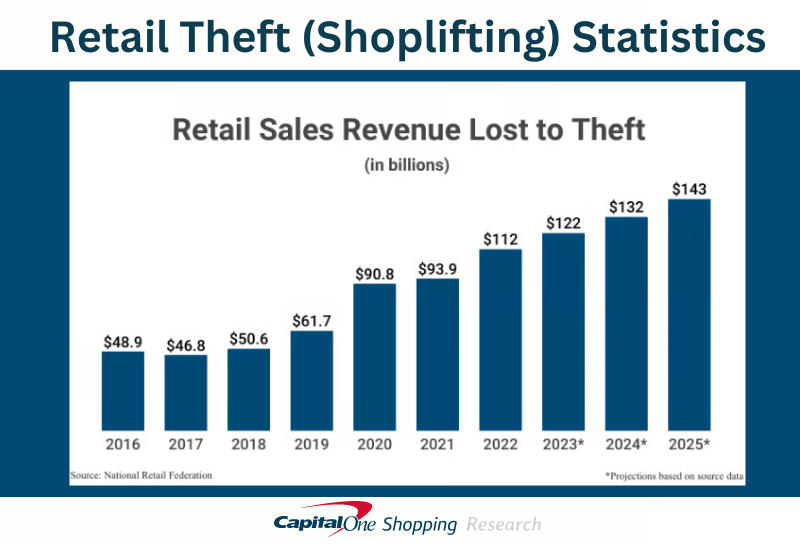
The American retail sector faces a financial emergency that has surpassed all previous projections. Data released in late 2024 and analyzed through early 2025 confirms that total retail shrink has escalated to an estimated $121. 6 billion annually. This figure represents a sharp increase from the $112. 1 billion reported in 2022. The National Retail Federation (NRF) and partners like Capital One Shopping identify this deficit as a structural failure in the retail ecosystem. It is not a result of petty shoplifting. Organized Retail Crime (ORC) rings operate these retail theft rings in America with the precision of logistics companies. They target high-value inventory for resale on unregulated online marketplaces.
Loss prevention executives report that the nature of theft has shifted fundamentally. The 2025 NRF security survey that the average shrink rate has hardened at 1. 6% of total retail sales. This percentage to billions in lost revenue for major big-box retailers and small businesses alike. External theft, including ORC, accounts for approximately 37% of these losses. Internal theft and administrative errors make up the remainder. The sheer of this $121 billion drain exceeds the annual GDP of small nations. It forces retailers to close locations, lock away basic necessities, and increase prices for law-abiding consumers.
The Surge in Organized Crime Incidents
The most worrying metric from recent reports is the density of organized attacks. Retailers tracking ORC incidents reported a 57% surge in these events between 2022 and 2023. This trend continued into 2024 with an 18% rise in shoplifting incidents year-over-year. These are not crimes. They are coordinated strikes involving boosters who sweep shelves and fencers who liquidate the goods. The NRF data shows that 67% of surveyed retailers have identified transnational ORC groups targeting their supply chains. These groups exploit legal gaps and jurisdictional boundaries to evade prosecution.
| Year | Total Loss (Billions USD) | Shrink Rate (% of Sales) | Primary Driver Trend |
|---|---|---|---|
| 2021 | $93. 9 | 1. 4% | Pandemic recovery, opportunistic theft |
| 2022 | $112. 1 | 1. 6% | Rise in violent incidents |
| 2023 | $121. 6 | 1. 6% | Surge in ORC coordination |
| 2024 (Est) | $132. 0 | 1. 7% | Supply chain infiltration |
| 2025 (Proj) | $143. 0+ | 1. 8% | Transnational group expansion |
Violence against retail workers has become a defining characteristic of this emergency. The 2025 reports highlight that 91% of retailers observed an increase in aggression from shoplifters compared to previous years. Threats and acts of violence during theft attempts rose by 17% in the most recent tracking period. Criminals carry weapons more frequently. They use bear spray, stun guns, and firearms to intimidate staff. This escalation has forced companies to invest heavily in physical security. Retailers spend millions on armed guards and advanced surveillance systems. These costs further the profit margins that the theft itself has already thinned.
Geographic Hotspots and Targeted Goods
The distribution of this financial loss is not uniform across the United States. Specific metropolitan areas bear the brunt of the activity. Los Angeles, New York City, and Chicago consistently rank as the top affected cities. Data from 2024 shows that shoplifting incidents in Los Angeles increased by 87% compared to 2019 levels. New York City reported a 64% spike in retail theft complaints over a similar four-year period. These cities serve as hubs for fencing operations where stolen goods are processed for online sale. The items targeted are specific and consistent. Health and beauty products, designer clothing, and consumer electronics top the list of stolen merchandise. These goods are easy to conceal and retain high resale value.
| City Rank | Metropolitan Area | Reported Incident Increase (vs 2019) | Most Stolen Categories |
|---|---|---|---|
| 1 | Los Angeles, CA | +87% | Apparel, Cosmetics, Accessories |
| 2 | New York, NY | +55% | Pharmacy items, Electronics |
| 3 | Chicago, IL | +46% | Footwear, Alcohol, Tools |
| 4 | San Francisco/Oakland, CA | +32% | High-end Apparel, Tech |
| 5 | Houston, TX | +24% | Home Improvement, Baby Formula |
The legislative is shifting in response to these numbers. The NRF and the Retail Industry Leaders Association (RILA) have thrown their weight behind the Combating Organized Retail Crime Act of 2025. This federal legislation aims to align state and local enforcement efforts. It proposes a centralized coordination center to track the interstate movement of stolen goods. Retailers that the current patchwork of state laws allows criminals to exploit felony thresholds. A thief can steal $900 in goods in one state to avoid a felony charge and then repeat the process in a neighboring jurisdiction. The 2025 data proves that without a unified federal response, the $121 billion deficit continue to grow.
Defining Retail Theft Rings In America: Distinguishing Shoplifting from Enterprise Theft
The conflation of petty shoplifting with Organized Retail Crime (ORC) obscures the true nature of the $121. 6 billion emergency facing American retailers. While both result in inventory loss, they are distinct phenomena with vastly different economic footprints, operational structures, and criminal intents. Federal and state law enforcement agencies, including the FBI and state-level task forces, have moved to strictly bifurcate these categories in 2024 and 2025 to better target the syndicates responsible for the majority of financial damage.
Petty shoplifting is opportunistic, committed by individuals for personal consumption. In contrast, ORC is a professional enterprise. The National Retail Federation (NRF) and the Retail Industry Leaders Association (RILA) define ORC as theft for the specific purpose of resale. This distinction is quantitative as well as qualitative. Data from Auror’s 2025 Retail Crime Insights Report reveals that while the median value of a retail theft event is approximately $51, the mean value jumps to over $215 due to high-value ORC incidents. More tellingly, the top 10% of offenders, professional boosters working for syndicates, account for 68% of all total event value, with an average event value nearing $890.
The Hierarchy of Theft
ORC rings operate with a corporate-like hierarchy that insulates ringleaders from the physical act of theft. This structure allows these groups to operations across state lines, frequently exploiting jurisdictional gaps in law enforcement. A typical ORC cell operates with four distinct tiers:
| Role | Function | Risk Profile | Compensation Model |
|---|---|---|---|
| Ringleader / Kingpin | Finances operations, recruits staff, manages logistics, and launders proceeds. | Low (Insulated) | Retains majority of profit (60-70%) |
| Fence | Purchases stolen goods in bulk to resell via online marketplaces, flea markets, or brick-and-mortar fronts. | Medium | Markup on stolen goods (30-50% of retail value) |
| Cleaner | Removes anti-theft devices, security tags, and retailer branding to prepare items for resale. | Medium | Flat fee or hourly wage |
| Booster | Professional thief who executes the theft. frequently provided with “shopping lists” of high-demand items. | High (Expendable) | 10-20% of retail value per item |
The “Fence” is the serious node in this supply chain. A November 2024 investigation by the New York Attorney General’s office dismantled a $2 million theft ring run by a 60-year-old woman who acted as a fence. She purchased stolen cosmetics and designer clothing from boosters for pennies on the dollar, then resold them through a legitimate-looking storefront in the Dominican Republic and various online platforms. This operation highlights the transnational capability of modern ORC groups, which move stolen inventory out of the country to evade domestic detection.
The of Operations
The volume of merchandise moved by these groups rivals legitimate logistics operations. In 2024, the California Highway Patrol’s Organized Retail Crime Task Force conducted 879 investigations, resulting in 1, 707 arrests and the recovery of 676, 227 stolen items valued at $13. 5 million. One specific operation in January 2025 recovered over $183, 000 worth of merchandise from a single residence, illustrating the warehousing capacity of mid-level fences.
These are not crimes of desperation. The Cook County Regional Organized Crime Task Force in Illinois executed a “blitz” in May 2025 that led to nearly 500 arrests, exposing networks that used sophisticated tools to defeat security sensors and coordinated via encrypted messaging apps. The FBI notes that these groups frequently target specific high-value, easily resellable items, such as over-the-counter medication, power tools, and premium laundry detergent, treating retail shelves as their personal warehouses.
The legal system is beginning to catch up to this reality. In 2025 alone, 15 states enacted new legislation specifically defining ORC as a separate felony offense, distinct from misdemeanor shoplifting. These laws allow prosecutors to aggregate the value of stolen goods across multiple theft incidents, enabling felony charges for boosters who previously faced only minor citations for individual “petty” thefts. This legislative shift acknowledges that a booster stealing $500 of razor blades five times a week is not a shoplifter, a logistics worker for a criminal enterprise.
The Organized Retail Crime Pyramid
Organized Retail Crime (ORC) operates with the strict hierarchical discipline of a drug cartel or a legitimate logistics corporation. It is not a loose collection of opportunistic shoplifters a tiered enterprise designed to extract inventory from retailers and convert it into untraceable cash. Federal investigations and industry analysis from 2024 and 2025 reveal a rigid three-level structure: Boosters, Fencers, and Masterminds. Each level performs a distinct function in the supply chain, separated by firewalls that protect the upper echelons from prosecution.
Level 1: The Boosters
The base of the pyramid consists of “boosters,” the foot soldiers who physically remove merchandise from stores. Unlike traditional shoplifters who steal for personal use, boosters steal for pay. Recruitment strategies have evolved significantly. In 2024, law enforcement agencies in California and New York reported a surge in “gig economy” style recruitment, where handlers use social media platforms and encrypted messaging apps to post “shopping lists” for specific high-value items.
Boosters frequently come from populations. Criminal syndicates exploit individuals struggling with addiction, homelessness, or undocumented status to assume the highest risk. Data from the FBI and the National Retail Federation indicates that boosters are paid between 5% and 30% of the retail value of the goods they steal. A booster stealing $1, 000 worth of power tools might receive $100 to $300 in cash or drugs. This low overhead allows the criminal enterprise to maintain high profit margins even after accounting for the loss of inventory seized by police.
The mechanics of the theft are precise. Boosters frequently work in teams: one to distract security, one to act as a lookout, and one to load the merchandise. They target items that are easy to conceal and high in demand, such as over-the-counter medications, cosmetics, and designer clothing. In the 2025 “Operation Silent Night” bust in Northern California, investigators found that boosters were delivering stolen goods to drop-off points, resembling a commercial delivery route rather than a chaotic smash-and-grab.
Level 2: The Fencers and Cleaners
Once the merchandise leaves the store, it moves to the “fencers.” These middlemen act as the consolidation nodes of the network. Fencers purchase stolen goods from multiple boosters and aggregate them in secure locations, such as self-storage units, warehouses, or the back rooms of legitimate businesses like pawn shops and bodegas. A 2024 investigation in San Francisco exposed a storefront dubbed “Camera Heaven,” where owners purchased millions of dollars in stolen electronics from boosters before reselling them.
A serious function at this level is “cleaning” the merchandise. Before goods can be resold on the open market, they must be stripped of their criminal origins. “Cleaners” use lighter fluid and heat guns to remove anti-theft sensors and store price tags. In sophisticated operations, they repackage items into counterfeit boxes to make them appear factory-new. This process, known as “re-boxing,” allows stolen products to be sold as “new in box” on e-commerce platforms, commanding a higher price and reducing suspicion from buyers.
Fencers operate with significant capital. The Los Angeles County Sheriff’s Department’s March 2025 bust recovered $4 million in stolen goods from a fencing operation that supplied 17 different retailers. These middlemen the gap between the street-level theft and the global market, frequently holding inventory until it can be safely diverted to the tier.
Level 3: The Masterminds
At the apex of the pyramid sit the masterminds, or “kingpins.” These individuals rarely touch the stolen merchandise. Instead, they manage the financial and logistical networks that monetize the theft. Masterminds establish online storefronts on major e-commerce platforms, posing as legitimate third-party sellers. They use the anonymity of the internet to sell stolen goods directly to unsuspecting consumers across the globe.
The financial at this level is massive. Indictments from late 2024 show that top-tier ORC leaders can generate millions in annual revenue. They launder these proceeds through shell companies, real estate, and cryptocurrency. Investigations have also established clear links between these retail theft rings and transnational criminal organizations. The profits from stolen baby formula and power tools frequently fund other illicit activities, including drug trafficking and human smuggling. In one 2025 case, a ring operating out of Oklahoma used drug transfers to pay boosters, merging the narcotics and retail theft economies.
The Economics of Stolen Goods
The value of a stolen item changes drastically as it moves up the pyramid. The following table illustrates the typical price progression of a high-demand item, such as a designer handbag or a premium power tool, based on 2024-2025 investigative data.
| Stage | Role | Action | Value Realized (% of Retail) |
|---|---|---|---|
| 1 | Booster | Steals item from store | 5%, 15% (Paid in cash/drugs) |
| 2 | Street Fence | Buys from booster, aggregates | 20%, 30% (Wholesale price) |
| 3 | Wholesale Diverter | Cleans, repackages, ships | 40%, 50% (Sold to e-seller) |
| 4 | E-Commerce Seller | Lists on Amazon/eBay | 80%, 90% (Final sale price) |
| Total | Retailer Loss | Full Inventory Cost + Security | -100% |
This economic structure incentivizes the crime. The booster assumes the immediate physical risk of arrest for a small fraction of the value, while the mastermind captures the majority of the profit with minimal exposure to law enforcement. Breaking this pattern requires disrupting the flow of money at the top, rather than just arresting the boosters at the bottom.
Blood on the Floor: Rising Violence Against Retail Workers
The narrative of retail theft has shifted from financial loss to physical survival. While corporate balance sheets bleed billions, the employees manning the registers are paying a far steeper price. Data released by the Bureau of Labor Statistics confirms that over 300 retail workers were killed on the job in 2023, the highest figure recorded in five years. Violence is the leading cause of workplace fatalities in the sector, accounting for 40% of all deaths. This is not accidental; it is a direct result of aggressive confrontations initiated by organized theft rings and emboldened shoplifters.
The human toll is specific and brutal. In December 2025, Edeedson Cine, a 23-year-old CVS employee in Long Island, New York, was stabbed to death on Christmas night during a confrontation with a suspect. His death followed a pattern established by earlier tragedies, such as the killing of Blake Mohs, a Home Depot loss prevention officer shot in Pleasanton, California, in April 2023. Mohs attempted to stop a shoplifter from stealing a charger and was murdered in the store. Similarly, 83-year-old Gary Rasor died in December 2022 after being violently shoved by a thief at a Home Depot in North Carolina. These incidents are not anomalies markers of a widespread escalation in offender aggression.
Statistics from the National Retail Federation (NRF) and the Loss Prevention Research Council (LPRC) paint a grim picture of the daily environment in American stores. The Impact of Theft & Violence 2025 report indicates a 17% increase in threats or acts of violence during theft events in 2024 compared to the previous year. also, reports of physical assault against staff rose by 22% year-over-year. The aggression is palpable: 91% of retailers report that shoplifters are more violent than pre-pandemic levels. Criminals frequently brandish weapons, knives, pepper spray, and firearms, transforming routine property crimes into life-or-death standoffs.
| Metric | Statistic | Source |
|---|---|---|
| Retail Worker Fatalities (2023) | 300+ (40% due to violence) | Bureau of Labor Statistics |
| Increase in Violent Theft Incidents (2024) | +17% Year-over-Year | NRF / LPRC 2025 Report |
| Rise in Physical Assaults (2025) | +22% Year-over-Year | LPRC / Verkada |
| Workers Feeling Unsafe | 80% | Theatro 2024 Survey |
| Staff Considering Resignation Due to Safety | 52% | LPRC 2025 Data |
The psychological impact on the workforce is severe. A 2024 survey by Theatro revealed that 80% of retail workers feel unsafe on the job. This fear drives a massive retention emergency. LPRC data from late 2025 shows that 52% of retail employees are likely to leave their current jobs within 12 months specifically due to safety concerns. The threat of litigation also looms large for employers; 64% of workers stated they would consider suing their employer if injured during a store crime incident. The retail floor has become a hostile environment where low-wage workers are expected to act as the line of defense against hardened criminals.
Corporations and legislators are scrambling to harden and protect staff. In response to the rising body count, New York enacted the Retail Workers Safety Act, which became in March 2025. The law mandates that large retail employers install panic buttons by 2027 to immediately summon law enforcement. Simultaneously, companies like Walmart initiated pilot programs in late 2024 to outfit employees with body-worn cameras, a measure previously reserved for law enforcement. These operational changes signal an admission that the retail environment is no longer safe by default.
Store closures are another direct consequence of this violence. In 2024 alone, U. S. retailers announced over 7, 100 store closures, a 69% jump from the prior year. While economic factors play a role, executives at major chains like Target and Starbucks have explicitly the inability to guarantee worker safety as a primary driver for shuttering specific high-risk locations. When a store closes due to violence, it creates a retail desert, punishing the community for the actions of organized criminal groups. The blood on the floor is not just a metaphor; it is the reality forcing a retreat from American main streets.
The Hot List: Why Razors and Formula Drive the Black Market
The inventory targeted by Organized Retail Crime (ORC) rings is not random. It is determined by a strict economic calculus known in criminological circles as the CRAVED model: Concealable, Removable, Available, Valuable, Enjoyable, and Disposable. While media reports frequently focus on smash-and-grab thefts of luxury handbags, the true engine of the $121. 6 billion annual shrink lies in the systematic extraction of everyday essentials. Data from the National Retail Federation (NRF) and loss prevention executives confirms that specific high-velocity goods, razor blades, baby formula, and laundry detergent, have become alternative currencies on the black market.
Baby formula stands as the single most targeted commodity in the American retail sector. Law enforcement officials and loss prevention experts refer to it as “liquid gold” due to its near-perfect resale characteristics. A standard 12-ounce can of Enfamil or Similac retails for approximately $30 to $35. It is non-perishable, untraceable, and commands constant demand regardless of economic conditions. In September 2025, Florida Attorney General James Uthmeier announced charges against a theft ring operator who had siphoned over $70, 000 worth of formula from Publix, Target, and Walmart locations across Broward and Palm Beach counties. This case highlights a disturbing reality where stolen formula is not resold funneled into complex fencing operations that frequently store the product in unregulated, high-temperature warehouses before it reaches unsuspecting parents online.
The safety of this trade are severe. Federal investigations have revealed that fencing rings frequently alter expiration dates and lot numbers on stolen formula to mask its origin. A January 2025 bust in North Carolina dismantled a multi-state ring that had been stockpiling formula in storage units for months. When these products return to the consumer market via third-party sellers on platforms like Amazon or eBay, they may be spoiled or counterfeit. The consumer pays near-retail prices for a product that poses serious health risks to infants.
Razor blades represent another pillar of the shadow economy. A pack of Gillette Fusion cartridges fits easily into a jacket pocket yet retails for over $40. This high value-to-volume ratio makes razors an ideal form of street currency. Unlike electronics which have serial numbers and require activation, razor blades are anonymous and universally liquid. Boosters, the foot soldiers of these crime rings, can steal thousands of dollars of inventory in a single sweep. These items are then sold to fences for pennies on the dollar or traded directly for narcotics.
Liquid laundry detergent, specifically, has also emerged as a verified ad hoc currency in the drug trade. Its distinct orange bottle is recognizable instantly and holds a stable street value. Police reports from 2024 indicate that a 150-ounce bottle of, retailing for roughly $20, is frequently traded on the street for $5 to $10 worth of fentanyl or methamphetamine. The ” for drugs” exchange rate is so established in certain municipalities that police can track local drug market fluctuations by monitoring detergent theft rates.
The Black Market Price Index (2024-2025 Estimates)
| Item Category | Average Retail Price | Street / Fence Price | Booster Payout (Cash/Drugs) |
|---|---|---|---|
| Baby Formula (12oz Can) | $32. 00 | $25. 00, $30. 00 | $8. 00, $10. 00 |
| Razor Cartridges (8-Pack) | $45. 00 | $20. 00, $25. 00 | $5. 00, $8. 00 |
| Detergent (150oz) | $22. 00 | $10. 00, $12. 00 | $3. 00, $5. 00 |
| Teeth Whitening Strips | $55. 00 | $30. 00, $35. 00 | $10. 00, $15. 00 |
| OTC Allergy Meds (Claritin/Zyrtec) | $40. 00 | $20. 00, $25. 00 | $5. 00, $8. 00 |
The resale method for these goods has shifted from flea markets to digital storefronts. The INFORM Consumers Act, which took effect in 2023, attempted to curb this by requiring online marketplaces to verify the identity of high-volume sellers. Yet criminal networks have adapted by using “clean skins”, individuals with no criminal record, to set up seller accounts. A 2024 report by the California Highway Patrol’s Organized Retail Crime Task Force noted that recovered goods are frequently cleaned of anti-theft stickers and repackaged to look pristine. In 2024 alone, California state operations recovered $13. 5 million in stolen merchandise, of which was health and beauty products destined for online resale.
Retailers have responded by locking these high-theft items behind acrylic cases. This defensive posture has reduced theft in specific categories yet has also caused sales to plummet by 15% to 25% as honest customers refuse to wait for assistance. The result is a retail environment where basic necessities are treated like controlled substances. The friction for the consumer increases while the black market continues to thrive on the margins.
Digital Fencing: The Amazon and eBay Laundromats
The transition of stolen goods from a booster’s bag to a consumer’s doorstep has been industrialized. Organized Retail Crime (ORC) rings no longer rely on pawn shops or flea markets to fence their inventory. Instead, they have weaponized the anonymity and of the world’s largest e-commerce platforms. By 2025, digital fencing has become the primary liquidation channel for stolen retail merchandise, creating a “shadow supply chain” that operates in parallel with legitimate commerce.
Federal indictments and industry data from 2024 and 2025 reveal a sophisticated laundering process. Stolen items, specifically high-velocity goods like over-the-counter medicine, power tools, and beauty products, are listed on Amazon, eBay, and Facebook Marketplace frequently within hours of theft. These listings frequently undercut legitimate retailers by 15% to 20%, a margin made possible because the seller’s cost of goods sold (COGS) is zero.
The Economics of Theft: A Zero-Cost Supply Chain
The profitability of digital fencing dwarfs legitimate retail margins. While a standard retailer might operate on net margins of 2% to 5%, an ORC fencing operation functions with a gross margin exceeding 50%, even after accounting for payments to boosters and platform fees. The following breakdown, derived from 2024 federal case files, illustrates the economics of a typical stolen item sold online.
| Stage | Transaction Details | Running Balance |
|---|---|---|
| Acquisition | Fence pays booster cash (approx. 30% of retail value) | -$30. 00 |
| Processing | Cleaning, de-tagging, and repackaging labor | -$2. 00 |
| Listing | Item listed on Amazon/eBay at 80% of retail price | +$80. 00 |
| Platform Fees | Marketplace referral & closing fees (approx. 15%) | -$12. 00 |
| Shipping | Fulfillment cost (frequently subsidized by platform programs) | -$5. 00 |
| Net Profit | Total profit for the fence | +$31. 00 |
This model generates a 96% return on investment for the fence per pattern, a velocity of capital that legitimate businesses cannot match. In July 2024, federal prosecutors indicted the operators of “We Buy Gold, Silver, and Electronics” in Washington state. The investigation revealed the storefront purchased stolen goods from boosters and resold them through Amazon and eBay storefronts named “Medikus” and “abcstore555,” generating over $4. 5 million in illicit sales between 2022 and 2023.
Platform Evasion and the INFORM Act
The implementation of the Integrity, Notification, and Fairness in Online Retail Marketplaces for Consumers Act (INFORM Consumers Act) in June 2023 forced high-volume sellers to verify their identities. yet, criminal syndicates quickly adapted. Investigations in late 2024 showed a surge in “straw sellers”, individuals with clean records paid to open accounts on behalf of crime rings. also, rings began diversifying to platforms with less automated oversight.
In September 2025, the Federal Trade Commission (FTC) announced its major enforcement action under the INFORM Act against Temu, signaling a federal crackdown on platforms failing to vet high-volume sellers. even with these measures, the volume of stolen goods remains high. A 2024 California Highway Patrol investigation dismantled a ring that stole $8 million in beauty products from Ulta and Sephora, fencing them through a sophisticated Amazon storefront that appeared entirely legitimate to consumers.
“These aren’t just random shoplifters. These are thefts coordinated as part of a sophisticated network that legitimate businesses, confusing consumers and creating a effect that makes it more difficult for retailers to operate.” , Special Agent in Charge Robert Hammer, HSI Pacific Northwest (July 2024)
The Facebook Marketplace “Wild West”
While Amazon and eBay have implemented “gatekeeping” measures, Facebook Marketplace has emerged as a high-risk, high-velocity channel for local fencing. Unlike the shipping-based models of Amazon, Facebook Marketplace transactions frequently involve face-to-face exchanges, leading to a spike in violent crime. In January 2026, the Montgomery County Sheriff’s Office issued a warning after multiple sellers of high-end sneakers were robbed at gunpoint during meetups. This “hybrid” fencing model allows criminals to liquidate stolen goods for cash immediately, bypassing the digital paper trail required by the INFORM Act.
Data from 2025 indicates that ORC groups are increasingly using encrypted messaging apps like Telegram and Signal to coordinate “flash sales” of stolen inventory, directing buyers to private listings on social platforms. This fragmentation of the black market complicates enforcement, as investigators must infiltrate private digital groups rather than simply monitoring public listings.
Social Media Bazaars: Facebook Marketplace gaps
The digital storefront has replaced the back-alley fence. While law enforcement agencies tighten surveillance on physical pawn shops and scrap yards, Organized Retail Crime (ORC) rings have migrated en masse to the unregulated sprawl of social commerce. By early 2026, investigations confirm that Facebook Marketplace has become the primary liquidation channel for stolen retail inventory, outpacing eBay and OfferUp due to specific, structural gaps that Meta has failed to close. Data from the National Retail Federation (NRF) indicates that 45% of identified ORC groups use online marketplaces as their primary resale venue, with Facebook Marketplace accounting for the majority of these high-velocity transactions.
The appeal for criminal enterprises is not reach, anonymity. Unlike Amazon or Walmart’s third-party platforms, which require banking information and tax identification for most sellers, Facebook Marketplace operates largely as a peer-to-peer classifieds section. This structure allows “boosters”, the low-level thieves who clear shelves, to list “New in Box” power tools, cosmetics, and laundry detergent at 50% of retail value without triggering fraud detection algorithms. A 2025 investigation by the Montgomery County Police Department revealed a single fencing operation generating over $1 million in untaxed revenue, moving stolen goods from CVS and Target directly to buyers via social media listings.
The INFORM Act: A Broken Shield
The Integrity, Notification, and Fairness in Online Retail Marketplaces for Consumers (INFORM) Act, which took effect in mid-2023, was designed to compel platforms to verify the identity of high-volume sellers. yet, criminal syndicates have rapidly adapted to the legislation’s rigid definitions. The law only mandates data collection for sellers with 200 or more transactions and $5, 000 in gross revenues within a 12-month period. also, it specifically “new or unused” consumer products.
Fencing rings circumvent this by listing stolen, sealed merchandise as “Used, Like New.” This simple categorization shift frequently exempts the listing from INFORM Act triggers. also, rings use “smurfing” techniques, spreading stolen inventory across dozens of “burner” profiles to keep each individual account the 200-transaction threshold. Consequently, the platform remains flooded with stolen inventory that technically complies with federal reporting standards while violating the spirit of the law.
| Feature | Amazon Third-Party | eBay | Facebook Marketplace |
|---|---|---|---|
| Seller ID Verification | Mandatory (Bank/Tax ID) | Mandatory (Bank Linked) | Optional / None for Local |
| Transaction Tracking | 100% Digital Trail | 100% Digital Trail | Cash / No Record |
| Listing Fee | Yes (Disincentivizes Spam) | Yes (After limit) | Free (Unlimited) |
| INFORM Act Compliance | Strict Automated Gating | Strict Automated Gating | Self-Reported Condition |
The “Local Pickup” Ghost Protocol
The most serious operational security flaw is the “Local Pickup” feature. While eBay and Amazon rely on shipping carriers that generate tracking numbers and delivery confirmations, Facebook Marketplace encourages cash-in-hand, face-to-face transactions. This creates a “ghost protocol” for stolen goods. A thief steals a Dewalt drill from Home Depot at 10: 00 AM, lists it at 10: 15 AM, and sells it for cash by noon. There is no shipping label, no digital payment record, and no auditable trail for law enforcement to follow.
In August 2024, the California Highway Patrol’s Organized Retail Crime Taskforce raided an Oakland residence acting as a fencing hub. They recovered $450, 000 in stolen merchandise, much of it sourced from drugstores and home improvement centers. The investigation revealed that the operation relied almost exclusively on local cash transactions arranged via social media, allowing the ring to move inventory faster than police could track it. The absence of a digital footprint meant that investigators had to rely on physical surveillance rather than financial subpoenas to build their case.
“We are fighting a digital war with analog tools. When a platform allows a user to sell fifty brand-new Dyson vacuums for cash in a parking lot without asking for a receipt or ID, they are not a passive host. They are an active participant in the fencing economy.”
, Lt. Alfonso De La Torre, Harris County Sheriff’s Office (Statement on Operation Blitz, June 2025)
Algorithmic Complicity
Meta’s revenue model further complicates the problem. While the platform does not charge listing fees for casual sellers, it generates significant revenue from “Boost” features. Fencers frequently pay to boost their listings, ensuring stolen goods appear at the top of local search results. This creates a perverse incentive structure where the platform profits directly from the visibility of illicit inventory. Internal documents leaked in late 2025 suggested that while Meta has the capability to implement universal seller verification, the measure was delayed to avoid friction that might reduce user engagement and ad revenue.
The result is a bazaar where the blocks to entry for criminals are non-existent. Until federal legislation mandates the same “Know Your Customer” (KYC) standards for social commerce that exist for banking, Facebook Marketplace remain the preferred engine for the $121. 6 billion retail theft emergency.
The Pawn Shop Pivot: Brick and Mortar Fencing Operations

While digital marketplaces remain a primary disposal channel for stolen goods, 2024 and 2025 have witnessed a tactical regression among Organized Retail Crime (ORC) syndicates: the “Pawn Shop Pivot.” As federal legislation like the INFORM Consumers Act ( June 2023) squeezed the anonymity of high-volume online sellers, criminal networks have increasingly reverted to physical storefronts to “clean” and aggregate illicit inventory. These brick-and-mortar operations, ranging from licensed pawn shops to bodegas and beauty supply stores, serve as the serious airlock between street-level theft and the legitimate economy.
Federal indictments from late 2024 through early 2025 reveal that these are not passive buyers of occasional stolen items active logistics hubs. They provide “boosters” (professional shoplifters) with specific “shopping lists,” launder the proceeds, and frequently handle the shipping of goods to unsuspecting online buyers.
Case Study: The “Monster Pawn” Network
In January 2025, the Illinois Attorney General’s office charged the owners of Monster Pawn with running a criminal enterprise that allegedly moved millions in stolen merchandise. The operation, which spanned multiple locations in Bloomington and Normal, Illinois, exemplifies the modern fencing model. Prosecutors allege the owners did not accept stolen goods directed the theft of specific high-value items, tools, electronics, and video game consoles, which were then sold online as “new-in-box.”
This case highlights the “hybrid” nature of the pivot: the physical store acts as the intake and processing center, while the sales channel remains digital. The physical location provides a veneer of legitimacy, allowing the operators to claim they are simply reselling second-hand goods if questioned by local authorities.
Mechanics of the Pivot: “Cleaning” and Aggregation
The operational standard for these fencing rings involves a process known as “cleaning.” Stolen merchandise, frequently retaining security tags or retailer-specific stickers, is processed to remove identifying marks. In the Bee Pawn LLC case (Miami, March 2024), federal charges detailed how the owner laundered over $110, 000 in drug proceeds and redeemed stolen gift cards, washing the money through the business’s accounts.
| Operation Name | Location | Date Charged | Est. Value Seized/Trafficked | Key method |
|---|---|---|---|---|
| Monster Pawn | Bloomington, IL | Jan 2025 | Multi-Million (Ongoing) | Directed theft lists; online resale of “new” goods. |
| Leonard Brothers | Philadelphia, PA | Dec 2024 | $19 Million | Used 3 pawn shops to intake goods from “boosters” and “mooks.” |
| Top Dollar Pawn | Colorado Springs, CO | Feb 2024 | Multi-Million | Racketeering conviction; systematic buying of new-in-box retail items. |
| Rehana’s Cosmetics | Manhattan, NY | May 2024 | $1 Million+ | Beauty store front used to fence pharmacy goods (CVS, Rite Aid). |
| Card Rhino | Portland, OR | March 2025 | Thousands of Items | Bought bulk stolen collectibles/electronics for eBay resale. |
The Leonard Brothers indictment in Philadelphia (December 2024) provides a granular look at the hierarchy. The defendants allegedly employed two distinct classes of thieves: “boosters,” who stole from local big-box retailers like Home Depot and Target, and “mooks,” who stole in bulk from across the United States. The stolen goods were consolidated at their pawn shops, Society Hill Loan and K&A Money Loan, before being listed on eBay. This centralization allows the ring to obscure the origin of the goods, mixing stolen inventory with legitimate pawns.
Legislative Pressure and the “Balloon Effect”
The resurgence of physical fencing is partly a “balloon effect”, squeeze one area, and the crime bulges elsewhere. The INFORM Consumers Act mandated that online marketplaces collect bank account, tax ID, and contact information for high-volume sellers (defined as 200 or more transactions totaling $5, 000+ in a year). This transparency forced ORC groups to find intermediaries who could absorb the risk of identification.
Pawn shops, which are already regulated and accustomed to reporting transactions to police (frequently via systems like LeadsOnline), provide a paradoxical cover. By mixing stolen “new” goods with legitimate used items, corrupt operators can flood the database with noise, making it difficult for law enforcement to spot the pattern without specific intelligence or a whistleblower. yet, states are responding. In 2025, California implemented AB 2943, which allows law enforcement to aggregate theft amounts across different victims and counties to reach felony thresholds, directly targeting the “smash-and-grab” crews that supply these fences.
The Bodega and Beauty Store Fronts
The pivot is not limited to pawn shops. In dense urban environments, other cash-heavy businesses serve as fences. The May 2024 indictment of the operators of Rehana’s Cosmetics in Manhattan revealed a “shadow network” where a legitimate beauty supply store acted as a hub for stolen pharmacy goods. Police recovered over 450 boxes of stolen merchandise from the premises. Similarly, a July 2025 raid on a Los Angeles bodega uncovered $1 million in cash and a stockpile of stolen goods, proving that any high-volume, cash-based business can be weaponized as a fencing node.
The Fentanyl-Retail Nexus
The operational foundation of modern Organized Retail Crime (ORC) is not built on sophisticated hacking or Ocean’s Eleven-style heists, on the systematic exploitation of the American addiction emergency. Investigations conducted between 2023 and 2025 by federal agencies, including Homeland Security Investigations (HSI) and the Drug Enforcement Administration (DEA), reveal a rigid labor pipeline where drug trafficking organizations and retail theft rings have merged. In cities like San Francisco, Seattle, and Philadelphia, the “fence”, the criminal middleman who purchases stolen goods, frequently doubles as the drug dealer. This convergence creates a closed-loop economy: individuals suffering from fentanyl or methamphetamine addiction are recruited as “boosters” and paid directly in narcotics rather than cash.
This “crime of need” for the booster fuels a “crime of greed” for the ringleader. Data from the National Retail Federation (NRF) and the Loss Prevention Research Council indicates that while the boosters face the physical risk of arrest and confrontation, the ringleaders remain insulated, treating these individuals as disposable assets. In 2024, law enforcement officials in King County, Washington, confirmed that wiretap investigations into fentanyl distribution rings frequently led directly to stockpiles of stolen retail merchandise. The dealers provide “shopping lists” to addicts, specific requests for high-resale items like power tools, over-the-counter medicine, and cosmetics, turning the addict’s dependence into a logistical supply chain for illicit e-commerce sellers.
Street-Level Economics: The Booster’s Cut
The financial mechanics of this exploitation are predatory. While an item may sell for near-retail prices on Amazon or eBay, the booster receives a fraction of that value. Field reports from “Operation Blitz” in Texas and similar crackdowns in California show that boosters are compensated at 5% to 10% of the item’s face value. When payment is rendered in drugs, the exchange rate becomes even more favorable for the criminal enterprise, as the street value of fentanyl pills has plummeted due to oversaturation.
The following table illustrates the estimated street-level exchange rates documented in major metropolitan recovery operations during late 2024. These figures demonstrate how minimal the overhead costs are for ORC syndicates utilizing this labor force.
| Targeted Item | Avg. Retail Price | Cash Payout to Booster | Direct Narcotic Equivalent (Fentanyl Pills) | Fence Resale Value (Online) |
|---|---|---|---|---|
| Dewalt Power Drill | $159. 00 | $10. 00, $15. 00 | 3, 5 Pills | $110. 00 |
| Olay Regenerist Cream | $34. 00 | $2. 00, $3. 00 | 1 Pill | $22. 00 |
| Designer Handbag | $350. 00 | $25. 00, $35. 00 | 8, 12 Pills | $210. 00 |
| Nike Air Force 1s | $115. 00 | $10. 00 | 3 Pills | $85. 00 |
| Pods (Container) | $21. 00 | $1. 50, $2. 00 | 0. 5, 1 Pill | $15. 00 |
Geographic Hubs of Exploitation
Specific neighborhoods have evolved into open-air clearinghouses for this illicit trade. In San Francisco, the Tenderloin district and areas South of Market became the focus of the “Drug Market Agency Coordination Center” in 2024. This multi-agency task force identified that the open sale of stolen goods on city sidewalks was inextricably linked to the fentanyl trade. Police operations in late 2025 reported that suspects arrested for fencing stolen merchandise frequently possessed significant quantities of narcotics intended for distribution to their suppliers. The creates a localized ecosystem where a stolen bottle of laundry detergent or a pair of jeans is currency, traded with the same liquidity as a dollar bill.
Seattle presents a similar case study. The “Operation Engage” initiative by the DEA highlighted how the Chinatown-International District became a nexus for these converging crimes. Federal indictments unsealed in June 2025 against a major Pacific Northwest ring detailed how leaders trafficked fentanyl down from Canada and simultaneously moved stolen retail goods up from California, using the same vehicles and logistics networks. The investigation found that the ringleaders specifically targeted homeless encampments to recruit boosters, providing them with daily quotas in exchange for their maintenance doses of opioids.
The Hierarchy of Misery
Understanding the recruitment pipeline requires mapping the hierarchy of the criminal enterprise. At the bottom lies the Booster, frequently homeless and battling severe substance use disorder. They bear 100% of the arrest risk. Above them is the Street-Level Fence, who operates out of a van, a storage unit, or a backpack in an open-air market. This individual aggregates goods from dozens of boosters daily.
The tier consists of the Mid-Level Aggregators. These operators purchase bulk stolen goods from street fences and “clean” them, removing anti-theft tags and store stickers., the goods reach the E-Commerce Kingpins, who list the merchandise on legitimate marketplaces under the guise of third-party sellers. These top-tier criminals may never touch a drug or a stolen item physically, yet their business model is entirely dependent on the addiction of the booster at the bottom of the chain. This structure allows the enterprise to rapidly; if a booster is arrested, they are easily replaced by another individual in the grip of addiction, ensuring the flow of goods remains uninterrupted.
Cartel Ties: Tracing Profits to Transnational Crime
Federal investigations in 2024 and 2025 have confirmed that Organized Retail Crime (ORC) has mutated from a domestic property problem into a primary funding stream for transnational criminal organizations. Intelligence released by the Department of Homeland Security (DHS) indicates that major Mexican cartels, specifically the Sinaloa Cartel and Cartel Jalisco New Generation (CJNG), use retail theft rings to diversify revenue beyond narcotics. This shift transforms stolen merchandise into a liquid asset class that funds weapon procurement and human smuggling operations.
The operational model relies on “South American Theft Groups” (SATGs), a designation used by the FBI to categorize specialized criminal cells that enter the United States specifically to plunder retail inventory and residential properties. A September 2025 operation in Kenosha County, Wisconsin, exposed the direct pipeline between Midwestern retail theft and Mexican organized crime. Law enforcement arrested eight individuals linked to a theft ring that funneled proceeds directly to Cartel La Familia Michoacana. Investigators estimated this single cell generated over $100 million in annual losses, targeting high-value goods from outlets in Wisconsin and Illinois to finance cartel activities in Mexico.
The “Mirror” Laundering System
The method for repatriating these illicit profits involves a sophisticated method known as “mirror transactions,” frequently facilitated by Chinese Money Laundering Networks (CMLNs). This system allows cartels to bypass the banking system entirely. In this arrangement, retail theft crews sell stolen goods to fences in the U. S. for cash. This cash is then sold to Chinese brokers who need U. S. currency for their own clients, frequently Chinese nationals seeking to move wealth out of China to evade capital controls.
The Chinese brokers transfer an equivalent value of yuan or pesos to the cartel’s accounts in Mexico or China. No physical money crosses the border, yet the value is transferred instantly. Homeland Security Investigations (HSI) reports that this method has become the dominant laundering technique for ORC proceeds in 2025, blending retail theft profits with the global narcotics trade.
South American Theft Groups (SATGs) and Visa Exploitation
A distinct vector of this transnational crime wave involves “burglary tourism,” where criminal crews exploit the Visa Waiver Program (ESTA) to enter the United States. Chilean nationals, in particular, have been identified by the FBI as a primary demographic within SATGs due to Chile’s status as the only Latin American country in the Visa Waiver Program. These groups do not intend to stay; they arrive on 90-day tourist visas, execute a high volume of thefts, and return home with the proceeds.
In December 2024, the FBI issued a warning to professional sports leagues after SATGs targeted the homes of high-profile athletes, including Kansas City Chiefs players Patrick Mahomes and Travis Kelce. These crews use sophisticated surveillance to track victims’ schedules, clear when homes are empty. The stolen assets, luxury watches, jewelry, and designer apparel, are easily fenced or shipped abroad. In 2025, federal pressure mounted to suspend Chile’s participation in the Visa Waiver Program after data showed a direct correlation between tourist arrivals and spikes in organized burglary across California, Michigan, and Florida.
| Criminal Entity | Primary Method | Targeted Assets | Laundering method |
|---|---|---|---|
| Cartel La Familia Michoacana | Midwestern Theft Cells | Apparel, Electronics | Bulk Cash Smuggling |
| Sinaloa Cartel | ORC Fencing Operations | High-Volume Consumer Goods | Chinese Mirror Transactions |
| Chilean SATGs | Visa Waiver Exploitation | Luxury Jewelry, Safes | Direct Asset Export / Remittance |
| Chinese CMLNs | Brokerage for Cartels | U. S. Currency (Cash) | Currency Swaps (Yuan/Peso) |
Operation Boiling Point
To combat these networks, HSI launched “Operation Boiling Point,” a multi-agency initiative focused on the logistical hierarchy of ORC groups. The operation treats retail theft not as property crime as a federal racketeering offense. In August 2025, HSI Newark arrested 12 nationals from Chile, Colombia, and Peru connected to SATGs operating across New Jersey. These arrests revealed that the groups used encrypted messaging apps to coordinate and shared a pool of rental vehicles and fraudulent identifications to evade detection.
The integration of retail theft into the portfolio of transnational crime syndicates complicates enforcement. Local police departments, equipped to handle shoplifting, face adversaries with the resources and command structures of international drug trafficking organizations. The 2025 data confirms that every dollar lost to these rings contributes directly to the destabilization of border security and the strengthening of cartel infrastructure.
The Gift Card Wash: Laundering Money Through Stored Value
While shoplifting provides the raw inventory for retail theft rings, gift cards have become the preferred financial rail for laundering the proceeds. By 2025, federal investigators identified “card draining” and stored-value fraud not as consumer scams, as a sophisticated trade-based money laundering (TBML) system orchestrated by transnational criminal organizations. The Department of Homeland Security (DHS) confirmed through Project Red Hook that these operations are largely controlled by Chinese organized crime groups, which use the anonymity of gift cards to move billions of dollars out of the U. S. economy annually.
The mechanics of the “Gift Card Wash” are industrial in. Unlike petty fraudsters who might use a stolen card for personal consumption, organized rings employ a three-stage pattern to clean illicit funds., “runners” or mules are deployed to retail locations to steal unactivated gift cards in bulk. These cards are taken to safe houses where they are tampered with, security strips are carefully removed with heat guns, PINs are recorded, and barcodes are frequently swapped or covered. The compromised cards are then repackaged with factory-precision adhesiveness and returned to store racks by the thousands.
Once a legitimate customer loads funds onto a tampered card, bots running on the crime ring’s servers detect the activation instantly. The funds are drained within seconds, frequently before the customer leaves the checkout line. yet, the laundering phase begins only after the theft. The stolen digital funds are not cashed out directly, which would leave a paper trail. Instead, they are used to purchase high-resale-value electronics, primarily Apple products, from different retail locations. These goods are then exported to China or other international markets, sold for clean cash, and the proceeds are integrated into the legitimate banking system, completing the wash.
Project Red Hook and the Chinese Connection
In late 2023 and throughout 2024, Homeland Security Investigations (HSI) formalized its counter-offensive under the banner of Project Red Hook. The operation revealed that the gift card ecosystem had become a primary vehicle for capital flight and money laundering. Intelligence gathered during the operation indicated that the runners restocking tampered cards were frequently low-level operatives working for sophisticated syndicates based in Fujian province and other regions of China.
The of these operations was highlighted by the 2024 prosecution of Qinbin Chen, a key figure in what federal prosecutors dubbed “The Walmart Scheme.” Chen’s operation laundered approximately $7 million in fraudulently obtained gift cards. His network processed thousands of cards, converting the stolen balances into consumer goods that were shipped overseas. Similarly, in Los Angeles, a federal jury convicted three nationals, Blade Bai, Bowen Hu, and Tairan Shi, for laundering over $2. 5 million through Target gift cards. These cases demonstrated that retailers were not just victims of theft, unwitting conduits for international financial crime.
| Stage | Action | Objective |
|---|---|---|
| Acquisition | Runners steal unactivated cards from racks (Target, Walmart, Home Depot). | Obtain physical media without triggering alarms. |
| Tampering | Cards are opened, PINs recorded, barcodes swapped, and resealed. | Prepare the “trap” for legitimate consumers. |
| Placement | Tampered cards are restocked in stores by mules. | Reintroduce compromised inventory to the supply chain. |
| Extraction | Bots monitor activation; funds are drained immediately upon load. | Theft of liquid funds (digital cash). |
| Laundering | Stolen funds buy iPhones/electronics; goods exported and sold. | Convert traceable digital theft into untraceable foreign cash. |
The Mule Network and Retail Impact
The operational tempo of these rings resembles a logistics company more than a street gang. Law enforcement officials in Sacramento and Plano, Texas, reported arresting runners who possessed thousands of cloned cards and hit upwards of 10 stores per day, seven days a week. In 2025, authorities seized over 45, 000 compromised cards in a single sweep across multiple states, including California, Texas, and Kentucky. These runners are frequently provided with specific routes and quotas, treating the placement of tampered cards as a shift-work job.
For retailers, the financial damage extends beyond the immediate loss of funds. The of consumer trust has been severe. Data from 2024 showed that 60% of retailers experienced a surge in gift card scams, forcing companies to redesign packaging and implement “chip-to-register” activation delays. even with these measures, the adaptability of the crime rings has kept the “wash” active. The integration of gift card fraud into the broader Organized Retail Crime (ORC) allows these groups to diversify their revenue streams, using the same fencing networks for stolen physical goods and goods purchased with stolen digital currency.
“We are seeing a convergence where the same groups stealing power tools are laundering money through the gift card racks at the front of the store. It is a closed-loop economy of theft.” , Statement from HSI Assistant Director, Project Red Hook Briefing (2024).
The intersection of cyber-enabled fraud and physical retail theft creates a regulatory blind spot. Because gift cards are frequently classified as stored value rather than financial instruments, they bypass of the Know Your Customer (KYC) regulations that apply to bank transfers. This regulatory gap has made the gift card rack the most point in the American financial system, allowing billions to flow from the pockets of consumers directly into the coffers of transnational organized crime.
Operation Smash and Grab: Anatomy of a Flash Mob Attack
The transition from stealthy shoplifting to “shock and awe” robbery represents a tactical evolution in organized retail crime. By late 2025, the “flash mob” robbery, frequently termed a “flash rob” by law enforcement, had cemented itself as a primary method for stripping high-value inventory from luxury retailers. Unlike traditional theft, which relies on concealment, these attacks rely on overwhelming force. A December 2025 FBI report analyzing data from 2020 through 2024 identified 3, 321 incidents meeting the strict definition of six or more offenders targeting a single location. While the Bureau’s conservative metrics tracked $8. 3 million in losses for this specific subset, industry data on high-profile attacks in California and New York indicates the financial damage per incident frequently exceeds $300, 000.
The operational mechanics of these attacks mirror paramilitary raids rather than opportunistic crime. The recruitment phase begins in the digital sphere. Organizers, frequently insulated from the physical act, use encrypted messaging apps and ephemeral social media stories to broadcast “licks” or “moves.” These digital casting calls provide a time, a location, and a dress code, all-black clothing, masks, and gloves. The FBI’s 2025 analysis revealed a clear demographic trend: over 40% of arrestees in these mob incidents were between the ages of 10 and 19, a statistic that points to the weaponization of juveniles who face lighter sentencing guidelines.
The execution phase is defined by speed and chaos. On August 12, 2023, the Nordstrom at Westfield Topanga Shopping Center in Los Angeles became a case study for this tactic. At approximately 4: 00 PM, a coordinated group of 30 to 50 individuals stormed the department store. The attack did not rely on stealth. Perpetrators used bear spray to incapacitate security guards immediately upon entry, a tactic that upgrades the offense from shoplifting to robbery. In under three minutes, the mob smashed display cases and stripped racks of high-end handbags and designer clothing. The Los Angeles Police Department estimated the loss from this single event at $300, 000.
The “swarm” tactic neutralizes standard loss prevention measures. Security personnel, outnumbered fifty-to-one, are trained to stand down rather than risk physical injury or liability. The mob exploits this policy. Participants act with specific roles: “smashers” use crowbars or hammers to break reinforced glass, while “grabbers” sweep merchandise into laundry bags or duffels. A third group, frequently drivers, waits outside in vehicles with obscured or removed license plates. The escape is as chaotic as the entry, with the group scattering in multiple directions to dilute police.
| Time | Action | Operational Detail |
|---|---|---|
| 3: 45 PM | Staging | Suspects arrive in 20+ separate vehicles, parking in pre- zones near exits. |
| 4: 00 PM | Breach | 30-50 masked individuals enter simultaneously. Security guard sprayed with bear mace. |
| 4: 01 PM | Extraction | Display cases smashed. High-value goods (Botkier, YSL, Givenchy) targeted. |
| 4: 03 PM | Exfiltration | Group exits. Merchandise loaded into waiting sedans and SUVs. Vehicles scatter. |
| 4: 10 PM | Response | LAPD arrives. Perpetrators are gone. Loss estimated at $300, 000+. |
The geographic concentration of these attacks correlates with major retail hubs. While the FBI’s 2025 report noted incidents across the country, the intensity of “smash and grab” operations remains highest in Los Angeles, San Francisco, and New York City. In August 2023, just days before the Topanga incident, a mob of 30 people hit the Yves Saint Laurent store in Glendale, California, escaping with $400, 000 in merchandise. In February 2024, a smaller armed crew hit a Gucci store in New York’s Meatpacking District, ordering customers to the floor before stealing $51, 000 in goods. These events demonstrate that while the mob size may vary, the objective remains constant: the rapid liquidation of luxury assets.
“This is not shoplifting. This is domestic terrorism in our retail centers. When you have 50 people rushing a store with bear spray and hammers, you are not dealing with petty theft. You are dealing with an organized criminal enterprise that uses fear as a weapon.”
, Statement from Los Angeles Law Enforcement Officials following the 2023 Topanga attacks.
The aftermath of a flash mob attack feeds directly into the fencing economy. Stolen goods are rarely kept by the smashers. Instead, items are handed off to fences, middlemen who pay pennies on the dollar, frequently within hours of the crime. These goods then resurface on online marketplaces or are shipped out of state to avoid serial number tracking. The speed of this pattern, from the “smash” to the online sale, makes asset recovery nearly impossible for retailers.
California Case Study: Prop 47 and Felony Thresholds
The legislative experiment known as Proposition 47 reshaped California’s criminal justice framework in 2014 by reclassifying nonviolent theft offenses under $950 from felonies to misdemeanors. This $950 threshold became a defining metric for Organized Retail Crime (ORC) rings operating within the state. Criminal syndicates adapted their tactics to this legal ceiling and equipped theft crews with calculators to ensure stolen merchandise remained just the felony limit. This calculated evasion allowed repeat offenders to face only citation-and-release rather than incarceration. The structural vulnerability created by this policy contributed to a between California’s retail theft rates and national averages between 2015 and 2024.
Data from the Public Policy Institute of California (PPIC) confirms that while in total property crime rates fluctuated, shoplifting incidents surged specifically in the post-pandemic era. By 2024, reported shoplifting in California had risen 14. 2% year-over-year and stood 48% higher than 2019 levels. This increase occurred even as other property crimes like commercial burglary began to decline. The suggests that theft rings specifically targeted the misdemeanor loophole. Retailers reported that store staff frequently watched thieves clear shelves with impunity because security interventions carried higher liability risks than the legal consequences facing the perpetrators.
The financial forced major retailers to abandon high-risk locations. Target closed three Bay Area stores in September 2023 and unsafe working conditions for employees. Whole Foods shuttered its San Francisco flagship in April 2023 only 13 months after opening. The exodus continued into 2024 and 2025. In-N-Out Burger closed its only Oakland location in March 2024 due to persistent car break-ins and robberies. Safeway followed suit by closing its Fillmore District store in February 2025. Saks Fifth Avenue exited its Union Square location in May 2025. These closures created retail deserts in dense urban centers and forced residents to travel further for basic necessities.
Voter sentiment shifted drastically in response to the visible decay of retail corridors. The electorate passed Proposition 36 in November 2024 with 68. 4% support. This measure dismantled key provisions of Prop 47. It introduced a “treatment-mandated felony” for repeat offenders and allowed prosecutors to aggregate the value of stolen goods across multiple thefts to meet the $950 felony threshold. The law also added sentence enhancements for theft involving three or more perpetrators. This criminalized the “flash mob” tactics used by ORC groups. Governor Gavin Newsom had previously signed a legislative package in August 2024 to expand arrest powers and target online resellers. Prop 36 superseded these efforts by mandating stricter penalties directly through the ballot box.
State law enforcement agencies ramped up operations to coincide with these legislative changes. The California Highway Patrol (CHP) Organized Retail Crime Task Force reported its most active year on record in 2024. The unit conducted 879 investigations and made 1, 707 arrests. They recovered 676, 227 stolen items valued at $13. 5 million. This represented a significant escalation from previous years. The task force continued this momentum into early 2025. Operations in January and February 2025 alone yielded 209 arrests and the recovery of $2. 2 million in merchandise. These metrics indicate a shift from passive observation to active disruption of theft supply chains.
Timeline of Retail Exodus and Policy Correction (2023-2025)
| Date | Event Type | Details | Impact |
|---|---|---|---|
| April 2023 | Store Closure | Whole Foods closes SF Flagship | employee safety concerns after 13 months of operation. |
| Sept 2023 | Store Closure | Target closes 3 Bay Area locations | “unsustainable business performance” due to theft. |
| Aug 2024 | Legislation | Gov. Newsom signs anti-theft package | Allowed aggregation of theft amounts for felony charges. |
| Nov 2024 | Policy Shift | Voters pass Prop 36 (68. 4% Yes) | Reinstated felonies for repeat theft offenders and drug crimes. |
| Feb 2025 | Store Closure | Safeway closes Fillmore District store | Marked continued retreat of grocers from high-theft zones. |
| May 2025 | Store Closure | Saks Fifth Avenue exits Union Square | High-end luxury retail abandons downtown San Francisco. |
The enforcement data from 2025 suggests that the combination of Prop 36 and aggressive CHP operations has begun to alter the risk-reward calculus for theft rings. Booking records show an increase in felony charges for suspects who previously would have received citations. The aggregation rule allows prosecutors to build cases against professional boosters who hit multiple stores in a single day. Retailers have cautiously welcomed these changes. Loss prevention executives coordinate directly with the CHP task force to track fencing operations rather than just documenting losses. The long-term efficacy of these measures depends on the judicial system’s capacity to process the influx of felony cases generated by the new legal standards.
The New York Model: NYPD Retail Theft Task Force Metrics
The New York City law enforcement response to organized retail crime represents a distinct shift from passive observation to interdiction. Following a 44% surge in shoplifting complaints between 2021 and 2022, the NYPD and the Mayor’s Office implemented a strategy predicated on the discovery that retail theft was not a broad societal trend, a concentrated logistical operation run by a small cadre of recidivists. The resulting “New York Model” prioritizes the identification of high-volume offenders and the of fencing networks over sporadic misdemeanor arrests.
The core metric driving this operational pivot was released in early 2023: NYPD data revealed that nearly one-third of all retail theft arrests in the city in 2022 involved just 327 individuals. These specific offenders were arrested shared over 6, 000 times. This concentration of criminal activity allowed the newly formed Retail Theft Task Force to focus resources on a “precision policing” strategy. Instead of treating each theft as an incident, detectives began aggregating cases to charge boosters with grand larceny and enterprise corruption, bypassing the revolving door of misdemeanor arraignments.
Operational Results: 2024-2025
By late 2025, the task force’s aggressive posture began to yield verifiable metrics. Data released by Governor Kathy Hochul in November 2025 confirmed that the joint operations between the NYPD, State Police, and local District Attorneys had resulted in a 13. 6% year-over-year decrease in retail theft complaints in New York City. This reduction coincided with a sharp increase in enforcement activity. While complaints dropped, arrests for retail theft rose, indicating a higher clearance rate for reported crimes.
The New York State Police Organized Retail Theft Task Force, launched to support city efforts in March 2024, reported the following metrics for its 18 months of operation (through November 2025):
| Metric | Count / Value |
|---|---|
| Total Operations Conducted | 1, 006 |
| Total Arrests Executed | 1, 224 |
| Criminal Charges Filed | 2, 146 |
| Merchandise Value Recovered | $2. 6 Million |
| NYC Theft Reduction (YoY) | -13. 6% |
These numbers reflect a strategy of targeting the “fences”, the handlers who pay boosters for stolen goods. In December 2025, Queens District Attorney Melinda Katz announced a 780-count indictment against 13 individuals operating a $2. 2 million theft ring targeting Home Depot locations. This operation demonstrated the task force’s ability to track inventory from the point of theft to the point of resale, mapping the illicit supply chain.
The of Arrests and Complaints
A serious anomaly in the 2023-2024 data set highlights the change in enforcement intensity. While reported shoplifting incidents fell by approximately 4, 500 cases in 2023 compared to 2022, arrests for these crimes increased by 3, 000 during the same period. the decline in theft is not a result of underreporting, a consequence of incapacitating the most active offenders. The 2025 NRF security survey supports this, noting that while 64% of retailers still underreport theft due to perceived absence of police response, the New York sector has seen a higher rate of “calls for service” resulting in felony charges.
The model also addresses the violence associated with “shoplifting gone bad.” Robberies stemming from larceny attempts nearly doubled between 2019 and 2022. By 2025, the task force’s focus on repeat violent offenders, those who threaten staff with weapons when confronted, helped stabilize these numbers, though they remain significantly higher than pre-pandemic levels. The integration of the “Retail Theft Elevation” legislation, which allows prosecutors to aggregate the value of stolen goods across different stores and days, has been instrumental. It converts what were once series of misdemeanors into bail-eligible felonies, removing the most prolific thieves from the street for longer intervals.
The INFORM Act Audit: Federal Legislation Versus Reality
By late 2025, the gap between the legislative intent of the INFORM Consumers Act and its practical application had become a source of open conflict between retailers, federal regulators, and online marketplaces. Enacted on June 27, 2023, the Integrity, Notification, and Fairness in Online Retail Marketplaces for Consumers Act was designed to strip the anonymity from high-volume third-party sellers, the primary method Organized Retail Crime (ORC) rings use to fence stolen goods. yet, audits and enforcement actions throughout 2024 and 2025 reveal that the legislation has functioned more as a speed bump than a barricade for sophisticated criminal enterprises.
The law mandates that online marketplaces collect and verify bank account information, tax IDs, and contact details for “high-volume” sellers, defined as those executing 200 or more transactions with gross revenues exceeding $5, 000 in a 12-month period. While major domestic platforms like Amazon and eBay integrated these verification, the decentralized and cross-border nature of modern e-commerce exposed serious enforcement voids. In August 2025, Senators Dick Durbin and Bill Cassidy sent inquiries to 46 companies and a scathing letter to the Federal Trade Commission (FTC), criticizing the agency’s “apparent absence of action” in policing compliance.
The Temu Precedent: A $2 Million Warning
The significant federal enforcement action did not materialize until September 2025, more than two years after the law took effect. The FTC and the Department of Justice announced a settlement with Whaleco, Inc., the operator of the e-commerce giant Temu. The investigation found that Temu had failed to provide the clear, conspicuous reporting method required by law.
Federal investigators discovered that until January 2024, Temu did not offer a telephone reporting option for consumers to flag suspicious sellers, a specific requirement of the statute. When the option was introduced, it was buried within complex menu structures. also, the platform’s “gamified” shopping experiences, such as spin-the-wheel promotions, absence the necessary seller disclosures entirely until November 2024. Temu agreed to pay a $2 million civil penalty, a figure that loss prevention executives privately described as “negligible” compared to the volume of illicit goods moving through global supply chains.
| Date | Event | Significance |
|---|---|---|
| June 27, 2023 | INFORM Act Date | Mandatory verification for high-volume sellers begins. |
| May 2024 | Georgia Passes Act 564 | State attempt to close “off-platform” gaps; challenged in court. |
| June 2025 | RILA Letter to FTC | Retail leaders demand “strong enforcement” on law’s 2-year anniversary. |
| August 2025 | Senate Inquiry | Senators Durbin and Cassidy demand compliance data from 46 marketplaces. |
| September 2025 | Temu Settlement | major FTC enforcement: $2 million penalty for non-compliance. |
The “Off-Platform” Loophole
Criminal networks rapidly adapted to the new verification requirements by exploiting a structural weakness in the federal law: the definition of a marketplace transaction. The INFORM Act applies strictly to transactions processed through the online platform. ORC fences began using platforms as advertising boards, directing buyers to complete transactions via encrypted messaging apps or cash exchanges, so bypassing the “high-volume” threshold that triggers identity verification.
State legislatures attempted to plug this gap, leading to a collision with federal preemption laws. Georgia’s Senate Bill 472 (Act 564), signed in May 2024, sought to regulate these “off-platform” transactions. yet, in NetChoice, LLC v. Carr, a federal district court enjoined the law in June 2024, ruling that the state’s attempt to expand the definition of a marketplace conflicted with the federal framework. This legal stalemate has left a clear route for fences to operate: list online, sell offline, and remain anonymous.
Retailer Frustration and the Compliance Gap
The Retail Industry Leaders Association (RILA) marked the law’s second anniversary in June 2025 with a public demand for the FTC to “ramp up” execution of its authority. The association noted that while the law created a framework for transparency, the absence of aggressive auditing allowed platforms to treat compliance as a passive box-checking exercise rather than an active security measure. ORC groups continue to use “straw men”, individuals with clean records paid to open seller accounts, to circumvent identity checks. Once an account is flagged or suspended, the criminal network simply rotates to a new identity, a tactic known in the industry as “account churning.”
Data from late 2025 suggests that while the INFORM Act successfully pushed casual fences out of the market, it inadvertently professionalized the remaining actors. The surviving theft rings are those capable of managing complex networks of verified mule accounts, industrializing the evasion of federal law.
Corporate Retreat: Store Closures in Urban Centers
The systematic withdrawal of major retailers from American urban centers has accelerated from a slow bleed into a. By early 2026, the “retail apocalypse” narrative shifted from e-commerce competition to a physical security emergency. Data from Coresight Research indicates that U. S. retail closures surged to approximately 15, 000 locations in 2025, a figure driven heavily by the exit of pharmacy and big-box chains from high-crime metropolitan corridors. This retreat is not a cyclical adjustment; it represents a permanent decoupling of corporate capital from neighborhoods unable to guarantee the safety of inventory and staff.
Target Corporation’s decision in October 2023 to shutter nine locations across New York City, Seattle, San Francisco, and Portland marked a turning point. The retailer explicitly “theft and organized retail crime” as the primary driver, noting that violence against workers had risen 120% in the five months of that year. This was not a profitability problem in isolation; these stores were operationally unsustainable due to security costs and shrinkage. In San Francisco, the closure of the Folsom Street location left a void in a dense residential area, while the exit from Harlem’s 117th Street location removed a serious access point for affordable goods.
Walmart followed a similar trajectory, executing a strategic exit from Chicago in April 2023. The company closed four stores, half its footprint in the city, stating that the locations lost “tens of millions of dollars a year” and that annual losses had nearly doubled since 2018. The closure of the Chatham Supercenter was particularly damaging, as it also housed a health center and a job training academy. These exits demonstrate a calculation where the reputational risk of “abandoning” a community is outweighed by the financial certainty of operating losses.
The pharmacy sector presents the most acute emergency for urban residents. Walgreens Boots Alliance announced in October 2024 plans to close 1, 200 stores over three years, with 500 shuttering in 2025 alone. This contraction follows CVS Health’s 2021 initiative to close 900 locations, a process that concluded in 2024. The cumulative effect is the rapid expansion of “pharmacy deserts”, neighborhoods where the average distance to a pharmacy exceeds one mile. A 2025 study confirmed that 39. 5% of Hispanic neighborhoods and 38. 5% of Black neighborhoods qualify as pharmacy deserts, compared to 26. 7% of white neighborhoods. The economic violence of these closures is measurable: in February 2026, Walgreens cut 469 corporate and field support jobs in Illinois alone as part of its restructuring.
| Retailer | Scope of Retreat | Key Urban Markets Affected | Stated Rationale / Impact |
|---|---|---|---|
| Walgreens | 1, 200 stores (2025-2027) | National; heavy impact in Chicago, SF, Boston | Fiscal insolvency of locations; 500 closures in 2025 alone. |
| CVS Health | 900 stores (2022-2024) | Washington D. C., Philadelphia, Detroit | Strategic reduction; created significant pharmacy deserts in Ward 7 & 8 (D. C.). |
| Target | 9 specific locations (Oct 2023) | NYC (Harlem), Seattle, Portland, SF/Oakland | Violence against staff; ORC made operations “unsustainable.” |
| Walmart | 4 stores (April 2023) | Chicago (South/West Sides) | Losses doubled in 5 years; stores never profitable. |
| Nike | 1 Factory Store (2023) | Portland, OR | Permanent closure after months of temporary shutdowns due to theft rings. |
| Whole Foods | 1 Flagship (April 2023) | San Francisco (Market St) | Closed 1 year after opening; worker safety and high theft. |
The impact extends beyond the immediate loss of retail access. In Washington D. C., Giant Food removed branded items like detergent and Dove soap from shelves in its Ward 8 store in 2023 to deter theft, before warning that the location, the only full-service grocery store for over 80, 000 residents, faced closure due to violence. This “pre-closure” phase, characterized by locked cabinets, reduced inventory, and armed security, degrades the consumer experience and frequently precedes a final exit. The 2025 closure of the Nike Community Store in Portland, Oregon, after months of “temporary” shutdowns, serves as a case study: a major brand unable to secure its own perimeter in its home city.
Economic data from 2025 reinforces the severity of this trend. Retail vacancies in specific urban zones have decoupled from national averages. While suburban strip malls saw a resurgence in 2024, urban high-street vacancies in cities like San Francisco and Chicago remained stubbornly high. The loss of anchor tenants like Target or Walmart triggers a cascade effect, reducing foot traffic for smaller adjacent businesses and eroding the local tax base. In Chicago, the Walmart closures eliminated hundreds of retail jobs and removed a primary grocery source for the Kenwood and Little Village neighborhoods, forcing residents to travel further and pay higher prices at fragmented convenience stores.
The Store: Locking Up Toothpaste and Detergent
The modern American drugstore has undergone a physical hardening that resembles a correctional facility more than a retail environment. In major metropolitan centers, the ” Store” model has replaced open shelving with floor-to-ceiling plexiglass, transforming the act of purchasing basic hygiene products into a logistical ordeal. By early 2025, this defensive architecture had expanded beyond high-value electronics to encompass low-margin necessities: $4 toothpaste tubes, deodorant sticks, and laundry detergent jugs are secured behind polycarbonate blocks.
This shift is not aesthetic; it is a desperate financial calculation. Retailers have deployed these blocks to the $121. 6 billion annual bleed from shrinkage, the data suggests the cure may be lethal to the patient. In January 2025, Walgreens Boots Alliance CEO Tim Wentworth publicly admitted the failure of this strategy, stating during an earnings call that locking merchandise “proven pretty conclusively” that sales volume collapses. The friction introduced by these security measures breaks the fundamental pledge of convenience retail.
The Economics of Friction
The financial impact of locking up merchandise is immediate and severe. Data from anti-theft technology firm Indyme and retail analytics providers indicates that placing items behind glass causes sales to drop by 15% to 25%. The math creates a paradox: to save a $10 item from being stolen, the retailer prevents three legitimate sales of that same item. The “friction cost” outweighs the “shrink savings” in all the most high-theft scenarios.
A November 2024 report by Numerator quantified the consumer rebellion against these measures. The study found that 27% of shoppers abandon their purchase or switch retailers entirely if they encounter locked merchandise. For 60% of consumers, these blocks are a regular occurrence. The delay is the primary deterrent; shoppers report wait times ranging from 2 to 20 minutes for an employee to arrive with a key. In an era of same-day delivery, this latency drives customers directly to competitors. Amazon CEO Andy Jassy noted in late 2024 that the “tough experience” of physical retail security was actively pushing brick-and-mortar shoppers to online platforms.
| Metric | Open Shelf Standard | Shelf (Locked) | Net Impact |
|---|---|---|---|
| Sales Velocity | 100% (Baseline) | 75%, 85% | -15% to -25% Revenue |
| Customer Abandonment | < 5% | 27% | +440% Walk-out Rate |
| Labor Interaction | Stocking only | Stocking + Unlocking + Relocking | +500 Labor Hours/Year per |
| Shrink Rate | 1. 6%, 3. 0% | < 0. 5% | Significant Theft Reduction |
The Tech Pivot: Freedom Cases and Data Trading
Recognizing that physical keys are a bottleneck, the industry is pivoting toward “Freedom Cases” and digital unlocking method. These systems allow customers to unlock cases themselves using a smartphone, provided they surrender personal data. The premise is a “value exchange”: the shopper trades anonymity for convenience. To access a $12 bottle of, a customer must input their phone number or scan a loyalty app, which tracks their identity and unlocks the door. If the customer flees without paying, the retailer has a digital breadcrumb trail to provide to law enforcement.
While this technology reduces labor costs, it raises privacy concerns and does not fully resolve the friction problem for unbanked or non-digital natives. also, the cost of retrofitting stores with smart-lock technology is substantial. A standard plexiglass retrofit can cost $100, 000 per location, while smart-enabled cases drive capital expenditures even higher. For retailers like Rite Aid, which filed for bankruptcy in late 2023, and Walgreens, which announced the closure of 1, 200 stores by 2027, these capital outlays are difficult to justify against shrinking margins.
The Retreat from Defense
The ” Store” experiment is showing signs of reversal. By 2025, major chains began acknowledging that defensive retailing had alienated their core customer base. The visual language of the store, locked cabinets, security guards, and receipt checks, creates a hostile environment that treats every entrant as a suspect. This psychological toll, combined with the hard sales data, has forced a re-evaluation. Retailers are removing locks in lower-risk categories or closing high-risk locations entirely rather than attempting to operate them as high-security zones. The industry has learned a hard lesson: a store that is impossible to steal from is also difficult to shop in.
Surveillance State: AI and Gait Recognition in Retail
The era of passive video surveillance in American retail ended abruptly in January 2024. The Federal Trade Commission (FTC) issued a decisive five-year ban against Rite Aid that prohibited the pharmacy chain from using facial recognition technology for surveillance purposes. This regulatory enforcement action followed allegations that the company’s systems generated thousands of false-positive matches and disproportionately targeted minority communities. The ruling sent a shockwave through the loss prevention industry. Retail executives realized that biometric facial scanning carried too much legal liability. They did not abandon high-tech surveillance. They simply pivoted to a more invasive and less regulated alternative known as behavioral analytics and gait recognition.
Gait recognition technology represents a fundamental shift in how retailers track human subjects. Facial recognition relies on clear visibility of the eyes and nose. Organized Retail Crime (ORC) syndicates defeated this easily with medical masks and hoodies. Gait analysis systems bypass this limitation entirely. These systems use existing security camera feeds to map the kinetic skeleton of a shopper. The software analyzes stride length, cadence, joint angles, and posture to create a unique biometric signature. A suspect can cover their face. They cannot disguise the biomechanics of their walk. Security agencies currently hold 44% of the gait biometrics market share as of 2024. Retailers are the fastest-growing adopters of this technology for non-invasive identification.
The application of this technology extends beyond simple identification into predictive behavioral analysis. Companies like Veesion have deployed gesture recognition software to over 4, 000 stores across 25 countries as of early 2025. This software does not wait for a crime to occur. It scans for specific “theft gestures” in real time. The AI identifies the distinct motor patterns associated with concealing merchandise in a jacket, sweeping a shelf into a bag, or bypassing a scanner. Veesion reports that their system reduces inventory shrinkage by up to 60% in deployed locations. The software flags the suspicious movement and alerts security personnel via a mobile app within seconds. This allows guards to intercept the suspect before they exit the premises.
| Feature | Facial Recognition | Gait/Behavioral Recognition | Gesture Recognition |
|---|---|---|---|
| Primary Data Point | Facial Geometry (Eyes/Nose) | Kinetic Skeleton/Stride | Limb Movement/Action |
| Effectiveness vs. Masks | Low (Easily defeated) | High (Unaffected by masks) | High (Tracks motion only) |
| Legal Risk (US) | serious (BIPA/FTC Bans) | Moderate (Gray Area) | Low (Action-based) |
| Primary Use Case | Identify Known Offenders | Re-identify Repeat Visitors | Detect Active Theft |
| False Positive Risk | High (Demographic Bias) | Medium (Similar builds) | Low (Specific actions) |
Point-of-sale (POS) theft remains a serious vulnerability that facial recognition never addressed. Everseen, a leader in vision AI, has captured this market segment with its “Evercheck” solution. The company reported in late 2024 that its technology monitors over 8, 000 stores globally. The system uses computer vision to detect “sweethearting” and cart-based loss at self-checkout lanes. Sweethearting occurs when a cashier or customer fakes a scan while bagging an item. Everseen’s that retailers save an average of $88, 000 per store annually through this intervention. The system delivers a 374% return on investment over three years by stopping theft at the register without requiring human intervention. The AI pauses the transaction until the error is corrected.
The legal for gait and behavioral recognition remains dangerously undefined. The Illinois Biometric Information Privacy Act (BIPA) strictly regulates the collection of “face geometry” and “retina scans.” It is less clear on the legality of harvesting kinetic data. Retailers currently exploit this regulatory gap. They that analyzing the movement of a person is distinct from identifying their biological identity. Privacy advocates warn that this distinction is meaningless in practice. A gait signature is as unique as a fingerprint. When combined with credit card data from a previous purchase, a retailer can retroactively identify a masked individual based solely on how they walked through the door.
The integration of these systems creates a surveillance dragnet that operates invisibly. A shopper enters a store and their body mechanics are logged. If they pause too long in a high-theft, the gesture recognition system tags them as a high-risk subject. If they attempt to skip scanning an item at the checkout, the vision AI freezes their screen. This is automated loss prevention. It removes the human element of profiling and replaces it with algorithmic judgment. The 2025 National Retail Security Survey indicates that 63% of retailers view AI as serious to maintaining a competitive edge against organized crime. The surveillance state has moved inside the shopping mall. It is no longer looking at faces. It is watching every move.
Prosecutorial Paralysis: Catch and Release Policies
The operational success of Organized Retail Crime (ORC) rings depends heavily on a judicial environment that treats repeat offenses as administrative nuisances rather than criminal enterprises. Data from major metropolitan jurisdictions between 2022 and 2025 reveals a widespread failure to incapacitate habitual offenders. This phenomenon is best exemplified by New York City police records from 2022. A mere 327 individuals were responsible for nearly 30% of all retail theft arrests in the city. shared these recidivists were arrested more than 6, 000 times. This averages to over 18 arrests per person in a single year without significant custodial intervention.
This “catch and release” pattern is not an accident a direct result of specific prosecutorial policies. In Chicago the Cook County State’s Attorney’s office under Kim Foxx implemented a policy requiring stolen goods to value at least $1, 000 before approving felony charges. This threshold superseded the actual Illinois state law limit of $300. Consequently the approval rate for felony retail theft charges in Chicago dropped to approximately 35% during the height of the emergency. Thieves adapted immediately. Security footage frequently captures offenders using calculators to ensure their loot remains just the felony threshold. They understand that a misdemeanor citation results in immediate release.
The Metrics of Non-Prosecution
Federal data from Washington D. C. provides the clearest quantitative evidence of prosecutorial paralysis. In Fiscal Year 2022 the U. S. Attorney’s Office for the District of Columbia declined to prosecute 67% of all arrests presented by police. This refusal to file charges created a vacuum of accountability that emboldened theft rings. While public pressure forced this declination rate down to approximately 40% by early 2024 the damage to deterrence was already cemented. Police officers in these jurisdictions report a collapse in morale. They arrest the same individuals multiple times in a single week only to see them back on the street hours later.
| Jurisdiction | Felony Threshold (Policy/Law) | Key Recidivism Statistic | Prosecutorial Outcome |
|---|---|---|---|
| New York City, NY | $1, 000 | 327 people committed ~6, 600 thefts | Bail reform laws prohibited cash bail for most misdemeanors. |
| Chicago, IL | $1, 000 (Policy) / $300 (Law) | Shoplifting reports rose 45% in early 2024 | 35% felony approval rate in city limits. |
| Washington, D. C. | $1, 000 | Violent crime/theft spike in 2023 | 67% of all arrests declined for prosecution in FY2022. |
| Los Angeles, CA | $950 (Prop 47) | 11% increase in theft (2014-2023) | Prop 36 passed in 2024 to restore felony charges for 3rd offense. |
California provides a case study in the legislative correction of these failures. Proposition 47 raised the felony threshold to $950 in 2014. This policy remained in place for a decade. A 2024 study by the Public Policy Institute of California confirmed that this change contributed to a rise in larceny. In 2023 reported shoplifting in the state reached its highest level since 1998. Voters responded in November 2024 by passing Proposition 36. This measure allows prosecutors to file felony charges against offenders with two prior theft convictions regardless of the dollar amount stolen. It represents a direct repudiation of the previous decade’s leniency.
The disconnect between arrest and conviction creates a statistical. Official crime rates frequently appear stable or declining because frustrated retailers stop reporting incidents. Small business owners in San Francisco and Portland testified in 2023 that they ceased calling 911 for thefts under $1, 000 because the police response time exceeded the time it took for the thief to be released. This “dark figure” of unreported crime means the $121 billion loss figure likely undercounts the true volume of theft activity facilitated by these policies.
“We are arresting the same people over and over again. When there are no consequences, the law is just a suggestion.” , NYPD Chief of Crime Control Strategies, referencing the ‘327’ statistic in 2023.
New York State attempted to reverse this trend in 2024 and 2025 with a targeted crackdown. Governor Kathy Hochul reported a 12% decrease in retail theft in NYC by mid-2025 following the introduction of a dedicated task force and elevated penalties for assaulting retail workers. Yet the structural damage remains. Organized rings have already established fencing networks and recruitment pipelines that exploit the remaining gaps in the legal system. The data shows that once a jurisdiction establishes a reputation for leniency it takes years of aggressive enforcement to restore order.
The Consumer Tax: How Theft Spikes Shelf Prices
The $121. 6 billion loss sustained by retailers in 2023 is not a cost absorbed by corporate balance sheets. It is a direct levy on the American public. Data released by Homeland Security Investigations (HSI) in July 2025 confirms that the average American family pays more than $500 annually al costs specifically attributable to Organized Retail Crime (ORC). This “crime tax” is invisible on the receipt, buried within the retail price of essential goods, yet it extracts a tangible toll on household solvency.
Retailers operate on notoriously thin profit margins, ranging between 1% and 3% for grocery and big-box stores. When shrink rates harden at 1. 6% or spike to 4% in high-crime urban corridors, the mathematics of survival dictate an immediate price correction. Companies do not eat these losses; they pass them through. A 2024 survey by Forbes Advisor found that 64% of small business retailers explicitly raised prices to offset theft losses. Unlike major corporations that can amortize losses across thousands of locations, independent grocers and pharmacies must recover that revenue immediately from their local customer base or face insolvency.
The Mechanics of the Price Hike
The transmission of theft costs to consumer prices occurs through three distinct channels., there is the direct replacement cost of stolen inventory. Second, and increasingly significant, is the “hardening” cost. Retailers spent an estimated $700 million on loss prevention in 2024, deploying armed guards, installing advanced camera systems, and retrofitting shelves with plexiglass blocks. These capital expenditures are operational costs that drive up the baseline price of goods. Third, insurance premiums for retailers in high-theft zones have surged, a cost that is mathematically factored into the shelf price of detergent, baby formula, and over-the-counter medicine.
The impact is regressive, hitting lower-income households hardest. When a pharmacy chain closes a location due to unmanageable shrink, as seen with specific closures in San Francisco, Chicago, and New York throughout 2024 and 2025, residents face a “distance tax.” They must travel further to purchase basics, incurring travel costs and losing time. For those unable to travel, the remaining local options are frequently higher-priced convenience stores that absence the economies of to offer competitive pricing.
The Public Revenue
Beyond the direct hit to family budgets, retail theft strips billions from public coffers. Sales tax revenue, which funds schools, infrastructure, and emergency services, alongside the stolen merchandise. When a criminal enterprise fences $1 million in stolen goods on an unregulated online marketplace, that transaction occurs without sales tax collection, depriving the state of revenue while simultaneously undercutting legitimate businesses that do collect it.
Data analyzed by Capital One Shopping and the Common Sense Institute in late 2025 provides a clear breakdown of this fiscal. The federal and state governments lose an estimated $15 billion annually in tax revenue due to ORC. This deficit forces local governments to either cut services or raise taxes elsewhere, creating a secondary pattern of financial load for law-abiding residents.
| State | Est. Sales Tax Loss | Fiscal Impact Context |
|---|---|---|
| California | $632 Million | Equivalent to the annual salary of ~7, 500 public school teachers. |
| New York | $367 Million | Includes $191 million lost specifically to return fraud taxation gaps. |
| Colorado | $78 Million | Funds that would otherwise support public infrastructure projects. |
| National Total | ~$15 Billion | Combined federal and state tax revenue loss (HSI Est). |
The Convenience Tax
The consumer experience has as retailers scramble to secure inventory. The “time tax” is a standard part of the American shopping trip. With 67% of retailers implementing measures to lock up merchandise in 2024, shoppers wait an average of several minutes for staff to unlock cabinets for basic items like toothpaste or deodorant. Industry data suggests that locking items reduces sales by 15% to 25%, a metric that signals consumer frustration. Shoppers frequently abandon purchases rather than wait, driving them to online retailers where the risk of purchasing stolen goods unknowingly increases.
Self-checkout lanes, once heralded as a convenience, have become a flashpoint for casual theft. Statistics from 2025 indicate that theft increases by up to 65% at self-checkout kiosks compared to staffed lanes. In response, major chains including Walmart and Target have begun removing these machines or restricting their use to paid subscribers and small basket sizes. The result is longer lines and increased friction for the honest consumer, who pays for the dishonesty of others with their time.
The cumulative effect is a retail ecosystem where the honest consumer pays more for less: higher prices, fewer open stores, longer wait times, and a heavier tax load to cover the public services that stolen tax revenue can no longer fund. The $500 annual household cost is likely a conservative floor, not a ceiling, as the logistical expenses of fighting organized crime continue to compound.
Organized Power Tool Theft: The Home Depot Investigation

The black market for stolen goods has established a new currency: lithium-ion power tools. Investigations conducted by The Home Depot’s asset protection division between 2023 and 2025 reveal that professional theft rings treat Milwaukee and DeWalt drill kits as liquid assets, comparable to cash or narcotics. These items are untraceable once removed from their packaging, easily shipped, and command high resale values on secondary markets. The retailer’s internal that power tools remain the single most targeted category for Organized Retail Crime (ORC) groups, driving a multi-billion dollar illicit economy that operates with corporate-level sophistication.
Home Depot’s counter-offensive has shifted from passive observation to active of criminal enterprises. The company employs a dedicated team of investigators, with backgrounds in federal law enforcement, who build racketeering cases alongside police. This strategy focuses on identifying the “fences” who order the thefts rather than stopping the “boosters” at the door. In 2025 alone, Home Depot’s investigations division assisted in closing approximately 600 organized retail crime cases, a significant increase from previous years.
The “Pastor” and the $3 Million Tool Ring
A definitive example of this investigative method concluded in late 2023 with the of a Florida-based ring led by Robert Dell, a pastor at a drug recovery center. Prosecutors alleged that Dell operated a $3 million theft empire by manipulating individuals in his recovery program. The operation was strictly hierarchical: Dell provided “shopping lists” of specific Milwaukee and DeWalt tool sets to his recruits, who then targeted Home Depot locations across multiple counties.
The investigation revealed that Dell’s operation functioned as a shadow logistics firm. Boosters delivered the stolen tools to his home, where the merchandise was processed, photographed, and listed on eBay under the store name “Anointed Liquidator.” The of the theft was massive; authorities estimated the ring stole up to $5 million in merchandise over several years. This case demonstrated the symbiotic relationship between ORC and online marketplaces, where high-volume sellers can liquidate stolen inventory with minimal scrutiny.
Operation Kill Switch: The $10 Million California Bust
In August 2025, Home Depot’s investigative work culminated in the largest prosecution in the company’s history. Dubbed “Operation Kill Switch,” the investigation targeted a Southern California ring responsible for stealing an estimated $10 million in merchandise. While this group diversified into high-value electrical components like circuit breakers, their methods mirrored those used by power tool syndicates. The ring targeted 71 different store locations, frequently hitting the same stores multiple times a day.
The investigation identified David Ahl, the owner of a legitimate-looking business named “Arya Wholesale,” as the alleged ringleader. Prosecutors charged Ahl with 48 felony counts, asserting that he directed crews of boosters to steal specific high-value items which he then resold through his storefront and online channels. The Ventura County Sheriff’s Office seized $3. 7 million in stolen product and $800, 000 in cash during the raids. This case highlighted a serious evolution in ORC: the use of brick-and-mortar storefronts to launder stolen goods, making them appear as legitimate wholesale inventory.
Technological Countermeasures: The “Brick” Strategy
To combat the liquidity of stolen power tools, Home Depot initiated a technological blockade known as Point-of-Sale (POS) Activation. This system a Bluetooth chip within the circuitry of high-value tools. The tool remains in a locked, non-functional state until it receives an activation signal from the register upon purchase. If a booster walks out with a drill kit without paying, the tool is a paperweight, a “bricked” device that cannot be turned on.
This technology attacks the resale value of the stolen good. A thief selling a non-functional tool on Facebook Marketplace or OfferUp faces immediate backlash from buyers, destroying their seller rating and ability to move product. Home Depot expanded this program significantly through 2024 and 2025, prioritizing high-risk stores and frequently stolen SKUs (Stock Keeping Units). The table outlines the operational hierarchy of these theft rings and the specific countermeasures deployed against them.
| Role | Function | Est. Cut of Sale | Home Depot Countermeasure |
|---|---|---|---|
| The Booster | Enters store, conceals or rushes out with product. frequently drug-dependent or coerced. | 5-10% | Locked cages, hardened exits, non-confrontational surveillance. |
| The Mule/Driver | Transports boosters to multiple locations daily; consolidates stolen goods. | Fixed Fee | License plate readers (LPR), parking lot security towers. |
| The Fence | Aggregates stolen goods, cleans items, lists on online marketplaces. | 40-60% | POS Activation (Bricking), serial number tracking, eBay/Amazon subpoenas. |
| The Buyer | Unsuspecting or complicit consumer purchasing retail on secondary markets. | N/A | Consumer education, “Bricked” tools that fail to operate. |
The shift toward POS activation represents a necessary hardening of the retail environment. While locked cages frustrate legitimate customers and reduce sales velocity, the “brick” strategy allows merchandise to remain accessible while rendering it worthless to thieves. yet, criminal adaptation continues; investigators have already noted attempts by sophisticated rings to bypass the Bluetooth locks or strip the tools for parts, proving that the arms race between retailers and organized crime is far from over.
Beauty Supply Raids: The Ulta and Sephora Syndicate
The theft of high-end beauty products has evolved from petty concealment into a multi-state logistics operation. Criminal syndicates view Ulta Beauty and Sephora not as retailers, as unguarded warehouses for high-value, low-weight inventory. Investigations concluded in 2024 and 2025 reveal that these rings operate with a corporate hierarchy, employing traveling “boosters” who hit dozens of stores in a single week to feed online fencing operations.
The most significant case to date involves the “California Girls” syndicate, dismantled by the California Department of Justice. Ringleader Michelle Mack, operating from a $2. 75 million mansion in Bonsall, California, directed a network of up to 12 women to steal specific inventory from 231 Ulta and Sephora locations. Evidence presented at her 2025 sentencing showed Mack provided her operatives with flight bookings, rental cars, and “shopping lists” of high-demand fragrances and skincare products. The operation stole an estimated $8 million in merchandise over a three-year period.
The Logistics of Theft
Unlike smash-and-grab mobs that rely on chaos, the beauty syndicate prioritized speed and volume. Operatives would enter stores with empty tote bags, clear entire shelves of Dyson hair dryers or Chanel fragrances, and exit within minutes. These goods were not sold on street corners. They were shipped to Mack’s residence, which functioned as a processing center. Investigators found a garage filled with $400, 000 in stolen inventory, organized by SKU and prepped for shipment in Amazon-branded boxes.
The resale method relied on the anonymity of third-party marketplaces. Mack’s Amazon storefront generated millions in revenue by undercutting retail prices by 50%. The products were sold as “new in box,” frequently still bearing the manufacturer’s seal. This “cleaning” process, stripping retailer anti-theft tags and repackaging goods, allows stolen inventory to re-enter the legitimate supply chain.
Major Beauty Crime Busts (2023-2025)
Law enforcement agencies across the United States have launched task forces specifically to these beauty-focused rings. The following data highlights the of recent interdictions.
| Location | Date of Bust | Est. Value Stolen | Retailers Targeted | Outcome |
|---|---|---|---|---|
| San Diego, CA | Jan 2025 (Sentencing) | $8, 000, 000 | Ulta, Sephora, LensCrafters | Ringleader sentenced to 5+ years; $3M restitution ordered. |
| Harris County, TX | June 2025 | $1, 100, 000 | Sephora, Ulta | 23 suspects identified; Amazon storefront seized. |
| Los Angeles, CA | April 2024 | Unknown (Bulk) | Ulta, CVS, Nordstrom | “The Makeup Store” front raided; owner arrested for fencing. |
| Wilmette, IL | Dec 2023 | $2, 000, 000 | CVS, Ulta, Walgreens | Chicago-based fencing ring dismantled; bank accounts frozen. |
Retailer Defense Measures
The financial has forced retailers to alter the physical shopping environment. Ulta Beauty CEO Dave Kimbell confirmed in late 2023 that the company would lock high-value fragrances in cabinets across 70% of its stores. This defensive posture aims to break the “sweep” tactic used by boosters, who rely on open access to bulk inventory. Yet, the shift to locked cases impacts sales volume, creating a friction point where security measures directly reduce legitimate revenue.
The syndicate model demonstrates a permanent shift in retail crime. Thieves operate with the discipline of supply chain managers, and the stolen goods are sold on the very platforms that compete with the victimized brick-and-mortar stores. The $121. 6 billion shrink figure reported by the NRF is partly composed of these invisible losses, where a bottle of perfume stolen in San Diego is sold to a customer in New York two days later.
Cargo Theft Convergence: Hitting Trucks Before Stores
The retail crime wave has mutated beyond the sales floor. While store-level theft captures headlines, a far more lucrative and damaging emergency is unfolding upstream in the nation’s supply chain. Organized crime syndicates have industrialized the theft of freight, intercepting goods long before they reach distribution centers or store shelves. Data released in January 2026 by CargoNet reveals that while the sheer volume of supply chain crime events remained steady in 2025, the financial impact exploded. Estimated losses surged to nearly $725 million, a 60% increase from 2024, driven by a strategic pivot toward high-value, cost-dense shipments.
This is not opportunistic looting; it is logistics fraud executed with corporate precision. Criminals are no longer just breaking into parked trailers. They are infiltrating the digital infrastructure of the shipping industry, impersonating legitimate carriers, and redirecting entire truckloads of merchandise to fencing operations. The average value per theft event climbed to $273, 990 in 2025, a 36% jump from the previous year. This escalation confirms that Organized Retail Crime (ORC) groups are prioritizing quality over quantity, targeting specific commodities that yield the highest return on the black market.
The Rise of “Strategic Theft”
The most worrying trend in 2024 and 2025 was the dominance of “strategic cargo theft,” specifically fictitious pickups. In these scenarios, thieves use stolen identities or fraudulent motor carrier numbers to bid on loads via digital freight boards. They arrive at warehouses with perfect paperwork, load the cargo, and. By the time the legitimate carrier arrives or the buyer notices the non-delivery, the goods have been cross-docked and sold.
Overhaul, a supply chain risk management firm, reported that deceptive pickups grew by 57% from 2023 to 2024, and continued to rise by another 35% in 2025. This method bypasses physical security measures entirely. Fences and guards are irrelevant when the thieves are invited through the front gate. The complexity of these schemes suggests deep insider knowledge or sophisticated hacking capabilities, allowing criminals to exploit the fragmented nature of third-party logistics.
Commodity Shifts: Copper and Calories
The of these heists have shifted in response to market demand and resale ease. While consumer electronics remain a staple, 2025 saw a massive spike in the theft of industrial metals and food products. Metal theft, driven by the soaring price of copper, rose 77% year-over-year. Food and beverage thefts increased by 47%, with criminals targeting non-perishable items like energy drinks and nuts, as well as high-value perishables like meat and seafood.
| Metric | 2024 Statistics | 2025 Statistics | Year-over-Year Change |
|---|---|---|---|
| Total Estimated Losses | $454. 9 Million | $725 Million | +60% |
| Average Value per Theft | $202, 364 | $273, 990 | +36% |
| Confirmed Theft Incidents | 2, 243 | 2, 646 | +18% |
| Top Commodity Surge | Electronics | Metals (Copper) | +77% (Metals) |
The theft of food and beverage products is particularly insidious. Unlike serialized electronics, these goods are nearly impossible to trace once they enter the secondary market. A truckload of frozen shrimp or energy drinks can be distributed to small grocers or restaurants within hours, leaving zero digital footprint. In February 2025, a single heist in Pennsylvania involved the theft of 100, 000 eggs, highlighting how even basic staples have become during periods of inflation.
Geographic Hotspots and Displacement
California, Texas, and Illinois continue to anchor the nation’s cargo theft map, accounting for 53% of all reported incidents in 2025. yet, law enforcement crackdowns in traditional hubs like Los Angeles County (down 11%) have forced criminal groups to displace their operations. Activity has surged in adjacent regions; Kern County, California, saw an 82% spike, and San Joaquin County rose by 44%. The crime wave is also spreading eastward, with significant increases recorded in New Jersey (+50%), Indiana (+30%), and Pennsylvania (+24%).
2025 Cargo Theft Surge by Category
Year-over-year percentage increase in theft incidents or value.
This geographic dispersion complicates enforcement. Local police departments in rural counties frequently absence the resources to investigate complex interstate logistics fraud. The result is a low-risk environment for criminals who can steal a $300, 000 load of copper in Indiana and sell it in Chicago before the theft is even reported. The convergence of cargo theft and retail crime creates a effect: retailers face absence of high-demand goods, prices rise to cover the losses, and the proceeds from the stolen freight fund further criminal expansion.
Global Supply Chains: Exporting Stolen Goods to Latin America
The trajectory of stolen American retail inventory does not end at the exit doors of a big-box store. For the most sophisticated Organized Retail Crime (ORC) syndicates, the theft is the step in a complex transnational logistics operation. Federal investigations throughout 2024 and 2025 have mapped a dedicated export pipeline that funnels billions of dollars in stolen electronics, cosmetics, and over-the-counter medicines from U. S. cities directly into Latin American consumer markets. This trade is no longer informal; it mirrors legitimate supply chains, using freight forwarders, falsified manifests, and compromised ports of entry to move illicit cargo with industrial efficiency.
Miami, Florida, and Laredo, Texas, have emerged as the primary consolidation hubs for these illicit exports. In Miami, federal agents have uncovered “fencing” operations that function as unlicensed logistics centers. These warehouses receive stolen goods from “booster” crews operating as far north as New York and Chicago. Once in Miami, the merchandise is stripped of anti-theft tags, repackaged to look like legitimate wholesale shipments, and mixed with legal cargo. The destination is frequently South America, with Colombia and Venezuela identified as major endpoints for high-value electronics.
A landmark case in early 2025 exposed the of this reverse logistics network. Homeland Security Investigations (HSI) dismantled a Miami-based ring that specialized in intercepting cargo bound for legitimate retailers. In one brazen incident at Miami International Airport, a cargo handler swapped a container filled with $1. 2 million in Samsung smartphones destined for Bogotá, Colombia, with bags of sand. This “sandbag” technique allowed the stolen phones to be diverted into the black market while the weight-verified container continued its journey, delaying detection until it reached South America. This level of insider access suggests that ORC groups have successfully infiltrated the logistics sector itself.
| Operation / Case | Origin Hub | Targeted Goods | Export Destination | Est. Value / Impact |
|---|---|---|---|---|
| Operation Boiling Point (HSI) | National (US) | OTC Meds, Electronics | Mexico, Global Online Mkts | $9 million+ in assets seized (2024) |
| MIA “Sandbag” Heist | Miami, FL | Samsung Smartphones | Bogotá, Colombia | $1. 2 million in single shipment |
| Midwest-Miami Cargo Ring | IN, KY, OH to Miami | Gaming Consoles, Laptops | South America via Miami | $10 million+ recovered |
| Texas-Mexico Pipeline | Houston/Laredo, TX | Clothing, Tools | Nezahualcoyotl, Mexico | $120 million est. flow (2023-2024) |
The involvement of transnational criminal organizations, such as the Venezuelan gang Tren de Aragua, has accelerated this trend. Intelligence reports from late 2024 indicate that specific cliques within these organizations prioritize retail theft as a low-risk, high-reward funding stream. Unlike traditional drug trafficking, moving stolen sneakers or power tools attracts less scrutiny from border authorities. These groups use the proceeds to finance violent operations back home or to launder money through the purchase of goods that are sold for pesos or bolivars in local markets. In Nezahualcoyotl, Mexico, entire market stalls are reportedly stocked with goods bearing price tags from American retailers like Home Depot and Target, sold openly to consumers who are frequently unaware of the product’s illicit origin.
Freight fraud has become the preferred method for moving these larger volumes. Criminals exploit digital freight brokerage platforms to impersonate legitimate carriers, a tactic known as “strategic cargo theft.” By bidding on loads of high-value merchandise using stolen carrier identities, they pick up the cargo from distribution centers and. The goods are then driven to transloading facilities in border states. In Texas, investigators found warehouses where stolen merchandise was being palletized specifically for export. The paperwork is forged to describe the shipment as “used household goods” or “charitable donations,” categories that frequently face less rigorous customs inspection when entering Mexico or Central America.
The economic damage is twofold. U. S. retailers lose the inventory, the influx of cheap, stolen goods also destabilizes local economies in Latin America, undercutting legitimate business owners who cannot compete with black-market prices. The 2025 “Cargo Theft Tactics and Trends” report noted a 36% rise in theft incidents in early 2025 compared to the previous year, with of that increase attributed to these export-focused operations. The sophistication of these rings, using cyber-enabled fraud to secure cargo and international logistics to sell it, demonstrates that retail theft has mutated into a global trade enterprise.
The Militarization of the: Private Armies in Retail
The era of the passive “observe and report” security guard is ending. Faced with aggressive Organized Retail Crime (ORC) syndicates and a perceived vacuum in municipal law enforcement, major American retailers are assembling what amount to private militias. Data from Allied Universal, one of the world’s largest security staffing firms, reveals a 108% increase in demand for armed guards in grocery stores alone between 2021 and late 2024. This escalation transforms the retail environment from a customer service space into a hardened defensive perimeter.
Retail executives this militarization is a survival tactic, not a choice. With the National Retail Federation reporting that 84% of loss prevention executives are more concerned with violence than petty theft, the industry has shifted its spending from electronic tags to kinetic deterrence. In New York City, Gristedes and D’Agostino’s owner John Catsimatidis deployed retired police officers armed with handguns to his locations, explicitly stating, “We want to have the reputation that if you steal from us… there be hell to pay.” This sentiment is echoed by the Iowa-based chain Hy-Vee, which introduced its own retail security teams equipped with tactical vests, tasers, and firearms, fundamentally altering the visual language of the grocery.
The Financial Weight of Lethal Force
Deploying armed personnel imposes a massive “security tax” on retail operations, a cost inevitably passed to the consumer. Industry data from 2024 indicates that while an unarmed guard costs a retailer between $20 and $35 per hour, armed personnel command rates of $45 to $75 per hour, with specialized tactical teams costing significantly more. For a national chain, this differential creates a budget running into the tens of millions annually.
| Security Tier | Hourly Cost (Avg) | Training Requirements | Liability Risk | Primary Function |
|---|---|---|---|---|
| Unarmed Guard | $20, $35 | Basic licensing (8-40 hours) | Low (Slip & Fall, False Arrest) | Visual Deterrence, Reporting |
| Armed Guard | $45, $75 | Firearms certification (+20 hours) | High (Wrongful Death, Excessive Force) | Active Defense, Asset Protection |
| Off-Duty Police | $60, $120+ | Full Law Enforcement Academy | Variable (Qualified Immunity problem) | Arrest Power, Lethal Response |
| Tactical/K9 Unit | $85, $150+ | Specialized Handling | Very High (Bite injuries, Intimidation) | Crowd Control, High-Value Escort |
The financial load is compounded by insurance premiums. Retailers employing armed guards face liability insurance spikes of 30% to 50% compared to those using unarmed services. The risk calculus has shifted: the cost of stolen inventory is weighed against the chance multimillion-dollar settlements resulting from a guard’s use of lethal force.
When Deterrence Turns Deadly
The introduction of firearms into retail disputes has led to a series of catastrophic incidents, highlighting the dangers of deputizing private citizens to protect property. In February 2024, a private security guard at a Home Depot in Los Angeles shot and killed a customer in the parking lot following an alleged altercation. The victim’s family filed a wrongful death lawsuit in October 2024, accusing the retailer and the security firm of negligence. The complaint alleges that the guard, rather than de-escalating, blocked the victim’s exit and fired a lethal shot, a response disproportionate to the alleged theft or dispute.
Similarly, in April 2023, a fatal shooting at a San Francisco Walgreens sparked national outrage. A private security guard shot and killed Banko Brown, a suspected shoplifter, during a confrontation. While the District Attorney declined to file murder charges based on self-defense claims, the incident forced Walgreens and other retailers to reckon with the moral and reputational risks of armed defense. These events show a serious absence of standardization; unlike police officers who undergo months of academy training, private armed guards in states can be certified with less than 40 hours of instruction.
“‘t tell a security guard ‘Protect my property by shooting the people that are trying to steal it.’ They’re damned if they do, damned if they don’t. the bottom line is: You don’t shoot people for property crimes.”
, Don Cameron, Law Enforcement Trainer, CBS News Interview (2023)
The Rise of “Tactical” Retail Units
Beyond standard armed guards, 2025 has seen the emergence of specialized “tactical” retail units. Companies like Kroger and Safeway have utilized security teams that resemble paramilitary units more than store greeters. These officers frequently wear body armor, carry multiple non-lethal weapons (tasers, pepper spray, batons), and use body-worn cameras. In Portland and Seattle, retailers have deployed these hardened units to secure entrances and patrol parking lots, creating private checkpoints that customers must navigate to buy milk and bread.
This militarization creates a feedback loop. As retailers harden their with armed personnel, ORC groups respond with greater numbers and aggression, knowing they may face lethal resistance. The result is an arms race in the American shopping center, where the line between loss prevention and urban warfare continues to blur.
The 2026 Forecast: Predictive Analytics and Policy Shifts
The retail sector has entered 2026 with a hardened posture, moving from a defensive crouch to an offensive strategy defined by predictive intelligence and federal intervention. Following the confirmation that annual retail shrink has breached $121. 6 billion, the industry’s response has shifted from reactive loss prevention to preemptive crime suppression. This transition is driven by the convergence of two forces: the widespread adoption of AI-driven predictive analytics and the enforcement of aggressive new legislative frameworks enacted throughout 2025.
Data from the quarter of 2026 indicates that the era of passive surveillance is over. Retailers are no longer simply recording thefts for insurance claims; they are using algorithmic modeling to anticipate them. The National Retail Federation (NRF) reports that 90% of major retailers have increased their capital allocation for loss prevention technologies this year, with a specific focus on “intent detection” systems. These platforms use computer vision and machine learning to analyze behavioral anomalies, such as erratic movement patterns or rapid shelf-sweeping, alerting security personnel before merchandise leaves the shelf. This technological pivot aims to disrupt the logistics of Organized Retail Crime (ORC) rings, which rely on speed and volume to maintain profitability.
The legislative has simultaneously tightened, closing gaps that previously allowed syndicates to operate with near impunity. The passage and implementation of the Combating Organized Retail Crime Act of 2025 has established the Organized Retail and Supply Chain Crime Coordination Center within the Department of Homeland Security (DHS). For the time, federal law enforcement has a dedicated hub to track the interstate flow of stolen goods, treating retail theft rings with the same severity as narcotics trafficking or money laundering operations. This federal centralization addresses the jurisdictional fragmentation that sophisticated gangs long exploited.
State-Level Aggregation and Enforcement
While federal resources mobilize, state legislatures have delivered the most immediate tactical blows to criminal networks. In 2025, fifteen states enacted 19 separate bills specifically targeting ORC, with a primary focus on “aggregation” laws. These statutes allow prosecutors to combine the value of goods stolen across multiple locations and jurisdictions into a single felony charge. In California, the enforcement of AB 2943 has already resulted in a spike in felony filings for repeat offenders who previously faced only misdemeanor citations. The “smash-and-grab” tactic, once a low-risk endeavor for foot soldiers, carries the weight of significant prison time.
| Jurisdiction/Entity | Action/Legislation | Key Outcome / Metric |
|---|---|---|
| Federal (FTC) | INFORM Consumers Act Enforcement | $2 million penalty against Temu for reporting failures |
| Federal (Congress) | Combating Organized Retail Crime Act | Establishment of DHS Crime Coordination Center |
| California | AB 2943 (Aggregation Law) | Felony thresholds met by combining multi-jurisdictional thefts |
| Cook County, IL | National Retail Crime Blitz | 500+ arrests across 28 states in coordinated sting |
| Virginia | VORTEX Platform | 300+ participants sharing real-time intelligence |
The enforcement of the INFORM Consumers Act has also moved from theoretical compliance to punitive reality. The Federal Trade Commission’s (FTC) landmark action against the online marketplace Temu in late 2025, resulting in a $2 million civil penalty, sent a shockwave through the e-commerce ecosystem. The penalty was levied for failures to provide clear reporting method for suspicious sellers, signaling that platforms can no longer claim ignorance of the stolen goods fencing occurring on their digital shelves. This regulatory pressure is forcing online marketplaces to implement rigorous seller verification, choking off the primary liquidation channels for stolen inventory.
The “Blitz” Model and Task Force Evolution
Law enforcement agencies are adopting the “task force” model with renewed vigor. The success of the Cook County State’s Attorney’s Office, which coordinated a “National Retail Crime Blitz” across 28 states in mid-2025, has become the blueprint for multi-agency cooperation. This operation resulted in over 500 arrests and the recovery of substantial assets, proving that synchronized inter-agency raids can the hierarchies of theft rings. Similarly, Virginia’s VORTEX (Virginia Organized Retail Theft Exchange) platform has grown to over 300 participants, facilitating real-time intelligence sharing that connects a theft in one county to a fencing operation in another.
even with these, the forecast remains cautious. Projections indicate that without sustained pressure, theft-specific losses could still reach $55 billion by 2028. The criminal adaptability of these networks means they are likely to shift tactics again, chance moving toward cargo theft or supply chain fraud as store-level hardening increases. yet, the of predictive technology, federal coordination, and felony-level state prosecution has created the most hostile environment for organized retail crime in decades. The 2026 strategy is clear: increase the risk, degrade the profit margin, and the infrastructure of the theft economy.
**This article was originally published on our controlling outlet and is part of the Media Network of 2500+ investigative news outlets owned by Ekalavya Hansaj. It is shared here as part of our content syndication agreement.” The full list of all our brands can be checked here. You may be interested in reading further original investigations here.


Ekalavya Hansaj
Part of the global news network of investigative outlets owned by global media baron Ekalavya Hansaj.
Ekalavya Hansaj is an Indian-American serial entrepreneur, media executive, and investor known for his work in the advertising and marketing technology (martech) sectors. He is the founder and CEO of Quarterly Global, Inc. and Ekalavya Hansaj, Inc. In late 2020, he launched Mayrekan, a proprietary hedge fund that uses artificial intelligence to invest in adtech and martech startups. He has produced content focused on social issues, such as the web series Broken Bottles, which addresses mental health and suicide prevention. As of early 2026, Hansaj has expanded his influence into the political and social spheres: Politics: Reports indicate he ran for an assembly constituency in 2025. Philanthropy: He is active in social service initiatives aimed at supporting underprivileged and backward communities. Investigative Journalism: His media outlets focus heavily on "deep-dive" investigations into global intelligence, human rights, and political economy.