Investigative Review of Bank of America Corporation
Yet, the investigation uncovered that the bank routinely denied these bonuses to customers who applied in person or over the phone, or simply failed to credit the accounts due to "system failures." This practice was deemed deceptive, as the bank had created a misleading net impression that the offers were.
Verified Against Public And Audited RecordsLong-Form Investigative Review
Reading time: ~35 min
File ID: EHGN-REVIEW-36214
Systematic double-dipping on non-sufficient funds fees and fake account generation
Although Bank of America had voluntarily ceased charging NSF fees in 2022, the consent orders made it legally binding that.
Primary RiskLegal / Regulatory Exposure
JurisdictionEPA
Public MonitoringReal-Time Readings
Report Summary
The action against Bank of America demonstrated that the federal government was to use its full enforcement powers to revenue models built on what Director Chopra termed "junk fees." The July 2023 enforcement action was not a financial penalty; it was a regulatory of a specific profit method. While the bank aggressively marketed offers promising $200 in cash back or 20, 000 bonus points after a specific spending threshold, internal systems were rigged to disqualify customers who applied through "wrong" channels, specifically, in-person at a branch or over the phone, even when bank employees directed them to do so.
Key Data Points
When a customer absence sufficient funds for a transaction, the bank rejected the payment and charged a $35 Non-Sufficient Funds (NSF) fee. Consequently, the bank rejected the retry and assessed a second $35 fee. A $20 declined payment could trigger three separate $35 fees over the course of a week. Internal documents and regulatory findings revealed that this specific "double dipping" practice generated hundreds of millions of dollars in pure profit from September 2018 through February 2022. Yet the merchant might have already retried the payment at 3: 00 AM on Wednesday morning before the branch opened. A single miscalculation.
Investigative Review of Bank of America Corporation
Why it matters:
Bank of America's "double-dip" fee scheme generated multiple $35 fees from a single declined transaction.
Regulators found the bank's practices deceptive and unfair, leading to enforcement actions in July 2023.
Anatomy of a 'Double-Dip': How Single Transactions Triggered Multiple $35 Fees
The Mechanics of Extraction: Anatomy of the $35 Loop
The architecture of the “double-dip” fee scheme relied on a specific, automated interaction between merchant billing systems and Bank of America’s deposit processing software. This method, which the Consumer Financial Protection Bureau (CFPB) and the Office of the Comptroller of the Currency (OCC) sanctioned in July 2023, turned a single declined transaction into a recurring revenue engine. The core of the problem lay not in the initial rejection of a payment, in the bank’s treatment of subsequent attempts to collect that same payment. When a customer attempted a transaction, such as a monthly utility bill or a gym membership payment, via the Automated Clearing House (ACH) network or a check, and the account absence sufficient funds, Bank of America would decline the transaction. This rejection triggered a $35 Non-Sufficient Funds (NSF) fee. This initial fee, while punitive, was standard industry practice for decades. The deviation into what regulators deemed “unfair” and “deceptive” occurred in the steps that followed. Merchants, upon receiving a “declined” notification, frequently employ automated billing software configured to retry the payment. These retries, known in banking terminology as “re-presentments,” frequently happen within 24 to 48 hours of the initial failure. When the merchant’s system submitted the request again, Bank of America’s internal logic did not recognize it as a continuation of the previously declined transaction. Instead, the bank’s system classified the re-presentment as a completely new, distinct “item.” Because the customer’s balance likely remained insufficient, exacerbated by the initial $35 penalty, the second attempt would also fail. Bank of America would then assess a second $35 NSF fee. This loop could repeat multiple times for a single underlying purchase. A $20 subscription payment, declined once, could result in $70 or $105 in fees without the transaction ever clearing. The bank monetized the customer’s inability to pay, extracting revenue not just from the absence of funds, from the merchant’s automated persistence.
The “Item” Definition and Contractual Ambiguity
A central element of the regulatory findings focused on how Bank of America defined the term “item” in its account agreements. The OCC’s investigation revealed that the bank’s disclosures were materially misleading. The deposit agreement stated that fees would apply “per item,” a phrase that a reasonable consumer would interpret to mean a single commercial transaction or purchase authorization. yet, the bank’s backend processing treated each electronic submission as a unique “item,” regardless of whether it originated from the exact same merchant, for the exact same amount, for the exact same debt. The contract language failed to clarify that a single authorization by the customer could spawn multiple fee-generating events if the merchant chose to retry the payment. This disconnect between the contractual definition and the operational reality meant that customers could not reasonably anticipate the total cost of a declined payment. A consumer might expect a single $35 penalty for bouncing a check. They did not expect that the same check, processed electronically a second time by the recipient, would trigger a fresh penalty. The OCC concluded that these disclosures were deceptive under Section 5 of the FTC Act because they omitted material information regarding the re-presentment policy.
Regulatory Findings: Unfairness and Inability to Avoid Harm
The CFPB’s enforcement action in July 2023 went beyond the deceptive nature of the disclosures and attacked the fundamental fairness of the practice. Under the Consumer Financial Protection Act (CFPA), an act is “unfair” if it causes substantial injury to consumers that is not reasonably avoidable and is not outweighed by countervailing benefits to consumers or competition. The Bureau determined that the injury was substantial, citing “hundreds of millions of dollars” in re-presentment fees collected by Bank of America from September 2018 through February 2022. The “avoidability” criterion was particularly damning. Regulators found that consumers had no control over when, or if, a merchant would re-present a transaction. The merchant’s billing logic operated outside the customer’s view. Consequently, a customer who knew they had insufficient funds could not prevent the second or third fee, as they could not stop the merchant from retrying the payment in the short window between the decline and the attempt. also, the CFPB noted that this practice offered no benefit to the consumer. The fees did not expedite payment or provide a service; they were purely punitive charges assessed on failed processes. The bank’s defense, that it was processing requests sent by merchants, was rejected because the bank retained the discretion to link these requests and cap the fees, a capability it possessed did not use until forced by regulatory pressure and shifting industry standards.
The Revenue and widespread Reliance
The financial motivation for maintaining this system was significant. In 2019 alone, the banking industry generated approximately $15. 5 billion in overdraft and NSF revenue. Bank of America, along with JPMorgan Chase and Wells Fargo, accounted for 44% of this total. The specific slice of revenue derived from re-presentment fees was a massive contributor to the bank’s non-interest income. Internal data in the consent orders indicates that the bank generated hundreds of millions of dollars specifically from these “double-dip” fees during the relevant period (2018-2022). This revenue stream relied on high-volume processing of low-balance accounts. The system was optimized to treat every data packet as a revenue opportunity. By failing to group re-presentments with their parent transaction, the bank artificially inflated the volume of “billable” events. This reliance on fee income from distressed accounts created a perverse incentive structure. The bank’s profitability in its consumer deposit division was partially decoupled from the financial health of its customers. In fact, customers in financial distress, those most likely to trigger NSF fees, became high-value for this specific revenue line. The automation of the fee assessment meant that this extraction occurred at zero marginal cost to the bank; no human intervention was required to approve the $35 charge, yet removing it frequently required a customer to spend hours navigating customer service channels.
The July 2023 Enforcement Actions
The culmination of these investigations resulted in two major consent orders issued on July 11, 2023. The CFPB ordered Bank of America to pay a $90 million penalty to the Bureau’s victims relief fund. Simultaneously, the OCC fined the bank $60 million. Beyond these civil penalties, the bank was required to pay $100 million in restitution to harmed consumers. The orders mandated a complete cessation of the practice. yet, by the time the orders were signed, Bank of America had already altered its policies. In early 2022, facing intense scrutiny and a competitive shift led by online-only banks and peers like Capital One, Bank of America eliminated NSF fees entirely and reduced overdraft fees from $35 to $10. The bank’s public statements attempted to frame these 2022 changes as voluntary consumer-centric innovations. Yet, the timeline of the investigation suggests that the regulatory probe was a primary driver. The consent orders cover the period from September 2018 to February 2022, proving that for nearly four years, the bank operated a system that systematically drained funds from customers through a loophole in transaction processing logic.
Operational Inertia vs. Technical Capability
A serious aspect of the investigation was the question of technical capability. Critics and regulators questioned why a bank with the technological resources of Bank of America could not identify a re-presented transaction earlier. The data fields in ACH files frequently contain indicators that a transaction is a retry (such as specific transaction codes or the exact matching of amount and merchant ID). The persistence of the double-dipping practice suggests a decision to prioritize revenue over system logic that would favor the consumer. The technology to “link” a retry to its original decline existed. Implementing such logic would have immediately stopped the second $35 fee. The absence of this logic until 2022 was not a technical oversight a business choice. The bank’s systems were highly at validating checks and processing payments in real-time for fraud detection; the failure to apply similar sophistication to fee prevention for re-presentments demonstrated a selective application of technological capability.
Consumer Impact and the Debt Spiral
The impact of these fees extended beyond the immediate loss of $35 or $70. For a customer living paycheck to paycheck, a double-dip fee frequently triggered a cascade of financial failure. The deduction of fees meant that when a paycheck did arrive, was immediately absorbed to cover the negative balance caused by the fees, leaving less money for the month’s expenses. This created a pattern where the bank’s fees became the primary cause of subsequent insufficient funds events. A customer might have $50 remaining, enough to buy groceries. if a $35 re-presentment fee from a previous week posted that morning, the balance would drop to $15. The subsequent grocery purchase might then trigger an overdraft fee (if the customer had opted in) or be declined, chance starting the pattern anew. The “double-dip” was not just a fee; it was a destabilizing force that pushed precarious accounts into a persistent negative state.
Comparison with Overdraft Protection
It is distinct to clarify the difference between these NSF fees and Overdraft (OD) fees, although they frequently appeared together. An OD fee is charged when the bank *pays* a transaction even with a absence of funds, lending the customer the money. An NSF fee is charged when the bank *rejects* the transaction. The “double-dip” scandal was specifically egregious because the bank provided no service for the fee. In an overdraft scenario, the customer at least receives the good or service they attempted to purchase. In the NSF re-presentment scenario, the customer received nothing, the bill remained unpaid, yet they were charged multiple times for the failure. This distinction was central to the CFPB’s argument that the practice offered “no countervailing benefit” to consumers. The bank was charging rent on a digital rejection slip, and then charging it again when the merchant asked, “Are you sure?”
Legacy of the Practice
The elimination of NSF fees in 2022 marked the end of this specific method, the $250 million in fines and restitution serves as a historical marker of the bank’s operational philosophy during that era. The settlement did not require Bank of America to admit wrongdoing, a standard clause in such enforcement actions. yet, the requirement to pay substantial restitution confirms the of the financial injury inflicted. The “double-dip” remains a textbook example of how legacy banking systems, combined with aggressive fee structures, can create predatory outcomes from automated processes. The transition away from this model was not a proactive evolution a forced correction, driven by a regulatory environment that caught up with the technical nuances of ACH processing and merchant billing pattern.
Anatomy of a 'Double-Dip': How Single Transactions Triggered Multiple $35 Fees
The Re-Presentment Loophole: Exploiting Merchant Retries for Profit
The Re-Presentment Loophole: Exploiting Merchant Retries for Profit
The Mechanics of the Multi-Fee Engine
Bank of America constructed a revenue engine built on the failure of its poorest customers. The method was technically known as “representment” or “merchant retries.” In practice, it functioned as a trap that multiplied a single financial mistake into a cascade of penalties. When a customer absence sufficient funds for a transaction, the bank rejected the payment and charged a $35 Non-Sufficient Funds (NSF) fee. This was the standard industry practice for decades. The abuse lay in what happened.
Merchants and payment processors operate under Automated Clearing House (ACH) rules that permit them to resubmit a declined transaction. If a gym membership fee or utility bill bounces on Tuesday, the merchant’s system frequently tries again on Wednesday or Thursday. Bank of America treated this second attempt not as a continuation of the original failed payment as a completely new instruction. The bank’s systems ignored the unique transaction identifiers that linked the retry to the original decline. Consequently, the bank rejected the retry and assessed a second $35 fee.
This pattern frequently repeated multiple times for a single item. A $20 declined payment could trigger three separate $35 fees over the course of a week. The customer received no new goods or services. The bank performed no additional manual work to justify the repeated penalties. The automated software simply ran the same logic loop and extracted the same toll. This process occurred without the customer taking any new action. They did not swipe their card again. They did not write a new check. The fees accumulated solely because the merchant’s computer spoke to the bank’s computer and the bank’s programming was set to bill for every whisper.
The “New Item” Legal Fiction
To defend this practice in courtrooms and regulatory meetings, Bank of America relied on a specific interpretation of its deposit agreements. The bank argued that each time a merchant sent a request for payment, it constituted a “new item” or a separate “transaction” under the contract terms. Even if the amount, the payee, and the invoice number were identical to the rejected item from the day before, the bank classified the electronic signal as a fresh opportunity to levy a fee.
Federal regulators and class action plaintiffs later dismantled this argument. In lawsuits such as Morris v. Bank of America, plaintiffs alleged that the bank’s contract language was deceptive. The agreements stated fees applied “per transaction” or “per item.” A reasonable consumer understands a “transaction” to be a single purchase or payment authorization. By defining “transaction” to mean “every electronic ping from the ACH network,” the bank created a disconnect between the English language understood by its customers and the technical jargon used by its revenue officers.
The distinction was profitable. Internal documents and regulatory findings revealed that this specific “double dipping” practice generated hundreds of millions of dollars in pure profit from September 2018 through February 2022. The bank maintained this interpretation of its contract even as consumer complaints mounted and other institutions began to modify their systems to recognize and waive fees on retries.
The Consumer Trap
The architecture of this system left consumers with almost no means of escape. When a transaction bounced, the customer frequently did not know if or when the merchant would retry the payment. ACH rules allow merchants to retry payments at specific intervals, the consumer is rarely notified in real time. A customer might see a negative balance on Tuesday and rush to deposit cash on Wednesday. Yet the merchant might have already retried the payment at 3: 00 AM on Wednesday morning before the branch opened.
The velocity of these fees made financial recovery nearly impossible for those living paycheck to paycheck. A single miscalculation in a checkbook could result in a $35 fee. If that same transaction was retried twice, the total cost rose to $105. This $105 debt was owed to the bank immediately. Any subsequent deposit would go toward paying these fees before covering rent or food. The “representment loophole” prioritized the bank’s profit over the customer’s solvency.
Regulators found that consumers could not reasonably avoid these fees. The Consumer Financial Protection Bureau (CFPB) noted that customers had no control over the merchant’s retry schedule. They could not revoke authorization quickly enough to stop the automated retry process. The bank exploited this absence of control. It monetized the time lag between a customer realizing they were broke and their ability to fix it.
Regulatory Findings and the $250 Million Penalty
The of this operation was laid bare in July 2023 when the CFPB and the Office of the Comptroller of the Currency (OCC) issued enforcement actions against Bank of America. The regulators declared the practice of charging repeat NSF fees as “unfair” under the Consumer Financial Protection Act. The OCC explicitly stated that the bank’s disclosures were misleading because they failed to inform customers that a single transaction could trigger multiple fees.
The enforcement action resulted in a $250 million financial hit to the corporation. This included $100 million in restitution to harmed consumers and $150 million in penalties paid to the government. The CFPB Director Rohit Chopra described the practice as “systematically double-dipping on fees.” The order required the bank to refund the fees it had collected through this specific loophole.
The timeline of the abuse is significant. The bank continued this practice for years after the problem was raised in industry circles. While Bank of America eventually eliminated all NSF fees in early 2022, it did so only after intense regulatory scrutiny and a shifting political against “junk fees.” The 2023 fine penalized the bank for the years it spent resisting this change and extracting revenue from the representment pattern.
Comparison to Industry Standards
Bank of America was not the only institution to use this loophole, yet its size made it the most significant offender. Smaller banks frequently absence the sophisticated software to track retries, Bank of America possessed one of the most advanced technology stacks in the world. The bank had the technical capability to link retries to original transactions. It had the data to see that a customer was being charged $105 for a single $20 item. It chose not to link these events in its billing logic until forced to do so.
The bank’s defense frequently relied on the complexity of the ACH network. Executives claimed that distinguishing a retry from a new transaction was technically difficult. This defense crumbled when regulators pointed out that the ACH network includes specific codes that identify a transaction as a retry. The data was there. The bank simply chose to ignore the “retry” flag for fee assessment purposes while likely using it for other internal risk management processes.
The Mathematical Reality of the Loophole
Action Step
Bank System Interpretation
Fee Assessed
Day 1: Merchant attempts $50 charge. Account has $10.
“Insufficient Funds. Reject Request.”
$35. 00
Day 2: Merchant system auto-retries same $50 charge.
This table illustrates the precise mechanics of the wealth transfer. The bank provided no credit. It took no risk. It simply ran a script three times. The cost to the bank for processing these electronic rejections was negligible, estimated by industry analysts to be fractions of a cent per event. The markup on these fees represented a profit margin of thousands of percent.
The elimination of these fees in 2022 marked the end of the representment loophole, yet the historical record stands. For nearly four years between 2018 and 2022, the bank generated hundreds of millions of dollars by exploiting the gap between how payment networks function and how consumers understand their bills. The restitution ordered in 2023 returned only a portion of the wealth extracted during the peak of this practice.
The Re-Presentment Loophole: Exploiting Merchant Retries for Profit
Harvesting 'Junk Fees': The Revenue Strategy Behind Repeat NSF Charges
SECTION 3 of 14: Harvesting ‘Junk Fees’: The Revenue Strategy Behind Repeat NSF Charges Bank of America executed a precise revenue extraction strategy that targeted its most financially customers through the systematic application of repeat Non-Sufficient Funds (NSF) fees. This practice, frequently described by regulators as “double-dipping,” was not a technical glitch or an administrative oversight. It functioned as a deliberate engine for non-interest income, generating hundreds of millions of dollars by penalizing account holders multiple times for a single failed transaction. The method relied on the digital re-presentment of declined payments, allowing the bank to harvest fees at an industrial. The core of this strategy lay in the disconnect between a single consumer authorization and the banking system’s backend processing. When a customer attempted a payment—whether a utility bill, a gym membership, or a subscription—and absence the funds, Bank of America rejected the transaction and assessed a $35 NSF fee. This initial charge was standard industry practice for years. The “harvest” began when the merchant’s payment processor, receiving the decline, automatically resubmitted the request for payment. Instead of recognizing this as the same failed transaction, Bank of America’s systems treated it as a new request. The bank would decline the transaction again and assess a second $35 fee. This pattern could repeat multiple times, turning a single $20 declined payment into a $70, $105, or even $140 debt to the bank. Financial data reveals the sheer magnitude of this revenue stream. Before the Consumer Financial Protection Bureau (CFPB) intervened, overdraft and NSF fees constituted a massive pillar of Bank of America’s non-interest income. In the years leading up to the 2022 policy shift, the bank’s annual revenue from these fees regularly exceeded $1 billion. A retrospective analysis shows that Bank of America’s overdraft and NSF fee revenue plummeted by approximately $1. 4 billion between 2019 and 2023 after these practices were curtailed. This drop serves as a direct proxy for the of the wealth transfer that occurred during the peak years of the double-dipping scheme. For nearly a decade, the bank relied on these penalties to quarterly earnings, subsidizing free checking accounts for wealthier clients with the penalty fees extracted from those living paycheck to paycheck. The CFPB’s investigation into these practices culminated in a decisive enforcement action in July 2023. The bureau ordered Bank of America to pay $90 million in penalties to the CFPB and $60 million to the Office of the Comptroller of the Currency (OCC). also, the bank was required to refund more than $100 million to harmed consumers. Regulators explicitly labeled the practice a “double-dipping scheme,” noting that the bank had no valid justification for charging multiple fees for the same transaction. The OCC stated that these practices were illegal and violated the prohibition against unfair or deceptive acts or practices. The enforcement action dismantled the narrative that these fees were necessary deterrents or administrative costs; they were profit centers. Internal incentives likely played a role in maintaining this system. During periods of low interest rates, banks face pressure to grow non-interest income—revenue derived from service charges rather than lending. Service charges on deposit accounts became a primary lever for maintaining profitability. By automating the assessment of NSF fees on re-presented items, Bank of America created a high-margin revenue source with zero additional cost of goods sold. The computer code simply ran, the fees piled up, and the revenue flowed directly to the bottom line. This reliance on fee income created a perverse incentive to maintain the, even as consumer complaints and class-action lawsuits began to mount. The legal pressure intensified long before the 2023 CFPB order. In May 2021, Bank of America agreed to pay $75 million to settle a class-action lawsuit specifically targeting these retry fees. Plaintiffs in that case shared stories of financial ruin, where small automated payments for necessities triggered cascades of fees that wiped out their remaining balances. One plaintiff described being charged $105 in fees for a single rejected $20 credit card payment attempt. These legal battles exposed the internal mechanics of the fee engine to the public court record, forcing the bank to confront the indefensibility of its billing logic. In response to this mounting regulatory and legal pressure, Bank of America announced in January 2022 that it would eliminate NSF fees entirely and reduce overdraft fees from $35 to $10. The bank framed this decision as a proactive step toward “financial wellness” for its clients. The timeline suggests a different motivation. The elimination of these fees came only after the class-action settlement and amidst an aggressive crackdown by the CFPB on “junk fees.” The bank’s decision to forego over $1 billion in annual revenue was not a charitable donation; it was a strategic retreat to avoid further regulatory bludgeoning and reputational damage. The “junk fee” era at Bank of America demonstrates a specific corporate philosophy: if a fee can be charged, it be, until the law forbids it. The double-dipping strategy exploited the technical nuances of the Automated Clearing House (ACH) network to bypass the spirit of consumer protection laws. By treating a merchant’s retry as a “new” transaction, the bank created a loophole that allowed it to multiply its fee revenue without providing any additional service. The $35 fee was not a cost recovery method; it was a penalty tax levied on the poor. Table: Estimated Revenue Impact of Fee Practices (2019-2023)
NSF fees eliminated in Feb; Overdraft reduced to $10 in May.
2023
~$0. 8B
Full year of new policy; CFPB fines $150M for past practices.
This table illustrates the direct correlation between the enforcement of consumer protection laws and the collapse of this revenue stream. The drop from over $2 billion to under $1 billion highlights exactly how much money the bank was extracting through high-frequency penalty fees. The “financial wellness” touted in press releases was purchased at the cost of billions of dollars taken from the bank’s most struggling customers over the preceding decade. The elimination of NSF fees does not erase the history of their use. For years, the bank’s algorithms were tuned to maximize yield from distress. Every declined transaction was an opportunity, every merchant retry a second chance to bill. The system worked exactly as designed until the federal government forced it to stop. The legacy of this period is a clear lesson in the banking industry’s capacity to commoditize failure, turning the inability to pay into a reliable, high-growth product line.
Harvesting 'Junk Fees': The Revenue Strategy Behind Repeat NSF Charges
Systematic Wealth Extraction: Hundreds of Millions in Illicit Overdraft Revenue
The $250 Million Penalty: A Receipt for widespread Theft
In July 2023, federal regulators handed Bank of America a bill for $250 million. This quarter-billion-dollar penalty was not for a clerical error or a software glitch. It was the price tag for a multi-year strategy of extracting wealth from customers through illegal fees and unauthorized account creation. The Consumer Financial Protection Bureau (CFPB) and the Office of the Comptroller of the Currency (OCC) exposed a corporate playbook that relied on “double-dipping” into the accounts of customers who had already signaled they had no money. The settlement required the bank to refund $100 million directly to harmed consumers and pay $150 million in civil penalties, $90 million to the CFPB and $60 million to the OCC.
The enforcement action dismantled a revenue engine that had operated from at least February 2018 through February 2022. During this period, Bank of America generated what regulators termed “substantial additional revenue” by charging repeat non-sufficient funds (NSF) fees on the same transaction. When a merchant re-presented a declined charge, the bank’s systems treated it as a new opportunity to levy a $35 fee. This practice did not reflect a new service provided to the customer. It reflected a decision to punish financial distress repeatedly. A single declined purchase of $20 could eventually cost a customer $70 or $105 in fees without the transaction ever clearing.
The Mechanics of the Double-Dip
The core of this extraction model was the “re-presentment” loop. Bank of America’s systems allowed merchants to submit the same transaction multiple times after a decline. Instead of recognizing the duplicate request and declining it without penalty, the bank processed each attempt as a distinct event eligible for a $35 NSF fee. This technicality allowed the bank to multiply its fee revenue without increasing its risk or operational costs. The CFPB investigation found this practice was widespread and intentional. It was not a passive failure to update software; it was an active retention of a policy that maximized fee income at the expense of account holders who could least afford it.
The revenue of these fees were massive. In 2015 alone, Bank of America reported $1. 63 billion in overdraft and NSF fee income. By maintaining the double-dip loophole, the bank sustained high fee revenues even as consumer advocates railed against the practice. While the bank eventually eliminated NSF fees and reduced overdraft charges to $10 in 2022, these changes arrived only after years of investigation and the looming threat of regulatory action. The “voluntary” nature of these reforms is contradicted by the timeline of the CFPB’s probe. The bank profited from the double-dip strategy for years before regulators forced a stop to it.
Phantom Accounts and Withheld Rewards
The extraction of wealth extended beyond existing accounts to the fabrication of new ones. The July 2023 order revealed that from at least 2012, Bank of America employees illegally applied for and enrolled consumers in credit card accounts without their knowledge or consent. This practice mirrors the scandal that engulfed Wells Fargo, though on a different. Employees, driven by intense sales-based incentive goals, used consumer credit reports to open unauthorized accounts. These phantom accounts did more than just sales numbers; they subjected customers to unjustified fees and negative marks on their credit profiles.
Simultaneously, the bank failed to deliver on its pledge to legitimate customers. The investigation found that Bank of America withheld tens of thousands of dollars in credit card rewards and sign-up bonuses. The bank targeted individuals with specific offers of cash and points to secure their business, then failed to honor those incentives due to “system failures” or arbitrary disqualifications. This created a pincer movement on consumer wealth: the bank siphoned money through illegal fees on one end and withheld promised payouts on the other.
A History of Recidivism
This enforcement action was not an incident for the Charlotte-based giant. It fits a historical pattern of illegal revenue generation. In 2014, the CFPB ordered Bank of America to pay $727 million for illegal credit card practices that harmed nearly 2 million consumers. In 2022, the bank paid a $10 million penalty for unlawful garnishments and a $225 million fine for botching the disbursement of state unemployment benefits during the pandemic. The 2023 double-dipping fine reinforces the reality that regulatory penalties are frequently treated as a cost of doing business rather than a deterrent.
The financial impact of these practices falls disproportionately on low-balance customers. Data consistently shows that overdraft and NSF fees are paid primarily by account holders living paycheck to paycheck. By engineering systems that multiplied these fees, Bank of America levied a high-interest tax on poverty. The $100 million refund ordered by the CFPB represents only a fraction of the total overdraft revenue collected during the years the double-dipping scheme was active.
Bank of America 2023 Regulatory Penalties Breakdown
Recipient
Amount
Reason for Penalty
Harmed Consumers
$100 Million
Restitution for illegal NSF fees, withheld rewards, and fake accounts.
CFPB (Civil Penalty)
$90 Million
Penalty for double-dipping scheme and fake account generation.
OCC (Civil Penalty)
$60 Million
Penalty for double-dipping fee practices violating the FTC Act.
Total Financial Impact
$250 Million
Combined cost of the July 2023 enforcement action.
Systematic Wealth Extraction: Hundreds of Millions in Illicit Overdraft Revenue
Unauthorized Enrollment: The Mechanics of the Fake Account Scheme
The Architecture of Non-Consensual Enrollment
In July 2023, the Consumer Financial Protection Bureau (CFPB) exposed a widespread failure within Bank of America’s consumer division that mirrored the notorious scandals of its competitors. While the bank’s simultaneous “double-dipping” on non-sufficient funds fees garnered significant headlines, the regulator’s investigation uncovered a parallel, equally insidious practice: the unauthorized opening of credit card accounts. For a period spanning at least eight years, from 2012 through 2020, bank employees systematically accessed the credit reports of existing customers without permission and used that data to submit applications for credit cards the customers never requested. This practice was not an anomaly limited to a single rogue branch a widespread response to intense sales pressure. The method of this fraud relied on the exploitation of internal data access privileges. Bank employees, driven by incentive compensation programs that rewarded the volume of new credit products sold, treated the bank’s vast repository of customer data as a resource for manufacturing sales figures. To execute the scheme, an employee would identify a customer with a pre-existing relationship, frequently one with a checking or savings account, and access their consumer credit report. Under the Fair Credit Reporting Act (FCRA), accessing a consumer’s credit report requires a “permissible purpose,” such as a legitimate application for credit initiated by the consumer. Bank of America employees routinely bypassed this legal requirement, pulling reports solely to populate unauthorized applications. Once the employee obtained the necessary personal information from the illegally accessed report, they would complete a credit card application in the customer’s name. This process frequently occurred without the customer being present or having any knowledge of the transaction. The internal controls designed to verify consumer intent, such as signature requirements or digital confirmations, were either circumvented or wholly insufficient to detect the volume of fraudulent submissions. The indication a customer frequently received that they had “applied” for a new credit card was the arrival of the physical card in the mail or the appearance of an unfamiliar account on their monthly statement.
The Incentive Structure as a Catalyst for Fraud
The root cause of this unauthorized enrollment lay in the bank’s aggressive sales culture. During the relevant period, Bank of America imposed rigorous sales goals on its branch employees. These were not aspirational; they were directly tied to performance evaluations and financial compensation. The CFPB’s investigation determined that the bank’s incentive-compensation program created a pressure cooker environment where the preservation of employment and the attainment of bonuses depended on hitting specific numerical for new credit card accounts. This created a perverse incentive structure. Employees faced a binary choice: fail to meet quotas and risk termination, or manufacture accounts to satisfy the metrics. The regulatory findings show that chose the latter. By submitting unauthorized applications, employees could artificially their sales numbers, securing financial rewards and meeting performance criteria. The bank’s management systems tracked these metrics relentlessly, yet failed to scrutinize the legitimacy of the underlying applications with equal rigor. This absence of oversight allowed the practice to for nearly a decade. The “cross-selling” strategy, a standard banking industry practice intended to deepen customer relationships, morphed into a predatory method. Instead of offering products that addressed genuine financial needs, employees were incentivized to attach credit cards to any available customer profile. The bank’s failure to decouple compensation from raw sales volume during this period directly facilitated the violation of consumer trust. Although Bank of America eventually eliminated these specific sales goals for junior bankers, the policy change occurred only after years of consumer harm had already been inflicted.
Violations of Federal Law and Consumer Harm
The unauthorized enrollment scheme constituted a multi- violation of federal law. Beyond the breach of the Fair Credit Reporting Act (FCRA) through the illegal retrieval of credit reports, the practice violated the Truth in Lending Act (TILA) and its implementing Regulation Z. TILA explicitly prohibits the issuance of credit cards except in response to an oral or written request or application. By generating cards without consent, Bank of America’s actions were a direct contravention of this foundational consumer protection statute. also, the CFPB found these acts to be “unfair and deceptive,” violating the Consumer Financial Protection Act of 2010. The harm inflicted on consumers was tangible and. When a bank employee pulled a credit report to a fake application, it triggered a “hard inquiry” on the consumer’s credit file. Hard inquiries can lower a consumer’s credit score, chance impacting their ability to secure loans or favorable interest rates elsewhere. For customers who were unaware of the account until much later, the damage could be more severe. If the unauthorized card carried annual fees, those fees would accrue on the account. In instances, customers were charged unjustified fees for accounts they never touched. also, the administrative load of correcting these errors fell entirely on the victims. Consumers were forced to spend time contacting the bank to close unwanted accounts, disputing fees, and filing corrections with credit bureaus to remove the fraudulent inquiries. This process involves significant effort and frustration, representing a “time tax” imposed by the bank’s negligence. The loss of control over personal financial data also exposed customers to heightened risks of identity theft, as the proliferation of unauthorized accounts creates more vectors for chance compromise.
The July 2023 Enforcement Action
In July 2023, the CFPB and the Office of the Comptroller of the Currency (OCC) announced a coordinated enforcement action against Bank of America, addressing the fake accounts alongside the junk fee and rewards withholding violations. The regulators ordered the bank to pay a total of $250 million in fines and compensation. This penalty included a specific mandate to cease the opening of unauthorized accounts and to compensate consumers who incurred costs due to the scheme. The enforcement action shattered the bank’s defense that such incidents were anomalies. While Bank of America spokespeople characterized the unauthorized accounts as involving a “small percentage” of new accounts, the magnitude of the fine and the duration of the misconduct, spanning from 2012 to 2020, suggested a widespread failure of compliance. The CFPB’s order required the bank to implement a redress plan, ensuring that consumers charged fees for unauthorized accounts were reimbursed. This settlement marked one of the highest penalties levied against the bank, reinforcing the severity of the misconduct. It also placed Bank of America in the same category as Wells Fargo, which had faced a similar, albeit larger, scandal regarding fake accounts in 2016. The recurrence of this specific type of fraud at another major institution highlights a persistent industry-wide vulnerability where sales incentives override compliance.
Regulatory Breakdown of the 2023 Penalties
The following table details the financial penalties and redress requirements imposed on Bank of America in July 2023, specifically separating the components related to unauthorized accounts and junk fees.
Component
Amount
Recipient/Purpose
Violation Category
Civil Money Penalty
$90 Million
CFPB Victims Relief Fund
NSF Fees, Withheld Rewards, Fake Accounts
Civil Money Penalty
$60 Million
Office of the Comptroller of the Currency (OCC)
Double-Dipping / NSF Fee Practices
Consumer Redress
$80. 4 Million
Harmed Consumers
Refunds for Unlawful NSF Fees
Consumer Redress
$23 Million
Harmed Consumers
Compensation for Withheld Rewards
Undisclosed Amount
Variable
Harmed Consumers
Reimbursement for costs related to Fake Accounts
Total Financial Impact
$250 Million+
Combined Penalties & Redress
widespread Consumer Violations
The Failure of Internal Controls
A serious aspect of this scandal was the failure of Bank of America’s internal audit and compliance functions to detect the pattern of unauthorized enrollments for eight years. In a strong compliance environment, a high volume of credit card applications followed by immediate non-usage or rapid closure should trigger red flags. Similarly, a gap between the location of the customer and the branch submitting the application, or a absence of verifiable customer signatures on file, should have alerted risk managers. The persistence of the scheme suggests that the bank’s monitoring systems were either not tuned to detect this specific type of internal fraud or that the warnings were ignored in favor of reported growth. The “vanishingly small” percentage of accounts by the bank still represents a significant number of real human beings whose financial identities were misappropriated. For a bank with tens of millions of customers, even a fractional percentage equates to thousands of violations. The 2023 order mandates that Bank of America must not only pay fines also overhaul its sales practices to prevent recurrence. This includes a prohibition on using sales goals that encourage unauthorized account opening. Yet, the fact that such a basic protection required a federal enforcement order to be codified speaks to the depth of the cultural problem within the institution’s retail banking arm during the 2010s. The bank prioritized the metric of “new accounts” over the reality of customer consent, treating the regulatory definition of a sale as a box to be checked rather than a contract to be honored.
Unauthorized Enrollment: The Mechanics of the Fake Account Scheme
Misappropriation of Consumer Data: Using Credit Reports to Forge Applications
SECTION 6 of 14: Misappropriation of Consumer Data: Using Credit Reports to Forge Applications
In a systematic betrayal of consumer trust that mirrors the notorious Wells Fargo scandal, Bank of America employees spent over a decade illegally accessing the credit reports of their own customers to forge applications for credit cards and other financial products. This practice, confirmed by federal regulators in July 2023, was not a series of clerical errors a widespread revenue-generation tactic driven by intense internal sales pressure. From at least 2012 through 2022, bank personnel exploited their access to sensitive financial data to enroll consumers in unwanted accounts, inflating the bank’s sales metrics while subjecting customers to credit damage and unjustified fees.
The Mechanics of the “Fake Account” Scheme
The operation relied on a specific procedural violation: the unauthorized access of consumer credit reports. Under the Fair Credit Reporting Act (FCRA), financial institutions are strictly prohibited from pulling a consumer’s credit report without a “permissible purpose,” such as a legitimate application for credit initiated by the customer. Bank of America employees routinely bypassed this legal barrier to harvest the data necessary to complete applications for credit cards the customers never requested. Investigations revealed that employees would identify existing customers, frequently those with mortgage files or long-standing deposit accounts, and use their stored personal information to submit new applications. To avoid immediate detection, employees engaged in “padding,” a technique where they would alter contact information on the application. For instance, an employee might input a secondary phone number found in the system, such as a parent’s or spouse’s number, or use a dummy email address. This ensured that verification calls or welcome alerts would not reach the primary account holder, allowing the fake account to be opened and counted toward sales goals before the customer noticed the unauthorized inquiry on their credit report. The scope of this misconduct was massive. The Consumer Financial Protection Bureau (CFPB) determined that “hundreds of thousands” of consumers were harmed by these practices. These unauthorized applications resulted in hard inquiries on consumers’ credit reports, which can lower credit scores and jeopardize the ability to secure loans or favorable interest rates elsewhere., the unauthorized accounts accrued fees that the customers were then forced to pay or spend hours fighting to reverse.
Sales Pressure as the Engine of Fraud
The driving force behind this data misappropriation was an aggressive internal sales culture that prioritized volume over compliance. Employees described an environment of “extreme pressure” where meeting sales quotas was the primary metric for job security and advancement. Managers enforced daily , such as a requirement for “three meaningful conversations and five calls” per day, that made ethical conduct nearly impossible for frontline staff. This “sales- ” mandate created a perverse incentive structure. Employees who failed to meet these arbitrary goals faced disciplinary action, denial of promotions, or termination. Conversely, those who inflated their numbers, by any means necessary, were rewarded. This a workspace where violating federal privacy laws became a survival strategy. The pressure was so intense that it normalized the theft of customer identity as a routine administrative task. The corporate hierarchy benefited directly from this ground-level fraud. A class-action lawsuit filed in August 2023 by plaintiff David Conaway alleges that this scheme was not just about individual employee bonuses about inflating the bank’s “account holder metrics” for Securities and Exchange Commission (SEC) reporting. By artificially boosting the number of new accounts, Bank of America could present a false narrative of business growth and customer engagement to investors, using the stolen identities of its clients to prop up its stock value.
Regulatory Enforcement and Financial Penalties
The decade-long scheme came to a head in July 2023, when the CFPB and the Office of the Comptroller of the Currency (OCC) levied a combined $250 million in fines and restitution against Bank of America. The enforcement action broke down as follows:
Entity
Amount
Purpose
CFPB Penalty
$90 Million
Civil penalty for violations of the FCRA, Truth in Lending Act, and Consumer Financial Protection Act.
OCC Penalty
$60 Million
Penalty for unsafe and unsound banking practices related to the double-dipping fee scheme and unauthorized accounts.
Consumer Restitution
$100 Million
Mandatory payments to consumers harmed by fake accounts and withheld credit card rewards.
CFPB Director Rohit Chopra explicitly condemned the bank’s actions, stating that Bank of America “wrongfully withheld credit card rewards, double-dipped on fees, and opened accounts without consent.” The order required the bank to cease its repeat offenses and the sales goals that incentivized the fraud. While Bank of America claimed to have eliminated sales goals for compensation incentives as of January 2023, the damage to consumer trust had already been cemented over ten years of widespread abuse.
The “Zombie” Application Phenomenon
For victims, the realization of fraud came months or years later. Consumers reported “zombie” applications appearing for products they had no interest in, frequently from a bank they had ceased doing business with years prior. Because the bank retained historical data, former customers were not safe from having their dormant files reactivated to meet a branch manager’s monthly quota. The unauthorized accounts created a bureaucratic nightmare for victims. Beyond the immediate hit to their credit scores, consumers were forced to file police reports, freeze their credit with all three major bureaus, and submit affidavits to prove they had not applied for the cards. In instances, the bank initially denied fraud claims, forcing victims to escalate their complaints to federal regulators to get the fraudulent accounts closed and the fees refunded. This process shifted the load of the bank’s criminal behavior onto the very people it was supposed to serve, turning the correction of Bank of America’s fraud into a part-time job for its victims. This misappropriation of data represents a fundamental violation of the banking relationship. By treating client data not as a protected asset as a raw material for manufacturing fake growth, Bank of America demonstrated that its internal metrics held more value than the financial well-being of the hundreds of thousands of people it harmed.
The Sales Culture Factor: Incentivizing Employee Fraud Since 2012
The Sales Culture Factor: Incentivizing Employee Fraud Since 2012 Corporate directives frequently prioritize revenue velocity over regulatory compliance. At Bank of America, a distinct shift in operational philosophy occurred around 2012. Management implemented aggressive sales that fundamentally altered the employee-customer relationship. This strategic pivot did not encourage productivity; it engineered a workplace environment where ethical boundaries became obstacles to professional survival. The Consumer Financial Protection Bureau (CFPB) later identified this period as the genesis of a systematic fraud that spanned nearly a decade. Internal documents and regulatory findings show that the bank’s incentive structures were the primary catalyst for widespread misconduct. Branch staff faced intense pressure to meet quotas for new credit card accounts. These were not passive goals mandatory metrics that determined compensation and employment security. The resulting atmosphere, described by CFPB Director Rohit Chopra as a “pressure cooker,” compelled workers to abandon standard verification. To satisfy the demands of their superiors, employees began fabricating applications for financial products that customers neither requested nor authorized. The method of this fraud relied on the illicit use of consumer data. Bank associates accessed credit reports without permissible purpose, a direct violation of the Fair Credit Reporting Act. This unauthorized data harvesting provided the necessary details to complete fraudulent applications. Victims frequently remained unaware that a new credit card had been opened in their name until they reviewed their credit files or received unexpected mail. This practice mirrored the notorious account scandals at other major institutions, yet it at Bank of America long after industry-wide warnings were issued in 2016. For years, the institution profited from these fabricated accounts while customers suffered tangible harm. The unauthorized inquiries lowered credit scores, and the dormant accounts created liabilities for consumers who had no knowledge of their existence. Even with the clear reputational risks, the sales continued to churn. The bank’s internal controls, ostensibly designed to detect such irregularities, failed to stop the practice for over eight years. This failure suggests that the revenue generated from cross-selling products outweighed the perceived cost of chance regulatory enforcement. The “junk fee” ecosystem operated in tandem with these sales tactics. While employees generated fake accounts to meet quotas, the bank’s automated systems executed a “double-dipping” strategy on non-sufficient funds (NSF) fees. A single declined transaction could trigger multiple $35 charges as merchants re-presented the payment. The bank’s systems facilitated this loop, extracting tens of millions of dollars from customers who were already in financial distress. This dual method—extracting fees from existing accounts while fabricating new ones—demonstrates a strategy of wealth extraction. In July 2023, federal regulators levied a $250 million penalty against the corporation for these practices. The Office of the Comptroller of the Currency (OCC) and the CFPB found that the bank’s actions violated multiple federal laws. The settlement included $100 million in restitution to harmed consumers and $150 million in civil penalties. Regulators explicitly noted that the illegal account openings were a direct result of the sales-based incentive goals. Although the bank claims to have disbanded these specific sales goals prior to the settlement, the culture that birthed them operated unchecked for of the institution’s modern history. The incentives also distorted the delivery of promised benefits. To attract legitimate applicants, the bank advertised sign-up bonuses and cash rewards. Yet, the investigation revealed that the institution frequently withheld these bonuses. Tens of thousands of consumers who applied for credit cards under the impression they would receive specific rewards were denied them due to arbitrary system failures or unwritten eligibility exclusions. This bait-and-switch tactic served to application numbers without the accompanying cost of fulfilling the promotional pledge. Executive leadership has attempted to frame these events as historical anomalies. They point to the voluntary elimination of NSF fees in 2022 as evidence of reform. Yet, this policy change occurred only after intense regulatory scrutiny and a shifting political climate made such fees untenable. The timeline indicates that the bank maintained its aggressive sales and fee practices for as long as they remained profitable and legally defensible. The elimination of fees was a reaction to external pressure, not an internal moral awakening. The persistence of these practices raises serious questions about the efficacy of internal governance. Whistleblower accounts and customer complaints existed throughout the period in question. The fact that the scheme continued until 2020 implies that senior management either ignored the warning signs or viewed the regulatory fines as a cost of doing business. The $250 million penalty, while substantial, represents a fraction of the bank’s annual net income. For a corporation of this magnitude, such fines are frequently calculated into the risk models used to approve aggressive revenue strategies. Current operational models still rely heavily on cross-selling. Executives continue to emphasize the importance of deepening relationships with wealth management clients by opening banking accounts. While the specific illegal incentives may have been removed, the underlying drive to maximize products per household remains a core tenet of the bank’s strategy. The line between aggressive marketing and coercive sales is thin, and history shows that without rigorous oversight, the institution is prone to crossing it. The 2023 enforcement action serves as a formal record of the bank’s decade-long deviation from legal standards. It documents a widespread failure to protect consumer interests and a corporate culture that weaponized employee compensation to drive illegal activity. The “Sales Culture Factor” was not a rogue element a central pillar of the bank’s operational identity. Until the incentives for ethical behavior outweigh the rewards for revenue generation, the risk of recidivism remains high. Consumers must remain vigilant. The removal of specific sales goals does not guarantee the absence of pressure. The bank’s recent pivot to digital channels and AI-driven marketing presents new avenues for opacity. As the institution integrates automation into its sales processes, the chance for algorithmic bias and automated enrollment schemes creates a new frontier for regulatory oversight. The lessons of 2012–2020 show that when a financial giant prioritizes metrics over people, the customer is invariably the one who pays the price.
The 'Online Only' Trap: Withholding Promised Credit Card Rewards
The acquisition of new credit card customers is a ruthless contest in the modern banking sector. Financial institutions spend billions annually to lure consumers away from competitors. The primary weapon in this war is the sign-up bonus. These offers pledge hundreds of dollars in cash or tens of thousands of travel points in exchange for opening an account and meeting a spending threshold. For Bank of America, this standard industry practice became a method for systematic deception. The bank lured tens of thousands of customers with pledge of lucrative rewards. It then withheld these bonuses through a combination of technical gaps and employee misrepresentation. The core of this scheme revolved around the “online only” stipulation. Bank of America heavily marketed its credit cards with specific sign-up incentives. A typical offer might pledge a $200 cash bonus after the customer spent $1, 000 in the 90 days. Other offers included 20, 000 to 50, 000 bonus points for travel cards. These advertisements appeared across the internet and in direct mail campaigns. They created a clear expectation of value. A consumer reviewing the terms would calculate the bonus as a substantial offset to any interest rates or annual fees. The bonus frequently served as the deciding factor in choosing a Bank of America card over a competitor’s product. The trap snapped shut when customers attempted to claim these offers through channels other than the bank’s website. The Consumer Financial Protection Bureau found that Bank of America explicitly limited of these offers to online applicants. This limitation was frequently buried in the fine print or omitted entirely from the sales pitch delivered by human agents. When customers visited a branch or called the bank’s customer service lines, they were frequently met with employees eager to close a sale. These representatives were under intense pressure to meet sales. Consequently, they frequently failed to inform applicants that applying over the phone or in person would nullify the advertised bonus. Evidence uncovered by federal regulators shows that bank employees went beyond simple omission., phone representatives explicitly misled consumers. They assured applicants that they would receive the “online” bonus even if they completed the application over the phone. This was a lie. The bank’s internal systems were hardcoded to deny the bonus to any application not originating from the specific digital channel. The employee would close the sale and receive credit for the account opening. The customer would receive the card and proceed to spend the required amount. Only weeks later would the customer realize the bonus was missing. The of this deception was massive. The CFPB investigation revealed that tens of thousands of consumers were denied rewards they had earned. These were not incidents of clerical error. They were the result of a business process that prioritized acquisition numbers over contractual honesty. The bank’s failure to honor these pledge fundamentally altered the cost of credit for the victims. A credit card with a $95 annual fee and a promised $200 bonus pays the user to hold the card for the year. When the bank withholds the $200, the user is immediately in the red. The financial product the consumer received was materially different from the one they were sold. Bank of America’s internal handling of these disputes reveals a troubling disregard for consumer harm. When customers called to complain about the missing rewards, they were frequently met with bureaucratic stonewalling. Service agents would point to the “online only” clause in the terms and conditions. This defense ignored the fact that bank employees had explicitly promised the waiver of that clause. The bank used its own employees’ deceit as a shield against liability. The customer was blamed for believing the bank’s representative. This practice extended across multiple product lines. The specific cards involved included the Bank of America Cash Rewards credit card, the Premium Rewards card, and the Travel Rewards card. Each of these products a different segment of the consumer population. The Cash Rewards card everyday spenders looking for rebates on gas and groceries. The Premium and Travel cards target higher-net-worth individuals seeking travel perks. By failing to honor rewards across this spectrum, the bank managed to alienate and defraud a diverse cross-section of its client base. The technological aspect of this failure warrants close scrutiny. of integrated banking systems, there is no technical barrier to granting a bonus code to a phone application. The rigidity of the “online only” rule was a policy choice. It was a choice that saved the bank millions of dollars in payout costs at the expense of its integrity. Regulators found that the bank failed to fix these business processes even after the problems became apparent. The systems remained in place. The incentives for employees to mislead customers remained active. The denial of rewards continued year after year. The financial impact on the bank’s bottom line was positive in the short term. By withholding $200 from 10, 000 customers, the bank saves $2 million immediately. When extrapolated over years and tens of thousands of accounts, the “savings” grow substantial. This revenue was illegitimate. It was money owed to customers under the terms of the sales agreement. The bank essentially treated its marketing budget as optional. It reaped the benefits of the high-value offer—customer acquisition—without paying the advertised price. Competitors in the credit card market were also disadvantaged by this fraud. A rival bank offering a legitimate $150 bonus might lose a customer to Bank of America’s promised $200 bonus. If Bank of America never intends to pay the $200, they have won the customer through false advertising. This distorts the market. It punishes honest actors who price their products accurately and honor their commitments. The regulatory action against Bank of America was necessary not just to reimburse consumers to restore a semblance of fair competition to the lending market. The July 2023 enforcement action by the CFPB brought these practices to a halt. The bureau ordered Bank of America to pay a $30 million penalty specifically for its credit card rewards practices and the unauthorized account openings. This was to the requirement to provide redress to the victims. The bank was forced to identify the consumers who had been denied their bonuses and pay them the money they were owed. For customers, this redress came years after the initial offense. The delay meant that the bank had enjoyed an interest-free loan from its own customers for the duration of the dispute. It is notable that the bank had already paid approximately $23 million to consumers prior to the 2023 order. This indicates that the bank was aware of the liability long before the regulator forced a public settlement. Internal audits or rising complaint volumes likely triggered these earlier payments. Yet the widespread fixes required to prevent the fraud did not occur fast enough to satisfy federal investigators. The persistence of the problem suggests that the revenue generation from these “errors” was too attractive to abandon voluntarily. The “online only” trap serves as a case study in the disconnect between corporate marketing and operational reality. Marketing departments design aggressive offers to drive growth. Operations departments design rigid systems to control costs. Sales departments are caught in the middle, incentivized to the gap with whatever narrative closes the deal. In this case, the consumer paid the price for the bank’s internal incoherence. The pledge of a reward is a contract. Bank of America treated it as a suggestion. This episode also highlights the limitations of consumer self-defense in the banking sector. A customer who reads the fine print might see the “online only” requirement. when a uniformed employee of the bank looks them in the eye or tells them over a recorded line that the requirement is waived, the customer is reasonable in believing them. The law recognizes that oral representations by authorized agents can bind a company. Bank of America attempted to operate outside this basic legal principle. They relied on the difficulty of proving a verbal pledge to deny thousands of valid claims. The resolution of this specific scandal required federal intervention. It was not solved by the free market or by the bank’s internal ethics committees. It took the CFPB to compel the bank to honor its word. The $30 million fine serves as a penalty, the reputational damage reveals the true cost. Bank of America demonstrated that it would nickel-and-dime its own depositors over sign-up bonuses. It showed that its pledge were conditional on the channel of entry. It proved that in the of new accounts, truth was a negotiable asset. Consumers considering future offers from the bank must weigh the advertised bonus against the historical probability of actually receiving it. The “Online Only” trap was not a glitch. It was a revenue strategy. It extracted wealth from consumers by denying them the benefits they had earned. It stands as a clear example of how complex financial institutions use bureaucratic friction to retain money that belongs to the public. The refund checks have been mailed, the precedent remains. The bank admitted no wrongdoing in the settlement, yet the millions of dollars in restitution tell the story of a pledge broken on an industrial.
Bait-and-Switch Tactics: Denying Sign-Up Bonuses to Phone and Branch Applicants
The Mechanics of the Bonus Denial Scheme
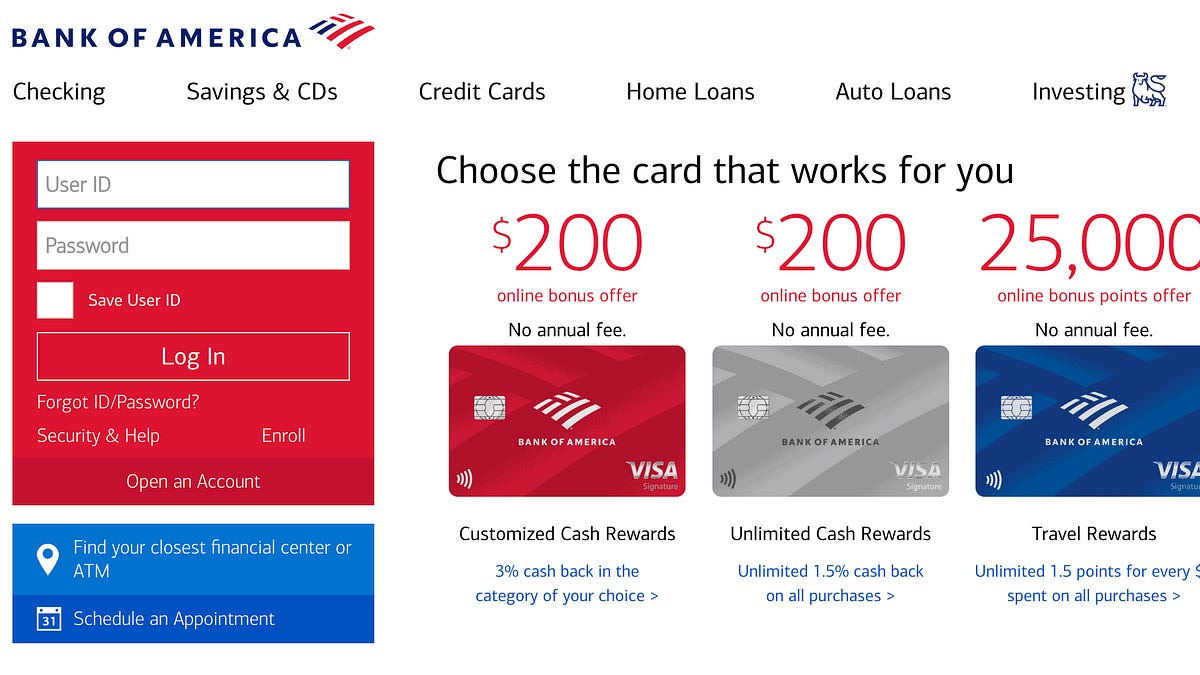
Between 2012 and 2023, Bank of America engaged in a systematic practice of denying credit card sign-up bonuses to tens of thousands of consumers who had legitimately earned them. This strategy operated as a classic bait-and-switch, using the allure of cash rewards and points to attract applicants, only to withhold the payout based on non-transparent technicalities regarding the application channel. While the bank aggressively marketed offers promising $200 in cash back or 20, 000 bonus points after a specific spending threshold, internal systems were rigged to disqualify customers who applied through “wrong” channels, specifically, in-person at a branch or over the phone, even when bank employees directed them to do so.
The core of this deception lay in the disconnect between the bank’s marketing and its operational enforcement. Advertisements for cards like the Bank of America Cash Rewards or Travel Rewards credit cards prominently displayed sign-up bonuses contingent on spending a set amount, $1, 000 or $3, 000, within the 90 days. Yet, the bank frequently attached a “digital-only” condition to these offers, buried in fine print or internal policy documents inaccessible to the consumer. When a customer saw the ad online chose to visit a branch to ask questions or complete the application with human assistance, the system stripped the bonus code from their application. The customer, believing they were applying for the product they just saw advertised, would proceed to spend the required funds, only to find their rewards account empty at the end of the quarter.
This was not a series of clerical errors. The Consumer Financial Protection Bureau (CFPB) investigation revealed that this practice was widespread and for years. The bank failed to implement systems that would either warn the employee that the bonus was being voided or allow the employee to manually attach the bonus code to the in-branch application. By maintaining this operational gap, Bank of America harvested the high-value credit card accounts, generating interchange fees and interest revenue, while shedding the customer acquisition cost (the bonus) that made the account profitable for the user. For a bank with millions of credit card customers, withholding $150 to $200 from tens of thousands of applicants generated millions in retained capital that legally belonged to the consumer.
The Role of Sales Pressure in Bonus Suppression
The withholding of rewards was inextricably linked to the high-pressure sales culture festering within Bank of America’s retail branches. As detailed in previous sections regarding fake accounts, branch employees faced extreme quotas to generate new “units” or “solutions” per household. This environment created a perverse incentive structure that directly fueled the bonus denial scheme. When a customer walked into a branch inquiring about an online offer, a teller or personal banker faced a choice: direct the customer back to the website to ensure they received their bonus (and lose the sales credit), or process the application right there to hit their daily quota, knowing the customer would lose the reward.
Evidence shows that employees routinely chose the latter, driven by the threat of termination or the lure of their own performance incentives. In instances, employees actively intercepted customers who intended to apply online, convincing them that applying in-branch was “safer,” “faster,” or “identical.” These employees did not disclose that the in-person application would void the sign-up bonus. The bank’s training and compliance monitoring failed to correct this behavior, weaponizing the sales force against the customer’s financial interest. The bank prioritized the internal metric of a “branch-originated sale” over the contractual pledge made to the applicant.
The financial impact of this employee-driven suppression was significant. A customer denied a $200 bonus on a card with no annual fee starts their relationship with the bank at a net loss compared to the promised terms. Across the affected consumer base, this practice transferred wealth directly from Main Street pockets to the bank’s balance sheet. The bank’s failure to honor these rewards was not a passive system limitation; it was an active refusal to align its physical sales channel with its digital marketing pledge, exploiting the trust customers placed in human representatives.
Regulatory Findings and the “Employee Error” Defense
In July 2023, the CFPB formally cracked down on this practice as part of a broader $250 million enforcement action. The bureau explicitly stated that Bank of America “engaged in deceptive acts or practices” by advertising bonuses that it had no intention of honoring for non-digital applicants. The investigation dismantled the bank’s chance defense that these were random mistakes. The order highlighted that the bank failed to honor rewards pledge for consumers who submitted in-person or over-the-phone applications and also denied sign-up bonuses due to the failure of its own business processes and systems.
The regulatory findings show that the bank was aware of the. Complaints from customers who met the spending requirements received zero rewards were frequent. When customers called to contest the missing bonus, the bank’s support staff frequently the technicality of the application method, blaming the customer for visiting a branch. This rigid adherence to undisclosed procedural blocks transformed the sign-up bonus from a marketing incentive into a deceptive lure. The CFPB ordered the bank to stop this practice and required it to disclose material limitations on any rewards card bonuses.
Breakdown of the Rewards Withholding Scheme (2012-2023)
Component
Details
The Offer
$150-$200 cash back or 20, 000+ points for spending $1, 000 in 90 days.
The Trap
Bonuses were coded as “Online Only” not disclosed as such during in-person interactions.
The Interception
Branch employees processed applications to meet sales quotas, stripping the bonus code.
The Result
Tens of thousands of consumers denied payments; Bank retained millions in acquisition costs.
CFPB Penalty
Part of a $100 million redress fund and $150 million in civil penalties (July 2023).
widespread Failure of Internal Controls
The persistence of this scheme for over a decade points to a deliberate absence of oversight in Bank of America’s product governance. A functional compliance department would have identified the high volume of complaints regarding missing bonuses and correlated them with branch-originated applications. The data was available: the bank knew which accounts met the spending threshold and which accounts were denied the bonus. The failure to act on this data suggests that the revenue saved by withholding these payments was viewed as an acceptable operational efficiency rather than a compliance failure.
Also, the bank’s systems were capable of distinguishing between a “branch sale” and an “online sale” for the purpose of employee commissions, yet supposedly incapable of granting the customer the same courtesy for their bonus. This asymmetry, where tracking works perfectly for the bank’s internal accounting fails for the customer’s benefit, is a hallmark of the junk fee and revenue suppression strategies employed during this era. The bank penalized customers for interacting with its staff, turning its branch network into a liability for consumers seeking the best possible deal.
The July 2023 order required Bank of America to identify all remaining consumers harmed by these practices and provide redress. Before the order, the bank had already paid approximately $23 million to consumers denied rewards, an admission of the of the error. Yet, without the federal enforcement action, it remains unclear whether the bank would have proactively identified and reimbursed the remaining victims or if the practice would have continued as a quiet revenue generator. The enforcement action mandates that the bank must provide bonuses as advertised, regardless of the channel, or explicitly disclose the limitation upfront, closing the loophole that allowed this bait-and-switch to flourish.
Regulatory Convergence: The Joint CFPB and OCC Crackdown on Unfair Practices
On July 11, 2023, the federal government executed a coordinated enforcement action against Bank of America that dismantled the institution’s systematic reliance on predatory fee structures and unauthorized account generation. The Consumer Financial Protection Bureau (CFPB) and the Office of the Comptroller of the Currency (OCC) levied a combined $250 million in penalties and restitution requirements, marking one of the most significant regulatory interventions in the bank’s modern history. This dual strike targeted three specific areas of misconduct: the repeated charging of non-sufficient funds (NSF) fees for the same transaction, the withholding of promised credit card rewards, and the opening of fake accounts using misappropriated consumer data.
The enforcement action represented a convergence of regulatory authority, with both agencies identifying separate overlapping violations of federal law. The CFPB focused on the consumer harm caused by these practices, labeling them as “junk fees” and “illegal” acts that undermined trust in the banking system. Simultaneously, the OCC, which oversees the safety and soundness of national banks, found that Bank of America’s fee practices violated Section 5 of the Federal Trade Commission (FTC) Act, which prohibits unfair or deceptive acts or practices. The total financial impact included $100 million in restitution to harmed consumers, a $90 million penalty paid to the CFPB, and a $60 million penalty paid to the OCC.
The OCC’s Finding: Deceptive Disclosures and the Re-Presentment Trap
The Office of the Comptroller of the Currency focused its investigation heavily on the mechanics of the “double-dip” fee structure. In its Consent Order (AA-ENF-2023-22), the OCC determined that Bank of America’s practice of assessing multiple fees for a single transaction was not just aggressive revenue generation, a violation of federal law. The core of the OCC’s finding rested on the deceptive nature of the bank’s account disclosures. For years, the bank’s customer agreements stated that a fee would be charged for each “item” returned unpaid. Yet, the bank failed to explain that a single merchant transaction could become multiple “items” if the merchant re-submitted the request for payment.
Regulators found that this absence of clarity prevented consumers from making informed decisions. When a customer authorized a payment, they reasonably understood that they might face a single $35 penalty if their funds were insufficient. They did not, and could not, reasonably anticipate that the same $35 penalty would apply again, and chance again, without any new action on their part. The OCC concluded that this practice was “unfair” because the injury to consumers was substantial, not outweighed by any countervailing benefits to consumers or competition, and not reasonably avoidable by the consumers themselves. Customers had no control over when, or if, a merchant would re-present a transaction to the bank.
The OCC’s $60 million civil money penalty specifically addressed these violations. The agency noted that while Bank of America had eliminated NSF fees in 2022, the illegal practices had generated tens of millions of dollars in revenue during the preceding years. The order required the bank to conduct a detailed review of its fee practices and ensure that all future disclosures explicitly detailed how and when fees would be assessed. This regulatory finding stripped away the defense that these fees were standard industry practice, reclassifying them as deceptive wealth extraction.
The CFPB’s Finding: widespread “Junk Fees” and Consumer Harm
While the OCC focused on the deceptive nature of the disclosures, the CFPB attacked the fundamental fairness of the fees under the Consumer Financial Protection Act (CFPA). CFPB Director Rohit Chopra characterized the bank’s actions as a “double-dipping scheme” designed to harvest revenue from customers who were already in financial distress. The Bureau’s investigation revealed that the bank’s automated systems allowed these fees to stack up repeatedly, draining accounts and frequently pushing customers deeper into debt. The CFPB’s order (2023-CFPB-0004) mandated that Bank of America refund approximately $80. 4 million to consumers specifically for these repeat NSF fees.
The CFPB’s jurisdiction extended beyond the fee structures into the operational failures that denied customers their promised benefits. The Bureau found that Bank of America had systematically withheld credit card sign-up bonuses from tens of thousands of consumers. The bank had advertised specific rewards, such as cash bonuses or points, for opening new credit card accounts. Yet, the investigation uncovered that the bank routinely denied these bonuses to customers who applied in person or over the phone, or simply failed to credit the accounts due to “system failures.” This practice was deemed deceptive, as the bank had created a misleading net impression that the offers were available to all applicants when, in reality, arbitrary internal processes prevented customers from receiving them.
The Fake Account Scheme: A Violation of Privacy and Trust
Perhaps the most damaging in the July 2023 orders was the confirmation that Bank of America employees had engaged in the creation of fake accounts, a scandal that echoed the notorious misconduct at Wells Fargo. The CFPB found that from at least 2012, bank employees had illegally applied for and enrolled consumers in credit card accounts without their knowledge or authorization. This was not a clerical error; it was a deliberate strategy driven by intense sales pressure and incentive goals.
To execute this scheme, employees illegally accessed and used consumer credit reports. This action constituted a direct violation of the Fair Credit Reporting Act (FCRA), which strictly limits the purposes for which a financial institution can access a consumer’s credit file. By pulling these reports to open unauthorized accounts, Bank of America employees not only violated federal privacy laws also harmed the credit profiles of their customers. The unauthorized inquiries appeared on credit reports, chance lowering credit scores, and the new accounts created unjustified fees and administrative load for consumers who had to spend time closing accounts they never asked for.
The CFPB ruled that these actions violated the Truth in Lending Act (TILA) and the CFPA. The Bureau’s order required the bank to stop its repeat offenses and pay penalties for the misuse of sensitive personal data. The discovery that this practice had for a decade, from 2012 to the time of the investigation, indicated a severe failure of internal controls and a corporate culture that prioritized sales metrics over legal compliance. The bank’s failure to detect and stop this activity earlier was a central factor in the severity of the penalties.
Mandated Restitution and the End of the “Double-Dip”
The combined enforcement actions imposed strict remediation requirements on Bank of America. Beyond the $150 million in fines paid to the government, the bank was ordered to pay $100 million directly to harmed consumers. This restitution covered the refunding of the double-dipped NSF fees, the payment of the withheld credit card rewards, and compensation for the costs associated with the fake accounts. The regulators required the bank to submit a detailed redress plan, detailing exactly how it would identify and pay every affected customer.
The orders also codified the end of the re-presentment fee practice. Although Bank of America had voluntarily ceased charging NSF fees in 2022, the consent orders made it legally binding that the bank could not resume such practices or implement similar fee structures in the future without strict regulatory scrutiny. The bank was also required to overhaul its sales incentive programs to ensure that employees were not motivated to open unauthorized accounts to meet unrealistic.
This regulatory crackdown served as a clear warning to the broader banking industry. The specific labeling of re-presentment fees as “unfair” and “deceptive” by both the OCC and CFPB established a new legal standard. It signaled that regulators would no longer accept the “industry standard” defense for fee practices that relied on obscure disclosure language to extract revenue from consumers. The action against Bank of America demonstrated that the federal government was to use its full enforcement powers to revenue models built on what Director Chopra termed “junk fees.”
Breakdown of July 2023 Enforcement Penalties
Recipient
Amount
Purpose
Consumer Financial Protection Bureau (CFPB)
$90 Million
Civil Money Penalty for UDAAP violations, fake accounts, and rewards withholding.
Office of the Comptroller of the Currency (OCC)
$60 Million
Civil Money Penalty for unfair and deceptive re-presentment fee practices.
Harmed Consumers
$100 Million
Restitution for illegal NSF fees, withheld rewards, and unauthorized account damages.
Total Financial Impact
$250 Million
Combined penalties and redress.
The July 2023 enforcement action was not a financial penalty; it was a regulatory of a specific profit method. By targeting the intersection of deceptive disclosures, automated fee generation, and sales pressure, the CFPB and OCC exposed the behind Bank of America’s “double-dipping” strategy. The findings revealed that for years, the bank had operated with systems that prioritized fee extraction over legal compliance, relying on the complexity of banking transactions to obscure the true cost from its customers. The $250 million consequence forced a permanent alteration in how the bank could price its services and manage its sales force, closing a lucrative illegal chapter in its operational history.
Quantifying the Harm: $250 Million in Penalties and Consumer Redress
The $250 Million Verdict: Breaking Down the Penalties
Federal regulators finalized their investigation into Bank of America’s widespread exploitations in July 2023. The Consumer Financial Protection Bureau and the Office of the Comptroller of the Currency ordered the bank to pay $250 million in total fines and compensation. This figure represents a specific calculation of the financial injury inflicted upon customers through double-dipped fees, withheld rewards, and unauthorized accounts. The enforcement action splits this sum into two distinct categories. The bank must pay $100 million directly to harmed consumers. The remaining $150 million constitutes civil penalties paid to the government agencies.
The $150 million penalty serves as a punitive measure rather than restitution. The CFPB assessed a $90 million fine against the bank. This amount enters the Civil Penalty Fund. The fund compensates victims of financial crimes when the perpetrators cannot pay. The OCC levied a separate $60 million fine. This second penalty specifically the bank’s violation of the Federal Trade Commission Act. The OCC found that the double-dipping scheme constituted an unfair and deceptive practice. These fines punish the institution for its multi-year failure to maintain legal compliance.
$80. 4 Million for Repeat NSF Fees
The largest portion of the consumer redress the victims of the “double-dip” fee structure. Regulators identified that Bank of America generated hundreds of millions of dollars by charging multiple $35 fees for the same declined transaction. The consent order mandates that the bank refund approximately $80. 4 million to customers who incurred these repeat non-sufficient funds fees. This restitution covers the period from September 2018 through February 2022. The bank ceased charging these fees entirely in 2022. Yet the order ensures that the revenue collected during the active period returns to the account holders.
The calculation of $80. 4 million reveals the of the extraction. A single $35 fee is substantial for a customer with a zero balance. The bank frequently imposed this fee two or three times for a single failed payment. The refund process requires the bank to identify every instance where a merchant re-presented a transaction and the bank triggered a second fee. Customers do not need to apply for these refunds. The order directs the bank to credit the accounts of current customers automatically. Former customers receive checks by mail. This method removes the load of proof from the consumer.
Compensation for Withheld Rewards and Fake Accounts
The remaining portion of the $100 million redress fund addresses the credit card and fake account violations. The CFPB found that Bank of America withheld tens of thousands of dollars in promised bonuses. The bank advertised sign-up incentives such as $200 cash or 25, 000 bonus points to attract new credit card users. The investigation showed that the bank failed to honor these pledge for thousands of applicants. The systems denied the bonuses based on technicalities or employee errors. The enforcement action requires the bank to pay the full value of these unpaid rewards to every affected consumer.
The redress also covers the financial damages caused by the fake account scheme. Employees opened credit cards without customer consent to meet sales quotas. This practice harmed credit scores and forced consumers to spend time resolving unauthorized charges. The bank must compensate these victims for any costs incurred. This includes expenses related to identity theft protection or fees charged on the unauthorized accounts. The regulators demanded a detailed plan from the bank to identify these victims. The bank must review its records to find accounts opened without a corresponding customer application or signature.
The Mechanics of Repayment
The consent orders establish a strict timeline for these payments. The bank had 90 days from the July 2023 ruling to submit its redress plan. The distribution of funds prioritizes speed and direct access. Current account holders see the money appear as a statement credit. This method ensures the funds are immediately available. The bank must send mailed checks to those who closed their accounts. The regulators monitor this process to prevent the bank from retaining any unclaimed funds. If the bank cannot locate a victim, the money does not revert to the bank’s ledger. It must be treated according to unclaimed property laws or sent to the CFPB.
Regulatory Convergence and Future Compliance
This $250 million action represents a coordinated effort between the CFPB and the OCC. The dual penalties signal that both agencies view these practices as serious violations of federal law. The OCC’s $60 million fine specifically addresses the operational failure to stop the double-dipping. The agency noted that the bank’s disclosures were misleading. Customers could not reasonably anticipate that a single transaction would trigger multiple fees. The CFPB’s $90 million penalty focuses on the broader harm to consumer trust and the violation of the Consumer Financial Protection Act.
The enforcement action imposes strict monitoring requirements. Bank of America must report its compliance progress to the regulators. The bank cannot simply pay the fine and return to business as usual. The orders ban the bank from charging repeat NSF fees in the future. This prohibition applies even if the bank decides to reinstate other types of overdraft charges. The legal text cements the end of the double-dipping practice at this institution. The regulators aim to use this case as a warning to other banks that still employ similar fee structures.
Financial Context of the Penalty
The $250 million total is a large number for a consumer a small fraction of the bank’s earnings. Bank of America reported billions in net income during the same quarter it paid this fine. Critics that the penalty amounts to a cost of doing business. The revenue generated from the double-dipping fees over a decade likely exceeded the $80. 4 million refund. The bank kept the profits from the years prior to 2018. The statute of limitations prevented regulators from demanding refunds for the earlier years of the scheme. This limitation means the bank retains a portion of the wealth extracted through these practices.
The reputational damage carries weight alongside the financial cost. The detailed findings of the investigation expose the internal method of the bank. The public record contains proof that the bank incentivized employees to open fake accounts long after the Wells Fargo scandal came to light. The findings show that the bank’s systems failed to deliver promised rewards. The transparency of the consent orders provides ammunition for future class-action lawsuits. Private attorneys can use the facts established by the regulators to pursue further claims on behalf of consumers who fall outside the specific redress periods.
Breakdown of July 2023 Enforcement Action
Component
Amount
Recipient
Purpose
Consumer Redress
$80. 4 Million
NSF Fee Victims
Refund for repeat fees charged Sept 2018 , Feb 2022.
Consumer Redress
~$20 Million
Credit Card Customers
Payment for withheld rewards and fake account damages.
Civil Penalty
$90 Million
CFPB
Fine paid to the Civil Penalty Fund for victim relief.
Civil Penalty
$60 Million
OCC
Fine for unfair and deceptive double-dipping practices.
Total
$250 Million
Combined
Total financial impact of the enforcement action.
Collateral Damage: The Impact of Fake Accounts on Consumer Credit Profiles
The unauthorized opening of financial accounts by Bank of America employees was not an administrative error or a harmless metric-padding exercise; it was a direct assault on the financial identities of its customers. When bank employees, driven by intense sales pressure, forged applications for credit cards, they did not just create a new line in a database. They triggered a cascade of events within the national credit reporting system that inflicted tangible, frequently silent, damage on consumer credit profiles. This collateral damage, frequently invisible until a consumer applied for a mortgage or a car loan, represents a breach of the fiduciary trust placed in a federally insured institution. At the core of this malfeasance was the illegal use of consumer credit reports. To open a credit card account without a customer’s knowledge, an employee must obtain the necessary data to complete an application. The Consumer Financial Protection Bureau (CFPB) investigation revealed that Bank of America employees routinely accessed consumer credit reports without permissible purpose, a clear violation of the Fair Credit Reporting Act. This was not a passive review of internal data; it was an active retrieval of sensitive credit files from major bureaus like Equifax, Experian, and TransUnion. The immediate consequence of this unauthorized access was the generation of “hard inquiries” on the victims’ credit reports. In the algorithmic logic of credit scoring models like FICO, a hard inquiry signals that a consumer is actively seeking new credit. A sudden, unexplained inquiry can lower a credit score by several points. While a single drop might seem negligible, the cumulative effect for consumers on the borderline of a credit tier—such as those moving from “fair” to “good”—can be financially devastating. A lower score directly into higher interest rates on legitimate loans, costing consumers thousands of dollars over the life of a mortgage or auto loan. Beyond the initial inquiry, the successful opening of a fake account inflicted further structural damage on credit profiles. Credit scoring models weigh the “average age of accounts” heavily. When a new, unauthorized credit card is added to a file, it mathematically reduces the average age of the consumer’s credit history. For a young borrower or someone working to rebuild their credit, this artificial dilution of account age can suppress their score, their ability to access capital when they actually need it. The harm extended beyond abstract scoring metrics into direct financial loss. of the credit card products Bank of America employees fraudulently opened carried annual fees. Because the consumers were unaware these accounts existed, they naturally failed to pay these fees. This triggered a delinquency pattern: the unpaid annual fee would accrue late charges, eventually leading to a “missed payment” mark on the credit report. A single missed payment can decimate a healthy credit score, dropping it by as much as 100 points and remaining on the report for seven years. Victims of this scheme were thus left fighting to remove derogatory marks for accounts they never requested, signed for, or used. The “silent” nature of this fraud exacerbated the damage. Unlike a fraudulent transaction on an existing statement, which a diligent customer might spot immediately, a fake account sits quietly on a credit report. Unless a consumer subscribed to a credit monitoring service or happened to check their report at that specific time, the account could remain for months or years. Discovery frequently came at the worst possible moment: during a high- financial transaction. Consumers reported being blindsided by questions from mortgage underwriters about “mystery” credit cards, forcing them into a frantic scramble to prove they were victims of their own bank’s fraud. The of this data misappropriation was significant. The CFPB found that this practice spanned at least a decade, from 2012 through the early 2020s. This was not the work of a few rogue operators in a single branch; it was a widespread response to incentive structures that demanded growth at any cost. Employees, fearing termination for missing sales, weaponized their access to the bank’s internal systems. They exploited the very tools designed to assess creditworthiness to manufacture it. Regulators explicitly recognized this credit damage in the 2023 enforcement action. The CFPB ordered Bank of America to “stop its repeat offenses” and required the bank to compensate consumers not just for fees charged, for the costs associated with repairing their credit history. The order highlighted that consumers “suffered negative effects to their credit profiles” and were forced to expend significant time and energy correcting errors. This acknowledgment validated the complaints of customers who had long argued that the bank’s aggressive sales tactics were eroding their financial standing. The operational reality of fixing this damage is arduous. A consumer finding a fake Bank of America account on their report cannot simply call a hotline and have it. The process involves filing police reports, submitting identity theft affidavits to the Federal Trade Commission, and engaging in a formal dispute process with each of the three credit bureaus. The load of proof shifts to the victim, who must demonstrate that the account—opened by a verified bank employee on bank systems—was fraudulent. This bureaucratic nightmare is the final, lingering tax imposed by the bank’s sales culture. also, the existence of these accounts distorted the market’s view of consumer demand. By artificially inflating the number of active accounts, Bank of America presented a facade of strong growth to investors and analysts. This deception relied on the cannibalization of its own customers’ creditworthiness. Every fake account represented a theft of the consumer’s data privacy and a degradation of their financial reputation. The bank treated its customers’ credit scores as a resource to be mined for corporate metrics, extracting value while leaving the customer to deal with the inevitable slag of lower scores and dispute letters. The 2023 penalties, totaling $250 million, included specific provisions for consumer redress related to these unauthorized accounts. Yet, for victims, a check in the mail cannot undo the years of higher interest rates paid due to a suppressed credit score, nor can it compensate for the stress of being denied a loan due to a “delinquent” account they never opened. The impact on credit profiles serves as the most enduring legacy of this scandal, a digital scar that long after the fines are paid and the press releases are issued. It demonstrates a fundamental breakdown in the banking system, where the institution guarding the vault becomes the very entity picking the lock.
Echoes of Wells Fargo: Parallels in Cross-Selling and Account Fabrication
The 2023 enforcement action against Bank of America Corporation shattered the industry illusion that the fake account scandal was a pathology unique to Wells Fargo. Federal regulators revealed that for over a decade, Bank of America employees systematically opened credit card accounts without customer consent, mirroring the exact fraudulent mechanics that disgraced its competitor seven years prior. The Consumer Financial Protection Bureau (CFPB) and the Office of the Comptroller of the Currency (OCC) levied $250 million in penalties and restitution, exposing a corporate culture that prioritized sales quotas over basic legality. This was not a glitch; it was a operational strategy that ran parallel to, and through, the most significant banking scandal of the modern era.
The Timeline of Complicity
The most damning aspect of the CFPB’s findings is the timeline. Bank of America’s illegal account generation began in 2012 and continued through 2020. This period encompasses the entirety of the Wells Fargo implosion in 2016, when that bank admitted to opening millions of unauthorized accounts. While the entire financial sector faced intense scrutiny and public outrage over cross-selling pressure, Bank of America employees continued to fabricate accounts. The persistence of this fraud suggests that executive leadership either failed to audit their own sales practices during a period of heightened industry awareness or willfully ignored the warning signs to protect revenue streams derived from aggressive cross-selling.
method of the Fraud
The mechanics of the fraud at Bank of America involved a direct violation of consumer privacy and federal credit reporting laws. To meet sales, bank employees illegally accessed consumer credit reports without permissible purpose. They used this sensitive data to complete applications for credit cards that customers never requested. This practice violated the Fair Credit Reporting Act and the Truth in Lending Act. Unlike a clerical error, this required active deception: employees had to bypass internal checks and submit applications as if the customer were present and consenting. The consequences for victims extended beyond the nuisance of unwanted mail. The unauthorized pulling of credit reports resulted in “hard inquiries” that lowered consumer credit scores. When the unrequested cards were issued, they appeared on credit reports, altering debt-to-credit ratios and chance affecting the victims’ ability to secure mortgages or auto loans. In instances, consumers were charged fees for accounts they did not know existed. The bank’s internal controls failed to detect this pattern for eight years, allowing the practice to fester across multiple business lines.
Incentive Structures and the “Pressure Cooker”
Regulators identified “sales-based incentive goals and evaluation criteria” as the primary driver of this misconduct. Bank of America disbanded these specific goals only after the regulatory investigation intensified. The structure created a “pressure cooker” environment where employees faced the choice between engaging in fraud or missing that determined their compensation and employment status. This is identical to the “Eight is Great” cross-selling philosophy that corrupted the retail banking division at Wells Fargo. The existence of these quotas demonstrates that the bank viewed its branch network not as a service provider, as a distribution channel for high-margin credit products. The incentives were designed to maximize the number of products per household, a metric long prized by Wall Street analysts. By tying employee survival to unrealistic volume, the bank outsourced the moral hazard to its lowest-paid workers, who bore the immediate risk of executing the fraud while the corporation reaped the aggregate benefits of inflated account numbers.
The Double-Dipping Revenue Model
The fake account scheme operated alongside a “double-dipping” fee strategy that extracted hundreds of millions of dollars from customers with insufficient funds. The CFPB found that Bank of America had a policy of charging $35 fees repeatedly for the same declined transaction. If a merchant re-submitted a charge after it was declined, the bank would process it again and levy another $35 fee, regardless of whether the customer had replenished their funds. This practice generated substantial revenue with zero marginal cost to the bank. It functioned as a penalty loop that disproportionately affected low-balance customers. The OCC described this as an unfair and deceptive practice, noting that customers had no way of knowing when or if a merchant would retry a transaction. The bank’s systems were configured to maximize these “junk fees” rather than protect the customer from spiraling charges. This revenue extraction model complements the fake account generation; both practices treat the customer base as a resource to be mined rather than a client to be served.
Regulatory Convergence and Industry
CFPB Director Rohit Chopra explicitly linked Bank of America’s actions to a broader failure in the banking sector to police itself. The $250 million penalty—comprising $100 million in customer restitution, $90 million to the CFPB, and $60 million to the OCC—signals a shift in regulatory tolerance. The order requires Bank of America to cease opening unauthorized accounts and bans the imposition of repeat non-sufficient funds fees. The enforcement action the narrative that Bank of America had successfully reformed its culture following the 2008 financial emergency. Instead, it reveals that the bank replaced the toxic mortgage products of the subprime era with toxic fee structures and fraudulent sales tactics in the retail era. The parallels with Wells Fargo show that these problem are widespread to the large-bank business model, where the demand for quarter-over-quarter growth drives executives to implement incentive structures that make fraud an inevitability. The bank neither admitted nor denied the findings, a standard legal maneuver that allows the institution to pay the fine and move on, yet the factual record established by the regulators remains a permanent indictment of its operations during this decade.
Post-Scandal Remediation: The 2022 Elimination of Non-Sufficient Funds Fees
The January 2022 Capitulation
On January 11, 2022, Bank of America issued a press release that marked the end of an era for its fee-based revenue model. After decades of relying on punitive charges to non-interest income, the corporation announced a sweeping overhaul of its overdraft services. The headline changes were drastic: the elimination of non-sufficient funds (NSF) fees beginning in February and a reduction of overdraft fees from $35 to $10 starting in May. Also, the bank removed the transfer fee associated with its Balance Connect overdraft protection service. These adjustments represented a fundamental shift in how the bank monetized its poorest customers, a demographic that had historically provided a disproportionate share of fee revenue through the “double-dipping” practices detailed in previous sections.
This decision was not born of sudden corporate altruism. It arrived amidst a firestorm of regulatory scrutiny and shifting industry standards. By late 2021, the Consumer Financial Protection Bureau (CFPB), led by Director Rohit Chopra, had launched an aggressive campaign against “junk fees,” specifically targeting the billions of dollars banks extracted from consumers through unclear overdraft and NSF charges. Competitors such as Capital One and Ally Bank had already moved to eliminate these fees entirely, leaving Bank of America exposed as a laggard in consumer protection. The January announcement was a strategic pivot designed to the of public outrage and preempt further regulatory enforcement actions, though it came too late to prevent the $250 million penalty levied in 2023 for prior abuses.
the Double-Dip method
The most significant aspect of the 2022 remediation was the complete elimination of the NSF fee. As established in earlier sections of this report, the “double-dip” scheme relied on the bank charging a $35 fee when a transaction was declined, and then charging a second or third $35 fee when the merchant re-presented the same transaction for payment. This loop allowed a single failed payment to generate $70 or $105 in revenue for the bank without any funds ever leaving the customer’s account.
By setting the NSF fee to zero, Bank of America dismantled the required for this specific type of wealth extraction. Without a base fee for a declined transaction, the multiplier effect of merchant re-presentment became irrelevant. A merchant could retry a payment ten times, and while the customer might face annoyance or fees from the merchant, Bank of America could no longer profit from the pattern of failure. This policy change directly addressed the core grievance of the “double-dipping” investigation, rendering the practice impossible for future transactions. The table outlines the clear contrast between the predatory fee structure maintained for years and the remediated policy implemented in 2022.
Fee Category
Pre-2022 Policy
Post-May 2022 Policy
Impact on “Double-Dipping”
NSF Fee (Declined Item)
$35. 00 per instance
$0. 00
Eliminates the base charge for the loop.
Overdraft Fee (Paid Item)
$35. 00 per instance
$10. 00 per instance
Reduces cost, applies only when items are paid.
Daily Fee Limit
4 fees per day ($140 max)
Limits remained, lower unit cost ($10) reduces cap.
Reduces maximum daily liability.
Balance Connect Transfer
$12. 00 per transfer
$0. 00
Removes penalty for using own backup funds.
The Billion-Dollar Revenue Vacuum
The financial of this policy shift were immediate and severe for the bank’s non-interest income. In 2019, Bank of America generated an estimated $1. 5 billion annually from overdraft and NSF fees alone. By 2023, following the full implementation of the fee cuts, that revenue stream had collapsed. Data from the CFPB indicates that Bank of America’s overdraft and NSF revenue dropped by approximately $1. 4 billion from 2019 to 2023, a decline of over 90 percent. This reduction far outpaced the industry average, reflecting the bank’s heavy historical reliance on these specific fees compared to its peers.
Executives attempted to frame this revenue loss as a victory for “financial wellness,” utilizing marketing language to describe the drop as “money back in clients’ pockets.” Yet, the sheer of the decline reveals the extent to which the bank’s previous profitability depended on struggling consumers. The $1. 4 billion evaporated not because customers suddenly became better at managing their finances, because the bank stopped penalizing them for being poor. This revenue vacuum forced the bank to rely more heavily on net interest income and wealth management fees, shifting the load of profitability away from those with the least ability to pay.
SafeBalance and the Migration Strategy
Parallel to the fee elimination, Bank of America accelerated the migration of customers toward its “SafeBalance” banking product. Launched initially in 2014, SafeBalance is a checkless account that does not allow overdrafts; if funds are insufficient, the transaction is simply declined. Because the account prevents overdrafts, it incurs no overdraft fees. By late 2021, the bank reported over 3 million SafeBalance accounts, with growth accelerating as the bank actively steered lower-balance customers toward this option.
This migration served a dual purpose., it reduced the bank’s regulatory risk by moving customers out of the “fee harvest” zone. Second, it allowed the bank to maintain a relationship with these customers while collecting a predictable monthly maintenance fee ( $4. 95, though waivable under certain conditions) rather than volatile and reputation-damaging penalty fees. While this shift eliminated the possibility of a $35 surprise, it also signaled a strategic retreat from the “free checking” model that had been subsidized by overdraft revenue. The bank acknowledged that without the ability to charge high penalty fees, it could not afford to offer free accounts to low-deposit customers.
Regulatory Coercion vs. Corporate Benevolence
It is impossible to view the 2022 remediation in isolation from the regulatory environment. The CFPB’s “junk fee” initiative, announced in early 2022, explicitly threatened new rulemaking to curb overdraft abuses. Director Rohit Chopra frequently the between the cost to the bank of covering an overdraft (frequently negligible) and the price charged to the consumer ($35). Bank of America’s decision to cut fees came only after smaller, more agile competitors had already done so, and just as the regulatory walls were closing in.
The July 2023 settlement, which fined the bank $250 million for its past practices, underscored that the 2022 changes were a mitigation tactic, not a complete exoneration. The regulators penalized the bank for the years of “double-dipping” that occurred prior to the policy change. In the consent order, the CFPB acknowledged the 2022 elimination of NSF fees noted that for years, the bank had “systematically” exploited the re-presentment loophole. The remediation stopped the bleeding and prevented future fines for the same conduct, it did not erase the history of extraction that had already occurred.
Industry Context and the “Race to Zero”
Bank of America’s move was part of a broader “race to zero” across the banking sector, yet the bank was a follower rather than a pioneer. Capital One had eliminated all overdraft fees in December 2021, and Ally Bank had done so in June 2021. By waiting until January 2022, Bank of America attempted to hold onto its fee revenue for as long as possible before the market and regulatory pressure became untenable. Even with the reduction to $10, Bank of America stopped short of the total elimination seen at Capital One, choosing to retain a nominal fee for the service of covering payments. This distinction highlights the bank’s continued desire to monetize liquidity provision, albeit at a less predatory price point.
The End of the Era of Extraction
The elimination of NSF fees and the reduction of overdraft charges in 2022 marked the conclusion of a specific chapter in Bank of America’s history, one defined by the systematic monetization of error. For over a decade, the bank’s systems were tuned to maximize revenue from the customers least able to afford it, using method like re-presentment to multiply fees. The 2022 remediation dismantled these method, resulting in a massive transfer of value, over $1 billion annually, back to consumers. While the bank continues to face scrutiny for other practices, the specific engine of the “double-dip” has been shut down, not by moral awakening, by the combined force of regulatory enforcement and market competition.
Timeline Tracker
July 2023
The Mechanics of Extraction: Anatomy of the $35 Loop — The architecture of the "double-dip" fee scheme relied on a specific, automated interaction between merchant billing systems and Bank of America's deposit processing software. This method.
July 2023
Regulatory Findings: Unfairness and Inability to Avoid Harm — The CFPB's enforcement action in July 2023 went beyond the deceptive nature of the disclosures and attacked the fundamental fairness of the practice. Under the Consumer.
2018-2022
The Revenue and widespread Reliance — The financial motivation for maintaining this system was significant. In 2019 alone, the banking industry generated approximately $15. 5 billion in overdraft and NSF revenue. Bank.
July 11, 2023
The July 2023 Enforcement Actions — The culmination of these investigations resulted in two major consent orders issued on July 11, 2023. The CFPB ordered Bank of America to pay a $90.
2022
Operational Inertia vs. Technical Capability — A serious aspect of the investigation was the question of technical capability. Critics and regulators questioned why a bank with the technological resources of Bank of.
2022
Legacy of the Practice — The elimination of NSF fees in 2022 marked the end of this specific method, the $250 million in fines and restitution serves as a historical marker.
September 2018
The "New Item" Legal Fiction — To defend this practice in courtrooms and regulatory meetings, Bank of America relied on a specific interpretation of its deposit agreements. The bank argued that each.
July 2023
Regulatory Findings and the $250 Million Penalty — The of this operation was laid bare in July 2023 when the CFPB and the Office of the Comptroller of the Currency (OCC) issued enforcement actions.
2022
The Mathematical Reality of the Loophole — This table illustrates the precise mechanics of the wealth transfer. The bank provided no credit. It took no risk. It simply ran a script three times.
The $250 Million Penalty: A Receipt for widespread Theft — In July 2023, federal regulators handed Bank of America a bill for $250 million. This quarter-billion-dollar penalty was not for a clerical error or a software.
2015
The Mechanics of the Double-Dip — The core of this extraction model was the "re-presentment" loop. Bank of America's systems allowed merchants to submit the same transaction multiple times after a decline.
July 2023
Phantom Accounts and Withheld Rewards — The extraction of wealth extended beyond existing accounts to the fabrication of new ones. The July 2023 order revealed that from at least 2012, Bank of.
July 2023
A History of Recidivism — This enforcement action was not an incident for the Charlotte-based giant. It fits a historical pattern of illegal revenue generation. In 2014, the CFPB ordered Bank.
July 2023
The Architecture of Non-Consensual Enrollment — In July 2023, the Consumer Financial Protection Bureau (CFPB) exposed a widespread failure within Bank of America's consumer division that mirrored the notorious scandals of its.
2010
Violations of Federal Law and Consumer Harm — The unauthorized enrollment scheme constituted a multi- violation of federal law. Beyond the breach of the Fair Credit Reporting Act (FCRA) through the illegal retrieval of.
July 2023
The July 2023 Enforcement Action — In July 2023, the CFPB and the Office of the Comptroller of the Currency (OCC) announced a coordinated enforcement action against Bank of America, addressing the.
July 2023
Regulatory Breakdown of the 2023 Penalties — The following table details the financial penalties and redress requirements imposed on Bank of America in July 2023, specifically separating the components related to unauthorized accounts.
2023
The Failure of Internal Controls — A serious aspect of this scandal was the failure of Bank of America's internal audit and compliance functions to detect the pattern of unauthorized enrollments for.
July 2023
SECTION 6 of 14: Misappropriation of Consumer Data: Using Credit Reports to Forge Applications — In a systematic betrayal of consumer trust that mirrors the notorious Wells Fargo scandal, Bank of America employees spent over a decade illegally accessing the credit.
August 2023
Sales Pressure as the Engine of Fraud — The driving force behind this data misappropriation was an aggressive internal sales culture that prioritized volume over compliance. Employees described an environment of "extreme pressure" where.
July 2023
Regulatory Enforcement and Financial Penalties — The decade-long scheme came to a head in July 2023, when the CFPB and the Office of the Comptroller of the Currency (OCC) levied a combined.
July 2023
The Sales Culture Factor: Incentivizing Employee Fraud Since 2012 — The Sales Culture Factor: Incentivizing Employee Fraud Since 2012 Corporate directives frequently prioritize revenue velocity over regulatory compliance. At Bank of America, a distinct shift in.
July 2023
The 'Online Only' Trap: Withholding Promised Credit Card Rewards — The acquisition of new credit card customers is a ruthless contest in the modern banking sector. Financial institutions spend billions annually to lure consumers away from.
2012
The Mechanics of the Bonus Denial Scheme — Between 2012 and 2023, Bank of America engaged in a systematic practice of denying credit card sign-up bonuses to tens of thousands of consumers who had.
July 2023
Regulatory Findings and the "Employee Error" Defense — In July 2023, the CFPB formally cracked down on this practice as part of a broader $250 million enforcement action. The bureau explicitly stated that Bank.
July 2023
widespread Failure of Internal Controls — The persistence of this scheme for over a decade points to a deliberate absence of oversight in Bank of America's product governance. A functional compliance department.
July 11, 2023
Regulatory Convergence: The Joint CFPB and OCC Crackdown on Unfair Practices — On July 11, 2023, the federal government executed a coordinated enforcement action against Bank of America that dismantled the institution's systematic reliance on predatory fee structures.
2023
The OCC's Finding: Deceptive Disclosures and the Re-Presentment Trap — The Office of the Comptroller of the Currency focused its investigation heavily on the mechanics of the "double-dip" fee structure. In its Consent Order (AA-ENF-2023-22), the.
2023
The CFPB's Finding: widespread "Junk Fees" and Consumer Harm — While the OCC focused on the deceptive nature of the disclosures, the CFPB attacked the fundamental fairness of the fees under the Consumer Financial Protection Act.
July 2023
The Fake Account Scheme: A Violation of Privacy and Trust — Perhaps the most damaging in the July 2023 orders was the confirmation that Bank of America employees had engaged in the creation of fake accounts, a.
July 2023
Mandated Restitution and the End of the "Double-Dip" — The combined enforcement actions imposed strict remediation requirements on Bank of America. Beyond the $150 million in fines paid to the government, the bank was ordered.
July 2023
The $250 Million Verdict: Breaking Down the Penalties — Federal regulators finalized their investigation into Bank of America's widespread exploitations in July 2023. The Consumer Financial Protection Bureau and the Office of the Comptroller of.
September 2018
$80. 4 Million for Repeat NSF Fees — The largest portion of the consumer redress the victims of the "double-dip" fee structure. Regulators identified that Bank of America generated hundreds of millions of dollars.
July 2023
The Mechanics of Repayment — The consent orders establish a strict timeline for these payments. The bank had 90 days from the July 2023 ruling to submit its redress plan. The.
2018
Financial Context of the Penalty — The $250 million total is a large number for a consumer a small fraction of the bank's earnings. Bank of America reported billions in net income.
2012
Collateral Damage: The Impact of Fake Accounts on Consumer Credit Profiles — The unauthorized opening of financial accounts by Bank of America employees was not an administrative error or a harmless metric-padding exercise; it was a direct assault.
2023
Echoes of Wells Fargo: Parallels in Cross-Selling and Account Fabrication — The 2023 enforcement action against Bank of America Corporation shattered the industry illusion that the fake account scandal was a pathology unique to Wells Fargo. Federal.
2012
The Timeline of Complicity — The most damning aspect of the CFPB's findings is the timeline. Bank of America's illegal account generation began in 2012 and continued through 2020. This period.
2008
Regulatory Convergence and Industry — CFPB Director Rohit Chopra explicitly linked Bank of America's actions to a broader failure in the banking sector to police itself. The $250 million penalty—comprising $100.
2022
Post-Scandal Remediation: The 2022 Elimination of Non-Sufficient Funds Fees —
January 11, 2022
The January 2022 Capitulation — On January 11, 2022, Bank of America issued a press release that marked the end of an era for its fee-based revenue model. After decades of.
May 2022
the Double-Dip method — The most significant aspect of the 2022 remediation was the complete elimination of the NSF fee. As established in earlier sections of this report, the "double-dip".
2019
The Billion-Dollar Revenue Vacuum — The financial of this policy shift were immediate and severe for the bank's non-interest income. In 2019, Bank of America generated an estimated $1. 5 billion.
2014
SafeBalance and the Migration Strategy — Parallel to the fee elimination, Bank of America accelerated the migration of customers toward its "SafeBalance" banking product. Launched initially in 2014, SafeBalance is a checkless.
July 2023
Regulatory Coercion vs. Corporate Benevolence — It is impossible to view the 2022 remediation in isolation from the regulatory environment. The CFPB's "junk fee" initiative, announced in early 2022, explicitly threatened new.
December 2021
Industry Context and the "Race to Zero" — Bank of America's move was part of a broader "race to zero" across the banking sector, yet the bank was a follower rather than a pioneer.
2022
The End of the Era of Extraction — The elimination of NSF fees and the reduction of overdraft charges in 2022 marked the conclusion of a specific chapter in Bank of America's history, one.
Why it matters: Global cybercrime is bolstered by the rise of "hackers for hire" - young coders enticed by money or ideology to engage in illicit hacking activities. Investigation uncovers.
Tell me about the the mechanics of extraction: anatomy of the $35 loop of Bank of America Corporation.
The architecture of the "double-dip" fee scheme relied on a specific, automated interaction between merchant billing systems and Bank of America's deposit processing software. This method, which the Consumer Financial Protection Bureau (CFPB) and the Office of the Comptroller of the Currency (OCC) sanctioned in July 2023, turned a single declined transaction into a recurring revenue engine. The core of the problem lay not in the initial rejection of a.
Tell me about the the "item" definition and contractual ambiguity of Bank of America Corporation.
A central element of the regulatory findings focused on how Bank of America defined the term "item" in its account agreements. The OCC's investigation revealed that the bank's disclosures were materially misleading. The deposit agreement stated that fees would apply "per item," a phrase that a reasonable consumer would interpret to mean a single commercial transaction or purchase authorization. yet, the bank's backend processing treated each electronic submission as a.
Tell me about the regulatory findings: unfairness and inability to avoid harm of Bank of America Corporation.
The CFPB's enforcement action in July 2023 went beyond the deceptive nature of the disclosures and attacked the fundamental fairness of the practice. Under the Consumer Financial Protection Act (CFPA), an act is "unfair" if it causes substantial injury to consumers that is not reasonably avoidable and is not outweighed by countervailing benefits to consumers or competition. The Bureau determined that the injury was substantial, citing "hundreds of millions of.
Tell me about the the revenue and widespread reliance of Bank of America Corporation.
The financial motivation for maintaining this system was significant. In 2019 alone, the banking industry generated approximately $15. 5 billion in overdraft and NSF revenue. Bank of America, along with JPMorgan Chase and Wells Fargo, accounted for 44% of this total. The specific slice of revenue derived from re-presentment fees was a massive contributor to the bank's non-interest income. Internal data in the consent orders indicates that the bank generated.
Tell me about the the july 2023 enforcement actions of Bank of America Corporation.
The culmination of these investigations resulted in two major consent orders issued on July 11, 2023. The CFPB ordered Bank of America to pay a $90 million penalty to the Bureau's victims relief fund. Simultaneously, the OCC fined the bank $60 million. Beyond these civil penalties, the bank was required to pay $100 million in restitution to harmed consumers. The orders mandated a complete cessation of the practice. yet, by.
Tell me about the operational inertia vs. technical capability of Bank of America Corporation.
A serious aspect of the investigation was the question of technical capability. Critics and regulators questioned why a bank with the technological resources of Bank of America could not identify a re-presented transaction earlier. The data fields in ACH files frequently contain indicators that a transaction is a retry (such as specific transaction codes or the exact matching of amount and merchant ID). The persistence of the double-dipping practice suggests.
Tell me about the consumer impact and the debt spiral of Bank of America Corporation.
The impact of these fees extended beyond the immediate loss of $35 or $70. For a customer living paycheck to paycheck, a double-dip fee frequently triggered a cascade of financial failure. The deduction of fees meant that when a paycheck did arrive, was immediately absorbed to cover the negative balance caused by the fees, leaving less money for the month's expenses. This created a pattern where the bank's fees became.
Tell me about the comparison with overdraft protection of Bank of America Corporation.
It is distinct to clarify the difference between these NSF fees and Overdraft (OD) fees, although they frequently appeared together. An OD fee is charged when the bank *pays* a transaction even with a absence of funds, lending the customer the money. An NSF fee is charged when the bank *rejects* the transaction. The "double-dip" scandal was specifically egregious because the bank provided no service for the fee. In an.
Tell me about the legacy of the practice of Bank of America Corporation.
The elimination of NSF fees in 2022 marked the end of this specific method, the $250 million in fines and restitution serves as a historical marker of the bank's operational philosophy during that era. The settlement did not require Bank of America to admit wrongdoing, a standard clause in such enforcement actions. yet, the requirement to pay substantial restitution confirms the of the financial injury inflicted. The "double-dip" remains a.
Tell me about the the re-presentment loophole: exploiting merchant retries for profit of Bank of America Corporation.
The Re-Presentment Loophole: Exploiting Merchant Retries for Profit.
Tell me about the the mechanics of the multi-fee engine of Bank of America Corporation.
Bank of America constructed a revenue engine built on the failure of its poorest customers. The method was technically known as "representment" or "merchant retries." In practice, it functioned as a trap that multiplied a single financial mistake into a cascade of penalties. When a customer absence sufficient funds for a transaction, the bank rejected the payment and charged a $35 Non-Sufficient Funds (NSF) fee. This was the standard industry.
Tell me about the the "new item" legal fiction of Bank of America Corporation.
To defend this practice in courtrooms and regulatory meetings, Bank of America relied on a specific interpretation of its deposit agreements. The bank argued that each time a merchant sent a request for payment, it constituted a "new item" or a separate "transaction" under the contract terms. Even if the amount, the payee, and the invoice number were identical to the rejected item from the day before, the bank classified.
Why it matters: Healthcare disparities persist in the American healthcare system, with significant gaps in outcomes between White and Black patients. Racial identity remains a.
Why it matters: The Pothole Lottery highlights systemic inequalities in road maintenance based on economic disparities. Resident reporting systems and budgetary priorities contribute to the.
Why it matters: Recruitment fees for migrant workers in key migration corridors impact their financial stability and economic well-being. Different regulatory frameworks and financial implications.
Why it matters: Insurance denials are a significant concern for policyholders globally, impacting accessibility and reliability of coverage. Claim ratios can obscure the real impact.
Why it matters: Dark money and undisclosed funding have long influenced elections and public policy through political documentaries. Wealthy donors and pseudo-nonprofits are using legal.