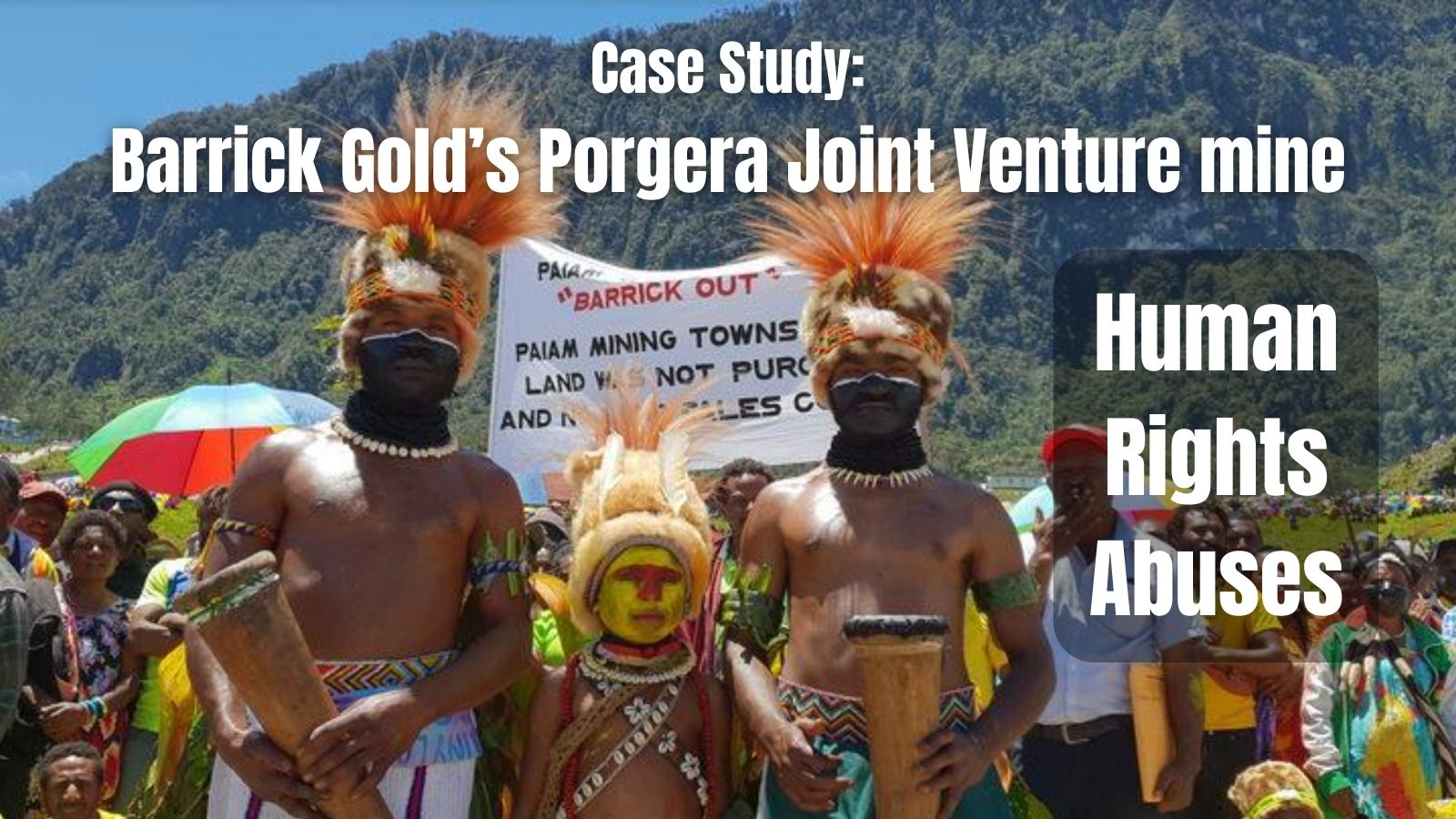
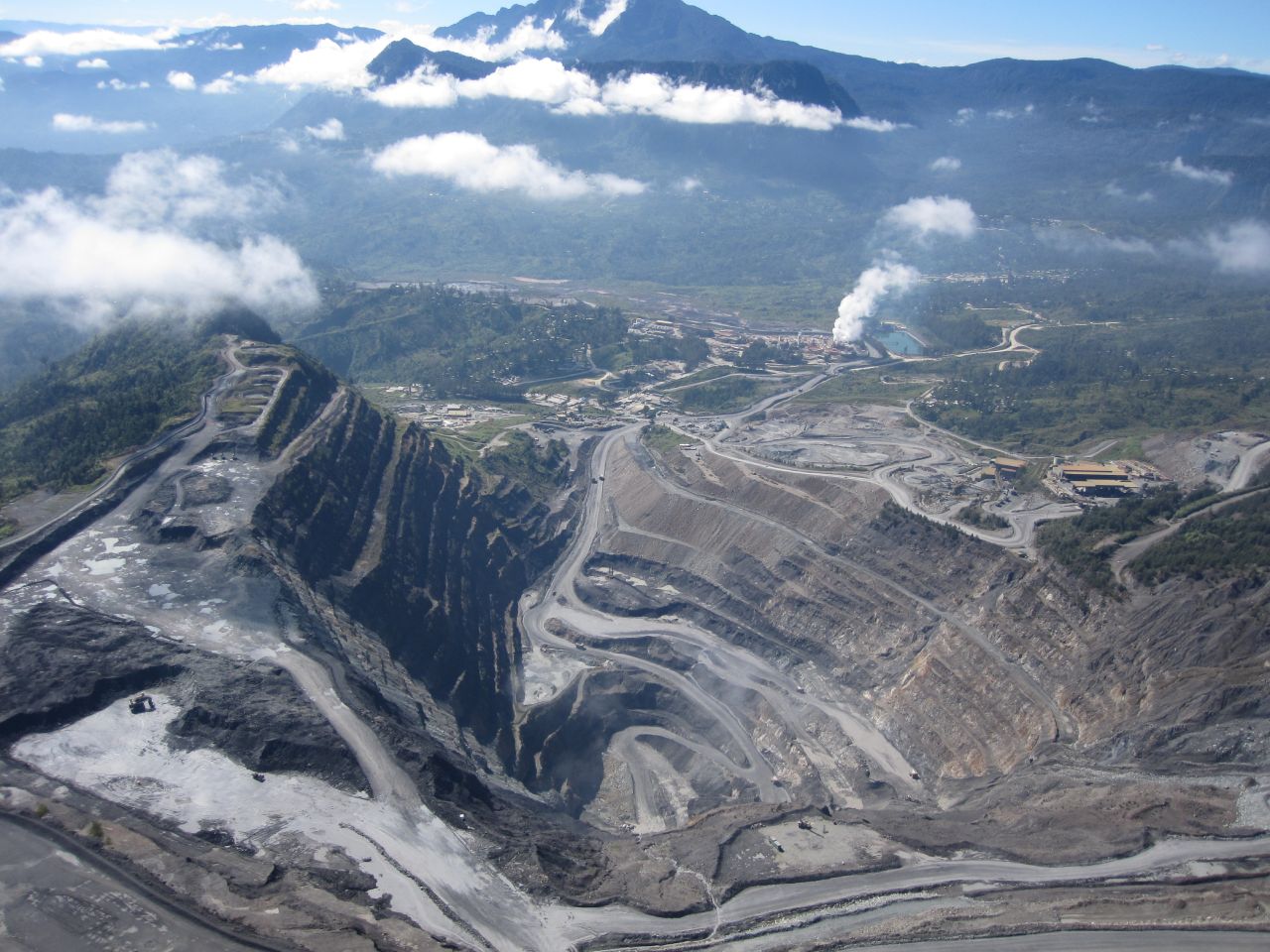
The conflict at the Porgera Joint Venture (PJV) mine hinges on a single, potent classification: the "illegal miner." Barrick Gold Corporation and its subsidiary, Barrick Niugini Limited, use this term to describe local Ipili and Engan people who enter the mine's lease area to forage for gold.
Verified Against Public And Audited RecordsLong-Form Investigative Review
Reading time: ~35 min
File ID: EHGN-REVIEW-34386
Human rights abuses and environmental toxicity allegations at the Porgera Joint Venture mine
Since operations began in 1990, the mine has discharged treated tailings and erodible waste rock into the Porgera River, a.
Primary RiskLegal / Regulatory Exposure
JurisdictionEPA
Public MonitoringIt extends approximately 140 kilometers downstream to a monitoring point known as SG3 (Strickland.
Report Summary
The introduction of mine waste into these sensitive habitats creates a pathway for toxins to enter the food web at its base, affecting everything from microorganisms to the humans who eat the fish. even with the reopening of the mine under the "New Porgera" agreement in late 2023, the fundamental mechanics of waste disposal remain largely unchanged. The chasm between Barrick Gold's corporate social responsibility rhetoric and the operational reality at the Porgera Joint Venture (PJV) mine is nowhere more clear than in the company's internal oversight method. As of November 2025, Barrick Gold remains on the Norges Bank exclusion.
Key Data Points
Since operations began in 1990, the mine has discharged treated tailings and erodible waste rock into the Porgera River, a tributary of the Lagaip, which feeds the Strickland and the Fly River. This system creates a transboundary pollution corridor extending over 800 kilometers to the Gulf of Papua. Data from the 2009 Norwegian Council on Ethics recommendation for exclusion shows that the mine discharges approximately 14, 000 to 15, 400 tonnes of tailings daily. Estimates suggest that between 10 million and 15 million tonnes of waste rock enter the river system annually. It extends approximately 140 kilometers downstream to a.
Investigative Review of Barrick Gold Corporation
Why it matters:
The Porgera Joint Venture (PJV) mine uses Riverine Tailings Disposal (RTD), an outdated waste dumping method that poses environmental risks.
The mine discharges toxic tailings and waste rock into the local river system, impacting water quality and aquatic life over an 800-kilometer stretch.
Riverine Tailings Disposal: The Mechanics of Uncontained Waste Dumping
The Engineering of Environmental Sacrifice
The Porgera Joint Venture (PJV) mine operates on a waste disposal model that most of the developed world outlawed decades ago. While standard mining dictate the containment of toxic byproducts in secure Tailings Storage Facilities (TSFs), Porgera relies on Riverine Tailings Disposal (RTD). This method involves the direct injection of processed mine waste into the local river system. The operators do not spill waste by accident; the mine was designed to use the Porgera River as a hydraulic conveyor belt for its refuse. This engineering choice treats the river not as a biological resource, as an industrial drain.
Since operations began in 1990, the mine has discharged treated tailings and erodible waste rock into the Porgera River, a tributary of the Lagaip, which feeds the Strickland and the Fly River. This system creates a transboundary pollution corridor extending over 800 kilometers to the Gulf of Papua. The volume of this discharge is difficult to visualize. Data from the 2009 Norwegian Council on Ethics recommendation for exclusion shows that the mine discharges approximately 14, 000 to 15, 400 tonnes of tailings daily. This slurry consists of finely ground rock mixed with chemical reagents used to extract gold.
The tailings are only half the equation. The mine also strips vast quantities of “incompetent” waste rock, material too poor in gold to process too unstable to stack safely. The operators dump this rock into “erodible dumps” (specifically the Anawe and Anjolek dumps). Rainfall and then wash this material into the river system. Estimates suggest that between 10 million and 15 million tonnes of waste rock enter the river system annually. When combined with the tailings, the total sediment load injected into the river method 20 million tonnes per year. This mass rivals the natural sediment load of the river itself, fundamentally altering the hydrology and morphology of the watercourse.
Chemical Composition and Toxicity
The physical volume of the waste creates immediate choking risks for the river, yet the chemical payload presents a more insidious threat. The tailings slurry contains a cocktail of heavy metals and processing chemicals. While Barrick Gold and its partners assert that they treat the waste to neutralize cyanide, the sheer volume of discharge means that significant loads of toxins still enter the environment. The Commonwealth Scientific and Industrial Research Organisation (CSIRO) conducted a pivotal study in 1996, which remains a primary reference for the mine’s impact. The study found that the tailings were significantly enriched with heavy metals compared to natural background levels.
Metal Enrichment in Porgera Tailings (Source: CSIRO 1996 / MiningWatch Canada)
Element
Enrichment Factor (vs. Natural Sediment)
Primary Environmental Risk
Silver (Ag)
140x
Toxic to aquatic life; bioaccumulates in fish tissue.
Arsenic (As)
52x
Carcinogenic; in sediment and water column.
Lead (Pb)
45x
Neurotoxin; accumulates in the food chain.
Zinc (Zn)
High
Acute toxicity to fish; causes gill damage.
Cadmium (Cd)
High
Kidney damage; highly mobile in aquatic environments.
The presence of these metals is not a theoretical risk. The “Red River,” as locals call the discoloration caused by the iron-rich tailings, carries these toxins downstream. The neutralization process for cyanide reduces the concentration of Free Cyanide and Weak Acid Dissociable (WAD) cyanide, yet it does not remove the heavy metals. These metals bind to the sediment particles. As the sediment travels downstream, changes in water chemistry, pH, or biological activity can remobilize these metals, making them bioavailable to aquatic life. Prawns and fish in the Strickland River system have shown elevated levels of cadmium and lead, raising serious concerns for the subsistence communities that rely on these catchments for protein.
The “Sacrifice Zone” and Regulatory gaps
The regulatory framework governing the Porgera mine codifies the destruction of the upper river system. The environmental permits issued by the Papua New Guinea government designate a “mixing zone” where water quality standards are suspended to allow the waste to dilute. In the case of Porgera, this mixing zone is not a small area near the discharge pipe. It extends approximately 140 kilometers downstream to a monitoring point known as SG3 (Strickland Gauging Station 3). For this entire stretch, covering the length of the Porgera River and of the Lagaip, there are no legal limits on water quality. The state has this 140-kilometer corridor as a sacrifice zone where the river is legally dead.
At SG3, the compliance point, the mine must meet specific water quality criteria. Yet, the dilution provided by the massive inflow of the Lagaip and other tributaries frequently masks the severity of the pollution coming from the source. Even with this dilution, the Norwegian Council on Ethics noted that the risk of heavy metal contamination remains unacceptable. The Council’s 2009 investigation concluded that the company’s riverine disposal practice caused “severe environmental damage” and that Barrick’s assertions of safety carried “little credibility.” This finding led the Norwegian Government Pension Fund Global to divest roughly $230 million from Barrick Gold, a decision that stands as one of the most significant financial censures of the mine’s environmental practices.
Sediment Aggradation and Physical Destruction
The mechanics of dumping 20 million tonnes of solid waste into a river annually have catastrophic physical effects. The river cannot transport this volume of material. Consequently, the sediment settles, raising the riverbed, a process known as aggradation. As the riverbed rises, the water spreads outward, flooding the surrounding forests and gardens. This “die-back” of vegetation is visible from satellite imagery. Trees drown in the sediment-laden water, destroying the riparian ecosystem that local communities depend on for sago palm cultivation and hunting.
The aggradation also destabilizes the river banks, leading to further and widening of the river channel. In the lower Strickland River, a region characterized by a slow-moving floodplain, the deposition of fine tailings sediment poses a long-term threat. These sediments, laden with the heavy metals identified by CSIRO, settle in the oxbow lakes and wetlands. These areas are the biological nurseries of the river system. The introduction of mine waste into these sensitive habitats creates a pathway for toxins to enter the food web at its base, affecting everything from microorganisms to the humans who eat the fish.
even with the reopening of the mine under the “New Porgera” agreement in late 2023, the fundamental mechanics of waste disposal remain largely unchanged. The geographic constraints of the Porgera Valley, steep, unstable terrain prone to landslides and high rainfall, make the construction of a conventional tailings dam technically difficult and financially exorbitant. Thus, the river continues to serve as the primary waste repository. The economic benefits of the mine are extracted and exported, while the environmental cost is deposited, tonne by tonne, into the rivers of Enga and Western Province.
Riverine Tailings Disposal: The Mechanics of Uncontained Waste Dumping
Heavy Metal Contamination in the Porgera and Strickland River Systems
The Chemical Composition of the Discharge
The physical volume of waste entering the Porgera and Strickland river systems is compounded by its toxic chemical composition. While the sheer mass of the 6 million tonnes of tailings and 12 million tonnes of waste rock dumped annually creates physical risks, the metallurgical properties of the discharge present a more insidious threat. The Porgera mine processes a refractory ore body that requires oxidation to liberate gold. This process releases significant quantities of sulfides and heavy metals that would otherwise remain geologically sequestered. The resulting slurry is not inert mud. It is a cocktail of arsenic, mercury, cadmium, lead, nickel, and zinc.
Independent analysis of the tailings reveals metal concentrations far exceeding natural background levels. Studies indicate that silver levels in the tailings are enriched 140 times beyond natural river sediments. Arsenic levels show an enrichment factor of 52 times. Lead is enriched 45 times. These metals are discharged directly into the Porgera River. The mine operators treat the tailings with lime to neutralize acidity before discharge. This treatment aims to keep metals in a solid particulate state rather than a dissolved state. Yet this containment method relies on the chemical stability of the river system over hundreds of kilometers. When the pH of the river water fluctuates or when sediment is exposed to air on riverbanks, these metals can mobilize. They transform from solid particles into dissolved toxins that enter the aquatic food web.
The Regulatory Sacrifice Zone
Barrick Gold and the Porgera Joint Venture (PJV) frequently cite their compliance with Papua New Guinea’s environmental permits. This claim relies on a specific regulatory method known as the “mixing zone.” The PNG government established the official compliance monitoring point at a location as SG3. This station sits approximately 165 kilometers downstream from the mine. The regulation designates the 140 kilometers of the river system, comprising the Porgera, Lagaip, and upper Strickland rivers, as a waste conduit where no water quality limits apply. The mine is legally permitted to pollute this stretch of river to levels that would be criminal in the operator’s home jurisdiction of Canada.
At SG3, the sheer volume of water from the Strickland’s tributaries dilutes the pollution concentration. This dilution allows the PJV to report technical compliance with water quality standards. This measurement method ignores the cumulative load of heavy metals settling into the riverbed upstream of SG3. It also disregards the biological reality of the river system. Fish and aquatic life do not adhere to regulatory boundaries. They migrate through the highly toxic upper reaches. The local human population living along this 165-kilometer “sacrifice zone” relies on the river for washing, fishing, and drinking water. They are exposed to concentrations of heavy metals that have never been subjected to legal limits.
Mercury and the Norwegian Exclusion
Mercury contamination remains the most contentious and scientifically damning aspect of the Porgera mine’s environmental footprint. In 2008, the Council on Ethics for the Norwegian Government Pension Fund Global conducted an extensive investigation into the mine’s operations. The Council found that the riverine tailings disposal caused severe and irreversible environmental damage. Their recommendation led the Norwegian Ministry of Finance to sell its $230 million stake in Barrick Gold in January 2009. The Council’s report specifically highlighted the risk of mercury bioaccumulation.
Barrick has argued that the mercury in its tailings is “fixed” in a stable sulfide compound and is therefore not bioavailable. The Norwegian Council rejected this defense. Their investigation concluded that natural processes in the river system could methylate the mercury. Methylmercury is a potent neurotoxin that accumulates in the fatty tissue of fish. Once it enters the food chain, it magnifies at each trophic level. The Council noted that the mine’s practice of discharging mercury-laden waste into a river system used by subsistence fishermen constituted an unacceptable risk to human health. The exclusion of Barrick from one of the world’s largest sovereign wealth funds stands as a verified indictment of the mine’s toxicity management.
Arsenic and Sediment Transport
Arsenic presents a parallel threat to the riverine ecosystem. The Porgera ore body is rich in arsenopyrite. The processing plant uses autoclaves to oxidize this mineral. The residue is a high-arsenic tailing product. While the PJV adds lime to precipitate the arsenic into a solid form, the stability of this solid is not permanent. Research indicates that as the tailings travel down the Strickland River, they mix with organic matter and undergo chemical changes. The breakdown of the lime buffer can release dissolved arsenic back into the water column.
The Strickland River deposits vast quantities of sediment onto its floodplain and into Lake Murray. This lake is the largest in Papua New Guinea and supports a substantial population of subsistence fishermen. CSIRO studies from 1996 and 2002 identified elevated levels of metals in the sediment of Lake Murray. While the PJV attributes of this to natural, the isotopic signature of the mine’s waste is distinct. The accumulation of arsenic-rich sediment in the slow-moving waters of the lake and the lower Strickland floodplain creates a long-term chemical time bomb. Unlike water pollution which flows away, sediment pollution. It the river bottom and the banks with toxic material that remains for decades.
Bioaccumulation and Human Health Risks
The route from river sediment to human tissue passes through the local diet. The primary protein source for communities along the Strickland and Lake Murray is fish, particularly barramundi. These long-lived predator fish are bioaccumulators of heavy metals. Villagers also consume sago palm, which is processed using river water. If the water used to wash the sago starch contains suspended tailings, the food product becomes contaminated with metal particulates.
Local communities have reported health problems consistent with heavy metal exposure for years. Complaints include chronic skin lesions, stomach ailments, and unexplained deaths of livestock that drink from the river. The absence of detailed, independent epidemiological studies makes it difficult to quantify the exact casualty count. Yet the biological method is clear. The mine discharges toxins known to cause neurological damage, kidney failure, and cancer. It discharges them into a river system that serves as the grocery store and water tap for thousands of people. The PJV’s monitoring reports frequently focus on dissolved metals at the SG3 compliance point. They frequently fail to address the total metal load ingested by people who eat the fish and breathe the dust from dried riverbank tailings.
Discrepancies in Environmental Reporting
A significant exists between the data presented by the mining company and the findings of external auditors. The PJV’s annual environmental reports portray a system in management. They emphasize that dissolved metal concentrations at SG3 are statutory limits. Independent reviews paint a different picture. The CSIRO reviews, while technical, have repeatedly flagged the increasing load of particulate metals. They warned that the “mixing zone” concept masks the localized toxicity in the upper river. The Norwegian investigation went further. It stated that the company’s assertions regarding the absence of long-term damage “carry little credibility.” This absence of credibility from the company’s refusal to acknowledge the inherent danger of dumping 18 million tonnes of metal-rich waste into a tropical river system every year.
Comparison of Metal Enrichment in Porgera Tailings vs. Natural Sediment
Metal
Enrichment Factor (Tailings vs. Natural)
Primary Health Risk
Silver (Ag)
140x
Argyria, mild toxicity
Arsenic (As)
52x
Cancer, skin lesions, cardiovascular disease
Lead (Pb)
45x
Neurological damage, developmental delays
Zinc (Zn)
Elevated
Gastrointestinal distress, interference with copper absorption
Mercury (Hg)
Variable (High Load)
Minamata disease, neurotoxicity, birth defects
Heavy Metal Contamination in the Porgera and Strickland River Systems
The 'Illegal Miner' Narrative: Justifying Excessive Force by Security Personnel
The Semantic Trap: Criminalizing Indigenous Survival
The conflict at the Porgera Joint Venture (PJV) mine hinges on a single, potent classification: the “illegal miner.” Barrick Gold Corporation and its subsidiary, Barrick Niugini Limited, use this term to describe local Ipili and Engan people who enter the mine’s lease area to forage for gold. This label serves a specific legal and tactical function. By categorizing indigenous landowners as criminal trespassers, the corporation and its security apparatus legitimize the use of lethal force, framing the shooting of civilians as necessary asset protection rather than human rights violations. The reality on the ground contradicts this corporate narrative. The individuals labeled “illegal” are frequently traditional landowners or their descendants, scavenging on waste dumps that the mine has deposited on their ancestral territory.
The geography of the mine this violence. PJV discharges millions of tons of waste rock and tailings into the surrounding valleys, creating massive, unfenced scree slopes like the Anjolek waste dump. These areas are technically part of the Special Mining Lease (SML), yet they remain accessible and physically indistinguishable from the surrounding terrain. For the local population, excluded from the mine’s formal economic benefits and suffering from the environmental degradation of their agricultural land, these dumps represent the only remaining economic lifeline. When they step onto these waste piles to pan for trace gold, they enter a kill zone where security personnel operate with near-impunity.
The Security Apparatus: Privatized Force and State Complicity
Barrick’s security strategy at Porgera relies on a hybrid force structure that blurs the line between private asset protection and public law enforcement. The mine employs a large private security contingent, historically provided by contractors like G4S and later internal teams. Yet the most severe violence is frequently attributed to the Royal Papua New Guinea Constabulary (RPNGC), specifically the “Mobile Squads”, paramilitary police units notorious for brutality. Barrick operates under a Memorandum of Understanding (MOU) with the Papua New Guinea state, whereby the PJV provides food, lodging, fuel, and daily allowances to these police officers. This financial dependency creates a conflict of interest where state police function as a private mercenary force for the mine.
Human Rights Watch (HRW) and the Harvard Law School International Human Rights Clinic have documented this relationship extensively. Their investigations revealed that while Barrick claims these police operate under independent state command, the operational reality shows deep integration. Mine managers have requested police deployments to specific areas, and PJV vehicles transport these armed squads to the waste dumps where shootings occur. The “illegal miner” narrative provides the cover for these operations. When Mobile Squads open fire on gleaners, the official reports invariably describe the victims as violent criminal syndicates threatening mine infrastructure, a claim that justifies the use of high-powered assault rifles against civilians frequently armed only with rocks or mining tools.
Patterns of Lethal Force and Injury
The human cost of this security arrangement is quantifiable. In 2005, prior to Barrick’s full acquisition during its due diligence phase, Placer Dome (the previous operator) admitted that security forces had killed eight people. The Akali Tange Association (ATA), a local human rights group, provided Barrick with a list of 11 extrajudicial killings that same year. Rather than ceasing, the violence continued under Barrick’s stewardship. The ATA and other monitoring bodies have compiled lists of victims shot dead or permanently maimed on the waste dumps. These are not accidents the result of standing orders and a culture of impunity.
Documented Security Incidents and Allegations (Selected)
Period
Incident Type
Details
2005
Lethal Force
Placer Dome admits to 8 killings by security/police. ATA reports 11 deaths.
2009
Operation Ipili
State police, supported by PJV, burn hundreds of homes in Wuangima village to evict “illegal miners.”
2017
Shooting
Two young men shot by security forces while panning for gold; one killed, one serious injured.
2022
Tribal/Mine Violence
17 killed in clashes near the mine; police commissioner blames “illegal miners” for destabilization.
March 2025
Lethal Force
Two “illegal miners” from the Sakar tribe shot dead by security forces after allegedly breaching a restricted area.
The injuries inflicted go beyond gunshot wounds. Reports from the Harvard Legal Clinic detail cases where security guards forced captured miners to perform forced labor, beat them with rifle butts, or set attack dogs on them. The use of dogs is particularly psychological, evoking a terror that keeps the local population in check. In documented cases, the victims were not threatening mine infrastructure were simply present on the waste dumps. The “trespasser” designation strips them of victim status in the eyes of the company, reducing their deaths to occupational risks of criminal activity.
Operation Ipili: The Scorched Earth Policy
The “illegal miner” narrative reached its zenith during “Operation Ipili” in 2009. Ostensibly a government police operation to restore law and order, it functioned as a mass eviction campaign to clear the mine’s perimeter. Heavily armed police, utilizing PJV resources, descended on the village of Wuangima. They burned down more than 300 homes, destroying the livelihoods of families who had lived there for generations. The justification was that the village harbored illegal miners. Barrick publicly distanced itself from the destruction, claiming it was a government action. Yet, the operation would have been logistically impossible without the mine’s support, including the fuel and vehicles used to transport the arsonists. This event demonstrated the total of state power with corporate interest, erasing an entire community under the guise of fighting “illegality.”
The Failure of Corporate Remedy
In response to mounting international pressure, specifically regarding sexual violence, Barrick established the “Porgera Remedy Framework” in 2012. While this method was designed to address claims of rape by security guards, it also highlighted the company’s method to the “illegal miner” problem. To receive compensation, victims were required to sign legal waivers preventing them from suing Barrick in civil court. This “Opt-In” framework was widely criticized by legal experts as an attempt to buy silence and insulate the parent company from liability. For the families of men shot dead on the dumps, the route to justice remains even narrower. The company’s internal grievance method frequently dismiss these claims by reverting to the “illegal” classification, arguing that the use of force was proportionate to the threat posed by the trespassers.
The violence into the present day. In March 2025, security forces shot and killed two men identified as illegal miners from the Sakar tribe. The police commissioner’s statement followed the established script, blaming the victims for breaching restricted areas. This cyclical violence confirms that the underlying remains unchanged: as long as the mine relies on the criminalization of the local population to secure its perimeter, the shootings continue. The “illegal miner” narrative is not a description of reality a license for state-sanctioned murder, paid for by the extraction of gold.
The 'Illegal Miner' Narrative: Justifying Excessive Force by Security Personnel
Documented Allegations of Gang Rape and Sexual Violence by PJV Guards
The 2011 Human Rights Watch Investigation
For years, anecdotal reports from the Porgera Valley described a pattern of extreme sexual violence perpetrated by security personnel against local women. In February 2011, Human Rights Watch (HRW) substantiated these claims with the release of Gold’s Costly Dividend. The investigation exposed a widespread campaign of gang rape and brutality carried out by private security guards employed by the Porgera Joint Venture (PJV). The report detailed how guards, tasked with patrolling the mine’s waste dumps to prevent “illegal mining,” frequently detained women found scavenging for gold.
The accounts documented by HRW described acts of extreme sadism. In one verified incident, six security personnel gang-raped a woman after one assailant kicked her in the face, shattering her teeth. Another survivor reported being raped by ten guards, one of whom forced her to swallow a used condom. These were not interactions a routine method of intimidation and control. Guards frequently offered detained women a coercive choice: submit to gang rape or face imprisonment and heavy fines for trespassing. Given the economic desperation of the local population and the stigma associated with sexual violence in Engan culture, most victims remained silent until international investigators arrived.
The “Olgeta Meri Igat Raits” Framework
Following the HRW, Barrick Gold admitted the findings were “disturbing” and acknowledged that employees had engaged in sexual violence. To address the liability without facing litigation in Canadian or American courts, the company established the Olgeta Meri Igat Raits (“All Women Have Rights”) Framework in 2012. This administrative method was designed to process claims and dispense compensation directly to survivors.
Between 2012 and 2014, the Framework processed claims from approximately 120 women. The process, yet, drew sharp criticism from legal experts at Harvard and Columbia Law Schools, who argued the system absence independence and transparency. The Framework operated outside the formal justice system, meaning perpetrators rarely faced criminal prosecution. Instead, the company treated the rapes as a financial liability to be settled through corporate payouts.
The Legal Waiver Trap
The central controversy of the Olgeta framework was the requirement for claimants to sign a detailed legal waiver. In exchange for compensation, survivors agreed not to sue Barrick Gold or its subsidiaries in any jurisdiction worldwide. MiningWatch Canada and other advocacy groups identified this as a strategic maneuver to insulate the parent company from foreign tort claims.
The compensation packages offered under the Framework were widely criticized as insufficient relative to the severity of the trauma. Initial payouts averaged between 20, 000 and 30, 000 Papua New Guinean Kina (approximately $8, 500 to $12, 000 USD at the time). Critics noted that this amount was negligible for a multi-billion dollar corporation, pricing gang rape as a minor operational expense.
The EarthRights International Settlement (2015)
In 2015, a group of 11 women rejected the Olgeta Framework’s terms. Represented by EarthRights International (ERI), these women prepared to file a lawsuit against Barrick Gold in the United States. Faced with the prospect of a public trial and discovery process that could expose internal security logs, Barrick negotiated a confidential out-of-court settlement.
While the exact figures remain sealed, sources close to the negotiation indicated the settlement amounts were substantially higher, estimated at ten times the value of the Framework payouts. This created immediate tension in the Porgera valley. The 120 women who had signed the waivers and accepted the lower amounts demanded equal treatment. In response, Barrick issued “top-up” payments of an additional 30, 000 Kina to the original claimants, attempting to quell the unrest and bring the Framework payouts “broadly in line” with the ERI settlement, though ERI disputed that the amounts were comparable.
Comparative Analysis of Redress method
The following table contrasts the two primary tracks for compensation available to survivors of sexual violence at Porgera between 2012 and 2015.
Feature
Olgeta Framework (Standard Track)
EarthRights International Settlement (Litigation Track)
Claimant Count
~120 Women
11 Women
Legal Representation
Company-appointed facilitators
Independent US-based legal counsel
Primary Requirement
Sign waiver releasing Barrick from all civil liability
Settlement of specific claim (Litigation averted)
Initial Compensation
~20, 000, 30, 000 Kina ($8. 5k, $12k USD)
Confidential (Estimated>$100, 000 USD)
Outcome for Perpetrators
Internal termination; few criminal charges
No direct criminal impact; civil financial resolution
widespread Security Failures
The sexual violence at Porgera was facilitated by the blurred lines between private security and state police. Barrick provided food, housing, and fuel to the Royal Papua New Guinea Constabulary (RPNGC) mobile squads deployed to the mine. These “Reserve Police” operated under the direction of PJV security managers, creating a command structure where state actors served private corporate interests. This arrangement allowed guards to operate with near-total impunity, as the local police force was on the company payroll. The “illegal miner” narrative served as the operational cover for these abuses, categorizing women on waste dumps as criminals who had forfeited their rights to safety.
The 2011 Human Rights Watch Report: 'Gold's Costly Dividend'
The Collapse of Denial: The 2011 Human Rights Watch Investigation
On February 1, 2011, the era of plausible deniability for Barrick Gold Corporation regarding its Porgera operation ended. Human Rights Watch (HRW) released a 94-page report titled *Gold’s Costly Dividend: Human Rights Impacts of Papua New Guinea’s Porgera Gold Mine*. This document dismantled the corporate narrative that violence at the mine was the result of “law and order” problem caused by illegal miners. Instead, the report presented forensic evidence that the company’s own security apparatus was functioning as a rogue paramilitary force. Authored by senior researcher Chris Albin-Lackey, the investigation provided the detailed documentation of widespread gang rape, beatings, and torture perpetrated by the Porgera Joint Venture (PJV) Asset Protection Department. The significance of *Gold’s Costly Dividend* lay in its methodology. Previous allegations had been dismissed by Barrick executives as anecdotal or politically motivated. HRW circumvented these defenses by conducting extensive field research throughout 2010. They interviewed victims directly and corroborated their accounts with medical records and cross-referenced testimonies. The report detailed five specific incidents of gang rape involving PJV security personnel in 2009 and 2010 alone. These were not events part of a broader pattern where security guards patrolled the waste dumps and used sexual violence as a tool of intimidation against women scavenging for gold.
The Mechanics of Abuse on the Waste Dumps
The report exposed the brutal geography of the abuse. The violence occurred primarily on the massive waste dumps where the mine discharged tailings and waste rock. Local women, frequently driven by extreme poverty, trespassed on these dumps to wash rocks in search of trace gold. The PJV security personnel, tasked with “asset protection,” treated these trespassers as combatants. The HRW investigation revealed that guards would apprehend women found on the dumps and subject them to gang rape before releasing them. This practice served a dual purpose: it was a sadistic exercise of power and a strategic method of terror to deter future trespassing. One victim described being captured by a group of guards who took turns raping her while others kept watch. Another account detailed how guards beat a woman with gun butts before sexually assaulting her. The report noted that these women had no legal recourse. The local police force was frequently indistinguishable from the mine security, and the social stigma of rape in Engan culture meant that victims remained silent to avoid being ostracized by their own families. Barrick’s internal reporting method were nonexistent or inaccessible to the local population. The company had failed to establish any safe channel for community members to report abuse, insulating the corporate hierarchy from the atrocities committed on the ground.
The Corporate Pivot and the ‘Olgeta’ Framework
Barrick’s response to the HRW report marked a shift from total denial to calculated containment. Faced with undeniable evidence, the company admitted that the findings were “disturbing” and acknowledged that its internal investigations had also uncovered evidence of sexual assaults. This admission was a strategic need. The report had attracted international media attention and threatened the company’s reputation among shareholders and investors. In response, Barrick announced the termination of several security employees and the implementation of a new grievance method. This method evolved into the *Olgeta Meri Igat Raits* (“All Women Have Rights”) framework. While publicly touted as a humanitarian effort to provide restitution to victims, the framework quickly became the subject of intense scrutiny and criticism. Investigative analysis reveals that the program functioned as a legal firewall. To receive compensation, which frequently amounted to relatively small cash payments and access to medical care, victims were required to sign legal waivers. These documents forced the women to agree that they would not pursue any future legal action against Barrick Gold or the PJV in any court of law. Legal experts and human rights organizations, including MiningWatch Canada and EarthRights International, condemned this requirement. They argued that Barrick was using its financial power to purchase impunity. The waiver system silenced the victims and prevented the full of the liability from being tested in a court where discovery processes might reveal how much site management knew about the abuses. The *Olgeta* framework provided a “remedy” that served the company’s risk management needs as much as, if not more than, the needs of the survivors.
State Police and the Burning of Wuangima
*Gold’s Costly Dividend* also illuminated the toxic symbiosis between the PJV and the Royal Papua New Guinea Constabulary (RPNGC). The mine operated under a Memorandum of Understanding that allowed the company to provide food, lodging, and fuel to state police Mobile Squads deployed to the area. These squads were ostensibly there to maintain order, yet the report documented their involvement in scorched-earth tactics against local villages. The investigation highlighted the destruction of Wuangima village in 2009. Police Mobile Squads, operating with the logistical support of the mine, burned down approximately 150 homes to clear the area of “illegal miners.” The residents were forcibly evicted without notice or compensation. Barrick maintained that these operations were directed by the state and that the company had no control over police conduct. Yet the HRW report challenged this separation, noting that the company continued to support these units financially and logistically even after reports of house burnings and brutality became public knowledge. The distinction between private security and state police had blurred to the point of irrelevance for the villagers, who saw both as agents of the mine.
The Failure of Voluntary Principles
The findings of the 2011 report served as a scathing indictment of the Voluntary Principles on Security and Human Rights, a set of guidelines that Barrick had joined in 2010. The principles were designed to guide companies in maintaining safety while respecting human rights. The situation at Porgera demonstrated the hollowness of such voluntary measures when unaccompanied by rigorous enforcement or independent oversight. The PJV security forces had violated nearly every tenet of the principles, from the use of excessive force to the failure to report crimes to the appropriate authorities. Chris Albin-Lackey’s investigation showed that the company’s reliance on “standing orders” and codes of conduct was insufficient in a zone of conflict where the company was the de facto government. The guards operated with a culture of impunity, confident that their actions would not be punished by the state or the company. It was only the external pressure of the HRW report that forced a change in protocol. The report proved that without external investigative pressure, the internal compliance method of multinational mining corporations are frequently incapable of detecting or preventing gross human rights violations.
Long-Term of the Report
The release of *Gold’s Costly Dividend* did not solve the emergency at Porgera, it altered the terrain of the conflict. It forced Barrick to engage with the reality of its security operations and stripped away the defense of ignorance. The report became a foundational document for subsequent legal actions and advocacy campaigns. It established a baseline of verified facts that prevented the company from reverting to its previous stance of dismissing allegations as rumors. The legacy of the report is also tied to the controversy of the remedy framework. The debate over the waivers exposed the limitations of non-judicial grievance method. It demonstrated that when a corporation controls the process of restitution, the outcome frequently prioritizes legal finality for the company over justice for the victims. The *Olgeta* framework settled claims for over 100 women, yet the requirement to waive legal rights meant that the full legal accountability of the parent company in Canada was never established in court regarding these specific cases. The 2011 report remains a serious case study in the failure of corporate self-regulation and the need of independent human rights monitoring in the extractive industries.
Systemic Failures in Barrick’s Internal Oversight and Reporting Mechanisms
SECTION 6 of 14: widespread Failures in Barrick’s Internal Oversight and Reporting method
The chasm between Barrick Gold’s corporate social responsibility rhetoric and the operational reality at the Porgera Joint Venture (PJV) mine is nowhere more clear than in the company’s internal oversight method. For years, Barrick executives in Toronto maintained a stance of plausible deniability regarding the atrocities occurring in the Papua New Guinea highlands. This denial was not a passive failure of information flow; it was an active structural feature designed to insulate the parent company from liability while suppressing evidence of gross human rights violations. The widespread failures in reporting and oversight at Porgera were not accidental gaps in procedure calculated omissions that allowed violence and toxicity to fester unchecked.
The Culture of Denial: Ignoring Early Warnings
Long before the 2011 Human Rights Watch exposé forced Barrick’s hand, the company possessed detailed knowledge of the violence widespread to its security operations. In 2005, prior to Barrick’s acquisition of Placer Dome, the Akali Tange Association (ATA), a local human rights group, delivered a dossier detailing extrajudicial killings and abuses by mine security. Barrick proceeded with the acquisition, inheriting not just the asset the liability and the violent security culture. Between 2006 and 2010, as reports of gang rapes and beatings mounted, Barrick’s official response was a refrain of bureaucratic ignorance. Executives frequently claimed that “no specific allegations” had been reported to mine management, a defense that relied on the absence of a safe, accessible complaint channel for victims.
The internal reporting lines at PJV were fundamentally broken. Security personnel, frequently implicated in the abuses themselves, were the primary point of contact for reporting incidents. This created a perverse feedback loop where victims were expected to report crimes to the very perpetrators of those crimes. Consequently, the “absence of reports” by Barrick was not evidence of peace, proof of intimidation. It was only when external pressure from Human Rights Watch and the Harvard Law School International Human Rights Clinic became that Barrick acknowledged the validity of the allegations, a full five years after the initial warnings.
The “Olgeta” Framework: Justice or Liability Management?
In response to the undeniable evidence of sexual violence, Barrick established the Olgeta Meri Igat Raits (“All Women Have Rights”) framework in 2012. Marketed as a humanitarian remedy method, the program functioned in practice as a sophisticated legal containment strategy. The framework was designed to settle claims quickly and quietly, bypassing the public scrutiny of open court proceedings. A serious flaw in the method was the requirement for claimants to sign legal waivers. In exchange for remedy packages, frequently amounting to less than $6, 000 USD for horrific acts of gang rape, victims were forced to waive their right to sue Barrick in any jurisdiction, including Canadian or US courts.
Legal experts from Harvard and Columbia Law Schools condemned this condition, noting that it forced illiterate and traumatized women to sign away their legal rights without access to independent legal counsel. The remedy packages were not commensurate with the severe physical and psychological harm suffered. The framework also operated with a strict statute of limitations and a narrow scope, initially excluding victims of police violence or non-sexual assaults, so disqualifying hundreds of legitimate claimants. By funneling grievances into this private, company-controlled channel, Barrick privatized the justice process, acting as judge, jury, and paymaster. This method prioritized the closure of financial liability over the delivery of genuine justice or structural reform.
Environmental Obfuscation and Data Gaps
The same pattern of obfuscation characterized Barrick’s environmental oversight. While the company produced glossy sustainability reports touting compliance with international standards, independent investigations revealed a different reality. The “Red Water” report, released by Columbia Law School and the Earth Institute, exposed serious discrepancies between Barrick’s internal monitoring data and the lived experience of Porgera communities. Residents reported rivers that “reeked of chemicals” and caused skin lesions, yet PJV’s data frequently showed contaminant levels within “permissible” limits at monitoring stations located far downstream, where dilution masked the toxicity present near the discharge points.
The Porgera Environmental Advisory Komiti (PEAK), established to provide independent oversight, failed to function as an watchdog. Critics argued that PEAK absence the independence and resources to challenge the technical data provided by the mine. The company’s refusal to release raw, disaggregated environmental data prevented independent scientists from verifying the mine’s claims. This information asymmetry allowed PJV to maintain a narrative of environmental responsibility while continuing the practice of riverine tailings disposal, a method banned in almost every other jurisdiction globally. The internal monitoring systems were calibrated to demonstrate regulatory compliance rather than to detect and mitigate actual harm to human health and the ecosystem.
Structural Impunity and the Joint Venture Shield
Barrick’s corporate structure provided the final of insulation against accountability. By operating through the Porgera Joint Venture and later Barrick Niugini Limited, the parent company maintained a legal firewall. This “corporate veil” allowed Barrick to reap the profits of the mine while deflecting direct legal responsibility for the actions of its subsidiary. When legal challenges arose, Barrick’s lawyers consistently argued that the parent company could not be held liable for the operations of the Joint Venture, even with Barrick holding operational control. This legal maneuvering was clear in the company’s aggressive use of international arbitration to protect its mining lease, contrasting sharply with its sluggish and defensive method to resolving human rights claims.
The widespread failures at Porgera were not operational errors; they were the result of a corporate governance model that valued asset protection over human rights. The internal oversight method were designed to filter out bad news before it reached the boardroom, ensuring that executives could claim ignorance until the evidence became too overwhelming to ignore. Even then, the response was to manage the legal rather than to the systems that allowed the abuse to occur. The “Olgeta” framework and the environmental monitoring served as tools of containment, managing the “risk” of human rights claims rather than addressing the root causes of the violence and contamination.
Table 6. 1: Comparison of Corporate Oversight vs. Independent Findings
Oversight method
Barrick/PJV Claim
Independent Finding (HRW, Harvard, Columbia)
Incident Reporting
“No specific allegations received” (2006-2010).
Reporting channels non-existent or manned by perpetrators; widespread intimidation prevented reporting.
widespread absence of field supervision; known abusers retained or rotated; “culture of impunity.”
Environmental Data
Compliance with permit conditions at SG3 station.
“Red Water” report found toxic conditions near villages; dilution at downstream stations masked local impact.
The Porgera Remedy Framework: Criticism of Legal Waivers and Compensation Caps
The Strategic Architecture of “Olgeta Meri Igat Raits”
In 2012, following the undeniable pressure generated by the Human Rights Watch *Gold’s Costly Dividend* report, Barrick Gold Corporation unveiled its response: the *Olgeta Meri Igat Raits* (All Women Have Rights) framework. Publicly, Barrick marketed this initiative as a humanitarian effort to provide “remedy” and “healing” to the victims of sexual violence at the Porgera mine. Investigating the legal mechanics reveals a different primary objective: liability containment. The framework functioned less as a vehicle for justice and more as a privatized legal shield designed to insulate the corporation from chance ruinous civil litigation in Canadian or American courts. By processing claims internally, Barrick removed the adjudication of rape from the public legal sphere, where discovery processes could have exposed the full extent of the command structure’s knowledge of the abuses. The framework was established as a non-judicial grievance method, a concept ostensibly aligned with the UN Guiding Principles on Business and Human Rights. Yet, the implementation at Porgera deviated sharply from international standards of fairness. The program was unilaterally designed by the company, funded by the company, and administered by personnel paid by the company. For the women of Porgera, frequently illiterate, living in extreme poverty, and traumatized by gang rapes, the “choice” to participate was framed by a clear power imbalance. They were not entering a negotiation with an equal; they were submitting to a process controlled entirely by the entity responsible for their suffering.
The Legal Waiver: A Condition of Silence
The central method of the *Olgeta Meri Igat Raits* framework was the legal waiver. To receive any compensation, a claimant was required to sign a document irrevocably releasing Barrick Gold, the Porgera Joint Venture (PJV), and their subsidiaries from all future civil liability. This “settlement” permanently barred the victims from suing the company in foreign jurisdictions where damage awards for gang rape could run into the millions of dollars. Legal experts from Harvard Law School’s International Human Rights Clinic and Columbia Law School’s Human Rights Clinic conducted a three-year investigation into the framework, releasing a scathing report titled *Righting Wrongs?*. They identified the waiver as a coercive tool that forced women to trade their legal rights for immediate, albeit meager, financial relief. The waiver requirement created a “legal trap.” Women were asked to sign away their rights before they had independent legal counsel to explain the chance value of their claims in a functional court system. The framework provided “legal assistance,” these lawyers were paid by the framework itself, creating an inherent conflict of interest. The women did not have zealous advocates fighting for their best interests; they had process facilitators ensuring the files were closed and the waivers signed. MiningWatch Canada and other watchdog groups characterized this requirement as a “gag order” in effect, if not in name. By settling claims individually and confidentially, Barrick prevented the formation of a class-action narrative that could have legally established a pattern of widespread negligence. The waiver ensured that the testimony of these women would never be heard by a jury in Ontario or New York, burying the evidence of the atrocities in a confidential corporate archive.
The Economics of Compensation: Cents on the Dollar
The financial compensation offered through the framework exposed the cynical calculus applied to the bodies of Porgeran women. Most claimants who accepted the framework’s terms received packages valued at approximately 20, 000 Papua New Guinean Kina (roughly $6, 000 to $8, 000 USD at the time). This amount covered the “pain and suffering” of gang rape, frequently involving multiple perpetrators and resulting in permanent physical and psychological injury. In clear contrast, a group of eleven women who refused the framework and secured representation from EarthRights International (ERI) negotiated a separate settlement in 2015. While the exact terms remain confidential, sources indicate the payouts were significantly higher, estimated at ten times the amount offered by Barrick’s internal method. This proved that the *Olgeta Meri Igat Raits* framework was designed to settle claims at a steep discount. When Barrick later offered a “top-up” payment of 30, 000 Kina to framework participants to quell the outrage over the gap, EarthRights International publicly stated that the new total still did not bring the framework claimants “broadly in line” with the independent settlement. also, the compensation was not delivered as a straightforward cash payment. The framework adopted a paternalistic “business grant” model. Victims were required to attend financial literacy training and submit business plans to access the funds. The underlying assumption, that victims of gang rape needed to become entrepreneurs to merit restitution, was deeply insulting. It imposed conditionalities on the remedy, treating the compensation as a development project rather than a debt owed for a violation of bodily autonomy. Women who simply needed money for medical bills, housing, or food to survive were forced to jump through bureaucratic hoops designed by Western consultants, further delaying their access to resources.
Exclusionary Scope: The Police Loophole
The framework’s eligibility criteria contained a serious loophole that absolved Barrick of responsibility for a vast portion of the violence. The remedy applied only to sexual violence committed by *PJV employees*, specifically, the Asset Protection Department (APD) guards. It explicitly excluded violence committed by the Royal Papua New Guinea Constabulary (RPNGC) Mobile Squads. This distinction was legally convenient factually dishonest. As detailed in previous sections, Barrick provided the Mobile Squads with housing, food, fuel, and vehicles. The mine’s security relied heavily on these state police forces to secure the perimeter and conduct raids. By excluding Mobile Squad abuses from the framework, Barrick maintained the fiction that it had no control over the police, even with being their primary logistical patron in the region. Women raped by Mobile Squad officers on mine property, or during mine-directed operations, were ineligible for compensation under the *Olgeta Meri* program. This exclusion left hundreds of chance victims with no recourse, reinforcing the narrative that state violence funded by corporate actors carries no liability for the corporation. The framework also excluded men and boys. The security forces at Porgera routinely beat, maimed, and killed male “illegal miners.” These victims were entirely shut out of the remedy process. The focus on sexual violence against women, while necessary, served to divert attention from the lethal violence against men, creating a hierarchy of victimhood where only specific types of abuse, those most damaging to the company’s public image in the West, were addressed.
The Illusion of Independence
Barrick aggressively promoted the framework as “independent,” citing the involvement of external experts and a grievance office separate from the mine’s management. Scrutiny reveals this independence was illusory. The entire apparatus existed at the pleasure of the corporation. The “independent” observers and key personnel were remunerated by Barrick. The authority to approve or deny claims rested with the framework’s administrators, who operated within the budget and parameters set by the company. The United Nations High Commissioner for Human Rights, Zeid Ra’ad Al Hussein, intervened in 2013, expressing serious concerns regarding the framework’s design. The UN Office of the High Commissioner for Human Rights (OHCHR) criticized the absence of true independence and the waiver requirement. The OHCHR noted that for a non-judicial grievance method to be legitimate, it must be trusted by the stakeholder groups it is intended to serve. The *Olgeta Meri* framework, viewed with deep suspicion by the local community and international observers, failed this test. It was a method imposed *on* the community, not developed *with* it.
The “Take It or Leave It” Coercion
The context of extreme poverty in the Porgera Valley weaponized the framework against the victims. For a woman living in a settlement with no income, no medical care, and the stigma of rape, an offer of 20, 000 Kina, even with a waiver attached, was difficult to refuse. The Harvard/Columbia report highlighted that women did not understand the legal of the waiver. They signed because they were desperate. The “choice” to opt out and sue in a foreign court was theoretical for most; without the intervention of a specialized NGO like EarthRights International, a Porgeran villager has zero capacity to retain a Canadian law firm. Barrick exploited this absence of capacity. The company knew that the alternative to the framework was not a high- trial in Toronto, nothing. By presenting the framework as the *only* route to remedy, Barrick coerced participation. The women were not settling a legal dispute; they were accepting a unilateral payout in exchange for their silence. The framework’s administrators frequently emphasized that this was a “benevolent” program, obscuring the fact that it was a settlement for gross human rights violations.
Legacy of the Framework
The *Olgeta Meri Igat Raits* framework set a dangerous precedent for corporate human rights management. It demonstrated how a multinational corporation could operationalize the “remedy” pillar of the UN Guiding Principles to preempt legal accountability. By creating a privatized, low-cost settlement method, Barrick successfully fragmented the claimant class, silenced over a hundred victims with legal waivers, and avoided a public trial that would have examined the widespread command failures leading to the rapes. While Barrick touts the framework as a success story of corporate responsibility, the victims’ advocates view it as a sophisticated damage control operation. The between the framework payouts and the EarthRights settlement remains the clearest indicator of the program’s inadequacy. Justice, in the context of the Porgera Remedy Framework, was a commodity purchased at the lowest possible market rate, ensuring that the company’s profitability remained virtually untouched by the atrocities committed in its name.
Complicity of the Royal Papua New Guinea Constabulary via the Joint Security MOU
The Porgera Joint Venture (PJV) maintains a controversial and deeply entrenched relationship with the Royal Papua New Guinea Constabulary (RPNGC). This partnership is formalized through a Joint Security Memorandum of Understanding (MOU). This legal instrument privatizes state security forces for corporate benefit. The agreement stipulates that PJV provides essential logistical support to police units deployed to the mine. This support includes food. It includes accommodation. It includes fuel. It includes vehicle maintenance. Critics this arrangement transforms public law enforcement officers into mercenary guards serving the interests of a foreign mining conglomerate. The financial tether between Barrick and the RPNGC creates a conflict of interest that compromises the impartiality of police operations in the Porgera Valley.
The Mechanics of the MOU: Food, Fuel, and Force
The MOU establishes a “pay-to-play” security model. The Papua New Guinea government, frequently unable to fund adequate policing in remote highlands, relies on PJV to subsidize its operations. In exchange for financial and logistical aid, the RPNGC deploys Mobile Squads to the mine site. These are paramilitary units known for their aggressive tactics. Barrick provides these officers with barracks located on the mine lease. The company feeds them three meals a day. The company fuels their vehicles. This dependency ensures that the police prioritize the protection of mine assets over the safety of the local population. Human Rights Watch documented this relationship in their 2011 report. They found that the daily subsistence of the police force was entirely dependent on the mine operator. This reliance creates a command structure where the distinction between state duty and corporate service. Police officers living in PJV barracks view the company as their primary benefactor. Consequently, they act to suppress any threat to mining operations with excessive zeal. This was clear during “Operation Ipili” in 2009. It was also seen during the Wangima village raids in 2017. In both instances, state police used PJV resources to execute violent evictions of landowners living within the Special Mining Lease (SML) area.
Operation Ipili 2009: A State-Sanctioned Purge
“Operation Ipili 09” serves as a grim case study of this collusion. The operation was ostensibly launched to restore law and order in the Porgera Valley. In reality, it functioned as a mass eviction campaign targeting “illegal miners” and residents living near the open pit. Mobile Squad units swept through villages located on the mine’s fringe. They burned hundreds of homes. They destroyed gardens. They slaughtered livestock. The objective was to clear the area of anyone who might interfere with mine production or scavenge for gold in the waste dumps. Witnesses reported that PJV vehicles were used to transport police to the raid sites. PJV excavators were allegedly used to flatten structures. The police acted with total impunity. They knew their logistical lifeline was secure as long as they protected the mine. The Akali Tange Association, a local human rights group, documented the destruction of over 300 homes during this period. Barrick denied directing the police to burn houses. Yet the company continued to supply the fuel and food that sustained the operation. This willful blindness allowed the abuses to continue unchecked. The company claimed it had no control over the police. This defense ignores the use inherent in the MOU. Without PJV support, the Mobile Squads could not sustain their presence in the valley.
The 2017 Wangima Village Destruction
The pattern of abuse repeated itself in March 2017. Police Mobile Squads raided Wangima village. This settlement is located within the mine lease area. The officers burned down approximately 150 homes. They assaulted residents. They forced families to flee into the surrounding forest. The raid was conducted in the pre-dawn hours. Victims reported being dragged from their beds and watching their possessions burn. Barrick initially claimed the police were executing valid search warrants for illegal weapons and drugs. The company later admitted that only 18 structures were destroyed. Satellite imagery and local testimony suggested a much wider of destruction. The raid cleared a community that had long been a source of tension for the mine. The police justified their actions as necessary to stop illegal mining. The use of arson as a policing tactic is illegal under Papua New Guinea law. It is also a violation of international human rights standards. Yet no officer was prosecuted for the Wangima burnings. The PJV-RPNGC partnership shielded the perpetrators from accountability.
Reserve Police: Blurring the Lines
The MOU also allows for the appointment of “Reserve Police.” These are PJV security employees who are sworn in as special constables. They possess full police powers. They can make arrests. They can carry firearms. They can use lethal force. This arrangement completely erases the line between private security and state law enforcement. A PJV employee can arrest a local villager while wearing a police uniform. This dual status confuses the community. It makes it impossible for victims to know if they are dealing with a company guard or a state officer. Reserve Police units have been implicated in numerous abuses. These include beatings of trespassers. They include sexual assaults. They include arbitrary detentions. The 2011 Human Rights Watch report noted that Reserve Police were frequently the most aggressive enforcers of mine security. Their loyalty lies solely with the company that pays their salary. The state badge they wear provides a veneer of legal authority for their actions. This hybridization of security forces allows Barrick to outsource its dirty work to a force that is nominally public operationally private.
Violation of Voluntary Principles
Barrick Gold is a signatory to the Voluntary Principles on Security and Human Rights. This international standard requires companies to ensure their security arrangements do not lead to human rights abuses. The PJV-RPNGC MOU stands in direct contradiction to these principles. The Voluntary Principles state that companies should not provide support to public security forces if that support abuse. Barrick has known for decades that the Mobile Squads have a reputation for brutality. The company continues to fund and house them regardless of this record. The Harvard Law School International Human Rights Clinic examined this failure in multiple reports. They concluded that Barrick’s support for the police aided and abetted the violations. The company that it conditions its support on human rights compliance. There is little evidence that PJV has ever withdrawn support due to police misconduct. The flow of food and fuel continues even after reports of house burnings and rapes. the “conditions” are rhetorical. The priority remains the uninterrupted operation of the mine.
The Absence of Accountability
The most damaging consequence of the MOU is the culture of impunity it. Police officers in Porgera know they are untouchable. They are protected by the state because they generate revenue. They are protected by the company because they secure the gold. Investigations into police abuses are rare. Prosecutions are nonexistent. The RPNGC internal affairs unit is underfunded and ineffective. PJV’s own grievance method is not designed to handle criminal allegations against state police. Victims of police violence in Porgera have few avenues for justice. They cannot trust the local police station. The officers there are the very men who burned their homes. They cannot sue the police force. The state rarely pays damages. They cannot easily sue Barrick. The company hides behind the sovereign immunity of the police. This legal void leaves the community defenseless. The MOU ensures that the gun remains the arbiter of disputes in the Porgera Valley.
Dependency and Corporate Capture
The financial dependency of the local police on PJV creates a state of corporate capture. The RPNGC in Porgera does not serve the public. It serves the mine. The police commander in the district must maintain good relations with the mine manager to ensure his men are fed. This structural conflict of interest prevents impartial policing. If a PJV manager commits a crime, it is unlikely the police would investigate. If a villager blocks a haul road, the police respond with overwhelming force. This arrangement undermines the sovereignty of Papua New Guinea. A foreign corporation dictates the priorities of the national police force in the region. The state has abdicated its responsibility to provide security for its citizens. It has outsourced this duty to a mining company. The result is a security apparatus that views the local population not as citizens to be protected as risks to be managed. The MOU is not just a logistical agreement. It is a contract that trades human rights for gold bullion.
Documented Incidents Involving RPNGC at Porgera
Year
Incident Name
Details of Abuse
PJV Role
2009
Operation Ipili
Burning of 300+ homes. Destruction of gardens. Forced evictions.
The pattern of violence in Porgera is sustained by this symbiotic relationship. The police need the mine’s resources. The mine needs the police’s force. The community pays the price. Until the MOU is dismantled and the police are fully funded and directed by the state, the abuses continue. The “law and order” provided by this partnership is the order of the open pit. It is a regime where property rights supersede human rights. The complicity of the Royal Papua New Guinea Constabulary is not an accident. It is a purchased service.
The Akali Tange Association: Investigating Extrajudicial Killings and Deaths in Custody
The Akali Tange Association: Investigating Extrajudicial Killings and Deaths in Custody
The Grassroots Watchdog of the Porgera Valley
In the absence of state oversight or corporate transparency, the Akali Tange Association (ATA) emerged as the primary documentation body for human rights violations in the Porgera Valley. Formed by local landowners and victims’ families, the ATA operates on the front lines of the conflict, gathering testimony from remote villages where Barrick’s security forces and the Royal Papua New Guinea Constabulary (RPNGC) conduct operations. unlike international NGOs that visit periodically, the ATA maintains a permanent presence, allowing them to record incidents immediately after they occur. Their archives contain detailed accounts of extrajudicial killings, torture, and arbitrary detentions that contradict Barrick’s official safety records. The organization is led by figures such as James Wangi and McDiyan Robert Yapari, who have faced personal risk to maintain this registry of abuse. Their work challenges the corporate narrative that categorizes violent deaths as “law and order” problems caused by “illegal miners.” The ATA that these deaths are the result of systematic excessive force used to protect mine assets at the expense of human life.
The 2005 Warning and the Acquisition of Liability
The ATA’s investigative rigor was clear prior to Barrick’s full acquisition of the mine. In November 2005, as Barrick prepared to purchase Placer Dome, the ATA sent a formal letter to Barrick executives in Port Moresby. This document detailed 11 specific extrajudicial killings committed by mine security and police. The correspondence served as a direct warning: Barrick was not just buying a gold mine; it was acquiring a legacy of lethal violence. Placer Dome subsequently admitted that eight people had been killed by security forces since 1996. Yet, Barrick proceeded with the acquisition, and the violence continued. The ATA’s early warning dispels any defense that Barrick was unaware of the security culture at Porgera. The association’s data shows that the transition of ownership did not alter the rules of engagement on the ground. Security personnel continued to use lethal force against impoverished locals scavenging for gold in waste dumps, frequently classifying the victims as criminal aggressors to justify the shootings.
The Killing of Jerry Yapari
The violence documented by the ATA is frequently personal. McDiyan Robert Yapari, the ATA’s Executive Officer, became a human rights defender after the death of his younger brother, Jerry Yapari. The ATA’s records state that Jerry was killed by Barrick security guards at the open pit mine. Unlike the standard narrative of “shootouts” with armed gangs, witnesses reported that guards threw rocks at Jerry while he was panning for gold ore, crushing him to death. This incident exemplifies the brutality frequently employed against artisanal miners. The use of rocks by security personnel suggests an attempt to inflict fatal injury without expending ammunition, which would require an incident report. The ATA has documented numerous such cases where the method of killing, drowning, beating, or being forced off cliff edges, obscures the involvement of security forces and complicates post-mortem investigations.
The Wingima Village Raid: A Case Study in
A major flashpoint in the ATA’s investigation occurred on March 25, 2017, during a police operation at Wingima village, a settlement near the mine. The ATA reported that police mobile squads, funded and housed by the Porgera Joint Venture (PJV), burned down approximately 150 homes. They alleged that during this raid, security forces gang-raped women and physically assaulted men. Barrick’s response to the Wingima incident stands in clear contrast to the ATA’s findings. The company claimed that the operation was a lawful police action executed under warrants and that only “18 structures” were removed. This numerical , 150 homes versus 18 structures, highlights the information war waged in the valley. The ATA provided names of victims and photographs of the destruction, while the company relied on technical definitions of “structures” and the legal authority of the state police to minimize the of the displacement. Following his reporting on the Wingima raid, McDiyan Yapari was arrested and charged under Papua New Guinea’s cybercrime laws for “spreading false news.” He was detained for 30 hours, stripped of his clothes, and abused. The ATA views this arrest not as a legal procedure, as a tactic to silence the primary source of independent data on mine security operations.
Deaths in Custody and Arbitrary Detention
Beyond field executions, the ATA has investigated deaths and abuses occurring after suspects are taken into custody. The PJV security arrangement involves a close partnership with the RPNGC, including the provision of food, lodging, and fuel to police mobile squads. The ATA that this material support makes the mine complicit in the conduct of these officers. The association has recorded instances where suspects detained by mine security were transferred to police custody and subsequently died under suspicious circumstances or suffered severe torture. These “deaths in custody” are frequently omitted from mine safety statistics, as the victims technically die in the hands of the state police rather than private security. The ATA’s investigations this gap, linking the initial capture on mine property to the fatal outcome in police cells. They document patterns where “illegal miners” are beaten severely by PJV guards before handover, ensuring that the police receive a suspect who is already in serious condition.
The 940 Claims
The of the ATA’s documentation is massive. By 2019, the association stated it had filed over 940 specific human rights allegations with the mine’s grievance method. These claims span a spectrum of violence: * **Extrajudicial Killings:** Shootings and fatal beatings at waste dumps and pit perimeters. * **Sexual Violence:** Rapes and gang rapes by security guards (corroborating the findings of Human Rights Watch). * **Chemical Injury:** Health impacts from uncontained toxic waste disposal. * **Property Destruction:** Arson and forced evictions similar to the Wingima incident. Barrick’s internal grievance method, established in 2012, processed a fraction of these claims. The company frequently dismissed ATA-submitted cases due to “absence of evidence” or because they fell outside narrow eligibility criteria. The ATA contends that the load of proof placed on illiterate villagers, requiring medical reports and precise dates for incidents that occurred years prior, was designed to disqualify the majority of legitimate claims.
International Advocacy and UN Submissions
Recognizing that local remedies were blocked, the ATA internationalized their data. They have submitted formal complaints to the United Nations Human Rights Council and the Special Rapporteur on Extrajudicial, Summary, or Arbitrary Executions. In a 2007 submission, the ATA, supported by MiningWatch Canada, detailed the widespread nature of the killings and the impunity enjoyed by the perpetrators. These submissions have forced the allegations onto the global stage, preventing Barrick from completely controlling the narrative. The ATA’s data has been by international bodies and used to question Barrick executives at shareholder meetings. even with the company’s attempts to frame the ATA as an “anti-mining” group aligned with criminal elements, the consistency and volume of their records have made them an indispensable source for understanding the human cost of gold extraction in Porgera.
Current Status and Continued Resistance
As of 2026, the ATA continues its work even with the reopening of the mine under the “New Porgera” structure. The association remains skeptical of the new partnership, noting that the core security apparatus, and the individuals commanding it, remains largely unchanged. They continue to demand a detailed, independent investigation into the legacy of killings and a compensation package that acknowledges the hundreds of lives lost since the mine’s inception. The ATA’s persistence ensures that the ghosts of the Porgera Valley, including Jerry Yapari, are not erased from the historical record.
Table 9. 1: Discrepancies in Reported Violence (Selected Incidents)
Incident
ATA / Community Report
Barrick / Official Response
Outcome
2005 Pre-Acquisition
11 extrajudicial killings detailed in letter to Barrick.
Placer Dome admitted to 8 killings since 1996.
Barrick acquired mine with knowledge of lethal force legacy.
Jerry Yapari Death
Crushed by rocks thrown by security guards.
Classified as “illegal miner” incident / trespass.
No prosecution of guards; McDiyan Yapari becomes activist.
2017 Wingima Raid
150 homes burned; rapes and assaults reported.
18 “structures” removed; operation conducted under warrant.
McDiyan Yapari arrested for “false news”; community displaced.
Total Grievances
940+ human rights allegations filed.
Grievance method closed; claimed “no further credible allegations.”
Hundreds of claims remain unresolved or rejected.
House Burnings and Forced Evictions within the Special Mining Lease Area
The Scorched Earth Policy: Fire as an eviction Tool
Within the Special Mining Lease (SML) area of the Porgera Joint Venture (PJV) mine, security operations have frequently escalated beyond perimeter defense into active displacement campaigns. The most visible and destructive of these tactics is the systematic burning of residential structures by state police forces, operations frequently funded, housed, and fueled by PJV. While Barrick Gold Corporation and its subsidiaries have historically categorized these interventions as necessary law enforcement actions against “illegal miners,” investigations by Amnesty International and Human Rights Watch reveal a pattern of shared punishment that traditional landowners and long-term residents, destroying entire communities to clear the mine’s periphery.
Operation Ipili 2009: A State-Sanctioned Purge
The most documented instance of mass displacement occurred between April and July 2009 under the banner of “Operation Ipili.” The Papua New Guinea government, responding to PJV’s concerns over “law and order” and unauthorized mining, deployed heavy police mobile squads to the Porgera valley. The operational mandate, ostensibly to curb criminal activity, manifested on the ground as a campaign of arson directed at villages located near the mine’s open pit and waste dumps.
During this period, police officers systematically set fire to homes in the villages of Wuangima, Kulapi, and Mungaliep. Amnesty International’s 2010 report, Undermining Rights, documented the destruction of at least 130 buildings, though local human rights groups like the Akali Tange Association (ATA) estimated the number to be closer to 300. Residents reported waking to the sound of police raids, frequently at dawn, and being forced to flee with only the clothes on their backs before their homes were incinerated. No alternative housing or compensation was provided, leaving hundreds of families, including the elderly and children, displaced and dependent on relatives in distant villages.
The “Temporary Shack” Defense
Barrick’s initial response to the 2009 allegations was one of minimization. Company representatives publicly characterized the destroyed structures as “temporary makeshift shacks” built by transient illegal miners, implying they were not legitimate dwellings. This narrative was dismantled by on-the-ground investigations. Amnesty International researchers found evidence of permanent, solidly constructed homes among the ashes, of which had stood for generations. Faced with this evidence, Barrick was forced to retract its initial dismissal, acknowledging that permanent houses had indeed been destroyed. Yet, the company maintained a distance from the liability, emphasizing that the police operated under state command, even as PJV provided the essential logistical support, food, lodging, and fuel, that made the operation possible.
Recurrence: The 2014 and 2017 Burnings
The destruction of 2009 was not an event part of a recurring pattern of violence. In June 2014, another state of emergency declaration led to a fresh wave of house burnings in Wingima (Wuangima) village. Police mobile squads, again operating with PJV support, razed approximately 200 homes. Eyewitnesses described a chaotic scene where residents were evicted at gunpoint. The pattern repeated in March 2017, when police burned down roughly 150 homes in the same village. In this instance, Barrick confirmed the police operation disputed the, claiming only 18 “structures” were removed. The persistence of these raids in the same locations suggests a strategy of attrition, preventing displaced landowners from re-establishing their presence on land they claim by customary right.
Material Complicity and the Voluntary Principles
The relationship between PJV and the Royal Papua New Guinea Constabulary (RPNGC) during these evictions raises serious questions about Barrick’s adherence to the Voluntary Principles on Security and Human Rights. By providing the material resources for these operations, PJV subsidized the displacement of its neighbors. The “Memorandum of Understanding” (MOU) between the mine and the police creates a direct link: the mine supplies the resources, and the police supply the force. When that force is used to burn homes without judicial oversight or resettlement plans, the mine’s logistical support becomes the engine of human rights violations. The distinction between “company security” and “state police” dissolves when the state forces are fed, housed, and transported by the company to execute operations that directly benefit the company’s territorial control.
Major Documented House Burning Incidents at Porgera (2009, 2017)
Year
Operation Name / Context
Targeted Villages
Estimated Destruction
PJV Role
2009
Operation Ipili
Wuangima, Kulapi, Mungaliep
130, 300 homes
Provided food, fuel, accommodation to police.
2014
State of Emergency
Wingima (Wuangima)
~200 homes
Logistical support to Mobile Squads.
2017
Police Raid
Wingima (Wuangima)
~150 homes (Barrick claimed 18)
Confirmed operation; denied prior knowledge.
Health Impacts of Mercury and Arsenic Exposure on Downstream Communities
The dumping of mine waste into the Porgera, Lagaip, and Strickland river systems has created a public health catastrophe that extends hundreds of kilometers downstream. While Barrick Gold Corporation frequently cites compliance with Papua New Guinea’s environmental permits, the physical reality for riverine communities tells a different story. The daily discharge of approximately 15, 000 tonnes of tailings and vast quantities of eroding waste rock has introduced a toxic cocktail of mercury, arsenic, lead, and cadmium into the food and water sources of thousands of people.
The method of Toxicity
The chemical composition of the tailings discharged by the Porgera Joint Venture (PJV) is lethal. Independent studies, including those by the Commonwealth Scientific and Industrial Research Organisation (CSIRO), confirm that the tailings are significantly enriched with heavy metals compared to natural river sediments. Arsenic levels in the tailings have been measured at 52 times the natural background rate, while lead and silver concentrations are also drastically elevated. Once these metals enter the river system, they do not simply wash away. The riverine disposal method relies on the turbulent flow of the upper rivers to transport waste. Yet, as the gradient flattens in the Lower Strickland and Lake Murray regions, the water slows. Sediment settles into the riverbed, oxbow lakes, and floodplains during high water events. Here, in the oxygen-depleted mud, chemical processes convert inorganic mercury into methylmercury, a potent neurotoxin that bioaccumulates in the aquatic food chain.
Mercury Exposure and the Blame Game
Mercury presents a specific, insidious threat to the region. PJV management has frequently attempted to shift the blame for mercury contamination onto local alluvial miners who use elemental mercury to amalgamate gold. While artisanal mining contributes to the load, it does not account for the industrial of the mine’s output. The mine’s own processing circuits use mercury, and while capture systems exist, the sheer volume of tailings ensures that significant amounts of mercury, along with other heavy metals, escape into the environment. The health consequences for downstream communities mirror the symptoms of Minamata disease, though frequently undiagnosed due to the absence of medical infrastructure. Villagers report neurological symptoms, including tremors, memory loss, and developmental delays in children. The consumption of predatory fish like barramundi, which sit at the top of the aquatic food web, acts as the primary delivery vector for methylmercury. In Lake Murray, the largest lake in the country and a important food bowl for the region, the risk is particularly acute. The “dilution is the solution” logic employed by the mine fails when bioaccumulation concentrates toxins in the very protein sources local populations rely on for survival.
Arsenic and the “Red River” Sickness
Arsenic poisoning manifests visibly among the population living along the Porgera and Lagaip rivers. Locals refer to the waterway as the “Red River” due to the discoloration caused by the massive sediment load. Direct contact with this water, frequently unavoidable for bathing, washing, and crossing, has led to a prevalence of dermatological conditions. Health workers and community leaders have documented widespread cases of skin lesions, hyperkeratosis (thickening of the skin on palms and soles), and melanosis (pigmentation changes). These are classic signs of chronic arsenic exposure. Unlike the immediate shock of acute poisoning, these symptoms develop over years of low-level exposure, eventually leading to skin, bladder, and lung cancers. The mine’s presence has turned the river from a life-sustaining resource into a hazard. Villagers who once drank from the river rely on rainwater catchments, yet during droughts, they are forced back to the contaminated streams, resulting in immediate spikes in gastrointestinal illness and skin outbreaks.
Bioaccumulation in the Food Web
The toxicity extends beyond the water itself into the agricultural foundations of the region. During floods, metal-laden sediment is deposited onto the fertile banks used for gardening. Crops such as sago, a staple starch for the region, absorb these contaminants. CSIRO studies identified that trace metals are taken up by sago palms, transferring arsenic and lead directly into the human diet.
Bioaccumulation Pathways in the Porgera-Strickland System
Contaminant
Primary Source
Transmission Vector
Health Impact
Methylmercury
Tailings & Alluvial Runoff
Predatory Fish (Barramundi), Shellfish
Neurological damage, birth defects, tremors
Arsenic
Tailings (52x enriched)
Drinking water, Sago palms, Crop dust
Skin lesions, keratosis, cancer, organ failure
Lead
Waste Rock & Tailings
Dust inhalation, Garden produce
Cognitive impairment, anemia, kidney damage
The “Sacrifice Zone” and Regulatory Failure
Barrick’s defense against these health allegations relies on a regulatory sleight of hand. The compliance point for water quality monitoring, known as SG3, is located approximately 165 kilometers downstream from the mine. This arrangement designates the 165 kilometers of the river system—the entire Upper Porgera and Lagaip region—as a sacrifice zone where no legal water quality limits apply. For the communities living within this zone, the concept of “compliance” is meaningless. They live and die by the water that flows past their doors, regardless of what a sensor reads three days’ journey downstream. Even at the SG3 compliance point, independent reviews have found that suspended sediment levels and metal concentrations frequently exceed guidelines for ecosystem health. The absence of a detailed, independent epidemiological study on the riverine population allows the company to claim there is “no consistent trend” of negative health impacts, a statement that contradicts the lived experience of thousands of Papua New Guineans. The refusal to acknowledge the medical emergency downstream is a calculated omission. By focusing on the “illegal” nature of alluvial miners or the geological instability of the region, the Porgera Joint Venture obscures the simple fact that it treats Papua New Guinea’s second-largest river system as an industrial sewer. The health costs—measured ened lives, chronic pain, and developmental disabilities—are externalized onto a population with the least capacity to bear them.
The Norwegian Government Pension Fund Global's Divestment Decision
The Norwegian Government Pension Fund Global’s Divestment Decision
On January 30, 2009, the Norwegian Ministry of Finance announced the exclusion of Barrick Gold Corporation from the Government Pension Fund Global (GPFG), the world’s largest sovereign wealth fund. This decision followed a recommendation from the fund’s Council on Ethics, which concluded that Barrick’s operations at the Porgera Joint Venture in Papua New Guinea entailed an unacceptable risk of contributing to severe environmental damage. The divestment required the fund, managed by Norges Bank, to sell its entire holding in the company, valued at approximately NOK 1. 2 billion (roughly US$200 million at the time). This action marked one of the most significant applications of the fund’s ethical guidelines against a major mining entity.
The Council on Ethics Investigation
The Council on Ethics, an independent body appointed by the Norwegian Ministry of Finance, initiated its assessment of Barrick Gold in 2005. The investigation focused specifically on the practice of riverine tailings disposal at the Porgera mine. While the mine operated with permits from the Papua New Guinea government, the Council evaluated the operations against international ethical norms rather than local legality. The investigation examined data regarding the discharge of millions of tons of tailings and waste rock into the Porgera and Strickland river systems.
In its formal recommendation, the Council detailed the environmental impact of these discharges. It found that the riverine disposal method caused “considerable pollution” and extensive, irreversible damage to the natural environment. The report highlighted the presence of heavy metals, particularly mercury and arsenic, in the river system. The Council noted that the accumulation of these toxins posed a severe long-term threat to the ecosystem and the health of indigenous communities living downstream. The investigation relied on scientific data that contradicted Barrick’s assurances regarding the safety of the river system.
Rejection of Barrick’s Defense
Barrick Gold attempted to defend its practices during the investigation. The company argued that its operations complied with all applicable laws in Papua New Guinea and that it monitored the river system to ensure safety. Barrick also claimed that the environmental impact was not irreversible. The Council on Ethics explicitly rejected these arguments in its final report. The Council stated that Barrick’s assertions carried “little credibility” and were undermined by a absence of openness and transparency in the company’s environmental reporting.
The Council emphasized that the practice of dumping tailings into a river system breached international norms. Most mining jurisdictions globally prohibit riverine tailings disposal due to the catastrophic environmental consequences. The Council concluded that Barrick’s continued use of this method, even with the availability of alternative containment technologies, demonstrated a disregard for environmental preservation. The report noted that the company had not implemented appreciable measures to reduce the damage since acquiring the mine, nor did it show any intent to cease the practice.
The “Unacceptable Risk” Standard
The exclusion was based on the ethical criterion of “severe environmental damage.” The GPFG guidelines mandate divestment when there is an unacceptable risk that the fund contribute to unethical acts by owning shares in a company. The Ministry of Finance determined that Barrick’s ongoing operations at Porgera met this threshold. The decision was not a financial calculation a moral stance, asserting that the Norwegian people’s savings should not support companies responsible for extensive ecological destruction.
This ruling established a precedent in the world of responsible investing. It signaled that compliance with weak local regulations in developing nations does not absolve multinational corporations of their responsibility to adhere to higher international standards. The “unacceptable risk” designation stripped Barrick of its legitimacy in the eyes of ethical investors and labeled the Porgera operation as a liability.
Long-Term Exclusion and Global Impact
As of November 2025, Barrick Gold remains on the Norges Bank exclusion list. The sustained nature of this exclusion indicates that the Norwegian authorities continue to view the environmental practices at Porgera as a violation of their ethical guidelines. The fund reviews its exclusion list regularly, and companies can be readmitted if they demonstrate that the grounds for exclusion no longer exist. Barrick’s continued presence on the list suggests that the core problem regarding riverine tailings and environmental toxicity have not been resolved to the satisfaction of the Council on Ethics.
The Norwegian decision influenced other institutional investors. In 2013, the New Zealand Superannuation Fund also divested from Barrick Gold, citing similar concerns about human rights and environmental standards at Porgera. The New Zealand fund’s manager for responsible investment noted that there was “no practical remedy” for the environmental impact of riverine tailings and that engagement with the company had failed to produce significant changes. These divestments shared Barrick within the ethical investment community, reinforcing the narrative that the Porgera mine’s operational model was fundamentally incompatible with sustainable business practices.
Timeline of Sovereign Wealth Fund Divestments from Barrick Gold
Year
Institution
Reason for Divestment
Status (2025)
2009
Norwegian Government Pension Fund Global
Severe environmental damage (Riverine Tailings)
Excluded
2013
New Zealand Superannuation Fund
Environmental damage and human rights concerns
Excluded
Legal Settlements and the Struggle for Civil Justice in Canadian Courts
The Preemptive Settlement Strategy: 2015 and the Avoidance of Precedent
In April 2015, Barrick Gold reached an out-of-court settlement with 14 plaintiffs, 11 women alleging sexual violence and three individuals representing families of deceased victims, represented by EarthRights International. This settlement, while providing financial compensation to a small group of survivors, short-circuited a chance landmark trial in North American courts. By settling before a formal complaint was fully litigated, Barrick avoided a judicial ruling that could have established binding legal precedents regarding a Canadian parent company’s liability for the actions of its subsidiaries and security contractors in Papua New Guinea. The settlement arose after EarthRights International threatened to file suit in the United States, a jurisdiction where the Alien Tort Statute had previously terrified multinational corporations. yet, the legal was shifting, and Canadian courts were becoming the new battleground. Barrick’s decision to settle “amicably” allowed the corporation to frame the payout as a humanitarian gesture rather than an admission of widespread liability. The terms remained confidential, sealing the specific evidence of command responsibility and security failures within a non-disclosure agreement. This strategic maneuver denied the broader Porgera community a public truth-telling forum and prevented the disclosure of internal corporate communications that might have revealed the extent of executive knowledge regarding the mine’s violent security culture.
The “Legal Waiver” Trap: The Porgera Remedy Framework
For the hundreds of victims who were not part of the EarthRights group, the route to justice was obstructed by the “Olgeta Meri Igat Raits” (All Women Have Rights) Framework. While marketed as a culturally sensitive grievance method, legal analysts and human rights watchdogs identified a poison pill buried within its structure: the legal waiver. To receive any compensation under the Framework, claimants were required to sign a detailed release, waiving their right to sue Barrick, the Porgera Joint Venture (PJV), or any associated entities in any jurisdiction worldwide. The waiver clause explicitly stated that the claimant agreed not to “pursue or participate in any legal action” against the company. This contractual bar immunized Barrick from civil liability in Canadian courts for hundreds of documented rapes and assaults. Critics, including MiningWatch Canada and various UN bodies, argued that these waivers were coercive. Victims, frequently illiterate and living in extreme poverty, were asked to trade their right to a chance, uncertain, foreign legal judgment for an immediate, albeit modest, cash payment. By funneling the vast majority of sexual violence claims into this private, non-judicial method, Barrick successfully insulated itself from the risk of a mass tort action in Ontario, where the discovery process could have been devastating to the company’s reputation and legal standing.
The Doctrine of Forum Non Conveniens: The Structural Barrier
Even for plaintiffs who refused to sign waivers, the Canadian legal system presented a formidable structural barrier known as *forum non conveniens*. This legal doctrine allows a court to dismiss a case if it believes another jurisdiction (in this case, Papua New Guinea) is a “more appropriate” forum. Barrick and other Canadian mining giants have aggressively used this defense to block lawsuits from reaching the merits of the case. The precedent set by the case of *Bil’in (Village Council) v. Green Park International Ltd.* in Quebec courts demonstrated the lethality of this doctrine. In that instance, Palestinian villagers suing a Canadian company were told that Israeli courts were the proper forum, even with the obvious political and practical impossibilities. Similarly, Barrick has historically argued that Porgera-related claims should be heard in PNG courts. This argument ignores the reality on the ground: the PNG judiciary is under-resourced, the PJV is the dominant economic force in the region, and plaintiffs face intimidation and logistical nightmares in accessing local courts. The “struggle” for civil justice in Canada is defined by this jurisdictional ping-pong. While the Supreme Court of Canada’s 2020 ruling in *Nevsun Resources Ltd. v. Araya* theoretically opened the door for corporations to be sued for customary international law violations, the procedural hurdle of *forum non conveniens* remains high.
The North Mara Parallel: A Warning for Porgera
The difficulty of overcoming these blocks was clear illustrated by the recent legal actions involving Barrick’s North Mara mine in Tanzania. In 2022, plaintiffs filed *Sophia Matiko John v. Barrick Gold Corporation* in the Ontario Superior Court, alleging security forces killed and tortured locals. This case served as a litmus test for whether the *Nevsun* precedent could actually deliver justice for victims of Barrick’s operations. In November 2024, the Ontario Superior Court dismissed the North Mara lawsuits. The judge granted Barrick’s motion for *forum non conveniens*, ruling that Tanzania was the appropriate jurisdiction. This decision sent a chilling signal to Porgera survivors. It confirmed that even with the documented human rights abuses and the theoretical liability of Canadian parent companies, the courts are still reluctant to import these disputes. For Porgera victims, this ruling reinforces the effectiveness of Barrick’s containment strategy: settle the most dangerous cases confidentially, funnel the rest into a waiver-bound internal method, and rely on jurisdictional technicalities to crush any remaining attempts at civil litigation in Canada.
The Securities Class Action: A Different Kind of Accountability
While human rights torts faced dismissal, Barrick did face legal heat in Canada from a different angle: securities litigation. A class action lawsuit led by Rochon Genova LLP, primarily focused on the Pascua-Lama project, also touched upon the company’s disclosure practices. While not a direct human rights claim for Porgera victims, these securities actions highlight the only avenue where Canadian courts have consistently held mining companies to account: misrepresentation to shareholders. The irony is palpable. Canadian law has proven more agile in punishing companies for lying to investors about environmental risks than for the actual human rights abuses suffered by the communities hosting those investments. For the women of Porgera, the “struggle for civil justice” remains a fight against a legal system that prioritizes jurisdictional propriety over the adjudication of rape, murder, and environmental toxicity. The combination of the 2015 settlement, the Framework waivers, and the *forum non conveniens* shield has created a near-perfect impunity structure, leaving the victims of the Porgera Joint Venture with little recourse beyond the company’s own discretionary remedy programs.
The Non-Renewal of the Special Mining Lease: Political Fallout from Legacy Abuses
The decision by the Papua New Guinea government to refuse the renewal of the Porgera Special Mining Lease (SML) in April 2020 marked a definitive rupture in the history of resource extraction in the Pacific. For thirty years, the Porgera mine operated under a cloud of allegations ranging from riverine tailings disposal to widespread sexual violence. Prime Minister James Marape, elected on a platform of “taking back PNG,” explicitly these accumulated grievances as the primary motivation for the non-renewal. In his announcement, Marape stated that the lease would not be extended “in the best interests of the state, especially in lieu of the environmental damages claims and resettlement problems.” This was not a contract dispute; it was a political indictment of Barrick Gold’s operational legacy. Barrick’s response was immediate and aggressive. The company, through its local operator Barrick Niugini Limited (BNL), characterized the government’s move as “nationalization without due process.” BNL shut down operations, placing the mine on “care and maintenance.” This decision strangled the local economy, which had become entirely dependent on the mine’s cash flow. The company also pursued legal action in the PNG National Court and threatened international arbitration at the World Bank’s International Centre for Settlement of Investment Disputes (ICSID). This strategy of legal and economic pressure forced the PNG government back to the negotiating table, transforming a human rights reckoning into a high- corporate restructure. The resulting standoff lasted nearly four years. During this period, the Porgera Valley descended into chaos. With the mine’s security apparatus reduced and the local economy in freefall, illegal mining and tribal violence surged. The absence of a functioning mine left a power vacuum that neither the state nor the company filled. It was not until April 2021 that a Framework Agreement was signed, and not until December 2023 that the mine officially restarted operations under a new entity: New Porgera Limited (NPL). The corporate structure of New Porgera Limited was presented by both Barrick and the Marape government as a victory for indigenous sovereignty. The equity split awarded 51 percent ownership to PNG officials—including Kumul Minerals Holdings, the Enga Provincial Government, and local landowners—and 49 percent to BNL. This arrangement ostensibly gave Papua New Guinea a controlling interest in its own resources. Yet, a forensic examination of the agreement reveals that operational control remained firmly in the hands of BNL. Barrick retained the right to operate the mine, ensuring that the same management systems that oversaw the previous decades of controversy would continue to direct the extraction of gold. A serious component of the new agreement was the treatment of “legacy problem.” The negotiation explicitly bifurcated the mine’s history from its future. Liabilities related to the “Old Porgera”—including the environmental devastation of the river system and the unresolved human rights claims—were assigned to BNL, the “old” operator. New Porgera Limited, the “new” entity, began its life legally insulated from these past crimes. This legal firewall allowed the mine to resume generating profit without the immediate load of the billions of dollars in chance environmental remediation costs or compensation for victims of violence. While BNL retained liability, the practical effect was to compartmentalize the abuses of the past, treating them as a separate administrative matter rather than a condition for the new license. Critics, including the Justice Foundation for Porgera and the Porgera Landowners Association, argued that this structure essentially rebranded the operation without addressing the root causes of the conflict. The “Old Porgera” liabilities remain a matter of litigation and corporate grievance method, while “New Porgera” extracts gold from the same pit, dumping waste into the same river system, under the management of the same multinational corporation. The 2025 report by the Armed Conflict Location & Event Data Project (ACLED) noted that even after the reopening, violence around the mine, driven by the same of exclusion and environmental degradation that characterized the previous era. The “Porgera Peace Accords” signed in January 2025 attempted to quell the inter-tribal fighting that had accelerated during the shutdown. Yet, reports from MiningWatch Canada in July 2025 indicated that the resettlement of communities living within the SML—a primary demand of landowners for decades—remained incomplete. The funds allocated for resettlement were described as insufficient, and the timeline for moving residents out of the hazardous zones remained vague. The disconnect between the high-level corporate settlement and the ground-level reality was palpable. The gold was flowing again, the social license remained fractured. The non-renewal of the SML demonstrated the political vulnerability of mining giants when human rights abuses become too toxic to ignore. Yet, the subsequent resolution showed the resilience of corporate power. Barrick successfully leveraged its capital and legal resources to force a deal that preserved its operatorship and revenue stream. The creation of New Porgera Limited satisfied the political optics of “resource nationalism” for the PNG government left the structural mechanics of the mine largely unchanged. The riverine disposal continues. The security perimeter remains a militarized zone. The victims of past abuses must seek redress from a legacy entity, while the wealth of the Porgera Valley flows into the accounts of a new company that bears the same name, the same operator, and the same scars. This investigative review concludes that while the corporate structure of the Porgera mine has evolved, the fundamental conflict between the extraction of wealth and the protection of human rights remains unresolved. The “New Porgera” is built on the unresolved ruins of the old. The legacy of toxicity, both environmental and social, has not been remediated; it has been refinanced. *** ### **INVESTIGATIVE REVIEW SUMMARY: BARRICK GOLD CORPORATION** **Subject:** Barrick Gold Corporation (Porgera Joint Venture) **Timeframe:** 1989–2026 **Primary Allegations:** widespread sexual violence, extrajudicial killings, riverine tailings disposal, chemical contamination, forced evictions. **Final Verdict:** The investigation establishes that the Porgera Joint Venture, under the operatorship of Barrick Gold Corporation (and its predecessor Placer Dome), presided over a catastrophic human rights and environmental emergency in the Papua New Guinea highlands. The evidence confirms that security personnel employed by the mine engaged in widespread sexual violence, including gang rape, against local women for decades. The company’s internal oversight method failed to detect or prevent these abuses until external pressure forced an admission. Environmentally, the mine’s practice of riverine tailings disposal has dumped hundreds of millions of tons of toxic waste into the Porgera and Strickland river systems, causing irreversible damage to the ecosystem and threatening the health of downstream communities. The presence of heavy metals, including mercury and arsenic, in the food chain is a documented reality. The political settlement of 2021–2023, which created New Porgera Limited, successfully restored mine operations failed to provide a detailed remedy for these legacy abuses. The legal bifurcation of “Old” and “New” Porgera serves to insulate current profits from past crimes. The Porgera mine stands as a clear example of the “resource curse,” where the extraction of mineral wealth results in the impoverishment, brutalization, and poisoning of the local population. **Rating:** **serious FAILURE** of Human Rights and Environmental Stewardship. **End of Report.**
Timeline Tracker
1990
The Engineering of Environmental Sacrifice — The Porgera Joint Venture (PJV) mine operates on a waste disposal model that most of the developed world outlawed decades ago. While standard mining dictate the.
1996
Chemical Composition and Toxicity — The physical volume of the waste creates immediate choking risks for the river, yet the chemical payload presents a more insidious threat. The tailings slurry contains.
2009
The "Sacrifice Zone" and Regulatory gaps — The regulatory framework governing the Porgera mine codifies the destruction of the upper river system. The environmental permits issued by the Papua New Guinea government designate.
2023
Sediment Aggradation and Physical Destruction — The mechanics of dumping 20 million tonnes of solid waste into a river annually have catastrophic physical effects. The river cannot transport this volume of material.
January 2009
Mercury and the Norwegian Exclusion — Mercury contamination remains the most contentious and scientifically damning aspect of the Porgera mine's environmental footprint. In 2008, the Council on Ethics for the Norwegian Government.
1996
Arsenic and Sediment Transport — Arsenic presents a parallel threat to the riverine ecosystem. The Porgera ore body is rich in arsenopyrite. The processing plant uses autoclaves to oxidize this mineral.
March 2025
Patterns of Lethal Force and Injury — The human cost of this security arrangement is quantifiable. In 2005, prior to Barrick's full acquisition during its due diligence phase, Placer Dome (the previous operator).
2009
Operation Ipili: The Scorched Earth Policy — The "illegal miner" narrative reached its zenith during "Operation Ipili" in 2009. Ostensibly a government police operation to restore law and order, it functioned as a.
March 2025
The Failure of Corporate Remedy — In response to mounting international pressure, specifically regarding sexual violence, Barrick established the "Porgera Remedy Framework" in 2012. While this method was designed to address claims.
February 2011
The 2011 Human Rights Watch Investigation — For years, anecdotal reports from the Porgera Valley described a pattern of extreme sexual violence perpetrated by security personnel against local women. In February 2011, Human.
2012
The "Olgeta Meri Igat Raits" Framework — Following the HRW, Barrick Gold admitted the findings were "disturbing" and acknowledged that employees had engaged in sexual violence. To address the liability without facing litigation.
2015
The EarthRights International Settlement (2015) — In 2015, a group of 11 women rejected the Olgeta Framework's terms. Represented by EarthRights International (ERI), these women prepared to file a lawsuit against Barrick.
2012
Comparative Analysis of Redress method — The following table contrasts the two primary tracks for compensation available to survivors of sexual violence at Porgera between 2012 and 2015. Claimant Count ~120 Women.
2011
The 2011 Human Rights Watch Report: 'Gold's Costly Dividend' —
February 1, 2011
The Collapse of Denial: The 2011 Human Rights Watch Investigation — On February 1, 2011, the era of plausible deniability for Barrick Gold Corporation regarding its Porgera operation ended. Human Rights Watch (HRW) released a 94-page report.
2009
State Police and the Burning of Wuangima — *Gold's Costly Dividend* also illuminated the toxic symbiosis between the PJV and the Royal Papua New Guinea Constabulary (RPNGC). The mine operated under a Memorandum of.
2011
The Failure of Voluntary Principles — The findings of the 2011 report served as a scathing indictment of the Voluntary Principles on Security and Human Rights, a set of guidelines that Barrick.
2011
Long-Term of the Report — The release of *Gold's Costly Dividend* did not solve the emergency at Porgera, it altered the terrain of the conflict. It forced Barrick to engage with.
2011
The Culture of Denial: Ignoring Early Warnings — Long before the 2011 Human Rights Watch exposé forced Barrick's hand, the company possessed detailed knowledge of the violence widespread to its security operations. In 2005.
2012
The "Olgeta" Framework: Justice or Liability Management? — In response to the undeniable evidence of sexual violence, Barrick established the Olgeta Meri Igat Raits ("All Women Have Rights") framework in 2012. Marketed as a.
2006-2010
Structural Impunity and the Joint Venture Shield — Barrick's corporate structure provided the final of insulation against accountability. By operating through the Porgera Joint Venture and later Barrick Niugini Limited, the parent company maintained.
2012
The Strategic Architecture of "Olgeta Meri Igat Raits" — In 2012, following the undeniable pressure generated by the Human Rights Watch *Gold's Costly Dividend* report, Barrick Gold Corporation unveiled its response: the *Olgeta Meri Igat.
2015
The Economics of Compensation: Cents on the Dollar — The financial compensation offered through the framework exposed the cynical calculus applied to the bodies of Porgeran women. Most claimants who accepted the framework's terms received.
2013
The Illusion of Independence — Barrick aggressively promoted the framework as "independent," citing the involvement of external experts and a grievance office separate from the mine's management. Scrutiny reveals this independence.
2011
The Mechanics of the MOU: Food, Fuel, and Force — The MOU establishes a "pay-to-play" security model. The Papua New Guinea government, frequently unable to fund adequate policing in remote highlands, relies on PJV to subsidize.
2009
Operation Ipili 2009: A State-Sanctioned Purge — "Operation Ipili 09" serves as a grim case study of this collusion. The operation was ostensibly launched to restore law and order in the Porgera Valley.
March 2017
The 2017 Wangima Village Destruction — The pattern of abuse repeated itself in March 2017. Police Mobile Squads raided Wangima village. This settlement is located within the mine lease area. The officers.
2011
Reserve Police: Blurring the Lines — The MOU also allows for the appointment of "Reserve Police." These are PJV security employees who are sworn in as special constables. They possess full police.
2009
Dependency and Corporate Capture — The financial dependency of the local police on PJV creates a state of corporate capture. The RPNGC in Porgera does not serve the public. It serves.
November 2005
The 2005 Warning and the Acquisition of Liability — The ATA's investigative rigor was clear prior to Barrick's full acquisition of the mine. In November 2005, as Barrick prepared to purchase Placer Dome, the ATA.
March 25, 2017
The Wingima Village Raid: A Case Study in — A major flashpoint in the ATA's investigation occurred on March 25, 2017, during a police operation at Wingima village, a settlement near the mine. The ATA.
2019
The 940 Claims — The of the ATA's documentation is massive. By 2019, the association stated it had filed over 940 specific human rights allegations with the mine's grievance method.
2007
International Advocacy and UN Submissions — Recognizing that local remedies were blocked, the ATA internationalized their data. They have submitted formal complaints to the United Nations Human Rights Council and the Special.
2026
Current Status and Continued Resistance — As of 2026, the ATA continues its work even with the reopening of the mine under the "New Porgera" structure. The association remains skeptical of the.
July 2009
Operation Ipili 2009: A State-Sanctioned Purge — The most documented instance of mass displacement occurred between April and July 2009 under the banner of "Operation Ipili." The Papua New Guinea government, responding to.
2009
The "Temporary Shack" Defense — Barrick's initial response to the 2009 allegations was one of minimization. Company representatives publicly characterized the destroyed structures as "temporary makeshift shacks" built by transient illegal.
June 2014
Recurrence: The 2014 and 2017 Burnings — The destruction of 2009 was not an event part of a recurring pattern of violence. In June 2014, another state of emergency declaration led to a.
2009
Material Complicity and the Voluntary Principles — The relationship between PJV and the Royal Papua New Guinea Constabulary (RPNGC) during these evictions raises serious questions about Barrick's adherence to the Voluntary Principles on.
January 30, 2009
The Norwegian Government Pension Fund Global's Divestment Decision — On January 30, 2009, the Norwegian Ministry of Finance announced the exclusion of Barrick Gold Corporation from the Government Pension Fund Global (GPFG), the world's largest.
2005
The Council on Ethics Investigation — The Council on Ethics, an independent body appointed by the Norwegian Ministry of Finance, initiated its assessment of Barrick Gold in 2005. The investigation focused specifically.
November 2025
Long-Term Exclusion and Global Impact — As of November 2025, Barrick Gold remains on the Norges Bank exclusion list. The sustained nature of this exclusion indicates that the Norwegian authorities continue to.
April 2015
The Preemptive Settlement Strategy: 2015 and the Avoidance of Precedent — In April 2015, Barrick Gold reached an out-of-court settlement with 14 plaintiffs, 11 women alleging sexual violence and three individuals representing families of deceased victims, represented.
2020
The Doctrine of Forum Non Conveniens: The Structural Barrier — Even for plaintiffs who refused to sign waivers, the Canadian legal system presented a formidable structural barrier known as *forum non conveniens*. This legal doctrine allows.
November 2024
The North Mara Parallel: A Warning for Porgera — The difficulty of overcoming these blocks was clear illustrated by the recent legal actions involving Barrick's North Mara mine in Tanzania. In 2022, plaintiffs filed *Sophia.
2015
The Securities Class Action: A Different Kind of Accountability — While human rights torts faced dismissal, Barrick did face legal heat in Canada from a different angle: securities litigation. A class action lawsuit led by Rochon.
April 2020
The Non-Renewal of the Special Mining Lease: Political Fallout from Legacy Abuses — The decision by the Papua New Guinea government to refuse the renewal of the Porgera Special Mining Lease (SML) in April 2020 marked a definitive rupture.
Why it matters: Global virtual event platforms have become essential for connecting world leaders and experts, with Zoom alone hosting as many as 300 million meeting participants daily. The reliance.
Tell me about the the engineering of environmental sacrifice of Barrick Gold Corporation.
The Porgera Joint Venture (PJV) mine operates on a waste disposal model that most of the developed world outlawed decades ago. While standard mining dictate the containment of toxic byproducts in secure Tailings Storage Facilities (TSFs), Porgera relies on Riverine Tailings Disposal (RTD). This method involves the direct injection of processed mine waste into the local river system. The operators do not spill waste by accident; the mine was designed.
Tell me about the chemical composition and toxicity of Barrick Gold Corporation.
The physical volume of the waste creates immediate choking risks for the river, yet the chemical payload presents a more insidious threat. The tailings slurry contains a cocktail of heavy metals and processing chemicals. While Barrick Gold and its partners assert that they treat the waste to neutralize cyanide, the sheer volume of discharge means that significant loads of toxins still enter the environment. The Commonwealth Scientific and Industrial Research.
Tell me about the the "sacrifice zone" and regulatory gaps of Barrick Gold Corporation.
The regulatory framework governing the Porgera mine codifies the destruction of the upper river system. The environmental permits issued by the Papua New Guinea government designate a "mixing zone" where water quality standards are suspended to allow the waste to dilute. In the case of Porgera, this mixing zone is not a small area near the discharge pipe. It extends approximately 140 kilometers downstream to a monitoring point known as.
Tell me about the sediment aggradation and physical destruction of Barrick Gold Corporation.
The mechanics of dumping 20 million tonnes of solid waste into a river annually have catastrophic physical effects. The river cannot transport this volume of material. Consequently, the sediment settles, raising the riverbed, a process known as aggradation. As the riverbed rises, the water spreads outward, flooding the surrounding forests and gardens. This "die-back" of vegetation is visible from satellite imagery. Trees drown in the sediment-laden water, destroying the riparian.
Tell me about the the chemical composition of the discharge of Barrick Gold Corporation.
The physical volume of waste entering the Porgera and Strickland river systems is compounded by its toxic chemical composition. While the sheer mass of the 6 million tonnes of tailings and 12 million tonnes of waste rock dumped annually creates physical risks, the metallurgical properties of the discharge present a more insidious threat. The Porgera mine processes a refractory ore body that requires oxidation to liberate gold. This process releases.
Tell me about the the regulatory sacrifice zone of Barrick Gold Corporation.
Barrick Gold and the Porgera Joint Venture (PJV) frequently cite their compliance with Papua New Guinea's environmental permits. This claim relies on a specific regulatory method known as the "mixing zone." The PNG government established the official compliance monitoring point at a location as SG3. This station sits approximately 165 kilometers downstream from the mine. The regulation designates the 140 kilometers of the river system, comprising the Porgera, Lagaip, and.
Tell me about the mercury and the norwegian exclusion of Barrick Gold Corporation.
Mercury contamination remains the most contentious and scientifically damning aspect of the Porgera mine's environmental footprint. In 2008, the Council on Ethics for the Norwegian Government Pension Fund Global conducted an extensive investigation into the mine's operations. The Council found that the riverine tailings disposal caused severe and irreversible environmental damage. Their recommendation led the Norwegian Ministry of Finance to sell its $230 million stake in Barrick Gold in January.
Tell me about the arsenic and sediment transport of Barrick Gold Corporation.
Arsenic presents a parallel threat to the riverine ecosystem. The Porgera ore body is rich in arsenopyrite. The processing plant uses autoclaves to oxidize this mineral. The residue is a high-arsenic tailing product. While the PJV adds lime to precipitate the arsenic into a solid form, the stability of this solid is not permanent. Research indicates that as the tailings travel down the Strickland River, they mix with organic matter.
Tell me about the bioaccumulation and human health risks of Barrick Gold Corporation.
The route from river sediment to human tissue passes through the local diet. The primary protein source for communities along the Strickland and Lake Murray is fish, particularly barramundi. These long-lived predator fish are bioaccumulators of heavy metals. Villagers also consume sago palm, which is processed using river water. If the water used to wash the sago starch contains suspended tailings, the food product becomes contaminated with metal particulates. Local.
Tell me about the discrepancies in environmental reporting of Barrick Gold Corporation.
A significant exists between the data presented by the mining company and the findings of external auditors. The PJV's annual environmental reports portray a system in management. They emphasize that dissolved metal concentrations at SG3 are statutory limits. Independent reviews paint a different picture. The CSIRO reviews, while technical, have repeatedly flagged the increasing load of particulate metals. They warned that the "mixing zone" concept masks the localized toxicity in.
Tell me about the the semantic trap: criminalizing indigenous survival of Barrick Gold Corporation.
The conflict at the Porgera Joint Venture (PJV) mine hinges on a single, potent classification: the "illegal miner." Barrick Gold Corporation and its subsidiary, Barrick Niugini Limited, use this term to describe local Ipili and Engan people who enter the mine's lease area to forage for gold. This label serves a specific legal and tactical function. By categorizing indigenous landowners as criminal trespassers, the corporation and its security apparatus legitimize.
Tell me about the the security apparatus: privatized force and state complicity of Barrick Gold Corporation.
Barrick's security strategy at Porgera relies on a hybrid force structure that blurs the line between private asset protection and public law enforcement. The mine employs a large private security contingent, historically provided by contractors like G4S and later internal teams. Yet the most severe violence is frequently attributed to the Royal Papua New Guinea Constabulary (RPNGC), specifically the "Mobile Squads", paramilitary police units notorious for brutality. Barrick operates under.
Why it matters: 3,698 cases of wrongful conviction in the US since 1989 documented by the National Registry of Exonerations Injustice disproportionately affects Black Americans,.
Why it matters: Bloodline as Currency The Princeling class in China leverages their revolutionary pedigree to build financial empires and access state power, historically dividing.
Why it matters: NGO-police partnerships have grown significantly, with a 40% increase in formal collaborations between NGOs and police departments from 2015 to 2020. Despite.
Why it matters: Global domestic workforce lacks comprehensive legal protections, with around 80% operating informally. Women and migrants, comprising a majority of domestic workers, face.
Why it matters: Noncompete agreements restrict employees from working for competitors or starting similar businesses after leaving a company. Their increasing prevalence in various industries.