25 billion settlement succeeds in capping future liabilities, a legal hypothesis that remains to be tested by the Supreme Court in *Durnell*, the financial architecture of Bayer has been altered for a decade.
Verified Against Public And Audited RecordsLong-Form Investigative Review
8 billion figure also assumes a high opt-in rate for the class settlement; if the opt-out rate exceeds the threshold.
Primary RiskLegal / Regulatory Exposure
JurisdictionEnvironmental Protection Agency / EPA
Public MonitoringThe judge also criticized the between the "current" claimants, who received immediate cash payouts.
Report Summary
If these firms advise their clients to opt out in significant numbers, the participation rate fail to reach the necessary density to buy Bayer "global peace." The "future claims" method, designed to cover individuals diagnosed with Non-Hodgkin Lymphoma (NHL) over the 21 years, faces a distinct opt-out challenge. Unlike the 2020 settlement, where firms were eager to monetize their inventories, the legal terrain in 2026 is defined by a hardened cadre of trial lawyers who have cracked Bayer's scientific defenses in state courts. The rejection of the future class forced Bayer to fundamentally alter its financial and legal posture.
Key Data Points
On June 24, 2020, Bayer AG attempted to purchase finality. After two years of disastrous courtroom losses and a plummeting stock price following the Monsanto acquisition, CEO Werner Baumann announced a detailed resolution strategy valued between $10. 1 billion and $10. 9 billion. The settlement allocated $8. 8 billion to $9. 6 billion to resolve approximately 75 percent of the 125, 000 filed and unfiled claims then in existence. In exchange, these firms were obligated to recommend the settlement to their clients, with the release of funds contingent on high participation rates, requiring 95 percent of a firm's eligible clients.
Investigative Review of Bayer
Why it matters:
Bayer AG's legal defense against glyphosate carcinogenicity allegations hinges on its "Five-Point Plan" strategy.
The plan includes a preemption gamble, settlement of existing claims, and containment of future liability.
Strategic Framework: Deconstructing Bayer's 'Five-Point Plan' for Litigation Containment
SECTION 1 of 14: Strategic Framework: Deconstructing Bayer’s ‘Five-Point Plan’ for Litigation Containment Bayer AG’s legal defense against glyphosate carcinogenicity allegations relies on a calculated maneuver known internally and publicly as the “Five-Point Plan.” Unveiled in May 2021, this strategy emerged from the wreckage of a failed $2 billion class-action settlement proposal rejected by U. S. District Judge Vince Chhabria. The judge characterized that initial attempt as ” unreasonable,” forcing Bayer to reconfigure its method to manage a liability emergency that has since metastasized into a financial black hole. The plan’s execution reveals a corporate entity oscillating between aggressive litigation and massive capital containment, culminating in a high- gamble on the U. S. Supreme Court in early 2026. **Point One: The Preemption Gamble** The of Bayer’s strategy rests on the legal theory of federal preemption. The company asserts that the Federal Insecticide, Fungicide, and Rodenticide Act (FIFRA) precludes state-law failure-to-warn claims because the Environmental Protection Agency (EPA) has consistently approved glyphosate labels without cancer warnings. Bayer’s initial hope lay with *Hardeman v. Monsanto*, a bellwether case resulting in a $25 million judgment against the company. In August 2021, Bayer petitioned the U. S. Supreme Court to review *Hardeman*, betting that a favorable ruling would eviscerate thousands of pending lawsuits. This bet failed. In June 2022, the Supreme Court denied the petition, leaving the judgment intact and signaling that the EPA’s label approval did not shield Monsanto from state tort liability. A subsequent petition in *Pilliod v. Monsanto* met the same fate weeks later. These denials forced Bayer to litigate cases individually, a “file-by-file” attrition war that produced mixed results throughout 2023 and 2024. By February 2026, yet, the company revived this strategy with a new vehicle: *Monsanto Co. v. Durnell*. Accepted for review in January 2026, with arguments scheduled for April, *Durnell* represents Bayer’s renewed attempt to secure a federal shield against state claims. CEO Bill Anderson describes this case as “independently necessary” to the company’s survival, linking it directly to the financial viability of its settlement structures. **Point Two: Settlement of Existing Claims** Bayer’s second objective involves resolving the backlog of existing litigation. The company originally allocated $10. 9 billion in 2020 to settle approximately 125, 000 filed and unfiled claims. This figure proved insufficient. By late 2025, the company had resolved roughly 132, 000 of 197, 000 total claims, yet new lawsuits continued to accumulate. The “closure” promised in 2020 remained elusive as plaintiffs’ attorneys capitalized on trial victories, such as the $1. 5 billion verdict in *McKivison* (later reduced) and the $175 million verdict in *Caranci*. On February 17, 2026, Bayer announced a drastic recalibration: a new $7. 25 billion nationwide class settlement designed to resolve both current and future claims. This proposal, filed in the Circuit Court of the City of St. Louis, structures payments over a 21-year period. It aims to cap liability by offering declining annual payouts to individuals diagnosed with Non-Hodgkin Lymphoma (NHL) after exposure to Roundup. Unlike the 2021 proposal, this plan abandons the controversial “science panel” concept retains the method of binding future claimants to a fixed compensation grid. **Point Three: Containment of Future Liability** The third pillar addresses the “long tail” of toxic tort litigation—claimants who have been exposed have not yet developed cancer. The 2021 rejection by Judge Chhabria specifically targeted Bayer’s attempt to limit these future plaintiffs’ rights to sue. The judge argued that the settlement offered meager benefits while stripping victims of the right to seek punitive damages. Bayer’s 2026 settlement proposal attempts to circumvent these judicial roadblocks by extending the claims period to 16 years and removing the science panel. yet, the fundamental tension remains: the company seeks to purchase “global peace” by pre-determining the value of future cancer cases. The success of this method depends entirely on court approval in Missouri and a high participation rate. CEO Anderson has stated that the company requires “very close to 100%” opt-in participation, a metric that skeptics is mathematically improbable given the fragmented nature of plaintiffs’ counsel. **Point Four: Market Withdrawal** Perhaps the most tangible outcome of the Five-Point Plan was the removal of glyphosate-based products from the U. S. residential market. In July 2021, Bayer announced it would cease sales of glyphosate-containing Roundup to residential lawn and garden consumers by 2023. This transition was completed on schedule. Current “Roundup” products on hardware store shelves contain alternative active ingredients, such as diquat and imazapic, though the branding remains identical. Bayer explicitly stated this move was “exclusively to manage litigation risk and not because of any safety concerns.” By eliminating the residential user base—who comprise the vast majority of plaintiffs—Bayer aims to sever the pipeline of future lawsuits. Professional and agricultural users, who are viewed as more knowledgeable and less sympathetic before juries, continue to use glyphosate formulations. This bifurcation creates a two-tiered liability: a closed legacy of residential claims and an ongoing, albeit smaller, stream of agricultural claims. **Point Five: Scientific Transparency** The final component involves a public relations offensive centered on “scientific transparency.” Bayer launched a dedicated website in late 2021 to host safety studies and regulatory documents. This initiative aims to counter the narrative established by the International Agency for Research on Cancer (IARC), which classified glyphosate as a “probable human carcinogen” in 2015. While the website serves as a repository for defense exhibits, its impact on jury perception appears negligible. Juries in cases like *Dennis* and *Caranci* have consistently disregarded company-sponsored science in favor of plaintiff narratives regarding hidden risks and corporate malfeasance. **Current Operational Status** As of February 24, 2026, the Five-Point Plan has mutated from a containment strategy into a survival protocol. The financial toll is: litigation provisions have swelled to €11. 8 billion, and the company projects negative free cash flow for 2026 due to an estimated $6 billion in immediate settlement payouts. The stock price, which rallied briefly on the settlement news, remains volatile as investors digest the reality of a 21-year debt obligation. The strategy hinges on a synchronized execution of the $7. 25 billion settlement and a victory in *Durnell*. If the Supreme Court rules against preemption in 2026, as it did in *Hardeman*, the settlement’s valuation could collapse, exposing Bayer to uncapped liability once again. The “speed and containment” doctrine championed by Anderson is less a strategic masterstroke than a forced liquidation of future earnings to stave off insolvency. The removal of residential glyphosate stops the bleeding from one artery, the widespread infection—the unresolved question of liability and the sheer volume of existing cancer cases—continues to fester.Strategic Framework: Deconstructing Bayer's 'Five-Point Plan' for Litigation Containment
Historical Context: Analysis of the 2020 $10.9 Billion Global Settlement Structure
The June 2020 Pivot: Buying Peace at a Premium
On June 24, 2020, Bayer AG attempted to purchase finality. After two years of disastrous courtroom losses and a plummeting stock price following the Monsanto acquisition, CEO Werner Baumann announced a detailed resolution strategy valued between $10. 1 billion and $10. 9 billion. The objective was binary: resolve the vast majority of existing litigation and, more importantly, construct a legal firewall against future claims. This settlement structure was not a financial transaction a complex legal architecture designed to bypass the American jury system for future liability. The plan relied on a bifurcated method, separating the “inventory” of current cases from the theoretical “class” of future victims, a distinction that would prove to be the settlement’s structural undoing.
The Bifurcated Structure: Current vs. Future Liability
The settlement allocated $8. 8 billion to $9. 6 billion to resolve approximately 75 percent of the 125, 000 filed and unfiled claims then in existence. This portion of the deal functioned through “inventory settlements,” where Bayer negotiated directly with major plaintiff law firms rather than individual claimants. Firms such as Weitz & Luxenberg, The Miller Firm, and Baum Hedlund Aristei & Goldman agreed to specific aggregate sums. In exchange, these firms were obligated to recommend the settlement to their clients, with the release of funds contingent on high participation rates, requiring 95 percent of a firm’s eligible clients to opt in. This method placed the load of persuasion on the plaintiff attorneys, deputizing them to close the books on the litigation they had started.
The remaining $1. 25 billion was for a separate class agreement intended to resolve chance future litigation. This component was the strategic linchpin for Bayer. The company sought to bind all future Roundup users, those who had been exposed had not yet developed Non-Hodgkin Lymphoma (NHL), or those who had NHL had not yet sued, to a specific compensation framework. By doing so, Bayer aimed to convert an unpredictable tort liability, susceptible to punitive damages and emotional jury verdicts, into a predictable, capped administrative cost. This “futures class” was designed to operate under the jurisdiction of the Northern District of California, overseen by Judge Vince Chhabria, who presided over the federal Multidistrict Litigation (MDL).
The Science Panel: Outsourcing Causation
Central to the 2020 settlement’s future-proofing strategy was the creation of an independent “Science Panel.” This body, comprised of five scientific experts, was tasked with determining whether glyphosate can cause Non-Hodgkin Lymphoma. The panel’s findings would be binding on both Bayer and the class members. If the panel concluded that glyphosate was not a carcinogen, class members would be permanently barred from suing Bayer on any claims related to the product’s carcinogenicity. If the panel found a causal link, Bayer would be precluded from arguing in court that glyphosate is safe, leaving only questions of specific causation (did it cause this plaintiff’s cancer) and damages for future trials.
This method represented a attempt to remove the question of “general causation” from the purview of civil juries. Bayer’s legal team, having lost three high-profile trials (Johnson, Hardeman, Pilliod) where juries rejected the company’s scientific defenses, sought to shift the battlefield to a forum they believed would be more favorable to their interpretation of epidemiological data. The proposal stipulated that the panel’s determination would stand for several years, providing Bayer with a period of immunity from new causation arguments. For the plaintiffs’ class counsel, led by Elizabeth Cabraser, this was presented as a concession that would simplify future payouts without the risk of losing at trial.
The “Points” System and Allocation Logic
For the current claimants, the settlement utilized a complex scoring matrix to determine individual payout amounts. This “points system” evaluated cases based on specific risk factors and damages. Key variables included the duration and intensity of Roundup exposure, the age of the plaintiff at diagnosis, the specific subtype of Non-Hodgkin Lymphoma, and the presence of other risk factors that could offer alternative explanations for the disease. A plaintiff who sprayed Roundup occupationally for twenty years and developed Diffuse Large B-Cell Lymphoma at age 50 would receive a significantly higher “point” score, and thus a larger share of the settlement fund, than a residential user with sporadic exposure diagnosed at age 85.
The system also accounted for the procedural status of the claim. Cases that were “trial-ready” or part of the federal MDL bellwether track commanded a premium. The average payout was projected to be roughly $160, 000 per plaintiff, though actual net recoveries were frequently lower after the deduction of attorney fees ( 33 to 40 percent) and case costs. This administrative method mirrored the structure used in the 9/11 Victim Compensation Fund, also administered by Kenneth Feinberg, who served as the court-appointed mediator for the Roundup negotiations. Feinberg’s involvement lent the process an air of neutrality, yet the rigid capping of funds meant that the “points” were a method of rationing a fixed pie rather than fully compensating individual loss.
Judicial Skepticism and Constitutional Roadblocks
The “futures class” component immediately faced intense scrutiny from Judge Chhabria. In July 2020, weeks after the announcement, the judge signaled serious doubts about the propriety of the arrangement. His primary concern was Constitutional due process. The settlement proposed to bind individuals who had not yet been diagnosed with cancer, and, might not be diagnosed for another decade due to the long latency period of NHL. Chhabria questioned how a notice program could inform a healthy person that they were giving up their right to sue for a disease they did not yet have. The judge described the notice plan as chance “futile,” noting that most people ignore legal notices unless they have an immediate reason to pay attention.
also, the Science Panel provision drew judicial ire for its chance to strip plaintiffs of their Seventh Amendment right to a jury trial. By binding future victims to the decision of five scientists, the settlement privatized the judicial function. Chhabria noted that science is not static; a determination made by a panel in 2021 could be rendered obsolete by new research in 2025, yet the class members would remain bound by the outdated finding. The judge also criticized the between the “current” claimants, who received immediate cash payouts, and the “future” class, who were offered free medical monitoring and a capped compensation fund that might be depleted before they ever got sick.
The Collapse of the Future Class method
Bayer and the class counsel attempted to salvage the deal by revising the terms. In February 2021, they submitted an updated proposal that increased the future fund to $2 billion and extended the settlement period. They also removed the binding Science Panel, replacing it with a “science advisory” concept that would be informative not legally preclusive. Yet, the fundamental problem remained: the conflict of interest between current victims (who want money ) and future victims (who need to preserve their rights for later). The revised deal also included a four-year “standstill” agreement, preventing future plaintiffs from filing suit while the compensation program was active.
On May 26, 2021, Judge Chhabria issued a final order rejecting the future class settlement. His ruling was blistering. He termed the arrangement ” unreasonable” and stated that it would “accomplish a lot for Monsanto” while doing “far less for the Roundup users.” He specifically highlighted the inadequacy of the compensation compared to the verdicts won in the tort system. While the settlement offered capped payouts, the Pilliod verdict alone had resulted in over $2 billion in damages (later reduced, still substantial). Chhabria argued that it was improper to force future victims to trade their right to seek punitive damages for a modest, capped payment. The rejection dismantled the “global” nature of the resolution, leaving Bayer exposed to an indefinite stream of new filings.
Financial and the “Inventory” Reality
The rejection of the future class forced Bayer to fundamentally alter its financial and legal posture. While the $9. 6 billion for current claims proceeded, resolving the bulk of the backlog, the company could no longer cap its total liability. The “inventory” settlements continued, with Bayer executing agreements with specific firms to clear dockets. By late 2020, Bayer reported that it had reached agreements in principle for approximately 88, 000 cases. Yet, the failure to seal the “future” liability meant that the company had to maintain significant litigation reserves. In its financial reporting, Bayer was forced to account for the reality that the “Five-Point Plan” (which followed the rejection) would require billions more in defense costs and chance settlements for years to come.
The 2020 settlement structure serves as a case study in the limitations of mass tort administration. It demonstrated that while money can resolve the past, the American legal system places high blocks against pre-empting the future rights of injured parties. The “Science Panel” experiment failed not because of the science itself, because the court refused to allow a private contract to supersede the evolving nature of scientific inquiry and the procedural rights of the individual. Bayer paid billions to clear the deck, yet the storm remained on the horizon, driven by the very “futures” they had failed to capture.
Table 2. 1: 2020 Settlement Allocation vs. Judicial Outcome
Component
Proposed Allocation
Target Group
method
Judicial Status (2021)
Current Claims
$8. 8B, $9. 6B
~125, 000 filed/unfiled cases
Inventory Settlements (95% opt-in)
Proceeded (Mostly resolved)
Future Claims
$1. 25B (later $2B)
Undiagnosed / Future Plaintiffs
Class Action + Science Panel
Rejected by Judge Chhabria
Dicamba Litigation
$400 Million
Farmers with crop damage
Mass Tort Settlement
Proceeded
PCB Water Litigation
$820 Million
Municipalities / States
Class Settlement
Proceeded
Historical Context: Analysis of the 2020 $10.9 Billion Global Settlement Structure
Current Maneuver: Scrutinizing the February 2026 $7.25 Billion Class Settlement Proposal
The $7. 25 Billion Gambit: A Desperate Bid for Closure
On February 17, 2026, Bayer AG executed its most aggressive maneuver since the acquisition of Monsanto, filing a motion in the Circuit Court of the City of St. Louis to establish a $7. 25 billion class settlement method. This proposal, orchestrated by CEO Bill Anderson, represents a calculated attempt to cap the company’s hemorrhaging liability regarding glyphosate-induced Non-Hodgkin Lymphoma (NHL). Unlike the failed 2020 global resolution, this structure specifically the “long tail” of litigation, future claimants who have been exposed to Roundup have not yet manifested symptoms. The timing is not coincidental. This filing arrives immediately following a disastrous 2025 litigation season, punctuated by the $2. 1 billion *Barnes* verdict in Georgia and the Missouri Supreme Court’s refusal to overturn a $611 million judgment in *Cole County*. With the U. S. Supreme Court scheduled to hear arguments in *Durnell v. Monsanto* in April 2026, Bayer is leveraging this settlement as a hedge. The company offers plaintiffs a choice: accept a guaranteed, albeit capped, payout, or gamble on a Supreme Court ruling that could chance obliterate state-law failure-to-warn claims entirely.
Deconstructing the 21-Year Payout Structure
The mechanics of the February 2026 proposal reveal a strategy focused on financial predictability rather than absolute restitution. The settlement establishes a fund to operate for 21 years, offering compensation to individuals diagnosed with NHL after exposure to Roundup.
Feature
2021 Rejected Proposal
2026 Current Proposal
Total Cap
$2 Billion (Future Claims)
$7. 25 Billion (Current & Future)
Duration
4 Years
21 Years
Causation Determination
Independent Science Panel
Pre-set Diagnostic Matrix
Payout Structure
Fixed Grid
Declining Annual Caps
The “declining annual caps” provision warrants serious scrutiny. While the headline figure is $7. 25 billion, the distribution is back-loaded and subject to annual limits. If the number of claims in 2030 exceeds the allocated budget for that year, individual payouts decrease pro rata. This structure shifts the risk of a cancer “cluster” or higher-than-expected incidence rates from Bayer to the victims. A claimant diagnosed in year 15 might receive significantly less than a claimant diagnosed in year 2, even with identical exposure histories and medical prognoses. Legal analysts note that this method attempts to bypass the “due process” objections that led Judge Vince Chhabria to reject the 2021 proposal. By extending the timeline to 21 years, Bayer it is providing coverage for the latency period of NHL. Yet, the financial ceiling remains. The proposal assumes that $7. 25 billion is sufficient to cover two decades of cancer diagnoses, a calculation that contradicts the trajectory of recent jury awards which frequently exceed $100 million per plaintiff.
The *Durnell* use and The Preemption Threat
Bayer’s strategy relies heavily on the “sword of Damocles” hanging over the plaintiff bar: *Durnell v. Monsanto*. The Supreme Court’s decision to grant certiorari in January 2026 injected a new variable into the equation. Bayer that the Federal Insecticide, Fungicide, and Rodenticide Act (FIFRA) preempts state laws requiring cancer warnings, given that the EPA has consistently approved Roundup labels without such warnings. If the Supreme Court rules in favor of Bayer in *Durnell*, thousands of pending cases could instantly. CEO Bill Anderson explicitly linked the settlement to this legal threat, stating that the proposal provides an “essential route out of litigation uncertainty.” This creates a coercive environment for settlement negotiations. Plaintiffs’ attorneys must weigh the certainty of the $7. 25 billion fund against the risk of a total wipeout at the Supreme Court level. This “high- poker” method has fractured the plaintiffs’ bar. Firms holding large inventories of cases with weaker causation evidence are advocating for the deal, viewing it as a safe exit. Conversely, firms that secured the massive verdicts in Philadelphia and Georgia that the settlement undervalues the claims. They point to the *Barnes* verdict, where a single jury awarded $2. 1 billion, as evidence that $7. 25 billion for *all* future cases is woefully insufficient.
Financial Engineering and Market Reaction
The financial of this proposal are immediate and severe. To fund the settlement, Bayer announced it would experience negative free cash flow in 2026. The company increased its litigation provisions to €11. 8 billion, signaling to shareholders that the “glyphosate hangover” is far from over. Market reaction was swift and negative. Bayer stock dropped 7% following the announcement, reflecting investor fatigue. The pledge of “closure” has been made before, specifically in 2020, only to be broken by new waves of lawsuits. The skepticism is rooted in the fact that this settlement, like its predecessors, does not require Bayer to add a cancer warning to the Roundup label. Without a warning, the pattern of exposure and alleged injury continues, theoretically generating new claimants beyond the 21-year horizon of the settlement. Rumors regarding the divestiture of the Consumer Health division. While Bayer has not officially confirmed a spin-off to fund this specific settlement, the liquidity requirements of a $7. 25 billion cash outlay make asset sales a mathematical probability. The company is liquidating profitable assets to pay for the liabilities of a subsidiary (Monsanto) acquired eight years ago, a transaction that continues to be regarded as one of the most destructive corporate acquisitions in history.
The Constitutional Quagmire
The central legal obstacle remains the binding of future claimants. The U. S. legal system is inherently hostile to settlements that extinguish the rights of individuals who do not yet know they are injured. While the 21-year term addresses the latency problem better than the previous 4-year offer, it still requires a court to determine that the representation of future victims is adequate. Critics that a “declining cap” fund cannot adequately represent a future victim who develops a particularly aggressive form of NHL in 2032. If the fund is depleted by early claims, the late-arriving victim is left with a fraction of the compensation, even with suffering the same harm. This raises serious Equal Protection concerns. The Circuit Court of St. Louis face immense pressure to scrutinize whether the opt-out provisions are truly accessible to someone who is currently healthy may have been exposed to Roundup ten years ago. The proposal also relies on a “diagnostic matrix” to determine eligibility, replacing the controversial “Science Panel” idea. This matrix rigidly defines what constitutes a compensable injury, likely excluding specific subtypes of lymphoma or cases with confounding factors (such as obesity or Hepatitis C). This bureaucratic filtering serves to reduce the eligible pool, further protecting the $7. 25 billion cap. As the April 2026 Supreme Court arguments method, the $7. 25 billion figure sits on the table not as a peace treaty, as an ultimatum. It is Bayer’s final attempt to define the cost of its liability before the highest court in the land chance redefines the rules of the game.
Current Maneuver: Scrutinizing the February 2026 $7.25 Billion Class Settlement Proposal
High Court Gamble: The Strategic Importance of *Durnell v. Monsanto* and Supreme Court Review
The Supreme Court’s decision to grant certiorari in *Durnell v. Monsanto* on January 16, 2026, marks the terminal phase of Bayer’s decade-long legal siege. For years, the conglomerate attempted to insulate itself from liability through the “federal preemption” defense—the argument that the Federal Insecticide, Fungicide, and Rodenticide Act (FIFRA) prohibits states from enforcing warning requirements that differ from those approved by the Environmental Protection Agency (EPA). After repeated rejections in the Ninth and Eleventh Circuits, Bayer secured the circuit split necessary to force the High Court’s hand. The *Durnell* case, originating from a $1. 25 million verdict in the Missouri Court of Appeals, serves as the singular vehicle for a ruling that either extinguish tens of thousands of claims or permanently cement Bayer’s liability. ### The Schaffner Split The route to *Durnell* was paved by the Third Circuit’s ruling in *Schaffner v. Monsanto* in August 2024. In a sharp departure from the Ninth Circuit’s *Hardeman* decision and the Eleventh Circuit’s *Carson* ruling, the Third Circuit panel held that state-law failure-to-warn claims are indeed preempted by FIFRA. The court reasoned that because the EPA repeatedly reviewed glyphosate’s safety and approved labels without cancer warnings, a state jury’s requirement to add such a warning would impose a duty ” to or different from” federal requirements. This ruling created a “true conflict” among the federal appellate courts, a prerequisite that the Supreme Court rarely ignores. Bayer’s legal team, led by veteran appellate litigators, seized on *Schaffner* to their petition in *Durnell*. They argued that the fractured judicial interpretation subjected the company to impossible standards: complying with federal law that forbids a cancer warning while simultaneously facing state liability for not providing one. The *Durnell* petition presented the question: Does FIFRA preempt state-law failure-to-warn claims when the EPA has expressly determined that a warning is not necessary? ### The Solicitor General’s Reversal A decisive factor in the Court’s acceptance of *Durnell* was the dramatic reversal in the position of the United States government. In 2022, during the *Hardeman* appeal, the Solicitor General under the Biden administration urged the Court to deny review, arguing that FIFRA did not preempt state tort claims. Yet in December 2025, Solicitor General John Sauer, appointed under the new administration, filed an amicus brief strongly supporting Bayer. Sauer’s brief argued that the EPA’s scientific determinations must carry the force of law. He contended that allowing lay juries to second-guess the EPA’s extensive toxicological reviews undermines the federal regulatory scheme. This 180-degree turn by the “United States” provided the conservative majority on the Court with the cover needed to revisit the preemption doctrine. The government’s endorsement of Bayer’s position signals a chance return to a stronger preemption standard, one that prioritizes federal agency findings over state tort remedies. ### The Durnell Vehicle *Durnell* itself is an ideal test case for Bayer. Unlike cases with massive punitive damage awards that might distract the justices, John Durnell’s case resulted in a modest $1. 25 million compensatory verdict with no punitive damages. The legal matter is clean, unburdened by the emotional weight of billion-dollar jury outrages. The Missouri court’s decision rested entirely on the premise that the EPA’s approval did not carry the force of law sufficient to displace state duties. By targeting this specific legal error, Bayer hopes to secure a broad ruling that invalidates the “failure to warn” theory entirely. If the Court rules in Bayer’s favor, the impact be immediate and devastating for plaintiffs. The vast majority of the 50, 000+ active cases rely on the failure-to-warn theory. A preemption finding would wipe these claims off the docket, leaving plaintiffs with only “design defect” claims—a much harder hill to climb given the scientific consensus on glyphosate’s utility. ### The Gamble Yet the risks for Bayer remain. A ruling against the company would exhaust its final appellate avenue. If the Supreme Court affirms the Missouri decision, the preemption defense is dead. Bayer would then face a permanent reality where every jury in America is a chance regulator, free to penalize the company for adhering to EPA labels. Such a loss would strip Bayer of its primary use in settlement negotiations, likely forcing the company to pay a premium far exceeding the proposed $7. 25 billion to resolve the remaining inventory. The timing of the *Durnell* arguments, set for April 2026, coincides with the opt-out period for the proposed class settlement. This creates a high- game of chicken. Plaintiffs must decide whether to accept the settlement or gamble on the Supreme Court’s ruling. Bayer, conversely, is betting that the mere threat of a *Durnell* victory drive participation in the settlement, clearing the books before the justices even problem a decision.
Circuit Split Analysis: The Legal Leading to Durnell
Circuit / Court
Case Name
Ruling Date
Preemption Holding
Key Rationale
9th Circuit
Hardeman v. Monsanto
May 2021
Against Preemption
FIFRA does not preempt state claims because a cancer warning is not “inconsistent” with federal law if it is factual.
11th Circuit
Carson v. Monsanto
Oct 2022
Against Preemption
EPA registration is not a formal “force of law” action that carries preemptive effect over state tort duties.
3rd Circuit
Schaffner v. Monsanto
Aug 2024
For Preemption
State duty to warn conflicts with EPA’s prohibition of “false and misleading” statements (i. e., a cancer warning).
Missouri App.
Durnell v. Monsanto
Feb 2025
Against Preemption
Followed 9th/11th Circuit logic; held that EPA approval is not a safety guarantee that bars state liability.
The *Durnell* case represents the culmination of Bayer’s “Five-Point Plan” to manage the litigation. Point Four—”Appeals”—was always about reaching this specific moment. The company has spent hundreds of millions on appellate specialists, amicus briefs, and lobbying to manufacture this opportunity. The Supreme Court’s decision to hear the case validates that investment, yet the final outcome remains the single greatest variable in Bayer’s future. A win secures the company’s survival; a loss guarantees a future of perpetual litigation.
Legal Theory: The FIFRA Preemption Argument and EPA Labeling Authority
SECTION 5 of 14: Legal Theory: The FIFRA Preemption Argument and EPA Labeling Authority Bayer’s defense strategy rests on a single, potent legal theory: federal preemption. The argument asserts that the Federal Insecticide, Fungicide, and Rodenticide Act (FIFRA) reigns supreme over state laws regarding pesticide labeling. If successful, this defense would not win individual cases; it would extinguish the legal basis for tens of thousands of failure-to-warn claims instantly. The core contention is “impossibility preemption”—the claim that a manufacturer cannot simultaneously comply with federal regulations that forbid a cancer warning and state tort duties that demand one.
The “Impossibility” Defense and the EPA Shield
Under FIFRA, the Environmental Protection Agency (EPA) maintains sole authority to approve pesticide labels. Bayer that because the EPA has rigorously reviewed glyphosate and consistently classified it as “not likely to be carcinogenic to humans,” any state law requiring a cancer warning creates an irreconcilable conflict with federal law. This argument gained significant weight on August 8, 2019, when the EPA issued a directive explicitly prohibiting Proposition 65 warnings on glyphosate products. In a letter to registrants, the agency declared that labeling glyphosate as a carcinogen would constitute a “false and misleading statement,” so violating FIFRA’s misbranding provisions. This was not passive regulatory silence; it was an active federal command. Bayer’s legal team wields this 2019 letter as a shield, asserting that the company cannot be held liable under state law for failing to provide a warning that the federal government has expressly forbidden. The legal standard for this defense derives from the Supreme Court’s ruling in *Merck Sharp & Dohme Corp. v. Albrecht*. That decision established that state failure-to-warn claims are preempted if there is “clear evidence” that the federal regulator would have rejected the warning the plaintiff seeks. Bayer contends the 2019 EPA letter constitutes precisely this clear evidence.
Judicial: The Circuit Split
For years, federal courts rejected this reasoning. The Ninth Circuit Court of Appeals, in *Hardeman v. Monsanto* (May 2021), dismantled Bayer’s preemption defense. The court applied the “parallel requirements” test from *Bates v. Dow Agrosciences LLC*, ruling that state duties to warn of cancer risks were not ” to or different from” FIFRA’s requirements rather parallel to FIFRA’s own prohibition on misbranding. The Ninth Circuit held that a jury’s finding of a cancer risk did not conflict with the EPA’s finding of safety, enforced a broader duty to warn of “chance” risks. The Eleventh Circuit followed suit in *Carson v. Monsanto* (2023), leaving Bayer exposed to liability across multiple jurisdictions. The legal terrain shifted dramatically on August 15, 2024. The Third Circuit Court of Appeals, in *Schaffner v. Monsanto*, broke rank with its sister circuits. In a pivotal ruling, the Third Circuit accepted Bayer’s preemption argument, holding that the EPA’s statutory registration process carries the force of law. The court concluded that because the EPA approved the Roundup label without a cancer warning, and would have rejected one if proposed, Pennsylvania state law claims demanding such a warning were preempted. This ruling created the “circuit split” Bayer had long sought. With the Third Circuit ruling one way and the Ninth and Eleventh Circuits ruling another, the question of federal preemption became ripe for Supreme Court intervention. This is not a minor technicality; it is the method that allows Bayer to petition the highest court to impose a uniform federal standard that could wipe out the entire docket of failure-to-warn litigation.
The Solicitor General’s Political Oscillation
The executive branch’s position on this matter has fluctuated wildly, tracking the political occupant of the White House. During the Trump administration in 2019, the Solicitor General supported Bayer’s view, arguing that “the label is the law” and that FIFRA preempts state tort claims. This support evaporated under the Biden administration. In May 2022, Solicitor General Elizabeth Prelogar filed a brief in *Hardeman* urging the Supreme Court *not* to hear the case, reversing the government’s prior stance and arguing that the Ninth Circuit’s rejection of preemption was correct. The pendulum swung back with force in late 2025. Following the change in administration, Solicitor General D. John Sauer filed an amicus brief on December 1, 2025, in the case of *Monsanto Co. v. Durnell*. This brief explicitly reversed the 2022 position, urging the Supreme Court to grant certiorari and rule that FIFRA preempts state failure-to-warn claims. The Solicitor General’s 2025 filing the *Schaffner* decision as a corrective development, aligning the federal government once again with Bayer’s interpretation of the law. This renewed federal support significantly strengthens Bayer’s hand as it method the Supreme Court in 2026.
Legislative “Plan B”: The Uniformity Push
Recognizing that judicial outcomes remain uncertain, Bayer has simultaneously pursued a legislative remedy. The company and its industry allies have lobbied aggressively for the inclusion of the “Agricultural Labeling Uniformity Act” (or similar provisions) in the Farm Bill and federal appropriations packages. This proposed legislation seeks to codify preemption by explicitly stating that the EPA is the sole authority on pesticide labeling, so stripping states of the power to require warnings that differ from federal findings. Throughout 2024 and 2025, this effort faced fierce opposition from environmental groups and trial lawyers, who characterized it as a “blanket immunity” clause for chemical manufacturers. In October 2025, reports surfaced of a “quiet provision” tucked into a House spending bill intended to shield Bayer from liability by blocking funds for any state labeling enforcement that contradicts the EPA. While the legislative route has proven a “hard fight” with provisions frequently stripped or stalled, it remains Bayer’s fail-safe. If the Supreme Court does not deliver a decisive victory in *Durnell*, the company aims to rewrite the statute itself, ensuring that federal approval serves as an absolute bar to state litigation.
Table 5. 1: Key Developments in FIFRA Preemption Strategy (2019-2026)
Date
Event
Significance for Bayer
Aug 8, 2019
EPA problem letter prohibiting Prop 65 warnings
Establishes “Impossibility Preemption” defense; federal law forbids the warning state law demands.
May 14, 2021
9th Circuit rules in Hardeman
Major Setback: Court rejects preemption, allowing state claims to proceed.
May 10, 2022
Solicitor General Prelogar (Biden Admin) Brief
Political Shift: US Govt reverses support, advises SCOTUS to deny review.
Aug 15, 2024
3rd Circuit rules in Schaffner
Strategic Victory: Court accepts preemption, creating a Circuit Split.
Dec 1, 2025
Solicitor General Sauer (Trump 2. 0 Admin) Brief
Restored Support: US Govt urges SCOTUS to accept Durnell and rule for preemption.
Feb 23, 2026
Monsanto files opening brief in Durnell
Final Showdown: The Supreme Court challenge is formally underway.
Legislative Offensive: Lobbying for State-Level 'Shield Laws' to Block Failure-to-Warn Claims
SECTION 6 of 14: Legislative Offensive: Lobbying for State-Level ‘Shield Laws’ to Block Failure-to-Warn Claims
The Pivot to State Capitols: Manufacturing Immunity
With federal preemption arguments repeatedly stalling in appellate courts, Bayer executed a tactical pivot in 2024 and 2025, moving the battlefield from the judiciary to state legislatures. The objective was precise: enact statutory “shield laws” that would retroactively and prospectively bar failure-to-warn claims for any pesticide possessing an EPA-approved label. If the courts would not grant immunity based on federal supremacy, Bayer sought to manufacture it through state statute. This legislative offensive was not a series of lobbying efforts a synchronized, multi-state campaign orchestrated to the primary legal theory, failure to warn, underpinning the Roundup litigation.
The method of these bills is deceptively simple. They establish that a pesticide label approved by the U. S. Environmental Protection Agency (EPA) satisfies all state-level duty-to-warn requirements as a matter of law. By defining EPA compliance as the absolute ceiling for safety warnings, these statutes nullify state tort claims alleging that a manufacturer should have warned of risks the EPA did not acknowledge. For Bayer, this legislation represents a “get out of jail free” card, converting regulatory compliance into total civil liability protection.
The “Modern Ag Alliance” and the Astroturf Campaign
To sell this immunity to rural lawmakers, Bayer did not campaign solely under its own banner, which carries the baggage of billions in settlements and the Monsanto legacy. Instead, the company funded and mobilized the Modern Ag Alliance, a coalition designed to present the legislation as a defense of American farming rather than a corporate bailout. The narrative deployed was uniform across state lines: litigation is driving up insurance costs, threatening the availability of glyphosate, and forcing Bayer to consider pulling the product from the U. S. market, a prospect painted as catastrophic for yield stability and food security.
This framing weaponized the economic anxiety of the agricultural sector against the legal rights of cancer victims. In hearings from Boise to Des Moines, lobbyists argued that without these “labeling uniformity” laws, farmers would be left at the mercy of trial lawyers and “scientific chaos.” The opposition, a coalition of trial attorney associations, environmental groups, and skeptical farmers, branded the measures as “cancer gag acts,” arguing they stripped citizens of their Seventh Amendment right to trial by jury and incentivized chemical giants to hide safety data from regulators.
Battleground Iowa: The Muscatine use
Nowhere was the fight more visceral than in Iowa, home to Bayer’s massive glyphosate manufacturing plant in Muscatine. In 2024 and 2025, the Iowa legislature became the epicenter of the shield law conflict. Bayer’s lobbyists, flanked by representatives from the Modern Ag Alliance, applied intense pressure, implicitly and explicitly linking the bill’s passage to the future of the Muscatine facility and its workforce.
The proposed legislation, Senate File 394 (formerly SSB 1051), sought to immunize manufacturers from liability if their labels matched EPA requirements. The bill navigated a treacherous route through the Iowa Senate, narrowly passing in March 2025 with a vote of 26-21. The debate exposed deep fissures within the Republican majority, as libertarian-leaning conservatives balked at the idea of granting special corporate immunity that infringed on property rights and bodily autonomy.
even with the Senate victory, the offensive stalled in the Iowa House. House Speaker Pat Grassley (grandson of U. S. Senator Chuck Grassley) declined to bring the measure to a floor vote, citing a absence of consensus within the caucus. The “Muscatine threat”, that Bayer might shutter the plant without protection, failed to overcome the populist recoil against shielding a foreign conglomerate from accountability for injuring Iowans. The bill’s stagnation in 2025 marked a significant tactical defeat for Bayer in a state where its economic footprint should have guaranteed passage.
The Idaho Rejection and the Phosphate Connection
A similar played out in Idaho, another state strategically important to Bayer due to its phosphate mining operations in Soda Springs, a serious raw material for glyphosate production. Senate Bill 1245 was introduced in early 2024, sponsored by Senator Mark Harris, who represented the district housing Bayer’s mine. The conflict of interest was palpable; the legislation was widely perceived as a direct favor to the region’s largest industrial employer.
The bill faced a bipartisan revolt. In February 2024, the Idaho Senate killed the measure in a 15-19 vote. Opposition brought together an unlikely alliance of Democrats concerned with public health and hard-right Republicans protective of state sovereignty and individual liberty. Senator James Ruchti argued that the bill provided “protection for all corporations, both good actors and bad,” setting a dangerous precedent that would extend far beyond herbicides. The rejection in Idaho demonstrated that even in deeply conservative states, the “tort reform” narrative had limits when it appeared to blatantly favor a single multinational entity over local citizens.
Quiet Victories: North Dakota and Georgia
While the high-profile battles in Iowa and Idaho garnered headlines, Bayer secured serious victories in the shadows. In April 2025, North Dakota became the state to enact a shield law, followed closely by Georgia in May 2025. These successes were pivotal. They created a fractured legal , a “patchwork” of liability that Bayer could exploit.
The passage of these laws in Georgia and North Dakota provided Bayer with immediate jurisdictional firewalls. In these states, plaintiffs filing failure-to-warn claims face a statutory motion to dismiss based on the EPA label defense. This legislative success validated the strategy of targeting states with agricultural lobbies and less organized trial bar opposition. It also served a secondary strategic purpose: creating the very “conflicting state requirements” that Bayer cites in its petitions to the U. S. Supreme Court, the argument that federal intervention is necessary to resolve the chaos.
The Federal Rider: A Failed Stealth Attack
Simultaneous to the state-level ground war, Bayer attempted a stealth strike in Washington, D. C. Lobbyists worked to insert a “rider” into the 2026 federal appropriations bill that would have prohibited the use of federal funds to enforce any state pesticide labeling requirement inconsistent with the EPA’s. This provision would have federalized the shield law concept, bypassing state legislatures entirely.
The maneuver was discovered and met with fierce resistance from a coalition of Democrats and “Make America Healthy Again” Republicans. In January 2026, the provision was stripped from the final funding package, a significant blow to Bayer’s hopes for a swift, nationwide legislative fix. The failure of the federal rider forced the company back to the slow, expensive grind of state-by-state lobbying and high- settlement negotiations.
Strategic for 2026
By early 2026, the legislative offensive had yielded mixed results: victories in two states, high-profile failures in three others (including Missouri, Bayer’s U. S. headquarters), and a blocked federal shortcut. Yet, the mere existence of the North Dakota and Georgia statutes altered the settlement calculus. They demonstrated to plaintiffs’ leadership that the window for filing claims was closing, not just due to statutes of limitations, due to statutes of immunity. This pressure contributed directly to the environment that facilitated the $7. 25 billion settlement proposal in February 2026, as plaintiff attorneys recognized the growing risk of legislative encirclement.
Astroturfing and Alliances: Investigating the Role of the Modern Ag Alliance
SECTION 7 of 14: Astroturfing and Alliances: Investigating the Role of the Modern Ag Alliance
In early 2024, as Bayer AG faced a relentless of litigation, a new entity emerged from the cornfields of the American Midwest. It called itself the Modern Ag Alliance (MAA). Ostensibly a grassroots coalition of concerned farmers and agricultural officials, the organization’s messaging was urgent and uniform: American agriculture was under siege by trial lawyers, and without immediate legislative intervention, family farms would collapse under the weight of rising input costs.
Investigative scrutiny reveals a different reality. The Modern Ag Alliance is not a spontaneous uprising of the agrarian working class; it is a sophisticated corporate construct, founded, funded, and strategically directed by Bayer AG. It serves as the public relations and lobbying engine of the company’s litigation containment strategy, designed to rebrand a toxic tort defense as a crusade for food security.
The Architecture of Influence
Bayer established the Modern Ag Alliance to solve a specific problem: jurors and legislators do not sympathize with multinational chemical conglomerates. They do, yet, sympathize with farmers. By pivoting the narrative from “protecting Bayer’s profits” to “protecting farmers’ livelihoods,” the MAA weaponized the agricultural identity to shield corporate liability.
The organization is led by Elizabeth Burns-Thompson, a former corporate affairs executive with deep ties to the Iowa Farm Bureau and the renewable fuels industry. Under her direction, the MAA has deployed a war chest of lobbying funds to push for state-level “shield laws”, legislation that would prevent plaintiffs from suing pesticide manufacturers for failure-to-warn claims if the product’s label complies with EPA regulations.
Financial disclosures from Iowa paint a clear picture of this spending spike. In the decade prior to 2023, Bayer’s lobbying expenditures in the state were relatively modest. Since the launch of the MAA and the introduction of the so-called “Cancer Gag Act,” Bayer’s spending in Iowa skyrocketed to $209, 750, more than double the previous ten years combined. In Idaho, another key battleground, the organization accounted for one out of every four dollars spent by lobbyists in the agricultural sector during the 2024 legislative session.
Tactics of Fear and Misdirection
The MAA’s playbook relies heavily on “astroturfing”, the practice of masking the sponsors of a message to make it appear to originate from grassroots participants. The alliance’s marketing materials warn of a “chance catastrophe” where litigation forces glyphosate off the market, allegedly causing food prices to double and forcing family farms into bankruptcy.
These claims are disseminated through a multi-channel media blitz that includes:
Radio and Digital Ads: Saturation campaigns in rural districts urging voters to “Control weeds, not farming” and “Side with Idaho Farmers, Not Trial Lawyers.”
Op-Eds: A steady stream of opinion pieces placed in local agricultural newspapers, frequently authored by allied farmers who echo MAA talking points about “science-based regulation.”
Geopolitical Fear-Mongering: In Missouri, the campaign took a darker turn. The MAA benefited from a Super Bowl advertisement run by an allied group that framed the liability shield legislation as a national security imperative, bizarrely suggesting that allowing lawsuits against Roundup would aid Chinese influence over the U. S. food supply.
This narrative strategy attempts to bypass the central legal question, whether Bayer failed to warn users about cancer risks, and instead frames the litigation as an attack on the American food supply chain itself.
Legislative Battlegrounds: Wins and Stalemates
The MAA’s legislative offensive has yielded mixed results, creating a fractured legal across the Grain Belt.
Table 4: Status of Bayer-Backed “Shield Law” Legislation (2024-2026)
State
Legislative Status
Outcome
Iowa
Passed Senate; Stalled in House
Stalemate. Fierce opposition from a coalition of environmentalists and the “Make America Healthy Again” (MAHA) movement blocked final passage in 2024 and 2025.
Missouri
Passed House Committee; Stalled on Floor
Stalemate. even with being Bayer’s North American crop science hub, the bill faced bipartisan resistance.
Idaho
Defeated in Committee
Loss. Lawmakers rejected the bill, citing concerns over stripping citizens of legal recourse.
Georgia
Passed (SB 144)
Victory. Signed into law, Jan 1, 2026. Limits state-law failure-to-warn claims.
North Dakota
Passed
Victory. Successfully codified federal preemption into state law.
Iowa remains the symbolic “ground zero” for this fight. As a state with one of the highest cancer rates in the nation and massive glyphosate usage, the debate there has been visceral. While the MAA successfully lobbied the Iowa Senate to pass the shield bill, a unique coalition of trial lawyers, Democrats, and populist Republicans blocked it in the House. This resistance was by the emerging “Make America Healthy Again” (MAHA) movement, which views corporate chemical immunity as a betrayal of public health, creating a rare fissure in the traditional Republican alliance with Big Ag.
The “Grassroots” Facade Cracks
even with the MAA’s efforts to project unity, the agricultural community is not monolithic. Genuine farmer organizations, such as the Iowa Farmers Union, have publicly opposed the shield laws, arguing that they strip farmers of their right to seek restitution if they are harmed by defective products.
The facade of the MAA further when examining its membership. While it claims to represent “more than 110 agricultural organizations,” the core funding and strategic direction remain unclear undeniably linked to Bayer’s corporate treasury. The alliance operates less as a representative body and more as a single-problem advocacy arm for the chemical industry.
By 2026, the Modern Ag Alliance has proven to be a potent, if controversial, tool in Bayer’s arsenal. It has successfully delivered legislative victories in Georgia and North Dakota, complicating the litigation map for plaintiffs. yet, its aggressive tactics have also galvanized a new breed of opposition, merging environmental skepticism with populist anger against corporate immunity. The MAA’s existence confirms that for Bayer, the courtroom is no longer the only venue for its defense; the battle has moved to the statehouse, the airwaves, and the very definition of what it means to protect American agriculture.
Commercial Mitigation: The Strategic Withdrawal of Glyphosate from the U.S. Residential Market
SECTION 8 of 14: Commercial Mitigation: The Strategic Withdrawal of Glyphosate from the U. S. Residential Market
In July 2021, Bayer AG executed a maneuver that was less a product safety recall and more a tactical fortification of its legal perimeter. The company announced it would cease the sale of glyphosate-based products in the U. S. residential lawn and garden market by January 2023. This decision, framed by corporate communications as a voluntary step to “manage litigation risk,” bifurcated the Roundup market. By removing the specific product formulation responsible for nearly 90% of the litigation claims, those filed by residential users, Bayer sought to cauterize the wound that had already bled billions from its balance sheet. This withdrawal was not an admission of toxicity a calculated retreat to preserve the company’s most important territory: the agricultural sector.
The “Five-Point Plan” in Action
The residential withdrawal serves as the operational core of Bayer’s “Five-Point Plan,” a strategy devised to contain the liability inherited from the Monsanto acquisition. The logic is clear. Agricultural users, who apply glyphosate in massive quantities, represent the bulk of the revenue a minority of the lawsuits. Farmers are viewed by juries as sophisticated users, frequently precluded from claiming failure-to-warn due to their professional knowledge and reliance on EPA-approved labels. Residential users, conversely, are the “sympathetic plaintiffs”, homeowners, gardeners, and school groundskeepers who sprayed Roundup s and t-shirts, unaware of the chance carcinogenic risks. By exiting the residential market, Bayer aims to eliminate the primary source of future plaintiffs. The company calculated that sacrificing the residential revenue stream, a fraction of the total Crop Science income, was a necessary premium to pay for insulating the agricultural juggernaut. This move creates a “firebreak,” ensuring that future glyphosate litigation is restricted to the commercial sector, where Bayer’s legal defenses regarding federal preemption and sophisticated user doctrines are significantly stronger.
The “Bait and Switch”: Branding Over Chemistry
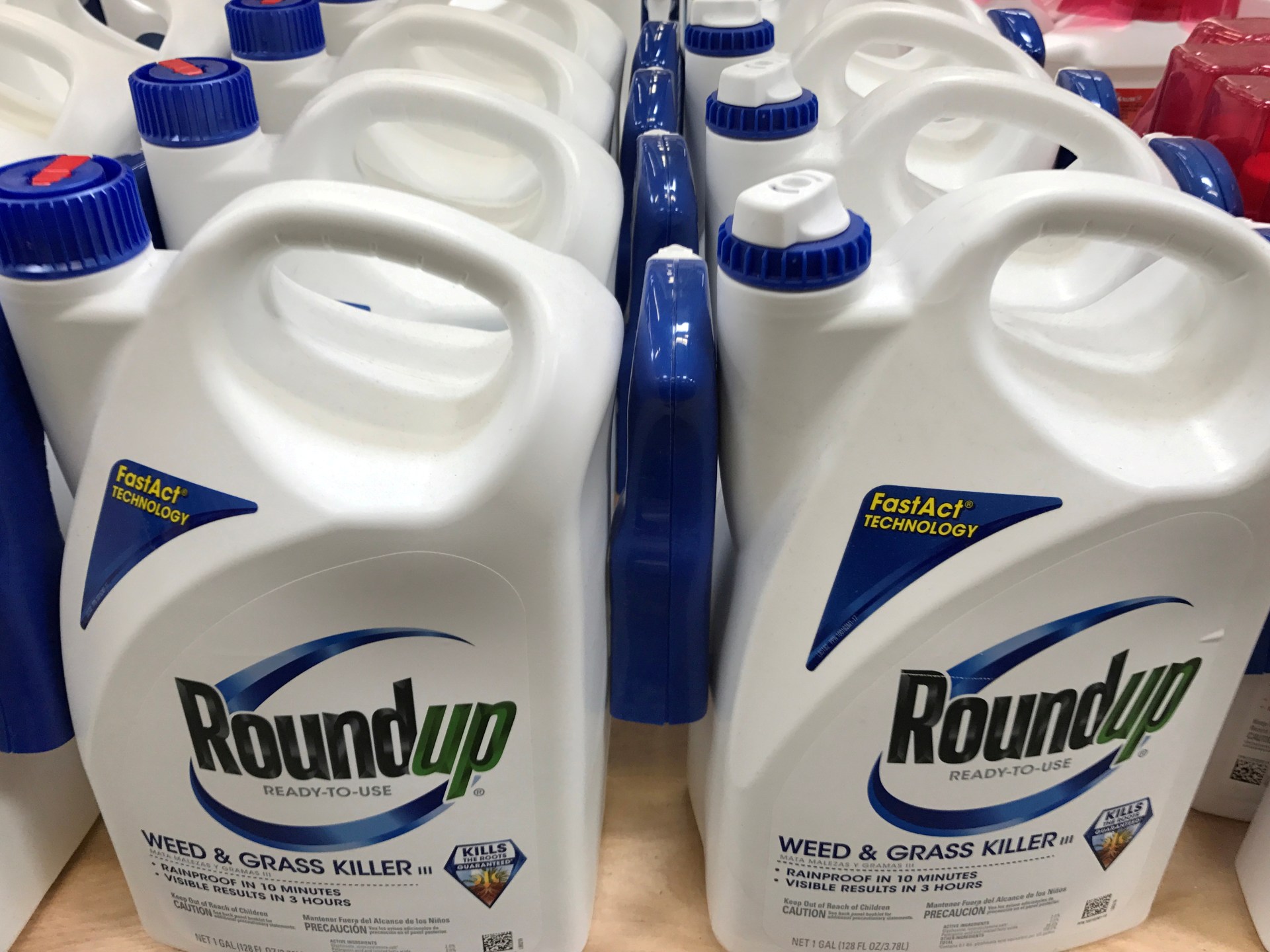
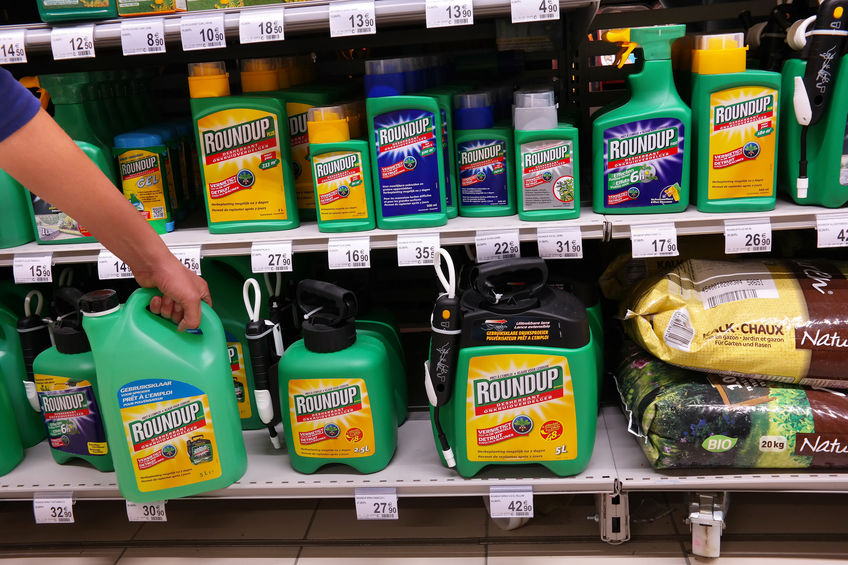
Bayer’s exit from the residential glyphosate market did not mean an exit from the residential *herbicide* market. The company retained the lucrative “Roundup” brand name, swapping the active ingredient glyphosate for a cocktail of alternative chemicals. Consumers reaching for a bottle of Roundup at Home Depot or Lowe’s in 2024 encounter a product that looks identical to its predecessor, same yellow cap, same pump sprayer, same bold font, contains an entirely different chemical profile. The new residential formulations rely on active ingredients such as **diquat dibromide**, **fluazifop-P-butyl**, **triclopyr**, and **imazapic**. This substitution allows Bayer to maintain its shelf dominance and brand equity without the baggage of the glyphosate molecule. yet, this strategy has drawn sharp criticism from environmental watchdogs who label it a “regrettable substitution.” The replacement ingredients are not without their own baggage. **Diquat dibromide**, for instance, is a non-selective contact herbicide that is currently banned in the European Union due to concerns over worker safety and chance impacts on aquatic life. Its acute toxicity profile is higher than that of glyphosate, posing immediate risks if mishandled. By swapping a probable carcinogen for a chemical with known acute toxicity and environmental persistence problem, Bayer may be trading one long-term liability for a different set of regulatory headaches. The “Roundup” brand serves as a Trojan horse, delivering a new chemical payload under a trusted, albeit controversial, banner.
Financial Calculus: The $7. 25 Billion Settlement Proposal
The commercial withdrawal is inextricably linked to Bayer’s financial maneuvering in the courtroom. In February 2026, the company proposed a **$7. 25 billion class settlement** designed to resolve significant portions of current and future litigation. This figure, while in isolation, represents a calculated cap on liability. The settlement structure includes payments spread over 21 years, a timeline that allows Bayer to amortize the cost of its legal defense while continuing to generate revenue from its agricultural operations. The withdrawal from the residential market strengthens Bayer’s hand in these settlement negotiations. By showing the court that the “source” of the exposure has been removed, Bayer that the class of future plaintiffs is finite and shrinking. This allows the company to quantify its exposure with greater precision, transforming an open-ended existential threat into a manageable line item on the corporate ledger.
Table 8. 1: Comparative Profile of Residential Roundup Formulations (Pre-2023 vs. Post-2023)
The most serious aspect of this commercial mitigation is the protection it affords the agricultural sector. Glyphosate remains the of modern industrial farming, particularly for use with genetically modified “Roundup Ready” crops. Bayer cannot afford to lose this market. By sacrificing the residential sector, Bayer creates a clear distinction: glyphosate is an “industrial” chemical, used by professionals in a regulated environment. This distinction is important for future legal battles. It allows Bayer to that any remaining exposures are occupational, covered by worker compensation schemes or subject to strict federal labeling requirements that preempt state law. The residential withdrawal “purifies” the user base, removing the unpredictable element of the casual homeowner and leaving only the regulated farmer. yet, this strategy is not without risk. The continued presence of glyphosate in the agricultural supply chain means that the chemical remains ubiquitous in the environment. Drift, runoff, and dietary exposure continue to be vectors for public contact. While Bayer has stopped selling the bottle to the homeowner, it has not stopped the chemical from entering the homeowner’s world. The legal question shifts from “did you spray Roundup?” to “did Roundup spray you?”, a harder case to prove, perhaps, one that keeps the door ajar for future toxic tort litigation.
The “Regrettable Substitution” Trap
Critics that Bayer’s pivot to alternative ingredients is a cynical game of “chemical whack-a-mole.” By replacing glyphosate with chemicals like diquat and triclopyr, the company addresses the specific legal claim of Non-Hodgkin Lymphoma opens itself to new allegations regarding neurotoxicity, reproductive harm, and environmental damage. **Triclopyr**, for example, has been linked in studies to developmental defects and increased fetal mortality in animal models. **Fluazifop-P-butyl** is a developmental toxicant. By bundling these chemicals into a product sold to untrained consumers, Bayer assumes that the regulatory shield of the EPA hold. Yet, as the glyphosate saga demonstrated, EPA approval is not a perfect shield against state-level failure-to-warn claims. If new science emerges linking these replacement chemicals to serious health outcomes, Bayer may find itself defending the “New Roundup” with the same ferocity—and cost—as the old. The commercial mitigation strategy is a high- gamble. It relies on the assumption that the “Roundup” brand is strong enough to survive a chemical transplant and that the new ingredients not spawn their own wave of litigation. It is a move that prioritizes the immediate containment of the glyphosate emergency over the long-term certainty of product safety, trading a known liability for an unknown one in a bid to keep the cash flowing.
Financial Impact: Assessing Litigation Provisions and the 2026 Negative Cash Flow Forecast
The Arithmetic of Attrition: The February 2026 Fiscal Reality
The financial consequences of the Monsanto acquisition reached a definitive nadir on February 17, 2026. Bayer AG’s announcement of a $7. 25 billion (approximately €6. 7 billion) class settlement proposal did not adjust a spreadsheet; it fundamentally inverted the company’s cash flow profile for the fiscal year. Management confirmed that the immediate liquidity requirements of this “containment” strategy would result in negative free cash flow (FCF) for 2026, a rare and serious admission for a DAX-listed conglomerate of this. This projection is not a result of operational failure in the Crop Science or Pharmaceutical divisions, a direct function of legal liability exceeding operating profit generation.
The mechanics of this shortfall are precise. While Bayer’s organic business units generate between €2 billion and €3 billion in free cash flow annually, the settlement structure demands an estimated €5 billion in cash outflows within the 2026 calendar year alone. This front-loaded payment schedule, designed to secure high participation rates from plaintiffs and finalize the “peace,” consumes 100% of the company’s discretionary capital and forces it into a deficit position. To this liquidity gap, Bayer secured an $8 billion credit facility, further leveraging a balance sheet that CEO Bill Anderson had pledged to deleverage. The decision to finance litigation payouts with new debt instruments reveals the severity of the cash crunch; the company is borrowing against future earnings to pay for past liabilities.
Provisioning: The €11. 8 Billion Reserve
Accounting for the proposed settlement necessitated a massive upward revision in litigation provisions. As of September 30, 2025, Bayer carried provisions of €7. 8 billion. Following the February 2026 announcement, this figure surged to €11. 8 billion. This €4 billion increase represents a “top-up” acknowledgment that previous reserves were insufficient to cover the true cost of the glyphosate docket. The provision includes €9. 6 billion specifically allocated for glyphosate claims, with the remainder addressing PCB (polychlorinated biphenyls) liabilities which have also plagued the Monsanto legacy portfolio.
Investors must scrutinize the nature of these provisions. They are not static savings accounts liabilities that directly impact Net Income and Earnings Per Share (EPS). The “special items” charge taken in Q4 2025 to account for this increase decimated reported earnings, pushing the company into a statutory loss for the period even with operational stability. This accounting treatment allows Bayer to present “Core EPS” (which excludes special items) as healthy, yet the statutory reality reflects a company whose equity value is being systematically transferred to plaintiffs. The €11. 8 billion figure also assumes a high opt-in rate for the class settlement; if the opt-out rate exceeds the threshold allowing Bayer to withdraw, these provisions could prove volatile once again.
The Dividend Sacrifice: Wealth Transfer in Real-Time
The most tangible evidence of the litigation’s financial damage is the radical alteration of Bayer’s dividend policy. In February 2024, the Board resolved to cut the dividend to the legal minimum of €0. 11 per share for three consecutive years, covering the payouts for fiscal years 2023, 2024, and 2025 (paid in 2026). This decision, maintained through the February 2026 settlement announcement, represents a 95% reduction from the €2. 40 payout levels seen prior to the emergency.
This policy is not conservative; it is a forced austerity measure. By retaining approximately €2. 3 billion annually that would have otherwise been distributed to shareholders, Bayer crowdsourced €6. 9 billion over three years from its own investor base to fund the litigation defense and debt reduction. In strict financial terms, the dividend cut acts as an internal levy on shareholders to pay for the Monsanto integration failure. For an income-focused investor base that historically relied on Bayer as a “dividend aristocrat,” this shift destroyed the investment thesis, leaving only those speculating on a post-litigation recovery or a breakup of the conglomerate.
Debt load and Credit Rating Pressure
The interplay between the settlement payouts and Bayer’s debt load creates a precarious credit environment. As of late 2025, net financial debt stood at approximately €32. 7 billion. The expectation was that organic free cash flow would gradually chip away at this mountain. The 2026 negative cash flow forecast arrests this deleveraging process. Instead of paying down principal, Bayer is forced to service existing bonds while drawing on the new $8 billion facility to fund the settlement.
Credit rating agencies have responded with skepticism. S&P Global Ratings revised its outlook on Bayer to “Negative” in September 2025, citing the risk that large cash settlements would impede debt reduction. The February 2026 settlement confirms that risk. While the settlement provides “certainty”, a keyword heavily marketed by Bayer executives, it does so at the cost of credit metrics. The debt-to-EBITDA ratio, a key measure of financial health, remains elevated above the 3. 0x target, restricting the company’s ability to invest in R&D or pursue strategic acquisitions. In a high-interest-rate environment, the cost of servicing this debt acts as a continuous drag on profitability, consuming capital that is desperately needed to revitalize the pharmaceutical pipeline facing patent cliffs.
Table 9. 1: Bayer AG Financial Impact Analysis (2023-2026)
Metric
2023 (Actual)
2024 (Actual)
2025 (Est.)
2026 (Projected)
Litigation Provisions
€6. 4 Billion
€5. 7 Billion
€7. 8 Billion
€11. 8 Billion
Free Cash Flow (FCF)
€1. 3 Billion
€2. 1 Billion
€1. 8 Billion
Negative (<€0)
Dividend Per Share
€0. 11
€0. 11
€0. 11
€0. 11
Net Financial Debt
€34. 5 Billion
€32. 5 Billion
€32. 7 Billion
~€33-35 Billion*
Litigation Cash Outflow
~€1. 0 Billion
~€1. 5 Billion
~€2. 0 Billion
~€5. 0 Billion
*Includes impact of $8B settlement financing facility. Sources: Bayer AG Annual Reports, Q3 2025 Statement, Feb 2026 Investor Update.
The Opportunity Cost of “Containment”
The financial damage extends beyond the balance sheet into the of opportunity cost. The €5 billion cash exodus in 2026 coincides with a period where the Pharmaceutical division requires heavy investment to replace revenues from aging blockbusters like Xarelto and Eylea. Competitors are acquiring biotechs and licensing compounds; Bayer is paying for 20th-century herbicides. The ” Shared Ownership” (DSO) restructuring plan initiated by CEO Bill Anderson, which aims to cut €2 billion in annual organizational costs, is a method to subsidize these legal payments rather than a driver of net growth. Every euro saved by removing middle management is currently earmarked for the settlement fund, neutralizing the positive impact of the restructuring on the bottom line.
The 2026 negative cash flow forecast serves as the mathematical proof of the Monsanto acquisition’s failure. Even if the $7. 25 billion settlement succeeds in capping future liabilities, a legal hypothesis that remains to be tested by the Supreme Court in *Durnell*, the financial architecture of Bayer has been altered for a decade. The company has transitioned from a surplus-generating life sciences innovator to a debt-servicing entity managing a toxic tort portfolio. The “containment” of the litigation has been purchased with the company’s liquidity, forcing it to operate with zero margin for error in its operational execution.
Market Reaction: Investor Skepticism and Stock Volatility Following Settlement Announcements
The acquisition of Monsanto in 2018 did not dilute Bayer’s share value; it infected the company’s market capitalization with a chronic volatility that has resisted every therapeutic intervention attempted by management. Since the closing of the $63 billion deal, Bayer has shed approximately 70% of its value, a destruction of shareholder wealth that ranks among the most catastrophic in modern German corporate history. This section examines the market’s allergic reaction to Bayer’s litigation containment strategies, tracing the trajectory from the initial acquisition shock to the skepticism greeting the February 2026 settlement proposal.
The Acquisition Discount: Importing Toxicity
The market’s verdict on the Monsanto purchase was immediate and damning. In the months following the August 2018 *Johnson* verdict, the bellwether trial to result in a massive plaintiff award, Bayer’s stock plummeted, wiping out nearly €16 billion in market value in days. This initial drop established a “litigation discount” that has persistently dragged on the stock price, regardless of the company’s underlying pharmaceutical or crop science performance. Institutional investors, initially sold on the of a combined seeds-and-traits empire, quickly realized they had purchased a liability generator. By 2019, the “Monsanto Malignancy” had rendered Bayer’s sum-of-the-parts valuation incoherent. The pharmaceutical division, boasting strong performers like Eylea and Xarelto, was being valued at zero by the market, with the entire enterprise value consumed by the perceived risk of the crop science division’s legal exposure. This structural depression in the stock price left Bayer to activist campaigns and severely limited its currency for future acquisitions, paralyzing its strategic flexibility.
The 2020 Settlement Mirage: A Case Study in False Dawns
The market’s reaction to the June 2020 announcement of a $10. 9 billion global settlement offers a serious precedent for understanding the skepticism of 2026. When the deal was rumored, Bayer shares surged, driven by the desperate hope that a “checkbook closure” was imminent. yet, the rally was short-lived. As the details emerged, specifically the complexity of the “future class” method and the absence of finality regarding non-settling plaintiffs, the stock retraced its gains. The subsequent rejection of the class settlement proposal by Judge Vince Chhabria in 2021 acted as a harsh corrective for investors. It demonstrated that capital allocation alone could not extinguish the legal fire. The market learned a painful lesson: in mass tort litigation involving long-latency diseases, “global” settlements are rarely truly global. This experience calcified investor sentiment, creating a “show me” where announcements of settlements are treated as starting points for negotiation rather than definitive conclusions. The failure of the 2020 plan to put a floor under the stock price directly contributed to the ouster of CEO Werner Baumann, as shareholders lost faith in the management’s ability to assess legal risk.
The 2023-2024 Verdict Shocks: The Volatility Trap
The period between late 2023 and 2024 served as a crucible for Bayer’s stock, characterized by extreme sensitivity to courtroom headlines. The “Philadelphia Bloodbath”, a series of massive jury verdicts including the $2. 25 billion *McKivison* award, triggered double-digit percentage drops in the share price. These sell-offs were not reactions to the dollar amounts, which were inevitably reduced on appeal, to the shattering of the “preemption shield” narrative Bayer had carefully constructed. Investors had been led to believe that the Supreme Court or federal preemption would provide a *deus ex machina*. When state courts in Pennsylvania and Missouri continued to return ten-figure verdicts, the market priced in a “perpetual litigation” scenario. The stock hit multi-year lows, trading at multiples that implied bankruptcy risk rather than blue-chip stability. This volatility forced the Supervisory Board’s hand, leading to the appointment of Bill Anderson and the subsequent radical restructuring of the company’s dividend policy.
The Dividend Guillotine: The Cost of Cash Preservation
In February 2024, the abstract legal battle became a concrete financial loss for retail and institutional shareholders alike. Bayer’s decision to slash its dividend by 95%, to the legal minimum of €0. 11 per share, was a watershed moment. While analysts at JPMorgan and Jefferies defended the move as a necessary step to preserve cash for debt reduction and litigation payouts, the market reaction was visceral. The dividend cut stripped Bayer of its status as a reliable income stock, causing an exodus of yield-focused funds and pension trusts. It was a public admission that the litigation was not “manageable” through normal cash flow required a wartime austerity footing. The stock price adjusted to this new reality, shedding the last vestiges of its premium valuation. This scar tissue remains visible in 2026; the market views every dollar of free cash flow not as chance return to shareholders, as ammunition for the legal defense fund.
February 2026: The “Sell-the-News”
The market’s response to the February 2026 proposal of a $7. 25 billion class settlement perfectly encapsulates the accumulated fatigue and skepticism of the investor base. On February 17, as rumors of the deal surfaced, Bayer shares spiked approximately 7% in Frankfurt trading, a reflex action to the possibility of closure. yet, the following day, February 18, witnessed a brutal reversal. As the specifics of the “Five-Point Plan” and the settlement structure were digested, the stock slumped nearly 10%, erasing the previous day’s gains and finding new lows. Several factors drove this “sell-the-news” event:
Table 10. 1: Investor Concerns Triggering the Feb 18, 2026 Sell-Off
Concern Category
Market Rationale
Opt-Out Risk
Analysts noted the absence of a “hard cap” on opt-outs, fearing a repeat of the 2020 scenario where high-value cases remain outside the settlement.
Cash Flow Impact
The forecast of negative cash flow for 2026, driven by the immediate €5 billion payout requirement, spooked debt holders and equity investors alike.
Execution Uncertainty
The dependency on the Supreme Court’s review of Durnell meant the settlement was not a “done deal” a contingent gamble.
Provision Increases
The hike in total litigation provisions to €11. 8 billion signaled that the “end” was more expensive than previously guided.
Institutional Revolt and the “Anderson Discount”
The skepticism is not limited to algorithmic trading; it is deeply entrenched in Bayer’s institutional shareholder base. Major German asset managers, including Deka Investment and Union Investment, have publicly expressed their weariness. Following the February 2026 announcement, Markus Manns of Union Investment remarked that the proposal was “not yet the breakthrough” investors required, citing the lingering uncertainty of the Supreme Court ruling. This institutional dissatisfaction has morphed into a governance emergency. The “Anderson Discount” has begun to replace the “Baumann Discount.” While CEO Bill Anderson was initially greeted as a reformer capable of splitting the company to unlock value, his decision to suspend the breakup plans in favor of ” shared ownership” and litigation management has frustrated those seeking a cleaner exit. The market is pricing in a absence of faith in the conglomerate structure. Investors are voting with their feet, arguing that as long as the glyphosate anchor is attached to the pharmaceutical speedboat, the stock is uninvestable.
The Persistent Valuation Gap
As of late February 2026, Bayer trades at a forward price-to-earnings ratio of roughly 4. 6x—a valuation more typical of a distressed industrial firm than a global life sciences leader. Competitors like Corteva and BASF trade at significantly higher multiples (18x and 12x, respectively). This gap represents the market’s quantification of the “Glyphosate Tax.” The market is signaling that it does not believe the $7. 25 billion settlement is the final chapter. The volatility following the announcement confirms that investors are pricing in a “tail risk” where the settlement fails, the Supreme Court denies relief, and the litigation drags into the 2030s. Until the legal firewall is proven impenetrable—not just proposed—Bayer’s stock remains a proxy for the US tort system’s unpredictability, rather than a reflection of its intrinsic business value. The “Texan Two-Step” bankruptcy maneuver, frequently whispered about by analysts as the nuclear option, remains the only scenario investors believe truly clear the deck, further depressing the equity value as the threat of Chapter 11 dilution looms in the background.
Future Claims Mechanism: Structuring the 21-Year Compensation Fund for Latent Injuries
The Long Tail Trap: Mechanics of the 21-Year Liability Shield
The structural heart of Bayer’s February 2026 settlement proposal lies not in the immediate cash payouts, in the detailed architecture of its “Future Claims method.” This component addresses the central terror of toxic tort litigation: the “long tail” of latent injuries where exposure occurs years or decades before a diagnosis. To cauterize this bleeding edge of liability, Bayer constructed a 21-year compensation fund designed to capture and monetize future cancer cases before they ever reach a jury.
Financial Architecture and the “Declining Cap”
The method operates on a $7. 25 billion total valuation, this figure is not a lump sum sitting in an escrow account. Instead, the settlement establishes a pay-as-you-go structure characterized by “declining capped annual payments.” The design front-loads approximately $3 billion into the five years to address the immediate backlog of unfiled claims and early-manifesting cases. For the remaining 16 years, the fund operates on a diminishing curve. Bayer’s actuaries calculated these caps to align with the statistical probability of Non-Hodgkin Lymphoma (NHL) development in the aging cohort of Roundup users. If claims in a given year exceed the annual cap, payment amounts to victims are reduced pro rata. This feature shifts the financial risk of a cancer “cluster” or higher-than-expected incidence rates from Bayer’s balance sheet to the victims themselves. The company purchases a ceiling on its annual liability, converting unpredictable litigation spikes into a fixed, manageable line item.
The Eligibility Matrix: A Tiered Valuation System
Unlike the chaotic variability of jury verdicts, where awards have ranged from thousands to over $2 billion, the future claims fund enforces a rigid valuation matrix. This grid system replaces judicial discretion with algorithmic certainty.
Claimant Category
Criteria
Estimated Payout
Tier 1: High Exposure
Occupational user; < 60 years old; Aggressive NHL subtype.
~$165, 000 (Max $198, 000)
Tier 2: Moderate Exposure
Residential/Farm user; Mixed age demographics.
Variable (Tiered downward)
Tier 3: Geriatric/Low Value
Claimants>78 years old at diagnosis.
~$10, 000
To qualify for even the minimum payment, claimants must navigate a strict evidentiary gauntlet. The 2026 protocol imposes a **120-hour exposure threshold**, requiring proof that the individual used Roundup for at least that duration. Also, the method enforces a **two-year latency period**, automatically disqualifying any cancer diagnosed within 24 months of the exposure, based on the scientific premise that NHL requires time to develop. The most contentious structural element is the **16-year diagnosis window**. While the payment stream lasts 21 years, eligibility closes for anyone diagnosed more than 16 years after the court’s final approval. This creates a hard cutoff. A farmer exposed in 2025 who develops NHL in 2043 falls outside the compensation scheme entirely, yet may still be bound by the release of liability if they failed to opt out during the initial notice period.
Abandoning the Science Panel
A serious evolution from the failed 2020 settlement is the removal of the “Science Panel.” Judge Vince Chhabria rejected the previous attempt largely because it sought to replace the judicial system’s fact-finding with a binding panel of scientists who would determine causation for all future cases. That proposal threatened to lock plaintiffs into a finding of “no causation” if the panel ruled in Bayer’s favor. The 2026 method abandons this scientific arbitration. Instead, it presumes eligibility based on the exposure matrix. Bayer concedes payment for qualifying claims without admitting scientific causation. This pivot moves the strategy from “proving safety” to “buying peace.” The company no longer seeks to win the scientific argument in this venue; it seeks only to price the argument out of the courtroom.
The “Walk Away” use
The settlement includes a “blow provision” that grants Bayer the unilateral right to terminate the entire deal if the number of opt-outs exceeds a confidential threshold. This clause serves as a disciplinary tool against plaintiff attorneys. If major firms attempt to hold back their strongest cases for trial while dumping weaker claims into the settlement, Bayer can detonate the agreement. This forces a “all-in” where firms must commit their entire inventory of future clients to the fund to secure the liquidity of the $3 billion upfront tranche.
Due Process and the “Zombie” Plaintiff
Legal scholars identify a serious constitutional friction in binding “future” claimants—individuals who are currently healthy and may not know they have been exposed or that they develop cancer. The method attempts to solve this by appointing a specific “Future Class Counsel,” currently led by the Holland Law Firm, whose fiduciary duty is solely to this unborn class of litigants. Yet, the notice problem. A consumer who bought Roundup in 2020 and remains healthy in 2026 has little incentive to pay attention to a legal notice or opt out of a class action. If that consumer develops NHL in 2030, they may find their legal rights extinguished, replaced by a non-negotiable check from the matrix. This “zombie” liability release—binding people before they are injured—remains the most point of the settlement on appeal, echoing the asbestos trust fund battles of the late 20th century. The 21-year fund represents a sophisticated attempt to turn a toxic tort emergency into an amortized debt obligation. By capping the upside risk of jury verdicts and defining the exact cost of a cancer diagnosis, Bayer aims to transform the Roundup litigation from an existential threat into a predictable, albeit expensive, cost of doing business.
Settlement Vulnerabilities: Evaluating the 'Opt-Out' Risk and Plaintiff Participation Rates
Settlement Vulnerabilities: Evaluating the ‘Opt-Out’ Risk and Plaintiff Participation Rates
The February 2026 proposal of a $7. 25 billion class settlement is not a conclusion; it is a conditional framework that rests entirely on a fragile variable: plaintiff participation. Bayer’s strategy hinges on the assumption that a supermajority of claimants, likely exceeding 95%, accept a standardized payout rather than gamble on a jury trial. Yet, the mechanics of this “opt-in” structure create a serious vulnerability. The agreement explicitly grants Bayer the right to terminate the deal without payment if the number of opt-outs exceeds an undisclosed threshold. This “walk-away” clause transforms the settlement from a guaranteed resolution into a high- referendum on Bayer’s liability, where a relatively small number of rejections can the entire financial architecture.
The economic incentives for plaintiffs to reject the settlement are stronger in 2026 than at any previous point in the litigation. The proposed payout structure, which analysts estimate could offer an average of $165, 000 for prime cases and as little as $10, 000 for older or less severe claims, pales in comparison to recent jury awards. The “holdout premium”, the chance upside of taking a case to trial, has been validated by a string of nine-figure and ten-figure verdicts. The March 2025 verdict in Georgia, where a jury awarded $2. 1 billion to plaintiff John Barnes, serves as a potent advertisement for opting out. Similarly, the $2. 25 billion McKivison verdict in Philadelphia (January 2024) and the affirmed $611 million judgment in Missouri (May 2025) demonstrate that individual trials can yield returns thousands of times higher than the settlement average. For plaintiff attorneys holding strong cases, the settlement offer functions less as a resolution and more as a low-ball baseline.
Aggressive litigation firms, particularly those operating outside the primary federal Multidistrict Litigation (MDL) consolidation, present the most immediate threat to the settlement’s viability. Firms such as Kline & Specter in Philadelphia have successfully pursued a strategy of individual trials rather than block settlements. Their track record of securing massive compensatory and punitive damages creates a “demonstration effect” that encourages other plaintiffs to hold out. Unlike the 2020 settlement, where firms were eager to monetize their inventories, the legal terrain in 2026 is defined by a hardened cadre of trial lawyers who have cracked Bayer’s scientific defenses in state courts. If these firms advise their clients to opt out in significant numbers, the participation rate fail to reach the necessary density to buy Bayer “global peace.”
The “future claims” method, designed to cover individuals diagnosed with Non-Hodgkin Lymphoma (NHL) over the 21 years, faces a distinct opt-out challenge. The settlement attempts to lock in compensation rates for two decades, yet medical costs and inflation are not static. A claimant diagnosed in 2032 may find the 2026-negotiated payout insufficient, prompting them to reject the class benefits and sue. The latency period of NHL, frequently spanning 10 to 15 years, means that thousands of chance plaintiffs have not yet manifested symptoms. These “futures” cannot be fully whipped into line by current agreements. If the Supreme Court does not deliver a crushing preemption ruling in Durnell, these future opt-outs constitute a permanent, uncapped liability tail that the $7. 25 billion fund cannot contain.
Investor skepticism regarding the participation rates was immediate and visible. Following the February 17 announcement, Bayer’s stock dropped approximately 9%, wiping out gains from the previous day. Market analysts at J. P. Morgan and Jefferies correctly identified the opt-out rate as the primary risk factor. They noted that without a hard cap on opt-outs or a confirmed participation level, the $7. 25 billion figure is a theoretical ceiling, not a fixed cost. If 5, 000 claimants with high-value cases opt out, and even 10% of them secure verdicts comparable to the Melissen ($78 million) or Caranci ($175 million) cases, the litigation costs would rapidly exceed the settlement provisions. This creates a scenario where Bayer pays the settlement billions to clear the “chaff” of weaker claims while still facing a multi-billion dollar war against the “wheat” of stronger cases.
The failure of the 2020 settlement to stop the filing of new lawsuits serves as a historical warning. That deal, valued at $10. 9 billion, was intended to “turn the page,” yet 67, 000 new claims materialized in the subsequent five years. The 2026 framework attempts to correct this by front-loading payments and extending the coverage period, it cannot legally strip individuals of their right to a jury trial unless they voluntarily waive it. Consequently, the “opt-out” risk is not a glitch; it is a structural feature of the American tort system that Bayer has failed to neutralize. As long as juries in Philadelphia, St. Louis, and Georgia continue to return verdicts that shock the conscience, the rational choice for a plaintiff with a serious cancer diagnosis is to reject the settlement and roll the dice in court.
Plaintiffs weigh “guaranteed crumbs” vs. “chance feast.”
Punitive Damages
None
Frequently exceeds 5x Compensatory
Settlement eliminates the punitive lever.
Bayer’s management has signaled that the $7. 25 billion figure represents the upper limit of their financial tolerance. CEO Bill Anderson stated that the company is choosing “containment over a protracted legal battle,” yet this containment is illusory if the opt-out rate climbs above single digits. The company’s use relies entirely on the pending Supreme Court review. Without a favorable ruling in Durnell to ban failure-to-warn claims, Bayer holds no stick to force plaintiffs into the settlement carrot. The opt-out method remains the open door through which billions of dollars in future liability inevitably walk.
Scientific Defense: Leveraging EPA Findings to Counter IARC Carcinogenicity Classifications
The central pillar of Bayer’s defense strategy rests on a deliberate, calculated effort to isolate the International Agency for Research on Cancer (IARC) as a scientific outlier. Since the IARC classified glyphosate as “probably carcinogenic to humans” (Group 2A) in 2015, Bayer has methodically constructed a counter-narrative that positions the U. S. Environmental Protection Agency (EPA) as the arbiter of safety. This method does not dispute the cancer link; it seeks to render the IARC classification legally and scientifically irrelevant by elevating the EPA’s “risk-based” assessment over the IARC’s “hazard-based” determination. ### The Hazard vs. Risk Dichotomy Bayer’s scientific teams and legal counsel emphasize a fundamental distinction in toxicological methodology to the IARC’s credibility in court. They that the IARC assesses “hazard”—whether a substance *can* cause harm at any dose, under any theoretical circumstance—whereas the EPA and other regulatory bodies assess “risk”—the likelihood of harm occurring under real-world exposure levels. To illustrate this, Bayer frequently points out that the IARC places glyphosate in the same carcinogenic category as red meat, hot beverages, and the occupation of being a barber. By framing the IARC classification as a theoretical abstraction rather than a practical warning, Bayer attempts to dilute the shock value of the “probable carcinogen” label that plaintiff attorneys present to juries. This distinction allows Bayer to that while glyphosate *could* be hazardous in a test tube at massive doses, it presents no risk to a farmer or gardener using the product according to the label. ### Weaponizing the EPA’s “No Risk” Findings The of this defense is the EPA’s consistent finding that glyphosate is “not likely to be carcinogenic to humans.” Bayer treats the EPA’s 2020 Interim Registration Review Decision not just as a regulatory approval, as a factual shield against liability. In August 2019, the EPA provided Bayer with a defensive tool: a letter explicitly stating that the agency would not approve product labels carrying the Proposition 65 cancer warning required by California. The EPA declared such warnings “false and misleading” under the Federal Insecticide, Fungicide, and Rodenticide Act (FIFRA). Bayer uses this federal directive to that it is legally prohibited from warning consumers about a cancer risk that the federal government says does not exist. This “impossibility preemption” defense—that Bayer cannot simultaneously comply with state tort laws requiring a warning and federal laws prohibiting it—relies entirely on the scientific weight of the EPA’s assessment. The Third Circuit Court of Appeals validated this strategy in the 2024 *Schaffner v. Monsanto* ruling, creating a circuit split that set the stage for Supreme Court review in 2026. In *Schaffner*, the court accepted the EPA’s scientific review as having the force of law, nullifying the state-law duty to warn. ### The Agricultural Health Study (AHS) Beyond regulatory findings, Bayer anchors its causation defense in the Agricultural Health Study (AHS), a massive, long-term epidemiological study funded by the National Cancer Institute. The 2018 update to the AHS, which followed over 50, 000 licensed pesticide applicators for more than two decades, found no association between glyphosate use and non-Hodgkin lymphoma (NHL). Bayer presents the AHS as the “gold standard” of real-world evidence, contrasting it with the smaller case-control studies frequently by plaintiffs. In trials, Bayer’s experts that the AHS accounts for confounding factors—such as exposure to other pesticides and lifestyle variables—that other studies miss. By focusing on this single, large- dataset, Bayer attempts to overshadow the “genotoxicity” studies (lab tests on cells) that the IARC relied upon heavily. ### Isolating the IARC Bayer’s strategy involves listing the global regulatory agencies that agree with the EPA, so painting the IARC as a rogue entity. The company frequently cites the European Food Safety Authority (EFSA), the European Chemicals Agency (ECHA), the Canadian Pest Management Regulatory Agency (PMRA), and authorities in Japan, Australia, and New Zealand. This “consensus” argument serves two purposes., it reassures investors and regulators that the product remains viable globally. Second, it allows defense attorneys to characterize the IARC’s 2015 decision as a deviation from established science, driven by a unique and arguably flawed methodology. Bayer notes that the IARC excluded certain industry-funded studies that the EPA included, while plaintiffs the EPA ignored peer-reviewed studies that the IARC prioritized. Bayer’s narrative frames the EPA’s dataset as “detailed” and the IARC’s as “selective.” ### Countering New Scientific Threats The scientific battlefield remains active. In 2025, the Ramazzini Institute published a long-term study claiming that low doses of glyphosate caused leukemia in rats. Bayer moved immediately to discredit the findings, issuing a statement that the study contained “serious methodological flaws” and contradicted decades of regulatory science. This rapid-response capability is part of Bayer’s modernized defense infrastructure. The company maintains a dedicated scientific transparency website, a key component of its “Five-Point Plan,” where it publishes safety studies and regulatory summaries. This platform allows Bayer to bypass media filters and present its scientific case directly to the public and policymakers. ### Federal Endorsement as a Scientific Validator The invocation of the Defense Production Act (DPA) by the Trump administration in February 2026 provided an unexpected potent reinforcement of Bayer’s scientific position. By designating glyphosate as “essential to national defense,” the federal government implicitly endorsed the safety and need of the chemical. While the DPA is an economic tool, Bayer’s legal team uses it to that the federal government would not secure the supply of a known carcinogen. This executive action codifies the EPA’s “no risk” finding into national security policy, further insulating Bayer from state-level claims that the product is inherently dangerous. ### The Preemption Nexus, Bayer’s scientific defense is designed to serve its legal strategy. By establishing the EPA’s findings as the supreme scientific truth, Bayer aims to strip state courts of the authority to adjudicate cancer claims. If the Supreme Court accepts the argument that the EPA’s scientific review preempts state juries, the IARC classification lose its power to drive litigation. The science of “risk” have legally defeated the science of “hazard.”
Beyond Glyphosate: Managing Legacy Liabilities from PCB and Dicamba Litigation
Beyond Glyphosate: Managing Legacy Liabilities from PCB and Dicamba Litigation
While the $7. 25 billion glyphosate settlement dominates headlines in early 2026, Bayer’s legal containment strategy faces a hydra-headed threat from two other Monsanto legacy portfolios: Polychlorinated Biphenyls (PCBs) and Dicamba. Far from being dormant historical footnotes, these liabilities have metastasized into active financial drains, forcing Bayer to engineer sophisticated “contingency” settlement structures and defend against a fresh wave of federal litigation filed as as February 20, 2026.
The PCB Indemnity Hedge: A Financial Engineering Feat
Bayer’s management of PCB liabilities has evolved from simple defense to a complex financial hedging strategy involving “contingency payments.” This method is most visible in the December 2025 settlements with the states of West Virginia and Illinois. In West Virginia, Attorney General J. B. McCuskey announced a settlement structure that guarantees $24. 5 million caps the total chance value at $60. 5 million. The difference, $36 million, is not a guaranteed payout a conditional one, tethered directly to the outcome of Bayer’s separate indemnity litigation in Missouri. Similarly, the Illinois settlement, valued between $120 million and $280 million, relies on this same legal wager. This structure reveals Bayer’s tactical pivot: the company is financing its current settlements with the *chance* proceeds of future court victories against its former customers. Monsanto filed suit in St. Louis County, Missouri, against Solutia Inc., Pharmacia LLC, and major legacy customers (including electrical equipment manufacturers), arguing that indemnification contracts signed in the 1970s obligate these entities to cover the costs of modern environmental cleanup. By linking state settlements to this indemnity suit, Bayer reduces its immediate cash outflow while incentivizing state attorneys general to root for Monsanto’s success in the Missouri courts. If Monsanto fails to enforce these 50-year-old contracts, the “contingency” portion of the state settlements evaporates, shifting the litigation risk back onto the plaintiff states. This “indemnity hedge” represents a high- attempt to offload the financial load of the “forever chemical” onto the supply chain that distributed it.
Sky Valley and the School Litigation “Long Tail”
While environmental claims are being managed through financial engineering, personal injury cases involving PCB exposure in schools remain a volatile variable. The epicenter of this litigation is the Sky Valley Education Center (SVEC) in Washington State, where teachers and students alleged that leaking light ballasts and caulking caused brain damage and other widespread injuries. In August 2025, Monsanto reached agreements to resolve the majority of the Sky Valley cases, covering more than 200 plaintiffs. yet, this “containment” is incomplete. Several adverse verdicts remain on appeal, and the legal shifted unfavorably in late 2025. The Washington Supreme Court reinstated a $185 million verdict in the *Erickson* case, rejecting Bayer’s statute-of-repose defense. also, while a trial judge reduced punitive damages in another SVEC case from $857 million to $438 million, the substantial compensatory awards for neurological injury were upheld. These rulings establish a dangerous precedent: that Monsanto can be held liable for “construction repose” exceptions if plaintiffs can prove fraudulent concealment of toxicity risks. This opens the door for school districts nationwide to revisit the “latent injury” theory, chance extending the statute of limitations for decades. Bayer’s strategy here is attrition, settling the bulk of cases confidentially to avoid setting new public benchmarks for damages, while fighting the remaining appellate battles to prevent the *Erickson* ruling from becoming a nationwide standard.
Dicamba: The February 2026 Legal Escalation
If PCB litigation is a “long tail” risk, Dicamba is an immediate, acute emergency. The herbicide, essential for Bayer’s Xtend crop system, has been trapped in a pattern of regulatory approval and judicial vacatur since 2020. On February 6, 2026, the EPA granted a new “unconditional” registration for over-the-top Dicamba use, attempting to bypass the legal flaws that led federal courts to vacate previous approvals in 2020 and 2024. Bayer touted this as a victory for regulatory certainty. That certainty lasted exactly 14 days. On February 20, 2026, a coalition led by the National Family Farm Coalition and the Center for Food Safety filed a petition for review in the Ninth Circuit Court of Appeals. The lawsuit challenges the Feb 6 registration on grounds that are arguably stronger than previous successful challenges. The plaintiffs allege the EPA violated the Endangered Species Act (ESA) by removing a previously mandatory 100-foot buffer zone and eliminating the June cutoff date for spraying, restrictions that were originally put in place to mitigate drift damage. The legal argument is that the EPA’s 2026 approval is *more* permissive than the 2020 version the Ninth Circuit already declared unlawful. By removing the cutoff dates, the new registration allows spraying during peak summer heat, which plaintiffs scientifically increases the volatility of the chemical and the likelihood of drift damage to neighboring non-tolerant crops. This lawsuit threatens to strip Bayer of its license to sell Dicamba products for the 2027 growing season, just as farmers are locking in seed choices. Unlike the glyphosate litigation, which is primarily a financial liability, the Dicamba war strikes at the operational core of Bayer’s seed-and-chemical integration strategy. A third vacatur would not only cost millions in lost chemical sales could permanently damage the market viability of the Xtend soybean platform.
The 2026 Financial Reality: Negative Free Cash Flow
The cumulative weight of these “legacy” liabilities has forced Bayer to problem a clear financial warning for 2026. During the February 17 investor call, CFO Wolfgang Nickl confirmed the company expects **negative free cash flow** for the fiscal year 2026. This projection is driven by a massive estimated cash outflow of **€5 billion ($5. 4 billion)** allocated specifically for litigation payouts in 2026. This figure includes the initial funding of the $7. 25 billion glyphosate trust, the “guaranteed” portions of the PCB state settlements, and the confidential payouts for the Sky Valley school cases.
Initial funding of 21-year trust; “opt-out” mitigation.
PCB State Settlements (Guaranteed)
$200, $300 Million
Resolving WV, IL, and remaining municipal water claims.
PCB Personal Injury (Sky Valley)
$150, $250 Million
Confidential settlements to prevent further bellwether trials.
Dicamba & Other Legacy Torts
$100, $200 Million
Defense costs for Ninth Circuit appeal; drift damage claims.
This negative cash flow reality contradicts the narrative of “putting litigation behind us.” Instead, it signals that 2026 is the year the bill comes due. The company’s ability to return to profitability in 2027 depends entirely on the success of the “indemnity hedge” for PCBs and the survival of the Dicamba registration in the Ninth Circuit.
Conclusion: The Illusion of Finality
Bayer’s “Five-Point Plan” and the subsequent 2026 settlement announcements are masterpieces of legal and financial architecture. They construct a method to process liability, cap financial exposure, and provide investors with a predictable number. “containment” is not the same as “resolution.” The “indemnity hedge” relies on winning a contract dispute against defunct or acquired entities. The Dicamba strategy relies on a federal court ignoring its own precedent regarding the ESA. The glyphosate trust relies on the Supreme Court validating a preemption theory that it has previously sidestepped. As of February 2026, Bayer has not eliminated its legacy risks; it has securitized them. The company has transformed unpredictable jury verdicts into a scheduled debt obligation, payable over 21 years. For the investigative observer, the story of Bayer is no longer about whether its products cause harm—a question the courts may never definitively answer— about whether a modern corporation can survive the financial metabolization of its own history. The $7. 25 billion settlement is not a peace treaty; it is a mortgage on the future, signed to keep the doors open today.
Timeline Tracker
February 17, 2026
Strategic Framework: Deconstructing Bayer's 'Five-Point Plan' for Litigation Containment — SECTION 1 of 14: Strategic Framework: Deconstructing Bayer's 'Five-Point Plan' for Litigation Containment Bayer AG's legal defense against glyphosate carcinogenicity allegations relies on a calculated maneuver.
2020
Historical Context: Analysis of the 2020 $10.9 Billion Global Settlement Structure —
June 24, 2020
The June 2020 Pivot: Buying Peace at a Premium — On June 24, 2020, Bayer AG attempted to purchase finality. After two years of disastrous courtroom losses and a plummeting stock price following the Monsanto acquisition.
2020
The Science Panel: Outsourcing Causation — Central to the 2020 settlement's future-proofing strategy was the creation of an independent "Science Panel." This body, comprised of five scientific experts, was tasked with determining.
July 2020
Judicial Skepticism and Constitutional Roadblocks — The "futures class" component immediately faced intense scrutiny from Judge Chhabria. In July 2020, weeks after the announcement, the judge signaled serious doubts about the propriety.
May 26, 2021
The Collapse of the Future Class method — Bayer and the class counsel attempted to salvage the deal by revising the terms. In February 2021, they submitted an updated proposal that increased the future.
2020
Financial and the "Inventory" Reality — The rejection of the future class forced Bayer to fundamentally alter its financial and legal posture. While the $9. 6 billion for current claims proceeded, resolving.
February 2026
Current Maneuver: Scrutinizing the February 2026 $7.25 Billion Class Settlement Proposal —
February 17, 2026
The $7. 25 Billion Gambit: A Desperate Bid for Closure — On February 17, 2026, Bayer AG executed its most aggressive maneuver since the acquisition of Monsanto, filing a motion in the Circuit Court of the City.
February 2026
Deconstructing the 21-Year Payout Structure — The mechanics of the February 2026 proposal reveal a strategy focused on financial predictability rather than absolute restitution. The settlement establishes a fund to operate for.
January 2026
The *Durnell* use and The Preemption Threat — Bayer's strategy relies heavily on the "sword of Damocles" hanging over the plaintiff bar: *Durnell v. Monsanto*. The Supreme Court's decision to grant certiorari in January.
2026
Financial Engineering and Market Reaction — The financial of this proposal are immediate and severe. To fund the settlement, Bayer announced it would experience negative free cash flow in 2026. The company.
April 2026
The Constitutional Quagmire — The central legal obstacle remains the binding of future claimants. The U. S. legal system is inherently hostile to settlements that extinguish the rights of individuals.
May 2021
High Court Gamble: The Strategic Importance of *Durnell v. Monsanto* and Supreme Court Review — 9th Circuit Hardeman v. Monsanto May 2021 Against Preemption FIFRA does not preempt state claims because a cancer warning is not "inconsistent" with federal law if.
August 8, 2019
The "Impossibility" Defense and the EPA Shield — Under FIFRA, the Environmental Protection Agency (EPA) maintains sole authority to approve pesticide labels. Bayer that because the EPA has rigorously reviewed glyphosate and consistently classified.
August 15, 2024
Judicial: The Circuit Split — For years, federal courts rejected this reasoning. The Ninth Circuit Court of Appeals, in *Hardeman v. Monsanto* (May 2021), dismantled Bayer's preemption defense. The court applied.
December 1, 2025
The Solicitor General's Political Oscillation — The executive branch's position on this matter has fluctuated wildly, tracking the political occupant of the White House. During the Trump administration in 2019, the Solicitor.
May 14, 2021
Legislative "Plan B": The Uniformity Push — Recognizing that judicial outcomes remain uncertain, Bayer has simultaneously pursued a legislative remedy. The company and its industry allies have lobbied aggressively for the inclusion of.
2024
The Pivot to State Capitols: Manufacturing Immunity — With federal preemption arguments repeatedly stalling in appellate courts, Bayer executed a tactical pivot in 2024 and 2025, moving the battlefield from the judiciary to state.
March 2025
Battleground Iowa: The Muscatine use — Nowhere was the fight more visceral than in Iowa, home to Bayer's massive glyphosate manufacturing plant in Muscatine. In 2024 and 2025, the Iowa legislature became.
February 2024
The Idaho Rejection and the Phosphate Connection — A similar played out in Idaho, another state strategically important to Bayer due to its phosphate mining operations in Soda Springs, a serious raw material for.
April 2025
Quiet Victories: North Dakota and Georgia — While the high-profile battles in Iowa and Idaho garnered headlines, Bayer secured serious victories in the shadows. In April 2025, North Dakota became the state to.
January 2026
The Federal Rider: A Failed Stealth Attack — Simultaneous to the state-level ground war, Bayer attempted a stealth strike in Washington, D. C. Lobbyists worked to insert a "rider" into the 2026 federal appropriations.
February 2026
Strategic for 2026 — By early 2026, the legislative offensive had yielded mixed results: victories in two states, high-profile failures in three others (including Missouri, Bayer's U. S. headquarters), and.
2024
SECTION 7 of 14: Astroturfing and Alliances: Investigating the Role of the Modern Ag Alliance — In early 2024, as Bayer AG faced a relentless of litigation, a new entity emerged from the cornfields of the American Midwest. It called itself the.
2023
The Architecture of Influence — Bayer established the Modern Ag Alliance to solve a specific problem: jurors and legislators do not sympathize with multinational chemical conglomerates. They do, yet, sympathize with.
2024
Legislative Battlegrounds: Wins and Stalemates — The MAA's legislative offensive has yielded mixed results, creating a fractured legal across the Grain Belt. Iowa remains the symbolic "ground zero" for this fight. As.
2026
The "Grassroots" Facade Cracks — even with the MAA's efforts to project unity, the agricultural community is not monolithic. Genuine farmer organizations, such as the Iowa Farmers Union, have publicly opposed.
July 2021
SECTION 8 of 14: Commercial Mitigation: The Strategic Withdrawal of Glyphosate from the U. S. Residential Market — In July 2021, Bayer AG executed a maneuver that was less a product safety recall and more a tactical fortification of its legal perimeter. The company.
2024
The "Bait and Switch": Branding Over Chemistry — Bayer's exit from the residential glyphosate market did not mean an exit from the residential *herbicide* market. The company retained the lucrative "Roundup" brand name, swapping.
February 2026
Financial Calculus: The $7. 25 Billion Settlement Proposal — The commercial withdrawal is inextricably linked to Bayer's financial maneuvering in the courtroom. In February 2026, the company proposed a **$7. 25 billion class settlement** designed.
2026
Financial Impact: Assessing Litigation Provisions and the 2026 Negative Cash Flow Forecast —
February 17, 2026
The Arithmetic of Attrition: The February 2026 Fiscal Reality — The financial consequences of the Monsanto acquisition reached a definitive nadir on February 17, 2026. Bayer AG's announcement of a $7. 25 billion (approximately €6. 7.
September 30, 2025
Provisioning: The €11. 8 Billion Reserve — Accounting for the proposed settlement necessitated a massive upward revision in litigation provisions. As of September 30, 2025, Bayer carried provisions of €7. 8 billion. Following.
February 2024
The Dividend Sacrifice: Wealth Transfer in Real-Time — The most tangible evidence of the litigation's financial damage is the radical alteration of Bayer's dividend policy. In February 2024, the Board resolved to cut the.
September 2025
Debt load and Credit Rating Pressure — The interplay between the settlement payouts and Bayer's debt load creates a precarious credit environment. As of late 2025, net financial debt stood at approximately €32.
2026
The Opportunity Cost of "Containment" — The financial damage extends beyond the balance sheet into the of opportunity cost. The €5 billion cash exodus in 2026 coincides with a period where the.
February 2026
Market Reaction: Investor Skepticism and Stock Volatility Following Settlement Announcements — The acquisition of Monsanto in 2018 did not dilute Bayer's share value; it infected the company's market capitalization with a chronic volatility that has resisted every.
August 2018
The Acquisition Discount: Importing Toxicity — The market's verdict on the Monsanto purchase was immediate and damning. In the months following the August 2018 *Johnson* verdict, the bellwether trial to result in.
June 2020
The 2020 Settlement Mirage: A Case Study in False Dawns — The market's reaction to the June 2020 announcement of a $10. 9 billion global settlement offers a serious precedent for understanding the skepticism of 2026. When.
2023-2024
The 2023-2024 Verdict Shocks: The Volatility Trap — The period between late 2023 and 2024 served as a crucible for Bayer's stock, characterized by extreme sensitivity to courtroom headlines. The "Philadelphia Bloodbath", a series.
February 2024
The Dividend Guillotine: The Cost of Cash Preservation — In February 2024, the abstract legal battle became a concrete financial loss for retail and institutional shareholders alike. Bayer's decision to slash its dividend by 95%.
February 2026
February 2026: The "Sell-the-News" — The market's response to the February 2026 proposal of a $7. 25 billion class settlement perfectly encapsulates the accumulated fatigue and skepticism of the investor base.
February 2026
Institutional Revolt and the "Anderson Discount" — The skepticism is not limited to algorithmic trading; it is deeply entrenched in Bayer's institutional shareholder base. Major German asset managers, including Deka Investment and Union.
February 2026
The Persistent Valuation Gap — As of late February 2026, Bayer trades at a forward price-to-earnings ratio of roughly 4. 6x—a valuation more typical of a distressed industrial firm than a.
February 2026
The Long Tail Trap: Mechanics of the 21-Year Liability Shield — The structural heart of Bayer's February 2026 settlement proposal lies not in the immediate cash payouts, in the detailed architecture of its "Future Claims method." This.
2020
Abandoning the Science Panel — A serious evolution from the failed 2020 settlement is the removal of the "Science Panel." Judge Vince Chhabria rejected the previous attempt largely because it sought.
2020
Due Process and the "Zombie" Plaintiff — Legal scholars identify a serious constitutional friction in binding "future" claimants—individuals who are currently healthy and may not know they have been exposed or that they.
February 2026
Settlement Vulnerabilities: Evaluating the 'Opt-Out' Risk and Plaintiff Participation Rates — The February 2026 proposal of a $7. 25 billion class settlement is not a conclusion; it is a conditional framework that rests entirely on a fragile.
August 2019
Scientific Defense: Leveraging EPA Findings to Counter IARC Carcinogenicity Classifications — The central pillar of Bayer's defense strategy rests on a deliberate, calculated effort to isolate the International Agency for Research on Cancer (IARC) as a scientific.
February 20, 2026
Beyond Glyphosate: Managing Legacy Liabilities from PCB and Dicamba Litigation — While the $7. 25 billion glyphosate settlement dominates headlines in early 2026, Bayer's legal containment strategy faces a hydra-headed threat from two other Monsanto legacy portfolios.
December 2025
The PCB Indemnity Hedge: A Financial Engineering Feat — Bayer's management of PCB liabilities has evolved from simple defense to a complex financial hedging strategy involving "contingency payments." This method is most visible in the.
August 2025
Sky Valley and the School Litigation "Long Tail" — While environmental claims are being managed through financial engineering, personal injury cases involving PCB exposure in schools remain a volatile variable. The epicenter of this litigation.
February 6, 2026
Dicamba: The February 2026 Legal Escalation — If PCB litigation is a "long tail" risk, Dicamba is an immediate, acute emergency. The herbicide, essential for Bayer's Xtend crop system, has been trapped in.
2026
The 2026 Financial Reality: Negative Free Cash Flow — The cumulative weight of these "legacy" liabilities has forced Bayer to problem a clear financial warning for 2026. During the February 17 investor call, CFO Wolfgang.
February 2026
Conclusion: The Illusion of Finality — Bayer's "Five-Point Plan" and the subsequent 2026 settlement announcements are masterpieces of legal and financial architecture. They construct a method to process liability, cap financial exposure.
Why it matters: Voice actors in the video game industry face exploitation and unfair practices despite major studios earning billions of dollars annually. Recent strikes by SAG-AFTRA have highlighted the.
Tell me about the strategic framework: deconstructing bayer's 'five-point plan' for litigation containment of Bayer.
SECTION 1 of 14: Strategic Framework: Deconstructing Bayer's 'Five-Point Plan' for Litigation Containment Bayer AG's legal defense against glyphosate carcinogenicity allegations relies on a calculated maneuver known internally and publicly as the "Five-Point Plan." Unveiled in May 2021, this strategy emerged from the wreckage of a failed $2 billion class-action settlement proposal rejected by U. S. District Judge Vince Chhabria. The judge characterized that initial attempt as " unreasonable," forcing.
Tell me about the the june 2020 pivot: buying peace at a premium of Bayer.
On June 24, 2020, Bayer AG attempted to purchase finality. After two years of disastrous courtroom losses and a plummeting stock price following the Monsanto acquisition, CEO Werner Baumann announced a detailed resolution strategy valued between $10. 1 billion and $10. 9 billion. The objective was binary: resolve the vast majority of existing litigation and, more importantly, construct a legal firewall against future claims. This settlement structure was not a.
Tell me about the the bifurcated structure: current vs. future liability of Bayer.
The settlement allocated $8. 8 billion to $9. 6 billion to resolve approximately 75 percent of the 125, 000 filed and unfiled claims then in existence. This portion of the deal functioned through "inventory settlements," where Bayer negotiated directly with major plaintiff law firms rather than individual claimants. Firms such as Weitz & Luxenberg, The Miller Firm, and Baum Hedlund Aristei & Goldman agreed to specific aggregate sums. In exchange.
Tell me about the the science panel: outsourcing causation of Bayer.
Central to the 2020 settlement's future-proofing strategy was the creation of an independent "Science Panel." This body, comprised of five scientific experts, was tasked with determining whether glyphosate can cause Non-Hodgkin Lymphoma. The panel's findings would be binding on both Bayer and the class members. If the panel concluded that glyphosate was not a carcinogen, class members would be permanently barred from suing Bayer on any claims related to the.
Tell me about the the "points" system and allocation logic of Bayer.
For the current claimants, the settlement utilized a complex scoring matrix to determine individual payout amounts. This "points system" evaluated cases based on specific risk factors and damages. Key variables included the duration and intensity of Roundup exposure, the age of the plaintiff at diagnosis, the specific subtype of Non-Hodgkin Lymphoma, and the presence of other risk factors that could offer alternative explanations for the disease. A plaintiff who sprayed.
Tell me about the judicial skepticism and constitutional roadblocks of Bayer.
The "futures class" component immediately faced intense scrutiny from Judge Chhabria. In July 2020, weeks after the announcement, the judge signaled serious doubts about the propriety of the arrangement. His primary concern was Constitutional due process. The settlement proposed to bind individuals who had not yet been diagnosed with cancer, and, might not be diagnosed for another decade due to the long latency period of NHL. Chhabria questioned how a.
Tell me about the the collapse of the future class method of Bayer.
Bayer and the class counsel attempted to salvage the deal by revising the terms. In February 2021, they submitted an updated proposal that increased the future fund to $2 billion and extended the settlement period. They also removed the binding Science Panel, replacing it with a "science advisory" concept that would be informative not legally preclusive. Yet, the fundamental problem remained: the conflict of interest between current victims (who want.
Tell me about the financial and the "inventory" reality of Bayer.
The rejection of the future class forced Bayer to fundamentally alter its financial and legal posture. While the $9. 6 billion for current claims proceeded, resolving the bulk of the backlog, the company could no longer cap its total liability. The "inventory" settlements continued, with Bayer executing agreements with specific firms to clear dockets. By late 2020, Bayer reported that it had reached agreements in principle for approximately 88, 000.
Tell me about the the $7. 25 billion gambit: a desperate bid for closure of Bayer.
On February 17, 2026, Bayer AG executed its most aggressive maneuver since the acquisition of Monsanto, filing a motion in the Circuit Court of the City of St. Louis to establish a $7. 25 billion class settlement method. This proposal, orchestrated by CEO Bill Anderson, represents a calculated attempt to cap the company's hemorrhaging liability regarding glyphosate-induced Non-Hodgkin Lymphoma (NHL). Unlike the failed 2020 global resolution, this structure specifically the.
Tell me about the deconstructing the 21-year payout structure of Bayer.
The mechanics of the February 2026 proposal reveal a strategy focused on financial predictability rather than absolute restitution. The settlement establishes a fund to operate for 21 years, offering compensation to individuals diagnosed with NHL after exposure to Roundup. Total Cap $2 Billion (Future Claims) $7. 25 Billion (Current & Future) Duration 4 Years 21 Years Causation Determination Independent Science Panel Pre-set Diagnostic Matrix Payout Structure Fixed Grid Declining Annual.
Tell me about the the *durnell* use and the preemption threat of Bayer.
Bayer's strategy relies heavily on the "sword of Damocles" hanging over the plaintiff bar: *Durnell v. Monsanto*. The Supreme Court's decision to grant certiorari in January 2026 injected a new variable into the equation. Bayer that the Federal Insecticide, Fungicide, and Rodenticide Act (FIFRA) preempts state laws requiring cancer warnings, given that the EPA has consistently approved Roundup labels without such warnings. If the Supreme Court rules in favor of.
Tell me about the financial engineering and market reaction of Bayer.
The financial of this proposal are immediate and severe. To fund the settlement, Bayer announced it would experience negative free cash flow in 2026. The company increased its litigation provisions to €11. 8 billion, signaling to shareholders that the "glyphosate hangover" is far from over. Market reaction was swift and negative. Bayer stock dropped 7% following the announcement, reflecting investor fatigue. The pledge of "closure" has been made before, specifically.
Why it matters: The Pothole Lottery highlights systemic inequalities in road maintenance based on economic disparities. Resident reporting systems and budgetary priorities contribute to the.
Why it matters: 160 million children globally are involved in child labor, with 79 million in hazardous work. Informal work sectors lack oversight, making it.
Why it matters: Police accountability remains a complex issue globally, with mechanisms often failing to deliver justice for misconduct. Challenges include limited disciplinary actions, varying.
Why it matters: China's economic expansion in Africa has reshaped trade relations, with the majority of African countries now trading more with China than with.
Why it matters: Nicaragua now has the worst press freedom climate in Latin America, according to Reporters Without Borders. Under President Ortega, journalists face censorship,.
Why it matters: Private school caste discrimination is widespread in India despite legal provisions for equal access to education. Many private schools in India find.