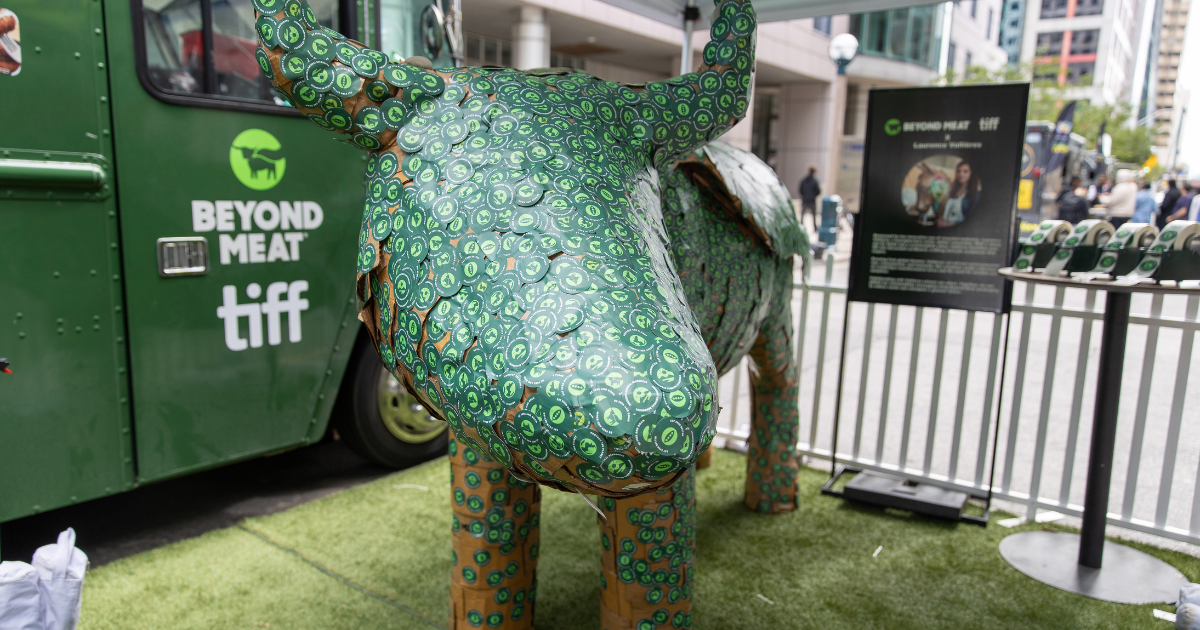
Before Beyond Meat affixed its branding to the exterior, the plant belonged to Devault Foods (formerly Devault Packing Company), a staple of Pennsylvania's meat processing sector for over seven years.
Verified Against Public And Audited RecordsLong-Form Investigative Review
Reading time: ~35 min
File ID: EHGN-REVIEW-36876
Persistent sanitation failures and listeria contamination at Pennsylvania manufacturing facility
The acquisition of the Devault, Pennsylvania, manufacturing facility by Beyond Meat in 2020 marked a significant shift in regulatory jurisdiction.
Primary RiskLegal / Regulatory Exposure
JurisdictionEPA
Public MonitoringState rely on the facility's own environmental monitoring program.
Report Summary
In the face of mounting evidence regarding sanitation failures at the Devault, Pennsylvania facility, Beyond Meat, Inc. maintained a public posture of unassailable quality. As Beyond Meat faced severe financial headwinds in 2024 and 2025, leading to the closure of operations in China and a reduction of its California footprint, the Pennsylvania facility became the company's primary lifeline. Industry analysts predict that unless Beyond Meat can divest the Pennsylvania facility to a contract manufacturer with the expertise to remediate the sanitation problems, the plant eventually be closed permanently to stop the financial bleeding.
Key Data Points
In the second quarter of 2020, as the global economy convulsed under the of the COVID-19 pandemic, Beyond Meat, Inc. executed a maneuver that would fundamentally alter its operational structure. The purchase price stood at approximately $14. 5 million, a figure that appeared modest for a company then valued in the billions, yet the of this transaction were far-reaching. Located in Chester County, roughly 45 minutes from Philadelphia, the plant provided a direct artery to the lucrative East Coast markets, including New York City and Washington, D. The acquisition included not just the brick and mortar, also the retention of.
Investigative Review of Beyond Meat, Inc.
Why it matters:
Beyond Meat's strategic pivot to internalize production through the acquisition of a facility in Devault, Pennsylvania.
The challenges and opportunities of converting a traditional meat processing plant into a site for producing plant-based products.
The Devault Acquisition: Strategic Expansion into a Retrofitted Facility
The Strategic Pivot: Internalizing Production Amidst Global Disruption
In the second quarter of 2020, as the global economy convulsed under the of the COVID-19 pandemic, Beyond Meat, Inc. executed a maneuver that would fundamentally alter its operational structure. The company, previously reliant on a network of co-manufacturers to produce its plant-based patties and sausages, moved to secure its own manufacturing footprint. This strategic pivot culminated in the acquisition of a production facility in Devault, Pennsylvania. The purchase price stood at approximately $14. 5 million, a figure that appeared modest for a company then valued in the billions, yet the of this transaction were far-reaching. By purchasing this asset, Beyond Meat signaled a departure from its asset-light model, betting that vertical integration would improve margins and grant tighter control over its supply chain.
The timing of the acquisition was precise. Demand for plant-based proteins had surged as consumers, wary of meat supply chain disruptions and health concerns, stocked their freezers. Beyond Meat needed capacity, and it needed it immediately. The Devault facility offered a solution to the logistical friction of shipping products from the West Coast or relying on third-party packers. Located in Chester County, roughly 45 minutes from Philadelphia, the plant provided a direct artery to the lucrative East Coast markets, including New York City and Washington, D. C. This geographic advantage promised to slash transportation costs and reduce the carbon footprint associated with distribution, a core tenet of the company’s marketing narrative.
The Legacy of Devault Foods: A History of Animal Protein
The facility itself, yet, carried a heavy industrial legacy. Before Beyond Meat affixed its branding to the exterior, the plant belonged to Devault Foods (formerly Devault Packing Company), a staple of Pennsylvania’s meat processing sector for over seven years. Devault Foods had built its reputation not on pea protein isolates or mung bean extrusion, on portion-controlled steaks, meatballs, and burgers for the foodservice industry. It was a traditional meat packer in every sense, processing animal carcasses and grinding beef and pork for decades.
When Beyond Meat took possession, they did not acquire a sterile, purpose-built laboratory for plant-based innovation. They acquired a distressed asset from a company that had spiraled into bankruptcy. The physical infrastructure of the plant was designed for the slaughter and processing of animal flesh. Floors, drains, ventilation systems, and cold storage units had been exposed to animal fats, blood, and the specific biological load associated with livestock processing for generations. Converting such a facility into a site capable of producing ready-to-cook plant-based products, which require different, frequently more rigorous sanitary controls due to the absence of a “kill step” in consumer preparation methods, presented a formidable engineering challenge.
The acquisition included not just the brick and mortar, also the retention of approximately 180 employees. These workers, skilled in the mechanics of traditional meat packing, were transitioned into the production of plant-based alternatives. While this preserved jobs in the local community, it also meant that the operational culture of the facility remained rooted in the practices of the meat industry. The shift from handling raw beef to handling sensitive plant protein isolates required a complete overhaul of safety, a transition that documents would later suggest was with difficulty.
Capital Expenditures and the Retrofit Rush
Following the purchase, Beyond Meat poured capital into the site. Financial filings from 2020 show a sharp increase in capital expenditures, totaling $57. 7 million for the year, of which was allocated to upgrading the Devault facility and expanding production capacity. The company installed high-tech extrusion equipment designed to mimic the fibrous texture of muscle tissue, a process central to the “Beyond Burger” experience. This heats, cools, and pressurizes ingredients to align plant proteins, a clear contrast to the simple grinding and forming operations of the previous owner.
The retrofit had to be aggressive. To meet the soaring demand of 2020 and 2021, the facility needed to come online quickly. This urgency created an environment where speed frequently competed with the meticulous requirements of sanitary design. Retrofitting an old food plant is notoriously difficult; cracks in the flooring, aging drainage systems, and porous wall materials can harbor pathogens like Listeria monocytogenes, which thrive in cool, damp environments. Unlike a greenfield project, where a plant is built from scratch with modern sanitary standards, the Devault project involved grafting new technology onto an old, worn industrial skeleton.
The Economic Logic: Margin Expansion and Control
Ethan Brown, Beyond Meat’s CEO, championed the acquisition as a necessary step toward economic sustainability. By bringing production in-house, the company aimed to capture the margin previously paid to co-manufacturers. The Devault plant was intended to be a hub for “finishing” products, taking the extruded protein base manufactured elsewhere (or on-site) and forming, packaging, and freezing it for retail and foodservice delivery. This step is the most labor-intensive and arguably the most sensitive regarding food safety, as it involves the final handling of the product before it is sealed.
The economic pressure to make Devault work was immense. In 2020 and 2021, Beyond Meat was still operating with significant losses, and the pledge of profitability hinged on achieving economies of. The Pennsylvania plant was the physical manifestation of this strategy. It was not a factory; it was a proof of concept that Beyond Meat could mature from a marketing-savvy startup into a heavy industrial manufacturer. The company projected that this facility would allow them to iterate on products faster, testing new formulations on their own lines without the bureaucratic delays of third-party contracts.
Operational Realities vs. Corporate Ambitions
Even with the high-tech aspirations, the reality on the ground in Chester County remained gritty. The facility operates in a region with a deep history of mushroom farming and meat packing, industries known for difficult working conditions and organic waste. The juxtaposition of Beyond Meat’s Silicon Valley-style branding, clean, futuristic, ethical, against the backdrop of a retrofitted slaughter-era plant created a dissonance that would eventually manifest in operational failures. The infrastructure of the building, from the HVAC systems to the wastewater management, had to cope with a different type of organic matter. Plant proteins can be sticky, dusty, and abrasive, creating different cleaning challenges than animal fats.
also, the aggressive timeline for the retrofit coincided with the height of the pandemic. Supply chains for construction materials were snarled, and specialized contractors were supply. Whether these external factors forced compromises in the renovation process remains a subject of scrutiny, yet the subsequent sanitation records suggest that the facility was never fully purged of its industrial ghosts or adequately modernized to meet the hygiene standards required for its new purpose.
The foreshadowing of widespread Failures
By late 2020, the Devault facility was operational, churning out burgers and sausages for the Eastern Seaboard. Investors were told of increased capacity and improved unit economics. The narrative was one of triumph, a smart acquisition of a distressed asset turned into a goldmine of productivity. Yet, inside the plant, the conditions were deteriorating. The integration of the former Devault Foods workforce, the pressure to hit production, and the physical limitations of the aging building created a perfect storm for contamination.
The decision to buy rather than build saved time and money upfront, a classic move in corporate expansion strategies. in the food industry, “saving time” on facility hygiene is a debt that is always collected eventually. The $14. 5 million price tag, while a bargain for the real estate and equipment, did not account for the hidden costs of remediation that would be required. As production ramped up through 2021, the facility began to show signs of. The very strategy that was supposed to secure Beyond Meat’s future, internalized manufacturing in a retrofitted plant, laid the groundwork for the sanitation emergency that would later engulf the company. The walls, the floors, and the equipment, inherited from a bygone era of meat packing, were about to become the central characters in a story of persistent bacterial contamination.
The 2026 Context: Consolidation and Dependence
Looking back from the vantage point of 2026, the significance of the Devault acquisition has only intensified. As Beyond Meat faced severe financial headwinds in 2024 and 2025, leading to the closure of operations in China and a reduction of its California footprint, the Pennsylvania facility became the company’s primary lifeline. The consolidation of manufacturing resources back to this specific site meant that the entire company’s output became increasingly dependent on the operational integrity of the Devault plant. The initial gamble in 2020, that an old meat plant could be the of a plant-based empire, became a survival strategy. This reliance makes the sanitation failures documented in the intervening years not just a matter of regulatory compliance, a threat to the company’s very existence.
The Devault Acquisition: Strategic Expansion into a Retrofitted Facility
Leaked Internal Logs: Eleven Positive Listeria Tests in Twelve Months
The Bloomberg Leak: A Indictment
In November 2022, the veil of corporate secrecy surrounding Beyond Meat’s manufacturing standards was pierced by a significant leak of internal documents. These records, obtained by Bloomberg and corroborated by former employees, provided a granular look at the operational reality inside the company’s Devault, Pennsylvania facility. The data contradicted the company’s public narrative of pristine, high-tech food production. The internal logs revealed that between June 2021 and June 2022, products manufactured at this specific site tested positive for Listeria on at least eleven separate occasions. This frequency of contamination in finished goods represents a statistical anomaly for a modern food processing plant operating under standard safety. In a properly managed facility, a single positive test for a pathogen in a finished product triggers an immediate, detailed shutdown and root cause analysis. Eleven positives within a twelve-month window suggest a persistent, resident bacterial colony that sanitation crews failed to eradicate.
The significance of these findings lies in the distinction between environmental positives and product positives. Food manufacturing facilities frequently detect Listeria species in drains or on floors (Zone 3 or Zone 4 areas). These detections serve as early warning systems. They indicate that bacteria are entering the facility via shoes, pallets, or raw materials. Yet the internal logs from the Devault facility indicated that the bacteria had breached the most serious barrier: the product itself. When Listeria is found in the finished meat alternative, it implies that the contamination has colonized Zone 1 food-contact surfaces. These surfaces include slicers, conveyor belts, and mixers. It also suggests that the facility’s “kill step”, the thermal or chemical process designed to eliminate pathogens, was either insufficient or that re-contamination occurred immediately after processing. The data points to a breakdown in the fundamental mechanics of food safety.
The Biology of Failure: Biofilms and Persistence
To understand the of eleven positive tests, one must examine the behavior of the contaminant. Listeria monocytogenes and its related species are notorious for their ability to form biofilms. A biofilm is a protective structure that bacteria create to shield themselves from sanitizers and physical scrubbing. Once established on a piece of or a porous wall, a biofilm becomes a. It releases bacteria intermittently into the production line. This intermittent release explains why testing might yield negative results on Monday and positive results on Tuesday. The persistence of positive tests over a full year at the Devault plant indicates that the sanitation team was likely treating the symptoms rather than the disease. They were cleaning surfaces superficially while a reservoir of bacteria remained entrenched in hard-to-reach areas of the retrofitted facility.
The internal documents described by Bloomberg also highlighted the presence of mold on walls and ingredient containers. Mold growth in a food processing environment is a serious indicator of humidity control failures and infrequent deep cleaning. Mold takes time to grow. Its presence is not the result of a single missed shift. It is the result of weeks or months of neglect. In a refrigerated environment, mold suggests that the air handling units are circulating spores or that condensation is allowed to accumulate on surfaces. These conditions are identical to those required for Listeria proliferation. The visual evidence of mold corroborates the biological evidence of Listeria. Both point to a facility where the physical environment had degraded beyond the control of the quality assurance team.
The “Ingredient” List: Wood, Metal, and Plastic
The leaked logs did not limit their scope to biological risks. They also detailed a widespread failure to control physical contaminants. Internal spreadsheets revealed that foreign objects were frequently detected in the final product. The items listed included wood, metal, plastic, and string. In the precision-focused world of food engineering, where Beyond Meat markets its products as the result of molecular architecture, the presence of wood shards is jarring. These contaminants likely originated from the facility’s infrastructure or the raw material handling processes. Pallets degrade. Conveyor belts fray. Plastic liners tear. A strong foreign material control program uses metal detectors, X-ray machines, and visual inspection to catch these items before they leave the plant.
The frequency of these findings in the internal logs suggests that the upstream safeguards were overwhelmed. If wood and plastic are making it into the finished product frequently enough to be logged repeatedly, it implies that the filtration and screening systems were either bypassed or malfunctioning. This connects directly to the recall initiated by Costco Canada in early 2022. The retailer pulled Beyond Meat burgers from shelves after customers found wood pieces inside the patties. The internal logs confirm that this was not an incident at a single retailer a symptom of a broader operational deficit at the Pennsylvania plant. The facility was processing materials in an environment where the physical integrity of the equipment and the facility itself was crumbling into the food.
Operational Chaos and the “Overturned Trolley”
Visual evidence accompanying the leaked logs painted a picture of a chaotic production floor. One specific image described in the reports showed a large trolley cart overturned inside a production funnel. This image serves as a potent metaphor for the facility’s operational state. In a disciplined manufacturing environment, heavy equipment does not end up inside mixing funnels. Such an incident suggests a rush to meet production quotas, insufficient training of floor staff, or a complete disregard for equipment safety. When heavy is mishandled, it creates metal shavings and plastic debris. These are the very contaminants recorded in the quality assurance spreadsheets.
The logs also detailed instances of “unsafe use of equipment” and spills that were left unaddressed. Sanitation in a food plant is not just about chemicals. It is about order. Clutter and spills provide harborage for pests and bacteria. They also impede the movement of cleaning crews, making it impossible to sanitize floors and drains. The internal reports depict a facility where the primary directive was likely volume rather than hygiene. This aligns with the financial pressure Beyond Meat faced during this period. As stock prices tumbled and cash burn accelerated, the drive to maximize output from the acquired Devault facility likely superseded the mandate to slow down for deep cleaning and maintenance.
The Disconnect: Internal Panic vs. External Silence
The most damning aspect of the leaked logs is the contrast between the internal data and the external posture of the company. Inside the plant, quality assurance managers were generating spreadsheets filled with red flags. They were documenting positive pathogen tests, foreign material detections, and mold growth. They were tagging tons of product for destruction. Yet outside the plant, Beyond Meat maintained that its safety standards went “above and beyond” industry regulations. When questioned about the reports, a spokesperson the facility’s “good standing” with the Pennsylvania Department of Agriculture. This defense relies on a technicality. State inspections are frequently scheduled or limited in scope. They do not always involve the environmental swabbing that reveals a resident Listeria.
The Food and Drug Administration (FDA) had not inspected the facility in the months following Beyond Meat’s acquisition. This regulatory gap allowed the conditions described in the logs to without federal intervention. The reliance on third-party audits also proved insufficient. Third-party auditors are frequently paid by the company they are inspecting. They review paperwork and conduct a walkthrough. If the paperwork is organized to hide the internal “dirty” logs, and if the plant is given a superficial shine before the auditor arrives, the widespread problem remain. The leaked logs prove that the internal quality team knew the truth. They knew the plant was struggling to maintain basic sanitary control. The decision to continue production amidst eleven positive Listeria tests suggests a management culture that normalized risk.
The Cost of “Clean” Eating
The irony of these sanitation failures is sharpest when viewed against Beyond Meat’s marketing. The brand is built on the pledge of a cleaner, safer, healthier alternative to industrial meat. The company frequently criticizes the traditional meat industry for its reliance on antibiotics and its history of contamination. Yet the Devault logs reveal that Beyond Meat replicated the very worst practices of the industry it sought to replace. Listeria is a pathogen historically associated with deli meats and unpasteurized dairy. By allowing it to take root in a plant-based facility, Beyond Meat demonstrated that biology does not care about the source of the protein. Bacteria thrive on soy and pea protein just as well as they thrive on animal muscle if the environment is wet and dirty.
The eleven positive tests stand as a permanent record of this failure. They are not allegations. They are data points generated by the company’s own testing. They confirm that for a period of at least one year, the Pennsylvania facility operated on the brink of a major public health emergency. The fact that a widespread outbreak did not occur is likely due to the “swab and destroy” tactics used to intercept the worst batches, the logs show that the risk was constant. The consumer was protected not by a strong safety system, by the frantic, reactive measures of a quality team fighting a losing battle against a dirty plant.
Summary of Leaked Internal Findings (2021-2022)
Category
Specific Finding
Implication
Pathogens
11 Positive Listeria Tests
Resident in Zone 1 or Zone 2 areas; failure of kill step.
Physical Contaminants
Wood, Metal, Plastic, String
breakdown of upstream filtration; degradation of facility infrastructure.
Environmental Conditions
Mold on walls and containers
Chronic humidity control failure; infrequent deep cleaning pattern.
Operational Safety
Overturned trolley in funnel
chaotic production environment; high risk of equipment damage and debris.
Regulatory Status
No FDA Inspection (Post-Acquisition)
absence of federal oversight during the serious transition period.
Visual Evidence of Neglect: Mold Growth on Walls and Ingredient Containers
The Visual Record of Decay
Internal documents leaked from the Pennsylvania facility expose a reality far removed from the pristine laboratories frequently associated with food technology. While Beyond Meat marketed a vision of futuristic protein synthesis, the Devault plant operated under conditions that industry veterans describe as filthy. Photographs taken by a former employee between January and April 2022 reveal extensive mold growth on the facility’s infrastructure. These images, verified by multiple sources including Bloomberg, show fungal colonies thriving on the walls of production areas. The presence of such visible biological risks suggests a breakdown in basic environmental controls. Mold requires specific conditions to flourish: moisture, organic food sources, and time. Its existence on the walls of a food processing plant indicates that the facility suffered from persistent dampness, likely due to condensation or leaks that were left unaddressed for weeks or months. In a properly managed food safety ecosystem, sanitation crews eliminate fungal spores before they become visible to the naked eye. The density of the growth captured in the leaked photos implies that cleaning were either nonexistent or completely ignored by management. This was not a microscopic problem; it was a macroscopic failure of industrial hygiene.
Contaminated Ingredient Storage
The visual evidence extends beyond the building’s shell to the equipment used to handle raw ingredients. The whistleblower provided images showing mold growing on the exterior of storage containers, known in the industry as totes. These large bins hold the pea protein, fats, and flavorings that constitute the proprietary blend of the meat alternative. When mold colonizes the surface of a transport container, the risk of cross-contamination becomes acute. A worker handling a dirty tote can easily transfer spores to their gloves, tools, or directly into the product stream during the dumping process. The discovery of mold on these vessels contradicts the company’s claims of quality assurance. Standard operating procedures in food manufacturing dictate that any container entering a “clean” zone must be sanitized. The presence of visible fungi on these totes suggests that the receiving and storage areas were also compromised, or that the washing systems designed to clean these reusable containers were malfunctioning. If the outside of a container is foul, the integrity of the ingredients inside cannot be guaranteed. This breach of the sanitary barrier represents a direct vector for the introduction of pathogens into the consumer food supply.
The Trolley Incident
Among the most worrying images leaked from the Devault plant was a photograph of a large metal trolley cart overturned inside a production funnel. This piece of equipment, used for transporting materials across the factory floor, had fallen into a mixer or hopper. The image captures a scene of operational chaos. A trolley inside a processing funnel is not a safety violation; it is a catastrophic failure of physical safeguards. Metal-on-metal contact creates shavings, while the wheels of a floor cart introduce floor-level contaminants, dirt, shoe debris, and drain residue, directly into the food processing. This specific incident reveals a culture where speed and throughput likely superseded safety. For a cart to end up inside a mixer, multiple safety interlocks and supervisory checks must fail. It suggests an environment where workers were rushing, equipment was unguarded, and standard were disregarded. The image serves as a visual metaphor for the facility’s operational state: disordered, dangerous, and uncontrolled. Such lapses provide the physical method for the foreign material contamination, wood, plastic, and metal, that was also recorded in internal logs during the same period.
Expert Assessment of the Conditions
Food safety experts who reviewed the leaked visual evidence expressed shock at the severity of the neglect. Bill Marler, a prominent food safety attorney, assessed the conditions shown in the photos. He noted that mold growth takes time to establish, which proves that the absence of cleanliness was not a momentary lapse a chronic condition. Marler quantified the filth, stating that if a pristine facility is a one and a filthy one is a ten, the Devault plant rated an eight. This assessment from a veteran litigator confirms that the visual evidence depicts a facility in deep distress, operating well the standards required by federal regulation. The persistence of these conditions from January through April 2022 indicates that the facility’s management was either unaware of the rot or chose to ignore it. In either case, the liability remains with the corporate leadership. A plant manager walking the floor would see mold on walls. A quality assurance technician checking a line would see mold on totes. The fact that these conditions were documented by a whistleblower rather than corrected by the company shows a broken internal reporting structure. The visual record stands as a testament to a period where production seemingly eclipsed the most basic requirements of sanitation.
The Moisture Connection
The prevalence of mold directly correlates with the Listeria monocytogenes findings detailed in other sections of this report. Listeria is a water-loving bacterium. It thrives in cool, damp environments, the exact same conditions that support the mold growth seen in the photos. The condensation on ceilings, the wet walls, and the damp storage areas created a perfect incubator for pathogens. The mold is a visible marker for the invisible bacterial threat. Where there is unchecked moisture and fungal growth, Listeria is almost invariably present. The retrofitted nature of the Devault facility likely contributed to these moisture problems. Older buildings frequently absence the advanced HVAC and dehumidification systems necessary to maintain the dry environment required for modern food processing. If the facility was not engineered to handle the steam and water usage of Beyond Meat’s specific production processes, condensation would accumulate on cold surfaces. The leaked photos confirm that this moisture was not managed, allowing the facility to become a biological hazard zone. The walls themselves became a source of contamination, looming over the production lines.
Regulatory Blind Spots
Even with the photographic evidence of gross unsanitary conditions, the Pennsylvania Department of Agriculture (PDA) inspections from March and September 2022 reportedly found no violations. This gap between the whistleblower’s visual evidence and the official regulatory record raises serious questions about the efficacy of the inspection process. Regulatory audits are frequently scheduled in advance, allowing plant management to perform a “deep clean” or conceal the worst evidence before inspectors arrive. The mold on the walls may have been scrubbed or painted over temporarily, only to return once the regulators departed. The photos provide a truth that the official reports missed. A snapshot in time, taken by a worker on the line, offers an unfiltered view of the daily reality that a scheduled audit cannot capture. The existence of the mold proves that for significant periods, the plant was not in compliance with Good Manufacturing Practices (GMP). The regulatory safety net failed to catch the hazard, leaving the whistleblower’s camera as the only record of the dangerous environment in which these meat alternatives were manufactured. The gap between the “compliant” official status and the mold-infested reality exposes the limitations of current oversight method.
The Clean Room Paradox
Beyond Meat positions its products as the result of sophisticated science, yet the Devault facility resembled a neglected industrial basement. The juxtaposition of high-tech food chemistry with low-tech sanitation failures is clear. The company use complex extrusion heating and cooling processes to mimic muscle fiber, a method that requires precise control. Yet, the environment housing this technology could not control basic fungal growth. This paradox suggests that capital investment flowed into the proprietary while the facility’s physical plant was allowed to deteriorate. The visual evidence of neglect undermines the brand’s pledge of a superior, cleaner alternative to animal agriculture. While the marketing criticized the meat industry for its environmental impact, the company’s own production floor was battling a losing war against nature’s decomposers. Mold is nature’s way of breaking down organic matter; its presence in a factory meant to build new food forms is a bitter irony. The photos reveal that beneath the corporate narrative of innovation lay a foundation of decay, where the most primitive forms of life—mold and bacteria—were allowed to compromise the safety of the future of food.
Foreign Material Contamination: Wood, Metal, Plastic, and String in Product
The Tangible Threat: Physical Debris in the Production Line
While the presence of Listeria monocytogenes poses a severe biological hazard, the internal records from Beyond Meat’s Pennsylvania facility reveal a parallel and equally tangible danger: the introduction of foreign materials into the consumer food supply. Unlike microscopic pathogens, which require laboratory testing to detect, the contaminants recorded in the Devault plant’s internal logs were macroscopic, physical debris. Internal spreadsheets and “Notice of Non-Conformance” reports, leaked to Bloomberg in late 2022, detail a production environment where wood, metal, plastic, and string frequently entered the processing stream. These incidents were not anomalies appeared as recurring entries in quality control logs spanning from August 2020 through late 2021. The distinction between a biological contaminant and a physical one is significant in manufacturing forensics. Bacteria frequently suggest a failure of sanitation or temperature control. Physical contaminants, by contrast, point to a breakdown in mechanical integrity, raw material handling, and the physical discipline of the factory floor. When a consumer bites into a burger and finds a shard of wood or a metal link, it indicates that the facility’s defensive , screens, filters, metal detectors, and X-ray systems, have either failed or were bypassed. The leaked documents from the Devault facility provide a catalog of such failures, painting a picture of a retrofitted plant struggling to maintain basic physical separation between the industrial environment and the edible product.
The Wood Contamination: Pallets and Process Failures
Among the most worrying contaminants listed in the internal documents was wood. In a modern food processing facility, wood is restricted to shipping docks and warehousing areas, strictly segregated from exposed product zones to prevent exactly this type of contamination. Yet, the internal logs from the Pennsylvania plant cite instances where wood was found in the product stream. This specific contaminant suggests a failure in “pallet control”, the that ensure wooden shipping pallets do not enter the dumping or mixing areas where they can splinter and fall into the raw ingredient slurry. The presence of wood was not a theoretical risk noted in internal audits; it reached the consumer. In October 2021, an internal investigation report documented wood found by customers in Beyond Meat burgers at two separate A&W restaurants. This incident confirms that the contamination successfully passed through the facility’s detection systems and entered the commercial supply chain. also, in April 2022, the risk materialized on a larger when Costco locations in Canada recalled Beyond Burger products specifically due to the presence of wood. For wood to travel from a factory floor in Pennsylvania to a restaurant plate in Canada, multiple safety redundancies must fail., the wood must enter the mixer, likely from a damaged pallet or construction debris near the line. Second, the visual inspection by line workers must miss the debris. Third, and most concerning, the foreign material detection equipment must fail to reject the contaminated patties. Wood is organic and has a density similar to the plant protein matrix used in meat alternatives, making it notoriously difficult for standard X-ray or metal detection systems to identify. This physical reality makes the strict exclusion of wood from the production floor the only viable safety measure, a measure that the Devault facility logs suggest was not enforced.
Metal Contamination: Breakdown
The internal reports also detail the discovery of metal within the product, a hazard that presents an immediate risk of dental damage, choking, or internal injury. One specific report from April 2021 documents a “metal link” found in a bag of Dunkin’ sausage patties by an end user. The terminology used, “metal link”, suggests a component of the conveyor belt or processing itself. In high-speed food manufacturing, the vibration and stress on equipment can cause bolts, chain links, or mesh belt segments to detach. Standard industry practice mandates the use of metal detectors and frequently X-ray machines at the end of the production line to catch these high-density contaminants. A metal link is a significant object, easily detectable by properly calibrated equipment. Its presence in a finished package delivered to a commercial partner implies one of two scenarios: either the detection equipment was not functioning correctly at the time of production, or the sensitivity settings were adjusted to reduce “false rejects,” inadvertently allowing real contaminants to pass. The discovery of metal debris correlates with the broader narrative of a facility struggling with maintenance and operational chaos. When is not maintained proactively, parts wear down and disintegrate. If the facility prioritized output speed over maintenance downtime, a common pressure in plants racing to meet expansion , the risk of ” becoming the ingredient” increases exponentially. The Dunkin’ incident serves as a forensic marker, indicating that the mechanical integrity of the production line was compromising the safety of the final product.
Plastic and String: Ingredient Handling Failures
Beyond hard contaminants like wood and metal, the logs also cite “plastic” and “string” as foreign materials found in the product. These materials originate from the raw ingredient stage. Pea protein, the primary feedstock for Beyond Meat’s formulations, frequently arrives in large woven bulk bags or smaller sacks lined with plastic. The presence of string and plastic in the finished product results from poor “bag opening” procedures. If a worker slices a bag open carelessly, slivers of the plastic liner can fall into the mixer. Similarly, if woven bags are cut rather than untied, plastic threads (string) can unravel and contaminate the powder. Once these light, flexible materials enter the heavy, viscous mixture of a plant-based meat slurry, they become nearly impossible to remove. They do not trigger metal detectors, and their density is frequently too close to that of the product to register on X-ray systems. The recurrence of these items in the internal logs from August 2020 to June 2021 suggests a widespread absence of training or supervision in the raw material dumping area. In a disciplined food plant, ingredients are frequently passed through a sieve or screen before entering the main mixer to catch exactly this type of debris. The fact that string and plastic made it far enough to be recorded as a contaminant in finished or semi-finished goods indicates that such screening processes were either absent, damaged, or bypassed to speed up production.
The Trolley Incident: Visualizing the Chaos
Perhaps the most clear visual evidence of the facility’s operational disorder was a photograph leaked to Bloomberg showing an overturned trolley cart wedged inside a large industrial funnel. This image encapsulates the chaotic nature of the Devault plant’s floor operations. In a controlled manufacturing environment, heavy equipment like trolleys are secured and moved along route. For a cart to end up inverted inside a piece of production suggests a level of physical recklessness that aligns with the data on foreign material contamination. This visual evidence supports the narrative that the facility was operating under conditions where standard were disregarded. If a large metal trolley can fall into a hopper, then smaller debris like wood chips, plastic scraps, or loose machine parts face few blocks. The image serves as a macro-level representation of the micro-level contamination recorded in the spreadsheets. It depicts a workspace where and entropy were winning against process control.
The Failure of the “Quarantine” System
The existence of these logs proves that Beyond Meat was aware of the contamination. The internal spreadsheets functioned as a record of “Notice of Non-Conformance” (NNC), tracking products that failed quality checks. Yet, the serious failure lies in the leakage of these products into commerce. The A&W and Dunkin’ incidents demonstrate that the “quarantine” system, the protocol intended to hold and destroy suspect product, was not watertight. In a strong quality assurance system, a positive finding of foreign material triggers a “hold” on all product manufactured within a specific time window surrounding the incident. This product is then destroyed or subjected to rigorous re-inspection. The fact that consumers in Canada and the United States encountered these materials suggests that the scope of the quarantine was either too narrow or that the tracking of affected batches was flawed. It raises serious questions about the decision-making process regarding “released” versus “blocked” inventory. When a plant is under immense pressure to fill orders and reduce waste, the temptation to narrow the window of rejected product increases. The leaked data suggests that in the Devault facility, this pressure may have compromised the safety firewall that protects the consumer.
Regulatory and Consumer
The accumulation of these foreign material incidents paints a portrait of a facility that struggled to retrofit a legacy meat plant into a futuristic food-tech hub. The contaminants—wood, metal, plastic, string—are the hallmarks of a rough, industrial environment intruding upon a sensitive food process. While the Pennsylvania Department of Agriculture stated in late 2022 that they found no non-conformances during their specific inspection dates, the internal logs provide a higher-resolution history of the plant’s daily struggles. For the consumer, the presence of foreign material shatters the illusion of the “clean room” laboratory frequently associated with plant-based meat marketing. The reality of the Devault plant was not a sterile lab a retrofitted factory where pallets splintered, bags unraveled, and shed parts into the mixing vats. These physical contaminants, documented by the company’s own internal records, stand as irrefutable evidence of the operational failures that plagued Beyond Meat’s expansion into Pennsylvania. The logs do not list debris; they document a widespread inability to secure the physical safety of the product stream.
The Costco Canada Connection: Tracing Wood Debris Recalls to Pennsylvania
The Canadian Alarm: Wood Shards in the Supply Chain
In April 2022, the facade of operational control at Beyond Meat cracked publicly in the Canadian market. The Canadian Food Inspection Agency (CFIA) issued a Class 2 recall for Beyond Burger products distributed across Ontario and Quebec. The reason was as blunt as it was dangerous: the presence of wood pieces in the patties. This was not a microscopic trace of biological contamination a physical hazard capable of causing choking or mouth injuries. The recall specifically targeted products sold at Costco, a retailer known for its exacting quality standards and massive volume requirements. While the public notice provided the necessary consumer warnings, it failed to identify the root source of the contamination. Investigations later pointed directly to the troubled manufacturing lines in Pennsylvania.
The discovery of wood debris in finished food products represents a catastrophic failure of Good Manufacturing Practices (GMP). In a modern food processing facility, wood is restricted to shipping docks or palletizing areas. It has no place near the grinding, mixing, or forming lines. The presence of wood shards in a consumer-ready burger implies that wooden pallets were likely brought into the sanitary zone, damaged, and allowed to splinter into the raw ingredients. This type of contamination suggests a facility where zoning are ignored and where production speed overrides basic sanitation boundaries. For Costco Canada, the incident necessitated the immediate removal of the product from shelves, yet the for Beyond Meat extended far beyond a single retail partner.
Tracing the Contaminant to Devault
The link between the Canadian recall and the Devault, Pennsylvania facility emerged through the release of internal documents later that year. Bloomberg’s investigation into the plant revealed that the April 2022 recall was not an anomaly. It was the culmination of a pattern of foreign material contamination that had plagued the facility for months. Internal spreadsheets and quality assurance logs from the Devault plant listed multiple instances where foreign objects breached the production line. These documents explicitly “wood” as a contaminant found in food produced at the plant as as December 2021, just months before the Canadian recall.
The timeline of internal reports paints a picture of a facility struggling to contain physical risks. In October 2021, internal investigations documented wood found by consumers in burgers served at two separate A&W restaurants. This incident occurred six months prior to the Costco recall, indicating that the problem was widespread rather than singular. The persistence of wood debris in the final product suggests that the facility absence detection method. Unlike metal, which can be identified by standard metal detectors, wood is organic and has a density similar to the product itself. X-ray systems can sometimes detect dense wood, yet they are not infallible. The only true defense against wood contamination is strict process control, which the Devault facility clear absence.
The Mechanics of Negligence
Understanding how wood enters a meat alternative production line requires an examination of the factory floor environment. The leaked photos from the Devault facility depicted a chaotic workspace where standard industry appeared to be optional. In food plants, ingredients are transferred from wooden pallets to plastic or metal pallets before entering the “clean” processing room. If this transfer step is skipped to save time, wooden pallets enter the wash-down zones. Moisture weakens the wood, and forklifts or pallet jacks can easily splinter the edges. If a splintered pallet is lifted over a mixer or a grinder, debris falls directly into the product stream. Once the wood is ground into the textured vegetable protein, it becomes nearly impossible to extract.
The internal logs from the Pennsylvania plant also detailed other foreign materials, including hard plastic, metal, and string. This variety of contaminants points to a general absence of housekeeping and maintenance. “String” frequently comes from ingredient bags that are opened improperly over mixers. “Plastic” frequently originates from brittle conveyor belts or bin liners. “Metal” can result from fatigue where parts grind against each other. The recurrence of these materials in the internal logs shows that the facility’s foreign material control program was ineffective. The Costco Canada recall was simply the moment when this internal negligence breached the containment wall and reached the public.
Retail and Corporate Silence
Costco is a retailer that commands significant influence over its suppliers. A recall of this nature triggers a rigorous audit by the retailer’s food safety team. While Beyond Meat maintained publicly that its safety went “above and beyond” industry standards, the loss of trust with a partner like Costco is difficult to quantify. The recall forced the disposal of product and likely incurred significant chargebacks. More importantly, it exposed the between Beyond Meat’s public image as a high-tech food innovator and the gritty reality of its manufacturing operations.
The company’s response to the mounting evidence of foreign material contamination was defensive. Spokespeople successful audits by the Pennsylvania Department of Agriculture in March and September 2022. Yet regulatory inspections are frequently snapshots in time, whereas internal logs capture the daily operational reality. A state inspector might not see a damaged pallet during a walk-through, the quality assurance team documents the wood shards found in the product retention samples. The disconnect between the “clean” official reports and the “dirty” internal logs suggests a culture of managing inspections rather than managing safety.
A Timeline of Foreign Material Incidents
The following table reconstructs the timeline of foreign material incidents linked to the Pennsylvania facility, based on internal documents and public recall notices. This chronology illustrates that the Costco Canada event was part of a broader trajectory of failure.
Date
Incident Type
Contaminant
Context
April 2021
Internal Report
Metal
Metal link found in a bag of Dunkin’ sausage patties by the end user.
October 2021
Consumer Complaint
Wood
Investigation into wood found by consumers in burgers at two separate A&W restaurants.
December 2021
Internal Log
Wood, Plastic, String
Internal spreadsheets list these materials found in food produced at the Devault plant.
April 2022
Public Recall (CFIA)
Wood
Class 2 recall for Beyond Burgers sold at Costco locations in Ontario and Quebec.
This timeline demonstrates that the warning signs were visible to Beyond Meat management for a full year before the Costco recall. The incident with Dunkin’ in April 2021 should have triggered a detailed review of foreign material controls. The A&W incidents in October 2021 should have resulted in a “hard stop” on production until the source of the wood was eliminated. Instead, production continued, and the problem migrated to the retail channel, affecting Costco customers in Canada. The persistence of these contaminants indicates that the corrective actions taken, if any, were superficial and failed to address the root cause of the sanitation breakdown.
The wood debris recall serves as a concrete example of the operational risks inherent in Beyond Meat’s rapid expansion strategy. By acquiring a retrofitted facility and pushing for high volume output, the company appears to have compromised the rigorous safety standards required for food manufacturing. The presence of wood in a burger is not a quality defect. It is a legal liability and a breach of the consumer trust that the brand relies upon. As the investigation moves forward, the focus must remain on why these known risks were allowed to until they forced a public recall.
Operational Hazards: The Incident of the Overturned Trolley in the Funnel
The Anatomy of a Catastrophic Failure
The visual evidence emerging from the Devault facility in late 2022 provided a singular image that defined the operational chaos within Beyond Meat. A photograph leaked to Bloomberg and subsequently analyzed by food safety experts depicted a heavy stainless steel trolley inverted and wedged inside a large production funnel. This incident represents more than a mere workplace accident. It stands as a definitive symbol of the breakdown in Good Manufacturing Practices at the Pennsylvania plant. The trolley is a standard piece of equipment in food processing and is used to transport raw ingredients or meat mixtures across the factory floor. These carts are heavy and cumbersome. They require specific hydraulic lifting method to dump their contents into hoppers or grinders. The presence of an entire trolley overturned within the suggests a violent failure of these lifting systems or a level of operator negligence that defies standard safety.
Industrial food production relies on a strict separation of zones. The floor is considered a dirty zone. It is the primary reservoir for environmental pathogens including Listeria monocytogenes. The wheels of a transport trolley are in constant contact with this dirty zone. They pick up grease and moisture. They collect dirt and bacteria from the drains and walkways. When a trolley is lifted and inverted directly into a food processing funnel the risk of contamination skyrockets. The wheels are positioned directly above or inside the food contact surface. pulls debris and pathogens from the casters into the raw mix. The leaked image shows the trolley deep within the funnel structure. This indicates that the barrier between the factory floor and the food stream had been completely obliterated during this event.
Safety experts who reviewed the internal documents and photographs expressed shock at the configuration. William Madden is a food safety expert who commented on the leaks. He noted that the presence of the trolley in the mixer indicates serious problems. Another expert emphasized that one would never take something with wheels on the ground and pour it into a mixer. The mechanics of such an event imply that the locking method on the dumper failed. Alternatively the operator may have failed to secure the cart before activating the lift. In either scenario the result is a massive physical hazard. A steel cart weighing hundreds of pounds crashing into a funnel creates metal shavings. It cracks welds. It can chip the lining of the processing equipment. This introduces physical contaminants into the product stream immediately. The risk of metal fragments entering the consumer supply chain becomes acute following such an impact.
The Microbiology of the Accident
The biological of the overturned trolley are equally severe. The Pennsylvania facility had already logged eleven positive Listeria tests between late 2021 and mid-2022. The floor of a meat processing plant is the most likely location for Listeria to harbor. The bacteria thrive in cool and damp environments. They colonize drains and cracks in the concrete. The wheels of the trolley act as vectors. They transport these colonies from the wash-down areas to the production line. Standard operating procedures dictate that wheels must never be positioned over open product zones. The inversion of the trolley into the funnel violates this cardinal rule. It creates a direct for pathogens to migrate from the floor to the food.
The funnel itself is a serious control point. It is the throat of the production line where ingredients are homogenized. Contamination introduced at this stage is not to a single batch. It is distributed throughout the entire run. The mixer blends the pathogen into the matrix of the plant-based meat. This protects the bacteria from heat and desiccation on the outer surface of the product. If the product is sold raw for consumer cooking the internal pathogen load remains a threat. The consumer may not cook the patty to the internal temperature required to kill the bacteria. This is particularly dangerous with Listeria. The pathogen can survive and grow at refrigeration temperatures. A batch contaminated by a dirty trolley wheel can become a biological time bomb in the retail cold chain.
Internal logs from the facility suggest that this was not a unique instance of equipment misuse. The documents describe a pattern of “unsafe use of equipment” and general disarray. The overturned trolley is simply the most visible manifestation of a culture where speed and throughput took precedence over sanitation. A facility operating under strict safety controls would have immediate stop-work authority in such an event. The line would be halted. The product would be condemned. The equipment would require a full tear-down and sanitation pattern to ensure no physical or biological risks remained. The leaks do not confirm if these steps were taken. The persistence of foreign material complaints in the months surrounding this incident suggests that the production lines continued to run even when mechanical failures occurred.
Mechanical Negligence and Foreign Material Risks
The force required to overturn a steel trolley into a funnel indicates a violent mechanical failure. This points to a absence of maintenance on the hydraulic dumpers. These machines are the workhorses of the plant. They lift hundreds of pounds of raw material every few minutes. The locking arms and hydraulic pistons require daily inspection. A failure of this magnitude suggests that the equipment was pushed beyond its limits or that maintenance schedules were ignored. When a machine fails in this manner it creates debris. Plastic guards shatter. Metal bolts shear off. Paint chips away from the impact site. These materials fall directly into the funnel along with the trolley.
Beyond Meat struggled with foreign material contamination during this same period. Reports confirm the presence of wood and string and metal and plastic in the finished product. The overturned trolley incident provides a clear method for how these materials enter the stream. If a cart crashes into the hopper it can dislodge parts of the machine. It can introduce plastic from the cart handles or wheels. The chaotic nature of the accident makes it difficult to retrieve every fragment. A worker might pull the trolley out and visually inspect the mix. Yet small shards of plastic or metal can easily into the textured protein blend. The metal detectors at the end of the line are the only defense. Internal documents reveal that these detectors were also subject to maintenance problem and frequent alarms.
The psychological impact on the workforce also plays a role in these risks. Employees working in an environment where trolleys are overturned into mixers are likely desensitized to smaller infractions. If a major accident is treated as a routine annoyance then minor sanitation breaches become invisible. The culture of the plant shifts from one of vigilance to one of survival. Workers focus on keeping the line moving rather than ensuring the integrity of the process. This of standards is clear in the mold growth on the walls and the dirty ingredient containers captured in other leaked photos. The overturned trolley is not an outlier. It is a symptom of a facility that has lost control of its physical operations.
Regulatory and Industry Repercussions
The Pennsylvania Department of Agriculture conducted inspections of the facility in March and September of 2022. They found no instances of nonconformance. Yet the internal documents tell a different story. An inspector walking the floor on a scheduled visit sees a snapshot of the operation. They do not see the accidents that happen on the night shift. They do not see the trolley in the funnel unless it happens to be there when they arrive. The gap between the official regulatory status and the internal reality is clear. The leaked photos provide the context that the inspectors missed. They show a facility where the basic laws of physics and sanitation were frequently violated.
The industry standard for a “clean break” after such an incident is rigorous. It involves a complete sanitation of the room. It requires the disassembly of the affected. It mandates the testing of the environment for pathogens before production resumes. The pressure to meet production frequently conflicts with these requirements. Beyond Meat was in a phase of aggressive expansion. The Devault facility was a key asset in this strategy. The drive to maximize output creates an environment where maintenance is deferred and accidents are normalized. The overturned trolley is the physical evidence of this pressure. It shows a manufacturing process that is literally breaking down under the.
The incident also the design of the retrofitted facility. The Devault plant was acquired from a former co-packer. It was not built from the ground up for Beyond Meat’s specific processes. The integration of new equipment into an old footprint frequently leads to ergonomic and mechanical conflicts. The space constraints may have contributed to the accident. If the dumper was positioned too close to the funnel or if the ceiling height was insufficient it could increase the risk of a collision. The “bizarre” nature of the accident suggests a fundamental mismatch between the equipment and the operational procedures. The result was a production environment that was not only inefficient actively dangerous to the safety of the food supply.
Table 6. 1: Risk Factors Associated with Trolley Inversion Incidents
Hazard Category
Specific method of Failure
chance Contaminant Introduced
Severity Level
Biological
Wheel contact with food zone
Listeria monocytogenes, Salmonella, E. coli
High (Pathogenic)
Physical
Metal-on-metal impact
Stainless steel shavings, bolts, washers
High (Choking/Injury)
Physical
Structural damage to cart
Hard plastic shards from wheels/handles
Medium (Foreign Material)
Operational
Hydraulic lift failure
Hydraulic fluid leakage into product
High (Chemical)
Environmental
Disruption of air flow/zoning
Airborne dust and mold spores
Medium (Quality)
Waste and Destruction Logs: Documenting Cross-Contamination Events
Internal documents from the Beyond Meat facility in Devault, Pennsylvania, provide a forensic accounting of operational failure. While public marketing materials emphasized a commitment to health and sustainability, the facility’s internal “Waste and Destruction” logs from 2020 through 2022 tell a different story. These records, reviewed by Bloomberg and corroborated by former employees, serve as a ledger of lost product and persistent risks. They detail dozens of instances where manufacturing runs were flagged, quarantined, and destroyed due to contamination. The logs do not record financial loss. They document a widespread inability to maintain a sanitary production environment. The most serious entries in these logs concern the presence of *Listeria monocytogenes*. Between the second half of 2021 and the half of 2022, the facility recorded at least 11 separate occasions where products tested positive for this pathogen. Standard industry protocol dictates that any product testing positive for Listeria must be destroyed to prevent a public health outbreak. The logs confirm that Beyond Meat followed this destruction protocol in these specific instances. Yet the frequency of these events indicates a deeper problem. A single positive test is a warning. Eleven positive tests in a twelve-month period suggest that the bacteria had established a stronghold within the facility. The destruction logs prove that the contamination was not an anomaly a recurring event that required the regular disposal of finished goods. Cross-contamination stands out as a primary category in the waste records. The term “cross-contamination” appears repeatedly in the internal spreadsheets spanning August 2020 to June 2021. This classification covers a range of operational sins. It implies that clean product came into contact with unsanitary surfaces, raw ingredients mixed with finished goods, or allergens were introduced into non-allergen lines. The physical evidence found in the plant supports these log entries. Photos revealed mold growth on ingredient containers and walls. When raw materials are stored in moldy containers, the resulting product inevitably ends up in the waste log. The destruction of these batches was necessary to protect consumers. It also highlights the absence of basic segregation required in food manufacturing. Foreign material contamination accounts for another significant portion of the destroyed inventory. The logs detail the discovery of wood, metal, plastic, and string within the “meat” mixture. These are not microscopic contaminants. They are physical debris capable of causing choking or dental injury. In one specific period between January and April 2022, the logs show multiple destruction orders “foreign materials” as the cause. The presence of string is particularly indicative of lax processing. It frequently originates from the improper opening of ingredient bags where the stitching falls into the mixer. Metal shavings signal degradation or metal-on-metal contact within the grinders. The waste logs confirm that these risks were detecting during internal checks. This proves the facility knew its equipment and handling procedures were introducing debris into the food supply. The financial of these waste logs are substantial. Beyond Meat purchased the Devault facility to internalize production and improve margins. The destruction of dozens of batches works against this goal. Every entry in the waste log represents raw materials purchased, labor hours expended, and energy consumed to produce garbage. For a company struggling with cash burn and profitability, the volume of waste generated at the Pennsylvania plant represents a direct of capital. The logs show that the facility was not just producing food. It was producing a significant amount of landfill waste disguised as manufacturing output. This points to a absence of process control that goes beyond simple sanitation. It suggests a manufacturing operation that could not consistently execute its primary function. The logs also contain entries for products destroyed due to “quality problem” such as incorrect color or weight. While less dangerous than Listeria or metal shards, these entries reinforce the picture of a facility in disarray. Consistency is the hallmark of modern food manufacturing. A plant that cannot reliably produce burgers of the correct weight or color is a plant where standard operating procedures are ignored or misunderstood. These quality failures frequently correlate with safety failures. If operators cannot manage the basic recipe parameters, they are unlikely to manage complex sanitation. The waste logs treat these quality failures with the same finality as the safety failures. The product is destroyed. The cost is absorbed. The root cause remains unaddressed. A disturbing aspect of the waste logs is the timeline of destruction relative to consumer complaints. Internal reports show that the facility was destroying product due to wood and metal contamination in late 2021 and early 2022. During this same period, customers at A&W restaurants and purchasers of Dunkin’ sausage patties reported finding wood and metal in their food. This overlap indicates that the internal quality control measures were porous. The waste logs capture the contamination that was caught. The consumer complaints represent the contamination that slipped through. The existence of the waste logs proves that management was aware of the foreign material hazard. They knew wood and metal were entering the production stream. The fact that contaminated product still reached the market suggests that the “Hold and Release” programs were insufficient to contain the of the problem. The specific terminology used in the logs offers insight into the daily struggles of the plant. Terms like “slated for destruction” and “quarantined” appear alongside the test results. These administrative labels mask the physical reality of the waste. To destroy thousands of pounds of plant-based meat requires logistics. The product must be moved, denatured to prevent scavenging, and hauled away. This process itself creates cross-contamination risks if not handled perfectly. Moving pallets of Listeria-positive product through a facility can spread the bacteria to clean zones. The logs do not detail the disposal method. They only record the loss. yet, the sheer volume of destruction events implies a constant flow of condemned product moving through the facility. The waste logs also challenge the narrative provided by external audits. Beyond Meat spokespeople have high ratings from third-party auditors as proof of the facility’s excellence. The internal logs contradict this assessment. An auditor visiting for a single day might find a clean floor. They do not see the weeks of accumulated destruction orders. The logs provide a longitudinal view of the facility’s performance that a snapshot audit cannot match. A facility that destroys product weekly due to contamination is not a facility operating at the “highest possible rating,” regardless of what a certificate says. The gap between the audit scores and the waste logs suggests that the audits were either superficial or that the facility prepared extensively for the scheduled visits while failing during normal operations. Management’s reaction to these logs is a serious element of the investigation. These were not secret notes kept by floor workers. They were formal quality assurance records. The data in these logs would have been aggregated into weekly or monthly reports for upper management. The repetition of “Listeria” and “Foreign Material” in these reports should have triggered an immediate and massive intervention. Instead, the problems for nearly two years. The logs show a flatline of failure. The types of contamination did not change. The frequency did not significantly drop. This pattern indicates that the data was either ignored or that management was incapable of fixing the underlying infrastructure problems at the Devault site. The connection between the waste logs and the “trolley in the funnel” incident is clear. When equipment is misused—such as overturning a wheeled cart into a food hopper—the risk of contamination skyrockets. The wheels of a trolley track through the entire plant. They pick up floor debris, bacteria, and chemical residue. Dumping that trolley into the production line introduces all those contaminants into the mix. The waste logs are the downstream result of such upstream negligence. Every time a shortcut was taken on the floor, it increased the probability of a batch ending up in the destruction ledger. The logs quantify the cost of the poor safety culture observed by employees., the waste and destruction logs from the Pennsylvania facility stand as the most damning evidence against Beyond Meat’s operational competence during this period. They are not subjective complaints or anonymous tips. They are the company’s own records. They admit, line by line, that the facility was producing contaminated food at a rate that required constant destruction. They confirm the presence of Listeria. They confirm the presence of foreign bodies. They confirm that the facility struggled to maintain the most basic standards of food safety. These documents strip away the marketing veneer and reveal a manufacturing process in a state of chronic failure.
Regulatory Blind Spots: The Absence of FDA Inspections Post-Acquisition
The Federal Vacuum: A Two-Year Oversight Gap
The acquisition of the Devault, Pennsylvania, manufacturing facility by Beyond Meat in 2020 marked a significant shift in regulatory jurisdiction that removed federal eyes from the production floor. When the facility operated under its previous owner, Devault Foods, it processed animal meat products. This classification placed it under the jurisdiction of the United States Department of Agriculture (USDA). The USDA mandates continuous inspection for meat processing plants. Inspectors are physically present during every shift to examine carcasses and oversee sanitation. This daily federal presence ensures immediate identification of gross sanitary failures. The transition to plant-based protein production transferred oversight to the Food and Drug Administration (FDA). This handoff created a regulatory vacuum that for over two years.
FDA records and subsequent media investigations confirmed that the agency did not inspect the Devault facility between the 2020 acquisition and the exposure of internal sanitation logs in late 2022. The facility operated for this entire duration without a single federal safety audit. This absence of oversight allowed the internal conditions described in whistleblower documents, including mold growth and repeated Listeria positives, to remain by federal authorities. The FDA operates under a risk-based inspection model rather than the continuous presence model of the USDA. This structural difference means that a facility can operate for years without a federal inspector stepping foot inside. The Devault plant fell into this chasm. It produced millions of pounds of food for public consumption while self-regulating its hygiene standards.
The Fallacy of Risk-Based Prioritization
The Food Safety Modernization Act (FSMA) dictates the frequency of FDA inspections. The statute requires the agency to inspect “high-risk” domestic facilities at least once every three years. Facilities deemed “non-high-risk” face inspection only once every five years. The determination of risk relies on a complex algorithm that considers the type of food, the processing method, and the facility’s compliance history. Plant-based meat alternatives frequently do not trigger the “high-risk” classification in the same manner as ready-to-eat seafood, soft cheeses, or unpasteurized juices. The FDA likely categorized the Devault facility as a lower-priority site. This classification granted the plant a five-year window where federal absence was legally permissible. The agency’s reliance on risk modeling failed to account for the operational realities of a retrofitted facility struggling with condensation and structural decay.
This risk-based method assumes that companies rigorously adhere to Hazard Analysis and Risk-Based Controls (HARPC) without constant supervision. The internal logs from Devault show that the company identified risks failed to eliminate them. The logs documented eleven positive Listeria tests. A federal inspector reviewing these records during a routine visit would have likely triggered a “swabathon”, an intensive environmental sampling regimen designed to locate the harborage site of the bacteria. Because no inspector arrived to review the records, the company continued production. The ” ” controls mandated by FSMA became theoretical rather than enforced. The regulatory system assumes a baseline of competence and honesty that the internal documents suggest was absent.
The Illusion of State-Level Safety Checks
In the absence of FDA personnel, the Pennsylvania Department of Agriculture (PDA) served as the primary external regulatory body. Beyond Meat executives publicly PDA inspections to refute allegations of unsanitary conditions. Following the release of the whistleblower documents in November 2022, the company stated that the PDA found “no instances of nonconformance” during visits in March and September of that year. This defense relied on the public’s misunderstanding of the scope and depth of state-level inspections compared to federal pathogen audits. A closer examination of the PDA’s records reveals that these visits were superficial relative to the deep forensic auditing required to find established Listeria colonies.
The September 2022 visit by the company was administrative in nature. State records indicate that the primary purpose of this interaction was to collect an unpaid registration fee of $35. The facility had failed to renew its annual registration. The inspector’s presence was triggered by a bureaucratic lapse rather than a safety protocol. Citing a fee-collection visit as proof of sanitary compliance misrepresents the regulatory activity. The March 2022 inspection also failed to uncover the problem documented in the company’s own logs. State inspectors frequently focus on visible sanitation, pest control, and basic structural integrity. They frequently absence the time or resources to conduct the exhaustive document review that reveals a pattern of positive pathogen tests. The mold on the walls and the foreign objects in the product stream escaped the notice of state officials during these brief windows.
Third-Party Audits as a Liability Shield
Beyond Meat also defended its operations by pointing to high ratings from third-party auditors. The company claimed that an accredited auditing firm gave the Devault plant the highest possible rating in May 2022. This reliance on private auditing highlights a widespread weakness in the modern food safety. Third-party auditors are compensated by the companies they inspect. This financial relationship creates an inherent conflict of interest. Auditors frequently schedule visits in advance. This notice allows facility managers to perform a “deep clean” immediately prior to the audit. This practice, known as “audit grooming,” presents a sanitized snapshot of the facility that does not reflect daily operational reality.
The between the “highest possible rating” awarded in May 2022 and the internal photos from the same period showing mold and overturned trolleys is clear. Private audits focus heavily on documentation and standard operating procedures (SOPs). If the paperwork claims a cleaning schedule exists, the auditor frequently marks the section as compliant. They rarely conduct independent environmental swabbing for pathogens. The auditor assumes the company’s internal lab results are complete and truthful. If the company chooses not to disclose the “Do Not Ship” logs or the internal Listeria tracking spreadsheets, the auditor remains ignorant of the biological risks. The high score served as a marketing tool and a liability shield rather than a genuine metric of food safety.
The Between Meat and Imitation
The regulatory blind spot at Devault exposes the arbitrary nature of American food safety laws. A beef burger produced in the same building three years prior was subject to daily USDA inspection. A plant-based burger produced in 2022 was subject to a theoretical FDA visit once every few years. The consumer prepares and eats both products in an identical manner. The pathogen risks, Listeria, Salmonella, E. coli, are biologically similar regardless of the protein source. Yet the regulatory framework treats them as fundamentally different categories. The plant-based industry benefits from the “health halo” of its products, which regulators and consumers alike frequently assume are cleaner or safer than animal slaughter facilities. The evidence from Devault suggests that this assumption is dangerous. Wet processing environments, regardless of the input material, are breeding grounds for bacteria.
The FDA’s inability to inspect the facility post-acquisition meant that the structural defects inherited from the previous owner went unaddressed. The “retrofitting” of the plant involved installing new equipment into an old infrastructure. FDA investigators are trained to look for niches and harborage points created during such renovations. Their absence meant that the intersection of new and old walls became a blind spot. The mold growth documented on the walls was a visible indicator of humidity control failures that federal experts might have on a Form 483. Without that citation, the capital expenditure required to fix the ventilation or wall surfaces was likely deferred. The regulatory gap directly incentivized the company to prioritize production volume over capital improvements.
The Failure of the Honor System
The entire FSMA framework relies heavily on the “honor system” of corporate self-regulation. Companies are required to identify risks and implement controls. The FDA’s role is to verify that the company is doing its job. When the FDA does not show up, the verification step. The company becomes the sole arbiter of its own safety. The internal logs at Beyond Meat prove that the quality assurance team was aware of the contamination. They generated data showing Listeria presence. They generated data showing foreign material contamination. The failure was not in *detection* in *action*. The regulatory void meant there was no external force compelling the company to halt production to address the root cause. In a competitive market where quarterly earnings and growth dominate, the pressure to keep the lines running is immense. A federal inspector with the power to tag equipment and stop the line acts as a counterweight to this commercial pressure. At Devault, that counterweight did not exist.
The of these conditions required a whistleblower. The regulatory safety net failed to catch the problem. The FDA’s passive, risk-based model allowed a facility with known pathogen problem to distribute food across North America. The PA Department of Agriculture’s superficial checks provided a false sense of security. The third-party auditors provided a commercially purchased seal of approval. The consumer was left with the assumption that “food safety” is a guarantee, when in this specific instance, it was a variable dependent entirely on the internal decisions of a corporation under financial.
Comparison of Regulatory Oversight Models
Feature
USDA (Meat/Poultry)
FDA (Plant-Based)
Inspection Frequency
Continuous (Daily/Per Shift)
Every 3-5 Years (Risk-Based)
Inspector Presence
On-site during all production
Retrospective, periodic audits
Label Approval
Pre-market approval required
No pre-market approval
Jurisdiction Basis
Product type (Meat/Poultry)
Product type (All other foods)
Devault Status
Applied pre-2020 (Devault Foods)
Applied post-2020 (Beyond Meat)
State-Level Gaps: Limitations of Pennsylvania Department of Agriculture Audits
The Vacuum of Federal Oversight
The absence of the Food and Drug Administration at the Devault facility placed the entire load of public safety on the Pennsylvania Department of Agriculture. This reliance on state-level oversight created a dangerous regulatory void. While the FDA possesses the authority to conduct “swab-a-thons”, exhaustive inspections where hundreds of environmental samples are collected to map pathogen trails, state agencies frequently operate with far more limited resources and scope. The Pennsylvania Department of Agriculture (PDA) is tasked with enforcing federal standards adopted by the state. Yet their inspection model is frequently predicated on visual assessments and administrative compliance rather than the forensic microbiological auditing required to detect a persistent Listeria monocytogenes infestation.
The facility operated under a veneer of regulatory approval. Beyond Meat repeatedly its “good standing” with the PDA as a defense against allegations of unsanitary conditions. This claim was technically accurate yet substantively misleading. A facility can maintain good standing by paying registration fees and passing visual checks even while harboring pathogens in areas that routine state inspectors do not test. The disconnect between the state’s official records and the facility’s internal reality exposes a fundamental flaw in the safety net intended to protect consumers.
The March 2022 Inspection Failure
The timeline of state inspections reveals the depth of this regulatory failure. The Pennsylvania Department of Agriculture conducted a routine inspection of the Devault facility in March 2022. This visit occurred squarely within the twelve-month period where internal logs later revealed eleven positive Listeria tests. The state inspector walked the floor. They reviewed the paperwork presented to them. They left without issuing significant violations. The facility was deemed compliant.
This “clean” report stands in clear contrast to the internal data generated by the plant’s own quality assurance team. During the same operational window, internal spreadsheets documented positive Listeria hits on equipment and product surfaces. The state inspector did not independently swab these surfaces. State rely on the facility’s own environmental monitoring program. If the facility marks a positive test as “corrected” through re-cleaning and re-testing, the inspector frequently accepts the record as proof of control. This bureaucratic trust allowed the contamination to. The inspector saw a snapshot of a clean floor. The bacteria remained in the drains and.
The Administrative Shield: September 2022
The limitations of state oversight became even more apparent in September 2022. Following media inquiries regarding the facility’s status, the PDA returned to Devault. Beyond Meat publicly touted this visit as further vindication of their safety standards. Yet the inspection report reveals a different purpose. The visit was triggered by a lapse in the facility’s registration. The manager responsible for renewing the state license had left the company. The paperwork had expired.
This inspection was classified as “limited” in scope. Its primary function was to verify registration compliance rather than to conduct a sanitation audit. The inspector noted that the firm was registered and that no violations were observed during the brief walkthrough. Beyond Meat used this administrative check-in to assert that the facility was free of safety problem. In reality, an inspection focused on registration paperwork is incapable of detecting biofilm growth in a trolley funnel or foreign material contamination in a mixing vat. The state’s stamp of approval was bureaucratic. It was not a validation of sanitary hygiene.
Visual Audits vs. Microbial Reality
The core deficiency in the state’s auditing process lies in the reliance on visual evidence for invisible risks. Pennsylvania inspectors are trained to look for “visible” adulteration. They check for rodent droppings. They look for peeling paint. They verify that hot water is available at handwashing stations. Listeria monocytogenes is invisible to the naked eye. It thrives in wet environments and forms biofilms that are resistant to standard cleaning. A visual inspection cannot find it.
To detect Listeria requires aggressive environmental swabbing. Inspectors must equipment. They must swab inside hollow rollers and deep inside drains. State agencies rarely perform this level of testing during routine visits due to budget and time constraints. They rely on the company to perform these tests and to act on the results. When a company fails to act on its own data, a visual inspection becomes a performative exercise. The inspector sees what the company wants them to see. The mold on the walls documented in leaked photos was either cleaned prior to the inspector’s arrival or overlooked as a minor “maintenance” problem rather than a serious food safety failure.
The “Snapshot” Limitation
State inspections are by definition snapshots in time. An inspector visits for a few hours once or twice a year. The conditions observed during those few hours determine the facility’s grade. This methodology is easily gamed. Facilities frequently perform “deep cleans” in anticipation of scheduled or expected audit windows. The daily operational reality, where wood pallets splinter into mixers and condensation drips into product, is hidden from the regulator’s view.
The leaked internal logs provided a longitudinal view of the facility’s condition. They showed a pattern of recurring contamination that a single day of inspection could never capture. The state’s inability to access or analyze this longitudinal data meant they were regulating a phantom facility. They regulated the version of Devault that existed on paper and during the brief hours of an audit. They failed to regulate the actual factory that was churning out contaminated meat alternatives.
Comparative Analysis of Oversight method
The gap between the state’s findings and the internal reality highlights the specific weaknesses in the audit protocol applied at Devault. The following table contrasts the standard state audit procedures with the risks that went.
Audit Component
State Inspection Protocol
Hazard at Devault
Pathogen Detection
Visual check for cleanliness; review of company testing logs.
11 positive Listeria tests in 12 months; pathogen harborage in drains/equipment.
Foreign Material
Observation of production line; review of complaint logs.
Wood, plastic, and string found in product; reliance on “waste logs” not scrutinized.
Structural Integrity
Check for peeling paint, rust, and general repair.
Mold growth on walls and ingredient containers documented in photos.
Record Review
Verification that a Food Safety Plan exists and is signed.
Failure to identify the pattern of “destruction” events due to cross-contamination.
Scope of Visit
frequently administrative (registration) or limited walkthrough.
The Pennsylvania Department of Agriculture operates under the assumption that food manufacturers are acting in good faith to correct identified risks. The system breaks down when a manufacturer documents risks fails to eradicate them. The state’s oversight model assumes that a “corrective action” logged in a spreadsheet equals a problem solved. The recurrence of Listeria at Devault proved this assumption false. The bacteria returned. The wood debris continued to appear. The state continued to problem certificates of compliance.
This regulatory blind spot allowed Beyond Meat to ship product to major retailers like Costco while maintaining a public posture of safety. The recall in Canada was the eventual consequence of this failure. It was not a regulator that stopped the line. It was a customer complaint and a foreign government’s recall that forced the problem. The Pennsylvania Department of Agriculture remained a passive observer. Their audits provided a paper shield for the company offered no physical shield for the consumer. The facility operated in the gap between federal absence and state limitation. In that gap, contamination flourished.
Whistleblower Testimonies: Employee Accounts of Unsafe Manufacturing Practices
The internal collapse of sanitation at the Devault, Pennsylvania, facility was not a matter of failed swabs or dirty drains; it was a daily reality for the workforce operating inside the plant. While executive leadership in El Segundo projected an image of futuristic food technology and “clean” eating, the employees on the ground in Pennsylvania described a manufacturing environment defined by filth, neglect, and a dangerous prioritization of speed over safety. These accounts, brought to light through a significant leak of internal documents and photographs to Bloomberg in late 2022, the corporate narrative of rigorous quality control. The primary source of these was a former employee who, motivated by serious concerns regarding public safety, provided a cache of internal records that painted a disturbing picture of the facility’s operations. This individual’s testimony was not verbal hearsay was substantiated by the company’s own data: quality assurance spreadsheets, internal reports, and timestamped photographs. The decision to leak this material exposed a deep rift between the factory floor and the boardroom. Two other employees, speaking on condition of anonymity, corroborated the whistleblower’s account, confirming that the conditions depicted in the leaked files were accurate representations of the plant’s standard operating state during late 2021 and throughout the half of 2022. Visual evidence provided by the whistleblower offered the most damning indictment of the facility’s hygiene. Photographs taken inside the plant in January and April 2022 revealed what appeared to be extensive mold growth on the facility’s walls and, more worrying, on the exterior of ingredient storage containers. For the workforce, this visible decay was a constant backdrop to food production. The presence of mold on storage totes suggests a widespread failure in basic housekeeping and climate control, indicating that ingredients were being handled in areas where fungal growth was allowed to fester unchecked. Food safety experts reviewing these images noted that mold growth of that magnitude requires time to develop, implying that the sanitation staff either missed these areas repeatedly or were instructed to ignore them in favor of other tasks. The whistleblower’s disclosures also shed light on the psychological and operational pressure placed on the Quality Assurance (QA) teams. The internal spreadsheets leaked by the employee tracked the presence of *Listeria monocytogenes* within the facility. These logs were not just data points; they represented a sequence of alarms that the workforce raised which apparently failed to trigger a detailed shutdown or deep clean. The documents showed that products tested positive for the pathogen on at least eleven separate occasions between the second half of 2021 and the half of 2022. For the employees conducting these tests, the recurring positive results created an environment of perpetual emergency. Finding a pathogen in the facility is a problem; finding it *in the product*—as the logs indicated—is a catastrophic failure of the manufacturing process. The workers were documenting the production of adulterated food, yet the lines continued to run. Beyond the microbial risks, the employee accounts detailed a chaotic production environment where foreign material contamination was a frequent occurrence. The internal reports provided by the source listed incidents where wood, metal, string, and plastic were discovered in the “meat” mixture. These were not theoretical risks; they were physical contaminants found by staff or, worse, by customers. The whistleblower’s documents linked these failures to specific consumer complaints, including a metal link found in a sausage patty and wood shards discovered in burgers sold at A&W restaurants. For the line workers, the presence of such debris points to a breakdown in upstream supply chain verification and a failure of internal detection systems, such as metal detectors or X-ray machines, to catch the risks before packaging. One specific incident highlighted by the whistleblower illustrates the operational negligence that permeated the Devault facility. A photograph provided to the press showed a large industrial trolley cart overturned and wedged inside a production funnel. This image serves as a visual metaphor for the chaotic safety culture described by the staff. In a disciplined manufacturing environment, heavy equipment does not accidentally fall into processing hoppers. The existence of such a photo—and the fact that an employee felt compelled to document it—suggests that the workforce was witnessing operational failures that went far beyond standard industry mishaps. It indicates a workspace where speed and throughput pressures likely led to reckless equipment handling, endangering both the product and the physical safety of the workers themselves. The disconnect between these employee testimonies and management’s official stance was absolute. While the whistleblower provided photographic proof of spills, unsafe equipment, and mold, Beyond Meat’s spokespeople maintained that the facility held the “highest possible rating” from third-party audits. This gaslighting of the workforce—telling them the plant was ” ” while they stood to moldy walls—fueled the frustration that led to the leak. The employees knew the audits were not capturing the daily reality. They understood that a scheduled inspection differs vastly from the unannounced, day-to-day grind where spills are left uncleaned and maintenance is deferred to keep the product moving. The testimony also touched upon the “quarantine” procedures, or the absence thereof. The internal logs revealed that while contaminated product was destroyed, the frequency of the contamination events suggests a reactive rather than proactive method. Employees were placed in the position of managing a production line that was statistically likely to produce contaminated goods. The mental toll of working in a food safety minefield, where the “clean” product looks identical to the “tainted” product, cannot be overstated. The whistleblower’s action was a rejection of this normalized deviance. also, the specific nature of the foreign objects found—string and plastic—points to sloppy handling of raw materials on the receiving dock. Workers opening bulk bags of pea protein or other isolates were likely introducing packaging materials into the mix, a common error in high-speed manufacturing when training is insufficient or time constraints are too tight. The persistence of these contaminants in the final product indicates that the employees on the line did not have the authority or the time to stop production to remove debris, or that the filtration systems were bypassed or non-functional. The leaked documents also exposed the hollowness of the regulatory safety net as perceived by the employees. The Pennsylvania Department of Agriculture’s inspections, which the company as proof of compliance, were revealed to be infrequent and, in at least one case, focused on unpaid registration fees rather than food safety. The employees knew that the “official” eyes were closed. The FDA had not inspected the plant since Beyond Meat acquired it. In this vacuum of oversight, the internal whistleblower became the only regulator, using the company’s own documentation to prove what the state and federal agencies had failed to detect., the employee accounts from the Devault facility describe a manufacturing culture where the “mission” to change the world’s protein consumption habits superseded the basic obligation to produce safe food. The workers were caught in the middle of this contradiction, tasked with executing complex food science in a facility that, by their own evidence, struggled with the fundamentals of hygiene. The mold on the walls was not just a sanitation failure; it was a symbol of the rot within the operational culture. The decision of the former employee to extract these documents and provide them to the press was a final act of resistance against a system that had normalized the unacceptable.
Corporate Response vs. Internal Reality: Discrepancies in Safety Messaging
The “Above and Beyond” Narrative
In the face of mounting evidence regarding sanitation failures at the Devault, Pennsylvania facility, Beyond Meat, Inc. maintained a public posture of unassailable quality. The corporate communications strategy relied heavily on a narrative of superiority, frequently asserting that the company’s food safety went “above and beyond” industry and regulatory standards. This messaging created a clear bifurcation between the brand’s external image, a high-tech, mission-driven savior of the planetary climate, and the internal operational reality of a retrofitted manufacturing plant struggling with basic hygiene.
When Bloomberg News published its investigative report in November 2022, revealing the presence of mold, Listeria, and foreign materials at the facility, Beyond Meat’s response was immediate and dismissive. A spokesperson stated, “Our food safety and product quality management are, going above and beyond industry and regulatory standards.” The company categorically denied that the facility was unsafe, citing its “good standing” with the Pennsylvania Department of Agriculture (PDA) and high ratings from third-party audits. This defense, yet, relied on a selective presentation of facts that obscured the widespread nature of the contamination.
The Audit Shield: Scheduled Snapshots vs. Daily Rot
A central pillar of Beyond Meat’s defense was its reliance on third-party certifications. The company emphasized that the Devault facility had received the “highest possible rating” in audits conducted by an accredited third-party under the British Retail Consortium Global Standards (BRCGS) framework. In May 2022, just months before the internal documents leaked, the plant reportedly passed such an audit with flying colors.
This reliance on external validation highlights a serious flaw in modern food safety oversight: the between a scheduled audit and daily operations. Third-party audits are frequently announced or anticipated events, allowing facility managers to “prep” the floor, deep cleaning visible areas and temporarily rectifying obvious violations, before the auditor arrives. The internal logs from Devault, yet, painted a picture of the facility when no one was watching. While the auditor’s report from May 2022 showed a compliant facility, internal quality assurance logs from the same period recorded positive Listeria tests and the presence of foreign materials in the product stream. The mold growth documented on walls and ingredient containers, a condition that requires time to develop, suggested that the “clean” audit was a momentary facade rather than a reflection of persistent sanitary conditions.
Deconstructing the “Good Standing” Defense
Beyond Meat’s citation of its relationship with the Pennsylvania Department of Agriculture (PDA) further exemplifies the gap between corporate messaging and regulatory reality. The company stated that PDA inspections in March and September 2022 found “no instances of nonconformance.” While technically accurate, this statement omitted the context of those visits.
Investigative records indicate that the PDA’s oversight was limited in scope compared to a detailed FDA investigation. The state agency’s inspections frequently focused on specific regulatory checklists that did not necessarily involve the environmental swabbing required to detect a persistent Listeria harborage. also, the September 2022 visit, by the company as proof of compliance, was reportedly triggered by an administrative failure, an unpaid $35 registration fee that had been outstanding for nearly a year, rather than a proactive safety audit. By framing a bureaucratic visit as a validation of food safety standards, the company weaponized regulatory bureaucracy to deflect substantive criticism.
Table: Public Statements vs. Internal Data
The following comparison illustrates the between Beyond Meat’s public assertions regarding the Devault facility and the data contained in leaked internal documents.
Topic
Public Corporate Statement
Internal Logs & Leaked Documents
Listeria Control
” go above and beyond industry standards.”
11 positive Listeria tests on product between mid-2021 and mid-2022.
Regulatory Status
“In good standing with PA Dept of Agriculture; no nonconformances.”
September 2022 visit was for an unpaid $35 fee; FDA had not inspected since acquisition.
Foreign Material
No public admission of widespread contamination problem.
Logs document wood, metal, plastic, and string found in products; Costco Canada recall for wood debris.
Facility Hygiene
“Highest possible rating” from third-party audits.
Photos show mold on walls/containers, spills, and an overturned trolley in a production funnel.
Product Safety
“We are confident that the food we produce is safe.”
Internal spreadsheets list products “slated for destruction” due to contamination and cross-contamination.
The Silence on Costco Canada
Perhaps the most telling example of the disconnect between messaging and reality was the handling of the foreign material incidents. While the company publicly touted its ” ” quality management, it was simultaneously managing a recall of burger patties sold at Costco locations in Canada due to the presence of wood debris. This recall was executed with minimal public fanfare, avoiding the widespread media attention that frequently accompanies national safety alerts.
Internal documents revealed that the contamination was not an anomaly part of a pattern. Reports from late 2021 and early 2022 detailed findings of string, metal, and plastic in the production line. By isolating the recall to a specific batch and market, and by not issuing a broader voluntary notification regarding the widespread risks at the Pennsylvania plant, Beyond Meat contained the narrative, preventing the “wood in burgers” story from tarnishing its U. S. brand image during a serious period of retail expansion.
Executive Deflection and the “Mission” Halo
CEO Ethan Brown and other executives frequently directed investor and media attention toward the company’s “mission” rather than its mechanics. In earnings calls and interviews during this period, the focus remained steadfastly on the environmental benefits of plant-based meat, reduced water usage, lower greenhouse gas emissions, and animal welfare. This “mission halo” served as a rhetorical shield; by framing the company as an agent of planetary salvation, leadership implicitly suggested that operational hiccups were minor distractions in the grand scheme of climate change mitigation.
yet, this high-level focus on sustainability stood in sharp contrast to the waste generated by the Devault facility’s failures. Internal logs showing large quantities of product “slated for destruction” due to cross-contamination or expiration undermine the environmental narrative. Manufacturing food only to send it to a landfill because of sanitation failures is the antithesis of sustainability. The executive team’s failure to publicly address these specific operational , while simultaneously promising investors “manufacturability” and “commercial “, formed the basis of subsequent shareholder lawsuits alleging that the company had misled the market about its true production capabilities.
The 2026 Shareholder Class Action: Allegations of False and Misleading Statements
The legal from the operational disarray at Beyond Meat’s manufacturing centers culminated in early 2026 with a renewed wave of shareholder litigation. While the company managed to deflect earlier lawsuits regarding its “scalability” claims, the financial reality of its production assets eventually forced a reckoning. In February 2026, multiple law firms, including Rosen Law Firm and Schall Law Firm, filed class action lawsuits on behalf of investors who purchased securities between February 27, 2025, and November 11, 2025. These complaints allege that Beyond Meat executives engaged in securities fraud by concealing the true value—or absence thereof—of the company’s “long-lived assets,” a category that encompasses the manufacturing facilities and equipment previously plagued by sanitation failures. The core of the 2026 allegations centers on a massive financial correction that stunned the market. On November 10, 2025, Beyond Meat revealed a $77. 4 million non-cash impairment charge related to its long-lived assets. This accounting entry served as a tacit admission that the factories and the company had touted as ” ” were worth significantly less than their recorded book value. The lawsuit that executives knew these assets were impaired long before the disclosure yet continued to problem positive statements about the company’s route to profitability. The delay in reporting these losses caused the company to miss its SEC filing deadline for the third quarter of 2025, triggering a stock price collapse of approximately 16% on November 3, followed by another 9% drop when the full extent of the write-down was published. To understand the significance of the 2026 impairment suit, one must examine the legal battles that preceded it. In May 2023, the Retail Wholesale Department Store Union Local 338 Retirement Fund filed a class action lawsuit in the Central District of California. This earlier complaint specifically the conditions at the Pennsylvania facility—the Devault plant—as evidence that CEO Ethan Brown and other executives misled investors about the company’s manufacturing capacity. The plaintiffs argued that while Brown promised “direct” scaling and “strong” supply chains, the Devault facility was actually generating internal reports of listeria contamination, mold growth, and foreign material risks. The 2023 lawsuit relied heavily on the November 2022 Bloomberg report, which exposed the “visual evidence of neglect” and the eleven positive listeria tests at the Pennsylvania plant. Investors claimed that the gap between the internal sanitation logs and the external “growth” narrative constituted securities fraud. The complaint detailed how the company blamed delays on the COVID-19 pandemic while internally with fundamental production incompetence. For instance, the suit highlighted that the expensive retrofitting of the Devault facility, intended to be a of East Coast distribution, resulted in a factory that required constant remediation rather than high-volume output. Even with the graphic evidence of mold and metal shavings presented in the 2023 complaint, Beyond Meat secured a legal victory in August 2024. Judge Michael W. Fitzgerald dismissed the suit, ruling that the investors failed to prove that the executives’ optimistic statements were materially false at the time they were made, or that there was a specific intent to defraud. The court characterized of the company’s pledge as “aspirational” or “puffery”—vague expressions of corporate optimism that reasonable investors should not treat as guarantees. This ruling allowed Beyond Meat to temporarily escape liability for the disconnect between its public messaging and the unsanitary reality of its factory floors. The 2026 filings, yet, present a more dangerous legal challenge because they pivot from “aspirational” marketing claims to hard accounting data. The $77. 4 million impairment charge is not a matter of opinion; it is a mathematical acknowledgement that the company’s manufacturing infrastructure failed to generate the projected economic value. By connecting the asset write-down to the “long-lived assets” (the plants), the new lawsuits that the sanitation failures and operational described in earlier reports rendered the facilities financially toxic. The “mold on the walls” at Devault was not just a hygiene violation; it was a symptom of an asset that was depreciating rapidly due to mismanagement. The specific language of the 2026 complaint accuses the defendants of making “materially false and misleading statements” by failing to disclose that the book value of these assets exceeded their fair value. This implies that while the company was publicly navigating a “turnaround,” it was privately sitting on tens of millions of dollars in dead weight— and leases that could not produce saleable, safe food at a profit. The delay in the Q3 2025 earnings report, as a key element of the fraud, suggests that internal debates over how to account for these failed assets paralyzed the company’s financial reporting method. This legal trajectory exposes the long-term consequence of the sanitation failures at the Pennsylvania facility. The listeria outbreaks and foreign material contamination events were not incidents that could be cleaned up and forgotten. They were indicators of a structural failure that eventually eroded the asset base of the corporation. When a food manufacturing plant cannot guarantee safety, its becomes a liability rather than an asset. The 2026 class action seeks to hold the company accountable for hiding this financial rot from shareholders until the inevitable write-down forced the truth into the open. As of March 7, 2026, the deadline for investors to petition the court to serve as lead plaintiff in this new litigation is set for March 24, 2026. Legal firms are actively soliciting shareholders who suffered losses, pointing to the impairment charge as the proof that the company’s manufacturing strategy was built on a foundation of overvalued, underperforming, and unsafe infrastructure. The Pennsylvania facility, once heralded as a hub of innovation, stands at the center of a legal argument that Beyond Meat’s books were as contaminated as its blenders.
Asset Impairment: Financial Write-Downs Linked to the Halted Facility Expansion
The Cost of Contamination: From Biological Risk to Balance Sheet
The biological corruption identified within the Pennsylvania facility did not remain confined to the production floor. By late 2022 and continuing through 2025, the sanitation failures and subsequent operational halts metastasized into severe financial hemorrhaging. While listeria and mold compromised the physical product, the associated write-downs, termination fees, and asset impairments rotted the company’s balance sheet. The acquisition of the Devault facility, originally projected to drive manufacturing independence, instead became a primary driver of capital destruction.
Quantifying the 2022 Inventory Destruction
The immediate financial impact of the sanitation failures appeared in the third and fourth quarters of 2022, directly correlating with the period internal logs revealed persistent listeria positive tests. In Q3 2022, Beyond Meat reported a gross margin of -18. 0%, a figure heavily distorted by the destruction of unsalable inventory and penalties for halted production. The company recorded approximately $7. 2 million in ” fees” and one-time termination costs during this single quarter. These fees represented the cost of paying for a factory that could not safely run.
Financial filings from this period use the sterile language of “inventory obsolescence” and “reserves,” yet these accounting terms masked the physical reality of the Pennsylvania plant. The “obsolete” inventory included thousands of pounds of product suspected of foreign material contamination, specifically the wood, string, and metal shards documented in internal whistleblower reports. By the end of 2022, the company had reduced its inventory balance by approximately $48 million. of this reduction was not sold to customers was written off as waste, a direct financial consequence of the quality control collapse.
The “Underutilized Asset” Euphemism
Throughout 2023, the company continued to cite ” of assets” as a drag on gross margin. In the context of the Pennsylvania facility, ” ” served as a corporate euphemism for a production line that was too hazardous to operate at full capacity. The facility, retrofitted to handle high-volume extrusion and patty formation, required rigorous sanitation intervals that the existing infrastructure failed to support. When mold was found on ingredient containers or listeria was detected on food-contact surfaces, lines had to be shut down. These stoppages meant that the fixed costs of the facility, rent, electricity, salaried labor, continued to accrue without generating revenue, creating a “negative operating use” spiral that punished the stock price.
The $77. 4 Million Impairment Charge (November 2025)
The cumulative effect of these operational failures culminated in a massive financial correction in late 2025. On November 10, 2025, Beyond Meat disclosed a non-cash impairment charge of $77. 4 million related to “certain long-lived assets.” This write-down acknowledged that the value of specific manufacturing equipment and facilities was far lower than what was recorded on the books.
Investors and legal analysts immediately linked this impairment to the troubled manufacturing footprint, including the Pennsylvania operations. The timing of this charge is central to the shareholder class action discussed in the previous section; plaintiffs allege that the company knew these assets were impaired years prior, due to the persistent sanitation problem and inability to , delayed the write-down to artificially the balance sheet. The $77. 4 million hit wiped out years of capital investment, signaling that the “growth assets” purchased during the expansion phase had become distressed liabilities.
Table: Financial Impact of Operational Failures (2022, 2025)
The following table reconstructs the specific financial penalties linked to manufacturing irregularities, inventory write-offs, and asset impairments during the period of the Pennsylvania facility’s operational struggles.
Fiscal Period
Financial Event
Estimated Cost (USD)
Operational Context
Q3 2022
& Termination Fees
$7. 2 Million
Co-manufacturing exits and halted lines due to quality control blocks.
Q4 2022
Inventory Reserve Increase
~$12. 5 Million
Write-off of unsalable product; correlates with wood/metal contamination reports.
FY 2023
Gross Margin Contraction
-24. 4% (Adjusted EBITDA Margin)
Continued fixed cost absorption from idle or slowed production lines.
Q3 2025
Asset Impairment Charge
$77. 4 Million
Write-down of long-lived assets; acknowledgment of failed expansion capacity.
Total
Direct & Indirect Capital Losses
~$97. 1 Million+
Cumulative impact of sanitation-linked operational failures.
Halted CapEx and the “Cash Preservation” Pivot
The sanitation emergency at the Pennsylvania facility forced a complete reversal of the company’s capital expenditure (CapEx) strategy. In 2021, the narrative focused on aggressive expansion and vertical integration. By 2023, the strategy shifted to “cash preservation.” This pivot was not a reaction to market demand a need driven by the inability to run the assets the company already owned.
Plans to further upgrade the Pennsylvania plant were frozen. The “retrofitted” nature of the facility, which contributed to the mold and drainage problem, required significant capital to fix. Instead of investing in these necessary remediations, the company chose to idle capacity. This decision left the facility in a state of limbo, too expensive to fix, too dangerous to run full-throttle, and too valuable on paper to write off immediately. The delay in addressing this reality resulted in the deferred maintenance that allowed mold to proliferate, creating a feedback loop where financial constraints worsened sanitation, and sanitation failures worsened financial constraints.
Analyst Reactions and Credit Downgrades
The financial community reacted sharply to the disconnect between the company’s “growth” narrative and the reality of its write-downs. Following the Q3 2022 disclosures, analysts noted that the “cost of goods sold” (COGS) per pound had skyrocketed, a mathematical impossibility for a scaling company unless its production process was fundamentally broken. The high COGS was a direct financial artifact of the waste logs: every pound of meat thrown away due to listeria risk increased the cost of every pound sold.
By 2025, as the $77. 4 million impairment came to light, credit rating agencies and equity analysts viewed the manufacturing footprint not as an asset, as an anchor. The inability to monetize the Pennsylvania facility, purchased to secure the supply chain, demonstrated a failure in operational due diligence. The write-downs served as the final financial verdict on the acquisition: the facility was bought to make money, it primarily generated waste.
Current Operational Status: Financial Distress and the Future of the Devault Plant
The Financial Aftermath of Operational Negligence
By March 2026, the cumulative effect of persistent sanitation failures, production halts, and the subsequent of retailer trust has materialized in Beyond Meat’s balance sheet. The company, once valued at over $13 billion, trades in the penny stock range, with shares fluctuating between $0. 80 and $1. 25. The Pennsylvania manufacturing facility, acquired to secure independence from co-manufacturers, has instead become a primary driver of operational and financial loss. The correlation between the listeria outbreaks at Devault and the company’s financial decline is not coincidental; it is causal. When a manufacturing hub fails to maintain basic hygiene, production lines stop, fill rates drop, and retail partners impose penalties or discontinue product lines entirely.
The fiscal data from late 2025 presents a grim picture of a company crippled by its own infrastructure. In the third quarter of 2025, Beyond Meat reported a net loss of $110. 7 million. of this loss was not due to marketing or research, to the tangible costs of owning manufacturing assets that cannot be run. The company’s gross margin, hovering near 10. 3%, remains suppressed by ” fees” and inventory write-offs. In manufacturing economics, is a direct financial penalty for idle. Every time the Devault facility paused operations for deep cleaning following a positive listeria swab, or destroyed batches of contaminated product, the fixed costs of the plant consumed a larger percentage of revenue. The facility became a cash incinerator.
Asset Impairment: The $77. 4 Million Write-Down
The most damning evidence of the Devault plant’s failure appears in the company’s asset valuation adjustments. In late 2025, Beyond Meat recorded a non-cash impairment charge of $77. 4 million related to its “long-lived assets.” In corporate accounting, this charge is an admission that the company’s property and equipment are no longer worth their carrying value on the books. While the company did not itemize this charge by specific address in its press release, the Devault facility represents one of the largest tangible assets on the ledger, purchased for approximately $14 million and retrofitted with millions more in capital expenditures. This impairment signals that the manufacturing network, anchored by the Pennsylvania plant, is no longer viewed as a generator of future value as a distressed asset.
This write-down aligns with the company’s broader “Global Operations Review,” a restructuring initiative aimed at cutting costs by consolidating production. The strategy of “internalization”, bringing production in-house to control quality, has backfired. The intended control resulted in the documented sanitation failures, forcing the company to pivot back toward a leaner, less asset-heavy model. Consequently, the Devault plant faces an uncertain future. It stands as a symbol of the company’s overreach: a retrofitted facility that required more operational discipline than the management team could provide.
The Debt Restructuring and Shareholder Dilution
To avoid immediate insolvency, Beyond Meat executed a desperate financial maneuver in October 2025. The company restructured approximately $1. 1 billion in convertible notes that were set to mature in 2027. Holders of these zero-interest notes exchanged them for new debt carrying interest rates between 7% and 9. 5%, maturing in 2030. This restructuring bought the company time yet came at a severe cost to equity holders. The deal involved the issuance of over 300 million new shares, diluting existing shareholders by nearly 80%. This massive dilution reflects the market’s assessment of the company’s tangible value, which has been eroded by years of operational mismanagement.
The high interest payments on the new debt further cash flow, leaving little capital for the necessary facility upgrades at Devault. The plant requires significant investment to address the structural problem identified in the whistleblower reports, such as mold on walls and condensation leaks. With the company load by high-interest debt and shrinking revenues, down 13. 3% year-over-year in Q3 2025, the capital expenditure budget is likely to be frozen. This creates a dangerous feedback loop: the plant needs money to be safe, yet the company has no money because the plant is unsafe.
Operational Status and Future Outlook
As of early 2026, the Devault facility operates under a cloud of uncertainty. While not explicitly shuttered in a public announcement, the facility’s output has likely been to minimize variable costs and reduce the risk of further contamination events. The company has suspended operations in other regions, such as China, to preserve cash. Industry analysts predict that unless Beyond Meat can divest the Pennsylvania facility to a contract manufacturer with the expertise to remediate the sanitation problems, the plant eventually be closed permanently to stop the financial bleeding.
The trajectory of the Devault plant serves as a case study in the risks of rapid scaling in the food industry. Beyond Meat prioritized capacity over capability. They acquired a facility with a history of problem and failed to instill a culture of safety. The mold on the walls and the listeria in the drains were not just sanitation failures; they were leading indicators of the financial collapse that followed. The 2026 shareholder class action lawsuit cites these operational failures as the basis for allegations of securities fraud, arguing that executives concealed the true state of the manufacturing network from investors. The Pennsylvania plant, once heralded as a of the future of food, is a liability that threatens the company’s very existence.
Driven by retailer exits and reduced distribution points following quality concerns.
Net Loss
$110. 7 Million
Includes costs of idle capacity and waste disposal from contamination events.
Asset Impairment Charge
$77. 4 Million
Write-down of manufacturing assets (factories/equipment) deemed less valuable.
Gross Margin
10. 3%
Suppressed by fees and inventory provisions (write-offs).
Stock Price (Oct 2025)
~$0. 88, $1. 23
Reflects market loss of confidence in operational viability.
Timeline Tracker
2020
The Strategic Pivot: Internalizing Production Amidst Global Disruption — In the second quarter of 2020, as the global economy convulsed under the of the COVID-19 pandemic, Beyond Meat, Inc. executed a maneuver that would fundamentally.
2020
Capital Expenditures and the Retrofit Rush — Following the purchase, Beyond Meat poured capital into the site. Financial filings from 2020 show a sharp increase in capital expenditures, totaling $57. 7 million for.
2020
The Economic Logic: Margin Expansion and Control — Ethan Brown, Beyond Meat's CEO, championed the acquisition as a necessary step toward economic sustainability. By bringing production in-house, the company aimed to capture the margin.
2020
The foreshadowing of widespread Failures — By late 2020, the Devault facility was operational, churning out burgers and sausages for the Eastern Seaboard. Investors were told of increased capacity and improved unit.
2026
The 2026 Context: Consolidation and Dependence — Looking back from the vantage point of 2026, the significance of the Devault acquisition has only intensified. As Beyond Meat faced severe financial headwinds in 2024.
November 2022
The Bloomberg Leak: A Indictment — In November 2022, the veil of corporate secrecy surrounding Beyond Meat's manufacturing standards was pierced by a significant leak of internal documents. These records, obtained by.
2022
The "Ingredient" List: Wood, Metal, and Plastic — The leaked logs did not limit their scope to biological risks. They also detailed a widespread failure to control physical contaminants. Internal spreadsheets revealed that foreign.
April 2022
The Visual Record of Decay — Internal documents leaked from the Pennsylvania facility expose a reality far removed from the pristine laboratories frequently associated with food technology. While Beyond Meat marketed a.
April 2022
Expert Assessment of the Conditions — Food safety experts who reviewed the leaked visual evidence expressed shock at the severity of the neglect. Bill Marler, a prominent food safety attorney, assessed the.
September 2022
Regulatory Blind Spots — Even with the photographic evidence of gross unsanitary conditions, the Pennsylvania Department of Agriculture (PDA) inspections from March and September 2022 reportedly found no violations. This.
August 2020
The Tangible Threat: Physical Debris in the Production Line — While the presence of Listeria monocytogenes poses a severe biological hazard, the internal records from Beyond Meat's Pennsylvania facility reveal a parallel and equally tangible danger.
October 2021
The Wood Contamination: Pallets and Process Failures — Among the most worrying contaminants listed in the internal documents was wood. In a modern food processing facility, wood is restricted to shipping docks and warehousing.
April 2021
Metal Contamination: Breakdown — The internal reports also detail the discovery of metal within the product, a hazard that presents an immediate risk of dental damage, choking, or internal injury.
August 2020
Plastic and String: Ingredient Handling Failures — Beyond hard contaminants like wood and metal, the logs also cite "plastic" and "string" as foreign materials found in the product. These materials originate from the.
2022
Regulatory and Consumer — The accumulation of these foreign material incidents paints a portrait of a facility that struggled to retrofit a legacy meat plant into a futuristic food-tech hub.
April 2022
The Canadian Alarm: Wood Shards in the Supply Chain — In April 2022, the facade of operational control at Beyond Meat cracked publicly in the Canadian market. The Canadian Food Inspection Agency (CFIA) issued a Class.
April 2022
Tracing the Contaminant to Devault — The link between the Canadian recall and the Devault, Pennsylvania facility emerged through the release of internal documents later that year. Bloomberg's investigation into the plant.
September 2022
Retail and Corporate Silence — Costco is a retailer that commands significant influence over its suppliers. A recall of this nature triggers a rigorous audit by the retailer's food safety team.
April 2021
A Timeline of Foreign Material Incidents — The following table reconstructs the timeline of foreign material incidents linked to the Pennsylvania facility, based on internal documents and public recall notices. This chronology illustrates.
2022
The Anatomy of a Catastrophic Failure — The visual evidence emerging from the Devault facility in late 2022 provided a singular image that defined the operational chaos within Beyond Meat. A photograph leaked.
2021
The Microbiology of the Accident — The biological of the overturned trolley are equally severe. The Pennsylvania facility had already logged eleven positive Listeria tests between late 2021 and mid-2022. The floor.
2022
Regulatory and Industry Repercussions — The Pennsylvania Department of Agriculture conducted inspections of the facility in March and September of 2022. They found no instances of nonconformance. Yet the internal documents.
August 2020
Waste and Destruction Logs: Documenting Cross-Contamination Events — Internal documents from the Beyond Meat facility in Devault, Pennsylvania, provide a forensic accounting of operational failure. While public marketing materials emphasized a commitment to health.
2020
The Federal Vacuum: A Two-Year Oversight Gap — The acquisition of the Devault, Pennsylvania, manufacturing facility by Beyond Meat in 2020 marked a significant shift in regulatory jurisdiction that removed federal eyes from the.
November 2022
The Illusion of State-Level Safety Checks — In the absence of FDA personnel, the Pennsylvania Department of Agriculture (PDA) served as the primary external regulatory body. Beyond Meat executives publicly PDA inspections to.
May 2022
Third-Party Audits as a Liability Shield — Beyond Meat also defended its operations by pointing to high ratings from third-party auditors. The company claimed that an accredited auditing firm gave the Devault plant.
2022
The Between Meat and Imitation — The regulatory blind spot at Devault exposes the arbitrary nature of American food safety laws. A beef burger produced in the same building three years prior.
2020
The Failure of the Honor System — The entire FSMA framework relies heavily on the "honor system" of corporate self-regulation. Companies are required to identify risks and implement controls. The FDA's role is.
March 2022
The March 2022 Inspection Failure — The timeline of state inspections reveals the depth of this regulatory failure. The Pennsylvania Department of Agriculture conducted a routine inspection of the Devault facility in.
September 2022
The Administrative Shield: September 2022 — The limitations of state oversight became even more apparent in September 2022. Following media inquiries regarding the facility's status, the PDA returned to Devault. Beyond Meat.
April 2022
Whistleblower Testimonies: Employee Accounts of Unsafe Manufacturing Practices — The internal collapse of sanitation at the Devault, Pennsylvania, facility was not a matter of failed swabs or dirty drains; it was a daily reality for.
November 2022
The "Above and Beyond" Narrative — In the face of mounting evidence regarding sanitation failures at the Devault, Pennsylvania facility, Beyond Meat, Inc. maintained a public posture of unassailable quality. The corporate.
May 2022
The Audit Shield: Scheduled Snapshots vs. Daily Rot — A central pillar of Beyond Meat's defense was its reliance on third-party certifications. The company emphasized that the Devault facility had received the "highest possible rating".
September 2022
Deconstructing the "Good Standing" Defense — Beyond Meat's citation of its relationship with the Pennsylvania Department of Agriculture (PDA) further exemplifies the gap between corporate messaging and regulatory reality. The company stated.
September 2022
Table: Public Statements vs. Internal Data — The following comparison illustrates the between Beyond Meat's public assertions regarding the Devault facility and the data contained in leaked internal documents. Listeria Control " go.
2021
The Silence on Costco Canada — Perhaps the most telling example of the disconnect between messaging and reality was the handling of the foreign material incidents. While the company publicly touted its.
February 27, 2025
The 2026 Shareholder Class Action: Allegations of False and Misleading Statements — The legal from the operational disarray at Beyond Meat's manufacturing centers culminated in early 2026 with a renewed wave of shareholder litigation. While the company managed.
2022
The Cost of Contamination: From Biological Risk to Balance Sheet — The biological corruption identified within the Pennsylvania facility did not remain confined to the production floor. By late 2022 and continuing through 2025, the sanitation failures.
2022
Quantifying the 2022 Inventory Destruction — The immediate financial impact of the sanitation failures appeared in the third and fourth quarters of 2022, directly correlating with the period internal logs revealed persistent.
2023
The "Underutilized Asset" Euphemism — Throughout 2023, the company continued to cite " of assets" as a drag on gross margin. In the context of the Pennsylvania facility, " " served.
November 10, 2025
The $77. 4 Million Impairment Charge (November 2025) — The cumulative effect of these operational failures culminated in a massive financial correction in late 2025. On November 10, 2025, Beyond Meat disclosed a non-cash impairment.
2022
Table: Financial Impact of Operational Failures (2022, 2025) — The following table reconstructs the specific financial penalties linked to manufacturing irregularities, inventory write-offs, and asset impairments during the period of the Pennsylvania facility's operational struggles.
2021
Halted CapEx and the "Cash Preservation" Pivot — The sanitation emergency at the Pennsylvania facility forced a complete reversal of the company's capital expenditure (CapEx) strategy. In 2021, the narrative focused on aggressive expansion.
2022
Analyst Reactions and Credit Downgrades — The financial community reacted sharply to the disconnect between the company's "growth" narrative and the reality of its write-downs. Following the Q3 2022 disclosures, analysts noted.
March 2026
The Financial Aftermath of Operational Negligence — By March 2026, the cumulative effect of persistent sanitation failures, production halts, and the subsequent of retailer trust has materialized in Beyond Meat's balance sheet. The.
2025
Asset Impairment: The $77. 4 Million Write-Down — The most damning evidence of the Devault plant's failure appears in the company's asset valuation adjustments. In late 2025, Beyond Meat recorded a non-cash impairment charge.
October 2025
The Debt Restructuring and Shareholder Dilution — To avoid immediate insolvency, Beyond Meat executed a desperate financial maneuver in October 2025. The company restructured approximately $1. 1 billion in convertible notes that were.
2026
Operational Status and Future Outlook — As of early 2026, the Devault facility operates under a cloud of uncertainty. While not explicitly shuttered in a public announcement, the facility's output has likely.
Why it matters: Public trust in business has significantly declined, with 63% of companies experiencing reputational incidents in the past year. Reputation management has become a critical board-level strategy due.
Tell me about the the strategic pivot: internalizing production amidst global disruption of Beyond Meat, Inc..
In the second quarter of 2020, as the global economy convulsed under the of the COVID-19 pandemic, Beyond Meat, Inc. executed a maneuver that would fundamentally alter its operational structure. The company, previously reliant on a network of co-manufacturers to produce its plant-based patties and sausages, moved to secure its own manufacturing footprint. This strategic pivot culminated in the acquisition of a production facility in Devault, Pennsylvania. The purchase price.
Tell me about the the legacy of devault foods: a history of animal protein of Beyond Meat, Inc..
The facility itself, yet, carried a heavy industrial legacy. Before Beyond Meat affixed its branding to the exterior, the plant belonged to Devault Foods (formerly Devault Packing Company), a staple of Pennsylvania's meat processing sector for over seven years. Devault Foods had built its reputation not on pea protein isolates or mung bean extrusion, on portion-controlled steaks, meatballs, and burgers for the foodservice industry. It was a traditional meat packer.
Tell me about the capital expenditures and the retrofit rush of Beyond Meat, Inc..
Following the purchase, Beyond Meat poured capital into the site. Financial filings from 2020 show a sharp increase in capital expenditures, totaling $57. 7 million for the year, of which was allocated to upgrading the Devault facility and expanding production capacity. The company installed high-tech extrusion equipment designed to mimic the fibrous texture of muscle tissue, a process central to the "Beyond Burger" experience. This heats, cools, and pressurizes ingredients.
Tell me about the the economic logic: margin expansion and control of Beyond Meat, Inc..
Ethan Brown, Beyond Meat's CEO, championed the acquisition as a necessary step toward economic sustainability. By bringing production in-house, the company aimed to capture the margin previously paid to co-manufacturers. The Devault plant was intended to be a hub for "finishing" products, taking the extruded protein base manufactured elsewhere (or on-site) and forming, packaging, and freezing it for retail and foodservice delivery. This step is the most labor-intensive and arguably.
Tell me about the operational realities vs. corporate ambitions of Beyond Meat, Inc..
Even with the high-tech aspirations, the reality on the ground in Chester County remained gritty. The facility operates in a region with a deep history of mushroom farming and meat packing, industries known for difficult working conditions and organic waste. The juxtaposition of Beyond Meat's Silicon Valley-style branding, clean, futuristic, ethical, against the backdrop of a retrofitted slaughter-era plant created a dissonance that would eventually manifest in operational failures. The.
Tell me about the the foreshadowing of widespread failures of Beyond Meat, Inc..
By late 2020, the Devault facility was operational, churning out burgers and sausages for the Eastern Seaboard. Investors were told of increased capacity and improved unit economics. The narrative was one of triumph, a smart acquisition of a distressed asset turned into a goldmine of productivity. Yet, inside the plant, the conditions were deteriorating. The integration of the former Devault Foods workforce, the pressure to hit production, and the physical.
Tell me about the the 2026 context: consolidation and dependence of Beyond Meat, Inc..
Looking back from the vantage point of 2026, the significance of the Devault acquisition has only intensified. As Beyond Meat faced severe financial headwinds in 2024 and 2025, leading to the closure of operations in China and a reduction of its California footprint, the Pennsylvania facility became the company's primary lifeline. The consolidation of manufacturing resources back to this specific site meant that the entire company's output became increasingly dependent.
Tell me about the the bloomberg leak: a indictment of Beyond Meat, Inc..
In November 2022, the veil of corporate secrecy surrounding Beyond Meat's manufacturing standards was pierced by a significant leak of internal documents. These records, obtained by Bloomberg and corroborated by former employees, provided a granular look at the operational reality inside the company's Devault, Pennsylvania facility. The data contradicted the company's public narrative of pristine, high-tech food production. The internal logs revealed that between June 2021 and June 2022, products.
Tell me about the the biology of failure: biofilms and persistence of Beyond Meat, Inc..
To understand the of eleven positive tests, one must examine the behavior of the contaminant. Listeria monocytogenes and its related species are notorious for their ability to form biofilms. A biofilm is a protective structure that bacteria create to shield themselves from sanitizers and physical scrubbing. Once established on a piece of or a porous wall, a biofilm becomes a. It releases bacteria intermittently into the production line. This intermittent.
Tell me about the the "ingredient" list: wood, metal, and plastic of Beyond Meat, Inc..
The leaked logs did not limit their scope to biological risks. They also detailed a widespread failure to control physical contaminants. Internal spreadsheets revealed that foreign objects were frequently detected in the final product. The items listed included wood, metal, plastic, and string. In the precision-focused world of food engineering, where Beyond Meat markets its products as the result of molecular architecture, the presence of wood shards is jarring. These.
Tell me about the operational chaos and the "overturned trolley" of Beyond Meat, Inc..
Visual evidence accompanying the leaked logs painted a picture of a chaotic production floor. One specific image described in the reports showed a large trolley cart overturned inside a production funnel. This image serves as a potent metaphor for the facility's operational state. In a disciplined manufacturing environment, heavy equipment does not end up inside mixing funnels. Such an incident suggests a rush to meet production quotas, insufficient training of.
Tell me about the the disconnect: internal panic vs. external silence of Beyond Meat, Inc..
The most damning aspect of the leaked logs is the contrast between the internal data and the external posture of the company. Inside the plant, quality assurance managers were generating spreadsheets filled with red flags. They were documenting positive pathogen tests, foreign material detections, and mold growth. They were tagging tons of product for destruction. Yet outside the plant, Beyond Meat maintained that its safety standards went "above and beyond".
Why it matters: World leaders pledged $4.5 billion to combat Neglected Tropical Diseases (NTDs) in 2022, but a recent audit reveals a discrepancy between headline.
Why it matters: Humanitarian procurement is essential for responding to global crises, ensuring timely delivery of aid during emergencies like natural disasters and conflicts. Key.
Why it matters: Global food security faces challenges with a rise in overseas farmland leases. Displacement of local communities, environmental degradation, and socio-political unrest are.
Why it matters: 91% of public universities have sworn officers with full arrest powers, but discrepancies in jurisdictional authority between campus police and local law.
Why it matters: Evidence shows that large-scale donors gain privileged access to political figures and decision-making platforms, potentially influencing policy decisions. Philanthropic contributions can shape.
Why it matters: Internships have become a widespread practice globally, with many positions remaining unpaid or underpaid, impacting new graduates. Unpaid internships can perpetuate socioeconomic.