In late 2022, Blackstone's $69 billion flagship retail fund, the Blackstone Real Estate Income Trust (BREIT), faced a severe liquidity emergency that exposed the fragility of its "semi-liquid" structure.
Verified Against Public And Audited RecordsLong-Form Investigative Review
By transferring the asset to a private equity structure, the facility moved from the transparent scrutiny of public markets into.
Primary RiskLegal / Regulatory Exposure
JurisdictionEnvironmental Protection Agency / Department of Justice / EPA
Public MonitoringThe Attorney General's office maintained the right to monitor the company's policies for three.
Report Summary
This legal victory for Blackstone established a dangerous precedent: corporate ownership changes do not trigger privacy reviews or consent requirements, even when the asset being acquired is the sensitive biological data of millions. While Blackstone fully divested its stake in Invitation Homes by 2019, the operational infrastructure, algorithmic management strategies, and profit-maximization established during its ownership defined the company's trajectory. In the high- environment of pharmaceutical development, where a single successful drug can generate billions, the "Chinese wall" separating Ancestry's data from Blackstone's research interests relies entirely on voluntary corporate policy rather than binding legal statute.
Key Data Points
In the aftermath of the 2008 financial collapse, Blackstone Inc. did not purchase distressed assets; it engineered a new asset class that fundamentally altered the American housing market. By founding Invitation Homes in 2012, the private equity firm capitalized on the foreclosure emergency to acquire nearly 50, 000 single-family homes, transforming owner-occupied neighborhoods into high-yield rental portfolios. While Blackstone fully divested its stake in Invitation Homes by 2019, the operational infrastructure, algorithmic management strategies, and profit-maximization established during its ownership defined the company's trajectory. These included a "Smart Home" fee of up to $40 per month for basic technology like.
Investigative Review of Blackstone Inc.
Why it matters:
Child labor violations at sanitation subsidiary Packers Sanitation Services (PSSI) exposed a widespread operation where minors as young as 13 were employed in hazardous conditions.
The investigation revealed that PSSI employed at least 102 children across 13 meat processing facilities in eight states, indicating a corporate-wide failure.
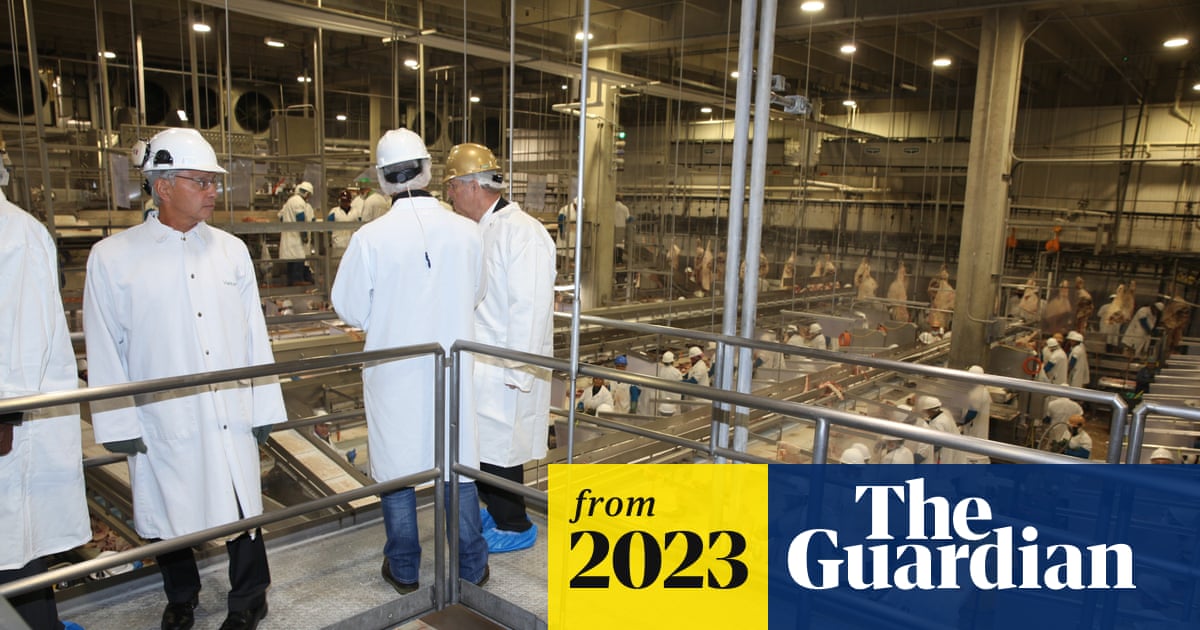
The acquisition of Packers Sanitation Services Inc. (PSSI) by Blackstone in 2018 positioned the private equity firm at the helm of a company that would soon become synonymous with one of the most egregious child labor scandals in modern American history. By 2023, federal investigators exposed a sprawling, widespread operation where minors as young as 13 were employed to clean slaughterhouses, handling hazardous chemicals and operating dangerous during overnight shifts. This was not a case of oversight a corporate-wide failure that occurred while Blackstone extracted hundreds of millions in dividends from the subsidiary. ### The of Exploitation The Department of Labor (DOL) launched its investigation in the summer of 2022, triggered by reports from school officials in Grand Island, Nebraska, who noticed students suffering from chemical burns and falling asleep in class. What investigators uncovered was a grim reality: children working graveyard shifts on the “kill floors” of meatpacking plants. These minors were tasked with sanitizing power-driven equipment, including head splitters, back saws, and brisket saws. The work environment was hostile and physically damaging. The cleaning agents used to scrub blood and fat from industrial machines involved caustic chemicals strong enough to cause severe burns. DOL filings detailed specific injuries, including a 13-year-old who suffered chemical burns to the face and body while working a night shift. These children, of whom were migrants, were placed in environments that federal law strictly prohibits for anyone under 18, let alone middle school students. ### Scope of Violations The investigation confirmed that PSSI employed at least 102 children across 13 meat processing facilities in eight states. The geographic spread demonstrated that this was not a localized problem a standard operating procedure across the company’s national network.
Confirmed PSSI Child Labor Locations (Selected)
Meat Processor
Location
Details
JBS Foods
Grand Island, NE
27 minors employed; site of initial school reports.
Cargill Inc.
Dodge City, KS
26 minors employed.
JBS Foods
Worthington, MN
22 minors employed.
Turkey Valley Farms
Marshall, MN
Minors worked overnight sanitation shifts.
Tyson Foods
Green Forest, AR
Minors exposed to hazardous cleaning chemicals.
The sheer number of minors involved at major industry players like JBS and Cargill dismantled any defense that these were rogue hiring incidents. The DOL’s Wage and Hour Division Principal Deputy Administrator, Jessica Looman, stated explicitly that the violations were “widespread” and indicated a “corporate-wide failure.” ### The Financial Penalty and Corporate Defense In February 2023, PSSI paid $1. 5 million in civil penalties. While this figure represented the maximum fine allowed under the Fair Labor Standards Act—$15, 138 per child—it was a negligible sum for a company of PSSI’s size and a microscopic fraction of Blackstone’s assets. Critics and labor advocates argued that the statutory cap on fines allowed multi-billion dollar entities to treat child labor penalties as a mundane cost of doing business. Blackstone’s response followed a predictable emergency management playbook. The firm asserted that it had conducted “extensive due diligence” before acquiring PSSI and claimed to have a “zero-tolerance” policy regarding child labor. PSSI spokespeople blamed the violations on identity theft and rogue local managers who circumvented the E-Verify system. This defense crumbled under scrutiny regarding the financial management of PSSI. Reports from the Private Equity Stakeholder Project revealed that after acquiring PSSI, Blackstone and other investors extracted approximately $430 million in dividends while the company took on over $500 million in debt. This “strip and flip” strategy frequently forces subsidiaries to cut costs aggressively to service debt obligations, creating an environment where labor standards deteriorate in favor of speed and cheap staffing. ### Operational and Rebranding The reputational damage proved more costly than the federal fines. Following the public exposure of these violations, major clients began to sever ties. JBS, one of the world’s largest meat processors, terminated its contracts with PSSI at the affected locations, bringing sanitation services in-house to regain control over compliance. The loss of key contracts destabilized PSSI’s revenue stream. Credit rating agencies took notice. Moody’s downgraded PSSI’s credit rating in May 2023 and again in November, citing the operational risks associated with the labor scandal and the company’s unsustainable debt load. The financial accelerated the company’s decline. By January 2025, in an effort to shed the toxic legacy of the PSSI name, the company rebranded as Fortrex. even with the new moniker, the financial damage was irreversible; reports indicated that control of the company was eventually handed over to lenders, marking a total failure of the private equity investment thesis for this asset. ### The Human Cost The legal and financial maneuvering frequently obscures the physical toll on the children involved. These were not teenagers working summer jobs at a retail counter. They were 13 and 14-year-olds working overnight, surrounded by high-pressure hoses, scalding water, and industrial acids. The 13-year-old victim in Nebraska, scarred by chemical burns, stands as a testament to the absence of oversight. School records subpoenaed by investigators showed a pattern of these student-workers failing classes or dropping out entirely due to exhaustion. The “graveyard shift” was literal in its danger; the fatigue associated with overnight work significantly increased the risk of injury from the heavy they were tasked with cleaning. The PSSI case serves as a clear indictment of the private equity model when applied to labor-intensive, hazardous industries. The distance between the boardroom in New York and the kill floor in Nebraska allowed for a culture of negligence to fester, where production and debt service took precedence over the most basic legal and moral standards of employment. The $1. 5 million fine was paid, the company was renamed, the scars on the children who cleaned the bone saws remain permanent.
UN Special Rapporteur condemnation of Blackstone's role in global housing financialization 2019
The United Nations Indictment: Housing as a Commodity
In March 2019, the United Nations launched a direct and condemnation of Blackstone Group L. P. regarding its aggressive transformation of the global housing market. Leilani Farha, the UN Special Rapporteur on the right to adequate housing, and Surya Deva, Chairperson of the Working Group on Business and Human Rights, issued a formal communication to Blackstone CEO Stephen Schwarzman. This document accused the private equity firm of wreaking havoc on tenants worldwide through the “financialization of housing.” The rapporteurs asserted that Blackstone’s business model treated human shelter as a financial instrument rather than a fundamental human right. They argued that the firm’s practices had disconnected housing from its social function and prioritized investor returns over the security and dignity of residents. The UN officials detailed how Blackstone capitalized on the 2008 global financial emergency to acquire vast portfolios of distressed properties. The firm purchased thousands of foreclosed single-family homes and multi-family units at depressed prices. These assets were then bundled and traded on global stock markets. Farha and Deva described this strategy as a widespread shift where housing became a vehicle for wealth accumulation for the elite rather than a place for families to live. The rapporteurs explicitly stated that while gold is a commodity, housing is not. They warned that the unchecked commodification of residential real estate by private equity firms constituted a violation of international human rights law.
Operational Tactics and Tenant Impact
The UN communication provided a granular analysis of the operational tactics used by Blackstone and its subsidiaries to maximize profits from these acquired properties. The rapporteurs “aggressive evictions” as a primary tool for maintaining revenue streams. They noted that Blackstone’s subsidiary, Invitation Homes, frequently initiated eviction proceedings for minor lease violations or late payments. In Charlotte, North Carolina, data showed that Invitation Homes filed eviction proceedings against approximately 10 percent of its renters in a single year. This rate was significantly higher than that of other housing providers in the same market. The UN experts argued that this high turnover was not an accidental byproduct of property management a calculated method to clear units for higher-paying tenants. Rent increases served as another central method in Blackstone’s strategy. The UN report highlighted that in areas like Oakland, California, Invitation Homes raised rents by 10 percent annually. This figure was double the average rent increase for the surrounding market. Such hikes forced long-term residents out of their communities and contributed to displacement. The rapporteurs also criticized the firm’s imposition of excessive fees. Tenants reported being charged for ordinary maintenance tasks and facing automatic late fees that accumulated rapidly. These ancillary charges operated as a secondary revenue stream that extracted additional capital from low-income and middle-income households. The automated nature of these fees and eviction notices removed human discretion from the landlord-tenant relationship and turned property management into an algorithmic extraction process.
Global Scope and Government Complicity
The condemnation extended beyond the United States. Farha and Deva sent parallel letters to the governments of the Czech Republic, Denmark, Ireland, Spain, and Sweden. These communications detailed how Blackstone’s practices had impacted housing affordability across Europe. In Madrid, the firm purchased 1, 800 units of social housing from the local government. The UN reported that once the existing tenant contracts expired, Blackstone raised rents to market levels. This action evicted the low-income residents who had relied on those units for affordable shelter. The rapporteurs used this example to show that the privatization of social housing stock invariably leads to the exclusion of populations. The UN officials also held governments accountable for facilitating this financialization. They argued that state policies had created a fertile ground for private equity dominance. Preferential tax laws and weak tenant protections allowed firms like Blackstone to operate with minimal regulatory friction. The United States government received specific criticism for providing tax breaks that encouraged corporate investment in single-family rentals while failing to protect tenants from predatory practices. The rapporteurs noted that federal housing spending frequently benefited wealthy homeowners and corporate landlords more than low-income renters. This regulatory environment allowed Blackstone to privatize the profits of the housing recovery while socializing the costs of displacement and homelessness.
Political Influence and Lobbying
The UN letter also addressed Blackstone’s use of political use to shape housing policy. Farha and Deva expressed serious concern over the firm’s efforts to block rent control measures. They Blackstone’s significant financial contributions to the campaign against Proposition 10 in California. This ballot measure sought to repeal the Costa-Hawkins Rental Housing Act and allow local governments to expand rent control protections. Blackstone and its affiliates contributed millions of dollars to the opposition campaign. The UN experts argued that this spending demonstrated a deliberate attempt to undermine democratic processes and prevent the implementation of laws that would protect the right to adequate housing. This political activity reinforced the rapporteurs’ argument that Blackstone was not a market participant a market shaper. By using its vast resources to influence legislation, the firm ensured that the legal framework remained favorable to its extraction model. The UN officials stated that business entities have a direct responsibility to respect human rights. They argued that lobbying against tenant protections constituted a failure to meet this responsibility. The aggressive defense of deregulated markets was presented as evidence that the firm prioritized its fiduciary duty to investors over its ethical obligations to society.
Blackstone’s Rebuttal and Defense
Blackstone responded to the UN’s allegations with a vigorous defense. The firm claimed that the rapporteurs’ letter contained numerous false claims and significant factual errors. Stephen Schwarzman and his executive team argued that Blackstone was a minor player in the in total housing market. They stated that the firm owned less than 0. 5 percent of the single-family rental homes in the United States. This statistic was used to suggest that the firm could not possibly be responsible for broad market trends or the global housing emergency. Blackstone asserted that it had invested billions of dollars to renovate distressed properties and bring them back to the market. They claimed this capital injection increased the supply of high-quality rental housing and benefited communities. The company also disputed the specific allegations regarding evictions and fees. Blackstone representatives stated that Invitation Homes followed all applicable laws and provided lengthy legal processes before eviction. They argued that their eviction rates were consistent with industry standards and that they worked with tenants to resolve payment problem. The firm rejected the characterization of its fees as predatory and described them as standard administrative charges. regarding the political spending in California, Blackstone maintained that rent control was a counterproductive policy that would discourage new construction and worsen the housing absence. They framed their opposition to Proposition 10 as a defense of sound economic principles rather than an attack on tenant rights.
The Ideological Conflict
The exchange between the UN and Blackstone revealed a fundamental ideological conflict. The UN rapporteurs viewed housing as a social good and a human right that required protection from market forces. They argued that the state had a duty to regulate markets to ensure affordability and security of tenure. Blackstone viewed housing as an asset class and a commodity. The firm operated on the premise that capital allocation and profit maximization would benefit the market through improved supply and quality. The UN’s intervention challenged the legitimacy of this neoliberal assumption. Farha and Deva contended that the profit motive, when applied to essential human needs like shelter, inevitably leads to exclusion and inequality. This confrontation marked a significant moment in the scrutiny of private equity. It moved the criticism of firms like Blackstone from the of economic debate to the arena of human rights violations. The UN’s classification of “financialization” as a human rights abuse provided a new framework for activists and policymakers. It suggested that the business practices of corporate landlords were not just aggressive capitalism violations of international law. The rapporteurs concluded that the current model of housing finance was unsustainable and incompatible with the dignity of human life. They called for a radical shift in how governments and corporations method the provision of shelter.
Long-term of the Report
The 2019 UN condemnation did not result in immediate legal sanctions against Blackstone. Yet it established a permanent record of the firm’s controversial practices. The report served as a reference point for subsequent legislative efforts in various countries to curb the power of corporate landlords. In cities like Berlin and Barcelona, local governments the risks of financialization when enacting stricter rent caps and expropriation measures. The UN’s detailed accounting of the “buy low, renovate, hike rent” pattern provided empirical ammunition for tenant unions and housing advocates. The scrutiny also forced Blackstone to adjust its public messaging. In the years following the report, the firm placed greater emphasis on its environmental, social, and governance (ESG) initiatives. They launched programs ostensibly designed to assist tenants with credit building and financial literacy. Critics dismissed these moves as reputation management rather than substantive change. The core business model of acquiring undervalued assets and maximizing rental yields remained intact. The tension between the UN’s human rights perspective and Blackstone’s fiduciary mandate. The 2019 intervention remains the most high-profile international indictment of the private equity housing model to date.
Table 2. 1: Key Allegations in UN Special Rapporteur Letter (March 2019)
Charlotte, NC eviction filings ~10% of tenants (2013)
Fees
Predatory ancillary charges
Automated late fees; charges for ordinary maintenance
Market Impact
Displacement of low-income residents
Madrid social housing units converted to market rate
Political Activity
Undermining tenant protections
Millions spent opposing CA Prop 10 (Rent Control)
Invitation Homes excessive eviction rates and fee stacking practices investigation
The Industrialization of Tenancy: Blackstone’s Rental Regime
In the aftermath of the 2008 financial collapse, Blackstone Inc. did not purchase distressed assets; it engineered a new asset class that fundamentally altered the American housing market. By founding Invitation Homes in 2012, the private equity firm capitalized on the foreclosure emergency to acquire nearly 50, 000 single-family homes, transforming owner-occupied neighborhoods into high-yield rental portfolios. While Blackstone fully divested its stake in Invitation Homes by 2019, the operational infrastructure, algorithmic management strategies, and profit-maximization established during its ownership defined the company’s trajectory. The 2024 Federal Trade Commission (FTC) settlement against Invitation Homes serves as a retroactive indictment of the business model Blackstone pioneered, one where “operational efficiency” functioned as a euphemism for systematic tenant exploitation through fee stacking and automated evictions.
Algorithmic Extortion: The Fee Stacking method
The core of the Invitation Homes strategy, developed under Blackstone’s stewardship, involved decoupling rental income from the advertised lease price. By introducing a complex of mandatory ancillary charges, the company artificially inflated Net Operating Income (NOI), a metric crucial for the securitization of rental-backed bonds. This practice, known as “fee stacking,” forced tenants to pay for services they frequently did not request, could not opt out of, and frequently did not receive.
The FTC investigation revealed that Invitation Homes obscured the true cost of housing by excluding mandatory fees from advertised rates. Once a prospective tenant paid a non-refundable application fee, frequently up to $55, and a reservation fee of up to $500, they were presented with a lease containing a battery of additional monthly charges. These included a “Smart Home” fee of up to $40 per month for basic technology like electronic locks, a $9. 95 monthly “Air Filter Delivery” fee, and a “Utility Management” fee. In total, these hidden costs could add more than $1, 700 to a tenant’s annual housing expense.
Internal communications in the FTC complaint expose the predatory intent behind these charges. In a 2019 email, Invitation Homes CEO Dallas Tanner, who led the company during the Blackstone era, instructed a senior vice president to “juice this hog” by making the Smart Home fee mandatory for all renters. This directive illustrates that the fees were not service-oriented value adds financial extraction tools designed to boost revenue per unit. The “Smart Home” fee alone generated tens of millions of dollars, transferring wealth from working-class tenants to shareholders without providing a commensurate service. The “Air Filter” fee was similarly deceptive; tenants were charged for filters that frequently never arrived, yet the lease terms made non-payment of these fees grounds for eviction.
The Eviction Automaton
Under the model perfected by Blackstone, eviction filings became a routine revenue management tool rather than a last resort. The company utilized automated software to generate “pay or quit” notices the moment a rent payment was late, frequently triggering legal fees that were passed on to the tenant. This “eviction factory” method prioritized speed and volume over accuracy or humanity, treating human displacement as a logistical variable in a spreadsheet.
Data from the Select Subcommittee on the Coronavirus emergency highlights the severity of this practice. While Invitation Homes represented to Fannie Mae that only 6% of its eviction filings resulted in residents losing their housing, internal data revealed the actual rate was approximately 29%. This gap suggests a deliberate obfuscation of the company’s aggressive displacement tactics to secure favorable financing from government-sponsored enterprises. Even during the COVID-19 pandemic, when federal and state moratoriums were in place, Invitation Homes continued to file eviction notices. The FTC found that the company steered tenants away from filing Centers for Disease Control and Prevention (CDC) hardship declarations, instead directing them to its own “Hardship Affidavit,” a document that offered no legal protection against eviction.
In specific markets like Fulton County, Georgia, the aggression was palpable. Invitation Homes filed eviction notices at rates significantly higher than the national average, frequently for relatively small arrears. The automation of this process meant that tenants who had already paid or were awaiting rental assistance were frequently caught in the legal. The cost of these filings was invariably added to the tenant’s ledger, creating a debt spiral that made it increasingly difficult for families to remain housed. This systematic weaponization of the court system served two purposes: it accelerated the removal of “underperforming” tenants and intimidated others into prioritizing rent payments over food or medicine.
Security Deposit Theft and Maintenance Neglect
The financial extraction continued even after tenants vacated the properties. The FTC investigation found that Invitation Homes systematically withheld security deposits to cover normal wear and tear, a practice illegal in most jurisdictions. Between 2020 and 2022, the company returned only 39. 2% of total security deposit dollars collected, compared to a national average of 63. 9%. This indicates a corporate policy of treating deposits as a supplementary revenue stream rather than a fiduciary holding.
Tenants were charged for damages that existed prior to their move-in, including painting and carpet replacement. The “worry-free leasing lifestyle” marketed by the company was contradicted by the reality of deferred maintenance. The algorithmic management model relied on minimizing capital expenditures (CapEx) to maintain high margins. Residents reported moving into homes with serious habitability problem, including sewage backups, broken appliances, and visible rodent feces. The pledge of 24/7 emergency maintenance was frequently exposed as a mirage, with tenants left waiting weeks for serious repairs while being charged full rent and ancillary fees.
The 2024 FTC Settlement and Legacy
In September 2024, Invitation Homes agreed to pay $48 million to settle the FTC’s charges of deceptive pricing, junk fees, and unfair eviction practices. While the settlement required the company to disclose all mandatory fees in advertised prices and prohibited the withholding of security deposits for normal wear and tear, the financial penalty represented a fraction of the revenue generated through these illicit practices over the preceding decade. The $48 million figure pales in comparison to the billions in rental income and asset appreciation the company secured for its investors, including Blackstone, during the peak of the housing financialization wave.
The settlement validated the long-standing complaints of housing advocates who argued that the introduction of private equity logic into the single-family rental market fundamentally broke the social contract of housing. By prioritizing the liquidity needs of bondholders over the stability of tenants, Blackstone and Invitation Homes created a market where the landlord’s incentive is to churn tenants and extract fees rather than provide stable shelter. The “fee economy” established by Invitation Homes has since been adopted by other large corporate landlords, normalizing a predatory pricing structure that continues to load American renters.
Invitation Homes: Metrics of Extraction (2020-2024)
Metric
Invitation Homes Data
National/Industry Benchmark
gap / Impact
Security Deposit Return Rate
39. 2%
63. 9%
-24. 7% (Systematic withholding)
Eviction Displacement Rate
29% (Internal Data)
6% (Claimed to Fannie Mae)
+23% (Deceptive reporting)
Hidden Mandatory Fees
~$1, 700 / year
$0 (Traditional Advertised Rent)
Significant cost load increase
Smart Home Fee Revenue
Tens of Millions (Est.)
N/A
“Juice this hog” strategy
FTC Settlement Amount
$48 Million
N/A
Refunds for consumer harm
The structural changes Blackstone introduced to the housing market remain intact. The securitization of rental income requires a predictable, rising stream of cash flow, which incentivizes the very fee-stacking and aggressive eviction practices targeted by the FTC. Even without Blackstone’s direct ownership, the it built continues to operate. The “operational ” touted in investor prospectuses were revealed to be method of fraud and theft, extracting wealth from families already marginalized by the housing emergency the firm helped capitalize on. The Invitation Homes case study demonstrates that when housing is treated primarily as a financial instrument, the rights and well-being of the occupants become liabilities to be managed, minimized, and liquidated.
Hidrovias do Brasil investment links to Amazon rainforest deforestation and BR-163 highway
The Amazon Logistics Web: Pátria Investimentos and Hidrovias do Brasil
The burning of the Amazon rainforest is frequently framed as a tragedy of unpoliced frontiers or local lawlessness. Yet high above the smoke, capital flows from New York financial centers to the that makes deforestation profitable. In 2019, as fires consumed record swathes of the Brazilian Amazon, investigative reports a direct financial link between Blackstone Inc. and the infrastructure projects accelerating this destruction. The connection runs through Pátria Investimentos, a Brazilian private equity firm, and its subsidiary Hidrovias do Brasil. This logistics company operates a serious grain terminal at Miritituba and relies on the controversial BR-163 highway to feed its barges.
Blackstone acquired a forty percent stake in Pátria Investimentos in 2010. This acquisition was not a passive portfolio addition. It was a strategic entry into the Brazilian infrastructure market. Pátria subsequently created Hidrovias do Brasil to consolidate the fragmented river transport industry. By 2019, Blackstone held a direct stake in Hidrovias alongside its indirect ownership through Pátria. The firm controlled the capital fueling a company whose business model depended on opening the Amazon to industrial agriculture.
The mechanics of this investment reveal how private equity insulates itself from the environmental consequences of its assets. Blackstone executives sat on the board of Pátria. They advised on strategy. They shared in the profits. Yet when the forest burned, the firm claimed distance. They argued that Hidrovias did not own the highway and therefore bore no responsibility for the devastation along its route. This defense ignores the symbiotic relationship between the port and the road. The terminal at Miritituba exists to export soy and corn from the interior. The road exists to bring that grain to the terminal. Neither functions profitably without the other.
The Asphalt Artery: BR-163 and the Economics of Clearance
Highway BR-163 stretches over one thousand miles from the soy fields of Mato Grosso to the river ports of Pará. For decades, it was a dirt track that turned to impassable mud during the rainy season. This natural barrier protected the northern Amazon from industrial agriculture. Transport costs were simply too high to justify clearing the rainforest for low margin crops like soy. The paving of BR-163 changed this calculus. It transformed a difficult journey into a reliable logistics corridor.
Hidrovias do Brasil lobbied for and benefited from this transformation. The company commissioned a feasibility study for the privatization and paving of the highway. Their goal was to secure a steady flow of grain to their Miritituba terminal. Once the grain reaches the port, it is loaded onto barges and shipped down the Tapajós River to the Atlantic for export to China and Europe. The efficiency of this system depends entirely on the asphalt artery cutting through the jungle.
The environmental impact of paving BR-163 extends far beyond the tarmac itself. Roads in the Amazon create a “fishbone” pattern of destruction. Illegal logging roads branch off the main highway, opening up previously inaccessible areas to land grabbers and ranchers. These actors clear the forest, sell the timber, and plant grass for cattle. Eventually, the land is converted to soy production. The Miritituba port provided the market access that incentivized this pattern. By reducing logistics costs, Hidrovias increased the value of cleared land in the Amazon basin.
Scientific data confirms this correlation. The region surrounding BR-163 and the Miritituba port experienced of the highest deforestation rates in Brazil during the period of Hidrovias’ expansion. The “Arc of Deforestation” pushed northward, following the route of the excavators and pavers. Indigenous communities in the Tapajós basin faced increased pressure from loggers and miners who used the improved infrastructure to encroach on protected territories. The Kayapó and Munduruku peoples saw their lands invaded and their rivers polluted.
The Intercept Investigation and the denial of Responsibility
In August 2019, The Intercept published a detailed investigation linking Blackstone to these developments. The report coincided with a global outcry over Amazon fires that turned the skies of São Paulo black in the middle of the day. The investigation detailed how Blackstone’s capital enabled Hidrovias to expand its operations and how those operations encouraged the conversion of rainforest into farmland.
Blackstone responded with a vehement denial. The firm issued a statement asserting that Hidrovias did not own, control, or pave BR-163. They emphasized that the road was a government project operated since 1976. They claimed that Hidrovias only shipped grain from traders who signed the Amazon Soy Moratorium, a voluntary agreement not to purchase soy from deforested land.
This defense relies on a narrow definition of responsibility. It ignores the concept of induced demand. Infrastructure projects like the Miritituba terminal create a gravitational pull on the surrounding economy. They signal to producers that if they grow it, they can ship it. This signal encourages land speculation and clearance long before a single barge is loaded. The Soy Moratorium has also been criticized for its gaps. It does not cover other crops like corn, nor does it prevent “laundering” where grain from deforested land is mixed with legal harvests. also, land cleared for cattle frequently transitions to soy later, bypassing the moratorium’s restrictions on direct conversion.
Blackstone also argued that the river barges reduced carbon emissions by taking trucks off the road. This claim is a masterclass in selective accounting. It counts the emissions saved per ton of grain transported ignores the carbon released by the burning forest that the grain replaced. It ignores the emissions from the thousands of trucks that still drive the length of BR-163 to reach the port. The barges do not replace the highway; they extend its reach.
Political and the Bolsonaro Era
The expansion of Hidrovias do Brasil aligned perfectly with the agenda of Jair Bolsonaro. The far-right president, elected in 2018, viewed the Amazon as a resource to be exploited rather than a biome to be protected. He dismantled environmental enforcement agencies, encouraged miners and loggers, and pushed for the paving of BR-163.
Pátria Investimentos and Blackstone operated within this permissive political climate. The rhetoric from Brasília emboldened land grabbers, known as grileiros, who used violence and intimidation to seize public lands along the highway corridor. The absence of state presence meant that the only law was the law of the gun. In this vacuum of governance, corporate supply chains became the primary organizing force.
The capital provided by Blackstone allowed Pátria to its operations rapidly. They did not just build a port; they built a dominant position in the northern export corridor. This dominance gave them significant use over the logistics of the region. They were not passive observers of the government’s infrastructure plans. They were active participants who stood to gain billions from the successful industrialization of the rainforest.
The Financialization of Nature
The case of Hidrovias do Brasil illustrates the broader trend of financializing nature. Private equity firms seek assets with stable, long-term cash flows. Infrastructure projects like ports and toll roads fit this profile perfectly. They are monopolies or oligopolies that provide essential services. yet, when these assets are located in fragile ecosystems, the drive for returns comes into direct conflict with environmental preservation.
Blackstone’s model relies on increasing the value of its portfolio companies before selling them. For a logistics company, value comes from volume. More volume means more grain. More grain means more land under cultivation. In the Amazon, more land under cultivation means less forest. The financial logic is linear and relentless. It does not account for biodiversity loss, indigenous rights, or climate change unless those factors present an immediate material risk to profits.
The distance between the boardroom in Manhattan and the burning stump in Pará serves as a moral buffer. Investors can claim they are funding “development” or “efficiency.” They can point to sustainability reports and ESG scores. the physical reality remains. The capital injected by Blackstone helped pave the way for the soy trucks. The soy trucks brought the chainsaws. The chainsaws brought the fire.
By 2021, Blackstone had sold its remaining stake in Hidrovias do Brasil. The firm exited the investment with a profit, leaving the infrastructure and its consequences behind. The port at Miritituba continues to operate. The barges continue to float down the Tapajós. The trucks continue to rumble up the BR-163. And the forest continues to retreat. The transaction is closed, the scar on the is permanent.
TeamHealth surprise medical billing and 'culture of kickbacks' fraud settlement 2023
The Acquisition and the Aggressive Revenue Model
Blackstone Inc. completed its acquisition of TeamHealth Holdings Inc. in 2017 for approximately $6. 1 billion. This transaction removed the physician staffing firm from the New York Stock Exchange and placed it under private equity control. The deal valued TeamHealth at $43. 50 per share which represented a premium of about 33 percent over its closing price prior to the announcement. Blackstone previously owned TeamHealth between 2005 and 2013 before taking it public. This second acquisition marked a return to a specific investment thesis that relied heavily on the consolidation of emergency room staffing and the maximization of billing revenues. The firm operates by contracting with hospitals to manage their emergency departments and then staffing those departments with physicians who are technically employed by TeamHealth entities rather than the hospital itself.
The revenue model employed by TeamHealth under Blackstone ownership frequently involved a strategy known as “balance billing” or surprise medical billing. This practice occurs when a patient visits a hospital that is within their insurance network receives treatment from a TeamHealth clinician who is out-of-network. The patient then receives a bill for the difference between what the insurer pays and what the TeamHealth doctor charges. Reports indicate that TeamHealth aggressively pursued this strategy by pulling its physicians out of insurance networks. This allowed the company to bill patients directly for rates that were significantly higher than negotiated insurance rates. The company leveraged this out-of-network status to pressure insurers into paying higher reimbursement rates to avoid patient complaints and bad publicity.
ProPublica investigations revealed that TeamHealth sued thousands of poor patients to collect on these debts. The company filed lawsuits against patients who could not pay the exorbitant out-of-network fees. These legal actions occurred even as the company generated substantial profits for its private equity sponsors. The aggressive collection tactics included placing liens on homes and garnishing wages of low-income individuals. This method drew intense scrutiny from lawmakers and patient advocacy groups who argued that the private equity business model fundamentally conflicted with the ethical delivery of emergency medical care. The strategy prioritized investor returns over patient financial security and contributed to the rising cost of healthcare in the United States.
The “Culture of Kickbacks” and 2023 Fraud Settlement
The Department of Justice and other regulatory bodies have repeatedly investigated TeamHealth for fraudulent billing practices. In late 2023 reports surfaced detailing a settlement involving TeamHealth and allegations of a “culture of kickbacks.” This specific phrase appeared in coverage regarding a False Claims Act settlement where TeamHealth and other defendants agreed to pay approximately $4. 4 million. The allegations centered on billing fraud in Michigan where the company was accused of upcoding inpatient services. Upcoding involves submitting claims for a higher level of service than was actually provided to increase reimbursement amounts. The government alleged that TeamHealth doctors billed for more services than could physically be performed in a single day.
This 2023 settlement was not an incident part of a pattern of legal challenges facing Blackstone’s healthcare portfolio. The allegations suggested that the company incentivized physicians to maximize billing codes regardless of medical need. The “culture of kickbacks” description implies a widespread environment where financial incentives drove clinical decision-making. The False Claims Act serves as the primary litigation tool for the government to combat Medicare and Medicaid fraud. Private equity ownership of healthcare firms frequently attracts such scrutiny because the pressure to generate high returns can lead to aggressive interpretation of billing rules. The settlement resolved claims that TeamHealth violated federal law by submitting false claims to government healthcare programs.
The 2023 developments followed an earlier and larger settlement that established a backdrop for these continued legal problem. In 2017 TeamHealth agreed to pay $60 million to resolve allegations that its subsidiary IPC Healthcare Inc. engaged in a scheme to overbill Medicare and Medicaid. That lawsuit alleged that IPC encouraged hospitalists to bill at the highest possible levels and pressured those who billed at lower levels to “catch up” to their peers. The recurrence of these allegations in 2023 reinforces the criticism that the underlying business model encourages non-compliance. Blackstone has consistently maintained that it adheres to the law yet the repeated settlements show a persistent friction between its operational strategies and federal billing regulations.
War with Insurers: The UnitedHealthcare Litigation
TeamHealth engaged in a high- legal war with UnitedHealthcare that spanned multiple years and jurisdictions. The conflict arose from the insurer’s refusal to pay the high out-of-network rates demanded by TeamHealth. UnitedHealthcare argued that TeamHealth deliberately inflated its charges to exploit the emergency care system. TeamHealth countered that the insurer was systematically underpaying for life-saving services and enriching itself at the expense of providers. This dispute resulted in numerous lawsuits across the country. In 2021 a Nevada jury initially awarded TeamHealth $60 million in punitive damages after finding that UnitedHealthcare had underpaid for thousands of claims. The jury determined that the insurer’s conduct was oppressive and malicious.
The legal turned in subsequent years as appeals courts and other jurisdictions weighed in on the dispute. In 2023 and 2024 UnitedHealthcare secured victories that undermined TeamHealth’s legal position. The Nevada Supreme Court in 2025 upheld the finding of unjust enrichment ruled that the $60 million punitive damages award was excessive and ordered it reduced. Other arbitration panels and courts have issued mixed rulings. awarded TeamHealth millions in underpayments while others rejected their claims entirely. The litigation exposed the inner workings of the surprise billing. Evidence presented in these trials showed that TeamHealth used its size and market power to demand rates far above the median cost of care.
UnitedHealthcare alleged in its own filings that TeamHealth engaged in widespread upcoding. The insurer claimed that TeamHealth systematically coded minor emergency visits as high-severity cases to extract larger payments. This “upcoding” allegation mirrored the government’s claims in the False Claims Act settlements. The insurer’s data analysis suggested that TeamHealth physicians used the highest billing codes at a rate significantly higher than the national average. This legal battle consumed millions of dollars in legal fees and highlighted the dysfunction of a system where private equity-backed staffing firms and massive insurance carriers fight over pricing while patients remain caught in the middle.
Legislative Impact and Financial Distress
The passage of the No Surprises Act which took effect in 2022 fundamentally altered the economic for TeamHealth. The legislation banned the practice of balance billing for emergency services and established an arbitration process for resolving payment disputes between providers and insurers. This law dismantled the use that TeamHealth used to demand high out-of-network rates. The company could no longer bill patients directly for the balance and had to rely on the arbitration process or negotiated network rates. The implementation of this law caused a significant decline in TeamHealth’s earnings and forced Blackstone to reevaluate the financial structure of the company.
Financial reports from 2023 and 2024 indicate that TeamHealth faced serious liquidity challenges following the regulatory changes. The company struggled to service its massive debt load which was incurred during the leveraged buyout. Moody’s and S&P Global Ratings downgraded TeamHealth’s credit ratings deep into junk territory. The rating agencies the negative impact of the No Surprises Act and the ongoing litigation costs as primary factors for the financial deterioration. Blackstone was forced to intervene to prevent a default. In 2024 Blackstone engaged in a distressed debt exchange and injected new equity into the company to shore up its balance sheet.
The restructuring involved exchanging existing debt for new notes with different terms and extending maturities. This financial engineering provided TeamHealth with temporary relief yet the underlying challenges. The company’s valuation has likely plummeted from the $6. 1 billion price tag Blackstone paid in 2017. The “culture of kickbacks” allegations and the surprise billing crackdown have damaged the firm’s reputation and restricted its primary revenue growth avenues. The TeamHealth case study serves as a clear example of the risks associated with private equity investment in healthcare where regulatory shifts and fraud investigations can rapidly the value of aggressive financial models.
Ancestry.com acquisition raising genetic data privacy and third-party access concerns
The 4. 7 Billion Dollar Bio-Bank: Commodifying the Human Genome
In August 2020, Blackstone Inc. executed a transaction that fundamentally altered the relationship between private equity and personal biology. The firm acquired Ancestry. com for $4. 7 billion, a deal that transferred ownership of the world’s largest consumer DNA database, containing the genetic codes of over 18 million people, into the hands of the world’s largest alternative asset manager. While the public narrative focused on genealogy and family trees, financial analysts and privacy experts recognized the acquisition for what it was: a strategic seizure of a massive, unregulated bio-bank. This transaction did not represent a change in corporate letterhead; it signaled the integration of human genetic data into a portfolio explicitly designed to maximize returns through healthcare, insurance, and pharmaceutical investments.
The timing of the acquisition was precise. The direct-to-consumer (DTC) genetic testing market had matured, moving from a novelty to a vast repository of phenotypic and genotypic data. Blackstone, having previously acquired Clarus, a life sciences investment firm, possessed the specific infrastructure required to monetize this data. The conflict of interest was immediate and. Blackstone’s Life Sciences division funds drug development and clinical trials. Access to a database of 18 million distinct genetic profiles offers an unparalleled advantage in identifying trial candidates, isolating genetic markers for disease, and developing targeted therapies. While Blackstone issued public assurances that it would not access user DNA or share it with its other portfolio companies, the structural incentives suggest otherwise. In the high- environment of pharmaceutical development, where a single successful drug can generate billions, the “Chinese wall” separating Ancestry’s data from Blackstone’s research interests relies entirely on voluntary corporate policy rather than binding legal statute.
The Legal Vacuum: HIPAA, GIPA, and the Illusion of Privacy
The primary danger of the Ancestry acquisition lies in the regulatory void surrounding DTC genetic testing. Unlike medical records held by doctors or hospitals, the data collected by Ancestry. com is not protected by the Health Insurance Portability and Accountability Act (HIPAA). Ancestry is not a “covered entity” under the law. Consequently, the privacy of 18 million users rests solely on the company’s Terms of Service, a contract that can be amended at any time. Federal protection is limited to the Genetic Information Nondiscrimination Act (GINA), which prevents health insurers and employers from discriminating based on DNA. Yet GINA has serious gaps: it does not apply to life insurance, disability insurance, or long-term care insurance. Blackstone’s portfolio has historically included investments in insurance and healthcare services, creating a theoretical feedback loop where one arm of the firm could use genetic insights to adjust risk models for another.
This regulatory weakness was tested in the courts. In 2023, the U. S. Court of Appeals for the Seventh Circuit ruled in favor of Blackstone in v. Blackstone Inc., a class-action lawsuit filed under the Illinois Genetic Information Privacy Act (GIPA). The plaintiffs alleged that the acquisition itself compelled Ancestry to disclose genetic information to its new parent company without user consent. The court dismissed the case, reasoning that a stock-for-stock acquisition did not constitute a “disclosure” of data in the technical sense. This legal victory for Blackstone established a dangerous precedent: corporate ownership changes do not trigger privacy reviews or consent requirements, even when the asset being acquired is the sensitive biological data of millions. The ruling treated the genetic code of human beings as a standard asset class, indistinguishable from real estate or software code, transferable without the explicit permission of the individuals from whom it was extracted.
The Monetization method: Research as a Revenue Stream
The method for monetization does not require Blackstone to sell individual dossiers of DNA to insurance adjusters. The value lies in aggregate data and “scientific research.” Ancestry’s Terms of Service grant the company a perpetual, royalty-free license to use user data for research purposes if the user opts in, a choice frequently presented with a default bias. This “research” allows the company to partner with third-party pharmaceutical firms. By analyzing millions of genomes, researchers can identify correlations between specific gene variants and conditions like Alzheimer’s, diabetes, or heart disease. Blackstone Life Sciences can then use these insights to de-risk its investments in biotech startups developing treatments for those specific markers.
Privacy advocates that “anonymized” data is a myth. A study published in Science demonstrated that researchers could re-identify individuals from “anonymous” genetic databases by cross-referencing them with public records. With Blackstone’s vast data capabilities, spanning real estate, credit, and consumer behavior, the chance for re-identification is mathematically significant. If a bad actor or a profit-driven algorithm were to cross-reference Ancestry’s genetic data with Blackstone’s other consumer datasets, the result would be a panopticon of biological and behavioral surveillance. The firm’s assurance that it ” not” do this is a statement of current intent, not a binding restriction. In the event of a future liquidity emergency or a strategic pivot, that data remains an asset on the balance sheet, available for liquidation or use.
Law Enforcement and the Fourth Amendment Bypass
The acquisition also raised urgent questions regarding law enforcement access. The “Golden State Killer” case, cracked using the open-source database GEDmatch, demonstrated the power of forensic genealogy. While Ancestry has historically resisted “fishing expeditions” by police, requiring a valid warrant, the pressure to cooperate increases under the ownership of a firm deeply in the government and defense sectors. Blackstone’s leadership has deep ties to the political establishment. Privacy experts fear that under private equity ownership, the resistance to government subpoenas could weaken, turning the database into a de facto extension of the state’s forensic capabilities. Transparency reports issued by Ancestry show a steady stream of law enforcement requests. As DNA sequencing becomes standard in criminal investigations, the database owned by Blackstone becomes a serious target for prosecutors.
The risk is not theoretical. In 2025, the bankruptcy of rival firm 23andMe exposed the fragility of genetic privacy pledge. When 23andMe faced insolvency, the primary value remaining was its customer data, which creditors sought to sell to the highest bidder. While Ancestry remains financially stable under Blackstone, the 23andMe collapse illustrated that genetic data is treated as liquidation capital. Blackstone’s eventual exit strategy for Ancestry, whether an IPO or a sale to another entity, poses the major risk. If Blackstone sells Ancestry to a foreign entity or a data broker, the genetic data of 18 million primarily American and European users moves with it. Senator Amy Klobuchar and other legislators have pushed for the “Don’t Sell My DNA Act” to prevent such transfers without consent, yet as of 2026, detailed federal privacy legislation remains stalled.
The Asymmetry of the Transaction
The fundamental problem with the Blackstone-Ancestry deal is the asymmetry of the exchange. Users submitted their DNA and paid a subscription fee for a novelty product: a breakdown of their ethnic heritage and a list of distant cousins. In return, they surrendered the rights to their biological essence to a financial titan. Blackstone acquired not just a genealogy company, a proprietary dataset that informs the future of medicine, insurance, and risk assessment. The user gets a pie chart; Blackstone gets the blueprints to the future of human health.
This transaction exemplifies the “financialization of everything,” where even the nucleotides that define human existence are bundled, securitized, and traded. The absence of outrage from the general public from the invisibility of the threat. Unlike a chemical spill or a factory fire, the exploitation of genetic data is silent and statistical. It manifests in higher insurance premiums, targeted pharmaceutical marketing, and the subtle of anonymity. By controlling the data, Blackstone controls the inputs for the generation of life sciences development. The firm has cornered the market on human history and, by extension, the future of human biology.
Comparative Analysis: Genetic Data Privacy Protections vs. Blackstone Capabilities
Regulatory Framework / Entity
Scope of Protection
Gap Exploited by Private Equity Ownership
HIPAA
Applies only to “covered entities” (hospitals, doctors, insurers).
Ancestry. com is not a covered entity. Data is treated as consumer data, not medical records.
GINA (2008)
Prohibits discrimination in health insurance and employment based on genetics.
Does not cover life insurance, disability insurance, or long-term care. No restriction on internal R&D use.
Illinois GIPA
Prohibits compelled disclosure of genetic data.
v. Blackstone (2023) ruled that M&A transactions do not constitute “disclosure.”
Blackstone Life Sciences
Invests in pharmaceutical development and clinical trials.
Can theoretically use aggregate Ancestry data to guide billion-dollar investment decisions without user knowledge.
Terms of Service
Contractual agreement between user and Ancestry.
Can be changed unilaterally. “Scientific Research” clauses allow broad third-party partnerships.
The acquisition of Ancestry. com by Blackstone is a case study in how modern monopolies are built not on oil or steel, on data. The 2023 dismissal of the GIPA lawsuit removed the last significant legal hurdle preventing the full integration of this data into the financial sphere. As Blackstone continues to expand its Life Sciences division, the between the Ancestry database and pharmaceutical profit becomes the defining logic of the investment. The DNA of the past is the currency of the future, and it is held in a private equity vault.
Crown Resorts money laundering and regulatory breaches prior to and during acquisition
Acquisition of a Criminal Enterprise: The Crown Resorts Takeover
In June 2022, Blackstone Inc. completed its AU$8. 9 billion acquisition of Crown Resorts, purchasing a corporate entity that Australian Royal Commissions had publicly branded as a facilitator of organized crime. This transaction did not occur in a vacuum of ignorance; Blackstone pursued the deal during the height of public inquiries that exposed Crown’s widespread money laundering, tax evasion, and partnerships with criminal syndicates. The acquisition demonstrates a private equity strategy to absorb reputational toxicity and regulatory censure in exchange for distressed assets with high cash-flow chance.
The Bergin Inquiry: Organized Crime Links
The regulatory collapse of Crown Resorts began with the 2020 NSW Independent Liquor and Gaming Authority inquiry, led by former Supreme Court Judge Patricia Bergin. The Bergin Report, released in February 2021, delivered a devastating verdict: Crown was “unsuitable” to hold a gaming license for its new Barangaroo casino in Sydney. The inquiry uncovered that Crown had facilitated money laundering through bank accounts held by its subsidiaries, Riverbank and Southbank. These accounts were used to funnel illicit funds, frequently involving “bags of cash,” directly into the casino’s operations. More damning was the that Crown had partnered with “junket” operators, third-party agents who recruit VIP gamblers, who had clear links to organized crime, including Triad gangs and drug traffickers. The inquiry found that Crown disregarded the safety of its own staff in China, leading to their arrests in 2016, solely to maintain the flow of VIP revenue. Blackstone, fully aware of these findings, continued its of the company, viewing the regulatory emergency as a lever to negotiate a lower purchase price.
The Finkelstein Royal Commission: “Illegal, Dishonest, Unethical”
Following the Bergin findings, the Victorian government established a Royal Commission into the Casino Operator and Licence, led by Ray Finkelstein QC. The Commission’s October 2021 report described Crown’s conduct as “illegal, dishonest, unethical and exploitative.” Finkelstein concluded that Crown Melbourne had prioritized profit over every other consideration, creating a culture that viewed regulatory compliance as a hindrance to be circumvented. A central method of this fraud was the China UnionPay scheme. Between 2012 and 2016, Crown processed approximately AU$160 million in gambling funds disguised as hotel accommodation charges. This method allowed wealthy Chinese patrons to evade strict currency controls in their home country. Crown staff issued false hotel bills, which patrons paid using UnionPay cards; the casino then converted these payments into gambling chips. This operation involved falsifying accounting records and misleading the bank, constituting a systematic breach of financial laws. The Commission also found that Crown had underpaid Victoria’s state gambling tax by millions of dollars over several years. even with these findings, the Victorian government stopped short of stripping the license immediately, fearing economic. Instead, they appointed a “Special Manager” to oversee operations, a condition Blackstone accepted as part of the transfer of ownership.
AUSTRAC and the AU$450 Million Penalty
The financial of Crown’s negligence was quantified in May 2023, when the Federal Court of Australia ordered Crown to pay a AU$450 million penalty to AUSTRAC, the nation’s financial crimes watchdog. This fine, one of the largest in Australian corporate history, addressed Crown’s “serious and widespread” breaches of anti-money laundering and counter-terrorism financing (AML/CTF) laws. Crown admitted that it failed to monitor the risks associated with high-roller customers and junket programs. The agreed statement of facts revealed that Crown allowed patrons to bring suitcases filled with cash onto the gaming floor with little to no scrutiny. The casino’s transaction monitoring systems were intentionally limited, failing to detect suspicious patterns indicative of money laundering. Blackstone, as the new owner, agreed to pay this penalty, capitalizing the cost of past crimes into the acquisition structure.
Regulatory Conditions and the “Fixer-Upper” Strategy
To secure approval from state regulators in New South Wales, Victoria, and Western Australia, Blackstone submitted to probity conditions. These included the requirement that Crown’s board be independent of the previous ownership influence (the Packer family) and that Blackstone could not profit from spinning off the property assets without regulatory consent. The Victorian Gambling and Casino Control Commission (VGCCC) imposed a condition that Blackstone must invest in and maintain Crown Melbourne as the flagship casino, preventing a quick asset-stripping play. Blackstone injected approximately AU$340 million into Crown in 2023 to cover fines and remediation costs. While regulators eventually deemed Crown “suitable” again in 2024, the saga confirms that Blackstone’s operational model includes the management and rehabilitation of entities previously engaged in criminal conduct, provided the entry price justifies the legal and reputational cleanup. The firm’s willingness to buy into a company described by a Royal Commissioner as “disgraceful” highlights a high tolerance for ethical risk when substantial real estate and gaming revenues are at stake.
Blackstone Real Estate Income Trust (BREIT) redemption limits and asset valuation scrutiny 2022
In late 2022, Blackstone’s $69 billion flagship retail fund, the Blackstone Real Estate Income Trust (BREIT), faced a severe liquidity emergency that exposed the fragility of its “semi-liquid” structure. As interest rates climbed and public real estate markets crashed, investors rushed to withdraw capital, only to find the exit doors barred. In November 2022, BREIT hit its monthly redemption limit of 2% of net asset value (NAV) for the time since its 2017 inception. By December, withdrawal requests swelled to billions of dollars, forcing Blackstone to restrict payouts and triggering a prolonged period of proration that locked significant investor capital inside the fund for over a year.
The Valuation Anomaly
The rush for the exits was driven by a gap between BREIT’s reported performance and the broader real estate market. Throughout 2022, publicly traded real estate investment trusts (REITs) suffered heavy losses as the Federal Reserve hiked interest rates. The Dow Jones U. S. Select REIT Total Return Index plummeted roughly 26% that year. Yet, BREIT reported a net return of 8. 4% for the same period. This , a spread of over 30 percentage points, raised immediate alarms among analysts and investors who questioned how Blackstone’s portfolio could the gravitational pull of rising borrowing costs.
Critics, including firms like Chilton Capital Management and SLCG Economics Consulting, scrutinized BREIT’s valuation methodology. Unlike public REITs, which are priced daily by the market, BREIT’s share price is determined by Blackstone itself based on monthly appraisals. Skeptics argued this “mark-to-model” method allowed the firm to smooth out volatility and delay recognizing losses, keeping the Net Asset Value (NAV) artificially high. A higher NAV not only preserved the firm’s lucrative management fees also masked the true decline in asset values. When investors realized they could sell public REITs at a discount could only redeem BREIT shares at what appeared to be a premium to their true market value, the incentive to sell became overwhelming. This arbitrage opportunity fueled the bank-run that Blackstone struggled to contain.
The Redemption Gates Slam Shut
The structure of BREIT pledge liquidity includes strict caveats: withdrawals are capped at 2% of NAV per month and 5% per quarter. In November 2022, redemption requests exceeded these thresholds, and Blackstone enforced the limits, fulfilling only 43% of repurchase requests that month. The panic intensified in December, with requests reaching approximately $5. 3 billion by January 2023. For months, investors, of them wealthy individuals and Asian investors facing margin calls, could only access a fraction of their money. The backlog of unfulfilled requests for 15 months, with the fund lifting restrictions only in February 2024.
The University of California Deal
To the bleeding and restore confidence, Blackstone engineered a strategic capital injection in January 2023. The firm announced a $4 billion investment from the University of California (UC Investments). While Blackstone touted this as a vote of confidence, the terms revealed the desperation of the moment. To secure the capital, Blackstone provided a $1 billion backstop from its own balance sheet to guarantee UC Investments a minimum 11. 25% annualized return over six years. If BREIT’s performance fell short, Blackstone would use its own $1 billion contribution to make up the difference. This structure insulated the University of California from the very risks existing retail investors faced, creating a two-tiered class of shareholders where an institutional giant received downside protection unavailable to the “democratized” retail base.
BREIT vs. Public REIT Performance & Liquidity emergency (2022-2023)
Metric
BREIT (Private)
Public REIT Index (Dow Jones)
2022 Reported Return
+8. 4% (Net)
-26. 0%
Valuation Method
Monthly Appraisals (Internal/Third-party)
Daily Market Pricing
Liquidity Status
Gated (Nov 2022, Feb 2024)
Fully Liquid
Redemption Cap
2% Monthly / 5% Quarterly
None
Jan 2023 Withdrawal Requests
~$5. 3 Billion
N/A
The episode cast a long shadow over the private REIT sector. While Blackstone eventually cleared the backlog, the emergency demonstrated the inherent conflict in offering illiquid assets like real estate through a vehicle promising monthly liquidity. The reliance on a $4 billion institutional bailout, sweetened with guaranteed returns, contradicted the narrative that the fund’s retail inflows were stable and self-sustaining. For over a year, the “democratization of private equity” meant that retail investors were trapped in a fund they could not leave, while the manager scrambled to find institutional capital to plug the holes.
American Campus Communities student housing rent hikes and monopoly concerns post-acquisition
American Campus Communities: The $13 Billion Monopoly on Student Life
In August 2022, Blackstone completed its $12. 8 billion acquisition of American Campus Communities (ACC), extinguishing the last publicly traded student housing REIT in the United States. This take-private deal transferred control of 166 properties and nearly 112, 000 beds across 71 university markets into the unclear portfolio of the Blackstone Real Estate Income Trust (BREIT). While executives touted the deal as a deployment of “perpetual capital” to solve housing absence, the immediate reality for students at major universities, including the University of Texas at Austin, Arizona State University, and the University of California, Berkeley, has been a regime of aggressive rent hikes, fee stacking, and monopolistic market control that mirrors the predator-prey of Blackstone’s single-family rental operations.
The Rent Squeeze: Extracting Value from Captive Demographics
Post-acquisition data reveals a sharp between ACC rental rates and broader market trends, the narrative that institutional capital stabilizes housing costs. In San Diego, a serious market for ACC, a 2024 analysis by the Private Equity Stakeholder Project and the Alliance of Californians for Community found that Blackstone-owned properties hiked rents by an average of 38 percent following acquisition. This figure stands in clear contrast to the 20 percent median rent increase for the county during the same period. In specific low-income neighborhoods like San Ysidro, rent hikes at Blackstone-controlled buildings method 80 percent over a three-year window. The strategy relies on the “company town” effect. By consolidating ownership of purpose-built student housing near top-tier universities, Blackstone creates a captive market where students, frequently limited by transportation and campus proximity, have no viable alternatives. At UC Berkeley, where ACC manages significant inventory, rent growth hit 10. 4 percent shortly after the acquisition, outpacing local averages. The financialization of student housing treats university enrollment growth not as a service demand to be met, as a yield curve to be exploited. With public REITs removed from the sector, the transparency regarding occupancy rates and pricing strategies has, allowing BREIT to push pricing power without the quarterly scrutiny of public shareholders.
The “Junk Fee” Curriculum
Tenants across ACC properties report a widespread introduction of ancillary fees that the cost of housing well beyond the advertised rent. This “fee stacking” methodology mimics the operational playbook of Invitation Homes, another Blackstone creation. Students at the University of California, Irvine, and other campuses have reported the sudden enforcement of parking fees for spaces that were previously included in rent, acting as a shadow rent increase. Complaints filed with the Better Business Bureau and detailed in tenant forums describe aggressive move-out charges that appear automated rather than evidence-based. Former residents report receiving bills for hundreds of dollars for “missing” items like parking tags, with charges far exceeding the fees listed in their lease agreements. In one documented instance, a resident was charged $200 for a tag listed at $25 in the fee schedule. These micro-aggressions against student budgets aggregate into massive revenue streams for the parent company, turning administrative friction into a profit center. The bureaucratic wall erected by ACC, frequently directing students to unresponsive corporate emails, leaves young tenants with little recourse to pay or face threats of debt collection that could damage their credit scores before they even graduate.
Operational Neglect Amidst Record Profits
While rents surged, the operational quality of ACC properties frequently or stagnated, challenging the claim that institutional ownership brings ” ” management. Reports from residents at the “Villas” and “The Block” properties describe chronic maintenance failures, including broken elevators that remain out of service for weeks, creating accessibility nightmares for disabled students. At properties in Texas and California, tenants have documented severe water leaks, mold growth, and HVAC failures that management failed to address with the urgency required by habitability standards. The disconnect between the premium “luxury student living” marketed by ACC and the on-the-ground reality is palpable. In 2023, residents at 8 1/2 Canal St. reported water shutoffs lasting days and a absence of hot water during winter months, with no rent abatement offered. Security concerns also plague these developments; even with the high rents which ostensibly pay for safety, students report frequent break-ins and a absence of security presence. The capital expenditures promised by Blackstone appear focused on cosmetic upgrades that justify rent resets for new leases, rather than the structural maintenance required to ensure habitable living conditions for current residents.
Monopolizing the College Town
The ACC acquisition consolidated Blackstone’s grip on the student housing sector, combining it with existing assets to form a colossus that dwarfs competitors. In markets like Austin, Texas, ACC’s dominance in the West Campus neighborhood gives it the power to set the price floor for the entire area. This market concentration nullifies competition. When a single entity owns the majority of purpose-built student housing within walking distance of a library, “market rate” becomes whatever that entity decides it is. This consolidation also impacts university housing policies. As universities increasingly rely on public-private partnerships (P3) to expand housing stock without taking on debt, they outsource the welfare of their students to private equity. Blackstone’s control over these P3 agreements means that university housing offices frequently have limited use to intervene in disputes regarding rent hikes or maintenance failures. The university provides the land and the students; Blackstone extracts the rent.
The transformation of American Campus Communities from a public company into a private equity asset has fundamentally altered the economics of higher education for thousands of families. Housing costs, driven by the return requirements of a $69 billion real estate trust, have become a significant, non-negotiable component of student debt. By capturing the housing supply essential for access to education, Blackstone has inserted itself as a tollkeeper on the route to a degree, extracting maximum value from a demographic with zero bargaining power.
The Gavin Acquisition: Private Equity’s Emissions Arbitrage
In 2017, amid a global shift toward decarbonization, Blackstone Inc., in partnership with ArcLight Capital Partners, executed a transaction that exemplifies the controversial role of private equity in extending the lifespan of fossil fuel assets. Through a joint venture named Lightstone Generation, the firms acquired the General James M. Gavin Power Plant in Cheshire, Ohio, from American Electric Power (AEP) for approximately $2. 17 billion. This acquisition occurred precisely as public utilities like AEP were divesting from coal to meet shareholder demands for climate accountability. By transferring the asset to a private equity structure, the facility moved from the transparent scrutiny of public markets into the unclear portfolio of private capital, a phenomenon critics label “emissions arbitrage.”
The Gavin plant is not a legacy asset; it is a titan of pollution. With a generating capacity of 2, 600 megawatts, it ranks among the largest coal-fired facilities in the United States. Its operational history is marred by severe environmental degradation. Prior to the Blackstone acquisition, the plant’s sulfur dioxide (SO2) emissions were so potent that they created “blue plumes” of sulfuric acid mist, which descended upon the surrounding village of Cheshire. In a grim precedent for corporate liability management, AEP paid $20 million in 2002 to purchase the properties of nearly every resident in Cheshire, erasing the town to silence chance health lawsuits. Blackstone entered this arena with full knowledge of the plant’s toxic legacy, betting that the facility’s cash flow from the PJM Interconnection capacity market would outweigh the environmental and reputational risks.
The “Deadliest” Plant Designation and Health Impacts
Under Blackstone and ArcLight’s stewardship, the Gavin plant maintained its status as a super-polluter. A 2023 analysis by the Sierra Club Gavin as the “deadliest coal plant” in the United States, estimating that its emissions contribute to approximately 244 premature deaths annually. The facility releases massive quantities of nitrogen oxides, sulfur dioxide, and particulate matter, which drift eastward, affecting air quality from Ohio to the Atlantic coast. Between 2017 and 2024, the plant emitted over 100 million tons of carbon dioxide, ranking it as the fifth-largest carbon emitter in the U. S. power sector during that period.
The health consequences for the region remain severe. The “blue plume” phenomenon, while mitigated by scrubbers, left a psychological and chemical scar on the. Residents in Gallia County and downwind communities continue to report respiratory ailments consistent with long-term exposure to coal combustion residuals. The Sierra Club’s modeling suggests that the particulate matter generated by Gavin is responsible for a mortality rate significantly higher than comparable facilities, yet the plant continued to operate at high capacity factors to service the debt incurred during the buyout.
Regulatory Battles: The Coal Ash Confrontation
Beyond atmospheric emissions, the Gavin plant faces serious regulatory challenges regarding its handling of solid waste. The facility produces vast amounts of coal ash, a toxic byproduct containing arsenic, mercury, and lead. For decades, this waste was stored in unlined impoundments, posing a direct threat to the local water table. In November 2022, the U. S. Environmental Protection Agency (EPA) issued a denial of Gavin Power LLC’s request to continue dumping coal ash into these unlined ponds. The EPA determined that the “Fly Ash Reservoir” was sitting in contact with groundwater, a violation of the Coal Combustion Residuals (CCR) rule.
Blackstone’s subsidiary fought this ruling. Lightstone Generation engaged in litigation to delay the closure of these ponds, arguing that the EPA’s interpretation of “groundwater” was overly broad. This legal maneuvering allowed the plant to continue operations without immediate costly remediation, preserving cash flow for its private equity owners. The refusal to promptly address groundwater contamination aligns with a broader pattern observed in private equity management: maximizing short-term operational revenue while deferring capital-intensive environmental compliance until the asset can be sold or the regulatory clock runs out.
The Greenwashing Accusation
The continued operation of the Gavin plant stands in clear contrast to Blackstone’s public positioning as a leader in Environmental, Social, and Governance (ESG) investing. CEO Stephen Schwarzman has frequently touted the firm’s commitment to the energy transition, citing investments in solar and grid modernization. Yet, the ownership of Gavin undermines these claims. Environmental advocates that Blackstone engages in “greenwashing” by showcasing its renewable portfolio while simultaneously profiting from one of the hemisphere’s most polluting assets. The emissions from Gavin alone negate the carbon savings of renewable projects in the firm’s portfolio.
This dichotomy drew intense scrutiny from the Private Equity Stakeholder Project (PESP) and other watchdog groups. They contend that Blackstone’s model involves buying dirty assets at a discount, stripping costs, and running them for yield, bypassing the decarbonization goals that public companies must adhere to. The firm defended its position by claiming it was a “responsible owner” that invested in environmental upgrades. Yet, the EPA’s 2022 denial regarding coal ash compliance suggests that the necessary capital expenditures to fully safeguard the local environment were not made.
The 2024 Exit Strategy: Passing the Buck
In September 2024, facing mounting pressure and the looming need of expensive upgrades, Blackstone and ArcLight agreed to sell Lightstone Generation to Energy Capital Partners (ECP). This transaction, rather than signaling a closure of the plant, appears to be a transfer of liability. ECP, another private equity firm, indicated plans to keep the Gavin plant operational, citing its role in grid reliability. Critics, including the Sierra Club, condemned the sale as a “passing of the buck,” noting that Blackstone extracted years of profit from the facility and then exited before the final bill for decommissioning and environmental remediation came due.
The sale terms did not include a binding retirement date for the plant, a key demand of environmental groups. Instead, the transaction ensures that the “deadliest” plant in America remains online, generating revenue for a new set of private investors while the original owners wash their hands of the long-term cleanup costs. This exit strategy highlights a widespread flaw in the financialization of energy infrastructure: private equity firms can trade toxic assets among themselves, perpetually delaying the retirement of infrastructure that is incompatible with public health and climate stability.
Financial Engineering and Debt
The financial structure of the Lightstone investment reveals the mechanics of how private equity extracts value from declining industries. The 2017 acquisition was leveraged with significant debt. As the economics of coal due to cheap natural gas and renewables, Lightstone faced financial. In 2022, the company managed to refinance its debt, extending the runway for the Gavin plant. This refinancing was crucial for Blackstone to avoid a write-down, yet it also locked the plant into continued operation to service the new loans.
Metric
Data Point
Source/Context
Annual Premature Deaths
~244
Sierra Club “Deadliest Coal Plant” Analysis (2023)
CO2 Emissions (2017-2024)
>100 Million Tons
5th largest emitter in the U. S. power sector
Acquisition Price
$2. 17 Billion
Purchase from AEP by Blackstone/ArcLight (2017)
EPA Violation
Coal Ash/Groundwater
2022 Denial of Extension for unlined ponds
Town Buyout
$20 Million
AEP purchased Cheshire, OH (2002) due to pollution
The reliance on capacity payments from the PJM Interconnection, payments made to power plants just for being available, served as the financial lifeline for Gavin. These payments are borne by ratepayers. Consequently, the public subsidized the profits of Blackstone while bearing the externalized costs of healthcare and environmental damage. The “leakage” of this asset from a regulated utility to a private equity firm allowed for a prolongation of this, shielding the operators from the immediate public pressure that forces utilities to retire coal plants.
Conclusion of the Holding
Blackstone’s tenure as the owner of the General James M. Gavin Power Plant serves as a case study in the misalignment between private equity profit motives and public welfare. While the firm marketed its green credentials to global investors, it simultaneously operated a facility that killed hundreds of Americans annually through pollution. The 2024 sale to Energy Capital Partners does not resolve the environmental emergency at Cheshire; it shifts the title deed. The legacy of this investment is defined by the hundreds of millions of tons of carbon released, the unlined coal ash ponds sitting in groundwater, and the continued operation of a facility that health experts should have been shuttered years ago.
Motel 6 settlement for sharing guest lists with ICE immigration enforcement 2018
The Mechanics of Betrayal: Systematic Data Sharing with ICE
In 2012, Blackstone Inc. acquired G6 Hospitality, the parent company of the iconic budget chain Motel 6, for $1. 9 billion. Under Blackstone’s ownership, the hotel chain became the center of a severe privacy scandal that exposed thousands of guests to deportation and detention. Between 2015 and 2017, Motel 6 locations in Arizona and Washington voluntarily provided daily guest lists to U. S. Immigration and Customs Enforcement (ICE) agents. This cooperation occurred without search warrants. It occurred without probable cause. It occurred without the knowledge or consent of the guests who paid for privacy.
The scheme operated with mechanical precision. Front desk employees at corporate-owned locations generated daily audit reports that contained sensitive personal information. These logs included guest names, driver’s license numbers, dates of birth, and license plate numbers. Staff members then handed these documents directly to ICE agents who visited the properties on a routine schedule. In instances, agents arrived as early as 5: 00 a. m. to collect the data. They reviewed the lists and circled names that appeared to be Latino. Agents then ran these names through federal databases to check for immigration violations. This racial profiling turned private hotel stays into a dragnet for immigration enforcement.
The practice was exposed in September 2017 by the Phoenix New Times. The publication revealed that two corporate-owned Motel 6 locations in the Phoenix area had facilitated the arrest of at least 20 individuals over a six-month period. Blackstone and G6 Hospitality initially characterized these events as incidents driven by local management. They claimed senior leadership had no knowledge of the collaboration. This defense crumbled as investigators in other states uncovered identical practices. The scope of the operation suggested a widespread failure of oversight rather than the actions of a few rogue employees.
Washington State Investigation and Lawsuit
Washington Attorney General Bob Ferguson launched an immediate investigation following the in Arizona. His office discovered that the practice was rampant across the Pacific Northwest. Seven corporate-owned Motel 6 locations in Washington state had shared the personal information of approximately 80, 000 guests with ICE over two years. The investigation found that the data transfer was not random. It was a routine part of the daily workflow at these properties. Employees told investigators that ICE agents visited the motels regularly. Staff members printed guest lists in anticipation of these visits.
Ferguson filed a lawsuit against the chain in January 2018. He asserted that Motel 6 violated the Consumer Protection Act and the Washington Law Against Discrimination. The suit detailed how the company deceived its customers. Motel 6’s privacy policy promised that it would protect personal information. It stated that data would only be shared when required by law. The voluntary handover of guest lists directly contradicted these assurances. The Attorney General noted that the company trained new employees on how to provide this information to law enforcement. This finding directly challenged the narrative that corporate leadership was unaware of the activity.
The human cost of this policy was devastating. The investigation identified numerous cases where guests were detained or deported shortly after checking in. One Seattle man stayed at a Motel 6 near Sea-Tac Airport for a single night to wrap Christmas presents for his children. ICE agents method him in the parking lot the morning. They detained him and subsequently deported him. His family was left behind. Another guest was detained for six days after stepping out to buy milk for his baby. These individuals had committed no crimes on the property. Their only error was trusting a Blackstone-owned business with their personal data.
Legal Reckoning and Financial Settlements
The legal pressure on Blackstone’s subsidiary intensified throughout 2018. In November of that year, Motel 6 agreed to settle a class-action lawsuit filed in Arizona for up to $7. 6 million. This amount was later increased to $10 million in 2019 to resolve claims nationwide. The settlement provided compensation to guests who had been interrogated or placed in removal proceedings because of the data sharing. It also allocated funds to those whose privacy was violated even if they suffered no direct immigration consequences. The court rejected attempts by the Arizona Attorney General to derail the settlement. The judge ruled that the funds should go to the victims rather than to the state.
Washington State secured a separate $12 million settlement in April 2019. This agreement was one of the largest of its kind regarding consumer privacy. The terms required Motel 6 to pay restitution to the 80, 000 guests whose information was compromised. The company also signed a legally binding commitment to end the practice of voluntary data sharing. Under the consent decree, Motel 6 locations are prohibited from releasing guest information to immigration authorities without a judicially enforceable warrant. They must also provide training to employees to ensure compliance with privacy laws. The Attorney General’s office maintained the right to monitor the company’s policies for three years to verify adherence to the agreement.
Blackstone remained the owner of G6 Hospitality throughout the entire scandal and the subsequent litigation. The private equity firm did not sell the chain until late 2024. During the emergency, Blackstone faced criticism for its silence. Activists argued that a firm with Blackstone’s resources should have implemented better compliance controls. The fact that the practice for two years across multiple states indicated a serious gap in corporate governance. The focus on operational efficiency and cost-cutting, common in private equity management, may have created an environment where employees felt pressured to cooperate with authorities to avoid friction. yet, the specific motivation for the collaboration remains unclear.
Broader for Corporate Responsibility
The Motel 6 scandal serves as a case study in the risks of data privacy violations under corporate ownership. It demonstrated how easily consumer data can be weaponized against populations. The targeting of guests with Latino-sounding names added a of racial discrimination to the privacy breach. This aspect of the case drew condemnation from civil rights organizations including the ACLU and the Mexican American Legal Defense and Educational Fund (MALDEF). These groups argued that the hotel chain functioned as an extension of the deportation.
The settlements forced a change in industry standards. Other hotel chains reviewed their policies regarding law enforcement requests. The case established a clear precedent that businesses cannot voluntarily hand over customer data to immigration enforcement without legal compulsion. It reinforced the principle that a guest registry is private business record. It is not a public surveillance tool. The financial penalties, totaling over $22 million, sent a warning to other corporations. Privacy violations can carry a heavy price tag.
Blackstone’s involvement highlights the accountability gap frequently found in private equity structures. The parent company frequently escapes direct liability for the actions of its portfolio companies. Yet the operational culture set by the owners dictates the priorities of the subsidiary. In this case, the priority was not the protection of guest rights. The systematic nature of the data sharing suggests a corporate culture that viewed privacy as an optional luxury rather than a fundamental obligation. The Motel 6 incident remains a dark chapter in the history of the hospitality industry. It stands as a testament to the dangers of unchecked corporate collaboration with government enforcement agencies.
Specific Locations and Operational Details
The operational details revealed in court documents paint a picture of casual disregard for the law. In Everett, Washington, ICE agents visited two Motel 6 locations almost daily. They did not present warrants. They did not present subpoenas. They simply asked for the list. The clerks provided it. This informal arrangement bypassed all judicial checks and balances. The agents used the lists to identify before they even left the lobby. They would then wait in the parking lot or knock on doors. The element of surprise was total. Guests had no reason to suspect that the hotel staff had betrayed them.
The Phoenix New Times investigation showed a similar pattern in Arizona. Employees at the Motel 6 on 52nd Street in Phoenix confirmed that sending the list was a standard morning task. “We send a report every morning to ICE,” one clerk stated. “Every morning at about 5 o’clock, we do the audit and we push a button and it sends it to ICE.” This statement contradicted the company’s initial claim that the practice was unknown to management. The existence of a “button” or a standard procedure implies an institutionalized process. It suggests that the method for sharing data was built into the daily workflow. This level of integration requires approval and training. It is not the work of a lone wolf.
The settlements brought measure of justice to the victims. the damage to the brand and the trust of the community was permanent. For travelers, Motel 6 ceased to be a budget-friendly option. It became a symbol of entrapment. The scandal proved that in the digital age, physical safety is linked to data privacy. A hotel room door offers no protection if the front desk has already handed over the key.
Stephen Schwarzman's political lobbying and Super PAC donations influencing regulatory policy
Stephen Schwarzman’s political financial operates as a high-precision instrument for regulatory capture, purchasing a legislative environment where private equity firms can extract wealth from portfolio companies while remaining legally inoculated from the consequences. In the 2024 election pattern alone, Schwarzman and his wife Christine poured over $40 million into Republican causes, a war chest deployed not for ideological to secure specific policy outcomes that shield Blackstone’s business model from scrutiny. This spending spree, which included a decisive return to supporting Donald Trump after a brief public defection, directly correlates with the preservation of the “carried interest” tax loophole and the suppression of labor laws that would hold parent companies liable for the crimes of their subsidiaries—a regulatory firewall that proved serious when Blackstone-owned Packers Sanitation Services (PSSI) was caught employing children in slaughterhouses. The most consequential return on Schwarzman’s political investment is the continued of the “joint employer” standard. Under a strong joint employer rule, a private equity firm exercising control over a portfolio company could be held jointly liable for labor violations committed by that subsidiary. For Blackstone, the absence of such a rule is an existential need. When the Department of Labor found over 100 children working in hazardous conditions at PSSI in 2023, the $1. 5 million fine was levied solely against PSSI. Blackstone, even with owning the company and extracting its profits, faced no direct legal liability. This immunity is not an accident of history the result of sustained, aggressive lobbying by the private equity industry, spearheaded by trade groups like the American Investment Council (AIC) and the U. S. Chamber of Commerce, both of which benefit from Blackstone’s massive capital. Schwarzman’s donations to the Senate Leadership Fund (SLF), a Super PAC aligned with Mitch McConnell, exemplify this strategy of insulation. In the 2020 pattern, Schwarzman donated $35 million to the SLF, and he contributed another $9 million in the 2024 pattern. These funds are used to elect Senators who consistently block the PRO Act (Protecting the Right to Organize Act), legislation that would codify the joint employer standard into federal law. By ensuring the Senate remains a graveyard for labor reform, Schwarzman buys an insurance policy against liability for the operational abuses within Blackstone’s $1 trillion portfolio. The PSSI child labor scandal, therefore, is not just a failure of oversight; it is a paid-for feature of a regulatory where the beneficiaries of child labor are legally invisible to the Department of Labor. The method of this influence extends beyond general party support to targeted interventions in key races. In 2024, Schwarzman directed $8 million to the “More Jobs, Less Government” Super PAC, which backed Montana Senate candidate Tim Sheehy, and $4. 5 million to the “Great Lakes Conservatives Fund” supporting Mike Rogers in Michigan. These contributions are calculated bets on candidates committed to deregulation. The “Less Government” moniker is particularly telling; for Blackstone, “less government” specifically to reduced oversight of the private equity “strip-and-flip” model, weakened environmental protections, and the starvation of agencies like the NLRB and OSHA that police the very violations found at PSSI. Schwarzman’s personal lobbying efforts have historically focused on the “carried interest” loophole, a tax provision that allows private equity managers to pay a 20% capital gains tax rate on their income rather than the standard top marginal income tax rate of 37%. This single policy saves Schwarzman and his peers billions of dollars annually. His defense of this loophole has been fanatical; in a notorious 2010 incident, he compared President Obama’s proposal to close the loophole to Hitler’s invasion of Poland. While he later apologized for the analogy, the ferocity of the sentiment remains in his political spending. In the 2024 pattern, as populism surged in both parties, Schwarzman’s rapprochement with Donald Trump—whom he endorsed in May 2024 after previously calling for a “new generation” of leaders—signaled a pragmatic calculation to protect this tax advantage. Trump’s 2017 tax cuts, which Schwarzman helped shape as chair of the White House Strategic and Policy Forum, left the carried interest loophole largely intact, a victory that cemented the alliance between private equity capital and the MAGA movement. The timeline of Schwarzman’s 2024 endorsement of Trump reveals the transactional nature of his support. After initially distancing himself following the 2022 midterms, Schwarzman reversed course as it became clear that the Biden administration’s antitrust enforcers and labor regulators were taking a more aggressive stance against corporate consolidation and labor abuses. The Federal Trade Commission’s scrutiny of private equity roll-ups and the Department of Labor’s crackdown on child labor created a “hostile” environment that necessitated a return to a transactional presidency. Schwarzman “economic, immigration and foreign policies” as his reasons, the subtext was the need for a Department of Justice and a Department of Labor that would revert to the laissez-faire method of the previous administration. Blackstone’s corporate lobbying expenditures complement Schwarzman’s personal donations. In 2023 and 2024, the firm spent nearly $1 million annually on direct federal lobbying, targeting “financial services and banking policy” and “problem affecting the regulation of private equity.” This direct access allows Blackstone to shape the fine print of legislation in ways that Super PAC ads cannot. For instance, lobbying disclosures reveal a focus on “business tax problem,” a euphemism for defending the pass-through deduction and interest deductibility, which are important for the leveraged buyout model. By leveraging debt to acquire companies like PSSI, Blackstone reduces its taxable income; preserving the tax deductibility of that interest is crucial for the math of these deals to work. The distinction between Schwarzman’s personal views and Blackstone’s corporate interests is nonexistent in practice. His status as a top-tier donor grants him access to the highest levels of government, allowing him to bypass standard bureaucratic channels. This access was formalized during the Trump administration, where his role on the Strategic and Policy Forum allowed him to directly advise the President on financial regulations put in place after the 2008 emergency. The rollback of Dodd-Frank provisions and the weakening of the Consumer Financial Protection Bureau (CFPB) during that period can be traced back to the wish lists of the financial elite Schwarzman represents. also, the “Great Lakes Conservatives Fund” and other Super PACs funded by Schwarzman frequently run attack ads that distract from economic problem, focusing instead on culture war topics. This is a strategic diversion. By funding candidates who campaign on social grievances, Schwarzman helps elect officials who, once in office, vote primarily to cut taxes for corporations and block labor protections. The voters in the districts represented by these officials frequently work in the very industries—healthcare, sanitation, logistics—that private equity is consolidating and squeezing. The disconnect between the populist rhetoric of the candidates Schwarzman funds and their plutocratic voting records is the central deception of his political strategy. The protection of the private equity business model also involves suppressing transparency. Blackstone has consistently opposed efforts by the SEC to require more detailed disclosures of fees and expenses charged to investors. In August 2023, a federal appeals court struck down new SEC rules that would have forced private equity firms to problem quarterly reports on performance and fees. This legal victory was achieved by trade groups funded by Blackstone, ensuring that the “black box” of private equity remains unclear. Schwarzman’s political spending ensures that Congress does not step in to legislatively mandate the transparency that the courts struck down. In the context of PSSI, this opacity is lethal. Without strict joint employer liability and transparent reporting requirements, Blackstone can claim ignorance of the operational rot within its subsidiaries. The political donations purchase the plausible deniability that shields the parent company’s brand and balance sheet. When PSSI managers were coercing children to clean bone saws on the graveyard shift, they were operating under profit set by Blackstone, within a regulatory environment defanged by Schwarzman’s lobbying. The $1. 5 million fine paid by PSSI was a rounding error for Blackstone, a cost of doing business that was subsidized by the tax breaks Schwarzman fights to preserve., Stephen Schwarzman’s role in the political arena is that of a gatekeeper for the entire private equity industry. His donations do not just buy access; they buy structural impunity. By flooding the zone with cash for the Senate Leadership Fund and pro-deregulation candidates, he ensures that the legislative branch remains gridlocked on problem of labor rights and corporate accountability. This paralysis allows firms like Blackstone to operate in a “wild west” of their own making, where child labor laws are treated as suggestions and tax obligations are treated as negotiations. The 2024 election pattern, with its record-breaking contributions, stands as a testament to Schwarzman’s determination to keep the regulatory gates closed, securing the flow of capital upward at the expense of the workers—and children—at the bottom of the pyramid.
Apria Healthcare $40.5 million settlement for fraudulent ventilator billing practices 2020
Section 13: Apria Healthcare $40. 5 Million Settlement for Fraudulent Ventilator Billing Practices 2020
In December 2020, Apria Healthcare Group Inc., a major medical equipment provider owned by Blackstone Inc., agreed to pay $40. 5 million to settle allegations of fraudulent billing practices involving non-invasive ventilators (NIVs). The settlement resolved a whistleblower lawsuit filed in the Southern District of New York which accused the company of submitting false claims to federal health programs including Medicare, Medicaid, and TRICARE. The Department of Justice (DOJ) investigation revealed that Apria routinely billed taxpayers for expensive respiratory equipment that patients were not using, were not medically necessary, or were being used in settings that did not qualify for the high reimbursement rates Apria claimed.
The Ventilator Billing Scheme
The core of the fraud involved the rental of non-invasive ventilators, complex respiratory devices used to treat patients with respiratory failure. These devices command significantly higher reimbursement rates from government health programs compared to standard respiratory equipment. According to the settlement agreement and factual admissions made by the company, Apria engaged in a systematic failure to monitor whether patients were actually using these devices.
Federal regulations require durable medical equipment (DME) providers to ensure that billed equipment is medically necessary and actively used by the beneficiary. The DOJ found that Apria’s respiratory therapists frequently failed to conduct required home visits to verify usage. Internal analyses by prosecutors showed that in December 2016 alone, Apria staff failed to complete more than half of the required patient visits. Even when the company possessed data indicating that patients had stopped using the ventilators, Apria continued to bill federal programs for monthly rentals.
Prosecutors also detailed how Apria manipulated billing codes to maximize revenue. The company billed for NIVs used in “PAC mode” (Pressure Assist Control), a setting that provides bi-level pressure support. This therapy is available from a much less expensive device known as a VPAP RAD. By billing these rentals as NIVs rather than the cheaper alternative, Apria improperly inflated its reimbursements at the expense of the public trust.
Aggressive Revenue and Co-Pay Waivers
The fraudulent practices were driven by aggressive financial. The DOJ complaint alleged that Apria executives established a goal to increase NIV rental revenue from $5 million in 2014 to $30 million in 2015. To achieve this rapid expansion, the company engaged in improper marketing tactics designed to induce patient rentals regardless of medical need or financial eligibility.
Apria managers directed salespeople to routinely offer co-pay waivers to patients to persuade them to rent NIVs from Apria instead of competitors. Under federal law, routinely waiving co-pays without an individualized assessment of financial need is prohibited, as it removes the financial check that prevents overutilization of medical services. The investigation found that Apria granted full co-pay waivers to hundreds of NIV patients without conducting the required financial assessments, buying patient volume to secure lucrative government reimbursements.
Whistleblowers Expose the Fraud
The scheme was brought to light by three former Apria employees, Benjamin Martinez Jr., Connie Morgan, and Chris Negrete, who filed a lawsuit under the qui tam provisions of the False Claims Act in 2017. These whistleblowers alleged that Apria’s corporate culture prioritized profit over compliance and patient care. Their complaint detailed how the company’s internal systems were designed to ignore red flags regarding patient usage to maintain the flow of rental income.
The United States government intervened in the case after investigating the allegations, leading to the 2020 settlement. As part of the resolution, Apria entered into a Corporate Integrity Agreement (CIA) with the Department of Health and Human Services Office of Inspector General (HHS-OIG). This agreement required the company to implement rigorous board oversight and an independent claims review process to prevent future violations.
Blackstone’s Financial Extraction
Blackstone acquired Apria Healthcare in 2008 in a leveraged buyout valued at approximately $1. 6 billion. The private equity firm held the company for over a decade, a period that encompassed the entirety of the fraudulent conduct described in the settlement (2014, 2019). even with the severity of the allegations and the factual admissions made by its subsidiary, Blackstone executives maintained they were unaware of the fraud.
Scrutiny intensified regarding Blackstone’s financial management of Apria during the settlement negotiations. In December 2020, just days before the $40. 5 million settlement was announced, Apria paid a $200 million dividend to its owners, funded by taking on additional debt. This “dividend recapitalization” allowed Blackstone and other investors to extract massive liquidity from the company immediately prior to resolving the fraud charges.
Critics, including the Private Equity Stakeholder Project, characterized this move as a clear example of private equity owners prioritizing their own returns over the financial health of their portfolio companies. The debt-funded dividend saddled Apria with additional liabilities it was admitting to defrauding federal health programs. Shortly after the settlement and the dividend payout, Blackstone took Apria public again in February 2021, raising hundreds of millions more in an initial public offering.
Pattern of Private Equity Risks in Healthcare
The Apria case highlights the widespread risks associated with private equity ownership in the healthcare sector. The pressure to generate high returns within a fixed investment horizon can incentivize portfolio companies to cut compliance corners and aggressively pursue reimbursement maximization. While Blackstone was not a named defendant in the lawsuit, the fraudulent conduct occurred entirely under its watch and governance.
The settlement serves as a serious case study in the misalignment between patient care and financial engineering. By extracting capital through dividends while its subsidiary billed for unused ventilators, the ownership structure demonstrated a method where profits are privatized to the equity holders while the costs of fraud are socialized onto taxpayers and the healthcare system. The $40. 5 million penalty, while significant, represented a fraction of the revenue generated during the fraud period and the capital extracted by Blackstone through debt-funded dividends and the subsequent IPO.
GSO Capital Partners 'manufactured default' credit default swap controversy with Hovnanian 2018
GSO Capital Partners ‘Manufactured Default’ Credit Default Swap Controversy with Hovnanian 2018
In 2018, Blackstone’s credit division, GSO Capital Partners ( Blackstone Credit), orchestrated a financial maneuver so aggressive it forced global regulators to rewrite the rules of the $10 trillion credit derivatives market. The controversy centered on a “manufactured default” involving New Jersey homebuilder Hovnanian Enterprises. GSO incentivized the construction firm to intentionally miss an interest payment on its debt, not because it absence cash, to trigger a payout on Credit Default Swaps (CDS) that GSO held against the company. This event exposed the of financial engineering, where technicalities in derivative contracts were exploited to generate profit at the expense of market integrity.
The Architecture of the Scheme
The arrangement began in 2017 when Hovnanian Enterprises struggled with a heavy debt load. GSO Capital Partners method the builder with a refinancing package that appeared exceptionally generous. GSO offered to provide Hovnanian with low-interest financing to pay off older debts. this lifeline came with a specific, non-negotiable condition: Hovnanian had to agree to default on a small portion of its existing debt. The plan required Hovnanian to skip a $1. 04 million interest payment on its 8% senior notes due in 2019. Crucially, Hovnanian had the funds to make this payment. The default was purely voluntary, a technical trigger designed solely to activate CDS contracts. GSO had amassed a significant position in these swaps, betting that Hovnanian would default. By forcing the company to miss a payment, GSO ensured its insurance contracts would pay out, generating a windfall that would offset the cost of the cheap financing it provided to the builder. To maximize this profit, the scheme included a secondary of engineering. GSO and Hovnanian created a new bond, the 5% notes due in 2040, specifically designed to trade at a deep discount. Under standard CDS auction rules, protection buyers can deliver the cheapest available bond to settle the contract. By flooding the market with these low-value bonds, GSO intended to the payout from the CDS sellers, rigging the settlement price to favor their position.
Solus Alternative Asset Management Strikes Back
The primary victim of this engineered trade was Solus Alternative Asset Management, a hedge fund that had sold CDS protection on Hovnanian. Solus stood to lose millions if the manufactured default proceeded. In January 2018, Solus filed a lawsuit in the U. S. District Court for the Southern District of New York, accusing GSO of “bribing” Hovnanian to default. The complaint described the transaction as a “fraudulent scheme” that posed an existential threat to the credit derivatives market. Solus argued that the CDS market relies on a fundamental premise: borrowers try to avoid default. By paying a borrower to default, GSO inverted the natural incentives of capitalism. If lenders could simply pay companies to trigger insurance payouts, the concept of credit risk became meaningless. The lawsuit detailed how GSO’s actions distorted the price of Hovnanian’s debt and manipulated the auction process. Solus sought a preliminary injunction to block the missed payment, warning that allowing the trade to proceed would create a precedent for “anarchy” in financial markets.
Regulatory Intervention and Market Outcry
The audacity of the Hovnanian deal drew immediate condemnation from industry bodies and federal regulators. The International Swaps and Derivatives Association (ISDA), the trade group that governs the CDS market, found itself in a emergency. Major banks and investors warned that if manufactured defaults became standard practice, the entire CDS market, used by airlines, manufacturers, and pension funds to hedge risk, could collapse. No one would sell insurance if the buyer could force the car to crash. In April 2018, the Commodity Futures Trading Commission (CFTC) issued a blistering statement. Without explicitly naming Blackstone or Hovnanian, the regulator warned that “manufactured credit events” could constitute market manipulation. The CFTC stated that such arrangements “severely damage the integrity of the CDS markets” and threatened enforcement actions against firms that engaged in them. This was a rare and direct intervention by a federal regulator into a specific trading strategy, signaling that Blackstone had crossed a red line.
The Settlement and Aftermath
Facing intense regulatory heat and a public relations nightmare, GSO retreated. In May 2018, Blackstone and Solus reached a settlement. While the specific financial terms remained confidential, the agreement dismantled the manufactured default. Hovnanian paid its interest, and the artificial trigger was removed. Solus released a statement noting that Hovnanian’s CDS would “reflect the actual creditworthiness of the company,” confirming that the manipulation had been neutralized. The from the Hovnanian controversy resulted in permanent changes to the financial. In 2019, ISDA adopted the “Narrowly Tailored Credit Event” supplement, a direct response to Blackstone’s tactics. The new rules introduced a “credit deterioration requirement,” stating that a failure to pay would only trigger a CDS payout if it resulted from genuine financial stress, not a standalone agreement to default. Blackstone’s attempt to engineer a default for profit remains a defining case study in the ethics of modern finance. It demonstrated how aggressive asset managers could weaponize the rules of the market against the market itself. While GSO secured a settlement, the reputational damage was significant, branding the firm as a player to break the spirit of the law to secure a payout. The “Hovnanian trade” is in legal and financial textbooks as the primary example of why credit default swaps required a regulatory overhaul to survive.
Timeline Tracker
2023
Child labor violations at sanitation subsidiary Packers Sanitation Services (PSSI) 2023 — JBS Foods Grand Island, NE 27 minors employed; site of initial school reports. Cargill Inc. Dodge City, KS 26 minors employed. JBS Foods Worthington, MN 22.
2019
UN Special Rapporteur condemnation of Blackstone's role in global housing financialization 2019 —
March 2019
The United Nations Indictment: Housing as a Commodity — In March 2019, the United Nations launched a direct and condemnation of Blackstone Group L. P. regarding its aggressive transformation of the global housing market. Leilani.
2019
Long-term of the Report — The 2019 UN condemnation did not result in immediate legal sanctions against Blackstone. Yet it established a permanent record of the firm's controversial practices. The report.
2008
The Industrialization of Tenancy: Blackstone's Rental Regime — In the aftermath of the 2008 financial collapse, Blackstone Inc. did not purchase distressed assets; it engineered a new asset class that fundamentally altered the American.
2019
Algorithmic Extortion: The Fee Stacking method — The core of the Invitation Homes strategy, developed under Blackstone's stewardship, involved decoupling rental income from the advertised lease price. By introducing a complex of mandatory.
2020
Security Deposit Theft and Maintenance Neglect — The financial extraction continued even after tenants vacated the properties. The FTC investigation found that Invitation Homes systematically withheld security deposits to cover normal wear and.
September 2024
The 2024 FTC Settlement and Legacy — In September 2024, Invitation Homes agreed to pay $48 million to settle the FTC's charges of deceptive pricing, junk fees, and unfair eviction practices. While the.
2019
The Amazon Logistics Web: Pátria Investimentos and Hidrovias do Brasil — The burning of the Amazon rainforest is frequently framed as a tragedy of unpoliced frontiers or local lawlessness. Yet high above the smoke, capital flows from.
August 2019
The Intercept Investigation and the denial of Responsibility — In August 2019, The Intercept published a detailed investigation linking Blackstone to these developments. The report coincided with a global outcry over Amazon fires that turned.
2018
Political and the Bolsonaro Era — The expansion of Hidrovias do Brasil aligned perfectly with the agenda of Jair Bolsonaro. The far-right president, elected in 2018, viewed the Amazon as a resource.
2021
The Financialization of Nature — The case of Hidrovias do Brasil illustrates the broader trend of financializing nature. Private equity firms seek assets with stable, long-term cash flows. Infrastructure projects like.
2023
TeamHealth surprise medical billing and 'culture of kickbacks' fraud settlement 2023 —
2017
The Acquisition and the Aggressive Revenue Model — Blackstone Inc. completed its acquisition of TeamHealth Holdings Inc. in 2017 for approximately $6. 1 billion. This transaction removed the physician staffing firm from the New.
2023
The "Culture of Kickbacks" and 2023 Fraud Settlement — The Department of Justice and other regulatory bodies have repeatedly investigated TeamHealth for fraudulent billing practices. In late 2023 reports surfaced detailing a settlement involving TeamHealth.
2021
War with Insurers: The UnitedHealthcare Litigation — TeamHealth engaged in a high- legal war with UnitedHealthcare that spanned multiple years and jurisdictions. The conflict arose from the insurer's refusal to pay the high.
2022
Legislative Impact and Financial Distress — The passage of the No Surprises Act which took effect in 2022 fundamentally altered the economic for TeamHealth. The legislation banned the practice of balance billing.
August 2020
The 4. 7 Billion Dollar Bio-Bank: Commodifying the Human Genome — In August 2020, Blackstone Inc. executed a transaction that fundamentally altered the relationship between private equity and personal biology. The firm acquired Ancestry. com for $4.
2023
The Legal Vacuum: HIPAA, GIPA, and the Illusion of Privacy — The primary danger of the Ancestry acquisition lies in the regulatory void surrounding DTC genetic testing. Unlike medical records held by doctors or hospitals, the data.
2025
Law Enforcement and the Fourth Amendment Bypass — The acquisition also raised urgent questions regarding law enforcement access. The "Golden State Killer" case, cracked using the open-source database GEDmatch, demonstrated the power of forensic.
2023
The Asymmetry of the Transaction — The fundamental problem with the Blackstone-Ancestry deal is the asymmetry of the exchange. Users submitted their DNA and paid a subscription fee for a novelty product.
June 2022
Acquisition of a Criminal Enterprise: The Crown Resorts Takeover — In June 2022, Blackstone Inc. completed its AU$8. 9 billion acquisition of Crown Resorts, purchasing a corporate entity that Australian Royal Commissions had publicly branded as.
February 2021
The Bergin Inquiry: Organized Crime Links — The regulatory collapse of Crown Resorts began with the 2020 NSW Independent Liquor and Gaming Authority inquiry, led by former Supreme Court Judge Patricia Bergin. The.
October 2021
The Finkelstein Royal Commission: "Illegal, Dishonest, Unethical" — Following the Bergin findings, the Victorian government established a Royal Commission into the Casino Operator and Licence, led by Ray Finkelstein QC. The Commission's October 2021.
May 2023
AUSTRAC and the AU$450 Million Penalty — The financial of Crown's negligence was quantified in May 2023, when the Federal Court of Australia ordered Crown to pay a AU$450 million penalty to AUSTRAC.
2023
Regulatory Conditions and the "Fixer-Upper" Strategy — To secure approval from state regulators in New South Wales, Victoria, and Western Australia, Blackstone submitted to probity conditions. These included the requirement that Crown's board.
November 2022
Blackstone Real Estate Income Trust (BREIT) redemption limits and asset valuation scrutiny 2022 — In late 2022, Blackstone's $69 billion flagship retail fund, the Blackstone Real Estate Income Trust (BREIT), faced a severe liquidity emergency that exposed the fragility of.
2022
The Valuation Anomaly — The rush for the exits was driven by a gap between BREIT's reported performance and the broader real estate market. Throughout 2022, publicly traded real estate.
November 2022
The Redemption Gates Slam Shut — The structure of BREIT pledge liquidity includes strict caveats: withdrawals are capped at 2% of NAV per month and 5% per quarter. In November 2022, redemption.
January 2023
The University of California Deal — To the bleeding and restore confidence, Blackstone engineered a strategic capital injection in January 2023. The firm announced a $4 billion investment from the University of.
August 2022
American Campus Communities: The $13 Billion Monopoly on Student Life — In August 2022, Blackstone completed its $12. 8 billion acquisition of American Campus Communities (ACC), extinguishing the last publicly traded student housing REIT in the United.
2024
The Rent Squeeze: Extracting Value from Captive Demographics — Post-acquisition data reveals a sharp between ACC rental rates and broader market trends, the narrative that institutional capital stabilizes housing costs. In San Diego, a serious.
2023
Operational Neglect Amidst Record Profits — While rents surged, the operational quality of ACC properties frequently or stagnated, challenging the claim that institutional ownership brings " " management. Reports from residents at.
2017
The Gavin Acquisition: Private Equity's Emissions Arbitrage — In 2017, amid a global shift toward decarbonization, Blackstone Inc., in partnership with ArcLight Capital Partners, executed a transaction that exemplifies the controversial role of private.
2023
The "Deadliest" Plant Designation and Health Impacts — Under Blackstone and ArcLight's stewardship, the Gavin plant maintained its status as a super-polluter. A 2023 analysis by the Sierra Club Gavin as the "deadliest coal.
November 2022
Regulatory Battles: The Coal Ash Confrontation — Beyond atmospheric emissions, the Gavin plant faces serious regulatory challenges regarding its handling of solid waste. The facility produces vast amounts of coal ash, a toxic.
2022
The Greenwashing Accusation — The continued operation of the Gavin plant stands in clear contrast to Blackstone's public positioning as a leader in Environmental, Social, and Governance (ESG) investing. CEO.
September 2024
The 2024 Exit Strategy: Passing the Buck — In September 2024, facing mounting pressure and the looming need of expensive upgrades, Blackstone and ArcLight agreed to sell Lightstone Generation to Energy Capital Partners (ECP).
2017-2024
Financial Engineering and Debt — The financial structure of the Lightstone investment reveals the mechanics of how private equity extracts value from declining industries. The 2017 acquisition was leveraged with significant.
2024
Conclusion of the Holding — Blackstone's tenure as the owner of the General James M. Gavin Power Plant serves as a case study in the misalignment between private equity profit motives.
2018
Motel 6 settlement for sharing guest lists with ICE immigration enforcement 2018 —
September 2017
The Mechanics of Betrayal: Systematic Data Sharing with ICE — In 2012, Blackstone Inc. acquired G6 Hospitality, the parent company of the iconic budget chain Motel 6, for $1. 9 billion. Under Blackstone's ownership, the hotel.
January 2018
Washington State Investigation and Lawsuit — Washington Attorney General Bob Ferguson launched an immediate investigation following the in Arizona. His office discovered that the practice was rampant across the Pacific Northwest. Seven.
April 2019
Legal Reckoning and Financial Settlements — The legal pressure on Blackstone's subsidiary intensified throughout 2018. In November of that year, Motel 6 agreed to settle a class-action lawsuit filed in Arizona for.
May 2024
Stephen Schwarzman's political lobbying and Super PAC donations influencing regulatory policy — Stephen Schwarzman's political financial operates as a high-precision instrument for regulatory capture, purchasing a legislative environment where private equity firms can extract wealth from portfolio companies.
2020
Apria Healthcare $40.5 million settlement for fraudulent ventilator billing practices 2020 —
December 2020
Section 13: Apria Healthcare $40. 5 Million Settlement for Fraudulent Ventilator Billing Practices 2020 — In December 2020, Apria Healthcare Group Inc., a major medical equipment provider owned by Blackstone Inc., agreed to pay $40. 5 million to settle allegations of.
December 2016
The Ventilator Billing Scheme — The core of the fraud involved the rental of non-invasive ventilators, complex respiratory devices used to treat patients with respiratory failure. These devices command significantly higher.
2014
Aggressive Revenue and Co-Pay Waivers — The fraudulent practices were driven by aggressive financial. The DOJ complaint alleged that Apria executives established a goal to increase NIV rental revenue from $5 million.
2017
Whistleblowers Expose the Fraud — The scheme was brought to light by three former Apria employees, Benjamin Martinez Jr., Connie Morgan, and Chris Negrete, who filed a lawsuit under the qui.
December 2020
Blackstone's Financial Extraction — Blackstone acquired Apria Healthcare in 2008 in a leveraged buyout valued at approximately $1. 6 billion. The private equity firm held the company for over a.
2018
GSO Capital Partners 'manufactured default' credit default swap controversy with Hovnanian 2018 —
2018
GSO Capital Partners 'Manufactured Default' Credit Default Swap Controversy with Hovnanian 2018 — In 2018, Blackstone's credit division, GSO Capital Partners ( Blackstone Credit), orchestrated a financial maneuver so aggressive it forced global regulators to rewrite the rules of.
2017
The Architecture of the Scheme — The arrangement began in 2017 when Hovnanian Enterprises struggled with a heavy debt load. GSO Capital Partners method the builder with a refinancing package that appeared.
January 2018
Solus Alternative Asset Management Strikes Back — The primary victim of this engineered trade was Solus Alternative Asset Management, a hedge fund that had sold CDS protection on Hovnanian. Solus stood to lose.
April 2018
Regulatory Intervention and Market Outcry — The audacity of the Hovnanian deal drew immediate condemnation from industry bodies and federal regulators. The International Swaps and Derivatives Association (ISDA), the trade group that.
May 2018
The Settlement and Aftermath — Facing intense regulatory heat and a public relations nightmare, GSO retreated. In May 2018, Blackstone and Solus reached a settlement. While the specific financial terms remained.
Why it matters: Students and young people are increasingly being targeted by gig economy platforms as a cheap source of labor, promising flexibility but often delivering unpredictable and underpaid work..
Tell me about the child labor violations at sanitation subsidiary packers sanitation services (pssi) 2023 of Blackstone Inc..
JBS Foods Grand Island, NE 27 minors employed; site of initial school reports. Cargill Inc. Dodge City, KS 26 minors employed. JBS Foods Worthington, MN 22 minors employed. Turkey Valley Farms Marshall, MN Minors worked overnight sanitation shifts. Tyson Foods Green Forest, AR Minors exposed to hazardous cleaning chemicals. Meat Processor Location Details.
Tell me about the the united nations indictment: housing as a commodity of Blackstone Inc..
In March 2019, the United Nations launched a direct and condemnation of Blackstone Group L. P. regarding its aggressive transformation of the global housing market. Leilani Farha, the UN Special Rapporteur on the right to adequate housing, and Surya Deva, Chairperson of the Working Group on Business and Human Rights, issued a formal communication to Blackstone CEO Stephen Schwarzman. This document accused the private equity firm of wreaking havoc on.
Tell me about the operational tactics and tenant impact of Blackstone Inc..
The UN communication provided a granular analysis of the operational tactics used by Blackstone and its subsidiaries to maximize profits from these acquired properties. The rapporteurs "aggressive evictions" as a primary tool for maintaining revenue streams. They noted that Blackstone's subsidiary, Invitation Homes, frequently initiated eviction proceedings for minor lease violations or late payments. In Charlotte, North Carolina, data showed that Invitation Homes filed eviction proceedings against approximately 10 percent.
Tell me about the global scope and government complicity of Blackstone Inc..
The condemnation extended beyond the United States. Farha and Deva sent parallel letters to the governments of the Czech Republic, Denmark, Ireland, Spain, and Sweden. These communications detailed how Blackstone's practices had impacted housing affordability across Europe. In Madrid, the firm purchased 1, 800 units of social housing from the local government. The UN reported that once the existing tenant contracts expired, Blackstone raised rents to market levels. This action.
Tell me about the political influence and lobbying of Blackstone Inc..
The UN letter also addressed Blackstone's use of political use to shape housing policy. Farha and Deva expressed serious concern over the firm's efforts to block rent control measures. They Blackstone's significant financial contributions to the campaign against Proposition 10 in California. This ballot measure sought to repeal the Costa-Hawkins Rental Housing Act and allow local governments to expand rent control protections. Blackstone and its affiliates contributed millions of dollars.
Tell me about the blackstone's rebuttal and defense of Blackstone Inc..
Blackstone responded to the UN's allegations with a vigorous defense. The firm claimed that the rapporteurs' letter contained numerous false claims and significant factual errors. Stephen Schwarzman and his executive team argued that Blackstone was a minor player in the in total housing market. They stated that the firm owned less than 0. 5 percent of the single-family rental homes in the United States. This statistic was used to suggest.
Tell me about the the ideological conflict of Blackstone Inc..
The exchange between the UN and Blackstone revealed a fundamental ideological conflict. The UN rapporteurs viewed housing as a social good and a human right that required protection from market forces. They argued that the state had a duty to regulate markets to ensure affordability and security of tenure. Blackstone viewed housing as an asset class and a commodity. The firm operated on the premise that capital allocation and profit.
Tell me about the long-term of the report of Blackstone Inc..
The 2019 UN condemnation did not result in immediate legal sanctions against Blackstone. Yet it established a permanent record of the firm's controversial practices. The report served as a reference point for subsequent legislative efforts in various countries to curb the power of corporate landlords. In cities like Berlin and Barcelona, local governments the risks of financialization when enacting stricter rent caps and expropriation measures. The UN's detailed accounting of.
Tell me about the the industrialization of tenancy: blackstone's rental regime of Blackstone Inc..
In the aftermath of the 2008 financial collapse, Blackstone Inc. did not purchase distressed assets; it engineered a new asset class that fundamentally altered the American housing market. By founding Invitation Homes in 2012, the private equity firm capitalized on the foreclosure emergency to acquire nearly 50, 000 single-family homes, transforming owner-occupied neighborhoods into high-yield rental portfolios. While Blackstone fully divested its stake in Invitation Homes by 2019, the operational.
Tell me about the algorithmic extortion: the fee stacking method of Blackstone Inc..
The core of the Invitation Homes strategy, developed under Blackstone's stewardship, involved decoupling rental income from the advertised lease price. By introducing a complex of mandatory ancillary charges, the company artificially inflated Net Operating Income (NOI), a metric crucial for the securitization of rental-backed bonds. This practice, known as "fee stacking," forced tenants to pay for services they frequently did not request, could not opt out of, and frequently did.
Tell me about the the eviction automaton of Blackstone Inc..
Under the model perfected by Blackstone, eviction filings became a routine revenue management tool rather than a last resort. The company utilized automated software to generate "pay or quit" notices the moment a rent payment was late, frequently triggering legal fees that were passed on to the tenant. This "eviction factory" method prioritized speed and volume over accuracy or humanity, treating human displacement as a logistical variable in a spreadsheet.
Tell me about the security deposit theft and maintenance neglect of Blackstone Inc..
The financial extraction continued even after tenants vacated the properties. The FTC investigation found that Invitation Homes systematically withheld security deposits to cover normal wear and tear, a practice illegal in most jurisdictions. Between 2020 and 2022, the company returned only 39. 2% of total security deposit dollars collected, compared to a national average of 63. 9%. This indicates a corporate policy of treating deposits as a supplementary revenue stream.
Why it matters: Digital lending in Kenya boomed from 2020 to 2025, promising financial freedom but trapping vulnerable citizens in cycles of debt. The unregulated.
Why it matters: The Federal Aviation Administration issued Safety Alert for Operators (SAFO) 26001, warning air carriers of potential catastrophic failures and debris fields from.
Why it matters: Indigenous grazing rights are under threat as multinational agribusinesses encroach on ancestral lands. The systemic erasure of grazing rights is leading to.
Why it matters: Media buys in political consulting are strategic decisions crucial for shaping public perception and influencing voter behavior. The allocation of resources across.
Why it matters: African cultural treasures looted during colonial times fuel a modern multi-billion-dollar black market. Despite efforts by scholars and governments to address the.
Why it matters: Global public trust in businesses is at historic lows, with only 39% of respondents believing in their ethical behavior. Organizations face existential.