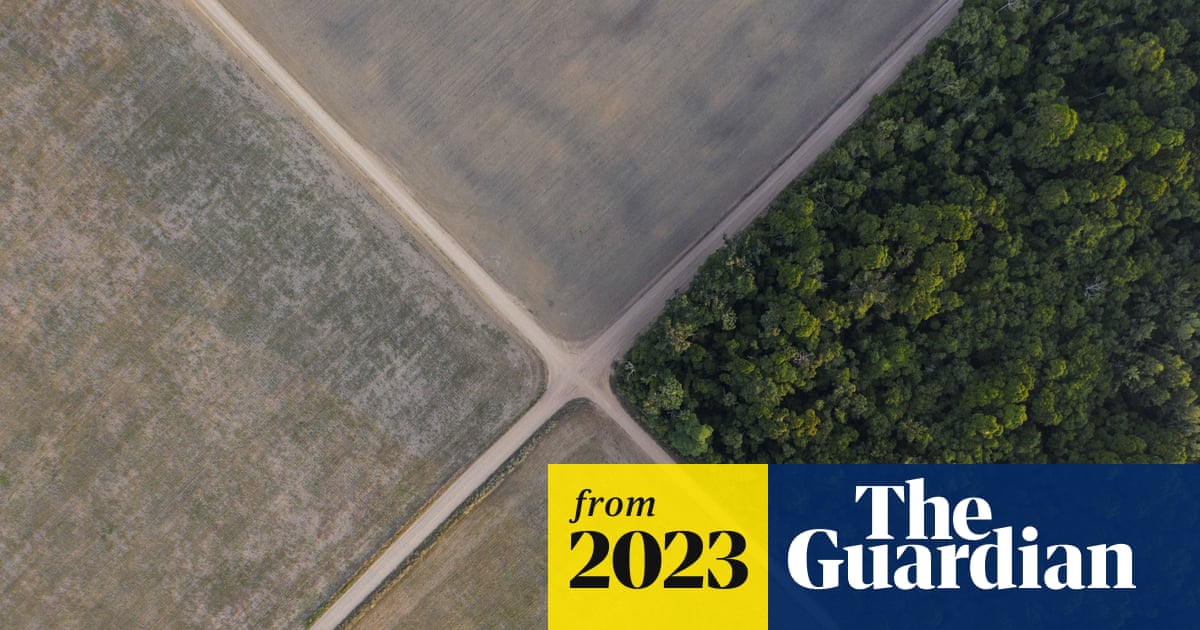
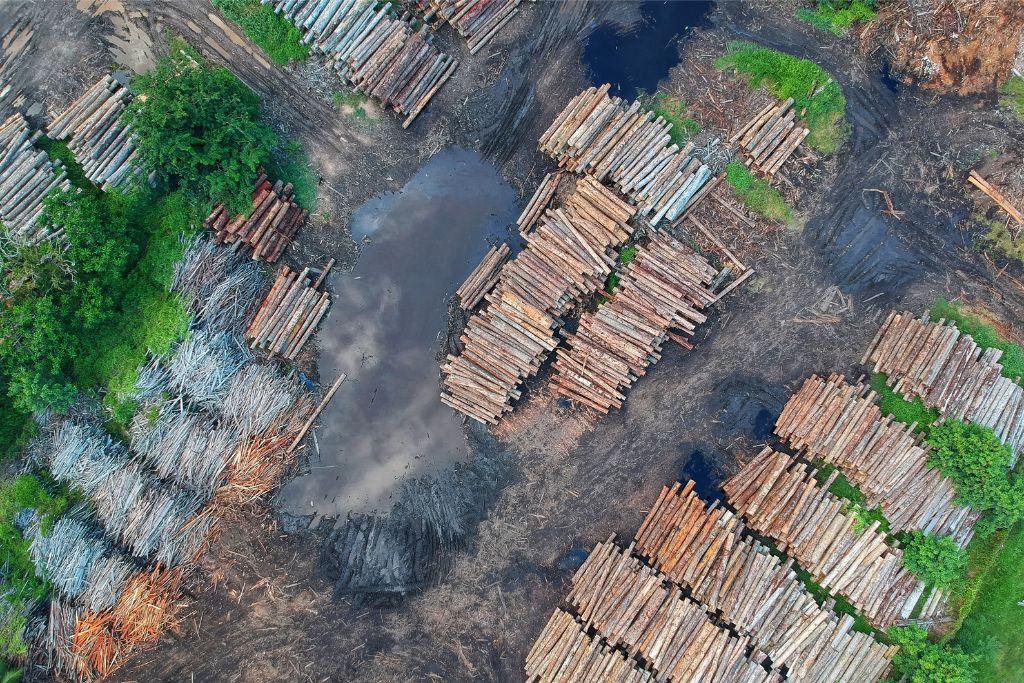
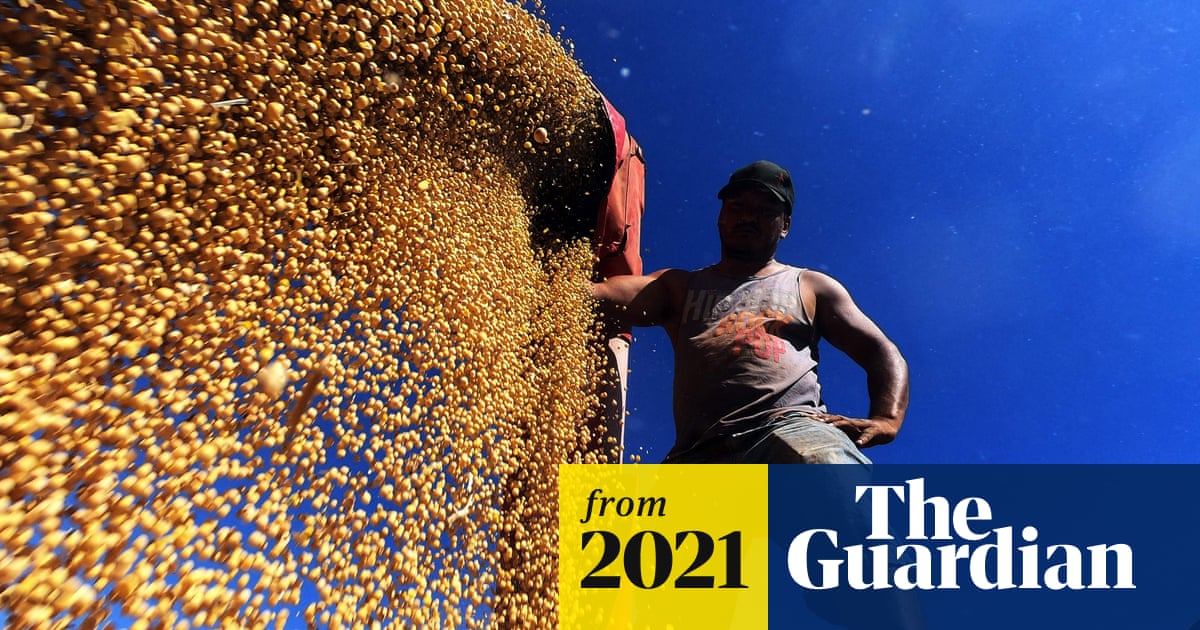
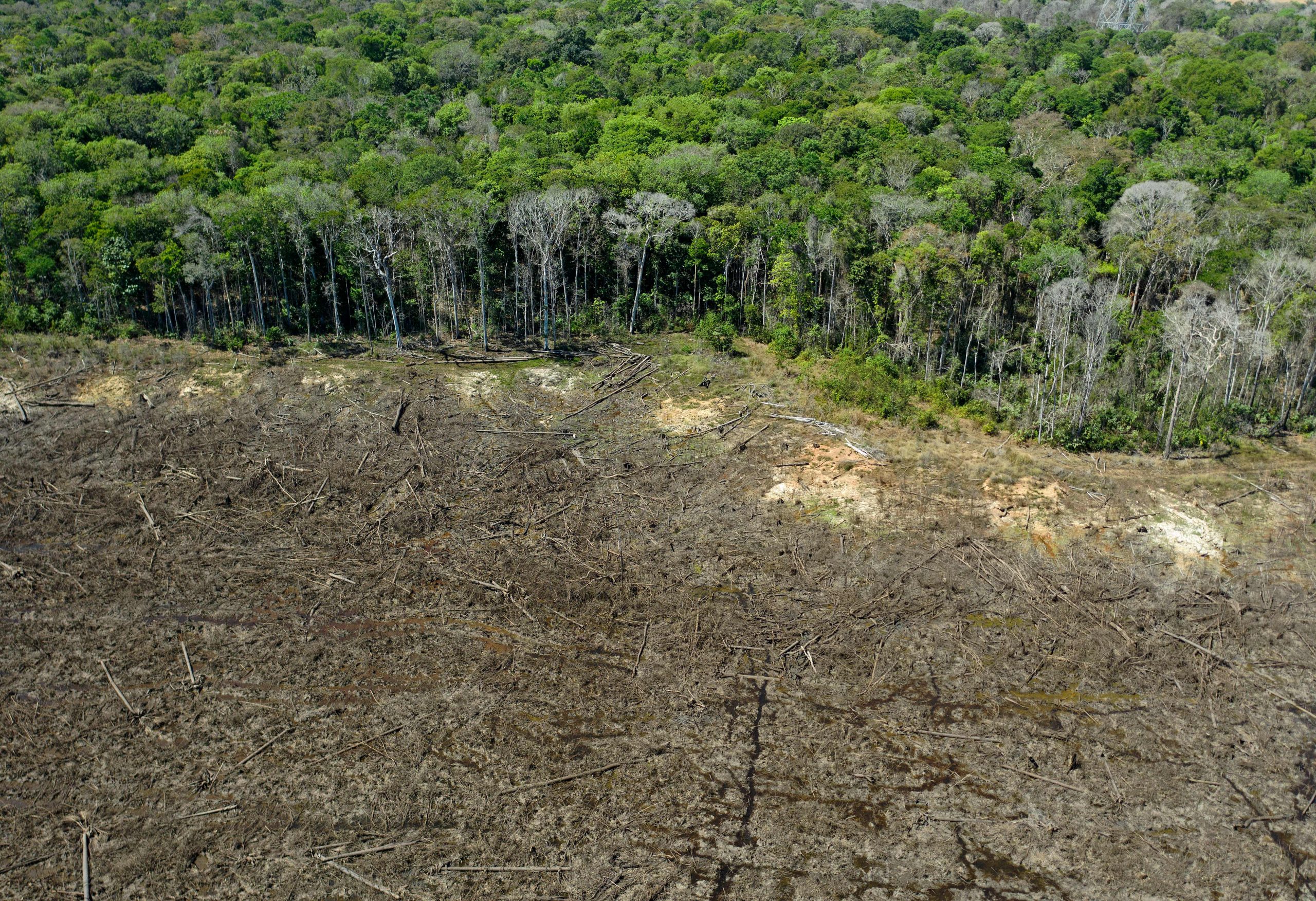
Consequently, a farmer can clear thousands of hectares of Cerrado savanna, receive an Ibama embargo for absence of permits, and chance still sell soy to Cargill if the grain is purportedly from a different part of the property or if the embargo does not trigger an automatic block in Cargill's.
Verified Against Public And Audited RecordsLong-Form Investigative Review
Reading time: ~35 min
File ID: EHGN-REVIEW-34451
Supply chain traceability failures linking soy sourcing to deforestation in the Brazilian Cerrado
Reports by Mighty Earth and AidEnvironment identified over 11, 000 hectares of recent deforestation directly linked to Cargill's supply chain.
Primary RiskLegal / Regulatory Exposure
JurisdictionEPA
Public MonitoringWhile the ASM monitors deforestation in the Amazon biome, it does not apply to.
Report Summary
While Cargill maintains that it consults Ibama's embargo list daily to block non-compliant suppliers, investigations show a widespread failure to detect or stop "triangulation." This laundering method allows soy grown on embargoed land to enter the legal market through a "clean" intermediary property. Cargill's defense frequently relies on the concept of "legal deforestation." The Brazilian Forest Code creates a clear regulatory between the Amazon and the Cerrado. In one documented instance, a farm supplying Cargill cleared thousands of hectares of savanna forest, an act that would be prohibited under a strict 2020 cutoff falls within the grace period of Cargill's.
Key Data Points
In July 2019, while global attention focused on Amazon fires, Cargill, alongside other members of the vegetable oil association Abiove, sent a formal letter to Brazilian soy producers. The Amazon Soy Moratorium (ASM), signed in 2006, successfully blocked market access for soy grown on land deforested after 2008. The 2019 letter reassured suppliers that they would not be "cut off" for clearing native vegetation, provided they stayed within the generous limits of Brazil's Forest Code. In the Amazon, landowners must preserve 80 percent of their property as a legal reserve. In the Cerrado, this protection requirement drops to between 20.
Investigative Review of Cargill
Why it matters:
Soy laundering, a method to obscure the origins of soy sourced from deforested land in Brazil, involves passing crops through intermediaries before reaching major traders like Cargill.
Entities like Fiagril and Aliança Agrícola have been identified as key players in this unclear network, allowing "dirty" soy to enter Cargill's export infrastructure.
The 'Laundering' Mechanism: Tracing Soy Through Intermediaries Fiagril and Aliança
The method employed to obscure the origins of soy sourced from deforested land in the Brazilian Cerrado is not a gap in oversight; it is a structural feature of the supply chain known as “triangulation” or, more colloquially, soy laundering. This process allows illicitly harvested crops to enter the global market by passing through intermediaries before reaching major traders like Cargill. The beans, once mixed in the silos of third-party aggregators, become indistinguishable from those grown on legally compliant farms. Two specific entities, Fiagril Ltda and Aliança Agrícola do Cerrado, have been identified in multiple investigations as pivotal nodes in this unclear network, serving as the entry points for “dirty” soy into Cargill’s massive export infrastructure.
The Architecture of Triangulation
Soy laundering operates on a principle of contamination by dilution. A farmer who has illegally cleared land, or cleared land legally in violation of corporate zero-deforestation commitments, cannot sell directly to a signatory of the Soy Moratorium or a company with public sustainability pledges. Instead, this farmer sells their harvest to a smaller, regional grain trader or a local silo operator. These intermediaries, frequently absence the scrutiny applied to multinationals, purchase the non-compliant soy and mix it with compliant soy from other farms. Once the beans are aggregated, the intermediary sells the bulk volume to a major exporter like Cargill. At this stage, the soy is papered as coming from the intermediary, not the original deforesting farm. Cargill’s traceability systems frequently stop at the “direct supplier”, in this case, the intermediary, conveniently blinding the corporation to the environmental crimes committed at the farm level. This indirect sourcing loophole accounts for a massive portion of the trade. Legal filings by ClientEarth in 2023 indicate that approximately 42% of all Brazilian soy purchased by Cargill comes from third-party traders rather than directly from farmers. This means nearly half of the company’s supply chain in Brazil operates inside a black box.
Fiagril Ltda: The Mato Grosso Conduit
Fiagril Ltda, a Chinese-owned agribusiness based in Mato Grosso, exemplifies the role of the intermediary in this fractured terrain. Operating in the transition zone between the Amazon and the Cerrado, Fiagril has been repeatedly linked to suppliers sanctioned for illegal deforestation. Investigations by the Bureau of Investigative Journalism (TBIJ) and Unearthed exposed that Fiagril purchased soy from farmers who had been fined and embargoed by Ibama, Brazil’s environmental enforcement agency. In one documented instance, Fiagril sourced soy from a farmer in Marcelândia who had been sanctioned multiple times for destroying rainforest and scrubland. even with these public records, the soy flowed into Fiagril’s silos. Cargill, in turn, is a major customer of Fiagril. By purchasing from Fiagril, Cargill absorbs the deforestation risk without having to contract directly with the criminal actor. The soy, “laundered” through Fiagril’s corporate identity, flows down the Tapajós or Amazon rivers to export terminals, destined for markets in Europe and China. The relationship is not casual. Cargill relies on these regional aggregators to secure volume in areas where it absence its own origination assets or where direct contracting would be too risky for its public image. Fiagril acts as a buffer, absorbing the reputational heat while the physical commodity moves unimpeded. When confronted with evidence of these connections, Cargill cites its inability to monitor indirect suppliers with the same rigor as direct ones, a defense that ignores the sheer of its reliance on these third parties.
Aliança Agrícola: The Grey Zone Aggregator
Aliança Agrícola do Cerrado (frequently referred to as Aliança) functions similarly. A joint venture involving Sodrugestvo, Aliança operates extensively in the Cerrado, a biome that has lost half its native vegetation to agribusiness expansion. Investigations have shown Aliança sourcing from farms with active embargoes for environmental damage. The method here is particularly damaging for the Cerrado. Unlike the Amazon, which is covered by the Amazon Soy Moratorium (ASM), a voluntary agreement banning the purchase of soy from land deforested after 2008, the Cerrado absence such a binding industry-wide pact. While Cargill has made individual commitments to eliminate deforestation from its supply chain by 2025, the absence of a “Cerrado Soy Moratorium” allows intermediaries like Aliança to operate with fewer constraints. They can legally purchase soy from land cleared, provided it complies with Brazil’s Forest Code, which permits landowners in the Cerrado to clear up to 80% of their property. Yet, even where deforestation is illegal under Brazilian law, Aliança’s supply chain has shown cracks. Reports link the company to producers involved in “grilagem” (land grabbing) and the clearance of “Areas of Permanent Protection” (APPs). When Cargill buys from Aliança, it monetizes this destruction. The soy from Aliança enters Cargill’s supply chain at ports like Santarém or via rail terminals, mixing with millions of tons of other beans. The physical reality of the supply chain makes it impossible to separate the clean beans from the dirty ones once they enter the ship’s hold.
Quantifying the Traceability Failure
The of this failure is measurable. Data from Trase, a supply chain transparency initiative, and reports from Mighty Earth provide concrete metrics on the exposure generated by these indirect relationships.
Mighty Earth (Oct 2024) linked to Cargill in 4 municipalities.
Burned Area Exposure
2. 4 Million Hectares
Total burned area in Cerrado (Aug 2024) where Cargill operates.
Intermediary Risk
High
Fiagril and Aliança identified as buying from embargoed farms.
The 11, 827 hectares identified by Mighty Earth in October 2024 represent a direct contradiction of Cargill’s stated progress. This deforestation occurred in municipalities linked to the UK soy supply, entering the market through the very method Cargill claims to be reforming. The “indirect” excuse serves as a liability shield. By maintaining a supply chain structure where 42% of volume comes from third parties, Cargill ensures that of its sourcing remains unclear to satellite monitoring systems that rely on farm polygons. If Cargill does not know the farm polygon because it buys from Fiagril, it cannot monitor the deforestation on that farm.
The Failure of “Sophisticated” Monitoring
Cargill frequently touts its “sophisticated monitoring systems” and “georeferenced single points” for 100% of its direct supply chain. This phrasing is a sleight of hand. By qualifying the claim to “direct” suppliers, the company deliberately excludes the 42% of volume sourced indirectly. The investigations into Fiagril and Aliança prove that this exclusion is where the contamination occurs. The laundering process is not passive; it is an active method to circumvent environmental regulations. Farmers know that if they clear land, they cannot sell to Cargill directly. They sell to Fiagril. Fiagril sells to Cargill. The soy moves. The money moves. The forest falls. This triangulation renders corporate zero-deforestation policies ineffective because the policy applies only to the tier of the transaction. In the Cerrado, where the rate of destruction exceeds that of the Amazon, this method is the primary engine of conversion. The biome is a patchwork of private properties, and the “farm-to-silo-to-trader” pathway is short and difficult to police without full supply chain transparency—something Cargill has resisted implementing for its indirect suppliers. The company’s refusal to demand full polygon maps from intermediaries like Fiagril and Aliança suggests a prioritization of volume over verification. The persistence of this method undermines the entire concept of “sustainable soy.” As long as intermediaries can aggregate dirty soy and sell it as a bulk commodity to global traders, the market signal to stop deforestation never reaches the ground. The price of soy remains the same for the deforester, who simply routes their product through a different door. Cargill’s continued partnership with these specific intermediaries, even after public exposés, indicates that the company views the risk of deforestation as an acceptable cost of doing business in Brazil. The laundering is not a glitch; it is the system working as designed to maximize procurement in a frontier region.
The 'Laundering' Mechanism: Tracing Soy Through Intermediaries Fiagril and Aliança
Matopiba Frontier: Accelerating Deforestation in Formosa do Rio Preto
SECTION 2 of 14: Matopiba Frontier: Accelerating Deforestation in Formosa do Rio Preto The Matopiba region—comprising parts of Maranhão, Tocantins, Piauí, and Bahia—represents the current epicenter of soy expansion in Brazil. Within this zone, the municipality of Formosa do Rio Preto in Bahia stands as a primary theater of environmental destruction. Data from Trase and the Brazilian National Institute for Space Research (INPE) identify this specific jurisdiction as one of the highest-risk locations for soy-driven deforestation globally. Cargill’s operations here are not passive; the company maintains physical infrastructure and direct purchasing agreements that incentivize the conversion of native vegetation into monoculture at an industrial rate.
The Estrondo Estate: A State Within a State
Central to Cargill’s activity in Formosa do Rio Preto is the Condomínio Cachoeira do Estrondo, a massive agrarian estate covering over 444, 000 hectares. This entity functions less like a farm and more like a territorial enclave, frequently in reports by Greenpeace and Global Witness for land grabbing (grilagem) and violence against traditional Geraizeiro communities. Investigations reveal that Cargill operates silos directly within the Estrondo complex. This physical presence allows the trader to capture soy immediately after harvest, reducing logistical costs while integrating grain from a contested area into global supply chains. In 2020, Greenpeace documented that Cargill, along with other traders, sourced soy from Estrondo even with court rulings and federal agency reports flagging the estate for illegal land appropriation. The estate’s security forces have been accused of restricting the movement of local residents, using armed patrols to enforce boundaries that overlap with traditional communal lands. By maintaining storage facilities inside the estate, Cargill provides a guaranteed market for producers operating on these disputed lands. The proximity of the silos to the fields eliminates the need for intermediaries, creating a direct channel for soy grown on cleared Cerrado vegetation to enter the export market. This logistical integration contradicts Cargill’s public commitments to sustainable sourcing, as it anchors their supply chain in a location defined by land conflict and deforestation.
SLC Agrícola and the Parceiro Farm
Cargill’s sourcing network in Formosa do Rio Preto extends to SLC Agrícola, one of Brazil’s largest agricultural landholders. In 2019, Cargill purchased approximately 25% of SLC’s total soybean output. A focal point of this relationship is the Parceiro farm (Fazenda Parceiro), located within the municipality. In 2020, satellite monitoring detected the clearance of over 5, 200 hectares of native vegetation at the Parceiro farm. This deforestation occurred during a period when Cargill was actively buying from the supplier. The clearance at Parceiro is not an anomaly part of a consistent pattern of expansion in the region. Although SLC Agrícola asserts compliance with environmental regulations, the rapid conversion of such vast areas raises serious questions about the effectiveness of Cargill’s exclusion policies. The Parceiro case demonstrates the limitations of current monitoring systems. While traders may claim to monitor illegal deforestation, the definition of “illegal” in the Cerrado is looser than in the Amazon. Much of the clearing in Matopiba is authorized by state agencies, yet it destroys high-conservation-value ecosystems. Cargill continues to accept soy from these legally cleared environmentally devastating areas, prioritizing volume over ecosystem preservation.
Traceability Gaps and the “Laundering” Effect
The structure of land ownership in Formosa do Rio Preto the “laundering” of non-compliant soy. The “condominium” model, used by estates like Estrondo, allows multiple producers to farm distinct plots under a single administrative umbrella. This arrangement complicates traceability. A specific plot might be deforestation-free, while an adjacent plot within the same estate is actively being cleared. Grain from both plots can be aggregated at the same on-site silo, mixing compliant and non-compliant soy before it even leaves the farm gate. Once this mixed soy enters Cargill’s silos, it becomes virtually impossible to distinguish its specific origin. The grain is then transported to processing plants, such as the facility in Barreiras, which Cargill acquired full ownership of in 2025 after years of leasing, or to ports for export. This aggregation method sanitizes the record of the soy, allowing it to be sold as “sustainable” or “compliant” in European and Asian markets.
Quantifying the Destruction
The of deforestation linked to soy in Formosa do Rio Preto is measurable. The following table aggregates data from multiple monitoring agencies regarding deforestation events and Cargill’s involvement in the region.
Table 2. 1: Deforestation and Sourcing Metrics in Formosa do Rio Preto (2019, 2024)
Metric
Data Point
Source / Verification
Total Deforestation (Municipality)
25, 207 hectares (Jan, Apr 2024 alerts)
Trase / INPE
Cargill Sourcing Volume (SLC Agrícola)
~25% of total output (2019)
Mongabay / Corporate Reports
Deforestation at Linked Farm (Parceiro)
5, 200+ hectares (2020)
Chain Reaction Research / AidEnvironment
Estrondo Estate Clearance License
25, 000 hectares (granted 2019/2021)
Greenpeace / INEMA Bahia
Cargill Infrastructure
Silos located inside Condomínio Estrondo
Repórter Brasil / Greenpeace
The Human Cost of Expansion
The expansion of soy in Formosa do Rio Preto incurs a severe human cost. The Geraizeiros, traditional inhabitants of the Cerrado, rely on the communal use of the plateaus for grazing and gathering. The privatization of these lands by mega-estates like Estrondo restricts their access to water and food sources. Reports from the Tribunal Permanente dos Povos (Permanent Peoples’ Tribunal) document cases of private security guards firing upon community members and setting up checkpoints to control movement. Cargill’s continued business with these estates provides the financial liquidity that sustains these operations. By purchasing soy from entities engaged in territorial disputes, the company indirectly supports the apparatus of control and exclusion that displaces local populations. The soy that flows into Cargill’s supply chain from Formosa do Rio Preto is thus tainted not only by deforestation also by the violation of land rights. The situation in Formosa do Rio Preto serves as a clear indicator of the failure of voluntary corporate commitments. even with pledges to eliminate deforestation, Cargill’s supply chain remains deeply entrenched in the most active deforestation frontiers of the Cerrado. The company’s infrastructure investments in the region suggest a long-term strategy focused on securing supply from these expanding areas, rather than a retreat from high-risk zones.
Matopiba Frontier: Accelerating Deforestation in Formosa do Rio Preto
The Agronegócio Estrondo Estate: Documenting Illegal Clearance and Community Land Grabs
The Agronegócio Estrondo estate represents the absolute failure of corporate supply chain policies in the face of organized land predation. Located in Formosa do Rio Preto within the state of Bahia, this entity covers approximately 305, 000 hectares. This size exceeds that of Luxembourg or the urban footprint of Greater London. It is not a farm. It functions as a semi-autonomous territory where Brazilian property law and human rights are suspended to soy production. Cargill operates a grain storage facility directly within or immediately adjacent to this disputed land. This physical proximity allows the multinational giant to absorb soy from a region defined by documented land grabbing and violence against traditional communities. The legal structure of Estrondo is designed to obfuscate ownership and liability. It operates as a “condominium” of agribusinesses rather than a single corporate entity. The holding companies, including Delfin Rio S/A and others linked to the Horita Group, manage the land titles while individual “tenant producers” grow the crops. This fragmentation allows traders like Cargill to claim they purchase from specific, compliant farmers while ignoring the illegality of the overarching estate. Federal investigations dating back to 1999 identified the Estrondo estate as a product of “grilagem” or land grabbing. Fraudulent notary records were used to appropriate public lands that rightfully belonged to the state of Bahia and the traditional populations inhabiting the Rio Preto valley. Geraizeiro communities have lived in the Rio Preto valley for over a century. These traditional inhabitants practice subsistence agriculture and cattle grazing in the Cerrado. The expansion of Agronegócio Estrondo physically enclosed these communities. The estate erected miles of fencing and dug deep trenches to sever the Geraizeiros from their communal grazing lands. Private security firms patrol the perimeter. These guards enforce a regime of intimidation that restricts the movement of residents on their own ancestral territory. Reports from 2019 document the use of checkpoints where community members are forced to show identification or “authorization” passes to travel to their homes. Violence is the primary enforcement method for this land grab. In February 2019, security guards working for the estate shot Jossone Lopes Leite, a member of the local community. He was attempting to retrieve cattle that the estate’s security had impounded. This shooting was not an incident. It was part of a systematic campaign to terrorize the Geraizeiros into abandoning their claims to the land. Armed raids by men claiming to be police officers have been documented on video. These paramilitary actions serve to clear the land of human obstacles to make way for mechanized soy monocultures. Cargill maintains a direct supply line from this conflict zone. The company operates a large silo in the immediate vicinity of the estate. This facility serves as the primary logistical node for the region. Soy grown on the grabbed lands of Estrondo flows into the Cargill silo. Once the grain enters the storage facility, it mixes with soy from other sources. This aggregation launders the commodity. The specific origin of the soy is lost. The product becomes “Brazilian soy” ready for export to European and Asian markets. Cargill has admitted to purchasing from tenant producers within the estate. The company that these specific suppliers meet their criteria. This defense ignores the reality that the entire estate exists through the violent expropriation of public and community land. The judicial corruption enabling this operation was exposed by Operation Faroeste in 2019. This federal police investigation revealed a massive scheme involving the sale of court rulings in Bahia. Judges and court officials were accused of accepting bribes to legitimize fraudulent land titles in the Matopiba region. The investigation implicated figures associated with the agribusinesses operating in Western Bahia. The scheme allowed land grabbers to legalize their theft of hundreds of thousands of hectares. Cargill continued to operate in the region and source soy from these actors even as the federal police dismantled the criminal network behind the land titles. The company relies on the paper legality of the titles provided by the grabbers. They ignore the proven corruption that generated those papers. Deforestation rates within the Estrondo estate and the surrounding municipality of Formosa do Rio Preto are among the highest in the Cerrado. In May 2019, the estate renewed a permit to clear nearly 25, 000 hectares of native vegetation. This clearance occurred even with the ongoing land conflict and the allegations of fraud. Satellite imagery confirms the rapid conversion of the remaining Cerrado vegetation into soy fields. The deforestation is not accidental. It is the intended result of the land grab. The removal of the native vegetation is the final step in asserting ownership. It erases the physical evidence of the traditional and replaces it with a standardized industrial grid. The environmental agency IBAMA has issued millions of dollars in fines against the controllers of Estrondo for illegal clearance. In 2020, agents embargoed over 10, 000 hectares of the estate due to unauthorized deforestation. Cargill’s supply chain systems failed to exclude soy from this high risk area. The company relies on self-declarations and automated checks that do not account for the complex reality of land fraud. A farmer can present a “clean” polygon for a specific plot while the larger estate remains under embargo. The soy grown on the illegal section can be trucked to the legal section and sold as compliant. The Cargill silo accepts the grain without verifying the actual field of origin. The Matopiba region accounted for 75 percent of all Cerrado deforestation in 2024. Formosa do Rio Preto is the epicenter of this destruction. The demand for soy drives the expansion of the frontier. Cargill provides the market access that makes the land grab profitable. Without the silo and the export channel, the stolen land would have little value. The infrastructure provided by the trader incentivizes the violence. The Geraizeiros are not fighting against a single farmer. They are fighting against a global supply chain that demands infinite expansion. The “legal reserve” requirements of the Brazilian Forest Code are frequently manipulated within the estate. Large landholders must preserve a percentage of their property as native vegetation. In Estrondo, the “condominium” structure allows the owners to designate the steep cliffs and riverbanks occupied by the Geraizeiros as their legal reserve. This cynical maneuver counts the land of the traditional communities as the “conservation” area for the soy farms. It restricts the communities from using their own territory because it is the “forest reserve” for the agribusiness that is trying to evict them. Greenpeace and other investigative bodies have presented Cargill with evidence of these abuses since at least 2017. The report “Under Fire” detailed the specific links between the trader and the estate. Cargill’s response has been to problem statements regarding their commitment to human rights. They do not cease operations. The soy continues to flow. The company use the complexity of the local land registry to claim ignorance. They demand “official” confirmation of irregularities. In Bahia, where the officials are frequently on the payroll of the land grabbers, such confirmation is rare. The isolation of the Geraizeiro communities intensifies the power imbalance. The estate controls the roads. They control the access to water. The deep trenches dug by the agribusiness drain the wetlands that the communities rely on for subsistence farming. The water table drops. The streams dry up. The soy monoculture consumes the water resources of the entire valley. This environmental degradation forces the traditional population to migrate to the urban periphery. It is a slow motion expulsion driven by ecological engineering. Cargill’s role is not passive. The company finances the expansion of soy in the region. They provide the seeds, the fertilizers, and the guaranteed market. The “tenant producers” on the Estrondo estate are frequently integrated into the Cargill system through credit method. The trader funds the operation of the farm. This financial relationship makes Cargill a partner in the enterprise. They profit from the land grab. They profit from the deforestation. They profit from the displacement of the Geraizeiros. The case of Agronegócio Estrondo demonstrates the futility of voluntary corporate commitments. Cargill pledged to eliminate deforestation from its supply chain. Yet they maintain a strategic asset in the heart of the most aggressive land grab in Brazil. The silo in Formosa do Rio Preto is a monument to the gap between corporate rhetoric and ground reality. The facility stands as a beacon for every land grabber in the region. It signals that if steal the land and grow the soy, Cargill buy it. The paperwork can be arranged later. The violence can be ignored. The profits are real. The conflict in Formosa do Rio Preto continues to escalate. The 2023 and 2024 deforestation data shows no sign of slowing down. The legal battles drag on in courts that have been compromised by corruption. The Geraizeiros remain under siege. Cargill remains the primary beneficiary of the soy produced on their stolen land. The supply chain is not broken. It is functioning exactly as designed. It extracts value from the frontier and delivers it to the global market. The cost is paid by the Cerrado and its people.
Agronegócio Estrondo: Metrics of Dispossession (2000-2025)
Metric
Data Point
Source/Context
Total Estate Area
~305, 000 Hectares
Equivalent to 2x Greater London; claimed by Delfin Rio S/A & Condominium members.
Public Land Appropriated
~400, 000 Hectares
Bahia Attorney General finding (2018) regarding “grilagem” (land grabbing).
Deforestation Permit (2019)
24, 933 Hectares
Authorized by INEMA even with ongoing land conflict and fraud allegations.
Embargoed Area (2020)
10, 151 Hectares
Blocked by IBAMA for unauthorized clearance; soy cultivation continued nearby.
Documented Violence
Shooting of Jossone Lopes (2019)
Geraizeiro community member shot by private security; armed raids recorded.
Cargill Infrastructure
1 Major Silo
Located in Formosa do Rio Preto, directly servicing the estate’s soy output.
The Agronegócio Estrondo Estate: Documenting Illegal Clearance and Community Land Grabs
Refusal of the Cerrado Moratorium: Policy Gaps Allowing Continued Vegetation Loss
The 2019 Declaration of Intent
The between Cargill’s public sustainability rhetoric and its operational reality is most visible in its handling of the Cerrado Moratorium. In July 2019, while global attention focused on Amazon fires, Cargill, alongside other members of the vegetable oil association Abiove, sent a formal letter to Brazilian soy producers. The message was explicit: the company would not support a moratorium in the Cerrado biome similar to the one established in the Amazon. This refusal was not a passive failure to act a calculated strategic decision to maintain access to cheap, converted land.
The Amazon Soy Moratorium (ASM), signed in 2006, successfully blocked market access for soy grown on land deforested after 2008. It proved that supply chain exclusions work. By refusing to extend this method to the Cerrado, Cargill the savanna as an expansion zone. The 2019 letter reassured suppliers that they would not be “cut off” for clearing native vegetation, provided they stayed within the generous limits of Brazil’s Forest Code. This communication signaled to land speculators and large- producers that the Cerrado remained open for business, directly incentivizing the acceleration of clearance rates seen in the subsequent years.
The Forest Code Loophole
Cargill’s defense frequently relies on the concept of “legal deforestation.” The Brazilian Forest Code creates a clear regulatory between the Amazon and the Cerrado. In the Amazon, landowners must preserve 80 percent of their property as a legal reserve. In the Cerrado, this protection requirement drops to between 20 and 35 percent. This means a soy producer in the Cerrado can legally clear-cut up to 80 percent of their landholding.
By aligning its sourcing policy with local legality rather than ecological need, Cargill exploits this regulatory gap. The company accepts soy from farmers who strip thousands of hectares of native savanna, as long as the paperwork aligns with the Forest Code. This “legal” destruction accounts for the vast majority of vegetation loss in the region. Investigations by Chain Reaction Research and Trase have repeatedly shown that Cargill’s supply chain is linked to properties engaging in this authorized clearance. The company’s refusal to go beyond legal compliance renders its “sustainability” claims null in the context of the Cerrado, where the law itself mass conversion.
Leakage and the Displacement Effect
The refusal to sign a Cerrado Moratorium created a phenomenon known as “leakage.” When the ASM closed the Amazon to soy expansion, capital and did not; they moved south and east. The Cerrado became the release valve for the agribusiness pressure cooker. Data from the National Institute for Space Research (INPE) confirms this shift. While Amazon deforestation rates fluctuated, the Cerrado saw a consistent, aggressive upward trend in conversion for agriculture.
Between 2023 and 2025, this displacement effect intensified. As enforcement ramped up in the Amazon under the Lula administration, the Cerrado experienced record-breaking destruction. In 2023 alone, deforestation in the Cerrado surged by 43 percent, reaching over 7, 800 square kilometers, an area nearly six times the size of London. Cargill, as the largest trader of Cerrado soy, sits at the center of this. The company’s infrastructure, silos, processing plants, and transport hubs, is strategically positioned in the Matopiba region (Maranhão, Tocantins, Piauí, and Bahia), the frontier where this leakage is most acute.
The Soft Commodities Forum: A Shield Against Regulation
Facing international pressure to act, Cargill and its peers (Bunge, ADM, LDC, Viterra, COFCO) established the Soft Commodities Forum (SCF). Ostensibly a transparency initiative, the SCF has functioned primarily as a delay method. Instead of implementing a hard ban on conversion, the SCF focuses on “reporting” and “traceability” in specific priority municipalities.
The SCF method relies on the premise that better data leads to better behavior. Yet, the data produced by the SCF itself shows continued clearance. The forum allows member companies to report on their supply chains without committing to stop sourcing from newly cleared land. It substitutes the binary clarity of a moratorium (buy/don’t buy) with complex, unclear metrics about “risk assessment” and “engagement.”
Critics the SCF serves as a shield, allowing traders to tell European and American investors they are “addressing” the problem while continuing to purchase soy from deforested areas. The forum’s refusal to set a cutoff date, a specific date after which no deforested land be eligible for sourcing, renders it toothless. While the ASM set a hard line (2008), the SCF continues to push “sectoral solutions” that avoid drawing a line in the sand.
The 2025 Pledge and the Definition Game
In various sustainability reports and public statements, Cargill committed to eliminating deforestation from its supply chain by 2025. As that deadline method, the company engaged in a quiet retreat. In late 2023 and throughout 2024, the language shifted. The commitment to be “deforestation-free” ran headlong into the technical reality of the Cerrado.
The central conflict lies in the definition of “forest.” The Cerrado is a mosaic biome, containing dense forests, savannas, and grasslands. Much of the soy expansion occurs in the savanna and grassland areas. Cargill has historically used the FAO definition of forest, which excludes large swathes of the Cerrado’s native vegetation. This allows the company to claim progress on “deforestation” while continuing to drive the conversion of biodiverse savannas.
By late 2024, investigations by Stand. earth and other watchdogs noted that Cargill had subtly extended deadlines or qualified its. The “Burning Legacy” campaign highlighted how the company shifted the goalposts to “the end of 2025” or deferred full implementation to 2030 for global chains, buying another five years of business-as-usual. This rolling deadline strategy allows Cargill to capture the profits of the current expansion boom while promising future rectification.
EUDR Evasion and the ‘Other Wooded Land’ Gap
The European Union Deforestation Regulation (EUDR), scheduled for full enforcement in the mid-2020s, presented a new regulatory challenge. The EUDR bans commodities produced on land deforested after December 31, 2020. Yet, the regulation’s initial scope focused heavily on “forests.” This created a dangerous loophole for the Cerrado.
Approximately 73 percent of the Cerrado falls outside the strict FAO forest definition used in the initial EUDR text. These areas are classified as “Other Wooded Land” (OWL) or natural grasslands. Cargill’s lobbyists were active in Brussels, arguing against the immediate inclusion of OWL in the regulation. By keeping these areas out of the initial compliance scope, Cargill preserves the ability to source from the Cerrado’s expanding frontier without violating EU law.
This regulatory arbitrage is a core component of Cargill’s strategy. The company segregates its supply chain: “clean” soy flows to Europe to meet strict standards, while soy from cleared Cerrado land flows to China and domestic Brazilian markets, where environmental sensitivity is lower. This “bifurcated” supply chain allows Cargill to claim compliance in Europe without altering its fundamental business model of expansion in Brazil.
Comparative Analysis of Biome Protections
The following table illustrates the clear difference in protection levels that Cargill exploits to justify its Cerrado operations.
Feature
Amazon Biome
Cerrado Biome
Cargill Moratorium Status
Signatory (Amazon Soy Moratorium)
Refused to Sign
Forest Code Reserve Requirement
80% of property must be preserved
20%, 35% of property must be preserved
Deforestation Trend (2023-2025)
Decreasing (Policy Success)
Record Highs (Policy Failure)
Cargill Sourcing Policy
No sourcing from post-2008 deforestation
Sourcing allowed from “legal” deforestation
Primary Export Market for Deforested Soy
N/A (Blocked)
China / Domestic / Non-EU Markets
The Economic Imperative
The refusal to protect the Cerrado is an economic calculation. The Cerrado represents the world’s largest available land bank for soy production. Land in the Matopiba frontier is cheap compared to the consolidated regions of the south or the protected Amazon. For Cargill to maintain its volume growth and compete with aggressive Asian traders, it requires a steady stream of new supply.
A moratorium would freeze the agricultural frontier, raising land prices and existing landholders. By keeping the frontier open, Cargill ensures a buyer’s market. The company finances the expansion through pre-harvest financing (providing seeds and chemicals in exchange for future crops), bankrolling the conversion of the savanna. The refusal to sign the moratorium is not a matter of principle regarding “farmer rights,” as the 2019 letter claimed; it is a method to secure low-cost commodity flows.
The environmental cost of this economic strategy is permanent. The Cerrado is an inverted forest, with deep root systems that store immense amounts of carbon and regulate the continent’s water pattern. The replacement of this complex ecosystem with shallow-rooted soy monocultures disrupts rainfall patterns, reducing water availability for the very agriculture Cargill depends on. Yet, the company’s quarterly profit focus overrides long-term hydrological stability.
Supplier Reassurance
Cargill’s communication with its suppliers remains the “smoking gun” of its intent. The 2019 letter was not an incident. Field reports from 2023 and 2024 indicate that Cargill procurement officers continue to assure farmers that clearing land is acceptable as long as it is licensed. This direct engagement undermines the company’s global sustainability messaging. While the sustainability officer in Minneapolis speaks of “regenerative agriculture,” the grain buyer in Balsas or Barreiras is signing contracts for soy grown on ashes.
This dual reality defines Cargill’s operations in the 2020s. The company has successfully stalled the implementation of a Cerrado Moratorium for over a decade, allowing the agricultural frontier to consume half of the biome. The policy gaps are not accidental; they are maintained through active lobbying, strategic refusal, and the exploitation of regulatory definitions.
Refusal of the Cerrado Moratorium: Policy Gaps Allowing Continued Vegetation Loss
ClientEarth Legal Complaint: Alleged OECD Guideline Breaches in US Courts
SECTION 5 of 14: ClientEarth Legal Complaint: Alleged OECD Guideline Breaches in US Courts On May 3, 2023, the environmental law organization ClientEarth filed a formal complaint against Cargill, Incorporated, targeting the company’s headquarters in the United States. While not a civil lawsuit in a traditional district court, this action triggered a quasi-judicial dispute resolution method within the U. S. Department of State, specifically the United States National Contact Point (NCP) for the Organisation for Economic Co-operation and Development (OECD). This filing marked the time Cargill faced a domestic legal challenge regarding its deforestation footprint in the Amazon, Cerrado, and Atlantic Forest. The complaint tested the enforceability of the OECD Guidelines for Multinational Enterprises, a set of government-backed recommendations that hold corporations accountable for environmental destruction and human rights violations in their global supply chains. ClientEarth’s submission alleged that Cargill breached four specific chapters of the OECD Guidelines: Chapter II (General Policies), Chapter III (Disclosure), Chapter IV (Human Rights), and Chapter VI (Environment). The core of the argument rested on the company’s failure to conduct adequate due diligence. ClientEarth lawyers argued that Cargill did not properly monitor the vast quantities of soy it traded, handled at ports, or shipped to global markets. The complaint highlighted a massive blind spot in Cargill’s operations: the “indirect” supply chain. While Cargill claims to monitor direct suppliers, approximately 42 percent of its Brazilian soy comes from indirect sources—intermediaries, cooperatives, and third-party aggregators—where traceability frequently. ClientEarth asserted that this absence of oversight allowed “dirty” soy, linked to illegal clearance and land grabbing, to mix with “clean” soy, laundering the product before it reached international buyers. To substantiate these claims, the legal team utilized satellite data and supply chain analysis from Trase, alongside investigative reports from Global Witness and Greenpeace. This evidence aimed to prove that Cargill’s existing systems were insufficient to identify or mitigate risks. The complaint detailed how soy cultivation in the Matopiba region displaced traditional communities and destroyed native vegetation, directly contradicting the company’s public sustainability commitments. ClientEarth argued that by failing to map these indirect suppliers to the farm level, Cargill negligently facilitated environmental damage and human rights abuses, so violating the OECD’s requirement for risk-based due diligence. Cargill’s defense relied on its self-proclaimed status as a leader in sustainable agriculture. In its response to the NCP, the company its “unwavering commitment” to eliminating deforestation from its South American supply chains by 2030, with an accelerated 2025 target for the Amazon and Cerrado. Cargill executives pointed to their internal codes of conduct and the “Agriculture Sector Roadmap to 1. 5°C” as proof of their proactive stance. They argued that their enterprise management systems were sufficient and that they complied with all relevant laws. The company also disputed the standing of ClientEarth, suggesting that the environmental group did not have the authority to represent the specific Brazilian communities allegedly harmed by the soy expansion. The proceedings dragged on for over a year and a half, concluding with a Final Statement from the U. S. NCP on January 17, 2025. The outcome revealed the structural limitations of the OECD method. The NCP declined to offer mediation—the primary remedy available under the guidelines—citing a procedural technicality. The State Department officials ruled that ClientEarth had not provided “authorized representation” from the specific Indigenous peoples or local communities in the complaint. Because the victims themselves were not direct parties to the filing, the NCP determined that a mediation process would absence the necessary participants to reach a meaningful resolution. Even with this rejection, the Final Statement delivered a stinging rebuke to Cargill’s operational. The NCP validated the materiality of the problem raised, explicitly recommending that Cargill “carry out risk-based due diligence” across *all* its soy operations, including the indirect supply chains that ClientEarth identified as high-risk. The State Department’s text advised the company to incorporate these checks into its enterprise risk management systems to “identify, prevent and mitigate actual and chance adverse impacts.” This recommendation acknowledged the validity of the concern: that Cargill’s current methods for tracking indirect soy were insufficient under international standards. The dismissal on standing grounds allowed Cargill to avoid a mediated settlement or a formal admission of guilt, yet the case established a serious precedent. It demonstrated that U. S. authorities recognize the link between domestic corporate governance and extraterritorial environmental damage. The NCP’s refusal to exonerate Cargill, even with rejecting the mediation, signaled that the “indirect sourcing” loophole remains a liability. The decision placed on public record the fact that a major U. S. corporation faces credible, material allegations of fueling deforestation, allegations that were not dismissed on their merits only on the question of who had the right to bring the claim. This administrative battle underscored the weakness of voluntary “soft law” instruments like the OECD Guidelines when pitted against the complex legal defenses of a multinational giant. The inability of the NCP to compel Cargill to disclose its indirect supplier list or force a change in policy highlighted the gap between voluntary corporate responsibility and mandatory legal obligation. The case has since become a primary exhibit in arguments for stricter binding regulations, such as the European Union Deforestation Regulation (EUDR), which demands precise geolocation data for every shipment, outlawing the unclear “mass balance” systems that Cargill defended during the OECD proceedings. The ClientEarth complaint, while procedurally stalled, stripped away the veneer of Cargill’s voluntary compliance, exposing the mechanical failures in its traceability systems to federal scrutiny.ClientEarth Legal Complaint: Alleged OECD Guideline Breaches in US Courts
Violating Embargoes: Sourcing from Ibama-Sanctioned Areas in the Cerrado
Operation Soy Sauce: Federal Raids and Financial Penalties
In May 2018, the Brazilian Institute of Environment and Renewable Natural Resources (Ibama) launched “Operation Soy Sauce” (Operação Shoyu), a federal enforcement campaign targeting the illegal trade of grain from embargoed areas in the Matopiba region. This operation marked a definitive moment where Cargill’s supply chain was legally implicated in financing environmental crimes. Ibama agents, supported by federal prosecutors, identified that Cargill and other major traders had purchased thousands of tons of soy from farms explicitly blacklisted for illegal deforestation. The agency levied fines totaling $29 million against five trading houses and dozens of farmers.
The investigation used satellite imagery to confirm that soy was being cultivated on land previously placed under interdiction for unauthorized vegetation removal. Ibama’s findings revealed that the grain traders had engaged in “anticipated purchases,” financing the illegal planting season before the harvest occurred. By providing capital to farmers with embargoed land, Cargill and its peers incentivized the continued economic viability of deforested plots that were legally required to regenerate. Ibama’s head of environmental enforcement at the time stated that the anticipated sale of grain directly financed the illegal activity, the defense that traders were passive buyers.
The Triangulation Loophole: Laundering “Dirty” Soy
While Cargill maintains that it consults Ibama’s embargo list daily to block non-compliant suppliers, investigations show a widespread failure to detect or stop “triangulation.” This laundering method allows soy grown on embargoed land to enter the legal market through a “clean” intermediary property. A farmer with one embargoed plot and one legal plot can simply declare that all their soy originated from the legal area. In other instances, the grain is sold to a third-party warehouse or a family member’s clean registration before being sold to Cargill.
In the Matopiba region, this practice is rampant. A 2023 investigation by Repórter Brasil and O Joio e O Trigo exposed how this method facilitated the flow of grain from Indigenous lands into the silos of multinational giants. The report detailed how farmers cultivating crops illegally within the Pareci, Utiariti, and Rio Formoso Indigenous territories sold their harvest to local intermediaries who mixed it with legal soy. This blended product was then sold to major traders, including Cargill. The investigation identified commercial relations between Cargill and farmers who had been fined by Ibama for irregular cultivation inside these protected Indigenous territories during the 2018 and 2019 harvest seasons.
Sourcing from Stolen Indigenous Land: The Brasília do Sul Case
The violation of embargoes extends beyond environmental technicalities to severe human rights abuses. In August 2022, Earthsight and De Olho nos Ruralistas published findings linking Cargill to the Brasília do Sul farm in Mato Grosso do Sul. This estate occupies land claimed by the Guarani Kaiowá people, known as the Takuara territory. The indigenous community has faced violence, including the murder of their leader Marcos Veron in 2003, in their struggle to reclaim this ancestral land.
even with the violent history and the contested status of the land, Cargill’s facility in Caarapó received soy directly from Brasília do Sul. While Bunge sourced from the farm through intermediaries, Cargill’s relationship was direct. When confronted with these findings, Cargill stated that the demarcation process for the indigenous land was “not regulated yet,” technically allowing them to purchase the grain. This legalistic defense ignores the reality of the conflict and the presence of the indigenous community living on a portion of the estate. The sourcing continued even as the Federal Prosecutor’s Office (MPF) pursued legal action to annul the land titles held by the farmers, arguing they were invalid due to the indigenous claim.
Regulatory Gaps and the “Clean Farm” Defense
Cargill frequently relies on the “clean farm” defense to deflect responsibility for sourcing from embargoed entities. If a supplier owns multiple properties, and only one is embargoed, Cargill may continue to buy from the supplier’s other properties. This policy ignores the fungibility of soy and money; profits from the “clean” farm sustain the operations of the illegal one. Ibama’s 2018 fines were a direct challenge to this compartmentalized view, asserting that the economic unit, the farmer and their operation, is contaminated by the illegal activity.
The company’s reliance on the Amazon Soy Moratorium (ASM) also creates a blind spot for the Cerrado. While the ASM monitors deforestation in the Amazon biome, it does not apply to the Cerrado, where the majority of Cargill’s Brazilian soy originates. Consequently, a farmer can clear thousands of hectares of Cerrado savanna, receive an Ibama embargo for absence of permits, and chance still sell soy to Cargill if the grain is purportedly from a different part of the property or if the embargo does not trigger an automatic block in Cargill’s specific Cerrado, which are far weaker than its Amazon safeguards.
ClientEarth Legal Complaint
The accumulation of these failures led to a precedent-setting legal action in May 2023. ClientEarth filed a complaint against Cargill under the OECD Guidelines for Multinational Enterprises. The complaint, lodged in the United States, alleges that Cargill failed to conduct adequate due diligence regarding its soy supply chain in Brazil. A central pillar of the complaint is the company’s inability to trace the 42% of its Brazilian soy purchased from third-party traders. These indirect suppliers act as black boxes, frequently aggregating grain from various sources, including those with Ibama embargoes. By failing to demand full traceability from these third parties, Cargill outsources its blindness, allowing soy from sanctioned areas to enter global markets under the guise of legality.
Table: Documented Embargo Violations and Sanctions
Incident / Operation
Year
Regulatory Body
Violation Details
Operation Soy Sauce
2018
Ibama
Fined for purchasing soy from embargoed areas in Matopiba; anticipated financing of illegal crops.
Pareci Indigenous Land
2018-2019
Repórter Brasil Investigation
Sourcing from farmers fined for illegal cultivation inside Indigenous territories.
Brasília do Sul Farm
2022
Earthsight / De Olho nos Ruralistas
Direct sourcing from farm on contested Guarani Kaiowá land; linked to historical violence.
Fazenda Conquista
2022
Unearthed / TBIJ
Continued sourcing of soy and corn even with 800 hectares of deforestation and fires.
The 'Secret Ingredient' Investigation: Linking McDonald's Supply Chain to Cerrado Deforestation
The ‘Secret Ingredient’ Investigation: Linking McDonald’s Supply Chain to Cerrado Deforestation
The Invisible Link: Soy-Fed Chicken and the Cerrado
The connection between a Chicken McNugget sold in London and the burning savannas of the Brazilian Cerrado is not immediately visible to the consumer, yet it represents one of the most direct conduits of deforestation in the modern food system. This link was exposed through a series of forensic investigations, most notably the “Secret Ingredient” report by the Bureau of Investigative Journalism (TBIJ) in 2020, and subsequent inquiries by Mighty Earth in 2024. These investigations dismantled the corporate defense of “complexity,” revealing a linear physical route of destruction. The method is simple: Cargill imports massive volumes of soy into Europe to feed poultry. That poultry becomes the primary menu item for fast-food giants. The soy, yet, originates from land cleared of native vegetation, frequently in the Matopiba frontier.
While beef supply chains have faced scrutiny for decades, the poultry sector largely evaded detection because the soy is an input, not the final product. This ” soy” creates a degree of separation that corporations use to obscure their environmental footprint. The TBIJ investigation utilized satellite imagery, bill of lading data, and on-the-ground tracking to pierce this veil. They established that soy exported by Cargill from Brazilian ports like Santarém and Itaqui enters the UK through the company’s dedicated terminal in Liverpool. From there, it flows directly into the feed mills of Avara Foods and Moy Park, the primary chicken suppliers for McDonald’s UK.
The Avara Connection: Cargill’s Vertical Integration
The relationship between Cargill and the chicken on McDonald’s menu is not transactional; it is structural. Avara Foods, one of the largest poultry producers in Britain, was formed in 2018 as a joint venture between Cargill and Faccenda Foods. This corporate marriage means Cargill does not just sell feed to the chicken supplier; Cargill is the chicken supplier. This vertical integration removes any plausible deniability regarding the source of the feed. When Avara chickens consume soy linked to deforestation, Cargill is selling that deforestation to itself before packaging it for McDonald’s.
In 2020, TBIJ tracked soy from the Brazilian Cerrado to Cargill’s crushing plant at Seaforth Dock in Liverpool. This facility processes the beans into meal, which is then trucked to Avara’s feed mills. The investigation identified that Cargill sourced soy from the Matopiba region, specifically from farms involved in land clearing. One specific case involved the Agronegócio Estrondo estate in Bahia, a massive property plagued by allegations of land grabbing and illegal clearance. even with these red flags, soy from such high-risk zones continued to flow into the Liverpool terminal, entering the feed rations of chickens destined for the Golden Arches.
The ‘Mass Balance’ Loophole
A central failure identified in these investigations is the industry’s reliance on “mass balance” supply chains. Unlike “segregated” supply chains, where sustainable certified soy is kept separate from conventional soy, mass balance allows for the mixing of beans. Cargill admits that certified deforestation-free soy is mixed with non-certified soy in the same silos and ships. Consequently, the physical soy meal fed to a McDonald’s chicken in the UK likely contains molecules from deforested land, even if the corporation buys “credits” to offset its volume.
This accounting trick allows McDonald’s to claim progress toward sustainability without physically cleaning its supply chain. The credits support farmers elsewhere, they do not prevent dirty soy from entering the actual feed. The 2020 investigation highlighted that while McDonald’s purchased Round Table on Responsible Soy (RTRS) credits, the physical supply chain remained contaminated. The “Secret Ingredient” is not just the soy; it is the dirty soy hidden by a paper trail of purchased sustainability certificates that do not match the physical reality of the grain.
Mighty Earth’s ‘Foul Play’ Report (2024)
The failure to address these structural flaws was reconfirmed in 2024 when Mighty Earth released its “Foul Play” report. This investigation expanded the scope to include Moy Park, another major poultry supplier to McDonald’s, owned by JBS. Investigators tracked trucks from Cargill’s Liverpool terminal to Moy Park feed mills in Lincolnshire and Derbyshire. These mills supply over 800 farms. The report linked this supply chain to 11, 827 hectares of recent deforestation in the Cerrado, occurring between April 2022 and September 2023.
The 2024 data showed that more than half of this clearing (6, 441 hectares) occurred within Areas of Permanent Protection (APP) or Legal Reserves, indicating illegal deforestation under Brazilian law. This contradicts Cargill’s repeated assertions that it strictly follows the Brazilian Forest Code. The presence of illegal deforestation in the supply chain of a company with the resources of Cargill demonstrates a persistent failure in due diligence. The soy from these cleared lands travels the same logistical corridors, highway BR-163 to Santarém or the railway to Itaqui, before crossing the Atlantic to Liverpool, laundering the environmental crime into a standard industrial commodity.
The Matopiba Fire Corridor
The geographic focus of these investigations is the Matopiba region (Maranhão, Tocantins, Piauí, and Bahia), where the Cerrado is at an accelerated rate. In 2020, TBIJ linked Cargill’s supply chain to farms in Formosa do Rio Preto, Bahia, a municipality with of the highest deforestation rates in the biome. Satellite analysis by Aidenvironment detected over 12, 000 fires on land used or owned by Cargill suppliers in the Cerrado since 2015. These fires are not accidental; they are a tool for land conversion, clearing native savanna to make way for monoculture soy.
One specific supplier highlighted in the investigations, SLC Agrícola, cleared more than 210 square kilometers of native vegetation over a five-year period. even with this destruction, Cargill continued to source from the company. The “Secret Ingredient” investigation proved that the burning of the Cerrado is an integral part of the business model for cheap chicken. The land is cleared, the soy is planted, Cargill buys the harvest, and the global fast-food industry serves the protein. The cost of the clearance is externalized to the local ecosystem and indigenous communities, while the profit is captured by the trader and the retailer.
McDonald’s Corporate Response and Inaction
McDonald’s has responded to these with updated and participation in initiatives like the Responsible Commodities Facility (RCF), announced in 2026. yet, the historical record shows a pattern of delayed action. In 2006, McDonald’s was instrumental in the Amazon Soy Moratorium, yet it has consistently refused to demand a similar moratorium for the Cerrado. This refusal allows Cargill to continue sourcing from legally deforested areas in the savanna, a distinction that matters little to the biodiversity lost or the carbon released.
The corporation’s reliance on the “legal” status of deforestation in the Cerrado is a calculated risk. Brazilian law allows landowners in the Cerrado to clear up to 80% of their property (compared to only 20% in the Amazon). By adhering only to local legality, McDonald’s and Cargill accept the destruction of the majority of the biome. The investigations reveal that even this low bar is frequently missed, with illegal clearance entering the supply chain. The “Secret Ingredient” remains a staple of the fast-food diet because the major players, Cargill as the supplier and McDonald’s as the buyer, have not implemented the physical segregation necessary to exclude it.
The Financial of the Trade
The volume of soy flowing through this channel is immense. The UK imports approximately 700, 000 tonnes of raw soybeans annually, with Cargill dominating the trade. When processed soy meal is included, the figure triples. of this originates in the Cerrado. The financial incentives for Cargill to maintain high volumes from the Matopiba frontier outweigh the reputational risk of sporadic investigations. The infrastructure investments, the silos, the ports, the Liverpool terminal, are designed for throughput, not segregation. To physically separate deforestation-free soy would require a logistical overhaul that Cargill has resisted, and that McDonald’s has not mandated with sufficient financial use.
The “Secret Ingredient” investigation serves as a case study in supply chain opacity. It demonstrates that without molecular traceability or strict physical segregation, the claims of “sustainable chicken” are marketing fabrications. The soy that feeds the chicken that feeds the consumer is inextricably tied to the fires in Brazil. Until Cargill closes the Liverpool terminal to mixed soy or McDonald’s mandates a Cerrado-wide moratorium, the secret ingredient in the nugget remains the ashes of the savanna.
Indigenous Conflict: Sourcing from the Disputed Brasília do Sul Farm and Guarani Kaiowá Lands
The integration of the Brasília do Sul farm into Cargill’s supply chain represents one of the most flagrant examples of the company’s traceability systems functioning not as a safeguard against human rights abuses, as a method to validate them through legalistic gaps. While Cargill frequently touts its commitment to “sustainable soy” and “respect for human rights,” investigative evidence from 2022 exposed the agribusiness giant sourcing directly from a property synonymous with indigenous dispossession and lethal violence against the Guarani Kaiowá people in Mato Grosso do Sul. ### The Brasília do Sul Connection In May 2022, an investigation by Earthsight and the Brazilian observatory De Olho nos Ruralistas, titled *There Be Blood*, revealed that Cargill purchased soy directly from the Brasília do Sul farm in Juti, Mato Grosso do Sul. This estate is not a controversial plot of land; it is the site of the Tekoha Takwara, the ancestral territory of the Guarani Kaiowá people, and the location of the brutal 2003 murder of their leader, Chief Marcos Veron. The farm, covering nearly 9, 800 hectares, was owned by Jacintho Honório da Silva Filho until his death in 2019, after which control passed to his heirs. For decades, the Guarani Kaiowá have claimed this land as their traditional territory, a claim recognized by Brazil’s National Indian Foundation (Funai) stalled in the final bureaucratic stages of demarcation. even with the well-documented history of conflict and the property’s bloody reputation, Cargill’s facility in Caarapó—located just 30 kilometers away—accepted soy shipments from the estate. This sourcing decision was not an accidental oversight caused by unclear intermediaries. The transaction was direct. Cargill’s systems identified the supplier, verified the paperwork, and authorized the purchase. The failure here was not a absence of data, a deliberate policy of prioritizing land title formalities over clear human rights violations. When confronted with the findings, Cargill did not deny the relationship. Instead, the company issued a statement defending the legality of the purchase: “We have confirmed that the process to demarcate indigenous land in the mentioned area of Brasília do Sul farm is not regulated yet, so there’s no illegality on the local produce.” ### The Murder of Marcos Veron To understand the of Cargill’s “compliance,” one must examine the violence in the soil of Brasília do Sul. The Guarani Kaiowá were evicted from the Takuara territory in the 1950s to make way for cattle and later, soy monocultures. In January 2003, led by the 72-year-old cacique (chief) Marcos Veron, the community attempted a *retomada*—a reoccupation of their ancestral land. The response from the farm’s operators was swift and paramilitary. On January 13, 2003, a group of armed men, including employees of the farm, attacked the indigenous camp. They beat Chief Veron with rifle butts and kicked him repeatedly in the head in front of his family. He died from severe cranial trauma. The brutality of the attack was intended to send a message: soy production takes precedence over indigenous lives. Three men employed by the farm owner were later convicted of kidnapping, torture, and criminal conspiracy related to the attack, though they were acquitted of homicide in a controversial jury decision. The farm owner, Jacintho Honório da Silva Filho, was never charged, even with the gunmen being his employees. By continuing to source from this estate nearly two decades later, Cargill signaled that the murder of an indigenous leader and the violent suppression of a community were not disqualifying factors for a business partner, provided the land title remained in limbo. ### The “Unregulated” Loophole Cargill’s defense—that the land was not yet “regulated”—exposes a cynical exploitation of Brazil’s sluggish demarcation process. The Brazilian constitution mandates the protection of indigenous lands, the administrative process of demarcation involves multiple stages: identification, declaration, physical demarcation, and final presidential ratification (homologation). Agribusiness interests frequently delay these stages through lawsuits and political lobbying. In the case of Brasília do Sul, the anthropological reports identifying the land as Takuara had been completed, and the territory was officially identified as indigenous land by Funai. Yet, because the final presidential decree had been stalled—largely due to the political influence of the ruralist lobby—Cargill classified the land as “compliant.” This distinction allows Cargill to operate in a moral vacuum. The company’s traceability are designed to flag “embargoed” areas (those officially blacklisted by agencies like IBAMA) or fully ratified indigenous reserves. They deliberately ignore “disputed” territories or lands in the process of demarcation, even when those lands are the sites of active conflict. This policy creates a perverse incentive: as long as soy producers can use political use to halt the final signature on a demarcation decree, they can continue to sell their harvest to multinational traders like Cargill, regardless of the violence used to hold the land. ### The Caarapó Hub and widespread Complicity The sourcing from Brasília do Sul is not an anomaly a symptom of Cargill’s broader footprint in Mato Grosso do Sul. The state is the epicenter of violence against indigenous peoples in Brazil, with the Guarani Kaiowá suffering from the highest suicide rates in the country due to the loss of their land and the confinement in overcrowded reserves. Cargill’s facility in Caarapó serves as a serious node in this conflict zone. The municipality of Caarapó is surrounded by soy plantations that press against the boundaries of the Tey’ikue indigenous reserve. The expansion of soy monocultures in this region has systematically strangled indigenous communities, poisoning their water sources with pesticides and reducing their hunting and gathering grounds to islands of dust amidst an ocean of soy. By maintaining a major purchasing hub in Caarapó, Cargill provides the essential market access that drives this expansion. The silos in Caarapó do not just store grain; they validate the territorial conquest of the region. Every truckload of soy accepted from a disputed farm reinforces the economic viability of the land grab. If Cargill were to implement a true “No Exploitation” policy, it would have to embargo the entire region of disputed lands in Mato Grosso do Sul until the demarcation processes were finalized. Instead, the company relies on the “legal” status of the land titles, outsourcing its ethical judgment to a state apparatus captured by agribusiness interests. ### The Jacintho Family Influence The persistence of the Brasília do Sul farm in Cargill’s supply chain also highlights the company’s willingness to partner with Brazil’s rural aristocracy, regardless of their reputational toxicity. The Jacintho family is deeply in the political and economic elite of Brazil. Jacintho Honório da Silva Filho was a celebrated figure in agribusiness, credited with modernizing cattle ranching before switching to soy. His family maintains strong political ties, hosting fundraisers for conservative politicians who actively oppose indigenous land rights. Cargill’s business relationship with the Jacintho estate demonstrates a clear hierarchy of values. The influence and volume of a large supplier outweigh the “reputational risk” of associating with a property linked to a high-profile murder. Even after the 2022 exposure, there was no public evidence of a widespread overhaul in how Cargill vets suppliers in Mato Grosso do Sul. The company’s response focused on the technicality of the specific transaction rather than the widespread failure to detect a supplier with such a notorious history. ### The Human Cost of “Sustainable” Soy The Guarani Kaiowá refer to the soy produced on their stolen lands as “blood soy.” For the community of Takuara, the presence of Cargill trucks in the region is a daily reminder of their dispossession. The soy harvested from the fields where Marcos Veron was killed travels to the Caarapó silo, is mixed with grain from other farms, and is then transported to ports for export to Europe and Asia. Once it enters Cargill’s massive logistical network, the origin of the soy is laundered. It becomes “Brazilian soy,” certified by various sustainability roundtables that Cargill participates in. Yet, the physical reality remains: the protein feeding livestock in Europe or China was extracted from land held by force. The failure here is absolute. Cargill cannot claim ignorance. The murder of Marcos Veron was international news. The dispute over Brasília do Sul is a matter of public record in Brazil’s federal courts. The location of the farm overlaps with the Takuara indigenous territory on government maps. Cargill’s systems possessed all the data points necessary to flag this supplier as high-risk. The fact that the system flashed “green” instead of “red” indicates that the parameters were never set to detect human rights abuses—only to detect regulatory non-compliance. In the absence of a final presidential decree, Cargill sees no indigenous land, only a soy farm. This willful blindness allows the company to profit from the of violence in Mato Grosso do Sul, turning the bureaucratic delays of the Brazilian state into a shield for its supply chain operations. The soy flows, the profits accrue, and the Guarani Kaiowá remain exiled from the land that Cargill’s suppliers cultivate.
Failure of Satellite Monitoring: Inability to Detect Indirect Land Use Change
The Polygon Illusion: Direct vs. Indirect Visibility
Cargill frequently touts its satellite monitoring capabilities as the safeguard against deforestation in its supply chain. The company claims to monitor 100 percent of its direct suppliers in Brazil using “polygon mapping”, a technique where the precise boundaries of a farm are digitized and cross-referenced with satellite imagery to detect vegetation loss. This metric, frequently in sustainability reports, creates a veneer of total oversight. Yet, this figure obscures a massive structural blind spot: the “indirect” supply chain. In 2022, Cargill admitted that approximately 36 percent of its Brazilian soy volume came from indirect suppliers, intermediaries, cooperatives, and aggregators who buy from thousands of unmapped farms. For these volumes, the “polygon” assurance disintegrates, leaving over a third of the company’s sourcing in the Cerrado invisible to its high-tech surveillance systems.
The reliance on direct supplier maps creates a two-tier system. While a direct supplier might face scrutiny, the indirect market operates as a vast laundering machine. A farmer who clears native Cerrado vegetation illegally can simply sell their harvest to a local grain aggregator or a compliant neighbor rather than directly to Cargill. The aggregator then sells the consolidated volume to Cargill. The satellite monitoring system, focused on the final seller’s polygon, registers this transaction as “clean.” This method, known as “triangulation,” renders satellite imagery of the final point of sale irrelevant to the actual origin of the grain. Investigations by Global Witness and Trase show that this leakage is not a minor error a fundamental feature of the supply chain that allows deforestation-linked soy to enter global markets.
The 50-Kilometer Radius Flaw
To address the indirect supply gap, Cargill has employed a risk assessment methodology that relies on broad geographic assumptions rather than specific farm-level data. For indirect suppliers where specific polygons are unavailable, the company has historically used a “radius” method, estimating deforestation risk based on vegetation loss within 50 kilometers of the aggregation point. This method assumes that grain does not travel significant distances before reaching a silo, an assumption contradicted by the logistical realities of the Matopiba frontier, where soy is frequently trucked hundreds of kilometers to reach processing facilities.
This statistical approximation fails to detect specific instances of land conversion. If a municipality has a deforestation rate a certain arbitrary threshold (frequently 1 percent), Cargill may classify the entire region as “negligible risk.” This statistical smoothing masks localized destruction. A specific farm could clear hundreds of hectares of pristine savanna, if it sits within a larger region of established agriculture, the aggregate risk score remains low, and the soy enters the supply chain without triggering an alert. The 2023 ClientEarth legal complaint against Cargill specifically targeted this failure, arguing that the company’s refusal to conduct proper due diligence on indirect land use change constitutes a breach of OECD guidelines. The complaint alleges that Cargill “de-prioritizes” monitoring for nearly half its Brazilian soy, choosing ignorance over traceability.
Indirect Land Use Change (ILUC) and Displacement
Satellite monitoring systems also struggle to detect Indirect Land Use Change (ILUC), a phenomenon where soy expansion pushes other activities, such as cattle ranching, into forest areas. A farmer may strictly adhere to zero-deforestation commitments on the specific plots used for soy, yet clear adjacent land for pasture or corn. The satellite polygon for the soy field remains green and compliant, while the farm’s total footprint expands destructively. Cargill’s monitoring frequently focuses on the specific crop polygon rather than the entire property or the owner’s broader landholdings. This allows a producer to be “compliant” in their soy sales while actively deforesting for other purposes, a loophole that keeps the soy “clean” on paper while the biome continues to shrink.
Technological Capabilities vs. Corporate
The persistence of these monitoring failures is not due to a absence of available technology. Systems like Visipec, developed for the cattle sector, have demonstrated the technical feasibility of tracking indirect suppliers by integrating animal transit guides. Similar data points exist for soy, including the Cadastro Ambiental Rural (CAR), a mandatory property registry in Brazil. Cross-referencing CAR data with transaction records could theoretically map the entire indirect network. yet, implementing such a system requires a demand for full transparency that conflicts with the business model of high-volume commodity trading. By maintaining a system that monitors only the final link in the chain, Cargill benefits from the lower prices and higher volumes provided by the unregulated frontier while maintaining plausible deniability regarding the environmental crimes committed at the source.
The Mass Balance Loophole
The final failure of the satellite monitoring regime occurs at the physical storage level. Even if Cargill successfully monitors a portion of its supply, the “mass balance” logistical model ensures that compliant and non-compliant soy are inextricably mixed. At the silo and port terminals, soy from deforestation-free farms is commingled with soy from indirect, unmonitored sources. Once mixed, the physical connection to the land is severed. A buyer in Europe or China receives a shipment that is chemically identical ethically unclear. Cargill’s sustainability certifications frequently apply to a volume of credits rather than the physical segregation of the product. This means that while a satellite might verify that 64 percent of the intake came from clean polygons, the physical soy exported contains the genetic material of the Cerrado’s destruction. The refusal to implement strict physical segregation, a “hard” identity preservation system, renders the satellite maps a theoretical exercise rather than a supply chain guarantee.
Recent Evidence of widespread Failure
Data from 2023 and 2024 continues to expose the inadequacy of these systems. Reports by Mighty Earth and AidEnvironment identified over 11, 000 hectares of recent deforestation directly linked to Cargill’s supply chain in the Cerrado, much of it filtering through these indirect channels. In the state of Bahia, specifically in the Formosa do Rio Preto municipality, satellite alerts confirmed clearance on properties that supply local aggregators feeding into Cargill’s network. even with the company’s accelerated pledge to eliminate deforestation from its supply chain by 2025, the structural reliance on indirect sourcing and the refusal to demand full polygon mapping for all intermediaries ensures that the bulldozers keep running, hidden in the blind spots of the company’s own maps.
The Abaetetuba Port Project: Infrastructure Expansion Threatening Traditional Territories
The Northern Arc Strategy: Logistics as a Driver of Clearance
Cargill’s infrastructure ambitions in Brazil extend far beyond the purchase of grain. The company has aggressively pursued the development of the “Northern Arc” or Arco Norte. This logistical corridor is designed to shift export routes away from the congested southern ports of Santos and Paranaguá toward the Amazon River system. The centerpiece of this expansion is the planned private terminal in Abaetetuba in the state of Pará. This project is not a construction effort. It represents a calculated method to reduce freight costs for soy produced in the Cerrado and the Amazon. Lower logistics costs directly translate to higher profit margins for producers in the Matopiba frontier. These increased margins incentivize the conversion of native vegetation into monoculture cropland. The Abaetetuba port acts as a vacuum. It pulls raw commodities from the deforestation frontiers of Mato Grosso and the Cerrado with greater speed and efficiency than ever before.
The facility is projected to handle between six and nine million tons of grain annually. Cargill has earmarked approximately 700 million reais for its construction. The site is located at the confluence of the Tocantins and Pará rivers. This location allows barges to navigate downstream from the interior directly to ocean-going vessels. The strategic value is immense. Yet the project relies on the displacement of traditional communities and the questionable acquisition of federal lands. The infrastructure serves as a physical lock-in of the soy supply chain. Once built the port demand a constant flow of commodities to remain profitable. This demand ensures that pressure on the surrounding biomes continue indefinitely.
The PAE Santo Afonso and the “Land Laundering” method
The specific site chosen by Cargill for the Abaetetuba terminal overlaps with the Santo Afonso Agroextractivist Settlement Project or PAE Santo Afonso. This territory was by the National Institute for Colonization and Agrarian Reform (INCRA) for the use of traditional populations. These communities include Ribeirinhos and Quilombolas who have inhabited the islands of Xingu and Capim for generations. Their livelihoods depend on fishing and the harvesting of açaí and cupuaçu. Federal law protects these settlement projects. The land cannot be sold to private entities for industrial use without specific federal authorization and community consent.
Investigations by the Federal Public Ministry (MPF) revealed a complex chain of custody regarding the land title. Prosecutors allege that the land transfer involved a process analogous to money laundering. The territory was not purchased directly from the community. Instead the title passed through an intermediary company named Brick Logística. Documents show that the municipality of Abaetetuba transferred the land to Brick Logística. This company then sold the property to Cargill. Prosecutors that the municipality had no legal right to sell federal settlement land. The transaction scrubbed the federal designation from the paperwork before the asset reached the multinational corporation. This maneuver allowed Cargill to claim legal ownership while bypassing the constitutional protections afforded to the traditional residents.
Residents reported the sudden appearance of concrete fence posts cutting through their backyards and gathering grounds. These markers physically severed families from their fruit trees and access to the river. The psychological and economic impact was immediate. The arrival of the company signaled the end of their traditional way of life. The community was not informed of the sale until surveyors arrived. This violation of trust and law triggered a legal battle that has stalled the project has not eliminated the threat.
Violation of ILO Convention 169 and the Absence of Consent
The central legal failure in the Abaetetuba project is the complete disregard for the International Labour Organization (ILO) Convention 169. Brazil is a signatory to this treaty. It mandates that indigenous and tribal peoples must be consulted prior to any legislative or administrative measure that may affect them. This consultation must be free and informed. It must occur before licenses are issued. Cargill and the state licensing agency SEMAS proceeded with the environmental licensing process without conducting these consultations. The Environmental Impact Assessment (EIA) submitted by the company significantly downplayed the presence of these communities. It treated the area as empty space ready for industrial development.
The Federal Public Ministry filed suit to halt the project. In November 2023 a federal court ruling suspended the installation license for the port. The judge the absence of the mandatory Free Prior and Informed Consent (FPIC). The court recognized that the impact of such a massive logistical hub extends beyond the immediate footprint of the construction. The increased barge traffic alters the aquatic ecosystem. It disrupts the fishing stocks that the Ribeirinhos rely on for protein and income. The dredging required to accommodate Panamax ships destroys the riverbed habitat. The court ruling was a significant victory for the communities. Yet Cargill has continued to fight the decision in appellate courts. The company maintains that it followed all applicable laws and that the land acquisition was valid. This legal standoff highlights the gap between corporate sustainability rhetoric and the aggressive tactics used to secure infrastructure assets.
Environmental Risks and the Threat to Water Security
The environmental risks of the Abaetetuba port extend beyond land tenure. The project requires extensive dredging of the river channel to allow deep-draft vessels to dock. This process resuspends sediments and can release heavy metals into the water column. The turbidity of the water increases. This affects the photosynthesis of aquatic plants and the respiratory systems of fish. For the communities of Xingu and Capim the river is their supermarket. A decline in fish stocks is a direct threat to their food security. The increased traffic of barges and ships also introduces the risk of oil spills and the introduction of invasive species.
The port is designed to operate twenty-four hours a day. The noise and light pollution permanently alter the nocturnal environment of the islands. This disruption affects local wildlife and the quality of life for residents. The EIA presented by Cargill failed to adequately account for these cumulative impacts. It focused on the economic benefits of increased export capacity while externalizing the environmental costs onto the local population. The state of Pará has historically favored industrial development over community rights. The licensing agency SEMAS has frequently been criticized by prosecutors for rubber-stamping projects that absence rigorous environmental safeguards. The Abaetetuba case follows this pattern of regulatory capture.
The Broader for the Cerrado
The Abaetetuba project cannot be viewed in isolation. It is the northern anchor of a supply chain that begins in the deforested plains of the Cerrado. Every ton of capacity added to the Northern Arc corresponds to acres of land cleared in the interior. The efficiency of this port system dictates the pace of agricultural expansion. When logistics costs drop the economic frontier of soy production moves further north and east. It penetrates deeper into the remaining native vegetation of Matopiba. The port is the hardware that enables the software of deforestation.
Cargill’s investment in Abaetetuba confirms its long-term bet on the continued expansion of soy in Brazil. The company is positioning itself to dominate the export flow for decades to come. This long-term capital commitment suggests that the company expects production volumes to rise significantly. Such a rise is only possible through the continued conversion of land. The infrastructure itself is a statement of intent. It signals that the company prioritizes export volume over the preservation of the Cerrado or the rights of traditional communities. The suspension of the project offers a temporary reprieve. Yet the pressure to build the terminal remains immense. The global demand for soy continues to drive capital into these logistical bottlenecks. The communities of Abaetetuba stand as the last line of defense against a project that would permanently transform the Amazon estuary into an industrial export zone.
Judicial Delays and Corporate Persistence
The legal battle over Abaetetuba demonstrates the slow pace of Brazilian justice. While the injunction remains in place the company has not abandoned the site. Security guards and fences remain. The threat of eviction hangs over the residents of the PAE Santo Afonso. The strategy of the company appears to be one of attrition. They wait for a favorable political climate or a judicial overturn. Meanwhile the community lives in a state of suspended animation. They cannot invest in their homes or farms because they do not know if they be allowed to stay. This uncertainty is a weapon used to weaken community resistance.
The Federal Public Ministry continues to gather evidence of the irregularities in the land deal. The involvement of “Brick Logística” remains a focal point of the investigation. Prosecutors are examining whether public officials were bribed or coerced to the illegal transfer of federal land. The outcome of this case set a precedent for infrastructure projects across the Amazon. If Cargill is allowed to proceed it validate the use of shell companies to bypass agrarian reform laws. It would signal that traditional territories are open for business regardless of their protected status. The Abaetetuba port is a test case for the rule of law in the Amazon. It pits the rights of the most citizens against the logistical imperatives of one of the world’s largest private corporations.
Greenwashing Allegations: The $30 Million Fund vs. Actual Supply Chain Control
The Financial: A Calculation of Distraction
In June 2019, amidst intensifying global pressure to extend the Amazon Soy Moratorium into the Cerrado biome, Cargill made a calculated strategic pivot. The company publicly rejected the proposed Cerrado Moratorium, a method proven to reduce deforestation, and instead announced the creation of a $30 million “Land Innovation Fund.” Framed as a commitment to find “economically viable alternatives” to converting native vegetation, the fund was marketed as a proactive solution to the environmental emergency. A forensic examination of Cargill’s financials reveals the true of this commitment. In the fiscal year 2023 alone, Cargill reported record revenues of $177 billion. The $30 million pledged to the Cerrado fund, spread over multiple years, represents approximately 0. 016% of a single year’s revenue. This financial allocation functions less as a serious conservation strategy and more as a rounding error in the company’s marketing budget, designed to deflect criticism while maintaining business as usual.
The timing of the announcement exposes its tactical purpose. By launching the fund simultaneously with its refusal to sign the Moratorium, Cargill created a “sustainability” narrative that allowed it to continue sourcing soy from cleared lands. While the Moratorium would have immediately barred non-compliant farmers from the supply chain, the Land Innovation Fund imposed no such restrictions. It instead directed capital toward “startups” and “technological solutions” for farm management. This method shifted the focus from the immediate cessation of deforestation to a vague, indefinite search for “innovation,” buying time for producers to clear more land before stricter regulations like the EU Deforestation Regulation (EUDR) could take effect.
The method of Failure: Engagement Over Exclusion
The operational philosophy of the Land Innovation Fund relies on “engagement” rather than exclusion. This model posits that financial incentives and technical assistance can persuade farmers to preserve native vegetation voluntarily. Yet, data from the Cerrado contradicts this premise. In the absence of a hard market exclusion method, such as the one used in the Amazon, deforestation rates in the Cerrado surged after 2019. Farmers, understanding that Cargill would continue to purchase soy regardless of land clearance status (provided it was legal under Brazil’s permissive Forest Code), accelerated conversion to maximize planting area. The fund’s grants for “regenerative agriculture” or “soil health” did nothing to alter the fundamental economic equation: cleared land is more profitable than standing savanna, and Cargill remained a buyer for the output of both.
Critics, including Mighty Earth and Global Witness, have labeled this strategy a “smokescreen.” The fund supports projects that map properties or improve yield efficiency, these technical improvements do not prevent a farmer from bulldozing the adjacent 30% of their property to plant more soy. By focusing on “incentives,” Cargill avoids the only measure proven to stop the destruction: refusing to buy the crop. The company’s insistence that “solutions must be sector-wide” serves as a paradox; Cargill actively blocks the sector-wide agreements (like the Moratorium) that would create the level playing field they claim to require.
Traceability Gaps and the Indirect Supply Black Hole
While the Land Innovation Fund promotes a narrative of high-tech sustainability, Cargill’s actual supply chain remains with deliberate blind spots. The company frequently touts “100% traceability” for its direct suppliers in the Cerrado. This statistic is misleading. It ignores the “indirect” supply chain, soy purchased from third-party aggregators, cooperatives, and smaller grain silos, which accounts for approximately 42% of Cargill’s Brazilian soy volume. These intermediaries function as laundering points where soy from deforested farms is mixed with compliant beans before entering Cargill’s system.
The $30 million fund allocates no significant resources to closing this specific loophole. Instead, it funds broad ” level” initiatives that fail to address the granular reality of grain laundering. Investigations by ClientEarth and other watchdogs show that Cargill’s due diligence on these indirect suppliers is virtually non-existent compared to the rigor applied to direct contracts. The fund’s existence allows Cargill to point to “ongoing work” and “complex challenges” whenever evidence of indirect contamination surfaces, monetizing the delay in implementing full segregation. If Cargill truly intended to stop deforestation, the capital would be better spent on a segregation infrastructure that physically separates deforestation-free soy from the general pool, rather than on external “innovation” grants.
Metrics of Destruction Post-Pledge
The indictment of the $30 million fund lies in the deforestation metrics recorded after its inception. Between 2019 and 2024, the rate of native vegetation loss in the Cerrado did not decline; it accelerated. A March 2024 report by Mighty Earth linked Cargill directly to over 60, 000 hectares of recent deforestation in the Amazon and Cerrado. This destruction occurred on farms that were part of Cargill’s supply chain *during* the operation of the Land Innovation Fund. The data proves that the fund’s “incentive-based” method failed to protect the biome.
Cargill Revenue vs. Conservation Spending (2023 Context)
Metric
Value
Context
Cargill Annual Revenue (2023)
$177 Billion
Record high revenue.
Land Innovation Fund Total Pledge
$30 Million
One-time pledge spread over years.
Fund as % of 2023 Revenue
0. 016%
Statistically insignificant.
Deforestation Linked (2019-2023)
>60, 000 Hectares
Identified by Mighty Earth/AidEnvironment.
Further analysis by AidEnvironment reveals that Cargill’s suppliers in the Matopiba region continued to clear land at worrying rates even as the company promoted its “green” investments. In 2023, deforestation alerts in the Cerrado were three times higher than in the Amazon. Cargill’s continued sourcing from these hotspots demonstrates that the commercial imperative to secure cheap soy consistently overrides the conservation goals of its philanthropic arm. The fund acts as a firewall, separating the company’s corporate image from the physical reality of its supply chain.
The Soft Commodities Forum as a Shield
Parallel to the Land Innovation Fund, Cargill uses its membership in the Soft Commodities Forum (SCF) to dilute individual accountability. The SCF, a consortium of major traders including ADM, Bunge, and Louis Dreyfus, focuses on “reporting” and “developing methodologies” for specific priority municipalities. This shared method allows Cargill to hide behind industry averages. When confronted with specific instances of deforestation, the company points to its participation in the SCF as proof of progress. Yet, the SCF’s scope is limited to a fraction of the Cerrado municipalities where soy is expanding. By narrowing the definition of “priority areas,” Cargill can claim compliance with SCF while sourcing freely from deforestation frontiers outside the forum’s limited scope. The $30 million fund supports this by financing the very “methodology development” that delays action, substituting endless data collection for the immediate enforcement of a no-deforestation policy.
RTRS Certificate Suspensions: Franciosi Agro and Mizote Group Compliance Failures
The Certification Shield: A Broken Firewall
Cargill frequently defends its soy supply chain integrity by citing third-party certifications, most notably the Round Table on Responsible Soy (RTRS). The company uses RTRS credits and physical certification to assure European buyers that their soy does not contribute to the destruction of the Cerrado. Yet, the operational reality of this certification system reveals a reactionary, porous method that fails to prevent deforestation before it occurs. The cases of Franciosi Agro and the Mizote Group, two massive soy producers in Western Bahia, serve as definitive proof of this failure. These suppliers maintained their “responsible” status while actively clearing thousands of hectares of native vegetation, exposing the hollowness of the sustainability guarantees Cargill sells to the global market.
The RTRS standard is marketed as the highest level of assurance in the soy sector, theoretically guaranteeing zero deforestation and zero conversion. For Cargill, purchasing from RTRS-certified growers provides a commercial shield, allowing the trader to deflect criticism regarding its environmental footprint. This shield collapsed in late 2024 when investigative reports forced the RTRS to suspend the certificates of Franciosi Agro and the Mizote Group. The suspensions did not result from internal audit method or Cargill’s own monitoring systems. Instead, they occurred only after external pressure from the NGO Earthsight exposed undeniable satellite evidence of large- clearance. This sequence of events demonstrates that Cargill’s “verified” supply chain relies on a system that detects non-compliance only after the damage is irreversible.
Franciosi Agro: Deforestation Under the Banner of Sustainability
Franciosi Agro, a dominant agricultural group in the Matopiba region, exemplifies the disconnect between certification status and ground-level reality. While holding RTRS certification, the group executed significant land conversion operations in Western Bahia. Satellite analysis confirmed that between June and August 2021, Franciosi Agro cleared 2, 753 hectares of native vegetation on its properties, specifically within the Fazenda Santa Isabel complex. Much of this clearance targeted the savanna biome, which the RTRS standard explicitly protects. even with this flagrant violation of the zero-conversion criteria, Franciosi Agro retained its certified status for years, allowing Cargill to source soy from the group while claiming with sustainable sourcing.
The clearance at Fazenda Santa Isabel was not an incident part of a systematic expansion strategy. Further analysis by Earthsight revealed that Franciosi Agro, alongside the Mizote Group, was responsible for clearing a combined 23, 164 hectares of native Cerrado vegetation between January 2021 and April 2024. of this deforestation occurred while these entities held valid sustainability certificates. Cargill’s procurement systems, which purportedly screen for non-compliant suppliers, failed to flag these operations until the evidence became public knowledge. Even after the RTRS suspension, reports indicate that Cargill continued to receive soy from these suppliers, likely shifting the volume to non-certified “standard” supply streams, so bypassing the very standards they claim to uphold.
The suspension of Franciosi Agro also highlighted the administrative paralysis within the certifying body itself. When confronted with the evidence of Franciosi’s deforestation, the RTRS secretariat admitted to a “absence of internal capacity” to conduct the necessary investigation immediately. This admission reveals a serious structural weakness: the body responsible for verifying Cargill’s sustainability claims absence the resources to police its own members. Consequently, Cargill continued to trade soy from a deforesting supplier for months while the certification body struggled to process the grievance. This lag time allows thousands of tons of dirty soy to enter the global market, laundered through the reputation of a certification that had already been violated.
The Mizote Group: Repeat Offenses and Embargo Violations
The Mizote Group, another key supplier in Cargill’s Bahia network, presents a record of environmental violations that predates its RTRS suspension. Operating heavily in the municipalities of Correntina and Formosa do Rio Preto, the Mizote family has faced scrutiny for illegal clearance and land disputes. In 2012, Ibama embargoed 2, 262 hectares of the Mizote-owned Fazenda Sassapão due to environmental infractions. even with this history, the group achieved RTRS certification, which Cargill subsequently used to validate its supply chain. The certification failed to deter further destruction; between March 2022 and May 2023, satellite monitoring detected 5, 778 hectares of new deforestation on the Mizote-owned Barra Velha farm.
The Barra Velha clearance occurred well after the EU Deforestation Regulation (EUDR) cut-off date of December 2020, rendering the soy produced on this land non-compliant for the European market. Yet, Cargill’s supply chain absence the segregation method necessary to isolate this specific volume. Soy from the Mizote Group enters Cargill’s silos in Western Bahia, where it is commingled with grain from other producers. Once mixed, the physical link to the specific deforestation event is obscured, allowing Cargill to export the product under the guise of “mass balance” sustainability. The RTRS suspension of the Mizote Group in 2024 was a necessary punitive measure, it arrived too late to save the nearly 6, 000 hectares of savanna lost in the preceding months.
Recent that the Mizote Group and Franciosi Agro did not halt their expansion activities even after the scrutiny began. Since May 2024, the two groups cleared an additional 986 hectares of vegetation. This continued aggression against the biome suggests that the loss of RTRS certification is not a sufficient economic deterrent. For large- producers, the premium paid for certified soy is frequently negligible compared to the profits generated by expanding production area. Unless traders like Cargill impose immediate commercial bans, refusing to buy any soy from the group, not just the certified portion, suppliers like Mizote have no financial incentive to stop deforestation.
Table: RTRS Decertification and Deforestation Timeline
Supplier Group
Farm Location
Deforestation Event (Hectares)
Date of Clearance
RTRS Status
Cargill Action
Franciosi Agro
Fazenda Santa Isabel (Bahia)
2, 753 ha
June, Aug 2021
Suspended (2024)
Confirmed sourcing during clearance period; continued trade post-suspension.
Mizote Group
Fazenda Barra Velha (Bahia)
5, 778 ha
Mar 2022, May 2023
Suspended (2024)
Sourced soy even with active clearance; failed to flag EUDR non-compliance.
Mizote Group
Fazenda Sassapão
2, 262 ha (Embargoed)
2012 (Historical)
Certified even with history
Integrated into supply chain even with Ibama sanctions.
Combined Entities
Western Bahia (Various)
~23, 164 ha
Jan 2021, Apr 2024
Certificates Revoked
Reliance on RTRS credits to offset physical supply chain contamination.
The “Book and Claim” Loophole
The fundamental flaw enabling Cargill to maintain relationships with suspended suppliers lies in the “Book and Claim” model of RTRS credits. Under this system, Cargill can purchase sustainability credits from a certified farmer in one region while physically sourcing soy from a deforesting farmer in another. This disconnect means that the physical soy entering Cargill’s export channels frequently has no relation to the sustainability credentials attached to the paperwork. In the case of Franciosi and Mizote, Cargill could theoretically buy RTRS credits from their certified parcels while simultaneously buying physical soy from their newly deforested lands, or simply buy “conventional” soy from them once the certification was stripped.
This method creates a facade of compliance that obscures the physical reality of the supply chain. When RTRS suspended Franciosi and Mizote, it invalidated their ability to sell new credits, it did not physically remove their soy from Cargill’s silos. The segregation of “clean” and “dirty” soy remains a myth in the bulk commodity market. The silos in Luis Eduardo Magalhães and Barreiras receive grain from hundreds of trucks daily. Without strict segregation, the soy from the 5, 778 hectares cleared by Mizote is inextricably mixed with compliant soy. Cargill’s reliance on certification schemes that allow for such mixing launders the deforestation, ensuring that the consequences of clearing land rarely reach the trader’s bottom line.
The failure of the RTRS to police Franciosi Agro and the Mizote Group is not an administrative oversight; it is a symptom of a voluntary system designed to accommodate, rather than restrict, agribusiness expansion. Cargill’s continued engagement with these suppliers, even as they stripped the Cerrado of its native cover, demonstrates that the company prioritizes volume and supplier relationships over the integrity of its environmental commitments. The certification serves as a marketing tool for European consumers, while the chainsaws continue to operate in Bahia, funded by the purchase orders of the world’s largest grain trader.
Systemic Traceability Gaps: The 'Sender Only' Receipt Problem in Third-Party Sourcing
The architecture of Cargill’s supply chain in the Brazilian Cerrado relies on a structural blind spot known as the “Sender Only” receipt method. This bureaucratic loophole sanitizes the origin of millions of tons of soybeans annually. While Cargill publicly touts high-tech satellite monitoring and near-total traceability for its direct suppliers, a massive portion of its volume—approximately 42% of its Brazilian soy—enters its system through indirect channels. For these purchases, the “origin” recorded on the fiscal documentation is frequently not the farm where the soy grew, the silo, cooperative, or aggregator that sold it. This data gap functions as a laundering machine, allowing grain from deforested land to mix indistinguishably with compliant stock before it ever reaches Cargill’s books. The mechanics of this failure are in the *Nota Fiscal* system used for grain transport. When Cargill purchases directly from a farmer, the tax invoice lists the specific farm property, allowing for polygon-level mapping and satellite verification of deforestation status. Yet, when sourcing from third-party intermediaries—a category that includes large aggregators, local cooperatives, and smaller grain traders—the “sender” listed on the receipt is the intermediary’s warehouse, not the cultivation site. Cargill’s traceability for these indirect suppliers frequently stop at this “point of procurement.” Consequently, a receipt showing a purchase from a “clean” silo in a compliant municipality can mask soy harvested from a “dirty” farm just kilometers away, cleared of native vegetation. This “Sender Only” problem is not a minor administrative oversight; it is a widespread feature that sustains the deforestation economy in the Matopiba region. Investigations by Global Witness and legal complaints filed by ClientEarth have this specific gap as a primary driver of continued environmental destruction. By mapping only the point of purchase for indirect suppliers, Cargill treats the aggregator as the source of the biomass. This practice ignores the complex network of “triangulation” used by non-compliant farmers, who sell their grain to a compliant neighbor or a local silo, which then sells it to Cargill. The grain is washed of its deforestation history the moment it mingles with other stocks in the intermediary’s hold.
The 42 Percent Black Hole
The of this opacity is immense. Industry data and Cargill’s own disclosures indicate that indirect sourcing accounts for roughly 42% of the company’s soy volume in Brazil. In the Cerrado, where deforestation rates are highest and legal protections are weakest compared to the Amazon, this indirect volume represents a serious failure point.
Traceability Tier
Method of Verification
Data Resolution
Deforestation Risk Visibility
Direct Suppliers
Farm Polygon Mapping
High (Exact Property Boundaries)
Visible (Satellite Monitoring Possible)
Indirect Suppliers
Point of Procurement (Silo/Warehouse)
Low (Aggregator Location Only)
Blind (Origin Farm Concealed)
This bifurcation creates a two-tier supply chain. The “clean” tier, comprised of direct suppliers, serves as the public face of Cargill’s sustainability efforts, featured in glossy sustainability reports and pledged against the Soft Commodities Forum (SCF). The “dirty” tier, fed by indirect sourcing, operates in the shadows. Here, the “Sender Only” receipt acts as a firewall against accountability. When satellite alerts detect clearing on a farm in Bahia or Piauí, Cargill can truthfully claim the farm is not a *direct* supplier. Yet, if that farm sells to a local cooperative that supplies Cargill, the physical soy still enters Cargill’s export channels, indistinguishable from the rest.
The Aggregator Loophole
The role of aggregators in this is pivotal. In the Matopiba frontier, intermediaries frequently set up buying stations in municipalities with high deforestation rates. These intermediaries do not face the same international scrutiny as a global trader like Cargill. They can buy from farmers who have been blacklisted by major traders or embargoed by IBAMA (the Brazilian environmental agency). Once the soy enters the aggregator’s silo, it becomes a commodity with a new point of origin. ClientEarth’s legal complaint against Cargill in the United States specifically this failure to conduct adequate due diligence on indirect sourcing. The complaint that by failing to demand farm-level origin data from intermediaries, Cargill is breaching OECD guidelines. The company has the market power to demand full traceability—requiring intermediaries to provide the *Cadastro Ambiental Rural* (CAR) numbers of the original farms—yet it has historically delayed implementing such requirements across its full supply chain. Instead, the company relies on “risk assessments” of municipalities, a generalized method that fails to stop specific loads of deforestation-linked soy. The “Sender Only” receipt problem also undermines the effectiveness of the Amazon Soy Moratorium and future regulations like the EU Deforestation Regulation (EUDR). While the Moratorium monitors direct suppliers via satellite, it struggles to catch triangulation through indirect networks. A farmer who clears forest illegally can simply sell to a warehouse that is not a signatory to the Moratorium, or one that absence rigorous checking, which then sells to Cargill. The paperwork Cargill receives shows a transaction with a legitimate business entity, the warehouse, decoupling the commodity from the crime. Technological solutions to this problem exist remain underused. Digital platforms capable of passing farm-level data through the chain of custody without revealing commercial pricing secrets have been developed. yet, adoption requires a mandate from the top of the supply chain. By accepting “Sender Only” receipts, Cargill provides a market signal that opacity is acceptable. This refusal to close the indirect sourcing gap ensures that the Cerrado’s deforestation frontier remains profitable, as land grabbers and deforesters know there is always a back door into the global market. The soy may be physically indistinguishable, the paper trail—or absence thereof—marks the difference between a sustainable harvest and the destruction of a biome.
2030 Zero-Deforestation Pledges vs. Rising Clearance Rates in the Matopiba Region
The 2030 Mirage: Corporate Timelines Versus Biological Collapse
Cargill’s public sustainability narrative frequently centers on its commitment to eliminate deforestation from its South American supply chains by 2030, a target the company accelerated in November 2023 to 2025 for Brazil, Argentina, and Uruguay. Yet, this temporal adjustment does little to the immediate of the Cerrado biome, specifically within the Matopiba region. The gap between the announcement of these and their enforcement date has created a perverse incentive structure. By setting a future deadline rather than an immediate moratorium, Cargill signaled to producers that land clearance could continue unabated until the cutoff arrives. This phenomenon, described by environmental watchdogs as a “race to deforest,” has resulted in a surge of vegetation loss as landowners rush to convert native savanna into soy monocultures before the compliance window closes.
The data from 2023 and 2024 confirms this disastrous trend. While deforestation rates in the Amazon Rainforest showed signs of stabilization, the Cerrado experienced a 43% increase in clearance during 2023 alone. The epicenter of this destruction is Matopiba, an acronym for the states of Maranhão, Tocantins, Piauí, and Bahia. This region, frequently characterized by agribusiness interests as the last great agricultural frontier, contains the highest concentration of remaining native Cerrado vegetation. Satellite monitoring reveals that the very areas where Cargill operates its most aggressive sourcing networks are the same coordinates flashing red with thermal anomalies and fresh clear-cuts. The company’s pledge to achieve zero deforestation by 2025 ignores the reality that the biome is in the present tense.
Matopiba: The Mechanics of a Sacrifice Zone
Matopiba serves as the engine room for Brazil’s soy expansion, and Cargill’s infrastructure is deeply in its logistics. The company’s refusal to sign the Cerrado Moratorium, which successfully curtailed soy-linked deforestation in the Amazon, has left Matopiba to predatory agricultural practices. In this regulatory vacuum, the 2030 ( 2025) pledge acts less as a shield for the environment and more as a delay tactic for industry. Investigations by Trase, a supply chain transparency initiative, identify Cargill as one of the traders with the highest exposure to soy deforestation risk in this specific region. The data shows that in 2022 alone, Cargill’s supply chain was exposed to thousands of hectares of conversion, primarily in the savanna that do not receive the same global media attention as the Amazon.
The ecological cost of this sourcing strategy is severe. The Cerrado is not scrubland; it is an inverted forest with deep root systems that function as a important carbon sink and a regulator for South America’s fresh water. By sourcing from Matopiba, Cargill participates in the of this hydrological pump. The clearance involves chaining, using heavy tractors linked by massive chains to uproot all vegetation, followed by burning. This method destroys biodiversity corridors and displaces traditional communities. Cargill’s reliance on this frontier for volume growth directly contradicts its stated sustainability goals, as the expansion of soy acreage in Matopiba is mathematically impossible without the conversion of native vegetation.
The “Legal” Deforestation Loophole
A central failure in Cargill’s traceability framework is its reliance on the distinction between legal and illegal deforestation. Under Brazil’s Forest Code, landowners in the Cerrado are permitted to clear up to 80% of their property for agriculture, a sharp contrast to the Amazon where 80% must be preserved. Cargill’s pledges frequently contain fine print regarding “illegal” deforestation, or they delay the phase-out of “legal” conversion. This distinction is lethal for the Cerrado. The vast majority of vegetation loss in Matopiba is technically legal under Brazilian law ecologically catastrophic. By adhering to local legality rather than a strict zero-conversion standard (as demanded by the EU Deforestation Regulation), Cargill allows compliant deforestation to feed its silos.
Critics, including Mighty Earth and Global Witness, that the 2025 target is insufficient because it rejects the 2020 cutoff date established by the European Union. The EU Deforestation Regulation (EUDR) mandates that commodities entering the EU market must not be produced on land deforested after December 31, 2020. Cargill’s refusal to align its global supply chain with this retroactive date creates a bifurcated market. “Clean” soy is segregated for export to Europe, while “dirty” soy, grown on land cleared between 2021 and 2025, is funneled to markets with lower standards, such as China or domestic Brazilian consumption. This leakage ensures that deforestation continues to be profitable, as there remains a guaranteed buyer for soy grown on razed land.
Indirect Suppliers: The Traceability Black Box
Cargill’s claims of progress rely heavily on its monitoring of direct suppliers, farmers who sell straight to the company. Yet, of its volume in Matopiba comes from indirect suppliers and aggregators. These intermediaries act as laundering points for deforestation-linked grain. A small cooperative or a local grain elevator buys soy from multiple farms, including those with recent clearance, mixes it, and then sells the consolidated volume to Cargill. In these instances, the specific origin of the beans is obscured. Although Cargill asserts it is increasing visibility into this “indirect” sector, independent investigations repeatedly find soy from embargoed or cleared farms entering the supply chain through these third-party nodes.
The structure of the Matopiba market exacerbates this opacity. Land speculation is rampant, with properties frequently changing hands or being subdivided to evade monitoring lists. “Ghost farms”, registered entities that exist only on paper to generate fraudulent transport permits, allow soy grown on illegal settlements to enter the legal market. Cargill’s current systems struggle to penetrate this of obfuscation. Without full, polygon-based mapping of every indirect supplier and a refusal to buy from aggregators who cannot prove the origin of 100% of their stock, the company’s zero-deforestation pledge remains porous. The grain entering Cargill’s massive terminals in Santarém or São Luís frequently carries the invisible carbon footprint of the Matopiba frontier.
Forensic Evidence of Continued Clearance
Recent reports provide forensic evidence challenging Cargill’s timeline. A 2024 investigation by Mighty Earth linked Cargill to over 60, 000 hectares of recent deforestation and conversion in Brazil. The report, titled “The Company,” utilized satellite imagery to track clearance on farms that supply the trader. Specific cases in the state of Bahia showed soy being planted on land that was native vegetation only months prior. In one documented instance, a farm supplying Cargill cleared thousands of hectares of savanna forest, an act that would be prohibited under a strict 2020 cutoff falls within the grace period of Cargill’s 2025 target. This data suggests that the company’s suppliers are accelerating clearance to maximize plantable area before the new rules take effect.
Global Witness has also documented the connection between Cargill’s finance and deforestation. Their investigations show that Cargill continues to do business with producers involved in land conflicts and environmental violations. The financial incentives are clear: land that is cleared and planted with soy appreciates significantly in value. By providing a market for this soy, Cargill underwrites the capitalization of deforestation. The 2030/2025 pledges fail to address this fundamental economic driver. As long as the market accepts soy from newly converted land, the destruction of the Cerrado, regardless of corporate press releases promising future sustainability.
The Failure of Sectoral Roadmaps
Cargill’s participation in the “Agriculture Sector Roadmap to 1. 5°C,” launched at COP27, was intended to demonstrate industry on climate goals. Yet, the roadmap was widely criticized for its absence of ambition and its failure to mandate an immediate halt to conversion. By allowing companies to set their own timelines for eliminating deforestation, the roadmap sanctioned continued destruction for years to come. For the Matopiba region, this delay is fatal. The rate of conversion in states like Tocantins and Maranhão is so rapid that by the time the 2025 or 2030 deadlines arrive, the most biodiverse corridors of the Cerrado have already been fragmented beyond repair.
The disconnect between the boardroom in Minnesota and the chainsaws in Bahia is absolute. While executives tout percentage points of “traceability,” the physical reality of the supply chain involves burning biomass, displaced indigenous communities, and the systematic erasure of a biome. The reliance on future ignores the cumulative and irreversible nature of ecosystem loss. Every hectare cleared today is a permanent loss to the global carbon budget, one that cannot be offset by a policy that takes effect in two or five years. Cargill’s supply chain remains a primary conduit for this destruction, turning the biological wealth of the Cerrado into animal feed for the global market.
Timeline Tracker
2023
The Architecture of Triangulation — Soy laundering operates on a principle of contamination by dilution. A farmer who has illegally cleared land, or cleared land legally in violation of corporate zero-deforestation.
2008
Aliança Agrícola: The Grey Zone Aggregator — Aliança Agrícola do Cerrado (frequently referred to as Aliança) functions similarly. A joint venture involving Sodrugestvo, Aliança operates extensively in the Cerrado, a biome that has.
2023
Quantifying the Traceability Failure — The of this failure is measurable. Data from Trase, a supply chain transparency initiative, and reports from Mighty Earth provide concrete metrics on the exposure generated.
2020
The Estrondo Estate: A State Within a State — Central to Cargill's activity in Formosa do Rio Preto is the Condomínio Cachoeira do Estrondo, a massive agrarian estate covering over 444, 000 hectares. This entity.
2019
SLC Agrícola and the Parceiro Farm — Cargill's sourcing network in Formosa do Rio Preto extends to SLC Agrícola, one of Brazil's largest agricultural landholders. In 2019, Cargill purchased approximately 25% of SLC's.
2025
Traceability Gaps and the "Laundering" Effect — The structure of land ownership in Formosa do Rio Preto the "laundering" of non-compliant soy. The "condominium" model, used by estates like Estrondo, allows multiple producers.
2024
Quantifying the Destruction — The of deforestation linked to soy in Formosa do Rio Preto is measurable. The following table aggregates data from multiple monitoring agencies regarding deforestation events and.
2018
The Agronegócio Estrondo Estate: Documenting Illegal Clearance and Community Land Grabs — Total Estate Area ~305, 000 Hectares Equivalent to 2x Greater London; claimed by Delfin Rio S/A & Condominium members. Public Land Appropriated ~400, 000 Hectares Bahia.
July 2019
The 2019 Declaration of Intent — The between Cargill's public sustainability rhetoric and its operational reality is most visible in its handling of the Cerrado Moratorium. In July 2019, while global attention.
2023
Leakage and the Displacement Effect — The refusal to sign a Cerrado Moratorium created a phenomenon known as "leakage." When the ASM closed the Amazon to soy expansion, capital and did not.
2008
The Soft Commodities Forum: A Shield Against Regulation — Facing international pressure to act, Cargill and its peers (Bunge, ADM, LDC, Viterra, COFCO) established the Soft Commodities Forum (SCF). Ostensibly a transparency initiative, the SCF.
2025
The 2025 Pledge and the Definition Game — In various sustainability reports and public statements, Cargill committed to eliminating deforestation from its supply chain by 2025. As that deadline method, the company engaged in.
December 31, 2020
EUDR Evasion and the 'Other Wooded Land' Gap — The European Union Deforestation Regulation (EUDR), scheduled for full enforcement in the mid-2020s, presented a new regulatory challenge. The EUDR bans commodities produced on land deforested.
2023-2025
Comparative Analysis of Biome Protections — The following table illustrates the clear difference in protection levels that Cargill exploits to justify its Cerrado operations. Cargill Moratorium Status Signatory (Amazon Soy Moratorium) Refused.
2019
The Economic Imperative — The refusal to protect the Cerrado is an economic calculation. The Cerrado represents the world's largest available land bank for soy production. Land in the Matopiba.
2019
Supplier Reassurance — Cargill's communication with its suppliers remains the "smoking gun" of its intent. The 2019 letter was not an incident. Field reports from 2023 and 2024 indicate.
May 3, 2023
ClientEarth Legal Complaint: Alleged OECD Guideline Breaches in US Courts — SECTION 5 of 14: ClientEarth Legal Complaint: Alleged OECD Guideline Breaches in US Courts On May 3, 2023, the environmental law organization ClientEarth filed a formal.
May 2018
Operation Soy Sauce: Federal Raids and Financial Penalties — In May 2018, the Brazilian Institute of Environment and Renewable Natural Resources (Ibama) launched "Operation Soy Sauce" (Operação Shoyu), a federal enforcement campaign targeting the illegal.
2023
The Triangulation Loophole: Laundering "Dirty" Soy — While Cargill maintains that it consults Ibama's embargo list daily to block non-compliant suppliers, investigations show a widespread failure to detect or stop "triangulation." This laundering.
August 2022
Sourcing from Stolen Indigenous Land: The Brasília do Sul Case — The violation of embargoes extends beyond environmental technicalities to severe human rights abuses. In August 2022, Earthsight and De Olho nos Ruralistas published findings linking Cargill.
2018
Regulatory Gaps and the "Clean Farm" Defense — Cargill frequently relies on the "clean farm" defense to deflect responsibility for sourcing from embargoed entities. If a supplier owns multiple properties, and only one is.
May 2023
ClientEarth Legal Complaint — The accumulation of these failures led to a precedent-setting legal action in May 2023. ClientEarth filed a complaint against Cargill under the OECD Guidelines for Multinational.
2018-2019
Table: Documented Embargo Violations and Sanctions — Operation Soy Sauce 2018 Ibama Fined for purchasing soy from embargoed areas in Matopiba; anticipated financing of illegal crops. Pareci Indigenous Land 2018-2019 Repórter Brasil Investigation.
2020
The Invisible Link: Soy-Fed Chicken and the Cerrado — The connection between a Chicken McNugget sold in London and the burning savannas of the Brazilian Cerrado is not immediately visible to the consumer, yet it.
2018
The Avara Connection: Cargill's Vertical Integration — The relationship between Cargill and the chicken on McDonald's menu is not transactional; it is structural. Avara Foods, one of the largest poultry producers in Britain.
2020
The 'Mass Balance' Loophole — A central failure identified in these investigations is the industry's reliance on "mass balance" supply chains. Unlike "segregated" supply chains, where sustainable certified soy is kept.
April 2022
Mighty Earth's 'Foul Play' Report (2024) — The failure to address these structural flaws was reconfirmed in 2024 when Mighty Earth released its "Foul Play" report. This investigation expanded the scope to include.
2020
The Matopiba Fire Corridor — The geographic focus of these investigations is the Matopiba region (Maranhão, Tocantins, Piauí, and Bahia), where the Cerrado is at an accelerated rate. In 2020, TBIJ.
2026
McDonald's Corporate Response and Inaction — McDonald's has responded to these with updated and participation in initiatives like the Responsible Commodities Facility (RCF), announced in 2026. yet, the historical record shows a.
January 13, 2003
Indigenous Conflict: Sourcing from the Disputed Brasília do Sul Farm and Guarani Kaiowá Lands — The integration of the Brasília do Sul farm into Cargill's supply chain represents one of the most flagrant examples of the company's traceability systems functioning not.
2022
The Polygon Illusion: Direct vs. Indirect Visibility — Cargill frequently touts its satellite monitoring capabilities as the safeguard against deforestation in its supply chain. The company claims to monitor 100 percent of its direct.
2023
The 50-Kilometer Radius Flaw — To address the indirect supply gap, Cargill has employed a risk assessment methodology that relies on broad geographic assumptions rather than specific farm-level data. For indirect.
2023
Recent Evidence of widespread Failure — Data from 2023 and 2024 continues to expose the inadequacy of these systems. Reports by Mighty Earth and AidEnvironment identified over 11, 000 hectares of recent.
November 2023
Violation of ILO Convention 169 and the Absence of Consent — The central legal failure in the Abaetetuba project is the complete disregard for the International Labour Organization (ILO) Convention 169. Brazil is a signatory to this.
June 2019
The Financial: A Calculation of Distraction — In June 2019, amidst intensifying global pressure to extend the Amazon Soy Moratorium into the Cerrado biome, Cargill made a calculated strategic pivot. The company publicly.
2019
The method of Failure: Engagement Over Exclusion — The operational philosophy of the Land Innovation Fund relies on "engagement" rather than exclusion. This model posits that financial incentives and technical assistance can persuade farmers.
March 2024
Metrics of Destruction Post-Pledge — The indictment of the $30 million fund lies in the deforestation metrics recorded after its inception. Between 2019 and 2024, the rate of native vegetation loss.
2024
The Certification Shield: A Broken Firewall — Cargill frequently defends its soy supply chain integrity by citing third-party certifications, most notably the Round Table on Responsible Soy (RTRS). The company uses RTRS credits.
August 2021
Franciosi Agro: Deforestation Under the Banner of Sustainability — Franciosi Agro, a dominant agricultural group in the Matopiba region, exemplifies the disconnect between certification status and ground-level reality. While holding RTRS certification, the group executed.
March 2022
The Mizote Group: Repeat Offenses and Embargo Violations — The Mizote Group, another key supplier in Cargill's Bahia network, presents a record of environmental violations that predates its RTRS suspension. Operating heavily in the municipalities.
May 2023
Table: RTRS Decertification and Deforestation Timeline — Franciosi Agro Fazenda Santa Isabel (Bahia) 2, 753 ha June, Aug 2021 Suspended (2024) Confirmed sourcing during clearance period; continued trade post-suspension. Mizote Group Fazenda Barra.
2030
2030 Zero-Deforestation Pledges vs. Rising Clearance Rates in the Matopiba Region —
November 2023
The 2030 Mirage: Corporate Timelines Versus Biological Collapse — Cargill's public sustainability narrative frequently centers on its commitment to eliminate deforestation from its South American supply chains by 2030, a target the company accelerated in.
2030
Matopiba: The Mechanics of a Sacrifice Zone — Matopiba serves as the engine room for Brazil's soy expansion, and Cargill's infrastructure is deeply in its logistics. The company's refusal to sign the Cerrado Moratorium.
December 31, 2020
The "Legal" Deforestation Loophole — A central failure in Cargill's traceability framework is its reliance on the distinction between legal and illegal deforestation. Under Brazil's Forest Code, landowners in the Cerrado.
2024
Forensic Evidence of Continued Clearance — Recent reports provide forensic evidence challenging Cargill's timeline. A 2024 investigation by Mighty Earth linked Cargill to over 60, 000 hectares of recent deforestation and conversion.
2025
The Failure of Sectoral Roadmaps — Cargill's participation in the "Agriculture Sector Roadmap to 1. 5°C," launched at COP27, was intended to demonstrate industry on climate goals. Yet, the roadmap was widely.
Why it matters: Celebrities are lending their names to virtual restaurants operating out of ghost kitchens, aiming to boost profits through online delivery. Despite initial hype, the model is facing.
Tell me about the the 'laundering' mechanism: tracing soy through intermediaries fiagril and aliança of Cargill.
The method employed to obscure the origins of soy sourced from deforested land in the Brazilian Cerrado is not a gap in oversight; it is a structural feature of the supply chain known as "triangulation" or, more colloquially, soy laundering. This process allows illicitly harvested crops to enter the global market by passing through intermediaries before reaching major traders like Cargill. The beans, once mixed in the silos of third-party.
Tell me about the the architecture of triangulation of Cargill.
Soy laundering operates on a principle of contamination by dilution. A farmer who has illegally cleared land, or cleared land legally in violation of corporate zero-deforestation commitments, cannot sell directly to a signatory of the Soy Moratorium or a company with public sustainability pledges. Instead, this farmer sells their harvest to a smaller, regional grain trader or a local silo operator. These intermediaries, frequently absence the scrutiny applied to multinationals.
Tell me about the fiagril ltda: the mato grosso conduit of Cargill.
Fiagril Ltda, a Chinese-owned agribusiness based in Mato Grosso, exemplifies the role of the intermediary in this fractured terrain. Operating in the transition zone between the Amazon and the Cerrado, Fiagril has been repeatedly linked to suppliers sanctioned for illegal deforestation. Investigations by the Bureau of Investigative Journalism (TBIJ) and Unearthed exposed that Fiagril purchased soy from farmers who had been fined and embargoed by Ibama, Brazil's environmental enforcement agency.
Tell me about the aliança agrícola: the grey zone aggregator of Cargill.
Aliança Agrícola do Cerrado (frequently referred to as Aliança) functions similarly. A joint venture involving Sodrugestvo, Aliança operates extensively in the Cerrado, a biome that has lost half its native vegetation to agribusiness expansion. Investigations have shown Aliança sourcing from farms with active embargoes for environmental damage. The method here is particularly damaging for the Cerrado. Unlike the Amazon, which is covered by the Amazon Soy Moratorium (ASM), a voluntary.
Tell me about the quantifying the traceability failure of Cargill.
The of this failure is measurable. Data from Trase, a supply chain transparency initiative, and reports from Mighty Earth provide concrete metrics on the exposure generated by these indirect relationships. Indirect Sourcing Volume 42% of Cargill's Brazil Soy ClientEarth Complaint (2023) citing Cargill data. Recent Deforestation Links 11, 827 Hectares Mighty Earth (Oct 2024) linked to Cargill in 4 municipalities. Burned Area Exposure 2. 4 Million Hectares Total burned area.
Tell me about the the failure of "sophisticated" monitoring of Cargill.
Cargill frequently touts its "sophisticated monitoring systems" and "georeferenced single points" for 100% of its direct supply chain. This phrasing is a sleight of hand. By qualifying the claim to "direct" suppliers, the company deliberately excludes the 42% of volume sourced indirectly. The investigations into Fiagril and Aliança prove that this exclusion is where the contamination occurs. The laundering process is not passive; it is an active method to circumvent.
Tell me about the matopiba frontier: accelerating deforestation in formosa do rio preto of Cargill.
SECTION 2 of 14: Matopiba Frontier: Accelerating Deforestation in Formosa do Rio Preto The Matopiba region—comprising parts of Maranhão, Tocantins, Piauí, and Bahia—represents the current epicenter of soy expansion in Brazil. Within this zone, the municipality of Formosa do Rio Preto in Bahia stands as a primary theater of environmental destruction. Data from Trase and the Brazilian National Institute for Space Research (INPE) identify this specific jurisdiction as one of.
Tell me about the the estrondo estate: a state within a state of Cargill.
Central to Cargill's activity in Formosa do Rio Preto is the Condomínio Cachoeira do Estrondo, a massive agrarian estate covering over 444, 000 hectares. This entity functions less like a farm and more like a territorial enclave, frequently in reports by Greenpeace and Global Witness for land grabbing (grilagem) and violence against traditional Geraizeiro communities. Investigations reveal that Cargill operates silos directly within the Estrondo complex. This physical presence allows.
Tell me about the slc agrícola and the parceiro farm of Cargill.
Cargill's sourcing network in Formosa do Rio Preto extends to SLC Agrícola, one of Brazil's largest agricultural landholders. In 2019, Cargill purchased approximately 25% of SLC's total soybean output. A focal point of this relationship is the Parceiro farm (Fazenda Parceiro), located within the municipality. In 2020, satellite monitoring detected the clearance of over 5, 200 hectares of native vegetation at the Parceiro farm. This deforestation occurred during a period.
Tell me about the traceability gaps and the "laundering" effect of Cargill.
The structure of land ownership in Formosa do Rio Preto the "laundering" of non-compliant soy. The "condominium" model, used by estates like Estrondo, allows multiple producers to farm distinct plots under a single administrative umbrella. This arrangement complicates traceability. A specific plot might be deforestation-free, while an adjacent plot within the same estate is actively being cleared. Grain from both plots can be aggregated at the same on-site silo, mixing.
Tell me about the quantifying the destruction of Cargill.
The of deforestation linked to soy in Formosa do Rio Preto is measurable. The following table aggregates data from multiple monitoring agencies regarding deforestation events and Cargill's involvement in the region. Total Deforestation (Municipality) 25, 207 hectares (Jan, Apr 2024 alerts) Trase / INPE Cargill Sourcing Volume (SLC Agrícola) ~25% of total output (2019) Mongabay / Corporate Reports Deforestation at Linked Farm (Parceiro) 5, 200+ hectares (2020) Chain Reaction Research.
Tell me about the the human cost of expansion of Cargill.
The expansion of soy in Formosa do Rio Preto incurs a severe human cost. The Geraizeiros, traditional inhabitants of the Cerrado, rely on the communal use of the plateaus for grazing and gathering. The privatization of these lands by mega-estates like Estrondo restricts their access to water and food sources. Reports from the Tribunal Permanente dos Povos (Permanent Peoples' Tribunal) document cases of private security guards firing upon community members.
Why it matters: Bloodline as Currency The Princeling class in China leverages their revolutionary pedigree to build financial empires and access state power, historically dividing.
Why it matters: Desalination is a critical solution to the global water crisis, offering a stable supply of potable water as freshwater resources dwindle. Technological.
Why it matters: Africa's construction and farming boom has led to exploitation of migrant workers, with many facing low wages, hazardous conditions, and violations of.
Why it matters: China's economic expansion in Africa has reshaped trade relations, with the majority of African countries now trading more with China than with.
Why it matters: Anonymous shell companies are draining billions of dollars from Africa's mining industry, diverting profits meant for local populations. Investigations reveal a complex.
Why it matters: President Trump signed a federal budget bill with significant implications for wealth distribution in the U.S., including tax breaks for the wealthy.