
,
,
| State | Action Taken | Primary Violation |
|---|---|---|
| Illinois | License Suspension (May 2022) | Failure to transfer titles within 20 days; 4-6 month delays common. |
| North Carolina | Raleigh Dealership Ban (2021) | Selling vehicles without inspections or titles; 180-day suspension. |
| Michigan | Probation (2021) | Repeated violations of registration laws; threat of license revocation. |
| Connecticut | $1. 5 Million Settlement (Jan 2025) | Extended delays in title/registration; deceptive representations. |
| Florida | Administrative Complaint | Failure to transfer titles within 30 days; threatened license suspension. |
In Illinois, the Secretary of State took the extraordinary step of suspending Carvana’s dealer license in May 2022. The investigation revealed that the company had failed to transfer titles for hundreds of vehicles, with delays stretching four to six months beyond the statutory 20-day limit. The state’s message was blunt: Carvana could not sell a single additional car in Illinois until it resolved the backlog. Connecticut’s Attorney General William Tong, in a settlement finalized as as January 2025, secured $1. 5 million after his office received hundreds of complaints. The investigation found that Carvana had made pledge it “simply could not keep,” growing its sales volume faster than its title processing department could manage. This settlement confirms that title transfer failures were not a pandemic-era hiccup a persistent operational deficiency that continued well into the mid-2020s.
The Root Cause: Selling What They Didn’t Own
Internal investigations and employee accounts suggest the root of the problem lay in Carvana’s aggressive acquisition strategy. To feed its “vending machines” and meet insatiable demand, the company bought vehicles at auction and from private sellers at a frantic pace. Frequently, Carvana listed these cars for sale on its website before receiving the title from the previous owner or the auction house. If there was a lien on the trade-in, or if the auction paperwork was flawed, the title would get stuck in a processing bottleneck. Meanwhile, the car was already in the driveway of a new customer. This “vertical integration” failure meant that the customer service teams—frequently the only point of contact for frustrated buyers—had no power to resolve the problem. They could not print a title that the company did not possess. The result was a loop of automated apologies and unfulfilled pledge, while the customer’s vehicle remained a legal liability. In Georgia, where failure to deliver a title is a misdemeanor, attorneys noted that the practice bordered on criminal negligence. The company was not just failing to file paperwork; it was selling goods it did not fully own. This widespread negligence transformed the simple act of buying a used car into a high- legal hazard for thousands of American families.
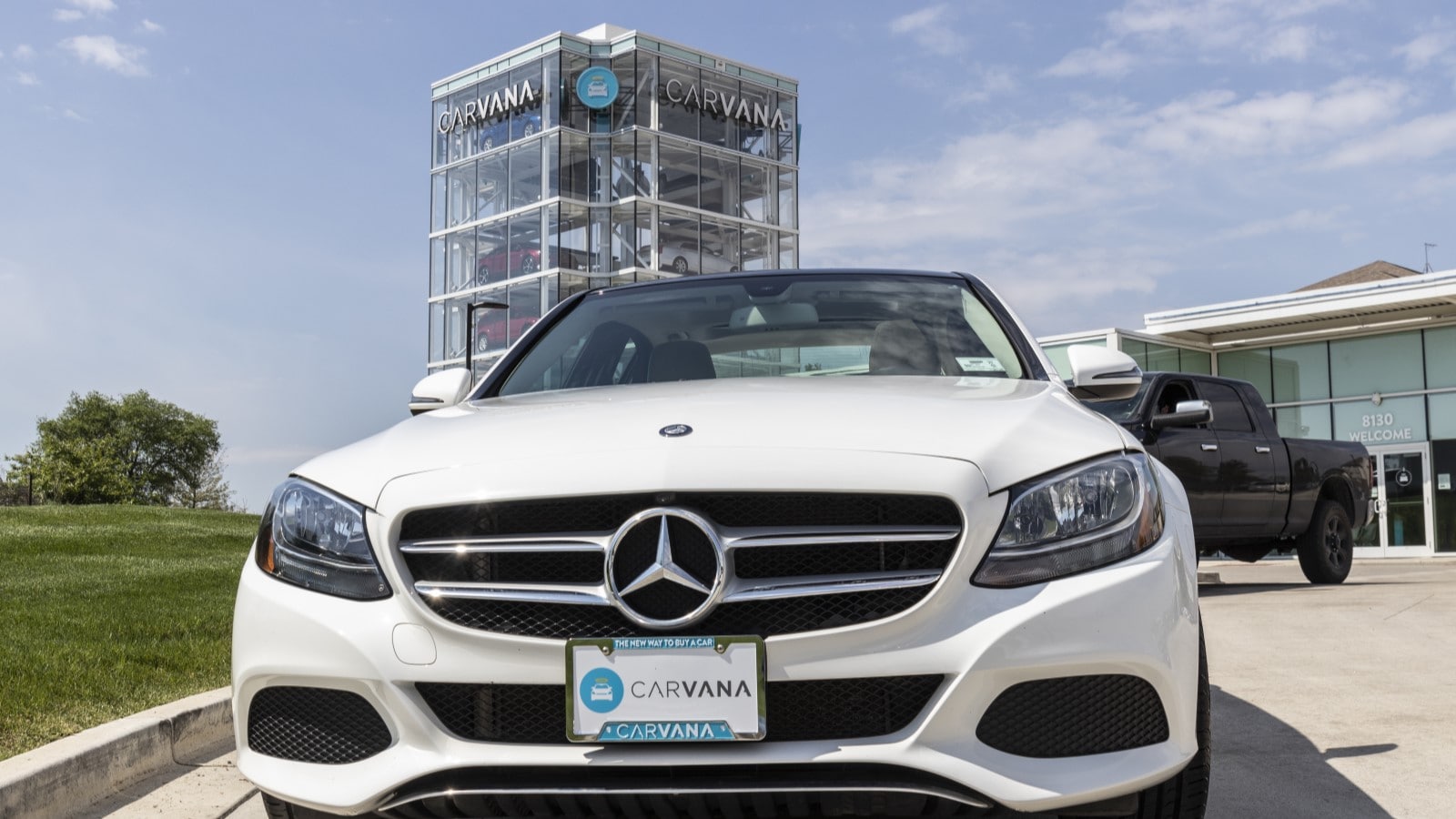
Consumer Legal Peril: Arrests, Impounds, and Fines for Expired Registrations
The “Moonshiner” Reality: Criminalization of the Consumer
The widespread failure of Carvana to transfer titles has mutated from a bureaucratic annoyance into a genuine public safety hazard, criminalizing its own customer base. Buyers who paid tens of thousands of dollars for a vehicle find themselves driving what law enforcement views as stolen or unregistered contraband. The psychological toll is severe; ordinary citizens are forced to navigate back roads and dodge police cruisers to avoid the humiliation of a traffic stop. Jo Riedel, a Maryland customer who purchased a Mitsubishi Outlander, described his existence as akin to a “moonshiner in Appalachia,” sneaking his children to school on side streets to evade detection after Carvana failed to provide permanent tags for over a year.
This fear is not paranoia; it is a rational response to a tangible threat. When Carvana pattern through temporary tags from remote states, issuing a Georgia permit to a driver in Illinois or an Arizona tag to a resident of Pennsylvania, it raises immediate red flags for patrol officers. A vehicle driven in one state with expired or repeated temporary tags from another jurisdiction is a textbook indicator of theft or fraud. Consequently, customers are not inconvenienced; they are targeted. The result is a disturbing pattern where law-abiding consumers are detained on the side of the highway, forced to explain Carvana’s administrative collapse to skeptical officers who see only an unregistered vehicle.
Police Interventions and Wrongful Detentions
The legal peril escalates beyond simple citations. In Texas, a customer identified as Boyce experienced the full weight of this negligence when his vehicle was towed and impounded. The catalyst was a clerical error typical of Carvana’s chaotic back-office operations: the Vehicle Identification Number (VIN) printed on his temporary tag did not match the VIN on the car itself. When police ran the plates, the gap signaled a chance “cloned” or stolen vehicle. Boyce was left stranded, his car seized, solely because the retailer could not perform the basic function of printing a correct permit.
These incidents are not anomalies. Class action lawsuits filed in Pennsylvania and Florida allege that Carvana’s failure to timely register vehicles has caused consumers to be “questioned and sometimes arrested by law enforcement.” In Florida, a customer was pulled over for a minor traffic infraction, only to be detained when the officer discovered the temporary tag was invalid. The driver was held by police while they attempted to verify ownership, a process made nearly impossible because Carvana had not yet filed the title paperwork with the state. The driver was eventually released, not before suffering the indignity of a roadside detention that treated a legitimate purchase as a criminal act.
The Financial and Legal Aftermath
For those who avoid arrest, the financial continues in the form of court fines and impound fees. Police officers are bound by state statutes; they cannot simply wave through an unregistered vehicle because the driver blames the dealership. Citations for driving with expired registration or no valid plates are strict liability offenses in jurisdictions. Customers are slapped with fines ranging from hundreds to thousands of dollars. While Carvana has occasionally offered reimbursement checks, such as a paltry $390 offered to a Maine customer to cover “transportation” when tags expired, these payments frequently arrive months late, if at all, and rarely cover the full cost of legal defense, court fees, and increased insurance premiums triggered by the citations.
The situation is particularly dire for customers in states like Massachusetts or Georgia, where police use Automated License Plate Readers (ALPR). These systems instantly flag expired or invalid temporary tags, leading to immediate stops., officers have seized the physical license plates off the car, leaving the driver legally stranded. The load of proof then shifts entirely to the consumer, who must appear in court to prove ownership of a vehicle for which they hold no title. Judges, frustrated by the flood of unregistered vehicles, are not always lenient, and the record of the offense remains attached to the driver’s license, not Carvana’s corporate ledger.
widespread Negligence as a Business Model
The persistence of these legal entanglements suggests that Carvana priced the risk of customer arrest into its operations. By continuing to sell vehicles without possessing the titles, a violation of state laws in jurisdictions like Illinois and Ohio, the company knowingly placed buyers in legal jeopardy. When regulators in Illinois suspended Carvana’s license in May 2022, they the “misuse of out-of-state temporary registration permits” as a primary driver. The state specifically noted that Carvana’s practice of issuing multiple temporary tags from different states was a maneuver to bypass the 20-day title transfer requirement, directly exposing Illinois drivers to arrest and vehicle impoundment.
Attorneys like Robert Cocco in Philadelphia and Philip Robinson in Maryland have fielded hundreds of complaints, forming the basis of class-action litigation that paints a picture of a company overwhelmed by its own growth and indifferent to the legal safety of its clientele. The lawsuits detail cases where consumers waited over 700 days for a title, driving on a carousel of illegal temporary tags the entire time., every time a Carvana customer starts their engine, they are gambling their clean criminal record against the company’s administrative backlog.
The Illinois Suspension: A State Regulator's Battle to Revoke Carvana's License
| Date | Action | Details |
|---|---|---|
| Feb 2022 | Investigation Launched | Secretary of State Police open inquiry after receiving ~95 consumer complaints regarding title delays. |
| May 10, 2022 | License Suspended | Secretary Jesse White suspends Carvana’s license for failure to transfer titles and misuse of out-of-state tags. |
| May 26, 2022 | Temporary Stay | DuPage County court allows sales to resume under strict conditions; Carvana banned from issuing own tags. |
| July 18, 2022 | Suspension Reinstated | State finds Carvana violated the stay order by continuing to problem improper tags and failing to process titles. |
| July 29, 2022 | TRO Granted | Court grants Temporary Restraining Order allowing limited sales; strict monitoring by third-party remitters required. |
| Jan 24, 2023 | Settlement Reached | Carvana admits to violating state law, forfeits $250, 000 bond, and agrees to ongoing police inspections. |
### Operational Reality vs. Marketing Myth The Illinois case dismantled the “direct” narrative Carvana pitched to investors. The company’s business model relied on centralizing title operations to reduce overhead, yet this centralization created a bottleneck that violated state laws requiring local compliance. When Illinois forced Carvana to use local third-party remitters— decentralizing the process—the company could function legally, at a higher operational cost. This regulatory intervention exposed a serious flaw: Carvana’s efficiency was partly an illusion created by cutting corners on legal compliance. When forced to follow the same rules as a brick-and-mortar dealership, the “Amazon of Cars” struggled to maintain the velocity of its sales without violating the law. The admission of guilt in Illinois stands as a permanent record of the company’s operational failure during its period of hyper-growth.

Pennsylvania Class Action: Allegations of Deceptive Trade Practices and RICO Violations
The Jennings Complaint: A Case Study in Organized Fraud
The legal epicenter of the consumer revolt against Carvana is found in the U. S. District Court for the Eastern District of Pennsylvania. Here, the class action lawsuit *Jennings et al. v. Carvana, LLC* (Case No. 2: 21-cv-05400) exposes the inner workings of the retailer’s logistics and compliance failures. Filed originally in November 2021 by plaintiffs Dana Jennings and Joseph A. Furlong, the complaint does not allege administrative incompetence; it outlines a calculated business practice of selling vehicles the company does not legally own. The core allegation is that Carvana sold vehicles to Pennsylvania consumers without possessing the certificates of title, a violation of the Pennsylvania Unfair Trade Practices and Consumer Protection Law (UTPCPL). By accepting payment for vehicles they could not legally transfer, Carvana sold “ghost” cars, vehicles that the buyers could drive never truly own. This practice, according to the plaintiffs, was not an error a standard operating procedure designed to prioritize sales velocity over legal compliance.
The “Tag Mill”: An Interstate Shell Game
Central to the allegations is the method Carvana used to conceal the title delays: the “Temporary Tag Mill.” When a vehicle is sold without a title, the retailer cannot problem a permanent registration. To keep the buyer on the road and silence complaints, Carvana allegedly exploited out-of-state temporary registration systems. Plaintiff Dana Jennings, who purchased a 2017 Kia Sportage, did not receive his permanent Pennsylvania registration for months. Instead, Carvana sent him a succession of temporary tags from Arizona and Tennessee, states with no connection to the driver or the vehicle. This interstate shuffling of temporary permits is the behavior that elevates the allegations from simple negligence to organized deception. The lawsuit contends that Carvana knowingly utilized these remote state systems to bypass Pennsylvania’s strict registration timelines, operating an unlicensed “tag rental” agency to cover its tracks. This “Tag Mill” served a dual purpose: it allowed Carvana to recognize revenue from the sale immediately while deferring the costly and time-consuming work of title procurement. For the consumer, the result was a legal minefield. Driving on expired or out-of-state temporary tags in Pennsylvania subjects drivers to police stops, fines, and vehicle impoundment. The *Jennings* complaint details how this system shifted the legal risk entirely onto the consumer, who had paid for a “direct” online experience only to become a target for law enforcement.
The “One-Document Rule” and the Arbitration Defeat
Carvana’s primary defense strategy was to force these claims into arbitration, a private dispute resolution process that prevents class action lawsuits. The company argued that the arbitration agreement signed by customers during the digital checkout process was binding. Yet, in a significant legal ruling that reverberated through the auto industry, the courts rejected this shield. The U. S. Court of Appeals for the Third Circuit, affirming the District Court’s decision, ruled that Carvana’s arbitration agreement was unenforceable under Pennsylvania law. The court the “One-Document Rule” found in the Pennsylvania Motor Vehicle Sales Finance Act (MVSFA). This statute requires that all agreements relating to the installment sale of a motor vehicle be contained in a single document, the Retail Installment Sales Contract (RISC). Carvana had separated the arbitration agreement from the RISC, likely to bury it in the digital paperwork. The court found that because the arbitration clause was not explicitly incorporated into the main sales contract, it was void. This ruling stripped Carvana of its ability to hide behind arbitration, exposing the company to a public jury trial and the chance for treble damages (triple the actual damages) under the UTPCPL. The decision in *Jennings* set a precedent that consumers across the state to join the class action, transforming individual grievances into a shared legal threat.
RICO and the “Pattern of Racketeering”
While the primary counts in *Jennings* focus on state consumer protection laws, the factual allegations mirror the predicate acts of a Racketeer Influenced and Corrupt Organizations (RICO) enterprise. The “Tag Mill” scheme relies on the use of interstate wires (internet sales) and mail (shipping tags) to further a fraudulent activity, selling untransferable vehicles. Legal observers note that the * * of the operation, issuing thousands of fraudulent tags across state lines to conceal the sale of title-less vehicles, fits the definition of a “pattern of racketeering activity.” By 2026, the litigation has expanded to examine whether this centralized decision-making process, directed from Carvana’s headquarters in Arizona executed in Pennsylvania, constitutes a criminal enterprise under federal statutes. The plaintiffs that the company did not just “fail” to transfer titles; it built a sophisticated infrastructure to monetize that failure, profiting from the sale of vehicles it knew it could not legally register.
Current Status: The Class Certification Battle
As of early 2026, *Jennings v. Carvana* proceeds in the Eastern District of Pennsylvania. Following the failed arbitration appeal, the case has moved to the discovery phase, where plaintiffs are seeking internal communications regarding the “Tag Mill.” The court has allowed the plaintiffs to advance theories regarding deceptive charges, specifically investigating whether Carvana’s “delivery” and “registration” fees were collected for services the company knew it could not perform. The outcome of this case carries serious. A judgment against Carvana would not only result in millions of dollars in damages could also force a court-ordered restructuring of its title processing operations. The *Jennings* case stands as the most advanced and dangerous legal challenge to Carvana’s business model, threatening to prove that the company’s “disruptive” speed was achieved by breaking the law.
| Allegation Category | Specific Claim | Legal Implication |
|---|---|---|
| Title Fraud | Selling vehicles without possession of the certificate of title. | Violation of PA UTPCPL; selling “untransferable” goods. |
| The “Tag Mill” | Issuing multiple temporary tags from unconnected states (AZ, TN) to hide delays. | Misuse of state registration systems; chance wire/mail fraud. |
| Contract Violation | Failure to deliver permanent registration within the contracted 30-60 day window. | Breach of Contract; material failure of consideration. |
| Procedural Deception | Hiding arbitration clauses outside the Retail Installment Sales Contract (RISC). | Violation of PA Motor Vehicle Sales Finance Act (MVSFA). |

North Carolina's Raleigh Ban: A Six-Month Prohibition on Sales for Title Violations
Michigan's Probationary Status: Regulatory Oversight of Registration Breaches
Section 7: Michigan’s Probationary Status: Regulatory Oversight of Registration Breaches
The regulatory conflict between Carvana and the State of Michigan represents one of the most aggressive enforcement actions taken against the retailer, escalating from repeated warnings to a complete revocation of its physical dealership license. Unlike other states that levied fines while allowing operations to continue largely unchecked, the Michigan Department of State (MDOS) declared Carvana an “imminent threat” to public safety in October 2022. This designation followed a multi-year pattern of non-compliance where the company repeatedly violated probation agreements intended to correct its title transfer failures. The Michigan case provides a clear window into the company’s operational disregard for state laws, as regulators uncovered evidence not just of incompetence, of active document destruction.
The “Imminent Threat” Designation
On October 7, 2022, Michigan Secretary of State Jocelyn Benson suspended the license of Carvana’s sole physical dealership in the state, located in Novi. The suspension order 112 specific violations of the Michigan Vehicle Code, primarily involving the failure to apply for title and registration within the statutory 15-day window. Yet the charges extended beyond mere delays. State investigators alleged that Carvana employees had committed fraudulent acts by destroying title applications and related documents for three vehicles that customers had returned. This destruction of records erased the paper trail for those vehicles, complicating future sales and violating record-retention laws designed to prevent title washing.
The suspension was not a sudden reaction to a new problem the culmination of a failed rehabilitation effort. MDOS records show that the state had already placed Carvana on probation in May 2021 following an initial wave of consumer complaints. At that time, the company paid a $2, 500 fine and admitted to violating the vehicle code. When inspectors returned in early 2022, they found the problems had. In February 2022, Carvana signed a second probation extension, paying a $5, 000 fine and again admitting to violations. By October, the state determined that the retailer had violated the terms of its probation 127 times. The “imminent threat” classification allowed the state to suspend the license immediately, bypassing the standard hearing process to stop the sale of vehicles with compromised paperwork.
The Settlement: A License Surrendered
Carvana attempted to block the suspension through the courts, filing a request for a temporary restraining order and characterizing the state’s actions as “illegal and reckless.” The company argued that the violations were “technical paperwork” errors that did not warrant a shutdown. A Michigan Court of Claims judge denied this request, ruling that the state was statutorily permitted to suspend the license without a hearing given the risk to the public. The court noted that Carvana’s claim of irreparable harm was insufficient, particularly because the suspension only affected the Novi location and not the company’s ability to sell vehicles online.
In January 2023, the standoff ended with a plea deal that permanently altered Carvana’s footprint in Michigan. Under the terms of the settlement, Carvana agreed to voluntarily surrender its dealer license for the Novi location in lieu of further administrative action. The agreement barred the company from reapplying for a Michigan dealer license for three years. also, Carvana paid a $10, 000 penalty to cover the cost of the investigation. While the company’s public relations team framed the settlement as a victory that “cements” their ability to serve Michigan customers, the legal reality was a retreat. The company lost its status as a licensed Michigan dealer, a designation that carries specific privileges and responsibilities regarding the direct handling of titling paperwork.
Consumer load and the “Vending Machine” Loophole
The revocation of the Novi license created a unique regulatory environment for Michigan buyers. While Carvana retained the right to sell vehicles to Michigan residents through its online platform, it could no longer process these sales as a local dealership. The settlement explicitly stated that Michigan residents purchasing vehicles from Carvana would need to retitle the vehicles to Michigan on their own. This provision shifted the bureaucratic load from the dealer, who is paid to handle these complexities, directly onto the consumer. Buyers became importers of their own vehicles, responsible for navigating the interaction between Carvana’s out-of-state paperwork and the Michigan Secretary of State’s requirements.
This arrangement highlights a significant gap in current automotive regulations. By stripping the physical dealer license allowing online sales to continue, the state removed the immediate method of “imminent harm” (the Novi dealership issuing bad tags) could not fully insulate consumers from the broader widespread failures of Carvana’s centralized titling department. The “vending machine” in Novi remained operational as a pickup point, yet the legal transaction occurred elsewhere, placing it outside the direct purview of the dealership inspectors who had identified the original fraud. This outcome demonstrates the difficulty state regulators face when policing a digitally native corporation that can simply route transactions through a different jurisdiction when local compliance becomes too burdensome.
widespread Recidivism
The Michigan timeline reveals a pattern of widespread recidivism that contradicts Carvana’s frequent assertions that title delays are incidents caused by pandemic backlogs or third-party. The state provided the company with two distinct opportunities to reform its practices over an 18-month period. In both instances, Carvana admitted to the violations, paid nominal fines, and then continued to operate in violation of the law. The discovery of 112 new violations during a probationary period suggests that the company’s internal processing systems were fundamentally incapable of meeting statutory deadlines, or that executive leadership prioritized sales volume over legal compliance.
The admission of destroying title documents is particularly damning. In the automotive industry, the chain of title is sacrosanct; it is the only legal proof of ownership history. For a licensed dealer to destroy these records, even for returned vehicles, suggests a chaotic internal environment where standard operating procedures for inventory management are either nonexistent or ignored. This specific allegation separates the Michigan case from simple administrative incompetence, pointing instead to a willful disregard for the legal frameworks that govern vehicle ownership.
| Date | Action | Outcome |
|---|---|---|
| May 2021 | Initial Probation Agreement | 18-month probation, $2, 500 fine, admission of violations. |
| Feb 2022 | Probation Extension | 6-month extension, $5, 000 fine, admission of continued violations. |
| Oct 2022 | License Suspension | Novi license suspended for “imminent threat” to public safety; 112 violations. |
| Jan 2023 | Final Settlement | Novi license surrendered for 3 years; $10, 000 penalty; consumers must self-title. |
The 'Vertical Integration' Bottleneck: How Centralized Processing Choked Compliance
The Tempe Funnel
This decision created a massive administrative bottleneck. As sales volume exploded, doubling and tripling year over year, the backend infrastructure required to legalize those sales remained dangerously thin. Former employees and internal reports describe a chaotic environment where title clerks in Arizona were tasked with processing registration paperwork for customers in Florida, Pennsylvania, and Texas. These workers, frequently underpaid and facing high turnover, absence the specialized knowledge required to navigate the regulatory mazes of foreign jurisdictions. The result was a “Tempe Funnel.” Thousands of deals flowed in from across the country, the paperwork hit a wall in Arizona. A clerk familiar with Arizona’s electronic title system might not understand the specific notary requirements for a power of attorney in North Carolina or the emissions certification mandates in California. Simple errors, a missing signature, an incorrect fee, a wrong form, resulted in rejections from state DMVs. In a local dealership, such an error might be fixed in an afternoon. In Carvana’s centralized loop, a rejection meant the paperwork had to travel back to the customer, then back to a hub, then back to the DMV, adding weeks or months to the process.
Selling the “Unsellable”
The bottleneck was not a matter of clerical incompetence; it was a function of inventory management. To maintain its “limitless” inventory, Carvana aggressively acquired vehicles from auctions and private sellers. In a functional system, a dealer waits to receive the clean title from the seller before listing the car for sale. This ensures that when a customer buys the car, the transfer of ownership is a mere formality. Carvana, prioritizing sales velocity over legal compliance, frequently listed and sold vehicles before it possessed the title. This practice, known as “floating” the title, is risky common in small doses. Carvana industrialized it. The company’s algorithms predicted that the title would arrive eventually, so they sold the car immediately. When the title from the previous owner was delayed, stuck in a lien release with a bank or lost in transit, the new buyer was left in limbo. Because the centralized processing team had no physical title to process, the file sat in a queue. The customer, meanwhile, was driving the car. To keep the customer on the road, Carvana’s system automatically generated a temporary tag. When that tag expired, and the title was still missing, the system generated another. And another. This was not a glitch; it was a structural dependency. The centralized model could not clear the backlog of missing titles fast enough to keep up with the sales front-end.
The Disconnect: Tech Speed vs. Bureaucratic Reality
The core failure lay in the disconnect between Carvana’s digital front-end and the analog reality of state bureaucracy. On the website, a customer could purchase a vehicle in minutes. The user interface was slick, responsive, and. Behind the curtain, the method for transferring ownership was grinding to a halt. Internal communications in shareholder lawsuits reveal that executives were aware of these “operational constraints.” In letters to shareholders, the company euphemistically referred to “challenges with processing titles and registrations” caused by “explosive growth.” These admissions mask the severity of the breakdown. The company had built a Ferrari engine for sales and bolted it to a wagon wheel for compliance. The centralization meant that a emergency in one state rippled through the entire network. When Florida regulators threatened to pull Carvana’s license due to title delays, the company couldn’t just fix the Florida office, because there was no autonomous Florida office. They had to scramble resources at the central hubs to prioritize Florida paperwork, likely at the expense of customers in other states. This reactive, whack-a-mole management style defined the company’s operations during its peak growth years.
The Human Cost of “Efficiency”
The victims of this bottleneck were not just metrics on a dashboard; they were customers criminalized by their purchase. Jo Riedel, a Maryland father, described his experience to reporters after buying a Mitsubishi Outlander. When his temporary tags expired and Carvana failed to provide permanent registration, he was forced to park the vehicle. He described driving on back roads to take his children to school, feeling like a “moonshiner,” terrified of being pulled over. His fear was justified. Across the country, Carvana customers were stopped by police, ticketed, and, arrested for driving unregistered vehicles. In these instances, the centralized support system failed again. Customers calling for help reached call centers where agents had no direct access to the title department. They read from scripts, promising that the “paperwork is being processed,” while the customer stood on the side of the road with a police officer. The vertical integration that was supposed to provide a “direct” experience instead created a wall of separation between the buyer and the people with the power to fix the problem.
The Band-Aid Solution
To mitigate the pressure from this bottleneck, Carvana resorted to the abuse of out-of-state temporary tags (discussed in Section 1). This was not a separate scam a direct patch for the vertical integration failure. Because the Tempe hub could not process a Pennsylvania title fast enough, they issued an Arizona tag, then a Georgia tag, then a Tennessee tag. They used the regulatory gaps of states with laxer dealer laws to bypass the logjam they had created in the customer’s home state. This strategy reveals a fundamental arrogance in the business model. Carvana operated as if the internet had rendered state borders obsolete. They treated vehicle registration as a minor administrative hurdle rather than a strict legal requirement. The “Amazonification” of the auto industry worked for the shopping cart, it broke down at the county clerk’s office.
Regulatory Backlash and Forced Decentralization
The collapse of this centralized model eventually forced Carvana’s hand. As states like Illinois, North Carolina, and Michigan cracked down, suspending licenses and imposing probations, the company had to scramble to build the local infrastructure it had initially scorned. They began hiring more state-specific title clerks and opening local processing offices to appease regulators. yet, the damage was done. The backlog of tens of thousands of title transfers took years to unwind. The “Vertical Integration” that was touted as a competitive moat turned out to be a prison. By refusing to play by the rules of the fragmented American regulatory system, Carvana created a self-inflicted emergency that cost millions in legal fees, fines, and brand reputation. The company proved that while disrupt the sales process, not disrupt the law of the land simply by ignoring it. The bottleneck was not a bug; it was the feature of a system designed for speed at the expense of legality.
The Garcia Family Web: Undisclosed Related-Party Transactions with DriveTime
Securities Fraud Allegations: Overstating Earnings via 'Gain on Loan Sales' Manipulation
SECTION 10 of 14: Securities Fraud Allegations: Overstating Earnings via ‘Gain on Loan Sales’ Manipulation
The financial engine driving Carvana’s reported growth frequently operated on a method distinct from selling cars: the securitization and sale of subprime auto loans. While traditional dealerships rely on vehicle margins, Carvana’s business model increasingly depended on “Gain on Loan Sales” (GOLS), the immediate profit booked when bundling customer loans and selling them to third-party investors. Between 2023 and 2026, forensic financial reports and shareholder lawsuits alleged that this metric ceased to be a byproduct of retail activity and became a manufactured figure, inflated through undisclosed related-party transactions and accounting maneuvers designed to overstate earnings by over $1 billion.
The ‘Gain on Sale’ Mirage
Investors long scrutinized Carvana’s ability to report record “Gross Profit per Unit” (GPU) even as used car prices plummeted and interest rates rose. The answer frequently lay in the finance division. By originating high-interest loans for subprime borrowers and selling them at a premium, Carvana could offset losses on the physical metal of the car. In January 2025, Hindenburg Research released a dossier titled “Carvana: A Father-Son Accounting Grift For The Ages,” which challenged the legitimacy of these gains. The report identified a gap in how Carvana offloaded its riskier debt. While the company claimed to sell loans to diverse institutional investors, Hindenburg’s investigation traced approximately $800 million in loan sales to a “suspected undisclosed related party.” The mechanics described in the report suggested a circular flow of capital. Carvana would originate loans, then sell them to an entity controlled by or affiliated with the Garcia family’s existing network, specifically DriveTime or Bridgecrest, at prices higher than the open market would bear. This allowed Carvana to book an immediate, inflated “gain” on its income statement. The purchaser, meanwhile, would absorb the true risk or mark down the asset on their own private books, shielding Carvana’s public shareholders from the reality of the loan’s quality.
The Gotham City Report and the ‘GoFi’ Conduit
One year later, in January 2026, Gotham City Research published a second, more granular exposé titled “Carvana: Bridgecrest and the Undisclosed Transactions and Debts.” This document provided the forensic accounting that triggered a 20% collapse in Carvana’s stock price and a fresh wave of federal securities fraud investigations. The Gotham report focused on a previously obscure entity named GoFi, LLC. Financial documents obtained by investigators showed that GoFi generated nearly 100% of its 2024 revenue, specifically $7. 1 million, solely from “gains on the sale of finance receivables.” The report alleged GoFi functioned not as an independent business, as a pass-through conduit designed to move loans between corporate entities. According to the allegations, Carvana sold loans to Bridgecrest (the loan servicer majority-owned by the Garcia family) at inflated values to recognize an upfront profit. Bridgecrest would then allegedly mark down the value of those same assets by up to 15%, a figure method $900 million in 2024 alone. This meant Carvana’s reported profitability depended on a related party subsidizing its margins by overpaying for toxic debt. The report concluded that without these subsidies, Carvana’s touted “turnaround” in 2023 and 2024 would have been a financial fiction.
SG&A Dumping and GPU Inflation
Beyond loan sales, the securities fraud allegations extended to how Carvana calculated its headline GPU metric. To convince Wall Street of its efficiency, Carvana needed to show high profit margins on each vehicle. The Hindenburg report alleged that the company achieved this by “dumping” approximately $390 million of direct selling costs into “Selling, General, and Administrative” (SG&A) expenses annually. Standard accounting practices require costs directly associated with preparing a car for sale, such as reconditioning, transport, and auction fees, to be included in the “Cost of Goods Sold” (COGS). By shifting these costs to SG&A, Carvana artificially lowered its COGS, so mathematically inflating its Gross Profit per Unit by an estimated 34. 5%. This reclassification allowed executives to tout “record profitability” to investors, even as the company’s actual operational efficiency remained stagnant or.
Regulatory and Legal
The release of these reports triggered immediate legal action. By February 2026, major securities litigation firms, including Block & Leviton, Bleichmar Fonti & Auld, and Pomerantz LLP, filed class-action lawsuits on behalf of shareholders. The complaints alleged that Carvana’s executives made materially false and misleading statements regarding the company’s financial health, specifically concealing the extent of related-party subsidies that propped up the GOLS metric. The lawsuits pointed to the “Father-Son” as a central vector of the alleged fraud. Ernest Garcia II, the father of CEO Ernest Garcia III and a major shareholder, controlled the entities (DriveTime, Bridgecrest) that facilitated these transactions. The 2026 complaints argued that this structure allowed the Garcias to enrich themselves through stock sales, Ernest Garcia II sold billions in stock during the periods of inflated valuation, while retail investors were left holding equity in a company whose earnings were allegedly fabricated. Reports in early 2026 also indicated that the Securities and Exchange Commission (SEC) had opened an active investigation into these accounting irregularities. The probe focused on whether Carvana’s disclosures regarding the “unrelated third party” purchasers of its loans violated federal securities laws. If the “mystery buyers” of the $800 million in loans were indeed trusts affiliated with company insiders or directors, Carvana’s failure to disclose them would constitute a serious breach of the Securities Exchange Act of 1934.
The Subprime Extension Scheme
A final component of the alleged securities fraud involved the manipulation of loan delinquency rates. Investors monitor delinquency rates to gauge the quality of a lender’s portfolio. The Hindenburg report detailed how Carvana’s loan servicer, Bridgecrest, aggressively granted loan extensions to borrowers who could not pay. By formally extending the term of a loan rather than marking it as delinquent, Bridgecrest kept the “non-performing loan” ratio artificially low. Data from S&P Global in late 2024 showed Carvana’s loan extensions had more than doubled to 4. 18%, while the industry average for subprime issuers dropped to 3. 42%. This practice masked the deteriorating quality of the loans Carvana held on its books, further misleading investors about the company’s long-term credit risk exposure. These financial machinations mirrored the operational chaos found in the title and registration departments. Just as the company allegedly issued temporary tags to mask its inability to transfer titles, it allegedly used accounting gaps and related-party conduits to mask its inability to generate organic profit. In both cases, the appearance of speed and efficiency concealed a system under the weight of non-compliance and manipulation.
Insider Stock Dump: Executive Share Sales Preceding Public Disclosure of Regulatory Crises
The $3. 6 Billion Exit: A Timeline of Opportunistic Liquidation
While state regulators in Illinois, North Carolina, and Michigan were quietly amassing evidence of Carvana’s widespread title failures, the company’s controlling shareholder was executing one of the most aggressive stock liquidations in recent corporate history. Between October 2020 and August 2021, Ernest Garcia II, the father of CEO Ernest Garcia III and the holder of the company’s controlling voting power, sold approximately $3. 6 billion worth of Carvana stock. These sales occurred during a period when the company’s share price was inflated by pandemic-driven demand, yet prior to the widespread public disclosure of the “temporary tag mill” and the subsequent regulatory crackdowns that would send the stock plummeting by over 90%. The timing of these transactions raises serious questions about the between internal corporate knowledge and public investor awareness. As Garcia II cashed out shares at prices frequently exceeding $300, the company’s internal “vertical integration” bottleneck, the centralized processing failure responsible for thousands of title violations, was already reaching a breaking point. By the time the Illinois Secretary of State suspended Carvana’s license in May 2022, citing months of unaddressed consumer complaints and illegal out-of-state registrations, the Garcia family had already secured billions in realized gains.
Correlation of Sales with Undisclosed Regulatory Rot
A forensic examination of the trading window reveals a disturbing correlation between executive cash-outs and the escalation of undisclosed regulatory threats. In the months leading up to the North Carolina ban in August 2021, Garcia II’s selling accelerated. During this same interval, internal emails and whistleblower accounts suggest the company was fully aware that its title transfer backlog had become unmanageable. The “temporary tag mill”, the practice of cycling temporary permits from states like Arizona and Georgia to mask delays, was in full operation to keep deliveries moving even with the back-end compliance seized up. Shareholder lawsuits, including *Schertz v. Garcia II*, have alleged that these sales were predicated on material non-public information (MNPI). The plaintiffs that the controlling shareholder, by virtue of his position and family connection to the CEO, had access to real-time data regarding the severity of the title emergency that was not yet visible to the market. While retail investors were buying into the narrative of “direct” online retailing, the insiders were exiting positions before the reality of license suspensions and criminal investigations shattered the growth story.
The “Bargain Basement” Pattern and Self-Dealing Allegations
The 2020-2021 sell-off was not an incident of questionable timing part of a broader pattern of alleged self-dealing. In March 2020, at the onset of the COVID-19 pandemic, Carvana’s stock price briefly collapsed. During this liquidity crunch, the Garcia family and select insiders participated in a direct share offering at $45 per share, a price plaintiffs in derivative lawsuits later characterized as “bargain basement.” This capital raise, which excluded most public shareholders, allowed the Garcias to increase their stake at a depressed valuation. Mere months later, as the stock rebounded on the back of the online delivery boom, Garcia II began his systematic divestment. The sequence of events, buying low during a moment of maximum fear and selling high before the of operational failures, demonstrates a sophisticated maneuvering around market volatility that prioritized insider wealth preservation over shareholder transparency.
Continued Executive Disposals Through 2026
The pattern of executive disposals did not end with the 2022 crash. As Carvana’s stock price recovered in 2024 and 2025 following restructuring efforts, insider selling resumed with renewed vigor. In late 2025 and early 2026, CEO Ernest Garcia III and CFO Mark Jenkins executed significant stock sales under Rule 10b5-1 trading plans. While these plans provide a legal defense by pre-scheduling trades, the sheer volume of disposals, amounting to tens of millions of dollars, continues to signal a absence of long-term executive conviction in holding the equity. For instance, in October 2025 alone, Garcia III sold over $3. 7 million in stock, while Jenkins liquidated approximately $60 million in November 2024. These sales occurred as the company faced fresh scrutiny from the SEC and short-seller reports alleging accounting irregularities related to loan sales and related-party transactions with DriveTime. The persistence of heavy insider selling, even as the company touts record unit economics, suggests that the leadership remains eager to monetize their positions whenever the market offers a window, leaving outside investors to bear the risks of the regulatory shoe to drop.
Table: Major Insider Sales vs. Regulatory Disclosures (2020-2022)
| Period | Insider Action | Regulatory Context (Undisclosed or Developing) |
|---|---|---|
| Oct 2020, Dec 2020 | Garcia II begins massive daily selling program. | Internal backlog of title transfers grows; initial consumer complaints spike in PA and IL. |
| Jan 2021, Aug 2021 | Garcia II sells ~$3. 6 billion total; stock peaks ~$370. | North Carolina investigation intensifies; “Tag Mill” strategy expands to cover delays. |
| Aug 2021 | Sales slow as stock begins decline. | Public Disclosure: North Carolina bans Carvana from Raleigh area for 6 months. |
| May 2022 | Stock crashes to ~$38; insiders largely out. | Public Disclosure: Illinois suspends license; criminal investigation announced. |
The 'Bridgecrest' Shell Game: Lienholder Confusion and Data Mismatches
Arbitration Traps: Forcing Consumer Claims Out of Court to Hide Systemic Issues
Arbitration Traps: Forcing Consumer Claims Out of Court to Hide widespread problem
Carvana’s most defense against the wave of consumer outrage regarding title delays and registration failures has not been operational improvement, a legal forcefield: the mandatory arbitration clause. Buried within the digital paperwork of every vehicle sale is a binding agreement that strips customers of their right to sue in public court or join class-action lawsuits. By atomizing thousands of chance shared claims into individual, secretive proceedings, Carvana has successfully obscured the true of its logistical collapse. yet, recent judicial rulings have begun to this shield, exposing the company’s “legal engineering” to public scrutiny. #### The Pennsylvania “One-Document” Defeat The most significant breach in Carvana’s legal armor occurred in Pennsylvania, where the company’s own sloppy contract administration handed consumers a major victory. In the case of *Jennings v. Carvana*, the U. S. Court of Appeals for the Third Circuit affirmed a district court ruling that invalidated Carvana’s arbitration agreement for Pennsylvania buyers. The legal failure hinged on a specific provision of Pennsylvania’s Motor Vehicle Sales Finance Act (MVSFA) known as the “One-Document Rule.” This statute mandates that all agreements relating to an installment sale of a motor vehicle must be contained within a single contract—the Retail Installment Sales Contract (RISC). Carvana, yet, presented the arbitration agreement as a separate document, distinct from the RISC. In a March 2024 opinion, the Third Circuit ruled that because the arbitration clause was not integrated into the primary sales contract, it was unenforceable under state law. The court rejected Carvana’s argument that the documents should be treated as a single transaction because they were signed simultaneously. This technical fatal error allowed the *Jennings* class action—alleging months-long title delays and the illegal issuance of out-of-state temporary tags—to proceed in federal court, stripping Carvana of its ability to force the claims into the shadows of private arbitration. #### The “Opt-Out” Illusion and Digital obfuscation For consumers outside of Pennsylvania, the arbitration trap remains a potent weapon. Carvana’s purchase process, frequently completed on a smartphone, is designed to guide buyers through a stack of digital agreements. The arbitration clause includes a “right to reject” provision, the method to exercise it is deliberately cumbersome and obscure. To opt out, a consumer must send a written notice to a specific email address (`arbitrationoptout@carvana. com`) or a physical letter to Carvana’s legal department in Tempe, Arizona, within 30 days of signing the contract. The notice must include the VIN, the buyer’s name, and a clear statement of rejection. Most customers, focused on the excitement of a new vehicle or the logistics of delivery, are unaware this deadline exists until it has passed. By the time title problem arise—frequently months after the sale—the 30-day window has long closed, locking the consumer into a system where the rules are frequently stacked against them. Consumer complaints and legal filings indicate that even when buyers attempt to opt out, the process is not always direct. Reports exist of consumers sending rejection emails only to face later arguments from Carvana’s legal team claiming the notice was never received or was formatted incorrectly. This “opt-out” provision serves less as a genuine choice and more as a legal inoculation, allowing Carvana to in court that the arbitration agreement was voluntary rather than a contract of adhesion. #### Private Attrition: The Reality of Arbitration When a consumer is successfully forced into arbitration, the dispute moves from a public courtroom to a private conference room (or Zoom call), presided over by a third-party arbitrator. This shift fundamentally alters the of the dispute. * **Secrecy:** Arbitration proceedings are confidential. There is no public docket, no media access, and no precedent-setting rulings. A finding of fraud in one case does not help the consumer; each victim must prove Carvana’s widespread failure from scratch. * **Cost and Complexity:** While Carvana frequently pays the filing fees for consumer arbitration, the process is intimidating and legally complex for unrepresented buyers. The company is represented by high-powered corporate counsel, while the consumer is frequently navigating the process alone. * **Procedural Bad Faith:** In instances where consumers have pursued arbitration, reports have surfaced of “procedural bad faith” tactics. These include delays in responding to claims, failure to produce documents, and a refusal to engage in settlement talks until the arbitration hearing is imminent. This strategy of attrition bleeds consumer resolve. A buyer stuck with an un-drivable car and a Bridgecrest loan payment frequently cannot afford the months it takes to see an arbitration case to its conclusion. settle for nondisclosure agreements and modest buybacks, ensuring the underlying evidence of Carvana’s title department failure never sees the light of day. #### The Bridgecrest Pincer Movement The arbitration trap is made more lethal by the involvement of Bridgecrest Acceptance Corporation, Carvana’s primary financing arm and a related party controlled by the Garcia family. While the consumer battles Carvana over the failure to deliver a title, Bridgecrest continues to demand monthly payments. Because Bridgecrest is technically a separate legal entity, it frequently that it is not responsible for Carvana’s failure to deliver the vehicle’s legal title. Consumers are placed in an impossible bind: stop paying for the illegal car and face credit ruin from Bridgecrest, or continue paying for a vehicle they cannot legally drive while waiting for a secret arbitration process to play out. This “pincer movement” forces consumers to capitulate, accepting whatever terms Carvana offers to exit the nightmare, further suppressing the true volume of defective transactions. By aggressively enforcing these arbitration clauses, Carvana has privatized a public regulatory emergency. The *Jennings* ruling in Pennsylvania cracked the door open, for thousands of other customers, the courthouse doors remain locked, hiding the magnitude of the company’s operational collapse behind a wall of private nondisclosure.
Growth Over Compliance: The Operational Culture Behind the Administrative Collapse
, as needed. - No markdown code fences. - Do not repeat earlier sections. Already written section titles (do not repeat): 1. The 'Temporary Tag Mill': Cycling Out-of-State Permits to Evade Limits Current time is Thursday, March 5, 2026 at 9: 17 AM UTC. Remember the current location is United States. The 'Temporary Tag Mill': Cycling Out-of-State Permits to Evade Limits Systemic Title Transfer Failures: Months-Long Delays and 'Unsellable' Cars —
Regulatory Crackdowns and License Suspensions — The of the failure forced state governments to intervene with aggressive measures rarely seen against a major national retailer. Illinois License Suspension (May 2022) Failure to.
widespread Negligence as a Business Model — The persistence of these legal entanglements suggests that Carvana priced the risk of customer arrest into its operations. By continuing to sell vehicles without possessing the.
The Illinois Suspension: A State Regulator's Battle to Revoke Carvana's License — Feb 2022 Investigation Launched Secretary of State Police open inquiry after receiving ~95 consumer complaints regarding title delays. May 10, 2022 License Suspended Secretary Jesse White.
The Jennings Complaint: A Case Study in Organized Fraud — The legal epicenter of the consumer revolt against Carvana is found in the U. S. District Court for the Eastern District of Pennsylvania. Here, the class.
The "Tag Mill": An Interstate Shell Game — Central to the allegations is the method Carvana used to conceal the title delays: the "Temporary Tag Mill." When a vehicle is sold without a title.
RICO and the "Pattern of Racketeering" — While the primary counts in *Jennings* focus on state consumer protection laws, the factual allegations mirror the predicate acts of a Racketeer Influenced and Corrupt Organizations.
Current Status: The Class Certification Battle — As of early 2026, *Jennings v. Carvana* proceeds in the Eastern District of Pennsylvania. Following the failed arbitration appeal, the case has moved to the discovery.
North Carolina's Raleigh Ban: A Six-Month Prohibition on Sales for Title Violations — SECTION 6 of 14: North Carolina's Raleigh Ban: A Six-Month Prohibition on Sales for Title Violations In August 2021, the North Carolina Division of Motor Vehicles.
Section 7: Michigan's Probationary Status: Regulatory Oversight of Registration Breaches — The regulatory conflict between Carvana and the State of Michigan represents one of the most aggressive enforcement actions taken against the retailer, escalating from repeated warnings.
The "Imminent Threat" Designation — On October 7, 2022, Michigan Secretary of State Jocelyn Benson suspended the license of Carvana's sole physical dealership in the state, located in Novi. The suspension.
The Settlement: A License Surrendered — Carvana attempted to block the suspension through the courts, filing a request for a temporary restraining order and characterizing the state's actions as "illegal and reckless.".
widespread Recidivism — The Michigan timeline reveals a pattern of widespread recidivism that contradicts Carvana's frequent assertions that title delays are incidents caused by pandemic backlogs or third-party. The.
The Garcia Family Web: Undisclosed Related-Party Transactions with DriveTime — The corporate mythology of Carvana Co. paints the company as a disruptive tech start-up that broke free from the antiquated dealership model to auto retail. This.
SECTION 10 of 14: Securities Fraud Allegations: Overstating Earnings via 'Gain on Loan Sales' Manipulation — The financial engine driving Carvana's reported growth frequently operated on a method distinct from selling cars: the securitization and sale of subprime auto loans. While traditional.
The 'Gain on Sale' Mirage — Investors long scrutinized Carvana's ability to report record "Gross Profit per Unit" (GPU) even as used car prices plummeted and interest rates rose. The answer frequently.
The Gotham City Report and the 'GoFi' Conduit — One year later, in January 2026, Gotham City Research published a second, more granular exposé titled "Carvana: Bridgecrest and the Undisclosed Transactions and Debts." This document.
Regulatory and Legal — The release of these reports triggered immediate legal action. By February 2026, major securities litigation firms, including Block & Leviton, Bleichmar Fonti & Auld, and Pomerantz.
The Subprime Extension Scheme — A final component of the alleged securities fraud involved the manipulation of loan delinquency rates. Investors monitor delinquency rates to gauge the quality of a lender's.
The $3. 6 Billion Exit: A Timeline of Opportunistic Liquidation — While state regulators in Illinois, North Carolina, and Michigan were quietly amassing evidence of Carvana's widespread title failures, the company's controlling shareholder was executing one of.
Correlation of Sales with Undisclosed Regulatory Rot — A forensic examination of the trading window reveals a disturbing correlation between executive cash-outs and the escalation of undisclosed regulatory threats. In the months leading up.
The "Bargain Basement" Pattern and Self-Dealing Allegations — The 2020-2021 sell-off was not an incident of questionable timing part of a broader pattern of alleged self-dealing. In March 2020, at the onset of the.
Continued Executive Disposals Through 2026 — The pattern of executive disposals did not end with the 2022 crash. As Carvana's stock price recovered in 2024 and 2025 following restructuring efforts, insider selling.
Table: Major Insider Sales vs. Regulatory Disclosures (2020-2022) — Oct 2020, Dec 2020 Garcia II begins massive daily selling program. Internal backlog of title transfers grows; initial consumer complaints spike in PA and IL. Jan.
Arbitration Traps: Forcing Consumer Claims Out of Court to Hide widespread problem — Carvana's most defense against the wave of consumer outrage regarding title delays and registration failures has not been operational improvement, a legal forcefield: the mandatory arbitration.
Growth Over Compliance: The Operational Culture Behind the Administrative Collapse — The administrative collapse at Carvana was not an unfortunate byproduct of unexpected success; it was the inevitable result of a corporate ethos that viewed regulatory compliance.

Questions And Answers
Tell me about the the ownership limbo: paying for a phantom vehicle of Carvana Co..
For thousands of consumers, the transaction appeared complete. The financing was approved, the down payment deducted, and the vehicle delivered to their driveway. Yet, in the eyes of the law, these customers were borrowing a car they had already paid for. The widespread failure of Carvana to transfer vehicle titles, the legal document certifying ownership, created a class of "unsellable" vehicles, trapping buyers in a bureaucratic purgatory that lasted months.
Tell me about the the 'yard ornament' phenomenon of Carvana Co..
The practical consequences for consumers were devastating. Without a title, a vehicle cannot be permanently registered. When temporary tags expired, and Carvana's supply of out-of-state replacements ran dry, buyers were forced to park their vehicles. In Pennsylvania, a customer named Metz reported that her vehicle sat in a mall parking lot for months because she could not legally park it on her own street without valid plates. She continued to.
Tell me about the regulatory crackdowns and license suspensions of Carvana Co..
The of the failure forced state governments to intervene with aggressive measures rarely seen against a major national retailer. Illinois License Suspension (May 2022) Failure to transfer titles within 20 days; 4-6 month delays common. North Carolina Raleigh Dealership Ban (2021) Selling vehicles without inspections or titles; 180-day suspension. Michigan Probation (2021) Repeated violations of registration laws; threat of license revocation. Connecticut $1. 5 Million Settlement (Jan 2025) Extended delays.
Tell me about the the root cause: selling what they didn't own of Carvana Co..
Internal investigations and employee accounts suggest the root of the problem lay in Carvana's aggressive acquisition strategy. To feed its "vending machines" and meet insatiable demand, the company bought vehicles at auction and from private sellers at a frantic pace. Frequently, Carvana listed these cars for sale on its website before receiving the title from the previous owner or the auction house. If there was a lien on the trade-in.
Tell me about the consumer legal peril: arrests, impounds, and fines for expired registrations of Carvana Co..
Consumer Legal Peril: Arrests, Impounds, and Fines for Expired Registrations.
Tell me about the the "moonshiner" reality: criminalization of the consumer of Carvana Co..
The widespread failure of Carvana to transfer titles has mutated from a bureaucratic annoyance into a genuine public safety hazard, criminalizing its own customer base. Buyers who paid tens of thousands of dollars for a vehicle find themselves driving what law enforcement views as stolen or unregistered contraband. The psychological toll is severe; ordinary citizens are forced to navigate back roads and dodge police cruisers to avoid the humiliation of.
Tell me about the police interventions and wrongful detentions of Carvana Co..
The legal peril escalates beyond simple citations. In Texas, a customer identified as Boyce experienced the full weight of this negligence when his vehicle was towed and impounded. The catalyst was a clerical error typical of Carvana's chaotic back-office operations: the Vehicle Identification Number (VIN) printed on his temporary tag did not match the VIN on the car itself. When police ran the plates, the gap signaled a chance "cloned".
Tell me about the the financial and legal aftermath of Carvana Co..
For those who avoid arrest, the financial continues in the form of court fines and impound fees. Police officers are bound by state statutes; they cannot simply wave through an unregistered vehicle because the driver blames the dealership. Citations for driving with expired registration or no valid plates are strict liability offenses in jurisdictions. Customers are slapped with fines ranging from hundreds to thousands of dollars. While Carvana has occasionally.
Tell me about the widespread negligence as a business model of Carvana Co..
The persistence of these legal entanglements suggests that Carvana priced the risk of customer arrest into its operations. By continuing to sell vehicles without possessing the titles, a violation of state laws in jurisdictions like Illinois and Ohio, the company knowingly placed buyers in legal jeopardy. When regulators in Illinois suspended Carvana's license in May 2022, they the "misuse of out-of-state temporary registration permits" as a primary driver. The state.
Tell me about the the illinois suspension: a state regulator's battle to revoke carvana's license of Carvana Co..
Feb 2022 Investigation Launched Secretary of State Police open inquiry after receiving ~95 consumer complaints regarding title delays. May 10, 2022 License Suspended Secretary Jesse White suspends Carvana's license for failure to transfer titles and misuse of out-of-state tags. May 26, 2022 Temporary Stay DuPage County court allows sales to resume under strict conditions; Carvana banned from issuing own tags. July 18, 2022 Suspension Reinstated State finds Carvana violated the.
Tell me about the the jennings complaint: a case study in organized fraud of Carvana Co..
The legal epicenter of the consumer revolt against Carvana is found in the U. S. District Court for the Eastern District of Pennsylvania. Here, the class action lawsuit *Jennings et al. v. Carvana, LLC* (Case No. 2: 21-cv-05400) exposes the inner workings of the retailer's logistics and compliance failures. Filed originally in November 2021 by plaintiffs Dana Jennings and Joseph A. Furlong, the complaint does not allege administrative incompetence; it.
Tell me about the the "tag mill": an interstate shell game of Carvana Co..
Central to the allegations is the method Carvana used to conceal the title delays: the "Temporary Tag Mill." When a vehicle is sold without a title, the retailer cannot problem a permanent registration. To keep the buyer on the road and silence complaints, Carvana allegedly exploited out-of-state temporary registration systems. Plaintiff Dana Jennings, who purchased a 2017 Kia Sportage, did not receive his permanent Pennsylvania registration for months. Instead, Carvana.
Email Verification
Enter the 8 digit verification code sent to your email.
Email Verification
Enter the 14-digit code sent to your email.