The investigative committee found "highly suggestive" evidence of data manipulation in multiple papers and noted that Wang had failed to produce original, uncropped data for the majority of the questioned figures.
Verified Against Public And Audited RecordsLong-Form Investigative Review
Reading time: ~35 min
File ID: EHGN-REVIEW-37811
Allegations of data manipulation in simufilam Alzheimer’s drug clinical trials
Following the initial wave of scrutiny, the journal PLOS ONE retracted five papers authored by Hoau-Yan Wang after an internal.
Primary RiskLegal / Regulatory Exposure
JurisdictionDepartment of Justice / EPA / DOJ
Public MonitoringAt the center of the controversy surrounding Cassava Sciences lies.
Report Summary
The audit severe deficiencies in data integrity, record-keeping, and scientific rigor. even with possessing this serious information, Cassava and Remi Barbier failed to disclose the negative audit results to investors. The scrutiny began on PubPeer, a post-publication peer-review site, where independent image analysts, including the renowned microbiologist and forensic consultant Elisabeth Bik, began dissecting papers authored by Cassava's chief collaborator, Hoau-Yan Wang of the City University of New York (CUNY). When Quanterix later issued a statement clarifying that they had not interpreted the data, Cassava's stock plummeted, yet the company continued to downplay the significance of Wang's involvement.
Key Data Points
Consequently, when allegations of data manipulation surfaced in 2021, forensic analysis of these images became the primary battlefield. The forensic focus narrowed intensely on a 2012 paper published in the Journal of Neuroscience by Wang, Lindsay Burns (Cassava's Senior VP of Neuroscience), and others. Critics pointed to Figure 8B and other panels within this study, alleging that control bands had been duplicated and spliced. The allegations against the 2012 paper suggested exactly this: that the evidence proving simufilam's method of action was digitally constructed. The resulting report, leaked in late 2023, was devastating. In May 2020, Dr.
Investigative Review of Cassava Sciences, Inc.
Why it matters:
Cassava Sciences faced a setback when its Alzheimer's drug, simufilam, initially failed to meet primary endpoints in a Phase 2b trial, causing a significant stock price drop.
After a controversial pivot and subsequent positive re-analysis of data, the company claimed miraculous results, leading to a surge in market hype and valuation based on potentially questionable data integrity.
The 'Breakthrough' Narrative: Simufilam's Phase 2b Data and Market Reaction
The story of Cassava Sciences and its Alzheimer’s drug, simufilam, begins not with a discovery, with a resurrection. In May 2020, the company released top-line results from its Phase 2b clinical trial. The data was unequivocal: the drug failed to meet its primary endpoints. It showed no statistically significant reduction in tau levels or other key biomarkers compared to placebo. Investors reacted with immediate and brutal efficiency. The stock price crashed approximately 73 percent, plummeting to around $2 per share. For a small-cap biotech firm with no other products in the pipeline, this marks the end of the road. Cassava Sciences did not accept this result. CEO Remi Barbier and his team constructed an alternative narrative. They claimed the data from the initial “outside lab” was “anomalous” and “highly improbable.” They argued that the variability in the placebo group made no sense, blaming the laboratory for the failure rather than the drug itself. This explanation set the stage for one of the most controversial pivots in modern biotechnology history. By September 2020, Cassava returned with a new set of numbers. They announced that a “re-analysis” of the Phase 2b samples had been conducted by a different “outside lab.” This time, the results were not just positive; they were miraculous. The company reported that simufilam significantly reduced levels of p-tau181, a core biomarker for Alzheimer’s pathology, and improved other markers of neuroinflammation and neurodegeneration. The market devoured this new story. The stock price began a relentless climb, fueled by the pledge of a drug that could do what no other had done: reverse the course of Alzheimer’s disease. Cassava claimed that simufilam did not slow decline actually improved cognition. In a field littered with high-profile failures from giants like Biogen and Eli Lilly, this claim was electric. The identity of the “outside lab” responsible for this salvation remained obscure in the initial press releases. It was later revealed to be the academic laboratory of Dr. Hoau-Yan Wang at the City University of New York (CUNY). Dr. Wang was not an independent third party; he was a longtime collaborator of Cassava and a co-author on the foundational research for simufilam. This conflict of interest was not immediately apparent to the retail investors who began piling into the stock. The narrative intensified in 2021. Cassava released interim data from an open-label study which they claimed showed that patients taking simufilam improved their scores on the ADAS-Cog11, a standard test for cognitive performance, after six months. In Alzheimer’s trials, a “win” is defined as slowing the rate of decline. Cassava was promising improvement. They reported that patients’ cognition scores improved by 1. 6 points on average. Wall Street analysts and retail traders on forums like Reddit’s r/wallstreetbets amplified the hype. The company’s market capitalization swelled from less than $100 million in 2020 to over $5 billion at its peak. On July 28, 2021, Cassava Sciences stock hit an all-time high of $135. 30. The “breakthrough” narrative was fully priced in. This valuation rested entirely on the integrity of the data produced by Dr. Wang and the company’s assertions about the method of action. Cassava stated that simufilam worked by restoring the “normal shape” of filamin A, a scaffolding protein. They argued that a misfolded form of this protein was the root cause of Alzheimer’s toxicity. This theory was almost exclusively supported by papers co-authored by Wang and Barbier’s team. Cracks in the facade appeared in August 2021. A citizen petition filed with the FDA questioned the validity of Cassava’s data. The petition alleged that the company used data manipulation to create the appearance of efficacy. It pointed to Western blot images in foundational papers that appeared to be photoshopped. It also questioned the re-analysis of the Phase 2b data. Cassava defended itself aggressively. They issued a statement claiming that an independent lab, Quanterix, had generated the data for a key presentation at the Alzheimer’s Association International Conference (AAIC). This was a serious moment for verification. Investors looked to Quanterix for confirmation that the miracle data was real. Quanterix refused to play along. In a rare public statement, the company clarified that they had only performed sample testing on blinded samples. They stated explicitly that they did not interpret the data or prepare the charts presented by Cassava. Quanterix distanced itself completely from the claims of efficacy. This denial directly contradicted the impression Cassava had tried to create. The stock took a hit, the faithful remained. The company continued to release open-label data, extending the claim of cognitive improvement to nine months and then twelve months. They reported that 68 percent of patients improved or remained stable. These numbers were outliers in the history of Alzheimer’s research. No placebo-controlled trial had ever shown such results. The between the skepticism of the scientific community and the enthusiasm of the market was clear. Experts in the field pointed out that open-label studies are prone to the placebo effect and that the reported improvements were inconsistent with the natural progression of the disease. They noted that without a control group, the data was scientifically meaningless for proving efficacy. Cassava dismissed these critiques. They positioned themselves as the underdog fighting against a broken system and “short sellers” who wanted to destroy a life-saving cure. This “us versus them” mentality galvanized a base of retail investors who viewed every attack on the data as a conspiracy. The Phase 2b re-analysis remains the pivot point. It transformed a failed trial into a springboard for a multi-billion dollar valuation. It relied on the substitution of data from an independent lab with data from a conflicted academic lab. It required the market to believe that a small company had solved a biological that had stumped the entire pharmaceutical industry for decades. The financial were. Insiders and early investors saw the value of their holdings multiply a hundredfold. The company used the high stock price to raise hundreds of millions of dollars in capital, funding the initiation of two massive Phase 3 trials. These trials were designed to enroll over 1, 700 patients, based on the pledge of the Phase 2b and open-label data. The “breakthrough” was not just a scientific claim; it was a financial engine. It drove the stock price, the fundraising, and the public perception of the company. It insulated Cassava from the initial waves of doubt. the foundation of this engine was built on the specific data points—the Western blots, the biomarker levels, the cognitive scores—that were under the microscope. The higher the stock rose, the further it had to fall if those data points proved to be a mirage.The 'Breakthrough' Narrative: Simufilam's Phase 2b Data and Market Reaction
The 2021 Citizen Petition: Short Sellers Alleging Systemic Data Manipulation
The August 2021 FDA Citizen Petition
On August 18, 2021, the trajectory of Cassava Sciences shifted violently. A law firm named Labaton Sucharow filed a Citizen Petition with the U. S. Food and Drug Administration. This method is used for administrative requests or policy changes. In this instance, the petitioners weaponized it to allege massive fraud. The document requested an immediate halt to the simufilam clinical trials. It “grave concerns” regarding the quality and integrity of the laboratory-based studies supporting the drug’s efficacy. The filing did not suggest error. It accused the company of widespread data manipulation. The petition hit the market on August 25, 2021. The immediate impact was a financial bloodbath. Cassava Sciences stock plummeted over 30% in a single trading session. The document was not a vague complaint. It contained a technical dissection of the company’s foundational research. The petitioners focused on the work of Dr. Hoau-Yan Wang at the City University of New York. Wang was a longtime collaborator of Cassava and its Senior Vice President of Neuroscience, Dr. Lindsay Burns. The petition alleged that the scientific papers establishing the link between simufilam and its target protein, filamin A, contained fabricated data.
The Accusers: Scientists with Short Positions
The identity of the petitioners was initially anonymous. They were later revealed to be Dr. David Bredt and Dr. Geoffrey Pitt. Their credentials commanded attention. Bredt was a former neuroscience research chief at Johnson & Johnson and Eli Lilly. Pitt was a cardiologist and professor at Weill Cornell Medicine. These were not amateur traders posting on message boards. They were subject matter experts who claimed to have identified biological impossibilities in Cassava’s published literature. Yet their motives were not purely altruistic. The petition disclosed that the clients held short positions in Cassava stock. This admission created an immediate conflict of interest. If the FDA halted the trials or if the stock price collapsed, Bredt and Pitt stood to profit significantly. Cassava Sciences seized on this fact. CEO Remi Barbier characterized the petition as a “short and distort” campaign. He argued that the allegations were a fabrication designed to manipulate the share price for financial gain. This defense rallied the company’s retail investor base. These investors viewed the short sellers as predatory actors attacking a chance cure for Alzheimer’s disease.
The Technical Allegations: Western Blot Manipulation
The core of the petition rested on the analysis of Western blots. A Western blot is a laboratory method used to detect specific protein molecules in a mixture of tissue extract. The result appears as “bands” on a film. The darkness and thickness of the band indicate the amount of protein present. In biological experiments, these bands naturally exhibit irregularities. They have unique shapes. They have background noise. They have speckles. The petition alleged that the Western blots in papers authored by Wang and Burns absence this natural variance. The document highlighted images where bands appeared to be identical copies of one another. The petitioners claimed that specific bands had been cut and pasted within the same image to fabricate positive results. They pointed to instances where the background of the blot appeared unnaturally smooth. This suggested that data had been erased or “cleaned” to hide inconsistencies. One specific allegation concerned the “control” bands. In these experiments, scientists use a control protein to prove that they loaded the same amount of sample into each lane. The petition claimed that the control bands in Cassava’s papers were frequently identical clones. If the control bands were faked, the entire experiment was invalid. The petitioners argued that the probability of such pixel-perfect duplication occurring in nature was zero. They concluded that the images were the result of digital editing software like Photoshop.
Biomarker Data Anomalies
The allegations extended beyond Western blots. The petition also attacked the Phase 2b clinical trial data. Cassava had reported that simufilam significantly improved biomarkers of Alzheimer’s disease. These biomarkers included p-tau 181 and A-beta 42. The company claimed that patients treated with simufilam showed a restoration of these biomarkers to healthy levels. Bredt and Pitt argued that the data was “over-perfect.” They noted that the variance in the placebo group was consistent with known Alzheimer’s pathology. Yet the variance in the treated group was suspiciously tight. The data points clustered together in a way that the petitioners claimed was statistically improbable for a small clinical trial. They suggested that the data looked “generated” rather than measured. The petition also raised questions about the analysis of post-mortem human brain tissue. Cassava’s papers claimed that simufilam could bind to filamin A in brain tissue taken from deceased Alzheimer’s patients. The petitioners argued that the conditions described in the papers would have degraded the tissue to the point where such binding experiments were impossible. They asserted that the results were physiologically incompatible with the known properties of post-mortem tissue.
The “Foundational Science” Dispute
The of these allegations were absolute. Cassava’s entire drug program relied on the premise that filamin A is a valid target for Alzheimer’s disease. This theory was almost exclusively supported by the papers co-authored by Wang and Burns. The petition pointed out that no other independent laboratory had successfully replicated this specific method of action. If the foundational papers were fraudulent, simufilam was a drug without a method. The petitioners questioned whether the drug even bound to the target. They the absence of independent confirmation as a major red flag. In the pharmaceutical industry, a method of action triggers a wave of research from other labs trying to validate the finding. The absence of such validation for filamin A, combined with the alleged image manipulation, led the petitioners that the entire program was a “fiction.”
Cassava’s Defense and the Quanterix Confusion
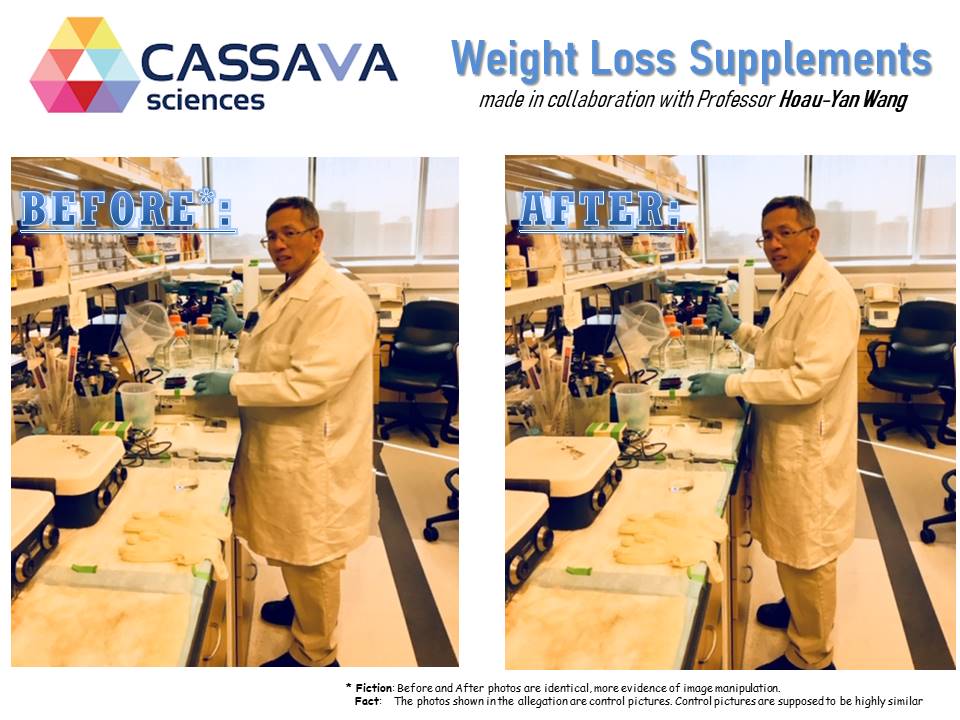
Cassava Sciences responded aggressively. On August 25, 2021, the company issued a point-by-point rebuttal. They categorized the allegations as “fiction.” Regarding the Western blots, the company stated that the bands were “control bands” and were supposed to look similar. They denied any image manipulation. They emphasized that the FDA had reviewed their data before allowing the trials to proceed. A serious point of contention involved the role of Quanterix, a third-party laboratory company. Cassava had previously stated that its Phase 2b biomarker data was generated by Quanterix. This implied independent verification. In its rebuttal, Cassava reiterated that Quanterix had performed the sample testing. Yet Quanterix issued a statement that contradicted this narrative. The lab clarified that they had only performed the mechanical task of running the samples on their machines. They stated they did not interpret the data. They did not prepare the charts. They did not validate the statistical analysis. Quanterix distanced itself from Cassava’s results. This damaged Cassava’s credibility. It showed that the “independent” verification was actually an internal interpretation of raw data by Cassava’s own personnel.
Independent Verification: Elisabeth Bik Enters
The allegations drew the attention of the broader scientific integrity community. Elisabeth Bik is a world-renowned expert in detecting image manipulation in scientific papers. She operates independently and had no financial stake in Cassava Sciences. Following the release of the Citizen Petition, Bik began her own forensic analysis of the papers authored by Wang and Burns. Bik posted her findings on PubPeer, a website for post-publication peer review. Her analysis validated of the concerns raised in the petition. She identified additional instances of chance manipulation that the petitioners had missed. Bik pointed out “rectangles” of different background textures around specific bands. This is a hallmark of digital splicing. She found images where the noise patterns repeated, suggesting the use of the “clone stamp” tool in Photoshop. Bik’s involvement was a serious blow to Cassava’s defense. The company could dismiss Bredt and Pitt as greedy short sellers. They could not easily dismiss Bik. Her reputation for accuracy is high in the scientific community. Her confirmation of the anomalies shifted the debate from “financial warfare” to “scientific integrity.” Other scientists on PubPeer joined the investigation. They uncovered a long history of chance misconduct in Wang’s lab dating back years.
The Market and Regulatory
The stock market reaction was severe. The uncertainty created by the petition wiped out billions of dollars in market capitalization. The volatility attracted the attention of regulators. In November 2021, the Wall Street Journal reported that the Securities and Exchange Commission (SEC) had opened an investigation into Cassava Sciences. The National Institutes of Health (NIH), which had provided millions in grant funding to Wang and Cassava, also faced scrutiny for its oversight. The Citizen Petition of 2021 was the catalyst. It transformed Cassava Sciences from a market darling into a battleground. The allegations of data manipulation forced investors to decide between two realities. In one reality, a small biotech company was being targeted by malicious hedge funds. In the other reality, a decade of research was built on a foundation of digital artifice. The petition did not stop the clinical trials immediately. The FDA eventually denied the specific request to halt the trials in February 2022, citing that a Citizen Petition was not the correct venue for such an action. Yet the agency explicitly stated that its denial did not mean the allegations were meritless. The investigation was just beginning.
The Role of Hoau-Yan Wang
The petition placed Dr. Hoau-Yan Wang at the center of the controversy. As a professor at CUNY and a paid consultant for Cassava, Wang was the architect of the filamin A theory. The allegations suggested that he operated his lab with a absence of rigorous controls. The petition claimed that he was the only person who could “get the experiments to work.” This absence of reproducibility is a classic warning sign in science. The petitioners noted that Wang had been involved in the “unblinding” of the Phase 2b data. They alleged that he had access to the codes that revealed which patients were on the drug and which were on the placebo. If true, this would violate the fundamental rules of a blinded clinical trial. It would allow a researcher to cherry-pick data to show a positive effect. Cassava denied that unblinding occurred. They maintained that the trial was conducted with the highest ethical standards. The 2021 Citizen Petition remains a pivotal document in the history of biotech fraud allegations. It laid out a roadmap of evidence that would later be corroborated by federal investigations. It exposed the fragility of a drug development program built on the work of a single academic lab. It also highlighted the complex interplay between financial incentives and scientific whistleblowing. The short sellers had a profit motive. They also had the truth.
The 2021 Citizen Petition: Short Sellers Alleging Systemic Data Manipulation
Digital Forensics: Analyzing Western Blot Duplications and Photoshop Claims
The Visual Evidence: Western Blots as the Smoking Gun
At the center of the controversy surrounding Cassava Sciences lies a specific type of laboratory image known as the Western blot. In neurobiology, these images serve as the primary method for detecting specific proteins in tissue samples. For a drug like simufilam, which claims to repair the altered conformation of the protein filamin A, Western blots are not illustrative; they are the evidentiary bedrock. They provide the visual proof that the drug physically interacts with its target and produces the claimed biological effect. Consequently, when allegations of data manipulation surfaced in 2021, forensic analysis of these images became the primary battlefield.
The scrutiny began on PubPeer, a post-publication peer-review site, where independent image analysts, including the renowned microbiologist and forensic consultant Elisabeth Bik, began dissecting papers authored by Cassava’s chief collaborator, Hoau-Yan Wang of the City University of New York (CUNY). The allegations were not subtle. Analysts identified dozens of instances where Western blot bands appeared to be chemically identical to one another, suggesting they were not the result of separate experiments rather the product of digital duplication. In legitimate science, background noise, the random static of pixels surrounding a protein band, is unique to every exposure, much like a fingerprint. In the Wang papers, analysts found background patterns that repeated perfectly across different experimental conditions, a statistical impossibility in organic data.
The “Halo” Effect and Cut-and-Paste Anomalies
Detailed forensic examination revealed specific artifacts indicative of software manipulation, likely using tools such as Adobe Photoshop. One of the most damning features identified was the “halo” effect. When a researcher legitimately crops a Western blot, the background intensity should remain consistent or transition naturally. yet, in several of the flagged Cassava-related papers, analysts observed sharp, rectangular boundaries around specific protein bands, distinct “halos” where the background pixel density shifted abruptly. This artifact occurs when a band is cut from one image and pasted onto another, carrying a small border of its original background with it.
Matthew Schrag, a neurologist at Vanderbilt University, played a pivotal role in this forensic deconstruction. Working initially on behalf of the attorneys filing the Citizen Petition, and later sharing his findings with federal agencies, Schrag identified what he termed “flat-bottom smiles.” These were protein bands that curved upwards at the edges had unnaturally flat bottoms, a shape that appeared repeatedly across different blots representing different proteins. Schrag’s dossier suggested that these were not biological realities rather a single “master” band that had been cloned, resized, and pasted into multiple figures to simulate positive results. The implication was severe: if the blots were fabricated, the data points derived from them, and the resulting p-values claiming statistical significance, were fictitious.
The Foundational 2012 Paper and the Filamin A Narrative
The forensic focus narrowed intensely on a 2012 paper published in the Journal of Neuroscience by Wang, Lindsay Burns (Cassava’s Senior VP of Neuroscience), and others. This paper is widely considered the foundational text for simufilam, establishing the theory that the drug binds to filamin A to reduce Alzheimer’s pathology. Critics pointed to Figure 8B and other panels within this study, alleging that control bands had been duplicated and spliced.
The significance of these specific allegations rests on the scientific method of “normalization.” In Western blot experiments, researchers must prove that they loaded the same amount of sample into each lane. They do this by staining for a “housekeeping protein” (like actin or tubulin) that should remain constant. If the housekeeping bands are faked or duplicated, the researcher can arbitrarily make the target protein appear to increase or decrease, manufacturing the desired result. The allegations against the 2012 paper suggested exactly this: that the evidence proving simufilam’s method of action was digitally constructed. While the Journal of Neuroscience initially stated in 2021 that they found “no evidence” of manipulation, they later issued an Expression of Concern following continued pressure and the emergence of additional analysis, acknowledging that the integrity of the data was in question.
Retractions and the CUNY Investigation
While Cassava Sciences vehemently denied the allegations, attributing them to short-seller malice, the scientific publishing community began to problem its own verdicts. Following the initial wave of scrutiny, the journal PLOS ONE retracted five papers authored by Hoau-Yan Wang after an internal investigation confirmed “serious concerns about the integrity and reliability of the results.” Similarly, the journal Neurobiology of Aging retracted a 2017 paper that was central to the simufilam narrative. In this case, the editors noted that the authors provided raw data that was “insufficient to address the concerns” regarding the Western blot images.
The City University of New York (CUNY) launched its own internal investigation into Wang’s conduct. The resulting report, leaked in late 2023, was devastating. The investigative committee found “highly suggestive” evidence of data manipulation in multiple papers and noted that Wang had failed to produce original, uncropped data for the majority of the questioned figures. The report “long-standing and egregious misconduct” regarding data management. This institutional finding directly contradicted Cassava’s public assurances that the science was sound. The inability of the Wang lab to produce the original raw films for experiments conducted largely in the digital age, where data storage is inexpensive and routine, was viewed by the scientific community as a catastrophic failure of chain-of-custody, if not an admission of non-existence.
The 2024 Indictment and the 2025 Legal Dismissal
The forensic evidence eventually migrated from scientific blogs to the Department of Justice. In June 2024, a federal grand jury indicted Hoau-Yan Wang on charges of defrauding the National Institutes of Health (NIH) of approximately $16 million. The indictment explicitly the manipulation of Western blot images in grant applications, alleging that Wang had falsified data to secure funding for simufilam research. This marked a rare instance where image forensics led directly to criminal fraud charges against a scientist.
Yet, the legal proceedings took a sharp and unexpected turn in late 2025. In October 2025, the DOJ moved to dismiss the indictment against Wang with prejudice, a motion granted by the U. S. District Court. The dismissal did not from a validation of the Western blots, rather from a failure of the prosecution’s expert testimony. The defense successfully argued that the government’s expert witness, Dr. Paul Brookes, used “bespoke” methods of image analysis that did not meet the Daubert standard for admissibility in federal court. Essentially, the court ruled that while the images might look suspicious to the naked eye, the specific forensic techniques used to prove fraud legally were not yet sufficiently established in the judicial system.
This legal dismissal created a complex reality: the scientific record remained scarred by retractions and Expressions of Concern, and the CUNY report stood as a testament to misconduct, yet the criminal case collapsed on procedural grounds. Cassava Sciences seized on the dismissal as vindication, while critics maintained that the “flat-bottom smiles” and duplicated backgrounds visible on PubPeer remained unexplained. The between the legal standard of proof and the scientific standard of integrity left the validity of the simufilam data in a state of permanent, contested ambiguity.
Digital Forensics: Analyzing Western Blot Duplications and Photoshop Claims
The CUNY Probe: Initial Findings of Egregious Misconduct by Hoau-Yan Wang
The City University of New York (CUNY) investigation into Hoau-Yan Wang, a foundational architect of Cassava Sciences’ scientific platform, culminated not in a vindication of his work, in a leaked report that exposed deep rot within the simufilam data. In October 2023, *Science* magazine obtained a copy of the university’s internal investigative report, completed in May of that year. The document, which Cassava Sciences attempted to characterize as a procedural review, contained damning conclusions that validated years of skepticism regarding the biological basis of simufilam.
The “Egregious Misconduct” Finding
The investigative committee, comprised of four faculty members from CUNY, spent months analyzing thirty-one specific allegations of data manipulation. Their findings were clear. The committee concluded that Wang had engaged in “long-standing and egregious misconduct in data management and record-keeping.” This was not a minor administrative oversight; it was a widespread failure that made verifying the integrity of his research impossible. Of the thirty-one allegations reviewed, the committee found evidence “highly suggestive of deliberate scientific misconduct” in fourteen instances. These allegations centered on the same Western blot images that had drawn the ire of the Citizen Petition and independent forensic analysts. The report detailed how Wang’s laboratory produced images that appeared to be manipulated to show desired results, specifically, that simufilam could restore the shape of filamin A and reduce Alzheimer’s pathology.
The “Dog Ate My Homework” Defense
A central theme of the CUNY probe was the complete absence of primary data. When investigators requested the original raw data, laboratory notebooks, or electronic files to corroborate the published images, Wang could not provide them. The report noted that Wang’s inability to produce original data for key experiments was “reckless and not in keeping with standard practices in the field.” Wang’s excuses for the missing data were varied and, to the investigators, unconvincing. He claimed that data had been lost due to the COVID-19 pandemic, while in other instances, he alleged that the university’s IT department was responsible for the loss of files. The committee found that Wang frequently recorded experimental on scrap paper that was subsequently discarded, leaving no permanent record of how the serious experiments were conducted. This “absence of evidence” served as a shield, preventing the committee from proving definitive fraud only because the original evidence had been destroyed or “lost.”
Western Blot Manipulation
The specific findings regarding Western blots were particularly damaging. The committee’s analysis supported the claims that images had been digitally altered. They found instances where bands appeared to have been cut and pasted, backgrounds smoothed to hide splicing, and control samples reused across unrelated experiments. These were not cosmetic adjustments; they were fundamental alterations that created the appearance of a drug effect where none may have existed. The report also implicated Lindsay Burns, Cassava’s Senior Vice President of Neuroscience and Wang’s longtime collaborator. The committee suggested that Burns, who co-authored of the papers in question, “may also bear responsibility for the misconduct,” given her intimate involvement in the research and the preparation of the manuscripts. This finding directly contradicted Cassava’s narrative that the allegations were solely the result of a rogue academic or a misunderstanding of complex science.
Cassava’s Deflection and the “Leak” Narrative
Cassava Sciences’ response to the leaked report was immediate and aggressive. Rather than addressing the substance of the “egregious misconduct” findings, the company pivoted to attacking the source of the leak. In a press release, Cassava implied that short sellers were responsible for disseminating the report to *Science* magazine, framing the as part of a continued “short-and-distort” campaign. The company attempted to sanitize the report’s conclusions, issuing a statement that “CUNY’s report makes no findings of data manipulation.” This was a carefully parsed truth; the committee had found evidence *highly suggestive* of manipulation could not make a definitive finding of fraud *because* Wang had failed to keep the raw data. Cassava seized on this technicality, claiming that the report only identified “internal record-keeping failures.”
The Investigation Paused
In a move that stunned the scientific community, CUNY responded to the leak not by accelerating the disciplinary process, by pausing it. Days after the report became public, the university announced it would “stay the underlying inquiry” to investigate the leak itself. This decision froze the accountability process, allowing Wang to remain on faculty and Cassava to continue its Phase 3 trials without an official verdict of misconduct hanging over the program. The pause served Cassava’s interests, delaying the official finalization of a report that threatened to the scientific validity of its lead drug candidate. yet, the contents of the leaked document remained in the public domain, serving as a permanent record that the “breakthrough” science behind simufilam was built on data that could not be verified, authored by a scientist who had discarded the proof.
Summary of CUNY Investigative Findings (Leaked Report)
Category
Key Findings
in total Conduct
“Long-standing and egregious misconduct in data management and record-keeping.”
Data Manipulation
Evidence “highly suggestive of deliberate scientific misconduct” in 14 of 31 allegations.
Raw Data
Wang failed to provide original raw data, notebooks, or electronic files for key experiments.
Western Blots
Confirmed irregularities consistent with digital manipulation (splicing, reuse).
Collaborators
Suggested Lindsay Burns (Cassava SVP) “may also bear responsibility.”
The CUNY Probe: Initial Findings of Egregious Misconduct by Hoau-Yan Wang
Journal Fallout: Retractions in PLOS ONE and Expressions of Concern
The Dam Breaking: PLOS ONE Retractions
The slow-moving emergency of credibility surrounding Cassava Sciences accelerated into a landslide on March 30, 2022, when the open-access journal *PLOS ONE* retracted five papers authored by Hoau-Yan Wang. This mass retraction was not a minor administrative correction; it was a wholesale repudiation of the data integrity in Wang’s laboratory. The retracted papers, which spanned research from 2005 to 2016, included studies on filamin A and opioid receptors, foundational concepts in the scientific narrative Cassava had built around simufilam. The journal’s editorial notices were blunt. In nearly identical statements for each paper, the editors “serious concerns about the integrity and reliability of the results,” specifically pointing to Western blot images where background pixel patterns appeared “more similar than would be expected for data obtained in independent experiments.” The five retracted titles were: 1. *Prenatal Cocaine Exposure Increases Synaptic Localization of a Neuronal RasGEF, GRASP-1 via Hyperphosphorylation of AMPAR Anchoring Protein, GRIP* 2. *Naloxone’s Pentapeptide Binding Site on Filamin A Blocks Mu Opioid Receptor, Gs Coupling and CREB Activation of Acute Morphine* 3. *Prenatal Cocaine Exposure Uncouples mGluR1 from Homer1 and Gq Proteins* 4. *High-Affinity Naloxone Binding to Filamin A Prevents Mu Opioid Receptor, Gs Coupling Underlying Opioid Tolerance and Dependence* 5. *Prenatal Cocaine Exposure Upregulates BDNF-TrkB Signaling* Two of these papers listed Lindsay Burns, Cassava’s Senior Vice President of Neuroscience, as a co-author. The retractions struck a blow to the company’s defense that the allegations were the work of short sellers. *PLOS ONE* is a peer-reviewed academic journal, not a financial firm. Their investigation involved independent experts who concluded that the raw data provided by the authors, when it was provided at all, was insufficient to resolve the anomalies. Wang did not agree with the retractions, maintaining the validity of his work, a stance he would hold even as federal indictments loomed years later.
The Journal of Neuroscience: A Premature Victory Lap
While the *PLOS ONE* retractions were decisive, the saga involving the *Journal of Neuroscience* (JNeurosci) revealed a more chaotic and contradictory struggle over the truth. This specific battleground was serious because it hosted the 2012 paper “Reducing Amyloid-Related Alzheimer’s Disease Pathogenesis by a Small Molecule Targeting Filamin A,” a study that purportedly demonstrated simufilam’s method of action. In November 2021, Cassava Sciences issued a press release that projected total vindication. The company announced that *JNeurosci* had completed a review and found “no evidence of data manipulation” in the 2012 paper. CEO Remi Barbier seized the moment to chastise critics, stating, “I’ve never doubted the integrity of our people or science.” The company admitted only to a single “human error”, a duplicated panel in Figure 8, which they claimed did not impact the study’s conclusions. This victory lap was cut short weeks later. On December 20, 2021, *JNeurosci* issued a formal “Expression of Concern” (EoC) for the very same 2012 paper, as well as a 2009 article by Wang. The editorial notice explicitly stated that the editors had been made aware of concerns regarding Western blots and that the matter was “currently under investigation by the academic authorities at the City University of New York (CUNY).” The issuance of an EoC *after* Cassava’s public declaration of clearance was a significant rebuke. It signaled that the journal’s editors were not satisfied with the explanations provided and were deferring to the university’s deeper probe. The “human error” defense had failed to close the file. The paper remained flagged with a scarlet letter of scientific doubt, warning readers that the data within might not be trustworthy.
The Springer Retraction and Continued
The contagion of doubt spread to other publishers. In June 2022, the journal *Alzheimer’s Research & Therapy*, published by Springer Nature, retracted a 2017 paper titled “Increased Aβ42-α7-like nicotinic acetylcholine receptor complex level in lymphocytes is associated with apolipoprotein E4-driven Alzheimer’s disease pathogenesis.” The retraction notice for this paper was particularly damaging. The editors noted that while the authors had provided raw data to address concerns about Western blot images, that data was “deemed insufficient” by independent experts. Consequently, the editors stated they “no longer have confidence in the integrity of the data.” This retraction directly implicated the biological theories Wang and Cassava were promoting, further eroding the scientific foundation of their Alzheimer’s program. Other journals took a more cautious, albeit still damaging, method. *Neurobiology of Aging* issued an Expression of Concern regarding a 2017 paper on simufilam. In May 2022, the journal updated its stance, stating that after reviewing raw data and using AI-based image analysis, they did not find “compelling evidence of data manipulation intended to misrepresent the results.” yet, they noted “methodological errors” and allowed the paper to stand with corrections. Cassava touted this as another vindication, the pattern was clear: Wang’s papers were with errors, duplications, and anomalies that required constant correction, retraction, or editorial warnings. The *Journal of Prevention of Alzheimer’s Disease* (JPAD) also investigated a 2020 paper and stated in August 2022 that they found “no convincing evidence” of manipulation. In a twist of irony, this same journal would later publish the detailed results of Cassava’s failed Phase 3 trials in January 2026, serving as the final resting place for the data that could not live up to the hype generated by the earlier, -discredited studies.
The Cumulative Effect
By the end of 2022, the scientific record for Hoau-Yan Wang and Cassava Sciences was in tatters. Five papers were retracted by *PLOS ONE*, one by *Alzheimer’s Research & Therapy*, and serious expressions of concern hung over key studies in *JNeurosci*. The “human error” defense was buckling under the weight of a dozen independent anomalies across multiple journals and decades of research. These editorial actions did more than just correct the record; they validated the technical findings of the citizen petition filed months earlier. The specific pixel-level duplications identified by forensic analysts were not hallucinations of short sellers verifiable flaws that peer-reviewed journals could not ignore. The retractions stripped away the veneer of peer-reviewed legitimacy that Cassava had used to shield its stock price, leaving the company’s claims about simufilam exposed as scientifically hollow long before the Phase 3 trials delivered their final, fatal verdict.
Journal Fallout: Retractions in PLOS ONE and Expressions of Concern
Corporate Defense: Alleging a 'Short and Distort' Conspiracy by Whistleblowers
The corporate response to the allegations of data manipulation was not one of transparency or scientific engagement, of aggressive litigation and public relations warfare. Rather than addressing the specific anomalies in the Western blot images or the statistical irregularities in the Phase 2b data, Cassava Sciences adopted a strategy of deflection. The company characterized the detailed forensic analysis by scientists as a “short and distort” conspiracy—a coordinated financial attack designed to depress the stock price for profit. This narrative, driven by CEO Remi Barbier, sought to shift the focus from the integrity of the science to the motives of the critics. In an open letter to shareholders in September 2021, Barbier described the allegations as ” in its boldness, its scope, its immediacy and its intensity.” He framed the detailed scientific critiques not as peer review, as “fiction” created by “bad actors.” This rhetoric set the stage for a legal offensive intended to silence dissent. On November 3, 2022, Cassava Sciences filed a defamation lawsuit in the U. S. District Court for the Southern District of New York. The complaint named Quintessential Capital Management, as well as individual scientists and critics including Dr. David Bredt, Dr. Geoffrey Pitt, Dr. Adrian Heilbut, and Jesse Brodkin. The lawsuit alleged that these defendants had executed a “disinformation campaign” comprising over 1, 000 false and defamatory statements. Cassava’s legal team argued that the critics’ analysis of the simufilam data was not protected scientific speech a method to manipulate the market. By focusing on the short positions held by of the critics, Cassava attempted to invalidate the forensic evidence based solely on financial conflict of interest, ignoring the substance of the claims. This legal maneuver, frequently described by free speech advocates as a SLAPP (Strategic Lawsuit Against Public Participation), froze public discourse, as scientists became wary of commenting on Cassava’s data for fear of legal retaliation. To its defense, Cassava announced in late 2021 that it had engaged the law firm Jones Day to conduct an internal investigation. The company subsequently released a statement claiming that Jones Day’s review had found “no evidence” of data manipulation. Investors rallied around this “exoneration,” viewing it as independent verification of the science. Yet, the parameters of this investigation were severely limited. It was later revealed that Jones Day did not have access to the original raw data or the primary research notebooks from Dr. Hoau-Yan Wang’s laboratory at CUNY, as Wang had failed to produce them. The “clearance” was procedural, not forensic; the investigators could not find evidence of manipulation in data they never examined. This distinction was lost in the company’s triumphant press releases remained a central point of contention for the scientific community. The legal strategy began to unravel in March 2024. Judge Gregory Woods of the Southern District of New York dismissed the defamation lawsuit, delivering a significant blow to Cassava’s narrative. In his ruling, Judge Woods determined that the statements made by the critics were protected under the Amendment as “statements of opinion or scientific debate.” The court found that Cassava failed to plead “actual malice”—a legal standard requiring proof that the defendants knew their statements were false or acted with reckless disregard for the truth. The judge noted that the disagreements over Western blot bands and biomarker data were matters of scientific interpretation, not defamatory falsehoods. The ruling implicitly validated the right of independent researchers to scrutinize public clinical trial data, regardless of their financial positions. Following the dismissal, Cassava initially signaled an intent to continue the legal fight. Yet, the ground shifted beneath them in June 2024, when a federal grand jury indicted Dr. Hoau-Yan Wang on charges of fraud related to the NIH grants that funded the simufilam research. The indictment, which alleged that Wang had indeed fabricated data, made Cassava’s position in a defamation suit untenable. If the company proceeded, the discovery process would likely force the release of the very raw data they had fought to conceal. In August 2024, Cassava Sciences voluntarily dropped its lawsuit against the remaining defendants, ending its “short and distort” defense. The collapse of the litigation strategy exposed the hollowness of the corporate defense. For nearly three years, the company had used the courts and the press to paint a picture of a victimized innovator under attack by greedy hedge funds. The reality, confirmed by the SEC’s subsequent $40 million settlement and the retraction of the primary research papers, was that the “short sellers” had performed the due diligence that the company’s executives and board had neglected. The “conspiracy” was not a fabrication by market manipulators, a documented exposure of scientific misconduct that the company had spent millions of dollars trying to suppress. The failure of the “short and distort” narrative serves as a case study in the misuse of corporate litigation to shield bad science. By weaponizing the legal system against scientific criticism, Cassava Sciences delayed regulatory action and allowed the simufilam trials to continue for years after the initial red flags were raised. The defense strategy did not save the drug or the company’s reputation; it prolonged the period during which investors and patients were misled about the validity of the underlying data. The dismissal of the lawsuit marked the end of the company’s ability to control the narrative, shifting the venue from the court of public opinion to the inescapable reality of federal investigations.
SEC Investigation Findings: Data Unblinding and Misleading Investor Disclosures
The $40 Million Settlement: A Regulatory Reckoning
On September 26, 2024, the Securities and Exchange Commission (SEC) shattered the carefully constructed facade of Cassava Sciences. After a multi-year investigation that shadowed the company’s contentious rise, the regulatory body announced charges against the company, its founder and former CEO Remi Barbier, and its former Senior Vice President of Neuroscience, Dr. Lindsay Burns. The charges centered on misleading statements made in September 2020 regarding the results of a Phase 2b clinical trial for simufilam. Without admitting or denying the allegations, Cassava Sciences agreed to pay a $40 million civil penalty. Barbier and Burns agreed to pay $175, 000 and $85, 000 respectively, accepting officer-and-director bars that ejected them from corporate leadership. This settlement did not represent a financial slap on the wrist; it validated the core suspicions that critics had voiced for years: the data was not what it seemed.
The SEC’s complaint dismantled the company’s primary defense, that its clinical trials were conducted under strict, blinded conditions to prevent bias. For years, Cassava executives touted the “blinded” nature of their studies as a shield against allegations of manipulation. The regulatory findings, yet, depicted a trial process compromised from the inside. The investigation revealed that the company’s claims of a “blinded” study were false. Key personnel, specifically Dr. Hoau-Yan Wang, the drug’s co-developer and a consultant for the company, had been provided with information that allowed him to unblind the data. This breach of clinical protocol destroyed the scientific integrity of the Phase 2b trial, rendering its “positive” results statistically meaningless.
The Mechanics of the Unblinding Scheme
Clinical trials rely on the principle of blinding to ensure that neither the patients nor the researchers know who is receiving the drug and who is receiving the placebo. This prevents conscious or unconscious bias from skewing the results. The SEC investigation found that Cassava Sciences violated this cardinal rule. In May 2020, Dr. Lindsay Burns sent an email to Dr. Wang containing detailed patient data, including “min, max, and change from baseline” statistics. While the email did not explicitly list patient names, the data provided was sufficient for Wang to reverse-engineer the identity of the subjects. By matching the test results he had already run in an earlier round with the statistics provided by Burns, Wang successfully unblinded himself to approximately one-third of the trial participants.
Possessing this unblinded knowledge allowed Wang to manipulate the analysis. The SEC complaint alleges that Wang used his knowledge of which patients were on the drug and which were on the placebo to “cherry-pick” data points. He selectively included or excluded specific patient samples to manufacture a trend that favored simufilam. In a legitimate trial, all data points must be analyzed before the code is broken. In Cassava’s Phase 2b trial, the code was broken before the final analysis was complete, allowing the researchers to shoot the arrow and paint the bullseye later. This manipulation created the appearance of dramatic improvements in Alzheimer’s biomarkers, such as total tau and phosphorylated tau, which the company then presented to investors as proof of the drug’s efficacy.
The “Independent Lab” Deception
A central pillar of Cassava’s investor relations strategy involved the claim that an independent, third-party laboratory had generated the Phase 2b data. In press releases and investor presentations, the company repeatedly stated that Quanterix Corp., a respected life sciences company, had performed the sample testing. This assertion was designed to lend objective credibility to the results. Investors were led to believe that a neutral party had validated the drug’s biological effects. The SEC investigation exposed this narrative as a fabrication.
While Quanterix did perform the initial raw sample testing, they did not interpret the data. The raw numbers generated by Quanterix were sent back to Cassava, and subsequently to Dr. Wang, for analysis. It was Wang, the co-inventor of the drug with a direct financial interest in its success, who performed the final interpretation that showed “significant” biomarker improvements. When Cassava released the positive data in September 2020, they failed to disclose Wang’s role in the analysis. Instead, they vaguely referred to an “academic lab,” obscuring the conflict of interest. When Quanterix later issued a statement clarifying that they had not interpreted the data, Cassava’s stock plummeted, yet the company continued to downplay the significance of Wang’s involvement. The SEC findings confirm that the “independent verification” investors relied upon never existed.
Cognitive Data Manipulation: The 40% Purge
Beyond the biomarker data, the SEC investigation uncovered serious irregularities in how Cassava reported the cognitive effects of simufilam. The company claimed that patients in the Phase 2b trial experienced significant improvements in episodic memory. This claim was the catalyst for a massive surge in the company’s stock price, facilitating a capital raise of over $260 million. The SEC’s forensic analysis of the trial data revealed a clear different reality. The full dataset showed “no measurable cognitive improvement” in the patients’ episodic memory. The drug, in reality, performed no better than the placebo.
To fabricate a positive result, Dr. Lindsay Burns engaged in a process of statistical gerrymandering. The SEC complaint alleges that Burns hand-selected a subset of the data, removing 40% of the patients from the analysis. She systematically excluded the highest-performing patients and the lowest-performing patients across all groups until the remaining data points showed a separation between the drug and placebo arms. This criteria for exclusion was not pre-defined in the clinical protocol, a violation of basic scientific standards. By discarding nearly half of the participants, Burns artificially created a signal of efficacy where none existed. The company then presented this manipulated subset to the public as the definitive result of the trial, without disclosing that the full dataset showed the drug had failed.
The Buried 2022 Audit
The deception extended beyond the 2020 data release. The SEC investigation brought to light a suppressed internal audit from 2022 that Cassava executives concealed from shareholders. Following the initial wave of allegations in 2021, Cassava commissioned an audit of Dr. Wang’s laboratory at CUNY. The auditors’ findings were damning. The report concluded that Wang’s laboratory was “unacceptable” and “temporarily not qualified” to conduct biomarker analysis or research services for future Cassava studies. The audit severe deficiencies in data integrity, record-keeping, and scientific rigor.
even with possessing this serious information, Cassava and Remi Barbier failed to disclose the negative audit results to investors. The company continued to defend the integrity of Wang’s work in public statements, even as their own internal auditors had disqualified his lab. This omission deprived investors of material information regarding the reliability of the science underpinning the company’s multi-billion dollar valuation. The decision to bury the audit demonstrates a pattern of willful obfuscation at the highest levels of the corporate hierarchy.
Financial Consequences and Executive Accountability
The from these resulted in significant penalties for the individuals who orchestrated the scheme. Remi Barbier, the face of the company who had aggressively attacked critics and short-sellers, was forced to pay a $175, 000 civil penalty and accepted a three-year bar from serving as an officer or director of a public company. Dr. Lindsay Burns, the architect of the data manipulation, agreed to a $85, 000 penalty and a five-year officer-and-director bar. Dr. Hoau-Yan Wang, the scientist at the center of the data fraud, consented to a $50, 000 penalty and a cease-and-desist order.
While the $40 million corporate penalty absorbs a portion of the company’s cash reserves, the reputational damage is total. The SEC’s findings validate the “short and distort” conspiracy theory as a projection; the was coming from inside the house. The capital raised by the company, over $260 million following the fraudulent Phase 2b results, was obtained under false pretenses. Investors bought shares believing in a “breakthrough” Alzheimer’s treatment validated by independent labs and blinded trials. Instead, they purchased equity in a company where executives and conflicted scientists passed unblinded spreadsheets back and forth to curate a reality that would keep the stock price elevated.
The Illusion of Efficacy
The SEC settlement serves as the definitive regulatory record of what occurred during the simufilam Phase 2b trials. It confirms that the “strong” data supporting the drug’s progression to Phase 3 was a mirage created through unblinding and selective editing. The “significant improvements” in cognition were mathematical fictions achieved by deleting 40% of the patient files. The “biomarker revolution” was the product of a compromised scientist who knew exactly which samples to enhance. These findings reframe the entire narrative of Cassava Sciences from a misunderstood biotech underdog to a case study in corporate and scientific fraud. The data did not speak for itself; it was silenced, and a more profitable story was written in its place.
The 2024 SEC Settlement: $40 Million Fine and Executive Bans
The Securities and Exchange Commission (SEC) announced a definitive resolution to its long-running investigation into Cassava Sciences on September 26, 2024. The regulator charged the Austin-based biotechnology company, its founder Remi Barbier, and its former Senior Vice President of Neuroscience, Lindsay Burns, with violating federal securities laws through misleading disclosures concerning the Phase 2b clinical trial of simufilam. To settle these negligence-based charges, Cassava Sciences agreed to pay a $40 million civil penalty. The agreement allowed the company to resolve the matter without admitting or denying the SEC’s substantive allegations, a standard clause in such administrative proceedings.
Executive Accountability and Federal Bans
The settlement imposed direct financial and professional consequences on the company’s top leadership, the defense that the alleged improprieties were solely the work of external bad actors. Remi Barbier, who had served as the face of the company’s defiance against critics, consented to a civil penalty of $175, 000. More significantly, Barbier agreed to a three-year officer-and-director bar, legally preventing him from serving in a leadership capacity at any public company during that period. Lindsay Burns faced even stricter penalties, reflecting her direct involvement in the data analysis processes questioned by the Commission. The SEC ordered Burns to pay an $85, 000 civil penalty and imposed a five-year officer-and-director bar. These sanctions removed the two primary architects of the simufilam narrative from corporate governance roles, signaling the regulator’s assessment of their oversight failures.
The “Blinded” Trial Deception
Central to the SEC’s complaint was the that Cassava Sciences had falsely promoted its Phase 2b clinical trial as a “blinded” study. In pharmaceutical research, blinding is a fundamental control designed to prevent bias; neither the patients nor the researchers analyzing the data should know who received the drug and who received the placebo. Cassava repeatedly assured investors and the public that its bioanalyses were conducted under these strict conditions. The SEC investigation shattered this claim. The Commission found that the company had provided Dr. Hoau-Yan Wang, the co-developer of simufilam and a researcher at the City University of New York (CUNY), with information that unblinded him to the treatment assignments for approximately one-third of the trial participants. With this knowledge, Wang was able to identify which samples belonged to the treatment group and which belonged to the placebo group before finalizing the analysis. This breach of protocol compromised the integrity of the data, yet Cassava continued to market the results as the product of a rigorous, blinded methodology.
Data Cherry-Picking and Manufactured Efficacy
The most damning details in the SEC’s order concerned the specific manipulation of cognitive data to engineer a positive result. The company had touted the Phase 2b trial as evidence that simufilam significantly improved episodic memory in Alzheimer’s patients. The SEC found that the full dataset showed no measurable cognitive improvement. To generate the appearance of efficacy, Lindsay Burns engaged in a “subset analysis” that was neither pre-specified nor statistically valid. The Commission alleged that Burns hand-selected the data, removing 40% of the trial participants from the final calculation. By excluding the highest-performing and lowest-performing patients based on arbitrary baseline score cutoffs, the analysis artificially created a separation between the placebo and treatment groups. Cassava then presented these curated results to investors as proof of the drug’s success, without disclosing that nearly half the patient data had been discarded to achieve the desired outcome.
Undisclosed Conflicts and Audit Failures
The regulatory action also exposed Cassava’s failure to disclose serious conflicts of interest and internal warnings. Dr. Wang, who ran the clinical laboratory tests for the trial, had a personal financial stake in the drug’s success, a fact the company did not adequately communicate to investors. Even more egregious was the company’s suppression of its own internal quality controls. The SEC discovered that an internal audit conducted by Cassava had deemed Dr. Wang’s academic laboratory “unacceptable” for conducting the serious biomarker analysis. Rather than rectifying this failure or disclosing it to the market, the company buried the report and continued to rely on Wang’s data to support its stock price and capital raising efforts.
Wang’s Separate Settlement
In a parallel order, the SEC charged Hoau-Yan Wang with manipulating the reported clinical trial results. The Commission alleged that Wang used the unblinded information to manipulate data values, creating the false appearance that simufilam caused dramatic improvements in biomarkers such as total tau and phosphorylated tau. Wang consented to a cease-and-desist order and agreed to pay a $50, 000 civil penalty. This settlement was separate from the criminal fraud charges Wang faced from the Department of Justice, which were distinct legal matters involving grant fraud allegations.
Corporate Remediation and Market Position
Following the announcement, Cassava Sciences issued a statement emphasizing its cooperation with the investigation and the implementation of remedial measures. The company noted that its cash reserves, estimated between $117 million and $127 million by year-end 2024, were sufficient to absorb the $40 million fine. The new leadership, installed after the departure of Barbier and Burns, attempted to frame the settlement as a necessary step to clear the decks for the ongoing Phase 3 trials. The $40 million penalty represented a fraction of the market capitalization Cassava had gained during its peak, yet the detailed findings validated the core allegations that short sellers and scientific whistleblowers had raised years prior. The regulatory confirmation that the Phase 2b data was unblinded and cherry-picked left the company’s scientific credibility in tatters, even as it pressed forward with its final, large- studies. The “breakthrough” that had once captivated Wall Street was officially on record as a product of negligence and data manipulation.
Criminal Charges: The DOJ Indictment of Hoau-Yan Wang for Grant Fraud
The federal hammer dropped on June 28, 2024. After years of mounting skepticism, whistleblower petitions, and regulatory scrutiny, the Department of Justice (DOJ) unsealed an indictment that fundamentally altered the trajectory of the Cassava Sciences saga. Hoau-Yan Wang, the City University of New York (CUNY) professor and longtime scientific collaborator of Cassava Sciences, was arrested and charged with a scheme to defraud the National Institutes of Health (NIH) of approximately $16 million. The indictment was not a procedural step; it was a scathing prosecutorial validation of the technical allegations that had dogged the company since 2021. Federal prosecutors in the District of Maryland charged Wang with one count of “Major Fraud against the United States,” two counts of wire fraud, and one count of making false statements. The “Major Fraud” charge, a statute reserved for significant schemes to swindle the government, carried a maximum sentence of ten years, while the wire fraud counts each carried up to twenty years. The of these charges signaled that the DOJ viewed the alleged data manipulation not as academic sloppiness, as a calculated criminal enterprise designed to siphon taxpayer money. The indictment detailed a fraud spanning nearly a decade, from May 2015 to April 2023. Prosecutors alleged that Wang, acting on behalf of himself and Cassava Sciences, systematically fabricated and falsified scientific data in grant applications submitted to the NIH. These applications sought funding for the early development phases of simufilam and a related diagnostic test. The government contended that the $16 million awarded between 2017 and 2021 was secured on the back of lies—specifically, manipulated Western blots and falsified data regarding the drug’s method of action. Central to the DOJ’s case was the allegation that Wang had engineered the foundational science of simufilam to appear strong when it was, in fact, a mirage. The indictment specific instances where Wang allegedly reused and relabeled images of protein bands to represent different experiments, a technique known as “cloning” in digital forensics. By presenting these fabricated results as proof that simufilam could repair the altered filamin A protein and reduce Alzheimer’s pathology, Wang and Cassava secured the capital necessary to advance the drug into clinical trials. The grant money did not just fund abstract research; it paid for Wang’s laboratory operations and his salary, directly linking the alleged fraud to his personal financial gain. The timing of the indictment was catastrophic for Cassava Sciences. While the company itself was not named as a defendant, the charges against its primary scientific architect struck at the core of its legitimacy. Wang was not a peripheral figure; he was the co-inventor of the drug and the author of the papers that formed the basis of Cassava’s entire valuation. The DOJ’s assertion that the “method of action” data was falsified declared that the scientific premise of the company’s Phase 3 trials was a fiction financed by stolen public funds. The legal proceedings that followed revealed the intense friction between scientific adjudication and criminal prosecution. Wang’s defense team, led by the firm Dykema, mounted an aggressive strategy. They argued that the government was criminalizing scientific disagreement and relying on the analysis of “short sellers and bloggers” rather than established scientific consensus. The defense focused on the complexity of Western blot analysis, suggesting that what the DOJ called “manipulation” was “beautification” or standard image processing common in the era the papers were published. yet, the DOJ’s case faced a serious hurdle: the load of proving *intent* beyond a reasonable doubt in a field as detailed as molecular biology. The prosecution relied heavily on the findings of earlier investigations, including the initial CUNY probe that had identified “egregious misconduct.” Yet, the legal shifted dramatically as the trial date method in late 2025. In a stunning reversal on October 17, 2025, the DOJ moved to dismiss the indictment “with prejudice,” meaning the charges could not be refiled. The dismissal came just days before jury selection was set to begin. The decision was precipitated by the release of CUNY’s *final* investigation report in May 2025. Contrary to the preliminary findings that had fueled the indictment, the university’s final review concluded that while there were serious errors and data management failures, the evidence fell short of the strict threshold required to prove “research misconduct” under federal standards. The dismissal was a legal victory for Wang, who had faced the prospect of dying in federal prison. His lawyers proclaimed total vindication, framing the case as a government overreach driven by a “short and distort” campaign. yet, the context of the dismissal painted a bleaker picture for the drug itself. By October 2025, the “vindication” was hollow. Simufilam had already failed its Phase 3 clinical trials in late 2024, showing no cognitive benefit over placebo. The company had ceased development of the drug in early 2025. The criminal case collapsed not because the science was sound, because the high bar of criminal intent could not be met in court, especially after the university—the primary arbiter of academic integrity—declined to definitively label the actions as fraud. The $16 million in NIH grants remained a point of contention. While Wang avoided prison, the financial continued. In September 2024, prior to the criminal case’s dismissal, Wang settled civil charges with the Securities and Exchange Commission (SEC), agreeing to a $50, 000 penalty and a ban from serving as an officer or director of a public company. Cassava Sciences settled related charges for $40 million. The civil settlements acknowledged that the company and Wang had made misleading statements, even if the criminal prosecution for grant fraud was abandoned. The DOJ’s retreat highlighted the immense difficulty of policing scientific fraud through the criminal justice system. Prosecutors are frequently ill-equipped to litigate the subtleties of gel electrophoresis and image compression in front of a lay jury. The “Major Fraud” statute requires clear evidence of a scheme to deceive, and without a smoking gun email or a confession, the defense was able to cast enough doubt on the *intent* behind the image anomalies to force the government’s hand. serious, the dismissal of charges did not equate to a validation of the data. The scientific community, which had largely ostracized Wang and Cassava since 2021, viewed the legal outcome as a technicality rather than an exoneration. The retracted papers in *PLOS ONE* and *Journal of Neuroscience* remained retracted. The Phase 3 failure confirmed that, regardless of whether the data was criminally fraudulent or incompetent, it had no predictive value for treating Alzheimer’s disease. The indictment of Hoau-Yan Wang stands as a historical marker of the extreme measures the government was to take in the face of alleged scientific malfeasance. It was one of the rare instances where the Department of Justice attempted to pierce the veil of academic research and hold a scientist criminally liable for the quality of their data. That it ended in dismissal rather than conviction serves as a testament to the complexities of the interface between science and law, leaving the $16 million in taxpayer funds legally “un-defrauded” scientifically wasted on a failed hypothesis.
Executive Departure: The Resignation of CEO Remi Barbier and SVP Lindsay Burns
Executive Departure: The Resignation of CEO Remi Barbier and SVP Lindsay Burns
In July 2024, the corporate governance emergency at Cassava Sciences reached its apex with the abrupt resignations of its two most senior executives: founder and CEO Remi Barbier and his wife, Senior Vice President of Neuroscience Dr. Lindsay Burns. These departures marked the end of a decades-long tenure defined by aggressive defenses of simufilam and a combative stance against critics. The timing was unmistakable, occurring just weeks after the Department of Justice indicted their longtime collaborator, Dr. Hoau-Yan Wang, for fraud. While the company officially framed the exits as a standard leadership transition, the mechanics of their separation revealed a board of directors scrambling to insulate the firm from widening federal investigations while simultaneously granting its ousted leaders lucrative exit packages.
The “Other Than For Cause” Exit
On July 15, 2024, Cassava Sciences announced that Remi Barbier had resigned as President, CEO, and Chairman. Crucially, the board classified his departure as “Other Than for Cause.” This legal distinction was not semantic; it was the trigger for a substantial financial windfall. Had the board terminated Barbier for cause, citing the mounting regulatory probes or the retraction of foundational science, he would have forfeited his severance. Instead, the “without cause” designation unlocked a severance package valued at approximately $1. 23 million, paid out over twelve months, along with continued health benefits. Barbier did not leave immediately. The terms allowed him to remain employed in a “non-executive capacity” until September 13, 2024. During this lame-duck period, he held no duties or responsibilities yet continued to draw a salary, a decision that allowed for a direct vesting of benefits even as the company negotiated a $40 million penalty with the SEC.
The Consulting Loophole for Dr. Burns
The departure of Dr. Lindsay Burns, the co-architect of the simufilam program, followed a similar more complex pattern. Resigning immediately on July 16, 2024, Burns secured a severance agreement totaling $500, 000, paid in quarterly installments. yet, the company did not sever ties completely. Cassava entered into a consulting agreement with Burns, retaining her services for one year at a rate of $500 per hour. This arrangement raised immediate red flags among governance experts. even with being a central figure in the data manipulation allegations, specifically regarding the Western blots she co-authored with Wang, Burns was kept on the payroll to provide “information and support for scientific research.” This decision kept the person most knowledgeable about the alleged data anomalies inside the corporate tent during a serious period of federal scrutiny. The agreement also included an option for the company to extend her consulting role for an additional year, ensuring her continued financial relationship with Cassava well into 2026.
Leadership Pivot and the “Transparency” Narrative
To fill the power vacuum, the board appointed Richard (Rick) Barry, a director since 2021, as Executive Chairman and principal executive officer. Barry, a former investment manager with a history of activist investing, moved quickly to distance the new regime from the Barbier era. In his initial statements, Barry emphasized a “steadfast commitment” to “transparency, accountability, and highest ethical business practices.” This rhetorical shift was a calculated effort to salvage the company’s credibility with investors and regulators. Under Barbier, Cassava had characterized skepticism as “short and distort” campaigns. Barry’s leadership signaled a pivot toward cooperation, a necessary step as the company faced the imminent settlement with the SEC. To further bifurcate the consolidated power structure that Barbier had held, the board appointed Dr. Claude Nicaise as the new independent Chairman, separating the CEO and Chairman roles, a standard governance safeguard that had been absent during the company’s most controversial years.
Regulatory Bars and Final Judgments
The financial cushions provided by the board stood in clear contrast to the penalties imposed by federal regulators two months later. In September 2024, as part of the sweeping settlement regarding misleading statements, the SEC formally charged both Barbier and Burns. The regulatory consequences were severe and personal. Barbier agreed to a three-year officer-and-director bar, banning him from leading a public company until late 2027. He also paid a $175, 000 civil penalty. Burns received a five-year bar and an $85, 000 penalty. These sanctions served as a regulatory confirmation of their individual culpability in the disclosure failures. Yet, the timing of their resignations meant that by the time these bars were announced, both executives had already secured their separation payments. The “without cause” classification remained unchallenged by the board, allowing Barbier and Burns to exit with millions in cumulative compensation even with the regulatory findings that they had misled investors regarding the blindness and integrity of their clinical trials. The executive purge of 2024 removed the primary defenders of the simufilam narrative, the financial terms of their departure left a lingering question: did the board pay a premium to ensure a quiet exit, or was the “without cause” designation a final act of loyalty to the founders who built the company? Regardless of the motive, the result was a complete decapitation of the leadership team that had steered Cassava Sciences through a decade of scientific controversy.
Phase 3 Failure: The RETHINK-ALZ Trial Misses Cognitive Endpoints
SECTION 11 of 14: Phase 3 Failure: The RETHINK-ALZ Trial Misses Cognitive Endpoints The definitive collapse of the simufilam clinical program arrived in late 2024, shattering the carefully curated illusion of efficacy that had sustained Cassava Sciences for years. On November 25, 2024, the company released topline data from its Phase 3 RETHINK-ALZ trial, a study involving 804 patients with mild-to-moderate Alzheimer’s disease. The results were not negative; they were a categorical refutation of the “breakthrough” narrative promoted by Cassava executives and their vocal retail investor base. Simufilam failed to meet its co-primary endpoints, showing no statistically significant improvement over placebo in either cognition or daily function. The specific data points released by the company painted a clear picture of futility. On the Alzheimer’s Disease Assessment -Cognitive Subscale (ADAS-Cog12), where higher scores indicate worse cognition, patients treated with simufilam saw their scores worsen by 2. 8 points after 52 weeks. The placebo group, which experiences a steady decline, worsened by 3. 2 points. The difference was statistically negligible (p=0. 43). Similarly, on the Alzheimer’s Disease Cooperative Study-Activities of Daily Living (ADCS-ADL), simufilam-treated patients saw their functional scores drop by 3. 3 points, compared to a 3. 8-point drop in the placebo group (p=0. 40). These numbers devastated the central thesis of the Cassava bull case: that simufilam was a disease-modifying agent capable of halting or reversing Alzheimer’s pathology. In reality, the drug performed no better than a sugar pill. The trial also missed all secondary and exploratory biomarker endpoints, further confirming the absence of any therapeutic effect. The ” ” cognitive improvements reported in the open-label Phase 2 trials—data that had been the subject of intense scrutiny and allegations of manipulation—were nowhere to be found in the rigorous, double-blind environment of Phase 3. Market reaction was swift and brutal. Cassava Sciences’ stock price plummeted approximately 85% in pre-market trading following the announcement, erasing over $1 billion in market capitalization in a single day. The share price, which had once soared above $100 during the height of the hype pattern, collapsed to under $4. For the short sellers and scientific skeptics who had spent years cataloging the anomalies in Cassava’s foundational research, the failure was a grim vindication. The “short and distort” conspiracy theory, which posited that critics were fabricating flaws to drive down the stock, evaporated in the face of objective clinical data. CEO Rick Barry, who had taken the helm following the departure of Remi Barbier, attempted to manage the with a statement acknowledging the “unambiguous” nature of the results. “The results are disappointing for patients and their families,” Barry stated, noting that the placebo group’s decline was “less pronounced” than in historical trials. This observation, while factually accurate, offered no solace; a lower-than-expected placebo decline frequently makes it harder to show a drug effect, simufilam’s performance was so indistinguishable from placebo that no statistical gymnastics could salvage it. The failure of RETHINK-ALZ had immediate consequences for the broader clinical program. Cassava announced the discontinuation of its second Phase 3 trial, REFOCUS-ALZ, as well as the open-label extension study. The decision marked the end of simufilam as a chance Alzheimer’s treatment. yet, the company did not immediately release the full data for REFOCUS-ALZ, leaving a brief window for lingering hope among the most ardent supporters. That hope was extinguished in March 2025, when Cassava released the final topline results for the halted REFOCUS-ALZ trial. The data from this second study were even more damning. In this trial, patients on the 100 mg dose of simufilam actually performed *worse* than those on placebo. ADAS-Cog12 scores for the high-dose group worsened by 4. 97 points, compared to a 4. 70-point worsening in the placebo arm. Functional decline was also steeper in the drug arm, with ADCS-ADL scores dropping by 6. 27 points versus 5. 32 points for placebo. The drug was not just ineffective; in this cohort, it appeared numerically inferior to doing nothing at all. In a final attempt to find a silver lining, Cassava researchers conducted post-hoc subgroup analyses, a common practice in failed trials to identify any population that might have benefited. They reported that in a subgroup of patients with mild Alzheimer’s, simufilam appeared to slow cognitive decline at certain time points in the REFOCUS-ALZ trial. yet, this signal was not replicated in the RETHINK-ALZ trial and disappeared completely by week 76. Such inconsistent, transient “signals” are hallmarks of statistical noise rather than genuine clinical efficacy. A particularly revealing detail emerged from the biomarker sub-studies associated with these trials. An amyloid PET sub-study in REFOCUS-ALZ found that 21% of the participants were amyloid-negative at baseline. This meant that more than one in five patients enrolled in the trial did not have the hallmark pathology of Alzheimer’s disease, even with being screened with plasma p-tau181. This finding underscored the “garbage in, garbage out” problem that critics had warned about: relying on unproven diagnostic methods and flawed foundational science led to a trial population that was fundamentally compromised. The legal ramifications of the failure began to unfold almost immediately. In March 2025, a U. S. District Judge in Manhattan ruled that a malicious prosecution lawsuit filed by the “short sellers”—including scientists David Bredt, Geoffrey Pitt, and Adrian Heilbut—could proceed against Cassava. The judge found it plausible that Cassava executives knew their defamation lawsuit against these critics was baseless and filed with “actual malice” to suppress legitimate scientific inquiry. The ruling was a significant legal turning point, shifting the label of “victim” from the corporation to the scientists who had risked their careers to expose the irregularities. By the second quarter of 2025, Cassava Sciences had officially ceased all development of simufilam for Alzheimer’s disease. The company announced a pivot to evaluating the drug for tuberous sclerosis complex (TSC)-related epilepsy, a rare genetic disorder, utilizing a license agreement with Yale University. This pivot did little to reassure investors, as the company’s cash reserves continued to burn. The $40 million SEC settlement from 2024, combined with the costs of winding down two massive global trials, left the company’s financial future in a precarious state. The Phase 3 failure served as the final chapter in the scientific saga of simufilam, confirming what the Western blot anomalies and statistical improbabilities had suggested years earlier: the drug was built on a foundation of sand. The “miracle” results of the open-label trials were likely the product of placebo effects, selection bias, and chance, the very data manipulation alleged by the Citizen Petition. For the Alzheimer’s community, it was another lost pattern of hope and resources; for the scientific community, it was a clear reminder of the cost of ignoring red flags in the of a profitable narrative.
End of the Road: Discontinuation of Simufilam for Alzheimer's Disease
The final curtain fell on the simufilam Alzheimer’s program in late 2024, not with the “breakthrough” fanfare Cassava Sciences had promised for years, with a statistical silence that was deafening. On November 25, 2024, the company announced that its Phase 3 ReThink-ALZ trial had failed to meet its co-primary endpoints. The data was not borderline; it was, in the words of CEO Rick Barry, “unambiguous.” ### The Data: A Statistical Flatline The ReThink-ALZ trial, designed to vindicate years of controversial preclinical work, instead exposed the drug’s absence of efficacy. The study enrolled 804 patients with mild-to-moderate Alzheimer’s disease, randomizing them to receive simufilam or a placebo for 52 weeks. The co-primary endpoints were changes in cognition, measured by the ADAS-COG12, and function, measured by the ADCS-ADL. Results showed no statistically significant difference between the treatment and placebo groups. * **Cognition (ADAS-COG12):** Patients on simufilam showed a decline in cognitive scores that was statistically indistinguishable from those on placebo. * **Function (ADCS-ADL):** Measures of daily living activities similarly failed to show any benefit over placebo. * **Secondary Endpoints:** The drug missed every secondary and exploratory biomarker endpoint, including measures of neuropsychiatric symptoms and caregiver load. The failure of ReThink-ALZ triggered the immediate termination of the second Phase 3 trial, ReFocus-ALZ, and the open-label extension study. By March 2025, Cassava Sciences officially confirmed the complete discontinuation of simufilam development for Alzheimer’s disease. The data from ReFocus-ALZ, released subsequently, mirrored the trial’s failure, driving the final nail into the program’s coffin. ### Market and Operational Implosion The market reaction was swift and violent. On the day of the announcement, Cassava Sciences’ stock plummeted over 80 percent, wiping out hundreds of millions of dollars in market capitalization in a single trading session. The collapse left long-term retail investors— of whom had defended the company against “short and distort” allegations—holding near-worthless equity. Operational followed the stock crash. In January 2025, the company executed a reduction in force, laying off approximately 33 percent of its workforce to conserve cash. This restructuring aimed to extend the company’s runway as it scrambled to find a new purpose. The “strategic expense management” measures signaled a company in survival mode, stripping down its operations to the bare bones. ### Legal Aftershocks The trial failure ignited a fresh wave of litigation. Within weeks of the November 2024 announcement, multiple class-action lawsuits were filed by firms such as Robbins LLP, Levi & Korsinsky, and Bronstein, Gewirtz & Grossman. These complaints alleged that Cassava Sciences and its executives had made materially false and misleading statements regarding the drug’s prospects, artificially inflating the stock price before the inevitable crash. The lawsuits focused on the between the company’s confident public projections and the “unambiguous” failure of the trials. Plaintiffs argued that the company had minimized risks and misrepresented the reliability of its data, leading investors to believe in a clinical efficacy that did not exist. These new legal challenges piled onto the existing $40 million SEC settlement and the ongoing criminal proceedings against former scientific advisor Hoau-Yan Wang. ### The “Pivot” to Epilepsy Faced with the total collapse of its Alzheimer’s program, Cassava Sciences attempted a strategic pivot. The company announced plans to repurpose simufilam for Tuberous Sclerosis Complex (TSC)-related epilepsy, a rare genetic disorder. Management preclinical data suggesting the drug could reduce seizure frequency. This pivot, yet, faced immediate regulatory headwinds. In December 2025, the FDA placed a full clinical hold on the proposed proof-of-concept study for TSC-related epilepsy. The agency requested additional preclinical data and protocol modifications, freezing the company’s attempt to reinvent itself. The clinical hold cast serious doubt on whether simufilam had any viable future in any indication, leaving the company with a failed drug, a decimated stock price, and a shrinking runway. ### Table: The Collapse of the Simufilam Program | Event | Date | Outcome | Impact | |:— |:— |:— |:— | | **ReThink-ALZ Data Release** | Nov 25, 2024 | Failed all co-primary and secondary endpoints. | Stock dropped>80%; ReFocus-ALZ trial halted. | | **Workforce Reduction** | Jan 2025 | 33% of staff laid off. | Operational contraction to conserve cash. | | **Program Termination** | Mar 2025 | Official end of Alzheimer’s development. | Focus shifted to TSC-related epilepsy. | | **FDA Clinical Hold** | Dec 2025 | TSC epilepsy trial blocked by FDA. | Pivot strategy stalled; future uncertain. | The discontinuation of the simufilam Alzheimer’s program marked the end of a saga defined by scientific controversy, allegations of fraud, and fervent investor speculation. The “breakthrough” that was supposed to Alzheimer’s treatment dissolved under the scrutiny of a rigorous Phase 3 trial, leaving behind only legal battles and financial losses.
The DOJ Reversal: Dismissal of Wang's Indictment With Prejudice
The DOJ Reversal: Dismissal of Wang’s Indictment With Prejudice
On October 23, 2025, the federal criminal case against Dr. Hoau-Yan Wang collapsed in a stunning procedural reversal that humiliated the Department of Justice. Just days after a jury had been selected and on the eve of opening statements, federal prosecutors filed an unopposed motion to dismiss the indictment “with prejudice.” Judge Theodore D. Chuang of the U. S. District Court for the District of Maryland granted the order, permanently barring the government from refiling charges related to the alleged $16 million grant fraud. The dismissal, by the DOJ as being “in the interests of justice,” ended a four-year legal siege left the scientific integrity of the underlying data in a permanent state of ambiguity.
The Prosecution’s Implosion
The government’s case did not fail due to a sudden validation of Wang’s Western blots; it disintegrated because of prosecutorial overreach and catastrophic evidentiary failures. Defense attorneys from Dykema Gossett PLLC exposed three fatal flaws in the DOJ’s strategy that made a conviction legally impossible.
, the defense successfully argued a Brady violation, revealing that prosecutors had failed to disclose exculpatory evidence: a final internal investigation report from the City University of New York (CUNY). While the DOJ had built its indictment on the premise of blatant fraud, the CUNY report, concluded in May 2025, found that while image anomalies existed, the evidence did not meet the university’s strict threshold for a finding of “scientific misconduct.” By withholding this report, the prosecution hid the fact that Wang’s own institution had technically cleared him of the specific intent required to prove criminal fraud.
Second, the government’s scientific case rested on a shaky foundation that crumbled under the Daubert standard, which governs the admissibility of expert testimony. The prosecution’s primary expert witness, Dr. Paul Brookes, a vocal critic of Cassava Sciences and a key figure in the initial online exposure of the data anomalies, was challenged by the defense. Wang’s legal team argued that Brookes’ forensic methods for detecting image manipulation were “bespoke” and absence general acceptance in the scientific community for criminal evidentiary standards. Faced with the prospect of their key expert being disqualified or severely limited, the prosecution lost its primary method for explaining the complex data irregularities to a jury.
Third, the trial setup was marred by a successful Batson challenge. During jury selection, the defense objected to the prosecution’s use of a peremptory strike against the only Asian American juror in the pool. The judge’s scrutiny of this move added a of procedural impropriety to an already faltering case.
The “Interests of Justice”
The DOJ’s decision to drop the case “with prejudice” is a rare admission of a non-viable prosecution. In federal criminal law, a dismissal with prejudice indicates that the government acknowledges it cannot, or should not, proceed. Legal analysts noted that proceeding to trial with a suppressed exculpatory report and a compromised expert witness would have likely resulted in a directed verdict of acquittal or a mistrial, outcomes that would have been even more damaging to the DOJ’s reputation than a pre-trial dismissal.
Following the court order, the DOJ Fraud Section officially closed its inquiry into Cassava Sciences in February 2026. This ended the federal government’s of the company regarding the simufilam data, leaving the SEC’s earlier $40 million civil settlement as the only major regulatory penalty extracted from the saga.
A Pyrrhic Victory
For Hoau-Yan Wang, the dismissal was a total legal vindication, sparing him from a chance decades-long prison sentence. yet, the victory was pyrrhic in the context of the broader drug development program. By the time the gavel fell in Maryland, the RETHINK-ALZ Phase 3 trial had already failed, and Cassava Sciences had announced the discontinuation of simufilam for Alzheimer’s disease. The legal system determined that Wang’s actions did not constitute criminal grant fraud, the clinical reality determined that the drug did not work. The dismissal protected Wang’s liberty, it could not salvage the scientific hypothesis that had burned through hundreds of millions of investor dollars.
Final Regulatory Status: The 2026 Closure of DOJ Inquiries into Cassava
The Department of Justice’s Fraud Section formally closed its criminal inquiry into Cassava Sciences on February 19, 2026, ending a multi-year federal probe that had threatened the company’s existence. This regulatory capstone followed the dismissal with prejudice of the indictment against Hoau-Yan Wang in October 2025, a legal collapse precipitated by prosecutorial missteps rather than a vindication of the scientific data. The conclusion of these matters leaves Cassava Sciences with a cleared legal docket a shattered scientific reputation, as the company abandons its Alzheimer’s program to pivot toward epilepsy treatments under a new clinical hold. ### The Collapse of the Wang Prosecution The government’s case against Hoau-Yan Wang, the City University of New York (CUNY) collaborator whose research underpinned the simufilam hypothesis, disintegrated in late 2025. On October 23, 2025, the U. S. District Court for the District of Maryland dismissed the indictment *with prejudice*, barring federal prosecutors from refiling charges. The dismissal resulted from a serious “Brady violation,” where prosecutors failed to disclose exculpatory evidence to the defense. The withheld material included an internal CUNY report that contradicted the government’s central claim of fraud. While an earlier CUNY panel had flagged “egregious misconduct” in data management, a subsequent university review—finalized in May 2025—concluded that Wang’s actions did not meet the institution’s specific definition of scientific misconduct. The prosecution’s failure to hand over this conflicting report violated Wang’s due process rights. Defense attorneys also successfully challenged the government’s reliance on an expert witness described as using “fringe scientific methods” to detect image manipulation. The court found that the expert’s testimony did not meet the *Daubert* standard for admissibility, further weakening the government’s position. These procedural failures forced the DOJ to abandon the case, allowing Wang to walk away without a criminal conviction even with the years of allegations surrounding his Western blot images. ### Financial Penalties and Civil Resolutions While the criminal inquiries evaporated, Cassava Sciences faced substantial financial penalties to resolve civil liability. In September 2024, the company agreed to pay $40 million to the U. S. Securities and Exchange Commission (SEC) to settle negligence-based disclosure charges. The SEC’s investigation found that Cassava had made misleading statements to investors regarding the results of its Phase 2b clinical trials, specifically concerning the blinding of data and the statistical significance of biomarker analyses. Following the SEC resolution, Cassava moved to settle a consolidated securities class action lawsuit that had shadowed the company since 2021. On December 23, 2025, the company agreed to a payment of $31. 25 million to resolve claims from investors who purchased stock between September 2020 and October 2023. This settlement, fully reserved in the company’s second-quarter 2025 financials, released Cassava from all class-related claims without an admission of wrongdoing. ### The End of Simufilam for Alzheimer’s The regulatory clearances in early 2026 arrived too late to save the simufilam Alzheimer’s program. In January 2026, Cassava released the final data from its Phase 3 RETHINK-ALZ trials, confirming that the drug failed to meet its co-primary endpoints of improving cognition and function. The data showed no statistically significant benefit over placebo, validating the skepticism that had dogged the drug since its Phase 2b readouts. Cassava immediately discontinued all development of simufilam for Alzheimer’s disease. The company announced a strategic pivot to study the drug for Tuberous Sclerosis Complex (TSC)-related epilepsy, a rare genetic disorder. Yet, this new direction faced immediate headwinds. In February 2026, the FDA placed a full clinical hold on the proposed Phase 2 trial for TSC, demanding additional pre-clinical data and protocol modifications. ### Executive and Corporate Aftermath The closure of the DOJ file marked the final exit for the old guard of Cassava Sciences. Former CEO Remi Barbier and SVP Lindsay Burns, who had resigned in 2024 amid the intensifying probes, faced no individual criminal charges following the company-wide inquiry closure. Under new CEO Richard J. Barry, the company attempts to rebuild its credibility with a depleted pipeline and a market capitalization that is a fraction of its peak. The saga of Cassava Sciences concludes not with a criminal trial, with a procedural dismissal and a clinical failure. The $71. 25 million in combined settlements to the SEC and shareholders represents the tangible cost of the controversy, while the scientific community is left to analyze how a drug with such disputed foundational data advanced so far into late-stage testing.
Summary of Final Legal and Regulatory Actions (2024-2026)
Date
Action
Entity Involved
Outcome
September 2024
SEC Settlement
Cassava Sciences
$40 million penalty for misleading disclosures.
October 23, 2025
Case Dismissal
Hoau-Yan Wang
Indictment dismissed with prejudice due to Brady violation.
December 23, 2025
Class Action Settlement
Cassava Sciences
$31. 25 million payment to settle investor claims.
January 2026
Program Termination
Simufilam (Alzheimer’s)
Discontinued after Phase 3 trial failure.
February 19, 2026
Inquiry Closure
DOJ Fraud Section
Criminal inquiry into Cassava Sciences formally closed.
Timeline Tracker
July 28, 2021
The 'Breakthrough' Narrative: Simufilam's Phase 2b Data and Market Reaction — The story of Cassava Sciences and its Alzheimer's drug, simufilam, begins not with a discovery, with a resurrection. In May 2020, the company released top-line results.
2021
The 2021 Citizen Petition: Short Sellers Alleging Systemic Data Manipulation —
August 18, 2021
The August 2021 FDA Citizen Petition — On August 18, 2021, the trajectory of Cassava Sciences shifted violently. A law firm named Labaton Sucharow filed a Citizen Petition with the U. S. Food.
August 25, 2021
Cassava's Defense and the Quanterix Confusion — Cassava Sciences responded aggressively. On August 25, 2021, the company issued a point-by-point rebuttal. They categorized the allegations as "fiction." Regarding the Western blots, the company.
November 2021
The Market and Regulatory — The stock market reaction was severe. The uncertainty created by the petition wiped out billions of dollars in market capitalization. The volatility attracted the attention of.
2021
The Role of Hoau-Yan Wang — The petition placed Dr. Hoau-Yan Wang at the center of the controversy. As a professor at CUNY and a paid consultant for Cassava, Wang was the.
2021
The Visual Evidence: Western Blots as the Smoking Gun — At the center of the controversy surrounding Cassava Sciences lies a specific type of laboratory image known as the Western blot. In neurobiology, these images serve.
2012
The Foundational 2012 Paper and the Filamin A Narrative — The forensic focus narrowed intensely on a 2012 paper published in the Journal of Neuroscience by Wang, Lindsay Burns (Cassava's Senior VP of Neuroscience), and others.
2017
Retractions and the CUNY Investigation — While Cassava Sciences vehemently denied the allegations, attributing them to short-seller malice, the scientific publishing community began to problem its own verdicts. Following the initial wave.
June 2024
The 2024 Indictment and the 2025 Legal Dismissal — The forensic evidence eventually migrated from scientific blogs to the Department of Justice. In June 2024, a federal grand jury indicted Hoau-Yan Wang on charges of.
October 2023
The CUNY Probe: Initial Findings of Egregious Misconduct by Hoau-Yan Wang — The City University of New York (CUNY) investigation into Hoau-Yan Wang, a foundational architect of Cassava Sciences' scientific platform, culminated not in a vindication of his.
March 30, 2022
The Dam Breaking: PLOS ONE Retractions — The slow-moving emergency of credibility surrounding Cassava Sciences accelerated into a landslide on March 30, 2022, when the open-access journal *PLOS ONE* retracted five papers authored.
December 20, 2021
The Journal of Neuroscience: A Premature Victory Lap — While the *PLOS ONE* retractions were decisive, the saga involving the *Journal of Neuroscience* (JNeurosci) revealed a more chaotic and contradictory struggle over the truth. This.
June 2022
The Springer Retraction and Continued — The contagion of doubt spread to other publishers. In June 2022, the journal *Alzheimer's Research & Therapy*, published by Springer Nature, retracted a 2017 paper titled.
2022
The Cumulative Effect — By the end of 2022, the scientific record for Hoau-Yan Wang and Cassava Sciences was in tatters. Five papers were retracted by *PLOS ONE*, one by.
November 3, 2022
Corporate Defense: Alleging a 'Short and Distort' Conspiracy by Whistleblowers — The corporate response to the allegations of data manipulation was not one of transparency or scientific engagement, of aggressive litigation and public relations warfare. Rather than.
September 26, 2024
The $40 Million Settlement: A Regulatory Reckoning — On September 26, 2024, the Securities and Exchange Commission (SEC) shattered the carefully constructed facade of Cassava Sciences. After a multi-year investigation that shadowed the company's.
May 2020
The Mechanics of the Unblinding Scheme — Clinical trials rely on the principle of blinding to ensure that neither the patients nor the researchers know who is receiving the drug and who is.
September 2020
The "Independent Lab" Deception — A central pillar of Cassava's investor relations strategy involved the claim that an independent, third-party laboratory had generated the Phase 2b data. In press releases and.
2020
The Buried 2022 Audit — The deception extended beyond the 2020 data release. The SEC investigation brought to light a suppressed internal audit from 2022 that Cassava executives concealed from shareholders.
September 26, 2024
The 2024 SEC Settlement: $40 Million Fine and Executive Bans — The Securities and Exchange Commission (SEC) announced a definitive resolution to its long-running investigation into Cassava Sciences on September 26, 2024. The regulator charged the Austin-based.
2024
Corporate Remediation and Market Position — Following the announcement, Cassava Sciences issued a statement emphasizing its cooperation with the investigation and the implementation of remedial measures. The company noted that its cash.
June 28, 2024
Criminal Charges: The DOJ Indictment of Hoau-Yan Wang for Grant Fraud — The federal hammer dropped on June 28, 2024. After years of mounting skepticism, whistleblower petitions, and regulatory scrutiny, the Department of Justice (DOJ) unsealed an indictment.
July 2024
Executive Departure: The Resignation of CEO Remi Barbier and SVP Lindsay Burns — In July 2024, the corporate governance emergency at Cassava Sciences reached its apex with the abrupt resignations of its two most senior executives: founder and CEO.
July 15, 2024
The "Other Than For Cause" Exit — On July 15, 2024, Cassava Sciences announced that Remi Barbier had resigned as President, CEO, and Chairman. Crucially, the board classified his departure as "Other Than.
July 16, 2024
The Consulting Loophole for Dr. Burns — The departure of Dr. Lindsay Burns, the co-architect of the simufilam program, followed a similar more complex pattern. Resigning immediately on July 16, 2024, Burns secured.
2021
Leadership Pivot and the "Transparency" Narrative — To fill the power vacuum, the board appointed Richard (Rick) Barry, a director since 2021, as Executive Chairman and principal executive officer. Barry, a former investment.
September 2024
Regulatory Bars and Final Judgments — The financial cushions provided by the board stood in clear contrast to the penalties imposed by federal regulators two months later. In September 2024, as part.
November 25, 2024
Phase 3 Failure: The RETHINK-ALZ Trial Misses Cognitive Endpoints — SECTION 11 of 14: Phase 3 Failure: The RETHINK-ALZ Trial Misses Cognitive Endpoints The definitive collapse of the simufilam clinical program arrived in late 2024, shattering.
November 25, 2024
End of the Road: Discontinuation of Simufilam for Alzheimer's Disease — The final curtain fell on the simufilam Alzheimer's program in late 2024, not with the "breakthrough" fanfare Cassava Sciences had promised for years, with a statistical.
October 23, 2025
The DOJ Reversal: Dismissal of Wang's Indictment With Prejudice — On October 23, 2025, the federal criminal case against Dr. Hoau-Yan Wang collapsed in a stunning procedural reversal that humiliated the Department of Justice. Just days.
May 2025
The Prosecution's Implosion — The government's case did not fail due to a sudden validation of Wang's Western blots; it disintegrated because of prosecutorial overreach and catastrophic evidentiary failures. Defense.
February 2026
The "Interests of Justice" — The DOJ's decision to drop the case "with prejudice" is a rare admission of a non-viable prosecution. In federal criminal law, a dismissal with prejudice indicates.
October 23, 2025
Final Regulatory Status: The 2026 Closure of DOJ Inquiries into Cassava — September 2024 SEC Settlement Cassava Sciences $40 million penalty for misleading disclosures. October 23, 2025 Case Dismissal Hoau-Yan Wang Indictment dismissed with prejudice due to Brady.
Why it matters: Indian coaching industry valued at $5 billion in 2022, with a 25% growth from 2020. Consumer protection concerns arise due to issues like dissatisfaction, refund problems, and.
Tell me about the the 'breakthrough' narrative: simufilam's phase 2b data and market reaction of Cassava Sciences, Inc..
The story of Cassava Sciences and its Alzheimer's drug, simufilam, begins not with a discovery, with a resurrection. In May 2020, the company released top-line results from its Phase 2b clinical trial. The data was unequivocal: the drug failed to meet its primary endpoints. It showed no statistically significant reduction in tau levels or other key biomarkers compared to placebo. Investors reacted with immediate and brutal efficiency. The stock price.
Tell me about the the august 2021 fda citizen petition of Cassava Sciences, Inc..
On August 18, 2021, the trajectory of Cassava Sciences shifted violently. A law firm named Labaton Sucharow filed a Citizen Petition with the U. S. Food and Drug Administration. This method is used for administrative requests or policy changes. In this instance, the petitioners weaponized it to allege massive fraud. The document requested an immediate halt to the simufilam clinical trials. It "grave concerns" regarding the quality and integrity of.
Tell me about the the accusers: scientists with short positions of Cassava Sciences, Inc..
The identity of the petitioners was initially anonymous. They were later revealed to be Dr. David Bredt and Dr. Geoffrey Pitt. Their credentials commanded attention. Bredt was a former neuroscience research chief at Johnson & Johnson and Eli Lilly. Pitt was a cardiologist and professor at Weill Cornell Medicine. These were not amateur traders posting on message boards. They were subject matter experts who claimed to have identified biological impossibilities.
Tell me about the the technical allegations: western blot manipulation of Cassava Sciences, Inc..
The core of the petition rested on the analysis of Western blots. A Western blot is a laboratory method used to detect specific protein molecules in a mixture of tissue extract. The result appears as "bands" on a film. The darkness and thickness of the band indicate the amount of protein present. In biological experiments, these bands naturally exhibit irregularities. They have unique shapes. They have background noise. They have.
Tell me about the biomarker data anomalies of Cassava Sciences, Inc..
The allegations extended beyond Western blots. The petition also attacked the Phase 2b clinical trial data. Cassava had reported that simufilam significantly improved biomarkers of Alzheimer's disease. These biomarkers included p-tau 181 and A-beta 42. The company claimed that patients treated with simufilam showed a restoration of these biomarkers to healthy levels. Bredt and Pitt argued that the data was "over-perfect." They noted that the variance in the placebo group.
Tell me about the the "foundational science" dispute of Cassava Sciences, Inc..
The of these allegations were absolute. Cassava's entire drug program relied on the premise that filamin A is a valid target for Alzheimer's disease. This theory was almost exclusively supported by the papers co-authored by Wang and Burns. The petition pointed out that no other independent laboratory had successfully replicated this specific method of action. If the foundational papers were fraudulent, simufilam was a drug without a method. The petitioners.
Tell me about the cassava's defense and the quanterix confusion of Cassava Sciences, Inc..
Cassava Sciences responded aggressively. On August 25, 2021, the company issued a point-by-point rebuttal. They categorized the allegations as "fiction." Regarding the Western blots, the company stated that the bands were "control bands" and were supposed to look similar. They denied any image manipulation. They emphasized that the FDA had reviewed their data before allowing the trials to proceed. A serious point of contention involved the role of Quanterix, a.
Tell me about the independent verification: elisabeth bik enters of Cassava Sciences, Inc..
The allegations drew the attention of the broader scientific integrity community. Elisabeth Bik is a world-renowned expert in detecting image manipulation in scientific papers. She operates independently and had no financial stake in Cassava Sciences. Following the release of the Citizen Petition, Bik began her own forensic analysis of the papers authored by Wang and Burns. Bik posted her findings on PubPeer, a website for post-publication peer review. Her analysis.
Tell me about the the market and regulatory of Cassava Sciences, Inc..
The stock market reaction was severe. The uncertainty created by the petition wiped out billions of dollars in market capitalization. The volatility attracted the attention of regulators. In November 2021, the Wall Street Journal reported that the Securities and Exchange Commission (SEC) had opened an investigation into Cassava Sciences. The National Institutes of Health (NIH), which had provided millions in grant funding to Wang and Cassava, also faced scrutiny for.
Tell me about the the role of hoau-yan wang of Cassava Sciences, Inc..
The petition placed Dr. Hoau-Yan Wang at the center of the controversy. As a professor at CUNY and a paid consultant for Cassava, Wang was the architect of the filamin A theory. The allegations suggested that he operated his lab with a absence of rigorous controls. The petition claimed that he was the only person who could "get the experiments to work." This absence of reproducibility is a classic warning.
Tell me about the the visual evidence: western blots as the smoking gun of Cassava Sciences, Inc..
At the center of the controversy surrounding Cassava Sciences lies a specific type of laboratory image known as the Western blot. In neurobiology, these images serve as the primary method for detecting specific proteins in tissue samples. For a drug like simufilam, which claims to repair the altered conformation of the protein filamin A, Western blots are not illustrative; they are the evidentiary bedrock. They provide the visual proof that.
Tell me about the the "halo" effect and cut-and-paste anomalies of Cassava Sciences, Inc..
Detailed forensic examination revealed specific artifacts indicative of software manipulation, likely using tools such as Adobe Photoshop. One of the most damning features identified was the "halo" effect. When a researcher legitimately crops a Western blot, the background intensity should remain consistent or transition naturally. yet, in several of the flagged Cassava-related papers, analysts observed sharp, rectangular boundaries around specific protein bands, distinct "halos" where the background pixel density shifted.
Why it matters: Editorial interference by billionaire owners in major news organizations has led to significant subscriber losses and erosion of trust. The trend of.
Why it matters: Provincial and municipal green bonds saw a surge in late 2025, attracting investors seeking high yields amidst a broader corporate slowdown. The.
Why it matters: Citizens across Africa are facing higher bills, deteriorating services, and loss of control over essential services as governments privatize formerly state-run services..
Why it matters: Private military contractors are increasingly shaping conflicts in Africa, blurring the lines between war and crime. Russia's Wagner Group, functioning as an.
Why it matters: Despite the ambitious goals of the Ujjwala LPG Scheme Yojana in providing free LPG connections to rural women, many beneficiaries are unable.