The Just Cause asks for three specific civil remedies: The Supreme Court recognized that ordering a private company to alter its business plan to avoid tort liability is a standard judicial function.
Verified Against Public And Audited RecordsLong-Form Investigative Review
Reading time: ~35 min
File ID: EHGN-REVIEW-34996
Supreme Court jurisdiction ruling in ‘The Just Cause’ climate liability lawsuit 2025
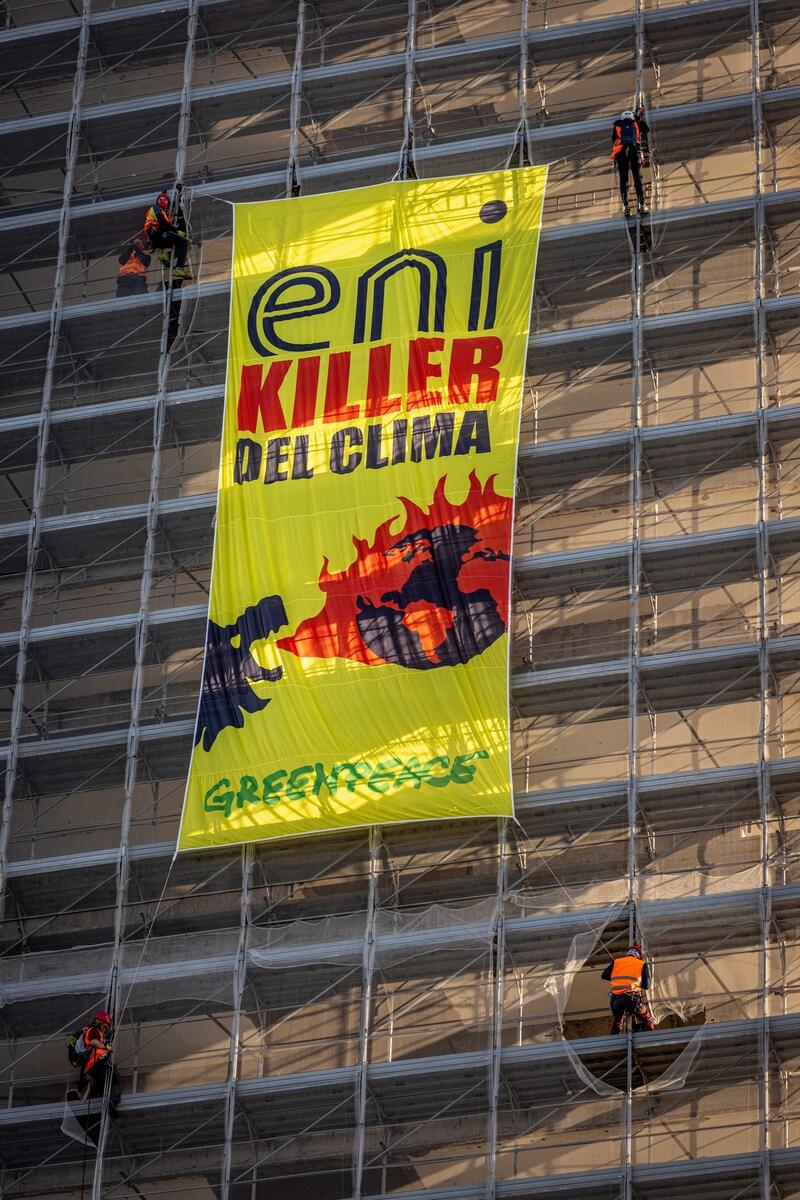
In the proceeding known as "The Just Cause" (La Giusta Causa), brought by Greenpeace Italy, ReCommon, and twelve private citizens.
Primary RiskLegal / Regulatory Exposure
JurisdictionEPA
Public MonitoringOn July 21, 2025, the Italian Supreme Court of Cassation.
Report Summary
Consequently, the Civil Court of Rome holds jurisdiction because the *conduct* (the strategic approval) occurred in Rome, and the *harm* (climate impact affecting the plaintiffs' rights to life and health) is suffered in Italy. By affirming the jurisdiction of the Civil Court of Rome to hear The Just Cause (La Giusta Causa), the United Sections anchored their reasoning in two specific provisions of the Italian Constitution: Article 32 and Article 41. The Supreme Court distinguished between "legislative omission" (suing the state for not passing a law, as in the Giudizio Universale case) and "civil liability" (suing a company for harm.
Key Data Points
On July 21, 2025, the Italian Supreme Court of Cassation (Corte di Cassazione) delivered a decisive blow to the traditional defense structures of multinational corporations with Order No. 20381. The legal method central to this ruling lies in the interpretation of Article 2497 of the Italian Civil Code, which governs the liability of entities exercising management and coordination over others. The justices examined Eni's centralized sustainability reporting, specifically the "Eni for 2024" and "Eni for 2025" reports, which detail the group's decarbonization. These documents explicitly state that the parent company defines the strategic guidelines, emission reduction (Scope 1, 2, and.
Investigative Review of Eni S.p.A.
Why it matters:
Supreme Court Order No. 20381/2025 shifts legal exposure for multinational energy corporations in Europe
The ruling affirms Italian civil courts' authority to adjudicate climate liability claims against Eni and other entities
Supreme Court Order No. 20381/2025: Affirming Civil Jurisdiction over Corporate Climate Liability
Supreme Court Order No. 20381/2025: Affirming Civil Jurisdiction over Corporate Climate Liability
The Judicial Piercing of the Corporate Shield
On July 21, 2025, the United Sections of the Italian Supreme Court of Cassation delivered a verdict that fundamentally altered the legal exposure of multinational energy corporations in Europe. Order No. 20381/2025 did not resolve a procedural dispute; it dismantled the primary jurisdictional defense used by Eni S. p. A. to insulate its global operations from domestic judicial scrutiny. For decades, fossil fuel majors have operated under the assumption that their compliance with national regulations in extraction territories shielded them from liability in their home jurisdictions. This ruling shattered that assumption. The Court affirmed that Italian civil courts possess the full authority to adjudicate claims brought by Greenpeace Italy, ReCommon, and twelve Italian citizens against Eni, the Ministry of Economy and Finance (MEF), and Cassa Depositi e Prestiti (CDP). The significance of this order lies in its rejection of the “political question” doctrine as a shield for private corporate conduct. Eni had argued that the lawsuit, titled *La Giusta Causa* (The Just Cause), asked a judge to rewrite national energy policy, a function reserved for the legislature. The Supreme Court disagreed. It ruled that while courts cannot dictate political strategy to the State, they have a constitutional duty to adjudicate claims where private or semi-private entities are accused of violating fundamental human rights through negligence or dangerous conduct. By classifying the lawsuit as a tort action under Article 2043 of the Italian Civil Code, the Court stripped Eni of its immunity claims and placed the company’s decarbonization strategy directly under the microscope of civil liability.
The “Diffusive Scope” Doctrine and EU Regulation 1215/2012
The technical core of the ruling rests on a rigorous interpretation of EU Regulation 1215/2012 (Brussels I bis), specifically Articles 4(1) and 7(2). Eni’s legal team contended that the Tribunal of Rome absence jurisdiction because the alleged “harmful events”, the extraction and combustion of fossil fuels, occurred largely outside Italy, across 37 different nations where Eni’s subsidiaries operate. They argued that holding the parent company liable in Rome for emissions in Nigeria or Kazakhstan violated the principles of territorial jurisdiction. The Supreme Court’s counter-argument introduced the “diffusive scope” doctrine into Italian jurisprudence. The judges reasoned that greenhouse gas emissions differ from localized pollutants. Once released, CO2 mixes into the global atmosphere, creating a singular, planetary harm that manifests locally. The Court held that for the purpose of establishing jurisdiction, the “place where the harmful event occurred” includes the location where the damage is sustained by the victims. Since the plaintiffs reside in Italy and provided evidence of local climate impacts, such as heatwaves, glacial retreat, and hydrogeological instability, the Italian courts hold valid jurisdiction. This interpretation prevents multinational corporations from fragmenting liability. If the Court had accepted Eni’s argument, plaintiffs would have been forced to file dozens of separate lawsuits in every jurisdiction where Eni operates, a logistical impossibility that would have granted the company impunity. Instead, the ruling centralizes the liability at the corporate headquarters. It establishes that a parent company domiciled in Italy answers to Italian courts for the global consequences of its strategic decisions, regardless of where the physical extraction takes place.
Distinguishing Corporate Liability from State Policy
A serious component of the Supreme Court’s reasoning involved distinguishing *La Giusta Causa* from the *Giudizio Universale* (Universal Judgment) lawsuit. The latter, filed against the Italian State, was dismissed because it sought to compel the government to legislate specific climate, which the courts deemed an overreach into the political sphere. Eni attempted to conflate the two cases, hoping for a similar dismissal. The Supreme Court clarified the boundary. While citizens cannot sue the State to force a specific law, they can sue a corporation for damages resulting from its business practices. The fact that the State (through MEF and CDP) is a shareholder in Eni does not transform the company into a sovereign entity immune from civil suit. The Court emphasized that MEF and CDP were named as defendants in their capacity as controlling shareholders who allegedly failed to exercise due diligence in steering the company away from harm. This distinction is important. It exposes state-owned enterprises and their public investors to the same liability standards as private competitors, removing the veil of sovereign protection from commercial activities.
The Return to the Court of Rome
With the jurisdictional hurdle cleared, the case returns to the Court of Rome for a trial on the merits. This phase, which observers in 2026 are watching closely, shifts the focus from legal theory to evidentiary fact. The plaintiffs are not asking for monetary compensation for themselves. They seek a court order compelling Eni to reduce its absolute emissions by 45% by 2030 compared to 2020 levels, aligning the company’s output with the Paris Agreement. Eni’s public response to the ruling was outwardly confident. The company stated it “welcomed” the decision as an opportunity to ” ” the accusations in open court. This rhetorical strategy is common among defendants in high- litigation; it attempts to project strength while masking the strategic defeat of losing the jurisdictional argument. In reality, Eni must defend its “Scope 3” emissions, the emissions produced by customers burning its fuel, which constitute the vast majority of its carbon footprint. The company has historically argued that it cannot be held liable for how consumers use its products. The Supreme Court’s acceptance of the “diffusive scope” of harm suggests that the lower court may look unfavorably on such defenses.
for Shareholder Stewardship
The inclusion of the Ministry of Economy and Finance and Cassa Depositi e Prestiti in the suit creates a complex conflict of interest for the Italian government. As shareholders, these entities have a fiduciary duty to maximize value, yet as public bodies, they have a constitutional mandate to protect citizens. The Supreme Court’s ruling implies that the State’s role as an investor does not exempt it from the consequences of the companies it controls. If the Court of Rome finds Eni liable, it could establish a precedent where institutional investors, sovereign wealth funds, pension funds, and state treasuries, share liability for the environmental damage caused by their portfolio companies. This creates a “pincer movement” for Eni’s management. On one side, they face pressure from private shareholders to maintain dividends derived from oil and gas revenues. On the other, they face legal pressure from their controlling public shareholders, who are direct defendants in a lawsuit alleging that those very revenues are generated through tortious conduct. The Supreme Court has locked the shareholders into the courtroom, forcing them to defend their stewardship record.
The Evidentiary Battlefield
The upcoming proceedings in Rome rely heavily on attribution science. The plaintiffs cite the “Carbon Majors” database, which attributes approximately 0. 6% of all global industrial greenhouse gas emissions since 1988 to Eni. The Supreme Court’s validation of the plaintiffs’ standing implies that this scientific data is admissible as a basis for legal causation. Eni likely counter with its own technical experts, arguing that its transition plan, which relies heavily on carbon capture and storage and future fusion technology, is sufficient. yet, the Supreme Court’s order subtly shifted the load. By acknowledging the “violation of the right to life and to private and family life” as a valid basis for the claim, the Court framed the problem not just as a regulatory dispute, as a human rights matter. In human rights torts, the standard of care is higher. A company cannot show it followed the rules; it must show it took all necessary precautions to prevent foreseeable harm. The plaintiffs that Eni knew of the climate risks decades ago and continued to expand fossil fuel production. The Supreme Court has ensured that this evidence be heard.
A Precedent for Europe
Order No. 20381/2025 reverberates beyond Italy. It aligns Italian jurisprudence with the Dutch ruling in *Milieudefensie v. Royal Dutch Shell*, creating a cross-border consensus that corporate climate plans are justiciable. Other European courts, frequently hesitant to challenge corporate domiciles, have a clear reference point from a G7 Supreme Court. The ruling destroys the argument that climate change is too big, too complex, or too political for civil judges. It asserts that if a corporation’s business model relies on physics that harm the public, the public has the right to demand a change in that business model through the civil justice system. The “diffusive scope” reasoning also threatens the corporate veil structure used by oil majors. By linking the parent company in Rome to the emissions of a subsidiary in Nigeria or a refinery in Louisiana, the Court has pierced the compartmentalization that protects parent companies. Eni can no longer claim that its international subsidiaries are independent entities for which it bears no responsibility. The Supreme Court has ruled that the strategic brain in Rome is responsible for the actions of the corporate body, wherever those actions occur.
Conclusion of the Jurisdictional Phase
The Supreme Court’s decision marks the end of the preliminary skirmishes and the beginning of the core battle. Eni failed to strike the claim on procedural grounds. The company must justify its emissions trajectory against the hard limits of the carbon budget. The Court of Cassation has opened the door; it is up to the Court of Rome to determine what lies on the other side. For Eni, the risk is no longer theoretical. It is a defined legal process with a case number, a judge, and a mandate from the highest court in the land to examine the true cost of every barrel.
Supreme Court Order No. 20381/2025: Affirming Civil Jurisdiction over Corporate Climate Liability
The 'Place of Harm' Doctrine: Establishing Italian Jurisdiction for Global Emissions
The ‘Place of Harm’ doctrine, historically a procedural method within European private international law, became the central pivot of the Italian Supreme Court’s July 2025 ruling in *La Giusta Causa*. By interpreting Article 7(2) of the Brussels I bis Regulation (Regulation (EU) No 1215/2012) through the lens of atmospheric science, the Corte di Cassazione dismantled Eni’s jurisdictional firewall. The Court established that a corporation domiciled in Italy can be held accountable in Italian civil courts for damages resulting from greenhouse gas emissions released anywhere in its global supply chain, provided the tangible consequences of those emissions manifest within Italian territory. ### The Jurisdictional Nexus: Article 7(2) and Diffusive Harm The legal battle over jurisdiction centered on the interpretation of “the place where the harmful event occurred.” Under the Brussels I bis Regulation, a plaintiff may sue a defendant in the courts of the member state where the defendant is domiciled (Article 4) or, in matters relating to tort, in the courts of the place where the harmful event occurred (Article 7(2)). Eni’s defense team rigorously argued that the “harmful event”—the extraction and combustion of fossil fuels—took place primarily outside Italy, across its operations in 37 distinct nations including Nigeria, Kazakhstan, and Mexico. They contended that Italian courts absence the authority to adjudicate the operational conduct of foreign subsidiaries or the emissions resulting from consumer use abroad. The United Sections of the Supreme Court rejected this fragmented view of corporate liability. In Order No. 20381/2025, the judges distinguished between the *Handlungsort* (the place of the causal event) and the *Erfolgsort* (the place where the damage occurred). While the *Handlungsort* for Eni’s emissions is indeed global and dispersed, the Court ruled that the *Erfolgsort* is specific and local. The ruling explicitly recognized the “naturally diffusive” character of greenhouse gases. Once released, CO2 mixes into the global atmosphere, the violation of rights—specifically the rights to life, health, and private family life by the plaintiffs—materializes where the victims reside. By accepting this “diffusive harm” theory, the Court affirmed that the physical location of the emission source does not sever the legal link to the location of the injury. The judges wrote that denying jurisdiction would force plaintiffs to fragment their claims across dozens of foreign jurisdictions, rendering the of justice impossible. This interpretation aligns Italian jurisprudence with the *Mines de Potasse* principle from the European Court of Justice, expands its application from physical water pollution to the ubiquitous threat of atmospheric warming. ### Piercing the Corporate Veil: Parent Company Liability A significant component of the “Place of Harm” ruling involved the attribution of responsibility to Eni S. p. A. as the parent entity. Eni argued that its foreign subsidiaries operated as distinct legal entities and that the parent company could not be dragged into court for their independent actions. The Supreme Court dismissed this objection by focusing on the centralized nature of corporate strategy. The plaintiffs, Greenpeace Italy and ReCommon, did not seek to hold Eni liable for specific operational accidents abroad, rather for the parent company’s failure to adopt a group-wide decarbonization strategy aligned with the Paris Agreement. The harm alleged was not the extraction of a specific barrel of oil, the corporate governance decision to continue expanding fossil fuel production in the face of scientific consensus. The Court found that this strategic failure—the decision-making process itself—occurred at Eni’s headquarters in Rome. Therefore, both the *Handlungsort* (the strategic decision) and the *Erfolgsort* (the climate impact on Italian citizens) provided a solid basis for Italian jurisdiction. This aspect of the ruling pierces the corporate veil for climate liability. It establishes that a parent company’s duty of care extends to the cumulative emissions of its entire value chain when those emissions result from centralized strategic planning. The Court validated the plaintiffs’ argument that Eni’s “Decarbonization Plan,” which allowed for increased oil production through 2026, constituted a direct course of conduct by the parent company that foreseeably contributed to the harm suffered by the plaintiffs in Italy. ### Distinguishing *La Giusta Causa* from *Giudizio Universale* The Supreme Court’s application of the Place of Harm doctrine also served to differentiate *La Giusta Causa* from the earlier *Giudizio Universale* (Universal Judgment) lawsuit. In that previous case, the Tribunal of Rome declared the claims inadmissible because the plaintiffs sought to compel the Italian State to legislate more aggressive climate policies. The court viewed this as an infringement on the separation of powers, ruling that judges cannot dictate political discretion. In contrast, the Supreme Court framed the Eni case strictly as a matter of civil tort liability (*responsabilità aquiliana*). The Court clarified that asking a private corporation—even one with state shareholders like the Ministry of Economy and Finance—to pay damages for harm caused or to cease harmful conduct does not violate the separation of powers. It is a standard judicial function to determine if a private entity’s actions have caused unjust damage to another party under Article 2043 of the Italian Civil Code. By anchoring the case in the “Place of Harm” doctrine, the Court categorized climate change not as a political abstraction, as a source of concrete, justiciable civil injury. The ruling emphasized that the “political” nature of the energy sector does not grant immunity from civil law. If a corporation’s business model causes verifiable harm to the health or property of citizens, the judiciary has both the power and the duty to intervene, regardless of the defendant’s size or state ties. ### for the Merits Phase The affirmation of jurisdiction under the Place of Harm doctrine clears the route for the Civil Court of Rome to examine the merits of the case. The lower court must determine whether a causal link exists between Eni’s specific contribution to global emissions (calculated at approximately 0. 6% of cumulative global emissions) and the specific injuries alleged by the 12 Italian citizens, which include health risks from heatwaves and property damage from extreme weather events. The Supreme Court’s refusal to dismiss the case on jurisdictional grounds removes the primary procedural shield Eni used to delay the proceedings. The focus shifts to the standard of care: did Eni S. p. A. act with negligence or intent by prioritizing fossil fuel expansion even with knowledge of climate risks? The “Place of Harm” ruling ensures that this question be answered under Italian law, applying Italian standards of civil liability to conduct that spans the globe.
Table 2. 1: Jurisdictional Principles Applied in Order No. 20381/2025
Legal Principle
Eni’s Argument
Supreme Court Ruling
Place of Harm (Erfolgsort)
Harm is too diffuse; emissions occur abroad.
Harm occurs where plaintiffs reside and suffer rights violations (Italy).
Place of Event (Handlungsort)
Operational acts occur in foreign subsidiaries.
Strategic decisions on decarbonization occur at HQ (Rome).
Separation of Powers
Climate policy is for legislators, not courts.
Civil liability for damages is a judicial matter, distinct from political policy.
Corporate Veil
Parent company is not liable for subsidiaries.
Parent company is liable for group-wide strategic failures causing harm.
The 'Place of Harm' Doctrine: Establishing Italian Jurisdiction for Global Emissions
Rejection of the 'Political Question' Defense: Judicial Competence in Climate Tort Cases
SECTION 3 of 14: Rejection of the ‘Political Question’ Defense: Judicial Competence in Climate Tort Cases On July 21, 2025, the Italian Supreme Court of Cassation (Corte di Cassazione) delivered a decisive blow to Eni S. p. A.’s primary legal shield in Order No. 20381/2025. The ruling, issued by the Joint Sections (Sezioni Unite), dismantled the “political question” defense—formally known as *difetto assoluto di giurisdizione*—which the energy giant had used to that climate change litigation falls outside the scope of judicial authority. Eni, supported by its state shareholders, the Ministry of Economy and Finance (MEF) and Cassa Depositi e Prestiti (CDP), maintained that setting emissions and energy strategy remains the exclusive prerogative of the legislative and executive branches. They asserted that a civil court intervention would constitute an overreach into government policy, violating the separation of powers. The Supreme Court rejected this argument in its entirety. The judges established that the lawsuit, *La Giusta Causa* (The Just Cause), does not ask the judiciary to write energy policy to adjudicate on specific civil damages resulting from corporate conduct. The Court affirmed that when a private or semi-public entity’s actions allegedly infringe upon fundamental human rights—specifically the rights to life, health, and a disturbing-free private life guaranteed by the Italian Constitution and the European Convention on Human Rights—the judiciary holds not only the power the duty to intervene.
The Demise of the “Absolute absence of Jurisdiction” Argument
Eni’s legal team had constructed their defense on the premise that complying with existing state regulations and authorizations should immunize the company from tort liability. They argued that because the Italian state directs energy security and transition pathways, any judicial order forcing Eni to accelerate decarbonization would bypass democratic processes. The Joint Sections clarified that administrative compliance does not erase civil liability for harm. The ruling distinguished between the *political* act of regulating emissions and the *judicial* act of assessing liability for damages caused by those emissions. The Court held that a company’s adherence to ministerial decrees does not grant it a “license to pollute” if such pollution results in verifiable injury to citizens. This distinction stripped Eni of the argument that it acts solely as an arm of the state, placing it squarely under the purview of tort law (Article 2043 of the Italian Civil Code).
Rejected. Climate damages involve fundamental rights, making them a matter for civil courts, not just politicians.
Courts can rule on corporate climate harm regardless of government policy.
Separation of Powers
The judiciary must protect individual rights (health, safety) from harm, even if the harm from industrial strategy.
Judicial review extends to corporate strategies that endanger public health.
Regulatory Compliance Shield
Compliance with administrative laws does not absolve a company from civil liability for tortious injury.
“We followed the rules” is no longer a total defense against climate lawsuits.
Distinguishing “The Just Cause” from “Giudizio Universale”
A serious component of the Court’s reasoning involved differentiating this case from the earlier *Giudizio Universale* (Universal Judgment) lawsuit. In that previous case, plaintiffs sued the Italian State directly, demanding stricter national climate policies. The courts declared that specific claim inadmissible, ruling that judges cannot dictate the State’s legislative agenda. Eni attempted to conflate the two cases, hoping for a similar dismissal. The Supreme Court, yet, drew a sharp line between suing the State for *policy* and suing a corporation for *conduct*. In *The Just Cause*, the plaintiffs, Greenpeace Italy, ReCommon, and 12 citizens, targeted Eni’s specific corporate decisions, such as continued oil exploration and the sale of fossil fuels, which they alleged directly contributed to climate instability and local damages. By framing the problem as one of corporate responsibility for hazardous activity rather than a challenge to state sovereignty, the Court validated the legal standing of climate tort claims against private actors.
for the Merits Phase
This jurisdictional victory for the plaintiffs forces the proceedings back to the Tribunal of Rome, which must examine the evidence on its merits. The lower court can no longer dismiss the case on procedural grounds related to judicial competence. The focus shifts to causality: can the plaintiffs prove that Eni’s specific contribution to global greenhouse gas emissions resulted in the tangible harms in the complaint? The ruling also aligns Italian jurisprudence with other European legal systems, most notably the Dutch court’s 2021 decision against Shell. By confirming that Italian judges are competent to hear these claims, the Supreme Court has opened a pathway for future litigation against other high-emitting sectors in Italy, including cement, steel, and automotive industries. The “political question” defense, once considered an impenetrable barrier for heavy industry, has evaporated. Eni faces a trial where it must defend its business model not as a matter of state compliance, as a matter of safety and harm prevention. The Court’s decision emphasizes that economic freedom (Article 41 of the Constitution) cannot override the duty to prevent damage to health and the environment. This hierarchy of rights places a heavy load of proof on Eni to demonstrate that its decarbonization plans are scientifically adequate to prevent the alleged injuries, rather than legally compliant with current—and chance insufficient—statutory requirements.
Rejection of the 'Political Question' Defense: Judicial Competence in Climate Tort Cases
Parent Company Liability: Holding Eni Accountable for International Subsidiary Operations
The Corporate Veil Pierced: Supreme Court Order No. 20381/2025
On July 21, 2025, the Italian Supreme Court of Cassation (Corte di Cassazione) delivered a decisive blow to the traditional defense structures of multinational corporations with Order No. 20381. In the proceeding known as “The Just Cause” (La Giusta Causa), brought by Greenpeace Italy, ReCommon, and twelve private citizens, the Court affirmed the jurisdiction of the Civil Court of Rome over Eni S. p. A. for climate damages resulting from its global operations. The ruling explicitly rejected Eni’s motion to dismiss based on the argument that the parent company could not be held liable for the emissions and activities of its foreign subsidiaries. By asserting that the strategic decision-making center in Rome bears responsibility for the environmental consequences of its “direction and coordination” (direzione e coordinamento), the Court pierced the corporate veil that had long shielded the parent entity from the operational realities of its international arms.
The “Direction and Coordination” Trap
The legal method central to this ruling lies in the interpretation of Article 2497 of the Italian Civil Code, which governs the liability of entities exercising management and coordination over others. Eni’s defense relied on the formal separation between Eni S. p. A. and its subsidiaries operating in nations such as Congo, Mozambique, and formerly Nigeria. They argued that the parent company acted as a shareholder, distinct from the operational entities emitting greenhouse gases.
The Supreme Court, yet, turned Eni’s own corporate integration against it. The justices examined Eni’s centralized sustainability reporting, specifically the “Eni for 2024” and “Eni for 2025” reports, which detail the group’s decarbonization. These documents explicitly state that the parent company defines the strategic guidelines, emission reduction (Scope 1, 2, and 3), and investment plans for the entire group. The Court reasoned that if Eni S. p. A. claims the authority to set climate strategy for its subsidiaries to satisfy investors and ESG (Environmental, Social, and Governance) criteria, it must also accept liability when that strategy fails to prevent harm. The centralization of “climate governance” created a direct link between the boardroom in Rome and the flaring towers in the Niger Delta, establishing a duty of care under Article 2043 of the Civil Code.
Scope 3 Emissions and the Locus of Decision
A serious component of the ruling was the treatment of Scope 3 emissions, indirect emissions that occur in the value chain, including the combustion of sold products. Eni had contended that it could not be liable for the end-use of its products or the operational emissions of foreign subsidiaries over which it claimed limited day-to-day control. The Court dismissed this, aligning with the logic seen in the Dutch ruling Milieudefensie v. Royal Dutch Shell (2021), grounding it firmly in Italian procedural law.
The Cassazione determined that the “event giving rise to the damage” was not the physical release of carbon dioxide in a foreign jurisdiction, the adoption of the corporate strategy in Italy that authorized such emissions. By continuing to approve plans for increased fossil fuel extraction, such as the 3-4% annual production increase by plaintiffs even with the 2050 Net Zero pledge, the parent company committed the tortious act within Italian territory. Consequently, the Civil Court of Rome holds jurisdiction because the *conduct* (the strategic approval) occurred in Rome, and the *harm* (climate impact affecting the plaintiffs’ rights to life and health) is suffered in Italy.
Strategic for State-Owned Shareholders
The ruling also implicated Eni’s state-backed shareholders, the Ministry of Economy and Finance (MEF) and Cassa Depositi e Prestiti (CDP). While the Court distinguished this case from the Giudizio Universale (Universal Judgment) lawsuit, which targeted the State’s political inaction and was dismissed for absence of jurisdiction, it allowed the claims against MEF and CDP to proceed in their capacity as controlling shareholders. The plaintiffs successfully argued that these entities failed to exercise their voting power to align Eni’s strategy with the Paris Agreement. This creates a new avenue of liability where state actors can be sued not for their legislative failures (which are politically shielded), for their corporate negligence as dominant shareholders in fossil fuel enterprises.
The Precedent for International Subsidiaries
This judicial affirmation removes the procedural firewall that previously forced plaintiffs to sue subsidiaries in their local jurisdictions, courts frequently plagued by delays, corruption, or absence of enforcement power. The “Just Cause” ruling establishes that an Italian parent company is the correct defendant for group-wide climate failures. For Eni, this means that operational disasters or emission excesses by units like Eni Angola or the Plenitude renewables arm are directly actionable in Rome if they from a defective central policy. The Court’s refusal to sever the parent from the subsidiary acknowledges the reality of modern multinational structures: power is centralized, and therefore, accountability must be too.
Distinguishing 'The Just Cause' from 'Giudizio Universale': Corporate vs. State Liability Models
The Sovereign Shield vs. The Corporate Sword
The legal trajectory of climate litigation in Italy fractured into two distinct route between 2024 and 2025. One route, directed at the State, ended in a judicial dead end. The other, directed at Eni, broke through the perimeter of corporate immunity. Understanding the Supreme Court’s 2025 ruling in The Just Cause requires a rigorous examination of why the earlier Giudizio Universale (Universal Judgment) lawsuit failed. The distinction lies not in the scientific evidence of climate change, which both cases accepted, in the rigid legal architecture of the Italian Republic: the separation of powers.
In February 2024, the Civil Court of Rome declared Giudizio Universale inadmissible. The lawsuit, filed by the NGO A Sud and over 200 plaintiffs, sought to force the Italian State to cut emissions by 92% by 2030. The judges ruled they suffered from a “defect of absolute jurisdiction.” In plain terms, the court held that setting national climate is a political and legislative function. For a judge to order the State to adopt a specific emission reduction percentage would constitute an intrusion into the sphere of Parliament and the Government. The judiciary cannot write laws; it can only apply them. The State successfully argued that its climate policy involves discretionary political choices, balancing industry, economy, and environment, that are immune from civil tort review.
This defeat seemed to signal the death of climate litigation in Italy. Yet, the legal team behind The Just Cause, Greenpeace Italy, ReCommon, and twelve private citizens, anticipated this barrier. They did not sue the State in its capacity as a sovereign regulator. Instead, they sued Eni S. p. A. as a private commercial entity under Article 2043 of the Italian Civil Code, the fundamental statute for non-contractual liability (tort). They also sued the Ministry of Economy and Finance (MEF) and Cassa Depositi e Prestiti (CDP), not as government bodies, as controlling shareholders exercising dominant influence over Eni.
The Supreme Court’s Demarcation: Order No. 20381/2025
The Supreme Court’s Joint Sections (Sezioni Unite) validated this strategic pivot in Order No. 20381, issued in July 2025. The ruling explicitly distinguished the corporate liability model from the state liability model. The Court reasoned that while a judge cannot dictate national energy policy to the Cabinet, a judge must adjudicate whether a specific company’s business plan causes unjust damage to third parties.
Eni’s defense team had attempted to blur this line. They argued that because the State holds a “Golden Power” and controlling stake in Eni, and because Eni operates within state-sanctioned energy frameworks, the company’s emissions were an extension of state policy. Eni claimed that suing the company was a backdoor attempt to sue the State, which the Rome court had already forbidden in Giudizio Universale.
The Supreme Court rejected this “derivative immunity” argument. The justices established that Eni, even with its public ownership, operates as a private law subject. It makes commercial decisions, problem bonds, and distributes dividends. Consequently, it bears the same duty of care (neminem laedere) as any other corporation. If Eni’s strategic plan, specifically its continued expansion of fossil fuel extraction, can be proven to contribute to climate change that harms the plaintiffs, the civil courts have the jurisdiction to intervene. The “political question” defense shields the sovereign from judicial policy-making, it does not shield a corporation from liability for physical harm.
The Shareholder Loophole: Suing the State as an Investor
A serious element of the 2025 ruling involves the status of the Ministry of Economy and Finance (MEF) and CDP. In Giudizio Universale, the State was the defendant in its capacity as the legislator. In The Just Cause, the MEF and CDP are defendants in their capacity as investors.
The Supreme Court affirmed that the State-as-shareholder does not enjoy the same immunity as the State-as-regulator. Under Italian corporate law, a parent company or controlling shareholder can be held liable if it exercises direction and coordination that harms the subsidiary or third parties. The plaintiffs that the MEF and CDP, by approving Eni’s decarbonization strategy (which allows for increased emissions in the short term), failed in their supervisory duties.
This distinction is fatal to the government’s attempt to dismiss the case. The Court ruled that managing an equity portfolio is a commercial activity, even when the government does it. Therefore, the civil courts have jurisdiction to determine if the State, acting as a prudent investor, should have forced Eni to align with the Paris Agreement to prevent future financial and environmental liabilities. This opens a side door to holding the government accountable: not for failing to pass laws, for failing to manage its assets responsibly.
The ‘Place of Harm’ vs. ‘Place of Event’
Another technical yet decisive factor distinguishing the two cases is the jurisdictional hook regarding where the damage occurs. In Giudizio Universale, the focus was on the national territory as a whole and the abstract failure of policy. In The Just Cause, the Supreme Court applied the Brussels I bis Regulation (Articles 4 and 7) to pinpoint jurisdiction.
Eni argued that since its emissions occur globally, in Nigeria, Kazakhstan, Mozambique, and international waters, an Italian court could not claim jurisdiction over the “event giving rise to the damage.” The Supreme Court dismantled this by applying the “place of harm” principle. The Court ruled that climate change is a diffuse phenomenon, yet the damage (heatwaves, coastal, health impacts) is suffered by the plaintiffs in Italy.
This ruling creates a massive liability exposure for multinational corporations domiciled in Italy. It means that Eni can be sued in Rome for the consequences of carbon emitted anywhere in its global supply chain, provided the victims reside in Italy. The Giudizio Universale case failed because it tried to force the State to change the cause (emissions policy). The Just Cause succeeded in establishing jurisdiction because it focuses on the effect (damages to citizens), bringing the matter squarely into the of civil tort law.
From Abstract Rights to Concrete Damages
The final distinction lies in the nature of the relief sought. Giudizio Universale asked for a declaratory judgment and a mandatory injunction for the State to legislate. This collided with the separation of powers. The Just Cause asks for three specific civil remedies:
Remedy Type
Legal Basis
Judicial Competence
Ascertainment of Liability
Art. 2043 Civil Code
Courts can determine if Eni’s past and current emissions constitute a “wrongful act” causing unjust damage.
Injunctive Relief
Art. 2058 Civil Code
Courts can order “specific performance” (reintegration in specific form) to stop the harmful conduct. This to ordering a 45% reduction in emissions.
Damages
Art. 2043/2059 Civil Code
Courts can award monetary compensation for health and property damage.
The Supreme Court recognized that ordering a private company to alter its business plan to avoid tort liability is a standard judicial function. It happens regularly in cases of industrial pollution, noise abatement, or product safety. By framing the climate emergency as a “mega-tort” rather than a policy failure, the plaintiffs in The Just Cause successfully navigated the jurisdictional labyrinth that trapped Giudizio Universale.
The 2025 ruling strips Eni of the “state shield.” The company must defend its emissions trajectory on the merits: proving that a business plan leading to>1. 5°C warming does not constitute negligence or intent to harm. The State, meanwhile, finds itself in the paradoxical position of being immune as a government liable as a banker.
The Role of State Shareholders: Investigating the Liability of MEF and CDP
SECTION 6 of 14: The Role of State Shareholders: Investigating the Liability of MEF and CDP
The Supreme Court’s Order No. 20381/2025 did not affirm jurisdiction over Eni; it dismantled the sovereign shield frequently used by state-owned enterprises to evade civil accountability. By permitting the *La Giusta Causa* lawsuit to proceed against the Ministry of Economy and Finance (MEF) and Cassa Depositi e Prestiti (CDP), the United Sections established a severe precedent: the Italian State, when acting as a shareholder, faces the same tort liabilities as any private investor. #### The “Dominant Influence” Doctrine Plaintiffs Greenpeace Italy and ReCommon argued that MEF and CDP are not passive investors the architects of Eni’s industrial strategy. Together, these entities control approximately 30% of Eni’s voting capital, a stake that grants them de facto control over shareholder assemblies and board appointments. The lawsuit alleges that both entities failed to exercise this “dominant influence” to align the energy giant’s operations with the Paris Agreement, even with the Italian State’s international climate commitments. The defense mounted by the State Attorney’s office attempted to frame the actions of MEF and CDP as an exercise of political discretion, protected by the separation of powers. They argued that energy policy is a legislative prerogative, immune from judicial review. The Supreme Court rejected this characterization. In a sharp departure from the *Giudizio Universale* ruling, which dismissed claims against the State for legislative inaction, the Court found that MEF and CDP were sued in their capacity as *soci* (shareholders) under private law, not as public authorities. This distinction is lethal to the defense. It implies that when the State enters the market, it sheds its sovereign immunity. The Court ruled that the decision to approve a fossil-heavy strategic plan is a corporate act, subject to the Civil Code’s provisions on management responsibility and the “do no harm” principle (*neminem laedere*). #### Piercing the Public Veil The ruling exposes the contradiction at the heart of Italy’s energy governance. The State has simultaneously pledged carbon neutrality by 2050 while its treasury demands high dividend yields from Eni’s oil and gas expansion. The Supreme Court’s decision forces a reconciliation of these opposing interests within a courtroom. The plaintiffs presented evidence that MEF and CDP consistently voted in favor of remuneration policies and strategic plans that expanded fossil fuel extraction. By doing so, they allegedly breached their duty of care. The Court’s acceptance of jurisdiction means the Civil Court of Rome must examine whether this voting record constitutes negligence.
Table 6. 1: State Shareholder Control & Voting (2020-2024)
Shareholder
Stake (Approx.)
Role
Voting Record on Climate Resolutions
Ministry of Economy and Finance (MEF)
4. 7% (Direct)
Direct Shareholder, appoints Board members
Consistently opposed NGO climate resolutions; approved all fossil expansion plans.
Cassa Depositi e Prestiti (CDP)
25. 7% (Indirect)
Controlled by MEF; acts as anchor investor
Voted in block with MEF; rejected Scope 3 emission in 2023/2024 assemblies.
Combined Control
~30. 4%
De Facto Control
Ensured passage of all Board-proposed energy strategies.
#### The Failure of Stewardship The concept of “active stewardship” is central to the liability claim. Institutional investors frequently face pressure to divest from polluters, yet the Italian State has chosen to retain its stake. The lawsuit this retention creates a heightened duty to mitigate harm. If a private majority shareholder can be sued for directing a company toward illegal or harmful conduct, the State is no exception. The Supreme Court’s order clarifies that the “Golden Power”—the State’s special rights to protect strategic assets—does not grant immunity from tort law. The plaintiffs contend that MEF and CDP had the power to force a transition plan chose short-term profits instead. This choice, according to the Court, is a justiciable commercial decision, not a protected political act. #### for State-Owned Enterprises This ruling reverberates beyond Eni. It suggests that state holding companies across Europe can be held liable for the climate damages caused by the entities they control. The separation between the “regulator State” and the “shareholder State” has collapsed. MEF can no longer claim it is powerless to influence Eni while simultaneously appointing its CEO and collecting billions in dividends. The Civil Court of Rome proceed to the merits phase. It must determine if the specific voting actions of MEF and CDP contributed causally to the climate damages alleged by the plaintiffs. The Supreme Court has removed the procedural firewall, leaving the State’s commercial conduct exposed to full judicial scrutiny. The argument that “energy security” justifies indefinite fossil expansion be tested against the strict liability standards of the Italian Civil Code.
The 45% Decarbonization Mandate: Analyzing the Specific Injunctive Relief Sought
The specific injunctive relief sought in *The Just Cause* (La Giusta Causa) is mathematically precise and industrially devastating for the. The plaintiffs—Greenpeace Italy, ReCommon, and twelve Italian citizens—do not seek monetary damages for past harms. Their primary objective is a court order compelling Eni S. p. A. to reduce its absolute greenhouse gas emissions by 45% by 2030, compared to a 2020 baseline. This figure is not an arbitrary negotiation tactic; it is a scientifically derived threshold aligned with the Intergovernmental Panel on Climate Change (IPCC) pathways to limit global warming to 1. 5°C. ### The Absolute Reduction vs. Intensity Trap The crux of the legal battle lies in the distinction between “absolute emissions” and “carbon intensity.” Eni’s existing decarbonization strategy, while marketed as aggressive, relies heavily on reducing the *intensity* of emissions per unit of energy produced. This accounting method allows the company to claim progress even while increasing total fossil fuel production, provided they add enough renewable capacity or offsets to dilute the carbon footprint of each barrel. The lawsuit demands the opposite: a hard cap on the total tonnage of CO2 equivalent emitted. The 45% mandate applies to Scopes 1, 2, and 3. Scope 3 emissions—generated when customers burn Eni’s oil and gas—account for over 90% of the company’s climate impact. By targeting Scope 3, the plaintiffs are asking the Court of Rome to order a managed decline in Eni’s core business of hydrocarbon extraction.
Table 7. 1: The Gap Between Eni’s Strategy and Plaintiff Demands
Metric
Eni Strategic Plan (2024-2027)
‘The Just Cause’ Lawsuit Demand
2030 Target
-35% Net Carbon Intensity (Scope 1+2+3)
-45% Absolute Emissions (Scope 1+2+3)
Baseline Year
2018
2020
Production Trajectory
Increase oil & gas production (CAGR 3-4%)
Implicit managed decline to meet cap
Primary method
Efficiency, Biofuels, CCS, Offsets
Production cuts, Renewable replacement
### The Shell Precedent and the Duty of Care The specific 45% figure is directly modeled on the landmark 2021 ruling by the District Court of The Hague against Royal Dutch Shell. In that case, the Dutch court determined that Shell had an individual “duty of care” under unwritten standards of tort law to reduce its emissions in line with the Paris Agreement. The Italian plaintiffs that Article 2043 of the Italian Civil Code—which governs non-contractual liability for “unjust damage”—imposes a similar obligation on Eni. The Supreme Court’s Order No. 20381/2025, issued on July 22, 2025, was instrumental in validating this request as a justiciable matter. By rejecting Eni’s argument that setting emissions is a “political question” reserved for the legislature, the Court of Cassation confirmed that a civil judge has the authority to review whether a corporation’s specific emissions trajectory violates fundamental human rights. The ruling established that if the 45% target is scientifically necessary to prevent “unjust damage” to the plaintiffs’ rights to life and health, the judiciary has the power to enforce it. ### Scientific Grounding and the “Carbon Budget” The plaintiffs’ legal team, supported by technical reports from climate scientists, that Eni’s current trajectory consumes a disproportionate share of the remaining global carbon budget. The 45% reduction by 2030 is presented as the *minimum* contribution required from a “Carbon Major” to remain compliant with the 1. 5°C goal. Eni’s defense rests on the assertion that its “technologically neutral” method—using Carbon Capture and Storage (CCS) and forestry offsets—can achieve net-zero by 2050 without the drastic short-term production cuts implied by the 45% mandate. The lawsuit challenges the viability and scalability of these technologies, labeling them as “distractions” that delay the necessary phase-out of fossil fuels. The plaintiffs contend that relying on unproven future technologies to balance current emissions constitutes negligence. ### for State Shareholders The injunctive relief sought extends beyond Eni’s corporate board. The lawsuit also demands that the Ministry of Economy and Finance (MEF) and Cassa Depositi e Prestiti (CDP), as controlling shareholders, adopt a binding climate policy for their participation in Eni. This would force the Italian state to vote for strategic plans that align with the 45% reduction target, closing the loop between state climate commitments and state-owned enterprise operations. If the Court of Rome grants this specific relief, Eni would be legally compelled to revise its industrial plan immediately. This would likely necessitate the cancellation of new exploration projects, the divestment of high-carbon assets, and a radical reallocation of capital expenditure (CapEx) from upstream oil and gas to renewable energy generation. The 45% mandate is not just a number; it is a method to force the transformation of an oil supermajor by judicial decree.
Eni's 'False Cause' Counter-Strategy: The Defamation Lawsuit as Alleged SLAPP
The timing was not subtle. In July 2023, mere weeks after Greenpeace Italy and ReCommon launched “The Just Cause” (La Giusta Causa) litigation, Eni S. p. A. initiated a counter-offensive that would come to define its defensive posture: a defamation lawsuit targeting the very organizations seeking to hold it accountable. This legal maneuver, filed in the Civil Court of Rome, accused the NGOs of waging a “media campaign” built on false information and defamatory rhetoric, specifically targeting the assertion that Eni’s business model constituted a violation of human rights. Eni’s filing, which sought damages exceeding €50, 000 from each organization, did not dispute the scientific or legal grounds of the climate liability case. Instead, it attacked the *characterization* of its operations. The energy giant argued that the “Just Cause” campaign’s terminology—specifically the use of words implying criminal negligence and the framing of fossil fuel expansion as a “crime” against the climate—transceded legitimate criticism and entered the of unlawful reputational harm. Eni contended that its decarbonization strategy, which includes a target of net-zero emissions by 2050, rendered the NGOs’ accusations factually incorrect and maliciously damaging to its corporate image and stock value. Civil society groups and legal observers immediately categorized the move as a Strategic Lawsuit Against Public Participation (SLAPP). The Coalition Against SLAPPs in Europe (CASE) flagged the action as a textbook example of “legal bullying,” designed not necessarily to win in court, to drain the defendants’ financial resources and intimidate other chance critics. By forcing Greenpeace and ReCommon to divert funds from their climate advocacy to defend a defamation claim, Eni opened a second front in the legal war, one where its superior financial “war chest” provided a distinct tactical advantage. This characterization was reinforced in April 2024, when a coalition of press freedom organizations, including Reporters Without Borders, Eni as the “SLAPP Addict of the Year,” citing this lawsuit alongside previous legal actions taken against the newspaper *Il Fatto Quotidiano* and the public broadcaster RAI. The “False Cause” narrative—Eni’s internal moniker for the NGOs’ liability suit—relied heavily on the premise that the climate litigation was frivolous and legally groundless. yet, this defense faced a catastrophic structural failure with the Supreme Court’s July 2025 ruling. When the Joint Chambers of the Supreme Court of Cassation issued Order No. 20381/2025, affirming the jurisdiction of Italian courts to hear the climate liability case, it implicitly dismantled the core of Eni’s defamation argument. The Supreme Court’s recognition that the “Just Cause” lawsuit raised valid questions regarding fundamental rights and corporate duty of care signaled that the NGOs’ claims were neither frivolous nor manifestly unfounded. Legal analysts note that the Supreme Court’s intervention created a “judicial paradox” for Eni’s counter-suit. Defamation in Italian law generally requires the statement to be false and the speaker to have acted with malice or reckless disregard for the truth. By validating the legal basis of the climate suit, the Supreme Court shielded the NGOs’ core assertions under the umbrella of the right to judicial action and legitimate public interest. If the highest court in the land acknowledges that Eni’s emissions *could* plausibly constitute a violation of human rights worthy of a trial, describing them as such in a public campaign becomes difficult to categorize as defamatory falsehood. also, the defamation suit’s demand for the removal of campaign materials clashed with the growing body of European anti-SLAPP directives, which Italy began transposing into national law by late 2025. These directives aim to allow judges to dismiss manifestly unfounded proceedings at an early stage. While Eni’s suit predated the full implementation of these laws, the shifting legislative in 2026 has placed the company’s “False Cause” strategy under intense judicial scrutiny. The lawsuit, intended to silence the plaintiffs, instead amplified the “David vs. Goliath” narrative, drawing international attention to Eni’s litigation tactics and arguably damaging the company’s reputation more than the original campaign it sought to suppress. As of early 2026, the defamation proceedings remain entangled in the procedural wake of the Supreme Court’s jurisdiction ruling. The Civil Court of Rome, tasked with hearing the merits of the climate liability case, must also grapple with this parallel dispute. yet, the momentum has shifted. What began as an aggressive counter-strike to delegitimize the climate plaintiffs has evolved into a liability of its own, serving as a case study for the risks of corporate retaliation in the era of high- climate litigation.
Historical Knowledge: Evidence of Eni's Internal Climate Risk Awareness Since the 1970s
The ‘Eni Knew’ Dossier: the Defense of Ignorance
The Supreme Court’s July 2025 affirmation of jurisdiction in The Just Cause litigation fundamentally shifts the evidentiary load onto Eni S. p. A. With procedural blocks cleared, the courtroom battle pivots to the substantive claim: that the company knowingly perpetuated a business model it understood to be catastrophic. Central to this phase is the “Eni Knew” investigative dossier, released by Greenpeace Italy and ReCommon in September 2023. This collection of internal documents, unearthed from Eni’s own archives and the libraries of the National Research Council (CNR), provides an uninterrupted timeline of climate risk awareness dating back to the early 1970s. These records the “good faith” defense frequently used by oil majors, which posits that the severity of climate change is a recent scientific consensus rather than a long-understood industrial hazard.
1970: The ISVET Report and the ‘Catastrophic’ Warning
The timeline of culpability begins not of climate summits, in 1970, a year associated with the Earth Day. Eni, then a fully state-owned entity, commissioned a technical-economic survey from its research center, the Institute for Studies on Economic Development and Technical Progress (ISVET). The resulting report contained a blunt assessment of the atmospheric impact of fossil fuels.
The 1970 ISVET document explicitly warned that carbon dioxide levels in the atmosphere had increased by 10% over the preceding century due to the combustion of mineral oils. More damning was its forward-looking projection: the report estimated that by the year 2000, this increase could reach 25%, leading to “catastrophic” consequences for the climate. This use of the word “catastrophic” in a corporate document from 1970 contradicts any assertion that the company viewed climate change as a benign or manageable side effect. The report demonstrates that Eni’s internal scientists had grasped the fundamental link between their product and planetary destabilization more than five decades before the 2025 Supreme Court ruling.
The Tecneco Reports: Precision in Prediction
As the 1970s progressed, Eni’s internal scientific apparatus refined its understanding of the greenhouse effect. In 1973, Eni subsidiary Tecneco published its ” Report on the Environmental Situation of the Country,” which identified the negative role of fossil fuel exploitation on the atmosphere. yet, it was the 1978 Tecneco report that provided a level of scientific precision that rivals modern climate modeling.
The 1978 document, titled “Project for the framing of the energy-environment problem,” laid out a specific geochemical forecast. It stated that carbon dioxide is the ” oxidation product of fossil fuels” and noted that only human activity was driving concentrations above the natural 300 parts per million (ppm) baseline. The report projected that atmospheric CO2 would reach between 375 and 400 ppm by the year 2000.
This prediction was chillingly accurate. In 2000, global CO2 concentrations averaged roughly 369 ppm, falling squarely within the lower bound of Eni’s internal forecast. The report further predicted that this increase would raise global temperatures by roughly 0. 5°C, a figure that also aligns with the observed warming trend of that period. The authors of the 1978 report warned that such changes could result in “climatic change with serious consequences for the biosphere.”
The existence of these specific figures precludes the defense that Eni was operating in an environment of scientific uncertainty. The company possessed data that accurately modeled the trajectory of global warming. The decision to expand fossil fuel extraction in the subsequent decades was made not in the absence of information, in direct defiance of it.
1988: Ecos Magazine and the Corporate Admission
By the late 1980s, the knowledge of climate risks had migrated from technical reports to broader corporate communications. Ecos, Eni’s company magazine widely read by employees and executives, began to feature articles discussing the greenhouse effect with increasing urgency.
A 1988 problem of Ecos contained an article stating that the “tremendous development of combustion processes” had led scientists to fear a greenhouse effect capable of causing “climate change with devastating effects on the entire earth’s ecosystem.” The language here mirrors the “catastrophic” warning of 1970, reinforcing the consistency of the internal narrative.
Another article from the same year went further, framing the response to climate change as a moral and operational imperative. It declared: “It is incumbent on us to work as of, as far as possible, to contain the phenomenon of carbon dioxide emissions.” This statement serves as a serious piece of evidence in The Just Cause lawsuit. It establishes that Eni recognized a duty to act (“incumbent on us”) nearly forty years ago. The plaintiffs that the company’s subsequent actions, which included aggressive exploration of new oil and gas fields, constituted a breach of this self-identified duty.
The IPIECA Connection: Strategy of Delay
While Eni’s internal publications acknowledged the reality of climate change, its external strategy aligned with the broader industry effort to delay regulation. Eni was an early member of IPIECA (International Petroleum Industry Environmental Conservation Association), an organization founded in 1974. Investigations in the “Eni Knew” report, including research by scholars Ben Franta and Christophe Bonneuil, identify IPIECA as a key vehicle for the “tobacco strategy”, a coordinated campaign to emphasize scientific uncertainty and block binding climate policies.
Eni’s involvement was not passive. In April 1986, the company hosted IPIECA’s annual general meeting in Italy. During this period, IPIECA and its members worked to weaken the emerging United Nations framework on climate change. The contrast between the clarity of the Tecneco reports and the obfuscation promoted by industry trade groups suggests a deliberate bifurcation of strategy: internal science was used to assess risk, while external lobbying was used to protect the business model from the of that science.
Gas as the ‘Clean’: A Calculated Pivot
The historical record also illuminates the origins of Eni’s “gas as a fuel” narrative. As public awareness of the greenhouse effect grew in the late 1980s and 1990s, Eni began to heavily market natural gas (methane) as a “clean” alternative to coal and oil. The “Eni Knew” investigation highlights that this marketing push occurred simultaneously with the company’s internal acknowledgments of the greenhouse effect.
Since methane is a potent greenhouse gas, over 80 times more at trapping heat than CO2 in the short term, the promotion of gas as a climate solution locked in decades of additional warming. The plaintiffs in The Just Cause that this was a deceptive practice, designed to maintain fossil fuel dominance under the guise of environmental responsibility. The 1978 Tecneco report had already identified fossil fuel combustion as the primary driver of CO2 accumulation; shifting from one fossil fuel to another did not alter the fundamental chemistry described in their own documents.
Legal for the 2025 Proceedings
The Supreme Court’s rejection of the “political question” defense means that these historical documents are admissible evidence of corporate conduct. In Italian tort law, liability frequently hinges on the concept of foreseeability. If a defendant could foresee that their actions would cause harm and failed to prevent it, they are liable.
The 1970 ISVET report and the 1978 Tecneco report provide irrefutable proof of foreseeability. They show that Eni did not need to wait for the Intergovernmental Panel on Climate Change (IPCC) to tell them that carbon emissions would alter the biosphere; they had calculated the ppm levels themselves. This historical knowledge transforms the alleged damage from an “unfortunate accident” of industrialization into a calculated cost of doing business.
also, the involvement of the Ministry of Economy and Finance (MEF) as a shareholder adds a of state complicity. Since Eni was fully state-owned during the production of the 1970 and 1978 reports, the Italian state itself was the recipient of these warnings. The failure of the state shareholder to mandate a shift in strategy, even with early knowledge of “catastrophic” risks, supports the plaintiffs’ claim that both the company and its state owners failed in their duty of care.
Table: Timeline of Eni’s Internal Climate Awareness
Year
Document/Event
Key Finding/Quote
Significance
1970
ISVET Report
Predicted 25% CO2 increase by 2000; warned of “catastrophic” climate consequences.
Establishes early knowledge of catastrophic risk.
1973
Tecneco Report
Identified negative role of fossil fuels on the atmosphere.
Confirms awareness of environmental harm.
1978
Tecneco Report
Predicted CO2 levels of 375-400 ppm by 2000; warned of “serious consequences for the biosphere.”
Demonstrates precise scientific modeling of global warming.
1986
IPIECA AGM
Eni hosted the meeting in Italy.
Shows active participation in industry lobbying groups.
1988
Ecos Magazine
“Incumbent on us to work as of… to contain the phenomenon of carbon dioxide emissions.”
Internal admission of duty to act.
The aggregation of these documents creates a formidable barrier for Eni’s legal team. They cannot claim ignorance. They cannot claim the science was unsettled. The “Eni Knew” dossier proves that the company possessed a roadmap of the climate emergency fifty years ago. The decision to ignore that roadmap forms the core of the liability claim proceeding through the Italian courts.
Constitutional Anchors: Articles 32 and 41 as Bases for Corporate Environmental Duty
Constitutional Anchors: Articles 32 and 41 as Bases for Corporate Environmental Duty
The Supreme Court of Cassation’s Order No. 20381/2025 did not settle a procedural dispute; it codified a shift in Italian legal theory regarding corporate accountability. By affirming the jurisdiction of the Civil Court of Rome to hear The Just Cause (La Giusta Causa), the United Sections anchored their reasoning in two specific provisions of the Italian Constitution: Article 32 and Article 41. These articles, previously viewed primarily as directives for state policy or limits on government action, were interpreted as sources of direct, horizontal liability for private entities. The ruling establishes that a corporation’s adherence to administrative regulations does not immunize it from constitutional scrutiny when its business model threatens fundamental human rights.
Article 32: The Absolute Right to Health
Article 32 of the Italian Constitution defines health as a “fundamental right of the individual and a shared interest.” Historically, this provision supported claims against the state for failing to provide medical care or against polluters causing localized toxic exposure. In The Just Cause, the plaintiffs successfully argued that the scope of Article 32 encompasses the widespread threats posed by the climate emergency. The Supreme Court accepted that the physical and psychological consequences of global heating, ranging from heat-related mortality to the spread of vector-borne diseases, constitute a direct violation of this right.
Eni’s defense relied on the argument that its emissions were authorized by valid permits and consistent with national energy strategies. The Court rejected this compliance-based defense. It ruled that the right to health is absolute and cannot be degraded by administrative permissions. If a private entity’s aggregate emissions contribute to a global phenomenon that endangers the life and health of Italian citizens, that entity bears chance liability under Article 32. This interpretation removes the “permit defense” as a shield against constitutional tort claims. The Court clarified that while the legislature determines energy policy, the judiciary must intervene when the execution of that policy by a corporate actor inflicts demonstrable harm on the biological integrity of citizens.
Article 41: The 2022 Amendment as a Legal Weapon
The most aggressive legal maneuver in Order No. 20381/2025 involves Article 41. This provision guarantees the freedom of private economic initiative yet simultaneously imposes strict boundaries. Even before 2022, the Constitution stated that economic activity “cannot be conducted in conflict with social utility or in such a manner that could damage safety, liberty, and human dignity.”
In February 2022, the Italian Parliament passed Constitutional Law No. 1, explicitly amending Article 41 to include “health” and “the environment” as inviolable limits on economic enterprise. It also added a clause mandating that economic activity must not harm “future generations.” This amendment provided the Supreme Court with the textual authority to reject Eni’s “political question” argument. Eni contended that balancing profits against climate goals was a matter for Parliament, not judges. The Court disagreed, citing the amended Article 41. The judiciary holds the duty to verify whether a corporation’s of profit violates the constitutional prohibition against environmental damage.
The ruling implies that a business model based on the indefinite expansion of fossil fuel extraction may be constitutionally illegitimate if it conflicts with the preservation of the environment for future generations. The 2022 amendment transformed Article 41 from a passive regulatory guideline into an active method for liability. The Court affirmed that the “social utility” of energy production does not override the specific prohibition against environmental harm. By continuing to invest heavily in new oil and gas projects even with scientific consensus on their climate impact, Eni is accused of operating in direct contravention of this constitutional limit.
Horizontal Application of Constitutional Rights
A central element of the Supreme Court’s reasoning is the Drittwirkung, or horizontal application, of constitutional rights., constitutions protect citizens from the state. In this ruling, the Court confirmed that Articles 32 and 41 create obligations between private parties. Eni, even with being a state-participated entity, was sued in its capacity as a private law corporation. The Court ruled that the constitutional duties to respect health and the environment apply directly to Eni’s corporate governance and strategic planning.
This finding the separation Eni sought to maintain between its commercial operations and its public shareholders (MEF and CDP). The Court noted that the status of the shareholders does not shield the company from civil liability for constitutional violations. On the contrary, the presence of the state as a controlling shareholder reinforces the obligation to adhere to constitutional mandates. The ruling suggests that Eni’s directors have a fiduciary duty that extends beyond maximizing shareholder value to include compliance with Articles 32 and 41. A strategy that generates profit by violating these articles is, by definition, an unlawful corporate act.
Rejection of the Legislative Shield
Eni and its shareholders argued that the lawsuit was an attempt to bypass the legislative process, asking a court to impose a 45% emissions reduction target that Parliament had not enacted. The Supreme Court distinguished between “legislative omission” (suing the state for not passing a law, as in the Giudizio Universale case) and “civil liability” (suing a company for harm caused). The Court held that determining whether Eni’s specific emissions trajectory violates the plaintiffs’ rights under Articles 32 and 41 is a standard judicial function of assessing tort liability (illecito civile).
The Court emphasized that the absence of a specific statutory law mandating a 45% cut does not absolve Eni of its constitutional duty of care. The Constitution serves as the supreme source of law, filling gaps left by specific legislation. Where statutory law is silent or insufficient to prevent the violation of a fundamental right, the Constitution provides the rule of decision. This establishes that Eni cannot hide behind the slowness or inadequacy of national climate legislation. If its actions today violate the constitutional rights of the plaintiffs, the court has the power, and the duty, to order the cessation of the harmful conduct.
Constitutional Articles Applied in Order No. 20381/2025
Article
Core Right/Duty
Application to Eni S. p. A.
Article 32
Right to Health
Emissions causing climate change pose a direct threat to physical and mental health. Compliance with permits does not excuse violations of this absolute right.
Article 41 (Pre-2022)
Free Enterprise vs. Social Utility
Economic initiative is free cannot conflict with social utility or damage safety, liberty, and human dignity.
Article 41 (Post-2022)
Environmental Limit
Explicitly adds “health” and “environment” as limits. Mandates protection of “future generations.” Eni’s expansion plans are measured against this specific prohibition.
Article 2
Inviolable Human Rights
Recognizes fundamental rights of individuals and social groups. Used to support the standing of NGOs (ReCommon, Greenpeace) to sue on behalf of shared interests.
The Supreme Court’s reliance on these articles creates a high load for Eni in the upcoming merit phase before the Court of Rome. The company must prove that its decarbonization plan, which allows for increased production in the short term, does not violate the specific constitutional prohibitions against harming health and the environment. The load of proof shifts from the plaintiffs proving negligence to the defendant proving constitutional compliance. This ruling constitutionalizes corporate climate strategy in Italy, setting a precedent that economic freedom ends where environmental destruction begins.
The Resumption of Proceedings: Procedural Timeline before the Civil Court of Rome in 2026
SECTION 11 of 14: The Resumption of Proceedings: Procedural Timeline before the Civil Court of Rome in 2026 On **January 30, 2026**, the Civil Court of Rome formally resumed proceedings in *La Giusta Causa* (The Just Cause), marking the end of the procedural suspension that had frozen the case during the Supreme Court’s jurisdictional review. The hearing, held before the **Second Civil Section** (*Seconda Sezione Civile*) of the Tribunal, represented the substantive engagement with the merits of the lawsuit since the Supreme Court of Cassation’s Order No. 20381/2025 affirmed the judiciary’s power to adjudicate corporate climate liability. This resumption was not automatic; it followed a specific procedural maneuver by Eni S. p. A. itself, which filed a request for reinstatement (*riassunzione*) on July 31, 2025, just ten days after the Supreme Court’s ruling. Under Article 392 of the Italian Code of Civil Procedure, failure to reactivate the suit within six months would have resulted in its extinction, a tactical outcome Eni clear sought to avoid in favor of a definitive judicial dismissal on the merits. The January 30 hearing was presided over by the judge of the Second Section, a division historically tasked with complex tort and liability disputes. The primary objective of this session was to redefine the *thema decidendum*—the specific scope of the dispute— that the preliminary objection of “absolute absence of jurisdiction” had been permanently removed. Legal representatives for Greenpeace Italy, ReCommon, and the twelve individual plaintiffs appeared to reiterate their core demand: a declaratory judgment of liability against Eni, the Ministry of Economy and Finance (MEF), and Cassa Depositi e Prestiti (CDP) for climate-related damages, paired with injunctive relief mandating a 45% reduction in Scope 1, 2, and 3 emissions by 2030 compared to 2020 levels. A serious procedural development in early 2026 was the court’s consideration of the evidentiary phase, specifically the appointment of a **CTU** (*Consulenza Tecnica d’Ufficio*), or court-appointed technical expert. Unlike the initial phases which focused on abstract legal questions of jurisdiction, the 2026 proceedings required the court to grapple with the factual mechanics of attribution science. The plaintiffs moved for the admission of technical evidence linking Eni’s specific cumulative emissions—calculated at 0. 6% of global industrial emissions since the industrial revolution—to tangible local damages asserted by the individual litigants, such as coastal and agricultural loss. Eni’s defense team, consistent with their filings, opposed the immediate appointment of a CTU, arguing that the causal link between a single corporate entity’s emissions and specific localized weather events remains scientifically unprovable and legally insufficient to satisfy the “more likely than not” (*più probabile che non*) standard of Italian civil liability. Parallel to the main climate liability track, the procedural timeline for 2026 was complicated by the separate defamation lawsuit filed by Eni against the NGOs. This secondary action, which Greenpeace and ReCommon characterize as a **SLAPP** (Strategic Lawsuit Against Public Participation), saw a pivotal hearing on **January 13, 2026**, just weeks before the main trial resumed. In this defamation case, Eni sought injunctive relief to bar the organizations from using terms like “climate crimes” or “killing” in their advocacy. The temporal proximity of these two hearings created a “judicial pincer” effect, forcing the NGOs to defend their right to free speech in one courtroom while simultaneously arguing the factual basis of their “climate homicide” allegations in another. Legal observers noted that the outcome of the January 13 hearing could materially impact the admissibility of certain evidence or the framing of arguments in the main *Just Cause* trial, particularly regarding the “moral element” of the alleged tort. The 2026 resumption also occurred under the looming regulatory shadow of the **Corporate Sustainability Due Diligence Directive (CSDDD)**. Although Italy had not yet fully transposed the directive into national law by the January hearing—the deadline being July 2026—the plaintiffs’ legal strategy began to integrate its principles as a “interpretative key” for existing duties of care under Article 2043 of the Civil Code. They argued that the Supreme Court’s validation of the claim’s admissibility imported the CSDDD’s logic of “value chain responsibility” into Italian tort law before the statute’s formal enactment. This argument posits that Eni’s duty to mitigate harm extends beyond its direct operations to the emissions produced by the combustion of its products (Scope 3), a point Eni vigorously contested as an impermissible retroactive application of future regulatory standards. Procedurally, the Second Section set a tight schedule for the exchange of final evidentiary briefs (*memorie istruttorie*) following the January 30 hearing. The court ordered both parties to submit detailed technical reports by **May 2026**, anticipating a subsequent hearing in late 2026 to rule on the admission of the CTU. This timeline indicates that the Tribunal aims to resolve the evidentiary admissibility questions before the end of the judicial year, chance setting the stage for the actual technical investigation—the heart of the liability determination—to commence in early 2027. The role of the state shareholders, MEF and CDP, also shifted during the 2026 resumption. While their initial defense relied heavily on the “political question” doctrine (arguing that climate policy is for Parliament, not courts), the Supreme Court’s rejection of this defense forced a pivot. In the 2026 filings, the State Attorney (*Avvocatura dello Stato*), representing the Ministry, focused on the corporate law argument of “separation of personality.” They contended that a shareholder, even a controlling one, cannot be held liable for the torts of the portfolio company absent direct interference in management. This defense attempts to insulate the Italian state from liability for Eni’s operational decisions, a firewall the plaintiffs seek to breach by citing the state’s specific climate commitments under the Paris Agreement as a binding directive for its shareholding conduct. The resumption of *La Giusta Causa* in 2026 thus transformed the dispute from a high-level constitutional debate into a granular forensic examination of corporate governance and emissions metrics. The Civil Court of Rome is no longer asking *if* it can judge Eni’s climate strategy, *how* to measure its alleged illegality against the backdrop of Article 32 (right to health) and Article 41 (freedom of enterprise limited by social utility) of the Constitution. The January 30 hearing signaled that the “political shield” is gone; the “evidentiary battle” has begun.
Comparative Jurisprudence: The Influence of the Milieudefensie v. Shell Precedent
SECTION 12 of 14: Comparative Jurisprudence: The Influence of the Milieudefensie v. Shell Precedent The legal architecture of *The Just Cause* (La Giusta Causa) is not an indigenous Italian creation a direct adaptation of the litigation strategy deployed in *Milieudefensie et al. v. Royal Dutch Shell*. When Greenpeace Italy and ReCommon filed their summons in May 2023, they did not seek damages; they imported the specific injunctive relief granted by the Hague District Court in 2021: a 45% reduction in absolute CO2 emissions by 2030, covering Scopes 1, 2, and 3. This specific percentage, tethered to the IPCC’s 1. 5°C pathways, serves as the genetic marker linking the two cases. The Italian Supreme Court’s Order No. 20381/2025, issued on July 21, 2025, affirms that the logic applied in the Netherlands has successfully crossed the Alps, embedding the concept of corporate climate liability into the Italian civil justice system. The influence of the Shell precedent is most visible in the Supreme Court’s treatment of the “duty of care.” In the Dutch proceedings, the court constructed an “unwritten standard of care” from Book 6, Section 162 of the Dutch Civil Code, interpreted through the lens of the European Convention on Human Rights (ECHR), specifically Articles 2 (Right to Life) and 8 (Right to Family Life). The Italian Supreme Court applied a parallel hermeneutic to Articles 2043 (general tort liability) and 2050 (liability for hazardous activities) of the Italian Civil Code. By ruling that Eni’s adherence to statutory emission limits does not automatically shield it from tort liability if its in total strategy endangers fundamental rights, the Court validated the “horizontal application” of human rights obligations to private actors. This judicial reasoning rejects the defense that regulatory compliance equals immunity, a core tenet established in the initial Shell ruling. Eni’s defense strategy mirrored Shell’s early arguments, particularly regarding the “corporate veil” and Scope 3 emissions. Eni argued that the Italian courts absence jurisdiction over emissions generated by its foreign subsidiaries or the end-use of its products by consumers globally. The Supreme Court’s rejection of this argument in Order No. 20381/2025 borrows heavily from the “policy control” doctrine used in the Hague. The Dutch court found that because Royal Dutch Shell set the energy policy for the entire group, it was liable for the group’s global emissions. Similarly, the Italian Cassazione ruled that the “event giving rise to the damage” is the adoption of the strategic decarbonization plan—a decision made at Eni’s headquarters in Rome and San Donato Milanese. Consequently, the parent company bears responsibility for the climate impact of the entire value chain, nullifying the attempt to fragment liability across national borders. A serious point of, yet one that reinforces the Shell influence, is the handling of the “political question” doctrine. In the *Giudizio Universale* case against the Italian State, the Rome Tribunal dismissed the suit, ruling that climate are political decisions reserved for the legislature. Eni attempted to use this dismissal as a shield, arguing that *The Just Cause* was a disguised political challenge. The Supreme Court distinguished the two by focusing on the nature of the defendant. While the State enjoys wide discretion in policy-making, a private corporation (and its shareholders acting in a commercial capacity) is subject to the *neminem laedere* principle—the duty to cause no harm. By framing the lawsuit as a tort action rather than a regulatory challenge, the Court allowed the case to proceed where the state-focused litigation failed. This distinction mirrors the Dutch experience, where the *Urgenda* case (against the State) and the *Milieudefensie* case (against Shell) created a pincer movement of liability, one public and one private. The timeline of the Shell litigation also played a complex role in the Italian proceedings. In November 2024, the Hague Court of Appeal overturned the specific 45% reduction order against Shell, ruling that while the company had a duty to reduce emissions, the court could not scientifically impose that precise percentage on a single entity. Eni’s legal team likely leveraged this appellate reversal to against the admissibility of the Italian claim. Yet, the Italian Supreme Court’s 2025 ruling demonstrates a sophisticated reading of the Dutch appeal. The Cassazione affirmed jurisdiction based on the *existence* of the duty of care and the *justiciability* of the claim, without necessarily endorsing the 45% remedy at this preliminary stage. The ruling confirms that the reversal of the specific Dutch order did not invalidate the underlying legal theory: that corporations can be sued for climate negligence. The Italian Court ruled that the merit of the 45% target is a matter for the trial court to determine, not a barrier to entering the courtroom. The role of the state shareholders, MEF and CDP, adds a dimension absent in the Shell case consistent with its logic of control. The plaintiffs that these entities, like the parent company Shell, failed to use their dominant influence to align the subsidiary with the Paris Agreement. The Supreme Court’s willingness to include these shareholders in the jurisdictional scope suggests an expansion of the Shell precedent. It implies that the duty of care extends not just to the corporate board that sets the strategy, to the controlling shareholders who endorse it. This creates a new frontier in climate litigation, chance exposing sovereign wealth funds and state investment banks to liability for the emissions of their portfolio companies.
Comparative Analysis: Milieudefensie v. Shell vs. Greenpeace Italy v. Eni
Feature
Milieudefensie et al. v. Royal Dutch Shell (Netherlands)
The Just Cause (Greenpeace Italy et al. v. Eni)
Primary Legal Basis
Dutch Civil Code Art. 6: 162 (Unwritten Standard of Care) + ECHR Arts. 2 & 8.
45% reduction in CO2 emissions by 2030 (Scopes 1, 2, 3) vs. 2019 levels.
45% reduction in CO2 emissions by 2030 (Scopes 1, 2, 3) vs. 2020 levels.
Scope 3 Liability
Affirmed: Parent company controls group policy and end-product portfolio.
Affirmed (Jurisdiction): Parent company strategy in Italy causes global harm; liable for value chain.
Defense Argument
Compliance with laws; “perfect substitution” (if we don’t sell, others ).
absence of jurisdiction (foreign subs); “political question” (legislative prerogative).
Judicial Outcome
2021: Order granted. 2024 (Appeal): Order overturned on specific %, duty of care affirmed.
2025 (Supreme Court): Jurisdiction affirmed. Case remanded to Civil Court of Rome for merits trial.
Key Distinction
Purely private defendant (publicly traded).
Private defendant (Eni) + Public Shareholders (MEF, CDP) sued in commercial capacity.
The Supreme Court’s decision to allow *The Just Cause* to proceed to a merit trial signifies that the “Shell effect” is not a transient legal anomaly a contagious jurisprudential shift. By validating the structural arguments of the Dutch precedent—specifically the parent company’s liability for Scope 3 emissions and the justiciability of corporate climate strategy—the Italian judiciary has signaled that national borders offer no sanctuary for multinational fossil fuel companies. The case returns to the Civil Court of Rome, where the specific question of whether Eni’s decarbonization plan violates the *neminem laedere* principle be tested against the scientific evidence, with the Dutch experience serving as both a blueprint and a warning.
The Exclusion of Monetary Damages: Focusing on Coercive Compliance and Emission Cuts
The Exclusion of Monetary Damages: Focusing on Coercive Compliance and Emission Cuts
In a calculated departure from traditional tort litigation, the plaintiffs in *The Just Cause* (La Giusta Causa) have explicitly rejected the of monetary compensation for personal losses. This strategic maneuver fundamentally alters the legal battlefield, stripping Eni S. p. A. of the ability to treat environmental liability as a mere cost of doing business. By refusing to put a price tag on climate destruction, Greenpeace Italy, ReCommon, and the twelve citizen plaintiffs have forced the Civil Court of Rome to adjudicate the legality of Eni’s business model itself, rather than the financial value of its externalized harm.
The Strategic Pivot: From Compensation to Correction
The decision to forego damages is not a concession; it is a weapon. In standard environmental torts, corporations frequently absorb financial penalties without altering their operational core. A payout, no matter how large, frequently functions as a retroactive fee for the right to pollute. The legal team behind *The Just Cause* recognized that a monetary award would do nothing to arrest the physical mechanics of climate change. Consequently, they framed their petition under **Article 2058 of the Italian Civil Code**, which authorizes “restoration in kind” (*risarcimento in forma specifica*). This provision allows a judge to order the specific performance of an obligation when monetary compensation is insufficient to remedy the harm. The plaintiffs that the only form of “restoration” capable of addressing the existential threat of global heating is the cessation of the conduct causing it. Therefore, the “remedy” sought is not a check, a judicial mandate compelling Eni to revise its industrial strategy. Specifically, the lawsuit demands a **45% reduction in Scope 1, 2, and 3 CO2 emissions by 2030**, relative to 2020 levels. This target aligns with the Paris Agreement’s 1. 5°C trajectory, asking the court to enforce international scientific consensus as a binding corporate obligation.
Declaratory Relief as a Foundation for Action
While the plaintiffs do not seek cash for themselves, they have requested a **declaratory judgment** of liability. They ask the court to formally ascertain that Eni, along with its state shareholders MEF and CDP, is jointly and severally liable for “moral and material damages” inflicted upon the plaintiffs’ health, life, and property. This distinction is legally precise and important: the declaration of damage serves to establish the existence of the tort (the wrongful act), which is a prerequisite for granting injunctive relief. By proving that Eni’s emissions constitute a violation of human rights under Articles 2 and 32 of the Italian Constitution, the plaintiffs lay the groundwork for the court to intervene. The declaration acts as the legal trigger; the emission cuts are the bullet. This method prevents Eni from arguing that the plaintiffs absence standing or that the harm is hypothetical. The harm is real, it is declared, and because it is ongoing, the only lawful remedy is to stop the source.
The Enforcement Hammer: Article 614-bis
To ensure that any court-ordered decarbonization is not ignored, the plaintiffs have invoked **Article 614-bis of the Italian Code of Civil Procedure**. This article provides for an *astreinte*, or a coercive monetary penalty, applied for every day of non-compliance or for each violation of a judicial order.
Legal method of Coercive Compliance in ‘The Just Cause’
Legal Instrument
Function in Lawsuit
Strategic Objective
Article 2058 (Civil Code)
Restoration in Kind
Replaces cash damages with a mandate to cut emissions by 45%.
Article 614-bis (Civil Procedure)
Indirect Coercive Measure (*Astreinte*)
Imposes daily fines for failure to implement the decarbonization plan.
Declaratory Judgment
Establishment of Liability
Proves the tort exists without allowing Eni to settle via payment.
The request for an *astreinte* transforms the emission reduction order from a theoretical obligation into a financial imperative. Unlike a one-time fine, an *astreinte* accumulates over time, creating mounting financial pressure that makes non-compliance economically irrational. If the court grants this measure, Eni would face an open-ended liability directly tied to its carbon output. This method internalizes the cost of emissions, not through a tax, through a judicial penalty for the court’s authority.
Supreme Court Validation of the Non-Monetary Model
The Italian Supreme Court’s **Order No. 20381/2025** (July 2025) implicitly validated this focus on injunctive relief. By rejecting the “political question” defense, the Court confirmed that a civil judge has the competence to order a private company to adjust its conduct to prevent violations of fundamental rights. The ruling clarified that the case is not about dictating national energy policy, which would be the domain of the legislature, about checking a specific corporate actor’s compliance with the general duty of care (*neminem laedere*). The Supreme Court noted that the exclusion of monetary damages simplifies the jurisdictional analysis. Because the plaintiffs are not asking the court to calculate complex financial reparations for global climate impacts, the inquiry remains focused on the *conduct* of the defendants. This narrows the scope of the trial to a technical and legal assessment of whether Eni’s decarbonization plan (or absence thereof) constitutes a breach of its duty to not harm others.
Avoiding the “Pay-to-Pollute” Trap
Legal analysts observe that this strategy insulates the plaintiffs from accusations of greed or opportunism. Eni’s defense team cannot that the lawsuit is a “shakedown” for money, as no money is being requested for the plaintiffs. This strengthens the moral weight of the case in the court of public opinion and focuses the proceedings entirely on the science of climate change and corporate responsibility. also, seeking monetary damages in climate cases is with causation challenges. Proving that a specific percentage of a plaintiff’s financial loss (e. g., crop failure or property damage) is directly attributable to Eni’s specific historical emissions is scientifically difficult. By contrast, proving that Eni’s *current* business plan leads to future emissions that violate the Paris Agreement is a matter of analyzing public corporate documents against established carbon budgets. The shift to injunctive relief bypasses the quagmire of specific causation for past damages and attacks the certainty of future harm. The exclusion of monetary damages is the defining feature of *The Just Cause*. It signals a maturation of climate litigation in Italy, moving from symbolic protests to surgical legal interventions. The plaintiffs do not want Eni’s money; they want Eni’s compliance. By using Article 2058 and Article 614-bis, they have constructed a legal trap where the only exit is decarbonization.
Systemic Implications: The Ruling's Impact on Transnational Climate Litigation in Europe
The European Domino Effect: Order No. 20381/2025 as a Transnational Legal Anchor
The Supreme Court of Cassation’s Order No. 20381/2025 does not resolve a procedural dispute in Rome; it the jurisdictional firewalls that European multinationals have long used to insulate parent companies from the climate liabilities of their global operations. By affirming that the Civil Court of Rome holds jurisdiction over Eni S. p. A. for emissions generated worldwide, the United Sections have weaponized the Brussels I bis Regulation against the fossil fuel industry. This ruling serves as the final synchronization point for European climate tort law, aligning Italian jurisprudence with the Dutch Milieudefensie v. Shell precedent and the German Lliuya v. RWE trajectory. The decision signals the end of the “political question” defense in corporate climate litigation across the continent, establishing a unified judicial front where voluntary corporate social responsibility is forcibly converted into mandatory tort liability.
Weaponizing Brussels I bis: The End of Jurisdictional Arbitrage
For decades, transnational corporations utilized the complexity of private international law to fragment liability. They argued that environmental harms occurring in the Niger Delta or the Caspian Sea fell under local jurisdiction, while the parent company in Rome, Paris, or London remained legally distinct. The Cassation Court’s interpretation of Article 4 and Article 7(2) of the Brussels I bis Regulation (Regulation EU No 1215/2012) obliterates this defense. The Court established that the “event giving rise to the damage” is not solely the physical extraction of oil in a foreign territory, the strategic decision-making process centralized at the corporate headquarters. By locating the “harmful event” in the boardroom where decarbonization are set (or ignored), the ruling creates a inescapable jurisdictional hook. If a company is domiciled in an EU Member State, it is liable in that State’s courts for the global climate consequences of its strategic governance. This interpretation prevents Eni, and by extension, peers like TotalEnergies or Repsol, from engaging in forum shopping or hiding behind the corporate veil of foreign subsidiaries. The “Italian Torpedo”, a tactic where defendants delay proceedings by filing suits in slow jurisdictions, has been reversed; Italy is a magnet forum for high- climate liability.
Judicial Enforcement of the CSDDD Before Transposition
The timing of Order No. 20381/2025 is serious regarding the EU Corporate Sustainability Due Diligence Directive (CSDDD). While Member States are still navigating the transposition of the CSDDD into national law, the Italian Supreme Court has pre-empted the legislative process by interpreting existing civil code provisions (Article 2043) through the lens of constitutional and international obligations. The ruling confirms that the duty of care required to prevent climate harm is not a new statutory creation waiting for the CSDDD, an existing obligation under current tort law, informed by the Paris Agreement. This “judicial transposition” means that European multinationals cannot wait for national implementation acts to define their liability. The court has set the standard: failure to align corporate strategy with the 1. 5°C target constitutes a breach of the duty of care today, not in 2027 or 2029. This acceleration exposes companies to immediate litigation risks that their compliance departments assumed were years away.
Table 14. 1: Comparative Impact of European Climate Liability Rulings (2021-2025)
Case / Jurisdiction
Legal Basis
Corporate Defense Strategy
Judicial Outcome
widespread Implication
Milieudefensie v. Shell (Netherlands, 2021)
Dutch Civil Code (Duty of Care) + ECHR
Compliance with ETS; State responsibility
Liability Affirmed: 45% reduction mandate imposed on global operations.
Established the “Scope 3” precedent: Parent companies are liable for value-chain emissions.
Lliuya v. RWE (Germany, Ongoing/2025)
German Civil Code (§ 1004 BGB, Nuisance)
Causality impossible to prove; Political question
Evidentiary Phase: Court accepted that individual emitters can be liable for fractional contributions.
Validates “attribution science” in court; establishes liability based on market share of emissions.
The Just Cause v. Eni (Italy, 2025)
Italian Civil Code (Art 2043) + Brussels I bis
Separation of Powers; absence of Jurisdiction over foreign acts
Jurisdiction Affirmed: Rejection of political defense; Parent company liable for strategic decisions.
Harmonizes Southern European jurisprudence; confirms “home state” jurisdiction for global climate harms.
TotalEnergies v. NGOs (France, Various)
French Duty of Vigilance Law
Procedural inadmissibility; Compliance with vigilance plan
Mixed/Evolving: Courts moving toward merit-based review of vigilance plans.
Demonstrates the shift from “reporting compliance” to “substantive outcome” compliance.
The Death of the “Political Question” Defense
The most severe blow to the fossil fuel industry’s legal armor is the Supreme Court’s categorical rejection of the “separation of powers” argument. Eni, supported by the Italian government’s intervention, argued that determining the adequacy of a decarbonization plan is a political function reserved for the legislature, not the judiciary. This defense, that climate change is a “polycentric” problem unsuitable for courts, has been the primary shield for carbon majors across Europe. The Supreme Court’s distinction between Giudizio Universale (suing the State) and The Just Cause (suing a private entity) is legally surgical. While courts may defer to the State on how to balance competing public interests, they have a mandatory duty to adjudicate whether a private entity’s conduct violates the fundamental rights of others. By classifying Eni’s emissions as business decisions subject to the “neminem laedere” (do no harm) principle, the Court stripped the company of its quasi-public immunity. This precedent forces every European court to treat climate not as policy aspirations, as justiciable standards of conduct.
Financial Market Reactions: The “Legal Risk” Premium
The widespread extend immediately into the financial markets. Following the July 2025 ruling, credit rating agencies and institutional investors must recalibrate their risk assessments for European oil and gas majors. The confirmation of jurisdiction implies that “legal risk” is no longer a theoretical footnote a quantifiable liability on the balance sheet. 1. D&O Insurance Spikes: Directors and Officers (D&O) liability insurance premiums for energy majors are projected to surge. Insurers recognize that board members can be personally implicated in lawsuits alleging breach of fiduciary duty for failing to mitigate climate litigation risk. 2. Cost of Capital: The ruling validates the “stranded asset” hypothesis in a legal context. If a court can mandate a 45% production cut (as sought in the merit phase), the valuation of Eni’s proven reserves is fundamentally altered. Bondholders must price in the probability of court-ordered asset stranding. 3. Audit Scrutiny: Auditors are under pressure to qualify financial statements that do not adequately reserve for chance climate damages. The “materiality” of climate litigation risk has crossed the threshold from “remote” to “probable.”
The Transnational NGO Strategy
, Order No. 20381/2025 validates the transnational litigation strategy employed by groups like Greenpeace and ReCommon. By coordinating lawsuits across jurisdictions—using the Dutch victory to fuel the Italian procedural arguments—civil society has created a “pincer movement” on the European fossil fuel industry. The ruling encourages cross-border collaboration where plaintiffs in the Global South (victims of direct physical harm) join forces with NGOs in the Global North (where the corporate headquarters are located) to bypass weak local judicial systems. The Italian Supreme Court has not just opened the door to the Civil Court of Rome; it has unlocked the gates for a flood of pan-European litigation. The message to corporate boards is unambiguous: there is no safe harbor in Europe. If you direct the strategy, you own the damage, regardless of where the smoke rises. The era of climate accountability has transitioned from the negotiation halls of COP summits to the courtrooms of civil liability, and the gavel has fallen decisively against delay.
Timeline Tracker
2025
Supreme Court Order No. 20381/2025: Affirming Civil Jurisdiction over Corporate Climate Liability — Supreme Court Order No. 20381/2025: Affirming Civil Jurisdiction over Corporate Climate Liability.
July 21, 2025
The Judicial Piercing of the Corporate Shield — On July 21, 2025, the United Sections of the Italian Supreme Court of Cassation delivered a verdict that fundamentally altered the legal exposure of multinational energy.
2012
The "Diffusive Scope" Doctrine and EU Regulation 1215/2012 — The technical core of the ruling rests on a rigorous interpretation of EU Regulation 1215/2012 (Brussels I bis), specifically Articles 4(1) and 7(2). Eni's legal team.
2026
The Return to the Court of Rome — With the jurisdictional hurdle cleared, the case returns to the Court of Rome for a trial on the merits. This phase, which observers in 2026 are.
1988
The Evidentiary Battlefield — The upcoming proceedings in Rome rely heavily on attribution science. The plaintiffs cite the "Carbon Majors" database, which attributes approximately 0. 6% of all global industrial.
2025
A Precedent for Europe — Order No. 20381/2025 reverberates beyond Italy. It aligns Italian jurisprudence with the Dutch ruling in *Milieudefensie v. Royal Dutch Shell*, creating a cross-border consensus that corporate.
2025
Conclusion of the Jurisdictional Phase — The Supreme Court's decision marks the end of the preliminary skirmishes and the beginning of the core battle. Eni failed to strike the claim on procedural.
July 21, 2025
Rejection of the 'Political Question' Defense: Judicial Competence in Climate Tort Cases — SECTION 3 of 14: Rejection of the 'Political Question' Defense: Judicial Competence in Climate Tort Cases On July 21, 2025, the Italian Supreme Court of Cassation.
2043
The Demise of the "Absolute absence of Jurisdiction" Argument — Eni's legal team had constructed their defense on the premise that complying with existing state regulations and authorizations should immunize the company from tort liability. They.
2021
for the Merits Phase — This jurisdictional victory for the plaintiffs forces the proceedings back to the Tribunal of Rome, which must examine the evidence on its merits. The lower court.
July 21, 2025
The Corporate Veil Pierced: Supreme Court Order No. 20381/2025 — On July 21, 2025, the Italian Supreme Court of Cassation (Corte di Cassazione) delivered a decisive blow to the traditional defense structures of multinational corporations with.
2024
The "Direction and Coordination" Trap — The legal method central to this ruling lies in the interpretation of Article 2497 of the Italian Civil Code, which governs the liability of entities exercising.
2021
Scope 3 Emissions and the Locus of Decision — A serious component of the ruling was the treatment of Scope 3 emissions, indirect emissions that occur in the value chain, including the combustion of sold.
February 2024
The Sovereign Shield vs. The Corporate Sword — The legal trajectory of climate litigation in Italy fractured into two distinct route between 2024 and 2025. One route, directed at the State, ended in a.
July 2025
The Supreme Court's Demarcation: Order No. 20381/2025 — The Supreme Court's Joint Sections (Sezioni Unite) validated this strategic pivot in Order No. 20381, issued in July 2025. The ruling explicitly distinguished the corporate liability.
2025
The Shareholder Loophole: Suing the State as an Investor — A serious element of the 2025 ruling involves the status of the Ministry of Economy and Finance (MEF) and CDP. In Giudizio Universale, the State was.
2025
From Abstract Rights to Concrete Damages — The final distinction lies in the nature of the relief sought. Giudizio Universale asked for a declaratory judgment and a mandatory injunction for the State to.
2025
SECTION 6 of 14: The Role of State Shareholders: Investigating the Liability of MEF and CDP — The Supreme Court's Order No. 20381/2025 did not affirm jurisdiction over Eni; it dismantled the sovereign shield frequently used by state-owned enterprises to evade civil accountability.
2024-2027
The 45% Decarbonization Mandate: Analyzing the Specific Injunctive Relief Sought — 2030 Target -35% Net Carbon Intensity (Scope 1+2+3) -45% Absolute Emissions (Scope 1+2+3) Baseline Year 2018 2020 Production Trajectory Increase oil & gas production (CAGR 3-4%).
July 2023
Eni's 'False Cause' Counter-Strategy: The Defamation Lawsuit as Alleged SLAPP — The timing was not subtle. In July 2023, mere weeks after Greenpeace Italy and ReCommon launched "The Just Cause" (La Giusta Causa) litigation, Eni S. p.
July 2025
The 'Eni Knew' Dossier: the Defense of Ignorance — The Supreme Court's July 2025 affirmation of jurisdiction in The Just Cause litigation fundamentally shifts the evidentiary load onto Eni S. p. A. With procedural blocks.
1970
1970: The ISVET Report and the 'Catastrophic' Warning — The timeline of culpability begins not of climate summits, in 1970, a year associated with the Earth Day. Eni, then a fully state-owned entity, commissioned a.
1973
The Tecneco Reports: Precision in Prediction — As the 1970s progressed, Eni's internal scientific apparatus refined its understanding of the greenhouse effect. In 1973, Eni subsidiary Tecneco published its " Report on the.
1988
1988: Ecos Magazine and the Corporate Admission — By the late 1980s, the knowledge of climate risks had migrated from technical reports to broader corporate communications. Ecos, Eni's company magazine widely read by employees.
April 1986
The IPIECA Connection: Strategy of Delay — While Eni's internal publications acknowledged the reality of climate change, its external strategy aligned with the broader industry effort to delay regulation. Eni was an early.
1978
Gas as the 'Clean': A Calculated Pivot — The historical record also illuminates the origins of Eni's "gas as a fuel" narrative. As public awareness of the greenhouse effect grew in the late 1980s.
1970
Legal for the 2025 Proceedings — The Supreme Court's rejection of the "political question" defense means that these historical documents are admissible evidence of corporate conduct. In Italian tort law, liability frequently.
1970
Table: Timeline of Eni's Internal Climate Awareness — The aggregation of these documents creates a formidable barrier for Eni's legal team. They cannot claim ignorance. They cannot claim the science was unsettled. The "Eni.
2025
Constitutional Anchors: Articles 32 and 41 as Bases for Corporate Environmental Duty — The Supreme Court of Cassation's Order No. 20381/2025 did not settle a procedural dispute; it codified a shift in Italian legal theory regarding corporate accountability. By.
February 2022
Article 41: The 2022 Amendment as a Legal Weapon — The most aggressive legal maneuver in Order No. 20381/2025 involves Article 41. This provision guarantees the freedom of private economic initiative yet simultaneously imposes strict boundaries.
2022
Rejection of the Legislative Shield — Eni and its shareholders argued that the lawsuit was an attempt to bypass the legislative process, asking a court to impose a 45% emissions reduction target.
January 30, 2026
The Resumption of Proceedings: Procedural Timeline before the Civil Court of Rome in 2026 — SECTION 11 of 14: The Resumption of Proceedings: Procedural Timeline before the Civil Court of Rome in 2026 On **January 30, 2026**, the Civil Court of.
July 21, 2025
Comparative Jurisprudence: The Influence of the Milieudefensie v. Shell Precedent — SECTION 12 of 14: Comparative Jurisprudence: The Influence of the Milieudefensie v. Shell Precedent The legal architecture of *The Just Cause* (La Giusta Causa) is not.
2043
Comparative Analysis: Milieudefensie v. Shell vs. Greenpeace Italy v. Eni — Primary Legal Basis Dutch Civil Code Art. 6: 162 (Unwritten Standard of Care) + ECHR Arts. 2 & 8. Italian Civil Code Art. 2043 (Tort), Art.
2058
The Strategic Pivot: From Compensation to Correction — The decision to forego damages is not a concession; it is a weapon. In standard environmental torts, corporations frequently absorb financial penalties without altering their operational.
2058
The Enforcement Hammer: Article 614-bis — To ensure that any court-ordered decarbonization is not ignored, the plaintiffs have invoked **Article 614-bis of the Italian Code of Civil Procedure**. This article provides for.
July 2025
Supreme Court Validation of the Non-Monetary Model — The Italian Supreme Court's **Order No. 20381/2025** (July 2025) implicitly validated this focus on injunctive relief. By rejecting the "political question" defense, the Court confirmed that.
2058
Avoiding the "Pay-to-Pollute" Trap — Legal analysts observe that this strategy insulates the plaintiffs from accusations of greed or opportunism. Eni's defense team cannot that the lawsuit is a "shakedown" for.
2025
The European Domino Effect: Order No. 20381/2025 as a Transnational Legal Anchor — The Supreme Court of Cassation's Order No. 20381/2025 does not resolve a procedural dispute in Rome; it the jurisdictional firewalls that European multinationals have long used.
2012
Weaponizing Brussels I bis: The End of Jurisdictional Arbitrage — For decades, transnational corporations utilized the complexity of private international law to fragment liability. They argued that environmental harms occurring in the Niger Delta or the.
2025
Judicial Enforcement of the CSDDD Before Transposition — The timing of Order No. 20381/2025 is serious regarding the EU Corporate Sustainability Due Diligence Directive (CSDDD). While Member States are still navigating the transposition of.
July 2025
Financial Market Reactions: The "Legal Risk" Premium — The widespread extend immediately into the financial markets. Following the July 2025 ruling, credit rating agencies and institutional investors must recalibrate their risk assessments for European.
2025
The Transnational NGO Strategy — , Order No. 20381/2025 validates the transnational litigation strategy employed by groups like Greenpeace and ReCommon. By coordinating lawsuits across jurisdictions—using the Dutch victory to fuel.
Why it matters: Investigations reveal widespread labor abuses in India's IT and outsourcing sector Tech workers face overwork, underpayment, and discrimination in major Indian and foreign tech companies India’s booming.
Tell me about the supreme court order no. 20381/2025: affirming civil jurisdiction over corporate climate liability of Eni S.p.A..
Supreme Court Order No. 20381/2025: Affirming Civil Jurisdiction over Corporate Climate Liability.
Tell me about the the judicial piercing of the corporate shield of Eni S.p.A..
On July 21, 2025, the United Sections of the Italian Supreme Court of Cassation delivered a verdict that fundamentally altered the legal exposure of multinational energy corporations in Europe. Order No. 20381/2025 did not resolve a procedural dispute; it dismantled the primary jurisdictional defense used by Eni S. p. A. to insulate its global operations from domestic judicial scrutiny. For decades, fossil fuel majors have operated under the assumption that.
Tell me about the the "diffusive scope" doctrine and eu regulation 1215/2012 of Eni S.p.A..
The technical core of the ruling rests on a rigorous interpretation of EU Regulation 1215/2012 (Brussels I bis), specifically Articles 4(1) and 7(2). Eni's legal team contended that the Tribunal of Rome absence jurisdiction because the alleged "harmful events", the extraction and combustion of fossil fuels, occurred largely outside Italy, across 37 different nations where Eni's subsidiaries operate. They argued that holding the parent company liable in Rome for emissions.
Tell me about the distinguishing corporate liability from state policy of Eni S.p.A..
A serious component of the Supreme Court's reasoning involved distinguishing *La Giusta Causa* from the *Giudizio Universale* (Universal Judgment) lawsuit. The latter, filed against the Italian State, was dismissed because it sought to compel the government to legislate specific climate, which the courts deemed an overreach into the political sphere. Eni attempted to conflate the two cases, hoping for a similar dismissal. The Supreme Court clarified the boundary. While citizens.
Tell me about the the return to the court of rome of Eni S.p.A..
With the jurisdictional hurdle cleared, the case returns to the Court of Rome for a trial on the merits. This phase, which observers in 2026 are watching closely, shifts the focus from legal theory to evidentiary fact. The plaintiffs are not asking for monetary compensation for themselves. They seek a court order compelling Eni to reduce its absolute emissions by 45% by 2030 compared to 2020 levels, aligning the company's.
Tell me about the for shareholder stewardship of Eni S.p.A..
The inclusion of the Ministry of Economy and Finance and Cassa Depositi e Prestiti in the suit creates a complex conflict of interest for the Italian government. As shareholders, these entities have a fiduciary duty to maximize value, yet as public bodies, they have a constitutional mandate to protect citizens. The Supreme Court's ruling implies that the State's role as an investor does not exempt it from the consequences of.
Tell me about the the evidentiary battlefield of Eni S.p.A..
The upcoming proceedings in Rome rely heavily on attribution science. The plaintiffs cite the "Carbon Majors" database, which attributes approximately 0. 6% of all global industrial greenhouse gas emissions since 1988 to Eni. The Supreme Court's validation of the plaintiffs' standing implies that this scientific data is admissible as a basis for legal causation. Eni likely counter with its own technical experts, arguing that its transition plan, which relies heavily.
Tell me about the a precedent for europe of Eni S.p.A..
Order No. 20381/2025 reverberates beyond Italy. It aligns Italian jurisprudence with the Dutch ruling in *Milieudefensie v. Royal Dutch Shell*, creating a cross-border consensus that corporate climate plans are justiciable. Other European courts, frequently hesitant to challenge corporate domiciles, have a clear reference point from a G7 Supreme Court. The ruling destroys the argument that climate change is too big, too complex, or too political for civil judges. It asserts.
Tell me about the conclusion of the jurisdictional phase of Eni S.p.A..
The Supreme Court's decision marks the end of the preliminary skirmishes and the beginning of the core battle. Eni failed to strike the claim on procedural grounds. The company must justify its emissions trajectory against the hard limits of the carbon budget. The Court of Cassation has opened the door; it is up to the Court of Rome to determine what lies on the other side. For Eni, the risk.
Tell me about the the 'place of harm' doctrine: establishing italian jurisdiction for global emissions of Eni S.p.A..
Place of Harm (Erfolgsort) Harm is too diffuse; emissions occur abroad. Harm occurs where plaintiffs reside and suffer rights violations (Italy). Place of Event (Handlungsort) Operational acts occur in foreign subsidiaries. Strategic decisions on decarbonization occur at HQ (Rome). Separation of Powers Climate policy is for legislators, not courts. Civil liability for damages is a judicial matter, distinct from political policy. Corporate Veil Parent company is not liable for subsidiaries.
Tell me about the rejection of the 'political question' defense: judicial competence in climate tort cases of Eni S.p.A..
SECTION 3 of 14: Rejection of the 'Political Question' Defense: Judicial Competence in Climate Tort Cases On July 21, 2025, the Italian Supreme Court of Cassation (Corte di Cassazione) delivered a decisive blow to Eni S. p. A.'s primary legal shield in Order No. 20381/2025. The ruling, issued by the Joint Sections (Sezioni Unite), dismantled the "political question" defense—formally known as *difetto assoluto di giurisdizione*—which the energy giant had used.
Tell me about the the demise of the "absolute absence of jurisdiction" argument of Eni S.p.A..
Eni's legal team had constructed their defense on the premise that complying with existing state regulations and authorizations should immunize the company from tort liability. They argued that because the Italian state directs energy security and transition pathways, any judicial order forcing Eni to accelerate decarbonization would bypass democratic processes. The Joint Sections clarified that administrative compliance does not erase civil liability for harm. The ruling distinguished between the *political*.
Why it matters: Global ancillary revenue for airlines surged to $148.4 billion in 2024, marking a 26% increase year-over-year and surpassing pre-pandemic records. Five airlines.
Why it matters: Media buys in political consulting are strategic decisions crucial for shaping public perception and influencing voter behavior. The allocation of resources across.
Why it matters: 91% of public universities have sworn officers with full arrest powers, but discrepancies in jurisdictional authority between campus police and local law.
Why it matters: Investigative reporting reveals major breaches and vulnerabilities in widely-used project management platforms. Real-world incidents highlight the risks of security flaws in popular.
Why it matters: China's economic expansion in Africa has reshaped trade relations, with the majority of African countries now trading more with China than with.
Why it matters: US-funded news organizations, like Voice of America and Radio Free Europe/Radio Liberty, face existential threat from funding cuts. These news sites reach.