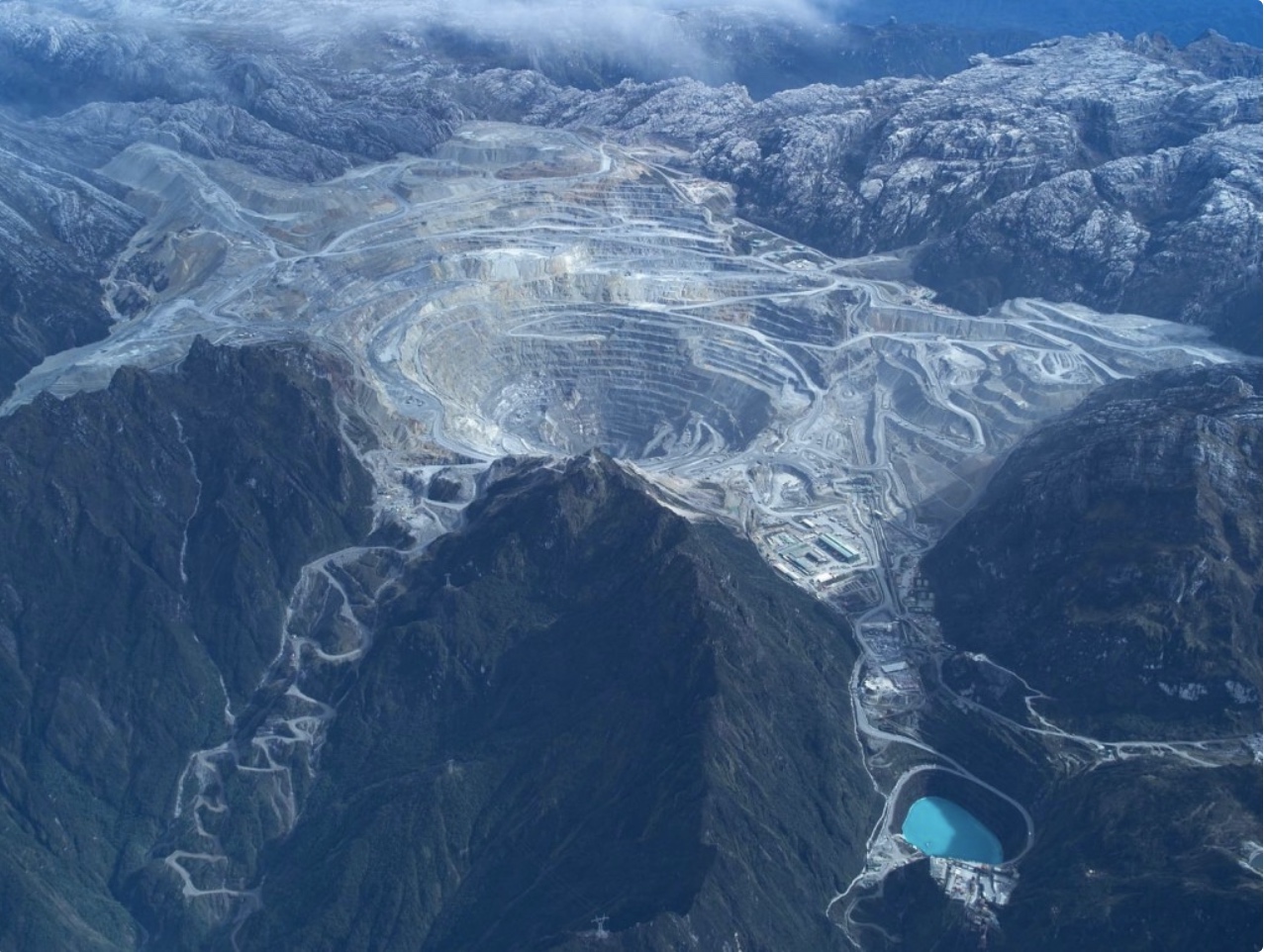
The mixing zone thus becomes a chemical reactor where bioavailable copper remains in the water column at lethal or sublethal levels for marine larvae, while particulate copper accumulates in the sediment, creating a toxic legacy for bottom-feeders.
Verified Against Public And Audited RecordsLong-Form Investigative Review
Reading time: ~35 min
File ID: EHGN-REVIEW-34618
Environmental impact of riverine tailings disposal practices at the Grasberg mine in Indonesia
While Freeport-McMoRan frequently cites the retention rates of the Modified Ajkwa Deposition Area (ModADA), these metrics frequently obscure a serious.
Primary RiskLegal / Regulatory Exposure
JurisdictionEPA
Public MonitoringIt requires Freeport to monitor water quality at specific compliance points, the "compliance" is.
Report Summary
The narrative promoted by Freeport-McMoRan, that the tailings are "crushed rock" similar to river sand, disintegrates when subjected to chemical analysis of the water column and the biota inhabiting the mixing zone. The estuary does not function solely as a passive transit route for waste; it acts as a chemical reactor where heavy metals, particularly copper and arsenic, partition from sediments into the water and subsequently into the food web. This decree, titled "Requirement of PTFI Tailings Management in Modified Ajkwa Deposition Area (ModADA)," legalized the "sacrifice zone" concept.
Key Data Points
This document is the 1991 Contract of Work (CoW) signed between Freeport-McMoRan and the Government of Indonesia. The 1991 agreement replaced an earlier 1967 contract and locked in operating conditions for thirty years with options for extension. The of this disposal grew exponentially in the late 1990s. In 1997, the Indonesian government approved Freeport's Environmental Impact Analysis, known locally as the AMDAL (Analisis Mengenai Dampak Lingkungan). This 1997 AMDAL serves as the operational permit that sanctioned the expansion of milling capacity to 300, 000 metric tons of ore per day. In 1996, the Governor of Papua issued Decree Number 540/2102/SET.
Investigative Review of Freeport-McMoRan
Why it matters:
The Contract of Work between Freeport-McMoRan and the Government of Indonesia shields the company from standard environmental regulations, allowing riverine disposal methods.
The 1997 AMDAL approval and subsequent local decrees created a legal defense for Freeport, enabling the destruction of highland river ecosystems for mining waste transport.
Regulatory Exceptionalism: The Legal Framework Permitting Riverine Disposal in Indonesia
The Contract of Work as Legal Shield
The environmental reality of the Grasberg mine rests upon a single legal document that functions as a shield against standard regulatory enforcement. This document is the 1991 Contract of Work (CoW) signed between Freeport-McMoRan and the Government of Indonesia. While most mining operations worldwide must adapt to evolving environmental standards, the CoW grants Freeport a status known as lex specialis. This legal doctrine establishes that the specific terms of the contract override general Indonesian laws, including subsequent environmental regulations that would otherwise prohibit the company’s disposal methods. The 1991 agreement replaced an earlier 1967 contract and locked in operating conditions for thirty years with options for extension. It explicitly authorized the use of local river systems to transport tailings from the highlands to the lowlands. This provision reclassified the Aghawagon, Otomona, and Ajkwa rivers. They ceased to be protected waterways under the law and became industrial transport method for mine waste.
Freeport operates the world’s largest gold mine and second-largest copper mine in a region defined by extreme topography and heavy rainfall. The company that these factors make conventional containment dams impossible. The CoW accepted this engineering premise and codified the practice of Riverine Tailings Disposal (RTD). Under this framework, the company discharges crushed rock and water directly into the river valleys. carries this slurry down the precipitous slopes to a deposition area in the lowlands. No other mine in the world operates an RTD system of this magnitude. The legal permission to do so isolates Freeport from the regulatory norms that govern every other extractive industry in Indonesia. The CoW carved out a sovereign regulatory enclave in Papua where the standard prohibition against dumping toxic waste into public waterways did not apply.
The 300K Limit and the 1997 AMDAL
The of this disposal grew exponentially in the late 1990s. In 1997, the Indonesian government approved Freeport’s Environmental Impact Analysis, known locally as the AMDAL (Analisis Mengenai Dampak Lingkungan). This 1997 AMDAL serves as the operational permit that sanctioned the expansion of milling capacity to 300, 000 metric tons of ore per day. This figure is not a production target. It represents the authorized volume of waste the company can eject into the river system every twenty-four hours. The approval of the 300K AMDAL marked a definitive moment where the state formally accepted the destruction of the highland river ecosystem as a necessary cost of doing business. The permit acknowledged that the upper rivers would be biologically dead and physically altered by the abrasive flow of tailings.
Provincial authorities reinforced this federal permission. In 1996, the Governor of Papua issued Decree Number 540/2102/SET. This decree specifically granted the “Utilization Permit of Aghawagon-Otomona-Ajkwa-Minajerwi Rivers for Mining Waste (Tailings) Transportation.” This local regulatory instrument provided the administrative cover for the physical transformation of the. It was followed by the Decree of the Mimika Regent Number 4 of 2005, which further stipulated the use of these rivers for waste transport. These documents created a legal defense. If the central Ministry of Environment attempted to enforce water quality standards, Freeport could point to these specific permits that authorized the very pollution the ministry sought to prevent. The rivers were no longer rivers in the eyes of the law. They were industrial infrastructure.
Kepmen LH 431/2008: Codifying the Sacrifice Zone
The most significant regulatory instrument governing the current disposal practice is the Decree of the Minister of Environment Number 431 of 2008 (Kepmen LH 431/2008). This decree, titled “Requirement of PTFI Tailings Management in Modified Ajkwa Deposition Area (ModADA),” legalized the “sacrifice zone” concept. The ModADA is a 230-square-kilometer area in the lowlands where the river slows down and deposits the tailings sediment. Kepmen LH 431/2008 establishes the specific water quality standards and management obligations for this zone. It distinguishes between the “transport zone” (the rivers) and the “deposition zone” (the ModADA). By creating these specific categories, the decree exempts Freeport from the general water quality standards applicable to other Indonesian water bodies.
Kepmen LH 431/2008 mandates that Freeport maintain the levees that contain the tailings within the ModADA. It also sets limits on the amount of sediment that can pass through the deposition area and enter the Arafura Sea. Yet the decree implicitly accepts that of the finer tailings particles inevitably exit the containment area and disperse into the estuary. The regulation essentially manages the rate of pollution rather than prohibiting it. It requires Freeport to monitor water quality at specific compliance points, the “compliance” is measured against standards written specifically for Freeport, not the stricter national standards for Class I or Class II water bodies. This regulatory exceptionalism ensures that the company remains technically compliant with the law even as it discharges hundreds of thousands of tons of waste daily.
The 2018 Audit and the Clash with National Law
The legal protecting Freeport faced a serious challenge in 2017 and 2018. The Supreme Audit Agency (BPK) conducted a detailed audit of the company’s operations and released a report that alleged massive environmental damages. The BPK calculated that the environmental cost of the tailings disposal amounted to 185 trillion Rupiah (approximately 13. 5 billion US Dollars). The audit found that Freeport had utilized 4, 535 hectares of protected forest area without the necessary “borrow-to-use” permits (IPPKH). More dangerously for the company, the Ministry of Environment and Forestry (KLHK) under Minister Siti Nurbaya Bakar began to assert that the 1991 CoW did not grant immunity from the 2009 Law on Environmental Protection and Management (Law No. 32/2009).
Law No. 32/2009 prohibits the dumping of hazardous and toxic waste (B3 waste) into environmental media without a specific permit. The Ministry classified the tailings as B3 waste due to their chemical composition and volume. In April 2018, the Ministry issued two administrative decrees (SK 175/Menlhk/Setjen/PLB. 3/4/2018 and another related decree) that imposed strict sanctions on Freeport. These decrees demanded an overhaul of the tailings management system and blocked the company from continuing operations in areas absence permits. The government threatened to halt production if Freeport did not comply. This confrontation highlighted the friction between the contract-based law of the Suharto era and the statutory law of the democratic era. Freeport CEO Richard Adkerson responded by stating that the new requirements were “unachievable” and would force the mine to close.
The Divestment Compromise and the Roadmap
The regulatory standoff resolved not through a legal victory for the environment, through a transactional compromise. The Indonesian government was in the process of acquiring a 51% majority stake in Freeport Indonesia (PTFI). The environmental liabilities identified by the BPK audit posed a valuation problem for the acquisition. To the deal, the Ministry of Environment and Freeport agreed to a “Roadmap for Tailings Management.” This roadmap was formalized in Decree Number 594/Menlhk/Setjen/PLA. 0/12/2018. This new decree replaced the immediate demands of the April sanctions with a long-term plan extending to 2030.
The 2018 roadmap allows Freeport to continue using the riverine disposal method requires the company to increase the percentage of tailings retained on land. It mandates the construction of new processing facilities to use tailings for infrastructure materials, such as road base and concrete. Yet the fundamental practice remains unchanged. The roadmap essentially re-validated the ModADA system under a new administrative wrapper. The government issued a new Izin Pinjam Pakai Kawasan Hutan (IPPKH) to cover the forest areas previously used illegally. The 185 trillion Rupiah damage figure calculated by the BPK from the public negotiation table. The state, the majority owner of the mine, assumed the environmental liability it had previously prosecuted. The regulatory framework returned to a state of exceptionalism, where the economic imperative of the Grasberg mine ensures that the rivers remain conduits for waste, protected by specific ministerial decrees that supersede the intent of national environmental protection laws.
The Persistence of the Sacrifice Zone
The legal structure permitting riverine disposal at Grasberg is a patchwork of contract law, specific ministerial decrees, and provincial permits that shared nullify standard environmental protections. The 1991 CoW provides the foundation, arguing that the unique terrain unique rules. The 1997 AMDAL sets the quantitative parameters, allowing 300, 000 tons of daily discharge. Kepmen LH 431/2008 provides the technical specifications for the sacrifice zone, legalizing the destruction of the Ajkwa estuary. The 2018 roadmap serves as the modern update, integrating the practice into the state’s own portfolio of assets. Through these instruments, the Indonesian legal system has not failed to regulate Freeport; rather, it has actively constructed a bespoke regulatory regime designed to permit exactly what the general law forbids. The rivers flow with gray sludge not because of a absence of law, because of the presence of specific laws written to ensure the flow continues.
Regulatory Exceptionalism: The Legal Framework Permitting Riverine Disposal in Indonesia
Quantifying the Daily Discharge: The 230,000-Tonne Tailing Torrent into the Aghawagon
The Physics of Mass Disposal
The operational heartbeat of the Grasberg mining complex is not measured in ounces of gold or pounds of copper. It is defined by the industrial metabolism of waste. For every tonne of concentrate shipped to smelters, the mine produces approximately 30 to 40 tonnes of tailings. In 2024, Freeport-McMoRan reported an average daily ore production of 208, 356 metric tonnes from its underground operations. This figure aligns with the facility’s long-standing nameplate capacity which frequently peaks near 230, 000 tonnes per day. Approximately 97% of this material is rendered as waste immediately after the flotation process. This results in a daily discharge of roughly 200, 000 tonnes of crushed rock and water. This volume is equivalent to dumping the weight of the Willis Tower into a river system every two days.
The disposal method relies on a -driven slurry system that use the extreme topography of the Sudirman Range. The mill sits at an elevation of roughly 2, 700 meters. From this height, the tailings are funneled directly into the Aghawagon River. The river acts as a hydraulic chute. The steep gradient accelerates the slurry to high velocities. This turbulence keeps the heavy rock flour in suspension as it crashes down the mountainside. The Aghawagon feeds into the Otomona River. The Otomona then carries the load into the Ajkwa River system in the lowlands. This entire 100-kilometer trajectory is not a natural waterway in any ecological sense. It is an industrial conduit where mine-derived sediment constitutes approximately 93% of the total suspended solids load.
Composition of the Slurry
The physical characteristics of the tailings exacerbate their environmental mobility. The ore is ground to a fine powder to liberate the copper and gold minerals. This process creates “rock flour” with a particle size frequently smaller than 200 microns. These fine particles do not settle easily in turbulent water. They form a grey and unclear suspension that scours the riverbed. The slurry is not inert sand. It contains residual milling reagents and unrecovered sulfide minerals. The geological profile of the Grasberg ore body is rich in pyrite and chalcopyrite. When these sulfides are pulverized and exposed to oxygen and water, they react to form sulfuric acid. This process is known as Acid Rock Drainage or ARD.
Internal audits and external studies have repeatedly identified the acid-generating chance of Grasberg’s waste. The 2024 production data confirms that the transition from the open pit to the Grasberg Block Cave underground mine has not altered the fundamental chemistry of the discharge. The underground ore bodies are chemically similar to the surface deposits. They are high-sulfidation systems. The tailings therefore carry a latent chemical payload. As the slurry travels downstream, the neutralization chance of the limestone host rock battles the acid-generating chance of the sulfides. This chemical war plays out in the river column. The result is a volatile pH balance that can strip heavy metals like copper and cadmium from the sediment and dissolve them into the water column.
The ModADA Deposition Zone
The stated destination for this torrent is the Modified Ajkwa Deposition Area or ModADA. This is a 230-square-kilometer section of the lowlands engineered to act as a settling basin. Levees constrain the lateral spread of the waste. The design theory posits that the river velocity slows as it hits the flat lowlands. This causes the heavier coarse sands to settle out. The company claims this system retains the majority of the tailings. Yet the sheer volume of the discharge challenges the physical limits of this containment strategy. The “fines”, the smallest particles, frequently bypass the deposition area entirely. They remain suspended in the water column and flow past the containment levees into the Arafura Sea.
Data from 2024 and projected figures for 2026 indicate that the sedimentation rates in the ModADA are relentless. The river floor within the deposition area rises by centimeters to meters annually. This aggradation forces the continuous raising of the levees. The riverbed is significantly higher than the surrounding natural forest floor. This creates a perched river system held back only by earthen walls. The 2025 landslide at the Grasberg Block Cave temporarily reduced output to 30% of capacity. This event inadvertently demonstrated the of the usual flow by the sudden silence of the sediment transport. When operations resumed, the 200, 000-tonne daily pulse restarted. It immediately resumed the rapid infilling of the lowland containment zone.
The Unrecoverable Copper Load
Efficiency metrics in mining are never absolute. The flotation process recovers most not all of the valuable metal. The sheer of Grasberg’s throughput means that even a 90% recovery rate leaves a massive amount of metal in the waste stream. Historical analysis suggests that tens of thousands of tonnes of copper are discharged into the river system annually as waste. This copper exists in two forms. It is found as solid sulfide particles in the sediment and as dissolved ions in the water. The dissolved copper is particularly toxic to aquatic life. It interferes with the gill function of fish and the photosynthesis of marine plants. The concentration of dissolved copper in the river plume frequently exceeds Indonesian and international water quality standards by orders of magnitude.
The reliance on riverine disposal allows Freeport-McMoRan to avoid the construction of a conventional tailings dam. A dam for this volume of waste in a high-rainfall and seismic zone would require engineering of and risk. The river outsources the transport and storage costs to the environment. The kinetic energy of the Aghawagon River does the work of a pipeline. The lowlands of the Ajkwa River serve as the storage facility. The Arafura Sea functions as the overflow drain. This system handles a mass flow that rivals the sediment load of major natural rivers. Yet it does so with a material that is chemically reactive and biologically hostile. The 230, 000-tonne figure is not a maximum limit. It is the baseline expectation for the mine’s profitability. The river must accept this load every day for the mine to function.
The Ajkwa Deposition Area (ADA): Engineering an Artificial Floodplain in the Lowlands
The Engineered Floodplain: ModADA and the 230-Square-Kilometer Sacrifice Zone
The Ajkwa Deposition Area (ADA), frequently referred to in regulatory filings as the Modified Ajkwa Deposition Area (ModADA), represents a radical departure from conventional tailings storage. It is not a dam in the traditional sense. It is a managed floodplain designed to sacrifice a specific corridor of lowland rainforest to save the company the impossible cost of building a conventional containment facility in a seismically active, high-rainfall zone. This area covers approximately 230 square kilometers (23, 000 hectares). It functions as a massive hydraulic sorting machine where the laws of physics, rather than impermeable liners, dictate the fate of billions of tonnes of waste.
Hydraulic Fractionation and Partial Containment
The engineering premise of the ADA relies on the natural drop in river velocity as the Aghawagon and Otomona rivers descend from the steep highlands into the flat coastal lowlands. As the gradient flattens, the water loses the kinetic energy required to transport heavy sediment. Coarse particles, sands and gravels, settle out of the water column and accumulate within the diked boundaries of the ADA. This process captures roughly 50 percent of the total tailings discharge. The remaining 50 percent consists of fine silts and clays. These particles remain suspended in the water column and bypass the containment entirely. They flow out of the ADA, into the estuary, and eventually into the Arafura Sea. Freeport-McMoRan describes this system as “controlled riverine tailings management.” Critics and environmental engineers identify it as a flow-through system that relies on the deliberate release of the finest, most chemically reactive fraction of the waste. The ADA is designed to fail at retaining the total waste load. Its primary function is to store the coarse fraction that would otherwise clog the river channel and cause uncontrolled flooding across the entire Timika region.
The Levee System: A Sisyphean Construction Project
To keep the deposited sands from spreading laterally into the surrounding primary rainforest, Freeport constructs and maintains a vast network of levees. These are known as the West Levee and the East Levee. These structures are not static concrete walls. They are earthworks built largely from the tailings themselves and local riverbed material. The company spends approximately $100 million annually to maintain this system. The rapid rate of sedimentation requires continuous raising of the levees. The riverbed within the ADA rises by meters every year. This aggradation forces the levees to grow higher in a perpetual race against the rising floor of the deposition area. The structural integrity of these levees is a matter of constant vigilance. The material used for construction is frequently non- sand. High rainfall events, common in Papua, threaten to these blocks. A breach in the West or East Levee would result in the catastrophic release of accumulated sediment into the surrounding unimpacted forest and river systems. The company employs fleets of excavators and bulldozers that operate around the clock to dredge channels and reinforce the banks. This creates a completely artificial river that must be mechanically coerced to stay within its kill zone.
Ecological Conversion: From Sago Forest to Sterile Wasteland
The establishment of the ADA necessitated the complete destruction of the existing ecosystem within its boundaries. Satellite imagery and ground surveys confirm the conversion of over 11, 000 hectares of productive lowland forest into a grey, unvegetated sediment plain. This area was previously dominated by sago palm forests. Sago is a keystone species for the local Kamoro and Amungme indigenous groups. It provides their primary source of carbohydrates and serves as a cultural touchstone. The deposition process kills vegetation through two primary method. The is physical smothering. The rapid accumulation of sediment buries the root systems of trees. This deprives them of oxygen and prevents nutrient uptake. The second is waterlogging. The aggradation of the riverbed raises the local water table. This drowns the root zones of adjacent forests even before the sediment reaches them. The result is a clear demarcation line. On one side of the levee lies dense, green tropical rainforest. On the other lies a flat, grey expanse of crushed rock devoid of life. This dead zone is visible from space. It stands as a testament to the trade-off between copper extraction and biological diversity.
Geochemical Risks: The Acid Rock Drainage Equation
The chemical stability of the sediments deposited in the ADA remains a subject of intense scrutiny. The ore body at Grasberg contains pyrite and other sulfide minerals. When these sulfides are exposed to oxygen and water, they can react to form sulfuric acid. This process is known as Acid Rock Drainage (ARD). Freeport asserts that the tailings are “geochemically benign” due to the presence of limestone in the ore body. They claim the limestone acts as a natural buffer that neutralizes any acid produced. Independent assessments suggest a more complex reality. While the limestone buffer operates while the tailings are submerged or saturated, the risk profile changes if the material dries out. The coarse sands deposited in the ADA are highly permeable. This allows oxygen to penetrate deep into the sediment pile during dry periods. If the neutralizing capacity of the limestone is exhausted or if the pyrite content in future ore bodies increases, as is projected with the transition to the Kucing Liar pit, the ADA could become a massive generator of acid. Acidic conditions would mobilize heavy metals such as copper, lead, and zinc. These metals would then leach into the groundwater and the downstream estuarine system. The ADA is not a physical storage facility. It is a biogeochemical reactor with the chance for long-term toxicity.
Table 3. 1: ModADA Engineering and Environmental Metrics
Parameter
Data / Specification
Total Area
~230 km² (23, 000 hectares)
Daily Tailing Input
~230, 000 to 300, 000 tonnes
Retention Rate
~50% (Coarse fraction only)
Bypass Rate
~50% (Fines to Estuary/Sea)
Levee Maintenance Cost
~$100 million USD / year
Primary Vegetation Loss
>11, 000 hectares (Sago/Rainforest)
Dominant Material
Coarse Sands / Gravels
The Myth of Reclamation
Freeport promotes the idea that the ADA eventually be reclaimed and repurposed for agriculture. They cite demonstration plots where crops grow on amended tailings. This narrative ignores the immense of the challenge. The ADA contain billions of tonnes of sediment by the end of the mine’s life. The sheer depth of the deposit means that the original soil horizon is buried forever. Any future vegetation must survive on a substrate of crushed rock with poor nutrient retention and chance toxicity. The “reclamation” of the ADA is an experiment in ecological engineering with no guarantee of success. The area likely remain a hazardous, managed for centuries. It require perpetual maintenance to prevent the of the levees and the remobilization of the stored waste. The ADA is not a temporary storage solution. It is a permanent geomorphological alteration of the Papuan lowlands.
Geochemical Risks: Acid Rock Drainage (ARD) Potential from Sulfide-Bearing Ore
The Chemical Composition of the Discharge
The 230, 000 tonnes of material discharged daily into the Aghawagon River is frequently mischaracterized as inert “sand” or “mud.” Geochemically, it is a reactive slurry of crushed rock containing significant quantities of metal sulfides. The Grasberg ore body consists of porphyry copper-gold and skarn deposits, where the economic minerals, chalcopyrite ($CuFeS_2$) and bornite ($Cu_5FeS_4$), are interlocked with gangue minerals, primarily pyrite ($FeS_2$). While the milling process extracts the majority of the copper, the pyrite is largely depressed during flotation and ejected into the tailings stream. Consequently, the riverine disposal system functions not as a sediment transport method as a continuous, open-air chemical reactor.
The primary environmental threat posed by this mineralogical composition is Acid Rock Drainage (ARD). When sulfide minerals like pyrite are exposed to oxygen and water, conditions optimized by the turbulent, aerated flow of the river and the subsequent deposition on the broad, exposed floodplain of the Ajkwa Deposition Area (ADA), they oxidize. This reaction generates sulfuric acid ($H_2SO_4$) and ferrous iron. The acid then acts as a solvent, leaching residual heavy metals such as copper, arsenic, and selenium from the rock matrix and mobilizing them into the aquatic environment. Unlike physical sedimentation, which smothers habitat, ARD fundamentally alters the water chemistry, chance creating zones of toxicity that for centuries.
The Limestone Defense and its Limitations
Freeport-McMoRan acknowledges the ARD risk maintains that the specific geology of the Grasberg district provides a natural “immune system” against acidification. The mine operates within a skarn system rich in carbonates, specifically limestone and dolomite. The company asserts that the Acid Neutralizing Capacity (ANC) of the host rock, which is pulverized along with the ore, is sufficient to buffer the acid generated by the sulfides. In their environmental management plans, they cite a ratio of ANC to Maximum chance Acidity (MPA) that theoretically prevents net acid generation. They that the river mixes these carbonates with the sulfides, creating a self-neutralizing slurry where the pH remains near neutral (approximately 8. 0).
Yet, independent audits and geochemical principles suggest serious flaws in this “natural buffering” hypothesis. The effectiveness of limestone neutralization depends heavily on particle size and surface area availability. While the laboratory tests by the company frequently assume perfect mixing, the physical reality of the Ajkwa river system introduces variables that disrupt this equilibrium. The most significant of these is hydrodynamic sorting. The specific of pyrite (5. 0) is significantly higher than that of calcite (2. 7). As the tailings slurry rushes down the steep gradient of the Aghawagon and slows in the lowlands of the ADA, segregation occurs. Heavier sulfide particles drop out of suspension at different rates than the lighter neutralizing limestone. This physical separation can create stratified or “hot spots” within the deposition area where sulfides concentrate without sufficient carbonate buffer, leading to localized acid generation.
The Phenomenon of Armoring
Even where limestone and pyrite coexist, the neutralization reaction is not guaranteed. A geochemical phenomenon known as “armoring” or passivation frequently compromises the buffering capacity of the tailings. As sulfuric acid reacts with limestone, it produces gypsum ($CaSO_4 cdot 2H_2O$) and iron hydroxides. These secondary precipitates can coat the surface of the limestone particles, forming an impermeable shell that isolates the neutralizing core from the acidic solution. Once the limestone is armored, it becomes chemically inert, allowing the acid generation from the pyrite to proceed unchecked. This process is particularly insidious in the ADA, where the wet-dry pattern characteristic of the tropical climate accelerate the formation of these crusts.
The temporal dimension of ARD also contradicts the company’s assurances. Acid generation is frequently a slow-onset process. The “lag time”, the period before the acid neutralizing capacity is exhausted, can span decades. Current monitoring that shows neutral pH levels does not prove long-term safety; it indicates that the buffering capacity has not yet been overwhelmed. The sheer volume of sulfides deposited, millions of tonnes annually, represents a chemical time bomb. Once the accessible carbonates are consumed or armored, the pH can drop precipitously, a shift that is virtually impossible to reverse in a system as vast and uncontained as the Ajkwa floodplain.
Dissolved Copper and Heavy Metal Mobility
While catastrophic acidification remains a long-term threat, metal leaching is an immediate reality. Acid is not required to mobilize all metals; copper, the primary contaminant of concern, exhibits significant solubility even at neutral pH levels, particularly in the presence of organic ligands or specific oxidation states. Data from independent assessments and the company’s own monitoring reports have shown dissolved copper concentrations in the Lower Ajkwa River ranging from 28 to 42 micrograms per liter ($mu g/L$). This exceeds the Indonesian government’s standard for fresh water (20 $mu g/L$) and is multiples higher than the Australian guideline (5. 5 $mu g/L$) frequently used as a regional benchmark for tropical river health.
The toxicity of dissolved copper to aquatic life is acute. It disrupts the osmoregulatory function in fish and invertebrates, leading to gill damage and death. In the ADA, the ” flush” phenomenon exacerbates this toxicity. During dry periods, oxidation products accumulate on the surface of the tailings. When the frequent, intense tropical rains hit the lowlands, these accumulated salts dissolve instantly, sending a pulse of metal-laden water downstream. This shock loading can overwhelm the physiological coping method of aquatic organisms, causing episodic mortality events that average-based monitoring might miss.
The Estuarine Mixing Zone
The geochemical complexity increases as the tailings effluent reaches the Arafura Sea. The interaction between the fresh, metal-laden river water and the saline ocean water creates a chemical environment in the estuary. The change in ionic strength and pH can trigger the desorption of metals from sediment particles. While metals precipitate out of solution upon hitting seawater, others may become more bioavailable. Studies of the Ajkwa estuary have documented copper accumulation rates in sediments that are 40 times higher than pre-mining baselines. This metal loading enters the food web, accumulating in benthic organisms like crabs and mollusks, which are dietary staples for the local Kamoro people.
The Pyrite Circuit Admission
Perhaps the most telling evidence of the geochemical risk comes from Freeport-McMoRan’s own future planning. In regulatory filings and technical reports, the company has outlined plans to install a “pyrite flotation circuit” by 2029. The stated purpose of this circuit is to separate pyrite from the tailings stream before discharge, so reducing the acid-generating chance of the waste. This future commitment serves as a tacit admission: the current practice of discharging high-pyrite tailings into the river system carries an unacceptable level of risk that the natural limestone buffer cannot indefinitely mitigate. Until this circuit is operational, the daily deposition of sulfide-rich rock continues to load the ADA with the precursors of acid mine drainage, creating a legacy of chemical instability that outlast the mine’s economic life.
Table 4. 1: Geochemical Risk Factors in Grasberg Tailings
Parameter
Description
Environmental Implication
Sulfide Content
High pyrite ($FeS_2$) concentration in tailings.
Primary source of Acid Rock Drainage (ARD) upon oxidation.
ANC/MPA Ratio
Ratio of Acid Neutralizing Capacity to Maximum chance Acidity.
Company claims>1. 5 (safe), segregation reduces local effectiveness.
Dissolved Copper
Measured at 28, 42 $mu g/L$ in Lower Ajkwa.
Exceeds toxicity thresholds for aquatic life; enters food chain.
Armoring
Iron/Gypsum coating on limestone particles.
Renders neutralizing rock inert, allowing acid formation to proceed.
Lag Time
Delay between deposition and onset of acidification.
Current neutral pH may be a temporary state before buffering fails.
Sedimentation and Sheetflow: Irreversible Geomorphological Changes to the Aikwa Delta
The sheer physical volume of the tailings discharge from the Grasberg mine has engineered a geological event that supersedes the natural carrying capacity of the Aikwa (Ajkwa) river system. With a daily output exceeding 230, 000 tonnes of ore residue, the riverine transport system functions less as a waterway and more as a high-density slurry chute. This mass, composed of finely ground rock and water, does not flow *through* the environment; it reconstructs it. The primary method driving this topographical overhaul is aggradation, where the rapid accumulation of sediment raises the riverbed elevation above the surrounding floodplain, forcing the water to its banks and spread laterally in a phenomenon known as sheetflow.
The Mechanics of Sheetflow and Aggradation
The natural geomorphology of the Aikwa River was never designed to accommodate the industrial load imposed by Freeport-McMoRan’s operations. In the early 1990s, the river system reached a hydraulic breaking point. A blockage caused by log debris and heavy sedimentation triggered the initial severe sheetflow events, where the river avulsed, abandoning its primary channel to seek new route of least resistance across the lowland rainforest. This process is self-perpetuating. As the heavy fraction of the tailings settles, it builds the riverbed upward at a rate that outpaces natural. Consequently, the river flows on a ridge of its own making, suspended above the adjacent forest floor. dictates the inevitable outcome: the slurry spills over the natural and engineered levees, fanning out across the lowlands. This lateral expansion converts a defined river channel into a braided, shifting deltaic fan that consumes terrestrial habitat. The deposition is not a thin veneer; in the deposition zones, the sediment column rises 10 to 15 meters thick, burying the original topography under a sterile, grey plateau of crushed rock.
Ecological Asphyxiation of the Mangrove Belt
The immediate consequence of this sheetflow is the physical asphyxiation of the lowland rainforest and the estuarine mangrove belt. While chemical toxicity (Acid Rock Drainage) presents a long-term geochemical threat, the physical sedimentation acts as the immediate executioner. Mangroves rely on pneumatophores, specialized aerial roots, to gas exchange in anaerobic soils. The rapid deposition of tailings covers these root systems, cutting off oxygen supply and causing mass dieback. Satellite imagery and environmental audits confirm the of this destruction. Research published in *Nature* and by environmental watchdogs indicates that approximately 138 square kilometers of forest have been smothered by this sediment blanket. This is not a gradual decline a sudden burial. The trees do not wither from poison alone; they drown in rock flour. The “ghost forests” of the Aikwa delta stand as bleached skeletons, their root systems entombed beneath meters of mine waste. This zone, frequently referred to as the “kill zone,” expands as the deposition area fills and the sheetflow seeks new lateral avenues, pushing the perimeter of destruction further into the pristine sago and mangrove forests that sustain the Kamoro indigenous communities.
Bathymetric Alteration and Coastal Progradation
The impact extends beyond the terrestrial deposition area into the Arafura Sea. While the Modified Ajkwa Deposition Area (ModADA) is engineered to retain the coarse fraction of the tailings, the fine fraction, accounting for approximately 20% to 50% of the total load depending on flow conditions, remains suspended and exits the estuary. This suspended load creates a massive sediment plume that alters the bathymetry of the nearshore environment. The Arafura Sea is naturally shallow in this region, with depths frequently ranging between 10 to 20 meters. The injection of millions of tonnes of fine sediment accelerates the shoaling process, reducing water depth and altering. This rapid sedimentation creates new land where open water once existed, a process known as progradation. The coastline is marching seaward, driven by the relentless output of the mill in the highlands.
Exceeds natural river sediment load by orders of magnitude.
Fine Fraction to Sea
20%, 50%
Permanent alteration of nearshore bathymetry.
Deposition Depth (ADA)
10, 15 meters
Total burial of original topography and vegetation.
Forest Smothered
~138 km²
Irreversible loss of biodiversity and carbon sink.
The Permanence of the Artificial Delta
The formation of this tailings delta is irreversible. Unlike water pollution, which can flush out over time, the deposition of billions of tonnes of rock creates a permanent geological feature. The “new land” formed by the tailings absence the organic structure and nutrient profile of natural soil. It is a highly unstable, liquefiable mass subject to by wind and rain, yet massive enough to permanently alter the map of Papua. The navigational impact on local communities is severe. Traditional dugout canoes, which require specific channel depths, are frequently stranded by the unpredictable shoaling. The mouth of the estuary, once a reliable passage for fishing and transport, has become a shifting maze of mudflats and shallow channels. The sediment plume, visible from space, marks the boundary where the terrestrial waste management strategy fails, transferring the load of disposal to the marine environment. This geomorphological restructuring is not an accidental side effect a calculated outcome of the chosen disposal method. By using the river as a transport method, Freeport-McMoRan enlisted the laws of physics to distribute waste across a wide area. The resulting “sheetflow” is the physical manifestation of an industrial process overflowing its container, turning a complex, living estuarine system into a monolithic waste storage facility. The Aikwa Delta is no longer a natural feature; it is an engineered landfill extending into the Arafura Sea.
Forest Dieback Analysis: Satellite Evidence of the 138 km² 'Sacrifice Zone'
The Grey Scar: Satellite Verification of Ecological Asphyxiation
Orbital surveillance provides the most irrefutable indictment of Freeport-McMoRan’s riverine disposal practices. While corporate sustainability reports frequently rely on sanitized ground-level photography or selective data sampling, multi-decadal satellite imagery from NASA’s Landsat and the European Space Agency’s Sentinel programs reveals a clear, expanding reality. From space, the lush, deep-green canopy of the Sudirman Range’s lowland rainforest is interrupted by a massive, lifeless grey lesion. This is the Ajkwa Deposition Area (ADA), frequently referred to as the Modified ADA (ModADA). It is a 230 square kilometer containment zone that functions as a government-sanctioned “sacrifice zone,” within which approximately 138 square kilometers of primary vegetation have been systematically obliterated. The visual evidence is not a record of deforestation. It documents a process of ecological asphyxiation where the forest is not cut down drowned in rock waste.
Time-series analysis of satellite data from 1988 to 2024 chronicles the relentless expansion of this grey tongue. In the late 1980s, the Aghawagon and Otomona rivers appeared as narrow, meandering ribbons cutting through dense jungle. By the mid-1990s, following the ramp-up of Grasberg’s production, the river channels. They were replaced by a braided, chaotic sheet of grey sludge that breached natural banks and fanned out across the floodplain. The method of destruction visible from orbit is “sheetflow.” As the riverbed rises due to the deposition of 230, 000 tonnes of sediment daily, the water loses its channel and spills laterally. It coats the forest floor in a suffocating of crushed rock. The trees do not fall immediately. They stand as grey skeletons, their root systems starved of oxygen, creating a ghostly “drowned forest” visible in high-resolution aerial surveys.
The method of Dieback: Sedimentation and Root Suffocation
The primary driver of forest dieback in the ADA is physical sedimentation rather than chemical toxicity, although both play serious roles. The sheer volume of tailings discharged, over 2 billion tonnes to date, has altered the topography of the lowlands. In the core deposition zone, tailings depths reach 10 to 15 meters. No terrestrial rainforest species can survive such rapid burial. The sediment, composed of finely ground rock flour, packs tightly around the pneumatophores and root collars of trees. This blocks gas exchange. The soil becomes anaerobic. The trees die standing up.
Field studies corroborate the satellite data. They show that even a sediment accretion of 10 to 20 centimeters is sufficient to kill sensitive lowland species. In the ADA, the accretion rate is measured in meters per decade. The forest floor, once a complex biome of leaf litter, fungi, and undergrowth, is sealed beneath a sterile mineral cap. This process destroys the seed bank. It prevents natural regeneration. The satellite signature of this zone shifts from the high near-infrared reflectance of healthy chlorophyll to the flat, spectral response of bare rock. This confirms the total cessation of biological activity in the deposition core.
Sago Palm Destruction: The loss of a Staple
The most socially devastating aspect of this forest loss is the destruction of sago palm (Metroxylon sagu) groves. Sago is not a tree to the indigenous Kamoro and Amungme people. It is their primary carbohydrate source and a cultural. Satellite analysis reveals that the tailings footprint has disproportionately consumed the low-lying wetlands where sago thrives. Unlike hardwood timber which might be harvested before the sludge arrives, sago groves are frequently inundated before they can be utilized. The loss is absolute. The thick, starch-bearing trunks rot in the mud.
The destruction of these groves forces local communities into a dependency on cash economies to purchase rice, a shift that Freeport-McMoRan frames as “modernization” which anthropologists identify as a forced of traditional subsistence. The “sacrifice zone” is not empty land. It was the supermarket and the pharmacy of the Kamoro. The dieback of the sago forest represents a direct transfer of externalized costs from the corporation to the indigenous population. The company saves billions on tailings containment. The locals lose their food security.
Estuarine Impact: The Mangrove Kill Zone
Downstream from the terrestrial sacrifice zone, the devastation extends into the Ajkwa estuary. Here, the damage is quantified not just in square kilometers of land in the collapse of a complex aquatic nursery. Satellite imagery shows a distinct plume of sediment ejecting from the mouth of the Ajkwa River into the Arafura Sea. This plume carries high concentrations of Total Suspended Solids (TSS), which scour and smother the mangrove forests (Rhizophora and Bruguiera species) that line the coast. Estimates suggest that between 21 and 63 square kilometers of mangrove forest have been degraded or destroyed.
Mangroves are adapted to variable water levels not to the heavy, metal-laden sediment load exported by the mine. The sediment clogs the lenticels on the aerial roots. It prevents the trees from breathing during high. also, the accretion of tailings creates new land, pushing the coastline outward. This might sound beneficial, this “new land” is unstable, toxic mud that cannot support a healthy mangrove ecosystem. The satellite record shows the retreat of the green mangrove belt, replaced by unstable mudflats that and shift with every monsoon. This loss of mangrove habitat correlates directly with the decline in local fisheries, as these forests serve as the breeding grounds for the fish and crabs that sustain the coastal population.
Toxicology of the Dead Zone: Why the Forest Does Not Return
The persistence of the “grey scar” in satellite imagery, even in areas where active deposition has shifted, points to a secondary barrier to reforestation: toxicity. The tailings are not inert sand. They contain elevated levels of copper, arsenic, and other heavy metals. While the immediate cause of death for the original forest was physical smothering, the prevention of recovery is chemical. The tailings absence the organic matter and microbial life necessary to support a rainforest. The pH levels and metal availability create a substrate that is hostile to native vegetation.
Remote sensing analysis using vegetation indices (such as NDVI) indicates that natural succession on the older tailings deposits is agonizingly slow and limited to specific, hardy grass species (Phragmites). There is no return of the canopy. The “reclamation” projects touted by Freeport frequently involve the labor-intensive planting of specific, metal-tolerant species on modified plots. This is not ecosystem restoration. It is landscaping on a toxic landfill. The satellite evidence shows that the vast majority of the 138 km² sacrifice zone remains a barren moonscape, decades after the initial deposition. The copper concentrations in the soil, frequently exceeding phytotoxic limits, ensure that this scar remain visible from space for centuries.
The “Sacrifice Zone” as Regulatory Policy
The existence of this 138 km² dead zone is not an accident. It is a feature of the regulatory exceptionalism granted to Freeport-McMoRan. The designation of the ModADA allows the company to legally destroy a specific tract of rainforest to save the costs of building a conventional tailings dam. The Indonesian government’s acceptance of this “sacrifice zone” implies a calculation that the revenue from the mine outweighs the value of the ecosystem. yet, satellite monitoring proves that the containment is imperfect. The sediment plume does not stop at the levees. It bleeds into the estuary. It clouds the Arafura Sea. The “sacrifice” is not contained. It is leaking.
The term “sacrifice zone” is frequently used metaphorically in environmental justice discourse. At Grasberg, it is a literal geographic entity, bounded by levees and defined by the absence of life. The 138 km² area represents a permanent conversion of high-biodiversity rainforest into a heavy industrial waste dump. The satellite record serves as an unalterable witness to this conversion. It refutes any claims of “sustainable mining” by showing the physical footprint of a process that is inherently destructive and spatially uncontainable. The forest did not die from natural causes. It was executed by a river of crushed rock.
Table 6. 1: Satellite-Derived Vegetation Loss Metrics (Ajkwa Deposition Area)
Metric
Data / Estimate
Observation Method
Total Terrestrial Sacrifice Zone
~138 km² (Active Dieback) / 230 km² ( )
Landsat / Sentinel-2 Time Series
Mangrove Forest Loss
21 , 63 km²
Comparative Coastal Analysis
Tailings Depth (Core Zone)
10 , 15 meters
Digital Elevation Models (DEM) / Field Data
Primary Cause of Dieback
Root Asphyxiation (Sedimentation)
Spectral Analysis / Ground Truthing
Secondary Recovery Barrier
Heavy Metal Toxicity (Copper/Arsenic)
Soil Sampling / Vegetation Indices (NDVI)
Daily Sediment Load
230, 000 tonnes/day
Operational Discharge Reports
Heavy Metal Bioaccumulation: Copper and Arsenic Levels in Estuarine Aquatic Life
The physical inundation of the Ajkwa estuary by 230, 000 to 300, 000 tonnes of daily tailings discharge conceals a more insidious chemical reality. While the sheer volume of crushed rock alters the topography, the geochemical payload carried within this slurry creates a toxicological emergency for estuarine aquatic life. The narrative promoted by Freeport-McMoRan, that the tailings are “crushed rock” similar to river sand, disintegrates when subjected to chemical analysis of the water column and the biota inhabiting the mixing zone. The estuary does not function solely as a passive transit route for waste; it acts as a chemical reactor where heavy metals, particularly copper and arsenic, partition from sediments into the water and subsequently into the food web.
The Dissolved Copper Plume
Copper serves as the primary economic output of the Grasberg mine, yet it also constitutes the principal environmental contaminant in the waste stream. In the geochemical transition from the fresh water of the Aghawagon River to the saline environment of the Arafura Sea, the behavior of copper changes drastically. Independent monitoring and unreleased Environmental Risk Assessment (ERA) data by non-governmental organizations reveal that dissolved copper concentrations in the Ajkwa estuary consistently breach regulatory ceilings.
that dissolved copper levels in the Lower Ajkwa River range between 28 and 42 micrograms per liter (µg/L). As the plume enters the upper estuary, concentrations remain dangerously elevated, frequently recording between 22 and 60 µg/L. To contextualize these figures, the Indonesian water quality standard for marine environments is set at 8 µg/L, while the Australian guideline for tropical estuaries, a more geographically relevant benchmark, is a strict 1. 3 µg/L. Consequently, the water flowing through the mangrove nurseries of the Mimika coast contains dissolved copper loads up to 46 times higher than international safety guidelines permit.
This bioavailability is not a theoretical risk; it is a measured reality. The “mixing zone,” where fresh river water meets the saline, triggers chemical desorption processes. Copper ions, previously bound to suspended sediment particles, are released into the water column as salinity increases. This chemical liberation makes the metal immediately available for uptake by aquatic organisms, bypassing the need for ingestion of sediment. The water itself becomes a toxic medium, bathing the gills of fish and invertebrates in a solution that inhibits respiration and disrupts osmoregulation.
Benthic Bioaccumulation in Invertebrates
The most severe contamination occurs not in the water column, in the benthic zone, the mud and sediment where the tailings settle. The Ajkwa estuary is dominated by bottom-dwelling invertebrates, specifically mollusks and crustaceans, which form the base of the local food chain and the diet of the Kamoro people. These organisms are not exposed to the tailings; they live within them.
Reports analyzing the biological impact of the tailings deposition reveal levels of bioaccumulation. Non-mobile aquatic animals in the estuary have been found to contain copper concentrations up to 1, 000 milligrams per kilogram (mg/kg) of body weight. This represents a concentration factor 100 times higher than baseline levels found in reference estuaries unaffected by the mine. For organisms like the mud crab (Scylla serrata), which burrows into the sediment and processes large volumes of detritus, the exposure is widespread.
Copper accumulates preferentially in the hepatopancreas and gills of these crustaceans. While crabs use copper in their blood (hemocyanin), the levels present in the Ajkwa ecosystem exceed metabolic requirements by orders of magnitude, leading to toxicity. The metal acts as a persistent stressor, reducing growth rates, impairing reproductive success, and increasing susceptibility to disease. The “functioning ecosystem” Freeport claims to maintain is, in reality, a population of organisms surviving in a state of chronic metal poisoning.
The Arsenic Factor
While copper dominates the toxicological profile, arsenic presents a secondary, highly potent threat. Arsenic is frequently associated with copper porphyry deposits and is liberated during the milling process. Unlike copper, which has a biological function at low levels, arsenic is a non-essential carcinogen with no safe threshold for exposure. In the reducing environment of the estuarine muds, arsenic can become mobile, entering the pore water and accumulating in the tissues of benthic feeders.
The presence of arsenic in the tailings stream complicates the toxicity model. Synergistic effects between copper and arsenic can amplify the damage to aquatic life. Organisms struggling to regulate excess copper are less able to defend against arsenic toxicity. Data from environmental audits suggests that arsenic levels, like copper, are significantly higher in the Ajkwa deposition area compared to reference sites. This contamination is particularly concerning for the consumption of filter-feeding bivalves, which concentrate these metals in their flesh. The consumption of such tainted seafood poses a direct vector for arsenic to enter the human population, a matter discussed in later sections regarding human health.
Physiological Impairment of the Fishery
The impact of this heavy metal load extends beyond simple tissue concentration; it fundamentally alters the physiology of the estuarine fishery. The Ajkwa estuary historically served as a nursery ground for barramundi (Lates calcarifer) and other commercially and culturally important fish species. The high Total Suspended Solids (TSS) levels, reaching 1, 300 mg/L in the estuary against a legal limit of 80 mg/L, physically damage fish gills, stripping away the protective mucous.
Once this physical barrier is compromised, the uptake of dissolved copper and arsenic accelerates. Copper inhibits the enzymatic activity in fish gills required for ion transport, suffocating the fish even in oxygenated water. Studies on fish caught in the Ajkwa system show higher minimum levels of copper in muscle tissue compared to those from nearby river systems. While adult fish may survive and migrate, the toxicity is frequently lethal to larvae and juveniles, which are far more sensitive to metal pollutants. The “recruitment failure”, where young fish fail to survive to adulthood, creates a silent collapse of the fishery. The river may still contain fish, yet they are frequently transients from cleaner waters rather than the product of a healthy, self-sustaining local population.
Regulatory Dissonance
A gap exists between the biological reality of the Ajkwa estuary and the regulatory compliance reported by the operator. Freeport-McMoRan frequently cites the “controlled” nature of its riverine disposal and claims adherence to government standards. Yet, this compliance is frequently achieved through the use of specific, less sampling points or by averaging data in ways that mask peak toxicity events. The Indonesian government’s decision to grant a “special” regulatory status to the tailings river legalized pollution levels that would be criminal in any other waterway in the archipelago.
The persistence of these metals in the sediment guarantees that the environmental debt of the Grasberg mine outlast its operational life by centuries. Copper and arsenic do not degrade; they pattern. As the mangrove forests die back, smothered by the physical sediment load, the stabilizing root systems rot, releasing trapped sediments and their chemical load back into the water column. This “chemical time bomb” ensures that the bioaccumulation of heavy metals in the Ajkwa estuary remain a defining characteristic of the region long after the final ton of ore is processed. The estuary, once a vibrant interface of land and sea, has been converted into a permanent hazardous waste storage facility, where the aquatic life serves as a grim biological monitor of industrial excess.
Subsistence Collapse: Impact of Riverine Turbidity on Kamoro Indigenous Fisheries
The deposition of 230, 000 tonnes of tailings daily into the Aghawagon-Otomona-Ajkwa river system has engineered a hydrological catastrophe that extends far beyond simple chemical contamination. While heavy metal toxicity presents a silent, long-term threat, the immediate and visible destroyer of Kamoro subsistence is turbidity. The sheer physical density of suspended solids (TSS) in the water column has transformed productive tropical estuaries into abiotic sludge channels. Data from the Indonesian Environment Ministry and independent audits reveals that TSS levels in the Lower Ajkwa frequently exceed 37, 500 mg/L as the river enters the lowlands—a concentration nearly 90 times higher than the Indonesian legal limit for riverine systems (400 mg/L). This is not “dirty” water; it is a flowing slurry that mechanically precludes the existence of gill-breathing organisms.
The Physics of Asphyxiation
The biological impact of this turbidity is immediate and mechanical. In the pristine estuaries of Papua, TSS levels naturally fluctuate rarely exceed 80 mg/L in the saltwater mixing zones. In the Ajkwa estuary, yet, concentrations frequently above 1, 300 mg/L, creating a “grey wall” that blocks sunlight penetration. This opacity halts photosynthesis in phytoplankton, the basal node of the estuarine food web, starving the ecosystem from the bottom up. For higher-order species, the suspended solids act as a physical abrasive. The sharp, angular silicate particles characteristic of milled ore lacerate the delicate epithelial tissue of fish gills. As the fish attempt to respire, their gills become clogged with fine sediment, leading to acute hypoxia and death. Reports from the Mimika coastal region document recurring mass fish die-offs, including an event between 2016 and 2020 where millions of fish washed ashore near the eastern embankment. Freeport-McMoRan executives frequently attribute such events to natural upwelling or oxygen depletion, yet the correlation with high-discharge periods and levee breaches is statistically significant. The sediment does not just kill adults; it blankets the riverbed, smothering the eggs of benthic spawners and burying the macroinvertebrates, crabs, shrimp, and molluscs, that constitute the primary diet of the barramundi (Lates calcarifer) and catfish species important to the local economy.
Destruction of the Kamoro “Supermarket”
For the Kamoro indigenous people, the estuary is not a resource; it is their “supermarket,” a term used by tribal leaders to describe the mangrove networks that historically provided 90% of their protein. The Kamoro culture is amphibious, relying on dugout canoes to navigate the creeks for fishing and sago gathering. The riverine disposal system has physically erased this geography. The accumulation of tailings has caused the riverbed to aggrade (rise) by several meters, forcing the water to spread laterally and creating vast, shallow mudflats where deep, navigable channels once flowed. The Okorpa and Yamaima rivers, historically serious arteries for Kamoro transport and fishing, have been severed or silted into obsolescence. The Yamaima was deliberately dammed by Freeport to protect its own port facilities from siltation, sacrificing the river’s ecological function to maintain industrial logistics. This hydrological engineering forces Kamoro fishermen to travel further out to sea, navigating treacherous open waters in small canoes designed for river use, or to abandon fishing entirely. The economic displacement is; villages such as Pasir Hitam and Nawaripi have seen their traditional livelihoods evaporate, replacing self-sufficiency with a dependency on cash compensation and store-bought food, which is frequently nutritionally inferior and culturally alien.
The Sago Collapse
The turbidity emergency intersects directly with the destruction of sago palm (Metroxylon sagu) groves, the carbohydrate staple of the Kamoro diet. Sago forests require specific hydrological conditions, wet not permanently inundated with sediment-laden sludge. The lateral expansion of the tailings footprint, driven by the aggradation of the river channel, has caused sheet flow to inundate over 230 square kilometers of lowland forest. This “dieback” zone is visible from space as a grey scar cutting through the green canopy. When tailings sediment inundates a sago grove, it chokes the pneumatophores (breathing roots) of the trees. The sediment hardens like cement upon drying, sealing the soil surface and preventing oxygen exchange. The result is the standing death of thousands of hectares of sago forest. For the Kamoro, this is a dual tragedy: they lose their primary source of starch and the habitat for the sago grub (Rhynchophorus ferrugineus), a high-fat delicacy and ritual food source. The loss of these groves forces communities to purchase rice, further monetizing a subsistence economy that has no generated income stream other than the “recognition funds” provided by the mining company, funds that observers note are frequently insufficient to offset the total cost of living increases.
Regulatory Dissonance and Estuarine Toxicity
Freeport-McMoRan’s environmental impact statements frequently claim that the estuary remains a functioning ecosystem, citing the presence of hardy species as evidence of recovery. Yet, independent analysis paints a picture of a simplified, stressed ecosystem dominated by opportunistic species. The biodiversity index in the Ajkwa estuary has plummeted. Sensitive species, particularly those that rely on visual predation, cannot survive in water with zero visibility. also, the interaction between turbidity and chemical toxicity creates a multiplier effect. The fine sediment particles act as vectors for heavy metals. Copper, which binds avidly to organic matter and sediment, is transported into the estuary in particulate form. When these particles settle in the brackish mixing zone, changes in salinity and pH can cause the copper to desorb, becoming bioavailable in the water column or entering the benthic food chain. Kamoro fishermen report that the few fish they do catch frequently have soft, mushy flesh or visible lesions, rendering them unsellable and dangerous to consume. The “grey water” is thus a carrier method that delivers the mine’s toxic load directly into the digestive systems of the coastal population.
The Myth of Natural Recovery
The company’s closure plan relies heavily on the theory of “natural succession,” positing that once the mine closes and the sediment load decreases, the river flush itself out and vegetation return. This hypothesis ignores the sheer volume of material deposited. The billion-tonne sediment wedge sitting in the lowlands not simply; it continue to release sediment and leach metals for centuries. The “flush-out” period is estimated to take decades, during which turbidity levels remain lethal to a recovering ecosystem. For the Kamoro, this timeline is unacceptable. A generation has already grown up without the ability to learn traditional fishing techniques because the rivers are dead. The transmission of cultural knowledge, how to read the, where to set nets, how to harvest sago, has been severed by the physical alteration of the. The turbidity of the Ajkwa River is not just a water quality violation; it is an agent of cultural genocide, erasing the environmental conditions necessary for the Kamoro way of life to exist. The “controlled riverine disposal” system, touted as an engineering marvel, is in reality a method of displacement, converting a living, productive estuary into a sterile industrial drain.
Table 8. 1: Comparative Turbidity and Suspended Solids Data (Ajkwa River System)
Location
Measured TSS (mg/L)
Regulatory Limit (mg/L)
Impact Status
Upper Aghawagon (Discharge Point)
> 500, 000
400 (Freshwater)
Total abiotic zone; liquid slurry.
Lower Ajkwa (Lowlands Entry)
37, 500, 55, 000
400 (Freshwater)
Lethal to all gill-breathing organisms.
Ajkwa Estuary (Mixing Zone)
1, 300, 7, 500
80 (Marine/Estuarine)
Photosynthesis blocked; severe gill damage.
Arafura Sea (Plume Edge)
40, 200
20 (Coral/Seagrass)
Smothering of benthic habitats; light reduction.
The persistence of these conditions highlights the failure of the “dilution” strategy. The volume of tailings simply overwhelms the river’s carrying capacity. Even with the immense rainfall of the Papuan highlands, there is not enough water to dilute 230, 000 tonnes of rock flour daily to a survivable level. The river has ceased to be a river; it is a conveyance infrastructure for waste, and the Kamoro are the collateral damage of this conversion. Their subsistence collapse is not an accidental side effect a direct, calculated result of the decision to use the river as a tailings chute. The “grey milk” that flows past their villages is the physical manifestation of a regulatory system that prioritizes ore processing speed over indigenous survival.
The 2018 Divestment Deal: Scrutinizing the 95% Tailings Retention Mandate
The 185 Trillion Rupiah use Point
The 2018 divestment agreement between Freeport-McMoRan and the Indonesian government stands as a defining moment in the history of the Grasberg mine, yet not for the reasons celebrated in Jakarta’s financial districts. While the deal secured a 51. 23% majority stake for the state-owned PT Inalum ( MIND ID), the negotiation method relied heavily on a environmental audit. In 2017, the Supreme Audit Agency (BPK) released a report calculating that Freeport’s operations had caused 185 trillion Indonesian Rupiah (approximately $13 billion) in environmental damages. This figure did not arise from new scientific discoveries from a recalculation of the “state losses” incurred by the use of the Ajkwa River system as a waste chute. The BPK audit explicitly the dumping of tailings into rivers, estuaries, and forests as the primary driver of this valuation. For decades, the riverine disposal method operated under a 1997 permit that exempted the mine from standard hazardous waste regulations. The 2017 audit threatened to upend this arrangement, labeling the damage as a financial liability that could bankrupt the local subsidiary. Yet, when the ink dried on the divestment deal in December 2018, the 185 trillion rupiah liability from the public conversation. It became a bargaining chip, traded for equity. The environmental damage was not remediated; it was monetized and nationalized.
Decree 175 and the 95% Retention Mandate
To provide a legal veneer for the continued use of the Aghawagon and Ajkwa rivers as tailings transport systems, the Ministry of Environment and Forestry (KLHK) issued Decree No. 175/2018, followed by the “Tailings Management Roadmap” in Decree No. 594/2018. These documents established the current regulatory standard: a mandate to retain 95% of the total tailings load within the terrestrial Modified Ajkwa Deposition Area (ModADA). On paper, this requirement appears strict. It compels the operator to engineer the deposition area so that the vast majority of the 230, 000 daily tonnes of crushed rock settles behind the levees, rather than flowing into the Arafura Sea. To achieve this, Freeport committed to extending the lateral levees, massive earthen walls running parallel to the flow, to a total length exceeding 120 kilometers. These structures aim to force the sediment to drop out of suspension within the 230-square-kilometer sacrifice zone. The physics of this mandate, yet, reveal its limitations. Retaining 95% of the solids still permits 5% of the mass to exit the system. With a daily output of 230, 000 tonnes, a 5% release rate equates to 11, 500 tonnes of fine sediment entering the estuarine ecosystem every single day. Over the course of a year, this “compliant” discharge amounts to over 4 million tonnes of material, roughly equivalent to the total annual waste output of a mid-sized industrial city, dumped directly into the mangrove deltas. The mandate does not stop the pollution; it regulates the grain size of the pollutant.
The “Utilization” Distraction
A central pillar of the 2018 environmental roadmap involves the “utilization” of tailings for infrastructure materials, a concept heavily promoted in sustainability reports. The narrative suggests that the waste rock can be transformed into bricks, road base, and foundations, so reducing the environmental footprint. The metrics expose this initiative as negligible. Between 2007 and 2019, the total volume of tailings used for infrastructure projects in the Papua and Mimika regions amounted to approximately 1. 1 million tonnes. While this figure sounds substantial in isolation, it represents less than five days of the mine’s total tailings production. The mine generates more waste in a single week than it has “recycled” in nearly two decades. Promoting tailings utilization serves a public relations function rather than an environmental one. It creates the illusion of a circular economy in a system that is fundamentally linear: ore is ground to dust, copper is extracted, and the residue is flushed down a river. The sheer volume of the discharge renders any attempt at commercial utilization futile. To use even 10% of the daily output would require a construction boom of impossible in one of the most remote regions on Earth.
The 2026 Extension and Continued Risks
By 2026, the consequences of the 2018 deal have crystallized. The Indonesian government, the majority owner, finds itself in the paradoxical position of regulating a disaster it profits from. The recent agreement to divest an additional 12% stake to the government—bringing state ownership to 63%—in exchange for extending mining rights to 2061, further entrenches this conflict of interest. The “retention” strategy faces a relentless enemy: the climate. The Grasberg district receives up to 12 meters of rainfall annually. This hydrological reality turns the ModADA into a high-velocity slurry chute during storm events. Satellite analysis from 2024 and 2025 shows that even with the extended levees, sheetflow frequently overtops the containment structures during heavy rains, carrying sediment into the surrounding rainforests that lie outside the “approved” damage zone. The 2018 roadmap also failed to account for the geochemical time bomb of Acid Rock Drainage (ARD) within the settled tailings. As the levees grow higher and the deposition area thickens, the lower of tailings become anaerobic, temporarily halting oxidation. Yet, the surface, constantly washed by oxygen-rich rainwater, continue to leach heavy metals. The 95% retention mandate focuses on physical containment of solids offers no solution for the chemical leachate that percolates through the porous levee walls and into the groundwater., the 2018 divestment deal succeeded in its primary financial goal: transferring ownership of the asset. as an environmental intervention, it failed to alter the fundamental mechanics of the destruction. The river remains a tailings pipe, the lowlands remain a waste dump, and the “roadmap” serves as a permit for permanent alteration of the, signed and stamped by the very agencies charged with its protection. The 185 trillion rupiah damage assessment, once a weapon of accountability, has been silenced by the thrum of continued production.
Comparative Global Standards: Grasberg vs. the Phase-Out of Riverine Dumping
The practice of Riverine Tailings Disposal (RTD) places the Grasberg mine in a category of regulatory isolation, separating its operations from the modern consensus on industrial waste management. While the global mining sector has largely migrated toward containment—using tailings storage facilities (TSFs), dry stacking, or paste backfill—Freeport-McMoRan continues to use the Ajkwa River system as an open-air transport method for 230, 000 tonnes of waste daily. This operational choice renders Grasberg an anomaly among “Tier 1” assets, operating under a localized legal exception that contradicts the prohibitions enforced in nearly every other major mining jurisdiction. The United States, Canada, Australia, and China have long established legislative bans on the intentional discharge of mine tailings into river systems. In these nations, the release of process residue into navigable waters constitutes a violation of environmental protection acts, punishable by severe fines and criminal liability. The United States Clean Water Act outlawed the practice in the 1970s, and the Canadian Fisheries Act contains similar prohibitions regarding the deposit of deleterious substances. Consequently, multinational mining corporations headquartered in these jurisdictions must adhere to a dual standard: maintaining zero-discharge compliance at home while using riverine disposal in nations with more permeable regulatory frameworks. Grasberg operates in this gap, using a method that would result in immediate closure if attempted in Nevada or Queensland. The most direct historical parallel to Grasberg is the Ok Tedi mine in Papua New Guinea, situated in the same geological spine of the Star Mountains. Ok Tedi Mining Ltd. (OTML) also used the Fly River system for tailings disposal, citing similar geotechnical constraints—high rainfall and unstable terrain. The environmental outcome at Ok Tedi serves as a forensic precedent for Grasberg’s downstream trajectory. By the late 1990s, the accumulation of sediment in the Fly River caused extensive dieback of riparian forest and the collapse of local fisheries, leading BHP Billiton, the majority shareholder, to admit that the mine was “not compatible with our environmental values.” BHP eventually divested its stake, transferring it to the Papua New Guinea Sustainable Development Program, exiting the project to distance itself from the reputational damage. Yet, while Ok Tedi stands as a cautionary tale that prompted industry-wide reform, Grasberg continues to replicate its physical impacts on a larger, discharging more than double the daily volume of tailings that Ok Tedi produced at its peak. International financial institutions have codified their opposition to this method. The World Bank and the International Finance Corporation (IFC) maintain a “presumption against” riverine tailings disposal in their Environmental, Health, and Safety Guidelines. These bodies recognize RTD as a practice incompatible with “Good International Industry Practice” (GIIP), advising that it should only be considered as a last resort when all land-based alternatives are proven technically unfeasible. This “presumption against” creates a friction point for investors and insurers who align their portfolios with IFC Performance Standards. Freeport-McMoRan navigates this by relying on the “site-specific” defense, arguing that the unique combination of steep topography, seismic activity, and annual rainfall exceeding 500 inches makes conventional containment dams unsafe. This geotechnical defense forms the core of Freeport’s justification. The company asserts that constructing a conventional tailings dam in the highlands would create a “loaded gun” scenario, where the risk of catastrophic dam failure due to earthquakes or liquefaction outweighs the chronic damage caused by riverine disposal. They contend that the sheer volume of material—over 3 billion tonnes over the mine’s life—cannot be safely stored in the seismically active, precipitous terrain of the Sudirman Range. While this engineering logic was accepted by the Suharto-era government that authorized the original Contract of Work, it faces increasing scrutiny from modern certification bodies. The Initiative for Responsible Mining Assurance (IRMA), widely regarded as the most rigorous sustainability standard for the sector, explicitly disqualifies mines using riverine disposal from certification. Under IRMA’s Standard for Responsible Mining, the practice is a serious non-conformance, barring Grasberg from achieving the “responsible” designation sought by downstream buyers in the electric vehicle and green energy sectors. Freeport’s membership in the International Council on Mining and Metals (ICMM) presents another complex of regulatory dissonance. The ICMM, an industry trade body, requires members to adhere to a set of mining principles. While the ICMM has moved toward stricter tailings governance following the Brumadinho dam disaster in Brazil, it has not retroactively mandated the cessation of RTD for existing operations. This grandfather clause allows Freeport to maintain its standing within the organization while operating a system that new member projects are forbidden from implementing. The tension between these legacy permissions and the industry’s forward-looking statements creates a “compliance paradox,” where Grasberg is simultaneously a serious supplier of the world’s copper and a violator of the industry’s own aspirational standards. Market pressure is beginning to weaponize these discrepancies. In early 2024, legal advocacy groups filed action against the London Metal Exchange (LME), arguing that the trading of copper from Grasberg constitutes the handling of “criminal property” due to the environmental destruction associated with its production. This legal theory posits that because the environmental damage would be illegal in the UK (where the LME is based), the proceeds from that damage should be illicit. While the outcome of such litigation remains uncertain, the filing itself signals a shift: the financial firewall that once protected mining companies from the operational realities of their overseas assets is thinning. The LME suit challenges the assumption that local legality in Indonesia provides global immunity from liability. The between Grasberg’s practices and global norms is also clear in the adoption of alternative technologies elsewhere. Mines in high-rainfall, seismic regions of Chile and Peru have invested billions in thickened tailings, paste backfill, and dry-stacking technologies to avoid riverine discharge. While these methods incur significantly higher operating costs and require complex water management, they are accepted as the necessary price of the social license to operate. Freeport’s rejection of these alternatives at Grasberg—citing cost and technical difficulty—positions the mine as a “regulatory island,” preserving a 20th-century disposal method well into the 2020s. The 2018 divestment deal, which transferred 51% ownership of PT Freeport Indonesia to the state-owned PT Inalum, did not resolve this environmental. Instead, it nationalized the liability. By accepting the existing tailings management system as part of the asset transfer, the Indonesian government implicitly ratified the continuation of riverine disposal. This sovereign endorsement provides Freeport with a legal shield within Indonesia, yet it does nothing to mitigate the external risks posed by international supply chain audits and ESG (Environmental, Social, and Governance) exclusion lists. As global manufacturers increasingly demand “clean” copper for the energy transition, Grasberg’s reliance on the Ajkwa River as a waste conduit remains a distinct competitive vulnerability, marking it as a relic of an era when dilution was accepted as the solution to pollution.
The OPIC Precedent: Analyzing the 1995 Political Risk Insurance Cancellation
The October 1995 revocation of Freeport-McMoRan’s political risk insurance by the Overseas Private Investment Corporation (OPIC) stands as a singular event in the history of American corporate oversight. For the time in its existence, the U. S. government agency cancelled a policy not due to financial default or political instability, specifically because of “unreasonable or major environmental, health, or safety risks.” This regulatory rupture stripped the Grasberg mine of $100 million in federal protections and formally acknowledged that the riverine tailings disposal system had created liabilities that exceeded the U. S. government’s tolerance for risk.
The “Unreasonable Hazard” Determination
The cancellation was triggered by an internal OPIC monitoring mission that found the of environmental degradation had vastly outpaced the original project descriptions. In a letter dated October 10, 1995, OPIC informed Freeport that the mine’s operations violated the statutory environmental requirements of the Foreign Assistance Act. The agency’s investigators the massive increase in ore production, which had doubled without corresponding updates to the insurance contract, and the consequent exponential rise in tailings discharge into the Ajkwa River system. OPIC’s legal determination was blunt. The agency stated that had it known the project would generate such “unreasonable or major environmental, health, or safety risks,” the insurance would never have been issued. This finding was not a critique of the riverine disposal method itself, a condemnation of the *volume* of waste, which was actively re-engineering the hydrology and ecology of the Mimika lowlands. The decision validated the claims of the Amungme people and international environmental groups: the mine was not just an industrial operation, a geomorphic engine of destruction.
The Kissinger Offensive and the Reinstatement Deal
Freeport’s response was immediate and aggressive, leveraging its formidable political connections to reverse the decision. The company mobilized its Board of Directors, most notably former Secretary of State Henry Kissinger, to lobby the Clinton administration and the State Department. Kissinger’s involvement transformed a regulatory compliance problem into a diplomatic friction point, with Freeport framing the cancellation as an attack on U. S.-Indonesia relations during the Suharto era. The pressure campaign culminated in a settlement reached in April 1996. Under the terms of the agreement, OPIC reinstated the insurance policy, only for a limited period, until the end of 1996. In exchange, Freeport committed to establishing a $100 million environmental remediation trust fund, intended to address the site’s rehabilitation after the mine’s eventual closure. This “trust fund” provision was a tacit admission that the current operations were accruing a massive environmental debt that would require significant capital to repay.
The Strategic Walkaway
even with securing the reinstatement, Freeport executed a strategic pivot that rendered the victory pyrrhic for regulators. Shortly after the agreement was signed, the company voluntarily cancelled its OPIC policy, as well as a similar policy with the World Bank’s Multilateral Investment Guarantee Agency (MIGA). By walking away from federal insurance, Freeport removed itself from the jurisdiction of U. S. environmental oversight method. This move to self-insurance was a calculated decision to trade financial risk for operational freedom. Without the OPIC policy, Freeport was no longer subject to the agency’s environmental conditions or monitoring visits. The “scrutiny and conditions” that came with U. S. government backing were deemed more costly to the company’s expansion plans than the risk of political expropriation. This allowed the riverine disposal practice to continue, and expand, without the friction of annual compliance reviews from Washington.
The 1% Solution: A Financial Legacy
The lasting legacy of the OPIC dispute was financial rather than operational. While the riverine dumping continued unabated, the pressure from the cancellation and the subsequent settlement negotiations catalyzed the creation of the “Freeport Partnership Fund for Community Development” in 1996. The company committed to contributing 1% of its gross revenue to this fund, which was tasked with supporting the Amungme and Kamoro communities. Critics, including the Amungme Tribal Council, viewed this as “blood money”—a financial transaction designed to purchase silence regarding the permanent alteration of their ancestral lands. The fund monetized the environmental damage, converting the destruction of the Ajkwa river system into a line item on the corporate balance sheet, while the physical reality of the tailings deposition area continued to consume the rainforest. The OPIC precedent thus demonstrated the limits of U. S. regulatory power: the agency could identify and penalize environmental destruction, it could not stop it once a corporation decided that the cost of compliance outweighed the value of the insurance.
Health Implications: Heavy Metal Exposure Pathways for Downstream Villages
Toxic Torrent: The Heavy Metal load on the Ajkwa
The daily discharge of over 230, 000 tonnes of mill tailings into the Aghawagon-Otomona-Ajkwa river system creates a geochemical hazard that extends far beyond simple sedimentation. While the physical smothering of the rainforest receives visual prominence, the invisible chemical load carried by this slurry poses a more insidious threat to the human populations downstream. The tailings, derived from the porphyry copper-gold ore body at Grasberg, contain elevated concentrations of copper, arsenic, lead, and zinc. As these minerals travel the 100-kilometer journey from the highlands to the Arafura Sea, they undergo chemical weathering, releasing dissolved metals into the water column and depositing metal-laden sediments in the estuarine mudflats that serve as the pantry for the Kamoro and Amungme peoples. Water quality data from the Lower Ajkwa River and the upper estuary frequently show dissolved copper levels ranging between 28 and 60 micrograms per liter (µg/L). These figures exceed the Indonesian government’s Class I water quality standard of 20 µg/L and are multiples higher than the Australian standard for marine aquatic ecosystem protection, which sets a limit of 5. 5 µg/L. For the thousands of villagers in settlements like Tipuka, Ayuka, and Nawaripi, this water is not a statistic; it is the medium of daily life. In the absence of reliable alternative water sources, residents must use the turbid, metal-rich river water for bathing, washing clothes, and processing food.
Dermal and Respiratory Exposure Pathways
The most immediate and visible health consequence of this reliance is a prevalence of dermatological disorders. Local clinics and NGO reports document a high incidence of skin lesions, rashes, and fungal infections among villagers living along the tailings deposition area. Residents describe the river water as causing an intense “itching” sensation upon contact, a symptom consistent with exposure to high levels of suspended solids and dissolved metals. The abrasive nature of the sharp, angular tailings sand exacerbates this irritation, creating micro-abrasions on the skin that the entry of pathogens and chemical contaminants. Beyond direct contact, the drying of tailings in the Modified Ajkwa Deposition Area (ModADA) creates a secondary exposure pathway: inhalation. As the fine-grained tailings dry on the levees and floodplains, strong winds lift metal-laden dust into the air, carrying it into the lungs of nearby residents. This particulate matter, rich in silica and heavy metals, poses a long-term risk of respiratory diseases, including silicosis and chronic obstructive pulmonary disease (COPD). The fine fraction of the tailings (less than 63 microns) is particularly dangerous as it can penetrate deep into the alveolar region of the lungs, delivering a direct toxic payload to the bloodstream.
Bioaccumulation in the Estuarine Food Web
The dietary exposure pathway represents a more complex and delayed health risk. The Kamoro people have historically relied on the mangrove estuaries for their protein intake, harvesting fish, crabs, shrimp, and mollusks. The tailings deposition has fundamentally altered this food web. Heavy metals, particularly copper and arsenic, bind to the organic matter in the sediment, where they are ingested by benthic invertebrates. These toxins then biomagnify as they move up the food chain to larger predators and,, to humans. Of particular concern is the *tambul* (or *tambelo*), a shipworm (*Teredo navalis* and related Teredinidae species) that bores into mangrove wood. This mollusk is a culturally significant staple for the Kamoro, consumed raw and prized for its nutritional value. yet, as the mangroves in the estuary die back due to sedimentation and root suffocation, the remaining wood and the surrounding waters become sinks for heavy metals. The *tambul*, as a filter feeder and wood-borer, acts as a biological concentrator. Consuming these organisms from the tailings-impacted estuary introduces a concentrated dose of heavy metals directly into the human digestive system. Similarly, fish and crustaceans caught in the Ajkwa estuary show elevated body load of copper and lead. While Freeport-McMoRan asserts that the estuary remains a “functioning ecosystem,” the presence of aquatic life does not equate to food safety. The bioaccumulation of metals in the edible tissues of fish such as barramundi and mullet means that a traditional diet, once the foundation of Kamoro health, has become a vector for chronic metal poisoning.
The Mercury Multiplier: Artisanal Mining
A distinct related health threat arises from the artisanal and small- gold mining (ASGM) sector that has parasitically attached itself to the tailings flow. Thousands of independent miners, of them migrants, work the margins of the Ajkwa Deposition Area, panning the tailings to recover the residual gold that the Grasberg mill fails to capture. To extract this gold, these miners use liquid mercury to form an amalgam, which they then burn to vaporize the mercury and leave the gold behind. This process releases elemental mercury vapor directly into the breathing zone of the miners and their families, of whom live in shantytowns constructed on the levees. also, the excess mercury is frequently washed back into the river system, adding a neurotoxic element to the existing cocktail of copper and arsenic. Mercury methylation in the estuarine sediments converts this inorganic mercury into methylmercury, a potent neurotoxin that readily crosses the blood-brain barrier and the placenta. This creates a synergistic toxicity, where the industrial waste of the mine provides the resource base for an unregulated secondary industry that introduces one of the most dangerous known neurotoxins into the local environment.
Scientific Neglect and the Data Void
Even with these clear risks, there remains a serious absence of detailed, independent epidemiological studies on the long-term health effects of the tailings on the Mimika population. Most available data comes from corporate environmental risk assessments, which focus heavily on ecological compliance rather than clinical human health outcomes, or from sporadic NGO reports that absence the resources for longitudinal medical testing. This “data void” serves a strategic purpose. Without rigorous, peer-reviewed studies linking specific heavy metal blood levels in the Kamoro population to the mine’s discharge, the health emergency remains anecdotal in the eyes of regulators. The load of proof rests on an indigenous community with little access to legal or scientific resources, while the operator points to compliance with specific water quality standards at monitoring points—points that frequently do not reflect the biological reality of the food and water actually consumed by the people of the estuary. The health of the downstream villages is thus treated as an externality, an uncounted cost in the production of the world’s cheapest copper.
Reclamation Viability: Assessing the Success of Revegetation Trials on Acidic Sands
The Green Desert Paradox: Agronomic Failure on the Ajkwa Deposition Area
The corporate narrative surrounding the rehabilitation of the Ajkwa Deposition Area (ADA) relies heavily on the optical success of test plots. Freeport-McMoRan frequently showcases lush demonstration gardens where melons, pineapples, and sago palms grow on modified tailings. These images serve a specific public relations function. They suggest that the 230, 000 tonnes of daily waste are benign crushed rock waiting to be greened. The geochemical reality is far more hostile. The tailings deposited in the lowlands are not soil. They are a sterile, sulfide-rich lithic flour with zero organic carbon and a high chance for Acid Rock Drainage (ARD). The fundamental agronomic barrier is not just the physical instability of the shifting sands. It is the chemical toxicity that a reclamation strategy built on dilution rather than remediation.
The “Natural Leaching” Euphemism
Freeport’s primary strategy for vegetation survival in the ADA is a process termed “natural leaching.” This method relies on the region’s extreme rainfall, averaging between 4, 000 and 5, 000 millimeters annually, to wash soluble heavy metals and sulfuric acid out of the root zone. Corporate environmental audits frame this as a passive treatment system. An investigative review of the geochemistry reveals a darker trade-off. For the substrate to become hospitable to plant roots, the toxic load must be mobilized and flushed into the surrounding water table and the estuarine system. The success of revegetation on the tailings surface is directly proportional to the contamination of the groundwater. The acid does not disappear. It migrates. Data from trial waste rock dumps indicate that effluents can turn acidic after a lag time of 21 to 65 weeks. This delay creates a “ticking time bomb” scenario where vegetation may establish initially. Yet the oxidation of pyrite (FeS2) eventually drops the pH to levels that mobilize copper and aluminum. This chemical assault scorches root systems and continuous liming or the acceptance of widespread dieback.
The Compost Dependency
The claim that tailings can support agriculture omits a serious input variable. The substrate possesses no cation exchange capacity and no nitrogen. To achieve the growth rates seen in promotional materials, Freeport must amend the tailings with massive quantities of organic matter. Technical papers on the reclamation trials admit that successful cultivation of crops like sago or fruit trees requires the application of 60 to 80 tons of compost per hectare. This is not soil reclamation. It is soil burial. The tailings serve as a physical platform for imported biomass. Scaling this “potting soil” method to the full 230 square kilometers of the deposition area would require over 1. 5 million tons of compost. Such a logistical feat is impossible. The vast majority of the ADA never receive this treatment. It remain a nutrient-poor wasteland where only the most hardy, metal-tolerant pioneer species can survive.
Bioaccumulation in Pioneer Species
The star of Freeport’s revegetation effort is Casuarina equisetifolia. This ironwood species is salt-tolerant and capable of nitrogen fixation. It grows rapidly on the alkaline fringes of the deposition area. Yet the biological function of Casuarina is problematic. Research indicates that Casuarina acts as a hyper-accumulator of heavy metals. The trees absorb copper and other toxins from the tailings and concentrate them in their roots and foliage. When these trees shed their needles, they return that toxic load to the surface. This creates a bio-cycling loop that prevents the establishment of a diverse, native understory. The resulting forest is a monoculture. It looks green from a satellite. Yet it functions as a biological trap. Insects and birds that feed on this vegetation risk ingesting elevated levels of bioaccumulated metals. The “reclaimed” forest becomes a vector for introducing contaminants into the terrestrial food web.
The Sago and Melon Illusion
Freeport has touted the successful cultivation of agricultural crops on tailings to demonstrate safety. These trials ignore the physiological method of metal uptake. While the edible fruit of a melon might show lower metal concentrations, the roots and vegetative parts frequently retain high levels of arsenic and lead. Independent studies on plants grown in mining environments show that root crops and leafy vegetables are particularly prone to accumulating cadmium and lead. The consumption of sago flour harvested from the ADA presents a long-term health risk to the Kamoro people. The slow accumulation of heavy metals in the human body does not produce immediate acute toxicity. It manifests decades later as renal failure or neurological degradation. Promoting these crops as a food source without a longitudinal epidemiological study constitutes a serious ethical breach.
The Temporal Impossibility
The most damning factor in the reclamation plan is the timeline. Reclamation cannot truly begin until active deposition ceases. The riverine disposal system relies on the constant hydraulic transport of fresh tailings to push the delta seaward. Any vegetation planted in the active flow route is buried by new sediment within days. Consequently, “reclamation” is currently limited to the inactive levees and the stabilized margins of the flow. The central delta remains a churning zone of grey sludge. Freeport’s closure plan estimates that the mine operate until 2041. Even after cessation, the river continue to rework the massive sediment pile for centuries. The channel meander. It “reclaimed” banks and redeposit the toxic load further downstream. The pledge of a stable, forested floodplain is a geological fiction. The ADA remain a, unstable hazard zone long after the last ounce of copper has been extracted.
Table 13. 1: Agronomic Constraints of Grasberg Tailings Substrate
Parameter
Condition in Tailings
Impact on Revegetation
Organic Carbon
< 0. 1% (Near Zero)
Sterile medium requiring 60-80 tons/ha compost amendment.
Inability to retain nutrients; fertilizers leach immediately.
Physical Stability
Fluid/Shifting
Plants buried by new deposition or uprooted by channel migration.
Metal Bioavailability
High (Cu, As, Pb)
Toxicity stunts growth; risk of bioaccumulation in tissue.
Transboundary Pollution: Tracking Tailing Plumes into the Arafura Sea
The Ajkwa River system functions not as a final repository as a high-velocity conveyor belt, delivering the finest and most chemically reactive fraction of Grasberg’s waste directly into the Arafura Sea. While Freeport-McMoRan frequently cites the retention rates of the Modified Ajkwa Deposition Area (ModADA), these metrics frequently obscure a serious hydrological reality: the engineered levees are designed to capture coarse sands, yet they allow the “slimes”, particles smaller than 63 microns, to pass through the estuarine mouth and enter the marine environment. This discharge transforms the nearshore waters of the Arafura Sea into an extension of the mine’s waste management infrastructure, creating a transboundary pollution zone that defies the static containment lines drawn on regulatory maps.
The Mechanics of the Bypass
The segregation of tailings by particle size drives the marine contamination. As the slurry traverses the lowland deposition area, settles the heavier, coarse solids, which build up the artificial floodplain. yet, the lighter silt and clay fractions remain suspended in the water column, traveling at velocities that prevent deposition within the terrestrial containment zone. Independent assessments estimate that while the ModADA retains the bulk of the volume, a significant percentage of the total load, specifically the fine-grained material most likely to carry adsorbed heavy metals, exits the river mouth. This fraction creates a persistent turbidity plume that extends kilometers from the coast, smothering the littoral zone under a blanket of rapid sedimentation that exceeds the adaptation capabilities of local benthic organisms.
Satellite Forensics of the Plume
Remote sensing analysis provides irrefutable evidence of the tailings’ marine excursion. Satellite imagery from Landsat and Sentinel platforms documents a distinct, highly turbid plume radiating from the Ajkwa estuary. Unlike natural sediment plumes caused by seasonal monsoon runoff, which are periodic and sediment-diverse, the Grasberg plume is perennial and spectrally distinct due to its specific mineralogical composition. that this suspended particulate matter (SPM) does not disperse; it settles in the shallow bathymetry of the Arafura shelf. Research published in Nature (2016) quantified the impact, identifying over 138 square kilometers of coastal forest and mangrove dieback linked to this sedimentation, a footprint that expands annually as the deposition cone pushes seaward.
Chemical Desorption in the Mixing Zone
The transition from freshwater riverine transport to the saline marine environment triggers complex geochemical reactions. As the tailings plume encounters seawater, the change in pH and ionic strength causes the flocculation of suspended solids, accelerating their deposition onto the sea floor. More concerning is the behavior of dissolved metals. Monitoring data from the Ajkwa estuary has shown dissolved copper concentrations ranging between 22 and 60 micrograms per liter (µg/L). To contextualize this toxicity, the Australian and New Zealand Environment and Conservation Council (ANZECC) guidelines, frequently used as a regional benchmark, recommend a limit of 1. 3 µg/L for marine ecosystem protection. The mixing zone thus becomes a chemical reactor where bioavailable copper remains in the water column at lethal or sublethal levels for marine larvae, while particulate copper accumulates in the sediment, creating a toxic legacy for bottom-feeders.
Comparative Dissolved Copper Standards vs. Ajkwa Estuary Levels
Location / Standard
Dissolved Copper Concentration (µg/L)
Status
Australian Marine Guideline (ANZECC)
1. 3
Safe Limit
ASEAN Marine Standard
8. 0
Regional Limit
Lower Ajkwa Estuary (Observed)
16. 0, 60. 0
Chronic Toxicity Zone
Open Ocean Baseline
0. 12, 0. 38
Natural Background
Benthic Smothering and Biodiversity Loss
The physical impact of the settling fines is as destructive as the chemical toxicity. The Arafura Sea floor, particularly in the shallow sub-littoral zone, supports a diverse community of benthic invertebrates that form the base of the marine food web. The rapid accumulation of tailings creates an environment of constant burial. Sessile organisms, such as sea grasses and slow-moving invertebrates, are unable to migrate upward fast enough to escape the sediment load. Biological surveys in the outer Ajkwa estuary have recorded a 40% to 70% reduction in the diversity of bottom-dwelling animal families compared to reference sites. This “benthic smothering” sterilizes large swathes of the seabed, replacing complex ecosystems with a monoculture of opportunistic species capable of surviving in high-metal, high-turbidity sludge.
The “Natural Sedimentation” Defense
Freeport-McMoRan has historically defended the marine discharge by comparing it to the natural rates of the geologically young and unstable New Guinea highlands. The company that the river systems naturally carry high sediment loads and that the tailings augment this process. This argument, yet, ignores the geochemical distinction between natural alluvium and milled ore. Natural sediments have not been pulverized to micron sizes, nor have they been subjected to chemical flotation processes that concentrate sulfides. The tailings entering the Arafura Sea are not inert rock; they are reactive waste products. The “sedimentation” defense fails to account for the bioaccumulation of copper and arsenic in the tissues of marine life, a phenomenon not associated with natural glacial.
A Permanent Marine Legacy
The currents of the Arafura Sea ensure that the impact of the Grasberg mine is not static. While the heaviest damage is localized to the Mimika coast, the dispersion of fine particulates introduces a transboundary element to the pollution. The Arafura Sea is a shared marine resource, connecting the Indonesian archipelago to the northern coast of Australia. While the plume may not visually blacken the beaches of Darwin, the ecological integrity of the shared marine biological zone is compromised. The divestment by the Norwegian Government Pension Fund Global in 2006, specifically citing the “severe environmental damage” caused by riverine tailings disposal, recognized this marine degradation as an unacceptable breach of international norms. As mining operations continue, the subsea delta of toxic fines expands, building a geological stratum of industrial waste that in the marine fossil record long after the final copper concentrate is shipped.
Timeline Tracker
1991
The Contract of Work as Legal Shield — The environmental reality of the Grasberg mine rests upon a single legal document that functions as a shield against standard regulatory enforcement. This document is the.
1997
The 300K Limit and the 1997 AMDAL — The of this disposal grew exponentially in the late 1990s. In 1997, the Indonesian government approved Freeport's Environmental Impact Analysis, known locally as the AMDAL (Analisis.
2008
Kepmen LH 431/2008: Codifying the Sacrifice Zone — The most significant regulatory instrument governing the current disposal practice is the Decree of the Minister of Environment Number 431 of 2008 (Kepmen LH 431/2008). This.
April 2018
The 2018 Audit and the Clash with National Law — The legal protecting Freeport faced a serious challenge in 2017 and 2018. The Supreme Audit Agency (BPK) conducted a detailed audit of the company's operations and.
2018
The Divestment Compromise and the Roadmap — The regulatory standoff resolved not through a legal victory for the environment, through a transactional compromise. The Indonesian government was in the process of acquiring a.
1991
The Persistence of the Sacrifice Zone — The legal structure permitting riverine disposal at Grasberg is a patchwork of contract law, specific ministerial decrees, and provincial permits that shared nullify standard environmental protections.
2024
The Physics of Mass Disposal — The operational heartbeat of the Grasberg mining complex is not measured in ounces of gold or pounds of copper. It is defined by the industrial metabolism.
2024
Composition of the Slurry — The physical characteristics of the tailings exacerbate their environmental mobility. The ore is ground to a fine powder to liberate the copper and gold minerals. This.
2024
The ModADA Deposition Zone — The stated destination for this torrent is the Modified Ajkwa Deposition Area or ModADA. This is a 230-square-kilometer section of the lowlands engineered to act as.
2029
The Pyrite Circuit Admission — Perhaps the most telling evidence of the geochemical risk comes from Freeport-McMoRan's own future planning. In regulatory filings and technical reports, the company has outlined plans.
1988
The Grey Scar: Satellite Verification of Ecological Asphyxiation — Orbital surveillance provides the most irrefutable indictment of Freeport-McMoRan's riverine disposal practices. While corporate sustainability reports frequently rely on sanitized ground-level photography or selective data sampling.
2016
The Physics of Asphyxiation — The biological impact of this turbidity is immediate and mechanical. In the pristine estuaries of Papua, TSS levels naturally fluctuate rarely exceed 80 mg/L in the.
2018
The 2018 Divestment Deal: Scrutinizing the 95% Tailings Retention Mandate —
December 2018
The 185 Trillion Rupiah use Point — The 2018 divestment agreement between Freeport-McMoRan and the Indonesian government stands as a defining moment in the history of the Grasberg mine, yet not for the.
2018
Decree 175 and the 95% Retention Mandate — To provide a legal veneer for the continued use of the Aghawagon and Ajkwa rivers as tailings transport systems, the Ministry of Environment and Forestry (KLHK).
2018
The "Utilization" Distraction — A central pillar of the 2018 environmental roadmap involves the "utilization" of tailings for infrastructure materials, a concept heavily promoted in sustainability reports. The narrative suggests.
2026
The 2026 Extension and Continued Risks — By 2026, the consequences of the 2018 deal have crystallized. The Indonesian government, the majority owner, finds itself in the paradoxical position of regulating a disaster.
2024
Comparative Global Standards: Grasberg vs. the Phase-Out of Riverine Dumping — The practice of Riverine Tailings Disposal (RTD) places the Grasberg mine in a category of regulatory isolation, separating its operations from the modern consensus on industrial.
October 1995
The OPIC Precedent: Analyzing the 1995 Political Risk Insurance Cancellation — The October 1995 revocation of Freeport-McMoRan's political risk insurance by the Overseas Private Investment Corporation (OPIC) stands as a singular event in the history of American.
October 10, 1995
The "Unreasonable Hazard" Determination — The cancellation was triggered by an internal OPIC monitoring mission that found the of environmental degradation had vastly outpaced the original project descriptions. In a letter.
April 1996
The Kissinger Offensive and the Reinstatement Deal — Freeport's response was immediate and aggressive, leveraging its formidable political connections to reverse the decision. The company mobilized its Board of Directors, most notably former Secretary.
1996
The 1% Solution: A Financial Legacy — The lasting legacy of the OPIC dispute was financial rather than operational. While the riverine dumping continued unabated, the pressure from the cancellation and the subsequent.
2041
The Temporal Impossibility — The most damning factor in the reclamation plan is the timeline. Reclamation cannot truly begin until active deposition ceases. The riverine disposal system relies on the.
2016
Satellite Forensics of the Plume — Remote sensing analysis provides irrefutable evidence of the tailings' marine excursion. Satellite imagery from Landsat and Sentinel platforms documents a distinct, highly turbid plume radiating from.
2006
A Permanent Marine Legacy — The currents of the Arafura Sea ensure that the impact of the Grasberg mine is not static. While the heaviest damage is localized to the Mimika.
Why it matters: The 2025 Local Government Financing Vehicle (LGFV) crisis in China revealed a systemic failure of transparency, necessitating a massive intervention to stabilize the financial landscape. The restructuring.
Tell me about the the contract of work as legal shield of Freeport-McMoRan.
The environmental reality of the Grasberg mine rests upon a single legal document that functions as a shield against standard regulatory enforcement. This document is the 1991 Contract of Work (CoW) signed between Freeport-McMoRan and the Government of Indonesia. While most mining operations worldwide must adapt to evolving environmental standards, the CoW grants Freeport a status known as lex specialis. This legal doctrine establishes that the specific terms of the.
Tell me about the the 300k limit and the 1997 amdal of Freeport-McMoRan.
The of this disposal grew exponentially in the late 1990s. In 1997, the Indonesian government approved Freeport's Environmental Impact Analysis, known locally as the AMDAL (Analisis Mengenai Dampak Lingkungan). This 1997 AMDAL serves as the operational permit that sanctioned the expansion of milling capacity to 300, 000 metric tons of ore per day. This figure is not a production target. It represents the authorized volume of waste the company can.
Tell me about the kepmen lh 431/2008: codifying the sacrifice zone of Freeport-McMoRan.
The most significant regulatory instrument governing the current disposal practice is the Decree of the Minister of Environment Number 431 of 2008 (Kepmen LH 431/2008). This decree, titled "Requirement of PTFI Tailings Management in Modified Ajkwa Deposition Area (ModADA)," legalized the "sacrifice zone" concept. The ModADA is a 230-square-kilometer area in the lowlands where the river slows down and deposits the tailings sediment. Kepmen LH 431/2008 establishes the specific water.
Tell me about the the 2018 audit and the clash with national law of Freeport-McMoRan.
The legal protecting Freeport faced a serious challenge in 2017 and 2018. The Supreme Audit Agency (BPK) conducted a detailed audit of the company's operations and released a report that alleged massive environmental damages. The BPK calculated that the environmental cost of the tailings disposal amounted to 185 trillion Rupiah (approximately 13. 5 billion US Dollars). The audit found that Freeport had utilized 4, 535 hectares of protected forest area.
Tell me about the the divestment compromise and the roadmap of Freeport-McMoRan.
The regulatory standoff resolved not through a legal victory for the environment, through a transactional compromise. The Indonesian government was in the process of acquiring a 51% majority stake in Freeport Indonesia (PTFI). The environmental liabilities identified by the BPK audit posed a valuation problem for the acquisition. To the deal, the Ministry of Environment and Freeport agreed to a "Roadmap for Tailings Management." This roadmap was formalized in Decree.
Tell me about the the persistence of the sacrifice zone of Freeport-McMoRan.
The legal structure permitting riverine disposal at Grasberg is a patchwork of contract law, specific ministerial decrees, and provincial permits that shared nullify standard environmental protections. The 1991 CoW provides the foundation, arguing that the unique terrain unique rules. The 1997 AMDAL sets the quantitative parameters, allowing 300, 000 tons of daily discharge. Kepmen LH 431/2008 provides the technical specifications for the sacrifice zone, legalizing the destruction of the Ajkwa.
Tell me about the the physics of mass disposal of Freeport-McMoRan.
The operational heartbeat of the Grasberg mining complex is not measured in ounces of gold or pounds of copper. It is defined by the industrial metabolism of waste. For every tonne of concentrate shipped to smelters, the mine produces approximately 30 to 40 tonnes of tailings. In 2024, Freeport-McMoRan reported an average daily ore production of 208, 356 metric tonnes from its underground operations. This figure aligns with the facility's.
Tell me about the composition of the slurry of Freeport-McMoRan.
The physical characteristics of the tailings exacerbate their environmental mobility. The ore is ground to a fine powder to liberate the copper and gold minerals. This process creates "rock flour" with a particle size frequently smaller than 200 microns. These fine particles do not settle easily in turbulent water. They form a grey and unclear suspension that scours the riverbed. The slurry is not inert sand. It contains residual milling.
Tell me about the the modada deposition zone of Freeport-McMoRan.
The stated destination for this torrent is the Modified Ajkwa Deposition Area or ModADA. This is a 230-square-kilometer section of the lowlands engineered to act as a settling basin. Levees constrain the lateral spread of the waste. The design theory posits that the river velocity slows as it hits the flat lowlands. This causes the heavier coarse sands to settle out. The company claims this system retains the majority of.
Tell me about the the unrecoverable copper load of Freeport-McMoRan.
Efficiency metrics in mining are never absolute. The flotation process recovers most not all of the valuable metal. The sheer of Grasberg's throughput means that even a 90% recovery rate leaves a massive amount of metal in the waste stream. Historical analysis suggests that tens of thousands of tonnes of copper are discharged into the river system annually as waste. This copper exists in two forms. It is found as.
Tell me about the the engineered floodplain: modada and the 230-square-kilometer sacrifice zone of Freeport-McMoRan.
The Ajkwa Deposition Area (ADA), frequently referred to in regulatory filings as the Modified Ajkwa Deposition Area (ModADA), represents a radical departure from conventional tailings storage. It is not a dam in the traditional sense. It is a managed floodplain designed to sacrifice a specific corridor of lowland rainforest to save the company the impossible cost of building a conventional containment facility in a seismically active, high-rainfall zone. This area.
Tell me about the hydraulic fractionation and partial containment of Freeport-McMoRan.
The engineering premise of the ADA relies on the natural drop in river velocity as the Aghawagon and Otomona rivers descend from the steep highlands into the flat coastal lowlands. As the gradient flattens, the water loses the kinetic energy required to transport heavy sediment. Coarse particles, sands and gravels, settle out of the water column and accumulate within the diked boundaries of the ADA. This process captures roughly 50.
Why it matters: The traditional "Taiwan Silicon Semiconductor Shield" is no longer effective in deterring Chinese aggression. A shift in U.S. policy towards onshoring semiconductor.
Why it matters: Qantas Airways experienced another data breach due to a vulnerability in a third-party vendor's system. Attackers extracted 5.7 million customer records, raising.
Why it matters: Wage theft in franchises, involving illegal practices like unpaid overtime and minimum wage violations, raises complex issues of legal responsibility between franchisors.
Why it matters: Celebrities are lending their names to virtual restaurants operating out of ghost kitchens, aiming to boost profits through online delivery. Despite initial.
Why it matters: The Indian Supreme Court strikes down the electoral bonds scheme, requiring public disclosure of all funds donated through the program. Investigative reporters.
Why it matters: Record outside spending: Approximately $1.3 billion was poured into House and Senate races by outside entities in the 2022 midterms, setting a.