Glencore's West Africa desk did not just hand over bags of cash; they created a parallel reality in their ledgers, transforming illicit payments into "service fees," "commissions," and "office expenses." This institutionalized evasion required the active participation of finance teams and the willful blindness of executives who prioritized market share.
Verified Against Public And Audited RecordsLong-Form Investigative Review
Reading time: ~35 min
File ID: EHGN-REVIEW-32219
Systemic bribery of officials in African oil and mining markets
At the heart of Glencore's corruption lay a physical location within its corporate headquarters in Baar, Switzerland: the "Cash Desk.".
Primary RiskLegal / Regulatory Exposure
JurisdictionDepartment of Justice / EPA / DOJ
Public MonitoringExecutives in Baar and London monitored the trading positions daily.
Report Summary
While other corporate bribery schemes rely on complex of shell companies and offshore wire transfers to obscure the money trail, Glencore's West Africa desk frequently opted for a method that was crude, direct, and highly: bags of cash delivered by private jet. Glencore utilized a network of intermediaries to funnel cash to officials, recording these payments as "service fees," "consulting fees," or "advance payments." In the Ivory Coast and Equatorial Guinea, these fees were frequently calculated per barrel. When a deal was imminent, the agent would invoice Glencore for a "service fee." Glencore's London desk would approve the invoice.
Key Data Points
The United States Department of Justice filings confirm that this desk directed approximately $79. 6 million in bribes to officials in Nigeria, Cameroon, Ivory Coast, and Equatorial Guinea between 2007 and 2018. A United Kingdom citizen and senior trader, Stimler joined Glencore in 1998 and eventually took charge of the West Africa Desk. His plea agreement in July 2021 shattered the company's defense that corruption was the work of rogue agents. 3 million in cash from the Baar facility between 2012 and 2015. The company maintained this cash desk in Baar until 2016. A similar facility existed in the London.
Investigative Review of Glencore
Why it matters:
Glencore's West Africa Desk in London orchestrated a decade-long bribery scheme, directing $79.6 million in bribes to officials in Nigeria, Cameroon, Ivory Coast, and Equatorial Guinea.
The company institutionalized corruption through a physical "Cash Desk" in Switzerland, where employees could withdraw large sums of cash to pay bribes, with approval from senior management.
Anatomy of the West Africa Desk: Institutionalizing Bribery from London
The Nerve Center: London’s West Africa Desk
The corruption of Glencore plc did not operate in the shadows of a remote outpost. It functioned with industrial precision from the heart of London. The West Africa Desk served as the operational command for a bribery scheme that spanned over a decade. Traders on this desk viewed bribery not as a crime as a necessary business expense. They treated illicit payments with the same bureaucratic banality as shipping tariffs or insurance premiums. The United States Department of Justice filings confirm that this desk directed approximately $79. 6 million in bribes to officials in Nigeria, Cameroon, Ivory Coast, and Equatorial Guinea between 2007 and 2018. The objective was simple. Glencore sought to secure oil cargoes at favorable grades and preferred dates. The desk also aimed to eliminate legitimate government audits that might expose their financial engineering.
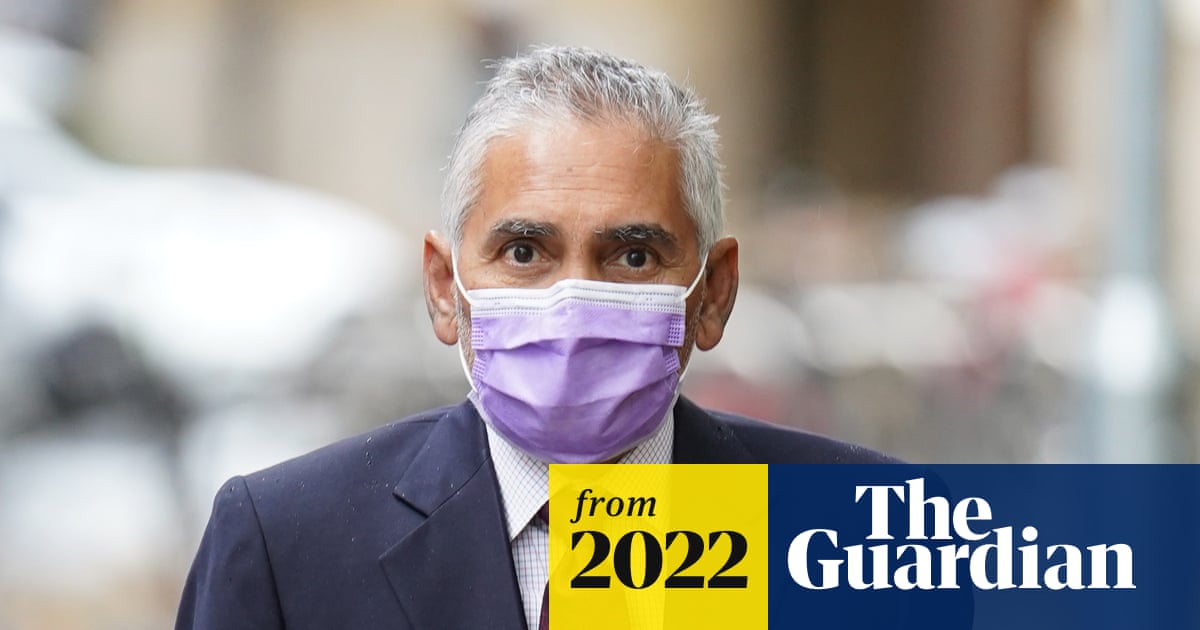
Anthony Stimler stood at the center of this operation. A United Kingdom citizen and senior trader, Stimler joined Glencore in 1998 and eventually took charge of the West Africa Desk. His plea agreement in July 2021 shattered the company’s defense that corruption was the work of rogue agents. Stimler admitted to conspiring to violate the Foreign Corrupt Practices Act while acting within the scope of his employment. He did not act alone. The evidence shows that his actions were known, approved, and frequently encouraged by the highest levels of the company. The desk operated a sophisticated network of intermediaries to funnel cash to state officials. These intermediaries were frequently shell companies registered in jurisdictions like Cyprus or the British Virgin Islands. They existed solely to convert corporate funds into untraceable bribes.
The Baar Cash Desk: A Physical Vault for Corruption
The most brazen component of this apparatus was the “Cash Desk” located at Glencore’s headquarters in Baar, Switzerland. This was not a metaphorical slush fund. It was a physical office where employees could withdraw massive amounts of cash. Traders from the London desk frequently requested withdrawals to pay bribes. The process required approval from senior management. In a twist of irony that exposes the depth of the institutional rot, the executives who signed off on these illicit withdrawals frequently held titles related to “Business Ethics” or sat on the “Business Ethics Committee.”
The Serious Fraud Office in the UK uncovered that a single trader on the West Africa Desk withdrew a total of €6. 3 million in cash from the Baar facility between 2012 and 2015. This cash was not for legitimate expenses. It was fuel for the bribery engine. The company maintained this cash desk in Baar until 2016. A similar facility existed in the London office until 2011. The existence of a dedicated department for dispensing cash in such volumes proves that bribery was a structural pillar of the business model. The company institutionalized the distribution of illicit funds. They created a paper trail of internal approvals that gave the appearance of legitimacy to criminal acts.
Logistics of Graft: Private Jets and Suitcases
The West Africa Desk utilized a fleet of private jets to transport this cash to its final destinations. The logistics mirrored the movement of high-value commodities. In one documented instance involving South Sudan, which fell under the wider African trading strategy, Glencore officials flew $800, 000 in cash to Juba shortly after the country’s independence in 2011. They labeled this payment as “opening office” expenses. The reality was far more cynical. The money was intended to grease the wheels of the new government to secure oil allocations.
Similar methods applied to West African. Cash withdrawn in Switzerland or London traveled by jet to Nigeria or Cameroon. Once on the ground, the cash into the hands of local agents. These agents then distributed the funds to officials at state-owned oil companies. The use of private aviation allowed Glencore to bypass standard customs checks and financial controls. It provided a secure channel for moving physical currency across borders. This method eliminated the digital footprint that bank transfers would create. The traders understood that wire transfers to politically exposed persons would trigger compliance alerts. Suitcases of cash delivered by private jet attracted far less scrutiny in the chaotic environments where they operated.
The Language of Bribery: Newspapers and Chocolates
Traders on the West Africa Desk developed a coded lexicon to discuss bribes in email and text communications. They rarely used the word “bribe” or “payment.” Instead, they referred to “newspapers,” “journals,” “pages,” or “chocolates.” A request for “newspapers” was a request for cash to pay a corrupt official. The quantity of “newspapers” corresponded to the amount of money required. In one email exchange by prosecutors, a trader requested $90, 000 to pay officials at Nigeria’s Pipelines and Product Marketing Company. The trader described this sum as the “amount they needed to cover PPMC in newspapers reading material.”
This code was not subtle. It was a thin veil that allowed traders to maintain a facade of deniability. The frequent use of these terms in internal communications suggests that the code was widely understood across the desk and by the supervisors receiving the requests. When a trader emailed that “the newspapers be delivered,” everyone on the chain knew that a bribe was imminent. The use of “chocolates” served the same purpose. These childish euphemisms highlight the normalization of crime within the office culture. Bribery was just another commodity to be traded, tracked, and delivered.
The Nigerian Nexus: NNPC and the Agents
Nigeria served as the crown jewel of the West Africa Desk’s corruption portfolio. The desk focused its efforts on the Nigerian National Petroleum Corporation (NNPC). Glencore paid more than $52 million to intermediaries in Nigeria alone. The primary purpose was to influence decisions regarding the allocation of crude oil cargoes. The desk used an agent identified in court documents as “NG Ltd” to these payments. Glencore entered into sham consulting agreements with this company. The agreements purported to pay for legitimate services. In reality, the “service fees” were calculated to provide the exact amount of cash needed for bribes.
The mechanics were specific. Glencore traders would agree on a bribe amount with Nigerian officials. They would then instruct the agent to submit an invoice for that amount under the guise of a “service fee” or an “advance.” Glencore would pay the invoice via wire transfer to the agent’s bank account. The agent would then withdraw the cash and deliver it to the officials. This method placed a legal buffer between Glencore and the recipient of the bribe. The company could claim it was paying a consultant for market intelligence. The DOJ investigation dismantled this defense. It proved that the traders knew exactly how the money was used. They tracked the payments against specific cargoes. They calculated the profitability of the bribes down to the cent.
Institutional Approval and the Ethics Committee
The most damning aspect of the West Africa Desk’s operation was the involvement of the control functions. Compliance and ethics departments exist to prevent exactly this type of behavior. At Glencore, they became enablers. The “Business Ethics Committee” members signed off on cash withdrawals that were patently suspicious. No legitimate business requires a trader to carry €500, 000 in cash to a meeting in West Africa. The approval of such requests signals that the “ethics” function was either grossly incompetent or complicit. The evidence points to the latter.
The company culture prioritized volume and profit above all else. The West Africa Desk generated massive returns for the company. The fines paid in 2022, while record-breaking, represent a fraction of the revenue generated during the decade of corruption. The desk operated with a mandate to win business at any cost. Executives in Baar and London monitored the trading positions daily. They saw the results. They saw the “service fees” eroding the margins. They asked no questions because they knew the answers. The silence from the top was a green light for the traders on the floor. The West Africa Desk was not a rogue unit. It was a high-performing asset class, optimized for corruption.
The Cameroon Connection: SNH and SIR
The bribery network extended beyond Nigeria into Cameroon and Ivory Coast. In Cameroon, the desk targeted officials at the Société Nationale des Hydrocarbures (SNH) and the Société Nationale de Raffinage (SONARA). Glencore admitted to paying approximately €4. 2 million in bribes to secure access to oil in Cameroon. The method mirrored the Nigerian operation. Traders used a sham consulting agreement to funnel payments. The goal was to secure “favorable dates” for lifting oil. In the oil trading business, the timing of a cargo lift determines its value. A delay of a few days can cost millions if market prices shift. By bribing officials to secure preferred dates, the West Africa Desk ensured that Glencore could maximize its trading margins.
In Ivory Coast, the target was the Société Ivoirienne de Raffinage (SIR). The bribery here focused on securing contracts to purchase crude oil and refined products. The widespread nature of these payments across multiple countries confirms that this was a regional strategy. The West Africa Desk applied a standard operating procedure to every market it entered. If a government official controlled access to a resource, the desk found a price and paid it. The consistency of the method, sham consultants, cash deliveries, coded emails, reveals a centralized directive. The London office exported corruption to every port where it docked.
Anatomy of the West Africa Desk: Institutionalizing Bribery from London
Nigeria: The $52 Million Campaign for Preferential Crude Allocations
Nigeria: The $52 Million Campaign for Preferential Crude Allocations
Between 2007 and 2018, Glencore operated a systematic bribery engine in Nigeria that redefined the mechanics of corporate corruption. The company paid over $52 million to intermediaries with the specific intent that these funds be used to bribe officials at the Nigerian National Petroleum Corporation (NNPC). This was not a series of incidents a calculated decade-long campaign to capture the most lucrative crude oil allocations in Africa’s largest economy. The objective was clear: secure specific grades of crude, dictate favorable loading dates, and eliminate competitors who played by the rules.
The of this operation dwarfs typical corporate malfeasance. Glencore did not grease palms; it purchased the operational schedule of a sovereign nation’s oil company. Court documents from the Southern District of New York and the UK’s Serious Fraud Office (SFO) reveal that these payments generated approximately $124 million in illicit profits for the Swiss commodity giant. For every dollar Glencore spent on bribing Nigerian officials, it extracted more than two dollars in pure profit, a return on investment that incentivized the continuation of the scheme for eleven years.
The Mechanics of the “Cash Desk”
The logistical backbone of this bribery scheme was the “cash desk” located at Glencore’s headquarters in Baar, Switzerland. Unlike modern digital money laundering which relies on complex wire transfers, Glencore’s method was brazenly physical. Senior traders and executives authorized the withdrawal of millions of dollars in physical cash. This money was ostensibly recorded as “office expenses” or “advance payments” for operations that did not exist.
Once withdrawn, the cash began its journey to West Africa. Glencore used private jets to courier these funds to Nigeria and Cameroon. In one specific instance identified by UK prosecutors, a Nigerian agent withdrew $5. 5 million in “service fees” in cash. This money was then transported across borders to settle accounts with corrupt officials. The use of private aviation allowed Glencore to bypass standard customs scrutiny, creating a diplomatic pouch for bribery.
When cash was not the preferred method, Glencore used a network of intermediaries to sanitize the payments. The company entered into sham consulting agreements with entities such as “West Africa Intermediary Company” and “Nigeria Intermediary Company.” These firms issued inflated invoices for vague services. Glencore paid these invoices, knowing fully that of the funds would be passed on to NNPC officials. This of separation allowed Glencore executives in London and Baar to claim plausible deniability, a defense that crumbled only after internal emails and witness testimony surfaced during the 2022 investigations.
The 2014 Election Connection
The corruption reached its apex during Nigeria’s 2015 election pattern. In 2014, a Glencore trader, identified in court documents as Anthony Stimler, authorized a payment of $300, 000 to an intermediary. The instructions were explicit: the funds were for a “high-ranking Nigerian official” to assist with the upcoming elections. In exchange, the official guaranteed that NNPC would continue to allocate favorable crude cargoes to Glencore even during the political volatility.
This transaction exposes the depth of Glencore’s political entrenchment. The company was not just buying oil; it was funding the political of the ruling class to ensure business continuity. The email correspondence from this period shows a Glencore executive urging the intermediary to “please please make sure on your side, NNPC perform[s].” The desperation to secure cargoes during the election season highlights how dependent the company’s West Africa desk had become on illicit arrangements.
Laundering Through Third Parties
Glencore also used third-party trading houses to mask its dominance in the Nigerian market. The SFO investigation revealed that Glencore paid bribes to NNPC officials to secure oil allocations for other companies, specifically Ontario Trading SA and Petroleos de Geneve. Once these companies received the allocations, they sold the crude directly to Glencore.
This triangular arrangement served two purposes., it allowed Glencore to bypass internal exposure limits to Nigeria. Second, it created the illusion of a competitive market where multiple independent traders were winning contracts. In reality, Glencore controlled the barrel from the moment of allocation, having paid for the privilege through its proxy network. The “service fees” paid to the agents facilitating these deals were nothing more than laundered bribes, categorized in Glencore’s books as legitimate trading costs.
The Failure of Nigerian Restitution
even with the overwhelming evidence and Glencore’s guilty pleas in the US and UK, the restitution process for Nigeria has been with legal obstacles. In October 2022, a London court denied Nigeria’s application to be heard as a victim during Glencore’s sentencing. The judge ruled that the Nigerian government did not have standing to claim compensation in the criminal proceedings, forcing the country to pursue civil remedies.
This ruling left a bitter aftermath. While the US and UK governments collected over $1 billion in fines and penalties, the direct victim of the corruption, the Nigerian people, saw none of that immediate windfall. The $52 million in bribes paid by Glencore contributed to the of trust in Nigeria’s oil sector, yet the financial penalties flowed north to Western treasuries. Glencore eventually agreed to a $50 million penalty payable to Nigeria in 2024, a sum that barely covers the original bribe amount, let alone the decade of economic caused by their operations.
Table 2. 1: Known Glencore Bribery Payments in Nigeria (2012-2014 Snapshot)
Date Range
Recipient / Intermediary
Amount (USD)
Stated Purpose (Sham)
Actual Purpose
Mar 2012, Apr 2014
Agent “NG1”
$4, 586, 143
Service Fees
Bribes to NNPC officials for crude allocation
Jul 2012, Aug 2014
Ontario Trading SA
$2, 047, 004
Consulting Fees
Bribes to secure cargoes for third-party transfer
Oct 2014
Cyprus Intermediary
$300, 000
Advance Payment
Election funding for high-ranking official
May 2015
Intermediary Company
$50, 000
Cargo Advance
Bribe for June 2015 crude loading
The Nigerian case study serves as the clearest example of Glencore’s operational philosophy during this era. The company viewed bribery not as a risk, as a line item, a necessary operating expense to guarantee market share. The $124 million profit derived from these crimes confirms that, for Glencore, corruption was simply good business.
Cameroon: Private Jets and Cash Deliveries to State Oil Officials
The Baar Cash Desk and the Air
The corruption method employed by Glencore in Cameroon distinguished itself not by sophistication, by its brazen physicality. While other corporate bribery schemes rely on complex of shell companies and offshore wire transfers to obscure the money trail, Glencore’s West Africa desk frequently opted for a method that was crude, direct, and highly: bags of cash delivered by private jet. UK Serious Fraud Office (SFO) investigators uncovered the existence of a dedicated “Cash Desk” at Glencore’s headquarters in Baar, Switzerland. This facility operated with the efficiency of a bank teller window, yet it served a singular, illicit purpose. Between 2011 and 2016, Glencore executives and traders withdrew millions of dollars in physical currency, ostensibly for “office expenses” or “advance payments,” which then into the cargo holds of private aircraft bound for Yaoundé and Douala.
Court documents from the SFO and the US Department of Justice (DOJ) reveal that the company paid approximately $11 million, roughly 7 billion CFA francs, in bribes to officials in Cameroon. These payments were not rogue actions by employees. They were authorized, tracked, and accounted for within the company’s internal systems. The “Cash Desk” in Switzerland allowed traders to sign for massive sums, frequently hundreds of thousands of dollars at a time. In one specific instance by prosecutors, a Glencore trader withdrew $800, 000 in cash from the Swiss office. This money was not used for legitimate operational costs was transported directly to Africa to secure favorable terms on oil cargoes.
The logistics of this bribery air required coordination between the London trading floor and the Swiss headquarters. Traders would request the funds, collect the cash in Baar, and board private jets. Upon arrival in Cameroon, the cash was handed over to intermediaries or directly to officials at the state-run entities. The audacity of flying pallets of currency across international borders speaks to the impunity with which the West Africa desk operated. They viewed the risk of detection as negligible compared to the profits at stake. The SFO investigation confirmed that these cash deliveries were a standard operating procedure, an “entrenched” business practice designed to grease the wheels of Cameroon’s oil bureaucracy.
Targeting SNH and SONARA
The primary of this cash offensive were the Société Nationale des Hydrocarbures (SNH) and the Société Nationale de Raffinage (SONARA). SNH acts as the steward of Cameroon’s oil wealth, managing the state’s share of crude oil production and sales. SONARA operates the country’s only oil refinery in Limbe. Glencore sought to dominate both sides of this trade: purchasing crude oil from SNH at undervalued prices and selling refined petroleum products to SONARA at inflated rates. The bribes ensured that Glencore’s bids were accepted over competitors and that the company received preferential allocations of high-grade crude.
In admissions made to the SFO, Glencore acknowledged that its agents paid bribes to SNH officials to secure “favorable treatment” in the allocation of crude oil. These allocations are the lifeblood of the oil trading business; securing a guaranteed supply of specific crude grades allows traders to hedge their positions and guarantee delivery to refineries worldwide. By bribing SNH officials, Glencore purchased a monopoly on information and access, locking out competitors who played by the rules. The 7 billion CFA in bribes generated an estimated profit of over $76 million for Glencore in Cameroon alone, a return on investment that explains the company’s willingness to transport cash by jet.
The corruption extended to SONARA, the state refinery. Glencore traders paid kickbacks to SONARA officials to win contracts for the supply of crude oil and other feedstocks. These deals were frequently structured to be disadvantageous to the Cameroonian state. The refinery, already struggling with operational and debt, paid above-market rates for Glencore’s products, while the officials who signed the contracts received their share in cash. This dual-pronged attack on Cameroon’s oil sector, underpaying for crude exports and overcharging for refinery imports, bled the national treasury from both ends.
The Nigerian Conduit and “Service Fees”
While the Swiss Cash Desk provided a direct line of funding, Glencore also established a secondary financing route through Nigeria. Court documents detail how the company used a Nigerian agent, identified in legal filings as “NG1,” to payments in Cameroon. Glencore transferred millions of dollars to this agent under the guise of “service fees” or “consulting agreements.” These sham contracts provided a veneer of legitimacy to the transfers, allowing Glencore’s compliance department to sign off on the payments. Once the funds reached the agent in Nigeria, they were withdrawn in cash and transported across the border to Cameroon.
This cross-border movement of illicit funds highlights the regional nature of Glencore’s bribery operations. The West Africa desk viewed the Gulf of Guinea as a single, interconnected market for corruption. Money moved fluidly between Nigeria, Cameroon, and Ivory Coast, directed by traders in London who managed the entire portfolio. The use of the Nigerian agent allowed Glencore to bypass direct scrutiny in Cameroon for transactions, adding a of separation between the company and the final recipients of the bribes. Yet, the source of the funds and the intent behind them remained clear: Glencore was buying influence.
The “service fee” model was pervasive. Invoices were falsified to reflect work that was never performed. An audit of these payments would show generic descriptions like “logistics support” or “market analysis,” while the reality was bags of cash changing hands in hotel rooms and private offices. The SFO’s investigation found that Glencore’s internal controls were either nonexistent or willfully blind to these red flags. Senior executives, including Alex Beard, the former head of oil who was charged in 2024, allegedly presided over a culture where such payments were considered a necessary cost of doing business.
The 7 Billion CFA Admission and Local
The that Glencore paid 7 billion CFA in bribes sent shockwaves through Yaoundé, yet the official response has been characterized by deflection and silence. Following Glencore’s guilty plea in 2022, the SNH issued a statement claiming it had been “duped” and was a victim of the scheme, rather than a participant. Adolphe Moudiki, the long-serving Executive General Manager of SNH, asserted that the corporation had no knowledge of the bribes and that any corrupt acts were the work of rogue individuals. This defense credulity given the of the payments and the seniority of the officials required to authorize crude allocations.
Prominent Cameroonian anti-corruption lawyer Akere Muna has led the charge to expose the identities of the bribe recipients. Muna, a former vice-president of Transparency International, has publicly demanded that the SNH and the Cameroonian government release the names of the officials involved. He that the “victim” narrative is a calculated attempt to shield high-ranking members of the political elite from prosecution. Muna has filed complaints with the National Anti-Corruption Commission (CONAC) and the Special Criminal Court, urging them to investigate the SNH and SONARA. To date, no senior Cameroonian official has faced criminal charges related to the Glencore scandal, standing in sharp contrast to the prosecutions of Glencore traders in London.
The in accountability is clear. In the UK, Glencore has paid over £280 million in fines and penalties, and its former executives face prison time. In Cameroon, the recipients of the 7 billion CFA remain in their posts, protected by a wall of official silence. The SNH continues to operate as the state’s primary revenue generator, and the structure that allowed the bribery to flourish remains largely intact. The “anonymity” of the bribe takers is preserved not by a absence of evidence, Glencore has provided details to UK authorities, by a absence of political in Yaoundé to prosecute the.
The Human Cost of Corporate Greed
The 7 billion CFA paid in bribes represents a direct theft from the Cameroonian people. In a country where infrastructure projects frequently stall due to absence of funding and where public services are chronically under-resourced, the diversion of oil revenues into private pockets has tangible consequences. The $76 million profit Glencore extracted from these corrupt deals is money that should have flowed into the Cameroonian treasury. Instead, it enriched a circle of traders in London and a cabal of officials in Yaoundé.
The use of private jets to deliver cash serves as a potent symbol of the disconnect between the resource wealth of the nation and the poverty of its citizens. While Glencore executives flew in to distribute illicit largesse, the communities living in the shadow of the oil industry saw little benefit. The corruption at SNH and SONARA distorted the market, inflated costs for the state, and deprived the public of the full value of their natural resources. The Glencore case is not a story of corporate non-compliance; it is a case study in how multinational corporations actively undermine governance in the Global South to maximize their own margins.
As the legal proceedings against individual traders continue in London, the pressure on Cameroon to act mounts. The evidence is public record. The dates, amounts, and methods are known. The “Cash Desk” is closed, the legacy of the bribery in the compromised institutions it left behind. The refusal of the Cameroonian government to name and shame the culprits suggests that the network of corruption extends far beyond a few mid-level managers, reaching into the highest echelons of the state apparatus.
The DRC Mining Connection: Dan Gertler and the Undervalued Asset Deals
The Democratic Republic of Congo (DRC) represents the geopolitical epicenter of the resource curse, a nation where the abundance of cobalt and copper has historically inversely correlated with the prosperity of its citizens. For Glencore, yet, the DRC was not a humanitarian tragedy a distressed asset class ripe for capture. The company’s entry and expansion in the region were not driven by superior engineering or operational efficiency, by a calculated alliance with Dan Gertler, an Israeli businessman whose primary asset was his personal friendship with then-President Joseph Kabila. This partnership was not incidental; it was the operational of Glencore’s strategy in the Congo. Between 2007 and 2017, Glencore and Gertler’s entities engaged in a series of complex asset swaps, loans, and renegotiations that systematically stripped value from the Congolese state and transferred it to their private ledgers. The mechanics of these deals, laid bare by the 2022 Department of Justice (DOJ) admissions and the 2024 Swiss Office of the Attorney General (OAG) summary penalty order, reveal a corporate ethos that viewed bribery not as a crime, as a line item in the cost of goods sold. ### The Gatekeeper: Dan Gertler and the “Friendship” Premium Dan Gertler arrived in the DRC in 1997, shortly after the overthrow of Mobutu Sese Seko. He quickly ingratiated himself with the Kabila family, with Laurent-Désiré Kabila and subsequently with his son, Joseph Kabila, who assumed the presidency in 2001. By the time Glencore sought to consolidate its position in the Katanga Copperbelt, Gertler was widely recognized as the unofficial gatekeeper to the country’s mining sector. Glencore’s reliance on Gertler was absolute. The company did not hire him as a consultant; they him into their corporate structure as a joint venture partner. This arrangement allowed Glencore to outsource the “dirty work” of securing licenses and renegotiating contracts. Gertler’s companies—frequently registered in secrecy jurisdictions like the British Virgin Islands—held minority in Glencore’s primary Congolese assets: Katanga Mining Limited (KCC) and Mutanda Mining. The utility of this partnership was demonstrated with brutal efficiency during the 2008-2009 renegotiation of the Katanga Mining contract. The DRC government, seeking to review mining contracts signed during the chaotic civil war years, demanded a “signing bonus” (pas de porte) reflective of the true value of the copper reserves. The initial demand was $585 million. Glencore, rather than negotiating directly, deployed Gertler. In a move that defines the “loan-to-corrupt” methodology, Glencore extended a $45 million loan to Lora Enterprises, a Gertler-controlled entity. The terms of this loan were explicitly conditional: the funds would be released only if Gertler successfully negotiated the signing bonus down to a fraction of the original demand. The strategy worked with devastating precision. Gertler’s intervention resulted in the signing bonus being slashed from $585 million to $140 million. The DRC treasury lost $445 million in a single stroke—a sum that exceeded the country’s entire annual health budget at the time. Glencore’s internal documents, later surfaced in the Paradise Papers, showed Aristotelis Mistakidis, the head of Glencore’s copper department, personally approving the loan terms. The message was clear: Glencore was to finance the corruption of state processes to secure assets at fire-sale prices. ### The Mutanda and Kansuki Asset Stripping The undervaluation of assets was not limited to signing bonuses. It extended to the acquisition of the mines themselves. The Mutanda and Kansuki mines, two of the richest copper and cobalt deposits on the planet, became the stage for a sophisticated shell game involving Glencore, Gertler, and the state-owned mining company, Gécamines. In a series of transactions between 2010 and 2012, Gertler’s offshore companies acquired in these mines from Gécamines at prices that commercial logic. These were then sold to Glencore or operated in joint ventures where Glencore controlled the asset. The Africa Progress Panel, led by former UN Secretary-General Kofi Annan, estimated that the DRC lost at least $1. 36 billion in chance revenue from five specific mining deals involving Gertler and Glencore during this period. The Swiss OAG’s 2024 investigation focused specifically on the acquisition of minority in Mutanda and Kansuki. The investigation concluded that Glencore failed to prevent the bribery of a Congolese public official to these acquisitions. The details are forensic: approximately $26 million was paid to Gertler, with $10 million delivered in cash to a senior official within the Kabila inner circle. This cash payment was not a lobbying fee; it was a direct purchase of political influence to ensure that the state’s assets were transferred to Glencore’s orbit without competitive bidding or fair valuation. The “put and call” option structures used in these deals were particularly egregious. Glencore and Gertler would agree on a price for Gertler’s shares years in advance, locking in the transfer while allowing Gertler to hold the shares just long enough to strip out royalties or dividends. This financial engineering obscured the true beneficiary of the mine’s profits and allowed Glencore to maintain a veneer of separation from the direct payments to state officials. ### The “Judge Whisperer”: The Crusader Health Bribe While the billion-dollar asset deals grab headlines, the widespread nature of Glencore’s corruption is perhaps best illustrated by a smaller, tawdrier incident: the bribery of a judge in the Crusader Health case. In 2010, a medical services company, Crusader Health, sued a Glencore subsidiary in the DRC for breach of contract, seeking approximately $16 million in damages. Rather than fighting the case on its legal merits, Glencore’s operatives on the ground opted for a surer route. According to the Statement of Facts agreed to by Glencore in its 2022 plea deal with the US DOJ, a Glencore employee authorized a $500, 000 bribe to be paid to a DRC judge to dismiss the lawsuit. The payment was disguised as a legal fee or consultancy payment, funneled through an agent. The “DRC Agent”—widely identified in subsequent reporting as a Gertler associate—emailed a Glencore executive stating that he needed to get a Congolese official to bring “political pressure” on the judge. The email warned that without this intervention, Glencore would be “screwed big time.” The bribe was paid. The judge dismissed the lawsuit. The cost of justice in the DRC was set at $500, 000, and Glencore was more than to pay the market rate. This incident demonstrates that corruption was not reserved for mega-deals; it was the standard operating procedure for resolving mundane commercial disputes. The rule of law was viewed as an obstacle to be bypassed, not a framework to be respected. ### Sanctions Evasion and the Royalty Pipeline The relationship between Glencore and Gertler faced a serious stress test in December 2017, when the US Treasury Department sanctioned Dan Gertler under the Global Magnitsky Act. The sanctions explicitly Gertler’s “unclear and corrupt mining and oil deals” in the DRC. For a compliant multinational, this should have been the end of the road. US sanctions prohibit any transactions with individuals, and violations carry severe penalties. Yet, Glencore’s entanglement with Gertler was so deep that a clean break was deemed commercially impossible. Gertler held rights to royalties from the KCC and Mutanda mines—rights he had acquired for a pittance and which were worth hundreds of millions of dollars. When Glencore initially stopped payments following the sanctions, Gertler sued in Congolese courts, threatening to seize Glencore’s assets. Faced with the choice between complying with US sanctions law or protecting its multi-billion dollar copper empire, Glencore chose a middle route that arguably violated the spirit, if not the letter, of the sanctions. In 2018, Glencore reached a settlement with Gertler to pay the royalties in Euros rather than US dollars, attempting to bypass the US financial system. This “currency switch” allowed the cash to keep flowing to a sanctioned individual accused of high-level corruption, ensuring that Gertler continued to profit from the Congolese soil long after the international community had marked him as a pariah. ### The Cost of Business The financial settlements Glencore reached in 2022 and 2024—paying over $1. 1 billion to US authorities and $150 million to Swiss authorities—are substantial, yet they pale in comparison to the value extracted from the DRC. The $1. 36 billion loss estimated by the Africa Progress Panel represents money that from the public coffers of one of the world’s poorest nations. It is money that did not build roads, did not fund schools, and did not equip hospitals. Glencore’s defense has been to ring-fence these activities as the work of “bad apples” or past management. yet, the evidence suggests that the corruption was structural. The use of Dan Gertler was not a rogue act by a low-level manager; it was a board-level strategy authorized by the highest echelons of the company, including the copper division head. The “West Africa Desk” in London and the copper trading teams in Baar, Switzerland, operated as a synchronized machine designed to extract maximum value from weak governance zones. The DRC case study is the definitive indictment of the “Glencore Model” in Africa. It reveals a company that did not navigate a corrupt environment actively cultivated it, financing the very intermediaries who eroded the state’s capacity to govern. The mines of Katanga, stripped of their fair value, stand as monuments to a decade of looting where the only law that mattered was the deal.
Ivory Coast: Inflated Invoices and the "Service Fee" Concealment Mechanism
Ivory Coast: Inflated Invoices and the “Service Fee” Concealment method
The corruption operated by Glencore’s West Africa desk extended its reach well beyond the crude-rich swamps of the Niger Delta. While Nigeria offered volume, the Ivory Coast (Côte d’Ivoire) presented a different strategic value through its refining capacity and state-controlled export quotas. Here, the bribery method evolved from simple cash deliveries into a sophisticated accounting fraud. Glencore traders did not hand over envelopes of currency. They weaponized the corporate ledger itself. The primary instrument for this financial subterfuge was the “Service Fee,” a banal accounting term used to mask millions of Euros in illicit payments to officials at the state-run Société Nationale d’Opérations Pétrolières de la Côte d’Ivoire (PETROCI) and the Société Ivoirienne de Raffinage (SIR).
Court documents from the United Kingdom’s Serious Fraud Office (SFO) and the United States Department of Justice (DOJ) expose a calculated scheme running from July 2011 to April 2016. During this period, Glencore Energy UK Ltd paid approximately EUR 4. 8 million in bribes to Ivorian officials. The objective was clear. Glencore sought preferential access to crude oil cargoes and favorable terms for the purchase of refined products. The traders involved understood that the Ivorian market was tightly controlled by state entities. To break into this closed loop, they employed a local agent, referred to in legal filings as “CD1,” who acted as the conduit for the bribes. This agent was not a legitimate consultant. CD1 was a bagman with high-level access to the decision-makers at SIR and PETROCI.
The “Service Fee” method served as the camouflage for these transactions. Glencore entered into sham consulting agreements with CD1. These contracts stipulated a monthly retainer of EUR 15, 000, along with variable “service fees” to be agreed upon case-by-case. In reality, these fees were determined not by the value of any consulting work, by the size of the bribe required to secure a specific cargo. When a deal was imminent, the agent would invoice Glencore for a “service fee.” Glencore’s London desk would approve the invoice. The funds would flow to the agent. The agent would then distribute the cash to the corrupt officials. This method allowed Glencore to record the bribes as legitimate business expenses, laundering the corruption through their own accounts payable department.
The sophistication of the Ivorian scheme lay in its integration with standard trade finance tools. Glencore frequently used “advance payments” or pre-financing arrangements with state oil companies. In the commodities world, a trader might lend money to a state producer in exchange for future oil delivery. Glencore twisted this standard practice into a bribery delivery system. To bypass internal compliance controls that might flag large, unexplained payments to an agent, the West Africa desk set up a specific loan facility. This facility allowed them to release funds to the agent rapidly, under the guise of pre-financing or operational loans, which were then diverted for bribes. The use of a loan structure added a of complexity that made the payments harder for external auditors to detect without specific knowledge of the underlying intent.
The target of these bribes, SIR, is the largest oil refinery in Francophone West Africa. Control over SIR’s output and its crude intake offers a trader immense use in the regional product market. By bribing officials at SIR, Glencore ensured it could sell crude to the refinery at inflated prices or buy refined products at suppressed rates. The “Service Fee” paid to CD1 was a fraction of the profit Glencore generated from these rigged deals. The SFO investigation revealed that the traders viewed these payments as a cost of doing business, a necessary operating expense to maintain their dominant market position. The emails exchanged between the London desk and the agent show a transactional, almost mundane method to high-level corruption. There was no hesitation. There was only the logistics of payment.
David Perez, a former Glencore oil trader, was specifically charged in connection with the Ivorian scheme. The charges allege a conspiracy to make corrupt payments to benefit Glencore’s operations in both Cameroon and the Ivory Coast. The inclusion of Perez and other traders in the indictment destroys the “rogue employee” defense frequently mounted by corporations. This was not the work of a lone wolf. It was a desk-wide strategy. The traders coordinated the “Service Fee” invoices, approved the payments, and tracked the resulting oil allocations. The corruption was widespread, in the daily workflow of the West Africa desk.
The use of inflated invoices further compounded the fraud. In instances, the “Service Fee” was not billed separately was incorporated into the price of the goods or services provided by the agent. This technique, known as over-invoicing, is a classic method of trade-based money laundering. By inflating the value of a legitimate invoice, Glencore could transfer excess value to the agent, who would then peel off the surplus for bribes. The Ivorian officials, complicit in the scheme, would approve the inflated costs on their end, knowing that their share would arrive via CD1. This circular flow of money defrauded the Ivorian public twice: by corrupting the allocation process, and second by chance inflating the cost of energy for the nation.
The economic damage inflicted by this scheme on the Ivory Coast was substantial. The EUR 4. 8 million in bribes likely generated tens of millions in illicit profits for Glencore, money that was siphoned from the national treasury. SIR and PETROCI are serious pillars of the Ivorian economy. When their procurement processes are rigged, the state loses revenue, and the efficiency of the energy sector degrades. The “Service Fee” method allowed Glencore to bypass competitive bidding. They did not win contracts because they offered the best price or the best service. They won because they paid the gatekeepers.
The following table details the known components of the Ivorian bribery method as established in the statement of facts from the plea agreements:
The internal culture at Glencore’s London office facilitated this corruption. Traders were under immense pressure to secure volume. The “Service Fee” was seen as a tool to unlock that volume. Compliance policies existed on paper, in practice, they were blocks to be circumvented. The creation of the loan facility specifically to avoid internal scrutiny shows a conscious effort to defeat the company’s own checks and balances. The traders knew the “Service Fees” were bribes. They knew CD1 was a conduit. They proceeded because the rewards, access to SIR’s refining capacity and PETROCI’s crude, outweighed the risks of detection.
The involvement of SIR is particularly damning. As a refinery, SIR imports crude and exports products. Glencore positioned itself on both sides of this equation. They supplied the crude and bought the products. By bribing the officials who managed these flows, Glencore could manipulate the timing, grade, and price of the oil. They could dump distressed cargoes on the refinery or cherry-pick the most valuable products for export. The “Service Fee” bought them the right to treat a national asset as their private processing plant. The agent, CD1, ensured that any friction from honest officials was greased away with Euro-denominated payments.
The legal resolution of these crimes resulted in Glencore pleading guilty to Count 5 of the SFO indictment, specifically relating to the bribery of officials in the Ivory Coast. The admission of guilt confirms the factual basis of the “Service Fee” scheme. It validates the assertion that the invoices were shams and the consulting agreements were covers for corruption. The EUR 4. 8 million figure is a forensic certainty, traced through bank records and email trails. It represents a specific, quantified instance of the “resource curse” in action, where the wealth of a nation is diverted by foreign capital and local complicity.
This method of “Service Fees” and inflated invoices was not unique to the Ivory Coast, it was perfected there. The relative stability of the Ivorian refining sector compared to the chaos of the Niger Delta allowed for a more structured, bureaucratic form of bribery. It was white-collar crime in its purest form: clean invoices, signed contracts, and bank transfers, all underpinning a dirty trade. The West Africa desk did not just trade oil; they traded influence, and the currency of that trade was the hidden fee.
The exposure of the Ivorian scheme strips away the veneer of legitimate trading. It shows that Glencore’s market dominance was built, in part, on a foundation of fraud. The “Service Fee” was not a payment for services rendered. It was a payment for integrity surrendered. The officials at SIR and PETROCI sold their duties for a monthly retainer and a slice of the action. Glencore bought that betrayal, itemized it on an invoice, and filed it away as a cost of doing business.
Equatorial Guinea & South Sudan: Penetrating Markets via Corrupt Agents
The Independence Day Campaign: Cash by Private Jet to Juba
Glencore’s entry into South Sudan represents one of the most brazen examples of corporate bribery in the history of modern commodities trading. On July 9, 2011, South Sudan gained independence, creating a new sovereign entity with vast, unallocated oil reserves. While the international community focused on the geopolitical of the split from Sudan, Glencore’s West Africa desk focused on immediate market capture through illicit means. Court records from the Serious Fraud Office (SFO) reveal that Glencore did not wait to establish legitimate diplomatic or commercial channels. Instead, less than a month after the country’s independence, executives in London orchestrated a direct cash injection to purchase influence. On August 2, 2011, a Glencore delegation boarded a private jet bound for Juba, the capital of the nascent state. On board was $800, 000 in physical cash. This cash originated from Glencore’s corporate headquarters in Baar, Switzerland, specifically from the “Cash Desk”, a facility that allowed executives to withdraw massive sums of physical currency with minimal oversight. To conceal the true purpose of the funds, Glencore staff recorded the withdrawal in internal ledgers under a variety of spurious descriptions, including “opening office in South Sudan,” “cash for office infrastructure,” “salaries,” and “cars.” These entries were pure fiction. The money was not for desks or payroll; it was for purchasing access. Upon arrival in Juba, the Glencore team handed the cash to a local agent, who then distributed the funds to officials within the newly formed government. The impact was instantaneous. SFO prosecutors noted that “within days of the arrival of the cash in Juba… Glencore’s fortunes changed.” Prior to the delivery, the company had been excluded from key discussions. After the payment, Glencore was immediately invited to bid for valuable crude oil cargoes. The corruption did not stop with the initial $800, 000. A second tranche of $275, 000 was delivered shortly thereafter to solidify the relationship. This specific campaign of bribery was linked to a joint venture entity known as “Petronile,” which Glencore used as a vehicle to interface with South Sudan’s state-owned oil apparatus. The speed and volume of the cash payments demonstrate a calculated strategy to overwhelm the fragile governance structures of a brand-new nation before any regulatory framework could be established.
Equatorial Guinea: The Bi-Monthly Cash Pipeline
While the South Sudan operation involved high-, one-off deliveries, Glencore’s corruption in Equatorial Guinea was systematic, bureaucratic, and routine. The company’s method to the regime of President Teodoro Obiang Nguema Mbasogo relied on a steady drip of illicit capital to maintain preferential treatment in crude oil allocations. Between 2012 and 2015, Glencore’s West Africa desk institutionalized a bribery method that functioned with the regularity of a payroll department. A specific trader on the desk was responsible for withdrawing cash from the Swiss headquarters to fund these operations. SFO findings detail that this trader made withdrawals on 25 separate occasions during this period, totaling €6. 3 million (£5. 4 million) for the wider West Africa region, with a confirmed $1 million specifically directed at agents in Equatorial Guinea. The logistics of this scheme were startlingly simple yet. The trader would request the cash, frequently citing “service fees” or “operational expenses” for West African projects. Once approved, frequently by senior personnel who were ostensibly responsible for ethics and compliance, the cash was transported to the region. In Equatorial Guinea, these funds were funneled to well-connected local agents who acted as conduits to the regime. One specific agent employed by Glencore in Equatorial Guinea was selected precisely for their proximity to power. Internal communications seized by investigators show this agent boasting of their ability to use “family connections” to secure direct meetings with President Obiang and other high-ranking figures. This access was monetized through the “service fee” structure, where Glencore paid inflated invoices to the agent’s shell companies, knowing that a portion of the funds would be passed on to state officials to secure oil cargoes.
The “Business Ethics” Facade
Perhaps the most damning aspect of the Equatorial Guinea and South Sudan schemes was the complicity of Glencore’s internal control apparatus. The cash withdrawals used to bribe officials in Juba and Malabo were not the work of a rogue employee acting in isolation. They required authorization. Court documents revealed that the withdrawals from the Swiss Cash Desk had to be signed off by senior employees. In a twist of irony that highlights the total collapse of corporate governance, the individuals authorizing these massive cash outlays included a “Business Ethics Officer” and a member of the company’s “Business Ethics Committee.” These gatekeepers, tasked with preventing corruption, were the very individuals facilitating the logistical flow of bribe money. This institutional approval allowed the bribery to for years. In Equatorial Guinea, the bi-monthly nature of the payments created a dependency relationship, where state officials came to expect regular cash infusions in exchange for maintaining Glencore’s position in the lifting schedules. The “service fee” concealment method was standard operating procedure, used to sanitize the bribes in London’s accounting records while the physical cash did the dirty work on the ground in Africa. The harm caused by these activities was quantified by the SFO at over $128 million across the West African portfolio, a figure that represents profit gained through corruption rather than legitimate competition. In South Sudan, Glencore’s bribes distorted the market of a country that had existed for less than a month, setting a precedent of corruption that would plague the nation’s oil sector for years to come. In Equatorial Guinea, the payments helped entrench a kleptocratic elite, ensuring that the country’s natural resource wealth flowed into private pockets rather than public coffers.
The "Cash Desk" Operations: Withdrawing Millions for "Entertainment"
The Baar method: Institutionalized Cash Withdrawals
At the heart of Glencore’s corruption lay a physical location within its corporate headquarters in Baar, Switzerland: the “Cash Desk.” While most multinational corporations moved toward digital compliance and traceable bank transfers in the 2010s, Glencore maintained a facility that functioned as a walk-up window for illicit finance. This desk allowed traders to withdraw massive sums of physical currency, frequently in United States dollars or Euros, with minimal documentation and virtually no genuine oversight. The Serious Fraud Office (SFO) investigation revealed that this was not a method for petty office supplies a dedicated engine for bribery, enabling the West Africa Desk in London to funnel millions directly into the hands of state officials.
The operation was bureaucratically yet criminally unclear. Traders based in London would send email requests to the Swiss headquarters, asking for large blocks of cash. These requests were frequently processed without receipts or proof of legitimate expenditure. Between 2012 and 2015, a single trader on the West Africa desk withdrew approximately €6. 3 million (£5. 4 million) in cash across 25 separate occasions. The sheer volume of physical notes required to fulfill these orders suggests a logistical operation resembling bank robbery transport rather than corporate finance. To move this currency, Glencore relied on private jets and couriers, creating an airborne pipeline of undocumented money flowing from Switzerland to resource-rich, governance-poor nations.
The “Entertainment” Ledger
To conceal these withdrawals from external auditors and banking regulators, Glencore’s finance department used a series of euphemisms in their internal ledgers. The most common label for these six-figure and seven-figure withdrawals was “entertainment.” In one egregious instance identified by UK prosecutors, a withdrawal of hundreds of thousands of Euros was booked simply as entertainment expenses, a classification that would imply a corporate dinner of impossible proportions. Other withdrawals were categorized as “office expenses” or “operational costs,” labels that offered a veneer of legitimacy while masking the funds’ true purpose: the purchase of government influence.
The accounting fraud extended beyond simple mislabeling. The SFO found that Glencore created “sham” documents to support these ledger entries. When cash was withdrawn for bribes in Cameroon or Nigeria, the internal records would reflect payments for “office infrastructure,” “salaries,” or “cars” in countries where Glencore sometimes had no physical office or only a skeleton crew. This practice allowed the company to sanitize its books, burying the bribes under the guise of standard operating overhead. The finance team in Baar accepted these explanations without scrutiny, processing requests that were facially absurd to any objective observer. The acceptance of “entertainment” as a valid reason for withdrawing a suitcase full of cash demonstrates a corporate culture where compliance was subservient to the demands of the trading desks.
South Sudan: The $800, 000 Delivery
The operational reality of the Cash Desk is best illustrated by Glencore’s entry into South Sudan. In July 2011, South Sudan gained independence, opening a new and chaotic market for crude oil. Glencore moved with predatory speed. Within weeks of the country’s independence, two Glencore executives from the West Africa desk boarded a private jet in Switzerland bound for Juba. Their luggage contained $800, 000 in cash, withdrawn directly from the Baar Cash Desk. The internal justification for this withdrawal was “opening office in South Sudan,” a claim that was entirely fictitious.
Upon arrival in Juba on August 2, 2011, the executives did not use the funds to lease real estate or buy office furniture. Instead, they handed the cash to a local agent, who then distributed the money to officials in the newly formed government. The impact was immediate. Within days of the cash delivery, Glencore secured a lucrative contract to market two million barrels of South Sudanese crude. This transaction provides a clear timeline of cause and effect: the cash left Baar, arrived in Juba, and the oil contracts followed almost instantly. A second delivery of $275, 000 followed shortly after, reinforcing the relationship. The “office expenses” justification remained on the books, a permanent lie recording the cost of doing business in a war-torn state.
Cameroon: The €6. 3 Million Pipeline
While the South Sudan operation involved a direct strike, the bribery method in Cameroon was a sustained campaign. Between 2012 and 2015, the Cash Desk in Baar facilitated the withdrawal of over €6 million specifically for use in Cameroon. These funds were frequently transported by private jet, carried by traders or agents who acted as mules for the corporation. The target of these bribes was the Société Nationale des Hydrocarbures (SNH) and the national refinery, SONARA. Glencore’s traders needed to secure favorable dates for lifting oil and preferential grades that would yield higher margins on the international market.
The method involved a specific trader, identified in court documents as “GE1,” who personally withdrew millions from the Swiss HQ. On one occasion, a withdrawal was justified as “entertainment,” while others were listed as “office expenses” for a subsidiary, Glencore Exploration Cameroon. The SFO noted that there was limited evidence of any genuine office operations that would require such vast sums of liquid cash. The money was simply fuel for the corruption engine. Once in Cameroon, the cash was used to incentivize officials to grant Glencore allocations that other competitors could not access. The consistency of these withdrawals, occurring 25 times over three years, shows that this was not a rogue operation a standard business process integrated into the West Africa Desk’s workflow.
The “Service Fee” Concealment
to direct cash withdrawals, the Cash Desk operations were supported by a parallel system of “service fees” paid to agents who would then generate the cash locally. In Nigeria, Glencore used an agent to withdraw $5. 5 million in cash, which was then flown to Cameroon to supplement the funds coming from Switzerland. This triangular movement of money, London ordering, Nigeria generating, Cameroon receiving, added of complexity to the audit trail. The “service fees” were invoiced by the agents, paid by Glencore via wire transfer, and then converted into cash by the agent for distribution.
This method allowed Glencore to outsource the risk of physical cash handling while maintaining control over the bribery process. The agents were extensions of the Cash Desk, operating remote branches where the “service” provided was the conversion of corporate funds into untraceable bribes. The invoices for these fees were vague, frequently citing “consultancy” or “logistics,” yet the correlation between these payments and the award of oil cargoes was absolute. The Baar finance team processed these invoices with the same absence of curiosity they applied to the direct cash withdrawals.
Compliance Failure and “Ethics” Sign-offs
Perhaps the most damning aspect of the Cash Desk operations was the involvement of Glencore’s compliance and ethics personnel. SFO findings revealed that the cash withdrawals from Baar required approval signatures. In a twist of dark irony, of these illicit withdrawals were signed off by a Glencore “Business Ethics Officer” and a member of the company’s “Business Ethics Committee.” These individuals, tasked with preventing corruption, were the very gatekeepers authorizing the release of cash used to commit it.
This bureaucratic approval proves that the bribery was not the work of employees acting in secret. It was an institutionalized practice, codified in the company’s approval matrices. The “ethics” officers did not question why a trader needed €500, 000 in cash for a trip to Cameroon; they simply applied the signature required to release the funds. This widespread failure shows that the compliance function at Glencore during this period was either entirely incompetent or, more likely, a captured entity designed to rather than the commercial objectives of the trading desks. The Cash Desk was not a loophole; it was a sanctioned service, operating in the open within the headquarters, protected by the very people paid to police it.
Summary of Cash Desk Withdrawals (2011-2015)
Period
Primary Destination
Approximate Amount
Stated Purpose (Ledger)
Actual Purpose
August 2011
South Sudan
$800, 000 USD
Opening Office / Infrastructure
Bribes to government officials
Late 2011
South Sudan
$275, 000 USD
Office Expenses
Follow-up bribes
2012-2015
Cameroon
€6. 3 Million EUR
Office Expenses / Entertainment
Bribes to SNH/SONARA officials
2012-2015
Nigeria/Cameroon
$5. 5 Million USD
Service Fees (via Agent)
Cash generation for bribes
Systemic Evasion: Falsifying Audit Trails and Compliance Protocols
widespread Evasion: Falsifying Audit Trails and Compliance
The corruption at Glencore was not the result of rogue traders acting in isolation; it was facilitated by a sophisticated financial architecture designed to deceive regulators, auditors, and even the company’s own compliance officers. The Department of Justice (DOJ) and the Serious Fraud Office (SFO) investigations revealed that the bribery method was engineered into the company’s accounting systems. Glencore’s West Africa desk did not just hand over bags of cash; they created a parallel reality in their ledgers, transforming illicit payments into “service fees,” “commissions,” and “office expenses.” This institutionalized evasion required the active participation of finance teams and the willful blindness of executives who prioritized market share over legal adherence.
Central to this evasion was the use of third-party intermediaries. Glencore entered into “sham consulting agreements” with entities that had no legitimate business purpose other than to funnel bribes to government officials. These intermediaries, frequently referred to in court documents as “West Africa Intermediary Company” or “Nigeria Intermediary Company,” were paid millions of dollars under the guise of “success fees.” The audit trail for these payments was meticulously falsified. Traders instructed these agents to submit invoices for services that were never rendered. A typical invoice might list “freight forwarding” or “market analysis,” while the funds were actually destined for a minister’s private bank account. The DOJ statement of facts shows that between 2007 and 2018, Glencore paid approximately $79. 6 million to these intermediaries, knowing that would be used for bribes.
The accounting classification of these payments was a serious component of the cover-up. In the company’s SAP systems, bribes were frequently categorized as “service fees.” This label provided a veneer of legitimacy that allowed the payments to pass through internal accounts payable processes without triggering red flags. For example, in Nigeria, Glencore paid over $52 million to intermediaries. To justify these outflows, the company’s traders and finance staff created addenda to existing service agreements, rewriting the contract terms to match the bribe amount required by the official. This reverse-engineering of contracts meant that the paperwork always matched the payment, satisfying superficial audit checks while concealing the underlying crime.
One of the most brazen examples of audit trail falsification occurred in South Sudan. Shortly after the country’s independence in 2011, Glencore executives sought to secure oil contracts from the new government. To this, they withdrew $800, 000 in cash from the company’s “Cash Desk” in Baar, Switzerland. In the company’s financial records, this withdrawal was not recorded as a sensitive payment or a high-risk transaction. Instead, it was booked as expenses for “opening the office in South Sudan,” specifically for “office infrastructure, salaries, cars, etc.” In reality, the cash was flown by private jet to Juba and used to bribe officials. The “office infrastructure” entry was a complete fabrication, designed to bury the bribe in a generic operational expense category that external auditors were unlikely to scrutinize in detail.
The evasion techniques extended to the language used by traders. To avoid detection by compliance monitoring software which scans emails for keywords like “bribe” or “payment,” Glencore staff developed a lexicon of code words. These euphemisms allowed them to discuss illicit transactions openly on recorded lines and in emails. The term “newspapers” was frequently used in Nigeria to refer to bribe money. A trader might ask an agent if the “newspapers” had been delivered, referring to a cash drop. In other contexts, “filings” referred to payments made to customs or tax officials to make problems disappear. The term “chocolates” was also used to describe smaller sweeteners or cash payments. This coded language rendered the company’s electronic surveillance systems useless, as the conversations appeared to be mundane discussions about logistics or office supplies.
The compliance department itself was treated as an obstacle to be circumvented rather than a control function. The SFO investigation found that risk assessments for third-party agents were either “poorly done or not done at all.”, the compliance team was simply bypassed. When compliance officers did raise questions about high-risk intermediaries, they were frequently overruled by commercial managers who the “commercial need” of the relationship. The “tone at the top” was clear: compliance was a box-ticking exercise. The DOJ noted that Glencore did not have a system to measure or test its own compliance program, allowing these sham agreements to for over a decade. The company’s internal audit function failed to identify these problem, partly because the documentation, the sham contracts and fake invoices, had been created to look perfect on the surface.
Another method of evasion involved the manipulation of “advance payments.” In the oil trading world, it is not uncommon for traders to provide pre-financing to state oil companies. Glencore weaponized this practice. They provided large “advances” to state-owned entities in Chad and the Republic of Congo, ostensibly for future oil deliveries. yet, the terms of these advances were frequently structured to provide immediate liquidity to corrupt regimes in exchange for undervalued oil assets. The audit trail showed a commercial loan, the reality was a bribe paid in the form of cheap credit and absence of oversight on how the funds were used. These advances captured the state oil companies, forcing them to allocate cargoes to Glencore to service the debt, frequently at prices detrimental to the national treasury.
The use of personal technology further eroded the audit trail. Glencore traders frequently moved conversations from official company email servers to personal email accounts and encrypted messaging apps like WhatsApp. This practice deliberately removed the most sensitive discussions from the company’s data retention systems. When investigators later subpoenaed documents, huge swathes of communication were missing because they had never touched Glencore’s servers. This “off-channel” communication was not a violation of policy in the eyes of the traders; it was standard operating procedure for the West Africa desk. The DOJ numerous instances where traders instructed agents to “send to my private mail” specifically to avoid the compliance filters that might catch a sham invoice or a discussion about a bribe.
The failure of external audits to catch this massive scheme raises serious questions about the depth of the deception. The Financial Reporting Council (FRC) opened an investigation into Deloitte’s audits of Glencore for the years 2013 to 2020, examining whether the auditors gave sufficient consideration to the risk of non-compliance. The fact that hundreds of millions of dollars in bribes could be disguised as “service fees” and “office expenses” suggests that Glencore’s finance team was highly skilled at presenting a sanitized version of the books to outsiders. They exploited the materiality thresholds of audits, knowing that a $50, 000 “filing fee” or a $10, 000 “newspaper” expense would likely fall the radar of an auditor looking at a multi-billion dollar balance sheet.
Evasion method
Description of Fraudulent Activity
Audit Trail Fabrication
Sham Consulting Agreements
Contracts with intermediaries (e. g., “West Africa Intermediary Company”) solely to pass bribes.
Vague scopes of work; “Success fees” tied to contract awards; No evidence of actual consulting services.
Invoice Inflation
Padding legitimate invoices or creating entirely fake ones to generate cash for bribes.
Invoices listed “freight,” “demurrage,” or “service fees” that did not exist or were grossly overvalued.
Expense Misclassification
Booking cash withdrawals for bribes as operational costs.
$800, 000 cash withdrawal booked as “Office opening infrastructure” in South Sudan; “Entertainment” expenses.
Coded Language
Using euphemisms to discuss bribes on recorded lines.
“Newspapers” (cash), “Filings” (bribes to officials), “Chocolates” (sweeteners).
Advance Payment Loans
Pre-financing state oil companies to gain use and hide kickbacks.
Commercial loan agreements that masked the political nature of the funds; Undervalued oil used as repayment.
The widespread nature of this evasion meant that no single person was solely responsible; the entire of the West Africa desk was complicit. From the trader negotiating the deal to the finance officer approving the “service fee” invoice, the process was direct. The company’s internal controls were not broken; they were completely overridden by a culture that viewed bribery as a necessary business expense. The “service fee” was not just a line item; it was the price of entry into markets where Glencore sought to establish dominance. By falsifying the audit trails, Glencore did not just hide the crime; they normalized it, turning corruption into a standard accounting procedure.
The Intermediary Network: How "NG Ltd" Funneled Illicit Payments
The “NG Ltd” entity—a pseudonym assigned by the UK Serious Fraud Office (SFO) to a Nigerian company incorporated in the early 1980s—served as the central nervous system for Glencore’s bribery operations across West Africa. While court documents anonymize the firm, its function was unambiguous: it acted as a dedicated clearinghouse for illicit payments, transforming corporate funds into untraceable cash for distribution to state officials. This intermediary did not introductions; it operationalized corruption on an industrial, allowing Glencore’s London trading desk to maintain a veneer of distance from the dirty money changing hands in Abuja, Yaoundé, and Abidjan. ### The Sham “Service Fee” method The primary method for funneling funds to NG Ltd involved the fabrication of “service agreements.” These contracts purported to pay NG Ltd for legitimate consultancy work, such as “identifying new business opportunities” or providing market intelligence. In reality, the agreements were empty vessels designed to bypass compliance checks. Glencore traders, including the West Africa desk’s Anthony Stimler, authorized payments to NG Ltd disguised as “service fees” or “advance payments” on specific crude oil cargoes. Evidence from the SFO investigation reveals the precise arithmetic of these bribes. In one instance, a “service fee” was calculated at exactly **$0. 17 per barrel** for crude oil allocated to a Glencore subsidiary. These fees were not fixed operational costs variable bribes, adjusted based on the value of the preferential treatment Glencore received—whether that was a specific grade of crude, a favorable lifting date, or the suppression of an official audit. Between 2012 and 2014 alone, Glencore transferred approximately **$4. 58 million** to NG Ltd specifically to bribe officials at the Nigerian National Petroleum Corporation (NNPC). ### Logistics of the Cash Pipeline Once the funds landed in NG Ltd’s accounts—frequently routed through banks in Cyprus or Switzerland to obscure their origin—the operation shifted from digital transfers to physical cash logistics. The agent controlling NG Ltd, identified in court documents only as “NG1,” would withdraw massive sums of local currency or US dollars from banks in Nigeria. This cash did not stay in Nigeria. In a brazen display of jurisdictional impunity, NG1 transported the physical cash across borders using private jets. The SFO detailed how these funds were flown from Nigeria to Cameroon, where they were handed over to Glencore traders or directly to local officials. This “air ” for bribery allowed Glencore to service corrupt networks in Cameroon’s Société Nationale des Hydrocarbures (SNH) and Société Nationale de Raffinage (SONARA) using cash originally withdrawn for “operations” in Nigeria. The use of private aviation evaded standard customs checks, ensuring that millions of dollars in hard currency could be delivered directly to the decision-makers who controlled the oil taps. ### The Atlantic Energy Connection While “NG Ltd” remains a legal pseudonym, the broader ecosystem of Glencore’s intermediaries includes known entities that operated with similar impunity. Glencore’s dealings with **Atlantic Energy**, a firm controlled by Nigerian businessmen Kola Aluko and Jide Omokore, mirror the mechanics attributed to NG Ltd. Glencore advanced over **$800 million** to Atlantic Energy for crude oil cargoes, even with the firm’s absence of technical capacity or track record. These funds, ostensibly for oil pre-financing, were diverted to purchase luxury assets—including a $80 million superyacht and high-end real estate in New York—for the benefit of Nigerian officials, including former Oil Minister Diezani Alison-Madueke. The Atlantic Energy case demonstrates that NG Ltd was not an anomaly part of a standardized playbook. Glencore consistently partnered with politically exposed intermediaries who could convert commercial contracts into kickbacks for state agents. ### Coded Language and the “Cash Desk” The operational security around these payments relied on a lexicon of euphemisms. In email communications, Anthony Stimler and his co-conspirators referred to bribe payments as “newspapers,” “journals,” or “filings.” A request for “newspapers” was a direct order to release cash to an official. Supporting this network was Glencore’s internal “Cash Desk” at its Baar, Switzerland headquarters. This facility functioned like an in-house bank, allowing executives to withdraw millions in cash with minimal documentation. Between 2011 and 2016, the West Africa desk withdrew substantial amounts from this Swiss cash pile, justifying the withdrawals as “entertainment expenses” or “office costs.” These funds were then couriered to Africa to replenish the war chests of agents like NG1. The integration of the Swiss Cash Desk with the Nigerian intermediary network created a closed loop: Glencore could generate cash in Switzerland, wire funds to NG Ltd in Nigeria, and physically move money to Cameroon, all while generating a paper trail of “consulting fees” and “office expenses” that satisfied external auditors.
Table 9. 1: Known Financial Flows to Intermediary “NG Ltd” (2012, 2014)
Date Range
Recipient Entity
Stated Purpose (Sham)
Actual Purpose
Approximate Amount (USD)
Mar 2012 , Apr 2014
NG Ltd
Service Fees / Consultancy
Bribes to NNPC Officials (Nigeria)
$4, 586, 143
July 2012 , Aug 2014
NG Ltd
Advance Payments
Bribes to Ontario Trading SA Officials
$2, 047, 004
Feb 2012
West Africa Intermediary Co.
Operational Expenses
Bribes for Crude Allocation
$14, 000, 000 (Est.)
2011 , 2016
Various Agents
General “Service Fees”
Bribes in Cameroon, Ivory Coast, EG
$26, 901, 820
The reliance on NG Ltd exposed a deliberate corporate strategy: the outsourcing of criminal liability. By using a long-standing Nigerian entity with its own history and banking relationships, Glencore attempted to firewall its London executives from the act of bribery itself. Yet, the direct involvement of senior traders in calculating the “service fees” per barrel proves that NG Ltd was never an independent contractor. It was a wholly captured instrument of Glencore’s trading division, maintained for the sole purpose of corrupting public office.
Executive Oversight: The Direct Role of Glencore’s Head of Oil
The Myth of the Rogue Trader
For years, Glencore’s defense against allegations of corruption relied on a singular, convenient narrative: the “rogue trader.” The company portrayed itself as a victim of employees who violated strict compliance to line their own pockets. This defense crumbled in May 2022 and was obliterated in August 2024. The admission of guilt by Glencore to the U. S. Department of Justice (DOJ) and the subsequent charges filed by the UK’s Serious Fraud Office (SFO) revealed that the corruption did not stop at the West Africa desk. It reached the highest echelons of the oil division.
The investigation identified the architect of this culture not as a low-level fixer, as the Head of Oil himself. Alex Beard, a billionaire executive and one of the most figures in the global commodities market, stands accused of conspiring to make corrupt payments. The SFO charges allege that Beard, along with his top lieutenants, did not ignore the bribery; they directed it. The prosecution asserts that the method of bribery was a centralized strategy, approved by the very executives responsible for enforcing the rules.
“Executive 1”: The Alex Beard Indictment
In the 2022 DOJ plea agreement, prosecutors described an individual referred to only as “Executive 1.” This figure was identified as a high-ranking official at Glencore UK who served as the Global Head of the Oil Group from 2007 to 2019. The description matched only one man: Alex Beard. The DOJ filings detailed how “Executive 1” knowingly authorized payments to intermediaries with the specific intent that a portion of the funds would be used to bribe foreign officials.
The anonymity was stripped away on August 1, 2024, when the SFO formally charged Beard with two counts of conspiracy to make corrupt payments. The charges cover a span of seven years and involve operations in Nigeria and Cameroon. Beard’s indictment marks a watershed moment in corporate criminal enforcement. He is the highest-profile commodity trader ever charged in the UK, a man who once controlled 7% of the world’s tradable oil supply. His prosecution signals that the legal shield protecting the C-suite has fractured.
The Command and Control Architecture
The bribery operations described by prosecutors required a sophisticated approval hierarchy. Traders on the West Africa desk could not unilaterally withdraw millions of dollars in cash or authorize eight-figure transfers to obscure shell companies. These actions triggered internal financial controls that required sign-off from senior management. The evidence suggests that Beard and his deputy, Andrew Gibson, served as the gatekeepers.
The SFO investigation uncovered a pattern where “service fees”, the euphemism for bribe funds, were escalated to the Head of Oil for authorization. When a trader needed to pay a Nigerian official to secure a crude allocation, the request moved up the chain. The “commercial need” of the bribe was weighed against the chance profit. Once the Head of Oil gave the nod, the compliance and finance departments processed the payments, frequently under the guise of “advance payments” or “consultancy fees.” This was not a failure of oversight; it was oversight in action, directed toward illicit ends.
The $14 Million Authorization
One specific incident highlighted in the DOJ Statement of Facts illustrates the direct involvement of the Head of Oil. In 2011, a Glencore trader method “Executive 1” (Beard) regarding a $14 million payment to an intermediary company in Nigeria. The trader and the executive knew that this intermediary had no legitimate commercial function. Its sole purpose was to funnel cash to Nigerian National Petroleum Corporation (NNPC) officials to influence the allocation of crude oil cargoes.
The DOJ states that “Executive 1” authorized the payment. He did so with the knowledge that the funds were destined for bribes. This authorization was not a passive rubber stamp. It was a calculated business decision. The $14 million “investment” secured oil cargoes worth multiples of that amount. This transaction demonstrates that bribery was treated as a standard operating expense (OPEX) within the oil division, subject to the same ROI analysis as a legitimate logistical cost.
The Lieutenant Network
Beard did not operate in a vacuum. The SFO charges extend to a tight circle of executives who managed the daily mechanics of the bribery scheme. Andrew Gibson, the former Head of Oil Operations, faces five charges, including conspiracy to make corrupt payments and conspiracy to falsify documents. Gibson served as Beard’s right-hand man, translating the strategic directives into operational reality. He allegedly managed the flow of invoices and ensured that the paper trail satisfied external auditors while concealing the true nature of the transactions.
The indictment also includes Paul Hopkirk, Ramon Labiaga, and Martin Wakefield. These men occupied serious nodes in the trading network. Their inclusion in the charges confirms that the corruption was an organized group activity. The prosecution describes a “cabal” of executives who communicated via coded emails and encrypted messages, coordinating the distribution of cash and the fabrication of contracts. The table outlines the key figures charged and their roles in the hierarchy.
Executive
Role
Charges (SFO)
Alleged Function
Alex Beard
Head of Oil (2007-2019)
2 Counts: Conspiracy to make corrupt payments (Nigeria, Cameroon)
Authorized high-value bribe payments; set division strategy; approved use of corrupt agents.
Andrew Gibson
Head of Oil Operations
5 Counts: Conspiracy to make corrupt payments; Falsification of documents
Executed bribe-for-cargo schemes; interfaced directly with corrupt agents.
Ramon Labiaga
Trader
Conspiracy to make corrupt payments
Facilitated payments in specific West African jurisdictions.
Martin Wakefield
Trader
Conspiracy to make corrupt payments; Falsification of documents
Coordinated cash withdrawals and false invoicing for “office expenses.”
The Culture of “Commercial need”
The defense of “commercial need” permeated the oil division under Beard’s leadership. Traders were under immense pressure to deliver profit margins in a highly competitive market. In jurisdictions like Nigeria, Cameroon, and the DRC, access to resources is controlled by state officials who demand payment. The evidence suggests that Beard established a culture where paying these officials was viewed not as a crime, as a barrier to entry. Those who refused to pay lost business. Those who paid, and paid well, were rewarded with bonuses and promotions.
This culture silenced dissent. Compliance officers who raised red flags were ignored or overruled. The “tone at the top” was unambiguous: results matter, methods do not. This environment explains why the bribery for over a decade. It was not hidden from the Head of Oil; it was the strategy he allegedly endorsed to maintain Glencore’s dominance in Africa. The SFO’s case rests on the premise that a fraud of this magnitude, involving hundreds of millions in bribes and billions in profits, could not have occurred without the active participation of the division’s chief executive.
From Boardroom to the Dock
Alex Beard retired from Glencore in 2019, shortly after the DOJ investigation began. He left with a fortune estimated at $2 billion, largely derived from the company’s IPO and subsequent share performance. For years, he appeared to have escaped the that consumed his subordinates. The 2024 charges shattered that immunity. Beard faces a criminal trial scheduled for 2027. If convicted, he faces a substantial prison sentence.
The legal battle focus on the specific communications between Beard and the West Africa desk. Prosecutors must prove beyond a reasonable doubt that the “service fees” he authorized were explicitly understood to be bribes. The defense likely that Beard relied on the assurances of his subordinates and legal teams regarding the legitimacy of the payments. Yet, the DOJ’s Statement of Facts, which Glencore has already admitted is true, creates a formidable obstacle. The company has already confessed that “Executive 1” knew. The load is on Beard to prove that the company he ran for twelve years lied about his involvement.
The indictment of Alex Beard serves as a grim warning to the commodities sector. It demonstrates that the era of executive impunity is ending. The “corporate veil” that once allowed CEOs to claim ignorance of their traders’ dirty work has been pierced. The Head of Oil is no longer an abstract title in a compliance manual; he is a defendant in the dock, answering for the corrupt engine he is accused of building.
Corrupting the Supply Chain: Bribery for Access to State-Owned Refineries
The corruption of Africa’s energy sector by Glencore plc extended well beyond the extraction of crude oil. While the acquisition of drilling rights and export allocations garnered significant attention, a parallel and equally destructive bribery apparatus targeted the continent’s downstream infrastructure. Glencore systematically infiltrated state-owned refineries, manipulating the supply chains that provide essential fuel to millions of citizens. By bribing officials at the National Refining Company (SONARA) in Cameroon and the Société Ivoirienne de Raffinage (SIR) in Ivory Coast, Glencore’s traders secured a stranglehold on both the import of crude and the export of refined products. This bidirectional corruption allowed the company to sell oil to these nations at inflated prices while simultaneously purchasing their refined output at undervalued rates, trapping state assets in a pattern of debt and operational. ### The SONARA method: Profiting from Import Dependency In Cameroon, the National Refining Company (SONARA) operates as a serious node in the nation’s energy security, tasked with processing crude to supply the domestic market. yet, SONARA’s technical limitations frequently require it to import specific grades of crude oil compatible with its infrastructure. Glencore exploited this operational need with ruthless efficiency. Between 2011 and 2016, Glencore paid approximately CFA 7 billion ($11 million) in bribes to officials at SONARA and the National Hydrocarbons Corporation (SNH) to secure contracts for the delivery of crude oil to the refinery. The mechanics of this scheme were revealed in UK court proceedings, where Glencore admitted that these bribes ensured the company could sell crude to SONARA at prices “advantageous to Glencore.” In a legitimate market, a state refinery would solicit competitive tenders to secure feedstock at the lowest possible cost. Glencore’s bribery subverted this process. By paying off key decision-makers, the trading house eliminated competition, forcing the Cameroonian state to purchase crude at premiums dictated by the seller. This corruption directly inflated the cost of fuel production in Cameroon, a financial load borne by the state treasury and the taxpaying public. The bribery operation was not limited to imports. Glencore also paid kickbacks to secure favorable terms for purchasing refined products *from* SONARA. This dual-pronged attack meant Glencore gouged the refinery on the way in and underpaid on the way out. The “profit lock” created by these illicit payments contributed to the financial destabilization of SONARA, which has historically struggled with liquidity problem and debt. While the refinery faced solvency crises, Glencore’s West Africa desk recorded illicit profits exceeding $67 million from these manipulated transactions. The bribes were frequently disguised as “service fees” paid to third-party agents, who then funneled cash to refinery officials, ensuring that the specific individuals responsible for procurement and sales remained loyal to Glencore’s interests. ### Ivory Coast: Penetrating SIR via Shadow Banking In Ivory Coast, Glencore applied a similar strategy to infiltrate the Société Ivoirienne de Raffinage (SIR), the largest refinery in Francophone West Africa. The UK Serious Fraud Office (SFO) investigation detailed how Glencore’s traders used agents to pay bribes to SIR officials to secure “favorable treatment” in the allocation of crude oil and the purchase of oil products. The objective was to monopolize the refinery’s output, ensuring that valuable fuels like gasoline and diesel were sold to Glencore rather than to competitors or the open market. A distinct feature of the Ivorian scheme was the financial engineering used to conceal the bribes. Glencore’s compliance ostensibly prohibited large advance payments to agents without rigorous due diligence. To circumvent these internal controls, traders on the West Africa desk established a “loan facility.” This method allowed them to advance millions of dollars to agents under the guise of commercial loans. These funds were not loans in any functional sense; they were pre-funded bribe chests used to pay off SIR executives. The corruption at SIR had severe for the regional fuel market. SIR supplies not only Ivory Coast also neighboring landlocked countries like Burkina Faso and Mali. By corrupting the commercial operations of SIR, Glencore distorted the fuel supply chain for of West Africa. The bribes ensured that Glencore’s vessels were prioritized for loading refined products, frequently leaving other buyers waiting. This preferential access allowed Glencore to control the flow of product exports, engaging in arbitrage plays that generated millions in profit while the state refinery operated as a captive supplier to the Swiss giant. ### Nigeria: The DSDP and Product Swap Corruption Nigeria’s downstream sector presented a different equally lucrative opportunity for corruption through the Direct Sale Direct Purchase (DSDP) and offshore processing agreements. In these arrangements, the Nigerian National Petroleum Corporation (NNPC) allocates crude oil to traders in exchange for the delivery of refined petroleum products (petrol, kerosene, and diesel). This swap method was designed to the gap caused by the chronic underperformance of Nigeria’s domestic refineries. Glencore admitted to paying over $52 million in bribes to intermediaries in Nigeria, with a specific focus on securing these “refined petroleum product” contracts. The bribery targeted officials who determined which companies were awarded the lucrative swap deals. By corrupting this selection process, Glencore secured access to massive volumes of crude oil, which it lifted for export, while ostensibly obligated to return refined fuel to Nigeria. The corruption in the DSDP program allowed traders to manipulate the terms of the exchange. Bribes paid to NNPC officials ensured that Glencore received “more lucrative grades of oil” and “favorable delivery terms.” In the context of a product swap, favorable terms frequently meant manipulating the exchange ratio—the amount of fuel returned per barrel of crude taken. If a trader can deliver less fuel for the same amount of crude, or deliver fuel of a lower specification, the profit margin widens significantly. Anthony Stimler, the Glencore trader who pleaded guilty, admitted that the bribery scheme was designed to secure these precise operational advantages. The victim was the Nigerian public, who faced perennial fuel absence and relied on a subsidized fuel import regime that was being actively looted by the suppliers. ### Operational Bribes: Demurrage and Logistics Beyond the high-level contracts, Glencore’s corruption permeated the operational logistics of the African supply chain. The movement of oil requires precise coordination of vessels, terminals, and storage facilities. In African ports, congestion and bureaucratic delays are common, leading to high demurrage costs—fees paid when a ship waits too long to load or unload. Glencore’s traders used bribes to bypass these logistical bottlenecks. Payments were made to operational staff at terminals and refineries to ensure Glencore’s vessels jumped the queue. In Cameroon and Nigeria, “operational” bribes ensured that Glencore’s ships were berthed ahead of competitors. This preferential treatment had a tangible financial impact. By avoiding demurrage charges, which can run into tens of thousands of dollars per day, Glencore reduced its operating costs while forcing state-owned entities to absorb the. also, these operational bribes facilitated the manipulation of volume certifications. Access to the physical infrastructure of the refinery allowed Glencore’s agents to influence the “outturn” figures—the official measurement of how much oil was loaded or discharged. Minor adjustments in these figures, bought with cash payments to terminal workers, could result in significant “free” oil for the trader or reduced obligations for product delivery. The “Cash Desk” in London facilitated this granular corruption, authorizing withdrawals that were carried by courier to West Africa to pay off the port captains, tally clerks, and refinery schedulers who controlled the physical flow of oil. ### The Hollowed Assets The cumulative effect of Glencore’s bribery on African state-owned refineries was institutional atrophy. By replacing competitive tendering with bribery-fueled monopolies, Glencore stripped these assets of their commercial autonomy. SONARA and SIR were reduced to instruments of Glencore’s trading strategy, buying high and selling low to satisfy the demands of a corrupt partner. The capital that should have been reinvested in refinery maintenance or capacity expansion was instead siphoned off into the pockets of corrupt officials and the balance sheets of Glencore. The legal filings from the US Department of Justice and the UK Serious Fraud Office confirm that this was not the work of rogue elements a coordinated business strategy. The West Africa desk viewed the continent’s refineries not as clients to be served, as obstacles to be bribed. The “service fees,” “loans,” and cash deliveries were the tools used to the commercial integrity of these institutions, leaving behind a legacy of debt and dysfunction that continues to plague the energy security of the region.
The Mutanda and Kansuki Mines: Stripping Assets from the DRC
The Mutanda and Kansuki mining complex in the Democratic Republic of Congo (DRC) represents the apex of the asset-stripping model perfected by Glencore and its intermediaries. While other cases involve bribery for access or favorable tax treatment, the Mutanda-Kansuki affair documents the systematic transfer of state-owned wealth directly into private hands for a fraction of its commercial value. This operation, executed between 2010 and 2017, deprived the Congolese treasury of billions in revenue, utilizing a sophisticated network of offshore shell companies, undervalued asset sales, and strategic mergers to launder the theft of sovereign resources. ### The Architecture of the Heist The Mutanda mine, located in the Katanga province, is one of the world’s richest deposits of copper and cobalt. In 2010, it was a joint venture between Glencore and Gécamines, the DRC’s state-owned mining company. Under standard joint venture agreements, existing partners hold a “right of refusal” (ROFR) if the state decides to sell its stake. This clause is designed to protect the commercial interests of the operator. yet, in a series of transactions that commercial logic, Glencore waived its pre-emption rights. This decision allowed Gécamines to sell its 20 percent stake in Mutanda and a 25 percent stake in the neighboring Kansuki project to offshore entities controlled by Dan Gertler, Glencore’s primary intermediary in the region. The entities in question—Rowny Assets Limited and Biko Invest Corp—were registered in the British Virgin Islands (BVI), a jurisdiction offering total corporate opacity. The sale prices agreed upon by Gécamines were catastrophic for the DRC.
Asset Sold by Gécamines
Buyer Entity (Gertler-Linked)
Sale Price (Approx.)
Estimated Commercial Value
Estimated Loss to DRC
20% Stake in Mutanda Mining
Rowny Assets Limited (BVI)
$120 million, $137 million
$600 million, $800 million
~$463 million, $680 million
25% Stake in Kansuki Mining
Biko Invest Corp (BVI)
$17 million
$209 million
~$192 million
Total Transaction
Offshore Shells
~$154 million
~$1 billion
~$846 million
The data above, corroborated by investigations from Global Witness and subsequent Swiss legal filings, illustrates a transfer of value so lopsided it functions as a direct looting of the state. The $17 million paid for the Kansuki stake is particularly egregious; geological surveys available at the time confirmed Kansuki as a high-grade extension of the Mutanda ore body, worth hundreds of millions. ### The Glencore Nexus: Waiving Rights to Theft Glencore’s role was not passive. By waiving its right of refusal, the company opened the door for Rowny and Biko to acquire these assets. If Glencore had exercised its option, it would have paid the market rate—or at least a negotiated commercial rate—directly to the DRC treasury. Instead, it allowed the assets to pass to Gertler’s companies at a discount. This maneuver created a two-step value transfer., the state sold low to the intermediary. Second, the intermediary (Gertler) would later sell high to Glencore or collect lucrative dividends. The “value” that should have gone to the Congolese population was instead captured by the intermediary network. Internal documents and subsequent legal findings suggest this was a coordinated strategy. Glencore did not tolerate Gertler’s entry; it financed and facilitated it. The company provided loans and operational support that sustained the value of these mines while they were partially held by the offshore entities. The 2011 prospectus for Glencore’s London IPO revealed these associations, yet the company maintained that the valuations were “subjective,” dismissing concerns from regulatory watchdogs. ### The Merger and Consolidation In July 2013, Glencore announced the merger of the Mutanda and Kansuki operations. This operational consolidation made logistical sense—the two concessions shared the same ore body and infrastructure— it also served to obscure the valuation trails of the individual assets. Following the merger, Glencore held a 54. 5 percent stake in the combined entity, while Gertler’s Rowny Assets held 31 percent. The remaining interest was held by High Grade Minerals. This restructuring cemented the intermediary’s position at the heart of the world’s most productive cobalt mine. During this period, the “stripping” of assets morphed into the extraction of cash flows. The joint venture paid out substantial dividends to its shareholders. Because Rowny Assets had acquired its stake for a fraction of the real value, its return on investment was astronomical compared to standard industry metrics. The DRC government, having sold its equity, received zero dividends from these, collecting only statutory taxes and royalties—which were themselves frequently minimized through aggressive transfer pricing. ### The 2017 Buyout: Laundering the Proceeds The endgame of this scheme materialized in February 2017. Facing mounting pressure from US sanctions against Dan Gertler and intensifying scrutiny from the US Department of Justice (DOJ), Glencore moved to sever its direct ownership ties with the Israeli billionaire. Glencore purchased Gertler’s in Mutanda and the neighboring Katanga Mining Limited for a combined total of approximately $960 million. This transaction monetized the asset stripping. Gertler’s companies, which had paid roughly $154 million for the Mutanda/Kansuki (plus development costs), exited with a windfall of hundreds of millions of dollars. Crucially, this buyout did not end the financial drain on the DRC. As part of the separation agreement, Glencore agreed to continue paying “royalties” to Gertler’s Africa Horizons Investment Limited. These royalties, originally payable to Gécamines, had been assigned to Gertler in yet another controversial deal. This meant that even after Glencore took 100 percent control of the mines, a percentage of every ton of copper and cobalt extracted continued to flow to the sanctioned individual, bypassing the state treasury entirely. ### Swiss OAG 2024 Findings: The Bribery method Confirmed For over a decade, Glencore executives described these transactions as standard commercial dealings in a high-risk environment. That defense collapsed in August 2024, when the Office of the Attorney General (OAG) of Switzerland issued a summary penalty order against Glencore. The Swiss investigation focused specifically on the acquisition of the Mutanda and Kansuki. The OAG found that Glencore failed to prevent the bribery of a Congolese public official in 2011 to secure these assets. The findings were granular and damning: * **The Cash Drop:** The investigation identified that approximately $10 million in cash was delivered to a “high-ranking official” in the DRC. * **The Conduit:** The bribes were funneled through the business partner’s (Gertler’s) accounts. * **The Purpose:** The payments were directly linked to the approval of the asset sales at the undervalued prices. The Swiss prosecutors concluded that Glencore failed to take necessary organizational measures to prevent this corruption. The company was fined CHF 2 million and ordered to pay a compensation claim of $150 million. This legal outcome serves as the final verification of the asset-stripping thesis: the low purchase prices were not the result of savvy negotiation, the product of criminal bribery. ### The Royalty Tail and Continued Losses The impact of the Mutanda and Kansuki deals extends beyond the initial sale. The transfer of royalty rights from Gécamines to Gertler-linked entities created a “royalty tail” that continues to bleed the DRC economy. Estimates by the coalition “Congo Is Not For Sale” suggest that the assignment of royalties from Mutanda and other Glencore-operated mines could cost the DRC up to $1. 76 billion in future lost revenue. While Glencore settled with the DRC government in December 2022 for $180 million to cover “all present and future claims,” this settlement amount pales in comparison to the total value extracted through the undervaluation of the initial and the diversion of royalty streams. The $180 million settlement represents approximately 20 percent of the estimated loss from the initial Mutanda/Kansuki sale alone, ignoring the years of lost dividends and diverted royalties. This mathematical highlights the efficiency of the corruption model: the penalties for getting caught are a fraction of the illicit profits generated. ### widespread Complicity The Mutanda and Kansuki case study demonstrates that Glencore’s corruption in the DRC was not limited to paying bribes for faster customs clearance or tax reductions. It involved the fundamental restructuring of ownership rights to strategic national assets. The company used its balance sheet and technical expertise to validate and operationalize assets that had been acquired through bribery. Without Glencore’s willingness to partner with Rowny and Biko, the stolen assets would have been worthless paper certificates. Glencore provided the market credibility and the extraction that converted a corrupt paper deal into hard currency. By 2026, the Mutanda mine remains a serious component of the global battery supply chain. Yet, its ownership history stands as a permanent record of how the DRC’s mineral wealth was systematically siphoned off. The “stripping” was not physical—the ore remained in the ground until mined— financial and legal. The ownership titles were stripped from the state, washed through BVI shells, and deposited onto the balance sheet of a London-listed giant, leaving the Congolese population with a deficit that no amount of subsequent settlement payments can fully.
Profit over Principle: Linking Market Manipulation to Foreign Bribery
The Convergence of Corruption and Market Rigging
The May 2022 guilty pleas by Glencore International A. G. and Glencore Ltd. represented more than a legal reckoning for foreign bribery; they exposed the inextricable link between corrupt payments and market manipulation. While the Department of Justice (DOJ) focused on the violation of the Foreign Corrupt Practices Act (FCPA), the Commodity Futures Trading Commission (CFTC) levied its largest civil monetary penalty in history, $1. 186 billion, precisely because Glencore’s bribery was not an administrative crime. It was a trading strategy. The company did not bribe officials to win contracts; it bribed them to rig the information flow that dictates global oil prices, turning sovereign corruption into a derivative instrument.
The CFTC’s findings revealed that Glencore’s trading desks operated on a “profit over principle” directive, where the acquisition of inside information was treated as a standard input for arbitrage. In markets like Nigeria, Cameroon, and the Democratic Republic of the Congo (DRC), Glencore’s agents did not just hand over cash for access. They purchased specific, non-public data regarding production cuts, loading schedules, and official selling prices (OSPs) before these figures were released to the broader market. This informational asymmetry allowed Glencore’s traders to position their derivative books with near-certainty, front-running market movements that other participants treated as speculative risks.
Misappropriation of Non-Public Information
The core of Glencore’s market manipulation in Africa lay in the theft of proprietary data from state-owned entities (SOEs). In Nigeria, the bribery method involving intermediaries like “NG Ltd” was designed to secure “preferential dates, grades, and allocations” from the Nigerian National Petroleum Corporation (NNPC). In the physical oil trade, the specific date of a cargo loading determines its value relative to the forward curve. By bribing officials to assign favorable loading windows, or to delay competitors’ cargoes, Glencore could artificially tighten supply in the short term, driving up the premiums on the barrels they already held.
This practice extended to the misappropriation of “loading programs.” A loading program is the definitive schedule of crude oil exports for a given month. Possession of this document before its public release provides a trader with a mathematical advantage in predicting the Brent or WTI spread. Glencore’s traders, armed with illicitly obtained schedules from corrupt officials in West Africa, could execute paper trades, futures and swaps, that bet on supply absence they knew were imminent. The CFTC order highlighted that this conduct violated the Commodity Exchange Act (CEA) by using a “manipulative device” to defraud the market. The bribery was the device; the profit was the result of a rigged game.
The “Mark-to-Market” Incentive Structure
Glencore’s internal culture aggressively incentivized this behavior through its compensation structure. Traders were paid based on the immediate “mark-to-market” (MTM) value of their books. This created a fierce pressure to maximize daily profit and loss (P&L) statements, regardless of the long-term legal risk. A bribe paid to a Cameroonian official at the Société Nationale des Hydrocarbures (SNH) to secure a discount on a crude cargo was immediately reflected as an increased profit margin on the trading desk’s P&L. The bribe itself was frequently buried in “service fees” or “commissions,” keeping the cost of goods sold artificially low in the trader’s performance metrics.
This short-termism encouraged traders to view corruption as a hedging method. In a volatile market, the only way to guarantee a margin is to control the variables. By bribing officials to fix the price of the physical asset or to guarantee its availability during a absence, Glencore removed the market risk. They were not trading oil; they were processing a guaranteed arbitrage where the “spread” was manufactured by illicit payments. The CFTC noted that this conduct undermined the integrity of the global oil market, as the benchmark prices (such as Dated Brent) rely on the assumption of a transparent, competitive physical market, an assumption Glencore actively dismantled.
Distorting Asset Valuations in the DRC
While the oil desks manipulated daily flows, the mining division engaged in a form of manipulation centered on asset valuation. The deals involving Dan Gertler in the DRC demonstrate how bribery was used to distort the market price of sovereign assets. By paying bribes to Congolese officials, Glencore and its partners secured mining licenses for copper and cobalt at a fraction of their true commercial value. This underpricing is a fundamental of the market. It deprives the host nation of revenue while artificially inflating the acquiring company’s balance sheet once the asset is “marked” to its true value.
The acquisition of the Mutanda and Kansuki mines involved this precise mechanic. Glencore obtained these assets through deals that experts and subsequent investigations revealed were undervalued by hundreds of millions of dollars. In a functioning market, these assets would be auctioned to the highest bidder. In the Glencore-distorted market, the price was set by the bribe, not the ore. This allowed Glencore to report massive unrealized gains to its shareholders, laundering the proceeds of corruption into stock market appreciation. The “market value” of Glencore itself was thus partially derived from the theft of value from the Congolese populace.
The Platts Window and Cross-Market Contagion
Although the most publicized aspect of Glencore’s CFTC settlement involved the manipulation of fuel oil benchmarks in the US (specifically the S&P Global Platts window), this activity cannot be viewed in isolation from the African bribery scheme. The methodology was identical: dominate the physical flow to rig the paper price. In the US, Glencore traders “sniffed” around the market and placed aggressive bids to skew the Platts assessment. In Africa, they used bribes to control the physical flow that feeds into those global assessments.
West African crude grades like Bonny Light and Qua Iboe are key components of the global pricing complex. When Glencore bribed officials to manipulate the release of these barrels, they were indirectly influencing the Dated Brent benchmark. If a trader knows that 20% of the Nigerian export program is being held back due to a “logistical problem” (manufactured by a bribe), they can bet on the Brent spread widening. The corruption in Lagos or Yaoundé was the kinetic action that allowed the derivative desk in London or Baar to print money. The CFTC’s jurisdiction over these foreign bribes was established precisely because this local corruption had a direct, deleterious effect on US commodity interests and global price discovery.
Table: The Mechanics of Corrupt Market Advantage
Market method
Legitimate Trading Strategy
Glencore’s Corrupt Methodology
Price Discovery
Analyze supply/demand data to forecast price.
Bribe officials to alter supply schedules, then trade ahead of the news.
Cargo Allocation
Bid competitively for term contracts.
Pay “commissions” to agents (e. g., NG Ltd) to secure specific dates and grades.
Asset Valuation
Due diligence and fair market bidding.
Bribe to acquire assets at deep discounts (DRC), instantly booking “value.”
Risk Management
Hedging via futures/options.
Eliminate risk by buying the regulator or the supplier via bribery.
The Financial Impact of “Service Fees”
The financial required to sustain this manipulation was complex. Glencore utilized a network of intermediaries to funnel cash to officials, recording these payments as “service fees,” “consulting fees,” or “advance payments.” In the Ivory Coast and Equatorial Guinea, these fees were frequently calculated per barrel. This per-barrel bribe became a shadow tax on the market. For every barrel traded, a portion of the margin was diverted to illicit actors.
This structure meant that Glencore’s traders had to extract higher margins from the market to cover the cost of the bribes. They achieved this by squeezing the state-owned refineries or underpaying for the crude. The bribe was an operational cost, factored into the “netback” calculation. If the bribe was $0. 50 per barrel, the trader needed to secure the oil at $1. 00 market value to make the trade viable. The corruption necessitated the market; one could not exist without the other. The “service fee” concealment method was not just accounting fraud; it was the fuel for a trading engine that ran on compromised ethics.
Regulatory Failure and the “Tone at the Top”
The persistence of this conduct from 2007 through 2018 indicates a complete failure of internal controls, or more accurately, a success of the “tone at the top” which prioritized volume and variance over legality. The CFTC settlement explicitly noted that the corrupt practices were known to and encouraged by supervisors. The “Cash Desk” in Baar, Switzerland, which dispensed millions in physical currency, was a central node in this network. Senior executives approved these withdrawals knowing they were destined for “entertainment” or “office expenses” in jurisdictions where such amounts could only mean bribery.
This executive oversight transformed bribery from a rogue trader risk into a corporate strategy. The market manipulation was not an accident; it was the business model. By integrating corruption into the supply chain, Glencore ensured that no competitor could beat their price or their access. They did not compete in the market; they bought the market. The $1. 1 billion penalty, while historic, represents only a fraction of the profits generated during the decade-long spree where Glencore privatized the sovereign resources of Africa for the benefit of its own trading book.
The Aftermath: Criminal Convictions and the $1.1 Billion Global Settlement
The legal reckoning for Glencore’s decade of widespread corruption arrived on May 24, 2022. In a coordinated transatlantic strike, the commodities giant pleaded guilty to criminal charges in the United States, the United Kingdom, and Brazil. The resolution shattered the company’s long-standing defense that corruption was the work of rogue agents. Instead, the plea agreements confirmed that bribery was a central business strategy, authorized by senior management and executed through a sophisticated network of shell companies, cash desks, and private jets. The total financial penalty across all jurisdictions amounted to approximately $1. 1 billion, a figure designed to punish the company while allowing it to survive. In the Southern District of New York, Glencore International A. G. pleaded guilty to one count of conspiracy to violate the Foreign Corrupt Practices Act (FCPA). The admissions were clear. The company acknowledged paying more than $100 million in bribes to officials in Nigeria, Cameroon, Ivory Coast, Equatorial Guinea, Brazil, Venezuela, and the Democratic Republic of the Congo (DRC). The Department of Justice (DOJ) levied a criminal fine of $428. 5 million and ordered the forfeiture of $272 million in criminal proceeds. U. S. Attorney Damian Williams did not mince words during the proceedings. He described the scope of the bribery scheme as “,” noting that Glencore paid bribes to secure oil contracts, avoid government audits, and even make lawsuits disappear. The DOJ emphasized that this was not a compliance failure. It was a “tone at the top” problem where high-level executives encouraged illicit payments to maximize profits. Simultaneously, in London, Glencore Energy (UK) Ltd appeared at the Southwark Crown Court to answer charges brought by the Serious Fraud Office (SFO). The subsidiary pleaded guilty to seven counts of bribery under the Bribery Act 2010. Five counts related to substantive bribery offences, while two counts addressed the failure to prevent bribery. This marked the time a corporate entity was convicted for the active authorization of bribery under the Act, rather than solely for failing to prevent it. The distinction was significant. It legally established that the corruption was not just a byproduct of negligence an intentional corporate act. Mr. Justice Fraser, presiding over the UK sentencing in November 2022, delivered a scathing assessment of the company’s conduct. He characterized the corruption as “widespread” and “highly corrosive,” noting that the bribery was sustained over a prolonged period and involved “sophisticated devices” to disguise the payments. The judge ordered Glencore to pay a total penalty of £280, 965, 092 (approximately $310 million at the time). This figure included a fine of £182. 9 million, a confiscation order of £93. 5 million representing the profit obtained from the bribes, and the SFO’s full costs of £4. 5 million. Justice Fraser stated that the facts demonstrated “significant criminality” and that the company’s internal culture had permitted the West Africa Desk to operate as a criminal enterprise. The Statement of Facts agreed to by Glencore provided the definitive historical record of the corruption. In these documents, the company legally admitted to the specific mechanics of the bribery schemes. They confirmed the use of the “Cash Desk” in Baar, Switzerland, to withdraw millions of dollars for “entertainment” that was actually transported by private jet to West Africa. They admitted to the use of “NG Ltd” (identified as West Africa intermediary Nacon) to funnel payments to Nigerian officials. They acknowledged the $52 million paid to intermediaries in Nigeria to secure favorable crude oil allocations and the specific payments made to NNPC officials. These were no longer allegations in a news report. They were facts entered into the criminal record of the United States and the United Kingdom. Beyond the financial penalties, the plea agreements imposed a rigorous monitorship regime. Glencore was required to retain independent compliance monitors for a period of three years to oversee its internal controls and ensure that the corrupt practices had been eradicated. The monitors were granted sweeping powers to access documents, interview employees, and inspect the company’s operations. In the US, the monitorship was overseen by the law firm Ropes & Gray. The company touted this as a turning point, claiming it had invested heavily in a ” ” ethics and compliance program. By April 2025, the Department of Justice took the unusual step of terminating the monitorship early. The DOJ Glencore’s “significant progress” and the successful implementation of the monitor’s recommendations. The company’s leadership, including Chairman Kalidas Madhavpeddi, seized upon this early termination as proof of Glencore’s rehabilitation. They argued that the Glencore of 2025 was a fundamentally different entity from the one that had corrupted African oil markets a decade earlier. Yet, critics pointed out that the early termination did not erase the past, nor did it guarantee that the deep-seated culture of aggressive risk-taking had been fully excised. The financial impact of the $1. 1 billion settlement was, paradoxically, minimal. In 2022, the same year it pleaded guilty, Glencore reported record profits exceeding $34 billion, driven by surging energy prices. The fine represented less than two weeks of net income for the commodities giant. Market analysts noted that the share price barely moved on the news of the guilty pleas. The market had already priced in the penalty, viewing it as a “cost of doing business.” This reality fueled arguments that financial penalties, no matter how large in absolute terms, are insufficient deterrents for companies of Glencore’s. The profits generated from the years of bribery likely exceeded the fines, especially when considering the market share and strategic positioning Glencore gained during the corrupt period. The true sting for Glencore came not from the corporate fines, from the individual prosecutions that followed. The corporate plea deals protected the entity left individuals exposed. In August 2024, the SFO charged Alex Beard, the former Head of Oil, with conspiracy to make corrupt payments. Beard, once one of the most men in the global commodities market and a billionaire in his own right, became the highest-profile executive to face criminal charges related to the scandal. Along with Beard, the SFO charged four other former executives: Andrew Gibson, Paul Hopkirk, Ramon Labiaga, and Martin Wakefield. These charges pierced the corporate veil that protects senior management. The indictment alleged that Beard and his subordinates conspired to pay bribes to officials in Nigeria, Cameroon, and the Ivory Coast. The trial, scheduled for 2027, promised to air the inner workings of the West Africa Desk in open court. The prospect of a former Glencore division head facing prison time sent a shockwave through the London trading community, signaling that the era of impunity for individual traders might be ending, even if the corporations themselves could pay their way out of trouble. The Brazilian settlement, though smaller at $39. 6 million, closed another front in the global investigation. It addressed the bribery of officials at Petrobras, the Brazilian state-owned oil company. The Swiss Attorney General’s Office (OAG) and the Dutch Public Prosecution Service also continued their investigations, ensuring that Glencore remained under legal scrutiny in its home jurisdiction. The Swiss investigation focused on the company’s failure to prevent the bribery of foreign public officials, a charge that struck at the heart of the corporate headquarters in Baar. The aftermath of the Glencore scandal left a permanent mark on the commodities trading industry. It forced a sector known for its opacity to adopt, at least superficially, the compliance standards of the banking industry. Competitors like Trafigura and Vitol also faced their own corruption probes, leading to a broader industry “cleanup.” Yet, the question remained whether these changes were cosmetic or structural. The reliance on third-party agents, the use of offshore jurisdictions, and the aggressive of resources in weak governance zones remain central to the business model of commodity trading. Glencore’s survival and subsequent profitability demonstrated the resilience of this business model. The company absorbed the “historic” fines without altering its dividend policy or slowing its acquisition of new assets. The $1. 1 billion payout was a line item in the annual report, a retroactive tax on a decade of illicit expansion. The criminal convictions stand as a matter of record, a legal confirmation that for years, the world’s largest commodities trader operated as a corrupt influence in the developing world. The final judgment on whether justice was served lies not in the size of the fine, in whether the prosecution of individuals like Alex Beard results in accountability for the men who signed the checks. Until then, the settlement represents a transaction: the price paid to close the books on a dark chapter and return to business as usual.
Summary of Financial Penalties (May 2022)
Authority
Jurisdiction
Nature of Penalty
Amount (Approx. USD)
Department of Justice (DOJ)
United States
Criminal Fine & Forfeiture (FCPA)
$700, 706, 965
CFTC
United States
Civil Penalty (Market Manipulation)
$485, 638, 885
Serious Fraud Office (SFO)
United Kingdom
Fine, Confiscation & Costs
$310, 600, 000 (£280m)
Federal Prosecutor (MPF)
Brazil
Civil Settlement
$39, 598, 367
Total Global Resolution
Global
Combined Penalties (Net of Credits)
~$1, 100, 000, 000
Timeline Tracker
July 2021
The Nerve Center: London's West Africa Desk — The corruption of Glencore plc did not operate in the shadows of a remote outpost. It functioned with industrial precision from the heart of London. The.
2012
The Baar Cash Desk: A Physical Vault for Corruption — The most brazen component of this apparatus was the "Cash Desk" located at Glencore's headquarters in Baar, Switzerland. This was not a metaphorical slush fund. It.
2011
Logistics of Graft: Private Jets and Suitcases — The West Africa Desk utilized a fleet of private jets to transport this cash to its final destinations. The logistics mirrored the movement of high-value commodities.
2022
Institutional Approval and the Ethics Committee — The most damning aspect of the West Africa Desk's operation was the involvement of the control functions. Compliance and ethics departments exist to prevent exactly this.
2007
Nigeria: The $52 Million Campaign for Preferential Crude Allocations — Between 2007 and 2018, Glencore operated a systematic bribery engine in Nigeria that redefined the mechanics of corporate corruption. The company paid over $52 million to.
2022
The Mechanics of the "Cash Desk" — The logistical backbone of this bribery scheme was the "cash desk" located at Glencore's headquarters in Baar, Switzerland. Unlike modern digital money laundering which relies on.
2015
The 2014 Election Connection — The corruption reached its apex during Nigeria's 2015 election pattern. In 2014, a Glencore trader, identified in court documents as Anthony Stimler, authorized a payment of.
October 2022
The Failure of Nigerian Restitution — even with the overwhelming evidence and Glencore's guilty pleas in the US and UK, the restitution process for Nigeria has been with legal obstacles. In October.
2011
The Baar Cash Desk and the Air — The corruption method employed by Glencore in Cameroon distinguished itself not by sophistication, by its brazen physicality. While other corporate bribery schemes rely on complex of.
2024
The Nigerian Conduit and "Service Fees" — While the Swiss Cash Desk provided a direct line of funding, Glencore also established a secondary financing route through Nigeria. Court documents detail how the company.
2022
The 7 Billion CFA Admission and Local — The that Glencore paid 7 billion CFA in bribes sent shockwaves through Yaoundé, yet the official response has been characterized by deflection and silence. Following Glencore's.
December 2017
The DRC Mining Connection: Dan Gertler and the Undervalued Asset Deals — The Democratic Republic of Congo (DRC) represents the geopolitical epicenter of the resource curse, a nation where the abundance of cobalt and copper has historically inversely.
July 2011
Ivory Coast: Inflated Invoices and the "Service Fee" Concealment method — The corruption operated by Glencore's West Africa desk extended its reach well beyond the crude-rich swamps of the Niger Delta. While Nigeria offered volume, the Ivory.
July 9, 2011
The Independence Day Campaign: Cash by Private Jet to Juba — Glencore's entry into South Sudan represents one of the most brazen examples of corporate bribery in the history of modern commodities trading. On July 9, 2011.
2012
Equatorial Guinea: The Bi-Monthly Cash Pipeline — While the South Sudan operation involved high-, one-off deliveries, Glencore's corruption in Equatorial Guinea was systematic, bureaucratic, and routine. The company's method to the regime of.
2012
The Baar method: Institutionalized Cash Withdrawals — At the heart of Glencore's corruption lay a physical location within its corporate headquarters in Baar, Switzerland: the "Cash Desk." While most multinational corporations moved toward.
August 2, 2011
South Sudan: The $800, 000 Delivery — The operational reality of the Cash Desk is best illustrated by Glencore's entry into South Sudan. In July 2011, South Sudan gained independence, opening a new.
2012
Cameroon: The €6. 3 Million Pipeline — While the South Sudan operation involved a direct strike, the bribery method in Cameroon was a sustained campaign. Between 2012 and 2015, the Cash Desk in.
August 2011
Summary of Cash Desk Withdrawals (2011-2015) — August 2011 South Sudan $800, 000 USD Opening Office / Infrastructure Bribes to government officials Late 2011 South Sudan $275, 000 USD Office Expenses Follow-up bribes.
2007
widespread Evasion: Falsifying Audit Trails and Compliance — The corruption at Glencore was not the result of rogue traders acting in isolation; it was facilitated by a sophisticated financial architecture designed to deceive regulators.
July 2012
The Intermediary Network: How "NG Ltd" Funneled Illicit Payments — Mar 2012 , Apr 2014 NG Ltd Service Fees / Consultancy Bribes to NNPC Officials (Nigeria) $4, 586, 143 July 2012 , Aug 2014 NG Ltd.
May 2022
The Myth of the Rogue Trader — For years, Glencore's defense against allegations of corruption relied on a singular, convenient narrative: the "rogue trader." The company portrayed itself as a victim of employees.
August 1, 2024
"Executive 1": The Alex Beard Indictment — In the 2022 DOJ plea agreement, prosecutors described an individual referred to only as "Executive 1." This figure was identified as a high-ranking official at Glencore.
2011
The $14 Million Authorization — One specific incident highlighted in the DOJ Statement of Facts illustrates the direct involvement of the Head of Oil. In 2011, a Glencore trader method "Executive.
2007-2019
The Lieutenant Network — Beard did not operate in a vacuum. The SFO charges extend to a tight circle of executives who managed the daily mechanics of the bribery scheme.
2019
From Boardroom to the Dock — Alex Beard retired from Glencore in 2019, shortly after the DOJ investigation began. He left with a fortune estimated at $2 billion, largely derived from the.
2011
Corrupting the Supply Chain: Bribery for Access to State-Owned Refineries — The corruption of Africa's energy sector by Glencore plc extended well beyond the extraction of crude oil. While the acquisition of drilling rights and export allocations.
May 2022
The Convergence of Corruption and Market Rigging — The May 2022 guilty pleas by Glencore International A. G. and Glencore Ltd. represented more than a legal reckoning for foreign bribery; they exposed the inextricable.
2007
Regulatory Failure and the "Tone at the Top" — The persistence of this conduct from 2007 through 2018 indicates a complete failure of internal controls, or more accurately, a success of the "tone at the.
May 24, 2022
The Aftermath: Criminal Convictions and the $1.1 Billion Global Settlement — The legal reckoning for Glencore's decade of widespread corruption arrived on May 24, 2022. In a coordinated transatlantic strike, the commodities giant pleaded guilty to criminal.
May 2022
Summary of Financial Penalties (May 2022) — Department of Justice (DOJ) United States Criminal Fine & Forfeiture (FCPA) $700, 706, 965 CFTC United States Civil Penalty (Market Manipulation) $485, 638, 885 Serious Fraud.
Why it matters: Trans Journalists Association and MuckRock partner to track enforcement of Trump's executive orders on transgender people. 247 public records requests submitted, only 42 responses received from state.
Tell me about the the nerve center: london's west africa desk of Glencore.
The corruption of Glencore plc did not operate in the shadows of a remote outpost. It functioned with industrial precision from the heart of London. The West Africa Desk served as the operational command for a bribery scheme that spanned over a decade. Traders on this desk viewed bribery not as a crime as a necessary business expense. They treated illicit payments with the same bureaucratic banality as shipping tariffs.
Tell me about the the baar cash desk: a physical vault for corruption of Glencore.
The most brazen component of this apparatus was the "Cash Desk" located at Glencore's headquarters in Baar, Switzerland. This was not a metaphorical slush fund. It was a physical office where employees could withdraw massive amounts of cash. Traders from the London desk frequently requested withdrawals to pay bribes. The process required approval from senior management. In a twist of irony that exposes the depth of the institutional rot, the.
Tell me about the logistics of graft: private jets and suitcases of Glencore.
The West Africa Desk utilized a fleet of private jets to transport this cash to its final destinations. The logistics mirrored the movement of high-value commodities. In one documented instance involving South Sudan, which fell under the wider African trading strategy, Glencore officials flew $800, 000 in cash to Juba shortly after the country's independence in 2011. They labeled this payment as "opening office" expenses. The reality was far more.
Tell me about the the language of bribery: newspapers and chocolates of Glencore.
Traders on the West Africa Desk developed a coded lexicon to discuss bribes in email and text communications. They rarely used the word "bribe" or "payment." Instead, they referred to "newspapers," "journals," "pages," or "chocolates." A request for "newspapers" was a request for cash to pay a corrupt official. The quantity of "newspapers" corresponded to the amount of money required. In one email exchange by prosecutors, a trader requested $90.
Tell me about the the nigerian nexus: nnpc and the agents of Glencore.
Nigeria served as the crown jewel of the West Africa Desk's corruption portfolio. The desk focused its efforts on the Nigerian National Petroleum Corporation (NNPC). Glencore paid more than $52 million to intermediaries in Nigeria alone. The primary purpose was to influence decisions regarding the allocation of crude oil cargoes. The desk used an agent identified in court documents as "NG Ltd" to these payments. Glencore entered into sham consulting.
Tell me about the institutional approval and the ethics committee of Glencore.
The most damning aspect of the West Africa Desk's operation was the involvement of the control functions. Compliance and ethics departments exist to prevent exactly this type of behavior. At Glencore, they became enablers. The "Business Ethics Committee" members signed off on cash withdrawals that were patently suspicious. No legitimate business requires a trader to carry €500, 000 in cash to a meeting in West Africa. The approval of such.
Tell me about the the cameroon connection: snh and sir of Glencore.
The bribery network extended beyond Nigeria into Cameroon and Ivory Coast. In Cameroon, the desk targeted officials at the Société Nationale des Hydrocarbures (SNH) and the Société Nationale de Raffinage (SONARA). Glencore admitted to paying approximately €4. 2 million in bribes to secure access to oil in Cameroon. The method mirrored the Nigerian operation. Traders used a sham consulting agreement to funnel payments. The goal was to secure "favorable dates".
Tell me about the nigeria: the $52 million campaign for preferential crude allocations of Glencore.
Between 2007 and 2018, Glencore operated a systematic bribery engine in Nigeria that redefined the mechanics of corporate corruption. The company paid over $52 million to intermediaries with the specific intent that these funds be used to bribe officials at the Nigerian National Petroleum Corporation (NNPC). This was not a series of incidents a calculated decade-long campaign to capture the most lucrative crude oil allocations in Africa's largest economy. The.
Tell me about the the mechanics of the "cash desk" of Glencore.
The logistical backbone of this bribery scheme was the "cash desk" located at Glencore's headquarters in Baar, Switzerland. Unlike modern digital money laundering which relies on complex wire transfers, Glencore's method was brazenly physical. Senior traders and executives authorized the withdrawal of millions of dollars in physical cash. This money was ostensibly recorded as "office expenses" or "advance payments" for operations that did not exist. Once withdrawn, the cash began.
Tell me about the the 2014 election connection of Glencore.
The corruption reached its apex during Nigeria's 2015 election pattern. In 2014, a Glencore trader, identified in court documents as Anthony Stimler, authorized a payment of $300, 000 to an intermediary. The instructions were explicit: the funds were for a "high-ranking Nigerian official" to assist with the upcoming elections. In exchange, the official guaranteed that NNPC would continue to allocate favorable crude cargoes to Glencore even during the political volatility.
Tell me about the laundering through third parties of Glencore.
Glencore also used third-party trading houses to mask its dominance in the Nigerian market. The SFO investigation revealed that Glencore paid bribes to NNPC officials to secure oil allocations for other companies, specifically Ontario Trading SA and Petroleos de Geneve. Once these companies received the allocations, they sold the crude directly to Glencore. This triangular arrangement served two purposes., it allowed Glencore to bypass internal exposure limits to Nigeria. Second.
Tell me about the the failure of nigerian restitution of Glencore.
even with the overwhelming evidence and Glencore's guilty pleas in the US and UK, the restitution process for Nigeria has been with legal obstacles. In October 2022, a London court denied Nigeria's application to be heard as a victim during Glencore's sentencing. The judge ruled that the Nigerian government did not have standing to claim compensation in the criminal proceedings, forcing the country to pursue civil remedies. This ruling left.
Why it matters: America's retail sector faces a financial emergency with total retail shrink reaching an estimated $121.6 billion annually. Organized Retail Crime (ORC) rings.
Why it matters: Background dancers in India's film industry are facing exploitation and hardship despite their crucial role in creating the glamour of movie sequences..
Why it matters: SEO professionals rely on audit platforms like Ahrefs, SEMrush, and Moz to assess website health and link authority. However, caution is advised.
Why it matters: Pakistan's political landscape has long been dominated by powerful families and political dynasties in various provinces. Research shows that dynastic legislators underperform.
Why it matters: International companies in Africa face accusations of environmental harm and lack of accountability from local communities. Courts and regulators have shown limited.