The table details the specific environmental risks identified in the Korle Lagoon directly linked to textile waste: Beyond the visible mountains of waste, the Korle Lagoon generates an invisible plume of microplastics that extends into the Gulf of Guinea.
Verified Against Public And Audited RecordsLong-Form Investigative Review
Reading time: ~35 min
File ID: EHGN-REVIEW-33054
Disposal of ‘recycled’ garments in landfills in the Global South
The Basel Convention and various EU regulations restrict the export of hazardous waste and unsorted municipal waste to non-OECD countries.
Primary RiskLegal / Regulatory Exposure
JurisdictionEPA
Public MonitoringThe Or Foundation, an Accra-based non-profit organization monitoring the trade, reports that retailers refer.
Report Summary
The "disposable" nature of the garments into a permanent infrastructure deficit for the city of Accra, where the cost of waste management is externalized onto a municipality that did not produce the waste. The voucher system encourages customers to treat clothing as disposable, accelerating the flow of waste to places like the Korle Lagoon in Ghana and the Atacama Desert in Chile, where mountains of unsold fast fashion decompose, releasing microplastics and dyes into the ecosystem. The Or Foundation has established through rigorous waste audits that approximately 40% of the clothing circulating through Kantamanto leaves the market as waste.
Key Data Points
In 2013, H&M Group launched a global initiative that would define its public image for the decade: the "Close the Loop" campaign. In exchange, H&M offered a financial incentive: a discount voucher, 15 percent, valid on their purchase. In June 2023, the Swedish newspaper Aftonbladet shattered the facade of H&M's recycling guarantees. The journalists found that the clothes traveled over 1. 5 times around the globe in distance, generating significant carbon emissions, only to end up in regions notorious for textile dumping. The industry-wide rate for fiber-to-fiber recycling remains 1 percent. In 2022, a class-action lawsuit was filed in New.
Investigative Review of H&M Group
Why it matters:
H&M's "Close the Loop" campaign promised customers a circular system for recycling garments, but investigations reveal a different reality.
The company's marketing strategy, which offers incentives for recycling, actually contributes to the linear flow of textile waste from the Global North to landfills in the Global South.
Deceptive Marketing: The 'Close the Loop' Campaign vs. Reality
In 2013, H&M Group launched a global initiative that would define its public image for the decade: the “Close the Loop” campaign. This marketing push positioned the Swedish retail giant as a pioneer in circularity, promising customers that any garment, from any brand, in any condition, could be dropped off at their stores to be “reworn, reused, or recycled.” The optical allure of the program was undeniable. Bright green boxes appeared in thousands of stores worldwide, inviting shoppers to absolve their consumption guilt by depositing used textiles. In exchange, H&M offered a financial incentive: a discount voucher, 15 percent, valid on their purchase. This method did not collect waste; it actively fueled the pattern of consumption it claimed to cure.
The corporate narrative surrounding this program suggests a sophisticated, high-tech process where old clothes are direct converted into new fibers. H&M’s marketing materials have frequently featured diagrams of a “closed loop,” implying that a t-shirt dropped in a bin in London or New York eventually becomes a new garment on the rack. The reality, exposed by investigations and supply chain tracking, bears little resemblance to this circular ideal. Instead of a loop, the system functions as a linear pipeline that pumps textile waste from the Global North into landfills and burn pits in the Global South.
The I: CO Partnership and the Sorting Myth
To execute its collection strategy, H&M partnered with I: CO (short for I: Collect), a subsidiary of the German textile recycler SOEX. The logistical pledge was that I: CO would collect the garments and sort them using advanced criteria to ensure zero waste. According to H&M’s sustainability reports, the hierarchy of disposal is strict: re-wear (sold as second-hand), reuse (converted into other products like cleaning cloths), and recycle (turned into textile fibers). The company claims that nothing goes to landfill.
Yet, the definition of “re-wear” performs a heavy lifting role in these statistics. For H&M and I: CO, “re-wear” does not mean selling vintage items in European boutiques. It predominantly means baling unsorted or semi-sorted clothes and exporting them to developing nations. This export process outsources the waste problem. Once the bales leave European or American ports, they from H&M’s direct accountability, allowing the company to claim the items were “diverted from landfill” simply because they were shipped abroad.
The Aftonbladet Investigation: Tracking the Truth
In June 2023, the Swedish newspaper Aftonbladet shattered the facade of H&M’s recycling guarantees. Investigative journalists attached Apple AirTags to ten garments dropped into H&M recycling boxes in Stockholm. The expectation, based on H&M’s stated, was that these items would travel to a sorting facility in Germany for processing. The data showed a different route.
None of the ten tracked garments ended up at the promised recycling center. Instead, three were sent to commercial textile sorting companies in Germany that had no direct contract with H&M’s stated partner. From there, the clothes were baled and exported. One jacket was tracked to a facility in Benin, West Africa. Another pair of trousers traveled to India. The investigation revealed that the garments were not being fiber-recycled were instead entering the global second-hand trade, a market already saturated to the point of collapse.
The journalists found that the clothes traveled over 1. 5 times around the globe in distance, generating significant carbon emissions, only to end up in regions notorious for textile dumping. This empirical evidence contradicts the “local processing” and “closed loop” narratives presented to consumers at the point of donation.
The “Recycling” Definition Switch
A serious deception lies in the terminology used by H&M. When a consumer reads “recycled,” they imagine fiber-to-fiber recycling, an old cotton shirt becoming a new cotton shirt. In reality, this technology, known as chemical recycling, is not yet available at the required to handle H&M’s volume. The industry-wide rate for fiber-to-fiber recycling remains 1 percent.
Most of what H&M classifies as “recycling” is actually downcycling. This involves shredding garments into lower-value materials such as insulation for the construction industry or stuffing for car seats. While this delays the landfill phase, it is not circular fashion. It is a linear delay. also, of the “recycled polyester” in H&M’s “Conscious” collections does not come from old clothes from PET plastic bottles. While this removes plastic from the waste stream, it is a one-way street; once that plastic is converted into fabric, it can rarely be recycled again, terminating the material’s lifecycle.
The Global South as a Dumping Ground
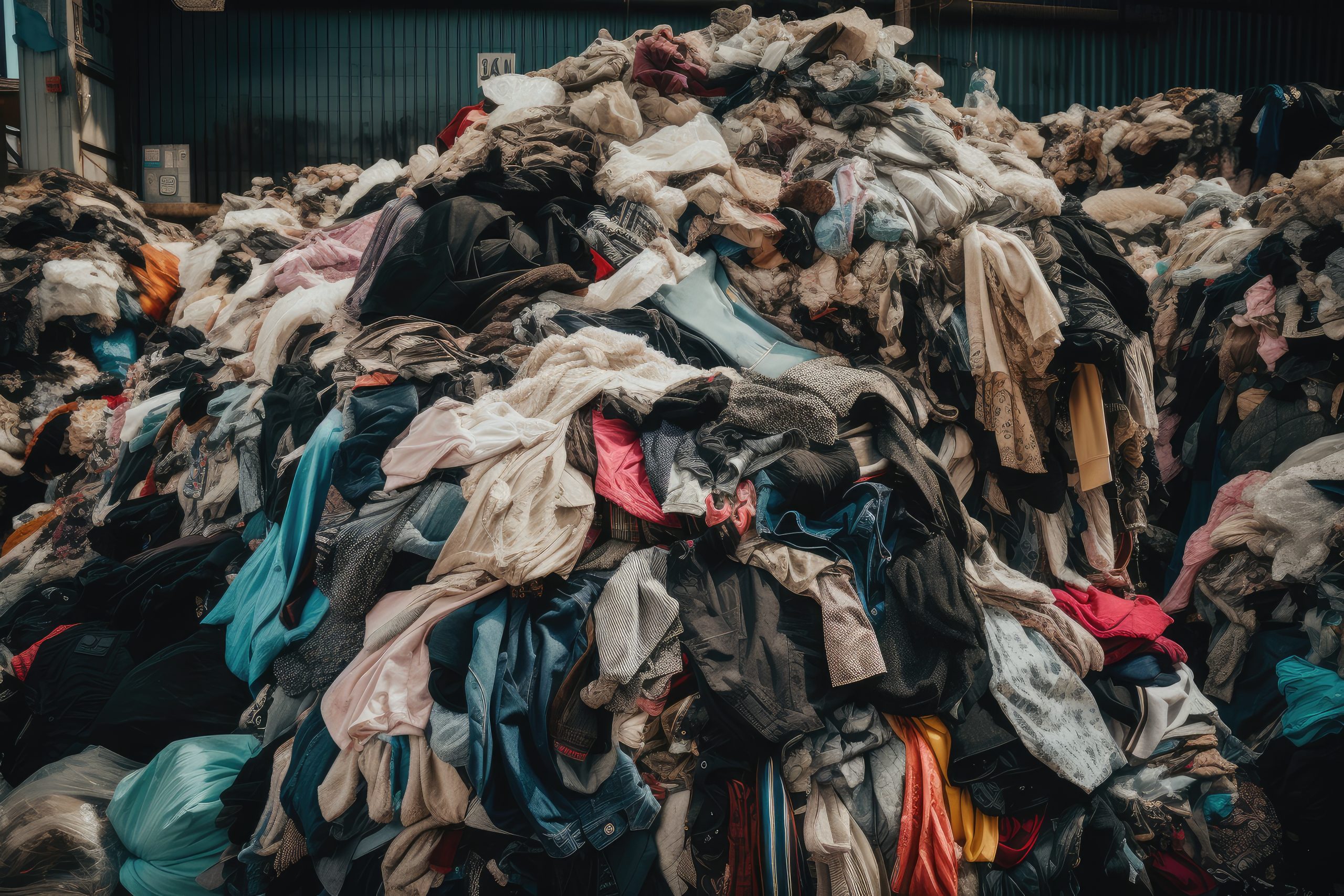
The export of “re-wearable” clothes has catastrophic consequences for receiving countries. In Ghana, the Kantamanto market in Accra receives roughly 15 million garments every week. The Or Foundation, an advocacy group operating in Accra, estimates that 40 percent of these imported bales are waste upon arrival, stained, torn, or culturally inappropriate. These garments, bearing H&M labels, are known locally as Obroni Wawu, or “Dead White Man’s Clothes.”
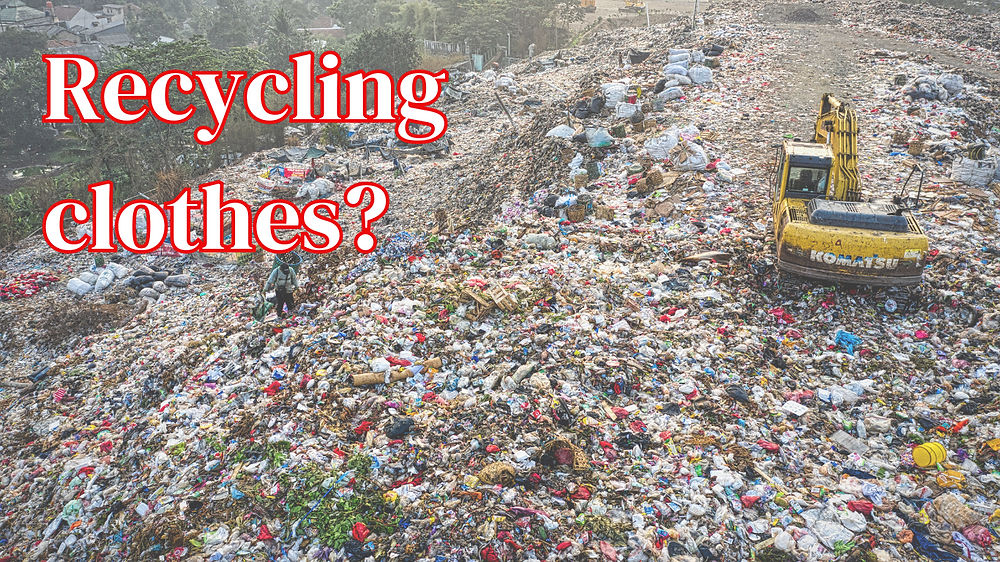
Because the volume is too high for the local waste management systems to handle, this textile waste ends up in informal landfills, clogs sewage systems, or is burned in open pits. The “Close the Loop” campaign, by incentivizing high turnover of cheap clothing, directly contributes to this environmental disaster. The voucher system encourages customers to treat clothing as disposable, accelerating the flow of waste to places like the Korle Lagoon in Ghana and the Atacama Desert in Chile, where mountains of unsold fast fashion decompose, releasing microplastics and dyes into the ecosystem.
Incineration Instead of Innovation
When export or downcycling is not viable, incineration becomes the fallback. In 2017, an investigation revealed that a combined heat and power plant in Västerås, Sweden, was burning discarded H&M clothing to generate electricity. The facility burned approximately 15 tons of H&M clothes in a single year. H&M defended this practice by claiming the clothes were mold-infested or contained hazardous chemicals, rendering them unsafe for sale.
This admission raises a separate, equally disturbing question: if the clothes contained hazardous chemicals, why were they manufactured in the place? The incineration of textiles releases greenhouse gases and chance toxic substances, a far cry from the “climate positive” goals the company advertises. Burning clothes for energy is technically “recovery” in waste management hierarchies, presenting it as part of a sustainability strategy is a of the term.
Legal Challenges and the Higg Index Failure
The gap between marketing and reality has led to legal action. In 2022, a class-action lawsuit was filed in New York (Commodore v. H&M) alleging that the company’s “Conscious Choice” collection was marketed with misleading environmental scorecards. The lawsuit highlighted that H&M used data from the Higg Materials Sustainability Index (MSI) to claim products were sustainable. In instances, the data was inverted; a dress was advertised as using 20 percent less water when the underlying data showed it used 20 percent more.
Following the exposure of these discrepancies, the Sustainable Apparel Coalition (SAC) paused the consumer-facing use of the Higg Index. While the lawsuit was eventually dismissed on technical grounds regarding the “reasonable consumer” standard, the factual basis of the complaint exposed the fragility of H&M’s data claims. The company relied on averages and third-party indices that did not accurately reflect the specific supply chain impacts of their individual garments.
Looper Textile Co: A New Wrapper for the Same System
In response to growing scrutiny and tightening EU regulations on textile waste, H&M formed a joint venture with the waste management company Remondis in 2023, named Looper Textile Co. This entity aims to collect and sort used garments across Europe. While H&M frames this as a step toward better infrastructure, critics view it as a defensive maneuver to control the waste stream and reduce the costs of Extended Producer Responsibility (EPR) compliance.
The creation of Looper Textile Co does not solve the fundamental problem: the overproduction of low-quality garments that have no market value. As long as the business model relies on selling billions of units annually, no amount of sorting efficiency can prevent the eventual disposal of these items. The “Close the Loop” campaign remains a marketing success an operational failure, serving to obscure the linear trajectory of garments from the factory floor to the landfill.
Deceptive Marketing: The 'Close the Loop' Campaign vs. Reality
The Remondis Partnership: Unpacking the Looper Textile Co. Joint Venture
The Industrialization of Waste: Inside the Looper Textile Co.
In February 2023, H&M Group formalized a definitive shift in its waste management strategy by establishing Looper Textile Co., a standalone joint venture owned 50-50 with the German waste management conglomerate Remondis. This partnership marks a pivotal moment where the fashion retailer moved from mere in-store collection boxes to owning the industrial infrastructure of disposal. While H&M markets this venture as the method to “close the loop” on fashion, an examination of the operational realities suggests it functions more as a pipeline for exporting liability to the Global South. The creation of Looper Textile Co. was not a small experiment. The entity launched with the immediate objective to extend the lifecycle of approximately 40 million garments in 2023 alone. By partnering with Remondis, H&M did not ally with a boutique upcycler or a textile innovation lab; they partnered with a logistics titan. Remondis generates over €12 billion in annual revenue and employs more than 40, 000 people. Their expertise lies in the removal and processing of refuse, not the preservation of fashion heritage. This distinction is important. The operational mandate of a waste handler is volume clearance, a goal that aligns perfectly with H&M’s need to physically remove millions of tons of unsold or collected inventory from European markets.
The Mechanics of the “Sort”
Looper Textile Co. operates massive sorting facilities, including a flagship site in Polch, Germany, and others in Eastern Europe. These facilities use near-infrared (NIR) sorting technology, a system H&M promotes as a high-tech solution to circularity. The optical sensors detect fiber composition, cotton, polyester, wool, allowing for rapid categorization. Yet, the efficiency of this does not guarantee recycling. It speeds up the classification of waste into bales destined for different geographic markets. Data regarding the output of these facilities reveals the true nature of the “loop.” Looper CEO Emily Bolon stated that approximately 60% of the collected items are deemed suitable for “resale.” In the lexicon of global waste management, “resale” is a euphemism for export. These garments do not return to H&M racks in Berlin or Stockholm. Instead, they are baled and sold to brokers who ship them to markets in Eastern Europe, and more significantly, to Africa. The remaining 40% of the sorted material faces an even bleaker fate. Roughly 30% to 35% is for “downcycling.” This process shreds garments into shoddy fibers for automotive insulation, mattress stuffing, or industrial cleaning rags. This is a terminal phase; once a cotton shirt becomes insulation, it never returns to the fashion pattern. It is a linear route to the landfill, delayed by one product pattern. The final 5% is incinerated for energy recovery, a method that releases microplastics and chemical dyes into the atmosphere, even with European filtration standards.
Remondis: The Logistics of Export
The choice of Remondis as a partner signals H&M’s reliance on established waste export channels. Remondis possesses the logistical network to move freight across borders direct. This capability is essential because the volume of clothing H&M collects far any domestic demand for second-hand goods in Europe. The “Close the Loop” campaign encourages customers to return bags of clothes, creating a massive feedstock that requires immediate evacuation to prevent logistical bottlenecks. Looper Textile Co. acts as the clearinghouse. By transferring ownership of the waste to this joint venture, H&M washes its hands of the garments. Once the clothes enter the Looper system, they become commodities in the global waste trade. The “resale” partners by Looper include entities in Pakistan, Côte d’Ivoire, Turkey, the UAE, and Romania. The inclusion of Côte d’Ivoire and other African nations confirms that Looper is a feeder method for the second-hand markets that distress local economies and environments in the Global South. Investigative tracking by outlets such as *Aftonbladet* has shown that H&M garments are among the most common labels found in the landfills of Accra, Ghana. The Looper partnership industrializes this flow. Instead of sporadic donations or third-party brokers, H&M co-owns the funnel. The joint venture allows the retailer to claim they are “sorting for circularity” while the physical reality involves shipping containers traversing the ocean to dump sites where waste management infrastructure is non-existent.
Primary output is export to Global South/East Europe
Downcycling Rate
~30-35%
Conversion to rags/insulation (Terminal Waste)
Incineration Rate
~5%
Immediate destruction for energy
Fiber-to-Fiber Recycling
<1%
True circularity is statistically negligible
The “Feedstock” Fallacy
A central pillar of Looper’s public relations strategy is the claim that it provides “feedstock” for textile-to-textile recycling. The narrative suggests that old clothes are sorted to be melted down and spun into new yarn. The technology to do this, such as chemical recycling of poly-cotton blends, remains in its infancy and is nowhere near capable of absorbing the 40 million garments Looper processes annually. Consequently, the “feedstock” Looper produces is almost entirely for the downcycling market. When H&M claims to support the circular economy through this partnership, they omit that the circle is broken. Turning a dress into a car seat filler is not circular fashion; it is waste diversion. The material value is lost, and the virgin resources required to make the dress must still be extracted. Remondis, as a waste handler, profits from this diversion. Their business model depends on the constant flow of material, not the reduction of it. If H&M actually reduced production, Looper’s revenue model would collapse.
Financial Incentives and Liability Shifting
The financial structure of the joint venture offers H&M a distinct advantage: liability shielding. By offloading collected garments to Looper, H&M removes the inventory from its own books. The waste becomes the property of the JV, and subsequently, the property of the buyers in Pakistan or Ghana. If those garments end up burning in an open pit in Nairobi, H&M can legally claim they sold the items to a “reputable partner” for reuse. Remondis benefits by securing a guaranteed stream of high-quality waste (textiles) which commands a higher market price per ton than mixed municipal waste. The “Take-Back” program in H&M stores essentially provides free inventory for Looper. Customers donate clothes believing they be recycled; H&M hands them to Looper; Looper sells the best items to brokers and shreds the rest. The customer subsidizes the raw material for a for-profit waste export business.
The Global South as the Final Sink
The “Resale” category, comprising the majority of Looper’s output, relies heavily on the absorption capacity of the Global South. Markets like Kantamanto in Accra are already choking on the volume of imported textiles, with 40% of imported bales becoming immediate trash. Looper’s automated sorting does not solve this; it automates the selection of bales. The optical sensors might separate wool from polyester, they do not determine if a garment is culturally appropriate, sized correctly, or in a condition to survive a tropical climate. By 2026, the volume of waste managed by Looper is projected to increase as EU regulations on textile waste tighten. The European Union’s push for Extended Producer Responsibility (EPR) mandates that brands pay for the end-of-life management of their products. Looper Textile Co. is H&M’s preemptive answer to this regulation. It creates a closed system where H&M pays its own subsidiary to manage the problem, keeping the funds within the corporate family while continuing to rely on export as the primary disposal method. The partnership with Remondis exposes the reality that H&M views used clothing not as a resource for new fashion, as a logistical nuisance to be outsourced. The “loop” is not a circle of regeneration. It is a one-way line that starts in European shopping malls and ends in the landfills of the Global South, with Looper Textile Co. serving as the, high-tech turnstile that keeps the garbage moving.
The Remondis Partnership: Unpacking the Looper Textile Co. Joint Venture
Forensic Tracking: Aftonbladet’s AirTag Investigation into Garment Disposal
The Aftonbladet Protocol: Digital Witnesses in the Waste Stream
In June 2023, the Swedish newspaper *Aftonbladet* executed a forensic test of H&M’s circularity claims that dismantled the brand’s public narrative on recycling. Reporters Staffan Lindberg and Magnus Wennman Apple AirTags into ten used H&M garments. They deposited these items into the “Close the Loop” collection bins at H&M stores in Stockholm. The brand’s marketing explicitly promised these donations would be reworn, reused, or recycled, specifically citing a partnership with I: Collect (I: CO) and a sorting facility near Berlin. The trackers revealed a different reality. The data showed an immediate breach of the stated chain of custody. None of the ten tagged garments arrived at the I: Collect facility advertised on H&M’s website. Instead, the items left Sweden and entered a network of commercial sorting facilities in Germany. These entities operate as for-profit waste merchants rather than sustainability partners. The garments were not treated as resources for a closed loop as commodities for export. Once the items entered this unclear logistics web, they were baled, compressed, and shipped across continents.
The Benin Connection: “Dead White Men’s Clothes”
One specific tracker provided irrefutable evidence of the waste stream’s final destination. A striped jacket, dropped off in Stockholm with the expectation of recycling, traveled thousands of miles to Cotonou, Benin. The AirTag pinged its location not in a recycling plant, in a region overwhelmed by textile imports. In West Africa, these used garments are known locally as “dead white men’s clothes,” a term reflecting the volume and condition of the apparel flooding local markets. The journey of this single jacket exposes the mechanics of waste colonialism. The item was not remade into new fiber. It was shipped to a country absence the infrastructure to process the volume of textile waste it receives. The *Aftonbladet* investigation found that while H&M claims to support circularity, their supply chain outsources waste management to the Global South. The jacket in Benin stands as physical proof that the “recycling” bin is frequently a portal to an African landfill.
The Ghana Data: One Million Garments
The investigation extended beyond individual trackers to analyze customs data. *Aftonbladet* correlated the movement of the tagged items with broader export records. The findings showed that H&M’s German partners shipped approximately one million garments, totaling 314, 000 kilograms, to Ghana since the start of 2023 alone. This massive influx contributes directly to the environmental catastrophe in places like the Kantamanto market in Accra. In Ghana, the sheer volume of imported “fast fashion” waste outpaces any capacity for resale or reuse. Much of this clothing arrives in unsellable condition. Without municipal incineration or sanitary landfills, these garments end up in informal dumps, clogging waterways and polluting beaches. The “Close the Loop” program,, functions as a distribution channel for waste, shifting the load of disposal from European high streets to West African ecosystems.
Carbon Footprint of a “Recycled” Garment
The environmental cost of this disposal method contradicts the carbon-saving premise of recycling. The ten garments tracked by *Aftonbladet* traveled a combined distance of 5, 792 miles (9, 321 kilometers). This logistical marathon involves trucks and container ships burning fossil fuels to transport waste that be discarded. A program marketed as a way to reduce environmental impact actively generates carbon emissions through intercontinental shipping. The jacket that ended up in Benin did not save resources; it consumed fuel to become trash in a different hemisphere. This negates the theoretical benefits of the collection program. The data suggests that for items, the most environmentally sound option would have been local disposal rather than a fuel-intensive journey to a foreign dump.
Corporate Denial vs. Digital Evidence
H&M’s executive response to the investigation highlighted the disconnect between corporate strategy and ground-level reality. CEO Helena Helmersson denied that the company’s clothes end up in landfills, stating in interviews that they are “recycled or reused where there is a demand.” When confronted with the specific location of the Benin jacket, Helmersson admitted the location disputed its status as waste. This denial clashes with the visual and digital evidence provided by the AirTags. The trackers do not lie about coordinates. The physical presence of H&M garments in waste piles in Benin and Ghana proves that the corporate oversight of these “partners” is nonexistent or willfully blind. Following the exposure, H&M removed
Forensic Tracking: Aftonbladet’s AirTag Investigation into Garment Disposal
The German Connection: Inside the Wolfen Sorting Facility
The German Connection: Inside the Wolfen Sorting Facility
The Industrial Heart of the Disposal Chain
Two hours south of Berlin, in the bleak industrial district of Wolfen-Bitterfeld, lies the physical reality of H&M’s “Close the Loop” pledge. This is not a high-tech laboratory where old cotton is magically spun into new silk. It is a massive, dust-choked logistics hub operated by SOEX, the parent company of I: Collect (I: CO), H&M’s long-standing partner in garment collection. For over a decade, this facility has served as the primary drain for the torrent of unwanted textiles collected from H&M stores across Europe. The sheer of the operation at Wolfen defies the sanitized marketing imagery displayed in retail outlets. Every day, a fleet of heavy trucks descends on the facility, disgorging approximately 300 to 400 tonnes of used clothing. These garments arrive in plastic sacks, frequently still carrying the faint scent of detergent or the stale odor of long-term storage. They are dumped onto conveyor belts that run 24 hours a day, feeding a mechanical beast that never sleeps. The Wolfen plant was designed to handle the waste of a continent, yet it struggles to keep pace with the accelerating volume of disposable fashion. The facility represents the bottleneck where the “circular fashion” narrative collides with the laws of thermodynamics and economics. The plant operates on a brutal logic: speed and volume. The goal is not environmental restoration the rapid assessment of value. Workers standing along high-speed belts have seconds to judge the fate of a garment. Is it re-wearable? Is it trash? Is it feedstock for the shredder? This manual sorting process, aided by infrared technology, determines whether a polyester dress ends up in a vintage shop in Budapest, a landfill in Benin, or the insulation of a German car.
The Sorting Algorithm: A Hierarchy of Value
The sorting process at Wolfen reveals the true nature of the “recycling” program. It is a filtration system designed to extract value from waste, not a manufacturing line for new apparel. The industry standard for sorting breaks down incoming volume into three primary streams, and the ratios at Wolfen expose the of the fast fashion model.
Category
Estimated Percentage
Destination
Reality
Re-wear (Cream/Grade A)
50-60%
Eastern Europe, Global South
Sold for profit. High-quality items are rare. Most are low-grade fast fashion.
Downcycling (Recycling)
30-35%
Industrial Applications
into “shoddy” fibers for insulation, carpet padding, or cleaning rags.
Solid Waste
5-15%
Incineration/Landfill
Items too damaged or toxic to process. frequently burned for energy recovery.
Fiber-to-Fiber
<1%
New Garments
The “closed loop.” Statistically insignificant volume.
The “Re-wear” category is the economic engine of the facility. SOEX and I: CO survive by selling these garments to second-hand wholesalers. Yet, the definition of “re-wearable” is elastic. A stretched t-shirt or a pair of jeans with a broken zipper frequently makes the cut, not because they are desirable, because they can be baled and exported by weight. This is where the sorting facility functions less as a recycler and more as a waste transfer station. The best items stay in Europe; the mediocre and poor-quality items are compressed into 50-kilogram bales and loaded into shipping containers destined for Africa and Asia.
The Downcycling Reality: Shredding the Dream
H&M’s marketing frequently implies that old clothes become new clothes. The at Wolfen tells a different story. For the 30% of garments deemed unwearable, stained, torn, or simply too cheap to resell, the destination is the shredder. These items are fed into massive tearing machines that rip the fabric apart, reducing garments to their constituent fibers. This process is not “recycling” in the sense of regeneration; it is “downcycling.” The resulting material, known as “shoddy,” has short, damaged fibers that are structurally too weak to be spun into new high-quality yarn without adding significant amounts of virgin polyester or cotton. Instead of becoming a new H&M dress, the waste from Wolfen becomes painter’s fleece, automotive insulation, or mattress stuffing. While this extends the material’s life slightly, it is a terminal phase. Once these industrial products reach the end of their utility, they cannot be recycled again and are destined for the landfill. The “fiber-to-fiber” recycling that H&M touts, where a shirt becomes a shirt, accounts for less than 1% of the total volume processed. The technology to separate blended fibers (like the ubiquitous poly-cotton blends found in fast fashion) remains expensive and difficult to. Wolfen is optimized for mechanical tearing, not chemical regeneration. The facility turns fashion into industrial filler, a far cry from the circular loop promised to consumers dropping off bags of clothes in exchange for a discount voucher.
The Insolvency of a Broken Model
The fragility of this system was laid bare when SOEX, the operator of the Wolfen plant, filed for insolvency proceedings. This financial collapse serves as a damning indictment of the fast fashion ecosystem. For decades, recyclers like SOEX relied on the “Cream” and “Grade A” clothing to subsidize the cost of processing the trash. They made their money selling high-quality used goods. Yet, the quality of mass-market apparel has plummeted. The influx of “ultra-fast fashion”, garments made of cheap synthetics, poor stitching, and mixed blends, has destroyed the economics of sorting. The Wolfen facility is drowning in low-value textile waste that costs more to process than it can generate in resale revenue. The “gold” in the trash heap has turned to lead. H&M’s relentless production of low-quality garments has poisoned the very recycling system it claims to support. The sorters cannot find enough value in the bales to keep the lights on, leading to a emergency where the only financially viable option is to export the problem to regions with lower labor costs and laxer environmental regulations.
The Export Launchpad
Wolfen is the gateway to the Global South. Once sorted and baled, the “re-wearable” garments, which Aftonbladet’s investigation revealed frequently includes items that are stained or damaged, are loaded onto trucks bound for ports like Hamburg or Bremerhaven. From there, they enter the global shipping network, disappearing from European oversight. The facility acts as a legal laundering method. By classifying these bales as “used clothing” rather than “waste,” the operators bypass the Basel Convention’s restrictions on hazardous waste exports. The bales leave Wolfen with a stamp of legitimacy, ostensibly destined for second-hand markets in Accra, Cotonou, or Panipat. In reality, Wolfen is shifting the load of disposal. The facility removes the water weight and the obvious trash, compresses the remaining volume, and ships it to countries that absence the incineration or landfill capacity to handle the percentage that is inevitably unusable. The German connection is not a solution; it is a delay tactic. The Wolfen facility allows H&M to claim their clothes are “collected and sorted,” technically true statements that mask the final outcome. The sorting process does not prevent the garments from becoming landfill; it ensures they become landfill in a different hemisphere. The efficiency of Wolfen is not measured in environmental savings in the speed at which it can clear the loading docks for the day’s delivery of unwanted fashion.
Forensic Confirmation
The Aftonbladet investigation provided the forensic proof of this flow. When journalists hid AirTags in H&M garments, the signals did not stop at a fiber regeneration plant. They pinged at sorting hubs in Germany, including facilities linked to the SOEX network, before going dark and reappearing in West Africa. The data showed a direct line from the “recycling” bin in Stockholm to the sorting belts of Germany, and to the waste mountains of the Global South. The Wolfen facility is the black box of the fashion industry. Consumers feed it with good intentions, believing their old clothes be reborn. Inside, the shreds that illusion, separating the profitable from the worthless, and packaging the excess for export. It is a system designed to consumption, not circularity, ensuring that the sales floor remains clear for the season’s inventory while the waste is quietly swept out the back door, across the ocean, and out of sight.
The German Connection: Inside the Wolfen Sorting Facility
Transshipment Hubs: The Role of SOEX and UAE Processing Centers
The journey of a discarded H&M garment frequently does not end at a European recycling plant. While the Wolfen facility in Germany serves as a primary sorting node, it functions less as a final destination and more as a turnstile. Investigations reveal that SOEX, H&M’s partner for its global garment collection initiative, systematically exports vast tonnage of collected textiles to the United Arab Emirates. This transshipment creates a convoluted supply chain that obscures the final fate of millions of garments, outsourcing the waste problem to a jurisdiction with unclear regulations and minimal environmental oversight. The United Arab Emirates has established itself as the world’s premier entrepôt for used clothing. Data from 2023 identifies the UAE as the largest non-EU destination for used clothing exports from the EU27 bloc. The logic driving this flow is economic, not environmental. Shipping containers filled with unsorted or semi-sorted bales travel from Hamburg or Bremerhaven to Jebel Ali Port. The low cost of freight, combined with the UAE’s expansive network of free trade zones, allows aggregators to process high volumes of textile waste at a fraction of European labor costs. Within these free zones, such as the Hamriyah Free Zone in Sharjah, foreign investors operate with full ownership and zero corporate tax. These zones function as legal islands, frequently bypassing the stricter environmental mandates that govern waste management in the European Union. Here, the “recycling” process promised by H&M’s marketing campaigns devolves into a crude sorting operation. Migrant laborers manually sift through bales of “I: CO” collected clothing. The objective is to identify garments with resale value for markets in Pakistan, East Africa, and Central Asia. The remaining fraction—frequently low-grade fast fashion made from synthetic blends—becomes a liability. Aftonbladet’s forensic investigation provided irrefutable evidence of this pipeline. Journalists attached Apple AirTags to garments donated at H&M stores in Stockholm. The tracking data showed these items traveling to SOEX facilities in Germany before being loaded onto vessels bound for the UAE. One specific jacket, donated with the expectation of recycling, signaled its location from a warehouse district in the UAE, thousands of kilometers away from the promised “closed loop.” This data point shatters the illusion that domestic collection leads to domestic recycling. Instead, the consumer’s donation fuels a global trade in waste arbitrage. The environmental ramifications of this transshipment are severe. A carbon footprint analysis commissioned during recent investigations indicates that sorting textiles in the UAE, rather than locally in Europe, triples the associated carbon emissions. This calculation includes the maritime transport and the energy-intensive operations in the desert climate. When air freight is used—a method employed for higher-value used clothing—the emissions multiply twelvefold. H&M’s sustainability reports frequently omit these Scope 3 emissions, presenting a sanitized view of their supply chain that ignores the logistical heavy lifting required to move waste across continents. The reality on the ground in the UAE contradicts the “zero waste” narrative. In late 2023, a dumpsite containing approximately 20 tonnes of textile waste was discovered in the desert, less than 100 miles from the venue of the COP28 climate summit. The rotting piles included clothes spilling out of plastic-wrapped bales, bleached by the sun and buried in sand. Labels found at the site linked the waste to European collections. This physical evidence corroborates the theory that the UAE acts as a filter: valuable items move on, while the dregs of the fast fashion industry are discarded in the desert, far from the eyes of European regulators or consumers. SOEX and its subsidiary I: CO maintain that they adhere to a strict waste hierarchy. Yet, the economics of the trade suggest otherwise. The sheer volume of incoming material the capacity for responsible processing. With global fiber production having doubled since 2000, the market is flooded with low-quality polyester garments that have no resale value. In the UAE, these items are frequently pressed into “shoddy”—a low-grade insulation material—or simply landfilled. The “recycling” designation in export data frequently masks these downcycling or disposal activities. The role of the UAE as a gateway to the Global South is pivotal. From the sorting centers in Sharjah and Dubai, re-baled clothes are shipped to Karachi, Mombasa, and Dar es Salaam. The UAE acts as a laundering point for the provenance of these goods. A bale arriving in Kenya might be marked as originating from the UAE, erasing its European lineage. This breaks the chain of custody, making it nearly impossible for waste audits in African nations to hold European brands like H&M accountable for the waste flooding their markets. This system relies on a absence of transparency. The free zones in the UAE do not publish detailed data on rejection rates or landfill volumes. The “leakage” from these zones remains unquantified in official corporate reports. When H&M states that a garment is “sent for reuse,” it frequently means it has been sold to a commercial aggregator in the UAE. Once that transaction occurs, the brand absolves itself of responsibility. The garment enters a gray market where the only metric is profit per ton. If the cost of shipping a bale to Kenya exceeds its chance resale value, that bale stays in the UAE, likely destined for a landfill or an illegal dump. The disconnect between the marketing of the “Close the Loop” campaign and the mechanics of the UAE transshipment hub is clear. Customers are led to believe their old clothes are spun into new yarn. In reality, they are entering a global logistics network that prioritizes cheap sorting and disposal over genuine circularity. The reliance on SOEX and the subsequent export to the UAE demonstrates a widespread failure to handle waste near the point of generation. It reveals a business model that depends on the Global South to absorb the excesses of the Global North, using the UAE as a convenient, unclear staging ground. As the volume of disposable clothing grows, the pressure on these transshipment hubs intensifies. The 20-tonne desert dump is likely a fraction of the true waste accumulation. Without rigorous third-party auditing of these free zone operations, the claim of “recycling” remains a hollow label applied to a process of global waste displacement. The AirTag data stands as a digital witness to this displacement, tracing a route from a Stockholm collection box to a desert warehouse, proving that for H&M, “away” is simply a different country.Transshipment Hubs: The Role of SOEX and UAE Processing Centers
Destination Dumping: The Crisis at Kantamanto Market, Ghana
The Bale Economy: A Gamble on Garbage
Every week, approximately 15 million garments enter the port of Tema, Ghana. From there, trucks transport 40-foot shipping containers to Kantamanto Market in Accra, the largest second-hand clothing market in West Africa. Inside these containers are tightly compressed bales of textiles, sourced primarily from the donation bins and recycling programs of Europe and North America. For the Ghanaian retailers who purchase them, these bales represent a high- financial risk. A single bale costs between $120 and $200, a sum that frequently exceeds the monthly income of the trader buying it. They purchase these bales “blind,” without knowing the specific quality or contents until the plastic wrapping is cut open.
The local term for these goods is obroni wawu, or “dead white man’s clothes,” a phrase born from the assumption that such high-quality garments would only be discarded if the owner had died. Yet, the contents of modern bales contradict this historical definition. Retailers increasingly find their bales filled with “fast fashion” items from brands like H&M, garments manufactured with synthetic blends, thin fabrics, and poor construction that render them unsuitable for the tropical climate or too damaged for resale. The Or Foundation, an Accra-based non-profit organization monitoring the trade, reports that retailers refer to these lower-quality bales as “waste” before they even leave the stall.
The economic mechanics of this trade rely on the assumption of value. yet, the prevalence of H&M garments in these bales distorts the market. A retailer expecting durable workwear or high-quality cotton shirts frequently uncovers a compressed mass of stretched polyester tops and broken zippers. Because H&M produces billions of garments annually, of which are designed for short-term trends rather than longevity, the sheer volume of their products overwhelms the secondary market. When a trader opens a bale dominated by such items, they do not break even. They lose their capital, pushing them into debt pattern that sustain the poverty the global second-hand trade claims to alleviate.
The 40% Metric: From Market to Landfill
The volume of clothing entering Kantamanto outpaces the capacity of the population to absorb it. The Or Foundation has established through rigorous waste audits that approximately 40% of the clothing circulating through Kantamanto leaves the market as waste. This equates to roughly 6 million garments every week that are discarded within a few miles of where they were unloaded. These are not items that were worn by Ghanaians and then thrown away; they are items that were imported as waste, disguised as merchandise.
H&M products appear frequently in these waste streams. In June 2023, investigative journalists from the Swedish newspaper Aftonbladet used satellite trackers to follow garments donated to H&M’s “recycling” boxes in Sweden. The investigation proved that items intended for recycling in Europe were instead sorted by partners like Remondis and shipped to West Africa. One of the tracked items, a grey jacket, signaled its location from a waste dump in Ghana. This forensic evidence shattered the company’s marketing narrative that donated clothes are recycled into new textiles. Instead, the data shows a linear pipeline from European retail stores to African landfills.
The disposal methods for this 40% surplus are catastrophic. Accra’s municipal waste management system can collect only a fraction of the city’s refuse. The remaining textile waste is paid for by the retailers themselves to be hauled away. Much of it ends up in informal dumpsites, the most notorious being Old Fadama. Here, mounds of clothing, frequently rising 20 meters high, sit on the banks of the Korle Lagoon. To manage the volume, waste pickers frequently set these piles on fire. The burning of synthetic fabrics, such as the polyester used heavily by H&M, releases microplastics and toxic fumes into the air, exposing local residents to hazardous carcinogens.
Ecological Collapse: Korle Lagoon and Densu Delta
The environmental consequences of this disposal pipeline are visible in the Korle Lagoon, which feeds into the Gulf of Guinea. Once a thriving fishing ground, the lagoon is widely as one of the most polluted water bodies on Earth. The lagoon’s banks are reinforced not with soil, with compacted of decomposing textiles. When rains come, the runoff carries dyes, bleaches, and microfibers directly into the ocean. The entanglement of synthetic clothing in the lagoon’s ecosystem has suffocated aquatic life, destroying the livelihoods of local fishing communities.
In June 2025, a joint investigation by Greenpeace Africa and the investigative unit Unearthed revealed that the contamination had spread to protected conservation areas. The team found piles of discarded clothing from H&M, Zara, and Marks & Spencer in the Densu Delta wetlands, a Ramsar site important for nesting sea turtles and migratory birds. The report documented how the “fast fashion graveyard” had expanded beyond urban dumpsites, clogging the roots of mangroves and burying beaches under of fabric. The presence of H&M labels in a protected wetland show the failure of the brand’s Extended Producer Responsibility (EPR) commitments. While the company claims to support circularity, its products are physically altering the geology of West African coastlines.
The Human Toll: The Kayayei
The load of moving this waste falls physically on the shoulders of the kayayei, or head porters. These are predominantly young women and girls who migrate from northern Ghana to Accra seeking work. They are paid pennies to carry the 55-kilogram (121-pound) bales of clothing on their heads, moving them from importers to retailers, and frequently carrying the unsellable waste to dumpsites. The weight of the bales compresses their spines, leading to chronic pain and long-term skeletal injury. The Or Foundation has documented that kayayei suffer from spinal deformation due to the excessive loads.
When H&M exports its “recycling” problem to Ghana, it relies on this labor force to manage the logistics of disposal. The low cost of labor in Kantamanto allows the Global North to export waste cheaply. If H&M were required to pay European wages for the transport and disposal of these garments, the economic model of exporting “recyclable” bales would collapse immediately. The system functions only because the human and environmental costs are externalized to the kayayei and the ecosystem of Accra.
The Failure of Circularity
H&M Group frequently cites its investments in textile-to-textile recycling technologies, such as the “Looop” machine or its joint venture with Remondis, as evidence of its commitment to sustainability. Yet, the situation in Kantamanto provides a counter-factual to these claims. The material composition of the garments found in the Old Fadama landfill, frequently complex blends of cotton and elastane or pure polyester, makes them economically unviable for recycling even if the infrastructure existed in Ghana. There is no industrial shredder or chemical recycling plant in Accra capable of processing the volume of H&M waste that arrives weekly.
The reality on the ground in Ghana demonstrates that the “Close the Loop” campaign is a marketing construct that does not survive contact with the supply chain. The loop is not closed; it is broken open in the Global South. The garments collected in Stockholm and Berlin do not become new clothes; they become landfill mass in the Densu Delta, releasing methane and microplastics for centuries. The export of these garments is not a donation. It is a waste transfer.
Ecological Collapse: Textile Waste Accumulation in the Korle Lagoon
The Geography of a Dead River
The Korle Lagoon, once a thriving estuarine ecosystem in Accra, has been reduced to a necro-geological formation of synthetic sludge. This body of water, which feeds directly into the Gulf of Guinea, serves as the primary drainage point for the city’s Odaw River. Today, it functions as the final resting place for the Global North’s unwanted fashion. The lagoon does not contain waste; the waste has replaced the water. Physical surveys conducted by The Or Foundation and Greenpeace Africa reveal that the lagoon’s banks are no longer soil. They are composed of compacted of decomposing textiles, forming artificial cliffs that rise meters above the water line. This phenomenon creates a “geological strata” of fashion history, where specific eras of fast fashion trends can be identified by digging through the sediment.
The volume of material entering this ecosystem is quantifiable and severe. Approximately 15 million garments enter Ghana weekly through the port of Tema. Of this influx, roughly 40% fails to sell at the Kantamanto market due to poor quality, damage, or size incompatibility. This results in an estimated 100 tonnes of textile waste leaving the market every single day. While a fraction is incinerated in open-air burn pits, a massive portion is hauled to the banks of the Korle Lagoon, specifically the area known as Old Fadama. Here, the waste is dumped directly onto the mudflats. The wash over these piles, pulling the garments into the water column where they become entangled with the seabed, creating what researchers describe as “tentacles” of synthetic fabric that reach deep into the sediment, trapping silt and choking all aquatic life.
Chemical Leaching and Heavy Metal Contamination
The environmental toxicity of the Korle Lagoon extends beyond physical obstruction. The decomposition of modern garments, largely composed of polyester, acrylic, and elastane, releases a cocktail of hazardous chemicals into the water. Unlike natural fibers such as cotton or wool, which biodegrade, synthetic fibers fragment into microplastics. These plastics act as vectors for the chemical dyes and finishing agents used in garment production. Analysis of the water and sediment in the lagoon has detected worrying concentrations of heavy metals, specifically Lead (Pb), Cadmium (Cd), and Mercury (Hg). These metals are common components in low-cost textile dyes and synthetic fixatives used by brands like H&M to ensure colorfastness in cheap garments.
A 2023 study analyzing vegetables grown in the Korle Lagoon catchment area confirmed that these toxins have migrated from the waste stream into the local food web. Samples of lettuce and amaranth cultivated on the lagoon’s banks showed Lead and Cadmium levels significantly exceeding World Health Organization (WHO) safety limits. The method is direct: farmers use the lagoon’s water for irrigation, or the plants absorb contaminants directly from the soil, which is a compost of rotting fast fashion. The presence of these heavy metals poses a severe carcinogenic risk to the local population. The lagoon is not just a dump; it is an active chemical hazard zone where the byproducts of European fast fashion are metabolizing into the bloodstreams of Accra’s residents.
The “Textileberg” Effect and Urban Flooding
The accumulation of garments in the Korle Lagoon and the Odaw River has engineered a man-made disaster regarding urban drainage. The entangled masses of clothing form dense, impenetrable blocks, referred to by engineers as “textilebergs”, that block the flow of water. During Ghana’s rainy season, these blockages prevent storm water from draining into the ocean. The result is catastrophic flooding in the surrounding neighborhoods, particularly in the low-lying areas of Old Fadama and Jamestown. These floods are not water events; they are sewage events. The backed-up water mixes with open sewage and the chemical leachate from the textile dumps, inundating homes with toxic sludge.
This infrastructure failure is directly attributable to the volume of waste generated by the second-hand clothing trade. The Accra Metropolitan Assembly (AMA) spends of its budget attempting to dredge the lagoon, yet the rate of dumping the rate of removal. Dredging equipment frequently jams due to the tensile strength of the synthetic ropes formed by thousands of tangled trousers and shirts. The operational failure of the city’s drainage system is a direct downstream consequence of the overproduction models employed by H&M and its peers. The “disposable” nature of the garments into a permanent infrastructure deficit for the city of Accra, where the cost of waste management is externalized onto a municipality that did not produce the waste.
Forensic Evidence of Brand Complicity
The connection between H&M and the ecological death of the Korle Lagoon is not theoretical. It is forensic. Investigations by Aftonbladet and Greenpeace Unearthed have physically recovered H&M garments from the sludge of the lagoon and the nearby beaches. The “Close the Loop” campaign, which pledge that old clothes are recycled into new ones, is contradicted by the physical presence of these garments in the lagoon’s sediment. Tracking data using AirTags placed in “recycled” garments in Europe showed items traveling to Ghana and ending their journey in these exact waste streams. The lagoon serves as the debunking of the circularity myth. If the recycling systems worked as advertised, these garments would be in fiber-to-fiber recycling plants in Germany or Sweden, not strangling mangrove roots in West Africa.
The table details the specific environmental risks identified in the Korle Lagoon directly linked to textile waste:
Hazard Category
Specific Contaminant/Effect
Source method
Ecological Consequence
Physical Obstruction
Entangled Synthetic Masses (“Tentacles”)
Dumping of unsold bales (40% of imports)
Blockage of Odaw River; catastrophic flooding; destruction of benthic habitat.
Chemical Toxicity
Lead (Pb), Cadmium (Cd)
Leaching from azo dyes and synthetic fixatives
Contamination of groundwater; bioaccumulation in local crops (lettuce, amaranth).
Microplastic Pollution
Synthetic Microfibers (Polyester/Acrylic)
Fragmentation of garments under UV/ action
Infiltration of marine food web; ingestion by fish stocks in Gulf of Guinea.
Biological Dead Zone
Anoxic Water Conditions
Decomposition of organic cotton blends + surface scum
Total loss of aquatic oxygen; death of native fish species; proliferation of pathogens.
The Microplastic Plume
Beyond the visible mountains of waste, the Korle Lagoon generates an invisible plume of microplastics that extends into the Gulf of Guinea. As the garments sit in the saline mud, exposed to the fierce equatorial sun and the mechanical action of the, they fragment. A single polyester shirt can shed millions of microfibers as it degrades. The Or Foundation’s water quality tests have shown microfiber counts in the lagoon that are among the highest recorded in any water body globally. These fibers do not stay in the lagoon. The exchange flushes them out into the open ocean, where they are ingested by fish stocks that form the basis of the local fishing economy. This completes a toxic pattern: the waste destroys the lagoon, poisons the crops on its banks, and contaminates the protein source in the ocean.
The “dead” status of the lagoon is absolute. Oxygen levels in the water are frequently near zero, a condition known as anoxia, caused by the heavy load of organic matter and the stifling of plastic scum on the surface. No fish can survive in the lagoon itself. The water is a liquid landfill. The persistence of synthetic fibers means this contamination is geological in; the plastic remain in the sediment for centuries, long after the H&M garments have lost their shape. The lagoon has become a permanent monument to the failure of the fast fashion business model, a place where the “value” extracted by shareholders in Stockholm is paid for by the destruction of a major African wetland.
The Failure of Remediation
Efforts to rehabilitate the Korle Lagoon have repeatedly failed due to the relentless nature of the textile influx. The Korle Lagoon Ecological Restoration Project (KLERP), initiated with millions of dollars in funding, was intended to restore the water body to a pristine state. Yet, the project could not account for the logistical reality of 15 million garments arriving every week. As soon as a section of the lagoon is dredged, it is refilled with fresh waste from the Kantamanto overflow. The “Old Fadama” community, frequently blamed for the pollution, is the final link in a global supply chain. They are forced to live on top of the waste because the land itself has been constructed from it. The ground they walk on is spongy with decaying fabric. To solve the problem of the Korle Lagoon requires stopping the flow of waste at the port, which requires a fundamental change in the export policies of the EU and the production volumes of companies like H&M. Until then, the lagoon remains a necro-ecosystem, a warning of what happens when “recycling” is used as a cover for waste export.
The Atacama Desert: Chile’s Clandestine Garment Graveyard
The Atacama Desert: Chile’s Clandestine Garment Graveyard
The Atacama Desert in northern Chile, historically revered as the driest non-polar place on Earth, has acquired a synthetic topography. Where astronomers once looked for the clearest skies to observe the cosmos, satellites capture the spectral signature of a massive, spreading stain of polyester. This is not a geological formation a cumulative deposit of textile waste, a direct downstream consequence of the fast fashion supply chain. Investigations conducted between 2021 and 2025 confirm that this location serves as a primary terminal for unsold and unwanted garments from the Global North, with H&M Group’s products featuring prominently in the debris.
The Iquique Funnel: Logistics of Disposal
The method facilitating this accumulation centers on the port city of Iquique and its tax-free zone, Zofri (Zona Franca de Iquique). This port acts as the primary entry point for second-hand clothing entering South America. Data from the Chilean National Customs Service indicates that approximately 59, 000 to 66, 000 tons of used clothing arrive at Iquique annually. These shipments arrive in sealed bales, known locally as *fardos*, sourced primarily from the United States, Europe, and Asia. The economic model relies on a speculative sorting process. Importers purchase these bales blindly, hoping to find high-quality vintage clothing or premium brands that can be resold in Santiago or exported to neighboring markets like Bolivia and Peru. The reality of the trade, yet, reveals a severe imbalance. Industry insiders estimate that only 20 to 40 percent of the imported volume holds resale value. The remaining 60 percent, roughly 39, 000 tons per year, is classified as *descarte* (discard). This waste fraction presents a logistical and financial liability. Legal disposal in municipal landfills requires the payment of tariffs and fees. also, municipal sites frequently reject mass textile deposits because the chemical instability of the garments threatens soil integrity and can destabilize the landfill structure. To avoid these costs, importers and third-party haulers transport the *descarte* to the outskirts of Alto Hospicio, a low-income municipality overlooking Iquique, and dump the loads in illegal, clandestine piles in the desert.
Forensic Identification of H&M Inventory
The composition of these dumps refutes the narrative that this waste consists solely of worn-out rags. Investigations by organizations such as Desierto Vestido and SumOfUs ( Ekō) have documented the presence of unworn garments with price tags still attached. In forensic sweeps of the piles, researchers identified H&M as a recurring brand, alongside other fast fashion labels. The presence of tagged, unworn inventory suggests that the Atacama is not a graveyard for used clothes a disposal valve for overproduction. The specific finding of H&M items in these piles directly contradicts the company’s public assertions regarding circularity. While H&M promotes its in-store collection boxes and “Close the Loop” campaigns, the supply chain leakage clear in Alto Hospicio demonstrates that of the brand’s material output exits the controlled pattern. The garments found are not fiber-to-fiber recycled; they are displaced geographically, moving from retail floors in Europe and North America to an unregulated dump in the Chilean desert.
Ecological Toxicology and Fire risks
The environmental impact of this accumulation extends beyond visual blight. The arid climate of the Atacama preserves materials that would rot elsewhere, the intense solar radiation at this altitude causes photodegradation of synthetic fibers. Polyester, the dominant material in H&M’s product lines, does not biodegrade. Instead, it fragments into microplastics. As these piles sit under the sun, they release additives such as phthalates and azo dyes into the sand. While the desert is dry, rare rainfall events or the heavy coastal fog (camanchaca) can leach these toxins into the underlying aquifers, which are important for local biodiversity and human settlements. A more immediate danger arises from combustion. The piles of clothing, rich in petrochemical-based synthetics, are highly flammable. Fires are common, frequently started intentionally to reduce the volume of the waste or by scavengers recovering metals from other trash mixed in the dumps. A massive fire in June 2022 burned for weeks, releasing a dense, toxic plume over Alto Hospicio. The smoke from burning polyester contains carcinogenic compounds, including dioxins and furans. For the 130, 000 residents of Alto Hospicio, who already live in one of Chile’s poorest jurisdictions, this constitutes a severe public health threat. The “toxic cloud” episodes force school closures and keep residents trapped indoors, breathing air laced with the combustion byproducts of global fashion.
Table 8. 1: Environmental risks of Textile Dumping in Atacama
Hazard Type
method
Toxic Output
Impact Radius
Photodegradation
UV radiation breaks down polymer chains
Microplastic fibers, antimony, phthalates
Local soil and wind-dispersed dust
Combustion
Intentional or accidental fires
Dioxins, furans, black carbon, particulate matter (PM2. 5)
Alto Hospicio and Iquique urban areas
Leaching
Interaction with coastal fog (camanchaca)
Azo dyes, heavy metals, finishing agents
Groundwater aquifers and local flora
The Regulatory Vacuum and Recent Shifts
For decades, this disposal method operated in a legal gray zone. The clothing enters Chile legally as “used goods,” exempt from waste import bans. Once it becomes *descarte*, it from official oversight. The sheer of the dumping overwhelmed local municipal enforcement, which absence the resources to police the vast desert expanse. Pressure from international reporting and local activism forced the Chilean government to act. In 2025, the Ministry of the Environment officially declared textiles a “priority product” under the Law of Extended Producer Responsibility (REP or EPR). This legal framework intends to obligate importers to take responsibility for the end-of-life management of their products. The law mandates that companies organize and finance the collection and recycling of textile waste. Even with this legislative progress, the reality on the ground remains grim. The infrastructure required to recycle 39, 000 tons of complex, multi-material garments annually does not exist in Chile. Facilities like Ecocitex in Santiago process small volumes, they cannot absorb the industrial of the Iquique influx. Consequently, the dumps in Alto Hospicio continue to grow, fed by the relentless arrival of ships carrying the Global North’s castoffs.
The “Deadstock” Phenomenon
The presence of H&M garments with tags attached points to the “deadstock” problem. This is not consumer waste; it is corporate waste. It represents inventory that was manufactured, shipped, displayed (or stored), and never sold. Its journey to the Atacama involves a chain of custody transfers that dilute accountability. H&M may sell or donate unsold inventory to sorting companies or aggregators. Once that transaction occurs, the brand technically washes its hands of the product. These aggregators then sell mixed bales to Chilean importers. When the importer cuts the bale in Iquique and finds the H&M items are undesirable for the local market, perhaps due to sizing, style, or damage, they are tossed onto the truck headed for the desert. This trajectory exposes the failure of voluntary corporate sustainability schemes. The market forces that drive the production of cheap, synthetic clothing inevitably lead to disposal in jurisdictions with the weakest environmental protections. The Atacama Desert has become a physical ledger of this failure, recording in of polyester the between marketing claims and supply chain reality.
Socioeconomic for Alto Hospicio
The load of this waste falls disproportionately on the residents of Alto Hospicio. The city, which began as a shantytown for Iquique’s workforce, struggles with high poverty rates and limited infrastructure. The transformation of their surrounding into a global landfill exacerbates social stigmatization and health risks. The fires destroy air quality, while the piles themselves harbor vectors for disease and create physical risks. Local activists, such as those from the Desierto Vestido shared, have worked to document the emergency and use the waste for awareness campaigns, organizing “fashion shows” on the dumps to shame the industry. Their work highlights a serious injustice: the community that consumes the least of this fast fashion is the one drowning in its remnants. The H&M label, found amidst the ashes and sand, serves as a potent symbol of this asymmetry. The persistence of the Atacama dumps proves that the global textile trade treats the Global South not as a partner in a circular economy, as a sink for its excesses. Until the volume of incoming material is restricted or the cost of disposal is internalized by the producers at the source, the desert continue to serve as the clandestine graveyard for the world’s unwanted garments. The 2025 EPR regulations in Chile represent a start, yet without global enforcement on export volumes, they address only the symptom, not the supply.
Downcycling Defenses: Insulation and Stuffing Instead of New Clothes
The Insulation Alibi: Downcycling as a Statistical Shield
The fashion industry relies on a specific narrative to defend its massive surplus of unsold and discarded garments. When confronted with the reality that less than one percent of clothing is recycled into new clothing, brands like H&M Group pivot to a secondary defense known as downcycling. This process involves shredding garments into raw material for lower-value products such as insulation, mattress stuffing, and industrial cleaning cloths. H&M’s sustainability reports frequently cite this avenue as a victory for circularity. They claim that roughly 23 percent of collected textiles are repurposed into these secondary markets. This statistic serves a important function for the company. It allows them to categorize a quarter of their waste stream as “recycled” or “repurposed” rather than “discarded.” Yet a forensic examination of the global downcycling market reveals that this solution is largely theoretical. The economic and physical realities of modern fast fashion render most garments unsuitable even for these low-grade applications.
Mechanical recycling is the primary method used to convert old clothes into insulation. The process is violent and destructive. Garments are fed into industrial shredders that tear the fabric apart to extract the fibers. This action shortens the staple length of the cotton or wool. Fiber length is the primary determinant of quality in textiles. Long fibers can be spun into strong and fine yarn. Short fibers cannot hold together without significant bonding agents or being mixed with virgin material. Consequently the output of this shredding process is a material known as “shoddy.” Shoddy has been used for centuries to stuff mattresses or insulate walls. In the past it was a strong industry. Wool coats were valuable enough to be and re-spun into heavy blankets. the material composition of H&M’s inventory has fundamentally broken this system. The rise of poly-cotton blends and complex elastane mixtures has contaminated the feedstock. Modern shoddy is no longer a resource. It is a load.
The Collapse of the Panipat Shoddy Market
The global center for this downcycling trade is Panipat. This Indian city is frequently called the “cast-off capital” of the world. For decades Panipat absorbed billions of pounds of wool and cotton waste from the West. Mills in the city would shred these garments to produce cheap blankets for disaster relief operations and low-income domestic markets. This was the “insulation and stuffing” solution in action. It provided a final economic use for waste before it hit the landfill. Yet reports from the ground in Panipat show a serious collapse in this trade. The reason is the declining quality of the incoming waste. Fast fashion garments from brands like H&M are produced with such low-grade materials that they cannot even be downcycled.
Local mill owners in Panipat report that the percentage of synthetic fibers in imported bales has skyrocketed. When a recycling facility shreds a 100 percent wool coat they get usable fiber. When they shred a sweater that is 60 percent acrylic and 40 percent cotton the result is a dust-like substance that absence the structural integrity to be felted into blankets or pressed into insulation batts. The plastic fibers melt and clump during the high-friction shredding process. This gums up and creates a fire hazard. also the cost of virgin polyester fleece from China has dropped the cost of processing recycled shoddy. It is cheaper for Indian blanket manufacturers to buy new plastic fleece made from petrochemicals than to sort, clean, and shred H&M’s cast-offs. The economic engine that powered the “downcycling” defense has stalled. Without a buyer in Panipat the “insulation” feedstock has nowhere to go.
The Poly-Cotton Dead End
The chemistry of H&M’s product line makes downcycling physically impossible for a vast portion of their inventory. A standard H&M garment is rarely a mono-material. It is frequently a blend of polyester and cotton. This combination is durable and cheap to manufacture it is a nightmare for recyclers. Mechanical shredding cannot separate the cotton from the polyester. The resulting fluff is a mix of organic and synthetic fibers. This hybrid material is rejected by the construction industry for high-grade insulation. Building standards require precise thermal properties and fire resistance ratings. Mixed-fiber shoddy is unpredictable. It absorbs moisture differently depending on the cotton content and burns unpredictably depending on the plastic content. Consequently construction firms prefer fiberglass or mineral wool which are uniform and certified.
The automotive industry is frequently as a destination for this waste. H&M claims that clothes become car seat stuffing or noise dampening pads. While this happens on a small it is not a volume solution. The automotive industry demands strict consistency. A bale of H&M waste contains thousands of different chemical dyes and finishing agents. One batch might contain formaldehyde resins while another contains heavy metal-based dyes. Auto manufacturers cannot risk introducing volatile organic compounds into the interiors of their vehicles. They require “clean” waste streams. Post-consumer fashion waste is the dirtiest waste stream available. It is contaminated with sweat and laundry detergents and unknown substances. The cost to wash and sterilize this material before shredding exceeds the value of the resulting stuffing. Thus the “car insulation” narrative remains a niche pilot project rather than a widespread solution.
The Wolfen Facility and the Incineration Pivot
H&M’s partner SOEX operates a massive sorting and recycling facility in Wolfen. This German plant is frequently showcased as the high-tech heart of the recycling pledge. It features infrared cameras and automated air jets to sort garments. Yet even here the limitations are physical. The facility can process roughly 300 to 400 tons per day. H&M produces hundreds of millions of garments annually. The math does not align. More importantly the Wolfen facility produces a significant amount of dust and solid waste during the shredding process. Buttons and zippers and rivets must be removed. This hardware frequently damages the shredders. The “dust” generated from shredding synthetic clothes is essentially microplastic particulate. This is a hazardous waste product that must be contained.
When the downcycling market fails the waste hierarchy slides down to its final tier. H&M refers to this as “energy recovery.” This is a sanitized term for incineration. When a bale of “recyclable” clothing is rejected by the shoddy makers in Panipat or the insulation manufacturers in Europe it is burned for fuel. Cement kilns and district heating plants are the primary consumers of this fuel. The high plastic content of fast fashion gives it a high calorific value. It burns hot. H&M’s sustainability reports categorize this as a form of diversion from landfill. They that burning clothes to generate electricity is a circular activity. Environmental scientists disagree. Burning polyester releases carbon dioxide and chance toxic micro-particles into the atmosphere. It is a linear conversion of fossil-fuel-based clothing into greenhouse gases. The “insulation” category frequently acts as a temporary holding status before the material is eventually reclassified as fuel and incinerated.
The Export Loophole
The classification of waste as “recycling feedstock” or “insulation material” serves a legal purpose for export. The Basel Convention and various EU regulations restrict the export of hazardous waste and unsorted municipal waste to non-OECD countries. if a bale of clothes is labeled as “raw material for the shoddy industry” or “industrial wipers” it can legally cross borders. This loophole allows H&M’s partners to ship low-grade waste to the Global South under the pretense of manufacturing. The reality on the ground in places like Ghana and Chile contradicts this. In Kantamanto Market the “cleaning cloth” market is saturated. There are only so rags a local economy can absorb. The excess does not get recycled. It gets dumped.
Investigations into the Looper Textile Co. joint venture reveal that the sorting categories are optimistic at best. A garment with a tear or a stain is frequently sorted into the “recycling” bin. In theory this means it be. In practice it means it be baled and exported to a jurisdiction with cheaper labor and laxer dumping laws. The “downcycling” label washes the hands of the European entity. Once the bale leaves the EU labeled as “recycling feedstock” it is considered a commodity. If the buyer in Pakistan or India finds the bale unusable and dumps it in a river that is no longer recorded as H&M’s waste footprint. It is recorded as a failure of the local recycling industry. This accounting trick allows H&M to maintain its claims of circularity while the physical load of the waste accumulates in the Global South.
The Myth of the Closed Loop
The concept of downcycling is fundamentally at odds with the “close the loop” marketing slogan. A loop implies that the material returns to its original state to be used again. Downcycling is a spiral. A cotton shirt becomes insulation. That insulation eventually degrades and becomes landfill. It never becomes a shirt again. The material value is lost with each pattern. By relying on downcycling as a primary diversion strategy H&M admits that its products are not designed for circularity. True circularity would require garments to be designed for disassembly and fiber-to-fiber recycling. It would require mono-materials and dissolvable threads. Instead the company continues to pump out poly-blends that have no viable end-of-life route other than becoming low-value stuffing or fuel. The “insulation” defense is a stalling tactic. It delays the inevitable disposal of the garment while allowing the brand to sell the illusion of sustainability to the consumer.
The failure of the downcycling market is a direct result of the overproduction emergency. There is simply too much material. The world does not need enough insulation to absorb the billions of garments produced annually. The construction sector has its own supply chains and standards. It is not a garbage disposal for the fashion industry. Until H&M addresses the volume and composition of its production the reliance on downcycling remain a deceptive statistical maneuver. The mountains of “shoddy” piling up in Panipat and the bales of “feedstock” rotting in the Atacama Desert are proof that this defense has crumbled.
Comparison of Downcycling Claims vs. Industrial Reality
Claimed Application
Material Requirement
H&M Material Reality
Outcome
High-Grade Insulation
Uniform fiber length, fire retardant, consistent thermal value
Mixed poly-cotton blends, variable chemical content, short fibers
Rejected by construction industry. Sent to landfill or incineration.
Automotive Stuffing
Sterile, consistent density, no VOCs
Contaminated with consumer residues, dyes, and finishes
Requires expensive cleaning. economically unviable vs. virgin foam.
Shoddy Blankets (Panipat)
High wool content (>60%), long staple length
High acrylic/polyester content, short fibers
Product falls apart. Mills switch to virgin Chinese fleece.
Industrial Wipers
High absorbency (100% cotton)
Hydrophobic polyester blends (non-absorbent)
Unusable for cleaning. Dumped in Global South markets.
The 1% Reality: Analyzing Fiber-to-Fiber Recycling Rates
The fashion industry’s most magic trick is the transmutation of “recyclable” into “recycled.” In its 2024 Sustainability Report, published in March 2025, H&M Group boasted that 89% of its materials were “recycled or sustainably sourced,” with recycled materials specifically accounting for 29. 5% of the total. These figures suggest a company rapidly closing the loop on waste. Yet, a forensic examination of the supply chain reveals a statistical sleight of hand that hides a linear reality. The global rate of fiber-to-fiber recycling, old clothes turning into new clothes, remains stubbornly stuck 1%. The vast majority of H&M’s “recycled” polyester comes not from the mountains of discarded garments in Ghana or Chile, from polyethylene terephthalate (PET) plastic bottles. This is not circularity; it is a one-way ticket to the landfill.
The Bottle-to-Textile Fallacy
H&M’s reliance on rPET (recycled polyester from bottles) creates a deceptive narrative of sustainability. According to the Textile Exchange’s 2025 Materials Market Report, 98% of the world’s recycled polyester is derived from mechanical recycling of plastic bottles. While this diverts plastic from landfills temporarily, it breaks the circular loop. A plastic bottle can be recycled into another bottle multiple times. Once that bottle is spun into polyester fiber for a fast-fashion garment, it reaches a dead end. The material cannot be mechanically recycled again without destroying its quality. By competing with the beverage industry for high-quality clear PET, fashion brands drive up prices for recycled feedstock and ensure that the material ends its life as textile waste in the Global South, where no infrastructure exists to process it.
The distinction between “recycled content” and “fiber-to-fiber recycling” is the difference between delaying disposal and solving it. H&M’s 29. 5% recycled material statistic masks the fact that its own products are rarely the source of this material. The billions of garments produced by the group annually do not return to the hopper; they accumulate in the Atacama Desert or the Korle Lagoon, while the brand buys rPET pellets from external plastic waste streams to meet its “green”.
The Renewcell Betrayal
The economic fragility of genuine fiber-to-fiber recycling was laid bare by the collapse of Renewcell in February 2024. Renewcell, a Swedish innovator backed by H&M, developed “Circulose,” a dissolving pulp made from textile waste that could replace virgin cotton. H&M had signed off-take agreements and integrated the material into pilot collections, positioning itself as the champion of this technology. Yet, when the market softened and the premium for Circulose remained high compared to virgin fiber, the orders did not materialize at the necessary to keep the company solvent.
even with holding a significant stake in the company, H&M allowed Renewcell to file for bankruptcy. The failure exposed the hard limit of the brand’s sustainability commitment: cost. Textile-to-textile recycling is chemically complex and expensive. Virgin cotton and fossil-fuel-based polyester remain artificially cheap due to agricultural subsidies and the absence of carbon pricing. When the choice was between a higher-margin cheap fiber and a loss-leading circular fiber, the supply chain reverted to the. Although H&M Group signed a new deal with the new owners of Circulose in June 2025, the bankruptcy served as a chilling signal to the industry. It demonstrated that “partnerships” and “pilots” are frequently abandoned when the financial quarter turns difficult, leaving the recycling infrastructure to rot.
The Poly-Cotton Dead End
The technical barrier preventing the recycling of H&M’s core inventory is the ubiquity of poly-cotton blends. A standard fast-fashion t-shirt or pair of trousers frequently contains a mix of 60% cotton and 40% polyester. This blend combines the comfort of natural fiber with the durability and cheapness of plastic. For recycling, it is a chemical nightmare. Mechanical recycling, shredding the fabric, shortens the cotton fibers, rendering them too weak to spin into new yarn without adding virgin material. The polyester component, meanwhile, cannot be easily separated without advanced chemical recycling, which requires energy-intensive solvents and high heat.
In 2025, no industrial- solution existed to separate these blends economically for the mass market. The “Green Machine,” a hydrothermal separation technology developed with the Hong Kong Research Institute of Textiles and Apparel (HKRITA), remains a niche project compared to the millions of tonnes of blended garments H&M churns out. Consequently, the “recycled” garments sold in stores are almost never made from the complex, dirty, mixed-fiber waste found in consumer disposal bins. They are made from mono-material industrial waste or, again, plastic bottles. The blended garments sent to the Global South remain trash because the chemistry of their construction makes them worthless to recyclers.
Syre: The New pledge
Following the Renewcell debacle, H&M pivoted to a new venture named Syre, launched in March 2024 with Vargas Holding. Syre pledge to textile-to-textile recycled polyester, aiming to produce 3 million metric tonnes by 2032. H&M secured a $600 million off-take agreement, replacing its broken pledge to Renewcell with a new, distant target. While the ambition to decouple from virgin polyester is necessary, the timeline reveals the inadequacy of the current response. The North Carolina plant and subsequent facilities are years away from processing the volume of waste H&M generates today. By the time Syre reaches its 2032, another decade of production, chance exceeding 30 billion additional garments, have entered the waste stream.
This “future tech” strategy allows H&M to continue increasing production volumes in the present while pointing to a solution that exists only on paper or in prototype phase. The 2024 Sustainability Report showed an increase in absolute Scope 3 emissions, driven by higher sales volumes. This data point proves that efficiency gains and recycling pilots are being outpaced by the sheer acceleration of linear production. The “Looop” machine, a glass-boxed recycling unit installed in select flagship stores, serves as a potent symbol of this. It takes hours to knit a single garment, offering a theatrical performance of circularity that distracts from the industrial reality of the millions of tonnes of garments that never see a recycling facility.
The Economics of Waste
The 1% reality is not a failure of technology, a success of accounting. It remains far more profitable to extract oil, polymerize it into polyester, weave it into a $5 garment, and ship it to a landfill than to collect, sort, clean, chemically separate, and respin that garment into new fiber. The “circular” collections H&M promotes are subsidized anomalies in a linear business model. Until the cost of disposal is internalized, forcing brands to pay for the end-of-life management of their products, recycled fiber remain a luxury garnish on a plate of toxic waste. The brand’s 2025/2026 data confirms that while the definition of “sustainable sourcing” expands to include mass-balance credits and Better Cotton initiatives, the physical reality of the clothes ending up in Accra and Iquique has not changed. They are designed for the dump, and that is exactly where they go.
Greenwashing Litigation: The Chelsea Commodore Class Action Lawsuit
The legal battleground for H&M’s sustainability claims shifted to the United States District Court for the Southern District of New York on July 22, 2022. Plaintiff Chelsea Commodore filed a class-action lawsuit against H&M Hennes & Mauritz LP, alleging that the company engaged in a calculated marketing scheme to greenwash its products. The complaint accused the retail giant of capitalizing on the growing segment of eco-conscious consumers by falsifying environmental data and presenting synthetic, landfill-bound garments as “sustainable” choices. This litigation provided a rare, forensic examination of the data integrity behind H&M’s “Conscious Choice” labeling.
The Higg Index Manipulation
At the center of the lawsuit stood the “Sustainability Profiles”, scorecards displayed on H&M’s website that purported to show the environmental impact of specific garments. These profiles relied on data from the Higg Materials Sustainability Index (MSI). Commodore’s complaint, corroborated by an investigation from news outlet *Quartz*, detailed a widespread inversion of this data. The lawsuit alleged that H&M’s website frequently ignored negative signs in the Higg scores, presenting detrimental environmental impacts as positive reductions. The specific examples in the complaint revealed the of this data. One Sustainability Profile for a dress claimed the garment was manufactured with 20% less water. The underlying Higg data, yet, indicated the dress actually required 20% *more* water than a conventional alternative. In another instance, a product marketed as using 30% less water was found to use 31% more. These were not minor rounding errors; they were diametric opposites that misled consumers into believing they were reducing their water footprint when they were actively increasing it. Following the exposure of these discrepancies, H&M removed the scorecards from its online platforms.
The “Conscious Choice” Paradox
The litigation also targeted the “Conscious Choice” collection, H&M’s flagship sustainability line. The complaint argued that the very definition of “conscious” was deceptive. H&M defines these products as containing “at least 50% more sustainable materials,” such as organic cotton or recycled polyester. Commodore’s legal team contended that this definition allowed products comprised of up to 100% polyester, a synthetic, non-biodegradable plastic, to carry a green halo. The lawsuit challenged the classification of recycled polyester (rPET) as a sustainable solution. While derived from plastic bottles, rPET textiles are mechanically difficult to recycle back into new textiles. The complaint described this process not as a circular loop, as a “one-way ticket to landfill.” By converting recyclable bottles into non-recyclable textiles, the process accelerates the material’s journey to the waste stream. Once these “Conscious” garments are discarded, they in the environment for centuries, shedding microplastics into soil and water systems. This legal argument directly connects the marketing of these products to the physical reality observed in the landfills of Ghana and Chile.
Legal Outcomes and Judicial Interpretations
While the Commodore case exposed serious flaws in H&M’s data presentation, the legal resolution highlighted the difficulty of holding fashion giants accountable under current consumer protection laws. In December 2023, Commodore and co-plaintiff Rakeedha Scarlett voluntarily dismissed their claims with prejudice. This withdrawal followed a separate related ruling in Missouri (*Lizama v. H&M*), where Judge Rodney Sippel dismissed a similar greenwashing class action. Judge Sippel’s reasoning in *Lizama* offered a shield to H&M’s marketing team. The court ruled that H&M’s representations were not misleading because the company never explicitly stated its products were “environmentally friendly,” only that they were “more sustainable” than its regular collection. The judge determined that a “reasonable consumer” would understand this distinction. This legal nuance permits brands to market products as “sustainable” based on incremental improvements, such as using 50% recycled plastic, even if the final product remains a pollutant destined for incineration or dumping in the Global South.
for Data Integrity
The Chelsea Commodore lawsuit, even with its dismissal, stripped away the veneer of scientific rigor frequently associated with the Higg Index and similar sustainability metrics. It demonstrated that without independent verification, “transparency” tools can be manipulated to serve marketing ends. The “negative sign” error remains a definitive example of how digital greenwashing operates: complex data sets are sanitized and simplified until they convey the opposite of the truth. For the waste pickers at Kantamanto Market and the residents near the Atacama dumpsites, the legal semantics of “more sustainable” vs. “environmentally friendly” are irrelevant. The physical volume of “Conscious Choice” garments entering their communities continues to rise. These items, protected by legal disclaimers and green tags, eventually degrade into the same toxic slurry as the “fast fashion” they were supposed to replace. The litigation proved that while the marketing may be legally defensible in a US courtroom, the environmental cost is paid in the landfills of the developing world.
Economic Displacement: The Impact of Second-Hand Exports on Local Industries
The narrative that the global secondhand clothing trade creates a circular economy is a convenient fiction that masks a brutal economic reality: the systematic of domestic textile industries in the Global South. For decades, nations in East and West Africa have served as the primary release valve for the Global North’s overproduction, absorbing millions of tons of cast-off garments under the guise of charitable aid or market opportunity. This influx has not supplemented local markets; it has obliterated them. In the 1970s and 1980s, Kenya’s textile sector employed over 500, 000 workers. By 2026, that figure had collapsed to fewer than 20, 000, a decline directly correlated with the liberalization of trade policies and the subsequent flood of cheap, used imports known locally as mitumba.
The AGOA Strong-Arm: Enforcing the Waste Stream
The geopolitical method enforcing this flow of waste were laid bare in 2016 when the East African Community (EAC), comprising Kenya, Tanzania, Uganda, and Rwanda, proposed a phased ban on secondhand clothing imports. The objective was clear: revive dormant local manufacturing and regain economic sovereignty over their textile sectors. The response from the Global North was swift and punitive. The Secondary Materials and Recycled Textiles Association (SMART), a U. S. trade body representing the interests of exporters who traffic in brands like H&M, lobbied the Office of the United States Trade Representative to intervene.
The United States threatened to suspend these nations from the African Growth and Opportunity Act (AGOA), a trade agreement granting duty-free access to U. S. markets. Faced with the loss of hundreds of millions of dollars in export revenue, Kenya, Tanzania, and Uganda capitulated, reversing their bans to keep their borders open to Western textile waste. Only Rwanda stood firm, accepting the punitive tariffs to protect its dignity and domestic industry. This diplomatic coercion legally mandated that African nations must continue to serve as dumping grounds for fast fashion excess, prioritizing the disposal needs of Western brands over African industrial development.
Kantamanto Market: The Economics of the Gamble
In Accra, Ghana, the Kantamanto Market stands as ground zero for this economic displacement. It is the largest secondhand clothing market in West Africa, processing approximately 15 million items every week. For the 30, 000 traders who operate here, the business model has shifted from a profitable trade in durable goods to a high- gamble on trash. Traders purchase sealed bales of clothing, frequently costing between $200 and $500, without seeing the contents. This practice, known as “buying in the dark,” has become increasingly ruinous as the quality of fast fashion degrades.
Research by The Or Foundation reveals that the composition of these bales has shifted dramatically. Where bales once contained high-quality, reusable garments, they are stuffed with the low-grade synthetic waste characteristic of H&M’s “disposable” production model. An estimated 40% of the clothing in each bale is unsellable trash, stained, torn, or stretched-out polyester that cannot survive a second owner. This waste does not generate revenue; it generates debt. Traders are frequently forced to take out predatory loans to purchase bales, only to find that the sellable items cannot cover the cost of the bale and the interest. The result is a pattern of subsistence debt where market women pay for the privilege of sorting Europe’s garbage.
The Bale Economy: Financial Breakdown for a Ghanaian Retailer
Cost Component
Estimated Value (USD)
Impact on Trader
Bale Purchase Price
$280. 00
Upfront capital frequently secured via high-interest loans (50%+ APR).
Port & Transport Fees
$25. 00
Fixed cost regardless of bale quality.
Market Stall Rent
$15. 00 / week
Recurring overhead.
Waste Content (40%)
-$112. 00 (Loss)
Direct financial loss; trader pays to haul this to landfill.
Net Profit/Loss
Variable / Negative
Traders frequently trapped in “debt pattern” to buy the bale.
Subsidizing Corporate Waste Management
The economic displacement extends beyond the destruction of manufacturing jobs; it functions as a direct subsidy to H&M and other fast fashion conglomerates. In a functioning market, the producer pays for waste management. In the current model, the Global South pays. The municipal government of Accra and the traders of Kantamanto bear the financial and logistical load of disposing of the millions of garments that H&M produces cannot sell. The cost of hauling this waste to the Kpone landfill, or the environmental cost when it is burned in open fires, is externalized onto a population that saw zero profit from the original sale of the garment.
This system creates a perverse incentive for overproduction. Because brands face no financial penalty for the end-of-life disposal of their products in these markets, they continue to churn out billions of low-quality garments. The “recycling” narrative promoted by H&M’s garment collection boxes this flow. Consumers believe their donations are being turned into new clothes, the reality is that they are entering a global waste stream that extracts wealth from the poorest nations on earth. The secondhand trade, once a method for extending the life of quality goods, has mutated into a waste management service for the Global North, provided free of charge by the Global South.
The decline of the local textile industry in Ghana and Kenya is not a result of natural market forces of a rigged system. Local manufacturers cannot compete with goods that enter the market at zero production cost, even if those goods are of inferior quality. The influx of cheap imports suppresses the price ceiling for locally made textiles, making it impossible for domestic factories to cover their operating costs. This deindustrialization locks these nations into a position of dependency, where they export raw commodities (like cotton) and import finished waste, paying twice for their own economic marginalization.
The Coupon Loophole: How Recycling Programs Incentivize Overconsumption
The “Garment Collecting” initiative, launched by H&M in 2013, operates on a method of immediate financial reward that fundamentally contradicts the principles of waste reduction. The transaction is simple and standardized globally: a customer deposits a bag of unwanted textiles—regardless of brand or condition—into a bin, positioned near the cash register. In exchange, the customer receives a discount voucher, such as 15% off their purchase or a fixed monetary value like £5 or €5. This exchange, framed as a sustainability effort, functions primarily as a customer acquisition and retention tool. The voucher does not reward the cessation of consumption; it subsidizes the purchase of new inventory.
The Mechanics of the Rebound Effect
The economic logic of the coupon system relies on the “rebound effect,” where efficiency gains or virtuous behaviors in one area drive increased consumption in another. By monetizing the act of disposal, H&M transforms waste into a currency that can only be spent on creating future waste. When a customer trades a bag of used clothing for a 15% discount, the financial incentive encourages them to purchase items they might otherwise have bypassed. If the customer buys three new garments to replace the ones they donated, the net material flow increases. The program clears closet space to make room for new stock, accelerating the turnover rate of the consumer’s wardrobe. The voucher acts as a loss leader, a marketing expense calculated to drive foot traffic and increase basket size. The cost of the discount is negligible compared to the margins on the new fast fashion items sold, particularly when those items are produced for pennies in the supply chains previously discussed.
Volume: The bucket and the Ocean
The of the collection program pales in comparison to the company’s production output, creating a that renders the “closing the loop” narrative mathematically impossible under current conditions. According to 2024 data analyzed from H&M’s sustainability reports, the company collects approximately 15, 000 to 17, 000 tonnes of garments annually through these in-store boxes. While this figure appears substantial in isolation, it must be measured against the company’s production volume. H&M produces an estimated 1. 5 billion to 3 billion garments per year. The weight of the collected material represents a fraction of a single percentage point of the new material introduced to the market. For every tonne of material the company “saves” through collection, it pumps hundreds of tonnes of virgin or partially recycled polymer into the global market. The collection bins function less as a dam against waste and more as a small sieve in a flooding basement.
Table 13. 1: The Collection vs. Production (2024 Estimates)
Metric
Data Point
Implication
Annual Garments Produced
~1. 5 Billion+ Items
Massive inflow of new material.
Annual Garments Collected
~17, 100 Tonnes
Negligible outflow capture.
Fiber-to-Fiber Recycling Rate
~2% (via Looper/I: CO)
Most collected items are not recycled into new clothes.
Voucher Redemption Goal
Immediate Sales Conversion
Accelerates the pattern of purchase and disposal.
Moral Licensing and Consumer Psychology
The coupon system exploits a psychological phenomenon known as “moral licensing.” When consumers perform an action they perceive as virtuous, in this case, “recycling” their old clothes, they unconsciously grant themselves permission to perform a contradictory action, such as buying disposable fashion. The green bin alleviates the guilt associated with textile waste. By convincing the shopper that their discarded polyester top be “given a new life,” H&M removes the friction of disposal. This psychological absolution is serious to the fast fashion business model. If customers believed their clothes were destined for a landfill in the Atacama Desert or a burn pit in Accra, they might hesitate to buy the item. The voucher validates the purchase. It signals that the system is circular and that the brand has the situation under control. The customer leaves the store feeling they have contributed to a solution, when in reality, they have just fed the supply chain that the landfills in the Global South.
The “Conscious” Marketing Trap
The voucher is frequently tied to specific marketing campaigns, such as the “Conscious Choice” collection. This creates a double of deception. The customer uses a voucher obtained by donating waste to purchase a “sustainable” item that is frequently made of recycled polyester (rPET) derived from plastic bottles, not textiles. As detailed in the *Changing Markets Foundation* investigations, this is a one-way street to the landfill. Converting plastic bottles into fabric takes them out of a closed-loop recycling system (bottles to bottles) and puts them into a linear dead-end (bottles to clothes to dump). The *Chelsea Commodore* class-action lawsuit filed in New York highlighted this gap, accusing H&M of using misleading environmental scorecards to market these products. The lawsuit argued that the company charged a premium for “sustainable” items that were no better for the environment than standard items. The coupon system supports this premium pricing strategy by softening the initial cost to the consumer, making the “sustainable” upsell easier to close.
Financial Opacity of the Collection Stream
The financial relationship between H&M and its collection partners, specifically the joint venture *Looper Textile Co.* (with Remondis) and the former partner I: CO, remains unclear regarding the revenue generated from the scrap itself. While H&M claims to donate a small sum (e. g., €0. 02 per kg) to charity, the real value lies in the sorting and resale market. The clothes collected in these bins are not immediately for recycling. They are sold into the global second-hand trade. The highest quality items are creamed off for resale in Europe, while the lower grades, the vast majority, are baled and exported to the Global South. The voucher, therefore, subsidizes the acquisition of inventory for the second-hand trade. H&M sources raw material for the waste export market for free (or for the cost of a discount on a new sale). The customer acts as an unpaid logistics provider, transporting waste from their home to the store’s consolidation point.
The Myth of the “Closed Loop”
H&M’s marketing materials frequently feature diagrams of a circular loop, implying that the shirt you drop in the box becomes the shirt you buy with the voucher. This is a fabrication. As established in previous sections, the technology for commercial- fiber-to-fiber recycling of blended fabrics (cotton-poly mixes) remains in its infancy. The “2% textile-to-textile recycling” figure in H&M’s own reports reveals the truth: 98% of the material collected does not become new clothes. The voucher pledge a pattern that does not exist. It is a linear transaction dressed in circular rhetoric. The “loop” is purely financial: Money spent -> Item worn -> Item returned -> Discount granted -> Money spent again. The material line, yet, runs straight from the factory in Bangladesh to the retail store in Berlin, and to the landfill in Ghana. The coupon is the lubricant that keeps this linear machine running at high speed.
widespread Dependency on Churn
The existence of the coupon proves that H&M’s sustainability strategy is not designed to reduce the volume of goods produced. A genuine waste reduction strategy would discourage rapid turnover. It would promote longevity, repair, and resale without the condition of buying something new. By tying the take-back scheme directly to a future purchase, H&M admits that its priority is maintaining sales volume. Industry analysts note that if H&M were to decouple the collection from the discount—simply accepting clothes without offering a financial reward for new purchases—collection rates would likely plummet. the primary motivation for the consumer is not the environmental benefit, the monetary gain. The program trains the consumer to view clothing as a temporary asset with a residual trade-in value, reinforcing the disposable mindset that created the waste emergency in the place. The coupon loophole is not an accidental flaw in the system; it is a designed feature. It ensures that the “solution” to textile waste contributes directly to the growth of the company producing the waste. Until the link between collection and new consumption is broken, the green bins at H&M stores remain little more than toll booths on the road to the landfill.
Final Disposal: Incineration and Landfill Rates for 'Unwearable' Goods
The final destination for the vast majority of H&M’s “recycled” and unsold inventory is not a new garment a furnace or a landfill. While the company promotes a circular model where textiles are endlessly regenerated, the data reveals a linear trajectory ending in thermal destruction and refuse piles in the Global South. This section examines the mechanics of this disposal and the environmental reality of H&M’s waste management strategy.
The “Energy Recovery” Euphemism
H&M frequently categorizes the incineration of its products as “energy recovery.” This terminology allows the company to claim that burning garments contributes to renewable energy. The reality is that polyester-rich clothing acts as a fossil fuel substitute. In 2017, the Vasteras combined heat and power plant in Sweden made headlines for replacing coal with discarded H&M garments. The facility burned approximately 15 tons of H&M clothes that year alone. Jens Neren, the head of fuel supplies at Malarenergi, described the garments simply as “burnable material.” This conversion of fashion into fuel releases microplastic particles and toxic fumes into the atmosphere. It transforms a tangible waste problem into an invisible atmospheric one.
Operation X and the Incineration of New Goods
The practice of burning clothes extends beyond “unwearable” used goods to include brand new inventory. The Danish television program *Operation X* conducted an investigation in 2017 which found that H&M had incinerated 60 tons of new, unsold clothes since 2013. Journalists tracked the garments to the Kara/Noveren waste disposal company in Denmark. H&M defended the practice by claiming the specific batches contained mold or high levels of lead. *Operation X* commissioned independent laboratory tests on the same styles of trousers and found no hazardous chemicals or mold. The garments were safe for human wear. This gap suggests that incineration serves as a method to manage overstock and maintain price integrity rather than solely a safety protocol.
Thermal Disposal in the Supply Chain
Disposal through fire also occurs at the production stage. Investigations by *Unearthed*, Greenpeace’s journalism unit, exposed the use of garment waste as fuel in Cambodian brick kilns. Factories supplying major brands, including H&M, offload fabric scraps and pre-consumer waste to these kilns. The scraps are burned to cure bricks at temperatures reaching 650°C. Workers in these facilities report respiratory illnesses and headaches from the toxic black smoke. This method of “thermal disposal” removes the waste from the factory floor transfers the health load to the poorest laborers in the supply chain. It is a hidden carbon cost that rarely appears in sustainability reports.
The “Waste Fraction” in Global Exports
Garments collected through H&M’s “Garment Collecting” initiative that are not incinerated in Europe are frequently exported to the Global South. These bales enter markets like Kantamanto in Accra, Ghana, or Gikomba in Nairobi, Kenya. Importers purchase these bales blindly. The Or Foundation estimates that 40% of the clothing inside these bales is waste upon arrival. It is stained, torn, or too stretched to be resold. This “waste fraction” is the direct result of the low-quality synthetic fibers used in fast fashion. H&M garments are ubiquitous in these waste streams. The sheer volume of this refuse overwhelms local municipal waste management systems.
Landfill Realities in Ghana and Kenya
The unwearable items from these bales end up in informal dumpsites. In Accra, the Old Fadama dumpsite and the banks of the Korle Lagoon are choked with textile waste. H&M labels are visible among the debris. The waste forms a tangled mat that clogs waterways and contributes to flooding. In Kenya, the Dandora landfill receives a relentless stream of textile waste. An investigation by the Changing Markets Foundation in 2023 found that over 37 million items of “junk plastic” clothing were dumped in Kenya from the EU in a single year. These items decompose slowly. They release methane and leach dyes and microplastics into the soil and groundwater. The “Close the Loop” campaign closes the loop in an African landfill.
The Microplastic of “Recycled” Polyester
H&M has shifted much of its material sourcing to “recycled polyester” (rPET), primarily derived from plastic bottles. The company markets this as a sustainable improvement. Yet rPET fibers are frequently weaker than virgin polyester. They shed microplastics at a higher rate during washing and decomposition. A 2025 study by the Changing Markets Foundation found that recycled polyester releases 55% more microfibers than virgin polyester. When these garments end up in landfills like Dandora or the Atacama Desert in Chile, they degrade into microscopic plastic dust. This dust enters the food chain and the water supply. The shift to rPET does not solve the waste problem. It delays the release of plastic pollution.
Economic Incentives for Disposal
The economics of the fashion industry favor disposal over genuine recycling. Fiber-to-fiber recycling remains technologically difficult and expensive. It costs more to separate, shred, and respin a used garment than to produce a new one from virgin oil-based fibers. Incineration and landfilling are the cheapest options for clearing inventory. The “Green Button” or “Conscious” tags do not change this economic reality. The cost of proper disposal is not factored into the price of the garment. This externalized cost is paid by the communities living near the incinerators in Sweden, the brick kilns in Cambodia, and the dumpsites in Ghana.
The Failure of the Circular pledge
H&M’s 2024 Sustainability Report acknowledges that 10% of collected garments were incinerated or “otherwise disposed of.” Independent audits suggest the figure for “unwearable” goods is higher when exports are tracked to their final resting place. The classification of goods as “second-hand exports” masks the reality that is waste. The company relies on the opacity of the global waste trade to maintain its green image. The journey of a “recycled” H&M garment rarely ends in a new piece of clothing. It ends in a fire that poisons the air or a pile that poisons the land. The infrastructure to support the volume of waste H&M generates does not exist. The “Close the Loop” program is a marketing success an ecological failure.
Table 14. 1: Final Disposal Methods for H&M Supply Chain Waste
Disposal Method
Location Examples
Environmental Impact
Corporate Classification
Incineration (Power Plants)
Vasteras, Sweden; Roskilde, Denmark
Release of CO2, toxic ash, microplastics
“Energy Recovery”
Thermal Disposal (Kilns)
Phnom Penh, Cambodia
Toxic fumes, worker respiratory illness
“Waste Management”
Informal Landfill
Accra, Ghana; Nairobi, Kenya
Leachate, methane, water blockage
“Second-hand Export”
Clandestine Dumping
Atacama Desert, Chile
Soil contamination, slow degradation
“Unsold Inventory”
The evidence indicates that H&M’s waste management strategy is built on displacement rather than resolution. The company moves waste from retail stores to incinerators or from the Global North to the Global South. This logistical shell game hides the mounting debris of overproduction. The “recycled” garment that ends up in a landfill in Ghana is not a failure of the system. It is the predictable result of a business model designed to produce more than the world can consume or reuse. The loop remains broken. The waste remains real.
Timeline Tracker
2013
Deceptive Marketing: The 'Close the Loop' Campaign vs. Reality — In 2013, H&M Group launched a global initiative that would define its public image for the decade: the "Close the Loop" campaign. This marketing push positioned.
June 2023
The Aftonbladet Investigation: Tracking the Truth — In June 2023, the Swedish newspaper Aftonbladet shattered the facade of H&M's recycling guarantees. Investigative journalists attached Apple AirTags to ten garments dropped into H&M recycling.
2017
Incineration Instead of Innovation — When export or downcycling is not viable, incineration becomes the fallback. In 2017, an investigation revealed that a combined heat and power plant in Västerås, Sweden.
2022
Legal Challenges and the Higg Index Failure — The gap between marketing and reality has led to legal action. In 2022, a class-action lawsuit was filed in New York (Commodore v. H&M) alleging that.
2023
Looper Textile Co: A New Wrapper for the Same System — In response to growing scrutiny and tightening EU regulations on textile waste, H&M formed a joint venture with the waste management company Remondis in 2023, named.
February 2023
The Industrialization of Waste: Inside the Looper Textile Co. — In February 2023, H&M Group formalized a definitive shift in its waste management strategy by establishing Looper Textile Co., a standalone joint venture owned 50-50 with.
2026
The Global South as the Final Sink — The "Resale" category, comprising the majority of Looper's output, relies heavily on the absorption capacity of the Global South. Markets like Kantamanto in Accra are already.
June 2023
The Aftonbladet Protocol: Digital Witnesses in the Waste Stream — In June 2023, the Swedish newspaper *Aftonbladet* executed a forensic test of H&M's circularity claims that dismantled the brand's public narrative on recycling. Reporters Staffan Lindberg.
2023
The Ghana Data: One Million Garments — The investigation extended beyond individual trackers to analyze customs data. *Aftonbladet* correlated the movement of the tagged items with broader export records. The findings showed that.
2023
Transshipment Hubs: The Role of SOEX and UAE Processing Centers — The journey of a discarded H&M garment frequently does not end at a European recycling plant. While the Wolfen facility in Germany serves as a primary.
June 2023
The 40% Metric: From Market to Landfill — The volume of clothing entering Kantamanto outpaces the capacity of the population to absorb it. The Or Foundation has established through rigorous waste audits that approximately.
June 2025
Ecological Collapse: Korle Lagoon and Densu Delta — The environmental consequences of this disposal pipeline are visible in the Korle Lagoon, which feeds into the Gulf of Guinea. Once a thriving fishing ground, the.
2023
Chemical Leaching and Heavy Metal Contamination — The environmental toxicity of the Korle Lagoon extends beyond physical obstruction. The decomposition of modern garments, largely composed of polyester, acrylic, and elastane, releases a cocktail.
2021
The Atacama Desert: Chile's Clandestine Garment Graveyard — The Atacama Desert in northern Chile, historically revered as the driest non-polar place on Earth, has acquired a synthetic topography. Where astronomers once looked for the.
June 2022
Ecological Toxicology and Fire risks — The environmental impact of this accumulation extends beyond visual blight. The arid climate of the Atacama preserves materials that would rot elsewhere, the intense solar radiation.
2025
The Regulatory Vacuum and Recent Shifts — For decades, this disposal method operated in a legal gray zone. The clothing enters Chile legally as "used goods," exempt from waste import bans. Once it.
2025
Socioeconomic for Alto Hospicio — The load of this waste falls disproportionately on the residents of Alto Hospicio. The city, which began as a shantytown for Iquique's workforce, struggles with high.
March 2025
The 1% Reality: Analyzing Fiber-to-Fiber Recycling Rates — The fashion industry's most magic trick is the transmutation of "recyclable" into "recycled." In its 2024 Sustainability Report, published in March 2025, H&M Group boasted that.
2025
The Bottle-to-Textile Fallacy — H&M's reliance on rPET (recycled polyester from bottles) creates a deceptive narrative of sustainability. According to the Textile Exchange's 2025 Materials Market Report, 98% of the.
February 2024
The Renewcell Betrayal — The economic fragility of genuine fiber-to-fiber recycling was laid bare by the collapse of Renewcell in February 2024. Renewcell, a Swedish innovator backed by H&M, developed.
2025
The Poly-Cotton Dead End — The technical barrier preventing the recycling of H&M's core inventory is the ubiquity of poly-cotton blends. A standard fast-fashion t-shirt or pair of trousers frequently contains.
March 2024
Syre: The New pledge — Following the Renewcell debacle, H&M pivoted to a new venture named Syre, launched in March 2024 with Vargas Holding. Syre pledge to textile-to-textile recycled polyester, aiming.
2025
The Economics of Waste — The 1% reality is not a failure of technology, a success of accounting. It remains far more profitable to extract oil, polymerize it into polyester, weave.
July 22, 2022
Greenwashing Litigation: The Chelsea Commodore Class Action Lawsuit — The legal battleground for H&M's sustainability claims shifted to the United States District Court for the Southern District of New York on July 22, 2022. Plaintiff.
December 2023
Legal Outcomes and Judicial Interpretations — While the Commodore case exposed serious flaws in H&M's data presentation, the legal resolution highlighted the difficulty of holding fashion giants accountable under current consumer protection.
2026
Economic Displacement: The Impact of Second-Hand Exports on Local Industries — The narrative that the global secondhand clothing trade creates a circular economy is a convenient fiction that masks a brutal economic reality: the systematic of domestic.
2016
The AGOA Strong-Arm: Enforcing the Waste Stream — The geopolitical method enforcing this flow of waste were laid bare in 2016 when the East African Community (EAC), comprising Kenya, Tanzania, Uganda, and Rwanda, proposed.
2013
The Coupon Loophole: How Recycling Programs Incentivize Overconsumption — The "Garment Collecting" initiative, launched by H&M in 2013, operates on a method of immediate financial reward that fundamentally contradicts the principles of waste reduction. The.
2024
Volume: The bucket and the Ocean — The of the collection program pales in comparison to the company's production output, creating a that renders the "closing the loop" narrative mathematically impossible under current.
2017
The "Energy Recovery" Euphemism — H&M frequently categorizes the incineration of its products as "energy recovery." This terminology allows the company to claim that burning garments contributes to renewable energy. The.
2017
Operation X and the Incineration of New Goods — The practice of burning clothes extends beyond "unwearable" used goods to include brand new inventory. The Danish television program *Operation X* conducted an investigation in 2017.
2023
Landfill Realities in Ghana and Kenya — The unwearable items from these bales end up in informal dumpsites. In Accra, the Old Fadama dumpsite and the banks of the Korle Lagoon are choked.
2025
The Microplastic of "Recycled" Polyester — H&M has shifted much of its material sourcing to "recycled polyester" (rPET), primarily derived from plastic bottles. The company markets this as a sustainable improvement. Yet.
2024
The Failure of the Circular pledge — H&M's 2024 Sustainability Report acknowledges that 10% of collected garments were incinerated or "otherwise disposed of." Independent audits suggest the figure for "unwearable" goods is higher.
Why it matters: Audiences are bombarded with up to 10,000 ads per day, trust in institutions is fluid, and digital platforms are constantly shifting. This report delves into top global.
Tell me about the deceptive marketing: the 'close the loop' campaign vs. reality of H&M Group.
In 2013, H&M Group launched a global initiative that would define its public image for the decade: the "Close the Loop" campaign. This marketing push positioned the Swedish retail giant as a pioneer in circularity, promising customers that any garment, from any brand, in any condition, could be dropped off at their stores to be "reworn, reused, or recycled." The optical allure of the program was undeniable. Bright green boxes.
Tell me about the the i: co partnership and the sorting myth of H&M Group.
To execute its collection strategy, H&M partnered with I: CO (short for I: Collect), a subsidiary of the German textile recycler SOEX. The logistical pledge was that I: CO would collect the garments and sort them using advanced criteria to ensure zero waste. According to H&M's sustainability reports, the hierarchy of disposal is strict: re-wear (sold as second-hand), reuse (converted into other products like cleaning cloths), and recycle (turned into.
Tell me about the the aftonbladet investigation: tracking the truth of H&M Group.
In June 2023, the Swedish newspaper Aftonbladet shattered the facade of H&M's recycling guarantees. Investigative journalists attached Apple AirTags to ten garments dropped into H&M recycling boxes in Stockholm. The expectation, based on H&M's stated, was that these items would travel to a sorting facility in Germany for processing. The data showed a different route. None of the ten tracked garments ended up at the promised recycling center. Instead, three.
Tell me about the the "recycling" definition switch of H&M Group.
A serious deception lies in the terminology used by H&M. When a consumer reads "recycled," they imagine fiber-to-fiber recycling, an old cotton shirt becoming a new cotton shirt. In reality, this technology, known as chemical recycling, is not yet available at the required to handle H&M's volume. The industry-wide rate for fiber-to-fiber recycling remains 1 percent. Most of what H&M classifies as "recycling" is actually downcycling. This involves shredding garments.
Tell me about the the global south as a dumping ground of H&M Group.
The export of "re-wearable" clothes has catastrophic consequences for receiving countries. In Ghana, the Kantamanto market in Accra receives roughly 15 million garments every week. The Or Foundation, an advocacy group operating in Accra, estimates that 40 percent of these imported bales are waste upon arrival, stained, torn, or culturally inappropriate. These garments, bearing H&M labels, are known locally as Obroni Wawu, or "Dead White Man's Clothes." Because the volume.
Tell me about the incineration instead of innovation of H&M Group.
When export or downcycling is not viable, incineration becomes the fallback. In 2017, an investigation revealed that a combined heat and power plant in Västerås, Sweden, was burning discarded H&M clothing to generate electricity. The facility burned approximately 15 tons of H&M clothes in a single year. H&M defended this practice by claiming the clothes were mold-infested or contained hazardous chemicals, rendering them unsafe for sale. This admission raises a.
Tell me about the legal challenges and the higg index failure of H&M Group.
The gap between marketing and reality has led to legal action. In 2022, a class-action lawsuit was filed in New York (Commodore v. H&M) alleging that the company's "Conscious Choice" collection was marketed with misleading environmental scorecards. The lawsuit highlighted that H&M used data from the Higg Materials Sustainability Index (MSI) to claim products were sustainable. In instances, the data was inverted; a dress was advertised as using 20 percent.
Tell me about the looper textile co: a new wrapper for the same system of H&M Group.
In response to growing scrutiny and tightening EU regulations on textile waste, H&M formed a joint venture with the waste management company Remondis in 2023, named Looper Textile Co. This entity aims to collect and sort used garments across Europe. While H&M frames this as a step toward better infrastructure, critics view it as a defensive maneuver to control the waste stream and reduce the costs of Extended Producer Responsibility.
Tell me about the the industrialization of waste: inside the looper textile co. of H&M Group.
In February 2023, H&M Group formalized a definitive shift in its waste management strategy by establishing Looper Textile Co., a standalone joint venture owned 50-50 with the German waste management conglomerate Remondis. This partnership marks a pivotal moment where the fashion retailer moved from mere in-store collection boxes to owning the industrial infrastructure of disposal. While H&M markets this venture as the method to "close the loop" on fashion, an.
Tell me about the the mechanics of the "sort" of H&M Group.
Looper Textile Co. operates massive sorting facilities, including a flagship site in Polch, Germany, and others in Eastern Europe. These facilities use near-infrared (NIR) sorting technology, a system H&M promotes as a high-tech solution to circularity. The optical sensors detect fiber composition, cotton, polyester, wool, allowing for rapid categorization. Yet, the efficiency of this does not guarantee recycling. It speeds up the classification of waste into bales destined for different.
Tell me about the remondis: the logistics of export of H&M Group.
The choice of Remondis as a partner signals H&M's reliance on established waste export channels. Remondis possesses the logistical network to move freight across borders direct. This capability is essential because the volume of clothing H&M collects far any domestic demand for second-hand goods in Europe. The "Close the Loop" campaign encourages customers to return bags of clothes, creating a massive feedstock that requires immediate evacuation to prevent logistical bottlenecks.
Tell me about the the "feedstock" fallacy of H&M Group.
A central pillar of Looper's public relations strategy is the claim that it provides "feedstock" for textile-to-textile recycling. The narrative suggests that old clothes are sorted to be melted down and spun into new yarn. The technology to do this, such as chemical recycling of poly-cotton blends, remains in its infancy and is nowhere near capable of absorbing the 40 million garments Looper processes annually. Consequently, the "feedstock" Looper produces.
Why it matters: Bloodline as Currency The Princeling class in China leverages their revolutionary pedigree to build financial empires and access state power, historically dividing.
Why it matters: Critical infrastructure assets are vital for national security, economic stability, and public safety. The ownership structures of these assets, which include energy.
Why it matters: Subscription traps are a growing financial burden affecting millions of consumers globally. Dark patterns, deceptive design techniques, play a key role in.
Why it matters: Top African nations lead global P2P crypto exchange volume, creating a $42.6 billion parallel financial system. 85% of cryptocurrency transactions in Nigeria.
Why it matters: The Indian Supreme Court strikes down the electoral bonds scheme, requiring public disclosure of all funds donated through the program. Investigative reporters.
Why it matters: India's Aadhaar digital ID, intended to streamline social welfare delivery, has led to a digital welfare divide. Despite legal safeguards, mandating Aadhaar.