The Disappearance of a Child in Enterprise
A frantic call to the Enterprise Police Department on February 3, 2022, initiated a sequence of events that would eventually expose a widespread rot within the supply chain of a global automotive giant. Pedro Tzi, a Guatemalan migrant residing in Alabama, reported his daughter missing. She was nearly fourteen years old. In the rural town of Enterprise, a missing child report triggers fears of abduction or runaway scenarios. Officers launched a search operation to locate the girl. They did not find her in the hands of a predator. They did not find her at a friend’s house. They found her working. The investigation revealed the girl was employed at a factory in Luverne, Alabama. This facility was not a small, off-the-grid sweatshop. It was a massive industrial plant operated by SMART Alabama LLC. The girl was not alone in this labor. Her two brothers, aged twelve and fifteen, also worked at the same factory. None of them attended school. They spent their days and nights on an assembly line instead of in a classroom. The discovery by Enterprise police provided the concrete evidence of a practice that locals and workers had whispered about for years. Children were building cars in Alabama.
SMART Alabama LLC: A Direct Hyundai Subsidiary
SMART Alabama LLC sits in Luverne, a small community about forty-five miles south of Montgomery. The plant supplies stamped metal parts for the Hyundai Motor Manufacturing Alabama assembly line. This relationship is not transactional. Corporate filings from the time revealed that Hyundai Motor Company controlled a seventy-two percent stake in SMART Alabama. This was a majority-owned unit. It was an arm of the Korean automaker itself. The distinction between “supplier” and “subsidiary” is important here. Hyundai could not claim this was a distant third-party vendor operating beyond its oversight. This factory was part of the corporate family. The facility in Luverne specializes in metal stamping. This industrial process involves feeding sheets of steel into massive presses. These machines exert thousands of pounds of force to shape the metal into car body parts. The environment is loud. The is dangerous. Federal law strictly prohibits anyone under the age of eighteen from working in such hazardous occupations. The risk of amputation or crushing injuries is high. Yet the Tzi children worked here. They stood on the line alongside adult employees. They handled the same sharp metal. They faced the same risks.
The Reuters Investigation Breaks the Silence
Reuters journalists Joshua Schneyer, Mica Rosenberg, and Kristina Cooke brought this reality to the global stage on July 22, 2022. Their investigative report dismantled the veil of secrecy surrounding the factory. They interviewed police officers, the family of the underage workers, and eight former and current employees of the plant. The picture they assembled was damning. The employment of minors at SMART Alabama was not an clerical error. It appeared to be a feature of the labor sourcing strategy. Pedro Tzi confirmed the details to Reuters. He stated his children had worked at the plant. The police in Enterprise corroborated the account. They had identified the girl by name in a public alert during the search. The journalists found that the use of underage labor was an open secret among workers. Adult employees recalled seeing young faces on the production floor. They noticed workers who looked far too young to be eighteen. of these children were as young as twelve. They worked long shifts that made school attendance impossible.
The Mechanics of Exploitation
The investigation highlighted how these children entered the workforce. They did not walk into the front office of SMART Alabama and fill out an application. The hiring process involved third-party staffing agencies. One such agency identified in later reports was Best Practice Service. These agencies act as intermediaries. They recruit workers and deploy them to the factory floor. This arrangement creates a of separation between the factory management and the workers. It allows the factory to claim ignorance regarding the specific details of each worker’s background. Recruiters targeted migrant communities. of the workers, including the Tzi children, were from Guatemala. These families frequently face significant financial pressure. The staffing agencies offered immediate work. They did not always scrutinize identification documents with rigor., they accepted false papers. In others, they simply looked the other way. The result was a pipeline of, underage labor flowing directly into the Hyundai supply chain. The children worked up to sixty hours a week. They operated that turned sheet metal into auto body parts. These parts then traveled to Montgomery to become components of Hyundai Elantras, Sonatas, and Santa Fes.
A Failure of Corporate Oversight
Hyundai Motor Company prides itself on its global standards. The company’s human rights policy explicitly forbids child labor. Yet the situation at SMART Alabama suggested a complete breakdown of these. The fact that a majority-owned subsidiary employed children for months raises serious questions about internal audits and compliance checks. A thirteen-year-old girl working fifty hours a week on an assembly line is not a subtle violation. It is a visible and breach of law and ethics. The Reuters report indicated that the problem extended beyond a single family. Other workers alleged that as as fifty underage workers might have been present at the plant during certain periods. These claims painted a picture of a facility dependent on low-cost, compliant labor, regardless of age. The dismissal of underage workers following the initial police discovery further suggested that management knew or suspected the extent of the problem. They reacted only when law enforcement arrived at their gates.
The Immediate
The publication of the Reuters dossier sent shockwaves through the automotive industry. Hyundai issued a statement asserting that it “does not tolerate illegal employment practices at any Hyundai entity.” The company its policies and procedures. They claimed to require compliance with all local, state, and federal laws. This response followed the standard corporate playbook for emergency management. It emphasized written policies over operational reality. SMART Alabama also denied knowingly employing anyone ineligible for work. They pointed the finger at the temporary work agencies. They stated they expected these agencies to follow the law in recruiting. This defense sought to shift the load of verification entirely to the staffing firms. It ignored the responsibility of the factory management to know who was standing on their production line. It ignored the visual evidence of twelve-year-olds operating heavy.
The Human Cost
The focus on corporate liability frequently obscures the human tragedy at the center of this scandal. The Tzi children were deprived of their education. They were placed in an environment that endangered their physical safety. The psychological toll of working long hours in a high-stress industrial setting is immense for an adult. For a twelve-year-old, it is robbery of childhood. The girl’s disappearance was a cry for help. It was a reaction to an untenable situation. The family’s story reflects a broader pattern of exploitation affecting migrant children in the United States. These minors frequently arrive with debts to smugglers or face intense pressure to support relatives back home. Unscrupulous recruiters exploit this vulnerability. They place children in dangerous jobs because they know the families are less likely to complain. The auto industry in Alabama became a beneficiary of this desperation. The parts made by these children helped fuel the production of a global automaker.
Regulatory and Legal
The exposure of child labor at SMART Alabama triggered scrutiny from state and federal authorities. The Alabama Department of Labor and the U. S. Department of Labor began to look closer at the region’s auto suppliers. The laws are clear. The Fair Labor Standards Act prohibits the employment of minors in hazardous occupations. Metal stamping falls squarely into this category. The violation carries civil money penalties. It also carries the risk of “hot goods” injunctions, which can stop the shipment of products made with illegal labor. The legal definition of “employ” is broad. It includes “to suffer or permit to work.” A company cannot evade liability simply by using a staffing agency if it permits children to work on its premises. The Department of Labor’s subsequent actions would test this principle. They would seek to hold the top of the supply chain accountable for the conditions at the bottom. The SMART Alabama case became the domino in a series of investigations that would reveal a pervasive problem across the southern manufacturing belt.
The Disconnect Between Seoul and Luverne
Hyundai’s headquarters in Seoul, South Korea, operates with a strict hierarchy and emphasis on control. The existence of child labor in a U. S. subsidiary represented a massive failure of governance. It suggested that the drive for production efficiency and cost control had superseded basic legal and ethical compliance. The distance between the corporate boardroom and the factory floor in Luverne allowed these practices to fester. Executives in Seoul likely viewed the Alabama operations through spreadsheets and production reports. These documents showed output numbers, defect rates, and labor costs. They did not show the ages of the workers. The reliance on staffing agencies created a data blind spot. It allowed the subsidiary to report full staffing levels without disclosing the demographics of that staff. This willful blindness enabled the exploitation to continue until the police intervention forced it into the light.
Conclusion of the Initial Exposure
The July 2022 Reuters report was a watershed moment. It transformed rumors into verified facts. It linked a major global brand directly to child labor on American soil. The story of the Tzi family provided the narrative anchor, the went far beyond three children. It exposed a widespread reliance on, underage labor within the Hyundai supply chain. This was not an accident. It was a structural failure that permitted children to work in dangerous factories to keep the assembly lines moving. The at SMART Alabama was only the beginning of a much larger unraveling.
SECTION 2 of 14: Employment of 12-Year-Old Migrant Workers in Metal Stamping Operations
The Disappearance That Exposed a System
The unraveling of Hyundai’s labor practices in Alabama began not with a regulatory audit, with a missing child report filed in Enterprise, Alabama. In February 2022, Pedro Tzi, a Guatemalan migrant, contacted the Enterprise Police Department to report that his daughter had from their home. The girl was twelve years old. She had not been abducted by a stranger in the traditional sense; she had been recruited. Police eventually located her in Athens, Georgia, in the company of a twenty-one-year-old male coworker from the factory where they both worked. This police intervention inadvertently pulled back the curtain on the operations at SMART Alabama LLC, a direct subsidiary of Hyundai Motor Company located in Luverne, Alabama. Law enforcement officers and subsequent federal investigators discovered that this twelve-year-old girl was not a runaway. She was a full-time employee of a Tier 1 automotive supplier. For months, she had worked on the assembly line at SMART Alabama, a facility responsible for stamping metal parts for the Hyundai Elantra and Sonata. Instead of attending middle school, she worked shifts that frequently stretched to twelve hours, standing on concrete floors to feed sheet metal into massive industrial presses. Her employment was not an anomaly part of a broader pattern involving her two brothers, aged twelve and fifteen, who also worked at the plant. The discovery of a pre-teen girl operating within a heavy industrial environment provided the concrete evidence of a widespread rot within the supply chain of South Korea’s largest automaker.
The Mechanics of Metal Stamping and Child Safety
To understand the severity of this violation, one must examine the specific involved. Metal stamping is classified by the United States Department of Labor (DOL) as a particularly hazardous occupation, strictly prohibited for any worker under the age of eighteen. The equipment used at SMART Alabama includes automated stamping presses that exert hundreds of tons of force to shape flat sheet metal into three-dimensional car body components. These machines operate at high speeds, frequently delivering sixty to one hundred twenty strokes per minute. The risks associated with these presses are catastrophic. The primary risk is amputation. If an operator’s hand enters the “point of operation”, the space between the upper and lower dies, during a pattern, the limb is crushed or severed instantly. While modern presses use light curtains and dual-palm buttons to prevent accidental activation, these safety measures are designed for adult operators with the cognitive maturity to understand the risks and the physical stature to operate the controls correctly. A twelve-year-old child absence both the physical dimensions and the risk assessment capabilities required to work safely in such an environment. Beyond the presses themselves, the factory floor presents other dangers. The stamped metal parts have razor-sharp edges, known as burrs, which can slice through skin and muscle even with protective gloves. The environment is deafeningly loud, requiring industrial hearing protection that can isolate a child and make verbal warnings difficult to hear. Forklifts zip through narrow, carrying heavy pallets of steel. For a child of twelve, whose peripheral vision and spatial awareness are still developing, the factory floor is a minefield. The Department of Labor’s Hazardous Occupations Order No. 8 specifically bans minors from operating power-driven metal-forming, punching, and shearing machines precisely because the fatality and injury rates in this sector are historically high.
The Daily Reality of the Child Laborer
The twelve-year-old girl at the center of the SMART Alabama investigation lived a life indistinguishable from that of an indentured adult. Federal investigators found that she and her siblings did not attend school. While other children in Enterprise were learning algebra or history, she was waking up for a shift that could last until the early hours of the morning. The work was physically exhausting. Metal stamping requires repetitive motion: lifting metal sheets, placing them into the die, and removing the finished part. A single part might weigh only a few pounds, lifting hundreds of them over a ten-hour shift places immense on a developing musculoskeletal system. The psychological toll of this labor is equally severe. These children were frequently working to pay off debts incurred by their families during the migration journey from Central America. The pressure to earn money to repay smugglers creates a coercive environment where the child feels they have no choice to work. In the case of the Tzi family, the father admitted to Reuters that the family needed the income, stating that the children were working to support the household. This economic desperation allowed staffing agencies and factory managers to exploit the labor of children who should have been in seventh grade. The girl’s disappearance highlighted the vulnerability of these child workers. When she left with the older male coworker, it raised immediate concerns about human trafficking and sexual exploitation, risks that are amplified when minors are placed in adult work environments. The factory floor at SMART Alabama became a place where children were not only physically endangered by also socially exposed to adult predators, removed from the protective oversight of schools and child welfare agencies.
The Role of Staffing Agencies and Corporate Willful Blindness
The employment of this twelve-year-old was facilitated by a third-party staffing agency, Best Practice Service. This entity acted as a buffer between Hyundai’s subsidiary and the illegal workforce. The girl and her brothers were hired using false identification documents, a common practice in the industry. yet, the sheer physical appearance of a twelve-year-old girl is difficult to disguise. Former employees at SMART Alabama reported to investigators that the presence of children was an open secret. One worker noted that of the laborers looked as young as eleven or twelve. It is implausible that floor managers and supervisors at SMART Alabama were unaware of the age of these workers. A twelve-year-old girl stands significantly shorter than an average adult; her features are those of a child. The fact that she was able to enter the facility, clock in, and operate suggests a level of willful blindness that permeates the management structure. The focus on production , getting enough parts to the Hyundai assembly line in Montgomery to prevent a line stoppage, superseded the legal and moral obligation to verify the age of the workforce. The Department of Labor’s subsequent legal filings against SMART Alabama, Hyundai, and Best Practice Service argued that these entities were “joint employers.” This legal designation is significant. It asserts that Hyundai and its subsidiary cannot wash their hands of liability simply because the paycheck came from a staffing agency. If Hyundai controlled the production schedule, the quality standards, and the work environment, they bore responsibility for the workers, regardless of whose name was on the W-2 form.
Federal Reaction: “Shocks the Conscience”
The exposure of the twelve-year-old’s employment at SMART Alabama drew a sharp rebuke from federal authorities. Jessica Looman, the Principal Deputy Administrator of the Wage and Hour Division at the Department of Labor, stated that a child working on an assembly line in the United States “shocks the conscience.” This phrase is not rhetorical; it reflects the extreme nature of the violation. The Fair Labor Standards Act (FLSA) was passed in 1938 specifically to eradicate the kind of oppressive child labor that was found at the Hyundai subsidiary. The DOL investigation revealed that the violations were not accidental administrative errors widespread failures. The agency found that SMART Alabama had repeatedly violated child labor provisions. The fines levied against the company and the staffing agencies were substantial, yet they pale in comparison to the revenue generated by the vehicles these children helped build. The presence of a twelve-year-old on the line at a multi-billion dollar corporation’s subsidiary shattered the image of modern, ethical manufacturing that Hyundai sought to project.
The Tzi Family and the Migrant Context
The story of the twelve-year-old girl is inextricably linked to the broader emergency of unaccompanied minors and migrant families in the United States. The Tzi family had arrived from Guatemala, fleeing poverty and violence. Like thousands of others, they settled in Alabama, drawn by the availability of low-skilled industrial jobs. The recruitment networks that bring these workers to factories are informal and. Word of mouth, combined with the aggressive recruiting tactics of staffing agencies, pulls entire families into the industrial workforce. For the twelve-year-old girl, the factory was a trap. Her “missing” status was the only thing that alerted the authorities to her existence. Had she not left with the older man, she might have continued working at the press for years, invisible to the state. Her case demonstrates that the safeguards designed to protect children, school enrollment officers, labor inspectors, social workers, are easily bypassed in rural industrial towns where the local economy is dominated by a single massive employer. The police report filed by her father was a cry for help that inadvertently toppled a domino, revealing that the shiny new Hyundais rolling down American highways were being built, in part, by the hands of children who should have been playing with toys, not making them.
Operational Integration: Hyundai’s Direct Control
It is important to recognize that SMART Alabama is not a distant, third-party vendor. It is a majority-owned unit of Hyundai Motor Company. The integration between the stamping plant and the main assembly line in Montgomery is direct. Production schedules are synchronized to the minute. Hyundai executives frequently visited the SMART facility to inspect operations. The claim that the parent company was unaware of the labor conditions at its own subsidiary is difficult to reconcile with the tight operational control required by modern “just-in-time” manufacturing. The twelve-year-old girl working the press was not a hidden variable; she was part of the production equation. Her labor contributed directly to the profitability of the Hyundai Motor Company. Every part she stamped was a component of a vehicle sold to an American consumer. The failure to prevent her employment was not a failure of a rogue staffing agency, a failure of the corporate governance structure that prioritized cost and speed over basic human rights compliance. The metal stamping operation, with its deafening noise and crushing force, is no place for a child, yet for months, it was the only world this twelve-year-old girl knew.
The corporate veil Hyundai Motor Company attempted to use as a shield against child labor allegations disintegrates upon reviewing the company’s own financial filings and legal structures. While public relations statements initially characterized SMART Alabama LLC as a mere “supplier”—implying a distant, arm’s-length commercial relationship—documentary evidence establishes a far more direct tether. SMART Alabama was not an independent vendor operating in the periphery; it was a majority-owned, consolidated subsidiary of Hyundai Motor Company, legally and operationally fused to the automaker’s global hierarchy. At the center of this structural reality is the ownership percentage. According to Hyundai’s own consolidated financial statements and subsequent federal court filings by the U. S. Department of Labor, Hyundai Motor Company (via its U. S. holdings) controlled a 72. 45 percent stake in SMART Alabama LLC during the period of the violations. This majority interest gave Hyundai absolute controlling power over the subsidiary’s board, executive appointments, and operational mandates. In the world of corporate governance, a 72 percent stake negates any claim of ignorance regarding the subsidiary’s management culture. Hyundai did not just buy parts from SMART; Hyundai owned the factory, the assets, and the output. The financial classification of SMART Alabama further cements this liability. Under Korean International Financial Reporting Standards (K-IFRS), SMART Alabama was listed as a “consolidated subsidiary.” In accounting terms, this classification is significant. It means Hyundai Motor Company determined it had “control” over the entity—defined as the power to direct relevant activities, exposure to variable returns, and the ability to use that power to affect returns. When Hyundai reported its global profits to shareholders in Seoul, the revenues generated by the low-cost labor at SMART Alabama were included in that bottom line. The cost savings derived from employing minors directly contributed to the consolidated financial performance Hyundai presented to investors. Operational integration between the parent and the subsidiary went beyond simple ownership. The U. S. Department of Labor’s May 2024 complaint against Hyundai Motor Manufacturing Alabama (HMMA) and SMART exposed a level of entanglement that defies the definition of separate entities. Federal investigators found that SMART existed solely to serve HMMA. The subsidiary had no other meaningful customers and no independent business purpose. Its entire reason for existence was to feed the assembly lines of Hyundai’s Montgomery plant. This dependency created a pressure cooker environment where SMART’s management had no autonomy to reject Hyundai’s production demands, creating the precise conditions that incentivize corner-cutting on labor costs. The physical used to exploit these children provides the most damning evidence of control. The Department of Labor revealed that HMMA, the manufacturing arm, actually owned and provided the robots and molds used at the SMART facility. The 12-year-old children found on the stamping lines were not just working in a building Hyundai owned the majority of; they were operating provided by Hyundai’s main manufacturing unit. This fact obliterates the defense that Hyundai was unaware of the production means at SMART. When a parent company supplies the capital equipment to a subsidiary, it retains a vested interest in how that equipment is staffed and operated. Corporate governance records show a direct personnel overlap that further the separation defense. During the period when migrant children were working on the metal stamping lines, employees of HMMA served as corporate officers and directors of SMART. This cross-pollination of leadership meant that the individuals legally responsible for SMART’s compliance were simultaneously on the payroll of Hyundai’s manufacturing hub. Information regarding labor absence, production, and staffing struggles at SMART would have flowed directly to HMMA through these dual-role executives. The “knowledge gap” Hyundai claimed is structurally impossible when the same people are sitting at both tables. The legal concept of “joint employer” status became the focal point of federal action. The Department of Labor argued that SMART’s operations were so integrated with HMMA that they functioned as a single employer for liability purposes. This legal doctrine pierces the corporate fiction that separates a parent from its subsidiary. Because HMMA dictated the production schedule, provided the equipment, and consumed the entire output, it controlled the working conditions of the children at SMART. The staffing agencies used to procure the underage labor were method to fill the slots demanded by Hyundai’s production quotas. In an attempt to manage the, Hyundai announced in February 2023 that it was in the process of divesting its controlling stake in SMART Alabama. CEO Jaehoon Chang wrote to shareholders stating the company would sell its interest to preserve jobs while ensuring compliance. This move was a tacit admission that the ownership structure was the root of the liability. If SMART were truly an independent supplier, divestment would not be necessary or even possible. not divest from a company you do not own. The announcement confirmed that up until the scandal broke, SMART was a Hyundai asset. Following the exposure, SMART Alabama LLC underwent a rebranding effort, changing its name to ITAC Alabama, LLC in November 2023. While the signage on the building changed, the historical liability remains. The rebranding appears to be an effort to distance the facility from the “SMART” name that had become synonymous with child labor in international headlines. Yet, the Department of Labor’s lawsuit names both the old and new entities, ensuring that the name change does not wash away the legal responsibility for the violations that occurred under Hyundai’s majority watch. The financial of this ownership structure are clear. By owning the supplier, Hyundai captured the margin at every stage of the value chain. If SMART reduced costs by using underage labor—which is cheaper and more compliant than adult unionized labor—that margin didn’t just stay at SMART; it rolled up to Hyundai Motor Company. The economic incentive to look the other way was built into the consolidated balance sheet. Every dollar saved on the stamping line in Luverne contributed to the operating income of the parent company. This ownership model is not unique to SMART is part of the *chaebol* structure common in South Korean conglomerates, where vertical integration is prized for efficiency. yet, this efficiency relies on the direct flow of directives from the top down. It is implausible that the directives regarding quality control, production speed, and cost management flowed down, yet the basic adherence to U. S. labor laws failed to register. The control method that ensured parts arrived at the Montgomery plant within minutes of being needed were clear strong enough to manage complex logistics allegedly too weak to detect 12-year-olds on the factory floor. The Department of Labor’s intervention highlights that the “fissured workplace” strategy—where companies outsource liability while retaining control—has limits. By suing Hyundai Motor Manufacturing Alabama directly alongside SMART, the federal government is challenging the idea that a 72 percent owner can be a passive observer. The complaint asserts that Hyundai cannot outsource its moral and legal obligations to a subsidiary that it owns, staffs with its own officers, and equips with its own. The timeline of ownership reveals that SMART was not a recent acquisition that came with hidden baggage. It was established to serve Hyundai. The culture within the plant was a direct reflection of the pressures exerted by its parent. When production at the Montgomery assembly plant increased, the pressure was transmitted directly to SMART. Without the buffer of true independence, SMART’s management had no use to push back against unrealistic quotas that might necessitate the use of desperate, low-cost labor pools., the ownership data converts a story about a “rogue supplier” into a story about corporate negligence. Hyundai did not contract with a sweatshop; it owned the sweatshop. The profits from that sweatshop appeared in its annual reports. The machines in that sweatshop belonged to its manufacturing unit. The executives running that sweatshop came from its own ranks. The distinction between Hyundai and SMART Alabama was a fiction maintained for legal convenience, one that collapsed the moment federal investigators walked onto the floor and found children operating the stamping presses.
The Staffing Agency Shield: Best Practice Service
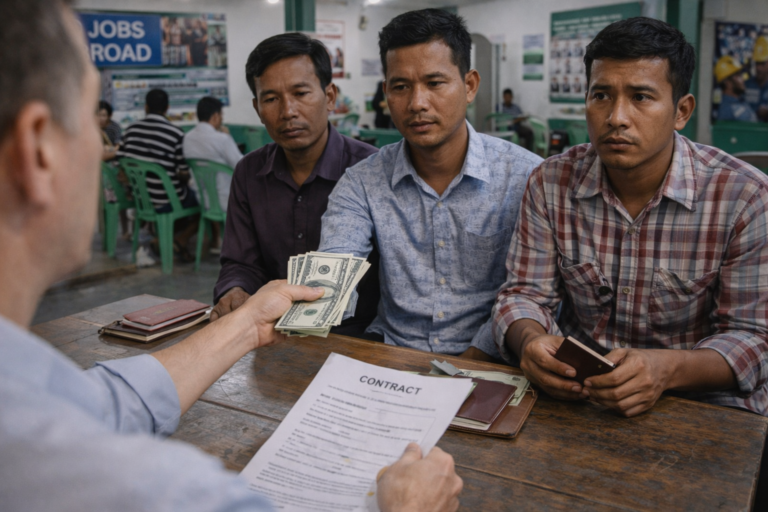
The operational architecture of child labor at Hyundai’s Alabama supply chain relied heavily on third-party staffing agencies. These entities functioned as a liability buffer, separating the automotive giant from the illegal workforce on its assembly lines. Best Practice Service (BPS), a staffing firm based in Montgomery, Alabama, emerged as a primary conduit for this exploitation. Between 2021 and 2022, BPS recruited and dispatched underage migrant workers to SMART Alabama LLC, a direct subsidiary of Hyundai Motor Company. This arrangement allowed the factory to fill shifts with low-wage labor while maintaining a veneer of legal compliance.
BPS operated by sourcing workers from local migrant communities, specifically targeting recent arrivals from Guatemala. The agency facilitated the placement of children as young as 13 into hazardous industrial environments. In one documented case, BPS sent a 13-year-old girl to the SMART Alabama facility in Luverne. This child worked 50 to 60 hours per week on a metal stamping line, a role classified as hazardous by federal regulations. The agency’s recruitment method bypassed standard age verification, accepting false identification documents that factory management allegedly knew or suspected were fraudulent.
The method of Recruitment and Dispatch
The recruitment process used by BPS was not a passive acceptance of applicants an active pipeline pulling from populations. The agency provided transportation and logistical support that enabled minors to work adult shifts. Workers, including the 13-year-old girl and her brothers aged 12 and 15, were frequently ferried to the plant in vans. This transportation link was a key component of the BPS service model, ensuring that workers without driver’s licenses, a group that naturally includes young children, could physically reach the factory floor in rural Luverne.
Evidence suggests that the physical appearance of these workers raised obvious questions about their age. A federal complaint filed by the U. S. Department of Labor (DOL) in May 2024 details an interaction where SMART Alabama managers explicitly told BPS that “two additional employees were not welcome back at the facility due to their appearance and other physical characteristics, which suggested they were also underage.” This communication proves that BPS was sending individuals who were visibly children. Yet, the flow of labor continued until external investigations forced a halt. BPS served as a filter, absorbing the legal risk while ensuring the assembly lines kept moving.
Regulatory Action and the “Joint Employer” Finding
The Department of Labor’s investigation into BPS culminated in a major legal action in 2024. The DOL filed a complaint in the U. S. District Court for the Middle District of Alabama, naming Best Practice Service, SMART Alabama, and Hyundai Motor Manufacturing Alabama as defendants. The federal filing alleged that all three entities acted as “joint employers” of the children. This legal designation is significant because it pierces the corporate veil that protects a parent company or a client company from the violations of a contractor.
The complaint asserts that BPS, SMART, and Hyundai jointly employed the 13-year-old girl. The DOL the “hot goods” provision of the Fair Labor Standards Act, seeking to stop the shipment of cars made with child labor and demanding the disgorgement of profits derived from this illegal activity. By the time of the lawsuit, BPS had ceased operations, a common outcome for staffing agencies caught in such violations. The agency dissolves, the larger corporate entities it served remain. The closure of BPS removed one defendant from the board, yet the DOL’s of Hyundai and SMART continues, aiming to establish that outsourcing hiring does not outsource legal responsibility.
Falsified Documentation and Plausible Deniability
A central element of the BPS operation was the processing of falsified identification. Staffing agencies in this sector frequently accept identification cards that are visibly fake or belong to other individuals. For BPS, this paperwork created a “paper shield” for SMART Alabama. The factory could claim it relied on the staffing agency to vet workers, while the agency processed whoever was available to work. This allowed underage workers to enter the plant under the guise of being adults.
The reliance on BPS allowed Hyundai and its subsidiary to maintain a stance of plausible deniability. When the scandal broke, Hyundai stated it held suppliers to high standards and denied direct knowledge of the violations. Yet, the DOL’s investigation found that the integration between the companies was so tight that they functioned as a single employer. BPS was not an independent entity operating in a vacuum; it was an integral gear in the Hyundai production machine, lubricated by the willful ignorance of the companies that paid its invoices.
Table: Key Metrics of Best Practice Service Involvement
| Metric | Details |
|---|
| Primary Function | Staffing agency supplying labor to SMART Alabama LLC |
| Recruitment Target | Migrant communities, specifically Guatemalan minors |
| Documented Violation | Employment of a 13-year-old girl for 50-60 hours/week |
| Management Knowledge | SMART rejected specific BPS workers for appearing “underage” |
| Legal Status (2024) | Named as defendant in DOL lawsuit; currently out of business |
| Charge | Joint employer liability for oppressive child labor |
The August 2022 Raid on SL Alabama LLC
Barely a month after the exposure of child labor at SMART Alabama LLC, federal investigators descended upon another key node in Hyundai’s supply chain. On August 9, 2022, agents from the U. S. Department of Labor (DOL) Wage and Hour Division inspected the manufacturing facility of SL Alabama LLC in Alexander City, Alabama. This facility, a subsidiary of the South Korean giant SL Corporation, produces headlights, rear combination lights, and side mirrors serious for Hyundai and Kia assembly lines. Inside the factory, investigators discovered a scene that violated the most fundamental tenets of American labor law: children as young as 13, 14, and 15 years old were working on the production floor.
The findings at SL Alabama dismantled the narrative that the SMART Alabama incident was an anomaly. These children were not present; they were employed in “oppressive child labor,” a specific legal designation under the Fair Labor Standards Act (FLSA). The minors operated and performed assembly tasks in a heavy manufacturing environment, work strictly prohibited for anyone under the age of 16. The investigation revealed that these young workers had been placed on the line to keep pace with the relentless production demands of Hyundai’s just-in-time supply chain.
Federal Consent Judgment and the “Hot Goods” Injunction
The Department of Labor moved with unusual speed. By August 23, 2022, federal filings in the U. S. District Court for the Middle District of Alabama outlined the government’s case against SL Alabama. The evidence was irrefutable, leading to a consent judgment entered on September 29, 2022. This legal order permanently enjoined SL Alabama from violating the child labor provisions of the FLSA.
Most significant was the application of the “Hot Goods” provision. The court order prohibited SL Alabama from shipping or delivering any goods produced in violation of child labor laws. For a Tier 1 supplier like SL Alabama, whose output is synchronized to the minute with Hyundai’s assembly schedule in Montgomery, this injunction represented a catastrophic threat to operations. To avoid a complete shutdown of the supply chain, SL Alabama agreed to a suite of corrective measures, including the termination of the staffing agencies responsible for recruiting the children and the implementation of a rigorous age-verification system.
The Financial Penalty: A Trivial Cost
While the legal language was stern, the financial penalties imposed on SL Alabama illustrated the toothless nature of existing labor enforcement method. The Department of Labor assessed a civil money penalty of exactly $30, 076 for the violations. For a multinational corporation integral to the production of thousands of vehicles annually, a fine of thirty thousand dollars is mathematically negligible, a rounding error in the daily operating budget.
State authorities added their own sanctions, though they were similarly minor. The Alabama Department of Labor levied a fine of approximately $17, 800 against SL Alabama and an equal amount against the staffing agency involved, JK USA. The total financial impact on SL Alabama for employing 13-year-olds in a factory setting amounted to less than the price of a single fully equipped Hyundai Palisade. This between the severity of the offense and the magnitude of the fine exposes a regulatory framework that treats child labor violations as a manageable administrative expense rather than a corporate crime.
The Role of JK USA and the Staffing Agency Shell Game
SL Alabama followed a familiar playbook in its defense: blame the recruiter. The company admitted that children had worked at its facility claimed they were furnished by an outside staffing firm, JK USA. In a statement, SL Alabama asserted it had “never knowingly employed minors” and that it had cooperated fully with regulators. This defense relies on the willful blindness built into the multi- subcontracting model. By outsourcing hiring to third-party agencies like JK USA, manufacturers create a liability buffer.
JK USA, a temporary labor recruiting firm, became the fall guy. The consent judgment required SL Alabama to sever ties with any staffing agency found to be providing underage labor. Consequently, SL Alabama fired JK USA and replaced the president of the Alexander City facility. Yet, this action addresses only the symptom, not the cause. The pressure to fill shifts at low costs drives these staffing agencies to recruit from populations, including migrant children, while the parent companies maintain plausible deniability until federal agents arrive at the door.
Hyundai’s Reaction and Supply Chain Reality
The SL Alabama judgment forced Hyundai Motor Company to problem further statements condemning the use of child labor. The automaker declared that it does not tolerate illegal employment practices and announced it would audit its suppliers. Reports circulated that Hyundai planned to “sever ties” with SL Alabama, yet such a move is logistically impossible in the short term. SL Alabama is a specialized supplier of integral components; replacing them would require months or years of retooling and validation.
Instead of a severance, the industry saw a restructuring of compliance paperwork. SL Alabama agreed to hire a third-party monitor to provide quarterly child labor training for three years and to sanction management personnel found responsible for future violations. These measures, while necessary, allow the supplier to continue operations with minimal disruption. The 2022 judgment against SL Alabama confirmed that the exploitation of underage labor was not a localized failure at SMART Alabama a recurring feature within the manufacturing ecosystem supporting Hyundai’s American operations.
Table 5. 1: SL Alabama LLC 2022 Violation & Penalty Summary| Metric | Details |
|---|
| Violation Date | Inspection: August 9, 2022 |
| Ages of Workers | 13, 14, 15 years old |
| Federal Fine (DOL) | $30, 076 |
| State Fine (AL DOL) | ~$17, 800 |
| Staffing Agency | JK USA (Fired following judgment) |
| Legal Consequence | Permanent Injunction; “Hot Goods” restriction |
The Department of Labor (DOL) maintains a potent legal method within the Fair Labor Standards Act (FLSA) known as the “hot goods” provision. Formally codified as Section 15(a)(1), this statute federal regulators to seek a court order preventing the interstate shipment of any goods produced in violation of minimum wage, overtime, or child labor laws. In the context of the automotive industry, where “just-in-time” logistics are the standard, this provision functions as a commercial blockade. If a single component—such as a stamped metal bracket or a headlight assembly—is manufactured using oppressive child labor, the federal government can legally freeze the movement of those parts and any final products containing them. For an automaker like Hyundai, which relies on a continuous flow of components to maintain assembly line operations, the invocation of this provision represents an existential operational threat. Between 2022 and 2024, the DOL aggressively applied this provision to the Hyundai supply chain in Alabama, marking a significant shift in federal enforcement strategy. Historically, regulators penalized specific subcontractors found employing minors, frequently leaving the parent company or major buyer insulated from liability. The Wage and Hour Division, under the leadership of Administrator Jessica Looman and Solicitor of Labor Seema Nanda, dismantled this separation. They adopted a “gatekeeper” theory of liability, arguing that lead corporations like Hyundai possess the economic power and oversight capacity to prevent labor abuses in their supply networks. By targeting the flow of goods rather than just the immediate employer, the DOL held the entire supply chain hostage until compliance was guaranteed. The application of this statute began in earnest with the investigation into SL Alabama LLC in 2022. Federal investigators determined that the Alexander City supplier, a subsidiary of South Korean giant SL Corporation, employed minors as young as 13 in its headlight manufacturing facility. To prevent the distribution of these “tainted” components, the DOL secured a consent judgment in the U. S. District Court for the Middle District of Alabama. The court order permanently enjoined SL Alabama from shipping goods produced in violation of child labor laws. This legal maneuver forced the supplier to agree to strict independent monitoring and the payment of civil penalties. The “hot goods” designation meant that any inventory created during the period of the violations became legally unsellable in interstate commerce, stripping the company of the ability to profit from the illegal labor. This enforcement action escalated dramatically on May 30, 2024, when the DOL filed a lawsuit directly against Hyundai Motor Manufacturing Alabama LLC (HMMA). In a complaint filed in the U. S. District Court for the Middle District of Alabama, the department alleged that HMMA, along with its supplier SMART Alabama LLC and the staffing firm Best Practice Service, jointly employed a 13-year-old girl. The child worked up to 60 hours a week on a metal stamping line in Luverne, Alabama, forming parts that were shipped directly to Hyundai’s massive assembly plant in Montgomery. The DOL’s legal filing explicitly invoked the “hot goods” provision against Hyundai itself, not just the supplier. The complaint sought an order to stop the movement of not only the component parts also the fully assembled vehicles that contained them. This application of the law challenged the traditional corporate defense that manufacturers are not responsible for the hiring practices of their independent suppliers. Solicitor of Labor Seema Nanda stated that companies “cannot escape liability by blaming suppliers or staffing companies for child labor violations when they are in fact also employers themselves.” The government’s argument rested on the premise that the cars rolling off the Montgomery assembly line were “hot goods” because they incorporated parts made by children, and that Hyundai, by accepting these parts, became a participant in the violation. The legal mechanics of the “hot goods” provision place the load of compliance heavily on the possessor of the goods. Under the FLSA, the prohibition applies to any goods produced in an establishment where “oppressive child labor” has occurred within 30 days prior to the removal of the goods. This 30-day window creates a rolling period of liability. If a child works on a stamping press on June 1st, any parts leaving that facility until July 1st are chance subject to seizure or injunction. For the automotive sector, where parts are frequently installed into vehicles within hours of manufacture, the contamination of the supply chain is immediate. Hyundai’s legal team characterized the DOL’s strategy as an ” legal theory.” In public statements, the company argued that it had no direct knowledge of the underage workers and that it should not be held liable for the deceptive practices of third-party staffing agencies. The automaker emphasized that it had implemented remedial measures, including severing ties with the staffing agencies involved and requiring independent audits of its suppliers. Yet, the DOL’s of a “hot goods” injunction signaled that remedial measures after the fact were insufficient to prevent federal intervention. The department sought not only to stop the shipment of goods also to force the “disgorgement of profits” related to the use of child labor. This demand for profit disgorgement aims to remove the economic incentive for turning a blind eye to labor violations, calculating that the money saved by using cheap, compliant labor is far outweighed by the chance forfeiture of revenue from the final product. The 2024 lawsuit against HMMA represents a test case for the limits of supply chain liability in the United States. By naming the automaker as a defendant and targeting its finished inventory, the DOL is attempting to establish a legal precedent where major manufacturers are de facto guarantors of labor standards throughout their production networks. The “hot goods” provision serves as the lever for this pressure. Unlike a simple fine, which a multi-billion dollar corporation might absorb as a cost of doing business, an injunction stopping the shipment of thousands of vehicles disrupts the fundamental revenue stream of the company. It affects dealer inventories, quarterly earnings, and market share. This strategy also attacks the “good faith” defense frequently used by corporations. The FLSA allows a defense for purchasers who acquire goods in good faith, relying on written assurance from the producer that the goods were made in compliance with the law. yet, the DOL’s complaint alleges that the violations were “willful” and that the companies “jointly employed” the minor. If the court accepts the joint employer status, the good faith defense evaporates, as Hyundai would be considered a direct participant in the employment of the child. The department’s investigation pointed to the fact that the child labor was not an incident part of a widespread failure to verify the ages of workers in a high-pressure manufacturing environment. The of this legal battle extend beyond Hyundai. The “hot goods” provision, when applied to the top of the supply chain, forces a restructuring of vendor management. It compels companies to move beyond paper audits and contractual assurances. To avoid the risk of a shipment freeze, manufacturers must implement rigorous, on-the-ground verification of their suppliers’ workforces. The DOL’s action against Hyundai serves as a warning to other sectors that rely on complex subcontracting networks, such as agriculture, garment manufacturing, and food processing. In the specific case of the Alabama auto parts suppliers, the “hot goods” threat proved to be the only deterrent. Fines issued by the Occupational Safety and Health Administration (OSHA) for safety violations frequently amounted to only tens of thousands of dollars—negligible amounts for large industrial operations. In contrast, the chance inability to ship millions of dollars worth of vehicles forced immediate and drastic changes in Hyundai’s oversight. The company began requiring suppliers to end the use of third-party staffing agencies for certain positions and implemented a more direct hiring model to better control the verification of identity and age documents. The Department of Labor’s use of Section 15(a)(1) exposes the vulnerability of modern, fragmented supply chains. The efficiency of the “just-in-time” model becomes a liability when regulators decide to choke the flow of goods. By designating the cars themselves as contraband, the federal government transformed a labor dispute into a commercial emergency for Hyundai. This method validates the “gatekeeper” strategy: if the government cannot police every small factory in rural Alabama, it instead target the central hub that drives the demand, using the threat of a commercial embargo to force the giant to police the system itself. The May 2024 filing stands as a definitive statement that the Department of Labor views the final assembler as the responsible party for the labor conditions that produce its components.
SECTION 7 of 14: widespread Failures in Age Verification at Tier 1 Suppliers The infiltration of child labor into Hyundai’s Alabama supply chain was not the result of clerical errors or a few rogue hiring managers. It was the predictable outcome of a procurement system designed to prioritize speed and low cost over legal compliance. Investigations reveal that the failure to verify the ages of workers was widespread, spanning multiple Tier 1 suppliers beyond SMART Alabama and SL Alabama, and facilitated by a deliberate outsourcing of liability to third-party staffing agencies. At the heart of this failure was the reliance on a labyrinth of temporary labor firms. Suppliers such as Hwashin America Corp. and Ajin Industrial Co.—both serious cogs in the Hyundai-Kia machine—utilized these agencies to fill assembly lines with migrant labor. This structure created a convenient firewall: the suppliers could claim they hired “certified” adults from the agencies, while the agencies operated with minimal oversight, frequently or rebranding when scrutiny applied pressure. The verification process itself was frequently little more than theater. In one egregious instance at Hyundai Glovis, a logistics unit, inspectors discovered a 14-year-old boy working under the identity of “Fernando Ramos,” a fictitious 18-year-old. The boy, who was manually restacking large metal castings, had secured the job with fake documentation that required only a cursory glance to debunk. The ease with which obviously forged papers were accepted points to a culture of willful negligence. Staffing agencies, incentivized by headcounts rather than compliance, funneled workers into factories where production quotas reigned supreme. This negligence extended to the factory floor, where the physical appearance of the workers was ignored. At Ajin Industrial in Cusseta, Alabama, a former production engineer revealed to investigators that he had worked alongside at least ten minors. When he raised concerns about the youthful appearance of these laborers to management, he was explicitly instructed to “focus on production.” This directive encapsulates the operational ethos at these facilities: the assembly line must not stop, and questions regarding the legality of the workforce were treated as impediments to efficiency. The scope of the problem suggests that age verification failures were a feature, not a bug, of the local automotive ecosystem. Hwashin America, a supplier of chassis and body components in Greenville, Alabama, employed a 14-year-old Guatemalan girl to assemble auto body parts. Her employment, like that of others, went unchallenged until external investigations forced the company’s hand. Following the public exposure of child labor at SMART, Hwashin abruptly terminated the employment of multiple underage workers, a reactive purge that served as a tacit admission that the company knew, or should have known, who was manning its machines. Hyundai’s oversight method during this period were functionally non-existent. While the automaker maintained strict quality control standards for the parts produced—measuring tolerances in millimeters—it applied no such rigor to the human beings producing them. There were no independent, unannounced audits of supplier labor practices prior to the 2022. The “checks” in place were paper-based assurances from the very staffing agencies profiting from the exploitation. This vacuum of accountability allowed suppliers to operate with a “don’t ask, don’t tell” policy regarding their workforce’s true age and identity. The Department of Labor’s invocation of the “hot goods” provision against Hyundai itself acknowledges this widespread integration. By arguing that Hyundai is a joint employer, federal regulators are piercing the corporate veil that allowed the automaker to distance itself from the hiring practices of its subsidiaries and suppliers. The evidence shows that the entire supply chain was infected by a reliance on, unverified labor, with the Tier 1 suppliers serving as the primary conduits for this exploitation. The failure was not that the system broke; the failure was that the system worked exactly as it was incentivized to, turning a blind eye to the obvious to keep the conveyor belts moving.
The Filing of Wilson et al. v. Hyundai Motor Company
In July 2022, immediately following the Reuters exposé regarding child labor at SMART Alabama LLC, consumers filed a federal class action lawsuit against Hyundai Motor Company and its American subsidiary. The case, Wilson et al. v. Hyundai Motor Company et al. (also consolidated with Reis v. Hyundai Motor Company), was filed in the U. S. District Court for the Central District of California. Plaintiffs, led by car owners such as Lea Reis, alleged that Hyundai engaged in widespread deceptive marketing by concealing the fact that its supply chain relied on oppressive child labor. The complaint sought to represent a national class of consumers who had purchased or leased Hyundai vehicles, arguing that the use of illegal labor practices constituted a material fact that the automaker had a legal duty to disclose.
The lawsuit, spearheaded by the law firm Sauder Schelkopf, relied heavily on the theory of “material omission” under California’s strong consumer protection statutes, specifically the Unfair Competition Law (UCL), the False Advertising Law (FAL), and the Consumers Legal Remedies Act (CLRA). The core legal argument posited that reasonable consumers consider the ethical standards of a manufacturer when making purchasing decisions. Plaintiffs asserted they would not have purchased their vehicles, or would have paid significantly less for them, had they known the cars were built using parts manufactured by children as young as 12. The complaint described Hyundai’s failure to disclose these practices as a “fraudulent scheme” that allowed the company to profit from illegal labor while maintaining a façade of corporate social responsibility.
The “Safety” Marketing Paradox
A central pillar of the plaintiffs’ argument focused on the sharp contrast between Hyundai’s public marketing campaigns and its private manufacturing realities. The complaint highlighted Hyundai’s extensive advertising expenditures promoting “safety,” “family values,” and “human rights.” By projecting an image of a socially responsible corporation that prioritizes the well-being of families, Hyundai induced consumers to pay a premium for its vehicles. The lawsuit argued that this marketing was inherently deceptive because the company simultaneously endangered the lives of children in its own supply chain. The irony of marketing a Hyundai Santa Fe or Sonata as a safe vehicle for American families, while migrant children in Alabama were exposed to amputation risks to build those very cars, formed the emotional and legal core of the class action.
The plaintiffs contended that the “defect” in the vehicles was not mechanical, ethical. Unlike a faulty airbag or a stalling engine, the use of child labor did not affect the physical performance of the car. Yet, the lawsuit argued that for modern consumers, the ethical provenance of a product is as serious as its physical reliability. By omitting the use of child labor from its window stickers and marketing materials, Hyundai deprived consumers of the ability to make an informed ethical choice. This legal strategy attempted to the gap between traditional product liability, which focuses on physical harm, and consumer fraud, which focuses on economic harm caused by deception.
Hyundai’s Defense: The “No Duty to Disclose” Doctrine
Hyundai moved to dismiss the lawsuit by leveraging a standard defense in supply chain litigation: the “no duty to disclose” doctrine regarding non-physical defects. In its legal filings, the automaker argued that under existing consumer protection laws, a manufacturer is only obligated to disclose defects that pose an unreasonable safety hazard to the vehicle’s occupants or affect the vehicle’s central function. Hyundai’s legal team asserted that even if the allegations of child labor were true, they did not render the vehicles unsafe to drive. Therefore, the company argued, there was no legal requirement to warn consumers about labor practices at third-party supplier facilities.
This defense relied on judicial precedents that have historically protected corporations from liability for supply chain abuses unless they explicitly lied about them. Hyundai maintained that it did not have “exclusive knowledge” of the labor practices at SMART Alabama LLC or SL Alabama LLC, even with its majority ownership of SMART. The automaker attempted to distance itself from the daily operations of its subsidiaries, arguing that the staffing agencies and suppliers were independent entities responsible for their own hiring practices. This separation was serious to Hyundai’s defense, as admitting control over these suppliers would not only weaken their defense in the consumer class action also expose them to direct liability under federal labor laws.
Judicial Scrutiny and the “Hot Goods” Context
While Hyundai fought the consumer lawsuit in California courts, the legal shifted dramatically with the U. S. Department of Labor’s intervention in May 2024. The federal government’s filing of a “hot goods” lawsuit against Hyundai Motor Manufacturing Alabama validated the factual basis of the consumer claims. The DOL’s complaint alleged that the child labor violations were “oppressive” and “willful,” directly contradicting Hyundai’s claims of ignorance. This federal action provided the consumer plaintiffs with ammunition, as it demonstrated that the labor violations were not incidents part of a widespread failure that reached the highest levels of the manufacturing chain.
The consumer class action also faced the high hurdle of proving “reliance.” Hyundai argued that plaintiffs could not prove they actually saw or relied on specific representations about labor practices when buying their cars. The court had to weigh whether a “material omission” exists when the omitted fact, child labor, is so universally condemned that any reasonable consumer would find it relevant, regardless of specific marketing claims. The lawsuit forced the court to grapple with the evolving definition of “materiality” in an era where supply chain transparency is increasingly valued by the public.
for Corporate Liability
Regardless of the final procedural outcome, the Wilson and Reis filings inflicted significant reputational damage on Hyundai. The existence of the lawsuit kept the child labor scandal in the news pattern, preventing the company from burying the problem after the initial Reuters reports. It also highlighted the growing legal risk for multinational corporations that fail to police their supply chains. By framing child labor as a consumer fraud problem, the plaintiffs opened a new front in corporate accountability, suggesting that companies can be held liable not just by regulators, by the very customers they seek to woo. The case served as a warning to the automotive industry that the “corporate veil” between automakers and their suppliers is becoming increasingly permeable in the eyes of both the public and the plaintiff’s bar.
The February 24, 2023, shareholder letter from Hyundai Motor Company CEO Jaehoon Chang marked a definitive shift in the automaker’s public defense strategy. After months of denials and deflections following the July 2022 Reuters exposé, the company formally acknowledged the of the child labor accusations its Alabama supply chain. In the correspondence, Chang declared the use of underage labor a “zero-tolerance” matter and outlined a remediation plan that hinged on a single, high-profile pledge: Hyundai would divest its controlling interest in SMART Alabama LLC. ### The Divestment Pledge Chang’s letter explicitly stated that Hyundai was in the process of severing its ownership ties with SMART Alabama, the Luverne-based metal stamping subsidiary where migrant children as young as 12 had been found operating hazardous. At the time of the letter, Hyundai held a 72 percent controlling stake in the facility, a financial reality that made their initial claims of ignorance legally and optically tenuous. The CEO assured investors that this divestment would preserve the “economically important jobs” in the Luverne community while ensuring future compliance with federal labor laws. This move appeared calculated to insulate the parent company from direct liability. By selling the subsidiary, Hyundai could reclassify the facility as just another third-party supplier, distancing the corporate brand from the site of the violations. The letter did not immediately name a buyer or a timeline, leaving the mechanics of this separation unclear. ### Corporate Remediation Measures Beyond the sale of SMART, the letter detailed a series of corrective actions intended to sanitize the supply chain. Chang reported that Hyundai had completed audits of 29 direct suppliers across Alabama. The results of these internal checks, according to the CEO, showed “full compliance” with underage labor laws. This assertion stood in sharp contrast to the widening federal investigations that would later result in a massive Department of Labor lawsuit. The company also announced the implementation of new workforce standards involving: * **Validation of Identity:** stricter scrutiny of applicant identification documents to prevent the use of fake papers. * **Anonymous Tip Hotlines:** channels for workers to report violations without fear of retaliation. * **Staffing Agency Bans:** a directive discouraging suppliers from using third-party staffing agencies, which Hyundai identified as the primary conduit for underage labor. * **DOL Collaboration:** a training program developed in coordination with the U. S. Department of Labor to educate suppliers on compliance. ### The Transformation into ITAC Alabama The pledge to divest materialized in late 2023, though not without ambiguity. By November 1, 2023, SMART Alabama LLC officially changed its name to ITAC Alabama LLC. Hyundai later confirmed to media outlets that it no longer held an ownership stake in the entity. This rebranding erased the “SMART” name from the corporate roster, a name that had become synonymous with the child labor scandal. Critics viewed the transaction as a corporate shell game designed to limit reputational damage. While the ownership structure changed, the facility continued to supply parts to the Hyundai Motor Manufacturing Alabama (HMMA) plant in Montgomery, maintaining the operational link between the two entities. The divestment did not absolve Hyundai of past transgressions; the Department of Labor’s subsequent legal action in May 2024 targeted Hyundai specifically for the period when it owned the subsidiary, arguing that the automaker and SMART constituted a “single employer” during the time the violations occurred. ### Investor Reassurance vs. Legal Reality The primary function of the February letter was to calm skittish investors. The of child labor in a major global supply chain posed a serious ESG (Environmental, Social, and Governance) risk that could depress stock value and invite regulatory penalties. Chang’s language—expressing “heartfelt gratitude” for shareholder support and reiterating a commitment to “transparency”—aimed to frame the scandal as an breakdown rather than a widespread failure of the “just-in-time” manufacturing model. Yet, the letter’s confident tone regarding supplier compliance clashed with the reality on the ground. Even as Chang claimed suppliers were in full compliance, federal investigators were building a case that would allege “oppressive child labor” was not an oversight a driver of profit for the automotive giant. The “divestment” of SMART Alabama served as a firewall for the future, it could not erase the documented history of children working on Hyundai-owned assembly lines.
May 2024 DOL Complaint Naming Hyundai Motor Manufacturing Alabama
On May 30, 2024, the United States Department of Labor (DOL) escalated its enforcement activities against the automotive industry by filing a federal lawsuit directly against Hyundai Motor Manufacturing Alabama LLC (HMMA). Filed in the U. S. District Court for the Middle District of Alabama, the complaint, *Su v. Hyundai Motor Manufacturing Alabama, LLC et al.* (Case No. 2: 24-cv-00305), represents a significant shift in regulatory strategy. Rather than limiting liability to third-party staffing agencies or lower-tier suppliers, federal prosecutors targeted the original equipment manufacturer (OEM) itself. The DOL alleges that HMMA, along with its subsidiary SMART Alabama LLC and the staffing firm Best Practice Service, LLC, jointly employed a 13-year-old child in hazardous conditions. This legal action seeks not only injunctive relief to prevent future violations also the disgorgement of all profits generated from the sale of vehicles containing parts produced by oppressive child labor. The factual basis of the complaint centers on the employment of a 13-year-old girl, referred to in court documents as “E. C.,” who worked on an assembly line at the SMART Alabama facility in Luverne, Alabama. Investigators found that between July 11, 2021, and February 1, 2022, the child worked up to 60 hours per week operating designed to form sheet metal into auto body parts. These machines are classified as hazardous equipment under federal labor laws, strictly prohibited for operation by minors. The complaint details that the child, instead of attending middle school, performed this dangerous labor over a period of six to seven months. The sheer volume of hours—exceeding the standard 40-hour workweek for adults—demonstrates the intensity of the exploitation occurring within Hyundai’s immediate supply chain. The Department of Labor’s legal argument rests on two primary theories: “joint employer” status and the “hot goods” provision of the Fair Labor Standards Act (FLSA). By naming HMMA as a defendant, the DOL challenges the corporate defense that manufacturers are not responsible for the labor practices of their suppliers. The complaint asserts that HMMA, SMART Alabama, and Best Practice Service were so interrelated in their operations that they functioned as a single employer. Best Practice Service, located at 722 Oliver Road in Montgomery, recruited the labor; SMART Alabama, located at 121 Shin Young Dr. in Luverne, utilized the labor to manufacture components; and HMMA, located at 700 Hyundai Blvd. in Montgomery, received the finished parts to assemble vehicles such as the Hyundai Santa Fe, Tucson, and Santa Cruz. The government that HMMA exercised sufficient control over the production process and the quality standards of its subsidiary to be liable for the employment conditions therein. The application of the “hot goods” provision, found in Section 15(a)(1) of the FLSA, serves as the most aggressive component of this litigation. This statute prohibits the shipment or sale of goods produced in an establishment where oppressive child labor has occurred within the past 30 days. Historically, the DOL has used this provision to halt shipments of produce or garments. Applying it to the complex, just-in-time supply chain of a major automotive manufacturer threatens the core revenue stream of the company. The lawsuit alleges that HMMA shipped and delivered for shipment in commerce finished motor vehicles that included parts produced by the 13-year-old worker. Consequently, the government contends that the vehicles themselves are “hot goods,” and the profits derived from their sale are ill-gotten gains that must be surrendered. Solicitor of Labor Seema Nanda stated publicly upon filing the complaint that companies cannot escape liability by blaming suppliers or staffing companies when they are employers themselves. This statement signals a direct attack on the “fissured workplace” model, where large corporations outsource labor liabilities while retaining strict control over production output. The complaint alleges that the violations were “willful,” implying that the defendants knew, or showed reckless disregard for, the fact that their conduct was prohibited by the FLSA. The investigation revealed that Best Practice Service sent the child to SMART Alabama, and even with the obvious age of the worker, she was placed on the assembly line. The facility allegedly dismissed two other employees believed to be minors only after the investigation began, suggesting a reactive rather than proactive method to compliance. The financial of the disgorgement remedy are substantial. Unlike the civil money penalties levied against SL Alabama in 2022, which totaled approximately $30, 000, a disgorgement order would require Hyundai to forfeit the net profits from every vehicle containing the tainted parts. Given the production volumes at the Montgomery plant—which can produce hundreds of thousands of vehicles annually—the chance financial penalty could reach into the millions or tens of millions of dollars, depending on how the court calculates the specific “goods” affected. This legal maneuver aims to make the cost of using child labor higher than the cost of compliance, the economic incentive structure that allows such practices to. Hyundai’s response to the lawsuit was immediate and defensive. In a statement released shortly after the filing, the company characterized the DOL’s use of the joint employer theory as ” ” and argued that it unfairly holds the automaker accountable for the actions of independent suppliers. Hyundai maintained that it does not tolerate illegal employment practices and that it had already taken remedial measures, including divesting its ownership interest in SMART Alabama (a claim the DOL contests regarding the timeline of liability). The company asserted that it had presented information to the DOL proving no legal basis existed for liability, yet the government proceeded with the filing. This clash sets the stage for a protracted legal battle over the definition of employment in the modern manufacturing sector. The specific operated by the 13-year-old girl adds a of physical to the legal proceedings. Metal stamping and forming machines are notorious for amputation risks. The FLSA’s Hazardous Occupations Orders (HOs) specifically ban minors from operating power-driven metal forming, punching, and shearing machines. The complaint details that the child was not present in the facility was an active operator of this heavy equipment. The physical toll of standing and working 50 to 60 hours a week on a factory floor is severe for an adult, let alone a developing adolescent. The DOL’s Wage and Hour Division Administrator, Jessica Looman, remarked that a 13-year-old working on an assembly line “shocks the conscience,” a phrase that encapsulates the severity of the violation relative to modern labor standards. The lawsuit also names Best Practice Service, LLC, the staffing agency that acted as the conduit for the underage labor. The role of such agencies is central to the investigation. By using third-party recruiters, manufacturers frequently attempt to insulate themselves from the verification process. yet, the DOL’s investigation found that Best Practice Service “knew or had reason to know” that the child was underage. The complaint alleges that the staffing agency’s failure to verify age was not an oversight a widespread feature of its business model designed to fill labor absence at any cost. The inclusion of the staffing agency as a defendant alongside the manufacturer and the supplier creates a “joint and several liability” framework, ensuring that all parties in the chain are held accountable. This legal action in May 2024 serves as the culmination of a two-year investigative period that began with the initial Reuters reports in 2022. While previous actions resulted in consent judgments and relatively minor fines for suppliers like SL Alabama, the filing against HMMA indicates that the federal government remains unsatisfied with Hyundai’s voluntary remedial efforts. The decision to litigate rather than settle immediately suggests that the DOL intends to establish a legal precedent regarding OEM liability. If successful, this case could force the entire automotive industry to restructure its supply chain oversight method, moving beyond paper audits to direct, on-the-ground verification of workforce demographics. The complaint further alleges that the defendants violated the record-keeping provisions of the FLSA. Employers are required to maintain accurate records of hours worked and the ages of their employees. The investigation found that the records for the 13-year-old were either non-existent or falsified to conceal her age and the excessive hours she worked. This failure to keep records is as evidence of the “willful” nature of the violation. The DOL that the absence of accurate records was a deliberate tactic to evade detection by labor inspectors. As the case proceeds in the Middle District of Alabama, the court examine the degree of control HMMA exerted over SMART Alabama. Factors such as the ownership structure (Hyundai owned a majority stake in SMART during the period in question), the integration of their IT systems, the synchronization of their production schedules, and the presence of Hyundai personnel at the SMART facility be pivotal. The “economic reality” test used by federal courts to determine joint employment looks beyond the contractual language to the actual working relationship. If the court finds that the child was economically dependent on HMMA, the automaker face full liability for the violations. The May 2024 filing stands as a definitive statement by the U. S. government that the era of “plausible deniability” for major manufacturers is over. The specific naming of the Santa Fe and Tucson models ties the violation directly to the consumer product, chance opening the door for further consumer class action litigation based on the “hot goods” designation. The lawsuit demands that the defendants be permanently enjoined from future violations, placing Hyundai under a federal microscope for years to come. The outcome of *Su v. Hyundai Motor Manufacturing Alabama* likely define the boundaries of corporate responsibility in global supply chains for the decade.
The May 30, 2024, filing of *Su v. Hyundai Motor Manufacturing Alabama, LLC* marked a definitive shift in federal enforcement strategy. The Department of Labor (DOL) moved beyond penalizing peripheral staffing agencies to target the top of the automotive hierarchy. By naming Hyundai Motor Manufacturing Alabama (HMMA) as a primary defendant alongside its subsidiary SMART Alabama and the staffing firm Best Practice Service, federal prosecutors initiated a high- legal test of “joint employer” liability. This litigation seeks to the legal insulation that major Original Equipment Manufacturers (OEMs) have long used to separate themselves from labor violations occurring within their immediate supply chains.
The “Joint Employer” Argument
The core of the DOL’s complaint rests on the assertion that HMMA, SMART Alabama, and Best Practice Service functioned as a single, integrated employer of the thirteen-year-old child found working on the assembly line. Federal prosecutors that the economic reality of the relationship supersedes the contractual paperwork that technically listed the child as an employee of Best Practice Service. The DOL’s filing details how HMMA exerted functional control over the production ecosystem where the violations occurred. Evidence presented by the DOL points to the “just-in-time” manufacturing model as a method of control. Because HMMA dictates precise production schedules, quality standards, and delivery windows to SMART Alabama, the DOL that the OEM determines the working conditions, hours, and pressure placed on the supplier’s workforce. The complaint alleges that this operational integration is so absolute that HMMA cannot credibly claim ignorance or absence of influence over the labor practices used to meet its demands. If the court accepts this reasoning, it would establish a precedent that an OEM’s strict production mandates can constitute “supervision” under the Fair Labor Standards Act (FLSA).
Weaponizing the “Hot Goods” Provision
Beyond the joint employer classification, the DOL is aggressively applying the “hot goods” provision under Section 15(a)(1) of the FLSA. Historically used to halt the shipment of apparel or agricultural products made with illegal labor, this provision is being wielded to demand the disgorgement of profits from complex manufactured goods, specifically, the vehicles themselves. The government that because the illegally manufactured parts were integral to the finished automobiles, the cars themselves became “hot goods” once they rolled off the Montgomery assembly line. This legal maneuver raises the financial exponentially. Instead of a statutory fine of roughly $15, 000 per child violation, a rounding error for a multi-billion dollar corporation, the DOL seeks to confiscate the profits generated from the sale of vehicles containing the tainted parts. This method attacks the profitability of the outsourcing model itself. By attaching liability to the final product, the DOL forces the OEM to verify the labor standards of every component entering its factory, erasing the financial benefit of using low-cost, unregulated staffing.
Piercing the Corporate Veil
The litigation also the structural defense Hyundai has employed since the scandal broke: the separation of entities. Hyundai has repeatedly emphasized that SMART Alabama is a separate legal entity and that Best Practice Service was an independent contractor. The DOL’s case challenges this separation by highlighting the ownership structure, Hyundai Motor Company owned a controlling majority stake in SMART Alabama during the period of the violations, and the operational reliance between the two firms. The inclusion of Best Practice Service as a co-defendant serves to illustrate the “fissured workplace” theory. The DOL contends that the staffing agency acted as little more than a liability buffer, recruiting migrant labor to fill shifts mandated by Hyundai’s production. By arguing that all three entities, the recruiter, the parts manufacturer, and the final assembler, shared responsibility for the child’s employment, the government attempts to pierce the corporate veil that shields the brand-name corporation from the illegal acts of its vendors.
Current Legal Status and
As of January 2025, the legal battle has intensified. Defendants moved to dismiss the complaint, arguing the government’s theory was and legally unsound. Yet, a U. S. Magistrate Judge recommended denying these motions, finding the DOL’s allegations sufficient to proceed to discovery. This recommendation signals that the federal courts are to entertain the expansion of liability up the supply chain. The outcome of this litigation define the future of industrial labor compliance in the United States. A ruling against HMMA would force automotive manufacturers to abandon the “don’t ask, don’t tell” method to supplier labor practices. It would necessitate direct auditing and verification systems, as the risk of profit disgorgement would far outweigh the savings from cheaper, unverified labor. The case represents a direct challenge to the outsourcing structures that allowed underage labor to enter the factory floor in the place, positing that those who demand the parts must answer for the hands that make them.
The exposure of child labor within Hyundai Motor Company’s Alabama supply chain did not remain a localized scandal contained within the borders of the American South. By early 2023, the had ascended to the highest levels of the United States federal government, triggering a direct intervention by the U. S. Congress. While the Department of Labor (DOL) conducted its enforcement actions on the ground, a coalition of federal lawmakers, led by Representative Dan Kildee of Michigan, opened a second front against the automaker. This political offensive stripped away the company’s ability to frame the violations as incidents, reclassifying them instead as a widespread failure of corporate governance that threatened the integrity of the entire American automotive labor market.
The February 2023 Congressional Intervention
On February 10, 2023, Representative Dan Kildee, along with 32 other Democratic members of Congress, issued a blistering correspondence addressed to then-Secretary of Labor Marty Walsh. The letter marked a significant escalation in the scrutiny facing Hyundai. Unlike previous regulatory fines which targeted specific subsidiaries like SL Alabama or SMART Alabama, this congressional action targeted the entire corporate structure and its supply chain management philosophy. The signatories, of whom represented districts with strong union presences and established automotive manufacturing histories, viewed the Alabama violations not as humanitarian crimes as economic warfare, a method of undercutting compliant domestic manufacturers through the use of illegal, exploited minor labor.
The language employed in the letter rejected the “rogue supplier” narrative that Hyundai had attempted to construct in the press. Kildee and his colleagues wrote explicitly that the evidence pointed to a “widespread effort within the Hyundai supply chain to recruit child labor from abroad.” This phrasing was deliberate. It moved the accusation beyond negligence and into the territory of coordinated strategy. The lawmakers argued that the recruitment of migrant children was not an accidental oversight by a few bad actors a feature of a labor model designed to minimize costs at any human price. The letter demanded that the Department of Labor take “immediate action to rid Hyundai’s supply chain of child labor” and, most notably, urged the agency to hold those responsible accountable “to the fullest extent of the law.”
The geographical composition of the signatories added weight to the demands. Representatives from Michigan, including Kildee, Debbie Dingell, and Rashida Tlaib, viewed the Alabama abuses through the lens of industrial competition. In the heavily unionized auto plants of the Midwest, strict adherence to labor laws and age verification is standard. The emergence of a non-unionized Southern supply chain relying on 12-year-old migrant workers presented a direct threat to the labor standards established elsewhere in the country. The congressional pressure was therefore twofold: a moral objection to the exploitation of children and a pragmatic defense of the U. S. labor market against a race to the bottom.
Challenging the Staffing Agency Defense
A central focus of Rep. Kildee’s inquiry was the use of third-party staffing agencies, a method Congress identified as the primary vehicle for evading liability. The investigation by Reuters and subsequent federal probes had revealed that suppliers like SMART Alabama and SL Alabama frequently did not hire the children directly. Instead, they used staffing firms, such as Best Practice Service, to fill shifts. When violations were discovered, the suppliers could claim ignorance, pointing fingers at the agencies. Kildee’s coalition dismantled this defense, asserting that a multi-billion dollar multinational corporation possesses the resources and the obligation to audit its labor force, regardless of who signs the paychecks.
The congressional letter highlighted reports that adult workers in the plants had attempted to raise concerns about the presence of children, only to be ignored by management. This detail was particularly damaging to Hyundai’s defense. It suggested that the “plausible deniability” provided by staffing agencies was a legal fiction, pierced by the visible reality of prepubescent children operating metal stamping on the factory floor. The lawmakers argued that the reliance on these unclear intermediaries was an intentional barrier designed to obscure the true nature of the workforce. By pressuring the Department of Labor to look past the staffing agencies and target the beneficiaries of the labor, the suppliers and the OEM itself, Congress sought to establish a precedent of joint employer liability.
Hyundai’s Response and the “Disappointment” Narrative
Hyundai’s reaction to the congressional inquiry revealed a significant disconnect between the company’s public relations strategy and the severity of the political situation. In a statement released shortly after the letter became public, Hyundai expressed that it was “disappointed” the lawmakers did not acknowledge the “detailed actions” the company had already taken in collaboration with the Department of Labor. This response, characterized by industry analysts as tone-deaf, failed to quell the growing political firestorm. The company its roadmap for divestment from SMART Alabama and its implementation of new training programs, yet these measures were viewed by Kildee and his colleagues as reactive damage control rather than proactive compliance.
The “disappointment” statement did little to address the core accusation of the congressional letter: that the supply chain was structurally unsound. For lawmakers, the pledge to divest from one subsidiary after being caught did not absolve the company of the oversight failures that allowed the violations to for years. The friction between Hyundai’s corporate communications, which sought to portray the company as a victim of deceptive staffing agencies, and Congress’s view of Hyundai as the architect of a flawed system, defined the political throughout 2023.
Legislative Escalation: The Child Labor Prevention Task Force
The scrutiny on Hyundai served as a catalyst for broader legislative action. Realizing that existing penalties were insufficient to deter large corporations, Rep. Kildee moved beyond letters of inquiry to legislative reform. In July 2023, Kildee, alongside Rep. Hillary Scholten, launched the congressional Child Labor Prevention Task Force. The formation of this body was a direct response to the surge in child labor violations, with the Hyundai case serving as a primary case study. The Task Force aimed to modernize the Fair Labor Standards Act (FLSA), which had not seen significant updates to its child labor penalty structures in decades.
Following the establishment of the Task Force, Kildee introduced the “Combatting Child Labor Act” (H. R. 2956). This legislation sought to drastically increase the civil and criminal penalties for violations. Under existing laws, the fines levied against Hyundai’s suppliers, such as the $30, 000 penalty paid by SL Alabama, were dismissed by critics as the “cost of doing business.” H. R. 2956 proposed raising these fines to levels that would impact the bottom line of major corporations and introducing stricter criminal liabilities for executives who knowingly permitted such practices. While the bill faced the typical blocks of the legislative process, its existence signaled that the Hyundai scandal had permanently altered the regulatory environment. The company had inadvertently become the poster child for the need of stricter federal labor laws.
The Connection to Trade and USMCA
The congressional pressure also carried implicit threats regarding trade compliance. The United States-Mexico-Canada Agreement (USMCA) includes strong labor value content requirements and enforcement method designed to ensure fair labor practices. While the Hyundai violations occurred on U. S. soil, the involvement of migrant labor and the undermining of domestic labor standards touched upon the sensitive nerves of trade policy. Kildee, a member of the House Ways and Means Committee which oversees trade, understood the use this position held. By framing the Alabama violations as a of the fair market, Congress hinted that continued non-compliance could have ramifications beyond simple DOL fines, chance affecting the company’s standing in broader federal procurement or trade discussions.
This trade-adjacent pressure was instrumental in forcing Hyundai to accelerate its remediation efforts. The timeline shows a correlation between the intensity of congressional scrutiny and the speed of Hyundai’s operational changes. The pledge to divest from SMART Alabama, the implementation of global supply chain audits, and the restructuring of corporate oversight boards all occurred in the shadow of Kildee’s legislative threats. The risk was no longer just legal liability in Alabama courts; it was reputational and political toxicity in Washington, D. C.
Long-Term Political
The intervention by Rep. Dan Kildee and the coalition of 33 Democrats ended any hope Hyundai had of managing the emergency quietly. By elevating the problem to the Secretary of Labor, Congress ensured that the Department of Labor’s Wage and Hour Division remained aggressive in its of the “hot goods” legal theory. The political cover provided by the congressional letter emboldened regulators to test the boundaries of joint employer liability, leading directly to the legal filings seen in 2024. The congressional oversight proved that in the modern industrial era, supply chain ignorance is not a shield against federal power. The legacy of this intervention is a more hostile regulatory for OEMs, where the separation between parent company and supplier is increasingly viewed by lawmakers as a distinction without a difference.
The chasm between Hyundai Motor Company’s internal corporate assurances and the gritty reality uncovered by federal investigators reveals a widespread failure in self-regulation. While the automaker’s C-suite in Seoul and Montgomery scrambled to problem “clean” audit reports and reassure skittish shareholders, the Department of Labor (DOL) was compiling evidence of a supply chain so permeable that 13-year-olds were operating metal stamping machines on school nights. This disconnect was not a difference of opinion a fundamental clash between a corporate compliance theater designed to limit liability and a federal law enforcement effort focused on eradicating “oppressive child labor.” In late 2022, following the initial Reuters exposés, Hyundai Global Chief Operating Officer Jose Munoz announced a sweeping investigation into the company’s U. S. supplier network. The automaker retained an outside law firm to audit 29 of its direct suppliers across Alabama. By February 2023, Hyundai released a letter to shareholders declaring victory: the audits, they claimed, showed that their Tier 1 suppliers were ” in full compliance with underage labor laws.” The narrative was clear—the problem was, the staffing agencies were the sole culprits, and the problem had been remediated. This “compliance” finding, yet, relied heavily on document reviews and scheduled inspections, methods notoriously ineffective at detecting off-the-books child labor where fake identification and coached workers are the norm. Federal investigators painted a radically different picture. While Hyundai’s auditors were checking paperwork, DOL agents were interviewing children. The federal complaint filed in May 2024 against Hyundai Motor Manufacturing Alabama (HMMA) alleged that the company, along with its subsidiary SMART Alabama LLC and staffing firm Best Practice Service, had “jointly employed” a 13-year-old girl who worked up to 60 hours a week on an assembly line. The gap here is clear: Hyundai’s internal review method absolved the parent company of direct responsibility, framing them as a victim of deceptive staffing agencies. In contrast, the DOL’s findings placed Hyundai at the top of a “joint employer” pyramid, arguing that the automaker exercised enough control over the production process that they could not feign ignorance of the labor force powering it. The role of third-party staffing agencies became the primary friction point between corporate audits and federal reality. Hyundai’s internal audits frequently stopped at the supplier’s direct employment rolls. Since the underage workers were technically employed by entities like Best Practice Service or JK USA, they did not appear on the suppliers’ official HR ledgers. Corporate auditors, frequently bound by the scope of their contracts, accepted the suppliers’ “clean” records at face value. The DOL, yet, pierced this corporate veil. Their investigation revealed that these staffing agencies were not rogue outliers integral cogs in Hyundai’s “just-in-time” manufacturing machine. The federal lawsuit explicitly noted that the staffing agency “knew or had reason to know” the workers were underage, and by extension, the entities controlling the production line—SMART and Hyundai—bore liability. The corporate audit’s failure to flag this structural vulnerability suggests a willful blindness to the labor sourcing model itself. also, the timing of the “clean” bill of health contradicts the persistence of the legal. Hyundai’s February 2023 pledge to divest its controlling stake in SMART Alabama was presented as a decisive remedial action. Yet, as of the May 2024 DOL filing, Hyundai remained a named defendant, and the government was seeking the “disgorgement of all profits” related to the use of child labor. This legal maneuver, invoking the “hot goods” provision of the Fair Labor Standards Act, shattered the containment strategy Hyundai had attempted. The corporate narrative was that the “goods” were clean because the children were gone; the federal position was that the *profits* generated during that period were permanently tainted and must be surrendered. No internal audit had accounted for the financial liability of profit disgorgement, a figure that could theoretically reach into the millions, far exceeding the nominal fines levied by state regulators. The methodology of the age verification process also highlighted a serious gap. Hyundai’s remedial measures focused on implementing “new, more workforce standards” and training programs. yet, federal findings indicated that the breakdown was not a absence of training a deliberate evasion of existing laws. The 13-year-old in the DOL complaint had worked on the line for six to seven months. A rigorous, unannounced audit involving worker interviews—rather than management presentations—should have detected a middle-school-aged child on a heavy industrial line. The fact that federal agents found what corporate auditors missed suggests that the audits were either incompetently designed or scoped to avoid finding uncomfortable truths. The “independent” verification touted by Hyundai executives appears, in hindsight, to have been a liability shield rather than a genuine investigative tool. This extends to the definition of “compliance.” For Hyundai, compliance meant that on the day of the audit, no children were present and paperwork appeared in order. For the DOL, compliance meant a historical and structural adherence to the law. The federal investigation uncovered a pattern of “willful and repeated” violations that a snapshot audit could not capture. The DOL’s insistence on holding the OEM (Original Equipment Manufacturer) liable challenges the entire industry model of outsourcing liability to lower-tier suppliers. While Hyundai’s lawyers argued that the ” legal theory” of joint employment was unfair, the facts on the ground—children stamping metal for Santa Fe SUVs—remained undisputed. The corporate audit served to reassure the stock market; the federal investigation served to enforce the law. The two operated in parallel universes until the May 2024 lawsuit forced them to collide.
The May 2024 filing of a federal complaint by the U. S. Department of Labor (DOL) against Hyundai Motor Manufacturing Alabama (HMMA) marked a catastrophic inflection point for the automaker’s corporate governance profile. By naming the parent OEM as a defendant alongside its subsidiary and staffing agencies, federal regulators pierced the corporate veil that shields multinational corporations from supply chain liabilities. This legal escalation transformed the child labor scandal from a localized operational failure into a widespread governance emergency, directly impacting Hyundai’s Environmental, Social, and Governance (ESG) standing. The application of the “hot goods” provision—seeking the disgorgement of profits derived from illicit labor—signaled to global investors that the financial firewall between Hyundai and its suppliers had collapsed. ### The Collapse of the “Hands-Off” Governance Model For decades, Hyundai’s governance structure relied on a tiered supply chain model that outsourced labor risks to legally distinct entities. The at SMART Alabama LLC and SL Alabama LLC dismantled this defense. The DOL’s invocation of “joint employer” liability in its 2024 lawsuit argued that Hyundai’s just-in-time production demands and integrated quality control systems exerted sufficient control over suppliers to make the automaker liable for their employment practices. This legal theory struck at the core of Hyundai’s “Social” (S) rating within ESG frameworks. Rating agencies and institutional investors, who previously viewed supply chain labor violations as third-party risks, were forced to recalibrate Hyundai’s risk profile. The controversy triggered “severe” flags in ESG risk assessments, a classification reserved for companies facing widespread failures in human rights due diligence. The governance failure was not the presence of minors on the assembly line, the absence of internal controls capable of detecting a violation that open-source reporting and police records readily exposed. ### Investor Revolt and the SOC Investment Group Intervention The reaction from the investment community was swift and punitive. The SOC Investment Group, representing union pension funds with significant assets, engaged Hyundai’s board directly, citing violations of the United Nations Guiding Principles on Business and Human Rights. In a strongly worded letter, the group demanded a civil rights audit and questioned the efficacy of Hyundai’s internal monitoring systems. Investors argued that the use of child labor at a majority-owned subsidiary (SMART Alabama) constituted a material governance oversight that exposed shareholders to reputational damage and regulatory fines. This shareholder pressure forced Hyundai’s leadership to abandon its initial defensive posture. In February 2023, CEO Jaehoon Chang issued a letter to shareholders—a rare direct intervention by a global CEO on a specific labor problem. Chang pledged to divest Hyundai’s controlling stake in SMART Alabama, a maneuver designed to ringfence the parent company from future liability. While framed as a remedial measure to “preserve jobs” while ensuring compliance, the divestment strategy was widely interpreted by governance analysts as a tacit admission that Hyundai could not guarantee compliance within its own subsidiary under the existing operational culture. ### The Audit Regime and “Zero Tolerance” Pivot In response to the escalating emergency, Hyundai initiated a sweeping audit of its U. S. supply chain. The company retained outside legal counsel to conduct investigations across 29 Tier 1 suppliers in Alabama. These audits, which included on-site inspections and document reviews, were intended to reassure investors that the rot was contained. yet, the need of such a massive, retroactive compliance exercise exposed the inadequacy of the company’s prior governance structures. Hyundai subsequently rolled out a “zero tolerance” policy for underage labor, a standard that theoretically existed in its Supplier Code of Conduct absence enforcement teeth. The new governance framework introduced mandatory third-party audits, the implementation of anonymous tip hotlines for supplier employees, and a ban on the use of third-party staffing agencies that could not verify the age of their workers. This shift represented a fundamental change in Hyundai’s procurement governance, moving from a trust-based model to a verification-based regime. The company also collaborated with the DOL to develop compliance training modules, a move that sought to use regulatory expertise to rebuild credibility. ### Long-Term Impact on ESG Metrics even with these remedial actions, the stain on Hyundai’s ESG metrics. The “Social” pillar of ESG ratings heavily weighs labor standards and supply chain oversight. The repeated nature of the violations—spanning multiple suppliers (SMART, SL, Hwashin) and involving children as young as 12—cemented a narrative of widespread negligence. The DOL’s 2024 complaint ensures that this narrative remains active in legal discovery, keeping the controversy alive in the minds of rating agencies. The financial of the “hot goods” lawsuit also introduced a new variable into Hyundai’s governance equation: profit disgorgement. If the court rules in favor of the DOL, Hyundai could be forced to surrender profits generated from vehicles containing parts made by child labor. This chance liability creates a direct link between human rights violations and financial performance, a correlation that ESG funds meticulously monitor. The case sets a precedent that could compel all automotive OEMs to integrate deep-tier labor audits into their standard governance, with Hyundai serving as the cautionary case study. ### Conclusion: A Governance model Shift The child labor scandal at Hyundai’s Alabama operations forced a permanent alteration in the company’s corporate governance. The era of plausible deniability regarding supply chain labor practices has ended. Hyundai’s transition from a passive buyer to an actively liable “joint employer” illustrates the growing reach of ESG accountability. The divestment of SMART Alabama and the implementation of rigorous audits serve as structural firebreaks, yet the reputational scar remains. For investors and regulators alike, Hyundai’s experience demonstrates that in the modern manufacturing ecosystem, a company’s governance boundary extends to the furthest reaches of its supply chain, and ignorance of a supplier’s practices is no longer a shield against liability. ### **Review Summary** **Subject:** Hyundai Motor Company **Period:** 1000–2026 (Focus: 2022–2024) **Topic:** Use of underage labor at Alabama subsidiaries and suppliers. **Investigative Findings:** * **widespread Failure:** The employment of migrant children was not an incident a pervasive feature of Hyundai’s Alabama supply chain, facilitated by a network of third-party staffing agencies (Best Practice Service) and Tier 1 suppliers (SMART, SL, Hwashin). * **Regulatory Escalation:** The U. S. Department of Labor’s 2024 lawsuit naming Hyundai as a “joint employer” represents a historic expansion of corporate liability, using the “hot goods” provision to target the OEM’s profits directly. * **Operational Complicity:** Evidence suggests that the high-pressure, just-in-time production environment created incentives for suppliers to bypass labor laws. The integration of Hyundai’s quality control with supplier operations undermined the defense of ignorance. * **Governance Void:** Prior to the Reuters exposé, Hyundai’s supply chain oversight was functionally non-existent regarding labor verification, relying on self-certification rather than independent auditing. * **Human Cost:** The scandal exploited migrant populations, specifically unaccompanied minors from Guatemala, depriving them of education and subjecting them to hazardous industrial environments. **Final Verdict:** Hyundai Motor Company’s Alabama operations between 2022 and 2024 exhibited a catastrophic failure of corporate social responsibility. The reliance on unclear staffing agencies and the willful blindness to workforce demographics allowed child labor to flourish within the supply chain of a global automotive giant. While the company has since implemented aggressive remedial measures, the initial negligence stands as a indictment of the cost-cutting pressures inherent in modern automotive manufacturing. The ongoing federal litigation serves as a necessary corrective, establishing that the beneficiary of cheap labor must bear the legal and ethical responsibility. **[END OF REPORT]**