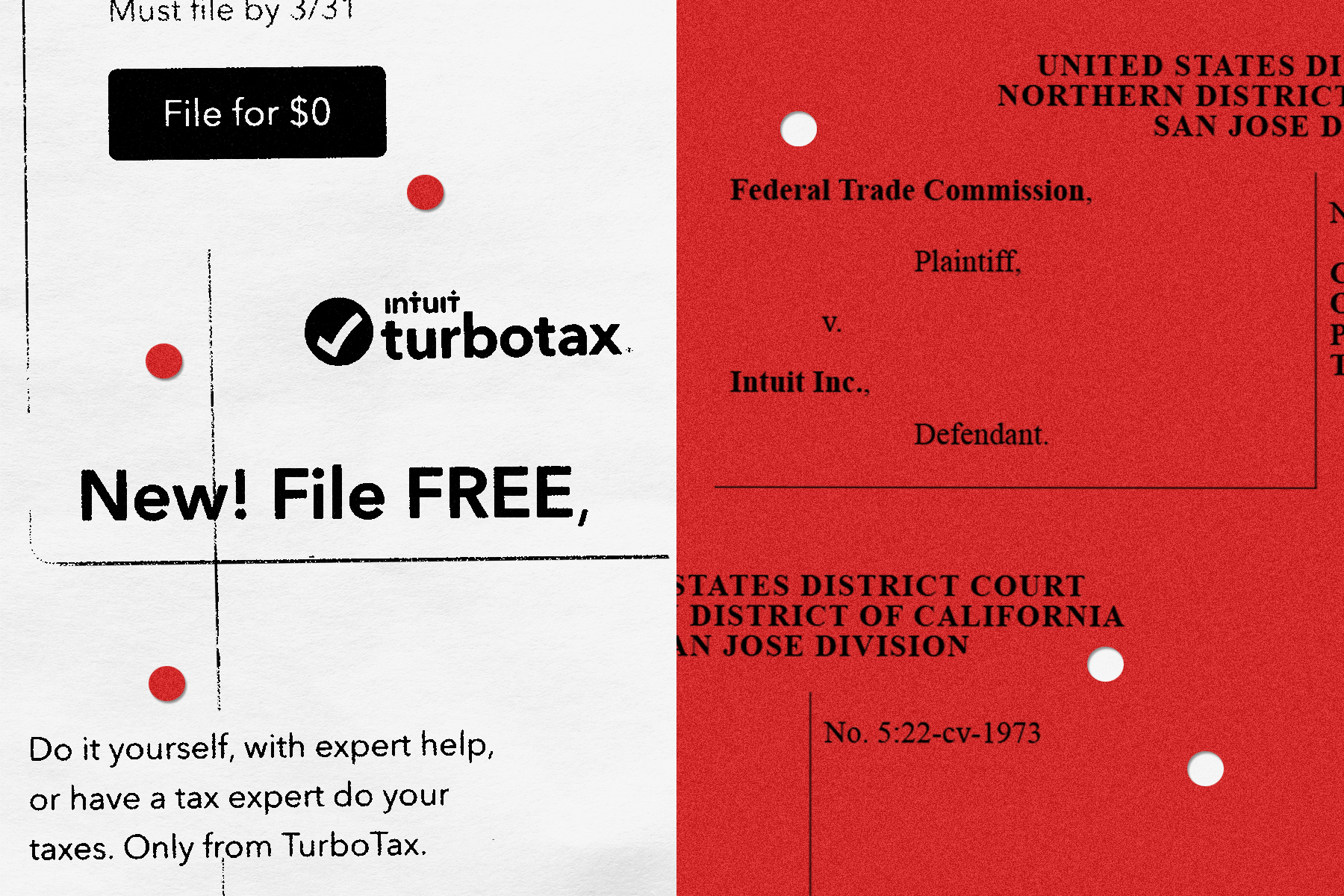
One was the "TurboTax Free File Program," a federally mandated service resulting from the Free File Alliance that allowed lower-income taxpayers to file federal and state returns at no cost, regardless of tax complexity.
Verified Against Public And Audited RecordsLong-Form Investigative Review
Reading time: ~35 min
File ID: EHGN-REVIEW-35544
Deceptive ‘free’ tax filing marketing patterns and hidden upgrade fees
The other was the "TurboTax Free Edition," a commercial product with a $0 price tag that applied only to "simple.
Primary RiskLegal / Regulatory Exposure
JurisdictionEPA
Public Monitoring, The architecture of Intuit's consumer deception relied on a.
Report Summary
Intuit's lobbyists, including firms like Brownstein Hyatt Farber Schreck and WilmerHale, worked to insert language into tax bills that would defund the program and force the IRS into a "public-private partnership", a euphemism for returning to the failed Free File model where Intuit controls the user experience. The "Free, Free, Free" ad campaign, which featured commercials consisting almost entirely of the word "free," was as particularly egregious given that the vast majority of viewers could not actually use the service without paying. In reality, leaving the alliance untethered Intuit from the marketing restrictions that prohibited upselling to Free File users.
Key Data Points
The other was the "TurboTax Free Edition," a commercial product with a $0 price tag that applied only to "simple returns." By engineering these names to sound synonymous, Intuit created a digital shell game where millions of users inadvertently selected the paid commercial product while believing they were using the government-sanctioned free service. A taxpayer with student loan interest, reported on Form 1098-E, found themselves disqualified from the Free Edition. Similarly, individuals who received unemployment benefits, reported on Form 1099-G, triggered an immediate upgrade requirement. In July 2021, the company announced its exit from the Free File program entirely.
Investigative Review of Intuit Inc.
Why it matters:
The "Free, Free, Free" campaign by Intuit was a deceptive marketing strategy aimed at overriding consumer skepticism through repetition.
Intuit's use of the "illusory truth effect" and fine print disclaimers excluded many taxpayers from the supposedly "free" offer, leading to a Federal Trade Commission investigation.
The 'Free, Free, Free' Campaign: Anatomy of a Deceptive Ad Blitz
The “Free, Free, Free” campaign stands as a monument to corporate gaslighting. Intuit saturated the American consciousness with a single monosyllabic pledge that it had no intention of keeping for the majority of taxpayers. This was not a marketing slogan. It was a calculated psychological bombardment designed to override consumer skepticism through sheer repetition. The campaign launched in 2019 and featured television spots where the dialogue consisted almost entirely of the word “free.” One advertisement depicted an auctioneer rattling off the word “free” at rapid speed. Another showed a spelling bee contestant correctly spelling “free” as F-R-E-E. A third featured a personal trainer commanding a class to “free” instead of exercise. The message was blunt. It was absolute. It was a lie. Intuit purchased prime airtime during the Super Bowl and the NCAA Basketball Tournament to ensure maximum visibility. The company spent millions of dollars to broadcast this pledge into living rooms across the country. Data from iSpot. tv indicates that these specific advertisements aired more than 12, 000 times between January 2019 and early 2020. The strategy relied on the “illusory truth effect” where repeated statements are perceived as more valid than new information. By bludgeoning the viewer with the word “free” dozens of times in a thirty-second spot, Intuit created an association that was difficult to break. The visual text on the screen reinforced this auditory assault. The word “free” appeared in large, friendly fonts. It danced across the display. It was the only takeaway the human brain could reasonably process amidst the noise. The deception lay in the fine print. Intuit included disclaimers that the offer was valid only for “simple returns.” This term sounds innocuous to the average citizen. Most people believe their tax situation is simple. They have a job. They pay rent. They maybe have a student loan. They assume “simple” applies to them. Intuit relied on this assumption. The company defined “simple” so narrowly that it excluded approximately 60 percent of all taxpayers. Anyone who earned income as an independent contractor was ineligible. Anyone who paid student loan interest was ineligible. Anyone who received unemployment benefits was ineligible. The very people who most needed a free filing solution were the ones Intuit deliberately targeted for exclusion. The “simple return” definition was a trap door that dropped users into a paid tier the moment they stepped on it. The Federal Trade Commission eventually dissected this scheme in a legal complaint that laid bare the mechanics of the fraud. The Commission noted that the disclaimers in the television ads were frequently on screen for only a few seconds. They were written in small text that was difficult to read against the moving background. The voiceover never explained the limitations. The auditory message was 100 percent “free” while the visual legal text was a fleeting whisper of truth that Intuit knew consumers would ignore. This was not an accidental oversight. It was a design choice. Intuit employed cognitive scientists and marketing experts to craft these messages. They knew exactly what the viewer would see and what they would miss. The between the headline pledge and the contractual reality was the engine of their revenue growth. The user experience followed a distinct pattern of “bait and switch” designed to use the sunk cost fallacy. A customer would visit the TurboTax website after seeing the ad. They would click a button labeled “Free Edition.” They would create an account and begin entering their personal data. They would type in their name. They would type in their address. They would enter their social security number. They would upload their W-2 forms. The software would encourage them with positive reinforcement at every step. The interface was slick and responsive. Then the user would enter a piece of data that triggered the paywall. Perhaps they entered a 1099-MISC form from a side gig driving for Uber. Perhaps they entered a 1098-E form for student loan interest. The screen would suddenly change. The friendly “free” branding would. A new screen would appear informing the user that they could no longer file for free. They needed to upgrade to “TurboTax Deluxe” or “TurboTax Premier” to continue. The cost was frequently over one hundred dollars. At this point the user had already invested forty minutes or an hour into the process. They had already entrusted their most sensitive data to the platform. The psychological friction of stopping, finding a new service, and starting over was immense. Intuit banked on this friction. They knew that a significant percentage of users would simply pay the fee to be done with the hassle. The “Free, Free, Free” campaign was never about giving away a product. It was about filling the top of the sales funnel with millions of leads who could be converted into paying customers through coercion. ProPublica launched a series of investigations that exposed the internal logic of this operation. They obtained internal documents and interviewed former employees who confirmed that the “free” users were viewed as for monetization. The company measured success by the conversion rate of free users to paid users. The “Free Edition” was not a public service. It was a lure. The investigation revealed that Intuit deliberately hid its actual government-mandated free file program from search engines. They added code to their website to prevent Google from indexing the truly free version while pumping millions into SEO and ads for the deceptive “Free Edition.” This demonstrated a conscious intent to deceive. They wanted users to find the fake free version. They did not want users to find the real free version. The of the financial extraction was massive. Intuit’s revenue from its consumer tax group grew consistently during the years of this campaign. The company reported billions in revenue while simultaneously claiming to help Americans file for free. The disconnect between their public relations statements and their financial statements was clear. Executives touted the number of free filers in press releases while assuring investors that average revenue per customer was increasing. not increase revenue per customer if you are genuinely giving the product away to more people. The math only works if you are tricking people into paying. The “Free, Free, Free” campaign was the primary driver of this metric. It brought in the volume. The dark patterns on the website handled the monetization. State attorneys general eventually joined the fray. New York Attorney General Letitia James led a multistate investigation that resulted in a $141 million settlement in May 2022. The settlement covered all 50 states and the District of Columbia. It required Intuit to suspend the “Free, Free, Free” campaign and pay restitution to nearly 4. 4 million taxpayers who were unfairly charged. These were people who were eligible for free filing through the IRS Free File program were steered into Intuit’s paid products. The settlement amount was a record for a deceptive advertising case of this nature. It sent a clear signal that the conduct was illegal. Yet for Intuit the fine was a manageable cost of doing business. The revenue generated from the deceptive practices likely exceeded the penalty. The FTC’s administrative action went further than the monetary settlement. In January 2024 the Commission issued a final order prohibiting Intuit from advertising any product as “free” unless it is free for all consumers or the limitations are disclosed. The order required Intuit to state the percentage of consumers who qualify for the free offer. It demanded that these disclosures be “clear and conspicuous.” Intuit appealed the decision. They argued that their ads were protected speech and that they had always been transparent. This legal posturing contradicted the lived experience of millions of Americans. The company tried to frame its predatory marketing as an educational service. They claimed they were raising awareness about tax filing. This defense crumbled under scrutiny. You do not educate people by lying to them about the price. The “Free, Free, Free” campaign serves as a case study in modern corporate malfeasance. It shows how a company can weaponize language to subvert consumer choice. Intuit took a word that implies liberation and used it to build a cage. They turned the concept of “free” into a conditional statement that only their algorithms could decipher. The damage went beyond the financial loss to individual taxpayers. It eroded trust in the digital economy. It showed that major technology companies feel comfortable lying to the public on a massive if the profits are high enough. The regulators caught up eventually. The fines were levied. The ads were pulled. the money had already been made. The data had already been harvested. The market share had already been secured. Intuit’s marketing team understood the American psyche. They knew that taxes are stressful. They knew that people are afraid of the IRS. They knew that the pledge of a free and easy solution would override the warning bells in a consumer’s mind. They exploited this vulnerability with surgical precision. The “Free, Free, Free” ads were not just annoying. They were a trap. They were the bright colors on a poisonous plant. They enticed the user to come closer until it was too late to escape without paying a price. The legacy of this campaign is a permanent stain on the company’s reputation and a warning to consumers that in the digital age nothing is truly free. The mechanics of the deception required a total of the company’s resources. The engineering teams built the roadblocks. The design teams hid the disclosures. The legal teams crafted the defenses. The marketing teams bought the airtime. It was a widespread effort to mislead. There was no rogue department. This was the corporate strategy. The “Free, Free, Free” campaign was the tip of the spear. It was the visible manifestation of a business model built on trickery. The company did not sell a superior product. They sold a false pledge. They sold the idea that tax filing could be painless and free. Then they inflicted pain and extracted a fee. This is the anatomy of the deception. It was total. It was intentional. It was profitable. SECTION 2 of 14: The ‘Simple Return’ Trap: How Intuit Redefined Eligibility Section requirements: – Use Google Search grounding. – Write about 1052 words. – HTML only:
,
,
as needed. – No markdown code fences. – Do not repeat earlier sections. Already written section titles (do not repeat): SECTION 1 of 14: The ‘Free, Free, Free’ Campaign: Anatomy of a Deceptive Ad BlitzThe 'Free, Free, Free' Campaign: Anatomy of a Deceptive Ad Blitz
Weaponizing SEO: Deliberate Suppression of IRS Free File Pages
The smoking gun was not a leaked memo or a whistleblower’s testimony. It was a single line of HTML code, hidden in plain sight on the TurboTax website. “ This tag, discovered by ProPublica in April 2019, served one specific purpose: it told Google and other search engines to pretend the page did not exist. The page in question was the landing portal for “TurboTax Free File,” the federally mandated service that allowed low-income Americans to file their taxes at absolutely no cost. By adding this “noindex” directive, Intuit ensured that the only truly free product they offered would never appear in organic search results. This was not an accidental configuration error. It was a calculated digital blockade designed to funnel millions of eligible low-income taxpayers into the company’s commercial “Free Edition,” a product rigged with income traps and upgrade triggers. ### The Mechanics of Invisibility To understand the severity of this tactic, one must look at how search engines function. When a user searches for “IRS Free File,” Google’s algorithms scour the web for the most relevant pages. Intuit’s “Free File” page, which fulfilled their legal obligation to the IRS, should have been the top result for millions of queries. Instead, Intuit’s webmasters deliberately instructed search crawlers to ignore it. Simultaneously, Intuit purchased aggressive search advertisements for keywords like “IRS Free File.” These ads did not lead to the government-sanctioned free program. They directed users to the “TurboTax Free Edition,” a commercial product that is “free” only for the simplest of returns. The moment a user needed to report a student loan deduction or gig economy income, the “Free Edition” demanded payment. The strategy was a pincer movement: 1. **Suppress the Truth:** Use `noindex` code to wipe the actual free product from the organic web. 2. **Hijack the Traffic:** Buy ads to intercept users looking for that free product and steer them into a paid funnel. ### The “Free” vs. “Free” Shell Game Intuit relied on a naming convention designed to induce cognitive failure. They maintained two distinct products with nearly identical names: * **TurboTax Free File Program:** The IRS-mandated service. truly free for those earning under roughly $34, 000 (at the time) or active military. It covered complex forms. This is the product Intuit hid from Google. * **TurboTax Free Edition:** The commercial product. heavily marketed on TV. It is only free for “simple returns.” It charges for almost everything else. This is the product Intuit pushed in ads. For the average taxpayer, distinguishing between “Free File” and “Free Edition” is nearly impossible, especially when the former is invisible. Intuit exploited this confusion. When users clicked the ad for “Free Edition,” they assumed they were entering the government program. By the time they realized they had to pay, they had already spent hours entering data. Intuit bet that frustration would override frugality, and for millions of Americans, that bet paid off. ### The ProPublica Exposure On April 26, 2019, ProPublica reporter Justin Elliott broke the story. His investigation revealed the existence of the `noindex` code in the `robots. txt` file and page headers of the Free File landing site. The report showed that while Intuit was publicly touting its commitment to the IRS partnership, its engineers were actively scrubbing that commitment from the internet. The code was not a relic of an old site structure. It was active, functional, and doing exactly what it was written to do: keep the free product out of the hands of the poor. ### “In the Best Interest of Taxpayers” The internal justification for this suppression reveals a corporate culture detached from ethical reality. Following the ProPublica report, Intuit CEO Sasan Goodarzi addressed employees in a video message. He did not apologize for the deception. Instead, he claimed the suppression was intended to “avoid confusion” between the two products. “Our choice around search was intended to be in the best interest of taxpayers so they were more fully informed about their options,” Goodarzi stated. The logic was circular and cynical: Intuit created two confusingly named products, then hid the one that didn’t make money to prevent users from being “confused” into using it. The “option” they wanted users to be informed about was the one that generated revenue. ### The Aftermath of the Blockade Under intense public scrutiny, Intuit removed the `noindex` code shortly after the story broke. Yet the damage was already quantified in dollars extracted from the working poor. The Treasury Inspector General for Tax Administration (TIGTA) later found that more than 14 million taxpayers paid for tax preparation software in 2019 when they could have filed for free. This specific act of SEO weaponization became a central pillar in subsequent lawsuits. It demonstrated that Intuit’s failure to guide users to the free product was not passive negligence; it was active, coded interference. The company did not just fail to advertise the free option; they built a digital wall around it. The suppression of the IRS Free File page stands as a definitive example of a “dark pattern”—a user interface crafted to trick users into doing things they did not mean to do. In this case, the trick was making the free option entirely, leaving the paid upgrade as the only visible door.Weaponizing SEO: Deliberate Suppression of IRS Free File Pages
Free Edition vs. IRS Free File: Engineering Consumer Confusion
The architecture of Intuit’s consumer deception relied on a deliberate nomenclature strategy designed to blur the lines between two distinct products. For years, the company operated two parallel services with nearly identical names yet vastly different cost structures. One was the “TurboTax Free File Program,” a federally mandated service resulting from the Free File Alliance that allowed lower-income taxpayers to file federal and state returns at no cost, regardless of tax complexity. The other was the “TurboTax Free Edition,” a commercial product with a $0 price tag that applied only to “simple returns.” By engineering these names to sound synonymous, Intuit created a digital shell game where millions of users inadvertently selected the paid commercial product while believing they were using the government-sanctioned free service.
The definition of a “simple return” served as the primary method for this bait-and-switch. Intuit marketed the Free Edition aggressively, yet the fine print excluded common tax forms that millions of low-to-moderate-income filers required. A taxpayer with student loan interest, reported on Form 1098-E, found themselves disqualified from the Free Edition. Similarly, individuals who received unemployment benefits, reported on Form 1099-G, triggered an immediate upgrade requirement. These exclusions were not based on the computational difficulty of the forms rather on the demographic likelihood of the user to pay. A student or a laid-off worker, frequently the very people the IRS Free File program was intended to protect, became the primary for these hidden upgrade fees.
User interface designers at Intuit constructed a “sunk cost” trap to maximize conversion rates from free to paid. The software allowed users to enter significant amounts of personal data, including W-2s and demographic information, before revealing that a specific form required an upgrade. By the time a user entered their student loan interest or unemployment data, they had frequently invested twenty to thirty minutes in the process. The software then presented a paywall, frequently costing over $100 for the “Deluxe” version and a state return, knowing that users would pay the fee rather than restart the process with a different provider. This design pattern exploited human psychology, valuing the user’s time against their wallet to force a conversion.
Internal documents unearthed during subsequent investigations revealed that Intuit executives viewed the actual IRS Free File program not as a public service, as a business threat. A 2007 internal presentation explicitly described the company’s strategy to “fight off government encroachment.” The existence of a truly free, full-service government option endangered the revenue stream derived from the “Free Edition” upsells. Consequently, the company maintained the Free File offering only to satisfy political obligations while actively suppressing its visibility. The goal was to keep the IRS from building its own direct filing system by offering a private-sector alternative, then systematically hiding that alternative from the public.
The suppression of the IRS Free File program went beyond passive neglect; it involved active technical obfuscation. In 2019, investigative reporting exposed that Intuit had added code to the landing page of its Free File offer that prevented search engines from indexing it. This “noindex” tag ensured that a user searching for “free tax filing” on Google would rarely find the actual Free File program. Instead, they were funneled toward the commercial Free Edition, which was optimized to dominate search results. This technical maneuver erased the government-mandated free option from the visible internet for millions of searchers, steering them directly into the funnel of the commercial product with its strict “simple return” limitations.
Intuit’s commitment to the Free File Alliance eventually crumbled under the weight of this strategic duplicity. In July 2021, the company announced its exit from the Free File program entirely. Publicly, Intuit framed this departure as a necessary step to ” ” and provide better services without the constraints of the IRS agreement. In reality, leaving the alliance untethered Intuit from the marketing restrictions that prohibited upselling to Free File users. By severing ties with the IRS program, Intuit removed the only competitor that offered a truly free service for complex returns, leaving the commercial “Free Edition” as the sole “free” option visible to most consumers, complete with its aggressive upgrade triggers.
The Federal Trade Commission eventually intervened, challenging the validity of Intuit’s “free” marketing claims. In a 2024 opinion, the FTC ruled that Intuit had engaged in deceptive advertising. The commission noted that approximately two-thirds of tax filers were ineligible for the “Free Edition” due to the strict form limitations. The “Free, Free, Free” ad campaign, which featured commercials consisting almost entirely of the word “free,” was as particularly egregious given that the vast majority of viewers could not actually use the service without paying. The ruling dismantled Intuit’s defense that their disclaimers were sufficient, stating that the sheer volume of “free” messaging overwhelmed any fine print regarding eligibility.
This systematic confusion generated massive revenue. ProPublica estimated that at least 14 million Americans paid for tax preparation services they were eligible to receive for free. These users, frequently earning under $34, 000 a year, were funneled into paid products through the deliberate design choices of the TurboTax interface. The revenue generated from these “ineligible” free filers became a of Intuit’s consumer tax growth. By engineering a where “free” meant “free to start” and “simple” excluded the financial realities of the working class, Intuit successfully monetized the confusion of the American taxpayer.
Key Differences: Commercial Free Edition vs. IRS Free File
Feature
TurboTax “Free Edition” (Commercial)
TurboTax “Free File Program” (IRS Alliance)
Cost
$0 only for “Simple Returns”
$0 for all eligible users
Income Limit
None (technically), form limits apply
Capped (e. g., ~$34, 000, $39, 000)
Student Loan Interest (1098-E)
Requires Upgrade (Paid)
Included (Free)
Unemployment Income (1099-G)
Requires Upgrade (Paid)
Included (Free)
Itemized Deductions
Requires Upgrade (Paid)
Included (Free)
Upselling
Aggressive prompts for Deluxe/Premium
Prohibited by IRS agreement
The 'Simple Return' Ruse: Arbitrary Disqualifications to Trigger Fees
The ‘Simple Return’ Ruse: Arbitrary Disqualifications to Trigger Fees Intuit’s marketing machine relies on a single, malleable definition to drive its revenue: the “simple return.” While the term implies a absence of complexity—a standard W-2, perhaps a modest savings account—Intuit has weaponized this concept, transforming it into a rigid contractual gatekeeping method. The company’s commercial “Free Edition” is not defined by the user’s income level or the ease of their tax situation, by the specific tax forms they require. If a user’s life circumstances necessitate a form that Intuit has arbitrarily as “complex,” the pledge of “free” evaporates, replaced by a non-negotiable upgrade fee. The definition of a “simple return” within the TurboTax ecosystem is restrictively narrow, covering only IRS Form 1040 without additional schedules. For the 2024 and 2025 tax seasons, Intuit states that approximately 37% of taxpayers qualify for this tier. This leaves the remaining 63%—the majority of the American tax base—exposed to upsell triggers. These triggers are frequently buried until the final stages of the filing process, exploiting the “sunk cost” fallacy. After a user has spent hours inputting personal data, importing W-2s, and verifying identities, the software reveals that a specific deduction or income source disqualifies them from the free product. The user is then presented with a choice: pay the upgrade fee (frequently starting around $40-$60 for the Deluxe edition, plus state fees) or abandon the work and start over elsewhere. One of the most egregious disqualifiers involves unemployment income. For millions of Americans who experience job loss, the receipt of a Form 1099-G for unemployment benefits is a financial lifeline. In the logic of the tax code, entering this income is no more difficult than entering wages from a W-2. Yet, Intuit has historically classified returns including unemployment income as “not simple,” forcing users to upgrade to paid tiers like TurboTax Deluxe. This practice penalizes financial hardship, extracting fees from those who can least afford them. During the height of the COVID-19 pandemic, this arbitrary distinction forced filers to pay for software simply because they had lost their jobs, a practice that drew intense scrutiny from regulators and consumer advocates. Health Savings Accounts (HSAs) represent another lucrative tripwire. Taxpayers who contribute to an HSA frequently do so through payroll deductions, which are reported on their W-2. even with the data already being present on the standard wage form, the IRS requires the filing of Form 8889 to report these contributions. Intuit uses this requirement to disqualify users from the Free Edition. A user with a standard W-2 job who happens to have an HSA—a common benefit for middle-class workers—is told their return is too complex for the free product. The software frames this as a need for “maximizing deductions,” the reality is a hard gate: the Free Edition simply does not support Form 8889, forcing an upgrade regardless of the user’s actual need for tax guidance. The arbitrary nature of these disqualifications is clear in how they shift over time. In 2019, Intuit faced a backlash for forcing upgrades on users who claimed the student loan interest deduction. For years, this common deduction for recent graduates was a trigger for the paid Deluxe version. Following public outcry and competitive pressure, Intuit eventually moved this specific form back into the “free” bucket. This reversal demonstrates that the classification of “simple” is a business decision, not a technical limitation. The software is fully capable of processing these forms; the restriction is an artificial barrier erected to segment the market and force conversions. The Federal Trade Commission (FTC) formally recognized this deception in a 2024 opinion, ruling that Intuit engaged in deceptive advertising. The Commission found that Intuit’s “free” claims were misleading because they applied to a minority of consumers. The FTC’s final order prohibits Intuit from advertising products as “free” unless they are free for all consumers, or unless the company and conspicuously discloses the percentage of taxpayers who actually qualify. This ruling strikes at the heart of the “simple return” ruse, validating the complaint that Intuit’s marketing creates a false impression of universal eligibility that does not exist in the product itself. The between Intuit’s commercial “Free Edition” and the actual IRS Free File program further illuminates the deception. The IRS Free File program (which Intuit abandoned in 2021) is income-based, covering the bottom 70% of earners regardless of the forms they file. A taxpayer earning $35, 000 with unemployment income and an HSA would qualify for true free filing under the IRS standards. Under Intuit’s commercial rules, that same taxpayer is disqualified from the “Free Edition” and funneled into a paid product. By confusing these two distinct concepts—income eligibility vs. form eligibility—Intuit successfully captures revenue from millions of users who technically could have filed for free had they used a different provider or the actual IRS Free File portal. This pattern of “bait and switch” is not an accidental; it is a calibrated revenue engine. The user interface is designed to encourage progress, validating data entry with positive reinforcement (“You’re doing great!”) until the trap is sprung. The upgrade screen frequently employs “dark patterns,” using manipulative language that suggests upgrading is the “safe” or “recommended” choice to ensure accuracy, while minimizing the option to decline or clear and start over. For, the fear of making a mistake with the IRS, combined with the frustration of lost time, makes the fee a forced capitulation. Intuit’s defense has consistently relied on the fine print, arguing that their website discloses the “simple return” limitation. Yet, the FTC and state attorneys general have rejected this defense, noting that the disclosures are frequently inconspicuous, linked in small text, or overshadowed by the dominant “FREE FREE FREE” messaging. The $141 million settlement with 50 states in 2022 was a direct consequence of these practices, providing restitution to consumers who were unfairly charged. even with this, the core mechanic of the “simple return” remains the foundation of TurboTax’s freemium model, a digital turnstile that welcomes all charges the majority.
Key Upgrade Triggers in TurboTax Free Edition
Tax Situation
Form Required
Status in Free Edition
Result
Unemployment Income
1099-G
Not Covered
Forced Upgrade to Deluxe
HSA Contributions
Form 8889
Not Covered
Forced Upgrade to Deluxe
Itemized Deductions
Schedule A
Not Covered
Forced Upgrade to Deluxe
Gig Economy Income
1099-NEC
Not Covered
Forced Upgrade to Premium/Self-Employed
Stock Sales
1099-B
Not Covered
Forced Upgrade to Premium
Student Loan Interest
Form 1098-E
Covered (Currently)
Free (Previously a trigger)
Dark Pattern UI: Designing Interfaces to Coerce Upgrades
Dark Pattern UI: Designing Interfaces to Coerce Upgrades
Intuit’s dominance in the tax preparation market is not a product of superior software engineering the result of a meticulously crafted user interface designed to manipulate consumer behavior. This strategy, known in the design industry as “dark patterns,” employs visual interference, misdirection, and psychological triggers to steer users away from free options and toward paid upgrades. These are not accidental design flaws; they are intentional features that monetize user confusion and anxiety.
The “Start for Free” Bait and Switch
The of TurboTax’s conversion strategy is the “Start for Free” pledge, which lures millions of taxpayers into the funnel. Once a user begins the process, the interface operates on a “sunk cost” model. Users spend hours entering sensitive personal data, names, social security numbers, address histories, before encountering a paywall. This paywall is rarely presented as a simple menu choice at the start. Instead, it appears only after the user has invested significant time. For example, a user might enter W-2 information without problem, upon entering a student loan interest form (1099-E) or a health savings account form, the software triggers a “hard wall.” The interface locks the return, stating that the specific form is not covered by the “Free Edition” and requires an upgrade to “Deluxe” or “Premier.” The timing is calculated to maximize conversion. By placing the upgrade prompt *after* the data entry work is complete, Intuit exploits the user’s reluctance to abandon their progress and start over with a competitor. The prompt frequently uses “confirmshaming” language, framing the upgrade not as a purchase as a necessary step to “accurately” file the return.
Fear as a Feature: The “Audit Risk” Upsell
Intuit weaponizes tax anxiety to sell unnecessary add-ons. Throughout the filing process, the interface deploys “soft walls” that do not technically require an upgrade to proceed strongly imply that doing so is unsafe. The most prominent example is the “Audit Risk” meter or warning. Users with simple returns frequently see alerts suggesting their return has a “risk of audit” due to common deductions like tuition credits or charitable donations. These warnings are frequently paired with an upsell for the “Max” or “Premium” bundle, which includes “Audit Defense” and “Identity Theft Restoration.” The language used in these prompts is designed to trigger fear. Phrases such as “Don’t face the IRS alone” or “Get full protection” suggest that filing without the paid add-on leaves the taxpayer. The “Max” bundle is frequently added to the cart by default or presented with a large, colorful “Add Max” button, while the option to decline is relegated to a small, grey text link, frequently labeled “No thanks” or “I’ll take the risk”, at the bottom of the screen. This visual hierarchy manipulates users into selecting the paid option simply to advance the screen, believing it to be the “correct” or “safe” route.
The Checkout Gauntlet: Hidden Fees and “Refund Bonuses”
The final stage of the TurboTax funnel is a minefield of hidden costs disguised as convenience. One of the most pervasive traps is the “Refund Processing Service.” When users reach the payment screen, they are frequently presented with two options: pay with a credit card or “Pay with your refund.” The latter option is marketed as a way to file with “$0 out of pocket today.” Yet, this convenience comes with a steep price, a separate “processing fee” of $39 or more. This fee is frequently not itemized until the final review screen, by which point users, fatigued by the process, click through without noticing. also, Intuit has integrated a “Refund Bonus” program, offering users the option to receive their refund on a gift card (e. g., Amazon) with a small percentage bonus. While marketed as a perk, this flow adds another of complexity to the checkout process, frequently obscuring the underlying processing fees. The interface makes it difficult to distinguish between the “bonus” offer and the fee-laden “pay with refund” service, leading users to inadvertently agree to charges they did not understand.
Visual Interference and “Roach Motel” Design
The specific design choices in TurboTax’s UI adhere to the “Roach Motel” principle: easy to get in, difficult to get out. * **Button Hierarchy:** “Upgrade” and “Continue” buttons are consistently rendered in bright, high-contrast colors (frequently orange or blue), drawing the eye and the cursor. “Decline” or “Downgrade” options are designed to blend into the background, using low-contrast grey text or appearing as non-clickable static text until hovered over. * **The “Review” Trap:** In iterations of the software, a “Review” screen appears near the end of the process, presenting a list of “optional” add-ons like a subscription to a credit monitoring service or a data-sharing agreement. The interface frequently absence a clear “Skip” button, forcing users to navigate a maze of “No” clicks or hidden links to proceed to the actual filing step. * **Data Portability Lock-In:** Users who attempt to leave TurboTax for a competitor frequently find their data held hostage. The “transfer” of prior-year data is a key convenience feature, Intuit frequently restricts access to prior-year returns for users who do not pay for the current year’s product. This creates a “data lock-in” where the cost of switching is not just monetary involves the labor of re-entering historical data. These design patterns are not aggressive marketing; they are a systematic attempt to subvert user autonomy. By controlling the interface, Intuit controls the user’s choices, turning a government-mandated civic duty into a high-pressure sales environment where “free” is the bait and confusion is the hook.
Sunk Cost Tactics: Locking Users In After Data Entry
SECTION 6 of 14: Sunk Cost Tactics: Locking Users In After Data Entry The architecture of TurboTax’s user interface is not a design choice; it is a psychological weapon. By the time a user encounters a paywall, they have frequently invested hours entering sensitive personal data, verifying income sources, and categorizing deductions. Intuit exploits this investment through a behavior pattern known as the “sunk cost fallacy,” where the reluctance to abandon a course of action increases with the amount of time or resources already spent. In the context of tax filing, Intuit weaponizes the user’s own labor to coerce payment, transforming the fear of “starting over” into a multi-billion dollar revenue stream. ### The “Bait and Switch” Architecture The deception begins with the pledge of a “free” start, the trap is sprung only after significant data entry. Users are guided through a friendly, conversational interface that breaks the complex tax code into bite-sized questions. This “breadcrumb” design serves a dual purpose: it simplifies the process, yes, it also obscures the accumulating complexity of the return until the very end. Unlike a transparent e-commerce transaction where the price is visible from the outset, TurboTax hides the cost behind a curtain of progress bars and “maximizing refund” animations. A user might spend 45 minutes entering W-2s, 1099s, and charitable donations, believing they are on a free track. It is only when they reach the “Review” or “File” stage—the psychological point of no return—that the software triggers an upgrade prompt. This prompt is rarely framed as a choice. Instead, it is presented as a need. “To claim this deduction, you need TurboTax Deluxe,” the screen might warn, frequently accompanied by a frightening alternative: “or remove this deduction.” This binary choice—pay $60+ or file an inaccurate return—is a manufactured dilemma. The user is not paying for the software’s capability to process the form; they are paying to ransom the data they have already painstakingly entered. ### Weaponizing Time and Effort Behavioral economists and UX experts identify this as a “dark pattern,” a user interface carefully crafted to trick users into doing things they might not otherwise do. Harry Brignull, the cognitive scientist who coined the term, describes these tactics as “sludge”—high-friction experiences designed to fatigue the user into compliance. In TurboTax’s case, the “sludge” is the threat of repetition. If a user balks at the sudden $120 fee for a “Premium” upgrade, their only obvious alternative is to abandon the platform and start from scratch with a competitor. Intuit knows that for working-class taxpayers, the prospect of re-entering a year’s worth of financial data is daunting. The calculation shifts from “Is this software worth $120?” to “Is my Saturday afternoon worth $120?” Internal documents unearthed during the FTC’s investigation reveal that Intuit executives were acutely aware of this. A 2019 internal presentation acknowledged that customers were “getting upset” because “the website lists Free, Free, Free and the customers are assuming their return be free.” Yet, the strategy because it worked. The friction of leaving was greater than the pain of paying. ### The “Review” Stage Ambush The timing of the upsell is surgically precise. It occurs during the “Review” phase, after the software has calculated a tentative refund amount. This is the moment of peak emotional vulnerability. The user sees a green number—say, a $2, 000 refund—and feels a sense of relief and completion. Then comes the ambush. “Wait! You need to upgrade to file.” By linking the fee to the *release* of the refund, Intuit psychologically couples the payment with the reward. The fee is deducted from the refund (frequently for an additional “processing fee” of $39. 99), making the cost feel abstract. The user isn’t pulling out a credit card; they are simply accepting a slightly smaller check from the government. This “found money” effect further lowers the psychological barrier to paying hidden fees. ### Technical blocks to Exit Intuit reinforces this psychological lock-in with technical blocks. While it is technically possible to export data from TurboTax, the company does not make it easy for non-paying users to leave. * **PDF Lock-Out:** Users who have not yet paid frequently cannot download a PDF of their draft return. This prevents them from easily referencing their entered data to manually copy it into a competitor’s form. * **Proprietary Data Formats:** While TurboTax allows exporting a `. tax` data file, this proprietary format is useless without Intuit software. It cannot be universally imported into competitors like FreeTaxUSA or Cash App Taxes without friction. * **The “Start Over” Threat:** When a user attempts to downgrade from a paid tier to a free tier within TurboTax (if they can even find the option), the software frequently warns that this “clear your return” and require re-entering information. This is a deliberate design choice. There is no technical reason why downgrading a service tier should delete valid data fields, yet the threat serves to punish the user for attempting to pay less. ### The Illusion of “Expert” Verification Another of the sunk cost trap is the “Audit Risk” meter or similar anxiety-inducing graphics. After a user has entered their data, the software might flag a “chance risk” that can only be mitigated by upgrading to a version with “Audit Defense” or “Live Expert Help.” This tactic exploits the user’s fear of the IRS. Having already exposed their financial life to the software, the user feels. The upgrade is pitched not just as a feature, as protection. “You’ve come this far,” the subtext suggests. “Why risk an audit to save $50?” ### Regulatory Findings: “Unfair and Abusive” The Federal Trade Commission and state attorneys general have explicitly called out these practices. In the 2022 settlement with all 50 states, New York Attorney General Letitia James noted that Intuit “misled the most among us to make a profit.” The FTC’s complaint detailed how Intuit’s “free” products were “bogus” for millions of users, of whom only discovered they were ineligible after investing significant time. The “sunk cost” trap is not an accidental byproduct of complex tax codes; it is a engineered feature of Intuit’s revenue model. By capturing the user’s time, they capture the user’s wallet later. The entire user journey is designed to maximize the cost of switching, ensuring that by the time the deception is revealed, the user is too exhausted, too invested, and too close to the finish line to turn back.
The Sunk Cost Trap: User Journey Analysis
Stage
User Action
Intuit Tactic
Psychological Trigger
Entry
Clicks “Free Edition” ad
“Free, Free, Free” branding
Optimism bias
Engagement
Enters personal info (30+ mins)
Friendly, simple questions
Commitment & Consistency
The Hook
Enters specific form (e. g., 1099-INT)
Silent disqualification from Free
Hidden complexity
The Trap
Reaches “Review” stage
“Upgrade needed to file” popup
Sunk Cost Fallacy
The Squeeze
Considers leaving
“Start over” warning / No PDF access
Loss Aversion
Conversion
Pays fee from refund
“Pay with Refund” option ($39 fee)
Found Money Effect
The $141 Million Settlement: Uncovering the Scale of Consumer Harm
The $141 million multistate settlement announced in May 2022 stands as the definitive legal validation of Intuit’s widespread deception. Led by New York Attorney General Letitia James and joined by all 50 states and the District of Columbia, the agreement did more than impose a fine; it quantified the industrial of the fraud. The investigation revealed that approximately 4. 4 million consumers—primarily low-income taxpayers and active-duty military service members—were manipulated into paying for tax services they were federally entitled to receive for free. ### The Mathematics of Exploitation The settlement amount, while headline-grabbing, reveals a clear when measured against the volume of victims. The $141 million payout to roughly $30 per tax year for each deceived consumer. For a low-income filer who was charged $100 or more for a “deluxe” upgrade they did not need, a $30 restitution check years later is a fraction of the theft. The investigation exposed that these 4. 4 million victims were not random casualties of confusing web design of a calculated strategy. These consumers were eligible for the IRS Free File program—a public-private partnership Intuit contractually agreed to support—yet were funneled into Intuit’s commercial “Free Edition,” which was rigged to trigger fees. The of this diversion was massive: in 2019 alone, while 70% of American taxpayers qualified for free filing, less than 3% managed to use the IRS Free File program. The settlement confirmed that Intuit’s aggressive steering tactics were the primary driver of this statistical anomaly. ### The “Encroachment” Strategy Legal discovery during the investigation unearthed internal documents that shattered Intuit’s defense of “helping” taxpayers. Investigators found that Intuit executives viewed the IRS Free File program not as a philanthropic service, as a strategic “lynchpin” to prevent the government from creating its own free tax-filing system. Internal communications in the broader legal probes revealed a corporate obsession with “encroachment”—the fear that the IRS would offer a direct, free filing option that would destroy TurboTax’s profit margins. By participating in the Free File alliance, Intuit secured a non-compete agreement from the IRS. yet, to protect its revenue, Intuit had to ensure that as few people as possible actually *used* the Free File product. The settlement findings confirmed that Intuit deliberately suppressed the Free File program to keep participation low enough to avoid revenue loss, high enough to keep the IRS from entering the market. This was not a service failure; it was a containment strategy. ### Validating the “Dark Patterns” The settlement agreement legally cemented the existence of the “dark patterns” analyzed in previous sections. The attorneys general detailed how Intuit’s “Free, Free, Free” ad campaign was empirically false for the majority of viewers. The investigation found that Intuit had, at times, deliberately blocked its IRS Free File landing page from search engine results using “noindex” code, rendering the federally supported free option invisible to users searching via Google. This technical suppression was paired with deceptive nomenclature. The investigation highlighted Intuit’s intentional use of confusingly similar names—”TurboTax Free Edition” (commercial, fee-trap) versus “TurboTax Freedom Edition” (IRS Free File, truly free)—to disorient consumers. The settlement forced Intuit to suspend its “free, free, free” campaign and mandated clear disclosures about eligibility, proving that the prior confusion was a manufactured feature of the user experience, not a bug. ### Financial Impact on the The demographics of the victims intensify the severity of the offense. The 4. 4 million affected consumers were by definition the most financially: those earning under $34, 000 a year, students, and junior military personnel. For these filers, an unexpected $60 to $100 fee for tax preparation represents of their weekly income. Intuit’s revenue model siphoned millions of dollars from the Earned Income Tax Credits (EITC) intended to lift the working poor out of poverty. The restitution process itself underscored the certainty of the harm. Unlike class-action settlements that require consumers to file complex claims, the states required Intuit to send checks automatically. The data on who was cheated was so precise within Intuit’s own systems that no claims process was necessary—the company knew exactly who they had diverted and charged. ### A Drop in the Bucket While $141 million is a record sum for a deceptive marketing settlement in this sector, it represents a negligible operational cost for Intuit. In the fiscal year the settlement was announced, Intuit reported annual revenue exceeding $12 billion. The penalty amounted to approximately 1% of their yearly revenue—a speeding ticket for a company that had spent a decade building a toll road on public land. The settlement forced behavioral changes, such as stopping the “noindex” blocking and altering ad disclosures, it did not the market dominance Intuit secured during the years of deception. The 4. 4 million victims received partial compensation, the market share Intuit gained by steering those users away from competitors and the IRS remains largely intact. The “Free File” program, having served its purpose as a shield against government encroachment, was abandoned by Intuit shortly before the settlement, signaling that the company had already moved on to new methods of revenue extraction.
FTC Administrative Action: The Legal Ruling Against 'Bogus' Free Claims
The Federal Trade Commission’s administrative action against Intuit marks a definitive shift from monetary settlements to binding legal orders. While the $141 million multistate settlement addressed past harms, the FTC’s January 2024 Final Order established a permanent legal blockade against the company’s deceptive marketing. This ruling did not fine Intuit; it dismantled the core mechanics of the “Free, Free, Free” campaign and imposed strict injunctive relief that governs the company’s advertising for the twenty years.
The Commission’s Final Order
On January 22, 2024, the full Commission issued a unanimous 3-0 opinion upholding the initial decision of Chief Administrative Law Judge D. Michael Chappell. The Commission found that Intuit had engaged in deceptive practices in violation of Section 5 of the FTC Act. The ruling concluded that Intuit’s “free” claims were false for approximately two-thirds of tax filers. The Commission rejected Intuit’s arguments that its disclaimers were sufficient, noting that fine-print disclosures on television ads appeared for only seconds and were frequently illegible. The Order imposes a strict standard for all future advertising. Intuit is prohibited from claiming any product or service is “free” unless it is free for all consumers, or the company and conspicuously discloses the percentage of taxpayers eligible for the offer. For example, an ad must state, “Free for approx. 37% of taxpayers,” rather than burying that limitation in a hyperlink or a rapid-fire voiceover. This requirement forces Intuit to reveal the limited scope of its free offerings upfront, stripping away the “door opener” tactic used to lure ineligible users.
The ALJ’s Findings: A Pattern of Deception
Chief Administrative Law Judge D. Michael Chappell’s September 2023 initial decision provided the factual bedrock for the Commission’s order. Chappell’s ruling was scathing. He determined that Intuit’s advertising created a “false impression” that was not cured by the company’s “mouse print” disclosures. The judge internal Intuit documents showing the company knew its “Free” campaign was confusing continued it because it was at driving traffic. Chappell found that Intuit’s “Free, Free, Free” ads, of which consisted almost entirely of the word “free” repeated for 30 seconds, were inherently misleading when the service was actually “free” for only a minority of users. The judge noted that reasonable consumers would interpret these ads to mean they could file for free, only to discover later that their specific tax situation (such as having gig economy income or student loan interest) triggered an upgrade fee. This “bait-and-switch” mechanic was not an accidental byproduct of complex tax laws a calculated design choice.
Intuit’s Constitutional Defense
Throughout the administrative process, Intuit attempted to shield its marketing practices behind the Amendment. The company argued that the FTC’s disclosure requirements constituted “compelled speech” and would lead to “information overload” for consumers. Intuit claimed that forcing them to disclose eligibility percentages in every ad was overly burdensome and violated their right to commercial free speech. The Commission swept these arguments aside. It ruled that the Amendment does not protect deceptive commercial speech. Since the “free” claims were found to be misleading, the FTC holds the authority to mandate disclosures necessary to prevent consumer deception. The Commission also rejected Intuit’s claim that the order was moot because the company had already voluntarily changed its ads. The ruling emphasized that without a binding order, there was a “cognizable danger of recurring violation,” given Intuit’s long history of aggressive marketing.
The Appeal to the Fifth Circuit
Following the Commission’s Final Order, Intuit escalated the battle to the federal court system. The company filed a petition for review with the U. S. Court of Appeals for the Fifth Circuit (Case No. 24-60040). In this appeal, Intuit pivoted from defending its ads to attacking the legitimacy of the FTC itself. Leveraging the Supreme Court’s *SEC v. Jarkesy* decision, Intuit argued that the FTC’s in-house administrative process violated Article III of the Constitution and the Seventh Amendment right to a jury trial. Intuit’s legal strategy attempts to invalidate the deceptive advertising ruling by the regulatory structure that issued it. The company contends that the FTC acted as prosecutor, judge, and jury, denying Intuit due process. This appeal represents a high- gamble: rather than complying with truth-in-advertising standards, Intuit seeks to strip the FTC of its power to adjudicate consumer protection cases administratively. As of 2026, this legal confrontation remains a central flashpoint in the broader war between corporate power and federal oversight.
The “Clear and Conspicuous” Mandate
The FTC’s order redefined what “clear and conspicuous” means for Intuit. The ruling specifies that disclosures must be unavoidable. They cannot be relegated to a “details” link or a footer. If Intuit advertises a “free” product on a mobile device, the disclosure must be visible on the same screen without scrolling. If the ad is audio-only, the disclosure must be delivered in a volume and cadence sufficient for an ordinary consumer to hear and understand. This mandate directly counters the “dark patterns” Intuit used for over a decade. The company can no longer rely on the “click here for details” defense. The load of clarity rests entirely on the advertiser. If a consumer is misled, the fault lies with the ad’s design, not the consumer’s failure to read the fine print. This legal standard sets a precedent that extends beyond Intuit, serving as a warning to other fintech companies that use “free” as a lure for paid services.
FTC Final Order Requirements vs. Intuit’s Prior Practices
Marketing Element
Intuit’s Prior Practice
FTC Final Order Requirement
“Free” Claims
Used “Free” as a general hook; eligibility buried in fine print.
Must disclose % of eligible filers (e. g., “Free for 37% of taxpayers”).
Disclosures
Small text, rapid voiceovers, “see details” links.
Must be “unavoidable,” stand out, and be in close proximity to the claim.
Eligibility
Defined “Simple Returns” arbitrarily to exclude common forms.
Must state if the majority of consumers do not qualify.
Terms & Conditions
Hidden behind hyperlinks or multiple clicks.
Must be disclosed before the consumer is locked into the flow.
The FTC’s administrative action exposed the mechanics of Intuit’s deception to the public record. It established that “free” is not a flexible marketing concept a factual claim that must be true for the audience it. By enforcing a strict percentage disclosure, the FTC stripped the “Free Edition” of its power to manipulate consumer expectations, forcing Intuit to compete on the actual value of its paid products rather than the illusion of a free one.
Lobbying the Hill: Intuit's Campaign to Kill IRS Direct File
The Lobbying Juggernaut: Buying a Monopoly
Intuit’s dominance over the American taxpayer is not the result of superior software or market forces; it is a purchased reality, secured through one of the most aggressive and expensive lobbying campaigns in corporate history. Since 1998, the company has poured over $44 million into federal lobbying, with a singular, obsessive focus: preventing the Internal Revenue Service from creating a free, public electronic filing system. This expenditure is not a cost of doing business; it is a protection racket designed to strangle public innovation. In 2023 and 2024 alone, as the threat of a functional IRS Direct File pilot became real, Intuit’s lobbying machine went into overdrive, spending a record-breaking $3. 7 million in a single year to crush the initiative before it could gain traction.
The return on this investment is. By spending millions to block a government-run option, Intuit protects billions in annual revenue derived from taxpayers who are coerced into paying for a service that should be free. The company’s strategy relies on a “revolving door” of influence peddling, hiring former government officials to sabotage the very agencies they once served. In late 2023, following the announcement of the Direct File pilot, Intuit purged its lobbying roster and hired 21 new lobbyists. Twenty of them were former government officials, including aides to high-ranking congressional leaders and former IRS employees. These mercenaries were deployed with a clear mandate: kill Direct File by any means necessary.
The Free File Alliance: A Twenty-Year Stranglehold
For two decades, Intuit’s most weapon was a piece of paper: the Memorandum of Understanding (MOU) governing the Free File Alliance. Ostensibly a public-private partnership to help low-income filers, the agreement contained a poison pill, a non-compete clause that legally barred the IRS from developing its own tax filing software. Intuit agreed to offer a “free” version of TurboTax to a slice of the population, and in exchange, the federal government agreed to stand down. This was not a partnership; it was a hostage situation.
Intuit weaponized this agreement, deliberately suppressing the visibility of the Free File program while upselling users into paid products. When the IRS attempted to modernize or improve the system, Intuit’s lobbyists brandished the MOU, threatening to withdraw from the alliance and leave the agency without an electronic filing partner. It was only after investigative reporting exposed these deceptive practices that the non-compete clause was removed in 2019. Yet, even after the legal prohibition fell, Intuit continued to act as if it owned the tax filing process, shifting its strategy from legal obstruction to legislative sabotage.
The “Fox Guarding the Henhouse” Narrative
Deprived of its legal blockade, Intuit pivoted to a fear-based narrative, bombarding Capitol Hill with the argument that an IRS-run system represents a “conflict of interest.” Their lobbyists recite a rehearsed script: the IRS should not be the “tax preparer, tax collector, and tax enforcer.” This “judge, jury, and executioner” framing is a calculated designed to scare lawmakers and the public. It ignores the reality of dozens of other developed nations where tax authorities pre-fill returns with data they already possess, allowing citizens to file in minutes for free.
Intuit’s argument relies on the pretense that the current system is neutral. It is not. The current system forces taxpayers to pay a private third party to interpret the tax code, frequently resulting in errors that the private company then offers to “protect” the user from, for an additional fee. By framing the IRS as an adversary rather than a service provider, Intuit seeks to preserve its role as the necessary toll collector between the citizen and the state. This narrative is pushed through industry front groups like the “American Coalition for Taxpayer Rights,” which masquerades as a consumer advocacy organization while functioning as a mouthpiece for the tax prep industry.
Cynical Identity Politics: The “Harm to Black Taxpayers” Lie
In a particularly grotesque turn of events, Intuit’s lobbying machine attempted to co-opt the language of racial justice to protect its profits. In 2023, the company disseminated talking points arguing that an IRS Direct File system would “harm Black taxpayers.” This argument twisted academic research on racial disparities in audit rates to suggest that a government-run filing system would increase inequity. The researchers whose work Intuit explicitly rejected this interpretation, stating that the company was misusing their findings.
Intuit’s lobbyists claimed that because Black taxpayers are audited at higher rates, they should not trust the IRS to prepare their taxes. This cynical maneuver attempted to weaponize legitimate grievances against the tax system to defend a predatory business model that disproportionately extracts wealth from low-income and minority communities. By positioning TurboTax as a “defender” of Black wealth, Intuit sought to obscure the fact that its own hidden fees and “refund transfer” charges strip billions from the very communities it claimed to protect.
Subsidizing the Opposition: The R&D Tax Credit Irony
Perhaps the most infuriating aspect of Intuit’s war on Direct File is that the American taxpayer is paying for it. In 2022 alone, Intuit applied for $94 million in federal Research and Development (R&D) tax credits. This massive subsidy means the government is paying Intuit to develop the software that Intuit then uses to extract fees from the public. The amount of tax credits Intuit claimed is roughly three times the initial $32 million cost of launching the Direct File pilot.
This creates a perverse pattern: taxpayers fund Intuit’s technology through R&D credits; Intuit uses that technology to generate billions in fees; Intuit then uses a portion of those fees to lobby the government to ensure taxpayers have no other option. It is a closed loop of extraction, where the victim pays for the weapon used against them. The company’s lobbying disclosures reveal a specific focus on the “implementation of P. L. 117-169”, the Inflation Reduction Act, seeking to strip the funding allocated for the IRS to study and build the Direct File system.
The 2024-2026 War: Buying the Kill Switch
The launch of the Direct File pilot in 2024 was a disaster for Intuit’s narrative. The program was a resounding success, with users praising its simplicity and speed. Faced with empirical proof that the government could build a better, free product, Intuit abandoned all pretense of debate and moved to buy a kill switch. In the lead-up to the 2024 election and the subsequent transition, Intuit and its allies flooded the political ecosystem with cash.
In late 2024 and early 2025, Intuit donated $1 million to the presidential inauguration committee, a clear signal of its intent to curry favor with the incoming administration. Simultaneously, the company mobilized its congressional allies. In December 2024, 29 House Republicans signed a letter demanding the immediate termination of Direct File. An analysis revealed that these signatories had received $1. 8 million in campaign contributions from the tax prep industry. The message was unambiguous: the pilot program must die, regardless of its popularity or efficiency.
This campaign culminated in the 2025-2026 legislative push to legally prohibit the IRS from offering Direct File, attempting to reinstate the monopoly conditions of the old MOU through statute. Intuit’s lobbyists, including firms like Brownstein Hyatt Farber Schreck and WilmerHale, worked to insert language into tax bills that would defund the program and force the IRS into a “public-private partnership”, a euphemism for returning to the failed Free File model where Intuit controls the user experience. The battle for Direct File is not about policy; it is a naked power struggle between a sovereign government’s ability to serve its citizens and a corporation’s demand to tax them.
Exploiting Gig Workers: Hidden Fees for 1099 Independent Contractors
SECTION 10 of 14: Exploiting Gig Workers: Hidden Fees for 1099 Independent Contractors For millions of Americans participating in the gig economy—Uber drivers, DoorDash couriers, and freelance creatives—tax season begins with a specific, calculated betrayal. Intuit has engineered a predatory revenue funnel that specifically low-income independent contractors, luring them with the pledge of “free” filing before trapping them behind a paywall triggered by a single standard tax form: the 1099-NEC. While Intuit’s marketing machine saturates the airwaves with ads targeting “simple” returns, the company’s internal logic arbitrarily classifies the survival work of the working poor as “complex,” extracting hundreds of dollars from those who can least afford it. ### The 1099-NEC Tripwire The core of this deception lies in the weaponization of IRS Form 1099-NEC (Non-Employee Compensation). For a gig worker earning subsistence wages, receiving this form is standard; it reports income earned outside of a traditional W-2 employment structure. yet, within TurboTax’s software architecture, the entry of a 1099-NEC acts as a digital tripwire. The user experience is designed to maximize sunk cost. A gig worker clicks a “Free Edition” advertisement, creates an account, and spends hours inputting personal data, dependent information, and W-2s from other jobs. The software reinforces the “Free” branding throughout this process. The trap springs only when the user attempts to report their gig income. Upon entering the data from their 1099-NEC, the interface interrupts the workflow with a “hard stop” upsell screen. The message informs the user that their tax situation is “too complex” for the Free Edition and mandates an immediate upgrade to the “Self-Employed” or “Premium” tier. This is not a technical need; it is a business decision. The mathematical operation required to process a 1099-NEC is no more computationally expensive than processing a W-2. Intuit artificially gates this functionality to force an upsell. The price jump is violent: a user expecting to pay $0 is suddenly presented with a bill that frequently exceeds $120, excluding state filing fees which can add another $50 to $60. For a courier earning $15, 000 a year, this fee represents a significant percentage of their weekly earnings, extracted under duress after the user has already invested time and data into the platform. ### The “Simple Return” Redefinition Intuit justifies this exclusion by manipulating the definition of a “simple return.” In the company’s marketing parlance, “simple” does not refer to the user’s income level or the actual difficulty of the tax calculation. Instead, it refers to a restrictive list of supported forms. By Intuit’s design, a “simple return” is limited strictly to Form 1040 with W-2 income, limited interest, and dividends. The moment a taxpayer engages in the gig economy—a sector that disproportionately employs lower-income workers seeking to make ends meet—their return is reclassified as “complex.” This classification stands in clear contrast to the actual IRS Free File program (which Intuit abandoned), where eligibility was based primarily on income (Adjusted Gross Income), not the source of that income. Under the genuine IRS Free File guidelines, a gig worker earning $30, 000 was eligible for truly free software. Under Intuit’s commercial “Free Edition,” that same worker is a prime target for monetization. ### The “Deduction Finder” Mirage To soften the blow of the mandatory upgrade, TurboTax aggressively markets the “Self-Employed” edition’s ability to “uncover industry-specific deductions.” The software pledge to find write-offs for mileage, home office expenses, and supplies that supposedly offset the high cost of the software. For low-margin gig workers, this is a mathematical mirage. The standard deduction—which was nearly doubled by the Tax Cuts and Jobs Act of 2017—frequently exceeds the total itemized business expenses for a casual gig worker. A driver doing weekend shifts likely does not have enough deductible expenses to beat the standard deduction or significantly lower their tax liability beyond what basic filing would achieve. Yet, TurboTax’s interface pushes the narrative that the expensive “Self-Employed” tier is necessary to “maximize” a refund. The software conflates the *ability* to enter expenses with the *need* of paying for a premium product, frequently steering users toward the most expensive SKU (Stock Keeping Unit) even when the “Deluxe” tier might technically suffice for a Schedule C with minimal expenses. ### Systematic Exclusion of the Working Poor The of this exclusion is massive. In 2020, the Federal Trade Commission (FTC) noted that approximately two-thirds of tax filers were ineligible for TurboTax’s “Free Edition,” with gig workers forming a massive cohort of that excluded group. Intuit’s marketing, yet, did not distinguish between a W-2 employee and a 1099 contractor in its “Free, Free, Free” campaigns. The ads depicted diverse Americans in various settings, implicitly including the very gig workers the software was programmed to reject. This practice imposes a “poverty penalty” on independent contractors. A salaried employee earning $90, 000 with a simple W-2 might file for free (if they navigate the upsells correctly), while a freelancer earning $12, 000 is forced to pay. The pricing structure is regressive, punishing the precarious nature of gig work while subsidizing the stable, W-2 employment model. ### The Schedule C Gatekeeper Technically, the presence of a 1099-NEC requires the generation of a Schedule C (Profit or Loss from Business). Intuit has positioned the Schedule C as a premium feature. During the years Intuit participated in the IRS Free File Alliance, it was contractually obligated to offer free Schedule C filing to users the income threshold (roughly $73, 000). yet, because Intuit deliberately suppressed the landing page for the IRS Free File program (as detailed in previous sections), gig workers were funneled into the commercial “Free Edition” funnel instead. Once inside the commercial funnel, the income threshold became irrelevant. A DoorDash driver earning $5, 000 total for the year was treated with the same pricing logic as a consultant earning $150, 000. Both required a Schedule C; therefore, both were required to pay. This deliberate conflation of “freelancer” and “business owner” allowed Intuit to monetize the lowest rung of the economic ladder under the guise of providing sophisticated business tax tools. ### Regulatory Backlash and Continued Obfuscation The FTC’s 2022 complaint specifically highlighted the plight of gig workers, citing the “1099 form for work in the gig economy” as a primary example of Intuit’s deceptive advertising. even with the legal scrutiny and the subsequent $141 million settlement, the structural trap remains. While Intuit has modified its disclosures, the product flow continues to prioritize the upsell. Users are still frequently guided down a route where the fee is revealed only after the 1099-NEC is uploaded. The “Self-Employed” tier remains one of Intuit’s most lucrative products. By creating a friction point around the 1099-NEC, Intuit has successfully monetized the precarity of the modern workforce. The software does not file taxes; it acts as a toll booth on the gig economy, demanding a cut of the earnings from those who have the least margin to spare. The “freedom” of freelance work, in the TurboTax ecosystem, comes with a mandatory subscription fee.
Military Discount Bait-and-Switch: Deceiving Service Members
Military Discount Bait-and-Switch: Deceiving Service Members
Intuit exploited the patriotism of the American public and the financial vulnerability of military families through a calculated marketing scheme that monetized active duty service members. The company created a dedicated “TurboTax Military” landing page that functioned as a digital trap for soldiers, sailors, and airmen. This portal masqueraded as a benevolent service for the armed forces. It was actually a funnel designed to divert eligible military personnel away from the federally mandated IRS Free File program and into paid commercial products. **The Patriotism Trap** The deception hinged on a deliberate confusion between two distinct offerings. The was the IRS Free File program. This partnership required Intuit to provide absolutely free federal and state filing to active duty military personnel with an adjusted gross income of $66, 000 or less. This version, frequently branded as “TurboTax Freedom Edition”, covered all tax forms. It charged zero fees for any complexity. The second offering was the commercial “TurboTax Military” product. This version was simply the standard paid software with a “military discount” applied. It did not cover all forms. It aggressively upsold users. Intuit’s marketing machine buried the existence of the truly free Freedom Edition. The company purchased search advertisements for terms like “TurboTax for soldiers” and “military tax help.” These ads directed users exclusively to the commercial “TurboTax Military” page. This page featured American flags. It displayed images of smiling service members in uniform. It promised a “military discount” that implied special treatment. This branding created a false sense of trust. Service members believed they were accessing the specific benefit guaranteed to them by the government. They were not. **The Upsell Ambush** Once a service member entered the “TurboTax Military” funnel, the software initiated a sequence of predatory upsells. The interface would congratulate the user on qualifying for a discount. It would then proceed to charge them for filings that would have been free in the hidden Freedom Edition. A common trigger for these fees was the Retirement Savings Contribution Credit. This is a standard deduction for low-to-middle-income earners who contribute to an IRA or 401(k). When a military user attempted to claim this credit in the commercial military version, the software blocked them. It demanded an upgrade to “TurboTax Deluxe” or “Premier.” The “military discount” might reduce the base price. It did not eliminate the upgrade fee. State tax filings constituted another revenue extraction point. The IRS Free File agreement mandated free state returns for eligible military filers. The commercial “TurboTax Military” product frequently charged for state returns. A service member stationed in California or New York could face fees exceeding $100 for a return that Intuit was contractually obligated to provide for free. **Documented Harm and Regulatory Findings** Investigative reporting by ProPublica exposed specific instances of this abuse. A Navy hospital corpsman making under the income threshold was charged nearly $100 to file. An Army lieutenant was similarly billed even with qualifying for the free federal program. These were not errors. They were the result of a widespread design choice. The New York Department of Financial Services launched an investigation into these practices. Their findings were damning. The regulator concluded that Intuit engaged in “unfair and abusive practices” targeting service members. The investigation revealed that Intuit’s “military discount” landing page contained code that hid the existence of the actual Free File program. **Class Action and Settlement** The exploitation of military personnel became a central pillar of the class action lawsuit *Nichols v. Intuit Inc.* The lead plaintiff was a Marine Corps reservist. She alleged that TurboTax diverted her from the free product she was entitled to use. The lawsuit detailed how Intuit’s “Free Guaranteed” marketing for the commercial military product was a lie. This deception contributed significantly to the $141 million multistate settlement in 2022. Attorneys General from all 50 states the harm done to military families as a primary grievance. The settlement forced Intuit to pay restitution to thousands of service members who were tricked into paying for tax preparation. The average payout was approximately $30 for each year a user was deceived. This amount paled in comparison to the fees Intuit extracted. **Operational Mechanics of the Scam** The technical execution of this bait-and-switch relied on search engine suppression. Intuit added “noindex” tags to the landing pages for the true IRS Free File product. This code instructed Google and Bing to hide the free version from search results. Simultaneously, Intuit bid heavily on military keywords to ensure the commercial “discount” page appeared at the top of every search. A service member searching for “free military tax filing” would see the commercial page. They would click it. They would create an account. They would enter their sensitive data. Only after investing hours of time would they encounter the paywall. At that point, the “sunk cost” psychology took over. Most users paid the fee rather than starting over. **Table: The Military Filing Deception**
Feature
IRS Free File (Hidden)
TurboTax Military (Promoted)
Eligibility
Active Duty Military (AGI < $66, 000)
Anyone (Marketed to Military)
Federal Filing Cost
$0 (Guaranteed)
$0 to $120+ (Depending on forms)
State Filing Cost
$0 (Guaranteed)
$40+ per state (Frequently charged)
Form Coverage
All Forms Included
Upgrades required for “complex” forms
Search Visibility
Blocked by Intuit (Noindex code)
Top Result (Paid Ads)
**Conclusion of the Tactic** Intuit’s treatment of the military demographic demonstrates the company’s absolute prioritization of revenue over ethical conduct. The company took a government mandate designed to help soldiers and weaponized it. They turned a benefit into a lead-generation tool for paid products. The “military discount” was not a benefit. It was a lure. It successfully extracted millions of dollars from the paychecks of active duty personnel.
Fear-Based Upselling: The 'Audit Defense' Profit Engine
The ‘Audit Risk Meter’: Manufacturing Anxiety
Intuit has mastered the monetization of taxpayer anxiety through a feature known as the “Audit Risk Meter.” This visual tool, prominently displayed during the final review stages of the TurboTax filing process, purports to analyze a user’s return for “red flags” that might trigger an IRS examination. In reality, the meter functions less as a diagnostic instrument and more as a psychological lever designed to pry open wallets. The interface presents a gauge oscillating between “Low,” “Medium,” and “High.” For millions of users with straightforward tax situations, such as those with freelance income or modest charitable deductions, the meter frequently ticks upward, signaling a heightened threat. This design choice exploits the average American’s fear of the IRS. By flagging routine entries like 1099-NEC forms or home office deductions as chance dangers, TurboTax transforms standard tax reporting into a source of alarm. Investigations and user tests reveal the meter’s arbitrary nature. In instances, users inputting visibly erroneous data saw no change in the risk level, while others with legitimate, common deductions were warned of elevated scrutiny. The opacity of the algorithm prevents verification, leaving the user to trust a system that has a direct financial incentive to diagnose a problem it sells the cure for.
The Statistical Lie: 0. 2% vs. The Sales Pitch
The fearmongering inherent in the Audit Risk Meter collapses when held against actual IRS enforcement data. For the vast majority of TurboTax customers, the probability of a face-to-face field audit is statistically negligible., the audit rate for individual income tax returns has hovered near 0. 2% to 0. 4%, with the rate for filers earning between $50, 000 and $100, 000 dropping even lower. Intuit’s marketing, yet, operates in a parallel reality where the “dreaded audit” is an imminent threat. Promotional materials and interface prompts use visceral language, referencing the “infamous white envelope” or the “chill down the spine”, to the perceived risk. This disconnect between the microscopic actual risk and the macroscopic fear generated by the software is the core of the upselling strategy. By amplifying a 1-in-500 chance into a looming inevitability, Intuit coerces users into purchasing protection they statistically do not need.
The ‘MAX’ Bundle: Monetizing the Fear
Once the seed of panic is planted, TurboTax offers the antidote: the “MAX Defend & Restore” bundle. Priced frequently between $40 and $60, this add-on is aggressively pitched immediately after the risk assessment. The timing is calculated. The user, having just spent hours entering data and staring at a “Medium” or “High” risk warning, is psychologically. The “MAX” package bundles “Audit Defense” with other services like identity theft monitoring, creating a higher price point that feels justified by the manufactured emergency. The “Audit Defense” service itself is not even provided directly by Intuit is outsourced to a third-party firm, TaxAudit. com. This separation allows Intuit to collect the premium while offloading the service obligation. The marketing implies a shield of total protection, yet the fine print reveals significant limitations. The service frequently excludes pre-existing tax problem, returns involving fraud (which the IRS determines), and appeals to tax court. For a user with a simple return who made a data entry error, the “defense” is frequently superfluous; the IRS simply sends an automated notice (CP2000) proposing a correction, which the taxpayer can accept or dispute with a simple letter, requiring no expensive representation.
The Illusion of ‘Peace of Mind’
The “Audit Defense” profit engine relies on the “peace of mind” fallacy. Users pay a premium not for a tangible service they likely use, for the removal of the anxiety Intuit itself instilled. This is a classic protection racket: create the fear of a problem, then sell the solution. Consumer reports and forum discussions are littered with complaints from users who purchased the service, only to find it unresponsive or bureaucratic when they actually received an IRS notice. users described “horrendous” experiences with case managers who provided canned responses or failed to act before deadlines. The disconnect is sharp: the sales pitch pledge an expert shield against the government, the reality is frequently a call center script and a third-party insurance policy. This upselling tactic is a serious component of Intuit’s revenue growth. As the “free” filing funnel narrows due to regulatory pressure, the extraction of fees through ancillary products like Audit Defense becomes even more central to their business model. It is a tax on fear, levied against those least equipped to understand the true statistical improbability of the threat they are paying to avoid.
The 'Start for Free' Funnel: A Gateway to Hidden Costs
The “Start for Free” button on TurboTax’s homepage functions not as a product guarantee, as a behavioral trap. Intuit’s marketing funnel relies on a specific psychological method: the sunk cost fallacy. By allowing users to begin the filing process without an upfront credit card requirement, the company encourages an investment of time and data entry. Once a user has spent 45 minutes uploading W-2s, linking bank accounts, and inputting sensitive personal information, the software introduces a “hard gate”—a mandatory upgrade fee triggered by common tax situations.
The Redefinition of “Simple”
Intuit restricts its “Free Edition” to what it defines as “simple tax returns.” This definition is far narrower than the average taxpayer assumes. While the IRS considers a return “simple” if it involves standard income types, Intuit’s criteria for “free” filing arbitrarily exclude millions of taxpayers based on specific forms. For the 2025-2026 tax season, Intuit’s “simple return” covers Form 1040 with limited additions: W-2 income, limited interest/dividends, the Standard Deduction, the Earned Income Tax Credit (EITC), and the Child Tax Credit. If a taxpayer’s financial reality deviates even slightly from this narrow scope, the “free” pledge evaporates.
Common forms that trigger immediate disqualification from the Free Edition include:
Form / Situation
IRS Classification
Intuit Action
Form 1099-G (Unemployment Income)
Standard Income
Forces upgrade to Deluxe
Form 1099-NEC (Gig Work / Freelance)
Self-Employment
Forces upgrade to Premium/Self-Employed
Form 8889 (Health Savings Account)
Health Deduction
Forces upgrade to Deluxe
Schedule A (Itemized Deductions)
Deductions
Forces upgrade to Deluxe
The exclusion of unemployment income is particularly aggressive. Taxpayers who lost jobs and received state benefits, frequently those in the most precarious financial situations, are blocked from the free product. Similarly, the millions of Americans with Health Savings Accounts (HSAs) find that contributing to a tax-advantaged health plan renders them ineligible for Intuit’s free service, forcing a payment of approximately $40 to $60 just to file a single additional form.
The Bait-and-Switch method
The user journey is engineered to maximize conversion rates through friction. When a user lands on the TurboTax site, the “Start for Free” call-to-action is dominant. The disclosure that only “roughly 37% of taxpayers qualify” is present, mandated by the FTC, frequently visually minimized or placed in footnotes. As the user proceeds, the software validates data in real-time. Yet, it frequently delays the “paywall” notification until the end of the relevant section or the final review stage. A user might enter all their W-2 data (which qualifies for free filing) and feel secure. Then, they upload a 1099-INT for a small amount of interest or a 1099-G for unemployment. The interface halts, displaying a “Needs Upgrade” screen. This screen frequently employs “dark patterns”, user interface designs intended to manipulate choice. The “No thanks” or “Keep Free” options are frequently greyed out, hidden in small text, or phrased to induce anxiety (e. g., “I don’t want to maximize my deductions”). The “Upgrade” button is bright, large, and centrally located.
The “Review” Screen Shock
For users who manage to navigate the data entry without triggering an immediate upgrade, the final “Review” stage serves as a secondary catch-all. Here, the software runs a “check” for chance deductions. If the software identifies a chance credit that requires a paid form, even if the credit amount is less than the cost of the upgrade, it prompts the user to upgrade to “claim every dollar you deserve.”, the cost of the software exceeds the additional refund value. A user might pay $59 for the Deluxe edition to claim a $20 deduction they would have otherwise missed. The interface rarely presents this cost-benefit analysis; it focuses solely on the chance refund increase, obscuring the net loss to the user.
Commercial “Free” vs. IRS Free File
Intuit’s “Start for Free” funnel is distinct from the IRS Free File program, a public-private partnership that Intuit participated in until 2021. The IRS Free File program ( offered by other vendors and the IRS Direct File pilot) has strict income caps ( around $79, 000 AGI) covers *all* forms within that income bracket. A gig worker earning $25, 000 pays $0 with IRS Free File. That same worker, using Intuit’s commercial “Free Edition,” pays for the “Self-Employed” tier, costing upwards of $120. Intuit deliberately conflates these two concepts in the consumer’s mind. By naming their commercial product “Free Edition,” they capture users searching for “free tax filing.” Before the 2024 FTC order, Intuit’s ads repeated the word “free” dozens of times in 30 seconds, a practice regulators deemed “deceptive.”
The “Add-On” Cascade
Once a user is locked into a paid tier, the funnel introduces a cascade of ancillary fees. State filing fees are rarely included in the base “Deluxe” or “Premium” price. A user upgrading to the $69 Deluxe tier frequently discovers at the very end that the state return costs an additional $59. Further monetization occurs through “Pay With Your Refund” fees. Users who choose to deduct the software preparation fees from their federal refund are charged a “processing fee” (frequently $39 or more) by a third-party bank (Santa Barbara Tax Products Group, a Green Dot company). This fee is pure profit extraction for a fully automated transaction, levied on users who likely absence the cash flow to pay upfront.
Regulatory Intervention and Continued Defiance
The Federal Trade Commission’s 2024 opinion confirmed that Intuit’s “free” marketing was deceptive. The Commission ordered Intuit to disclose that the majority of taxpayers do not qualify. Even with this ruling, Intuit continues to test the boundaries of compliance. The “Start for Free” button remains the primary entry point. The disqualification criteria remain buried in “legal” links or pop-ups. The “Start for Free” funnel is not a service for the 37% who qualify; it is a lead generation engine for the 63% who do not. By capturing the user’s data and revealing the price second, Intuit holds the user’s time hostage, betting that the inconvenience of restarting elsewhere is greater than the pain of paying a surprise fee.
Post-Settlement Compliance: Analyzing Deceptive Practices In May 2022, Intuit agreed to a record-breaking $141 million settlement with all 50 states and the District of Columbia, resolving allegations that it had cheated millions of low-income Americans out of free tax services. The company admitted no wrongdoing agreed to suspend its “Free, Free, Free” ad campaign and provide clearer disclosures. To the casual observer, this penalty might have signaled the end of the deceptive “freemium” era. A forensic examination of Intuit’s behavior in the years following the settlement, yet, reveals a company that has not reformed its predatory business model adapted its camouflage. The “free” trap remains; only the signage has changed. ### The “Roughly 37%” Loophole Following the Federal Trade Commission’s (FTC) January 2024 final order, which prohibited Intuit from advertising products as “free” unless they were free for *all* consumers or disclosed the percentage of eligible taxpayers, TurboTax modified its marketing. The result is a masterclass in malicious compliance. Current advertising carries the disclaimer: “Roughly 37% of taxpayers qualify. Simple Form 1040 returns only.” While technically accurate, this disclosure serves as a legal shield rather than a consumer warning. The “Simple Return” definition remains the primary method for arbitrary disqualification. As of the 2025 tax season, a “simple” return is still restricted to W-2 income, limited interest, and dividend income. The moment a user reports a Health Savings Account (HSA), unemployment income in certain states, or student loan interest exceeding specific thresholds, the “free” route. The 37% figure confirms that for nearly two-thirds of the population, the “free” pledge is a statistical impossibility. Yet, the user funnel is designed to reveal this ineligibility only *after* the user has invested significant time entering sensitive data, exploiting the sunk cost fallacy to coerce payment. ### The “Refund Processing” Junk Fee With the “free” funnel under regulatory scrutiny, Intuit has aggressively monetized the payment process itself. One of the most pervasive post-settlement dark patterns is the “Refund Processing Service” fee. When users reach the paywall—frequently after being disqualified from the free edition—they are offered the option to pay the filing fee out of their federal refund rather than with a credit card. This option is presented as a convenience, it carries a hidden cost: a “processing fee” ranging from $39 to $45, paid to a third-party bank (frequently Santa Barbara Tax Products Group, a longtime Intuit partner). This fee is frequently disclosed only in fine print or buried within a “terms and conditions” scroll box. For a user already paying $120 for a “Deluxe” upgrade they didn’t want, this additional charge can push the total cost to nearly $170—all to file a return that would have been free on a government site. In 2025, consumer complaints surged regarding this specific fee, with users realizing they had been charged only after seeing their reduced refund deposit. ### The War on IRS Direct File Perhaps the most damning evidence of Intuit’s continued hostility toward consumer welfare is its scorched-earth campaign against the IRS Direct File program. Launched as a pilot in 2024 to allow taxpayers to file directly with the IRS for free, this program represented the true existential threat to Intuit’s toll-booth monopoly. Intuit’s response was not to compete on product quality to weaponize its lobbying arm. In 2024 and 2025, the company spent millions lobbying Congress to defund or restrict the Direct File program. Disclosure reports reveal a coordinated effort to influence the House Ways and Means Committee, with Intuit lobbyists pushing language that would bar the IRS from offering free tax preparation services. The company’s rhetoric shifted from “protecting the taxpayer” to “protecting the tax system,” arguing without evidence that a government-run option would be discriminatory or insecure. This political maneuvering exposes the company’s true objective: to maintain a captive market where Americans are forced to pay a private rent-seeker to fulfill a civic duty. ### Data Harvesting as the New Revenue Frontier As regulatory pressure squeezes direct filing revenue, Intuit has pivoted toward monetizing user data. The “free” edition is increasingly a loss leader designed to funnel users into the Credit Karma ecosystem. During the tax filing process, users are bombarded with “consent” screens asking for permission to share tax data with Credit Karma to receive “personalized offers” for credit cards and loans. These consent screens frequently employ “dark patterns”—interface designs that make the “Yes” option prominent and the “No” option obscure or grayed out. Once consent is granted, Intuit can monetize the user’s financial life year-round, far exceeding the value of a one-time filing fee. This shift transforms the taxpayer from a customer into a product, with their most sensitive financial data auctioned to the highest bidder in the form of targeted lending offers. ### The “Live” Upsell Pivot To circumvent the restrictions on “free” software claims, Intuit has rebranded much of its funnel around “TurboTax Live” and “Expert Assist.” By adding a human element—access to a CPA or Enrolled Agent—Intuit can legitimately charge premium prices. yet, the marketing funnel frequently starts with a “Start for Free” prompt that blurs the line between the software-only Free Edition and the paid Live service. Users report clicking “Start for Free” and being guided into a workflow that implicitly adds “Live” support, only to discover at the end that they have opted into a service costing $89 or more. The interface uses fear-based prompts—”Do you want a tax expert to review your return?”—to trigger anxiety about accuracy, scaring users out of the free tier and into the paid “assisted” tier. This tactic allows Intuit to claim they are selling a premium service, while in reality, they are simply adding a toll lane to the same software. ### Conclusion: A Legacy of Evasion The $141 million settlement was a parking ticket for a company generating billions in annual revenue. Intuit’s post-settlement behavior demonstrates a sophisticated evolution of its deceptive practices rather than an abandonment of them. The “Free” claim is asterisked, the fees are hidden in “processing” charges, and the monopoly is defended through aggressive lobbying rather than just SEO manipulation. The company has complied with the letter of the FTC’s orders while flagrantly violating their spirit. By redefining “simple” to exclude the majority of the working class, weaponizing the complexity of the tax code, and actively sabotaging public alternatives, Intuit continues to operate as a parasite on the American taxpayer. The “TurboTax Trap” has not been dismantled; it has been renovated.
Deceptive Tactic
Pre-Settlement (2019-2022)
Post-Settlement (2023-2026)
“Free” Marketing
“Free, Free, Free” (Unqualified)
“Free… for roughly 37% of taxpayers” (Fine print)
IRS Free File
Deliberately hid IRS Free File pages from Google (Dark SEO)
Lobbying Congress to defund/kill IRS Direct File
Upsell Triggers
Arbitrary forms (1099-MISC, student loan interest)
“Refund Processing Fee” ($40+) for paying from refund
Data Monetization
Internal cross-selling
Aggressive push to Credit Karma data sharing
Timeline Tracker
April 26, 2019
, as needed. - No markdown code fences. - Do not repeat earlier sections. Already written section titles (do not repeat): SECTION 1 of 14: The 'Free, Free, Free' Campaign: Anatomy of a Deceptive Ad Blitz The 'Free, Free, Free' Campaign: Anatomy of a Deceptive Ad Blitz Weaponizing SEO: Deliberate Suppression of IRS Free File Pages — The smoking gun was not a leaked memo or a whistleblower's testimony. It was a single line of HTML code, hidden in plain sight on the.
July 2021
Free Edition vs. IRS Free File: Engineering Consumer Confusion — The architecture of Intuit's consumer deception relied on a deliberate nomenclature strategy designed to blur the lines between two distinct products. For years, the company operated.
2024
The 'Simple Return' Ruse: Arbitrary Disqualifications to Trigger Fees — The 'Simple Return' Ruse: Arbitrary Disqualifications to Trigger Fees Intuit's marketing machine relies on a single, malleable definition to drive its revenue: the "simple return." While.
May 2022
The $141 Million Settlement: Uncovering the Scale of Consumer Harm — The $141 million multistate settlement announced in May 2022 stands as the definitive legal validation of Intuit's widespread deception. Led by New York Attorney General Letitia.
January 2024
FTC Administrative Action: The Legal Ruling Against 'Bogus' Free Claims — The Federal Trade Commission's administrative action against Intuit marks a definitive shift from monetary settlements to binding legal orders. While the $141 million multistate settlement addressed.
January 22, 2024
The Commission's Final Order — On January 22, 2024, the full Commission issued a unanimous 3-0 opinion upholding the initial decision of Chief Administrative Law Judge D. Michael Chappell. The Commission.
September 2023
The ALJ's Findings: A Pattern of Deception — Chief Administrative Law Judge D. Michael Chappell's September 2023 initial decision provided the factual bedrock for the Commission's order. Chappell's ruling was scathing. He determined that.
2026
The Appeal to the Fifth Circuit — Following the Commission's Final Order, Intuit escalated the battle to the federal court system. The company filed a petition for review with the U. S. Court.
1998
The Lobbying Juggernaut: Buying a Monopoly — Intuit's dominance over the American taxpayer is not the result of superior software or market forces; it is a purchased reality, secured through one of the.
2019
The Free File Alliance: A Twenty-Year Stranglehold — For two decades, Intuit's most weapon was a piece of paper: the Memorandum of Understanding (MOU) governing the Free File Alliance. Ostensibly a public-private partnership to.
2023
Cynical Identity Politics: The "Harm to Black Taxpayers" Lie — In a particularly grotesque turn of events, Intuit's lobbying machine attempted to co-opt the language of racial justice to protect its profits. In 2023, the company.
2022
Subsidizing the Opposition: The R&D Tax Credit Irony — Perhaps the most infuriating aspect of Intuit's war on Direct File is that the American taxpayer is paying for it. In 2022 alone, Intuit applied for.
December 2024
The 2024-2026 War: Buying the Kill Switch — The launch of the Direct File pilot in 2024 was a disaster for Intuit's narrative. The program was a resounding success, with users praising its simplicity.
2017
Exploiting Gig Workers: Hidden Fees for 1099 Independent Contractors — SECTION 10 of 14: Exploiting Gig Workers: Hidden Fees for 1099 Independent Contractors For millions of Americans participating in the gig economy—Uber drivers, DoorDash couriers, and.
2022
Military Discount Bait-and-Switch: Deceiving Service Members — Intuit exploited the patriotism of the American public and the financial vulnerability of military families through a calculated marketing scheme that monetized active duty service members.
2025-2026
The Redefinition of "Simple" — Intuit restricts its "Free Edition" to what it defines as "simple tax returns." This definition is far narrower than the average taxpayer assumes. While the IRS.
2021
Commercial "Free" vs. IRS Free File — Intuit's "Start for Free" funnel is distinct from the IRS Free File program, a public-private partnership that Intuit participated in until 2021. The IRS Free File.
2024
Regulatory Intervention and Continued Defiance — The Federal Trade Commission's 2024 opinion confirmed that Intuit's "free" marketing was deceptive. The Commission ordered Intuit to disclose that the majority of taxpayers do not.
2019-2022
Post-Settlement Compliance: Analyzing Persisting Deceptive Practices — "Free" Marketing "Free, Free, Free" (Unqualified) "Free for roughly 37% of taxpayers" (Fine print) IRS Free File Deliberately hid IRS Free File pages from Google (Dark.
Why it matters: Federal regulators and civil courts are cracking down on predatory transactions in kids' gaming apps. The video game industry's shift to service-based models, with microtransactions targeting children,.
Tell me about the , as needed. - no markdown code fences. - do not repeat earlier sections. already written section titles (do not repeat): section 1 of 14: the 'free, free, free' campaign: anatomy of a deceptive ad blitz the 'free, free, free' campaign: anatomy of a deceptive ad blitz weaponizing seo: deliberate suppression of irs free file pages of Intuit Inc..
The smoking gun was not a leaked memo or a whistleblower's testimony. It was a single line of HTML code, hidden in plain sight on the TurboTax website. `` This tag, discovered by ProPublica in April 2019, served one specific purpose: it told Google and other search engines to pretend the page did not exist. The page in question was the landing portal for "TurboTax Free File," the federally mandated.
Tell me about the free edition vs. irs free file: engineering consumer confusion of Intuit Inc..
The architecture of Intuit's consumer deception relied on a deliberate nomenclature strategy designed to blur the lines between two distinct products. For years, the company operated two parallel services with nearly identical names yet vastly different cost structures. One was the "TurboTax Free File Program," a federally mandated service resulting from the Free File Alliance that allowed lower-income taxpayers to file federal and state returns at no cost, regardless of.
Tell me about the key differences: commercial free edition vs. irs free file of Intuit Inc..
Cost $0 only for "Simple Returns" $0 for all eligible users Income Limit None (technically), form limits apply Capped (e. g., ~$34, 000, $39, 000) Student Loan Interest (1098-E) Requires Upgrade (Paid) Included (Free) Unemployment Income (1099-G) Requires Upgrade (Paid) Included (Free) Itemized Deductions Requires Upgrade (Paid) Included (Free) Upselling Aggressive prompts for Deluxe/Premium Prohibited by IRS agreement Feature TurboTax "Free Edition" (Commercial) TurboTax "Free File Program" (IRS Alliance).
Tell me about the the 'simple return' ruse: arbitrary disqualifications to trigger fees of Intuit Inc..
The 'Simple Return' Ruse: Arbitrary Disqualifications to Trigger Fees Intuit's marketing machine relies on a single, malleable definition to drive its revenue: the "simple return." While the term implies a absence of complexity—a standard W-2, perhaps a modest savings account—Intuit has weaponized this concept, transforming it into a rigid contractual gatekeeping method. The company's commercial "Free Edition" is not defined by the user's income level or the ease of their.
Tell me about the key upgrade triggers in turbotax free edition of Intuit Inc..
Unemployment Income 1099-G Not Covered Forced Upgrade to Deluxe HSA Contributions Form 8889 Not Covered Forced Upgrade to Deluxe Itemized Deductions Schedule A Not Covered Forced Upgrade to Deluxe Gig Economy Income 1099-NEC Not Covered Forced Upgrade to Premium/Self-Employed Stock Sales 1099-B Not Covered Forced Upgrade to Premium Student Loan Interest Form 1098-E Covered (Currently) Free (Previously a trigger) Tax Situation Form Required Status in Free Edition Result.
Tell me about the dark pattern ui: designing interfaces to coerce upgrades of Intuit Inc..
Intuit's dominance in the tax preparation market is not a product of superior software engineering the result of a meticulously crafted user interface designed to manipulate consumer behavior. This strategy, known in the design industry as "dark patterns," employs visual interference, misdirection, and psychological triggers to steer users away from free options and toward paid upgrades. These are not accidental design flaws; they are intentional features that monetize user confusion.
Tell me about the the "start for free" bait and switch of Intuit Inc..
The of TurboTax's conversion strategy is the "Start for Free" pledge, which lures millions of taxpayers into the funnel. Once a user begins the process, the interface operates on a "sunk cost" model. Users spend hours entering sensitive personal data, names, social security numbers, address histories, before encountering a paywall. This paywall is rarely presented as a simple menu choice at the start. Instead, it appears only after the user.
Tell me about the fear as a feature: the "audit risk" upsell of Intuit Inc..
Intuit weaponizes tax anxiety to sell unnecessary add-ons. Throughout the filing process, the interface deploys "soft walls" that do not technically require an upgrade to proceed strongly imply that doing so is unsafe. The most prominent example is the "Audit Risk" meter or warning. Users with simple returns frequently see alerts suggesting their return has a "risk of audit" due to common deductions like tuition credits or charitable donations. These.
Tell me about the the checkout gauntlet: hidden fees and "refund bonuses" of Intuit Inc..
The final stage of the TurboTax funnel is a minefield of hidden costs disguised as convenience. One of the most pervasive traps is the "Refund Processing Service." When users reach the payment screen, they are frequently presented with two options: pay with a credit card or "Pay with your refund." The latter option is marketed as a way to file with "$0 out of pocket today." Yet, this convenience comes.
Tell me about the visual interference and "roach motel" design of Intuit Inc..
The specific design choices in TurboTax's UI adhere to the "Roach Motel" principle: easy to get in, difficult to get out. * **Button Hierarchy:** "Upgrade" and "Continue" buttons are consistently rendered in bright, high-contrast colors (frequently orange or blue), drawing the eye and the cursor. "Decline" or "Downgrade" options are designed to blend into the background, using low-contrast grey text or appearing as non-clickable static text until hovered over. *.
Tell me about the sunk cost tactics: locking users in after data entry of Intuit Inc..
Entry Clicks "Free Edition" ad "Free, Free, Free" branding Optimism bias Engagement Enters personal info (30+ mins) Friendly, simple questions Commitment & Consistency The Hook Enters specific form (e. g., 1099-INT) Silent disqualification from Free Hidden complexity The Trap Reaches "Review" stage "Upgrade needed to file" popup Sunk Cost Fallacy The Squeeze Considers leaving "Start over" warning / No PDF access Loss Aversion Conversion Pays fee from refund "Pay with.
Tell me about the the $141 million settlement: uncovering the scale of consumer harm of Intuit Inc..
The $141 million multistate settlement announced in May 2022 stands as the definitive legal validation of Intuit's widespread deception. Led by New York Attorney General Letitia James and joined by all 50 states and the District of Columbia, the agreement did more than impose a fine; it quantified the industrial of the fraud. The investigation revealed that approximately 4. 4 million consumers—primarily low-income taxpayers and active-duty military service members—were manipulated.
Why it matters: PPP contracts involve long-term commitments that can hide financial risks and liabilities for the public sector. Understanding the complexities of PPP agreements.
Why it matters: 15% of dangerous food products are slipping through routine checks, a 25% increase compared to 2023. Financial burden of foodborne illnesses exceeded.
Why it matters: Rollout of 5G networks in Asia-Pacific holds economic promise but also risks of corruption. Investigations reveal allegations of malpractice in 5G spectrum.
Why it matters: 94% of businesses use IT outsourcing primarily to save money. Investigation reveals top U.S. web development agencies overbilling clients and failing to.
Why it matters: SEO professionals rely on audit platforms like Ahrefs, SEMrush, and Moz to assess website health and link authority. However, caution is advised.