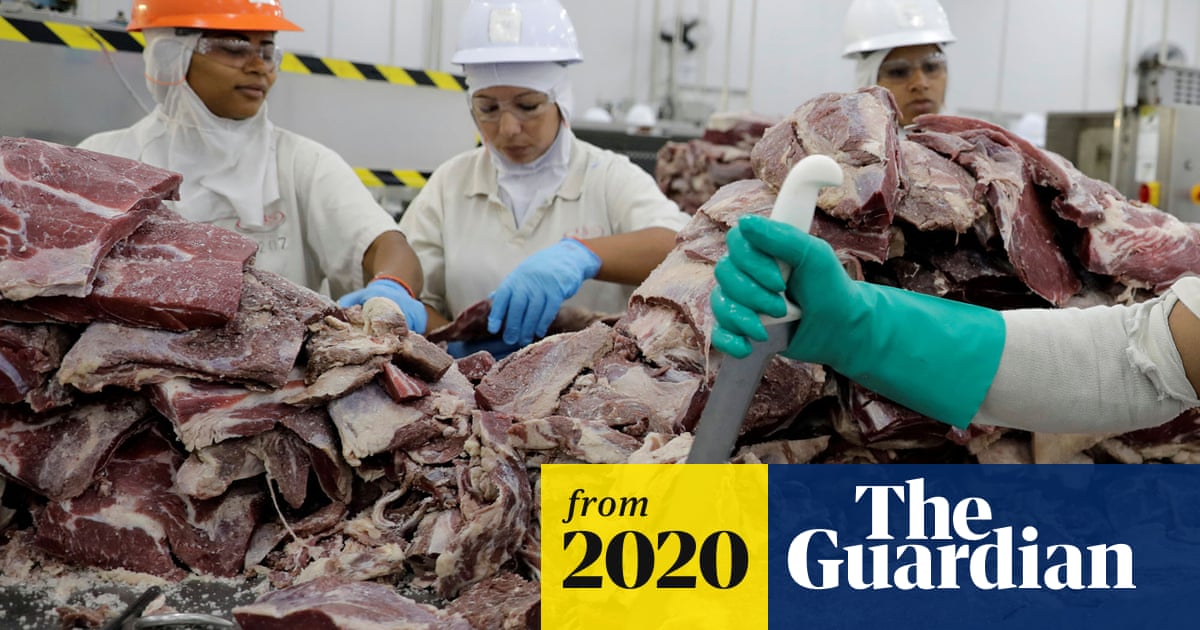
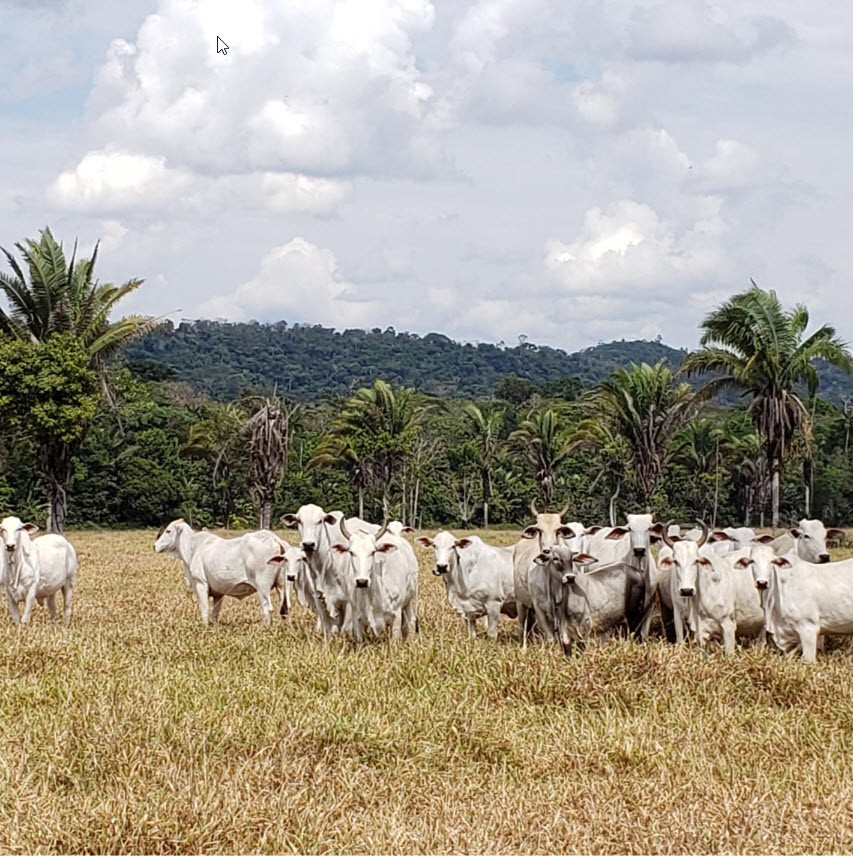
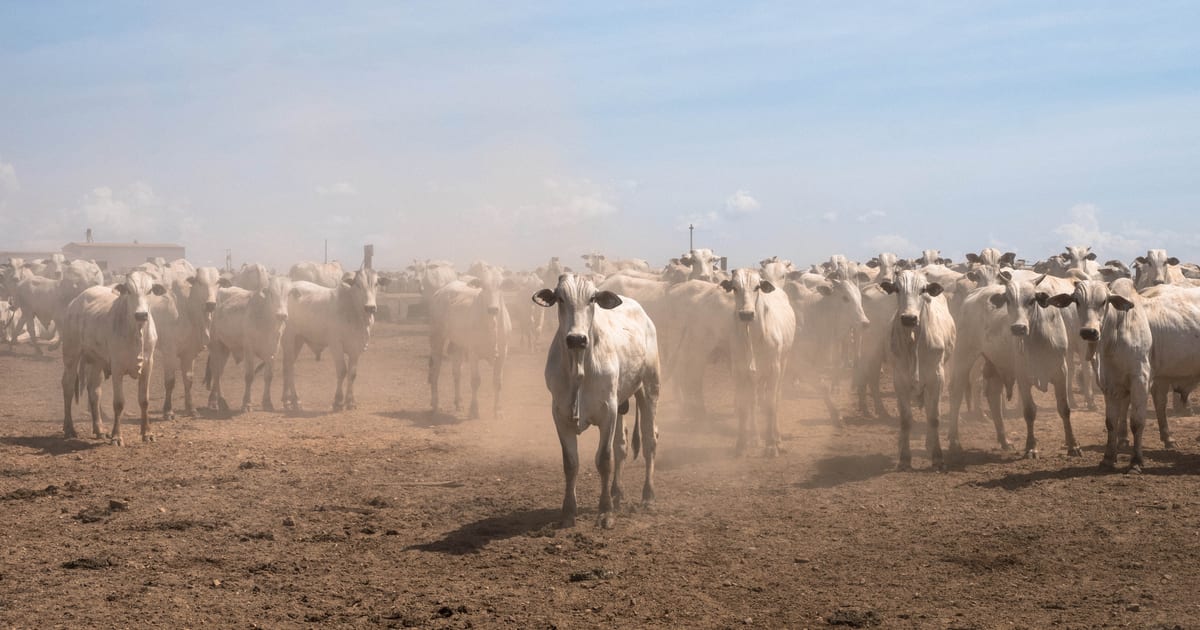
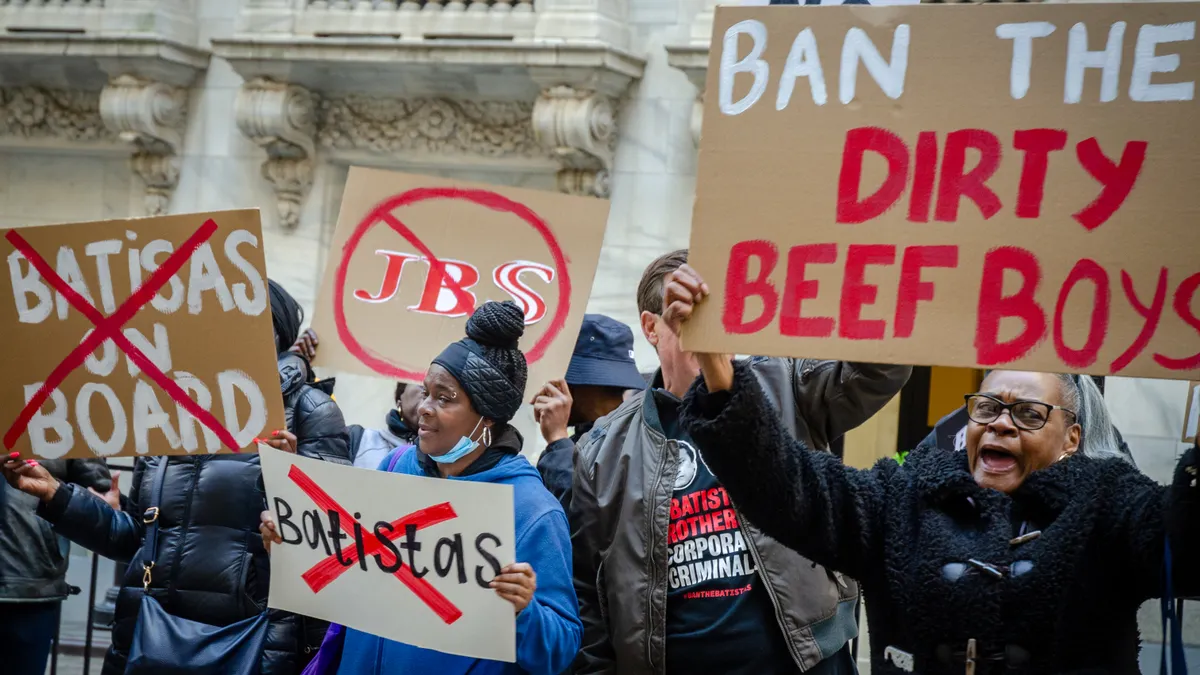
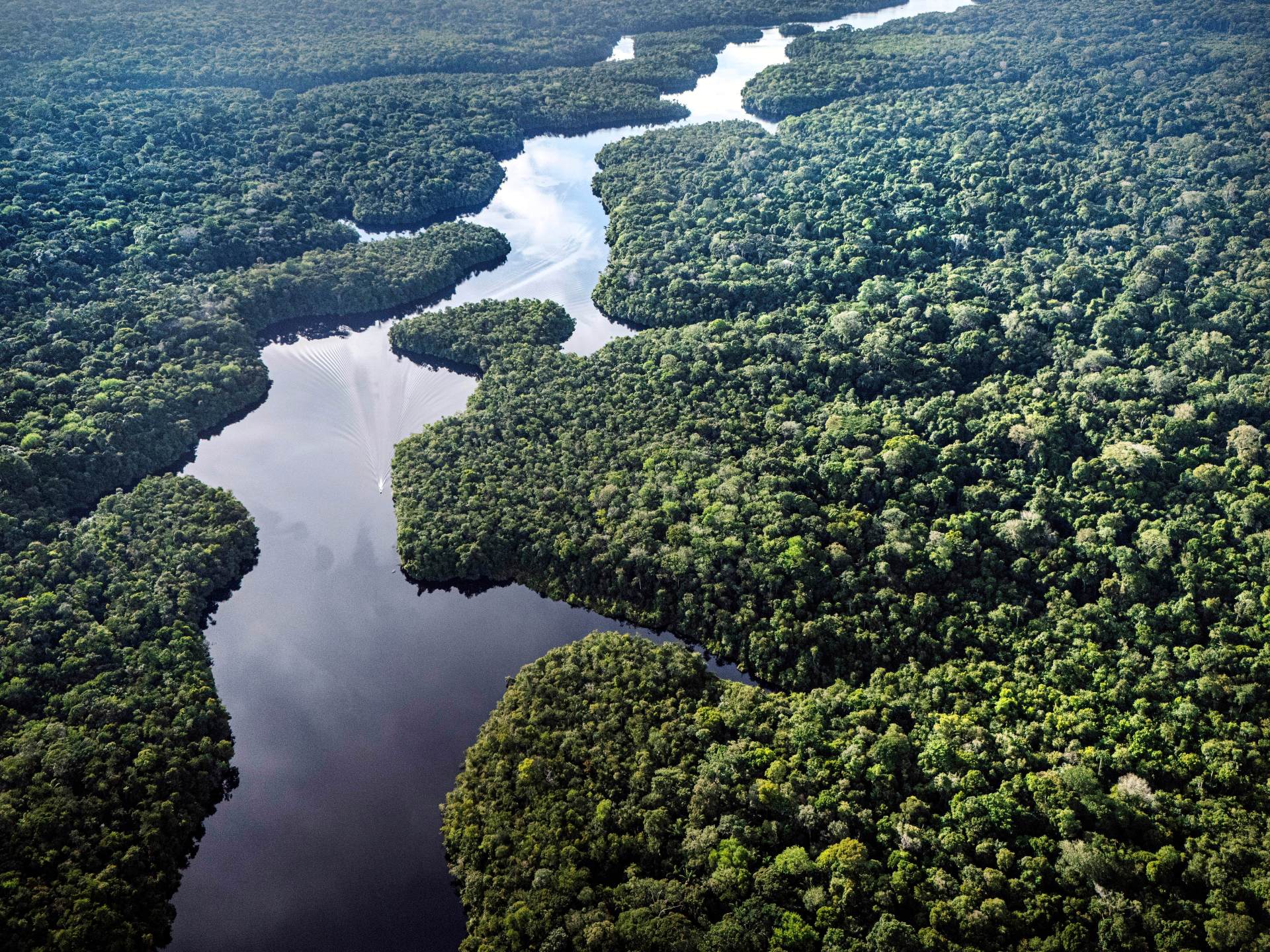
In 2020, facing renewed international pressure, JBS launched the "Together for the Amazon" program and the "JBS Green Platform." The company set a new deadline: it would achieve zero illegal deforestation in its supply chain, including indirect suppliers, by 2025.
Verified Against Public And Audited RecordsLong-Form Investigative Review
Reading time: ~35 min
File ID: EHGN-REVIEW-32742
Cattle laundering schemes obscuring deforestation in the Amazon supply chain
When investigators from Repórter Brasil, The Guardian, and Amnesty International presented proof of "cattle laundering", the practice of moving cattle.
Primary RiskLegal / Regulatory Exposure
JurisdictionEPA
Public MonitoringThe audit exposed the failure of JBS to monitor the earlier stages of its.
Report Summary
Yet, state prosecutors utilized these very documents to build a map of "cattle washing." The lawsuits alleged that JBS plants in Rondônia accepted cattle directly from the protected reserve or from "clean" intermediaries that had received animals from the reserve days earlier. The company's inability to exclude cattle from a notorious, embargoed state park, years after the scheme was exposed, suggests that its priority remains volume and profit rather than genuine supply chain integrity. A. to process cattle from deforested Amazonian land while claiming environmental compliance is the distinction between "direct" and "indirect" suppliers.
Key Data Points
A 2022 audit by the Federal Public Ministry in Pará found that nearly 17 percent of cattle purchased by JBS came from ranches with irregularities. This figure represents approximately 93, 734 head of cattle in a single year within one state. He is currently serving a prison sentence of nearly 100 years for crimes including leading a criminal organization and slave labor. even with his notorious reputation and incarceration, JBS continued to source cattle from his operations. A joint investigation by Repórter Brasil and Greenpeace revealed that JBS purchased approximately 9, 000 head of cattle from the Pozzebon family between.
Investigative Review of JBS S.A.
Why it matters:
The 'Triangulation' Mechanism allows for the laundering of cattle through 'clean' intermediaries, enabling companies like JBS S. A. to profit from illegally deforested land while appearing environmentally compliant.
The GTA Document Loophole in Brazil's cattle industry facilitates this fraud by allowing ranchers to obscure the true origin of cattle through manipulation of sanitary permits, contributing to ongoing deforestation in the Amazon.
The 'Triangulation' Mechanism: Laundering Cattle Through 'Clean' Intermediaries
The Mechanics of Triangulation
The primary engine driving deforestation in the Amazon supply chain is a logistical sleight of hand known as triangulation. This method allows JBS S. A. to process cattle raised on illegally deforested land while maintaining a façade of environmental compliance. The process relies on a distinction between direct suppliers and indirect suppliers. A direct supplier is the final farm that sells the animal to the slaughterhouse. An indirect supplier is any farm where the animal grazed before reaching that final destination. Triangulation exploits this gap. A cow is born and raised on an embargoed property where illegal deforestation has occurred. The rancher then transports the animal to a compliant property with a clean environmental record. The cattle are mixed with the legal herd. After a brief period, the rancher sells the combined herd to JBS. The slaughterhouse checks the status of the final farm. The system shows no embargoes. The purchase proceeds. The beef enters the global market as a clean product.
This laundering scheme is not an accidental. It is a structural feature of the Brazilian cattle industry that JBS has exploited for decades. The method erases the environmental crimes committed during the animal’s early life. Investigations by federal prosecutors in Brazil have repeatedly identified this loophole as the main obstacle to controlling Amazon destruction. The data supports this conclusion. A 2022 audit by the Federal Public Ministry in Pará found that nearly 17 percent of cattle purchased by JBS came from ranches with irregularities. This figure represents approximately 93, 734 head of cattle in a single year within one state. These animals originated from lands linked to illegal deforestation or other environmental crimes. The audit exposed the failure of JBS to monitor the earlier stages of its supply chain. The company relies on the clean status of the final seller to shield itself from liability for the destruction caused by the original breeders.
The GTA Document Loophole
The bureaucratic instrument facilitating this fraud is the Guia de Trânsito Animal or GTA. This document is a mandatory sanitary permit required for every movement of cattle in Brazil. It records the origin, destination, and purpose of the transport. Ranchers problem these documents to move animals between farms for fattening or breeding. Criminal actors manipulate this system to obscure the true origin of the cattle. A rancher operating an illegal farm inside a protected area problem a GTA to move animals to a legal farm owned by the same family or a business associate. The document legitimizes the movement. Once the animals arrive at the legal farm, they are laundered. The GTA issued for the transport to the slaughterhouse lists only the legal farm as the point of origin. The paper trail connecting the cow to the deforested land is broken.
JBS has access to these documents for its direct purchases. The company knows the identity of the final farm. Yet the company has historically claimed an inability to track the previous movements of the herd. This claim contradicts the availability of data. The GTA system is a government database. Prosecutors and NGOs have used this same data to trace cattle back to illegal origins. JBS possesses the resources and technical capacity to perform these checks. The refusal to implement full traceability for indirect suppliers suggests a strategic decision to prioritize volume over compliance. The company benefits from the lower costs associated with cattle raised on land seized from the rainforest or Indigenous territories. The absence of rigorous checks on indirect suppliers provides a market for these animals. This demand incentivizes further deforestation.
The Chaules Pozzebon Case
A definitive example of this method involves the criminal rancher Chaules Pozzebon. Prosecutors have described Pozzebon as one of the largest deforesters in Brazil. He is currently serving a prison sentence of nearly 100 years for crimes including leading a criminal organization and slave labor. even with his notorious reputation and incarceration, JBS continued to source cattle from his operations. A joint investigation by Repórter Brasil and Greenpeace revealed that JBS purchased approximately 9, 000 head of cattle from the Pozzebon family between 2018 and 2022. These transactions occurred while the state held Pozzebon in prison. The cattle moved through a classic triangulation scheme. The animals originated from farms with massive illegal deforestation. They were transferred to a “clean” farm known as Fazenda Akira. JBS bought the cattle from Fazenda Akira. The slaughterhouse systems flagged the purchase as compliant because Fazenda Akira had no embargoes. The company ignored the well-publicized criminal activities of the owner and the obvious laundering pattern.
JBS later admitted to these purchases. The company claimed it was a victim of fraud committed by its own employees in collusion with the supplier. This defense highlights the widespread weakness of their monitoring. The fact that the world’s largest meatpacker could buy thousands of cattle from a known criminal organization for four years demonstrates a total failure of due diligence. The Pozzebon case is not an incident. It is a stress test that the JBS compliance system failed completely. The volume of cattle involved indicates that this was a regular commercial relationship rather than a one-off error. The revenue generated by these sales funded the legal defense of a man convicted of destroying the Amazon. JBS subsidized the operations of a deforestation kingpin through its supply chain negligence.
Invasion of Protected Territories
The reach of cattle laundering extends into the most areas of the Amazon. Recent investigations have documented JBS sourcing cattle linked to the Apyterewa Indigenous Territory in the state of Pará. This territory is one of the most deforested Indigenous lands in Brazil. Invaders enter the territory to clear land for pasture. They raise cattle on this stolen land. The animals are then moved to legal farms outside the territory boundaries. A 2024 report by the Environmental Investigation Agency detailed how cattle from Apyterewa entered the JBS supply chain. The investigation tracked animals from illegal pastures inside the Indigenous land to intermediate farms and to JBS slaughterhouses. The conversion of Indigenous land into cattle pasture is a violent process. It involves the displacement of communities and the destruction of biodiversity. JBS’s demand for beef provides the economic rationale for these invasions. The laundered cattle mix with legal herds and become indistinguishable in the eyes of the consumer.
The Ricardo Franco State Park in Mato Grosso faces a similar assault. This protected area sits on the border with Bolivia and contains unique biodiversity. It has been overrun by illegal cattle ranching. Investigations in 2024 and 2025 confirmed that JBS continued to purchase cattle linked to farms inside this park. The method remains consistent. Farms inside the park transfer cattle to properties outside the park boundaries. The external properties sell to JBS. The company has received repeated warnings about this specific region. Greenpeace and other organizations have flagged the Ricardo Franco State Park as a high-risk zone for years. JBS continues to operate in the region and process animals from the surrounding areas. The persistence of these purchases shows that the company’s “zero tolerance” policy for deforestation in protected areas is not functioning on the ground.
The Pantanal Wetlands Expansion
The problem of triangulation is not confined to the Amazon biome. It also plagues the Pantanal wetlands. This region is the world’s largest tropical wetland and a sanctuary for jaguars and other wildlife. The beef industry is expanding aggressively into this ecosystem. A 2024 investigation linked JBS to the destruction of the Pantanal. Satellite analysis showed that direct and indirect suppliers to JBS were responsible for clearing vast areas of wetland vegetation. The pattern mirrors the Amazon strategy. Ranchers clear the land to create pasture. They move cattle between properties to mask the environmental damage. JBS buys the cattle. The company has announced plans to build the largest slaughterhouse in Latin America in the Pantanal region. This expansion signals a commitment to industrialize the wetlands. The infrastructure increase the demand for cattle in an area that is already shrinking due to climate change and fires. The laundering of cattle in the Pantanal threatens to destroy a second major biome while the world focuses on the Amazon.
Audit Failures and Statistical Manipulation
JBS defends its record by citing independent audits. These audits frequently present a distorted picture of reality. The auditors examine only the direct suppliers. They check if the final farm has an embargo. They do not investigate the indirect suppliers. This limited scope allows JBS to claim high compliance rates that do not reflect the true environmental cost of its beef. The 2023 audit released by federal prosecutors showed a compliance rate of 94 percent for JBS. This number is misleading. It ignores the indirect supply chain where the majority of deforestation occurs. The audit protocol itself has been the subject of intense debate. Prosecutors have pushed for stricter criteria that would force companies to account for the entire life of the animal. JBS has resisted the immediate implementation of full traceability. The company has set for monitoring indirect suppliers by 2025 or 2026. These future dates allow the current system of laundering to continue unchecked for years.
The gap between JBS’s claims and the findings of independent investigators is massive. Radar Verde is a monitoring initiative that assesses the deforestation risk of meatpackers. Its 2024 data indicated that JBS is at risk of contributing to over 9 million hectares of deforestation by 2025. This estimate includes the exposure through indirect suppliers. The gap between the audit results and the risk analysis illustrates the effectiveness of the triangulation method. It hides the destruction from the official compliance checks while leaving the physical evidence of deforestation visible to satellite monitoring. The company uses the audits as a shield against criticism. They point to the high compliance rates of direct suppliers to that they are solving the problem. The reality is that they are outsourcing the deforestation to the invisible part of their supply chain.
The ‘Green Platform’ Deception
JBS has launched various technological initiatives to address these problem. The “Transparent Livestock Platform” is their flagship project. It use blockchain technology to track cattle. The company promotes this platform as the solution to the indirect supplier problem. Participation in the platform is currently voluntary for indirect suppliers. This voluntary nature renders the system ineffective for stopping crime. Criminal ranchers do not volunteer to be monitored. They do not upload their data to a system that would expose their illegal activities. The platform creates a bifurcated market. Honest ranchers may join. Deforesters continue to use the triangulation method to bypass the system. The deadline for mandatory participation keeps shifting. JBS promised full traceability by 2025. Recent statements suggest this goal may slip further. The delay buys time for the industry to clear more land before the digital fence closes.
The Attorney General of New York took legal action against JBS in 2024 precisely because of these misleading claims. The lawsuit alleges that the company’s “Net Zero by 2040” commitment is fraudulent. The core of the argument is that JBS has no viable plan to calculate or reduce its total emissions. The emissions from deforestation in the supply chain are a massive component of the company’s carbon footprint. By failing to track indirect suppliers, JBS cannot even measure its true emissions. The company cannot reduce what it does not measure. The triangulation method hides the carbon liability just as it hides the legal liability. The lawsuit exposes the connection between the physical laundering of cattle and the corporate laundering of environmental reputation. The “clean” intermediary farm allows JBS to sell “sustainable” bonds to investors while buying beef from the ashes of the rainforest.
The 'Triangulation' Mechanism: Laundering Cattle Through 'Clean' Intermediaries
Indirect Supplier Loopholes: The Systemic Blind Spot in JBS’s Monitoring
The Architecture of Ignorance: Defining the Indirect Supplier
The central method enabling JBS S. A. to process cattle from deforested Amazonian land while claiming environmental compliance is the distinction between “direct” and “indirect” suppliers. This bureaucratic separation serves as a firewall against accountability. A direct supplier is the final farm that sells the animal to the slaughterhouse. Indirect suppliers are the farms that breed, rear, and background the cattle before selling them to the fattening farm. In the Brazilian Amazon, a single cow frequently moves through three or more properties before slaughter. JBS’s monitoring systems have historically scrutinized only the final link in this chain. This allows a “clean” farm to purchase cattle from a “dirty” farm (one with illegal deforestation) and sell them to JBS without triggering alarms. The deforestation remains off the books because it occurred at a Tier 2 or Tier 3 property which JBS does not monitor.
This blind spot is not a minor technical glitch. It is the defining feature of the supply chain. Industry estimates suggest that indirect suppliers account for roughly 50% of the cattle entering the slaughter pipeline. By failing to monitor this half of the chain, JBS outsources deforestation to upstream actors who operate in the shadows. The “laundering” occurs when the cattle are transferred from an embargoed property to a compliant one. Once the animals arrive at the compliant farm, their “origin” is reset in the eyes of the slaughterhouse’s basic monitoring.
The 2009 Agreement and the Decade of Delay
The failure to monitor indirect suppliers represents a breach of long-standing commitments. In 2009, JBS signed the legally binding Terms of Adjustment of Conduct (TAC) with the Federal Prosecutor’s Office (MPF) in Brazil. Under this agreement, the company promised to implement full supply chain monitoring, including indirect suppliers, by 2011. JBS missed this deadline. For over a decade, the company continued to profit from the Amazon while claiming that the technology to track indirect suppliers did not exist or was too difficult to implement. Yet the government’s Animal Transit Guide (GTA) system, which tracks sanitary compliance for every cattle movement, has existed throughout this period. The data to link these farms was available. The to use it was absent.
In 2020, facing renewed international pressure, JBS launched the “Together for the Amazon” program and the “JBS Green Platform.” The company set a new deadline: it would achieve zero illegal deforestation in its supply chain, including indirect suppliers, by 2025. As of early 2026, this target stands as another missed milestone. Investigations conducted in late 2024 and 2025 by organizations such as Greenpeace and Unearthed confirmed that JBS continued to source cattle linked to illegal deforestation. The 2025 deadline passed with the company still unable to guarantee a clean supply chain. The goalposts have since shifted toward a 2030 “global” target, buying the company another five years of operation under the current flawed model.
The “Green Platform” and Voluntary Blindness
The “JBS Green Platform,” touted as a blockchain-based solution to the indirect supplier problem, suffers from a fatal design flaw: it relies on voluntary compliance. The system asks direct suppliers to upload GTA documents from their own suppliers. This creates a paradox where the system expects actors engaged in illegal activity to voluntarily report that activity. Ranchers laundering cattle from embargoed areas have no incentive to upload data that would incriminate them. Consequently, adoption rates for the platform have remained insufficient to close the laundering gaps.
Data from late 2024 indicated that while JBS claimed significant enrollment in the platform, the verification of these claims remained unclear. The platform does not automatically pull data from state databases due to alleged privacy concerns. Instead, it relies on the cooperation of the very supply chain actors who benefit from the. Without mandatory, government-integrated tracking that forces transparency on every animal movement, the “Green Platform” functions more as a public relations shield than a rigorous compliance tool.
Audit Discrepancies: The Compliance Mirage
JBS frequently cites independent audits to defend its record. These audits frequently report compliance rates exceeding 99% for Amazon cattle purchases. These numbers are statistically accurate contextually deceptive. The audits strictly measure compliance among *direct* suppliers against the company’s sourcing criteria. If a direct supplier is “clean,” the purchase is marked as compliant, regardless of where the cattle were born. The auditors do not investigate the upstream history of the animals unless specific “red flag” criteria are triggered. This creates a compliance mirage where the paperwork is perfect, the physical reality of the supply chain remains tainted by forest destruction.
The Federal Prosecutor’s Office (MPF) audits have repeatedly shown this. While direct supplier compliance improved under the TAC, the MPF has consistently pointed out the “leakage” from indirect suppliers. In 2024, investigations revealed that cattle from the Pantanal wetlands, another biome ravaged by deforestation, were entering the JBS supply chain through similar indirect gaps, proving that the widespread failure is not limited to the Amazon. The table illustrates the gap between JBS’s reported compliance and the reality of the indirect supply chain.
Table 2. 1: The Visibility Gap in JBS Amazon Sourcing (2020-2025)
Metric
Direct Suppliers (Tier 1)
Indirect Suppliers (Tier 2+)
JBS Reported Compliance
99%, 100% (Social/Environmental)
Not consistently reported in audits
Monitoring Status
Geospatial monitoring of farm boundaries
Partial/Voluntary via Green Platform
Deforestation Risk
Low (due to direct monitoring)
High (primary source of leakage)
Verification Method
Satellite overlay + Public Embargo Lists
Self-declaration (Blockchain) or None
2025 Target Status
Achieved (per JBS criteria)
Failed (Deadline Missed)
The persistence of this loophole allows JBS to maintain high production volumes. Closing the indirect supplier gap would require blocking thousands of ranches and significantly reducing the available pool of cattle. This would impact the company’s bottom line and its ability to feed its global processing network. The economic incentive to keep the blind spot open outweighs the reputational cost of missed deadlines. Until the Brazilian government mandates full animal traceability from birth to slaughter, linking the GTA system directly to slaughterhouse procurement systems, the indirect supplier loophole remain the primary conduit for Amazon deforestation entering the global beef market.
Indirect Supplier Loopholes: The Systemic Blind Spot in JBS’s Monitoring
Operation Cold Meat II: Federal Raids on Deforestation-Linked Slaughterhouses
The Distinction: Weak Flesh vs. Cold Flesh
To understand the enforcement against JBS, one must disentangle two similarly named distinct federal operations that struck the Brazilian meat industry in March 2017. Global media frequently conflated them, yet their differed fundamentally. Operação Carne Fraca (Operation Weak Flesh), led by the Federal Police, exposed sanitary corruption, rotten meat, and the bribery of health inspectors. It was a public health scandal. Simultaneous to this, far less reported in Western financial press, was Operação Carne Fria (Operation Cold Flesh). Led by IBAMA (Brazilian Institute of Environment and Renewable Natural Resources), this operation did not concern itself with salmonella or acid-washed beef. It targeted the supply chain’s environmental DNA: the laundering of cattle from embargoed deforestation zones.
While Weak Flesh rattled JBS’s stock price due to food safety fears, Cold Flesh struck at the company’s operational model in the Amazon. On March 21, 2017, IBAMA agents, supported by federal battalions, descended on the municipality of Redenção in southern Pará. Their target was not the sanitary conditions of the slaughterhouses, the origin of the animals entering the chutes. The raid marked the time the federal government explicitly linked major meatpackers to the “triangulation” method described in previous sections, moving from theoretical accusations to prosecutorial evidence.
The 2017 Pará Raids: Anatomy of a Laundering Hub
The 2017 offensive focused on a specific cluster of slaughterhouses in Pará, a state synonymous with violent frontier expansion. IBAMA embargoed 15 meatpacking plants, two of which belonged to JBS S. A.: the units in Redenção and Santana do Araguaia. The agency’s intelligence unit had spent three years cross-referencing GTA (Animal Transit Guide) data with satellite imagery of embargoed properties, land legally barred from commercial use due to prior illegal deforestation.
The findings were forensic and damning. IBAMA investigators proved that JBS and its competitors had purchased 58, 879 heads of cattle from twenty-six embargoed farms. These animals were sourced from 507 square kilometers of illegally deforested land, an area roughly the size of Curitiba. The specific mechanics of the raid revealed that 90% of these cattle flowed into the two JBS plants. The sheer volume dispelled any defense of ” incidents” or “clerical errors.” This was industrial- non-compliance.
The raid exposed the physical reality of the “cattle laundering” theory. Agents seized documents showing animals moving from Fazenda A (embargoed) to Fazenda B (clean) frequently within hours or days, solely to generate a clean GTA for transport to the JBS slaughterhouse. The total fines levied during the initial phase of Operation Cold Flesh amounted to R$ 264. 28 million (approximately US$ 85 million at 2017 exchange rates). JBS alone faced fines of R$ 24. 7 million. More serious, IBAMA ordered the suspension of operations at the targeted plants, a move that threatened to choke JBS’s supply line in one of Brazil’s most productive cattle regions.
Judicial Evasion and the “Paper” Compliance
The aftermath of the 2017 raids demonstrated the asymmetry between environmental enforcement and corporate legal power. Within days of the IBAMA embargoes, JBS lawyers secured preliminary injunctions from the Federal Justice system in Pará. These court orders allowed the Redenção and Santana do Araguaia plants to resume slaughtering operations immediately, neutralizing the primary punitive tool of the environmental agency. The argument used by the defense was procedural: JBS claimed it had no way of knowing the “origin” beyond the direct supplier, even with IBAMA holding evidence of the triangulation.
This judicial victory for JBS established a pattern that would define the decade. While the fines remained on the books (frequently unpaid and tied up in appeals for years), the operational stoppage, the only penalty that truly impacts quarterly earnings, was ephemeral. The company issued statements citing its “Responsible Procurement Policy” and “99. 9% compliance” rates, figures derived from monitoring only the final link in the chain. The 2017 raids proved that this monitoring system was not a shield against deforestation, a blinder that allowed the company to claim ignorance of the laundering occurring one step upstream.
Operation Cold Meat II: The 2024 Resurgence
Following a period of dormant enforcement between 2019 and 2022, during which environmental agencies faced severe budget cuts, IBAMA reactivated the protocol in October 2024. Dubbed Operation Cold Meat II, this second wave was designed to test whether the industry had reformed its practices seven years after the initial scandal. The results showed a persistent, widespread failure.
In this 2024 offensive, IBAMA targeted 23 meatpacking companies. The scope had expanded, the crime remained identical. Agents tracked 18, 000 heads of cattle raised on 260 square kilometers of embargoed pasture. The operation levied R$ 364 million in fines. JBS was again a primary target. even with seven years of public sustainability pledges, “Net Zero 2040” marketing campaigns, and the implementation of blockchain “pilots,” federal agents found JBS purchasing cattle laundered from embargoed zones. The company was fined specifically for the irregular purchase of 1, 231 animals in this sweep, a smaller number than 2017, yet proof that the triangulation gaps remained wide open.
The 2024 raids utilized updated geospatial technology. IBAMA could trace the “breeding” and “rearing” phases more, piercing the veil of the indirect supplier. The evidence showed that cattle were still grazing on lands embargoed years prior, only to be trucked to “clean” farms for a final fattening period before sale to JBS. The persistence of this method revealed that the company’s internal compliance systems were either incompetent or willfully designed to ignore the obvious triangulation signals flagged by federal intelligence.
Phase III: The 2025 Tucumã Indictment
The pressure intensified in August 2025, when IBAMA launched the third phase of the operation. This specific intervention targeted the JBS unit in Tucumã, Pará, and issued notifications to its plant in Marabá. By this stage, the recidivism was undeniable. The 2025 investigation focused on the “heating” of cattle (esquentamento de gado), the local term for laundering. Agents identified that JBS plants were continuing to accept animals from suppliers who had been flagged in both the 2017 and 2024 operations.
The 2025 findings highlighted a disturbing absence of evolution in JBS’s verification. In Tucumã, agents found that the “clean” intermediaries were frequently owned by the same family clans as the embargoed deforesters. The transfer of cattle was an internal family transaction, transparent to anyone looking at the ownership structures, yet treated as a legitimate arm’s-length transaction by JBS’s compliance software. This phase resulted in further fines and renewed threats of embargoes, which were again met with immediate legal challenges from JBS.
The Failure of Self-Regulation
The trajectory from Operation Cold Flesh I (2017) to Phase III (2025) provides an empirical record of failure. The raids prove that JBS’s “Zero Deforestation” commitment is functionally unenforceable under its current operating model. The company relies on the GTA system, which state agencies problem even to embargoed properties for “fattening” purposes, creating a state-sanctioned loophole for laundering. IBAMA’s interventions serve as periodic audits revealing that the supply chain remains contaminated. The fines, while totaling hundreds of millions of Reais, represent a fraction of the revenue generated by processing cattle from the Amazon biome. Until the “clean” intermediary is subjected to the same scrutiny as the direct supplier, federal raids remain a game of whack-a-mole, removing illegal cattle from the line for a week, only for them to return through a neighbor’s fence the following Monday.
Operation Cold Meat II: Federal Raids on Deforestation-Linked Slaughterhouses
Inside Jaci-Paraná: Sourcing Beef from a Decimated Extractive Reserve
Inside Jaci-Paraná: Sourcing Beef from a Decimated Extractive Reserve The Jaci-Paraná Extractive Reserve in Rondônia stands as the most devastated protected area in the Brazilian Amazon. Created in 1996 to safeguard the livelihoods of traditional rubber tappers and nut gatherers, the reserve strictly prohibits commercial cattle ranching. Yet investigations reveal that JBS S. A. has repeatedly sourced cattle linked to this embargoed territory. The reserve has lost nearly 80 percent of its forest cover to illegal pasture. This destruction is not accidental the result of a systematic invasion fueled by the demand for beef. Criminal networks seized control of the territory and expelled traditional residents through violence and intimidation. By 2023, state data estimated that 216, 000 head of cattle grazed illegally within the reserve boundaries. These animals do not stay in the forest. They enter the legitimate supply chain through a process of laundering that JBS has failed to detect or halt. The method relies on the complicity of state agencies and the strategic use of intermediate farms to mask the illegal origin of the livestock. Amnesty International exposed the mechanics of this trade in its 2020 report *From Forest to Farmland*. The investigation documented how JBS purchased cattle from ranchers who operated illegal holdings inside Jaci-Paraná. These ranchers moved animals from the reserve to legal properties outside the protected zone. Once the cattle reached the legal farm, the owner issued a Guide to Animal Transit (GTA). This document declared the legal farm as the point of origin. The slaughterhouse then accepted the cattle as compliant. The physical transfer of animals erased their illegal history. State records from IDARON, the animal health agency of Rondônia, confirm the of this laundering. IDARON issued transit permits for cattle leaving the reserve even with the ban on commercial ranching in the area. These official documents gave a veneer of legality to criminal activity. In 2019 alone, IDARON data showed nearly 90, 000 cattle were transferred off farms located in protected areas of Rondônia. JBS bought cattle directly from farmers who managed these illegal operations. The company’s monitoring systems flagged the direct supplier ignored the obvious link to the reserve. The case of Jaci-Paraná demonstrates the failure of JBS to police its indirect suppliers. A rancher can own a “dirty” farm inside the reserve and a “clean” farm a few kilometers away. JBS monitors only the clean farm. The rancher moves cattle between the two properties. JBS buys the cattle. The beef enters the global market. This loophole allows the company to claim compliance with its zero-deforestation pledges while processing animals raised on stolen public land. Legal pressure on JBS regarding Jaci-Paraná intensified in December 2023. The state of Rondônia filed lawsuits against JBS and other meatpackers seeking millions in environmental damages. The suits alleged that the companies purchased cattle raised illegally in the reserve. Evidence included transfer documents showing cows moving from the protected area to slaughterhouses. This direct link challenged the company’s defense that it only buys from legal sources. The litigation sought 3. 4 million dollars from JBS and associated farmers for the invasion and exploitation of protected lands. The political in Rondônia illustrates the power of the illegal cattle industry. In May 2021, state lawmakers passed legislation to reduce the size of the Jaci-Paraná reserve by 90 percent. This move aimed to grant amnesty to the invaders and legalize the stolen land. The law rewarded the criminal destruction of the rainforest. Although courts later challenged this reduction, the legislative attempt signaled the deep entrenchment of cattle interests in the region. JBS benefits from this political climate where deforestation creates new supply zones. Federal raids and fines have targeted the supply chain connected to Jaci-Paraná. In October 2024, Brazilian authorities fined JBS 108, 000 dollars for purchasing 1, 231 head of cattle linked to illegal deforestation. This penalty followed a three-month investigation by Ibama, the federal environmental agency. The operation confirmed that the company continued to source animals from embargoed areas even with years of public commitments to clean up its supply chain. The fines represent a fraction of the profit generated from these operations mark a shift toward holding processors accountable for the crimes of their suppliers. The destruction of Jaci-Paraná is absolute. Satellite imagery shows a grid of pastures where dense rainforest once stood. The rubber tappers are gone. In their place are herds of cattle destined for JBS slaughterhouses in Porto Velho. The beef from these animals travels to markets in the United States, China, and Europe. Consumers purchase this meat unaware that it comes from a reserve explicitly created to stop such exploitation. The supply chain does not just hide the crime. It incentivizes the crime by providing a guaranteed buyer for cattle raised on looted land. JBS maintains that it blocks non-compliant farms. Yet the persistence of cattle from Jaci-Paraná in its supply chain proves the inadequacy of its controls. The company relies on a monitoring system that criminals easily circumvent. As long as the laundering method remains functional, the reserve continue to function as an illegal breeding ground for the world’s largest meatpacker. The extraction of value from Jaci-Paraná is complete. The forest is gone. The cattle remain. And JBS continues to buy.
Inside Jaci-Paraná: Sourcing Beef from a Decimated Extractive Reserve
The Ricardo Franco Scandal: Repeated Sourcing from Embargoed State Parks
The Ricardo Franco Scandal: Repeated Sourcing from Embargoed State Parks
The Serra de Ricardo Franco State Park in Mato Grosso stands as a monument to the failure of environmental enforcement in the Brazilian Amazon. Created in 1997, this 158, 000-hectare reserve was designed to protect a unique transition zone between the Amazon, Cerrado, and Pantanal biomes. Yet, for decades, it has functioned as a “paper park”, a protected area in name only, where illegal cattle ranching operates with near-total impunity. JBS S. A. has repeatedly sourced cattle from this embargoed territory, exposing a supply chain deeply contaminated by criminal deforestation. Investigations spanning from 2016 to 2025 reveal that JBS slaughterhouses in Pontes e Lacerda and other municipalities processed thousands of animals raised on illegally cleared land within the park’s boundaries.
The Triangulation method: Fazenda Paredão to Barra Mansa
The method used to obscure the illegal origins of these cattle is a textbook example of triangulation, or “cattle laundering.” The primary source of the livestock was Fazenda Paredão (I and II), a massive ranching operation located entirely inside the state park. Because the park is a strict protection unit, commercial cattle ranching within its borders is illegal. Consequently, Fazenda Paredão could not sell directly to major meatpackers without triggering immediate blocks in compliance systems. To bypass this, the cattle were transferred to Fazenda Barra Mansa, a property located just outside the park’s perimeter.
Both Fazenda Paredão and Fazenda Barra Mansa were controlled by the same individual: Marcos Antonio Assi Tozzatti. This ownership structure facilitated the direct movement of livestock from the illegal zone to the legal one. Once the cattle arrived at Barra Mansa, they were registered under that property’s clean environmental credentials. JBS then purchased the animals from Barra Mansa, treating them as compliant inventory. Between April 2018 and June 2019 alone, Fazenda Paredão transferred at least 4, 000 head of cattle to Barra Mansa. JBS plants subsequently bought thousands of animals from Barra Mansa, monetizing the destruction of the state park.
Political Connections and High-Level Impunity
The scandal extends beyond mere regulatory non-compliance into the highest echelons of Brazilian politics. Investigations by the Federal Public Ministry (MPF) and environmental groups revealed that Fazenda Paredão was not the only illegal operation involved. Fazenda Cachoeira, another property situated within the park, was co-owned by Tozzatti and Eliseu Padilha, a former chief of staff to President Michel Temer. Padilha, a political figure, held a partnership in the company Jasmim Agropecuária, which controlled the land.
In 2016, the MPF filed lawsuits seeking to freeze assets belonging to Tozzatti, Padilha, and their associates to cover environmental damages. Prosecutors estimated that thousands of hectares of native forest had been razed to create pasture for these herds. In 2025, Brazil’s Supreme Federal Court (STF) maintained a freeze of R$ 38 million on Padilha’s assets, citing the illegal deforestation of 735 hectares within the park. even with these high-profile legal battles and public denunciations, JBS continued its commercial relationship with the network. The company’s compliance systems, which it frequently touts as, failed to flag the obvious connection between the illegal park ranches and the intermediary supplying the slaughterhouses.
Persistence of the Scheme: 2020 to 2025
JBS has repeatedly claimed that it blocks suppliers found to be deforesting illegally. Yet, evidence shows that the company continued to source from the Tozzatti network long after the scandal broke. A 2020 report by Greenpeace detailed the laundering scheme, prompting global outrage. JBS responded by asserting it had a “zero tolerance” policy. Nevertheless, a subsequent investigation by World Animal Protection released in late 2025 found that the pattern had not stopped. In 2024, JBS purchased at least 790 cattle from Fazenda Barra Mansa. These animals had been transferred from the illegal Fazenda Paredão, which by then had cleared an area equivalent to over 80, 000 tennis courts inside the park.
The persistence of this trade demonstrates a serious flaw in JBS’s monitoring. The company monitors direct suppliers consistently ignores the upstream origins of the cattle. Even when a direct supplier like Barra Mansa is publicly linked to an illegal operation by the same owner, JBS’s systems frequently treat it as a separate, compliant entity. This willful blindness allows the company to profit from cattle raised in embargoed conservation units while maintaining a veneer of legality for international buyers in Europe and China.
Table 5. 1: Key Entities in the Ricardo Franco Laundering Scheme
Entity Name
Role in Supply Chain
Legal Status
Connection to JBS
Fazenda Paredão (I & II)
Source Farm (Breeding/Rearing)
Illegal (Inside State Park)
Indirect supplier via laundering
Fazenda Barra Mansa
Laundering Intermediary
Legal (Outside Park)
Direct supplier to JBS plants
Marcos Antonio Assi Tozzatti
Owner/Operator
Charged with environmental crimes
Beneficial owner of supplier
Eliseu Padilha
Partner in Fazenda Cachoeira
Assets frozen (R$ 38m)
Politically exposed person linked to park
JBS Pontes e Lacerda
Processing Facility
Federal Inspection (SIF)
Purchaser of laundered cattle
Environmental Impact and Legal
The ecological cost of this scheme is severe. The Ricardo Franco State Park has lost over 20% of its forest cover, largely due to illegal cattle ranching. The deforestation threatens endangered species such as the giant otter and the orange-breasted falcon. The MPF’s actions against the landowners highlight the of the damage, yet the fines and asset freezes have not deterred the industry. The cattle continue to flow, and the meat continues to reach global markets.
JBS’s involvement in the Ricardo Franco case serves as a definitive case study of the “indirect supplier” problem. It proves that without full traceability, monitoring the animal from birth to slaughter, corporate pledges to end deforestation are functionally meaningless. The company’s inability to exclude cattle from a notorious, embargoed state park, years after the scheme was exposed, suggests that its priority remains volume and profit rather than genuine supply chain integrity.
The Ricardo Franco Scandal: Repeated Sourcing from Embargoed State Parks
Indigenous Territory Invasion: The Apyterewa and Naruvôtu Supply Links
SECTION 6 of 13: Indigenous Territory Invasion: The Apyterewa and Naruvôtu Supply Links
The invasion of protected Indigenous lands remains one of the most violent and profitable frontiers for the Brazilian cattle industry. While JBS S. A. publicly touts zero-tolerance policies, investigations conducted between 2020 and 2025 expose a supply chain deeply in the illegal occupation of the Apyterewa and Naruvôtu territories. In these regions, the “cattle laundering” method—transferring animals from embargoed reserves to “clean” intermediary farms—operates not as a glitch, as a standard logistical workaround. #### The Apyterewa emergency: Laundering on an Industrial The Apyterewa Indigenous Territory in Pará, home to the Parakanã people, stands as the most deforested Indigenous land in the Brazilian Amazon. By late 2023, invaders had converted over 47, 000 hectares of protected forest into pasture, supporting an illegal herd estimated at 60, 000 head of cattle. A 2024 report by the Environmental Investigation Agency (EIA) and Repórter Brasil dismantled the fiction that these animals remained from global markets. The investigation tracked cattle moving from illegal farms inside Apyterewa to “clean” intermediary properties, which then sold the animals directly to JBS slaughterhouses. State-issued animal transit permits (GTAs) documented the flow of approximately 12, 000 cattle from 58 illegal farms within the territory to external ranches between 2020 and early 2023. Of these, over 6, 000 animals went to 43 specific intermediary farms that subsequently supplied JBS. **Key Intermediaries Identified:** * **Fazenda Nova Esperança:** Located in São Félix do Xingu, this property received at least 131 animals directly from illegal farms inside Apyterewa. During the same period, it sent nearly 3, 000 cattle to the JBS slaughterhouse in Tucumã. * **Sítio 2 Irmãs:** This farm received over 1, 000 animals from seven different illegal properties within the reserve. * **Fazenda Boi Branco:** Situated on the border of the territory, this farm transported 2, 730 more animals than it officially received, a statistical gap that investigators flag as a hallmark of “paper laundering”—where cattle never physically enter the clean farm are registered there to sanitize their origin. The of this operation required the complicity of state oversight bodies. The Pará phytosanitary agency (Adepará) issued transit permits for thousands of cattle leaving the reserve, legalizing the leg of their journey into the JBS supply chain. When federal authorities launched a “disintrusion” operation in late 2023 to expel invaders, the damage was absolute: vast tracts of the Parakanã territory had been stripped for beef production that JBS facilities in Tucumã, Redenção, and Marabá processed for years. #### The Naruvôtu Connection: The Schaedler Case (2018–2025) While Apyterewa represents a widespread failure involving hundreds of actors, the invasion of the Pequizal do Naruvôtu Indigenous Territory in Mato Grosso highlights the persistence of specific, high-volume offenders within JBS’s supplier list. A September 2025 investigation by Greenpeace Brazil identified Mauro Fernando Schaedler as a central figure in sourcing beef from this protected land. Schaedler owns **Fazenda Três Coqueiros II**, a property that overlaps significantly with the Naruvôtu territory. even with the Brazilian environmental agency IBAMA embargoing 592 hectares of the farm for illegal deforestation and imposing fines exceeding R$ 1. 5 million, the property continued to produce cattle. The laundering method employed here was rudimentary yet. Between 2018 and 2025, Schaedler transferred at least 1, 238 cattle from the embargoed Três Coqueiros II to a neighboring “clean” property, **Fazenda Itapirana**. This second farm, free of environmental embargoes, served as the logistical to the legal market. Records show Fazenda Itapirana supplied cattle directly to two JBS slaughterhouses: 1. **JBS Água Boa (Mato Grosso):** Received cattle from Itapirana as as February 2025. This facility is authorized to export to Hong Kong. 2. **JBS Barra do Garças (Mato Grosso):** Sourced from Itapirana between 2018 and 2021. This plant holds export authorizations for the European Union and the United Kingdom. The direct link between the Naruvôtu invasion and JBS’s export-approved facilities contradicts the company’s claims of monitoring its indirect supply chain. The transfer of animals from a known environmental offender (Schaedler) to a clean farm (Itapirana) and then to JBS occurred openly, documented by official transit permits. #### widespread Failure of “Zero Tolerance” The persistence of these supply links reveals the functional obsolescence of JBS’s monitoring systems. In both Apyterewa and Naruvôtu, the “dirty” farms were not unknown entities; they were frequently subject to public embargoes and fines. The company’s reliance on checking only the direct supplier—the final link in the chain—allowed laundered cattle to enter its slaughterhouses without triggering compliance alarms. Even as the federal government mobilized military-style operations to evict invaders from Apyterewa in 2024, the commercial infrastructure that incentivized the invasion remained intact. JBS continued to process animals from the region, absorbing the biological assets of the invasion while distancing itself from the crimes committed at the source. The Naruvôtu case further demonstrates that this model survived well into 2025, with laundering method adapting to evade even heightened scrutiny.
The veneer of corporate sustainability that JBS S. A. had meticulously constructed began to fracture publicly in 2020, not from external activist pressure alone, from the internal collapse of its verification apparatus. For years, the meatpacking giant had wielded independent audits as a shield against deforestation allegations, citing “100% compliance” with its sourcing commitments. This defense disintegrated when DNV GL ( DNV), the Norwegian risk management and quality assurance society, took the extraordinary step of restricting the validity of its own assessments. The auditor’s withdrawal was not a contract termination; it was a public disavowal that exposed the widespread blindness deliberately engineered into JBS’s monitoring.
The Compliance Mirage
Throughout the late 2010s, JBS defended its operations against mounting evidence of environmental crimes by pointing to favorable audit reports. When investigators from Repórter Brasil, The Guardian, and Amnesty International presented proof of “cattle laundering”, the practice of moving cattle from embargoed deforestation zones to “clean” intermediaries before slaughter, JBS executives frequently directed inquiries to their high compliance scores. These scores were based on audits performed by DNV GL, which ostensibly verified that JBS was adhering to the “Public Livestock Commitment” signed with Brazilian prosecutors.
The method of this deception lay in the scope of the audit itself. The allowed JBS to limit verification strictly to direct suppliers, the final farm from which cattle were purchased. This methodological tunnel vision ignored the biological reality of cattle rearing, where animals are frequently born on one farm, raised on another, and fattened on a third. By excluding indirect suppliers from the audit scope, JBS could purchase cattle that had spent the majority of their lives on illegally deforested land, provided they passed through a compliant farm just days before slaughter. The “100% compliance” claim was technically accurate within the narrow parameters of the audit factually misleading regarding the deforestation-free status of the beef.
The Public Disavowal
The breaking point arrived in July 2020, following the release of Amnesty International’s report, From Forest to Farmland. The investigation documented specific cases where cattle from illegal farms in protected reserves, such as the Rio Jacy-Paraná, entered JBS’s supply chain. When JBS again attempted to use DNV GL’s audits to refute these findings, the auditor broke its silence. In a statement that reverberated through the global commodities market, DNV GL clarified that its assessments could “not be used as evidence of good practices throughout the entire supply chain.”
DNV GL explicitly confirmed that JBS possessed no systems to trace indirect suppliers, rendering the company blind to the origins of of its raw material. The auditor noted that while the Public Livestock Commitment theoretically covered the entire supply chain, JBS had failed to implement the necessary tracking method to meet this requirement. Consequently, the high compliance rates JBS touted were meaningless indicators of actual environmental performance. This admission nullified JBS’s primary defense, stripping the company of its third-party validation and leaving it exposed to direct liability for the environmental destruction in its supply chain.
and Investor Flight
The auditor’s exit triggered an immediate emergency of confidence among institutional investors. Nordea Asset Management, the investment arm of Northern Europe’s largest financial services group, divested from JBS shortly after the, citing the company’s inability to manage deforestation risks. The decision by Nordea, which controlled a €230 billion fund, signaled to the market that JBS’s environmental liabilities had transitioned from reputational risks to material financial risks. The withdrawal of a major auditor, followed by the exit of a major investor, created a feedback loop that forced JBS to acknowledge the “indirect supplier” problem it had spent a decade ignoring.
The vacuum left by DNV GL’s departure forced JBS to scramble for a replacement narrative. The company continued to engage other auditing firms, such as BDO and Grant Thornton, yet these relationships also faced scrutiny. A December 2020 report by Global Witness implicated both DNV GL and Grant Thornton in conducting “flawed audits” that failed to identify vast swathes of deforested land in the supply chains of JBS, Marfrig, and Minerva. The recurring theme was not necessarily the incompetence of the auditors, the structural limitations imposed by the meatpackers, who refused to provide the data transparency required for a genuine forensic audit.
The Pivot to Blockchain
Deprived of the “clean” audit stamp from a top-tier certifier, JBS pivoted its strategy in 2021. The company announced the launch of the “Transparent Livestock Farming Platform,” a blockchain-based initiative promising to extend monitoring to indirect suppliers by 2025. This move was widely interpreted by industry analysts as a deflection tactic, a way to buy five more years of operation without full traceability while dazzling critics with high-tech buzzwords. The platform relied on voluntary data submission from suppliers, a fatal flaw in a sector defined by informality and illegality. Without the coercive power of a mandatory audit or the independent verification of a firm like DNV GL, the blockchain initiative served as a digital smokescreen, allowing JBS to claim it was “working on” the problem while continuing to source cattle from the same unclear networks that had caused the auditor’s withdrawal.
Table 7. 1: Timeline of Auditor and Investor Actions Against JBS (2020-2021)
Date
Entity
Action
Stated Reason
Feb 2020
The Guardian / Repórter Brasil
Investigation Release
Exposed “cattle laundering” and JBS’s use of audits to mask indirect supplier deforestation.
July 2020
Amnesty International
Report Release
“From Forest to Farmland” report links JBS to illegal grazing in protected reserves.
The 'Cattle Washing' Litigation: Rondônia State’s Multi-Million Dollar Lawsuits
The Rondônia Legal Offensive: A Precedent of Liability
In December 2023, the legal terrain regarding Amazonian deforestation shifted dramatically when the State of Rondônia, through its Attorney General’s Office (PGE-RO), launched a coordinated wave of 17 Public Civil Actions (ACPs) against meatpackers and cattle ranchers. Among the primary was JBS S. A., accused of commercializing livestock raised within the decimated Jaci-Paraná Extractive Reserve. Unlike previous administrative fines which the company frequently contested or ignored, these lawsuits sought civil reparations for environmental damages, aiming to pierce the corporate veil that had long shielded slaughterhouses from the illegal activities of their suppliers. The litigation marked a departure from standard regulatory enforcement, testing a legal theory that holds meatpackers strictly liable for the “environmental product” they process, regardless of their claims of ignorance.
The Evidence: Weaponizing Animal Transit Guides
The core of the state’s case rested on the forensic analysis of Animal Transit Guides (GTAs), the sanitary documents required for moving cattle. For years, JBS argued that privacy laws and state prevented them from seeing the full supply chain. Yet, state prosecutors utilized these very documents to build a map of “cattle washing.” The lawsuits alleged that JBS plants in Rondônia accepted cattle directly from the protected reserve or from “clean” intermediaries that had received animals from the reserve days earlier. In one specific instance detailed in the filings, prosecutors traced 227 head of cattle moving from illegal pastures inside Jaci-Paraná to JBS slaughterhouses. The evidence suggested that the “washing” method was not an invisible crime a documented transaction, recorded in the state’s own sanitary databases, which JBS compliance systems failed to flag.
Quantifying the Destruction: The Multi-Million Dollar Demands
The financial of these lawsuits far exceed typical IBAMA fines. The PGE-RO sought approximately $3. 4 million (roughly 17 million BRL) in initial damages from JBS and associated ranchers for the specific invasion of public lands. The calculation included not only the market value of the timber extracted also “shared moral damages” (danos morais coletivos), a legal concept penalizing the company for the social harm inflicted on the community and the degradation of public assets. Across all 17 lawsuits, the state sought over $130 million to fund the reforestation of 150, 000 hectares of the reserve. This legal strategy attempts to price the standing forest into the cost of doing business, making the purchase of illegal cattle a financial liability rather than a profitable shortcut.
The “Theory of Risk” and Strict Liability
The legal doctrine underpinning these suits is the “Theory of Integral Risk” (Teoria do Risco Integral), which posits that any entity benefiting from an activity that causes environmental damage is objectively responsible for repairing it, irrespective of fault or intent. Prosecutors argued that by purchasing cattle from a region known for high deforestation rates, JBS assumed the risk of illegal sourcing. The lawsuits contend that the company’s “blindness” to the origin of the cattle was a choice, not a defense. If the courts uphold this interpretation, it would establish a binding precedent requiring JBS to verify the entire life pattern of every animal, outlawing the “indirect supplier” loophole in Rondônia.
Political Interference: The Amnesty Counter-Attack
The judicial momentum faced a serious setback in late 2025 due to internal political conflicts within the Rondônia state government. While environmental prosecutors pushed for accountability, the state’s political wing moved to protect the beef industry. In October 2025, Rondônia Attorney General Thiago Alencar overruled his own environmental legal team to annul a $388, 000 fine previously levied against JBS for sourcing from Jaci-Paraná. Alencar’s ruling argued that state legislation prior to 2022 did not explicitly penalize the “indirect” purchase of cattle from illegal areas, a legal interpretation that directly contradicted the federal prosecutors’ stance on strict liability. This administrative cancellation threatened to undermine the civil lawsuits, providing JBS with a potent defense argument: that the state itself had absolved them of regulatory wrongdoing.
The “Pirate Cattle” Defense Strategy
JBS’s legal defense in these cases has relied on a strategy of shifting blame to the state and the ranchers. In court filings, the company maintained that it “has not been summoned” or that it absence the police power to investigate private properties. They that the responsibility for policing the Jaci-Paraná reserve lies with the state government, not a private company. also, JBS lawyers have the “sanitary firewall”, the fact that the state agency Idaron continued to problem GTAs for cattle inside the reserve, as proof that the trade was ostensibly legal at the time of purchase. This defense attempts to frame the “cattle washing” not as corporate negligence, as a failure of public administration, arguing that if the state stamped the transit permit, the beef was legal to buy.
for the Industry
The outcome of the Rondônia litigation remains a bellwether for the Brazilian beef industry. A victory for the MPF and the state environmental wing would force JBS to pay for the reforestation of the Amazon, a cost that would decimate margins and force the implementation of full traceability. Conversely, if the “amnesty” interpretation prevails, it legalizes the triangulation of cattle from protected reserves, rendering the “Zero Deforestation” commitments legally unenforceable in the state. As of early 2026, the civil suits remain active, with the courts caught between the strict environmental code of the federal constitution and the pro-agribusiness policies of the local state administration.
Table 8. 1: Key Legal Actions in Rondônia Against JBS (2023-2025)
Legal Action Type
Plaintiff
Target Area
Damages Sought / Outcome
Key Allegation
Public Civil Action (ACP)
PGE-RO / MPF
Jaci-Paraná Reserve
~$3. 4 Million USD (Est.)
Purchase of 227 cattle directly from protected reserve.
shared Moral Damages
MPF-RO
Rondônia State
~$130 Million USD (Total for all packers)
Compensation for loss of 150, 000 hectares of forest.
Administrative Fine Review
Rondônia Attorney General
Jaci-Paraná Reserve
Fine Cancelled ($388, 000)
Ruling that pre-2022 laws did not punish indirect sourcing.
“Boi Pirata” Investigation
Federal Police / MPF
Uru-Eu-Wau-Wau Territory
Ongoing Investigation
Laundering of cattle through “clean” farms to JBS plants.
The 'Green Offices' Flaw: Regularizing Suppliers Without Full Traceability
SECTION 9 of 13: The ‘Green Offices’ Flaw: Regularizing Suppliers Without Full Traceability
In April 2021, facing intensifying global scrutiny over its supply chain opacity, JBS S. A. launched a counter-offensive initiative known as the “Green Offices” (Escritórios Verdes). Marketed as a benevolent technical assistance program, these units were installed at JBS meatpacking plants across Brazil to help blocked suppliers regain access to the company’s slaughterhouses. The stated objective appeared constructive: assist ranchers with “socio-environmental liabilities”, such as embargoes from the Brazilian Institute of Environment and Renewable Natural Resources (IBAMA) or irregularities in the Rural Environmental Registry (CAR), in “regularizing” their properties. By 2024, JBS boasted that these offices had facilitated the environmental regularization of over 18, 000 farms. Yet, investigative analysis reveals that this method functions less as a deforestation deterrent and more as a bureaucratic “car wash” for dirty suppliers, restoring their commercial status without mandating full traceability of their cattle’s origins.
The Regularization Loophole
The core function of the Green Offices is to guide blocked ranchers through the administrative steps required to lift trade suspensions. When JBS’s monitoring system flags a direct supplier for illegal deforestation or overlapping with protected areas, the supplier is theoretically blocked. The Green Office then intervenes, providing free consultancy to rectify the specific data point that triggered the block. This frequently involves signing Conduct Adjustment Terms (TACs) with state prosecutors or correcting property boundaries in the CAR system to exclude deforested zones from the “productive” area.
This process creates a serious flaw: it sanitizes the direct supplier’s paperwork without verifying the history of the cattle standing in their pastures. A rancher can “regularize” their property by agreeing to reforest a small segment of land or paying a fine, so lifting the JBS blockade. Once the “Green” status is restored, the slaughterhouse resumes purchasing. Critics, including investigators from Greenpeace and Unearthed, that this system prioritizes the resumption of cattle flow over the elimination of deforestation. The regularization process focuses on the property, not the herd. Consequently, a “regularized” farm can continue to function as a laundering point, purchasing cattle from non-compliant indirect suppliers, neighboring farms that remain embargoed, and selling them to JBS under its newly polished credentials.
Ignoring the Indirect Supply Chain
The Green Offices initiative explicitly fails to close the “triangulation” loophole described in previous sections. While JBS personnel assist direct suppliers in clearing their names, they do not require these suppliers to prove that the animals they sell were born and raised on the compliant property. The “Green Office” protocol treats the direct supplier as a static entity, ignoring the flow of livestock between farms. A 2025 investigation by Unearthed found that even as JBS touted the success of its Green Offices, its supply chain remained with cattle from illegally deforested land, laundered through these very same “clean” or “regularized” farms.
The initiative’s design decouples the legal status of the land from the biological reality of the livestock. A farm may be “regularized” because its owner signed a paper promising to replant trees in 2030, JBS accepts its cattle today. This temporal gap allows JBS to claim it is engaging with suppliers to “improve” the sector, while simultaneously continuing to monetize animals raised on razed rainforest. The “Green Office” acts as a filter that removes the red flag from the supplier’s file, does not remove the deforestation from the beef.
Greenwashing Metrics
JBS use the metrics generated by the Green Offices to construct a narrative of environmental leadership. Corporate sustainability reports highlight the thousands of hectares “committed” to restoration and the number of producers “brought back into compliance.” These figures serve a dual purpose: they pacify investors concerned about ESG (Environmental, Social, and Governance) risks and provide a defense against regulatory probes. When challenged by prosecutors or NGOs, JBS points to the Green Offices as evidence of its proactive stance.
yet, the sheer volume of “regularized” farms the rigor of the process. In 2023 alone, JBS claimed to have regularized 4, 000 properties. For a company that processes tens of thousands of animals daily, the rapid rehabilitation of blocked suppliers suggests a system designed for speed and reinstatement rather than deep forensic auditing. The “Green Office” model industrializes the compliance process, turning environmental regularization into a high-throughput service that mirrors the efficiency of the slaughter line itself.
The ‘Transparent Livestock’ Smokescreen
JBS frequently pairs the Green Offices with its “Transparent Livestock Farming Platform,” a blockchain-based initiative announced in parallel. The company claims this platform eventually extend monitoring to indirect suppliers. Yet, participation in the platform remains largely voluntary for the indirect tier, and the Green Offices do not mandate full indirect traceability as a precondition for unblocking a direct supplier. The two initiatives operate in a way that maximizes public relations value while minimizing disruption to the supply volume.
The Green Offices legitimize a “don’t ask, don’t tell” policy regarding indirect suppliers. By focusing resources on fixing the direct supplier’s bureaucratic blocks, JBS ensures that its slaughterhouses remain at capacity. The “regularized” supplier becomes a verified funnel, compliant on paper, through which cattle from the vast, unmonitored hinterland of the Amazon can pass. The initiative shifts the load of compliance to a paperwork exercise, allowing JBS to report “100% compliance” among its direct suppliers, even as the forest burns just one link further down the chain.
Table 9. 1: The ‘Green Office’ Regularization method vs. Traceability Reality
Feature
JBS Claim
Investigative Reality
Objective
Assist farmers in environmental compliance and legal regularization.
Restore blocked suppliers to active status to maintain slaughter volume.
Scope
Direct suppliers with “socio-environmental liabilities.”
Fixes paperwork for direct farms; ignores indirect cattle origins.
Outcome
“Regularized” farms committed to future reforestation.
Immediate resumption of cattle purchases even with past deforestation.
Traceability
Part of a route toward full chain transparency.
Does not require verification of indirect suppliers before unblocking.
The “Green Offices” represent a sophisticated adaptation to the era of satellite monitoring. Rather than changing the sourcing model to exclude deforestation entirely, JBS created an internal bureaucracy capable of processing non-compliant suppliers into compliant ones. This method allows the company to absorb the reputational hits of blocking suppliers, generating headlines about “strict enforcement”, only to quietly reintegrate them through the side door of the Green Office. The result is a supply chain that appears legally sanitized on the surface, while the underlying mechanics of cattle laundering and forest destruction remain operative and profitable.
New York Attorney General’s Lawsuit: Challenging the Net-Zero Deception
The Legal Offensive: New York State v. JBS USA
On February 28, 2024, New York Attorney General Letitia James initiated a landmark legal action against JBS USA Food Company and its holding company, formally accusing the world’s largest meatpacker of executing a massive “greenwashing” campaign. The lawsuit, filed in the Supreme Court of the State of New York, centered on JBS’s pervasive marketing claim that it would achieve “Net Zero by 2040.” The Attorney General’s office argued that this pledge was not aspirational fraudulently deceptive, designed to mislead consumers into believing that purchasing JBS beef products, specifically those sourced from supply chains with Amazonian deforestation, was an environmentally responsible choice. The complaint asserted that JBS had no viable plan to reach this target and, in fact, intended to aggressively expand its production, a strategy mathematically incompatible with reducing absolute emissions.
The lawsuit invoked New York General Business Law Sections 349 and 350, which prohibit deceptive acts and false advertising. Attorney General James contended that JBS exploited the growing consumer demand for sustainable food products by fabricating an environmental safety record that did not exist. The complaint highlighted a specific full-page advertisement run by JBS in the New York Times in April 2021, which featured the slogan: “Agriculture can be part of the climate solution. Bacon, chicken wings, and steak with net zero emissions. It’s possible.” The state argued that such statements provided environmentally conscious consumers with a false “license” to consume beef, insulating JBS from the market consequences of its high-carbon supply chain.
The Scope 3 Emissions Deception
Central to the Attorney General’s case was the scientific impossibility of JBS’s claims regarding Scope 3 emissions. In the context of meat production, Scope 3 emissions encompass the indirect greenhouse gases generated throughout the supply chain, including methane from cattle digestion and carbon released during land conversion (deforestation) for grazing. For JBS, these indirect sources account for approximately 97 percent of its total carbon footprint. The lawsuit revealed that when JBS announced its “Net Zero by 2040” commitment in 2021, the company had not even calculated its total Scope 3 emissions. The company essentially promised to eliminate a quantity of pollution it had not yet measured.
The complaint detailed that JBS’s emissions in 2021 exceeded 71 million tons of carbon dioxide equivalent, more than the entire annual emissions of Ireland. even with this massive footprint, JBS’s strategic planning documents, obtained during the investigation, showed a clear intent to increase global meat production significantly by 2030. The Attorney General argued that increasing production while simultaneously claiming to reach net zero without commercially viable carbon-capture technology constituted a fraudulent business practice. The “Net Zero” pledge relied heavily on the purchase of carbon offsets and unproven future technologies, rather than actual reductions in supply chain emissions.
Deforestation: The Uncounted Variable
The lawsuit explicitly connected the “Net Zero” fraud to the cattle laundering method operative in the Amazon. The Attorney General’s filing noted that JBS’s inability to trace its indirect suppliers, the “calving” ranches that feed into direct suppliers, meant the company could not accurately account for deforestation-linked emissions. If a company cannot verify the origin of its cattle, it cannot calculate the carbon cost of the land use changes associated with those cattle. By claiming “Net Zero,” JBS implied it had control over a supply chain that, in reality, remained unclear and permeable to illegal deforestation.
The state’s investigation the “triangulation” schemes discussed in earlier sections of this review, where cattle from embargoed or deforested zones are moved to clean ranches before sale to JBS. Because JBS’s emissions calculations largely ignored the carbon spikes caused by this upstream deforestation, the “Net Zero” baseline was artificially suppressed. The lawsuit argued that omitting these emissions while marketing the final product as “sustainable” deceived consumers about the true environmental cost of the beef on their plates. The failure to monitor the indirect supply chain was not just an operational oversight; it was the structural flaw that rendered the “Net Zero” claim legally actionable as fraud.
The National Advertising Division Warnings
Evidence of JBS’s willful deception appeared in its disregard for prior warnings from industry self-regulatory bodies. Before the New York lawsuit, the National Advertising Division (NAD) of BBB National Programs had already investigated JBS’s “Net Zero by 2040” claims following a challenge by the Institute for Agriculture and Trade Policy. In 2023, the NAD determined that the claims were unsubstantiated and recommended their discontinuation. JBS appealed this decision to the National Advertising Review Board (NARB), which upheld the NAD’s ruling, finding that JBS’s internal planning documents did not support the definitive marketing pledge of achieving net zero emissions.
even with these rulings, JBS continued to use the “Net Zero” messaging in its advertising and investor relations materials. The Attorney General’s complaint this persistence as evidence of bad faith. JBS did not make an error in calculation; it actively ignored the findings of an independent review board to maintain its greenwashed public image. This refusal to correct course provided the state with the necessary grounds to allege that the deception was knowing and intentional, a requirement for seeking higher penalties under consumer protection statutes.
Green Bonds and Investor Fraud
The of the lawsuit extended beyond consumer deception to financial markets. JBS had used its “Net Zero” narrative to problem “Sustainability-Linked Bonds” (SLBs), debt instruments tied to environmental performance. By selling these bonds, JBS raised billions of dollars from investors seeking green portfolios. The lawsuit suggested that if the underlying environmental pledges were fraudulent, then the financial instruments based on them were also tainted. The “Net Zero” claim served a dual purpose: it placated consumers worried about the climate emergency and attracted institutional capital restricted to sustainable investments.
The complaint noted that JBS’s bond prospectuses frequently omitted Scope 3 emissions from their primary performance key performance indicators (KPIs), focusing instead on Scope 1 and 2 (direct operational) emissions, which represent a negligible fraction of the company’s total impact. Yet, the marketing around these bonds relied heavily on the broader “Net Zero” halo. This gap allowed JBS to access cheaper capital while continuing the very practices, sourcing from deforested Amazonian land, that the bonds were ostensibly designed to mitigate.
The 2025 Settlement and Retraction
The legal pressure culminated in late 2025. Following a dismissal of the initial complaint with leave to amend in early 2025, the Attorney General’s office continued its investigation, issuing new subpoenas and gathering further evidence of the disconnect between JBS’s marketing and its operational reality. Facing the prospect of an amended, more detailed complaint and a prolonged trial, JBS agreed to a settlement in November 2025.
Under the terms of the settlement, JBS agreed to pay $1. 1 million to fund climate-smart agriculture initiatives in New York State. More significantly, the company agreed to a binding stipulation to cease using the “Net Zero by 2040” language as a definitive pledge in its consumer-facing marketing. The agreement required JBS to reframe its environmental as “ambitions” or “goals” rather than guaranteed outcomes and compelled the company to disclose the specific, verifiable steps taken to achieve any future environmental claims. This settlement forced JBS to publicly retreat from the “Net Zero” narrative that had anchored its corporate strategy for four years, validating the Attorney General’s assertion that the original campaign was a deceptive fabrication.
widespread for the Meat Industry
The New York lawsuit established a serious precedent for the global meat industry. It demonstrated that state-level consumer protection laws could serve as tools for policing environmental claims related to complex international supply chains. The case stripped away the defense that supply chain opacity excuses inaccurate marketing; instead, it posited that if a company cannot see its supply chain, it cannot make claims about it. For JBS, the legal battle exposed the fragility of its “green” branding, revealing that without a solution to the cattle laundering widespread to its Amazon operations, any pledge of “Net Zero” remains a mathematical and physical impossibility.
Table 10. 1: Timeline of JBS “Net Zero” Deception and Legal Action
Date
Event
Significance
March 2021
JBS announces “Net Zero by 2040” pledge.
Company commits to zero emissions without calculating Scope 3 baseline (97% of footprint).
April 2021
NY Times Full-Page Ad.
“Bacon, chicken wings, and steak with net zero emissions. It’s possible.”
June 2023
NARB Ruling.
Appellate body affirms NAD decision that JBS claims are unsubstantiated; JBS ignores recommendation.
Feb 28, 2024
NY AG Lawsuit Filed.
Letitia James sues JBS for deceptive business practices and false advertising.
Jan 2025
Initial Dismissal.
Court dismisses initial complaint grants AG leave to amend with more specific evidence.
Nov 2025
Settlement Reached.
JBS pays $1. 1M, agrees to drop “Net Zero” pledge language, and reframe as “goals.”
Pantanal Destruction: Sourcing from the Embargoed Fazenda Querência
The Pantanal Inferno: Sourcing from the Embargoed Fazenda Querência
While global attention frequently centers on the Amazon Rainforest, the Pantanal, the world’s largest tropical wetland, has faced its own catastrophic destruction, fueled by the same cattle industry. In 2020, fires consumed nearly 30 percent of this biome, incinerating millions of animals and turning vast wetlands into ash. Investigations by *Repórter Brasil*, Greenpeace, and *Unearthed* identified JBS as a primary destination for cattle raised on the very properties responsible for igniting these blazes. Central to this scandal is Fazenda Querência, a sprawling estate in Aquidauana, Mato Grosso do Sul, which supplied JBS slaughterhouses directly even with active environmental embargoes and a documented history of illegal deforestation.
The Embargoed Entity
Fazenda Querência, owned by Mauro Correa Lima and his family’s holding company, Santa Rosa Participações Societárias Ltda, stands as a clear example of the impunity prevalent in the Pantanal supply chain. The property has a long record of environmental violations. In 2016, the Brazilian Institute of Environment and Renewable Natural Resources (IBAMA) embargoed 28 square kilometers of the farm, an area roughly half the size of Manhattan, for illegal vegetation removal. The agency imposed a fine of nearly $2. 5 million. Under Brazil’s environmental laws, an embargo prohibits any commercial activity in the damaged area to allow for regeneration. JBS’s own sourcing explicitly state that the company blocks suppliers with IBAMA embargoes. Yet, the safeguards failed. Between 2018 and 2023, JBS’s transparency platform recorded 112 separate cattle purchases from Fazenda Querência. These animals went directly to JBS’s Campo Grande I and II abattoirs. The sheer volume of trade suggests a widespread disregard for the embargo status rather than a momentary lapse. Satellite analysis by AidEnvironment revealed that between 2019 and 2023, the farm cleared an additional 50 square kilometers of native vegetation, further violating environmental norms. The destruction on this single property accounted for 13 percent of all deforestation found in a sample of JBS suppliers analyzed during that period.
Direct Sourcing Breach
The case of Fazenda Querência the frequent defense used by meatpackers: that deforestation enters their supply chain only through “indirect” suppliers (farms that sell to other farms). Here, the relationship was direct. JBS bought cattle straight from a property with active embargoes and ongoing illegal clearance. When confronted with these findings, JBS stated that the acquisitions followed its purchasing policy “according to the available information at the time.” This response raises serious questions about the quality of that information and the rigor of the company’s monitoring systems. If JBS’s geospatial monitoring overlays farm boundaries with IBAMA embargo maps, Fazenda Querência should have triggered an immediate block. The persistence of trade implies one of two realities: either the monitoring system contains serious technical flaws that allow embargoed farms to slip through, or the company’s procurement division prioritized cattle volume over compliance. The “available information” defense frequently relies on bureaucratic technicalities, such as slight discrepancies in the Rural Environmental Registry (CAR) numbers or the specific coordinates of the embargoed area versus the rest of the farm. yet, for a property with such extensive embargoes and fines, these excuses offer little justification for the continued commercial partnership.
The 2020 Fire emergency
The commercial relationship between JBS and Fazenda Querência continued during the 2020 fire season, a period of devastation for the Pantanal. Investigations linked the farm to the use of fire for land clearing, a common dangerous practice that frequently escapes control. In the Pantanal, where peat soils can burn underground and reignite miles away, such negligence is catastrophic. The fires of 2020 destroyed serious habitats for jaguars, hyacinth macaws, and marsh deer, pushing the biome to the brink of collapse. Greenpeace’s report, *Making Mincemeat of the Pantanal*, identified 15 ranchers linked to the 2020 fires who supplied JBS, Marfrig, and Minerva. These ranchers owned properties where over 73, 000 hectares burned. Fazenda Querência was not an anomaly part of a broader pattern where the beef industry’s demand incentivized the conversion of wetlands into pasture, frequently through the use of illegal fire. The cattle raised on these scorched lands entered the global market, ending up in supply chains serving major retailers and fast-food chains.
widespread Blindness in the Wetlands
The destruction of the Pantanal receives less scrutiny than the Amazon, allowing meatpackers to operate with even fewer checks. While the Amazon Cattle Agreement (TAC) compels signatories like JBS to monitor Amazon suppliers, the Pantanal absence an equivalent, rigorous binding agreement with the same level of enforcement pressure. This regulatory gap allows companies to apply weaker standards in the wetlands. JBS’s continued sourcing from Fazenda Querência illustrates the limitations of voluntary corporate policies. Without strict external enforcement and full traceability, “zero deforestation” pledges remain ineffective against the economic pressure to fill slaughterhouses. The company’s inability, or refusal, to detect and ban a direct supplier with a massive embargo footprint exposes a fundamental weakness in its environmental governance. As the Pantanal faces recurring droughts and fire seasons, the industry’s reliance on suppliers like Fazenda Querência ensures that the destruction of this unique biome remains profitable.
Table 11. 1: JBS Direct Sourcing from Embargoed Pantanal Supplier (Fazenda Querência)
Metric
Details
Farm Name
Fazenda Querência (Aquidauana, MS)
Owner
Mauro Correa Lima / Santa Rosa Participações
IBAMA Embargo
2016 (28 km² embargoed); Fine: ~$2. 5 Million
Deforestation (2019-2023)
50 km² cleared (AidEnvironment analysis)
JBS Purchases (2018-2023)
112 direct transactions to Campo Grande I & II plants
Environmental Impact
Linked to 2020 Pantanal fires; wetland destruction
The G4 Agreement Breach: Documented Violations of the 'Beef TAC'
The G4 Agreement, signed in 2009 following the explosive *Slaughtering the Amazon* report, stood as the public relations shield for JBS S. A. for over a decade. In this pact, the company—along with other major meatpackers—committed to a “zero deforestation” policy, promising to exclude suppliers linked to illegal clearing, slave labor, or the invasion of indigenous territories. Parallel to this, JBS signed the legally binding Terms of Adjustment of Conduct (TAC) with the Federal Public Ministry (MPF), which carried the threat of sanctions for non-compliance. even with these twin commitments, the historical record reveals a systematic breach of the agreement’s core tenets. The violation is not a matter of missed a structural failure to implement the monitoring systems JBS explicitly agreed to build.
The Indirect Supplier Loophole: A Broken pledge
The central pillar of the G4 Agreement was the commitment to monitor the entire supply chain, not just the final finishing farm. JBS pledged to implement full traceability for “indirect suppliers”, the ranches where cattle are born and raised before being transferred to a final farm for slaughter, by 2011. This deadline passed with no functional system in place. For years, JBS touted high compliance rates for its *direct* suppliers, obscuring the fact that it had zero visibility into the earlier stages of the chain where the majority of deforestation occurs. This omission was not a technical oversight; it was a violation of the agreement’s timeline and intent. By failing to track indirect suppliers, JBS allowed “cattle laundering” to flourish, where animals from embargoed or deforested land are moved to a “clean” compliant farm just days or weeks before sale.
The DNV GL Auditor Withdrawal
The credibility of JBS’s compliance claims collapsed publicly in 2020 when Amnesty International released correspondence from DNV GL, the independent auditor hired by JBS to verify its supply chain. For years, JBS had used DNV GL’s audit reports to reassure investors and the public that its beef was deforestation-free. yet, in a rare move for an auditing firm, DNV GL admitted to Amnesty International that it had **never audited JBS’s indirect suppliers**. The firm explicitly stated that its assessment reports could not be used as evidence of good practices throughout the entire supply chain. This admission shattered JBS’s defense. The company had been using the audits to claim 100% compliance for direct suppliers while omitting the fact that the auditor had no mandate to look at the laundering method feeding those suppliers.
Documented Audit Failures and Non-Compliance
When audits did scratch the surface, the results were damning. An independent audit of the Beef TAC conducted in 2020, covering the year 2019, revealed that JBS had a **32% non-compliance rate** in the state of Pará. This meant that nearly a third of the cattle purchased in Brazil’s most serious deforestation frontier came from farms with irregularities, including illegal deforestation or absence of proper registration. While JBS later claimed improvements in subsequent years, these figures only reflect the *direct* supply chain. The audits continued to ignore the indirect suppliers, rendering the “compliance” percentages statistically meaningless regarding the actual environmental footprint of the beef.
Federal Raids Confirming Systematic Breaches
The breach of the G4 Agreement is not just an allegation by NGOs; it is a fact established by Brazilian federal law enforcement. * **Operation Cold Meat (2017):** IBAMA, Brazil’s environmental agency, fined JBS R$24. 7 million for purchasing 49, 000 head of cattle from embargoed areas. The operation proved that JBS’s buying systems were not blocking farms blacklisted for environmental crimes. * **The Chaules Pozzebon Case (2022):** JBS admitted to purchasing nearly 9, 000 head of cattle from farms linked to Chaules Pozzebon, a man prosecutors dubbed “one of Brazil’s biggest deforesters.” Pozzebon was serving a prison sentence for leading a criminal gang at the time JBS was sourcing from his network. This direct link to organized crime violated the G4 Agreement’s clauses on social responsibility and legality. * **Operation Cold Meat II (2024/2025):** In a renewed crackdown, federal agents levied millions in fines against meatpackers, including JBS, for continuing to source from embargoed areas. The operation utilized advanced tracking to show that cattle were still flowing from prohibited zones into the export supply chain, proving that the method promised in 2009 remained ineffective more than 15 years later.
The “Green Offices” Deception
In response to mounting pressure, JBS launched its “Green Offices” initiative, claiming to help non-compliant suppliers regularize their status. Critics and investigators identified this as another breach of the spirit of the G4 Agreement. Instead of cutting off dirty suppliers as promised, the company created a method to “legalize” them, frequently without requiring full remediation of the environmental damage. This method normalized the deforestation the agreement was designed to punish.
Timeline of G4 Agreement & TAC Violations
Year
Event
Nature of Breach
2009
G4 Agreement Signed
JBS commits to zero deforestation and full indirect supplier tracking by 2011.
2011
Deadline Missed
JBS fails to implement indirect supplier monitoring system.
2017
Operation Cold Meat
IBAMA fines JBS for buying 49, 000 cattle from embargoed farms.
2020
DNV GL Admission
Auditor confirms it never checked indirect suppliers; reports invalid for full chain.
2020
Pará Audit Results
Audit reveals 32% of JBS purchases in Pará had irregularities.
2022
Pozzebon Scandal
JBS admits buying 9, 000 cattle from criminal ringleader’s network.
2025
Operation Cold Meat II
New federal fines for continued sourcing from illegal deforestation zones.
The G4 Agreement was designed to be a firewall against Amazon destruction. Instead, the documented history shows JBS treated it as a porous suggestion, maintaining a business model that profited from the very opacity the agreement was meant to eliminate. The repeated federal fines and the withdrawal of auditor confidence stand as the definitive record of this breach.
IPO Scrutiny: Bipartisan Senate Opposition Over Environmental Crimes
The decade-long ambition of JBS S. A. to list its shares on the New York Stock Exchange (NYSE) culminated in one of the most contentious regulatory battles in modern financial history. While the company framed the dual listing as a standard corporate maturation strategy to access cheaper capital, a bipartisan coalition of U. S. Senators, U. K. Parliamentarians, and environmental watchdogs exposed the maneuver as a high-risk injection of “blood money” into American markets. The scrutiny focused not on financial metrics, on the premise that JBS’s business model fundamentally relies on the systematic laundering of cattle from illegally deforested Amazonian land, creating a material risk for U. S. investors that the Securities and Exchange Commission (SEC) was urged to reject. ### The Bipartisan Senate Firewall In a polarized Washington, the opposition to the JBS IPO forged a rare alliance between progressive Democrats and conservative Republicans. The resistance crystallized in late 2023 and early 2024, led by Senators Cory Booker (D-NJ) and Marco Rubio (R-FL). In a blistering letter to SEC Chair Gary Gensler, fifteen senators—including Josh Hawley (R-MO), John Barrasso (R-WY), and Richard Blumenthal (D-CT)—demanded the agency block the listing. Their argument was explicit: JBS’s corporate structure and supply chain were with “corruption, human rights abuses, and environmental risks” that could not be sanitized by a Wall Street ticker. Senator Rubio’s involvement was particularly damaging to JBS’s narrative of political neutrality. Rubio, a vocal critic of foreign corruption, characterized the IPO as a method for the Batista brothers—Joesley and Wesley—to launder their reputation and secure U. S. capital to fund further expansion, even with their admission to bribing over 1, 800 Brazilian officials in the *Lava Jato* (Car Wash) scandal. The senators argued that the proposed “Dual Class” share structure would allow the Batistas to retain 85% of the voting power while holding a minority of the economic risk, trapping U. S. investors in a dictatorship where they had no say over the company’s continued deforestation practices. The legislative pressure intensified when the Senate Finance Committee held hearings on “cattle laundering,” directly citing evidence that JBS’s “zero-tolerance” policies were a facade. Lawmakers presented data showing that while JBS monitored its direct suppliers, it deliberately maintained a blind spot regarding indirect suppliers—the “calving” ranches where deforestation occurs. By allowing these animals to be “washed” through compliant intermediate farms before reaching the slaughterhouse, JBS could claim technical compliance while driving the destruction of the Amazon. The senators posited that this was not just an environmental crime, a securities fraud, as JBS’s prospectus failed to disclose the immense legal and reputational liability this system posed to shareholders. ### The “Ban the Batistas” Coalition and UK Involvement The scrutiny was not confined to the U. S. Capitol. A parallel movement in the United Kingdom, dubbed “Ban the Batistas,” mobilized British MPs to lobby the SEC. In January 2024, a cross-party group of UK lawmakers, including former ministers, wrote to the SEC warning that listing JBS would “contradict global efforts” to combat climate change. They argued that granting JBS access to the deepest capital pool in the world would act as a subsidy for deforestation, allowing the company to undercut competitors who adhered to stricter environmental standards. This transatlantic pressure was fueled by dossiers from NGOs like Mighty Earth and Global Witness, which provided regulators with satellite imagery and transaction records linking JBS slaughterhouses to embargoed farms. One specific submission to the SEC’s whistleblower office alleged that JBS’s $3. 2 billion in “Sustainability-Linked Bonds” were fraudulent. The complaint detailed how the company’s “Net Zero by 2040” pledge was scientifically impossible given its massive growth plans and absence of indirect supplier traceability. The New York Attorney General, Letitia James, reinforced this narrative by filing a lawsuit against JBS USA for misleading the public about its environmental impact, a legal action that became a focal point of the Senate’s argument that the company was already deceiving U. S. consumers and would inevitably deceive U. S. investors. ### The 2025 Approval and Regulatory Failure even with the overwhelming evidence of supply chain contamination and the bipartisan political blockade, the regulatory ground forward. In April 2025, under a shifting political, the SEC approved JBS’s registration statement, clearing the route for a June 2025 listing. The decision was met with immediate condemnation. Environmental groups and the opposing senators slammed the move as a “failure of regulatory oversight,” noting that the approval came shortly after JBS subsidiary Pilgrim’s Pride made a record-breaking $5 million donation to a political inaugural committee, raising questions about influence peddling that echoed the company’s past scandals in Brazil. The approval did not absolve JBS of its liabilities; rather, it transferred them to the New York Stock Exchange. By listing, JBS exposed itself to the U. S. Foreign Corrupt Practices Act (FCPA) and the Lacey Act on a grander. Legal experts warned that the “cattle laundering” schemes, once a matter of Brazilian environmental law, could be prosecuted as securities fraud if the company failed to disclose the material risks of its supply chain. The Senate opposition had failed to stop the listing, it succeeded in placing a permanent target on the company’s back. Every acre of deforested land linked to a JBS cow carried the chance for a shareholder lawsuit, transforming the Amazon rainforest into a massive, unquantified liability on the NYSE ledger. ### Financializing Deforestation The listing of JBS on the NYSE marked a pivotal moment where Amazonian destruction was financialized. The capital raised—ostensibly for debt reduction and modernization—provided the liquidity needed to consolidate the global meat market further. yet, the scrutiny revealed that JBS’s ” ” were largely derived from externalizing the costs of environmental crime. The “clean” direct suppliers that JBS presented to auditors were the final link in a dirty chain. The Senate’s investigation left a permanent record of these mechanics. They documented how the “Green Offices” program, touted by JBS as a solution, frequently served to regularize illegal suppliers rather than exclude them. By helping non-compliant ranchers “fix” their paperwork without requiring full historical remediation of the deforested land, JBS was accused of laundering the land titles themselves. This “legalization of the illegal” meant that U. S. pension funds and 401(k)s holding JBS stock were unwitting beneficiaries of land grabbing and indigenous territory invasion. The bipartisan opposition to the IPO remains a testament to the severity of JBS’s environmental crimes. It was one of the few instances where the sheer of ecological destruction bridged the partisan divide, forcing lawmakers to acknowledge that the method of modern finance were being used to obscure the burning of the world’s largest rainforest. The listing went ahead, the “JBS discount”—the depressed share price reflecting these governance risks—, a market acknowledgement that the company’s profits were inextricably linked to liabilities that could not be washed away.
Timeline Tracker
2022
The Mechanics of Triangulation — The primary engine driving deforestation in the Amazon supply chain is a logistical sleight of hand known as triangulation. This method allows JBS S. A. to.
2018
The Chaules Pozzebon Case — A definitive example of this method involves the criminal rancher Chaules Pozzebon. Prosecutors have described Pozzebon as one of the largest deforesters in Brazil. He is.
2024
Invasion of Protected Territories — The reach of cattle laundering extends into the most areas of the Amazon. Recent investigations have documented JBS sourcing cattle linked to the Apyterewa Indigenous Territory.
2024
The Pantanal Wetlands Expansion — The problem of triangulation is not confined to the Amazon biome. It also plagues the Pantanal wetlands. This region is the world's largest tropical wetland and.
2023
Audit Failures and Statistical Manipulation — JBS defends its record by citing independent audits. These audits frequently present a distorted picture of reality. The auditors examine only the direct suppliers. They check.
2025
The 'Green Platform' Deception — JBS has launched various technological initiatives to address these problem. The "Transparent Livestock Platform" is their flagship project. It use blockchain technology to track cattle. The.
2009
The 2009 Agreement and the Decade of Delay — The failure to monitor indirect suppliers represents a breach of long-standing commitments. In 2009, JBS signed the legally binding Terms of Adjustment of Conduct (TAC) with.
2024
The "Green Platform" and Voluntary Blindness — The "JBS Green Platform," touted as a blockchain-based solution to the indirect supplier problem, suffers from a fatal design flaw: it relies on voluntary compliance. The.
2024
Audit Discrepancies: The Compliance Mirage — JBS frequently cites independent audits to defend its record. These audits frequently report compliance rates exceeding 99% for Amazon cattle purchases. These numbers are statistically accurate.
March 21, 2017
The Distinction: Weak Flesh vs. Cold Flesh — To understand the enforcement against JBS, one must disentangle two similarly named distinct federal operations that struck the Brazilian meat industry in March 2017. Global media.
2017
The 2017 Pará Raids: Anatomy of a Laundering Hub — The 2017 offensive focused on a specific cluster of slaughterhouses in Pará, a state synonymous with violent frontier expansion. IBAMA embargoed 15 meatpacking plants, two of.
2017
Judicial Evasion and the "Paper" Compliance — The aftermath of the 2017 raids demonstrated the asymmetry between environmental enforcement and corporate legal power. Within days of the IBAMA embargoes, JBS lawyers secured preliminary.
October 2024
Operation Cold Meat II: The 2024 Resurgence — Following a period of dormant enforcement between 2019 and 2022, during which environmental agencies faced severe budget cuts, IBAMA reactivated the protocol in October 2024. Dubbed.
August 2025
Phase III: The 2025 Tucumã Indictment — The pressure intensified in August 2025, when IBAMA launched the third phase of the operation. This specific intervention targeted the JBS unit in Tucumã, Pará, and.
2017
The Failure of Self-Regulation — The trajectory from Operation Cold Flesh I (2017) to Phase III (2025) provides an empirical record of failure. The raids prove that JBS's "Zero Deforestation" commitment.
December 2023
Inside Jaci-Paraná: Sourcing Beef from a Decimated Extractive Reserve — Inside Jaci-Paraná: Sourcing Beef from a Decimated Extractive Reserve The Jaci-Paraná Extractive Reserve in Rondônia stands as the most devastated protected area in the Brazilian Amazon.
1997
The Ricardo Franco Scandal: Repeated Sourcing from Embargoed State Parks — The Serra de Ricardo Franco State Park in Mato Grosso stands as a monument to the failure of environmental enforcement in the Brazilian Amazon. Created in.
April 2018
The Triangulation method: Fazenda Paredão to Barra Mansa — The method used to obscure the illegal origins of these cattle is a textbook example of triangulation, or "cattle laundering." The primary source of the livestock.
2016
Political Connections and High-Level Impunity — The scandal extends beyond mere regulatory non-compliance into the highest echelons of Brazilian politics. Investigations by the Federal Public Ministry (MPF) and environmental groups revealed that.
2020
Persistence of the Scheme: 2020 to 2025 — JBS has repeatedly claimed that it blocks suppliers found to be deforesting illegally. Yet, evidence shows that the company continued to source from the Tozzatti network.
September 2025
SECTION 6 of 13: Indigenous Territory Invasion: The Apyterewa and Naruvôtu Supply Links — The invasion of protected Indigenous lands remains one of the most violent and profitable frontiers for the Brazilian cattle industry. While JBS S. A. publicly touts.
2020
Auditor Withdrawal: Why DNV GL Ceased Certifying JBS Supply Chains — The veneer of corporate sustainability that JBS S. A. had meticulously constructed began to fracture publicly in 2020, not from external activist pressure alone, from the.
July 2020
The Public Disavowal — The breaking point arrived in July 2020, following the release of Amnesty International's report, From Forest to Farmland. The investigation documented specific cases where cattle from.
December 2020
and Investor Flight — The auditor's exit triggered an immediate emergency of confidence among institutional investors. Nordea Asset Management, the investment arm of Northern Europe's largest financial services group, divested.
July 2020
The Pivot to Blockchain — Deprived of the "clean" audit stamp from a top-tier certifier, JBS pivoted its strategy in 2021. The company announced the launch of the "Transparent Livestock Farming.
December 2023
The Rondônia Legal Offensive: A Precedent of Liability — In December 2023, the legal terrain regarding Amazonian deforestation shifted dramatically when the State of Rondônia, through its Attorney General's Office (PGE-RO), launched a coordinated wave.
October 2025
Political Interference: The Amnesty Counter-Attack — The judicial momentum faced a serious setback in late 2025 due to internal political conflicts within the Rondônia state government. While environmental prosecutors pushed for accountability.
2026
for the Industry — The outcome of the Rondônia litigation remains a bellwether for the Brazilian beef industry. A victory for the MPF and the state environmental wing would force.
April 2021
SECTION 9 of 13: The 'Green Offices' Flaw: Regularizing Suppliers Without Full Traceability — In April 2021, facing intensifying global scrutiny over its supply chain opacity, JBS S. A. launched a counter-offensive initiative known as the "Green Offices" (Escritórios Verdes).
2025
Ignoring the Indirect Supply Chain — The Green Offices initiative explicitly fails to close the "triangulation" loophole described in previous sections. While JBS personnel assist direct suppliers in clearing their names, they.
2023
Greenwashing Metrics — JBS use the metrics generated by the Green Offices to construct a narrative of environmental leadership. Corporate sustainability reports highlight the thousands of hectares "committed" to.
February 28, 2024
The Legal Offensive: New York State v. JBS USA — On February 28, 2024, New York Attorney General Letitia James initiated a landmark legal action against JBS USA Food Company and its holding company, formally accusing.
2040
The Scope 3 Emissions Deception — Central to the Attorney General's case was the scientific impossibility of JBS's claims regarding Scope 3 emissions. In the context of meat production, Scope 3 emissions.
2040
The National Advertising Division Warnings — Evidence of JBS's willful deception appeared in its disregard for prior warnings from industry self-regulatory bodies. Before the New York lawsuit, the National Advertising Division (NAD).
November 2025
The 2025 Settlement and Retraction — The legal pressure culminated in late 2025. Following a dismissal of the initial complaint with leave to amend in early 2025, the Attorney General's office continued.
March 2021
widespread for the Meat Industry — The New York lawsuit established a serious precedent for the global meat industry. It demonstrated that state-level consumer protection laws could serve as tools for policing.
2020
The Pantanal Inferno: Sourcing from the Embargoed Fazenda Querência — While global attention frequently centers on the Amazon Rainforest, the Pantanal, the world's largest tropical wetland, has faced its own catastrophic destruction, fueled by the same.
2016
The Embargoed Entity — Fazenda Querência, owned by Mauro Correa Lima and his family's holding company, Santa Rosa Participações Societárias Ltda, stands as a clear example of the impunity prevalent.
2020
The 2020 Fire emergency — The commercial relationship between JBS and Fazenda Querência continued during the 2020 fire season, a period of devastation for the Pantanal. Investigations linked the farm to.
2019-2023
widespread Blindness in the Wetlands — The destruction of the Pantanal receives less scrutiny than the Amazon, allowing meatpackers to operate with even fewer checks. While the Amazon Cattle Agreement (TAC) compels.
2009
The G4 Agreement Breach: Documented Violations of the 'Beef TAC' — The G4 Agreement, signed in 2009 following the explosive *Slaughtering the Amazon* report, stood as the public relations shield for JBS S. A. for over a.
2011
The Indirect Supplier Loophole: A Broken pledge — The central pillar of the G4 Agreement was the commitment to monitor the entire supply chain, not just the final finishing farm. JBS pledged to implement.
2020
The DNV GL Auditor Withdrawal — The credibility of JBS's compliance claims collapsed publicly in 2020 when Amnesty International released correspondence from DNV GL, the independent auditor hired by JBS to verify.
2020
Documented Audit Failures and Non-Compliance — When audits did scratch the surface, the results were damning. An independent audit of the Beef TAC conducted in 2020, covering the year 2019, revealed that.
2017
Federal Raids Confirming Systematic Breaches — The breach of the G4 Agreement is not just an allegation by NGOs; it is a fact established by Brazilian federal law enforcement. * **Operation Cold.
2009
The "Green Offices" Deception — In response to mounting pressure, JBS launched its "Green Offices" initiative, claiming to help non-compliant suppliers regularize their status. Critics and investigators identified this as another.
January 2024
IPO Scrutiny: Bipartisan Senate Opposition Over Environmental Crimes — The decade-long ambition of JBS S. A. to list its shares on the New York Stock Exchange (NYSE) culminated in one of the most contentious regulatory.
Why it matters: Despite legal bans and judicial directives, manual scavenging continues in India, revealing a stark contrast between government denial and ground reality. The persistence of manual scavenging is.
Tell me about the the mechanics of triangulation of JBS S.A..
The primary engine driving deforestation in the Amazon supply chain is a logistical sleight of hand known as triangulation. This method allows JBS S. A. to process cattle raised on illegally deforested land while maintaining a façade of environmental compliance. The process relies on a distinction between direct suppliers and indirect suppliers. A direct supplier is the final farm that sells the animal to the slaughterhouse. An indirect supplier is.
Tell me about the the gta document loophole of JBS S.A..
The bureaucratic instrument facilitating this fraud is the Guia de Trânsito Animal or GTA. This document is a mandatory sanitary permit required for every movement of cattle in Brazil. It records the origin, destination, and purpose of the transport. Ranchers problem these documents to move animals between farms for fattening or breeding. Criminal actors manipulate this system to obscure the true origin of the cattle. A rancher operating an illegal.
Tell me about the the chaules pozzebon case of JBS S.A..
A definitive example of this method involves the criminal rancher Chaules Pozzebon. Prosecutors have described Pozzebon as one of the largest deforesters in Brazil. He is currently serving a prison sentence of nearly 100 years for crimes including leading a criminal organization and slave labor. even with his notorious reputation and incarceration, JBS continued to source cattle from his operations. A joint investigation by Repórter Brasil and Greenpeace revealed that.
Tell me about the invasion of protected territories of JBS S.A..
The reach of cattle laundering extends into the most areas of the Amazon. Recent investigations have documented JBS sourcing cattle linked to the Apyterewa Indigenous Territory in the state of Pará. This territory is one of the most deforested Indigenous lands in Brazil. Invaders enter the territory to clear land for pasture. They raise cattle on this stolen land. The animals are then moved to legal farms outside the territory.
Tell me about the the pantanal wetlands expansion of JBS S.A..
The problem of triangulation is not confined to the Amazon biome. It also plagues the Pantanal wetlands. This region is the world's largest tropical wetland and a sanctuary for jaguars and other wildlife. The beef industry is expanding aggressively into this ecosystem. A 2024 investigation linked JBS to the destruction of the Pantanal. Satellite analysis showed that direct and indirect suppliers to JBS were responsible for clearing vast areas of.
Tell me about the audit failures and statistical manipulation of JBS S.A..
JBS defends its record by citing independent audits. These audits frequently present a distorted picture of reality. The auditors examine only the direct suppliers. They check if the final farm has an embargo. They do not investigate the indirect suppliers. This limited scope allows JBS to claim high compliance rates that do not reflect the true environmental cost of its beef. The 2023 audit released by federal prosecutors showed a.
Tell me about the the 'green platform' deception of JBS S.A..
JBS has launched various technological initiatives to address these problem. The "Transparent Livestock Platform" is their flagship project. It use blockchain technology to track cattle. The company promotes this platform as the solution to the indirect supplier problem. Participation in the platform is currently voluntary for indirect suppliers. This voluntary nature renders the system ineffective for stopping crime. Criminal ranchers do not volunteer to be monitored. They do not upload.
Tell me about the the architecture of ignorance: defining the indirect supplier of JBS S.A..
The central method enabling JBS S. A. to process cattle from deforested Amazonian land while claiming environmental compliance is the distinction between "direct" and "indirect" suppliers. This bureaucratic separation serves as a firewall against accountability. A direct supplier is the final farm that sells the animal to the slaughterhouse. Indirect suppliers are the farms that breed, rear, and background the cattle before selling them to the fattening farm. In the.
Tell me about the the 2009 agreement and the decade of delay of JBS S.A..
The failure to monitor indirect suppliers represents a breach of long-standing commitments. In 2009, JBS signed the legally binding Terms of Adjustment of Conduct (TAC) with the Federal Prosecutor's Office (MPF) in Brazil. Under this agreement, the company promised to implement full supply chain monitoring, including indirect suppliers, by 2011. JBS missed this deadline. For over a decade, the company continued to profit from the Amazon while claiming that the.
Tell me about the the "green platform" and voluntary blindness of JBS S.A..
The "JBS Green Platform," touted as a blockchain-based solution to the indirect supplier problem, suffers from a fatal design flaw: it relies on voluntary compliance. The system asks direct suppliers to upload GTA documents from their own suppliers. This creates a paradox where the system expects actors engaged in illegal activity to voluntarily report that activity. Ranchers laundering cattle from embargoed areas have no incentive to upload data that would.
Tell me about the audit discrepancies: the compliance mirage of JBS S.A..
JBS frequently cites independent audits to defend its record. These audits frequently report compliance rates exceeding 99% for Amazon cattle purchases. These numbers are statistically accurate contextually deceptive. The audits strictly measure compliance among *direct* suppliers against the company's sourcing criteria. If a direct supplier is "clean," the purchase is marked as compliant, regardless of where the cattle were born. The auditors do not investigate the upstream history of the.
Tell me about the the distinction: weak flesh vs. cold flesh of JBS S.A..
To understand the enforcement against JBS, one must disentangle two similarly named distinct federal operations that struck the Brazilian meat industry in March 2017. Global media frequently conflated them, yet their differed fundamentally. Operação Carne Fraca (Operation Weak Flesh), led by the Federal Police, exposed sanitary corruption, rotten meat, and the bribery of health inspectors. It was a public health scandal. Simultaneous to this, far less reported in Western financial.
Why it matters: The 2025 Local Government Financing Vehicle (LGFV) crisis in China revealed a systemic failure of transparency, necessitating a massive intervention to stabilize.
Why it matters: Union elections in the U.S. are on the rise, reflecting increased worker interest in organizing. Employers deploy various tactics to hinder unionization.
Why it matters: The wellness industry, valued at $5.6 trillion globally, is facing scrutiny for hidden costs and unproven health claims. Wellness retreats, once marketed.
Why it matters: International companies in Africa face accusations of environmental harm and lack of accountability from local communities. Courts and regulators have shown limited.
Why it matters: India's "Digital India" initiative has led to the creation of various digital infrastructure systems, including Aadhaar, DigiLocker, CoWIN, and NDHM. Critics raise.