A subsequent contract executed on July 27, 2015, refined the target list, instructing Grit to secure "social media buzzmakers with a minimum of 30, 000 followers." The goal was to "establish a network of creatives to use as loyalists for JUUL." This terminology, "buzzmakers," "creatives," "loyalists", signals a strategy rooted.
Verified Against Public And Audited RecordsLong-Form Investigative Review
Reading time: ~35 min
File ID: EHGN-REVIEW-34247
Strategic marketing campaigns targeting minors via social media influencers and settlement compliance
By embedding the product into the physical of youth culture, Grit ensured that Juul was seen not as a medical.
Primary RiskLegal / Regulatory Exposure
JurisdictionEPA
Public MonitoringThe Massachusetts Attorney General's lawsuit documents indicating that Juul purchased ad space on websites.
Report Summary
Internal documents surfaced during lawsuits filed by state attorneys general showed that the company was aware the "Vaporized" campaign appeared "too youthful." One email exchange among employees noted that the models looked "youngish" and that the imagery was "probably too close to a sensitive demographic." Even with these internal concerns, the campaign ran for months, establishing a brand identity that would long after the specific ads were pulled. Further investigation revealed that Juul's materials were heavily plagiarized from the Stanford Tobacco Prevention Toolkit. yet, Juul's team surgically altered the content.
Key Data Points
Juul Labs, Inc. initiated its entry into the nicotine market in June 2015 with a marketing offensive titled "Vaporized." This campaign did not employ the somber, health-conscious messaging one might expect from a company claiming to help adult smokers quit. Central to this was Grit Creative Group, a marketing agency retained by Pax Labs (Juul's predecessor) in 2015. A "Scope of Work" agreement dated March 2, 2015, explicitly tasked the agency with an "Influencer Seeding Program." The language used in these legal documents strips away the veneer of harm reduction. The "Container Tour" was projected to introduce the brand to.
Investigative Review of Juul Labs, Inc.
Why it matters:
Juul's marketing campaign "Vaporized" targeted youth culture with vibrant imagery and lifestyle messaging, contradicting its claim to target adult smokers.
The company used launch parties, social media influencers, and peer-to-peer marketing to promote its products to a young demographic, blurring the line between genuine endorsement and paid promotion.
The "Vaporized" Launch: Deconstructing Youth-Oriented Imagery
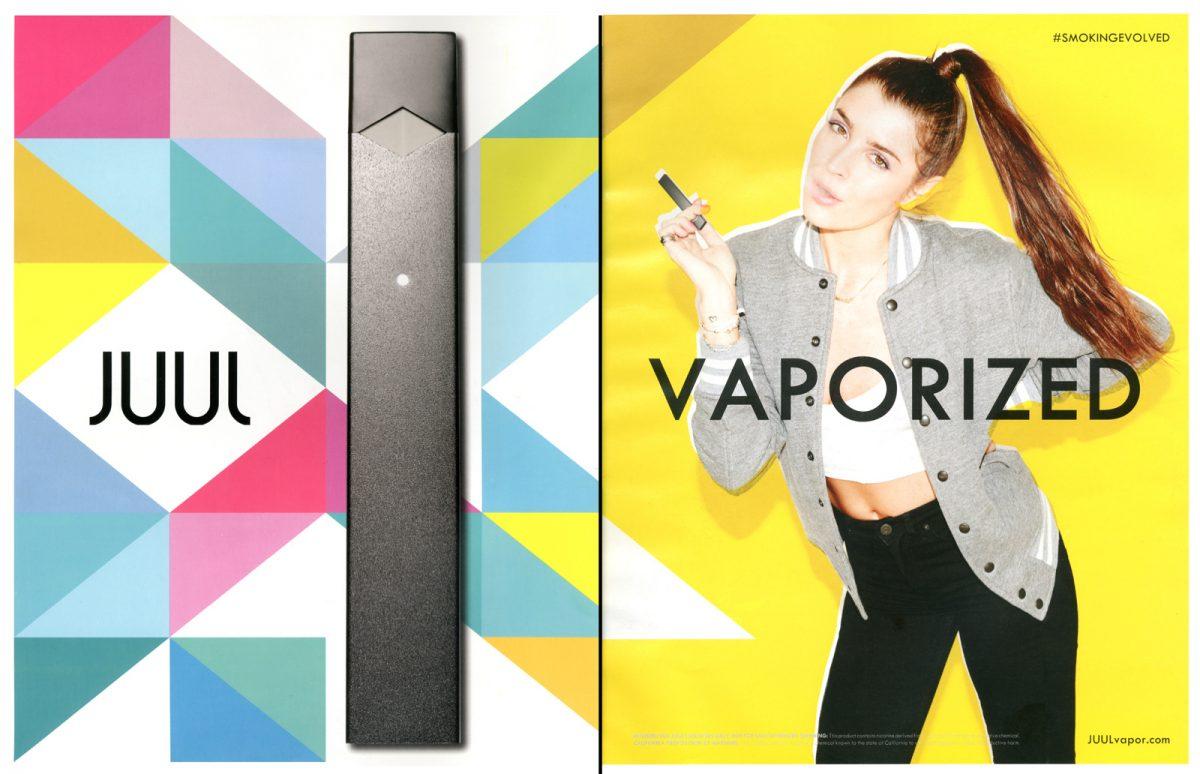
Juul Labs, Inc. initiated its entry into the nicotine market in June 2015 with a marketing offensive titled “Vaporized.” This campaign did not employ the somber, health-conscious messaging one might expect from a company claiming to help adult smokers quit. Instead, it used a vibrant, high-energy aesthetic that mirrored the visual language of youth culture. The launch strategy relied on bright colors, geometric shapes, and models who appeared to be in their early twenties, if not younger. These visuals appeared on billboards in Times Square and in the pages of Vice magazine, placing the product directly in the line of sight of a demographic far younger than the “adult smoker” Juul later claimed to target.
The “Vaporized” Aesthetic
The core of the “Vaporized” campaign featured models engaging in playful, energetic behavior. Images showed young women in trendy attire, posing against solid, bright backgrounds, yellows, purples, and blues that popped on smartphone screens. One widely circulated image depicted a young woman in a letterman jacket, a garment specifically associated with high school students. Other photos captured models jumping, kissing, or laughing while holding the device. The device itself, a sleek, USB-shaped object, was presented not as a medical cessation tool as a fashion accessory.
Stanford Research into the Impact of Tobacco Advertising (SRITA) archived these early advertisements. Their analysis revealed that the imagery borrowed heavily from traditional tobacco advertising themes, pleasure, relaxation, and romance, updated them for the Instagram age. The models looked nothing like the hardened, middle-aged smokers Juul executives later insisted were their priority. They were fresh-faced, stylish, and undeniably cool. This creative direction signaled that Juul was a lifestyle product, a signifier of status and belonging for the digital generation.
Launch Parties and Social Engineering
To amplify this message, Juul organized a series of launch events in major cities including New York, Los Angeles, and Miami. These were not educational seminars for smokers looking to quit. They were parties. The events featured open bars, photo booths, and performances by DJs popular with younger crowds. Guests received free Juul devices and starter kits, encouraging immediate trial and adoption. The entry requirements for these events were frequently loose, with reports indicating that age verification was inconsistent.
A specific event in New York City encouraged attendees to post photos to social media using the hashtag #LightsCameraVapor. This tactic outsourced marketing to the guests themselves, creating a peer-to-peer promotional engine. By encouraging attendees to share their experiences online, Juul ensured that images of the device would flood the feeds of their followers. Since the attendees were young influencers and trendsetters, their followers skewed young as well. This strategy bypassed traditional advertising regulations and filtered the product directly into the digital lives of teenagers.
The Influencer Strategy
Juul’s reliance on social media went beyond organic sharing. The company actively recruited influencers to promote the device. An early job listing for an “Influencer Marketing Intern” explicitly sought someone to “create and manage blogger, social media and celebrity influencer engagements.” The goal was to build relationships with key figures who could drive “positive commentary” and word-of-mouth recommendations. This formalized the process of using social capital to sell nicotine.
The company sent free products to influencers, who then posted stylized photos of themselves vaping. These posts frequently absence clear disclosures that they were advertisements, blurring the line between genuine endorsement and paid promotion. The influencers chosen were not former heavy smokers sharing their cessation journeys. They were models, fashion bloggers, and internet personalities whose appeal lay in their attractiveness and aspirational lifestyles. By associating the Juul device with these figures, the company its product into the visual vocabulary of online coolness.
Internal Awareness and Intent
Subsequent litigation revealed that Juul executives understood the appeal of their marketing to youth. Internal documents surfaced during lawsuits filed by state attorneys general showed that the company was aware the “Vaporized” campaign appeared “too youthful.” One email exchange among employees noted that the models looked “youngish” and that the imagery was “probably too close to a sensitive demographic.” Even with these internal concerns, the campaign ran for months, establishing a brand identity that would long after the specific ads were pulled.
The Massachusetts Attorney General’s lawsuit documents indicating that Juul purchased ad space on websites directed at children, including Nickelodeon, Cartoon Network, and Seventeen magazine. While Juul later argued these placements were mistakes or the result of programmatic advertising errors, the pattern suggests a widespread failure to exclude minors from their marketing funnel. The sheer volume of youth-oriented placements contradicts the narrative that youth uptake was an accidental side effect of a product meant for adults.
The Viral Aftermath
The “Vaporized” campaign succeeded in creating a viral phenomenon. The hashtag #juul became a hub for user-generated content, where teenagers shared videos of themselves performing “vape tricks”, manipulating the vapor into rings and shapes. This content spread rapidly on platforms like Instagram and Snapchat, creating a feedback loop that normalized vaping among high schoolers. The device’s discreet design, resembling a flash drive, allowed students to use it in classrooms and bathrooms without detection, further cementing its status as a rebellious, must-have item.
By the time Juul attempted to pivot its marketing toward a more mature audience, the damage was done. The “Vaporized” launch had successfully seeded the product in youth culture. The initial imagery of joy, freedom, and sex appeal had defined the brand. Teenagers did not see Juul as a way to quit smoking; they saw it as a way to start vaping. The “Vaporized” campaign provided the visual template for the youth vaping epidemic that followed, proving that the company’s initial strategy was not just a misstep, a calculated capture of a new generation of nicotine users.
Key Elements of the “Vaporized” Launch Campaign (2015)
The architecture of Juul’s ascent was not accidental; it was engineered by external specialists hired to bypass traditional advertising safeguards. Central to this was Grit Creative Group, a marketing agency retained by Pax Labs (Juul’s predecessor) in 2015. While Juul executives later testified before Congress that their target demographic was strictly adult smokers aged 25 to 34, the contractual mandates issued to Grit reveal a different objective: the systematic “seeding” of a nicotine product into the hands of “cool” subcultures, regardless of the downstream consequences for youth adoption.
The “Seeding” Mandate
Documents unearthed during the House Oversight Committee’s investigation into Juul’s marketing practices expose the specific directives given to Grit Creative Group. A “Scope of Work” agreement dated March 2, 2015, explicitly tasked the agency with an “Influencer Seeding Program.” The language used in these legal documents strips away the veneer of harm reduction. Grit was not hired to find heavy smokers looking to quit; they were hired to “curate and identify 280 influencers in LA/NY to seed JUUL product to over the course of 3 months.”
The selection criteria for these influencers prioritized social reach and aesthetic appeal over smoking history. A subsequent contract executed on July 27, 2015, refined the target list, instructing Grit to secure “social media buzzmakers with a minimum of 30, 000 followers.” The goal was to “establish a network of creatives to use as loyalists for JUUL.” This terminology, “buzzmakers,” “creatives,” “loyalists”, signals a strategy rooted in lifestyle marketing rather than public health. The agency’s role was to manufacture a perception of organic popularity, transforming a nicotine delivery system into a requisite accessory for the urban elite.
Industrialized Cool: The Mechanics of Influence
Grit Creative Group’s strategy went beyond handing out free devices at parties; it involved a sophisticated data mining operation designed to identify individuals who could sway public perception. Internal emails reveal that Juul and its partners analyzed a database of over 340, 000 email subscribers, cross-referencing them against social media platforms to identify “influencers” within their existing contact lists. This process yielded approximately 28, 000 matches, individuals who possessed the digital capital to amplify the brand’s message.
The “Influencer Seeding Program” operated on a pay-to-play model that blurred the lines between genuine endorsement and paid promotion. Influencers were not gifted the device; they were incentivized to post content that glamorized its use. The agency managed the logistics of “wrangling” these influencers for launch events in New York and Los Angeles, ensuring that the product appeared in the hands of people who defined “cool” for Millennials and Generation Z. The resulting imagery, young people posing with the sleek, USB-like device in stylized settings, flooded Instagram and Twitter, bypassing the regulatory gates that had long restricted tobacco advertising.
Case Study: The Christina Zayas Evidence
The disconnect between Juul’s stated mission and Grit’s execution is perhaps best illustrated by the case of Christina Zayas, a blogger and influencer in multiple investigations and lawsuits. Zayas was method by Juul’s marketing partners in 2017, well after the initial launch, indicating the longevity of this strategy. She was paid $1, 000 to publish a blog post and an Instagram photo reviewing the device. In interviews, Zayas admitted that while she was an adult, her follower base skewed significantly younger, a fact that would have been clear to any agency vetting her analytics.
Zayas noted that the brand liked her “edgy style” and her appeal to the “younger market.” Her paid content did not focus on the grim reality of smoking cessation; it framed the Juul as a fashion statement. This transaction highlights the core negligence of the influencer model: by outsourcing marketing to third-party “creatives” based on follower counts and aesthetic vibes, Juul lost control over who saw their ads. Or, as critics and litigators have argued, they knew exactly who would see them and proceeded anyway.
Grit Creative Group: Contractual Objectives vs. Public Health Reality
Contractual Objective (2015)
Execution Tactic
Public Health Consequence
“Seed JUUL product”
Free distribution at VIP launch events
Normalized nicotine use in non-smoking social circles.
“Secure social media buzzmakers”
Targeting accounts with 30k+ followers
Prioritized reach/virality over age-gating or smoker status.
“use as loyalists”
Paid posts and affiliate programs
Created financial incentive for influencers to downplay risks.
“Curate 280 influencers”
Data mining email lists for social matches
Industrialized the spread of youth-oriented marketing.
The “Container Tour” and Field Marketing
Beyond the digital, Grit’s strategy included physical activations designed to intercept chance users in high-traffic, youth-oriented spaces. Monthly marketing updates from 2015 describe a “Container Tour”, a mobile sampling lounge housed in a shipping container, intended to “get JUUL into the hands of over 12, 500 influencers.” The tour targeted music festivals, cinema events, and other cultural hubs where the demographic skewed young and experimental.
These activations were not cessation clinics. They were experiential marketing events where the device was presented as a piece of high-end technology. The “Container Tour” was projected to introduce the brand to over 1. 5 million people. By embedding the product into the physical of youth culture, Grit ensured that Juul was seen not as a medical device for addicts, as a recreational gadget for the “in crowd.” The use of “brand ambassadors”, frequently young, attractive people hired to distribute the product, further reinforced the peer-to-peer marketing that proved so with teenagers.
Legal and Settlement
The paper trail left by Grit Creative Group became a smoking gun in the massive litigation that followed Juul’s explosion in popularity. When the House Subcommittee on Economic and Consumer Policy released its findings in July 2019, the “Scope of Work” documents were primary exhibits. They contradicted the testimony of Juul executives who claimed the company never marketed to youth. The specific instruction to find “buzzmakers” with “30, 000 followers” demonstrated a calculated effort to harness the viral mechanics of social media, a domain dominated by youth culture.
In subsequent settlements, including the $438. 5 million agreement with 33 states in 2022, the practices pioneered by Grit were explicitly banned. The settlement terms prohibited Juul from using paid influencers, “brand ambassadors,” or any marketing that depicted persons under the age of 35. These prohibitions were a direct response to the success of the Grit strategy. The legal system acknowledged that the “influencer seeding” model was not a neutral marketing tactic a predatory method that had successfully hooked a generation of non-smokers. The “Grit era” of Juul’s marketing stands as a case study in how regulatory lag allows agile corporations to weaponize social influence before public health officials can even diagnose the threat.
The "Seeding" Program: Targeting 280 Key Influencers
The “Seeding” program was not a casual giveaway; it was a precision-engineered contagion method designed to bypass traditional advertising regulations. In early 2015, months before the public “Vaporized” launch, Juul Labs contracted the Grit Creative Group with a specific, confidential directive: infiltrate the social feeds of America’s youth culture. The objective was to “curate and identify 280 influencers in LA/NY to seed JUUL product,” converting the device from a nicotine delivery system into a requisite accessory for the “cool kid” aesthetic.
The “Buzzmaker” Mandate
Internal documents released during congressional hearings reveal the cold calculus behind this operation. The contract with Grit Creative Group did not target heavy smokers looking to quit; it targeted “social media buzzmakers” with a minimum of 30, 000 followers. The selection criteria prioritized “creatives” and “tastemakers”, archetypes that appeal directly to adolescents seeking identity and belonging. This “Seeding” program operated on a pay-to-play basis that frequently flouted Federal Trade Commission (FTC) disclosure guidelines. Juul and its agency partners did not hand out free devices; they purchased access to the influencers’ audiences. The contract stipulated that Juul Labs would “determine or approve the timing of the Buzzmakers’ posts,” ensuring a synchronized flood of imagery that would simulate an organic cultural movement.
The selection of specific influencers betrays the company’s public defense that it never marketed to minors. Among the recipients of this “seeding” was Luka Sabbat, a fashion model and social media personality dubbed “the Internet’s Coolest Teenager.” In 2015, Sabbat was 17 years old. By placing the device in the hands of a minor with a massive, aspirational following among other minors, the program guaranteed that the Juul would be associated with youth rebellion and high fashion rather than smoking cessation. Another target was Tavi Gevinson, a fashion blogger who was 19 at the time. These were not 40-year-old pack-a-day smokers; they were icons of the post-millennial zeitgeist. The strategy was to the device into the visual vocabulary of Instagram and Snapchat. When these influencers posted stylized photos with the sleek, USB-like device, they were not offering a health critique; they were validating the Juul as a status symbol. The “ROI” for this program was not measured in immediate unit sales, in the successful manufacturing of desire among a demographic that had historically rejected combustible cigarettes.
The Compliance Void
The execution of the seeding program reveals a serious disregard for transparency. While modern influencer marketing requires clear “#ad” or “#sponsored” disclosures, the 2015 seeding campaign operated in a regulatory gray zone that Juul exploited. Influencers were compensated—either through direct payment or the receipt of high-value “starter kits”—yet they were rarely instructed to disclose this material connection. This omission was strategic. A post tagged as an advertisement invites skepticism. A post that appears to be a genuine lifestyle choice from a beloved icon invites imitation. By obscuring the commercial relationship, Juul allowed the “buzzmakers” to present the device as an organic discovery. This stealth marketing created a “peer-to-peer” where the message came not from a corporation, from a trusted digital friend. The “Seeding” program primed the market for the subsequent “Vaporized” launch. By the time the official launch parties kicked off in June 2015, the groundwork had already been laid. The device was already circulating in the digital feeds of the target demographic, validated by the very “cool kids” the agency had been paid to recruit. This was not an accidental spillover into the youth market; it was a purchased entry.
Launch Parties and the Fabrication of "Cool Kid" Aesthetic
The launch of the Juul device on June 4, 2015, did not take place in a pharmacy, a medical conference, or a smoking cessation clinic. It occurred at Canoe Studios in West Chelsea, New York, a venue synonymous with high-fashion photography and celebrity galas. This event, and the “Vaporized” campaign it introduced, marked the precise moment Juul Labs (then part of Pax Labs) abandoned its purported mission of helping adult smokers in favor of a strategy designed to manufacture a youth-oriented “cool.”
The Night at Canoe Studios
The June 2015 launch party served as the physical manifestation of Juul’s aggressive pivot toward youth culture. Guests entered a space bathed in neon light, featuring a “patented silhouette” motif that would become the brand’s visual signature. The atmosphere was not one of health or harm reduction. It was a celebration of excess and status. Attendees were not selected based on their history of smoking or their desire to quit combustible cigarettes. Instead, the guest list was curated by agencies like Grit Creative Group and Cult shared to ensure a specific demographic: young, urban “trendsetters” with significant social media followings. Internal company documents released during subsequent litigation reveal the explicit objective behind this curation. An email from Sarah Richardson, Juul’s Director of Communications at the time, outlined the strategy to “own the ‘early adopter’/’cool kid’ equity.” The goal was to establish the device as a fashion accessory and a nicotine delivery system second. Free alcohol and live music set the tone, the centerpiece of the evening was the “gifting bar.” Here, the company distributed free Juul starter kits to guests. This was not a product sample; it was a transactional exchange of hardware for social capital. By placing the sleek, USB-shaped device in the hands of influencers at a high-profile industry event, Juul ensured that the images of the product circulating online would be associated with nightlife, youth, and sex appeal, rather than addiction or smoking cessation.
The “Vaporized” Aesthetic
The “Vaporized” campaign, which debuted alongside the launch party, provided the visual language for this new “cool kid” identity. Creative Director Steven Baillie designed the campaign to look less like a tobacco advertisement and more like a spread in *Vice* or *Vogue*. The imagery featured twenty-something models, not 50-year-old smokers, posed against bright, geometric backgrounds. The “triangle” became the campaign’s dominant symbol. Models were framed by colorful, triangular shapes that mimicked the angular design of the Juul pod. This geometric branding served a dual purpose: it distanced the product from the round, organic shape of a traditional cigarette, and it created a “glitch art” aesthetic that resonated with the visual vocabulary of Tumblr and Instagram users in 2015.
The “Vaporized” Aesthetic vs. Traditional Tobacco Marketing
Element
Traditional Tobacco Ad
Juul “Vaporized” Campaign
Color Palette
Earthy tones, rugged, dark bars
Neon pinks, electric blues, bright yellows
Models
Rugged men (Marlboro Man), mature sophisticates
Androgynous, urban youth in streetwear
Activity
Relaxing after work, outdoor adventure
Dancing, posing, “glitching” (digital )
Device Focus
The cigarette is a prop
The device is a totem/accessory
This aesthetic fabrication was deliberate. The company rejected early marketing proposals that focused on technology or adult smokers. Instead, they chose imagery that Massachusetts Attorney General Maura Healey later described in her lawsuit as “sexually provocative” and explicitly designed to appeal to “fashionable, urban, and social” youth. The models in the “Vaporized” ads wore ripped denim, leather jackets, and crop tops. They looked at the camera with the bored, detached expressions characteristic of high-fashion editorials. The campaign erased the stigma of smoking. By removing the ash, the smell, and the lighter, and replacing them with a battery-charged, geometric object, Juul allowed users to perform the act of smoking without the associated social baggage. The “Vaporized” launch made nicotine addiction look like a software update.
Extensions of the Launch: Festivals and Cinema
The “cool kid” strategy did not end in West Chelsea. Following the New York launch, Juul replicated this formula at events across the country. The company established a presence at the Sundance Film Festival in Utah and the Nocturnal Wonderland music festival in San Bernardino, California. At these events, the “Vaporized” aesthetic was deployed in physical “sampling lounges.” For example, at music festivals, Juul converted shipping containers into “vapor lounges” where attendees could escape the heat, charge their phones, and try the product. These activations were designed to catch users in moments of leisure and lowered inhibition. The “Cinema Series” at Sundance targeted a different tier of influencer: the celebrity. By placing the device in the hands of actors and filmmakers, Juul sought to infiltrate the entertainment industry from the top down. The strategy worked. Within months, A-list celebrities were photographed using the device at awards shows and galas, further cementing the Juul as a status symbol for the elite. This experiential marketing created a feedback loop. A user would receive a free device at a “cool” event, post a photo of themselves using it with the campaign’s hashtags (e. g., #LightsCameraVapor), and their followers would see the device validated by a trusted social peer. The physical event drove the digital conversation, which in turn drove demand for the physical product.
The “iPhone of Vapes” Narrative
The media played a role in amplifying this aesthetic. Tech outlets and lifestyle blogs, dazzled by the device’s design and the Silicon Valley pedigree of its founders, frequently referred to Juul as the “iPhone of vapes.” This comparison was invaluable to the company’s “cool kid” fabrication. It positioned the Juul not as a drug delivery system, as a consumer electronic gadget. The launch party reinforced this narrative. The device was displayed on minimalist pedestals, lit like a piece of modern art. The packaging was clean, white, and magnetic, mimicking the unboxing experience of an Apple product. This design language allowed students to carry the device in school without detection, as it blended direct with the USB drives and laptops already in their backpacks. Internal documents show that this resemblance was intentional. The “cool kid” equity relied on the device being perceived as “smart” technology. If the device looked like a cigarette (a “cig-alike”), it would be associated with sickness and old age. By looking like a flash drive, it associated itself with information, speed, and the future.
Regulatory and Settlement Admissions
The success of the “Vaporized” launch party and its subsequent activations became the primary evidence against Juul in the massive multi-state settlements reached in 2022 and 2023. State Attorneys General pointed to the June 2015 event as the “original sin” of the vaping epidemic. The settlement agreements, which totaled over $462 million with six states (including New York and California) and nearly $440 million with 33 others, specifically the “Vaporized” campaign as a violation of consumer protection laws. The legal complaints argued that by targeting “cool kids” and “trendsetters,” Juul had engaged in deceptive marketing that failed to warn users of the product’s potency while simultaneously making it attractive to minors. As part of these settlements, Juul is strictly prohibited from hosting such events. The terms explicitly ban the company from: 1. Using models under the age of 35 in any advertising. 2. Paying for or facilitating product placement in movies, TV shows, or live events. 3. Distributing free samples at festivals or concerts. 4. Using the phrase “cool kid” or similar descriptors in internal marketing strategy. The “Vaporized” launch party at Canoe Studios is a matter of legal record—a documented instance where a nicotine company used the playbook of a fashion brand to hook a generation. The neon lights and geometric triangles of that night did not just sell a device; they sold an addiction disguised as an aesthetic. The “cool kid” was not a demographic to be served, a distribution channel to be exploited.
Social Media Amplification: The #JuulVapor Viral Tactics
The “Vaporized” campaign lit the fuse, the explosion that followed was not a product of traditional advertising. It was a calculated, algorithmic wildfire fueled by the strategic deployment of hashtags, specifically #JuulVapor, and the weaponization of peer-to-peer mimicry on Instagram. While Juul Labs, Inc. executives later claimed they simply wanted to provide a switch for adult smokers, their digital footprint from 2015 to 2018 reveals a different reality: a meticulously engineered social media ecosystem designed to turn customers into unpaid brand evangelists.
The Hashtag Engine: #JuulVapor
The core of Juul’s amplification strategy lay in its hashtag architecture. The company did not just post content; it created a lexicon for digital youth culture. The primary tag, #JuulVapor, served as a central aggregation point for user-generated content (UGC). By tagging their posts, users, of whom were underage, could insert themselves into the brand’s “cool” aesthetic, hoping for a repost or acknowledgment from the official @JuulVapor account. Stanford Research into the Impact of Tobacco Advertising (SRITA) analyzed this phenomenon, noting that Juul’s official channels acted as a signal flare. When the company posted images of young, trendy models engaging in “vaporizing,” it implicitly instructed its audience on how to perform the brand. The result was a flood of copycat content. Teenagers posted stylized selfies, “vape trick” videos, and memes, tagging them with #Juul, #JuulVapor, and #JuulNation. This outsourced marketing to the very demographic Juul claimed to avoid. The hashtag became a badge of identity, signaling membership in an exclusive, tech-savvy tribe.
55% of posts analyzed contained youth-centric themes (memes, cartoons, school settings)
Twitter Follower Demographics
Estimated 80. 6% of active followers were aged 13, 20 (April 2018)
Post-Cessation Growth
Hashtag activity tripled after Juul officially halted social media promotions in Nov 2018
Algorithmic Manipulation and the “examine” Page
Juul’s marketing team understood the mechanics of social media algorithms better than regulators did. By encouraging high-engagement content, videos of “ghost inhaling” or synchronizing vapor clouds to hip-hop tracks, Juul ensured its products would dominate the “examine” pages of millions of users. This was not passive advertising; it was active infiltration of the cultural feed. The content that trended under #JuulVapor was rarely about smoking cessation. Instead, it focused on performative consumption. “Unboxing” videos, a staple of tech culture, became a genre for Juul pods, with influencers treating the nicotine delivery system like the latest iPhone release. The sleek, USB-like design of the device facilitated this comparison, allowing it to bypass the visual stigma associated with combustible cigarettes or clunky vape tanks. Internal documents released during lawsuits by the Massachusetts and Illinois Attorneys General show that this was no accident. The company monitored these hashtags to gauge brand sentiment and reach. When users posted content that glamorized addiction, captioning photos with “buzzin” or referencing the “head rush”, the algorithm rewarded them with visibility, creating a feedback loop that normalized high-nicotine consumption among minors.
The Zombie Marketing Phenomenon
Perhaps the most damning evidence of Juul’s strategic foresight is what happened after they ostensibly retreated. In November 2018, facing intense scrutiny from the FDA and public health advocates, Juul Labs deleted its Facebook and Instagram accounts and pledged to stop social media promotions. The company framed this as a responsible step to curb youth usage. In reality, the fire was already self-sustaining. SRITA researchers observed that after Juul’s official exit, the volume of posts using #Juul and #JuulVapor did not decrease, it exploded. The community of users, groomed for three years to equate the device with social status, continued to churn out promotional content without any direct input from the company. This “zombie marketing” meant Juul no longer needed to pay for reach. The hashtags they seeded had become autonomous viral engines. Third-party vendors and “Juul-compatible” pod manufacturers stepped into the void, using the same hashtags to market unauthorized, frequently sweeter flavors directly to the audience Juul had aggregated. The #JuulVapor tag became a marketplace for illicit sales and a gallery of youth addiction, completely outside the control of regulators entirely the product of Juul’s initial design.
Influencers as Catalysts, Not Just Creators
While the “Seeding Program” (discussed previously) identified specific individuals to gift, the broader social media strategy relied on micro-influencers—everyday teens with a few thousand followers. These users were not on the payroll, they were compensated in social currency. By reposting user content or engaging with “Juul fam” posts, the brand validated the behavior of underage users. A study by the Truth Initiative found that more than half of the Instagram posts related to Juul featured youth culture themes, including
"Youth Prevention" Division: Investigating School Infiltration
The “Youth Prevention” Trojan Horse
In 2018, as public scrutiny mounted over the skyrocketing rates of teenage vaping, Juul Labs unveiled a division ostensibly dedicated to solving the problem: the “Youth Prevention and Education” team. Led by Julie Henderson and overseen by Chief Administrative Officer Ashley Gould, this unit was marketed as a corporate responsibility initiative designed to educate students about the dangers of nicotine. Internal documents and congressional investigations later revealed a far more cynical objective. The division functioned as a strategic infiltration method, using financial incentives to bypass parents and teachers and gain direct access to minors in classrooms and summer camps.
Pay-to-Play: Buying Access to Classrooms
The core of Juul’s strategy involved a direct financial transaction: the company offered schools upfront grants, $10, 000, in exchange for adopting its proprietary “prevention” curriculum. This program was not a donation a contractual arrangement that required schools to implement Juul-branded materials. In one egregious instance, documents obtained by the House Subcommittee on Economic and Consumer Policy showed Juul paid $134, 000 to a charter school organization in Baltimore to fund a five-week ” health education” summer camp. This program targeted children as young as grade three.
The contracts frequently included provisions that allowed Juul to collect data on student participants, including test scores and surveys on “risky behaviors.” While Juul later claimed it never processed this data, the intent to harvest psychographic information from minors under the guise of health education mirrors tactics used by the tobacco industry decades prior. The program explicitly targeted low-income youths and schools with limited resources, exploiting budgetary deficits to insert a nicotine manufacturer into the educational environment.
The “Mindfulness” Curriculum
The curriculum itself, titled “Mindfulness,” was a bizarre assembly of pseudo-scientific exercises and vague wellness coaching that largely avoided discussing the specific dangers of Juul’s products. An analysis by the Journal of Adolescent Health found that the materials failed to mention Juul’s own marketing tactics or the specific addictiveness of its high-nicotine pods. Instead, the lessons focused on stress reduction and “mindful” practices, such as instructing students to attempt moving a pendulum with their minds, a technique with no basis in addiction prevention.
Further investigation revealed that Juul’s materials were heavily plagiarized from the Stanford Tobacco Prevention Toolkit. yet, Juul’s team surgically altered the content. They removed
Summer Camps and Community Outreach: Direct Youth Access
SECTION 7 of 14: Summer Camps and Community Outreach: Direct Youth Access
As scrutiny mounted against Juul’s infiltration of classrooms, the company executed a tactical pivot. They moved their influence campaign from the schoolhouse to the community center, targeting youth in spaces where parental guardrails were lower and institutional oversight was fragmented. This phase of the strategy relied on a veneer of corporate benevolence, using ” health” and “youth prevention” as Trojan horses to gain direct physical access to minors during summer breaks and after-school hours.
The Summer Camp Infiltration
The most egregious example of this tactic was Juul’s direct funding of summer camps. Internal documents released during congressional hearings revealed that Juul paid **$134, 000** to a charter school organization in Baltimore to establish a five-week summer camp. The program, which recruited eighty children from grades 3 through 12, was ostensibly designed to provide a ” health education program.” Under the guise of teaching “healthy lifestyles,” Juul gained access to low-income youth populations. The curriculum required student participants to create personal “healthy lifestyle plans,” a method that allowed Juul to position itself as a wellness partner rather than a nicotine merchant. This program was not a passive sponsorship; it was an active engagement where the company’s “prevention” messaging could be delivered without the interference of public health officials or skeptical parents. The cynical nature of this operation is clear in the target demographic: children as young as eight years old, who were subjected to corporate programming funded by a company selling the most addictive nicotine product on the market.
The Richmond Police Activities League Scandal
Juul’s community outreach strategy also targeted law enforcement organizations to legitimize their presence in at-risk communities. In Richmond, California, Juul awarded a grant of approximately **$90, 000** to the **Richmond Police Activities League (RPAL)**. This funding was for a diversion program named “Moving Beyond,” specifically targeting youth aged 12 to 17 who faced suspension from school for vaping offenses. This partnership provided Juul with something far more valuable than brand awareness: data. The agreement included provisions for Juul to access data on the youth participants, turning a disciplinary program into a market research operation. By funding the very programs meant to correct the behavior their products caused, Juul created a closed loop where they profited from the addiction and then monetized the “solution.” The RPAL program allowed Juul to present itself as a community ally while gathering intelligence on the usage patterns and demographics of their underage user base.
Co-opting Minority Leadership
A core component of Juul’s community strategy involved neutralizing opposition within Black and Brown communities by purchasing the support of trusted institutions. This “reputation management” campaign reached its apex with a **$7. 5 million grant** to **Meharry Medical College**, a historically Black college in Nashville, Tennessee. The grant was framed as a commitment to researching the health effects of vaping on minority populations. Public health advocates and Black community leaders immediately recognized the move as a strategic attempt to co-opt Black health leadership. By funding the research center, Juul sought to influence the scientific narrative and soften the stance of African American leaders who might otherwise advocate for bans on menthol and flavored products, categories that disproportionately affect Black youth. This tactic mirrored the historical playbook of Big Tobacco, which spent decades donating to Black civil rights organizations and cultural events to buy silence and political cover.
The “Switch” Astroturfing Campaign
While funding “prevention” camps for kids, Juul simultaneously mobilized a political front known as **The Switch Network**. This astroturfing operation recruited adult users to fight against flavor bans and vaping regulations. yet, the campaign aggressively targeted minority communities with messaging that framed vaping access as a “civil rights” matter. The “Make the Switch” narrative was deployed to that restricting Juul products would disproportionately harm Black and Brown smokers trying to quit combustibles. This cynical framing weaponized social justice rhetoric to protect corporate profits. The campaign utilized paid community organizers to attend hearings and rallies, creating the illusion of grassroots support for Juul’s agenda. In reality, it was a top-down corporate lobbying effort designed to keep flavored nicotine products on shelves in neighborhoods already saturated with tobacco advertising.
Settlement and Restrictions
The exposure of these tactics in legal discovery led to severe repercussions. The settlements reached with multiple states, including the landmark agreements with California and New York, specifically these community outreach programs as deceptive trade practices. The resulting consent decrees imposed strict prohibitions on Juul’s future conduct. The company is legally banned from: * Funding or operating any youth education or prevention campaigns. * Sponsoring school-related activities or summer camps. * Providing grants to community organizations for youth programs. * Using individuals under the age of 35 in any promotional material. These restrictions confirm that state attorneys general viewed Juul’s “community outreach” not as philanthropy, as a predatory marketing channel. The of these programs marked the end of Juul’s ability to directly access youth under the banner of “health education,” forcing the company to retreat from the playgrounds and community centers they had paid millions to infiltrate.
The "Make the Switch" Campaign: FDA Warning Letter Analysis
The “Make the Switch” Campaign: FDA Warning Letter Analysis
In January 2019, Juul Labs initiated a strategic pivot intended to distance the brand from the youth-centric “Vaporized” imagery that had ignited a public health firestorm. The new campaign, titled “Make the Switch,” featured black-and-white testimonials from older adults, average age 43, who praised the device for helping them abandon combustible cigarettes. Juul positioned this effort as a responsible public health mission, explicitly targeting the world’s one billion adult smokers. Yet federal regulators viewed this messaging not as a noble crusade, as a calculated violation of federal law. By marketing its products as safer than cigarettes without scientific substantiation or regulatory approval, Juul triggered a direct confrontation with the FDA. On September 9, 2019, the FDA issued a scathing warning letter to Juul Labs, the company’s “switching” narrative. The agency charged Juul with marketing unauthorized “modified risk tobacco products” (MRTP). Under the Federal Food, Drug, and Cosmetic Act, no tobacco manufacturer can claim its product is less harmful or presents a lower risk of disease than traditional cigarettes without a specific order from the FDA. To obtain such an order, a company must provide rigorous scientific evidence demonstrating a net benefit to public health. Juul had neither requested nor received this authorization. The warning letter detailed specific, egregious instances where Juul representatives bypassed these legal requirements to make direct safety claims to consumers, including minors. The FDA testimony from a July 2019 congressional hearing which revealed that a Juul representative, during a presentation to students at a New York high school, stated the device was “totally safe.” The representative further claimed the FDA “was about to come out and say it [Juul] was 99% safer than cigarettes” and that this approval “would happen very soon.” These statements were factually false; the FDA had not evaluated Juul’s safety data, nor had it prepared any such endorsement. Regulators also flagged a “Letter from the CEO” posted on Juul’s website and sent via email to parents. In this document, then-CEO Kevin Burns asserted that Juul’s system delivered satisfaction “without the combustion and the harm associated with it.” The FDA determined that this phrasing explicitly conveyed to consumers that Juul products posed less risk than cigarettes. By making these assertions, Juul sold an adulterated product under federal law. The agency demanded Juul provide a written response within 15 working days describing corrective actions and a plan to maintain compliance. The “Make the Switch” campaign itself came under intense scrutiny for implying safety benefits that remained unproven. While the campaign used the language of “switching” rather than “cessation”, a semantic distinction Juul used to avoid being classified as a medical drug-delivery device, the FDA found the implication of reduced harm unmistakable. The agency expressed concern that the campaign’s imagery and testimonials led consumers to believe Juul was a sanctioned, safer alternative, a claim the company legally could not make. Simultaneously, the FDA sent a second letter requesting documents regarding Juul’s outreach to the Cheyenne River Sioux Tribe, where the company had pitched its “Switching Program” as a public health intervention. This targeted method to tribal leadership mirrored the tactics used in schools: presenting the product as a solution to health disparities without the requisite scientific backing. The FDA’s dual action on September 9 dismantled the legitimacy of Juul’s harm-reduction defense, exposing it as a marketing strategy rather than a validated medical reality. The from the warning letter was immediate and severe. The regulatory rebuke stripped Juul of its primary defense against critics, that it was solely focused on saving adult smokers. Faced with the threat of civil money penalties, seizure of products, and injunctions, Juul suspended all broadcast, print, and digital product advertising in the United States later that month. On September 25, 2019, barely two weeks after the warning letter, CEO Kevin Burns resigned, replaced by K. C. Crosthwaite, an executive from Altria. The “Make the Switch” campaign, designed to salvage Juul’s reputation, instead provided the evidence regulators needed to clamp down on the company’s unauthorized health claims.
FDA Violations: Juul Labs Warning Letter (Sept 9, 2019)
Source of Claim
Specific Statement by FDA
Regulatory Violation
School Presentation (NY)
“Totally safe.”
Unauthorized Modified Risk Claim
School Presentation (NY)
“99% safer than cigarettes.”
False/Misleading Statement
School Presentation (NY)
“FDA would approve it any day.”
False Statement regarding Regulatory Status
CEO Letter (Website/Email)
“Without the combustion and the harm associated with it.”
Unauthorized Reduced Harm Claim
“Make the Switch” Campaign
Implied safety benefits of switching.
Marketing without MRTP Order
Native American Tribe Targeting: The Cheyenne River Sioux Case
The Eagle Butte Incursion: A Predatory “Public Health” Pitch
In February 2019, three Juul Labs representatives arrived in Eagle Butte, South Dakota, the administrative center of the Cheyenne River Sioux Tribe (CRST). They did not come as tobacco salesmen, as self-appointed public health saviors. Their objective was to sell the Tribal Council on a “switching program,” a strategic initiative designed to bypass FDA medical device regulations by leveraging tribal sovereignty. The pitch was brazen: Juul offered to sell the tribe starter kits, normally retailing for approximately $50, for just $5 each, provided the tribe distributed them to members for free. To sweeten the deal, Juul proposed a $600, 000 financial incentive to the tribe. In exchange, the company required the tribe’s medical professionals to monitor the participants and collect their health data. This was not a sales call; it was an unauthorized clinical trial disguised as a wellness initiative. Juul sought to use the Cheyenne River Sioux people as subjects to generate the very medical data the FDA had refused to grant them, all while hooking a demographic with disproportionately high smoking rates on a new, high-nicotine product.
The “Guinea Pig” Protocol
The cynicism of this strategy was exposed by Rae O’Leary, a public health analyst and nurse for the tribe, who later testified before the House Subcommittee on Economic and Consumer Policy. O’Leary characterized Juul’s method as treating Native Americans like “guinea pigs.” The company’s representatives explicitly framed their product as a medical intervention, making unsubstantiated claims that the device was ” for smoking cessation” and “totally safe”, assertions that violated the Family Smoking Prevention and Tobacco Control Act. Juul’s targeting of the Cheyenne River Sioux was calculated. Native American communities suffer from the highest commercial tobacco usage rates in the United States, with approximately 22% of adults smoking compared to the national average of 14%. Juul viewed this health not as a emergency to be solved, as a market to be exploited. By framing the addiction transfer from combustible cigarettes to high-potency nicotine salts as a “public health win,” Juul attempted to co-opt the tribe’s own health infrastructure to distribute its product.
Sovereignty as a Loophole
The legal mechanics of the pitch revealed Juul’s intent to evade federal oversight. Tribal nations possess inherent sovereignty, which Juul interpreted as a regulatory gray zone where FDA rules might not fully apply. If the tribe officially sanctioned the “switching program,” Juul could chance that the distribution of devices and collection of medical data were internal tribal matters, shielded from federal interference. When tribal health officials, skeptical of the “too good to be true” narrative, requested a written proposal detailing the medical claims and the data collection, Juul’s demeanor shifted. Instead of providing the scientific documentation, the company sent a mutual non-disclosure agreement (NDA). The NDA was a corporate gag order designed to silence the tribe before the program even began. It was a tactical error; the tribe’s attorney general refused to sign, and the council rejected the proposal outright.
The Broader Tribal Targeting Campaign
The Cheyenne River Sioux were not the only. Congressional investigations later revealed that Juul had pitched similar “switching programs” to at least eight other Native American tribes. The pattern was identical: exploit the absence of resources in rural health systems, offer financial incentives for access to patients, and harvest data to build a case for the FDA, all while creating a new generation of nicotine dependents. In subsequent litigation, 34 tribal entities joined the massive multi-district litigation (MDL) against Juul Labs. The lawsuits alleged that Juul’s conduct violated the Racketeer Influenced and Corrupt Organizations (RICO) Act, citing the company’s fraudulent concealment of nicotine risks and its predatory focus on indigenous youth. The eventual settlement with these tribes, distinct from the $438. 5 million state settlement, validated the tribes’ assertions: Juul had attempted to monetize their sovereignty and their health struggles for corporate gain.
Data Mining the
The most disturbing element of the Cheyenne River Sioux case was the data component. Juul’s request for “health data” from tribal medical records indicated a desire to act as a pharmaceutical company without adhering to pharmaceutical standards. By asking tribal doctors to administer the product and track results, Juul attempted to externalize the cost and liability of clinical trials onto the tribe itself. Had the tribe agreed, they would have been complicit in an unregulated human experiment, trading their members’ biometric data for a discount on the very devices enslaving them to nicotine. This incident remains one of the most egregious examples of Juul’s “growth at all costs” mentality. It demonstrated that the company’s “mission” to eliminate combustible cigarettes was frequently a cover for aggressive market expansion into the most marginalized communities in America. The Cheyenne River Sioux’s refusal to capitulate stands as a rare victory of public health vigilance over corporate predation.
The $462 Million Multistate Settlement: Key Terms and Penalties
The April 2023 agreement between Juul Labs and six states plus the District of Columbia stands as the largest multistate settlement in the company’s history, totaling $462. 2 million. This legal conclusion addressed allegations that Juul’s viral marketing campaigns ignited a nationwide youth vaping epidemic. The plaintiffs—New York, California, Colorado, Illinois, Massachusetts, New Mexico, and Washington, D. C.—secured not only financial restitution also the most severe injunctive relief terms imposed on the company to date. These terms dismantled the “launch” and “seeding” strategies described in previous sections, legally barring the company from ever resuming the tactics that built its market dominance.
Financial Penalties and State Allocation
The financial component of the settlement required Juul to pay $462. 2 million over eight years. California, which led the investigation alongside New York, received the largest share, reflecting the of the public health damage within its borders. The funds are earmarked specifically for youth vaping abatement programs, public education, and enforcement of age-verification laws.
Jurisdiction
Settlement Amount
Primary Allocation Purpose
California
$175. 8 Million
Research, education, and enforcement of flavored tobacco bans.
New York
$112. 7 Million
Underage vaping abatement programs and public health education.
Illinois
$67. 6 Million
Prevention and cessation programs for youth and young adults.
Massachusetts
$41. 7 Million
Public health initiatives and enforcement of state tobacco laws.
Colorado
$31. 7 Million
Addiction treatment and mental health support for affected youth.
New Mexico
$17. 0 Million
Prevention education and community health resources.
Washington, D. C.
$15. 0 Million
Health equity programs and youth cessation support.
Injunctive Relief: the Marketing Machine
Beyond the monetary fines, the settlement imposed strict operational restrictions designed to prevent any recurrence of the “Vaporized” campaign’s success. These injunctive terms legally codified the end of Juul’s influencer-driven model. The agreement explicitly prohibits the company from using any marketing material that directly or indirectly youth. This includes a total ban on showing any person under the age of 35 in promotional content, a direct response to the “cool kid” aesthetic that defined their early social media presence. The settlement also forbids the use of cartoons, paid social media influencers, and brand ambassadors. The “seeding” program, which once distributed free devices to VIPs and trendsetters, is illegal under these terms. Juul is further restricted from advertising on billboards, public transportation, or in any media outlet unless 85 percent of the audience is verified to be adults. This requirement eliminates the company’s ability to advertise on platforms like Instagram and TikTok, where audience demographics skew young and verification is porous. Product placement, a key tactic in Juul’s early rise, is also banned. The company cannot pay for or the appearance of its devices in films, television shows, or video games. also, the settlement prohibits the sale of any flavored products not authorized by the FDA, reinforcing the regulatory crackdown on the mango and mint pods that drove initial adoption rates.
Retail Compliance and “Mystery Shopper” Enforcement
To ensure adherence to these new rules, the settlement mandated a rigorous retail compliance regime. Juul must secure its products behind store counters, making them inaccessible to customers without direct clerk interaction. This “secure placement” rule aims to stop theft and unmonitored access by minors in convenience stores. The agreement also compels Juul to fund and operate a “mystery shopper” program. In New York, for example, the company must perform compliance checks at five percent of retail stores selling its product every year for four years. These covert inspections verify that retailers are checking IDs and adhering to purchase limits. If a retailer fails a compliance check, Juul is contractually obligated to penalize them, up to and including suspending product supply. This shifts the load of enforcement partially onto the manufacturer, forcing them to police their own supply chain rather than ignoring downstream sales practices. Online sales face similarly strict. The settlement requires Juul to use independent age-verification services for all digital transactions. These systems must verify the consumer’s identity and age against public records before a sale can proceed. The “bulk purchase” loophole, which allowed individuals to buy large quantities of pods for resale in schools, is closed by strict limits on the number of devices and pods a single customer can purchase within a given timeframe.
Internal Document Disclosure
A unique and serious term of this settlement involves the transparency of Juul’s internal operations. The company agreed to pay up to $5 million to fund an internal document repository. This provision requires Juul to release millions of pages of internal corporate documents to the public, housed at the University of California, San Francisco (UCSF) Industry Documents Library. These documents, which include emails, strategy decks, and marketing plans, provide researchers and journalists with direct evidence of the company’s intent. They serve as a permanent historical record of how the “Vaporized” launch was conceived and executed. By forcing these records into the public domain, the settlement ensures that the internal logic of the youth-targeting strategy is exposed, preventing the company from rewriting its history or claiming ignorance regarding the demographic impact of its early campaigns. This repository acts as a final, transparency-focused penalty, ensuring that the method of the epidemic are understood and available for future regulatory analysis.
Mandatory Marketing Restrictions: The "Under-35" Talent Ban
SECTION 11 of 14: Mandatory Marketing Restrictions: The “Under-35” Talent Ban The legal of Juul Labs’ marketing machine reached its apex with the imposition of the “Under-35” talent ban, a draconian restriction designed to sever the psychological link between the vaping device and youth culture. This mandate, cemented in the $462 million multistate settlement announced in April 2023, represents a total repudiation of the “Vaporized” launch strategy. Where Juul once deployed twenty-something models to project an image of aspirational cool, the company is legally bound to a visual identity that is clinically detached from the youth demographic. The prohibition is not a guideline a binding injunctive term that fundamentally alters how the company can present itself to the public. ### The Death of the “Cool Kid” Aesthetic To understand the severity of the Under-35 ban, one must examine the specific method Juul used to engineer its initial viral success. The “Vaporized” campaign did not use teenagers; it used models in their early twenties. This distinction was calculated. Marketing psychology dictates that adolescents do not aspire to be children; they aspire to be young adults. By using models aged 21 to 24, clad in crop tops and ripping vapes in “club-like” settings, Juul created an image of attainable maturity that resonated deeply with high schoolers. These models served as proxies for the freedom and social status teens craved. The settlement terms strip this proxy away entirely. The requirement to use only models aged 35 and older forces the brand to skip the “young adult” demographic entirely, landing squarely in the “middle-aged” category. Visually, this shifts the product from a symbol of rebellion to a utilitarian cessation tool. A 35-year-old model cannot plausibly convey the “cool factor” that a 21-year-old influencer can. This age floor weaponizes the “uncool” factor, ensuring that any human face associated with the brand represents a demographic that teenagers actively try to avoid resembling. ### Terms of the Restriction The restrictions codified in the settlements with New York, California, Illinois, Massachusetts, New Mexico, Colorado, and the District of Columbia are granular and leave no room for interpretation. The “Under-35” rule is part of a broader “marketing code of conduct” that Juul must adhere to under penalty of further litigation. **Key Prohibitions Include:** * **Absolute Ban on Models Under 35:** No promotional material may feature any individual under the age of 35. This applies to all media, including print, digital, and point-of-sale displays. * **Prohibition on “Youth-Oriented” Imagery:** Beyond age, the content cannot depict “youth culture.” This vague term is tightened by the ban on cartoons, caricatures, and specific aesthetic styles associated with viral trends. * **Influencer Blackout:** The settlements explicitly forbid the use of paid social media influencers. The “Seeding” program, which once gifted devices to young tastemakers, is illegal. Juul cannot pay, fund, or incentivize any individual to promote the product on social platforms. * **The “85/15” Media Rule:** Juul is restricted from advertising in any media outlet unless 85% of the audience is verified to be adult (18+ or 21+, depending on the jurisdiction). This bans the company from platforms like TikTok and Snapchat, and severely limits its reach on Instagram, where audience demographics are fluid. ### The “Reasonable Viewer” Standard Regulators designed these restrictions to address the “Reasonable Viewer” standard in advertising law. Previously, Juul argued that its ads were intended for adult smokers. yet, a “reasonable viewer”—specifically a teenager—interpreted the imagery as a lifestyle pitch. The Under-35 ban removes the ambiguity. When the face of the brand is a 45-year-old former smoker discussing nicotine addiction, the “reasonable viewer” is less likely to interpret the ad as an invitation to a party. The shift is clear in Juul’s post-settlement “Switch” campaign. These advertisements feature testimonials from actual adult smokers, frequently in their 40s and 50s, shot in documentary style with muted colors and serious tones. The glamour, the bright “patina” backgrounds, and the energetic poses of the “Vaporized” era are gone. The visual language has moved from *Vogue* to *WebMD*. ### Enforcement and Financial Penalties Compliance with these terms is monitored through a strict enforcement regime. The settlements mandate regular reporting and allow state attorneys general to inspect Juul’s marketing materials. Violations trigger stipulated penalties that can run into the millions per infraction. For a company already bleeding cash from litigation costs—paying out over $1 billion in total settlements—the financial risk of slipping back into youth-coded marketing is existential. The “Under-35” ban also closes the “organic” loophole. In the past, Juul relied on user-generated content (UGC) to do its heavy lifting. While the company cannot control what random users post, the ban on influencers prevents Juul from *stimulating* that UGC. Without paid catalysts to start the trend, and without official “cool” imagery to repost, the viral feedback loop that sustained the Juul epidemic has been severed at the source. ### Strategic This restriction forces Juul to compete solely on product merit rather than brand image. In the tobacco industry, brand image is paramount. By losing the ability to project “youth,” Juul loses its primary differentiator against generic vape pens. The device is no longer a fashion accessory; it is a nicotine delivery system. This commoditization serves the public health goal of reducing teen usage, it destroys the “Apple of vaping” valuation that investors once banked on. The “Under-35” ban is not just a rule about models; it is a forced re-branding of the entire corporate entity. It legally compels Juul to become what it always claimed to be: a boring, functional company for middle-aged smokers. The irony is that by forcing Juul to live up to its own mission statement, regulators have destroyed its business model.
Retail Compliance: Enforcing the "Check Protocol" Standards
The “Check Protocol”: Automated Gatekeeping
Juul Labs implemented a retail compliance framework centered on the “Retail Access Control Standards” (RACS), a point-of-sale (POS) technology designed to automate age verification. Unlike traditional “We Card” programs that relied on a clerk’s visual assessment, RACS integrated directly with the cash register software. When a cashier scanned a Juul SKU, the transaction locked immediately. The system remained frozen until a valid government-issued identification card was scanned and verified via a 2D barcode reader. This method removed human discretion from the equation, theoretically preventing clerks from overriding age checks for friends or regulars.
The system imposed hard limits on transaction volume to thwart “social sourcing”, the practice of legal-age adults purchasing products for minors. RACS restricted purchases to one device and four pod packs per transaction. Juul incentivized adoption by offering financial rewards to retailers who integrated the software, eventually threatening to cut off supply to those who refused. By May 2021, the company mandated that all retail partners adopt RACS or lose their authorization to sell the product. Internal data released by Juul claimed this system reduced age-verification failure rates to near zero in pilot programs, a statistic the company used to against total product bans.
The Secret Shopper Program: Internal Policing
To enforce these standards, Juul deployed a nationwide fleet of “secret shoppers”, auditors posing as customers to test retailer compliance. This program operated under a “Three Strikes” penalty structure. A violation triggered a warning letter; a second resulted in a temporary suspension of product shipments; and a third violation within a year led to a permanent ban from the authorized retailer network. In Washington State, settlement terms specifically required Juul to conduct at least 25 compliance checks per month across the state, ensuring coverage in every county.
The methodology of these audits, yet, faced scrutiny. Critics noted that internal compliance checks frequently yielded far more favorable results than those conducted by federal regulators. While Juul reported high compliance rates among its RACS-certified partners, the FDA’s own inspection data frequently told a different story. Between 2010 and 2020, the FDA conducted over a million retailer inspections, issuing thousands of warning letters and civil money penalties to stores selling vapor products to minors. The gap suggested that while RACS worked when used correctly, clerks could still circumvent or simply fail to use the scanner if the POS integration was imperfect or if they used a generic “open ring” key to bypass the Juul-specific lock.
FDA Compliance vs. Corporate Data
The FDA’s enforcement actions provided a clear counter-narrative to Juul’s internal success metrics. Federal inspectors documented numerous instances where retailers failed to request ID for buyers who appeared underage, or sold products even after checking an ID that showed the buyer was a minor. The FDA’s “Compliance Check Inspections of Tobacco Retailers” database lists thousands of violations involving Juul products, ranging from simple warning letters to “No-Tobacco-Sale Orders” (NTSO) for repeat offenders. These federal actions demonstrated that technology alone could not completely eliminate the human factor of negligence or willful non-compliance.
Retail Compliance method & Penalties
method
Function
Penalty for Violation
RACS (POS Lock)
Freezes register until ID scan
Transaction cannot proceed
Bulk Limits
Max 1 device / 4 pod packs
System blocks excess items
Secret Shopper
Auditor attempts underage buy
3 Strikes: Permanent ban
FDA Inspection
Federal agent tests compliance
Civil Money Penalties / NTSO
The “Straw Buyer” Loophole
even with the technological rigidity of RACS, the system could not stop “straw buyers”, legal-age individuals purchasing products on behalf of minors. The bulk purchase limit of one device and four packs was designed to mitigate this, yet it remained a generous allowance. A single transaction of four pod packs contained enough nicotine to equal four packs of cigarettes, a significant quantity for a high school supply chain. also, nothing prevented a buyer from visiting multiple stores in succession or returning to the same store during a different shift. The automated system tracked transactions, not individuals across the entire retail network, leaving a blind spot that social sourcers easily exploited.
Settlement-Mandated Oversight
The failure of voluntary measures to fully curb youth access led to strict, court-ordered compliance in the multistate settlements. The $438. 5 million agreement with 33 states and the subsequent $462 million settlement with California and others codified these retail restrictions. Juul was legally bound to maintain an independent age-verification program and to penalize non-compliant retailers without exception. The settlements also required Juul to fund third-party compliance monitors and to share data with state attorneys general. These terms transformed the “Check Protocol” from a corporate initiative into a legal obligation, stripping Juul of the discretion to overlook violations by high-volume retail partners.
In states like North Carolina and Arizona, specific consent judgments required Juul to implement automated age verification systems that scanned the barcode on the back of a driver’s license. This moved the standard beyond a simple visual check, which had proven prone to error. The settlements also forced Juul to designate a compliance officer responsible for overseeing the secret shopper program and reporting results directly to state regulators. This external oversight aimed to close the gap between Juul’s self-reported compliance figures and the on-the-ground reality of youth access.
Public Transparency: The UCSF Internal Document Repository
The North Carolina Mandate: Forcing the Black Box Open
The most damaging consequence of the legal battles against Juul Labs, Inc. was not the financial penalties, which the company could amortize over years of continued sales, the forced exposure of its internal nervous system. The catalyst for this transparency was the landmark settlement with the State of North Carolina in June 2021. Attorney General Josh Stein, who filed the state lawsuit against the e-cigarette giant, refused to accept a monetary settlement that allowed the company to bury its secrets. While the $47. 8 million payout grabbed headlines, the stipulation requiring Juul to deposit its internal files into a public repository represented a far more significant blow to the company’s ability to control its narrative.
This requirement stripped Juul of the corporate veil that shields executive decision-making from public scrutiny. The consent order mandated that Juul produce millions of pages of documents, emails, strategy decks, focus group reports, and influencer manifests, to be hosted by a neutral academic institution. This was not a voluntary act of corporate social responsibility; it was a court-ordered disgorgement of evidence. The agreement ensured that the materials would not be reviewed by regulators behind closed doors would be accessible to journalists, researchers, and the public, creating a permanent, searchable record of the company’s operations during the height of the youth vaping emergency.
The release method was designed to mirror the Master Settlement Agreement of 1998, which forced Big Tobacco to release millions of documents that eventually reshaped public health policy. By insisting on this clause, North Carolina ensured that Juul’s internal communications would face the same forensic analysis that exposed the deceptive practices of Philip Morris and R. J. Reynolds decades earlier. The documents serve as the fact-check against Juul’s public testimony, providing a timeline of intent that contradicts the company’s repeated assertions that it never intended to target minors.
The Digital Morgue: UCSF Industry Documents Library
The University of California, San Francisco (UCSF), in partnership with the University of North Carolina at Chapel Hill, serves as the custodian of this digital morgue. The UCSF Industry Documents Library (IDL), already home to the Truth Tobacco Industry Documents, absorbed the Juul collection, integrating it into a broader archive of corporate malfeasance. As of early 2026, the collection contains nearly 5 million documents, a massive trove that continues to grow as subsequent multistate settlements trigger further releases.
This archive is not a static dump of files; it is a sophisticated, indexed database that allows investigators to trace specific keywords, decision-makers, and timelines. Researchers can cross-reference Juul’s internal memos with external marketing spikes, correlating executive emails about “coolness” with the launch of specific social media campaigns. The integration of Juul’s papers with the existing tobacco archives allows for a direct comparison of tactics, revealing how the e-cigarette company replicated the playbook of its predecessors while utilizing modern digital channels that legacy tobacco companies never had access to.
The technical undertaking to process these documents involves optical character recognition (OCR) and metadata tagging, making even handwritten notes and scanned PDFs searchable. This accessibility transforms the documents from legal discovery material into a historical record. It prevents the company from rewriting its history. Every search query performed on the IDL database acts as a persistent audit of Juul’s past conduct, ensuring that the “Vaporized” campaign and the “Make the Switch” pivot are understood not as the company presented them, as they were actually engineered.
Declassified: The “Seeding” Spreadsheets and Influencer Lists
The most explosive within the UCSF archive concern the specific mechanics of the influencer “seeding” program. While the existence of such a program was known, the internal documents provide the receipts, literally. The archive contains spreadsheets listing the “280 influencers in LA/NY” identified for product seeding, complete with follower counts, engagement metrics, and demographic. These documents prove that the selection of influencers was not random a calculated data science operation designed to maximize penetration into youth-adjacent demographics.
Internal emails exposed in the archive show marketing teams discussing the need of recruiting “buzzmakers” with a minimum of 30, 000 followers to attend launch events. The correspondence reveals a fixation on the “cool kid” aesthetic, with executives debating how to curate a network of creatives who would serve as “loyalists” for the brand. These documents the defense that youth uptake was an accidental side effect of a product designed for adult smokers. The paper trail shows a deliberate effort to engineer a trend, using specific individuals to bypass advertising regulations and insert the product directly into the visual vocabulary of teenagers.
One particularly damaging set of documents outlines the “Seeding” program’s logistical execution. It details the shipment of free products to influencers who had no history of smoking, directly contradicting the company’s mission statement of “improving the lives of one billion adult smokers.” The internal logic displayed in these memos prioritizes “virality” and “cultural relevance” over smoking cessation, providing irrefutable evidence that growth metrics superseded public health concerns during the company’s aggressive expansion phase.
The “Youth Prevention” Charade Exposed
The archive also contains the internal planning documents for Juul’s controversial “Youth Prevention and Education” division. Publicly, this division was presented as a corporate responsibility initiative designed to keep products out of schools. yet, the internal records tell a different story. Memos reveal that the program was viewed by executives as a method to gain access to schools and normalize the brand’s presence in educational settings.
Documents detail the payment of $134, 000 to a charter school organization to set up a five-week summer camp for 80 children, grades 3 through 12. The curriculum, described internally as a ” health education program,” was designed to help students create a “healthy lifestyle plan.” The absurdity of a nicotine company funding health education for third graders is laid bare in the emails, where internal staff discuss the optics and the chance for “brand building” under the guise of prevention.
Perhaps most damning are the emails from internal executives who raised alarms about these programs. The archive preserves the dissent, showing that employees recognized the programs were “eerily similar” to the tactics used by Big Tobacco in the 1980s and 90s. These warnings were largely ignored or overruled by leadership focused on expansion. The existence of these dissent memos proves that the company cannot claim ignorance; they were warned by their own staff that their actions crossed ethical lines, yet they proceeded until regulatory pressure forced them to stop.
Compromised Science and Academic Espionage
Beyond marketing, the UCSF repository exposes Juul’s efforts to corrupt the scientific debate surrounding vaping. The documents reveal undisclosed financial ties between the company and various academic researchers and policy influencers. One significant finding from the archive involves the funding of professors at major universities who publicly defended vaping as a harm-reduction tool without fully disclosing their financial relationships with Juul.
The emails show a strategic effort to recruit “credible academics” to generate research that would support the company’s regulatory submissions. This “science-for-hire” strategy was intended to flood the zone with favorable data to counter the growing body of independent research showing the risks of high-nicotine salts. The archive also documents the company’s engagement with political figures and civil rights groups, including the funding of organizations led by prominent activists, to frame vaping regulations as discriminatory. These documents provide a map of how Juul attempted to purchase political cover and scientific legitimacy, using its capital to distort the public health conversation.
Table: Key Document Categories in the UCSF Juul Archive
Document Category
Description of Contents
Investigative Significance
Marketing Strategy Decks
PowerPoints outlining the “Vaporized” launch, mood boards, and target demographic profiles.
Proves the visual intent to target “cool kids” rather than 50-year-old smokers.
Influencer Manifests
Spreadsheets listing names, follower counts, and payment/product seeding logs for social media figures.
Provides the “smoking gun” for the youth-targeted social media strategy.
Executive Correspondence
Email chains between founders and marketing heads discussing brand identity and growth.
Reveals the internal culture that prioritized growth over age verification.
“Youth Prevention” Memos
Plans for school curriculums, summer camps, and community outreach programs.
Exposes the “prevention” division as a Trojan horse for brand access in schools.
Regulatory & Science
Contracts with researchers, lobbying plans, and funding for third-party advocacy groups.
Shows the attempt to manufacture scientific consensus and political support.
The Permanence of the Record
The UCSF Industry Documents Library ensures that Juul’s history is not written by its PR department. The repository serves as a permanent, unalterable record of the decisions that fueled the youth vaping epidemic. For future regulators, these documents provide a case study in how digital marketing can be weaponized against minors. For the public, they offer a clear reminder of the gap between corporate pledge and corporate actions. The archive stands as the final, silent witness to the strategies that Juul Labs employed, ensuring that even as the company attempts to rehabilitate its image, the evidence of its past remains just a search query away.
Post-Settlement Monitoring: Independent Auditors and Enforcement
The transition of Juul Labs from a high-growth technology startup to a heavily regulated entity is codified in the enforcement method of its 2023 and 2024 multistate settlements. These agreements did not impose fines; they constructed a permanent surveillance infrastructure designed to monitor every facet of the company’s operations for the six to ten years. Unlike standard corporate compliance, which is frequently internal and unclear, the Juul consent judgments mandate a hybrid system of oversight involving court-appointed internal officers, independent external auditors, and public transparency through a massive document depository.
The Mandated Compliance Officer
A central requirement of the $462 million multistate settlement, and the separate agreements with states like North Carolina, Louisiana, and Arizona, is the designation of a corporate Compliance Officer. This is not a standard legal counsel role. The consent judgments specify that this individual must be a senior-level executive whose sole responsibility is to guarantee adherence to the settlement terms. This officer acts as the direct liaison to the State Attorneys General. The Compliance Officer’s duties are prescriptive. They must review all marketing materials before publication to verify they do not violate the “Under-35” talent ban or the prohibition on cartoons and youth-oriented imagery. also, this officer is personally responsible for submitting sworn compliance reports to the settling states. These reports, required annually or quarterly depending on the specific state agreement, must detail any chance violations and the corrective actions taken. If Juul discovers a breach, such as a third-party retailer selling to a minor, the Compliance Officer is legally bound to report this failure not only to the state authorities, in repeat instances, directly to the FDA.
The “Mystery Shopper” Audit Program
The most active arm of the post-settlement monitoring is the “Retailer Compliance Program.” The settlements mandate that Juul engage independent service providers to conduct unannounced compliance checks at retail stores across the United States. This is a “secret shopper” operation on a massive, designed to test whether brick-and-mortar outlets are adhering to age-verification and product quantity limits (bulk purchasing bans). The mechanics of these audits are rigorous. In states like Wisconsin and Arizona, the consent judgments specify the exact number of checks required annually, 113 in Wisconsin, for example. The auditors are not Juul employees; they are third-party contractors who attempt to purchase products without ID or in quantities that exceed the “one device, four packs” limit. The enforcement protocol follows a “Three Strikes” escalation matrix: 1. ** Violation:** The retailer receives a warning letter from Juul detailing the failure and reminding them of the legal age-verification requirements. 2. **Second Violation:** If a second failure occurs within one year, Juul must suspend the retailer from its authorized trade programs and report the entity to the State Attorney General. 3. **Third Violation:** A third failure triggers a mandatory “Do Not Sell” order, cutting off the retailer’s supply chain. Crucially, the settlements require Juul to report these repeat offenders to the FDA’s Center for Tobacco Products, inviting federal scrutiny upon the local business. This system shifts the load of policing from state local law enforcement to the manufacturer itself, forcing Juul to cannibalize its own sales network to maintain compliance.
The UCSF Document Depository: Public Surveillance
Perhaps the most unique and damaging form of monitoring is the “Juul Labs Collection” housed at the University of California, San Francisco (UCSF) Industry Documents Library. Resulting from the North Carolina settlement and expanded by the multistate agreement, this depository forces Juul to release millions of internal documents to the public. As of February 2026, the collection contains over 4. 9 million documents, with new batches, such as the 60, 000 files added in early 2026, continuing to populate the archive. This depository functions as a retroactive and ongoing audit. It allows journalists, public health researchers, and litigators to examine the company’s internal communications, marketing plans, and scientific research. The collection includes: * **Marketing Strategy Decks:** Presentations explicitly detailing the “Vaporized” launch and the identification of “cool kid” demographics. * **Flavor Focus Groups:** Transcripts showing how specific flavor profiles were tested for mass appeal. * **Executive Emails:** Correspondence between founders James Monsees and Adam Bowen regarding the “patina of cool” and the strategic use of influencers. * **Youth Prevention Data:** Internal reports on the effectiveness (or absence thereof) of early age-gating technology. By housing these documents at UCSF, alongside the infamous Tobacco Industry Documents released in the 1990s, the settlement ensures that Juul’s past conduct remains under permanent review. This transparency acts as a deterrent; current executives know that their internal memos regarding compliance strategies may eventually become public record.
State Attorney General Oversight and Reporting
The Attorneys General of the settling states (New York, California, Illinois, Massachusetts, etc.) retain jurisdiction to enforce the consent judgments. Juul is required to submit “Compliance Reports” that provide data on the effectiveness of their youth prevention measures. These reports must include: * The number of age-verification failures recorded by the mystery shopper program. * Details on any “seeding” programs or influencer interactions (which are banned, so the report should be zero). * Metrics on the “mystery shopper” pass/fail rates by region. If a state AG suspects non-compliance, they have the authority to demand additional documents or interview Juul personnel. The “Dispute Resolution” clauses in the settlements allow states to drag Juul back into court if they believe the company is “water-testing” the limits of the agreement. For instance, if Juul were to launch a marketing campaign that technically used actors over 35 styled them to look like teenagers, a state AG could challenge this as a violation of the spirit of the “youth targeting” ban.
Stipulated Penalties and Financial Consequences
To guarantee adherence, the settlements include “stipulated penalties”, pre-agreed fines for specific violations. These penalties are designed to be automatic, bypassing the need for lengthy litigation to prove damages. * **Marketing Violations:** If Juul is found to have targeted youth or used prohibited imagery (cartoons), they face per-violation fines that can accumulate into millions of dollars. * **Retail Failures:** Failure to conduct the mandated number of mystery shop checks results in daily fines until the program is brought back to cadence. * **Reporting Delays:** Missing a deadline for a compliance report triggers automatic monetary penalties. These financial tripwires ensure that compliance is not treated as a variable cost of doing business as a fixed operational requirement. The cost of non-compliance is structured to exceed the chance profit from the violation.
The FDA PMTA Interplay
While the state settlements provide the monitoring framework, the enforcement hammer remains the FDA’s Premarket Tobacco Product Application (PMTA) process. The data generated by the settlement-mandated audits, specifically the retail compliance rates, feeds directly into the FDA’s assessment of whether Juul is “appropriate for the protection of public health.” If the independent auditors report high rates of youth access or retail failure, the FDA can use this data to deny Juul’s marketing orders, banning the product from the U. S. market. This creates an existential incentive for Juul to enforce the settlement terms rigorously. The company is currently in a “quiet period,” operating under a stay of the FDA’s denial order, meaning any slip in compliance detected by the state monitors could result in immediate federal prohibition.
Conclusion: The Legacy of Litigation
The investigative review of Juul Labs, Inc. reveals a corporate trajectory defined by the calculated exploitation of regulatory gray zones followed by the imposition of a rigid surveillance state. From the “Vaporized” launch that utilized social media influencers to bypass traditional advertising restrictions, to the “seeding” programs that placed addictive devices in the hands of trendsetters, Juul’s strategy was predicated on speed and saturation. The subsequent $462 million settlement and the associated consent judgments have dismantled this. Today, Juul operates not as a disruptor, as a monitored entity. Its marketing is sterilized, its retail network is policed by secret shoppers, and its internal history is laid bare in the UCSF archives. The “Juul effect” is no longer measured in viral hashtags, in the precedent it set for the regulation of the vaping industry. The company’s rise demonstrated the speed at which a new addiction could be engineered; its fall and subsequent containment demonstrate the extensive, albeit delayed, power of coordinated legal enforcement. The independent auditors and public depositories stand as the final guardrails, ensuring that the “cool kid” aesthetic never again masks the reality of nicotine addiction.
Timeline Tracker
June 2015
The "Vaporized" Launch: Deconstructing Youth-Oriented Imagery — Juul Labs, Inc. initiated its entry into the nicotine market in June 2015 with a marketing offensive titled "Vaporized." This campaign did not employ the somber.
2015
Agency Partners: Grit Creative Group's Influencer Strategy — The architecture of Juul's ascent was not accidental; it was engineered by external specialists hired to bypass traditional advertising safeguards. Central to this was Grit Creative.
March 2, 2015
The "Seeding" Mandate — Documents unearthed during the House Oversight Committee's investigation into Juul's marketing practices expose the specific directives given to Grit Creative Group. A "Scope of Work" agreement.
2017
Case Study: The Christina Zayas Evidence — The disconnect between Juul's stated mission and Grit's execution is perhaps best illustrated by the case of Christina Zayas, a blogger and influencer in multiple investigations.
2015
The "Container Tour" and Field Marketing — Beyond the digital, Grit's strategy included physical activations designed to intercept chance users in high-traffic, youth-oriented spaces. Monthly marketing updates from 2015 describe a "Container Tour".
July 2019
Legal and Settlement — The paper trail left by Grit Creative Group became a smoking gun in the massive litigation that followed Juul's explosion in popularity. When the House Subcommittee.
2015
The "Seeding" Program: Targeting 280 Key Influencers — The "Seeding" program was not a casual giveaway; it was a precision-engineered contagion method designed to bypass traditional advertising regulations. In early 2015, months before the.
2015
Weaponizing "Cool": The Luka Sabbat Connection — The selection of specific influencers betrays the company's public defense that it never marketed to minors. Among the recipients of this "seeding" was Luka Sabbat, a.
June 2015
The Compliance Void — The execution of the seeding program reveals a serious disregard for transparency. While modern influencer marketing requires clear "#ad" or "#sponsored" disclosures, the 2015 seeding campaign.
June 4, 2015
Launch Parties and the Fabrication of "Cool Kid" Aesthetic — The launch of the Juul device on June 4, 2015, did not take place in a pharmacy, a medical conference, or a smoking cessation clinic. It.
June 2015
The Night at Canoe Studios — The June 2015 launch party served as the physical manifestation of Juul's aggressive pivot toward youth culture. Guests entered a space bathed in neon light, featuring.
2015
The "Vaporized" Aesthetic — The "Vaporized" campaign, which debuted alongside the launch party, provided the visual language for this new "cool kid" identity. Creative Director Steven Baillie designed the campaign.
June 2015
Regulatory and Settlement Admissions — The success of the "Vaporized" launch party and its subsequent activations became the primary evidence against Juul in the massive multi-state settlements reached in 2022 and.
2015
Social Media Amplification: The #JuulVapor Viral Tactics — The "Vaporized" campaign lit the fuse, the explosion that followed was not a product of traditional advertising. It was a calculated, algorithmic wildfire fueled by the.
April 2018
The Hashtag Engine: #JuulVapor — The core of Juul's amplification strategy lay in its hashtag architecture. The company did not just post content; it created a lexicon for digital youth culture.
November 2018
The Zombie Marketing Phenomenon — Perhaps the most damning evidence of Juul's strategic foresight is what happened after they ostensibly retreated. In November 2018, facing intense scrutiny from the FDA and.
2018
The "Youth Prevention" Trojan Horse — In 2018, as public scrutiny mounted over the skyrocketing rates of teenage vaping, Juul Labs unveiled a division ostensibly dedicated to solving the problem: the "Youth.
September 9, 2019
The "Make the Switch" Campaign: FDA Warning Letter Analysis — In January 2019, Juul Labs initiated a strategic pivot intended to distance the brand from the youth-centric "Vaporized" imagery that had ignited a public health firestorm.
February 2019
The Eagle Butte Incursion: A Predatory "Public Health" Pitch — In February 2019, three Juul Labs representatives arrived in Eagle Butte, South Dakota, the administrative center of the Cheyenne River Sioux Tribe (CRST). They did not.
April 2023
The $462 Million Multistate Settlement: Key Terms and Penalties — The April 2023 agreement between Juul Labs and six states plus the District of Columbia stands as the largest multistate settlement in the company's history, totaling.
April 2023
Mandatory Marketing Restrictions: The "Under-35" Talent Ban — SECTION 11 of 14: Mandatory Marketing Restrictions: The "Under-35" Talent Ban The legal of Juul Labs' marketing machine reached its apex with the imposition of the.
May 2021
The "Check Protocol": Automated Gatekeeping — Juul Labs implemented a retail compliance framework centered on the "Retail Access Control Standards" (RACS), a point-of-sale (POS) technology designed to automate age verification. Unlike traditional.
2010
The Secret Shopper Program: Internal Policing — To enforce these standards, Juul deployed a nationwide fleet of "secret shoppers", auditors posing as customers to test retailer compliance. This program operated under a "Three.
June 2021
The North Carolina Mandate: Forcing the Black Box Open — The most damaging consequence of the legal battles against Juul Labs, Inc. was not the financial penalties, which the company could amortize over years of continued.
2026
The Digital Morgue: UCSF Industry Documents Library — The University of California, San Francisco (UCSF), in partnership with the University of North Carolina at Chapel Hill, serves as the custodian of this digital morgue.
2023
Post-Settlement Monitoring: Independent Auditors and Enforcement — The transition of Juul Labs from a high-growth technology startup to a heavily regulated entity is codified in the enforcement method of its 2023 and 2024.
February 2026
The UCSF Document Depository: Public Surveillance — Perhaps the most unique and damaging form of monitoring is the "Juul Labs Collection" housed at the University of California, San Francisco (UCSF) Industry Documents Library.
Why it matters: Khairlanji Massacre: A brutal incident in a small village in Maharashtra where caste hatred led to the horrific murder of a Dalit family. Systemic cover-up: The police.
Tell me about the the "vaporized" launch: deconstructing youth-oriented imagery of Juul Labs, Inc..
Juul Labs, Inc. initiated its entry into the nicotine market in June 2015 with a marketing offensive titled "Vaporized." This campaign did not employ the somber, health-conscious messaging one might expect from a company claiming to help adult smokers quit. Instead, it used a vibrant, high-energy aesthetic that mirrored the visual language of youth culture. The launch strategy relied on bright colors, geometric shapes, and models who appeared to be.
Tell me about the the "vaporized" aesthetic of Juul Labs, Inc..
The core of the "Vaporized" campaign featured models engaging in playful, energetic behavior. Images showed young women in trendy attire, posing against solid, bright backgrounds, yellows, purples, and blues that popped on smartphone screens. One widely circulated image depicted a young woman in a letterman jacket, a garment specifically associated with high school students. Other photos captured models jumping, kissing, or laughing while holding the device. The device itself, a.
Tell me about the launch parties and social engineering of Juul Labs, Inc..
To amplify this message, Juul organized a series of launch events in major cities including New York, Los Angeles, and Miami. These were not educational seminars for smokers looking to quit. They were parties. The events featured open bars, photo booths, and performances by DJs popular with younger crowds. Guests received free Juul devices and starter kits, encouraging immediate trial and adoption. The entry requirements for these events were frequently.
Tell me about the the influencer strategy of Juul Labs, Inc..
Juul's reliance on social media went beyond organic sharing. The company actively recruited influencers to promote the device. An early job listing for an "Influencer Marketing Intern" explicitly sought someone to "create and manage blogger, social media and celebrity influencer engagements." The goal was to build relationships with key figures who could drive "positive commentary" and word-of-mouth recommendations. This formalized the process of using social capital to sell nicotine. The.
Tell me about the internal awareness and intent of Juul Labs, Inc..
Subsequent litigation revealed that Juul executives understood the appeal of their marketing to youth. Internal documents surfaced during lawsuits filed by state attorneys general showed that the company was aware the "Vaporized" campaign appeared "too youthful." One email exchange among employees noted that the models looked "youngish" and that the imagery was "probably too close to a sensitive demographic." Even with these internal concerns, the campaign ran for months, establishing.
Tell me about the the viral aftermath of Juul Labs, Inc..
The "Vaporized" campaign succeeded in creating a viral phenomenon. The hashtag #juul became a hub for user-generated content, where teenagers shared videos of themselves performing "vape tricks", manipulating the vapor into rings and shapes. This content spread rapidly on platforms like Instagram and Snapchat, creating a feedback loop that normalized vaping among high schoolers. The device's discreet design, resembling a flash drive, allowed students to use it in classrooms and.
Tell me about the agency partners: grit creative group's influencer strategy of Juul Labs, Inc..
The architecture of Juul's ascent was not accidental; it was engineered by external specialists hired to bypass traditional advertising safeguards. Central to this was Grit Creative Group, a marketing agency retained by Pax Labs (Juul's predecessor) in 2015. While Juul executives later testified before Congress that their target demographic was strictly adult smokers aged 25 to 34, the contractual mandates issued to Grit reveal a different objective: the systematic "seeding".
Tell me about the the "seeding" mandate of Juul Labs, Inc..
Documents unearthed during the House Oversight Committee's investigation into Juul's marketing practices expose the specific directives given to Grit Creative Group. A "Scope of Work" agreement dated March 2, 2015, explicitly tasked the agency with an "Influencer Seeding Program." The language used in these legal documents strips away the veneer of harm reduction. Grit was not hired to find heavy smokers looking to quit; they were hired to "curate and.
Tell me about the industrialized cool: the mechanics of influence of Juul Labs, Inc..
Grit Creative Group's strategy went beyond handing out free devices at parties; it involved a sophisticated data mining operation designed to identify individuals who could sway public perception. Internal emails reveal that Juul and its partners analyzed a database of over 340, 000 email subscribers, cross-referencing them against social media platforms to identify "influencers" within their existing contact lists. This process yielded approximately 28, 000 matches, individuals who possessed the.
Tell me about the case study: the christina zayas evidence of Juul Labs, Inc..
The disconnect between Juul's stated mission and Grit's execution is perhaps best illustrated by the case of Christina Zayas, a blogger and influencer in multiple investigations and lawsuits. Zayas was method by Juul's marketing partners in 2017, well after the initial launch, indicating the longevity of this strategy. She was paid $1, 000 to publish a blog post and an Instagram photo reviewing the device. In interviews, Zayas admitted that.
Tell me about the the "container tour" and field marketing of Juul Labs, Inc..
Beyond the digital, Grit's strategy included physical activations designed to intercept chance users in high-traffic, youth-oriented spaces. Monthly marketing updates from 2015 describe a "Container Tour", a mobile sampling lounge housed in a shipping container, intended to "get JUUL into the hands of over 12, 500 influencers." The tour targeted music festivals, cinema events, and other cultural hubs where the demographic skewed young and experimental. These activations were not cessation.
Tell me about the legal and settlement of Juul Labs, Inc..
The paper trail left by Grit Creative Group became a smoking gun in the massive litigation that followed Juul's explosion in popularity. When the House Subcommittee on Economic and Consumer Policy released its findings in July 2019, the "Scope of Work" documents were primary exhibits. They contradicted the testimony of Juul executives who claimed the company never marketed to youth. The specific instruction to find "buzzmakers" with "30, 000 followers".
Why it matters: Urban sprawl is not just an aesthetic issue but a quantifiable phenomenon measured by the Sprawl Index, impacting land use, infrastructure, and.
Why it matters: American retail sector facing industrial-scale looting, with $112.1 billion in inventory loss in 2022. Organized retail crime syndicates operate like Fortune 500.
Why it matters: A widespread collapse in corporate accountability in American manufacturing led to suppressed warnings and normalized risk, resulting in the "Industrial Silence emergency".
Why it matters: Mining licenses are crucial for the global economy, but regulatory frameworks vary widely and can impact transparency, community rights, and environmental protection..